[Reader Disclosure]Our content is reader-supported. This means we may earn a commission if you click on some of our links.
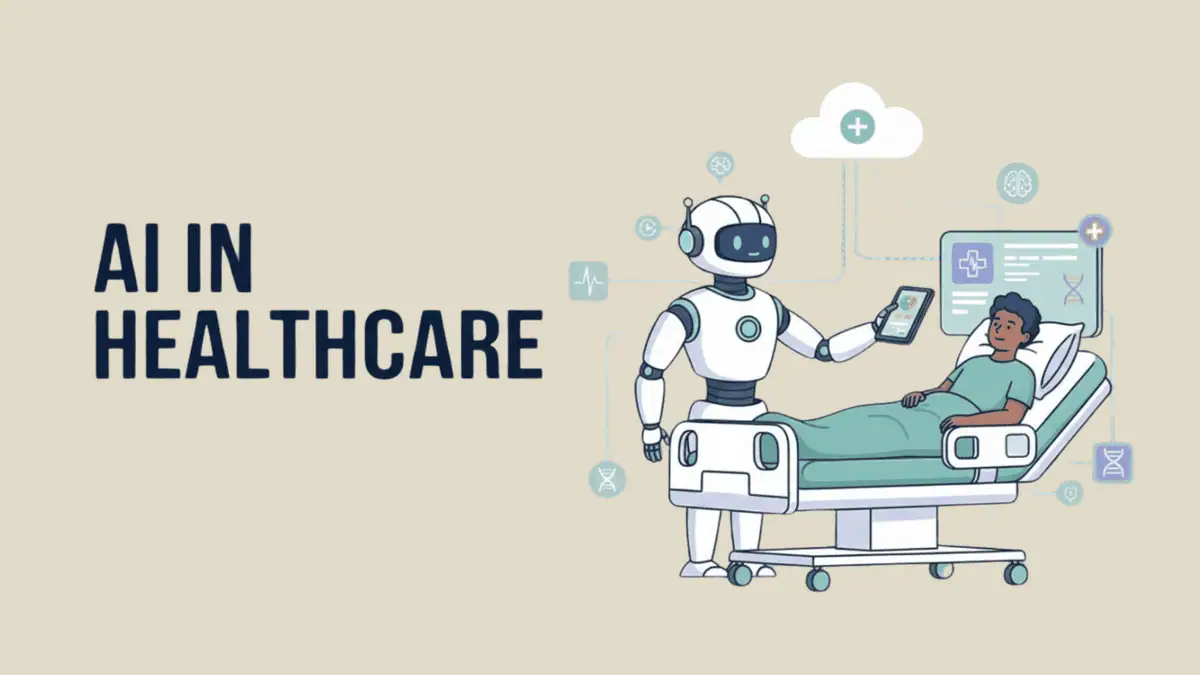
Healthcare isn’t just experimenting with AI anymore. It’s leading the charge. According to recent data, healthcare now has a 22% AI adoption rate compared to just 9% across other industries. That’s more than double.
We’re seeing AI show up everywhere in the medical field. Doctors use it to spot diseases earlier. Researchers use it to develop new drugs faster. Hospitals use it to personalise patient treatment plans. The shift is happening across diagnosis, drug discovery, and everyday patient care.
So what does this actually mean for healthcare? That’s what we’re breaking down here. You’ll see the specific benefits AI brings to the table and how it’s changing the way medicine works right now.
According to recent research, 100% of healthcare systems now use ambient clinical documentation powered by AI. Around 80% of hospitals are using AI for some form of patient care, and 71% of acute-care hospitals have predictive AI built into their electronic health records.
What types of AI are hospitals actually using? Machine learning algorithms predict patient risks like sepsis or heart failure before symptoms show. Natural language processing handles clinical documentation so doctors can talk instead of type. Computer vision analyses medical images and spots patterns radiologists might miss.
We’re also seeing agentic AI use cases in healthcare, smart systems that can work independently on complex tasks without needing constant supervision. They’re helping with remote patient monitoring, speeding up drug discovery, and personalising treatment plans, all while working in the background to keep healthcare running smoothly.
Here’s the thing though. We’re still in the early stages. AI adoption in healthcare nearly doubled from 4.6% in 2023 to 8.7% in 2025. That’s fast growth but shows most facilities are just starting. The pace is picking up. The FDA approved 115 radiology algorithms in just the first six months of 2025. That’s a new AI tool every 1.5 days.
Key Benefits of AI in Healthcare
From catching diseases earlier to cutting down on paperwork that burns out doctors, the benefits of using AI in healthcare are showing up in hospitals and clinics every day. Let’s break down exactly how AI is making healthcare better for both patients and providers.
1. Enhanced Diagnostic Accuracy
Doctors are brilliant, but they’re human. They get tired, miss subtle patterns, or face time pressure that affects their judgment. AI doesn’t have those limitations. It can scan thousands of medical images in seconds and spot abnormalities that might slip past even experienced eyes.
Image analysis for radiology and pathology: AI algorithms examine X-rays, MRIs, CT scans, and tissue samples with consistent precision. They don’t blink or lose focus after reviewing the hundredth scan of the day.
Pattern recognition in medical scans: The technology identifies subtle patterns in imaging data that human eyes might overlook. It compares each scan against millions of previous cases to flag potential concerns.
Early disease detection: AI catches diseases at earlier, more treatable stages by detecting micro-changes that haven’t yet produced obvious symptoms or dramatic visual markers.
Reducing human error: Diagnostic errors cause thousands of preventable deaths annually. AI acts as a safety net, cross-checking human assessments to minimise mistakes.
AI as a second opinion: Physicians use AI tools as consultation partners, especially for complex or borderline cases where a second perspective matters most.
2. Faster and More Efficient Drug Discovery
Developing a new drug traditionally takes about 10-15 years and costs over $2 billion. Pharmaceutical companies test thousands of compounds, most of which fail at various stages. It’s expensive, slow, and frustrating for patients waiting for treatments.
Analysing molecular structures: AI evaluates how different molecules interact with disease targets, predicting which compounds might actually work before scientists spend years in the lab.
Predicting drug interactions: The technology simulates how potential drugs behave in the human body, identifying dangerous interactions or side effects before human trials begin.
Reducing trial-and-error: Instead of testing compounds randomly, AI prioritizes the most promising candidates based on data patterns from previous research.
Accelerating timelines: What used to take years of laboratory work now happens in months or even weeks through computational modeling and virtual testing.
Cost savings: By eliminating dead-end compounds early, pharmaceutical companies save billions that can fund more research or reduce drug prices.
3. Personalised Treatment Plans
Your DNA, medical history, and lifestyle make you unique. So why should your treatment be identical to everyone else’s? That’s the question driving precision medicine. AI makes it possible to tailor healthcare to each individual patient instead of using the same protocol for everyone.
Analysing patient genetics and history: AI processes genetic markers, past medical records, family history, and lifestyle factors to understand what makes each patient’s situation different.
Tailoring treatments: Based on this analysis, the technology recommends specific therapies most likely to work for that particular patient’s biological makeup.
Predicting treatment responses: AI forecasts how individual patients will respond to different medications or procedures, helping doctors choose the most effective option first.
Optimising medication dosages: The right dose varies widely between patients. AI calculates personalised dosages based on factors like body weight, metabolism, and genetic variations that affect drug processing.
Reducing adverse reactions: By identifying patients at higher risk for specific side effects, AI helps doctors avoid treatments that could cause harm rather than healing.
4. Predictive Analytics and Preventive Care
Healthcare has always been reactive. You wait until something breaks before fixing it. But what if you could spot the cracks before the collapse? That’s the shift predictive analytics is bringing to modern medicine. This shift toward prevention is one of the most impactful benefits of using AI in healthcare, helping providers intervene earlier and reduce long-term costs.
Identifying high-risk patients: AI scans patient records, genetic data, and lifestyle factors to flag people who might develop conditions like diabetes or heart disease years before symptoms appear.
Predicting disease progression: For chronic conditions like kidney disease or COPD, algorithms track subtle changes in lab results and vital signs to forecast how quickly a condition might worsen.
Early intervention opportunities: When you know a patient is heading toward trouble, you can step in with preventive treatments, lifestyle modifications, or closer monitoring before they land in the emergency room.
Population health management: Health systems use predictive models to identify community-wide health trends and allocate resources where they’ll make the biggest impact.
Reducing hospital readmissions: AI predicts which patients are most likely to bounce back to the hospital after discharge, so care teams can provide extra support during that critical transition period.
5. Administrative Efficiency and Cost Reduction
Here’s something nobody talks about enough: healthcare workers spend nearly half their time on paperwork. That’s not because they’re inefficient. It’s because the system drowns them in documentation, billing codes, and administrative tasks that pull them away from actual patient care.
Automating medical coding and billing: AI reads clinical notes and automatically assigns the correct billing codes, catching errors that might lead to claim denials or compliance issues.
Streamlining appointment scheduling: Smart systems handle booking, rescheduling, and reminder calls without tying up front desk staff, while optimising schedules to minimise gaps and wait times.
Reducing paperwork: Voice recognition and ambient documentation tools transcribe patient conversations in real-time, turning natural dialogue into structured clinical notes.
Ambient AI documentation saves physicians 2.5 hours daily, which enables them to see 2 additional patients per day. For a typical practice, that translates to $1.5 million in additional annual revenue.
6. 24/7 Patient Support and Monitoring
Healthcare doesn’t stop when the clinic closes. Patients have questions at midnight. Symptoms change over weekends. Chronic conditions need constant attention. That’s where always-on AI support fills a gap that’s been there forever.
AI chatbots for basic queries: Virtual assistants answer common questions about medications, appointment preparation, or when symptoms warrant urgent care, without making patients wait on hold.
Virtual health assistants: More sophisticated systems guide patients through symptom assessment, medication adherence tracking, and post-operative care instructions with personalised responses.
Remote patient monitoring: AI analyses data from home devices measuring blood pressure, glucose levels, or oxygen saturation, alerting providers when readings fall outside safe ranges.
Wearable device integration: Smartwatches and fitness trackers feed continuous health data into systems that spot concerning patterns in heart rate, sleep quality, or activity levels.
Continuous care between visits: Instead of healthcare being a series of disconnected appointments, AI creates an ongoing relationship where your health is monitored even when you’re not in the doctor’s office.
7. Improved Surgical Precision
The operating room is where medicine meets craftsmanship. A surgeon’s skill can mean the difference between full recovery and lifelong complications. AI isn’t replacing that expertise—it’s amplifying it with precision that human hands alone can’t match.
Robot-assisted surgery: AI-powered robotic systems translate a surgeon’s movements into micro-precise actions, filtering out hand tremors and enabling minimally invasive procedures through tiny incisions.
Real-time guidance during procedures: Computer vision systems track surgical instruments and anatomical structures, providing visual overlays that help surgeons navigate complex areas while avoiding critical blood vessels or nerves.
3D modeling and planning: Before making the first incision, surgeons use AI to analyze CT scans and MRIs, creating detailed 3D models that let them rehearse the procedure and identify potential complications.
Reduced complications: When movements are more precise and planning is more thorough, patients experience fewer infections, less blood loss, and lower rates of surgical errors.
Faster recovery times: Smaller incisions and more accurate procedures mean less trauma to surrounding tissue, which translates to shorter hospital stays and quicker returns to normal life.
8. Accelerated Medical Research
Medical research used to move at a crawl. Reviewing literature, designing trials, and analyzing results could take years. AI is compressing that timeline dramatically.
Analysing vast research databases: AI processes millions of published studies in hours, identifying relevant findings that would take human researchers months to uncover
Identifying patterns in clinical trials: Machine learning spots subtle trends across thousands of trial participants, revealing which patient subgroups respond best to specific treatments
Literature review automation: Researchers ask specific questions and AI synthesizes answers from decades of published work, complete with citations
Connecting disparate findings: AI links discoveries across different specialties and research areas, uncovering connections human researchers might never notice
Democratizing research capabilities: Smaller institutions without massive research teams can now leverage AI tools to contribute meaningful findings to medical science
Real-World Applications of AI in Healthcare
Talking about AI’s potential is one thing. Seeing it work in actual hospitals and clinics is another. Here’s how AI is already transforming healthcare across different specialties, with results that go beyond proof-of-concept into genuine patient impact.
AI in Oncology: Detects breast cancer in mammograms up to 30% more accurately than traditional methods and suggests personalised treatment protocols based on tumour characteristics and genetic markers.
AI in Cardiology: Analyses ECGs in real-time to flag dangerous rhythms and can predict heart attacks days before traditional symptoms appear by identifying subtle patterns.
AI in Radiology: Analyses X-rays, CT scans, and MRIs in minutes, catching tiny fractures and early-stage tumours. FDA cleared 115 AI algorithms in just six months during 2025.
AI in Mental Health: Therapy chatbots like Woebot and Wysa offer 24/7 support using cognitive behavioural therapy techniques, making mental healthcare more accessible for those in rural areas or unable to afford traditional therapy.
AI in Emergency Medicine: Triage systems assess patients faster and more consistently. Cleveland Clinic’s AI sepsis detection system achieved an 18% reduction in mortality by catching warning signs early.
AI’s Impact on Healthcare Professionals
AI isn’t just changing how patients receive care, it’s changing what it means to be a healthcare professional. Doctors, nurses, and medical staff are finding their daily routines shifting as AI takes on more tasks. Let’s look at how these changes are playing out in hospitals and clinics.
Changing Roles and Responsibilities
If you’re a doctor reading this, you might be wondering if AI is coming for your job. Here’s the thing: AI isn’t replacing physicians. It’s changing what their day-to-day work looks like. And for many, that’s actually a relief.
Think about how much time doctors spend on routine tasks like reading normal test results, documenting visits, and answering basic questions. AI is taking over this grunt work, which frees physicians to focus on what they actually trained for, complex decision-making and patient care.
The role is shifting from data processor to data interpreter. Instead of spending time gathering and organising information, doctors are spending time understanding what that information means for this specific patient.
New Skills and Training Requirements
Here’s something medical schools didn’t prepare current physicians for: working alongside AI. That’s creating a training gap that the healthcare industry is scrambling to fill.
Doctors need AI literacy now. Not coding skills or the ability to build algorithms, but understanding what AI can and can’t do. This requires new knowledge like:
How to interpret AI recommendations and know when to trust or override them
Understanding that AI trained on one demographic might perform worse on others
Recognising that AI predictions come with confidence levels—low confidence means trust your gut
Learning to use AI as a second opinion, not a final answer
Being aware of algorithm bias and ethical considerations in AI use
Medical schools are starting to add courses on data interpretation, algorithm bias, and ethical AI use alongside traditional anatomy and pharmacology. The doctors graduating in five years will be much better prepared for working with AI than those who trained before it became common.
Benefits for Patients
All this technology and transformation ultimately comes down to one question: what’s in it for you as a patient? That’s where the real benefits of using AI in healthcare become clear. Turns out, quite a lot.
Earlier Disease Detection: AI can spot patterns in your health data years before symptoms appear. Early detection consistently leads to better outcomes and less invasive interventions.
More Accurate Diagnoses: Getting the right diagnosis the first time means you start the right treatment sooner. AI reduces diagnostic errors by providing doctors with additional perspectives and flagging possibilities they might not have considered.
Personalized Care: Your treatment plan gets tailored to your specific genetics, lifestyle, and medical history instead of following a one-size-fits-all protocol.
Reduced Wait Times: Automated scheduling, faster test result processing, and more efficient triage mean less time sitting in waiting rooms.
Better Access to Care: Telemedicine powered by AI diagnostics brings specialist-level care to rural areas and underserved communities. AI-assisted primary care can handle routine concerns, saving specialist appointments for people who truly need them.
Lower Healthcare Costs: Catching diseases early costs less than treating advanced conditions. Reducing unnecessary tests and procedures saves money.
Challenges and Limitations
Despite the benefits, AI in healthcare faces several important challenges. The technology might be advancing quickly, but that doesn’t mean adoption is smooth or simple. From protecting patient data to making sure algorithms work fairly for everyone, there’s a lot to figure out before AI becomes standard practice everywhere.
Data Privacy and Security Concerns: AI systems need massive amounts of sensitive healthcare data to learn, creating tensions between innovation and patient privacy protection under HIPAA compliance.
Algorithmic Bias and Health Disparities: AI learns existing healthcare inequalities from training data, leading some diagnostic tools to show lower accuracy for people with darker skin tones.
Regulatory and Approval Hurdles: Getting AI medical devices approved takes time, especially since AI keeps learning and changing unlike traditional medical devices that work the same way every time.
Integration with Existing Systems: Most hospitals have legacy electronic health record systems that weren’t designed for AI, and different systems don’t speak the same language.
Trust and Acceptance Issues: Many doctors are skeptical about relying on algorithms, and the “black box” problem means AI often can’t explain why it reached a conclusion.
Cost of Implementation: Initial investments can run into millions for large hospitals and are unaffordable for small rural clinics, potentially widening healthcare disparities.
The Future of AI in Healthcare
The AI we have now is just the beginning. Quantum computing could transform drug discovery by simulating molecular interactions at scales and speeds impossible for traditional computers. What currently takes years of trial and error in pharmaceutical development might eventually happen in months. We’re not there yet, but the groundwork is being laid.
AI-powered genomics is getting more sophisticated. Brain-computer interfaces are moving from science fiction to clinical trials. These systems could help paralysed patients control prosthetics with their thoughts or allow direct neural monitoring for conditions like epilepsy.
Some researchers are exploring diagnostic nanobots that could travel through your bloodstream, detecting diseases at the cellular level before symptoms appear. It sounds wild, but the early research is promising. These aren’t technologies you’ll see next year, but they’re in active development. The next decade could bring breakthroughs that seem impossible today.
Predictions for the Next 5-10 Years
By 2030, AI will probably be as common in healthcare as digital thermometers are now. Most patients won’t think of it as special or noteworthy. It’ll just be how medicine works. Diagnostic imaging without AI assistance will seem as outdated as paper charts do now.
New applications will keep emerging. We’ll likely see AI managing chronic diseases in real-time through continuous monitoring and automatic treatment adjustments. Mental health care might include AI therapists that provide 24/7 support between human sessions. Surgery could involve AI systems that guide surgeons through complex procedures or even handle routine aspects autonomously while humans focus on the difficult decisions.
Regulatory frameworks will mature. Right now, everyone’s figuring things out as they go. In five years, there will be established international standards and clearer approval pathways. That’ll speed up adoption and make it easier for innovations to reach patients. We’ll probably see some major failures too. Not every AI healthcare initiative will succeed. Some will be hyped technologies that don’t deliver. Others might cause harm before being pulled from the market. That’s part of the learning process.
A startup consultant, digital marketer, traveller, and philomath. Aashish has worked with over 20 startups and successfully helped them ideate, raise money, and succeed. When not working, he can be found hiking, camping, and stargazing.
Each week I share research backed AI oriented content in my newsletter.
There are AI ideas, AI trends, tutorials, and guides.
24k entrepreneurs read it. I'd love you to join.