[Reader Disclosure]Our content is reader-supported. This means we may earn a commission if you click on some of our links.
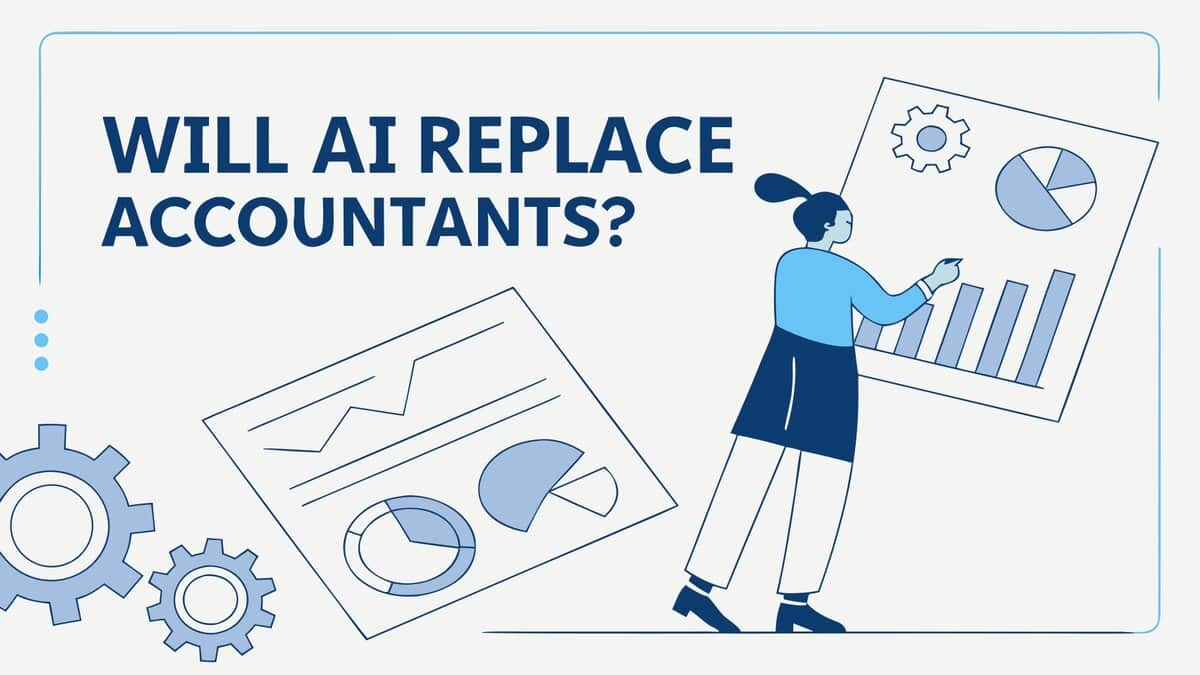
AI is already changing accounting.
Software that once took hours to process reconciliations now does it in minutes. Tasks you trained for years to master are being automated. The profession you built your career in looks different than it did five years ago.
But is AI really capable enough to replace accountants completely? Let’s look at what’s happening right now.
The shift isn’t sudden, but it’s real. Firms are quietly swapping spreadsheets for software that reads invoices, flags errors, and reconciles accounts without being told.
According to Gartner, 59% of finance functions were using AI in 2025, up from 58% in 2024 and 37% in 2023. That’s not hype; that’s adoption.
What’s actually changing? AI handles the repetitive stuff. Data entry, invoice matching, transaction categorisation. Tasks that used to eat up hours now run in the background. This frees accountants to spend time where it matters: analysing trends, advising clients, and catching issues before they snowball.
The role isn’t disappearing. It’s evolving.
What Accounting Tasks AI Has Already Replaced
According to Thomson Reuters, 21% of tax firms are already using GenAI technology, with 53% either planning to use it or considering it. The manual grunt work? It’s mostly gone.
Here’s what AI has taken over:
Data entry and transaction recording
Invoice processing and matching
Bank reconciliations
Receipt scanning and extraction
Basic financial report generation
Transaction categorization
These tasks share something in common. They’re repetitive, rule-based, and time-consuming. That’s exactly what AI handles best.
What Accounting Tasks AI Will Replace Soon
The next wave of automation is already in testing phases at major firms. Here’s what’s moving from human desks to AI systems:
Tax return preparation (simple returns): Straightforward 1040s and basic business filings
Payroll processing: End-to-end calculation, filing, and payment execution
Audit sampling and testing: Selection and preliminary review of transaction samples
Compliance checking: Real-time monitoring against regulatory requirements
Anomaly detection in transactions: Flagging unusual patterns that need human review
What makes these different from current automation? They require judgment calls that AI is just now getting good enough to handle.
What Accounting Tasks AI Cannot Replace
While 71% of tax professionals now believe GenAI should be applied to their work, they’re not saying it should replace them. They’re saying it should work for them. That’s a huge difference.
These are the areas where human accountants remain irreplaceable:
Complex tax planning and strategy
Client advisory and business consulting
Ethical judgment and regulatory interpretation
Fraud investigation and forensic analysis
Relationship management and communication
Nuanced decision-making in ambiguous situations
AI can crunch numbers, but it can’t read the room when a client’s worried about cash flow, and it definitely can’t decide whether a grey-area deduction is worth the audit risk for someone’s specific situation.
Current AI Adoption In Accounting
These numbers show you how fast things are moving and where firms are placing their bets.
59% of finance functions will use AI in 2025 (up from 58% in 2024 and 37% in 2023)
21% of tax firms already use GenAI, with 53% planning or considering it
71% of tax professionals believe GenAI should be applied to their work
98% of accountants surveyed have used AI to help clients
The gap between early adopters and the rest is closing fast.
AI’s Impact on Accounting Jobs and Hiring Trends
Yes, AI is changing accounting work. But losing your job? That’s a different story than what the headlines suggest.
Actual Job Displacement Numbers
Only 1.8% of U.S. layoffs in 2025 (17,375 out of 946,426) were explicitly attributed to AI. That’s it. Not the mass elimination we keep hearing about. Most job cuts have nothing to do with AI; they’re tied to the usual suspects like restructuring, budget issues, and market shifts.
The thing is, firms aren’t replacing accountants wholesale. They’re figuring out how AI fits into existing teams.
How Hiring Requirements Are Changing
Job postings now list things like “experience with automation tools” or “comfort with data analytics platforms” alongside traditional requirements. Firms want accountants who can work with AI, not around it.
Think of it as adding a new tool to your kit rather than replacing the entire toolbox. The role is evolving, not disappearing. You’re still doing accounting, but you’re just doing it with better tools.
What Accountants Should Do To Stay Relevant
Here’s the thing, AI isn’t ending the accounting profession. It’s redefining it. If you’re willing to adapt, you’ll find yourself in a stronger position than before. These five moves will set you up to thrive.
1. Learn AI Tools and Systems
Start experimenting with AI platforms your firm already uses. You don’t need to code. Just get comfortable with how tools analyse data, flag anomalies, and generate reports. The accountants who know how to work alongside AI will manage the ones who don’t.
Spend a few hours each week testing features, watching tutorials, and figuring out what these systems can and can’t handle.
2. Develop Advisory Skills
When AI handles bookkeeping and data entry, clients will pay you for strategic guidance. That means learning to interpret financial patterns, recommend growth strategies, and help businesses make smarter decisions.
You’re not just reporting numbers anymore. You’re translating those numbers into actionable insights that drive real results.
3. Build Soft Skills
Communication, critical thinking, and creativity separate good accountants from irreplaceable ones. AI can’t read a room, sense when a client is anxious, or craft a message that lands just right. These human skills become your edge. Practise explaining complex concepts simply. Work on asking better questions. Clients remember how you make them feel, not just the accuracy of your calculations.
4. Stay Current on Regulations and Ethics
Compliance and professional judgement require human oversight. AI can flag potential issues, but it can’t weigh ethical grey areas or apply nuanced regulatory knowledge to unique situations. Keep your certifications current. Attend industry seminars. This expertise is where machines hit their limits, and your value skyrockets.
5. Specialise in Complex Areas
Focus on high-stakes work that demands human judgment. Tax planning for multi-state operations, forensic accounting, and merger analysis. These areas involve too many variables and too much context for AI to handle alone. Specialisation makes you indispensable, not interchangeable.
So, Will AI Replace Accountants?
AI isn’t coming for your job. It’s coming for the way you do your job.
And the answer for those who ask, “Will AI Replace Accountants?” is quite simple.
The accountants who treat AI like a threat will spend the next decade watching opportunities slip away. The ones who treat it like a tool will spend that same decade building practices that are faster, sharper, and more valuable to clients. The choice isn’t between adapting or surviving. It’s between leading and following.
Your technical skills got you here. Your ability to pair those skills with technology will determine where you go next. The profession isn’t shrinking; it’s evolving. And you’re either evolving with it, or you’re not.
A startup consultant, digital marketer, traveller, and philomath. Aashish has worked with over 20 startups and successfully helped them ideate, raise money, and succeed. When not working, he can be found hiking, camping, and stargazing.
Each week I share research backed AI oriented content in my newsletter.
There are AI ideas, AI trends, tutorials, and guides.
24k entrepreneurs read it. I'd love you to join.