[Reader Disclosure]Our content is reader-supported. This means we may earn a commission if you click on some of our links.
AI is handling resume screening, scheduling interviews, and ranking candidates. 96% of US hiring professionals now use AI in recruitment, and that number keeps climbing. This shift is real, and it’s happening fast.
Now the question arises: Will AI Replace Recruiters? The short answer is more complicated than yes or no.
Understanding what AI can and can’t do in your role matters more now than it did a year ago.
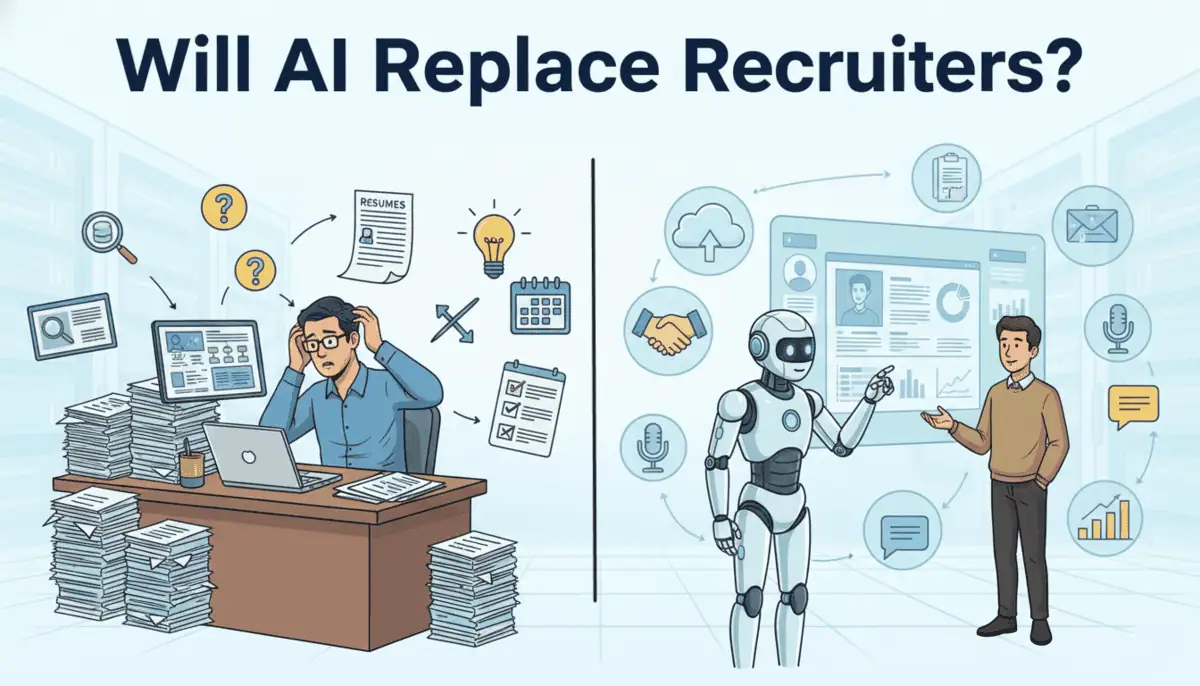
AI tools now handle the repetitive work that used to take a lot of time. The shift happened gradually, then all at once.
Resume screening changed first. AI systems parse applications in seconds, matching keywords and qualifications against job requirements. They rank candidates based on the criteria you set.
The same goes for sourcing. AI searches databases, identifies passive candidates, and even predicts which prospects might be open to new opportunities.
Scheduling automation came next. Chatbots coordinate interview times without human intervention. They handle back-and-forth communication, send calendar invites, and reschedule when needed. Candidates get instant responses instead of waiting days for an email reply.
Candidate engagement shifted, too:
AI chatbots answer common questions about role details, company culture, and application status.
Automated emails keep candidates informed throughout the process
Text message systems send reminders and updates
Follow-up sequences run without manual input
Predictive analytics represent the newest change. Algorithms analyse candidate data and predict success probability. They score applicants based on past hiring outcomes. Organisations using AI tools report up to 30-40% drops in cost-per-hire and significantly faster screening processes.
Recruitment Tasks AI Has Replaced
AI hasn’t just changed recruitment. It’s taken over entire chunks of the process that used to eat up hours of a recruiter’s day.
Resume parsing and initial screening: AI systems scan resumes, pull out key information, and organise it into structured data in seconds. No more manually typing candidate details into spreadsheets.
Keyword matching and qualification checks: The software compares job requirements against candidate profiles automatically, flagging who meets the basic criteria and who doesn’t. Recruiters used to do this line by line.
Interview scheduling and calendar coordination: AI chatbots now handle the back-and-forth, checking availability across multiple calendars and booking time slots without human intervention.
Basic candidate questions get answered through chatbots, too. Things like “What’s the salary range?” or “Is this position remote?” don’t need a human anymore. The same goes for application status updates. Automated messages keep candidates informed without recruiters lifting a finger.
Job posting distribution: AI can search candidate databases for matches, send initial outreach emails, and manage all the data entry and tracking that used to bog down recruiting teams.
What’s left for humans? The stuff that actually requires judgement. Building relationships. Assessing cultural fit. Negotiating offers. Making the final call on who to hire.
Current AI Adoption in Recruitment
AI in recruitment isn’t some future trend anymore. It’s happening right now, and the numbers show just how fast it’s spreading.
67% of organisations now use AI in recruitment, with enterprise companies pushing that number even higher at 78%. That’s a 189% growth since 2022. We’re not talking about early adopters anymore. This is mainstream.
What HR professionals are getting out of it:
70% of HR professionals report time savings as their biggest benefit from using AI tools. That translates into real results: 31% faster hiring times on average. Companies are also seeing a 50% improvement in quality of hire metrics, which suggests AI isn’t just making things faster but actually helping them find better candidates.
58% of HR professionals worry about algorithmic bias creeping into their hiring decisions. Another 51% are concerned about depersonalisation, the sense that candidates are being processed through a machine rather than evaluated by humans. Legal compliance worries sit at 50%, which makes sense given how murky the regulatory landscape still is.
Here’s what’s interesting, though: candidates themselves seem more optimistic. 57% of workers believe AI reduces racial and ethnic bias in hiring, up 6% from the previous year. That’s a notable shift in perception.
The gap between HR concerns and candidate optimism tells you something important. AI in recruitment is moving forward, whether everyone’s comfortable with it or not. The question isn’t whether to adopt it anymore. It’s how to use it responsibly.
Recruitment Tasks AI Cannot Replace
AI in recruitment is great at processing data and following patterns, but there are entire dimensions of hiring that require something algorithms don’t have. That is human intuition, context, and emotional intelligence.
1. Reading the room during interviews
When you’re sitting across from a candidate, you pick up on things that don’t translate to data points. The slight hesitation before answering a question about their current role. The way their energy shifts when talking about team projects versus solo work.
You’re not just evaluating what someone says, but how they say it, what they leave unsaid, and whether they’ll actually gel with your team’s specific dynamics. AI can accurately assess qualifications and skills, but it struggles with cultural fit: those subtle interpersonal dynamics that make or break a hire.
2. Building trust over time
Recruiting isn’t transactional. You might spend months nurturing a relationship with a passive candidate. Understanding their career aspirations, and learning what frustrates them about their current situation.
That rapport? It’s built on genuine conversations, shared experiences, and showing up consistently. AI can send follow-up emails, but it can’t grab coffee with someone and have that moment where they finally open up about what they’re really looking for.
3. Strategic workforce planning
Let’s say your company is pivoting its business model over the next two years. You need to start building a talent pipeline for roles that don’t fully exist yet, based on where you think the market is heading.
That requires connecting dots between business strategy, market trends, competitive intelligence, and emerging skill sets. You’re making educated guesses about the future. AI excels at pattern recognition from historical data. But it’s not great at anticipating what’s never happened before.
What Candidates Now Expect Because of AI
Candidates know what’s possible now. And they’re not patient about companies that haven’t caught up.
Candidates worry that an algorithm killed their application before a human saw it. Many people feel uneasy when AI makes decisions about their careers without knowing how or why. They want assurance that someone actually reviewed their work. They want to know why they didn’t advance, especially if they felt qualified.
This is where you come in. The more automated your process, the more human you need to be in the parts that matter. Transparency builds trust. Silence builds resentment.
So, Will AI Replace Recruiters?
The straight answer: AI won’t replace recruiters.
But let’s be clear about what that actually means. The job you’re doing today? That’s changing. Fast. AI isn’t going to take your role, but it’s going to change what that role looks like.
AI will handle the mechanical parts, parsing resumes, scheduling interviews, and sending follow-ups. You handle the meaningful parts: reading body language in an interview, sensing when a candidate is about to accept another offer, and knowing which team member will clash with a hiring manager’s style.
The recruiters who’ll struggle aren’t the ones being replaced by AI. They’re the ones refusing to use it. Because while you’re manually screening 50 resumes, someone else is using AI to screen 500 and spending their time on the 10 that actually matter. They’re faster, more informed, and building better relationships because they’re not buried in admin work.
A startup consultant, digital marketer, traveller, and philomath. Aashish has worked with over 20 startups and successfully helped them ideate, raise money, and succeed. When not working, he can be found hiking, camping, and stargazing.
Each week I share research backed AI oriented content in my newsletter.
There are AI ideas, AI trends, tutorials, and guides.
24k entrepreneurs read it. I'd love you to join.