[Reader Disclosure]Our content is reader-supported. This means we may earn a commission if you click on some of our links.
Every day, your employees log in dozens of times. Email. CRM. Project management tools. Cloud storage. HR systems. Each login is a potential security gap.
Traditional security threw more walls around these access points. More passwords. More verification steps.
AI flips that model. Instead of just blocking threats, it learns normal behaviour and spots the subtle anomalies that signal real danger. It automates the tedious work of managing who gets access to what. And it does this while actually making login experiences faster for legitimate users.
That’s the shift we’re seeing in identity and access management. AI isn’t just an add-on feature anymore. It’s becoming the foundation of how organisations protect their systems while keeping their teams productive.
Here’s how AI is changing IAM and what it means for your security strategy.
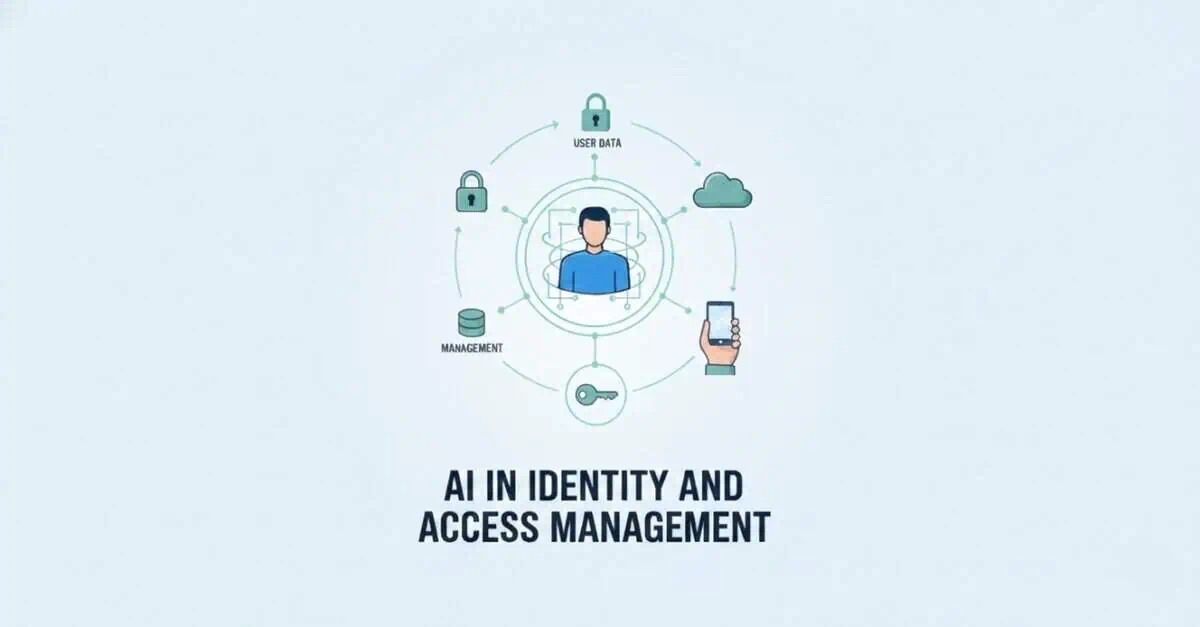
Identity and Access Management is the framework that controls who gets access to your systems, applications, and data. It’s the infrastructure that verifies someone is who they claim to be, then determines what they’re allowed to do once they’re in.
Think of IAM as your organisation’s digital bouncer and credential system combined. It handles the entire lifecycle of user access, from onboarding new employees with the right permissions to revoking access when someone leaves.
Here’s what IAM actually manages:
Authentication: Verifying user identities through passwords, biometrics, or multi-factor authentication
Authorisation: Determining what resources each verified user can access
User provisioning: Creating, modifying, and removing user accounts and permissions
Access policies: Setting rules for who can access what, when, and from where
Audit trails: Logging all access attempts and changes for security reviews
The challenge with traditional IAM? It’s reactive and rule-based. You set policies manually. You review access logs after something goes wrong. You rely on users to report suspicious activity.
AI in identity and access management changes this by making IAM proactive and adaptive. Instead of following rigid rules you programmed months ago, AI-powered IAM learns from patterns, predicts risks, and adjusts security measures in real-time based on actual behaviour.
Why Traditional IAM Is No Longer Enough
Manual provisioning creates bottlenecks where new hires wait days for the right access while former employees still have active accounts.
The thing is, 80% of enterprises migrating from legacy IAM to cloud-native solutions by 2025 recognise these pain points can’t be fixed with just more rules.
Aspect
Traditional IAM
AI-Powered IAM
Access Control
Static roles assigned manually based on job title
Dynamic permissions that adjust based on behaviour patterns and context
Threat Detection
Flags threats after breaches occur using predefined rules
Identifies anomalies in real-time before damage happens
User Provisioning
IT tickets and manual approval workflows taking days
Automated onboarding with appropriate access granted in minutes
Authentication
Password-based with occasional MFA prompts
Risk-based authentication that adapts to login context and location
Access Reviews
Quarterly audits with spreadsheets and manual checks
Continuous monitoring with automated recommendations for removal
System Integration
Custom connectors for each application requiring maintenance
Self-learning integrations that adapt to new platforms automatically
The Role of AI in Identity and Access Management
Traditional IAM tools can’t keep pace with modern threats. They rely on fixed rules and manual oversight, which means threats slip through and legitimate users get blocked.
AI in Identity and Access Management uses machine learning to monitor logins, detect threats, and control user access in real time.
Instead of waiting for breaches to happen, AI learns what normal looks like for your organisation and spots the weird stuff before it becomes a problem. Here’s how it’s reshaping every critical aspect of access security.
1. Behavioural Analytics and Anomaly Detection
AI watches how people actually work. It tracks when you log in, where you’re connecting from, which devices you use, and what actions you typically take. Over time, it builds a profile of your normal behaviour.
This isn’t about rigid rules. The system adjusts as your habits change. Maybe you start working remotely or switch to a new phone. AI adapts to those shifts while still catching genuine threats. AI-driven threat detection and behavioural analytics can identify compromised credentials and insider threats that traditional security tools completely miss.
2. Automated Threat Detection and Response
Humans can’t review thousands of access attempts every hour. AI can. It scans login patterns, permission requests, and data access in real time, identifying threats that would take security teams days to uncover manually.
When it spots something suspicious, like a user suddenly requesting access to sensitive files they’ve never needed before, it alerts your team immediately.
The real advantage? Machine learning gets smarter with experience. Early IAM systems bombarded security teams with false alarms, making it hard to spot real threats. AI learns which alerts matter and which don’t, cutting through the noise. Plus, AI automating user provisioning and access reviews means responses happen in seconds, not hours. It can automatically revoke suspicious access or require additional authentication without waiting for human intervention.
3. Smarter Handling of Privileged Access
Traditional IAM systems often give administrator privileges permanently. Someone in IT gets high-level access on day one and keeps it forever, even when they’re just doing basic tasks. That creates a big security risk. If an attacker gets hold of just one of these accounts, they could gain control over critical systems.
Modern security practices are moving away from this model. Instead of keeping powerful permissions active all the time, companies now grant elevated access only when it’s actually needed and remove it once the task is done. This approach, called just-in-time privileged access management, limits how long sensitive access exists and reduces the number of accounts that attackers can target.
AI can support this process by helping review access requests, checking context, and spotting unusual activity, but the core idea is about reducing permanent privileged access.
4. Intelligent User Provisioning and De-Provisioning
When someone joins your company, they need access to specific tools based on their role. When they leave or switch departments, those permissions should change immediately. Manually handling this creates delays and mistakes. New hires wait days for access they need to do their jobs. Departed employees keep credentials active for weeks, creating security risks.
AI automates the entire lifecycle. It recognises when someone joins, transfers, or exits based on HR system updates. Then it provisions exactly the right access based on role, department, and responsibilities.
5. Adaptive Access Policies
Static rules don’t work anymore. A policy that says “marketing team can access the CRM” ignores crucial context. Is that marketer logging in from the office or a coffee shop in another country? Are they using a company device or a personal tablet? Is it Tuesday afternoon or Saturday at midnight?
AI considers all these factors before granting access. It calculates a risk score based on location, device security, time of day, and recent behaviour. Low-risk scenarios get quick approval. High-risk situations trigger additional verification or block access entirely.
Benefits of AI-Powered IAM for Businesses
Once you move to AI-powered IAM, improvements show up quickly in three key areas:
Cost Reduction
Fewer helpdesk tickets because password resets and access requests are handled automatically
Less time spent preparing for audits since activity is logged and documented by the system
No wasted software licenses from old or unused accounts
Security Improvement
Suspicious activity is detected in real time, reducing the risk of breaches
Fewer permanent admin accounts, which lowers the chances of attackers misusing high-level access
Faster response to threats because issues are flagged immediately
Compliance Acceleration
Ongoing access reviews instead of stressful quarterly audits
Automatic audit trails make it easy to show who accessed what and when
Easier to meet standards like SOC 2, GDPR, and HIPAA because controls are always active
AI in IAM for Startups vs Enterprises
Startups need simple, fast security that doesn’t slow growth. They rely on easy sign-on, basic multi-factor authentication, and quick onboarding, with AI helping automate routine security and compliance tasks.
Enterprises handle far more complexity, from thousands of users to legacy systems and strict regulations. They use AI to monitor large environments, manage sensitive access, and spot unusual activity at scale.
Factor
Startups
Enterprises
Budget
$50-500/month for basic plans, pay-as-you-grow pricing
$50K-500K+ annually with custom contracts
Compliance Timing
Need SOC 2 Type 1 within 6-12 months for first enterprise deals
Already certified, need continuous multi-framework compliance (ISO 27001, GDPR, HIPAA)
10,000+ users, contractors, partners across global offices
Challenges and Risks of AI in IAM
AI brings powerful capabilities to identity management, but it’s not a perfect solution. Like any technology, it comes with limitations and risks that organisations need to understand before implementation.
Being aware of these challenges helps you build more robust systems and avoid pitfalls that could undermine your security posture.
AI bias – If the data used to train AI systems contains bias, the system may make unfair access decisions that affect certain users more than others.
Lack of transparency – Some AI models don’t clearly explain why they made a decision, which can make audits and compliance checks harder.
False alerts – If the system is too sensitive, it may flag normal behaviour as risky, frustrating users and overwhelming security teams.
Privacy concerns – AI relies on user behaviour data, raising important questions about how much monitoring is appropriate and how long data should be stored.
Overreliance on automation – AI should support human teams, not replace them entirely, especially for high-risk or unusual access decisions.
The Future of AI in Identity Security
The future of identity security isn’t just about making today’s systems faster. It’s about changing how we prove who we are and how access is protected in a world where machines and automated systems are everywhere. AI is helping security move from fixed rules to smarter, real-time decisions based on behaviour and risk.
Passwords are slowly being replaced by easier and safer options like fingerprints, face scans, and secure passkeys. At the same time, identity systems are starting to manage not just people, but also AI agents, bots, and automated services that now use company systems just like employees do.
Security is also preparing for future threats by adopting stronger encryption that can resist attacks from powerful quantum computers. Instead of trusting users by default, modern systems continuously check behaviour and context, adjusting access in real time to keep systems safe without slowing people down.
A startup consultant, digital marketer, traveller, and philomath. Aashish has worked with over 20 startups and successfully helped them ideate, raise money, and succeed. When not working, he can be found hiking, camping, and stargazing.
Each week I share research backed AI oriented content in my newsletter.
There are AI ideas, AI trends, tutorials, and guides.
24k entrepreneurs read it. I'd love you to join.