
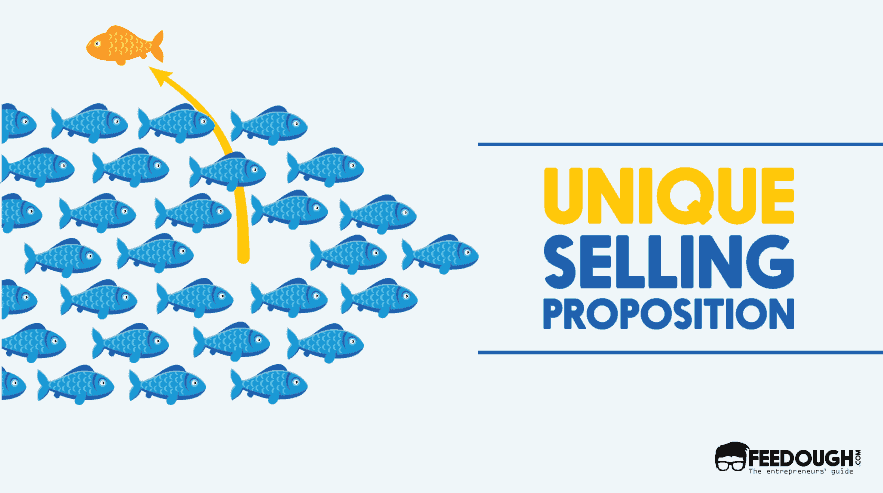
Every customer looks for a reason why he should choose that specific product and not the others lying on the same shelf.
This reason is the key to making the offering different and stand out of the crowd, especially when the offering is similar to those offered by the competitors.
This is the unique selling proposition (USP) in marketing.
What Is Unique Selling Proposition (USP)?
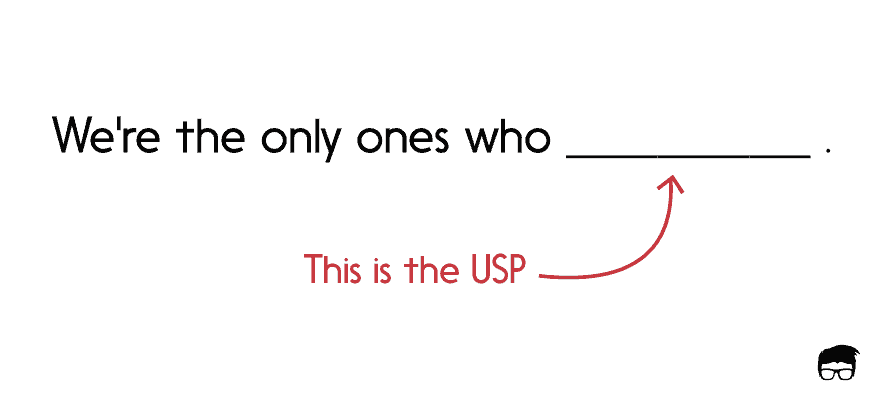
A unique selling proposition (also referred to as unique selling point or just USP) is a unique benefit, feature, or characteristic of an offering which makes it unique from rest of the competing brands in the market and makes it more appealing to the customers.
Two key phrases that should be noted in this definition of USP are –
- Unique from the rest of the competing brands: A USP should be a benefit which makes the offering unique from others.
- Makes it more appealing: It should also be something which actually makes customers choose this offering over others. Just a normal differentiation which doesn’t matter to the customers doesn’t count as a USP.
Importance of USP
- Answers the question of ‘what’s in for me?’: The USP translates the product features into benefits and makes the customer get an answer to what’s in there for him.
- Forms the base of Marketing: USP usually forms the base on which the entire marketing communication depends. In short, the company tries to sell the brand or the offering based on its USP.
- Make Product Stand out of the Competition: The USP gives a reason for customers to buy the offered product and not to buy the competitors’ products.
Features Of A USP
The biggest factor that makes an offering’s selling proposition its unique selling proposition is its distinctiveness. Distinctiveness means this benefit is limited to the specified offering and isn’t provided by any of the competitors. Besides this, here are two very important characteristics of a USP –
- Assertive: The USP should be assertive enough to make a case against competing offerings. Assertiveness is often supported by research, stats, and/or facts.
- Valuable: USP is always some benefit which the customers believe to be valuable and worthy enough to go away with the opportunity cost.
Types Of USP
Different offerings come with different USPs but most of these can be categorized into these three types –
- Feature-Based: Unique product features like price, quantity, and/or quality give enough reason for the customers to choose an offering over the competing ones.
- Benefit-Based: Some products focus more on providing specific benefits, which others don’t. For example, DuckDuckGo is a search engine which takes utmost care of user privacy and hence is a small yet popular competitor to Google.
- Positioning-Based: Positioning is the unique space a brand occupies in the brains of the customers. It could be lifestyle-based (like Marlboro), problem-solver-based (like Tide) and or need/want/luxury based (like DeBeers).
How To Develop A USP?
Some are lucky enough to develop a product with a unique benefit that’s different from almost all the products in the market.
But many aren’t this lucky.
Moreover, with time, market changes, customers’ preferences change and there comes a need for the existing players to change the USP as well.
Here’s a process of how to find and develop a USP for a product.
Find The USP
Finding a USP isn’t an easy task. It involves heavy research on what’s actually needed but not offered well in the market.
It starts with understanding the target market, followed by competitor analysis, and ends with developing a competitor advantage.
- Understand the target market: A USP is developed to fulfil one of the repressed needs of the target market. These needs could be hesitation to pay a lot for service, wishing to do something remotely, or not buying three different products just to do one task, etc.
- Analyse the competition: A selling proposition which isn’t unique doesn’t actually count as a unique selling proposition. Hence, it’s important to analyse the competition before deciding on a USP.
- Develop A Competitive Advantage: Once the market and competition are analysed, a competitive advantage is developed, which makes the offering to be perceived as superior to the other competitors.
Test and Refine Your USP
Usually, the initial ideas of what a unique selling proposition could be aren’t always right. One needs to test this hypothesis for its credibility. This is how it is done.
- Choose a focus group: A focus group is a small but demographically diverse group selected to validate the hypothesis of the planned USP(s).
- Launch and market to the focus group: The product’s marketing campaign is tested on the focus group to analyse their response and get feedback. If there’s more than one test campaign, more than one focus group is used for the same.
Communicate Your USP
The feedback and response lead to finding the USP that will make the offering stand out. Once done, the next step involves developing a 360° marketing campaign which stems from the USP.
- Develop a brand personality: The USP forms the base a brand builds its personality on. Woodland has a personality of adventurous and ruggedness because of its tough and long-lasting products which fit perfectly for adventures.
- Develop marketing communications messages around USP: Since the product sells because of its USP, this benefit usually forms the base around which almost all of the marketing communications revolve.
Unique selling proposition examples
While almost every offering has its own unique selling proposition, here are some notable examples of USPs of famous companies.
FedEx Corporation
The World on Time
FedEx, through this slogan and its work, gives a reassurance to its customers that it takes the job seriously and makes sure that the package reaches wherever it belongs on time, no matter what place in the world.
This a perfect example of a benefit-based unique selling point.
M&M
The milk chocolate melts in your mouth, not in your hand.
M&M sells because it is hugely different from its competitor brands. Unlike other offerings, M&M has a sugar coating which prevents it from melting. Hence, the tagline.
M&M is a perfect example of a feature-based unique selling proposition.
DeBeers
A diamond is forever.
DeBeers is known for its positioning-based USP. The company sells diamonds which are considered to be necessary for weddings. The company marketed them as a symbol of eternal love, which is unbreakable.
Go On, Tell Us What You Think!
Did we miss something? Come on! Tell us what you think about our article on unique selling proposition in the comments section.