Android still powers about three out of every four smartphones sold worldwide. But in Q2 2026, its global share slipped to roughly 75%, down from 79% a year earlier. iOS now holds about 20%, and Huawei’s HarmonyOS has climbed to 5%. Counterpoint Research points to sharper competition and a RAM shortage pushing Chinese makers out of the entry-level market.
Here’s the strange part. Google doesn’t charge manufacturers a cent to use Android. It’s open source, so anyone can install it on any device. No licensing fees. No per-phone payments.
Which raises the obvious question: How does Google make money from Android?
If Android isn’t charging money, how is it still in the market? What exactly is Android’s revenue model?
Google has two main answers. One of them involves handing Apple an almost unbelievable check every year.
- Google avoids paying other operating system makers to be their default search engine. (The $20 billion a year it now pays Apple alone gets a fuller treatment later.)
- Google Play Store, which takes a cut of app sales and in-app purchases.
How Does Google Make Money From Android?
Android makes money by not being your iPhone. That sounds like a riddle, but it is exactly how Google profits from the platform.
The reason is straightforward. Google is an advertising company. In Q4 2025, Google advertising brought in $82.28 billion. That was about 86% of Google Services revenue. The same year, Alphabet’s annual revenue topped $400 billion for the first time (Q4 2025 earnings exhibit). Our Google business model guide covers the rest. Putting the right ad in front of you at the right moment is the entire business.
So why give the operating system away? Because a free OS means no licensing fee. Manufacturers can build cheaper phones, more people end up holding an Android, and more eyes become ad inventory.
That flywheel is straining now, though. Counterpoint Research says Chinese makers are backing away from entry-level phones as RAM shortages push up costs. That is one reason Android’s share slipped to about 75% in Q2 2026, down from 79% a year earlier.
Once you have the phone, the data starts flowing. Android ships with Google Search, Play, YouTube, and Maps built in. Setup also walks you through signing in with a Google account. From there, Google assembles a profile of you: your search history, your browsing, the flight confirmation sitting in Gmail, your location throughout the day. Advertisers pay to reach that profile.
Which brings us back to the iOS line. On your iPhone, Google pays to reach you. Google hands Apple roughly $20 billion a year to stay the default search engine in Safari. A September 2025 remedies ruling kept that deal alive, with the judge warning that ending it would cause “crippling downstream harms.”
On Android, Google pays your device maker nothing. Your phone arrives with Google search ready to go, and every query you type feeds the ad business. Apple users tend to have more money to spend, so each iPhone is worth more per person. But Android users are far too numerous to ignore.
How Does Google Make Money From Google Play?
Advertising is not the only answer to how does Google make money from Android. The Play Store is the second revenue stream, and it has grown well past paid app downloads.
The market around it shows you the scale. $167 billion in 2025 was the global in-app purchase total across iOS and Google Play, up 10.6% year over year, per Sensor Tower. Non-game spending passed game spending for the first time, about $85 billion against $82 billion. Those are not Play-only numbers. Google no longer breaks out Play revenue in its earnings, so the store-level split cannot be verified.
Alphabet’s own reporting shows you where Play sits now. The subscriptions, platforms, and devices grew 17% in Q4 2025, and paid consumer subscriptions passed 325 million. Play is part of that story rather than a standalone line.
One note before the breakdown below: some original Play-branded services have moved under different Google banners, but the ecosystem logic still holds.
YouTube Music (formerly Google Play Music)
Google Play Music shut down in December 2020, and YouTube Music took its place. YouTube Music is a subscription-based music-streaming service that ships pre-installed on many Android devices. It fits Google’s larger subscription push. YouTube’s combined ad and subscription revenue topped $60 billion in 2025. Google’s paid consumer subscriptions, led by YouTube Premium and Google One, surpassed 325 million that same year.
Google Play Books
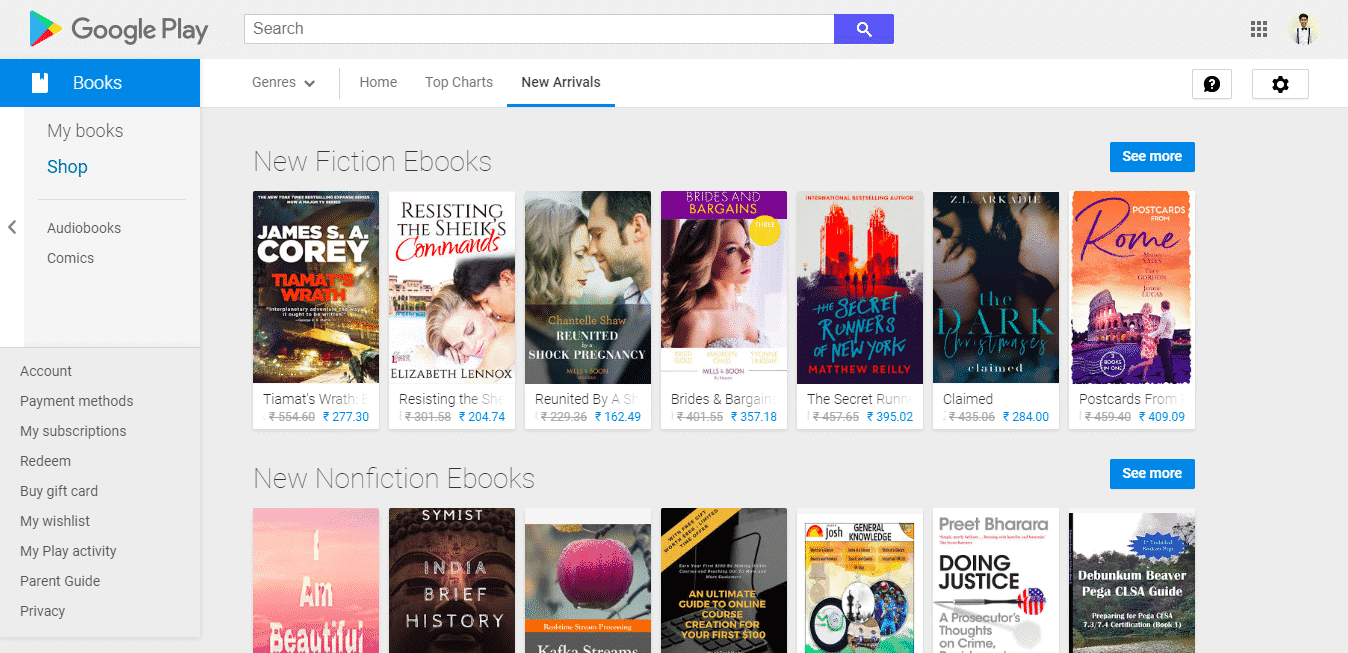
Google Play Books gives you access to millions of eBooks and audiobooks, with many available to download for free. You can also upload your own books in PDF or EPUB formats to read in the app. It ships pre-installed on many Android devices.
Google Play Games
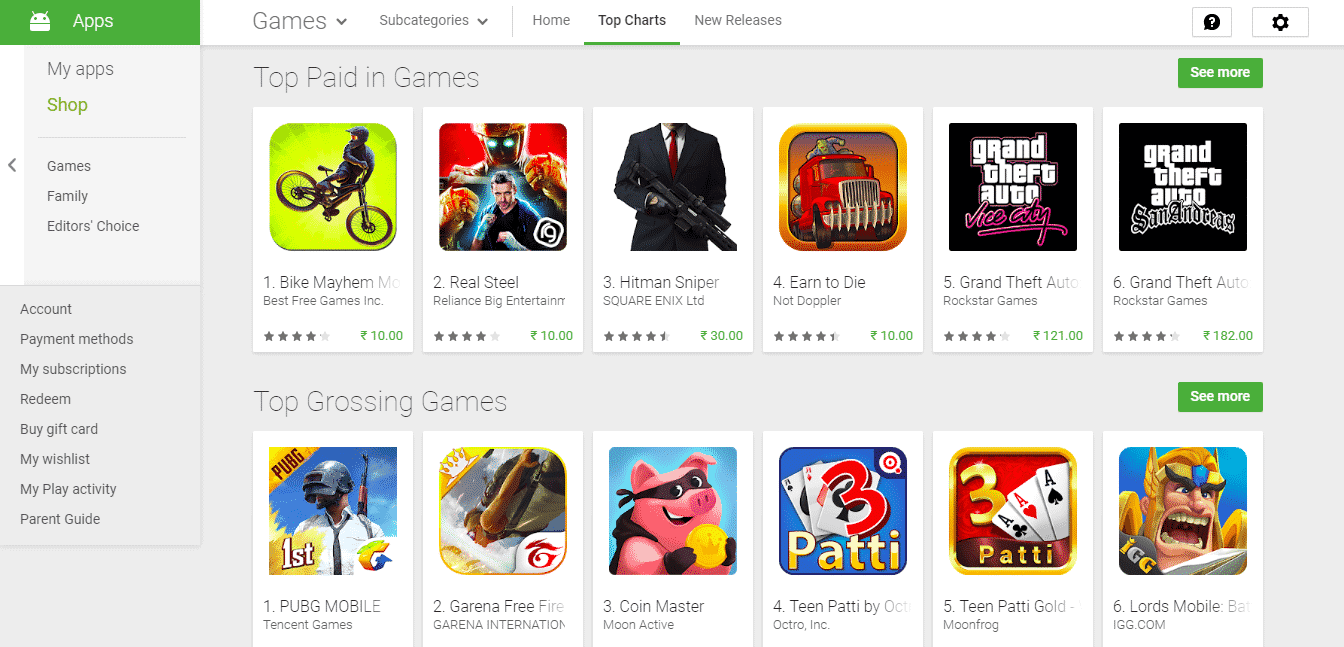
The online gaming service provides real-time multiplayer options, cloud link, leaderboards and achievements to the games provided on Google Play Store. This too comes preinstalled on the Android devices.
Google TV (formerly Google Play Movies & TV)
Google Play Movies & TV was rebranded to Google TV in September 2020. Google TV is a video-on-demand service where you can rent or buy movies and TV shows. You’ll find it on Android TVs and smartphones, and it remains a revenue source for Google’s device ecosystem.
Google News (formerly Google Play Newsstand)
Google Play Newsstand was folded into Google News in May 2018. Google News is a free news aggregation app that ships on Android devices, raising the question: how does Google News make money? Like most Google apps, it is supported by advertising, which makes Android a delivery surface for ads.
Google Play Fees
For years, you handed Google a flat 30% cut of every Play Store sale. That ended on March 4, 2026, when Google settled with Epic Games. This was not a gift. A jury had already found Google’s practices anticompetitive, and a judge issued an injunction. Legal pressure did the work, not goodwill.
What does this mean for you? In-app purchases now carry a 20% service fee. Use Google’s billing system and an extra 5% stacks on top. If you sell recurring subscriptions, the rate drops to 10%. Switch to alternative billing and a 9% floor applies instead. The full fee schedule covers every case.
You won’t see these rates everywhere at once. They went live June 30, 2026 in the EEA, the UK, and the US. Australia followed on September 30. Korea and Japan join by December 31. The rest of the world waits until September 30, 2027.
Play’s grip on your distribution loosens elsewhere too. A Registered App Stores program now gives vetted third-party stores a streamlined Android install flow. Then on July 22, 2026, the Catalog Access program kicked in. It forces Play to hand app listings to third-party US stores unless you opt out. That undercuts the gatekeeping that kept rivals buried.
How does this compare to Apple? iOS still earns you more revenue per download. Android wins on installs instead. Sensor Tower’s State of Mobile 2026 puts combined iOS and Google Play in-app purchase revenue at $167 billion for 2025.
So fees no longer tell the whole story. How else does Google Play keep its revenue healthy? Featured lists are the next place to look.
Featured lists
A lot of platforms would make money just to feature a particular app on their home page, but not Google Play Store.
Google Play has multiple lists: Popular, New, Selected by Google Play team
These lists feature apps that they see potential in. Translated to: Apps that will bring in more revenue than usual. So how do they pick which apps to feature? The principles are straight:
- Google prefers to have an Android-friendly app. If your App fulfils the launch checklist you have a better chance at getting featured.
- Made for Android. If your app is custom made for Android, Google Play would prefer that over a universally made UI.
- Supporting the latest Android version: Needless to say, your app should be compatible with most of the in-use Android versions
- Google Tech: Google launches multiple new SDKs and toolkits for developers. They prefer Apps that use these as a means to validate their own products
- Localization: including regional languages and regional support would work wonders for your regional boost
- Ratings and Reviews: You are bound to be on the list if users are vocal about how much they like your App
Bottom-Line?
Here’s the whole answer to how does Google make money from Android in one line: Android earns by not being iOS. Google gives the OS away, your data flows back to Google, and the ad network built on that data does the paying. Advertising is still the engine. In Q4 2025, Google advertising brought in $82.28 billion of Google Services’ $95.86 billion, roughly 86% (Alphabet Q4 2025 earnings exhibit on SEC EDGAR). That’s why Play Store commissions, now down to 20% after the Epic settlement, barely matter to the bottom line. Play is a side business. Ads are the business.
What changed by 2026 is that both of Google’s moats hit the courtroom. Judge Mehta’s September 2025 remedies banned exclusive app-distribution deals and forced data sharing with rivals, but let Google keep paying for defaults. Rival app stores can now list Play apps unless developers opt out. Meanwhile Android still holds about 75% of global smartphone sales (9to5Google). The model survived. Its defenses just got thinner.
Go On, Tell Us What You Think!
Did we miss something? Come on! Tell us what you think about our article on How Does Google Make Money From Android and Google Play in the comments section.