
A free grammar checker sits behind one of the biggest business success stories on the web, which raises the central question: how does Grammarly make money? Grammarly’s Pro page claims 40 million daily users and 50,000 paying organizations. Far from a bootstrapping story, the company has raised $545 million in equity across five rounds. It added $1 billion in non-dilutive financing and now carries a $13 billion valuation (Tracxn figures).
That company is no longer only a grammar checker. In October 2025 its parent renamed itself Superhuman, after acquiring Coda in January 2025 and Superhuman Mail. Grammarly now runs as one agent inside a broader AI productivity suite. The ownership shift is documented in Revenue Memo’s explainer and Observer’s profile of CEO Shishir Mehrotra. The freemium funnel that built the grammar business is what pays for that expansion.
What is Grammarly?
Grammarly started life as a grammar checker. It has since grown into a one-stop writing solution that works across more than 1 million apps and websites. The tool catches spelling and grammar mistakes and tightens clarity in messages, documents, and posts, wherever people type them online.
Max Lytvyn, Alex Shevchenko, and Dmytro Lider founded the company in 2009. It now reports 40 million daily users and 50,000 organizations. The corporate identity shifted more recently. In 2025 the company acquired Coda and Superhuman Mail. In October 2025 the parent company renamed itself Superhuman. Grammarly now sits at the core of the Superhuman Suite as one product. Shishir Mehrotra, Coda’s co-founder and CEO before the deal, leads the combined business as CEO.
Grammarly Business Model
Grammarly runs on a subscription-based freemium SAAS business model. The free tier handles everyday grammar and spelling for individual users. Paid plans, mainly Grammarly Premium, lift the limits and switch on the deeper checks. That free entry point is where nearly everyone starts, which is exactly the point. Because the product lives wherever people type, Grammarly also offers a distraction-free writing space called Docs. The current lineup covers four main surfaces.
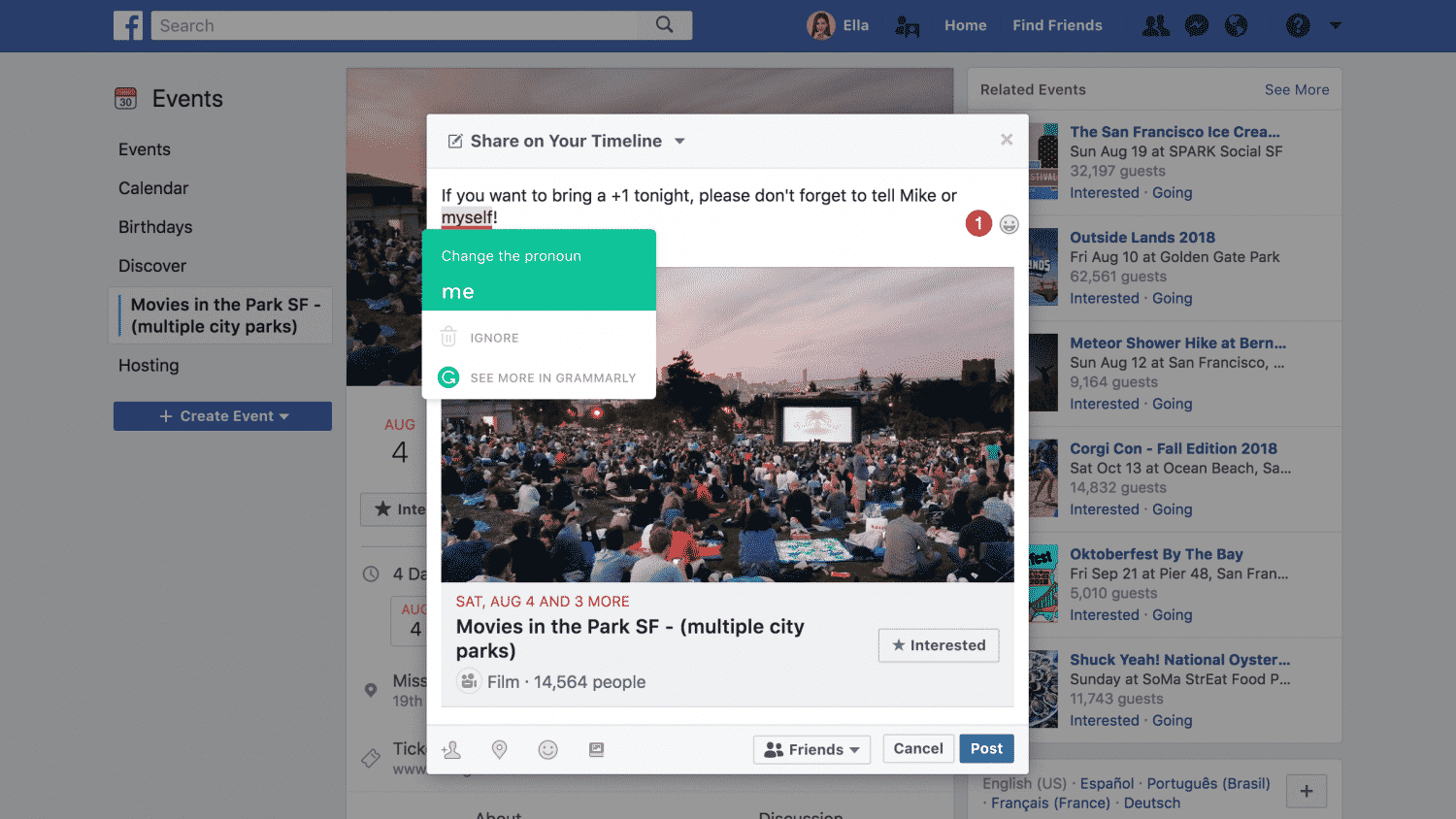
- Grammarly Browser Extension: A free extension for Chrome, Safari, Firefox and Edge. While writing emails or posting on social sites, you get grammar, spelling and punctuation fixes as you type.
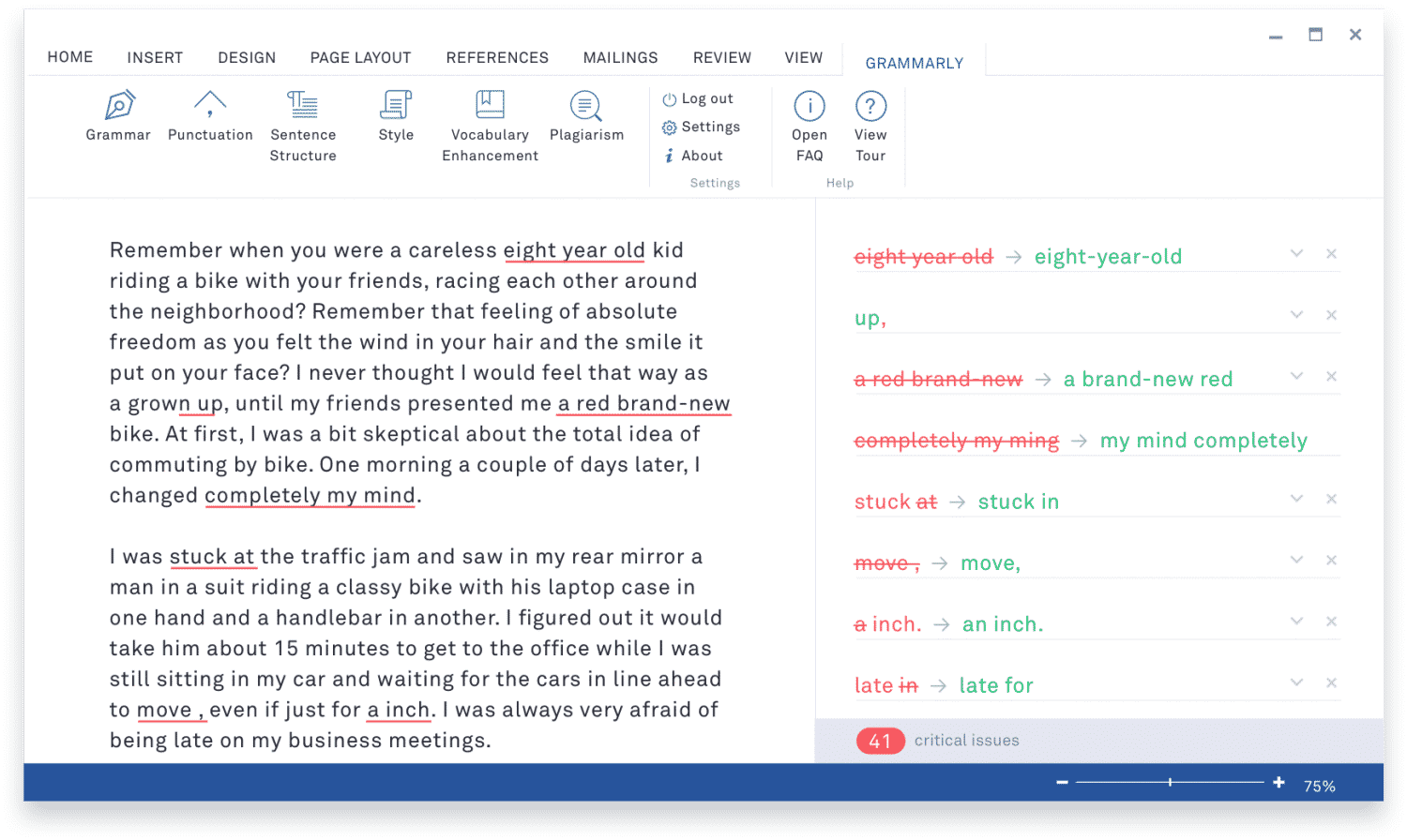
- Grammarly for MS Office: An add-in for Word and Outlook. According to the company, it catches 10x more critical grammar and punctuation errors than Word’s built-in spell check.
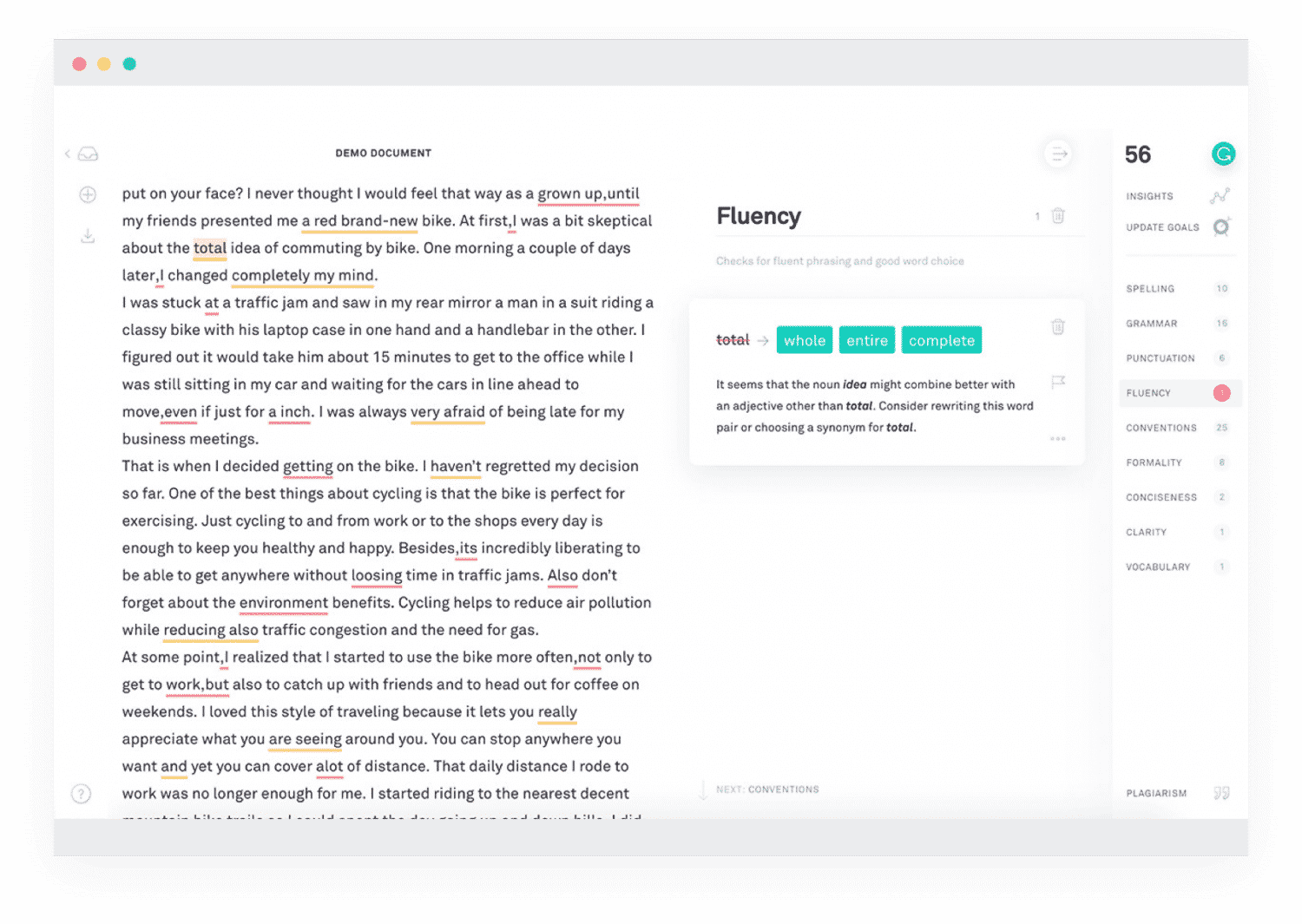
- Grammarly Desktop App: A desktop app for Windows and Mac. You drag in a file or paste text and get suggestions on grammar, style and correctness.
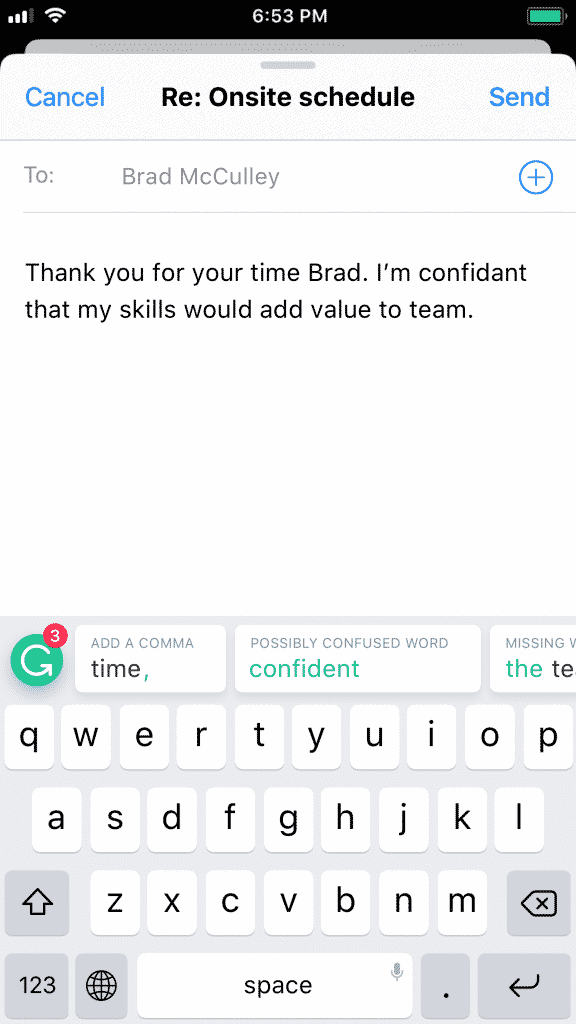
- Grammarly Keyboard: A free keyboard for Android and iOS. It brings grammar checking, spelling, punctuation corrections and vocabulary suggestions into any app you type in.
The rest of the paid market splits along the same lines. An independent 2026 comparison frames it as different jobs rather than one winner: Grammarly handles real-time cross-platform assistance, ProWritingAid targets deep long-form editing, and QuillBot competes on price with a paraphrase-first tool.
The product layer now goes past checking: Grammarly’s lineup adds AI agents like a resume builder, citation finder and AI grader, plus an AI assistant shipped with the Superhuman Suite. That platform layer is what the company sells to enterprise customers.
The free tier is not the only acquisition channel. Grammarly also runs a blog, grammar guide, writing guide and career guides, continuing the old Handbook habit of answering writing questions in public. Those articles pull in search traffic all day long, and a share of those readers complete a Grammarly sign up, install the free products and eventually pay.
How Does Grammarly Work?
Grammarly is backed up with years of extensive research and super powerful algorithms, but it’s quite easy to use and highly efficient. As a SAAS company, Grammarly emphasised a lot towards easing the process of checking grammar while writing creatively and professionally in its initial stage.
A decade back, many users used to refer to dictionaries, professors, or bosses to correct their mistakes in their articles and assignments. But with the advent of Artificial intelligence, Grammarly’s engineers capitalized on this need and developed a product that could tidy their work and simultaneously enhance their way of communicating and learning. With numerous upgrades in their product, Grammarly now boasts of being the simplest Grammar and plagiarism checker and guide in its platform.
- While surfing the web, the free extension automatically detects any errors or issues with your writing or grammar on almost all websites the users are writing on.
- Grammarly is a very lightweight easy-to-use application. You just have to copy and paste your English text into the editor, and it suggests you the correct grammar, spelling, writing style (different for work, personal, and academic), wordiness, punctuation and even let you know if the text is plagiarised from somewhere.
- Grammarly not only corrects the users’ English but also provides accurate reasoning so that they can make an informed choice about why and how to correct the mistake.
Grammarly’s Customer Segments
Grammarly’s reach now spans students, individual writers, and corporate teams. The company reports 40 million daily users and 50,000 organizations on its platform. To serve that range, it splits its product into three segments, each sold and supported differently.
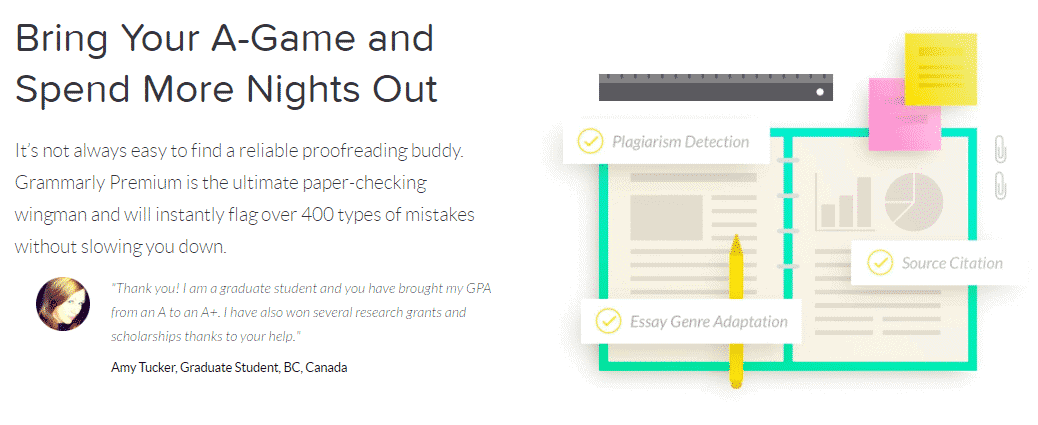
- Grammarly for Education: Students run essays, assignments, and research papers through the tool to catch grammar errors, check citations, and match tone to the genre. The company claims students who write with Grammarly see higher grades alongside improved English and stronger communication skills. Unlike the consumer app, this product is sold as an institutional, campus-wide license. Schools request a quote from sales rather than signing up themselves. Grammarly’s customer page names Boston University, MIT, and Stanford among the universities using it. The company also credits student feedback with shaping the product and runs community programs about communication.
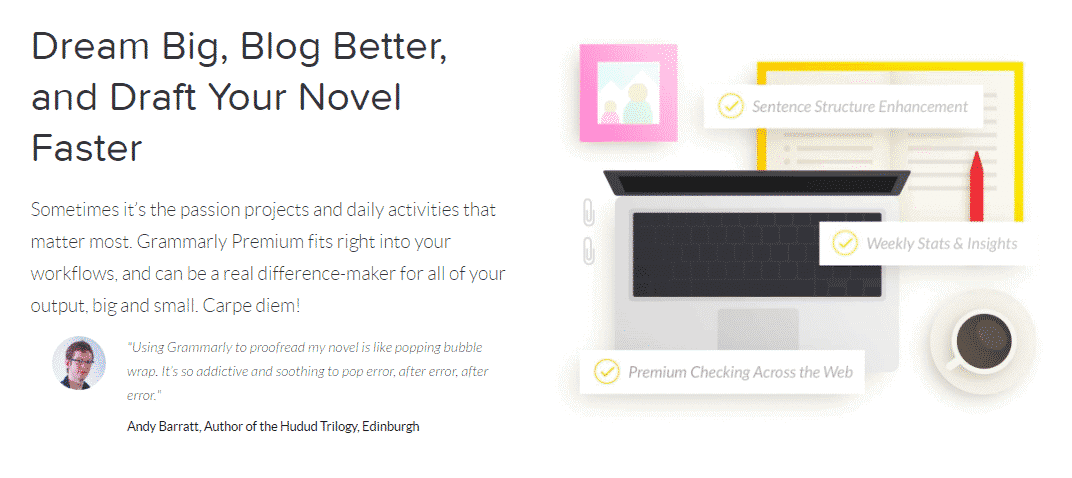
- Grammarly Personal: Individual writers use the tool for blogs, novels, resumes, and social media posts. It replaces repeated manual re-reading with a single check across the whole document. Most of these users sit on the free tier and upgrade to Pro only when they want deeper feedback. User reviews still feed back into tuning the grammar checker.
- Grammarly for Business and Enterprise: Businesses and corporations have to be accurate and impressive not only with their numbers but their communication as well. Grammarly no longer sells a single business edition. Teams of 1 to 149 seats buy Grammarly Pro, while bigger organizations move to Grammarly Enterprise, a quote-based tier delivered with Superhuman Go. Pro adds style guides, brand tones, snippets, and analytics. A new hire writes in the same voice as the founder. Over the years, clients have included Dell, Cisco, Expedia, and The Economist.
How Does Grammarly Make Money?
Grammarly started its operation as a premium tool aimed at big enterprises like universities, corporate firms and organisations. Turning the product into a freemium SAAS was a move to open it to more consumer segments. It was not a rescue plan. The product was already making money while it stayed premium.
When Grammarly switched to the freemium model, it was already profitable with a huge customer base. That base funded the rollout and drove further acquisition. Equity capital stayed cheap for years. General Catalyst’s $110 million round was the first of five. Total equity funding has since reached $545 million. In May 2025 the company added $1 billion in non-dilutive, revenue-linked financing from General Catalyst’s Customer Value Fund. That refill diluted no one and left the $13 billion valuation intact.
The free tier is still the acquisition engine. Grammarly’s live pricing gives away a working product at $0 across all platforms, including 100 generative AI prompts per month. Paying plans start where the free limits bite:
- Free: $0, with 100 generative AI prompts per month.
- Pro: $30 per member per month billed monthly, or $12 per member per month billed annually ($144 per year). Covers teams of 1 to 149 seats and includes 2,000 AI prompts plus team features.
- Enterprise: quote-based, with unlimited members and unlimited generative prompts, plus security extras like DLP and confidential mode. Delivered together with Superhuman Go.
Pro replaces the old Grammarly Premium plan. Existing Premium subscribers were migrated through 2025 with billing unchanged. So a Premium-era customer saw a new name and a new prompt allowance, not a new bill. A 2026 review puts the quarterly option at roughly $60 per member, about $20 a month. It also confirms the 149-seat boundary before Enterprise.
What changed is the meter. The old funnel asked users to upgrade for advanced grammar checks. The new one meters generative AI prompts: 100 free, 2,000 on Pro, unlimited on Enterprise. The freemium funnel survives. The upgrade trigger is now how much GenAI a customer burns each month.
Does Grammarly Sell Data For Money?
No, not according to its own privacy policy.
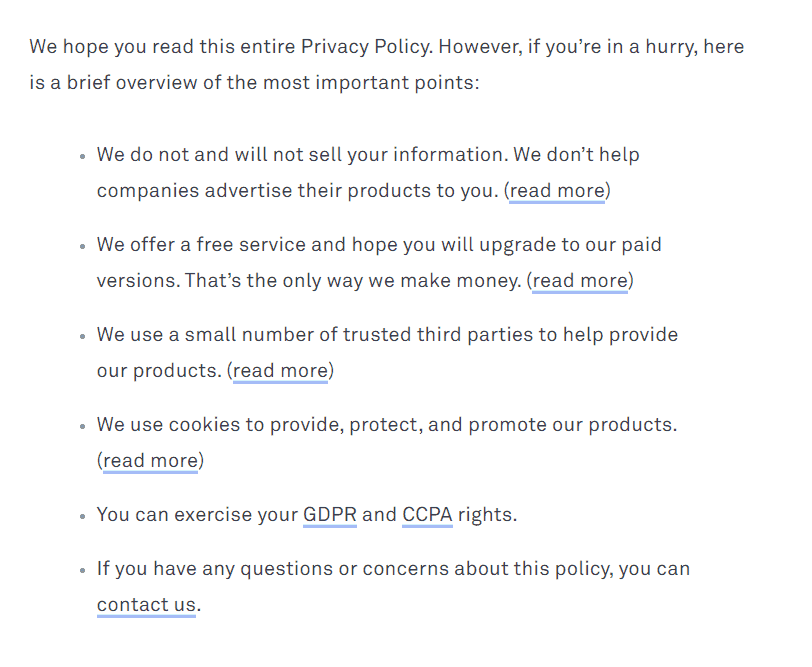
Grammarly’s privacy page says the company analyzes what and how users write only while a product is in active use. Sensitive fields like passwords and payment information are excluded on a best-efforts basis. Grammarly also states it does not record every keystroke. For business customers, training on user data is off by default. These are the company’s own claims, not the result of an independent audit.
Even so, privacy has become a competitive fault line. XDA Developers swapped Grammarly for a local large language model running on a laptop. With a “keep changes very minor” proofreading prompt, the setup delivers the same typo cleanup and nothing leaves the machine. A developer also rebuilt Grammarly-style inline checking in Chrome backed by local Ollama, framing the project around Grammarly’s $12-per-month price. The pitch is price and data locality at once, via a do-it-yourself Chrome build.
The Expert Review lawsuit
In March 2026 the company faced a class action over its “Expert Review” feature, per WIRED. The feature generated edits attributed to named writers who never consented. The suit is Angwin v. Superhuman Platform, Inc. It was filed March 11, 2026, in the U.S. District Court for the Southern District of New York, docketed as 1:26-cv-02005. Investigative journalist Julia Angwin, founder of The Markup, is the lead plaintiff.
Class damages are alleged in excess of $5 million under California name-and-likeness, fraud, and false advertising theories, per the AI Incident Database record. Stephen King and Neil deGrasse Tyson were among the names used. Grammarly disabled the feature before the suit was filed. Product director Ailian Gan said the company “clearly missed the mark.” CEO Shishir Mehrotra called the claims “without merit.”
The business-model angle is the trust overhang. This is a brand that sells to 50,000 organizations, where trust is the product itself. A lawsuit about attributed words strikes at that product, not just at a feature.
What Makes Grammarly Successful?
English is the internet’s working language. About one-quarter of the world speaks it, and more than 1 billion people study it as a professional subject. Around 80% of the data stored online is in English. That is the pool Grammarly sells into, and few writing tools get a bigger one.
The bigger driver is distribution. Grammarly’s free checker has always sat at the top of the funnel. It builds daily habit, then hits a paywall for tone suggestions, plagiarism checks, and team style controls. The company now meters its AI features in prompts rather than monthly seats. Its own site puts the reach at more than 50,000 organizations and 40 million daily users. That gap between the free habit and the paid depth is where the revenue sits. A Grammarly affiliates program pays creators and educators for sending signups, a second engine running on top of the free tier.
The other half of the answer is that Grammarly stopped being just a grammar checker. In 2025 it bought Coda and Superhuman Mail, then in October renamed the parent company Superhuman, with Grammarly remaining its core product under CEO Shishir Mehrotra. Mehrotra’s argument is that AI assistants will live inside every tool people open, not just one text box. In February 2026 it added the spreadsheet startup Rows. Sacra’s private-market tracker, citing TechCrunch, puts that deal at an estimated $50 million to $70 million. The playbook is straightforward: buy daily surfaces, then install Grammarly’s AI inside them.
The pressure now comes from both ends. Free local and self-hosted checkers keep peeling off practitioners who do not want text leaving their machine. Cheaper rivals like QuillBot absorb the casual user at a fraction of the price. And the Expert Review lawsuit over attributed words, covered earlier, is a reminder that a writing assistant’s own output can become evidence against the product. What the teardown shows is a freemium grammar checker that grew into a multi-billion-dollar AI productivity platform. The growth engine is real. So is the trust overhang.
Go On, Tell Us What You Think!
Did we miss something? Come on! Tell us what you think about our article on Grammarly Business Model | How does Grammarly Make Money in the comments section.