A business can easily increase their reach by creating an ecommerce store that either reflects its physical stores or acts as the primary store. This sudden rise in the number of online stores is in a way powered by the Shopify business model.
So –
What exactly is Shopify?
Let’s find out.
What is Shopify?
Shopify is an online service central to the Shopify business model that helps users create ecommerce stores easily by providing the necessary tools needed to do so. Shopify provides a simple and easy to use interface that enables sellers and merchants to create professional-looking online stores even if they have no prior experience or coding knowledge.
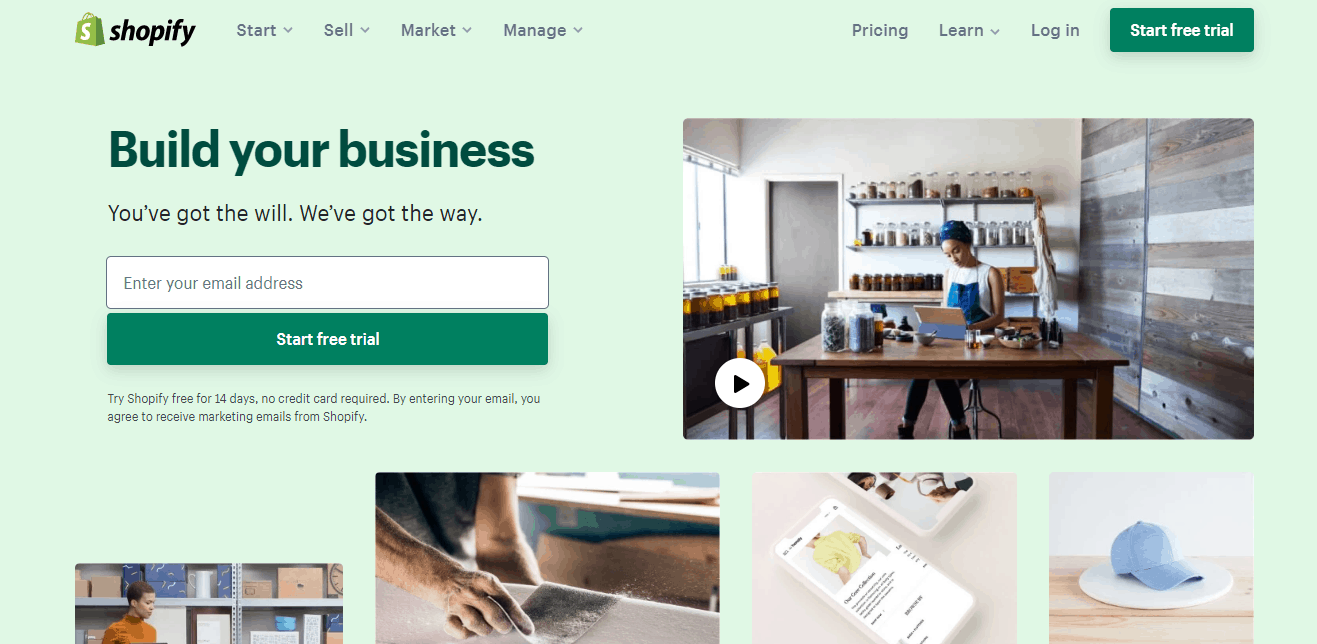
Simply put, Shopify is an ecommerce website builder that takes care of the web-hosting, domain name purchases, and helps in quickly setting up a Shopify website. Shopify also makes it easier to customize the online stores to their liking.
Apart from that, Shopify also provides a shopping cart service that also includes its very own shipping suite – Shopify Shipping. The Shopify Shipping suite provides its sellers and merchants with calculated rates and options to select from major shipping carriers. It also allows the printing of labels from within the suite instead of relying on third-party services.
Shopify Business Model
How Does Shopify Work?
Shopify has a platform business model approach – Shopify acts as a platform that enables users to create an online store in order to sell their goods online. Shopify helps businesses connect with consumers by providing the businesses with the tools necessary to build a Shopify website.
Let’s look at the list of solutions it offers on its platform to get a better understanding.
Shopify’s Ecommerce Solutions
Shopify is a multilateral platform that provides a host of services that enables the creation and functioning of ecommerce stores –
- Creation of storefront

- Shopping Cart Suite

- Store management

- Marketing & SEO

- Products

- Web hosting

- Analytics

- Mobile App

- 24/7 support


Which brings us to –
The key partners that help Shopify work.
Shopify’s Key Partners
Investors & Integrators
The business investors and VCs help the company stay afloat.
Shopify also allows other platforms and sites to be able to integrate Shopify into their services for seamless integration and this is one area of primary focus for Shopify. For example, Shopify has integrations with Facebook and Amazon, which helps Shopify users to be able to easily list the products on either of the sites with just a few clicks.
Blogs & Acquisitions
Shopify runs its own blog packed with resources on starting and growing an ecommerce store.
Shopify also depends on key acquisitions and partnerships like Handshake and DSers. DSers stepped in as the official dropshipping partner after Oberlo shut down in June 2022, integrating drop-shipping services into Shopify.
Payment Gateways
Shopify has its own payment gateways and also supports various other payment gateways in order to provide a variety of options for its users and their customers to choose from.
Here are few payment gateways supported by Shopify:
- PayPal
- Amazon Pay
- Worldpay
- Stripe
Shopify’s Operating Model
Besides from providing the necessary tools and services in order to create and run an ecommerce store, Shopify also allows retailers to sell products without having to carry inventory, eliminating the need for stockrooms and creating significant cost savings in rent, storage, and shipping expenses along with helping in the creation of the online stores.
Shopify works just like any other website builder service when it comes to the creation of the ecommerce stores:
- Create an online store
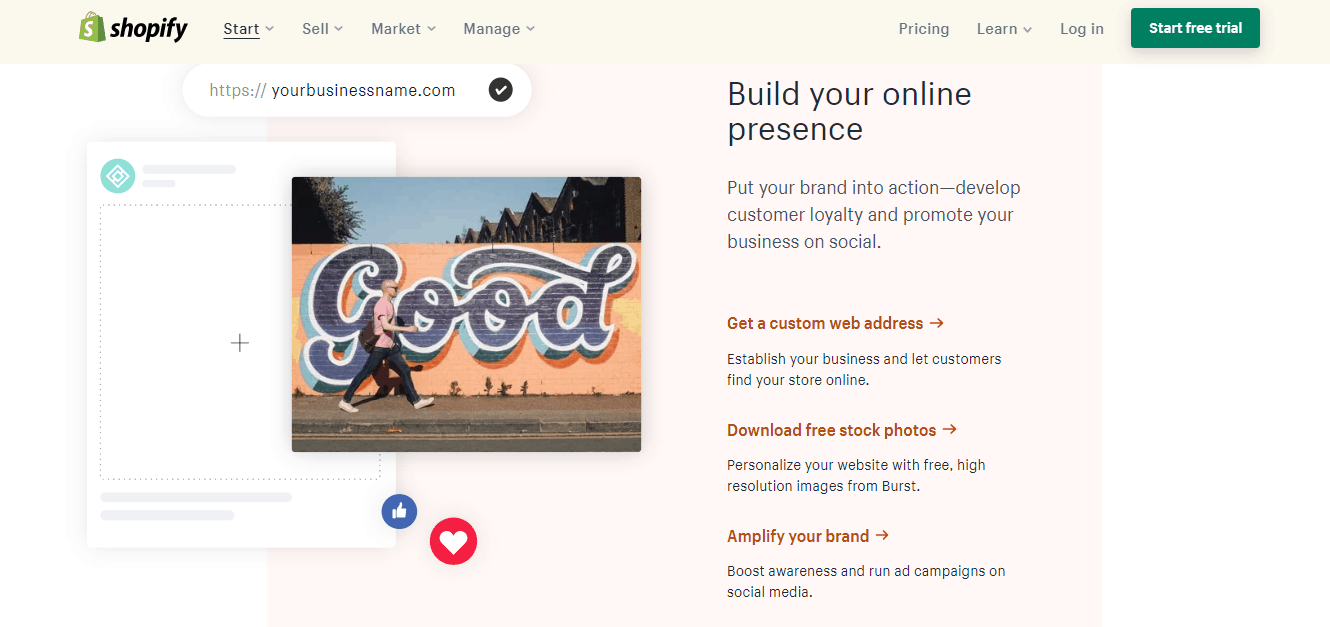
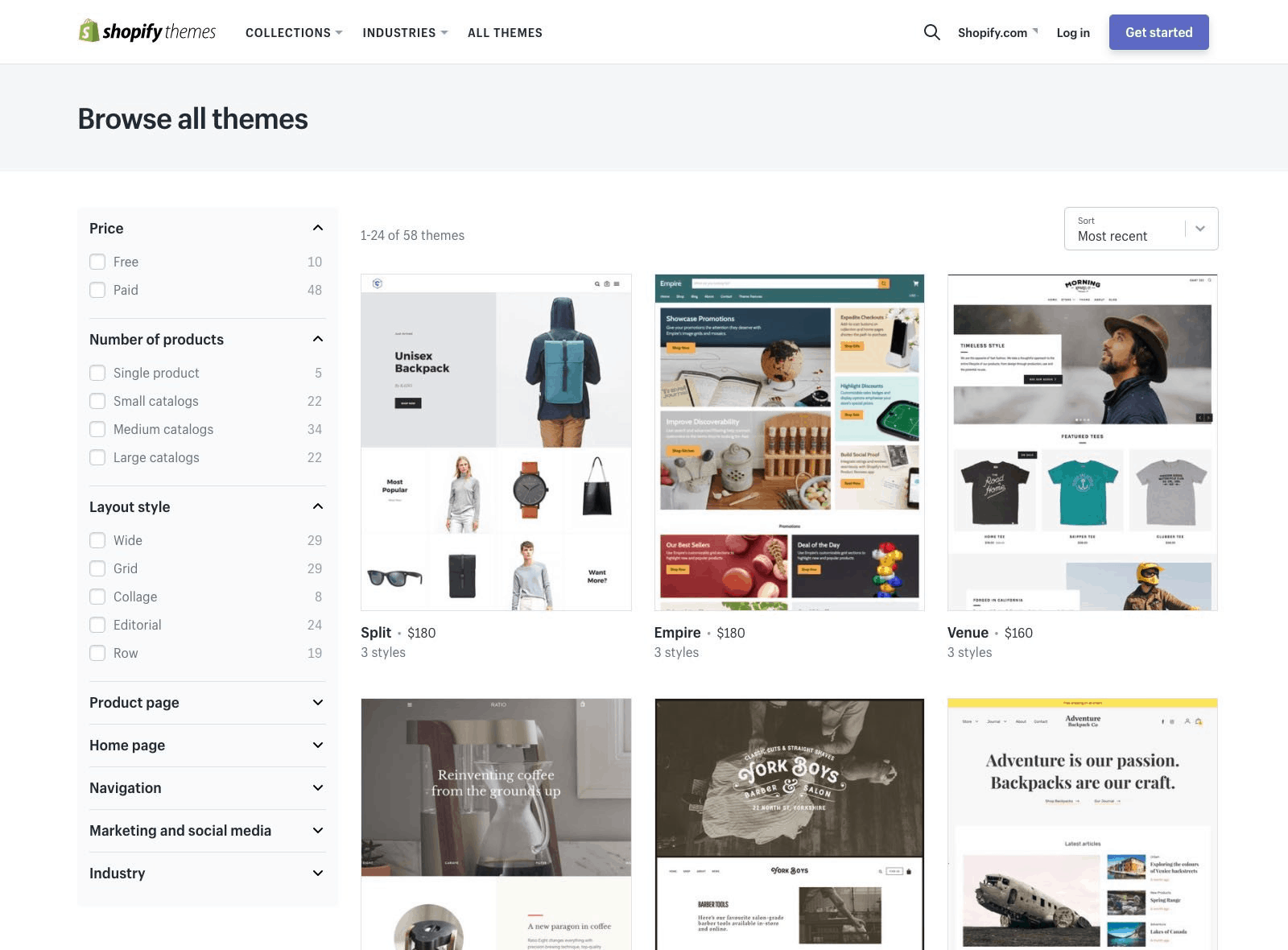
- Customize the store by using themes from Shopify’s theme store
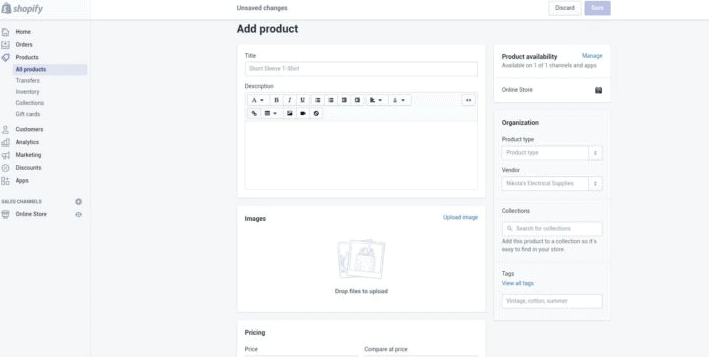
- Add product to the online store
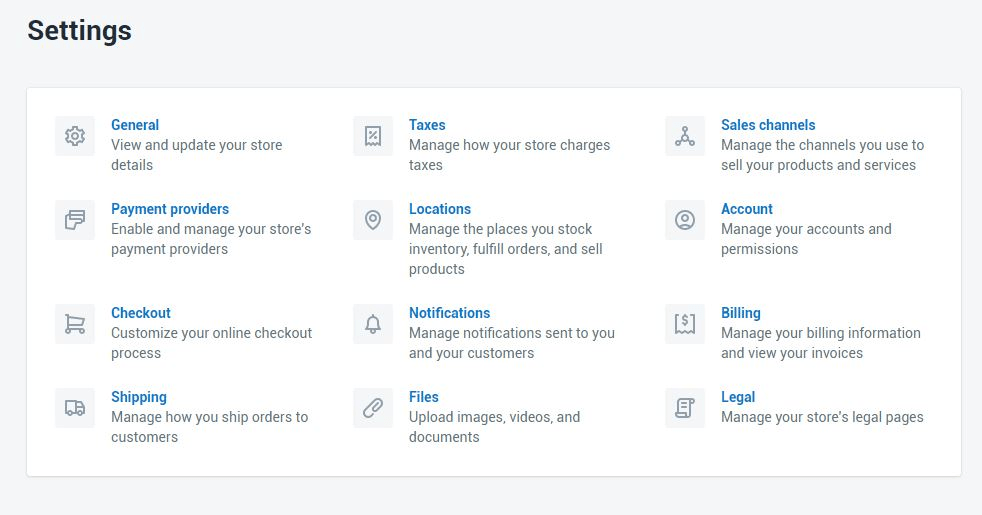
- Edit shop settings
Which brings us to –
How does Shopify make money if it is just a website builder at its core?
Shopify’s AI Features
Shopify has made AI a central part of its platform. The effort touches store management, content creation, product discovery, and testing.
Sidekick is an AI assistant built into the Shopify admin. It works on every screen through typing or voice commands. Weekly active shops using Sidekick grew 385% year over year. Merchants built more than 12,000 custom apps with it in Q1 2026. Sidekick is included with every Shopify plan at no extra cost.
Shopify Magic generates product copy, images, email content, theme designs, and theme blocks within the admin. It also supports media editing and personalized theme generation.
Agentic Storefronts make Shopify products discoverable and purchasable through AI channels like ChatGPT, Copilot, and Gemini. It is built on the Universal Commerce Protocol (UCP) and Shopify Catalog. The system lets AI agents search, compare, recommend, and complete checkouts. Every eligible merchant is made discoverable by AI agents by default. This builds on the Shopify-Google partnership announced in January 2026.
All of these features launched or expanded through the Spring ’26 Edition. The edition went live on June 17, 2026 with more than 150 updates. AI was the centerpiece. Campaign Autopilot runs ad campaigns using AI and is currently in early access. Rollouts adds native A/B testing, and SimGym tests storefronts using simulated shoppers.
How Does Shopify Make Money? | Shopify Revenue Model
Subscriptions
The Shopify Business Model generates the bulk of its revenue through monthly subscription plans that give merchants access to its ecommerce platform.
It offers three main plans for most businesses:
- Basic costs $25/month (or $19/month billed yearly) and provides essential features for starting a small online store.
- Grow costs $65/month (or $49/month billed yearly) and adds better Point of Sale service features.
- Advanced costs $399/month (or $299/month billed yearly). It offers the lowest third-party payment provider fees, making it the best bet for high-volume merchants.
For complex, high-volume businesses, Shopify also offers a Plus plan starting from $2,300/month.
Third-party payment provider fees vary by plan: 2% on Basic, 1% on Grow, 0.6% on Advanced, and 0.2% on Plus.
Merchant Solutions Fees
Shopify has its own built-in payment gateway, and credit card processing fees are a major revenue driver for the company. The rates below apply specifically to Shopify Payments and differ by plan:
- Basic – 2.9% + 30¢ per transaction
- Grow – 2.7% + 30¢ per transaction
- Advanced – 2.5% + 30¢ per transaction
- Plus – 2.15% + 30¢ per transaction
Payment Gateway Fees
When merchants use a gateway other than Shopify Payments, Shopify charges an additional fee that varies by plan:
- Basic: 2.0% per transaction
- Grow: 1.0% per transaction
- Advanced: 0.6% per transaction
- Plus: 0.2% per transaction
Point of Sale Service
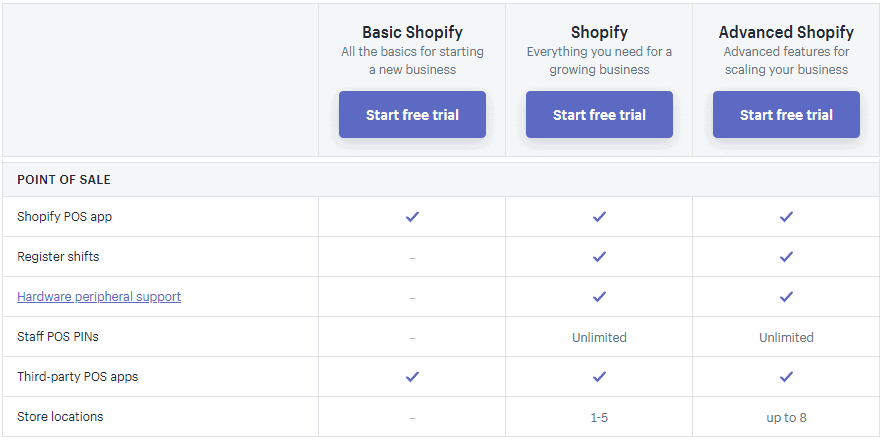
Shopify provides Point of Sale software services that help track sales and transactions that take place in your physical stores and provides unified analytics that blends in-store and online store sales. The POS features on offer vary according to the subscription plan –
Miscellaneous
Shopify also earns quite a bit from the sales of themes via its theme store to its users looking to quickly customize their sites.
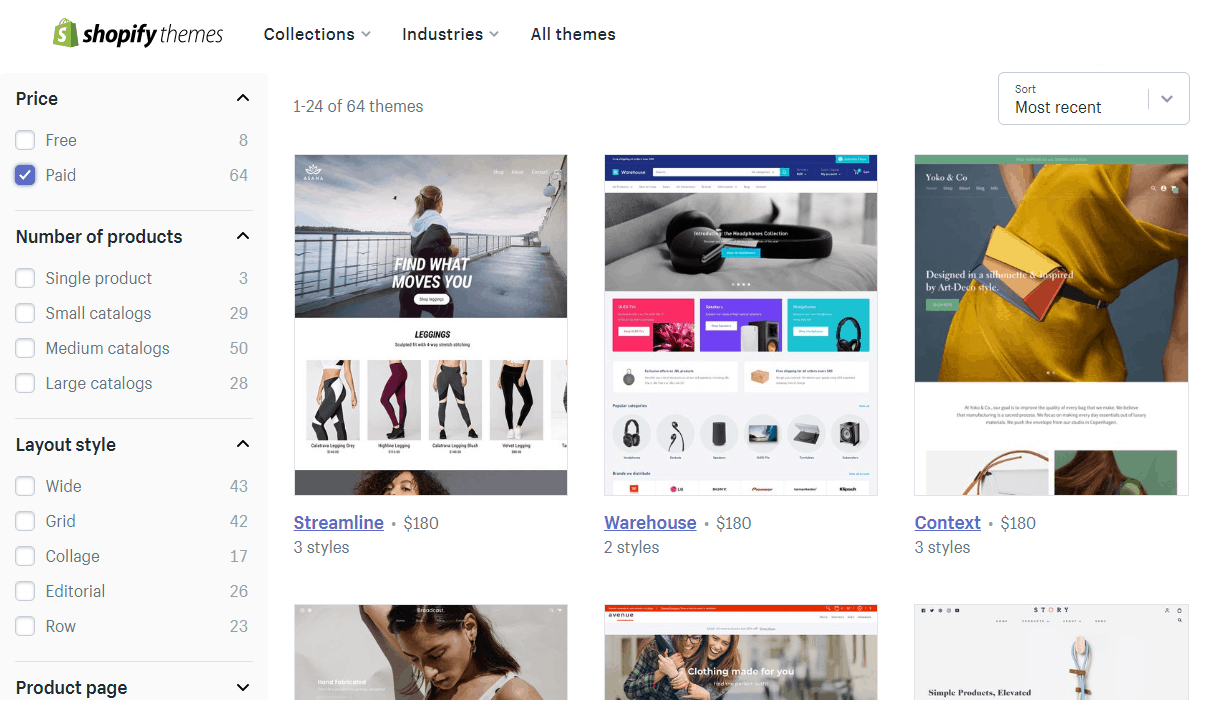
Shopify also provides a lot of extra add-ons and integration to other sites for a fee respectively. This also factors into its revenue stream.
Shopify’s Market Position
The Shopify Business Model dominates the ecommerce platform market. It holds 28% global market share with 5.6 million active stores and over $280 billion in annual GMV (Yaguara). In the United States, roughly 2.8 million sites run on Shopify, capturing about 30% of the market (MobiLoud).
The financials back this up. Q2 2026 revenue hit $3.58 billion, up 34% year over year. GMV reached $115.6 billion in the quarter, a 32% increase (Shopify). Q1 2026 marked the first time merchants cleared $100 billion in GMV in a single quarter (Shopify News). Monthly recurring revenue reached $221 million.
On performance, Shopify’s checkout converts at 72.5%, compared to the industry average of 62.6%. Pages load in 1.4 seconds on average (Digital Applied). Competitors trail on both market share and conversion. WooCommerce holds 21% global market share with 4.7 million stores but a 61.8% checkout conversion rate. Wix captures 23% of the US market and Squarespace holds 16%. BigCommerce accounts for just 3.2% with 44,000 stores and a 64.2% conversion rate.
Why Shopify Works?
We can attribute Shopify’s success to it being able to provide an ecommerce building and hosting tool with additional features that help simplify the seller’s tasks.
Shopify provides a neat, clean and minimal platform that even those with minimal coding skills can use to create a professional-looking store within a short period of time.
Go On, Tell Us What You Think!
Did we miss something? Come on! Tell us what you think about our article on How Does Shopify Work | Shopify Business Model in the comments section.