
It all began in 2013 when Stewart Butterfield went on to design an online game named Glitch. While working, he realized that his team needed an effective internal communication system. This incident led to the development of Slack, the slack business model.
What is Slack?
The acronym Slack stands for ‘Searchable Log of All Conversation and Knowledge’. It is a chat room for a company, which replaces email as the primary method of communicating and sharing. It is a collaboration hub where teams, regardless of size, can work together to get things done.
Slack launched at a time when the hegemony of Microsoft and Windows was breaking down. Thus, more and more companies signed up for Slack. They saw it as a tool to manage their data without any hassle and this resulted in the app’s rapid growth.
The platform started with a slack business model to make work happen! It aimed to give a team the power and alignment it needs to do the best work, regardless of the organization’s size.
Its mission, even today is to promote slack productivity by connecting departments, offices, and countries.
Thus, the major challenge before Slack is to organize a huge amount of data and a large number of people within an organization, without compromising data security and accessibility.
How Does Slack Work?
The slack business model organizes collaboration around seven core features. Each one works together to replace scattered emails, file shares, and app-switching with a single workspace.
Organized Conversations
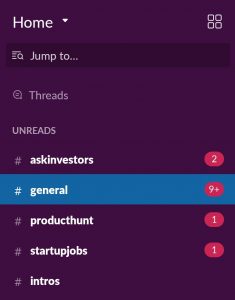
At Slack, information flows through slack channels. One can create as many channels as needed, organized by team, project, or topic. Channels keep conversations grouped and searchable, so nothing gets buried in someone’s inbox.
Trackable History
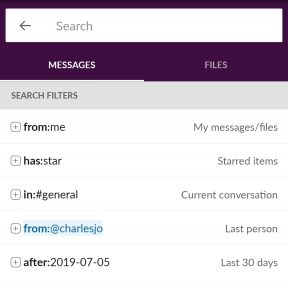
Slack records every conversation, file, and decision. Users can scroll back through any channel to find past discussions, shared documents, or links. The data stays accessible even after one archives or leaves a channel.
Secure Working Environment
Slack secures accounts through two-factor authentication. Even if someone’s password is compromised, unauthorized access remains blocked. The SAML-based SSO feature adds another layer by letting organizations route login through their own identity provider.
Integration
Integration is what separates Slack from a basic messaging app. The platform supports over 2,600 apps, making it the largest app ecosystem among enterprise collaboration tools. Users connect tools like GitHub, Jira, Salesforce, Notion, and Figma directly into their workflows. Slack also includes Canvas for collaborative documents and Workflow Builder for task automation. The platform also offers a native CRM for small businesses to track customers without leaving Slack.
Custom Shortcuts and Commands
Slack lets users create keyboard shortcuts and custom commands beyond the built-in ones. This saves time for power users who repeat the same actions across channels.
Audio and Video Calls
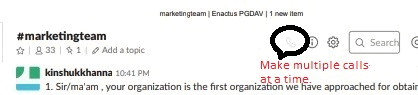
One can make audio or video calls directly within Slack for free, supporting up to 15 participants at a time. This removes the need to jump between separate calling tools like Zoom or Google Meet for quick team discussions.

Bots and AI
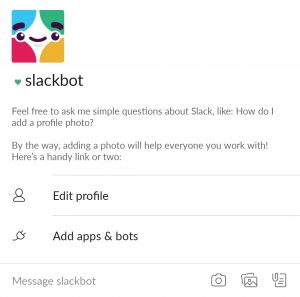
Slack’s bots have evolved far beyond simple reminders. In January 2026, Slack relaunched Slackbot as a full AI agent built on Anthropic’s Claude model. It now offers over 30 capabilities. These include meeting intelligence across Zoom and Google Meet, and deep research mode. It also offers MCP integration that connects to thousands of third-party apps.
Slackbot is included at no extra cost for Business+ and Enterprise+ subscribers. Enterprise+ customers also get AI guardrails to control what data feeds into AI outputs. In March 2026, Slack added AI message translations, automatic file summaries, and personalized daily channel recaps called Recap. All of these require zero setup to activate.
Slack Business Model
The company follows a freemium business model. A free version comes first, with users upgrading to paid plans for advanced features. This approach pairs with a direct sales team to land premium and enterprise customers.
Over 750,000 organizations use Slack, with 200,000 on paid plans. The platform holds strong enterprise traction too. 77% of Fortune 100 companies rely on it for daily communication. That scale drove Salesforce to acquire Slack for $27.7 billion in July 2021.
The acquisition is already shaping Slack’s future. Starting summer 2026, every new Salesforce customer gets Slack auto-provisioned with AI from day one. This bundling strategy gives Slack access to Salesforce’s enterprise base. It positions the platform as the default collaboration tool across those organizations.
How Does Slack Make Money?
Slack makes money primarily through paid subscriptions. The slack business model offers four plans. Free and Pro serve individual workspaces. Business+ and Enterprise+ target organizations that need advanced security, compliance, and multi-workspace support.
New Salesforce customers get Slack auto-provisioned with AI from summer 2026. But for everyone else, the path starts with the free tier. Small teams try Slack at no cost and get comfortable with slack channels and integrations. They run into limits that push them toward paid plans.
The paid plans are priced per user. Pro costs $7.25 per user per month on annual billing or $8.75 per user per month on monthly billing. Business+ runs $15 per user per month annually or $18 per user per month monthly. Enterprise+ uses custom pricing based on each organization’s needs.
All paid plans include AI features like channel summaries, AI search, daily recaps, and file summaries. The full Slackbot AI agent is exclusive to Business+ and Enterprise+. Free and Pro users get a limited trial to test it out. Enterprise+ also adds unlimited connected workspaces, data residency, and advanced admin controls that larger organizations require.
Slack’s paid customers range from individual entrepreneurs and freelancers to multinational corporations. The platform serves teams across industries and organization sizes worldwide.
The competitive landscape shifted in November 2025. Microsoft unbundled Teams from Microsoft 365, making it a separate purchase at $8.55 per user per month. This means organizations now choose their collaboration tool on standalone value rather than accepting it as a bundle add-on. Slack has leaned into this moment, highlighting its native AI features and straightforward pricing. G2 recognized the approach, awarding Slack Best Result, Easiest Setup, and Highest User Adoption in Spring 2026.
Is Slack Sustainable?
The slack business model generates steady revenue. But the real question is whether it holds up financially as part of a much larger company.
In July 2021, Salesforce acquired Slack for $27.7 billion. It is no longer a startup. The platform now operates as a subsidiary within Salesforce. Salesforce reported $41.5 billion in FY2026 revenue, up 10% year over year. The combined “Agentforce 360 Platform, Slack and Other” segment contributed $8.882 billion within that total. Slack’s standalone revenue sits at roughly $3 billion per year, according to CEO Marc Benioff.
This reframes the sustainability question. Slack does not need to prove profitability as a standalone company. It works as a growth driver inside Salesforce, particularly through auto-provisioning for new customers starting summer 2026.
The platform carries a valuation of $26.51 billion. Yet competitive pressure remains real. Microsoft Teams dominates with 320 million monthly active users, far ahead of Slack’s 79 million.
Slack holds strong in technology, media, and integration-heavy organizations. Its deep app ecosystem and customizable workflows give it an edge in those sectors. But it has a steeper learning curve than simpler tools. It also struggles with very large-scale collaborations. In broader enterprise adoption, Teams continues to lead.
The old worry about Slack’s high operating costs was valid when it stood alone. Under Salesforce, those costs sit alongside a much larger balance sheet. Slack’s $3 billion in annual revenue looks different next to a $41.5 billion parent. Slack still needs to keep paying customers engaged. High churn rates would erode its value inside the Salesforce portfolio.
Some FAQs
Before wrapping up, here are the answers to some frequently asked questions.
How much is Slack worth?
According to the latest data, Slack’s net worth stands at approximately $26.51 billion. Salesforce acquired Slack in 2021 for $27.7 billion. The current valuation sits slightly below that acquisition price, reflecting market adjustments over the past few years. As a subsidiary, Slack no longer trades on public markets, so this figure comes from third-party estimates.
How much revenue does Slack have?
Slack generates an estimated $3 billion in standalone revenue for fiscal year 2026. That’s a major leap from the $400.6 million reported in its 2019 S-1 filing. Salesforce no longer reports Slack as a separate line item. CEO Marc Benioff shared the figure during a recent earnings call.
How many users does Slack have?
Slack has 47.2 million daily active users, up from 10 million at the time of its S-1 filing. It also reports 79 million monthly active users. The platform serves over 200,000 paid customers across 750,000-plus organizations worldwide.
What are the functions performed by a bot in Slack?
In January 2026, Slack relaunched Slackbot as a full AI agent built on Anthropic’s Claude. It offers over 30 capabilities, including drafting messages, summarizing slack channels, and answering questions across integrated tools. Slackbot can also react to events in a channel and take action based on incoming data.
What are the operating systems that are required to use Slack?
For desktop, Slack supports MacOS, Windows (7 or above), and Linux. For mobile, it requires iOS (11.1 or above) or Android (4.4 or above).
Go On, Tell Us What You Think!
Did we miss something? Come on! Tell us what you think about our article on the slack business model and how does slack work and make money in the comments section.