If you’re reading this article on your smartphone, curious about how google maps works, there’s a probability that imagining a world without Google Maps now could be a bit difficult for you.
Started as C++ program in 2004, Google Maps has literally brought the world at your fingertips. It has become so important part of our lives and businesses that if we were to experience a crash in Google Maps services, big unicorns like Uber, Didi, and Airbnb will go down along with it.
But how does this giant work? How does Google Maps make money given that it is free to use? Here’s an article to answer all your questions regarding this pioneer of web mapping.
How Google Maps Works?
With more than 2 billion people using it every month, according to Google’s own October 2024 announcement, Google Maps has established its brand name as a synonym for maps. You get traffic layers, road maps, street-level photos, and business listings from the Google Maps app. But how does it all work? Where do Google Maps data sources come from?
The answer to how Google Maps works is crowdsourcing. Google builds most of the map from information other people and organizations feed it, and you help keep it current every time you use it.
Google leans on its Map Content Partners for most of that information. You can think of those partners in five categories:
- Base Map Partners For Geological Maps: The Base Map Partner Program collects vector data from credible organizations like the USDA Forest Service, the U.S. National Park Service, Rails-to-Trails Conservancy, and the U.S. Geological Survey, so the terrain on your base map comes from people who actually survey it.
- Imagery Partners For Aerial Views: Private and government partners supply high-resolution aerial imagery for Google Maps and Google Earth. These images come from satellites or aircraft flying high above the ground, giving you the bird’s-eye layer you scroll over.
- Transit Partners: Transit combines Google Maps data with live agency data on stops, routes, schedules, and fares, so you can plan a trip across trains and buses without leaving the app. These partners include public transit departments and ride-hailing companies like Uber.
- Individual Partners: Google collects location data from your smartphone and analyzes it to give you real-time traffic updates, new routes, and alternate routes. You can also become a local guide and contribute your local knowledge to make the application better.
- Google Business Profile: Google lets the businesses list themselves on Google Maps by registering a Google Business Profile, the tool formerly known as Google My Business. Each listing you find this way was added by the business owner.
Beyond partners, Google photographs the world itself. Its Street View vehicles patrol streets, neighborhoods, and residential complexes almost around the clock, capturing the detailed images you flip through when you drop the little person icon onto a road.
Google also announced in October 2024 that it now uses AI to analyze billions of those images. That analysis lets the company push over 100 million updates to the map every day, so the route and business details you see stay close to reality.
How Google Maps Makes Money?
Google Maps shows you nearby stores, pharmacies, and service centers, and it does all that for free. The bill falls on someone else: advertisers, businesses, and developers who pay Google for access. Analyst estimates suggest a standalone Google Maps would do roughly $11 to $15 billion a year. About 80 to 85 percent of that would come from local-intent ads.
Here’s the catch: Alphabet does not report Maps revenue separately in its filings. Every figure you read is an estimate, not a reported number. The money still flows in three ways, and advertising is the biggest.
1. Advertising
Advertising is the first and largest part of how google maps works as a business. The ads come in two formats: map search ads and promoted pins. Businesses now buy both through one campaign type instead of separate products.
Map Search Ads: When you search for nearby businesses on Google or Google Maps, the paid results appear at the top of the map search results list. You see them as featured businesses whenever you look for a nearby dentist or hardware store, or when you browse your neighborhood on the map.
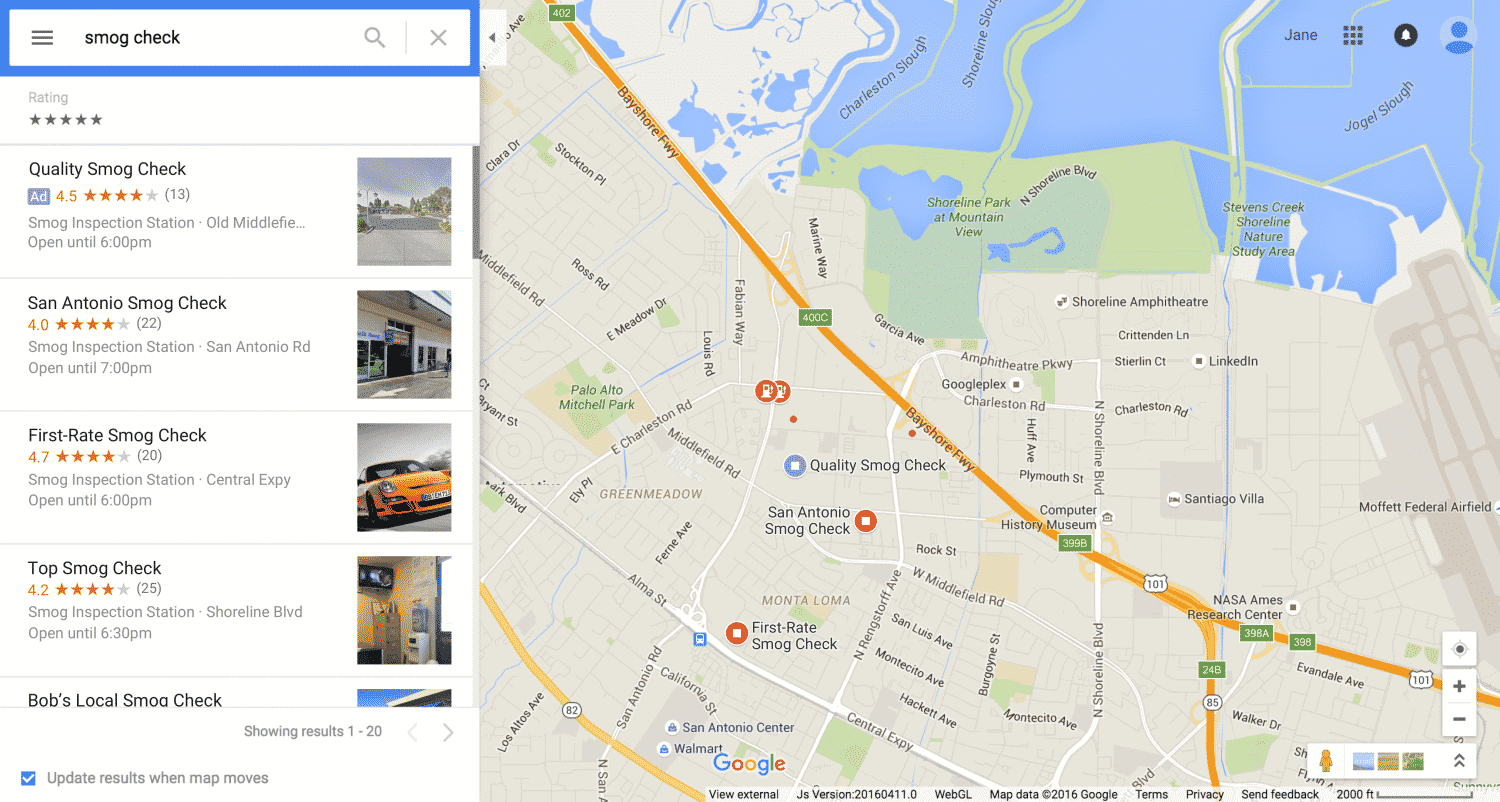
Promoted Pins: Google Maps marks every location with a plain pin icon. In a big city with thousands of businesses, one pin looks much like the next. Google steps in by selling that space: your logo replaces the standard pin. McDonald’s, for example, pays to have its signature ‘M’ logo appear at every restaurant. Differently colored from ordinary pins, the logo pins are easy to spot while you scan the map, open directions, or follow driving navigation. Google charges for them by views or clicks, depending on the campaign type.
The format stays small and quiet. No pop-ups, just your brand sitting where you already look. Clicks come from brand recognition, not interruption.
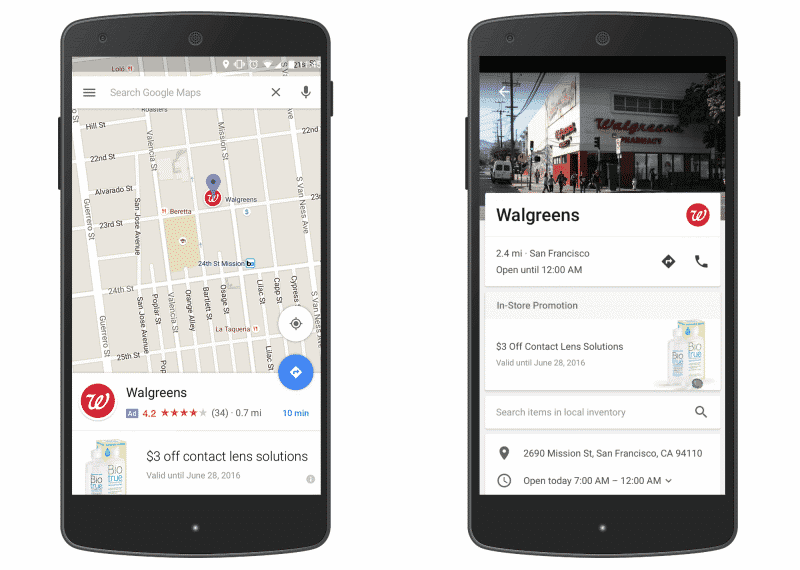
How you buy these ads has changed. Google retired standalone Local Campaigns. Businesses now run Performance Max campaigns with the local store visits objective, and one shared asset library serves Maps, Search, YouTube and more.
Google is pulling the rest of its mapping ad business into that same platform. Waze relaunched its ads in 2026 fully integrated with the Google Ads campaign platform, with international relaunches following between January and March. From August 1, 2026, selected US Local Services Ads businesses also migrate into Performance Max. Those campaigns run on pay-per-lead goals.
One thing to watch: Google launched its Gemini-powered Ask Maps feature in March 2026 with no ads in it, and a Google product director did not rule out ads later.
2. Google Maps Platform
Google Maps isn’t limited to the Google Maps app or Google Maps Go. Uber, Airbnb, and even The Pokemon Company pay to include Google Maps Platform, formerly sold as the Google Maps API, in their services. But what exactly is an API, and how can one company use an application inside its own?
In simple terms, an API is a software intermediary that lets two applications talk to each other. Google Maps sells its API to businesses like Uber and Pokemon Go, which tailor it to their needs and use it to make money.
Google groups the platform into three products:
- Custom Maps
- Routes
- Places
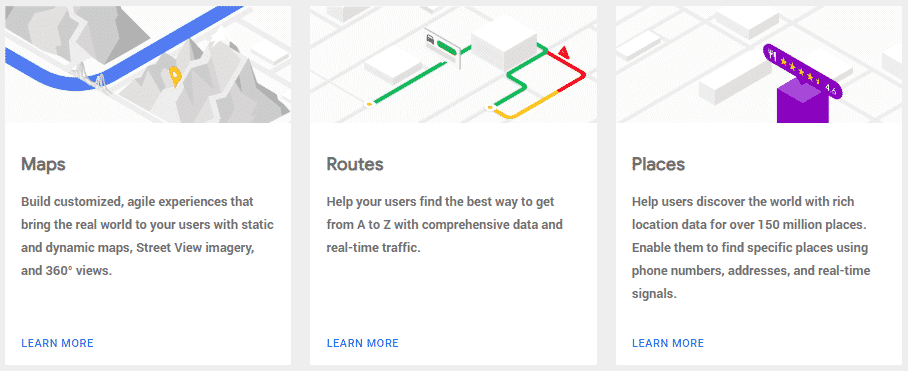
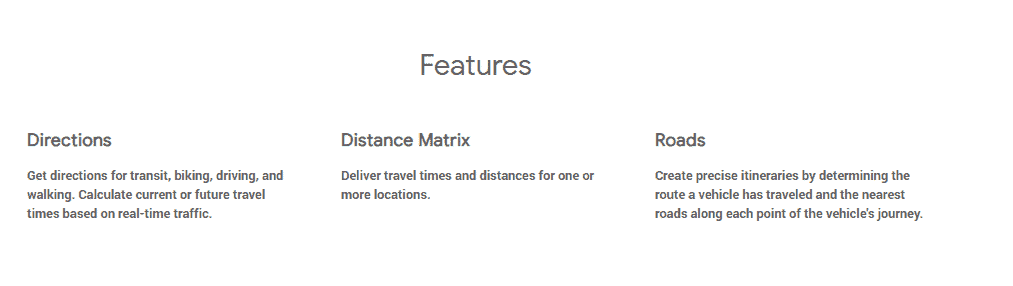
There’s a shift underway. Google now offers a newer Places API (New) and Routes API to replace the classic Places, Directions, and Distance Matrix APIs. Google’s legacy APIs get no new features and will be turned down with at least 12 months’ notice. That pushes you onto the newer APIs, which keeps your product built on Google’s stack.
Custom Maps are customizable maps and street view imagery you can embed in your app or website, helping you get the context you need. Hotel marketplaces, real estate sites, and travel apps use them this way.

Routes has up-to-date transit, biking, driving, and walking directions covering 40 million miles of roads in over 200 countries and territories. It’s used by companies like Vallie, Swiggy, and Appy Parking, which need to be on the road, deliver products, or show routes and live location to you.
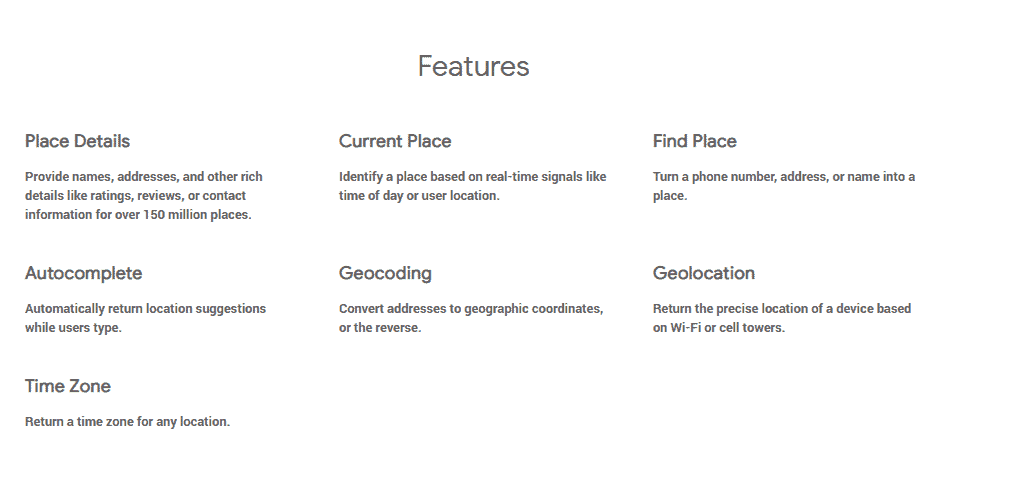
Places helps you discover points of interest on demand. It fits apps and websites dealing in events, trip booking, and trip planning. A trip planner, for instance, can surface restaurants, landmarks, and hotels near a destination.
How much does it cost to use Google Maps Platform?
Google prices the platform on a pay as you go model. You pay only for what you use, and your bill is calculated from the number of calls you make against each SKU.
Free usage works differently than it used to. The old recurring $200 monthly credit is gone, replaced on March 1, 2025 by free monthly thresholds that apply per SKU. They do not pool across your account. You get 10,000 free monthly billable events on Essentials SKUs and 5,000 on Pro, Google’s billing FAQ explains. Enterprise SKUs get 1,000, and the Essentials Map Tiles APIs get 100,000 free calls.
Alongside pay as you go, Google now sells monthly subscription plans: Starter, Essentials, and Pro. Each bundles free monthly calls per SKU plus discounts against standard pay-as-you-go rates. You can compare the plans on the current pricing page. Automatic volume discounts also reach further than before, covering usage above 5,000,000 monthly billable events.
What this does to your bill depends on your product mix. Google’s own example shows 2 million monthly Geocoding calls dropping from $7,900 to $5,050. Light users of several products can pay more, since free usage no longer carries across products.
3. Partnerships
Google Maps has partnered with ride-hailing companies around the world. When you plan a route, a “Request a ride” panel appears alongside transit, walking and driving directions. It compares available ride services and their prices in one sheet. Tapping an option hands you off to that provider’s app to finish the booking. Google’s official help page lists partners including Waymo, Uber, Lyft, Ola, Bolt, Careem, DiDi, Grab, Freenow and others, varying by country.
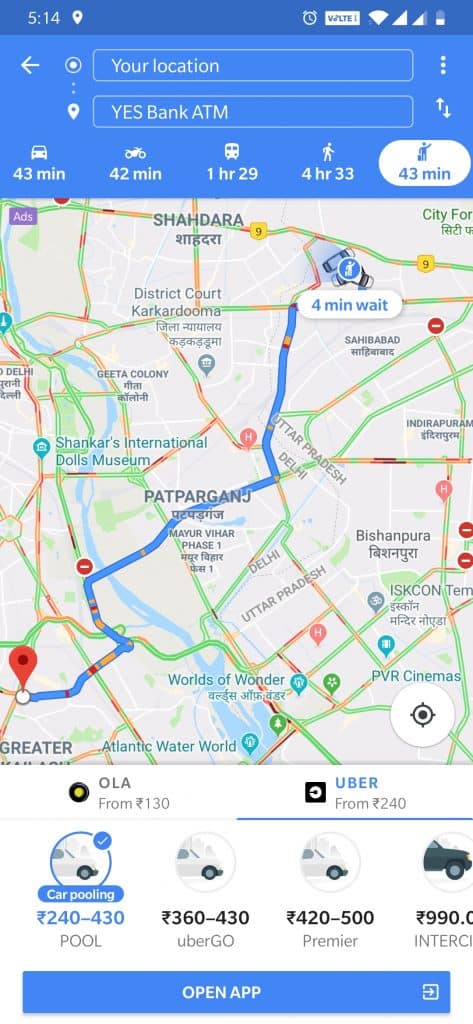
The provider list has grown in one interesting direction: Waymo. Self-driving cars now sit next to human-driven ones in the comparison, so you can weigh a driverless ride against a regular taxi at the same time. Google states that only navigation info is shared with providers. What Google does not publicly disclose is how, or whether, it charges these companies for placement in this view. Either way, the feature keeps you inside Maps while you decide, and it deepens the data relationship between Google and the ride companies.
Does Anyone Else Sell Map Ads?
For years, Google Maps had no real ad-funded rival. That changed in 2026. On August 14, Apple opened Ads on Maps to US and Canadian businesses, following its March 2026 announcement. Ads top the search results and sit in a new “Suggested Places” section, all clearly labeled.
There is no minimum media buy. If you run a small shop, you manage campaigns through Apple Business. Larger advertisers use Apple Ads and its APIs. Apple says Maps draws more than 1 billion relevant business searches a month. Half of those searches lead to an action. Apple also ran a 15% monthly credit, up to $1,000 a month, for card purchases before October 11, 2026.
Here’s the catch. Apple’s July 14, 2026 policy bans home-services categories: plumbing, electrical, locksmith, HVAC, pest control, roofing, and general contracting. Alcohol, gambling, crypto ATMs, and medical services are out too. Ads are limited to physically visitable places. TechRepublic confirmed the launch.
What does this mean for Google? This is the first real competitor to Google’s map ad inventory. Some brand budgets may shift. But Apple banned the verticals that buy most local ads. If you are a plumber or locksmith, Google Maps remains the only map selling ads to you.
Go On, Tell Us What You Think!
Did we miss something? Come on! Tell us what you think about our article on How does Google Maps make money, or about how google maps works, in the comments section.