
I keep noticing the same thing on TikTok lately. The creator demoing a skincare serum in one ad looks real. Then the next ad has another “person” doing the same pitch, and neither of them actually exists.
You’re scrolling past AI-generated UGC more often than you realize. HeyGen’s 2026 testing found AI UGC costs roughly $2 to $20 per video versus $50 to $500-plus for human creators. That cost gap is exactly why brands are quietly swapping their creator rosters for generators, per their 2026 analysis.
I spent the last few weeks running the same product scripts through every serious UGC generator I could find, checking lip sync, realism, and whether the output holds up in a real feed on mobile. These are the 7 I’d trust with my own product ads in 2026.
The Rundown
- If You Want URL-to-Ad Speed: Creatify, “Paste a Shopify or Amazon link and turn it into scripted avatar ads, roughly $1.65 per clip on Pro.”
- When Testimonial Realism Matters: Arcads, “You bring the script and get motion-capture actor ads that read human, if you can swallow about $110 a month.”
- Your Ecommerce Entry Point: Tagshop AI, “Start on a free tier, then pay $29 a month to turn product URLs into localized UGC ads across 75+ languages.”
- Keep One Face Across Formats: Higgsfield, “Train a creator from around 20 photos and reuse that same face across unboxing, try-on and review ads from $15 a month.”
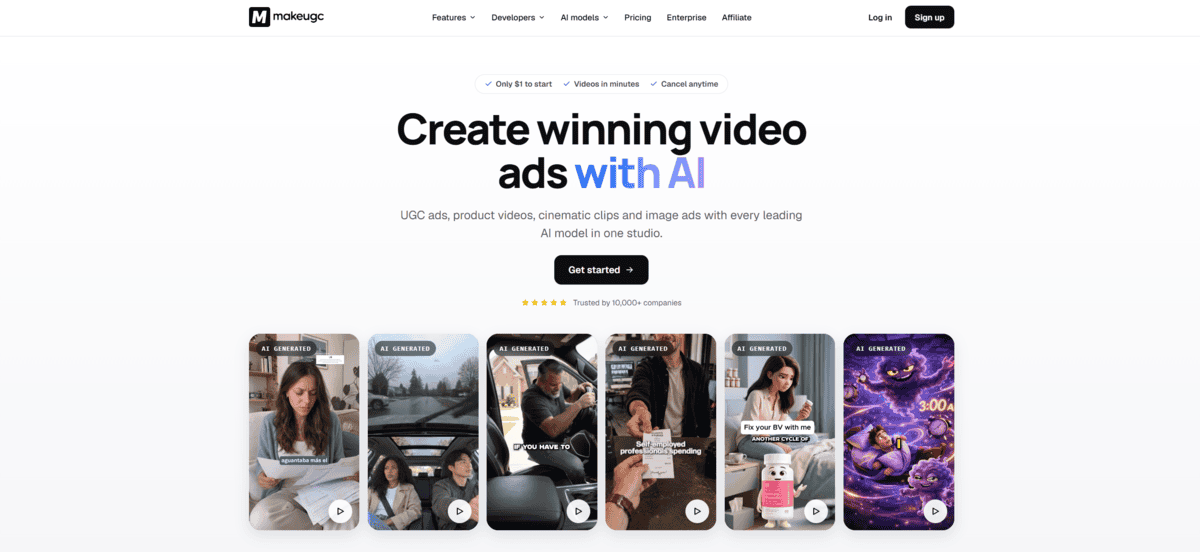
- Batch Ten Hooks at Once: MakeUGC, “Upload one product photo and get actors holding your actual item in ten-variation batches, though that mode needs the Pro plan.”
The Best Ai Ugc Video Generators
Creatify
Best for | Product-ad variant testing from a Shopify or Amazon link |
Pricing | Free (10 credits), Starter $39/mo, Pro $99/mo |
Standout feature | URL-to-video pipeline with Batch Mode |
Avatar library | 300 on free, 1,500+ on Pro |
Watch-out | Credits burn fast during iteration |
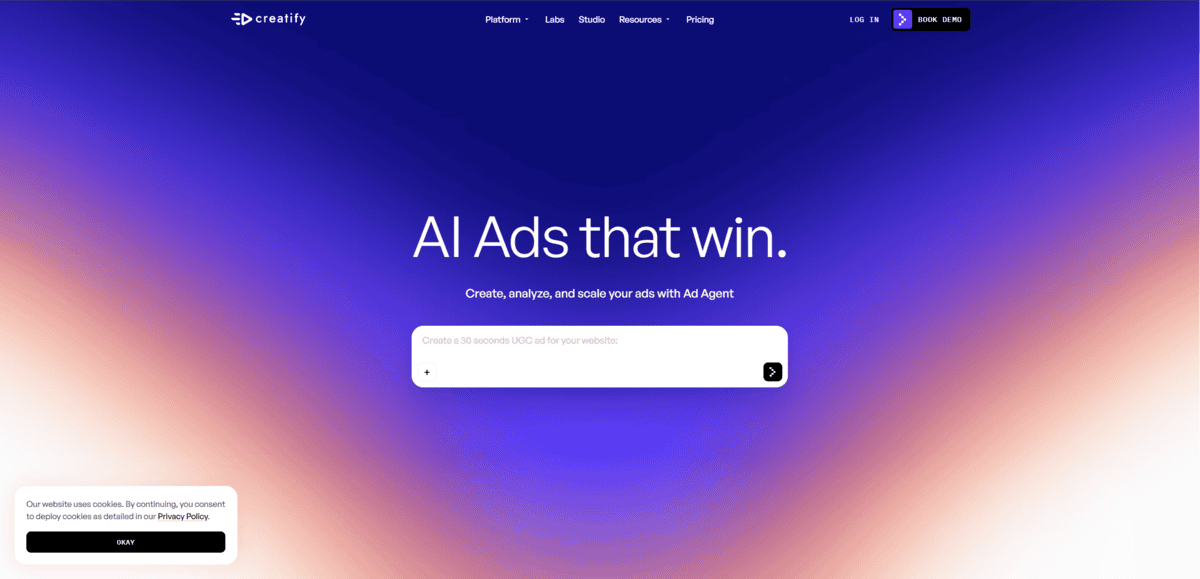
I dropped in a product URL, and within minutes I had a script, an avatar, a voiceover and a video ad. Fast.io’s 2026 review clocks the same flow at 5-10 variations in under 3 minutes. Its G2 read is telling too: 4.8 out of 5 across 1,511 reviews, and ease-of-use mentions outnumber output-quality mentions by more than two to one. People like using it. They are not wowed by the footage.
Batch Mode is what I would actually pay for. One product page becomes dozens of hooks at once, which is the only sane way to feed a testing calendar. On the company’s own pricing page, Pro runs $99 a month for 300 credits, the avatar library lists 1,500+ actors, and 75+ languages are included. Do the math and a 30-second ad lands around $1.65 a clip.
My main issue is credit math. Re-generating eats credits quickly, and that is a recurring complaint in a three-month user thread on r/advertising. I also found avatar realism slipping past 30 seconds, and the auto-cut assembly can mangle raw footage.
HeyGen is cheaper per second and covers far more languages, but it has no URL-to-video flow. You bring the script. Arcads has more convincing testimonial actors, though it starts much higher with no free trial. Creatify wins the paste-a-link race.
Treat the output as fast first drafts. Watch the credits. Review every render before it goes live.
Arcads
Pricing | Starter ~$110/mo for 10 videos, Creator ~$220/mo for 20 |
Free plan | None. No trial, no public pricing page |
Best For | Testimonial and talking-head ads at paid-social volume |
Actor Library | Marketed 1,000+, reportedly ~300 unlocked on Starter |
Export Options | 1080p in 9:16, 1:1, 16:9. No 4K on entry tiers |
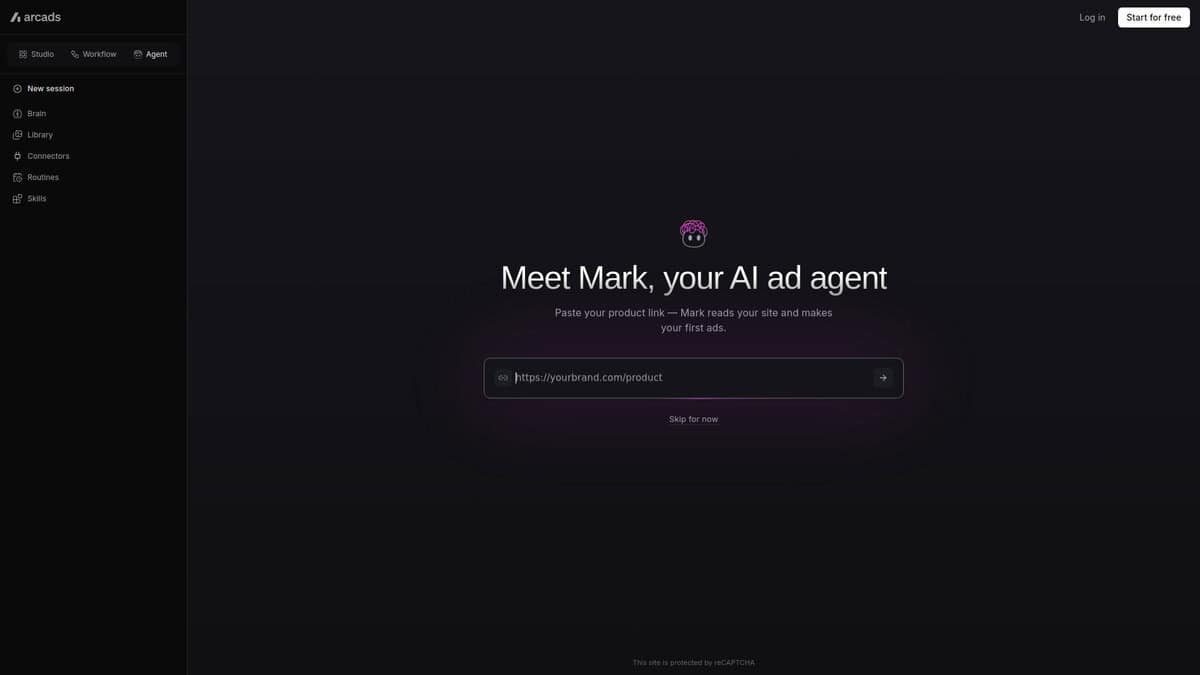
I loaded a 45-second testimonial script, picked an actor, and had a creator-style ad in roughly four minutes. The lip-sync on the opening hook held up. No uncanny eyes, no puppet gestures.
That realism comes from actors built out of motion-capture footage of real performers. The body language reads human. It is the whole reason to pay the Arcads premium over cheaper script-to-video tools.
The iteration loop is fast. One reviewer’s two-week Meta test turned 24 scripts into 41 variants across 8 actors, averaging 4.2 minutes per render (AI Funnel Insider). I ran 11 variants of one script across different actors in about 45 minutes. Speech-to-Speech let me read the script aloud and have the actor mirror my delivery. The emotional read improved noticeably.
Then the cracks. Unboxing is a structural weak spot. Reviewers keep hitting the same wall: product elements going missing or rendering wrong. One of my own unboxing presets glitched and burned a credit anyway. Hands near real products go strange. Texture, stitching, gadget demos, no good.
Pricing is where most people blink. Every render bills a full minute, so a 15-second hook costs the same as a 60-second cut. No free trial. No public pricing page. The listed actor count is also tier-gated, with Starter reportedly showing closer to 300 than 1,000.
And the commercial experience divides people. Trustpilot sits at 2.6/5 across 183 reviews, polarized between five-star fans and billing complaints.
Who it is for: teams already spending real money on paid social, where creative quality is the bottleneck. Under $500 a month? Start with MakeUGC or HeyGen first.
Tagshop AI
Best for | Ecommerce brands and dropshippers |
Starting price | Free tier, then $29/mo Starter |
Avatars and languages | 300+ AI actors, 75+ languages |
Standout feature | URL-to-complete-ad pipeline |
Known limitation | Occasional avatar stiffness |
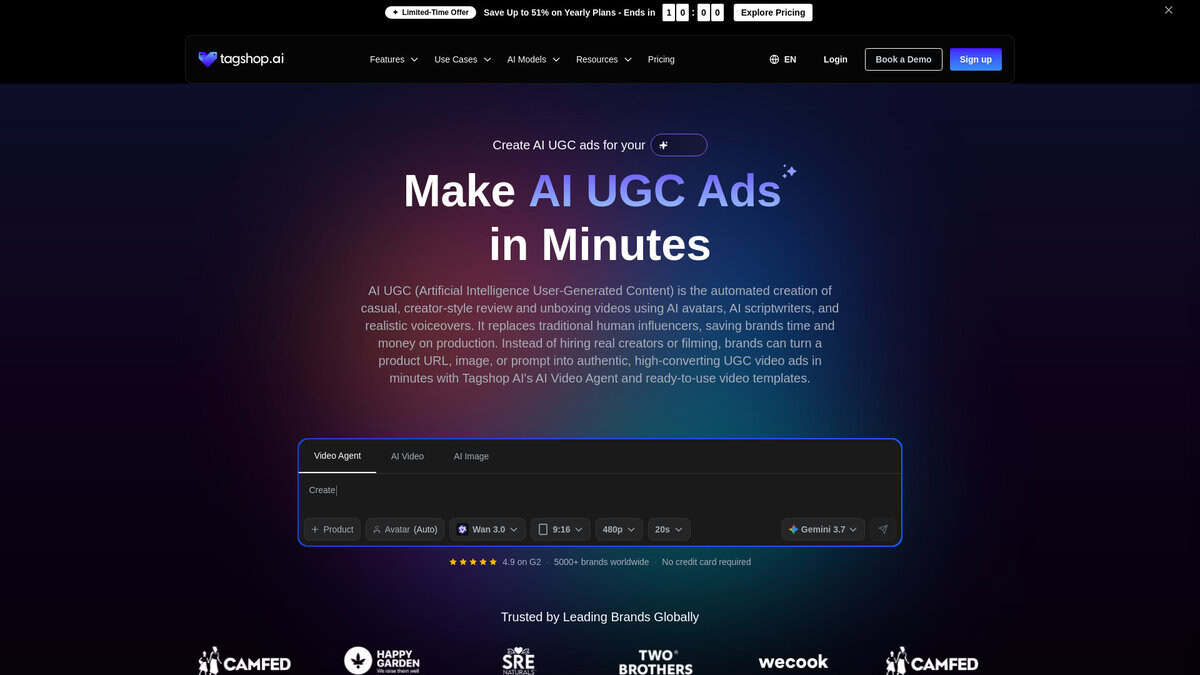
For ecommerce brands that want UGC-style ads without booking creators. The pitch is simple. Paste a product URL from Shopify, Amazon or WooCommerce, and you get a vertical UGC ad built around that product. I pasted a Shopify link and had a usable 9:16 ad in about eight minutes, avatar included.
The pipeline: Tagshop picks one of its 300+ AI actors to match the product, then an AI Video Agent drafts the script, voiceover, captions and B-roll. You can steer it conversationally, which I preferred over Creatify’s more mechanical setup. Exports go straight to Meta and TikTok.
Volume is where it clicked for me. I generated variants across three product pages in one afternoon, then localized a winner into two markets using the 75+ languages and voice cloning. That took minutes, not a reshoot.
Pricing stays reasonable. There’s a free tier to test the workflow, Starter runs $29/mo, and GetHookd’s 2026 review lists plans up to $129/mo. Confirm current pricing before committing.
My gripes. Avatar motion gets stiff now and then, mostly in longer takes. The editor frustrated me too. Images land above the avatar but below text, and the avatar layer won’t move. A 3-star reviewer hit the exact same bug and called it seriously limiting. Annoying, not disqualifying.
Know what it isn’t. I ran one avatar ad against a human-creator cut on cold TikTok placement. The avatar version read as AI and its hook rate trailed the human ad. Retargeting and warm audiences suit it better than cold reach.
Against others in this roundup: it’s ecommerce-first and cheaper to enter than HeyGen, more complete than MakeUGC’s hooks-first tool, and less filmmaker-oriented than Higgsfield. If you sell physical products and need fresh creative weekly, try the free tier. If your ads depend on human charm, keep your creators.

Higgsfield
Pricing | Starter $15/mo, Plus $49/mo, Ultra $129/mo |
Best For | Multi-format UGC ad sets with one consistent creator |
Identity Setup | Soul ID trained from 20 to 80 reference photos |
Clip Length | 15-second cap per Marketing Studio clip |
Learning Curve | Low, one-tap format modes |
The first thing I tested was whether one creator could carry a whole campaign. Soul ID trains once, then keeps that same face across every format I generated. I ran unboxing, product review and try-on cuts without re-uploading a photo.
That consistency claim held up for me. In Dan Kieft’s walkthrough, he trains a Soul ID from around 20 photos and shows the identical face at a desk, from a side angle, and walking out of a store in a different outfit. Same person, three scenes, no drift. When I needed that across one campaign, Soul ID held the face better than rebuilding a fresh avatar per clip did in my tests.
Marketing Studio gives you one-tap modes for UGC, Product Review, Unboxing and Virtual Try-On. That saved me from constructing shots by hand. The catch is a 15-second cap per clip, per Higgsfield’s own docs, so anything longer gets stitched together, and stitched clips are where seams show.
Watch the credits. Bounce between models and the balance drains faster than you expect. I’d start on one plan, run the same brief a few times, and only then decide if the math works for your volume.
Chained clips still sound AI to me. I caught it in the audio first, then hands, teeth and fast lip-sync. One Shopify practitioner’s workflow write-up flags the same tells and notes that Meta and TikTok both require AI-content disclosure labels for realistic synthetic media, so plan for that in your ad setup.
Plans run $15, $49 and $129 a month per Higgsfield’s own pricing. I’d start small and see how fast you burn through drafts. If you only need a single talking head, the credit math gets harder to justify.
MakeUGC
Best for | Ad variations and batch testing |
Starting price | $59/mo ($29/mo billed annually) |
AI actors | 300+ on Startup, 1,000+ on Pro |
Standout feature | Batch Mode, 10 variations at once |
Trial | $1 for 72 hours, auto-renews |
For media buyers who need to test many hooks fast, this is where I’d start.
The Product in Hand mode is what I kept coming back to. Upload one product photo, pick an actor, and they hold and show your actual item. MakeUGC claims a render in around two minutes and export up to 4K. For a paid social test, that’s the quickest path I’ve found to a plausible hook with your product in frame.
Batch Mode is what earns it a spot here. Up to 10 variations in one pass, so you aren’t building videos one at a time. A hands-on September 2026 review scored it 8.5 out of 10 for batch creation and scalability, with 8/10 for avatar realism and 9/10 for ease of use. Video Agent goes further: paste a competitor’s winning ad, and it rebuilds the flow around your product. Useful, not magic. The structure carries over. The hook still needs your judgment.
The built-in editor covers captions, music, B-roll and trims. You get 50+ languages and voice cloning. API and MCP sit on every plan, which I didn’t expect at this price.
Now the pricing cliff, because it catches people out. Batch Mode needs Growth at $79/mo. But Product in Hand and the full 1,000-actor library only unlock on Pro at $149/mo. Annual billing pulls those down to $39 and $79. If product-in-hand is your reason to buy, plan for Pro from the start.
My main issue is billing. On its Trustpilot profile, 207 reviews split hard: 51% one-star, 45% five-star. The rating itself is currently unavailable after a guidelines breach. Cancellation, subscription and refund dominate the complaints. The company does reply to most of them. One practical tip: cancel the $1 trial deliberately and keep the confirmation.
It’s a small London startup, unfunded, founded 2023. That shows in the support friction, and in the polish.
I’d point media buyers and e-com brands testing paid social at volume toward this. Making one video a year? Look elsewhere.