
I tried generating an AI avatar for a client video last month. The result looked like a wax figure from a haunted museum.
The AI avatar market is projected to grow from $0.80 billion in 2026 to over $5.93 billion by 2032, but most tools still produce avatars that feel more creepy than convincing, according to recent market research.
I tested dozens of generators this year to find the ones that actually create avatars you’d be okay showing to a real person. The difference between a good tool and a bad one is the difference between a professional video and a meme.
Here are the 8 best AI avatar generators in 2026 that I’d actually recommend.
The Rundown
- Scale Multilingual Content Fast: HeyGen, “You get Avatar V’s 9.2/10 realism score and 175+ language lip-sync translation starting at $24/month for unlimited videos.”
- Enterprise Training at Scale: Synthesia, “You get ISO 42001 certification and a free 10-minute monthly plan for script-driven training videos across 160+ languages.”
- Edit Avatars On Your Phone: Captions, “You build a digital twin from 10 seconds of footage and produce full-frame social content entirely on your iPhone.”
- Build Real-Time Avatar Conversations: D-ID, “You embed V4 Expressive Avatars with selectable sentiments into apps via API for live two-way conversations under $5.90/month.”
- Plug Training Into Your LMS: Colossyan, “You export SCORM-compliant training videos with built-in quizzes and branching scenarios across 100+ languages.”
- Embed Digital Twins In Your App: Tavus, “You integrate sub-600ms conversational AI avatars via API with Phoenix-4 rendering at 40fps and 1080p resolution.”
- Pick From 2,000+ Avatar Options: AI Studios, “You choose from five avatar creation types including product and interactive modes with unlimited videos at $24/month.”
The Best Ai Avatar Generators
HeyGen
Pricing | Creator $24/mo (annual), Pro $99/mo, Business $149/mo + $20/seat |
Best For | Scalable structured content, localization, and personal digital twins |
Languages | 175+ languages with lip-sync translation |
Avatar Technology | Avatar V (video-trained), Avatar IV (photo animation), Avatar III (routine) |
Ease of Use | 9.2/10 score (independent test) |
What stood out immediately was Avatar V. I tested it against Synthesia’s latest and the difference was clear. Independent scoring puts HeyGen’s Avatar V at 9.2/10 on realism versus Synthesia’s 8.2/10. The micro-expressions feel natural. The lip-sync holds up even in close-up shots. If you’re building a personal digital twin, this is the most realistic option available right now.
Then I tried the language support. HeyGen covers 175+ languages with voice cloning. I uploaded a 2-minute English recording and generated a Spanish version with perfect lip-sync. The voice sounded like me, just speaking Spanish. For global marketing teams, this is a game-changer. You record once and localize everywhere.
Video Agent surprised me. I gave it a simple prompt: “Create a 60-second product explainer for our new SaaS tool.” It generated a complete video with avatar, voiceover, visuals, and transitions in under 3 minutes. No other avatar tool offers this kind of prompt-to-video automation. It’s like having a production assistant who works at lightning speed.
But here’s the catch I wish someone had warned me about. Avatar V consumes 20 credits per minute, while Avatar III uses only 3. That 1,000-credit Pro plan covers just 50 minutes of Avatar V footage, not 333 minutes. The realism comes at a premium price. I learned to draft with Avatar III first, then upgrade only the most important scenes to Avatar V.
Compared to competitors, HeyGen wins on realism and language breadth. Synthesia offers stronger enterprise compliance (SOC 2, ISO 42001). Colossyan provides SCORM export for L&D teams. D-ID specializes in real-time conversational avatars. HeyGen’s strength is scalable, structured content with the widest language coverage.
Pricing is competitive. The Creator plan at $24/month includes unlimited videos, beating Synthesia’s 10-minute monthly cap at a similar price point. But watch the credit system carefully. Users report confusion between “unlimited” claims and actual credit limits. Trustpilot shows a 3.9/5 rating with complaints about credit usage and customer support.
After testing, I’d recommend HeyGen for marketing teams needing multilingual content at scale, founders creating digital twins, and agencies producing client videos. If you need enterprise compliance certifications, look at Synthesia. For SCORM export, consider Colossyan. But for pure avatar realism and language coverage, HeyGen leads the pack.
Synthesia
Pricing | Free (10 min/mo); Starter $22-29/mo; Creator $67-89/mo; Enterprise custom |
Free Plan | Yes, 10 minutes/month with 9 avatars (watermarked) |
Best For | Corporate training, onboarding, internal comms, multilingual content |
Ease of Use | High (94% ease of setup rating on G2) |
Languages | 160+ with AI-powered lip-sync translation |
I tested Synthesia expecting another talking-head generator. What I found was a complete production system built for volume. The slide-deck-style editor felt familiar, like PowerPoint meets video. That makes sense for L&D teams already creating presentations.
The avatars are professional and consistent. They’re not the most lifelike (HeyGen edges ahead there), but they’re reliable for five-minute training modules. The new Express-3 model improved naturalness, though longer scripts still show limited emotional range.
What actually justified the cost for me was the AI Dubbing. I uploaded a 10-minute English training video and got a dubbed German version with synced lip movements in under 15 minutes. According to one Reddit reviewer, this is “the single feature that justifies the price for teams operating across multiple markets.” I agree after testing it myself.
The security credentials matter for enterprise procurement. Synthesia is the first AI video company with ISO 42001 certification, plus SOC 2 Type II and GDPR compliance. That’s why 90% of Fortune 100 companies use it, according to MakerThrive’s analysis.
Where it frustrates: minutes don’t roll over, so a re-render after edits costs the same as a new video. There’s also a big pricing jump between the Creator plan ($89/mo) and Enterprise (custom). Custom avatars add $1,000/year on top.
If your team produces script-driven videos regularly and needs multilingual output, Synthesia is worth the investment. If you need hyper-realistic avatars for marketing, look elsewhere.
Captions
Best For | Mobile-first social media creators |
Price | Free / $9.99 / $24.99 per month |
AI Avatars | 225+ library avatars, custom twins from 10s of footage |
Key Feature | Full-frame generation with natural micro-expressions |
Biggest Limitation | Creation-only, no scheduling or analytics |
I tested Captions with one question: does it actually work for someone who edits entirely on a phone? The short answer is yes, better than anything else in this category for that specific workflow.
The Mirage Avatar X model is what caught my attention. You record ten seconds of footage and it builds a digital twin with gestures, background motion, and subtle facial expressions. Fastlane’s independent review confirmed the same finding: twins from roughly 10 seconds of source footage, with faster setup than HeyGen or Synthesia.
What I liked most was the full-frame output. Prizmad’s review describes it well: Mirage models generate the entire frame, face, body, gestures, and background, unlike older avatar tech that animates a cropped still. For short-form social content, that difference is the gap between looking like a real video and looking like a cutout.
The auto-captions deserve a mention too. Over a hundred styled templates, word-level sync, and eye contact correction that redirects your gaze to the lens while reading a teleprompter, which Presenc AI calls a significant quality upgrade for talking-head content.
My main issue: it stops at creation. No scheduling, no analytics, no direct publishing. You also need an iPhone for the best experience. And watch your credits carefully. They drain faster than expected on heavier AI features.
If you need scale or multilingual content, HeyGen is a better bet. If you need corporate training videos, Synthesia. But for the solo creator shooting on a phone and posting the same day, Captions is the strongest option right now.
D-ID
Pricing | From $5.90/mo (Lite) |
Free plan | 14-day trial (watermarked) |
Best for | Real-time conversational avatars |
Languages | 120+ with voice cloning |
API | Yes, packages from $18/mo |
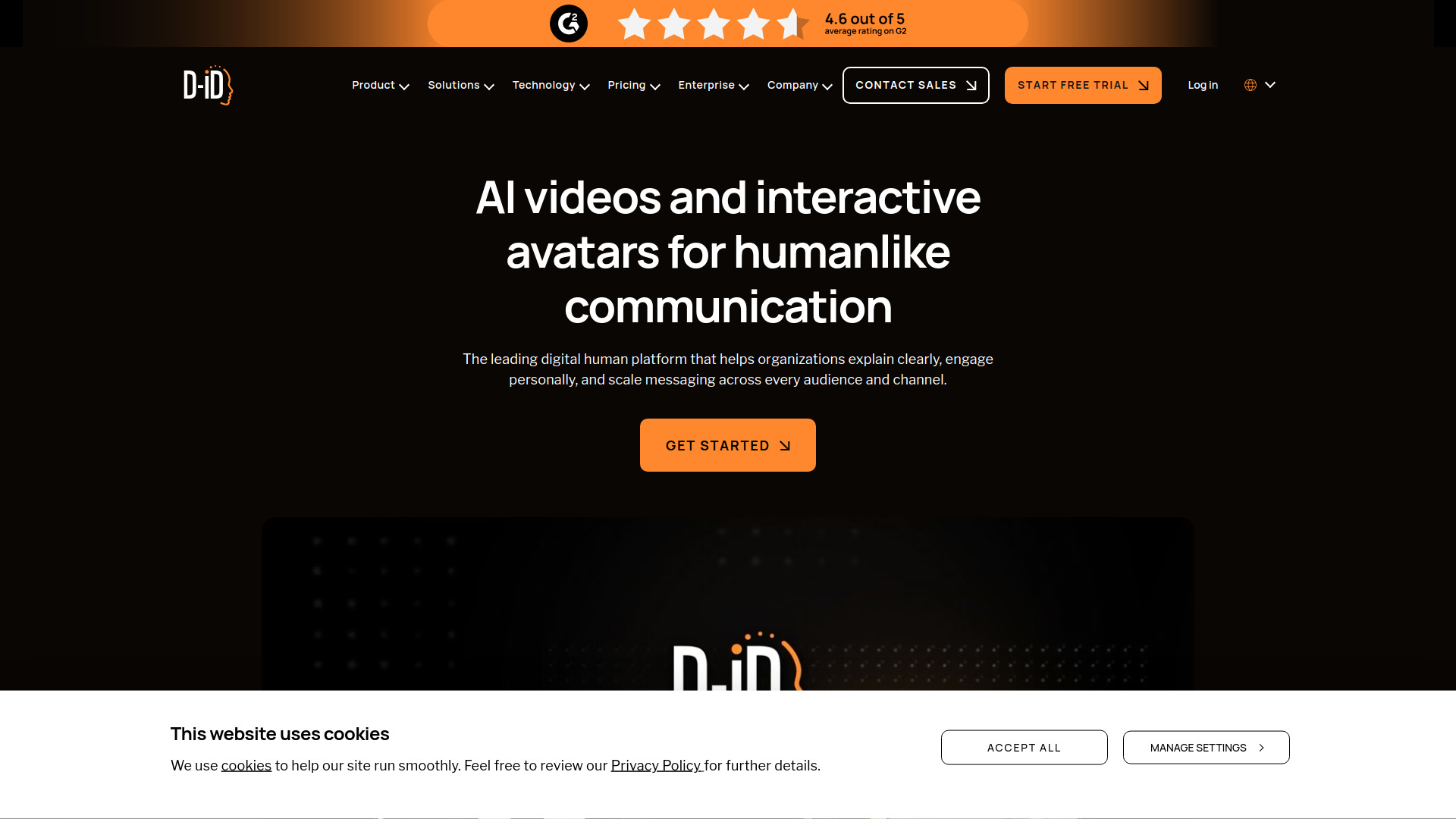
What caught my attention first was D-ID’s March 2026 launch of V4 Expressive Avatars. These aren’t procedural animations. They’re trained on real actor performances, which explains why the lip-sync feels different. According to D-ID’s own SyncNet benchmark, they ranked first among real-time platforms with a 10-15% performance lead over competitors like Anam and HeyGen.
The real differentiator is selectable sentiments. You can choose Friendly, Professional, Empathetic, Excited, or Frustrated tones for your avatar. This matters when you’re building a customer service bot or an interactive training assistant. The avatar matches the emotional context of the conversation.
I’ll be honest about the limitations. For pre-recorded corporate videos, D-ID trails HeyGen and Synthesia in overall avatar polish. The facial animation around the eyes and forehead can feel mechanical. But that’s not really what D-ID is for anymore. It’s built for live, two-way conversations with sub-0.5-second response times.
The pricing structure is straightforward but tricky. The $5.90 Lite plan gets you in the door, but you’ll need the $29 Pro plan for commercial use rights. Reddit users note that costs can add up quickly if you’re running many real-time sessions.
If you need an avatar that actually converses with people in real time, D-ID is the only tool truly built for that. For one-way video content, you might want to look elsewhere.
Colossyan
Pricing | Free (3 min), Starter from $27/mo, Business from $88/mo, Enterprise custom |
Best For | Corporate training, compliance courses, scenario-based learning |
Avatar Library | 300+ stock avatars (NEO 2 engine), custom avatars from webcam |
LMS Integration | SCORM export on all paid plans, quizzes and branching built in |
Ease of Use | Rated 4.6-4.8/5 on G2 from 480+ reviews; praised for clean editor layout |
Where It Fits
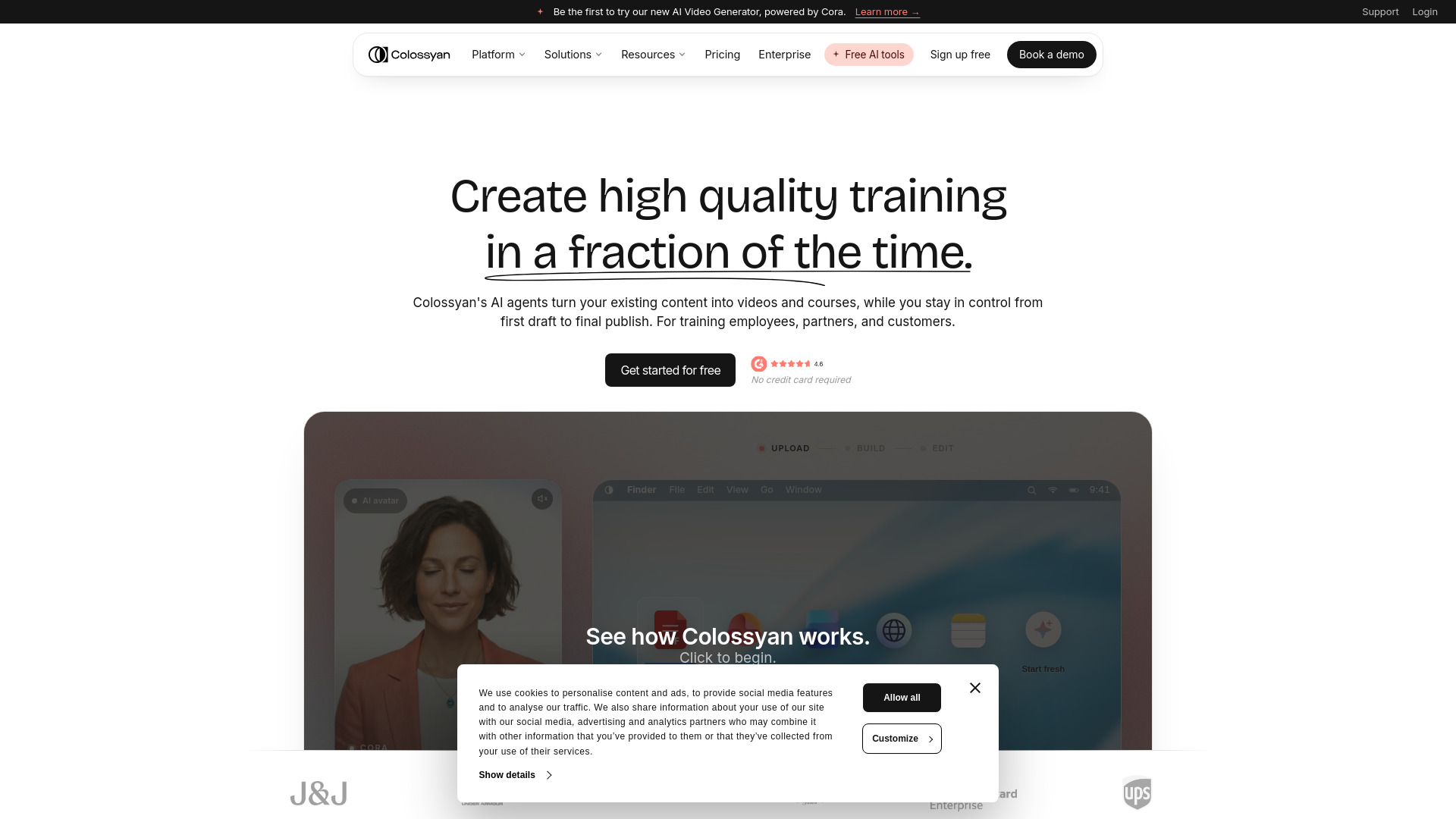
I tested Colossyan specifically for training video workflows. What makes it different from every other avatar tool here is simple: it was built for L&D teams, not marketers. SCORM export comes standard on all paid plans. You can embed quizzes directly inside videos. There’s even a Choose-Your-Path feature that lets learners make decisions affecting the video’s outcome. No other tool in this category does that.
The NEO 2 engine powers the avatars now. They gesture naturally, shift their weight, and don’t look like stiff talking heads. I ran test scenes with multiple actors in dialogue and the side-view avatars handled conversation surprisingly well.
What I Liked Most
Cora, the AI agent, drafts complete training videos from your documents, slides, or scripts. Nothing renders until you approve it. Unlimited free drafts before any minutes get consumed. That saved me hours of guesswork.
Custom avatars can be created from a single webcam recording instantly. For something more polished, studio-quality avatars run $1,000/year as an add-on. Voice cloning is available too, with 900+ voice options across 100+ languages.
The instructional design community on Reddit agrees. Colossyan is the go-to platform for scenario-based learning and soft skills training in 2026.
Where It Falls Short
Scene pauses and batch production glitches still show up. Trustpilot reviewers flagged noticeable pauses between scenes compared to competitors. Template variety is limited. The starter plan gives you just 15 minutes of video, which feels tight.
If you need a marketing tool with hundreds of templates, HeyGen is better. If you want the largest avatar library, Synthesia wins there. But for building structured training content that plugs into your LMS? Colossyan is the right choice.
Tavus
Pricing | Free to $397/mo (Growth); Enterprise custom |
Free Plan | 25 CVI minutes, 25 stock replicas |
Best For | Developers embedding real-time AI video personas into apps |
Languages | 30+ |
Licensed LLM | BYO via OpenAI-compatible endpoints |
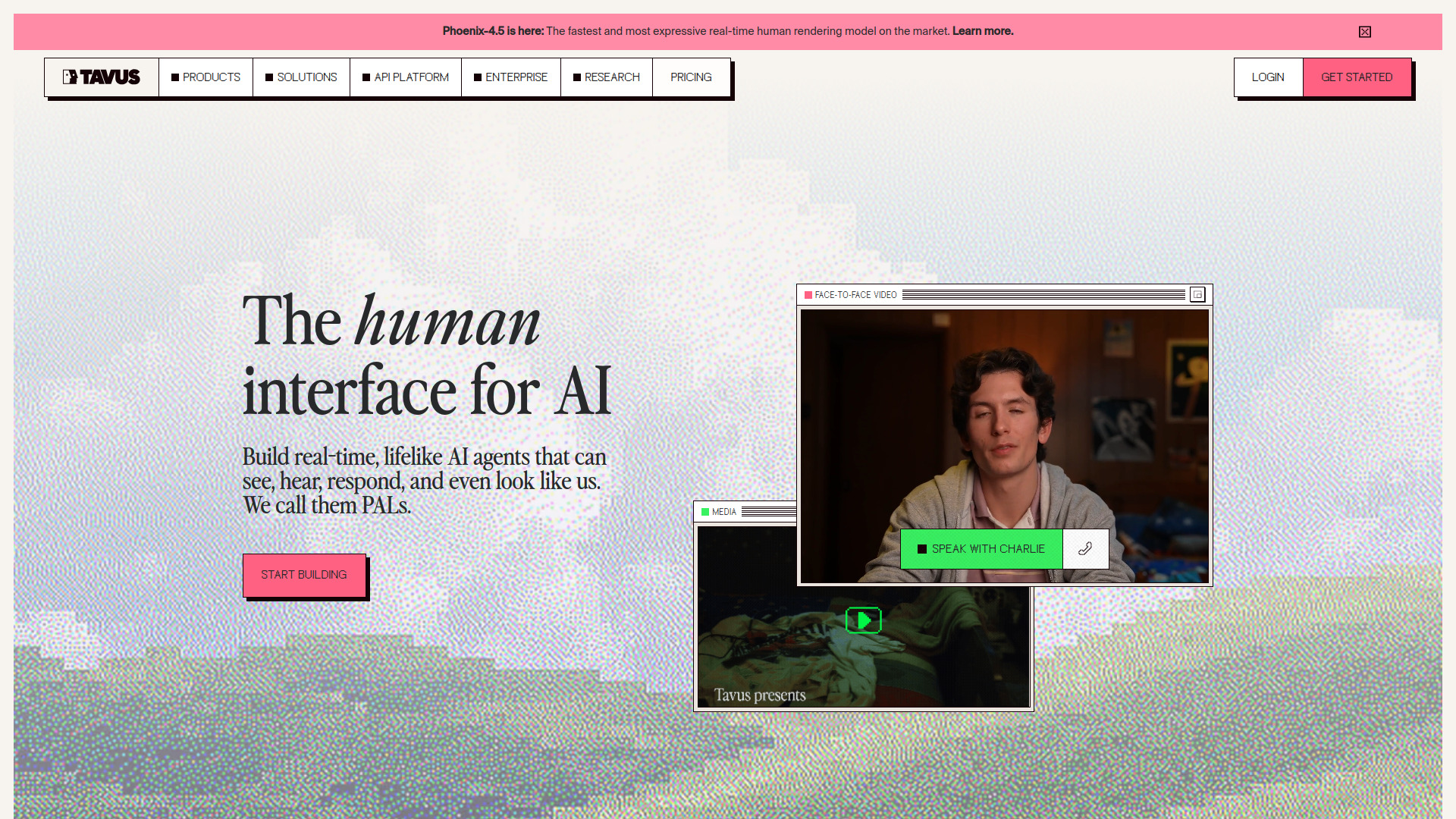
Tavus isn’t what most people expect. It used to be a self-serve sales video tool, then pivoted in April 2026 to a developer-first Conversational Video Interface (CVI). If you’re looking for a plug-and-play avatar creator like HeyGen or Synthesia, keep scrolling. Tavus is an API platform for engineering teams who want to embed live, face-to-face AI conversations into their own products.
The tech stack is what caught my attention. Three proprietary models work together: Phoenix-4 renders photorealistic facial expressions using gaussian diffusion. Raven-1 reads the user’s expressions and tone through audio and visual signals. Sparrow-1 handles turn-taking. Tavus claims the whole pipeline runs under 600ms over WebRTC, a figure MarkTechPost confirmed at launch. The rendering runs at 40fps and 1080p according to Tavus, noticeably smoother than what most competitors achieve.
You get 100+ stock AI humans on the Growth plan. Creating a custom replica from video takes about two minutes of recording but 24 to 72 hours to process, which caught me off guard. The May 2026 Image-to-Replica feature lets you build an interactive digital human from a single still photo, opening up interesting possibilities for brand mascots or historical figures.
Here’s where honesty matters. A Grant Hushek review flagged that custom self-clones drop in quality compared to stock avatars. Lip sync gets noticeably off. G2 only has three reviews hovering around 3.0. Production features really kick in at the Growth tier ($397/month). The latency isn’t the fastest in the category, but the emotional intelligence and research depth behind the rendering feel genuinely ahead.
AI Studios
Pricing | Starts at $24/mo (Personal, unlimited videos) |
Free Plan | Yes, with 40+ stock avatars and 1 custom avatar |
Avatar Count | 2,000+ ready-to-use avatars |
Avatar Types | Stock, Custom, Photo, Product, Interactive |
Languages | 150+ TTS languages, 73 dubbing languages |
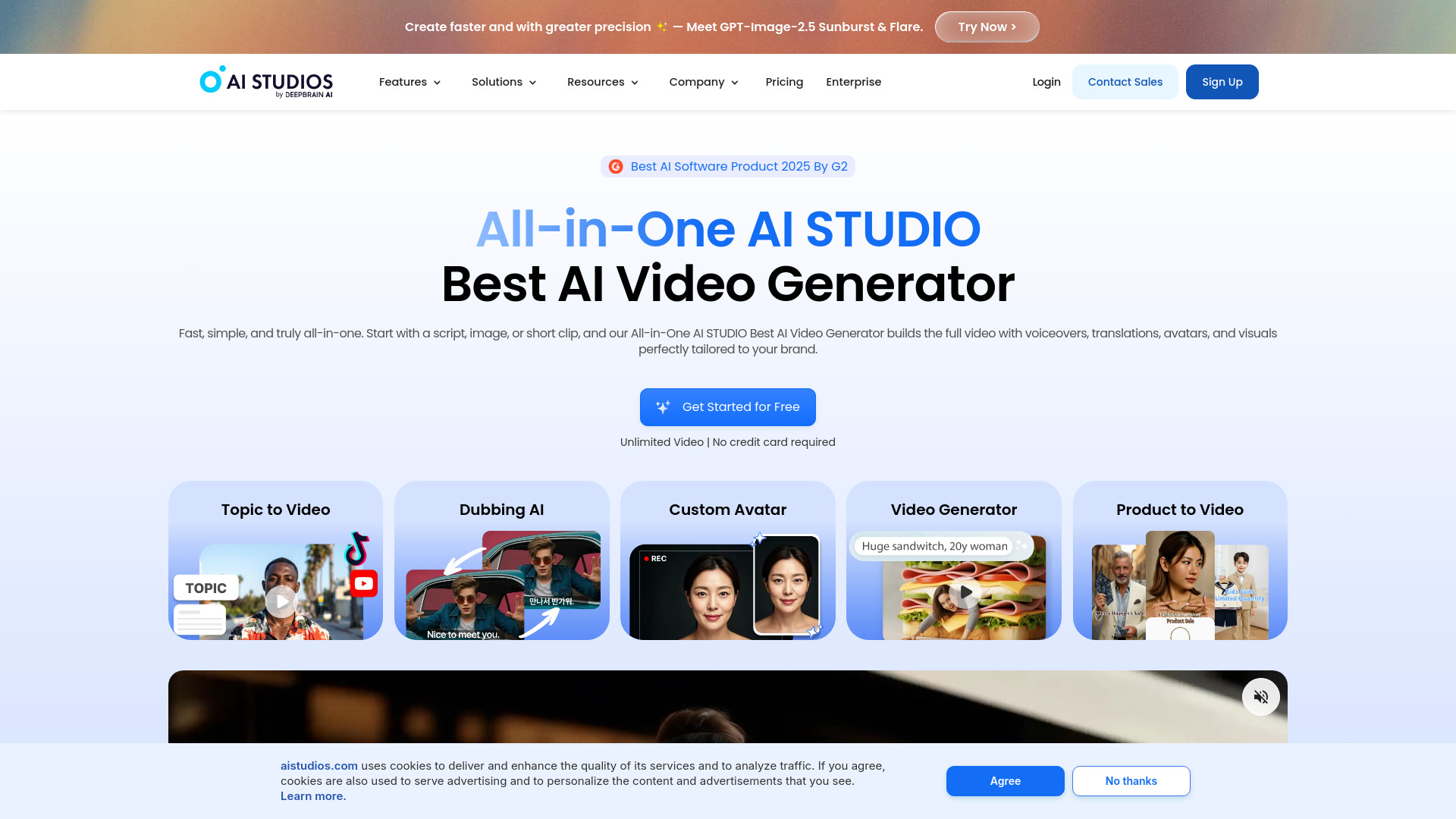
The first number that jumps out is 2,000+. That’s how many ready-made avatars AI Studios puts at your disposal. No other tool in this space comes close. A Virvid review from August 2026 confirmed the library at 2,000+ avatars with 150+ TTS languages and 73 dubbing languages. The gap is hard to ignore when variety matters.
But what really got my attention wasn’t just the quantity. It was the five different ways you can create an avatar. Stock, custom (from video), photo (from a still image), product (for showcasing physical items), and interactive (LLM-connected for real-time conversation). I haven’t seen any competitor offer that full range in one platform.
Product avatars are especially interesting for anyone doing e-commerce demos. Interactive avatars can plug into OpenAI, Claude, or Gemini for live conversational experiences. These aren’t things you’ll find in other tools today.
Pricing starts at $24 per month on the Personal plan with unlimited videos. For the sheer number of avatar options included, that’s a strong deal.
Where AI Studios falls short is lip-sync realism. Avatar realism and polish aren’t quite at the level of HeyGen or Synthesia yet. If facial nuance matters more to you than having thousands of choices, the bigger names still win there.
If avatar variety is your main priority, though, nothing else on the market matches what this tool provides.