
In March 2026, Epic did something it hadn’t done since Fortnite launched in 2017. It raised the price of V-Bucks, and its explanation was blunt: costs had “gone up a lot.”
Read that again. A free game decided its fake currency should cost you more money, nearly a decade after launch. Fortnite is estimated to generate billions of dollars every year through subscriptions, passes and microtransactions. The last verified number comes from court documents in Epic’s fight with Apple. Fortnite earned roughly $9 billion across 2018 and 2019.
So how does Fortnite make money, and why would a free game charge you more for currency you can’t spend outside it? Once you see how Fortnite’s revenue model works, that price hike stops looking like an anomaly. It looks like the whole strategy in one move.
Battle Royale – Genre That Defined Gen Z’s Childhood
For the uninitiated, Battle Royale is the genre that blends the survival, exploration and scavenging elements of a survival game with last-man-standing gameplay.
It pits you against a large group of players, starting off with nothing in hand. One has to loot stuff that is randomly scattered around the map and try to survive till the end and be the last man alive.
Love it or hate it, battle royale style games are here to stay for a while.
While the idea of dropping a bunch of players onto an island to loot and survive all the while eliminating everyone else to come out on the top isn’t new, there’s this incredible sense of gratification that you get when you kill the last player standing and win the round.
That is what makes the people come around for another match. No persuasion required. Just the incentive of gratification of being the one on the top and last man standing is what drives battle royale games.
And all this can be repeatedly done as long as they want. Brings about a whole new meaning to the term “replay value”.
The beginning of this genre is similar to others, gradually gaining attention over time, with many adopting it in their medium.
History Of Battle Royale
Here’s a small known fact about this genre. It started out as a book! Not as a movie or a video game, but a book.

The novel, titled Battle Royale, came out in 1996 and was written by the Japanese author Koushun Takami. It fused Lord of the Flies with Tarantino-like violence.
It was then adapted into a movie of the same name in 2000. The concept became popular in the West with the Hunger Games books and movie adaptations of it.
Then Brendan Greene (a.k.a Player Unknown) came along and introduced a mod, changes made on an existing game, of the military simulator game Arma II. This is the Player Unknown’s Battleground as we know of now.
Battle Royale wasn’t created when Player Unknown’s Battlegrounds (PUBG) came out, it just popularised it and brought it to the mainstream of gaming.
You see, since the things necessary to make a battle royale game is the amalgamation of gameplay elements from any normal video game, it makes it possible for almost any game for the matter, to get a battle royale mode.
Fortnite too had the similar beginnings.
What Is Fortnite?
Fortnite is an online freemium game from Epic Games, released in 2017. You can play it on PlayStation, Xbox, Nintendo Switch, PC, Mac, iOS, and Android.
Mobile took a long detour. Epic got banned from Apple’s App Store in 2020 and sued both Apple and Google over it. Fortnite returned to the US App Store in May 2025 and worldwide in May 2026 after nearly six years, restoring mobile in-app purchases.
The game now ships in several modes, of which Battle Royale is still the famous one:
- Fortnite: Battle Royale: A player-versus-player mode where you drop in solo, in a duo, or in a squad and fight to be the last one standing.
- Creator-made Islands: Community-built experiences made with Unreal Editor for Fortnite (UEFN), the evolution of Fortnite Creative. Think battle arenas, race courses, and platforming challenges built by other players.
- Other experiences: Epic keeps adding headline modes beyond battle royale, including LEGO Fortnite and Fortnite Festival.
Fortnite also still runs Save the World, the original player-versus-environment mode where a team of four fights computer-controlled zombies. It is a legacy mode now, not a headline pillar.
Here is the interesting part. Battle Royale was never the original plan. Epic built it later as an afterthought, and shipped a polished mode within 12 weeks of deciding to add it.
The key move was building mechanics. You gather resources and construct structures mid-fight. That set it apart from rivals like PUBG chasing realism. Fortnite leaned into its cartoon look and gave players a building system nobody else had.
The result is a massive engaged audience. More than 75 million monthly active users now play Fortnite’s creator-made island experiences.
Now you must be thinking what a fool the developers must be, letting tens of millions play for free. Just like any other freemium game, Fortnite banks on the network effect and earns through microtransactions.
Intrigued? Read on.
How Does Fortnite Make Money?
Fortnite is free to download and free to play. Almost all of its revenue comes from in-game purchases: cosmetic items, emotes, and passes that change how your character looks, never how it plays.
Here’s how the transaction works. You buy V-Bucks, Fortnite’s virtual currency, with real money. Then you spend those V-Bucks in the item shop on skins, wraps, emotes, and the Battle Pass. None of them give you a gameplay advantage. They only change your appearance.
V-Bucks come in tiers, and larger packs have historically granted bonus currency on top of the base amount. The catch is that the exchange rate is no longer fixed. On 19 March 2026, Epic raised V-Bucks prices for the first time since the currency launched in 2017. The real-money price of each pack stayed the same, but the number of V-Bucks you receive dropped across the board. You now get less virtual currency for your money than at any point in Fortnite’s history.
Epic said the increase was needed because running costs had “gone up a lot.” Not everyone bought that explanation. With Epic fresh off major legal wins against Apple and Google over store fees, plenty of players called out the timing. Some even threatened to cancel their Fortnite Crew subscriptions in protest.
Whatever pack size you pick, the money flows the same way. Real cash buys V-Bucks, and V-Bucks buy cosmetics and passes. What’s available for purchase includes:
Battle Passes
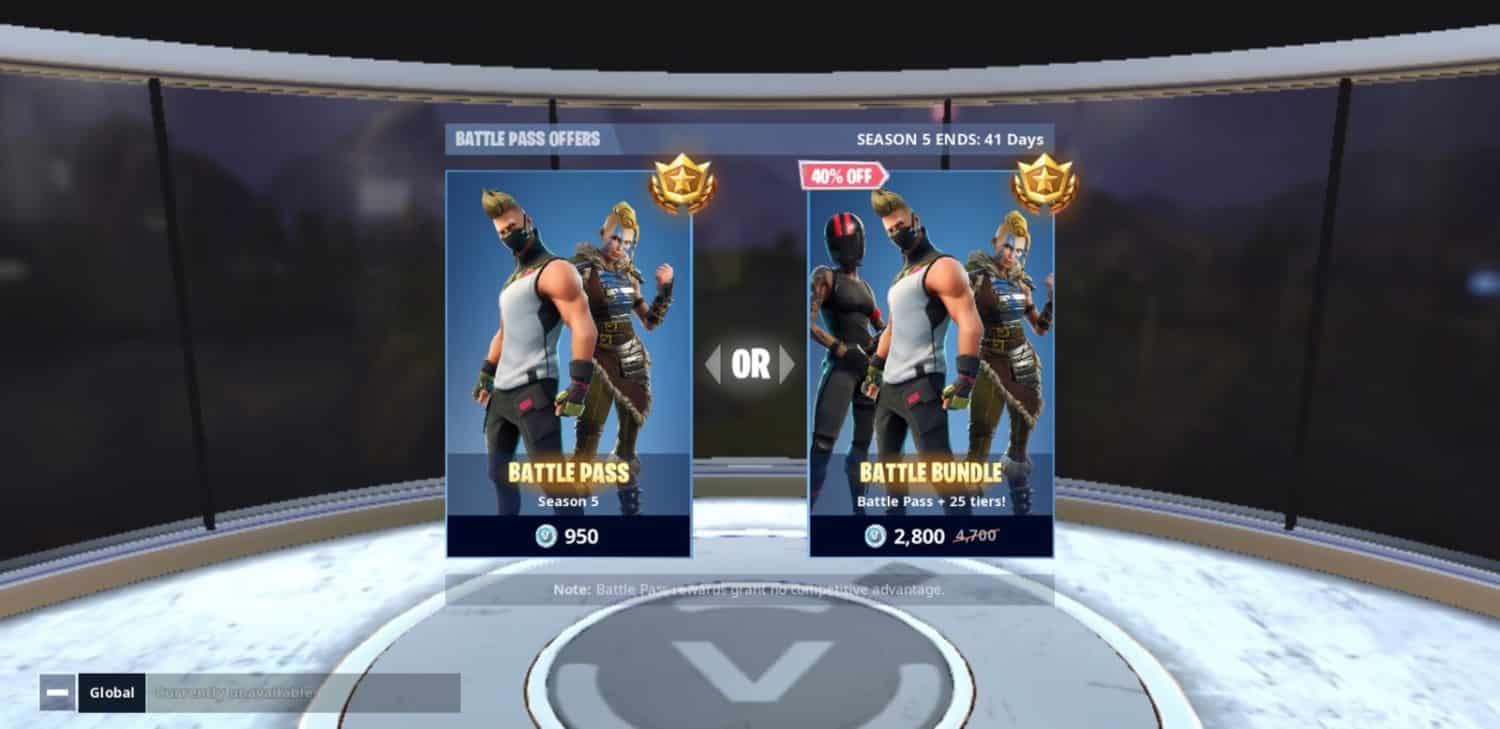
Every season, you get a free battle pass with its own objectives and rewards. Paying for the premium pass opens a bigger track of about 100 rewards, earned by completing challenges and climbing tiers. Prices shifted in March 2026. The main Battle Pass now costs 800 V-Bucks, down from the 1,000 it cost before that date. The other three passes each dropped by 200 V-Bucks too.
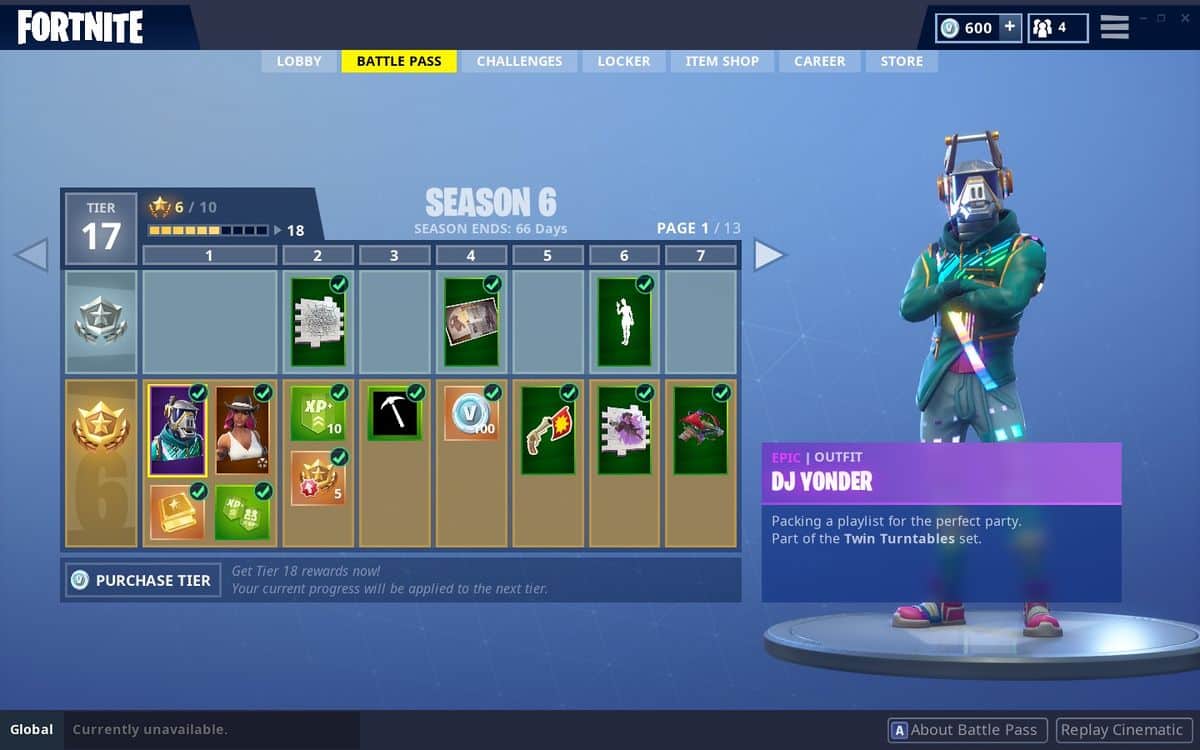
Here’s the strategy. Finishing the pass returns all 800 V-Bucks to you, so it funds next season’s pass if you complete it. Epic did drop the bonus currency the old pass paid on top, but the payback still works as a retention hook. You keep playing all season to finish the track, and the players who finish it are the same ones who buy extra skins.
Skins
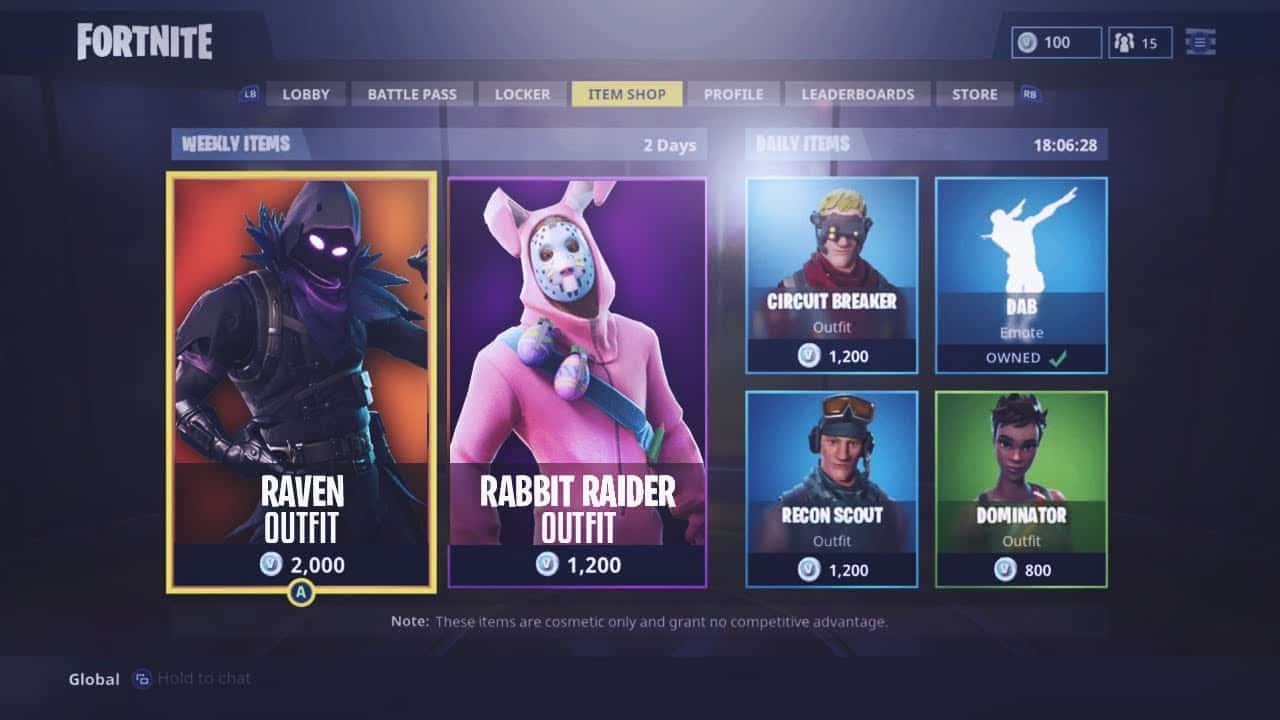
The most sought after add-on on Fortnite. While players are better off just playing with the default skin (and premium skins in no way act as an advantage in the gameplay), it is considered that the only way of showing your commitment and interest to the game is via character skins and models.
There’s a wide variety of them, from comic superheroes to movie heroes and villains and iconic characters, the options on offer are endless. The skins are not just limited to character models but there are skins available for accessories, tools, gliders and weapons too. They also come in the form of emotes.
Loot Boxes and Items
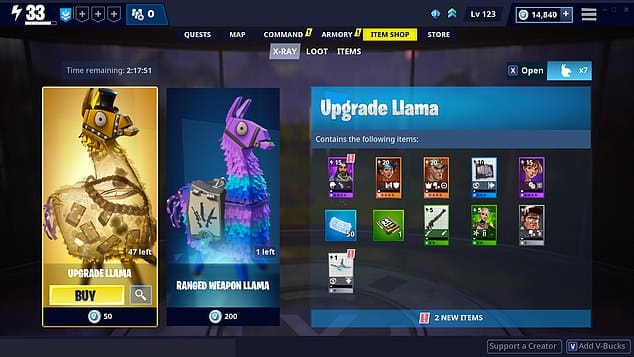
Fortnite’s loot boxes started blind. You paid, opened them, and only then saw what came out. In 2019, Epic switched them to an X-ray style, so you see the contents before you spend anything.
They still look like llamas. Each llama rewards you with bonus boosts, survivors, items and schematics at rarities from common to legendary. V-Bucks no longer buy them. You now spend X-Ray Tickets instead, earned by completing activities like Mission Alerts and Daily Quests, and update v20.00 made that the only currency llamas accept.
Save the World is a legacy mode now, so llamas are a small line item at best. The real money in Fortnite comes from Battle Royale’s item shop and its seasonal passes.
Creator Economy 2.0
That item shop money doesn’t all stay with Epic. Since 2023, the company has shared 40% of net Island revenue with outside developers through a monthly engagement pool. You drop into a fan-made island, and part of the money it makes goes to the people who built it.
The totals are already big. At Unreal Fest Chicago in June 2026, Epic director Hannah Lowry said UEFN creators have earned more than $1 billion since 2023, a milestone Epic’s own developer portal confirms. More than 75 million monthly active users play creator-made experiences.
A newer stream is gaining ground. For roughly 3,000 islands, direct in-island item sales now out-earn the engagement-payout model. For comparison, Roblox paid its creators $1 billion in 2025 alone.
This shifts where Fortnite’s money goes. A growing share of V-Buck spend now funds outside developers, not just Epic. Creator payouts are the cost of keeping the best content inside Fortnite. The island economy is now a retention engine as much as a revenue line.
Is Freemium Business Model A Good Choice For Fortnite?
Dozens of studies indicate that you are more careful with cash than with your credit card. The more abstract the payment feels, the easier it is to spend. Fortnite leans on that effect every day. V-Bucks put real money behind a layer of game coins, so spending never quite feels like spending.
Once you buy your first pack, the next one feels smaller than it is. Candy Crush was one of the first games to build a fortune on that same psychological method of marketing. Fortnite did not invent the trick. It just ran it at a much bigger scale, inside a game you already wanted to play.
For years, that combination looked unstoppable. The free-to-play model pulled in millions of players, celebrities included. At its peak, Fortnite was the most watched game on Twitch, doubling PUBG’s viewer count. Later, Drake invited the streamer Ninja for a live match. DJ Marshmello held a full music concert inside the game. More than 10.3 million people showed up.
That is the history. The 2026 picture is harder. In March 2026, Tim Sweeney told staff that Fortnite engagement had slipped since 2025. The downturn left Epic spending significantly more than it earns. More than 1,000 jobs went, about 20% of staff. Epic set a target of $500 million in cost savings. Trade coverage framed the cuts with one more number: Disney had just made a $1.5 billion equity investment in Epic.
Here’s the thing. Even the genre-defining free-to-play machine now faces retention-driven revenue pressure. Creator payouts keep the best islands inside Fortnite, but the whole engine stalls if players stop showing up. When engagement slipped, the money followed. That is why Epic raised V-Bucks prices for the first time in March 2026. The freemium model still prints money, but attention is the fragile input it always depended on.
So is freemium a good choice for Fortnite? Yes. The 2026 downturn just shows the model’s one dependency: people have to keep coming back. Epic’s answers are the levers this article already covered. Pay creators to keep the content fresh, and bring Fortnite back to mobile.
Go On, Tell Us What You Think!
Did we miss something? Come on! Tell us what you think about our article on how does Fortnite make money in the comments section.