
Feedough Logo

Blog

  • What Is Stealth Startup? – Types & Examples

    What Is Stealth Startup? – Types & Examples

    Not every entrepreneur wants to gain public attention. Many do believe in privacy in the initial days and work hard till the success make the noise. Most of these privacy-loving entrepreneurs operate in a stealth mode.

    But before answering the question of why these entrepreneurs choose the stealth startup route, it’s essential to know what is a stealth startup and how does it work.

    What Is Stealth Startup?

    A stealth startup is a fledgeling startup business that operates in a temporary state of secrecy to avoid public attention, be invisible to competitors, and/or hide information.

    Entrepreneurs choose to start in a stealth mode to quietly improve their offering, test the product-market fit, register the intellectual properties, and take all the necessary steps to be fully ready and competition proof before the actual public launch.

    Types Of Stealth Modes?

    Generally, there are two types of stealth modes –

    Total Stealth Mode

    This is when the startup business tries to keep all its actions as secretive as possible. The business can go to the extent of –

    • Operating under a temporary name,
    • Misleading the public (or test group) about its real goals,
    • Operating the website and/or application without disclosing personnel, location, vision, or goals.

    Usually, this is a temporary state till the time the short-term objectives, like registering the IP, finding the problem-solution fit and the product-market fit, etc. are fulfilled.

    Coda, started by top leaders from Youtube, LinkedIn, and General Catalyst, was launched under the name Krypton and was already valued at $400 million even when no one knew what the startup was up to.

    In-Company Stealth Mode

    In-company stealth mode is when an existing startup or business launch a new offering keeping it as secretive as possible before the actual launch. Startups choosing this mode can even go to the extent of keeping the internal and external stakeholders at bay to prevent the premature dismissal of the concept or idea.

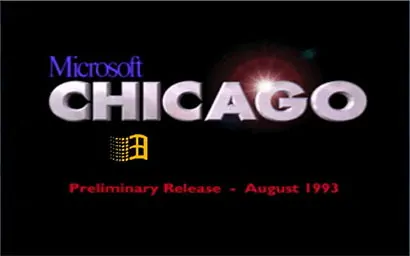
    Microsoft is a renowned company that employs in-company stealth mode before launching its new offerings. Windows 95 had a code name – Chicago, and Windows 10 was codenamed Threshold before its release in July 2015.
    Windows stealth startup
    Source: Wikipedia

    How Does A Stealth Startup work?

    Stealth startups operate cautiously without leaking any information to the general public. They work with limited partners and usually follow the following operating model

    Temporary Models

    A stealth startup operates on temporary business, revenue, and identity model. Usually, it doesn’t disclose its name to the general public. The business and revenue model are minimal just to validate the hypotheses and/or become ready before the actual launch.

    Generally, a stealth startup focuses mainly on building and strengthening the internal structure and model during the stealth mode, which includes –

    • Getting more partners and stakeholders on board.
    • Working with very few early adopters to understand the consumer need, want, and behaviour.

    No Marketing

    Stealth startups stay away from media and public. They make sure to perform tasks secretively so as no one (other than people they trust) knows what exactly are they are up to.

    Moreover, it saves the business from not-so-necessary early expenditures like branding, communication, and promotions.

    No-Disclosure Agreements

    No-disclosure agreements are the spine of a stealth startup. Everyone who knows about the real identity of the startup; including investors, employees, and partners; is made to sign a no-disclosure agreement to keep the identity a secret.

    Benefits Of Stealth Startup

    Launching a startup in a stealth mode has its own perks. Some are –

    • Protects The Idea And Intellectual Property: Operating in a stealth mode without making much noise of what the company does or offers gives much time to the startup to develop the idea into a working model, register it, and own it before anyone tries to steal it. And since filing a patent is a lengthy and expensive proposition, being secretive sometimes buys enough time and resources to do so.
    • Maintains A Competitive Edge: Often, startups choose the stealth mode just to make sure that they develop something proprietary that gives them a competitive edge in the market. This takes time but proves to be fruitful for most.
    • Helps Launch Only When Ready: Being in the public eye raises expectations and might distract the team, and the business form actual goals. Being stealth helps the startup focus only 
    • Helps Control The Media: Being stealth helps to release only the most essential information to the public like investments and key partnerships, if necessary.

    Drawbacks Of A Stealth Startup

    Operating without being known isn’t always the best option as it has its own cons as well –

    • Difficulty In Finding The Right Market Fit: Finding the right market fit requires the startup to reveal at least partly to the world what the startup is up to and what exactly the offering is. Being stealth adds a barrier which makes it hard to find the right market fit.
    • Limits Feedback: Since customers and consumers don’t know much about what the startup is up to, the feedback they provide is limited. The founders have to join the puzzles themselves while operating in stealth mode.
    • Impedes Deal-Making: Being secretive raises suspicion and often impedes deal-making as the potential partners and investors are usually wary of partnering with a stealth startup.
    • Can’t Test Properly: Testing becomes a task when there’s a clause of not revealing the identity and offering of the startup.

    Stealth Startup Examples

    Every year, numerous startups come out of stealth and make the world wonder how they do the things they do. Some of the examples are –

    Proprio Vision

    https://www.youtube.com/watch?v=ql7_krK8qlQ

    Proprio replaces microscopes, loupes, screens and other traditional surgery visualization tools with light field technology and AI to produce a virtual representation of the human body that gives immersive, more accurate and richer data to physicians.

    The company operated in stealth mode for years, improving its technology and even raised $7 million in funding while being secretive.

    Velo3D

    Velo3D is one of Silicon Valley’s most highly funded stealthy startups that raised $90 million during its stealth mode.

    The company is a metal 3d printer that operated in stealth mode for the first four years of its operations. Today, the company has patented manufacturing tools that produce metal parts for the aerospace and medical industries.

    Velo3D operated in stealth mode to develop and own its technology fully through registered patents, and it indeed was a great decision.

    Go On, Tell Us What You Think!

    Did we miss something? Come on! Tell us what you think about our article on stealth startup in the comments section.
  • The History Of KFC

    The History Of KFC

    Kentucky Fried Chicken (KFC) is world-renowned for its fried chicken. Known by the face of an old man with a white beard, the brand indeed has a crispy on the outside and juicy on the inside history.

    The journey started way back in the 1930s when a man named, Harland Sanders, refused to give up in the face of adversity and by the time of his death, in 1980s, became a multi-millionaire by successfully building the world’s most popular fast-food chain – KFC.

    Harland Sanders & His Many Jobs

    history of kfc

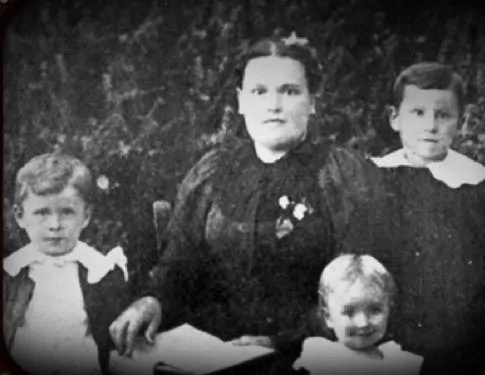
    Harland Sanders was born in 1890, in Henryville, Indiana. At age 5, his father died, forcing his mother to work. While she was out to work, Harland took care of his two siblings and cooked food for them as well. At the age of 12, his mother remarried. But his stepfather didn’t like the idea of having step-children. 

    So, after a year, he left home.

    He started to work on a farm. Every day, he fed the animals in the morning, go to school, and did odd jobs in the evening. 

    Soon, he dropped out of school in seventh grade because algebra proved to be too difficult for him. 

    In the coming years, he tried his luck in many professions, he worked as a – 

    • streetcar conductor, 
    • insurance seller, 
    • railroad firemen, 
    • steamboat operator, 
    • tire seller, and
    • lawyer. 

    He tried other jobs as well but didn’t succeed in any.

    First Breakthrough in 1930

    history of Harland sanders

    In 1930, Sanders got a job to run a gas station in Corbin, Kentucky. 

    To make some extra income, he cooked and offered food to his customers. Here, he served fried chicken and other dishes he learned as a child. 

    Soon word spread about his cooking, and people from far-off places came to taste his food. His chicken was such a hit that he eventually removed the gas pumps and converted the gas station into a full-fledged restaurant.

    KFC history

    In 1936, he was awarded the title of Kentucky Colonel by the governor of Kentucky. 

    By 1937, he expanded the business to include a motel and a café, Sanders courts & cafe, that could seat around 142 people.

    It took around 30 minutes to cook fried chicken which was a significant problem for Sanders as the fried chicken was his best-selling food item on the menu. 

    To tackle this problem, he used a pressure cooker instead of deep-frying the chicken and cut down the time to 8-9 minutes. 

    This helped him to sell more fried chicken.

    He continued to experiment with his chicken recipe. In 1938, he finally perfected the fried chicken recipe. The recipe included 11 herbs and spices which, to this day, guarded as a secret by KFC.

    “I threw two handfuls of it into the flour and stirred it up with the rest of my seasonings. When I fried it up, it was the best chicken I’d ever tasted in my life. And, I’ve never changed my ingredients from that time to this.” – an extract from his autobiography.

    He expanded his business once again by opening another Sanders Court & Café in Ashville, North Carolina. In 1939, a fire destroyed the restaurant in Corbin. By the time it was rebuilt, World War II had broken out, reducing his customer base, which consisted mainly of tourists. He sold his Ashville location shortly after.  

    Closure of his Restaurant in 1955

    His business continued to struggle and in 1955, suffered another blow. An interstate bypass was built on the highway that reduced the number of people taking the highway. 

    Ultimately Sanders had to sell his place in Corbin. 

    He was 66 years old and had to live on a $105 social security check.

    But it was a blessing in disguise. Sanders had another idea, franchising his recipe under the name Kentucky Fried Chicken. He had already laid the foundation in 1952 when he successfully franchised his recipe to Pete Harman. 

    A sign painter hired by Harman, Don Andreson, coined the name, “Kentucky Fried Chicken”.

    He packed his car with some pressure cookers and a blend of 11 Herbs & Spices and began his journey across the United States.

    He journeyed across the country and visited numerous restaurants on the way, offering samples. Once they tasted the samples, he negotiated franchise deals with the restaurant owners, which was usually a $0.04 commission on every piece of chicken they sold. In exchange, he offered to teach them how to make it. He signed his first franchise agreement with a restaurant in Utah and by 1963, there were 600 Kentucky Fried Chicken franchises across the US. 

    But, the business was too big for Sanders to handle at such an old age.  

    Acquisition Deal in 1964

    Many people tried to buy KFC from Sanders, and in 1964, Harland Sanders sold KFC to a group of investors led by John Y. Brown and Jack C. Massey for US$ 2 million. He sold it on the conditions that quality will always be maintained, he will receive a lifetime salary, and he will always remain the face of the company. 

    “A lot of people have asked me why I sold my business after pouring everything I had into building it up. The answer is something like this. When Brown first got interested in Kentucky Fried Chicken, the popularity of my idea was beginning to run right smack over me. My business was beginning to get too big for me, no matter how much energy and time I put into it.”,

    from his autobiography.

    KFC Acquisition By PepsiCo in 1986

    By 1970, the number of outlets increased to 3000 in 48 different countries. In 1971, Brown sold KFC to Heublein, a food packaging and drinks company, for $285 million. Harland Sanders died in 1980. Around the time of his death, there were 6000 outlets of KFC in 48 different countries.

    R.J. Reynolds, a tobacco giant, acquired Heublein in 1982 and sold KFC to PepsiCo in 1986 for US $850 million. 

    After coming under PepsiCo, many new products were launched. 

    The name “KFC” was officially adopted in 1991. 

    The company kept growing and in 1997, PepsiCo spin off its restaurant chain which included KFC, Taco Bell, and Pizza Hut into Tricon Global restaurant Inc. The new company rebranded itself as Yum! Brands in May 2002.

    Controversies

    Major fast-food chains are no stranger to controversies. In 2014, a rumour resurfaced on the internet that KFC was not using chicken for meat, they were making some type of mutant chicken to make more meat out of one such chicken. Later this rumour was debunked.

    In 2008, actress Pamela Andreson, an animal rights activist, exposed what goes behind the making of a KFC bucket. Along, with People for the Ethical Treatment of Animals (PETA), She criticized KFC for animal cruelty. KFC responded by stating that they take all the precautions to avoid any kind of cruelty against animals.

    KFC has gone through a lot of controversies and still tackles them to this day.

    KFC In 2020s

    To keep up with the changing times, KFC has introduced a variety of dishes on its menu. In countries like India, it has introduced a lot of vegetarian dishes to appeal to a broader audience. Similarly, KFC has moulded its menu according to the country it operates in. 

    Today, KFC has 22,600 in 135 countries around the world with a brand value of US $8.3 billion and sales of $27.9 billion as of 27th July 2020. The brand value of KFC is ranked 96th in the world.

    The company is also experimenting with plant-based meat and looking to use new technologies to expand its growth.

    Go On, Tell Us What You Think!

    Did we miss something? Come on! Tell us what you think about our article on the history of KFC in the comments section.
  • Brand Association – Definition, Importance, Types, & Examples

    Brand Association – Definition, Importance, Types, & Examples

    Umpteen number of brands are present in a customer’s vicinity. While the customer fails to recognise a few, he surely has a strong mental connection to a number of brands. As soon as a customer comes across a brand he recognises, he begins to mentally associate it with some image in his mind. 

    This kind of connection between a consumer and a brand works like a powerhouse in creating a successful brand image

    But what exactly is brand association, what are its types and why is it important? Let’s find out.

    Brand association Definition

    Brand association is the co-relation of a brand with a certain concept that a consumer recalls when he comes across that brand.

    The consumer recalls a brand by using the unique set of attributes, experiences, images, etc. that make the brand stand out. This unique set can include a concept, emotion, object, experience, personality, relation, human, thing, or image. It can be tangible or intangible. It can be directly related, indirectly related, or totally unrelated to brand’s offerings. But it is something that makes the customer remember and recognise the brand.

    The primary motive behind the brand association is to have a brand which the consumers can link with positive attributes. The brand association helps in building value and earning recognition. It’s a way for brands to make consumers aware of its quality.

    Importance of Brand Association

    In the eyes of a customer, a brand association is a kind of a mental linkage. Hence, brand associations have the power to drive purchasing decisions. Not just that, brand associations can influence product differentiation and user satisfaction.

    That being said, brand associations are a vital part of building a brand identity. It’s important because it:

    • Helps customers recall a brand for the unique qualities it offers.
    • Differentiates the brand from its competitors.
    • Ensures customers of the quality it offers. 
    • Create a positive image of the brand/product.
    • Be of great help while trying to launch a new product under the same brand. 

    Brand Association Types

    The right combination of images, words, graphics and marketing material can help in building brand association. Some of the most common categories of the brand association are: 

    Attribution Based Brand Association

    The attribute-based brand association comprises the physical elements or the external aspects of the product. Pricing, packaging, quality, and appearance mostly fall under this category.

    These attributes help the target market in recalling the brand’s features and characteristics. This gives the brand a headstart in the industry, as well as in the specific market niche.

    Interest-Based Brand Association

    Many companies use interest-based association factor to lure customers. These basic Interests of the consumers help the brand in piquing their intellect and consciousness. 

    First, the company generates interest in the minds of the customer. Gradually, it positions the brand as a way to cater to the consumers’ interest.

    Attitude Based Brand Association

    Customers determine brand association after evaluating the brand. This association could be quite abstract, as well as can be linked to a specific lifestyle. 

    As an instance, when a consumer hears about Nike, he would immediately associate it with fitness. 

    Celebrity Based Brand Association

    When brands hire celebrities to endorse their product, consumers begin to associate those celebrities with the brand. If Elon Musk comes in your mind when you hear about Tesla, that’s the celebrity-based brand association for you.

    Bringing in a celebrity to endorse a brand leaves an effective imprint in the consumers’ mind.

    Brand association examples

    While defining brand association is a bit hard, the concept might become more clear with certain examples.

    Brand Association of Nike

    When it comes to Nike, customers usually associate it with:

    • Swoosh
    • Sports
    • Sneakers
    • Sweat
    • Energy
    • Motivation
    • Just Do It
    • Jordan
    • Check
    • Athelete
    • Sportsperson
    • Performance
    • Premium sports brand

    Brand Association of Apple

    When it comes to Apple, customers associate it with:

    • ‘i’
    • iPhone
    • iPad
    • Macbook
    • Electronics
    • Premiumness
    • Luxury
    • Overpriced
    • Goals
    • Expensive
    • Loyalty
    • Grey
    • Steve Jobs
    • Tim Cook

    How Are Brand Associations Developed?

    Brand associations develop with every interaction of the brand with the customer. It results from marketing efforts, pricing efforts, brand loyalty, referrals, and every instance that involves the brand, like –

    • Customers relation with the organization,
    • Marketing – advertising, public relations, etc,
    • Publicity,
    • Price structure,
    • Celebrity/influencer association,
    • Product’s category,
    • Product Quality,
    • Competitors’ strategies, etc.

    Positive brand associations develop when the offering or the brand fulfils its promise and stands out of the crowd in the eyes of the customers. Negative brand associations develop when the brand efforts fall short of customer expectations.

    Go On, Tell Us What You Think!

    Did we miss something? Come on! Tell us what you think about our article in the comments section.
  • The History of Nokia

    The History of Nokia

    The history of Nokia has been a roller-coaster ride – full of ups and downs. And even though the brand fell on the face, the journey is far from its end even today.

    The company has existed for more than 150 years. It has been through two world wars and still survived. It helped Finland in the time of crisis and by the year 2000, it accounted for a whopping 4% of the GDP of Finland.

    The company ventured into various industries like rubber, paper, cables, and then electronics and telecommunications. It grew bigger and bigger after focusing on electronics and telecommunications and even became a brand known throughout the world.

    It also failed in the same mobile phone market, where it achieved a milestone that companies only dream of, by capturing 49.4% of the market share in 2007.

    There is a lot to learn from Nokia. So, let’s dive in!

    Birth of Nokia in 1865

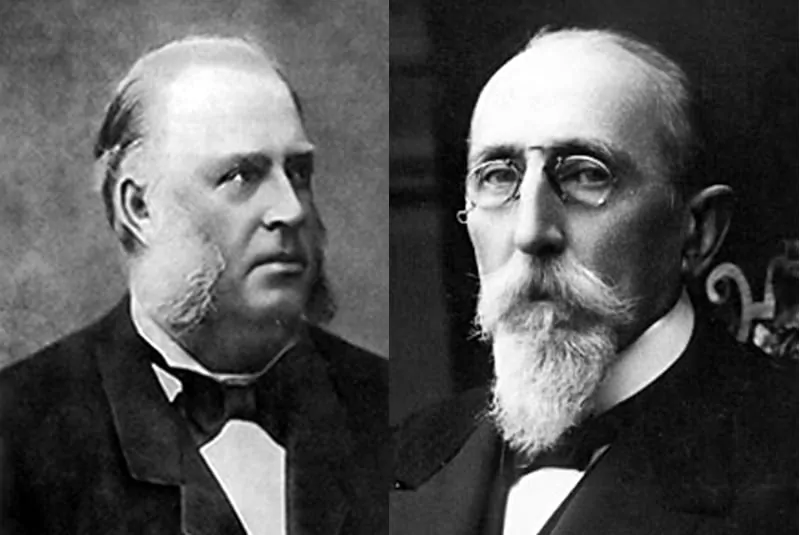
    fredrik Idestam and Leo Mechelin
    fredrik Idestam and Leo Mechelin

    In 1865, Fredrik Idestam established a paper mill in southern Finland, and in 1868, he established a second paper mill near the town of Nokia. After three years, in 1871, with his friend Leo Mechelin, Idestam formed a shared company called Nokia Ab.

    Fredrik Idestam retired and Leo Mechelin became the chairman of the company in 1896.

    Expansion of Nokia

    After the retirement of his friend, Leo Mechelin expanded Nokia Ab’s operations, in 1902, into electricity generation. Fredrik was not in favour of this, but the expansion of operations didn’t stop.

    Nokia Galoscher

    In 1922, Nokia Ab was nearing bankruptcy because of World War I. To save the same, Finnish Rubber Works acquired Nokia. It also acquired Suomen Kaapelitehdas Oy (Finnish Cable Works).

    Finnish Rubber Works grew fast after it moved to the Nokia region in the 1930s to take advantage of the electrical power supply besides other services.

    From the 1930s well into the early 1990s, Nokia also made respirators for both civilians and the military.

    Creation of Nokia Corporation in 1967

    Nokia Corporation

    In 1967, the turning point of Nokia arrived. The three companies – Nokia Ab, Finnish rubber works, and Kaapelitehdas – merged together giving rise to the Nokia corporation we know today.

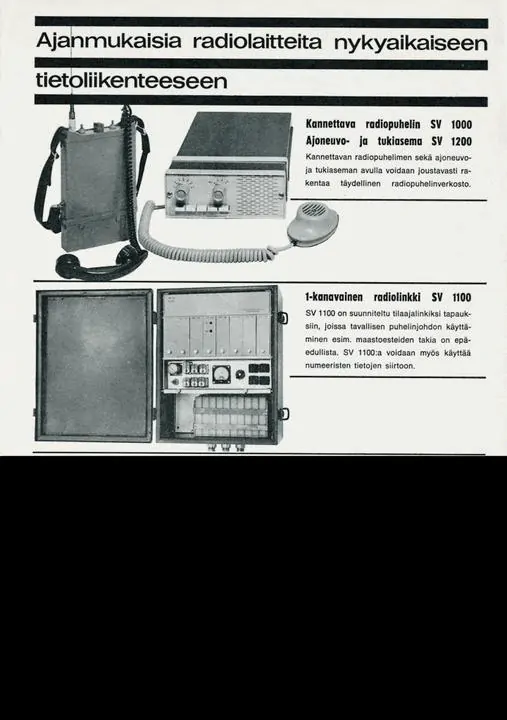
    Nokia corporation restructured itself into four major businesses – rubber, cable, forestry, and electronics.  Nokia also started making communicating devices and M61 gas mask for Finland’s defence forces. From this point on Nokia slowly started to focus more on the telecom industry as it was still untapped at that time.

    interest in Telecommunications

    Interest in Telecommunications

    Kari Kairamo took the seat of CEO in 1977 and transformed Nokia. During his time as CEO, Nokia acquired Salora, a television-maker in 1984. It acquired Luxor Ab, electronics and computer-maker, in 1985 and then in 1987, French television company Oceanic.

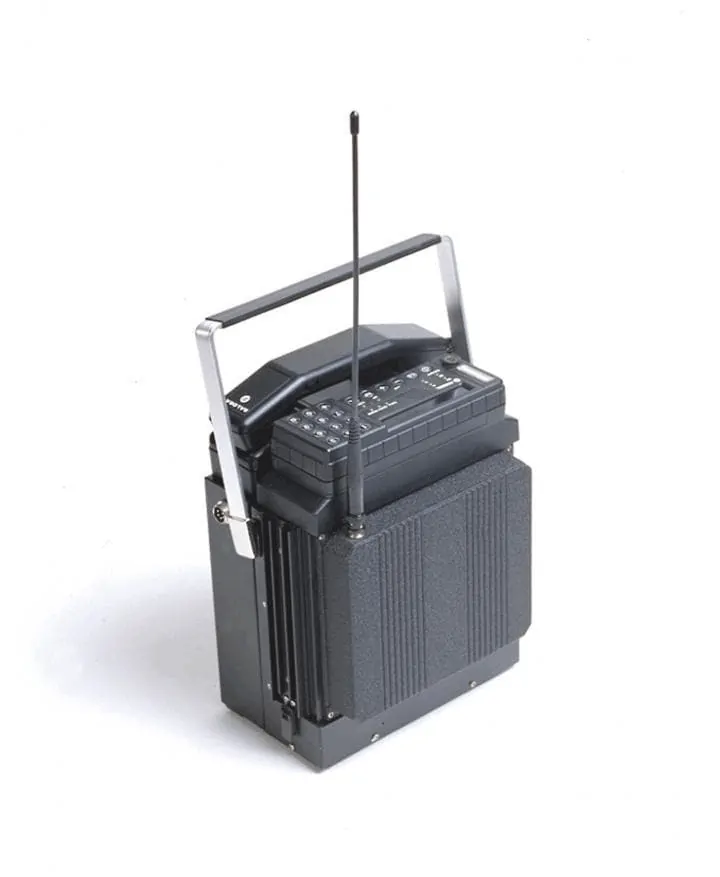
    This trend continued as Nokia acquired Mobira, a mobile-phone maker, which would help the company to usher into its golden era in the future. With Mobira, Nokia had launched its first mobile phone: Mobira Senator in 1982.

    Mobira Senator
    Mobira Senator

    But everything was not fine as Kari Kairamo committed suicide on December 11, 1988. The reason behind it is still unclear. He was replaced by Simo Vuorilehto.

    Restructuring of Nokia

    After Simo Vuorilehto’s appointment, a major restructuring was planned. Many of the groups within the company were divested. Finnish rubber works separated from Nokia. The computer-division, Nokia Data, was sold in 1991, to a UK-based International Computer Limited. It looked like Nokia was financially struggling, as a result, its stock prices shrank and the collapse of the Soviet Union added to the agony of the company as it was a major customer for Nokia.

    In 1992, Jorma Ollila replaced Simo Vuorilehto as CEO. He opposed the idea of selling the mobile-phone division of Nokia and turned it into a telecom-based company. This decision proved to be fruitful and helped Nokia to enter the golden period.

    Golden Era of Nokia

    In 1992, Nokia introduced the world’s first commercially available GSM phone, Nokia 1011, which was used by the Finnish Prime Minister Harri Holkeri to make the world’s first GSM call. After this event, Nokia’s name spread like wildfire throughout the world.

    Nokia 1101
    Nokia 1101

    In 1998, it overtook Motorola and became the No.1 phone manufacturer in the world. Nokia became a household name and continued to gather more ground in the market. Nokia was the pioneer of innovation. It knew that mobile phones are the future and it capitalized on the opportunity. In the following years, it launched many different phones.

    Nokia became the first company to introduce a camera on a mobile phone. In 2007, the market share of Nokia swelled up to 49.4%, making it the one and only company in the world to do so.

    But the golden days didn’t last long as internal issues were slowly tearing the company apart. Thus, began the downfall of the telecom giant. 

    Downfall of Nokia

    From being the largest telecom company in the world in 2007 to being on the brink of bankruptcy in 2013, Nokia saw their worst days. The downfall of Nokia was a consequence of many internal and external factors.

    There were many reasons that led to the failure of Nokia. Among them, the major reasons were:

    • The top management was too slow on making crucial decisions, due to this, many opportunities were lost.
    • In 2006, Jorma Ollila was replaced by Olli-Pekka Kallasvuo as CEO, the new management focused on mass production rather than innovation. This was a mistake because innovation played a major role in the rise of Nokia in the initial years.
    • Nokia refused to accept Apple’s iPhone and Google’s Android phones as competition. They thought that no company could come close to its market share.

    When Nokia realized its mistakes, it was a little too late, by then Apple and Google were already established in the market and their market share was steadily declining. Nokia’s Symbian OS was outdated and no match for Android OS and iOS.

    Buyout of Nokia’s Mobile-phone Division

    In 2010, Stephen Elop became the new CEO of Nokia. One year later, Nokia announced a strategic partnership with Microsoft and adopted Windows OS for the phones. This decision was taken in hopes of reviving Nokia as a smartphone brand.

    The main problem with Windows phones was the limited number of apps. Nokia sales declined further in 2012 and 2013. The state of Nokia deteriorated to a point where it was going to become bankrupt.

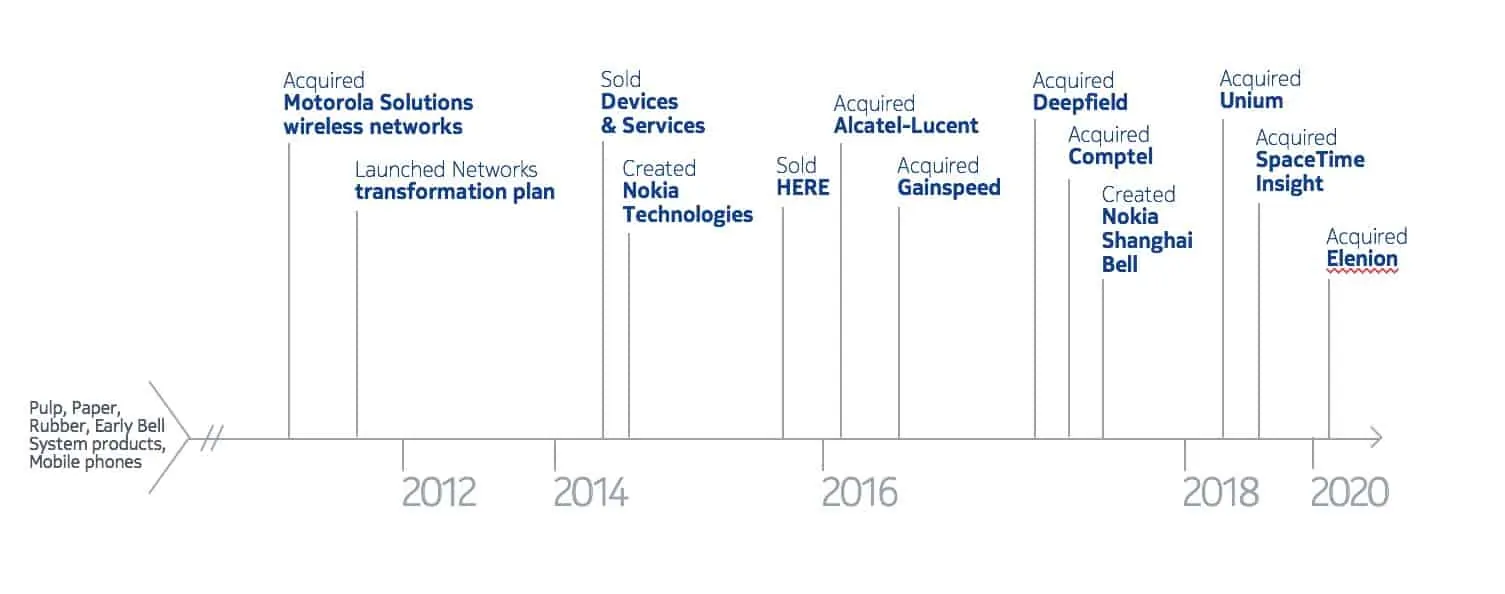
    To avoid such a situation, Microsoft stepped in and bought Nokia’s mobile phone division for US$ 7.2 billion.    

    Creation of Nokia Networks

    In 2007, Nokia had started a 50/50 joint venture with Siemens Communications. The venture was called Nokia Siemens Networks. It became a subsidiary of Nokia Corporation.

    After the sale of its mobile phone division, Nokia focused on data networking and telecommunications equipment. In 2013, it acquired 100% shares of Nokia Siemens Networks and rebranded it as Nokia Networks.

    In 2016, Nokia acquired Alcatel-Lucent, a French/American global telecommunications equipment company. It was merged into the Nokia Networks division. This was done to solidify their footing in the global telecommunications market.

    HMD Global Buys Nokia’s Mobile phone Division

    HMD Global is a Finnish mobile phone company made by previous executives of Nokia. It bought back the mobile phone division from Microsoft in 2016. It learned from past mistakes and partnered with Google’s Android One program.

    In 2017, HMD global released the iconic Nokia 3310, which was well-received by the general public. On March 19th, 2020, it announced the release of Nokia 8.3 5G, the world’s first 5G smartphone.

    From virtually zero sales in 2015-16 to 1.5 million Nokia smartphones sold in 2017, HMD global revived Nokia. In Q3 of 2018, it shipped more than 4.8 million units, making it the 9th largest smartphone vendor worldwide.

    Nokia In 2020s

    Nokia In 2020s

    Nokia is currently the front-runner in the race to provide 5G technology in the world. Nokia Networks is the largest subsidiary of the Nokia Corporation.

    In August 2020, Pekka Lundmark replaced Rajeev Suri (2014-2020), as the new CEO of Nokia Corporations.

    Nokia is once again paving to the top, and this time the past mistakes won’t get repeated.

    Go On, Tell Us What You Think!

    Did we miss something? Come on! Tell us what you think about our article on the history of Nokia in the comments section.
  • What Is Deep Tech? – Use Cases, Examples, & Future

    What Is Deep Tech? – Use Cases, Examples, & Future

    Technology is ever-evolving. Scientific discoveries and engineering are disrupting almost every industry we know. A decade ago, we didn’t even know how to classify a startup developing an AI technology to cure a deadly disease. Similarly, biotech, cryptocurrency was just something that can’t be classified into an umbrella industry.

    But now we do have an industry for them.

    Welcome, deep tech.

    What Is Deep Tech?

    Deep tech or deep technology refers to a class of startup businesses that develop new offerings based on tangible engineering innovation or scientific discoveries and advances.

    Usually, such startups operate on, but are not limited to, agriculture, life sciences, chemistry, aerospace and green energy.

    Deep tech startups have the following characteristics –

    • Impact: The deep tech innovations are very radical and disrupt an existing market or develop a new one. The innovations based on deep tech often change lives, economies, and societies.
    • Time & Scale: The time required for deep technology to develop the technology and reach the market-ready maturity is way more than shallow technology development (like mobile apps and websites). It took decades for artificial intelligence to develop and it is still not perfect.
    • Capital: Deep tech often requires a lot of early-stage funding for research and development, prototyping, validating hypothesis, and technology development.

    Deep Tech Use Cases

    According to a study by BCG and Hello Tomorrow, there are seven most promising fields of deep tech that are relevant today. These are –

    Advanced Materials

    These are new or modifications of existing synthetic or biobased materials that yield superior performance. Often times, new materials are developed using two or more existing materials that differ significantly from one another, but when combined, result in a material with its own characteristics (like fibreglass), called a composite material. Example of such advanced materials are –

    • Photovoltaic films
    • Biodegradable plastic

    Artificial Intelligence

    AI refers to the simulation of human-like intelligence in machines that are programmed to think like humans and perform tasks that used to be the exclusive purview of humans. The launch of voice assistants, medical imagery analysis, big data analytics, etc. are a sure-shot sign that machines can be developed to do any task that a human can do.

    Biotechnology

    Biotechnology involves developing valuable products by exploiting existing biological processes or by developing new ones. Genetic manipulation of microorganisms for the production of antibiotics and vaccines, genetically modified seeds that are more resistant to climate change and pests, etc. are some examples of how biotechnology is disrupting the current system.

    Blockchain

    Blockchain is a growing list of records called blocks that stores a history of transactions in a secure and transparent way. The users of the blockchain can track the history and add to the blockchain but can’t modify the existing blocks.

    It is, in fact, an open distributed ledger that can record transactions between two parties efficiently and in a verifiable and permanent way.

    This deep technology ends the need for intermediaries that act as a central, trusted authority but fail to do be transparent. Since the chain is transparent and can’t be altered, it initially disrupted how the financial sector worked before and moved on to disrupting other sectors like healthcare, entertainment, etc.

    Robotics & Drones

    Robotics is the intersection of science, engineering and technology producing machines called robots to perform tasks in an automated fashion. Usually, deep tech is used to develop robots to get the work done in industries where the working environment is dangerous or hazardous for humans.

    The new technology makes use of human senses in robots to develop more self-sufficient artificially intelligent robots that permit mobility and decision making in an unistructural environment to help humans complete tasks in even a better way.

    Drones are a subclass of robots that can fly and are usually more mobile. These robots are often used to transport goods, map territory, or for surveillance purpose.

    Photonics & Electronics

    Photonics is a discipline of science focused on generating and harnessing the properties of photons (particles of light). It involves the use of lasers, optics, fibre-optics, and electro-optical devices in numerous fields of technology like alternate energy, manufacturing, telecommunication, security, etc.

    Electronics, on the other hand, harness the power of electrons. Electrons are harnessed to produce energy in the form of electricity.

    Often photons and electrons are used in combination to develop new deep tech.

    Quantum Computing

    Quantum computing refers to leverage the unique properties of matter at nanoscale to solve computational problems, such as integer factorization substantially faster than classical computers.

    Several quantum computing models exist today, like –

    • Quantum Circuit Model,
    • Quantum Turing Machine,
    • Adiabatic Quantum Computer,
    • One-Way Quantum Computer, And
    • Various Quantum Cellular Automata.

    Among these, the quantum circuit is the most widely used model. Unlike classical computing, the quantum circuit is built on qubits that can be overlays of zeros and ones (part zero and part one at the same time). Moreover, such qubits don’t exist in isolation but become entangled and act as a group. These two properties help achieve an exponentially higher information density than classical computers.

    Deep Tech Company Examples

    There are tens of thousands of startups working on deep technology to bring in the solutions humans only dreamt of. Here are some deep-tech examples to highlight some pioneers –

    Biogenera SpA

    biogenera deep tech

    Biogenera SpA is a company operating in the biotechnology powered pharmaceutical sector, specialising in research and development of new DNA-based medicines for the treatment of serious pathologies such as tumours. 

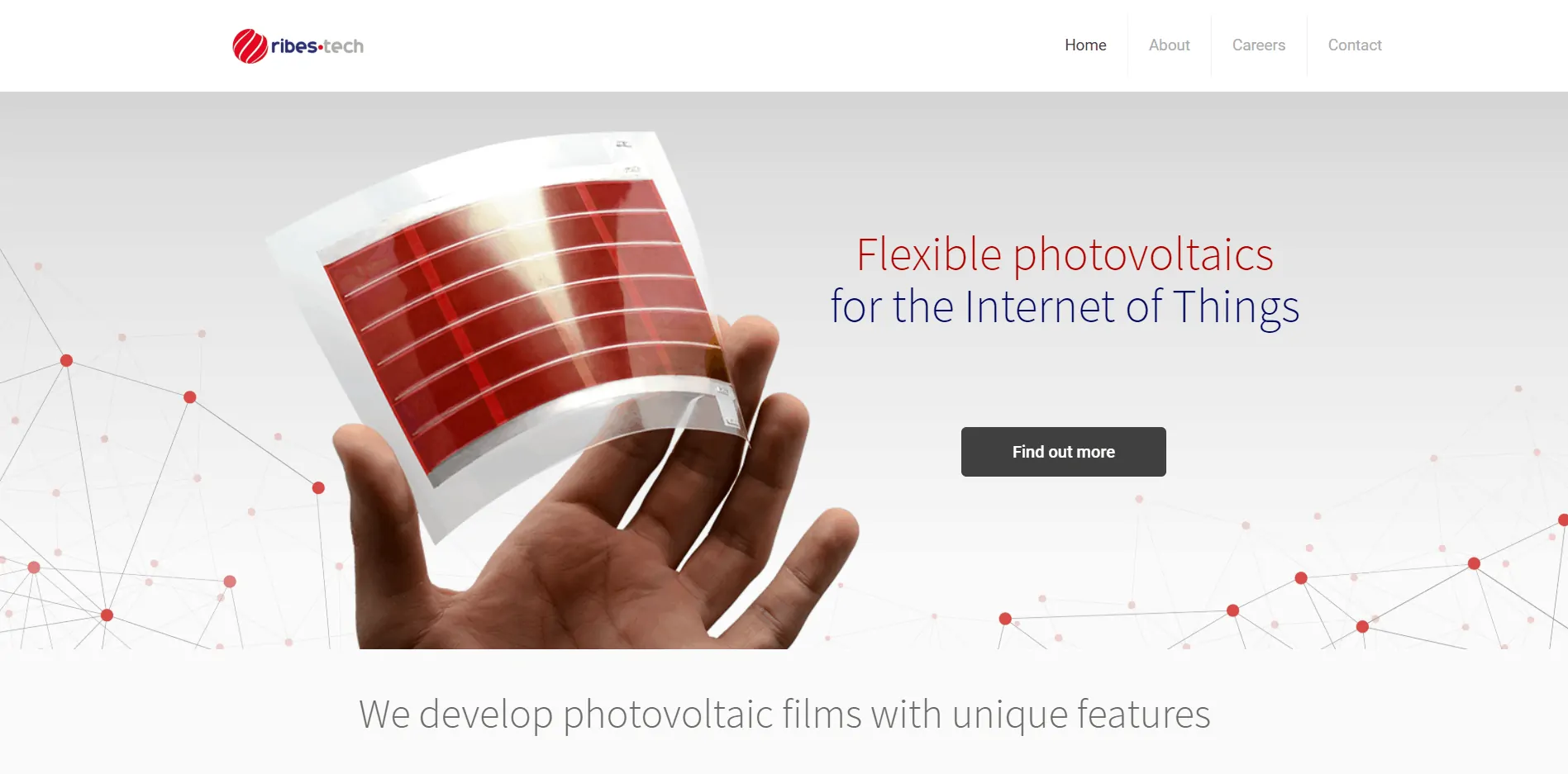
    Ribes Tech

    The company invented an ultra-thin and flexible photovoltaic panel that turns sunlight into energy with ease and greater efficiency. The properties of being ultra-thin and flexible increases the use cases of the photovoltaic panel that can be used on anything from roads, cars, building walls, or handheld devices.

    Lexplore

    Lexplore uses AI for rapid reading assessment. The technology is powered by AI and eye tracking which, in just 3 minutes, give a clear view of a student’s reading level and even provides recommendations for instructions.

    Future Of Deep Tech

    Statistically speaking, deep tech is the future itself. It’s spreading its wings faster than a forest fire. Today, deep tech has a profound impact on almost all the important segments of the economy like the automotive industry, robotics, smart homes, smart cities, healthcare, fintech, agritech, edtech, energy efficiency.

    Almost every facet of the modern society looks ripe for disruption by deep tech.

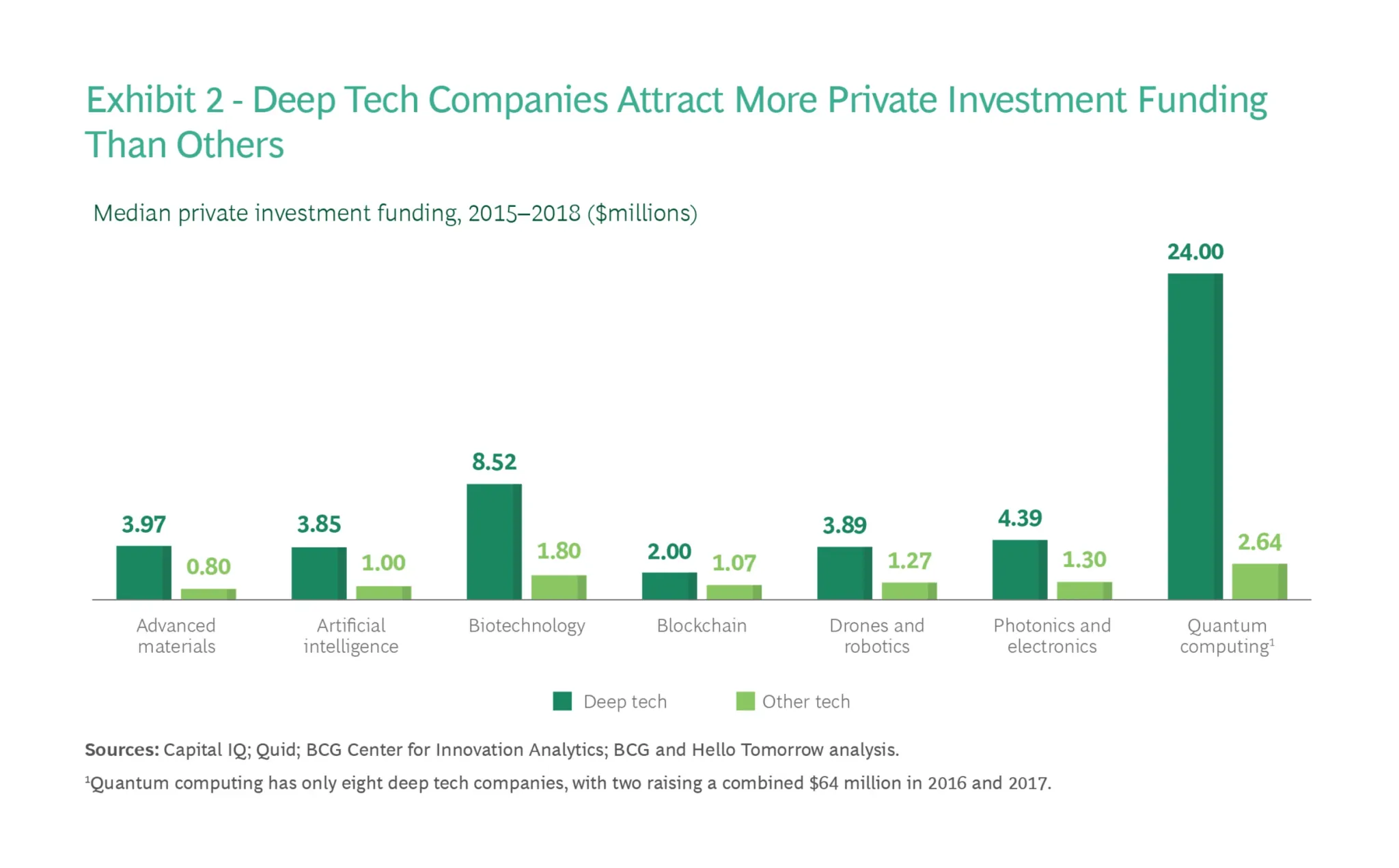
    According to BCG, deep tech startups attract greater funding than other types of tech companies in the past five years.

    Many other research studies prove that deep tech is something that’s here to stay and disrupt for another century.

    Go On, Tell Us What You Think!

    Did we miss something? Come on! Tell us what you think about our article on deep tech in the comments section.
  • What Is Customer Lifetime Value (CLV)? – Formula & Examples

    What Is Customer Lifetime Value (CLV)? – Formula & Examples

    An old business adage states that about 20 percent of the customers bring in 80 percent of revenue to the business.

    Now, a well-operated and managed business should be able to separate this 20 percent from the rest 80 percent and put most of its marketing and selling efforts wooing this profitable segment.

    But how do you identify the better revenue-generating customer segment?

    Well, this is where the customer lifetime value model kicks it. Also known as Lifetime Value, CLV, LTV, and CLTV, it is a vital metric for a business to understand which customer segment is best for the business and which isn’t.

    What Is Customer Lifetime Value (cLV)?

    The customer lifetime value or the lifetime value of the customer is the total revenue a business can reasonably expect from a single customer throughout their entire time as a paying customer.

    This metric considers both –

    • The periodic revenue from the specific customer
    • The period (s)he remains a customer with the business

    For instance, if a customer continues to spend $100 per year on your business for 10 years, his or her customer lifetime value would be $1000.

    Hence, in simple terms, CLV is a model that predicts the revenue attributed to the entire future relationship with a customer.

    Importance Of Customer Lifetime Value

    CLV is an important metric as it helps you –

    Calculate The Future Value Of The Customer

    LTV helps you predict the amount you can gain from a customer throughout the business relationship.

    Identify Most Profitable Customer Segment

    Calculating user lifetime value helps you identify the most profitable, profitable, least profitable, and not profitable customer segments. Once identified, you can aptly distribute the customer acquiring and retention budgets to get the most out of these segments.

    Identify The Most Profitable Offering Segment

    CLV also gives a hint to what product the customers with the highest CLV buy. This helps you improve the existing offering(s) and launching other offerings that complement the same and increase your profits using upselling and cross-selling.

    Identify Future Strategies And Invest Resources Better

    CLV helps develop future strategies to invest resources in a way that may benefit your business the most.

    Define Clear Marketing And Sales Budget

    It becomes easy for you to define your marketing and sales budget once the maximum amount you can get from a customer is predicted.

    How To Calculate Customer Lifetime Value?

    Calculating CLV is easy. All it takes is to use historical data to predict future data and follow this simple customer lifetime value formula –

    CLV = Average Purchase Value x Average Purchase Frequency Rate x Average Customer Lifespan 

    customer lifetime value formula

    Suppose you own a shoe business serving two different customer segments – office employees and athletes.

    According to your data, an office employee usually spends $100 per pair of shoes 3 times a year and remains the customer for 3 years on an average.

    His lifetime value will be: 100 x 3 x 3 = $900

    On the other hand, an athlete spends around $80 per pair of shoes 5 times a year and remains the customer for an average of 10 years.

    His LTV will be: 80 x 5 x 10 = $4000

    It is clear that athletes are more profitable, and the business should spend more on acquiring the same. While, at the same time, it can put more effort into retaining office goers as they, if retained, can prove beneficial.

    Now, how do you actually calculate average purchase value, average purchase frequency, and average customer lifespan? Well, you follow this customer lifetime value model –

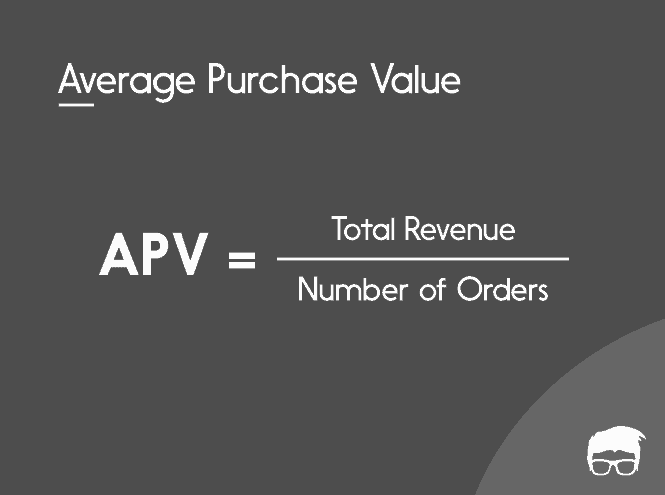
    Average Purchase Value: APV is calculated by dividing total revenue generated in a time period by the number of purchases over the same time period. For the athletic customer segment, it’ll be the total revenue generated by sports footwear sections divided by the number of units sold.

    Average Purchase Value Formula

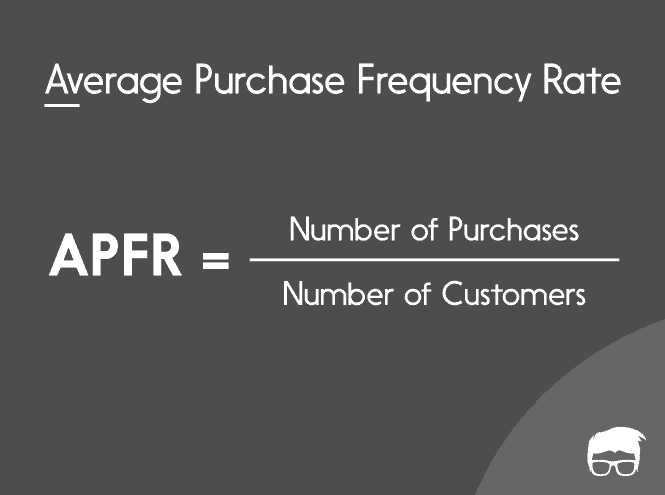
    Average Purchase Frequency: It’s calculated by dividing the number of purchases made by the number of customers who made the purchase during that time period. Suppose the total number of purchases made in the athletic section was 10000, and the customers were 5000, the average purchase frequency would be 1000/500 = 2.

    Average Purchase Frequency Rate Formula

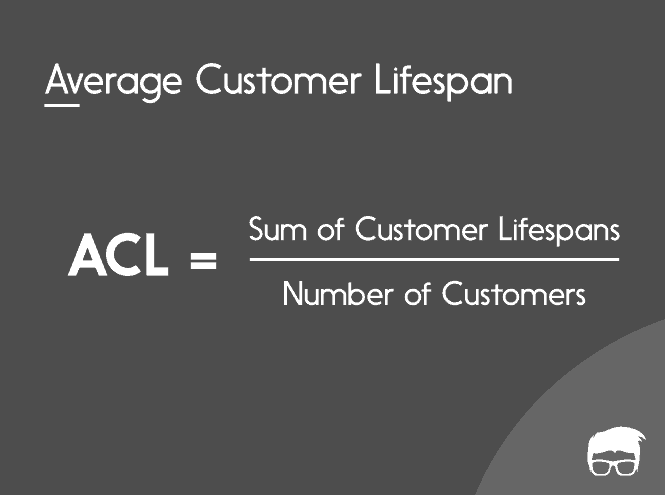
    Average Customer Lifespan: This is calculated by averaging the number of years a customer continues to purchase offerings from your business. This is done by dividing the sum of customer lifespans by the number of customers.

    Average Customer Lifespan Formula

    Customer Lifetime Value Example

    Suppose you run an ecommerce store selling gaming gadgets. Now, you segment these products into two types – PC and consoles.

    According to the data, the total generated revenue in a year from your PC division is $20,000, and the total number of purchases during the same time is 100. Now, the total number of customers during this time period was 75, and the average lifespan of every customer is usually 5 years.

    For consoles, on the other hand, the total revenue generated is $50,000, and the total number of purchases during the same time is 200. The total number of customers during this time period was 120, and the average lifespan of a customer is 2 years.

    Calculating The Average Purchase Value

    PC Division: 20,000/100 = 200

    Console Division: 50,000/200 = 250

    Calculating The Average Purchase Frequency

    PC Division: 100/75 = 1.34

    Console Division: 200/120 = 1.6

    Calculating The Customer Lifetime Value

    PC Division: 200 x 1.34 x 5 = $1,340

    Console Division: 250 x 1.6 x 2 = $800

    Even though the customer belonging to the console segment spends more, he will not be that profitable to your business in the long run. Since the LTV of the PC customer is over 1.5 times that of console customer, it’ll be beneficial for you to put more efforts to acquire PC customers.

    Or you can put more efforts in retaining console customers to bring them at par with your PC division customers.

    How Do You Increase CLV?

    Now that you know how to calculate CLV, the next question that may come to your mind is – “How do I improve CLV?”

    Well, while there are numerous ways to do the same, almost all of them focuses on improving these two aspects –

    • Customer Satisfaction
    • Customer Retention

    Customer Satisfaction

    A satisfied customer spends more. Hence, if you want to improve your CLV, it’s imperative to invest in increasing customer satisfaction.

    You can do this by –

    • Removing the friction while purchasing.
    • Offering freebies.
    • Making communication more personal.

    Customer Retention

    Retaining customers is considered to be a lot less pricey than acquiring new customers. Moreover, customer retention is also a variable affecting CLV directly. According to a study by Bain & Company, a mere 5% increase in the retention rate can increase profit between 25% to 95%. Hence, retention is vital if you want to have good CLV.

    You can improve customer retention by –

    • Removing friction in contacting you after the purchase has been made.
    • Providing better after-sale services.
    • Rewarding customers through schemes like referral programs and loyalty programs.

    Go On, Tell Us What You Think!

    Did we miss something? Come on! Tell us what you think about our article on customer lifetime value in the comments section.

  • Why Did Nokia Fail?

    Why Did Nokia Fail?

    If you could turn back time and visit the early 2000’s for a survey on mobile phones, you’ll get some shocking revelations. A company which is fighting for just 1% share in the smartphone industry today was almost synonymous to the word mobile phones a few decades back.

    Yes, Nokia was that big.

    For many people, Nokia was their first phone, especially kids born in the 90s. It became the best-selling brand and a household name within a decade. It catered to all the segments of society by designing different models with varied prices.

    Nokia was the crusader of innovation in its prime.  

    But today it is not relevant as it was. Its sales went down to the point where it had no choice but to sell its mobile phone division.

    So, how can a company so successful ever fail? What led to Nokia’s failure?

    Let’s find out.

    Rise of Nokia

    From a pulp mill to a telecom giant, Nokia climbed the ladder of success like no other mobile company.

    In 1992, Nokia launched the world’s first GSM phone: Nokia 1011. In 1998, the company overtook Motorola and became the best-selling mobile phone company. Still, the streak of success was far from over. At its peak, in 2007, Nokia’s worldwide market share stood at 49.4%, the highest in the world. It understood the mobile industry and to this day, no company had been able to achieve such heights of success.

    However, behind the curtains, something else was brewing. The collapse of Nokia had already begun, way before 2007. It started from within the top management, and just like dominoes, one by one, everything went down.

    A Timeline of Nokia’s Failure

    After dominating the mobile industry for more than a decade, Nokia’s sales went down. It was a result of both internal decisions and the external environment.

    • Change in The Top Management: In 2006, Jorma Ollila was replaced by Olli-Pekka Kallasvuo as CEO. The new management merged Nokia smartphones and basic phone operations, they focused more on traditional phones rather than experimenting with new technology.
    • The Arrival of New Companies: In 2007, Apple stepped into the smartphone game and launched the iconic iPhone. Nokia refused to take Apple as a threat to their high sales numbers. It also considered Apple phones inferior as they run on 2G technology while Nokia’s mobiles ran on 3G technology.
      In 2008, Google launched the Android Operating System (OS). By this time, Apple’s iOS was becoming popular and its sales were steadily increasing. To tackle the threat, Nokia should have switched to Android, but it didn’t and continued to make phones with outdated Symbian OS.
    • Delay in The Release of New Phones: In 2010, Nokia announced N97, which would be the first to run Symbian^3. But the release was delayed and as a consequence, it failed to compete with Apple and rising Google.
      In 2010, Olli-Pekka Kallasvuo was fired from the position of CEO, and Stephen Elop, from Microsoft, took his place.
    • Partnership with Microsoft: In 2011, to cope up with declining market share Nokia partnered with Microsoft to make Windows phone, abandoning old OSs like Symbian and MeeGo.
      In 2012, the Windows phone failed to make an impact on an already established smartphone market. The main reason behind this was a few numbers of applications on the windows store as compared to Google’s Playstore and Apple’s store.
    • Acquisition By Microsoft: In 2014, Nokia was close to being bankrupt. But Microsoft stepped in and brought Nokia for $ 7.2 billion. This was considered by many, the last nail in the coffin.

    Reasons for Nokia’s Failure

    There are numerous reasons that led to Nokia’s failure. Here are some of the major reasons among them.

    Failed to Adapt

    Despite knowing that there was more demand for software than hardware, Nokia stuck to their old ways and didn’t adapt to the changing environment. When Nokia eventually did realize their mistake, it was a little too late, because people moved on to Android and Apple’s phone.

    Failed to Innovate

    Nokia was the first company to introduce 3G phones, camera phones, and many more innovative technologies. In the early 2000s, it knew that innovation is the key to stay relevant and push the boundaries of technology. But as demand for their phones grew, their focus shifted to manufacturing, to fulfill those demands. It focused less on innovation and more on mass production and as a result, companies like Samsung, Apple, HTC, etc., started to gain some market with their innovative & simple OSs.

    Failed to Reposition Itself

    Nokia should have analyzed the market trends and repositioned Itself accordingly. It failed to do so. It did not focus on the smartphone market and missed the opportunity. Nokia could have improved their existing software: Symbian.

    Overconfident

    The top management of Nokia thought that nothing could ever go wrong until it did. New companies arrived with new ideas and technologies and Nokia turned a blind eye to them. They didn’t consider anyone their competition. In this overconfidence and ignorance, Nokia failed.

    Changed the Organizational Structure

    Nokia shifted to the matrix structure. It was a sudden shift and was done to improve agility. A lot of stakeholders were upset and people in top management left the company. The people who helped Nokia to become the best company were no longer there. This is one of the reasons for how internal working affected their company.

    Had Internal Issues

    “We were spending more time-fighting politics than doing design,” said Alastair Curtis, Nokia’s chief designer from 2006 to 2009.

    Many divisions of the company were not coordinating with each other properly. This lack of coordination created more issues such as internal rivalries in the top management. The impact of these problems was not direct but it played a role in the downfall of Nokia.

    Failed to Compete in the Smartphone Market

    While companies like Samsung, Apple, HTC were making software-driven phones, Nokia was still fixated on the traditional phones. It did try to compete by releasing N97 with new Symbian OS, but it was too late as Android phones and Apple phones were already established.

    The Symbian OS vs MeeGo OS Confusion

    The company’s R&D division was divided into two. One was working on improving Symbian and the other on MeeGo. Both teams claimed that their software was better. This competition resulted in delays in releasing new phones.

    Frequently Changed the Management

    Having stable top management helps the company to stay on one track. But this was not the case of Nokia, in the span of 5 years, the CEO was replaced 2 times. This frequent change didn’t give the employees to adjust to the new CEO’s goals and visions. This caused dissatisfaction among the employees and other stakeholders.

    Failed to Switch to Android

    Nokia had the opportunity to join hands with Google and make android phones but refused to do so. This was one of the biggest mistakes Nokia made. Android OS was simple, faster, and had a great collection of applications on its store, which made it so popular. If Nokia had switched to Android in time, their story would have been different.

    Decision-Making Was Slow

    The top management took too long to make decisions. Frank Nuovo, former vice-president, and chief designer left the company in 2006. He said that the management was slow to make decisions that required urgency. Many opportunities were lost due to this. Way before the release of the iPhone, Nokia’s research department had already come up with the idea. But because of the corporate culture that was prevailing, it never saw the light of the day.

    Partnered with Microsoft

    In 2011, Nokia announced a partnership with Microsoft. They were going to make windows smartphones, which didn’t work in the market due to a lack of applications in the windows store. Nokia was on the brink of bankruptcy, but Microsoft bought the mobile devices division of Nokia in 2014 for $7.2 billion.  

    Aftermath

    To this day, Nokia exists, not as relevant as it was in the past. Its glory days are long gone, but it is still trying to regain it by not repeating the mistakes of the past.

    Nokia focused on network equipment through Nokia Networks, after the sale of its mobile phone division in 2014. Nokia Networks has its operations in more than 150 countries, it deals in wireless and fixed network infrastructure, communications and networks service platforms, and professional services to operators and service providers. Nokia’s ranking in global telecom infrastructure was 5th in 2018 and it is paving its way to the top.

    In 2016, Microsoft sold the mobile phone division of Nokia, for $350 million to HMD Global, which was a company made up of previous Nokia’s executives.

    In 2017, HMD Global released an Android-based smartphone under the brand name of Nokia.

    The company’s Android phones were well received by the audience. Still, it is a long way from catching up to the current competition.

    Go On, Tell Us What You Think!

    Did we miss something? Come on! Tell us what you think about our article on Why Did Nokia Fail in the comments section.
  • Designing Websites For Kids: Trends & Best Practices

    Designing Websites For Kids: Trends & Best Practices

    Designing a website for kids is not a child’s play. We all are surrounded by a digital age and so are our kids and children whose tiny little fingers always remain glued to smartphones and tablets. From homes to schools, mobile devices have become a part of their life and childhood, leaving their toys and outdoor activities way behind.

    While the globe around is adapting the learning through online trends, kids also spent a lot of time learning new things online. In 2013, Apple launched a curated ‘Kids’ category’ in its app store that already has more than 80,000+ apps by now. It separates the app into three age ranges, spanning those under 5, those aged between 6 and 8, and finally, those for kids aged between 9 and 11.

    Connect with your inner child and let your visionary juices flow. It will automatically compel you to design the website accordingly as per the different age groups whether it’s for games, videos, puzzles, stories or colouring-in site or application. Consider the following trends, practical design guidelines, and practices to create better stuff for kids and children.

    Design for Different Age Groups

    It becomes a challenging thing to keep beautiful, colourful, stimulating and engaging content on the web. The design varies for kids and children of different age groups.  You need to narrow your target audience while designing the website.

    It is better to target and categorise the website according to the specific age group of children. For example – an 8-year-old child won’t engage with something that is too babyish. At the same time, if they find something that is too odd or difficult to understand, they will switch to some other website.

    A pair of poorly designed content and the dark pattern will provoke children to switch on to the next website. It is essential to unleash the inner child in you so that you can create websites that instil learning into their brain and at the same time, empower their personality. 

    Ages 3-5

    Young ones, especially the one who steps into this category does not have any reading skills initially, so it is advised to use fewer texts and more pictures in brighter colours. Go for brighter colours, big fonts and bold texts that will entice the tiny eyeballs of these pint-sized people.  

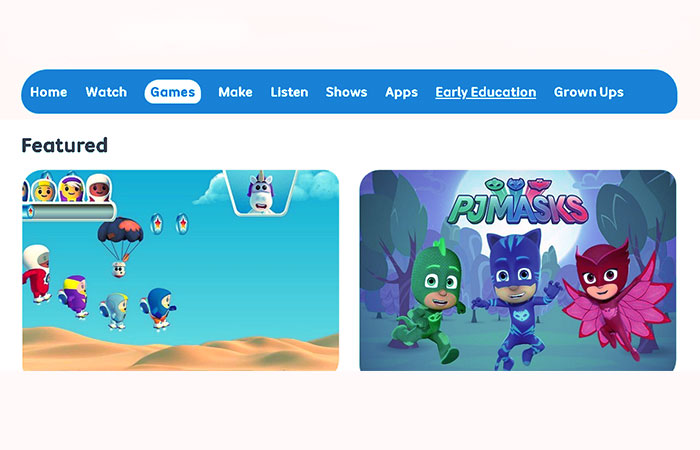
    Put some animated videos within the content as this will catch the attention of kids aged 3-5  years. You can even use sound effects to make your website more attractive to children like what PBS did with their website.

    Ages 6-8

    Children lying in this category can now understand the basics of words and their formation. But still, use graphics and images with brighter colours.

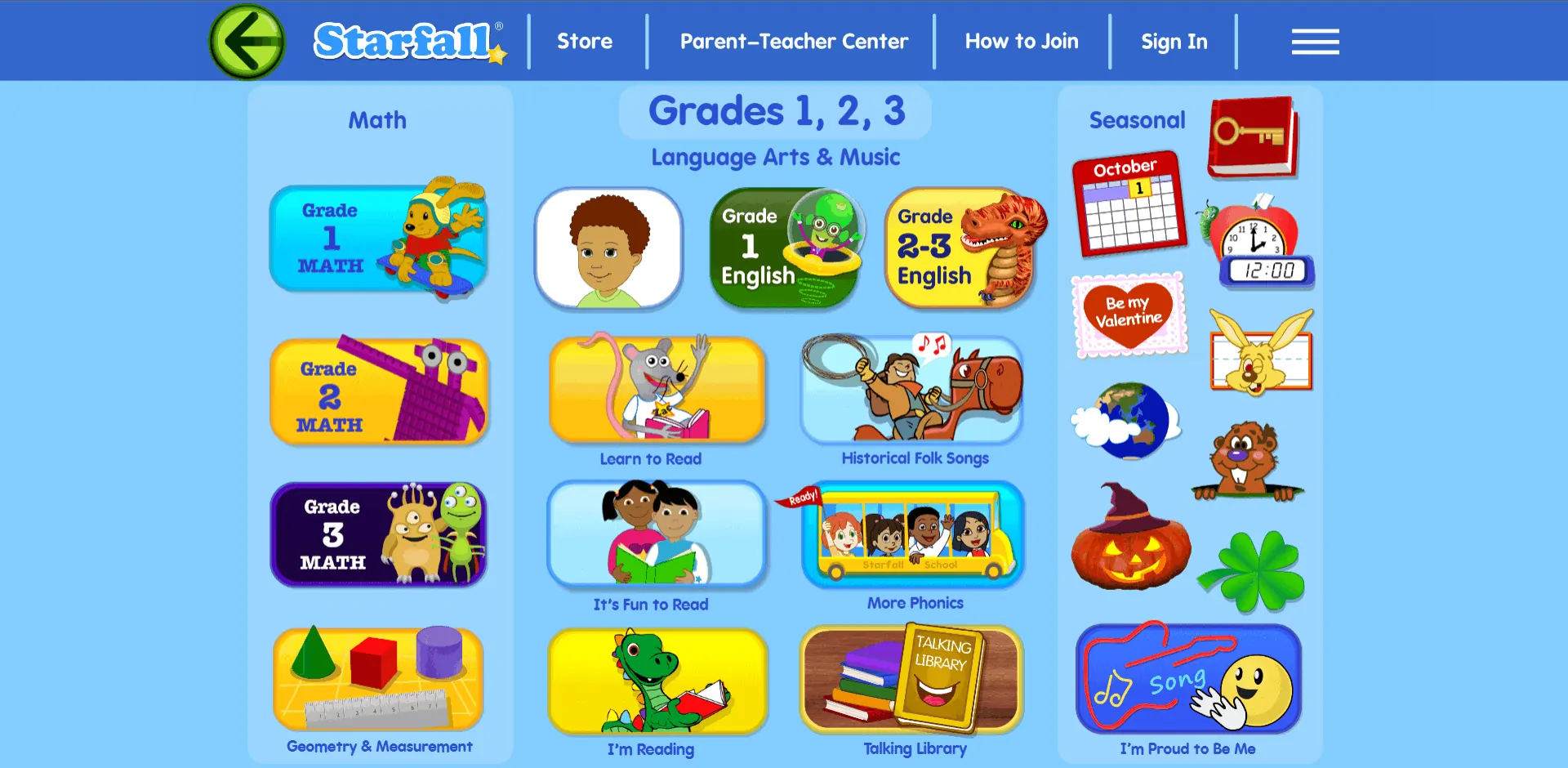
    starfall website

    Starfall is a website familiar among children aged 6-8. The website contains a lot of images of people, animals, and other recognisable objects.

    Age 9-12

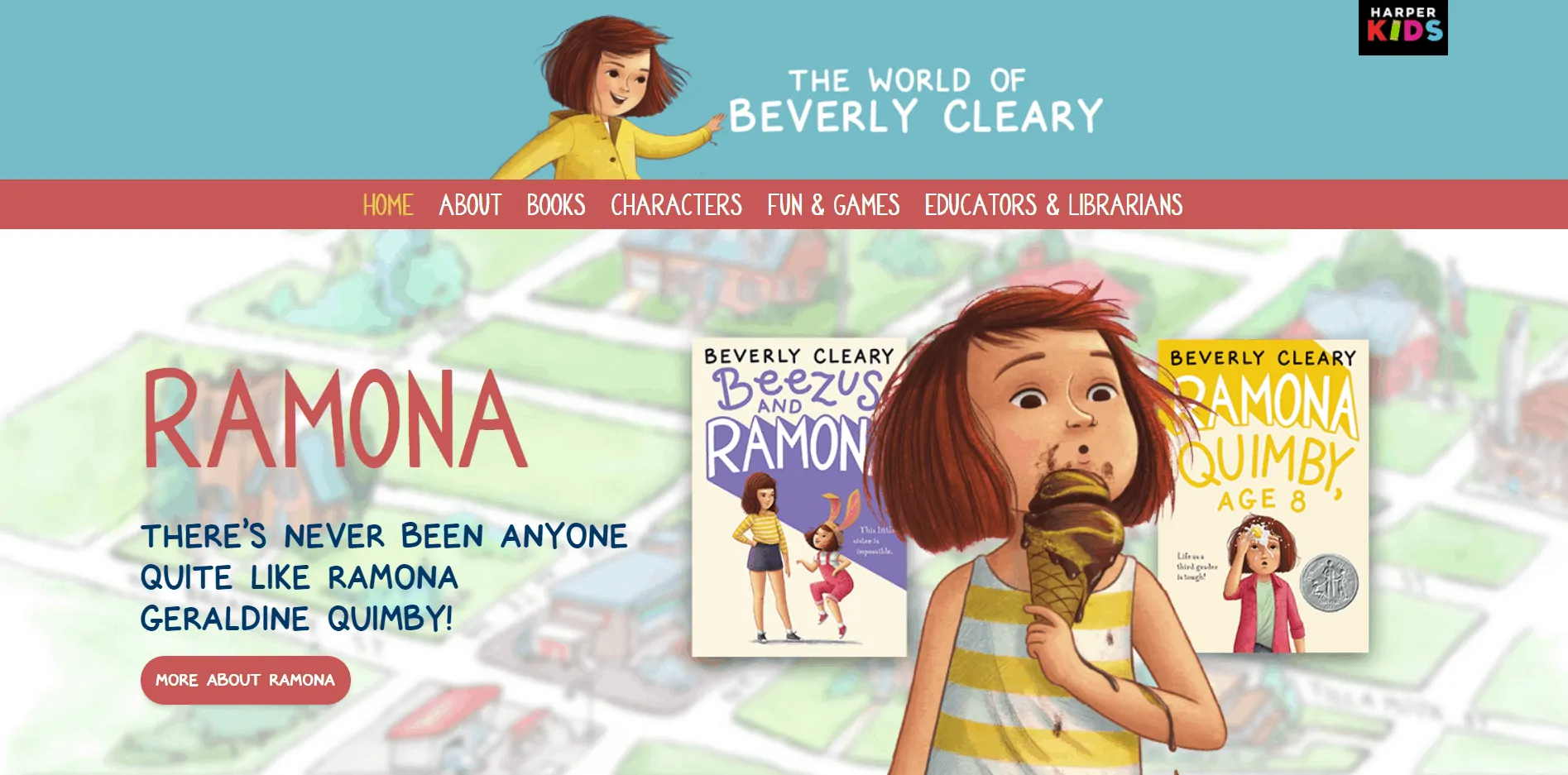
    Well, the children who fall into this category think and fall that they are grown-up now. But it is not so. They are highly proficient and compatible with the sources on the internet and look for educational stuff there. Although the typography remains simple, you need to put word structure more traditional, colour saturated, and palette more complex.

    Harper Kids

    Books of the much-loved children’s famous author Beverly Cleary contain realistic illustrations and platelets, including saturated and muted colour schemes.

    Use Child-Friendly colours

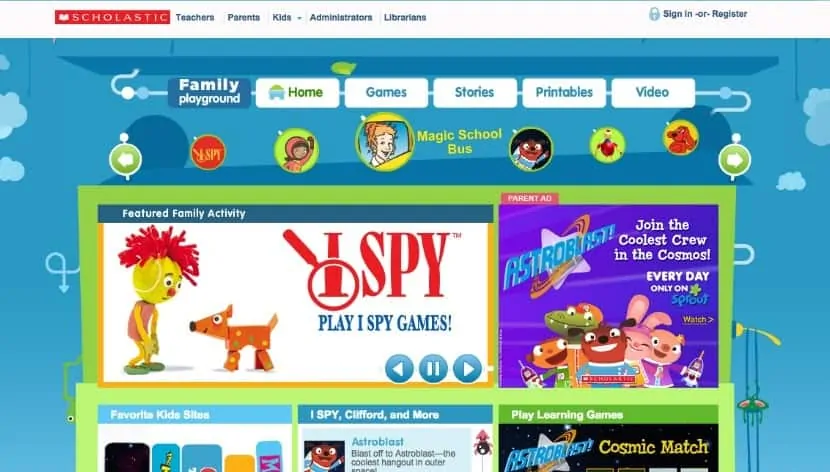
    Scholastic

    Always use bold, bright, vivid and vibrant colours that will entice the eye of little kids. Primary and secondary colours – red, blue, yellow, green, purple and orange – are all happy colours and popular options and colour schemes can include all of them plus more.

    Go for a palette of happy and go to click colours. Also, make limited use of jewel and pastel tones or use them in combination with saturated colours.

    Make Your Navigation, icons and call-to-action obvious

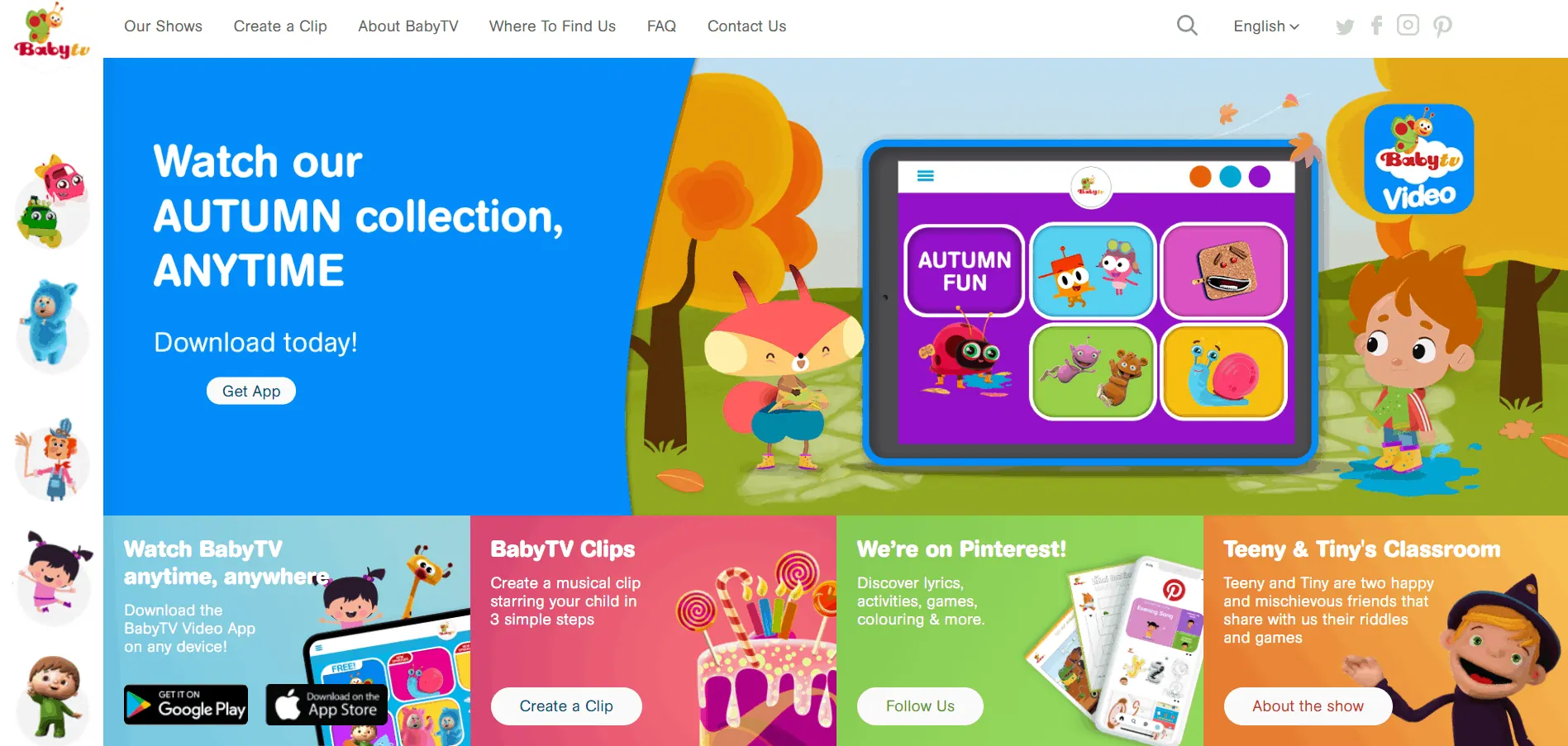
    baby tv

    Children usually prefer websites that are user-friendly and easy to navigate while at the same time, it should serve their queries. Large buttons and exciting fonts size will stand out and make the entire website oversimplified.

    Put simple typography

    Keep the typography simple and use the following guidelines.

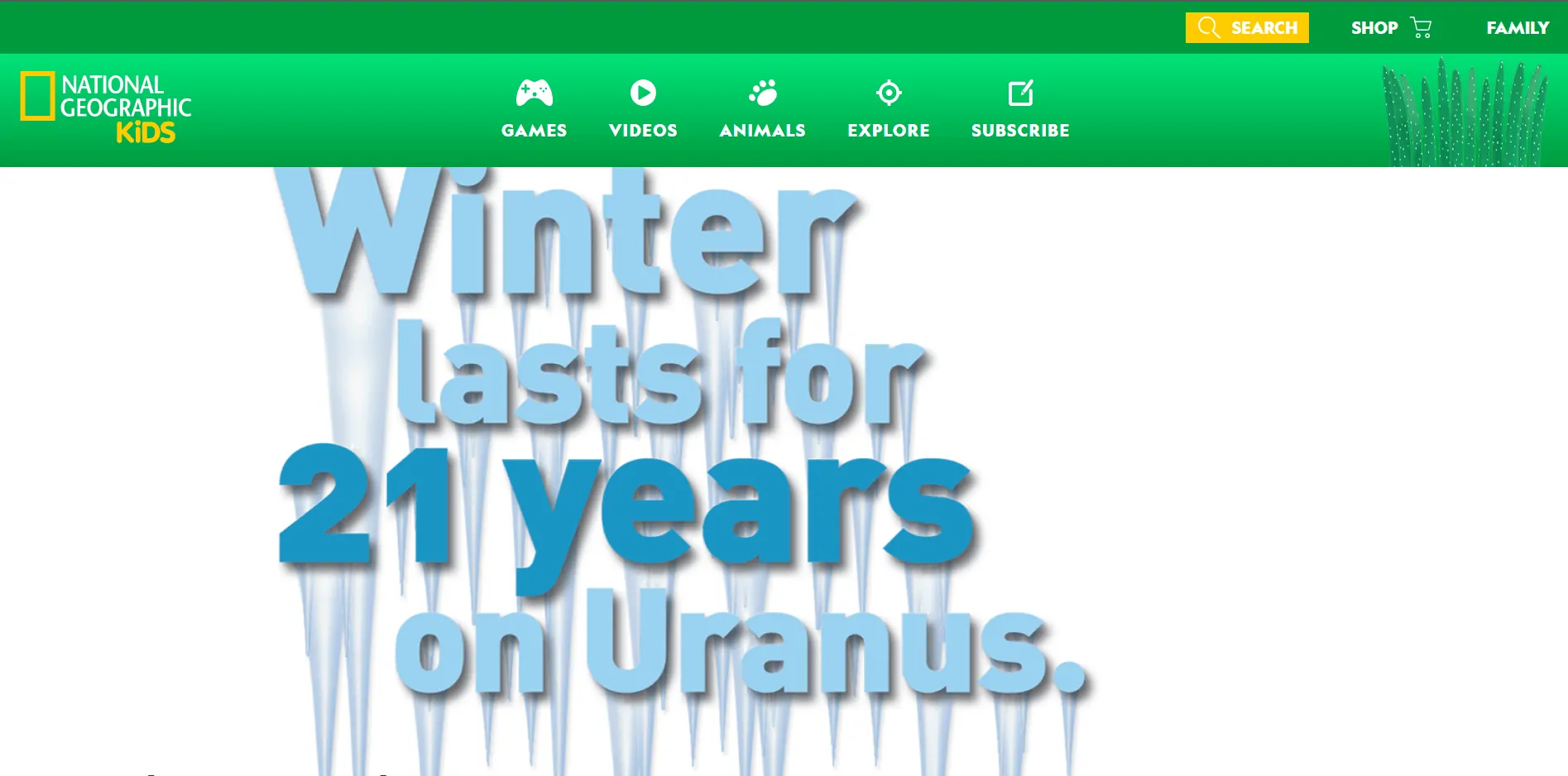
    Make the text easier to read by using Sans Serif font. The palette must contain only one typeface, or it can be two for older children. Also, use those colours which creates a contrasting effect against the background.

    National Geographic

    Gain trust from parents 

    Daily Telegraph

    Parents are always concerned about their children, whether they are visiting the right website or not. Is that website unsafe, or will it distract them for their childhood?

    A web designer must include a section on the website that will assure a particular website is safe, secure and age-appropriate.

    You need to put yourself in place of kids’ parents and design grown-up sections for parents.

    The Wiggles and The ABC Kids are some of the examples that have a separate section with information and resources for parents.

    Advertise Wisely

    Kids find it difficult to differentiate between advertising and promotion. However, some advertising is clearer from the children’s point of view while it is appropriate than others.

    If the ads are your own creatives, make sure they stand out as advertisements.

    If the advertisements are from a third party, make sure they’re child friendly and not misleading.

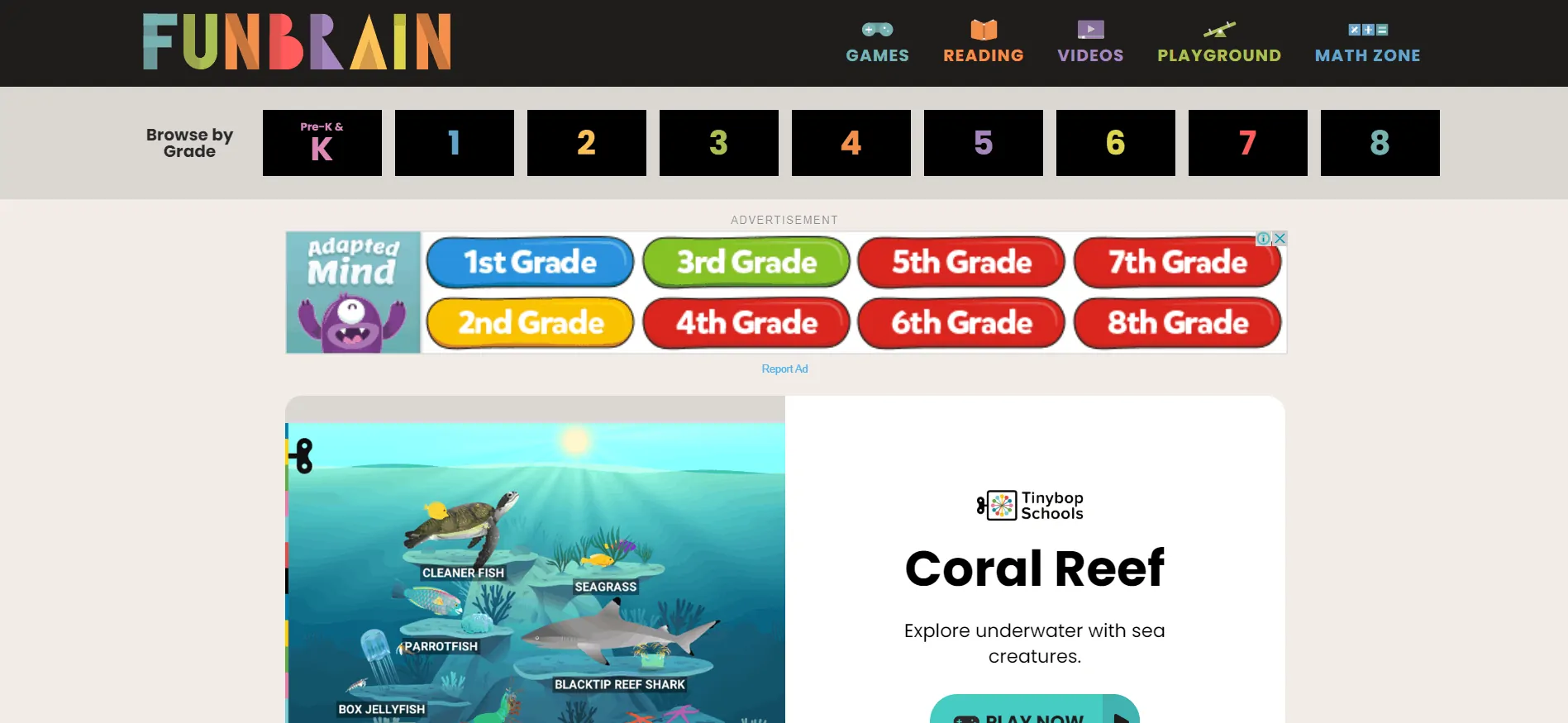
    Funbrain

    For example, if you are advertising a Mike, the Knight app on the Bob the builder website, the characters and range of colours on the later website will not make it different from the actual website content. However, the colours being bright will attract the children and eventually, the goal of the advertiser will be achieved.

    Encourage Education

    apkpure
    Source: apkpure

    Remember we used to love these kinds of puzzles in our childhood which helped our learning?

    The young minds of children always love to learn new things on online platforms. This can be a great opportunity to grab and make the learning fun and engaging for these kids.

    Try to impart learning by incorporating puzzles and exciting activities on the website or app. Further, motivate the children and encourage their achievements by keeping the rewards, badges and levels in it.

    You can check the website of Funbrain as a reference check. The way they organise mathematics, reading, puzzles, crosses and noughts in learning is all fun and one of the best ways to engage and entertain children for hours.

    What’s your take?

    Designing a website for kids and children is a whole new thing, unlike the one we create for the grown-ups. Also, by designing a website for kids, you can break the age-old norms of designing a web for adults because it comes with its own set of design guidelines.

    With this article, I have compiled all the web designs, trends and best practices that will help you think from the child’s psychological point of view and interest. Refrain your ideas from implementing advanced gestures as this would only confuse and annoy the kids and their parents as well.

    Go On, Tell Us What You Think!

    Did we miss something? Come on! Tell us what you think about our article on designing websites for kids in the comments section.
  • Hockey Stick Growth Explained

    Hockey Stick Growth Explained

    Over 96% of new businesses fail in the first 10 years. But in some cases, like Groupon, startups cross the $1 billion mark in just their initial years.

    Such growth isn’t new. Several startups, including Amazon and Facebook, saw their metrics shot up dramatically to form the shape of a hockey stick. 

    Today, disruption is rather slow-paced. Not every startup see such hockey stick growth. But, still, every startup, especially those seeking angel and venture capital funding, are conditioned to project this growth curve – because investors love it.

    But what exactly is hockey stick growth and what makes it important for startups?

    Let’s find out. 

    What Is Hockey Stick Growth? 

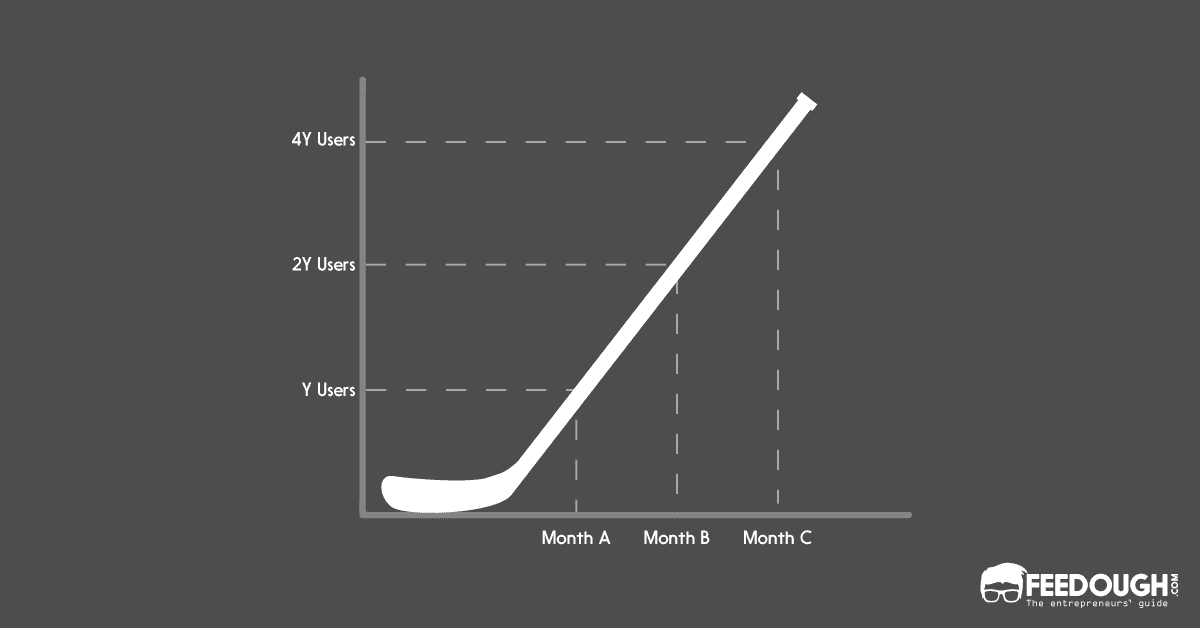
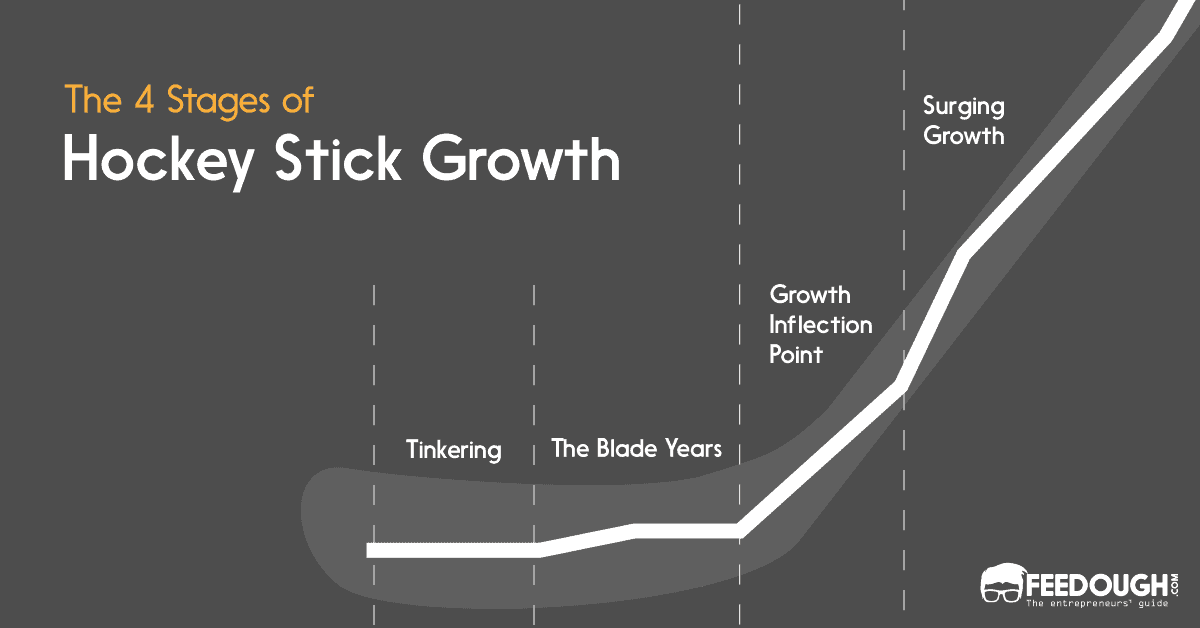
    Hockey stick growth is the growth pattern that a company exhibits where initially there is a stagnant growth, but when a certain point is hit (point of inflexion), growth increases exponentially.

    Usually, such growth charts differentiate a startup from a small business. Startups are known to disrupt the markets, and this disruption usually ends up in developing totally new demand for its offerings. Such demand and other metrics of a disruptive startup, when represented in the form of a graph, form a shape of a hockey stick.

    hockey stick growth

    Stages Of Hockey Stick Growth 

    While launching a startup, every startup aims for a hockey stick growth. There are 4 main stages of growth which are observed while plotting the revenue growth of the companies. 

    hockey stick growth stages

    Tinkering

    This stage starts with the entrepreneurs analyzing and exploring the startup idea more seriously. They probe into the feasibility of the business idea and try to find the problem-solution-fit during this stage.

    Tinkering ends when entrepreneurs fully commit themselves to turn the business idea into a reality.

    Usually, founders haven’t quit their jobs at this stage.

    Though this stage poses the least amount of pressure on an entrepreneur, some mistakes can still upend an innovative startup idea

    • Wasting time in building an elaborate business model
    • Not discussing and showing actual sample products and seeking feedback for it in fear of competitors copying the idea. 

    At this stage, entrepreneurs’ primary focus should be on experimenting and developing the offering according to the feedback they get from their potential customers.

    Blade Years

    Blade years is the time period when the idea is validated in the market using early releases like MVP and beta version, and the final offering and its business model is being developed.

    This is the phase where entrepreneurs quit their day job and commit themselves fully to the development of business.

    Blade years usually last for 3 to 4 years, and the revenue generated is meagre. Usually, entrepreneurs use bootstrapping to finance their expenses.

    Some of the common mistakes made at this stage are – 

    1. As the entrepreneurs are hardly making any money to pay their personal bills, they devote a great deal of time and energy in making elaborate pitches for raising investment capital. 
    2. Spending exorbitant amount of money on sales and marketing efforts such as expensive advertising campaigns and sales operations. 
    3. Not being open to making further changes in the product.  

    Growth Inflection Point

    This is the turning point when the business model is perfected. This is the point where the startup experiences an exponential increase in revenue.

    At this stage, entrepreneurs may leverage their growth momentum to attract venture capitalists and other investors. This stage presents significant threats- 

    1. As the business is scaling up too quickly, some startups can’t sustain the strong growth and eventually crash.
    2. To capitalize on this excellent growth opportunity, some entrepreneurs tend to make significant changes in a model that has been working reasonably well for them. 

    The primary focus should be on carefully assessing the operations and getting them in sync with the revenue growth.

    Surging Growth

    Once the startup is able to prove its potential and sustain this exponential growth during the growth-inflexion phase, its growth continues to accelerate at a fast pace, attracting more customers to try the offering.

    During this phase, the entrepreneurs need to tackle the complexities of leading and managing the business that comes with an exploding market. At this stage, many large corporations make some very tempting offers to buy the company. The entrepreneurs are presented with 3 choices –

    1. Sell the company 
    2. Remain the CEO 
    3. Hire a CEO to manage the business

    The entrepreneurs must make a smooth transition and hire top-quality managers to head the major departments instead of hiring unqualified people from their personal networks.

    Examples Of Hockey Stick Growth 

    Some of the most obvious examples of hockey stick growth are- 

    Groupon

    Founded in 2008, by Andre Mason and Eric Lefkofsky as an e-commerce marketplace, the revenue growth of Groupon stands as a perfect example for a hockey stick growth. 

    • Tinkering: The tinkering period lasted for almost 2 years from 2006 to 2008, where Andrew Mason first launched ‘The Point’ which eventually became Groupon. The revenue was around 10k during this time. 
    • Blade Years: This was a period of 2 years, where the revenue growth of Groupon was pretty much stagnant at around 14.5 million. 
    • Growth Inflection Point: Groupon hit the growth inflexion point in 2010 when its recorded revenue was around 313 million. 
    • Surging Growth: This period started in 2011, where Groupon crossed the 1 billion mark. This period represents the stick in the graph. 

    Netflix

    Incorporated in 1997 by Reed Hastings as a DVD rental business, Netflix too witnessed a hockey stick growth during its initial years –

    • Tinkering: The tinkering period was over 1 year from 1996 to 1997. 
    • Blade Years: The blade years lasted for at least 3 years from 1997 to 2000, where its revenue was around 1.5 million. It was during this period that Netflix stopped selling DVDs and launched subscription services. 
    • Growth Inflection point: Netflix hit its growth inflexion point in 2000 with its revenue at 41 million. 
    • Surging Growth: This period started in 2001. During this period, Netflix attained around 500,000 subscribers and also initiated an IPO for $15 per share. 

    Go On, Tell Us What You Think!

    Did we miss something?  Come on! Tell us what you think about our article on hockey stick growth in the comments section.
  • Startup Vs Small Business: The Real Difference

    Startup Vs Small Business: The Real Difference

    A startup is a new buzzword in the corporate world. Almost every entrepreneur who starts a new business calls his/her venture a startup.

    But not every business is a startup.

    Many entrepreneurs realize later that their business was nothing but a small business from the very start.

    This creates a confusion of what exactly is a startup and how is it different from a small business.

    Fret not as here’s a complete guide explaining the difference between startup and a small business.

    What is a Startup?

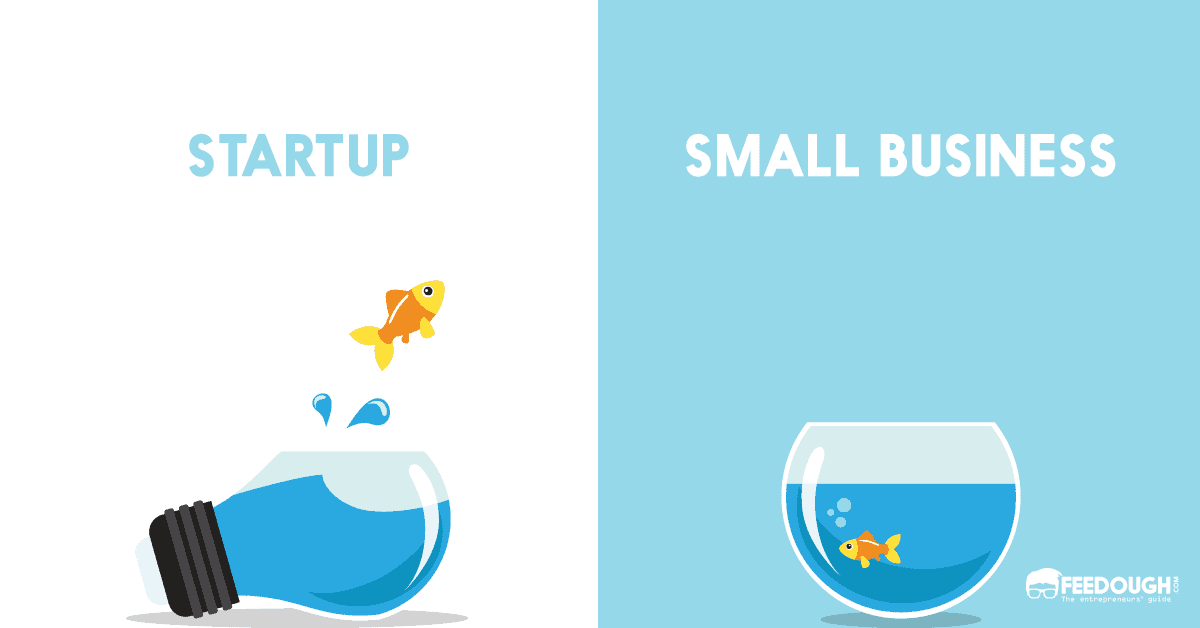
    A startup is a business structure powered by disruptive innovation, created to solve a problem by delivering a new product or service under conditions of extreme uncertainty. For example – Headspace, Duolingo, etc.

    Precisely, it’s a business structure that has the following characteristics –

    • Growth: Startup is a business structure designed to grow fast. According to Paul Graham, founder of Y Combinator, “A startup is a company designed to grow fast. Being newly founded does not in itself make a company a startup. Nor is it necessary for a startup to work on technology, or take venture funding, or have some sort of “exit.” The only essential thing is growth. Everything else we associate with startups follows from growth.”
    • Business Model: Startups are known to have unconventional business models. This is because they venture into an untapped market or fulfil repressed demands of the market.
    • Innovation: The mark of a true startup is disruptive innovation. Startups create new offerings or innovate the existing ones. They might also disrupt the way an offering reaches to the consumer and develop a new market for themselves.
    • Uncertain Environment: Startups operate in a highly uncertain environment. The possibility of failure always hangs around an entrepreneur’s neck.

    Any business structure that does not possess these four characteristics is not a startup.

    What is a Small Business?

    A small business is a privately owned corporation, partnership, or sole proprietorship that requires less capital, less workforce, and little to no machinery. These businesses operate on a small scale to serve a local community and generate less annual revenue than a large corporation. For example, local grocery stores, hair salons, car garages, cafes, etc
    Usually, a small business possesses the following characteristics –

    • Limited Investment: Owners or a small group of individuals supply most of the capital requirements of the business. Since the scale of operations is small, the capital requirement is less.
    • Labor-Intensive: Small businesses usually don’t require heavy or sophisticated machinery. It uses more labour-intensive techniques.
    • Less Number of Employees: Small businesses employ a smaller number of employees as compared to large corporations. This is mainly due to their small scale of operations.
    • Local Area of Operations: Businesses like groceries shop, bakeries, or hair salons are all small businesses. They operate locally and remain there for longer periods of time (years or maybe decades), this helps the businesses to build a strong relationship with local customers.
    • Management: In most cases, the owner is also the manager of the business, which helps in quick decision making.

    Startup vs Small Business

    Small business don’t operate in an uncertain environment, have a traditional business model, and doesn’t grow at a substantial rate. They are just small business structures that have nothing special in them.

    Startups, on the other hand, are special business structures that change the way the market, economy, or the world works.

    Intent

    The intention of the entrepreneur is where the distinction arises between small businesses and startups.

    Startup
    Small Business
    The intention behind a startup is to disrupt the market with a scalable and impactful business model.
    The sole intention of a small business’ owner is to be her/his own boss and secure a place in the local market.

    Innovation

    Startup
    Small Business
    Innovation is an essential part of startups as they always create a new unique offering or innovate an existing one.
    Small businesses deal in offerings that already exist in the market.

    Business Model

    Startup
    Small Business
    Startups usually have unconventional business models that are new to the market. This puts a startup in a high-risk position.
    Small businesses adopt a tried and tested business model which creates a less risky situation.

    Growth Rate

    Startup
    Small Business
    Startups witness an exponential growth which is without any limits.The biggest example is Facebook. After its launch, it grew exponentially throughout the world.
    Small businesses grow slowly and steadily. Their purpose is to maintain a steady income; therefore, the growth rate stops after reaching a certain level of income.

    Source of Funding

    Startup
    Small Business
    Startups go through various rounds of equity funding. Their sources are angel investors, venture capitalists, corporates, etc.
    Small businesses acquire funds only in the initial stages of the business. Once established, they are either revenue financed or take business loans. They don’t go through various rounds of equity funding like startups.

    Revenue

    Startup
    Small Business
    A startup takes years to plan, collect funds, build a product, and execute. Therefore, it generates revenue in the later years.
    Small businesses make profits from the start since they operate on tried and tested business models, and provide offerings that already have a market.

    Technology

    Startup
    Small Business
    Startups are often tech-oriented. Usually, startups use technology to disrupt the market.

    Small businesses use traditional methods or minimum use of technology. The technology used in these businesses tends to be simple.

    Go On, Tell Us What You Think!

    Did we miss something?  Come on! Tell us what you think about our article on startup vs small business in the comments section.