
What if a social network paid you every time you post? The Steemit business model made that promise real, paying users for the content they post instead of rewarding them with likes alone.
Dan Larimer and Ned Scott launched Steemit in 2016. It is a blogging and social media platform built on the blockchain. Larimer was already a known name in the blockchain community. He had founded BitShares, the decentralized asset exchange, and EOS, the cryptoasset whose ICO raised $4 billion.
Those launches belong to the past now. After Tron acquired Steemit Inc., a governance dispute split the community. In March 2020, a fork moved much of the original user base to Hive.
Anyone can open a free account and write a blog post with embedded images and videos. They can also comment on others’ posts. But where the Steemit earnings actually come from is a different story.
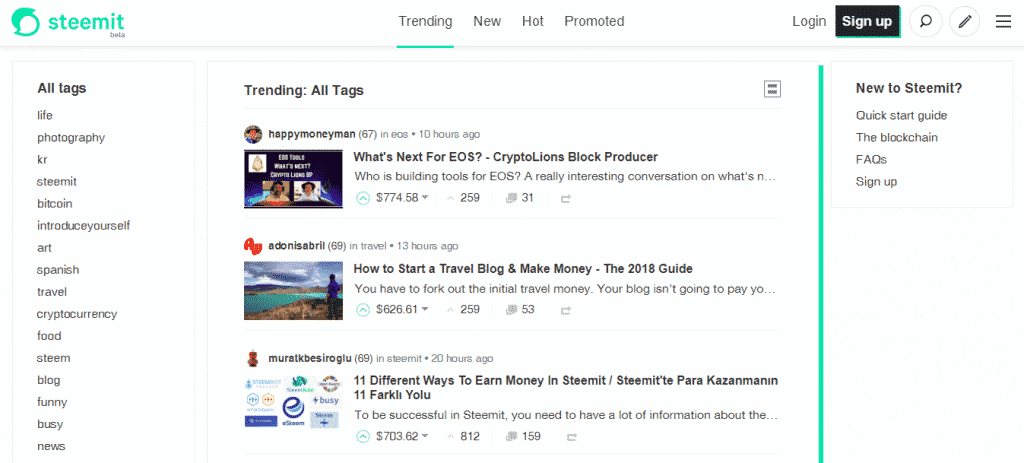
How Steemit Works?
The blockchain based social media network looks like any other social network but the Steemit business model has disrupted the industry. Steemit is based on the Steem blockchain which not only stores the cryptoassets but the content too. That is, all the content posted on Steemit is stored in the Steem blockchain. It cannot be removed by any central authority like in the case of Facebook. It is regulated/moderated by the users to prevent plagiarism, illicit content, and other unnecessary-unwanted-useless-content. That user-control ideal was tested during the 2020 governance dispute over the acquisition.
The platform works on the Proof of Brain concept. There’s a reward system where content creators and curators are paid out. In theory, the payout should be based on the value they add to the platform. The platform uses the 3 different decentralized cryptocurrencies to reward content creators and curators. They can upvote, downvote, comment, and flag posts.
- Steem – Their tradable cryptocurrency (utility token) that you can buy and sell on exchanges. Steem can also be used on the Steemit platform. It can be powered up into Steem Power, traded for Steem Dollars, and transferred to other accounts.
- Steem Power – Steem Power is often referred to as the frozen Steem. It is held by content creators and is used to increase their influence on the Steem Network. The more Steem Power they hold, the more value their posts and upvotes have. The more value their posts and upvotes have, the more is the reward potential.
- Steem Dollars – The stable cryptocurrency designed to be pegged to US$1. It serves as a way for content contributors to know exactly how much they are getting paid. It can be traded with Steem and can be transferred to other accounts.
How Are The Users Paid On Steemit?
Those three tokens are how Steemit pays its users. When Steemit launched, its reward system worked like this. Steem rewarded people by simply creating new tokens. Unlike bitcoin, the tokens are already pre-mined, and each year they inflate the supply to have more tokens to distribute.
Everyday Steem rewarded 90% of the new Steem units to the people who hold Steem Power Units. The other 10% of the new Steem units went to content creators, curators, and commenters.
The payout reward for each post was as follows:
- At least 75% of the amount went to the author.
- At most 25% was distributed among the curators.
The contributor’s job was to write content that they thought would add value.
The curator’s job was to then vote on the content based on how good they thought it was. Steemit tried to keep things somewhat of a meritocracy. It had some clever ways of incentivizing curators to vote only on quality content.
According to Coindesk,
To incentivize this sort of voting, there is also the curation reward paid out in the form of Steem Power. If a post does well, you earn more Steem Power than if a post doesn’t do well, thus incentivizing you to only vote for content that you believe is high quality.
Not every vote from the same account is equal in value. Voting on multiple pieces of content reduces the strength of each of your votes depending on how much time passes between each vote.
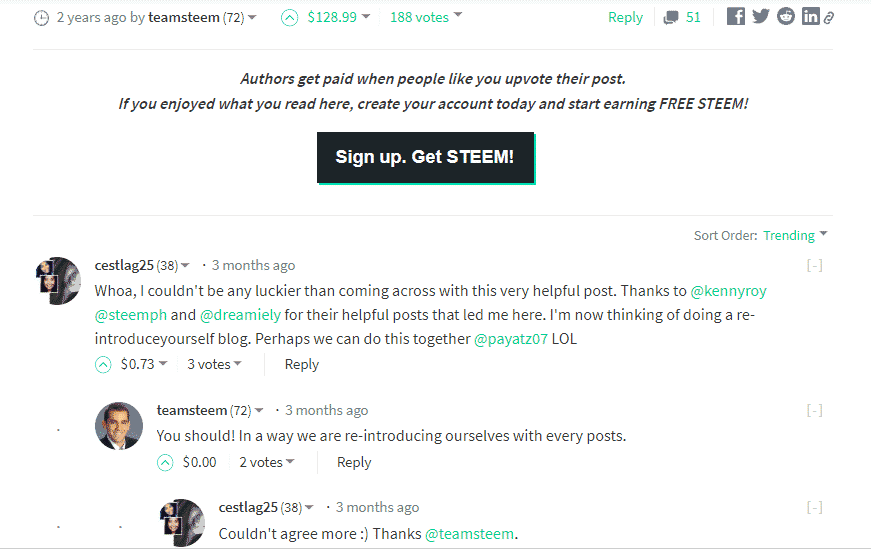
Steemit earnings were paid out half in Steem Dollars and half in Steem Power. There was an option to boost that up to 100% Steem Power.
Curators were paid out only in Steem Power. These figures come from the original whitepaper era, and hardforks have altered the parameters since.
How Does Steemit Make Money?
Steemit doesn’t monetize its platform with advertisements. Rather, the Steemit business model uses the following ways to earn money.
Steemit makes money when its users invest into Steem Power so their posts can be seen by a larger audience. That brings more votes, which translates into more money.
Steem Power is locked for two years. So theoretically Steemit could use that money as an investment in the platform. That way they can make a larger return than what they’re giving back with rewards.
As we mentioned in the blockchain business model, their tradable Steem token can appreciate in value. That appreciation will bring in a source of cash for the company.
The developers have also held a portion of the tokens. They can cash out or reinvest those back in the business.
Steemit also allows its users to promote their posts to reach a larger audience. Steemit has its own built-in way to promote each post. This is not unlike other decentralized platforms such as Minds, which also allows users to boost posts this way as well. The decentralized social landscape now also includes Bluesky, Farcaster, Lens, and Nostr.
Think of it like a Facebook Ad. You are essentially paying for people to see your content. You hope it converts to sales for your business, or in this case, upvotes and earning potential for your post.
The best way to think about posts in Steemit can be summarized by the following statement from this article,
“Steemit has no explicit ads, but you can imagine each post as a single advertisement. In order to attract attention or “sell the contents”, one should invest his money. If people like your post you will get your money back and even earn something. Other content creators will lose.”
Can You Make Money Blogging On Steemit?
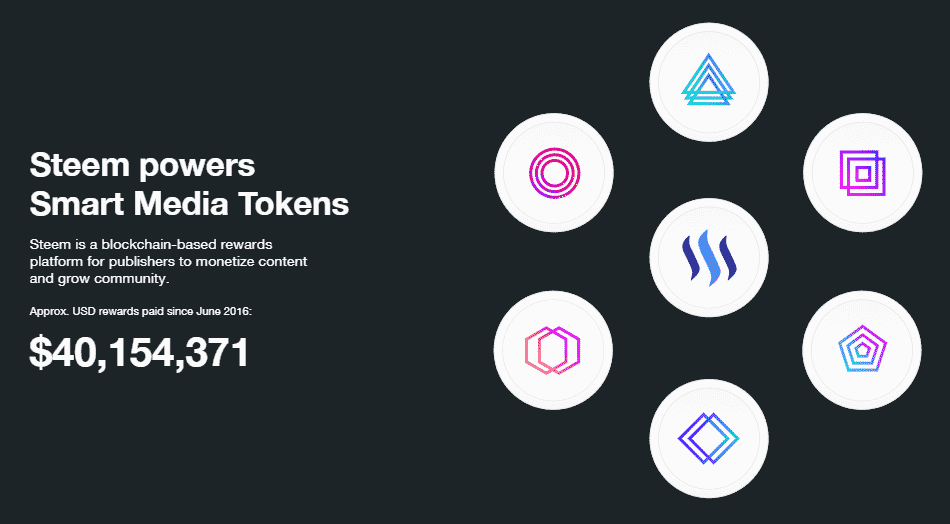
As of 2018, their website reported a little over $40 million distributed to users. So someone’s making money. Just keep in mind that this figure comes from 2018, not from today.
This six-month travel blogging review takes an objective look at Steemit. It asks whether you can really make money blogging on the Steemit platform.
The verdict from the Steemit review is:
Yes, you can.
But it takes two things.
- An initial investment – Creating an account and blogging is free. But if you want your posts to have any kind of reach, you’re going to need Steem Power. In which case, you’d have to buy Steem then ‘power up’ to Steem Power.
- Hard work and consistency – Like any business, making money on Steemit takes persistence and a time commitment. It’s not as simple as signing up and getting paid to put in minimal effort.

Also note that the payouts are still very real. But exchanging Steem Dollars or Steem Power for U.S. dollars means jumping through a lot of hoops.
And the way the incentives are structured, it’s in your best interest to keep your money in the platform. That does create a risk if it doesn’t end up succeeding.
Bottom Line
Steemit is a new and interesting platform in the blockchain/crypto-space that has gotten many excited about the future of blogging and content creation. However, some have been sceptical about whether or not Steemit’s business model will actually work or it’s just a house of cards.
The platform has also received criticism as there are a number of third-party service providers that use bots to automatically upvote the posts to boost it and increase its earning potential. This reward system has created a whole market of ‘whales’ that take advantage of the system by buying large amounts of Steem Power and using the bots to promote their posts.
Go On, Tell Us What You Think!
Does Steemit business model seem sustainable? Come on! Tell us what you think about our article on how Steemit makes money in the comments section.