
Doctors trained for decades to read scans and catch cancer early. Now algorithms are outperforming them on the same images, and the gap keeps widening. In the largest NHS breast cancer screening study ever conducted, covering 115,000 women, Google’s AI detected 24% more cancers than trained radiologists working alone.
AI in healthcare statistics from 2025-2026 confirm the pattern extends beyond breast cancer. Google’s system achieved 94.5% accuracy in detecting breast cancer from mammograms (reducing false positives by 5.7% and false negatives by 9.4%). A 2026 network meta-analysis of 48 randomized controlled trials found AI-assisted colonoscopy increased adenoma detection by 20% across commercial systems.
Here is where clinical AI is delivering measurable results, how fast adoption is spreading, and what the numbers mean for patients and providers.
Key AI in Healthcare Statistics 2025-2026
Here is the section, ready to insert right after the intro paragraphs and before the first body section:
- 81% of U.S. physicians reported using AI in clinical practice in 2026, up from 38% in 2023, with the average physician now running 2.3 distinct AI applications, according to the AMA’s 2026 physician survey of 1,692 respondents
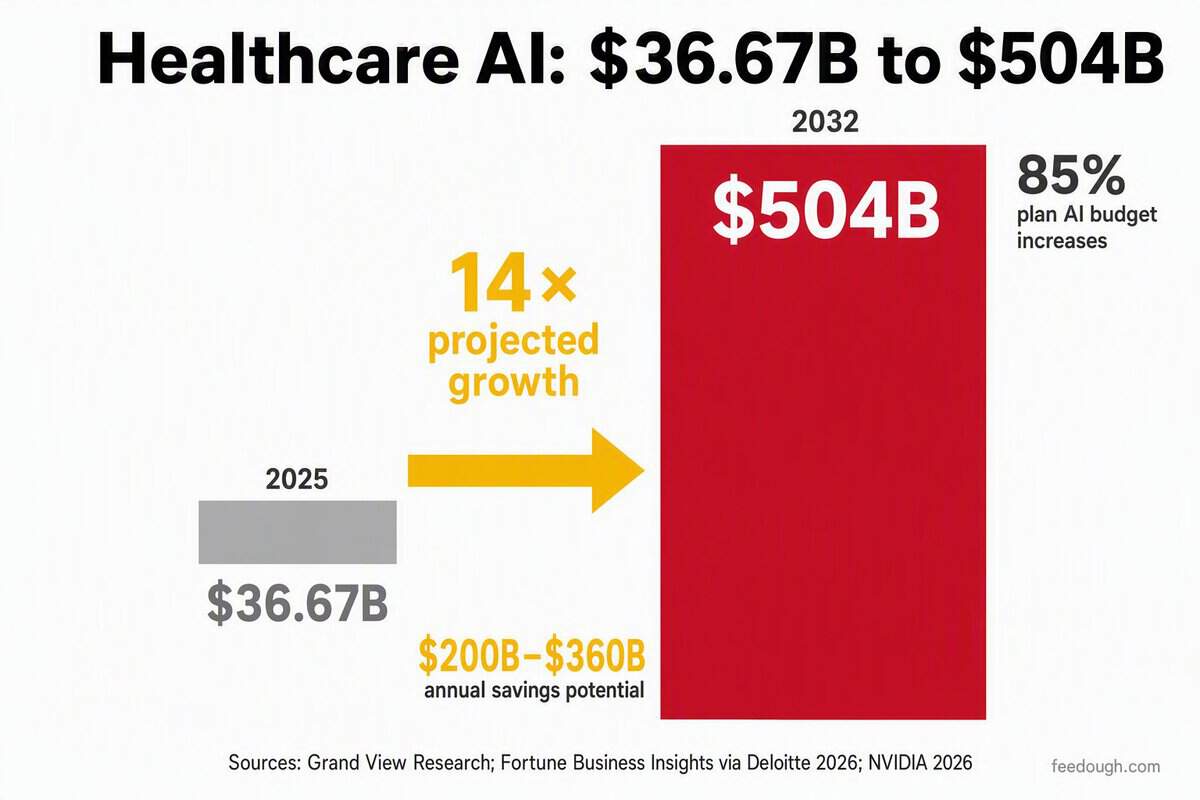
- The global AI in healthcare market reached $36.67 billion in 2025 and is projected to reach $504 billion by 2032, growing at a rate that outpaces the broader health technology market at nearly every major forecast horizon, according to Grand View Research via Deloitte’s 2026 Global Health Care Outlook
- The MASAI randomized controlled trial, covering 105,934 women and published in The Lancet in January 2026, found AI-supported mammography screening detected 29% more cancers than standard double-reading while holding specificity at 98.5% and cutting aggressive cancer detection gaps by 27%
- AI-driven ECG alerts cut 90-day all-cause mortality from 4.3% to 3.6% across 15,965 hospitalized patients in a multisite randomized trial, with a hazard ratio of 0.83 confirming the reduction was not statistical noise, according to Nature
- In-hospital mortality fell from 22.21% to 17.76% across 97,559 hospital stays after hospital-wide AI sepsis deployment, with 90-day mortality dropping from 29.75% to 25.01%, according to the HERACLES study published in npj Digital Medicine in January 2026
- Hospitals deploying AI-supported diagnostic tools reported a 42% reduction in diagnostic errors compared to facilities without them, according to 2025-2026 clinical benchmarking data
- Physician burnout dropped from 50.6% to 29.4% in 42 days after ambient AI scribe deployment across more than 1,400 physicians at Mass General Brigham and Emory, with the reduction holding at follow-up
- 51% of U.S. adults have made an important health decision based on AI-generated information without consulting a medical professional, while only 42% say they are open to AI being used as part of their care, down from 52% in 2024, according to the athenahealth and United States of Care 2025 survey
- 19.2% of U.S. adolescents and young adults aged 12 to 21 had used AI chatbots for mental health advice by November 2025, with 91.7% rating the advice helpful and 63% concealing that usage from parents, clinicians, and other adults, according to a nationally representative RAND survey published in JAMA Pediatrics
- A Dartmouth randomized controlled trial published in NEJM AI found AI chatbot users saw depression scores drop 6.13 points on the PHQ-9, more than double the 2.63-point reduction recorded by the waitlist control group, across 210 adults
- Healthcare AI could deliver $200 billion to $360 billion in annual U.S. savings, equal to 5% to 10% of total healthcare spending, while 98% of health system C-suite executives surveyed by Deloitte expect at least 10% cost savings from agentic AI within two to three years
- 85% of healthcare organizations plan to increase AI budgets in 2026, with 46% targeting increases above 10%, and among organizations already deploying AI, 81% report increased revenue and 73% cite reduced operational costs, according to NVIDIA’s 2026 healthcare survey
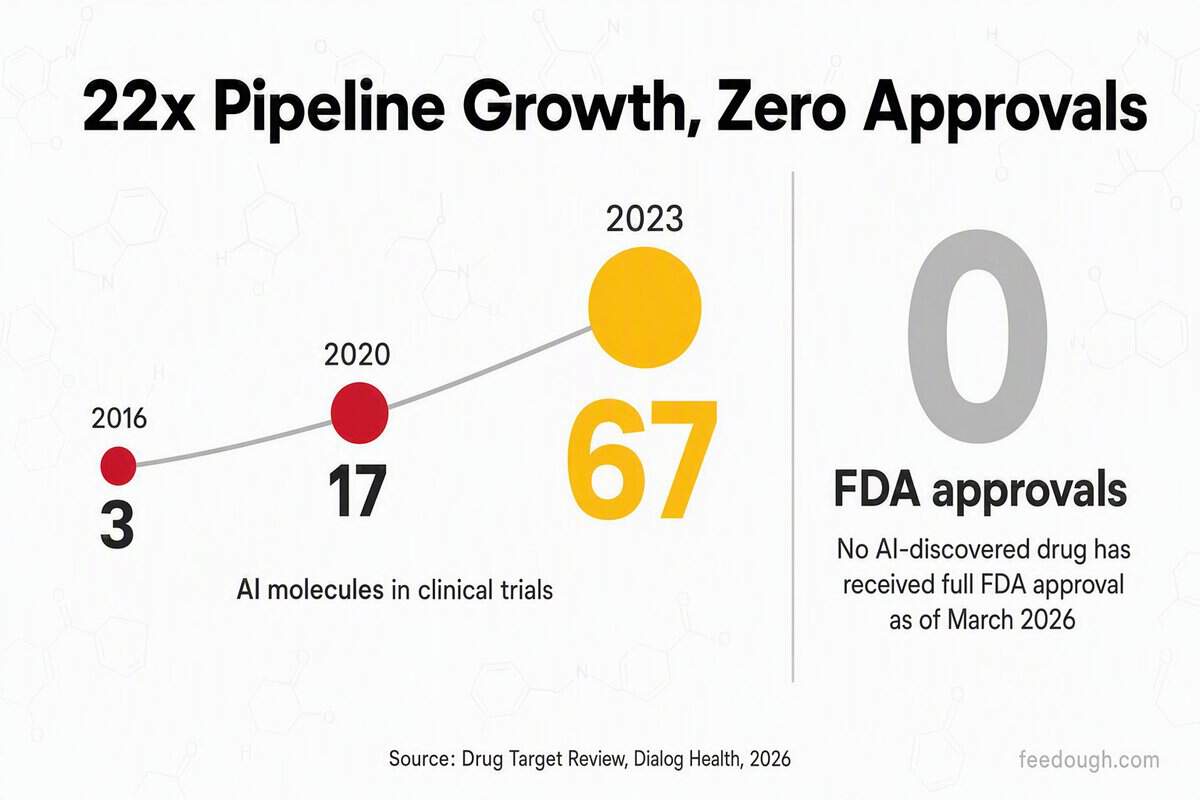
- AI-discovered molecules entering clinical trials grew from 3 in 2016 to 67 in 2023, with the global AI drug discovery market projected to reach $12.56 billion by 2034, yet as of March 2026, no AI-discovered drug has received full FDA approval
- Only 5% of the 1,200-plus FDA-authorized imaging AI tools had undergone clinical validation before reaching health systems, flagging a deployment-ahead-of-evidence gap that outcomes data alone cannot close
Clinical AI Applications in Healthcare Statistics
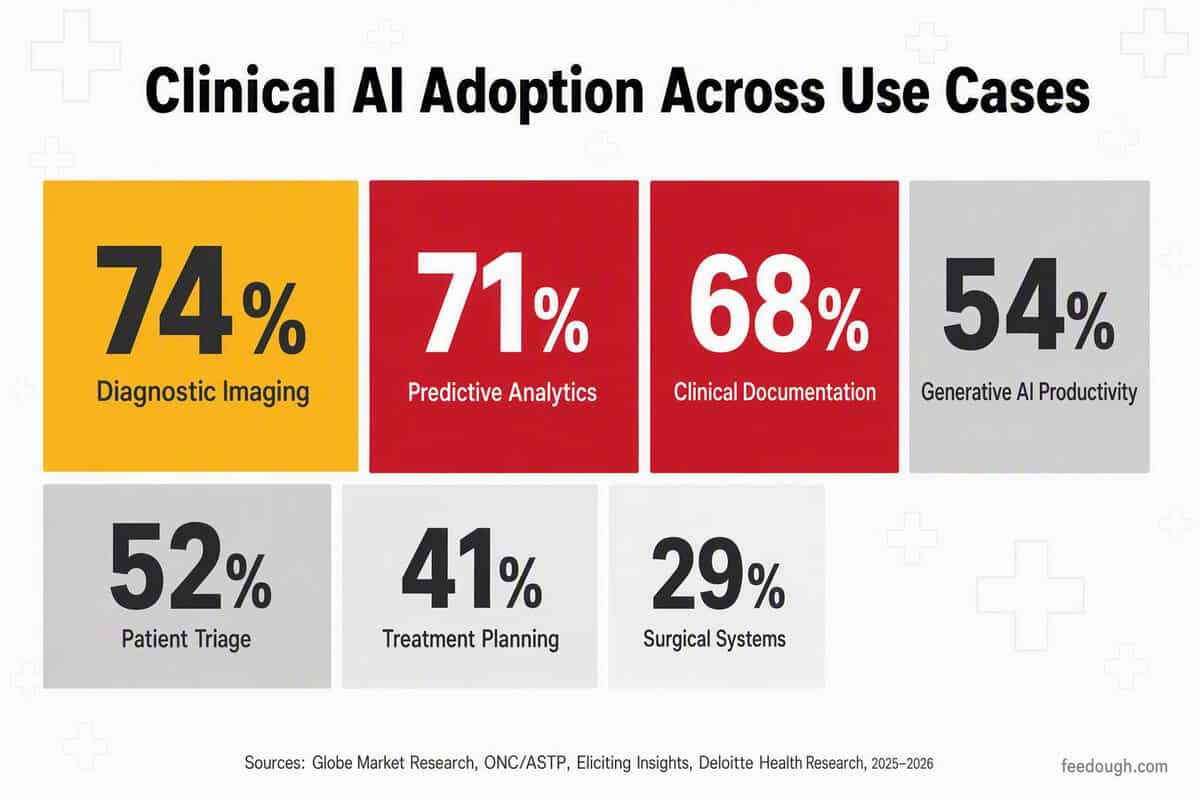
81% of U.S. physicians reported using AI in their clinical practices in 2026, more than double the 38% who said the same in 2023. At the organizational level, half of all health systems now run three or more AI applications simultaneously, up from 32% just one year earlier. The clinical AI applications gaining the most traction share a pattern: they sit inside workflows that already generate large volumes of structured data.
Clinical Use Case | Adoption Rate | Source |
|---|---|---|
Diagnostic imaging (radiology AI) | 74% of hospitals | Globe Market Research, 2025 |
Predictive analytics | 71% of U.S. hospitals | ONC/ASTP Data Brief |
Clinical documentation (ambient AI) | 68% of health systems | Eliciting Insights Survey, 2026 |
Generative AI for clinical productivity | 54% of care organizations | Healthcare Industry Survey, Q4 2025 |
Patient triage systems | 52% of hospitals | Deloitte Health Research |
Treatment planning workflows | 41% of hospitals | Deloitte Health Research |
AI-assisted surgical systems | 29% of hospitals | Deloitte Health Research |
The adoption curve steepens further once outcomes data enters the picture. Hospitals running AI-supported diagnostic tools reported a 42% reduction in diagnostic errors compared to non-AI facilities. Across other clinical settings, the measurable gains include:
- 39.5% reduction in in-hospital mortality after implementation of an AI sepsis algorithm across 9 hospitals, with length of stay falling 32.3% and 30-day readmissions dropping 22.7%
- 31 minutes average reduction in stroke treatment time using Viz.ai across 474 patients in a multicenter analysis
- Clinician burnout declined from 51.9% to 38.8% after deployment of AI-assisted documentation tools
- 30% reduction in intraoperative complications and 20% increase in surgical efficiency with AI-supported approaches compared to conventional methods
More than half of health systems able to quantify their returns report at least a 2x ROI. That threshold tends to unlock follow-on investment and push clinical AI from isolated pilots toward enterprise-wide deployment.
AI Integration Rates by Clinical Workflow Statistics
Radiology accounts for 76% of every AI device the FDA has authorized, a dominance that reflects how naturally clinical AI integrates with image-heavy workflows. Cardiovascular and neurology together hold just 14% of the remaining share.
Clinical Specialty | FDA-Authorized Devices | Share of All Approvals |
|---|---|---|
Radiology | 1,104 | 76% |
Cardiovascular | ~130 | 9% |
Neurology | ~68 | 5% |
All other specialties | ~149 | 10% |
Clearance volume does not equal clinical validation. Only 5% of the 1,200-plus FDA-approved imaging AI tools had undergone clinical validation before reaching health systems. Even in radiology, where adoption is deepest, the gap persists.
Philips’ 2025 Future Health Index found 78% of radiologists helped build AI tools, yet 41% say those tools fail to meet real-world demands. Sutter Health shows the upside: across 26 hospitals, AI-assisted detection pushed early-stage lung cancer diagnoses from 31% to 71% by Q4 2025.
Surgery is where outcomes data is pulling adoption fastest. A 2025 PMC review of 25 peer-reviewed studies found AI-assisted robotic procedures cut operative time by 25%.
- Surgical AI adoption surged 127% over two years
- Intuitive Surgical’s da Vinci installed base reached 11,106 units by year-end 2025, with procedure volume growing 18% year-over-year
- The AI in robot-assisted surgery market reached $7.42 billion in 2025 and is projected to exceed $207 billion by 2034 at a 45% CAGR

Patient Attitudes Toward Medical AI Statistics
Three-quarters of Americans have used AI, yet only 13% feel very comfortable with it. That gap between behavior and trust defines patient sentiment toward medical AI more than any single approval or rejection figure.
The discomfort is selective. A Memorial Sloan Kettering survey of 330 oncology patients found comfort levels shift sharply based on what the AI is asked to do:
AI Application | Patient Comfort Level | Source |
|---|---|---|
Cancer screening | 80.2% | MSK oncology patient survey, 2026 |
Supportive care (exercise guidance) | 78.2% | MSK oncology patient survey, 2026 |
Supportive care (dietary guidance) | 74.8% | MSK oncology patient survey, 2026 |
Treatment planning | 64.8% | MSK oncology patient survey, 2026 |
Prognosis | 61.5% | MSK oncology patient survey, 2026 |
Screening and supportive care feel bounded and reversible. Treatment planning and prognosis feel consequential in ways patients are not willing to delegate to an algorithm. A 2026 CHAI survey found 51% of patients say AI makes them trust healthcare less, while just 12% say the opposite.
National sentiment splits three ways: 26% of U.S. adults feel optimistic about AI in healthcare, 27% are uncertain, and 26% are concerned (United States of Care, 2025). What patients consistently demand is not a ban on AI but a clear set of conditions:
- 90% want human oversight of all medical AI decisions
- 91% insist on the right to opt out of AI-driven clinical recommendations
- 83% say AI used for diagnosis and treatment should meet safety and accuracy standards
- 77% are concerned about the privacy of personal medical information provided to AI tools
Context shapes trust as much as control. Patients are three times more likely to trust an AI agent inside their doctor’s secure portal than one accessed through a public chatbot. About a third of U.S. adults have already used AI chatbots for health information and advice. Trust travels through existing clinical relationships, not around them.

Patient Perception of AI in Healthcare Statistics
Patient comfort with AI in healthcare spans a 56-point range depending on what the technology is asked to do. At the top, 85% accept AI-powered monitoring of their vital signs. At the bottom, just 29% would accept mental health support delivered by an AI. The gradient reveals a clear boundary: patients welcome AI as a tool that assists clinicians but resist it as a replacement for one.
AI Application | Patient Comfort Level | Source |
|---|---|---|
AI health monitoring devices | 85% | SQ Magazine / Healthcare Analytics |
Interpreting lab results | 78% | SQ Magazine / Healthcare Analytics |
Preliminary diagnosis | 63% | SQ Magazine / Healthcare Analytics |
AI-assisted surgery | 45% | SQ Magazine / Healthcare Analytics |
Mental health support | 29% | SQ Magazine / Healthcare Analytics |
The 22-point drop from AI-assisted surgery to mental health is the steepest single decline in the data, marking where the assistant-to-substitute boundary is drawn most firmly. But what young patients say about AI and what they actually do with it diverge sharply:
- 19.2% of U.S. adolescents and young adults ages 12 to 21 had used AI chatbots for mental health advice by November 2025, up from 13.1% a year earlier, per a nationally representative RAND survey published in JAMA Pediatrics
- 91.7% rated the chatbot advice as somewhat or very helpful, though researchers caution that chatbots’ tendency to flatter users may inflate satisfaction scores
- 63% had not disclosed their AI chatbot usage to anyone, including parents, clinicians, or other adults
- 42.8% sought mental health advice from AI chatbots at least monthly
The 63% concealment rate is the most important number in this data set. Young people are turning to AI for mental health support at growing rates while actively hiding that usage from every adult in their lives. The same behavioral drift shows up among U.S. adults: a February 2026 Pew Research Center survey found 49% now use AI chatbots, up from 33% in 2024, with 20% turning to them for medical advice and 10% for emotional support. Patients are adopting AI for health faster than their stated comfort levels would predict.

Patient Comfort Delegating Medical Tasks to AI Statistics
51% of U.S. adults have made an important health decision based on AI-generated information without consulting a medical professional. Only 42% say they are open to AI being used as part of their care, down from 52% in 2024. The comfort level is dropping even as the behavior accelerates.
Medical Task | Patient Comfort Level | Source |
|---|---|---|
Recording notes | 49% | athenahealth / United States of Care, Aug 2025 |
Analyzing data | 49% | athenahealth / United States of Care, Aug 2025 |
Communicating test results | 47% | athenahealth / United States of Care, Aug 2025 |
Treatment planning | 41% | athenahealth / United States of Care, Aug 2025 |
Diagnosis | 37% | athenahealth / United States of Care, Aug 2025 |
Performing surgery | 33% | athenahealth / United States of Care, Aug 2025 |
The Ohio State survey reveals the same gradient playing out in actual behavior. Among adults who use AI for health purposes, 62% use it to understand symptoms before deciding whether to seek care. Another 44% use it to explain test results or a medical diagnosis. A quarter use AI to compare treatment options. One in five use it to prepare for appointments.
Physicians see the same split from the other side. The AMA’s 2026 physician survey found that 68% are comfortable with patients using AI for medication questions. But nearly half would never want patients using AI to interpret pathology (49%) or radiology results (46%). Only 8% of physicians say a majority of patients disclose AI use, even though 30% believe most are probably using it.

Physician AI Adoption and Attitudes Statistics
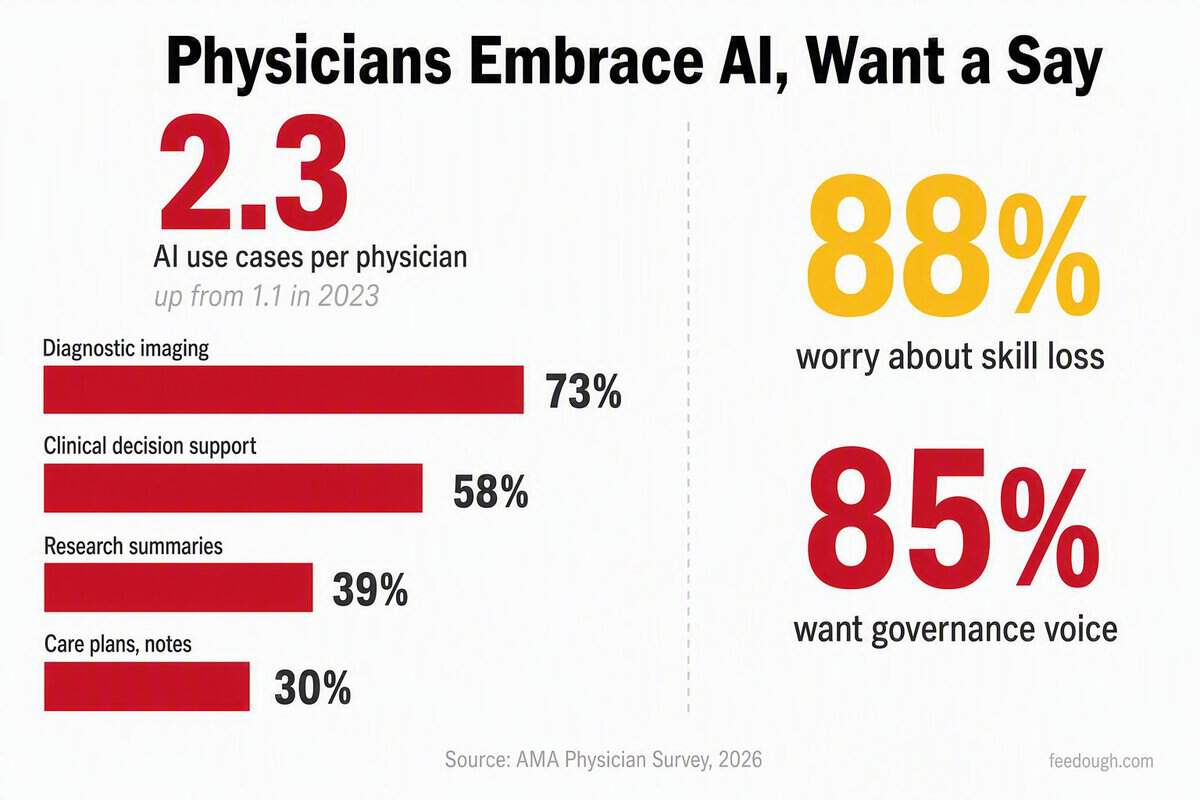
The average physician now uses 2.3 distinct AI applications, up from 1.1 in 2023. That doubling in depth came with an unexpected cost: 88% worry about losing clinical skills to over-reliance, and 85% want a direct say in how AI gets adopted at their institutions.
AI Use Case | % of Physician AI Users | Source |
|---|---|---|
Diagnostic imaging interpretation | 73% | AMA Physician Survey, 2026 |
Clinical decision support | 58% | AMA Physician Survey, 2026 |
Summarizing medical research | 39% | AMA Physician Survey, 2026 |
Discharge instructions, care plans, progress notes | 30% | AMA Physician Survey, 2026 |
The use cases cluster around information processing, where AI’s value shows up in hours, not months. Physicians using AI save an average of 2.5 hours per day, and 68% report improved diagnostic confidence. The breadth of tasks now supported explains why 77% of physicians say AI improves their ability to care for patients, up from 65% in 2023. Cleveland Clinic expanded Bayesian Health’s AI sepsis platform to thirteen hospitals across its system by September 2025, with plans to reach all Ohio and Florida locations. The rollout produced a ten-fold reduction in false positives and a 46% increase in identified sepsis cases compared to legacy detection tools. At MemorialCare, the same system achieved a 3.6% absolute mortality reduction, cut time to antibiotics in half when providers engaged within the first hour, and reached 90% clinician adoption in the emergency department.
Bayesian Health received the first FDA clearance for a continuous AI-powered sepsis monitoring system in May 2026, positioning it for CMS New Technology Add-on Payment approval starting October 2026. The regulatory milestone validates the clinical case, but the governance question persists: physicians want the tools, but on terms they help set.
Physician Concerns About AI Statistics
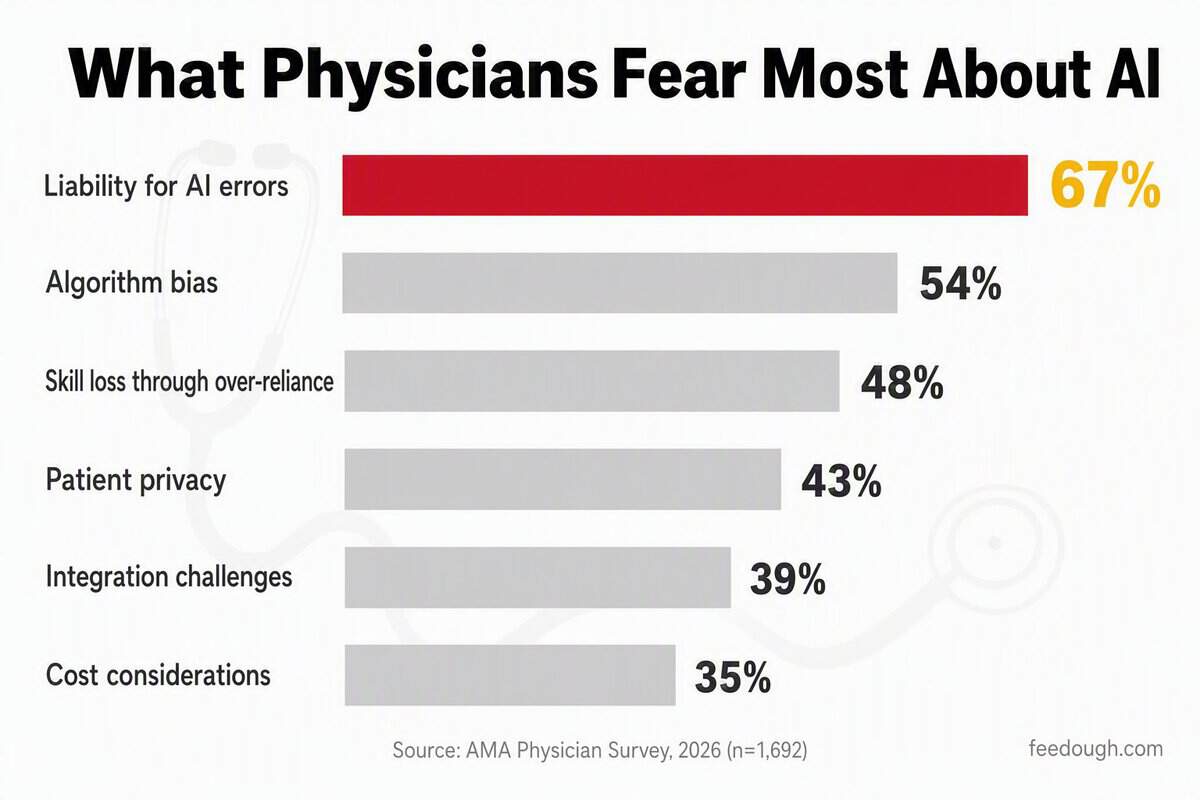
Seven in ten physicians report having little or no influence over institutional AI decisions. Their employers are pressing ahead with implementations that 81% of those same physicians say they are dissatisfied with. The AMA’s 2026 survey of 1,692 physicians maps what they actually worry about once AI enters clinical workflows:
Physician Concern | Share of Physicians | Source |
|---|---|---|
Liability for AI errors | 67% | AMA Physician Survey, 2026 |
Algorithm bias | 54% | AMA Physician Survey, 2026 |
Skill loss through AI over-reliance | 48% | AMA Physician Survey, 2026 |
Patient privacy | 43% | AMA Physician Survey, 2026 |
Integration challenges | 39% | AMA Physician Survey, 2026 |
Cost considerations | 35% | AMA Physician Survey, 2026 |
A 2025 JMIR study of 498 German physicians surfaced the same hierarchy: 82.5% flagged liability for AI errors and 75.7% raised concerns about transparency in decision-making. The consistency across countries confirms these are not cultural artifacts. They are structural conditions physicians attach to adoption, and three patterns in the data run deeper than the aggregate table suggests:
- 28% of physicians worry about their own clinical skills eroding under AI reliance, while 70% are specifically concerned about medical students and residents trained with AI as a constant assist
- 41% of physicians expect AI to cause harm to patient privacy while only 13% expect it to help, making patient privacy the only domain where more physicians anticipate net harm than benefit
- 84.9% of global health stakeholders agreed that over-reliance on AI without sufficient validation can cause harm (npj Digital Medicine, 2026)
- 76.0% agreed that AI systems evaluating themselves without external oversight reduce accountability
Accountability runs through the physician’s position. A 2025 JMIR study found 62.7% believe physicians should bear responsibility for incorrect AI-assisted diagnoses and 66.1% for flawed treatment decisions. They accept the liability chain. They want the governance voice to match.
AI Performance Statistics by Medical Specialty
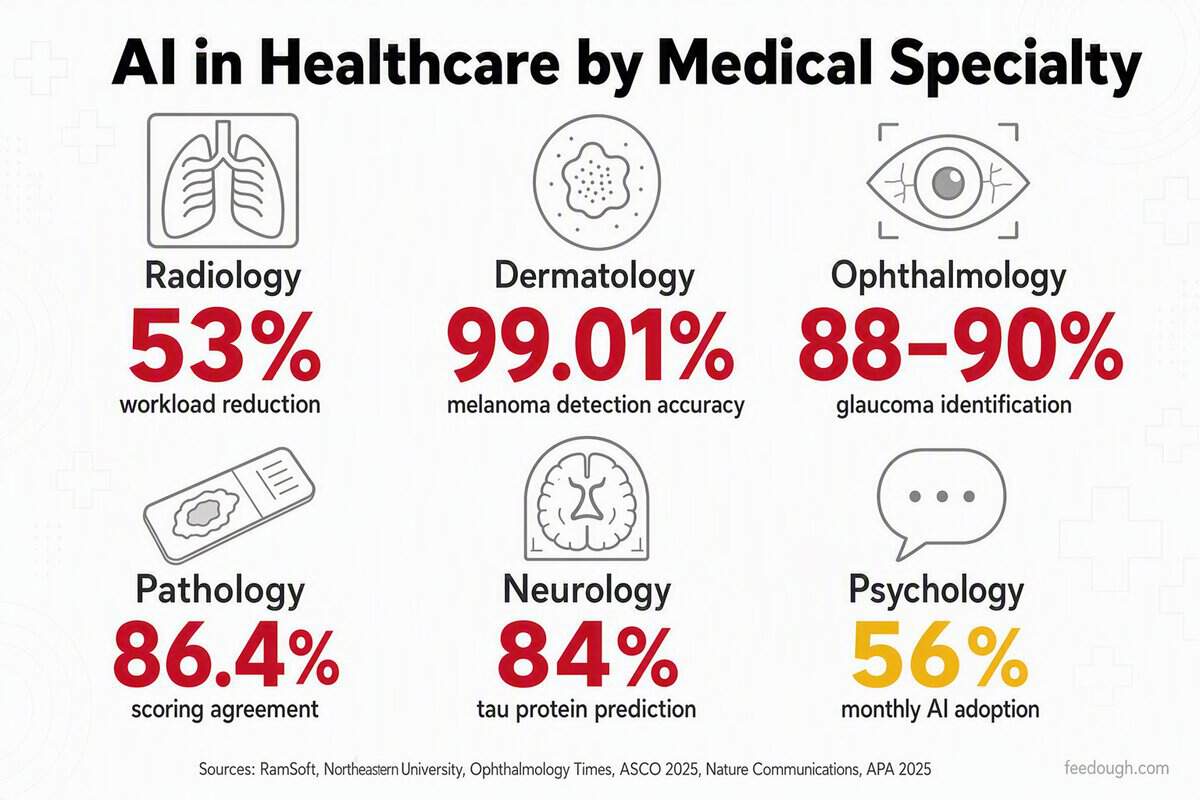
A deep learning model detects melanoma with 99.01% accuracy. An AI platform pushed pathologist agreement on HER2-low breast cancer scoring from 73.5% to 86.4%. These are not broad gains. They are narrow, measurable improvements in tasks that directly determine whether a patient receives the right treatment.
Medical Specialty | AI Finding | Source |
|---|---|---|
Radiology | AI tools reduce radiologist workloads by up to 53% by automating identification of normal and high-probability cases | RamSoft analysis citing Health and Technology systematic review, May 2025 |
Dermatology | Northeastern University’s SegFusion Framework detects melanoma with 99.01% accuracy on the ISIC 2020 dataset, outperforming four traditional ML approaches | Northeastern University, October 2025 |
Ophthalmology | AI correctly identified glaucoma in 88% to 90% of cases in a population-based cohort of 6,304 fundus images, compared with 79% to 81% detection by human graders | Ophthalmology Times, 2025 |
Oncology / Pathology | AI-assisted digital pathology raised pathologist agreement on HER2-low breast cancer scoring from 73.5% to 86.4% and reduced HER2-null misclassification by 65% | ASCO 2025, six global academic centers |
Neurology | AI predicted amyloid plaques with 79% accuracy and tau proteins with 84% accuracy based on PET scan inputs including genetic information and clinical exams | Nature Communications, 2025 |
Psychology | 56% of psychologists used AI tools at least once in the past 12 months, nearly double the 29% recorded in 2024; monthly use rose from 11% to 29% | APA 2025 Practitioner Pulse Survey, 1,742 psychologists, September 2025 |
The pattern holds across specialties: AI delivers measurable gains in specific, bounded tasks. Image classification in dermatology and ophthalmology and scoring consistency in pathology produce the strongest results because the training data is standardized and the outcomes are well-defined. Psychology sits at the opposite end of that spectrum. AI adoption among psychologists nearly doubled in one year, from 29% to 56%, without the clinical validation infrastructure that underpins radiology or oncology AI. Meanwhile, 38% of psychologists worry that AI may eventually make some or all of their job duties obsolete. Adoption is racing ahead of the evidence, and the professionals closest to it are the ones most aware of the gap.
AI in Radiology and Medical Imaging Statistics
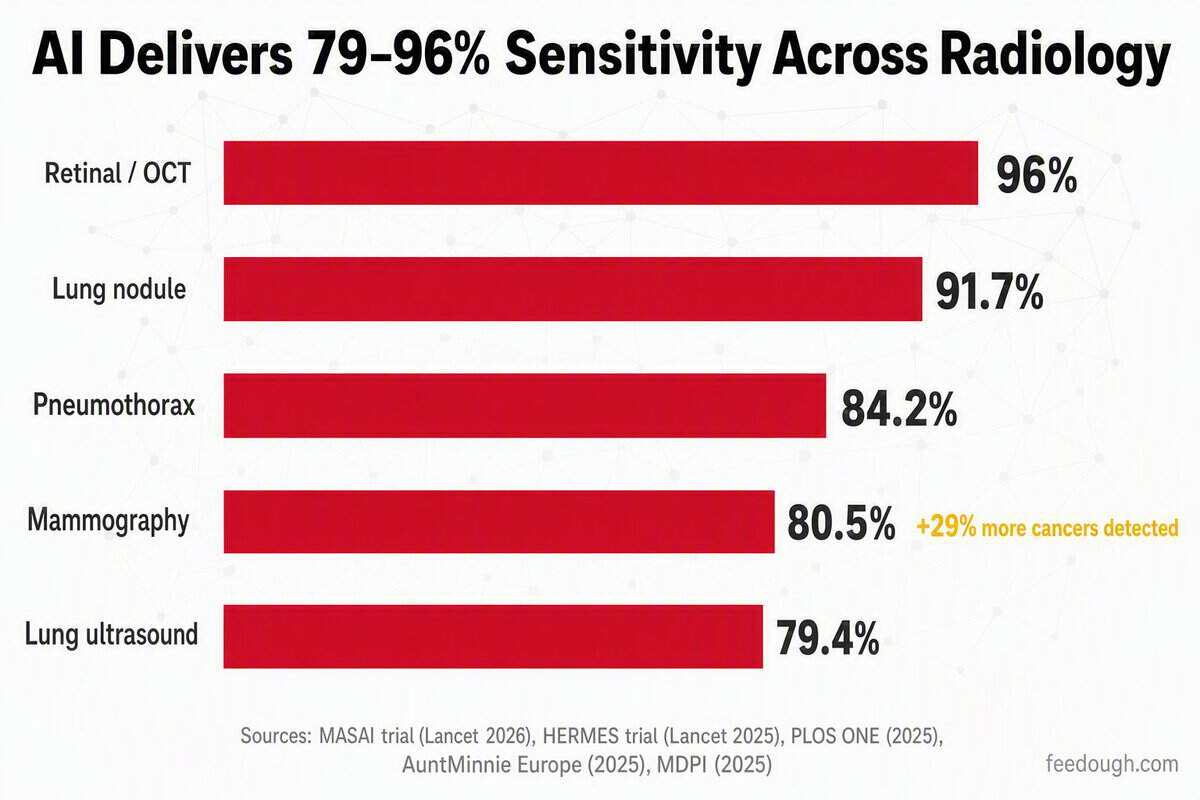
The biggest worry about AI in mammography screening has been false alarms. The MASAI trial eliminated it. Across 105,934 women, AI-supported screening detected 29% more cancers than standard double-reading while specificity held steady at 98.5%. Sensitivity rose from 73.8% to 80.5%. Aggressive cancers fell by 27%, invasive cancers by 16%, and large tumors by 21%.
Published in The Lancet in January 2026, the MASAI trial is the first randomized controlled proof that AI improves breast cancer outcomes at population scale. The finding extends across imaging modalities.
Imaging Application | AI Performance | Source |
|---|---|---|
Mammography screening (RCT) | 29% increase in cancer detection; sensitivity 80.5% vs. 73.8%; 27% fewer aggressive cancers | MASAI trial, The Lancet, January 2026; 105,934 women |
Retinal / OCT screening | 96% sensitivity for all referrals; 74% sensitivity and 90% specificity for urgent referrals | HERMES trial, The Lancet, 2025; 396 participants |
Lung nodule detection (chest X-ray) | 91.7% sensitivity; AUC 0.960 with 92.7% specificity | PLOS ONE, 2025 |
Pneumothorax detection (dark-field radiography) | 84.2% sensitivity; 87.4% specificity; 60% faster reading time | AuntMinnie Europe, 2025 |
AI-assisted lung ultrasound | 79.4% sensitivity; 85.4% specificity; comparable to attending physician accuracy | MDPI, 2025 |
- Chest CT reporting time dropped 46%, from 186 minutes to 100 minutes per study, across 27,397 cases (Academic Radiology, 2025)
- General MRI and CT scan processing time fell from 15 minutes to 3 minutes per case, with radiologist productivity rising 31% (IJCARS, 2025)
- 70% of MRI workflow steps and 64% of CT steps now have available AI solutions, with nearly all steps expected to be AI-supported by 2030 (IJCARS, 2025)
Detection improves where volume is highest, and routine reads get faster. The two gains compound.
AI in Oncology Statistics
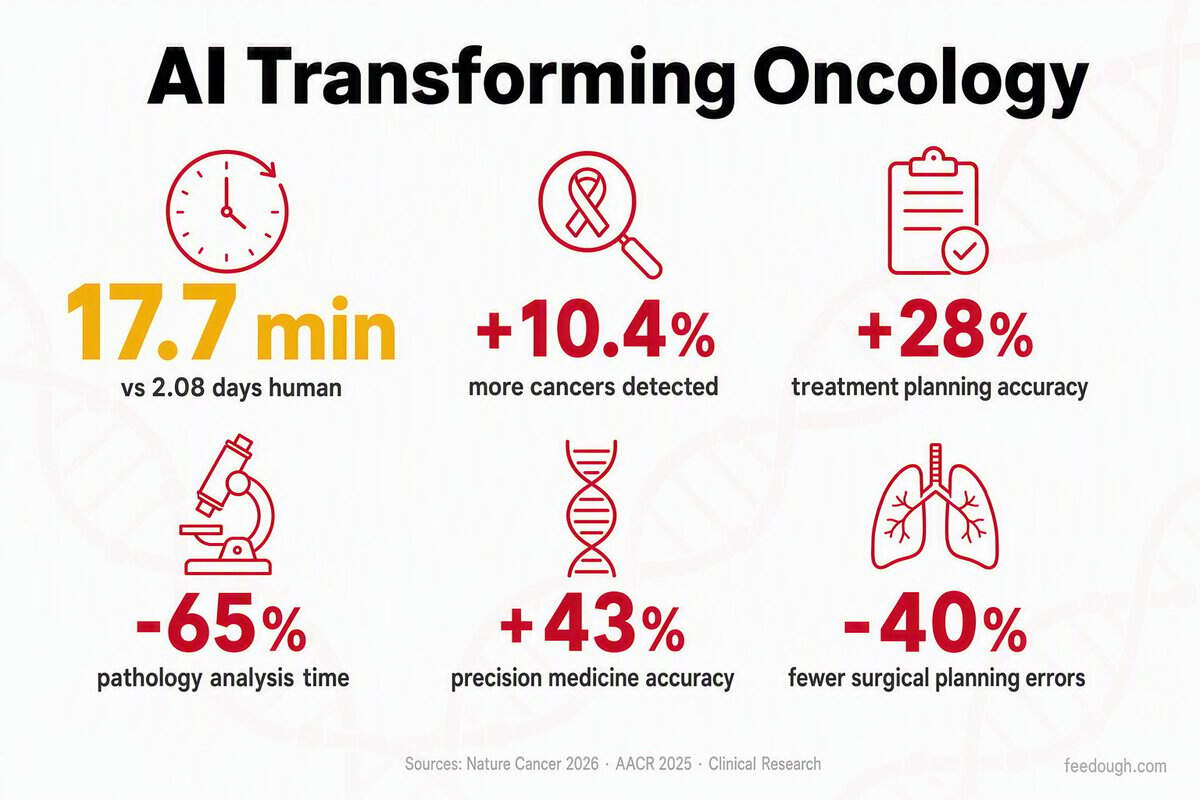
Google’s mammography AI completed reads in a median of 17.7 minutes. The first human reader needed 2.08 days. In the GEMINI prospective evaluation published in Nature Cancer in March 2026, the cancers AI detected that human double-reads missed were not incidental finds. 93% were classified as high risk, meaning the technology is shifting detection toward the tumors most likely to determine patient outcomes.
Oncology AI Application | Key Metric | Source |
|---|---|---|
Breast cancer screening | 10.4% increase in cancer detection; 31% workload reduction | GEMINI evaluation, Nature Cancer, 2026 |
Screening reading time | 17.7 minutes (AI) vs. 2.08 days (first human reader) | Nature Cancer, 2026 |
Treatment planning accuracy | 28% improvement over conventional approaches | Clinical research |
Pathology slide analysis | 65% reduction in analysis time | Clinical research |
Precision medicine matching | 43% improvement in treatment selection accuracy | Clinical research |
Lung surgical planning | 40% fewer planning errors; 25% less preoperative time | AACR Cancer Progress Report, 2025 |
Using AI as the second reader reduced total screening reading volume by 32.1% (equivalent to 195,983 versus 288,616 reads) while increasing cancer detection by 17.7%. These AI in oncology statistics span detection, treatment planning, and surgical preparation. Two areas where timeline compression is most dramatic lie in drug development and dosing:
- 4.2 years shaved off drug discovery timelines, with AI-based virtual screening compressing early-phase oncology discovery from months to weeks through rapid screening of millions of molecular compounds (Frontiers in Oncology, April 2025)
- 26% reduction in chemotherapy dosing errors, with AI tools enabling real-time dose adjustments based on individual patient toxicity levels and tumor response data (AACR Cancer Progress Report, 2025)
- The global AI in oncology market reached $2.52 billion in 2025 and is projected to reach $33.1 billion by 2035 at a 29.36% CAGR, with breast cancer applications accounting for roughly 28% of the market (Towards Healthcare)
AI in Oncology Statistics
The Nature Cancer study of 115,973 mammograms tested Google’s AI at five NHS screening services. AI achieved a detection sensitivity of 0.541 versus 0.437 for the first human reader. It caught 25% of cancers that would otherwise have been missed until the next screening cycle.
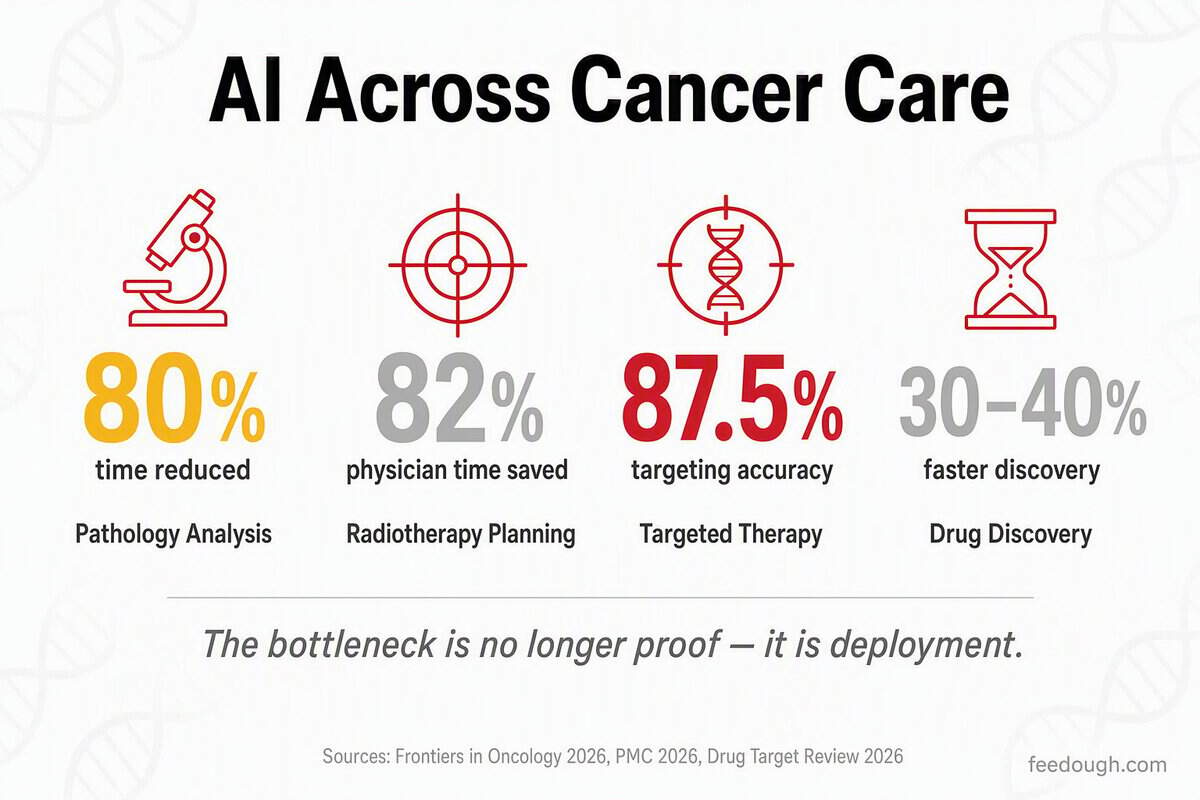
These gains are not isolated to screening. Across the oncology care continuum, AI is reshaping how cancers are analyzed, planned for, and treated:
Care Stage | AI Improvement | Source |
|---|---|---|
Pathology analysis | 80% time reduction; 8-15 min to 1-3 min per case | Frontiers in Oncology, 2026 |
Radiotherapy organ delineation | Dice similarity 0.902 vs 0.857; 81.6% physician time reduction | Prospective multicenter trial, 5 centers, 2026 |
Targeted therapy recommendations | 87.5% accuracy (AI agents) vs 30.3% (GPT-4 alone) | PMC, 2026 |
Drug discovery timelines | 30-40% compression; preclinical development 13-18 months vs 3-4 years | Drug Target Review, 2026 |
Detection sensitivity and drug discovery timelines carry the strongest evidence. Other oncology metrics point the same direction. Treatment planning accuracy has improved 28%, precision medicine matching has risen 43%, and chemotherapy dosing errors have fallen 26%.
The bottleneck between these results and patient impact is no longer proof. It is deployment.
AI in Cardiology Statistics
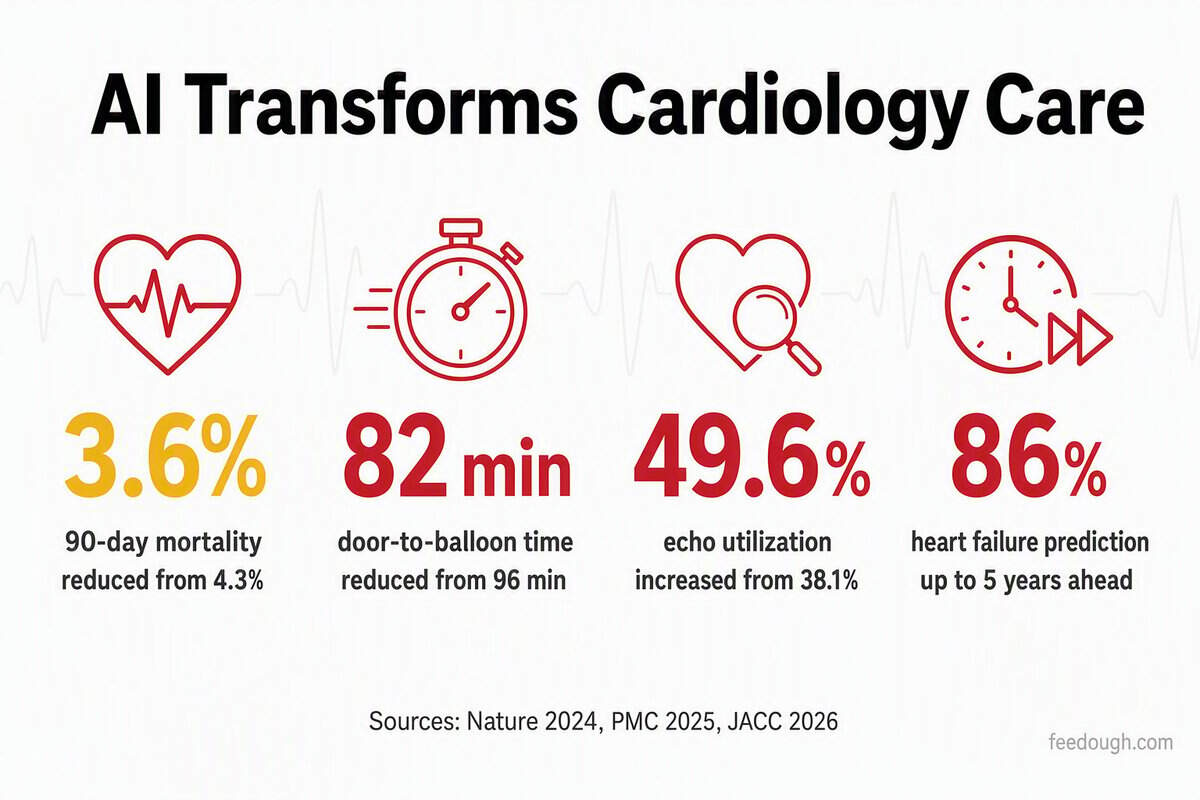
Most AI in cardiology has focused on reading scans faster. The latest clinical trials measured something different: whether patients survive. A multisite randomized trial of 15,965 hospitalized patients found AI-driven ECG alerts reduced 90-day all-cause mortality from 4.3% to 3.6% (hazard ratio 0.83, 95% CI 0.70–0.99).
Clinical Application | Outcome | Scale | Source |
|---|---|---|---|
90-day mortality (AI-ECG alerts) | 4.3% → 3.6% (HR 0.83) | 15,965 patients | Nature, 2024 |
STEMI door-to-balloon time | 96 → 82 min (P=0.002); PPV 89.5%, NPV 99.9% | 43,234 patients | PMC, 2025 |
Low EF diagnosis + echo utilization | Diagnosis: 1.6% → 2.1%; Echo: 38.1% → 49.6% | 22,641 patients | PMC, 2025 |
Heart failure risk prediction | 86% accuracy, up to 5 years in advance | 72,000+ patients | Oxford / JACC, 2026 |
The three randomized trials share a design: AI flags abnormal cardiac signals in real time, and clinicians respond. Detection becomes treatment acceleration within minutes. Across nine NHS trusts, Oxford’s model identified heart failure risk up to five years in advance in more than 72,000 patients, extending the prediction window backward while the trial data shows AI compressing response times forward.
Wearables are converging with hospital-grade detection. AI in cardiology statistics from consumer devices published in 2025 show performance approaching clinical thresholds:
- 95% sensitivity and 97% specificity for atrial fibrillation detection across 26 studies and 17,349 patients; Apple Watch achieved 94% sensitivity, Samsung devices reached 97% (JACC: Advances meta-analysis, 2025)
- 88% accuracy for detecting structural heart disease including weakened pumping, damaged valves, and thickened muscle using a smartwatch’s single-lead ECG in 600 participants (AHA Scientific Sessions, 2025)
- Fitbit heart rate and step count data predicted all-cause hospitalization risk in cardiac patients through continuous wearable monitoring (NIH All of Us Research Program, Heart Rhythm 2025)
The gap between hospital-grade AI and wrist-worn detection has narrowed to single-digit percentage points in atrial fibrillation sensitivity. What required a dedicated ECG machine two years ago is now detectable at the wrist.
AI in Emergency Medicine Statistics
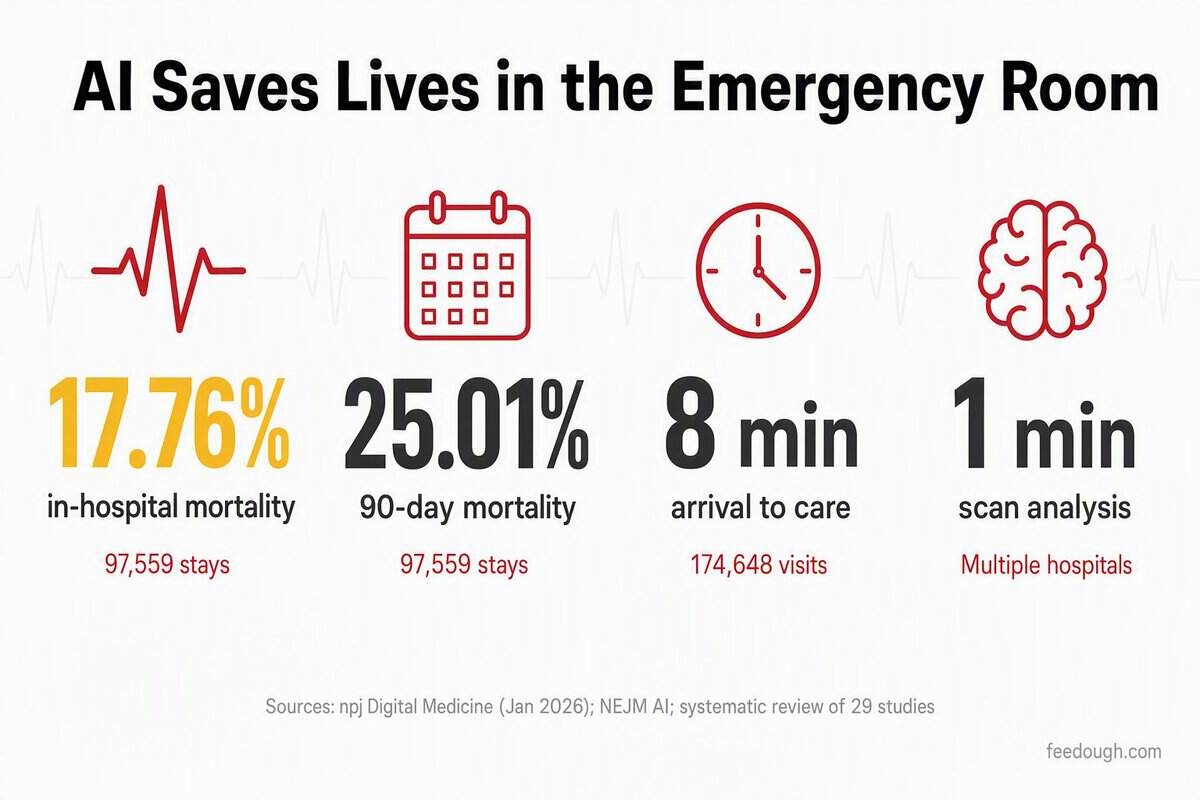
A hospital-wide AI sepsis system at CHUV cut in-hospital mortality from 22.21% to 17.76% across 97,559 hospital stays. The 90-day mortality rate dropped from 29.75% to 25.01%. Published in npj Digital Medicine in January 2026, the HERACLES study produced odds ratios tight enough (OR: 0.93, CI: 0.89 to 0.96) to confirm the reduction was not noise.
Emergency Medicine Function | AI Performance | Scale |
|---|---|---|
Sepsis detection (in-hospital) | Mortality: 22.21% to 17.76% (OR: 0.93, CI: 0.89 to 0.96) | 97,559 hospital stays |
Sepsis detection (90-day) | Mortality: 29.75% to 25.01% (OR: 0.94, CI: 0.91 to 0.97) | 97,559 hospital stays |
ED triage acuity | Critical care ID: 78.8% to 83.1%; arrival-to-care: 12 min to 8 min | 174,648 ED visits, 3 sites |
Stroke detection | 90 to 95% sensitivity for LVO; 72 to 95% specificity; scan analysis in 1 to 6 min vs 15 to 60 min | Multiple hospital implementations |
The triage findings come from a landmark NEJM AI study covering 174,648 emergency department visits across three sites. AI-informed clinical decision support improved critical care patient identification from 78.8% to 83.1% and cut median time from arrival to initial care area by a third. A separate systematic review of 29 primary studies confirmed that machine learning models consistently outperformed conventional triage scoring systems in predicting hospital admission, ICU placement, and mortality.
Stroke detection produces the sharpest time compression: AI systems now analyze scans in 1 to 6 minutes versus 15 to 60 minutes under traditional workflows, cutting door-to-treatment time by 30% to 52% in documented hospital implementations. But the deployment gap is real. Only 1,100 to 1,300 U.S. hospitals (20% to 30% of those with designated stroke programs) use AI stroke detection. At Comprehensive Stroke Centers, adoption reaches 60% to 70%. At Primary Stroke Centers, it sits at 25% to 35%. The detection capability exists. The infrastructure to deploy it uniformly does not.
AI in Primary Care Statistics
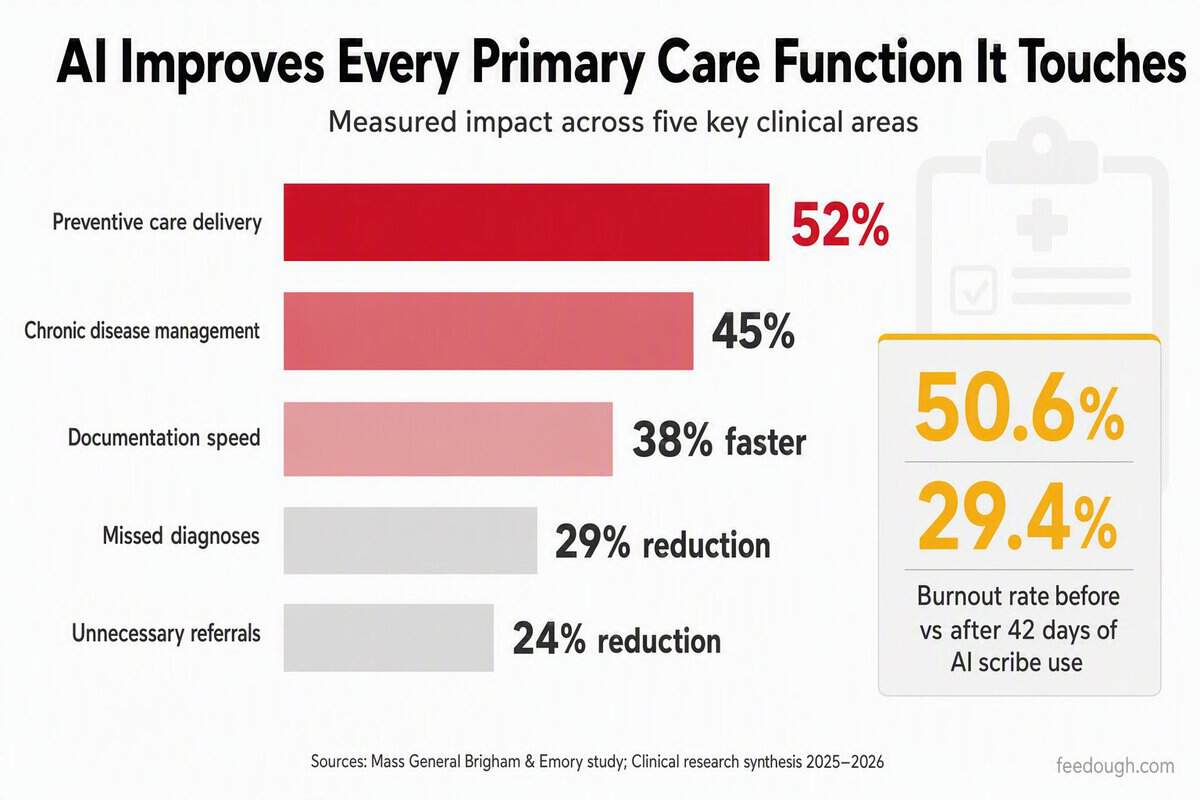
Over 1,400 physicians at Mass General Brigham and Emory saw burnout drop from 50.6% to 29.4% in 42 days of ambient AI scribe use, and the reduction held at follow-up. A separate multicenter study of 263 clinicians across six health systems confirmed the trajectory: burnout fell from 51.9% to 35.9% in just 30 days. Primary care physicians manage the broadest patient populations with the least margin for administrative overload. AI scribes are delivering the clearest measurable returns in the specialty precisely because they attack the documentation burden that drives physicians out of it.
Primary Care Function | AI Impact | Source |
|---|---|---|
Preventive care delivery | 52% increase | Clinical research |
Chronic disease management | 45% improvement | Clinical research |
Clinical documentation speed | 38% faster | Clinical research |
Missed diagnoses | 29% reduction | Clinical research |
Unnecessary specialist referrals | 24% reduction | Clinical research |
- Physicians reclaim 30 minutes to 2.7 hours daily, and mental effort related to documentation dropped by 2.64 points on a 10-point scale (2025–2026 synthesis of ambient scribe research)
- 69.5% reduction in documentation time in laboratory settings, per a 2025 Canadian health technology assessment published on NCBI Bookshelf
- 75% of doctors reported decreased administrative burden, 70% said they delivered better patient care, and 50% said they could accommodate more patients (2025–2026 synthesis)
- Clinicians saved an average of 3 fewer hours per week on administrative tasks, with reduced cognitive load and less after-hours work as additional effects
- A 63-week analysis of 7,260 physicians found high scribe users saved 2.5 times more time per note than low users
AI in Mental Health Treatment Statistics
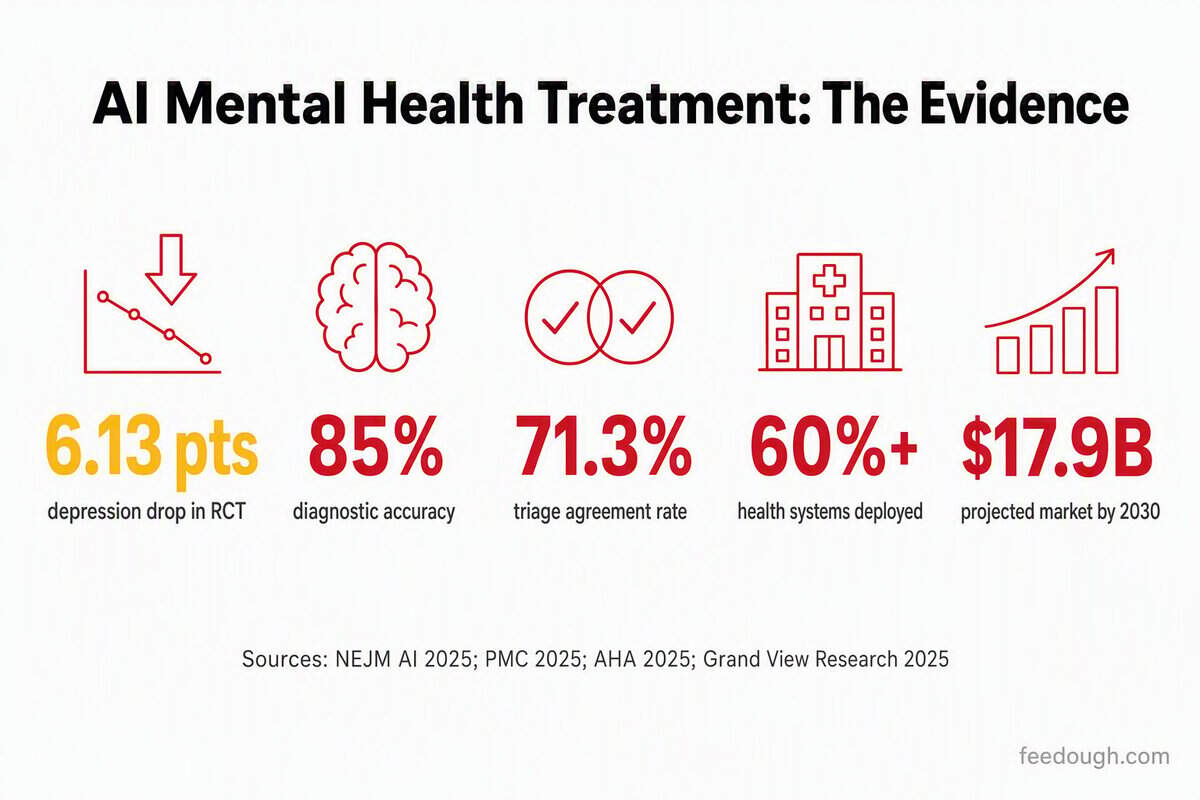
A Dartmouth randomized controlled trial published in NEJM AI in March 2025 showed depression symptoms in an AI chatbot group fell by 6.13 points on the PHQ-9, more than double the 2.63-point reduction in the waitlist control. The AI group’s GAD-Q-IV anxiety scores dropped 2.32 points versus just 0.13 for controls. Across 210 adults, the results represent the strongest RCT-level evidence to date for AI-delivered mental health treatment.
A 2026 feasibility trial published in JMIR Mental Health replicated the core finding with two different AI architectures. A structured therapy chatbot reduced PHQ-9 scores by 2.67 points (Cohen d=-0.47, p=.006). Unstructured ChatGPT reduced them by 2.47 points (d=-0.44, p=.02). Both reached statistical significance after a three-week intervention, confirming that the treatment effect is not limited to a single model design.
Study | Application | Key Finding | Scale |
|---|---|---|---|
Dartmouth / NEJM AI, 2025 | AI chatbot for depression and anxiety | PHQ-9: -6.13 vs -2.63 control; GAD-Q-IV: -2.32 vs -0.13 | 210 adults, RCT |
JMIR Mental Health, 2026 | Structured AI therapy chatbot | PHQ-9: -2.67 vs control (Cohen d=-0.47, p=.006) | 147 adults, feasibility RCT |
JMIR Mental Health, 2026 | Unstructured ChatGPT | PHQ-9: -2.47 vs control (Cohen d=-0.44, p=.02) | 147 adults, feasibility RCT |
PMC-published study | AI psychiatric triage | 71.4% wait time reduction; 71.3% AI-psychiatrist agreement; 63.3% required no consultation | Clinical evaluation |
Cleveland Clinic pilot, 2025 | AI-assisted mental health triage | Average wait: 18 days to 6 days (67% reduction) | Non-urgent consultations |
Umbrella review / PMC, 2025 | Diagnostic and therapeutic accuracy | 85% diagnostic accuracy; 84% therapeutic efficacy | Systematic reviews and meta-analyses |
The clinical evidence spans depression, anxiety, and acute triage across multiple trial designs. Health systems are now deploying these tools at scale. A 2025 SAMHSA survey of 1,805 US adults found that 35% were using AI tools at least weekly for mental health support, and those reporting moderate-to-severe symptoms were 1.7 times more likely to engage than those with mild or no symptoms:
- Over 60% of large US health systems had deployed at least one AI-powered mental health screening tool by late 2025 (AHA Annual Survey)
- The global AI in mental health market is projected to reach $17.9 billion by 2030, growing at a 24.3% compound annual growth rate (Grand View Research, 2025)
- AI-assisted psychiatric triage achieved 71.3% agreement between AI and psychiatrist recommendations on treatment intensity, with 63.3% of patients assigned to lower-intensity plans requiring no psychiatric consultation at all (PMC-published study)
The bottleneck has shifted from whether AI can treat mental health conditions to how fast health systems deploy what the trials have already proven.
Healthcare AI Economic Impact Statistics
Healthcare AI could save the United States $200 billion to $360 billion a year. Total global investment in the technology reached $22.4 billion in 2025. The gap between those two numbers tells you where this market is heading.
Metric | Value | Context |
|---|---|---|
Estimated annual U.S. savings from AI adoption | $200B-$360B | 5%-10% of healthcare spending; NBER, 2019 dollars |
Global AI healthcare market (2025) | $36.67B | Grand View Research; 69% above prior estimates |
Global AI healthcare market (2032 projected) | $504B | Fortune Business Insights, via Deloitte 2026 |
Annual admin cost reduction | $20B | InsightMark Research, 2026 |
Global healthcare AI investment (2025) | $22.4B | The Thinking Company; 60% clinical, 40% operational |
Gen/agentic AI share of health system tech budgets (2026) | 19% | Deloitte 2026 Global Health Care Outlook |
The NBER estimate used 2019 dollars, placing the real savings figure higher in today’s terms. What has changed since is the pace at which executives are buying in. In Deloitte’s 2026 Global Health Care Outlook Survey of 180 C-suite executives, 34% reported moderate or significant financial returns from AI. Another 51% said it was too early to measure. That measurement gap is about to close: 98% of surveyed executives expect at least 10% cost savings from agentic AI within two to three years. Among them, 37% project savings exceeding 20%.
Budget allocations are confirming the conviction. NVIDIA’s 2026 survey found 85% of healthcare organizations plan to increase AI budgets, with 46% planning increases exceeding 10%. Among organizations that have already deployed AI, 81% report increased revenue and 73% cite reduced operational costs. The gap between savings projections and budget commitments is closing.
AI Healthcare Cost Savings Statistics
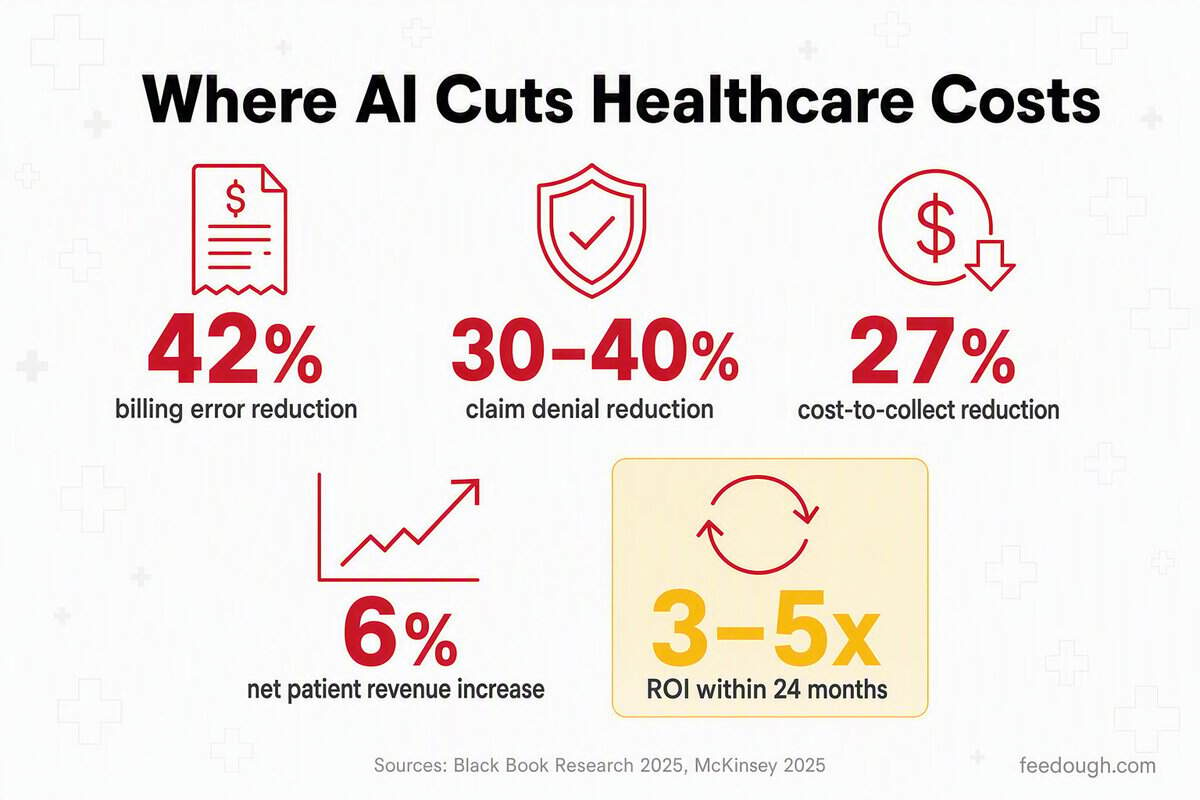
Healthcare organizations lose an estimated $262 billion annually to revenue cycle inefficiency. Health systems collectively spend over $140 billion per year on the RCM operations meant to manage those losses. AI-driven automation is now reducing both figures, and the returns are arriving faster than in nearly any other health IT category.
Cost Savings Metric | Value | Source |
|---|---|---|
Billing error reduction (AI-powered RCM) | 42% | Healthcare systems survey |
Annual savings from billing corrections (50,000 encounters) | $2.1 million | Healthcare systems survey |
Claim denial reduction (mature implementations) | 30–40% | Black Book Research, 2025 |
Cost-to-collect reduction (early adopters) | 27% | Black Book Research, 2025 |
Net patient revenue increase | 6% | Black Book Research, 2025 |
Staff hours saved via RPA for RCM tasks | 1,500–3,000 annually per system | HARC / HFMA 2024 survey |
McKinsey’s 2025 RCM buyer survey found early adopters capture 3–5x returns within 24 months when automation is deployed at scale. These AI healthcare cost savings flow through two channels: revenue cycle management and clinical documentation. The documentation and staffing side produces savings through a different mechanism: saved hours convert directly into clinical capacity and headcount efficiency.
- A 300-bed hospital saves an estimated $1.8 million annually from AI scheduling and documentation tools
- Methodist Health System resolved claims for 56,118 accounts in eight months, saving 5,559 staff hours and replacing the equivalent of nearly 14 full-time employees’ insurance follow-up work
- Nursing overtime costs fell 23% through AI scheduling optimization
- AI documentation tools cut 2.5 hours of administrative tasks per nurse per shift
- Across 5 academic medical centers, ambient AI scribes reduced clinician EHR time by 13.4 minutes per visit and documentation time by 16 minutes (JAMA, 2025)
- At Duke University, AI-assisted transcription reduced note-taking time by 20% and after-hours documentation by 30%
AI in Healthcare Operational Efficiency Statistics
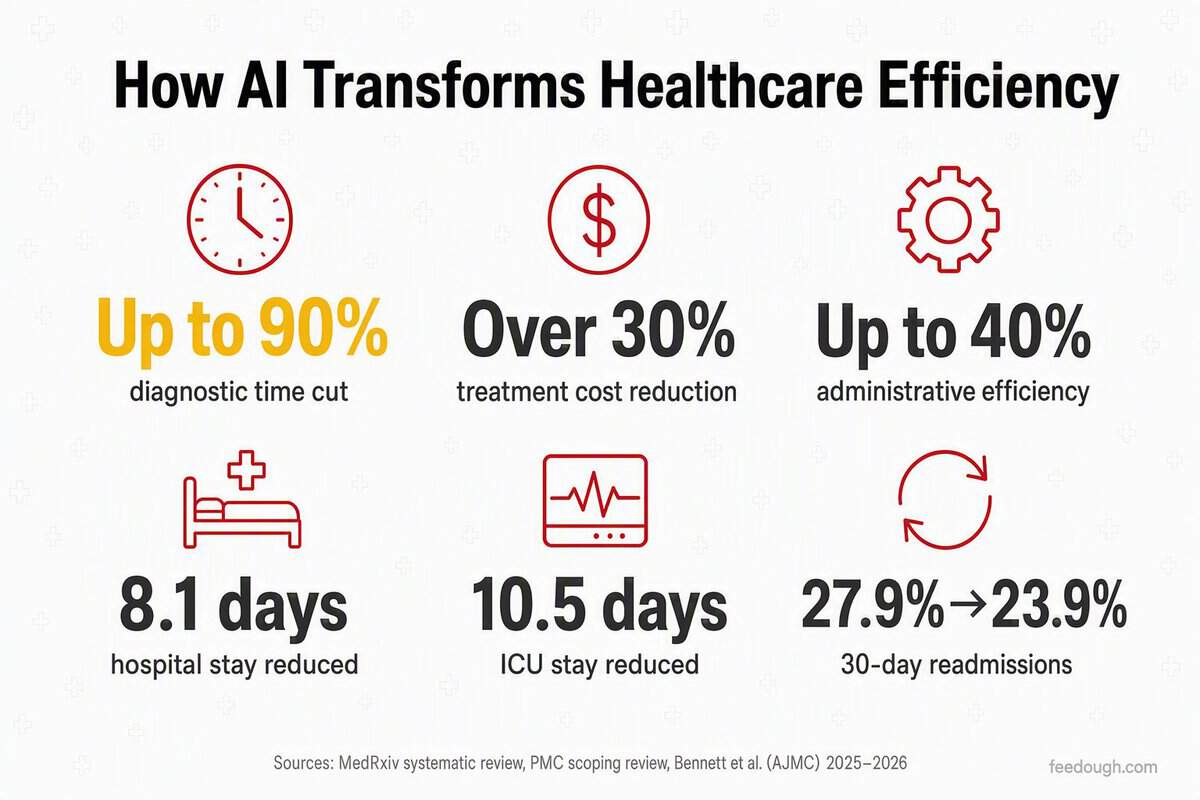
A safety-net health system cut 30-day readmissions from 27.9% to 23.9%, eliminated the racial equity gap, and reduced all-cause mortality (HR 0.82) on roughly $1 million in investment. The return exceeded 7:1.
A 2025 MedRxiv systematic review of 24 studies traced AI-driven savings across three operational channels. National health expenditure could drop by 5% to 10% from these improvements alone.
Efficiency Category | AI Impact | Source |
|---|---|---|
Diagnostic time | Up to 90% reduction | MedRxiv systematic review, Oct 2025 |
Treatment costs | Over 30% reduction | MedRxiv systematic review, Oct 2025 |
Administrative tools | Up to 40% efficiency gains | MedRxiv systematic review, Oct 2025 |
Hospital length of stay | 0.43 to 8.1 day reduction | PMC scoping review, 2026 |
ICU length of stay | 2.09 to 10.5 day reduction | PMC scoping review, 2026 |
30-day readmissions | 27.9% to 23.9% (P<.004) | Bennett et al., AJMC, March 2025 |
- $7.5 million saved in one year at Parkview Medical Center after an AI predictive model cut average length of stay by 0.54 days and eliminated 2,450 excess hospital days (EpicShare, September 2025)
- AI-assisted discharge solutions reduce stays by 11% and improve bed turnover by 17% while lowering readmission rates (IT Medical, September 2025)
- Cutting just 5% of avoidable stay days saves a typical 500-bed hospital approximately $6.5 million annually at $3,000 per patient per day (MCG Health / Avo, September 2025)
- Organizations with structured AI governance frameworks reach positive ROI in 7.5 months versus 13.5 months without, cutting time-to-ROI nearly in half (Sully.ai, 2025)
- The global AI in hospital operations market is projected to grow from $4.13 billion to $18.36 billion by 2031 at a 28.25% CAGR, driven partly by the CMS TEAM bundled payment model launching in 2026 (Mordor Intelligence)
Future of AI in Healthcare Statistics
77% of U.S. and Canadian medical schools now cover AI in their curricula. France mandated AI and digital health training across all health professional programs starting in the 2025-2026 academic year. The mandate is backed by EUR 119 million to train 500,000 professionals over five years. The workforce being prepared for these systems is arriving faster than the projections they will inherit.
Projection | Target Date | Value |
|---|---|---|
Global AI in healthcare market | 2030 | $110.61 billion (38.6% CAGR from $14.92B in 2024) |
AI-assisted surgical procedures | 2030 | 50% of all procedures |
AI precision medicine for cancer | 2027 | Standard clinical practice |
AI/ML devices share of new FDA authorizations | 2028 | Over 20% (under 2% in 2018) |
AI molecules entering clinical trials | 2023 | 67 (up from 3 in 2016) |
Global AI drug discovery market | 2034 | $12.56 billion (12.2% CAGR) |
The drug discovery pipeline captures the gap between current capability and regulatory readiness. 67 AI-discovered molecules entered clinical trials in 2023, up from just 3 in 2016. The global AI drug discovery market reached $4.46 billion in 2025 and is projected to hit $12.56 billion by 2034. Yet as of March 2026, no AI-discovered drug has received full FDA approval. The first regulatory clearance is not expected until 2027 or 2028.
Harvard Medical School, the University of Virginia, and UT Health San Antonio now embed hands-on AI training as standard rather than elective. Several are adding dual-degree programs. Physicians entering practice after 2027 will inherit these projections as their baseline, not their aspirational targets.
Sources
- https://www.doctronic.ai/blog/ai-detects-cancer-better-than-doctors-heres-what-the-research-says (2025-08-27)
- https://www.instagram.com/p/DWuJICuD19E (2026-03-10)
- https://physicianaihandbook.com/specialties/oncology.html (2026-01-01)
- https://vocal.media/futurism/ai-in-healthcare-statistics-and-facts-2026 (2025)
- https://www.fiercehealthcare.com/ai-and-machine-learning/75-us-healthcare-systems-use-plan-use-ai-platform-2026 (2026-03-24)
- https://theaidaily.nl/en/statistics/ai-in-healthcare-statistics-2026 (2026)
- https://www.dialoghealth.com/post/ai-healthcare-statistics (2025)
- https://innolitics.com/articles/year-in-review-ai-ml-medical-device-k-clearances (2026)
- https://intuitionlabs.ai/articles/fda-ai-medical-device-tracker (2025-12-31)
- https://www.radai.com/blogs/5-rsna-trends-set-to-redefine-radiology-in-2026 (2025-12-01)
- https://www.capsahealthcare.com/blog/health-it/from-ai-hype-to-ai-operations-himss-2026-takeaways (2026)
- https://www.fortunebusinessinsights.com/ai-in-robot-assisted-surgery-market-114135 (2025)
- https://intuitionlabs.ai/articles/surgical-ai-companies (2026-02-24)
- https://ajops.com/article/158868-will-i-still-have-a-job-in-plastic-surgery (2025)
- https://www.kff.org/public-opinion/kff-tracking-poll-on-health-information-and-trust-use-of-ai-for-health-information-and-advice (2026-03-25)
- https://www.chai.org/blog/chai-releases-new-patient-survey-report-on-health-ai-and-transparency (2026-01-28)
- https://www.salesforce.com/news/stories/patients-trust-doctors-agents-over-public-ai (2026-06-02)
- https://www.apa.org/pubs/reports/chatbots-mental-health-2026 (2026-01-01)
- https://www.rand.org/news/press/2026/06/nearly-1-in-5-us-adolescents-and-young-adults-use-ai.html (2026-06-01)
- https://www.rand.org/pubs/external_publications/EP71278.html (2026-06-03)
- https://www.pewresearch.org/internet/2026/06/17/americans-and-ai-2026-chatbots-smart-devices-and-views-on-impact (2026-06-17)
- https://www.pewresearch.org/wp-content/uploads/sites/20/2026/02/PI_2026.02.24_Teens-and-AI_REPORT.pdf (2026-02-24)
- https://wexnermedical.osu.edu/mediaroom/pressreleaselisting/ai-in-health-care-2026-survey (2026-04-07)
- https://www.ama-assn.org/system/files/physician-ai-sentiment-report.pdf (2026-03-01)
- https://newsroom.clevelandclinic.org/2025/09/23/cleveland-clinic-announces-the-expanded-rollout-of-bayesian-healths-ai-platform-for-sepsis-detection (2025-09-23)
- https://www.ama-assn.org/practice-management/digital-health/more-80-physicians-use-ai-professionally-ama-survey (2026-03-01)
- https://www.prnewswire.com/news-releases/bayesian-health-receives-first-ever-fda-clearance-for-continuous-ai-sepsis-monitoring-302769190.html (2026-05-12)
- https://medcitynews.com/2026/05/bayesian-sepsis-ai (2026-05-27)
- https://www.fiercehealthcare.com/ai-and-machine-learning/ama-physicians-use-ai-doubled-2023-2026 (2026-03-12)
- https://www.offcall.com/learn/articles/what-doctors-are-most-afraid-of-with-ai (2025)
- https://www.jmir.org/2025/1/e74187 (2025-08-26)
- https://radiologybusiness.com/topics/artificial-intelligence/ai-use-among-american-doctors-has-doubled-new-ama-survey-says (2026-03-12)
- https://www.nature.com/articles/s41746-026-02607-4 (2026-04-15)
- https://news.northeastern.edu/2025/10/01/melanoma-detection-ai (2025-10-01)
- https://www.ophthalmologytimes.com/view/how-ai-is-reshaping-ophthalmology-in-2025-and-beyond (2025)
- https://neurologytoday.aan.com/doi/10.1097/01.wnt.0001197700.25010.22 (2025)
- https://www.apa.org/monitor/2026/03/ai-reshaping-therapy (2026-03-01)
- https://www.prnewswire.com/news-releases/the-lancet-publishes-final-results-from-the-first-randomized-controlled-trial-in-breast-ai-302675094.html (2026-01-30)
- https://www.sciencedirect.com/science/article/pii/S305051432500041X (2025)
- https://journals.plos.org/plosone/article/file?type=printable&id=10.1371%2Fjournal.pone.0338810 (2025)
- https://www.ymj.or.kr/Synapse/Data/PDFData/0069YMJ/ymj-67-1.pdf (2025)
- https://www.auntminnieeurope.com/clinical-news/digital-x-ray/article/15774608/darkfield-radiography-improves-detection-of-pneumothorax (2025)
- https://www.mdpi.com/2379-139X/11/11/121 (2025)
- https://pmc.ncbi.nlm.nih.gov/articles/PMC12929352 (2025)
- https://ascopost.com/news/march-2026/ai-integration-in-breast-cancer-screening-increases-detection-rate-reduces-work-burden (2026-03-11)
- https://www.nature.com/articles/s43018-026-01127-0 (2026-03-10)
- https://cancerprogressreport.aacr.org/progress/cpr25-contents/cpr25-envisioning-the-future-of-cancer-science-and-medicine (2025-09-16)
- https://www.grandviewresearch.com/industry-analysis/artificial-intelligence-precision-medicine-market-report (2026-01-01)
- https://www.towardshealthcare.com/insights/ai-in-oncology-market-sizing (2025-01-01)
- https://www.frontiersin.org/journals/oncology/articles/10.3389/fonc.2025.1716018/full (2026-01-20)
- https://www.drugtargetreview.com/ai-in-drug-discovery-predictions-for-2026/1865962.article (2026-02-16)
- https://pmc.ncbi.nlm.nih.gov/articles/PMC12634751 (2026-01-01)
- https://www.nature.com/articles/s41591-024-02961-4 (2024-04-29)
- https://pmc.ncbi.nlm.nih.gov/articles/PMC12506480 (2025)
- https://www.frontiersin.org/journals/cardiovascular-medicine/articles/10.3389/fcvm.2025.1659298/full (2026-01-02)
- https://europepmc.org/articles/pmc13000517 (2026)
- https://www.towardshealthcare.com/insights/ai-in-cardiology-market-size (2025)
- https://dataintelo.com/report/ecg-interpretation-ai-market (2025)
- https://pmc.ncbi.nlm.nih.gov/articles/PMC12808761 (2025)
- https://www.nature.com/articles/s41746-025-02180-2 (2026-01-20)
- https://www.iatrox.com/blog/ai-powered-triage-2026-emergency-departments-machine-learning (2025)
- https://www.articsledge.com/post/ai-stroke-detection (2026)
- https://www.wvgazettemail.com/sponsored/articles/virtual-medical-scribes-in-2026-how-ai-assisted-documentation-is-ending-physician-burnout/article_94ed9aeb-5822-481d-9d3d-356622fcb1ba.html (2026-04-22)
- https://www.commure.com/blog-scribe/ai-in-primary-care (2026-04-17)
- https://prolifics.com/usa/resource-center/blog/role-of-ai-in-mental-health-care (2026)
- https://mental.jmir.org/2026/1/e82642 (2026-04-22)
- https://pmc.ncbi.nlm.nih.gov/articles/PMC12745907 (2025)
- https://library.samhsa.gov/sites/default/files/ai-mental-health-services-pep26-01-003.pdf (2026)
- https://azumo.com/artificial-intelligence/ai-insights/ai-in-healthcare-statistics (2026-04-24)
- https://www.deloitte.com/us/en/insights/industry/health-care/agentic-ai-health-care-operating-model-change.html (2026)
- https://www.deloitte.com/us/en/insights/industry/health-care/life-sciences-and-health-care-industry-outlooks/2026-global-health-care-outlook.html (2025-12-11)
- https://blogs.nvidia.com/blog/ai-in-healthcare-survey-2026 (2026-02-24)
- https://stealthagents.com/research/ai-revenue-cycle-management-automation-statistics-2026 (2025)
- https://www.auxis.com/2026-healthcare-revenue-cycle-management-trends (2026)
- https://intuitionlabs.ai/articles/ai-hospital-operations-2025-trends (2025)
- https://www.aha.org/aha-center-health-innovation-market-scan/2026-04-14-6-health-systems-enhancing-care-delivery-ambient-ai-scribes (2026-04-14)
- https://ai.jmir.org/2026/1/e84698 (2026-03-20)
- https://www.epicshare.org/share-and-learn/parkview-post-acute-predictive-model (2025-09-29)
- https://itmedical.com/wp-ai-assisted-discharge (2025-09-02)
- https://www.sully.ai/blog/blog-ai-implementation-in-healthcare (2025)
- https://pmc.ncbi.nlm.nih.gov/articles/PMC12834200 (2026)
- https://www.avomd.com/resources/mcg-partners-with-avo-to-launch-its-first-ever-ai-discharge-assistant-to-reduce-hospital-length-of-stay (2025-09-04)
- https://www.mordorintelligence.com/industry-reports/artificial-intelligence-in-hospital-operations-market (2025)
- https://uvik.net/blog/ai-in-healthcare-statistics-2026 (2026)
- https://www.aimagicx.com/blog/ai-drug-discovery-biotech-revolution-2026 (2026)
- https://intuitionlabs.ai/articles/pharma-ai-vendor-landscape-2026 (2026)
- https://www.oecd.org/en/publications/scaling-artificial-intelligence-in-health_a436e12d-en/full-report/current-state-of-implementation-of-ai-in-health-across-oecd-members_2deacbc5.html (2026)
- https://www.strategicmarketresearch.com/blogs/ai-in-healthcare-statistics (2026)