
Feedough Logo

Blog

  • What Is Market Analysis & How To Do It?

    What Is Market Analysis & How To Do It?

    Marketing without market analysis is like driving with your eyes closed!

    Whether you want to start a new venture or want to make changes to the existing one, the first and foremost step would be getting well acquainted with the ever-changing surrounding market scenarios. This requires a quantitative and qualitative assessment of the market or what, in technical terms, is known as market analysis.

    What is Market Analysis?

    Market analysis is the qualitative and quantitative assessment of the current market.

    It is the study of the changing dynamism of various factors that affect the market’s growth. Analysing the market allows a business to fully understand the behaviour of a market to develop a proper business plan that caters to the present needs.

    Market analysis can provide valuable insights into a specific market and help you develop strategies accordingly. It also helps you better understand your customers’ needs and provides you with a well-rounded picture of the market in which you will eventually operate.

    How To Do Market Analysis?

    All said and done, conducting market analysis takes time and research. It is not something that can be achieved overnight. To guide you through your market- assessment journey, here are some of the steps given below:

    Identify the Purpose of Analysis

    Before beginning market analysis, you first need to find out whether the analysis if for internal or external purposes. Internal purposes are improving cash flows or business operations and external purposes include convincing lenders to give you a business loan. The kind of research varies accordingly with the purpose. So, make sure whether your study will be internal, external or both.

    Analyse The Industry

    Industry analysis gives an idea about the industry size, growth rate, trends, and other intricacies of the industry in which you operate.

    Market Size

    Calculating the total and achievable market size will help you set realistic goals and design a viable business plan.
    TAM SAM SOM is calculated to understand the market size better –

    • TAM is 100% of the market. It is the total number of fish in the sea.
    • SAM is the % of TAM within the business’s operable territory. It is the total number of fish within the casting range of the dock you fish from.
    • SOM is the percentage of SAM the business can realistically achieve in the short-to-medium term. It is the number of fish you can reasonably catch, considering the amount of time, energy, and baits (resources) you can allocate to fishing.

    Growth Rate of the Market

    Before investing, you need to analyse a market’s growth rate. This will give you an idea of how long that particular market will last, and accordingly, you can decide the amount of investment you would like to make in that market.

    This is usually calculated by subtracting the market size for year one from the market size for year two. The result is then divided by the market size for year one and multiplied by 100 to convert it to a percentage. 

    Market trends help you determine the direction of the wave in which the market moves. Knowing the latest trends helps you to decide what kind of product you should sell. You should focus on grabbing customer attention by introducing the products they want to buy and spend their money on.  Market trends can change any day. That is why you must keep an eye on them to conduct a successful market analysis.

    Industry Profitability

    Before starting a business, you need to analyze the profitability of the market. If the market is highly profitable, you should invest in it; otherwise, it would be a waste of time and capital. Things like buyer power, supplier power, barriers to entry, etc., have to be considered to calculate a market’s profitability.

    Analyse The Target Customer

    Not everyone is your potential customer, and that’s completely fine! When you analyse a market, you must determine who your customers are. To do this, you need to develop a customer persona and understand his –

    • Demographics: Your customer’s typical age, gender, education, income, etc.
    • Location: Where does your target customer live?
    • Psychographics: What do your customers count as their needs, wants, desires, likes, and dislikes? What’s their personality?
    • Behaviours: How do they react to certain stimuli? How do they shop?

    This process is called target audience analysis. As your business grows, your potential customers may change. Therefore, you need to revisit your target market from time to time to make sure they still fit your business.

    Do A Competitor Analysis

    Once the market and the customer are analysed, the next step is to analyse the existing players in the market and the business strategies they use. Doing this results in the identification of opportunities and threats that need to be taken care of.

    Competitor analysis is important to understand how the existing market operates and how potential customers rate the competition. This competition is often divided into three types –

    • Direct Competitors: Competitors which cater to the same customers, address the same problem, and provide the same solution as you.
    • Secondary Competition: Competitors which cater to different customer segments but address the same problem and provide the same solution as you. 
    • Indirect Competitors: Competitors cater to the same customer segment and address the same problem but provide a different solution.

    Once you’ve identified the competition, use perceptual maps, market charts, etc. to define their share and position, as well as the position that you can occupy in the market.

    Conduct a SWOT Analysis

    A SWOT analysis helps you determine your business’s strengths, weaknesses, opportunities, and threats. Use it to establish goals for your business and do this at regular intervals.

    In fact, you should conduct a SWOT analysis not only for your business but for your competitor’s business too. This will help you identify what their business has that yours lacks. Accordingly, you can determine your current market position and predict what your position might be in the future.

    Forecast The Opportunities

    Don’t just box up your analysis and pack it away for “later.” Do not waste all the extensive research. The last and most important step is to take action and use your market analysis to achieve the results you were looking for.

    Importance of Market Analysis

    Market Analysis is essential because it allows you to uncover opportunities within a market, know what your customers think of your product, and improve your communication with them.  While there are many reasons why a market analysis is necessary, let’s focus on the top three:

    It Puts Customers First

    Theodore Levitt once said, “People don’t want to buy a quarter-inch drill; they want a quarter-inch hole.” Once you realize the reason customers are hiring your services, you will be able to identify your real competitors! Market Analysis allows you to modify your services according to your customers’ needs after clearly identifying your competitors.

    It Makes Companies to Look Inward

    It is quite difficult to critically examine your product or service, given the amount of time and money you have invested in it. Market analysis forces companies to look inward with an objective perspective. It forces companies to consider how their product makes their customers feel and why they would want to buy it.

    It Helps You Determine Your Unique Selling Proposition (USP)

    Your USP is that feature of your product or service that differentiates it from similar products. Market analysis helps you determine your USP, which is crucial for building a sustainable business model.

    Bottom-Line?

    When you conduct market analysis, you discover a lot of things. You get to know your present customers and who can be the prospective ones. You learn where you are spending your time and money and what worth is it adding to your business. Also, you can do some major sleuthing on your competitors. Moreover, and most importantly, you learn about your flaws and find solutions to fix them. Market analysis is learning the most about the market and then using that knowledge to your advantage therefore, your analysis should be thorough, clear and comprehensive.
  • 10 Phrases You Should Use More Around Your Team

    10 Phrases You Should Use More Around Your Team

    “Whether we realize it or not, we are constantly given small opportunities to build up or put down our co-workers in the ways we talk about them.” – a study by Harvard Business Review

    Effective communication is extremely important to maintain a healthy environment at your workplace. What you say or don’t say to your team at work can not only influence the type of workplace culture in your organization but also influence their levels of productivity and loyalty to the company itself.

    For the gears to turn smoothly within the organization, it is important for you to be able to rely on your team and for them to be able to rely on you. Trust is one of the key factors in motivating people in the workplace, and the easiest way to gain trust from your co-workers is by effective communication.

    To ensure this, you can incorporate certain phrases at work so that you can maintain a healthy and professional relationship with your team:

    What do you think of this?

    In a healthy workplace culture, any and every decision taken within the workplace should be done so unanimously, i.e. as a single body. To make that happen, you must ensure that your opinions are on the same page as your team.

    Asking them about how they feel about a certain decision being made allows your co-workers to voice their opinions on the matter and it makes them feel more involved. It creates a mutual feeling of trust and team-work, which is essential for any organization. In fact, according to research, people who can ask for advice are often competent in their workplace.

    I’d like to hear your opinions first.

    Incorporating this phrase into your workplace communication can reinforce the idea that you care about what your team has to say. Putting your teammate’s opinions first instead of your own can also provide you with a fresh and often better perspective to tackle any situation that arises at the workplace.

    If at all, getting to know your co-workers’ opinions allows you to look at different solutions to a problem, and then choose one that works most efficiently. It also shows your team that their opinions are valued and trusted, and encourages them to come forward with their opinions more often.

    I trust your judgment.

    Trust goes both ways. By showing your teammates that you trust their decisions, you also garner their trust when you make any work-related decision in the future. By extending trust to your teammates, you also make sure that the team spirit at your workplace grows stronger.

    Trust forms the basis of all interactions within the workplace. So, incorporating phrases that show your employees that you trust them can establish that healthy competition and no discrimination exist within the organization. Trust in your teammates also increases levels of productivity in the workplace, and improves your ability to work as a team.

    Is there anything I can do to help?

    Sometimes, when the deadlines are looming right around the corner and you could use a set of extra hands to help you out with a task or project that you’ve been assigned, using this phrase can come as a relief to your co-workers. Not only is it a kind gesture, but it also promotes teamwork within the organization

    Even if your teammates do not need any help at the moment, your willingness to help them and take on a problem that isn’t yours will leave a positive impression on them. Using this phrase in your workplace interactions will also ensure that problems are handled as a team, rather than as an individual, at your workplace.

    I couldn’t have done it without you.

    There is no ‘I’ in ‘team’, as we all know. But saying it out loud and acknowledging the collective efforts of your team can also work wonders to boost their morale and thus positively impact their productivity in the workplace. Using this phrase around your team at work acts as positive reinforcement, and encourages them to bring their A-game more often.

    Appreciating your teammates, whether you do it individually or collectively, makes them feel respected and valued as an integral part of the organization you work for. Telling your teammates that they play an important role in the company also increases employee engagement rates and has a positive effect on employee retention.

    It’s great to have you on our team.

    This phrase is like an encouraging pat on the back when it comes to appreciating your teammates. All of your teammates want to be a part of something big and meaningful and making them feel that they’re an asset to your team as well as your organization can positively impact the way they look at the workplace, which in turn can increase levels of productivity.

    Telling your co-workers that they are a great addition to the team boosts their morale and positively affects their engagement rates at the workplace. Furthermore, if a new employee has just joined as part of your team, telling them that you are happy with their being on board gives them a sense of belonging and makes them feel welcome at your organization.

    Keep up the great work.

    Everyone likes to be appreciated for the amount of work that they have put into the task they have been assigned. Using this phrase at the workplace often keeps your team on their toes. Praising your co-workers on a job well done motivates them to perform even better in the future.

    A happy employee who feels valued for their work is also more invested in the company’s success. Recognizing your teammates’ good work also positively affects employee satisfaction rates. Furthermore, according to the Aon 2018 Trends in Global Employee Engagement survey, recognition is one of the strongest drivers of engagement among employees.

    I need your perspective regarding something.

    Treat your co-workers as experts. Each one of your teammates might have a completely different perspective on how to tackle a workplace situation. The more that they come forward with their opinions, the more options there are for your team to consider before handing a certain task.

    Asking your co-workers for their perspective can reflect that you value their knowledge, experience and skills. Everyone likes to be appreciated, and acknowledging a different angle to a challenging task is important to motivate your team at work.

    I like how you handled that.

    Taking initiative is often one of the most important traits in a person, and having a member in your team who can take initiative and handle a challenging workplace situation shows that they are capable of handling leadership and responsibility. When you praise your teammates for their character traits, you also reinforce those very traits within the workplace culture in your organization.

    Using this phrase around your team at work motivates them to take initiative and take on challenges more often. It motivates your co-workers to focus on coming up with solutions to problems in the workplace with the same attitude or approach.

    I appreciate your enthusiasm.

    A positive and enthusiastic attitude is very important for success in the workplace and enthusiastic people are more invested in being a part of the success of their company. Furthermore, their positive attitude and energy towards work not only inspires your fellow teammates to take the same approach towards the tasks that they have been assigned but also makes a positive impact on the overall workplace culture within the organization.

    Telling your teammates more often that you appreciate their enthusiasm at work will ensure that they help out with the tasks in an upbeat and cooperative manner. The more enthusiastic that your teammates are, the more driven and motivated they will be to work productively as part of a team.

    Bottom-line?

    According to a Gallup poll in 2018, 34% employees are engaged with their work, which is the highest percentage till date, and a part of the reason is employees being recognized and appreciated in the workplace. Individuals who receive praise and recognition are more productive in the workplace since they want to maintain their productive streak.

    So, saying a few words of appreciation for your team at work can go a long way. The more you provide your teammates with appreciation, with a little bit of occasional constructive criticism, the more invested they will be as part of the team. Using these phrases more often around your team at work can motivate them to perform better in the workplace in the future.

    Go On, Tell Us What You Think!

    Did we miss something? Come on! Tell us what you think about our article on 10 Phrases You Should Use More Around Your Team in the comments section.

  • Compensation Philosophy: What Is It & Why Is It Important?

    Compensation Philosophy: What Is It & Why Is It Important?

    Almost 50% of the organizations agree to the fact that employee turnover is on an all-time high, thanks to the strong job market.

    One of the main reasons which influence this employee turnover rate is the inadequacy of the companies’ compensation policies which lack transparency and commitment, has less or no non-monetary rewards, no performance pay, unfair basic pay and a lot more.

    In the 21st century, where the market competition has become fierce, losing a key player can cost your company a lot. Finding a new applicant who can handle the position adequately can take a lot of your time and effort. And this new employee will also need some time to adjust to the work-place environment.

    This builds up the reasons for a company to plan a well-designed compensation philosophy to retain and attract skilled employees.

    What Is Compensation Philosophy?

    A compensation philosophy is a formal written statement about the compensation program and reward strategies of a company in regards to its employees. It answers the reasons behind the compensation provided to the employee.

    Both the human resource team and executives are responsible for developing the well-designed pay philosophy of a company that aligns with both the company’s as well as the employees’ goals. A well-balanced pay philosophy reflects transparency and commitment that helps builds a trust bond which is beneficial for achieving the company’s goals.

    There are four basic types of compensation philosophies:

    • Market pay: Compensation is determined by the difficulty level of the job and the experience and qualifications necessary for the position.
    • Equal pay: Wages are equal for every employee irrespective of their position and complexity of the job. This pay philosophy is usually seen in a family business.
    • Flexible pay: Determined by the board of directors or senior managers. This method combines the company’s culture metrics along with market study information to determine the salary.
    • Tailored pay: Wages are determined by the market condition. They also receive payment for achieving personal goals and the overall performance of the company.

    Factors Influencing Compensation Philosophy

    Some of the key factors that should be taken into account while drafting a compensation philosophy are:

    • Company’s financial condition
    • Size of the company
    • Type of industry
    • Company’s goal
    • Salary given by competitors
    • Level of talent required for success

    Why Is Compensation Philosophy Important?

    The importance of compensation philosophy lies in the fact that monetary benefits stand first in ‘attracting’, ‘retaining’ and ‘motivating’ the employees.

    • Attract skilled applicants: According to SMART Recruit Online, a company can attract almost 30% more job applicants if they mention wages in their job advertisements. Another survey by Jobsite found that the applicant’s number drop by 25%-30% if they don’t include salary. Thus, by sharing and publishing pay philosophy, the company can attract more talented and skilled job applicants who are more appropriate for the job position.
    • Retain employees: Employee turnover is inversely related to employee satisfaction; the more they are satisfied in the organisation, the less chances are for them to leave. A comprehensive compensation philosophy plays a great role in increasing employee satisfaction. According to a PayScale survey, how employees feel about the compensation process is 4 times more important than how much they are paid. Thus, the fairness and transparency of your compensation philosophy can increase retainment rates of employees.
    • Motivate employees: A survey by APA found that only one in five employees who accept being valued within the organisation intend to look for a new job the next year. Moreover, almost 93% of those valued employees agreed that they feel motivated to do their best at work.

    How To Write A Compensation Philosophy?

    The compensation philosophy can be written in four different ways:

    • Percentile-based: A percentile-based salary tells what amount certain percentage of the total population in an area or within certain industry earns. Say for a job of $25k, the wage was 25th percentile annually. It means 25% of the mentioned population earns $25k annually, while the remaining percentage of people earn more than $25k.
    • Compensation package: A compensation package is the combination of the monetary pay (bonus, salary, allowances) along with some non-monetary benefits (life insurance, pension plan, vacations, etc.). In a good compensation package, both the monetary and non-monetary benefits are properly balanced.
    • Fixed numbers: In this method, the exact amount of salary of each employee is included in the compensation philosophy. The fixed salary with regular increment after a certain time period helps to attract talented applicants. For example, a new employee gets a salary of $20,000. Due to his good performance, his salary is increased to $22,000 in the following year.
    • Non-specific: This philosophy is concerned with the guiding principles that focus on the payroll process rather than a compensation package or fixed salary or percentile salary.

    Bottom-Line?

    Compensation philosophy helps you can attract and retain the right talents for the right position. But just developing a compensation philosophy is not enough. Understanding the company’s requirements and framing the philosophy in a way to get maximum talented and satisfied employees is the main goal.

    Go On, Tell Us What You Think!

    Did we miss something? Come on! Tell us what you think about our article on compensation philosophy in the comments section.

  • The Importance Of Leadership In Business

    The Importance Of Leadership In Business

    If you Google the meaning of leadership in business you can get about 658,000,000 results, with each definition as unique as an individual leader.

    It’s a difficult concept to define, perhaps because it means so different things to different people.

    So, what is the need of leadership; a leader’s “reason for being” day in and day out?

    Some think that the purpose of leadership is to deliver results through others, while some believe the leader’s purpose as developing more leaders. Other’s see the leader’s primary responsibility is to make the vision come to fruition.

    Leadership is not a position or a title; it is action and example. It’s a process of influencing others to work towards the attainment of specif goals. A leader manages the organisation and leads the team to achieve goals, act decisively and beat its competitors while instilling the performance spirit within the organisation.

    The Importance Of Leadership

    The importance of leadership cannot be underestimated in business. It is essential to make employees dream what the organisation dreams to achieve and to make them work together to attain the common goal. Leadership is also an important function of management which helps to maximize efficiency and to achieve organizational goals.

    Here are some more reasons explaining why leadership is important for every business:

    Helps in Influencing the Behaviour of People

    Leaders play an important role in influencing the behaviour of individuals in the workplace. It is the responsibility of leaders to set a direction for team members. Good leaders always try to get good results through their followers. They tap the knowledge and skills of a group, point individuals towards a common goal and draw out a commitment to achieve results.

    Effective leaders don’t just command; they inspire, persuade and encourage.

    The best leaders are those who can successfully influence up, down and across the organization impacting business results by driving behaviour change.

    Maintains Discipline

    Leaders are a powerful influence to enforce discipline in the organisation. They employ formal rules and regulations and enforce discipline in the employees by helping them cultivate ‘self-discipline.’

    The subordinates follow rules and regulations with commitment and loyalty as their leaders usually have confidence in them. Leaders promote teamwork, change their attitude towards work, and develop good human relations, facilitate interaction amongst members and maintain discipline in the organisation.

    Motivation

    Group effort and teamwork are essential for realizing organisational goals, and leadership becomes vital for this.

    Leaders motivate employees to take up jobs they are otherwise not willing to perform. They combine people’s ability with the willingness and drive them to action. They exploit their potential to work and convert their desire into performance. Through the exercise of leadership, leaders can influence any group of human work accomplishment.

    Leadership pulls up the group to a higher level of performance through its work on talent management.

    “A manager says ‘go’ and a leader says ‘let’s go’!” 

    -E.M Kelly

    Great leaders always encourage team building activities to make the team stronger and more unified, and make sure all employees are working well together.

    Building the Team Spirit

    No individual can work alone. Leaders develop team spirit amongst the followers to work collectively and coordinate their goals with the organisational goals. A leader acts as a captain of the team. He creates forces of synergy and multiplies individual output into collective output.

    A leader can be a morale booster by achieving full co-operation so that they perform with the best of their abilities as they work to achieve goals.

    “I invite everyone to choose forgiveness rather than division, teamwork over personal ambition.”  -Jean-Francois Cope

    Basis for Cooperation

    Leadership provides the basis for co-operation in several ways. Good two-way communication, one-to-one personal relationships and help, use of participation and creation of opportunity for need satisfaction are used to increase the understanding between the leader and the subordinates.

    This increases understanding obtained through the interactions of individual personalities promotes favourable feelings and attitudes among them and enhances the workplace culture.

    “No leader, however strong, can succeed at anything of national importance or significance unless he has the support and cooperation of the people he is tasked to lead and sworn to serve.”  -Rodrigo Duterte

    Psychological Support

    Leaders help their team members to accomplish the organisational task and overcome the problems they face while performing these tasks. They promote followers to work with zeal and confidence and also help them align their personal goals and needs with organisational goals and needs by providing work flexibility.

    “Love and work are to people, what water and sunshine are to plants.” -Jonathan Haidt

    Leaders create confidence among team members and make them realise their capabilities. They guide, counsel and coach them whenever necessary.

    Examples Of Business Failure Due To Ineffective Leadership

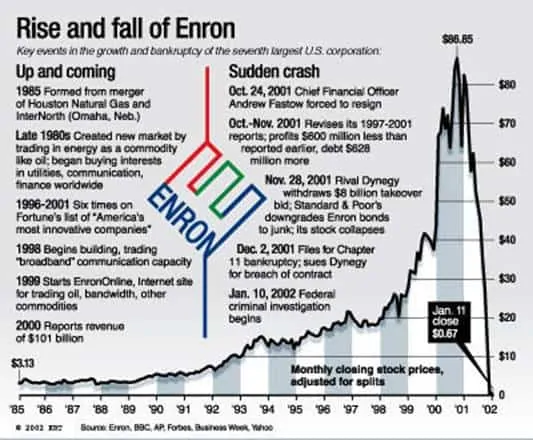
    Enron

    This may be an extreme example of leadership gone corrupt, but it did happen and is likely to happen again in other companies today as well.

    Enron is one of the biggest failures in the world of business history in the US. The top leaders and senior executives at Enron were paid very high salaries even when the company was going down. They enjoyed large bonuses and huge expense accounts. At the same time, the leaders were engaged in every opportunity to make more money by engaging in special entities and fake partnerships.  As a result of it, a number of Enron executives were found guilty for a variety of charges and are now seeing for long prison sentences.

    enron rise and fall

    The takeaway here is that they got away with it for years, and corrupt leadership caused financial ruin for hundreds of people.

    Merrill

    Merrill Lynch had a bad leader, an inept ego-driven bully that thought he could force bad decisions to yield good results. Stan O’Neal was that guy and his incredible cost-cutting tactics earned him plenty of enemies.

    He cost the firm some 28 billion dollars and the loss of 35,000 good-paying jobs. Stan O’Neal and his tenure at Merrill Lynch is a stain that cannot be erased and his presence permeated the upper of echelons of the firm.

    The firm crashed and burned because the chairman wanted to hit a home run by engaging in high-risk yield trading.

    It is what happens when you have a bad leader and he goes unchecked.

    Blackberry

    There was a time when Blackberry was the ultimate status symbol and nobody could fathom having another type of a smartphone.

    But Blackberry had a history of nepotism which lead to poor leadership. The company also promoted people from within based on tenure rather than on skills and potential to actually lead.

    This poor strategy of not infusing the organisation with new people with fresh ideas and not motivating the existing employees to do the same brought the company at a standstill. Apple and other smartphone companies brought new products to which Blackberry was too slow to adapt.

    blackberry rise and fall

    Bottom-Line?

    Figuring out and strategizing leadership is something that should start in a business plan when a business is just beginning to stretch its limbs. Failure to plan and not having SOP in place triggers for poor leadership, but it’s just so easy to skip over these steps in the early stages.

    Business owners too often think they can get around to these kinds of details later, but later never seems to come. Perhaps if more startups focused on streamlining management protocol, foundations would be sturdier.

    Go On, Tell Us What You Think!

    Did we miss something? Come on! Tell us what you think about our article on the importance of leadership in the comments section.

  • Work Flexibility – What Is It & Why Is It Important?

    Work Flexibility – What Is It & Why Is It Important?

    Your employees might love what they do and your motivation strategies may even help them improve their performance and boost self-confidence.  But no one likes to work with someone who only cares for the organisation and not his employees’ individual needs.

    Your employee could be a dad who wants to spend more time with his 8-year-old, a daughter who needs to take her ageing parents to doctors every week, or a guitarist who wants to devote some time to his hobby too.

    This is where work flexibility comes in. It is when you as an employer give more space to your employees and focus mainly on the work and not when, where, and how the employee is doing it.

    What Is Work Flexibility?

    Work flexibility (also called workplace flexibility) is when the employer gives some or full freedom to its employees to choose the time (when), location (where), and manner (how) in which they work to help align organisation goals with the individual goals.

    Work flexibility involves employers to have more concern for their employees and realize that they have a hectic life beyond work as well. It involves providing them with options and alternatives to help them meet the demands of both professional and personal lives.

    This not only boosts employee satisfaction but also results in them becoming more productive and hard-working.

    The Importance Of Flexibility At Work

    Flexibility and freedom are important both for increasing employee satisfaction and reducing employee turnover.

    In today’s world, high calibre clients look for a job offers which are not only favourable in terms of the pay but also in terms of advanced benefits, technical support, and the flexibility to help them achieve peak performance.

    Stats show that 78% of the employees feel their productivity increase when work arrangements are flexible. And 77% consider flexible work arrangements a major consideration while applying for and evaluating job opportunities.

    Advantages of Workplace Flexibility

    A flexible workplace is good for both the employer and the employee. It not only helps increase productivity in the organisation but also increases the satisfaction of the employees which in-turn results in many other advantages.

    From the Employee’s Perspective

    • More time and space to cater to personal needs: Workplace flexibility results in more freedom to better meet family and personal needs.
    • Increased job satisfaction: When more flexibility is provided in terms of when, what, and how to work, it boosts the confidence of the employee and increases job satisfaction.
    • Enhanced productivity: Increased job satisfaction and more freedom to choose the way of working enhances the productivity of the employees, which eventually opens up more future opportunities.

    From the Employer’s Perspective

    • Less employee turnover: Since workplace flexibility increases the employees’ job satisfaction, it helps in reducing employee turnover in the organisation.
    • More productivity: More flexibility reduces tardiness and absenteeism and hence increases the productivity within the organisation
    • Better company image: Flexibility in the workplace usually enhances the company image as a family-friendly place to work with a good workplace culture. This attracts more job seekers to choose the organisation over others.

    However, some people also argue about the cons of work flexibility being less efficient work due to lack of supervision, and no clear dividing line between home and work.

    Types Of Flexibility In The Workplace

    Most of the companies witness the benefits of incorporating flexible work policy and alternative work arrangements more than the cons. These alternative work arrangements can be broadly categorized into two types –

    • Formal Flexibility: Which is agreed upon in the job contract.
    • Informal Flexibility: Which is a result of mutual understanding between the employer and the employee.

    Both of these types are necessary to build trust within the organisation. These types can further be classified into –

    • Flexibility in Work Scheduling: A provision for any work schedule other than the standard work schedule. This includes flextime (only focus on the hours worked not when worked), compressed workweeks (working full time in less than 5-day workweek), and flexible shift and breaks arrangements.
    • Flexibility in Amount of Work Hours: Offering part-time work or reduced hour schedule to people who need it.
    • Flexibility in the Place of Work: Letting employees work from home or a satellite work centre to help them cater to their personal needs.

    Examples Of Flexibility At Work

    One should not ignore the needs of the employees while forming company policies. Doing so not only keeps the employees happy but also increases the productivity of the whole organisation. Here are a few examples of flexibility at work –

    • Telecommuting: Telecommuting is a job policy where the employee comes to office semi-regularly (1-3 times a week) and does most of his work remotely.
    • Remote Working: Employees engaged in remote work perform their tasks while entirely away from the office. It can be a permanent position or temporary and the employees can be hired from around the world.
    • Condensed Workweeks: A policy which lets the employees complete their 40-hour shift within the first 4 days of the week and take the next 3 days off.
    • Customized Working Hours: Letting the employees choose their own work hours.
    • Part-Time Jobs: Many companies offer not-so-important jobs to part-time workers. This eventually helps in increasing productivity and even costs less to the company.
    • Job Sharing: A common flexible work policy which involves two or more part-time workers sharing a full-time job.

    Bottom-Line?

    Work flexibility is a one of the most important factors that should be considered while defining the company policies. If your employees’ work isn’t hampered irrespective of them not working from the office, offer them to work from home. If it is possible to offer flexible timings, inform your employees about the same.

    A flexible workplace is a great satisfaction booster and one should never ignore its importance.

    Go On, Tell Us What You Think!

    Did we miss something? Come on! Tell us what you think about our article on workplace flexibility in the comments section.

  • V-Commerce — What Is It & Why Is It The Next Big Thing?

    V-Commerce — What Is It & Why Is It The Next Big Thing?

    “Alexa, will most homes have a smart speaker by 2020?”

    “Hey Google, are more consumers using voice-automated devices to shop?”

    No matter who responds first, the answer to these questions would be “yes.” Voice commerce or v-commerce is poised to transform the way you search, browse and buy online. And that change is coming sooner than you may think.

    A recent Capgemini study which analyzed over 5,000 people in the US, UK, France and Germany found that:

    • 51% of consumers already use voice assistants.
    • 35% of them have bought products by voice.
    • 34% have ordered meals by voice.
    • 28% have booked an uber or taxi service through voice assistants.

    In other words, voice commerce is all set to become the next big thing in the e-commerce industry.

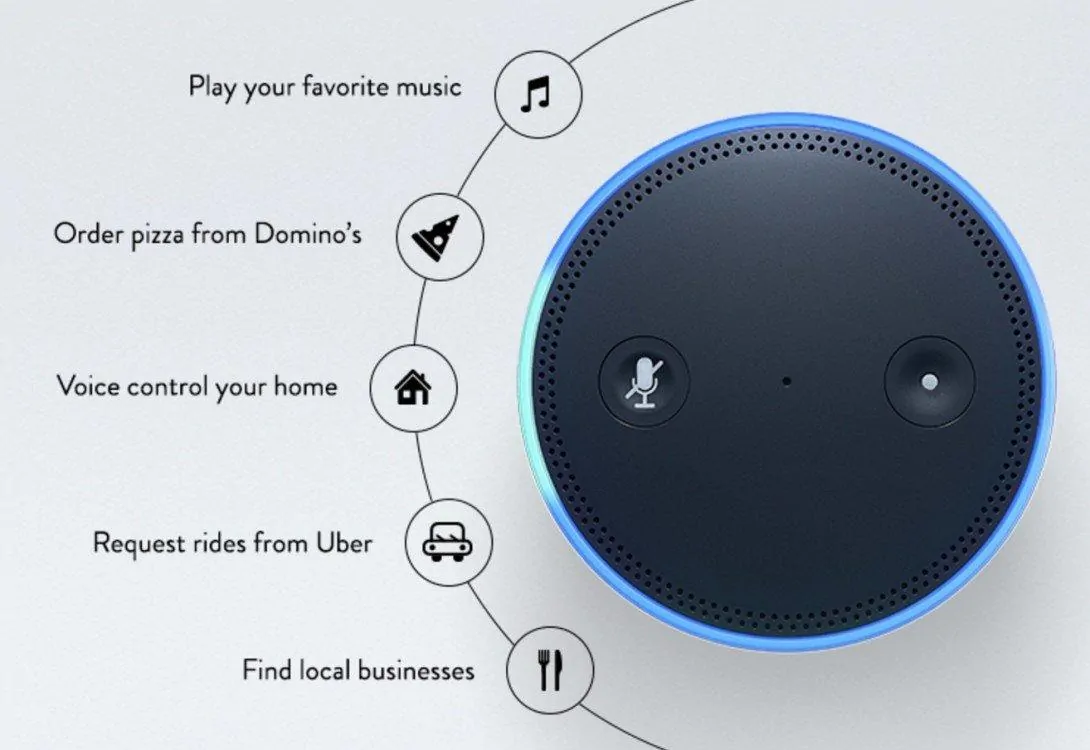
    v commerce

    What is  V-Commerce?

    V-commerce (also called voice commerce or voice-powered commerce) is a process which enables users of smart devices to conduct trade online using their voice commands.

    The main focus of v-commerce is to ease the buying process and provide an alternative to using a keyboard and a mouse to order and purchase products online. With the help of voice commerce, completing a purchase becomes faster and can be accomplished at any time throughout the day- even while taking a shower, if your assistant can hear you.

    “Voice can be as disruptive to e-commerce as mobile was to desktop.”

    – Michael Haswell

    How Is Voice Used To Conduct Commerce?

    To make purchases online using voice technology, you need a smart device which has an inbuilt virtual assistant or supports any third party VA.

    Voice-activated intelligent assistants are AI-powered assistants that use voice recognition, natural language processing (NLP), and speech synthesis to answer questions asked by you or perform basic and complex tasks on command like playing music, opening apps, searching for particular information, executing home automation and even ordering meals.

    “Voice is the next big way for us to be able to leverage data from a persons’ car, home, or device. It will allow them to shop in a very conversational way with a robot, in the same that they would with a specialist on a showroom floor of a retailer.” – Marc Lore, CEO, Walmart

    These voice assistants constantly analyse and learn the users talking patterns, information requirement patterns, and even the shopping patterns to make things easier and personalized according to the user who interacts with it.

    Suppose you want to order a shampoo using Amazon Alexa. Here’s how the conversation will go –

    You: “Alexa” (the wake-up word for the voice assistant)

    You: “Order Dove Intense Repair Shampoo 1 litre pack”

    (Alexa now checks your stored buying history and suggests the products and packs based on past data. If there’s no such data right now, it suggests ‘Amazon Choice’ products.)

    Alexa: “I found… would you like to buy it?”

    You: “Yes”

    And it’s done.

    Many brands like Starbucks, Dunkin’ Donuts and Dominos work actively with these digital assistant brands to make it easy for you t0 place orders vocally. On the other hand, many just focus on building their brand image using voice assistants.

    That being said, the current state of the market is to make you use voice more for almost every task and not just shopping. Because as we use voice more, it will naturally lead to more voice commerce.

    The Voice Market

    Clearly, the voice market is a vendor market, meaning that companies like Amazon and Google are making considerable efforts to convince customers about the usefulness of their products.

    Let’s have a closer look at how these companies are adapting v-commerce to increase their profits as well as for delivering the best services to their customers.

    Amazon

    Amazon dominates the voice space when it comes to smart speakers. Echo is a brand of smart speakers developed by Amazon, which comes with an inbuilt voice-controlled personal assistant – Alexa.

    • Voice Assistant– Alexa
    • Release date– November 6, 2014

    Alexa not only responds to your vocal commands but also connects with all your smart devices and help you control them using just your voice. The product works with over 7,400 IoT compatible brands and supports 3 languages. Compared to the competition, this voice assistant learns faster and has easy access to the Amazon marketplace which makes it very smooth to order and reorder.

    “ You want to keep your hands on the wheel and eyes on the road, so using your voice makes more sense.” -Ned Curic, Vice president of Amazon’s Alexa Auto division

    Google

    Almost every Android phone comes with the functionality of Google Assistant. Google Assistant is the AI-powered super-responsive voice assistant developed by Google to help its customers operate most of their tasks using just voice.

    • Assistant – Google Assistant
    • Release date– May 2016

    In May 2016, Google presented its Google Assistant platform as an app for Android devices, which later became available for iOS devices as well. At the same conference, they introduced the Google Home smart speaker, which had Google Assistant built-in.

    Google Assistant is considered to be one of the most accurate and most responsive voice assistants among the competition. The assistant can understand two commands simultaneously which gives it a boost when it comes to v-commerce.

    The functionality of Google Assistant was further enhanced when the company launched Duplex, an AI-voice which make reservations and buy services on your behalf with you just instructing Google Assistant to do it.

    Duplex, with the help of Google Assistant, speaks for you, interacts with actual humans, and even make reservations using its AI-based, human-sounding voice.

    Alibaba

    Like Google’s Duplex, Chinese internet giant Alibaba has its own humanlike voice assistant capable of making restaurant reservations and salon appointments.

    • Voice Assistant – AliGenie
    • Release date– July 2017

    Experts have pointed out that in the space of 30-second conversation, the voice assistant has a great capability to handle three common problems for conversational AIs. These skills are difficult for most modern AI voice assistants to handle. Alibaba has also invested heavily in offline stores and big data capabilities in an effort to capitalise on the entire supply chain as part of its retail strategy, just like what Amazon did.

    Apple

    Every iPhone and other smart devices from Apple are equipped with its voice assistant – Siri.

    • Assistant – Siri
    • Release date– February 9, 2018

    The voice assistant currently understands over 21 languages which give more option to the non-English speaking users to get their hands on voice commerce.

    Challenges To Voice Commerce

    Lack of trust

    “With a screen, you can show facets and filters. When you’re getting results by voice, it takes more time for a person to be able to ingest.” – Eli Finkelshteyn, CEO of AI search company Constructor.

    According to current data, even though 39% of shoppers trust the product recommendations they get from virtual assistants, most of them want to see a new product before they buy it.

    The online challenge is to give an exhaustive and compelling product description which doesn’t require you to pick up your phone or laptop and look at the product before buying.

    Privacy Concerns

    For as much as people seem to like their voice-activated devices, there’s also been a massive backlash around them due to privacy concerns.

    75% of consumers in a recent study, say that they’re concerned that such a device could get hacked and 51% say that they’re uncomfortable sharing their personal information with a voice-connected personal assistant or a chatbot. The privacy issue is one of the top reasons people don’t want to have a smart speaker in their home or interact with a voice assistant.

    Optimizing For Voice

    Consumers communicate with virtual assistants naturally, as they would speak to a real person. The words you use in a typed search query differ from the way you might speak the same query in real-time.

    This brings challenges.

    The fact that users speak to virtual assistants naturally also means that businesses need to adapt their SEO strategies for voice search. Companies need to make sure their product descriptions include words that will match up with how people use voice search to find items they are interested in.

    Bottom-Line?

    Mobile changed e-commerce and it continues to change how brands sell. V-commerce is the next evolution of that evolving user experience. It requires marketers to understand what’s important about the products and services they sell and how they convey that through their content and marketing strategies.

    Go On, Tell Us What You Think!

    Did we miss something? Come on! Tell us what you think about our article on voice commerce in the comments section.

  • WiFi Marketing – What Is It & How It Benefits Retail Business?

    WiFi Marketing – What Is It & How It Benefits Retail Business?

    As a retailer, it’s important to stay ahead of the game. Competition from other stores as well as online retailers is fierce. A strong retail brand and great products aren’t enough, you need a little something extra to boost your marketing efforts.

    WiFi marketing is the answer, giving your retail business to tools to understand your customers, offer them an engaging real-life experience, and creating genuine loyalty. Ultimately, WiFi marketing has the power to grow your retail business, and we’ll show you how.

    What is WiFi Marketing?

    WiFi marketing is a marketing strategy to attract customers to the retail store by providing them with wireless internet access and then using it to communicate messages and promotions.

    It is usually done by setting up a WiFi hotspot at your retail store. The hotspot gives internet access via a wireless local area network (WLAN) through a router, and it’s this projects a WiFi signal that devices can pick up. This allows anyone with a mobile device (smartphone, laptop, tablet) in that location to connect with the web, services or content you can offer them.

    In terms of marketing, WiFi is a complete game-changer. It gives retail stores the ability to communicate with customers and users accessing their free in-store WiFi directly and simply. Once thought of as a nice bonus for stores to offer customers, WiFi marketing is now essential for any retailer wanting to grow. In an ever-connected digital world, customers now want, love and expect free WiFi.

    According to Cisco, 96% of customers prefer shopping at stores which provide them with free WiFi. They’re also more likely to repeat purchases from such stores.

    The great news is that by giving customers what they want, you’ll be able to use Wifi to encourage them to stay longer and buy more. It’s a win-win.

    WiFi Marketing Gives You Accurate, Real-Time Customer Data

    Online retailers have it easy when it comes to collecting personal data. From the very first time customers engage with an online store, their progress and journey through to sales completion can be tracked.

    But the great news is- WiFi marketing gives this same edge to in-store retailers too.

    When customers log-in to your in-store WiFi, they provide quality data to do so, such as age, social demographics and email address. This data alone is valuable, instantly giving you the tools to grow an email list. Even better however is the data collected from when users log-on and use WiFi in your store. This can include using location and beacon technology, so you’ll then be able to track dwell times, hot-spots in your store and send location-specific messages in real-time to customers browsing particular departments or products.

    6 Ways WiFi Marketing Can Be Used to Grow a Retail Business

    Here are 6 ways you can use WiFi marketing to grow your retail business, from being able to compete with online stores to tracking and understanding your customers in real-time.

    Create a retail destination that your customers want to spend time in

    From social media to shopping, smartphones are essential to our daily lives, and we need WiFi to make it as easy as possible. As a result, customers are more likely to visit stores and businesses that offer free WiFi. On that basis alone, it’s easy to see why your store needs to offer WiFi to your customers, but there’s another important reason too.

    Offering quality.

    Reliable Wi-Fi sets up your retail store as a destination people want to return to as well, giving your customers added value every single time they visit your store. Even better, providing your customers with WiFi means they’ll check-in and tag your store, sharing your brand across their social networks too.

    Use WiFi marketing to compete against online retailers

    How many times have you been in a retail store, only to check out a review of a product online and then leave the store and buy it online instead?

    The great thing about WiFi marketing is that you can turn this often frustrating pattern into an advantage. Used in combination with beacon technology and location tracking, WiFi marketing is a golden way of closing sales instore.

    The key? Sending relevant, real-time offers to customers. Encourage customers to check out online reviews to guide their purchase, but also make it easy for them to make their purchase right there and then with you. WiFi marketing lets you use location tracking to send a real-time offer or an in-store only discount on that very item the customer’s looking up online right there and then, making closing that sale much more likely.

    Ask for those important online reviews with WiFi marketing

    Every single business knows how important reviews are for encouraging growth in your business. They’re essential for creating brand awareness, encouraging new leads and generating that important social proof that makes customers want to visit you in the first place.

    WiFi marketing makes it easy to ask for reviews from customers easy. Customers can be sent instant requests via email or SMS to review their in-store experience either while they’re still in your store or immediately after purchase. It’s easy to automate a follow up too, sending requests for product reviews or asking customers to share their experience on their social media.

    Send engaging and personalised marketing messages

    No customer wants generic marketing messages. Customers now expect high levels of engagement with brands, so being able to provide a personalised marketing experience to each customer will make your marketing more relevant and more effective.

    WiFi marketing makes it easy for you to use (and generate) user data on purchase history, demographic data, customer spend and customer behaviours to send targeted and personalised communications to each and every customer. This means you’ll be able to target customers with tempting upsells, relevant loyalty offers and discounts that they’re genuinely interested in, making them much more effective.

    For example, send them a birthday discount or an offer on a perfect product to go with their latest purchase. They’ll love the interaction.

    WiFi marketing can direct and push customers through sales funnels

    WiFi marketing is a great tool to boost your brand reach. Just as restaurants are growing their venues with online delivery apps, retail stores can also help expand their market share with the combination of real-store and online apps or shopping.

    From social media apps to online shopping, WiFi marketing makes it easy to direct customers to these new platforms. You can advertise new apps when a customer logs on, or use email or SMS data to send targeted marketing communications to direct customers to your online site to increase online sales.

    Keeping your retail store fresh and competitive online is important, so make sure you carefully consider strategies to expand your market reach.

    Track your retail ROI accurately with WiFi marketing

    Social media check-ins, WiFi log-ins and location tracking from WiFi all give you reliable ways to accurately track customer traffic in your brick and mortar retail store. This will let you calculate customer acquisition, sales conversion rates and spend per customer much more accurately, generating up-to-date and reliable ROI figures.

    As a result, you’ll know exactly what works in your store and what doesn’t, from social media campaigns to shop-window displays. WiFi marketing makes tracking, reporting and implementing much more effective- great news for your marketing budgets.

    Essentials of In-Store WiFi Set-Up

    Using a quality provider for your in-store WiFi is essential to keep your customer data secure, giving your customers confidence and keeping your network compliant and well-running. Choose a reliable ISP as well as a high-speed plan with high bandwidth- you want customers to have confidence in your WiFi. To keep your business WiFi secure, set up a public wireless network for customers, giving them confidence in offering their personal data to you.

    Using a ‘Captive Portal’ system is also recommended. This needs a login from your customer; giving you the opportunity to capture their information while also being able to identify every user on the network.

    How to Encourage Customers to Use WiFi

    For Wifi marketing to generate growth in your retail business, you need to encourage customers to use it. Investing in a quality provider is important, as this will give your customers confidence in the network, making them more willing to log-on and share their data.

    Make sure that you constantly, and consistently advertise your free WiFi throughout your store at key points, for example, at the entrance and at till points. You can also highlight and promote your WiFi access as a huge selling point for your store on social media and in any ads you run. Customers will be looking for it, so make it easy.

    You can also run offers where you give every customer logging into your in-store WiFi a 10% discount. It’s important to collect customer data to see growth in your business, so take the time to get those log-ins.

    WiFi Marketing Works

    It’s that simple. WiFi marketing should be a key growth strategy for every retailer.

    Used in combination with great customer data to provide an engaging experience for your customer, WiFi has the power to generate growth and a loyal customer base.

    Go On, Tell Us What You Think!

    Did we miss something?  Come on! Tell us what you think about our article on WiFi marketing in the comments section.

  • What Is A Green Product? – Examples, Advantages, & Challenges

    What Is A Green Product? – Examples, Advantages, & Challenges

    In the past 50 years, humans have consumed more resources than in all previous history.

    This and other eco facts like

    • 9 out of 10 people worldwide breathe polluted air,
    • 500 Billion to 1 Trillion plastic bags end up in landfills each year worldwide, and
    • A plastic bag can take up to 1,000 years to decompose, etc.

    …has drawn great attention of the end consumer towards green products and their benefits. Called the green generation, these consumers are more inclined to “going green”; they believe in making decisions that are environmentally friendly and use products that are sustainable and cause very less or no pollution.

    What’s more surprising is how fast this market is rising. A study from 2015 says that 73% of the consumers across 60 countries are willing to pay more for sustainable products.

    This makes it more important for entrepreneurs and other business enthusiasts to know more about what is the green product, what are its benefits and challenges, and how do you build one. Well, here’s a detailed article to answer most of your questions.

    What Is A Green Product?

    A green product is a sustainable product designed to minimize its environmental impacts during its whole life-cycle and even after it’s of no use.

    Green products are usually identified by having two basic goals – reducing waste and maximizing resource efficiency. They are manufactured using toxic-free ingredients and environmentally-friendly procedures and are certified by recognized organizations like Energy star, Forest Stewardship Council, etc.

    Some of the characteristics of a green product are:

    • Grown without the use of toxic chemicals and within hygienic conditions
    • Can be recycled, reused and is biodegradable in nature
    • Comes with eco-friendly packing
    • Uses the least resources
    • Is eco-efficient
    • Has reduced or zero carbon footprint
    • Has reduced or zero plastic footprint

    In the usual scenario, brands producing green products use green marketing to communicate their value proposition to the market.

    Advantages Of Green Products

    Advantages Of Going Green To The Brands

    • Access To New Markets: Developing green products opens the doors to an all-new market of green consumers who buy only green products and even pay more for the same.
    • Competitive Advantage: It’s a proven fact that going green is a big competitive advantage in the market right now.
    • Positive Public Image: When a brand does something for the society and the environment, its brand image automatically enhances.
    • Brand Loyalty: Green companies automatically gain a set of loyal green customers who prefer green products over conventional non-environmental friendly products.

    Advantages Of Going Green To The Customers

    • Cost-effective products: Green products last longer than conventional products. Moreover, these products consume less energy and other resources thus reducing the bills of the users. For example, Solar speakers can last for 10 hours just by charging with solar energy.
    • Low maintenance: If operated responsibly and maintained properly, the green products result in low maintenance costs. Take green buildings, for example. They market themselves not only for being environmentally friendly but also for less operational costs.
    • Improves health: Since eco-friendly products are made from materials that are free from harmful chemicals and components, they not only improve physical but also mental health. In green buildings, large windows are installed which allows healthy and fresh air along with natural lighting in abundance. It improves mental health and reduces stress.

    Advantages Of Going Green To The Society

    • Generate More Jobs: According to a study by IRENA (International Renewable Energy Agency), the renewable energy industry has created almost 5 lakh new jobs opportunity in 2017, an increase of 5.3% than 2016. It is predicted that if the demands of green products continue to grow, the number will rise to 16 million by 2030. Thus, with the development of green products not only the environmental but also the economic conditions are improving.
    • Prevents overuse of resources: Green products reduce the threat of overuse of resources and fossil fuels and encourages the generation of energy using natural resources.
    • Protects the environment: Green products are made from organic and biodegradable materials and are designed to use least non-renewable resources and toxic chemicals to produce energy. This reduces the generation of greenhouse gases like CFCs, Ozone, methane etc. and hence prevents pollution and deterioration of climatic

    Challenges Green Products Face

    • Costly Products: Green products require innovation and a lot of investment. This increases the cost of developing the products, which results in making them a bit costly than the available alternatives in the market. The cost factor usually discourages the consumers in buying them.
    • Ignorance: The common masses are still ignorant about the importance and benefits of going green.
    • Investment: Green products requires the development of new technologies. This requires a large investment in research and development (R&D). Not every company or startup can afford to spend this amount.

    Examples Of Green Products

    Tesla Electric Cars

    In an era when the transport industry failed to reduce its carbon footprint significantly, Tesla came out as the poster child of electric cars revolution. Unlike conventional cars, electric cars (EVs) produced by Tesla had highly efficient electric motors which run on clean energy.

    The company has a loyal customer base and a market share of 2% in the US automotive market. Even though it’s a green product the demand is much higher than the supply.

    Eco-Friendly Dishwashers

    Eco-friendly dishwasher reduces the usage of energy and water to half the amount required for normal dishwasher. This green product uses less than 240 kWh per year and less than 3.2 gallons per cycle which not only benefits the environment but also helps the consumers save a lot.

    Green Product Certification

    Energy Star (EPA)

    energy star logo
    • Launched on: March 15, 1992
    • Applicable on: Various electronic gadgets, buildings etc.

    Energy star is a certification that aims at reducing energy consumption and emission of greenhouse gases thereby reducing the over usage of non-renewable resources and protecting the environment. It identifies and labels the products, buildings and electronic appliances with high energy efficiency.

    Forest Stewardship Council (FSC)

    Forest Stewardship Council logo
    • Launched on: 1993
    • Applicable on: Forest and forest products

    FSC aims at the management of the world’s forest and labels and certifies the products as eco-friendly. The management aims at keeping the air and water clean and reduces the drastic change of environment due to pollution. Their logo indicates that the forest product has come from some economically viable, environmentally suitable and socially helpful sources.

    Green Seal

    green seal logo
    • Launched on: 1989
    • Applicable on: Cleaning products, hotels, household products, paints and many more.

    The green seal founder focuses on reducing the harmful effect of raw materials extraction, production, use and reuse of disposed of wastes. Before issuing the certificate, the organisation goes through a certain evaluation process that includes reviewing of data, labelling, marketing advertising material and onsite examination.

    USDA Organic

    USDA Organic logo
    • Launched on: 2002
    • Applicable on: Food and agricultural products

    USDA aims at the production of 100% organic crops and avoids fraud. They prohibit the use of synthetic chemicals ad genetically modified seeds. To guarantee pure products, they strictly maintain a separation between non-organic and organic products and undergo onsite inspection at regular intervals.

    Electronic Product Environmental Assessment Tool (EPEAT)

    epeat logo
    • Launched on: 2005
    • Applicable on: electronic products

    EPEAT certification helps the consumers to evaluate the environmental effect of an electronic device. Depending upon the environmental performance, the products are rated as gold, silver or bronze.

    Bottom-Line?

    The demand for green products has doubled when compared to the last ten years. People have become more concerned about the environment. The changing climatic condition is not just a talk but has become an international concern. This awareness is greatly affecting consumers’ purchasing decision. Even marketers are taking measures to minimize the production of harmful wastes.

    All these reasons make the green product an important part of the business.

    Go On, Tell Us What You Think!

    Did we miss something?  Come on! Tell us what you think about our article on green product in the comments section.

  • How To Choose A Reliable Business Partner

    How To Choose A Reliable Business Partner

    Starting your own startup completely alone is a stressful process. Because of that, many people would rather choose to start a business with a reliable partner. Yet, we should focus on the word “reliable”.

    Finding a trustworthy partner is not an easy task at all. Many people think that financial stability is the only characteristic they should follow. But, is that enough?

    The main reason why people should look for business partners is the division of responsibilities. This doesn’t include only the initial capital that we need at the beginning. It also includes the decision-making process, time management, planning process, etc.

    You already heard a well-known quote that says – “two heads are better than one”. One person cannot be an expert for each field, right? When 2 people combine their skills and abilities, the results can be amazing. Each process we mentioned above is going to be much easier when two people join forces.

    Who Can Potentially Be Your Business Partner?

    The general answer would be – everyone who has the same goals and interests as you. Yet, if you pick a “stranger”, it is logical that you will have to do some kind of background check. But, business partners whose flaws and virtues you already know are family members and best friends. In that case, you won’t have to do any kind of “people search”.

    Did you know that around 35% of Fortune 500 companies are actually family businesses? That is a strong reason why we suggest you should first talk to your parents, relatives, or spouse. However, it often happens that we do not have the same interests as our beloved ones. In that case, you will have to carefully go through a few steps that will help you find the right business partner!

    Things To Consider Before Choosing A Business Partner

    Before we start with explanations, there is something we need to mention. One or two meetings with your new business partner are not going to be enough to meet him well. What if he is not as honest as you think? You should check their bio before everything. More precisely, you should confirm that they are who they claim to be. After you do that, you can continue with the process!

    Skills and Experience

    The background check of your future partner is going to tell you a lot about their skills and employment history. Still, you can’t allow that rich biography impress you a lot. It is important to predict which of the skills they could use to bring value to your business. For instance, if they have completely the same set of skills as you, is that going to be good for your business? If you are both experts for marketing, who is going to take care of finance? That’s why you have to imagine which combination of skills is going to be perfect for the development of your business.

    Interests, Values, and Vision

    Maybe your skills should be different, but your goals and ambitions need to be the same.

    For example, your goal is to expand your business across the entire country in the next 5 years. But, your business partner would be satisfied to remain small. Everything is going to be great in the first 2 years. Still, what will happen when you need to move forward? It will lead to many disagreements and you will fail in the end.

    Make a clear vision of your business already at the beginning. You both need to equally participate in the planning process. Put every goal you have on a piece of paper and divide them into mini-goals. Determine deadlines for each goal you have and try to stay realistic.

    Financial Stability

    Starting a business without money is tough. You will have to be clever to do that properly. Your partner and you need to be able to invest money in your business. This is not only important for the beginning of your “business journey”.  You must also have reserves of money in case something goes wrong. If they are not capable to follow your investments, then they are not the partner you are looking for.

    Business Connections

    Money and knowledge is not the only thing your business partner can offer. Have you ever thought about the business connections they have? This could be quite helpful for you, especially if you are new in your industry.

    So, what exactly do business connections include?

    First of all, your partner must be connected somehow with other entrepreneurs. They do not necessarily need to be from the same industry as you. Let’s say that you are planning to run a private dental office. That requires buying high-quality equipment to be better than your competitors. Your business needs to know which supplier is reliable. If your partner has a connection, they will know exactly which one to recommend you.

    Besides that, it is a bonus if your partner already has a list of clients. Let’s imagine that your business partner was working for years in some other dental office. You can find out how successful they were thanks to the background check that you made. In case they indeed were successful then many clients would come to your mutual office as well. They will recommend you to people around them if you continue to provide them with the same quality of services. This looks like a good start, doesn’t it?

    Teamwork

    As with every team that exists its’ members must be team players. We already mentioned the quote “two heads are better than one”. But, if one of the heads is not ready to cooperate properly, this won’t be the case.

    The characteristic of any successful business partnership is high-quality communication. Maybe your partner possesses high-quality external communication skills (business connections, contracting, marketing, branding, etc.). However, if they are not ready to listen to your conclusions and opinions, you won’t be able to function well.

    We can compare this with marriage. You have to be tolerant and flexible if you want to have a happy marriage. If not, you and your spouse will divorce. It is completely the same in the business world. Making independent decisions without consulting almost always leads to bankruptcy.

    Personal Characteristics

    Last, but not least – your business partner needs to have some good personal characteristics. First of all, you need to recognize that they are responsible and true to their word. That will boost your mutual trust to another level.

    Besides that, it is recommendable that you lead the same or similar way of life. That’s the moment when you should look for people search services. They will help you get social media profiles of your potential partner. Most of the people share absolutely everything on their profiles. That is the perfect place to find out more about personality, mentality, and habits of your future partner

    Bottom-Line?

    So, what do you think now? Is it better to find a co-founder or to start your own business alone? Follow the steps we talked about in case you are ready to share responsibility with someone else. Do a proper background check and try to meet your partner before you even start the conversation about business.

    However, keep in mind that your business partner is going to expect the same things as you. You also have to be an example of a good entrepreneur if you want your mutual business to succeed.

    Remember – “Two heads are better than one!”

    Go On, Tell Us What You Think!

    Did we miss something?  Come on! Tell us what you think about our article on how to choose a business partner in the comments section.

  • What Is A Giveaway: A How-To Guide

    What Is A Giveaway: A How-To Guide

    When boosting customer engagement or increasing brand awareness, giveaways can always serve as the best business ally. They are affordable and simple to run, and if executed properly, they can increase brand visibility and strengthen the relationship with the target customers.

    What Is A Giveaway?

    A giveaway is something a company or an organisation offers to its customers for free to improve brand awareness or drive sales. It is a promotional tool that can range greatly in size and value.

    Giveaways can be categorized into two types –

    • Contests – where the brand offers something of value to the top entry selected based on specific winning criteria.
    • Sweepstakes – where there are no winning criteria and the winners are chosen based on the luck of the draw.

    That being said, depending on the scope and purpose of the giveaway, it can involve offering the product or service for free or an all-inclusive five-day vacation.

    Why Are Giveaways Important?

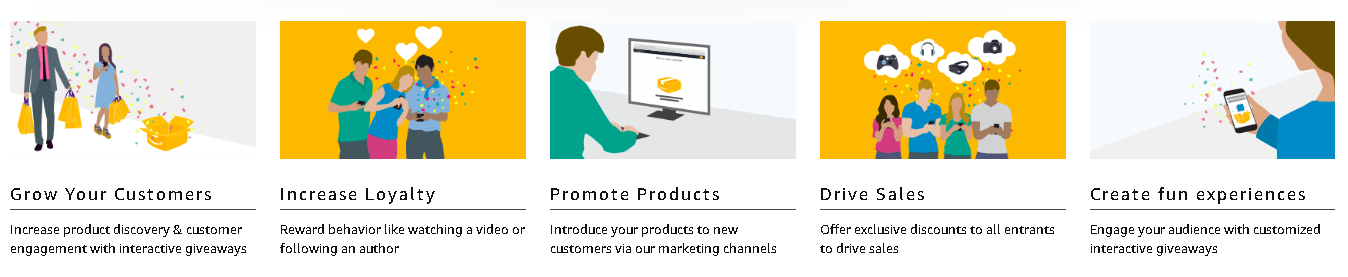
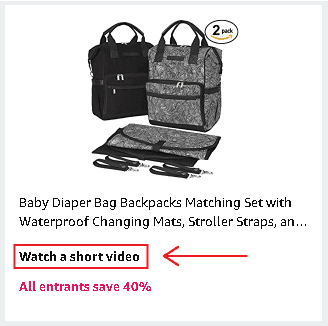
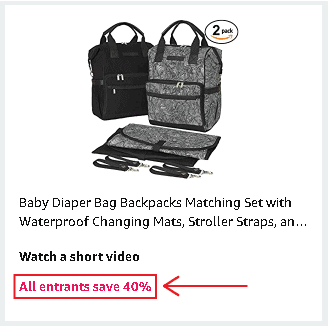
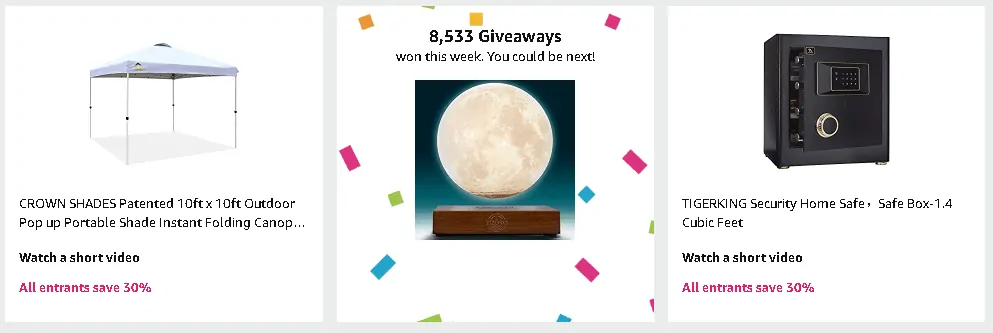
    giveaway benefits
    Source: Amazon

    It’s a proven fact that businesses need timely promotional activities to ensure that their visibility among their target customers does not fade away. Below are some of the reasons why running a giveaway as one of those activities is crucial for any business:

    Instant Brand Recognition

    When you give back to your customers through free gifts or prizes, they easily remember and recognise your brand. According to Sageworld, 89% of consumers can recall a brand from which they have received a promotional product in the last two years.

    Network Growth

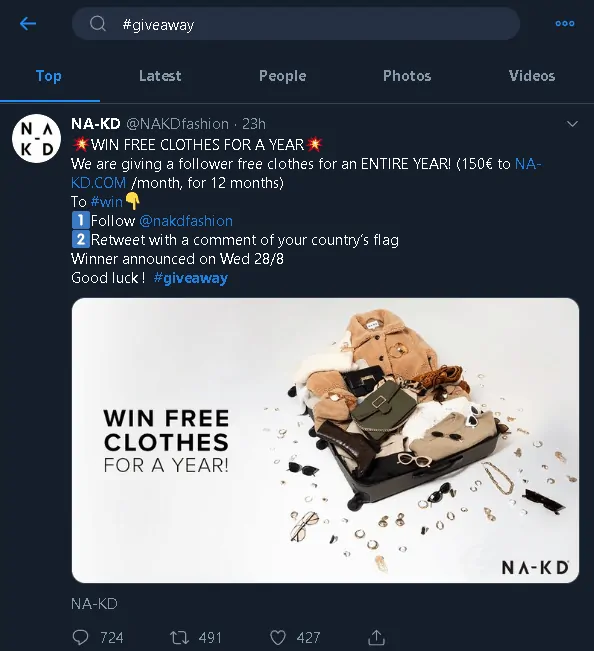
    Running a giveaway is the best way to build a social media following on sites like Twitter and Facebook. Most of the giveaways include micro-tasks like liking their page on Facebook and following them on Twitter and other social media networks.

    These micro-tasks come with points which add up to the winning probability. People don’t mind doing it since there’s nothing to lose from performing these tasks.

    Low- Cost And Effective Marketing

    A giveaway campaign capitalizes on viral marketing and word-of-mouth marketing. If planned correctly, giveaways prove to be a low-cost, high-benefit marketing strategy compared to other brand-building strategies like advertising campaigns.

    Lead Generation

    Giveaway contests are a secret weapon for generating leads. They can be very useful for increasing email list subscribers and fueling excitement among customers about your business.

    Promotion

    Giveaways result in brand and product promotion as the customers search about the brand organically online and offline to know about the products it deals in and ensure it’s a legit giveaway. It increases both brand awareness and brand equity.

    Engagement

    Giveaways are an interactive marketing strategy involving customer participation and brand interaction. They are designed to engage customers and promote the brand and its offerings at the same time.

    Advantages of Giveaways

    Create Lasting Impressions

    Marketing brands through advertisements, SEM, etc, may result in sales but do not make a lasting impression. On the other hand, when you give away an item to your customers to promote your brand, it sticks around longer than any other kind of advertisement.

    Make Memories

    Engagement is more memorable. People who hear information about your brand are less likely to remember it for a long time. But if the same information is engagingly presented to them or rather when some souvenir is given, there are fair chances that they will never forget your brand.

    Build Loyalty

    Customer loyalty is one thing you cannot compromise while running a business. Giveaways make this task easier by building customers’ trust in your brand. As they feel the love, they want to keep coming back. Thus, giveaways are the best investment you can make in your customers.

    Strengthen Sales

    Adding a personal touch to your business is never a bad idea. It is the best technique to boost sales without spending much on marketing and advertising. Whether you are a small venture or an established business, giveaways can make your brand noticeable in a way that no other marketing strategy can!

    A giveaway is a pull strategy which results in customers looking at your brand’s products organically without you interrupting their daily life with ads.

    Stand Out From The Crowd

    45% of a brand’s image is directly related to what it says and how it says it. While it is very important to have a solid digital presence, delivering something that people can see and feel is equally important. Giveaways offer you a chance to be different regarding the strategies for growing a business.

    How To Host A Giveaway?

    A solid strategy is necessary to make a giveaway worthwhile for you and your audience. Below are the crucial points you need to keep in mind while hosting a giveaway:

    Decide On A Goal

    The goal is chosen based on your current focus. For some, it is growing email subscribers or social media followers; for others, it is simply a marketing move to increase sales. Therefore, the first and foremost step is to recognize the goal you want to achieve.

    Pick A Relevant Prize

    The next crucial step in hosting a giveaway is picking up a suitable prize. The prize should serve the needs of the target market. Remember to pick something reasonable and interesting for your ideal audience.

    Giving away iPhones to the audience that already owns an iPhone won’t really attract many people. However, giving them an iPhone accessory bundle that enhances their experience might attract them.

    Most businesses choose to give away their product or service for free as it attracts the audience and lets them experience what they are offering to become a customer later on.

    Keep It Simple!

    Too many variables may cause the audience to not enter a giveaway contest at all. Keep the instructions short and the micro-tasks simple to follow.

    You can also keep many microtasks optional to remove the barriers to entry in your giveaway.

    amazon giveaway

    The giveaway structure should be such that it should impact the target audience, and there are as few restrictions as possible.

    Something For Everyone

    Try to keep something for everyone who takes part in the giveaway. It increases the number of participants.

    giveaway entry bonus

    Promote

    Simply creating a giveaway will not help unless you promote it seriously. If you really want to reach the widest range of people, make wise use of digital platforms.

    Use relevant hashtags and keywords and run ads to reach the desired target market. You can also include some promotion-related micro-tasks to encourage the participants to promote it themselves.

    giveaway twitter

    Avoid Spam

    Nobody likes a spammer. Spam drives people away from you, your brand and your site. Spamming creates ill will at best and can get you banned from certain services at worst.

    Giveaway Best practices

    While numerous ways exist to host and run a giveaway, you need a hack that stands out. Below are some essential points that you need to keep in mind and that many brands often miss while running a campaign:

    Make The Most Of Your Email List

    Email is a channel that offers businesses a precious opportunity to have a one-on-one conversation with subscribers. It is good to send an announcement mail to your list 24-36 hours after you have launched your giveaway. This is done to ping your subscribers who haven’t participated in the contest yet and remind them that they can still participate.

    Send A Loser Email

    Many companies that host giveaways send emails only to contest winners. The people who have lost do not get notified at all, and thus, they start losing interest in the brand.

    When you first notify the non-winners, they will get disappointed at not winning the contest. So your goal with the email is to provide them with consolation by thanking them for participating and telling them that though they could not win this time, there is something for them to – say discounted products for example.

    This will boost their trust in your brand and they will want to come back.

    Don’t Underestimate The Power Of Referrals

    When it comes to the best marketing strategies, word of mouth tops the list. Nothing can replace the power of personal recommendations. Nielsen research has shown that 92% of people trust referrals from people they know, which is how the network effect is created. Therefore, you should promote your giveaway by using referrals.

    Use Twitter and Hashtags

    Using appropriate hashtags on Twitter will help you attract the right audience to your giveaway and your brand. Useful tools such as Hashtagify can help you determine the popularity of a certain hashtag and complete it with other relevant ones to increase your giveaway’s visibility.

    Use The Scarcity Principle To Attract More People

    The fact that something might end really soon and people might not be able to become a part of it in future gives rise to fear of missing out which increases the chances of them applying for it as soon as they can.

    Always use a countdown on your giveaway landing page to get more participants by capitalizing on the scarcity principle.

    Examples of Giveaways

    Running a giveaway contest is not as easy as it seems. Your idea must be unique enough to attract an audience and keep them interested throughout your campaign. Below are some awesome contests run by big brands that can give you major giveaway goals!

    Dove

    Dove is known for its two missions: supporting young girls’ self-esteem and fostering an appreciation for ‘real beauty’. Their contest Love your curls, was inspired by the same idea. In the contest, the participants were asked to submit a poem or story about why they love their curls, encouraging them to embrace instead of subduing their natural look. The winner received $100 gift card, blow dryer, curling wand, Dove products and the opportunity to contribute to the ‘Dove Love your curls ebook’. Later, the poems and stories were compiled and transformed into a piece of dynamic content.

    This is the perfect example of how incorporating user-generated content can amplify the effect of your contest.

    dove love your curls giveaway

    Appsumo

    Appsumo is a daily deals site specifically designed to deliver digital goods and services. It was created with one idea: the tools that businesses need to grow should not put them out of business. Therefore, the Appsumo team works each day to provide the best software solutions at the most affordable price.

    In their Ultimate Hustler Giveaway contest, Appsumo offered participants the following prize package worth Rs $2000 for free, which consisted of:

    1. 11 books handpicked by the Appsumo team
    2. One-on-one coaching calls with the team
    3. A beautiful desk set made by Grovemade
    4. $500 in Appsumo credit.

    The contest entry was 100% free; participants had to register using their email IDs or Facebook accounts and wait for the lucky draw result.

    Amazon Giveaways

    Amazon lets its merchants hold giveaways and more exposure and increase sales. Here are some examples of the same –

    amazon giveaways

    Modern Giveaways

    Platforms like Gleam and Kingsumo have made it really easy for anyone to run a giveaway with just a few taps. Here’s an example of modern giveaways which aim at increasing awareness and followership of the brand-

    gleam giveaway

    Bottom-line?

    It’s a proven fact that we all love a good game. The chance of winning something big brings anticipation and the opportunity to daydream. That is why a Giveaway contest is such a tried-and-true marketing method. You have nothing to lose, but if you succeed, you can do a lot of good to your brand. Your brand’s popularity and visibility can touch the skies in just minutes! All you need is a unique idea!