A rifle is used to hit a clearly defined target. Hunters prefer to use a rifle when they’re clear about the object they want to hit and that object is clearly in sight. It’s a similar case with the rifle approach in marketing.
Rifle Approach in Marketing
Rifle approach is an advertising strategy that involves targeting a clearly-defined audience effectively and efficiently through clearly defined promotional strategies. This situation occurs when the target audience of the business can be narrowed down and strategies can be formed to perform one to one marketing.
Instead of mass advertising, marketers identify the mediums that assist them in their one to one promotional strategies. Mediums like publications, social media, Search engines, direct selling, etc. are used in this Approach.
Features of Rifle Approach
Sufficient data about the target audience is a prerequisite.
One size doesn’t fit all. One to one approach helps marketers create a tailor-made promotional approach for their customers which result in a better connection between the two.
This approach results in more loyal customers.
It is also more useful when the business has fewer resources.
Per capita engagement of this approach is more when compared to the shotgun approach
Difference Between Shotgun Approach and Rifle Approach
The focus of the shotgun approach is to reach as much audience as possible through wide-ranging strategies while Rifle approach focuses on specific, high-yield prospects through one to one promotional mediums. To simplify it further –
Everyone likes when they are given importance. This is what the rifle approach does. Marketers target the users individually and hit them with tailor-made strategies. This Approach involves a personal touch which appeals to the customers and makes them brand loyal. It’s an approach that is not used to get the customer’s attention but to keep their attention and their business.
Who all can benefit from Rifle Approach?
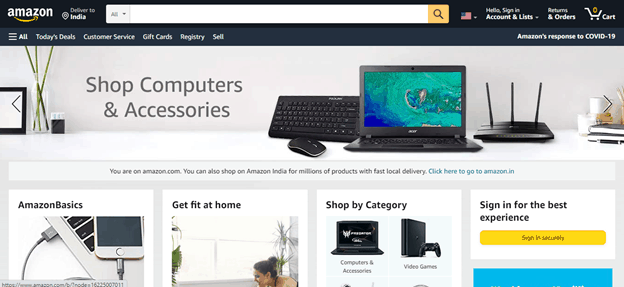
Any business which has direct contact with the customers can benefit from using this Approach. Be it a small cafe at the corner of the street or a big E-Commerce store like Amazon, more personalised advertisement approach will benefit the business for sure.
Go On, Tell Us What You Think!
Did we miss something? Come on! Tell us what you think of our article in the comments section.
A shotgun isn’t used to hit the eye of the bird. Hunters who use shotguns are just concerned with killing the bird (or any bird beside it). It’s a similar case with the shotgun approach in marketing.
What Is Shotgun Approach?
The shotgun approach is a marketing strategy where marketers try to appeal to a wide market of potential customers by using various (both above the line and below the line) advertising strategies. This situation occurs when the target audience of the business is too diverse to focus on any one segment.
Hence, just like a shotgun that fires a large number of smaller pellets in a wide area, marketers opt for techniques like television advertisements, out of home advertisements, radio ads, and other ATL & BTL marketing strategies to target as many people as possible.
Marketers, in this approach, focus more on the product than on the target audience to appeal to everyone. The product and its benefits are usually generic which form the locus of all the communication.
Features of Shotgun Approach
The shotgun approach is a subset of mass marketing approach. The focus is on getting as many eyeballs as possible by creating some creative promotional strategies and placing them in huge quantities.
It is an advertising approach and focuses on promotion to a wide array of audience.
The main focus is to get as many impressions as possible which will eventually turn into sales.
It usually costs a lot to implement.
Difference Between Shotgun Approach and Rifle Approach
The focus of the shotgun approach is to reach as much audience as possible through wide-ranging strategies while the rifle approach focuses on specific, high-yield prospects through one to one promotional mediums. To simplify it further –
Shotgun Approach
Rifle Approach
Wide audience targeting
Niche targeting
Usually involves ATL marketing strategies
Usually involves direct marketing strategies
The Psychology Behind Shotgun Approach
This approach can be used by and is useful to any kind of business that has its target audience spread over a large demographic or has various demographics as its target audience. It increases the odds of hitting a target when it is more difficult to focus on one.
A shotgun approach is a game of probabilities. The more impressions users get of the brand, the more are the chances of them carrying out the required action (e.g. purchase of the product). Brands focus on grabbing the attention of consumers in “different, surprising, original and entertaining” ways in order to generate the most desirable feedback.
This approach comes out of the philosophy that more is better. Marketers focus to gain the attention of the largest possible crowd in hopes that the number of eventual purchasers will be equally large. This approach may turn out to be successful in some of the product types like Credit Cards where mails (and emails) are sent to every home (and contact) in hope that some of them will reply to it. This type of practice is also known as carpet bombing. (Carpet Bomb Marketing is marketing to the point of saturation).
Examples of Shotgun Approach
Shotgun, though started offline, has seen tremendous growth with the internet boom. Internet, though a great tool to implement the rifle approach of marketing, has seen companies using the shotgun approach as well.
The shotgun approach is prevalent with companies –
Whose audience and customers are spread widely across various Demographics
Which believe reaching more people is more important than getting higher ROI and CTR.
Which want to build more brand visibly across multi-channels instead of building a big audience in (solely) one platform.
Here are some companies which have used the shotgun approach in their marketing campaigns.
Coca-Cola
Coca-Cola is one of the biggest companies with a big and varied customer base. The company, as a part of its marketing strategies, has launched many generic advertisements (not targeting a specific demographic) and promoted them on a large scale. This shotgun approach is useful to Coca Cola Corporation as it markets its products to billions of people worldwide, which come under multiple demographics of age, gender, ethnicity, and income. Though Coca Cola also implements the rifle approach in some of its marketing strategies, it relies mainly on the shotgun approach of marketing.
Coca Cola focuses more on building its brand image by creating simple yet interesting advertisements.
Colgate
Other FMCG Companies, including Colgate, have a target group made up of varied demographics. Hence they make use of generic advertisements in massive quantities and varied mediums to reach to the mass.
Who all can benefit from Shotgun Approach?
FMCG companies usually have perfect competition and a varied demographic audience. They prefer to use this approach to create more brand awareness and brand preference. But a small business like a local coffee shop could also benefit from shotgun approach. They might reach to more potential customers with a non-specific campaign than it would with targeted marketing materials.
Go On, Tell Us What You Think!
Did we miss something? Come on! Tell us what you think of our article on Shotgun Approach in the comment section.
Dollar Shave Club, launched in 2011 as a subscription-based online razor retailer, has one of the most common yet great business model we’ve encountered until now. Dollar Shave Club Business model is a subscription-based business model but with a twist. The company has positioned itself as a men’s lifestyle club that provides grooming products at a cheaper price and also helps men live smarter and more successful lives.
There are many points to nod at when we talk about this very famous and successful business model of dollar shave club. The company positioned itself as a club, focused on the actual problems which men faced while purchasing a razor, and solved that problem effectively and efficiently. This is all a good company needs to focus on to stay in the market for long.
The company was founded by Mark Levine and Michael Dubin with an initial investment from Science Inc.Dollar shave club’s business model was so strong that the founders were able to raise $9.8 million in the series A funding. The company never looked back since then. It now deals in dozen of other men’s products as well.
Dollar Shave Club Business Model
Dollar shave club business model isn’t as complicated as it seems to be. There are a few aspects that you should note-
Dollar Shave Club works on a trading model. It procures goods in bulk from other companies (eg. razor from Dorco USA) and sells them at a profit.
The company acts as a club whose members are subscribers to their products.
DSC believes in investing in customers. Hence it doesn’t charge profit (and even incur losses) to convince the customer to be a part of the club. A customer becomes a member of the club when he buys the first product from the company. Hence the strategy of ‘just $1 for any product’ which lets the customer pick any product for just $1 when they buy from the club for the first time.
What convinced founders to start this company?
In a market dominated by leaders like Gillette and Schick, where customers only had the option to either empty their pockets to buy a good razor with better technology or to choose an inferior, painful shaving technology, the business model proposed by DSC which sold economical good quality razors was sustainable. The founders were usual frustrated customers of these big brands. They wanted something better so they started it.
How does Dollar Shave Club make money?
Dollar shave club business model is a trading + subscription model
The company doesn’t produce whatever it sells in the market. The products are procured in bulk from other companies and sold to the members of the club. It’s a simple model of making a profit by selling the products at a higher price than it was bought for. The subscribers become the members of the club which are delivered products every month.
Selling, General & Administrative costs (includes marketing, administrative, and other miscellaneous cost and expenses)
The company bears the product and shipping cost for the first product sold to a customer. Shipping cost and product cost (+ profit) are charged to the bill if the customer continues the subscription.
This one-time investment in the customers provides the company with some long lasting loyal customers.
How is DSC different from other companies?
Dollar shave club has positioned itself as a club and not as a usual company. It has addressed the actual problems of men which they incur while purchasing grooming products. Though they are actually doing everything the same as it is done by a usual company; their marketing strategy is different.
Marketing Strategies adopted by Dollar Shaving Club
Dollar Shave Club has some great marketing brains. The hit the right nerve, of the right target audience, with right products.
The company, positioned as a men’s lifestyle club, communicated about their products being F**king great and economical and offered a subscription-based plan which initiated automatic repeated sales. The customers can buy any product for the first time at a minimal cost of $1 which makes them a member of the club.
The company relied on content video marketing in the start where the CEO himself, through his charismatic personality and a great throw, entertains the viewers and promises them about the economical price and great quality of their razors.
In its first 48 hours, around 12,000 people signed up for the service which was sufficient proof of video being a success.
One of the points to note about the video is that, unlike other usual Razors advertisement, this advertisement talks to viewers in a relatable voice and make them connect to it.
DSC has been successful in mapping the consumer behaviour. Along with the products, it also focuses on developing a direct relationship with the customers they were dealing with. The focus is more on the brand experience which can be seen in their every marketing move.
The company knows its audience and curates the messages specifically to keep them engaged. With each delivery, customers get a “Bathroom Minutes” magazine which resembles the funny pages of a newspaper, life and grooming tips, as well as articles answering some quirky questions.
Some customers want to be a member of the club just because of its distinctive and witty personality.
Dollar Shave Club has cleverly blended an economical and convenient product along with an entertaining and relatable positioning which helped them poach customers from the market leaders like Gillette and Schick. Gillette even started its own shave club to counter this competition.
Acquisition by Unilever
Dollar Shave Club was acquired by Unilever in a deal to be worth about $1 billion. This amount was worth five times the projected 2016 revenue of the company. But Unilever is now a tough competition to the existing players of the men’s grooming products market.
dollar-shave-club-sales-graph
Go On, Tell Us What You Think!
Did we miss something? Come on! Tell us what you think about our article on Dollar Shave Club Business Model in the comments section.
The process of branding was developed to act as a guard for businesses against failures. Branding enforces ownership and differentiation. It all started in the 1500s when unique marks were used to specify the ownership of the cattle. Different marks were used by different people to differentiate their cattle from others. The definition of the brand has broadened quite a bit since then. Branding, today, isn’t just used for identification and plays a lot more part in the company’s success or brand failure than it used to some years before.
Brand Failure
‘Today most products are bought, not sold’ – Al and Laura Ries
Gone are the days when products used to be everything for a company. People, today, buy a brand. There truly isn’t much difference among the products sold in the market. It’s the brand that makes the difference and makes the purchase decision easy for the customer.
Brand success and brand failure both depend on the brand-consumer bond, brand image, brand promise and brand positioning as it’s the customer who decides the fate of a brand. Bonds, once established, results in emotions being attached and a perception developed about the brand. This bond when distorted leads to a distorted perception of either the brand (brand failure), the competition or the market (if it’s a new market).
Reasons for Brand Failure
Position Amnesia
Position Amnesia is when a brand forgets what it is and what it stands for and tries to experiment with its identity and positioning to an extent that it takes a totally different route. This route could result in that brand’s failure as it might not be congruent to the existing image and positioning of the brand.
Example of brand failure due to Position Amnesia
Coca Cola Brand Failure
One of the perfect examples of “Brand is as important as the product” theory.
With over a billion drinks sold every day, Coca Cola is surely one of the most loved brands in the world. But it also committed one of the biggest marketing blunders of all time. In the late 1970s and early 1980s, it was evident that Pepsi had better marketing campaigns planned to win the first position from Coca Cola. Many successful campaigns like “Pepsi Challenge” and “Pepsi Generation” made it clear that people preferred Pepsi’s taste over Coca Cola. Hence Coca Cola, instead of modifying their marketing strategies, saw the only solution to this problem as the introduction of the ‘New Coke’ with better and improved taste.
By launching New Coke, Coca-Cola contradicted its previous marketing efforts where it spent more than 50 years to attach an emotion (happiness) to their original product. This being the only reason the new coke was boycotted and the company was left with no option but to bring back the original product.
Icarus paradox (Overconfidence)
Sometimes, one of the most successful companies face the biggest brand failures because of their strengths and past victories, which resulted in over-confidence and lulled them into complacency that they feel reluctant in trying new strategies and sometimes even don’t even care about their current and prospective competitors.
The Icarus Paradox refers to a Greek Tale of Icarus who burnt his feathers after flying too close to the Sun, even though he was warned against it.
Similarly, many big companies often burn their wings because of their overconfidence and extensive and unscientific use of some rule of thumb strategies (which helped them to reach the top).
Example of brand failure due to Icarus paradox (Overconfidence)
Kellogs Brand Failure
Kellogg’s initial foray into the Indian market is generally agreed to have been a failure. Despite a high profile launch in 1994, consumers were not interested to repeat the purchase of Kellogs products. This brand failure shows the signs of Icarus Paradox as
The brand was overconfident because of its success in other countries
It overlooked many critical cultural insights of the Indian market.
Here are the reasons which led to the failure of Kellogs in India
The price was kept too high to convince Indian consumers to consider it as a daily meal and make a repetitive purchase. The product was bought just as a novelty.
Kellogs overlooked the Indian habit of having boiled & sweetened milk which made the crispy flakes go soggy as the company designed their products to be accompanied with cold milk.
Kellogs enforced its established positioning strategy of being a morning breakfast which was no match to the usual gut-busting breakfast in India.
Deception
When the marketing strategies are built to cover up the reality, the brand doesn’t last very long. It’s true that not everything can be told to the consumers but the product has to compliment the brand promise or the company could get a great fall. Deception, at today’s digital age, would no longer result in the success of a brand as the consumers are much aware of the current scenarios and, with an increase in competition, aren’t hesitant to switch over to a new brand. Such strategies may result in a decrease in brand equity and also affect the brand image of the business.
Example of brand failure due to Deception
Volkswagen Brand Failure
Until 2015, the brand best known for reliability, performance and environmental credential, Volkswagen was trusted by millions worldwide. But as soon as the truth about 11 million of its vehicle being equipped with a software program to dupe emissions testing was out, there was no looking back. The deceptive brand promise had made the brand fall to such a level that it now not only faces a £30bn lawsuit but a monumental battle to rebuild trust among consumers.
Lack of Change
The environment in which the brand functions is dynamic and requires it to change its marketing and branding strategies from time to time to keep up with the trend and to maintain and gain new consumers. In this age of the digital world, if a brand still sticks with print media, it surely lags behind many of its competitors. Similarly, if a brand fails to infer the current and future needs, wants, and desires of the customers, there are greater chances that it may lose to its competitors.
This is the actual story of a brand which was once a market leader in the mobile phones industry. Today, it has just three percent of the global smartphone market(which is a fifth of what it was in 2007). Nokia had great research and innovation, the only place where it lagged behind was marketing. Nokia had a set of best hardware engineers but it overlooked the fact that the consumer preference was shifting from hardware to more of software. Hence, Apple (ios) and other companies like Samsung (Android) were able to crush Nokia and succeed in a comparatively short span of time.
Brand Ego
Sometimes, a successful brand, because of its ego, may get a feeling of megalomania and plans to spread its hands in every possible product category. This strategy might not work for every brand. Even Amazon faced losses when it launched its fire range of phones.
Example of brand failure due to Brand Ego
Cosmopolitan Brand Failure
Cosmopolitan is the world’s most popular international women magazine. But this famous magazine, out of its brand ego, launched some edible products like Yogurt and fresh cheese in 1999 and predicted it to be an instant success because of the existing image of the brand. Any form of marketing, advertising, and promotion to spread the awareness was also refused by the management. These products remained in the market for more than a year but were removed as the brand concluded that they should stick with what they’re good at.
Brand Paranoia
This is the opposite of brand ego and occurs when a brand faces too much competition or starts to lose much of its market share. This condition is characterized by the reinvention of brand strategies in short spans of time, imitation of competition, and distorted public relations.
Example of brand failure due to Brand Paranoia
Blackberry Brand Failure
Blackberry was one of the market leaders in 2007, just before when the iPhone was launched. BlackBerry didn’t consider the iPhone to be a competitor initially, perceiving it to be an enhanced mobile phone with playful features targeted at younger consumers. This was where Blackberry went wrong. iPhone turned out to be an instant hit and started to eat much market share of blackberry as it appealed to business professionals as well.
Blackberry, afraid of this new competition, did release a touchscreen smartphone – Storm. But this impulsive move was focused just to curb the competition wasn’t backed up with research and innovation. Hence, the company received many complaints about the device’s performance. This put even more pressure on the company and it started to lose most of its market share to the competition. Blackberry did try to come back with the launch of its playbook, but it had already lost most of its brand equity till 2010, and playbook turned out to be a failure due to its high-price, low-feature, and low-performance.
Other symptoms of brand paranoia can be seen in the 17 different acquisitions by blackberry to add features and improve offerings through its products, none of which worked out.
Go On, Tell Us What You Think!
Did we miss something? Come on! Tell us what you think about our article on brand failure in the comments section.
“What’s in a name? that which we call a rose
By any other name would smell as sweet.”
This statement, according to many marketers, holds true for the brand name as well. But is it so? Which of these two brand names will gain more traction? “A gravitationally completely collapsed object” or “A black hole”? Marketing is all about engagement with the users. Until the time the user isn’t convinced, the brand won’t sell.
We are surrounded by brands and their names become a natural part of our everyday speech. But there’s a theory behind why many brand names have a recall value and many don’t.
What Is A Brand Name?
A brand name is a name given to a brand to identify and differentiate it from others.
Communication is an important aspect of marketing and Brand Name, being an integral part of communication, is very important carry out any marketing or branding strategy. People tend to label everything to make it more identifiable and differentiated. They assume various brand values, associations, image, positioning, etc just after encountering the name of the brand. Hence choosing a good brand nameis vital.
Psychology of Brand Names
Cargo House and Pequod were two options in consideration before naming the brand Starbucks. They being good is a relative argument, but they must have resulted in a completely different brand image and positioning of Starbucks than it is now.
Brand name plays an important part to decide brand’s fate in the market. Here are few statistics to prove this fact.
“No, I haven’t heard of it.” & “No, I don’t like this name.” are common sentences among customers who are asked to buy a product of a new brand.
Choosing a brand name
Pick a random brand name and you immediately will have opinions, qualities, values etc. attached to it. For example, what do you think are the values and qualities of a brand named ‘Horse’ and dealing in real estate sector?
There are no hard and fast rules which companies follow to choose a brand name, but there certainly are some hacks.
Know Your Present Customers
Past isn’t a history, future isn’t a mystery, but present surely is a gift.
Know who you’ll be serving to, their beliefs and perceptions, and choose a brand name accordingly. You don’t have to worry much about your future customers as your image then will depend mostly on your existing image and associations.
Fun Fact: Siri means ‘bottom’ or ‘buttocks’ in Japanese, & Lumia means prostitute in Spanish slang.
Communication
A product is built by the company while the brand is built by the consumers. It’s the power of communication which builds a brand. Any communication whether B2C, B2B, C2C, or C2B which relates to the brand involves its brand name.
A research showed that if customers feel that the brand name is easy and a good fit, they’ll remember it better and even like it more. The brand gets an advantage of word of mouth marketing.
However brands with a big or complex name also have their perks. They are sometimes considered old and big players of the game.
But make sure that the communication goes right. Cadabra had to change their brand name to Amazon as the name was often misheard as Cadaver (which meant a corpse).
Associations matter, not the meaning.
In case of brands, its the company who builds the meaning of the brand name through the products, marketing activities, and associations. Nike, which sounds a very cool, is actually a the Greek goddess of victory.
It is not even important to look for actual words. Just make new words which have phonetic symbolism that describes the brand philosophy / product best. These new words act as a blank slate on which a meaning can be written by the brand.
But what about the already existing words? Till the time the word doesn’t have any big association with anything, it acts a blank slate. However, if it has some association, it is advisable to review it before using it.
Role of Phonetic Symbolism in Brand Names
Different sounds have different psychological effects. Sound is something you should keep in mind as it plays a vital role in formation of impression of a brand.
Phonetic symbolism refers to the notion that the sounds of words convey meaning which can be from their semantic connotation.
Few observations of relevance of phonetic symbolism in brand names –
Studies show that names in which phonetic symbolism compliments the product category (e.g., Frosh for fresh fruits) are preferred over brand names without such complimentarity (Frish for fresh fruits).
Researchers have shown that specific vowel sounds convey perceptions related to size, taste, and attractiveness. Vowels like ‘A’ &’O’ tend to sound bigger than the vowels ‘E’, ‘I’ while ‘U’ is tastier.
There is a front/back distinction for classifying vowels, which refers to the highest point of the tongue when pronouncing a sound. For example, the highest position of the tongue is more toward the front of the mouth for bee than for bin, and more toward the back for boot than for bin. Front vowels convey qualities like smaller, quicker, sharper, whereas back vowels conveyed qualities like larger, slower, duller. Hence, it is suggested to use words with front vowels if you want to position yourself as a niche brand and back vowels for a parent brand.
It is advisable to not sound similar to words like eew, puke, pee, etc. which have negative associations. A company with a name ‘Pook’ will be less preferred than a company named ‘Kook’.
Category Connotion
Again, there’s no proof that if you connote you product category in your name there are chances that you will not be able to diversify your profile. Indian Tobacco Company (ITC) besides selling 81% of total cigarettes in India, also has its business in Food, lifestyle apparel, stationary, hotels, and other sectors. Similarly, Dunkin’ Donuts are more famous in India for their burgers than their doughnuts.
If you’re going to start as a niche brand it might help your brand if you connote the category in your brand name as the consumers will instantly associate you to that niche.
Product/Philosophy Reflection
Many marketers feel that a brand name should reflect the product category or the philosophy of the brand for better positioning strategies.
Brand names that reflect a philosophy instead of a product category may not immediately communicate what they sell. But most consumers would get engaged with the brand in trying to find out what the name stands for. It certainly offers the employees an opportunity to talk about their brand’s philosophy and hence helps the brand in public relations. Eg. – Meru, Metro, Entrepreneur etc.
However Product reflection in the brand name helps consumers to associate the brand to that specific niche and they get the hint of the services provided by that brand. Eg. – Zomato, Big Basket, Gourmet, etc.
Go On, Tell Us What You Think!
Did we miss something? Come on! Tell us what you think about our article on Brand Names in the comment section.
Memes are on a rise. We’ve seen them, got amused and have often shared them as well. But if we say you could capitalize on this trend as well, would you believe us?
Meme-Jacking does exist and it refers to a practice of capitalizing on the current trend of Internet memes.
Meme Marketing
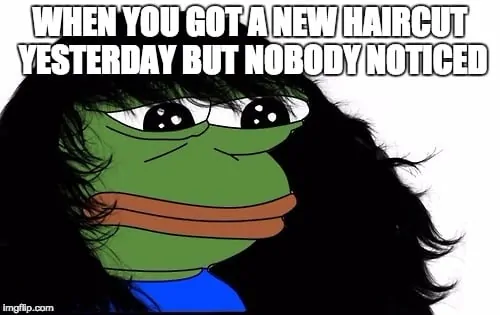
Meme (pronounced as meam) is an element of culture whose styles, concepts, and behaviour can be indefinitely imitated. But when we talk about internet meme, it refers to a humorous image or video having a definite style and concept which usually go viral on the internet. The style and the concept of the image stay the same whereas the copy changes.
An example of an internet meme –
What is Viral Marketing?
Meme marketing is a subset of viral marketing which is a practice of using mediums like word of mouth and social media networks to fulfil marketing goals.
It is the practice of using users to promote a brand or product by creating appealing, engaging, and fast-spreading news or content.
Why Do Memes Go Viral On The Internet?
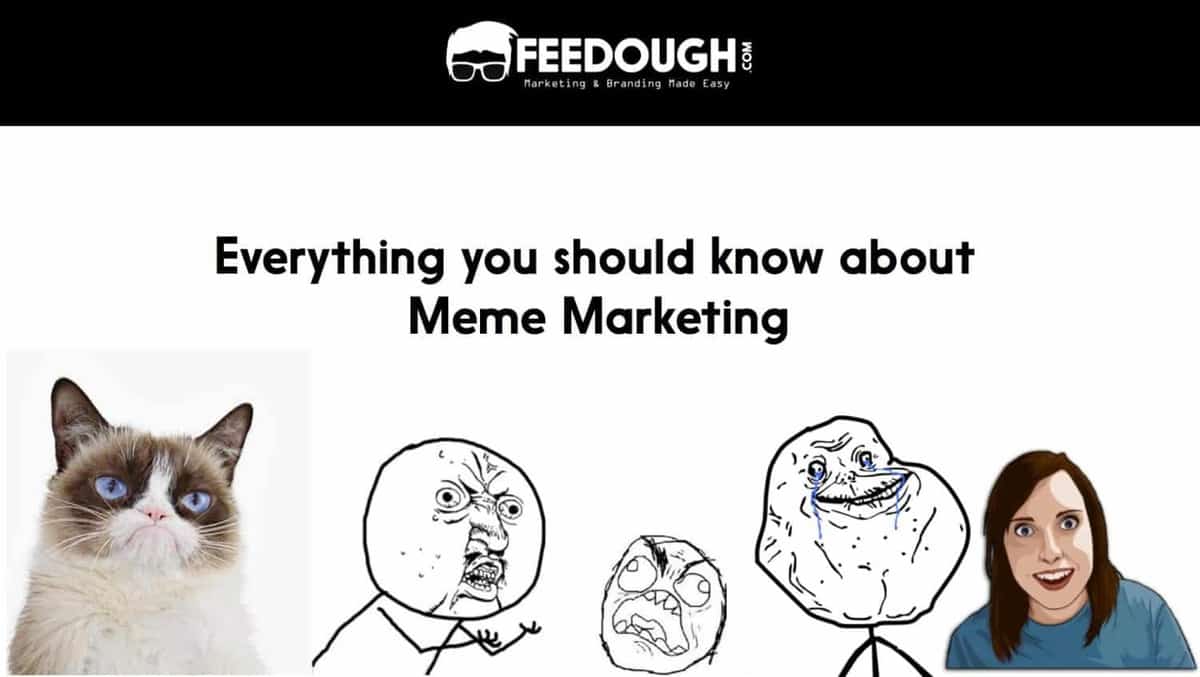
Unlike other usual images, memes have their own names (The Success Kid, Bad Luck Brian, Overly Attached Girlfriend, etc.) and positioning in the minds of the users. Memes are precise, spread through social networking websites and have a recall value.
Here are a few reasons why memes go viral:
Not just images (Meme Videos)
Memes come in the form of videos as well. Harlem shake and mannequin challenge are two of the popular video memes. Just like the photo memes, video memes have a concept (like mannequin challenge requires you to remain still while the camera person captured the scene), humour, and is shareable. But above all, these type of memes involve the user to be a part of it.
Memes also come in the form of funny and relatable GIFs and vines. These kind of memes are most shareable. This trend of memes is one of the reasons for huge traffic on many GIF hosting websites and search engines like Imgur and Giphy.
According to a research, videos perform 12x better on social media compared to other content.
Instant Humour
Memes are known for their concept. An overly attached girlfriend will always be used for a girlfriend humour while a grumpy cat meme will always have sarcasm in it. It’s the visual aspect of the meme which is more important.
The copy of a meme is usually kept short and aligned to the visual to make it an instant humour. Everyone gets the joke because of the visual representation.
Relatable
People like humour that is tailored directly to them, and memes, while they may seem to be generic, are so relatable that everyone shares, owns and creates them.
Generic
Memes are not copyrighted or related to any specific brand. These are so generic that anyone can own, create, and share any meme without any restriction.
A Long Life Span
Memes have a considerably long life span. Just like that favourite song in your head which you’ll listen to for a thousand time more before you start hating it, a meme is also a thing of obsession. It remains in the market till the time its overuse doesn’t irritate the users.
How To Integrate Meme In Marketing Strategies?
A good marketer always tries to capitalize on the current trend. Memes, being a trend of the decade, can prove to be beneficial for your company.
Memes are useful as they result in benefits like more impressions, page likes, website visits, etc. for a company.
One should keep these two hacks while creating and sharing memes.
Relatable
Make a meme with which majority of your target audience can relate to or are interested in. This will not only increase the shareability of that meme but would also result in you getting loyal followers on the internet.
One of the companies which gained social media popularity because of the great use of memes is Grammarly.
Correct Visuals
Correct visuals play a very important part in a meme.
Though not a norm, it’s advisable to use a popular visual as that concept has an existing positioning in the minds of the consumer and can result in users identifying with it.
Successful Meme Marketing Campaigns
Sadly, you’ll not be the first one to incorporate memes in your marketing strategies as many of the companies have already used the memes in their online as well as offline marketing campaigns. But it’s not too late to reap the benefits as well.
Here are some of the companies which used memes as a part of their marketing campaigns
Keyboard cat – Wonderful Pistachios
Wonderful Pistachios, unlike other players of the game, took a completely different route and decided to include memes in their marketing campaigns. They cleverly integrated their brand in a famous video internet memes, one of them being the Keyboard Cat.
Share it Maybe – Sesame Street
Sesame Street made their cookie monster sing some witty lyrics on the tune of a famous song, Call me Maybe. This campaign received a lot of engagement as call me maybe memes were already in trend at the time of its release.
‘Y U NO’ – HipChat
Hipchat, a startup back then, used a famous meme “Y U NO Guy” in their minimalist billboard just and saw a tremendous amount of publicity and other online and offline engagements.
Grumpy Cat Harlem Shake – Mashable
Mashable did a very clever job of combining two of the best memes to promote their brand on digital media.
Go On, Tell Us What You Think!
Did we miss something? Come on! Tell us what you think about Meme Marketing in the comment section.
There is a rise of brands moving towards producing, sponsoring, and being a part of movies and other forms of media. This new trend is brand integration.
We all must have witnessed some form of branded entertainment where the script of a TV show or film media, though entertaining, revolves around a certain brand. Remember how White Castle became an integral part of the movie Harold & Kumar Go to White Castle?
What Is Brand Integration?
Brand Integration allows a brand to reach out to the consumers by integrating the brand within the entertainment media content which is consumed by the users as entertainment. The brand is interwoven within the script, showcasing products, functions and unique features.
Brand integration isn’t a typical brand advertisement. It includes entertaining and engaging storytelling which integrates the brand in such a way that it doesn’t look and feel like a brand promotion.
History of Brand Integration
Brand Integration (also called branded entertainment) has been in existence ever since the launch of the television where shows were linked with one specific brand as the show’s sponsor. This made the promotion more obvious as it is today and hence was transformed into TV Commercials soon.
Branded entertainment is still the trend nevertheless. Brands have found new medium and strategies to showcase the content.
A modern-day brand/product integration is different from as it was in 1950’s. The content is more entertaining, engaging, and the brand is moulded in it in such a way that despite it being an hour long advertisement, people still watch it and have a want for more.
Brand Integration vs Product Placement
The semantics say it all. Brand/Product placement is the placement of a brand or a product in one or more scenes of the film, for example – an actor eating lays chips during a scene, whereas brand/product integration is when the entire scene revolves around the brand, for example – a scene shot in a Domino’s outlet and revolves around a pizza.
Brand Integration
Product Placement
Why is Brand Integration beneficial in Marketing?
Brand Integration can be used to fulfil both long term and short term objectives of a business. While on one hand, product placement increases the sale of the product, brand integration helps in increasing the brand equity.
Usual promotional mediums are so saturated and predictable that brands have had to shift to a different and integrated content medium to promote themselves and their product. When we talk about usual ad mediums, consumers can now tune out ads from rest of the content and ads get less attention, retention and benefit as compared to the price brands pay for it.
Pull Effect
Unlike advertisements, which push the consumer to watch the content, brand integrations are a content of their interest. This marketing strategy pulls the consumer to watch the content and get a positive image of the brand in their mind at the same time.
Brand Exposure and Engagement
The financial investments involved in executing a brand integration strategy maybe huge as many influencers and strategists may be involved in the production process. But this investment may do wonders for the brand like it was seen in the case of Dell when it made What Lives Inside which generated more than 6 million engagement.
Intel and Toshiba played a similar move when they came up with “The Beauty Inside”. The campaign resulted in an 8 to 12 per cent increase in both brand awareness and purchase intent across all four films.
Videos are more attractive
According to a recent study, viewers spend more time watching digital videos than social networks.
According to a Custom Content Council survey, 73% percent of respondents said that branded content is better than magazine ads, 63% percent preferred it to TV advertising, 62% favoured it over direct mail, and 59% said it trumps public relations.
Users may even pay for it
The high costs of brand integration strategy may be transferred to the user if the brand plays a clever move and release the motion picture as a movie or on any paid platform like Hulu, Netflix, etc.
Future of Brand Integration
Brands are entering a new era where digital innovation is the new trend. They are moving to where the millennials are. Brand Integration is nothing but a form of authentic storytelling which is crafted according to the trend and needs and wants of the consumer and the brand.
To make it more precise, branded entertainment converge the needs and wants of both the consumer (who want more entertainment), and brands (which want more exposure and brand engagement). This along with an increase in video content engagement during the past years have made it easy to conclude about the success of this marketing strategy in the coming years. Many marketers will be seen investing in brand integration practices and users can expect amazing content from them.
Go On, Tell Us What You Think!
Did we miss something? Come on! Tell us what you think of our article on Brand Integration in the comments section.
Jeff Bezos once said, “There are two kinds of companies, those that work to try to charge more and those that work to charge less. We will be the second.” And it won’t be wrong to say that Amazon is constantly trying to achieve lower prices for its enormous user base.
Amazon has become a one-stop destination for everyone’s shopping needs and is correctly called ‘the everything store’.
Today, the company has a market capitalisation of $117 billion. With such a complex ecosystem comprising several entities and millions of customers, it is crucial to understand every aspect of this ecommerce giant’s business model.
Dive right in to know all about Amazon’s business model, operating model, and revenue sources.
Amazon Business Model
Amazon has come a long way from being a simple, one-sided ecommerce company to developing its own massive ecosystem. Today Amazon has incorporated various units within its business model, including a one-sided platform, two-sided marketplace, web services, kindle marketplace, an app store, prime video, game studio, and even retail stores called Amazon Go. All these diverse ventures add to the revenue stream of Amazon, making it one of the biggest companies in the world.
Although Amazon deals in numerous products and has set foot in multiple industries, its core business model is based on an ecommerce market platform. Thus to completely understand the massive business model of this tech giant, it is crucial first to take a look at the Amazon marketplace.
What Is Amazon Marketplace?
Amazon first started as a digital bookstore when only 0.447% of the total world population had access to the internet. Today it has evolved into the world’s largest retail marketplace platform and is popularly called ‘the everything store.’
The Amazon marketplace is an online two-sided ecommerce platform where third-party sellers and Amazon sells products from various categories, including electronics, gaming products, apparel, home decor, B2B business products, garden products, etc. The marketplace provides a platform for buyers and third-party sellers to interact and trade.
Amazon marketplace also includes the Kindle store, which allows readers to browse and download various e-books, newspapers, magazines, etc. Thus, the marketplace provides a platform to publishers and readers where they can trade and interact.
Who Are Amazon’s Customers And What Value Does It Provide?
Amazon’s consumers are the people who use the marketplace for their shopping needs. The platform provides multiple options to the consumers at the lowest prices with fast deliveries and an overall enhanced shopping experience.
Amazon is a customer-centric company and provides immense value to its customers through its easy-to-use and easy-to-browse interface, review systems, recommendations, and gift certificates. Moreover, the platform has greatly reduced the shopping time as now customers complete around 28% of their purchases in three minutes or less. All these features combined contribute to customer value creation which gives them more incentive to use the platform. According to Amazon’s annual report, the total customer value creation in 2020 itself was $164 billion!
Amazon’s Operating Model
Amazon operates on the business model of a two-sided marketplace. It provides a platform for the buyers and sellers to easily interact and trade with each other without much hassle or difficulties. The company has designed a vast operating model to fulfill the needs and demands of each consumer. It manages the production, packaging, shipping, and delivery of a large number of products to provide everything to customers at the lowest possible price.
Key Resources
Amazon uses various resources to keep its business up and running.
One of the major resources is its warehouses and fulfilment centres used for packaging, shipment, and delivery of products.
Amazon’s technological infrastructure, including the website, the app, and the developers, are extremely important for the platform’s functioning.
Other resources include the company’s executives in various departments, including customer relationship management, marketing, content development, etc.
Key Partners
Amazon’s key partners are the sellers or the merchants who use the marketplace to reach buyers and sell their products. Amazon provides a platform to such third-party sellers to easily interact with an established base of buyers and trade with them. It has partnered with many third-party sellers who offer a wide variety of products and hence provide multiple options to the buyers.
Although sellers are the partners, Amazon treats them as its customers as they can either sell on Amazon or some other marketplace.
Key Channels
Amazon delivers its services to the customers through three main channels including:
The Amazon website,
The application, which is available on PlayStore as well as App Store and,
The physical stores called Amazon Go where the company has harnessed technology to provide an easy and speedy shopping experience.
Customer Relationships: Reviews And Customer Service
One of the main goals of Amazon’s business model is to constantly enhance customer experience on the marketplace and build strong customer relationships. The company has always been customer-centric and has successfully mastered customer relationship management by offering convenience, low prices, multiple options and an overall enhanced shopping experience. Some of the strategies used by Amazon for customer relationship management are:
Easy to use interface: The platform’s user interface is extremely easy to use and understand. The high-quality images, accurate descriptions, easy checkout process and organised categories of products greatly enhance the shopping experience and hence induce customers to spend more time on the platform.
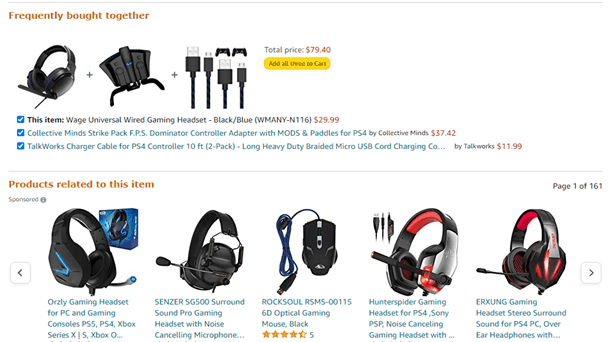
Recommendations: The product recommendations and product bundling based on the past buying behaviour of customers are perfect for boosting sales while simultaneously offering a convenient shopping experience.
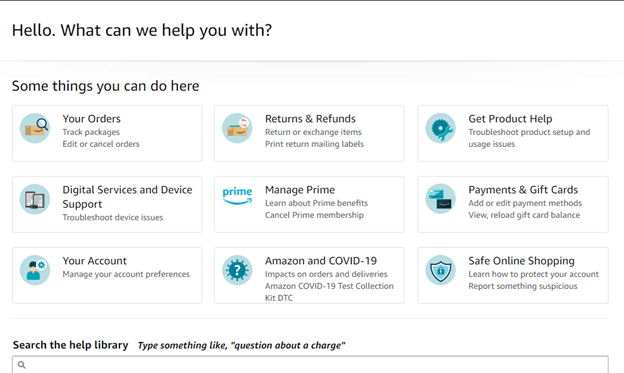
Customer support: Amazon tries to limit the need for customer support and makes self-help easy for customers if they get stuck anywhere. However, the company understands the importance of an efficient customer support system where the consumers have 24/7 support available for any of their queries or problems.
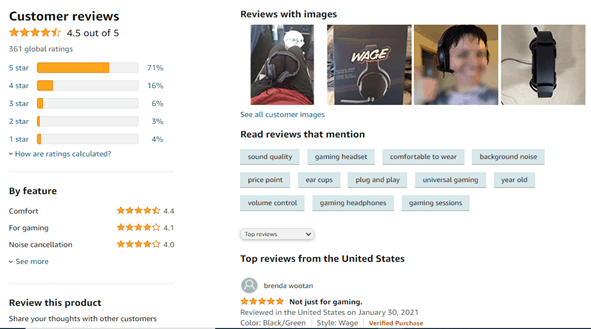
Review system: Amazon also has an online review system where customers can share their experiences and opinions about a certain product and even upload pictures. The social validation system connects the buyer community and also ensures good quality standards on the marketplace.
Network Effect
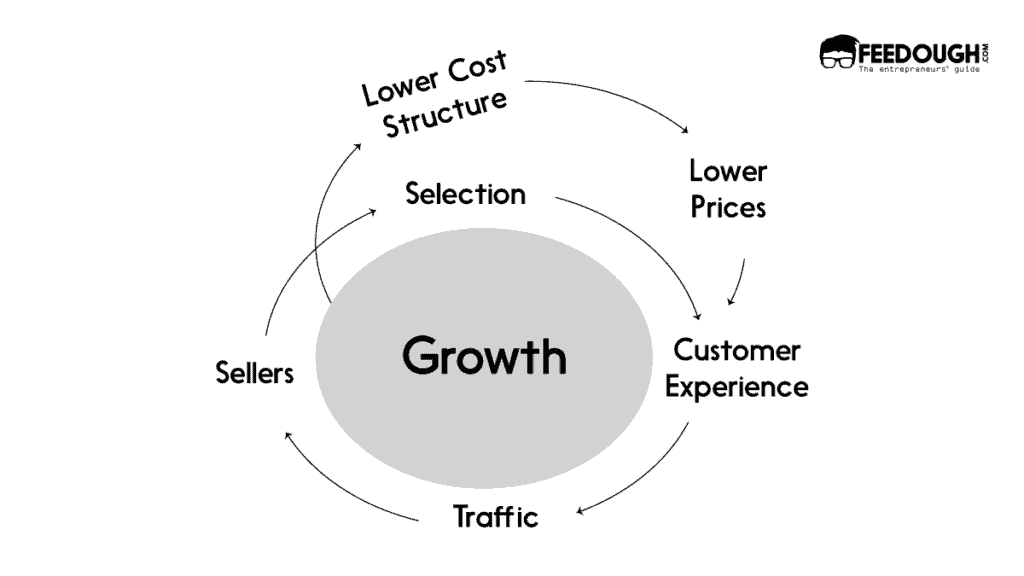
In 2001, Jeff Bezos, CEO and founder of Amazon, drew up Amazon’s famous virtual cycle that aptly describes the company’s business model.
Amazon’s key objective has always been selling products at the lowest prices. That is why even though the company has the opportunity to translate its lower cost structure into profits and return some profits to shareholders, it passes them on to the customers through network effects.
The network effects create a loop where the low prices of products on Amazon enhance customer experience, driving more traffic to the platform. The increase in traffic and number of customers induces more third-party sellers to join the network, increasing the options available to the customers. This, in turn, further enhances the customer experience by providing various categories of products at low prices.
Moreover, Amazon uses the revenue generated from increased sales to improve its cost structure further. A big portion of the revenue goes to improve fulfilment and delivery networks which further lowers the cost structure. Amazon has used network effects and marketing strategies since the very beginning, which has helped the company to expand and take over various industries successfully.
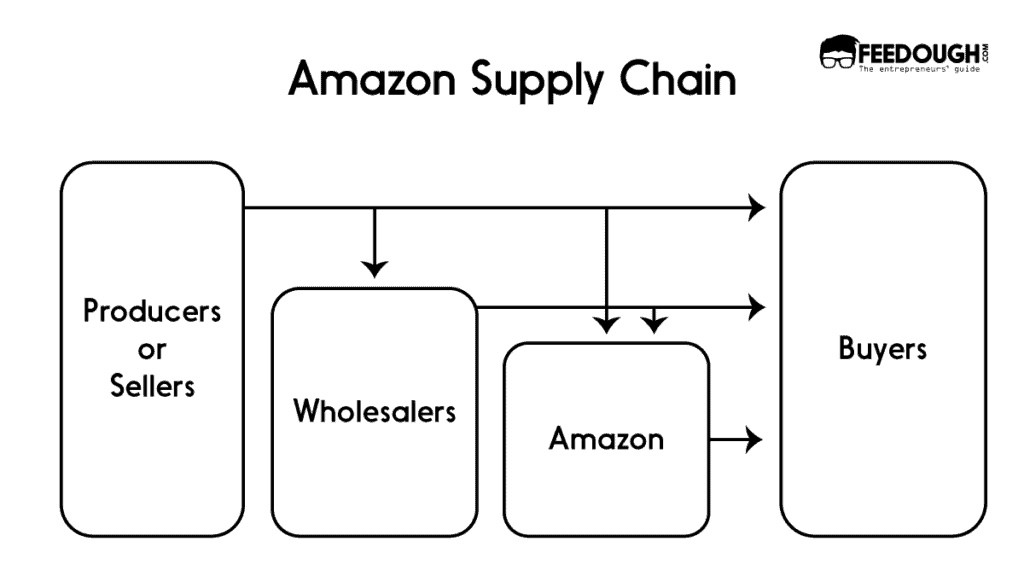
Amazon Fulfilment Options: The Supply Chain
Inventory management is a key task for Amazon as the company deals in such a wide variety of products. Amazon provides various fulfilment options to the merchants, including:
Fulfilment By Amazon (FBA) where Amazon stores, packs and ships the product through its fulfilment centres
Easy Ship where the merchant stores and packs the product but Amazon delivers it.
Fulfillment By Merchant (FBM) where the merchant handles storage, packaging and delivery of the product.
Therefore, Amazon stores most of the products placed on the marketplace and hence has to manage a large amount of inventory. So to satisfy customers with speedy delivery, the company has managed to create an efficient inventory management system and order picking process. Each product in the Amazon distribution network goes through 5 centres:
Crossdock centres where packages from vendors are stored until more stock is required
Fulfilment centres where the products are stored and packed for delivery.
Sortation centres where packages are sorted and routed by zip code before sending them to delivery stations.
Delivery stations where deliveries are handled by USPS, FedEx or UPS.
Amazon Prime Now Hubs where Amazon manages the products which have to be delivered within 2 hours of purchase.
How Does Amazon Make Money?
Amazon works on a complex business model with various value propositions and different customers. But its main source of revenue is the marketplace and ecommerce stores which form the foundation for its other businesses. For example, in 2019, the company had net sales of $280 billion and a net profit of $11 billion, and around 50% of sales were from ecommerce stores.
Revenue Sources
The Amazon marketplace has multiple revenue sources such as:
Sales: Amazon works as an ecommerce platform and sells its products on the platform. A considerable percentage of Amazon’s revenue comes from the sales of these products. The company competes with other third-party sellers and brands to attract customers on the marketplace and promotes its own brand.
Listing fee: Amazon charges a listing fee from third-party sellers to list their products on the platform. The fee starts at 2% of the product price and varies for various categories of products.
Commission or Closing fee: Amazon charges a commission from the merchants every time a product is sold through the platform. The commission depends on the price of the said product and the fulfilment channel used by the merchants.
Prime subscriptions: Amazon also offers prime subscriptions to the customer for an enhanced shopping experience on the platform. The prime members get access to unlimited free, fast deliveries, prime video where they can stream the latest movies and tv-shows, prime music where they can enjoy ad-free music streaming along with unlimited offline downloads, free in-game content on popular mobile games, unlimited 5% reward points, prime reading, and exclusive access to top deals and coupons. The membership costs $119 per year and $12.99 per month.
FBA (Fulfilled by Amazon): Amazon offers various fulfilment options to merchants. They can either go for FBA, where Amazon stores, packs, and delivers the product to the customer, or they can go for easy shipment where the merchant stores and packs the product while Amazon delivers it. The company charges a different fee based on the option chosen by the merchant.
Kindle direct publishing: Amazon offers publishing services to independent authors as well as publishers. The company publishes the book, makes it available on the kindle store, and provides the author 70% royalty.
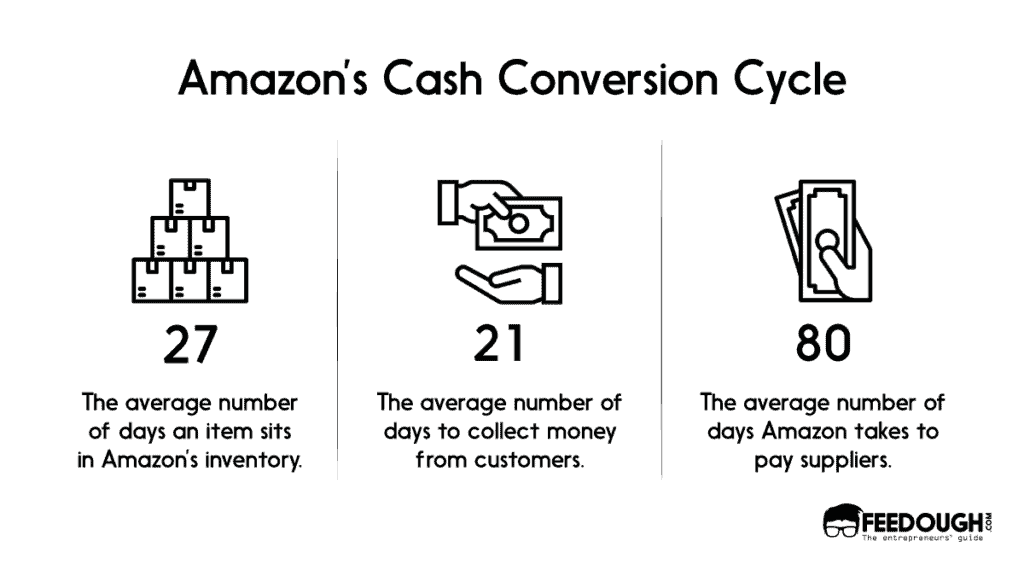
Cash Conversion Cycle
Amazon’s cash conversion cycle is one of the most important strategies of its business model. The company generates short-term liquidity by receiving payments from the customers before paying for the product to the suppliers. This allows Amazon to invest in its growth using the suppliers’ balance rather than being tied up in the inventory loop.
Using this mechanism, Amazon has successfully dominated various industries and diversified its portfolio from being an online bookstore to ‘the everything store’.
What Makes Amazon’s Business Model Unique: The Pricing Strategies
Amazon is known for its low and competitive prices across diverse categories of products. However, the Amazon business model depends on offering the lowest prices to the customers and offering prices that reflect market changes and keep up with the competition. The company achieves this using artificial intelligence, machine learning and around 1 billion gigabytes of data pertaining to its 1.5 billion products and about 200 million users.
Here are some pricing strategies used by the e-commerce giant to keep its prices up to date:
Dynamic pricing: Amazon changes the prices of various products on the marketplace about 2.5 million times a day. Thus, an average product listed on Amazon would change price every 10 minutes! The dynamic pricing allows the company to keep its prices competitive and has even helped Amazon boost profits by 25% on an average. The real-time pricing considers data from various sources like customer activity, the available inventory of a product, order history, preferences set for a product, expected margin on the product, and more.
Psychological pricing: Another strategy used by Amazon to keep its prices competitive and to attract more customers is psychological pricing or price perception strategy. An average customer often finds that prices on Amazon are the lowest among all its competitors. This is because of Amazon’s pricing algorithms. The company provides huge discounts on best-selling and popular products but raises the prices on uncommon products. Now, whenever a customer searches for the most common products on Amazon, they will find the most affordable prices which will further induce them to assume that the platform has lowest prices overall.
Competition monitoring and repricing: Every retailer on Amazon constantly keeps a tab on the prices offered by its competitors and considers repricing its own products to attract more customers on the platform and achieve the ‘buy box’ position. Amazon uses its algorithms to keep track of the changing prices and tanks the products offered by various retailers accordingly.
Go On, Tell Us What You Think!
Did we miss something? Come on! Tell us what you think about Amazon Business Model in the comment section.
ReCommerce (also known as Reverse Commerce or Re-ecommerce or Reverse Marketplace) is a practice of purchasing and selling of old goods over an e-commerce platform set up just for this purpose.
Re-commerce companies actually buy the obsolete and undesired products, refurbish them, and reintroduce them in the market.
These companies have set standards for pricing and have designed software to determine product prices based on set metrics like age, wear and tear and market demand.
What is ReCommerce?
The development of technology has resulted in a decrease in the shelf life of many goods. To counter this, and to make profits through an entirely different business model, Reverse commerce model was introduced.
Reverse Marketplace is nothing but an online marketplace to sell old goods.
Business Model of Recommerce Companies
Re-commerce companies like Bundli(India), Cashify (India), Recommerce Solutions (France), Gazelle (USA), etc have recently introduced this new business model in the market.
These companies usually buy used goods and sell refurbished goods to earn profits.
These companies –
Collect the obsolete and undesired products from the users and companies, and returned goods from e-commerce portals. (Products may or may not contain any defects)
Sort them
Repair them
Repack them
Make sure that these products work properly
Sell them on Reverse Marketplaces or to the companies directly.
How is Reverse commerce Better than Online Classifieds?
Recommerce business model has an upper hand over online classifieds (like Olx, Quikr, eBay, etc.) as these companies actually buy the products of the users and not just provide a platform to sell.
Online Classifieds don’t guarantee the sale of the products while Reverse commerce has well-defined software to determine the price of the goods and guarantee the sale of the products around that predetermined price.
These companies act as middlemen who purchase goods from you before selling they reach to the ultimate user. Hence, privacy is maintained by keeping your personal details limited just to these companies and not everyone.
Logistics costs are also supported by e-commerce companies.
Benefits of ReCommerce Model
Re-commerce business model has a lot of benefits for the companies concerned and the users.
Guaranteed sale of used and obsolete products
Many users hesitate to buy expensive devices because of very less or no resale opportunities. This new business model has guaranteed the sale of their used and obsolete products and hence lured them to spend more and shift from online classifieds to Re-Commerce Portals to sell their used devices.
Recycled goods at Reasonable Price
These companies usually provide B2B solutions to operators, retailers and manufacturers or business-to-customer websites to final consumers who get these goods at a reasonable price.
Less wastage of resources
Reusing of goods increases their total shelf life and result in less wastage of resources.
Go On, Tell Us What You Think!
Did we miss something? Come on! Tell us what you think of this article in the comment section.
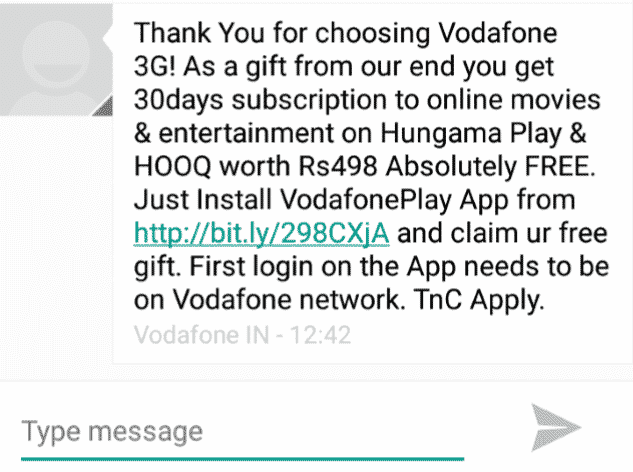
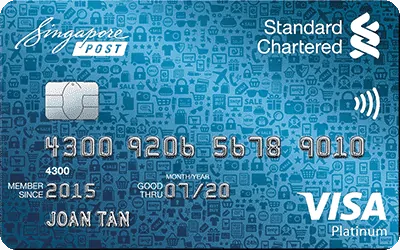
People have witnessed cross promotion ever since they have learned to read and recognise. The term might be new to us but the concept isn’t. A supermarket giving extra discounts for a specific bank’s credit cards, an online store offering free movie tickets of a specific movie on shopping with them, and a lounge giving an exclusive no-waitlist option for a specific credit card owner are all examples of cross promotion.
But what exactly is cross promotion and how does it work? Let’s find out
What Is Cross Promotion?
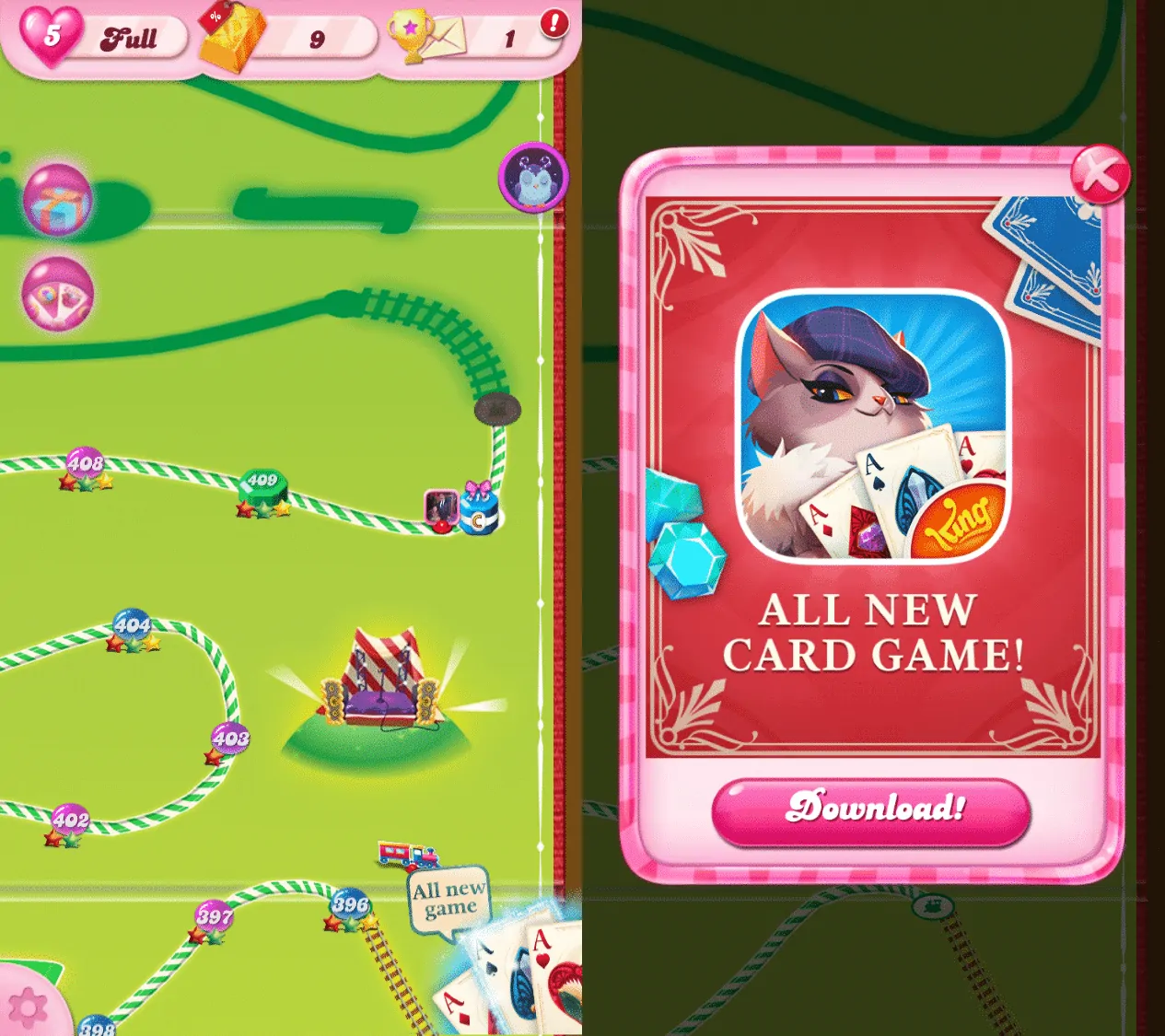
Cross Promotion is a marketing technique that involves the promotion of other product(s) targeted to the customers of a related product. It usually involves two or more parties, as is seen in the inclusion of Visa and Mastercard in the promotion of Credit, Debit, and Reward cards. But it’s also common to see cross-promotion in the promotion of different products of the same brand: a game is offered to try for free when you play any related game.
Features of Cross Promotion
Cross Promotion is a great way of tapping a target group of partners without investing much. It’s a win-win situation for all of the parties involved. It has the following features –
Customer Touch Points
Cross marketing involves the usage of customer touchpoints. The customer interacts with a brand at various levels and at various times. These customer touchpoints are used to promote partner brands as well.
Related and Relevant Products
Parties involved in cross-promotion usually sell related products. It would be of no use (and could even result in bad publicity) if an educational institute partners with a liquor company.
Advantages of Cross Promotion
Nearly all of the top brands have included Cross Promotion in their marketing strategies.
Win-Win Situation
It’s a win-win situation for all the parties involved in a cross-promotion contact as everyone gets what they need. One party may look for money while others need more exposure.
Less Cost More Reach
Cross promotion is an easy and economical way for brands to reach more people.
Brand Equity
Sometimes, partnering with a big brand may result in increased brand equity of the brand concerned.
Examples and Ideas for Cross Promotions
Joint Advertising
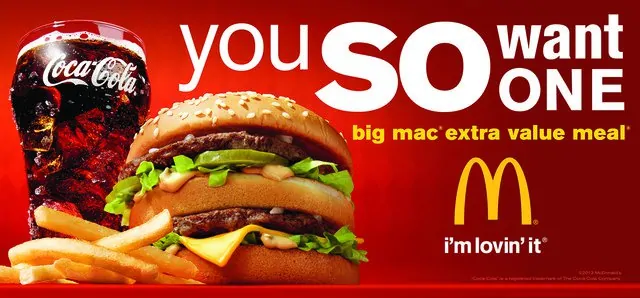
Many Fast Food Restaurant Chains often indulge in joint advertising with beverages like Coca-Cola, Pepsi, etc. Joint advertising is often used to increase the brand equity of concerned brands.
Joint Contests
Brands may come together to conduct contests which lead to more user engagement.
Cross marketing enables brands to borrow the brand equity of other brands concerned and use their touchpoints to get more reach.
Product incorporation
Brand partnerships that result in the incorporation of other brands’ products/services in one’s own product are an effective way of cross-promoting.
Brands may sponsor related events / Tv shows to get more reach. This might result to be more beneficial if the event is also sponsored by other Big Brands.
Cross Promotions in Digital Marketing
Influencers
Influencers are people with a huge reach. They belong to a particular niche and people often use their reviews and opinions to make any purchase decision. It is a good practice to use influencers to promote your brand or product.
Guest Posts
Bloggers often guest post on other websites to get more exposure and increase their website traffic. This type of partnership is a good deal for both parties as one party gets quality content while others get more exposure and a backlink to his website.
Branded/Sponsored Content
Sometimes websites and influencers post content exclusively to promote a certain brand or product.
Go On, Tell Us What You Think!
Did we miss something? Come on! Tell us what you think of this article in the comment section.
Hey, I'm Aashish
Each week I share research backed AI oriented content in my newsletter.
There are AI ideas, AI trends, tutorials, and guides.
24k entrepreneurs read it. I'd love you to join.