
Feedough Logo

Blog

  • The 7 Types of Business Insurance Explained

    The 7 Types of Business Insurance Explained

    Businesses are inherently risky ventures and as such, business insurance is essential for any company. Business insurance is a type of insurance that protects against various risks that may arise during the course of running a business. This can include protection against property damage, liability claims, and even employee-related issues.

    Several types of business insurance are available to companies, each with its specific coverage and purpose. These types of insurance can vary depending on the industry, size, and nature of the business. But first, understanding the basic types of business insurance is crucial to ensuring that a company is adequately protected.

    What Is Business Insurance?

    Business insurance is a contract between the business owner and the insurance company in which the insurance company commits to repay the firm for insured damages in exchange for premium payments. Business insurance is critical for ensuring a company’s financial stability and long-term viability. It helps to reduce the financial risks connected with unforeseen occurrences such as property damage, liability claims, or litigation. Businesses may protect their assets, manage obligations, and assure operational continuity by obtaining the correct insurance coverage in the face of potential hazards.

    The Types of Business Insurance

    A company may assess the coverage options it may need by thoroughly understanding how each type of business insurance works. Here’s a breakdown of the seven most common types of business insurance to help a business:

    General Liability Insurance

    General liability insurance plans often cover an organisation for personal injury and property damage claims caused by its products, services, or activities. This type of insurance can assist in covering medical bills and attorney fees incurred as a consequence of bodily injury or property damage claims for which your organisation may be legally liable.

    What does a general liability insurance plan cover?

    General liability insurance plans usually have the following coverage components:

    • Injury to the body: If the business unintentionally injures someone else, general liability insurance will cover their medical bills as well as your legal fees if they are sued. A consumer stumbling over an object in the workplace is an example of a bodily injury claim.
    • Property damage: If the business inadvertently causes property damage to someone else, general liability insurance will cover the expenses of repairing or replacing the property and any legal fees if they are sued. A company’s worker accidentally breaking a client’s furniture is an example of a property damage claim.
    • Advertising harm: This covers the company’s legal fees if it is accused of defaming another business owner, company, or individual.
    • Infringement of intellectual property rights: This covers the legal fees if the company is accused of using someone else’s work for business marketing without their consent.
    • Damage to one’s reputation: This covers the legal fees for accusations like libel, slander, invasion of privacy, unlawful eviction, and malicious prosecution.

    If a person files a claim against the company for one of the problems stated above, the general liability coverage will kick in. It will pay claims up to the amount specified in the company’s insurance. When purchasing insurance, one should be aware of two sorts of limits:

    • Per-occurrence limit: This is the most an insurance company will pay out for a single claim, such as a $1 million per-occurrence limit.
    • Maximum aggregate: This is the most the insurer will pay for all claims submitted throughout the term of the business’ policy. For example, if a company’s aggregate limit is $2 million, the insurer will not pay more than that amount throughout the policy period, regardless of the number of claims made against the business.

    Cyber Liability Insurance

    According to a recent survey, over two-thirds of US retailers have had some form of data breach. That risk will persist because nearly all of the merchants interviewed (96%) claim to employ sensitive data in digitally changing environments.

    As the name indicates, this insurance covers a company’s responsibility following a cybersecurity event.

    Cyber liability insurance covers data breaches, malicious attacks, and other cybersecurity concerns. Some laws are industry-specific, such as those for retail, healthcare, or finance.

    There are two kinds of cyber liability insurance:

    • First-party coverage: This covers financial losses directly experienced by the firm, such as income loss during a period of closure.
    • Third-party coverage: Pays for damages caused by other parties affected by the cybersecurity event, such as a consumer suing a company after identity theft.

    What does first-party cyber liability insurance cover?

    First-party cyber liability insurance covers the costs that a company may incur as a result of a data breach. These are some examples:

    • Income lost due to business disruptions
    • The cost of hardware and software repairs
    • Extortion money that a hacker demands
    • Loss of transferred money
    • Costs associated with public relations, such as alerting staff and clients of a data leak
    • Electronic data corruption or theft losses
    • Expenses for reputation management following a cyberattack

    The actual coverage and liability amounts differ depending on the provider and policy.

    What does third-party cyber liability insurance cover?

    Third-party cyber liability insurance is typically used to cover legal claims. Coverage might include:

    • Fines and penalties imposed by regulatory bodies
    • Claims of negligence
    • Network liability and privacy claims
    • Claims for breach of contract
    • Libel, slander, defamation, violation of intellectual property rights, and other media liability claims

    These plans are also known as ‘cyber and privacy insurance’ or ‘media insurance.’ In the case of a claim, they often need a deductible, similar to liability coverage for car insurance.

    Most cyber liability plans cover both first-party and third-party claims, which can cover financial damages to the organisation as well as the expenses of claims filed against a firm by clients or other third parties who were harmed.

    Employment Practices Liability

    Employment practices liability insurance (EPLI) covers settlements for lawsuits brought against the business for wrongful termination or any other violation of human rights.

    Compared to bigger companies with well-established human resources departments and procedures, startups and small firms could be more susceptible to these kinds of employee claims. For instance, costly employment liability lawsuits might be made against small companies like contractors, restaurants, retail stores, and doctor’s offices.

    Jury verdicts and out-of-court settlements for employment practices liability cases may exceed hundreds of thousands of dollars. A small firm might benefit monetarily from employment practices liability insurance by avoiding the expense of these types of claims.

    What Does Insurance for Employment Practices Liability Cover?

    Policies for employment practices liability insurance cover a variety of worker workplace claims, including:

    • Age discrimination
    • Discrimination based on disability
    • Mismanagement of employee benefits
    • Discrimination based on race
    • Discrimination based on sexual orientation
    • Sexual misconduct
    • Inequitable methods of compensation
    • Illegal compensation schemes
    • FMLA (Family and Medical Leave Act) violations
    • Libel and slander
    • Infringement of privacy
    • Mental or emotional distress
    • Violation of the terms of employment: unlawful dismissal or demotion

    This plan will cover the costs of fighting a case in court, as well as judgements and settlements. EPLI pays legal expenses regardless of whether your firm wins or loses the claim. However, these plans do not often cover punitive damages or civil or criminal penalties.

    Commercial Property Insurance

    Commercial property insurance covers a business for losses or damage to its building, leased or owned equipment, and other property on the grounds in the event of a catastrophic event such as a fire, explosion, broken pipe, storm, or theft. Items like computers, furniture, and inventory that are seen to be essential for carrying out regular business activities can all be covered under commercial property insurance.

    As part of a business owner policy (BOP), commercial property insurance is frequently combined with general liability and business interruption insurance.

    Commercial property insurance is available in two forms: replacement cost and actual cash value.

    • Replacement cost: The cost of replacing or repairing damaged property using materials of similar sort and quality, without deduction for depreciation.
    • Actual monetary value: Pays the cost of repairing or replacing the damaged property, less depreciation.

    It’s advisable to check if the policy is classified as “open perils” or “named perils.”

    • Named perils policy: A specified perils policy will only cover expenditures incurred as a result of problems expressly stated in the policy, which may include fire, theft, vandalism, wind damage, and other issues.
    • Open perils policy: An insurance policy with open perils offers more protection. Any issue, with the exception of those specified as exclusions (such as flood damage), will be covered. It will cost more than a named-peril property insurance policy because of its superior protection.

    What issues does commercial property insurance cover?

    Typically, commercial property insurance covers the following kinds of issues:

    • Lightning, fire, wind, and hail
    • Vandalism and theft

    The following physical asset categories are covered by business property insurance:

    • Building (owned or rented)
    • Business documents
    • Computers
    • Furniture
    • Equipment
    • Outdoor fixtures (like signs and fences)
    • Tools
    • Personal Property
    • Supplies

    The landlord’s insurance often covers building damage in rented business space. For example, in the event of hail damage, the landlord’s insurance would cover roof repairs.

    However, it is likely that the lease contract states that the corporation is responsible for a specific type of building damage. For example, a landlord has the right to seek payment from the company for any damages or repairs made to windows, air conditioning units, or other property.

    Workers’ Compensation

    Workers’ compensation insurance provides essential perks to injured or sick employees on the job. Workers’ compensation benefits might include medical treatment and ongoing care, salary replacement payments, and even death benefits. Workers’ compensation, for example, would assist in paying any medical treatment costs and reimburse the employee for any missed income if a worker strained a back muscle at work and was unable to complete their tasks.

    What does workers’ compensation insurance include?

    • Workers’ compensation covers all medical expenditures, including hospital visits, prescriptions, and emergency procedures.
    • When an employee requires time away from work to recover from a job-related sickness or accident, lost earnings are partially reimbursed.
    • If the injury resulted in a partial or permanent disability, disability benefits are payable.
    • Workers’ compensation covers ongoing care expenditures such as physical therapy.
    • Funeral expenses and survivor compensation for the worker’s family are common components of death benefits.

    Workers’ compensation payouts are awarded regardless of who is at fault. Furthermore, workers’ compensation regulations generally prevent employees from suing their employers for a work-related accident or sickness.

    Most states require businesses to have workers’ compensation insurance for their employees, even if they only have one employee.

    Workers’ compensation benefits are awarded if the employer or insurance company determines that the accident or sickness occurred on the job. If the insurer or employer denies the workers’ compensation claim, the matter is heard by a workers’ compensation judge.

    Commercial Auto

    Commercial vehicle insurance coverage is a customised insurance policy designed to cover the damages caused to or by a commercial vehicle. It also covers the losses incurred by the owner-driver of that specific business vehicle. Accidents, crashes, and man-made and natural disasters are among the causes of damage and loss.

    In certain countries like India, all businesses must cover their commercial vehicles, such as trucks, buses, auto-rickshaws, tractors, and commercial vans, with a third-party insurance policy, which protects third parties against any damages caused by the business vehicle.

    If any of the following apply to a company, it may be worth considering getting a commercial auto policy:

    • The company owns, leases, or rents vehicles such as automobiles, trucks, or vans.
    • Company employees use their vehicles to do business.
    • Business employees drive corporate automobiles that are leased, rented, or owned by the corporation.

    What does commercial vehicle insurance cover?

    • Accidents: Damages to commercial vehicles caused by any type of collision in the event of an accident.
    • Theft: Theft-related loss or damage to a commercial vehicle.
    • Fire: Damage to a commercial vehicle caused by a fire.
    • Third-party Damage/Losses: Any third-party damages or losses caused by a commercial vehicle.
    • Natural Disaster: Damage to a commercial vehicle caused by a natural catastrophe such as a landslide or flood.

    Professional liability insurance

    Professional liability insurance, often known as errors and omissions (E&O) insurance, can protect a company from claims that a service they supplied caused a customer to suffer as a result of a mistake or failure to deliver a service.

    Professional liability insurance will pay the legal bills, settlements, and judgements up to the extent of its coverage policy. For example, if a business is sued because of a mistake that causes the client to lose money, the legal costs and settlement will be compensated.

    What is covered by professional liability insurance?

    Here are some instances of errors that might lead to a client suing a corporation:

    • Incorrect or incorrect counsel: A financial consultant delivers advice that leads to revenue loss.
    • Misrepresentation: A contractor fails to complete a remodelling project on time, causing a client’s business to close and lose money.
    • Negligence: It occurs when a lawyer fails to submit a complaint on behalf of a client within the statute of limitations, causing the client to lose money in legal fees as well as a possible award if the case went to trial.
    • A breach of good faith and fair dealing: This occurs when a realtor fails to disclose critical information to the buyer.
    • Copyright violation: This occurs when a website designer uses a copyrighted picture without authorisation.

    Furthermore, professional liability insurance may be mandated by law depending on the business sector. While many businesses require professional liability insurance, one should consider it if the firm interacts directly with clients while offering services.

    Bottom-Line?

    When selecting business insurance, it’s important to evaluate the type of firm, its size, location, industry rules, and business risks and weaknesses.

    Financial protection, legal protection, and peace of mind are all advantages of company insurance. Over-insurance, under-insurance, premium expenses, and insurance firm insolvency are all risks associated with business insurance. Moreover, one must ensure that all the terms and conditions are read properly and sign the documents only when they understand the obligations of all parties involved. Also, using document signing solutions is always helpful for business insurances as it keeps things at one place.

    For organisations of all sizes and sectors, business insurance is essential to a complete risk management plan.

    Businesses should carefully assess their insurance requirements and consult with knowledgeable insurance professionals to find the best coverage alternatives.

    Businesses may achieve more stability, sustainability, and profitability by controlling risks and safeguarding their monetary assets.

  • How to Improve Cash Flow: 10 Proven Ways

    How to Improve Cash Flow: 10 Proven Ways

    Cash flow serves as a critical financial KPI for businesses of all stages, whether they’re experiencing rapid growth, remaining stagnant, or facing losses. Maintaining a healthy cash flow is essential for the efficient operation of any business.

    Business owners’ worst nightmares often involve running out of cash, and with good reason. A staggering 82% of small businesses fail due to cash flow problems, emphasising the importance of understanding and effectively managing cash flow.

    That’s why it’s essential to understand how cash flow works for businesses to run efficiently. For example, even growing businesses with a high-profit margin can be hit by cash flow problems. A common cause for such problems is the presence of an imbalance between payables and receivables, which can result in payables becoming due earlier.

    This ultimately affects a business’s ability to cover various expenses, including taxes, bills, and payroll.

    Increasing cash flow is an essential and beneficial objective for any business, empowering companies to grow and prosper. Having more money in the bank allows you to grow your company by hiring more staff, increasing operations, investing in new goods and services, and so on.

    Speed Up Receipts

    Businesses often face payment delays from clients, which hampers their cash flow. One of the best ways to increase your cash flow is by encouraging customers to pay their invoices on time.

    How does speeding up receipts help to improve cash flow?

     Speeding up your receipts reduces the time gap between your outflows (expenses) and inflows (income). This facilitates smoother cash flow management. If your business operates on a tight budget, faster payment collection will ensure that funds are readily available for business operations or any unexpected expenses.

    One efficient way to achieve this is through modern, swift payment methods. For instance, introducing an online payment system and offering a small discount for early payments can result in money coming in more quickly and improving cash flow.

    According to a study by Aberdeen Group, organisations that use automated invoice processing experience a 25% reduction in the time it takes to process an invoice, which can increase cash flow.

    Dos & Don’ts of Speeding Up Receipts

    1. Do offer multiple payment options: The more payment options you offer, the easier it is for clients to pay. Speedy payment options can include online payments, credit cards, digital wallets, and direct deposits.
    1. Do Offer Incentives for Prompt Payments: Create incentives like discounts or rewards for customers who pay early. This can speed up the payment process.
    1. Do Implement a Dunning Process: A well-established dunning process (systematic method for dealing with past due payments), can reduce payment defaults and speed up receipt collection, enhancing cash flow.
    1. Don’t Forget to Follow Up: If a customer invoice is overdue, don’t hesitate to follow up. Regular, polite, and persistent follow-ups can ensure that you receive your payment.
    1. Don’t Make Payment Process Complicated: A complex, time-consuming payment process can discourage prompt payments. Keep payment procedures simple and user-friendly.
    1. Don’t Ignore Small Balances: Even small invoice amounts add up. Ensure that all outstanding balances, big or small, are pursued for payment.

    Consider Leasing Instead of Buying

    Leasing refers to the process where a business arranges to use assets, like vehicles or equipment, by paying in instalments rather than purchasing them outright. These timely payments can be cost-effective and manageable, which helps maintain steadier cash flow.

    How does leasing help to improve cash flow?

    Businesses can frequently avoid the high upfront costs by renting instead of buying new equipment and other capital expenses. Instead of purchasing assets upfront using working capital or taking on debt with variable rates, leasing allows businesses to access technology and equipment without sacrificing their working capital.

    Businesses need to make regular payments over a set lease term, which helps maintain the liquidity and is crucial for improving cash flow. Also, leasing can offer business tax benefits, as such payments are tax-deductible expenses. This benefit further aids in cash flow management.

    Dos & Don’ts of leasing to improve cash flow

    1. Do compare options: Always compare leasing agreements from different vendors to ensure you’re getting the best deal in terms of cost, terms of agreement, and after-sale support.
    2. Do understand the terms: Always read and understand the fine print before entering into a leasing agreement.
    1. Do Analyse the Maintenance Costs: When comparing the advantages of leasing to purchasing, don’t forget to account for the costs associated with repairs and upkeep of the company’s equipment.
    1. Don’t Forget About Lease Termination Clauses: Always pay attention to the penalties for terminating a lease early. Unforeseen circumstances may require you to end a lease, which could severely impact your cash flow.
    1. Don’t Ignore the Total Cost: Don’t just look at the monthly payments but also consider the total cost over the lease term. Sometimes, the total lease cost could exceed the cost of purchasing the asset outright.
    1. Don’t Miss Due Diligence: Always perform due diligence about the leasing company to ensure that they provide reliable service. A less-reputable company could cause unforeseen costs, negatively affecting your cash flow.

    Reduce Expenses

    One of the easier ways to improve your cash flow is by lowering your spending. The concept is simple at its core: less money going out means more money staying in.

    Naturally, it’s not as simple as it sounds. Effectively reducing expenses without hampering your business’s essential operations or service quality requires a careful, strategic approach.

    How does reducing expenses help to improve cash flow?

    By reducing your costs, you can open up opportunities for more liquid assets that can be allocated towards growth, investments, or simple financial stability. This could be achieved by locating suppliers at a lower cost, reducing energy use, or simplifying processes to eliminate inefficiencies.

    Every dollar you can save by cutting unnecessary costs or finding efficiencies within necessary costs contributes directly to your cash flow. You maintain a larger revenue share by reducing your outflows, supporting healthier cash flow.

    Dos & Don’ts of reducing expenses

    1. Do Conduct Regular Expense Audits: Regularly examine your expenses to identify nonessential costs that can be trimmed without affecting your operations or service quality.
    1. Do Use Technology: Utilise technology to automate your processes and improve efficiency, thus reducing the need for manual labour and potentially decreasing costs.
    1. Do Practice Lean Inventory Management: Keep minimal stock to reduce storage costs and to avoid tying up cash in unsold stock.
    1. Don’t Eliminate Quality Control: While cutting costs is beneficial, making reductions that can impact the quality of your product or service can negatively affect your business reputation and sales.
    1. Don’t Neglect Maintenance: While it may be tempting to cut back on maintenance costs, this can lead to bigger, more costly problems in the future.
    1. Don’t Be Inconsistent with Cost Reduction: Implementing cost reduction measures should be a consistent habit rather than a rushed reaction to a cash crunch.

    Improve Inventory Management

    Inventory refers to the goods or materials your company currently has on hand. Managing this effectively helps to ensure you don’t spend unnecessarily on excess stock and that you’re not caught short by unexpected demand.

    How can improving inventory management help to improve cash flow?

    Good inventory management is crucial in maintaining a healthy cash flow. It helps in the following ways:

    1. Reduced Storage Costs: Excess inventory takes up storage space, which can incur costs such as rent and utilities. By managing your inventory more efficiently, you can reduce the stock on hand and save on storage expenses.
    2. Avoid Overstocking: Overstocking can result in excess or obsolete goods that cannot be sold, tying up cash in unsold stock and potentially leading to losses.
    3. Improve Cash Conversion Cycle: The cash conversion cycle is the time it takes a company to convert its inventory into cash. By managing inventory effectively, you can reduce this cycle and improve cash flow by quickly converting inventory into sales and then into cash.

    Dos & Don’ts of improving inventory management

    1. Do Use Sales Reports: Make use of past sales reports to predict future demands. This will enable you to order the optimal amount of stock.
    1. Do Perform Regular Audits: Regular physical checks of your inventory ensure accuracy, helping to detect any losses, theft or discrepancies at the earliest.
    1. Do Negotiate Better Terms with Vendors: Establish good relationships with vendors to negotiate better credit terms, effecting a positive cash flow.
    1. Don’t Overstock: Excessive inventory can account for significant wasteful spending. Don’t order more than you need, as it ties up cash, takes up space, and risks becoming obsolete.
    1. Don’t Neglect Seasonality: Ignoring seasonal trends might result in a stock surplus or shortfall. This can lead to loss of sales or increase in holding costs.
    1. Don’t Rely Solely on Manual Tracking: It’s inefficient and prone to error. Use an inventory management software system to track inventory efficiently and accurately.

    Increase Prices

    Pricing is one of the most important factors affecting a business’s cash flow and profitability. It fills in the gaps between your company’s expenses, the demand in the market, and the estimated worth of your goods or services. You can improve cash flow by improving revenue through slow price increases.

    How does increasing prices help to improve cash flow?

    By raising prices, the amount of money brought in per sale increases. This means that you need to make fewer sales to reach your desired level of cash flow. Additionally, increasing prices can also help offset any increase in expenses or costs related to running the business.

    Moreover, price increases can have a psychological effect on customers. It can create a perception of increased value and quality, leading to higher demand and potentially loyal customers. However, it is important to carefully consider the impact on customers and the market before implementing price increases.

    Dos & Don’ts of raising prices

    1. Do Test Prices: Test various pricing strategies or conduct market research to gauge customer acceptance levels before implementing a price increase.
    1. Do Implement Gradual Increases: Consider a gradual price increase over time to minimise the shock and potential customer dissatisfaction.
    1. Do Communicate Openly: Be transparent and clear with your customers, sharing the reasons behind the price increase and reinforcing the benefits of your product or service.
    1. Don’t Increase Prices Suddenly: Avoid implementing a substantial price increase without warning. It may lead to negative reactions and customer dissatisfaction.
    1. Don’t Sacrifice Quality: Do not lower quality or cut corners as a way to justify maintaining high prices. This could lead to losing customers and damaging reputation.
    1. Don’t Stay Rigid: Be willing to revise your pricing strategy if circumstances change or if the current approach is not working as expected.

    Invoice Factoring

    Some businesses struggle with cash flow due to long invoice payment cycles. This is where invoice factoring solutions can help.

    Invoice factoring involves selling your accounts receivables to a third party (a factoring company) at a discount. Instead of waiting for slow-paying customers, the business receives most of the money upfront (usually between 70-90% of the invoice value).

    The factor is then responsible for collecting the full amount from the customer. Once the customer pays the full amount of the invoice, the factor pays the remaining balance to your business minus the agreed-upon factoring fees.

    How does invoice factoring help to improve cash flow?

    Invoice factoring helps improve cash flow by providing businesses with immediate access to a significant portion of their outstanding invoices. This can help cover day-to-day expenses, pay employees and suppliers, and invest in growth opportunities without having to wait for customers to pay.

    Additionally, invoice factoring eliminates the risk of non-payment from slow-paying customers, as the factor is responsible for collecting the full amount. This can help businesses avoid cash flow issues and maintain a steady income stream.

    Dos & Don’ts of Invoice Factoring

    1. Do Choose the Right Factor: Assess potential factoring companies carefully. Look for a firm that understands your industry, communicates openly, and has a good reputation.
    2. Do Review Your Client’s Creditworthiness: Factoring companies typically consider your clients’ creditworthiness rather than your company’s when assessing factoring arrangements. Ensure your clients have a good credit record for smoother transactions.
    3. Do Consider Invoice Insurance: For an additional layer of protection, consider insuring your invoices. This mitigates the risk if a customer fails to pay an invoice.
    1. Don’t Ignore the Costs: Factoring involves costs such as setup fees, service fees for running the ledger, and financing fees for the advance. Ensure these costs justify the benefits brought by the improved cash flow.
    2. Don’t Factor All Invoices: You don’t need to factor in all your invoices, especially if you only have a few clients with late payments. Be selective and only factor in invoices that positively impact your cash flow.
    3. Don’t Rely Only on Factoring: While factoring can improve the availability of cash, don’t rely solely on it. It’s one component of a larger cash flow management strategy.

    Send Invoices Out Immediately

    Sending invoices immediately, whether the work is complete or as soon as a product is delivered, can significantly impact your cash flow. This practice ensures that the timeframe between providing your service or products and getting paid is as short as possible, optimising your turnover.

    When you wait to invoice your clients, you’re essentially providing them with an interest-free loan. The longer you wait to send that invoice, the longer it will take to get your money, and you’ll have to bear the brunt of a cash flow gap.

    How does sending out invoices on time help to improve cash flow?

    Sending out invoices immediately helps to improve cash flow by shortening the time frame between providing a service or product and receiving payment. This reduces the length of the cash flow gap and ensures that businesses have access to their funds as soon as possible. It also prevents businesses from providing interest-free loans to their clients, impacting their financial stability. Additionally, sending out invoices immediately can improve the turnover rate of a business, as it allows for a steady flow of incoming cash rather than sporadic payments. This ultimately leads to improved cash flow and financial stability for businesses.

    Dos & Don’ts of sending invoices immediately

    1. Do include a clear payment deadline: Clearly stating when payments are due helps streamline cash flow management and keeps clients informed. Put the deadline  preferably in bold, like at the top of the invoice or at the bottom of the payment slip.
    2. Do follow up on unpaid invoices promptly: Regularly revisit outstanding invoices and send payment reminders to clients. Keep the communication lines open to address any concerns or issues.
    3. Do maintain good records of all invoices: Proper documentation helps avoid disputes and keeps accounts receivable accurate.
    1. Don’t delay sending invoices: Postponing invoices only opens the possibility of payment delays or items being forgotten, which negatively impacts your cash flow.
    2. Don’t ignore inaccuracies and discrepancies: Double-check the invoice details to ensure accurate billing and avoid disputes that can delay payments.
    3. Don’t forget to mention payment terms and conditions: Clearly communicate your expectations with regard to payment terms and late fees, if applicable. Make sure to include this information if you apply late payment fees.

    Cut Unnecessary Spending

    You should clearly understand your company’s financial spending from your cash flow analysis. Anywhere you can reduce ongoing costs will help you manage your cash flow better.

    The first step in controlling costs is by identifying their sources. Working through your company’s financial spending will highlight your spending habits, highlighting essential and nonessential expenditures.

    How does cutting unnecessary spending help to improve cash flow?

    By investing time in managing business expenses and eliminating unnecessary spending, you can effectively stop cash leaks before they start to improve cash flow.

    Additionally, you can consider your expenses year-round and cut back on some expensive expenses during periods when they are not necessary to maintain the business’s operations.

    Dos & Don’ts of Cutting Unnecessary Spending

    1. Do create a budget: A budget helps you identify essential living expenses and sets a limitation on discretionary spending, thus guiding your financial decisions.
    1. Do utilise money management apps: These apps monitor your spending, provide insights about your habits, and suggest ways to cut costs.
    1. Do prioritise paying off debt: Interest payments can eat into your cash flow. Reducing debt helps to improve your cash flow and financial health.
    1. Don’t ignore small expenses: Small, frequent purchases can add up over time and significantly impact your cash flow.
    1. Don’t buy on impulse: Impulse buying can disrupt your budget and lead to unnecessary expenditures.
    1. Don’t forget to save and invest: Savings and investments are your best bet for future financial emergencies and growth.

    Offer Customers Incentives For Fast Payments

    Managing payments, particularly slow ones, is an important yet challenging aspect of running a successful business. Giving incentives to customers for swift payments can be an effective tool in addressing this issue and helping to improve cash flow.

    How does offering customers incentives for fast payments help to improve cash flow?

    The primary benefit of incentivising quick payments is that it speeds up the revenue collection process. You can incentivise customers who pay their invoices within a week or even immediately upon receipt. This gives you faster access to that revenue, which improves cash flow.

    Additional rewards for making early payments could be merchandise, gift cards, or discounts on subsequent purchases. Although the discount need not be significant, clients will value the incentives given to them for prompt payments and encourage them to stay.

    To encourage the client to respond to the offer right away, mention these incentives in the invoice.

    Dos & Don’ts of Offering Customer Incentives

    1. Do Set Clear Terms and Conditions: Ensure your customers understand the terms and conditions of early payment discounts. Clearly stipulate the reward for early payment and the consequences of late payment.
    2. Do Regularly Review the Discount Rate: Review your discount rate regularly to ensure that it is actually providing value to your business. It should be neither too high (affecting your profits) nor too low (not attractive to customers).
    3. Do Follow-Up: If a customer falls into arrears, follow up promptly. The sooner you communicate, the more likely you are to improve your cash flow.
    1. Don’t Overlook Your Profit Margins: While incentives can be a good idea, don’t offer discounts so large that they eat into your profit margins.
    2. Don’t Hesitate to Enforce Late Payment Penalties: If a customer doesn’t pay in time, do not hesitate to apply the pre-agreed late payment penalties.
    3. Don’t Be Inconsistent: Don’t apply an incentives policy inconsistently once you have an incentives policy. Set clear rules for when the incentives apply and stick to them.

    Use Cash Flow Management Software

    When struggling with cash flow, the problem often lies in not just the cash management but, more importantly, the prediction of cash flow. This is where cash flow management software plays a critical role.

    This tool can provide valuable insights, help identify patterns, manage invoicing, and automate processes to improve your cash flow substantially.

    How does using cash flow management software help improve cash flow?

    You can predict peak cash flow periods and get ready for falls by using cash flow management software to track your cash flow more accurately.

    One of the most valuable assets cash flow management software provides is automation. Manually keeping track of cash flow can be laborious and prone to human error. The software can automatically pull data from all business transactions and categorise them appropriately. This helps in accurately monitoring inflows and outflows and helps to improve cash flow.

    Dos & Don’ts of using cash flow management software

    1. Do Thorough Research: Identify and compare different cash flow management software options to find the one that best suits your business needs. Consider factors like features, ease of use, scalability, and cost.
    1. Do Ensure Integration and Compatibility: Make sure the software integrates seamlessly with other financial tools and software you’re using, such as accounting, payroll, or ERP systems.
    1. Do Analyse Reports Periodically: Take advantage of the reporting features in the software, periodically reviewing cash flow trends, anomalies, and areas for improvement.
    1. Don’t Neglect Security: Make sure the software system adheres to strict security and data privacy protocols. Keep sensitive data secure, and don’t neglect regular software updates.
    1. Don’t Rely Solely on Automation: While automation can save time and reduce errors, don’t rely only on the software. Regular human review and monitoring of the data and reports are still necessary.
    1. Don’t Ignore Software Limitations: No cash flow management software is perfect. Be aware of the software’s limitations and supplement it with other relevant tools and information as needed.

    Bottom Line

    By increasing cash flow, you can strengthen your company and lay a strong foundation for future growth. While challenges are bound to arise, a calculated approach towards cash flow management can secure your business’s financial health, propelling it towards a prosperous future.

     These ten ways will help you maintain a healthy cash flow, whether you’re just starting out or have been in business for years, ensuring the long-term success of your company.

    Additionally, you should confirm that your choices about product or service development, marketing, customer service, and acquiring new clients are right.

    FAQs

    What is cash flow?

    Cash flow refers to the amount of cash or cash-equivalent being transferred in and out of a business. A positive cash flow indicates higher liquid revenue, while a negative value implies that the business’s expenses are more than their income during a specific period.

    Why is improving cash flow important?

    Improving cash flow is important because cash is the lifeblood of a business. A healthy cash flow allows a business to cover its costs and expenses, invest in its growth, and provide a safety net against potential financial downturns.

    How can I use technology to improve cash flow?

    Technological tools like cash flow management software can help you keep track of your cash flow and forecast future trends. Online payment solutions can help accelerate the collection of payments, and digital invoicing can streamline the invoicing process and speed up receivables.

    Should I consider getting a business loan to improve cash flow?

    A business loan can provide a quick infusion of cash, but it should be considered carefully. Interest payments and potential difficulties in securing the loan can be drawbacks. Exploring all options and ensuring you have a solid plan to repay the loan without creating further cash flow problems is important.

  • The 10 Best Countries to Start a Business In

    The 10 Best Countries to Start a Business In

    Starting a business isn’t a walk in the park, especially when the country’s government and economic policies are not in your favour. Let’s say you have a million-dollar idea and are ready to invest your time, money, and skills into it.

    The problem?

    It takes months of paperwork and approvals before you can even think of starting operations.

    That’s not the case with all countries, though. Here’s a list of the 10 best countries to start a business in based on their government policies, GDP, Tax rate, and ease of doing business score.

    We examined over 100 countries worldwide based on 7 key indicators –

    1. Ease of doing business rank
    2. Ease of starting a business
    3. Dealing with construction permits score
    4. Getting credit
    5. Taxation policy
    6. GDP
    7. GDP growth rate

    United Arab Emirates

    • GDP (2022): $507.53 billion
    • Corporate Tax Rate: 9%
    • Ease of business score: 16
    • GDP Growth rate: 7.9%

    While historically known for its oil reserves, the UAE has made significant progress in diversifying its economy and providing a conducive environment for entrepreneurs to thrive.

    The country is one of the fastest-growing economies in the world, with a GDP growth rate of 7.9% in 2022. Its government policies are pro-business, with low corporate tax rates and an ease of doing business score of 16, making it an attractive location for entrepreneurs.

    One of the main attractions of the UAE for starting a business is the extensive availability of free-trade zones. These are dedicated areas where goods can be imported, manufactured, and re-exported without the intervention of customs duties. Currently, there are more than 40-45 free trade zones in the UAE, each tailored to certain types of businesses and industries.

    These zones offer a myriad of benefits, including 100% foreign ownership, zero taxes, and freedom from import and export duties. They also provide modern infrastructure, access to a skilled workforce, and simplified administrative procedures. This makes the UAE an ideal destination for entrepreneurs who plan to venture into international business. With the added advantage of its strategic location, connecting the East and the West, the UAE has solidified its position as a global hub for trade and entrepreneurship.

    Singapore

    • GDP (2022): $644 billion
    • Corporate Tax Rate: 17%
    • Ease of business Rank: 2
    • GDP Growth rate: 3.0%

    With its strategic location in Southeast Asia and well-developed infrastructure, Singapore has been a top destination for international business for many years. It’s one of the most underrated yet thriving economies in the world, with excellent trade agreements with several countries. There are 27 free trade agreements, encompassing both bilateral and regional agreements, you can avail the following benefits if you set up your business in Singapore:

    • Global Ranking: Singapore consistently tops the World Bank’s Ease of Doing Business rankings. This is largely due to the city-state’s streamlined processes for company registration, taxation, and legal compliance. The government’s pro-business policies and dedication to maintaining a transparent and corruption-free business environment have made it a magnet for entrepreneurs looking to establish a foothold in the Asia-Pacific region.
    • Minimal Red Tape: Bureaucracy is minimal in Singapore, saving you valuable time and resources. You can register your business online in just a few hours. The streamlined process is designed to be efficient and hassle-free, reducing the barriers to entry and making it easier for you to focus on the growth and success of your business. This ease of setup and operation is one of the primary reasons why many entrepreneurs choose Singapore as their business base.
    • 17% Corporate Tax and No Double Taxation: The competitive corporate tax rate of 17% in Singapore is a strong incentive for businesses, and the “No Double Taxation” policy is an added advantage. Singapore has established Double Taxation Agreements with over 70 countries to ensure that income earned in Singapore and abroad is not taxed twice. This encourages transnational business activity and reduces the tax burden on companies, further enhancing Singapore’s reputation as a business-friendly environment.
    • Access to Skilled Workforce: Singapore has a highly educated and skilled workforce, with top universities producing graduates in fields like engineering, computer science, and business management. The government also offers training subsidies for businesses that invest in employee development, making it easier for you to hire and retain top talent.
    • Strategic Location: Located at the heart of Southeast Asia, Singapore offers easy access to growing markets such as China, India, and Indonesia. Its world-class infrastructure and efficient transportation links make it a prime location for international trade.

    Ireland

    • GDP (2022): $610 billion
    • Corporate Tax Rate: 12.5%
    • Ease of business score: 24
    • GDP Growth rate: 12.0%

    With its incredibly low corporate tax rate of 12.5%, Ireland has become a go-to destination for entrepreneurs looking to start their businesses in Europe. The country also offers access to the European Union’s single market, making it an attractive choice for companies that want to expand globally.

    With a population of just under 5 million, there are also plenty of opportunities for entrepreneurs to stand out and make a name for themselves in Ireland’s competitive business environment. The country also boasts a highly educated workforce, with over 50% of its population holding tertiary qualifications.

    Ireland is also known for its strong support for startups and innovation, with government initiatives like the Start-up Refunds for Entrepreneurs (SURE) scheme and the Innovation Voucher Scheme providing funding and resources for new businesses.

    Over the last few years, Ireland’s export market has experienced substantial growth, particularly in the sectors of pharmaceuticals and medical devices (valued at $36.5 billion in 2021), technology and electronics (accounting for around $15.3 billion in exports), chemical products, agricultural products, and food & beverages.

    Being part of the EU single market also allows companies in Ireland to freely trade with other EU countries without having to deal with tariffs and customs barriers, providing a significant advantage for businesses looking to expand their reach.

    New Zealand

    • GDP (2022): $247.234 billion
    • Corporate Tax Rate: 28%
    • Ease of business Rank: 1
    • GDP Growth rate: 2.9%

    The small yet picturesque island nation of New Zealand boasts a highly stable economy and an attractive business environment, making it one of the top choices for entrepreneurs to start their businesses.

    Known for its strong focus on sustainable business practices, New Zealand has been rated as one of the most environmentally friendly countries in the world. This, combined with its high quality of life and low corruption levels, makes it an attractive destination for businesses looking to make a positive impact.

    The country also offers a skilled and educated workforce, with over 65 % of its population holding tertiary qualifications. Additionally, the World Bank ranks it first in terms of ease of doing business, with a simple and efficient process for company registration. There’s a minimal regulatory burden compared to many other countries. The corporate tax rate may be higher than in some other countries on this list, but various financial incentives and grants are available for businesses investing in research and development, making it an attractive choice for innovative companies.

    There are also numerous free trade agreements in place, making it easy for businesses to access global markets. With a strong focus on technology and innovation, New Zealand is an ideal country for entrepreneurs looking to start a business in the tech sector.

    Denmark

    • GDP (2022): $411.956 billion
    • Corporate Tax Rate: 22%
    • Ease of business Rank: 4
    • GDP Growth rate: 2.6%

    The country known for minimal bureaucracy, low corruption, and a simple tax system, Denmark is one of the most business-friendly countries in the world. It also has a highly skilled and productive workforce with a strong focus on entrepreneurship and innovation.

    Denmark offers a transparent and efficient legal system, making it easy for businesses to operate. The country also ranks high in terms of digital infrastructure, making it a great choice for tech startups. Plus, there are various grants and funding opportunities available for startups, including the Danish Growth Fund and Innovation Fund Denmark.

    With a strong stable economy and a supportive business environment, it’s no surprise that Denmark is consistently ranked as one of the best countries to start a business in. Moreover, with the social safety net and high standard of living, it’s also a great place to live while building your dream business.

    Hong Kong

    • GDP (2022): $359.8 billion
    • Corporate Tax Rate: 16.5%
    • Ease of business Rank: 3
    • GDP Growth rate: -3.5%

    With a strategic location at the crossroads of East and West, Hong Kong is unparalleled when it comes to international trade and business opportunities. It has a free economy with low taxes, minimal government interference, and an efficient legal system.

    Hong Kong is also known for its strong protection of intellectual property rights, making it an ideal location to start a business in the creative industries. The city also boasts a highly skilled workforce and advanced infrastructure. The workforce of Hong Kong is one of its most significant assets. The city is home to a highly educated and multilingual workforce, well-versed in international business practices.
    The country takes pride in its literacy rate, which is over 95%, demonstrating the city’s emphasis on education. Additionally, more than half of the population holds a tertiary education qualification, further strengthening the talent pool.

    For the finance and tech industries, Hong Kong is a leading global hub. It’s the fourth largest financial centre, with a deep and liquid market for currencies, stocks, and bonds. There are also sophisticated venture capital and angel investor networks, making it easier for startups to secure funding.

    Hong Kong is also home to over 700 international banks and financial institutions, making opening offshore accounts for businesses and bridging loans for commercial property a smooth process.

    The city is also well-connected globally, with its international airport being one of the busiest in the world and offering direct flights to major business hubs worldwide.

    United States

    • GDP (2022): $25.463 trillion
    • Corporate Tax Rate: 21%
    • Ease of business Rank: 6
    • GDP Growth rate: 2.06%

    The world’s biggest economy, the United States, is known for its entrepreneurial culture and business-friendly environment. With a highly skilled workforce, advanced technology, and access to capital, the country proves to be an attractive destination for starting a business.

    The US market is also one of the largest in terms of consumption and has a diverse consumer base. This makes it ideal for businesses looking to tap into different markets and reach a wide range of customers.

    Moreover, if you’re into tech, Silicon Valley in California is considered the hub for innovation and startup success stories. The city is home to six Fortune 500 companies and 2000+ tech companies and attracts the highest venture capital investment in the country.

    When it comes to venture capital, the USA leads in global VC funding with over $150 billion raised in 2020. This further solidifies its position as one of the leading countries to start a business in.

    The country also has a significant number of successful startups, with billion-dollar unicorns like Uber, Airbnb, and SpaceX emerging from the US market. These success stories serve as inspiration for budding entrepreneurs and attract investors looking to fund potential startup unicorns.

    However, the US also has its challenges, including high competition and market saturation. This can make it difficult for new businesses to establish themselves and compete with well-established companies. The cost of living and labor is also relatively higher in the country compared to others on this list.

    Norway

    • GDP (2022): $579.267 billion
    • Corporate Tax Rate: 22%
    • Ease of business Rank: 9
    • GDP Growth rate: 3.8%

    Ranking amongst the top 50 on the WIPO’s Global Innovation Index, Norway is a great country to start a business in, especially for tech startups. The country has a strong focus on research and development (R&D), with 3.1% of GDP (2021) invested in R&D. This has resulted in a highly skilled and educated workforce, making it easier for startups to find talent.

    Norway also boasts of a stable economy with a stellar Aaa credit rating from Moody’s and S&P, reflecting its robust financial health and low vulnerability to risk. Plus, Norway’s GDP per capita (PPP) stands at $67,462 (2022), indicating a strong consumer market with high purchasing power.

    Starting a business in Norway is also relatively easy and streamlined, with the country ranking 9th on the World Bank’s Ease of Doing Business Index. High-speed internet penetration is at 99% (2022), and the government provides various incentives for entrepreneurs, such as low-interest loans and tax breaks.

    However, Norway does have its challenges, including high costs of labor and living. The corporate tax rate in Norway also stands at 22%, which may be relatively higher than other countries on this list. But with a strong economy, highly skilled workforce, and supportive government policies, Norway is a country that should definitely be considered for starting a business.

    Georgia

    • GDP (2022): $591.26 billion
    • Corporate Tax Rate: 15%
    • Ease of business Rank: 7
    • GDP Growth rate: 10.0%

    Georgia sits at the crossroads of Europe and Asia, offering access to a market of over 3 billion people. This strategic location, along with free trade deals with over 40 countries, including the EU, makes it an ideal hub for trade and commerce. Moreover, the country’s low corporate tax rate of 15% and simplified tax system make it an attractive destination for startups.

    Georgia also has a highly supportive government towards entrepreneurship, with initiatives such as “Produce in Georgia” that offer financial assistance and subsidies to startups. The World Bank ranks Georgia at 7th on its Ease of Doing Business Index, highlighting the ease of starting a business in the country.

    The country has a 92% literacy rate, with a skilled workforce and an improving infrastructure. The cost of living in Georgia is also relatively low compared to other European countries, making it an affordable option for entrepreneurs.

    There’s also macroeconomic stability in Georgia, with low inflation, manageable debt, and a steadily growing GDP. With a GDP growth rate of 10%, the country offers a vibrant and rapidly expanding market for businesses to tap into.

    United Kingdom

    • GDP (2022): $2.875 trillion
    • Corporate Tax Rate: 25%
    • Ease of business Rank: 8
    • GDP Growth rate: 4.3%

    The fifth largest economy in the world, the United Kingdom offers a highly conducive environment for starting and growing a business. With access to over 500 million consumers through its membership in the EU, the country provides ample opportunities for trade and expansion.

    UK is the leader when it comes to industries like fintech, creative industries, life sciences, and AI, making it an attractive destination for startups in these sectors. The government also offers various tax incentives and support schemes to encourage entrepreneurship.

    Moreover, the country has a high-skilled and diverse talent pool, with world-renowned universities such as Oxford and Cambridge producing top-notch graduates every year.

    Ranked 5th on the Kearney Global Cities Index, the city of London is a major global financial hub, providing access to funding and networking opportunities for businesses.

    The UK also invests 2.4% of its GDP in R&D, making it a leader in innovation and technology. The country’s strong legal framework and IP protection laws also provide a secure environment for businesses to thrive.

    Moreover, the corporate tax rate of 25% is amongst the lowest amongst the G20 countries, providing cost advantages for businesses. With a strong infrastructure and stable political environment, the United Kingdom continues to be one of the top choices for entrepreneurs looking to start or expand their business.

  • What is Healthtech- Challenges, Use Cases, & Examples

    What is Healthtech- Challenges, Use Cases, & Examples

    Healthcare is undeniably one of the most crucial aspects of our lives, as it directly impacts our well-being and the quality of life of individuals. Many health problems have been on the rise in recent years, including the majority of chronic diseases like diabetes and an ageing population.

    Especially after the COVID-19 pandemic, the importance of healthcare and the need to make healthcare more accessible, affordable, and efficient was observed. Currently, the health industry faces several obstacles like rising costs, access to proper care, workforce shortage, etc., and that’s where health tech comes into play.

    Health tech companies and startups have risen to provide better alternatives to traditional healthcare services. These companies aim to improve patient outcomes, increase access to healthcare services, and reduce costs using ever-evolving technology.

    Let’s dive into what exactly healthtech is and how it’s changing the face of the healthcare industry.

    What Is Healthtech?

    Healthtech is short for healthcare technology or health information technology. It refers to using technology like software, analytics, artificial intelligence, etc., to improve the overall efficiency of healthcare services.

    The main aim is to incorporate technology into our healthcare systems to benefit the people. This includes- data collection/analysis, treatment decisions and plans, diagnostics, useful insights about diseases and their medicines, and much more.

    Healthtech is being adopted worldwide to provide quality healthcare services to all. Healthtech companies aim to improve people’s health by providing easily accessible healthcare services such as online doctor visits and health checkups, technology to keep track of eating & sleeping habits, devices to set reminders for health checkups and medicines, surgery robots, insurance costs, and diet plans, etc.

    The growth of healthtech has opened up doors for many innovations that aim to tackle long-standing healthcare issues. From AI-powered medical diagnosis tools to remote patient monitoring systems, health tech solutions are helping drive positive change across the entire healthcare industry.

    Healthcare Challenges

    With healthcare costs consuming nearly 17.4% of GDP, families struggling to pay medical bills, and a global shortfall of 6.4 million nurses, the strain on healthcare systems is constantly rising. Here are some major challenges being faced by the healthcare industry:

    Rising Healthcare Prices

    Healthcare costs have been increasing much faster than overall inflation, making quality care difficult to afford for many individuals. What’s behind these rising prices? Factors like high-priced drugs and medical devices, more chronic illnesses, an ageing population, and administrative inefficiencies.

    In the US, the average cost of a hospital stay is projected to be $11,700, and the annual cost of health insurance for a family plan is projected to reach $24,282.

    Access to Healthcare

    Too many people, usually in rural/low-income areas, lack access to good health services due to provider shortages, high costs, transportation issues, and insurance gaps. According to the US Census Bureau’s Current Population Survey (CPS), the rate of uninsured people in the United States will be 9.2% in 2023. The majority of uninsured people are in rural sectors, about 10.8%.

    Cybersecurity Issues

    As medical records contain highly sensitive personal information, the healthcare sector is often a main target for cybercriminals. There are many rising concerns about data protection and privacy of patients as well as the staff.

    In 2023, there was an estimated 94% increase in ransomware attacks in the healthcare sector compared to 2020. The ransom payment is higher than any other industry, with an average of $847,129 per attack.

    Poor Quality of Medical Services

    Most of the good healthcare services are expensive, and the relatively affordable ones are very complex and disorganized. Doctors, nurses, and hospitals often do not work together or share information well. They also may not have enough data about patients. This causes big problems with giving patients good care. Many patients get bad treatment by accident or have bad health outcomes that could have been prevented.

    Healthcare Disparities

    Significant disparities in healthcare access and outcomes exist between different groups of people. These are the unfair differences in the quality, access, affordability, and general care experience that certain disadvantaged groups face compared to the overall population.

    Workforce Shortages

    Many countries face an inadequate number of healthcare professionals and caretakers. Due to the shortage of staff, providing quality care and treatment to the patients becomes extremely difficult.

    A global study conducted by The Lancet Commission on Global Health Workforce for Health and Sustainable Development estimates a shortfall of 18 million healthcare workers by 2030, including 9.7 million nurses and 6.7 million doctors. The WHO projects that there will be a global shortage of 12.9 million nurses by 2030, with the most acute shortage in Africa.

    Lack of Patient Engagement

    A lot of times, patients don’t play an active role in managing their own health. They leave most of the major healthcare decisions up to their doctors without knowing their situation very well. This can lead to worsening their health, which is why educating and engaging the patient in their health checkup is very important.

    Mental Health Support

    Mental health issues like depression or anxiety are often misunderstood and highly stigmatized in society. This makes it tough for many people to get the treatment they need and consult a professional.

    Drug Discovery

    Drug discovery is a long and expensive process, and finding new treatments for rare diseases is difficult. It can take several years to find cures and vaccines with just manpower.

    Personalized Medicines

    Personalized medicine aims to tailor medical care to each patient’s unique biology and lifestyle. For example, two people may have diabetes but need different diet or medication routines. However, not everyone has access to personalized diets and medicines, and it is difficult to provide personalised medicines to each and every patient manually.

    Regulatory Challenges

    The healthcare system has many rules and regulations to ensure patient safety. However, this also limits the use of newer technologies like health apps and virtual reality therapy.

    Treating Chronic Illnesses

    As rates of chronic conditions like heart disease, cancer, and diabetes continue to increase, so does the strain on healthcare systems and the costs of their treatment.

    Healthtech Use Cases

    Here are use cases and examples of health technology being used in the healthcare sector to tackle the challenges mentioned above:

    Making Quality Healthcare More Affordable

    As prices for medical services, prescription drugs, devices, and insurance premiums climb faster than peoples’ incomes grow, healthcare has become too expensive for many people. Health technologies like video doctor appointments, health monitoring wearables, and AI treatment plans aim to improve results at lower costs. Examples include

    • Patients can access healthcare services for serious conditions without paying for travel.
    • Daily blood sugar readings from a smartwatch can prevent diabetes from worsening early to prevent hospitalizations (and paying the crazy expensive hospital bills).
    • AI-optimized medications tailored to a patient’s genetics and biology could better treat their illness.

    Expanding Access to Healthcare

    Whether due to staff shortages, hospital closures, insufficient public transit, or coverage gaps, quality care remains out of reach for too many – especially in lower-income, minority, and rural communities. Innovations like telehealth, mHealth apps, AI diagnostics, and blockchain-secured records help fill many access gaps. For instance:

    • Nurse practitioner-supported video visits bring basic care to remote regions without specialists.
    • Symptom checker apps help users determine if care is needed.
    • AI imaging algorithms spot abnormalities human doctors miss to improve diagnostic accuracy.
    • Digital records give patients ownership to share across any provider.

    Improving the Quality of Medical Services

    Today’s complex healthcare system often lacks coordination. Important patient information falls through the cracks. This leads to mistakes, poor outcomes, and sometimes patient deaths that could have been prevented. Advanced health technologies help fix these problems by:

    • Electronic Health Records (EHRs) let all of a patient’s doctors access their full medical history in one place over time. This complete view helps them give better care.
    • Health Information Exchanges (HIEs) allow patient data to be securely shared between different healthcare providers like hospitals and labs. This keeps everyone on the same page.
    • Clinical Decision Support Systems give real-time treatment suggestions to doctors at the point of care based on the latest medical research. This promotes safer, more effective care.
    • AI tools can go through patient data to spot opportunities for improving quality across the healthcare system as a whole.

    Internet of Things Technology to Improve Healthcare

    IoT healthcare solutions, smart devices, and sensors can transform healthcare in important ways such as:

    • Providing better patient outcomes by effortlessly gathering health data from patients between visits. Problems can be caught early before they worsen, and patients can get more personalized care.
    • Saving time and money with automatic location updates of equipment. When hospital equipment automatically updates locations in real-time, less time is wasted manually tracking it down. Staff can focus on patients instead.
    • Collecting patient information securely. IoT health devices use the latest encryption and cybersecurity measures to keep personal data safe.
    • Doctors can tailor concrete treatment plans based on the aggregated information from implantables, wearables, and more in integrated dashboards based on each individual’s unique health profile.

    Improving Access to Mental Health Care

    Mental health conditions are often stigmatized, and care is difficult to access. Healthtech can expand access to supportive mental health services by:

    • Offering virtual reality therapy where patients simulate challenging situations to practice coping tactics from anywhere.
    • Having AI chatbots available 24/7 to provide personalized counselling, check in on moods, and refer patients to human specialists.
    • Enabling anonymous video sessions with licensed therapists for people hesitant about in-person visits.

    Improving Healthcare Cybersecurity

    As mentioned above, medical records contain very private personal information. Unfortunately, this makes healthcare a big target for hackers. Some ways in which health technology boosts security:

    • Encrypting data to protect it wherever stored.
    • Requiring multiple proofs of identities to access records.
    • Training healthcare teams to recognize and stop cyber threats.

    Getting Patients More Involved in Their Own Care

    Health tech allows patients to be more involved in their own healthcare and take more control by:

    • Letting patients see their test results, treatment plans, and other medical information online. This way, they better understand what’s happening with their body.
    • Creating websites and phone apps tailored to each person’s health needs. For example, an app that sets reminders to take medications, tracks diet, and provides feedback to form good habits.
    • Making health fun and rewarding through games and prizes. For instance, an app that gives you points or some reward for completing weekly exercise goals. This motivates people to prioritize their health.

    Reducing Unequal Access to Healthcare

    Quality, affordability, and health outcomes differ greatly between groups based on race, income, age, etc. Health tech could help close these gaps through:

    • Video visits give rural and low-income areas better access.
    • Apps/websites designed for different languages and cultures.
    • AI checks for any bias in health algorithms.

    Alleviating Provider Shortages

    With not enough doctors and nurses available for rising demand, health tech could maximize the expertise of the current workforce by:

    • Providing AI helpers automating routine documentation/referral tasks.
    • Virtual reality training tools to educate more providers.
    • Easy data sharing for better collaboration between providers.

    Speeding Up New Drug Development

    Developing new medicines tends to be very slow and costly, especially for rare diseases. Healthtech could help by:

    • AI models screening chemical compounds to uncover promising new drugs.
    • Computer simulations predict how drugs will interact in human bodies.
    • VR tests modelling drug impacts in virtual patients.

    Navigating Healthcare Regulations

    Heavily regulated systems help ensure patient safety but can limit the adoption of new technology. Health tech developers can progress innovations by:

    • Proving safety and benefits of new tools to policymakers.
    • Partnering with healthcare groups to balance interests.
    • AI streamlines lengthy review processes to move faster.

    Healthtech Startups and Companies

    Many companies are using advanced technology to make healthcare access cheaper, easier, and overall better for all. The latest data shows that the top 100 healthtech companies are worth over $4 trillion. This shows how big and growing the health tech industry is. These top companies and startups are making new technologies that are changing how healthcare works and helping patients get better.

    Listed below are some of these emerging health tech startups and leading companies in the healthcare industry:

    DignifiHealth

    Location: West Virginia, USA

    Founded: 2020

    DignifiHealth

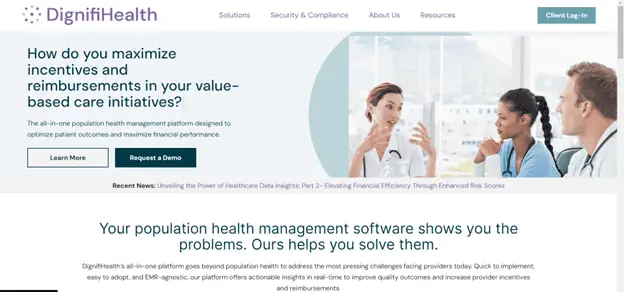
    DignifiHealth is a startup based in the US that makes software to help manage patients with long-term health conditions. Their software provides all the important information to doctors during appointments. This helps give each patient the best care for them at the lowest cost. It identifies what care each patient needs and when they need it. This allows quality care that saves money.

    IntelliProve

    Location: Ghent, Belgium

    Founded: 2020

    IntelliProve

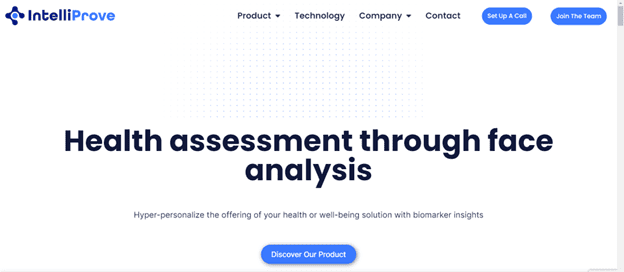
    IntelliProve is a Belgian-based health tech startup. They made an AI health checker that works by analyzing your face using a smartphone camera. Their software looks at small changes in skin color, expressions, and other visual signs.

    The algorithm also checks for areas with good blood flow to take remote biopsies. It can measure important health signs from a distance while gathering health data simply using a phone camera instead of in-person tests.

    Iodine Software

    Location: Texas

    Founded: 2010

    Iodine Software

    Iodine Software makes products that use AI to improve healthcare. One of their product- Interact, helps doctors and medical coders quickly find answers to questions about patient records. Another product uses machine learning to read clinical data and spot trends.

    Their goal is to help healthcare teams work faster and make better decisions for patient care. Overall, Iodine Software aims to make healthcare more efficient and get better results for patients by using the latest technology.

    Yalantis

    Location: Poland

    Founded: 2008

    Yalantis

    Yalantis has established itself as an innovative leader in healthcare software development over the past 15 years. The company is focused on building top-quality custom solutions for healthcare industry clients while upholding robust integrity standards.

    Yalantis aims to help healthcare organizations, from hospitals to telemedicine startups, effectively adopt new technologies. This allows their clients to improve healthcare delivery, unlock operational efficiencies, and drive better health outcomes.

    Arcadia

    Location: Boston, MA

    Founded: 2002

    Arcadia

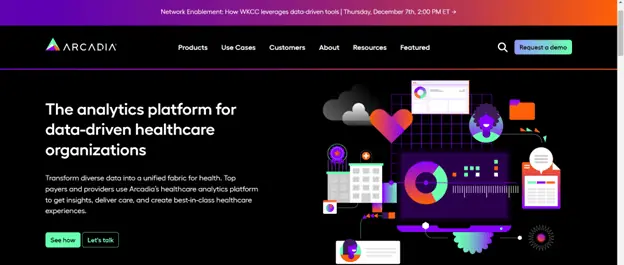
    Arcadia has developed a healthcare analytics platform that transforms data into practical insights that improve patient care. The company’s goal is to help healthcare organizations and customers use data analytics to better protect, extend, and save lives.

    The company cares deeply about making a difference and recognizes that healthcare is critical and personal. Arcadia aims to have real human impact by providing healthcare players the actionable intelligence to deliver quality, customized care to patients.

    Sophia Genetics

    Location: Switzerland

    Founded: 2011

    Sophia Genetics

    Sophia Genetics is a healthtech company specializing in genomic and radiomic data analytics to support medical research and precision medicine. Its name “SOPHiA” stands for Scale, Organize, PHenotype, Interpret, and Analyze, reflecting the company’s core capabilities.

    The company has developed an advanced analytics platform that mines complex molecular and medical imaging data to extract actionable insights. Several hospitals, labs, and pharmaceutical companies use Sophia Genetics’ SaaS platform to inform their work across rare diseases, hereditary cancer, and other specialty areas.

    Future of Healthtech

    The healthtech industry is in for tremendous growth and innovation that can transform healthcare delivery. Numerous emerging technologies have exciting potential to improve patient outcomes and experiences. As healthtech continues advancing, the future of healthcare looks incredibly promising.

    In the coming future, AI tools will enable earlier and more accurate diagnoses and personalized treatment plans. Virtual reality (VR) and augmented reality (AR) will enhance surgical training through realistic simulations. Surgeons can also use AR for real-time guidance during procedures. VR/AR will be able to provide immersive pain management solutions.

    Wearables and implantable devices will allow continuous monitoring of vital signs, activity, sleep, and internal conditions like blood pressure. This can help detect health issues early.

    Other advances like gene editing, 3D printing of customized implants/prosthetics, telehealth, and remote monitoring will make healthcare more personalized, preventive, and accessible.

    In summary, emerging health technologies are expected to revolutionize healthcare delivery, leading to better outcomes, lower costs, and increased access.

  • How To Outsource Marketing – Complete Guide

    How To Outsource Marketing – Complete Guide

    When in-house teams are at their limit and pushing campaigns over the line becomes a real struggle, there’s a smart move businesses can make to ease those operational pressures and keep things running like a well-oiled machine, i.e. outsourcing important marketing tasks to specialised third-party experts. 

    That being said, outsourcing is no walk in the park and comes with its own sets of challenges. You’ll need to find the right third-party provider, make sure they align with your objectives, manage collaboration effectively and maintain clear communication throughout the process. 

    If done right, it can do wonders for your business. However, it requires careful planning and oversight to succeed. 

    And that’s exactly what we’re going to help you with! We’ll be taking you step-by-step on how to outsource marketing process smoothly.  By the end of this guide, you’ll have the knowledge and insight to achieve your marketing goals effectively. 

    Platform 
    What Is It Used For? 
    Visit
    Upwork 
    One of the largest freelance marketplace that connects businesses with independent marketing professionals and agencies worldwide.  
    Fiverr
    An online platform that connects you with the top 3%, of highly-vetted virtual assistants to access a wide range of marketing expertise.
    Wishup
    An online platform that connects you with top 3%, of highly-vetted virtual assistants to access a wide range of marketing expertise.

    What Does it Mean to Outsource Marketing?

    Let’s say you have specific marketing projects that require specialised skills in order to be completed. If you were to hire a full in-house marketing team to tackle all of your marketing tasks, you’d need to employ different individuals with expertise in each area. This could bring up your costs and consume a lot of your time as you’d have to pay salaries, provide training etc. 

    As a solution, you can simply outsource your marketing efforts. This means collaborating with a third-party marketing agency or specialists who excel in specific areas like social media, content, SEO, or PPC. By doing so, you gain access to their specialised skills and knowledge without the need to hire and maintain a full-time team in-house.

    There are three routes you can take when it comes to outsource marketing : 

    • Outsource your marketing in full 
    • Keeping all of your marketing efforts in-house
    • Using a combination of both 

    Requirements differ from business to business. The approach you select is determined by a company’s financial situation, capacity and skill-sets of the current in-house team. 

    The Advantages of Outsourcing Marketing

    Outsourcing marketing can offer numerous benefits to businesses of all sizes. Here are some of the key advantages:

    • Reduced costs: Hiring an in-house marketing team can be quite expensive, especially for small businesses. However, outsourcing marketing can help you save a lot of money on salaries, benefits and overhead costs. 
    • Access to expertise: Marketing agencies provide access to skilled professionals who can develop and implement effective marketing campaigns from scratch. This is especially helpful for businesses that don’t have the in-house expertise to do it themselves. 
    • Flexibility: Outsourcing offers you the flexibility to scale your marketing efforts up or down as needed. You can also choose to outsource specific marketing tasks, such as social media management, content creation or SEO.
    • Fresh perspective: Marketing agencies stay up-to-date with the latest industry trends and successful strategies. They can provide you an objective view on your current marketing strategies, identify new opportunities and develop innovative marketing campaigns. 
    • Increased efficiency: Marketing agencies have the tools and resources to be more efficient than most in-house marketing teams. They can also utilise their experience to get better results faster.
    • Access to global markets: Outsourcing marketing to a company in another country can give you access to a wider range of customers. This can be especially beneficial for businesses that are expanding internationally.
    • Increased scalability: Having an experienced team of outsourced marketing professionals allows you to handle increased workload easily without having to expand your internal staffing. This is crucial for businesses who experience fluctuations or growth in demand seasonally. 

    The Disadvantages of Outsourcing Marketing 

    Getting your marketing tasks outsourced is a double-edged sword. While it certainly takes off the load and makes things easier for you, there are also challenges to it. Here are some of the potential disadvantages to outsourcing marketing: 

    • Lack of control: When businesses resort to outsourcing their marketing tasks, they face the issue of having limited control over planning strategies, creative direction and execution of marketing campaigns. While agencies or professionals  typically maintain a line of communication to keep you in the loop, however, you may not have the same level of control if you were handling your marketing efforts in-house. 
    • Exposing confidential data: To give the outsourcing company a comprehensive view of the company’s ongoing marketing efforts and success, it may be essential to share sensitive information such as sales data, ROI figures, product information, etc. This could pose security and confidentiality risks. It’s essential for companies to have legally-binding confidentiality agreements, preventing agencies and professionals from sharing any data with outside sources. 
    • Ineffective communication: When you’re working with an outsourcing team, particularly one situated in a different country or time zone, you may face issues like project delays, misinterpretations, communication breakdowns, and more. 
    • Hidden costs: When you’re outsourcing your marketing tasks, hidden costs can pop up unannounced. These costs may not be apparent immediately but can add up over time, impacting your budget in the long run. This could include management fees, coordination costs, change orders and more.
    • Quality issues: Another issue associated with outsourcing marketing could be inconsistent output. There could be instances where the outsourcing agency or experts may not properly reflect the need or identity of your company. You may face issues with creativity, messaging or overall effectiveness of the marketing materials. 

    What Parts of Marketing Should You Outsource? 

    Let’s dive into the different aspects of marketing where you could consider outsourcing a third-party: 

    Content Marketing

    Authoritative and well-informed content can boost your visibility and position your business as a thought leader. But what does it matter if it’s written or created by people outside of your organisation? For starters, outsourcing content can bring a lot of different perspectives, time and resource efficiency, access to specialised skills, and content consistency 

    You see, businesses can easily outsource various types of content, including blogs, articles, infographics, videos and social media content. And to make things easier, entrepreneurs can easily visit sites like Upwork and Fiverr to find the desirable agency or freelancer, which is great because you also get to vet a professional’s work before fully committing to them. 

    Email Marketing

    Worried about bombarding your prospect with too many emails of being lost in their inbox altogether? Hiring an email marketing agency could make a world of a difference. 

    For instance, they could create hands-off, lead-nurturing workflows to shoot emails automatically based on a user’s actions. They could study when a user clicks on a social media ad or plays a video, and create an email marketing strategy accordingly. You won’t have to do all the manual and administrative work yourself. Instead, you can leave it to the professionals and focus on what you do best.

    Social Media Marketing 

    There are plenty of perks to keeping an in-house social media team. You get to have direct control over the output, there’s immediate accessibility to the team, they’re better equipped to incorporate strategies specific to the brand’s unique needs and audience, and the list goes on.

    But here’s the thing: if you’re a smaller company working a tight budget, hiring in-house social media managers won’t just be feasible. 

    Here’s where outsourcing could be of great help. Having said that, you don’t have to hand over your entire social media strategy to a third-party group. There are ways to be smart about this too! But how? Well, you can delegate specific tasks. Let’s say you wish to increase your brand’s visibility on Instagram. You could bring in an agency that solely focuses on that. They could handle everything for you, from posting stories to reaching out to influencers and getting them to promote your product. It’s all about finding the right balance and finding the approach that suits you best. 

    Search Engine Optimisation (SEO) 

    If you’ve a great website, but it’s buried on page 10 of Google, no one’s really going to find it. That’s where SEO comes in. It aims to put your site right at the top of search engines and make it more visible when people search online.

    Search engines like Google constantly change their rules and algorithms to refine their ranking process. SEO experts can determine the most effective strategies for your site. For example, even if your website has great content and is packed with the right kind of keywords, a slow loading speed could hurt your search ranking. This is the kind of insight only an expert can provide. Therefore, you can reach out to SEO agencies or specialists who are well-trained to do the job. 

    Outsourcing SEO to the right people means you’re tapping into that expertise without the hassle of hiring and training a full-time in-house team. 

    PPC (Pay-Per-Click) Advertising 

    PPC, which stands for Pay-Per-Click advertising, boosts your online visibility exponentially, and it’s important for a bunch of reasons. 

    For starters, PPC puts your brand exactly where your potential customers are looking i.e search engines and social media. Plus, you only have to pay when someone clicks on the ad. So, it’s a cost-effective way to get in front of people who are actively searching for your offerings. 

    Managing PPC campaigns can be super time-consuming and complex. When you outsource, you’re tapping into the expertise of professionals who know the ins and outs of PPC. They can craft ad copies, choose the best keywords, and make sure you’re getting most out of your budget. Plus, they’re up-to-date with the latest trends and algorithms.

    Influencer Marketing 

    Let’s say you run a fitness supplement brand, and you wish to promote your brand-new protein powder. What better way there is than making a fitness influencer advertise for it? You can reach out to influencer marketing agencies who can help you connect with fitness influencers. Another option is to visit dedicated influencer marketing platforms, finding the one that aligns with your brand, and reaching out to them directly. You can discuss potential partnerships, what you want them to do and lay out the goals of the campaign. 

    Marketing Strategy

    From attracting potential customers to nurturing leads, a successful marketing plan should cover everything. It’s literally the blueprint for all of your marketing efforts. So, you must understand your ideal customers, align campaigns with their needs, and stay updated on industry trends.

    Now, if you’re thinking of getting some help in this area, then opting to outsource marketing could be the appropriate decision. You’ll be hiring industry experts who know how to reach your target audience in creative, new ways. But we get it, not every marketing strategy can outsource their marketing strategy. 

    So, here’s an idea – you could hire a strategist to create the core strategy, like defining your buyer personas. And you know what? You can find such a strategist on Wishup. The platform will connect you with these virtual assistants who are in the top 3% of the talent pool, so you know you’re in good hands. Then, your in-house team can add the finishing touches to make it even more effective. 

    Marketing Analytics 

    A business’s marketing success depends majorly on how well they make use of data analytics. However, not every business has the data experts they need in-house to do the job. Plus, hiring and training a team of engineers and data scientists can be time-consuming and bring up your costs. 

    However, there are specialised agencies with necessary expertise to interpret this data and provide you with valuable insights. What’s great is that they can also offer different solutions based on your budget and needs. So, instead of incurring new costs or stretching your resources too thin, you can focus on creating outstanding products based on the insights provided by your marketing intelligence agency or professional. 

    How to Choose the Right Outsourcing Marketing Agency and Platforms: Step-By-Step Guide 

    Define Your Budget 

    Before you begin with your search, it’s crucial to have a clear understanding of your budget. Decide on the amount you’re willing to allocate to outsource marketing needs.Your budget will determine the type of agency and platforms you can work with, as well as the scope of your marketing campaigns. 

    Specify Your Marketing Needs 

    Identify your specific marketing requirements and goals. Do you want to improve brand awareness? Do you want to boost sales? Do you want to increase website traffic? Do you want to improve your brand’s social media presence? Having a clear, well-defined set of objectives will help you find the agency and platform that specialises in particular the areas where you need help with.

    Do Your Research 

    Start by conducting online research. Try to find agencies or freelancers that specialise in your industry or have experience working with businesses similar to yours. Pay attention to their client reviews, case studies, and online presence to gauge their credibility and track record. 

    Evaluate the Prospects You’re Considering 

    Once you’ve compiled a list of potential freelancers and agencies, evaluate them. Consider the following factors: 

    • Expertise: Determine if the agency or freelancers specialise in the specific marketing channels or strategies you require.
    • Portfolio: Review the prospect’s previous work to assess the quality of their work and creative capabilities.
    • Size and Location: Decide if their team size and location match your preferences and requirements.
    • Client References: Request references from their current or past clients to get insights into their working relationships and results.

    Request Proposals 

    Reach out to the shortlisted agencies and request detailed proposals. Ask for a breakdown of their services, pricing, timelines, and deliverables. Ensure the proposals align with your budget and marketing needs. This step will help you compare different agencies’ offerings.

    Interview Your Prospects 

    Schedule meetings or calls with the agencies you’re seriously considering. Use these interviews to clarify any doubts, discuss their proposed strategies, and assess their communication style and compatibility with your team. Questions to ask might include:

    • What sets your agency apart from others in the industry?
    • How do you measure and report on campaign performance?
    • Can you provide examples of similar projects you’ve successfully handled?
    • How do you handle unexpected roadblocks or changes in strategy?

    Make the Right Choice for Your Business 

    After evaluating proposals and conducting interviews, carefully consider which agency is the best fit for your business. Look beyond cost and consider factors such as expertise, communication, and cultural alignment. Make sure you have a clear contract in place that transparently outlines expectations, deliverables, timelines, and payment terms.

    By following these steps, you’ll be well on your way to selecting the right outsourcing marketing agency and platforms for your business’s success.

    Bottom Line?  

    Outsourcing marketing is a smart move for businesses looking to save time, gain expertise, and stay competitive. It’s a strategy that allows you to focus on what you do best while professionals handle your marketing needs. By partnering with the right experts and maintaining clear communication, you can truly make your business succeed. So, embrace it wisely.

  • 19 Profitable Business Ideas For Teens

    19 Profitable Business Ideas For Teens

    The journey into entrepreneurship knows no age. And for today’s students and teens like you, the world is brimming with opportunities. You can choose the match for yourself and give a kickstart to your very own businesses. Whether you’re creative, tech-savvy, or simply looking to make some extra cash, there’s a business idea waiting for you.

    Considering the options that are flooded out there in the market, it is surely not possible to filter out any one idea and start working on it. Numerous fancy ideas might sound very appealing, but in practice, they are impossible to implement without a lot of work, resources, and investment.

    So, here are the 19 best business ideas for teens tailored to specifically cater to you, keeping in mind your load of studies, your time to enjoy, the small investment pocket, and other factors. 

    So, whether you aim to earn some pocket money, save for college, embark on a journey towards financial independence, or set up a business, this guide is your gateway to unleashing your entrepreneurial potential. Let’s dive in and explore the world of teen entrepreneurship!

    Drop Servicing

    If you have a huge connection of professionals and a knack for connecting people, you can give it your time and also earn money in this process. 

    Essentially, in drop servicing, you act as a middleman and coordinate the details between the client who’s seeking service from you and the freelancer you’ll hire to get the work done. 

    To get started,  pick a niche that interests you and has demand. It could be anything from graphic design to content writing. Head to different platforms, like Upwork or Fiverr, to get the clients. 

    Side by side, also build a network of talented freelancers who can deliver high-quality work in the relevant niche.

    For example, if you are getting $100 from your client and getting it done in $65 from your freelancer, the margin of $35 is your earnings. 

    Platform
    How to Get a Gig?
    Commission to Be Paid
    Categories of Services
    Visit 
    Upwork
    Create a profile, apply for relevant gigs, and build a portfolio.
    Varies by project
    10k+ skills in categories
    Fiverr
    Create a seller profile, list your services, and promote your gigs.
    Varies by project
    500+ categories
    Freelancer
    Sign up as a freelancer, bid on projects, and showcase your skills.
    Varies by project
    1800+ categories 

    Dropshipping 

    If you are inclined towards eCommerce and want to start your own business, dropshipping could be your entry into the world of online retail.

    Dropshipping is a kind of eCommerce business model that allows you to sell products online without having to stock inventory. So, you partner with suppliers or manufacturers who handle inventory, packaging, and shipping, allowing you to focus on marketing and sales and manage your store. 

    You can create an eCommerce store for any niche that interests you, for example, flowers and cake delivery, electronics, pottery, stationary, fashion items, or more. To create your eCommerce store, you can head to platforms like Spotify, Wix, Weebly, or even your own site. 

    All you have to do is partner with reliable suppliers or wholesalers who offer to take care of the product’s inventory, packaging, and shipping. So, when there is a sale in your store, you can pass the order to the vendor so that they can process the order and ship it directly to the customer

    So, for example, if you are selling gadgets, and you made a sale for a headphone which your vendor costs you 10k, and you sell it for 12k, the margin of 2k is your earnings. 

    Platform
    Ease of use
    Pricing 
    Features 
    Visit 
    Shopify 
    Requires little technical expertise
    Starts at $29/month
    Wide range of features, including dropshipping integrations, payment processing, and shipping options
    Wix
    Easy 
    Starts at $14/month
    Easy-to-use website builder with a variety of e-commerce features, including dropshipping integrations
    Weebly
    Beginer-friendly 
    Starts at $12/month
    Website builder with a variety of e-commerce features, including dropshipping integrations

    Tutoring   

    If you excel at any skill or subject, for example, music, maths, physics, painting, or other, you can offer tutoring and earn a decent amount from this business. Besides, you can not just offer home tutoring or one-on-one classes. Instead, you can open it as a business by building a brick-and-mortar tutoring centre or start numerous online group classes. 

    Eventually, you can also set up a complete system and hire other professionals to contribute to this tutoring centre. 

    To get started, you need to identify the skill or subject you want to offer classes for, research the market rates, and you can start offering the classes. You can find the students in your neighbourhood or market yourself using flyers, social media, and creating ads to attract students. However, you can also register with renowned websites like Chegg, Wyzant, Smarthinking, and others to get more students. 

    The earnings from tutoring can vary based on your location, subject, and level of expertise. On average, you can make anywhere from $10 to $100 per hour as a tutor. 

    Platform
    Support Subject 
    Tutoring Formats 
    Pricing 
    Chegg
    Math, science, English, foreign languages, business, economics, history, social studies
    One-on-one tutoring, group tutoring, test prep
    You can earn approx $20 per hour, or a fixed salary as a tutor
    Wyzant
    All subjects, including math, science, English, foreign languages, business, economics, history, social studies, music, art, and more
    One-on-one tutoring
    You can set your own rates
    Smarthinking
    Math, science, English, foreign languages, writing, test prep
    Live tutoring
    You can earn anywhere between $12 – $21 per hour
    Own Website
    You can stick to the subjects you want to teach
    You can decide 
    Depends on how many students you get in different sessions 

    Child Care

    If you have a genuine passion for spending quality time with children and take delight in taking care of them, you have two options to explore. Either you can offer childcare services as a freelancer or establish a home-based daycare centre with the necessary permits.

    If you opt to open a daycare centre in your home as a business for regular income, you’ll have to take care of children during the hours their parents are away. You will have to take care of your well-being and offer nutritious meals as part of the service. 

    However, on the other hand, if you choose to provide childcare as a freelancer, you’ll visit the children in their own homes and take care of them while their parents are occupied with their schedules or when they are out of the house for XYZ reasons.

    Initially, as a freelance babysitter, you can typically earn around $20 per hour, while if you offer daycare with additional specialised child care services, you can charge higher rates.

    Selling Handmade Goodies- cards, candles

    Do you believe that your handmade creations have the power to infuse more love into someone’s living space or add an extra touch of charm to their special occasions? Or, do your handcrafted goodies radiate adorableness and bring a unique, creative flair to gifting?

    So, if you think your handmade treasures have the ability to transcend mere objects and become tokens of affection, symbols of thoughtfulness, and carriers of cherished memories, they deserve to be gifted to many, bring smiles to their faces, and earn you profit.

    To sell your handmade goodies, you can create a professional website or utilise platforms like Etsy to display and sell these stuff.

    This Etsy store might take some time to take up, but after a certain time and after you post a lot of your pictures, a day will come when your products will get recognition and earn you as much.

    Freelance Writer 

    If you love to write, whether it’s stories, blogs, essays, or articles, freelance writing can be a creative and flexible way to earn money.

    So, firstly, you have to identify the topics you’re passionate about or have expertise in, such as technology, travel, vehicles, or the health sector.

    Create a portfolio of your writing samples to showcase our skills and expertise. 

    To attract clients, you can create your profiles on Upwork or Fiverr to advertise your services. 

    Now, you can reach out to the clients who posted for the requirements, including blogs, articles, writing jobs or magazines in your chosen niche with relevant pitches. And after you secure a project and complete their work, you can get paid by these clients. 

    However, you can also start a blog to showcase your writing and monetise it by executing different marketing strategies, including affiliate marketing, running ads, guest posting and more. 

    Social Media Management 

    If you love scrolling through Instagram, tweeting, or posting TikToks, social media management could be your ticket to earning money while doing what you enjoy.

    As a social media enthusiast, as you might have a strong grasp of social media trends, you can leverage this knowledge to help businesses and individuals enhance their online presence and earn money using this skill.

    To get started with this field, determine which platforms you want to work more on, whether it’s Facebook, Instagram, TikTok, LinkedIn, or Twitter. Then, you can help the businesses that lack the efficiency to manage social media. 

    To go into social media management, you have to manage the entire social media, their messages, content creation, responding to the comments, adding stores and more. 

    However, to get help in social media management, you can take the help of the tools. 

    Platforms 
    Supported Social Media Platforms
    Key Features
    Pricing
    Visit
    Hootsuite
    Twitter, Facebook, Instagram, LinkedIn, Pinterest, YouTube, TikTok, Foursquare, Tumblr, WordPress, Google My Business
    Social media scheduling, monitoring, analytics, collaboration
    Starts at $49/month
    RADAAR
    Twitter, Facebook, Instagram, LinkedIn
    Social media scheduling, monitoring, analytics
    Starts at $49/month
    SocialBee
    Twitter, Facebook, Instagram, LinkedIn, Pinterest, YouTube, WordPress, Tumblr
    Social media scheduling, monitoring, analytics, collaboration
    Starts at $19/month
    Buffer
    Twitter, Facebook, Instagram, LinkedIn, Pinterest, YouTube
    Social media scheduling, analytics, collaboration
    Starts at $15/month
    Social Pilot
    Twitter, Facebook, Instagram, LinkedIn, Pinterest, Google My Business
    Social media scheduling, monitoring, analytics, collaboration, white label reports
    Starts at $25/month

    Transcriptionist 

    You can put your knack for listening to details, typing skills, and understanding English grammar usage to great use by giving a kickstart to your transcription business. 

    To get started, you have to transcribe the spoken content into written content. You might receive audio files, videos, podcasts, meeting recordings or more from clients to convert them into documents. 

    Even though there are AI transcription tools out there in the market, people still prefer having human transcriptionists as they are the only ones who do the work with accuracy and maintain the nuances of the content. 

    You can find clients from Upwork, Fiverr, Freelance.com, or other relevant sites like Rev, TranscribeMe, GoTranscript, or others to find transcription opportunities. You can also transcribe the classroom notes and sell them to the students. 

    Platform
    Finding Work 
    Pay 
    Flexibility 
    Visit
    Upwork
    Freelance marketplace
    Competitive
    Flexible
    Fiverr
    Freelance marketplace
    Competitive
    Flexible
    Freelance.com
    Freelance marketplace
    Comparatively lower than other freelance marketplaces
    Flexible
    Rev
    Transcription service
    Consistent
    Less flexible
    TranscribeMe
    Transcription service
    Consistent
    Less flexible
    GoTranscript
    Transcription service
    Consistent
    Less flexible

    Data Entry 

    Data entry can be a straightforward and reliable way to earn money if you thrive on accuracy, organising stuff, and having efficient digital skills.  

    All you have to do is input the information from digital forms, paper forms, or other spread data into digital databases, spreadsheets, or systems to compile them in one data sheet in an organised way.

    However, when you are in the data entry business, you have to be sure that you have an eye for detail, as most of the data entry work requires 99% assurance of accuracy. So, when you are taking up this work, ensure the filing work is in place to avoid making mistakes. 

    To get the data entry jobs, you’ll have to find which companies are looking for specialists. You can directly search for these jobs on Google.  

    The payouts for data entry jobs would depend completely on your skills, locations, qualifications and other factors.

    Pet Sitting 

    If you are one of those pet lovers who adore animals and enjoy spending time with them, pet sitting can be enjoyable and give you a decent income.

    So, you can either be a dog walker or pet sitter or open a pet sitting centre to make it your business. 

    Now, if you are freelancing as a pet sitter, you can offer a variety of services such as dog or pet walking, daycare, and overnight boarding. You can work with people in your neighbourhood or dog parents in your community to care for their pets when they are away.

    However, if you want to make it entirely your business and offer this service on a bigger scale, you can pen a pet care centre with the required permits and insurance to protect yourself and your clients from financial liability.

    Once everything is in place, you can start advertising your pet-sitting centre to potential clients. You can create a website, distribute flyers, and post on social media.

    If you are considering starting a pet-sitting centre, be sure to do your research and ensure that you are prepared for the challenges and rewards of this type of business.

    Affiliate Marketing

    If you are a tech-savvy person with a strong online presence and a great deal of followers who trust and value your content and information, you can monetise this. Whether you run a website with decent traffic, are a social media influencer, or manage a YouTube channel with a substantial number of subscribers along with thousands of hours of views on your videos, you can delve into affiliate marketing.

    Affiliate marketing involves prompting a product on your company’s behalf on your channel through your content. So, any action or sale that your referral generates will earn you an income as a commission. 

    So, as there is a micro-influencer social media marketing trend, even if you have a small following, you can go for affiliate marketing. 

    You can approach local small businesses in your area trying to build their presence in marketing. You can approach them, ask if they want to promote their business, and get started with affiliate marketing. 

    Car Washing 

    If you are a tech-savvy teenager curious about cars, exploring different cars, and keeping them spotless, you can start with a car washing business and earn an income.

    As everyone wants their cars to look shiny but do not have all the time to bring out their sparks, you can do this job for them. This way, you can earn pocket money and spend more time with different cars that you might love in your neighbourhood. To get started, all you need is a bucket, a soft sponge, elbow grease for polishing and a window cleaner. 

    However, if you want to set up a business out of it, you can open a car washing area and market it in the neighbourhood to offer basic or advanced car washing and cleaning services. 

    To offer the car washing service, you can charge anywhere between $15 and $30 for a standard car wash. Moreover, you can offer additional services like waxing, interior cleaning, or tire shining to increase your earnings.

    Videography and Photography 

    Do you just crave to capture moments and wait until you get the best shots? If you have that flair, videography and photography are excellent side hustles you can take up while earning money.

    So, you can start by offering freelancing photography services to businesses, advertisers, small creators, artists, and functions. 

    You can look for businesses who want to conduct photoshoots for their products. Look out for local events that are taking place and partner to cover them. You can also find artists or social media creators who want professional photography and videography services and offer them relevant services. 

    To get started with this business, you need to invest in the required essential instruments. However, to get started, you can also initially seek these instruments on rent. 

    You can use social media to promote yourself, create your own website, approach event management companies, and try other methods to get videography and photography jobs. 

    Podcasting

    One of the highest-earning podcasts is the Joe Rogan Experience, which makes about $800,000 per episode.

    So, even if you start small, you can make at least $300-$1000 for at least a podcast. 

    It is much like starting a YouTube channel or creating social media content. However, if you just want it faceless and are good at speaking, storytelling, or debating, or if you are good at creating visualisation, you can just do great with podcasting. 

    Anyone who shares their podcast, talks or discusses a particular topic or event. 

    So, you can start with co-hosting or solo podcasting.

    In solo hosting, you create and manage a podcast entirely on your own. In Co-hosting, on the other hand, you partner with one or more individuals to create content collaboratively. 

    So, whether you choose co-hosting or solo hosting, podcasting offers a platform for sharing your insights, stories, and interests with the world. It’s a versatile and rewarding side hustle where you can carve your niche, connect with audiences, and potentially earn income while doing what you love.

    Custom Cake Bakery 

    If you have a passion for baking and enjoy creating delicious, visually stunning cakes, muffins, cookies, or other bakery items, you can start a custom cake bakery which can be a delightful and profitable side hustle or a full-time business for you.

    Custom cakes are always in high demand for special occasions like weddings, birthdays, anniversaries, and other celebrations. Turning your baking skills into a business allows you to cater to those seeking unique, personalised cakes.

    To get more business, you can upload pictures of your bakery items and unique cakes on social media, collaborate with different cake bakery stores, or spread the word in your neighbourhood to start with small orders. However, with time you can also create your website to get bigger and bulk orders and set up an entire bakery business. 

    The earnings from a custom cake bakery can vary widely, depending on factors such as your location, reputation, and the complexity of your cake designs. 

    Moreover, custom cakes are often priced per serving, ranging from $3 to $15 or more per slice. So you can decide the pricing for your cakes accordingly. 

    Card And Stationery Designer

    If you have a design flair and crafting skills, and you can do it manually or with different designing tools, you can start a card and stationary designing business to produce greeting cards, invitations, stationery, calendars, and other paper goods. 

    Before you start with the design business, hone your design skills and get equipped with a few design tools, like Canva, Adobe, Visme, and others, that can help you in your design work.

    So, to get started with the design business, you need to either source high-quality materials for printing, including paper, ink, and envelopes, or you can completely outsource the printing work.

    To showcase and sell your designs, set up an online store or use platforms like Etsy. you can also create a professional website and use social media for marketing. 

    Designing tool 
    Supported Features 
    Supported Platforms
    Pricing 
    Canva
    Graphic design, presentation design, video editing
    Web, mobile
    Free, paid plans start at $9.99/month
    Adobe Creative Cloud
    Graphic design, web design, video editing, motion graphics, photography, illustration
    Desktop, mobile
    Subscription plans start at $29.99/month
    Visme
    Infographic design, presentation design, video editing
    Web, mobile
    Free, paid plans start at $15/month

    Print On Demand 

    If you have the creative flair for creating illustrative designs that people like on their goodies and can relate to them, then Print On Demand (POD) is an ideal side hustle for you or a great way to set up a business.

    To start a POD business, you must craft custom designs or unique images and apply them to a wide range of merchandise, from stylish T-shirts to eye-catching phone cases, key rings, cards, and beyond. You have to create designs that can add a personal touch to everyday items, making them highly marketable.

    So, you can look at numerous websites like Printify, Printful, SPOD, Redbubble, and others that take care of the printing and shipping, while you are responsible for the designing work. 

    Print-on-demand website
    Products offered
    Shipping options
    Pricing
    Printify
    T-shirts, hoodies, mugs, posters, and more
    Worldwide shipping
    Varies depending on the product and shipping option
    Printful
    T-shirts, hoodies, mugs, posters, and more
    Worldwide shipping
    Varies depending on the product and shipping option
    SPOD
    T-shirts, hoodies, mugs, posters, and more
    Worldwide shipping
    Varies depending on the product and shipping option
    Redbubble
    T-shirts, hoodies, mugs, posters, stickers, and more
    Worldwide shipping
    Varies depending on the product and shipping option

    Gift Hamper Creation 

    If you have a pretty contrivance of selecting the right gifts and arranging them rightly in the perfect gift setting, and you enjoy curating thoughtful assortments, then opening a gift hamper creation will be a delightful and profitable business for you. 

    Start by considering your target audience and the occasions you want to cater to. Whether it’s birthdays, weddings, anniversaries, or corporate events, there’s always a demand for beautifully crafted gift hampers. 

    Select a few niches you would want to create gifts for, like corporate gifts, returns gifts for marriage parties, invitation cards and gift hampers, birthday hampers, or more. 

    After you have these niches in mind, create different relevant kinds of hampers for all these types with different price ranges to make them accessible to everyone. 

    To market these, you can create your own website, your online store, and market them on social media, in your WhatsApp groups, or by collaborating with nearby gift shops. 

    Delivery Service 

    If you do not want to dig deep into your creative side and are done with doing the work that takes more of your mental energy, and now you want to physically move out to earn extra income, consider starting a delivery service. 

    You can start by delivering food, groceries, packages, or even errands. There is a growing demand for these services, which makes it a viable option for part-time work.

    So, to get started with the delivery service, you can join popular delivery platforms like Uber Eats, Grubhub, DoorDash, Postmates, or Instacart, depending on your chosen niche. These platforms provide access to a customer base and a convenient way to find delivery requests.

    However, you can establish an independent delivery service if you wish to set up a complete delivery business. For that, you must register your business, get the vehicles, and hire delivery partners. 

    As an independent delivery business, you can set up your own pricing. Or if you join the platforms, you’ll have to work with their payout rates, and that will vary significantly based on factors like location, demand, and the frequency of deliveries. 

    Wrapping Up

    In a world where diverse opportunities fill the space and have immense space for business ideas for teens and students, you can explore a range of these ideas tailored to your unique circumstances and interests. From drop servicing and tutoring to custom cake baking and print-on-demand ventures, there are different roads for creativity, skill development, and income generation.

    So, whether you want just to make some extra pocket money or start a journey toward becoming an entrepreneur, these business ideas can serve as a starting point to unleash your entrepreneurial potential and make the most of your talents and passions.

  • 20 Easy Side Hustle Ideas

    20 Easy Side Hustle Ideas

    In today’s fast-paced world, when dearness is just walking upward, every one of us seeks to have an extra income to supplement our regular earnings. This quest to earn some extra cash has boosted the search for “easy side hustle”, as people want small gigs out of their primary jobs.

    The boost of side hustles is so much so that 39% of working Americans have a side hustle, and 44% say they’ll always need one to support their living style. This statistic underscores the fact that people are getting appealed to side hustles to diversify income streams and achieve their financial goals. 

    So, to help you unlock the potential of side hustle, we have listed 20 proven, easy side hustles that can help you make more money, pad your savings account, pay off those debts, or simply enjoy a little extra spending cash. 

    The list of side hustles is diverse. So, you need to find one that aligns well with your skills, interests, and schedule. Whether you’re a new entrepreneur or just looking to earn a few bucks on the side apart from your job, read the following ideas to discover the possibilities.

    Start Drop Servicing 

    Drop servicing is a business model where you act as a middleman between clients seeking specific services (e.g., web design, social media marketing, content writing) and freelance professionals seeking opportunities to provide those services.

    You can list these services in an outsourcing platform, like Upwork, Fiverr, LinkedIn job, and more, where you can attract clients. Then, on the other side, you use the same or another outsourcing platform like Indeed, freelancer.com or more, where you can hire skilled freelancers at relatively lower prices and get your work done. 

    For example, let’s say you have a client on your platform who requests a website design. You find a talented web designer on another outsourcing platform to complete the project. You charge the client $1,000 for the design, and you pay the freelance web designer $500. The $500 difference between what you charge the client and what you pay the freelancer becomes your profit, and this is how you monetise with this drop-servicing business model.

    Dropshipping

    Dropshipping is among the most popular eCommerce side hustles and even the mainstream business of many. It involves setting up an online store, using platforms like Shopify or more, and selling products without investing in inventory and storing them. 

    To bring this service into practice, you partner with manufacturers or the suppliers of the goods who handle all the product goods, storage, packaging, and shipping. When the customer purchases from your store, you forward the order to the partnered company so that they can process the order and ship it directly to the customer. 

    Your role in this entire process is marketing, being a silent bridge between the customer and the supplier, and managing the whole of the online store.

    For example, let’s say you run an online store that sells niche-specific sports equipment. When a customer orders a football from your store for Rs.1000, you relay the order details to your trusted football supplier, who takes Rs. 700 from you. You earn Rs. 300 as profit, acting as the intermediary between the customer and the supplier.

    Dropshipping as a side hustle can pay you immensely if you choose the right niche and products. Besides, it requires a relatively low upfront investment compared to traditional retail.

    Get Into Freelance Writing 

    Freelance writing is a versatile and accessible side hustle that involves creating written content for various clients or publications. Many businesses and websites constantly need content, such as blog posts, articles, marketing materials, and more. So there’s an opportunity for sure.

    Even though we have the generative AI and tools that are performing the writing tasks, the writers are still in demand to develop the original content. 

    You can access this side hustle to earn money if you have writing skills. You can offer your writing services to clients who need blog posts, articles, or website content. For instance, a business might hire you to write blog posts on gardening tips. You’ll research, write, and deliver these articles to the client.

    You can create a profile on freelance platforms like PeoplePerHour, Upwork, Fiverr, or Freelancer.com or pitch your services directly to companies and websites in your niche through your connections on LinkedIn. Finding a company might take a few days, but it will surely pay you enough.

    Besides, Freelance writing is a flexible and easy side hustle as it allows you to work when and where you want, making it an excellent option for those with busy schedules.

    On average, as a freelance writer, you can make $24 per hour.

    Take Online Surveys 

    Taking online surveys is a type of market research activity conducted by companies, market research firms or brands, where they reach out to individuals to ask them to provide their opinions and feedback on various products, services, or topics through online questionnaires or forms. 

    You sign up with survey websites like Swagbucks, Survey Junkie, Chegg, LifePoints, or InboxDollars. These platforms are connected to market research companies keen to get consumer opinions. You can participate in surveys on these platforms, which typically take 10-12 minutes, and get paid for providing feedback. 

    For instance, you might be asked about your preferences for a new snack product.

    While taking these surveys would not make you rich, they can be a convenient way to earn pocket money or gift cards. Survey payouts are typically anywhere between $0.50 and $5 per survey. The more surveys you can complete daily, the more money you can make. 

    Be cautious and choose reputable and secure survey websites to ensure you’re not wasting your time. 

    Become A Data Entry Clerk 

    Becoming a data entry clerk involves the KRAs, including inputting and arranging the data and information into spreadsheets, databases, or other digital systems for the companies.

    For example, you might be hired as a freelance data entry clerk for a company that wants to compile a list of customer information from handwritten forms into a digital database. Your role in this would be accurately transcribing the data from the documents into the computer system.

    If you have an eye for detail and your fingers work well with typing, data entry is a suitable and easy side hustle for you.

    You can find data entry opportunities on job search websites, freelancing platforms, or by reaching out to local businesses. While data entry may not be the most glamorous job, it offers a straightforward and steady source of income. So you can consider it to make it your side hustle.

    You can make $10-$30 per hour as a Data Entry Clerk.

    Be A Customer Service Representative

    As a customer service representative, you will typically be expected to handle phone calls, emails, or chat messages from customers and provide them with support and information. 

    Not all companies have customer service representatives in their in-house teams. Instead, they seek to hire remote customer service representatives to assist them with this recurring task. 

    You are a good fit for this job if you are good at solving problems, talking to people, and handling force situations calmly. 

    Your good communication skills and having a quiet workspace can help you grab this excellent side hustle. Often, when working remotely as a freelancer, you are paid per call or chat that you handle. At least, that is what Barbeque Nation and other companies do. 

    Look for remote customer service job listings on job boards like Indeed, Hirect, and LinkedIn, or check with companies like Amazon, Walmart, or others directly, especially during peak seasons like holidays when they often hire extra help.

    As a Customer Service Representative, you can make $10-$15 per hour. 

    Become A Bookkeeper 

    As a bookkeeper, you help small businesses, new entrepreneurs, and freelancers manage their finances, keep track of expenses, and help them prepare for tax season. 

    If you have a background in finance or accounting, you can become a freelance bookkeeper for companies or set up your own bookkeeping business. 

    Bookkeeping can be a lucrative side hustle if you especially own the financial skills, as many businesses prefer to outsource this function to save time and ensure accuracy in their financial records. So, there can be immense opportunity for you in this field. 

    You can create a Fiverr profile to show off your services and attract clients, take courses if you want to upgrade your skills, become a certified bookkeeper, and take up on your business to take it to new heights.

    You can make $11-$25 per hour as a bookkeeper. 

    Become A Virtual Assistant 

    Virtual assistants are more like virtual personal assistants who offer services in this agile digital world. As a VA, you provide remote support to businesses or entrepreneurs and handle tasks like email management, scheduling appointments, data entry, and more.

    For example, you can be a VA for a new entrepreneur who handles everything independently, helping her manage her mailbox and appointments, reminding her of the important dates and meetings, helping her with the tasks, and doing more. 

    If you want to leverage your administrative and organisational skills, this hustle is really for you. You can find virtual assistant gigs on Upwork, Fiverr, Wishup, and more platforms. If you are not a trained VA, you need not worry, as many companies that require VAs offer training sessions of a few days, which is uncertain, but you can always check for the training option. As a VA, you can make $18-35 per hour.

    Start Tutoring 

    Starring tutoring means sharing your expertise and knowledge with others by offering classes. If you excel in a particular skill or subject, you can provide tutoring classes for students of all ages online or offline. There are school-going kids, undergraduates, or other students willing to take up different courses related to different subjects or skills from the subject matter experts. 

    For example, suppose you excel at classical music, Chemistry, Maths, or other skills and subjects and have a diploma or expertise. In that case, you can offer the classes to the interested group, online or offline. 

    To attract students, you can head to platforms like Wyzant or Chegg Tutors, create your tutoring website, use word of mouth in your city, or join other tutoring websites as a tutor to find students and build your tutoring business.

    Sell Handmade Crafts

    Selling handmade crafts means encashing your passion for painting, crafts, knitting, creating pottery, custom candles, jewellery, or other handmade goodies by selling your products in your spare time. 

    For example, if you have the passion and talent to create unique and beautiful scented candles, you can make them and list them online for sale. You can head to different platforms that allow you to sell handmade goodies, including Etsy or Amazon. However, you can also create your own website, sell your handcrafted goods online, or take them to the local fair and market.

    Initially, you can create a balance between the costs involved in the making of the candles and the sales prices. And later, when you have a slight hold on the market, you can refine your pricing and eventually earn more.

    Run An Etsy Store 

    To run an Etsy store, you must create an online one on the platform to sell anything you make under different categories, including handmade or vintage goods, digital assets, or craft supplies.

    For example, even if apart from handmade aesthetics like jewellery, candles, books, calendars or other stuff, you are good with resting online graphics, you can list different templates, logos, or more, and the sky is the limit. 

    You can list everything under different categories and pricing depending on the average market price and the quality of your product. If your Etsy store takes up, you can earn $200-500 monthly or more. 

    Become A Travel Agent

    Suppose you like planning trips for your peers. In that case, you can become a professional travel agent who will plan and organise travel itineraries and experiences for clients, helping them find the best deals and experiences for their trips.

    For example, if you enjoy exploring travel destinations and have good organisational skills, becoming a travel agent can be a rewarding and easy side hustle. You can either work independently or join a travel agency. Or if you choose to be a travel agent, as a travel agent, you earn commissions from bookings and may charge service fees for your expertise. 

    Your earnings as a travel agent will solely depend on the kind of trips you plan, your destinations, and your client base. 

    Social Media Management

    As a social media manager, you’ll be expected to help businesses and individuals create and maintain a strong online presence on platforms like Facebook, Instagram, Twitter, and LinkedIn. Your responsibilities may include creating and scheduling posts, responding to comments, and analysing performance metrics.

    So, if you can search for industry-specific posts, create trends, or market the products in the social setup well, you can offer your services as a social media manager to businesses looking to improve their online marketing.

    You’ll receive monthly payments for each client whose social media profiles you manage under your care. This means that as you expand your client base and take charge of more social media accounts, to grow your monthly income accordingly.

    Go For Babysitting Or Child Care 

    Being a babysitter to provide babysitting or child care would involve looking after children when their parents or guardians are unavailable to ensure their safety, well-being, and entertainment. Parents might hire you to watch their children during evenings, weekends, or special occasions. Your role would include keeping the children safe, preparing meals, and engaging them in activities.

    You can offer your services as a babysitter or childcare provider to families in your community. You can also head to websites like Bark.com to register as a babysitter and attract parents who live near you. 

    This is one of the easy side hustles for those who love spending time with budding buddies. And the average rate to babysit starts at $20 per hour, which is great for a side income. 

    Sell Print-On-Demand Products

     If you have the talent to create illustrations or good photography skills that you know people like on their goodies, including t-shirts, mugs, books, pens, or other products, you can get started with a print-on-demand business. You can create custom designs or get unique pictures for merchandise such as T-shirts, mugs, phone cases, and more, get them printed and then sell those products online.

    If you are a talented and quirky graphic designer, you can create unique designs and upload them to print-on-demand platforms like Printful or Teespring. These platforms handle product production, printing, and shipping with your designs. So, when a customer orders items featuring your designs, you earn a commission for each sale.

    This is an easy side hustle for those who already love designing. You can earn as much from this business as possible by uploading the maximum designs.

    Become A Pet-Sitter Or Per-Day Care

    Pet-sitting or taking care of dogs is an easy side hustle for all the dog lovers out there. You’ll be responsible for caring for the pet or dog while their owners are at work or vacationing. You can also opt to provide small dog walking services in your area if you have limited time. 

    You can approach the pet owners in your area, market yourself on your social media, or head to relevant local websites that offer different local services on call. 

    So, if you take care of the dogs for a few days, you can set your pricing or go for the $20-30 per visit or day payout. 

    Rent Out Your Space 

    If you have a room empty in your house, a spare apartment, or a retail space, you can rent it out and enjoy a passive income. Plus, you can also potentially see its value appreciated over time.

    If you have a separate house, you can rent it on Airbnb or other platforms like Vrbo or Booking.com.

    You can also rent your floors or apartment to immigrants or students looking to rent a flat or room in your area. 

    As you already spend a lot on maintaining and taking care of your house, you can use that space to rent and generate income by doing nothing but just renting out the space. 

    Work As A Transcriptionist

    As a transcriptionist, you’ll get content files from the clients and be responsible for writing what you hear from these content assets. The content assets can include audio, videos, phone calls, recordings of the meetings, or maybe even legal proceedings. 

    If you have a good ear that listens to all the details and quick fingers, you can be a transcriptionist for clients. If you consistently deliver accurate transcription, you can surely build a client base and earn a regular income as a freelancer with this easy side hustle idea.

    Register yourself with websites, including Rev, TranscribeMe, GoTranscript, and others, to attract clients and work for them. You can make $15- $25 an hour as a transcriptionist.

    Share The Rides 

    Sharing a ride means, if you have a car or even a two-wheeler with you, you can register with Rideshare apps like Uber, Lyft, OlaShare, or BlaBlaCar, and more, and provide transportation in exchange for a fare. 

    Ride-sharing is a convenient way to earn money by using your vehicle. You have the flexibility to set your own schedule and work when it suits you. You can attract repeat passengers and generate income as a driver by providing safe and reliable rides.

    Even though you cannot keep all the fare to yourself, as there’ll be a company cut, just a few rides a day can help you earn moderately a day. 

    Work As A Translator 

    If you are bilingual, trilingual, or a polyglot, you can be a translator and help many businesses or companies convert written or spoken content from one language to another. Your primary key area of work will be to convert any content asset into a different language with all its essence and cultural nuances intact. 

    Translation is a valuable skill in an increasingly globalised world. Even though there are several AI tools available these days, the opportunity for a human translator has continued, as they are the only ones who provide intact accuracy. So, you can find translation opportunities on freelancing platforms like Upwork, Fiverr, and Freelancer.com, where you can work with international clients or collaborate with agencies specialising in language services. 

    You can build a reputation by maintaining linguistic accuracy and delivering high-quality translations. And even though it would not be an easy side hustle, you’ll still earn a hefty income as a freelance translator per project.

    Wrapping Up

    The world of side hustles offers a plethora of opportunities for individuals looking to boost their income and achieve financial goals. So, whether you’re exploring drop servicing, dropshipping, freelance writing, or venturing into any of the other easy side hustles we’ve discussed, the key is finding a gig that aligns with your interest, skills set, schedule and favourable and suitable circumstances.

    Side hustles are not just that extra cushion for your wallet but also offer you the potential for personal growth and financial stability. With dedication, creativity, and a willingness to put in the effort, you can unlock the doors to a world of financial freedom through these proven side hustle ideas. 

  • How To Build A SaaS Sales Funnel: SaaS Funnel Stages

    How To Build A SaaS Sales Funnel: SaaS Funnel Stages

    SaaS isn’t your usual daily-needs product that your customers can go and buy any time they want. It’s a long-term commitment your customer carefully considers in this oversaturated market.

    And there’s a journey they need to go through before making that commitment. Let’s say person A needs a new CRM for their business. They do some research by typing in “best CRM for small businesses” on Google. They get aware of the top 10 results, read a few reviews, and maybe check out a comparison website that ranks the best CRMs for small businesses.

    As they go through this initial stage of research, they start forming an opinion about which CRM might be right for them based on their unique business needs. This is where a SaaS sales funnel comes into play.

    What is a SaaS Sales Funnel?

    A SaaS sales funnel refers to the sequence of steps that a potential customer goes through, from becoming aware of a SaaS product to eventually making the purchase.

    It’s the marketers’ side of the story – how they attract, engage and convert potential customers into paying subscribers.

    The goal is to guide the customer through each stage of the funnel until they become a loyal, long-term subscriber.

    But before we dive into the details of building a SaaS sales funnel, let’s discuss why it’s essential for your business.

    Importance Of A SaaS Funnel

    Customers don’t end up on your product page by chance. They go through a process of research, evaluation, and comparison before making a purchase decision.

    A SaaS sales funnel helps you understand –

    • What route your potential customers are taking to reach your product page.
    • Where and why they might be dropping off in the process.
    • How you can effectively guide them through each stage of the funnel to increase conversions.

    In simpler terms, a SaaS sales funnel allows you to map out the customer journey and identify areas for improvement in your marketing strategy. It helps you optimise your efforts by focusing on the right channels, messaging, and strategies that resonate with identifying barriers or pain points that may be hindering them from converting into paying subscribers.

    Stages of a SaaS Sales Funnel

    SaaS marketing funnel, just like any other sales funnel, consists of four main phases –

    • Awareness – where the potential customer becomes aware of your product or service.
    • Engagement – where they show interest and engage with your brand.
    • Exploration – where they evaluate your product or service and compare it with other options.
    • Conversion – where they make the final decision to purchase and become a paying subscriber.

    It’s similar to the usual AIDA (Attention, Interest, Desire, Action) model but with a focus on the unique customer journey of subscription-based products. However, for SaaS products specifically, there is an additional post-purchase stage – Retention. This stage focuses on keeping your customers satisfied and engaged to prevent churn and ensure long-term revenue.

    Let’s elaborate on each stage in detail.

    Awareness

    The awareness stage is where the potential customer start looking for a solution to their problem or need, and while doing so, they come across your product.

    They may come across your product through various channels, such as:

    • Social media: A particular tweet or post from your company or influencer mentioning your product that may catch their attention.
    • Blogs or forums: Your product may be mentioned in a blog post or forum discussion related to the problem it solves.
    • Search engine result pages (SERPs): They could search specifically for the type of product you offer, and your website appears on the first page.
    • Influencers or affiliates: An opinion leader or affiliate who is associated with your product may mention it in their content.
    • Ads: Google, Meta, or any such platform may understand their interests and direct them to your ads.
    • Word of mouth: When they ask around for a solution, someone may recommend your product.

    In this stage, the goal is to create brand awareness and attract potential customers’ attention towards your product. To do so, you need to have a holistic marketing strategy that includes:

    • Content marketing: Creating valuable and informative content such as blogs, ebooks, videos, or infographics related to your product or target audience’s pain points. Also, focus on strategies like SaaS SEO, link building, and guest blogging to improve your website’s search engine ranking.
    • Partnerships with opinion leaders: This is where influencers and affiliates come into play. Make them sell your product by leveraging their credibility and trust among their followers. In return, you can offer them affiliate commissions or sponsor their content.
    • Social media marketing: Build a strong presence on social media platforms where your target audience spends most of their time. Focus on both organic and paid marketing strategies to reach a wider audience. Strategies like trend spotting, live streaming, social listening, and user-generated content can be effective for organic reach. On the other hand, for paid marketing, you can use platforms like Meta or LinkedIn Ads to target specific demographics. Remember that SaaS products are different from usual lifestyle products. People want to see utility, not a lifestyle.
    • Events and webinars: Sponsoring an event that your target audience is likely to attend or even hosting one can be a great way to generate leads and increase brand awareness. Such seminars, webinars, or workshops can be powerful tools to educate your potential customers about the benefits of your product. Also, it provides an opportunity for you to interact with them directly and build a rapport.

    Engagement

    The users move to the engagement stage when they stumble upon your website or intended platform more than once and actively engage with your content, aligning with your marketing objectives.

    Here’s an example: Suppose a user who is looking for a CRM solution landed on your blog post while searching for “the best CRM software for small businesses.” If the user finds the content informative and relevant, there’s a high chance they’ll remember your brand name. The next time they come across your brand, maybe through an ad or a social media post, they are more likely to engage with it. This engagement can be in the form of subscribing to your newsletter, following you on social media, or downloading an ebook. All of these are valuable actions that can lead to future conversions.

    Your main focus at this stage is to keep your audience engaged and interested in your product while maintaining credibility in the industry. Here are some tips to help you with that:

    • Email marketing: Email marketing is a powerful tool to keep your audience engaged and informed about your product updates, offers, or any valuable content you create. Instead of a cold update-oriented email, make it personal, convert it into a periodic newsletter, and include relevant content to keep your subscribers interested.
    • Social media: Social media is an important aspect of any marketing funnel, especially for SaaS. It’s a great way to interact with your audience, provide customer support, and build brand awareness. Use social media platforms like LinkedIn or Twitter to share industry-relevant content, engage in discussions, and showcase your product features.
    • Webinars: Webinars are a great way to showcase your product while providing valuable information to your audience. Choose a relevant topic that aligns with your product and invite industry experts as guest speakers. This will not only attract potential customers but also establish you as an authority in the industry.

    Besides these, ensure you make good use of these strategies throughout –

    • Social validation and testimonials: Showcasing customer testimonials and reviews on your website or social media platforms can help build trust in potential customers. Share success stories of how your product has helped other businesses, and don’t be afraid to ask for reviews from satisfied customers.
    • Concise and informative copy: Keep the content on your website, landing pages, and email campaigns concise and informative. When it comes to SaaS, people want to know what the product does and how it can benefit them in a clear and concise manner. Avoid using technical jargon or too much industry-specific language.
    • A/B testing: Regularly test different elements of your engagement strategies, such as email subject lines or call-to-action buttons. This will help you understand what works best for your audience and optimise your funnel accordingly.

    Some tools that can help you in this phase include –

    • Heatmaps: These help you visualise user behaviour on your website, giving insights into which areas need improvement. For example, you can track what section of your landing page customers spend the most time on and optimise it for better conversion rates.
    • Marketing automation: Tools like Zapier, Pabbly, or Make can help automate repetitive tasks, making your marketing efforts more efficient. For example, you can set up automated emails to welcome new users, send out reminder emails for abandoned carts, or even schedule social media posts.

    Exploration

    Once your prospective customer considers your brand as a credible resource, this is when you strike with a more in-depth look into the product. The goal here is to provide enough information about your product so that the potential customer can make an informed decision.

    You move to this stage subtly by offering –

    • Free trials: It refers to a limited-period offer for the customer to try out your product without any monetary commitment. This allows them to familiarise themselves with your product and assess its value before making a purchase.
    • Live demos: Live demos refer to virtual sessions where your team walks the customer through various features and use cases of your product. This helps them visualise how your product can solve their pain points and answer any specific questions they may have.
    • Personalised recommendations: By this stage, you should have enough data on your potential customers to offer personalised product recommendations. This not only makes them feel valued but also reduces the friction of decision-making by providing tailored solutions.

    From a customer’s perspective, the exploration stage is when he’s exploring all the options available in the market and comparing them. As a SaaS marketer, you try to stand out so that your customer thinks of your brand as a credible source to ask questions regarding their purchase-related concerns.

    The end goal of this stage is to get your potential customer closer to the purchase decision by highlighting your product’s unique selling points (USPs) and benefits.

    A few strategies that can help you achieve this are –

    • Case studies: Case studies are a great way to showcase how your product has helped similar businesses or individuals. This builds trust and credibility, making the customer more likely to choose your product.
    • Social proof: Displaying positive reviews and testimonials from satisfied customers can also sway potential customers towards your product. It provides social proof that your product is effective and reliable.
    • Limited-time offers: Creating a sense of urgency through limited-time offers can encourage potential customers to make a decision quickly. This can be in the form of discounts, free trials, or bonus features for early adopters.
    • Webinars and demos: Similar to virtual sessions, webinars and demos allow you to actively showcase your product and interact with potential customers directly. This gives them a better understanding of your product and its features, making them more likely to make a purchase.

    Also, ensure you’re addressing commonly asked questions and doubts with content-oriented marketing.

    This includes creating informative blog posts, video tutorials, and FAQs that provide valuable information to potential customers. Other pages like pricing plans, product comparisons, and feature lists should also be easily accessible to help potential customers make informed decisions.

    Conversion

    The conversion stage is where the actual purchase happens. This is the final step in the SaaS sales funnel and involves convincing potential customers to commit and buy your product.

    To successfully convert leads into paying customers, you need to simplify the purchasing process as much as possible. This can include offering multiple payment options, a streamlined checkout process, and clear pricing information.

    Other strategies that can help improve conversion rates and profits include:

    • Upselling and cross-selling: Once a customer has made a purchase, upselling involves encouraging them to upgrade to a higher-priced version of your product or add on additional features for an extra cost. Cross-selling, on the other hand, involves offering complementary products or services that can enhance the customer’s overall experience.
    • Money-back guarantees: Offering a money-back guarantee can help alleviate potential customers’ fears about purchasing your product. Knowing they can get their money back if they are not satisfied can make them more likely to take the plunge and buy your product.
    • Limited-time offers: Creating a sense of urgency with limited-time offers, such as discounts or bonuses for purchasing within a certain timeframe, can encourage potential customers to make a quicker decision and convert.

    Retention

    The final stage of the SaaS sales funnel is retention, which involves keeping your customers engaged and satisfied in order to encourage them to continue using your product and potentially become brand advocates.

    Unlike one-time transactions, SaaS companies aim to have long-term customers who continue to use and pay for their product. This means focusing on customer success and providing ongoing support and updates to keep them happy.

    Some strategies for improving retention rates include:

    • Regular communication: Staying in touch with your customers through email newsletters, social media, or other channels can help keep them engaged and remind them of your product’s value.
    • Customer support: Providing timely and helpful customer support can make a huge difference in retaining customers. This includes offering different channels for support, such as live chat or email, and responding to any issues or concerns promptly.
    • Product updates: Continuously improving and updating your product based on customer feedback shows that you are dedicated to providing the best experience for your customers and can help keep them satisfied.
    • Rewards or loyalty programs: Offering rewards or incentives for loyal customers, such as discounts on future purchases or access to exclusive content, can further incentivise them to continue using your product.

    Besides these strategies, it’s important to regularly analyse and track your retention rates to identify any areas for improvement and make necessary adjustments. By focusing on retention, you can not only keep your existing customers happy but also potentially attract new customers through word-of-mouth recommendations from satisfied users.

    Building A Perfect SaaS Sales Funnel

    Once you understand the different stages of a SaaS sales funnel and the importance of each stage, it’s time to start building your own. Here are some key steps to follow:

    1. Define Your Target Audience: Before you can create an effective sales funnel, you need to have a clear understanding of who your target audience is. This involves researching their demographics, pain points, and behaviours.
    2. Create Awareness: The first stage of a SaaS sales funnel is creating awareness about your product or service. This can be done through various marketing tactics, such as social media ads, content marketing, and influencer partnerships.
    3. Generate interest and create engagement: Make the customers stumble upon your brand more than once. When they notice you more than once, it’s easier for them to remember your brand and enter the funnel seamlessly.
    4. Ensure easy comparison that’s in your favour: Your potential customer will compare your service with other options in the market. Make sure you capitalise on this using strategies and platforms they are likely to use for comparison.
    5. Ensure they get the gist of your service or product: You can’t expect them to take the necessary steps if they don’t even understand what you offer. Make sure your message is clear and concise.
    6. Encourage action, but keep it simple: Once your potential customer is aware of your product and clearly understand its value, it’s time to encourage them to take action. This could be signing up for a free trial or subscribing to your service.

    Elements That Make Up A Successful SaaS Sales Funnel

    While understanding the key touchpoints form the basis of creating a successful SaaS sales funnel, there are certain elements that you should keep in mind to ensure its effectiveness. These include:

    • Awareness channels: The channels you use to create awareness and reach your potential customers play a crucial role in the success of your funnel. Ensure you only focus on channels they regularly use, such as search engines, social media or industry-specific websites.
    • Lead Magnets: These are incentives offered to potential customers in exchange for their contact information. This could be a free trial, ebook, or whitepaper showcasing your product’s value.
    • Landing Pages: These are specific pages designed to capture leads and encourage them to take action. It’s important to keep your landing pages simple, clear, and focused on the value proposition of your product.
    • Email Marketing: This is a crucial element in nurturing leads through the funnel. Make sure your emails are personalised, and relevant, and provide value to your potential customers.
    • User Onboarding: Once a customer has signed up or subscribed, it’s important to provide a smooth onboarding experience. This includes helpful tutorials, walkthroughs, and support to guide them through your product.
    • Upsells and Cross-sells: As customers continue to use your product, you can offer additional features or related products that add value. This can increase revenue and customer satisfaction.
    • Retention Strategies: Keeping your customers happy and engaged is key to the success of your sales funnel. This can include regular communication, rewards or loyalty programs, and excellent customer support.

    Bottom-Line?

    Keep the customer journey as simple and intuitive as possible. These steps are just a general guide, but ultimately you’ll need to tailor your funnel to fit your specific product or service. Continuously track and analyse the data from each stage of your funnel to identify areas for improvement and optimise your conversion rates.

    Remember, building a successful SaaS sales funnel takes time and effort but can ultimately lead to long-term success for your business. Keep learning, keep testing new strategies, and always prioritise the needs and wants of your customers.

  • 10 Tested ChatGPT Alternatives For Coding

    10 Tested ChatGPT Alternatives For Coding

    Coding can be frustrating at times or well, most of the time. You rack your brain trying to fix a bug, only to tear your hair out hours later buried deep in documentation. It’s no doubt a mentally taxing process. As a developer or someone who does coding, you must know this all too well. 

    But now times have changed, and AI chatbots like ChatGPT are transforming how we code. AI has made coding infinitely easier. Tasks that once took days can now be done in minutes with AI’s help. 

    ChatGPT, in particular, has exploded in popularity for its ability to generate functional code and explanations on demand. But it isn’t without limitations. ChatGPT can lag from high demand, struggle to produce long, structured code, and has knowledge limited to 2021.

    Fortunately for us, there are many other AI tools out in the market that can overcome these limitations and prove to be a strong competitor of ChatGPT. Here’s a list of those ChatGPT alternatives ideal for coding and developer needs.

    Cursor

    Cursor is an excellent alternative for ChatGpt that can help you write, understand, and fix code better. With Cursor, you can get AI-generated code suggestions as you type with features like autocomplete. 

    You can also select code and ask Cursor to improve it or fix bugs. There is a chat interface where you can ask questions about your code and discuss problems. Cursor will read and understand your code to provide relevant answers. So you can ask things like “What is this function doing?” or “Is there a better way to do this?”

    Overall it’s a great ChatGPT alternative for coding and a tool to save you time, reduce bugs, improve code quality, and make coding more enjoyable.

    Cursor - ChatGPT Alternatives For Coding

    Cursor Key features

    Cursor includes tons of features that make coding really easy. Here are its key features listed below:

    • Command K– Command K allows you to edit code with the AI’s help. To edit, select some code, click “Edit,” and describe how you want the code to be changed. To generate new code, just type Command K without selecting anything.
    • @ Symbols- The @ symbol lets you easily show code to the AI. Type “@” in Command+K or chat to see a dropdown of files/symbols. Basically, the @ symbols help show code to the AI.
    • Chat- The chat lets you discuss code with the AI. The AI can see your current file and cursor position, so you can ask questions like “Is there a bug here?” You can add code blocks to the context with Command+Shift+L or “@.” You can also discuss your whole codebase with Command+Enter.
    • Docs- The docs feature improves the AI’s understanding of libraries. Type @LibraryName to use docs. Type “@Add” to have the AI crawl custom docs, specifying the start URL and prefix.
    • Codebase answers- Codebase Answers allow asking questions about the whole codebase. Advanced mode increases AI code scans.
    • Auto-debug helps fix errors and Fix Lints addresses lint errors.

    Cursor Pricing

    Cursor AI has a free plan along with two additional paid plans.

    The free plan includes:

    • 50 slow responses from GPT-4 per month.
    • 200 responses from GPT-3.5 per month.
    • AI-powered code editor.
    • Private data controls.
    • Download for Windows available.

    For $20/month, the Pro Plan includes:

    • Everything in the Free plan.
    • 500 fast responses from GPT-4 per month.
    • Unlimited slow GPT-4 responses.
    • Unlimited GPT-3.5 responses.

    For $40 per user/month, the business plan includes:

    • All features of Pro Plan.
    • The company handles billing.
    • Can turn on privacy settings for all users.
    • OpenAI does not keep user data.

    GitHub Copilot

    If you’re looking for an AI pair programmer, GitHub Copilot is a great choice. Copilot integrates directly into your editor and suggests line completions as you code, making it a great ChatGPT alternative for coding.

    It automatically suggests closing brackets and quotation marks as you code, fills in entire lines of code as you type, and generates boilerplate code for things like setting up a new class. It acts like an expert developer sitting beside you offering pieces of advice.

    GitHub Copilot - ChatGPT Alternatives For Coding

    GitHub Copilot Key features

    Github Copilot has been trained on billions of lines of public code and offers numerous features and benefits to its users such as:

    • It supports multiple programming languages like Python, JavaScript, Ruby, PHP, C++, CSS, etc.
    • Great for reducing repetitive coding tasks.
    • Available as an extension in Visual Studio, Visual Studio Code, Neovim, and the JetBrains suite of IDEs.
    • Good at analyzing the context behind a code and suggesting relevant code snippets based on that.
    • Suggests continuations of code you’re writing, effectively autocompleting code as you go.

    GitHub Copilot Pricing

    GitHub Copilot offers a 30-day free trial to users along with its two paid plans— ‘Copilot for individuals’ and ‘Capilot for business’.

    For $10 per month and $100 per year, Copilot for individuals provides the following facilities to users-

    • Integrates directly into your code editor.
    • Generates code from plain English prompts.
    • Helps you write tests faster.
    • Avoids suggesting vulnerable code.
    • Doesn’t suggest code from public repositories.

    For $19 per user/month, Copilot for business plan includes everything in the individual Copilot plan, as well as:

    • Easy license management for your whole organization.
    • Organization-wide policy settings.
    • Strong privacy protections.
    • Lets you use a corporate proxy.
    • Early access to Copilot Chat.

    Tabnine (Codota)

    Tabnine - ChatGPT Alternatives For Coding

    Tabnine is an autocomplete tool that can effectively boost any coder’s productivity. As you code, it suggests entire lines based on deep learning from millions of repositories. The predictions are scarily accurate – it’s like Tabnine reads your mind! This allows users to write code faster with fewer keystrokes. Tabnine also shows code documentation to help you use APIs and libraries more efficiently. The customizability makes sure that the predictions fit your coding style.

    Tabnine also works inside your programming tools like VSCode making it a viable ChatGPT alternative for coding. You can also ask questions about the specific code you’re looking at. This makes it useful for real-world coding, not just starting from scratch.

    Tabnine Key features

    Tabnine is designed for professional developers working on big projects. Let’s look at its features below:

    • Lets developers talk to AI in simple language about anything related to coding.
    • Allows users to ask questions about a specific code or questions about their company’s libraries, APIs, styles, etc.
    • Automates tedious refactoring tasks. For example, you can ask it to “summarize what this class does with a docstring” and it will quickly create documentation for new or undocumented code.
    • Find issues in codes and suggest fixes.
    • Expand on existing code by suggesting new features you can add.
    • Supports multiple languages like Python, JavaScript, Java, C++, etc.
    • Fast autocompletion with minimal keystrokes.
    • Customizable to suit your coding style.

    Tabnine Pricing

    Tabnine has three available plans that you can choose from.

    First is the starter plan which includes:

    • Only for 1 user at a time.
    • Free of cost.
    • Provides short 2-3 word autocompletion as you type code.
    • Community tech support only.
    • Not suitable for professional developers or teams.

    Pro Plan:

    • Up to 100 users.
    • $12 per user per month.
    • Advanced AI coding assistance that provides full line and function completions.
    • Converts natural language to code.
    • Standard email and chat support.
    • 14-day free trial available.

    Enterprise Plan:

    • Unlimited user seats.
    • Custom pricing.
    • All features of Pro included.
    • Private deployment options so code stays within your systems.
    • Custom AI models tailored to your codebase.
    • In-IDE chat to generate tests, documentation, and code explanations.
    • Premium support with phone, chat, and email.
    • Single sign-on integration.
    • Custom options to meet security and compliance needs.

    Visual Studio Intellicode

    IntelliCode is an AI-powered set of capabilities in Visual Studio that helps developers write better code. It provides intelligent suggestions and analyses as you type, allowing you to code faster and with fewer errors.

    Visual Studio Intellicode - ChatGPT Alternatives For Coding

    Visual Studio Intellicode Key features

    Intellicode is a great tool that supports a number of programming languages like C#, XAML, C++, JavaScript, TypeScript, etc. Here are some of its features:

    • Intellicode can automatically fill in entire lines of code, not just individual words or phrases.
    • If you make the same coding mistake more than once in a single code, Intellicode can detect that repetition and allow you to apply edits to the entire code with just a few clicks. This saves time and manual efforts of editing over and over again.
    • It can recognize when you are doing common coding activities like adding parameters or creating constructors. It then immediately suggests quick actions to take and complete codes as you type to speed up the process.

    Visual Studio Intellicode Pricing

    Intellicode is free for all users of Visual Studio, so in order to gain access to Intellicode you first need to install Visual Studio. Visual Studio Intellicode will then be installed by default.

    Amazon Codewhisperer

    CodeWhisperer by Amazon is another strong ChatGPT alternative for coding that provides code completion service with context-aware suggestions as you code. It continuously analyzes your code and gives creepily relevant recommendations. CodeWhisperer can even spot potential issues proactively, helping you write cleaner code from the start.

    Amazon Codewhisperer

    Amazon Codewhisperer Key features

    Here are the key features of Codewhisperer that make it a good choice for coding:

    • Real-time code suggestions based on context.
    • Can generate full code snippets & functions from natural language descriptions or comments.
    • Helpful for quickly mocking up new features.
    • Supports 15 programming languages including Python, Java, JavaScript, C# and TypeScript, etc.
    • Scan codes to enhance code security and check for any vulnerabilities.
    • Integrated into IDEs like IntelliJ, Eclipse, VS Code
    • Supports Java, JavaScript, Python, Go, and C#.
    • Identifies bugs and suggests fixes.
    • Improves code quality with linting.

    Amazon Codewhisperer Pricing

    Amazon Codewhisperer offers two tiers:

    Individual Tier: Free for individual developers. Gives code suggestions, reference tracking, and limited security scans. Developers can sign up with email and AWS ID.

    Professional Tier: For organizations, $19 per user per month. Adds administration features like managing licenses and policies across the organization. More security scans included. Customize CodeWhisperer for the organization’s internal code.

    Codeium

    Codeium is a free AI-powered tool that can assist with many tasks related to coding and programming. It has an autocomplete feature which saves tons of time by completing multiple lines of code, you can find any code or files related to your intent with the help of its AI intelligent search. All in all it’s a great tool to boost productivity and save time.

    Codeium

    Codeium Key features

    Codeium has many good and useful features such as:

    • Autocompletes code at a fast speed.
    • Trained in over 70+ languages and can support more than 40 programming languages like JavaScript, Python, Rust, Java, C++, etc.
    • You can research files and codes easily using its intelligent AI search facility.
    • Can help with bug fixing, refractor codes, adding documentation, and explaining codes.

    Codeium Pricing

    There are three tiers for Codex:

    Individual:

    • 1 user
    • Free forever.
    • Basic features like autocomplete and chat assistant.

    Teams:

    • Up to 200 users.
    • $12 per user per month.
    • More features like usage dashboard, seat management, and personalization.

    Enterprise:

    • Unlimited users.
    • Custom pricing.
    • All features of Teams plus priority support, customization options, on-prem deployment.

    Claude

    Claude is another promising ChatGPT alternative for coding that understands natural language questions about code. It can provide insights about how a certain code works along with optimization suggestions. It can write error-free full snippets of code and supports multiple programming languages like Python, CSS, JavaScript, etc.

    Claude- ChatGPT Alternatives For Coding

    Claude Key features

    Here are some of the features offered by Claude AI:

    • Good at explaining what a code does.
    • Easy to understand user interface.
    • Provides useful insights and suggestions on an existing code and can make optimizations.
    • Find issues in a certain code and provide suggestions to fix it.

    Claude Pricing

    Claude has a free version that you can access easily however, there are some limitations– It can’t process PDFs bigger than 10 megabytes and there is a limit of five summaries roughly every four hours.

     Claude also provides a pro subscription for $20/month without these limitations.

    Codex

    Codex is an AI system by OpenAI (the makers of ChatGPT) trained specifically for coding in Python. It can generate code line-by-line based on natural language prompts. With Codex, you can leave any syntax headaches behind. Just simply describe in plain English what you want to implement, and Codex will generate the Python code for you right away. It’s like having an expert developer beside you who understands your intentions.Codex as a ChatGPT alternative for coding can be great tools for quickly generating code.

    Codex- ChatGPT Alternatives For Coding

    Codex Key features

    Codex includes many beneficial features such as:

    • Translates natural language to code. It can even interpret the simplest of simplest commands and provide relevant & professional results.
    • Write Python by describing what you want in plain English.
    • Fix bugs by explaining issues in natural language.
    • Discover APIs by describing what you want to implement.
    • Get explanations for how code works.
    • Most capable in Python but also supports more than a dozen programming languages like JavaScript, TypeScript, PHP, Ruby, Swift, etc.
    • Good at understanding user intent and providing the best outcome possible based on the intent.
    • Can be used for explaining codes, refactoring code, and transpilation.

    Codex Pricing

    As of now, Codex is a free API available for all.

    Google Bard

    Google Bard is Google’s experimental conversational AI chatbot that can assist with coding tasks like ChatGPT. It can help you talk through problems, explain concepts, and even debug issues conversationally. It’s also capable of explaining code, writing documentation, explaining code, and more. However, Bard is not a good choice if you’re working on big and complex coding projects.

    Google Bard

    Google Bard Key features

    Here are some benefits and features provided by Bard:

    • Conversational interface to discuss code.
    • Write code collaboratively.
    • Get explanations of code snippets.
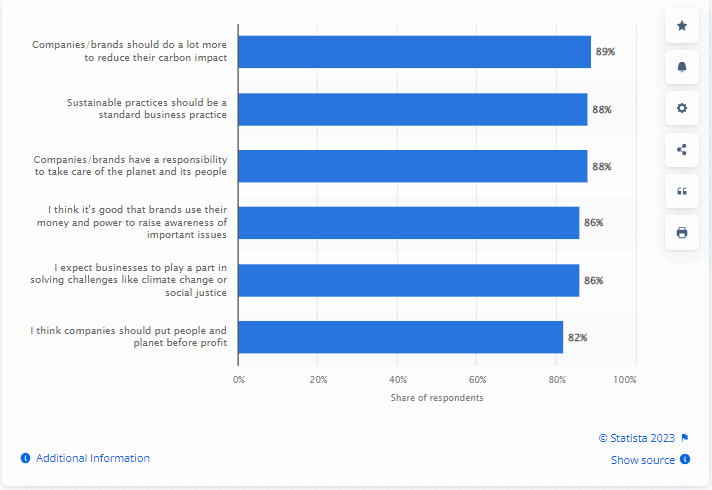
    • Fix bugs by describing issues.
    • Simplify complex coding tasks.

    Google Bard Pricing

    Google Bard is free for all.

    Bing

    Bing is a search engine from Microsoft that includes a number of features that are specifically designed for coders and developers. For example, Bing can be used to search for code samples, documentation, and tutorials. It also offers a number of tools that can be used to analyze and debug code making it a good ChatGPT alternative for coding

    Bing

    Bing Key features

    Here are the features of Bing that can help you code better and faster:

    • Bing can understand questions in normal words about code and find relevant code from places like GitHub.
    • It can give you pieces of code in different programming languages that you can use as a starting point or reference.
    • Bing has tools to help improve your code, like checking for errors, formatting it neatly, and reorganizing it.
    • It has documentation that explains how to use different programming languages and frameworks. You can use this to learn, troubleshoot, and find best practices.
    • Bing provides ways for coders to connect with each other like forums, blogs, and tutorials to learn from each other.

    Bing Pricing

    Bing has a free plan available for everyone that includes basic search features and access to Bing’s code search and coding tools. It also has other paid plans for businesses with additional features like increased search volume, priority support, etc.

  • 19 Social Media Trends Shaping Brand Marketing

    19 Social Media Trends Shaping Brand Marketing

    Social media has such an impact on people that 61% of them use their phones within 5 minutes of waking up, and one of the things they check is social media. 

    So, saying that social media has become an integral part of people’s lives and they spend a good part of their time on social media will not be an exaggeration. At least in today’s world!

    Given that social media is of great importance in people’s lives, it is an opportunity for marketers and businesses to connect with their target audience. 

    But the problem is social media is flooded with content, and people nowadays are selective about the content they see and seek unique content relevant to their thinking, lives, and interests. 

    Thus, it can be challenging to stand out if you do not have a clear social media strategy in place. So, following up with the latest social media trends can help you do something out of the box. 

    To help you frame your social media marketing strategy that makes your social media outshine, we have compiled a list of 20 current social media trends that have given growth to many social profiles and will continue to do so.

    Social SEO Is Widening Its Reach

    According to Google’s internal research, social media platforms are impacting its core products, Maps and Search. The study says 40% of younger people turn to Instagram and TikTok to search for new places or type down their queries. 

    In fact, the New York Times and Mashable India in 2022 said Instagram and TkTok are GenZ’s new search engines. 

    This means that hashtags alone would not make a difference. So, here’s how you can tap into the social SEO realm:

    • Have primary and secondary keywords 
    • Add keywords people are searching for in the captions 
    • Add alt texts in the social images to widen the reach
    • Use keywords as hashtags as well. 

    Hootsuite ran a test to test the Instagram SEO and saw a 30% greater reach of the SEO-optimised posts and twice as many likes than the posts with simple Hashtags. 

    Brands Are Redefining The Authentic UGC Creation To Appeal To GenZ

    UGC is defined as UserGenerated Content, the content generated by the customers or people themselves on social media and not the brand.

    For example, instead of posting a professional shot of Adidas activewear by a photographer, Adidas might post a picture or video of a happy customer wearing it in the gym and working out. 

    User-generated content is a great way for brands to build relationships, spread awareness and build trust. And it is impactful, too, as it’s found that consumers (especially GenZ) find user-generated content 9.8 times more impactful than the content generated by the influencer or the brand itself. In this, 70% of Gen X and Gen Z and 78% of Millennials respondents agreed that UGC is “very” or “extremely” helpful in knowing the product and making a purchase decision. 

    Brands are utilising a different strategy to leverage this fact by asking UGC creators to produce content that looks natural and organic. When UGC creators create content that a brand sponsors, they often do so in a very natural and organic way. This makes the content more likely to be seen as authentic by Gen Z consumers, who are more likely to trust it. 

    If brands can do this, then UGC content can effectively reach Gen Z and even millennials with their marketing messages. It can help them to build trust with Gen Z consumers and drive sales.

    Instagram Reels Are Still In The Trend

    Even though 2022 was a bit chaotic for Instagram, its reels are still something you must keep creating to fetch engagement. They are still seeing a rise in social media trends. 

    Why, you ask?

    • Instagram users watch reels for 17.6 Million hours per day, surpassing TikTok, which has 834.3 million users. 
    • Instagram has 2.5 Billion monthly active users, out of which 2.35 billion users interact with reels every month.
    • The time spent on Instagram has increased by 24% since Meta launched Reels.
    • Instagram is the preferred app of 18-24 years of social media users, even above TikTok. Because TikTok has 21% of users in this age group, and Instagram has 30.8% of them. 

    And that is not all. Instagram’s recommendation algorithm is still prioritising and pushing reels to its users. Plus, to widen the reels’ reach, they have a new feature for public accounts that allows them to choose to have their reels shown on their Facebook feed.

    So, if marketers post a reel, it is an opportunity for them to reach new audiences on both platforms.

    BeReal Is A Fresh Place To Dig & Drive Engagement

    BeReal is a social media app that was launched in 2020. It is designed to be a more authentic and genuine alternative to other social media platforms like Instagram and TikTok.

    BeReal sends a notification to its users randomly once a day. When they receive the notification, they have two minutes to photograph themselves and their surroundings. The photo is taken simultaneously from the front and back cameras of the user’s phone and posted to the user’s BeReal feed, along with the time and location.

    BeReal’s unique photo-taking feature encourages users to be more authentic and present. The two-minute time limit means that users can’t take the time to pose or edit their photos, and the front and back cameras force users to show themselves from both sides. Besides, it also doesn’t allow for filters or editing. 

    BeReal has been growing in popularity, especially among Gen Z users. As of October 2022, the app was ranked number one in the App Store in the United States, with 27.9 million downloads.

    Just for the term “BeReal”, there were 270,600 weekly searches in September 2022.

    "BeReal" 270,600 weekly search trend in September 2022.

    And today, it has dropped to 92,000 searches.

     “BeReal" dropped to 92,000 searches

    Despite the search being lower and the features for businesses are still to be added, the company is on the road to improvement, which will matter in the future.

    It is an authentic feel of early social media days when there were no ads and just pure photo sharing. 

    Even though the surge in popularity has affected the app, it is already in social media trends as it has already caught the attention of many.

    • Musicians: Shawn Mendes, Charli XCX, and The Kid Laroi are all on BeReal. They often use the app to share behind-the-scenes photos and videos from their lives.
    • Athletes: LeBron James, Naomi Osaka, and Megan Rapinoe are all on BeReal. They use the app to share photos and videos of themselves training, competing, and spending time with their families.
    • Actors: Emma Roberts, Millie Bobby Brown, and Timothée Chalamet are all on BeReal. They use the app to share photos and videos of themselves on set, at events, and hanging out with friends.
    • Businesses: Nike, Sephora, and Glossier are on BeReal. They use the app to share photos and videos of their products and employees and run contests and giveaways.
    • Influencers: Addison Rae, Charli D’Amelio, and Avani Gregg are all on BeReal. They use the app to share photos and videos of their daily lives and promote their brands and products.

     For now, you can also use the app, create a presence, and use it to get involved with the audience until it launches real features for business. 

    AR And VR Technology Is Becoming Mainstream

    Augmented reality (AR) and virtual reality (VR) technologies are becoming increasingly popular in social media trends. This is because AR and VR allow users to interact with digital content more engagingly, immersing them in what they see beyond reality.

    AR filters and lenses are becoming increasingly popular on social media platforms like Snapchat, Instagram, and TikTok. These filters allow users to use these filters on their photos and videos to enhance the look and feel of the curated content and give users an interactive and visually appealing experience using them. 

    For example, Snapchat and Instagram have various AR filters, allowing users to try different makeup looks and see themselves in different outfits or places.

    VR games are becoming increasingly popular on social media. These games allow users to experience a completely immersive environment that can be engaging and exciting. 

    For example, the game “Pokémon Go” uses AR to allow users to catch Pokémon in the real world, and the game “Half-Life: Alyx” is a popular StreamVR game that offers a truly immersive experience.

    As a part of the extended reality (XR) industry, the AR and VR market size is expected to show an annual growth rate (CAGR 2023-2027) of 13.72%, which will result in a projected market volume of US$52.0bn by 2027.

    News And Information Are A Rising Search Trend

    Social media has changed how we consume news in many ways. It has increased the speed and reach of news circulation. 

    • A little less than half, 48% of American adults, say they get regular news updates from social media. 
    • Around 80% of Indian respondents aged 16-70 said they used social media as a main outlet for news consumption. 
    • In fact, 24 out of 40 countries’ respondents said they generally used social media as news channels. 

    That is why social media has outpassed radio, print news publications, blogs, and word-of-mouth as news sources worldwide.

    Among the social media sites, Facebook is the most popular for news consumption, with 31% of U.S. adults saying they get their news from this site. 

    YouTube is the second most popular, with 22% of U.S. adults getting their news from there.

    So, as a marketer, if you post news relevant to your industry or news in general, the engagement on your posts is likely to be there. For brands and businesses who have not yet thought to adapt to the changing landscape and enticing the new news realm, it’s time you start with this latest social media trend and monetise it.

    Social Commerce Is Booming 

    Social commerce is using social media platforms to facilitate buying and selling goods and services. It is a rapidly growing trend, as more and more people use social media to connect with friends, family, brands, and shopping.

    Social commerce is also a form of online shopping window where buyers can discover, browse, and buy products directly from social media platforms without even having to go directly to the website, such as Instagram Shop, Facebook Shop, Pinterest Shop, etc.

    • Instagram said 44% of people surveyed said they shop using Instagram every week.
    • Instagram users per checkout spend $65, whereas Facebook users spend $55, $10 less than Instagram, and Twitter users spend $46.
    • 68% of people made at least one purchase from social media, and 98% of people plan their purchases using social commerce.

    That is why consumers increasingly use social media to shop, and social commerce is booming. It is a social media trend that thoroughly integrates social media and e-commerce and sets up new trends and monetisation pavements. In 2022, social commerce alone generated $53.1 billion in revenue in the U.S., a 34.4% increase over the previous year.  

    Edutainment Content Is Going Strong 

    Edutainment is a type of content that combines education and entertainment. It is becoming increasingly popular on social media platforms like YouTube, TikTok, and Instagram. People prefer this type of content as it makes them more likely to stay engaged and also helps them learn new things.

    Since users are getting smarter these days, it is a current trend that they want to get entertained but also learn while they scroll, and that is why edutainment is becoming the latest social media trend.

    You can give various forms to your edutainment content on social media, including videos, podcasts, blogs, games, quizzes, live streams, and webinars. Here, you can cover a wide range of topics, such as science, history, culture, health, finance, business, and any niche you have your business in. 

    Some of the reasons why edutainment content is appealing to people on social media are:

    • It provides value and relevance. The edutainment content helps users acquire new skills, knowledge, or insights that can benefit them personally or professionally. It also allows users to stay updated on current trends, issues, and opportunities in their fields of interest.
    • It stimulates curiosity and interest. As Edutainment content presents information creatively, captivatingly, and relatable, it sparks users’ curiosity and interest. So, you can use storytelling, humour, emotion, or surprise to hook users’ attention and keep them invested in the content.
    • It fosters engagement and interaction. If you allow your users to ask questions, give feedback, provide the sharing opinions, or push them to take action, Edutainment content can encourage users to engage and interact with the content and the creator. To do so, you can leverage social media features such as polls, stickers, reactions, or live chats to facilitate communication and participation.

    There are many profiles on Instagram, channels on Youtube, Facebook, and other social media apps that create edutainment content and monetise it through advertising, selling courses, selling merchandise, offering paid subscriptions and more.

    Personalisation And Customisation Are Taking A Limelight

    Personalisation and customisation have become an integral part of social media trends. In addition to social media, other brands recommend products on their applications, OTTs recommend shows, and other companies personalise recommendations. These companies and social media use AI and machine learning to deliver more relevant and engaging content to users. 

    For example, AI-powered recommendation engines are being used to suggest relevant content to users based on their interests and past behaviour. It is like you only see content in your feed with the type of content you often engage with. So, if you see more hiking, cooking, and music videos, you only get content around the same. Thus, the feeds of every social media user differ based on their interests and behaviour. 

    Social media has also placed AI and machine learning to personalise ad recommendations, helping businesses reach their target audience more effectively and increase their chances of converting. 

    So, if you are a content creator, you need to do the following to catch up with this latest social media trend and get recommended to people:

    • Create high-quality content
    • Use relevant hashtags
    • Keyword optimise your captions 
    • Add keywords in your hashtags
    • Promote your content (when required). The more people see it, the more it will increase its reach.
    • Use social media analytics to analyse what’s working and what’s not.

    Brands Are Turning Towards Social Communities

    In recent years, there has been a growing trend of brands turning towards social communities to connect with their customers. This is because social communities offer a number of benefits for brands, including:

    • Engagement: Brands in social communities get to engage with their customers more personally and meaningfully. This makes customers feel the humanisation of a brand and get attached on a personal front, leading to increased brand loyalty and advocacy.
    • Insight: Listening to customers in social communities about their problems, pain points, solutions they seek, expectations and more, you as a brand get valuable insights into your customers’ needs and wants. You can use this information to improve products and services and to create more effective marketing campaigns.
    • Growth: As a brand, you connect with more and more people to share information, insights, and relevant details about the industry. It can help you grow your reach and attract new customers as a brand. When customers are happy with their experience in your brand’s social community, they are likelier to recommend your brand to their friends and family.

    There are different social media platforms where brands and businesses are following this social media trend of creating communities:

    • Facebook Groups: It is a popular platform for creating and managing social communities. You can keep your groups public or private and use them for various purposes, such as product discussion, customer support, and networking.
    • LinkedIn Groups: It is a platform for professionals to connect with each other and to share information about their industries. Brands can use LinkedIn Groups to connect with potential customers, recruit employees, and share content about their products and services.

    Depending on where your customers are and which platform serves the needs of your customers, you must create a social community in that platform to engage with your audience.

    For example:

    Nike has a number of social communities on Facebook, LinkedIn, and Slack. These communities are used to connect with athletes, fitness enthusiasts, and sneakerheads.

    Nike has a number of social communities

    Starbucks has a social community on Facebook called “My Starbucks Idea.” This community is used to collect feedback from customers about new products, services, and store designs.

    Starbucks has a social community on Facebook called "My Starbucks Idea."

    Social Customer Care Is Here To Rule 

    In today’s digital world, customers expect to be able to connect with businesses on their preferred channels, and that also includes social media. Social customer care provides customer service through social media channels like Facebook, Twitter, and Instagram. Provisioning social customer care also helps brands to improve customer satisfaction, loyalty, and retention on social media and improve brand reputation, advocacy, and word-of-mouth referrals.

    In fact, research shows

    • 91% of people believe in social power to connect people, and precisely 78% of people want brands to connect people with each other using social power.
    • 64% of consumers want brands to connect with them.
    • 70% of consumers feel more connected to brands with CEOs who are active on social.
    • 40% of responders expect an answer from brands in one hour.

    Besides, social customer care is a part of surprise and delight marketing, which a few brands started to use and still have a long way to go. Surprise and delight marketing aims to attract and nurture customer relationships by offering unexpected rewards, creating positive emotional reactions, and exceeding customer expectations.

    A few companies that are provisioning social customer care are:

    Amazon: Amazon has a dedicated team of social customer care representatives, also called @AmazonHelp, who respond to customer inquiries on Twitter, Facebook, and Instagram. They are known for their quick response time and friendly customer service.

    Amazon has a dedicated team of social customer care representatives, also called @AmazonHelp

    Netflix: Netflix has dedicated Twitter accounts for every country, where they respond to customer inquiries about billing, technical issues, and content. They are also known for their sense of humour and their willingness to go the extra mile to help customers.

    Netflix has dedicated Twitter accounts for every country

    Brands Are Turning Their Attention Towards Live Audio Conversations

    Brands are turning their attention towards live audio, also called social audio. This is one of the latest social media trends that is grabbing the attention of people and brands alike for their respective interests. 

    Social audio is one of the current trends in social media that allows users to connect through audio. This is done through live audio rooms, podcasts, or other audio-based platforms. It is a kind of subcategory of social media, which we can call audio-based social media. 

    There are reasons why brands and people are interested in live audio:

    • It is a more personal and intimate way to connect with customers. When people listen to live audio, they are more likely to feel like they are having a one-on-one conversation with the speaker. This can create a stronger connection between the brand and the customer. 
    • Social audio is a great way to share information. When brands host lives audio rooms, they can sharereal-time  news, updates, and insights with their customers. This can help brands create top of mind awareness and to build trust with their customers.
    • When a group listes to the live audios streams together, they feel like they are part of a group, a nd that is why we call it social audio as well. This can help brands to create a sense of belonging and loyalty among their customers

    Here are the platforms that have created spaces for live audios:

    • Twitter Spaces: Twitter Spaces is a place to host live audio conversations, by allowing users to create and join live audio rooms. You  can use this space for a small intimate group or to talk to millions of listeners. Brands have used Twitter Spaces to host interviews with experts, to discuss current events, and to connect with their customers in a more personal way.
    • LinkedIn Live Events: LinkedIn Live Events is a live audio feature that allows users to create and join live audio rooms. This is audio only feature which brands have used to host networking events, to conduct job interviews, and to share company updates with their employees.

    For example, 

    • Mastercard hosted a live audio stream on Twitter Spaces to discuss financial inclusion with experts from around the world.
    • H&M hosted a social audio session on Twitter Spaces to discuss its sustainability initiatives with experts from the fashion industry.
    • Spotify hosted a Twitter Spaces to discuss the future of music with artists like The Weeknd, Charli XCX, and Megan Thee Stallion. Even though Spotify has its own social audio platform called “Spotify Greenroom” allows users to listen to live audio shows.
    • Salesforce hosted a LinkedIn Live Audio to discuss the future of work with experts from around the world.
    • Deloitte hosted a LinkedIn Live Audio to discuss the impact of artificial intelligence on the workforce with experts from the tech industry.
    • L’Oréal hosted a LinkedIn Live Audio to discuss the importance of self-care for women in the workplace with experts from the beauty industry.

    So you see,  we can already see big names using social audios to connect with their audience. Signifies the growth of this social media trend which is bringing social audio trend, in the near future. 

    Short-Form and Bit-Sized Content Are Still The King –

    Oh yes, you heard it right! The bit-sized and short-form content are still making he waves. 

    TikTok began by allowing users to create reels of 15, 30 and 60 seconds, but now it allows users to upload videos of uo 10 minutes. 

    On Instagram, you can choose to post reels of 15, 30, 60 and 90 seconds. 

    So, even though there are these expanded options of creating reels, Mireia Boronat, senior content marketing executive at The Social Shepherd siad, “As a general rule, it’s good to stick to 7 to 15 seconds, as short Reels tend to loop and will count as multiple views. Then, the algorithm picks up that your video is getting many views and pushes it to more users.”

    However, as Instagram users spend 113.5 million hours per day on Instagram (as per 2.35 billion spending 29 minutes per day on Instagram), they give 17.6 million hours solely to reels. 

    Though this data says, reels take 20% of users time of reels, Meta said, after Q1 2023, reels are now accounting for 30% of the time share.

    Plus, 97.8 million  hours people spend watching TikTok videos per day, which is often shorter in format.

    So, even when quarter by quarter the percentage of short form content watching time is getting higher, it still has the potential to take you to new heights. 

    Niche Platforms Are Gaining Popularity

    As the technology is getting mature and people are getting more deeply-acknowledged to different social platforms, they are becoming more aware of how different platforms function and the types of content they are suited for. That is why, users are getting very particular about the stuff they want to see on that very particular platform. 

    I would say, there are now different cream lines where people and brands have defined which type of content is to be posted on which platform. In other words, they have preferences for certain types of content on certain platforms.

    And that is why there are different platforms that cater to user’s specific interests and needs, which are now gaining popularity, including:

    • Instagram: A photo and video-sharing platform that is popular for its visually appealing content. People use Instagram to share their lives with friends and family, connect with brands and influencers, and discover new things. Instagram is known for its creative and expressive content which has users in billions. Thus, it is also a platform that almost every business use to connect with their target audience.
    • Facebook: A social networking platform that is popular for its ability to connect people with friends and family. Today, people use Facebook to stay in touch with loved ones, to share news and events, and now according to current trends have started to join groups and communities. Facebook is known for its active communities, and it is a great platform for businesses to build communities and connect with their customers and build relationships.
    • Pinterest: A social media platform that is focused on sharing images and more of visual content. People use Pinterest to find inspiration for their projects, hobbies, and interests.
    • LinkedIn: A professional networking platform that is popular for its ability to connect people with potential employers and partners. People use LinkedIn to share their professional profiles, to find jobs, and to connect with people in their industry. LinkedIn is known for its business-oriented content, and it is a great platform for businesses to connect with potential customers and partners.
    • Reddit: Reddit is a social news platform where people can share links, news articles, and other content. Reddit is known for its active communities and its diverse content.
    • Twitter: A microblogging social platform that allows users to post short messages, or tweets, of up to 280 characters. People use Twitter to share news, opinions, and personal updates. Twitter is also a great platform for businesses to connect with customers and build relationships.

    So, you see, there are different social media platforms with different social content. There is no  one “best” social media platform that has has all type of content. People don not want to see job openings on Instagram, a holiday video on LinkedIN, long form continent on Instgarm instead of Facebook and so on. This is why businesses are following the social media trend of being niche-specific in order to improve the customer experience.

    The Creator Economy Continues To Blossom

    Content creators’ trend of creating content based on their hobbies, passion, or interests will still be a social media trend because it allows these creators to connect with their audience on a more personal level. When creators create content about things that they are passionate about, it shows in their work. Their enthusiasm is contagious, and it makes viewers more likely to engage with their content.

    In addition, creating original content about one’s hobbies, passion, or interests can help creators to build a community of like-minded people. When people find creators who share their interests, completed works, or experiences, they feel a sense of connection. This can lead to increased engagement with the creator’s content, as well as opportunities for collaboration and sponsorships.

    For example, 

    Yoga Girl, is an Instagram influencer who shares her love of yoga and healthy living with over 10 million followers. Her feed is full of beautiful photos and videos of her practicing yoga, as well as inspirational quotes and advice.

    Yoga Girl, who’s name is Rachel Brathen, does monetize from what she posts on social media. She has a number of different income streams from social media, including, advertising, sponsorship, merchandise, classes and workshop, and books. 

    Yoga Girl

    Gary Vaynerchuk is a serial entrepreneur and business influencer who shares his insights on business, marketing, and entrepreneurship on Twitter with over 10 million followers and 30 million followers on Instagram. His content is often thought-provoking and inspiring, and he is a great source of information for anyone looking to grow their business.

    Again, he monetises from advertising, selling books, courses, sponsorship and other streams.

    Gary Vaynerchuk

    Thus, as people tend to trust these content creators who follow their hobbies, passion, and interests, brands are getting in touch with these creators for more organic promotions. 

    See A Raise Of Micro-Influencers’ Marketing

    Micro-influencers are social media users with small but loyal and engaged followings, usually between 1,000 and 100,000 followers. People often see them as more authentic, relatable, and trustworthy sources of knowledge than celebrities or macro-influencers.

    There has been a rising social media trend of micro-influencers marketing in every industry. This is because there are a number of advantages a micro-influencer has over a macro-influencer.

    • Even though their audience is smaller than the celebrities or macro-influencers, they have an engaged and loyal audience who trust them. This means that micro-influencer followers are more likely to pay attention to their content and to take action, such as clicking on a link or making a purchase.
    • Micro-influencers have a more relatable audience. That is because they have like-minded peers in the following list who are there for authentic content. Plus, since these people are not celebrities or supermodels, and they don’t live in a glamorous world, they are more approachable and relatable to their audience. This adds to loyalty and trustworthiness. 
    • Micro-influencers are any day more inexpensive than macro-influencers or celebrities, as they do not have as much monetary demands. So, it is a win-win for you as a brand as you’ll reach a new audience on a budget. 

    So, like 90% of markets say that micro-influencers are inexpensive, fetch high engagement, and bring better ROI, it is a social media trend that is going nowhere and is here to stay.

    Brands To Favour Narrowed Advertising 

    Narrowed advertising is likely to be a popular social media trend in the future. 

    Now this is because narrowed advertising allows businesses like you to target your ads only to the specific group of people who are highly likely to be interested in your service or product. There is no doubt that shooting ads to a wide audience will increase the reach and raise brand awareness, but narrowed ads not only save your budget but also improves the efficiency of advertising campaigns to get better results. Thus, businesses have started to target their ads to people based on their interests, demographics, and even past purchase behaviour. 

    Moreover, with technology evolution, consumers are also becoming more aware of the importance of privacy. Thus, they are less likely to click on ads that are not relevant to them. Instead, they are more likely to report these ads from their social media feeds that they find are causing annoyance. Narrowed advertising allows you to target your ads more precisely, which can help to reduce the number of irrelevant ads that consumers see.

    For example, 

    The usage of recency theory in narrow advertising can help you get three times more traffic than simply running ads without gauging user behaviour and demand. Although theories can change, come and go, recently, this narrowed advertising theory has been in trend. 

    For products that are typically purchased on weekends, such as beer or drinks, advertising about them on Thursdays or Fridays on social media can have a significant impact on sales. In fact, ads delivered on these days can generate almost three times more incremental sales lift than ads running on other days of the week.

    Thursday/Friday Prime Drivers Weekend Sales

    Changing Definition Of Brands’ Sustainability & Environment Care 

    The definition of sustainability and environmental care for people has quite changed in the last couple of years. They just do want the bards to write sustainable, recycled products or environment-friendly words on the products. Instead, they want the brands to show in real life, evidently in practice, the measures they are taking to work towards these causes. Besides, 57% of consumers say they are willing to change their purchasing habits to reduce environmental impact. 

    According to Statista’s’ research:

    • 89% of people say companies should do a lot more to reduce production’s carbon impact. 
    • 88% of people say sustainable practices should be a standard business practice.
    • 88% of people say brands have the responsibility to take care of the 2 Ps – people and the planet.
    • 86% of people say businesses should take part in solving climate change issues, 
    Statista’s’ research

    For this reason, many brands have started to communicate their sustainability efforts and initiatives on social media and now is becoming the latest social media trend. 

    The Body Shop is a cosmetics brand that is committed to using sustainable ingredients and packaging. The Body Shop also uses social media to promote its sustainable products and its commitment to sustainability.

    The Body Shop also uses social media to promote its sustainable products and its commitment to sustainability.

    Nike has a long history of sustainability initiatives, and it also uses social media to highlight its efforts. 

    For example, Nike has a dedicated sustainability page on its website that features news about its sustainability initiatives, as well as videos and infographics. Nike also uses social media to promote its sustainable products, such as its Nike Flyknit shoes, which are made from recycled materials.

    Nike has a dedicated sustainability page on its website that features news about its sustainability initiatives, as well as videos and infographics.

    Similar to them, there are many more brands that have become vocal about how they have started to promote their tasks towards sustainability are making it a current trend. 

    Interactive Content Is Still On Rise

    Interactive content posted on any social media site is still on the rise as a social media trend. The reason is simple, the interactive toggles and options lure the attention of the users and thus make them engage with such content more than they get engaged with the passive content, such as text or images. 

    The different types of interactive content that are popular on social media include:

    • Polls: Polls are a great way to get feedback from your audience and to learn more about their interests. You can use polls to ask questions about your products or services, your content, or even just general topics that you think your audience would be interested in.
    • Augmented reality (AR) and virtual reality (VR): AR and VR are becoming increasingly popular on social media. If you use the element of these technologies, it allows users to interact with such content in a more immersive way. AR and VR can be used to create educational content, marketing campaigns, and even games.
    • Quizzes: Quizzes are a fun and engaging way to interact with your audience. You can create quizzes about your brand, your products or services, or even just general knowledge. Quizzes can be a great way to generate leads and build relationships with your audience.
    • Games: Games are another great way to entertain your audience and keep them engaged. You can create games that are related to your brand or products, or you can create more general games that are just for fun. Games can be a great way to promote your brand and build excitement around your products or services.

    For example, 

    Nike uses polls on Instagram to ask questions about its products and to get feedback from its audience. For example, Nike asked its audience to vote on their favourite new shoe design.

    Nike uses polls on Instagram to ask questions about its products

    Starbucks uses games on Facebook to engage its audience and to promote its products. For example, Starbucks created a game where users could try to guess the ingredients in its Frappuccinos.

    Starbucks uses games on Facebook to engage its audience

    IKEA uses virtual reality (VR) on its website to allow users to experience its products in their own homes virtually. For example, IKEA created a VR experience where users could see how different furniture would look in their living room.

    IKEA uses virtual reality (VR) on its website

    Bottom Line

    In the dynamic world of social media, staying attuned to the latest social media trends is not just a choice but a necessity for brands and marketers who aim to thrive in the digital realm. As social media’s influence grows, so does the need to craft innovative strategies that resonate with the ever-evolving interests of the audience. These trends very clearly define the importance of authenticity, engagement, and relevance in the content that is being shared on these platforms and how people are liking it.

    The current landscape highlights how things have changed on the social fronts, and brands are adopting the changes to complete the users’ demands. These trends provide brands with the opportunity to not only capture attention but also to build enduring relationships, monetise social space better, and pave the way for a successful future in the ever-evolving world of social media.