Social Commerce is a spinoff term made by combining ‘social network’ and ‘electronic commerce’. It integrates the e-commerce experience with social media. While strategies taken by different platforms may be different, the main motive is common: facilitating sales via social network.
And it is not something new. In fact, all major social networking platforms like Instagram, Pinterest, Facebook etc. have already implemented it in one or the other way! Interested? Keep reading.
What Is Social Commerce?
Social commerce or s-commerce is the process of using social networks as platforms for selling goods and services. This doesn’t mean just redirecting to an online marketplace but also allowing users to complete the purchase from within the social network itself.
Usually, it doesn’t need its own platforms. Instead, the implementation of S-commerce looks to add to existing social media platforms by using them as a channel for e-commerce.
S-commerce shouldn’t be confused with social media marketing. Social media marketing is done to increase overall brand awareness and to drive users to the company’s website. In relation to sales, it uses social media only and only as a medium to ‘redirect traffic’. On the other hand, social commerce uses online social networks as platforms for sales. As a matter of fact, social media marketing can be used to boost s-commerce!
Benefits Of Social Commerce
While in some cases social commerce is carried by brands creating a social network like shopping platform, the most common implementation of s-commerce is the integration of e-commerce in existing social networks. And well the benefits are huge.
For a practical scenario, suppose a user browsing through their feed when they see the kit from their favourite Football club. In the usual case, the user will have to search for an online market from where this kit can be purchased from, find the kit and then make a purchase. S-commerce instead aims to make this seamless by integrating the ‘buy’ button in the feed itself and letting the user buy the kit with minimal clicks.
Existing Userbase
When Instagram added initial retail capabilities to the ‘photo and video sharing platform’ in 2015, it suddenly had a large userbase that in addition to the media sharing was also using the s-commerce platform. This is totally in contrast to some other new e-commerce platform which would need to spend enormously to gain such a userbase.
The capability of adding e-commerce as a ‘module’ in the social network reaps big rewards.
Reusing Data
“Data is the new oil” was famously said by Clive Humby in 2006 and the reasons are evident. Serving a modern bike helmet’s ad. to a gamer would bring sales far lesser than when it is served to members of the H.O.G. Companies spend enormous resources into gathering such data. Before serving an advertisement, they want to be sure whether the user is part of a gaming legion or H.O.G.
In the case of s-commerce, a lot of data is already there. Referring to the example above, the user him/herself followed their favourite club’s page which eventually served the ad. Facebook won’t NEED to look into browsing history to know that the user is a football fan when the user is active on 4 football groups.
According to a 2015 user survey, Instagram reported that 60% of people say they discover new products on Instagram. With the knowledge of user preferences, millions of users can be served advertisements that are actually good suggestions.
Minimising Discovery-To-Purchase Friction
Why did e-commerce become so popular when everything is already available in the markets? One big contributor to the answer to this is ‘ease’. People did find time to go to a cloth retailer on weekends and windows still had curtains before e-commerce but, being able to look at dozens of curtains while commuting and getting one at doorstep three days later is just easier and has won many preferences.
S-commerce further reduces this friction. Take the case of the Football example above. The steps of finding the right online vendor, registering/logging in and finding the same product (and variant) were taken out of the process. It just makes sense.
Bringing Curated Vendors Into One Platform
Imagining seamless integration of large e-commerce marketplaces into one platform might be a bit far-fetched right now. But s-commerce making social networks ‘curated marketplaces’ is real. While user-data makes advertisement suggestions better, feeds are heavily based on people/groups the users choose to follow.
As soon as Tom’s favourite coffee beans manufacturer, soup company and beard oil manufacturer decide to integrate business services into their Instagram pages, Tom has got a curated list of products that he likes baked right into his Instagram feed.
Not only customers but companies also get to enjoy organic traffic. Customer retention is also higher since the traffic is targeted. In addition, social networking platforms provide powerful tracking and analytics services which would be impossible for small vendors to get hands on otherwise.
Social Sharing And Engagement
Reducing the ‘friction’ of performing a task is always a big goal for better user experience. Just like reducing the friction of buying, social commerce also reduces the friction of sharing. S-commerce makes sharing and discussing a product with friends just a couple of taps away. It brings people closer to the ‘shopping with friends’ experience. Consequently, it also increases the overall engagement of the users on the platform.
Social Commerce Examples
Social commerce by itself isn’t anything new and most major social networking platforms have been experimenting with it in one or the other way. Most readers will be surprised to know that Facebook technically started their s-commerce journey all the way back in 2007, 3 years before Instagram was even born! Facebook, Instagram and Pinterest are the biggest facilitators of s-commerce.
Companies have come a long way and have been gradually getting successful in doing s-commerce the right way. The ‘M-commerce’ or mobile commerce (buying and selling via mobile phones) boom has magnified the response for s-commerce. Here are some visual examples of how two social media and now s-commerce giants are doing things:
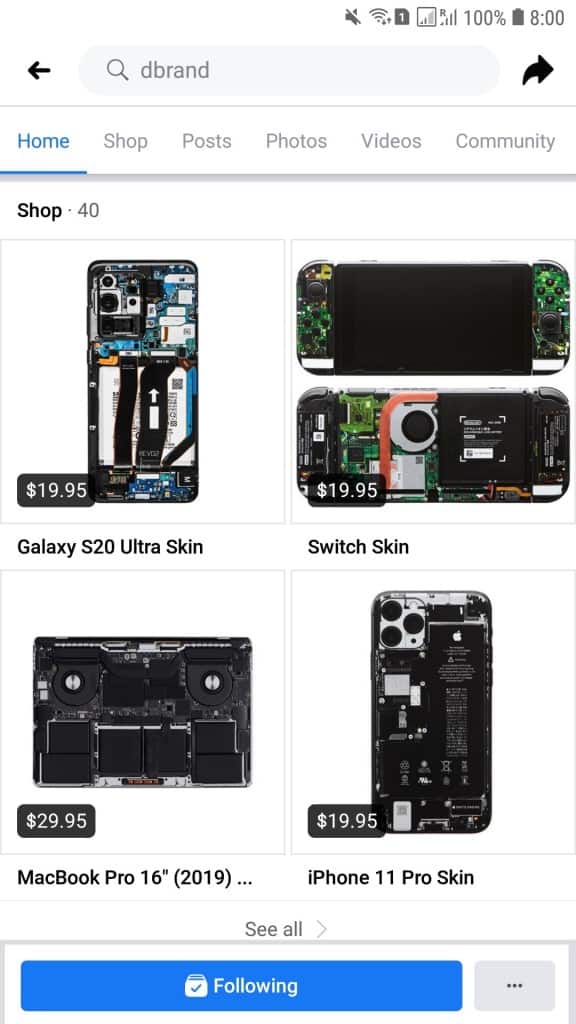
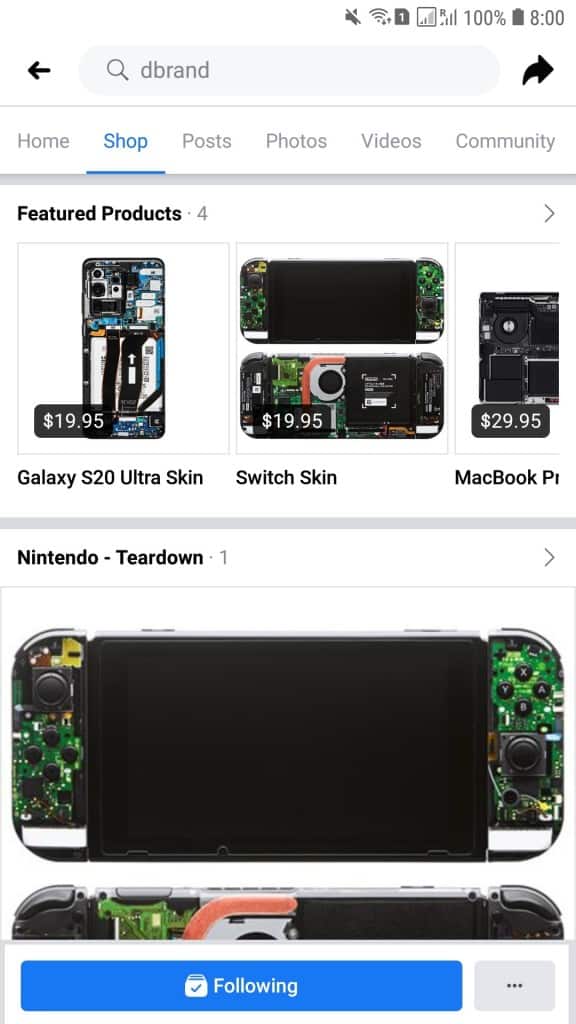
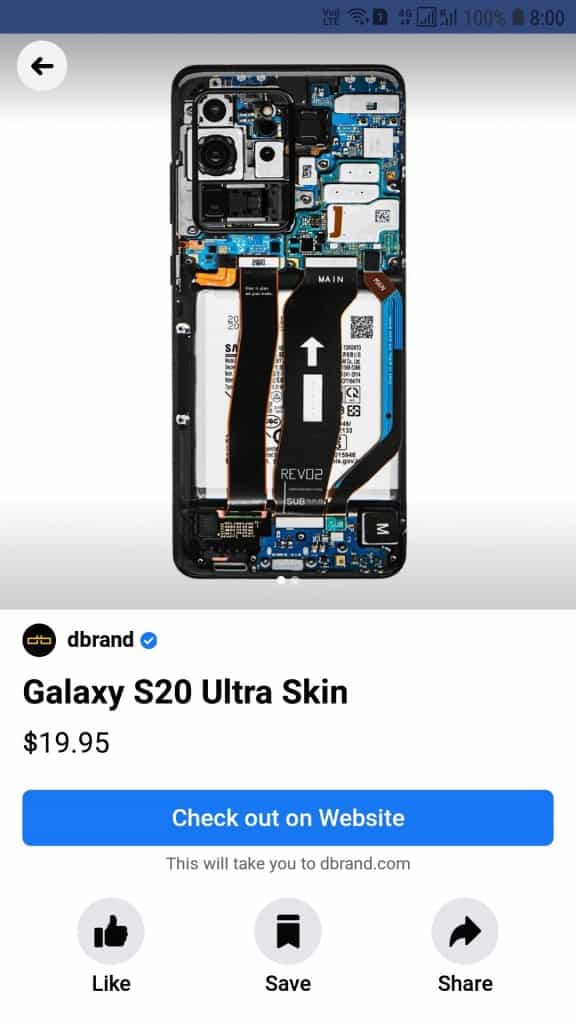
Facebook Commerce
Products on a Facebook page.
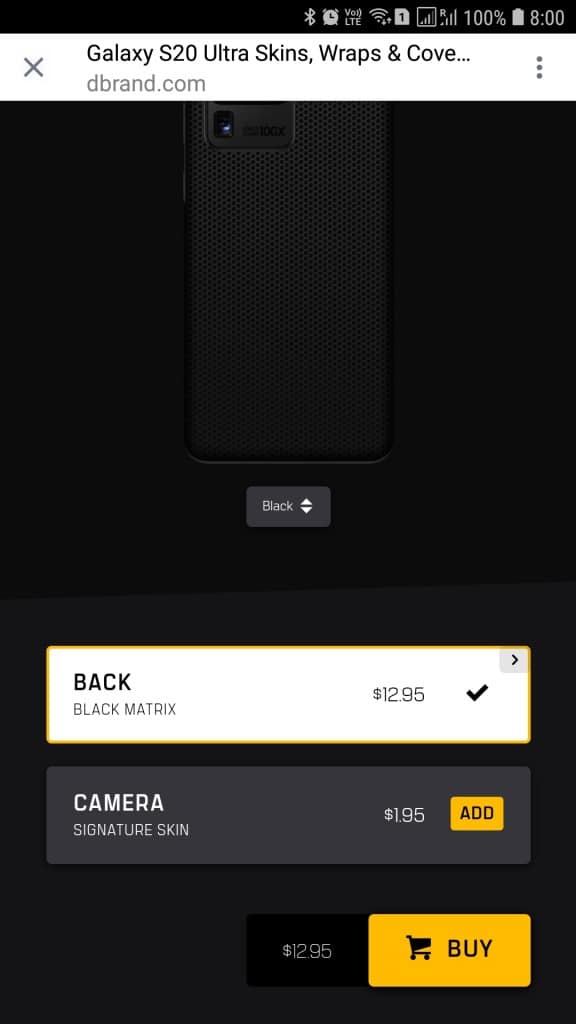
‘Shop’ of the retailer (dbrand).
Directing to retailer’s website.
Instagram Commerce
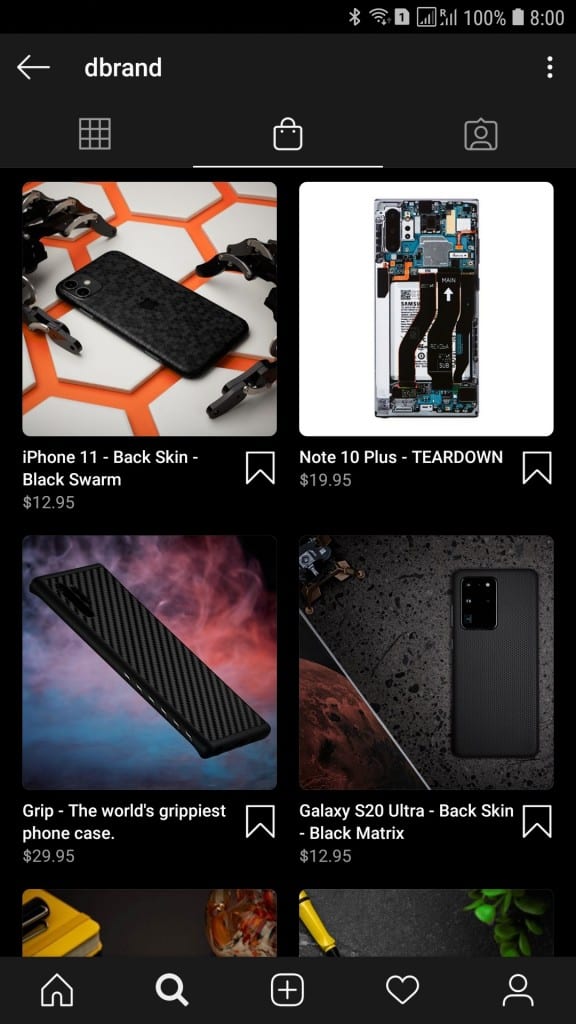
‘Shop’ on Instagram.
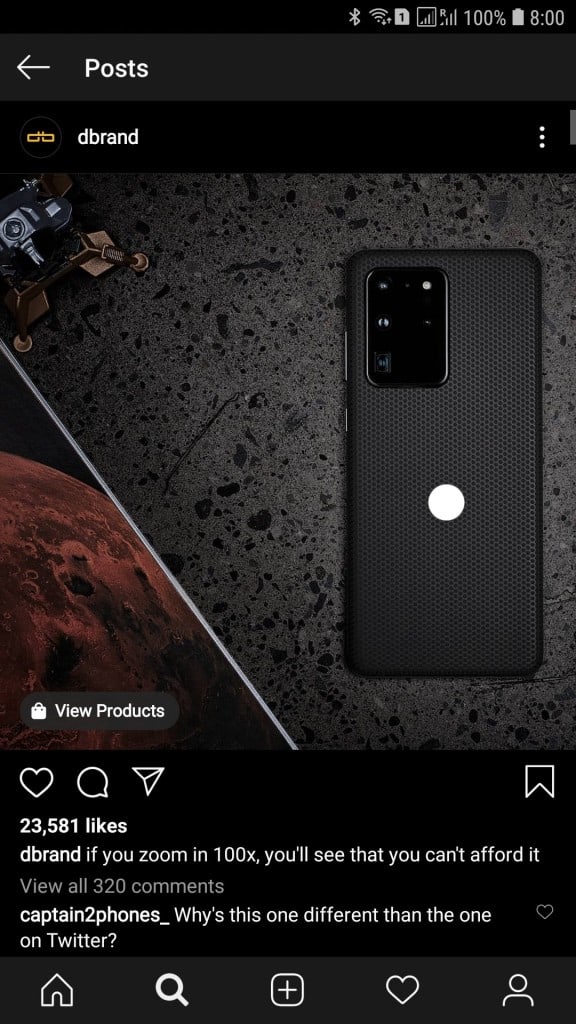
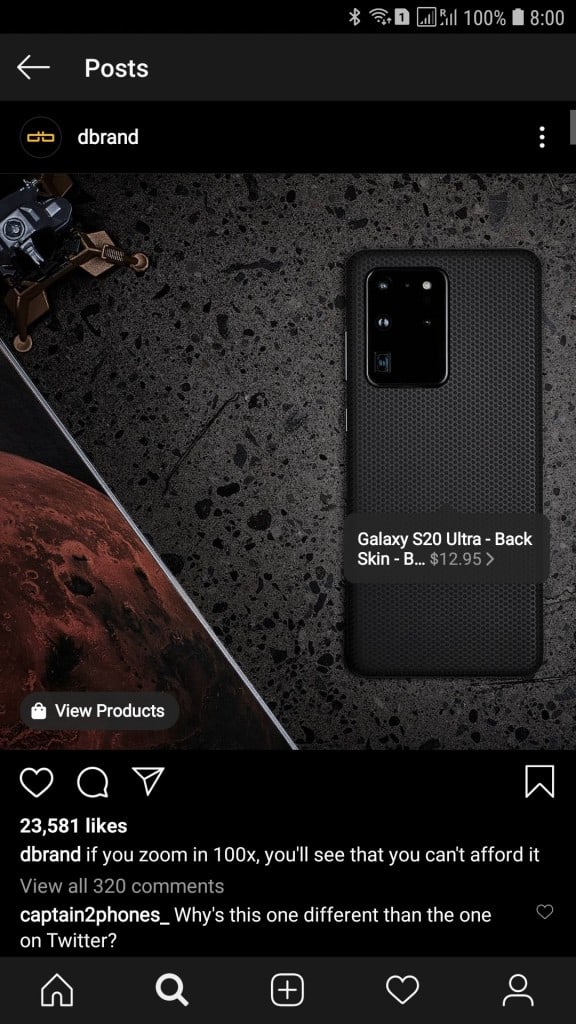
Example product placement (similar on feed)
Example product placement (similar on feed).
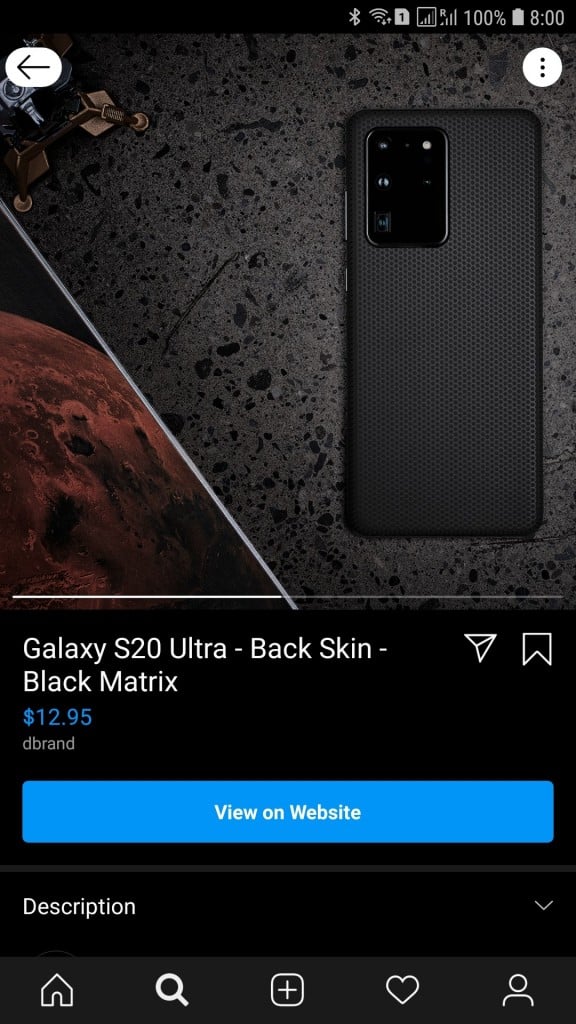
Tap to buy
Get directly to the checkout page and checkout from within Instagram’s browser integration.
Pinterest Commerce
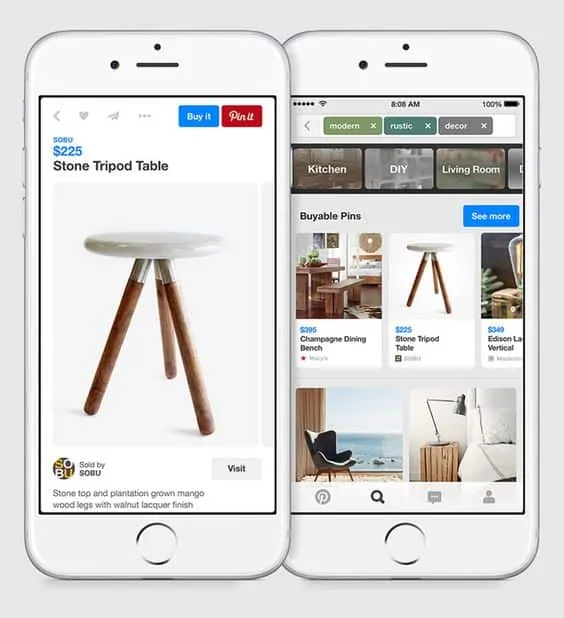
Buyable pins which let users buy the pinned offerings. The transaction is carried out by Pinterest itself.
Future of Social Commerce
TL;DR: s-commerce is here to stay, and grow. As mentioned on this post by Instagram, every month around 130 million accounts tap on shopping posts to learn more about products while 62% of participants in a survey said they have become more interested in a brand or product after they saw it in Facebook stories. These stats explain why companies are pushing hard to better things. Facebook making ticket sales possible via the platform and Instagram testing complete checkout process from the app without any redirection are indications of where s-commerce is headed. It’s common to see retailers providing bot-integrated customer care on Facebook itself. And all this is going to go further as companies learn and technology develops (hint: AR).
Go On, Tell Us What You Think!
Did we miss something? Come on! Tell us what you think of our article on social commerce in the comments section.
GitHub is the world’s largest software development platform that is used by big-name companies as well as individuals in order to develop and share code. But, before we get to GitHub and its business model, it helps to know about “Git”.
Yes, Git and GitHub are different things and GitHub builds itself upon Git. There would be no GitHub if it weren’t for Git.
What is Git?
Most people know of Linux. For the uninitiated, Linux is an operating system just like Windows and macOS but differs from the latter two by being open-source and free to use. Linux was founded by Linus Torvald and released in 1991 as open-source software.
The Linux kernel (a kernel is a code within the operating system that helps connect the hardware to the software) is developed and maintained by a large group of developers and at first, changes to the Linux kernel were just passed around manually online as patches and archives. This approach was deemed too cumbersome.
So, in 2002, this process was moved onto a proprietary version control software provider (a Version Control System is the category of software tools that help a software team manage changes to source code over time) called BitKeeper which at the time, was free to use. But in 2005, BitKeeper started charging for its services and thus the Linux community was left without a proper VCS (Version Control System). This prompted Torvald to develop their own VCS and thus, Git was born in 2005 as an open-source VCS.
Source: Git
Which brings us to GitHub, specifically – what is GitHub?
What is GitHub?
GitHub is a company that provides hosting for people looking to use Git as their Version Control System (VCS).
Source: GitHub
You can use Git locally or on your server that you can share with your team but this brings lots of overheads such as server maintenance and access privileges. GitHub helps provide the core functionalities of Git –
Distributed Version Control System (DVCS) – Anyone could work on any (allowed) repository without depending on a central server to be online.
Advanced branching and merging provisions.
Staging area to run particular snippets of the code.
– along with their features added to it on a web-based platform.
GitHub was created by Tom Preston-Werner, Chris Wanstrath, and PJ Hyett and launched in 2008. Chris and Tom had started working based on GitHub in late 2007 when Git was not well-known.
GitHub can be seen as cloud storage for code where you can also easily collaborate, share and discover your code as well as codes from other users too.
When GitHub was launched in 2008, Sourceforge was the default option for many when it came to working on open-source projects. But Sourceforge was full of ads and had a bad UX/UI, to say the least.
Compared to Sourceforge, GitHub had an ad-free and most importantly clean interface with powerful and useful features that a developer can leverage on. Since then GitHub has gone to become the go-to hosting platform for projects using Git.
As of January 2020, GitHub is the largest host of source codes in the world and has over 100 million software repositories (of which 28 million are public repos) and over 40 million users using its platform.
Source: Octoverse
GitHub Business Model
GitHub follows the freemium model where it allows the creation of unlimited – public & private – repositories for free. You need to pay a fee to obtain additional features such as more bandwidth, more storage, better organizational tools, and customizations.
Which brings us to –
How does GitHub work and who are its key partners?
How Does GitHub Work?
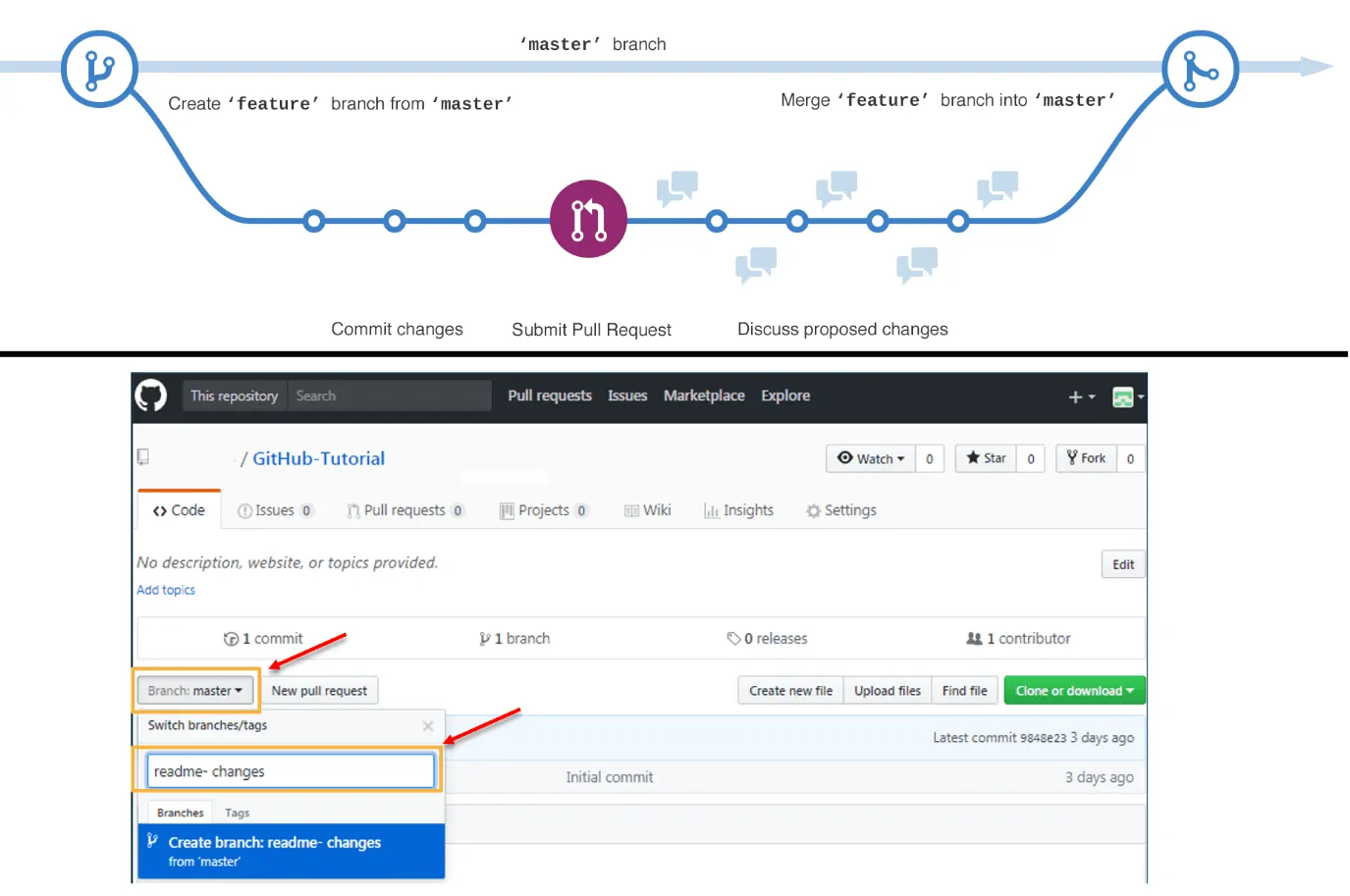
GitHub provides optimized versions of Git’s features – these are seen as the fork, pull request and merge.
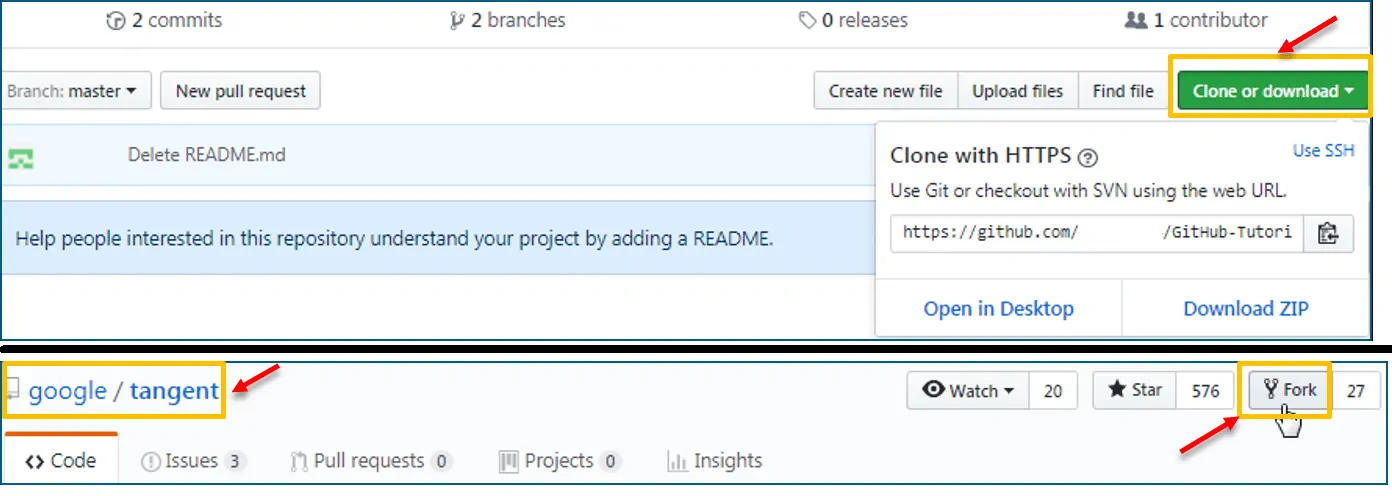
The “fork” option allows for anybody to copy another’s repository along with their version history and work on it.
Once done with your work, you can share your newly created or edited repo with the original owner using the “pull request”.
This allows for the original owner to review the code and the changes made and if needed can even include your changes to his repo using “merge”.
GitHub’s Key Partners
Open-source Community
The open-source community is a major component of GitHub and its services. This is further enhanced by the fact that GitHub’s fundamentals are based on open-source Git. Some of the open-source projects on GitHub not only have thousands of contributors but are also the main dependencies for millions of other repositories.
Developers & IT Industry
Individual developers and the IT industry are also the major users of GitHub. Pretty much most big-name players in the IT and tech industry such as Google, Microsoft, Facebook, and Twitter host their projects on GitHub.
GitHub’s Operating Model
GitHub’s approach to providing a version control system platform is quite simple. GitHub allows its users to be able to –
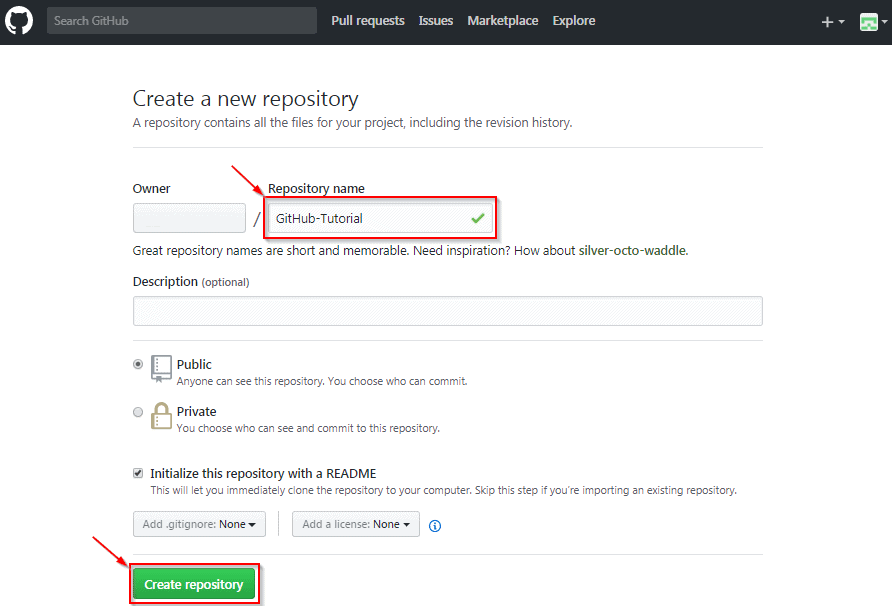
Create their repositories
Make commits – GitHub lingo for uploading or editing files
Source: Edureka
Create branches of repositories
Clone, download and fork repositories
All of this is powered by the underlying Git platform. These are the overlying general features available to all of the users of GitHub.
This raises the question –
How does GitHub make money if it allows free accounts itself to create an unlimited number of public and private repositories?
How Does GitHub Make Money | GitHub Revenue Model
Subscription Plans
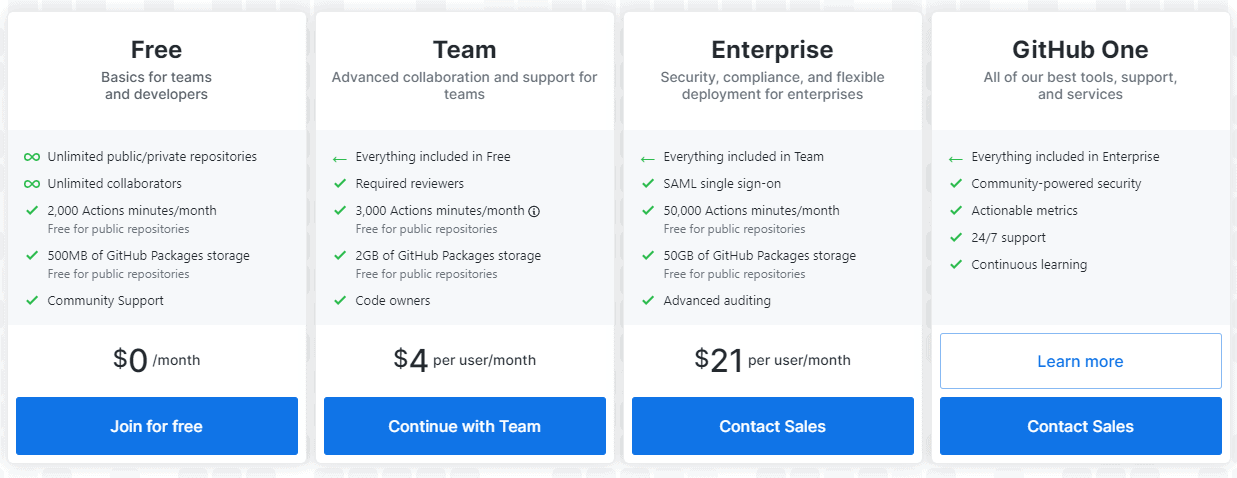
GitHub offers a host of premium subscription plans that allow its users access to increased cloud storage and customizations. Here are the different GitHub plans –
GitHub Plans & Pricing
GitHub Free – The GitHub Free plan allows for its users to be able to create unlimited public as well as private repositories and share it with any number of collaborators. The GitHub Free plan also offers users 500MB of storage for their packages and 2,000 action minutes per month.
GitHub Team – The GitHub Team plan is priced at $4 per user/month and provides everything GitHub Free offers along with team access controls, 2GB of GitHub Packages storage, 3,000 action minutes per month, GitHub security advisories – allows the creation of private security advisory to fix vulnerabilities.
GitHub Enterprise – The GitHub Enterprise plan priced at $21 per user/month and it is a customizable and made-to-order version of the GitHub Team plan along with 50GB of GitHub Packages storage, 50,000 action minutes per month and advanced auditing provisions among others.
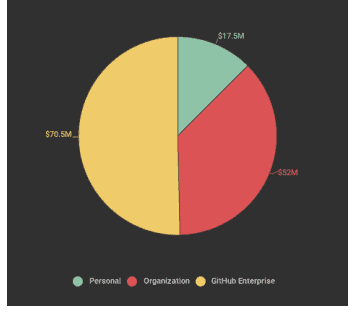
The Enterprise plan is GitHub’s biggest source of revenue –
Over 50% of GitHub’s revenue comes from its Enterprise plan with plans for organizations and individuals tailing behind.
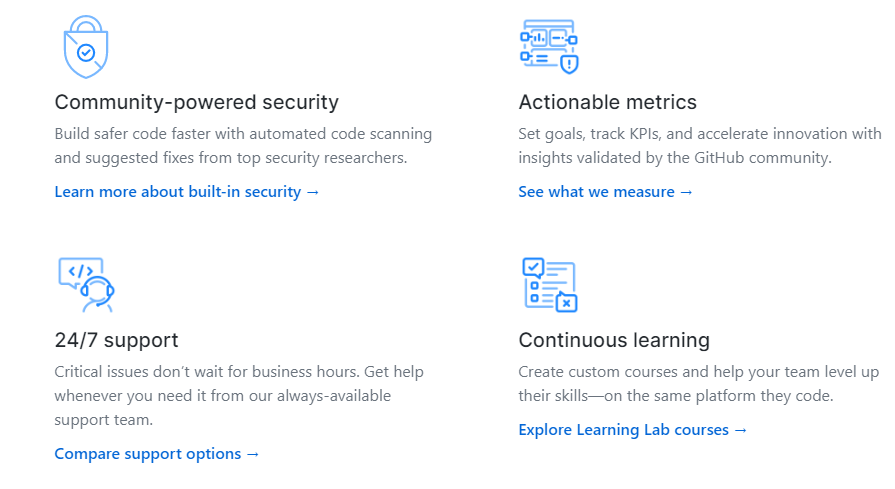
GitHub One – The GitHub One plans is more oriented towards large enterprises and is a made-to-order version of the GitHub Enterprise plan. It brings along with it everything that the GitHub Enterprise plan offers along with additional features such as community-powered security, availability of 24/7 support, actionable metrics and continuous learning abilities.
Features of GitHub One plan
GitHub Marketplace
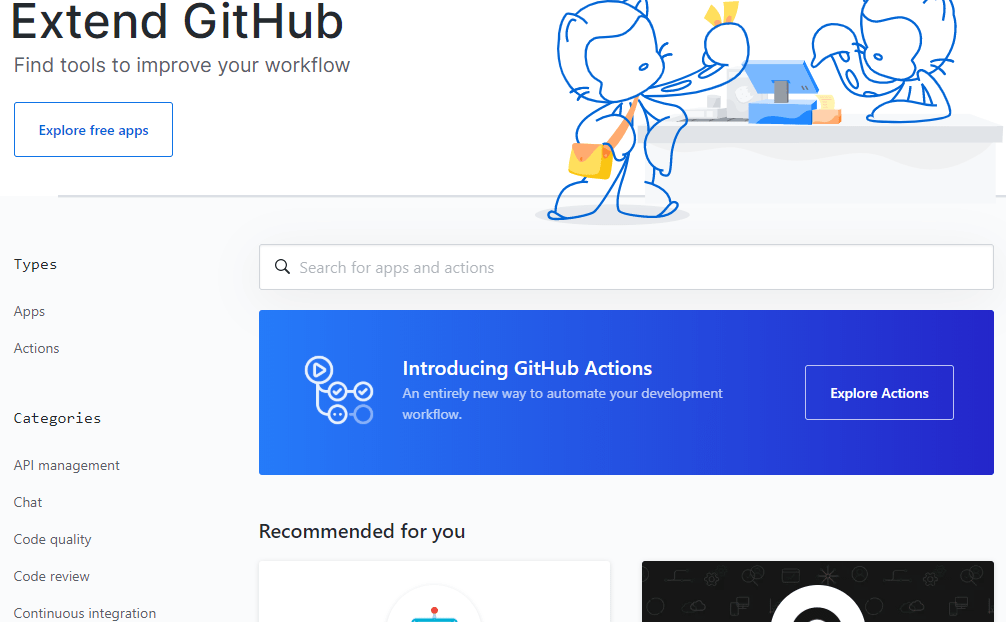
GitHub also provides a standalone service that it calls Marketplace which allows for users to be able to search, purchase and download applications as well as share their applications on the platform.
Source: GitHub
GitHub takes a 25% cut out of every sale made on the GitHub Marketplace.
Merchandising
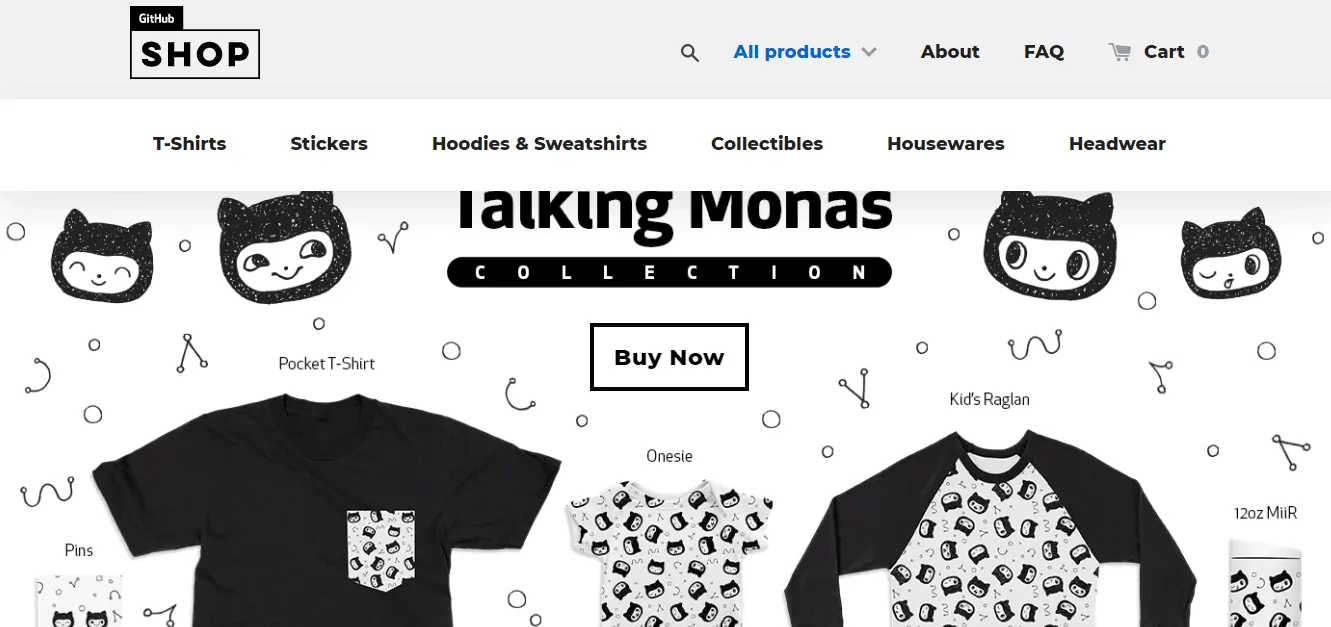
The GitHub Shop that sells GitHub merchandise which adds up into its revenue stream.
Source: GitHub
The GitHub Shop has various merchandise like – T-shirts, stickers, hoodies, sweatshirts, collectable, housewares and headwear.
Final Thoughts
GitHub has a simple and straightforward business model where it provides hosting services for Git to the masses on a neat web-based service. Pretty much most open-source projects listed on GitHub and top companies like Google, Facebook, Microsoft, and Twitter have projects housed on GitHub – with most of them being open-source and public.
Not only has GitHub made the world shift to a more open-source-centric approach it has also allowed developers to showcase their talents by being able to develop and share code easily. In the end, it can be firmly stated that both Git and GitHub have benefitted from each other’s growth to become the world’s leading software development platform.
Go On, Tell Us What You Think!
Did we miss something? Come on! Tell us what you think about our article on GitHub Business Model in the comments section.
“Born with ideas and dreams” – “Born with ideas and dreams”
“I am” – “I am”
“Born with wings” – Born with wings”
Did you feel an emotional connection? Do the lines mentioned above intrigue curiosity and fascination in you? Is it just a brilliant poem? Or what is it:
“Its apple’s Children’s Day special advertisement in India – born with wings.”
You can feel the story of the children and the empowerment. Released around Children’s Day in India, the advertisement was a tribute to Dr. APJ Abdul Kalam, also known as the missile-man. The words of encouragement and wanting to fly, immediately convey a story of empathy and empowerment. Do you wish to find the key to the market as effectively as the first $1 trillion company in history?
Read on to learn more about the basics of storytelling and how to incorporate it into sales.
Importance Of Storytelling As A Sales Skill
Storytelling has been a form of communication from time immemorial. Generations after generations have passed down stories. Therefore, history serves as accurate proof that storytelling is an intrinsic human need. What better way to connect as well as persuade people with one method? What better way to hit two birds with one stone? The answer is:
“Persuasive and novel storytelling.”
The ability to infuse novel, inspirational, and memorable stories in a sales pitch is a highly effective sales promotion skill. Scientific studies stand as proof to support the above statement. Human beings are termed as ‘social animals’. Therefore, persuasive stories will not only aid the sale of your product:
“It will help you create meaningful relationships.”
Meaningful relationships with customers will transform into revenue for businesses.
The top advantages of making use of storytelling in sales include:
Rising above the clutter of too many firms in the market and grabbing attention.
Channelizing higher interest in the product or service that you are selling.
Anecdotal stories help make your brand/product/service meaningful and memorable
Establishing trust between you and your client. Well-curated stories, more often than not, promote the release of oxytocin, which makes it easier to develop deeper bonds between the storyteller and their audience.
A persuasive story can be highly motivating and, in turn, push a customer to take action toward buying your product/service.
An interview with Clay Hausman, the current CMO of Akanta, a company that gives decision support to life science sales and marketing teams through AI, re-established the importance of sales through storytelling:
Storytelling is always referred to as an art, while data as a science. But perhaps, storytelling also has a science behind it, and data has art. Therefore, this article intends to help you formulate a foundation about the science of storytelling.
Use Of Storytelling
Sales is a persuasion-based marketing skill. Stories are highly vital too for sales as they act as a much subtler too to persuade consumers through tactics such as;
Recommendations
Promises
Ingratiation
So, whether you follow a B2B kind of approach or a B2C kind of approach, there is nothing better than storytelling to captivate your audience. But for establishing a strong foundation in how to create great sales stories, let us divide the usage of storytelling amongst the b2b type and b2c type of business.
For B2C Type
Storytelling is the easiest and most efficient method of sales, especially for a business-to-consumer type of business. Under this method, business-related trade and transactions are performed directly with the ‘consumer’, that is, the individual who buys the offering to consume rather than to sell again.
Business to consumer type of approach makes it much easier to engage and imbibe storytelling as a sales strategy. Because you are dealing with customers through a direct link, it is much easier to form a connection. Why?
“Well, because the consumer intends to buy and the producer intends to sell”.
If you are a B2C brand, it is important to note the following:
Use your B2C business model type to your advantage. You are a human, and your consumer is a human, unlike B2B, where it might be a business entity. Therefore, establish a connection through emotionally inducing For more understanding participate in the storytelling activity #1 below and leave your answers in our comments section:
Storytelling Activity #1
You are an eyeglass sales representative. You have to persuade a new eyeglass user why s/he should buy your brand? Let’s identify what features are capable of acting as selling points for you – price, durability, the weight of the glass frame, past customer feedback. Now, these are product-specific selling points. Let’s talk about customer-specific selling points. Your customer is a college-going student, looks formally dressed and tidy.
Next, we combine these two. You can talk about how – “My brand’s glasses have the potential of becoming the most popular choice for young college students because they promote a crisp, demanding, and young type of lifestyle. It is not only the weight, price, and durability of our product that makes it popular but the fact that it looks smart on your face, on a work desk next to a laptop, on your bedside table, anywhere. Amidst college schedules and social gatherings, even if you drop your specs from the edge of the table, they are designed to be scratch and break-resistant. First impressions are the last impressions, and we put effort into going beyond cut, colour, and clarity to create specs that match the value of your lifestyle. This is the best choice for you for the product of eyeglasses and a crisper lifestyle.”
Next, you can guide your customers through the journey. By using a sort-of ‘demo-approach,’ you can not only talk about the benefits of your product/service but actually show it to them in a b2c model.
For instance, watch the short video below :
Another way you can incorporate storytelling in your b2c business would be to give your customers perspective. Let your customers know that XYZ is not the only use of your product, it can be used for various purposes, or that it can be paired with various other things, or that it can be a potential for certain things, etc.
A direct show of the perspective model can be understood through the following videos:
The videos are from Chobani, a yogurt manufacturer. But the video does not talk about regular advantages of pro-biotics or health, or easy of transport, or taste, or flavours. What does it focus on?
“Perspective”
It gives the viewers a perspective of what you can do with the Chobani yogurt. You can make doughnuts and crispy fried chicken. When you watched that ad, it did get to you. It does seem aesthetically pleasing with a story behind it. If you do ponder upon the literal contents of the ad (which mind you, no consumer ever does), it doesn’t make sense. Chobani yogurt isn’t the main ingredient for those dishes. But it gives you a perspective that it could be, couldn’t it?
For B2B type
Brand storytelling is like an essential staple for B2C marketing, but it is less widespread in the B2B world. The reason is obvious – it’s more difficult to engage with your audience emotionally when what you’re trying to do is sell complex solutions to businesses, instead of flashy products to individual customers.
Storytelling may seem like a tedious task to pull off in the B2B world, but the difficulty does not undermine its effectiveness. Research by Google, in partnership with Motista and CEB has shown that businesses have a 50% greater probability of making purchases if there is an emotional connection.
The first and foremost way of incorporating storytelling in your sales is through a social cause. A great example of this would be IBM. IBM’s documentary on education in the US and IBM promoting it. The documentary talks about a story that IBM believes in, and that connects to other businesses and the general masses on an emotional level.
Another means of using storytelling in sales would be anecdotal information about your brand vision and mission. Based on the study by Google in partnership with Motista and CEB, 71% of B2B buyers purchase when they see personal value in your business. Along with that, 68.8% of the B2B buyers surveyed are even willing to pay a higher price to do business with a brand they believe in.
For instance this video by Intel and Toshiba:
The first video of “the beauty inside” campaign was essentially communicating the vision that Intel and Toshiba have. Through their brand, through their products and services, they aim to awaken, enrich, and give voice to your inner beauty, facelessly. Though it was not intended to be an ad, rather a social film, the idea conveyed about the mission is crystal clear. What business would not want to work with you after that?
How Storytelling In Sales Works?
In order to make the storytelling process a natural sales methodology, one has to etch the fact that:
“Customers are an active part of the sale process and not a passive part”.
It is only when the customer is seen as important enough to be persuaded, your mind can adapt to the customer and curate stories for enhancing sales. But how exactly are these stories curated in a salesperson’s mind?
Narrative Transportation Theory
Firstly, we focus on narrative transportation theory. The NTT starts that individuals are transported to the story world and employ a holistic narrative processing instead of piecemeal analytical processing. This means that brands must focus more on building overarching stories instead of analytical glimpses. The reason behind this is that research shows that customers gave less critical feedback and claimed to have experienced more realistic connections when the narrative was employed instead of analytics.
Persuasion Knowledge Model
The PKM assumes that people are suspicious of persuasion attempts, and use coping strategies in the face of persuasion. In brief, this model states that consumers are aware of the persuasive tricks employed by sales personnel and try to rise against it when faced with the same. As a consequence, such kind of awareness alters the storytelling process from the sales personnel’s end.
Under this model, any business person must make sure to employ honest and novel stories to make sales. Dishonest and fancy stories may result in an increase in the suspicion in the minds of the consumer and, therefore, backfire!
Relationship Marketing Paradigm
Under this theory, it is believed that a sale process transitions from a focus on the transaction to focus on the relation.
For instance, it is very common in Indian culture to form relations with shopkeepers as family relatives. Using words like ‘chacha’, ‘maushi’, ‘kaka’, (i.e., uncle, aunt, uncle) is very frequent.
This is the most widespread example of the relationship marketing paradigm. This is a stage that every businessman, especially in B2C type of business, aims to attain.
Types Of Storytelling In Sales
Now that we have covered what is storytelling and its importance. We also gained an in-depth understanding of storytelling through various business models and the theories that are used in storytelling. But what are the different types of storytelling? Is there only one way to go about the storytelling sales method?
Well, the answer is obviously no! Read ahead to find more about the type of storytelling:
Organization Story
The first method is to make use of your company’s unique origin story – this refers to highlighting the problem your product has identified and aims to solve. A persuasive, brief founding story helps humanize your company and offer a fresh peek into your values and purpose.
But, be sure not to lead with your organization story. The opening should focus on the customer (like the other 4 types of stories) and not your company. Nevertheless, under this method, you save your company story for standing as a support point to your product story.
Storytelling Activity #2
Share your company story as a supporting statement to a humanizing product story in the comments section below. For instance, if I am selling pet grooming products – “My company story is we create and curate a unique formula that suits only your dog/cat. You send in your pet’s biological specs and vet recommendations, and we create and deliver a top-notch product accordingly. Now when I am trying to make sales for my products, whether through advertisements, posters, in-person, etc. I need to have a more humanizing story. I may think that my company story is already very empathetic and brilliant because I am personalizing products. But NO!
Never make your company story your sales story!
So let’s say I come up with aa true story, that I worked as a vet’s assistant in my college days. I observed that whether it was a chubby pug with a vegetarian diet or a skinny dachshund with a meaty diet, they were both given the same tonic for smooth fur. Pet products were never personalized to suit the pets. There are only superficial categories of the size of the pet. That’s all! And that’s where my company steps in. My company curates personalized products for your pet, promoting a much longer, happier, and healthier lifestyle!
Customer Story
Case studies and customer testimonials are an immensely powerful tool to make use of in any pitch. Why?
Well, a consumer who has previously benefited due to the use of your product/service acts as a much more credible advocate to a prospective consumer over another vendor/salesperson.
Under this method, even though you are conveying a true customer story from the past, make sure that you adapt the story in a more polished and engaging sense to suit your prospective customer at hand.
Business Story
The next type is a business story. Under this, you talk about a story of another business/industry that is unassociated with your customer’s business. This way you can give away astonishing insights into problems, solutions, or opportunities.
For instance, a very over-used business tale would be of the company Nokia. Nokia failure case studies have shown that as a company, Nokia failed to adapt and foresee the shift to smartphones in the way Apply and Android did. Now you can make use of this story to talk about your adaptive value while pitching in a b2b type of business. You can also make use of the same story to pitch a drastically new and unseen technology that people may be hesitant to adopt.
Storytelling activity #3
We are excited to know in the comments section if you can think about other company stories, available as public information, and how you incorporate them in your sales story?
Analogy/Metaphor
A comparative story that offers something novel instead of something familiar is a quick as well as an effective way to convey a sales pitch to your customers. Analogies are also useful for softening any beliefs or misconceptions your customer may have.
To help you find the right analogy topic, it would be important to focus on what your key message is (i.e., growth, accuracy, safety, etc.). You have to make sure your audience will understand your analogy quickly. It must not be so complex that you end up explaining it!
Personal Story
Using your own personal experience to shed light on a subject is a very powerful and memorable tool. Unlike most business-based stories, personal stories can help form a stronger emotional connection with your customers.
But it must be noted that there may be customers/businesses for whom a personal story is inappropriate. People are humans and, at the end of the day, will respond to a tight, well-told, purposeful personal story. Focus on why you’re telling the story, and remember to stop your personal story when your point has been conveyed.
How To Enhance Sales Through Storytelling
How to make a great story is something that authors and writers spend lifetimes studying. It’s far too vast a subject to answer exhaustively through this article. But because we aim to simplify business solutions for you, below-mentioned are a few key elements that marketers should pay more attention to:
The Bait And Switch Approach
Start with an undeniable truth that cannot be contested. Next, name the enemy. By naming the enemy in your sales pitch story, you already incorporate novelty and intrigue as elements of your story. Lastly, place your product/service as the enemy slayer!
For instance:
If you are a new video call app that lets users share their screens, watch movies, talk, and do almost anything possible on the video. Your selling points are your share screen feature because of which people, despite physical distance, can watch a movie together, browse through funny cat videos together, and don’t need to worry about whether the other person is on the same page or not.
Undeniable truth here would be: Technology hs taken over the world + Amidst the virus pandemic and biological warfare theories, social distancing needs to be practiced.
The enemy here would be something that goes against the first part. So let’s say that physical contact and meeting people in person is slowly reducing and losing value OR you can go bold and say that meeting people in-person is actually worse due to XYZ reasons.
The enemy slayer is your app because it tackles both problems and suits your needs and the needs of the world.
The Demo Principle
As has been mentioned earlier in this article, the demo principle can prove to be immensely helpful in building a story for your sales pitch.
Through a demo you are essentially telling your customer that you should buy this product not only because it is super, but also because of LOOK:
It’s so easy to operate
It’s so safe
It’s easy to clean
It’s easy to store
It’s easy to travel with
Or whatever other feature is visually demonstrated.
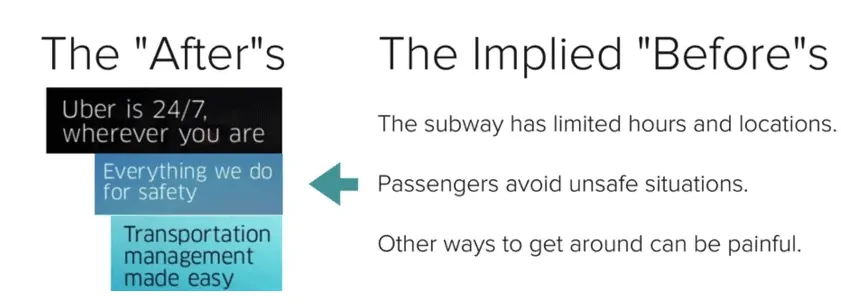
Before-After-Bridge Approach
Before – Here’s your world
After – Imagine what it would be like, if……
Bridge – This is how my product helps to get there
The before-after-bridge approach is sort of a better version of the perspective principle from b2c sales marketing.
For instance, Uber very actively uses the before-after-bridge approach.
Apart from the above-mentioned three tricks to incorporate storytelling in sales, you can combine the theories and methods from earlier sub-sections to suit the need of your brand and product/service.
Go On, Tell Us What You Think!
Did we miss something? Come on! Tell us what you think of our article on storytelling in sales in the comments section.
As a professional marketer, I was recently called by a well-established firm to market its products. However, an emergency back at home forced me to pass this job to one of my friends, who is well aware of the knick-knacks of the marketing game. At the end of the day, my friend did not only do the job well but also led to steady growth in the company’s profit for the month.
In the above example, it is quite clear that the job was done very well. But who deserves the actual credit, the person in charge, or his friend? Is the job of a marketer all about decentralizing the actual job or is their more to it? And finally, are marketers hyped or they can actually contribute to a firm’s growth?
To answer all these questions, let us first try and decode the term ‘marketer.’
What Is A marketer?
A marketer is an individual who is responsible for creating an involvement chain between the customer and the product or service offered by the company.
This involvement is garnered by maintaining huge stocks of goods for supply or properly advertising the product to invite huge sales.
Even though marketers like Antonio Lucio (Facebook’s marketing officer) are not much in the picture, their efforts, nonetheless, have garnered a lot of benefits for these tech giants.
However, a major confusion arises when marketeers dive into the picture. Even though the terms sound quite similar, there is a huge difference on a wide array of fronts.
Marketer vs Marketeer
A marketer is responsible for anything and everything with regard to marketing. As such, a marketer has the authority to implement decisions that are deemed to be profitable from his end.
A marketeer, on the other hand, is focused towards each and every customer and helps in strengthening one on one relationship between customers and the brand.
Prime Responsibility
A marketeer’s responsibility is to make optimum usage of each customer’s time and mould their opinion regarding the product or the service.
A marketer, on the other hand, works to expand the market and cater to all the customers with the necessary products produced by the company.
Type Of Approach
A marketeer’s approach is individualistic and is directed only in one direction at a time. A marketer incorporates a more holistic approach and aims to come up with a strategy for all.
Focus
A marketeer is directed by the experiences to be cultivated, whereas a marketer is directed by the targets to be achieved by the top-level management.
Marketers can be seen as the very thread binding all the marketing activities of a firm whereas marketeers contribute with each product sales.
Apart from all these, a marketer is responsible for a lot of activities of the firm, which have been mentioned in the next section.
Roles And Responsibilities Of A Marketer
A marketer acts as a link between the product and the customer. However, it involves not just one particular role rather a set of operations. Let us deconstruct these various roles of a marketer.
Market Research
A marketer is required to keep a close eye on the market trends and the changes happening around them.
There are 3 sectors of market research that a marketer is concerned with. These include
Market information: Market information is concerned with the quantitative aspect, such as the price, supply, and demand in the market.
Market segmentation: Segmentation is concerned with dealing with the different customer fragments and their fragmented choice or preference.
Market trends: Market trends, as the name suggests, are the varied changes occurring in the market which influence the product requirement and level and quality of competition in the market.
Designing A Strategy
A marketer is also responsible for designing a strategy for all the tasks in connection with the marketing of the product. There are a variety of decisions that need to be made in order to make profits in the longer run. Some of these decisions include the following.
Which route to undertake for a groundbreaking entry in the market?
What is the overall demand and supply for the respective product in the market?
Which is the best time for the entry of specific products?
What are the best means to advertise a product?
Apart from all these, a variety of other strategies are also devised in advance for the proper disposal of the marketing plan.
Advertising
This involves the marketer overseeing the marketing ad designed for the promotion purpose. This includes deciding the medium used for promotion, overseeing the phrases or dialogues used in these ads, projection of the brand as a whole, etc.
Responsible For The Sales
The job of the marketer makes a direct impact on the sales of the company. A positive bearing on sales says a lot about the practices incorporated by a marketer and vice versa.
At the end of the day, a satisfied customer and a profitable firm are what keep the marketer in demand.
Public Relations
Marketers are responsible for improving the public relations of the company. They are constantly required to communicate the company’s product policy with the customers, in order to generate hype in the market.
Well, these are some of the responsibilities associated with the job of a marketer. However, a good marketer is always in search of areas to boost the product image in the market. What is it that segregates a good marketer from an average one? Let’s find out.
Characteristics Of A Good Marketer
A successful marketer views certain loopholes in the market as an opportunity to boost product sales. A number of characteristics symbolic of a successful marketer are
An Ever Focused Curiosity Quotient
While intelligence and emotional quotient are often talked about, a good marketer is all about keeping up a good curiosity quotient.
While the intellectuals of the business world are busy focusing on IQ and EQ, marketers can make significant improvements by focusing on their CQ.
The curiosity quotient is nothing but an intrinsic inclination toward everything happening around the world. Such curiosity should be developed and nurtured, without reaching out for immediate benefits.
Keeping Up With Human Psychology
A successful marketer needs to understand what causes a stifle in the human brain or what instantly stimulates it. Such an acquaintance with the human brain can help the marketer to design a marketing plan which can boost the company’s growth.
Exceptional Communication Skills
Communication is the key when trying to develop a bond with customers. A strong and persuasive message can bring a key positive change in the company’s marketing-related growth.
Analytical Skills
In such a dynamic environment, it becomes important for marketer to analyze the data available to them. The most crucial statements of the company ranging from financial statements to periodic statistics, all provide a significant opportunity to devise a strong strategy.
Culturally Active Brain
It is important for a good marketer to understand the background of the customers they are catering to.
All aspects of marketing, from the identification of consumer markets to communication, all activities can make huge profits if a culturally active marketer is ready to make use of his brain.
Final word?
Marketers are both good and bad. But, the bad marketers are definitely exceeding the good ones because of a lack of marketers who put their soul into work. For a marketer though, each activity in the business should be taken seriously.
Go On, Tell Us What You Think!
Did we miss something? Come on! Tell us what you think of our article on what is a marketer in the comments section.
Oreo, the second most liked brand by kids, used over 3 creative teams and toured around 450 small towns to lock down its perfect slogan – “Twist, lick, dunk”. Unfortunately, this could have been done much sooner if they had this article to help them!
While slogans form an important part of a company’s marketing strategy and branding process, it is important to cover some basics of what slogans are. So before you put your creative hat on, read ahead to find out about slogans, their difference from other marketing tools, their types and final steps toward the treasure of a catchy, creative and commendable slogan.
Slogans are a memorable, short series of words for potential customers aimed at summarising your product’s appeal. Slogans can make or break your brand image because it is the first and foremost arrow thrown at the customer along with the company logo. Even before experience with any product or service, a slogan strikes the consumer. A memorable slogan helps in the recall and identification of your brand. And every good company strives for brand recall. So, let’s read ahead and find out more about the uses and ways to go about creating a top-notch slogan.
What Is A Slogan?
A slogan is a brief and indelible phrase that encompasses an offering’s appeal.
Slogans are always defined as “short and brief”. There exists a psychological rationale for this – it is believed that it takes almost 7 seconds to form a first impression. Short-term memory is shorter than you think! Therefore, slogans ought to be “short and brief”.
The next part of the definition terms slogans as an “indelible phrase”. This is because slogans are meant to be memorable and catchy. The indelible element may be through the way of a rhyming scheme or humour or pop-culture references, etc.
What element suits your brand perfectly will be discussed further in the article, but alongside it is important to note that catchy slogans are the only slogans that can survive. Surely no brand would want to have disastrous slogans like :
“Sitting on faces since 2001” by Sunglass Shack
“Good luck” by Uzbekistan airlines
“The more you play with it, the harder it gets” by SEGA
Do drop in any other disastrous marketing slogans that you may have come across in the comments section below!
Lastly, the definition terms slogans as a phrase “that encompasses an offering’s appeal”. A slogan is essentially an invitation toward your offering. The invitation, therefore, must encapsulate your product or your brand vision or your service’s benefits, etc. It should be an independent, brief and holistic phrase.
Purpose Of A Slogan
Slogans are not merely a group of catchy words; they are a strategic attempt at creating a persuasive image in the minds of the consumers. The basic purpose of a slogan is to sell a product/service. purpose of a slogan is to act as a shadow identity of a brand and promote a specific product/service.
A genuinely successful slogan will act not only as a benefit to your brand but it is also a long-term commitment. It is like the DNA of your brand. It imbibes the ideals of the related product/service and portrays the same to customers as well as employees. It aims to increase sales of your product. Slogans aim to reach out to customers on an emotional level. They relate to day-to-day situations for the target audience.
Brand slogans promote a product/service as well as a campaign for a range of products and services. Slogans aim to reveal more about your company, especially through more information about your pricing strategy, services or what customers may look forward to. In other cases, the slogan may reveal even more, for instance – a technology company slogan would emphasise its differences or a shoe company may encourage consumers to reach for their goals. The purpose of these slogans is to build a brand identity that sets the company apart, inviting consumers willing to experience the benefits of that brand.
Another important function of a slogan is to position the brand in the minds of customers most desirably and advantageously. Why is this positioning important? Positioning sets apart a brand from others. In today’s times, it is not only the brands that possess the power to change the market, but it’s also the consumers. A slogan is the best way to clarify to the consumer, “this is who we are, this is what we sell and/or this is why we are the perfect choice for you!” Your slogan must give the customers a reason to bother to notice your brand.
The basic aims of a slogan are summarised below:
Creates positive imagery about your product
Promotes a campaign for not only a single product but a range of products
Compels the audience to ‘stop-and-think’
Makes your brand stand out from the clutter
Increases demand for your product
Tagline vs. Slogan
“Just do it” and “There’s no finish line” are both phrases used by Nike. Did Nike have two company taglines? Or two company slogans? Or do both the phrases have a more detailed use and purpose?
Marketing requires the use of numerous tools. Similarly, taglines and slogans are two different types of marketing tools. Taglines are a more permanent form of a company motto, while a slogan may be temporary/permanent and is aimed at the promotion of a specific campaign of a company. Slogans are a part of a marketing campaign. On the other hand, taglines lean toward being a company motto or something in that realm.
While both slogans and taglines are marketing tools, they are very distinct. The difference between slogans and taglines is – slogans are for the promotion of a company’s product campaign while taglines are for the promotion of the company itself. For instance –
Apple tagline: “Think different”
First gen. iPhone slogan: “This changes everything”
The above-mentioned taglines and slogans are the most appropriate examples to understand the difference between slogans and taglines. As is evident, the tagline is more like an overarching phrase, while the slogan is campaign specific. Though slogans are intended to be campaign-specific it is not a water-tight definition.
Types of slogans
Broadly there are two types of slogans:
1) Business slogans
2) Advertising slogans
Business Slogans
Business slogans emphasise the features that set your business apart from your competition. They are also informational. For instance:
They showcase the distinct value proposition of the business in order to convey to people your brand’s stance, whether it be trust, revolution, perfection and etc. For instance, the following slogans portray empowerment and confidence:
Pantene slogan – “Always camera ready”
Zara slogan – “Love your curves” (England and Spain)
Advertising Slogans
Advertising slogans emphasise on a particular product or service that has been part of an ad campaign, instead of focusing on the overall business.
It aims to create associations between the product’s usage experiences and the benefit that the customer may receive after purchase. For instance, the following slogans portray how your experience would be after you either purchase or engage with the company’s product:
Coca-Cola – “Open happiness”
Ajax – “Stronger than dirt”
Frooti – “Fresh and juicy”
However, slogans can further be categorised based on their characteristics and features as follows:
Descriptive Slogans
As the name suggests, descriptive slogans build an image of the work your business actually does. It is an excellent choice if you wish to distinguish your business from other competitors. Popular examples include:
Diary milk – “A glass and a half in every half-pound”
Paul Masson – “We will sell no wine before its time”
Descriptive slogans are specifically more useful for brands with non-descriptive names. But as discussed above, slogans have to be short, precise and crisp. Therefore, even if you chose to go with a descriptive slogan do not create a generic and boring one.
Commanding Slogans
Commanding slogans very briefly put, are powerful. They carry enough weightage to persuade any consumer to take action. If successfully crafted, these slogans can convince consumers to make purchases. Popular examples includes:
Nike – “There Is No Finish Line”
Gatorade – “Is it in you!?”
Persuading Slogans
Persuasive slogans stress on why a consumer should opt for your particular product/service. You’ve got to make your case before your consumers through this kind of slogan. Convey to them why YOUR business is trustworthy and will help with their problems. A persuasive slogan hits the head right on the nail, more like a selling statement. Examples given below may help you understand better:
L’Oreal – “Because you’re worth it”
Kit-Kat – “Have a break, have a kit-kat”
Creative Slogans
Brands that develop a creative slogan, essentially raise the bar to a new level. Creative slogans, more often than not, male use of a literary device to enhance recall and response from consumers. Creating a creative type of slogan may be harder than it looks because along with thinking outside the box, you have to avoid overwhelming the consumers with something that might go over their heads.
Examples :
Maybelline – “Maybe she’s born with it, maybe its Maybelline”
Meow Mix – “Tastes so good, cats ask for it by its name”
Emotive slogans
Now this one is one with immense psychological research support. Emotive slogans are made with the intent to awaken an emotion. Therefore, it goes beyond merely providing information about your product/service. Perhaps the most popular example include:
DeBeers – “A Diamond is forever”
Disneyland – “Where dreams come true”
How To Write A Slogan?
Now that you have read and acclimatised yourself with the technicalities of a slogan, let’s see how you can actually start creating a long-lasting and impactful slogan?
Step 1: Identify Your Purpose
Step 1 isn’t about identifying your life purpose, that might take a while. This step is referring to identifying the purpose of your slogan. The basic question grid below might help:
Q1) What are you selling? Is it a tangible product like toiletries, beauty essentials, food items, etc.? Is it an intangible product like software, taxi service, data, etc.?
Q2) Is it for charitable purposes or a business profit?
Q4) Are you a start-up brand or a well-established brand?
Once you have answered these questions, review your answers and you should be able to gain clarity on what is your product/service’s purpose. You may be a well-established pet supplies brand looking to adopt a new slogan for a new product or you may be a startup menstruation help brand looking to create a new slogan for your new chocolate-flavoured cramp medicines.
Do let us know in the comments your answers to these questions.
Step 2: Select A Type Of Slogan
Go through the earlier sections on “types of slogans” and identify which type do you want to stick to? You may blend in a few, but it is of vital importance to narrow down your brainstorming. A few narrow ideas to help you:
Humourous
Serious
Commanding
Easy-going
Descriptive and informational
Snarky
Overwhelming good-will
Sorrowful
Engaging
Fiction
Step 3: Killer Phrases Are On Your Way
Once you have successfully completed steps 1 and 2, you will have a fair idea of a group of words that can turn out to be your slogan.
For instance, if you have identified, your product as a pen. Your product is for a business profit. Your target audience is college-going students. You are a new start-up brand. You have identified your type as creative, humorous, snarky and engaging. Now you can think of ways that blend your type with your product. Going by the earlier example, how do I make the use of pen funny for college students? How do I make the use of pen creative for college students?
Step 4: Keep It Short, Original And Believable
Once you have started forming phrases, it is important to note that your slogan must be short. As explained earlier, it takes 7 seconds to create a first impression. Short phrases are easy to remember and easy to recall.
Next, shift your focus on keeping it original. It is a natural tendency to get influenced by the hundreds of brands and their slogans around you. Beware of this influence and do not let it sneak into your slogan. An old and traditional slogan will not only pull down your sales, but it will also lead to associations of “old”, “boring”, and “dishonest” with your brand.
The sky is the limit when creating a slogan. But that does not mean that while doing so you try and make promises that your brand can never fulfil. McDonald’s can have the slogan, “Because you only have $4” because it stands true to its brand. If Starbucks chose to adopt a slogan similar to McDonald’s, it would face immense backlash.
Step 5: Do Not Rush The Process
As important and urgent it is for you to advertise with your newly created slogan, do not spend hours at a stretch working on it and locking down the last one! The perfect blend of creativity, humour, and persuasion takes its time.
Keep in mind to not lock down the last slogan you think of. Make sure that you cannot think of anything better, because there may always be a better one. What makes you laugh, will make your customers laugh. When you see/hear your slogan you should want to buy the product, or at least browse through what the company is offering.
Take breaks and look at your progress slogans with a fresh set of eyes. Once you are sure that your slogan awakens an emotion inside you, and cannot get any better because it is the best, you have successfully created a KILLER SLOGAN, my friend!
Go On, Tell Us What You Think!
Did we miss something? Come on! Tell us what you think about our article on what is advertising in the comments section.
With the recent advancement in technology, we barely see any salesperson knocking at someone’s door to sell something. Instead, many of the businesses are switching to inside sales instead of outside sales because of the reduced cost and efficient time consumption.
But what exactly is inside sales and how is it different from outside sales?
What Is Inside Sales?
Inside sales, also called remote sales or virtual sales, is a type of sales which identifies, nurtures, and converts prospects remotely.
In simple terms, inside sales is a type of direct sales of offerings through remote sources such as emails, calls, chats, etc., without the actual face-to-face contact of the salesperson and the prospect.
Unlike how the traditional form of sales work, inside sales doesn’t require a salesperson to spend much time with the prospect. However, it requires him/her to be more tech-oriented and to make use of sales and customer relationship management software to be in constant touch with the prospects during their buying process.
By 1970s, inside sales was a term used to differentiate the then famous telemarketing. But as technology advanced and as the customers started spending more time on digital devices like smartphones and laptops, the scope of inside sales also expanded.
Today, unlike telemarketing, inside sales personnel use almost every touchpoint possible to reach and pitch to customers remotely. These include – emails, SMS, social media networks, website chats, and telephones.
The technique has proved to benefit the organisations monetarily as well. According to Harvard Business Research, inside sales reduces the cost of sales by 40-90% when compared to field sales.
Inside Sales vs Outside Sales
According to a recent study, inside sales is expected to grow 15 times more than outside sales. Many businesses have both inside sales and outside sales or just one of the two based on their business model. But how are these two types of sales different?
Outside sales involves scheduling meetings with customers, meeting them, and travelling around to nurture and convert the leads. It is also called field sales.
Inside sales, unlike the outside sales model, doesn’t require the salespersons to go out and meet prospects to nurture and convert them. It usually involves tasks that can be performed through a virtual source. The inside sales force has a routine that they follow from a stationary place, either from the office or sometimes they even work from home.
Inside Sales
Outside sales
The sales rep does the role of pitching through a remote channel like over a call, an email or through online chats.
The sales rep schedules a meeting and meets the customer in person to nurture and convert a lead.
It is time and cost effective as the sales rep is able to contact a number of leads every day from a stationary spot.
Most of the time and energy goes in travelling.
The salesperson works along with a team and a manager in a collaborative manner.
It is more of an individual task.
The quantity of leads is more important than quality. Sometimes the leads are not quality ones.
More than the quantity, the quality plays a vital role as the rep might spend most of the day travelling to meet one particular client.
It is more suited for selling smaller, less expensive and less complex goods/services.
It is the best for more expensive and complex goods as the customer might feel safer when buying these products face to face.
Inside sales is more efficient with the right tools of automation. It also depends heavily on the communication skills of the salesperson.
It depends solely upon the skills of the salesperson.
According to Dave Elkington, inside sales is growing 300% faster than outside sales.
One primary advantage of inside sales over outside sales is the money and time saved in travel especially if the business is a startup or doesn’t have good financial backing. According to a study, an average outside sales call costs $308 whereas an inside sales class costs only $50.
Inside Sales Benefits
Productivity: It is highly productive as a salesperson can contact a number of leads over call in a single day without wasting time on travelling and scheduling meetings.
Cheaper: It also helps to save up on the cost especially when the company has a limited budget.
Less time and energy consuming: An inside salesperson can save a lot of time and focus their energy towards coming up with new strategies and improvising their pitch to sell the product instead of wasting time on travelling.
Flexibility: The sales force has a lot of flexibility with time and location as this can be done remotely.
Automation adaptability: With an increase in the kind of automation tools and technology being used in modern marketing, the number of deals closed and revenue gained is higher in inside sales.
Accessibility: Access to remote places while reducing the CPL thereby increasing the revenue.
Collaborative: Inside Sales promotes collaborative work involving the team, manager and the sales rep giving no space for any errors.
Inside Sales Strategies
While different businesses operating in different industries use different inside sales strategies according to the touchpoints their prospects interact with most, here are the three most common components of inside sales.
Telephone Sales
Also called telesales, this type of inside sales involves the use of telephone calls to solicit customers. Telephonic sales are often involves cold-calling to identify the prospects, and personalized telephone-based selling to nurture and convert the identified prospects.
Cold calling can be done either by the salesperson himself or can be automated where robocalling is used to identify prospects. Once identified, the prospects then interact directly with the sales rep.
Emails
Emails are the textual version of calls. Just like telephone sales, this technique involves sending cold emails to identify the prospects, and personalized email-based selling to nurture and convert the identified prospects.
Just like telesales, cold-emailing is also automated using advanced tools and software. Once the prospect is identified, the sales-person steps in to nurture and convert it.
SMS & IM
SMS or instant messaging applications like Whatsapp are often used to find and identify sales prospects. Often times, this strategy is used just to identify prospects. Once identified, the process is followed by telesales.
Social Selling
Social selling is the newest form of inside sales which makes use of social media marketing platforms like LinkedIn, Facebook, Twitter, etc. to directly interact with the prospects on social media to generate and convert leads.
Inside sales is slowly taking over outside sales as a more dominant sales channel. Businesses have noticed this trend and have started using a mix of inside sales, outside sales, and automated sales to get the best results.
Go On, Tell Us What You Think!
Did we miss something? Come on! Tell us what you think about our article on inside sales in the comments section.
“Company X recently organized a product launch whereby it made special arrangements for games and gift cards for the audience. A team of experts was invited to comment on their newly launched product and coupons were given to a few lucky people from the audience. A Q&A round was specially organized so that the audience can get their queries answered by the most accountable people in the organization.”
At the end of the day, company X didn’t just gain new customers but it also strengthened its bond with its previous customers.
The above example shows how marketing can be done creatively without involving any external sources.
For a long time, business houses have depended upon digital marketers for their marketing activities. However, with the advent of experiential marketing, business owners are ready to take the charge. But what exactly is experiential marketing and how is it capable of transforming the marketing structure of companies?
Read on to find more.
What is Experiential Marketing?
Experiential marketing, also called engagement marketing, is a marketing strategy of generating experiences for the customers by immersing them in real-world interaction with the brand and its offerings
This type of marketing makes use of participatory and hands-on strategies to create immersive and memorable experiences which help the brand –
Communicate to the customers its value proposition and what it stands for, and
Create long term relationships with the customers
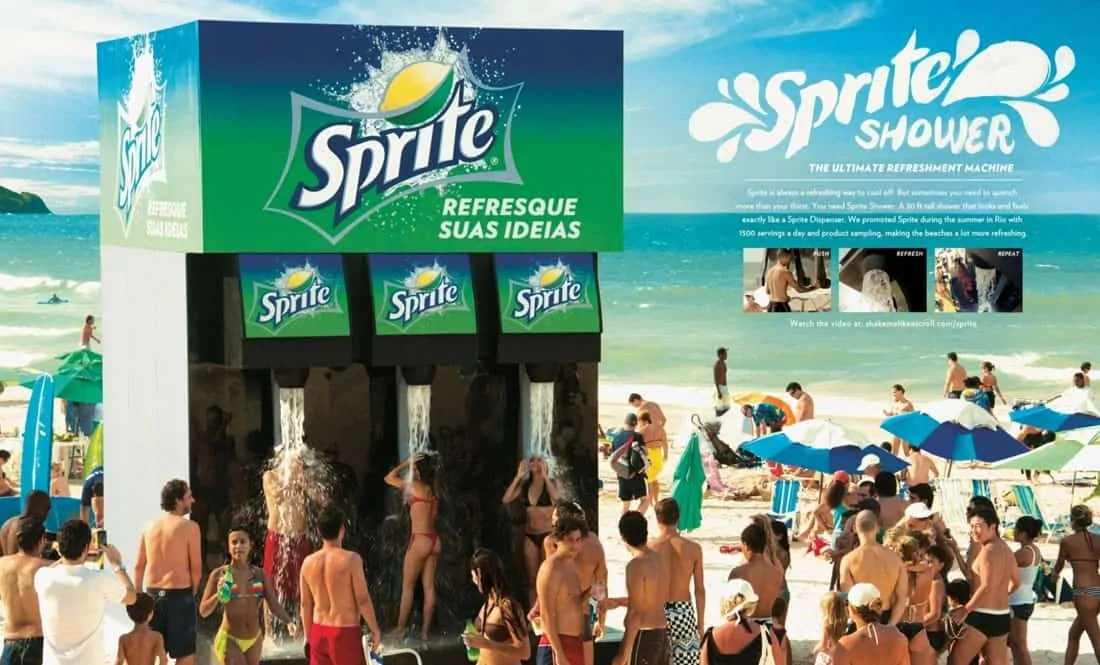
Experiential marketing is the new A game of big brands capable of investing large sums into their business. From Nike to Volkswagen to Sprite, the list contains some of the biggest names of the sector.
At first instance, experiential marketing might sound like event marketing. And both these could also be an alternative to ‘brand experience.’ But before making any further assumptions, let us try to distinguish between these three terms.
Experiential marketing vs Event marketing
Experiential marketing and event marketing might have certain common features if represented through Venn diagrams. However, they differ on certain clear grounds which are mentioned below.
Experiential marketing isn’t limited to events, it includes engagement activities and strategies which can be online, personalized, and even be launched as an advertising campaign; the drinkable ad campaign by Coca-Cola, for example.
Event marketing, however, is an important element of experiential marketing.
Customer Engagement
Event marketing just focuses on communicating the brand’s objective, aim or target to the audience through promotional events.
Experiential marketing, on the other hand, focuses on facilitating two-way communication with customers where they can not only listen to the brand’s perspective but also respond and interrogate.
Subjective vs Collective Experience
Event marketing creates a collective experience in the sense that all the customers are considered to be an audience in general, thus ignoring the subjectivity factor.
Experiential marketing gives proper attention to each customer, thereby providing an individualistic and subjective experience to all.
Objective
The final aim of event marketing is to popularise a product or an activity under the brand’s purview. Experiential marketing aims to strengthen the brand’s image amongst the various stakeholders of the business.
To understand this difference better, let us take the example of 2 companies using one of the above two strategies of marketing.
Brand ‘P’ and brand ‘Q’ planned to launch their new phone into the market. Brand ‘P’ organized a grand product launch event where customers, competitors, and media persons were invited. The brand announced the product and also talked about the features. Finally, the event concluded with a vote of thanks to the company’s director and associates.
Brand ‘Q’ also organized a product launch event where all the company employees could be seen wearing the same T-shirt and adhering to customer queries. Customers were also asked about the problems they faced with their recent product purchases. A meet and greet lunch was also organized for all the attendees.
From the above example, it is clear that Brand ‘P’ indulged in event marketing whereas brand ‘Q’ went for experiential marketing.
However, considering the cost involved with experiential marketing, small brands often neglect the advantages that it has to offer. So, are the advantages superseding the cost involved or is it just another of those marketing gimmicks? Let’s find out.
Benefits Of Experiential Marketing
One of the best parts of experiential marketing is the fact that it has something for everyone. From brands to customers, the marketing structure aims to benefit all the parties involved in some way or the other.
Benefits To Brands
Targeted marketing
This type of marketing helps the brand to focus on customers with a pre-existing interest in their product, hence avoiding unnecessary costs.
Brands opting for experiential marketing put customers on the top of their priority. Hence, there are greater chances of getting instant customer support from such brands.
Easy to make judgments
Quick judgments can be facilitated as customers are already aware of the experience that the brand will provide.
Benefits To The Employees
Quick feedbacks help in making instant changes
Employees can learn of customer reviews instantly, which further helps in making necessary changes in the product or service.
A direct link with customers
Employees get in touch with their customers which helps in further analysis and up-gradation of their product.
But, how exactly a brand commits to experiential marketing and what are the steps involved? let’s find out.
Steps Involved In Experiential Marketing
Although different strategies require different steps to be followed, 5 essential steps form the crux of putting this marketing plan forward.
Defining The Aim
First of all, it is important to define the aim of the event. Whether it is the general objective of establishing a better relationship with customers or a specific aim of answering customer queries, stating an aim in advance helps in proper management.
Strategizing The Route
Now, brand leaders need to define a clear strategy to achieve the aim that has been finalized.
Spreading The Message
The idea of the brand or the message to be communicated needs to be emboldened into the experience in a manner as to affect the customer’s final decision.
Creating A Retainable And Impactful Experience
The experience is bound to result in positive sales if it manages to get stuck in the customer’s memory and impact his/her decision.
Designing A Step By Step Guide
This guide should help the employees to string together all the small parts which will all together form the entire experience for the customer.
Focusing On Creating A Chain
Well, the experience needs to be advertised further by customers who intend to enjoy it repeatedly. This will help in further attracting other potential customers.
Now that we are aware of the steps, let us enlighten ourselves about the various routes which can be used to implement this type of marketing.
Experiential Marketing Strategies
Marketing experts consider a lot of options before finally putting the strategy forward. These strategies are designed and implemented after properly analyzing the brand investment and customer base.
Organise Events To Introduce Features
This particular strategy will not only create a much-required hype for the event but will also help in establishing direct contact with the customer.
For example Brand, ‘X’ organized a pool party to introduce their energy drink to the audience.
Product Launch Events
Well, these are specifically organized to introduce a product to the audience. However, brands should be extra careful while resorting to this option as the first impression is often the last.
For example, Mobile companies often organize product launch events to introduce a newly designed phone.
Virtual Reality Experiences
Certain companies sell VR kits to their customers which helps them to experience the product or the service wholly.
For example, Certain car companies give VR kits to their customers so that they can enjoy a virtual ride without actually moving from their place.
Guerilla Marketing
This involves indulging in a small conversation with the customers and introducing surprises in between to make it more interesting.
For example Brand, ‘X’ calls upon a customer, initiates small conversation and surprises him with some gift hampers for quick answers.
Stunts And Actions
A strategy involving a stunt has a higher chance of remaining in the customer’s brain for a long time.
For example, Company B invites 10 customers for a group conversation but each one is invited to a different location. This will be a bit surprising for the customers as and when they come to know about it.
Experiential Marketing Examples
Most of the big brands we talk about have tried their luck in experiential marketing. Here are some examples of brands with really innovative experiential marketing strategies –
Converse Rubber Tracks
Converse built a community-based professional recording studio in Brooklyn, NY, to engage more with its target audience and create a purposeful relationship with them. This studio is free for artists to record their music and they also maintain the right to their own music.
IKEA Big Sleepover
IKEA, to promote their bedroom range and develop a meaningful relationship with its customers, launched an experiential marketing campaign called ‘The Big Sleepover’ which let 100 competition winners spend the night in their Lakeside store. The store had sleep experts who advised the participants on how to choose the best mattress. Besides this, the experience was also made fun by offering massages, manicures, cake and milk and a local reality star who read bedtime stories to the participants.
Experiential Marketing- Future Of Retailing?
Well, experiential marketing does provide a lot of benefits over another form of marketing. However, the decision to use it or not depends on the company’s investment size and the required IT professionals. But no doubt, if used properly, this marketing technique can work wonders for any brand.
Go On, Tell Us What You Think!
Did we miss something? Come on! Tell us what you think of our article on experiential marketing in the comments section.
Every company plans to expand its offerings or tap into untapped markets to increase its profits and grow. This expansion can be the key to the company’s growth but, if not done correctly, it can cause a huge strain on the existing image and resources. This is what brand dilution is all about.
What Is Brand Dilution?
Brand Dilution is the weakening of a brand due to excessive and unreasonable brand extension.
It is when a company overuses its brand to an extent that the existing image of the brand fades away, the customers are not able to follow where the brand is heading, and/or the quality of the brand’s offerings slips which hampers its existing reputation.
Some key phrases to focus on to understand the definition of brand dilution better:
Excessive brand extension: Suppose a phone company has 2 successful devices in the market. An excessive extension is when it launches 4 more to gain market share but is unable to support any of the 6 well enough.
Unreasonable brand extension: A company famous for Football boots spreads its resources to develop Cricket bats but can’t gain market traction.
Reasons for Brand Dilution
While there are no defining factors that guarantee it, there still remain lots of key factors that can prove to be causes of the brand’s dilution.
Licensing
Licensing a brand isn’t wrong at all. Unless it doesn’t make much sense. The product to which the brand is licensed should reflect the quality and image of the brand. McLaren licensing its brand to Oneplus was fine. They market their phone for its speed, leveraged the idea of how the companies went from ‘underdogs to legends’ and incorporated some suitable design changes in their ‘McLaren’ edition phones.
But McLaren licencing IKEA to use its brand to sell a sofa would have led to brand dilution.
Tapping Into Inappropriate Niches
Expanding into new markets or launching new offerings is common and in fact a must-do for companies to sustain in the long run. But it needs to be done very carefully. Dilution happens when like insensible licensing, companies launch products that don’t really make much sense to the brand. From Arizona Ice-Tea manufacturing Nachos to Harley Davidson making perfumes, just not thinking through the product usually hurt the brand.
Another consequence of this are bad products. A company tapping into a new niche might do things right with the branding and marketing but lack of field experience might inevitably lead to an incompetent product. And when this product doesn’t deliver well, it harms the image of the brand as a whole.
Inconsistency
Not remaining consistent with the core values of the brand is a common cause of brand dilution. A brand needs to maintain the principles on which it was built. Let’s say a hypothetical company Soundz launches itself with professional-grade monitoring headphones at a below-average price and is a huge hit. Sometime later when customers are expecting more refined products at competitive prices, Soundz comes up with an average quality daily-use headphone. Such inconsistency to the foundation of the brand upsets the customers and causes brand dilution.
How To Avoid Brand Dilution
Brand dilution is the consequence of a brand expansion going wrong. A brand can avoid dilution if it carefully manages its expansion.
It’s a common story for brands to confidently get into something only to take a fall later. It is only a matter of time when they realize that they aren’t the first ones to fall into this trap and some proper research would have saved them.
A brand image is like an emotion with the consumer. A brand extension should remain consistent with that image. Irrespective of the extension, whether it is licensing or a new product, the extension should give an expression similar to the original brand. Beats is known for its fashionable premium-looking headphones. A licensing deal with a funky t-shirt brand will be understandable but a deal with a formal suits’ manufacturer won’t seem right.
It is statistically proven that on a long-term basis, an extension doesn’t cause much effect as long as it doesn’t affect a company’s core product. Protecting the brand’s flagship product from any negative effects of extension is another way to be safe from long-term dilution.
Also, having dissimilar extensions doesn’t hurt the brand’s image. A company’s brand and sub-brands must be clearly defined and separated. Dove, made a name for itself as a soap brand is a great example of this. While it was successful with soaps, it successfully brought a line-up of shampoos and deodorants. The key was with marketing. They clearly defined what customers should expect and separated it from their soap marketing. Neither soap nor the deodorant affected the other and both products gained customers. Dove nailed their men’s lineup with the same strategy too.
The company should make sure the extension is going to fill a void and not just be there for extension’s sake.
Examples Of Brand Dilution
Brand expansions are hard to do. Most of them lead to short or long-term watering down of the brand. Here are some examples of how some companies managed dilutions.
Amazon Fire Phone
Amazon’s Fire Tablets were an established product in the market.
They introduced the new ‘Amazon Fire Phone’ and it was a failure. The fire phone with its limited app support did not solve any of consumers’ existing problems and was doomed from the start.
The company had to discontinue it and has been much more successful with their Voice User Interfaces (VUIs) like Amazon Echo lineup.
Segway Scooters
Segway launched their 2-wheeled scooters that were deemed to be ‘industry-changing’.
For all shiny benefits, Segway overlooked proper market research. Many issues like parking management, road safety, long-distance carriage, targeted marketing etc. were overlooked. The huge price tag was no help either.
They had to switch from being targeted to the general public to target the products to open commercial places like theme parks and large offices.
Go On, Tell Us What You Think!
Did we miss something? Come on! Tell us what you think about our article on brand dilution in the comments section.
A huge chunk of that change flows through few different game distribution services and the one commanding presence in that sector has always been Steam.
So –
What exactly is Steam?
What Is Steam?
Steam is a video game distribution platform that allows users to view, purchase and play games.
Steam’s front page | Source: Steam
Think of Steam as a digital marketplace for purchasing games where – you can find a game that you like, pay for it as you would if shopping online, download your game copy and start playing. You don’t have to own the physical copy nor will Steam send you one after you purchase a game. It’s all digital.
Steam is available on various platforms such as – Windows, macOS, Linux and mobile OSes such as Android and iOS. Steam can be installed and used just as you would for any other software on the respective OSes.
Steam is owned by Valve Corporation, aka Valve Software – a video game developer, publisher, and distribution company that made the hit game titles such as Half-Life series, Counter-Strike, and DOTA.
Source: Valve
Apart from acting as a digital store, Steam also has a social networking aspect to it – Steam allows its users to be able to connect and communicate with one other via the same platform.
Steam pioneered the digital distribution service as it was first of its kind when it first launched on 12 September 2003. Before there were platforms like Steam, games had to be physically owned and bought and newer game-patches were cumbersome to push.
Steam was created to act as a hub for users to purchase games made by Valve and receive updates and patches as soon as they were released. It was soon expanded to allowing games from other developers to be listed on Steam along with the same support as Valve’s games got. This is done using the Steamworks API provided by Steam to –
Source: Steam
While the video game industry can be classified into three main categories – PC, console and mobile gaming, it is in the PC and console space that Steam has reigned supreme.
Since its launch, Steam has gone to become an industry heavyweight, raking in billions of dollars in revenue in sales and by 2011, Steam accounted for over half of digital PC games sales.
Steam Business Model
Steam operates on a commission-based business model, where Steam takes a percentage cut from all the sales made on its platform. Steam and Amazon are considered to have utilized and brought this model to the forefront via each of their wildly successful online [distribution] stores.
Steam also lead the way in the freemium model during its first few years of operations – it offered free-to-play games to boost its growth and reach a wider audience. This helped bring in more users to the platform who would eventually stick to Steam – since it was the only major service that had a lot of game titles on offer.
Which brings us to –
How does Steam work and who are its key partners?
How Does Steam Work?
Steam acts as an online marketplace and it essentially caters to the gamer audience and has to attract the game development companies and studios. It is more of a shared success where more sellers mean an increased number of users approaching the platform.
Steam currently has over 30,000 games listed on its platform, over 90 million monthly active users and a billion registered accounts as of February 2020.
Steam’s Key Partners
Gamers
Steam’s main customer base is the avid gamers, providing them with a simple and easy to use platform for buying and playing games. Steam also helps them connect with fellow gamers from around the world.
Game Developers & Studios
The game development companies are the lifeblood of Steam. The third-party studios on the platform help Steam provide various games all under their platform which further boosts their appeal.
Acquisitions
Steam has acquired of game studios –
Turtle Rock Studios
Star Filled Studios
Steam also has a lot of subsidiaries –
Valve Sarl
Valve GmbH
Steam’s Key Resources
First-Party game titles
Steam has got a strong set of first-party titles and IPs such as –
Half-Life series
Counter-Strike series
Left4Dead series
DOTA series
Portal series
Team Fortress series
Employee Knowledge
Valve’s employees and developers are giving free-reign to pursue any venture and streams that they are currently interested in. This helps bring the best out of them and a product to match. Though this extends the development time drastically, it works out for Valve and Steam since it does not totally rely on game sales to sustain itself.
This plethora of IPs and great first-party titles means that Valve still has quite an advantage even in the case of third-party developers and studios pulling out of the Steam store.
Steam’s Operating Model
Steam’s approach is quite straightforward when it comes to game distribution. Steam presents users with a clean user-interface that lists everything for sale, doubling as a social platform and a digital rights management (DRM) platform.
Users
Users can search for games
Purchase games
Play purchased games
Connect, chat, visit forums and read game reviews with other Steam users
Game Developer And Studios
Game developers and studios can use Steam Direct service – a part of Steamworks distribution program – to list their games on the Steam.
Source: Steam
Adding a new game to Steam is as simple as signing up and filling up all the digital paperwork and submitting the game for review. Steam provides detailed guidelines for listing games on Steam.
Which raises the question –
How does Steam make money from selling games of other game developers?
How Does Steam Make Money | Steam Revenue Model
Steam Sales
Steam makes most of its revenue via the percentage cut it takes out of all the sales made via its marketplace. Earlier Steam used to take a fixed 30% cut out of all the sales made. This was its norm for long until Steam changed its pricing in November 2018 –
Sales
Revenue Split
Till $10 million
30%
Between $10 million and $50 million
25%
Above $50 million
20%
For the first $10 million of sales revenue, Steam will take a 30% cut out of it. Steam will take decreasing cuts, 25% and 20% for sales between $10-$50 million and above $50 million respectively.
Steam also charges $100 for every product a game developer wishes to list and sell on its platform as a “Steam Direct Product Submission Fee”.
This adds up on Steam’s revenue pool since hundreds, if not thousands, of new games, are listed onto Steam every day.
Hardware Sales
A small percentage of Steam’s revenue comes from the sales of the Steam Controller.
Source: Steam
The Steam Controller, currently discontinued, was priced at around $50 when it first launched in 2015 and the last batches of it were sold at a heavily discounted price of $5. The Steam Controller differentiates itself by having dual trackpads and built-in gyroscope and accelerometers to provide tilt-to-steer and other motion controlled inputs that would otherwise require a racing wheel.
Steam PC Café Program
Steam provides commercial licenses for cybercafés and any institutions that work on a commercial scale via their Steam PC Café Program.
This allowed any of the institutions with a valid Steam PC Café license to be able to avail the following features –
Source: Steam
Final Thoughts
Steam has a simple and straightforward business model where it takes a royalty fee for acting as the platform and services provider that helped the games reach its audience from game studios with simplicity and ease.
Having launched six years before competing game development studios launched their versions of online stores resembling Steam, it established a monopoly over the games distribution industry and provided a polished product that is quite hard to compete against thanks to the years of experience.
Go On, Tell Us What You Think!
Did we miss something? Come on! Tell us what you think about our article on Steam Business Model in the comments section.
Rebranding is a marketing strategy that involves changing the logo, name, concept or design of an existing brand. This change is made with the clear intention to make the brand look so fresh and new that it changes its image and helps it gain back the trust and interest of the target group and the investors.
Rebranding Definition
Rebranding is the process of assigning new characteristics and properties within and outside an already established organisation or offering to give that existing brand a new identity to help it get recognized differently or develop a totally new brand image in the market.
In simple terms, when the brand characteristics like name, design, logo, etc. of an already established organisation or offering are changed or altered with an aim to change its existing brand image or make it get recognized differently than before, it is rebranding.
Few key-phrases that should be focused on to understand the definition of rebranding better –
Rebranding involves new branding for an already existing brand.
The aim of rebranding is not to create a new brand but to give the existing one such a facelift that it can compete in the ever-changing market.
It doesn’t only focus on visuals of the brand but also focuses on the internal operations that run the brand.
Reasons For Rebranding
The value of any brand is dictated by how it is perceived in the market. If the brand is not attractive or the target audience can’t relate to the brand, it will not thrive in the long run. Hence, rebranding proves to be a favoured branding strategy to facelift the existing image to build a reputable image in the long run.
Besides this, the various reasons to rebrand are:
Change In The Target Demographic
Every brand has a target demographic that can and keeps changing from time to time because of the changes in trends, technology, etc. It can also change when the brand grows larger and targets a broader audience than before. To be able to stay up to speed with the changing target demographics, a brand will have to use rebranding to stay attractive to its broad audience.
Emergence Of New Technology
Often times, the introduction of new technology makes it imperative for a brand to rebrand itself and be relevant. This type of rebranding may not be a full makeover but just a change in the brand characteristics like the brand logo, tagline, etc.
Emergence Of New Markets
Sometimes, branding that suits one market isn’t necessarily suitable for others. Take Mcdonald’s for example. The company had to rebrand itself as Makudonarudo (マクドナルド) when it planned to tap Japan as a new market.
Faulty Existing Brand Image
There are times when the planned brand identity doesn’t convert into the expected brand image and backfires for the company. Such times require the company to give branding a second try by rebranding and improving the faulty existing brand image.
Change Of Business Ownership
Change of business ownership like that in the case of mergers, demergers, and acquisitions, often requires a brand to rebrand itself to make the change visible and to comply with legal requirements.
Unforeseen Emergent Situations
Since the world is full of uncertainty, there is always a threat from unforeseen situations like bankruptcy, legal complications, bad reputation, etc. for which no brand can pre-plan. Rebranding can help almost any brand to tackle the volatility and adapt according to the situation at hand. If the brand takes a hard fall because of an unforeseen event, rebranding can be its saviour in the long run.
Rebranding Examples
Airbnb
Airbnb, the community based two-sided online marketplace that helps connect travellers with local hosts, just positioned itself as a marketplace when it was launched in 2008. However, with the increased competition and more demanding customers, the company was compelled to rebrand itself in 2014 where it introduced new signature colour palette, typography, and a fresh logo, dubbed the ‘bélo’.
Instagram
Instagram, the number one image-based social media network owned by Facebook, was not as popular as Facebook when it was acquired. But it had a huge potential that wasn’t properly recognised by the world because of poor branding.
After Facebook saw it’s potential, it rebranded Instagram to change its brand outlook totally by introducing a new logo, changing its UX, adding new features, and changing its brand colours.
Rebranding comes with huge costs – both monetary and non-monetary. Hence, this strategy should be executed only when it is absolutely necessary.
Here’s a simple rebranding checklist that one can follow if he plans to rebrand his existing offering or organisation –
Find out Why it is Necessary
Rebranding has its own costs which aren’t limited to short term time and money requirements. A faulty or hasty rebranding strategy can cost a company a lot in the long run.
This strategy should only be executed only when it is really necessary. Hence it is better to first spend time making sure that it is absolutely needed.
Ask the following questions to find out if it is time to rebrand:-
Is the company going to or has expanded its operations and reach in new markets?
Do legal regulations require the company to rebrand?
Does the company face a threat from a competitor who has similar branding?
Is the customer base losing interest and trust in the brand?
If the answer to these questions is ‘yes’, it will be a good idea to start rebranding.
Plan How It Should Be Done
Every rebranding strategy is focused on a different goal and a different target audience. Once the necessity is identified, it is advised to set a goal and draft a strategy which revolves around fulfilling that goal.
Developing an in-depth plan will help understand what needs to be changed and how much will the change cost in terms of money and time. The cost of rebranding depends on various factors including the geographical location, type of business, amount and depth of the changes needed, etc.
Make Things More Intuitive
Changing the branding drastically can confuse the audience and may backfire in the long run.
Rebranding strategy should be laid down by putting more intuitive thought and considering the existing feelings and brand perceptions of the existing customers and the target market.
Make Full Use Of Customer Feedback
The unspoken rule of rebranding is to always keep in mind what the customer looks for. It’s a preferred practice to plan the rebranding strategy by making sure that the feedback and reviews given by the customers are understood and acted upon properly.
The customers are able to give the best hints for rebranding as they are the ones who use or are going to use the products and services offered.
If It Works Fine Don’t Change It
Rebranding doesn’t require a brand to change its every aspect. If something looks and works the way it was intended to and has no problems, it doesn’t need to be changed just for the sake of rebranding.
Let the World Know
Once all the changes are strategized and executed, rebranding is said to complete once it is announced to the world. A lot of promotion and marketing strategies are used to inform the rebranding decision and gain acceptance and trust of customers in the market.
Rebranding vs Relaunching
Relaunching a product, in short, means launching the product for a second time. The reasons for relaunching an offering are:-
Confusion in the market
The product being faulty
An attempt to make excitement again so as to increase sales
Rebranding, on the other hand, refers to the marketing strategy wherein the logo, design, name, etc. are changed in such a way that the brand retains the attention and remains attractive to its target customer base.
Rebranding vs Redesign
Redesign refers to only changing the design of the brand and designing it again in a different way so that it looks more unique, without changing its brand identity.
Whereas in rebranding, not only the design but the name, colours, concept, and the functioning of a brand are changed in such a way that it becomes ready to face the existing competition, customer expectations and trends.
Go On, Tell Us What You Think!
Did we miss something? Come on! Tell us what you think about our article on rebranding in the comments section.
Hey, I'm Aashish
Each week I share research backed AI oriented content in my newsletter.
There are AI ideas, AI trends, tutorials, and guides.
24k entrepreneurs read it. I'd love you to join.