Feedough Logo

Blog

  • Founder Vesting: How Vesting Works in New Businesses?

    Founder Vesting: How Vesting Works in New Businesses?

    The world of entrepreneurship requires you to plan for uncertainties. You cannot wait for some mishap to decide on the redressal method; you have got to stay on your toes and take precautions.

    So, just after you have started with your business; just after your idea isn’t an idea anymore, you need to start thinking about all the sides of the story. No matter how sad, horrifying, or dumb the possibilities may seem, you have to be ready with your precautions.

    Vesting is one of those preventive measures. It helps deal with the situation of a cofounder walking away. VCs also ask for a vesting schedule because a founder leaving early-stage is seldom easy to deal with. Not only will you be left with the burden of finding a new partner but also the risk of diluting your equity because they have the legal power not to give back the shares. Horrifying, isn’t it?

    Vesting helps you manage this situation. So, let’s talk more about it.

    What is Vesting?

    Founder vesting is the mechanism by which business founders secure rights to their company’s shares without actually getting them, that is, on the condition of acquiring them gradually according to a pre-decided schedule.

    If you opt for vesting, you won’t outright get your share in the company; these will rather be reserved for you to acquire in due course.

    In simple terms, founder vesting refers to the gradual process of giving business founders ownership to their company’s shares. Founders earn full ownership of their shares gradually over the time decided in the founders agreement. This means that they have to stay at a company for a certain amount of time before they can own all of their equity.

    One thing to know here is that vesting follows a schedule agreed on by all the parties, so no one can take your shares away unless you leave or have to leave the company. In other words, you will have to earn your share by working for the company for a pre-specified duration. If you fail to do so by any chance, the reserved portion (that is not acquired) is taken back. 

    Why Is Vesting Important?

    Vesting is a clause in a founders agreement or shareholders agreement that gives the company the option to repurchase a shareholder’s unvested shares at a discount in the event that the founder terminates employment. An example of this might be if a company has a three-year vesting schedule for each founder. If a founder leaves the company after two years, then the company has the right to repurchase the unvested shares at a price equal to the price on a given day times the total number of unvested.

    Although this seems harsh to new founders, having a vesting agreement is mandatory for new businesses as:

    • It gives power to the company to take shares back from the shareholders if they don’t fulfill their side of the bargain.
    • It protects the company from losing a considerable part of its equity when a shareholder leaves without fulfilling its duties.
    • It prevents other founders from the “free rider” problem that would arise if a founder leaves early without contributing much to the company.

    Let’s understand this better with an example.

    Let’s say founders A and B start a company named XYZ. They manage to raise some capital against 10% of the equity of the company. The rest 90% is divided equally between them without vesting. Now, it’s been a year since the company started. They are scaling rapidly; everything is going well, but A decides to leave one day. Founder B, the investor, and the top executives are all worried about how they will fill A’s shoes.

    However, we have one other problem here. A is not legally responsible for giving his equity share (a whopping 45%) back. So, when taking on a top-notch employee to replace A, they have to dilute B’s equity and even that may not be sufficient. Also, if the company scales up in the future, A will benefit without contributing to the business; that is, A will be a free-rider.

    Now, consider another scenario where A and B opted for vesting. So, they don’t get their shares outright; they will be granted over four years. They decide that each receives a percentage of their equity unlocked every year for the next four years; that is, 25% of each of their total equity (45%) is unlocked each year.

    If A leaves now after one year, they get only 25% of their share, around 11.25% of the total equity. This gives A the incentive to stay more and offers some protection to B from too much dilution in case A leaves, and they need to hire someone. Also, investors feel assured now that the chances of a founder leaving and the company shattering are less.

    Terms Related to Vesting

    To understand how vesting exactly works, you need to know a few basic vesting terms:

    • Vested Stock: Stocks that cofounders acquire in exchange for their services and goodwill towards the business are called vested stocks. These cannot be taken away usually even after you leave the company.
    • Unvested stock: They are the stocks not yet acquired by the cofounders but will be in due course if they keep working with the company. Unvested shares get converted into vested shares with time; that is, the portion of unvested shares decreases, and vested ones increase. However, if a founder leaves before the vesting duration is over, further vesting of these stocks will be stopped.
    • Vesting schedule: A vesting schedule states the timeline when the share forfeiture restrictions lift from your shares partially and fully. Consider it as a plan that determines the portion of your company’s share you own at a particular point in time. It describes how much of your unvested shares will convert into vested ones at what point in time.
    • Cliff: Cliff is the minimum time for which you need to stay in the company to acquire any stocks. It is the period after which your shares start vesting.
    • Reverse dilution: Reverse dilution happens when the stocks reserved for a shareholder are returned to the company after they have violated the agreement and left. This act increases the ownership of all the other shareholders in the company.

    How does Vesting Work?

    The vesting is a practice in which a founder’s equity in a startup is granted in stages over time.

    Let’s understand the nature and working of a vesting clause using an example. Following is a typical vesting clause in a founders’ agreement.

    “Each Founder’s percentage interest in the company will vest pursuant to a four (4) year vesting schedule beginning vesting start date, which will vest 1/48th per month in exchange for continuous and consecutive service to company. Additionally, the vesting schedule will be subject to a one (1) year cliff. If a percentage interest in company is owned by non-Founders during the vesting schedule, each founder will immediately receive 12/48ths of the percentage interest. If a Founder who is subject to a vesting schedule departs company prior to full vesting of his or her shares, the remaining portion of any unvested shares will be returned to company.
    Vesting will occur on the basis of following schedule:
    Until and through (first vesting date) neither founder’s shares will vest
    On and not before (first vesting date) 25% of each founder’s shares will vest
    On and not before the (second vesting date) 50% of each founder’s shares will vest
    On and not before the (third vesting date) 75% of each founder’s shares will vest
    On and after the (fourth vesting date) i.e. on end date each founder will be 100% vested.”

    This is a uniform four-year-long monthly vesting schedule with a one-year cliff. It states that an equal portion of a founder’s share will vest each month in such a way that the shares are fully vested in four years or 1/48th of their shares will vest each month for the next four years.

    However, this clause also talks about a one-year cliff. The cliff period is the time when your vesting schedule is in sleep mode and is not in operation. This implies that no share will vest in the first twelve months after your agreement comes into being. The whole 25% of your shares will vest together on the first anniversary of the agreement.

    After this, the vesting schedule operates normally, and 1/48th of your shares vest each month. This way, at the end of the first year, you have 25% of your shares vested, 50% at the end of two, and 100% at the end of four.

    What if You Leave the Company before All Your Shares Vest?

    If you leave the company before the period of vesting (4 years usually) ends, all your unvested shares will be forfeited or bought back at a nominal price. While you can keep your vested shares, the unvested ones disappear into ether, increasing the other shareholders’ percentage ownership. This is called reverse dilution.

    Suppose you started a company with three other people, and each of you gets a 25% share in the company. These shares will be vested according to the typical 4-year schedule with a one-year cliff. So, each of you will be 25% vested by the end of one year and 37.5% vested by 18 months. This implies that everyone will own 9.375% of the company by the end of 18 months.

    Now, if you decide to leave the company, you get only 9.375% of it. Further vesting of your shares will stop and your remaining 15.625% shares will be bought back by the company at a lower cost or at a fair market cost.

    Usually, the remaining shares are distributed to other shareholders based on their existing shareholding ratios. That is, everyone else will get extra 5.208% shares.

    One thing you need to remember here is that the vesting schedule is dormant for the first year. So, if you leave after 11 months, you receive nothing.

    What if You Go for Fundraising before the Vesting Period is Over?

    Investors, especially early-stage VCs and angels, ask you to draw a fresh vesting clause in the shareholders’ agreement. A typical vesting clause in a shareholders’ agreement looks like this.

    “All stock and stock equivalents issued after the Closing to employees, directors, consultants, and other service providers will be subject to vesting provisions below unless different vesting is approved by the majority (including at least one director designated by the Investors) consent of the Board of Directors (the “Required Approval”): 25 percent to vest at the end of the first year following such issuance, with the remaining 75 percent to vest monthly over the next three years. The repurchase option shall provide that upon termination of the employment of the shareholder, with or without cause, the company or its assignee (to the extent permissible under applicable securities law qualification) retains the option to repurchase at the lower of cost or the current fair market value any unvested shares held by such shareholder.”

    This clause is similar to the one in the founders’ agreement. However, unvested shares of the leaver are typically bought back at a small pre-decided price instead of being forfeited.

    While drawing the shareholders’ agreement, you may also ask for a portion of your shares to be vested at the time of enforcement of the agreement in exchange for your long contribution to the company.

    “The outstanding Common Stock currently held by ______ and ______ (the “Founders”) will be subject to similar vesting terms provided that the Founders shall be credited with [one year] of vesting as of the Closing, with their remaining unvested shares to vest monthly over three years.”

    What if Your Company is Acquired before All the Shares Vest?

    If you find a good buyer for your company and decide to sell it before the vesting period is over, you may have to stay back and work for the remaining duration. However, if the acquiring company fires you during this time, the vesting of your shares will get accelerated.

    “In the event of a merger, consolidation, sale of assets, or other change of control of the company and should an employee be terminated without cause within one year after such event, such person shall be entitled to [one year] of additional vesting. Other than the foregoing, there shall be no accelerated vesting in any event.”

    Acceleration of shares is the automatic conversion of unvested shares into vested ones caused by certain triggers. Usually, this trigger is a merger or acquisition of the company.

     There are two types of acceleration:

    • Single trigger acceleration: When acceleration is caused by one trigger, usually, merger and acquisition, it is a single-trigger acceleration
    • Double trigger acceleration: When it is caused by two triggers, usually merger or acquisition followed by the new parent company dismissing the founders, it is a double trigger acceleration. The acquiring company changing the work location or significantly altering a founder’s role also qualifies as a trigger sometimes.

    Usually, cofounders and investors agree on double trigger acceleration. This is mainly because the acquiring company wants the founders and key employees of the acquired company to stay, and help in the smooth transition of authority and consolidation of business. Unvested shares act as an incentive here.

    You can bargain for single trigger acceleration, but keep in mind that this will make your business less desirable for a merger & acquisition. So, a double trigger acceleration clause with some flexibility will do you good.

    The Bottomline

    Now that you know how vesting works for cofounders, you must draw up the clause in your founders’ and shareholders’ agreement. We agree that businesses work on trust among the shareholders, but you don’t know what might happen in the future. Your cofounder may have to leave because of personal problems, health issues, and other obligations. Vesting facilitates the hiring of a replacement in such cases.

    Remember that you don’t need to follow the typical vesting schedule. This is the most tried one but has its flaws. For instance, many startup founders feel that a four-year vesting schedule is useless because startups take around seven to ten years to start generating enough revenue and a founder leaving after four years will be disastrous. So, talk to your cofounders, discuss with experienced people, and then decide what kind of vesting agreement to enter into.

    Go On, Tell Us What You Think!

    Did we miss something? Come on! Tell us what you think about our article on founder vesting in the comments section.

  • How To Make Money On Reddit: A Guide

    How To Make Money On Reddit: A Guide

    Let’s get it straight – millions of people talk about money on Reddit (say r/personalfinance), but you’ll rarely find anyone who said I made a thousand dollars on Reddit.

    If you’re a regular Reddit user, you might not find it surprising that this social media network that sees 52 million daily active users doesn’t let content creators make money out of it yet.

    But if you’re new to this social media platform, here’s a brief introduction of Reddit for you.

    What Is Reddit?

    Reddit is a community-powered social content aggregation website that focuses on real communication and authentic human connection. The platform has a community for almost everything that people would talk about: news, sports, fan theories, cute animals, car accidents, space, etc.

    The communities are called subreddits. Users populate these subreddits with their posts that other users can comment on, vote, and even reward using in-app currencies.

    The platform has over 52 million daily active users, 100k+ communities, and witnesses over 50 billion monthly views.

    As a Reddit user, you can become a part of a community, add more value to existing posts by commenting, upvoting, and downvoting, or start your conversation using text, images, and videos. You can even start a live channel of your own if you have content to show to the members of a community.

    How To Make Money On Reddit?

    Unlike Facebook, Instagram, or TikTok, the user experience on Reddit doesn’t revolve around any users’ personal brand. It revolves around communities.

    You post something that has a conversational value and it will start a discussion. The platform gives you a stage where the spotlight isn’t on you but on the value you have to offer to a discussion.

    Reddit is the truest of social media networks where the network is what matters.

    Now, the question comes –

    Can you make money from Reddit?

    Well, unlike Instagram, there’s nothing called a Reddit Influencer yet. So you can’t create a career dependent on Reddit.

    But this doesn’t mean you can’t earn a few bucks on Reddit.

    In fact, if you’re a student or someone who’s looking for some passive income without building tens of thousands of followers, Reddit could be the money-earning platform for you.

    Moreover, Reddit could be a gold mine if you already have a business and an existing revenue source. You can double or triple your earning using this platform.

    Here’s how.

    Get Paid For Doing Tasks

    While you can’t depend on Reddit to make a living, you can use the platform to earn some side money. There are subreddits (communities) where users share some decent money-earning opportunities where all you have to do is complete some simple tasks.

    r/BeerMoney

    BeerMoney is more than what it sounds like. The community posts small tasks, fulfilling which you can make money more than enough to buy you a beer. As of writing the article, the community has over 855k members who post giveaways and money-paying tasks like gaming tasks, surveys, reviews, signups, social follows, etc.

    The best part?

    Some people earn over $500 per month doing such trivial tasks.

    You can even take the advice and help of the community regarding a certain task, and the community never says no.

    r/signupsforpay

    A community where you sign up for something in return for money. Sometimes, you get the money directly in your bank account, and sometimes you’ll have to do certain tasks to own it. Nevertheless, the community stands up to its name.

    It’s a fairly new community as compared to BeerMoney. But it surely has many offers posted every day that you can tap for some easy money.

    To keep its reputation, the community even flags fake offers and list scammers to prevent you from wasting your time.

    Get Paid For Your Skills

    While you can easily earn hundreds of dollars doing trivial tasks, Reddit can be a goldmine for you if you are skilled at doing something and are looking for work opportunities. You can be a programmer, a legal practitioner, a designer, or a writer; Reddit communities have opportunities for you.

    r/SlaveLabour

    Slave Labour community could be a paradise for you if –

    • You’re just starting out, or
    • You belong to a country with cheap currency.

    It’s a community where users look to get jobs done at less than market rates. So, if you’re just starting out, it could be a great place to build a portfolio. And if you belong to a country with cheap currency, you might actually hit the jackpot in this community.

    The community isn’t limited to a particular industry. You can easily find and bid for a job in your niche. Usually, the jobs posted in this group are regular project-based simple jobs that you can do to make easy money.

    r/ForHire

    If you are a skilled professional looking for a job, this Reddit community with over 235k members could be the place for you. For hire is a niche agnostic community where you can list your skills and get a job. You can even apply for jobs posted by other members of the community.

    It’s a great community to join if you plan to make money on Reddit by finding a job.

    r/ProgrammingTasks

    Programming Tasks subreddit is a new subreddit similar to Slave Labour but dedicated to the programming niche. Join this if you’re a programmer who’s looking for small tasks to add to your portfolio or make extra money.

    r/DesignJobs

    A subreddit for designers to make money on Reddit. With around 70k members, you can promote your skills in a ‘For Hire’ post or apply for a design job that’s suited for you.

    Consider this subreddit as Slave Labour for designers.

    r/HireaWriter

    Hire A Writer is a subreddit dedicated to helping copywriters, content writers, scriptwriters, and other content-development-related skilled individuals find a job or task to make money on Reddit.

    From ghostwriting to proofreading, you can find numerous jobs posted every day on this subreddit.

    r/Jobs4Bitcoins

    Jobs4Bitcoins is a subreddit similar to r/ForHire but where you get paid using cryptocurrency. So, if you’re looking to make money on Reddit but don’t want the government or the world know about the transaction, use this subreddit.

    Follow The Stock Market Bets

    If you already have some money to invest and are looking to reap more than normal revenue (by taking more than normal risks), you can use Reddit communities to help you earn profits in the stock market as well as in the crypto world.

    r/WallStreetBets

    Wall Street Bets is a community where participants discuss stock and options trading. The community even put bets on selected stocks to increase the price and earn profits.

    Wall Street Bets subreddit uses its huge userbase of over 10 million even to manipulate the market demand and help its community members earn good revenue. Be a part of it if you have some savings and want to test it out on community-powered stock market bets.

    r/SatoshiStreetBets

    Satoshi Street Bets is a subreddit similar to Wall Street Bets but for crypto markets. You’ll see what the community is investing in, what’s the state of the crypto market, and what you can expect in community-powered crypto discussions.

    Join this subreddit if you’re into blockchain and cryptocurrencies and want to try out your luck in community-supported investments.

    Get Donations

    If you’re a content creator, you can go live on Reddit’s Public Access Network, show your content to the communities and ask for donations through Venmo or other payment networks.

    You can be a pianist, magician, beatboxer, gamer, programmer, or nature enthusiast, etc.; if there’s something you can stream that the community would like to watch, there are chances that some people from the community might donate to you as well.

    make money on reddit

    Though this practice doesn’t always guarantee money, this is one of the ways you can try out if you want to make money from Reddit.

    Build Your Own Community

    If you already have a website, app, business, or a venture where you can benefit from developing a community, forum, or just a discussion area, go for a subreddit for your venture.

    Building a community that trusts you gives you the power to drive the community to the bottom of your funnel without friction. Once you have your subreddit, you can direct the traffic to your affiliate website (you can’t include affiliate links on Reddit directly), sell your own physical and digital products, including courses, ebooks, etc., and can even make them purchase your service if they ask for more.

    The opportunities are endless. All you need is a sound knowledge of how to develop, nurture, and grow your Reddit community.

    Go On, Tell Us What You Think!

    Did we miss something?  Come on! Tell us what you think of this article on how to make money on Reddit  in the comments section.

  • What Is Customer Experience? – Importance & Strategies

    What Is Customer Experience? – Importance & Strategies

    Let’s go back to the last time you wanted to buy a smartphone.

    You started with a simple Google search with a question of best phones according to particular features or phones under a specific price range. You might have certain criteria in mind while skimming through the phones recommendations on various websites –

    Good after-sale service?

    Durability?

    Camera?

    Performance?

    Availability?

    … and brand image?

    You probably went with the brand with better social validation (better customer reviews) and which fit your requirements.

    After this hefty research process, you might have selected, bought, and used the phone and the brand services that came along with it. You might have also compared the same with all the reviews you read before buying.

    The offering and all the services gave rise to a customer perception that will influence your future purchase decisions regarding this brand. Moreover, this perception resulted in an experience that may also influence your recommendations about this brand to other people you know.

    This holistic experience of the brand throughout your buyer’s process is customer experience. It’s often regarded as the “new competitive battleground” that determines a business’s success.

    But what exactly does customer experience mean, and how can you develop a good customer experience?

    Let’s find out.

    What Is Customer Experience?

    Customer experience, also known as CX, refers to a customer’s perception of a brand based on all the interactions throughout their customer life cycle.

    It refers to your brand’s physical image and the feelings created by it, both consciously and unconsciously, at every step of the customer’s interaction with the brand.

    The two fundamental pillars of CX definition are interaction and perception.

    Interaction refers to the communication and involvement of the customer at various touchpoints like visiting your brand’s website, talking to your sales or customer executive, redeeming after-sales services, etc.

    Based on these interactions, the customer develops a perception that refers to their awareness, thoughts, and opinions about your brand.

    This perception could be good or bad, depending upon your company’s goals and the customer, the customer lifecycle, and your priority.

    What Is A Good Customer Experience and Bad Customer Experience?

    According to a survey by Bain & Company, around 80% of the companies believed they delivered a “superior customer experience.” But according to their customers, only 8% really did.

    Clearly, most businesses don’t understand what a good customer experience is.

    It’s not about just offering promised products or services, marketing them, treating the customers well, or investing time and money in cutting-edge technology to impress the customers. It is more than that. It’s about making the customer journey as smooth, and engaging as possible, from the moment they make a purchase choice through product delivery, till the time they are connected with your brand. This means prioritising customer needs and retaining the customer over your product.

    So, if your company prioritises customer queries, uses customer feedback to gain a better understanding of the customers, and finds solutions to customer-specific issues, then it creates a perception that your brand cares about its customers. This is what constitutes a good customer experience.

    But, if you create a bad impression among the customers, then it’s a bad customer experience.

    Why is A Good Customer Experience Important?

    According to a Frost & Sullivan report, customer experience is set to overtake price and product as a key brand differentiator by 2020. But, why is it so? Why is it essential to invest in CX and provide your customers a memorable shopping experience?

    It is because your customers have a plethora of choices. With one Google search, they can easily switch to other brands. So, even though you and your competitor might be offering product parity in terms of quality and price, the main distinction for customers is whether your brand offers a consistently good customer experience or not.

    As a result, businesses are investing in CX to reap the following benefits of a good customer experience:

    Ensures Customer Loyalty

    A pleasant customer experience ensures customer loyalty, and a loyal customer resists switching to another brand.

    The happier your customers are with your brand, the longer they’ll stay with you.

    For example, Apple has some of the world’s most devoted customers because they produce excellent products and provide outstanding customer experience.

    Drives Customer Advocacy

    Satisfied customers are more likely to become brand advocates and refer your brand to the world.

    In today’s modern world, favorable word of mouth can propel any business to success. Thus, customer advocacy is a desirable outcome of a good CX. A customer who tells their friends, family, or coworkers how pleased they are with your brand’s services is your best advocate.

    Boosts Company’s Revenue

    A loyal customer would make repeated purchases from a brand. This repeated purchases would add to your revenue with incremental sales. Moreover, upselling and cross-selling is easier when the company deals with satisfied, loyal customers. After all, according to Forrester, customers can pay 4.5 times more if the customer experience is good.

    A good customer experience also leads to customers becoming the advocate of the brand that even helps in reducing the marketing costs as the company can make effective use of referral marketing and word-of-mouth marketing strategies.

    Reduces Churn Rate

    Churn rate refers to the percentage of customers who discontinue business with your company or cancel their subscription during a given time period.

    In usual scenarios, customer churn and terrible customer experiences become more costly than establishing a system for outstanding experiences from the beginning.

    This is why your company should make efforts to provide an exceptional customer experience to ensure that your satisfied customer won’t abandon the brand due to considerations like the price of a product.

    Differentiates A Brand From Its Competition

    In an ultra-competitive business environment, attracting and maintaining customers is no easy task. If your company overlooks the necessity of offering a seamless customer experience, you would be losing out to competitors who understand that the customers require great experiences.

    So, your company should focus on customer pain points and actively provide the customers with the simplest and most effective solutions possible. You must make efforts to retain the devoted customers as they are the backbone of your company, and that if that backbone is weakened, your company would fall apart.

    But, how do you evaluate your customer experience to see what you’re doing is right or wrong and where you need improvement?

    How To Measure Customer Experience?

    Customer experience is a subjective and difficult-to-measure concept. As a result, you’ll need to rely on various CX measures to track how CX improves (or worsens) over time and use it to evaluate the success (or failure) of changes you make.

    The top five metrics used by CX professionals are:

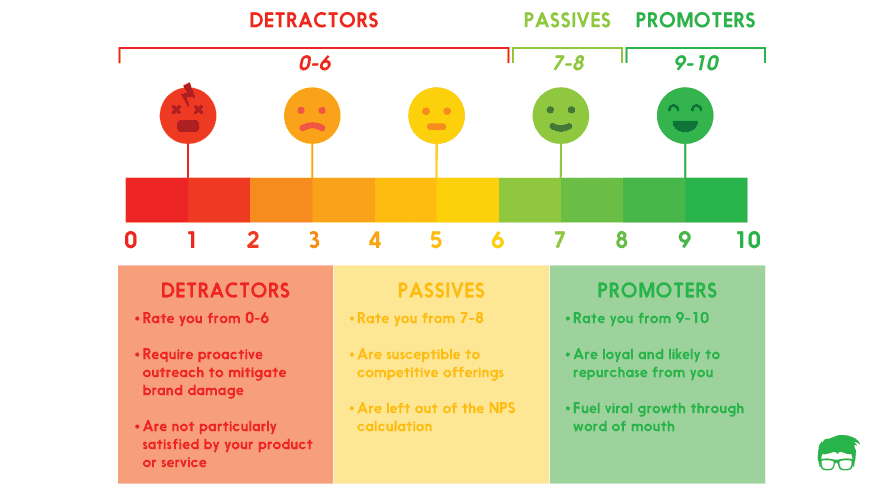
    Net Promoter Score (NPS)

    The net promoter score measures the likelihood of your customers to recommend your brand to their friends, family, and coworkers based on their interactions with your brand.

    Thus, it is a customer loyalty score calculated by asking the customers a simple question:

    “On a scale of 0 to 10, how likely are you to suggest this product to a friend or colleague?”

    net promoter score

    Customer Satisfaction Score (CSAT)

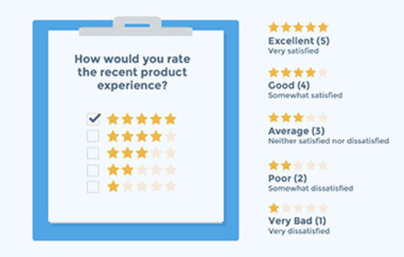
    CSAT surveys measure the customers’ satisfaction with your product or service. It can be represented on a 5-or-7-point scale rating (where 1 indicates very unsatisfied and 7 indicates very satisfied), or through yes/no responses.

    Customer Satisfaction Score

    Customer Effort Score (CES)

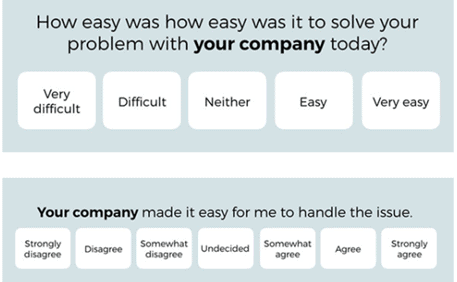
    This metric assesses how much effort a customer had to put in to use your product or service, find the information they needed, or get an issue resolved.

    Here, the customers respond to a statement such as “[Name of the company] made it easy for me to handle [name of issue]” on a scale of 1-5, where 1: strongly disagree and 5: strongly agree.

    The lesser the effort required, the better the CES—and the higher the customer satisfaction.

    Customer Effort Score

     Churn Rate

    This metric measures the percentage of customers your company lost within a certain time period.

    Suppose you had 1000 customers at the beginning of the year, but only 800 of them are still using your services. Then, your churn rate is 200 customers or 20%.

    Churn rate is a crucial metric for every company since retaining existing customers is less expensive than acquiring new customers.

    Retention Rate

    Customer retention rate measures how a company retains its customers over time. It is inversely proportional to the churn rate, that is, the higher the retention, the lower the churn rate.

    For instance, if your churn rate is 10% over a year, it suggests that 90% of your customers stayed with you. As a result, your retention rate is 90%.

    How to Make A Good CX?

    Snapchat lost 3 million users in less than three months because it didn’t care for customer experience in its application updates.

    Loyalty is earned rather than given, and it’s easy to lose if your company doesn’t have the appropriate strategy.

    Thus, a good customer experience strategy is essential. Here’s how you develop one.

    Understand Who Are Your Customers

    It is very important to develop and maintain complete profiles of your customers

    The more information your company has about its present and potential customers, the better it will make appropriate offerings to them.

    Start by defining your target audience and compiling a list of their demands, preferences, desires, lifestyle, purchase history, and demographic information. One approach to do this is by segmenting your customers and creating personas. Also, this process of obtaining, mining, and analysing your customer data should be performed with precision and accuracy.

    Create A Clear Vision For The Customer Experience

    An important step is to develop a clear customer-centric vision along with your team. Examine your customers’ buying journey and try to connect all the touchpoints your company can use to interact with the customer.

    Once done, try developing a strategy using all those touchpoints to satiate your customers’ needs at every stage of their buying funnel.

    Establish An Emotional Connection With Your Customers

    According to a study titled “The New Science of Customer Emotions” by Harvard Business Review, emotionally involved customers are at least three times more likely to refer to a brand’s product or service to others.

    Hence, establishing an emotional connection helps to provide the customers what they value. Your customers become loyal when they are emotionally attached to your products or services and can recall how they felt after using them.

    Create Goals And Objectives After Researching The Competition

    Competitor analysis is an important ingredient of developing a good customer experience. Research how your competitors tap customers during their life cycle, find gaps that you can capitalise on, and build goals to cater to your customers better.

    Analysing customers and market trends can help you close the gap between where the customer is now and where they want to be.

    To implement a successful customer experience strategy, your company needs to understand what the customer values, like making their shopping experience convenient and consistent, and providing knowledgeable help and friendly service.

    Ask For Feedback

    You would better know about the effectiveness of your efforts when you question your customers directly.

    You must survey the customers to see how they rank their interactions with your company and use the feedback to make improvements.

    When you listen to your customers’ woes and act on it, you automatically increase your credibility and take a step forward in building a loyal customer-base.

    Hire And Train Employees With Customer-Oriented Profile

    It’s crucial to emphasise on the importance of attracting, training, and retaining employees who have a customer-focused attitude. Customer-oriented employees are better equipped to take care of customers, correctly identify their preferences, create personal relationships with them, and provide good service on time.

    Thus, the higher your employee’s customer orientation level is, the more fulfilled and devoted they are to their job. As a result, your customers will value their interactions with such an individual more than usual, resulting in higher levels of good customer experience.

    Thus, you should try to create breakthroughs and attempt to provide a consistent set of cues, messages, and human interactions that, when combined, forms a “great customer experience.”

    And when we say customer experience, we are not talking about user experience or customer service.

    Is Customer Experience Same As User Experience Or Customer Service?

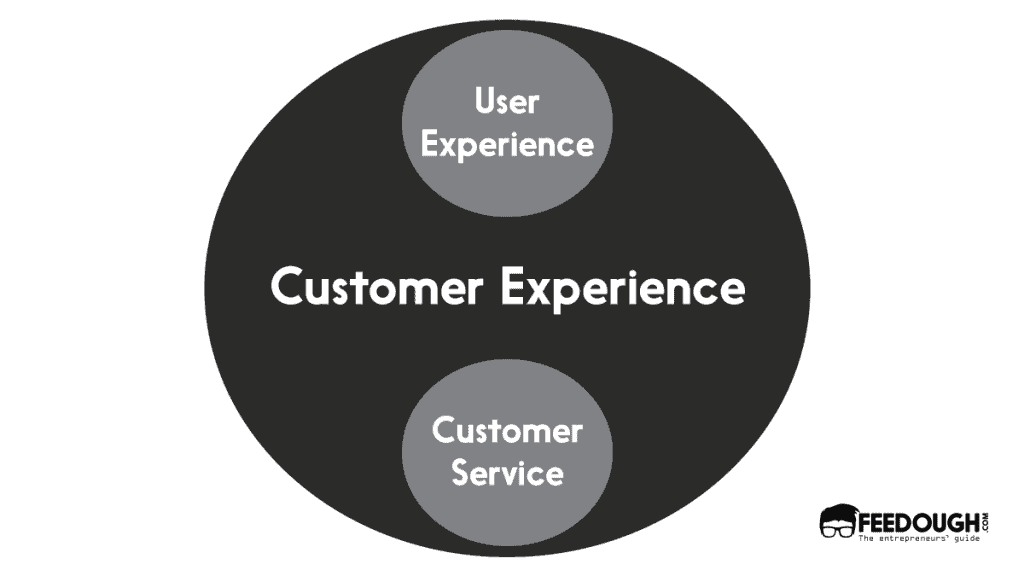
    The terms “customer service” and “user experience” are frequently confused and used interchangeably with customer experience. However, both user experience and customer service make up a part of the customer experience.

    Customer experience vs user experience vs customer service

    Customer service refers to your company’s support to its customers who face problems while purchasing or using your offerings. It is reactive; that is, it comes into play when an unhappy customer contacts your organisation and focuses on a particular interaction at a time.

    For instance, good customer service is when you call a travel agency to plan a trip and the person you speak with is friendly and helpful. However, if your tickets arrive early and your hotel room is upgraded, that’s a good customer experience.

    As far as user experience (UX) is concerned, it comprises all the aspects of your customer’s interaction with your offering. It is limited to the experience they receive from the offering. In comparison, customer experience is your brand’s overall perception in the eyes of the customer throughout their interactions along the buyer’s journey. It is a holistic approach and proactive as every company takes measures to improve the customer journey before the customer becomes dissatisfied.

    To sum up, customer service is one piece of the customer experience puzzle, and that CX includes aspects outside of a product that UX does not.

    Go On, Tell Us What You Think!

    Did we miss something?  Come on! Tell us what you think of this article on customer experience in the comments section.

  • Chess.com Business Model | How Does Chess.com Make Money?

    Chess.com Business Model | How Does Chess.com Make Money?

    If you know how a knight moves and you can distinguish between a bishop and a rook, there are high chances you have heard about Chess.com. Isn’t it astonishing how one company, Chess.com, dominates the world of online chess and accounts for about 65% to 70% of online chess players around the globe, and hosts more than a whopping ten million chess games every day?

    Being a chess server, a place to learn the game, a host of live tournaments with a separate website for kids, Chess.com has become the world’s largest chess website.

    But how does it operate and make money? Is it even sustainable? What is Chess.com business model? Let us unravel its journey.

    What is Chess.com?

    Chess.com is an internet chess server, an internet forum, and a social networking online platform which facilitates chess players to play, discuss and learn chess with a wide range of other features they can make use of.

    The domain Chess.com was originally set up by a company Aficionado, to sell a piece of chess tutoring software called the ‘Chess Mentor’. In 2005, internet entrepreneur Erik Allebest and partner Jarom Severson bought the domain name and redeveloped the site as a chess portal, which they relaunched in 2007.

    Chess.com is an apt showcase of how investing in a growing streaming community can yield great returns over time. So let’s delve into how this happened and what gave rise to Chess.com business model!

    The Rise Of Chess.com

    Hikaru Nakamura, the youngest American Grandmaster, a five-time U.S Chess Champion, and a top-ranked player in blitz, began streaming chess in July 2017.

    By the beginning of 2020, he amassed over 80,000 Twitch followers, sufficient to be in the ranks of professional streamers.

    Then happened the lockdown of 2020 when most sports leagues got postponed or cancelled, and boredom became a way of life. This led to a major breakthrough in the domain of chess all over the world.

    Nakamura offered a streamed chess lesson to xQc, a French-Canadian streamer and a retired professional Overwatch player. They went over the fundamental tactics of the game in the first session, which now has over 1.4 million views on YouTube. This lesson with xQc marked an inflection point, increasing average live viewership on Nakamura’s channel to soar above 13,000 by May 2020.

    However, he was not the only chess streamer benefitting from the increasing Twitch community’s interest in the game. Prior to the pandemic, Chess.com had sponsored most top chess streamers, even though some of them only had a few hundred live viewers per stream. This early investment in the community paid off later due to the skyrocketing popularity of channels such as BotezLive, GothamChess, Chessbrah, and others.

    Chess.com had put up $50,000 as prize money for the first PogChamps tournament in June 2020. It featured top Twitch streamers, including xQc, Voyboy, moistCr1tikal, and Ludwig, amongst others. Nakamura and Alexandra Botez coached the participants and served as commentators for the live matches. The inaugural tournament broke all viewership records, which other such tournaments have since then eclipsed.

    chess.com trend

    Another contributing reason to the rising trend of chess is because Chess.com worked with Netflix to develop engines that simulated Beth Harmon’s gameplay from various periods in the show ‘The Queen’s Gambit’.  

    Their streaming efforts not just provided the opportunity to monetise the talents of these players, but reach a greater audience than ever before. It significantly raised the chess profile in esports and the game streaming world – so much so that it made the world notice!

    How Does Chess.com Operate?

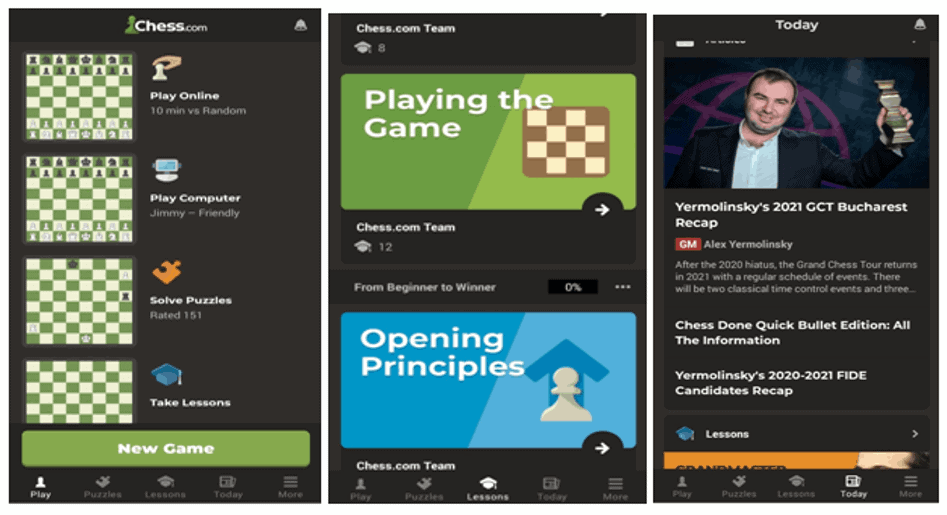
    People can use the website or download the free app on their mobiles to play chess and use the various other features Chess.com provides.

    • There are options of playing online with friends, random people or with the computer.
    • In the ‘Lessons’ tab, there are lessons guiding everything there is one needs to know about chess and other more specific lessons about tactic training and specific situations that might arise in the game.
    • In the ‘Puzzles’ tab, different kinds of puzzles that provide hints, top scores, and solutions that help players improve their game are available.
      • Puzzle rush: A race against the clock.
      • Puzzle battle: A rush against another player.
      • Daily puzzles: To practice different kinds of puzzles to improve the game daily.
      • Rated puzzles: These puzzles help one train in puzzle solving and rate players based on how well they do so.  
      • Custom puzzles: This provides an option to customise puzzles and choose them based on their theme and rating.
    • In the ‘Today’ tab, a lot of articles on chess-related topics, game strategy, opening theory, and history are available. It also contains news of all current chess developments and tournaments.
    • Users can play a number of chess variants on the server, including crazyhouse, three-check, four-player, king of the hill, racing kings, and chess960.
    • Players can also opt for a premium subscription to attain unlimited ad-free access to lessons, puzzles, bots, and other additional features.
    chess.com business model features

    Chess.com also facilitates collaborations with various influencers, both with a chess background and without the same. Furthermore, it hosts different tournaments and partners with these influencers to increase reach and expand the community.

    The key resources it needs to provide these services to its users and build a unique customer relationship is an excellent team of workers, marketers, and expertise in artificial intelligence(AI) for gameplay and analysis, amongst other things.

    Who Are Chess.com’s Customers?

    According to research, the graph of the share of optimal moves to the player’s age attains a peak between 35 to 45 years. The hump-shaped profile of the player’s performance increases sharply until the age of twenty, and then gradually improves for fifteen-twenty years and eventually declines.

    chess.com customers

    People between the ages of 25-34 accounts for around 34.5% of Chess.com users, followed by age groups of 18-24 and 35-44 that account for about 30.52% and 17.12% of their users respectively.

    Women constituted a much smaller percentage of 11.5% than men, who account for around 88.5% of their users.

    The brand witnesses most of its users as loyal customers who visit the website or application directly.

    chess.com traffic
    Source: Alexa

    What Value Does Chess.com Provide To Its Customers?

    Chess.com is more than just a Chess game website. It has strived to be a community where chess players worldwide can play, learn and grow. It was built with the idea to develop a network around Chess and not just offer a playing platform.

    There were a lot of platforms offering online chess game to users. However, none of them came close to Chess.com.

    The network effect has played a vital role behind the success of Chess.com, since matchmaking attracts more players to become users of the site. It also excels at the essential capability of detecting bots or any other attempts to cheat while using the site.

    It has made us all just a few clicks away from consulting Magnus-level chess engines. In 2018, Chess.com acquired an engine of its own called komodo.

    It offers post-game analysis, missed mate opportunities, and reveals the players’ blunders while teaching them new moves as takeaways from the match.

    The engineers have developed multiple AI personalities that adjust each move’s skill according to the opponent’s potentials. Some others use old game logs to emulate the skill and style of play of some chess legends.

    Apart from the availability of various chess variants, additional features include videos and articles on chess, tactics training, daily puzzles, lessons, team matches, and live broadcasts as well. In addition, one can see the record of past matches of any Chess.com player and get to learn from them.

    It helps people foster their competitive spirits and make constructive use of their time. It also allows us to adjust the game duration according to our own convenience, and the immersive nature of the game makes one think, learn and grow in the process.

    How Does Chess.com Make Money?

    Chess.com operates on a freemium model wherein the site’s main features are provided for free, supported by advertisements. But users can pay to remove those advertisements and get some additional features.

    Chess.com revenue model

    The users can play online with their friends, other chess community people, or the AI opponent for free. In addition to this, it offers them a variety of puzzles, lessons, chess-related articles, and a post-match analysis to help players improve their game.

    The premium subscription offers users other additional features depending on the kind of premium they opt for.

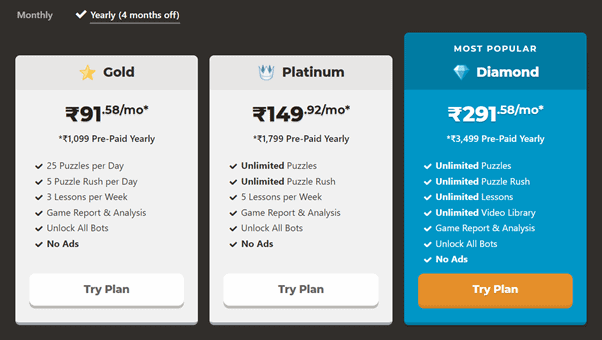
    Chess.com offers three tiers of premium subscriptions to its users. They are:

    • Gold: It gives ad-free unlimited access to analysis, all bots, three lessons per week, and twenty-five puzzles every day. It costs $29 per year.
    • Platinum: It gives an ad-free unlimited analysis, unlocks all bots, and five lessons per week. It costs $49 per year.
    • Diamond: It gives ad-free unlimited access to lessons, video library, puzzles, analysis, and bots. These additional features cost $99 per year.
    chess.com business model freemium

    Go On, Tell Us What You Think!

    Did we miss something?  Come on! Tell us what you think of this article on Chess.com business model in the comments section.

  • What Is A Startup Studio?

    What Is A Startup Studio?

    The startup ecosystem is booming like never before. There’s disruption and behavioural alteration in almost every industry that you can think of.

    But then, there are failures too.  

    However, entrepreneurs are not alone. They have enough experienced people ready to work with them, help build their startups, and reduce the chances of failures. While a majority of new founders approach accelerators and incubators, you don’t always need cohort-based entities to help you in your initial startup stages. Some businesses will partner and work with you as you need.

    Yes, startup studios are such organisations. Although they have been around for a while, startup studios are often confused with an involved venture capitalist and with a funding incubator. However, it has its own identity.

    So, let’s decode startup studios for you.

    What is a Startup Studio?

    A startup studio, also called startup foundry, startup factory, and venture studio, is an organisation that repeatedly builds businesses out of market-tested disruptive ideas using its pooled resources.

    In other words, a startup studio is a startup that creates startups. It is an organisation of experienced founders, investors, and experts that either develops its ideas or partners with entrepreneurs if they have a disruptive business idea. It then utilises its pooled money, expertise, and other resources like financial capital, team, strategical plans, management processes, and technical tools to help you establish the business.

    You must remember that it does not work on a cohort basis like accelerators and incubators; it will partner with you just like an investing cofounder, that is, it will work with a hands-on style and expect equity in return.

    However, you might not be the only founder it is working with. The startup studio might be developing several ideas and businesses simultaneously, a style of building businesses called parallel entrepreneurship. Here, yours and the other businesses are known as subsidiaries of the studio, while the studio itself is known as a holding company.

    Just like other stakeholders, the startup studio mostly exits from your business when it is acquired or when you go public.

    Startup Studios vs Startup Incubators vs Startup Accelerators

    Since startup studios provide capital and expertise to young startups, they are often confused with startup incubators and startup accelerators. However, you must understand that all these organisations are entirely different.

    While incubators and accelerators are cohort-based training and mentorship programmes, startup studios partner with individual businesses and work in the cofounder capacity; that is, they get involved in their day-to-day working. This is why they also demand huge equity in return for their services (30-60% compared to accelerators’ 7% and incubators’ no equity). Also, accelerator and incubator programmes last for a specified duration, whereas startup studios build startups from scratch and stay with them till they exit.

    The stages at which you may join these programmes also differ. Incubators take in very early-stage startups when only the idea is ready, while accelerators expect a dedicated team, ideal MVP, and good traction. A startup studio’s work depends on its operating model; it may partner with an entrepreneur who just came up with a catchy business idea or the whole team when their management plan is ready. However, it usually focuses on building companies from the ground up.

    Basis
    Startup accelerator
    Startup Incubator
    Startup Studio
    Purpose
    Accelerates the growth of startups
    Assists in conversion of ideas into businesses
    Actively builds and scales up startups
    Model
    Cohort-based
    Cohort-based
    Partners individually
    Provisions
    Structured training, networking, coworking space, and capital
    Infrastructure facilities, mentorship, and networking
    Funding, human capital, strategic processes, technical tools, and all internal resources
    Stage of joining
    Usually, after the team, plan, and MVP are ready
    After a valid idea is ready
    After a catchy idea is ready
    Working time frame
    Three to four months
    From start to when they start sustaining themselves in the market
    From start to exit
    Run by
    For-profit organisations like established businesses and investment firms
    Not-for-profit organisations like academic and government institutions
    Serial entrepreneurs and corporations (for profit)
    Raising funds
    Yes
    No
    Yes
    Equity
    Around 7% usually
    No equity
    Around 30-60% usually
    Ease of joining
    Difficult
    Easy
    Difficult

    Startup Studio vs Venture Capitalists

    Startup studios and venture capitalists fund and guide several companies simultaneously and demand equity in return for these services. However, you must understand that their work and goals are different.

    While a venture capitalist plays the role of an investor, startup studios are more like investing cofounders. Besides providing money and guidance, they get fully involved in business operations, just like your how co-founding team would do.

    Also, they have various tried and tested tools collected through past experiences of building companies which they offer to founders, whereas VCs only fund, guide, and help them with networking. Although quite a lot of VCs have entrepreneurial experience, it is very much limited to top-tier VC firms. While 58% of the general partners from top VC firms have been entrepreneurs before, only 28% of other firms’ GPs have found companies.

    Venture Capitalists
    Startup Studios
    Nature
    Investors
    Entrepreneurs
    Working time frame
    Want to exit in ten years
    Do not mind waiting
    Stage of joining
    When the idea, team, and sometimes even product is ready
    Only a catchy idea is needed

    Characteristics of a Startup Studio

    Who, why, when. Since startup studios are still pretty much new, it isn’t easy to understand and separate them from the other organisations. To make this clearer, just know that they have the following distinguishing characteristics:

    • Startup studios usually work from ideation to the exit of startups; that is, they build from the ground up.
    • Startup building is a repetitive process for them. They build multiple prototypes, business models, products, and companies simultaneously or in quick succession.
    • Startup studios develop their internal infrastructure in due course. They have management know-how, data, technical tools, and organisational strategies tailored through their past experiences, and they keep adding to this infrastructure.

    How Does A Startup Studio Work?

    Experienced entrepreneurs, professionals, and industry veterans generally establish startup studios. Sometimes, large corporations start these studios to efficiently invest their existing capital structure, business processes, and expertise into building companies that might benefit their projects and consolidate their position in the industry.

    They usually follow the following five steps:

    • Ideation: Startup studios’ teams select new problems to solve every day. They brainstorm, ideate, and come up with disruptive business ideas around the subjects at hand. Sometimes, they also take ideas from outside entrepreneurs and deliberate with them.
    • Validation: Once they have decided on the ideas, they check their feasibility and scalability by conducting market research and running several pre-designed tests on them. Most studios have developed internal screening mechanisms that efficiently strain out all the unsuitable ideas. If an idea passes the test, it is validated and can be worked on. If not, studios either drop it or return it to the founder it came from and explain the reason. Also, since there is no innovation bias involved, dropping the idea is easier than it is in regular startups.
    • Creation: Now, the startup studios have to convert the validated ideas into working businesses. So, they develop prototypes and make improvements in them by leveraging customer feedback. At this stage, they also formulate business plans. However, if they fail, they either need to start the ‘creation’ step again or drop the idea.
    • Spinning out: When the startup studios succeed in creating the businesses, they let them spin out and work under their own executive and support team. These teams may be a part of the studio or hired from the outside, depending on the situation. However, in the case of corporate startup studios, the executive teams are usually a part of the studios’ internal team.
    • Scaling-up: Now that the businesses are ready to work on their own, they raise funding and start scaling up. At this stage, the startup studios may be as involved as required or work as happy board members waiting for dividends or a big exit.

    In exchange for all this capital, resources, and expertise, startup studios demand equity in the companies. Since they are much more involved than accelerators, incubators, or VCs, they expect more share in the businesses they help developing, that is, 30-60%. Corporate startup studios may also want these new businesses to be integrated into their project.

    Startup Studios Operating Model

    Startup studios’ working model can be categorised into two types based on where the idea comes from:

    Builder Studios

    A builder studio is the one that develops companies from internal ideas. It decides on the problem to solve, comes up with a solution, validates it, and creates a working business out of it. This business then spins off and functions under its management team as an independent startup. Some examples of builder studios are Atomic, Pioneer Square Labs, Rocket Internet, and eFounders.

    Investor Studios

    These studios partner with early-stage startup founders and provide them with adequate resources and expertise. In addition, investor studios are a part of the everyday operations of these businesses; they work on product development, recruitment, fundraising, marketing, PR, etc.

    Each investor studio tailors to a different kind of requirements. Based on what they provide, they are of four types:

    • 1st Cofounder Studio Model: When a startup studio partners with an entrepreneur who has an idea but not the required team, funds, or other resources, it is on the 1st cofounder studio model basis. In exchange for around 50% of the equity, the studio validates the idea, funds the development of the prototype, prepares market strategy, builds management plan, works on product building, prepares for fundraising, and recruits executive and support team members. The entrepreneur stays in the executive position of CEO, COO, or whatever they choose. After raising funds, the startup spins out of the studio and functions on its own. Some examples of studios that work on 1st cofounder basis are Human Ventures, Pioneer Square Labs, and Madonna Venture Labs.
      1st Cofounder Studio Model
    • 2nd Cofounder Studio Model: Here, startup studio partners with a small startup whose team and business plan are ready but need help in carrying the venture forward. Sometimes, these startups have even created an MVP, gained traction for it, and are operating in ‘stealth mode’. So, startup studios actively work with them to build their products, execute business strategies, and fulfill other requirements. They get 35% equity in exchange for this. Some examples of studios that work on 2nd cofounder basis are Hangar, Expa, and Timeal.
      2nd Cofounder Studio Model
    • Builder Outsource Studio Model: This is when a startup studio collaborates with an early-stage startup that is ready with its team, market strategy, operational resources, and business plan but needs help in building its product. The studio works with the team to design, build, and manage the product. It is a long-term partnership and any revision, updates, or change is done by the studio itself. It takes around 10% equity in exchange for all this. Some examples of studios that work on the Builder Outsource model are Rocka, Concepter, and Spark Foundry.
      Builder Studio Model
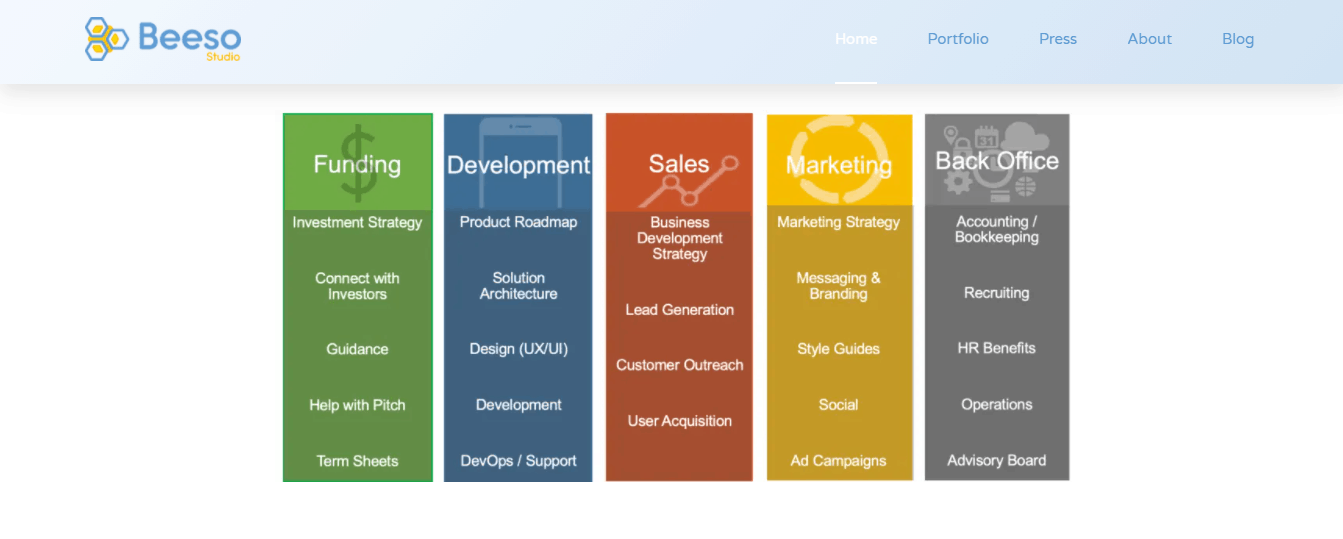
    • 3rd Cofounder Studio Model: A 3rd cofounder studio model is like an intersection between the Builder Outsource model and the 1st Cofounder model. It refers to the collaboration where the original startup is ready with its team, idea, vision, and network. The studio helps only with product design and development, technical assistance, marketing, PR, and technical and product support. In other words, it works like a technical cofounder and expects around 25% equity in return. Some examples of such studios are Unstuck Labs and Beeso.io.
      3rd cofounder Studio Model

    Where does a startup studio gets its capital from?

    Just like other startups, startup studio usually gets their funding from VCs. But unlike usual startups, startup studios need to have a well-experienced and renowned team that the VCs can trust. This is because these studios raise money before they come up with an offering (startup) to show to the investors.

    Should You Go for a Startup Studio?

    Startup studios are helpful in building, growing, and scaling one’s business. As of 2019, 35% of Idealab’s companies exited through IPO or were acquired, and 5% became unicorns. Out of 415 companies create by the top 23 by 2020, 88% are still active.

    Also, statistics say that the founders of previously successful businesses have 30% chances of success with their next venture as opposed to a general 10%. Therefore, one thing is for sure; you boost your chances of success by opting for a startup studio.

    But is it the right choice for you?

    Well, this completely depends on you, your situation, and your vision. If you lack something and would like to have someone help you with it in the cofounder’s capacity, startup studios might be the right choice for you. They can assist you with product building, PR, marketing, fundraising, etc. Their infrastructure, tools, and processes have been built after trying and repeatedly testing so you can trust them with your business. However, they require you to give up a significant portion of equity and control.

    Also, opting for a startup studio means spending hours choosing the right one. When you lead an outside team into your business, they significantly impact your work culture and ethics. So, you need to be sure that your demands and expectations align with theirs.

    However, if you are okay with putting this much effort and giving up equity, go for it. The startup studio will definitely help scale your business!

    Go On, Tell Us What You Think!

    Did we miss something? Come on! Tell us what you think about our article on startup studio in the comments section.

  • Venture Capital Firm Structure: How Does A VC Firm Work?

    Venture Capital Firm Structure: How Does A VC Firm Work?

    As a budding entrepreneur, you will encounter few domains as confusing as venture capital. You must have had to shed several false notions by now but this is where it gets intense.

    Venture Capital is the early-stage funding that investors provide to startups with high-growth potential in exchange for equity. These investors also provide other resources like network, guidance, and expertise which makes venture funding one of the most sought-after forms of investment.

    Generally, budding entrepreneurs think they can talk to a venture capitalist and convince them to fund their business out of their pockets, but that’s not the case. A venture capitalist is an individual who partners with other individuals and organisations to pool money and invest it in growing businesses like yours. Venture capitalists are members of associations called venture capital firms; they work as a part of these firms. These people have a huge appetite for risk and are ready to invest in growing businesses that may or may not turn out to be profitable.

    The rule of thumb says that a venture capitalist looks at 100 companies, funds 10 of them, and sees only 1 succeed. So, they are always on the lookout for that one company that generates enough returns to cover all their costs and this is why they grill you during fundraising.

    It’s difficult to bag venture funding. The whole process takes a lot of research, ideation, and execution. Moreover, even after a VC has agreed to fund you, there are a lot of procedures, technicalities, and formalities that are to be done the right way. One small mistake and you see your business fail. Therefore, it is essential to understand the functioning and structure of a VC firm.

    Read on to learn more.

    Structure Of A Venture Capital Firm

    Usually, two or more people come together to establish a venture capital firm. They are generally experienced individuals who have been entrepreneurs, investors, consultants, etc. and have a good knowledge of various industries. 

    These people don’t invest completely out of their own pockets but bring in outside investors. They are high net-worth individuals and institutional investors like insurance companies, university endowments, pension funds, and large corporates.

    Senior members of the VC firm raise money just like founders do for their startups. They approach these potential investors, present their pitch decks, attend countless meetings, and try to convince them to put money in the firm. 

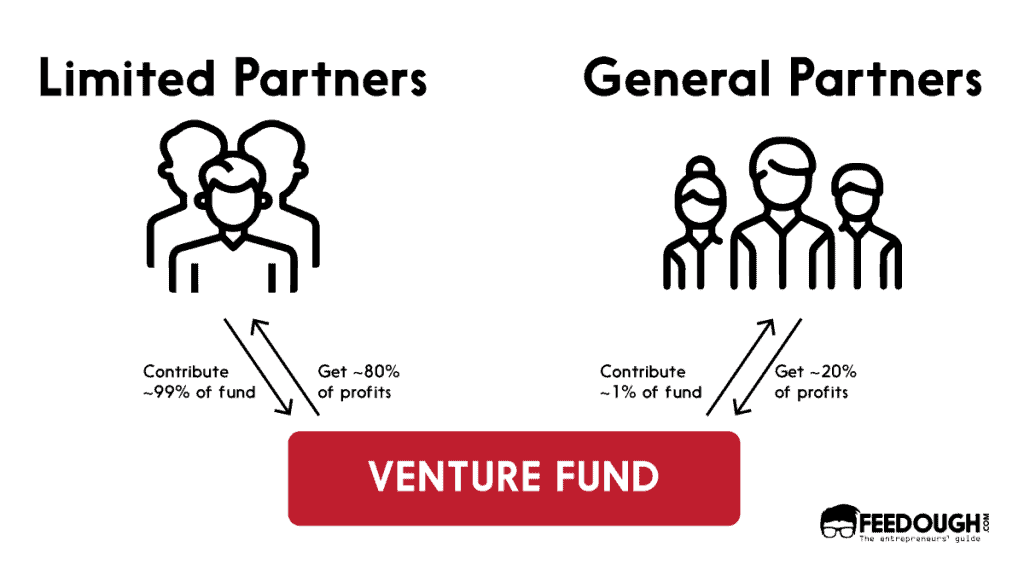
    All the money they get from the outside goes into a venture fund and forms 99% of it. Only 1% is contributed by the VC firm. Venture capitalists can also take small loans if required.

    Now that the venture capital firm and investors have pooled money, they enter into a limited partnership agreement (LPA), that is, a contract that establishes a limited partnership.

    Limited partnership (LP) is a legal association with two kinds of shareholders:

    •  Limited Partners (LPs): Here, outside investors are limited partners. Although they play a major role in the deal, they do not have any say in the management of the venture fund. Also, they are limitedly liable to the investment, that is, any burden of debt doesn’t fall on them. In other words, limited partners have limited power and responsibilities.
    • General Partners (GPs): The venture capitalists become the general partners here. They have unlimited power and responsibilities, that is, they manage the venture fund and are fully liable for any debt taken by the LP. Although general partners make all the major decisions and guide the portfolio companies towards profitability, they are legally responsible to act in the best interest of the limited partners
    venture capital firm structure

    The venture fund born out of this limited partnership, is managed by the management company. Here, a unique system of compensation is involved. The venture capitalists are paid in two ways:

    • Management fees: The amount the venture fund managers receive to cover all the organisational and management expenses of the fund and in the form of salaries is called management fees. It is generally fixed at 2% of the value of the venture fund.
    • Carried Interest: Carried interest or carry is the share of profits that the management company of the venture fund receives in case of a lucrative investment. It is generally fixed at 20%. So, even after investing only 1% of the amount of the venture fund, the general partners get 20% of the profits. The rest goes to the limited partners.

    Besides this, venture capitalists are receive management fees in any case. So, even if an investment incurs loss, they have the downside protection. It’s the limited partners who actually bear the burden of losses.

    However, GPs are also fully liable for any debt taken by the LP and need to protect themselves and their assets from any mishappening. So, they create a limited liability partnership (LLP).

    It is through this LLP that general partners invest in the limited partnership and take loans for the VC fund while simultaneously ensuring their personal security.

    You must know that an LLP borrows against its assets.

    Now that the VC firm is ready to invest, it scours the market for deals, hears pitches from entrepreneurs, assesses them, conducts due diligence, and decides whom to invest in. Usually, a venture capital firm invests in many companies (called its portfolio companies) simultaneously and establishes different management bodies for each. These bodies guide the companies and provide finances, network, and expertise to facilitate their quick growth.

    You must also understand that each venture fund has a definite life cycle of around ten years. So, VCs spend the first 3-4 years trying to find the right companies to invest in, and then, they work on these. Some VCs may also try building another venture fund while working on these companies. In any case, their goal is to exit in ten years by selling the stakes preferably through IPO or merger & acquisition, and pay off their limited partners.

    Roles in a Venture Capital Firm

    Now that we have discussed the fundamental formation and working of a VC firm, let’s talk about some of its other stakeholders. Like any other business, there are several roles and responsibilities in a venture capital firm. It has to scout the market for deals, conduct researches and analyses, value companies, run due diligence, draft memos, and execute various other activities.

    The three major roles in a venture capital firm (listed in decreasing order of hierarchy) are general partnersprinciples, and associates. Besides them, many large firms also employ venture partnersentrepreneurs-in-residence (EIR), and analysts.

    • General Partner/Partner/Managing Director: General Partners or Managing Directors are the senior-most people in the team. They raise funds, sponsor deals, and take all the major decisions of the VC firm. General partners are the ones with the highest stakes; they lose the most when a deal fails and benefit the most during a profitable exit.
    • Venture Partners/Operating Partners: Venture or operating partners have part-time (and usually temporary) relationships with a VC firm. They are technically employees of the firm, who get to be on board of its portfolio companies because of their expertise, experience, and zeal. Their job is to bring new deals, manage investments in those companies, and function like GPs on the board. Venture partners are usually capable of becoming general partners. In fact, many of them are retired GPs or the ones training to become GPs.
    • Principals: Principals are mid-level employees who work directly under the general partners. They are the trusted investment-focused counterparts in the team. Although Principals have no power to vote on deals, they can influence the general partners.
    • Associates: Next in line are the associates. They work under the principals and usually stay for around 2-3 years. Their job is to analyse companies, bring worthy profiles to the attention of their seniors, assist in due diligence, and perform all the behind-the-scenes tasks. They are fiercely smart people who have been into the game for some time. Occasionally, a few senior associates are promoted to the post of principal.
    • Analysts: A few firms occasionally roll out forms for analysts. They are usually fresh college graduates who sit in an office and crunch numbers or write memos all day. Analysts are usually inexperienced and have no power but they are smart.
    • Entrepreneurs-in-residence: Entrepreneurs-in-residence or EIRs are also part-time members of a VC firm. They usually stay for around a year and act as consultants or advisors to the venture capitalist. During their tenure, they introduce the firm to good deals and assist with due diligence and networking.

    Many venture firms may deviate from this conventional system; for instance, many VC firms use the titles of ‘Founding General Partner’ or ‘Executive Managing Director’ to signify seniority. Also, some give the title ‘Partner’ to their principals as well. So, although principals don’t have the power of a general partner, they are addressed in that manner. This confuses new entrepreneurs and they might waste their time speaking to the wrong person.

    This is why you need to always make sure who you are engaging with. In small VC firms, you might only be talking to general partners, but it is easy to get confused in the larger ones. Always assess the actual power of the person you are speaking to. You can go through the firm’s website or talk to the entrepreneurs with whom they have worked before. While you are at it, you may also try to get an introduction to the partners directly.

    However, you must remember that even the junior members of a VC firm can influence the general partners and, even if they cannot get you a deal, they can definitely ruin your chances. So, treat them with the utmost respect and try to form a healthy relationship. Principals and even associates can sometimes fix a meeting with the partner. However, insist on speaking with the senior members of the team. After all, they are the ones who will fund your business.

    Go On, Tell Us What You Think!

    Did we miss something?  Come on! Tell us what you think of this article on venture capital firm structure in the comments section.

  • 6 Proven Customer Acquisition Strategies To Win Customers

    6 Proven Customer Acquisition Strategies To Win Customers

    You might have a perfect offering ready for the market. But convincing the market to accept and buy your product is another uphill struggle. You need to look for customers who are interested in buying your offering.

    But the problem is, customers find it hard to trust new brands. The bigger problem is that 81% of the customers need to be able to trust your brand before buying from it.

    This makes the customer acquisition process even more demanding.

    But what exactly is consumer acquisition and how does it work?

    Is it just communication through emails with the customers, making them aware of the brand, or is the customer said to be acquired when they actually pay for your offering?

    Let’s find out.

    What Is Customer Acquisition?

    Customer acquisition is a process of bringing potential customers and convincing them to buy your product(s). It includes all the techniques which focus on identifying prospects, converting them into leads, and making them pay for the final offering.

    The goal of the customer acquisition process is to build a viable and systematic strategy for acquiring customers and, at the same time, to lower the cost of the process.

    The industry market is dynamic. So, you need to form a strategy that is sustainable in the long run and can adapt to industry trends easily.

    But how do you start?

    You develop a customer acquisition strategy that is:

    • Systematic: The process should be well-defined, backed by sufficient momentum to keep it going
    • Sustainable: It should be able to sustain the business for the long run and evolve with new trends and changes.

    How Does Customer Acquisition Work?

    Before developing a systematic and sustainable customer acquisition strategy, you need to understand how customer acquisition processes work. But before we do that, let’s clear one confusion –

    Customer acquisition isn’t just lead generation.

    Even though customer acquisition starts with lead generation – making the unaware target audience aware of the offering, building their interest, and gaining their trust; it doesn’t stop there.

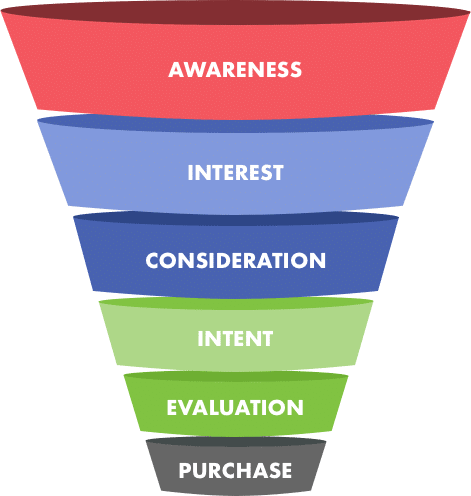
    The customers go through what is known as a customer acquisition funnel. It is wide at the top and narrows down as weaker prospects slowly pull out.

    • Awareness: You introduce your offering to a large audience for the first time and make them aware of it.
    • Interest: Once the customer is aware, you ensure that your offering manages to distinguish itself. It should attract the customers and develop their interest.
    • Consideration: Interest is further nurtured into consideration by using attractive strategies to make the customer consider your offering over other alternatives.
    • Intent and evaluation: When your products are showcased in a better light, the prospects show their intent to buy. But before that, they evaluate it to make sure it satisfies their needs.
    • Purchase: Once the evaluation is complete, the lead converts into a paying customer, and another journey begins.

    In simple terms, customer acquisition refers to converting an unaware business prospect into a paying customer by using several acquisition strategies.

    customer acquisition funnel

    To make this work, you –

    Define The Target Audience

    Your target audience is the set of all the prospective customers who face the problem you intend to solve. Briefly, everyone who may end up purchasing your offering is your target audience.

    Start with defining this customer persona. Once you’re done, segment the market into people who would be most willing to purchase your offering, followed by less willing and so on. You start by targeting the most willing segment to achieve maximum sales.

    Suppose you plan to offer weekly, monthly, and yearly gym memberships; you would want to target athletes and regular sports enthusiasts who would be the most willing to avail of the offering, followed by those who frequently workout followed by those who rarely ever workout.

    Understand Your Customers’ Objectives And Buying Behaviour

    You have a target audience, but you need to understand what the customer expects from your offering before proceeding. You need to evaluate:

    • Why would the customer purchase your offering?
    • What’s the use-case of your offering?
    • What all stages do the customer goes through before making the purchase decision?
    • What parameters does the customer consider before buying your offering?

    Before you develop a customer acquisition strategy, you need to predict your customer’s purchase funnel and purchase journey to understand the stages they go through before making the final decision. This will further help you build your customer acquisition strategies that cater to your customer at every funnel stage.

    Let’s say the target customers of your gym – athletes and sports enthusiasts – start their buyer’s journey with a Google search of “Best gym near me” followed by reading the reviews, and then visit the gym to see if they can get any offers.

    If you already knew this drill, you would target them on Google using SEO first, followed by social validation, and then offering them special discounts when they visit.

    Set The Goals

    Once you understand your customers’ expectations, you need to set goals to track your progress as well. Then, you need to align these two for the best results.

    There should be long-term, growth-oriented goals, and there should be short-term, conversion-oriented goals. But for both, you need to define measurable results that you wish to achieve after a specific time period.

    Your goals can be as simple as achieving at least 1000 subscribers by the end of the month or attaining a profit margin of 20% by the end of the year.

    Having set goals makes it easier to evaluate if your strategies are working or not.

    Define Acquisition Channels & Strategies

    Acquisition channels are a set of methods meant to acquire new customers. Once you predict the journey your customer may take before the purchase, it’s time to choose the best-suited channels to target them at suitable times.

    Proven Consumer Acquisition Strategies

    Several strategies can help you acquire customers. But you have to choose the best one that aligns their goals with yours.

    Let’s have a look at some of the popular ones.

    Content marketing

    What: Content marketing is a marketing technique that requires the marketer to provide valuable content to the audience at every stage of a purchase. The content is not meant for promotion but to stimulate interest and answer the questions of the customer.

    Objective: The customer has many questions about the offering they wish to purchase. With the advent of the internet, they tend to satiate their need for information by consuming content at every purchase stage. Content marketing aims to create content for each stage to develop brand image and foster loyalty.

    How: You understand the audience’s intent at every stage and try to satiate their information-related need by developing content they can consume. For example, before buying a smartphone, an average customer starts their journey with a Google search with keywords “Smartphones under $$$”, “Best camera smartphones”, “Best performance smartphones”, “What to look for before buying a smartphone”, etc. As a content marketer, you can target these keywords and write blog posts or create videos to help them satiate their need and build your brand image. Similarly, you could repeat the drill for the following information-related requirement as well.

    Why: Answering the customer’s questions builds their trust in the brand and gives the marketer the authority to drive sales. This acquisition strategy helps build a brand image during the early stages of the funnel, which the customer remembers during the later stages – when he makes the purchase.

    Example: Hubspot is a tech company offering marketing-related SAAS. The problem is that it isn’t the only one in the market to do so. So, to stand out and build its name, it realised that customers wanted more than just marketing tools. They want to learn more about marketing before using such tools. Hence, the company started content marketing, where they blogged about marketing fundamentals on their blog. This helped the company gain thought leadership, build a brand, and get around 6 million traffic per month on their website. The company further use lead magnets and email marketing to convert these prospects into paying customers of their SAAS.

    hubspot customer acquisition strategies

    Social Media Marketing

    What: Social media marketing uses social media platforms to interact and engage with prospective customers on their preferred social media channels.

    Objective: Social media marketing aims to tap every platform where your target audience is present. You either target them organically by capitalising on trends and engaging with them or using paid ads that align with your buyer’s funnels strategies.

    How: SMM involves two types of efforts – organic and paid marketing.’

    • Organic social media marketing involves the brand to be as active on social media as their customers are. It involves developing content that’s relevant and engaging. It requires you to follow the trends and meet customer’s expectations in terms of content so as to make them stop, look, and share your efforts with others. Usually, organic social media marketing is used more in the early stages of the buyer’s funnel – to build brand awareness and brand image.
    • On the other hand, paid social media marketing is more action-oriented. It requires you to target specific audiences based on their persona, interests, and objectives. You use paid SMM to target users based on every stage of their purchase funnel. Different stages require different creatives and copy. Suppose you sell a remote team SAAS. Your copy and creative for bosses who are unaware of such software would differ from the copy and creative of social media marketing ads for people already looking to buy such software.

    Why: Social media platforms are where your customers spend most of their time. You need to make sure to make your mark at this domain and use this domain as a channel to fulfill your marketing and sales goals. These platforms a great for interacting and engaging with your customers and build image and loyalty. Good strategies may even help you take advantage of referral marketing and word-of-mouth marketing.

    Example: Apple’s #ShotOnIphone is one of the best social media marketing examples that not only helped the company gain brand awareness but even helped it gain more customers. The campaign revolved around showcasing photos taken on iPhones to prove that people do not need other cameras to take pictures or videos as long as they have their iPhones. The company encouraged its customers to showcase their photos and videos using the hashtag #ShotOnIphone, which made other non-iPhone users feel FOMO. This strategy, in turn, resulted in not only brand exposure but also more sales. The thing to ponder about is that this marketing strategy was not limited to just organic posts. The company even created ads out of the user-submitted videos and targeted them to non-iPhone users on social media platforms.

    https://www.instagram.com/p/B9RbknOF_PB/?utm_source=ig_embed&ig_rid=a8e8c1a2-4d6d-42d8-bbe0-52bdb1afc410

    Search Marketing

    What: Search marketing is a marketing strategy used to drive visitor traffic to brand websites through search engine results pages (SERP).

    Objective: The majority of your customers’ online journey begins with search engines. Search marketing helps you acquire prospects, leads, and even paying customers by capitalising on their search intents either organically or by using paid ads.

    How: Just like social media marketing, search marketing involves the use of both organic and paid strategies. Organic search marketing is referred to as search engine optimisation, and paid search marketing is search engine marketing.

    • Search Engine Optimisation or SEO is used to improve organic search visibility for the keywords you target. Just like content marketing, you target keywords that the customer searches for during their buyer’s journey, and you develop content to satiate their needs. This content can be information-oriented, navigation-oriented, or transaction-oriented. For example, suppose you sell washing machines. In that case, you might develop content that focuses on the keyword “what to look for while buying a washing machine” or “Samsung washing machine vs ‘your company’s’ washing machine” or “buy ‘your company’ washing machine online”. However, SEO isn’t a one-timer project. It’s a recurrent activity that requires you to optimise your content on-page, off-page, and even optimise your page technically to convince search engines that your content is best suited to be at the top. Here’s a guide that we wrote on how you can use SEO to get the best results.
    • Search engine marketing or SEM requires you to pay for ads to appear as search results on top of the search engine results page (SERP). Through SEM you target selected keywords that the user searches throughout their buyer journey. Moreover, you also develop landing pages for such ads as users have different intentions at different purchase funnel stage. SEM is similar to SEO, but you pay the search engine to rank you at the top.

    Why: Increased search visibility while the customer surfs the internet helps you to reach a specific audience based on their intentions. You can directly connect with the audience and maintain authenticity.

    Example: Visme is an excellent example to understand customer acquision through search marketing. The company offers a presentation and visual designing SAAS and acquires most of its customers using search marketing. You’ll see two Visme results at the top of SERP when you search for “Online presentation software”- one being the result of SEM efforts and the other being SEO.

    SEM customer acquisition strategies

    Referral programs

    What: Referral marketing refers to using marketing tactics that incentivise existing customers to refer new customers to the business.

    Objective: This strategy uses the existing customer base to create a network effect and bring in new customers to the business using their convincing power. Instead of reaching out to the new customers yourself, you reward existing customers to refer your business to their friends, family members, and others.

    How: Referral marketing campaigns work by converting existing customers into a volunteer marketing army. It provides attractive benefits like discounts, gifts, or even bank deposits to the existing customers when any of their referrals register for the offering or pay for it.  Suppose you offer career counselling courses online. Paid advertising and promotion won’t do as much as a personalised recommendation from your existing clients. You wish people to know about the quality of services you offer which needs referrals.

    Why: According to a Nielsen study, 92% of consumers believe in suggestions from friends and family above other forms of promotion. This makes referral marketing an important customer acquisition strategy in industries where there is a lot of competition and mistrust.

    Example: The app Clubhouse made perfect combination of referral marketing and scarcity principle to build anticipation and get more users on board. You can register for the application only if someone invites you to join the same. Once joined, you get a limited number of invites to invite your friends and family for the same. In return, you get credit for the same.

    Clubhouse customer acquisition strategies

    Affiliate marketing

    What: Affiliate marketing uses third parties to promote your offering. You pay them commissions in return for every customer you get through them.

    Objective: This strategy reduces your marketing workload by delegating it to your affiliate partners who then use their own ways to promote and market your offering, as for every sale, they receive commissions.

    How: Affiliate marketing business model revolves around four parties – merchant, affiliate, network, and the customer. You as a merchant register at a network that has a network of affiliates ready to promote your offering and earn commissions. These affiliates sell your offering using content marketing, email outreach, paid ads, and even personalised marketing to the customers who believe in these affiliates’ recommendations. Once the customer completes a sale, you pay these affiliates commissions they deserve.

    Why: Affiliates can be found in every market, and when you associate with one, you broaden your audience, which helps in lead acquisition significantly. When you partner with trusted platforms, they manage to showcase your product perfectly, which builds your reputation and customer confidence.

    Example: Amazon is one company that has entirely devoted its business to affiliate marketing. The company partners with several affiliates like Lifewire who further develop content to sell its offerings to the final customers.

    Affiliate customer acquisition strategies

    Outbound Communicational Marketing

    What: It involves using traditional methods like cold emailing, cold calling, SMS marketing, and IM marketing (Whatsapp, Messenger, etc.) to reach out to prospective customers to inform them about the offering or schemes, offers and discounts.

    Objective: It’s a push marketing strategy that attempts to push the customer through the marketing funnel and conduct a sale.

    How: Some effective methods include emails, cold calling, and messaging to contact the customers. You can can cold emails to the prospects, reach out to them on social media networks like LinkedIn, or even contact them using IMs like WhatsApp. The process requires you to build a list of prospects and define goals for every interaction – an offer, discount, promotion of a new product, etc. Once done, you resort to the shotgun approach to find the right prospects that you can convert using personalised marketing.

    Why: Some customers are best acquired when pushed through the funnel. This marketing strategy makes use of ‘make them realise that they have the need’ ideology. Moreover, although it starts with spray and pray methodology, this strategy resorts to personalised marketing and gives more control to you as you draft your personalised communication messages for your prospects.

    Example: Credit card companies and other financial institutions who have access to a big database often use this strategy to communicate about their offering to the prospects.

    Go On, Tell Us What You Think!

    Did we miss something?  Come on! Tell us what you think of this article on customer acquisition strategies in the comments section.

  • What Is Labelling? – Product Label Types & Components

    What Is Labelling? – Product Label Types & Components

    There’s something common in a shirt with a printed cloth containing product information, a fruit with an attached sticker of its origin, and a shoe with attached information regarding size, type of leather, etc. All these products are supported with a label.

    This piece of paper, plastic film, cloth, metal, leather, wrapper, or seal attached to a product or its packaging has a lot more value than one can imagine.

    But what is a label, why is it important, what are its types, and what all does it contain?

    What Is A Product Label?

    A product label is an information tag, wrapper, seal, or imprinted message covering important information about the product like the product’s contents and directions for its use.

    What Is Labelling?

    Labelling is the process of attaching a label to the product to aid product recognition and provide necessary information about the product and industry.

    It’s a subset of packaging that focuses on conveying the brand, product, and industry-related information to the customer through the product. This information is imparted along with the product – as a part of the product or its packaging.

    For some products like chips, soda, etc., labels form a part of the packaging where information is printed right onto the package. Some special products like shoes have labels imprinted directly on the product itself. Some even see additional label tags attached to the product which do not form a part of the product or packaging per se.

    Types Of Labels

    Different labels convey different messages to the customers. Generally, one can classify labels into three broad types. These are:

    • Brand Labels: This label includes information about the product’s brand and its parent brand. It conveys the brand name, trademark, logo, brand message, etc.
    • Descriptive Label: This label includes product-related information like ingredients, usage information, care, performance, etc.
    • Grade Label: Grade label states the quality of the product as per the industry standards and legal requirements. An industry may classify its produce as A, B, C, D grade or good, great, best grade etc. For example, leather can be full-grain leather, genuine leather, bonded leather, etc.

    Components of A Label

    coca-cola product label

    A label can be of any form – piece of paper, printed statement, imprinted in the product, etc. It can either be a part of the package, attached to it, or included within the package and includes six components:

    • Brand Information: The label is key to product differentiation as it conveys information about the brand. This component is usually in sync with brand guidelines and includes the brand name, tagline, brand message, etc.
    • Product Description: A label also includes essential information about the product like what the actual item is inside the packaging, its description, ingredients, weight, usage instructions, etc.
    • Marketing Information: The label is also used as a marketing touchpoint to communicate offers, discounts, and other strategies to increase its sales. This component includes attractive illustrations or textual communication messages that align with the marketing strategies and brand guidelines.
    • Legal Information: Different countries have set guidelines as to what should always be included in the labels for certain industries’ products. These may include certifications, grading, allergy information, nutrition facts, etc.
    • Company Information: The label also includes information about the brand’s parent company and ways to contact the company.
    • Identification Marks: UPC code or barcodes are essential components of a label if the product is set to sell in stores – online or offline. They help in easy identification and billing among the lot.

    Importance Of Labelling

    Labelling is an important component of branding that serves not only the marketer but also the customers.

    From the marketer’s point of view, labelling is crucial as it –

    1. Helps customer identify the product.
    2. Helps differentiate the product from others.
    3. Helps grab attention of the customer.
    4. Is an important marketing tool used to increase sales at the point of purchase.
    5. Communicates necessary brand, product, grading, and industry-related information.

    From the customer’s point of view, labelling is important as it –

    1. Helps them identify the brand they look forward to purchase.
    2. Give them important information about whether the product is for them or not.
    3. Gives them essential information about the ingredients, size, quality, etc. of the product.

    Functions of labelling

    Product labels perform vital functions in informing, marketing, and fulfilling legal requirements. Some of them include:

    • Product information: The main function of a product label is to convey what product is inside the packaging. It also tells about the brand that offers the product.
    • Recognition and differentiation: Labelling works hand in hand with packaging to aids product recognition and differentiation.
    • Assorting of products: Label conveys important information about the size, category, and grade of the product that helps manufacturers, wholesalers, and retailers, in assorting the products better.
    • Marketing: Label forms an important retail marketing touchpoint that convinces customers to put the product in their shopping bag. It may include catchy design, convincing information, or even special offers, discounts, and even coupons to market the offering to the customers.
    • Legal fulfilments: Labels save the companies from legal troubles of not conveying important legal information like grades, allergy information, certifications, etc.

    Examples of Labelling

    Today, every branded offering comes with a label. Some are printed on the packaging, some handwritten, and some even engraved. Here are a few examples of product labels.

    Soda Label

    Coca-Cola’s label forms a part of the product packaging and includes all the components an ideal label should have.

    soda product labelling

    Shoe Label

    Nike’s shoe labels are attached permanently to the products and convey important information like brandmark, product information, and identification marks.

    shoe labelling

    T-Shirt Label

    T-shirts labels are usually imprinted on the product itself and convey important information like brand name, product size, quality, cloth material, etc.

    t-shirt product labelling

    Go On, Tell Us What You Think!

    Did we miss something? Come on! Tell us what you think about our article on product labelling in the comments section.
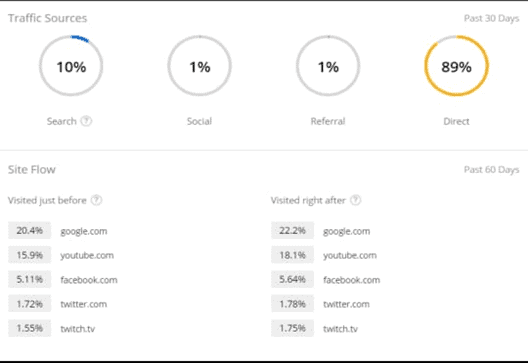
  • What Is A Value Chain? Why Is It Important?

    What Is A Value Chain? Why Is It Important?

    The market today is more competitive than ever. The players have added new attributes to competition and the value scoring isn’t limited to quality and price. Today, you need to achieve holistic excellence to make a name for yourself.

    But how can you evaluate if your business activities are providing the most value to your customers while maintaining good profits? How is value generation for both customers and shareholders envisioned?

    Enter the concept of value chain.

    Value chain answers every question pertaining to how a business provides value to its customers and itself. It is a useful technique to evaluate business processes and identify chances for innovation.

    But what is value chain and how to develop it? Let’s find out.

    What Is A Value Chain?

    A value chain is a series of activities carried out by an organisation to create and deliver value to the customers. It provides a company a competitive advantage by relieving the customers’ pains and providing them with exactly what they want.

    It includes all the activities involved in transforming a product from idea to reality; that is, right before the procurement of raw materials till the time the product reaches its end consumer.

    But, what is customer value?

    The benefits that a customer receives in monetary terms in return for the price paid for a market offering is known as customer value. To create and deliver this “value”, a company conducts a series of activities, this series of activities is called value chain.

    The concept of value chain was pioneered by Harvard Business School professor Michael Porter in 1985. He visualised the concept and discussed it in his influential book Competitive Advantage: Creating and Sustaining Superior Performance.

    Value Chain Vs Supply Chain

    Supply chain and value chain are two processes involved in bringing goods from the design board into the hands of customers. Hence, they are often confused to be the same concept.

    However, both of them approach the process from a different perspective and with different goals. 

    Value Addition

    The main distinction between a supply chain and a value chain is that a supply chain does not have any value added. All that is being done in a supply chain is a conveyance, that is, a commodity or material is taken from one business and sent to the other, while the main function of a value chain is to add value to the commodity so that it can be presented to the customer.

    Origin

    The supply chain concept originated from operational management, while the value chain concept comes from business management.

    Concept and Objective

    The supply chain activities are planned and controlled through the process of supply chain management. This cross-functional system aims to ensure complete customer satisfaction. Whereas the ultimate goal of a value chain is to give a business a competitive edge by increasing productivity while keeping costs reasonable. For this, it uses value chain analysis.

    Supply chain = supplying products

    Value chain = delivering value

    Porter’s Value Chain Model

    Porter’s value chain model examines processes involved in the transformation of inputs into outputs. It sees a company as a chain of value-creating activities.

    Porter used the concept to demonstrate how businesses add value to their raw materials to create products that are then sold to the customers.Thus, it’s crucial to maximise value at each stage of a company’s operations.

    He represented a chain of activities common to all businesses, which he divided into primary and support activities. These activities are used as “building blocks” by businesses to produce a valuable product or service.

    value chain

    Primary Activities

    Primary activities add value and give a business a competitive edge, meeting external demands. It includes all the actions that are directly involved in the production and selling of the product like procurement of raw materials, transforming it into finished product, its delivery, marketing, and services.

    Inbound logistics

    It encompasses actions and processes involved in getting, distributing, and storing products internally. It also involves relationships with suppliers as it is important in creating value.

    Examples include material storage, warehousing, inventory management, vehicle scheduling, and returns to supplier

    Operations

    It includes all the processes involved in the transition of raw materials to the final product. This include processes like manufacturing, packaging, assembly, equipment repair, testing, printing, and facility operations.

    Outbound Logistics

    It includes activities involved in delivery of the final product to the customer, like collecting, storing, and physically delivering the product to customers. It also involves overseeing a company’s internal systems as well as external systems from consumer organisations.

    Examples include finished goods warehousing, delivery vehicle operations, order processing, and scheduling.

    Marketing & Sales

    Marketing and sales activities involve purchase of finished goods by customers and the incentives offered to persuade them to buy the company’s products.

    Advertising, branding, quoting, channel selection, channel relations, and pricing are included in marketing and sales that aim to maximise visibility, attract a marketing audience, and communicate why a buyer should buy a product or service.

    Services

    It involves activities that are intended to maintain the value of products and improve the customer experience. It includes add-on services, installation, warranties, refunds, and returns. The importance of after-sales service is equal to that of promotional activities.

    Support Activities

    Support activities are mostly centered on addressing internal needs and play an auxiliary role in primary activities. There are four support activities and increasing the efficiency of any of the four support activities benefits at least one primary activity.

    Procurement

    It includes processes involved in the acquisition of raw materials, tools, and other consumable goods, as well as machinery, laboratory equipment, and office equipment. It also includes actions involved in finding suppliers and negotiating contracts for goods and services.

    Technological Development

    Technology is used at different stages of the value chain to achieve a competitive advantage by increasing productivity or lowering production costs. Technological development includes activities relating to machinery, hardware, software, procedures, cybersecurity, and technological expertise. Research and development teams are often included in this category.

    Human Resources (HR) Management

    It consists of activities involved in recruiting and retaining staff (like training, building, motivating, rewarding) who will help develop, market, and distribute the product as per the firm’s business plan. Nowadays, many companies devote a Talent Management department within HRM that recruits and trains the best university graduates.

    Infrastructure

    It refers to a company’s support systems and involves functions that enable an organisation to run its day-to-day operations. It includes activities like general (strategic) management, planning, finance, accounting, legal, government relations, and quality management.

    These elements of a value chain contribute to the equation that leads to margin calculation. Now, what are the margins?

    The revenue earned by the value chain is referred to as margins.

    Margin = Value Created and Captured – Cost of Creating that Value

    What Is Value Chain Analysis?

    Value chain analysis is a multi-purpose process that assesses a company’s primary and support activities to understand costs, identify the activities that add the most value, and set the company apart.

    It aims to build or improve a competitive advantage for a business and assists in identifying places where it can improve productivity and profitability in order to increase margins.

    How To Conduct A Value Chain Analysis?

    Value chain analysis necessitates research and might be time-consuming to complete. But it can make a company reach milestones. Some steps involved in creating a value chain analysis are outlined below.

    Identifying Value Chain Activities

    The first task is to identify each step in the value chain.

    In the case of primary activities, a company should specify sub-activities that create value.

    For support activities, companies should determine sub-activities that build value within each primary activity.

    This involves correct identification of direct activities (activities that create value by themselves), indirect activities (activities that help direct activities to run smoothly), and quality assurance (activities that ensure that direct and indirect activities meet the required standards).

    Identifying And Analysing The Cost And Value Of Activities

    The next step is to evaluate the value that each activity contributes to the process, as well as the associated costs.

    Is the activity time-consuming? What is the price of raw material?

    Using similar questions, a company can determine which practices are cost-effective and which are not. As far as value is concerned, the value must always be examined from the perspective of the consumer.

    Do the materials used to build a product make it more durable or luxurious for the user? Will a company benefit from network effects and increased business if they have a certain feature?

    Answering such questions helps to avoid wastage of resources on a function or part of a product or service that does not help the consumer add value.

    Identifying Opportunities For Competitive Advantage

    Now the company needs an overview of where it excels and where organisational changes should be made. It should begin with improvements that require only small adjustments but have a large effect. Once a company has defined and implemented the easy wins, it can move on to the more difficult tasks that might be impeding production.

    In order to gain competitive advantage, a company can approach value chain analysis either by cost advantage or by differentiation advantage.

    Cost advantage

    This approach is used when a company attempts to compete on cost. This strategy aims to minimise the costs of the activities or the total amount of resources used as well as to develop an understanding of what factors drive those costs.

    Thus, businesses should classify the cost drivers for each activity. Cost drivers mean anything that influences the cost of an activity or procedure like linkages between activities, geographical location, policy choices.

    After determining the cost drivers, a company must look for ways to optimise and reduce it. The lower the cost, the more a company can push its prices down and get a cost advantage over competitors. 

    Differentiation Advantage

    This approach is used by companies who want to create differentiated goods or services. It takes into account all of the activities that the customer values the most using value drivers. Value drivers are similar to cost drivers, but they refer to features that customers value other than low prices like meeting customer expectations.

    A company can implement this strategy to ensure that they add value and can be sustained over time as the more valuable differentiation a company has from its competition, the merrier it is for its business in the long term.

    For this, a company must identify cheaper suppliers, encourage its staff with various merit-based approaches, and integrate multiple digital solutions.

    Finally, there are two stages to consider when evaluating value chains.

    • Interrelationships between the firm’s activities (These correlations are crucial to gaining a competitive advantage from the value chain framework).
    • Relationships between internal operations and external organisations that are part of the firm’s extended value chain.

    Advantages Of Value Chain Analysis

    The value chain aids companies to identify and evaluate sources of cost efficiency, both positive and negative, and benefits a company in several ways.

    • Boosts profit: It can improve a company’s profit margins because of efficient logistics and distribution. Increased consumer value and decreased redundancy provide the highest possible revenue to the business. For example, the marketing and after-sales facilities of Apple draw more customers and persuade them to purchase goods at higher rates.
    • Enhances the quality of the offering: It can improve the market’s quality and make it more competitive. The continuous reviewing of primary and support activities and a knowledge of consumers’ tastes and preferences improves the quality of products due to heavy competition.
    • Eliminates waste and provides stronger brand recognition: It helps to reduce a company’s cost by eliminating things that cost more or take up too much of an employees’ time. Also, it improves a brand’s image by consistently delivering value to the customers and looking for both differentiation and cost advantages.
    • Increases sustainability: It can increase a company’s long-term adaptability and sustainability while enhancing its valuable offerings. This can be done by mapping the value chain process and eliminating menial activities that don’t contribute to the final product.

    Disadvantages Of Value Chain Analysis

    Although there are many benefits to performing a value chain analysis, there are some significant disadvantages as processes that seek to increase work efficiency and add value while reducing costs can have some drawbacks.

    • Loss of target: The larger strategic view can be lost if too much attention is paid to microdata. Value chain analysis aims is to analyse a company’s operations, segment by segment but sometimes it’s easy to lose sight of how the various events interact in general.
    • Difficulty in developing chains: Even though value chain analysis is conducted in different stages, its creation is a difficult task. The data collection process is slow and tedious, determining what adds value or not can sometimes be subjective (due to unreasonable customer behavior), and deploying the plan can be labor-intensive and time-consuming.
    • High implementation costs: Value chain analysis is a never-ending operation, as competition never stops, and constant benchmarking is needed to be one step ahead of others. The implementation cost for an organisation that has never used value chain analysis before can be high.
    • Maintaining the process can be a difficult task: To design a value chain is just half the battle. It can take up so much time that the staff won’t be able to concentrate on other tasks.

    Go On, Tell Us What You Think!

    Did we miss something? Come on! Tell us what you think about our article on value chain in the comments section.
  • What Are Convenience Products? – Characteristics & Types

    What Are Convenience Products? – Characteristics & Types

    Everyone has gone for a stress-free purchase at least once, having a list of things one needs to buy and just going along putting those in the cart without any fret.

    Maybe it is a product used regularly, or something one liked at the store, or just a case of a product required urgently. Such products are convenient to buy as the customer doesn’t need to put much effort in deciding what to buy, where to find them, how much to pay, etc.

    These are convenience products.

    What Are Convenience Products?

    Convenience products are routinely used consumer products that are frequently purchased.

    These products’ purchase decisions are usually triggered by a routine need, habit, impulse, and sometimes an emergency. Hence, they’re bought immediately with minimum effort. Sometimes, the customer doesn’t even compare such products with the other available options.

    Owing to their daily habits, consumers are satisfied with the convenience products that they usually use and are less willing to shop for new brands or try different varieties.

    Take, for example, daily use products such as grocery items, newspapers, milk, toothpaste, umbrella

    Characteristics Of Convenience Products?

    Convenience products can be identified using the following characteristics:

    • Regular Purchases: Since customers use these products in their routine, they purchase them frequently in small lots and not bulk purchases in one go.
    • No purchase plan: Usually, habits and routine needs influence customers to purchase convenience products. So they don’t take into account different parameters before making decisions and do not even plan their purchases sometimes.
    • Available easily: These goods are available in easily accessible retail shops to aid routine purchases.
    • No differentiation among other products: Competitor brands offer similar products at identical prices. Hence, customers make decisions based on brand loyalty, habits, and availability.
    • High competition: There is excessive competition in this market segment because there is no differentiation among products, and the supply is much greater than its demand.
    • Relatively inelastic demand: Since convenience products are considered a necessity, their demand does not change significantly even if the prices fluctuate. Hence they are said to have relatively inelastic demand.
    • Generally consumable: These products mainly include daily-used items like eatables, detergent, etc., that are not affected by trends, fashion, and other external influences.
    • Mostly uniform and consistent: Convenience products are either mass-manufactured or mass-produced. It determines the uniformity and consistency of the products. For example, detergent is a manufactured good and hence maintains standard quality. 
      However, certain exceptions like the agricultural-produced goods like fruits, vegetables, or flowers may vary in terms of quality but are still uniform.

    Types Of Convenience Products

    Based on their characteristics, the products that fall in the category of convenience products can be classified into three types

    Staple Products

    Staple products are those customer necessity items that customers purchase in their routine.

    Staple products are the most important items that form the daily needs and wants of the customers. Hence, they are always in demand, irrespective of season or business cycles. Moreover, since they’re used so frequently, the customers don’t try to change their decision-making process and try something new unless they’re asked to.

    A few examples of staple products are daily consumable items such as sugar, bread, milk.

    Impulse Products

    Impulse products are the impromptu purchases by the customers; they purchase such products without any planning. For example, going grocery shopping and ending up craving for a chocolate bar or cold drink.

    Advertising and marketing play an important role in the sales of impromptu products. Often, customers purchase such products because of the point of purchase advertising, marketing gimmicks, or other such influence that influences their purchase decisions.

    Examples of impulse products are the parasite products like chocolates and candies near the cash counter of a grocery store.

    Emergency Products

    Emergency products are those customer items that become necessary due to some urgency. Customers tend to buy such products instantly without any second thought.

    These products do not comprise the customer’s essential needs but suddenly become necessary because of emergencies. The need for these purchases arises from unexpected situations and hence are occasional with no purchase plans.  For example, a customer on their way to a meeting might end up purchasing an umbrella due to sudden rain.

    Since these are immediate high-priority needs, the customer prefers buying these products from places that can fulfil their needs as soon as possible.

    These products are usually not promoted or advertised but made extensively available to be readily available whenever required.

    Moreover, due to the spontaneous purchases of these products, the customers do not compare the price and quality. They readily purchase any available product and aligns with their needs, hence does not exhibit brand loyalty.

    Examples of emergency products include the purchase of a torch or candles in case of a sudden power cut, or snow shovels when there is weather prediction of ice storms. The customer won’t compare these with other products because of critical and absolute needs.

    Convenience Products Vs Shopping Products

    There are four types of consumer products: Convenience Products, Shopping Products, Speciality Products, and Unsought Products.

    Shopping products are the type of less frequently purchased consumer products. The customer usually compares these products in terms of price, quality, features, and style with other alternatives, and hence it requires considerable time and effort from the customer’s side.

    The requirement of these products can be compromised; hence, these are not absolute necessities, so they conclude less purchase frequency.

    Below are some parameters which provide clear differentiation between convenience and shopping products:

    Basis
    Convenience Products
    Shopping Products
    Purchase frequency
    The purchase frequency of convenience products is high, and therefore they are continuously in higher demand than shopping products.
    Unlike convenience products, shopping products are infrequently purchased and hence are comparatively less in demand.
    Availability
    These products are easily available at nearby stores as extensive distribution is the primary marketing strategy.
    These are not as easily available as convenience products, as they are distributed through fewer outlets.
    Time and efforts
    The purchases of convenience products don’t require much time and effort as these are non-planned.
    Comparing price, quality, and style of shopping products with other similar products requires a lot of time and deliberate effort because these are not regular purchases.
    Durability
    These products are generally non-durable as they include consumable items.
    These products are durable, as they are less prone to wearing out.


    Opportunity cost
    These consist of inexpensive routine needs. Hence there is less or no opportunity cost.
    Impulse purchases may sometimes lead to wrong decisions, and hence more opportunity cost.
    Since shopping products are costly, they have a higher opportunity cost in terms of wrong decisions.
    Promotion
    Convenience products are not easily differentiated and hence require a mass promotion strategy.
    Shopping products require targeted promotion, as they focus only on customers who are most likely to purchase their product.
    Example
    Detergents, Fast food, sugar
    Furniture, Electronics, Clothing

    Go On, Tell Us What You Think!

    Did we miss something? Come on! Tell us what you think about our article on convenience products in the comments section.