Feedough Logo

Blog

  • Social Validation – Decoding The Psychology Behind It

    Social Validation – Decoding The Psychology Behind It

    Spoiler alert! It’s not what you think.

    If you have been subjected to an entirely new environment– say, a completely new city, not knowing how to conduct yourself, chances are that you have observed what everyone around you does, for social cues, and followed them.

    When meeting someone new, if you have subconsciously mimicked their body language or posture to try to ‘fit in’ or accommodate to the environment, it is highly probable that you were seeking social validation, even if you didn’t really realize it.

    What Is Social Validation?
    Social Validation Social Proof

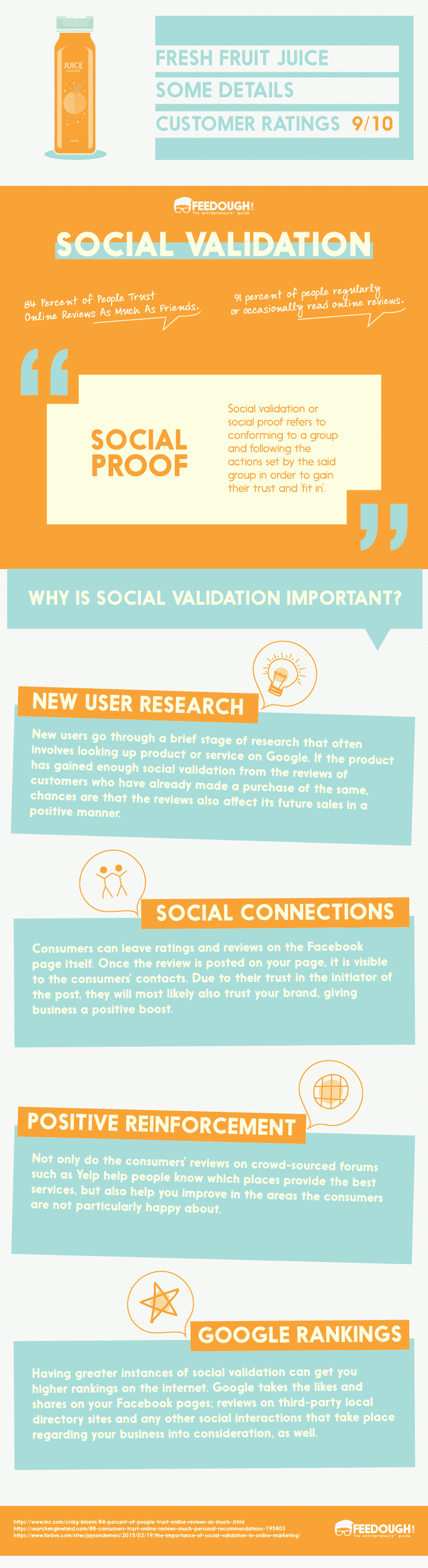
    From a psychological point of view, social validation simply refers to conforming to a group and following the actions set by the said group in order to gain their trust and ‘fit in’.

    If you have heard of the proverb ‘When in Rome, do as the Romans do’, or an alternative, ‘When in Rome, do as the Pope does’, then you already know what social validation is all about.

    In the simplest terms, social validation is about conforming to the conventions of the current environment that you are in, in order to be a part of an inclusive group. We often adapt ourselves to the situations to fit in, even if we do not always realize it.

    When we are uncertain about what to do we will look to other people to guide us. And we do this automatically and unconsciously.

    Social validation, taken in the context of business and marketing, has a slightly different meaning. However, it retains the same principles of conformity and similar behaviour among the group. For instance, if a certain critic or consumer leaves a good review online for a product that they purchased, chances are that people who read this review will also purchase the same product.

    But, with the rise of social media and self-promotion, consumers have become increasingly sceptical. Who is reliable and who is not? How to ensure that your consumers find you credible, while also reaching out to more of them?

    The answer is simple. You can achieve this via social validation.

    Why Is Social Validation Important?

    Let us compare two scenarios here, for the same product:

    1. Noted celebrities such as Vanessa Hudgens, Dove Cameron, Hannah Stocking, Kylie Jenner and Emily Ratjkowski, have been endorsing the gluten-free, cruelty-free, vegetarian and vegan gummies, ‘SugarBearHair’ vitamins that provide nutrients for healthier hair.
    2. The ratings and reviews on SugarBearHair’s website largely consist of 3 to 5 stars, with an average of 4.8 stars. Furthermore, people who have used the product have also highly recommended it to others.

    Out of these two scenarios, which one do you find more credible? Which of these scenarios would convince you to buy the product?

    If your answer is the second scenario, where you choose to try the product for yourself after reading what the customers have to say about it themselves, it means that you are following the social cues that will help you make a decision.

    Social validation works on the principles of liking and conformity. When a consumer is unsure if he should go ahead and make a purchase, he often relies on the reviews for the particular product he is interested in. If the reviews are good, the chances of the consumer making the purchase are increased.

    Basically, social validation works on the fact that if consumers see someone liking or promoting a product, especially if it is someone they know, they would be led to believe that the said product is credible.

    Coming back to its importance—people have grown to not trust the celebrity-endorsed, self-praising, sponsored advertisements that claim to provide you with nothing but the best products. Instead, the consumers take the route of the ‘hear-says’; they rely on the judgments and actions of their peers regarding the product. Reviews on sites such as Goodreads or Amazon are more credible as they are confirmed by the consumers themselves.

    But, besides increasing the number of sales, or gaining compliance from your consumers, how else can social validation prove beneficial for a business?

    The importance of social validation can be classified into four main categories:

    New User Research

    Due to the consumers’ ever-increasing demand for new products or services to fulfil their needs, they find it important to look up what new products or services, and how these new products perform compared to the ones that already exist in the market.

    So, they go through a brief stage of research that often involves looking up the said product or service on Google. If the product has gained enough social validation from the reviews of customers who have already made a purchase of the same, chances are that the reviews also affect its future sales in a positive manner.

    For instance, when a new model of a smartphone is released in the market, not only does NDTV Gadgets list out the specifications of the new model but also compares it with smart-phone models that already exist in the market, along with their pros and cons, and their ratings. This makes it easier for consumers to gauge what smartphone they should purchase.

    Social Connections

    Gaining trust through social connections is one of the greatest advantages of social validation. The way this works is fairly simple. Social validation is largely based on groupism and conformity.

    If you have observed just about any Facebook page, you would have noticed that consumers can leave ratings and reviews on the page itself. Once the review is posted on your page, it is visible to the consumers’ contacts. Due to their trust in the initiator of the post, they will most likely also trust your brand, giving the business a positive boost.

    Positive Reinforcement

    ‘Please let us know how we can help you better.’

    ‘Leave us a comment about the quality of support you received.’

    Constant competition in the market has led to a demand for constant improvement in every business, as well. Gaining social validation in your business is a great way to also take inventory of how your business is currently operating.

    How can you enhance the positive elements of your business? What makes it popular among your consumers? What areas need to be improved? And, in the event of social validations decreasing, what could have caused it? Social validation helps you gauge where you currently stand and how you could do better.

    Not only do the consumers’ reviews on crowd-sourced forums such as Yelp help people know which places provide the best services, but also help you improve in the areas the consumers are not particularly happy about.

    Google Rankings

    Having greater instances of social validation can get you higher rankings on the internet. Google takes the likes and shares on your Facebook pages; reviews on third-party local directory sites and any other social interactions that take place regarding your business into consideration, as well.

    The more positive reviews that your business gets, the more visibility your business gets in the search engine result pages. This visibility is good for positive growth in business.

    How To Cultivate Social Validation?

    There are many ways to cultivate better social validation among your consumers. Now that you know how social validation can help you boost your business, you should also know how to use them to your advantage.

    Focus On Providing A Memorable Customer Experience

    It is very important to give your consumers a positive and memorable customer experience. Being polite and hospitable, giving free samples or reward points, offering discounts to recurring customers and most importantly, giving them a unique experience.

    People socially validate brands and businesses where they have had positive experiences. For instance, an Indian online merchandise store, The Souled Store, offers the customers 10% of the amount spent as reward points. This contributes to a very pleasant shopping experience for its customers.

    Ask Your Customers To Post On-Site Reviews

    Asking your customers to post on-site reviews, where they can rate you on the basis of different categories like customer experience, service quality and overall rating, can influence social validation as well.

    For instance, ratings for any game on the Google Play Store involve three different categories- Gameplay, Graphics and Controls.

    Encourage Them To Rate & Review Your Business Off-Site

    By encouraging your customers to rate and review your business off-site, you increase instances of social validations. This can be done by adding links to sites like Yelp, Facebook and Google My Business, and other local directories. These reviews add to a positive social validation as they are unbiased personal opinions, and confirmed by the consumers.

    Focus On Your Social Media Presence

    Being active and responsive on social media also helps in cultivating positive social validation. Letting people know that you are available to listen to what they have to say makes them give out positive reviews for your business.

    Bottom Line?

    In the end, social validation largely depends upon how much you, as a business are invested in your consumers and their opinions. It’s a mutually beneficial relationship, where your services affect social validation from the consumers, and the social validation itself affects positive or negative growth in your business. Spending some time to create an overall positive experience for your consumers is what cultivates social validation.

    Go On, Tell Us What You Think!

    Did we miss something?  Come on! Tell us what you think about our article on The Psychology Behind Social Validation in the comments section.
  • Generation Z vs Millennials: The Big 5 Differences

    Generation Z vs Millennials: The Big 5 Differences

    With the diverse populace we find around us we still see different perspectives, perceptions and outlook; but there is an invisible connection that binds everything. Trends, conformance and our habits are influenced by the period in which we were born.

    Generation Z vs Millennials: Years Range

    People have defined different generations for different periods.

    We are defining millennials as those born between 1980-1995 and members of Generation Z as those born after 1995.

    These two generations are very different. One set saw the transformation of space around them and the others were in their prime when revolutionary leaps were taken. So let’s dive into the five ways these generations differ.

    Diversity

    Gen Z is the most diverse generation. In the USA, there seems to be heterogeneity in ethnicity among Gen Zers, while Millennials were often found in homogenous groups. This diversity could be traced to the Black Freedom movement whose results in the structure of society took shape more in the 90’s and early 2000’s. The inclusion of minorities could be seen in the idolising of stars like Michael Jordan, Paul Gasol, Tim Duncan, among others. This has created a positive echo chamber which suggested that the inclusion of people of a different ethnicity is just another facet of life.

    The diversification could also be attributed to globalisation which saw people from emerging economies such as India and China coming to the USA for academic as well as commercial purpose and settling down thereby creating a new layer in the social structure of American society.

    Stress

    According to a study by 747 Insights, the percentage of Gen Zers who are content with their lives is below the halfway mark (47% only) while on the other hand over 60 % of the millennials are happy with their life. The percentage of Gen Zers who feel they are moderately stressed is also alarming (almost 58%).

    Stress may be attributed to the fact that the members of Generation Z are more exposed to learning via the usage of the internet, so the race to come out on top in curricular and extracurricular activities tend to stress them out. Also, the fickle market poses a challenge for them as they fear that they are much more vulnerable to lose their jobs than their experienced superiors.

    On the other hand, millennials were just getting exposed to the world of the internet, so the traditional way of learning things was to spend hours in a library to find that elusive resource. This shift could also be seen in public libraries now where the crowd is generally decreasing, or there are some modern technologies like Kindle devices to engage the avid book readers.

    Among other things Gen Z also value validation and friendship holds a deeper meaning for them. TV Shows like Friends, How I Met Your Mother reinforced this feeling and created an echo chamber. Adding fuel to the fire is their constant connection to the Internet. They seek constant validation by connecting with cool people and presumably following a fad that is cool, and this has created economic markets. In hindsight, millennials shift towards finding peace in life and try to find solace in trips or activities that need significant time investment and patience. The activity, if showcased, could be made viral, and this content virality has been in trend since the increased usage of social media by Gen Z.

    Gender, Sexuality and Sense of Social Justice

    Gen Z was born in the world where the notion of gender was not restricted to Male and Female. They were exposed to various categories, and unlike sex which they have no control over, gender became something that a person had the freedom to choose. Millennials, on the other hand, were wary of sexual orientation since they have heard stories about great people like Alan Turing (Father of Theoretical Computer Science) getting harassed and killed due to his homosexuality which was considered a crime in the UK. Though this incident is of the 50’s, there was still a lot of taboo around it, and it was not considered to be normal, and up until 2015 even in the USA, there was no protection for couples of the same sex who are married.

    Another example could be seen that with the election of President Donald Trump, immigration, racism, and sexism have become prominently part of the national dialogue. Gen Z tends to empathise more with people from various background since for them this was something that pretty standard for them while growing up. They lived in a mixed neighbourhood and went to school and colleges where they met people of different ethnicities. Millennials, on the other hand, knew the history of segregation by colour, especially in the USA. There were continuous effort to integrate people of colour into schools and colleges. A famous movie titled Forrest Gump also depicted this in of its scene.

    Women rape survivors have raised their voices, and Gen Z has actively participated in the protests. Conviction of once highly respected celebrities have proved that transparency is the new norm and no one will be spared. A subtle observation is that many of the celebrities who were on the receiving end didn’t find any medium to vent our their anguish and there was no such movement in their era. A plausible reason for explanation is that Millennials were trying to generate such a medium. Millennials were the movement generators, and Generation Z is the movement leaders.

    Technology, Social Media and Privacy

    Gen Zers use social media differently. Communication is not the only things that they keep in mind. Presentation of Self(term courtesy: Erving Goffman) controls the content of Gen Zers on social media platforms. Image among friends, possible recruiters are some caveats that Gen Zers take care of, and this also tends to increase creativity as well as stress among them. Millennials, on the other hand, try to do an activity for fulfilment rather than appeasement. The posts seem to be generic, and the information they carry is not layered.

    Gen Z is moving away from Facebook and toward platforms like Snapchat that allow more insular and contained levels of communication. Gen Z also maintains a network and interaction with people within that network crosses platform which is known as media multiplexity(anthropological term). They also tend to use polymedia(anthropological term) which means that they choose the media over which they tend to communicate with people. Millennials try to communicate over the platform which is widely used among their generation, and it tends out to be Facebook or Whatsapp. They keep in mind the ease to use and also don’t want an imposing personality that endorses alternative communication platforms.

    However, regardless of generation, everyone wants to be safe and free online. Protection from malware, ID theft, and fraud is a general concern, but the main distinction comes down to privacy.

    Gen Z as long as they feel secure from the threats they generally favour a personalised experience. They prefer targeted market strategies rather than generic ones subconsciously. Millennials, on the other hand, are found to be more reluctant to give their numbers when asked on the billing counter of consumer shops.

    Also, another big part of their social life is authenticity. Gen Z tends to get more attracted to products/ventures that have a personal touch. A sudden rise in the gadget Reviews on YouTube is a perfect example of how Gen Z need to know how the product performs in various condition. Millennials, on the other hand, tend to believe the word of mouth marketing.

    Choice of Career and Workspace

    Millennials were brought up by parents who believed a continuing education is a way to make your future secure and this is evident from the fact that we have had genius people in every sphere. Gen Z, on the other hand, has tried to take the road less taken and this should be attributed to various factors.

    Gen Z has seen the financial hit of 2008 that their parents had to bear. The effect was different for different countries (like for India which is considered to be a feminine economy, due to family savings the financial hit was not supposed to be a total disaster). But the general feeling was of defection from traditional career choice.

    Millennials, on the other hand, were present in an era where the average household income was on the rise. There were new developments, be it in the area of education, entertainment or construction. Labour, skilled or unskilled, was in high demand, and they were steadily moving towards financial stability.

    Gen Z has found ways to make money via YouTube Channels. Skateboarding, parkour, vlogging, and blogging have captured people’s imagination, and this has opened up new avenues for economic structures to emerge. Entrepreneurship is another one such area which has seen a boom in recent years. Gen Z tends to be more invested in the idea of an entrepreneur which can be attributed to their trait of liking independence as well as the desire for financial success.

    Even the workspace has transformed. Ventures have now started planning concerts and special performances to appeal to their younger employee force. Also, the work environment of a venture now promotes creativity, and that could be seen where ventures employ people to visit the field and gather data about the culture of a place so that when they start hiring prospective candidates, the candidates would feel welcomed. Interviews are conducted over video calls, and Gen Z has seen the most number of such interviews.

    Millennials were brought up with the idea of a conventional cubicle workspace. Even communication mostly took place via postal services for interview purposes or via mail after the 2000s.

    Go On, Tell Us What You Think!

    Did we miss something?  Come on! Tell us what you think about our article on Gen Z vs Millennials in the comments section.
  • 5 Clever Strategies To Make Your Customers Say YES!

    5 Clever Strategies To Make Your Customers Say YES!

    Imagine a scenario where everyone loves what you have to offer.

    Yes, it’s a good idea indeed.

    Yes! I’ll definitely buy it!

    Yes, it’s a perfect offer!

    Alas, getting a ‘yes’ to your sales proposal isn’t that easy; one of the major reason being – your customers hate being sold to. So, is there a way to make them say those three letters without you acting like a typical salesperson?

    Psychology has an answer.

    Compliance techniques.

    What is Compliance?

    When we talk about ‘compliance’, we refer to the ability to get an individual to agree to our terms and conditions and therefore say ‘yes’ to our offer. In general, it simply means conforming to a rule or policy.

    An experienced salesperson, for example, earns a living from his confidence in his ability to convince people that they need a product, and very subtly manage to persuade them into purchasing it. According to social psychologist Robert Cialdini, the door-to-door salesmen, advertisers, fundraisers, financial advisors, and businessmen among others, are known as compliance professionals, as they work in fields that require compliance from consumers.

    How Is It Important?

    It is no secret that by increasing the frequency of compliance, sales are positively affected. Therefore, it is important for you to understand the psychology and the basic principles underlying compliance tactics that can be used in your business to give it a positive boost.

    These are the top five techniques, according to Cialdini, that are used extensively by professionals for gaining compliance from their consumers on a daily basis:

    Ingratiation

    The basic principle that we use in ingratiation is that consumers are more likely to comply with requests made by people they are affiliated with or people they like, rather than with requests from strangers. Ingratiation, in itself, refers to the technique of creating a good impression of yourself to the consumer, in order to gain their compliance and accept your proposal. In other words, if the consumers like you enough, they are more likely to say ‘yes’.

    There are three kinds of ingratiation techniques that are used to gain compliance:

    Flattery

    We are all familiar with flattery as a technique to gain compliance, mainly because this is the most widely used tactic. If you have heard the phrase ‘flattery will get you everywhere’, you now know that it also holds true when it comes to gaining compliance.

    Here, the term ‘flattery’ is not to be taken in its literal sense, as even simple gestures like good hospitality shown to the clients during a business proposal can often help you gain compliance from your consumers.

    Self Promotion

    It is very important to make a good impression of yourself and your business to your consumers, and self-promotion is one of the best ways to do so. This often involves subtly including your past accomplishments in conversations with the potential client, using confident body-language, and demonstrating your proficiency in the subject that is in question.

    Self-promotion is most often used by artists to promote their new works, and by salespeople while selling a product. For instance, when the Magic Kingdom, a theme park in Walt Disney World, Florida opened in 1971, it was pitched as ‘The Happiest Place on Earth’, and it is one of the most popular theme parks to this day. Similarly, finding your brand and promoting your business in a way that intrigues the consumers, is a great way to gain their compliance.

    Incidental Similarities

    People are known to be biased towards those they already know, or share similarities with. In this psychological technique, you have to address the similarities between yourself and the consumer, mimic their movements or posture subtly, and find common ground with them. This will help them to instil some faith in you, and you gain compliance from your consumers easily.

    Methods used in ingratiation are based on friendship or similarity between yourself and the consumer. This is also one of the reasons why it is important for us to maintain a healthy relationship with our clients. These trivial aspects enhance liking or a feeling of affiliation with us, increasing the tendency of our consumers to comply with our requests.

    ‘Foot In The Door’ Technique

    This is a type of persuasive technique that is used to increase the consumer’s interest in your proposal gradually, and eventually their compliance. Basically, this technique involves inducing your consumers to a small request and eventually moving on to a bigger proposal that they cannot refuse.

    The most common example is giving out free samples of food. The customers almost always purchase more, once they have tried the sample. A few more examples of this technique are trial accounts on streaming services such as Netflix, demo versions of video games, sneak-peeks of books or movies, teasers and trailers.

    In another example, in the second instalment of Rick Riordan’s ‘The Kane Chronicles’ book trilogy, he included the first chapter to tease the final instalment of the series. The third book, titled ‘The Serpent’s Shadow’ became one of the New York Times best-sellers. This confirms that if the consumer accepts the initial smaller request, he is more likely to comply with the bigger request as well.

    The success of this technique largely depends upon the fact that the bigger request made by you is an extension of the smaller request made to the consumer earlier. It also relies on the bond between yourself and the consumer, once the latter accepts the your initial request. The ‘foot in the door’ technique is based on the principles of consistency and commitment, where consistency is the dominant principle.

    ‘Lowball’ Procedure

    The ‘lowball’ is a type of persuasive technique where you offer the consumer a very attractive deal, initially. It is important that you make the deal sound extremely advantageous for the consumer. Once some kind of commitment, such as a down-payment, has been made, change the terms of the agreement to one that is less-attractive to your consumer, with the sole intention of obtaining a profit.

    For example, Comedy Central India offered its viewers complimentary LOL Club cards that could be used to avail discounts at partnered stores and restaurants all over the country. But the catch here is that these cards cannot be used unless and until extremely lavish services are availed from the partnered outlets. But several people have already claimed their club cards, regardless of whether they use it or not.

    Here’s how you can administer the ‘lowball’ properly, in just four steps:

    1. Make a sales-pitch to your consumer and address all the advantages they are guaranteed to get from their purchase. The point is to make the proposal extremely attractive so that they cannot refuse it, whatsoever.
    2. The next step is to get some form of commitment from the consumer. It could be as elaborate as signing a few papers, or as simple as a down-payment or a handshake. This is done to give the proposal a more serious turn.
    3. Let the consumer know that they are free to change their decision, and that no external pressure is being used from your side to gain their compliance.
    4. Finally, change the agreement that you initially wanted to pitch to the consumer. This might lead to some initial displeasure from their side. However, if the lowball procedure is administered correctly, they agree to the provider’s changed proposal as well.

    Once the consumers are offered a less attractive deal, it sounds like a rational choice for them to walk away from it, but they usually don’t.

    Here’s why:

    The ‘lowball’ procedure is based on the principles of consistency, commitment, and also pleasure. Our minds sub-consciously associate the initial deal with happiness and joy, which can easily be replaced with a negative feeling if the deal is dropped. Therefore, the consumers accept our proposal, even though the deal has now been changed. They also rely on the initially given commitment, even if it is just a handshake, as a guarantee that the proposal is somehow advantageous, thus accepting the offer.

    ‘That’s Not All’ Technique

    This technique is based on the principle of reciprocity between yourself and the consumer. Here, an initial request made by you is immediately followed by increasingly attractive benefits and incentives for the consumer, thus making them feel obligated to accept this proposal in return for your concessions.

    This method is widely used in retail outlets where not only is a very attractive offer, say, a flat 50% off is given, but the customers are also given vouchers or gifts for spending a certain amount of money on their purchase. This encourages the customers to purchase more items than they normally would have bought, in order to reap the maximum benefits from the offer made to them.

    Since this method is based on the social response, the consumers respond more positively when you don’t give much time to consider the offer. Increasing the benefits of the offer gradually, even before they can respond is the best way to gain their compliance using the ‘that’s not all’ technique.

    The Deadline Technique

    The deadline technique is a tactic used for gaining compliance in which the consumers are told that they have only a limited amount of time to avail an attractive offer. This technique is based on the fact that people in general, are more likely to rush to purchase an item if it is only available for a limited amount of time. It is widely used in advertisements, retail outlets, and real-estate. ‘Early-bird’ offers and ‘meal/ drink of the day’ offers also work on the same principle.

    When Reliance Industries launched their Jio 4G services in India, in the year 2016, free sim-cards with unlimited calling, SMS and data services were announced as free of cost for the first few months. Within the first month, Jio had acquired 16million subscribers, making it the fastest ramp-up by any mobile network anywhere in the world.

    The deadline technique is based on the principle of scarcity. Offers that are scarce or hard to obtain are often viewed as valuable by the consumers, thus making it easier for the provider to gain their compliance. When the illusion of scarcity is created for the consumer, they consider purchasing an item even if they don’t really require it, but for the sake of availing the offer that lasts only for a limited amount of time.

    There are many other tactics that you can implement to gain the compliance of your consumers, most of which are based on the discussed principles. You can also combine these tactics to increase their sales. In the case of real-estate, the techniques of ingratiation and deadline are often combined for a better success rate in gaining the compliance of the consumers. Therefore, it is very important to understand the mindset of the consumers and what psychological techniques will work best in your situation.

    Go On, Tell Us What You Think!

    Did we miss something? Come on! Tell us what you think about our article on How to make customers say yes in the comments section.
  • How Do YouTubers Make Money?

    How Do YouTubers Make Money?

    They dance, they sing, they act, and they even break their new iPhones just to get more views. But how on earth do YouTubers make money? Does YouTube pay Youtubers to upload videos? Do companies pay them for brand placements? Or do they survive on donations (is that even an option?). Here’s an article to clear all your doubts regarding how Youtubers earn and how much do YouTubers make (and how do they earn so much that they can afford a Ferrari?).

    Advertisers Pay Them (& YouTube) To Place Their Ads

    400 hours of video are uploaded to Youtube every minute and over 1 billion hours of Youtube videos are watched every day. Such stats have made YouTube a magnet for almost all the advertisers.

    If you’ve read our article on how YouTube makes money, you’d already know that the majority of the revenue of YouTube comes from advertisements. But since the content on YouTube is user-generated, the company shares the ad revenue with those content creators (YouTubers).

    But what is the revenue sharing percentage of YouTube and can everyone monetize their channels?

    Well, there are many layers to it.

    YouTube splits the money from advertisements in the ratio 9:11 (no pun intended).  If the advertiser pays $1 for a view, YouTube keeps $0.45 and the Youtuber earns $0.55. However, not everyone is eligible to monetize their channel on YouTube. A channel needs at least 4,000 hours of annual viewing time (of original content) and over 1,000 subscribers to be eligible to monetize its videos.

    This revenue sharing ratio is different for the top 5% of content creators on the platform. These exclusive content creators are called Google Preferred and get exclusive advertisements from top paying advertisers.

    YouTube Also Pays ‘Some’ Of The Youtubers

    Does YouTube pay YouTubers for the content? Well, if you’re selected to create content for the subscription-based YouTube Premium, you will definitely get paid by YouTube.

    YouTube Premium is a premium subscription model streaming platform which costs $12 per month. The company has followed Netflix’s footsteps and worked with (and paid) many top content creators like Poppy, PewDiePie, and the Paul brothers to come up with YouTube Originals.

    Other Revenue Streams of The Youtubers

    Many YouTubers have either parted their ways or added more revenue streams to the existing ad-partnership contract, by using their influence and getting in direct contact with the brands.

    These revenue streams include:

    Channel Membership

    Channels with good subscribership gets an option to release memberships that allow their members perks like badges, emoji, and other goods.

    This membership comes in levels with different perks for differently paying members.

    Currently, creators receive 70% of memberships revenue paid by the member.

    youtube join button

    Sponsored Content

    Content creators with good followership are often approached by big brands to endorse their products or services in their videos. This not only adds to the revenue of the YouTuber but the brands also benefit from the huge audience which follows the YouTuber.

    Sponsored content come in the form of:

    Brand & Product Placements

    Brands or product are placed strategically in the video content so they fit to the story and get the benefit of the reach of the video. An example of such product placement could be the use of Samsung Galaxy Note 5 by the singer Ariana Grande in her music video.

    Brand & Product Integration

    Brand integration (also called branded entertainment) is different from product placements. Brand integration is when the content creator creates a content that revolves totally around a brand or a product.

    The Indian YouTube channel TVF’s videos are true examples of branded entertainment.

    Product Reviews

    Many YouTubers have dedicated their channels to reviewing products of their niche. They test and review mobile phones, laptops, makeup kits, lipsticks, and what not. However, not all these reviews are organic. Some of the reviews are paid for by the brands to increase their brand awareness and demand.

    In-Video Shoutouts/ads

    Many top YouTubers are seen doing product shoutouts or creating ad-like videos to promote a brand or a product. An example of in-video shoutout is this video where PewDiePie promoted Honor 7X –

    Affiliate Marketing

    Though not as prevalent as in blogging, affiliate marketing is still a good revenue source for some YouTubers. They review the product or create a video revolving around the product and ask the viewers to make the purchase using the link in the description. This link is usually an affiliate link which gets them a commission for every successful lead/sale.

    Most of the affiliate marketers use both YouTube and blogging to make money through affiliate marketing.

    Super Chat

    youtube super chat
    Source: techspot99

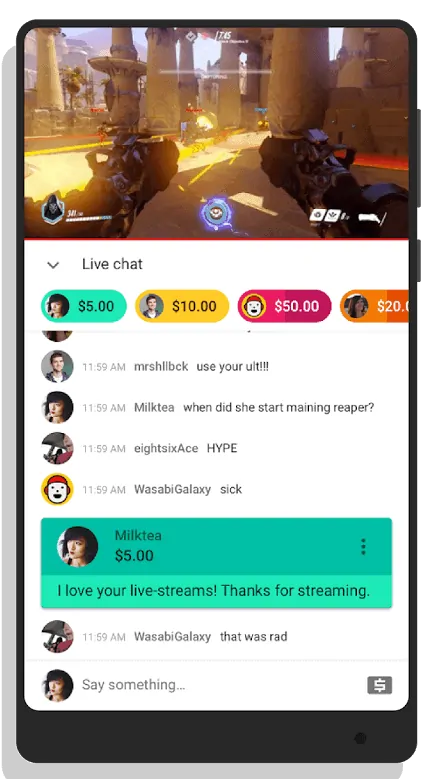
    Youtube also allows viewers to directly contribute to the content creators using the super chat. Super chat is an option which lets viewers pay to pin a comment or highlight a message on live streams. When someone goes live, they see a dollar option on the chat window and can select the amount they wish to contribute.

    Live streams on famous channels usually witness hundreds of messages every minute. Super chat gives a chance for super fans to pin their message on the top of that chat for a few minutes or hours by paying for it.

    The best part about super chat is that the YouTuber receives all of the contributed money without sharing it with YouTube or Google.

    Donations, Memberships, and Bonus Content

    defranco patreon plans

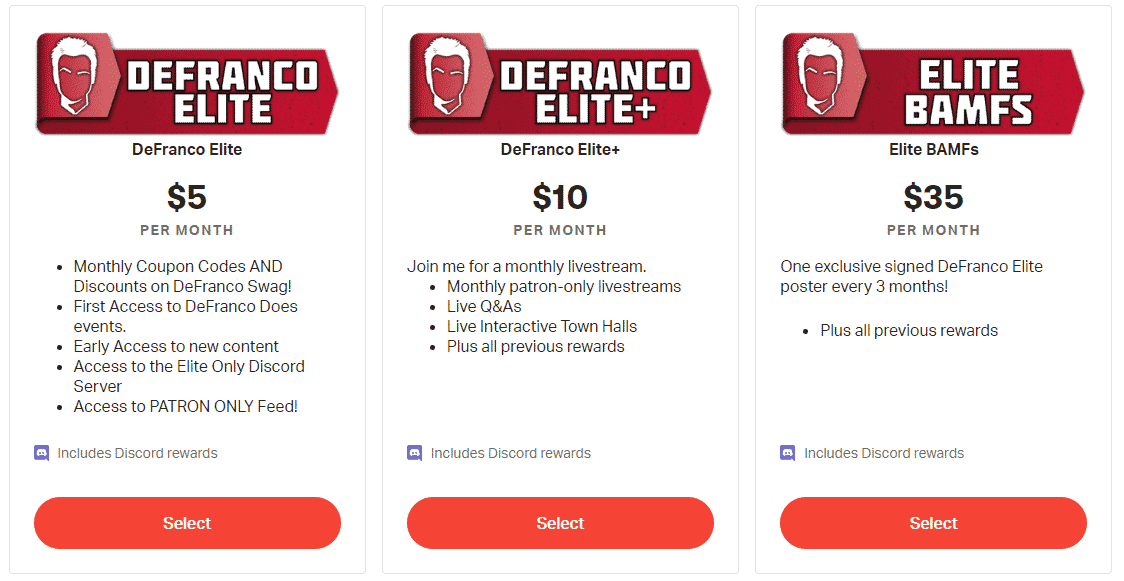
    Many known YouTubers have a Patreon link in their videos’ description where you can pay them, become a member, and get exclusive content or training or videos that are not available to other users.

    Patreon is a subscription-based crowdfunding membership platform. YouTubers use this platform to gain more loyal followers that pay and support them with monthly fees.

    Go On, Tell Us What You Think!

    Did we miss something?  Come on! Tell us what you think of our article on How YouTubers Make Money in the comments section.
  • Soft Skills – Definition, Importance, List, & Examples

    Soft Skills – Definition, Importance, List, & Examples

    Hiring managers usually look for two types of skills in the prospective candidates – hard skills and soft skills. Hard skills are job-specific skills which are attained by attending school or training programs or through experiential learning on the job. But if you’re looking for what other important skills hiring managers look for while screening resumes, read on as we explain soft skills and their importance.

    What Are Soft Skills?

    Soft skills are interpersonal skills which are used to describe your approach to life, work, and relationships with other people. Unlike hard skills, these are not professional job-specific skills like accountancy, graphics designing, etc. Soft skills are your unique selling point which gives you a competitive edge over others in the workplace and in life.

    Other names given to soft skills are people skills, interpersonal skills, and social skills.

    Examples Of Soft Skills

    Soft skills comprise of personal attributes, communication skills and abilities, and personality traits which differentiate people with similar hard-skill-set from each other.

    Some examples of soft skills are:

    • Communication Skills
    • Leadership
    • Work Ethic
    • Creative Problem Solving
    • Time management
    • Conflict Resolution
    • Team player

    Why Are Soft Skills Important?

    You wouldn’t deny if we say that hard-skills are at the top of every hiring manager’s priority list. However, a research by Glassdoor found out that on an average, each corporate job opening attracts 250 resumes, only four to six of those candidates get an interview call, and only one gets the job.

    What separates the successful candidate from the other job seekers is, most probably, a set of soft skills. Employers look for candidates with a strong work ethic, who not only does the job effectively and efficiently, but also stay focused, organized, competitive, dedicated, give ideas, knows how to work with a team, has a positive attitude and has leadership skills.

    Why?

    Because in this competitive world, work isn’t limited to just what’s offered to you by your boss. It requires you to solve the problems creatively, give ideas for better business, save time, handle conflicts, maintain a peaceful and optimistic environment in the workplace, etc.

    The Top 7 Soft Skills

    Even though the knowledge, the training, and the abilities make anyone a perfect fit for a job. But when everyone possesses such knowledge, training, and abilities, the employers’ expectations increase in terms of ‘something’ that should separate the selected candidate from others. This something is where soft skills kick in. Here’s a list of the top 7 soft skills which are deemed to be beneficial in this competitive market.

    Communication Skills

    Communication skills is a broad soft skills category. It refers to how you communicate with clients, customers, colleagues, employees, employers, vendors, partners and almost everyone connected to the concerned business.

    Good communication skills constitute the ability to not only speak confidently but also good presentation skills and the ability to listen and empathize whenever necessary.

    Communication skills become a hard-skill when we talk about customer service jobs. For other jobs, this category is a great soft skill and includes:

    • Speaking Skills
    • Presentation Skills
    • Negotiation Skills
    • Nonverbal communication skills
    • Listening and empathizing
    • Persuasion
    • Public Speaking
    • Storytelling
    • Written Communication, etc.

    Leadership Skills

    Leadership skill set is among the most sought-after skill set by employers. Hiring managers look for candidates who have good potential to grow. Such candidates are self-reliant, can work with the team seamlessly, and even put efforts to make the team and their efforts better.

    Leadership skills include abilities to lead a team, make decisions and work for the benefit of the company and the team keeping aside the personal viewpoints, biases, and conflicts. It stems from the experience of handling projects and teams.

    Leadership is one of the hard-skills employers look for when hiring c-level or other high ranking executives. However, it is also a very important soft skill for other positions and includes:

    • Team Management
    • Conflict Management & Resolution
    • Decision Making
    • Drafting Delegation Strategies
    • Drafting Motivation Strategies, etc.

    Work Ethics

    Work ethics are inherent. It is a soft skills category which is really hard to teach and even harder to demonstrate during a job interview. It is how a person feels about his job and carries out his duties and responsibilities. Having a strong work ethic means the person acknowledges is position and does the job assigned to him honestly and diligently with all the accountability.

    Some examples of soft skills which come under the work ethics category are:

    • Completing tasks on time
    • Punctuality
    • Being Focused & Organized
    • Competitiveness
    • Perseverance
    • Persistence
    • Business Etiquettes, etc.

    Teamwork

    Different jobs have different requirements and some require you to constantly work and communicate with other team members. This makes teamwork to be one of the most important soft skills for careers in market research, event management, client servicing, etc. which require employees to do team projects and attend frequent departmental meetings, etc.

    Some examples of soft skills falling under the teamwork category are:

    Time Management

    In this era of limitless work and limited time, hiring managers always prefer employees who work efficiently and know how to use time wisely. Almost every employer prefers his employees to have time management skills as it not only saves them money but also increases the productivity of the organization.

    Key phrases used to convey time management skills are:

    • Prioritizing
    • Goal Setting & Management
    • Planning
    • Control
    • Focus
    • Delegation, etc.

    Critical Thinking

    Critical thinking involves a careful observation and analysis of objective information to make a reasoned judgement. It involves evaluation of statistics, facts, observable phenomenon, research findings, and other trustable data to draw reasonable conclusions.

    Hiring managers love candidates who can evaluate the situation using logical thought and come up with the best possible solution. Many employers even require candidates to pass a critical thinking test before appearing for the interview.

    Key phrases used to convey critical thinking skills are:

    • Analytical
    • Problem Solving
    • Artistic Sense
    • Critical Observer
    • Desire to Learn
    • Innovator
    • Logical Thinker
    • Creative Thinker, etc

    Adaptability

    Not everyone in the workplace will share your religion, caste, or other sets of beliefs. Moreover, being adaptable and open-minded is almost a prerequisite soft skill in this rapidly changing technological environment. Adaptability is all about embracing the differences and going with the flow. It’s important to maintain a sound professional environment in the organization.

    Key phrases used to convey adaptability are:

    • Calm
    • Optimistic
    • Open Minded
    • Curious, etc.

    Soft Skills Training

    Thanks to the digital world, soft skills training is possible if you have an internet connection and a few dollars to spare. Online learning platforms like Udemy, Edx, Coursera, Khan Academy, etc. have hundreds of courses which teach you time management, communication, and other soft skills. You can also browse through various educational applications on the Google Play store or Apple App Store for free and interactive options.

    Go On, Tell Us What You Think!

    Did we miss something? Come on! Tell us what you think about our article on soft skills in the comments section.
  • Why Is Musical.ly (now Tik Tok) A Hit?

    Why Is Musical.ly (now Tik Tok) A Hit?

    If you are over the age of 20 and inactive on social media, there is a chance you don’t know what Musical.ly is. But if you want to understand how viral markets work and what impact an app can have when it hits the right demographic you might want to give this a read.

    What is Musical.ly?

    Musical.ly was a social networking app where users (knows as Musers) would generate video content ranging from 15 to 60 seconds and choose the background score for their video, add speed effects(slo-mo, fast forwarded, time lapse and epic) and add presets and filters. Basically if Dubsmash, Snapchat and Instagram had a child it’d be somewhat close to Musical.ly (Tik Tok).

    This may sound funny to you but Musical.ly means business. With a user base of 200 million Musers and an average of 13 million videos uploaded daily, you just cannot ignore Musical.ly.

    A Brief History of Musical.ly

    Releasing the first prototype in April 2014, Musical.ly hit the market in August that year. The initial metrics were average as 500 new users were added to their user base. This, in the app market, is a slow start. Upon deeper analysis, they realized that the reason for this slow start wasn’t the app idea, it was the lack of watermark.

    The retention rate of users was incredible, Musers loved making videos and it was shared widely over other social media platform. The issue being: When these videos surfaced on other social media platforms, the source of these videos were unknown, viewers were unaware what app was used to make these videos. When developers noticed this, they immediately added the watermark which was embedded while sharing videos. This change took place in April 2015 and 2 months in Musical.ly hit number 1 on the Apple App store.

    On November 9, 2017, Bytedance Technology acquired Musical.ly for a whopping $1 billion. Bytedance also owns Tik Tok and merged the two apps on August 2nd 2018, retaining the name Tik Tok.

    Why is Musical.ly a huge success?

    Musical.ly Knows How To Hit The Right Demographic

    Musical.ly was introduced to the teens of America because it is a known fact that American teens are early adopters and the market waters can be tested here. The app rooted itself in the market and the reason behind it was: Musical.ly hit the right demographic.

    Musical.ly was introduced targeting Gen Z. Generation Z is comfortable with technology and with time, younger and younger kids have access to smartphones and the internet. Musical.ly aimed to target teens ageing from 13-18 and it worked out for them. The reason is simple: With time, every new app was slowly being used by older generations. Facebook became the app that parents use, Instagram and Snapchat were apps for their older siblings and so on. The market was open for an app where teens could do what they want in their own space. They wanted an app where other Demo groups didn’t have enough pull and Musical.ly hit the sweet spot.

    Musical.ly Knows How To Keep Its User Base Involved

    Musical.ly kept rolling out challenges where Musers could complete a set of challenges provided and participate along millions of other teens. These challenges were nothing but basic acts for users to participate more into making more content. As Musical.ly caters a large number of teens who are dancers, comedians and visual artists, each challenge highlighted a particular group and it kept Musers hooked.

    Musical.ly like other social platforms provided a verified account symbol. For other social media platforms this is a blue tick, but for Musical.ly this is a crown. A crown profile is usually an individual with celebrity status or a Muser who has a strong presence o. This created a need for validation among Musers. Musers would complete challenges and make more appealing videos to get more views and get the crown.

    Musical.ly Markets Itself Very Well

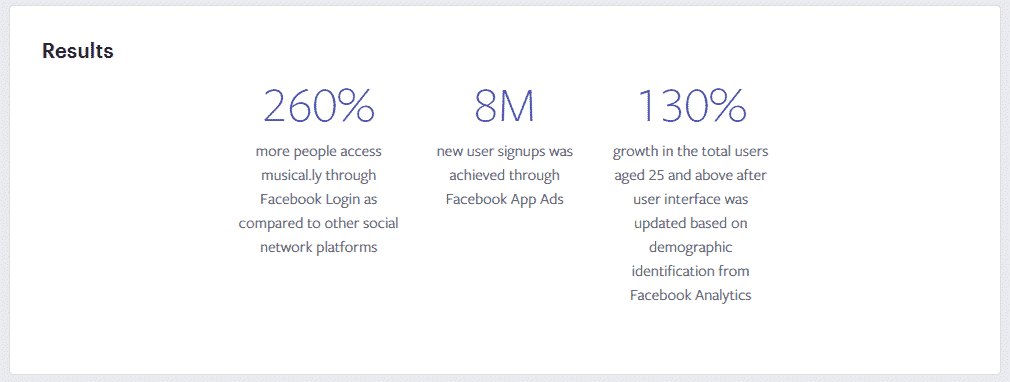
    The featured article on the Facebook blog explains how seamlessly Musical.ly used the Facebook developer apps for effective marketing. From Facebook Login, to improve the app experience, to the inclusion of ‘share on Facebook & Instagram button’ to communicate the trend and encourage users’ friends to join the application,  Musical.ly widely uses viral marketing, word of mouth marketing, and buzz marketing to increase its reach to even those who fall out of its target segment. The company even uses the demographics and segments capability in Facebook Analytics and Facebook App Ads to create personalized campaigns and reach new users.

    musical.ly facebook

    Musical.ly uses Instagram as a key tool to spread the word about the brand and its user-generated content. The challenges and the trends add a trigger for the users to show-off to the world. Instagram is loaded with versions of challenges offered by Musical.ly. It’s not only a new trend for the existing social media users, but creating a different and own version of it gives them more views and new followers. This micro-satisfaction motivates them to stick to the application and follow every trend without questioning (because everyone is doing it).

    Another great marketing strategy brought to use by Musical.ly is influencer marketing. With popular celebrities like Wiz Khalifa and Alicia Keys using this app to Jason Derulo proposing to release new music on Musical.ly before posting on conventional social media, Musical.ly has a great pull and is slowly trying to climb up in the demo: To cater a larger demo.

    Musical.ly has 100 million active users per month and the way things look right now, Musical.ly is going to be the next big social media network everyone was waiting for.

    Go On, Tell Us What You Think!

    Have you tried Musical.ly? What are your views on it? Let us know in the comments below!

  • Distribution Channels – Definition, Types, & Functions

    Distribution Channels – Definition, Types, & Functions

    Product’s availability, ease of access, and the way it reaches the customer influence its demand at many levels. Distribution channels are a key element in all the marketing strategies that revolve around the product. They help businesses reach their customer in a way to maximise their revenue and brand awareness.

    What is a Distribution Channel?

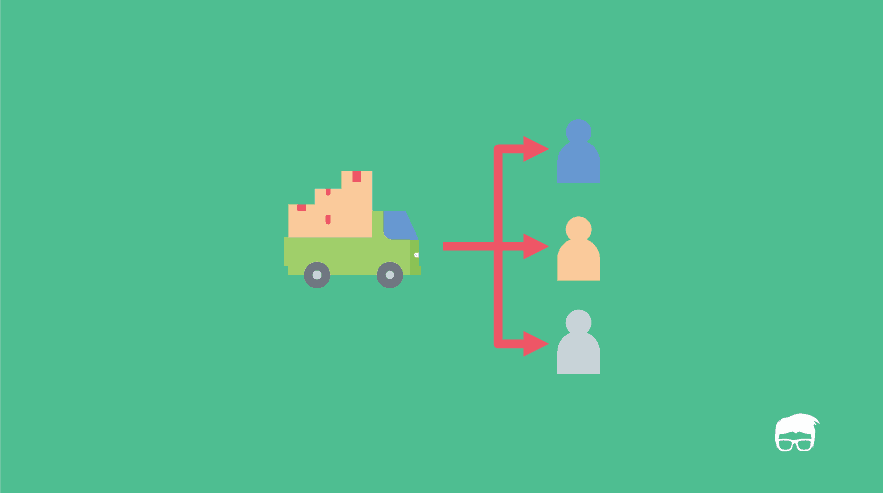
    A distribution channel is a path or route decided by the company to deliver its good or service to the customers. The route can be as short as a direct interaction between the company and the customer or can include several interconnected intermediaries like wholesalers, distributors, retailers, etc.

    Hence, a distribution channel can also be referred to as a set of interdependent intermediaries that help make a product available to the end customer.

    Functions of Distribution Channels

    In order to understand the importance of distribution channels, businesses need to understand that it doesn’t just bridge the gap between the producer of a product and its user.

    Distribution channels provide time, place, and ownership utility. They make the product available when, where, and in which quantities the customer wants. But other than these transactional functions, distribution channels are also responsible to carry out the following functions:

    • Logistics and Physical Distribution: Distribution channels are responsible for the assembly, storage, sorting, and transportation of goods from manufacturers to customers.
    • Facilitation: Channels of distribution even provide pre-sale and post-purchase services like financing, maintenance, information dissemination and channel coordination.
    • Creating Efficiencies: This is done in two ways: bulk breaking and creating assortments. Wholesalers and retailers purchase large quantities of goods from manufacturers but break the bulk by selling a few at a time to many other channels or customers. They also offer different types of products in a single place which is a huge benefit to customers as they don’t have to visit different retailers for different products.
    • Sharing Risks: Since most of the channels buy the products beforehand, they also share the risk with the manufacturers and do everything possible to sell it.
    • Marketing: Distribution channels are also called marketing channels because they are among the core touchpoints where many marketing strategies are executed. They are in direct contact with the end customers and help the manufacturers in propagating the brand message and product benefits and other benefits to the customers.

    Types Of Distribution Channels

    Channels of distribution can be divided into direct channel and indirect channels. Indirect channels can further be divided into one-level, two-level, and three-level channels based on the number of intermediaries between manufacturers and customers.

    Direct Channel Or Zero-level Channel (Manufacturer to Customer)

    Direct selling is one of the oldest forms of selling products. It doesn’t involve the inclusion of an intermediary and the manufacturer gets in direct contact with the customer at the point of sale. Some examples of direct channels are peddling, brand retail stores, taking orders on the company’s website, etc.  Direct channels are usually used by manufacturers selling perishable goods, expensive goods, and whose target audience is geographically concentrated. For example, bakers, jewellers, etc.

    Indirect Channels (Selling Through Intermediaries)

    When a manufacturer involves a middleman/intermediary to sell its product to the end customer, it is said to be using an indirect channel. Indirect channels can be classified into three types:

    One-level Channel (Manufacturer to Retailer to Customer)

    Retailers buy the product from the manufacturer and then sell it to the customers. One level channel of distribution works best for manufacturers dealing in shopping goods like clothes, shoes, furniture, toys, etc.

    Two-Level Channel (Manufacturer to Wholesaler to Retailer to Customer)

    Wholesalers buy the bulk from the manufacturers, break it down into small packages and sell them to retailers who eventually sell them to the end customers. Goods that are durable, standardised and somewhat inexpensive and whose target audience isn’t limited to a confined area use two-level channel of distribution.

    Three-Level Channel (Manufacturer to Agent to Wholesaler to Retailer to Customer)

    Three-level channel of distribution involves an agent besides the wholesaler and retailer who assists in selling goods. These agents come in handy when goods need to move quickly into the market soon after the order is placed. They are given the duty to handle the product distribution of a specified area or district in return for a certain percentage of commission.

    The agents can be categorised into super stockists and carrying and forwarding agents. Both these agents keep the stock on behalf of the company.

    Super stockists buy the stock from manufacturers and sell them to wholesalers and retailers in their area. Whereas, carrying and forwarding agents work on a commission basis and provide their warehouses and shipment expertise for order processing and last-mile deliveries.

    Manufacturers opt for a three-level channel when the userbase is spread all over the country and the demand for the product is very high.

    Dual Distribution

    When a manufacturer uses more than one distribution channel simultaneously to reach the end-user, he is said to be using the dual distribution strategy. They may open their own showrooms to sell the product directly while at the same time use internet marketplaces and other retailers to attract more customers.

    A perfect example of goods sold through dual distribution is smartphones.

    Distribution Channels for Services

    Unlike tangible goods, services can’t be stored. But this doesn’t mean that all the services are always delivered using the direct channels.

    With the advent of the internet, online marketplaces, the aggregator business model, and the on-demand business model, even services now use intermediaries to reach the final customers.

    The Internet as a Distribution Channel

    The internet has revolutionised the way manufacturers deliver goods. Other than the traditional direct and indirect channels, manufacturers now use marketplaces like Amazon (Amazon also provide warehouse services for manufacturers’ products) and other intermediaries like aggregators (Uber, Instacart) to deliver the goods and services. The internet has also resulted in the removal of unnecessary middlemen for products like software which are distributed directly over the internet.

    Factors Determining the Choice of Distribution Cha­nnels

    Selection of the perfect distribution channel is tough. It is among those few strategic decisions which either make or break a company.

    Even though direct selling eliminates the intermediary expenses and gives more control in the hands of the manufacturer, it adds up to the internal workload and raises the fulfilment costs. Hence these four factors should be considered before deciding whether to opt for the direct or indirect distribution channel.

    Market Characteristics

    This includes the number of customers, their geographical location, buying habits, tastes and capacity and frequency of purchase, etc.

    Direct channels suit businesses whose target audience lives in a geographically confined area, who require direct contact with the manufacturer and are not that frequent in repeating purchases.

    In cases of customers being geographically dispersed or residing in a different country, manufacturers are suggested to use indirect channels.

    The buying patterns of the customers also affect the choice of distribution channels. If customers expect to buy all their necessities in one place, selling through retailers who use product assortment is preferred. If delivery time is not an issue, if the demand isn’t that high, the size of orders is large or if there’s a concern of piracy among the customers, direct channels are suited.

    If the customer belongs to the consumer market, longer channels may be used whereas shorter channels are used if he belongs to the industrial market.

    Understanding consumer behaviour is essential for deciding the most effective distribution channel for the business.

    Short Channels
    Long Channels
    The offering is targeted at business users.
    The offering is targeted to consumers and non-business users.
    The customers are geographically concentrated.
    The customers are geographically dispersed.
    Customers require extensive technical knowledge.
    Customers don’t require extensive technical knowledge.
    Regular servicing is required for the offering to operate.
    Regular servicing is not required for the offering to operate.
    The order quantity is large.
    The order quantity is small.

    Product Characteristics

    Product cost, technicality, perishability and whether they are standardised or custom-made play a major role in selecting the channel of distribution for them.

    Perishable goods like fruits, vegetables and dairy products can’t afford to use longer channels as they may perish during their transit. Manufacturers of these goods often opt for direct or single-level channels of distribution. Whereas, non-perishable goods like soaps, toothpaste, etc. require longer channels as they need to reach customers who reside in areas that are geographically diverse.

    If the nature of the product is more technical and the customer may require direct contact with the manufacturer, direct channels are used. Whereas, if the product is fairly easy to use and direct contact makes no difference to the number of sales, longer channels are used.

    The per-unit value of the product also decides whether the product is sold through a direct channel or through an indirect channel. If the unit value is high like in the case of jewellery, direct or short channels are used, whereas products like detergents whose unit value is low use longer channels of distribution.

    Short Channels
    Long Channels
    Product is perishable.
    Product is durable.
    Product is complex.
    Product is standardised.
    Product is expensive.
    Product is inexpensive.

    Competition Characteristics

    The choice of the distribution channel is also affected by the channel selected by the competitors in the market. Usually, the firms tend to use a similar channel as used by the competitors. But some firms, to stand out and appeal to the consumer, use a different distribution channel than the competitors. For example, when all the smartphones were selling in the retail market, some companies partnered with Amazon and used the scarcity principle to launch their smartphone as Amazon exclusive.

    Short Channels
    Long Channels
    The competitor uses the direct channels and the manufacturer is satisfied with its performance.
    The competitor uses indirect channels and the manufacturer is satisfied with its performance.
    The competitor uses indirect channels and the manufacturer thinks choosing short channels would be more beneficial.
    The competitor uses the direct channel and the manufacturer thinks choosing indirect or long channels would be more beneficial.

    Company Characteristics

    Financial strength, management expertise, and the desire for control act as important factors when deciding the route the product will take before being available to the end-user.

    A company having a large amount of funds and good management expertise (people who have sufficient knowledge and expertise of distribution) can create distribution channels of its own but a company with low financial stability and management expertise have to rely on third-party distributors.

    The companies who want to have tight control over the distribution prefer direct channels. Whereas, those companies to whom such control doesn’t matter or those who are just interested in the sales of their products prefer indirect channels.

    Short Channels
    Long Channels
    Company believes that it’s important to control the channels.
    Company believes that channel control isn’t important.
    Company has a broad product line.
    Company has a narrow product line.
    Company has adequate resources to perform channel functions.
    Company lacks adequate resources to perform channel functions.

    Go On, Tell Us What You Think!

    Did we miss something? Come on! Tell us what you think about our article on Distribution Channels in the comments section.
  • Sell Your Old Phones Within 60 Seconds – Instacash Startup Review

    Sell Your Old Phones Within 60 Seconds – Instacash Startup Review

    Operating in 13 cities in India and 8 cities in Malaysia, Instacash bills itself as a company which buys your old phones within 60 seconds. It is an instant mobile selling platform capitalizing on the recommerce business model.

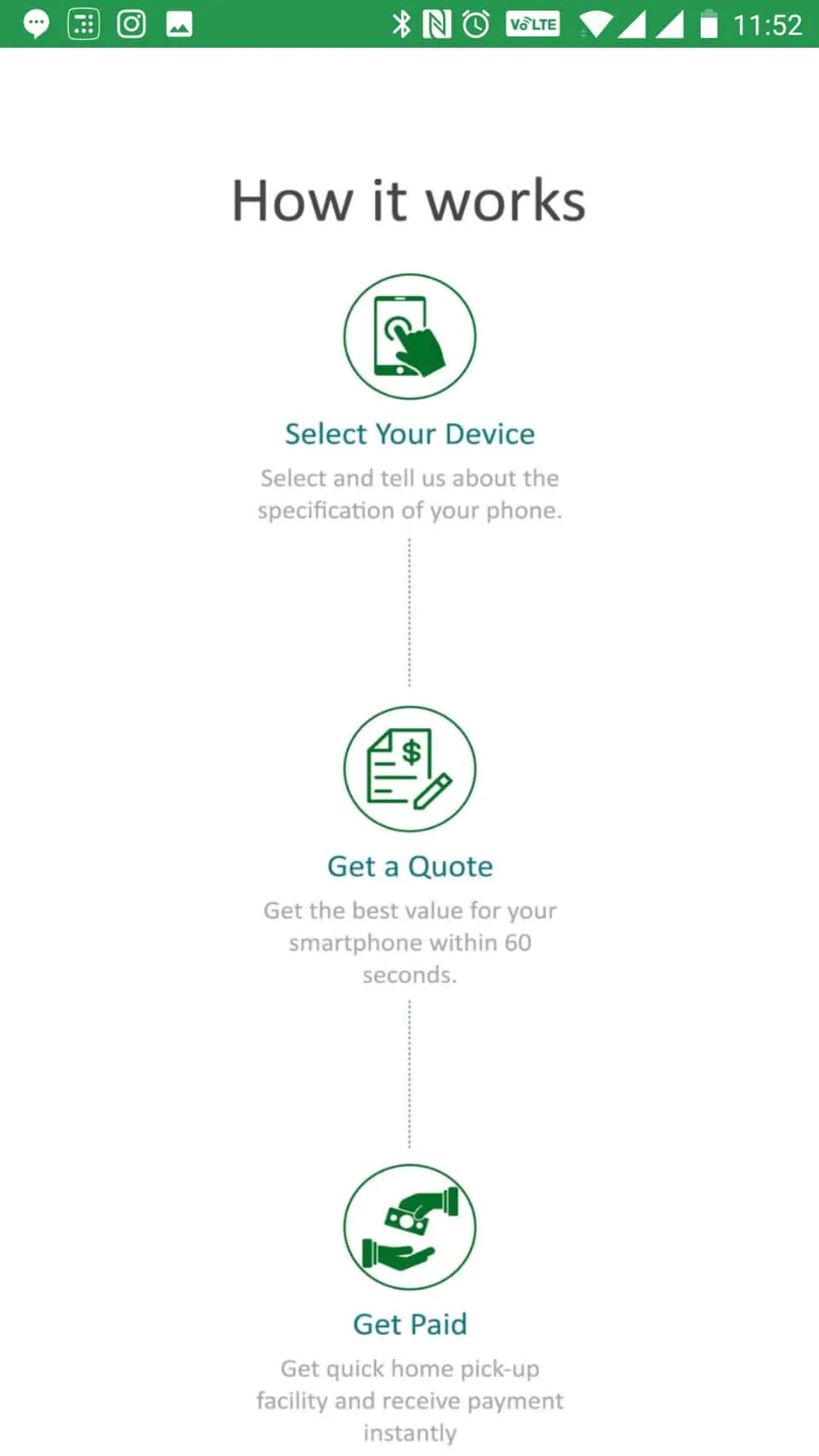
    The company plays its cards on convenience. It has successfully fused the on-demand business model with the recommerce business model and provides scheduled home pickup facility and instant payment in cash for every old phone they purchase.

    Before moving on to discuss the opportunities and its distinct business model, here are some stats and facts about Instacash

    • Founded in 2017 by Prateek Goel and Dixit Singhvi
    • Formerly known as ZeroWaste
    • Received an investment of undisclosed sum from CompAsia, an information technology refurbishment firm based in Singapore

    Instacash – Startup Review By Feedough

    Instacash isn’t a new idea in the startup ecosystem. Companies like Cashify and Bundli have already introduced the concept of recommerce to the Indian market. But the market isn’t tapped to its fullest yet. India is the second largest smartphone market in the world and more and more non-smartphone users are attracted to upgrade to smartphones from feature phones. The shorter upgrade cycles of smartphones these days also fuel the ‘used phones economy’. Moreover, according to Economic Times, refurbished mobile phones category is growing at 400% year-on-year and its contribution in overall mobile phone sales has almost doubled in 2017.

    Recommerce appeals to the aspirational and value-conscious nature of the Indian consumers. The upgraders to the new smartphones get a competitive price for their smartphone while the buyers get their favourite smartphone at lesser prices. These buyers constitute a majority of those who prefer using an old branded phone with features they need than settling for a new non-branded phone with lower specs.

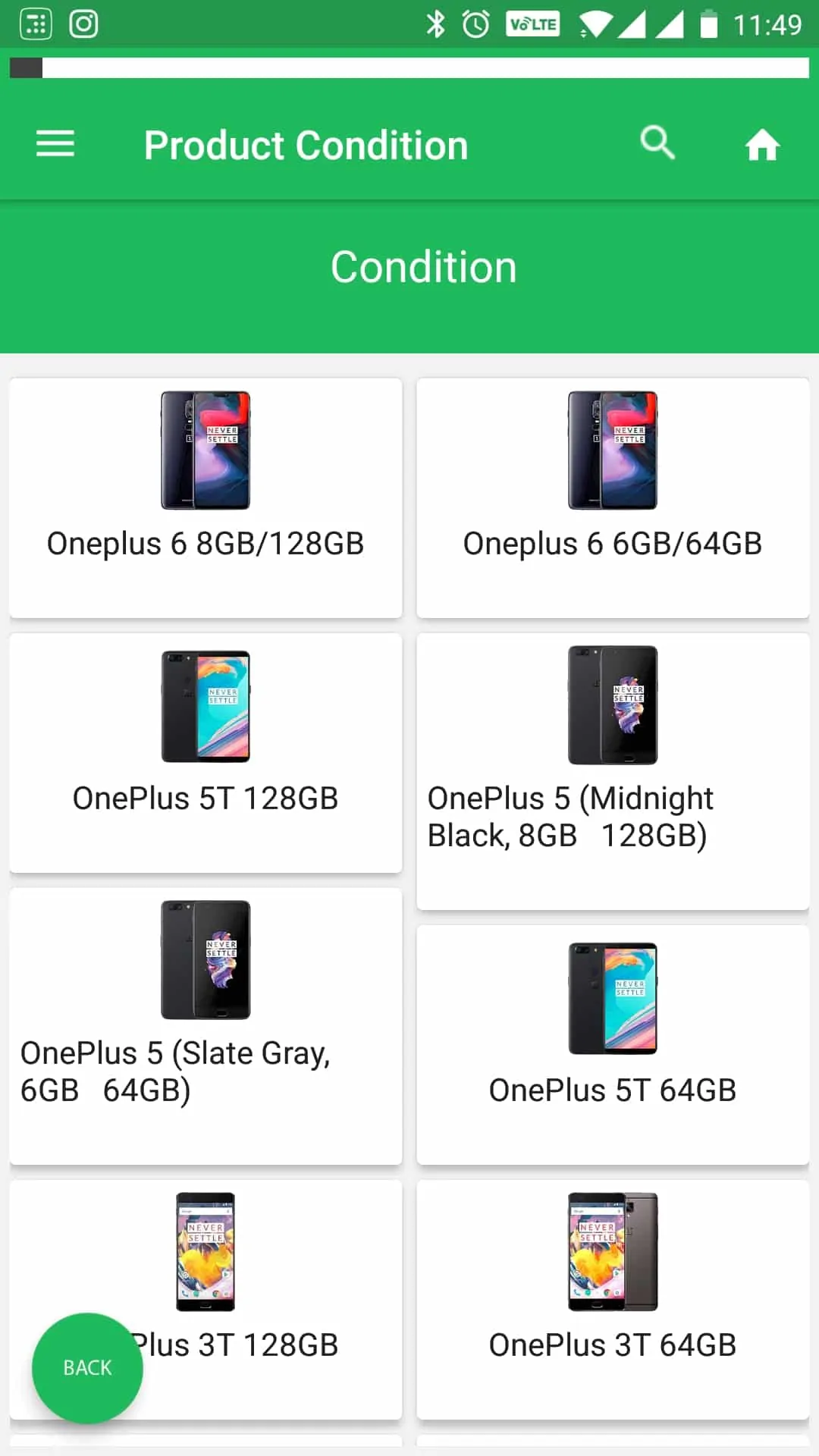
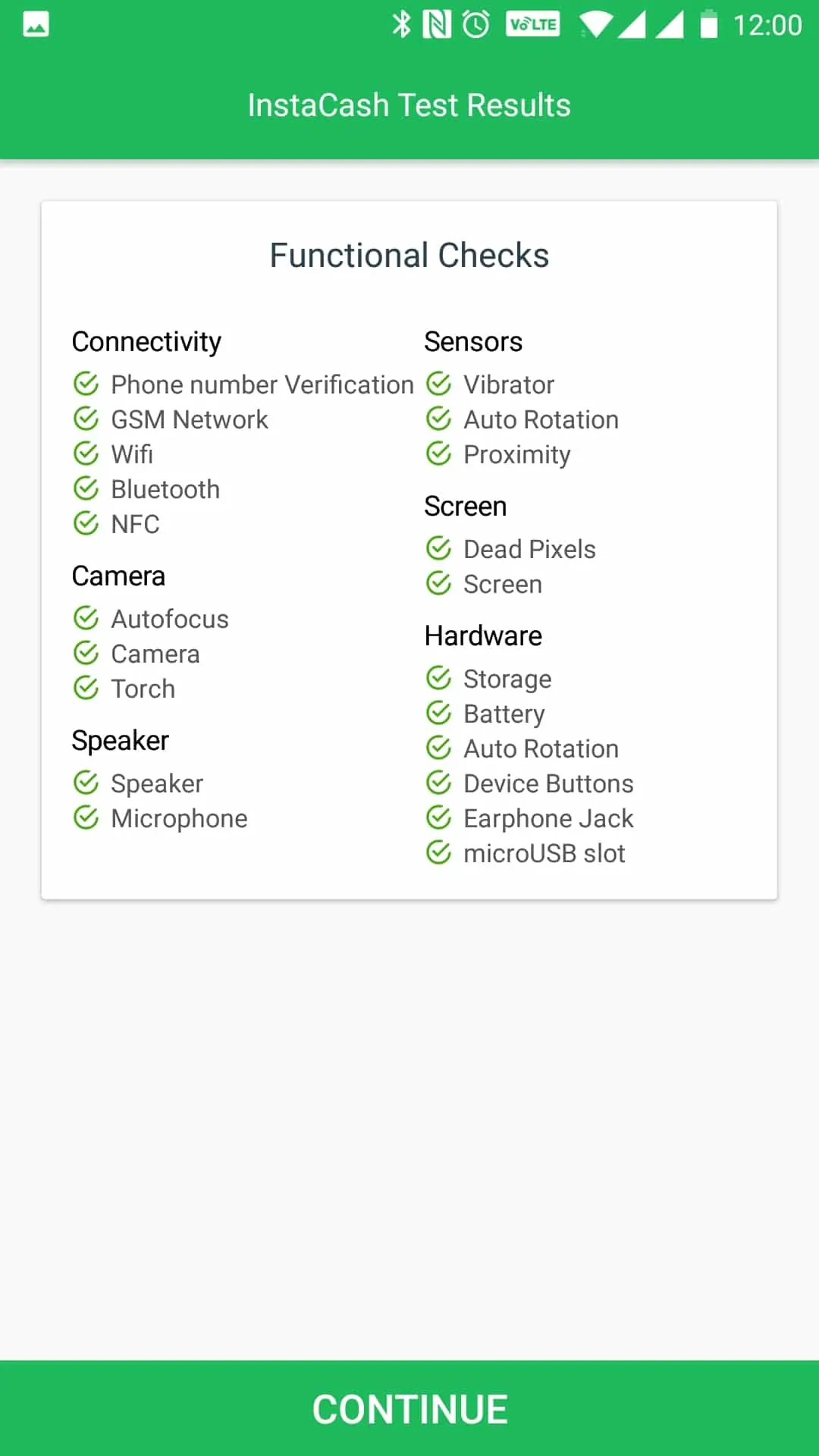
    Instacash uses a mobile functionality test (in-app) + questionnaire method to calculate the appropriate price of the phone. Other factors like brand and market demand are also considered during this process.

    The company focuses on simplifying the old-phone selling problem by providing a ‘quick convenience on-demand’ solution. Before such startup, people used to sell their phones in the local markets at variable prices which involved a lot of effort and expense on their side as they had to visit different shops/markets to find the best price. Instacash has disrupted this market by making the process convenient for the end user. The customer now checks the price while sitting at home and the company even provides home pickup for even better customer experience.

    The business model isn’t just profiting the company but the country as a whole too. Only 5% of the e-waste generated in India gets recycled and the rest 95% of the e-waste gets handled by the local scrappers. This is a serious issue for any country and hence such recommerce business models can do a great job in reducing such e-waste.

    Now, if you’ve read our article on Recommerce Business Model, you would know how they use these used-phones to make money.

    Interested?

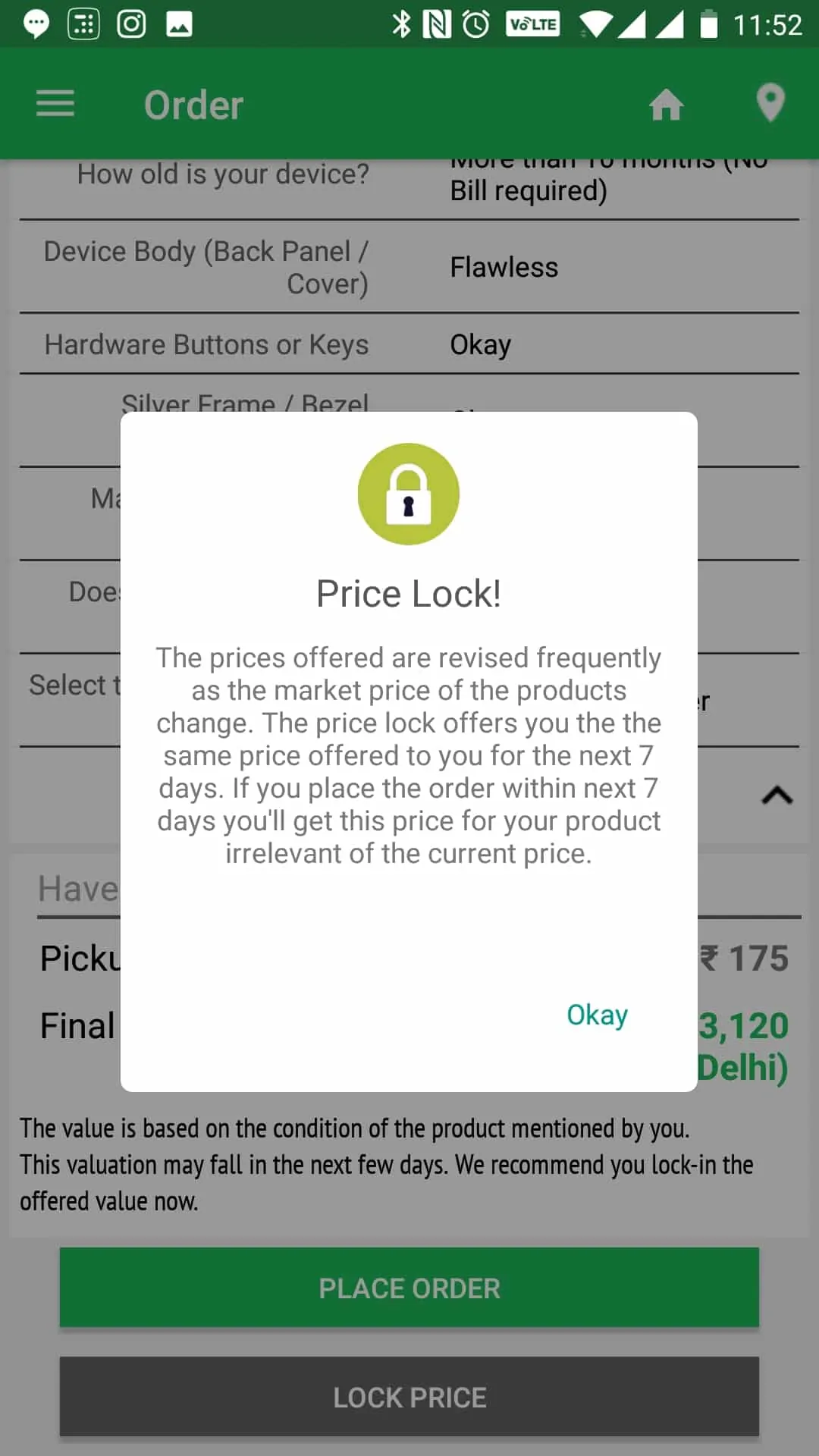
    If you’re looking for a platform in India or Malaysia to sell your old smartphone, you’re in luck: Instacash also provides a price lock feature which offers you an option to lock the price for 7 days.

    Get Your Startup Reviewed By Feedough!

    Get discovered by over 500,000 monthly visitors. Explain your offering to over thousands of potential investors, customers, and top blogs.

    Startup reviews are custom written posts by our experienced team who’ll work closely with your team to create the best pitch possible. The review article will be posted and shared with thousands of our subscribers over emails, social media posts, and push notifications.

    Use this form to get in touch.

  • How Does Postmates Work? | Postmates Business Model

    How Does Postmates Work? | Postmates Business Model

    A startup that operates a network of human couriers which lets you order nearly anything in your city and have it delivered in an hour for a small fee.

    Yes, such an idea already exists and is skyrocketing to success.

    Postmates is an on-demand startup which offers two options to the customers:

    Delivery: Order anything in your city and get it delivered to you in an hour for a fee.

    Pickup: The restaurants on demand service which lets you order on Postmates application before you reach the restaurant.

    This remote control for your city has thrived since its foundation in 2011. It currently operates in over 385 cities with over 250,000 partners and 200,000 delivery fleet and delivers an average of 2 million products a month.

    Postmates Business Model

    Just like other on-demand startups like Uber, Oyo, Instacart, etc. Postmates has more than one customer segment and works on a partnership model rather than the employee model.

    Let’s discuss Postmates’ 3-tiered customer segment in order to get a better understanding of how Postmate works.

    Customers: These are the end consumers who use the Postmates platform to order products and pay extra money to get it delivered to their doorstep.

    Merchants: The local merchants are the restaurants, grocery stores, and other stores which partner with postmates to get more exposure and deliver their products to customers at a comparatively less cost as compared to hiring own staff to deliver. Postmates charges a commission between 15 and 30% depending upon the type of contract between them and the partner.

    Postmate: Postmate is the name given to the delivery personnel who partner with Postmates to deliver the products. These partners work at the schedule of their own choice and are paid 80% of the delivery fee for every order they deliver, the rest 20% is kept by the company.

    How Does Postmates Work?

    Postmates operates a fleet of human couriers who deliver anything at your doorstep. Even though the company operates on a partnership model just like other on-demand startups, what separates Postmates business model from the competitors is the ability to order even from non-partner stores.

    The Delivery Model Of Postmates

    postmates delivery


    The delivery model of Postmates can be explained using this 5-step model:

    Browse

    Postmates tries to list almost every store on its platform (the partner stores are given priority though). The customers can browse the stores and order from wherever they want using the Postmates application or the website.

    Pay

    The order is only said to be received once the customer has paid for it. The customer pays a cumulative price which constitutes the price of the product, the delivery fee and the service fee to place the order.

    Match

    Postmates algorithm is developed in a way that as soon as the payment is received, the postmate stationed nearest to the specified store gets a notification about the products to be bought and the delivery address. He shops for the order and delivers it within one hour. All postmates use car or bike to deliver the order.

    Track

    Postmates platform also lets the customers get a real-time notification about their order. They get a notification whenever the postmate gets to the store and buys their order. They can also track his exact location which leads to even better customer experience.

    The postmate can text the user in case of delays too.

    Deliver – Rate – Tip

    The delivery is usually done within an hour. Once the order is received, the customer gets an option to rate and tip the postmate. The company doesn’t take any share from the tip given to the postmate.

    The Pickup Model Of Postmates

    postmates pickup


    The pickup feature was recently released by the company to tackle the competition. The idea behind pickup is around expanding the retail experience of the partner merchants.

    This feature lets the customers order ahead and get the food/product ready even before entering the restaurant/store. Its functioning can be explained using this 3-step model

    Order

    The customers use the Postmates platform to order the food and other items which they want to be ready when the reach the store. Pickup orders don’t carry any extra fee.

    Track

    They get real-time updates about when the order is getting prepared or is ready.

    Reach

    They reach the store only when their order is ready. Ordering through Postmates benefits them as they get to skip the line and minimise the wait time.

    How Does Postmates Make Money?

    postmates delivery

    Now that you have a clear understanding of how Postmates works, it’s time to move on to discuss the well-drafted revenue model of Postmates.

    Sources of Revenue For Postmates

    Fees

    Postmates doesn’t mark up the goods it sells through its platform. Hence, the fees play a major role in the revenue model of Postmates. The company levies some fees on every order you place. These fees include:

    Delivery Fee

    What separates Postmates from other on-demand startups is that it allows you to order even from non-partner merchants.

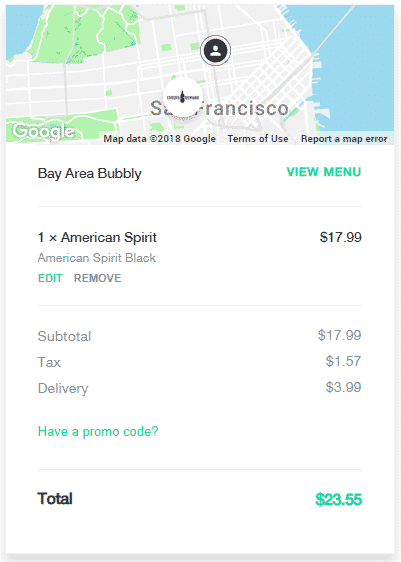
    Postmates charges a delivery fee of $3.99 if you order from a partner merchant (one with a green check mark next to the name) and $5.99–$9.99 for all other merchants. This delivery fee is shared in the ratio 4:1 with the delivery person and the company where the company only takes 20% of what is received.

    Service Fee

    Service fee is the variable percentage based fee (usually between 9% – 19.99%) charged on every order. It isn’t shared with anyone and is directed fully to the smooth operations of the company.

    Small Cart Fee

    If your order is less than $12, postmates charges you a small cart fee of $1.99. According to the company, this fee is charged to make sure that you can always get what you want.

    Blitz pricing (Surge Pricing)

    Just like other on-demand startups, Postmates uses a dynamic pricing algorithm which allows it to increase pricing by a multiple when demand for deliveries exceeds the supply of couriers online. This feature creates a strong financial incentive for postmates to make themselves available when you need them the most.

    Postmates Unlimited

    The company has also incorporated a subscription-based business structure in its own business model. Postmates unlimited is a subscription service which offers the following benefits:

    • $0 delivery fee on all orders over $20
    • No blitz pricing
    • No minimum basket fee
    • No service fee when you order from one of the partner merchants.

    This strategy not only benefits the subscribers, but the company also earns a loyal set of customers who end up ordering from Postmates because of their subscription.

    You can subscribe to Postmates Unlimited at a cost of $9.99 per month or 95.88 per year.

    Commissions

    Partnering with Postmates opens the doors to a whole new digital on-demand world for the restaurants and other stores. They get more orders, get to escape credit card processing fee (all orders are processed by Postmates) and get to concentrate on their core activities as the delivery is outsourced to Postmates.

    Postmates have different contracts with different merchant partners. But one thing that remains common is that the company charges a percentage for every order that comes from its platform.

    Postmates usually charges a commission between 15 and 30% on the pre-tax amount of the total product sold. The commission, however, varies for every partner depending on the contract they signed with the company.

    The commission isn’t charged from any of the non-partner merchants (which is compensated by a high service fee paid by the customers).

    Partnerships

    Postmates has released its API which lets businesses integrate a top-class local delivery platform into their app. This API also lets the partner utilize Postmates’ fleet of couriers to deliver their products within Postmates’ geographic zones.

    Many renowned companies like Starbucks, Walmart, Instacart have come in close partnerships with Postmates to deliver their goods using Postmates Fleet of couriers using this API.

    These partnerships bring in extra revenue to the company and let them use their fleet to the fullest.

    Sources Of Expenses

    The major sources of expenses of Postmates are:

    Technological Set up & Running Costs

    The platform depends totally on its application and website. The technological set-up running costs are costs incurred to maintain and manage the application and website.

    Salaries To Permanent Employees

    These include salaries paid to the employees working in the back-end.

    Payments To The Delivery Fleet

    Postmates get 80% of the delivery fee of every order they deliver successfully. The company keeps only 20%.

    Marketing & Branding Costs

    postmates promotion

    These involve costs incurred in marketing the platform to the customers and merchants as well as the cost of perks provided to every individual Postmate.

    General & Administrative Expenses

    These are the expenses related to the day-to-day operations of a business. It’s a blanket term for expenses that occur even in the absence of any sales. For example, office equipment, supplies, subscriptions, etc.

    Future of Postmates

    Postmates have constantly received a tough competition from Uber, GrubHub, Amazon and even small on-demand startups. But the well-defined business model and business plan have made it pave its way to the most influential on-demand delivery startup anyone has seen.

    The launch of API has paved a new way for the success of Postmates and according to the sources, the company has even discussed a merger with Doordash to fend off Uber, GrubHub, and Amazon. The other important partnerships with Instacart and Wallmart has also played in the favour of Postmates becoming the number one in its own niche.

    Go On, Tell Us What You Think!

    Come on! Tell us what you think of our article on How Does Postmates Work & Make Money? in the comments section.

  • What Are SMART Goals? How To Write SMART Goals?

    What Are SMART Goals? How To Write SMART Goals?

    Most of you must have read or heard of this quote:

    A goal without a plan is just a dream.

    But there’s also another saying:

    An abstract goal cannot be achieved even with the best plan.

    Abstract goals are goals without any description or base. These are just empty slogans that can’t bring satisfactory results. For example, we’ll do something to enhance our turnover is an abstract goal. It isn’t specific, measurable, achievable, relevant, and time-bound. Precisely, this goal isn’t S.M.A.R.T.

    What Are SMART Goals?

    A SMART goal is a well-formulated goal which is specific (S), measurable (M), achievable (A), relevant (R), and time-bound (T).

    Precisely, S.M.A.R.T. goal gives a specific, realistic, and measurable direction to what you want to achieve, and it is highly likely that it can be completed successfully within the specified time period.

    Let’s break the acronym for better understanding:

    Specific

    S in SMART goals stands for specific. It is the who, what, why, and how of the SMART model.

    Example: By January 1, 2019, the HR team will implement a new performance appraisal method for XYZ Co. employees, which uses clearly defined evaluation criteria to make the process more transparent. Who: ‘The HR team’. What: ‘implement a new performance appraisal method for XYZ Co. employees’ How: ‘which uses clearly defined evaluation criteria’ Why: ‘to make the process more transparent’

    Measurable

    M in SMART goals stands for measurable. It defines the measurable evidence that proves the progress you’re making.

    Measurability of the goal is of utmost importance as it provides you with the tangible evidence that the goal is obtainable (or not) and whether you’ve accomplished the goal or at least came close to accomplishing it.

    Example: By January 1, 2019, the HR team will implement a new performance appraisal method for XYZ Co. employees, which uses clearly defined evaluation criteria to make the process more transparent. Here the goal can be measured based on whether or not the new method is operational by January 1st.

    Achievable

    A in SMART goals stands for achievable. It makes sure that the goal can be accomplished within a certain timeframe.

    The goal should be challenging but defined well enough so you can achieve it. It should be defined considering yours’s and your team’s appropriate knowledge, skills, and abilities. The goal should be designed in a way to inspire motivation, not discouragement. Unattainable goals prevent you even from trying. Plan what you want to achieve in steps and establish a timeframe that allows you to carry out those steps. This helps you keep yourself interested in what you want to achieve.

    Example: By January 1, 2019, the HR team will implement a new performance appraisal method for XYZ Co. employees, which uses clearly defined evaluation criteria to make the process more transparent. This goal is set considering the skillset and the ability of the human resource team. The goal focuses on overcoming the challenge of non-transparency of the performance appraisal method, which could be a large enough challenge for you and your team to remain interested in and committed to accomplishing it.

    Realistic (Relevant)

    R in SMART goals stands for realistic and relevant. A realistic goal takes into account the practical scenario and the direction where the organization is heading to. A SMART goal considers the availability of resources, knowledge, and time and aligns with the overall business objective. It also considers whether the goal is relevant to the target audience or not.

    Example: By January 1, 2019, the HR team will implement a new performance appraisal method for XYZ Co. employees, which uses clearly defined evaluation criteria to make the process more transparent. This SMART goal considers the right team for the job, gives them clear indications, and also focuses on the long-term business objectives of the organisation (better appraisals lead to better performance).

    Time-Bound

    T in SMART goals stands for time-bound. It sets a realistic and ambitious yet achievable end date for task prioritization and motivation.

    Goals should be linked to a timeframe. This creates a sense of urgency and creates tension between the current reality and the vision.

    Example: By January 1, 2019, the HR team will implement a new performance appraisal method for XYZ Co. employees, which uses clearly defined evaluation criteria to make the process more transparent. Here January 1 acts as the deadline which creates a sense of urgency among the team members.

    How To Write A SMART Goal

    When it comes to writing SMART Goals, be ready to question your every idea. Even though these goals include all the relevant information, these should be easy to read and understand.

    Here’s a SMART goals template and worksheet to help you get started.

    SMART Goal Example

    Let’s explain how to write a SMART goal using this example: I want to build an educational website for entrepreneurs.

    Specific: There aren’t many websites which teach new entrepreneurs the basics of startups and the startup ecosystem. I’ll create and launch a website next month designed specially to cater to new entrepreneurs by teaching them the basics of startups, marketing, and branding. I’ll provide the information for free and earn revenue using advertisements.

    Measurable: Seeing the current search trends, I believe the website should have around 100,000 hits per month by the end of this fiscal year.

    Achievable: The tech team will be ready with the website in another 2 weeks. We’ll set some marketing milestones to increase the traction and benefit on word of mouth marketing. The content team of the website will research and write on disruptive business models, business plans, and basic startup terms and will send us 3 articles every day in the first month and 4 articles every day after the website has launched. All this is achievable yet challenging for the team.

    Relevant: Most startups fail because of lack of knowledge of when, what, and how to start up. This website will be relevant to new entrepreneurs as they’ll get free quality information which will include well-researched articles about various business models and business tactics.

    Time-Bound: To receive at least 100,000 monthly hits by the end of this fiscal year, the website should be launched within 4 weeks from now.

    S.M.A.R.T goal: Most startups fail due to lack of knowledge on how to run a startup. We’ll create and launch a free (ad-based) website within 4 weeks from now, designed to provide well-researched business models and business tactics to entrepreneurs.

    Go On, Tell Us What You Think!

    Did we miss something? Come on! Tell us what you think about our article on SMART Goals in the comments section.