Feedough Logo

Blog

  • Marketplace Business Model | What Is It And How Does It Operate?

    Marketplace Business Model | What Is It And How Does It Operate?

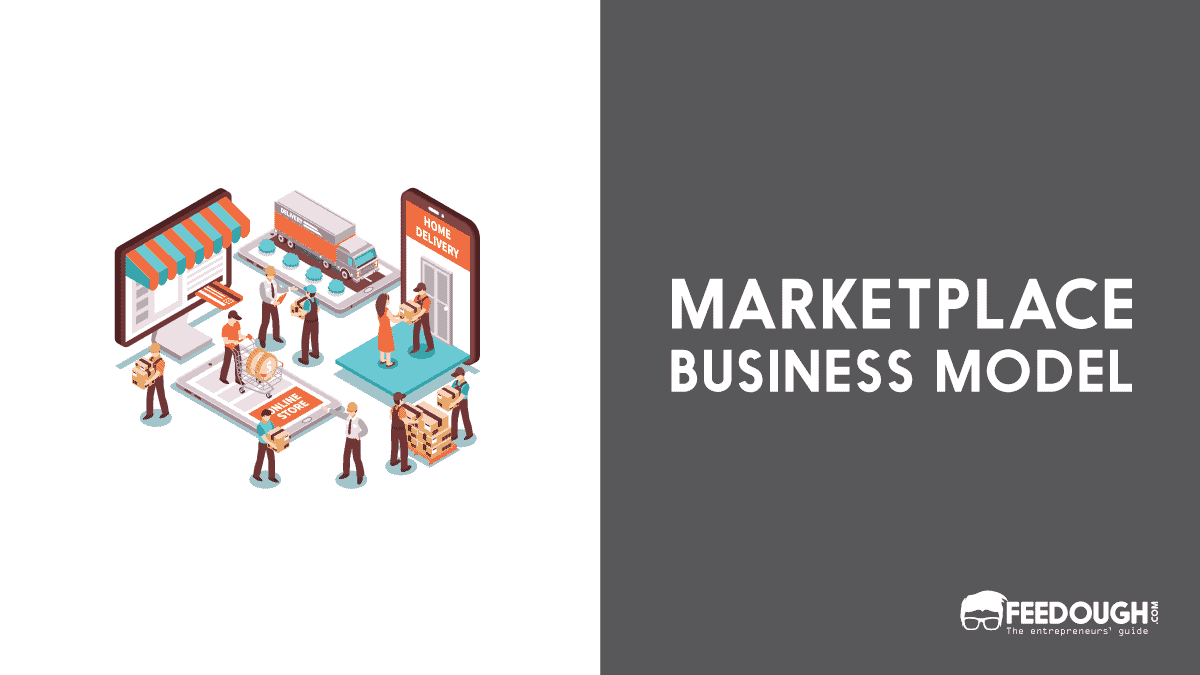
    A marketplace is where buyers meet sellers. Traditionally, these were physical places where different sellers used to take their offerings to showcase and sell to the buyers. But the internet has changed the way everything works. Today, many ecommerce giants like Amazon and eBay operate on the marketplace business model.

    According to Lengow, 60% of sales happen through marketplaces. But what exactly is a marketplace business model? How does it operate? Is it similar to the aggregator business model?

    Here is a guide answering all your questions about the marketplace business model.

    What Is An Online Marketplace?

    A marketplace is a platform where buyers and sellers interact and trade through a network.

    The online marketplace doesn’t own any products or services. It simply acts as a mediator and connects buyers and sellers.

    In other words, a marketplace is a platform that provides value to both buyers and sellers. Sellers get a place to sell their products and grow their brand while buyers are provided with multiple choices and high-quality products all in one place.

    Examples Of Marketplace Business Model

    Many ecommerce sites and tech giants make use of the marketplace business model. Here are a few examples:

    • Amazon: Amazon is one of the most popular and dominant marketplaces. It doesn’t own any products. It provides a platform for various vendors to sell their products under their own brand. In return for its services, Amazon charges a commission from the third-party vendors. Amazon also makes money by charging the sellers to advertise their products on its homepage or the top of the search results.
    • Fiverr: Fiverr is an online freelancing marketplace where freelancers list their profiles and offer their services for as low as $5. Fiverr is not an employer of freelancers. It simply provides a platform for them to list their profiles, and it charges a commission from them in return for its services.
    • eBay: eBay is a leading auction marketplace for consumer-to-consumer and business-to-consumer vending. One can trade on eBay through an auction or a traditional fixed-price sale. eBay provides a platform to sellers to list their products under their own brands. eBay charges a listing fee as well as a commission on every sale made by the seller.
    • AppSumo: AppSumo is a popular online marketplace that provides digital business tools. It provides a platform for the companies who own these products and services to list and advertise their products. The companies are called partners of the marketplace and have to pay a commission to AppSumo on every sale.

    How Marketplace Business Model Works?

    Marketplaces have certain unique features that distinguish them from traditional online stores. Here’s how marketplaces work:

    Who Are Marketplace’s Customers?

    The buyers are the customers of a marketplace. The marketplace provides a platform to the buyers where they can choose from multiple options.

    Who Are Marketplace’s Key Partners?

    The sellers are the key partners of the marketplace as they are the ones who supply products and services to the customers.

    But the marketplace has to treat its sellers as another set of consumers. This is because, like the customers, the sellers have a choice to sell at some other platform. Hence the marketplace has to provide equal value to its customers as well as its sellers.

    Besides the sellers, the marketplace partners with payment processors, digital computing programs, and sometimes even delivery companies to ensure its smooth functioning.

    What Value Does A Marketplace Provide?

    A marketplace provides immense value to both of its stakeholders: the sellers and the customers.

    Vendors benefit because they get to promote and sell their products and services to a huge network of buyers. It gives them tremendous growth opportunities.

    The buyers benefit because they get to interact with the sellers and choose from a large pool of products without much effort.

    How Does A Marketplace Operate?

    The operating model of a marketplace depends on two basic strategies.

    First, the marketplace brand attracts the buyers and the sellers to use its platform and develop a network effect. That is, each party attracts the other party to the platform.

    Second, the marketplace provides a platform for the buyers and the sellers to interact and trade. This means that the buyers and the sellers complete their transaction on the marketplace itself. For example, if a buyer uses Amazon to buy a product, they complete the transaction on Amazon itself.

    Also, marketplace business model has certain characteristics that distinguish it from other business models:

    • A marketplace doesn’t own any products or services. It simply provides a platform to both the buyers and the sellers where they can interact and provide value to each other.
    • There is no standard price in a marketplace. Since every seller is a marketplace partner, he is free to quote different prices for similar products.
    • Every seller in the marketplace sells his products and services under their own brand and not the marketplace brand. Sellers use the platform just as a medium to reach the customers.
    • The marketplace business model capitalises on the network effect. Network effect or network externality is a phenomenon where the value of a marketplace increases as its users increase.

    How Does A Marketplace Make Money?

    While there are many ways through which marketplaces can make money, they usually operate on the following four strategies:

    • Commission: the most common way through which marketplaces earn money is by charging commission from the sellers who list their products on the marketplace platform. Some of the marketplaces that operate on this revenue model are Amazon, Appsumo, and Alibaba.
    • Freemium: in this revenue model, the basic services of the platform are provided for free to every customer. But, to access the platform’s premium features or to have more exposure on the network, the user has to pay a fee to the platform. Such premium features would include featuring the seller at the top of the list, providing personalised recommendation to the buyers, etc.
    • Listing Fee: some marketplaces make money by charging the producers for every product or service they list on the platform. For example, eBay charges a listing fee from the sellers every time they list a product on the platform. Another company that operates on this revenue model is Craigslist. Craigslist is a collection of sites where sellers post listings about various categories of products. While it is usually free to post a new listing, the platform charges a fee for posting under certain specified categories.
    • Subscription: although this revenue model is not very common among marketplaces, some platforms such as Match.com charge a subscription fee from the customers to access the marketplace.

    Marketplace business model vs Aggregator business model

    An aggregator business model is a network model that aggregates unorganised and populated sectors and organises them under its own brand. The sellers are business partners, and they sell under the brand name of the aggregator.

    While there is some commonality between the aggregator business model and marketplace business model, they have some significant differences as well:

    Marketplace Business Model
    Aggregator Business Model
    Brand Name and Brand Image
    The sellers sell their offerings under their own brand name. Thus, along with the marketplace, the sellers also need to maintain their brand image.
    In an aggregator business model, all the partners work under the brand name of the aggregator itself.
    Standardised Price
    In a marketplace, prices may vary for similar products. Sellers are free to choose the price for their products.
    There is a standard price for every product which the aggregator decides. The partners provide their goods and services at the same price.
    Product Quality
    Similar products on a marketplace may have different qualities as different sellers provide them
    An aggregator maintains standard quality for all the products and services offered.
    Industry Variation
    A marketplace may offer goods and services from various industries. For example, Amazon offers clothing, jewellery, electronics, etc., in one place.
    An aggregator offers goods and services from a single industry, for example, Uber for taxis.

    Go On, Tell Us What You Think!

    Did we miss something?  Come on! Tell us what you think of this article on marketplace business model in the comments section.
  • Bumble Business Model | How Bumble Makes Money?

    Bumble Business Model | How Bumble Makes Money?

    Technology has revolutionised our lifestyles. Its impact on the way we learn, work and shop was somewhat imaginable, but this change in our dating ethos is surprising.

    Dating applications were a perfect innovation in the world where people spent most of their time online. The world’s first online dating website, Match.com, was launched in 1995.

    Later, Tinder revolutionised the industry with its advent in 2012. It became normal for people to search (and find) their perfect relationships on a mobile app.

    Since then, many companies have launched dating websites and applications but only few of them are successful. Bumble business model is one such thriving model.

    What is Bumble?

    Broadly speaking, Bumble is a geolocation-based social application that allows its users to build healthy relationships, friendships, and professional networks. Launched as a women-centric dating app in 2014 by Whitney Wolfe Herd, Bumble aims at building an empowering and inclusive community. Kindness, integrity, equality, confidence, and respect lay at the foundation of the company.

    Herd founded Bumble after her rift with Tinder. She sued its senior executives, alleging that they sexually harassed her, unfairly took her co-founder title away and plotted to push her out of the company.

    When she was still fighting the personal and legal battles, Badoo’s founder and CEO, Andrey Andreev, approached her. Herd and Andreev partnered to create a safe dating space for women; thus, Bumble came into being.

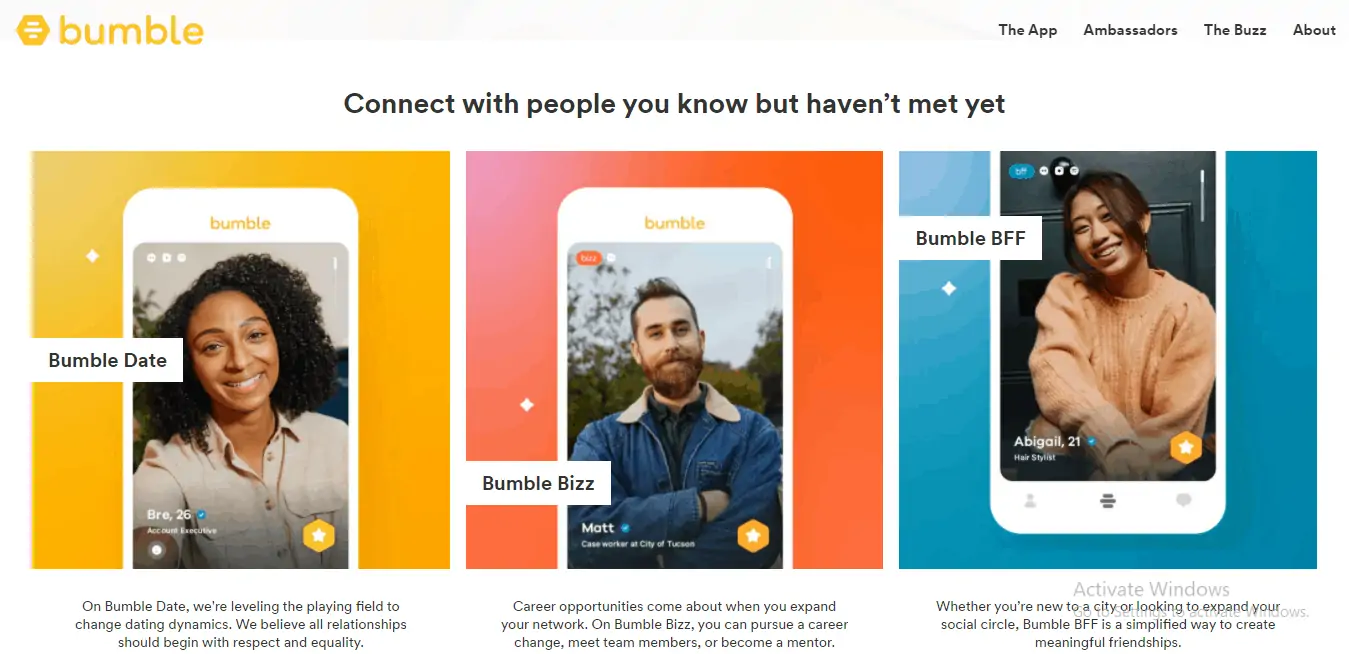
    Gradually, the company’s focus shifted its business model from dating towards building a community wherein everyone built and maintained healthy connections. It is the first app of its kind to combine dating, building friendships, and professional networking.

    Who Are Bumble’s Customers?

    Bumble’s target demographic is youngsters between 18 to 34 years of age who are looking for meaningful personal and professional connections.

    However, since Bumble was created as a female-centric dating app, women are still its primary customers. They are attracted by the prospects of a safe networking and relationship-building space. The growing number of women on the app drives its popularity among men as well via network effect.

    Network effect states that the value of certain goods and services increase when more people use them. Bumble’s growing consumer base raises one’s probability of building healthy relationships on the platform and, thus, brings in more people.

    Although Bumble started as a dating app, its focus has shifted towards building a holistic community of people over time, especially with the launch of Bumble BFF and Bumble Bizz. However, the platform still gives primary importance to women.

    What Value Does Bumble Provide?

    Bumble business model aims at creating a platform where people build healthy personal and professional relationships. Launched as a dating app in 2014, its focus has changed over time to build a wholesome inclusive community of people who want healthy connections. It seeks to become ‘the Facebook for people you don’t know’ and promotes ‘accountability, equality, and kindness’. Although most of Bumble’s users still see it as a dating app, the company is working on its reputation as a community-building platform.

    bumble value proposition

    What Value Does Bumble Provide to Women?

    Bumble was launched to create a harassment-free dating space for women where their moves were valued. It has always been women-centric and ‘100% feminist’ in its approach.

    Unlike Tinder or other dating apps, here only female partners can make the first move in heterosexual matches. Besides reversing the archaic gender norms, this significantly cuts down the gender-based harassment that is common to the typical dating apps.

    Bumble has integrated verification tools in its software interface to screen fake profiles, bots, and obscene content. Its zero-tolerance policy against bad behaviour enhances its worth among women.

    What Value Does Bumble Provide to Men?

    Bumble’s feminist approach provides value to men as well. The platform’s increasing popularity among women makes it a suitable place for men looking for heterosexual connections. Since only women can make the first move, men are saved from the burden of doing so every time; for once, they can sit back and watch the other person break the ice.

    In 2020, Chappy, a dating platform for homosexual men, merged with Bumble to create a safe dating space across the LGBTQIA+ spectrum. With its inclusive intent, Bumble does the job well.

    How does Bumble Operate?

    how bumble works

    Customers sign up on Bumble using their Facebook accounts or phone numbers. Then, they fill in relevant details to build their profiles and select appropriate filters to screen their prospective matches based on gender, distance, etc.

    Bumble shows its users the profiles of their potential matches one at a time. They can swipe right or left according to their preference. When two users swipe right to each other’s profile, it’s a match. However, they need to initiate a conversation within the stipulated time else the match expires.

    Bumble

    Date

    bumble date

    Bumble occupies 12.7% of the US dating market with 42 million active monthly users. Since most of them are looking for heterosexual relationships, the growing number of women on Bumble attracts men as well to drive up the app’s share in the dating industry. However, only women can make the first move here.

    In same-gender matches, either party can initiate the conversation. For each first move that is made, Bumble donates to a cause of its users’ choice.

    BFF

    Released in 2016, Bumble BFF mode allows users to build friendly networks. Here, either party can text first to initiate a conversation.

    Bizz

    Bizz is the professional side of this ‘dating’ app. Launched in 2017, Bumble Bizz mode allows the users to build professional networks in their respective fields. Like Bumble BFF, there is no bar to either side texting first on Bizz.

    Additional Features

    Also, Bumble comes with several additional features to assist its users:

    • Extend: Sometimes, it is not possible to message or respond to a message within 24 hours. Bumble’s Extend feature allows its users to extend the duration by 24 hours.
    • SuperSwipe: Bumble’s SuperSwipe feature helps its users stand out and tell a potential match that they are genuinely interested.
    • Spotlight: This feature drives up a user’s profile to the top of the stacks so that more people can view it instantly.
    • Backtrack: Backtrack acts as a remedy when Bumble users have left swiped the profile of someone they were genuinely interested in.
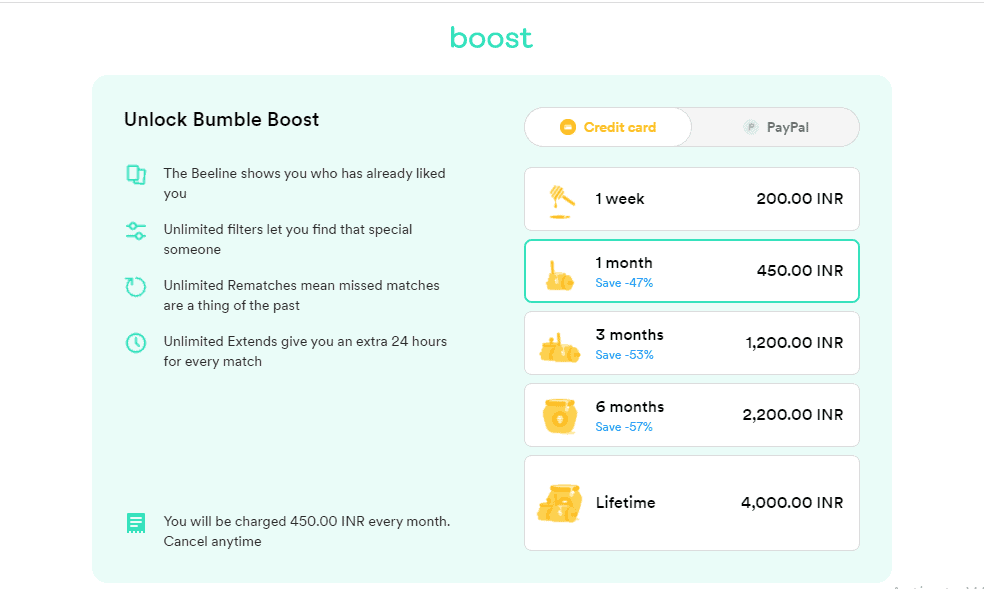
    • Beeline: One of the most attractive features of Bumble, Beeline of a user consists of the people who swiped right on their profile. However, access to Beeline is subject to payment.
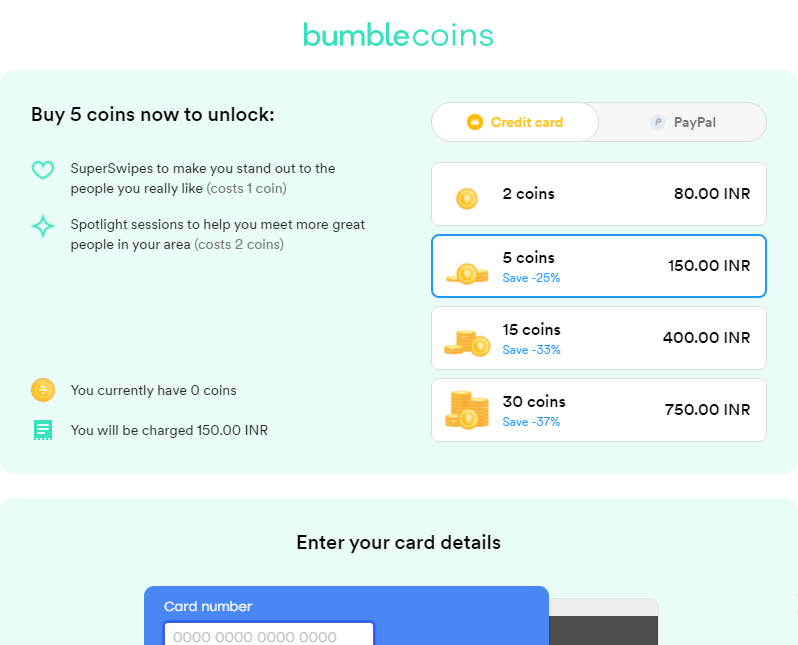
    • Bumble Coins: It is Bumble’s in-app currency that allows users to make purchases

    A few of the above features are available for free, while users must pay for the rest. Bumble lets its customers use multiple modes out of Date, BFF, and Bizz simultaneously by maintaining separate profiles.

    Besides texting, users can also talk to their matches on voice and video calls. When the COVID-19 pandemic burst out, Bumble came up with virtual dating badges and guidelines to ensure its users’ safety. It also provides them access to a plethora of content on healthy relationships and mental well-being.

    Bumble Revenue Model

    Bumble works on a freemium business model. A freemium model is the one wherein customers are provided basic services for free and are charged a certain premium for additional features. Many popular apps such as YouTube, Spotify, and Google are built on the freemium model.

    Anyone above the age of 18 can create a Bumble profile for free and connect with people around them. This is how the company expands its customer base. Moreover, the presence of existing users on the app encourages more to join in via network effect.

    Bumble doesn’t charge anything for creating profiles and building connections. However, users have to pay when they want additional features like Beeline, Backtrack and SuperSwipe.

    How Does Bumble Make Money?

    Bumble doesn’t charge its users to create profiles and build relationships. However, they are required to pay for using additional features. As of now, it has about 1.1 million paying users. In 2020, Bumble’s revenue was second highest among all the dating apps in Google Play and Apple Store.

    Micropayments

    bumble coins

    For add ons like SuperSwipe and Spotlight, Bumble asks its users to pay a token number of Bumble coins. Such nominal transactions are called micropayments. Once engaged, users don’t normally mind paying these small amounts.

    Bumble Boost and Premium Subscriptions

    bumble boost

    Bumble Boost or Premium upgrades users to the platform’s deluxe level. They get various benefits such as access to Beeline and advanced filters, Backtrack, Extend, etc.

    Although Bumble also earns through partnerships and advertisements, they resulted in only 3% of its revenue in 2019. Most of Bumble’s earnings come from premium subscriptions and add-ons.

    Sources of Expenses for Bumble

    bumble marketing
    • Marketing Cost:  Bumble believes in word of mouth marketing. It partners with influencers and ambassadors to boost its organic reach on social platforms to attract youngsters. It also develops blog content to create awareness and conducts sessions on building and maintaining healthy relationships.
    • App Development: Bumble focuses on customer retention more than acquisition. The company constantly rolls out new features and works towards building a safe and convenient user interface.
    • General and Administrative costs: These costs include costs incurred in the day-to-day operations of the business like rent, utilities, insurance, legal fees, and certain salaries.

    Bottom-Line?

    Although Bumble has enjoyed its profitability periods, we cannot call it a fully profitable venture. However, the company’s revenue has been growing at a 31% rate year over year.

    In February 2021, Bumble went public. It raised $2.15 billion in IPO, one of the most successful IPOs of the year. It soared more than 80% during the first few minutes of trading. This was a good milestone for the company.

    Go On, Tell Us What You Think!

    Did we miss something? Come on! Tell us what you think about our article on bumble business model in the comments section.

  • What Is Grassroots Marketing? – Examples, Pros, & Cons

    What Is Grassroots Marketing? – Examples, Pros, & Cons

    In 2013, the Canadian budget airline WestJet surveyed passengers using interactive life-like screens, which depicted Santa dressed in the airline’s colours, to find out what they would like as Christmas presents. The airline employees kept taking notes of all their answers behind the scenes and then rushed for mad dash shopping of the respondents’ presents so that they could wrap and label them while the plane was airborne. The passengers’ astonished and thrilled emotions, along with the pleasure and delight reflected on the faces of the employees made for a fantastic video that went viral all over the internet and became known as the “Christmas Miracle”.

    This grassroots marketing move of the airline set it apart and was very well in line with its idea of never losing sight of the caring WestJet touch. Grassroots marketing is one of the most effective and economical marketing strategies which most companies are inclining towards to spread product awareness these days.

    Let us unravel the various aspects of grassroots marketing and how it can be fruitful and look at some innovative examples of the same.

    What Is Grassroots Marketing?

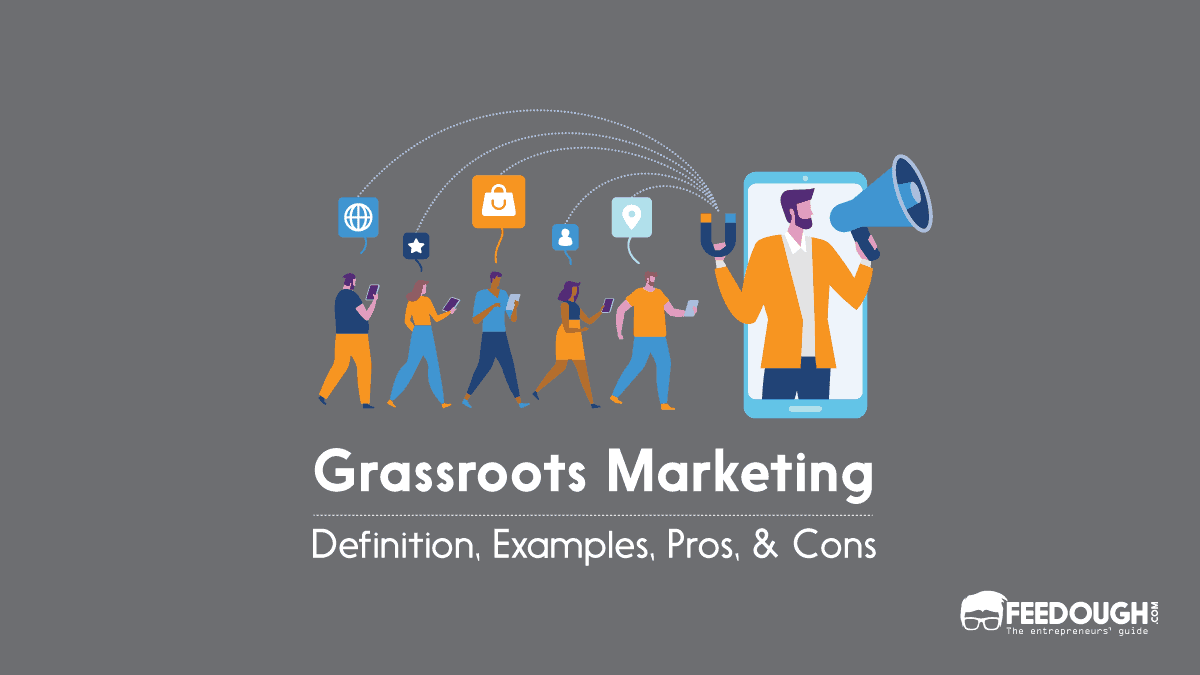
    Grassroots marketing is a marketing strategy that attempts to target a highly niche audience to make them propagate the brand message organically to a larger audience and thus, amplify the brand’s visibility in the marketplace.

    Instead of reaching out to a larger segment of the consumer population, marketers try persuading that niche audience to spread the word and advocate their products or services amongst their peers.

    It is akin to viral promotion of products and services by inspiring the audience to share it with others. The idea is that if a brand is looking to raise brand awareness from the ground up, it should start from the ‘grassroots’.

    Grassroots Marketing Examples

    Now that we have delved into what grassroots marketing is, looking at a couple of creative examples would give us a better insight and deeper understanding of the same.

    UNICEF: Likes Don’t Save Lives

    The early 2010s saw social media users obsess over increasing their Facebook likes and engagement. This even made them use causes and play with people’s emotions as they used pictures and videos of underprivileged humans, especially children.

    Even though UNICEF appreciated the platform for creating a stage for awareness, it was against using this technique to gain more likes. Hence, it came up with Likes Don’t Save Lives campaign that gave a clear message that to save a life, one needs money, not likes.

    ALS Ice Bucket Challenge

    The challenge was to make a video pouring a bucket of ice water on people’s heads, either self-administered or by some other person and then challenge someone else to do the same. People were supposed to donate money to the ALS association if they participated in the challenge. This unique concept went viral in 2014 and initiated a chain reaction that helped spread awareness about the disease ALS and encouraged donations to research on the same. The idea was to inspire people to take action and support a cause from the ground up, which eventually grew to a nationwide campaign that grabbed everyone’s attention.

    Dove Real Beauty Campaign

    In the Dove Real Beauty Campaign, Dove got a forensic artist to draw women the way they picturised themselves and in a way some other stranger did. This powerful video started a movement and inspired so many women to believe in themselves and see their real beauty. It forced people to think about the deep rooted social conditioning which defines ‘ideal beauty standards’ for women.

    https://youtu.be/XpaOjMXyJGk

    Advantages Of grassroots marketing

    Grassroots marketing moves can be advantageous for a company majorly because of the following reasons:

    • Cost-efficient: The amount of money that one has to spend on a marketing campaign has nothing to do with the marketing weapon’s efficiency. Since the targeted audience is highly niche, grassroots efforts lead to significantly low expenditures.
    • Direct interaction with the audience: If a brand directly appeals to the audience interactively and puts forth its perspective, it makes an impressive mark on the consumers and portrays itself as being a socially proactive brand.
    • Garnering customer trust: In today’s era of advertisements overload, it isn’t easy to figure out whom to trust and whom not to. Hence, people put more trust in recommendations from known ones. Grassroots marketing uses this referral marketing strategy to gain consumer trust.
    • Increasing local reach: Grassroots marketing drives can help businesses impact society, especially the local communities. For instance, some community events or collaborations with NGOs can draw people’s attention towards both the brand and the cause.

    Disadvantages Of Grassroots Marketing

    Even though it comes with its own set of advantages, grassroots marketing has its cons too, which may stop a business from choosing it as a marketing strategy.

    • Time intensive: Grassroots marketing relies on word-of-mouth. Hence, it takes its own time. A grassroots marketing campaign is probably not a good idea if a brand wants to reach a large group quickly.
    • No full control: A brand doesn’t usually control the information that spreads due to a grassroots marketing campaign. This could turn out to be a blunder for the company if people misunderstand the message.
    • Unpredictable: Even though a grassroots marketing campaign is a well-calculated strategy, predicting its success or failure isn’t always possible as it heavily depends on human emotions, timings, and other external factors.

    Strategies or ideas to optimise Grassroots Marketing

    Incorporating the following strategies can help brands optimise their grassroots marketing:

    • Offer product samples: Brands can showcase their products in exhibitions or trade fairs or any other events of the kind to increase product awareness. For instance, they can give some sample products to potential clients or make them taste something special on the menu in case of a restaurant.
    • Sponsorship prizes: Giving some unique sponsorship prizes to the winners of a contest can make a mark on them and encourage them to spread word about the products and services of the brand.
    • Pitch a viral video series: If the people like the content and share it with others, it can help create a lot of buzz and increase popularity in the market.
    • Take advantage of social media: The brand should be actively present everywhere it can find potential customers so that it does not miss out on any possible opportunity to increase its reach.
    • Collaborations: Partnering with different businesses and influencers helps reach a wide audience and can open doors to new brand opportunities.
    • Support a good cause: Getting involved in charities or supporting good causes can appeal to the people because it helps the brand connect with people’s emotional sentiments.
    • Moment marketing: Nowadays, moment centric content buckets receive the most appreciation because people find it easier to relate to them. Thus, catching current trends helps brands express how proactive they are.
    • Host events: Organising events like webinars, workshops or any other sessions spreads the word and increases awareness about a product or service.
    • Interview blogs and story-telling: Story-telling and interview transcripts can help spread brand messages and make people connect with the brand better.

    Difference between grassroots marketing and guerilla marketing

    People often tend to confuse between the terms, grassroots marketing and guerilla marketing.

    The key distinct feature between the two is that grassroots marketing moves aim to target a very niche audience and then consequently spread the word while guerilla marketing campaigns are aimed to reach as many people as possible. For instance, McDonald’s has made use of a lot of creative guerilla marketing campaigns which are not grassroots marketing examples because they do not target a specific audience.

    Mcdonald's Crosswalk street fries
    Crosswalk street fries
    Coffee pothole

    Bottom-Line?

    The growing inclination towards grassroots marketing is that these tactics help brands grow exponentially in a very short span of time. However, it is very essential to know which audience should be specifically targeted and what strategy should be used to make such an impression on that audience that they spread brand awareness to as large an audience as possible.

    Go On, Tell Us What You Think!

    Did we miss something? Come on! Tell us what you think about our article on grassroots marketing in the comments section.

  • Afterpay Business Model | How Afterpay Makes Money?

    Afterpay Business Model | How Afterpay Makes Money?

    In just 5 years, Afterpay has carved its presence into Australian and international markets. This is because of the increasing number of customers adapting to its innovative interest-free payment solution that lets them buy first and pay later. With a gigantic $30+ billion market capitalisation, Afterpay has succeeded in revolutionising the “Buy Now, Pay Later” (BNPL) industry.

    Afterpay’s success entails an in-depth understanding of how it delivers values, operates, and generates revenue. And in this article, we will discuss just that and demystify Afterpay business model.

    What is Afterpay?

    Afterpay is a popular “Buy Now, Pay Later” service using which the customers can buy products from its partner stores in advance and pay later in 4 separate instalments without any additional cost or interest.

    Founded by Nick Molnar and Anthony Eisen in 2015, the company stepped into the limelight when the competition was less and people needed a service that could let them pay in instalments without interest. Over the years, Afterpay has merged with its technology provider – Touchcorp – and expanded its market outside Australia. In 2018, Afterpay acquired 90% of the equity in Clearpay, a UK-based BNPL service provider.

    Afterpay Business Model

    Afterpay has built its business around its flagship BNPL service.

    In essence, Afterpay incentivises its customers to buy from its partner stores using its payment plan. It follows a typical commission-based affiliate marketing business model wherein a business makes money through affiliate commissions.

    The company is headquartered in Australia, while its subsidiaries operate in Canada, New Zealand, the UK, and the USA, each of which follow the same affiliate marketing business model.

    Who are Afterpay’s customers?

    Afterpay caters to the individuals who wish to pay for their items in small instalments rather than in a lump sum.

    According to Australian Financial Review (AFR), Afterpay’s “active customers more than doubled over the 2020 financial year to 9.9 million”.

    In another report by AFR, it was noted that millennials constitute Afterpay’s key customer demographic (comprising 75% of all consumers).

    On June 17, 2020, Afterpay published a report stating that their full attention “turns to the Gen Z customer”, and promised to expand its customer base to include Gen Z as one of their main customer demographic.

    What values does Afterpay deliver?

    To Customers

    Afterpay value

    Afterpay addressed the consumers’ needs that many payment portals previously overlooked, making it a major player in the Fintech industry. Following are the values that Afterpay delivers to its customers:

    Pay Without Interest

    Customers can buy their favourite items from the partner stores and pay the final amount in instalments without incurring any additional interest charge. This is the primary value that Afterpay delivers to its customers.

    Earn Rewards

    Afterpay is known to reward its customers for a good payment history so much so that it rolled out a reward program called Pulse for on-time payments.

    For instance, customers with a good repayment history can defer their first payment until two weeks after purchasing an item.

    No Credit Check

    Afterpay does not report late payments and affects its customers’ credit score or credit rating. Instead, it takes other actions, including blocking the defaulter’s account until the issue is resolved.

    To Partner Merchants

     Afterpay value to partner merchants

    Partner merchants enjoy a host of values by integrating their online stores with Afterpay, which are listed below:

    Get Paid Upfront

    While customers spread their payments across instalments, Afterpay pays its partner merchants the full amount upfront for each purchase.

    Easy Integration of Online Store

    Partner merchants can easily integrate their in-stores or online stores with Afterpay via major eCommerce and POS platforms (Magenta, Stripe, Shopify, etc.) and use its services without any hassle.

    Higher Total Sales and AOV

    Afterpay’s sophisticated payment solution has contributed towards business growth of its partner stores as:

    Estimation of Payment Defaults

    Afterpay constantly evaluates its customer’s payment history to assess risks of defaults or late payments. It does so by setting an individual spending limit based on several factors, including late payments, frequency of late payments and many more. In addition to that, a merchant may choose to set additional spending limitations on its products to prevent payment defaults.

    Afterpay Operating Model

    Afterpay has a well-defined structure offering several products and services that help the company deliver value to its customers.

    Afterpay Operating Model

    What are Afterpay’s key offerings?

    Buy Now, Pay Later

    Afterpay’s prime offering is its “Buy Now, Pay Later” service. But how can someone avail it?

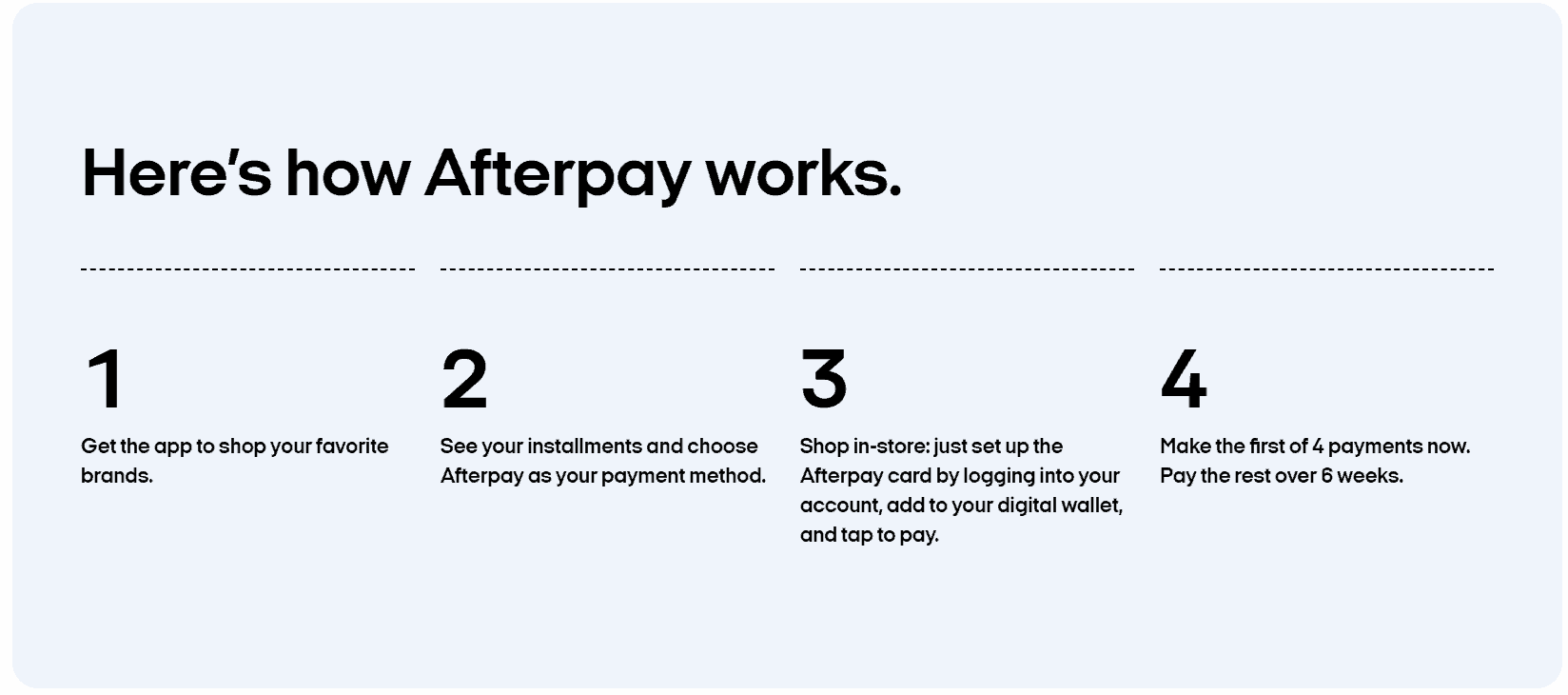
    A customer can choose to make the payment in instalments using Afterpay simply by going to the partner merchant store’s website and following the steps given below:

    • Add items to the cart,
    • Select Afterpay as the payment option during checkout,
    • Login to Afterpay’s account and approve the payment,
    • And finally, pay in 4 instalments, with each payment made after 2 weeks.

    In short, a customer only needs to choose Afterpay as a payment option and follow the prompts for a safe and secure BNPL transaction through its platform.

    Pulse

    Pulse is a reward program that incentivises on-time payments by providing exclusive rewards for buying responsibly and paying in time. With Pulse, a customer can:

    • Defer the first instalment until 2 weeks
    • Reschedule payment due dates 2x more than a non-Pulse customer
    • Buy gift-cards and pay for them in 4 instalments
    • Access exclusive offers

    To unlock Pulse, a US customer must make 30 or more on-time payments on orders of $40 or above within 6 months with no more than 3 late payments, and must agree with Pulse Terms USA.

    Who are Afterpay’s key partners?

    Merchant Stores

    Afterpay has partnered with over 48,000 merchant stores to provide its “Buy Now, Pay Later” payment plan. Partner merchant stores avail this service by including it as an option in their checkout module, and having their store listed in Afterpay’s Store directory, both on website and app.

    Top brands that have integrated Afterpay in their stores include Adidas, Kylie Skin, Fight Club, Goat, DSW, Bed Bath & Beyond, Ulta Beauty, Revolve, and many more.

    ecommerce and POS Platforms

    These include many certified eCommerce and Point Of Sale (POS) systems that enable seamless integration of a merchant’s business (in-store or online) with Afterpay.

    Magento, Stripe, Neto and Shopify, are a few examples of leading eCommerce platforms that have partnered with Afterpay.

    Top POS platforms that have integrated Afterpay in their system include Cegid, Simple Salon, Retail Express, and many more.

    Which channels does Afterpay use to deliver value to its customers?

    Afterpay has its own website where it has linked the online stores of its affiliated retailers (partner merchants). It also has its application available for android and ios devices.

    To avail the BNPL service, customers only have to select the Afterpay payment option at the time of checkout, and follow the instructions to consummate the transaction. In addition to that, they can redeem the benefits (if eligible) of Afterpay’s reward program – Pulse – by logging in to their account on their device.

    How Afterpay maintains its relationship with its customers?

    At its core, Afterpay is an automated service. Users interact with the application while making a transaction or availing the other benefits they gain in terms of exclusive offers or rewards for spending responsibly.

    However, its easy-to-use interface on its dedicated website and mobile apps give a personal touch to a user’s shopping experience. A user can also subscribe to the company’s newsletter to receive store alerts, special offers and other updates on their email, laying a foundation to a deeper customer relationship.

    How does Afterpay make money?

    Afterpay does not charge its customers any interest or additional fees to use its service. Instead, it earns its revenue in commission from partner merchants and monetary penalties incurred by customers who pay late.

    Affiliate Commission

    As part of its revenue model, Afterpay cultivates a paid affiliate partnership with merchants. In other words, it earns a percentage commission per transaction with the merchant whenever a customer uses its service to pay in instalments.

    Afterpay charges a flat 30% affiliate commission with a variable that generally ranges from 4% to 6% per transaction. However, the exact percentage commission it makes varies from merchant to merchant.

    Late Payments

    Another revenue source for Afterpay is the penalty it imposes on its customers when they fail to make on-time payments.

    As per Afterpay’s Installment Agreement – USA, the Late Fee “will be imposed, up to a maximum of $8.00 and which in no event will exceed the maximum late fee permitted by applicable state law. Additionally, the aggregate sum of Late Fees associated with a particular order will not exceed 25% of the order value at the time of purchase.”

    Afterpay claims to make more money with affiliate commission than by late payments. So, to encourage on-time payments, it stops its customer from purchasing more items when they miss a payment.

    Final Thoughts

    After breaking into the European and the US market, Afterpay now strives to expand its operations to Asia. As per official reports, this move will be consummated with the acquisition of EmpatKali, an Asia-based BNPL company.

    Afterpay has partnered with over 48,000 merchant stores over the years, integrated with multiple ecommerce and POS platforms and acquired a large customer base across borders. This clearly shows that Afterpay is dead-set on expanding its market and leaving a lasting footprint in the BNPL industry worldwide.

    It makes one wonder if Afterpay has already become a popular household name in many countries in the initial five years of its operations, then where it will stand in the next 5 or 10 years.

    Go On, Tell Us What You Think!

    Did we miss something? Come on! Tell us what you think about our article on Afterpay business model in the comments section.
  • What Is Acqui-Hiring & How It Works?

    What Is Acqui-Hiring & How It Works?

    Mark Zuckerberg once said that Facebook has never bought a company for the sake of buying a company. They buy companies to hire great people.

    You’re not alone if you’ve ever wondered why a tech-savvy company would bother to buy a startup with no profit and a product in a completely different field.

    As the war for tech talent is intensifying, it is becoming more and more difficult for companies to attract top-notch talent. Acqui-hiring is one such strategy that changes the game and has gained popularity in recent years.

    From Amazon to Microsoft, all are acqui-hiring companies that display technology talent’s expertise in AR, AI, VR, IoT, etc.

    But, what is acqui-hiring? What are the possible reasons to acquihire? What are its pros and cons?

    Let’s find out.

    What is Acqui-hiring?

    Acqui-hiring refers to buying a company or organisation mainly for its employees’ skills and proficiency rather than for its products or services.

    Also known as talent acquisition, acquihiring is a portmanteau of ‘acquisition’ and ‘hiring’. Acquisition is when one company buys another, and hiring refers to taking on employees. Acqui-hiring is simply a strategy that assists the growth of the company with the expertise of recruited employees.

    This term is believed to have first appeared in a blog post by Rex Hammock on May 11, 2005. He spelled it Acq-hire and characterised it as:

    When a large company “purchases” a small company with no employees other than its founders, typically to obtain some special talent or a cool concept.

    Google, Twitter, and Facebook have been involved in acqui-hiring for a long time. Facebook acqui-hired Drop.io and Hot Potato. Google acqui-hired DoubleClick, which revolutionised the internet advertising industry.

    Acquire vs Acqui-hire

    Acqui-hire is not the same as acquire. In fact, acqui-hire is the subset of acquire.

    Acquire
    Acquihire
    What it is?
    An acquisition occurs when the acquirer places a high value on both the company and the people who work for it.  
    Acquihire occurs when the acquirer places a higher priority on the team and their talent and abilities rather than on their products or services.  
    What is its purpose?
    To gain ownership of the company by purchasing most or all of another company’s shares.  
    To hire a well-functioning team and use the skills of its employee team for innovation and growth.

    Advantages of Acqui-hiring.

    Acqui-hiring is a smart strategy for any organisation looking to expand its business. It is a perfect combination of talent and expertise and has several benefits that simplify solving any difficult problems.

    From The Perspective Of The Acqui-Hiring Company

    • Saves time and effort to find new talent: Acqui-hiring allows big firms to avoid the potentially lengthy process of identifying and screening new applicants. It provides businesses with evidence that a certain group of workers works well together and can perform a specific task using their niche skill sets. Twitter’s acquisitions of Summify and Posterous are two examples of multinational talent-driven transactions.
    • Provides unique skill sets to the buying company: New workers bring new concepts, new energy, and new ways of working with them. They can revitalise the business. They are valuable because they think outside the box. In the tech industry, acqui-hiring is becoming more common as certain skill sets, such as basic computer programming skills, are in high demand and short in supply.
    • Increases earning potential: Acqui-hiring can increase the company’s current market capitalisation and broaden its product range. This is true since most acqui-hires aren’t costly acquisitions for large corporations. In Silicon Valley, the going rate for acqui-hires is $1 million per quality engineer. More experienced teams benefit more.

    From The Perspective Of The Target Company

    • Provides safe exit strategy: Entrepreneurs see acqui-hiring as a secure escape. They believe they can now move on to bigger and better stuff and can create new products in a better business environment.
    • Avoids Bankruptcy: If a company is on the verge of bankruptcy and needs to find a new place for its workers to work, then acqui-hiring is the best strategy to adopt. Within a larger organisation, the seller’s vision for his company can be realised more effectively.
    • Assists in future growth: The target company employees gain access to resources and capital that can help them grow as entrepreneurs. Thus, acqui-hiring establishes them in a reputable position which aids them in obtaining financing for future projects.
    • Makes failures appear to be successes: A failed startup is not required to accept the blame. Instead, it may claim that the business did not fail; someone else bought it instead. Hence, providing an escape from the humiliation of a failed business.

    Disadvantages Of Acqui-Hiring.

    There are two sides to every coin! While acqui-hiring has proved to be a massive success, it is not without its risks. 

    From The Perspective Of The Acqui-Hiring Company

    • No Guarantee: The main problem encountered by the acqui-hiring company is there’s no guarantee that the staff will want to stick around and work in a corporate environment unless the workers are on a contract. Moreover, even if they join, there’s no guarantee that the return on investment will be good.
    • Struggle with the cost: While $1 million for each employee isn’t a lot to companies like Google, small companies may struggle with the cost. For example, Yahoo was already incurring substantial financial losses. Its decision to make a large number of acqui-hires worsened the financial situation. They were unable to integrate the new teams quickly enough to justify the acquisition’s cost.
    • Resentment among current workers: Bringing in a new team through an acquihire can result in dissatisfaction among current employees as newly hired workers are undoubtedly in the spotlight.
    • Prospects of a setback: An acquihire does not ensure that everybody will be hired. Some people might not do well in their interviews. When a sufficient number of new hires fail the interview, the company’s purchase becomes obsolete. It is less valuable without the whole team. Every unsuccessful interview jeopardises an acquihire.

    From the target companies’ perspective

    • Problems of relocation: Employees at startups are usually their own managers. They set their working hours and are free to come and go whenever they want. Working for a larger corporation entails more stringent laws. A company in a different city would need the employee to relocate. Thus, missing out on the perks of working in a startup’s laid-back atmosphere.
    • Ignorance of Investors: The promising vision that acqui-hiring presents isn’t that tempting to the investors. Acqui-hires pose a problem for investors who invest in startups with longer-term investment objectives. Therefore, they aren’t interested in signing off the deal.

    Despite these difficulties, the advantages of acqui-hiring outweigh the drawbacks.

    How Does The Acqui-Hiring Process Work?

    The acqui-hiring process differs for different companies. Usually, the employees receive the bulk of the buying money and a combination of stocks or properties is traded.

    The cost of an acquihire is normally determined on a per-head basis by the buyer. That is, the company pays a fixed sum for each new employee it hires. Their prior job experience and credentials determine this figure. The going rate ranges from a hundred thousand dollars per person to $2 million. Employees who are acqui-hired are given stock that vests over a 4-5 year period as well as a small cash bonus and a wage. They receive these benefits after all the team members of the acqui-hired company signs the employment contract, which includes:

    • A provision requiring a minimum duration of employment.
    • A provision wherein the acquirer’s or its parent company’s shares are vested.
    • A non-compete clause for the promoters.

    If the target company has debts, then either the debt is repaid at the time of acquisition, or the employer is aware of the debts and has agreed to pay them, or the promoters will ensure that the debts are paid on their own. A contract is signed stating that the acqui-hiring company takes no responsibility for the target’s current debts.

    Investors, on the other hand, usually don’t get anything out of such a deal. This is when the term deal consideration comes into play. Investors would get their money back if they own preferred stock with a liquidation preference. A liquidation preference implies that investors get some percentage of acqui-hired proceeds. This is intended to ensure that they get their money back or at least a fair return. For example, in a $2 million deal with 25% deal consideration, the investor receives only $500,000.

    Investors not getting an equal share of the company’s net worth is one of the controversial issues in the startup ecosystem.

    Despite the many benefits of acqui-hiring, if both parties’ business interests are not synchronised in an acquihire contract, it may cause serious problems. Thus, before striking off an acquihire contract, buyers should consider these factors:

    • They must seek legal advice and approval from the board and stockholders.
    • They must buy the business as a whole, not just the people and properties. Otherwise, the transaction might be postponed.
    • They must take into account the effects the purchase has on the board of directors.
    • They must limit or eliminate post-closing liabilities to the higher team and stockholders.
    • They should consider if the estimated payment will be accounted as fair by an impartial observer.
    • They should research tax implications such as parachute payments.
    • They should make sure that creditors will be satisfied.

    Acquiring talent is beneficial not only to an organisation’s talent pool but also in transforming an organisation’s community by bringing in innovation DNA and entrepreneurial vision. But it is not that simple as it seems to be. It’s all about using the previous firm’s ethos and absorbing the acqui-hired firm’s working style. The acqui-hired firm must accommodate, incorporate, and maintain the uncertainty as this strategy isn’t going anywhere anytime soon. Thus, both acqui-hiring companies and entrepreneurs must understand the laws and paperwork that go into an acquihire contract.

    Go On, Tell Us What You Think!

    Did we miss something? Come on! Tell us what you think about our article on acqui-hiring in the comments section.
  • What Is Relationship Marketing? – Examples & Strategies

    What Is Relationship Marketing? – Examples & Strategies

    Acquiring new customers is an expensive task when compared to retaining existing ones. With limited resources, the company devises different strategies as and when required. A business may use transactional marketing strategies to acquire a new customer. But to retain customers and ensure recurring sales, businesses have to engage in relationship marketing. The long-term goal, after all, is to achieve recurring interactions with every new customer.

    What Is Relationship Marketing?

    Relationship marketing is a marketing strategy that focuses on achieving long-term customer loyalty by building emotional relationships with existing customers.

    It aims to ensure repetitive sales by winning the purchaser’s confidence in the product. Strong customer bonds, especially at an emotional level, ensure stable business activity and further promotion to attract potential customers.

    Unlike transactional marketing, which is a traditional approach, relationship marketing targets long-term benefits through customer retention. If a business manages to prioritise consumer satisfaction over establishing a sale, consumer retention automatically kicks in.

    With the advent of the internet and social media marketing, interacting with the audience has become even easier. Companies can align their products and services with the latest trends and sustain in this dynamic environment.

    Examples Of Relationship Marketing

    Some brands have effectively employed a relationship marketing model in their work and have achieved great heights. Some examples are as followed:

    Amazon

    The number one eCommerce marketplace globally, Amazon manages to deliver product recommendations based on the user’s purchase and browser history. The company has managed to establish itself as a customer-friendly brand and thus capture a big market share.

    1. Data-driven: The algorithm is designed to show the customer the products that seem relevant to their interests. Easy browsing, personalised feedback, and customer interactions add to effective interaction and engagement.
    2. Convenience: The website ensures a hassle-free shopping experience by providing easy returns and one-click purchases. 
    3. Feedback: it is easier for people to share their shopping experience with their family and friends and also leave honest reviews about the product.

    Coca-Cola

    The company manages to endorse its products through heartfelt messages for customers.

    Coca-Cola’s marketing campaigns focus on establishing the brand to be a perfect partner for happy moments. Its advertising campaigns come with touching messages about family and friends.  Even the Coca-Cola bottle tempts the customers to share that bottle with someone special.

    The brand successfully maintains a relationship with its customers by evoking an emotion of happiness –  even inspired — when the customer buys or consumes the soda.

    Importance Of Relationship Marketing

    1. Sustainability – Relationship marketing helps in obtaining long-term benefits for the business. It helps in maintaining the position of the organisation in the market.
    2. Customer loyalty – Building relationships with customers helps in building a personal connection with them. This, in turn, triggers the psychology of ownership, resulting in their desire to come back to the same brand for future purchases.
    3. Steady sales- Long-term relationship objective ensures continuous sales from existing customers.

    Relationship Marketing Strategies

    In the present scenario, several business organisations sell the same product but with variations. It is important to deliver something which attracts the consumer and makes them return for future purchases.

    Following are some tools and strategies that business organisations use to add value to their products.

    1. KYC- Know Your Customer is a process of verifying the customer’s identity. It is in accordance with opening an account of the clients with the organisation. Businesses use information like birth dates and anniversary dates to wish the customers and nurture their relationships.
    2. Customer Relationship Management: CRM software and solutions help businesses record and store details about the customers, their purchases, personal information, and other details. It enables businesses to keep in touch with clients with better information, resulting in better relations.
    3. Customer Service: Any business organisation must prioritise consumer service and support followed by the product’s sale. These after sales-techniques help in winning consumer’s trust, developing a relationship that makes them return.
    4. Email and SMS marketing: It involves sending the customers regular messages regarding upcoming and ongoing offers and deals. They are a means of effective communication to stay connected with the audience.
    5. Customer feedback: Taking feedback and reviews from the consumers themselves forms a positive image in people’s minds. They believe that their feedback matters to the organisation.
    6. Online and social media marketing: with the introduction of websites like Facebook, Instagram, etc., digital marketing is gaining popularity. Businesses uses the same for better customer interaction.
    7. Loyalty programs: Loyalty programs rewards the customers for their long association with the business. This reward works wonders in developing a long-term relationship with the customer and can even result in organic referral marketing.

    Benefits Of Relationship Marketing

    1. Reduction in advertisement expenses- Marketing and advertising is a heavy expense. Relationship marketing usually results in referrals, word of mouth, and viral marketing, which, in turn, reduces the business’s expenses to acquire new customers.
    2. High Customer Lifetime Value: A loyal customer often conducts recurrent purchases without much effort from the business. It increases the CLV and helps the business get a better ROI.
    3. Inelastic Demand: A loyal customer’s demand is usually unaffected by small changes in the offering’s price. All they care about is a good experience and a better brand relationship.
    4. Valuable feedback: A healthy customer relationship also results in better and more detailed customer feedback that helps the business grow.
    5. Competitive edge: The perfect tactic to survive the dynamic environment is developing relationships with the customer and making them loyal to the brand.

    Drawbacks Of Relationship Marketing

    1. Not Much Attention To New Customers: the main focus of relationship marketing is to retain old customers. Thus, the potential customers who demand more attention tend to get overlooked as it is natural to value the old customers a little more than normal.
    2. Time-Intensive: building personal relationships and establishing connections is a slow process and does not show immediate effects. This whole process takes up a lot of time and is indeed expensive.
    3. The Expectation For Special Treatment: Whenever customers return for another purchase, they may expect special treatment or a discount. This expectation arises as they return to the same brand instead of looking for another in the market.

    Relationship Marketing vs Transactional Marketing

    Transactional marketing, as in contrast with relationship marketing focuses only on establishing a transaction. It targets individual sales and maximisation of revenue. The producers are not concerned much about customer satisfaction and relationship building.

    Basis
    Relationship Marketing
    Transactional Marketing
    Objective
    Building consumer relations and repetitive sales.
    To achieve a transaction using single sale transaction.
    Focus
    Retaining existing customers
    Acquiring new customers
    Customer interaction
    Very high
    Not much required
    Benefits
    Long term as based on repetitive sales
    Short term as based on individual sales
    Duration
    Long period
    Short period
    Goal
    Consumer satisfaction
    More sales

    Bottom-Line?

    Every marketing strategy devises a different approach to establish sales. But, the key to growth ultimately lies in building a community of long-term customers. The emotional connection in the consumer-buyer relationship is the factor that drives repetitive sales. Personal interactions with customers were not an easy task to accomplish in earlier days. With the introduction of technology and social media, it is easier to practice this marketing technique and ultimately help achieve the long-term growth of the business.

    Go On, Tell Us What You Think!

    Did we miss something? Come on! Tell us what you think about our article on relationship marketing in the comments section.

  • Perfect Competition – Definition & Characteristics

    Perfect Competition – Definition & Characteristics

    Economies around the world house several market structures, some of which are hypothetical – that do not exist in the real world.

    One of these hypothetical market structures is the perfect competition form of market structure. Hence, we find no real-world examples of perfect competition.

    Even though this is the case, it is important to learn and understand this model. That is because understanding the features of this model enables one to gain a deeper understanding of the other market structures that exist in the real world by means of comparison.

    So what is perfect competition?

    Let’s find out!

    What is Perfect Competition?

    Perfect competition is a market structure where several firms in an industry sell homogeneous products.

    To further simplify this concept, let’s break it down into three parts:

    • Market structure: A market structure is how a market is organised. It explains the competition in the market and how different players are connected to each other.
    • Several firms: In a perfect competition type of market structure, numerous firms exist in the industry, and hence these firms face a lot of competition.
    • Homogeneous products: All the firms that exist in the industry sell highly similar goods. Thus, these products are perfect substitutes of each other.

    Characteristics of Perfect competition

    • Numerous buyers and sellers – In a perfect competition form of market structure, one witnesses a large number of buyers with the ability and willingness to buy a certain product. Similarly, these market structures also house large number of sellers.
    • Homogeneous/ highly similar product – products sold in a perfectly competitive market structure are perfect substitutes of each other since they are highly identical. For example, in agricultural markets, farmers produce and sell products that are homogeneous, like wheat and barley.
    • No barriers to entry and exit – There exist no restrictions that prevent a firm from entering a perfectly competitive market, nor does any force compel a firm to continue existing in a market.
    • Perfect mobility – Factors of production in a perfectly competitive market have perfect mobility. This means that factors used for production can be freely moved from one use to another depending on the payment these factors receive.
    • Perfect knowledge – Both, the buyers, and sellers, in a perfectly competitive market possess the same knowledge regarding the concerned product.
    • No government restrictions – No government or any kind of restrictions exist to hinder the functioning of a perfectly competitive market.
    • No transportation cost – In order to be able to offer a product at one price anywhere, regardless of the distance between the place of production and the market, it is assumed that there exist no transportation costs in a perfectly competitive market.
    • Price taker – Firms in a perfectly competitive market are compelled to charge a price that is determined by the market forces of demand and supply. Individual firms cannot charge their own prices and have to accept the price determined by the market forces.

    Perfect competition in the short run: super-normal profits

    Perfect competition in the short run

    In the short run, competing firms could make an economic profit which are supernormal.

    A super normal profit is one where the revenue earned by the firm is greater than the average cost.

    The diagram shows that the profit maximizing firm produces at the point where marginal cost (MC) intersects marginal revenue (MR). The cost incurred is denoted by the line where the line that extends from the aforementioned point of intersection meets the average total cost curve. This line, when extended further, meets the demand curve.

    The economic profit earned, is thus, the difference between the average cost and average revenue, which is multiplied by the total quantity produced.

    Perfect competition in the long run: normal profits

    Perfect competition in the long run

    In the long run, competing firms could not sustain and earn economic profit, and hence earn only normal profits.

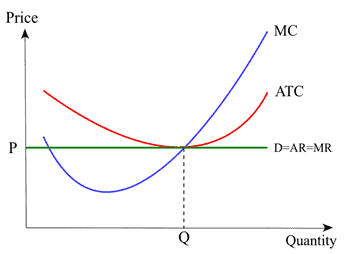
    A normal profit is one where the revenue earned by the firm is equal to the average cost. Since the difference between the average revenue and the average cost is zero, the profit earned is essentially equally to zero.

    The profit maximizing firm produces at the point where MC intersects MR. The point where MC intersects MR is also the point which denotes the average cost.

    As new firms have entered the market, the demand curve of each firm in the perfectly competitive market shifts downwards, until it is a horizontal line.

    Thus, in the long run, the firms only earn normal profits, i.e, profits which are equal to zero.

    Advantages of Perfect competition

    • Optimal allocation of resources – In the long- run, the price of the product is equal to the marginal cost of the product in a perfectly competitive market. This is a socially beneficial point where there is an optimal distribution of the goods produced to consumers in an economy.
    • Competition encourages efficiency – Since a perfectly competitive market houses several firms, there is a lot of competition among these firms. In order to be able to supply to the growing consumer demand, these firms start producing more efficiently.
    • Consumers charged a lower price – Perfectly competitive markets house many firms, and with time, all the firms are compelled to charge the same price for the product. This is because the firms that charges a lower price than the other firms will grab a greater market share, and so, all firms stick to just one price which is equal to the average cost of producing the product.

    Disadvantages of Perfect competition

    • Products that are undifferentiated – Since products in a perfectly competitive market are homogeneous in nature, consumers have limited options.
    • No supernormal profits in the long run – In the long run, the marginal revenue earned by a firm is equal to its marginal cost. As a result, the profit earned is essentially equal to zero (normal profits). Hence, this is a disadvantage for the firms in a perfectly competitive market.
    • Perfect knowledge hinders innovation – as knowledge about a product is available to all, there are no incentives for firms to engage in innovating. This is because other firms would essentially employ the same innovation, and hence, this free riding of information discourages firms from innovating.

    Go On, Tell Us What You Think!

    Did we miss something? Come on! Tell us what you think about our article on perfect competition in the comments section.
  • What Is Price? – Meaning & Function

    What Is Price? – Meaning & Function

    When a customer goes to a grocery store to buy some wheat flour or uses a food delivery app to order a burger, the customer is expected to pay for these offerings. The money charged here is the price. But the price that we pay for these offerings has more to it than just that.

    What exactly is price? What determines the price of an offering? Is it the same as cost?

    Let’s find out!

    What Is Price?

    Price is the value or money customers give up in exchange for a particular offering that would serve to satisfy their needs and wants.

    In simple terms, a price is the measure of the value a customer exchanges to purchase an offering.

    Prices serve as an economic mechanism using which offerings can be distributed among customers in the marketplace.

    They also act as indicators of the extent to which an offering is demanded and also the extent to which it is supplied or available.

    The price of a product is the overall value of the offering, including the value of all raw materials and service that went into making an offering. The price of service considers all elements involved in the making of the service what it is.

    Function Of Price

    In a free market, prices serve several purposes. Below listed are some of the functions of prices:

    • The rationing function of price: Prices have the ability to ration scarce resources. A scarcity of resources causes the resource’s price to go high, allowing only those customers to buy who show both willingness and ability. For example, diamond is a luxury offering that can only be bought by those who are willing and have enough financial resources to purchase it.
    • The signalling function of price: Often, an offering’s price varies due to its demand and supply volumes – by the scarcity or the surplus of an offering in the marketplace. If an offering’s demand is high, but the supply is low, the market evidently will see a rise in its price. For example, gold is a scarce resource that sees a constant rise in its price over the years as its demand increases. Similarly, if the market has an excess of a particular commodity due to lower demand and higher supply, its price tends to decrease. It would enable the elimination of surpluses of this commodity in the market.
    • The incentive function of price: Usually, when a commodity’s price rises, it is because its demand has increased. This allows suppliers a look into the changing demand trends of customers in a marketplace. Accordingly, they would prefer to produce that particular offering as it is more likely to be profitable.
    • The transmission function of price: Prices necessarily transmit information to all those involved in the marketplace, and this, in turn, enables both producers and customers to make an informed decision in the marketplace. For example, a good quality offering might cost more than an offering that used cheaper raw materials. Hence, a customer would be able to get this information from the drastic difference in these similar offerings’ prices. Similarly, an offering’s price would help a supplier determine the kind of demand an offering sees in the market. This would allow the supplier or producer to decide whether the offering’s production and supply would help them gain a more significant profit.

    How Are Prices Determined?

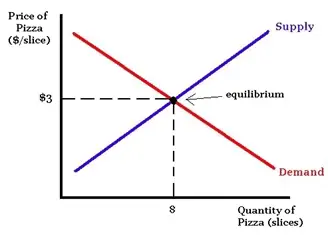
    Prices depend on the law of demand and supply. That is, it rises or falls till the quantity demanded equals the quantity supplied. This point is called the equilibrium price.

    If the demand of an offering is more than its supply, the price rises, allowing only those buyers to access the offering who have the willingness and ability to buy it. The rise is till both demand and supply meet at an equilibrium.

    If the supply exceeds the demand, the price falls to the point of equilibrium.

    Difference Between Price And Cost

    People often use the terms price and cost interchangeably. One may say, “I had to pay a high cost for this brand new television set”. While the sentence still conveys the message when used in conversations, both price and cost are technically different concepts when we talk about finance.

    While the price of an offering is the monetary amount a customer pays to acquire a certain offering, the cost of offering considers the seller’s expenses in manufacturing the offering. Simply put, the price concerns the buyer, while the cost concerns the seller or the producer of an offering.

    Firms with profit maximisation objectives will look for ways to reduce the cost so that the price exceeds it, enabling them to gain greater profits. If the price of an offering is set to a lower point where the costs are higher than the price, the firm will make losses as the seller does not recover the amount that he spent on manufacturing the offering. Meanwhile, if the offering’s price and cost are the same, it is said that the firm is at its break-even; it makes neither profits nor losses.

    Go On, Tell Us What You Think!

    Did we miss something? Come on! Tell us what you think about our article on what is price in the comments section.

  • Honey Business Model | How Does Honey Make Money?

    Honey Business Model | How Does Honey Make Money?

    On January 6, 2020, Paypal paid a whopping $4 billion to acquire Honey Science Corp., making it the largest acquisition ever made by the company. Honey had been operating under the radar since 2012, but this acquisition quickly turned the tables and exposed it to a glaring spotlight of both heightened interest and ethical scrutiny. 

    But what makes Honey so unique? How does this business deliver value to its customers and make money?

    Let’s find out.

    What is Honey?

    Honey is a free browser extension service that automatically finds the best possible deals (or coupons) on the web for a host of products you purchase from its partner merchant stores. It also has its reward program that gives customers points that can be transformed into gift cards.

    The company was founded by entrepreneurs Ryan Hudson and George Ruan in November 2012. In just a matter of months, Honey went viral and acquired over 200,000 organic users (Spring 2013), which only kept increasing at an exponential rate. 

    Its meteoric rise paved the way for multiple funding opportunities. In the seed funding stage alone, Honey raised a $1.8 million fund invested by six leading investors in 2014. On January 6, 2020, Honey joined the Paypal family of business after an acquisition worth 4 billion dollars.

    Honey Business Model

    Honey follows an affiliate marketing business model – a model where a business earns a percentage commission per sales of a merchant’s offering. As part of this revenue-making strategy, a small affiliate commission is transferred to Honey whenever someone uses Honey service (coupon or Honey Gold) to purchase an item from its partner merchant stores.

    With this model, a Honey user can “pull coupons directly from the affiliate network as well as track sales, conversions, and commissions.”

    Hence, Honey delivers value to its customers in the form of savings or cashback. But who are these customers?

    Who Are Honey’s Customers?

    Honey’s target market comprises the eCommerce space, where buyers of products and services aim to save as much money as possible on any offering by finding the most cost-effective deals applicable to it. 

    Its customer is anyone who buys an item from one of Honey’s partner merchants stores and avails Honey service by:

    • Finding a working coupon and applying it to the item before checkout, or
    • Redeeming a special electronic currency (called Honey Gold) that the company issues as a free reward system for certain purchases

    Honey worked solely as an automatic deal finder at its launch. But as time passed, it came up with more ingenious solutions and offers to keep its customers and stand as a key player in the coupon industry. 

    What Value Does Honey Deliver To Its Customers?

    Honey delivers a host of values to its customers with its suite of powerful tools. Following are the values that Honey delivers to its customers:

    Save Money 

    A customer saves money by using a working coupon found by Honey before checkout or using Honey Gold – its proprietary eCurrency that translates to gift vouchers for its partner stores. 

    Save Time

    With Honey, one does not have to scour through tonnes of coupon websites to find the best deal – it automates the entire process and does the work for its customers at the backend, thereby saving a lot of time.

    Track Prices 

    Honey lets its customers track prices of the products they add in an electronic basket called Droplist. This way, they do not have to repeatedly go through the merchant store to check price-drop, but only wait for a notification from the software.

    Smart Purchases

    Users can maximize their savings by receiving prompts and notifications that provide additional saving opportunities like free shipping.

    How Does Honey Operate?

    Honey provides a host of offerings to its customers free of charge. These include:

    Savings Finder

    Honey Savings Finder

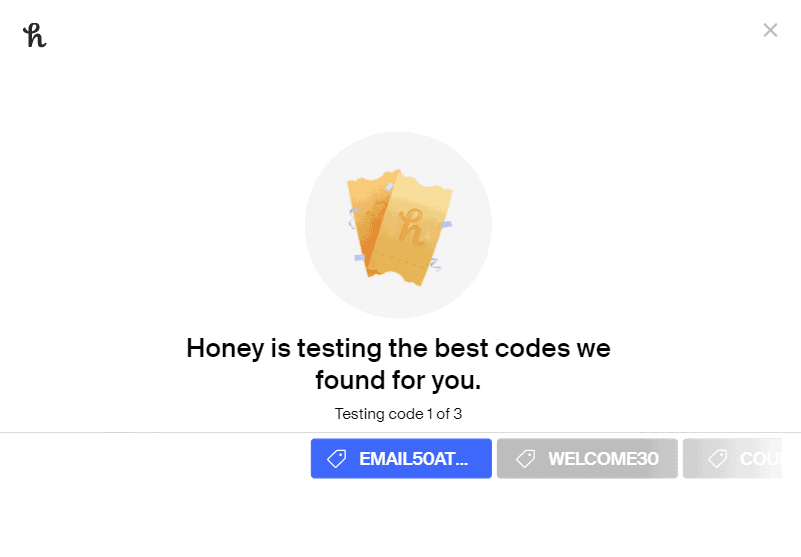
    Honey’s patented browser extension automatically finds and aggregates the best deals for its users before purchasing an item. 

    So, How does it work? 

    Before checkout, click on and run the browser extension to find the available working coupons. If found, Honey automatically applies the coupon and saves money. 

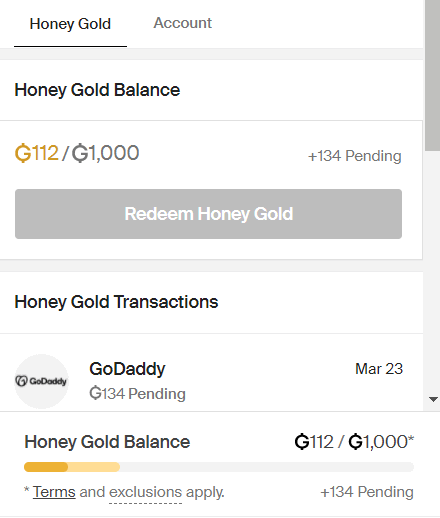
    Honey Gold

    Honey Gold

    Honey Gold is a point-based reward that user receives when they purchase certain eligible products at select merchant stores. With Honey Gold, customers get a chance to not only find the best deal but also earn money. Partner stores like Macy’s, Groupon, Walmart, and eBay use Honey Gold Program.

    The Honey Gold program works by first showing the average percentage of gold earned per purchase from a partner store (that opted for the Honey Gold Program). Once an eligible item is purchased, Honey Gold is transferred to the user’s account that can be later redeemed for special gift cards.

    1000 Honey gold points can be redeemed for a $10 gift voucher at the selected stores.

    Honey Offers

    Honey Offers

    Honey Offers provide a mechanism to receive Honey Gold on the eligible items in the partner stores. 

    Honey Offers show the amount of Honey Gold that a user receives if they purchase a specific item from the partner store. Once the transaction is completed, Honey sends an email notification confirming the gold added to the user’s account.

    It must be noted that a partner store can exclude certain ineligible items from Honey Offer. These exclusions vary on a store-to-store basis.

    Droplist

    Honey Droplist

    With Droplist, users can track prices of their favourite tools and receive timely notifications signalling price drop.

    When a user adds a product to the Droplist, they also select a monitoring period across a 30, 60, 90, or 120 days window and choose the desired price drop (say, 10%). 

    Honey then sends an email notification when the price is dropped to the desired level within the chosen timeframe.

    Smart Coupons

    The smart coupon is another money-saving feature that provides a user with a smart prompt or notification before checkout to benefit from free shipping or higher net savings on additional purchases.

    It works by sending a prompt or notification to a user with an additional savings option on their cart before checkout (if any such offer is available). A user may add more items in their cart to qualify for the offer, consequently saving a larger sum of money on their final purchase.

    Honey Branded Coupons

    Honey-Branded coupons include the promotional codes and coupons that Honey provides to its users for the best deals.

    A partner store may choose to create a Honey Branded Coupon to incentivise users to buy from them. 

    To avail this coupon, users have to run Honey’s Savings Finder, and the Honey Branded Coupon can be automatically applied before checkout.

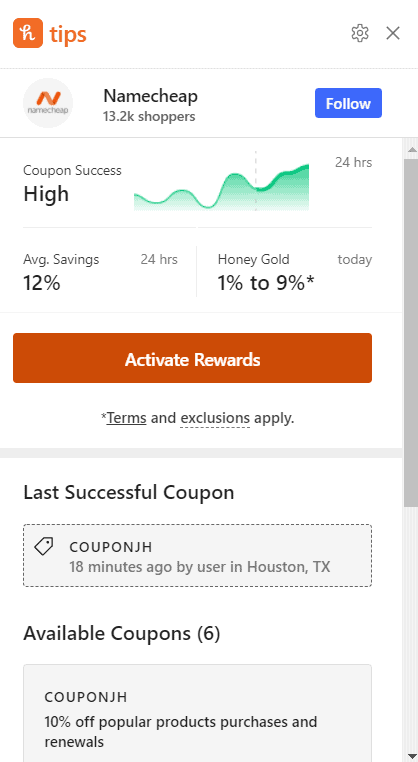
    Honey Tips

    Honey Tips provides users with useful analytical information regarding the Honey service on the partner merchant store. 

    When a user visits a partner merchant store, they see a notification window that includes general analytical information that optimizes shopping experience. 

    Tips include Coupon Success trends, average savings, Honey Gold cashback rate, last successful coupon codes, available coupons, and many more.

    Who are Honey’s key partners?

    Honey works with the following key partners in its affiliate marketing business model:

    Partner Merchant Stores

    It includes merchant stores that partner with Honey to avail its offerings like Saving Finder, Honey Gold, Droplist, etc. 

    Honey works with 40,000+ partner merchant stores including Macy’s, J. Crew, Lowe’s, Adidas, Stubhub, Ulta, Target, Myntra, Sephora, GameStop, Nike, Pizza Hut, Make My Trip, and many more.

    Affiliate Networks

    Honey does not deal with merchants directly. Instead, it works with its partner affiliate networks to pull coupons, track sales, conversions, and commissions. 

    Some of the popular affiliate networks that Honey works with are Affiliate Future, eBay, Groupon, LinkConnector, Rakuten, and many more.

    Marketing Partners

    It includes marketing channels like Youtube that promote Honey’s offerings to the intended audience.

    Which channels does Honey use to deliver value to its customers?

    Honey delivers value to its customers using its patented browser extension. In addition to that, Honey also runs a website that provides links to its partner merchant stores, live coupon codes, and many more to its users.

    Besides, the Honey app is also available for Android and ios devices (availability varies from region to region).

    How Does Honey Make Money?

    While providing value to the customers in the form of savings, Honey has found its revenue model that’s profitable and sustainable at the same time. The company makes money in the form of affiliate commissions.

    Honey earns a percentage commission and makes money whenever a user uses Honey to:

    • Find and apply working coupons before checkout
    • Redeem Honey Gold in exchange of gift cards

    The commission paid to Honey is performance-based and dependent on the contract signed with the partner merchant store. 

    However, Honey does not work directly with its partner merchant stores. Instead, it forms a so-called affiliate relationship through its partner affiliate networks to extract coupons and track sales, conversions, and commissions.

    According to the company’s website, “Honey requires a minimum of a 3% commission in order to partner with us which is applied to each purchase a member makes on your site. Honey requires a minimum of a 5% commission in order to for us to enable Honey Gold on purchases members make on your site”

    Final Thoughts

    According to Grand View Research, “The global honey market size was valued at USD 9.21 billion in 2020 and is expected to grow at a compound annual growth rate (CAGR) of 8.2%”. This startling financial figure is attributed to Honey’s innovative solutions that revolutionized the entire coupon industry and how the customers redeem money-saving benefits. 

    Since its acquisition by Paypal, Honey has made international headlines that concerned users with their personal information. However, in a statement released on their website, Honey has clarified that their privacy policy still applies and they are committed to their users’ privacy.

    Go On, Tell Us What You Think!

    Did we miss something? Come on! Tell us what you think about our article on how does Honey make money in the comments section.
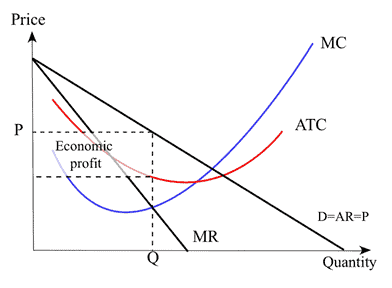
  • What Is Out-Of-Home Advertising? – Types & Examples

    What Is Out-Of-Home Advertising? – Types & Examples

    Advertising is one of the best tools to communicate with customers. It helps them get to know about the latest trends and developments in the market and be informed about the availability of different varieties of products and services around them.

    In recent years, with changing technology and increasing consumer awareness, out-of-home advertising has vastly evolved. It is gaining momentum each day as more companies are investing in this sector.

    Therefore, this article will discuss what out-of-home advertising is, its types, emerging trends, and its future scope.

    What Is Out-Of-Home Advertising?

    Out-of-home advertising (OOH), also known as outdoor advertising, refers to advertising that reaches consumers outside their homes.

    These advertisements are a component of above the line advertising strategy that is largely non-targeted and has a wide reach. The main motive of out-of-home advertising is to spread awareness, reinforce, reassure, or direct someone towards the brand or an offering. It’s a shotgun marketing approach where a business give less importance to conversion rates and more to brand awareness and brand engagement.

    According to Out-Of-Home Advertising Association of America, an average customer spends seventy percent of their time outside their homes. Outdoor advertising refers to when a business capitalise on that seventy percent of customer time to publicise it’s offerings.

    Major Types Of Out Of Home Advertising

    While most people are familiar with billboard advertising, it’ll be surprising to know that there are a total of six different types that can be used as a means for advertising in the outdoor space. These are:

    Billboard Advertising 

    Billboard advertising is one of the most commonly used mediums of OOH advertising. These generally consist of large print ads displayed on high elevated boards. 

    They are often placed along roadsides (on highways or independent stands) and are close to high footfall areas, such as shopping complexes, malls, and stadiums.

    Additionally, billboards offer advertisers an effective way for building brand and offering awareness as a large number of pedestrians and commuters can see them on the way.

    Billboard advertising

    Types Of Billboards 

    Billboards come in many different shapes and sizes and can be categorised as follows:

    • Static billboards: These billboards are stationary in nature and can be typically seen on the roadside.
    • Mobile billboards: A mobile billboard is a type of transit media and is generally transported on the back of a vehicle, such as a bus or a truck.
    • Digital billboards: Digital billboards are dynamic computer-controlled electronic displays that use LED screens to showcase advertisements. 

    Transit Advertising

    Advertising through transport or transit media is a prevalent form of OOH advertising. This form of advertising can be commonly found on public transportation. 

    A viral example of this can be the ad campaign created by the Martin Agency

    During the great recession, suicide rates were going up as more people started losing their jobs. Therefore, The Martin Agency, in collaboration with careerbuilders.com, came up with the strategy to put “Don’t jump” signs on top of all public transport buses. 

    This campaign became a huge sensation and eventually won the Cannes Bronze Lion Award.

    transit advertising
    Source: Creativecriminals 

    These particular advertisements were placed on tops of buses and could be seen from tops of buildings and offices and helped Martin Agency win a Bronze Lion from Cannes

    Types Of Transit Advertising 

    Transit or vehicular advertising is a very efficient and economical method to advertise brands and can be further divided into the following categories:

    • Advertisements on buses: Advertisements can be displayed both on the exterior and the interior of a bus. This way, as the bus cruises through the city, the Ads message can be effectively conveyed to the bus commuters and the pedestrians.
    • Advertisements wrapped around taxis: Advertisements wrapped around taxis can include both partial and full wraps. Like bus adverts, they help local brands circulate their message to the public to increase brand awareness.
    • Advertisements on subways: Subway systems are a perfect location for advertisements. These offer brands an effective strategy to bring awareness about their product to commuters when and where commuters are in need of a distraction. 

    Point-Of-Sale Advertising

    Point-of-sale, also known as point-of-purchase advertising, includes communication materials used to draw consumers’ attention at the moment of purchase.

    The main purpose of POS is to encourage customers to make last-minute purchases.

    For instance, displaying complementary products like phone covers and earphones at a mobile store can be considered a form of point-of-sale advertising.

    Point of sale advertising
    Source: Pinterest 

    Types Of POS Advertising 

    Some of the most common and recognisable forms of POS advertising include:

    • Counter display: They includeprinted and branded display stands made of materials ranging from cardboard, printed Perspex, etc., to name a few.
    • Other Visual aids: A simple poster placed above a container full of the promoted products can be considered as a form of POS advertising 

    Street Furniture 

    Street furniture advertising refers to ad displays placed on sidewalks, bus shelters, kiosks, newsstands, benches, and other related equipment and furniture.

    Companies who want crisp, clear signage that communicates well from a distance use this form of advertising. 

    Further, street furniture advertisements are affixed in a way that it is at close proximity to pedestrians so that advertisers can effectively bring about brand awareness of their product.

    Street furniture
    Source: Streetmediagroup

    Retail Advertising  

    A retaileris an intermediary who makes products available to their consumers by using different channels. Therefore, in retail advertising, retailers use store advertising to drive awareness and interest towards their products to generate in order to generate more sales. 

    This way, a retailer can effectively attempt to influence their target customers’ opinions to take specific actions, like buying complementary products from the store.

    An excellent example of this type of advertising can be a retailer using the ‘buy one get one free’ or ‘up to 50% sale’ poster on top of their products.

    Retail advertising
    Source: EMCOutdoor

    Types Of Retail Advertising 

    A retailer strives to promote its brand awareness amongst the masses to increase brand loyalty so that a customer revisits the store. Further, retail advertising can be categorised into the following types:

    • Mall media: It refers to advertising displayed on roofs, window films, and banners. The retailers generally opt for this mode of advertising in large stores or malls. 
    • Elevator advertisement: Banners and posters displayed on the elevator walls are known as lift or elevator advertising.
    • Floor graphics: Floor graphics are placed on the floor of a retail store that, in turn, allows marketers to provide an immersive advertising environment creatively.

    Construction Advertising  

    Construction advertising refers to placing advertisements on a temporary boarded fence in a public place and is usually erected around a construction site.

    This type of advertising protects the public from site works while offering companies an opportunity to promote their products and services to generate brand awareness effectively.

    Source: blowUp Media

    Types Of Construction Advertising

    • Hoarding graphics: A hoarding is defined as a temporary boarded fence in a public place. It offers a fantastic opportunity for out-of-home advertising. 
    • Scaffold wraps: Scaffold advertising includes graphic ads printed on protective meshes of a scaffolding. It, in turn, makes them an eye-catching method of advertising.
    • Building wraps: For projects with extensive scaffolding and structural support, building wrap ads can be printed to cover the construction site.

    What Is Digital Out-Of-Home Advertising?

    There is no second thought in saying that growing digitisation is the main driving force behind the advertising industry. Some say it’s the future.

    Therefore, there can be seen a trend in Brands and Ad agencies making huge investments in their DOOH advertising in recent times.

    Digital out-of-home advertising, also known as digital signage, is gaining momentum in the advertising industry today.

    DOOH advertising offers companies an interactive and attractive advertising method by using a digital medium such as digital billboards, digital signage, display screens, etc.

    As per a recent report recently published by PQ Media, DOOH is predicted to rise to 38.3% by the year 2023, in turn, making the shift from traditional out-of-home to digital out-of-home advertising inevitable.

    digital out-of-home advertising
    Source: AdWord.ie

    Examples For Out-Of-Home Advertising

    Almost every renowned brand, especially the retail brands, make use of outdoor advertising for some of their marketing campaigns. Here are a few examples of outdoor advertising that stood out of the crowd.

    McDonald’s Sundial Ad

    The billboard ad used by McDonald’s back in 2006 was and still is rated as one of the best examples of out-home advertising campaigns.

    McDonald’s opted for an M-shaped sundial in the ad that presented a range of McDonald’s food items. 

    Further, the ad showed what snacks were served at what time — for instance, coffee in the morning and cheeseburgers in the afternoon, and so forth.

    McDonald's outdoor advertising
    Source: bestadsontv.com

    Spotify Latest Playlist Ad

    Another example of OOH advertising is the 2017 ad campaign created by Spotify. This advertisement highlighted some of the best trending playlists on their platform. 

    The Ad campaign became a huge sensation in no time, and the number of Spotify users increased dramatically.

    Source: megamarketing.it

    Pros And Cons Of Out Of Home Advertising 

    Out-of-home advertising remains a prevalent way for companies and start-ups to market their brand to the public. However, it comes with its own set of advantages and disadvantages. These are:

    Pros

    • Out-of-home advertising is the best advertising medium to inform the moving population.

    • It gives the public a lasting impression of the brand as they are installed for a fairly long period and, in turn, increase audience engagement.
    • They offer advertisers the most cost-effective method to increase their brand awareness.
    • Additionally, they can be installed in various hotspots with high footfall, such as a city center, train stations, bus stations, commercial hubs, shopping markets, etc. 

    Cons

    • Outdoor advertisements can convey only a limited amount of information to the public about a brand or a service.
    • Billboards, ads on transits, and posters are all meant to be seen within the span of a few seconds. This, in turn, makes it very difficult for people to take down the contact information.
    • Because of the high frequency of exposure, outdoor may lead to quick wear out. People are likely to get tired of seeing the same ad every day.

    • The outdoor advertisement’s effectiveness cannot be easily measured, and it is doubtful whether it will provide action value.

    Bottom-Line?

    These days, out-of-home advertising is stronger than ever. As technology continues to improve, OOH’s capabilities continue to expand.

    Hopefully, this article helped you understand the meaning, different types, and importance of OOH in widening a brand’s reach.

    Go On, Tell Us What You Think!

    Did we miss something? Come on! Tell us what you think about our article on out-of-home advertising in the comments section.