Feedough Logo

Blog

  • What Is A Convertible Note? – Meaning, Terms, & Examples

    What Is A Convertible Note? – Meaning, Terms, & Examples

    The problem – an early-stage startup’s growth trajectory is hard to predict. The information is limited and the company goes through numerous ups and downs for some years before stabilizing its growth. This makes it difficult to determine the real valuation of the startup, which makes most early-stage investors like angel investors and venture capitalists take a back foot during the early equity funding rounds due to the risks involved.

    The solution – Convertible notes.

    What Is A Convertible Note?

    A convertible note is short-term debt-cum-investment tool used to invest in early-stage startups that the investor can choose to convert into common shares at a later time or an event when it is easier to determine the company’s valuation.

    In simple terms, it’s a short-term loan given to an early-stage startup by an investor not with the intent that it is going to be paid back, but with the intent that, in the future, it’ll convert into ownership in the startup.

    Now, to understand this definition of convertible notes better, let’s break it into four parts –

    • Short-Term Debt-Cum-Investment Tool: A convertible note is a special short-term loan. That is, when someone writes you a convertible note of any amount, you’re expected to pay it back, along with decided interest, within one to two years. This is also considered to be a safe investment tool as the investor gets an option to convert this debt into equity at a later stage if he sees that the company has potential and his investment will have more return if converted into equity.
    • Used To Invest In Early-Stage Startups: Unlike corporates or late startups, early-stage startups are risky. There is very less information that can be used to correctly determine its valuation, and since such startups can fail any time, it’s risky for investors to provide such startups with long-term loans. This is where convertible notes come to the rescue of the entrepreneurs. It lets the investors invest in early-stage startups in the form of short-term convertible loans.
    • Investor Can Later Choose To Convert Into Common Shares: The startup’s valuation isn’t decided when the convertible note is issued, mainly because the startup isn’t mature enough to be valued. Later, if the investor believes that the startup is doing good, he has the option to convert this debt into equity according to the valuation then.
    • At A Time Or An Event When It Is Easier To Determine The Company’s Valuation: The convertible notes are converted into equity when the company is mature enough to be valued. This usually occurs during the seed investment or Series A investment stage when other investors join the board.

    Convertible Notes Terms & Key Parameters

    There’s more to just the simple explanation of convertible notes. Just like other loans, this loan has a fixed term (usually between 1-2 years) and accrues interest.

    However, unlike other loans, this loan comes with a reward for the risk undertaken. At the end of the term, it’s up to investors if they want to get the principal back with interest or the loan to be converted into equity. All of these depend on the terms set at the time of signing the loan agreement –

    • Maturity Date: This represents the date when the note will become due and the startup has to pay it back.
    • Interest Rate: It’s the rate at which interest accrues on the investment provided to the startup. However, in cases when the debt is converted into equity, this interest accrues as additional principal, which increases the number of shares upon conversion.
    • Valuation Cap: Cap is the maximum valuation at which the note can convert into equity. The investors in the convertible note get converted into equity at a predetermined valuation set at the time of signing the convertible note.
    • Discount: This is the valuation discount the investors offering a convertible note receive relative to the investors in the subsequent financing round.
    • Conversion Trigger: The point of convertible note is to convert at the onset of a certain event in the future. Usually the next qualified funding round is considered to be the conversion trigger for the convertible note.

    How Convertible Note Works?

    Both valuation cap and discount are offered to compensate for the additional risk an early-stage investor incurs while investing without knowing the future valuation of the company. They form the spine of the bond and differentiate this loan from others.

    Let’s explain this with a few convertible note examples –

    Convertible Note With A Valuation Cap But No Discount

    Let’s assume that a startup XYZ raised its seed funding of $50,000 from an Angel investor, Mr A, by issuing a convertible note with a $5M valuation cap and no discount.

    Next year, the company went on to raise its Series A investment at a pre-money valuation of $10M at a price of $10 per share.

    Now, even though the company is now valued at $10M, Mr A will have the option to convert his investment of $50,000 into equity shares at the valuation of $5M. That is, he’ll get the share price of $5 [5M/10M*10] and will get an option to convert his investment into 10,000 shares which would have otherwise cost him $100,000.

    Convertible Note With A Discount But No Valuation Cap

    Let’s assume that a startup XYZ raised its seed funding of $60,000 from an Angel investor, Mr B, by issuing a convertible note with a 40% discount to the Series A round.

    Next year, the startup went on to raise its Series A investment at a pre-money valuation of $10M at a price of $10 per share.

    Now, unlike other investors, Mr B, will get a 40% discount on this price per share if he wants to convert his debt into equity, which comes out to $6 per share. That is, he’ll be able to convert his investment into 10,000 shares [60,000/6] which would have otherwise cost him $100,000.

    Convertible Note With Both Valuation Cap And A Discount

    Most often than not, a startup issues both the valuation cap and a discount to the investor. In such a situation, the investor weighs both the options at the time of the valuation and converts his debt into equity at the lowest possible rate.

    Let’s assume that a startup XYZ raised its seed funding of $50,000 from an Angel investor, Mr C, by issuing a convertible note with a $5M valuation cap and 40% discount to the Series A round.

    If at the series A funding round, the company is valued at $10M at a price of $10 per share, the 40% discount will convert Mr C’s investment at $6 per share.

    The valuation cap, however, would result in $5 per share [5M/10M*10] and would be the actual price at which Mr C’s investment would convert into equity.

    Pros and Cons Of Convertible Notes

    Just like other investment vehicles, convertible notes also have certain pros and cons which attract some investors and entrepreneurs while repelling a few.

    Convertible Notes Benefits

    • Simplest Structure and Fewer Complications: Unlike equity funding, it isn’t necessary for a startup to be a registered C Corp or LLC to take funding in the form of a convertible note. Moreover, this type of funding requires less paperwork and lower legal fees.
    • Investor Benefits: Investors play safe with convertible notes – they act as debtholders during the early stage when the risk is more, and convert to equity stakeholders at a later stage when the risk is less. Moreover, they also receive discounts or valuation caps on their converting balance as a reward of taking early risks.
    • Deferred Negotiations: With convertible notes, the startup defers the negotiations surrounding the valuation to a later stage when the company is mature enough to be valued well. This saves a lot of time and fees.

    Convertible Notes Cons

    • Future Risks: If the valuation cap is kept low, the next round could be negatively affected as such investors will get a disproportionally large portion of the equity from the next round. Similarly, if the valuation cap is kept high, the next round could negatively affect investors.
    • Faulty Clauses: Since convertible notes are custom-made, investors can include many clauses that can have future implications on the startup and its growth.
    • Lack Of Noteholder Control: When it comes to convertible notes, the investors are at mercy of the startup owners, with little power to sway the outcome of their investments. They do not even get a chance to negotiate in the future valuation of the company. Often times, this results in a valuation which they do not agree with.
    • Future Decision-Making Right: The note gives investors a future right to be a part of the decision making. If they get more shares than expected and start interfering with the decision making, this could affect the smooth functioning of the business.

    Go On, Tell Us What You Think!

    Did we miss something? Come on! Tell us what you think about our article on convertible note in the comments section.

  • What Is Sole Proprietorship? – Definition & Examples

    What Is Sole Proprietorship? – Definition & Examples

    When it comes to choosing a business structure, most single entrepreneur business ventures choose to stick to sole proprietorship. This type of business structure is the simplest form and doesn’t require many legal procedures in most of the countries. In fact, in most countries, sole proprietorship isn’t even a legal entity.

    So, what exactly is sole proprietorship, how it works, and how is it different from partnership, one-person company, or other similar business structures.

    Read on to find out.

    What Is Sole Proprietorship?

    Sole proprietorship, also called proprietorship and individual entrepreneurship, is a type of business structure where the business owned and controlled by a single person who receives all the profits and assumes all the risks.

    In the eyes of the law, a sole proprietor isn’t a different entity from his business. This is the reason the sole proprietor owns all the assets, receives all the profits, and has unlimited responsibility for all the losses and debts.

    It is the most common, most economical, and simplest form of business entity. In fact, 73.1% of the business firms in the USA, 62.5% of business firms in India, 59% of business firms in the UK, and 50.8% of business firms in China are sole proprietorships.

    Characteristics of Sole Proprietorship

    Sole proprietorship is significantly different from other forms of business structures like a partnership, LLC, and corporations. In this business form, there’s just one owner who controls everything, earns all the profits, and is no different from the business. This person is the only one having unlimited liabilities even if he has employees working for him.

    • No Separate Business Entities: Proprietors have no existence apart from their businesses. Everything that belongs to the business – the profit, assets, expenses, and liabilities belongs to the proprietor as well.
    • Single Ownership And Control: There is just one owner who starts the business, brings in all the resources, and who controls the direction and day-to-day operations of the business.
    • Minimum Legal Costs And Formalities: The registration of sole proprietorship isn’t required in most countries. Even if compulsory, the formation and operation require very less legal formalities and costs.
    • No Separation Of Ownership And Management: The owner himself manages the daily, short term, and long term affairs of the business as per his skill and intelligence. There is no separation of ownership and management when it comes to sole proprietor business structure.
    • Unlimited Liabilities: The proprietor has unlimited liability. In case of loss, if the business assets are not enough to pay the liabilities, he has to use his personal properties to pay off the liabilities of the business.

    Sole Proprietorship Advantages And Disadvantages

    Most small businesses opt for sole proprietorship due to its various legal and operational advantages but as the business grows, it opts for a different business structure because this business form has its own limitations.

    Sole Proprietorship Advantages

    1. Easy And Inexpensive To Start And Close: Sole proprietorship is the easiest of the business structures to form and operate. A sole proprietorship is started as soon as the person starts selling something. He doesn’t require to fulfil any legal requirements or has to register his business. Similarly, there are no such formalities required to close a sole proprietorship firm.
    2. Less Capital And Operational Expenses: The sole proprietorship business is usually started at a smaller scale than other business forms. Hence, it involves less capital and operational expenses.
    3. Less Legal And Tax Expenses: In most countries, it is not required by the law to register a sole proprietorship firm. Even if it is required, the legal costs and requirements are very less as compared to other business forms.
    4. Full Ownership And Control: Since the business is owned and run by a single individual, he owns the full ownership and control and keeps away from intra-business conflicts.
    5. Quick Decision Making And Prompt Actions: Since there is only one decision-maker, no one interferes with the proprietor and his decisions. Similarly, actions are initiated promptly and at the appropriate time.
    6. Direct Motivation: Since the business’ profit is the proprietor’s profit, there’s a direct motivation for him to work hard and perform better.
    7. Maintenance Of Business Secrets: Since the secrets are known only by the proprietor and he himself decides whom to disclose his secrets too, there are no risks of spilling of business secrets. Moreover, unlike companies, the proprietor isn’t bound to publish his business accounts and statements.
    8. Personal Touch: Since it’s the proprietor who’s the handles everything related to the business, it becomes easier to maintain a personal touch with customers and employees.

    Sole Proprietorship Disadvantages

    1. Unlimited Liability: Since the business isn’t a different entity from the proprietor, the business liabilities are also the personal liabilities of the individual. That is to say, if the business liabilities can’t be paid off using the business assets, the proprietor might have to sell off his personal assets to meet the obligations and debts.
    2. Limited Resources: Since there’s only one owner, the resources (employees, money, etc.) in the sole proprietorship is always limited.
    3. Lack Of Continuity: A sole proprietorship business is linked with the life of the proprietor. That is, illness, death, or other mishaps with the proprietor may result in the closure of the business.
    4. Limited Growth: This model isn’t suitable for a large scale business. As the business grows, a sole-proprietorship business has to be converted into other business forms as the financial requirements cannot be met out from the pockets of the sole proprietor.
    5. Limited Expertise: The proprietor may not be an expert in all the business functions like sales, marketing, finance, warehousing, etc. This often leads to a lack of expertise in the business which can hinder its growth.
    6. Tax And Legal Liabilities: The income earned from the business is taxed at a personal rate. Hence, as the business grows, the sole proprietor could be put into a higher tax bracket which may increase his tax liabilities compared to other forms of businesses.

    Sole Proprietorship Suitability

    Sole proprietorship is suitable if the business-owner –

    • Doesn’t want to share the ownership of the business with others.
    • Wants to open up a business without fulfilling several legal formalities.
    • Provides an offering that is inseparable from him.
    • Wants to have all the decision-making power to himself.
    • Wants to run a business without incurring high setting-up costs.
    • Runs a business that requires direct personal contact.

    Sole Proprietorship Examples

    A majority of the businesses that are operated by a single owner are sole proprietorships. Here are some examples –

    John runs a salon and has 3 employees who help him to handle the workload. The business isn’t registered and John pays the rent from his personal savings on months when there isn’t good business. John is a sole proprietor.

    Jane is a freelance writer who takes up work from clients she finds on outsourcing websites like Fiverr, Upwork, etc. She doesn’t have a company and her name is her only brand name. She is a sole proprietor as well.

    Besides these, here are some other examples of sole proprietorship –

    • Computer Repair Mechanic
    • Freelancer
    • Tutor
    • Day care Operator
    • Virtual Assistant
    • Nanny
    • Direct Seller
    • Housekeeper
    • Fitness Instructor
    • Graphic Designer
    • Artist

    Go On, Tell Us What You Think!

    Did we miss something?  Come on! Tell us what you think about our article on sole proprietorship in the comments section.

  • The 3 Levels Of Management Explained

    The 3 Levels Of Management Explained

    John has recently started working for Growth Enterprises as a General Production Manager. He was asked by Sean, the CEO of the firm, to coordinate with the Factory Production Manager to ensure that the company meets the deadline for the order delivery for one of its oldest clients. He was confused as to why he was asked to coordinate with the Factory Production In-charge when his boss could himself connect with them.

    He asked his friend Raven, who told him that Sean had to look after other things in the organisation as well. Allocating work to his juniors allows him to assign responsibility for each task, thus defining the authority of the employees to form a hierarchy that makes managing everything easy.

    Every organisation needs a hierarchy to establish a chain of command in order to ensure its efficient working. This chain of command is used to define the level of authority and responsibility that is tied to every position in an organisation. Levels of management help in providing this clarity.

    What Are The Levels Of Management?

    Levels of Management refer to the line of demarcation among the employees in an organisation on the basis of the authority and responsibility allocated to them.

    Two important phrases in this definition are:

    • Distinction made among the employees: Every employee in an organisation works on a different set of things in order to achieve the collective objective of the organisation. They are assigned different jobs and allocated varied amounts of responsibility.
    • Basis of authority and responsibility: The distinction between the employees is made on the basis of their right to give orders and assign duties to their subordinates as well as their obligation to complete the job assigned to them on time.

    Why Are Levels Of Management Important?

    Levels of management help in ensuring the presence of effectiveness and efficiency in the work done in the organisation.

    There are many functions that need to be handled simultaneously in an organisation. One person cannot handle it all. So, the work is divided amongst the employees according to their skills, experience, and post in the organisation. Each manager is expected to look after a certain part of the organisation’s work and oversee his/her subordinates to fulfil his responsibility towards the company.

    The 3 Levels of Management

    A traditional organisation is generally split into three levels:

    • Top-level management,
    • Middle-level management, and
    • Lower-level management.

    The authority and level of responsibility of the managers in each of these levels reduce as we move down the ladder.

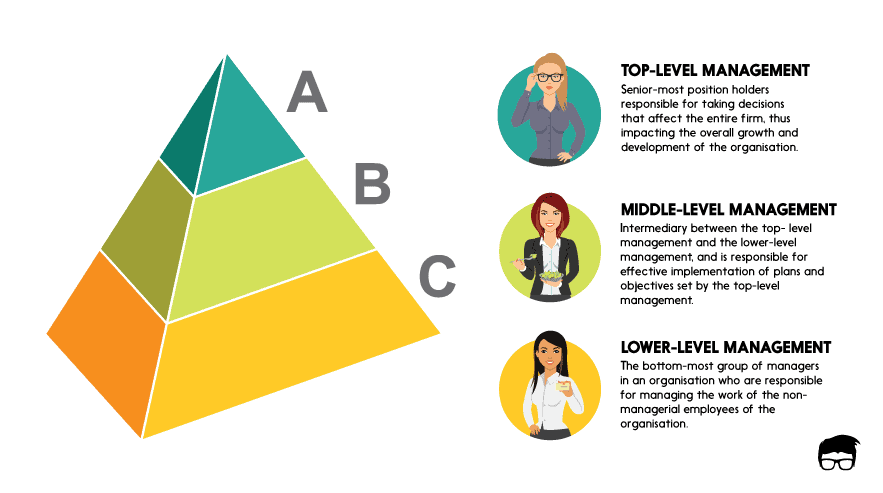
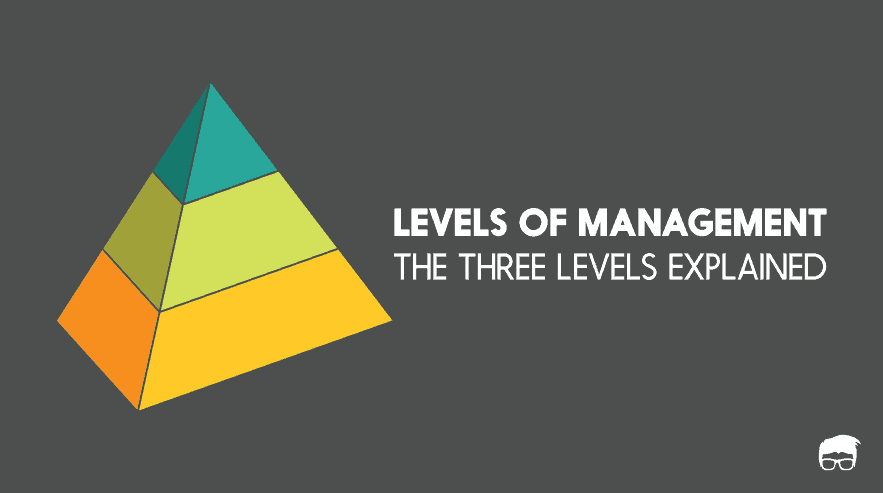
    Normally, these levels are represented in the form of a pyramid having many lower-level managers, fewer middle-level managers and the lowest number of managers at the top level of management.

    What Is Top-Level Management?

    The top-level management refers to the senior-most position holders responsible for taking decisions that affect the entire firm, thus impacting the overall growth and development of the organisation. They are accountable to the shareholders and the general public.

    What Titles Does The Top-Level Management Hold?

    Top Level Managers normally occupy the position of Chief Executive Officer (CEO), Chief Financial Officer (CFO), Chief Operating Officer (COO), President, Executive President, Managing Director and other such high-ranking sophisticated titles.

    What Is The Role Of Top-Level Management?

    The top-level management ensures the smooth working of the organisation as a whole. They are responsible for making sure that the overall objective of the organisation is achieved. Their role can be divided into the following 4 categories:

    1. Set Goals and Objectives for the Organisation: The primary and the most important role of top-level management is to set goals and objectives for the organisation as a whole. This means that the top-level managers don’t limit their thinking to a particular product or a department, they work towards formulating strategic goals for the organisation.
      Goals are the long-term milestones that an organisation wishes to achieve or fulfil. Objectives are time-bound, measurable and precise. They help in determining the steps that assist in achieving a particular goal. The main objectives of any organisation are survival, profit and growth. The top-level management helps in defining these objectives in terms of real parameters.
    2. Formulate Policies and Plan of Action: The top-level management formulates policies and guidelines that govern the working of the organisation. It also lays out the long term as well as the short-term plan of action to achieve organisational goals.
      Policies define the way in which certain things are done in an organisation. For example, an organisation may have a policy of hiring only experienced candidates. Thus, policies guide the employees in the organisation on how a particular task should be conducted.
    3. Procurement of Resources: The top-level management is also responsible for making sure that all the necessary resources are available as and when required by the firm. This includes financial resources like money, physical resources like machinery and human resources or employees.
    4. Mediator between the public and the organisation: Top-level management is responsible for all the communication between the public and the organisation. They are the face of the company, representing it at press conferences, social gatherings and other events.

    What Is Middle-Level Management?

    Middle-level management is an intermediary between the top-level management, who makes the decisions, and the lower-level management, who directs the work of the nonmanagerial workers of the organisation. Middle-level management is responsible for the effective implementation of plans and objectives set by top-level management.

    They are mainly grouped on the basis of departments or the divisions they work in. The lower level management is accountable to the middle-level management who in turn are accountable to the top executives.

    What Titles Does The Middle Level Management Hold?

    Middle-level managers generally earn the title of General Manager, Department Managers like HR Manager, Finance Manager, Community Manager, etc. They can also be divided on the basis of Branches.

    What Is The Role Of Middle-Level Management?

    The middle-level management is responsible for communicating the goals and objectives set by the top executives to the lower level management and ensuring that the work done by the lower level management aligns with these goals. The role of a middle-level manager can be listed as follows:

    • Interprets Plans and Communicating them to Lower Level Management: The middle-level managers interpret the plans and policies set by the top-level management and communicate them effectively to the lower level management so that everyone works towards the set objective.
    • Reports Results and Feedback to the Top Executives: The top-level management expects the middle-level management to communicate any feedback from the lower level management to them. They also need to send regular reports to the top-level executives.
    • Motivates the Employees: The middle-level management is responsible for motivating the employees to work for the achievement of the organisational goal. They are required to provide continuous support and guidance to help the employees improve their performance so that a positive culture prevails in the organisation.
    • Hires and Trains the Employees: The middle-level management is responsible for hiring the best fit for the organisation and training them so that they can reach the level of efficiency as high as that of a regular employee. They also need to evaluate the performance of all the employees at regular intervals.

    What Is Lower-Level Management?

    The lower-level management is the bottom-most group of managers (also called first-line managers or supervisors) in an organisation who are responsible for managing the work of the nonmanagerial employees of the organisation. They are accountable to the middle-level managers and provide day to day updates of the working in the organisation.

    What Titles Does The Lower-Level Management Hold?

    Lower-level managers generally go by the name of Supervisor, Foreman, Shift Supervisor, Store Manager and other such positions involving direct communication with the (factory) workers of the organisation.

    What Is The Role Of Lower-Level Management?

    The lower-level management plays an integral role in an organisation as they are directly involved in the production process. They are familiar with the problems faced by the workers and act as a point of contact between the middle-level management and the workforce. The quality of the production depends on them. The role of lower-level management can be divided into the following points:

    1. Oversees the workforce: The lower level management is responsible for overseeing the work of the workers and providing guidance to them as and when required. They need to see that the processes handled by the workers are done as per the deadlines given by the middle-level management.
    2. Maintains Standard and Quality of the work: Since the lower level management is in direct communication with the workers, they can easily help in ensuring that the standard and quality of work is not compromised.
    3. Improves the Morale of Workers: The lower level management is responsible for improving the morale of the workers and motivating them to work effectively and efficiently. They manage the relationship between the organisation and the workforce, communicating any grievances faced by the workforce to the upper-level managers and solving them to maintain harmony in the organisation.
    4. Minimises Wastage: The lower level management is responsible for minimising wastage of time, material and efforts during the production process. They are also responsible for maintaining discipline among the workers. 

    Go On, Tell Us What You Think!

    Did we miss something? Come on! Tell us what you think about our article on the levels of management in the comments section.

  • 10 Best Startup Books For Entrepreneurs

    10 Best Startup Books For Entrepreneurs

    Startups are important. Well, every major corporation was once a startup in the truest sense.

    Startups help the economy grow while bringing in the much needed fast-paced, focussed innovation that is harder for large corporations to achieve in a short time-frame.

    It is no surprise then that many are drawn in by “startup” philosophy and by the pioneers before them who showed the world how to grow and nurture a startup.

    With that, let’s look at the 10 best startup books that every founder and entrepreneur must read to gain more insight into everything “startup”.

    Here’s the list:

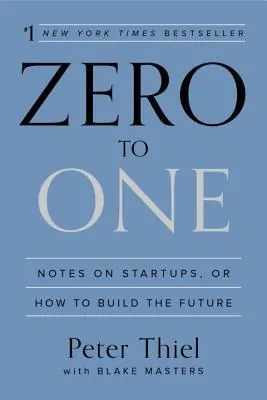
    1. Zero To One by Peter Thiel & Blake Masters
    2. Who by Geoff Smart, Randy Street
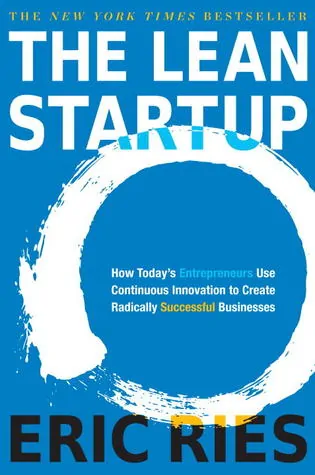
    3. The Lean Startup by Eric Ries
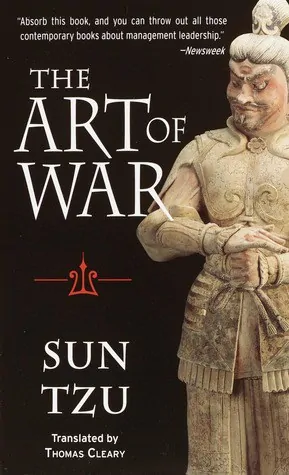
    4. The Art of War by Sun Tzu
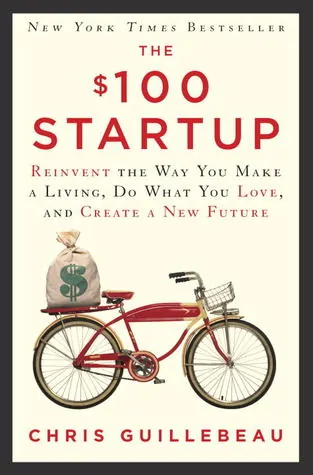
    5. The $100 Startup by Chris Guillebeau
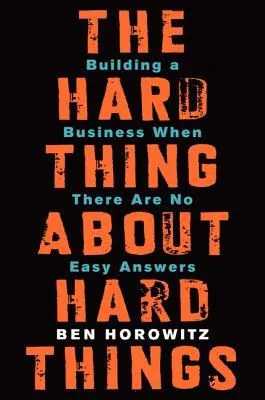
    6. The Hard Thing About Hard Things by Ben Horowitz
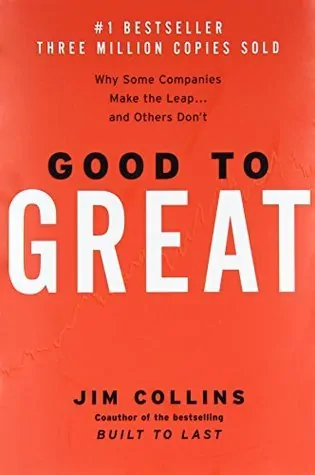
    7. Good To Great by James C. Collins
    8. ReWork  by Jason Fried and David Hasson
    9. Reality Check by Guy Kawasaki
    10. Steve Jobs: The Exclusive Biography by Walter Isaacson

    Zero To One by Peter Thiel & Blake Masters

    Who is it for? All levels

    zero to one peter thiel

    Get inspired and learn from the tech icon Peter Thiel as he helps you get into the entrepreneurial mindset and the importance of starting something new. Zero to One brings to the forefront many startup-related topics such as how some startups to grow beyond their wildest dreams while some fail and the impact that globalisation has had on the startup culture.

    The book goes into detail on how anyone, from anywhere, can succeed as long as they look to provide value to others or improve upon existing businesses. Learn how to self-introspect and tweak your reasons for begining a startup to make sure you succeed and make it – if not now, but in the near future.

    Who: The A Method for Hiring by Geoff Smart, Randy Street

    Who is it for? Beginners/New Entrepreneurs

    who geoff randy
    Source: Goodreads

    Yes, you read the title right and no, it has no typo. Who: The A Method for Hiring provides you with 4 simple and easy to follow steps the next time you look to hire an employee. To help drive the point, the 4 steps are backed with tonnes of data and examples from thousands of interviews from all over the industry.

    Geoff and Randy help you avoid all the trial and error when it comes to hiring, especially if you’re new to it. The book also helps you realise the importance of hiring the right person and the repercussions of failing to do so. Since, startups are the most affected from a wrong hire the book methodically cover this as well as providing you with insights on how to prevent this by deciding “who” to hire when it comes to your startup or business.

    The Lean Startup by Eric Ries

    Who is it for? Beginners/New Entrepreneurs

    the lean startup
    Source: Goodreads

    Looking to being a startup? Get a fresh take on how to start your new venture from the book The Lean Startup. Eric Ries provides you with real-world approaches to building your startup.

    This startup book helps bring a breath of fresh air in the form of new ways to go about achieving your startup goals in a faster manner. Here’s a quote from the author himself: “The only way to win is to learn faster than anyone else”. The book is an embodiment of this very quote and is an interesting read for those looking to give their businesses a much-needed head start.

    The Art of War by Sun Tzu

    Who is it for? All Level/Casual Readers

    the art of war
    Source: Goodreads

    The book can be summed up perfectly just as the author put it: “Read this book once a year, and you won’t have to fight.” The Art of War is well-known and it is for a reason. The 2,500-year-old book is, to date, one of the most quoted and well-known pieces of literature when it comes to strategizing and preparing.

    While most of it was written with war in mind, its teachings are even more relevant today – in the cut-throat and competitive competitive business world of recent years. From laying down strong foundations for your plans to scouting out your rivals to maintaining steady growth, The Art of War has something in it for everyone and not just entrepreneurs. The book provides clear-cut course of action – be it in business or life – to reach your goals.

    The $100 Startup by Chris Guillebeau

    Who is it for? Beginners

    the $100 startup
    Source: Goodreads

    Looking for some startup motivation? The $100 Startup by Chris Guillebeau is just what you need. While it does not go into as much technical details as most books on startups do, it does a great job of getting you motivated to be your boss and start a new venture rather than being stuck at a bench job.

    This startup book helps give valuable lessons on starting businesses with a low budget and that you do not need millions as seed-funds to bring your idea to life. You will also find great examples of businesses that were (and can) bootstrapped for $100 or less and will be done with the book before you know it.

    The Hard Thing About Hard Things by Ben Horowitz

    Who is it for? All Levels/Casual Readers

    the hard thing about hard things
    Source: Goodreads

    The Hard Thing About Hard Things presents you with straight facts on the practical nature of starting a company and being an entrepreneur. Some obstacles will always get to you no matter how hard you prepare and book helps you prepare yourself to see these obstacles at the earliest. After all, hard problems require hard solutions and the book helps you understand that there is no “right” way of starting a business – it all depends on how you deal with the hard problems that you face along the way. You also get tips on how to get back on track in case you make a mistake while starting or operating a business venture.

    Good To Great by James C. Collins

    Who is it for? All Levels/Casual Readers

    good to great jim collins
    Source: Goodreads

    Learn why some startups make it big while many do not and gain insight into the things that usually make or break a startup in order to be better prepared. Good To Great provides us with a collection of case studies and reasons why several companies and their founders reached great heights in their respective fields, while many fail to do so. Jim Collins helps you gain insight on the steps that the most successful companies go through and how to implement the same on your business or startup to achieve your goals. It helps you form a framework that you can follow for starting and growing your startup.

    ReWork by Jason Fried and David Hasson

    Who is it for? Beginners/New Entrepreneurs

    rework jason david
    Source: Goodreads

    ReWork is quite similar to The $100 Startup, wherein the book shows you that while not a lot is required for you to create a startup in today’s day and age, it still requires your utmost focus and attention to do so.

    This business book is quite different from the rest of the entries on this list in the fact that it helps you break the stereotypical mould on certain things such as – planning is sometimes actually more harmful, how working longer hours do not always increase productivity and why hiring and seeking investors should be your absolute last resort.

    Reality Check by Guy Kawasaki

    Who is it for? Beginners

    reality check guy kawasaki
    Source: Goodreads

    Guy Kawasaki is no stranger to startups and businesses. He was among the first few people to be hired by Apple when it first started and even helped build and market the Apple II computer.

    In Reality Check, Guy provides you with simple, yet short, actionable advice on a wide range of themes realted to launching and operating a startup or business. Not just that, it is more of a self-help book since the author goes into providing insight on the things like job hunting, how to decide if startups fit your future goals, easy ways to connect with your company as well as fellow workers and so on.

    The book has a straightforward approach to getting its points across and will help you jog your memory on all things startup.

    Steve Jobs: The Exclusive Biography by Walter Isaacson

    Who is it for? All Levels/Casual Readers

    steve jobs biography
    Source: Goodreads

    Stimulate the entrepreneurial bug that lies dormant within you by reading Steve Jobs: The Exclusive Biography. Learn from the best as the autobiography follows Steve Jobs on his journeys and the hardships that he faced while starting and running Apple. The book can help act as a wealth of knowledge to newcomers and veterans alike on topics such as the different challenges that await when starting and running a business, methods to get your point across to your customers and how you may want to market yourself. You get to takeaway things like the importance of connecting with the user and being as straight-forward as possible in every experience that you provide and much more, which are essential when it comes to building a startup.

    Go On, Tell Us What You Think!

    Did we miss something?  Come on! Tell us what you think about our article on 10 Best Startup Books for Budding Entrepreneurs and Founders in the comments section.

  • Startup Funding Rounds – Seed, Series A, B, & C Explained

    Startup Funding Rounds – Seed, Series A, B, & C Explained

    If we consider a startup to be a plant and the entrepreneur to be a farmer, the idea is the seed.

    Now, if a new farmer must undertake the venture, he’d require external funding to –

    • Get the seed and test it before sowing
    • Get the land ready and sow it
    • Nurture the sapling
    • Nurture the plant

    Convert this process to the startup perspective, and you’ll get the startup funding rounds –

    Contrary to what most new entrepreneurs think, this funding process doesn’t differ for different startups. It’s just that a few (existing) entrepreneurs can take shortcuts because of their type of idea, financial backing, brand, network, and contacts.

    But if you’re a new entrepreneur who must take the long route, fret not. Use this article as a field guide to help navigate the new landscape of startup fundraising.

    But before we get started with explaining the startup funding rounds, you need to understand the following technical keywords and keyphrases we’ll use –

    • Equity: Equity is the degree of ownership in the business. It is usually denoted in the form of a percentage. 
    • Ticket Size: It is the amount of money invested in a business.
    • Angel Investor: A high net-worth individual who provides financial backing to small startups and entrepreneurs.
    • Venture Capitalists: A professional investor (usually a firm) that funds startups and business ventures showing high growth potential in exchange for an equity stake.
    • Equity Financing: It’s a method of raising funds by selling the business’ stock to investors.
    • Debt Financing: It’s a method of raising funds by selling debt instruments to investors, making them the creditors to the business who receive both the principal and agreed on interest on the debt.
    • Convertible Note: A short-term debt that converts into equity at a later date after a conversion event occurs (usually when the startup raises capital in the next fundraising round), and the startup is mature enough to be valued.
    • SAFE (Simple Agreement for Future Equity): A financing contract between the investor and the business that gives the investor a right to receive equity in the business on certain triggering events (like the next fundraising round or the sale of the business). SAFE isn’t debt or equity. 

    Pre-Seed Funding Round

    • The startup is at a nascent stage. Operations are getting off the ground.
    • The startup has found the market opportunity
    • No real customer traction.
    • Test products are developed to validate assumptions
    • Ticket size is very small ($50,000 – $200,000 for a 5% – 10% equity stake)

    A pre-seed stage is when the entrepreneur is in the process to convert the idea into an actual business. To do so, he often requires some tests to validate his/her offering’s problem-solution fit and the viability of the business model and business plan.

    Depending on the type of product, this sometimes requires him to look for external funding aid. This is where pre-seed funding comes into the picture.

    What Is Pre-Seed Funding?

    Pre-seed funding, also called pre-seed capital or pre-seed money, is the small investment offered by an investor usually in return for equity or debt and interest repayment, to a startup owner to help him get his/her business operations off the ground.

    In simple terms, it is the investment required by the startup owner to –

    • Validate the problem-solution fit
    • Get some real customer traction
    • Develop the MVP and the actual offering
    • Get key employees and partners on board
    • Get the business started and begin operations

    Sources Of Pre-Seed Funds

    Usually, a lot of entrepreneurs are lucky enough either to bootstrap their startup or to raise pre-seed from their family, friends, and some fools. Some also get some high net-worth partners on board and share the equity with them to get the business started.

    Besides these sources, here are some other common and uncommon sources of pre-seed capital –

    • Debt Financing: Taking personal loans from the bank and other financial institutions.
    • Pitch Competitions: Participating in pitch competitions where you have a limited time to present your business idea in front of an audience and a jury.
    • Startup IncubatorsTaking the help of (government and private) collaborative programs designed to help startups develop during its initial in return for some equity or interest on the debt.
    • Government Grants & Business Grants: Applying for numerous industry-based and country-based business grants like SBIR4pt0ActivityHero Business Grant etc., set up for early-stage startups and leaders.
    • P2P Lending: Using an online P2P lending platform to get loans from several individual lenders, eliminating the financial institution as the middleman.
    • Pre-Seed Angel Investors: Scoring angel funds from angel investors who specialize in investing in pre-seed startups. 
    • Pre-Seed Venture Capitalists: Scoring venture funds from venture capitalists who specialise in investing in pre-seed startups.

    However, obtaining pre-seed funds from angel investors or venture capitalists is often considered to be unlikely as they usually invest in businesses with a validated problem-solution fit and a product-market fit with a well-defined business and revenue model.

    Even if they invest, they do it in the form of debt, convertible notes, or SAFE.

    Startup Valuation At The Time Of Pre-Seed Stage

    Since there is no real traction during the pre-seed stage, most of the investors invest using predictions as the anchor to calculate their equity or invest in the form of debt, convertible notes, or SAFE.

    Seed Funding Round

    • The idea is converted into a business
    • Key partners and employees are on board
    • Customer traction has started
    • Product development is still under process
    • Ticket Size is comparatively small ($100,000 to $6 million)

    A seed stage is when the idea is converted into a business, and the startup starts seeing real customer traction. The product might still not be developed during the seed stage, but the founders might have both – the proof of concept and the MVP validated in this stage.

    What Is Seed Funding?

    Seed funding, also called seed capital or seed money, is a considerably small investment offered by an investor, usually in return for equity or debt and interest repayment, to a startup owner to help him/her fulfil the initial growth requirements of his/her business.

    It is considered to be the first official equity funding required by the startup owner to –

    • Finance market research and product development
    • Pay salaries and payments to key employees and partners
    • Manufacturing products at scale
    • Penetrating an existing market or creating a new market for the product
    • Building a brand
    • Growing the team

    Sources Of Seed Funds

    The seed round is also called the angel round because it’s dominated mostly by angel investors who invest in the startups in return for an equity, convertible note or SAFE. Other than them, here are some other sources of seed funds –

    • Crowdfunding: Raising a small amount of money from a large number of people in return for equity, interest on the debt, or rewards to the investors.
    • Corporate Seed Funds: Raising money from big brands like Google, Apple, FedEx, etc., in return for some equity or future partnership.
    • Accelerators: Joining startup accelerators designed explicitly to help early-stage startups grow and reach their full potential. Startups need to apply to such accelerators, who then provide them with structured guidance and financing in return for some equity or fees.
    • Venture Capitalists: Raising funds from specialized venture capital firms that fund startups and business ventures showing high growth potential in exchange for an equity stake.

    Startup Valuation At The Time Of Seed Stage

    Startup valuation at the time of the seed stage is similar to that during the pre-seed stage. However, some startups do succeed in getting their startups valued ($2 million to $20 million) by considering the following factors –

    • Traction: Customer traction is a major factor which drives the valuation during the seed stage. This quantitative proof shows how the startup is taking off and what can be predicted in the future. 
    • Reputation: The founder’s reputation and image in the market play a great role in the startup valuation during the seed stage. Serial entrepreneurs enjoy an upper hand during seed-stage funding rounds.
    • Prototype & MVP: The response to the prototype and MVP affect the valuation as they are considered to be predictable factors for future success. 
    • Pre-valuation Revenue: Revenues make it easier for investors to carry out the valuation. Revenues also assure them that the offering has a market and customers are willing to buy the offering.
    • Industry: It is highly likely that an investor pays a premium to a startup operating in a booming industry compared to a startup operating in a dying industry. 

    Series A Funding Round

    • Product is completed
    • The user base is established
    • Revenue and other KPIs are more consistent
    • Ticket size is considerably big compared to the seed round ($15 – $20 million)

    A successful seed stage results in an established customer base, increasing revenues, a growing team, and expanding market. This often requires the startup to raise more money, and that too at a big scale.

    What Is Series A Funding?

    Series A funding is the second official stage of the startup financing process and the first stage of venture capital financing, where an established startup company scores funding from one or more than one venture capital firm to set up mass production and increase revenue in return for startup equity.

    Generally, more than one investor takes part in the Series A stage, with one leading the round with the most funding.

    The startup raises this fund to –

    • Develop a business model for long-term growth 
    • Cover the increasing costs until the startup becomes revenue financed
    • Promote and carry out additional research and development projects

    But according to CB Insights, only 46 percent of seed-funded companies raise another round. That is to say, a lot of companies fail after the seed round, which makes Series A round very risky and crucial for investors. 

    Sources Of Series A Funds

    Irrespective of the industry, angel investors and venture capitalists are the primary sources of Series A funding. The equity offered (10% to 30% of the company) differs for different startups based on various factors, but the issuance of ordinary shares, redeemable shares, or preference shares structures the investment.

    Startup Valuation At The Time Of Series A Stage

    The average post-money valuation of a startup raising a Series A fund is $22 million however, it can range anywhere from $10 million to a few billion, based on –

    • KPIs: The key performance indicators play an important role in evaluating a startup for its valuation. These include revenues, customers, repeated purchases, etc.
    • Growth from the seed stage: Evaluating how much the startup has grown from the last time it took investment helps the investor negotiate the valuation of the startup.
    • Offering evaluation: By the time of the Series A stage, the company collects enough data to answer questions like ‘does the offering satisfy market needs?’, ‘can the offering be replicated?’, ‘do customers come back for repeated purchases?’. 
    • Customer evaluation: The customer’s evaluation gives a good hint about the current position and the growth prospects of the startup. This makes the valuation easy.
    • Competitor Analysis: While the presence of competitors means there’s a market for the startup’s offerings, the presence of a big player often makes the investors step back from investing in the startup.
    • Industry: A startup in the booming industry receives a premium, while a startup in the dying industry witnesses a discount.

    Once the funding round is complete, the company usually gets the working capital within six months to 18 months.

    Series B Funding Round

    • Product-market fit is validated
    • The startup needs money to expand
    • The customer base is growing at a reasonable rate
    • The startup requires adding more team members on board to handle the increased customer base.
    • Ticket size is big, ranging anywhere from $15 million to $900 million.

    By the time a startup reaches the Series B stage, its product-market fit is validated, and the startup has started to expand within its market. This funding round is considered to be a safe round for investors as startups reaching this round will most probably grow as compared to startups at the Series A round.

    What Is Series B Funding?

    Series B funding is the third official stage of the startup financing process and the second stage of venture capital financing, where a growing established startup company scores funding from venture capital firms to expand its operations in return for startup equity.

    Series B funding is required to

    • Scale up the startup operations  
    • Hire top-performing employees
    • Tackle growing competition

    Sources Of Series B Funds

    Just like the Series A funding round, the Series B funding round involves more than one investor (usually venture capitalists and private equity funds), which is led by one investor with the most investment which acts as an anchor.

    Startup Valuation At The Time Of Series B Stage

    Unlike other rounds, startups raise series B funding at different stages and for different reasons. This increases the range of the investment raised and the startup valuation. The post-money valuation of a startup raising series B investment is anywhere from $30 million to a billion.

    Series C Funding Round

    • The company is already a success
    • The business model is profitable
    • Ticket size is huge ($30 million to a few billion)

    Startups with exponential growth plans go for a series C round to get funding to grow and expand.

    What Is Series C Funding?

    Series C funding is the fourth official stage of the startup financing process and the third stage of venture capital financing, where a successful startup company scores funding from venture capital firms to grow and expand in return for startup equity.

    Usually, this is the last private equity fund a startup raises. It is done to –

    • Expand into new markets,
    • Acquire new businesses, and
    • Develop new offerings.

    Sources Of Series C Funds

    Since the startup is already a success when it reaches the Series C stage, and there is minimal risk involved, big investors like late-stage venture capitalists, private equity and investment bankers show up. Sometimes, the money is even raised from hedge funds.

    Startup Valuation At The Time Of Series C Stage

    The money invested during the Series C stage is huge, resulting in a startup valuation to be over a hundred million or over a billion.

    Series D, E, & F

    Companies going ahead of the series C stage often choose so because of the following two reasons –

    • New opportunities: The company has discovered a new opportunity and wants to grab it before going into an IPO.
    • Not-at-par performance: The company didn’t fulfil the expectations after the Series C round and requires more funds to do so. This may even result in raising funds at a valuation lower than what was decided during the previous rounds.

    Go On, Tell Us What You Think!

    Did we miss something?  Come on! Tell us what you think about our article on startup funding stages in the comments section.

  • History Of Kodak

    History Of Kodak

    Kodak was a well-known photography company that has almost vanished from people’s minds. It used to be the biggest name in the photography industry and even played a big part in making photography more accessible from just being a rich person’s hobby.

    Kodak was a pioneer in the film and photography industry and its innovations have helped create newer technologies that are even used today.

    Let’s take a look at the interesting history of Kodak and how, at one point, even became synonymous with the act of taking a photo.

    History Of Kodak

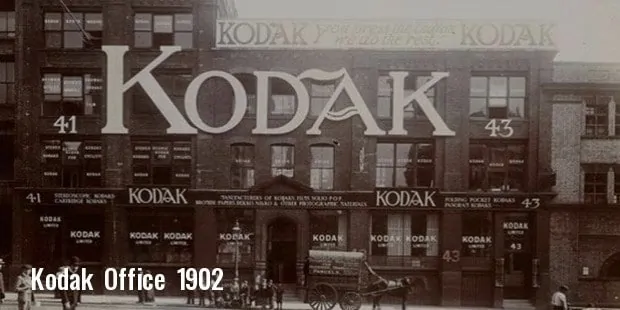
    The Eastman Kodak Company or, Kodak as it was commonly known, was started in 1888 by George Eastman in New York as a photography, film and imaging company.

    kodak office
    Source: Success Stories

    During its early days, taking photos was very cumbersome – you needed expensive and heavy camera equipment which used bulky plates to capture images and operating it alone was a difficult job. Moreover, the plates had to be developed as soon as they were exposed to take a photograph to obtain a useable image. This made photography was more of a niche hobby or a funded project and out of reach for many.

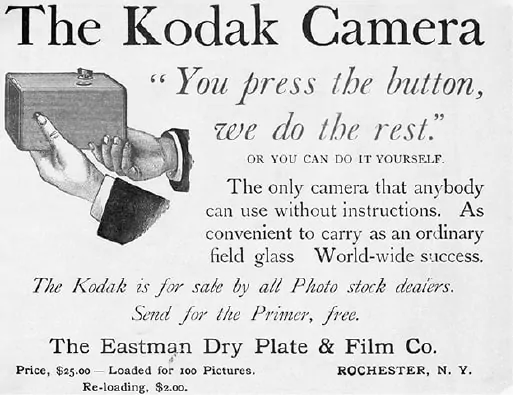
    Kodak with its motto – “You press the button, we do the rest” – set out to make photography more accessible with his company Kodak.

    And it did just that.

    Kodak released its first product to the public – the Kodak Camera – in 1888, the same year the company was created.

    the kodak camera
    Kodak’s first product: The Kodak Camera | Source: Kodak Lens Asia

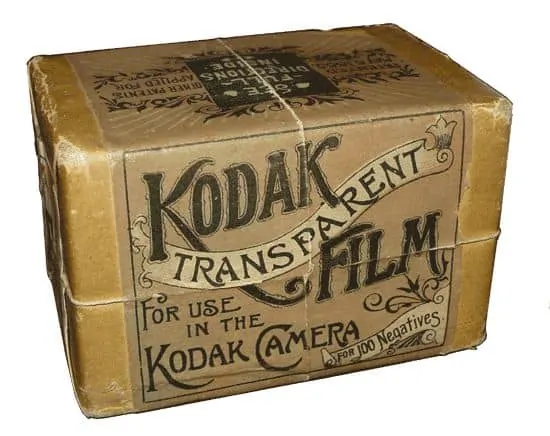
    The camera was easy to use and carry around – something that mosts cameras back then were not. But here’s the most distinguishing factor of Kodak’s products – the cameras came pre-installed with a photo film roll that could shoot 100 stills and Kodak offered to take back, develop and print the film rolls for a small fee. All the customers had to do was to send the camera with the film after taking pics.

    This is a prime example of the “razor and blade” business model where Kodak sold the cameras for cheap to get it into as many hands as possible and planned to make back in the sales of its consumables such as film rolls and services.

    This made cameras cheap enough for the public to start getting them and the ease of development saw many flock to it in droves. It allowed the general public to consider owning a camera and taking photos.

    This, in turn, snowballed into more sales and revenue for Kodak and was a win-win for all.

    old kodak film roll
    The very first Kodak film rolls | Source: Pinterest

    Not before long, Kodak started including the charges of developing and printing film rolls into their pricing. This further increased the profits and also locked the customer into the Kodak ecosystem since they had to only go to Kodak to get their rolls developed.

    Due to this, Kodak grew rapidly and this growth was further boosted with the subsequent launch of the $1 camera, The Brownie.

    kodak brownie
    The $1 Kodak Brownie | Source: Matt’s Classic Cameras

    Kodachrome – Let there be colour!

    Kodak did not halt and rest on their early successes and kept on innovating. In 1935, Kodak invented Kodachrome, the world’s first colour film.

    kodachrome
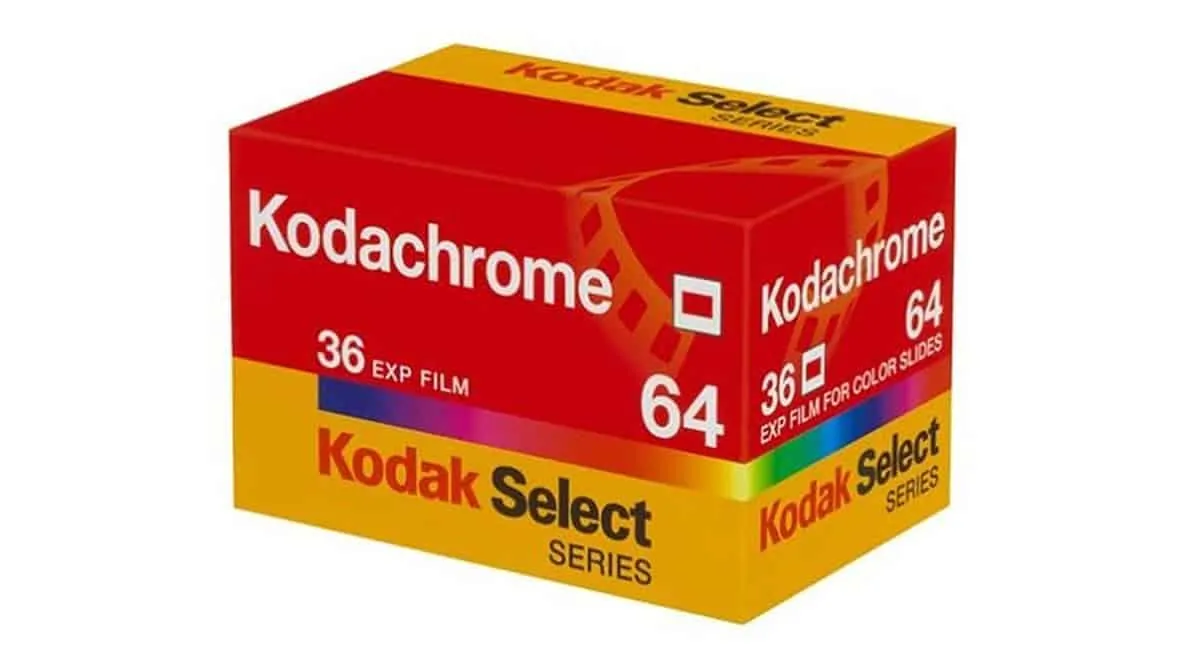
    Kodachrome: The world’s first colour film roll | Source: fstoppers

    This went on to become one of Kodak’s most popular and longest selling products in its history. It was only in 2009, 74 years after it was first introduced, that Kodak stopped manufacturing the Kodachrome film rolls. Kodak was consistently involved in helping pioneer motion pictures and videos and by the 1960s, Kodak’s sales grew into the billion-dollar range.

    Here’s a list of significant achievements and innovations that Kodak made over the following years –

    • In 1961, the company launched it’s famous “Kodak moment” marketing campaign and people soon started associating it with taking photos and capturing special moments.
    kodak moments
    “Kodak moments” ad campaign | Source: Next Big Brand
    • In 1962, Kodak reached $1 billion in sales.
    • In 1963, Kodak launched the Instamatic camera – a point-and-shoot camera – which became popular due to its easy to load and use nature.
    kodak instamatic
    Kodak Instamatic 100 camera | Source: Wikipedia
    • In 1966, Kodak’s camera and film technology were used to capture the first-ever photo of the planet Earth taken from space.
    kodak space photo
    The image of Earth from Moon captured using Kodak camera and film | Source: The Telegraph
    • Also during the same year, Kodak’s sales had reached upwards of $2 billion.
    • It was George Eastman and Thomas Edison who helped develop the ever-popular 35mm film that is used for photography and motion pictures to date.
    • The very first X-Ray was observed on a Kodak film leading to the discovery and usefulness of X-Rays in general by Wilhelm Röntgen.

    In the 70s, Kodak created something that not many associate Kodak with – the digital camera.

    Pioneer Of Digital Cameras

    The first digital camera to be invented was by Kodak. In 1975, Steve Sasson, a Kodak engineer, created the first charge-coupled device (CCD) image sensor (0.1 megapixels in size) and used it to put together the world’s first digital camera from the parts lying around in Kodak’s factory.

    first digital camera steve sasson
    Steve Sasson & the world’s first digital camera that he helped create while working at Kodak | Source: DIY Photography

    Here are a few facts about the world’s first digital camera – The camera needed 23 seconds to capture a single black and white photo and used cassette tapes as its storage medium.

    The following year, Kodak researcher Bryce Bayer invented the Bayer colour filter array – a grid of Red, Green and Blue (RGB) colour filters that allowed the image sensor to light intensity (brightness) along with light wavelengths (colour). The Bayer filter is considered to be a very important invention since it helps cameras take colour photos and is still used in nearly all modern digital sensors.

    The same year, Kodak had become the biggest player in the photography as well as the film industry. It was estimated that by 1976, Kodak held over 85% and 90% of camera and film market share respectively.

    In 1979, Kodak researchers created the first efficient organic light-emitting diodes (OLED). In 1981, Kodak reached $10 billion in sales – right around the same time as when the digital cameras were starting to gain popularity among the general consumers.

    The Decline of Kodak

    During the early 1980s, Kodak’s competitors were starting to catch up to it in terms of price and features. The industry was starting to shift more towards the digital counterparts and less towards film rolls and the analogue cameras.

    In 1984, consumers were starting to prefer Fujifilm’s products over Kodak’s. Fujifilm was a Japanese competitor and their camera rolls were usually around 20% cheaper while having the same quality as that of Kodak’s rolls.

    In 1991, Kodak developed the world’s first digital SLR (DSLR) camera – the one that uses a mirror and prism system to allow the photographer to see as if viewing “through” the camera lens to know what you are capturing.

    In 1999, Kodak teamed up with Sanyo and produced the first OLED displays. Kodak even used the OLED displays as viewfinder displays on their digital cameras.

    Kodak, over the entirety of its operations, made most of its money from film rolls and felt that it needed to continue and preserve the sales of its film rolls. So even when digital cameras – that Kodak helped invent – gained popularity, Kodak was still focussing on promoting its analogue products such as film rolls.

    While Kodak had a great run so far, things started going downhill during the 2000s. In 2004, Kodak saw its profits dip even though its sales were at an all-time high. By the time Kodak started focusing on digital products – which it did by releasing a slew of digital cameras and printers print the images taken from the digital cameras – it was already too late to capture users who had moved on to other brands.

    Though Kodak offered digital cameras, people still mostly associated Kodak with film rolls and analogue cameras.

    Kodak’s efforts at turning around were not fruitful and it slow had to cut down on its operations. In 2009, Kodak sold its OLED technology to LG Corporation.

    In 2012, after almost operating on a high note for over 130 years, Kodak filed for bankruptcy and announced that it would be stopping the production of its digital cameras, films rolls (few still remain in production) and digital picture frames.

    Kodak In 2020s

    Kodak, after coming back from bankruptcy, has started focusing more on providing digital prints, touch screens, and printers while continuing to support analogue film rolls by manufacturing them as well as the chemicals required for the development of the said rolls.

    Because of its long list of patents, its printers Kodak was able to survive in the highly competitive printer market. Though not being able to make a lot of profit with the razor-thin profit margins, Kodak still managed to offer quality printers and have even become the staple in offices around the world.

    Recently, Kodak sold its chemical business to a Chinese corporation but has managed to retain its film division. While it might seem like a tragic downfall to the once well-known giant, things seem to be looking their way with the recent rise in the sales of “still film rolls” due to the revived attention of shooting on an analogue camera instead of the digital one.

    Go On, Tell Us What You Think!

    Did we miss something?  Come on! Tell us what you think about our article on History of Kodak in the comments section.

  • What Is Product Line? – Definition & Examples

    What Is Product Line? – Definition & Examples

    As the company grows, it expands its product portfolio. Some of these new products are extensions, updates, and remakes of the existing ones, while some belong to a totally new and different category. These different categories are often launched as different product brands.

    For example, Coca-Cola has around 3,500 product category brands like Minute Maid, Costa Coffee, Smartwater, etc. These brands, even though different from each other, are controlled and operated by a single parent brand – Coca-Cola.

    These different product categories (or brands) are called product lines of the parent brand.

    What Is Product Line?

    A product line is a group of related products marketed and sold under a specific brand, offered by a particular company.

    A few keyphrases to focus on to understand this definition of product line are –

    • Group of related products: Product lines are product groups consisting of related products based on – target audience, value proposition, technology used, customer preference, etc.
    • Sold under a specific brand: These products are grouped together under a single sub-brand or offered directly under the name of the parent brand, and they carry a similar brand personality.

    Here’s an example to explain the definition better –

    Nike is a multinational company that sells product lines of sports shoes, sportswear, and sports equipment. These three categories further divided into several sub-product lines based on sports and uses.

    Product Mix And Product Line

    Product mix and product line, even though often confused to be the same, are considerably different.

    A product line is a unique product category or product brand a company offers. It can be considered to be a product group that consists of all the related products that fall into that category.

    Product mix, on the other hand, is the total number of product lines a company offers to its customers.

    In simple terms, product line is a subset of product mix.

    Let’s take an example of a dairy company that sells –

    • Milk
    • Cheese
    • Butter
    • Diet Products

    Now, let’s assume that this company sells 3 types of milk, 15 cheese products, 2 butter products, and 10 diet products.

    These product groups are the product lines and an assortment of these product lines is the product mix of the company.

    Product Line Examples

    Examples of product lines are seen in almost every company that sells more than offering. Here are some notable ones –

    Product Line Of Nestle

    Marketing over 8500 brands and 30,000 products, Nestle is the largest food company in the world.

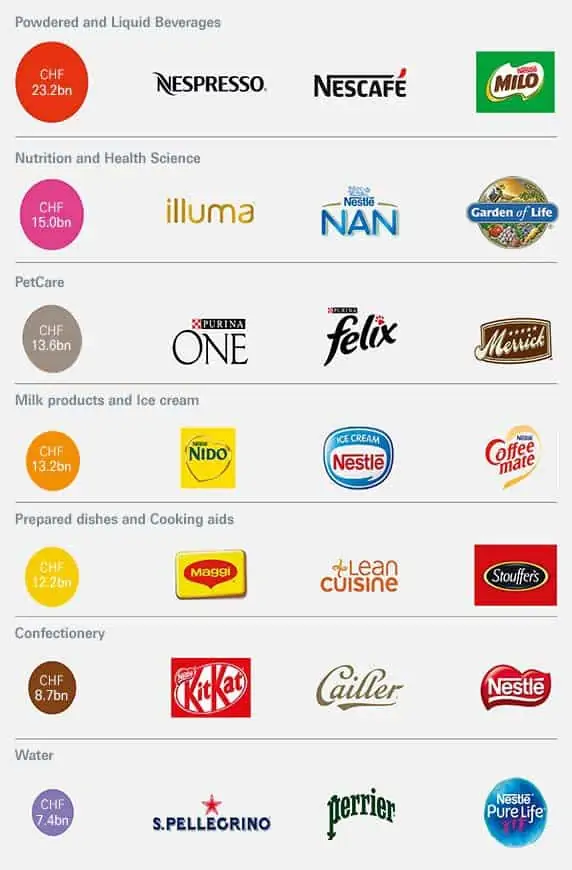
    According to the company’s website, some of the important product lines of Nestle are –

    • Nespresso
    • Nescafe
    • Milo
    • Illuma
    • NAN
    • Garden of Life
    • Purina ONE
    • Felix
    • Merrick
    • Nido
    • Haagen Dazs
    • Maggi
    • Kit Kat
    • Pure Life
    product categories

    Product Line Of Coca-Cola

    Coca-Cola markets over 500 brands under its name, and almost every brand forms its product line. Some of the popular product lines of Coca-Cola are –

    • Coca-Cola
    • Sprite
    • Fanta
    • Dasani
    • Smartwater
    • Minute Maid
    • Innocent
    • Simply
    • Georgia Coffee
    • Costa Coffee
    • Fuze Tea
    • Honest
    • Fairlife
    • Fresca
    • Aquarius

    How Product Lines Work

    Product lines are developed as a marketing strategy to make the most of the customers of the brand. The strategy works on the operating principle that customers are more likely to respond positively to brands that they are aware of and are more willing to buy the new products based on their positive experiences with the brand in the past.

    Different product lines are added under the same name of the brand to borrow the goodwill of the parent brand. The company also often goes for product line extensions where new products or items are added to the same product category under the same brand name, like new flavours, forms, colours, ingredients, etc.

    Product Line Decisions

    Product line decisions refers to decisions relating to the addition or deletion or product(s) from existing product lines. Such decisions are further divided into –

    • Line Filling Decisions: It involves adding a new product in the existing product line to face competition and increase the shelf life and customer base.
    • Line Pruning Decisions: It involves removing an unprofitable product from the existing product line to avoid losses and increase average profits.

    Go On, Tell Us What You Think!

    Did we miss something?  Come on! Tell us what you think of this article on product line in the comments section.

  • The First Successful Repositioning In History

    The First Successful Repositioning In History

    What do you do when the existing perception of your brand in the minds of your customers is unfavourable or faulty?

    Do you try to change your brand’s promise and personality?

    Do you try to alter its identity to suit their needs, wants, and desires better?

    Well, this is what repositioning is all about.

    The process isn’t new. Almost all the brands like Colgate, Nintendo, McDonald’s, Google, etc. have repositioned themselves over time.

    Colgate started off by selling starch, soap, and candles. It repositioned itself as a toothpaste company after 70 years of business.

    Wrigley, the famous chewing gum company, started off by selling soap and baking powder as well.

    And Nokia was started as a paper mill.

    But it all started long back – at times when brands were royal names and their assets were kingdoms. And the first product brand to be repositioned was not something that you’ve imagined –

    Potatoes.

    The Story Of Potatoes

    Unbelievably, the story of repositioning evolved from King Friedrich II the 18th-century ruler of Prussia. Prussia then was a bread-eating state with a dedicated and hearty ruler. But soon this bread-eating state could not afford bread. The prices of bread went soaring high, and Prussians saw starving as a better option than buying the expensive bread.

    Within no time, Friedrich II found his kingdom on the brink of famine.

    Now, to save his kingdom, he had to come up with an economical yet healthy alternative to bread. He examined all crops, their prices, nutritional value, harvest periods, etc.

    The potato’s portfolio topped the exam. Potatoes were cheap, full of starch, and quick to harvest.

    But why weren’t Prussians growing potatoes already?

    Well, they were, but for the fresh and beautiful flowers it bore, not for the muddy and dirty crop.

    Image Source – Reddit

    The Failed Positioning

    King Friedrich II saw something more valuable beneath these flowers.

    He saw the agricultural and nutritional potential of the potatoes to help control the famine breakout. So he immediately ordered all peasants and farmers to cultivate potatoes.

    He positioned the potatoes as – cheaper than bread, easy to grow, full of starch and fat to save one from starvation.

    But the peasants paid no heed to his order. They said that the potatoes looked dirty and had no taste.

    “The things [potatoes] have neither smell nor taste, not even the dogs will eat them, so what use are they to us?”

    They called potatoes ugly, spotty, muddy and had no time to waste on it. King Friedrich II’s positioning was a huge fail.

    The Pivot

    He immediately devised a repositioning strategy to encourage the citizens to grow and consume potatoes. This was the culmination point of the first-ever successful repositioning strategy known in history.

    He began by building his royal potato field. He set up a piece of land and cultivated potatoes in it. Next, he placed royal soldiers to surround and guard the field. He instructed the royal soldiers to guard the field negligently and take frequent naps at night.

    Image Source – NewYorkTimes

    As Prussians would pass by the field, they wondered what’s happening. They thought that only something very valuable would require such heavy vigilance by royal guards. This built mystery and curiosity.

    Now the townspeople wanted to grab hold of the mystery item. They were so intrigued that they ventured out at night to get their hands on it.

    But the King had forecasted this, which is why he had previously ordered the guards to be negligent and take long hours napping. This helped the townspeople get into the fields and steal potato tubers, and soon the whole plant.

    And this was Friederich’s plan all along. By making the use of reverse psychology, mystery marketing, and scarcity marketing, he repositioned the way people perceived potatoes as a crop. Soon potatoes from the King’s field started disappearing, and the cultivation of potato started among the countrymen’s fields.

    Consequently, Prussia escaped the famine as well as made the “ugly, muddy potatoes” the staple crop of the state.

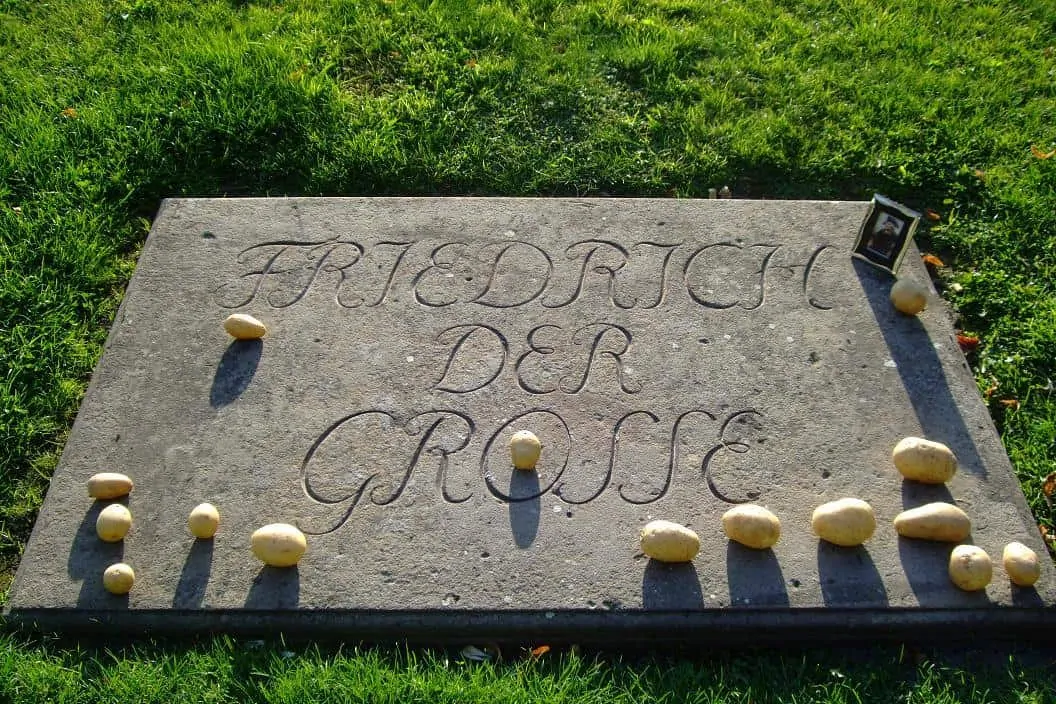
    King Friedrich II’s repositioning strategy was so concrete that even today if you were to visit King Friederich’s grave in Sanssouci today, you’d find potatoes laid over his grave.

    Image source – Reddit

    Pretty powerful for a repositioning strategy created in the 18th century with no channels like phones, internet, and research, right? Let’s dive deeper into the repositioning tactics used by King Friederich:

    Reverse Psychology

    Image Source – BrightSide

    King Friederich II used reverse psychology to generate curiosity.

    He asked people to grow potatoes, but they didn’t agree. So he began cultivating potatoes himself and guarded the filed to forbid peasants from entering.

    By encouraging them not to enter the field, they naturally did enter the field and take his plan forward.

    He used reverse psychology and convinced people toward something by doing the opposite, that is, restricting their entry.

    Mystery Marketing

    When Friederich II cultivated his potato field, he positioned royal guards around it so that no one could see or enter the field. This aroused questions like:

    • What is behind the guards?
    • What is being guarded by soldiers?
    • Why is a simple field being guarded by soldiers?
    • Is there something special and valuable being guarded?

    Such a thought process is exactly what instilled mystery and curiosity amongst the townspeople.

    Friedrich II made sure that people had just enough information – by letting people pass beside the guarded field.

    But he stopped them from getting more information – by placing guards around the field.

    Too much mystery would have killed the curiosity. Therefore, he made sure that the people could also get into the field at night because of negligent guards. This way he gave enough information, stopped the flow of information, and let a small channel be available to gain more information. More and more people availed of the small channel, and in the end, potato emerged as a staple crop of the area.

    Scarcity Marketing

    King Friederich II used scarcity marketing by displaying potatoes as scarce and valuable. He cultivated potatoes in a seemingly secretive fashion. When people were not given access to his field because of guards, the product (here, Potatoes) became more exclusive. And everyone likes exclusive products as scarcity marketing is known to work on the simple principle – ‘people value what’s scarce’.

    As a result, people wanted to know more about the exclusive crop – Potatoes. They stole it. They cultivated it. And boom! – Soon everyone was eating the ugly crop.

    Wrapping Up

    Today potatoes have been labelled as a staple German food being used for pancakes to salads, dumplings, and what not! For this, the Germans ought to thank King Friederich II’s repositioning strategies.

    Go On, Tell Us What You Think!

    Did we miss something? Come on! Tell us what you think about our article on the first successful reposition in history in the comments section.

  • What Is Repositioning? – Meaning, Reasons, & Example

    What Is Repositioning? – Meaning, Reasons, & Example

    What if I told you that Java failed during its initial days?

    The language was originally designed for interactive television but was too advanced for the digital cable television industry in 1991.

    Its positioning was faulty. The founders realised it quite early and ‘repositioned’ the brand to serve web browsers in 1996, and the rest is history.

    This is just one example of repositioning. The list is never ending –

    • Colgate started off by selling soap, candles, and starch. It later repositioned itself as a toothpaste brand.
    • Nintendo was started as a playing card company in 1889 before becoming the video game pioneer as we know it today.
    • And of course, Google started off as just a search engine before it repositioned itself as an internet giant.

    So, what exactly is repositioning and why do companies reposition themselves? Well, here’s a guide to explain everything.

    What Is Repositioning?

    Repositioning refers to the process of altering the existing space a brand occupies in the brains of the customers.

    In simple terms, it is a process of changing how the target market perceives the brand or its offering with respect to its –

    • Features, and
    • Competitors.

    With repositioning, the business tries to change the way the customer view the brand without always altering the bond between the customer and the business. It involves changing the brand’s promise and personality with an updated or refreshed –

    Reasons For Repositioning

    A brand would want to change the customer perception because of innumerable industry related, brand related, future related, competition related, and customer related reasons. Some of them are –

    Increased Competition

    Often times, increased competition in the market results in the lack of perceived differentiation of the brand compared to its competitors. This requires the brand to reposition itself in order to highlight its particular advantages.

    Faulty Existing Positioning

    There are cases when a brand is –

    • Under-positioned: The existing positioning is too weak or vague to make customers associate emotions, traits, feelings, and sentiments with it.
    • Over-positioned: The existing positioning is too narrowly defined which restricts its growth.

    Either condition is bad for the brand and requires it to reposition itself.

    Evolved Products

    When the business invests in a substantial product improvement, it is likely to offer additional benefits and cater to a wide audience. This often requires the brand to reposition itself.

    Changes In Macro Environment

    The macro environment of the business includes factors that are not in its hands, like –

    • Industry level changes,
    • Changes in government policies,
    • Economic conditions,
    • Technological advances, etc.

    These changes often force the business to reposition its brand(s).

    Failed Extensions

    Brand extension (also called brand stretching) is a marketing strategy where the company makes use of its existing established brand name for a new product or a new product category.

    Sometimes, these brand extensions fail, affecting the existing brand image negatively. This requires the brand to reposition itself to change the perception.

    Future Plans

    The future plans of the business also act as triggers to make it reposition its brand.

    • Acquisition Plans: The brand has plans to acquire and expand, or being acquired by a bigger business.
    • Opportunity Capitalisation: The brand sees an opportunity that can be more profitable in future.
    • Threat Aversion: The brand is expecting some threats in the future that require it to change its positioning strategy.

    Importance Of Repositioning

    Survival of a brand with a faulty positioning is hard, for a simple reason that the target customers are not able to associate emotions, traits, feelings, and sentiments with a mispositioned brand. This makes repositioning really important.

    Moreover, with time, as the brand grows, as the industry grows, and as the competition grows, repositioning becomes more important as it helps the brand occupy a different (and more profitable) place in the minds of the customers.

    It refreshes the customers’ perception of the brand and gives the brand almost a new start in the market.

    Rebranding And Repositioning

    Rebranding and repositioning, even though mistaken to be the same, are considerably different processes.

    Rebranding is just changing and updating the brand identity elements like brand name, logo, tagline, messaging, and associations.

    Repositioning, however, requires the brand to update its promise, personality, and its marketing mix. It involves changing everything required to alter the existing perception of the brand in the minds of the customers.

    If we consider a brand to be a person, rebranding is when the brand loses its weight, changes its hairstyle, updates its wardrobe, and even changes its name. Repositioning, however, is when the brands changes its values, attitude, personality, behaviour or anything that’s required to change the current perception of the brand. Repositioning can also involve the change of brand identity to support the new perception. 

    Repositioning Examples

    Repositioning isn’t a new practice. It has been in existence since the 18th century when King Friedrich II repositioned potatoes to be daily food.

    Since then innumerable companies have repositioned themselves. Here are some notable examples –  

    McDonald’s Repositioning

    Ever since it was launched, McDonald’s positioned itself as a family-friendly low-cost restaurant. Till the early 2010s, the company lacked digital innovation and was known for applying the one-size-fits-all approach to all its outlets. It also received a lot of criticism for having had a menu that had a bad impact on the body. And the brand also had bad relations with its employees.

    This made the brand to be less trusted and made the customers try other alternatives.

    This made McDonald’s draft a strategy to reposition itself. This is how it went –

    • The company repositioned itself as a modern, progressive burger company and changed its philosophy from “billions served” to “billions heard.”
    • It included various digital kiosks within the stores and unveiled a program called “Create your Taste” where customers could build their own burgers using digital kiosks.
    • It even launched a mobile application to enhance the digital customer experience.
    • All this was supported with aggressive marketing to target the ‘younger audience’.

    The company also executed a repositioning strategy in the late 2010s where it launched a completely new format for McDonald’s franchises. This format is called the “to-go” location, which is a stripped-down version of McDonald’s dedicated to takeout orders. This new format doesn’t include tables and chairs but is full of touch screens for customers to order. And since the ordering is done only digitally, all of the human employees work on fulfilling the orders, which results in faster order processing. Even the menu is streamlined only favourite items like fries, chicken nuggets and the classic Big Mac.

    Starbucks Repositioning

    Starbucks failed when it tried to penetrate the coffee industry in Australia in the early 2000s. The company launched its first store in 2000 and tried to penetrate by taking its existing brand promise of ‘coffee as a service’ to an existing matured market.

    Starbucks didn’t fit the Australian’s tastes. The company charged more than the local cafes and served sweeter coffee options than the locals preferred.

    As a result, the company saw its losses go up to $105 million in the first seven years and had to close 70 percent of its underperforming locations by 2008.

    Here’s why it didn’t work out for the brand –

    • The market was already saturated and the company offered nothing new – in-store furnishings, magazines, music and wi-fi were already provided by the other local brands.
    • The actual brand value proposition was built on friendliness but the company spaced away from it by focusing more on generating steady customer turnover. The employees used automatic machines and were so busy with work that they hardly conversed with the customers or provided them with a different experience.
    • And Starbucks followed the same menu and strategies in Australia that it followed for other countries, ignoring what actually was desired in the market. It even followed its no advertising strategy which backfired.

    This called for repositioning. So in 2014, when the Withers family (who own the 7-Eleven stores) bought the Australian license for Starbucks, they repositioned the brand to be more ‘Australian’. The menu was changed according to the Australian tastes, the coffee was made more of an experience, and stores were reopened strategically with the focus shifted to cater to the tourist population than the locals.

    Go On, Tell Us What You Think!

    Did we miss something? Come on! Tell us what you think about our article on repositioning in the comments section.
  • 7 Important Lessons For Student Entrepreneurs

    7 Important Lessons For Student Entrepreneurs

    If you’re a student entrepreneur (a student engaged in academics and a startup venture) or an aspiring student entrepreneur, I have bad news for you.

    Out of 100 people, there are 72 people just like you – who want to start their own business someday. Many have even started their businesses and many are thinking of working on it.

    Moreover, the fascination and pride of being the boss of your own company is merely the tip of the iceberg. Juggling college work, business, and personal life without much prior experience can be draining.

    So, in tough moments when you are burnt out, slogging through school, and wanting to grind the startup slope, here are 7 lessons to learn from success and failure stories of famous student entrepreneurs:

    Create Something Relevant And Novel

    When we say startups are creative, we refer to the two aspects of creativity:

    • Relevant: Something is said to be relevant when it actually solves the problem or gets the job done. In startup terms, relevance is when you focus on building your business on an actual market opportunity and try not to create a (hypothetical) market opportunity to support your business.
    • Novel: Novelty is the uniqueness with which your business solves the problem. It is how your startup disrupts the market.

    Matt Mullenweg founded WordPress when he was just 20 and studying at the University of Houston, Texas. The idea of WordPress struck him when he recognised the need and relevancy of a content and web development platform.

    The novelty was how he developed its business model – a platform operated by the community where no one gets paid to contribute to the platform.

    Matt believes that an entrepreneur should step into the shoes of customers and create what they need, not create something and then look for its market. Till date, he believes that –

    It’s my responsibility to meet as many users as possible and direct the software project in a way that reflects their interests.

    Take Mullenweg’s advice – create an offering that adds value and improves the lives of customers in today’s times.

    Have A Hunger For Passion, Not Just Power

    Blake Ross, the chief co-founder of Mozilla Firefox released Firefox when he was working on a college project at Stanford University, California. In an interview with the Guardian, he elaborated on how he began the Firefox project with no intention of storming the internet. Ross’s focus was on pure innovation and fulfilling his passion.

    He was so passionate about the web and the internet that he developed his first individual project – a website named America Online – at the age of 10.

    Contrary to what people think, Bake was a student intrapreneur and not an entrepreneur when he developed Firefox. During his college days, he worked with his colleagues Dave Hyatt and Joe Hewitt to develop an open-source user-friendly browser – Firefox. This was when he was just 19.

    Along with Firefox, he also worked on his startup – Parakey, a Web-based computer user interface, which was later acquired by Facebook in 2007.

    Today, Mozilla Firefox has the third-largest market share after Google Chrome and Safari. But according to Ross, he never wanted to conquer the internet, but passionately take Firefox to its full potential.

    It’s important for you as an entrepreneur to build a startup that fulfils the need of the market as well as your need for passion, or else, things might not go the way they should be.

    Simplicity Is The Key

    The earlier you integrate simplicity, the further you move on your entrepreneurship journey. But, how to integrate simplicity?

    By finding the perfect balance between:

    • Tracers: A tracer makes use of existing methods to resolve a problem. They leave the innovation to others and stay in the comfortable space of the known.
    • Re-inventors: A re-inventor creates novel methods for every problem. They never stick to the status quo and continually venture into the space of the unknown.

    Entrepreneurs are neither of the above. Rather, they integrate both the existing and innovative resources to find a simple balance.

    Simplicity is what drove David Karp to launch Tumblr when he was 21. He strongly believes that over-complication can ruin a perfectly excellent product. He started Tumblr as a simple platform – you write, you post, you share. Additional simple aspects of Tumblr were:

    • All changes are rolled out at 11:00 am
    • For every new feature, an old one is taken down
    • Tumblr’s features are focused on quality, not quantity

    The platform did wonders till 2013 when it was acquired by Yahoo! and no one in the Yahoo! team had an idea on how to take things forward.

    Try to follow the lean model – eliminate waste in product and processes while satisfying customer wants.

    Simple steps can better-shape your confidence and efficiently direct you in the long run.

    Plan Finances Well In Advance

    You need a financial plan if you want to build your business. Whether it is a short-term goal (sales, brand awareness, etc.) or a long-term goal (doubling revenue, brand recall, etc.), your financial understanding forms the base of your startup venture.

    Even Walt Disney laid Disney’s foundation through both creativity and intense financial planning. As a student entrepreneur at the Art Institute of Chicago building, Disney for Walt was not easy. It required immense financial steering. Walt’s financial plan was:

    • Begin with high-income channels – Creating action-packed Disney movies
    • Slow down to balance the initial costs – Creating basic nature and fairy-tale movies
    • Study low-cost scaling opportunities – Moving to television from movies
    • Work for stability – Sticking to television for about 30 years
    • Launch the cherry on-the-top – Launching Disneyland

    Despite all the planning Walt’s brother and business partner Roy Disney repeatedly begged him to withdraw the company because of the fear of bankruptcy. But Walt’s meticulous financial planning paved the way for Disney’s success.

    Don’t Be A One-Man Army

    The entrepreneurship job may seem like a one-man job, but trust Elizabeth Holmes – “it’s not”.

    Elizabeth Holmes was declared as the youngest self-made billionaire by Forbes when she founded Theranos. Motivated by her fear of needles, she founded a healthtech company that created blood tests that needed only a prick of blood to test for serious ailments like diabetes, cancer, etc. She received investments worth $700 million.

    The investments put her on top of the moon. She began placing a mandate that she would keep the technology behind Theranos to herself and all final company decisions rest on her. This meant that no other medical or business expert would be on-board. It was her investors and her.

    This stealth mode did not prove to be good for her. As Theranos was launched, there were reports of inaccurate blood-test results by the Theranos technology. The company immediately had to be taken down. Had Elizabeth brought the right medical and business experts onto her team, Theranos would be a successful student start-up today.

    Teamwork is important. Recruit people who can bring in focused attention to your venture, because no one is capable of doing everything alone. You cannot progress if you don’t bring dedicated people on board.

    Embrace Failure

    Every student entrepreneur’s life revolves around two questions:

    • Will my idea work and make me successful and famous?
    • Will I fall flat on my face in debt and regret?

    The answer is that you will most likely fall flat on your face the first few times. Believe it or not, most successful entrepreneurs stand over a series of failures. But learning to embrace failure by recognising your deepest strengths and weaknesses is the only way to make the cut.

    Mark Cuban, the famous entrepreneur and ‘shark’ investor on shark tank began his career with a startup failure.

    Fresh out of Indiana University, Mark was encouraged by his parents to learn a trade and begin his own business. So he began work as a carpet installer. But he was terrible at it. So he shifted to being a server at a restaurant, but he couldn’t serve food rightly nor open wine bottles for customers.

    Next, he had the idea of starting a powdered milk business. Everyone needs milk, but milk is difficult to pack. So, he believed that powdered milk is the next thing the world needs. Astonishingly, this was a huge failure and his parents were his only customers.

    This failure led him to join a tech company as a salesperson. But, within a year, he started selling to customers based on intuition, against his CEO’s advice. He was immediately fired.

    After repeated failures, most entrepreneurs would have quit. But a true entrepreneur like Mark Cuban derived ambition to build his own company from these failures – MicroSolutions, which was sold for $6 million. Today, Mark’s net worth is more than $4 billion just because he never backed down.

    “It doesn’t matter how many times you fail. You only have to be right once and then everyone can tell you that you are an overnight success.”

    Apply For Student Entrepreneurship Competitions

    One of the most effective resources awaiting a student entrepreneur today is the student entrepreneurship competitions

    These competitions provide the perfect push into the industry without danger from established competitors because of:

    • Funding schemes
    • Publicity and networking
    • Feedback and validation
    • Guidance from industry experts

    Take Daniel Fine, the student entrepreneur at UPENN Wharton School, Pennsylvania, who started 4 businesses. In an interview with the NY Times, he stated that financing all of his startups would be impossible without the entrepreneurship competition funds like dormroomfund.com and GSEA.

    He applied to multiple such competitions just for the feedback and networking, He added that for young entrepreneurs like him what matters along with a college degree is entrepreneur competitions and contests.

    Consider applying to various entrepreneur and startup competitions. Whether you have a business model or just an idea, go for the experience, feedback, and guidance from these competitions.

    Wrapping up

    It’s hard to get started on your business when you’re just a student, but it’s never too early to work on – a cause, an idea, a team, a concept, etc. – that’s bigger than yourself. In summary, keep in mind that it’s really not about making money, but about making a life worth living for yourself and others.

    Go On, Tell Us What You Think!

    Did we miss something? Come on! Tell us what you think about our article in the comments section.