Feedough Logo

Blog

  • Pre-Money & Post-Money Valuation Explained

    Pre-Money & Post-Money Valuation Explained

    When you are working with a capital driven start-up you are likely to come across a whole new array of vocabulary. Pre-money and post-money valuation is something you will likely hear from a VC (Venture capitalist) or from your angel investor. These might stump newly established entrepreneurs but we have a handy guide that will get you out of this tight corner.

    What Is Post-Money Valuation?

    Post-money valuation is the value a company holds after the financing of an investment has been completed.

    Most percentage equity is based off on the post-money valuation of the company.

    Say, your company has 100 shares and you plan on adding 25 more shares. An investor agrees on paying $25 million for these 25 shares. This is where you can calculate the post-money valuation now.

    The investor is paying $25 million for 25 shares out of a total 125 shares (The new shares are important). This means they are paying 25 million for 20%(25/125) of the company. Thus the post-money valuation (100%) worth would be 25*5= $125 million.

    Thus a standard formula would be

    Post-money valuation= New investment*(Total number of shares(old+new)/shares for new investment)

    What Is Pre-Money Valuation?

    Pre-money valuation is the value a company is perceived to hold before an investor finances an investment.

    Pre-money is slightly less tricky than post-money. It is the valuation on the basis of which an investor asks for equity in exchange for capital.

    In simpler terms

    Pre-money valuation = Post-money valuation – New investment

    Pre-Money Valuation vs. Post-Money Valuation

    The most basic difference between pre-money and post-money valuation is the timing of the valuation. Pre-money valuation is the valuation that your company holds before money is pumped in by investors whereas post-money valuation is the valuation that your company holds after the money is invested.

    A lot of first-time entrepreneurs are confused which valuation they are actually looking at during funding round. We will try to help you out with a basic example of the whole process.

    Let us assume that your investor tells you that they will give you $2 million for 20% of your company you would assume that they are talking about the pre-money valuation. But what they actually mean is that they want to hold 20% equity after they have invested money in your startup.

    Most people would ask. But how does this matter? Because generally, entrepreneurs assume it is a simple transaction, Money in exchange for equity. Here is where the flaw comes in.

    When money is pumped into an enterprise, the valuation is increased by that amount of money. Say when the investor in the above example pumps in the money, the company valuation takes a jump of $2 million. This is what the investor is looking for. So basically investors are investing in a company which will hold a valuation of $10 million after they put in their money thus effectively giving them 20% of the ownership.

    This means the pre-money valuation of the company was $10 million – $2 million = $8 million.

    Pre-money valuation = Post-money valuation – invested amount

    Thus, the pre-money valuation was actually $8 million which most entrepreneurs might have anticipated as $10 million. You need to understand the valuation of $10 million holds true only after the investor has invested in the money.

    It is very important to have a clear stance while discussing funding with your investors and know if they are talking about pre-money or post-money valuation.

    This is a very important topic to understand as most entrepreneurs have good ideas and relatively lesser assets and that is when calculating pre-money valuation is dicey. In such a situation pre-money valuation is negotiable and thus it is upon you to get maximum out of your deal.

    The Startup Process

    We know how important your dream business is to you. Therefore, we’ve come up with an all in one guide: The Startup Process to help you turn your vision into reality.
  • What Is Brand Loyalty? – Types, Importance, & Examples

    What Is Brand Loyalty? – Types, Importance, & Examples

    Ever wondered what makes your target audience purchase your offering time and time again? Or, perhaps what makes them prefer your competitors’ offerings even though yours is superior?

    Spoiler alert: there are a lot of factors which give rise to brand loyalty and your offering is just one of them. But before discussing what makes customers loyal to a brand, it’s important to discuss what exactly is brand loyalty and what are its types.

    What Is Brand Loyalty?

    Brand loyalty is customer behaviour pattern where he/she starts trusting and becomes committed to one brand and conducts repeated purchases from the same brand over time irrespective of the marketing pressure generated by the competing brands.

    Commitment to the brand in the form of brand loyalty can be seen in the case of Apple where the customers are most likely to upgrade to the new version of the same brand (iPhone) rather than trying any new brand.

    Types Of Brand Loyalty

    Having loyal customers gives you an upper hand over your competition as you don’t always have to compete on the usual factors like price and convenience as long as you’re delivering the promise.

    Here are three types which you can use to segment your customers on the basis of brand loyalty:

    No Loyalty

    Some customers are indifferent towards which brand they’re buying as long as their other needs in terms of price and/or convenience are fulfilled. An example would be a man who buys plain t-shirts from any shop which sell them for $5 or less.

    These people consider the brand as a commodity and buy your products as long as you are accessible or providing products within their budgets. They, however, shift to a new brand if they come with a better offer.

    Inertia

    Inertia loyalty stems from repeated purchases coupled with some sort of attachment. These are the customers who buy your brand out of habit. They are the ones which follow “because we’ve always used it”, “because we always buy from here”, or “because it is convenient”. Situational factors are the main triggers in this form of loyalty because users can’t really differentiate the brand from others.  An example would be a man who takes his car to the same gas station every day because he has always done the same, even though there are new gas stations on the same route now.

    Converting inertia loyalty into a higher form of loyalty isn’t that hard. All you need is to court him and communicate how you’re different and better from others.

    Pride

    Pride, also known as premium loyalty, is the high to highest form of loyalty. This gets into the picture when a high level of attachment and repeat purchase coexist. Premium loyalty is when the customer feels proud of associating himself with the brand and takes pleasure in sharing the knowledge about the same with the friends and family.

    A premium loyal customer not only buys from the same brand always but also becomes a vocal advocate who helps the brand in its word of mouth marketing strategies. The usual factors which affect the purchase like price differences don’t usually affect the premium loyal customers as all they look for is the brand promise and the pride of their association with the brand.

    An example of a premium loyal customer is a man who always buys an iPhone and even recommends his friends who own an Android to buy an iPhone.

    Importance Of Brand Loyalty

    The flood of debates after Nike’s controversial ‘Just do it’ advertisement was aired should have technically affected the sales of the company in a negative way but to everyone’s surprise, the ad resulted in a $6 billion increase in the value of the company. Well, thanks to loyal customers.

    Brand loyal customers make you stand firm when everything else is drowning. They are your vocal advocates. They market your product while paying for it.

    You can expect a minimum recurring profit from your offering as long as you keep loyal customers happy. This can be proven by taking the example of Coca-Cola and Pepsi. According to a study, 90.5 per cent of regular Coke and 88.9 per cent of regular Pepsi drinkers remain loyal to their preferred brand. However, when Coca-Cola decided to replace its original coke with the new coke, even the loyal customers hated the move. The loyal customers made it so obvious that the company had to relaunch the original product.

    Your loyal customers are the community which helps you in your every step, be it production or marketing. They’ll tell you what’s working and what should be altered or replaced. Many brands like OnePlus and Samsung have capitalized on this community loyalty to make their products and marketing efforts better.

    Brand Loyalty Examples

    There are many companies which have been successful in creating a cult-like following. While many of them did this by fulfilling their brand promise, many added to it by crafting strategies which made their customers feel like they belong to a family or club. Here are a few examples of successful companies which have a cult-like brand following.

    Apple

    Apple is among the brands with most brand-loyal customers. According to a survey by Morgan Stanley, 92 per cent of iPhone users are “somewhat likely” or “extremely likely” to upgrade their phone in the next 12 months plan on getting another iPhone.

    Apple plays its cards on customer convenience and its premium outlook. It doesn’t brag on the tech part but communicates what the customers want to hear – the benefits. The company smartly bundles the benefits and the different outlook (iOS) with the premium marketing and pricing strategies to make it appeal to the urban high earners who love to differentiate themselves from the crowd of Android owners.

    Starbucks

    Starbucks is another winner when it comes to brand loyalty. The company uses smart customer loyalty programs to make customers loyal to its brand. The use of My Starbucks Rewards program which gives the customers free drink or food rewards based on the number of stars earned proved to be a great ‘pull’ strategy. Other smart strategies include premium outlook and pricing, strategic partnerships and 360° presence which makes the customers proud of their association with the company.

    Go On, Tell Us What You Think!

    Did we miss something?  Come on! Tell us what you think of our article in the comments section.

  • Choosing The Right Business Model For Your Startup

    Choosing The Right Business Model For Your Startup

    Did you know that more than 100 million business startups are launched around the globe every year? That is roughly 3 startups per second. Undoubtedly, it is a highly competitive world for a growing entrepreneur and making sure a business idea fits in with the existing market is very important.

    Understanding the economic value of a product, service or technology before launching it officially into the market helps in assessing the revenue generated as well as the profits it will make. The right business model will predict the revenue accurately and provide you with a chance to innovate and re-model your business plans if the outcome predicted is undesirable.

    Factors To Keep In Mind Before Choosing A Business Model

    If you’ve read our article on what is a business model, you’d agree that every business model intrinsically has three parts:

    • Designing & manufacturing the product
    • Selling the product
    • Making money out of it

    Here are 5 factors which you should keep in mind while crafting the business model of your startup.

    The Customer

    To choose the right business model, the first and the foremost element to be kept in mind is the customer. Rather than selecting a business model which is profitable, and best according to your notion, choose one that adds value to your customer by keeping in mind their needs and understanding how they buy.

    Ask these questions before selecting the business model for your startup?

    • Who is my customer? (Segment him from the rest of the population based on demographics, psychographics, geographics and behaviour)
    • What is his buying patterns?
    • What is the problem my offering is going to address?
    • How can I design my revenue model which causes the least inconvenience to the customer?

    Considering these questions helps in defining the characteristics and qualities of the customer you intend to serve. For example, the well-known mobile application WhatsApp earns money without having to trouble the customers with ads or charging money, unlike many others, hence putting the customer’s needs first.

    The Value Proposition

    A value proposition is the promise of tangible benefits which a customer will receive from consuming or experiencing the offering.

    The value proposition stems from the basic idea of ‘how are you solving the problem of the customers?’. Uber solves the problem of taxi booking by making cabs on demand. Airbnb lets people share their unused property. Google makes the internet seem simple by using its algorithm to help people search what they want.

    Your business model revolves around the value proposition capitalization; how the customer will benefit from your offering while benefitting you in terms of the profits. Uber charges commission from the drivers for every customer that comes from its application. Airbnb too runs on a similar commission-based model while Google uses the advertisement-based business model to make the web simpler.

    The Market

    The next important element to consider is the market potential and the competitive landscape. Getting into a market which has only a few customers and a less potential to grow isn’t a good idea. Craft your business model in a way to serve a growing market where people are not hesitant to try newcomers.

    Take Java for example, the language was designed for interactive television in 1991, which evidently didn’t work at that time. Nevertheless, a simple tweak in the business model made the language open for all web browsers and made Java what it is today.

    But it is not always easy to create a new market and sometimes there’s no other choice but to compete with the big players in the market. Well, diving into an industry where there are established players with the majority of the market share is really hard but you can incorporate strategies like effective segmenting and use network effect and freebies in your business model to attract more customers.

    Use industry reports, Google Adwords, and Think With Google reports to find the most suitable market segment for your business. Study how the existing players serve the customers and how and how much are they earning. Use their company forums and public forums to collect information on unaddressed customer issues and capitalize on them if they are worth the effort.

    Building a prototype and distributing it via a direct sales force, retail stores, eCommerce site, etc. can also help determine the viability of your business model in the current market scenario.

    Scalability

    Scalability is an important factor for the successful growth of a business. It refers to the ability of a business to handle the increasing demands of the market in a way which improves profit margin while sales volume (the number of units sold within a reporting period) increases. Although the implementation of scalability should be taken up only after the business becomes profitable, it should be included in the company’s vision from initial days itself. The startup will reduce its chances of success/growth if it fails to consider scalability as one of the factors while designing a business model.

    Costs

    Costs, both monetary and non-monetary, play a very important role in deciding the business model of your startup. If you have high costs to run the startup but can’t afford to charge the same to the end consumers, your business model can include strategic relationships to overcome that limitation.

    Onesignal is a push notification SAAS which lets the website owners send push notifications to thousands (and even millions) of their followers for free. However, to cover the costs and make profits, it shares the data of those website subscribers with its clients.

    Get The Ultimate Feedback With A Prototype

    The most valuable feedback for a business startup is whether someone will buy your product. Researching and gathering information on the potential of your product/service can be helpful only to an extent. People spend years and money trying to research on what the people like without asking them if they would buy it for a certain price. A prototype with even the basic features of your desired product/service can help determine the answer to this question.  For example, BMA products (BMA liquid Dish Wash, BMA Bleach, BMA Body Spray, etc.) were first introduced in 2012 by selling, packaging and distributing it to the people for feedback to understand its market potential.    

    A business model is something that can change with time but ensuring your business model has the right mix of important elements like being repeatable, scalable, predictable and ultimately profitable, will definitely increase the chances of your success in entrepreneurship. Strive hard to make your business a long-term success and if the first few steps like an effective business model lay a strong foundation, your business will someday yield incredible results.

    The Startup Process

    We know how important your dream business is to you. Therefore, we’ve come up with an all in one guide: The Startup Process to help you turn your vision into reality.
  • Client Gifting – Psychology, Importance, Do’s & Don’ts

    Client Gifting – Psychology, Importance, Do’s & Don’ts

    Everybody loves receiving gifts. Not only do they make us feel special, but they also make us happier. And in most cases, giving or receiving gifts or free content has also been associated with gaining compliance, as well as creating long-term bonds between the giver and the recipient.

    People will forget what you said, people will forget what you did, but people will never forget how you made them feel. –Maya Angelou

    Gifting in a business also works on the same principles. Festive gifts account for happier clients and business prospects, and happier clients mean better chances for positively boosting your business.

    In most corporate cultures, giving gifts is important, whether you want to acknowledge a loyal customer, appreciate a hard-working employee or a partnered vendor, enhance the relationship between you and your client, or reach out to a prospect.

    The Underlying Psychology Behind Client Gifting

    Business gifting is essentially a compliance tactic at its very core, where you can reach out to your clients, preferred vendors or prospects with tokens of appreciation with no obligations.

    Not only does this convey to your clients that you care about the individual relationship or bonds you share, but it also highlights your business values and identity. Customers and vendors recognize the importance of maintaining a healthy professional relationship and are also very helpful in gaining customer loyalty.

    It is also a way to let your employees or clients know that you value the hard-work they have put into your business. Client-gifting has always been associated with morale-boosting, which brings about a positive change to your clients’ work-place attitude.

    Even though the best time to send a gift or free content to your client or a vendor is usually considered to be before the start of, or during a festive or holiday season, it is always the right time to send them a token of your appreciation. This helps to create a personal connect between you and your preferred clients.

    Why Is Client Gifting Important?

    We all like being reminded that someone always cares. While sending your clients a gift seems like a great idea morally, it also has several other benefits.

    Your clients are more likely to pay attention to you when they receive gifts. Gifts also help in conveying your helpfulness and goodwill to your current and prospective clients. This shows your business in a positive light, and improves your image.

    In case of promotional gifts, adding your brand’s logo or contact information in the gifts sent to your clients helps spread awareness about your business. For example, sending office stationery with your logo printed to your clients indirectly makes your business a part of their workplace environment, thus also positively boosting their opinion of you, as well as the sales.

    Customers and clients who receive corporate gifts are often more likely to give you repeat or continuous business. It also helps to reinforce the partnership or link between your business stakeholders, while also increasing loyalty to your business.

    The Do’s of Client Gifting

    • Check the client’s company policies- Before picking out a gift for your clients, do your research on their company policies regarding receiving corporate gifts. Some companies’ compliance departments require the gifts received by their employees to be priced at $25 or under. Any gift that is valued at more will be sent back by the HR. Some companies do not allow gifting at all. So, it is important to contact HR and gift accordingly.
    • Consider your audience- To make a good impression on your clients, it is better to understand what kind of a gift will be able to help create a positive image of your business. While office stationery is the most obvious and popular choice for corporate gifting, making sure that your client can resonate with their business shows them that you care, thus increasing their interest in your business.
    • Timing is important- If you plan on sending out festive or holiday-themed gifts to your clients, it is important to plan a few months ahead so that you have enough time to order them, get them packed and attach personalized notes to them. Also send out the gifts a little ahead of time so that your clients receive their gifts on time.
    • Consider cultural differences- Different cultures and countries have their respective rules regarding client-gifting. It is important to research about the various gifting and holiday traditions of various countries, especially in the case of multi-national companies. Being sensitive towards each others’ cultures ensures a strong bond between your client and you.
    • Personalize the gifts- Adding a hand-written note along with every gift shows your clients that you care about them. Besides, printed cards are impersonal and do not convey the goodwill as well as hand-written notes do. Adding a sentence or two about your client in the notes you send them also helps create a positive image of your business.

    The Don’ts Of Client Gifting

    • Overly branding the gifts- The gifts you send your clients should be all about them, with a small reminder of who they’re from, and not the other way round. Therefore, whether the gift sent is office stationery or coffee mugs, it is important to very subtly position your brand’s logo so that it does not decrease the appeal of the gift itself.
    • Sending the same gift to everyone- When you send everyone the same gift, the appeal of a personal touch is lost. It also doesn’t feel as special anymore, which loses sight of the whole point of gifting. It is important to gain some information regarding your clients’ likes and dislikes before picking out a gift for them.
    • Over-the-top gifting- Gifts are all about establishing a personal connect. So, while an elaborate gift sounds like a good idea, there is no guarantee whether your client would like your well-thought-out gift or not. Sometimes, very minimal, but classy gifts are a lot more effective than expensive ones. Therefore, get to know your client a little better before you decide on a lavish gift for them.
    • Gifting personal items- While creating a personal connect with your clients is a very crucial aspect of client-gifting, sending out gifts of extremely personal nature like jewellery or clothes is a strict ‘no’. Maintaining a healthy professional relationship with your clients is a must, and care should be taken so as to not overstep.
    • Don’t misspell your client’s names- It might seem like a very minor precaution, but it is important to spell your clients’ names right if you want to show them that you care about them. Small gestures go a long way when it comes to client gifting, and spelling the recipients’ names right is a very crucial aspect to it.

    Bottom Line?

    There are a lot of aspects to client gifting that vary from one business to another. So, it is necessary to note what your clients and customers may like or dislike, before elaborately planning out a client-gifting campaign. No matter what the gift is, the prime message that needs to be conveyed to your clients and business prospects is that you appreciate their presence and partnership. Therefore, client-gifting should be meticulously planned and well-researched, in order to maintain a good professional relation

    Go On, Tell Us What You Think!

    Did we miss something?  Come on! Tell us what you think about our article on client gifting in the comments section.

  • Angel Investors vs. Venture Capitalists

    Angel Investors vs. Venture Capitalists

    You are ready with your product, but you are also a cash-strapped startup. So you turn to either crowdfunding or look for someone who could invest in your startup.

    The funding process is where you turn to an angel investor or venture capitalist but who are angel investors and venture capitalists and how are they different and also what makes your venture strike gold with them.

    For an answer to these mind-numbing questions, you should read on.

    Who Are Angel Investors?

    Angel investors (also called informal investors, private investors, seed investors, angel funders, or business angels) are individuals who have high net worth and provide financial support to entrepreneurs.

    These individuals have amassed their wealth because of their social status and past employment. The reason they might invest in a venture could be because of their experience in the field that the particular ventures deals in or just a liking for exploring new avenues.

    For, e.g., Celebrities like Bono, JayZ, Kapil Dev and many more have invested in firms ranging from beauty products startups like Julep to even giants like Facebook.

    Who Are Venture Capitalists?

    A venture capitalist is an individual investor firm or a group of people which run as a whole firm comprising of board members, people specialising in management, legal advisory and marketing. They provide financial support to startups and small businesses which wish to expand but don’t have an access to the equities market.

    The source of funds for these venture capitalists is usually from member investors (individual professional investors and large corporations) and pension funds, university endowment funds etc. They invest this fund on businesses which they deem will provide their investors high rates of return.

    Differences between Angel Investor and Venture Capitalists

    Risk Taking

    Angel Investor usually invest in the entrepreneur rather than the sustainability of the business model of the startup. Since we are talking about individuals, these individuals make decisions based off on their experience. Although calculated risks are taken by these individuals the fact that they are using their wits without consultation usually makes them more vulnerable to failure.

    Venture Capitalists, on the other hand, are a group of professionals who take a more extended period to judge the sustainability of the proposed business model. There is an extended scrutiny model at play here since venture capitalists need to put the interest of their investors at the priority. These professionals could be even angel investors themselves but since they work in a group and are in a better position analysis wise due to help from different people Venture Capitalists run a lower risk of failure.

    With the changing landscape, it is not impossible for a venture to win venture capital but a more mature business is still highly likely to win it big.

    Investment

    Angel Investor usually starts with a small investment. Now, this investment is termed low when compared to the VC firm’s initial investment as individuals due to the risk involved usually pump in an amount that when compared to a VC firm.

    Therefore seed funding is more commonly observed in the case of Angel Investor. Since angel investor invests at an early stage startup, they usually don’t have much a say in the working of the company at later stages if the startup goes big.

    Now on the other hand Venture Capitalists pool their money thereby even the first round of funding with a VC brings in a significant amount for your venture.

    Funds from both the Angel Investor and Venture Capitalists could be used for hiring, branding, marketing purposes but there is a catch between the mentoring and set up that an Angel Investor and a Venture Captial firm provide.

    Mentoring and Involvement

    Angel Investors usually provide mentoring at a very basic level. They could help you set up your venture on the path of a right business model, tweak out the abnormalities and iron up the irregularities.
    They could provide you with hands-on expertise, but their primary job is to help you start from the ground not build up your company.

    Venture Capitalists would provide your venture with a proper management team dedicated to your enterprise. Venture Capitalists usually set you up for the corporate competition by providing you with the structure and resources of a full-fledged company.
    They expect a startup to walk the walk and therefore have every decision must be in line for the growth of the venture as VC firms are heavily focussed on the high return on investment because of a large amount of investment made in a venture.

    One size fits all?

    It is important to note that every venture needs a different kind of people at various stages. There needs to be a different perspective while hiring and there needs to be a different mindset while approaching funds.

    Angel investors usually fund early-stage startups.

    Since angel investors are preliminary financial support, they don’t ask for the equity at the beginning. Angel Investor is more interested in seeing the venture grow up and then have an option to buy and control shares of the company in the future that is when your company’s share matter.

    This way if a venture takes off and make it big in the corporate world, angel investors reap the most significant profit margins on the risk they too.

    Now as a promising venture you are probably more worried about seed funding which would help you get started the bare minimum to stay in the hunt for the further round of financings.

    Also, the dealing with equity distribution at an early stage of a startup is a cumbersome task and results only in more file work which should be avoided in the beginning.

    Venture Capitalist, on the other hand, put their money after much deliberations and negotiations and therefore they often have well defined and documented agreements encompassing various aspects of control they would like to have over your venture.

    You would want to visit a VC firm only when you have sales to show, a sustainable operation in place and a viable growth plan. VC firms put their dollars only when they have carefully analysed every aspect, therefore, to convince a VC firm you would need to be already established in the market.

    Go On, Tell Us What You Think!

    Did we miss something?  Come on! Tell us what you think about our article on angel investors vs. venture capitalists in the comment section.

  • What Is A Value Proposition? – Examples & Templates

    What Is A Value Proposition? – Examples & Templates

    Value proposition is the #1 reason your target audience tries or buys your offering. It is the chief trigger for the prospects to think of your offering when they talk or hear about the product/service category. But value proposition isn’t the same as the unique selling proposition (USP). While USP makes you stand out because of your unique product feature or marketing strategy, the value proposition is a clear statement of tangible results a customer gets from consuming or experiencing your offering.

    What Is A Value Proposition?

    A value proposition is the promise of tangible benefits which a customer will receive from consuming or experiencing the offering.

    It is a clear statement which –

    • explains the product benefits
    • explains how the offering solves customers’ problems, and
    • differentiates the offering from the competition on the context of actual benefit.

    Characteristics Of A Value Proposition

    Roots In The Business Model

    A value proposition is built on the foundation of a great business model; that is to say, the promise is crafted based on the offering itself. No false promises, no assumptions, just one line which explains the actual benefit.

    Focus On The Benefit

    It focuses on the benefit rather than the ingredients. Take as a painkiller which bills itself as a drug which helps you get rid of a headache in less than a minute rather than telling you what all chemicals it is made up of.

    Crafted Considering The The Target Market

    It is crafted based on what the customer desires and expects from the offering. It showcases the offering in the exact way as the customer it wants to be.

    Is Unique

    Uniqueness is a very important characteristic of a value proposition. Value proposition needs to be unique for every company. It should be something which makes the customers remember about your offering whenever he hears about the product category.

    Value Proposition Examples

    Suppose you run a company which sells cereals which are rich in every nutrient and not just in iron. Now, a value proposition for your cereal could be:

    • Wholesome goodness for the whole family. (focusing on the target audience)
    • All the nutrients you need for breakfast. (focusing on ‘all the nutrients’ and separating itself from the competition)
    • Something healthy for every taste bud in the family. (if the cereal tastes good too)

    Here are some real-life examples of the value proposition to help you understand the topic better

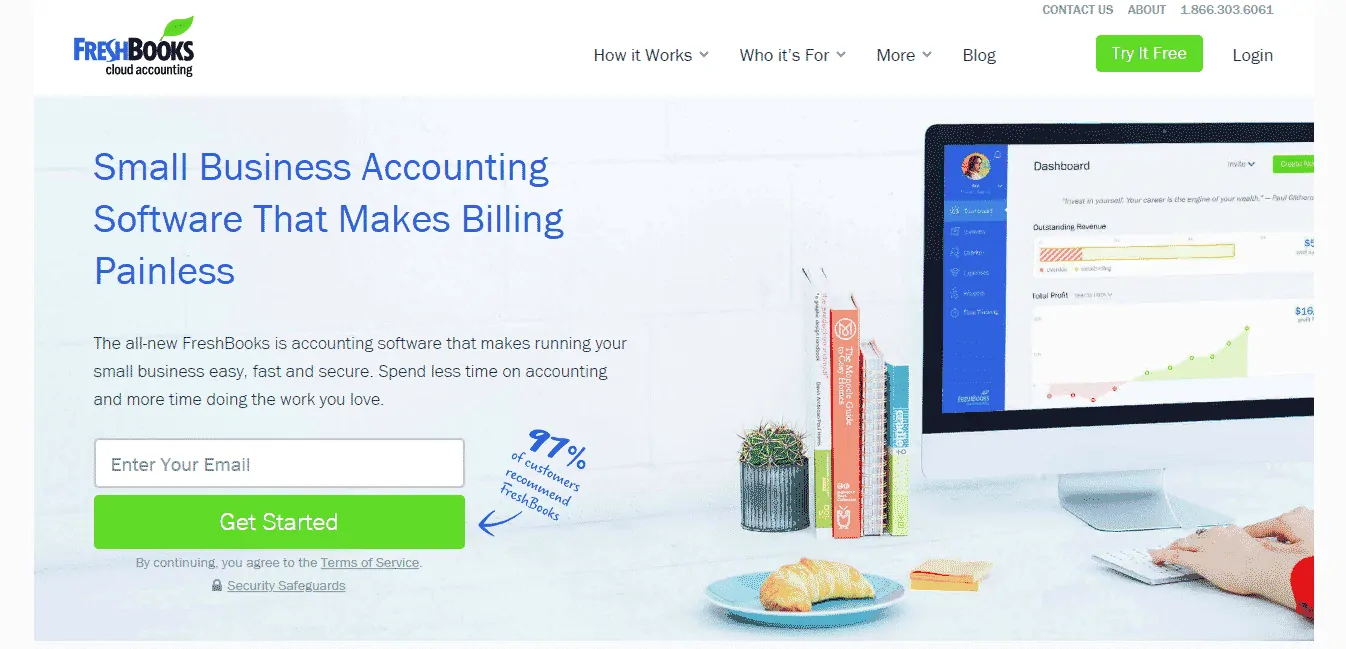
    Freshbooks

    Freshbooks is an accounting software designed especially for small businesses. The software comes with a simple to use interface, an ability to automate invoicing, organising expenses, managing projects and payments and tracking time. All these features make billing effortless, hence the value proposition: Small Business Accounting Software That Makes Billing Painless

    best financial tools

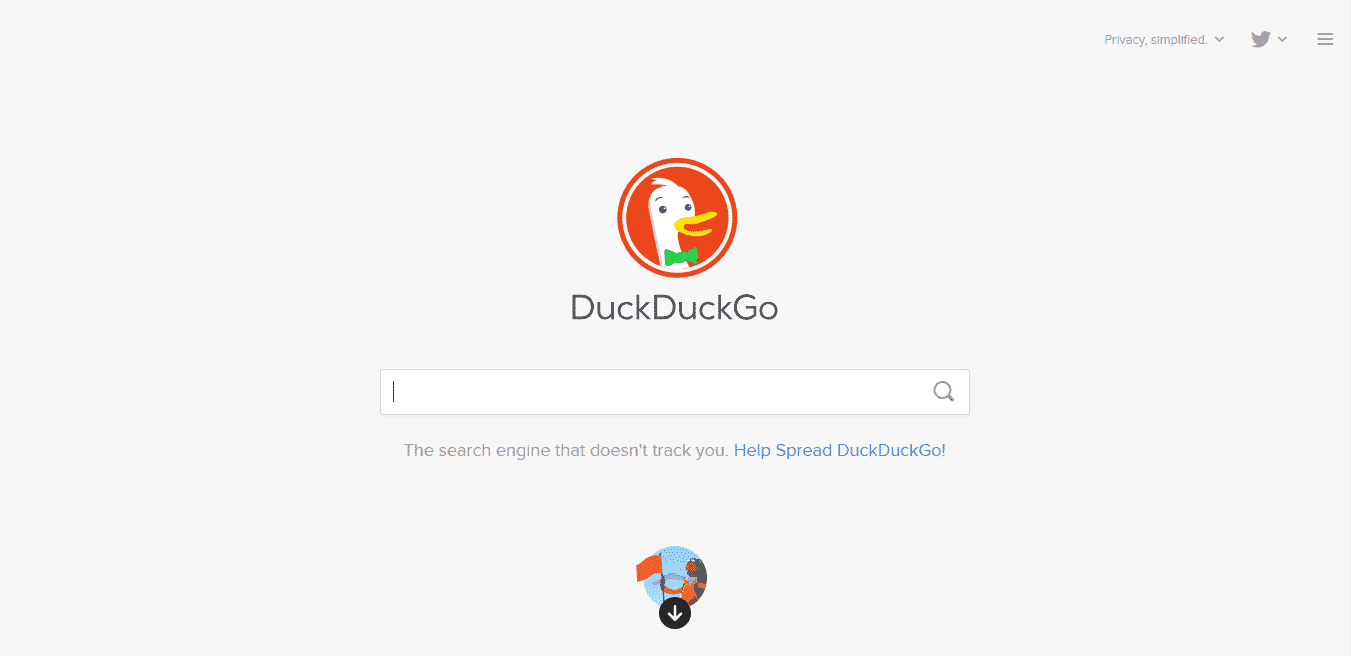
    DuckDuckGo

    DuckDuckGo is a search engine which doesn’t collect your data to target advertisements. Hence, its value proposition is as simple as it gets: The search engine that doesn’t track you.

    duckduckgo value proposition

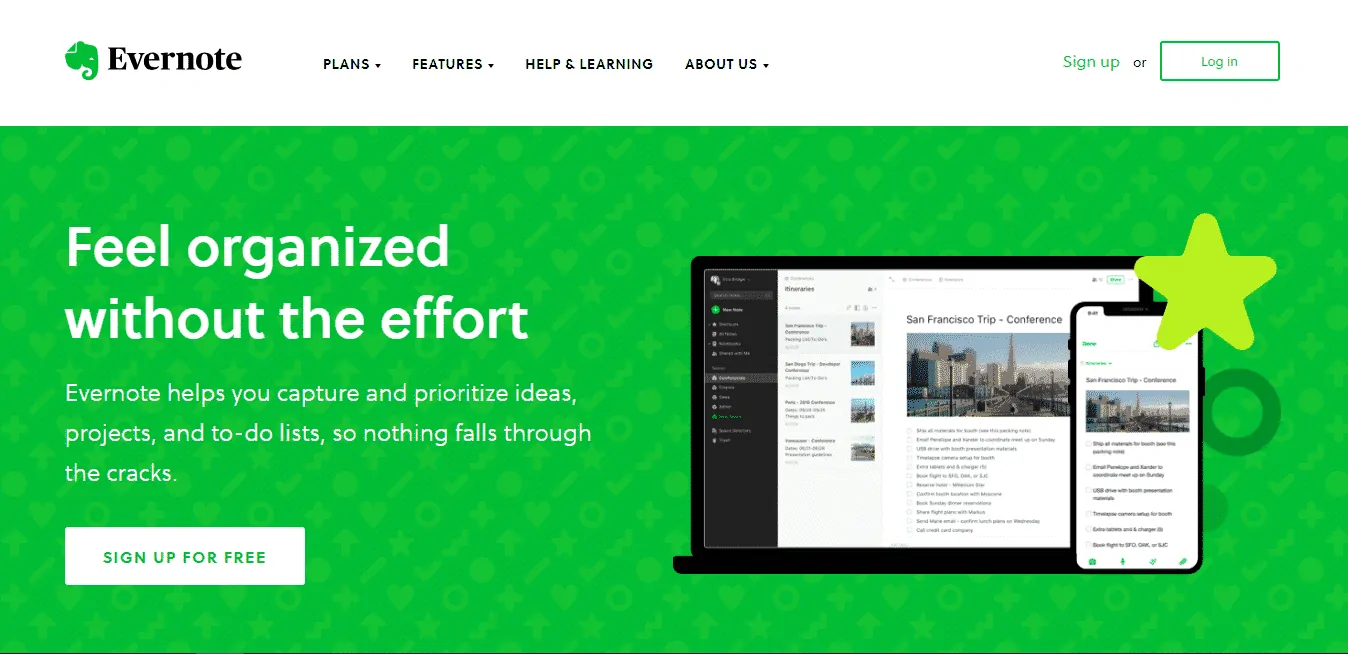
    Evernote

    Evernote lets you organise your ideas and notes. It provides you with cloud features to save, access, and search through your memos on any device, hence the value proposition: Feel organized without the effort

    evernote value proposition

    How To Write A Value Proposition

    Writing a great value proposition isn’t an uphill struggle. You need to be sure what the benefit the product provides to the customers (customer feedbacks in the alpha and beta stage might help) and explain it in one sentence.

    • Identify all the benefits your product has to offer
    • Identify your customers’ main problem that’s been unaddressed by the competitors
    • Connect your benefit to the customers’ main problem
    • Showcase yourself as the preferred provider of this value

    Value Proposition Templates

    Sometimes even the brightest minds can get a creative block. Here are few value proposition templates to help you craft your own value proposition

    For (target customer) – For entrepreneurs

    For those who (statement of the need or opportunity) – For those who struggle to choose the right roommate

    (verb) (adjective) (benefit) – Feel organized without any effort

    (proven industry example) for (operating industry) – Tinder for roommates

    We help (target customer) (do the task) – We help startups find the right employees

    We help (target customer) (do the task) by (benefit) – We help startups find the right employees by sending them pre-screened applications

    (What) (When/Where/How) – Delicious Food in less than 30 minutes

    Go On, Tell Us What You Think!

    Did we miss something?  Come on! Tell us what you think about our article in the comments section.

  • Advertising Campaign – Meaning, Examples, & Planning

    Advertising Campaign – Meaning, Examples, & Planning

    Advertisements have their ways to make us buy the advertised products, don’t they? But imagine the impact that a whole series of advertisements, all sharing the same message or supporting the same cause could have on the consumers.

    Wouldn’t that heighten your interest in the product or service that is being offered?

    For instance, the #LikeAGirl campaign by Always promoted their product, while also creating awareness among the audience about the insecurities girls go through during their adolescence and showing that they cared about their target consumers. This personal connect made the advertising campaign a hit.

    What Is An Advertising Campaign?

    An advertising campaign is essentially just a series of similar advertisements by a company or a business that share the same core message, while also convincing consumers to purchase their products. Each advertisement may have a different theme, but eventually, they all support the same cause.

    For instance, for the International Women’s Day in the year 2017, Levi’s brought the ‘#IShapeMyWorld’ campaign to India that celebrated different women who inspired the world. The advertising campaign spoke about the judgemental Indian society, body-shaming, diversity among women, gender and societal norms and most importantly, how these women rose above it all.

    To create an advertising campaign it’s important to keep in mind the target audience and to understand how you can strike a chord with them to get them interested in your products or services.

    How Can An Advertising Campaign Help Your Business?

    It is always better to have a well-planned strategy to promote your brand, product or services, right? Advertising campaigns do that for you. Whether you offer a product or a service, choose to promote your brand online or offline—advertising campaigns help by guiding you through the process. They also help you gauge where your business stands in the market, by comparing your advertising campaigns with your competition, thereby also helping you assess the strengths and weaknesses in your products.

    Advertising Campaign Planning

    1. Analyse the situation– Gather information about your market so that your team and you have a general understanding about the marketing environment. This also provides your team to assess the strengths and weaknesses of your product, while also giving you an idea about your competition in the market, and their previous advertising campaigns.
    2. Have an objective– Generating awareness for a new project, changing the existing image of your brand to increase anticipation from the consumers, conducting a trial and targeting the weaknesses of your competitors—all these are examples of activities that give your advertising campaign a positive boost.
    3. Target consumers– When you classify your market in terms of consumers, instead of doing so in terms of products, your advertising campaigns have a much better impact on the target audience. Research and survey on the subconscious purchase behaviour of consumers can also help you to understand your consumers better.
    4. Make a statement– Words matter as much as the concept of your advertising campaign. In fact, it is probably the most important step in planning your campaign. It is also the most challenging step as it requires condensing the entire concept of the advertising campaign into a single sentence. (‘Think small’- Volkswagen, ‘I’m lovin’ it’– McDonald’s etc)
    5. Have a media strategy– There are times when mass-media is effective enough to get your advertising campaign trending among the consumers. But, in the day and age of social media, it is always better to have brand and campaign promotions across several social media platforms.
    6. Set a budget– Everything, starting from media, paperwork, promotions, productions etc should be taken into consideration before you can set a budget for your advertising campaign.
    7. Take an inventory– Making a note of the resources that are available with your company that can be used during the production of your advertising campaign. Talents and skills of staff members can also be noted down as they can also help assist the production of your campaign.
    8. Stick to a theme– It is important to have a theme to your advertising campaign. Is the advertisement going to be nostalgic or emotional? All the advertisements in your advertising campaign should essentially stick to a core theme to maintain the integrity of the campaign, as well as to reinforce the message that you wish to send across to your consumers.

    What Makes An Advertising Campaign Effective

    Apart from the structure and planning, there are various other factors that can help you create an advertising campaign. Because there is so much more to things than just being technical, right?

    1. Create a personal connect– Address the issues that you want to focus on using your advertising campaign. Showing people that you care often makes them more interested in the campaigns.
    2. Keep it simple– Encompassing a very major issue through an advertising campaign while also trying to push your products to your consumers can be hard. But minimalism and simplicity are key aspects when it comes to advertising campaigns.
    3. Be honest– With any advertising campaign, honesty and transparency are very important to consumers. Over-selling a product and claiming it to be something it is not decreases credibility, while honesty can attract more consumers to your campaign.
    4. Repetition can be effective– While continuous repetition of the same message will cause your consumers to lose interest in your advertising campaign, creatively repeating the message to get your point across, like for instance, two advertisements sending across the same message as a part of the same advertising campaign makes consumers show interest in your product.
    5. Identify the purpose of the campaign– What is your campaign about? Is it creating awareness? Is the campaign bringing a new product into the market, or is it bringing in a new use for an existing product? By identifying the purpose of your advertising campaign, you can connect better with your consumers.
    6. Choose the right time for launching the campaign– Most advertising campaigns are carefully rolled out during a peak season. If a festive season is nearby, consumers will look for new and more attractive products in the market. At such a time, launching a new advertising campaign captures the attention of your consumers, making your campaign a success.

    Advertising campaign examples

    ‘A Diamond is Forever’ by De Beers

    Following the Great Depression, in the year 1948, when the diamond conglomerate De Beers faced decreasing sales, they came up with an interesting advertising campaign that pushed the idea to the consumers that engagements were best sealed with a diamond ring. The ‘A Diamond is Forever’ campaign popularized the concept of the traditional diamond engagement ring.

    ‘Get a Mac’ by Apple

    In the year 2006, Apple launched its first ‘Get a Mac’ commercial in which two actors representing ‘Mac’ and ‘PC’ respectively have a conversation in which PC ends up embarrassing himself. By the end of the year, Apple had launched 19 commercials under the ‘Get a Mac’ campaign. This humorous, but aggressively competitive advertising campaign captivated the consumers immediately.

    Bottom Line?

    Sometimes, marketing campaigns are mistaken for advertising campaigns. The two have the same eventual goal—promoting their products through a series of advertisements. While advertising campaigns only relies on the communication channels, marketing campaigns everything related to the product to communicate the message. This includes the production, packaging, distribution, communication channels, and digital marketing channels etc.

    Creating an advertising campaign is every bit of an art, as it is science. Every advertising campaign is different. Some run for a whole year, while some campaigns only run during the festive or peak seasons. Some are media based, some are product based and yet some others are based on the objectives. In spite of everything, advertising campaigns have a common goal—striking a chord with the consumers, and creating a true image of the brand in the market.

    Go On, Tell Us What You Think!

    Did we miss something?  Come on! Tell us what you think about our article on what is an advertising campaign in the comments section.

  • Marketing Campaign – Meaning, Types, & Examples

    Marketing Campaign – Meaning, Types, & Examples

    Marketers use this term with such a frequency that their autocorrect adds the term campaign whenever they type marketing in a text. But what exactly does a marketing campaign mean? Is it the same as an advertising campaign? What are the components and types of marketing campaigns?

    Here’s the ultimate guide to answer all your questions related to this topic

    What Is A Marketing Campaign?

    A marketing campaign is an organised and well-planned course of action crafted to achieve a marketing goal of the business.

    This marketing goal could be to communicate the new or existing product to the target audience, reinforce the brand promise and brand positioning, and/or acquire more customers to bring in more revenue to the organisation.

    The marketing campaign is not necessarily engineered by the in-house marketing team, it can be crafted by a third party (marketing consultants) as well. It includes smart use of the communication channels to communicate the marketing message and an offering to back it up.

    A perfect example of a marketing campaign is the ‘Share A Coke’ campaign by Coca-Cola where the company launched the product with 250 of the country’s most popular names and came under the spotlight when the people of the country went out to find a bottle with their name on it.

    Marketing Campaign Examples

    A marketing campaign is crafted with a motive in mind. The motive could range from anything like increasing brand exposure, increasing the sales of the offering, enforcing the positioning or repositioning strategy, etc. Here are some examples of a marketing campaign to help you understand the topic better.

    ALS Association – Ice Bucket Challenge

    The ALS Ice Bucket Challenge used the power of viral marketing over social media to spread awareness of the neurodegenerative disease. According to Facebook, more than 440 million people from all over the world joined the conversation and shared over 17 million videos related to the ice bucket challenge between June 1 and September 1, 2014.

    The campaign was set right from the start. They used the perfect timing (June – August) to launch the campaign which is the time of the vacations. The challenge was made personal where people nominated their friends and family members for the same and the campaign also got the support of many celebrities and influencers which boosted its reach.

    ALS Ice Bucket Challenge was kept as simple as getting drenched in ice-cold water and posting the video on social media platforms with the hashtag #IceBucketChallenge #ALSIceBucketChallenge to spread the awareness.

    It capitalised on the FOMO among millennials.

    The ice bucket challenge had only one goal – get donations by spreading awareness. The campaign resulted in a 1990% increase in the amount of donations to the ALS Association.

    Nike – Just Do It

    Just do it is the longest-running marketing campaign of Nike. Celebrating its 30th anniversary in 2018, the Just do it campaign has proved to be a game-changer for Nike. The campaign was successful in making Nike products appeal to the target audience as a fashion statement and not just as fitness gear.

    The campaign used a 360° marketing strategy and used motivational messages and slogans to emphasise sportsmanship and health to the target audience which eventually led to an increase in the company’s products sales.

    Marketing Campaign vs. Advertising Campaign

    An advertising campaign isn’t necessarily a marketing campaign and vice versa. One of the biggest factors which differentiate a marketing campaign from an advertising campaign is that an advertisement campaign relies totally on the communication channels like TV, radio, newspaper, etc. while a marketing campaign uses everything related to the product to communicate the message. This includes the production, packaging, distribution, communication channels, digital marketing channels, etc.

    Marketing Campaign Types

    While there can be innumerable additions to the types of marketing campaigns, here are the 8 most common types.

    • Product Launch – The launch of a new product involves a campaign which uses communication channels, distribution channels, offers, discounts, and other promotional strategies in synergy.
    • Brand Launch – A brand launch is different from a product launch. It may include multiple products and services and may require a communication, relationship and promotional strategy which revolves around the brand identity and brand promise.
    • Rebranding – There might be numerous reasons for a company to rebrand itself or its offerings. A rebranding campaign is usually like a brand launch revolving around the new brand identity and promise.
    • Repositioning – Repositioning is a hard task. It refers to steps taken to reposition the same brand/product in the market. It involves using all the relationship, distribution, promotion and communication strategies in synergy to change the market’s understanding of the brand/product.
    • Turnaround/Relaunch – Turnaround is different from repositioning or rebranding. If your company is facing reputational issues like phones blasting, bad customer support or declining customer satisfaction, turnaround or relaunch is the only way out. Turnaround is a marketing campaign which relaunches the same brand with a new improved promise.
    • Seasonal Push – Every company has its peak season in a year. Seasonal push is the marketing campaign to get the most revenue in the peak season.
    • Brand Awareness – Many companies dedicate marketing campaigns to increase the brand awareness of the brand. Such marketing campaigns can also be launched on a continual basis to defend their position in the market.
    • Revenue Push – These marketing campaigns are crafted to meet the short-term revenue goals of the organisation. These are launched with goals like the increase in the sales of a certain product, attracting more customers to try/buy an underselling offering, etc.

    Components Of A Marketing Campaign

    A marketing campaign is a series of actions/operations which work synergy to achieve a particular objective. It is designed with all these components in place.

    • Goal – This is the ultimate objective behind the marketing campaign. It could range from branding or rebranding to a short-term revenue push.
    • Target MarketTarget market is the specific and well-defined consumer segment within the company’s serviceable market to which the business wants to sell its products and services and direct its marketing efforts to.
    • Offering – This is what the company has to offer to the target audience. The whole marketing campaign is crafted to communicate this offering to the target audience.
    • Message – Message includes the verbal and non-verbal messages which the company uses to communicate the offering to the target audience.
    • Medium – It includes all the production, packaging, communication, distribution, and promotional (digital and traditional) mediums used by the company to communicate the message.
    • Control – It is how the company controls the message from being distorted after the campaign is launched. Control is usually the function of the PR team.

    Digital Marketing Campaign

    With the onset of the internet, marketing campaigns are usually divided into digital marketing campaigns and non-digital marketing campaigns / traditional marketing campaigns. Even though the activities (SEO, SEM, PPC, SMM, etc.) involved in a digital marketing campaign are different from those in the traditional marketing campaigns, this doesn’t change the meaning or objective of a marketing campaign.

    The digital marketing campaigns only increase the scope of the marketing campaigns as the company can now use a holistic approach to market the offering.

    Go On, Tell Us What You Think!

    Did we miss something?  Come on! Tell us what you think about our article on what is a marketing campaign in the comments section.

  • The Psychology Behind Subscription Boxes

    The Psychology Behind Subscription Boxes

    Don’t you just love it when you receive a package on your doorstep, not knowing what it contains? The anticipation of opening the package and discovering its contents alone is a whole experience in itself.

    Now, what if you got a mystery package like that every month? Would you opt for such a plan? Retailers bank on this psychological effect to increase their sales, with the emotional connect that we feel while opening a package.

    A subscription box is something that delivers new contents to you regularly, over a period of time. If you’re wondering why the obsession with subscription boxes has been rising, especially recently, it’s important to understand what it is and what the core psychology behind subscription boxes.

    What are Subscription Boxes?

    Subscription boxes are a recurring delivery of select products, according to a theme or a type of product, which are delivered to you over a scheduled period of time. They come in a variety of options that range from fashion to pets. They target a very vast audience and cater to specific interests.

    Although subscription boxes are recurring, there is a difference between a single box and a scheduled subscription. The consumer may or may not choose to have a monthly or quarterly subscription of a product if they want to.

    How Did Subscription Boxes Become So Popular?

    According to Forbes, Birchbox started the trend of subscription boxes in the year 2010, by providing consumers with samples of personal care products. Since then, they have grown by at least 100% with every passing month. Retailers like BarkBox and NatureBox have also followed suit with a growth of 50-100% every month.

    Now, subscription boxes exist for anything and everything a person could ever want. Personal care, food, pet-care, gaming—you name it!

    There are 5.7 million subscription box shoppers in the U.S. alone! That is a lot of people who are addicted to subscription shopping!

    55% of all subscriptions are curation-based, and 32% of the consumers have opted for a replenishment subscription, i.e. their subscription gets renewed at the end of the time period, and payments are made regularly to ensure continuously receiving subscription boxes.

    Social media has also influenced the purchase of subscription boxes. Influencers on Instagram and YouTube with cult-following often post unboxing videos of their subscription boxes. This is also one of the many reasons why they are so popular today.

    What Is Their Appeal?

    The concept of subscription boxes appeals to us because they cater to very specific requirements. Retailers like Man Perfected, and Bondi Wash offer a variety of grooming products for men, and soap and cleaning products respectively. Other retailers like the Indian website The Big Book Box offer a monthly subscription to books based on a particular theme every month, along with other bookish merchandise such as bookmarks. This thematic curation is something that appeals to the consumers.

    The prices for subscription boxes range from as low as $10 to somewhere around $500. So to speak, there is a subscription box that can cater specifically to your needs, without having you break the bank. This economic inclusiveness is very appealing to consumers.

    A very important part of their appeal is that subscription boxes offer products that would generally cost, maybe double or triple the original value if bought from the market. Consumers find this very economic. Because, why would you get something for triple the price when it you can get it without spending too much, right?

    Sometimes, subscription boxes also provide items that cannot otherwise be purchased in the market. This feeling of exclusiveness is also very appealing to a lot of consumers. Besides, the joy of owning something exclusive is a rush, isn’t it?

    Retailers also include samples of the latest products from various brands in their subscription boxes so that consumers can test them risk-free, and make a purchase if they liked the product.

    Basically, subscription boxes are pretty much the only way to gift yourselves something and still be surprised with the contents.

    Psychology Behind The Success Of Subscription Boxes

    From a psychological point of view, subscription boxes work on the principles of operant conditioning and behavioural consistency.

    According to B.F Skinner’s theory of operant conditioning, positive or negative reinforcements can bring about changes in a person’s behaviour. Subscription boxes, in this case, are a positive reinforcement.

    Another reason why people opt for regular delivery of subscription boxes can be explained through Dr. Charles Livingstone’s theory of reward uncertainty. It’s very simple- if you keep giving your consumers a predictable set of rewards, they quickly lose interest. Subscription boxes also work on the same principles.

    After all, who wouldn’t want a continuous flow of rewards?

    Applying the theory of behavioural consistency, consumers are more likely to sign up for ongoing subscriptions if they have already done so in the past. If the consumers are pleased with what they receive, they are even more likely to keep getting subscription boxes.

    Another psychological trick that retailers use to gain compliance is the scarcity principle. Consumers are more likely to purchase a product if only limited pieces of it are available. They cleverly make use of the notion of the fear of missing out, (that we all now know as FOMO), into making their consumers opt for a subscription box regularly.

    How Do Subscription Boxes Help Retailers?

    What is the first thing that draws you to the idea of a subscription box? Is it the idea of having a box full of items that are specifically picked out for you?

    Retailers often ask their consumers to fill out a form with particular details that allow them to know their consumers better. This is done under the guise of sending you a ‘tailor-made’ set of products that match your needs and interests.

    The details that you provide to a retailer in order to get a customized subscription box are often valuable to several brands that provide the products. This information allows the retailers and brands to do an inventory and understand the needs of their consumers better.

    What Is The Take-Away?

    Subscription boxes are increasingly becoming the most popular way to buy products and services online. They are most popular with the age group 20-44 years old, and are very common among urbanites.

    The dominance of a curation-based subscription is the result of consumers who want a continued series of personalized and high-quality experience. Everybody wants to receive items that have been curated specifically based on their interests.

    28% of the consumers who have opted for a replenishment-subscription plan said that they continue to get their subscription box because it is convenient for them. 23% find the subscription boxes to be a good bargain for the money they pay.

    Despite all of this, churn rates, or cancelling the subscription when a consumer isn’t satisfied with the products, has been high.

    The subscription box market is growing fairly quickly. There is a lot of competition with over 600 retailers who offer subscription boxes. In such a state, companies in the space must develop better experiences as opposed to better subscription boxes. This will also help in bringing down the churn rates, as well as in accelerating growth and profits.

    Go On, Tell Us What You Think!

    Did we miss something?  Come on! Tell us what you think about our article on psychology behind subscription boxes in the comments section.

  • What Is Sports Marketing?

    What Is Sports Marketing?

    The sun is out, you get ready for your morning workout. Donning your Nike sports shoes and Adidas training tee, you start your workout and finish it up by drinking your favourite energy drink Gatorade.

    Do you realise the common thread that connects them?

    Subconsciously we make choices that are guided by marketing strategies adopted by the company. Particularly during sporting events, there is heavy advertising which influences our choices while buying products and also helps the company to capture the imagination of the public so when they think of sports they automatically associate a product with it.

    Such advertising has given rise to the marketing term “Sports Marketing.”

    What Is Sports Marketing?

    Sports Marketing can be defined as a marketing strategy that is aimed at promoting sporting events, equipment or products and services using an athlete or a team.

    Using an athlete or a team has one clear motive. An athlete or a team acts as influencers which have a direct impact on the audience.

    For example, Nike partnered with Mike Jordan a famous basketball player for its new line of shoes which will be branded as Air Jordans.

    Air Jordans introduced Nike created a craze for sneakers and also formed a subgroup that started collecting sneakers. This group gave rise to a new group called Sneaker heads which gave rise to an all-new market for sneakers.

    Where Do We See Sports Marketing?

    Take a major sporting event like the recently concluded FIFA World Cup. It was viewed by over half of the world’s population. Popular sports brands like Nike, Adidas and Puma sponsored various teams by providing the football kit. Even the fantasy league during the World Cup was associated with McDonald’s.

    SuperBowl halftime shows usually have celebrities performing and there is a prime time slot for commercials to be played which is why companies shell out money to promote their product as SuperBowl is viewed by millions of people across the globe.

    Even during the offseason, companies like Coke tried their drinkable advertisement to promote their product.

    What Are The Various Sports Marketing Strategies?

    Consumer choices are influenced when there are promotional activities done by influencers and experts.

    Celebrities usually have a large fan following and thus act as a perfect fit for the companies to use them in their advertisement to increase the reach of their product through their followers.

    For example during SuperBowl season, celebrities like Kevin Hart are roped in to promote a certain product via funny commercials that are aired during primetime.

    Companies also prefer to use athletes who are well known in a particular sport for promotional purposes. Promotion by experts turns out to be more genuine than from random celebrities. For example, Nike has employed Usain Bolt to promote their clothing line as well as shoes specially designed for track sports.

    Innovative marketing strategies by using a certain event in sporting history are also becoming a norm in sports marketing.  For example, following Colin Kaepernick famous kneel during the national anthem, Nike recently launched the campaign for their 30th anniversary with Colin spearheading the commercials.

    Nike reached an all-time high in profits near September 2018.

    Although it is not necessary for such events to be controversial. Positive events like the Golden State Warriors winning the championship after a gap of 50 years made Stephen Curry a hot pick for the companies, and he featured on various advertisements.

    Social Media has changed the way of traditional marketing. It has opened a new horizon for the companies as well as the people to engage and due to the increasing popularity of smartphones, strategies are being employed by the companies to promote their products and make them go viral.

    Following such strategies, companies try to accomplish two of the 7 Ps of marketing which are  People, Promotion.

    Future of Sports Marketing

    People are taking out time from their schedules to watch such events. Access to various streaming services have made it possible to witness these events on the go, and this trend is likely to stay. It is the perfect time for the companies to cash in and reap the fruits of Sports Marketing.

    Go On, Tell Us What You Think!

    Did we miss something?  Come on! Tell us what you think about our article on sports marketing in the comments section.