Feedough Logo

Blog

  • Candy Crush Success Case Study | Marketing + Psychology = Success.

    Candy Crush Success Case Study | Marketing + Psychology = Success.

    Other Games will come and go, but Candy Crush goes on forever. Launched in 2012, Candy Crush reported a total of 409 million active users at the end of June 2016. It’s a free mobile game where 70% of the users on the last level haven’t even paid anything, but it still earns a daily revenue of $405,708.

    The success of Candy Crush can be credited to the usage of exceptionally well-defined marketing and psychological strategies by the developers to make the game addictive.

    Let’s look at how the game was able to dominate all the charts in this candy crush case study.

    Strategies which led to the success of Candy Crush Saga

    How a candy matching game with not so complex graphics and music can be the only game to reach number 1 spot on google play, Apple App store, and Facebook at the same time?

    candy-crush-number-one-gameThe success of candy crush is the result of a great mixture of marketing and psychological strategies. This use of psychological marketing has led to a candy crush addiction among its users and more money to the developers.

    Marketing Strategies

    Free Game

    Just like other freemium apps, Candy crush can be downloaded and played free of cost. People are never forced to pay a penny to play the game. It has been designed in a way that free users too can finish the game but with certain restrictions like limited lives and moves. There are only in-app purchases for extra lives and moves. This free model worked really well for Kings as the users got time to try and to get addicted. This addiction led to more, recurring, and long-lasting income.

    candy-crush-platforms

    Simple

    The Game is really simple to play. Users just have to switch adjacent candies to form rows or columns of three of the same colour, which gets disappeared from the board. Fulfilling certain tasks will promote them to the next level.

    This simple game isn’t that easy though. The difficulty level increases as you move ahead and due to the limited lives provided, users generate a want to play more.

    Pay to Play More

    candy-crush-purchases

    Candy Crush is primarily monetized through the in-app purchases. Users get a set amount of lives (5 lives) and move to complete a level, exhausting which they have to buy extra lives/moves through the in-app purchases. They can also opt for in-app purchases to start new episodes.

    These purchases can be substituted by sending requests to Facebook friends and hence users are not forced to pay at any stage.

    Since the friends have to accept the request for the user to move ahead, it takes a lot of time. Hence, users prefer in-app purchases to feed their addiction.

    The in-app purchase cost is kept very less and an average user have paid around $25 dollar. It’s the number of users that did miracles for the company.

    Facebook

    It all started with requests on Facebook.

    One of the best strategies devised by Candy Crush Saga was the requests on Facebook. A user is asked to either pay or to send requests to their Facebook Friends to get extra lives/moves or to move on to a next episode. Facebook, with over 1.5 billion users, is a perfect platform to engage and gain more users for the application. It became the primary source of new users for the game in its initial stages.


    candy-crush-facebook

    Target Group

    Users of candy crush aren’t limited to any specific demographics. Candy Crush is played by users of all age groups, belonging to all ethnicity and religions, and in all the 7 continents.

    Fun Fact – The game was actually targeted to women aged 25-45.

    Social

    Gamers can see and compare their progress with their friends and family members. This social motivation has made many users shed their money to compete and win against them. Reaching on a high level on Candy Crush is something to be proud of, you don’t reach there easily. The social factor became a good strategy to earn more as people like to show off to people they know.

    candy-crush-friends

    Quality

    One of the most important factors behind the success of the game is its quality. Candy Crush, which looks a bit like bejewelled, used great graphics mixed with soothing music and most importantly – no glitches. The game maintained top quality by not including advertisements and having full control in the hands of the developers.

    Positioning

    It takes hardly 2-5 minutes to complete a turn on Candy Crush. This helped the brand to position itself as a time killer and not just a fun mobile video game.

    Number of Levels

    There are currently more than 2000 levels in candy crush. The game becomes more difficult as the user levels up. It is certain, in this game of luck, that the user might get stuck in one or more of the levels. More challenging the levels are, more is the probability of user paying to get it cleared.

    But Kings had to keep the difficulty moderate as many difficult levels might lead to users abandoning the game.

    Use of Analytics

    Candy Crush made good use of analytics to find out what makes their users play more and what is stopping them. Level 65 was considered as one of the most difficult levels and stopped users from playing ahead. This level was soon removed to make users stick and go deep in the game.

    Other Marketing Strategies

    Word of Mouth Marketing has been one of the biggest strategies behind the spread of this game worldwide. Candy Crush has also used influencer marketing and other strategies like cross-promotions, TV advertisements, etc. to market its brand.

    Psychological Strategies

    The main reason behind such a vast appeal of Candy Crush Saga is the clever use of –

    Candies

    While jewels are considered to be feminine, candies are liked by everyone.

    Colours

    Candy Crush is a mixture of every colour. Hence the game can be considered gender-neutral.

    candycrushWords

    Use of words like delicious, sweet, etc. give short term motivation to the user and makes him play more.

    Fewer lives

    Majority of the candy crush game players haven’t paid a penny for extra moves. As a result, they get 5 lives to play and gets one extra life after every half an hour. Hence, they can’t play the game as much as you want in one sitting. This not getting enough of the game creates a desire to get more and this curiosity leads to addiction.

    This strategy of limited lives is to counter a phenomenon called “hedonic adaptation” which refers to the fact that humans get used to nice things over time until they no longer anywhere near as pleasurable. Hence, people stick to this game for a long time without getting bored.

    Game of luck (just like slot machines)

    One of the major reasons people stick to Candy Crush is because of its unpredictability. Candy Crush cannot be conquered with a set of certain skills. Just like gambling, Candy Crush totally depends on luck. The arrangement of candies are totally random and no one can predict the result based on a few moves.

    Psychology of gambling addiction can be applied to Candy Crush addiction as well.

    Handy

    The game can be played with one hand, doesn’t require an active internet connection (on smartphones) and doesn’t take much time to exhaust a life/level up. Hence, it can be played anytime and anywhere.

    Fun Fact – Candy Crush has been played in Antarctica as well.

    Never Ending

    Candy Crush has released many new levels even after the previous levels being completed by the users. This has helped them in retaining users which would have otherwise deleted the game after completing all the levels.

    candy-crush-addiction

    Go On, Tell Us What You Think!

    Did we miss something?  Come on! Tell us what you think of this article on candy crush case study in the comment section.
  • 40 Powerful Facebook Statistics and Facts for Marketers

    40 Powerful Facebook Statistics and Facts for Marketers

    Facebook, world’s favourite social media network, with around 1.13 billion daily active users is the perfect choice for any business interested to tap the social media market. But to tap it for Facebook Marketing, one must know about the latest Facebook statistics.

    Facebook Statistics and Facts about – People

    • 23 % of the earth’s population has an Active Facebook Account. Facebook claimed its monthly active users for September 2016 to be 1.79 Billion. That means with a global population of around 7.5 billion people, approx. one in every four people use Facebook at least once a month.
    • Facebook’s is no more just a social media network, it’s an economy. An economy whose active users are more than the population of China.
    • Approximately 84.5% of Facebook’s daily active users are outside the United States and Canada. (source)
    • 70% of users check Facebook once a day. (source)
    • Canada has most active Facebook Users in the world followed by USA. (source)
    • 77% of online women are Facebook users as compared to 66.7% of oonline men. (source)
    • People spend more than 50 minutes a day across Facebook and its family applications (Facebook, messenger, and Instagram). Snapchat is second with around 25-30 minute spent per day. (source)
    • Every second 6-8 new users are added to Facebook.
    • Around 1.03 billion users use Facebook on mobile daily.
    • 54% of Facebook users access the service only on mobile. (source)
    • More than one billion people use Facebook messenger at least once a month. (source)

    Facebook Statistics and Facts about – Posts

    • 44% of Facebook users “like” content posted by their friends at least once a day. (source)
    • Users like over 4 million posts every minute. (source)
    • People share 1.3 million pieces of content on Facebook every minute of every day
    • The optimal length of a Facebook post – 40 characters (source)
    • Human attention span is around 8 seconds. Shorter posts are better than longer.
    • Best days to post on Facebook – Thursday and Friday.
    • Best time to post on Facebook – 6-8 am & 1-4 pm.
    • Most liked page on Facebook is Facebook for Every Phone with 501,146,829 total page likes.
    • Top 3 brands on facebook-

    Coca cola – 99 285 554 likes

    Mcdonalds – 67 198 013 likes

    Microsoft Lumia – 47454928 likes

    Facebook Statistics and Facts about – Photos / Images

    • Facebook posts with images see 2.3X more engagement than those without images. (source)
    • Facebook posts from brands that included images earned 87 percent of all engagements (source)
    • Photos get 53% more likes, 104% more comments and 84% more click-throughs on links than text-based posts. (source)
    • Around 2 billion photos were uploaded on Facebook services (Facebook, messenger and Instagram) per day in 2015. (source)

    Facebook Statistics and Facts about – Videos

    • People are 85 percent more likely to buy a product after viewing a product video. (source)
    • The number of videos appearing in Facebook’s news feed has increased 3.6 times. (source)
    • 85 percent of Facebook video is watched without sound (source)
    • People spend 3x more time watching a Facebook Live video on average compared to a video that’s no longer live. (source)
    • Video posts generates 135% greater organic reach compared to photos. (source)
    • Adding captions to videos increases the watch time by 12%, on average. (source)
    • Around 8 billion daily video views were recorded in November 2015. (source)
    • Around 100 million hours are spent on Facebook videos everyday (source)
    • 169k Pages use crossposting video feature provided by Facebook which allows different pages to post the video again without downloading and uploading again, if given the rights by the original publishers. (source)
    • 1 million hours of video has been watched with Samsung Gear VR (source)

    Facebook Statistics and Facts about – advertisements

    • There are around 3 million advertisers on Facebook. (source)
    • Ad Prices on Facebook have increased By 247%
    • Facebook captured $8 billion of the total advertising revenue in 2015 (source)
    • More than 70% of advertisers are from places other than United States. (source)
    • Approximately 13% of the total digital advertising revenue generated in the United States
    • Purchase decisions of 47% of Millennials are influenced by social media. (source)
    • Total digital ad spending might reach to $100 billion by the year 2020 (source)
    • 79% of total ad revenue comes from mobile advertisements. (source)

    Maybe you’d like to read about Facebook’s Business Model as well.

    Go On, Tell Us What You Think!

    Did we miss something?  Come on! Tell us what you think of this article in the comment section.

  • Facebook Business Model | How Does Facebook Make Money?

    Facebook Business Model | How Does Facebook Make Money?

    With around 1.13 billion daily active users and 27.63 billion in revenue in 2016, Facebook is the most loved social networking website all over the world. Not just this, world’s second most loved social media network, Instagram, is also a Facebook company. But how, despite so much competition, Facebook maintained to be at the top and that too with an increase in revenue each year.

    With its biggest competitor, Google plus, not even being close to it, Facebook Business Model is worth a discussion. But before moving on to how does Facebook make money and its Revenue Model, let us first discuss a bit about the companies owned by Facebook and about its business strategy.

    Facebook Business Model

    Ever since it was started, Facebook has substantially changed its business model. It is now highly diversified and has a very ambitious business strategy. To gain more knowledge about the Facebook business model, it is important to know about the companies which are owned by it.

    The Facebook Companies

    Facebook business model constitute the following companies.

    • Facebook Payments Inc.: to let Facebook generate revenue through payment business.
    • Atlas: ad-serving and measurement platform, offering services to advertisers and agencies.
    • Instagram: Media Sharing Platform.
    • Onavo: Mobile utility application.
    • Parse: back end infrastructure provider for mobile applications.
    • Moves: Exercise (steps) tracking application.
    • Oculus: Virtual reality technology.
    • LiveRail: Publisher Monetization Platform.
    • WhatsApp: Instant Messaging Client.
    • Masquerade: Visual Filters mobile application.

    Services Provided by Facebook

    To sustain in the market, you must know everything about yourself and your competitors too.

    While most of the services provided by Facebook aim at generating revenue, many of them are used to generate data. This data range from user account information to his behaviour over the internet and his phone. This strategy has helped Facebook in suppressing most of its competitors until now.

    Some of the services included in the Facebook business model are – 

    Facebook.com

    World’s most favourite social media network, Facebook lets you connect with your friends, family and others. It also launched its less data consumption version, Facebook Lite, in 2015. This is the biggest revenue generating source of the parent company.

    Messenger

    Facebook.com separated chat from its interface and launched Messenger as a mobile messaging app with which users can send private messages and stickers, chat with groups, and make free calls, even to people in other countries.

    Facebook has also integrated payments in messenger for users residing in the United States.

    Workplace

    Workplace by Facebook is an in-house social network for companies to connect with everyone in their company. A workplace profile will be different from that of a Facebook personal profile and companies will be charged to register for a Workplace Profile for their employees.

    Marketplace

    Facebook has taken a step forward with the introduction marketplace. The working model of Facebook Marketplace will be same as that of Ebay but with an integration of messenger. Hence making it a social marketplace. Payments will not be made on Facebook’s platform though.

    Moments

    A competitor to Google photos, which lets you sync your photos to the cloud. Not just it, it is a cloud storage which will sync and form an album of all the photos you and your friends upload if they were taken on the same date & place and you were a part of it.

    Instagram

    The second most loved social media network after Facebook. It is an image sharing network which lets you share moments with everyone you’re connected to. Unlike Facebook, Instagram has a follower network which lets you share your photos with your followers.

    Instagram stories have been introduced by Facebook to get an edge in its competition with Snapchat.

    MSQRD

    MSQRD is a mobile application which provides users with visual filters and face swipe technology which can be used while taking pictures.

    Whatsapp

    World’s leading instant messaging client. This messaging service is an end to end encrypted and fully digitised instant messaging service which uses the internet to send & receive messages and competes to the typical SMS services.

    Audience Network

    A new competitor to Google Adsense. Facebook already has millions of advertisers and now, according to its new strategy, it’ll share them with some mobile applications and website developers. FAN (Facebook audience network) is an advertising network powered by Facebook which appears on apps and mobile websites other than just Facebook family companies.

    Business Strategy of Facebook

    Facebook users help the company earn money and increasing the user-base is, hence, the topmost priority of the brand. But this is just the phase one of the strategy. Facebook as a social media platform is a big black hole of big data and has always made use of this data to generate revenue from its targeted advertisements. Ever since it started hitting a user saturation in its core markets like USA, UK, and Canada, Facebook spread its feathers to the rest of the world. But there were limitations like no access to smartphones, good internet, and some of the areas weren’t even connected to the internet. Hence, to overcome this limitation, Facebook launched phase one of its plan.

    Access to Facebook

    Half of the world’s population doesn’t have access to the internet.

    The phase one of Facebook’s business strategy is making everyone get access to it. Facebook is addictive and all it takes is an access to it to increase its user-base. Most of you readers might be aware of the internet.org which is “a global partnership dedicated to making internet access available to the two-thirds of the world not yet connected.” This internet is provided at either very low cost or no cost at all. This, along with other capital investments in Aquila, solar planes which provide internet access to all, and Facebook Lite has been done to let people, who are not yet connected, connect to Facebook.

    It has also bought many startups just to diversify its presence and make it easy for users to ‘connect to the world’ through Facebook.

    Facebook bought Snaptu

    Facebook wanted its application to be compatible with every device. Hence it bought Snaptu in 2011 which was a free application platform that ran on virtually every type of Internet-enabled mobile phone.

    Facebook bought Onavo

    Onavo is a mobile analytics company. The app provides information for users on data consumption and helps them in its compression. It was bought by Facebook in 2013 to enhance internet.org and Facebook Lite experience.

    Zuckerberg is a great businessman. He knows what to implement and how to implement it. Facebook believes in buying an idea and hiring the person who had it.

    Tapping the user-base

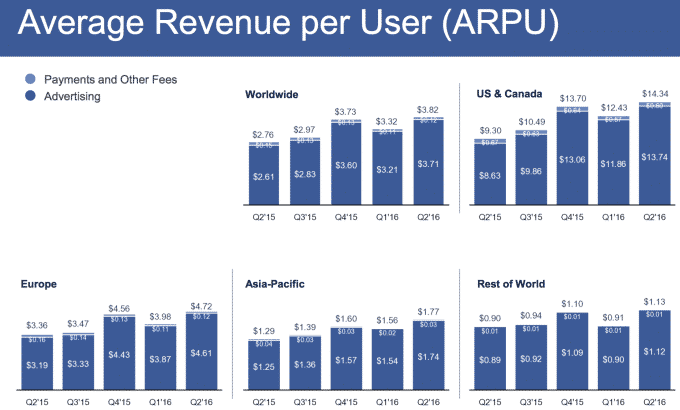
    Once everyone has access to Facebook, the next step is to tap it and generate revenue. Facebook has already tapped some of it by increasing the average revenue per user (ARPU) in the “Rest Of World” region to $1.13 in Q2’16, which is around 4 times to that in 2012.

    Facebook business model
    facebook-arpu-16

    The recent stats are in favour of this strategy of Facebook. With an increase in the total time spent per day (50 minutes) on its money generating services (Facebook, Instagram and messenger) and increase in the ad impressions (50%), Facebook surely is making a lot of money.

    How does Facebook make money?

    Facebook Revenue Model

    How many times have you wondered “how does Facebook make money when it doesn’t charge even a penny?”

    There’s a famous quote related to this digitized world.

    If you aren’t paying for it, you’re the product.

    This is the case with Facebook. You help it make money.

    With its ever-increasing user-base, Facebook is able to generate more revenue per user. But this revenue has its costs as well. Before discussing how does Facebook make money, it’s important to discuss the sources of expenses in Facebook’s revenue model.

    Sources of Expense for Facebook

    The question of how does Facebook make money can only be answered once we know all the expenses it incurs. The company has seen a sharp rise in its yearly expenses which include –

    Cost of Revenue

    It’s the cost of infrastructure Facebook is built on. It includes expenses related to the delivery and distribution of products, its depreciation and other costs. Costs such as-

    • facility and server equipment expense and depreciation,
    • energy and bandwidth costs,
    • support and maintenance costs

    -are included under this head.

    Research & Development

    Facebook is the world’s number one social media network. This doesn’t mean that it has no competition and will remain at the top forever. Facebook and its family companies have had loads of competitors in the market and have successfully been able to suppress them all due to an insane amount of research and development.

    Hence, R&D is of utmost importance to Facebook to retain and to grow. Research and development has proved out to be a major expense item for Facebook that could continue to see a significant lift in the coming quarters. Facebook is always looking to enhance its user experience. R&D has a great role in it.

    Marketing and sales cost

    Facebook is one of the biggest brands. It’s a costly affair to maintain it. Facebook’s marketing and sales cost include

    • Expenses for better user interface and other services provided to users, marketers and developers to attract and retain them.
    • Amortization of intangible assets
    • Payrolls and other benefit costs
    • Other marketing and sales expense incurred on people and products.

    General and Administrative

    This includes compensation to the employees of administrative departments and other legal and accounting expenses.

    Sources of revenue for Facebook

    Finally, after discussing the expenses in the Revenue Model of Facebook, we have the answer to the question – How does Facebook make money? Even though Facebook doesn’t earn money by selling user data like Twitter, the primary source of revenue for Facebook is Advertisements which involves the use of user data for targeting. There are many other sources of income in Facebook’s Revenue Model.

    Advertisements

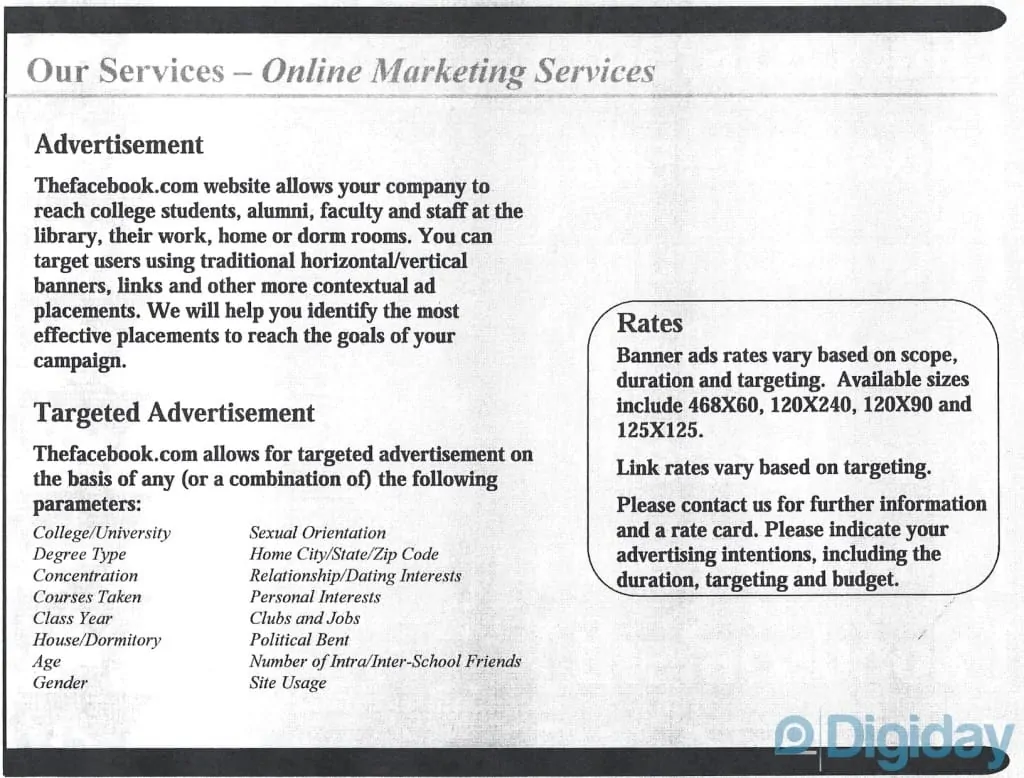
    User-targeted advertisements have been a primary source of revenue for Facebook. Facebook Business Model was designed to generate revenue primarily from its unique ability to provide targeted advertisements. This can also be seen in its investor’s pitch deck.

     Facebook business model investors pitch deck

    Facebook is the big black hole of user data. What can be a better revenue source than selling that data, in a restricted way, to the marketers? Facebook use this user data to target ads to the right users.

    Suppose the marketer wants to target males of 18-24 age group residing in New York. If it weren’t for Facebook, he would have spent thousands of Dollars just to research and to reach to the exact target group, or he would have spent other thousands of Dollars to reach everyone in that target area which would have led to huge wastage of resources.

    Facebook, with over a billion daily active users, does the work of data collection and help marketers reach the target group easily and economically.

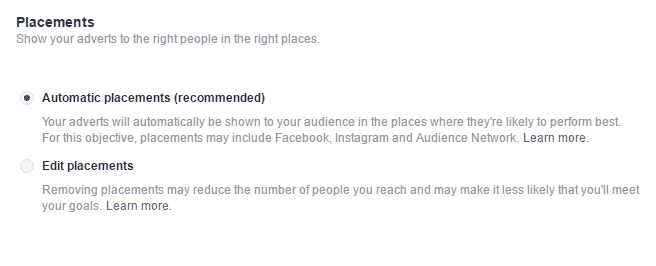
    Advertisements have been a primary revenue source until now amounting 97% of the company’s overall revenues at the end of 1Q16. The only thing that has changed is the platforms. New platforms like Instagram, Facebook Messenger, Whatsapp, and other mobile applications and websites (part of Facebook’s advertisement network) have been added to the network.

    Facebook business model facebook advertisement network

    Advertisement revenues from mobile applications and websites (82% of total advertising revenue) proved out to be more than that from desktop versions.

    What else?

    Facebook business model promoted facebook post

    Facebook, to make marketers invest more in advertisements, have modified its newsfeed algorithm which makes it difficult for page owners to get more reach organically.

    Facebook business model instagram-ad
    Facebook business model - advertisements

    Revenue from Payments

    Have you ever played any of those games like Candy Crush, Zynga Poker, Farmville, etc. on Facebook?

    Or have you ever paid for any virtual currency or any virtual game/application product on Facebook?

    These games and applications play a great role in framing Facebook business model as a part of these type payments go to the company which acts as a payment gateway for those applications and games.

    Workplace

    Facebook has launched this private social media networking service for companies. Employees and people connected to the companies can connect to each other and discuss ideas and projects using workplace.

    Revenue is generated per employee (using the service) from the company.

    Oculus

    Facebook is very keen on tapping the Virtual Reality market. It has recently bought a virtual reality hardware developer, Oculus, and is generating revenue through the sale of its VR products.

    Future Plans

    There certainly are many future plans to enhance the Facebook business model. We know their strategy behind bringing internet to every human on earth with the introduction of internet.org, solar drones and express wifi.

    Facebook has also introduced Terragraph and project ARIES to provide a high speed and consistent internet experience to everyone on the planet.

    Facebook has also moved into the virtual reality sector with the acquisition of Oculus and have also guaranteed its integration in Facebook’s social media platforms.

    New Revenue sources will also be added as Facebook plans to partner with business services providers like banks, e-commerce websites, etc. to provide information and other marketing related updates to their customers through Whatsapp (and Facebook Messenger) and hence, adding revenue earning source to Facebook Messenger and Whatsapp’s Revenue Model.

    Go On, Tell Us What You Think of Facebook Business Model!

    Did we miss something?  Come on! Tell us what you think of this article on Facebook Business Model | How does Facebook Make Money? in the comments section.

  • Font Psychology For Logo Design [Complete Guide]

    Font Psychology For Logo Design [Complete Guide]

    Communication is important even for your basic marketing strategies. The target audience ought to know and understand what the brand wants to say. Your brand has sonic and visual meanings attached to it. Along with the name, the font you use to write it also matters as it carries a visual psychological meaning.

    Font Psychology matters. You need to know the meaning of the typeface and see to it that it aligns well with the body of your logo text.

    Fonts Help Building a Brand Personality

    Brand personality refers to the personification of the brand. Adjectives like caring, cool, funny, luxurious, etc. are associated with the brand because of their brand personality.

    Fonts have their very own personality and brands can capitalize on it if they use the right type of font for the right content.

    If you’re planning a logo, it is advisable to read psychology of colors & psychology of shapes before you proceed to the next section.

    Serif Fonts

    What Is A Serif Typeface?

    Serif is probably the oldest known typeface. It’s a basic typeface with some extra details, usually referred as flags or tags, on the letter. Serif fonts have been used for printing purposes for many centuries.

    serif-font

    Serif Fonts Examples

    • Times new roman
    • Book Antiqua
    • Georgia
    • Baskerville

    Serif Font Psychology

    Serif is the most commonly used font category. These easy to read fonts are so old and common that they can accompany any personality. That is, these fonts are neutral, just like the old men of the family. These fonts are

    • Reliable
    • Respectable
    • Dependable
    • Reputable
    • Conventional
    • Neutral

    Companies which use Serif Font in their logos

    serif-font-logos

    Sony uses a subcategory of  Serif known as Slab Serif (Egyptian fonts) which is a block-like serif and have slabs at the end. Slab Serifs are known for their solidity & confidence.

    Sans Serif Fonts

    What Is A Sans Serif Typeface?

    Sans means without. These are easy-to-read general fonts which do not contain any tags or flags. These fonts were used for printing headlines along with serif fonts which were used as body text.

    These are also referred to as gothic or just sans.

    sans-serif-font

    Sans Serif Font examples

    • Helvetica
    • Arial
    • Century Gothic
    • Calibri

    Sans Serif Font Psychology

    Just like Serif font, sans-serif is also an old and widely used font category. It acts as neutral but is contemporary. Sans Serif fonts have the following characteristics:

    • Clean
    • Simple
    • Contemporary
    • Straight Forward
    • Futuristic
    • Neutral
    sans-serif-font-logos

    Script Fonts

    What Is A Script Typeface?

    These Fonts are a part of the decorative font category. These are easy to read cursive/handwritten fonts.

    script-font

    Script Font examples

    • Lobster
    • Lucida Script
    • Sofia
    • Pacifico

    Script Font Psychology

    Script fonts are carefree and have a creative outlook. These are used to express creativity and emotions. Script fonts with more curves show femininity.

    Script fonts are used to express

    • Creativity
    • Interest
    • Emotions
    • Femininity
    script-font-logos

    Modern Fonts

    What Is A Modern Typeface?

    Modern typeface, also called Didone, has been present since the eighteenth century. These fonts have thin horizontal serifs and thick & thin transitions in the strokes. There is no slant on the letters.

    modern-font

    Modern Font Examples

    • Futura
    • Bedini
    • Orgreave
    • Bodoni
    • Empire

    Modern Font Psychology

    Modern fonts are very structured and eye-catchy. These fonts have a vertical stress and can be considered determined (sometimes cold) because of no inclination.

    Modern fonts are used to express

    • Elegance
    • Intelligence
    • Distinctiveness
    • Smartness
    • Determination
    • Forward-Looking Ideology
    modern-font-logo

    Display Fonts

    What Is A Display/Novelty Typeface?

    A display typeface is any creative typeface which is different from the norm. This Typeface is usually used in logos and not in the body text.

    display-font

    Display Font Examples

    • Jokerman
    • Bombing
    • Gigi

    Display Font Psychology

    These fonts are tailor-made to company’s wants. These can be tweaked, twisted, tuned, inclined, etc. to form any desired meaning.

    These fonts can be

    • Fun,
    • Unique,
    • Casual,
    • Direct, etc.
    display-font-logos font psychology

    How To Select A Perfect Font For Your Branding Strategies?

    Branding Strategies involve clear communication. Communication includes rational facts or emotions. Either way, visuals matter. Here are certain tips to select a perfect font for your branding strategy.

    Know The Target Group Demographics

    Target Group demographics play an important part in the selection of font styles. Use this data for easier selection of the font.

    • Age – Dynamic display fonts can work for teens and young adults. Adults may prefer modern fonts while Serif and Sans Serif may be used to attract elderly people.
    • Gender – Script fonts can be used if the brand deals with women accessories.

    Font Style Should Match Your Personality

    Now that you already know about the personalities of the various font styles. Choose the one which suits perfectly to your brand identity.

    Before you decide the font for your logo:

    • Assign your brand an adjective (cool, witty, straightforward, etc.)
    • List down your message you want to convey.
    • Select the font which suits this personality the most.

    Psychology Of Spacing

    Kerning and spacing can do wonders. Spacing can be used to express specific messages. Minimal spacing can be used to show linkage, tight schedule, punctuality, strictness, etc. while more spacing can be used to express coolness, luxuriousness, richness, etc. But see to it that you don’t use much white space. Usage of a lot of white space might make content look cheap.

    Simple & Readable

    Fonts are used to communicate. Make sure the font you use is readable. Complex fonts, though attractive, might backfire if they are not readable.

    While planning a logo make sure that the negative image looks the same as the positive image.

    Go On, Tell Us What You Think!

    Did we miss something?  Come on! Tell us what you think of this article on Font Psychology in the comments section.

  • Everything You Need To Know About Facebook Marketplace

    Everything You Need To Know About Facebook Marketplace

    It seems like social networking wasn’t enough for Facebook to keep those 1.71 Billion users engaged enough. The company announced in 2016 an extension to its business model with the introduction of Facebook Marketplace.

    As of October 2019, Facebook Marketplace is used in 70 countries by 800 million people around the world each month. It’s a great growth given the fact that the platform started just 3 years ago.

    What is Facebook Marketplace?

    Just like eBay and Gumtree, Facebook has extended its business model to include an online marketplace feature which lets you discover, buy, and sell items to the people in your area/community. The platform is similar to eBay but with an added touch of ‘Social-ness’. You get to chat with the other party over Facebook messenger and also have access to their Facebook profile.

    Source: Facebook

    How Facebook Marketplace Works?

    You can access Marketplace on Facebook by –

    • clicking the white storefront symbol at the bottom of the app on iOS and at the top of the app on Android.
    • clicking the white storefront symbol in the left sidebar on desktop.

    How To Buy On Facebook Marketplace?

    Facebook MARKETPLACE

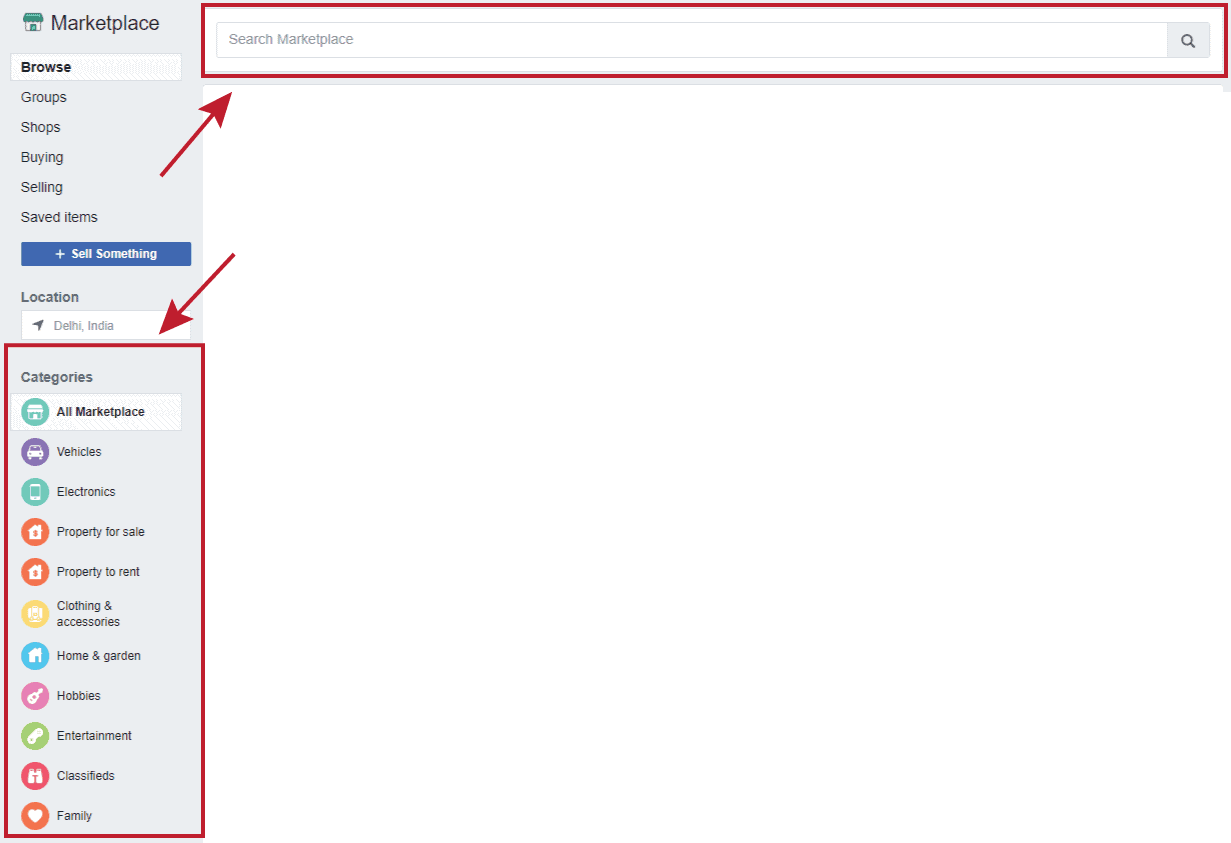
    Once you’ve accessed Marketplace, you’ll see listings organized by categories like Entertainment, Vehicles, Housing, and Hobbies. You can either choose the category of products you’re interested in or search for a specific item in the Marketplace search bar. Once you find the item you’d like to buy, you can send the message to the seller to negotiate.

    Remember – Facebook does not facilitate the payment or delivery of items in Marketplace. You and the other party get to decide it on your own.

    How To Sell On Facebook Marketplace?

    MARKETPLACE sell

    Almost anything (except guns and other restricted items), whether new or old, can be put on sale on Facebook Marketplace. All you have to do is –

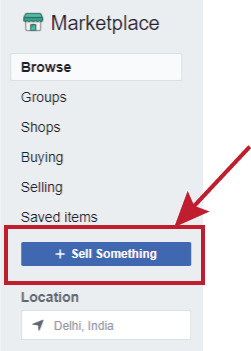
    • Click on + Sell Something button
    • Click Item for Sale
    • Enter a title, price, location, and category of the listing.
    • Click + 10 Photos and upload photos of your item
    • Click Post

    Remember – Even though your friends don’t get a notification when you list anything on Marketplace, the can view your listings if they live near your house. There is no way you can turn that off. 

    How To Renew Your Listing On Marketplace?

    There are times when even after seven days, the item for sale remains unsold. In such a case, you can decide to remove the listing or renew it.

    To renew your listing –

    • Tap on “Your Items,”
    • Tap on the listing you want to renew and select “Manage.”
    • From the menu on your screen, select “Renew in Marketplace.”

    FB Marketplace for E-Commerce

    Facebook has launched a pilot program in USA where it lets E-Commerce brands connect and sell their products on Facebook Marketplace. The company has already partnered with inventory partners like Big Commerce, CommerceHub, etc. to get their partners on-board.

    The History Of Facebook Marketplace

    It all started in February 2015 when Facebook introduced buy and sell groups which let users add items for sale in such groups which included adding a description of the product, setting up a price and set a pick-up or delivery location.

    buy-sell-groups-facebook

    Why Facebook Marketplace?

    Looks like the current user data information available to Facebook isn’t enough to carry on its revenue generation through ads. It wants advertisements to be more targeted.

    How Marketplace helps Facebook in better revenue generation?

    Well, this feature certainly resulted in users spending more time on Facebook (Ebay’s userbase has been poached), posting about what they want to sell (because they’ve already bought or going to buy that item soon), looking for things to buy (they can buy that item from Facebook’s advertiser too, if it’s affordable) and chat with the strangers (more use of Facebook messenger).

    There were already around 450 million users in the buy and sell groups when Facebook Marketplace was launched. Hence, this was a tried and tested option to roll out.

    These groups were privately owned and were so diverse that Facebook didn’t have much control over the sale offers posted. Some of the products posted (like guns, drugs, etc.) violated the website’s new policies. Marketplace, which acts as a commonplace to buy sell goods, also helps Facebook keeping a check on such products

    Is Facebook Marketplace Better than eBay?

    Yes. Many think Facebook to be a better marketplace than eBay as unlike eBay, which is a typical marketplace, Facebook has positioned itself as a social marketplace where you can not just see the seller’s profile but can see the mutual friends you have (in case you want to inquire about him) and can also chat with him using Facebook messenger.

    But, unlike eBay, Facebook does not facilitate the payment or delivery of items in Marketplace. There is also no comments or review feature on the marketplace yet.

    How To Remove Marketplace From Facebook App?

    Fb marketplace is a permanent feature in the Facebook application and unfortunately, you can’t remove or disable the Fb Marketplace feature from the Facebook application yet. We’ll update this section as soon as we find any information from Facebook about removing Fb Marketplace from Facebook App.

    Go On, Tell Us What You Think!

    Did we miss something?  Come on! Tell us what you think of this article on Facebook Marketplace in the comment section.

  • What Are Customer Touchpoints? Importance & Examples.

    What Are Customer Touchpoints? Importance & Examples.

    A company interacts with customers on many levels and at many places. These interactions are necessary for a company to carry out its marketing, branding, and sales strategies.

    And advertisements, even though very effective, just form a part of a big customer touchpoints network that includes chronological data of interactions brand interactions that occur along the customer’s journey.

    What Is A Customer Touchpoint?

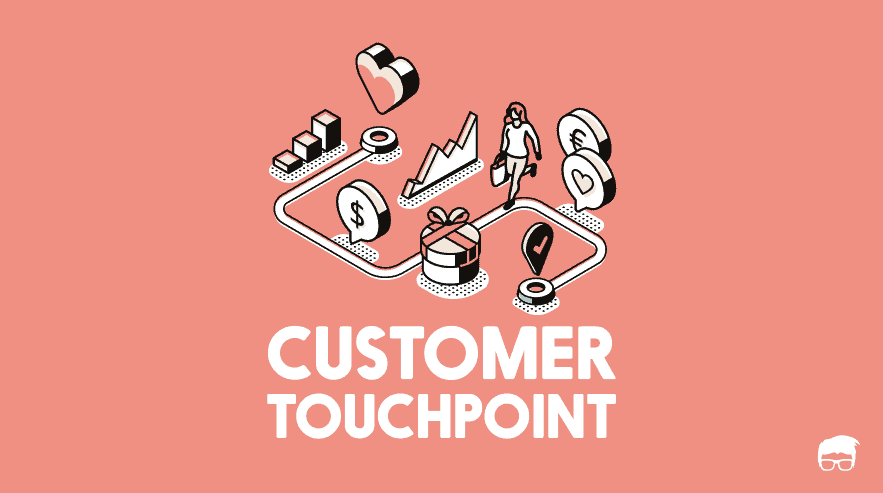
    A customer touchpoint is any interaction of the potential customer or customer with the brand before, during, or after (s)he purchases something from the brand.

    In simple terms, a customer touchpoint is any point of interaction of the brand and the customer. These interactions take place at various places (online and offline) and at various times.

    Let’s say Peter is a potential customer of brand XYZ. Recently, Peter saw an advertisement (touchpoint #1) of XYZ offering a product he might be interested in. He did some research about the product online and landed on XYZ’s website (touchpoint #2) which turned his interest into desire. Now, he visits the supermarket to buy this specific product and notices the marketing creatives of XYZ like danglers, banners, etc. (touchpoint #3). He finds the product and is really impressed by its unique packaging (touchpoint #4). He buys the product, uses it, and now is more impressed (touchpoint #5). But unfortunately, the product stops working within a month and he has to contact the customer service for replacement (touchpoint #6).

    These touchpoints are often grouped together to be capitalized on and develop a uniform and consistent brand experience to develop a favourable brand perception, closer relationships with the customers, and a higher retention rate.

    The Types of Touchpoints

    Contrary to what most people think, not all customer touch points are in the hands of the company. Here are the four types of customer touchpoints according to the ability of being controlled by the brand –

    • Company Created Touchpoints: These are the planned marketing messages created and controlled by the company. Promotional tools, packaging, and company assets like websites fall under this type of customer touchpoints.
    • Intrinsic Touchpoints: These touchpoints are intrinsic to the offering. They are experienced when the customer buys the offering and when the consumer consumes the offering. A brand might or might not have full control over these touchpoints.
    • Unexpected Touchpoints: These are unexpected references or information that are not cannot be directly controlled by the brand. Word of mouth marketing, viral marketing, and word of mouse communication are some examples of unexpected touchpoints.
    • Customer-Initiated Touchpoints: These touchpoints come into existence when the customers contact the club themselves. Some examples include telephonic conversation with the customer care representative, a walk-in to the service station, etc.

    Customer touchpoints are further classified into three types according to the stages of buyer journey. These are –

    • Pre-purchase: All the interactions of the brand with the customer before the sale is actually made. For example, advertisements, word of mouth, reviews, influencer promoted content, etc.
    • Purchase: The interactions of the brand with the customer during the sale. Examples include the brand website, packaging, the physical store, customer service team, etc.
    • Post-purchase: All the interactions of the brand with the customer after the sale has happened. Examples are emails, customer service team, loyalty program communications, etc.

    Importance Of Customer Touchpoints

    Studying the buyer journey and analysing his every interaction with the brand is an important practice to understand what all can influence the customer’s buying decision and how the brand can attract him/her towards its offering.

    Besides this rationale, having a knowledge of customer touchpoints is also important to –

    • Develop Better Business Strategies: A sound knowledge of every customer interaction with the brand helps the brand develop better business strategies which add meaning to every interaction.
    • Increase the ROI of marketing: When touchpoints are known, wastage of resources is reduced, which results in better ROI.
    • Develop A Favourable Brand Image: Mapping and tapping customer touchpoints effectively result in a favourable brand perception which gives rise to a favourable brand image.

    Mapping & Tapping of Customer Touch Points

    Before carrying out any marketing strategy it is important for the business to know where all does the company and customer interact and how to open new gates to create more touchpoints.

    As already discussed, touchpoints are present in every stage of buying decision process –

    Need/Want Recognition

    Advertising and other promotional strategies are used to create a demand by generating the need within the prospective customer’s mind.

    Information Search

    The prospective customer tries to find information about the brands/products which can satisfy his need. Company’s website, word of mouth marketing, affiliates, and other online and offline information portals can be tapped to make the prospective customer aware of the brand/product.

    Evaluation Of Alternatives

    The prospective customer makes a purchase decision after evaluating different offerings and brands. Customer reviews, customer testimonials, influencer recommendations, feature page, pricing page, etc. play an important role in this phase of the customer buying journey.

    Purchase

    These touchpoints include the sales staff, the packaging, and other factors which influence the purchase decision of the customer.

    Post Purchase

    After-sale support is a very important factor in maintaining the relationship with the customer and producing repeated sales. Once the brand has a customer, different techniques can be used to retain them and to convince them to carry out word of mouth marketing.

    Other Touchpoints

    Touchpoints aren’t limited to purchase decision making process stages. They are present everywhere customer’s eye rolls. It’s up to the business whether to tap it or not.

    An average human is exposed to around 10,000 marketing messages per day. These messages involve touchpoints present both online and offline, ranging from that company logo on the ceiling fan at his house(actual product) to a post shared by one of his friends on Facebook (content marketing) or that carry bag he used to take his lunch to office (packaging), a touchpoint can be anything.

    Customer Touch Points Examples

    Here are some examples of touchpoints throughout the customer buying process –

    Awareness

    • Advertisements (TV, radio, newspaper, social media, search engine, etc.)
    • Word of mouth
    • Viral marketing
    • Referral
    • SEO
    • Content Marketing

    Interest

    • Company website
    • Customer reviews
    • Customer testimonials
    • Informative blogs and websites related to brand
    • Influencer recommendations

    Desire

    • Discount pages
    • Salespersons
    • Customer service representatives

    Purchase

    • Packaging
    • Company’s outlet
    • Payment gateways

    Post-Purchase

    • After sale communication messages
    • Community groups
    • Customer service representatives

    Go On, Tell Us What You Think!

    Did we miss something?  Come on! Tell us what you think of this article in the comment section.

  • What Is Brand Voice? How To Develop One?

    What Is Brand Voice? How To Develop One?

    Just like in human beings, a brand voice is the unique way a brand communicates with everyone. But Britannia’s ting ting ti ding, Nokia’s basic ringtone or any other sound effect, audio jingle, etc. doesn’t count as the company’s brand voice.

    Intrigued?

    What is Brand Voice?

    Brand voice is the uniformity in selection of words, the attitude and values of the brand while addressing the target audience or others. It is how a brand conveys its brand personality to the external audience.

    Characteristics of Brand Voice

    Brand Voice Isn’t Just Audio

    A brand is an artificial person, and has unique characteristics just like any person. A brand voice helps the target audience recognize the brand personality when it interacts with them-

    • Over a phone
    • Through a letter
    • Over social Media
    • Emails
    • Or other communication sources

    Brand voice isn’t just the audio. It’s the representation of a personality. This personality has set vocabulary, values, and other characteristics which are communicated to the external world in form of brand voice through the customer touch points.

    It’s The Company’s Say (and how they say it)

    Brand voice communicates –

    • The company’s values
    • It’s brand identity
    • It’s say in the market

    It leads to formation of a Brand Personality, Brand Positioning, and Brand Image. It results in the communication of message in the way that the brand desires, hence all other branding strategies depend on it.

    Brand Voice Is Uniform

    The objective of a brand voice is to result in the formation of a uniform personality, positioning, and an image. It is  essential to set up and communicate branding strategies in a consistent way to obtain such results. Hence, it is important that the brand voice has uniform vocabulary, values, and other characteristics.

    It’s Present At Every Customer Touch Point

    Customer touch point isn’t just the packaging or the point of sale. Customer touch point is every point where the company interacts with the customer. This includes website, social media networks, emails, packaging, collaterals, advertisements, etc.

    Brand Voice Examples

    Big Brands have a uniform and differentiated Brand Voice. This is the reason they stand out and people recognize them just by seeing their color, or any phrase.

    Brand Voice Of Coca- Cola

    Coca Cola’s brand message is clear(happiness, joy, experiences, etc.) and is addressed through a uniform tone of voice – Friendliness. A user can imagine Coca Cola as a person with a personality and a voice.

    Brand Voice Of Disney

    Disney has an edge over any of its competitors because of one important quality – consistency. People can imagine a whole new world when they talk about Disney. Be it Disneyland, Disney’s social media network page, or any of the Disney product, Disney has its own vocabulary, values, and tone.

    Brand Voice Of Nike

    Nike has been inspiring ever since it was founded. All of its brand communication, brand campaigns, triggers, and even its tag line (Just Do It) is directed towards inspiring people on and off the field.

    Brand Voice Of Ogilvy & Mather

    Ogilvy, the world’s best advertising agency, is known for its peculiar brand personality. This personality has been shaped because of a very unique brand voice. Ogilvy was founded by a farmer, David Ogilvy. They are proud about it. They believe in creativity which can be seen in their brand communication strategies.

    How To Create An Appealing Brand Voice?

    Know Your Customers

    Your brand voice is meant to be heard by the customers. Make sure it sound pleasant to their ears. Know what they like, what they want, their demographics and create the music after some initial research.

    It’s For You, But They Should Like It Too.

    Having a unique and differentiated brand voice which can be recognized by the customer is beneficial for the brand as long as it is liked by the customer. Your position in the market is decided by the user and hence, it’s your job to woo him.

    Your Voice Should Represent Your Personality

    Assign yourself an adjective first like adventurous, cool, friendly, flirty, etc. and build your voice based on it.

    Don’t Act Like A Robot

    A company is an artificial person, not a robot. Interact with them and use vocabulary that can be understood.

    Go On, Tell Us What You Think!

    Did we miss something?  Come on! Tell us what you think of this article in the comments section.

  • Psychology Of Shapes In Logo Design

    Psychology Of Shapes In Logo Design

    Perception matters. The world is full of geometric shapes and we, as humans, have assigned each one of them a meaning.

    Every logo has a meaning assigned to it and it’s better to use the right shape for your logo. But before we discuss the psychology of shapes in logo design and marketing, let us first look deep into the different kinds of shapes.

    Types of shapes

    Geometric Shapes

    These shapes have recognisable geometry. Basic shapes like squares, triangles, circles, straight lines, etc. come under geometric shapes.

    These shapes are usually

    • Structured
    • Organised
    • Symmetrical
    geometric-shapes

    Natural/Organic Shapes

    As the name suggests, Organic shapes belong to nature. These shapes represent the things found in Natural surroundings. For example – Flowers, trees, clouds, earth, stars, etc.

    These shapes usually

    • Have curves
    • Are uneven
    • Are representative
    • Sometimes asymmetrical
    organic-shapes

    Abstract Shapes

    These shapes are not real shapes. They are derived from organic shapes.

    Abstract shapes are usually stylized or simplified forms or the combination of the other shapes. For example stick figures for humans or shape ‘V’ for a bird.

    abstract-shapes

    A good marketer always uses the psychology of shapes in logo design. He knows the hidden message of the shapes and uses them wisely while designing his logo.

    Psychology of Shapes in Logo Design – Geometric Shapes

    Four Sided Structures [Squares & Rectangles]

    four-sided- shapes- psychology

    Four-sided structures are everywhere, from buildings to tables to the tiniest sugar cubes, we see four sides everywhere. We even spend most of our time in a four-walled room.

    Hence, these smooth and straight lines have formed their meaning in our minds.

    These four-sided structures depict –

    • Trust
    • Stability
    • Uniformity
    • Honesty
    • Equality
    • Security

    Furthermore, the shapes which have Right Angles [Squares & Rectangles] represent

    • order
    • rationality
    • formality

    However, these qualities are depicted when these shapes rest on their base. Tilt them a bit and their stability is lost. But there’s an addition of attention capturing property.

    square-shape-psychology

    Squares and rectangles are so common that they lack attention capturing capabilities. A little tilt might make them capture attention but it results in loss of existing properties of stability, order, and formality.

    Other four-sided structures like Trapezium and Rhombus have different meanings than squares and rectangles.

    rhombus-trapezium-psychology

    Trapezium (pyramid-like structures) depicts better stability and growth.

    Rhombus depicts speed. (As in the case of DHL’s logo)

    square-logos-psychology

    Three Sided Structure [Triangles]

    triangle-psychology

    Triangle is a leader. It is energetic and focused (because of the angles). Triangles represent action. It also depicts the direction of that action (the side they’re pointing to).

    Triangles Depict –

    • Dynamics
    • Strength
    • Aggression
    • Action
    • Direction
    • Tension
    • Balance
    • Masculinity
    • Peace

    Triangle depicts different meanings when placed differently. They show stability and strength when placed on their base. But when tilted, they show instability and tension.

    triangles
    triangle-logos

    Round Shapes [ Circles, Ovals, ellipse]

    circle-shape-psychology

    The universe is an enclosed circle. It has no start or an end. Every eternal/spiritual thing or being is associated with the circle. Sun, moon, earth, galaxy, universe, everything is enclosed, everything is a circle. Circles are complete. They are free.

    Circles depict

    • Completeness
    • Love
    • Movement
    • Eternity
    • Protection
    • Intellectualism
    • Femininity (anything with the curves depicts femininity)
    • Secret (they keep what’s within)

    Circles are less common than other shapes. Hence, they act as attention seekers.

    round-logos-circle

    Curves

    curves-shapes-psychology

    Curves are happy shapes. These shapes-

    • are creative,
    • have a rhythm,
    • are generous, and
    • give the pleasure of viewing.

    Any shape with curves is considered to be feminine.

    logos-with-curves

    Straight Lines [Vertical Lines & Horizontal Lines]

    lines-shapes-psychology

    Vertical lines block your way. They are dominant and bold. They are also considered to move upward. Hence, they represent

    • Courage
    • Domination
    • Masculinity
    • Boldness
    • Aggression
    • Growth
    logos-with-vertical-lines

    Horizontal lines rest on a platform. They are calm and harmless. They represent

    • Calmness
    • Rest
    • Femininity
    • Silence
    logos-with-horizontal-lines

    Spirals

    spiral-logo-psychology

    Spirals have a tendency to grow. They are creative, religious, and trustable. Their direction represents two different meanings.

    Clockwise spirals start with a spiral and end with an open end. This represents incompleteness and an intention to go somewhere.

    Anticlockwise spirals start with an open end and end up in a spiral which shows completeness and fulfilled intentions.

    Psychology of Sharp Shapes / Sharp Angles

    These shapes are more youthful, more aggressive, and are seen as more masculine. These represent

    • Liveliness
    • Anger
    • Action
    • Masculinity
    logos-with-sharp-angles

    Similarly, shapes with obtuse angles have perfectly opposite characteristics. They are considered

    • Chill out
    • Laid Back
    • Passive

    Psychology of Shapes in Logo Design – Organic Shapes

    Organic Shapes are interest-based shapes. They are like geometric shapes but involves more of colour psychology as well. Organic shapes are a combination of basic geometric shapes and hence their meaning can be derived by deciphering the meaning of geometric shapes. Still, organic shapes depict certain common characteristics like

    • Interest
    • They are considered to be more related to the niche (if the shape relates to that of niche)
    • Originality
    organic-shapes-logos

    Psychology of Shapes in Logo Design – Abstract Shapes

    Abstract shapes are simplified and/or stylized versions of organic shapes. These are the simplification of ideas. Abstract shapes give shapes to ideas. Some of the abstract shapes have universal recognition while others require themselves to be explained.

    Apple’s bitten logo is an abstract shape. People have come out with varied meanings for the same logo. Still, it has only one meaning – It represents the company which is different from others.

    Abstract Shapes are used to stand out, and to differentiate from others.

    abstract-shape-logos

    Combination of Shapes

    Sometimes, to express a message, a combination of different shapes can be used. Deciphering this combination can be made possible by applying two different visual psychology theories

    Top-Down Processing Theory – We use our past experience or stored knowledge in order to infer about what we see.

    Bottom-up Processing Theory – the sensation is perception. What we sense is what we perceive. Prior stored knowledge is not used while perceiving.

    For example – A triangle on a square can be seen as an arrow or a rocket if we follow ‘Top-Down Processing Theory’. While we’ll try to assign it the meaning of square and a triangle if we follow ‘Bottom-Up Processing Theory’.

    triangle-square-03

    Go On, Tell Us What You Think!

    Did we miss something?  Come on! Tell us what you think of this article in the comment section.

  • Business Model of Oyo Rooms – How Oyo Rooms Work

    Business Model of Oyo Rooms – How Oyo Rooms Work

    Oyo Rooms is the largest branded network of hotels currently operating 450,000 listings in 5,000 cities in India, Malaysia, UAE, Nepal, China and Indonesia. The company started off its operations by building its business model around the aggregator business model but things have changed since 2018.

    Earlier, the company used to organize the partner with hotels, lease some rooms, and sell them under its own brand. Even though the process is still the same, Oyo’s business model has changed its route to a new structure.

    The main focus, however, still is the quality of the service provided. Hence, to maintain the brand image, they make the partners provide services at predetermined standards while they make them more visible to their user-base.

    Oyo Rooms – An Aggregator or A Franchisor?

    Oyo Rooms Business Model used to be a hotel aggregator. However, it was different from Airbnb’s business model as Oyo didn’t focus just on the discoverability of the partners among the users but also on the standardized quality of the services provided.

    The customers used to buy the services from the brand Oyo rooms and didn’t care who the partner was. Just like Uber, Oyo provided rooms with standardized quality and price.

    This model was a mix of aggregator business model and franchise business model.

    But as time passed, the company built its brand equity and the founders decided to pivot its business model to a pure franchise business model. The company now gets 90% of its revenue from hotels under the franchise model.

    Business Model of Oyo Rooms

    Oyo Rooms business model was similar to the usual aggregator business model (Uber for x business model) but had the essence of the franchise business model as well. The company used to –

    1. Lease a part of Hotel’s inventory beforehand,
    2. Organize those hotel rooms under their brand name – Oyo Rooms
    3. These partner hotels provided standardized service to customers of those rooms as it was decided in a contract with Oyo
    4. Bookings were made through the Oyo Rooms website and mobile application.

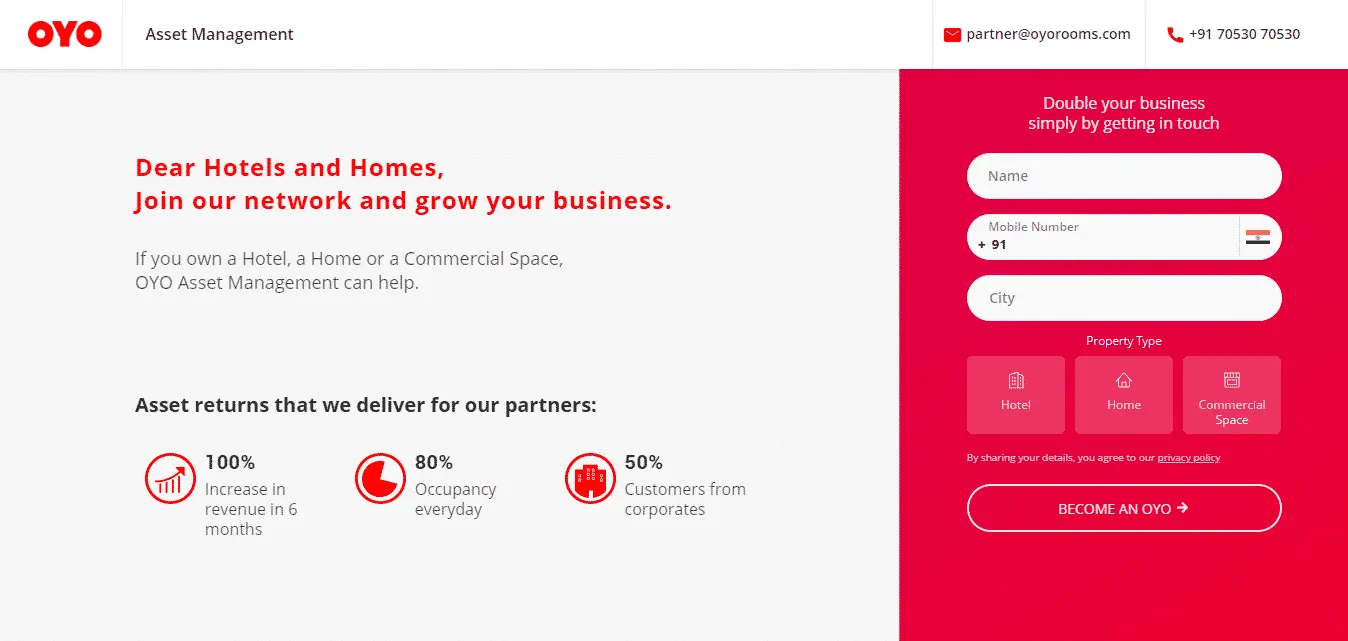
    The current operating model of Oyo Rooms is similar to what it was before. It’s just the company doesn’t lease the hotel rooms anymore, but ask the hotel partners to operate them as franchise. They have good brand equity and boasts a 100% increase in revenue to their partner hotels.

    oyo business model

    Partnership Model

    Oyo Rooms provide visitors with quality hotel room stays at different places around India. They have partnered with hotels and made them work with them under their name.

    Services Provided By Oyo Rooms

    Oyo Rooms, started and famous as branded hotel rooms aggregator, provides many more services than just hotel rooms to visitors.

    The services included in the Oyo Rooms business model are –

    Hotel Rooms

    Oyo’s earlier strategy was to book a part of the hotels’ inventory, to maintain it as per the quality standards, and to hold it captive exclusively for Oyo customers. That is, they used to lease some rooms every month and provide them to their own customers at profits.

    The only thing that has changed is that the rooms are now not leased but operated as Oyo Rooms franchise. Since the hotels and place owners act as the franchisee, they are bound to operate as per the pre-determined standards. The company even offers plans where it runs the place instead of the hotel staff or owner.

    Oyo Flagship

    The partners used to book their own hotels when they used to see less prices on the Oyo’s platform and this became malpractice benefiting the partners while burning holes in Oyo’s pockets. To curb this, and to expand the business, Oyo Rooms has started leasing of hotels and places where it has full control over the day-to-day operations of these establishments.

    Oyo Townhouse

    The company has recently launched the Oyo Townhouse to hone its value proposition and stand out of the competition when it comes to standardised hospitality. Oyo Townhouse is based on the needs of the millennial traveller. These hotels are planned and built based on the needs and wants of the millennials. They have –

    Smarter Rooms – with specially designed beds, showers, sockets, and internet infrastructure. Even TVs have Netflix installed.

    Smarter Spaces – common spaces designed to have meetings. Free printer, business services, magazines, coffee and tea in the common area.

    Smarter Menus – 24 x 7 Kitchen which lets you order from the mobile application.

    .. and many more smart services.

    Studio Stays

    Apart from providing hotel rooms, Oyo Rooms also provides fully furnished rooms and flats for long stays like internships, corporate stays, etc. The rooms/flats can be rented on single occupancy as well as on twin sharing basis as well (other provisions are also applicable). Rents are paid monthly. Commission (take-up rate) is charged from the owners if the customer comes through Oyo rooms.

    Events & Other Long Stays

    Just like studio stays. There are many family functions(weddings, parties) as well as corporate functions (seminars, meetings, parties) which involve hotel rooms for their guests to stay for long. This service is also provided by Oyo.

    Commercial Places

    Oyo has expanded its branches in the domain of the commercial places as well. Now the customers can even book office spaces on Oyo as well.

    Oyo Wizard

    The company has also launched a subscription model where the subscribers get exclusive discounts, deals, and cashback offers.

    Oyo Wizard

    Revenue Model of Oyo Rooms

    Earlier the brand used to lease hotels at a predetermined price and offered them to the users at a take-up rate. This has been changed to a commission-based revenue model.

    Oyo rooms charges a commission of 22% from its hotel partners. However, this commission does vary according to the services provided by the brand.

    Future of Oyo Rooms

    [Opinionated Content]

    Oyo is growing. Though this growth is at a cost, it will be worth it afterwards. According to a source, Oyo Rooms has delivered a 15x annual growth with 2.3 million booked room-night transactions in the first quarter of the calendar year 2016 while its GMV continues to grow substantially every month. This shows the increasing brand equity and demand of Oyo.

    Oyo has set its name as the high-quality budget hotel network, which might change in the near future as the prices might increase. But since Oyo has come up with a new franchise model, there are chances that the prices might be kept as they are now.

    Go On, Tell Us What You Think!

    Did we miss something?  Come on! Tell us what you think of this article on Business Model of Oyo Rooms in the comment section.

  • Psychology of Colours in Marketing and Branding

    Psychology of Colours in Marketing and Branding

    Psychology and marketing are lifelong partners. A psychologist may not be a marketer but a good marketer always involve psychology in his marketing decisions. Marketing is no rule of thumb. It involves intense research on customers’ needs, wants, likes, preferences, etc. One of these psychological researches revealed the impact of different colours on customers mind.

    Colour is involved in every aspect of branding and advertising. Whether it is your logo, your product label, collaterals, or advertisements, etc. Colour is one of the most important aspects which gives the brand a personality and helps in its positioning.

    Colour works out as a silent message to the customer. Customer assumes your business to have certain characteristics if it has a certain colour. These assumptions are not the same for everyone though. Everyone has different perceptions for different colours depending on their personal experience, past, upbringing, community, religion, etc. Still, thanks to globalisation, there are some presumed qualities of certain colours which can be used to set up a brand personality.

    Psychology of Colour Red

    Psychology of color red

    The energetic, aggressive, yet filled with emotion, red is a powerful colour. It has the longest wavelength and a characteristic of appearing to be nearer than it actually is.

    Red depicts

    • Love
    • Aggression
    • Strength
    • Energy
    • Excitement
    • Emotion

    Red is a physical colour. It creates a rush within the body. This colour makes us stop and look at it.

    Companies in almost every niche use Red in their marketing activities

    Coca Cola had to stand out of competition and hence used red for its branding. Everything was painted red to differentiate it from others. Red was a perfect colour as Coca-Cola was the new excitement when it was launched.

    Funskool, which deals with children toys has its logo coloured red.

    Red, because of its characteristic of appearing nearer than it is, is a perfect colour to be used for triggers like – Buy Now, Click Here, etc.

    red-color-logos

    Psychology of Colour Blue

    Psychology of color blue

    Blue is vast just like the sky. Blue is intellectual and unlike red, it soothes the mind. Blue is the true opposite of red. It has a characteristic of appearing farther than it is.

    Blue depicts

    • Intelligence
    • Coolness
    • Stability
    • Trust
    • Purity
    • Vastness
    • Serenity

    Blue is calm. It soothes your mind. It is linked to consciousness and intellect.

    Just like red, blue is also a versatile colour. But it is most common in Big IT companies.

    Facebook is blue. IBM is the big blue. Samsung, HP, Dell, etc. everyone has blue in their logos.

    blue-color-logos

    Psychology of Colour Yellow

    Psychology of color yellow

    The colour of the sun. Yellow means happiness. Yellow is a powerful colour in inducing confidence, and self-esteem and other positive emotions.

    Yellow depicts

    • Happiness
    • Friendliness
    • Confidence
    • Optimism
    • Cheerfulness
    • Creativity
    • Spirit

    Yellow has a long wavelength and is seen before any other colour.

    Yellow is also the colour of creativeness. Companies dealing in children products tend to use yellow the most.

    McDonald’s has a yellow-coloured logo. It shows how cheerful it is.

    Ferrari shows its racing ‘Sprit’ through its yellow-coloured logo

    yellow-color-logos

    Psychology of Colour Green

    Psychology of Color Green

    The colour of nature, Green represents balance and is peaceful just like nature.

    Green depicts

    • Peace
    • Reassurance
    • Universal love
    • Energy
    • Harmony
    • Balance
    • Equilibrium
    • Reliability
    • Growth
    • Health

    Green is also one of the most seen color. We tend to relate it with nature. Hence, green has all the properties of nature.

    Animal Planet deals with nature, hence the green logo.

    The juice brand Tropicana wants the users to know that the juice is natural. Hence the green logo

    Spotify has songs from all over the world. It is everywhere.

    green-color-logos

    Psychology of Colour Black

    Psychology of Color Black

    Black is an intense colour. It is the colour of sophistication, seriousness and deepness.

    Black Depicts

    • Sophistication
    • Glamour
    • Reserved
    • Seriousness
    • Control
    • Clarity
    • Efficiency

    Black is the colour of the class. Black is the absence of colour. Hence, it has the capability to absorb energy. Black shows clarity.

    Black doesn’t stand out. It’s a recessive colour. But it doesn’t have any hidden meaning. Black’s black. This makes people trust it.

    Black is used by niche companies to state the motto ‘We are who we are’

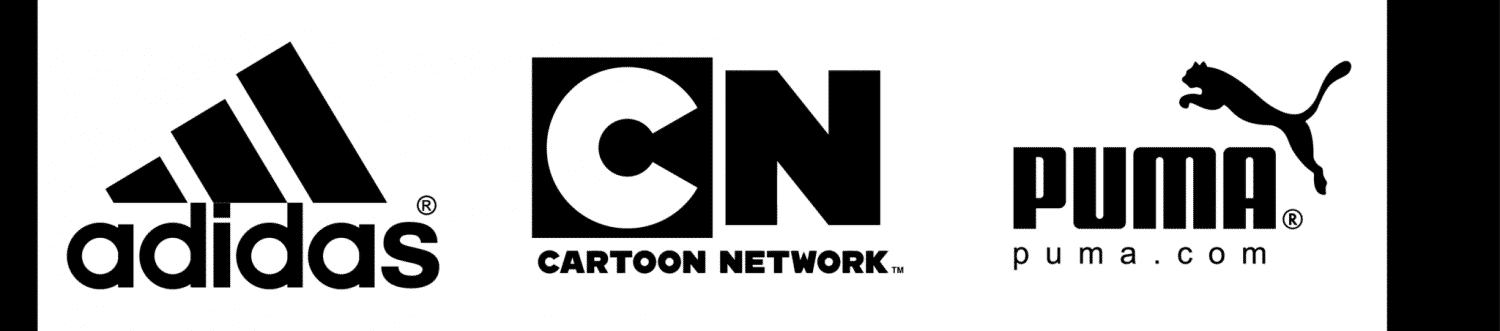
    Nike, Adidas, Wikipedia, etc. are examples of companies using black in their logo.

    black-color-logos-06

    Psychology of Colour White

    Psychology of Color White

    White is pure. It consists of every colour and hence has many meanings.

    White depicts

    • Equality
    • Purity
    • Simplicity
    • Cleanliness
    • Clarity

    White is the perfect opposite of black. It reflects everything. It shows clarity and flawlessness. White is often used with black and other colours in the logos.

    Psychology of Colour Violet

    Psychology of Color Violet

    Violet has the power of red combined with the intellect and stability of blue. Violet is a spiritual colour. It soothes.

    Violet depicts

    • Spirituality
    • Royalty
    • Mystery
    • Vision
    • Calmness
    • Truth
    • Authenticity

    Many companies which stand out as being original and different use violet in their logos. Example – Cadbury, Yahoo!, Taco Bell, etc.

    violet-color-logos

    Psychology of Colour Orange

    Psychology of Color Orange

    When red’s power is combined with yellow’s confidence, we come up with motivating Orange.

    Orange depicts

    • Warmth
    • Motivation
    • Fun
    • Food
    • Comfort
    • Freedom

    Orange is the colour of positivity. It lends motivation to lift up, add up fun to a dull or boring place, and is comforting to see at.

    Nikelodeon and Fanta wanted their logos to represent fun. Blogger.com wanted their users to feel the ease with which they can blog on its platform.

    orange-color-logos

    Psychology of Colour Brown

    Psychology of Color Brown

    Brown is a protector. It represents the earth. Brown can be seen everywhere and that too in things that are solid. Hence we tend to associate it with power and support.

    Brown depicts

    • Support
    • Seriousness
    • Reliability
    • Power
    • Nature

    Brown is a mixture of red, yellow, and black. It has the power of red, warmth of yellow, and the seriousness of black. Most of the time it is used to represent products coming from nature too.

    Go On, Tell Us What You Think!

    Did we miss something?  Come on! Tell us what you think of this article on Psychology of colors in the comments section.