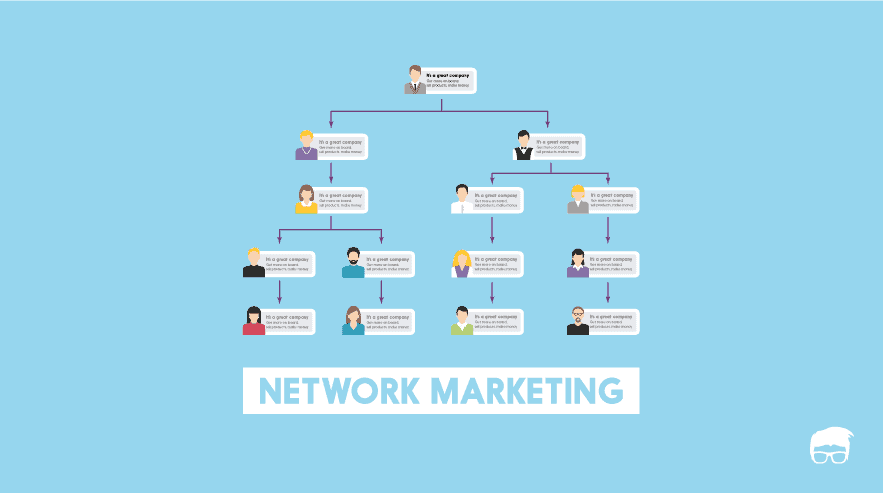
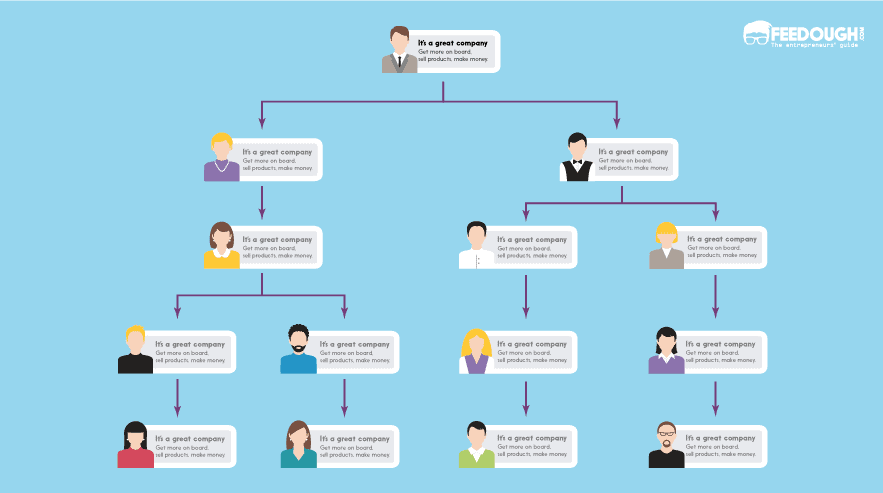
Network marketing, also known as multi-level marketing, is a business model which involves a pyramid structured network of people who sell a company’s products. The participants in this network are usually remunerated on a commission basis.That is, people in this network get a commission every time they perform a specified task, like –
In simple words, this model involves a pyramid structure of non-salaried participants who get paid whenever they or a person below them in the pyramid makes a sale.
In this system, consumers are the participants, their family, friends, and acquaintances are their customers, and this cycle goes on.
Characteristics Of Network Marketing
Direct Sales
Network marketing organisations market and sell their product directly and don’t make use of any well-defined channel of distribution. The responsibility to sell the products is transferred to the non-employed individuals (the participants) who get the commission every time they make a sale.
Independent Business Owners (IBO)
The participants are called IBO as they work as if they are promoting their own business.
Selling Philosophy
This model involves participants to use the selling philosophy of marketing. The main focus is on recruiting and selling as much as you can to earn more commission. No relationships are built. People may even trick you to buy the products or to join them.
System Of Hierarchy
Suppose a person ‘A’ has a person ‘B’ under him. Now A will get the commission whenever he makes a sale and also a part of B’s commission when B makes a sale. Now, to earn more money, B will also try to recruit a person C under him and so on. This makes the system a big hierarchy.
Less Or No Advertising
Dependency on direct sales helps the organisation to rely less on advertising as personalised contact have more convincing power than advertisements.
No Fixed Salaries
This is a commission-based network where participants (not employees) are paid commissions to perform a specific task.
Accountability
Everyone is accountable only to himself. The more he sells, the more he earns.
Benefits To The Participants
Participants are also the consumers of the network. Hence, they also get discounts and other attractive offers to when they join the network.
Examples of Network Marketing
Amway has been in business for around 57 years now, this company is one of the biggest examples of a successful MLM/network marketing company.
Other companies that use the network marketing model include – Tupperware, Nu skin, Juice Plus, etc.
Pyramid Structure vs Network Marketing
A pyramid structure is said to exist when you get paid to get a new recruit and there is no involvement of any product. It’s an ill practice that makes a person earn money by taking advantage of his friends and family. Companies having a pyramid structure model tend to deceive people while making them believe that they’ll earn in future (which they do by deceiving more people). For example, a person will be asked to pay $100 to be a part of the company with a promise that he’ll get 25% of every new recruit’s admission fees who he refers. This is a money-making strategy of the company where the participants are at a loss.
Whereas network marketing involves multiplying efforts by selling of products. This is a win-win situation where the users get what they want and participants earn a commission.
Go On, Tell Us What You Think!
Did we miss something? Or did we not? Come on! Tell us what you think of this article on network marketing in the comments section.
There’s a lot that goes into a product before it is introduced into the market.
It starts with a market opportunity which forms the base of the product idea, and converting this market opportunity into a successful product is what new product development is all about.
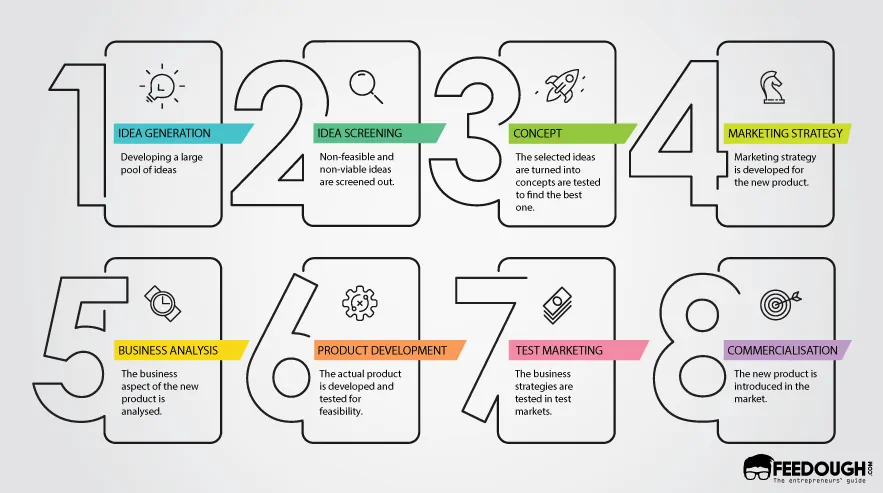
Sadly, not everyone succeeds in it, and 95% of new products fail. But most of these new products fail because the developers undermine the importance of the new product development process and try to take the shortcuts. Although this process differs for different industries, but according to Philip Kotler, new product development can be easily be broken down into eight stages:
Idea generation
Idea Screening
Concept Development and testing
Marketing Strategy Development
Business Analysis
Product Development
Market Testing
Commercialisation
But before moving ahead to discuss the new product development process, here are the six categories of new products that are launched in the market –
Types Of New Products
New-to-the-world products: These are essentially the new products that didn’t exist in the world before. For example, the launch of Uber app was a new-to-the-world product.
New-to-the-firm Products (new product lines): These are new products that didn’t exist in the firm’s portfolio before. These are not new to the world but are just new to the firm and add a new product line to the existing portfolio. For example, P&G’s first shampoo was a new-to-the-firm product.
Additions to existing product lines: These products are supplements to the company’s established product lines. For example, a new flavour for Colgate would be a product line extension.
Improvements and revisions of existing products: These are the upgrades that replace current products and provide improved performance and/or higher perceived value.
Repositionings: Repositioning is changing the existing image of the product in front of the existing target market (and relaunching it) or taking this product to a new market with a new image. For example, McDonald’s was launched in Japan as Makudonarudo.
Cost reductions: These are the new products that provide performance similar to the existing products but at a lower cost to the company.
New Product Development Process
A new product isn’t always about developing a new-to-the-world product. In fact, according to Kotler, only 10% of all new products are truly innovative and unique to the world. Upgrading existing products and relaunching them as new products, adding new products to the existing product mix, etc. are all essential practices for the company as they operate in a dynamic business environment where customer’s needs and tastes, technologies, and product life cycles are always changing.
But no matter what type of new product the company develops, its process can be easily be broken down into eight stages –
Idea Generation
Ideas form the spine of the new product development. They stem from market opportunities and can be innumerable. This stage involves creating a large pool of ideas from both internal and external sources using numerous techniques.
New Product Ideas From Internal Sources
Research and Development: R&D department is a formal department of the business that includes experts with the sole responsibility to conduct market research and analysis and generate new ideas.
Employees: Employees are the ones who work closely with the product and the customers. According to research, almost 45% of all new product ideas come from the employees.
New Product Ideas From External Sources
Customers: Customers are the most important sources to get new product development ideas. Their needs, wants, and desires form the base of the market opportunity, and most of the time they know what they want. Surveys, customer forums are excellent sources of new product development ideas.
Channels Of Distribution: Since distributers work closely with the customers, they understand better what the customer actually demands. They often give ideas for new product possibilities and can also help the company with market information like new concepts, techniques, technology, and materials.
Competitors:Competitor analysis is a great way to analyse how the market rate the existing players and what’s missing in the market. This information is further used to develop new products.
Others: Other idea generation sources include consultants, communities, government agencies, market research firms, commercial laboratories, etc.
Idea Screening
While the purpose of idea generation is to create a large pool of ideas, this stage involves evaluating the pool and drop as many ideas as possible from consideration. This is done by determining and evaluating the ideas’ –
Compatibility: Compatibility of the idea(s) with the overall business objectives.
Relevance: Relevance of the ideas based on the current and predicted business environment and the organisation’s goals.
Assumptions: Validity of the assumptions the idea is based on.
Constraints: Internal and external constraints that hinder the growth of the idea into reality.
Feasibility: Feasibility of the idea according to the resources available.
Value: The idea’s predicted return on investment.
Risks: Internal or external risks that may hinder the idea’s progress.
There’s a likelihood of two types of errors in the new product development process. The idea screening phase acts as a filter to prevent the business from them. The errors are –
Drop error – Dismissing of a good idea.
Go error – Moving forward with a bad idea.
Concept Development And Testing
An idea is different from a concept. While an idea is just a mental construct of a business possibility or opportunity, a concept is an idea that has gone through the process of fine-tuning and is less inconsistent.
The concept is a presentable version of the product idea which takes into consideration –
Potential target audience
Product usage
Potential value propositions
For example, a product idea could be a fitness centre. But a product concept would be a fitness centre that focuses on providing Zumba classes to working women offline in the morning and online in the evening.
This step involves developing single or multiple concepts based on the product ideas and testing them for their viability.
Concept development
Let’s take the example of an electric car as a product idea.
Possible product concepts for this electric car could be –
Concept 1: An affordable electric car focused on working individuals who commute daily. This car can be charged at home but isn’t viable for long-distance travel.
Concept 2: A mid-priced electric car for environment-ocused millennials. The car has sporty looks, and there are recharging points available.
Concept 3: A high-priced electric SUV for high earning individuals who care about the environment.
Concept Testing
Once the concept is developed, it is tested using several methods and processes like –
Concept-test surveys: The planned target audience is asked to answer some product-related questions. These answers are further analysed to test the viability of the concept.
Prototype: A prototype is developed to understand the viability of the product better.
Testing different concepts gives a clear picture to the management on which concept to take forward and which to drop.
Marketing Strategy Development
Once a promising concept is finalised, the next step involves developing a marketing strategy for the new product. The marketing strategy is divided into three parts:
The detailed description of the target market’s size structure and behaviours, the planned value proposition, the product positioning strategy, and sales size, market share and profit goals for the first few years.
An outline of the pricing strategy, distribution strategy, and the required marketing budget for the first year.
The marketing mix strategy and the planned long-term sales and profit goals.
Business Analysis
Once the product and its marketing strategy is finalised, the next step involves the evaluation of business attractiveness of this proposed product. This step of the new product development process involves a review and analysis of the sales, costs, and profit projections for the new product.
In simple terms, this step evaluates the product as a business by reviewing –
Costs involved in producing, marketing, and selling.
Projected sales
Projected profits
The analysis is done either by conducting market surveys, consulting experts, or by analysing the history of similar products. Once done, this analysis is then compared with the company’s objectives, and the product goes into the production stage only if these factors satisfy the objectives.
Product Development
Up to this point, the product only existed as a word description, a drawing, or a prototype. But once the business analysis clears the product, the work is handed over to the research and development department for actual product development.
It may take days, weeks, or months to develop the final product as the product goes through a series of testing phases (alpha testing and beta testing) to validate all the assumptions and incorporate everything that was promised during the previous stages.
Alpha testing is testing the product within the firm to make sure it fits the standards set.
Beta testing involves launching an MVP or a test version in the market to validate the product-market fit. However, it doesn’t involve testing the final product or marketing strategy.
Test Marketing Or Market Testing
Once the product development is completed, the product is then dressed up with a brand identity and released in a selected market segment as a pilot for testing.
This step involves the company to test both the final product and its entire marketing and branding strategy, including
The product is developed in full scale only after test marketing shows positive results. There are three types of test markets –
Standard test markets: These are small representative markets (for example, a single city instead of the full state) where the firm conducts a full marketing campaign and uses store audits, customer surveys, distributor surveys, and other methods to analyse performance. The results are used to predict full-scale campaign’s performance, discover unsolved problems, tap untapped opportunities, and fine-tune the marketing program. The biggest disadvantage of standard test markets is that the competitors get to know about the new product and its marketing strategies before the actual launch.
Control test markets: These are artificial testing venues like panels of stores that have agreed to carry new products for a fee. These artificial testing venues are less expensive than the standard test market and provide a faster analysis (of both the product and its competitors). Still, there’s a risk of competition gaining access to the new product.
Simulated test markets: These are events where the firm creates a shopping environment and analyse customer behaviour with respect to the new product and its competitors. This test market also lets the researchers interview customers.
Commercialisation
Test marketing provides the management with the information needed to make the final decision about the product launch. Once the final decision is made and the product is decided to be launched in the market, the new product goes into the final stage -commercialisation or introduction, and is finally produced in the needed quantity.
This stage involves the highest costs as
Manufacturing units are leased or purchased
Advertising and communication campaigns are executed
Sales promotion and other marketing efforts are executed to develop an initial demand
Several important decisions are taken during the commercialisation stage like –
Introduction timing: The best time to launch the product.
Introduction place: The decision about the place. Should it be launched in a single market or should it be launched simultaneously in multiple markets?
Future strategies: What should be the strategies once the product is launched in the market.
Bottom-Line?
Even though there are eight different steps of the new product development, the focus is one – creating superior customer value, because only when you develop a superior customer value, you can develop a new product worth selling.
Go On, Tell Us What You Think!
Did we miss something? Come on! Tell us what you think of this article on new product developmentin the comments section.
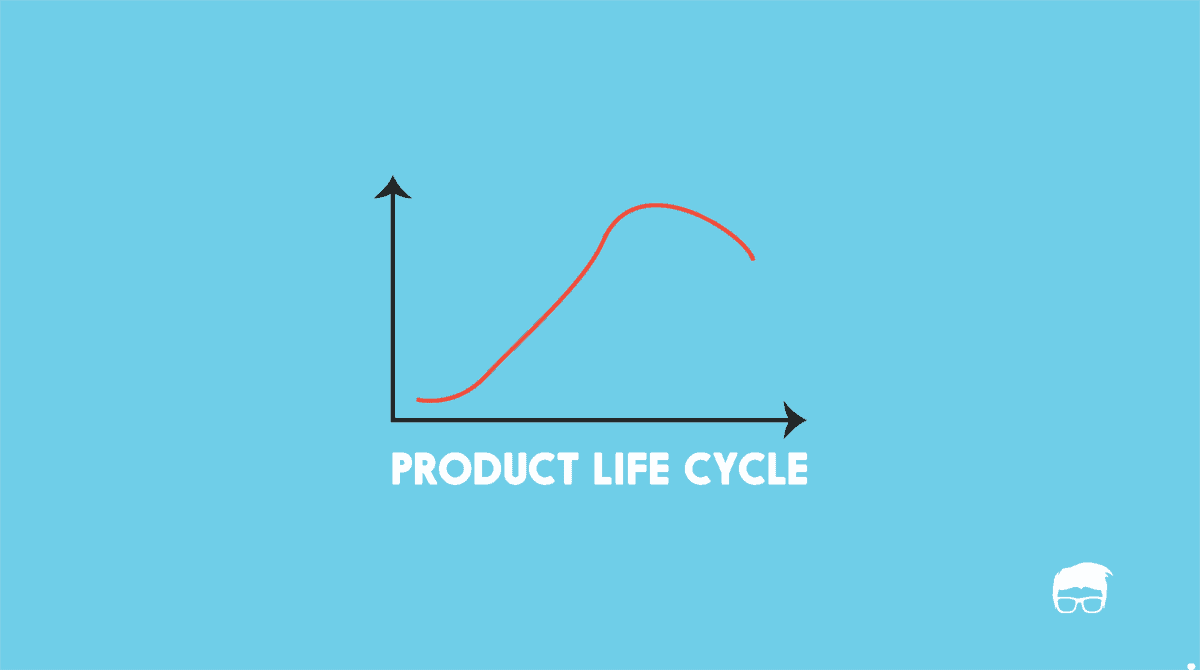
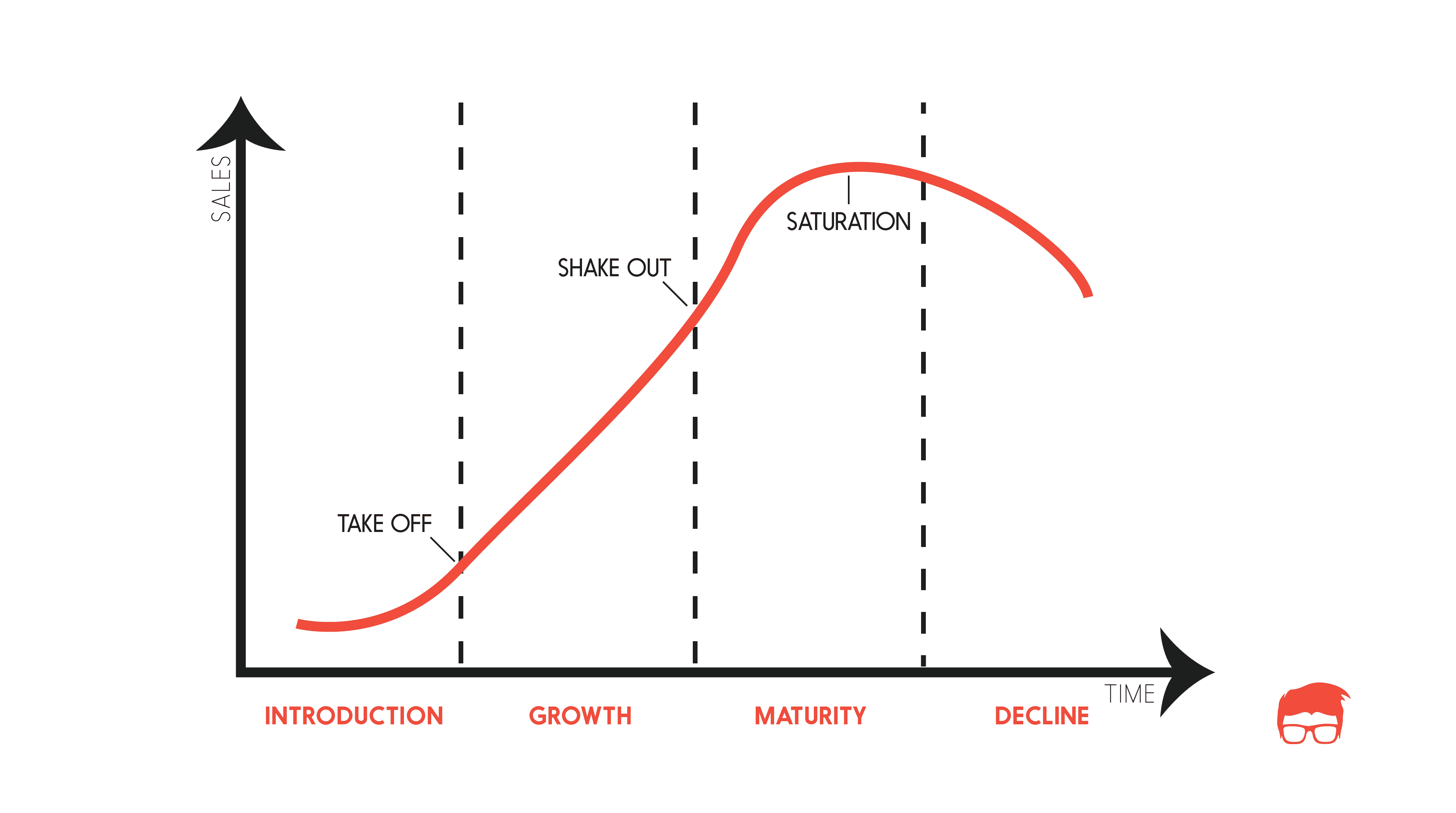
Products have similar lives to living beings. They are born someday and they come to an end someday. Product life cycle is the set of stages a product goes through during its lifetime. The journey starts from the day it is just an idea to the day it is finally removed from the market.
Usually, there are 4 different stages in the Product life cycle.
Introduction Stage
This stage is where the idea becomes an actual product for sale in the market. A product is introduced to the market during the introduction stage. There are many features of this stage of product life cycle:
Small Market: This stage involves business capturing the market. Every customer is the new customer. Sales are less.
Buzz: This stage involves creating a buzz. A buzz about the new brand is created in the market and the potential customers and competitors get to know about the product. Many companies start to promote their product even before the introduction stage but such promotions may backfire as the competitors get time to adjust accordingly.
High Costs: There are no economies of scale in the introductory stage as the demand is yet to be created. This high production cost combined with distribution and marketing and promotion costs are high for the start.
Less/No Profits: Since the demand is yet to be created, the business starts off with a loss.
Marketing Mix in the Introductory Stage
Product
Introductory stage of the product life cycle involves establishing a brand and executing the positioning strategies. It also involves obtaining intellectual property protection like patents and trademarks.
Price
Price mix is decided based on the product, the competition in the market, and the future revenue generation strategies.
Penetration pricing – starting with a low introductory price to attract and keep the market share. Start low increase later.
Price skimming – keeping the price high initially if the product is unique and the company can charge a high price for it.
Competition Pricing – choosing the price as it is already prevalent in the market. Competition decides the price.
Place
This depends on the size of the company. Usually, the distribution is kept selective and scattered, to learn about what market likes and what not.
Promotion
More focus is on brand awareness. Free samples may be distributed. Investments are done on advertisements and digital marketing. Brands try to engage as many people as possible. The main focus is to create more and more demand through promotion.
Growth Stage
A product finds its place in the market at the growth stage. This stage is characterized by increased sales and revenue. Profits also improve as the company gets a benefit of economies of scale with the rise in customer demand.
Following features can be seen in the growth stage of product life cycle.
Awareness: The Company has already worked on creating a brand awareness in the introductory stage and the customers are more aware of the brand.
Increased Sales: Growth stage witness customers repeating the purchases. They might have already set the product as a preference in this growth stage. This increases the sales of the sales.
Low costs: Increased sales results in more demand for the product. More demand means more production, which results in the company getting the benefit of economies of scale.
Increased Competition: The increased popularity of the brand results in an increase in the competition in the market.
Marketing techniques: Growth stage witnesses a change in marketing focus of the companies. They now spend more resources on increasing brand equity and brand preference. More money is spent on advertising, digital content and public relations so as to engage the customers for long.
Marketing Mix in the Growth Stage
Product
The depth of product line may increase. That is, different variants of the same product may emerge during the growth stage. Product quality improves. Packing and new features are added.
Price
Different pricing strategies executed during the introductory stage are revised.
Penetration pricing – customer base is set, the company now can increase the prices or reduce the discount offered.
Price skimming – by this time, competitors start appearing in the market and prices could be lowered if competitors start capturing the current customer base of the company.
Competitive prices – prices usually depend on the prices of the competitor’s product.
Place
Distribution becomes more intensive. More trade channels are added to increase supply in the market. The business now tries to tap more markets.
Promotion
The introductory stage has already helped the business in creating a brand. The main focus of marketers during growth stage is to increase the brand equity.
Maturity Stage
Maturity stage is when sales are at their peak and grow at a slower pace. Competitors’ product becomes more similar and it becomes hard to retain the market share during the maturity stage. Hence, the company starts more aggressive practices of lowering the price, sales promotion, adding more product lines, modifying existing product lines, opening up new distribution channels and rewarding the existing channels.
The maturity stage of product life cycle has the following characteristics.
Most Profitable: Sales are at the peak at this stage. Hence business earns maximum profits.
Increased Competition: The increase in demand for the product increases the number of competitors in the market.
Less Market Share: The demand for the product divides as product differentiation decreases among the competitors’ products.
Product Innovation: The company comes up with different ideas to differentiate its product from the competition. This result in innovation as new ideas for production, pricing, placing and promotion emerge.
Decrease in Price: Increased competition may force the company to decrease the price of the product.
Decrease in Profits: A peak is always followed by a fall. Hence, profits start to decrease eventually.
Marketing Strategies: Marketing focus shifts to more of sale promotion and direct selling. Businesses focus more on capturing the competitors’ market share by making customers more brand loyal. Incentives are also provided to sellers to increase the shelf space of the product.
The maturity stage can turn out to be the introductory stage for various new product lines.
Marketing Mix in the Maturity Stage
Product
Maturity stage witnesses the most innovation. New features are added to the same product to differentiate it from the competition. New product lines may also emerge if the company sees the fall of the product in the near future. Product width increases in the maturity stage of the product life cycle.
Price
This stage involves lowering of the prices as competition increases and business aims to maintain its market share.
Place
More distribution channels are looked at. Businesses start to pay more for more shelf space. It also starts to give more margins to the sellers to increase the sale.
Promotion
More emphasis on building up of brand loyalty and brand preference. Focus shifts to sale promotion and direct selling. The business focuses more on capturing competitors’ market share.
Decline stage
A peak is always followed by a fall. Technological obsolescence, change in customer tastes, market demand saturation, or introduction of a new better substitute etc. can lead to the decline of the existing product. This stage is the beginning of the end of the product.
Decline stage of product life cycle has following characteristics
Market decline: This stage sees a fall in market demand of the product which results in a decrease in sales and decrease in profits, eventually.
Falling Prices: In hope of maintaining intact the demand for the product, the company decides to decrease its price.
Few Options: Very few options are left with the company during the decline stage. It either
Withdraw the product from the market.
Try to incorporate innovation, or
Wait for competitors to exit.
Marketing mix in the Decline Stage
Product
Some products in the product line may be discontinued, while others are altered. The company focuses on innovative strategies to stay in the market.
Price
Prices may be lowered to sell off the remaining inventory of the discontinued products. Other products may also see a fall in price as the company has to maintain competitive pricing.
Place
Selective distribution. Distribution is done only in places with sure shot demand. Trade channels may be reduced.
Promotion
The main focus is on the brand image as new products are planned to be introduced. Promotion budget on existing products is reduced. More focus on public relations and publicity.
Go On, Tell Us What You Think!
Did we miss something? Come on! Tell us what you think of this article on Product Life Cyclein the comments section.
A product is an item produced or procured by the business to satisfy the needs of the customer. It is the actual item that is held for sale in the market. A company usually sells different types of products. For example, Coca-Cola has around 3500+ product brands in its portfolio. These different product brands are also known as product lines. A combination of all these product lines makes up the product mix.
What Is Product Mix?
Product mix, also known as product assortment, refers to the total number of product lines that a company offers to its customers. The product lines may range from one to many and the company may have many products under the same product line as well. All of these product lines when grouped together form the product mix of the company.
The product mix is a subset of the marketing mix and is an important part of the business model of a company. The product mix has the following dimensions or components:
Width
The width of the mix refers to the number of product lines the company has to offer.
For example – if a company produces only soft drinks and juices, this means its mix is two products wide. Coca-Cola deals in juices, soft drinks, and mineral water, and hence the product mix of Coca-Cola is three products wide.
Length
The length of the product mix refers to the total number of products in the mix. That is if a company has 5 product lines and 10 products each under those product lines, the length of the mix will be 50 [5 x 10].
Depth
The depth of the product mix refers to the total number of products within a product line. There can be variations in the products of the same product line. For example – Colgate has different variants under the same product line like Colgate advanced, Colgate active salt, etc.
Consistency
Product mix consistency refers to how closely products are linked to each other. Less the variation among products, more the consistency. For example, a company dealing in just dairy products has more consistency than a company dealing in all types of electronics.
Product Mix vs Product Line
A product mix is a group of everything a company sells.
However, the product line is a subset of the product mix. A product line refers to a unique product category or product brand a company offers.
For example, Patanjali deals in different categories of products which include shampoo, flour, toothpaste, etc. Shampoo, here, forms a different product line, flour forms a different product line as well, and so does toothpaste. However, when they all are grouped together, they form the product mix of Patanjali.
Product Mix Example
Coca-Cola has product brands like Minute Maid, Sprite, Fanta, Thumbs up, etc. under its name. These constitute the width of the product mix. There are a total of 3500 products handled by the Coca-Cola brand. These constitute the length. Minute Maid juice has different variants like apple juice, mixed fruit, etc. They constitute the depth of the product line ‘Minute Maid’. Coca-Cola deals majorly with drinking beverage products and hence has more product mix consistency.
Product mix depends on many factors like:
Company Age
Financial Standing
Area of Operation
Brand identity, etc.
Many new companies start with limited width, length, depth, and high consistency of the product mix, while companies with good financial standing have wide, long, deep, and less consistency of the product mix. The area of operation and brand identity also affects its product mix.
Go On, Tell Us What You Think!
Did we miss something? Come on! Tell us what you think of this article in the comments section.
Services are different from tangible goods. They are-
Intangible (have no fixed existence)
Inseparable (cannot be separated from its provider)
Not stored (cannot be stored in a warehouse or anytime before the actual performance)
Perishable (perishes as soon as the work is done)
Heterogeneous (result in different experience to different users)
The service marketing mix is also different from marketing mix of tangible products. It isn’t limited to the 4 ps. A service requires people to perform the tasks which becomes the 5th P. Physical evidence is the 6th P, and the process of the service is the 7th P of the service marketing mix.
Product
A product is something which satisfies the needs and wants of the customer. It is the actual item which is held for sale in the market. Product mix constitutes the combination of all the services for sale in the market.
For example, the product mix of a saloon will be the combination haircut service, manicure and pedicure service, facial, shaving etc.
The life cycle of services is same as that of a product as it starts from the day it was first thought until the time it is finally removed from the market.
Price
Price is the amount which the customer pays for the product. But unlike goods pricing, pricing of services are a bit different and a bit difficult. Price of a service include the actual costs of goods used (if any), process costs (labour costs + overheads) and profits.
Just like goods, businesses can decide from one of these practices for pricing
Penetration Pricing (low price kept to capture market share)
Competition Pricing (pricing at par of competition)
Pricing decides the position of the product among the competition.
Place
Place mix is deciding where and how the services will be available to the customers at the right time and at the right place to result in maximum advantage to the business.
Unlike goods, services cannot be separated from its provider and are provided where its provider is. But the same services can be performed by different providers. For example, a different franchise of the same salon provides same services.
Promotion
A business has to convey about its offering and its USP to the customer. It is what keeps it alive in this competitive environment. The promotion mix decides the marketing communication techniques, strategies, and mediums used. The medium includes:
Services are inseparable from the provider. These providers form the people of the service marketing mix. For example, the chef in the restaurant, a banker in the bank, an air hostess in the flight, etc.
Companies spend much time in selecting and training their staff and every other person who represents the company to the customer.
Physical Evidence
Services are intangible. But they are often provided along with many tangible elements. Physical evidence includes the environment/place where the service is provided and any tangible elements that facilitate the performance or communication of the service. It’s the tangible part which is more or less complementary to the service. For example, a physical evidence mix of a premium saloon will include the staff’s uniform, a good ambience created by playing nice music and spraying good room freshener, etc
Process
The actual mechanism involved in delivering a service is the process. It’s the route of the actual product from the provider to the user. For example, a bank has a definite process for its every operation (to deposit a cheque, to withdraw money, to change your address, etc.).
Since services are diverse, processes involved in carrying out those services are also diverse. Process can be involved in planning and/or in the execution. But it is always involved in carrying out a service.
Process results in uniformity. Hence process is an essential of the services marketing mix.
Go On, Tell Us What You Think!
Did we miss something? Come on! Tell us what you think of this article on the 7 p’s of service marketing mix in the comments section.
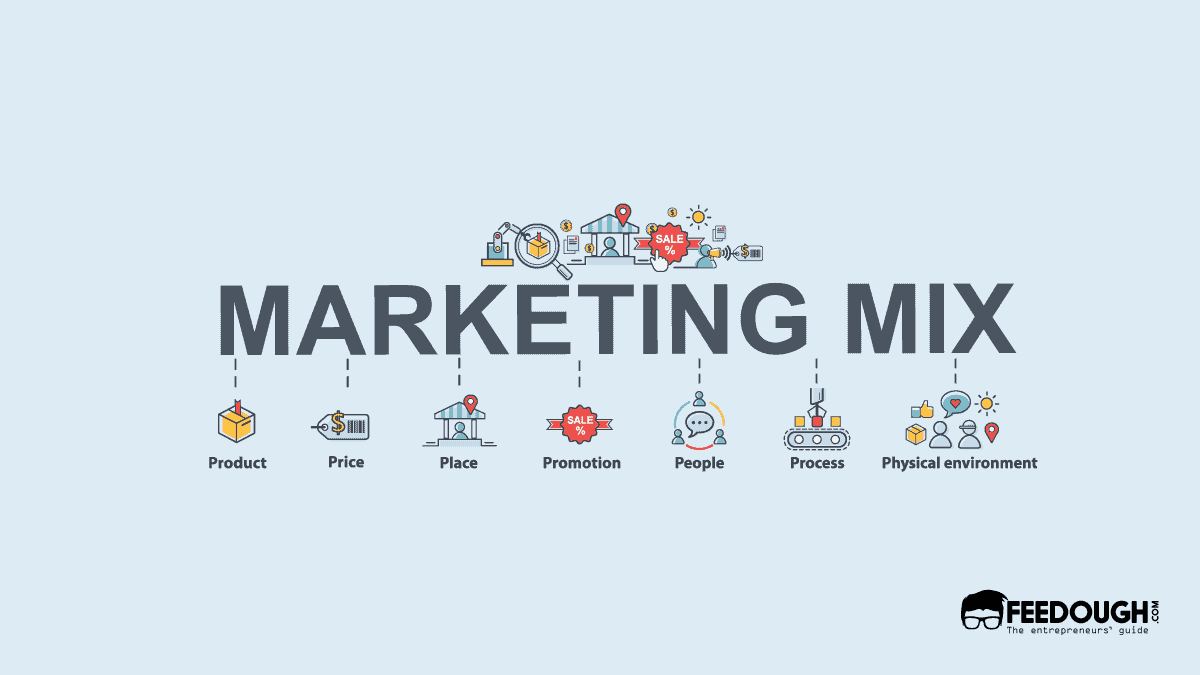
The marketing mix theory, first coined by E. Jerome McCarthy in the 1960s, forms the foundation model for every business today.
Earlier, the marketing framework was confined to the characteristics of marketing systems and their functions. McCarthy provided a framework for marketing decision-making centered around the product, price, place, and promotion through his marketing mix theory.
Today, every company’s marketing decision-making revolves around these marketing mix principles. However, experts have further increased the number of principles influencing the marketing decision-making process.
But before explaining the 4Ps and 7Ps of the marketing mix theory, here’s an example of how Coca-Cola markets itself.
Coca Cola is one of the most valued brands in the world :
It has a well-diversified portfolio of 3500+ products.
It operates throughout the world and distributes its products using a franchise system.
All of its products are competitively priced (since the FMCG industry sees a lot of competition), and
It aggressively promotes its brand and offerings using advertisements, sales promotions, PR, and even CSR activities.
This is Coca-Cola’s marketing mix where it develops the product according to the customer needs, distributes it efficiently, prices it competitively according to the demand, and promotes it effectively to boost sales.
But what is marketing mix? What are the four pillars or 4ps of marketing?
What Is Marketing Mix?
Marketing mix is a set of tools and tactics a business use to pursue its marketing objectives and sell its offerings to the target audience.
Also called the elements of marketing, these tactics include how the marketers develop the offerings and decide their prices, places where they will be sold, and communication and promotional strategies.
In simple terms, marketing mix refers to the set of decisions that marketers use to develop and execute their marketing plans that can
Create the highest level of consumer satisfaction, and
Meet its organisational objectives.
This marketing mix concept derives its framework from the basic definition of marketing – identifying customer’s needs and satiating those needs through offerings. So the business:
Develops a product according to the customers’ needs and wants
Make it available at a price that customers find reasonable
Supply the offering using distribution channels (places) that are convenient for the customer to buy from
Inform the customer about the offering and its characteristics through various promotional channels
The Four Ps Of Marketing
According to Philip Kotler, “Marketing mix is the set of controllable variables that the firm can use to influence the buyer’s response”.
These controllable variables constitute the 4ps or the four pillars of marketing –
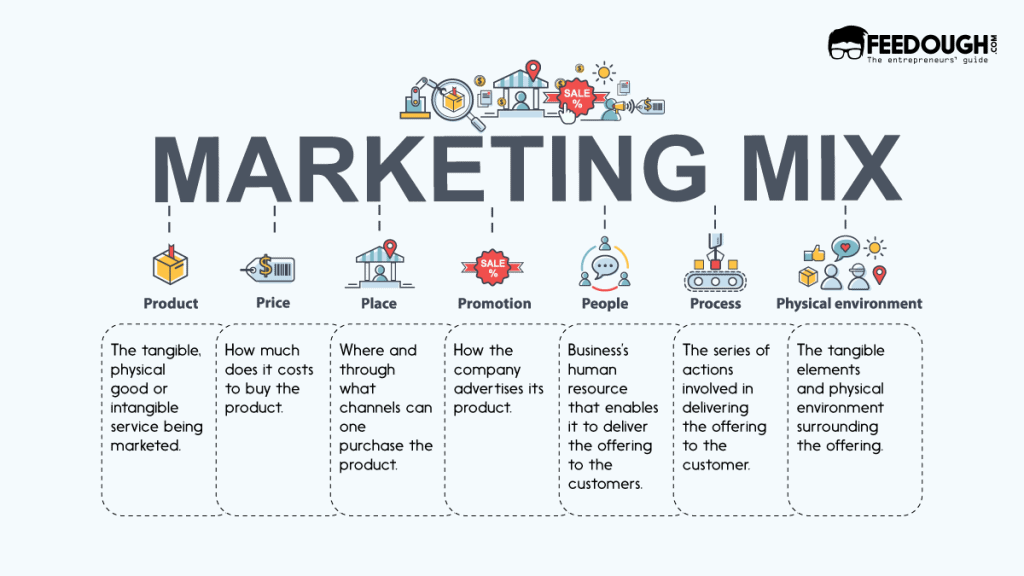
Product: the tangible, physical good or intangible service being marketed;
Price: how much it costs to buy the product;
Place: where and through what channels can one purchase the product;
Promotion: how the business promotes its product.
Product
Product is the offering that the business builds, designs, or procures to satisfy customers’ needs and wants.
The product isn’t limited to a tangible offering. It can also be an intangible offering or a service like air travel, massage, etc.
The customer doesn’t pay for the tangible or intangible product, but for the benefit it provides. For example, customers pay for shoes because they look for comfort and style. They pay for ice cream because it’s tasty and provides relief on a hot summer day. They pay their internet bills because it lets them access the world wide web at the browsing speed decided.
Hence, a product can also be defined as the bundle of benefits offered to the customer at a price.
Price
Price is the amount the business charges for its offering.
Various factors influence the price of the offering. They include its demand, total cost incurred by the customer (including monetary and non-monetary cost), customer’s ability to pay, prices charged by competitors, government policies and restrictions, etc.
Price has a significant effect on the entire marketing mix and determines the business’s sustainability in the market. Besides this, it also influences:
Product’s demand
Brand positioning
Buyer’s perception
Business’s profitability
Businesses usually use one of these pricing strategies to price their offerings –
Cost-Based Pricing: adds a set percentage of profits above the production cost of the product.
Value-Based Pricing: sets the price based on the buyer’s perception of value rather than the actual costs.
Competitive Pricing: sets the price based on prices charged by the competing businesses.
Going-Rate Pricing: sets the price based on the going rate in the market. It is used where the business has little or no control over market rates.
Place
Place is the physical location where the customers get, access, purchase, or use the offering.
It includes the distribution channels the business uses to take the products to the customers. These comprise the chain of individuals or institutions like manufacturers, agents, distributors, wholesalers, and retailers, who form the distribution network of the business.
The distribution-related decisions are majorly influenced by a host of factors, mainly:
Nature of market
Nature of product
Nature of the company
Middlemen considerations
Usually, businesses choose any of the four prevalent distribution strategies. These are:
Intensive Distribution: where the business try to distribute its offering to all the vendors who are ready to sell the offering. This strategy helps in covering as much market as possible. For example, surf products, soft drinks, etc.
Selective Distribution: where the business us a limited number of outlets in a geographical area to sell its offerings. For example, Zara, Adidas, etc.
Exclusive Distribution: where only one distributor is used in a specific geographical area. For example, Lamborghini.
Franchise System: Where small businesses purchase rights from the business to sell its offerings. For example, McDonald’s.
A business can also decide between direct and indirect distribution:
Direct Distribution: When the business sells directly to the customers without involving any intermediaries.
Indirect Distribution: When the business involves intermediaries in their distribution strategy.
Promotion
Promotion is the process of informing, persuading, and influencing a customer to buy’s the business’s offering.
In simple terms, it comprises all the marketing communication efforts a business undertakes to promote its offering to the target audience. Usually, a business undertakes four strategies to promote its offerings:
Advertising: Calling public attention to the business’s offering through paid announcements on offline and online channels.
Public Relations: Strategic communication process business uses to build mutually beneficial relationships with the public.
Personal Selling: Personalised sales method employs person-to-person interaction between the business and prospective customers to influence the customer’s purchase decision.
Sales Promotion:Using attractive short-term initiatives to stimulate the offering’s demand and increase its sales.
The main objective of promotion is to provide information about the offering to the prospective customer to:
Arouse potential customers’ interest in the offering,
Compare it with competitor’s offerings, and
Convince the customers to purchase this product.
The Extended Marketing Mix – The 7Ps of Marketing
The changing customer needs, behaviour, and trends force marketing to become a continually evolving discipline. Today, the marketing mix isn’t limited to just four pillars. Three more pillars have found their place in the extended marketing mix that shape marketers’ decision-making process.
Process: The series of actions involved in delivering the offering to the customer.
Physical Evidence: The tangible elements surrounding the product and the physical environment where the product or service is provided to the customers.
People
The business’s human resource form an important component of the extended marketing mix as they are key to offering’s delivery to the target market.
People include all the employees involved in the marketing and sales processes, be it those who directly interact with the customers and those who indirectly connect with the audience.
This element of the marketing mix is essential as customers don’t differentiate employees who contact them from the business these employees work with.
People include:
Human resource responsible for service delivery,
Personnel who represents the company’s value and conveys the brand message to the customers,
Every other brand personnel who comes in contact with the target customers.
Process
Process is the series of actions involved in the delivery of the offering to the target customers. It includes all the procedures, mechanisms, and activities that impact how the offering is handled by the business and delivered to consumers.
In simple terms, process is the route the offering takes from the business to the customer. It includes the holistic customer experience that starts when the customer discovers the business and its offering and lasts through purchase and even beyond.
The process can be a sequential order of tasks an employee takes or a mixture of related or unrelated activities divided among the employees and the customers, resulting in the transfer of ownership from the business to the customer.
Physical Evidence
Physical evidence includes all the tangible elements surrounding the product and the physical environment where the product or service is provided to the target customer.
It includes all the non-human elements of the marketing experience developed to transfer the ownership of the offering from the business to the customer.
This includes:
The touch points where customers interact with the business.
Tangible branding elements like POPs, packaging, bills, carrybags, etc.
Every other non-human element that the customer sees, hears, and even smells in relation to the offering.
Importance Of Marketing Mix
Marketing as a whole depends on its seven pillars. The marketing mix forms the ingredients to the business’s key to marketing success.
A business can never consider a single element of the market mix in isolation. For example, one cannot develop a product without deciding on its price or distribution channel.
The process where the business considers the seven Ps of marketing mix together to form a cohesive strategy is called marketing planning. It’s vital for a business’s survival and sustainability in the market.
Besides this, a sound knowledge of marketing mix is important –
For new product development,
To make an offering sustain in the market for long,
To tackle business competition,
To tackle dynamic market demand and trends, and
To develop a unique brand positioning.
Ideal use of marketing mix results in creating synergy that gives the right direction to all the marketing efforts towards a set objective.
What Factors Determine The Marketing Mix?
There’s no one shoe fits all when it comes to the marketing mix. Different companies selling different products have different marketing mixes. Two major factors influence their marketing mix –
Internal Factors: They include factors within the business’s control or that lie within the business’s inner environment. These include:
Nature of the offering
Offering’s stage in its lifecycle
Business’s objectives
Business’s finance
External Factors: They comprise all the factors that are outside the control of the business. These are:
Competition degree
Marketing channel’s efficiency
Market trends
Customer buying behaviour
Government restrictions and policies
Marketing Mix Examples
Every company that exists today makes use of marketing mix in its marketing plans. Here are two renowned examples of the marketing mix.
Marketing Mix Of Nestle
Nestle is the world’s largest food and beverage company with more than 2000 brands serving almost every sub-industry of the FMCG industry.
Product Mix of Nestle
Nestle focuses on fulfilling the instant food needs of its customers. In addition, the company focuses on ready-to-consume and processed food items. Nestle’s product mix consists of:
Dairy products: Nestle Milk, Nestle Slim, and Nestle Everyday.
Chocolates: KitKat, Munch, Polo, Milky bar, Crunch, etc.
Coffee: Nescafe, Nescafe Dolce Gusto, Nespresso, etc.
Ready to cook or instant food: Nestle Maggi, Buitoni, Jacks, Herta etc.
Price Mix Of Nestle
Nestle usually follows only two pricing strategies for its products:
Competitive Pricing: The company prices its products according to the competitor’s products prices for its products that operate in a competitive market like chocolates, instant food, etc.
Skimming Pricing: The company sets a price higher than the competition for the products where Nestle stands out. These include products like Nestle A+ Slim, Nestle A+ Toned, etc.
Place Mix Of Nestle
Nestle makes use of mass distribution and uses a four-to-five level distribution channel involving manufacturers, agents (sometimes more than one), wholesalers, and retailers to deliver its offerings to the customers.
The company even uses modern distribution channels like eCommerce stores and online marketplaces to sell its offerings.
Promotion Mix Of Nestle
Nestle uses a mix of ATL, BTL, and digital marketing channels to promote its offerings to the customers. It includes:
Advertisements: TV ads, radio ads, print ads, and digital marketing ads.
Sales Promotion: Active promotions to increase POS sales.
Public Relations: It maintains a good image of the brand through news articles, events, etc.
People Mix Of Nestle
The company maintains a healthy engagement with the target audience through social media channels. Also, it makes sure its salespersons are trained well before they contact the customers and other stakeholders like media, retailers, wholesalers, etc.
Process Mix Of Nestle
The company tries to develop its offerings using modern and robust technology and try to make sure that its offerings are always available at the point of sales.
The company is also involved in actively researching and understanding the evolving needs of its target customers to develop and deliver better offerings.
Physical Evidence Mix Of Nestle
Nestle uses distinctive packaging and branding strategies to deliver its offerings. It even makes sure to design the shelves its products are placed on to develop a holistic physical evidence mix for its offerings.
The company even has a user-friendly and branded website that allows its customers to view its products and interact with the brand.
Marketing Mix Of Facebook
Facebook is the world’s number one social media network that helps its users connect with their friends, families, and others over the internet.
Product Mix Of Facebook
Facebook offers a family of social media networks for users to connect with others and share their memories. These products include:
Facebook
Messenger
Instagram
WhatsApp
Price Mix Of Facebook
The company keeps its products free of charge for the users while charges a competitive price from the advertisers who advertise on the platform targeting these users.
Place Mix Of Facebook
Facebook uses all possible digital channels in its place mix to reach out to its customers. They include the desktop version of the platform and mobile applications compatible with almost every available mobile OS.
Promotion Mix Of Facebook
Facebook uses a mix of advertisements, PR, referral, and word-of-mouth marketing strategies to promote its offerings to customers.
People Mix Of Facebook
Facebook makes sure its support staff is highly trained before connecting with business customers. It also maintains its brand by teaching its employees personal branding etiquettes over social media channels.
Process Mix Of Facebook
Facebook keeps updating its platform’s algorithm to make sure customers get the best trends while fulfilling their socialising needs.
Physical Evidence Mix Of Facebook
For Facebook, the physical evidence includes website branding, design, and user experience, which the company takes good care of.
What Is Digital Marketing Mix?
A digital marketing mix is an adaptation of the traditional marketing mix on to digital marketing platform. That is, the business develops its digital marketing plans by considering the seven Ps of marketing – price, place, product, promotion, people, process, and physical evidence.
Go On, Tell Us What You Think!
Did we miss something? Come on! Tell us what you think of this article in the comment section.
Marketing Myopia, first expressed in an article by Theodore Levitt in Harvard Business Review, is a short-sighted and inward-looking approach to marketing that focuses on fulfilment of immediate needs of the company rather than focusing on marketing from consumers’ point of view.
When a company focuses more on sales than on marketing or consumers’ needs, that’s when marketing myopia strikes in.
What Is Marketing Myopia?
Marketing myopia is a situation when a company has a narrow-minded marketing approach and it focuses mainly on only one aspect out of many possible marketing attributes.
A brand focusing on the development of high-quality products for customers who disregard quality and only focus on the price is a classic example of marketing myopia.
When Does Marketing Myopia Strike In?
Marketing myopia strikes in when the short term marketing goals are given more importance than the long term goals. Some examples are:
More focus on selling rather than building relationships with the customers.
Predicting growth without conducting proper research.
Mass production without knowing the demand.
Giving importance to just one aspect of the marketing attributes without focusing on what the customer actually wants.
Not changing with the dynamic consumer environment.
Business, according to Levitt, is actually a customer satisfying institution and hence should be based on customers’ needs and desires.
Self-Deceiving Cycle
Growth is never assured. The business environment is everchanging and so should be a business. Businesses that don’t assess their own capabilities, competitors, customers’ needs, and changing trends, always tend to get trapped in a self-deceiving cycle.
Conditions That Lead To The Self-Deceiving Cycle
A belief that growth of the business is guaranteed by growth in population.
The belief that there is no competitive substitute for the company’s product
Supply creates its own demand, hence mass production.
Overestimation of product’s qualities without conducting scientific research.
If you ever think there is an absence of future problems, there can be a problem in your thinking.
Step-Child Treatment
Businesses often treat their product as their own child and customers’ needs as a stepchild. This result in spending most of the resources in the development of their product and the remaining (less or no) resources on conducting research and marketing. This backfires on the businesses as the stepchild always turn out to be the Cinderella of the story.
Examples Of Marketing Myopia
Here are some companies that are suffering from or have suffered from marketing myopia
Kodak lost much of its share to Sony cameras when digital cameras boomed and Kodak didn’t plan for it.
Hollywood didn’t even tap the television market as it was focused just on movies.
Yahoo! (worth $100 billion dollars in 2000) lost to Google and was bought by Verizon at approx. $5 billion (2016).
Marketing Myopia in future
Dry cleaners – New types of fiber and chemicals will result in less demand for dry cleaners.
Grocery stores – A shift to the digital lifestyle will make grocery stores disappear.
Facebook: With the new GDPR and data privacy laws, Facebook will either need to change its business model or it may lose social media market share to other data-privacy-centric social media platforms.
Go On, Tell Us What You Think!
Did we miss something? Come on! Tell us what you think of marketing myopia in the comment section.
Marketing concepts or marketing management philosophies are the philosophies used by the businesses to guide their marketing efforts.
In simple terms, marketing concepts relate to the philosophy a business use to identify and fulfil the needs of its customers, benefiting both the customer and the company.
Same philosophy cannot result in a gain for every business, hence different businesses use different marketing concepts (also called marketing management philosophies).
Marketing concepts are driven by clear objectives like cost efficiency, product quality, customer’s need fulfilment etc.
Marketing Management Philosophies
There are five marketing concepts. A company should choose the right one according to their and their customers’ needs.
Production Concept
Product Concept
Selling Concept
Marketing Concept
Social Marketing Concept
Production Concept
This concept works on an assumption that consumers prefer a product which is inexpensive and widely available. This viewpoint was encapsulated in Says Law which states ‘Supply creates its own demand’. Hence companies focus on producing more of the product and making sure that it is available to the customer everywhere easily.
Increase in the production of the product makes the companies get the advantage of economies of scale. This decreased production cost makes the product inexpensive and more attractive to the customer.
A low price may attract new customers, but the focus is just on production and not on product quality. This may result in a decrease in sales if the product is not up to the standards.
This philosophy only works when the demand is more than the supply. Moreover, a customer not always prefers an inexpensive product over others. There are many other factors which influence his purchase decision.
Examples of Production Concept of Marketing Management Philosophies
Companies whose product market is spread all over the world may use this approach.
Companies having an advantage of monopoly.
Any other company whose product’s demand is more than its supply.
Product Concept
This concept works on the assumption that customers prefer products of ‘greater quality’ and ‘price and availability’ doesn’t influence their purchase decision. Hence the company devotes most of its time in developing a product of greater quality which usually turns out to be expensive.
Since the main focus of the marketers is the product quality, they often lose or fail to appeal to customers whose demands are driven by other factors like price, availability, usability, etc.
Product Concept
Examples of Product Concept of Marketing Management Philosophies
Companies in the technology industry.
Companies having an advantage of monopoly.
Selling Concept
Production and product concept both focus on production but selling concept focuses on making an actual sale of the product. Selling Concept focuses on making every possible sale of the product, regardless of the quality of the product or the need of the customer. The main focus is to make money. This philosophy doesn’t include building relations with customers. Hence repeated sales are very less. Companies following this concept may even try to deceive the customers to make them buy their product.
Companies which follow this philosophy have a short-sighted approach as they ‘try to sell what they make rather than what market wants’.
Selling Concept
Examples of Selling Concept of Marketing Management Philosophies
Companies with short-sighted profit goals. This often leads to marketing myopia.
Fraudulent companies.
Marketing Concept
Selling Concept cannot let a company last long in the market. It’s a consumers market after all. To succeed in the 21st century, one has to produce a product to fulfil the needs of their customers. Hence, emerged the marketing concept. This concept works on an assumption that consumers buy products which fulfil their needs. Businesses following the marketing concept conduct researches to know about customers’ needs and wants and come out with products to fulfil the same better than the competitors. By doing so, the business establishes a relationship with the customer and generate profits in the long run.
However, this isn’t the only philosophy that should be followed by all the businesses. Many businesses still follow other concepts and make profits. It totally depends on the demand and supply and the needs of the parties involved.
Marketing Concept
Examples of Marketing Concept of Marketing Management Philosophies
Companies who want to stay in the market for a long time.
Societal Marketing Concept
Adding to the marketing concept, this philosophy focuses on society’s well-being as well. The business focuses on how to fulfil the needs of the customer without affecting the environment, natural resources and focusing on society’s well-being. This philosophy believes that the business is a part of the society and hence should take part in social services like the elimination of poverty, illiteracy, and controlling explosive population growth etc.
Holistic marketing is a new addition to the business marketing management philosophies which considers business and all its parts as one single entity and gives a shared purpose to every activity and person related to that business. A business, like a human body, has different parts, but it’s only able to function properly when all those parts work together towards the same objective. Holistic marketing concept enforces this interrelatedness and believes that a broad and integrated perspective is essential to attain the best results.
Go On, Tell Us What You Think!
Did we miss something? Come on! Tell us what you think of this article on marketing management philosophies in the comments section.
From the star ‘Coca-Cola’ drink to Inca Kola in North and South America, Vita in Africa, and Thumbs up in India, The Coca-Cola Company owns a product portfolio of more than 3500 products. With the presence in more than 200 countries and the daily average servings to 1.9 billion people, Coca-Cola Company has been listed as the world’s most valuable brand with 94% of the world’s population recognizing the red and white Coca-Cola brand Logo. Moreover, 3.1% of all beverages consumed around the world are Coca-Cola products. All this because of its great marketing strategy which we’ll discuss in this article on Coca-Cola Marketing Strategy.
Coca-Cola –
has a Market capitalization of $192.8 Billion (as of May 2016).
had 53 years of consecutive annual dividend increases.
with the revenue of over $44.29 billion, is not just a company but an ECONOMY.
The world knows and has tasted the coca cola products. In fact, out of the 55 billion servings of all kinds of beverages drunk each day (other than water), 1.7 billion are Coca-Cola trademarked/licensed drinks.
Marketing history
Market Research In The Beginning
It all started 130 years ago, in 1886, when a Confederate colonel in the Civil War, John Pemberton, wanted to create his own version of coca wine (cola with alcohol and cocaine) and sent his nephew Lewis Newman to conduct a market research with the samples to a local pharmacy (Jacobs pharmacy). This wasn’t a new idea back then. The original idea of Coca wines was discovered by a Parisian chemist named Angelo Mariani.
Pemberton’s sample was sold for 5 cents a glass and the feedback of the customers was relayed to him by his nephew. Hence, by the end of the year, Pemberton was ready with a unique recipe that was tailored to the customers taste.
Marketing Strategy In The Beginning
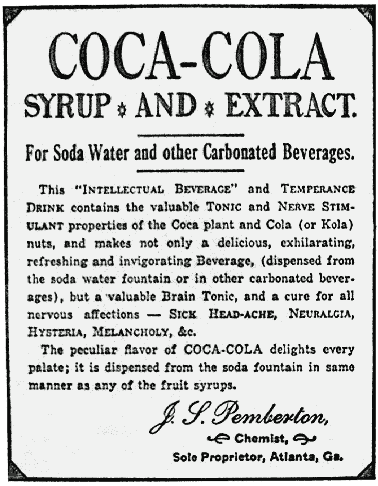
Pemberton soon had to make it non-alcoholic because of the laws prevailing in Atlanta. Once the product was launched, it was marketed by Pemberton as a “Brain Tonic” and “temperance drink” (anti-alcohol), claiming that it cured headaches, anxiety, depression, indigestion, and addiction. Cocaine was removed from Coke in 1903.
The name and the original (current) Trademark logo was the idea of Pemberton’s accountant Frank Robinson, who designed the logo in his own writing. Not changing the logo till date is the best strategy adopted by Coca-cola.
Soon after the formula was sold to Asa G Candler (in 1889), who converted it into a soda drink, the real marketing began.
Candler was a marketer. He distributed thousands of complimentary coca-cola glass coupons, along with souvenir calendars, clocks, etc. all depicting the trademark and made sure that the coca cola trademark was visible everywhere.
He also painted the syrup barrels red to differentiate Coca-Cola from others.
Various syrup manufacturing plants outside Atlanta were opened and in 1895, Candler announced about Coca-Cola being drunk in every state & territory in the US.
coca cola ad 1889
The Idea Of The Bottle
During Candler’s era, Coca-Cola was sold only through soda fountains. But two innovative minds, Benjamin F. Thomas and Joseph B. Whitehead, secured from Candler exclusive rights (at just $1) for bottled coca cola sales.
But Coca-Cola was so famous in the US that it was subjected to imitations. Early advertising campaigns like “Demand the genuine” and “Accept no substitutes” helped the brand somewhat but there was a dire need to differentiate. Hence, in 1916, the unique bottle of Coca-Cola was designed by the Root Glass Company of Terre Haute, Indiana. The trademark bottle design hasn’t been changed until now.
Coca-Cola Worldwide
In 1919, Candler sold the company to Robert Woodruff whose aim was to make Coca-Cola available to anyone, anytime and anyplace. Bottling plants were set up all over the world & coca cola became first truly global brand.
Robert Woodruff had some other strategies too. He was focused on maintaining a standard of excellence as the company scaled. He wanted to position Coca-Cola as a premium product that was worthy of more attention than any of its competitors. And he succeeded in it. Coca-Cola grew rapidly throughout the world.
Coca-Cola Marketing Strategies
The worldwide popularity of Coca-Cola was a result of simple yet groundbreaking marketing strategies like –
Consistency
Consistency can be seen from the logo to the bottle design & the price of the drink (the price was 5 cents from 1886 to 1959). Coca-Cola has kept it simple with every slogan revolving around the two terms ‘Enjoy’ and ‘happiness’.
Branding
From the star bottle to the calendars, watches and other unrelated products, Candler started the trend to make Coca-Cola visible everywhere. The company has followed the same branding strategy till now. Coca-Cola is everywhere and hence has the world’s most renowned logo.
Positioning
Coca-Cola didn’t position itself as a product. It was and it is an ‘Experience’ of happiness and joy.
Franchise model
The bottling rights were sold to different local entrepreneurs, which is continued till now. Hence, Coca-cola isn’t one giant company, it’s a system of many small companies reporting to one giant company.
Personalization & Socialization
Unlike other big companies, Coca-Cola has maintained its positioning as a social brand. It talks to the users. Coca-Cola isn’t a company anymore. It’s a part of us now. With its iconic advertising ideas which include “I’d Like to Buy the World a Coke” & “Share a Coke”, it has maintained a special spot in the heart of its users.
Diversification
Coca-Cola, after marking its presence all over the world, took its first step towards diversifying its portfolio in 1960 by buying Minute Maid. It now operates in all but 2 countries worldwide with a portfolio of more than 3500 brands.
Coca-Cola Marketing Facts
Logo & bottle design hasn’t changed since the start.
During its first year, Coca-Cola sold an average of 9 drinks a day.
Norman Rockwell created art for Coke ads.
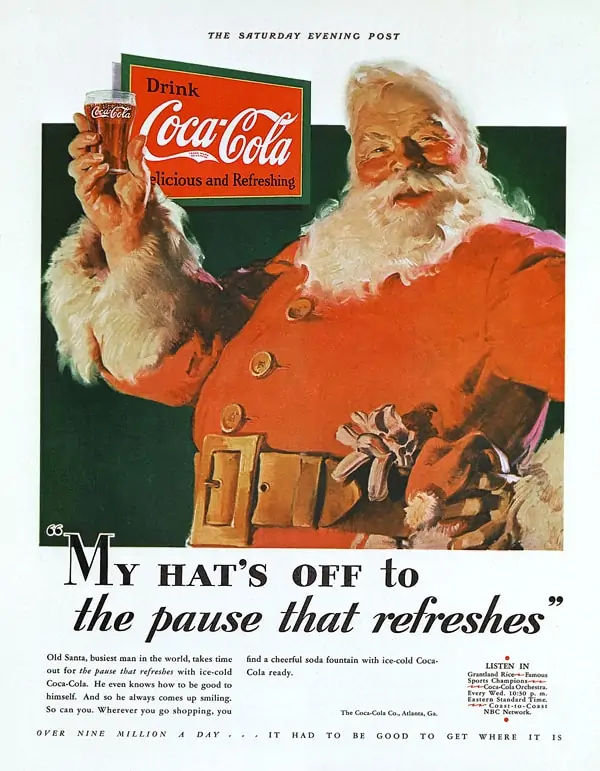
Coke has had a huge role in shaping our image of Santa Clause.
In the 1980s, the company attempted a “Coke in the Morning” campaign to try to win over coffee drinkers.
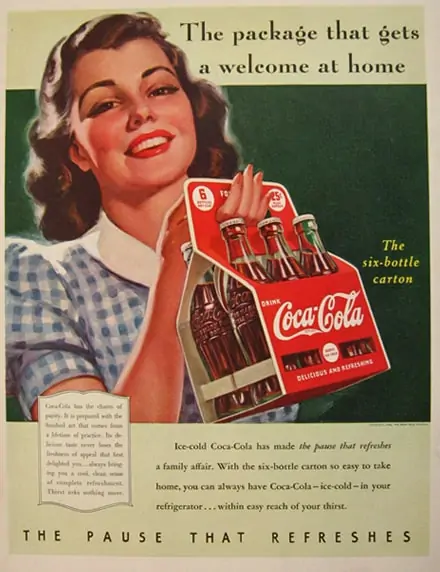
In 1923, the company began selling bottles in packages of six, which became common practice in the beverage industry.
Recently, it was in the news that Verizon acquired Yahoo for around $5 billion which is more or less the same amount the Coca-Cola Company spends on its advertisements.
The number of employees working with the Coca-Cola Company (123,200 to be exact) is more than the population of many countries.
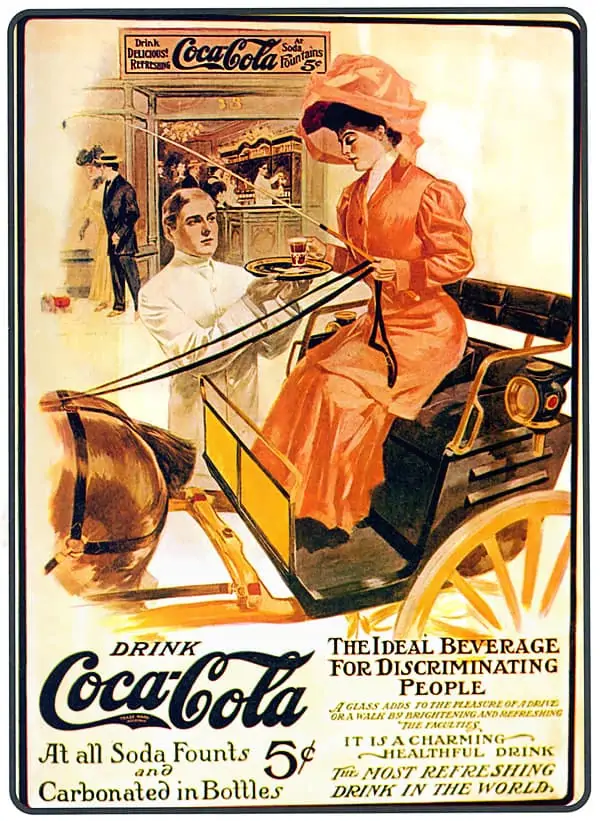
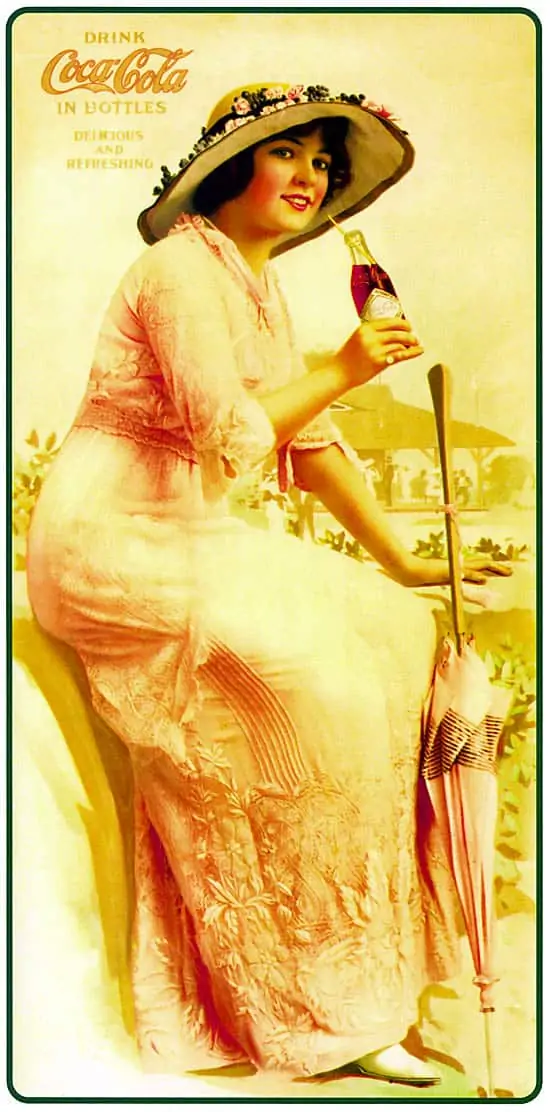
coca cola ad
Go On, Tell Us What You Think!
Did we miss something? Come on! Tell us what you think about Coca Cola Marketing Case Study in the comment section.
Next came Facebook, which added the term social media marketing to the old dictionaries.
And then came Instagram.
Things were never the same after that.
Consumers became active participants in the marketing activities than just passive spectators. Many opinion leaders emerged among them. Followers became a real thing. And marketers joined hands with these opinion leaders to market for them.
This was just an onset of influencer marketing.
The trend spread faster than coronavirus, and the launch of niche-based and demographics-targeted social media platforms like Twitch, LinkedIn, and TikTok etc. boosted its growth. But there wasn’t just a rise in influencers, the trend grew because the consumer’s buying habits and even the buying journey changed.
Today, influencer marketing isn’t just an ancillary marketing tactic. It is a whopping $5-10 billion dollar industry.
Here’s a guide for anyone who’s new to this industry and wants to learn the intricacies of influencer marketing, the current state of influencer marketing, and how to create an influencer marketing strategy.
An influencer is a person, a business, or an organisation that has the power to influence the decisions of a target audience because of its popularity, authority, knowledge, position, or relationship with its audience on a digital platform.
Usually, an individual who has a lot of followers and an influence over the target audience is considered to be an influencer. But the trends are changing and organizations and influencer brands have started to emerge.
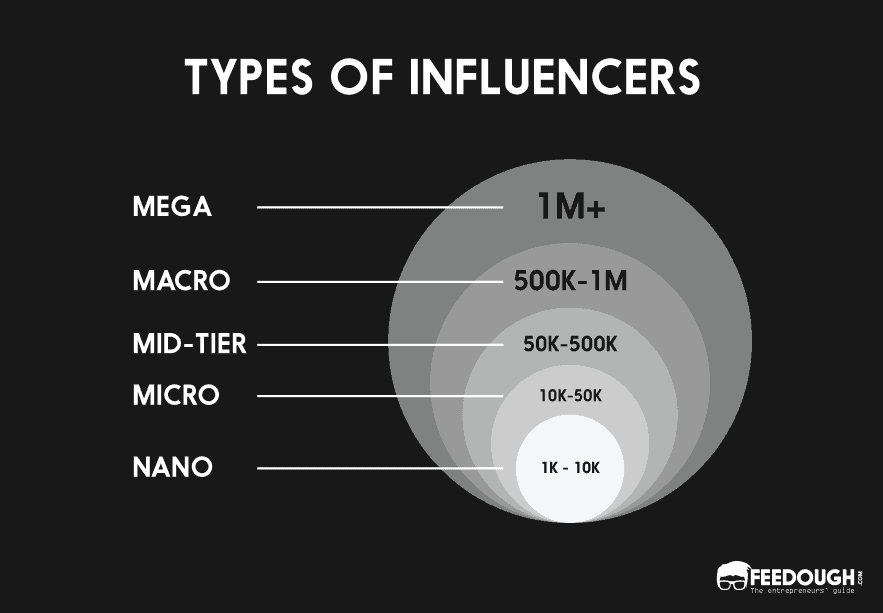
These influencers are divided into four types –
Mega Influencers: Usually celebrities, online niche experts, or opinion leaders with over 1 million followers on at least one social media platform.
Macro Influencers: Opinion leaders, niche experts, and famous personalities who have followers within the range of 500,000 and 1 million on at least one social media platform.
Mid-Tier Influencers: These are budding niche experts or famous personalities with followers ranging between 50,000 and 500,000.
Micro Influencers: Ordinary everyday people who have become famous because of their knowledge for a niche or because of some other reason. These influencers have followers within the range of 10,000 and 50,000 on at least one social media platform.
Nano Influencers: Influencers with usually less number of followers (1,000-10,000) but those having a very high engagement with them as they are known for their knowledge and are considered experts in their niches.
No matter what their type be, influencers possess these characteristics-
Authenticity: Influencers are genuine opinion leaders who post authentic content that which is appreciated by his target audience. Often, he uses his personal experience, expertise, and unbiased approach to gain the trust of his followers.
Authority: Influencers are considered to be an expert of their niche. This is what labels them as opinion leaders.
Relevance: The content influencers post is highly relevant to their niche and their target audience which makes their reach and engagement more than any usual brand.
Engagement: Influencers are known for developing highly engaging content. They also actively engage with the audience and develop a relationship with them which increases their reach and likability.
What Is Influencer Marketing?
Influencer marketing is a practice where a brand partners with influencer(s) who have considerable online authority, to market its offering.
In simple terms, influencer marketing is a marketing strategy where a brand makes use of an influential person to market itself and/or its offerings to his followers. This influential person has the ability and authority to reach the brand’s target audience, build trust, and drive engagement in a way the brand can’t.
It can be considered as a more evolved version of endorsements or referral marketing where marketers choose and focus on a few referrers who have a considerably big network to refer to. In return, these referrers get monetary and/or non-monetary benefits from the brand.
Benefits Of Influencer Marketing
Influencer marketing has a greater reach and ROI compared to the traditional direct-brand-to-customer marketing approach as the customer buying journey has become more layered, and he has a lot more options to choose from than before.
Makes The Brand More Trustworthy
The biggest advantage of influencer marketing is that it helps the brand to borrow the trustworthiness of the influencer to promote its products. This quick trustworthiness helps increase brand awareness, drive more conversions, and even aid other branding and selling strategies of the brand.
Highly Focused And Relevant
Unlike mass-marketing techniques like advertisements, influencer marketing is highly focused towards the specified target audience and the messages prove to a lot more relevant to them as this is what they expect from the influencer.
Better ROI
According to a study, almost 90% of marketers find ROI from influencer marketing campaigns to be comparable to or better than other marketing channels. Another study proved that every dollar spent on influencer marketing resulted in an average earned media value of $5.20.
Acts As A Pull Marketing Technique
Unlike other interruption marketing techniques like advertisements, sales promotion, etc., influencer marketing is usually appreciated by the target market. It is considered to be a pull technique where the influencer pulls the target audience towards the brand and to make them try its offerings.
Helps Convey A Lot More Information Than Ads
Ads are interruptive. Hence, they can only run for a few seconds and often include only the highlights of the offering. However, an influencer marketing campaign can include everything the parties wish to include. This campaign involves the data provided by the brand and the delivery strategy developed by the influencer.
More often than not, the contract between a brand and an influencer is more than just one social media post. It usually includes a holistic approach where the influencer promotes the brand in every way he can.
How Does Influencer Marketing Work?
Influencer marketing makes use of opinion leaders, niche celebrities, and experts to drive the brand’s message to the intended target audience. It conforms to a popular belief that the market has more faith in social proof and validation than the brand’s communication messages.
What Does An Influencer Do?
Influencers capitalize on priming and the psychology of memory, where they build authentic and genuine relationships with their audience by creating original content, guiding them through tough situations, and answering their questions. As a result, these followers start to listen to whatever these influencers say.
How Does An Influencer Make Money?
Over time, these followers usually add them as a layer that validates their niche-related decisions, be it forming an opinion about a brand or buying its offerings.
This is where marketers come to play. They partner with such high authority influencers to promote their brands or offerings without making it sound like a promotion. An influencer does what it usually does – reviewing the brand, comparing it with other brands, suggesting it to the audience, or making them see how useful it is; and gets monetary and/or non-monetary benefits from the brand in return – be it one-time payment, a periodic retainer, free products, or commission.
The Current State Of Influencer Marketing
The influencer marketing industry was valued at $ 8 billion in 2019 and is predicted to be worth up to $15 billion by 2022.
Instagram is the king platform when it comes to influencer marketing. Nearly 80% of the brands tap Instagram for influencer campaigns, 46% tap Facebook, 36% tap YouTube, 24% tap Twitter, and 12% go for LinkedIn, as per Influencer Marketing Hub.
The most common objective of running influencer marketing campaigns is to generate awareness, followed by product sales.
Types Of Influencer Marketing Campaigns (With Examples)
An influencer marketing campaign is not carried out like an advertisement by the influencer or a brand. It is a well-strategized campaign usually disguised as an organic post by the influencer.
However, many influencers do mention their partnerships with brands by using phrases like branded content, sponsored content, etc.
https://www.instagram.com/p/Bl5oDzZFUug/
There are six types of influencer marketing campaigns
Sponsored Content
Reviews
Giveaways
Product and content collaborations
Influencer brand ambassadors
Takeovers
Sponsored Content (Paid Partnerships)
Sponsored content or paid partnerships are simple promotions of the brand and/or its offerings by the influencers in return for some monetary or non-monetary benefits.
An example is Kendall Jenner’s paid partnership with Todds.
Reviews
Oftentimes, brands send their products to their niche influencers for free in return for a review post from their side. These posts can be image posts, video posts or even blog posts, depending upon the partnership between the brand and the influencer.
Here’s an example of a review post by Zoella – a known fashion, beauty and lifestyle influencer.
Giveaways
Many brands, with a goal to increase their brand exposure and social reach, team up with influencers and host a giveaway. This type of partnership usually results in the highest ROI.
https://www.instagram.com/p/By-sCT2HlLO/
Product and content collaborations
These partnerships are just like sponsored posts, but the difference is that these partnerships are often long term, and usually, the influencer has more role than just being a brand promoter. It involves brands to work closely with the influencer to co-create products or content. This not only increases brand awareness but also gets the influencer’s name associated with the offering, which increases its sales.
For example, Jaclyn Hill, a famous beauty influencer, partnered with a makeup brand, Morphe, to create her own eyeshadow palette, which saw a great response from her audience.
Influencer Brand Ambassadors
There have been cases when brands, instead of taking the traditional approach of partnering with celebrities to become their brand ambassadors, partner with influencers instead.
These types of contracts are long-term and contract-based rather than result-based.
For example, Malia Manuel is a known influencer when it comes to surfing. Besides being an opinion leader, she’s also a brand ambassador of Sanuk, a footwear company which develops beach-oriented products.
https://www.instagram.com/p/BhFbKWPAffa/
Takeovers
Takeovers are when brands let influencer(s) take over their social media accounts for a limited period of time to attract more followers and engage with them.
Kimberly Drew, a known curator and influencer, took over Prada’s account to lend her popularity, followers, and brand essence to the partner brand.
https://www.instagram.com/p/Bn8q238D1P2/
Go On, Tell Us What You Think!
Did we miss something? Come on! Tell us what you think about this article on influencer marketing in the comments section.
Hey, I'm Aashish
Each week I share research backed AI oriented content in my newsletter.
There are AI ideas, AI trends, tutorials, and guides.
24k entrepreneurs read it. I'd love you to join.