Feedough Logo

Blog

  • What Is Mortgage Tech?- Challenges, Use Cases and Examples

    What Is Mortgage Tech?- Challenges, Use Cases and Examples

    In a world flooded with cheap mortgages in the past decade, consumers have become wary of paying huge payments on a long-term basis.

    Yet the high cost of switching banks has made many people stuck with the same lender for the entire loan duration, resulting in little competition and low-interest rates.

    However, as people continue to seek ways to improve life, the mortgage industry has been one of the most prominent markets needing a technology-powered disruption.

    With the rise of the internet, new mortgage providers have emerged with innovative ideas for making loans attractive to borrowers, thereby increasing competition and driving down rates.

    Mortgage tech seeks to change this by leveraging the power of artificial intelligence (AI) and machine learning to simplify, automate, and optimise the entire mortgage process.

    What Is Mortgage Tech?

    Mortgage tech or mortgage technology is the use of technologies to streamline and digitise mortgage operations. This includes using technology for loan origination and processing, appraisal management, and payments.

    It enables lenders and servicers to create new products, services and processes to increase consumer access to mortgages and improve the mortgage banking process.

    Banks and other financial institutions use mortgage technology to provide a better customer experience. This includes:

    • Mortgage Lending Software for both consumers and brokers
    • Mobile App development and integration for borrowers and brokers
    • Online and mobile-based loan applications
    • Digital mortgage platforms

    It also allows the lenders and investors to reduce the time it takes to complete the lending process, increase efficiency and reduce costs.

    Mortgage Industry Challenges

    The mortgage lending industry is highly competitive. And it’s tough to succeed in this field. There are several challenges that face mortgage bankers, which include:

    • Speed: The mortgage process is notoriously slow and cumbersome. It can take weeks or even months to get a loan approved.
    • Lack of Innovation: The mortgage industry has been slow to adopt new technology. This has made it difficult for borrowers to get the best possible deal.
    • Accuracy: Mortgage bankers must also be extremely accurate in their loan approvals. One mistake could cost the company thousands of dollars – or even lead to a lawsuit.
    • Compliance: Mortgage bankers must comply with a variety of rules and regulations, including those set by the Consumer Financial Protection Bureau (CFPB), the Federal Reserve and state governments.
    • High Costs: The current mortgage process is very costly. It can cost a bank thousands of dollars to originate a single loan.
    • Security: Mortgage data is some of a bank’s most sensitive information. Protecting this data poses a significant challenge.
    • Rising rates: Rising interest rates can significantly impact a bank’s mortgage business. When rates go up, fewer people refinance their mortgages and fewer people buy homes.
    • Huge documentation: The mortgage process involves a lot of documentation, which can be time-consuming and expensive to produce.
    • Complexity: The mortgage process is complex, with multiple parties involved in each transaction. This complexity can lead to errors and delays.

    Mortgage Tech Use cases

    Mortgage technology is making mortgage lending effortless and more accessible than ever before. Thus, it plays a vital role in today’s world. 

    Some of the important mortgage technology use cases include:

    • Digital Lending: Through digital lending, mobile phones, tablets and computers have allowed mortgage applications to be completed much faster.
    • Underwriting: Underwriting is the process of determining whether someone qualifies for a mortgage loan or not. It can be done using technologies that can make the work easier. 
    • Mobile App for Loan Processing: The ease of applying for a mortgage and the ability to track the loan application status online have increased the security of the mortgage industry.
    • Fraud Prevention: Using mobile apps could help lenders spot potential fraudulent loans and avoid being scammed by borrowers.
    • Customer Experience Improvements: The lenders can improve their online presence and customer support systems. The borrowers can make smarter decisions using the information provided by improving their services. It also gives them the details they need to apply for their loans.
    • Reduction in Operational Costs: Mortgage tech is used to help cut operational costs. It helps to automate processes and the use of artificial intelligence. Thus, banks can save time and energy by investing in other areas.
    • Approvals & Documentations: Approvals and documentation are integral to any mortgage application. The technology aids in these processes and aims to reduce the time it takes to get documents approved and documented.
    • Technology-Based Risk Assessment Tools: These tools are used by lenders and borrowers to determine the risk involved in a loan. Different algorithms and models are used to determine the chances of default and whether the loan is affordable. 
    • Mobile Banking: Mobile banking makes the financial world available wherever you are, 24/7.
    • Innovative Financing & Data Platforms: The use of digital platforms allows for improved data collection and data integration across the various stakeholders. It, in turn, allows for better risk scoring and provides an easier way to deliver personalised loan products to prospective borrowers.
    • Online Mortgage Lenders and Brokers: Online lenders and brokers help customers access the mortgage market, allowing them to get a mortgage that meets their financial requirements. Online lenders compete through price-comparison tools, while online brokers offer additional services like loan-origination management and other financial products.

    Mortgage Tech Startups & Companies

    Mortgage technology businesses are revolutionising the mortgage landscape by developing user-friendly solutions. So this is making it easier for the borrowers to comply with the various mortgage requirements and get hassle-free loans.

    Some of the most well-known mortgage tech startups are as follows:

    SoFi

    SoFi

    SoFi stands out for providing mortgages to customers even with poor credit. In addition, it offers loans with flexible down payment options.

    Furthermore, it offers Fast pre-qualification. SoFi checks basic customer information to determine whether a person has a chance of being pre-approved by a lender. The pre-approval process needs a few documents that help make the final assessment on whether or not to grant the customer a loan.

    Divvy

    Divvy

    Divvy is a startup that deals in home loans. It enables consumers to buy a property while still renting it by collecting equity credits.

    This option allows consumers to set aside a certain amount of money from their monthly rent payment for a down payment. Thus, a customer can begin saving to buy their own house they live in.

    Lending Tree

    Lending Tree

    Lending Tree is a platform that connects numerous lenders with borrowers and allows them to pick the best one. It enables customers to compare various lenders. A user can put their personal information and receive estimates from possible lenders. 

    Further, it also allows a borrower to choose from various lending packages. As a pioneering lending fintech business, the company provides its customers with multiple alternatives, including credit cards, mortgages, etc.

    Credible

    Credible

    Credible acts as a go-between for borrowers and lenders. It is compatible with various loans, including personal and student loans, mortgages, and refinancing. 

    Credible allows clients to look for the best deals based on their application specifications. It also enables borrowers to evaluate several lenders and select the most appealing interest rate.

    The Future of Mortgage Tech

    Mortgage Tech is an industry which is experiencing significant growth. These days, it’s not uncommon to find new mortgage startups and even existing players looking to stay ahead of the competition by bringing fresh ideas and technologies to the table.

    In addition, new tech trends such as blockchain, artificial intelligence, and machine learning are being integrated into the industry. As a result, the mortgage market will continue to see new startups enter the fray in the next few years. 

    Hence, financial institutions must be ready to meet consumer demand for faster, convenient, and trustworthy mortgages. These new technologies, however, could also lead to an increase in default risk. Hence, investors need to be careful about how these technologies are adopted.

    Go On, Tell Us What You Think!

    Did we miss something? Come on! Tell us what you think about our article on mortgage tech in the comments section.

  • How To Use Instagram Reels As A Marketing Tool?

    How To Use Instagram Reels As A Marketing Tool?

    Usually, businesses spend a lot of money running ads to promote their brand on different platforms. And although that is effective, there are better ways to get your brand’s reach and engagement today. For instance, you can use engaging mediums such as Reels on Instagram. 

    Instagram is the third-most used social networking site, with over 1 billion users across the globe. With over 500 million monthly active users, Instagram Reels is a powerful tool for your brand to gain new customers and reach your target customer base.

    It is an effective tool to increase your brand awareness and reach your potential customers.

    But how do you get started? How do you use Instagram Reels as a marketing tool? Here’s a guide:

    How Do Instagram Reels Work?

    Reels are short, engaging videos on Instagram that usually last from 15 seconds to one minute. You can create Reels with audio, effects, and new creative editing tools.

    These short videos make use of the psychology of micro-moments — brief moments of intention that spur immediate action. That is, they are designed to capture your attention quickly and then hold it.

    This is perfect for busy users who scroll through their feed quickly and don’t have time to watch long videos. And since Reels are so short, they’re also more likely to be watched all the way through than longer videos.

    Moreover, Instagram’s algorithm uses AI and machine learning to track your interests and suggest only the most relevant content for you. This makes Reels more engaging and addictive, fulfilling Instagram’s goal of keeping users on the app for as long as possible.

    So, imagine the potential of using Reels to reach your target audience if you’re a marketer. All you need is a creative idea, some good editing skills, and voila! You’ve got yourself a Reel that could go viral.

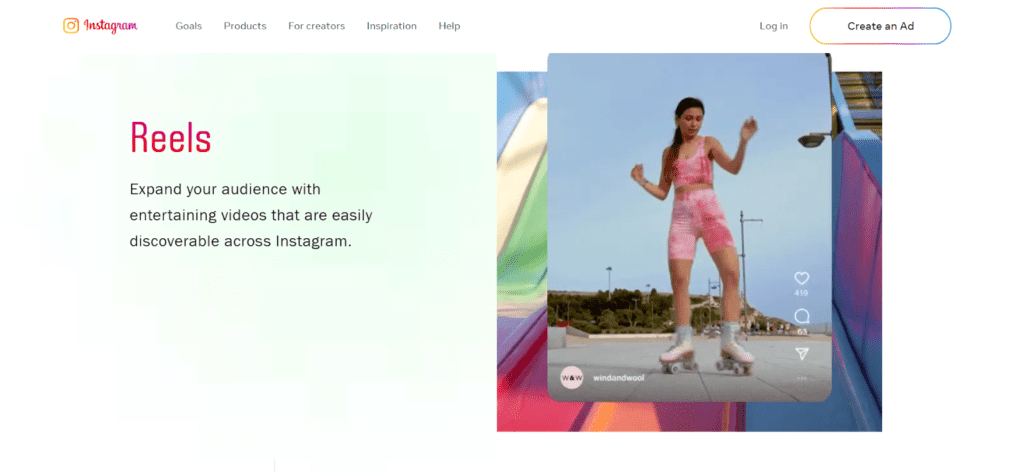
    How Do Instagram Reels Work?
    Source: Instagram

    How To Use Instagram Reels As A Marketing Tool

    Instagram’s business model is based on two things: user engagement and advertising. The more time users spend on the app, the more money Instagram makes from advertisers.

    This is why Reels was introduced in the first place – to keep users engaged on the app for longer.

    And as a marketer, you can use this to your advantage by creating Reels that are not only entertaining but also informative and useful for your target audience.

    Here are some tips on how to use Instagram Reels as a marketing tool:

    Identify Your Target Audience

    Before you create a Reel, you need to identify your target audience. Who are you trying to reach with your Reel? What kind of content will they be interested in?

    You need to answer these questions before you can start creating content that resonates with your audience.

    Usually, your target audiences on Instagram are the people who will either buy your offering or be interested in what you’re selling.

    You can identify your target audience in the following ways:

    • Segment your existing customer base and create buyer personas.
    • Use Instagram’s audience insights to learn more about the people who are following you.
    • Check out your competition and see who their target audience is.

    Once you know your target audience, you need to identify your marketing goals.

    Identify Your Marketing Goals

    You need to clearly understand what you want to achieve with your Instagram Reels marketing campaign.

    Some common goals for using Instagram Reels as a marketing tool include:

    • Generating leads
    • Increasing brand awareness
    • Boosting sales and revenue
    • Engaging with customers and followers
    • Building customer loyalty
    • Creating excitement around a new product launch
    • Managing your brand reputation.
    • Building a community and connecting with your audience. 
    • Establishing the industrial authority of your brand.
    • Increasing traffic for your website.

    So, if your Reels fit Instagram’s algorithm, they can be discovered even by people who do not follow you. This increases your brand’s exposure by attracting your potential customer’s attention.

    For example, let’s say your business is a fashion brand. Then you want your Reel to showcase your best and latest designs. In that case, your marketing goal would be to get customers into your physical store or make your potential clients purchase your clothes from your online store.

    In this scenario, you must create an Instagram Reel showcasing your best work. It is meant to build awareness of your brand, which will help you reach your marketing goals.

    After you know your goals, you need to figure out what your competition is doing to maintain your brand value.

    Competitor Analysis

    Your competitors can be a great source of inspiration for your content strategy. By understanding what type of content is resonating with their audience, you can produce similar content that appeals to your own target market.

    To do a competitor analysis, start by creating a list of your main competitors. Then, visit their website and social media channels to see what type of content they’re producing. Make note of any content that performs well, informative reels, creative Reels, etc.

    The most important thing you need to notice in your competitor’s Reels is how they increase their reach and engage their viewers.

    Once you have a good understanding of your competitor’s content strategy, you can start to develop your own ideas for Instagram Reels.

    Develop A Reel Campaign

    Sephora shows us why they’re one of the best brands on Instagram to use Reels for marketing, with over 1.3 million views on Reels alone.

    If you still think that Instagram Reels aren’t something for you, then let me tell you why you should give them a shot.

    To build a strong brand, you must develop a strong message to help you stand out from the crowd. It will let your target audience know who you are and help you define your brand identity and position in the market.

    Hence, here are the steps you can use to develop your reel campaign.

    Develop your Reel Content

    This is the fun part! Reels can usually be broken down into four types of content:

    • Educational: These are videos that teach your audience something new. This could be a tutorial on how to get more views to your blog, a listicle of tips for social media success, or even a quick how-to guide.
    • Entertaining: These Reels are all about providing value to your audience through entertainment. This could be a funny video, a celebrity interview, or anything else that you think will make your audience laugh or engage with you.
    • Emotional: They are designed to evoke an emotional response from your audience. This could be a heartwarming story, an inspirational video, or something that makes your audience think about your brand in a new light.
    • Product-Focused: Such Reels are designed to promote your brand, product, or service. This could be a video showcasing a new product or a coupon code for your online store. Usually, these reels receive the least amount of engagement because they’re perceived as being “sales-y.”

    No matter what type of Reel you create, ensure to divide the same into three parts –

    Hook

    The first two-to-five seconds of the video are vital to keep your audience engaged. You need to grab their attention immediately and make them want to see more. You do the same using voiceovers, text overlays, or using aesthetic filters. Here is an example of an engaging hook in the form of aesthetics –

    https://www.instagram.com/reel/ChWiAo-gDDc/?igshid=MDJmNzVkMjY=

    Here’s another interesting hook for an educational Reel –

    https://www.instagram.com/reel/ChU-nHDjx8K/?igshid=MDJmNzVkMjY=
    Content

    This is where you deliver on the promise made in the hook. The content should be interesting, engaging, and relevant to your target audience. If you’re selling a product, make sure to showcase it in the best light possible. Use creative angles, interesting visuals, and helpful tips to keep viewers engaged.

    If you’re creating an educational Reel, make sure the information is presented in an engaging and easy-to-understand way. Use graphics, screenshots, or short videos to break up the text and make the information more digestible.

    Here’s an interesting reel from a travel company Tripoto aiming to increase its brand exposure.

    https://www.instagram.com/reel/ChIAKtFOFA2/?igshid=MDJmNzVkMjY=

    Here’s an educational video by Indiahikes, one of the largest trekking companies in India. The reel helps people understand how to prevent blisters on a trek. The reel got around 130k views and was very well received by the audience.

    https://www.instagram.com/reel/ChCfYsWBS7D/?igshid=MDJmNzVkMjY=
    Call-To-Action

    While not always necessary, a strong call-to-action (CTA) can be very effective in getting people to take the desired action. Your CTA could be anything from asking people to comment on the reel, to follow your brand on Instagram, or even visit your website.

    Here’s an example of an educational reel by Finance With Sharan with an interesting CTA of following them on Instagram.

    https://www.instagram.com/reel/CgeXOXcgwlx/?igshid=MDJmNzVkMjY=

    Which Software Should You Use To Create Reels?

    While Instagram provides its own editing tool within the app, many marketers prefer to use other software to create their Instagram Reels. This is because these other tools often provide more features and flexibility when it comes to editing and creating content.

    Some of the most popular software used to create Instagram Reels include:

    • Adobe Premiere Pro: Best for advanced video editing.
    • Wave.video: Online video editor with built-in video templates for reels.
    • InVideo: Online video editor with a wide range of editing features for reels.
    • Canva: Online design platform with built-in video editing capabilities.
    • Wevideo: An online video editor with over 1 million stock assets.
    Features
    InVideo
    WaveVideo
    WeVideo
    Canva
    Adobe Premiere Pro
    Audio Tools
    Templates
    Media Library 
    Social Sharing
    Speed Adjustments
    Split/Merge Video

    You can even edit videos on your phone using apps like –

    • VN
    • Power director
    • Quik
    • Kinemaster

    Post The Reel

    Creating the Reel is only half the battle, you also need to ensure that it reaches your target audience.

    Captions, hashtags, time of posting, location, tags, collaboration, etc. all play a role in increasing the reach of your reel. Here’s how to do this:

    • Hashtags: Use relevant and popular hashtags so that your reel can be discovered by users who are searching for those hashtags. You can use up to 30 hashtags on a reel. Find relevant hashtags on hashtag research tools like Hashtagify.
    • Time of Posting: The best time to post your reel is when your target audience is most active on Instagram. Find out when this is by looking at your Instagram Insights or using a tool like Sprout Social.
    • Location: You can include a location in your reel to make it discoverable to people who are searching for content from that location.
    • Audio: Choose an audio track that fits the mood and theme of your reel. It is usually preferred to use a trending song so that your reel is more discoverable.
    • Video length: The ideal video length for a reel is 15 seconds. This is because people generally have a short attention span when scrolling through their feed.
    • Add Text and Effects: Text work great as a hook to grab people’s attention. Add text at the beginning or end of your reel, or use it throughout the video to highlight important points. You can also add effects like filters, slow motion, and speed up to make your reel more visually appealing.
    • Captions: Use captions to tell people what your reel is about and to encourage them to watch it. Keep your caption short and to the point.

    Promote Your Reels

    Promoting your reels is as important as creating them. Here are a few ways you can promote your Instagram reels:

    • Use Instagram’s Story feature to promote it. 
    • Engage with your audience in the Comment section. 
    • Share your Reel on other social platforms, such as Facebook, YouTube etc., to increase your reach.
    • Finally, to increase the reach and engagement of your Reel, you can also use paid advertising tools like Promote Your Page and Instagram Ads.

    Now that you have put all your efforts into making the perfect Reel for marketing your product, it is time to analyse your work.

    Analyse Your Work

    After you have done everything to market your product using reels, take a step back and evaluate the engagement you received. Was it as per your expectations, or was it above or below your expectation?

    Carefully gather all the information and re-evaluate your marketing strategy accordingly.

    Bottom-Line?

    Instagram Reels offers a robust platform for businesses to share tips, educate, entertain, inspire, and engage with their audiences organically. With Instagram Reels, you can strengthen your relationship with your viewers while increasing your brand’s visibility.

    And you don’t have to be a well-known company with thousands of followers to go viral, which makes it even more appealing.

    So it’s time to put the advice above into action, include reels into your overall marketing approach, and let your brand take off. 

    Go On, Tell Us What You Think!

    Did we miss something? Come on! Tell us what you think about our article on using Instagram Reels as a marketing tool in the comments section.

  • What Is Email Marketing [Detailed Guide]

    What Is Email Marketing [Detailed Guide]

    Emails existed way before the internet was even a thing. In fact, the first email was sent in 1971, 12 years before the internet was created. And while technology has changed a lot since then, email remains one of the most popular and effective communication tools.

    Today, with over 4 billion email users, email marketing has become one of the most popular marketing channels. This marketing technique involves sending targeted and personalised emails to a group of potential or existing customers to fulfil a marketing goal.

    While email marketing may seem like a relatively simple concept, a lot goes into creating and executing an effective email marketing campaign. In this guide, we will cover everything you need to know about email marketing, from its basics to its advantages and disadvantages, and provide some helpful tips on how to get started.

    What Is Email Marketing?

    Email marketing is a form of direct marketing where marketers send targeted and personalised emails to a group of potential or existing customers intending to fulfil a marketing objective.

    Email marketing campaigns can achieve various marketing goals, such as building customer relationships, generating leads, increasing brand awareness, driving website traffic, or expanding the impact of a marketing campaign.

    Whatever the goal, every email marketing campaign relies on four enablers:

    • A large and engaged email list: It involves sending messages to a list of subscribers who have either opted-in to receive marketing communications from your brand or have been added to your contact list organically.
    • Compelling and targeted content: The message you send as part of your email marketing campaign must be compelling and relevant to your audience.
    • An effective email marketing strategy: An overarching marketing strategy that includes segmentation, personalisation, and a call to action.
    • A reliable email marketing platform: The software you use to execute your email marketing campaigns. This will take care of the technical aspects of sending mass emails, including delivering your emails to the inbox and providing you with detailed analytics.

    In its broadest sense, every email sent to a potential or existing customer with the intent to fulfil a marketing objective can be considered email marketing.

    What Is An Email Marketing Campaign?

    An email marketing campaign is a sequence of one or more emails that are sent with the intention of achieving a specific marketing goal. For example, the goal of such marketing campaign might be to:

    • Increase brand awareness
    • Generate leads
    • Nurture prospects
    • Promote a product or service
    • Reengage customers

    Email marketing campaigns are typically automated and triggered based on certain conditions or actions, such as:

    • A new subscriber signs up in your list
    • A customer abandons their shopping cart
    • A prospect clicks a link in your email

    Email marketing campaigns are an essential part of any marketing strategy and, when executed correctly, can be incredibly effective.

    Importance Of Email Marketing

    Email marketing is one of the most effective ways to reach your customers. In fact, a study by Litmus found that email has an ROI of $36 for every $1 spent on email marketing. That’s a pretty good return on investment!

    Besides the monetary benefits, it can also help you in the following ways:

    • Build engaging relationships with your customers: Email allows you to develop a relationship with your customers and build a rapport that would be difficult to establish through other channels as it provides a more personal way to connect with them.
    • Personal channel to fulfil marketing goals: Email is a highly personal channel which allows you to deliver targeted content to your audience which is relevant to them and helps you achieve your marketing goals.
    • Helps in segmented and personalised marketing: Emails allow you to send more targeted and personalised messages based on the customer’s behaviour, preference, and state in the marketing funnel, leading to better conversion rates.
    • Controlled marketing: Unlike Facebook, Instagram and Google, you have more control over your email list. You can segment it, choose who receives which emails, and even send different types of emails to different segments.

    How Does Email Marketing Work?

    In simplest terms, email marketing works by sending out a commercial message to a group of people via email. Typically, recipients will see your message in their inbox and can decide whether to engage with the content or ignore it.

    However, an email marketing campaign is much more than just sending out mass messages to a group of people.

    It involves the following steps:

    Getting Permission

    You can’t just add someone to your email list and start sending them marketing messages. That would be considered spam, and you could get into serious trouble for it (low deliverability rates, blacklisting, and legal action could all be taken against you).

    Instead, you need to get permission from each individual recipient before you can add them to your list and send them marketing messages. This is known as opting in.

    You can give people the option to opt-in to receiving your marketing messages by

    • Including a sign-up form on your website,
    • Offering a freebie in return for an email address,
    • Running a competition where entrants have to provide their email address to take part
    • Rewarding existing customers for referring new leads who sign up with their email address

    There are a number of ways to get permission from people to add them to your mailing list. But whatever method you choose, it’s important that you make it clear what they’re signing up to.

    If you’re not upfront about the fact that they’ll be receiving marketing messages from you, most people will simply unsubscribe as soon as they realise it.

    Segmenting And Building Email Lists

    Once you have permission from a recipient to send them marketing messages, you need to segment your list based on different criteria so that you can send them targeted content.

    For example, you might segment your list by:

    • Location
    • Demographics
    • Interests/Hobbies
    • Past Purchases
    • The type of relationship they have with your brand

    By segmenting your list, you can send recipients content that’s much more likely to be relevant and interesting to them, which in turn increases the likelihood of them engaging with your messages.

    Sending Relevant Content

    When it comes to email marketing, relevancy is key. Your recipients shouldn’t feel like they’re being bombarded with irrelevant messages that have no value to them – they should only be receiving content that’s of interest and that’s going to add value to their lives.

    While your marketing message can be anything from upselling to cross-selling, the main goal should always be to provide your recipients with content that they’ll find useful.

    Some ways to make sure your content is relevant and interesting include:

    • Sending timely content: If you have a time-sensitive offer or piece of news, make sure you send it out in your emails so that your recipients are always up-to-date.
    • Personalising your content: Using the recipient’s name in the email subject line or body can go a long way to making them feel like the email is for them.
    • Using rich media: You can make your emails more visually appealing and engaging by incorporating images, videos or infographics in them.
    • Using active language: Using words like ‘discover’, ‘unlock’ or ‘learn’ can encourage your recipients to click through to your website or landing page.
    • Talking to them, not selling to them: Your emails should be informative and helpful, not just a hard sell. The more helpful your emails are, the more likely your recipients are to engage with them.
    • Keeping it short and sweet: With people’s ever-decreasing attention spans, it’s important to keep your emails concise and to the point.
    • Including a strong CTA: Your email should have a clear purpose, and your CTA should reflect this. Make it easy for recipients to take the desired action by using actionable language and including a link to your website or landing page.

    Using Automation

    Automation is one of the key features in any email marketing platform, and for a good reason. It allows you to set up a series of emails to be delivered to your subscribers at predetermined intervals, meaning you can take a hands-off approach once you’ve hit send.

    For example, you could set up a welcome email series to be delivered to new subscribers, or an educational email series to help them get the most out of your product.

    Email automation is also great for abandoned cart emails – sending a reminder to customers who have left items in their online shopping carts without completing their purchase.

    Several tools like Mailchimp, Active Campaign, Get Response, and Moosend allow you to automate your emails.

    Analytics and Reporting

    Most email marketing platforms like Mailchimp and Get Response provide you with extensive data and analytics on your email campaigns so that you can see how they’re performing and make necessary changes.

    You can see things like how many people opened your email, what links they clicked on, whether they unsubscribed or not, and more.

    This data helps you to fine-tune your marketing campaigns for maximum effect.

    Types Of Email Marketing

    While email marketing can be used for a variety of purposes, four main types of email marketing are most commonly used:

    • Acquisition Emails
    • Retention Emails
    • Transactional Emails
    • Newsletters

    Acquisition Emails

    Acquisition emails are promotional emails designed to get new customers or leads interested in your products or services.

    These emails are usually triggered when someone enters the top of your sales funnel by providing their contact information.

    For example, if you have a lead capture form on your website, an acquisition email will be sent to the person who fills out that form when they submit it.

    The purpose of this email is to introduce the person to your brand, get them interested in what you have to offer, and moving them down the sales funnel.

    Businesses often send these emails in the form of drip campaigns, a series of emails sent over a period of time (usually 1-2 weeks) designed to nurture the lead and get them interested in your product or service.

    Retention Emails

    Retention emails are promotional emails designed to keep existing customers or leads engaged with your products or services.

    They can be used to encourage customer loyalty, cross-sell or upsell offerings, or simply keep people engaged with your brand.

    Businesses often send these types of emails as part of a loyalty program, or to keep people engaged after they’ve already made a purchase.

    Transactional Emails

    Transactional emails are triggered by a specific action a person takes on your website or app.

    The most common types of transactional emails are purchase confirmation, shipping notifications, password resets, and account activation.

    Because a customer action usually triggers these messages, they have a high open rate.

    Newsletters

    A newsletter is an informative email that you send to subscribers periodically. It might include helpful articles, tips, resources, special offers, or simple updates about your business.

    Most newsletters also include a way for subscribers to contact you if they have any questions or feedback. It also includes an opt-out link if they no longer want to receive your emails.

    People usually sign up for newsletters when visiting a website or blog. You can also encourage people to sign up for your newsletter by offering a discount or freebie.

    Once you have a list of subscribers, you can send them regular newsletters to keep them updated on your business and build a relationship with them.

    Advantages Of Email Marketing

    Email marketing surpasses many other marketing channels in terms of ROI, personalisation, and automation capabilities.

    Some key advantages of email marketing include:

    • It’s Cost-Effective: One of the biggest advantages of email marketing is its cost-effectiveness. You can reach a large number of people at a fraction of the cost of other marketing channels like TV, radio, or print ads.
    • It’s Personal: Emails allow you to send highly targeted and personalised messages to your customers and prospects. You can segment your lists to send different types of emails to different people, and you can include personal details like names and birthdays to make your messages more personal.
    • It’s Fast: Sending an email is a lot faster than creating and mailing a traditional direct mail piece. You can create and send an email in minutes, and it will be delivered to your recipients’ inboxes almost instantly.
    • It is permission-based: Email marketing starts with the customer agreeing to receive emails from you. This means that people who receive your emails already know who you are and have given you permission to contact them. This makes email marketing much less intrusive than other types of marketing, and therefore more effective.
    • It is easily measurable: Unlike other forms of marketing, email marketing can be easily measured. You can easily see, analyse and improve email marketing metrics like how many people opened your email, clicked on the links, and even unsubscribed from your list. This helps you to constantly improve your email marketing campaigns.
    • It increases brand recognition: Every time someone sees your name in their inbox, they are reminded of your brand. This helps to increase brand recognition and can eventually lead to more sales.

    Disadvantages Of Email Marketing

    While email marketing is an incredibly effective way to reach your customers, it does have some disadvantages.

    • Developing a list of subscribers isn’t easy: Unlike social media platforms, where anyone can follow you with a single click, email marketing requires potential customers to actually opt-in to your list. This can be difficult, especially if you’re just starting out.
    • Regulatory compliance: Depending on your industry, you may need to comply with certain regulations regarding email marketing. For example, the CAN-SPAM Act in the United States imposes strict rules on commercial emails. In the European Union, the General Data Protection Regulation (GDPR) went into effect in May 2018, imposing strict regulations on how companies can collect, use, and protect the personal data of EU citizens.
    • Delayed ROI: Unlike other marketing channels, email marketing can take a while to show results. Your campaign might not generate immediate revenue and may cost you more in the beginning.
    • Tough competition: With so many businesses using email marketing, it can be tough to stand out from the crowd. You need to have a well-thought-out email marketing strategy and deliver high-quality content that resonates with your audience.
    • Technical issues: Email marketing can be complex and technical, especially if you’re using advanced features like automation or segmentation. Mailboxes like Gmail and Yahoo can also be finicky, and you might need assistance from a technical expert to get your email delivered to the inbox.

    Best Email Marketing Platforms

    Email marketing isn’t one size fit all strategy. Different businesses have different requirements and should use different platforms. Here are some of the best email marketing platforms for small businesses:

    • Mailchimp: A great tool for beginners providing features like automation, segmentation, and templates. You can use Mailchimp for free if you have less than 2,000 subscribers.
    • Get Response: Get Response is a great option if you’re looking for a complete toolset that even lets you build landing pages and webinars.
    • Active Campaign: A holistic marketing platform combining email marketing, marketing automation, and CRM.
    • HubSpot: HubSpot’s email marketing tools are part of an all-in-one inbound marketing platform. This might be your best option if you’re looking for a comprehensive email marketing solution along with other features like CRM, drip campaigns, and marketing automation.
    • Moosend: One of the most easy-to-use platforms to use with features like automated workflows, segmentation, and A/B testing. It offers a drag-and-drop interface and a free trial for 30 days.
    • Constant Contact: A more expensive option that offers features like surveys, event marketing, and coupons. Constant Contact offers a 60-day free trial.

    Email Marketing FAQs

    How much does email marketing cost?

    The cost of email marketing will vary depending on the platform you use and the features you need. Generally, platforms will charge a monthly fee (from $10 to $1000) based on the number of subscribers you have. Some platforms will also charge a per-email fee.

    Do I need permission to send marketing emails?

    Yes, you always need permission to send marketing emails. This can be in the form of express permission (i.e., someone explicitly subscribing to your emails), or implied permission (i.e., someone providing their email address when making a purchase).

    Is email marketing the same as cold emailing?

    No, email marketing is not the same as cold emailing. Cold emailing is a form of outreach where you contact someone without them having expressly permitted you to do so. This can often be seen as spammy and lead to high complaint rates. Email marketing, on the other hand, is a way to stay in touch with your customers and prospects by sending them regular, targeted communications.

    Do’s & Don’ts Of Email Marketing

    When it comes to email marketing, there are a few things you should definitely do, as well as a few things you definitely shouldn’t do.

    Here are the dos and don’ts of email marketing:

    Do’s

    • Get explicit permission before sending emails
    • Keep your list clean and up-to-date
    • Personalise your marketing emails
    • Write great subject lines
    • Make your emails mobile-friendly
    • Focus on quality, not quantity
    • Timing is everything
    • Monitor your results and adapt
    • Use A/B testing
    • Keep an eye on the competition

    Don’ts

    • Don’t buy lists of email addresses
    • Don’t send emails without permission
    • Don’t send the same email to everyone on your list
    • Don’t use misleading subject lines
    • Don’t use too much HTML in your emails
    • Don’t send attachment-heavy emails
    • Avoid using all-caps and exclamation points
    • Don’t overuse images
    • Don’t forget about spelling and grammar
    • Don’t forget the basics of email etiquette

    Bottom-Line?

    Email marketing can be a great way to reach your target audience and build relationships with customers and prospects. However, it’s important to remember that email marketing is not a silver bullet solution for all your marketing problems.

    When used correctly, email marketing can be an effective tool for driving sales, generating leads, and building customer loyalty. However, it’s important to avoid common mistakes that can damage your sender reputation, decrease deliverability, and turn off your subscribers.

    By following the tips above, you can ensure that your email marketing campaigns are successful and avoid common pitfalls that could lead to problems down the road.

    Go On, Tell Us What You Think!

    Did we miss something? Come on! Tell us what you think about our article in the comments section.

  • What Is Cleantech?- Challenges, Use Cases and Examples

    What Is Cleantech?- Challenges, Use Cases and Examples

    The world is changing at a faster pace than we ever thought. As the population and global carbon footprint continue to rise, the need for clean energy and technologies is increasing everyday.  

    Cleantech, clean energy, and sustainable energy is becoming significant solution on a global scale. And the more we embrace them, the sooner we will reach a point where humanity can live in a healthy, sustainable, and safe way.

    It is an emerging field of business in which innovation and sustainability are driving forces, as opposed to short-term financial gains.

    What Is Cleantech?

    Cleantech, short for clean technology, refers to the use of sustainable technologies, energy sources, materials, and processes to design and build products that aim to minimise or eliminate the negative environmental impact of human activities.

    It includes using technology to not only make products and services more environmentally friendly but also to make them more efficient, thus reducing the overall impact on the environment.

    This can be done through a variety of means such as using renewable energy sources, developing new green materials, or improving manufacturing processes.

    While often considered synonymous with ‘green technology’ or ‘environmental technology’, cleantech encompasses a much broader range of technologies and innovations.

    Cleantech can be applied to any industry or sector, from agriculture to transportation, and from construction to waste management. It is a broad term encompassing many technologies such as solar, wind, nuclear, water, electric cars, biofuels, fuel cells, microgrids, etc.

    Environmental Challenges

    As the world population continues to grow, so does the demand for energy and resources. This increase in demand is putting a strain on our planet’s finite resources and causing serious environmental challenges such as climate change, water shortages, air pollution, and loss of biodiversity.

    Besides this, here are some of the main challenges that cleantech aims to address:

    • Climate change: This is perhaps the most pressing challenge that we face today. With the overuse of fossil fuels and other greenhouse gas-emitting activities, the Earth’s atmosphere is slowly being depleted of its protective ozone layer. This is leading to a rise in global temperatures, which is causing all sorts of weather anomalies such as more extreme storms, droughts, and floods.
    • Water shortages: With the world population projected to reach 9.8 billion by 2050, water demand is expected to increase substantially. This, combined with the effects of climate change, means that water shortages could become a major issue in the coming years.
    • Pollution: Air pollution is estimated to cause 7 million premature deaths each year, while water pollution is responsible for the death of 1.8 million people annually. And it’s not just humans that are affected – air pollution also takes a toll on animals and plants, contributing to biodiversity loss.
    • Deforestation: Deforestation is another major environmental problem. Every year, an estimated 18.7 million hectares of forest are lost – that’s the equivalent of 27 soccer fields every minute. Deforestation not only has an impact on the environment but also on the people who depend on forests for their livelihoods.
    • Lack of innovation: One of the main reasons why environmental problems are so difficult to solve is because there has been a lack of innovation in the way we deal with them. For example, we are still using inefficient and polluting technologies from the industrial revolution, such as coal-fired power plants.
    • Inadequate regulation: Another reason why environmental problems are so difficult to solve is because of inadequate regulation. For example, there are no international regulations on the shipping industry, which results in ships dumping their waste into the ocean.
    • Lack of awareness: A third reason why environmental problems are so difficult to solve is because of a lack of awareness. For example, many people are not aware of the impact their daily activities have on the environment.

    Cleantech Use Cases

    Clean technology includes a broad range of technologies and approaches that have the potential to address environmental problems. Some of the most promising clean technologies include:

    • Wind energy: Wind energy is a clean, renewable source of electricity that can be used to power homes and businesses. Wind turbines convert the kinetic energy of the wind into electrical energy, which can then be used to power appliances and lights.
    • Solar energy: Solar energy involves the capture of sunlight and its conversion into electrical energy. Solar panels are used to collect and convert the sun’s rays into usable electricity.Hydroelectricity:
    • Hydroelectricity: It is a type of renewable energy that uses water to generate electricity. Hydroelectric power plants use the kinetic energy of moving water to spin turbines, which in turn generate electricity.
    • Geothermal energy: It is the thermal energy generated and stored in the Earth. Geothermal power plants use this heat to generate electricity. The heat is extracted from the ground through a network of pipes, and used to heat water, which produces steam. The steam is then used to spin turbines, which generate electricity.
    • Bioenergy: Bioenergy is the energy derived from biomass. Biomass is organic matter, such as plants, animals, and their waste products. It can be used to generate electricity, heat, and transportation fuels.
    • Electric vehicles: Electric vehicles are a clean alternative to traditional gasoline-powered cars and trucks. They emit no pollutants and have the potential to significantly reduce transportation-related emissions.
    • Biomass: Biomass is a renewable resource that can be used to generate electricity and heat. When used properly, biomass can help to reduce greenhouse gas emissions and air pollution.
    • Nuclear power: Nuclear power is a clean, emissions-free source of electricity. It involves the use of radioactive materials to generate heat, which is then used to produce electricity.
    • Hydrogen fuel: Hydrogen fuel is a clean-burning fuel that can be used in place of gasoline or diesel. Hydrogen fuel cells produce no emissions, making them a clean and environmentally friendly option for powering vehicles.
    • Carbon capture and storage: Carbon capture and storage (CCS) is a technology that captures carbon dioxide emissions from power plants and other industrial facilities and stores them underground. This prevents the emissions from entering the atmosphere, where they would contribute to climate change.
    • Pollution control: Pollution control technologies are used to reduce the emissions of pollutants into the environment. These technologies can include things like scrubbers, which remove sulfur dioxide from power plant emissions, and catalytic converters, which reduce emissions of nitrogen oxides from vehicles.
    • Energy management: Energy management technologies help to improve the efficiency of energy use, which can reduce emissions of greenhouse gases. These technologies can include things like energy-efficient lighting and HVAC (heating, ventilation, and air conditioning) systems.
    • Water management: Water management technologies help to reduce the amount of water used, which can save resources and reduce pollution. These technologies can include things like low-flow toilets and water-efficient irrigation systems.
    • Waste management: Waste management technologies involve reducing the amount of waste produced, which can help to conserve resources and reduce pollution. it includes technologies like recycling and composting.
    • Energy storage: Energy storage technologies help to store energy so that it can be used when needed. This can be important for renewable energy sources like solar and wind, which may not produce power all the time.
    • Smart grid: A smart grid is an electricity network that uses digital technology to save energy, reduce costs, and improve reliability.

    These are just a few examples of cleantech. There are many other technologies and applications that fall under the cleantech umbrella.

    Cleantech Startup And Companies

    The world is facing a critical shortage of energy and natural resources – with a demand far exceeding the supply. Clean technology offers a solution to this challenge.

    The future of cleantech seems promising because clean energies are considered one of the most important forms of energy that will be used in the near future.

    Some of the companies and startups that are making this a reality are:

    Arrival

    arrival logo

    Arrival, founded in 2015, seeks to create a system of transportation that will help make urban environments sustainable and meet lower emissions targets. 

    They also manufacture electric vehicles that cost the same as or less than petrol and diesel equivalents, making them a viable part of the climate change solution.

    Tokamak Energy

    Tokamak Energy logo
    Tokamak Energy Logo

    Tokamak Energy company was founded in 2009. It aims to create a new clean energy source by finding a faster way to fusion that is a safe, cost-effective, plentiful, and clean energy source that will help tackle climate change. 

    Once it is demonstrable and commercialised, the company will roll it out, moving towards energy efficiency and a sustainable future.

    BBOXX

    bboxx logo

    BBOXX, founded in 2010, aims to solve energy poverty by using solar power to provide affordable, reliable, clean electricity and other utility services to countries with unreliable electricity supplies to foster sustainable economic development. 

    It uses a physical distribution of network and digital highways, which allows utility businesses to bring energy generation to more remote and widespread areas. 

    Future of Clean Tech

    Energy use is on the rise globally and is projected to increase further as a consequence of increasing urbanisation, economic growth, and population pressures. Although there is great potential for cleaner energy sources, it may be challenging to implement such technologies without government support.

    However, the private sector has responded by creating innovative ways to generate clean power and reduce harmful emissions. 

    The private sector is actively engaging in research, development, and commercialisation activities to advance cleaner technologies, such as electric vehicles, battery-based power systems, renewable energy generation, and hydrogen fuel cell technologies.

    In the near future, the clean technology sector will continue to grow. Many countries have already initiated steps to reduce reliance on fossil fuels and invest in the development of green energy.

    Go On, Tell Us What You Think!

    Did we miss something? Come on! Tell us what you think about our article on Clean Technology in the comments section.

  • What is STP Marketing? – The STP Model Explained

    What is STP Marketing? – The STP Model Explained

    Today, several businesses make the mistake of commencing their marketing without a plan or target audience in mind. As a result, they waste time and money on activities that do not lead to conversions.

    It is vital for any business first to segment their target market and then craft a strategy to target them. The Segmentation, Targeting, and Positioning (STP) model is a powerful tool that helps marketers achieve these objectives.

    This STP marketing model focuses on commercial effectiveness by identifying the most valuable segments for a company’s marketing mix and product positioning strategy. Without it, marketing programmes would be generic, lack personalisation, and fail to convert at a level that most firms consider adequate.

    But what is STP marketing model? How does it work? What are its advantages and disadvantages? This article will answer all these questions.

    What Is STP Marketing Model?

    The STP marketing model, short for Segmentation, Targeting, and Positioning model, is a marketing framework that helps businesses identify relevant market segments, target these segments with the right marketing mix, and position their products and services to create a distinct image in the minds of consumers.

    This marketing approach has been around for decades and is still used by firms today because it is an effective way to ensure that marketing programmes are relevant to the target audience, differentiated from the competition, and have a clear focus.

    How Does STP Model Work?

    STP marketing process

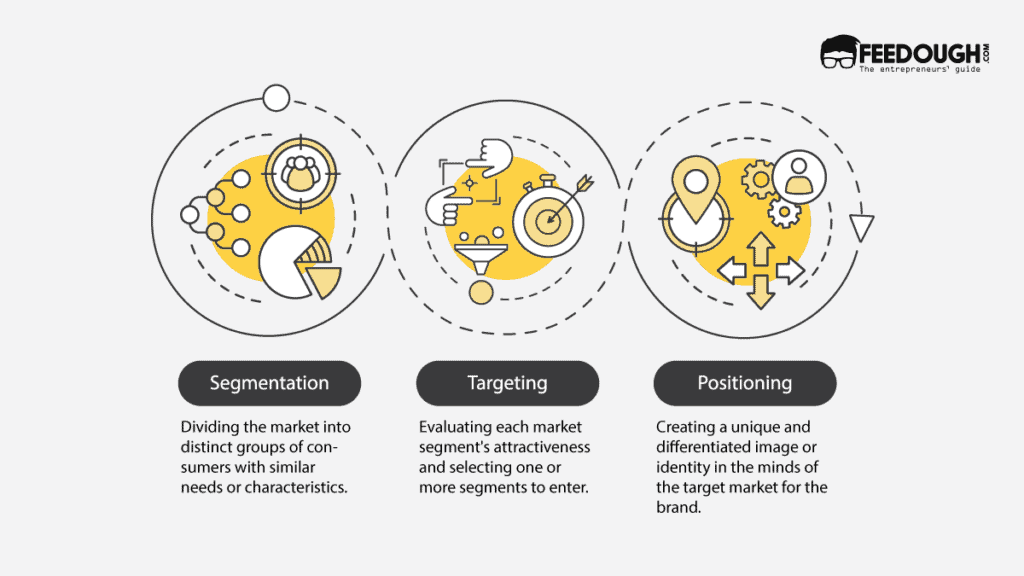
    The STP model is a tool that helps businesses segment the market, target specific segments with tailored offerings, and create a positioning strategy that showcases their unique value proposition.

    There are three steps involved in the STP marketing process:

    Segmentation

    Market segmentation refers to the process of dividing the market into distinct groups of consumers with similar needs or characteristics.

    It aims to identify target markets that can be reached with tailored messages that resonate with them.

    There are several ways to segment a market, but the most common methods include:

    • Geographic segmentation: dividing the market by region, country, city, or even neighbourhood.
    • Demographic segmentation: dividing the market by age, gender, income, occupation, education, religion, or family life cycle.
    • Psychographic segmentation: dividing the market by personality traits, values, attitudes, interests, or lifestyles.
    • Behavioural segmentation: dividing the market by consumer knowledge, attitude, use, or response to a product.

    Instead of trying to appeal to the entire market with one marketing mix, the STP marketing model helps businesses segment their markets into several groups that can be later targeted with separate marketing strategies.

    Take a gaming mobile phone manufacturer company, for example.

    The company could use demographic segmentation to target its products at male and female customers within a certain age range. It can also segment its market by customer age demographics – school, college, and office goers.

    It could then use psychographic segmentation to identify power users, casual gamers, social gamers and non-gamers.

    Finally, it could use behavioural segmentation to target customers who frequently play mobile phone games.

    Targeting

    Targeting is the process of evaluating each market segment’s attractiveness and selecting one or more segments to enter.

    Businesses following the STP model select segments based on their potential to grow and generate high profits at low costs.

    Some of the factors for targeting a segment are:

    • Profitability: The chosen segment should be profitable, which means that the customers in the segment should be willing to buy your products and services.
    • Size and scalability: The chosen market segment should have the potential for sustained growth.
    • Accessibility: The segment should also be accessible or reachable for sales and marketing messages.

    For example, the gaming mobile phone company can evaluate its segmented market and target budget-conscious college-going students who are the core audience for gaming mobile phones.

    Positioning

    Positioning is the process of creating a unique and differentiated image or identity in the minds of the target market for the brand (brand positioning) or product (product positioning).

    In simple terms, positioning makes customers view a specific brand in a unique way by associating emotions, traits, feelings, and sentiments with it. These associations make the brand unique and different from its competitors.

    There are three common approaches to positioning:

    • Symbolic positioning: Positioning based on the customer’s image, identity or lifestyle. 
    • Functional positioning: Positioning based on the benefits of your product or the value it provides to the customer. 
    • Experimental positioning: Positioning focussing on the customers’ experience and emotional connection with your product.

    Gaming phone Asus ROG Phone 6 positions itself as a “serious” phone for gamers. The brand positions itself as a durable gaming phone with a long-lasting battery and is equipped with the latest features to provide customers with the best gaming experience. This positioning helps customers understand what the phone has to offer and why it is different from other smartphones in the market.

    Positioning

    The Importance Of STP Marketing Model

    The STP model is important because it helps businesses find a way to identify the right target market and reach the same through a strategic process. This model can also help businesses understand their customers better, find out what they want, and develop a personalised customer experience for their target segment.

    Besides this, here’s how it helps businesses:

    • Helps find the most profitable segment: The STP process helps businesses find the most profitable target market segment out of all the potential segments. This is because businesses can identify the needs and wants of each segment and then design their products or services to match those needs.
    • Helps develop right product for the right audience: The STP marketing process helps businesses to identify the right product for the right audience. It also allows businesses to better understand their target audience and create products they need and want.
    • Leads to better positioning: This process results in the right positioning of products in the market. This is because businesses can identify the right target audience and understand their needs and wants, which helps them position their products accordingly.
    • Helps develop an optimal marketing mix: The STP process helps businesses develop an optimal product, place, price, and promotion mix based on their target audience’s needs and wants.

    Advantages Of STP Marketing

    There are several advantages of STP marketing which are as follows:

    • Increases sales and profit: Businesses following the STP model are more likely to see an increase in sales and revenue. This is because they have a better understanding of their target audience and know how to reach them.
    • Improves customer satisfaction: The STP model leads to improved customer satisfaction as businesses are able to provide their target audience with products and services that they need and want.
    • Improves decision making: The STP process helps businesses make better marketing decisions as it provides them with a clear understanding of their target audience.
    • Results in better decision making: The STP process helps businesses make better decisions according to the needs of their target audience.
    • Results in better ROI of marketing campaigns: The STP process leads to improved return on investment of marketing campaigns as businesses are able to allocate their resources more efficiently –
    • Avoids wastage: The STP process helps businesses avoid wastages, as they know exactly who their target audience is and how to reach them.

    Disadvantage Of STP Marketing

    While there are many advantages of STP marketing, there are some disadvantages as well which are as follows:

    • Time consuming: The STP process can be quite time-consuming as it involves a lot of research and data analysis.
    • Requires expertise: The STP marketing process requires individuals with expertise in marketing and market research to be able to carry it out effectively.
    • Costly: The STP process can also be quite expensive as it requires businesses to invest in market research and data analysis.

    STP Marketing Model Examples

    The STP marketing model can be best explained with the help of examples. Let us take a look at some examples to understand this concept better.

    Nike

    Nike is one of the world’s most popular sports brands. The company uses the STP marketing model to reach its target market of athletes and sports enthusiasts.

    • Segmentation: Nike segments the market by sport, age, gender, and lifestyle.
    • Targeting: It targets two segments – professional athletes and sporty individuals.
    • Positioning: Nike positions itself as a sports brand that understands the needs of athletes and sports enthusiasts by providing high-quality and innovative products. It portrays the same using its brand-mark ‘The Swoosh’ and slogan ‘Just Do It.

    McDonald’s

    McDonald’s is one of the largest fast-food chains in the world. The company uses the STP marketing model to reach its target market of families and children that are looking for a quick and affordable meal.

    • Segmentation: McDonald’s segments the market by age, income, gender, lifestyle, and location.
    • Targeting: It targets families and children that are looking for a quick and affordable meal.
    • Positioning: McDonald’s positions itself as a fast-food restaurant perfect for families on the go. It uses its ‘Happy Meal’ to appeal to children and its various promotions to appeal to families looking for a deal.

    iPhone

    The iPhone was launched in 2007 and quickly became one of the most popular smartphones on the market. Apple used the STP marketing model to successfully market the iPhone to its target audience.

    • Segmentation: Apple segmented the smartphone market by income, lifestyle, and age.
    • Targeting: The brand decided to target affluent consumers who were looking for a sophisticated and stylish smartphone.
    • Positioning: It positioned the iPhone as a premium smartphone owned by successful and fashionable people. It also positioned the iPhone as a status symbol.

    Bottom-Line?

    The STP marketing model is a powerful tool that businesses can use to find the right audience, craft the perfect marketing campaign, and boost sales. When used correctly, the STP marketing model can help businesses to increase brand awareness, build customer loyalty, and generate more sales. However, it is important to remember that the STP marketing model is just one tool in a marketer’s toolbox. There are other marketing strategies and models that businesses can use to achieve their desired results.

    Go On, Tell Us What You Think!

    Did we miss something?  Come on! Tell us what you think about our article on STP marketing model in the comments section.

  • What Is Real-Time Marketing? – Characteristics & Examples

    What Is Real-Time Marketing? – Characteristics & Examples

    Not so long ago, marketers could take almost a month to create a campaign, test it, and then launch it. But in today’s hyper-connected world, that timeline is no longer feasible. Today, they have to be prepared to jump on any relevant opportunity that presents itself and do it in real-time.

    This led to the rise of a new phenomenon known as real-time marketing – a strategy disrupting how we used to think about marketing campaigns.

    So, what is real-time marketing, what are its use-cases, how is it different from traditional marketing, and what are some examples of real-time marketing done right?

    Let’s take a closer look.

    What is Real-Time Marketing?

    Real-time marketing is a marketing technique used by companies that use real-time data to create a personalised and interactive user experience.

    It is based on the principle of being quick, relevant, and engaging. To be one, brands real-time data to jump on current trends and events, relevant to their products or services, as they happen.

    For instance, a company might use data from current events, such as a celebrity’s marriage, to create an ad campaign that is both personalised and relevant to the user.

    Real-time marketing relies on three major enablers:

    • Anticipating customer needs: To be quick, brands need to anticipate what customers want and need at a particular moment. This requires brands to have a deep understanding of their customers and present trends, so they can create relevant content that appeals to them.
    • Relevant messaging: Real-time marketing requires the content to be relevant to the current trends, events, or conversations happening at that moment.
    • Agility: Given the fast-paced nature of real-time marketing, agility is key to being successful. Brands need to be able to create content quickly and efficiently without sacrificing quality.

    Characteristics of Real-Time Marketing

    Today, brands use numerous techniques to execute real-time marketing campaigns. From push notifications to live-tweeting to meme marketing, there are many real-time ways to reach consumers at the moment. However, all these tactics have these characteristics in common:

    • Relevancy: Real-time marketing is all about creating content that is timely and relevant to the current conversation.
    • Creativity: Creativity is what sets real-time marketing campaigns stand apart. Since these campaigns are usually unplanned, brands need to be able to come up with original content on the spot.
    • Flexibility: The best real-time marketing campaigns are those that can be quickly adapted to changing circumstances.
    • Agility: A true real-time marketing campaign requires a high degree of agility from the brand. This means being able to quickly respond to current events, trends, and customer requests.
    • Preparedness: Real-time marketing requires brands to be prepared for anything. This means having a team in place that is ready to jump into action at a moment’s notice.

    Benefits of Real-Time Marketing 

    Real-time marketing is a vital marketing strategy that does not follow traditional marketing techniques. Its benefits are:

    • Increased competitive edge: Companies who can engage with their target audience in real-time have a competitive advantage over those who rely only on a traditional marketing plan.
    • Increased Engagement: Companies with an active social media presence can actively engage with their target audience and convey their brand’s perspective. They can also provide timely solutions for their queries and increase their brand value.
    • Increased Brand Awareness: When done correctly, real-time marketing can lead to increased brand awareness and reach. It even increases brand recognition and fosters consumer connections and trust.
    • Better ROI: Real-time marketing generates better ROI as compared to traditional marketing techniques. The reason being, it is more targeted and engaging. Additionally, real-time marketing can be measured effectively so that companies know what’s working and what’s not.

    Limitations Of Real-Time Marketing

    Even though real-time marketing has a lot of advantages, it is not without its limitations. Some of them are listed below.

    • It’s Not Always Relevant: The whole point of real-time marketing is to be relevant and responsive to current events. However, sometimes companies try to be too clever and end up being irrelevant. This can backfire and leave a bad taste in people’s mouths.
    • It Can Be Difficult To Do: Real-time marketing requires a lot of coordination between different departments within a company. This can be difficult to do and often leads to errors.
    • It Requires A Lot Of Resources: Creating content, coordinating campaigns, and measuring results all require resources. This can be costly and may not be feasible for all companies.
    • It Can Be Done Incorrectly: If done incorrectly, real-time marketing can come across as tone-deaf, insensitive, or even offensive. This can damage a company’s reputation and alienate potential customers.
    • It can be costly: Creating content, coordinating campaigns, and measuring results all require resources. This can be costly and may not be feasible for all companies.

    When done correctly, however, real-time marketing can be an incredibly effective way to connect with customers and boost sales.

    Challenges of Real-Time Marketing

    Data-driven analytics has become an essential element of the media and advertising industries, allowing real-time optimisations. Nonetheless, there are several challenges to real-time marketing as well. They are as follows:

    Time-Sensitivity

    The key challenge with real-time marketing is that it is, by definition, time-sensitive. This means that there is often a very small window of opportunity to capitalise on current events. For example, if a celebrity dies, brands have a limited time to produce relevant content before the public moves on to the next event.

    Relevance

    Relevance is both a challenge and an opportunity for real-time marketers. On the one hand, it can be difficult to produce content that is truly relevant to current events. On the other hand, if brands are able to produce relevant content, they have a unique opportunity to connect with their audience on a deeper level.

    Resource Allocation

    Real-time marketing requires brands to allocate resources specifically for this purpose. This can be a challenge for brands that are used to planning their marketing efforts well in advance.

    Technical Challenges

    There are also technical challenges associated with real-time marketing. For example, if a brand wants to produce a video in response to a current event, they need to have the necessary equipment and personnel available on short notice.

    Data Procurement

    Data procurement can also be a challenge for brands practicing real-time marketing. In order to make informed decisions about what content to produce, brands need access to data that is current and relevant.

    Privacy Concerns

    User privacy concerns are also a challenge for brands practicing real-time marketing. In order to produce timely and relevant content, brands need access to user data. However, users are becoming increasingly concerned about how their data is being used and shared by brands.

    Real-Time Marketing Techniques

    Despite multiple obstacles, businesses are figuring out how to make real-time marketing work. Here are a few real-time marketing strategies companies use to engage with their customers in real-time.

    Social-Media Marketing

    It was social media that started it all. Social media platforms like Twitter and Facebook lend themselves well to real-time marketing because of their fast-paced, always-on nature.

    There are a few things businesses do when using social media for real-time marketing:

    • Monitoring: Brands constantly monitor social media platforms for opportunities to engage with their target audience. This could be in the form of a trending topic, a conversation involving the brand, or even real-time events such as a natural disaster or breaking news story.
    • Responding: Once an opportunity is identified, businesses need to act fast and respond accordingly. This usually takes the form of a social media post, although some brands have been known to hijack trending hashtags on Twitter or create memes.
    • Creating: In some cases, businesses will create content in advance that can be quickly published in response to a real-time event. This could be anything from a blog post to a piece of visual content like an infographic or meme.

    Influencer Marketing

    Influencers are social media users who have a large following and can persuade their audience. When they share content related to a company’s products or services, it can result in a significant boost in sales and brand awareness.

    Businesses identify social media users who are influential in their industry or niche and collaborate with them to promote their products or services.

    This type of marketing can be extremely effective because it’s coming from a trusted source. Moreover, influencers are proactive and always looking for new content to share with their followers, which makes them ideal partners for real-time marketing.

    Influencer marketing is an upgraded version of word-of-mouth marketing. When an influencer recommends a product, their followers are more likely to try it out because they trust the source. This is why businesses are increasingly turning to influencer marketing to get their message out there and promote their products in a way that feels organic and trustworthy.

    However, influencer marketing can be difficult to measure because there’s no guarantee that the people who see the content will take action. Additionally, it can be expensive to work with influencers, especially if they have a large following.

    Paid Advertising

    Paid advertising is a form of online marketing where businesses pay to have their ads displayed on platforms like Google, Facebook, and Instagram.

    This form of marketing is agile, and businesses can change their campaigns on the fly to take advantage of current trends and news stories.

    Paid advertising can be a very effective way to reach out to potential customers, but it can also be expensive. Businesses need to carefully consider their target audience and budget when planning paid advertising campaigns.

    Email Marketing

    Email marketing refers to the process of sending marketing messages or promotional content to a list of subscribers via email.

    It involves building up a database of email addresses, usually through sign-ups on a website or social media platform, and then sending regular updates or newsletters to those subscribers.

    Email marketing is an effective real-time marketing technique as it allows businesses to send timely messages directly to their target audience. It can be used to promote special offers, events, or new products and is a cost-effective way to reach a large number of people with minimal effort.

    However, email marketing can also be difficult to get right. Messages can easily be ignored or deleted if they are not carefully crafted and if email marketing metrics are not properly analysed. It is also important to build up a large enough database of subscribers to make email marketing worthwhile.

    SMS Marketing

    SMS marketing is another real-time marketing technique that can be used to reach consumers quickly and easily. SMS messages are short, typically no more than 160 characters, which makes them easy to read and digest.

    However, SMS messages can be considered intrusive, and many people do not want to receive marketing messages on their personal phones. As such, it is important to be careful with how SMS marketing is used.

    IM marketing

    With the advent of instant messaging applications like WhatsApp, Facebook Messenger, and WeChat, a new form of real-time marketing has emerged – IM marketing.

    IM marketing messages are sent through instant messaging apps in the form of text, images, videos, or even voice notes. Users are already accustomed to receiving messages through these apps, which makes IM marketing a better real-time marketing option than other alternatives.

    However, IM marketing can also be spammy if too many messages are sent or the messages are irrelevant to the user.

    Push Notifications

    Push notifications are a relatively new technology that is most commonly used on mobile devices. Push notifications can be used to send real-time updates and messages to users, even when they are not actively using an app.

    However, the user has to accept to receive push notifications from a particular app or website before they will start receiving them.

    Push notifications can be very effective in getting users to take action, but they can also be considered intrusive if they are not used carefully.

    Real-Time Marketing Examples 

    Real-time marketing is a powerful marketing method for achieving company goals. So, let us look at successful companies embracing real-time marketing to promote their products or services.

    Oreo

    Oreo’s “You can still dunk in the dark” ad worked during Super Bowl XLVII in 2013 since the game typically draws 5.7 million people. That are many people who got the joke and shared it. They were also the first brand to seize the power outage as a marketing opportunity.

    oreo real-time marketing campaign
    Source: The Brand Gym

    NASA

    NASA wonderfully seized the focus during the OSCARS 2014 with a single tweet. As the film Gravity won multiple Academy Awards in 2014, NASA demonstrated how real gravity appears from space while playfully applauding the victory.

    nasa real-time marketing campaign
    Source: Digital Tailors

    Taco Bell

    Taco Bell Taco Bell has earned a reputation as a wonderful company on social media through its carefully designed brand messaging. It engages in enthusiastic real-time marketing and responds to Twitter messages nearly twice an hour daily.

    The company has made it a goal to listen to its consumers online. It connects with them no matter what is going on that day, thus increasing its brand engagement. 

    taco bell real-time marketing campaign
    taco bell real-time marketing campaign
    Source: Medium

    Ice Bucket Challenge

    The 2014 ice bucket challenge was one of the most significant examples of real-time marketing. This phenomenon spread worldwide, and most brands and celebrities participated in that challenge.

    The participation in the challenge was to promote ALS awareness and funds. However, because it was a current event and trend, companies jumped to try it too to improve their brand recognition.

    ice bucket challenge
     Source: USA Today 

    Bottom Line

    Real-time marketing is an essential part of a successful marketing strategy. It shows that sometimes continuous research, segmentation, and testing for long hours are not always necessary to affect the market. However, a lack of planning is a bet a business may or may not afford. 

    Thus, one should always remember that content marketing for content will never be as effective as relevant and memorable content for the right reasons.

    Hence, companies must listen to their consumers and respond in real-time with relevant messages to help them attain their goals and grow their business. Real-time marketing is an excellent approach to demonstrate that they listen to and care about their customers.

    Go On, Tell Us What You Think!

    Did we miss something? Come on! Tell us what you think about our article on real-time marketing in the comments section.

  • What Is Medtech? – Use Cases, Examples, & Future

    What Is Medtech? – Use Cases, Examples, & Future

    The medical industry is one of the most challenging industries, given that it deals with sensitive health data, requires strict regulatory compliance, and deals with expensive treatments, including surgeries that are life-saving for some people. On top of that, the medical industry also suffers from high failure rates, which adds an additional layer of complexity.

    However, technology is changing this landscape, and a different field of technology has developed, focusing on improving the functioning of the medical industry.

    Enter Medtech.

    Today, people can walk into any store and buy a wearable device, like an Apple Watch or Fitbit, which tracks their heart rate and other metrics that could affect their health. Doctors communicate with patients on the go without meeting face-to-face. Surgeries are done by robots and are free of human error. New medicines are being developed for diseases that were previously considered uncurable.

    Medtech is evolving at an unbelievable speed, and there’s a lot more it will disrupt in the coming years.

    What is Medtech? 

    Medtech or medical technology is the application of organised, technological knowledge and skills to improve healthcare services’ quality, safety, effectiveness, and efficiency.

    In other words, it refers to the use of technology in healthcare to achieve better patient outcomes.

    Medtech includes but isn’t limited to medical devices, digital health technologies, vaccine technology, medicines, and diagnostics. It includes every technological use with an aim to:

    • Improve the quality of care
    • Enhance early detection and prevention of diseases
    • Enable more effective treatments
    • Help manage chronic conditions
    • Support patients during their journey to recovery
    • Developing cures for previously incurable diseases
    • Reduce the cost of healthcare
    • Making healthcare available to everyone, regardless of their location or economic status

    Medical Industry Challenges

    The medtech industry is a dynamic and fast-growing market with immense opportunities and risks. The ageing population in developed countries and people suffering from chronic diseases requiring treatment are the major drivers for the growth of the global medtech market.

    However, despite its growth, the medical industry remains a challenging market. Delivering high-quality care at a lower cost and standardised way are the barriers to the growth of medtech.

    There are several other challenges that the medical industry is facing today. Some of these include:

    • Regulatory Framework: The regulatory framework for medical devices differs significantly across jurisdictions, creating an uneven field for manufacturers.
    • Clinical Adoption: The lack of clinical adoption is one of the most considerable barriers to the growth of medtech because many of the devices are too expensive for patients to afford.
    • Accessibility: Limited access to healthcare solutions in developing markets makes it difficult for patients and physicians to adopt new solutions.
    • Productivity: The medtech industry is concerned with making cost-effective products and providing the best solution to their clients. However, it is facing issues related to the time it takes to develop a product and outsourcing R&D to ensure that the product is cost-effective.
    • Counterfeit Devices: Intellectual property right is valuable important than the cost of manufacturing in the medtech industry. But, the counterfeiters flood the market with untested devices, which causes the patients to face poor outcomes. So manufacturers constantly look for ways to protect their rights to ensure they can reap benefits for their business.
    • Increasing Healthcare Cost: Today, health care is already expensive, and it continues to grow. So, fear among people who use medical devices to treat chronic diseases shows that these goods would become pricey and out of reach. 
    • Cyber Security: The rise of digital technology has increased cybersecurity concerns. It also applies to medical devices that connect to the internet. Medical device makers are increasingly dealing with patient privacy and protection issues, making producing smart devices more difficult and expensive.
    • Rising Expectations of Patients: With the advancement in technology, patients have become more aware and their expectations have increased. They now want better and more personalised treatments.
    • Shortage of Skilled Professionals: The lack of trained staff is one of the main challenges for the healthcare industry. In fact, the US is already facing a severe shortage of doctors.
    • Lack of Interoperability: Different electronic health records (EHR) systems used by different hospitals and clinics often don’t work together. This makes it difficult to share patient information, which can lead to errors.

    Medtech Use Cases

    Medtech helps improve patients’ health by providing a solution to the problems experienced. Some of the medtech use cases are:

    • Diagnostics and Medical Testing: Diagnostic testing is used detect diseases and medical conditions before they become serious issues.
    • Telemedicine: It is the use of technology for remote diagnosis. Telemedicine allows doctors to provide diagnoses and prescriptions using the internet and a device to anyone who wants it despite their financial status.
    • Remote Health Monitoring: The health of older persons is monitored using remote health monitoring systems. It is connected to an app with sensors that can detect changes in the patient’s health and alert caregivers.
    • Virtual Collaboration: As we all know, surgeries involve complex procedures for treating various diseases and conditions. Often, doctors may seek help from experienced doctors who may not be physically available. But, with the use of medical technologies, it is possible through virtual collaboration.
    • Mobile Healthcare: It helps improve the patient’s overall health by giving access to healthcare providers in locations that are not accessible to doctors or hospitals.
    • Preventive Care: Preventive care significantly affects healthcare and disease treatment. It involves providing treatments that can prevent illness from occurring in the first place.
    • Medical Robotics: Medical robots can help perform surgical procedures with increased precision and lower cost than human surgeons. They also allow for surgical practices on 3D models and save cost on dummy human models.
    • Digital Health: It uses technology to help people manage their health. It involves analysing data from wearable devices to help individuals find patterns that can lead to diseases.
    • Biometrics: Biometrics uses physical measurements or attributes like fingerprints, voice and retina scans to determine someone’s identity.
    • Implantable Medical Devices: These devices are used to replace or improve body parts. It can include pacemakers, defibrillators, cochlear implants, and sensors that can detect changes in glucose levels. 

    Medtech Startups & Companies

    Many medtech companies are developing new technologies to assist doctors in automating their activities, gathering patients’ data, and improving their efficiency. Some well-known medtech companies are Medtronic, Jhonson & Jhonson, Philips, etc.

    Medtronic

    Medtronic

    Medtronic is a pioneering healthcare technology company that provides solutions for the most complicated and challenging health situations.

    Combining data, artificial intelligence, and its profound knowledge of the human body has revolutionised the treatment of over 70 world’s most complicated ailments.

    Johnson & Johnson

    Johnson & Johnson

    Johnson & Johnson is one of the world’s largest and most diverse healthcare companies dedicated to harnessing its scale and scope for good. J&J works to increase access and affordability and build healthier communities accessible to everyone.

    Every day, with over 130,000 workers worldwide, it combines its heart & science to transform the direction of human health. 

    For instance, it has designed 3 cutting-edged eye lenses to improve how we see. J&J is a global leader in medical devices used to treat orthopaedic trauma. In addition, it offers one of the world’s most comprehensive portfolios of spinal care solutions. 

    Philips Healthcare

    Philips Healthcare

    Philips India Limited is a subsidiary of Royal Philips, a major health technology business focusing on improving people’s health. It uses advanced technologies and extensive clinical and consumer insights to provide integrated solutions for healthcare problems.

    Phillips is a market leader in diagnostic imaging, image-guided treatment, patient monitoring, health informatics, and consumer health care.

    Cardinal Health

    Cardinal Health

    Cardinal Health is a vital link between healthcare’s clinical and operational sides. It provides end-to-end solutions and data-driven insights that enhance healthcare and benefit lives.

    It has designed products like ENFit™ Connection System, Specimen Collection Kits Specimen, Women’s Health Medical Kits, Negative Pressure Wound Therapy Devices, Laboratory Capital Equipments, etc.

    Thus, with over 50 years of expertise, it continues to seize every chance to confront the most complex challenges in healthcare using diverse perspectives and innovative digital solutions. 

    The Future of Medtech

    We are in an era of advanced medical care, where the Internet of Things (IoT) and wearable devices play a prominent role. So, it has become necessary to embrace innovative technologies.

    Smartphone applications and wearable devices are already revolutionising healthcare delivery. Thus, in the future, it is believed that a combination of IoT, wearables and AI technologies will transform healthcare and redefine the industry.

    As we know, over the years, the human mind has solved various complex health and well-being issues using medical technologies. Hence, in the future, we can expect more advancements in the medical technology field. It will be interesting to see how medical technology affects the industry and how our lives change.

    Go On, Tell Us What You Think!

    Did we miss something? Come on! Tell us what you think about our article on Medical Technology in the comments section.

  • How To Use Webinar As A Marketing Tool?

    How To Use Webinar As A Marketing Tool?

    With the growing popularity of remote work, people have started to rely on technology for almost everything. The Internet is being used as a marketplace for businesses to promote and sell their products and services to the people. 

    But as the number of offerings increases online, push notifications and emails are not that helpful anymore. You have to switch to different tools to make your marketing game stronger. 

    Webinars are a popular way of conducting live events from a remote location. Research shows that it can be a powerful marketing tool for businesses. 73% of B2B marketers claim it to be the most powerful way of generating high-quality leads.

    So, how can you use webinar as a marketing tool to sell your offerings? Here’s a guide.

    What Is A Webinar?

    A webinar is a digitised seminar hosted by organisations to communicate and share powerpoint presentations, videos, websites, pages etc. They are screened live to a selected audience. Marketers use it to engage large audiences and establish their company as a brand.

    Most of these webinars have a host who manages the flow of the stream and shares the videos and presentations. The audience can interact with the moderator and ask questions in real time.

    What Can You Sell Using A Webinar?

    Webinar marketing is one of the favourite tactics amongst B2B marketers. Popular across various industries, it is used as a leverage to drive sales and boost revenues effectively. 73% of marketers say that webinars are the most powerful and inexpensive way of lead generation for businesses. 

    Online Courses

    Selling online courses using webinars is easier as it allows you to connect with the audience directly as you speak. You can easily explain them the course’s features and benefits which helps you sell it effectively.

    If the audience believes and trusts the content you display, their chances of enrolling in specialised online courses increase. Experts like Russel Brunson, Neil Patel and Frank Kern use webinars as a strategy to sell courses worth $1000-1500. 

    To get the viewer’s interest, they start by highlighting a hot issue and the need for a solution. Later they use this audience’s curiosity to sell their course at the end.

    Webinar as a marketing tool to sell courses
    Courses offered by Neil Patel often at the end of webinars

    SaaS Products

    Getting maximum traffic to your site is the fundamental requirement of running a SaaS website. The next step is to convert these visitors into actual customers for your services and increase sales.

    Webinars are one of the best ways to nurture and gather leads for your products. The way you present your offering to your audience will determine how they perceive your product.

    Salesforce, Leadpages, SEO Moz and many other SaaS-based companies use webinars to enrol clients into their products and market their software. They offer value to their customers by educating them about how they can solve their problems better and then offering their products that do the same but more effectively and efficiently.

    Webinar as a marketing tool to sell SAAS
    Salesforce SaaS products

    Freelance Services

    Being a freelancer, you need to position yourself as an expert to gain the customer’s trust. You have a higher chance of convincing someone to use your service when they see and hear you talk.

    Webinars are a great platform to demonstrate your knowledge to the people whom you expect to hire you. Besides, a good way to make the viewer trust you when you offer your knowledge as a service is to give some away for free.

    Freelancing websites like Fiverr and Upwork host webinars to educate their audience about the variety of freelance experts they have in almost every field. They then use it as a medium to market their offerings to the viewer.

    Webinar as a marketing tool for freelancers

    Digital Products 

    A webinar is an online sales presentation tool for selling a digital product. It gives you the best chance of selling your product to a potential customer by proving how it is the best solution.

    You can plan your pitch to work out the minutest details and begin with a perfectly well-crafted script adjusted for tonality and modulation. It serves as the best chance to educate your viewer on your product besides a face to face meeting.

    Many companies use webinars as a lead conversion tool to sell apps, eBooks, webinars, audiobooks and member subscriptions online.

    How To Sell Your Products Using Webinars?

    Webinar marketing plays an integral part in your sales funnel. You can’t boost your sales just by getting people to sign up for your webinar. You must ensure they are excited to attend it and look forward to learning something from it. Moreover, the webinar should also be immensely valuable, selling a solution for their problem. This is the premise for pitching your products and making your audience move down the funnel.

    But first, you must ensure that you target the right audience. Let’s have a look at the detailed process of selling your products through a webinar.

    Define Your Target Audience

    Before you choose a topic for your webinar, you need to choose and define a target audience for your webinar. For example, a webinar on ‘how to make money on social media’ will bode well for school or college students, but it would drive very little interest among marketers.

    Accordingly, you need to research your audience well before choosing the appropriate topic to cater to them. It’s a good idea to create a customer persona before actually finalising a topic.

    Conduct surveys and study the purchasing habits of the customers who have bought similar products to what you have to offer. This will help you identify their pains and challenges, ultimately letting you finalise the webinar’s topic and flow.

    Begin by defining your audience’s characteristics like age, gender, location, purchasing habits, interests, education etc. This makes it easier for you to carry on your next step: picking a topic.

    Pick A Topic For Your Webinar

    Once you define the target audience, you need to identify a topic for your webinar. Identify the customer’s itch and find a way to scratch it for them. Consider these dos and don’ts before choosing a topic for the webinar.

    Dos

    • Give a solution: The title should focus on the solution to the customer’s problem. Identify the audience’s greatest pain point and mould it to create the topic for your webinar using ‘how-to’ in the title.
    • Collect information: Take the help of social media to find out the way in which social issues are presented to the people on a daily basis. Find groups or pages that unite your target audience or simply google the challenges faced by the people to pick up engaging topics.
    • Use a captivating title: Choose a topic and put it in such a way that it becomes irresistible for the viewer to look away from it. Make the webinar current by emphasising the present time. Example: ‘Top photography trends for 2022’.  You can even use simple hacks like using the word ‘new’ in the title. Example: New digital marketing tactic to increase your sales by 10x. This will prompt the targeted customer to gather more information on it and even register for it. 

    Don’ts

    • Don’t mislead: Make sure that the webinar’s topic aligns with the content you are willing to present in it. The title shouldn’t make any promises that you won’t fulfil later.
    • Not too fancy: Try to simplify the audience’s problem and pick a topic accordingly. Don’t make it too fancy by using typical vocabulary that would make it difficult for the audience to understand your objective.
    • Not too long: Don’t make the webinar title too long to read. Keep it short and crisp such that it conveys the message accurately.

    Plan The Webinar Content

    The next step is preparing the content that you will present to your audience, which should primarily focus on solving the customer’s problem.

    Grab The Audience’s Attention

    Firstly, you need to give your audience a reason why they should watch the entire webinar. Start by listing what all they can achieve if they stay through the session and follow the steps you mention. Prove your case by showing them yours or industry statistics.

    For example: If the webinar topic is ‘Proven tactics to invest money in the stock market’, then you can display some statistics showing how much people have benefited by utilising the same.

    Content 

    Once the people find a reason to stay, you need to look out to keep them hooked throughout the session. The most effective way is to create a webinar presentation for the same. 

    Having a good speaker who can keep audiences engaged will certainly serve as an advantage, but sometimes, all you get is a PowerPoint presentation. So while making the presentation, you need to remember that the audience is looking to learn something from you.

    Explain to them how they can achieve what you claim to be true through your statistics. Illustrate the steps that they need to follow and elaborate on each detail.

    Call To Action

    Now that the viewers know what to do, you offer them help by telling them how to do it. Demonstrate how you can help them by displaying any online courses or products that you offer. Convince the viewers that you can help them achieve what you claimed at the start of your webinar if they avail of your services.

    This is the best time to sell your offerings to your viewers. They know how to use your product and understand its need. Enforce a call to action upon them by showing them pricing plans, links to your website, demos of your products etc.

    Don’t forget to focus on a unique selling point.

    Branding Your Webinar

    Most webinars have a setup where the speaker is in a small window with a presentation pinned to the meeting. So the slides must be engaging and eye-catching to keep the audience hooked throughout the webinar. 

    No large texts: Don’t use text-heavy presentation slides which make the webinar tiring and dull. Burdening the audience with statistics and facts at once might overwhelm them. Instead, you can use charts and graphics to make the content more readable and bullets to break your information into paragraphs.

    Use visuals: To make the presentation attractive, you need to add tons of charts, graphics and videos to visualise data wherever possible. Use videos or animations in place of monotonous texts for explaining things. Insert video examples for case studies to make them connect with the real world. 

    You can use online platforms like InVideo, Wave.video, Adobe Express, Clipchamp etc., specifically curated for video creation. They have distinct options to make videos from complete scratch, text to video conversion or image compilations.

    Features
    InVideo
    WaveVideo
    Adobe Creative Cloud
    Clipchamp
    Templates
    Export without watermark 
    Stock library
    Audio effects 
    HD resolution

    Polls: Ask questions and conduct polls to keep the session interactive the whole time. This prevents your audience from getting bored. At the same time, this serves as a medium to collect statistics for your future webinars.

    Stick to the title: While you may deliver a variety of content on inter-related topics, you also need to ensure that it should revolve around one master topic. You should not divert from the mainframe while preparing the content to include any extra information that does not have much significance.

    Prepare a narrative: While the speaker may be extremely skilled, they still might struggle to maintain the flow when the webinar goes on for a long time. To counter this, you can create an outline of the points that need to be covered and insert a slide in between. This helps both the speaker and the people to be in sync with the flow of the webinar.

    Define The Agenda On Your Registration Page

    Once you’ve built the audience, you need to define an agenda to sell them the idea of attending your webinar. This includes

    • Learning objectives, what they will learn and how it will benefit them
    • Exclusive insights
    • Type of Q&As, if any
    • Free resource or sample at the end if you will to offer
    • Speaker line-up

    So, along with the designed agenda, you should mention all the necessary details like the date, time, and duration of the webinar on your landing page, so the viewer is compelled to register for the webinar. 

    webinar registration demo

    The conversion rate on a landing page can be as high as 51%. So, once they land on the page, a compelling title and meta descriptions become an essential ingredient to guide them through. Perhaps a short video explaining the general registration process convinces them to click through the registration form.

    You can use WordPress, a content management website that allows you to build and host websites and blogs.

    Capitalise on countdown timers to show the urgency and encourage them to take action and generate thrill.

    Ensure that the page is easy to navigate, and people don’t have to fill in a lot of information to sign up for the webinar.

    Promote Your Webinar

    Even if people register for your webinar, the attendance rate for the same can be as low as 44%. After creating your webinar, you need to figure out how to tell about it to your target audience. Focus on driving maximum traffic to your registration page.

    Ads

    The best way to promote your webinar is by developing engaging ads or short promos and putting them in circulation all over social media. You can either use image-based ads or video-based ads. However, videos are always the better choice as they have a larger and longer visual impact on the audience’s minds.

    Online platforms like InVideo and Wave Video offer an extensive list of ready-to-use and customisable templates to help make videos. You can create, edit and design premium stock videos without any prior experience and their super user-friendly interface makes it easier for you to navigate around.

    webinar video editor

    For image-based ads, you can even use Canva to design posters, graphics or charts to insert in between the presentation slides.

    Emails

    Email marketing can be an effective tool, especially for webinars. If you have a list of customer emails or subscribers for newsletters, draft your mail giving an invitation to join the webinar. Shoot a series of emails their way encouraging them to register for the webinar.

    Make a point by sending them the emails for webinars after certain intervals like a week before, a few days before and then a few hours ago.

    Website

    Add action buttons and promo videos on your website as well. Choose strategic locations like homepage, footer, sidebars or maybe pop-ups to display banners or ads for your webinar. 

    Ensure you include all the relevant information and a brief description so people come prepared on what to expect.

    Social media

    Publish your ads in short and engaging posts on social media platforms to encourage your followers to attend your webinar. Create interactive stories and ask your friends and colleagues to do the same.

    You can also market your offering by mentioning ‘A surprise at the end’ or ‘Wait till the end for a reveal’ in your posts and stories to keep them hooked till the end.

    Webinar as a marketing tool

    Blogs

    If you have a blogging website, you can post relevant blogs about the same or related topics you will cover in your webinar to provoke interest. You can add a registration link at the blog’s start or end to spread the word about your webinar.

    But ensure to create a strong call to action to encourage people to actually attend the webinar.

    Follow Up After The Webinar

    Say you marketed the idea of a product or any course that requires registering on a link, then make sure that you follow up with the viewers after the webinar. Some people might have watched the webinar but couldn’t register for it for some reason.

    Contacting them after gives them a chance to inquire about anything else and finally register for the same. 

    • Sending a thank you email for attending the webinar along with a summary of what was discussed or maybe even a recording of the webinar. 
    • A feedback form asking for suggestions or improvements for the next time.
    • You can also email them a link to the webinar recording to show them what they missed.
    • Discounts or price drops within a timeframe compelling them to avail the offer

    This increases the number of people availing and registering for your services through webinars and ultimately helps increase your sales.

    Bottom-Line?

    Webinars are an extremely effective tool for boosting your sales, and if you haven’t considered them yet as a marketing tool, then it’s time you reconsider your choices.

    Following the steps demonstrated above will help you create and craft good webinars, generate leads and convert them into sales to boost your revenues.

    Go On, Tell Us What You Think!

    Did we miss something?  Come on! Tell us what you think about our article on webinar as a marketing tool in the comments section.

  • 20 In-Demand Skills & How Much Do They Pay

    20 In-Demand Skills & How Much Do They Pay

    Today just a mere degree does not guarantee a stable job because the job market is changing rapidly. New technologies are emerging every day, and companies are looking for people who can adapt to these changes.

    So, now the question arises how do you make yourself stand out from the crowd?

    For that, you need to continuously update your skill set and learn relevant skills to stay on top of your competition. And it’s not just about soft skills like communication, leadership, etc. You need to hone your hard skills to open more opportunities for earning and growing your career.

    Hence, here’s a list of the 20 in-demand skills in the job market that you should know about.

    The Rundown

    1. Cloud Computing: For people who can deliver and manage data and resources using the internet and communication network.
    2. Data Analysis: Managing and working with various data forms vital for the organisation.
    3. Web and Mobile App Development: For creating and developing websites and mobile applications for different types of devices.
    4. AI & Machine Learning: For understanding computer algorithms to improve the outcome and productivity of the work.
    5. Blockchain:  To empower digital security and transparency in business operations.
    6. Programming: For being an expert coder in the most popular computer languages like Java, C++, Python, etc.
    7. API Development: To build and develop software plug-ins that can benefit a variety of entities and individuals.
    8. 3D Game Development: For planning, designing and creating video games and video gaming assets.
    9. Video Production: To master the skills of videography and video editing.
    10. Audio Production: To learn the art of creating, editing, mixing and recording audio.
    11. Digital Marketing: To engage with prospects and learn what they are searching for, i.e. to understand business clients better.
    12. SEO Writing: For writing content to rank on the first page of search engines like Google.
    13. Graphic Design: To make creative visual content to communicate messages to audiences on a larger scale.
    14. Content Creation: To market information, and attract and retain existing customers through quality engagement.
    15. Animation: For educating and engaging the audience through animated content.
    16. Social media management: For people proficient with different social media platforms and establishing an online presence.
    17. UI/UX design: For people who want to provide an easier and more enjoyable user experience for different products.
    18. Extended reality(AR/VR): To work with and develop real and virtual combined environments produced by computers and wearable technologies.
    19. Stock market: To buy, sell and invest in shares of public listed companies to earn profit.
    20. Product Management: To work with and manage every step of a product’s life cycle from development to positioning and pricing, keeping the end customers in mind.

    Cloud Computing

    Cloud computing is a common word for delivering hosted services through the internet. It is the distribution of IT resources with pay-as-you-go pricing.

    So, rather than purchasing, operating, and maintaining physical data centres and servers, you may use a cloud provider to obtain technical services such as processing power, storage, and databases when necessary.

    In recent years, several firms have switched their physical infrastructure to cloud services such as AWS, Microsoft Azure, and Google Cloud. Because of this extraordinary expansion, there is a high need for cloud computing experts. 

    In 2021, the worldwide cloud storage industry was estimated to be worth $70.91 billion. Furthermore, with a CAGR of 24% from 2022 to 2029, it will reach around $376.37 billion.

    Moreover, Cloud Database Administrators in the United States are also expected to make an average annual income of $130,000.

    So, this is a highly lucrative skill to have.

    Data Analysis

    Data analysis is turning raw, jumbled data into valuable insights by cleaning the data, transforming, manipulating, and inspecting it. Then, the data insights are visually presented in charts, graphs, or dashboards.

    According to Technavio’s most recent market study, the potential growth difference in the data analytics industry would be USD 196.47 billion between 2021 and 2026. As per the reports, the market is expected to increase at a CAGR of 13.54% during this projected period.

    The widespread usage of modern technology in business operations is significantly driving the growth of the data analytics industry. Therefore, there is an increased surge in demand for Data Analytics.

    Also, the average annual salary for a Data Analyst in the US is $80,635.

    Hence, knowing finance fundamentals and developing appealing presentations are both essential. Besides, data analysis is an important in-demand skill that may pay handsomely, especially in the IT sector.

    Web and Mobile App Development

    Designing, creating, testing, and launching a web-based or mobile-based app is known as web or mobile application development.

    Every second, a new website is launched, or a new app is published. Naturally, this would not be feasible without the assistance of those competent in developing and managing applications and websites.

    So,  web or mobile application development is an excellent skill that could open many career opportunities for you. Further, a full-stack web developer can get an average salary of $90,214 per year, which is a fair amount for a beginner with the required skills.

    AI & Machine Learning

    Artificial intelligence is a computer system’s capacity to mimic human intellectual capabilities such as learning and problem-solving.

    Machine learning is a form of AI that trains computers to learn, understand and improve independently based on their experience like humans.

    Thus, Artificial Intelligence and Machine Learning are among the most powerful technologies of our time, with huge potential to alter the future. So, it is vital to be proficient in this skill to be future-ready.

    Moreover, AI & Machine learning professionals earn an average annual salary of $95,622, which is a pretty good income.

    Blockchain

    Blockchain is one of the leading-edge technologies that is increasingly gaining popularity. It can be defined as a way of storing data that makes it difficult or impossible to alter, hack, or cheat the system.

    Thus, we can say that blockchain is a technology that is boosting digital security, a dire need of the present time.

    Furthermore, the global blockchain market valued at 1.57 billion US dollars in 2018 is expected to grow more than 100 times to 163 billion US dollars by 2027. Also, there are many Blockchain startups which are emerging today.

    To top it all, according to ZipRecruiter, a blockchain developer may earn more than $150K per year with the necessary competence and skills.

    Hence, even if Blockchain is a relatively new technology, it is quickly becoming one of the most in-demand skills for the future.

    Programming

    Programming means instructing a computer or a device to do specific tasks using vocabulary and a set of grammatical rules of a particular language made explicitly for computers.

    Thus, knowing how to code in a computer language such as C++, Java, or Python is a must-have skill for individuals who wish to build software, web apps, or websites.

    Moreover, the software development market was worth $429.59 billion in 2021 globally and is predicted to grow at an 11.7 % CAGR from 2022 to 2030. Besides, the average salary of the programmers ranges from $33,000 to $110,000 annually.

    So, programming is an in-demand and high-paying skill for the present and the years to come.

    API Development

    API (Application Programming Interface) development means creating software that acts as a mediator between two apps and allows them to talk to each other. It makes software development and innovation easier by allowing programmes to communicate data and functions simple and safe manner.

    Thus, those who can use API to create and develop software may work in various enterprises and organisations.

    Furthermore, the API management market was globally valued at $2.2 billion in 2021. It is expected to increase at a CAGR of 34.5 % from 2022 to 2031, reaching $41.5 billion by 2031.

    Also, in the United States, the typical API developer’s pay is $115,000 per annum or $58.97 per hour, and the entry-level salaries begin at $97,500 per year.

    Hence, having the skill of API Development is a plus point in your profile.

    3D Game Development

    3D gaming is computer-based entertainment displayed graphically in three dimensions; length, breadth, and height.

    Thus, 3D exploration of virtual worlds becomes more realistic and enjoyable.

    Also, the Global 3D Gaming Console Market was $9.8 billion in 2020, which might increase at a CAGR of 13.8 % to $24.3 billion by 2027.

    The booming gaming industry opens a wide array of opportunities for game developers. Moreover, it pays well because the average annual income of a 3D game developer in the U.S.A is $115,846, sometimes with an additional cash compensation of $14,692.

    So, 3D game development is one of the sought-after and profitable skills for the present and future.

    Video Editing

    Video Editing means modifying and rearranging video clips to create a new work. It can include tasks like removing unwanted footage, choosing the best footage, creating a flow, adding effects, graphics or music or altering the style, pace or mood of the video etc.

    So, with the rise of video content and videography, there is an increased demand for editors proficient in editing video.

    Moreover, globally, the video editing software market was worth $779.8 million in 2018 and is expected to rise to $ 932.7 million by 2025. Also, the national average income for a Video Editor in the United States is$55,141 per year.

    Thus, developing the skills of videography and video editing can help you earn a second income.

    Audio Production

    Audio Editing means the process of modifying or altering sound recordings. It includes improving the recording quality, removing unnecessary noise or sounds, changing the duration or pitch of a specific audio clip, etc.

    Since podcasts have become an efficient channel for reaching out to people, companies are increasingly focusing more on audio-based content. Thus,  audio editing is in high demand as a skill.

    Also, the average annual pay of an Audio Editor in the United States is around $71,424.

    Hence, acquiring the skill of audio editing is highly lucrative in the long run.

    Digital Marketing

    Digital marketing is the promotion of brands using the internet and other types of digital communication to interact with potential clients. It encompasses email, social media, text and multimedia messaging and web-based advertising as a marketing channel.

    We live in the internet age, where everything is online, even businesses. So, companies are always looking for efficient ways to sell their products and services online, boosting the growth of digital marketing.

    Besides, the global digital marketing market was valued at US$350 billion in 2020. It is expected to expand to US$786.2 billion by 2026, at a CAGR of 13.9 %over the forecast timeline.

    So, with the surge in digital marketing, there is a huge demand for individuals with expertise in digital marketing.

    Also, the average pay of digital marketing professionals ranges between $40,000 and $97,000 per year, depending on their skill set and experience.

    Hence, today digital marketing is undoubtedly a winner when it comes to high-income skills.

    SEO Writing

    SEO (Search Engine Optimization) is a writing technique which optimises your content to rank higher on the search engines like Google. It includes keyword research and writing high-quality content that aligns with the user’s intent to make your content reach your audience more quickly.

    SEO writing is vital in many industries and contributes significantly to their market. The global SEO market is estimated to be worth USD 122.11 billion by 2028, growing at a 9.6 % CAGR during the predicted period.

    Moreover, a content writer with SEO skills earns an average of US$47,798 per year.

    Thus, SEO is a stable skill that will not go out of style anytime soon; a significant increase in demand for SEO writers is foreseen.

    So if you like writing, you can upgrade your skills and start writing SEO content which would open a broad range of opportunities for you in different organisations.

    Graphic Design

    Graphic Design is communicating ideas through visuals and design. It is the art or profession of visual communication that blends pictures, words, and ideas to express messages to the audience to achieve the desired impact.

    A person can be artistically inclined, which is a soft talent. However, competency in adopting digital design tools has become a vital hard skill today because customers’ expectations for design aesthetics have significantly increased.

    Further, the global market for design services was almost $153.2 billion in 2018 and is predicted to reach nearly $249.5 billion by 2022, growing at a CAGR of 13 %.

    Thus, graphic designing will always be the most in-demand skill and will continue to be one of the most in-demand skills in the future.

    Moreover, the average annual income of a graphic designer is estimated to be between $55,000 and $83,250, which is a decent income.

    So, if you are good at doing art, you can try learning graphic design, which might help you in the future.

    Content Creation

    The content is what makes a brand or its marketing stand out. The text format was formerly the only form of content used for marketing, but now, it has diversified into other formats like video content, which is effective in its own way.

    The content creation market is likely to rise to $47.2 billion by 2032, with a CAGR of 12.2%.

    So if you are good at creating content, companies will want to collaborate and hire you to create content for them to market their product or services.

    Moreover, content creators earn an average of $57,234 annually or $27.52 per hour in the United States if they are good at creating content.

    Hence, content creation is one of the most in-demand skills, serving as a crucial part of the marketing mix driving the content creation market around the globe.

    Animation

    Animation is a technique that manipulates images to make them appear to move. The illusion of motion is created through the fast display of multiple types of pictures to create a single scene.

    With most forms of media requiring some kind of special effects, the global animation industry has been growing rapidly. Thus, it is likely to grow to USD 587.1 billion by 2030, increasing at a CAGR of 5.2 %.

    The growing need for visual effects in movies, video games, television, etc., drives the demand for animators. 

    So, if you have an artistic bent of mind, you can also earn an average yearly salary of around $53,540, which is a fair amount for a beginner with the requisite skills.

    Social Media Management

    Social media management is the constant process of strategically creating content, posting, and monitoring the online presence of a brand or an individual across different social media platforms.

    With social media becoming increasingly prominent in everyone’s life, they need to maintain an online presence. However, not everyone has the time to use social media and maintain their social presence, for which they require social media managers.

    Thus, social media management is a lucrative field with a CAGR growth rate of 23.6%, reaching USD 41.6 billion by 2026.

    Therefore, if you enjoy scrolling through social media every day, you can earn a pretty good amount too. The average pay for a social media manager is around $71,177 in the United States.

    UI/UX Design

    UI/UX Design is the process of making an interface for a web page, an app or software that is more convenient and user-friendly. The user interface links the hardware and software, allowing users to perform operations effortlessly.

    A UI/UX designer should be intuitive and keep their customers’ needs in mind.

    With the growing number of websites and applications, the User Interface Services Market is expected to grow at a 10.6 % CAGR and reach $43.24 billion by 2030.

    In the present time, UI designers are handsomely paid. It ranges from $ 84,500 and $ 95,000.

    Thus, UI/UX design is in high demand. Hence, as a UI designer, you may earn a lot of money if you are creative and enthusiastic about design, adept at using tools like Adobe After Effects and understand the consumer’s point of view.

    Extended Reality (AR/VR)

    Extended reality (XR) refers to any real-and-virtual integrated settings and human-machine interactions created by computer technology and wearable devices. It includes augmented reality (AR), mixed reality (MR) and virtual reality (VR).

    Augmented Reality and Virtual Reality are two powerful technologies that are rapidly being used across many businesses to provide a well-designed, customised, and efficient experience in the future.

    It is one of the emerging technologies that is expected to grow at a CAGR of 57. 91% and reach USD 397. 81 billion by 2026.

    Augmented Reality is the future. Thus, having the necessary skills can open a wide range of opportunities for you, with an expected average salary of $101,000 a year.

    Trader

    The stock market is a platform where investors and traders can buy and sell shares or securities of different enterprises for a profit.

    The need for investments has grown manifold with the increasing number of startups and companies worldwide. Thus, the total market valuation of all publicly traded securities has increased from $2.5 trillion in 1980 to $93.7 trillion globally at the end of 2020 and is expected to grow more.

    Hence, if you are willing to learn about how the stock market works and its risks, you can earn an average of $83,989 annually.

    Product Management

    Product management is a business practice within an enterprise that supports and manages activities like planning, development, marketing, and launching a product.

    It needs a bundle of hard skills such as knowledge of the software development process, communication skills, business analysis, marketing fundamentals etc.

    Thus,  product management abilities have become extremely important for businesses to function seamlessly.

    Moreover, with the increasing demand for product managers, the global product management market size is likely to reach $59.25 billion by 2027, growing at a CAGR of 25.2%.

    As new products are launched almost every day, it has become essential to hire product managers to guide the whole process of a product’s life cycle.

    Hence, product management is a flourishing field where a well-paid manager earns an average salary of $107,594.

    Go On, Tell Us What You Think!

    Did we miss something?  Come on! Tell us what you think about our article on skills in demand in the comments section.

  • What Is Pay As You Earn (PAYE)?

    What Is Pay As You Earn (PAYE)?

    Taxes are a huge part of our lives; there’s no escaping them. Be it in developing countries or developed ones, paying taxes is compulsory. The government uses these taxes to provide various public goods and services that we all enjoy.

    The type of tax system a country has in place depends on its development level and economic stability.

    One such system is the pay-as-you-earn (PAYE) system, also known as Pay As You Go (PAYG) in some countries.

    What Is Pay As You Earn?

    The Pay As You Go (PAYE) system is a method of collecting taxes from employees as they earn their income. The employer withholds the taxes from the employee’s salary and remits the same to the government.

    In some countries like the USA and UK, employers also withhold social security and Medicare taxes along with student loan repayments from the employee’s salary.

    In the context of student loans, the employers withhold around 10-15% of the employee’s salary, which can go for up to 20 years.

    PAYE isn’t limited to salaries. It is also deducted from other forms of income like pensions.

    Usually, tax paid through the PAYE system is refundable to the extent they exceed tax as determined on tax returns.

    The PAYE system is prevalent in countries like the United Kingdom, Australia, New Zealand, the USA and some parts of Africa.

    How Does PAYE Work?

    The Pay As You Earn system is a way the government ensures that employees pay their taxes and repay their student loans.

    For The Taxes

    Under this system, employers are required to withhold taxes from their employees’ salaries and pay it over to the tax authorities. The money is deducted from the paychecks given to employees every month.

    The amount of tax withheld is based on the employee’s income and the tax rates set by the government. The employer also deducts other deductions like social security and Medicare from the paycheck before giving it to the employee.

    This tax is also applicable on sick pay, maternity pay, and other forms of income and benefits.

    If the amount of tax withheld is more than the employee’s tax liability, the excess amount will be refunded to the employee by the tax authorities. But for this, the employee has to file a tax return.

    If the amount of tax withheld is less than the tax liability, the employee will have to pay the difference to the tax authorities. This is called underpayment of taxes.

    A great way to calculate how much taxes an employee needs to pay is by using a PAYE calculator designed specifically for their country’s tax system. These calculators are available online and are very easy to use.

    For Student Loans

    PAYE is also used as a federal student loan repayment plan available to certain new borrowers in the United States. To be eligible, the borrower’s loan must have been disbursed on or after October 1, 2007, and before October 1, 2011. The monthly payments are 10 percent of the discretionary income (the difference between their adjusted gross income and 150 percent of the poverty line for their family size), and they’re capped at the payment that would be required under the Standard Repayment Plan.

    The primary advantage of the PAYE repayment plan is that any remaining balance on the borrower’s loan will be forgiven after 20 or 25 years, depending on when they took out the loan. This can be a huge benefit if the borrower experiences financial difficulties during their repayment period and cannot make payments for an extended period.

    The other big advantage of the PAYE repayment plan is that the monthly payments will be lower than they would be under the Standard Repayment Plan. This can free up some much-needed cash flow each month, which can be used to cover other expenses or save for the future.

    Advantages Of PAYE

    The PAYE system benefits all the three parties involved – government, employers, and employees.

    • The government receives the taxes on time and in a systematic manner. In fact, PAYE is one of the most important revenue sources for the government.
    • Employers don’t have to worry about paying taxes for their employees. This system is quite simple and easy to follow.
    • Employees know exactly how much taxes they need to pay and there is no scope for any error. From a student loan perspective, this is one of the biggest advantages as it ensures that the right amount is deducted each month, depending on the employee’s earnings.

    Overall, the PAYE system is a very effective way of collecting taxes from employees. It is simple, accurate, and efficient. Countries that have adopted the PAYE system have seen significant improvements in their tax collection efforts.

    Disadvantages Of PAYE

    • The main disadvantage of PAYE is that it doesn’t take into account the individual’s circumstances. For example, if an individual has a low income in one month but a high income in the next, their tax bill will be higher than it should be.
    • This system also doesn’t allow for any deductions or tax credits. So, even if an individual is eligible for certain deductions, they won’t be able to claim them under the PAYE system. They’ll only get the return on their taxes when they file their annual tax return.
    • Another disadvantage of PAYE is that it can be difficult to keep track of. If an individual has multiple sources of income, they may not be able to accurately calculate their taxes using the PAYE system. This can lead to underpayment or overpayment of taxes.
    • Moreover, it adds an additional burden on employers, who must withhold taxes from their employees’ paychecks and remit them to the government. This can be a time-consuming and complicated process, especially for businesses with a large number of employees.

    Bottom-Line?

    The PAYE system is a progressive tax system that is used in many countries around the world. It is a simple and efficient way to collect taxes and loan repayments from employed individuals. But it has its own cons. Employees and employers must be aware of how the system works in order to avoid any errors in tax calculation.

    Go On, Tell Us What You Think!

    Did we miss something? Come on! Tell us what you think about our article on Pay As You Earn (PAYE) in the comments section.