Feedough Logo

Blog

  • What Is Foodtech? – Use Cases, Examples, & Future

    What Is Foodtech? – Use Cases, Examples, & Future

    Food and beverage products are a big part of any culture. Whether it’s a national dish or a local delicacy, people around the world love their food. Yet, up until now, the food and beverage industry has lacked the technology to fully automate coming up with new product ideas, finding a market fit, testing products, and scaling manufacturing and distribution. That’s because the food supply chain is notoriously slow, with many manual steps involved in every stage. It can take months – even years – for a new product to hit shelves. In fact, the average time spent to develop a new food product is around two years.

    This is where foodtech found its disruption.

    What Is Foodtech?

    Foodtech or food technology is the usage of cutting-edge technologies to develop, manufacture, and distribute food products.

    This includes everything from selection, preservation, processing, packaging, distribution, and use of safe food. It can also involve changing how consumers eat (e.g., meal replacement shakes) or how they interact with our food (e.g., lab-grown meat).

    The application of food tech spans across a number of industries, including –

    • Ingredients sourcing (e.g., Traceability)
    • Food production (e.g., Lab-grown meat)
    • Food processing (e.g., Frozen food)
    • Food distribution (e.g., packaging)
    • Food retail (e.g., Grocery stores)
    • Supply chain (e.g., Restaurant POS systems)

    Foodtech is an effective disruptor helping businesses, governments, and even customers overcome the food industry challenges.

    Food Industry Challenges

    The global food industry is made up of farmers, manufacturers, retailers, and consumers. It is a multi-trillion dollar market that keeps growing every year. Here’s a look at some of the major challenges faced by the food industry:

    • Product Development: The food industry is highly competitive, and products need to stand out to get noticed. Also, new product development in the food industry involves creating entirely new products or reformulating existing products to suit new customer tastes. It involves the specialised study of disciplines like food processing and food research, which means it takes longer to develop a new product.
    • Data Collection, Management, and Analysis: Food companies need to source data from across the value chain to make data-driven decisions. This involves collecting information from suppliers, manufacturers, retailers, and consumers. However, getting accurate data can be a major challenge in the food industry.
    • Regulation: Regulations on what can and cannot be used in the food industry are constantly evolving. This makes it difficult for companies to know exactly what they’re allowed to use, where and when. 
    • Food Packaging: Food packaging is designed to protect the product inside, while also appealing to customers. It can also serve a marketing function. However, the food packaging we see today is heavier and uses more plastic than previous generations. Packaging is also a source of food waste, with 1 in 8 meals being wasted due to inadequate packaging.
    • Production Costs: The cost of production is influenced by several factors, including land, water, energy, equipment, labour, and interest rates. In many cases, production costs for certain foods are higher than others.
    • Consumer Taste Preferences: New products generally fail because they don’t match customer taste preferences. Companies need to understand what customers want before they invest time and money into new product development.
    • Distribution: Distributors play an important role in the success of a new food product. However, it is extremely hard to get the product into the hands of consumers due to the complex and competitive food supply chain.
    • Safety Standards: The FDA and other country-specific regulatory bodies ensure that products sold are safe. Products have to go through rigorous testing before they can be marketed. However, the lengthy testing process means that products take a while to get to market.
    • Marketing: Like any industry, food marketing is about creating awareness, aligning the brand with the market, and driving sales. But in the food industry, there are additional considerations, like product safety and quality.

    Foodtech Use Cases

    Foodtech involves the use of various technologies to make the food supply more accessible and efficient. Some important foodtech use cases include:

    • Food Production & Processing: The use of technology in the food production and processing sector allows for more efficient and effective farming, harvesting, manufacturing, and packaging methods. It also helps prevent food poisoning and improves the taste of the end product.
    • Food Retail: With mobile apps and online ordering, consumers have more access to their favourite meals than ever before. 
    • Food Delivery: People can use food delivery platforms to place orders with local or online food vendors. From UberEats to DoorDash, the food delivery market is growing rapidly.
    • Food Tech Logistics: Food suppliers and distributors can track products from farm to fork using the blockchain and other emerging technologies.
    • Ingredient informatics: Companies now use big data to create new ingredients.
    • Food Safety Technology: With the help of tech, it is now possible to identify food that might be unsafe to consume.
    • Product Packaging: Innovative packaging solutions help preserve the freshness of produce, prolong shelf life and prevent damage during shipping. Technology even helps in producing packaging that doesn’t lead to pollution.
    • Hyper-personalised food: Personalised food products are becoming more popular with consumers. From meal kit delivery services to ingredient recommendations, even food can be personalised now using AI.
    • Diet trackers: There are trackers that help track what foods a user is eating and when. This data can then be used to plan their meals or ensure they’re getting all of the nutrients they need.
    • Food sorting: Several startups have found a way to use AI to sort ingredients in food using just photos. It helps in warning a user about ingredients that may harm them.
    • Reducing Food wastage: With advancements in sensors and blockchain, it’s now possible to automatically identify foods that went bad before they could be sold. This can help save money on unsold products.
    • Improving Nutrition Labels: Numerous startups are creating tools that make nutrition labels more user friendly. 
    • Food matching: With the help of AI, it is now possible to suggest recipes to users based on their food preferences.
    • Food Discovery: Platforms like Pinterest and Instagram make it easy for people to discover new foods. However, these platforms don’t curate the content very well.
    • Personalised nutrition advice: With the help of AI, personalised nutrition plans are now a thing. These plans are usually designed by a human nutritionist and feature foods that are good for the customers. 

    Foodtech Startups & Companies

    Here’s a list of some of the best foodtech startups disrupting the food industry by using technology.

    Swiggy

    Swiggy
    Source: NDTV

    Swiggy is a hyperlocal on-demand food delivery platform operating in India. The platform aggregates the restaurants on its applications and let the customers order food from the listed restaurants. Once ordered, the food is delivered by one of the delivery partners of Swiggy.

    Agshift

    Source: Agshift

    Agshift is an AI-based foodtech startup focusing on building an autonomous food inspection system to reduce global waste. It uses its proprietary deep learning models with computer vision and IOT to aid autonomous quality assessment for food organisations.

    Notpla

    Notpla solves the problem of plastic packaging that pollutes the environment. The company develops packaging using material made from seaweed and plants that biodegrades in weeks, naturally.

    JIMINI’S

    JIMINI’S
    Source: The Resident

    Jimini’s creates protein bars and snacks made of edible insects. The company’s mission is to reduce the environmental impact of food by using insect-based ingredients that require few resources to raise. Moreover, the company boasts that its product’s nutritional qualities are excellent.

    Future of Foodtech

    Food tech is one of the fastest-growing industries, with an estimated value of USD 342.52 Billion in 2027. Today, food companies use sensors, digital platforms, blockchain, and artificial intelligence to improve the quality and quantity of products. In the future, we can expect more innovations in the food industry, driven by customer demands and improvements in production processes.

    Naturally, the value of the food tech market is set to grow exponentially.

    Go On, Tell Us What You Think!

    Did we miss something? Come on! Tell us what you think about our article on what is foodtech in the comments section.
  • What Is Field Marketing? – Characteristics & Types

    What Is Field Marketing? – Characteristics & Types

    People can shop with the press of a button in the Internet age. Nonetheless, no matter how much technology is incorporated into our lives, one will still spend a large portion of our shopping and business experiences engaging with people in the actual world. As long as one values the human touch in our shopping and work, marketers will have possibilities to venture outside their offices and interact with their customers in person.

    One such tool at the hand of marketers is field marketing. Field marketers use experiential marketing to increase interest in their offering and brand by forging human connections with their audience. They allow the audience to imagine a better version of their lives with the brand’s offering, which helps seal the deal in their minds long before it is finalised on paper.

    In this article, we will dive into various aspects of field marketing.

    What Is Field Marketing?

    Field marketing is a type of direct marketing where businesses get their offerings in front of customers present in the “field,” such as at retail stores, events, college campuses, or public places.

    Here, ‘Field’ refers to the on-site promotion where marketers interact with the prospect customers face-to-face. These fields are generally locations with a high density of potential consumers for a brand’s product.

    Field marketing is a job role that entails professional marketers that use product demos, promote items, distribute samples, make sales, and collect consumer feedback. This marketing function is often classified as experiential marketing or event marketing.

    Customer relationship management and lead generation are aspects of developing a company’s brand, and field marketing encompass all of these operations. Field marketing involves focused direct sales promotions, merchandising, auditing, sampling, demonstration, experiential marketing, organising roadshows and events.

    Characteristics Of Field Marketing

    Field marketing entails working on-site to connect with the audience, ranging from promoting the business in-store and making major sales to doing street campaigns and giving demos for the products. Below are the characteristics that make field marketing.

    • Customer relation management: Field marketers are responsible for improving customer service relationships, which will help with client retention and sales growth. Field marketers handle all of the brand’s contacts and gather lead and customer information to create profiles for everyone the brand communicates – helping in customer relationship management.
    • Measurable: Because the brand has real-time insights, it is much easier to compute field marketing return on investment. This might include the number of persons who expressed interest, took a demo, tried a sample, and bought something.
    • Face-to-Face: Field marketing encompasses all marketing operations that entail direct consumer interaction. Field marketers interact with the brand’s customer base to inform, educate, influence, and persuade them to make a purchase decision.
    • Trained Staff: Field marketers need to be highly trained to strengthen the brand and customer relationships. Hiring the wrong staff could cause a field marketing strategy to fall apart. Thus, hiring is a crucial element of Field marketing.
    • Targeted marketing: Field marketing involves highly targeted marketing, promotions, showcase, merchandising, auditing, sampling, distribution, and other strategies that help the business fulfil their short-term and long-term goals.

    What Is The Importance Of Field Marketing?

    Field marketers are well-trained to match the target audience’s needs and are well-versed in their brand’s values. Their primary goal is to engage customers across several touchpoints. The importance of field marketing is well-established. Here are some examples of how field marketing can assist brands in achieving their business objectives:

    • Aids Brand Recognition: The allure of field marketing is its focus on the consumer. Because field marketing is typically done at events rather than at a point of sale, it assists a brand in developing an intimate relationship with its target customers. Field Marketing allows individuals to interact with the brand and directly evaluate its attributes. People learn to know the brand, which improves brand perception.
    • Aids Customer Engagement: Field marketing allows brands to interact directly with their target audience and provide firsthand experience with their offerings. This fosters an engagement at a personal level between the consumers and the product, which helps build brand awareness and communicate brand values to the consumers.
    • Helps Gain Insight Into Customer Needs, Wants, and Perceptions: Through face-to-face interactions with the prospective customers directly, field marketers can better gauge the needs and wants of the customer. The data generated through field marketing activities assist in developing effective marketing strategies and boost sales efforts.
    • Help Capture Trustworthy and Actionable Market and Customer Data: The field marketing efforts help field markets collate and analyse customer data. The data collected is trustworthy as it is collected firsthand by the marketers from live interaction with the audience and gives an accurate image of the market. Such data drives the launch of new products, and promotions activities are carried out more efficiently.

    Types Of Field Marketing Campaign

    Field marketers are often entrusted with improving brand awareness, increasing engagement at targeted locations, and boosting sales. They might employ various initiatives to reach their objectives, and some of these initiatives are listed below.

    • Direct Sales: Highly trained sales staff locate, comprehend, and maintain interaction with the intended target audience. This field marketing activity is typically carried out during events attended by a large number of the brand’s target customers.
    • Merchandising: Merchandising is the placement of marketing materials in a retail setting. It entails establishing a relationship and rapport with the store and ensuring that products are fully stocked, attractively displayed, and aggressively pushed. Measuring and assessing the brand’s performance within the retail outlet helps field marketers in developing further strategies.
    • Product Demos: A product demonstration is a promotion technique in which a product is shown to potential clients. Being one of the most popular field marketing activities, it includes product giveaways, free samples, and hands-on experiences.
    • Experiential Marketing: A live, interactive marketing discipline that fosters positive emotional and sensory engagement between a brand and its customers. Field marketers use events and roadshows to foster an emotional bond between a customer and a brand.
    • Retail Audits: Retail audits are investigations of chosen retail outlets conducted by field marketers to collect data on the health of the brand’s offerings. Often a field marketing team visits stores to collect data on signs, promotional materials, and items, among other things, to analyse the efficacy of retailer partnerships.
    • Trade Shows: A trade show is where enterprises of a specific industry display their products and services. It allows firms to show off their newest products and services to potential clients.
    • Conferences: Conferences, such as a user summit, are company-specific marketing events that bring together people to present the information. It allows providing an educational experience, and such experiences are an effective strategy to attract business-to-business (B2B) attendees to an event.
    • VIP Dinners: Field marketing can sometimes be a one-on-one (or one-to-group) event. This personalised approach can aid in attracting interested prospects.

    Advantages Of Field Marketing

    Field marketing allows for face-to-face interaction, which can greatly increase product awareness. Brands raise product awareness in their target market by exposing them to their brand message and values. The following are some of the most important reasons why brands embrace field marketing:

    • Measurable Return on Investment: Field marketing programs are successful in producing quantifiable and measurable results. Field marketers use dedicated reporting software, which can be loaded into a variety of devices such as mobile phones, tablets, and laptops, providing brands with real-time reporting. Marketing teams may use dashboards to examine real-time statistics and learn how their field marketing efforts are performing. This also augments in developing future campaigns.
    • Improves Customer Relations: Field marketing, in general, assists a business in developing a friendly relationship with its customers through face-to-face interaction and participation. Field marketing reps help expand a customer’s brand understanding by interacting with them, providing expert advice, and sharing product expertise. In the long term, it increases a customer’s faith in the company due to the enthusiastic help supplied by staff on-site.
    • Boost Sales: Field Marketing allows individuals to interact with the brand and directly evaluate its attributes. People get to know the brand, which improves brand perception and drives brand recognition. The target audience will not become a customer until they are aware of the product and have faith in the brand. Field marketing assists in bolstering the sales effort by taking care of both. Thus, helping the sales team in their efforts in boosting sales.
    • Precision Targeting: Field marketers in charge of field marketing operations select the venues, formats, specialists, and marketing collateral after researching their target audience. This method enables them to cater to the needs of the target audience in a more targeted manner.

    Disadvantages Of Field Marketing

    Field marketing has numerous advantages for both the brand and the product. Every field marketing approach, however, must be well planned and thought out. If it is not executed well, it may break apart, and the brand may discover that it was not worth the money it invested. The following is a rundown of the disadvantages of field marketing.

    • Inferior Staffing: On-field personnel, often referred to as field marketers, are the crucial element of any field marketing campaign. But due to inadequate staffing, the personnel may not be able to deliver the brand promise and product offering to the target audience in a way intended. All efforts will be vain due to inadequate staffing. Getting the right staff is both expensive and time-consuming for the brand. And at the end, they still may not get the desired staff required for their campaign.
    • Limited Applicability: Field marketing has limited applicability for marketers as a strategy for their brands and business. Retail, convenience & department stores, IT companies are the only sectors where successful field marketing activities can help accelerate sales. Thus, marketers will only use field marketing if perceived benefits are huge compared to other mediums.
    • Expensive: Field marketing campaigns are often considered expensive in comparison to digital marketing campaigns. The field marketing campaigns need huge investment in personnel, and the cost of organising such campaigns are very high. If not executed properly, it can be a costly affair for the brand, and they may not get their share of the value they had perceived.
    • Limited Audience: The reach of field marketing activities is limited in nature, and they are limited to the target audience at point-of-contact. Such positioning makes the field marketing at a disadvantageous position concerning other fields of marketing such as digital and traditional.
    • Need for engagement marketing: Because of its nature, field marketing must be careful not to become too confrontational with the consumer, and in most circumstances, it may not be sufficient to generate brand recognition on its own. Therefore, it may require the assistance of engagement marketing to be more effective.

    What Is The Field Marketing Strategy?

    A plan must support any marketing initiative if it is to be successful. Without a field marketing strategy, brands will be firing shots in the dark and praying for a couple to land on the target. Brands can increase their chances of attaining the desired results by developing a field marketing strategy.

    Field marketing strategy increases brand awareness, perception, and sales by interacting with the customers face-to-face. The strategy and the campaign requires highly trained professionals to execute it successfully. 

    Field marketing techniques cover a wide range of activities, with the common thread focusing on relationship-building and lead generation, which is generally done in person. Account-based marketing, event marketing, lead creation, customer tales, and marketing analytics are all components of a good field marketing approach.

    Field marketing is an important arrow in any brand’s arsenal in today’s digital landscape. If brands approach it appropriately, they will have nothing to lose and everything to gain as the perceived benefits of a successful field marketing campaign are well established.

    Bottom-Line?

    Field marketing allows prospects and customers to interact with a product or brand in ways not available in a traditional buyer-seller relationship. On the other side, it enables field marketers to discover how prospects and customers might interact with the brand and the product offering.

    It permits a one-on-one conversation between the customer and the field marketer while experiencing a product, brand, or service. The value of one-on-one conversations and building a personal relationship with customers is enormous.

    Marketers should concentrate not just on digital marketing but also on field marketing campaigns to create a comprehensive marketing plan.

    Go On, Tell Us What You Think!

    Did we miss something? Come on! Tell us what you think of this article on field marketing in the comments section.

  • CRED Business Model | How Does Cred Make Money?

    CRED Business Model | How Does Cred Make Money?

    Most credit card users face the hassle of handling multiple cards, making timely payments and clearing dues through cumbersome processes. However, CRED is a fintech startup that provides a one-stop solution to all such problems by making the process tremendously simplified and seamless.

    With a customer base of over a whopping 6 million users, CRED has turned into a startup unicorn with a $2.2 billion valuation in a very short span of time.

    Could a company be built focussing on just the elite and cream population, specifically filtering just 3% of the Indian population that uses credit cards? How can it even manage to give back rewards to its users and still, not just sustain but become one of the fastest-growing startup unicorns? 

    Pondering what the idea behind CRED exactly is and how it works?

    Let us demystify CRED business model, operating model, and revenue model in this article.

    What is CRED?

    CRED is a fintech startup that provides users with a platform to pay their credit dues, rent and other bills, all in one place while earning additional rewards for doing so on time. It provides users with an instant credit line and enables a safe space for P2P lending between high trust individuals at interest rates which are way more beneficial than the traditional lending sources.

    The Idea Behind CRED Business Model

    A brainchild of Kunal Shah, CRED was launched in April 2018, with the idea of capitalising on the industry of high trust individuals who would be rewarded for their responsible financial behaviour.

    The idea behind CRED is to create a gated ecosystem of high trust credible individuals and eventually build ways for them to link and connect with one another. It is a credit-based ecosystem that provides a safe space for individual lenders and financial institutions to lend money to trustworthy individuals.

    It uses the creditworthiness of individuals in the form of their credit scores as a measure to filter the community. Then to retain customers, it rewards them in the form of CRED coins if they make timely payments through the platform.

    Who Are CRED’s Customers?

    CRED targets to garner a significant share of wealthy, affluent, and trustworthy customers who own and use credit cards. It creates a gated community of loyal and credible individuals to eventually build mechanisms for them to connect and expand on many other possibilities in the future.  

    CRED’s Value Proposition

    Famous for its excellent user experience, CRED’s business model stands out by providing the following value to its customers:

    • It is an all in one application for paying credit dues, rent and other bills in just five taps.  It reduces the hassle of handling multiple credit cards by making the process tremendously simplified, easy and convenient.
    • It provides users with an instant credit line and facilitates P2P lending at an interest rate of 9% to lenders, which is way more than what savings accounts and deposits usually offer.
    • It records loan caps, analyses hidden costs and overall expenses of the users and tracks due dates and sends them timely reminders to make payments.
    • If users make timely payments, it rewards them with CRED coins which they can redeem on the platform ‘Discover’ to avail discounts on different products offered by CRED partners.
    • Users can also calculate their credit scores for free and use CRED’s help to maintain a good credit profile and make good financial decisions.

    Most importantly, CRED is a niche community of high-trust creditworthy individuals. It works along the lines of the velvet rope effect, where people ‘pay together and can play together’. This creates a social network with a tremendous scope of connecting people with a realm of other possibilities!

    cred business model

    How Does CRED Operate?

    Once the user downloads the app and enters their mobile number, the app checks the cards connected to the registered phone number till the account gets configured. If the credit score is greater than 750, the person is allowed to use the app. If not, he is sent to the waiting list. After receiving access, CRED apps will have access to the mail identification for reading and scanning credit card receipts like due dates and service statements.

    Key Activities

    The key activities that CRED provides its users are CREDIT management, CRED Stash, CRED Mint, RentPay, CRED Store and CRED travel.

    CREDIT Payments

    CRED provides a unified payments interface to the users and enables them to pay their credit card and other bills through the app and receive rewards in the form of CRED coins if they do so on time. They can then use these vouchers and discounts to avail offers on products of companies CRED has tie-ups with. It analyses user expenses and sends reminders for timely payments.

    CRED Stash

    CRED Stash is an instant credit line offered by CRED to provide its customers credit with greater ease at an interest rate equivalent to about one-third of the usual charges of using a credit card. It has a credit limit of Rs 5,00,000. It eliminates the tedious verification and application processes typically associated with loans and makes the process smooth and convenient for the users. It has partnered with various banks, like the IDFC bank for providing these loans to the customers.

    RentPay

    CRED’s RentPay feature allows users to pay their recurring household expenses and rent payments through the app. It gives users reminders to pay the bills timely, and making payments through the app eventually leads to rewards which they can avail on the purchase of other products.

    CRED Mint

    CRED launched its peer to peer lending product, CRED mint, in partnership with Liquiloans, an RBI registered P2P non-banking financial corporation(NBFC). It enables its users to lend their money and earn interest rates of up to 9 percent per annum, which is way higher than savings accounts and other traditional forms of deposits. Lenders can invest between ₹1,00,000 and ₹10,00,000, and earn returns for the period invested.

    The investments made in CRED Mint are to be lent out through CRED Cash, a lending product for high trust individuals and over Rs 2415 crore have been disbursed through regulated partners.

    CRED Store

    CRED has partnered with various companies in multiple domains of health, travel, e-commerce and so on to allow users to spend the CRED coins they earn and avail offers and discounts while purchasing these products and services through the platform. It has partnered with over 2000 brands that offer CRED exclusive prices to the customers that they can easily access through the CRED store. This also helps those companies enhance their visibility and boost their sales through their presence on the app.

    CRED Travel

    CRED lets its users purchase flight tickets, book hotels, and manage their culinary expenses through the app and get rewarded with CRED coins that they can use to purchase different other products from the CRED store.

    Key Channels

    CRED has a website and an app as key channels through which people can make use of the platform.

    Key Partners

    • CRED has partnerships and tie-ups with over 2000 brands that offer their products on the platform at exclusive prices to CRED customers.
    • It has tie-ups with more than 34 banks. For instance, its product CRED Stash provides its users cheap credit in partnership with the IDFC bank. Moreover, P2P lending has been facilitated through collaboration with Liquiloans; an RBI registered NBFC. It facilitates payments through the Axis Bank and participates in UPI through the Payments Service Provider(PSP) bank since it has a tripartite agreement with the sponsor PSP(Axis Bank) and NPCI, that is, the National Payments Corporation of India.

    Key Resources

    • Human capital: As of 2019, CRED has approximately over 615 employees.
    • Technological inputs: It uses 19 technology products and services, some of which include HTML 5, jQuery and Google Analytics. It also uses other technologies like Viewport Media and iPhone/ Media Compatible.
    • Financial resources: The company meets its financial requirements through investors like Sequoia Capital, DST Global, General Catalyst, Coatue Management, Ribbit Capital, Insight Partners, Gemini Investments, Dragoneer Investment Group, Falcon Edge Capital and many more.

    Cred Market Valuation And Funding

    CRED has a market valuation of $2.2 billion and has received total funding of around $551.4 million. Its growth and spike in google trends are tremendously disruptive.

    cred trend

    Cred Revenue Model

    cred revenue
    Source: entrackr

    CRED is a free application. The company is more inclined towards scaling and expanding its customer base before becoming more oriented towards profit generation. Thus, they are making a ‘deliberate choice’ to focus on achieving scale rather than revenue generation, according to what most internet-based startups follow in their initial stages. 

    Sources Of Revenue For CRED

    CRED has an enormous potential of generating revenues. Some sources of revenue that are either currently being used by them include:

    Affiliate Income

    CRED partners and ties up with different businesses who offer their products to the users on the ‘Discover’ platform. This provides CRED users with a greater variety to pick from while redeeming their CRED coins. On the other hand, businesses gain from visibility and draw user attention. Thus, every time a user picks an offer from the app, the business pays a fee to CRED for sending the business to them.

    Revenue From Advertisements

    CRED’s target audience is the 1% cream population and having data about their purchases and spending patterns helps it optimise advertisements to encourage more spending through the platform and earn commissions on sales of those products.

    Source: CRED’s Privacy Policy

    Transaction Fees

    It also charges a processing fee of around 1 to 1.5% on transactions made through the platform.

    Revenue From Loans

    The introduction of P2P lending has led to lenders earning interest rates of around 9 percent and loans being disbursed at interest rates between 10 to 12%. Moreover, CRED also lends customers loans through an instant credit line, CRED Stash, on which it earns interest rates lesser than the charges of using usual credit cards. These are thus good sources of revenue for CRED.

    Costs Incurred

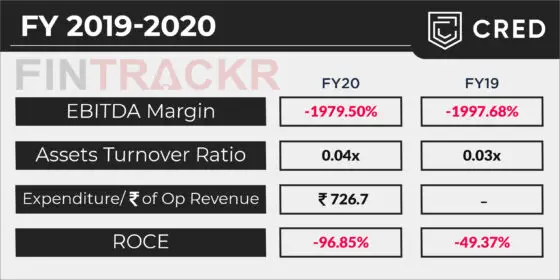
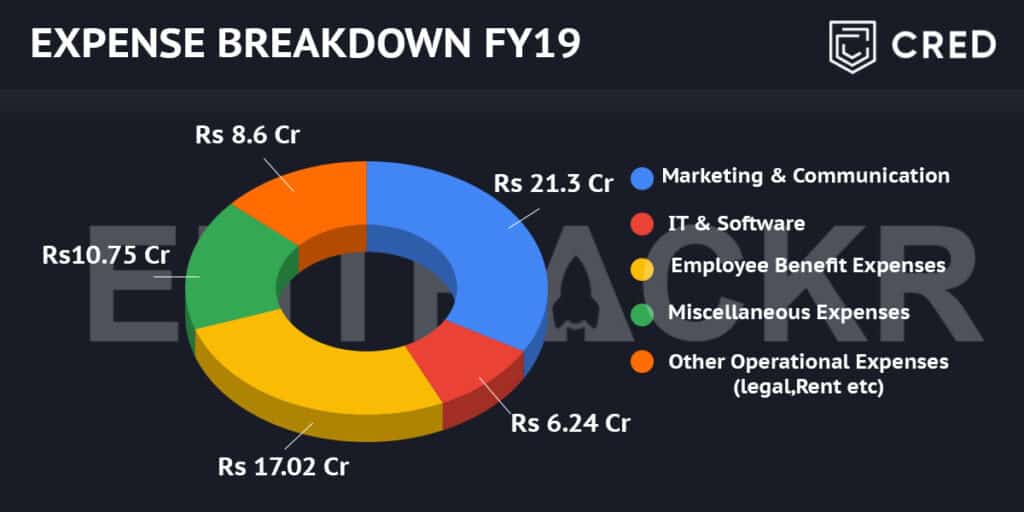
    CRED has experienced a massive jump in its marketing costs – a sharp increase from Rs 19 crore to Rs 180 crore in the past couple of years. A large share of it can be attributed to the IPL sponsorship it signed up for last year. It helped the company create awareness in the market and gave it tailwinds. It has also experienced an increase in employee expenses from Rs 17 crore to Rs 75 crore in the past years.

    cred costs
    Source: Entrackr

    Bottom-Line?

    CRED has a very innovative and creative way to market itself. It delivers cakes to its users’ offices so that other people get to know about it and create a buzz effect. This helps the company initiate a viral loop, generate more customers, and create a ‘brag-worthy proposition’.

    As customers continue to pay their bills and use the platform, the company will have a lot of their financial data, which they can monetise in the future. Even if they don’t sell it to some other financial institution or bank for privacy reasons, they can use the data to enhance and personalise users’ experience of the app.

    It emphasises building a gated community and implementing the idea behind the startup before expanding it further and becoming profit-oriented. Another important takeaway is that founder Kunal Shah focuses more on how the demand for services or products should determine the idea behind a startup and have a unique and brag-worthy proposition.

    Go On, Tell Us What You Think!

    Did we miss something? Come on! Tell us what you think of this article on CRED business model in the comments section.
  • What Is Corporate Social Responsibility (CSR)?

    What Is Corporate Social Responsibility (CSR)?

    Corporations can have more detrimental effects on the environment than one can imagine. They cause pollution, dump toxic waste, deplete natural resources, and contribute to the rapid deterioration of the planet. Unfortunately, many corporations are not even aware of the damage they are doing. This is where corporate social responsibility (CSR) comes in.

    A corporation with CSR is one that is conscious of its social responsibilities and makes an effort to fulfil these responsibilities.

    But what is corporate social responsibility? What is its purpose, what are the different types of corporate social responsibility (CSR), and which corporations practice it?

    What Is Corporate Social Responsibility?

    Corporate social responsibility (CSR) is a company’s commitment to behave ethically and contribute to the betterment of society and the environment in which it operates. 

    Also referred to as corporate citizenship, corporate social responsibility is a form of self-regulation that applies to both public and private companies seeking to make a positive contribution towards the development of society and reflect their concern for their community and environment.

    A better definition of CSR would be “the practice of a company balancing profit-making with a concern for society and the environment.” 

    However, there is no legal definition of CSR. It is generally defined as any positive actions a company takes to benefit the community, protect the environment and treat all its stakeholders (employees, customers, suppliers, the community and the environment) fairly and justly.

    History Of Corporate Social Responsibility

    The term corporate social responsibility was first coined by an American economist Howard R. Bowen in 1953 in his book Social Responsibilities of the Businessman.

    He referred to social responsibility to be “the obligations of businessmen to pursue those policies, to make those decisions, or to follow those lines of action  that are desirable in terms of the objectives and values of our society.”

    However, the topic was still wasn’t popularised until the 1970s when the Committee for Economic Development introduced the concept of the ‘social contract’ between businesses and society.

    Finally, the 1990s led to the widespread approval of CSR when Pittsburgh University professor Donna J. Wood published Corporate Social Performance Revisited, which expanded on the existing CSR models and provided frameworks and guidelines for the CSR frameworks.

    Today, many countries like India have passed laws that make it compulsory for high net-worth corporations to have a CSR policy. Moreover, several other companies like the USA see CSR as a soft law where companies must be socially responsible.

    What Is The Purpose Of Corporate Social Responsibility?

    The primary purpose of corporate social responsibility is to ensure that companies consider the interests and welfare of society by evaluating their actions.

    This means that businesses can consider CSR an attempt to balance profit-making with human, environmental, community interest, and health concerns. 

    The other major reason companies practice corporate social responsibility is to enhance their public image and increase their market share. It’s been shown that corporate citizenship can impact the profitability of a company, especially when the CSR commitment is visible in a company’s operations. It can also help build strong relationships with partners and stakeholders, which will eventually help promote sales and provide positive feedback from customers.

    Importance Of Corporate Social Responsibility

    CSR is becoming increasingly important to companies and their stakeholders. In fact, it is now considered one of the critical indicators of a company’s success.

    Brand Image

    A study shows that 92% of the customers are more likely to trust a company that supports social or environmental issues.

    Another study by Reputation Institute found that 42% of how the public feels about a company is based on their perceptions of its corporate social responsibility.

    So yes, corporate social responsibility is essential to build a corporate or brand image in society.

    More Sales

    An effective CSR policy can also lead to more customers and even loyal customers as 87% of the people purchase a product because the company advocates for the cause they care about, and 76% of people even refuse to purchase if they find out that the company supports an issue contrary to their beliefs. 

    This means that a responsible company has an enormous competitive advantage over a non-responsible company

    Innovation

    CSR also leads to innovation. Innovation is bound to happen when an established business with good financial backing uses its capital to solve societal problems. This innovation helps in finding solutions that society didn’t find before. 

    Mitigated Risks

    In some countries, failure to address environmental and societal problems can result in heavy fines, operation disruption, negative regulatory outcomes, and damaged reputation. A good CSR policy is essential to mitigate such risks.

    Types Of Corporate Social Responsibility

    Traditionally, experts categorised CSR into four different types. 

    These are: 

    1. Environmental Responsibility
    2. Ethical Responsibility
    3. Philanthropic Responsibility
    4. Economic Responsibility

    Environmental Responsibility

    Environmental responsibility is a belief that organisations should try to reduce their environmental impact as much as possible.

    Companies that practice this type of CSR are conscious of the environment and concerned about their products’ effects. They try to fulfil this responsibility by:

    • Reducing pollution: This involves taking steps to reduce pollution, greenhouse emissions, wastage, and over-consumption of plastic, water, and pollution-causing resources.
    • Increasing reliance on renewable energy: Relying more on renewable energy like wind and solar energy and opting for recycled and partially recycled products reduces the stress on the environment.
    • Offsetting negative environmental impact: Environmental impact is often negated by planting trees, funding research, donating to related causes.

    Ethical Responsibility

    Ethical responsibility is a belief that organisations should try to behave ethically as much as possible.

    Companies that practice this type of CSR are concerned with fair treatment of all their stakeholders – employees, customers, partners, and suppliers- and are cognizant of the impact their business activities have on society.

    They try to fulfil this responsibility by:

    • Treating employees fairly: Providing them with fair working conditions and pay, offering opportunities for training and development, and not exploiting them through long hours, low pay or unfair practices.
    • Treating customers fairly: Providing superior customer service, honest and clear information about the ingredients, protecting their privacy, and even using ingredients, materials, and components that meet the set standards.
    • Being responsible to society at large: Companies that ethically conduct business are also concerned about their impact on the environment and the communities in which they operate. They may have processes set to ensure that they don’t connect with businesses that engage in slavery or child labour.

    Philanthropic Responsibility

    Philanthropic responsibility is the belief that companies should give back to society in the form of time, money or resources.

    It is the idea that companies, besides being ethically and environmentally friendly, should also contribute something to the betterment of the lives of others. This could be a portion of their earning, time, expertise, product donations, facilities and so on. This type of CSR is more about the “giving” part rather than the “doing right” aspect of CSR. Some examples of Philanthropic Responsibility include providing underprivileged children with a good education – by donating school supplies, paying teachers, or funding scholarships, sponsoring community activities such as blood drives, sports events, or raising money for hospitals, churches or other charities. 

    Economic Responsibility

    Economic responsibility involves practices that ensure long-term growth and meet the standards set for ethical, environmental, and philanthropic practices.

    It is concerned with creating and maintaining a healthy and sustainable business. Economic responsibility is different from philanthropic responsibility in that the former is concerned with the business’s bottom line, whereas the latter is more concerned with what the company chooses to do with its resources after it makes a profit. An example of economic responsibility would be modifying manufacturing processes to reduce pollution or the need for scarce raw materials. 

    Advantages Of Corporate Social Responsibility

    Unlike what some people believe, corporate social responsibility isn’t a burden to a company. In fact, it has its own set of benefits for the business as well as the society.

    Benefits Of CSR To The Business

    • Builds public trust: A research by Better Business Journey proved that  88% of consumers are more likely to buy from a business that supports and engages in activities to improve society.
    • Helps build brand image: CSR activities increase brand awareness and brand equity as customers get to know about the good-doings of a brand. 
    • Helps gain a competitive advantage: Research concluded that customers are more loyal to brands that care for society and do good. 
    • Attracts media attention: CSR activities attract more PR than normal business activities. It helps the company make use of earned media to increase its brand awareness, brand image, and brand equity.
    • Reduces regulatory burden: Governments of several countries have made it compulsory for businesses a percentage of their revenue to give back to society. Having a good CSR policy reduces regulatory fines and the burden of noncompliance.
    • Helps identify new business opportunities: activities force the business to identify and understand the societal problems of their customers. This, in turn, often results in businesses identifying new problems that can be converted into businesses.
    • Increases the market value: Research proves that a high CSR score increases the overall market value of the business. That is, helping the society not only helps give back but to gain in the form of better valuations as well.
    • Tax benefits: Some countries even provide tax benefits to companies that indulge in CSR activities.

    Benefits Of CSR To The Society

    • Forces businesses to solve societal problems: Some societal problems remain for years because businesses don’t find profits in solving them. CSR policies force firms to solve such problems, and this helps the society at large. 
    • Helps connect corporations with communities: CSR connects corporations to the customers and helps them understand their problems at large. This helps to solve problems that require huge funds that only such corporations have. Moreover, big corporations also bring in innovation to solve such problems.

    Disadvantages of Corporate Social Responsibility

    While corporate social responsibility is considered a great move in helping the business and society, it has its own set of disadvantages. These are:

    • Has high costs: CSR often involves high financial and non-financial investments from the side of a corporate. This affects the corporate’s business, especially during hard times. 
    • Conflicts with profit motive: Businesses operate with a profit motive. Most consider societal problems to be a problem of the government. The development and execution of CSR policies often conflict with the business’s fiduciary duty to its shareholders.
    • May lead to greenwashing: Excessive pressure to serve the societal problems of the customers often lead to the problem of greenwashing where a corporation makes cosmetic changes in its practices just for the sake of marketing its offerings as environmentally friendly. 

    Challenges Of Corporate Social Responsibility

    Solving social problems is not an easy task. Strategising and executing a good CSR policy has its own challenges like:

    • Priority Mismatch: Sometimes, the business runs well as it is, and making changes to its business model or operating model or adding a department to enforce social responsibility may result in meddling with the profit-making priority of the business.
    • Performance Measurement: Sometimes,it’s hard to measure the performance of CSR initiatives by the business, and this poses a great challenge.
    • Limited Resources: CSR initiatives require substantial resources in the form of human resource, finance, innovation, etc. This could become a challenge for some businesses.
    • Lack of Management Commitment: Management considers themselves to be solely responsible for profit-making and future growth of the business. They might sometimes consider CSR to be their second priority.

    Corporate Social Responsibility Examples

    Corporate social responsibility focuses on several different problems relating to climate change, social justice, human rights, inequality, environmental sustainability, etc. Some companies do set an example for others to follow. Here are some of the most relevant CSR examples one should know about.

    Google

    Google corporate social responsibility

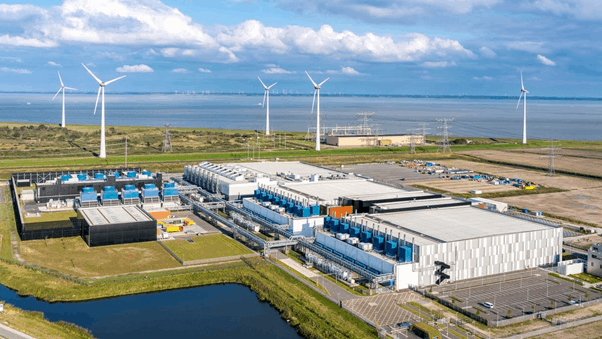
    Google is one of the companies with the best CSR reputations. The company is carbon neutral since 2007 and plans to be carbon-free by 2030. It boasts its new carbon-free energy generation and storage technologies and its work with governments, utilities, and policymakers to deploy those technologies and drive system-level change.

    The company also commits €10M to fund ideas to lead towards a greener and more resilient future.

    Google CSR

    Besides this, Google is also the best place to work at. More than 50% of consumers in 15 markets agree that Google is a great place to work where employees are treated well.

    Microsoft

    Microsoft corporate social responsibility

    Microsoft’s founder Bill Gates is a philanthropist who loves to give back to society. Hence, the company is among the highly recognised companies for its CSR efforts.

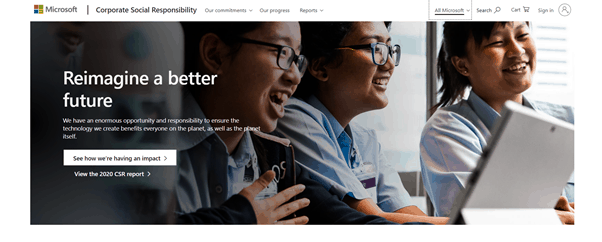
    It has a global initiative called YouthSpark, creating new opportunities for education, entrepreneurship, and employment for more than 103 million young people worldwide.

    It also runs an Employee Giving Campaign where its employees start fundraising events for their favourite nonprofit organisations and causes.  

    The company is also vocal and active in solving social problems like discrimination, fundamental rights violation, climate change, etc.

    TOMS’

    Toms' corporate social responsibility

    TOMS’ is one company that built its business model around its corporate social responsibility program. It was launched with a mission of donating one pair of shoes to a child in need whenever someone buys a pair of shoes from the company.

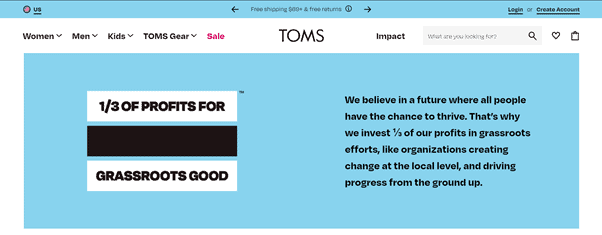
    The brand sold 10,000 pairs of shoes in its first year. Today, it doesn’t operate on the same One-For-One model. Still, it operates in over 50 countries and invests one-third of its profits in grassroots efforts, like organisations creating change at the local level and driving progress from the ground up.

    Moreover, TOMS’ shoes are environmentally friendly as well. They include natural help, organic cotton, and recycled polyester. Even the boxes are made up of 80% recycled post-consumer waste and printed with soy ink.

    Go On, Tell Us What You Think!

    Did we miss something? Come on! Tell us what you think of this article on what is CSR in the comments section.
  • What Is Traditional Marketing? – Channels & Examples

    What Is Traditional Marketing? – Channels & Examples

    How one conducts business vastly differs from how one used to do it. The internet brought new technological advancements and completely changed the marketing mix by incorporating digital marketing.

    Also called old-school because it was the common type of marketing in years before social media became so popular, traditional marketing is not so old today.

    Today, customer behaviour has been shaped to integrate traditional and digital marketing. A new 30-second spot during the 2021 Super Bowl still costs around $5.6 million.

    Customers love receiving direct mail ads even today.

    But what is traditional marketing exactly, why is it important even today, and what are the traditional marketing channels?

    Here’s a guide.

    What Is Traditional Marketing?

    Traditional marketing is the process of fulfilling the target audience’s needs using offline channels and profiting from them.

    In simpler terms, traditional marketing refers to satisfying consumers’ needs and wants via marketing channels that existed before individuals had access to modern digital platforms.

    It involves fulfilling the 4 Ps of marketing without using digital marketing channels. This traditional marketing mix includes:

    • Building a product that operates and fulfils customers’ demands online. For example, a washing machine.
    • Using a pricing strategy that’s not dependent on online channels.
    • Using offline distribution channels to reach out to customers.
    • Promoting the product using offline channels like TV, radio, newspapers, etc.

    Traditional marketing encompasses a wide range of advertising and marketing strategies. It was and is the most well-known marketing type that customers see daily.

    What are the Features of Traditional Marketing?

    Traditional marketing predominated until the 1990s, when the internet began to take off. It is still considered a viable method for marketing with a core focus on the product offering. Here are the features of traditional marketing:

    • Offline Channels: The traditional marketing mix involves techniques, strategies, and tools that don’t involve digital channels at all. The product, price, place, and promotion are strategised and executed using offline channels.
    • Less Segmentation: Traditional marketing delivers the message to the masses. The traditional marketing strategies can’t micro-segment the target audience based on of age, sex, income, behaviour etc. 
    • Strong Relationships: Traditional marketing channels help create credibility and build relations among the parties through physical contact, question-answering, suggestions, etc. Moreover, the local audience trusts traditional marketing efforts more than digital marketing efforts.
    • Better value: Traditional marketing also involves physical touch, where the brand connects with the customers through salespeople, which leads to better value creation and more customer loyalty.
    • More Credible: Since it’s an old form of marketing, customers consider it more credible than digital marketing and often make important decisions after being triggered by traditional marketing activities.
    • Captures a Larger Audience: Traditional marketing strategies ensure to reach a bigger group of people from various categories. Because these marketing strategies are extremely individualised, marketing media sources such as direct mailer tactics provide excellent client engagements.

    The Importance of Traditional Marketing

    Traditional marketing is highly important even in the digital marketing age. Although digital marketing has taken over the world, marketers cannot completely neglect traditional media channels like TV, radio and newspapers to promote their business. It is considered a vital part of the promotional mix.

    Today, there are still niches, places, locations, etc. where digital marketing doesn’t work. For example, rural areas or places where the internet is rare. In such cases, people are well aware of the traditional marketing techniques they have seen.

    Moreover, traditional marketing often plays a very important role in marketing to the local audiences as they are much more likely to trust traditional methods than digital marketing.

    Even pricey items and complex products require marketers to use traditional marketing as it is more effective than digital marketing in most cases.

    Traditional Marketing Channels

    Traditional marketing is not extinct in the age of digital marketing. Cold calling is still a popular way to create leads and revenue today. Even as the digital revolution continues, traditional marketing is far from obsolete, and linked firms are also thriving. Traditional marketing approaches remain a valuable secret weapon for interactive, face-to-face, and expert marketing. Below is a list of traditional marketing channels that have an outstanding ROI today.

    1. OOH Marketing: Out-of-home marketing, often referred to as OOH, is a marketing and advertising method used to communicate with customers or audiences outside of their homes and businesses. That’s in the form of visual advertising media. Traditionally, out-of-home marketing relies more on images than words to communicate a message to the audience. In addition to billboards, signs, and street furniture such as benches and bus shelters, this advertising method also incorporates mediums such as stadiums, retail malls, and cinemas.
    2. Broadcasting: Broadcasting refers to the act of transmitting information or programmes through mediums such as radio and television. Businesses may reach many people quickly by using broadcast marketing methods like television ads and radio to increase brand awareness. Television allows marketers and advertisers to create more compelling commercials since it allows for the visual presentation of items and demonstrations of their functionality. Radio broadcasts can help brands reach a local audience more effectively than other mediums.
    3. Print Media: Print media marketing comprises advertising products and services through newspapers, magazines, and other print media mediums such as books and journals. As a mass-marketing approach, printed advertisements allow firms to reach significant individuals, irrespective of how keen they are on the product or service. It is also used to target specific groups of people, such as magazines for women or fashion.
    4. Direct Mail: Direct mail refers to commercial literature that is sent to potential clients by postal mail. Different direct-mail marketing methods, such as brochures, letters, postcards, catalogues, flyers, and other printed materials, are distributed directly to customers to build awareness about various products. Information is passed on to a specified target audience or market in this marketing style. Direct-mail marketing is a great tool to have at one’s disposal to generate new leads and increase revenue.
    5. Telemarketing: Different businesses hire sales employees to make phone calls for promotional or marketing activities in telemarketing. It is often referred to as cold calling. A cold call is one that involves contacting, informing, and persuading potential consumers over the phone. Due to its many uses, organisations can utilise it for various purposes, including marketing their products and services or gathering data for lead generation purposes.

    Advantages Of Traditional Marketing

    • Diverse Audience: Traditional marketing allows brands to reach a large and diverse range of demographics. Advertisements done through billboards, television, and radio will extend the message over different geographical areas and reach the targeted audience. It is also feasible that new audiences will become acquainted with the brand and product offering. Reaching a more varied audience can aid in the growth of the brand and its product offering. As a result, traditional marketing may be a preferable alternative for bringing in new customers.
    • Enormous Brand Exposure: Hard copy marketing materials can be more easily processed and perform better in terms of brand recall. A public multi-media campaign can help brands surround the prospect with value proposition, message, and products. When the advertisements are out in public, the brand has a huge opportunity to expose them to many people.
    • Credibility Builder: Traditional marketing offers brands more credibility than online marketing. Printed content and advertisements on larger mediums are frequently regarded as more trustworthy. One reason for this is that traditional marketing is associated with established larger budgets. A corporation that can afford to run an ad in a commercial on television or radio must have the financial resources. As a result, the brand’s image is one of growth and stability.
    • Reusable Promotional Materials: Traditional marketing approaches are more sustainable and leave a lasting effect on the brand’s target group. The same TV ad, flyers, business cards, or brochures can be used more than once. As a result, one won’t need to create fresh content as frequently to market the product.  But in the case of digital marketing, to maintain the viewers’ attention, brands must present a continual stream of promotional information.
    • Better Connect: Traditional marketing methods can make it easier to reach and connect with the local audience. Radio is unquestionably the quickest way to advertise the business and convey the message to a local audience. Traditional marketing strategies, such as marketing brochures, newspaper ads, local TV commercials, and billboards, place the brand at the heart of the community and consumer base. As a result, the efforts to reach the target audience will appear more authentic and less artificial.

    Disadvantages Of Traditional Marketing

    • Expensive: Businesses need to pay for putting advertising in newspapers or distributing any leaflet or brochure every time they plan to start a campaign. They may have to pay for the development of the ads in addition to the cost of purchasing TV spots. To reap the benefits of broadcast advertising, they may need to purchase many spots, which may necessitate a large financial investment before they can see returns. However, any updates to the website or using new forms of media like Facebook and Instagram do not incur any additional charges in digital marketing. The sales team simply accomplishes this for the product.
    • Not easily measurable: Traditional marketing is not always as quantifiable as digital marketing. While services exist to estimate TV viewership and billboard drive-bys, they are only approximations. From page landings to click-throughs to transactions, digital media can identify KPIs along the marketing funnel.
    • Less information communicated: Traditional advertising has far less message delivery carrying capacity than emerging communication. If marketers can drive people to the website with the click of a banner ad or link, the brand have practically limitless potential to provide customers with page after page of information. They must deliver the message in a few square inches of space or a few seconds with print and broadcast media channels.
    • Harder to target and sub-segment: Aside from direct mail, most traditional marketing approaches cannot and do not provide the same level of segmentation and targeting that digital marketing channels can target. Thanks to advances in technology, marketers may now more precisely target potential consumers depending on the number of personal information websites collect about users. In turn, digital marketing helps the marketer get the ads in front of a specific audience.
    • More time-consuming: Unlike modern online marketing, traditional marketing does not allow businesses the time to respond to adjustments they wish to make in the advertisement. Even if they want to print their ad in the daily newspaper, they must prepare their ad well in advance, as in the case of all conventional advertising. Then, when the ad is developed, one cannot redo it again. In contrast, digital ads may be evaluated and altered in real-time to optimise their efficacy.

    Traditional Marketing Examples

    Traditional marketing is everywhere. From the salesperson visiting the customers’ house to the big billboard on a busy street. The examples of traditional marketing are endless. Here are a few of the well traditional marketing campaigns that stood out of the crowd:

    The Belt Up Outdoor Advertisement Campaign

    The Belt Up Outdoor Advertisement Campaign
    Belt up billboard advertisement

    Wendy’s – “Where’s the Beef?” TV Commercial

    KFC’s FCK Print Ad

    KFC's FCK Print Ad

    Traditional Marketing vs Digital marketing

    The world is becoming a digital arena. Thanks to the digital world, many of the customers’ daily activities, such as reading the newspaper and banking, have shifted online. The traditional market still has an audience, but it is shrinking due to digital advancement. But without traditional marketing, marketing strategies won’t be as effective.

    So, both types of marketing have their own sets of pros and cons. Here’s a rundown on how traditional marketing varies from digital marketing.

    Basis
    Traditional Marketing
    Digital Marketing
    Meaning
    Product and service advertising via television, telephone, banner, broadcast, door-to-door, sponsorship, and other means.
    Product and service advertising via digital media or electronic mediums employing tactics such as SEO and SEM.
    Cost
    Traditional marketing is more expensive.
    Digital marketing is less expensive.
    Measurability
    Traditional marketing is often difficult to quantify.
    With the help of analytics tools, digital marketing is simple to measure.
    Reach
    Traditional marketing is more suitable for the local audience.
    Digital marketing has a more global reach.
    Modification
    Once the ad has been placed, modification is no longer possible or is very pricey.
    Can be done at any moment, even after the ad has been published.
    Targeting
    The targeting through traditional channels is more standardised.
    The targeting through digital channels is more customised.

    Bottom-Line?

    Traditional marketing is still an important part of the marketing mix. As found in the Print In the Mix survey, Fifty-six percent of respondents said they trusted printed content the most. Seventy percent of Americans prefer to read a printed paper over a computer screen, with sixty-seven percent preferring the tactile feel of print media. The key to a successful marketing strategy is striking the correct mix between traditional and digital marketing channels. Both are crucial components of a marketing strategy, but they are enhanced when used in tandem.

  • What Is An Invoice? – Components, Types, & Templates

    What Is An Invoice? – Components, Types, & Templates

    As a small business owner, once you’ve finally mapped your business strategy, designed an effective logo, and landed your first customer, you’re faced with the question of what next? Now, you must consider your financial situation. And, when you’re starting a business, your income may be completely dependent on the payments you get from your customers. This is when invoices come into play.

    But, what is an invoice?  It’s nothing but a time-stamped document that includes all purchase-related information and is one of the essential documents you’ll ever generate for your business. Therefore, once you develop an understanding and function of an invoice, you’ll be able to get paid faster, resolve errors and problems more effectively, and manage your products and services more efficiently.

    Thus, let’s go through the nits and grits of an invoice to better understand its relevance and applicability in typical transactions.

    What Is An Invoice?

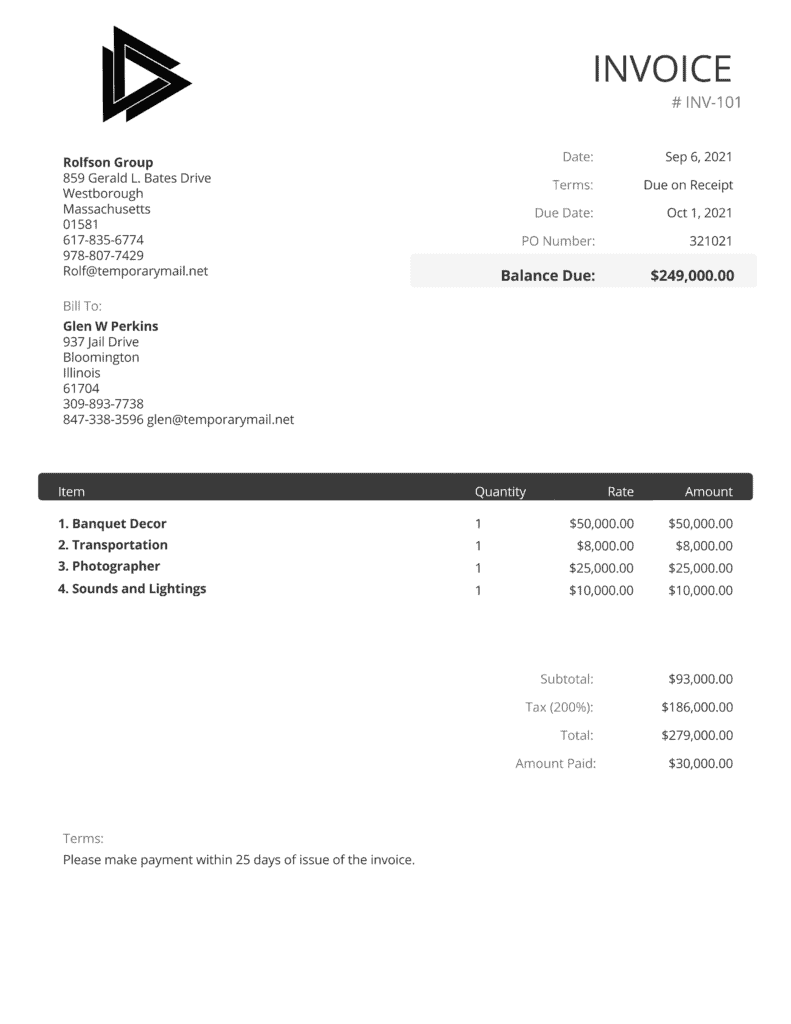
    An invoice is an accounting document that specifies the items and services a business provides to a customer and establishes the customer’s responsibility to pay for those products and services. Sometimes, sellers also call it a “sales invoice”.

    It originated from the French word envoyer, which implies “to send”. Typically, it is a cost breakdown provided by a product or service supplier to the consumer. It includes and defines everything offered or provided by a business and the payment demand and deadline for the customer.

    In fact, it is vital for every business for accounting internal controls, and even the audits rely heavily on invoices. But, remember that it’s not the same as a bill.

    invoice template

    Difference Between A Bill And An Invoice

    As both invoices and bills are documents that contain information about the amount owed as part of a business transaction, many companies and customers use the words interchangeably. However, bills and invoices are not precisely the same. In fact, they are two separate documents with distinct objectives.

    An invoice is issued by the business that provides the service, and the customer who receives the invoice records it as a bill to be paid. That is, “A business sends an invoice to a customer, who receives it as a bill, pays the amount owed, and the business issues a receipt as evidence of payment.”

    Functions Of Invoice

    An invoice is an essential element of communicating with customers. Not only does it assist in speeding up the payment process but it is also used as a source document. Most importantly, it’s used to keep track of all of the company’s sales transactions with the customers. Thus, businesses use invoices for several reasons, including:

    For Maintaining Records

    An invoice’s most fundamental function is to serve as a record of a sale. It helps to track how much inventory a business has and how much it’ll need in the future. Thus, a seller can use an invoice to examine the entire sales volume and verify the stock balance.

    Even the customers can use invoices to keep track of their costs as an invoice gives an organised record of their costs in B2B sales, including itemised information and VAT (if applicable).

    For Keeping Track Of The Payments

    Invoices make it easier for both the seller and the buyer to maintain track of their payments and the amount owed. It helps them to keep track of when and to whom a product or service was sold, as well as how much it cost. It allows the buyer to know when the seller’s payment is due.

    In case of late or missing payment, an invoice supports the official measures that can be made against a debtor to demand payment as a formal request for payment.

    The ability to maintain a legal record of the sale is one of the essential features of an invoice. A correct invoice serves as legal documentation of a pricing agreement between the customer and supplier. It defends the seller from any false litigation and defends the company against any possible bogus lawsuits. Thus, it is admissible as evidence in a court of law.

    For Simple Tax Preparation

    All sale invoices must be recorded and maintained for a business to report its income and pay the correct amount of taxes. Therefore, invoices help to keep track of business income for tax purposes.

    For Assisting In Business Analytics

    Invoices can assist businesses to gain insight into their customers’ buying habits and identify trends, popular products, peak buying periods, and more. This aids in the development of successful marketing tactics for your company in the long term.

    Elements Of An Invoice

    invoice elements

    A legible, professional, and legally sound invoice should include all of the information a customer will need to make payments as well as a way to contact them if they have any problems. Let’s look at the different components that a business must include on every invoice it issues:

    1. The word “invoice”: As a header, the term INVOICE should be mentioned in a clear, and professional font. It can also be included along with the business logo and should be prominently displayed on the document so that it can be easily recognised.
    2. A unique invoice number or ID: Every invoice a business submits should have a unique reference ID, also known as the Invoice number on it. This invoice ID can be a combination of both numbers and letters. Mentioning the Invoice ID is crucial for monitoring purchase records, staying organised and database filing. Thus, businesses should provide a unique number to distinguish various invoices from one another. It’s unnecessary to number an invoice in order, but a business should develop a consistent invoice ID system and ensure they don’t reissue the same invoice number.
    3. The date: An invoice should contain three sorts of dates: the date on which the goods were sent/delivered, the date of invoice, and the payment due date (deadline by which an invoice should be paid). While the date of supply simply serves to notify when a particular product and service was delivered, the payment due date is far more critical. This is because there is no assurance that a company will get the account receivables if the due date is not mentioned. Also, to guarantee that payments are made on time, the invoice must indicate the date it was sent.
    4. Contact information: Businesses must make sure to include the names and addresses of their business and the customer. Also, it should be spelt correctly as incorrect spelling causes unnecessary frustration and degrades the customer experience. Including contact details is crucial as if a consumer has a query and isn’t sure how to reach you, they’ll have your contact information. As far as the customer’s information is concerned, it is needed to verify the document’s legality. Suppose you use accounting software to create invoices. All you require are the customer’s email addresses, but you should also gather physical addresses if the customers need an offline copy.
    5. Terms and Conditions: The invoice must include all of the company’s terms and conditions, including due dates and penalties for non-payment or partial payments. The terms of payment specify the amount of time the buyer has to pay, as well as late penalties and any other payment reductions or costs. These conditions are generally written at the bottom of an invoice to inform the customers of the amount of time they have to pay. For instance, you can specify “net 25 days” meaning that payment must be made within 25 days.
    6. A detailed list of what you’re charging for: Each product or kind of service provided along with the cost per unit (how much one unit of product costs) of these products must be described on the invoice. Also, don’t forget to specify the taxable amount for the items or services. This is necessary as a comprehensive explanation of product names and quantities will aid in preventing unnecessary misunderstandings between suppliers and customers. Sometimes, the customers may not know what their invoice is for if they don’t have this information, and they may not be able to make payment. Therefore, show where the money that the customer owes came from.
    7. The total amount owed with currency: This element may appear to be self-evident, yet it plays a significant role in avoiding payment delays. Specify the prices, currency, and total expenses of the purchased products, and don’t forget to include them in the total. Thus, an invoice must clearly state the total amount due for payment.

    How To Prepare An Invoice?

    The contemporary world has evolved the finest, most convenient, and environmentally friendly method of invoicing, which is done online using accounting and invoicing software. However, if you’re someone who doesn’t want to invest in invoicing software, in that scenario, free invoice templates and generators can help to create invoices online rapidly. We’ve listed a handful of the most basic and successful ways of creating an invoice by format.

    Invoice Template

    If you want to create simple and professional invoices, then you can use a software template—for example, in Microsoft Word or Excel. Invoice templates are a common method to get started with invoicing as it saves time by eliminating the need to retype the same information every time you create an invoice.

    There are many online and offline templates where you can have the option of attaching the invoice to an email or printing and mailing a physical copy. Below are a few free templates.

    Template for Microsoft Word

    You can use this free template to produce a .docx file. It works with Word 2007 and later.

    Template for Microsoft Excel

    Here’s a link to a free basic invoice template in .xlsx format. It works well with Excel 2007 or later.

    Template for Google Docs and Google Sheets

    Invoice Basic has an excellent variety of simple invoice templates for both Google Docs and Google Sheets. Here, once you’ve opened the invoice you want to use, go to File and click “Make a copy…” to generate an editable copy.

    Template For Creating Invoice Online

    There are sites online like the “Invoice to me” that allows you to produce a basic invoice. When you use the tool, it remembers your information so you can create invoices faster in the future.

    Invoicing And Accounting Software

    Many different types of online invoicing software are available today that make it simple to produce and send invoices. These modern SaaS invoicing software allows you to automate, speed up, and manage the invoicing process so that you can be paid on time. For instance, Freshbooks is an invoicing software that lets you choose an invoice template, edit it with the essential information, submit it, and be paid in minutes

    Paper Invoice

    Some business owners prefer excluding computers from the process of creating an invoice entirely. In such situations, one can always use a paper invoice form. These are sold in pads and are available at most big office supply retailers.

    Types of Invoices

    There are various types of invoices a business can prepare depending on their customers and projects. However, one thing to be kept in mind is that while invoices may differ, the components, as discussed before, are the same and must be included in each invoice type.

    The following are the most often used invoices in the business:

    Pro-Forma Invoice

    A pro forma invoice is a document that outlines the seller’s commitment to providing products and services to the customer at a predetermined price. It is more of a projection of how much a particular project will cost after it’s completed than a payment request. Thus, it gets the customer ready for the amount they’ll have to pay later. Also, the pro-forma invoice is not the final charge, and it may vary once the project is completed.

    Commercial Invoice

    A commercial invoice is a document that is used when your company sells a product or service overseas. This invoice contains additional information needed to cross the border, such as the nation of origin, shipping date, shipping quantity, volume, packing type, product descriptions, payment method, and machine parts to validate typical worldwide transactions.

    Credit Invoice

    Businesses send a credit invoice, also known as a credit memo, when customers request a discount, refund, or make corrections in prior invoices. A credit note is often provided to the customer if products are returned due to damage or errors.

    It’s important to note that a negative total number will always appear on a credit invoice. For example, if a client requests a $100 refund on a certain product, the credit invoice will show -$100 as the displayed number.

    Timesheet Invoice

    The Timesheet Invoice is used to charge customers based on the number of hours employees spend on their projects. The Quantity field on the Timesheet Invoice is populated with all of the employee’s approved hours. The Price section displays the project’s customer charge rate per employee.

    This form of invoicing is most commonly used by psychologists, business consultants, creative agencies, and lawyers in intellectual professions rather than technical ones. Rental services, such as car, costume, or culinary equipment rentals, are frequently invoiced using the timesheet invoice.

    Recurring Invoice

    Businesses that charge consumers the same price for ongoing services, such as memberships or subscriptions, generate recurring invoices. It’s essential for all SaaS as it minimises account receivable risks. In fact, even the customers benefit from recurring invoices since they have to sign up and provide payment information only once.

    Usually, businesses that supply monthly package services, such as IT software or social media marketing solutions, prefer this form of invoicing.

    Past Due Invoice

    Businesses issue a past due invoice as a method to renew the payment if the payment deadline (specified in the initial invoice) has passed and your customers fail to pay their bills on time.

    A past due invoice contains all of the information included on a regular invoice, plus any additional late fees. After the clients miss the payment deadline, the past due invoice should be delivered. Interest charges and late fees are also included, in addition to the services purchased and overall prices.

    Final Invoice

    As the name suggests, the final invoice is the last invoice given to your clients once a project is done to request payment. This invoice is more thorough than the Pro-forma invoice since it notifies the customer and contains a full description of the services given as well as the overall cost.

    Thus, it’s vital to have an understanding of the fundamentals of invoicing in order to put the process into motion. The ideal approach to avoid extra efforts and get optimal results is to use current technology, such as online invoice generators or e-invoicing.

    Go On, Tell Us What You Think!

    Did we miss something? Come on! Tell us what you think of this article on what is an invoice in the comments section.
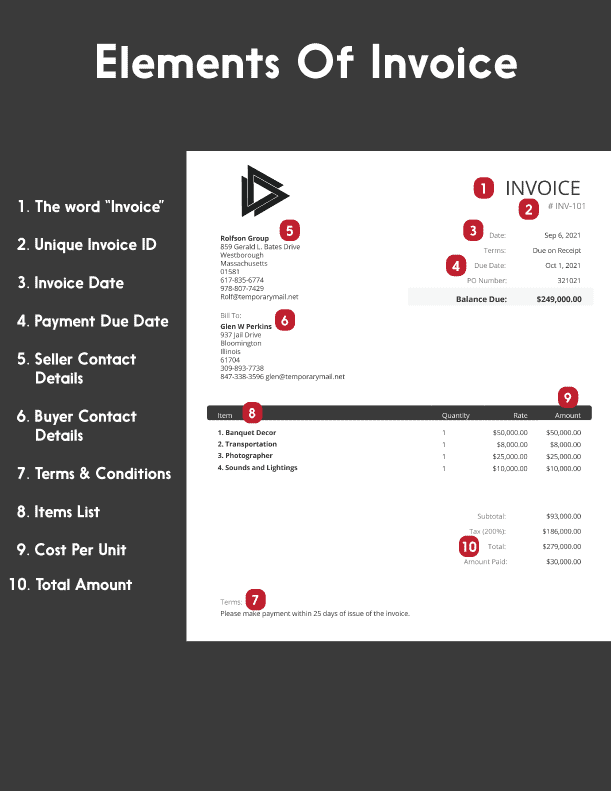
  • How To Set Up An Ecommerce Store? – A Guide

    How To Set Up An Ecommerce Store? – A Guide

    The ecommerce industry has recently become an indispensable part of the global retail arena. As internet access is increasing every passing day, so is the demand for ecommerce stores. In fact, experts have predicted that 95% of global purchases will be through online stores by 2040. So, if you are a business owner with a product to sell or even a complete beginner with a product in my mind, now is the perfect time to set up an ecommerce store and start your direct-to-consumer venture right from scratch.

    But, setting up and building an online ecommerce store is not as easy as it sounds. Even though there are tons of tools and platforms available to help you out in the process, you need to take care of everything, from choosing an ecommerce platform to developing a branding strategy. All this can be a little overwhelming, especially for someone with little or no experience. Here is a simple step-by-step guide for you along with some tools to help you out in the journey of building your own online venture.

    Step 1: Choose An Ecommerce Platform

    The first step to start an online store is choosing an ecommerce platform. These platforms provide an easy-to-use interface using which even non-coders and beginners can design and build an online store very conveniently. There are tons of such platforms in the market which provide different features, themes, plugins, etc., and that is why it can be a hectic task for beginners to choose the right ecommerce platform for their needs. Therefore, here is a detailed guide for you to easily select the platform that would be the most suitable for your requirements. 

    What To Consider While Choosing An Ecommerce Platform?

    While choosing an ecommerce platform to build your store, there are three things that you need to keep in mind including:

    1. Customer experience: User experience plays an essential role in building the credibility of the store and the loyalty of customers towards the brand. To ensure that your store is user friendly, pay attention to the following questions:
      • Does the platform provide mobile-friendly stores?
      • Does the platform provide a secure website to store customers’ data?
      • Is your store easy to use and easy to navigate for the customers?
      • Does the platform provide multilingual stores?
    2. Design interface: Another aspect to keep in mind is the store’s design and the ability to customise it according to your needs.
      • Are there enough themes and plugins available to easily design the store?
      • Are you able to tweak or customise the design according to your needs?
      • Is the platform interface easy to use and easy to navigate?
    3. Technological know-how: While building an ecommerce website generally requires technical know-how, some ecommerce platforms make it extremely easy to design and operate the store. Keep in mind the following aspects while choosing an ecommerce platform:
      • Do you necessarily require technical knowledge to build and operate the store?
      • Does the platform offer efficient and reliable customer support for when you are stuck?
      • Does the platform offer SEO tools to help you get better ratings?
      • Does the platform provide hosting and an SSL certificate along with the package?
      • Does the platform give scalability to incorporate your store’s future growth?
      • Does the platform offer built-in additional marketing tools like newsletters, gift cards, abandoned carts, etc.?

    What Are The Most Suitable Options Available?

    The one thing you need to keep in mind while looking at different online store builders is that whichever platform you choose, the end product you’ll get will be similar. What differs is the process of building that product and the backend performance of your store.

    Here are the top three such platforms with all of their features and limitations so that you can make an informed decision as per your personal needs. 

    The Top Three Ecommerce Platforms

    Shopify Logo

    Shopify is a complete ecommerce platform directed to help beginners with minimal to absolutely no technical expertise build ecommerce stores without writing a piece of code.

    bigcommerce

    BigCommerce is an ecommerce platform developed for beginners as well as users with some technical know-how and the requirement to tweak some features.

    woocommerce

    WooCommerce is a WordPress powered e-commerce platform developed for users who wants more control over the functionality and designs of the store and have the required technical knowledge.

    Shopify

    Shopify is one of the most popular ecommerce platforms, with more than one million stores in over 175 countries. The platform offers a complete package designed specifically for building efficient and beautiful ecommerce stores. Moreover, you do not need any technical knowledge whatsoever to build and design your store from scratch. So if you are a novice and need a platform where you can instantly start and build up your store without any help, Shopify is the answer for you.

    The platform 

    • Provides tons of themes with beautiful and optimised designs,
      shopify themes
    • Has an efficient 24/7 customer support to handle all your queries or problems,
      shopify support
    • Handles everything from hosting to the security of the store,
    • Offers multiple apps and extensions so that you can easily integrate your store with third-party services,
      shopify apps and extensions
    • Has affordable plans for different user groups,
      shopify plans
    • Offers a 14-day free trial so that users can experiment and see if Shopify is the right choice for them, and
    • Provides the abandoned cart feature in the basic plan itself.
      shopify abandoned checkouts

    While all these features make it extremely easy for beginners to build an online store without worrying about hosting, security, SEO optimisation or store designing, Shopify does not provide much room for customisation or control over the website. Since the platform itself handles everything, the users have little freedom to customise or change the designs of the store.

    Bigcommerce

    With companies like SkullCandy, Ben and Jerry’s and Bliss as its customers, BigCommerce is yet another popular SaaS platform that allows its users to easily build and maintain online ecommerce stores without any technical know-how or professional help. BigCommerce is similar to Shopify in many aspects and only differs in some of the features.

    The main offered by platform include:

    • Easy-to-use interface along with the drag-and-drop editor,
      bigcommerce interface
    • Beautiful themes and designs,
      bigcommerce themes
    • No transaction fees,
    • No technical know-how required,
    • Allows more customisation than Shopify in case you are technically proficient,
      bigcommerce customisation
    • Comparatively more products and product categories,
      big commerce product categories
    • Professional reporting,
    • Multi-channel selling capabilities and scaling features.
      bigcommerce multichannel sales

    With all its features combined in one package, BigCommerce caters to every potential need of an online store. In addition to being completely beginner-friendly, the platform also provides more room for customisation when compared to its competitors.

    However, there are certain difficulties that users face while trying their hands on BigCommerce. For example,

    • The platform places an annual sales limit on its customers, exceeding which they are required to pay more,
    • It is comparatively difficult to create multilingual stores with BigCommerce,
    • The abandoned cart feature is available in the plus plan. Hence you will have to pay more to get this feature.

    WooCommerce

    WooCommerce is a popular WordPress plugin designed to build and customise ecommerce stores. The platform is a perfect fit for anyone who has knowledge about hosting, web development and domain names. It gives you complete freedom to design your store in whatever way you want without any restrictions.

    Moreover, if you already have a WordPress website up and running, then WooCommerce is the perfect product for you as it is a completely free plugin and offers tons of features and themes for you to play around with.

    The main features offered by WooCommerce include:

    • Built-in payment gateways,
      woocommerce payment
    • Ability to include an unlimited number of products and product categories,
    • Complete control over user data,
    • Availability of multiple themes and plugins,
      woocommerce themes
    • Unlimited customisation,
    • It is a free plugin.

    With all its features and an easy-to-use interface, WooCommerce allows you to create a beautiful online store without much hassle while simultaneously giving you full freedom to customise the store according to your needs.

    But, there are certain limitations and problems users face while working with WooCommerce.

    • First of all, WooCommerce is not a complete package like Shopify or BigCommerce which allow you to create an online store from scratch. It is a simple WordPress plugin. Therefore, to use it, you need to have an account with wordpress.com or a separate independent website.
    • Also, unlike Shopify and BigCommerce, WooCommerce does not provide you with hosting or any security services. Therefore it is required that you do have some knowledge about acquiring and managing a website server, hosting, domain name, and an SSL certificate.
    • Furthermore, if you are using WooCommerce, you need to have some technical knowledge to fully explore this platform’s potential or you need to hire someone to handle the store for you. 
    • Lastly, the pricing package of WooCommerce is not as straightforward as its competitors. While the plugin itself can be installed for free, there are some additional costs that you need to factor in before choosing the platform. These costs include a domain name, hosting services, an SSL certificate, any themes or extensions you might need and the cost of any professional help for setting up the store. 

    If you are still confused about the platform you should go with, here is a succinct comparison table for you to look at and compare various features of all three platforms:

    Parameters 
    Shopify
    Bigcommerce
    WooCommerce
    Pricing per month
    Shopify Lite: $9 Shopify Basic: $29 Shopify Plus: $79 Shopify Advanced: $299
    Standard: $29.5 Plus: $79.95 Pro:$299.95 Enterprise: custom pricing
    The plugin is free of cost
    Ease of use
    No technical knowledge required
    Some technical knowledge required
    Technical proficiency required
    Hosting
    Provides hosting
    Provides hosting
    Does not provide hosting
    Customer support
    Live 24/7 customer support over phone, chat and email
    Live 24/7 customer support over phone, chat and email
    Ticket support, forum support and documentation
    Themes and designs
    More than 100 themes and store designs available
    Responsive, customisable and beautiful themes available
    Thousands of wordpress themes available which could be integrated into the store
    Customisation
    Allows little customisation
    Comparatively more customisation than Shopify
    Provides complete freedom to design and customise the store
    Security
    Provides a free SSL certificate and PCI-DSS compliance along with the package and handles all security issues.
    Handles hosting, security and PCI compliance. Also provides an SSL certificate.
    Does not provide an SSL certificate or security assistance automatically. Needs to be acquired manually
    Transaction fees
    Fees varies based on different plans (no fees if you choose Shopify payments)
    No transaction fees whatsoever
    Charges 2.9% + $0.3 per transaction
    Annual sales limit
    No limit
    $50,000 on Standard plan, $180,000 on Plus plan and $400,000 on Pro plan
    No limit
    Free trial
    14 day
    15 day
    No free trial for the pro plan
    Abandoned cart functionality
    Included in the Basic plan
    Included in the Plus plan
    Various plugins available for this functionality

    Step 2: Select A Buyer Persona

    Now that you have chosen the right platform for your online venture, it is time to select a buyer persona or the potential target audience based on your product. Selecting the correct target audience is crucial as you build your store’s design and structure around what your audience wants to see.

    In order to create the perfect buyer persona, you will need to do some market research based on the product you are selling and the demographics. Some of the questions which you could ask yourself to make this process easier are:

    • Is there a specific gender of the customers who are more likely to buy your product?
    • Are your customers more likely to fall into a particular age group?
    • Are your customers more likely to live in a specific region?
    • What is the most probable income range of your customers?
    •  What are some common personality traits or psychological traits of your potential customers?

    Step3: Set Up The Essentials

    The next step to launching an online D2C store is setting up all the essentials you will need to run and design the store without any last-minute hassle. Therefore, here is a checklist along with some useful tools to acquire and set up all the necessary things you will need for your store:

    Business Name And Domain Name

    The next step is to choose a name for your store. The name of your store should be based upon the product you are selling and the buyer persona. Some things to keep in mind while deciding on a name are:

    • The name should be short and should not contain more than 2-3 words.
    • The name should reflect the message and mission of your brand.
    • It should be simple and easy to remember.
    • It should not be related to a specific product category or a specific region. In other words, the name should be scalable.
    • You should avoid using acronyms

    You can also use various business name generators such as the Shopify name generator, Namelix, or Oberlo to help you in the process.

    Payment Processing

    A payment solutions provider is one of the most crucial things you require for your business. It is crucial to provide your customers with a smooth and hassle-free checkout. You can provide your customers with multiple options such as

    • Credit or debit cards,
    • Digital wallets like Paypal or Google pay
    • Bank transfers
    • Cryptocurrency
    • Cash on delivery
    • Ecommerce payment gateway

    Hosting And SSL Certificate

    The next crucial step is to buy a hosting and a domain name for your store. While Shopify or Bigcommerce provide hosting along with their monthly plans, with WooCommerce and some other similar platforms, you must arrange hosting yourself. 

    Many platforms like Namecheap, Inmotion, Godaddy or Bluehost offer a complete package, including a domain name of your choice along with website hosting. It is important to purchase hosting from a reliable source as it will decide the speed of your store.

    Furthermore, If your hosting provider or ecommerce platform does not include an SSL certificate, you will have to purchase it separately as it is extremely important for the security of your store and the privacy of your customers’ data.

    The next essential for your store is a brand logo. A logo is essential for your store as it will define and represent your business and make your store legitimate.

    Some tips to follow while designing a logo for your brand are:

    • Keep the design simple.
    • The design should resonate with your brand identity and brand name.
    • The design shouldn’t rely on color or size.
    • The design should be scalable.

    You can either

    • Hire a designer from Fiverr or Upwork
    • Use online logo creators such as Looka  or Brandcrowd
    • Use graphic designing tools like Canva or Adobe if you have the required skills.

    Customer Support

    A business email or a support email is another crucial aspect of your online store as it gives your customers a way to reach out to you and connect with you in case they face any problems or issues with their product or its delivery. Also, most of the ecommerce platforms require you to submit a support email while building the store. Hence, it is advisable to create one beforehand to avoid any hassle.

    Step 4: Build And Design The Store

    Once you have set up all the essentials and selected your buyer persona, the next step is to design the store and get it ready for the customers to visit. The design needs to be carefully strategised and optimised for conversions.

    Even though the process for setting up and designing the store will be slightly different for various ecommerce builders, the basics are almost the same. Here are a few strategies which you could follow to successfully build your store irrespective of the ecommerce platform you have chosen. 

    Content Strategy

    Now it’s time to add some content to your store and personalise it. The necessary pages which you need to include are:

    • Home page
    • About us page
    • Contact us page
    • Privacy policy

    While developing content for your store, you should keep your buyer persona and product in mind so as to successfully target and attract your audience. Strategically curated content is extremely important for your store as it reflects the values, the mission and the voice of your brand. The content on your store should clearly define the USP or the unique selling proposition of your brand.

    You can even hire professional copywriters from platforms like Upwork or Fiverr in case you face any difficulties.

    Product Strategy

    Adding products to the store is the most crucial step of the entire process because products and product images will be the centre point of your store. It is important to upload high quality and professional pictures for your products as they play an important role in attracting customers and convincing them to buy the item.

    You can further make your store easier to navigate by dividing your products into various product categories. Most of the store-builders have this feature embedded for your convenience.

    Branding Strategy

    While building and designing your first online store can be exciting, just setting up the basics isn’t enough. Your customers need to perceive you as a brand and not just an online store. That is why once you are done with all the above steps, you need to dive deeper and formulate a branding strategy for your store

    Selecting And Designing Your Theme

    Most of the ecommerce platforms, including Shopify, BigCommerce and WordPress, offer numerous paid and unpaid themes. Therefore, you can navigate and easily choose a theme that suits your requirement.

    Once you are satisfied with the theme, you can tweak some styles and colours according to your brand scheme. While Shopify and BigCommerce allow minute changes in HTML and CSS of the pages, WooCommerce gives complete freedom to code and change the theme as per your requirements.

    • Colour schemes: The colours or the brand palette you choose for your store and your logo play a very important role in the way customers perceive your brand. For example, red often represents something passionate and powerful, while blue reflects something cool and confident. Moreover, around 85% of buyers specify the colour as the primary reason for buying a product.
      Hence, while designing your store, keep in mind your target audience and your brand message.
    • Consistency and loyalty: If you want your customers to stay loyal to your brand, it is important to constantly keep working and improving the quality of your product, your brand and your store. Creating a logo or a tagline isn’t enough. You need to recognise your customers’ needs and deliver what they expect out of you.

    Now you are ready to go live and launch your store to finally start your online D2C business.

    Go On, Tell Us What You Think!

    Did we miss something? Come on! Tell us what you think of this article on setting up an ecommerce store in the comments section.
  • What Is Promotion Mix? – Elements & Examples

    What Is Promotion Mix? – Elements & Examples

    In business, just developing a product isn’t enough to achieve the marketing goals. This is why the marketing mix includes an important element of the promotion mix.

    Promotion involves activities that help a business communicate the offering and its features to the customer and generate their interest in the desired action. Numerous activities can be considered a promotion. While some market the offering to the customer organically, some involve paid media or paid communication. All these activities combined form the promotion mix.

    What Is Promotion Mix?

    Promotion mix is the set of all the promotional variables a business use to create, maintain and increase the demand for its brands or offerings.

    This definition of promotion mix can be understood better by dividing it into two parts

    • Set of all promotional variables: The promotion mix combines all the tools, strategies, and approaches a business uses to get its message to the target market. 
    • Create, maintain, and increase the demand: The main objective of developing a promotion mix is to make the target audience aware of the offering and influence them to purchase the business’s offering using promotional variables.

    Promotion is the fourth element of the 4 Ps of the marketing mix that focuses on communicating the brand and the offering to the target customer and influencing their purchase decision.

    In simple terms, it constitutes all those activities undertaken by a business to generate the interest of its customers in buying the product or service offered. 

    The Importance Of Promotion Mix

    The marketing mix stands on 4Ps for a reason. Once the product is ready and its price and distribution channels are decided, the business needs to inform the target audience about its existence. This is where the promotion mix comes in.

    It helps the business develop and share the right communication message to the right audience using the right channel.

    While other marketing mix elements ensure that the product is developed according to the customer’s needs, requirements, and buying capacity; the promotion mix effectively informs the customers that such an offering exists and gives them reasons to purchase the same.

    Even the perfect product, pricing, and place strategy can go waste if the promotion mix isn’t properly configured by the business.

    Promotion Mix Elements

    A brand or offering is usually promoted using three mediums –  

    • Owned Media: It refers to using business-owned channels to promote the brand or offering. For example, using the company’s website, social media profiles, or emails to communicate brand offerings to the target audience.
    • Paid Media: It involves using paid channels like advertising, influencer marketing, etc. to promote a brand offering.
    • Earned Media: It is the promotion third parties like news channels, media houses, customers, influencers etc., do voluntarily without getting paid for it.

    The promotion mix combines this owned, earned, and paid media into five basic elements. These components of the promotion mix are:  

    • Advertising
    • Public Relations
    • Personal Selling
    • Sales Promotion
    • Direct Marketing

    Advertising

    Advertising is a paid promotion method where a sponsor calls for public attention through paid announcements. 

    This promotional mix component uses paid media channels like TV, radio, newspaper, billboards, or even digital advertising channels like social media platforms and search engines.

    Advertisements have the following characteristics:

    • Paid form of promotion.
    • Focuses on one-way communication from brand to customer.
    • Can be personal or non-personal, depending on the channel used.
    • Have a mass reach.

    Public Relations

    Public relations involves communicating to the target audience and getting their attention using earned media channels like news, word of mouth, government announcements, etc.

    Simply, public relations is a strategised process of releasing organisation-related information to the public using trustable channels like news to maintain a favourable reputation of the brand.

    Public relations involves:

    • Trustable sources,
    • Brand mission oriented communication messages, and
    • Two-way communication, as the brand releases the message and waits for the public response to strategically release another set of messages.

    Sales Promotion

    Sales promotion is the offering’s promotion using attractive short-term incentives to stimulate demand and increase sales.

    The short-term incentives are often used to –

    • Promote new products in the market
    • Promote unsold inventory
    • Attract more customers
    • Lift sale temporarily

    These incentives include but are not limited to –

    • Seasonal discounts,
    • Financial schemes,
    • Target-based benefits for retailers, wholesalers, resellers, and affiliates
    • Free samples,
    • Exchange schemes
    • Shipping schemes
    • Bulk purchase discounts,
    • Trade deals, etc.

    Personal Selling

    Personal selling is a personalised promotion that involves person-to-person interaction between a brand representative and a prospective customer.

    It involves personalised conversations and promotion presentations by the salesperson developed after understanding the needs and wants of the target customer they promote to.

    Unlike advertising, personal selling develops a personal connection between the brand representative and the customer and involves more costs per person reached.

    Personal selling is:

    • Two-way personal communication between the brand representative and the target customer,
    • Dependent on the influencing and persuasion skills of the salesperson,
    • Highly flexible way of promotion, and
    • Focused on educating the customer more about the product and giving them personalised reasons to buy.

    Direct Marketing

    Direct marketing is a promotion strategy where the target customers are contacted directly by the brand instead of having an indirect medium like a retailer or wholesaler.

    It’s a great promotional tool that helps the brand communicate directly with the prospective customers through channels like –

    • Door-to-door promotion,
    • Promotional telephone calls,
    • SMS, Emails, IM promotional messages,
    • Targeted advertisements, etc.

    But direct marketing is different from personal selling. Even though it involves direct contact between the brand and the customer, it not often involves highly personalised sales pitches.

    The Effect Of Digital Marketing On Promotion Mix

    With the advancement in technology, the internet has made the world smaller. The impact of the internet in today’s promotion mix is enormous. But this doesn’t mean that the promotion mix elements have changed. The internet has just made the channels more efficient and effective. 

    Advertisements have become more personalised as they now use data for targeting.

    Direct marketing doesn’t always involve a human connection now. Customers are just an SMS or WhatsApp text away. The same can be done using bots.

    PR campaign responses are faster now, and the business can plan and release information through many more channels.

    Personal selling has found a new channel on social media platforms like LinkedIn.

    Sales promotion is now more dynamic and personalised. Different customers can now get different offers based on their behaviour, intent, and online activities.

    Even direct marketing has expanded its horizon and now uses search engines and social media platforms for better reach.

    Factors Affecting Promotion Mix

    Many businesses make the mistake of assuming that they should focus on one kind of promotion mix. This is not always true. Different kinds of promotions will work best for different businesses. 

    The elements of a successful promotion mix depend on the nature of the business, its goals and objectives, the budget, and the competition in the market. Here are five key factors that affect the promotion mix of a business.

    • Nature of product: Different types of products require different types of promotion. Industrial products that are complex and technical rely more on personal selling as they require a human to explain things better. On the other hand, consumer products are often promoted using advertisements, sales promotion, etc. 
    • Product lifecycle stage: Promotion mix also depends on the product’s lifecycle stage. If the product is just launched, a good mix of PR, advertising, and direct marketing could be used to get the word out and make the target market aware of the product. An established product, however, may require only a few ads and sales promotion campaigns. 
    • Nature of market: The size and nature of the market also influence the choice of the promotion mix. A brand operating in a small market may benefit from personal selling and direct marketing more than advertisements. However, a brand serving a vast market may require a good advertising and PR strategy
    • Competition: The existence of competition and the promotional tools competitors use greatly influence the business’s promotion mix. Suppose the competitor uses sales promotion to promote its offering at the point of sale. In that case, the business is bound to use a similar strategy to stop the competitor from poaching its customers.
    • Nature of customer: Customers’ demographics, behaviour, geography, etc., also affect the type of promotion that would be most effective. Generation Z will respond more to personalised ads than boomers. Millennials tend to respond to a different promotional mix altogether. Similarly, promoting a technical product to a customer belonging to a village will require more personal selling efforts than advertisements.
    • Budget: A business’s budget also plays an important role in determining the kind of promotion mix it should use. If the business has a limited budget, it should use the cheapest tool to yield maximum results. However, businesses with a lot of money can afford to experiment with different tools and tactics.

    Promotion Mix Examples

    Let us see how some businesses use these tools to achieve their marketing goals. Take a look at the following hypothetical example:

    A business produces a high-tech gadget that lets people listen to music without using headphones. It runs ads and direct response (DR) campaigns to generate interest from the customers. Then, it uses personal selling to close the sale and make the target market aware of its existence. This is a good example of how a personal selling campaign could work.

    For this particular example, we have made some assumptions. We have assumed that the business is selling a unique product, there is no existing competition, the customer is tech-savvy, and the customer has a high purchasing power. Based on these assumptions, we have identified five key factors that affect the promotion mix of the business.

    A real-life example of an effective promotion mix is that of Coca-Cola.

    The company uses a different promotion mix for every market it operates in. Usually, it’s a mix of:

    • Advertising: The company partners with celebrities and influencers and advertises its brand on TVs, billboards, radios, etc.
    • Sales promotion: It often releases sales promotion campaigns during festive seasons. 
    • Public relations: The company keeps a check on its positive brand image using public relations, where it tries to tackle the problem of environmental pollution by its plastic bottles. The company effectively use earned media to showcase its recycling program to the public and important stakeholders.
    • Since Coca-Cola is an FMCG brand, it rarely uses direct marketing and personal selling.

    Go On, Tell Us What You Think!

    Did we miss something?  Come on! Tell us what you think about our article on what is promotion mix in the comments section.

  • The 5 Phases Of Project Management

    The 5 Phases Of Project Management

    Projects are complex and require various people, departments, and sometimes even organisations to work together. It is common for them to become disorganised and fail. Therefore, managing them is difficult.

    To ease the process, the whole project management cycle is divided into five stages or phases. While the particulars of a project’s management vary with industry, team, project type, etc., these five phases of project management are almost consistent.

    So, let us introduce you to the phases of project management.

    Initiation

    The initiation phase is where a project gets started. It involves defining the need of the project, making sure it’s feasible, and getting approval for its official beginning.

    This phase starts with an organisation’s senior-level employee preparing a business case. They define the need, scope, nature, objectives, and stakeholders of the project they want to be executed. Then, they conduct feasibility tests to ensure that it is possible and profitable.

    If the feasibility tests are successful, a rough budget is prepared, and the business case is presented to the senior managers for approval.

    These senior managers are typically the stakeholders and sponsors of the project. They conduct due diligence, deliberate over the business case, and approve it. 

    This is when a project officially begins. A project charter or project initiation document (PID) is prepared. An evolved version of the business case, the project charter or PID outlines the project’s need, purpose, objectives, stakeholders, and constraints. Usually, a rough budget is also included in the document.

    However, most of the process isn’t clear up till now. For instance, if a mobile phone company decides to launch a new feature, say a higher-resolution camera. In the initiation phase, the only thing we know is that their customers will appreciate a better camera, so the company will work on it. The ‘when’, ‘how’, and ‘who’ aren’t clear.

    Now, the senior managers assign a project manager, who takes it from here. The latter refers to the project charter or PID, gets complete details of the project and stakeholders’ expectations, and begins working. 

    Planning

    Since projects are usually complex and involve several factors, they need to be planned. Effective planning eases execution, and that’s why this phase takes around half of the project duration. Also, it is entirely handled by the project manager.

    They discuss with the stakeholders to create an integrated project plan to achieve project goals within the constraints of scope, time, and budget while adhering to quality.

    To begin with, they finalise the principles, procedures, and methodologies to be followed during the project’s course. Then, they identify the exact deliverables and set suitable metrics (the KPIs) to assess them. Now, the project managers define the work that needs to be done to achieve the deliverables in time and within a budget constraint. They also decide where, when, and how to procure the necessary resources.

    Now comes the most important part of project planning: team building. A project is a temporary venture that demands the coordination of various departments and even contract workers. So, a whole new team is built that works outside of their regular individual jobs.

    For instance, in our previous example where the mobile phone company decided to launch a better camera, tech people have to coordinate with finance, marketing, business development, and product development teams. The company further needs to collaborate with third-party vendors, advertising agencies, and several independent contractors. So, all the people actively involved in the project form a team that the project manager heads.

    Furthermore, the following must be ready by the end of the planning phase.

    • Scope statement: It defines the scope of the project in detail. The scope statement outlines the project’s needs, objectives, benefits, deliverables, and milestones for future reference. It can be changed during the project course but only after the approval of the project manager.
    • SMART AND CLEAR Goals: One must set and measure the right goals to stay on the right track. So, projects require SMART and CLEAR goal setting.
      • SMART goal-setting is a more traditional approach. It ensures that everyone understands the goals and that they are attainable and measurable. SMART stands for:
        1. Specific: Answers the questions of who, what, why, where, when, and which
        2. Measurable: Can be tracked with metrics
        3. Attainable: Can be achieved
        4. Realistic: Makes sense
        5. Timely: Can be achieved within the given time frame
      • CLEAR goal-setting is fairly new and is designed to suit modern high-paced enterprises. CLEAR stands for:
        1. Collaborative: Encourages team members to work together
        2. Limited: Limited in scope and time to be manageable
        3. Emotional: Taps into the passion of the team members and encourages them to work
        4. Appreciable: Should be small as they are broken down from larger goals
        5. Refinable: Can be changed and refined as per the situation
    • Work Breakdown Structure (WBS): Work breakdown structure involves breaking down the whole project work into smaller sections and activities. In other words, it is a deliverable-oriented breakdown of work, wherein each key deliverable is divided into manageable sections, and thereby work done to achieve each deliverable is decided on.
    • Gantt Chart: It is a bar graph-like detailed visual representation of a project’s timeline. One side of the Gantt chart represents the tasks to be done, and the other side represents the time by which they should be completed. Horizontal bars representing the duration of each task are drawn from the vertical axis.
    • Communication Plan: The execution of a project requires extensive collaboration among various people and departments. For this, one needs to ensure effective communication. Since miscommunication is one of the major causes of project failure, a communication plan is fixed during the planning phase itself.
    • Quality Control Plan: It is not enough for a project to be completed within the three constraints of time, budget, and scope. The deliverables have to adhere to certain quality standards to meet the desired objectives. That’s why project managers define the right metrics to be measured at each stage to assess quality.
    • Risk Management Plan: When a project is being executed, certain risks crop up. While many of these cannot be foreseen, a few can be predicted, so project managers develop a risk management plan before the project execution starts to mitigate foreseen risks and manage the unforeseen ones.
    • Change Management Plan: While this aspect is frequently neglected, one also needs to plan for incorporating changes. Project stakeholders often change the nature and quantity of work, leading to delay and scope creep, that is, uncontrolled growth in a project’s scope. Therefore, one must have a change management plan in place.

    Execution

    Now that the planning phase is over, the project team starts working on the project. They take over from the project manager who assumes the role of a supervisor and coordinator. Team members drive the project forward now.

    The execution phase typically starts with a team kickoff meeting. Here, everyone is given the complete details of the project and their role in its success. The project manager assigns tasks to the team members and procures the necessary inputs like capital, agreements, and other resources. They also explain the communication and supervision mechanism to everyone, after which the team starts working on the project.

    The team members finish the assigned tasks and ensure that the deliverables are handed to the right person at the right time. They try to meet targets and produce quality work; otherwise, it may reflect on their performance reports. They also attend frequent meetings organised by the project manager to track project status and ensure accountability.

    Frequent status meetings, project reports, and work overload reports are generated during the execution phase to indicate whether the project will be successful or not.

    One other aspect of the execution phase is related to stakeholders’ satisfaction. The project manager has to keep the stakeholders in the loop and ensure that they are satisfied. If that’s not so, the team may have to change certain project aspects following the change management plan.

    Supervision

    The supervision or monitoring and control phase goes hand in hand with the execution phase. However, most of the work is done by the project manager here.

    Since projects are usually complex and it is difficult to ensure their effective execution, one has to monitor them and exercise controls wherever necessary. This job falls on the project managers who are already working very closely with the team.

    They check on the team members, coordinate, and conduct meetings to track progress and to see that everyone is working well. They ensure productivity and make sure that no doubt and mishaps delay the project or deviate the team. They also ensure work quality by tracking metrics frequently. Furthermore, they track costs and try to finish everything within the constraint of the budget.

    Risk management is another aspect of the supervision phase. Project managers are on the lookout for risk during the execution phase; they ensure that all the foreseen risks are managed as per the plan and the probability of the unforeseen ones being mitigated. They also enforce change management plans if needed.

    Closure

    The last phase of project management deals with the official completion of the project. Now, the team hands over the deliverables to the project manager who presents them to the stakeholders and sponsors. They also close all the project-specific deals with the contractors and ensure that all the payments are made.

    Here, the team is also required to assist the project manager in accounting for used and unused resources and preparing a detailed budget. Then, the project manager analyses the deliverables and team performance to reward the right people. In many cases, small work events are also organised to thank the team for participating in the project.

    An essential part of the closure phase is to finish the leftovers. For this, the team coordinates with the project manager and creates a project punch list of things that they couldn’t accomplish on time. Then, they work towards finishing it.

    The last thing is to review the whole project and reflect on the successes and failures. The project team creates a detailed report of the entire project lifecycle documenting each success and failure. Then, the manager finalises, organises, and stores the report along with other project documentation and deliverables. 

    Go On, Tell Us What You Think!

    Did we miss something? Come on! Tell us what you think of this article on phases of project management in the comments section.

  • Who Is A Project Manager? – Definition, Roles and Responsibilities

    Who Is A Project Manager? – Definition, Roles and Responsibilities

    Every new development results from an extensive project; be it government, corporate, or social, every project is complex and involves various bodies functioning together. For instance, consider the development of a new mobile phone feature. It involves the approval and execution of a large-scale project wherein the company’s tech team has to collaborate with finance, marketing, and business development teams. Furthermore, the company has to collaborate with third-party vendors and advertising firms for effective results.

    Since projects are this complex, there is a high probability of their failure. A whopping 70% of the projects fail.

    Then, how do businesses and government organisations get the confidence to invest in projects? How do a few enterprises see many successful projects when others don’t?

    The answer lies in project management. Its implementation reduces the project failure rate to less than 20%, which is why there is an increased demand for project managers.

    However, this domain is still relatively new, and not enough is known. So, talk about who a project manager exactly is and what are their roles and responsibilities.

    Who Is A Project Manager?

    A project manager is a professional who leads the team working on a project and applies innovative processes and principles to ensure its completion within the constraints of budget, time, and scope.

    In simple terms, a project manager is a person specialising in managing projects.

    Projects are complex temporary endeavours undertaken to achieve the desired result; the result may be a change, a development, a new product, or anything else. These projects have to produce quality outcomes within a limited time and budget to be successful. This needs extensive planning, real-time communication, supervision, quality checks, and risk control. In other words, these projects need a leader, and the project manager is that person.

    They ensure that the right thing is done at the right time in the right way to give the right outcome.

    What Are The Duties And Responsibilities Of A Project Manager?

    As mentioned before, project managers are responsible for leading the projects from start to end. They plan the whole process and make sure that the plan is executed to produce quality results. They also communicate and deliberate with stakeholders about the project expectations, deliverables, progress, and outcomes.

    Usually, project managers work in five phases or stages:

    Initiating

    This is the phase before a project has officially begun. Here, the organisation (corporate enterprise, government body, NGO, etc.) approves the project and assigns a project manager to it. After this, the project manager’s job starts.

    They take charge, discuss with their seniors (the ones who have assigned them the project), and identify the stakeholders. Stakeholders are the people who have vested interests in the project. Project managers communicate with them, keep them in the loop, and ensure their satisfaction.
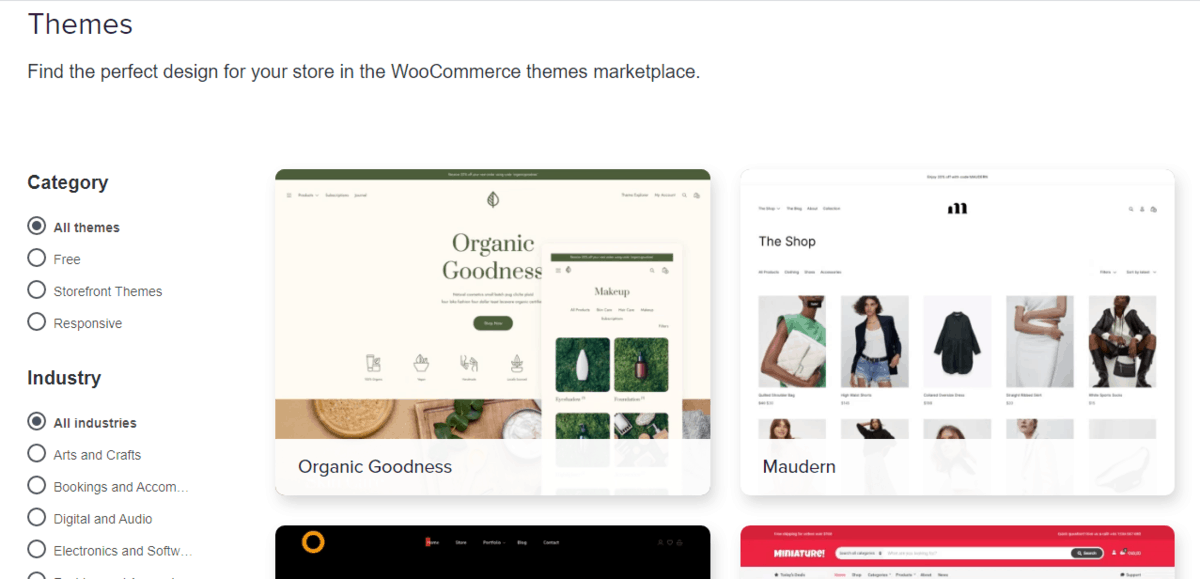
    In other words, the project manager gets complete details of the project and a rough idea of the work. They understand the objectives, expectations, scope, and resources surrounding the project. They also check if such a project has been executed before and go through its reports. That way, they can learn from the experience of their organisation.
    Planning

    Now, the project managers have to finalise on principles, procedures, and methodologies to follow in the project. So, they work with key stakeholders and develop an integrated project plan focused on achieving goals within the constraints of time, budget, and scope. So, the project manager:

    • Defines the project’s scope, identifies the exact deliverables (in quantifiable formats like KPIs), and creates a work breakdown structure (WBS). They set milestones for the team.
    • Plans and develops work schedules keeping the time constraint in mind
    • Sees to the availability of resources (physical capital, budget, and human resources) and allots them accordingly
    • Creates the project team and decides on their medium of communication
    • Partners with third-party vendors, contractors, and others for the duration of the project.
    • Identifies quality check requirements and decide how and when to assess those metrics
    • Identifies risks and prepares strategies to mitigate them.

    Executing

    The execution phase is where the team starts working on the project. Now, the project manager has to let the team drive things forward while they lead and mentor them.

    • They communicate the project’s objectives, deliverables, and tasks with everyone and ensure clarity at every stage.
    • They get all the necessary inputs like agreements, capital, and money.
    • They ensure effective real-time communication and query resolution
    • They try to create a healthy work environment where each one is motivated and dedicated to the project
    • They manage the stakeholders’ expectations by keeping them in the loop and frequently deliberating with them.

     Supervising

    The supervision or the controlling and monitoring phase goes hand in hand with the execution phase.

    A project doesn’t usually proceed smoothly. There are doubts, mishaps, delays, and differences coming up. So, the project manager has to lead the work, monitor the events, and control the wayward factors.

    Thus, they create progress reports frequently and make sure that everything is being done on time. They ensure that all the parties are collaborating and communicating, and achieving milestones. They track metrics after each stage and see that there are the least differences between actual and expected results.

    Project managers also enforce risk management plans and deal hands-on with unplanned risks. They understand that the planning doesn’t actually stop, and restructure and realign the plan frequently.

    Closing

    This is the final phase of project management. Since projects are temporary, work has to come to an end officially. Now, the project manager sees that the work is completed in time, and presents the reports to stakeholders. They hand over the deliverables and make sure the stakeholders are satisfied. They review the work of contract workers and other partners, pay them, and close all the contracts.

    Now, the whole team reviews the project so managers again take charge, analyse their work, understand the areas of improvement, and document their learnings for future use. They also reward the deserving team members for their contribution.
    What are Some Project Manager Skills?

    A project manager’s job isn’t easy. Even if they don’t go hands-on into a project, they know the most about it. So, they need to have the technical know-how, required management expertise, and interpersonal skills.

    Three major skills of a project manager are:

    Entrepreneurial Skills

    Project managers handle the work of a whole complex venture. They plan it out, arrange for inputs, assemble the team, and look into the implementation while ensuring that the project fulfils its objectives, and the stakeholders are satisfied. For this, they have to take charge and be the leader. This requires entrepreneurial skills like:

    • Leadership
    • Communication and collaboration
    • Organisation and management
    • Team and time management
    • Risk management
    • Adaptability and quick problem solving
    • Budgeting
    • Planning and forecasting
    • Monitoring
    • Meeting facilitation

    Since project managers get almost complete authority over a project and they are free to exercise their creativity and authority, they are rightly called intrapreneurs.

    Subject Matter Expertise

    Project managers supervise the functioning of every limb of a project team. So, although subject matter expertise isn’t a prerequisite for project management, it would aid task and team management.

    The project managers can delegate work and schedule better if they have the required technical know-how. Such expertise would also earn them the respect of their team members.

    Project Management Skills

    Projects management comes with its own specific skill set. It is a well-developed discipline with a list of technicalities. Therefore, no matter what industry a project manager is working in, they should know about:

    • Different project management methodologies like Scrum, Agile, etc.
    • Project management software like PaymoTM, Wrike, Basecamp, etc.
    • Project management tools and techniques
    • Other processes, principles, especially the organisation specific ones.

    How Much Does a Project Manager Earn?

    The salary of a project manager depends on various factors, including the level of education, experience, location, and industry.

    According to a 2020 Project Management Institute (PMI) survey, most of the project managers in the United States earn $116,000. On the other hand, a 2019 US Bureau of Labour Statistics survey indicates a median salary of $73,570, with most of the top ten percent earning $128,420.

    Difference Between Project Manager And Product Manager

    A project is different from a product. A project is any temporary endeavour by a business organisation to bring about a specific result. The result might be a product, a service, a change, or anything else for that matter. On the other hand, a product is any physical object, software, or service that satisfies the needs of a market segment. It goes through a life cycle wherein it is developed, introduced to the market, grown, and retired. However, it is not usually a temporary venture.

    Similarly, project and product managers are also completely different. Although most of their work lies around management and intrapreneurship, their jobs vary in their essence.

    While a project manager leads a project from start to end, a product manager supervises a product’s complete lifecycle. They see the development, introduction, improvement, and retirement of a product and are rightly called the ‘CEO of the product line’.

    They ensure the need of the product and see that it is launched at the right time. Their product sense helps them understand what features to add or not add to a product, when to remove the product from the market, etc. Also, while a project is complete on its own, a product’s lifecycle includes the execution of various projects. So, here the project manager has to see the product manager as a project stakeholder and keep them satisfied.

    Moreover, the product manager is also responsible for the profitability of a product. So, they collaborate with various departments (engineering, sales, marketing, customer service) and make the best out of the situation.
    Project Manager
    Product manager
    Key role
    Leads the work of a project
    Supervises the whole product lifecycle
    Work duration
    From initiation to completion of a project
    From when the product is not thought of to its retirement
    Authority over
    Supervises a temporary project team
    Coordinates among people (from various departments) going about their regular job

    Go On, Tell Us What You Think!

    Did we miss something? Come on! Tell us what you think of this article on what is a project manager in the comments section.