Feedough Logo

Blog

  • What Is Brand Ambassador? – Types, Importance & Examples

    What Is Brand Ambassador? – Types, Importance & Examples

    ‘Awareness is fine, but advocacy can take a business to the next level.’

    In the highly competitive market, brands struggle to distinguish themselves to increasingly apathetic consumers. This calls for an emotional marketing technique that looks right at the consumer’s feelings and experiences, shaping their brand evaluation.

    One such technique is to Ambassify the brand itself. Giving human form to the brand not only makes the brand more credible but it also increases customer loyalty. People begin to trust the Ambassador’s personal experiences with the brand, and the Ambassador becomes their eyes. The Ambassador, too, develops a personal connection with the brand and, in the process, becomes loyal to the brand he/she represents.

    What Is A Brand Ambassador?

    A brand ambassador is a person who is hired by a company to represent the brand in a positive light and increase product sales by enforcing the company’s marketing and communication strategies.

    He/she acts as the “face” of the brand and, in doing so, may represent the brand at specific events and demonstrate the company’s services or products.

    A good brand ambassador must know how to use word-of-mouth marketing effectively. He/she must plan to use already established relationships, market the brand among them, and further widen the network.

    In general, a brand ambassador must use his/her social prowess to boost brand awareness and embody the brand’s mission and values.

    Importance Of A Brand Ambassador

    Brand Ambassadors play a crucial role in any marketing and branding strategy. Appearing as the face of the company, they are seen as reliable and trustworthy sources regarding the brands they personify. They increase a brand’s credibility for consumers as they provide the most authentic testimony of a product. The customers begin to feel associated with the brand because of the popular face they remember, even if they do not remember the brand name or advertisement.  In the process, the brand ambassadors, too, develop an emotional connection with the brand they represent, which creates a ripple effect of loyalty.

    Besides this, Brand Ambassadors are important for a company in the following ways:

    Humanisation

    They humanise the brand and help enrich the customer’s buying experience, as some customers prefer buying products directly from a person rather than from a ‘faceless’ brand. A powerful brand ambassador also assumes the responsibility of a marketing and sales team representative.

    Publicization

    With the help of positive word-of-mouth techniques, brand ambassadors increase brand awareness within and outside their circle. Their robust online reach and professional affiliations within the industry make it easy for them to spread the word in favour of the brand.

    Popularisation

    Brand Ambassadors increase traffic to a website through personal blogs and referral marketing. This helps increase inbound traffic and reach potential customers outside a potential channel. Social networking plays a crucial role in popularising a brand, and therefore, a brand ambassador helps increase the brand’s market reach.

    Protection

    They protect a company’s reputation by defending the brand during bad press. They stand against any defaming news or opinion about the company they represent. In some cases, they also share their personal experiences associated with the brand to calm the situation.

    Types of Brand Ambassadors

    The use of brand ambassadors to popularise a brand has become very common. Every company has begun focusing on devising and implementing ways to use its brand ambassadors best.

    These brand ambassadors can be broadly categorised into three types:

    Celebrity Brand Ambassador

    What’s a better idea than using celebrities, with millions of followers, as ambassadors?! The overall image of celebrities attracts attention from consumers as they are popular and have many loyal fans. This technique often results in a sales boost and popularisation of the brand.

    Taylor Swift was once signed up as the Brand Ambassador of Diet Coke, with a series of advertisements featuring the singer herself. While other endorsements of the drinks have been mocked over the years for not being authentic, Taylor Swift professed to be a genuine fan of Diet Coke and remained faithful to the brand, making the customers believe in the brand.

    Goodwill Brand Ambassadors

    The ambassadors linked with a charitable organisation or a non-profit cause are known as Goodwill Brand Ambassadors. The main objective of such brand ambassadors is to raise awareness and spread their message and morals. They encourage people to volunteer their services for a greater cause.

    Pamela Anderson for PETA and David Beckham for UNICEF are two popular Goodwill Brand Ambassadors.

    Promotional Brand Ambassadors

    Promotional Brand Ambassadors provide the audience with live experiences. They promote the brand at specific events and occasions. Their job is to endorse the brand by being present at a venue for the requirements of the ad campaign.

    Roles And Responsibilities Of A Brand Ambassador

    A Brand Ambassador works closely with the sales and marketing team to design and execute strategies to boost the sales of the products. He/she authenticates the brand by making it more likeable and real to consumers, enabling them to trust it. He/she nurtures the brand to widen its reach and create more loyal consumers. Using their influence, they help the brand dominate in various areas.

    Broadly speaking, the following are the roles played by a brand ambassador:

    Achieving sales and marketing goals

    A brand ambassador helps the company’s sales and marketing team fulfil the desired mission and achieve its goals. He/she develops and implements awareness-spreading programs to reach prospective clients and proactively manages endorsement ideas.

    Increasing brand visibility

    No marketing technique is capable of promoting and representing a brand, service or product like brand ambassadors do. They develop and maintain a positive company image by efficiently interacting with consumers. They look after the potential and existing competitors, brand movement, pricing, and distribution of a company’s service.

    Analyzing the product

    A brand ambassador examines and analyses a product or service to be endorsed. He/she sets up meetings with sales and marketing teams, assists in executing new marketing ideas and develops schedules to publicise marketing strategies depending on potential clients.

    Building business relationships

    Establishing and maintaining business relationships is the next big task of a brand ambassador. He/she must develop and sustain cordial business relationships with the local trade community and distributors. A brand ambassador becomes the mouthpiece of the brand, in words and in deeds, to maintain brand integrity in every possible way.

    Characteristics Of A Successful Brand Ambassador

    So, what makes a good brand ambassador? How can one succeed as a brand ambassador?

    Given below are some of the must-have characteristics of Brand Ambassador:

    Online presence

    We live in a connected world, and the larger the number of people a brand ambassador can reach, the more beneficial it will be for the company. Therefore, a brand ambassador must have an established online presence. The more the online presence, the easier it becomes to influence people to trust what one says.

    Genuine interest in the brand

    Good Brand Ambassadors are the ones who can embody the feel of the brand. This can only happen when the representators have a genuine interest in the brand, have been following it in the past or have been customers themselves. They must have a deep knowledge of the brand because their excitement about it will only lead to consumers’ excitement.

    Interaction with public

    Brand ambassadors should be outgoing, friendly, warm, and inviting. They should love interacting with people of all ages and backgrounds. They put a face with the name, therefore making it easier for customers to ask questions and give suggestions about the brand.

    Creativity

    A good Brand Ambassador must stand out from the rest. He/she must have the spark that adds life to the brand he/she represents by devising unique and fun marketing methods.

    The job of a brand ambassador is both exciting and rewarding. Every new day offers another opportunity to be more creative and confident than yesterday. Given below is a list of some popular brand ambassadors and the brands they represent:

    Jim Beam – Mila Kunis

    MG Motor- Benedict Cumberbatch

    Vivo – Stephen Curry

  • Business Competition: Definition, Types, Importance & Examples

    Business Competition: Definition, Types, Importance & Examples

    Competition is a fact of doing business. Businesses see competition in the form of price, quality, design, sales, location, and almost every business process.

    Many people complain about it, many learn from it, and many run away from it. But most don’t know the true meaning of business competition, its nature, types, and even importance.

    Here’s a complete guide explaining everything you should know about business competition.

    What Is Business Competition?

    Competition in business is the contest or rivalry among the companies selling similar products and/or targeting the same target audience to get more sales, increase revenue, and gain more market share as compared to others.

    Types Of Competition

    Also called market competition, business competition is usually a fact in a profitable market – many players produce similar products, sell through similar channels, and even target the same audience. This competition, however, can be classified into three types –

    Direct Competition

    Direct competitors are vendors that sell the same products to the same audience and compete for the same potential market.

    An excellent example of direct competitors is Burger King and McDonald’s business rivalry. Both of these companies –

    • Operate in the same industry (fast food),
    • Offer similar products (burgers and related fast-food products),
    • Satisfy the same need,
    • Use the same channels of distribution (retail chains, takeaway, and home delivery),
    • Target the same audience (working individuals).

    Indirect Competition

    Indirect competitors are vendors that sell products or services that are not necessarily the same but satisfy the same consumer need.

    An example of indirect competitors would be McDonald’s and Pizza Hut.

    Even though these two vendors sell products that are different, they are considered to be competitors as they –

    • Operate in the same industry
    • Target the same audience
    • Satisfy the same need

    Potential or Replacement Competition

    Replacement competitors (also called potential competitors) are vendors who have the ability to replace the business’ offering altogether by providing a new solution.

    The smartphone was a replacement competitor of digital cameras. Even though these two products had different uses, smartphones had the ability to provide a totally new solution to the existing photography need of the customers.

    Importance Of Business Competition

    In contrast to what it seems, healthy competition is almost as important as healthy demand for a business. It-

    • Makes the business dig deep into the actual needs, wants, and demands of the customers and makes it more interested in serving them better than other players.
    • Makes the business realize its actual strengths and weaknesses.
    • Makes the business focus on more than just the offering; in marketing, branding, customer service, and customer retention.
    • Keeps the companies on their toes and induces a habit of constantly innovating and improving the product.
    • Educates the business about the intricacies of how the usual market works, how to position the brand, produce efficiently, and market sell effectively.
    • Provides customers with options to choose from while shopping.

    Benefits Of Business Competition

    Competition benefits all the three parties connected with the offering – business, consumers, and even the market. Here’s how

    • Increases the demand: A healthy competition often leads to investment in more marketing activities by different players, which eventually increases the overall demand for the product in the market.
    • Boosts innovation: Competition keeps the business on its toes and makes it imperative for it to innovate and improve.
    • Helps business find its competitive advantageBusinesses often track, analyze, and study what their business rivals provide and how do they provide it, to improve their offerings and cater better to their customers.
    • Makes businesses serve customers better: Rivalry among the companies is often won by the company that stands out and serves the customers better than others. This makes the market players put customers on the top of their priority lists.
    • Makes employees more efficient: Competition increases the pressure on the employees considerably and makes them give their best to the organisation.
    • Boosts constant business development: Constant holistic business development is what usually makes the business tackle competition in the long run.

    Disadvantages Of Business Competition

    Business competition isn’t always beneficial too. High competition has the following disadvantages –

    • Reduces the business’s market share: A rise in competition makes the business share its market with other players. This is often unwelcomed by the existing businesses.
    • Puts pressure on business: Competitions puts much pressure on businesses to up their game and results in many of them failing because of their inability to compete with the big market players.
    • Employees feel pressurized: Increased competition adds much pressure to employees to perform well and think out of the box. Many employees can’t cope with this increased pressure.
    • Makes business spend unnecessarily: Competition often makes a business overspend on marketing and other promotional strategies to woo the customers, business partners, and employees. This adds to the expense and is often unnecessary.
    • Customers get confused: Customers are often confused by a large number of similar products available in the market. Competition makes them doubt their choice and often puzzles them.

    Business Competition Examples

    Coca-Cola and Pepsi

    Coke vs Pepsi is a great example of direct competition. Both companies offer almost the same product but try to build their market share using marketing and positioning strategies.

    DHL and FedEx

    DHL and FedEx are direct competitors which offer courier delivery services all over the world. They differ in specialized services and add-ons like providing overnight delivery, long-distance delivery, etc. They also try to build their market share using price wars.

    OnePlus and Apple

    OnePlus isn’t a direct competitor of Apple when it comes to the pricing of the products. While Apple targets more urban, educated, high-earning individuals with its iPhone, OnePlus targets more tech fanatics and Android lovers who prefer to buy mid-price-ranged phones. However, with extensive brand-building efforts, their target audiences have started to merge, making these two direct competitors.

    Burger King and Taco Bell

    Even though Burger King and Taco Bell serve different products, they serve the same target audience and satisfy the same need, making them indirect competitors.

    Go On, Tell Us What You Think!

    Did we miss something? Come on! Tell us what you think about our article on business competition in the comments section.

  • How To Sell On Facebook: A Detailed Guide

    How To Sell On Facebook: A Detailed Guide

    With over 2 billion active users per month, Facebook has become the place for every business to sell/market its products after Google. It’s no secret that Facebook is rivaling Google in terms of ad revenue, thanks to its increasing prominence as an alternative to sites such as Google and Amazon.

    Tapping into Facebook’s vast user base can help you achieve good ROI and at the very least, help you grow your customer base.

    Let’s look at the different ways you can sell on Facebook.

    Selling On Facebook Marketplace

    Facebook Marketplace has less to do with shopping and more with acting as a place where users – be it regular folk or sellers or manufacturing companies – can list their products along with a price. Those interested can view the product listing and contact the owner to buy, negotiate or inquire about the product. There are no transaction gateways to make payments on the Facebook Marketplace.

    Here’s how to sell on Facebook Marketplace:

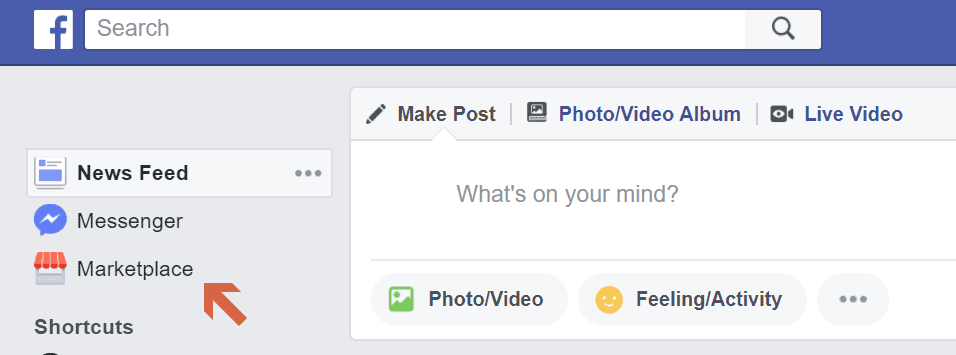
    1. Log into  Facebook Marketplace

    (or)

    Facebook Marketplace

    Alternately, you can access the Facebook Marketplace by logging into Facebook and clicking the Marketplace option in the menu running down the left side of your Facebook’s home screen.

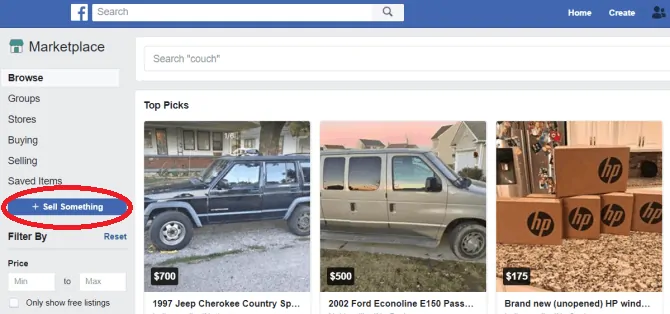
    1. Once in Facebook Marketplace, click on “+ Sell Something”
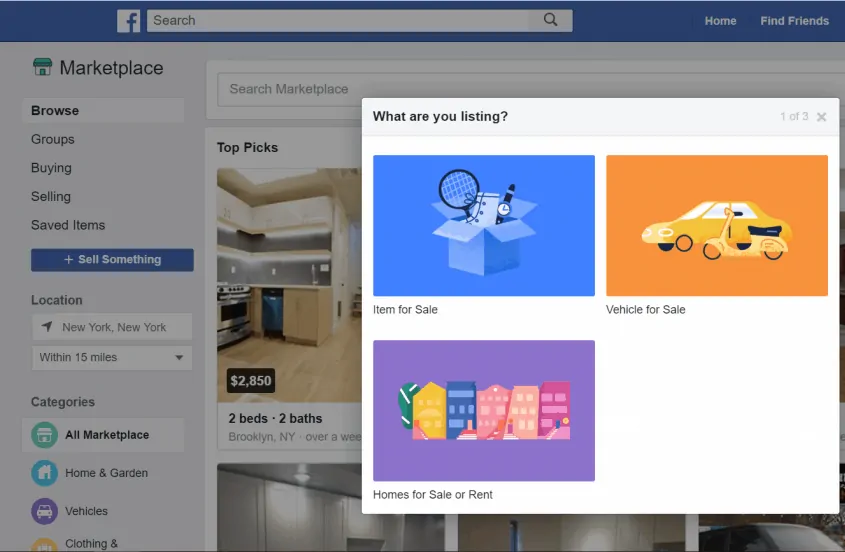
    2. Choose what sort of product you’re trying to sell
    Choose what sort of product you’re trying to sell

    Let’s go with “Item for Sale”

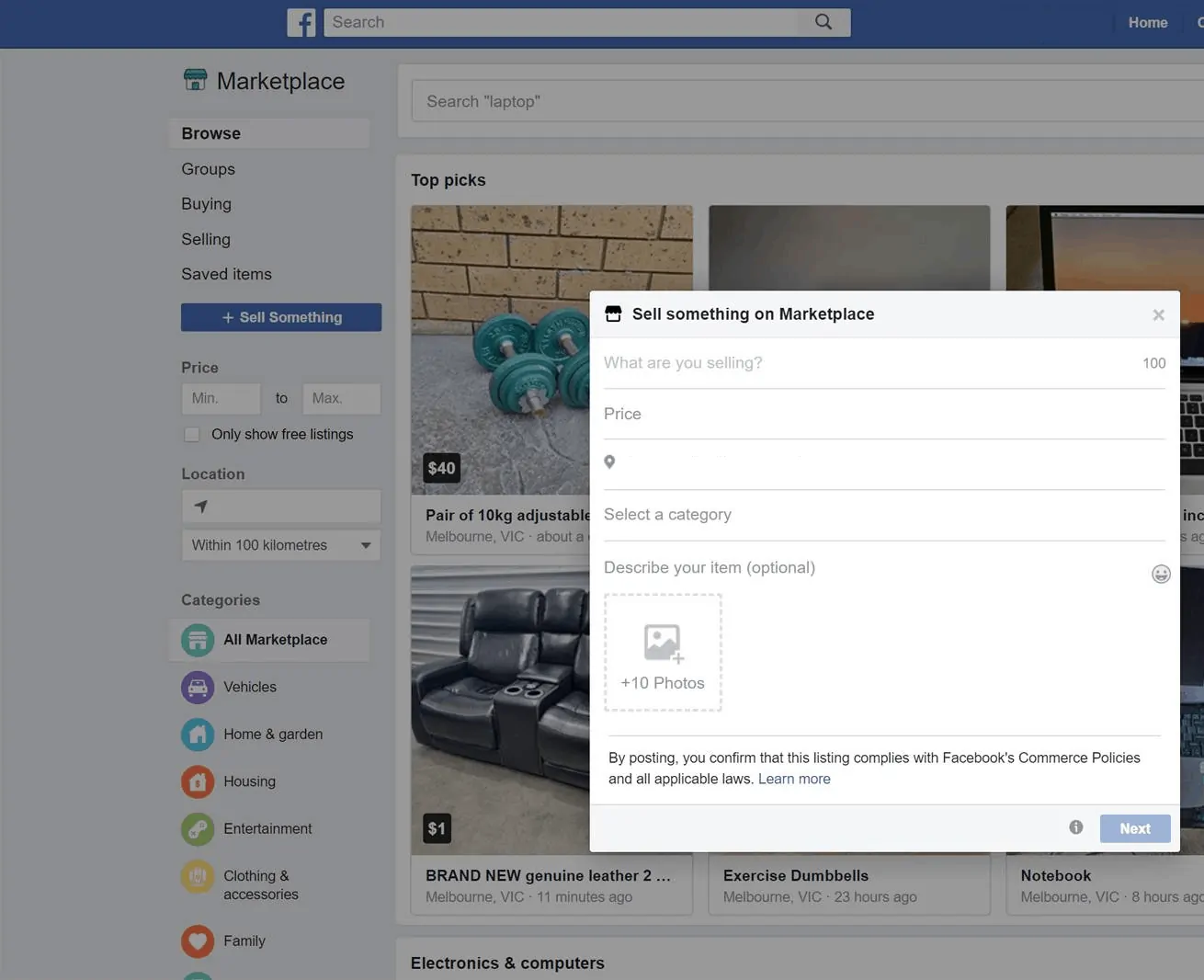
    1. Fill in the information required about the product you’re trying to sell.
    2. Upon filling up the relevant details, click on “Next”. You will be taken to a dialog box asking you to share it with additional groups that you are a part of for more coverage.

    All that’s remaining is to promote your listing in order to increase your chances of being found on the Marketplace.

    Note: Take time to go through Facebook’s Selling on Marketplace covering everything you need to know about it.

    Selling On Facebook Shop

    Let’s get started on selling on Facebook with the use of a Facebook Page that will act as the store for your products.

    Create A Facebook Page

    All you need is a Facebook Page to sell on Facebook – whether you want to have a stand-alone store or to integrate it with your existing e-commerce store/site.

    1. Log In / Sign Up on Facebook.
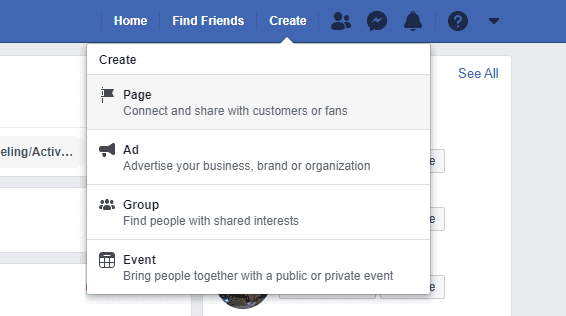
    2. Go to Facebook Pages or click on “Create” -> “Page”
    Go to Facebook Pages or click on “Create” -> “Page”

    (or)

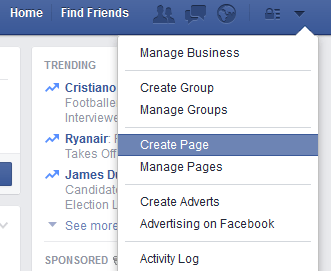
    Click on “Create Page” within the dropdown arrow at the top right of your Facebook home screen

    Click on “Create Page”
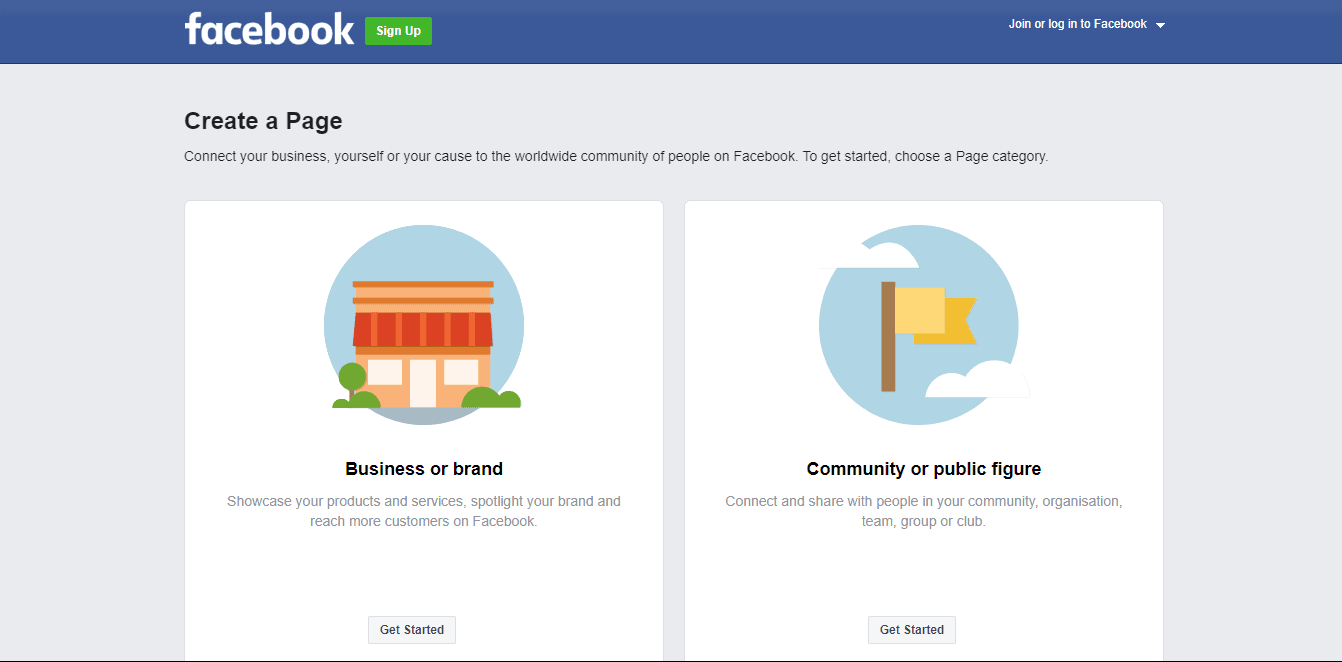
    1. Select “Get Started” under Business or brand
    Select “Get Started” under Business or brand
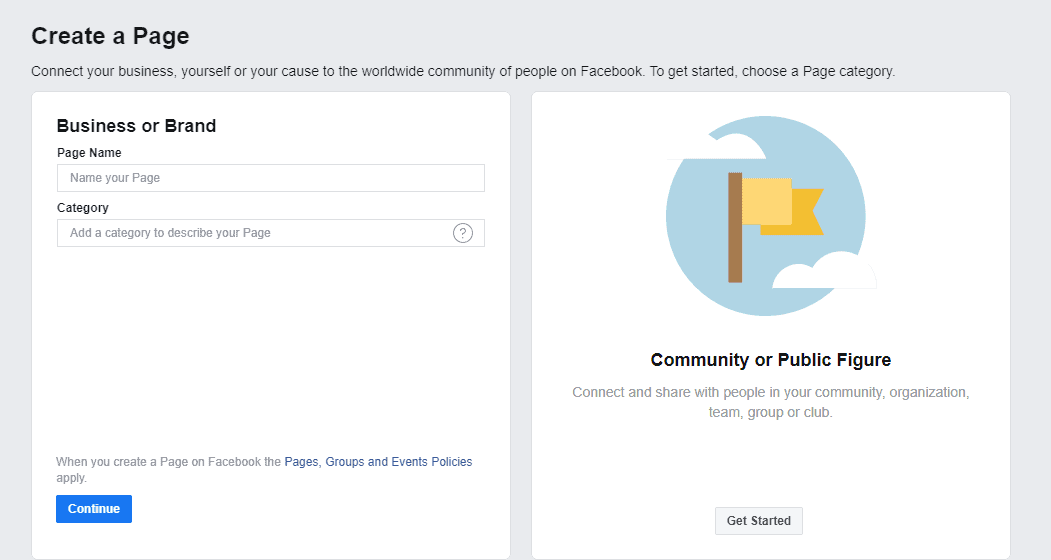
    1. Name your Page and fill in relevant details
    Create a Page
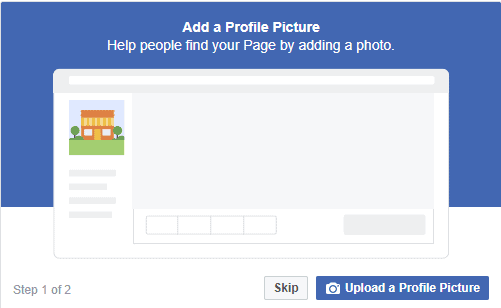
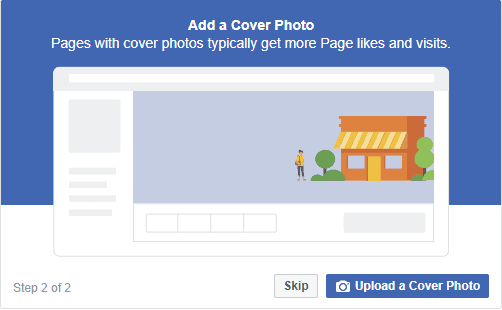
    1. Add a profile picture and cover photo for your Page
    Add a profile picture and cover photo for your Page
    1. That’s it. You’re all set to convert your Facebook Page into your online store.

    Creating A Facebook Shop

    Add Shop Section

    A shop section is an ideal solution for those who don’t yet have a website or for those who want to complement it and/or enhance their ROI with their Facebook Page.

    1. Log into Facebook and navigate to your Page
    2. Select the Shop tab on your Page; if not visible you need to go to your Page’s settings, select the “Template and Tabs” section and click on the “Add a Tab” button at the bottom of the page. Find the Shop tab and click the add button – this will add it to your Page
    3. After clicking on the Shop tab, select the checkout method and currency

    You will now be able to add products to your Page by clicking on “Add Product” within the “Shop” tab. Upon clicking Add Products, you will be asked to fill out the details of your product, upload photos, set an inventory count, and delivery options. Fill them accordingly and click Save to add the product to your Page. Follow the same for the rest of your products.

    Selling On Facebook Using Shopify

    Shopify is one of the best and fastest-growing e-commerce website builders that are especially dedicated to building online stores in the market today.

    Integrating your Shopify store to your Facebook Store is quite simple and straightforward. Here are the steps you need to follow in order to create your Facebook Store through Shopify:

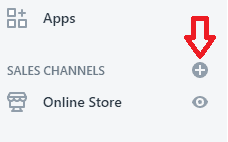
    1. Log into Shopify and click the + button beside the Sales channels heading from your Shopify admin page
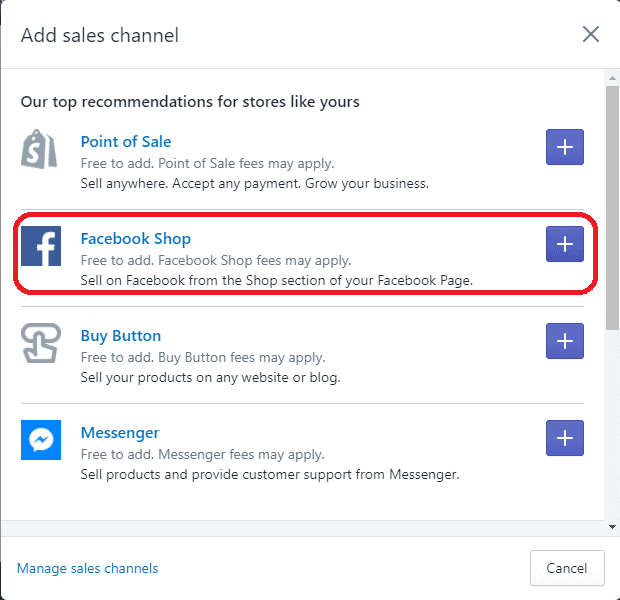
    2. On the Add sales channel dialog, click Facebook Shop
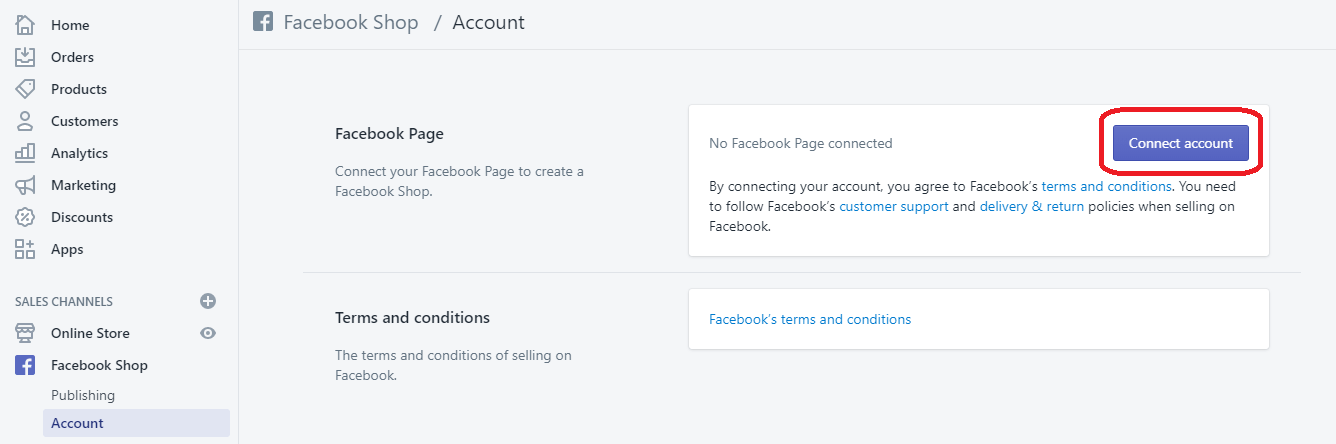
    3. Click on Connect Account

    Connect your appropriate Facebook account and follow the prompts to allow Shopify to connect with your Facebook page.

    1. Wait for Facebook to review your store, which can take up to 48 hours.
    2. You will receive an email once your store has been reviewed, after which you are free to add new or already existing products from your Shopify store to appear on your Facebook Page under the “Store” tab.

    The Facebook Shop app is included in all Shopify paid plans. Once you’ve set up the app and have added products to it, Facebook then creates a Store section on your Facebook page, which automatically ‘pushes’ your products to Facebook.

    This displays your Shopify products and allows for people to view and buy them. This allows for the best of both worlds – you get to manage, track and process your orders using Shopify’s slick logistics and UI while combining Facebook’s ability for much better customer interaction and engagement. Your customers can even make a purchase from within Facebook if supported and configured as such.

    Selling On Facebook Using Messenger

    Facebook’s Messenger is not just a stand-alone messaging app – it also supports buying and selling of products from within the app itself. If leveraged properly, it goes from acting as an interaction platform with customers to becoming a proper sales channel.

    As of writing, you can link Shopify-based stores to Messenger quite easily since they are provided as “Sales channels” within Shopify.

    Connecting Shopify To Facebook Messenger

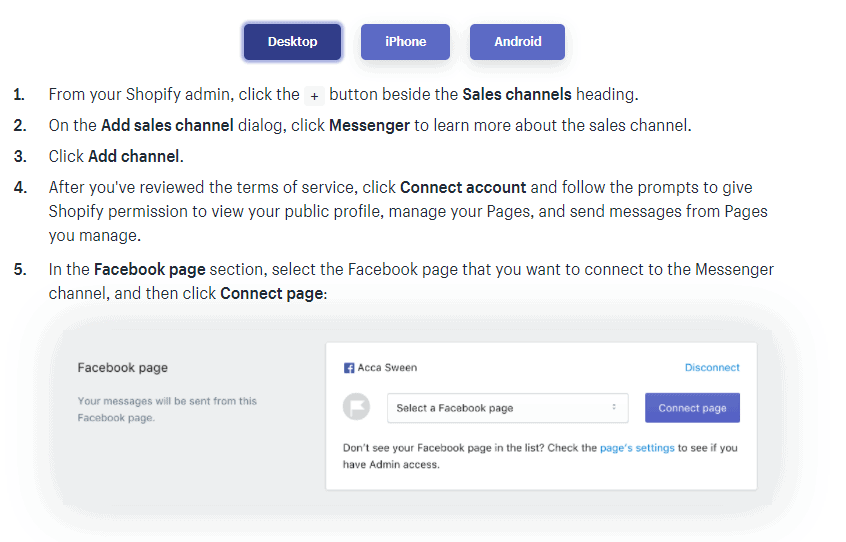
    Connecting your Shopify store to Messenger allows for customers to be directly sent to the check-out page of your e-commerce. If your e-commerce is built with Shopify, you can follow this simple guide to connect your Shopify store and add your product catalog to Facebook’s Messenger.

    Connecting Shopify To Facebook Messenger

    Furthermore, once the client has checked out, he/she can continue to receive notifications and updates about his order.

    You can either leave it at that or also include a Buy Now button which allows users to make purchases from within the app.

    Now, All a customer needs to do is click on the button which will redirect him to a simple check-out procedure within the app. Information such as customer contact information and shipping and payment details will be automatically synchronized with your Shopify profile, without any further effort.

    Add Messenger’s Live Chat To Your Shopify Store

    The Messenger Live Chat app allows the visitors of your online store to start a chat using their Facebook account.

    To integrate Facebook Messenger Chat to your store, you can follow this guide.

    Add Messenger’s Live Chat To Your Shopify Store

    This proves to be quite valuable since the engaged visitors can then be converted to become customers. Unlike other Live Chat tools, once initiated, the conversation can go on even after leaving your store. You can use Facebook Business Manager or any third-party platforms in order to manage chats from this channel.

    Add Chatbots To Messenger

    Apart from Live Chats, Messenger also has the ability to add Chatbots. They allow for a quicker and tailored customer experience. The Chatbots can help in a variety of situations, say handling a large volume of messages from potentially interested buyers at the beginning after which you can funnel the interested customer into a dedicated chat.

    There are many ways with which you can add a Chatbot to Messenger. In case you have no idea where to start, the easiest is to use online chatbot building services such as ChatBot or Chatfuel to build one.

    You can also hire someone to build Chatbot for you. If not, then you can build a Chatbot for yourself.

    Selling On Facebook Using Facebook Ads

    Advertising on any platform could use a separate post of its own, but for simplicity’s sake, Hootsuite classifies Facebook ads into:

    • Image Ads
    • Video Ads
    • Poll Ads
    • Carousel Ads
    • Slideshow Ads
    • Collection Ads
    • Dynamic Ads – AR, VR, Messenger & Stories

    Advertising Using Facebook Ads

    Facebook provides a simple and easy-to-use Ads Manager for businesses to start an ad campaign. Here’s how you create your Facebook Ad Campaign for your store or products:

    1. Log into Facebook Ads Manager and go to the Campaigns
    2. Click Create to get started with a new Facebook ad campaign.
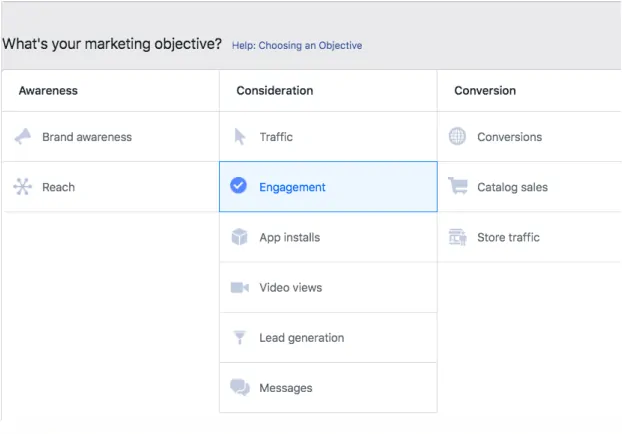
    3. Choose a campaign objective.
    4. Fill in the name for your selected campaign.
    5. Select the appropriate options for your selected campaign.
    6. In case this is your first ad campaign on Facebook, you will be prompted to Set Up Ad Account – create your Facebook Ad account via that and proceed to the next step. If not, you can just click on Continue.
    7. Proceed to configure your ad campaign for optimum reach and views.
    8. Finally, choose your ad format and click on Confirm.

    That’s it! You’ve got your Facebook Ad Campaign up and running.

    Go On, Tell Us What You Think!

    Did we miss something? Come on! Tell us what you think about our article on How to Sell on Facebook in the comments section.

  • Toms Shoes Business Model | One-For-One Model Explained

    Toms Shoes Business Model | One-For-One Model Explained

    Let’s talk about the use of cause marketing so well that a ‘profitable’ business model is built around it.

    Intrigued?

    Imagine a company that makes millions by giving away their products for free. Yes, a simple idea with its roots in social entrepreneurship and cause marketing has helped Toms show the world that it is possible to make a profit even while doing good for society.

    What Is Toms Shoes?

    toms shoes logo
    Source: Toms

    Toms Shoes is the subsidiary of Toms, a for-profit retail company that has quite a lot of products under their belt. Founded by university dropout, Blake Mycoskie in 2006, Toms was conceived after Blake had the opportunity of going on a shoe drive that an American woman had organized while he was on vacation in Argentina. Out it was born Toms Shoes main driving factor: Sell a shoe, give a shoe.

    Apart from shoes, the company also designs and markets a range of other products such as eyewear, coffee, apparel, and handbags via its respective subsidiaries. Their flagship product is its Alpergata shoes. Blake had noticed that were quite popular back in Argentina and decided to bring them to the States.

    tomes shoes men's alpergata
    Toms Men’s Linen Alpergata Classic Pair | Source: Toms

    So how does Toms Shoes work and manage to donate a pair for every pair of shoes it sells?

    How Does Toms Shoes Work | One-For-One Business Model

    Toms Shoes operates on the One-for-One business model where it gives away a pair of shoes to the unprivileged for every pair it sells. That’s all there is to it. It does this via their brick and mortar retail and online stores as well as on e-commerce sites.

    Fun Fact: The term “Toms One for One” is trademarked by Mycoskie, LLC.
    Apart from that, Toms shoes leverages on two other key partners to help with the donations and in promoting the brand.

    Partners to Toms Shoes

    There are two main partners to Toms Shoes:
    NGOs

    Toms operates a non-profit organization, Friends of Tom, which helps connect individuals with communities in need. Apart from that, Toms also works with hundreds of NGOs across 60 countries to distribute their donations.

    Affiliate Partners

    Toms Shoes also runs an affiliate program that allows online businesses to partner up with Toms to release a full array of products. The online affiliates also help promote Toms on their websites with promotional links, offers while the affiliates generate revenue for themselves.

    So far, this has played well into the ever-increasing “brand-conscious” consumers. Toms Shoes is as perfect as a brand could get when it comes to someone looking for a fashionable pair of footwear that will also let others know that they have helped contribute to society via their purchase. Consumers have more brand awareness now than a decade ago due to social media and digital advertisements.

    Toms’ Marketing Strategy

    What seems to be such a naïve and simple idea of donating a product for every product sold is actually marketing brilliance – marketing is basically free for Toms Shoes since donations from their part help boost the word-of-mouth. Toms also has tapped into social media, utilizing them to their fullest with lots of campaigns covering their donation drives and such. This translates to free PR on Toms Shoes’ behalf and has proved to be one of their main reasons for success. The earned media has helped save quite a lot on their marketing budget. This amount could then be circulated back into the company and they are also eligible for a tax credit on their donations.

    This has been their business model since the start and has worked wonders.

    But-

    How does Toms Shoes make money when they give away a shoe for every shoe that it sells?

    How Does Toms Shoes Make Money?

    Here’s a small rundown on how Toms makes a profit:

    • Toms shoes cost around $9 to make.
    • But, they are sold from anywhere from $44 to $150 in stores.
    • Not only does the customer cover for the donated pair, it helps Toms make a profit of about $26 – $132 depending on the pair sold.

    This answers the big question of whether Toms Shoes is profitable or not. (Since Toms is not a listed company, the numbers aren’t exact and hence must use publicly available data to proceed further.)

    Now,

    We know that as of March 2019, Toms Shoes has donated more than 88 million pairs of shoes. That goes into Toms Shoes’ marketing budget for the 13 years the company has existed – since the donations are basically free PR for Toms via their social media impressions and news coverage that they get for their donation runs. This gives us the amount spent by Toms Shoes for its marketing – about $792 million – for all 13 years of the company’s existence.

    Let’s compare this with a competitor of Toms – say Adidas, for example, which spent nearly $3.5 billion in 2018 alone on marketing. That’s nearly 4 times the total amount spent by Toms Shoes – ever.

    Toms Shoes Revenue & Net Worth

    This has netted Toms Shoes a net sales of about $336 million in the one-year period between September 2017 – 2018.

    In 2014, Toms Shoes was valued at $625 million. This was determined after Bain Capital, an American private investment firm, purchased a 50% stake in the company.

    Is Tom Shoes Business Model Sustainable?

    Toms Shoes has gone to show that it is possible to stay profitable as a company as well give back to the society for its betterment. There are a lot of companies that use the One-for-One model ever since Toms made it popular. Here are few companies that use Toms One-for-One model with the aim of providing back to the world:

    • Roma – Boots for women and children
    • Smile Squared – Toothbrushes, travel journals, and zippered pouches
    • BetterWorldBooks – New and used books
    • 141 EYEWEAR – Spectacles

    You can see a trend here. Not every company that employs the One-for-One model will reach Toms Shoes’ level of growth and benefits – not right at the start that is. The companies that fit well under the One-for-One model are usually the ones that sell day-to-day commodities such as shoes, apparel, daily essentials and such.

    That is not to say that One-for-One isn’t a viable option for other companies. It is just that they are better suited for physical and tangible products – than software or services – as the sales are easy to account for.

    In A Nutshell

    Things may be up for debate as to whether their donations make a difference or not – donating shoes don’t solve poverty as a whole and there are more pressing issues to be tackled. There has also been the case of the ethicality of the donations – they could very well take a tax credit for it.

    Credible or not, Toms has helped the one-for-one model reach the limelight. This helped promote social entrepreneurship as a whole and have demonstrated the possibility of being profitable even while doing good. This is the biggest key takeaway from Toms Shoes.

    Go On, Tell Us What You Think!

    Did we miss something?  Come on! Tell us what you think of our article on Toms Shoes Business Model in the comments section.

  • The 10 Types Of Logos Explained

    The 10 Types Of Logos Explained

    Humans are visual creatures. They have a remarkable ability to remember images and symbols. And this is the reason why brands pay thousands of dollars to get a well-designed yet simple logo that gets recognized quickly and remembered for long.

    But developing this simple logo isn’t that simple, after all. The designer has to understand the proposed brand identity and brand positioning before deciding which of the ten logo types suits the brand best.

    Well, if you’re new to logo design or just curious about the types of logos, here’s a detailed guide explaining all the 10 logo types and when you should use them.

    Wordmark

    wordmark logo

    A Wordmark (or word mark) is a simple font-based logo that focuses on the brand’s full name. It’s basically a typographic logo that uses a unique font or style to write the brand name without any significant graphics, meaning, or symbolic intervention.

    Wordmark uses fonts that are slightly modified for design purposes. It can further be classified into simple wordmark (Google’s logo) and handmade wordmark (Disney’s logo).

    When To Use A Wordmark?

    Wordmark is a good option if you happen to have a short name – with 3 syllables or less. It’s not suggested to go for wordmark if you have long names like PricewaterhouseCoopers (PwC) or Bayerische Motoren Werke (BMW).

    However, you can go for wordmark if your brand name is a frequently used word or something that can be easily remembered. A good example would be Coca-Cola. Even though the name has more than three syllables, it’s not hard to remember the name. (Fun-Fact: Coca-Cola is the most recognized brand in the world.)

    Logotype

    logotype logo

    A logotype is very similar to wordmark when it comes to the looks. The only factor which differentiates it is the symbolism within the text design.

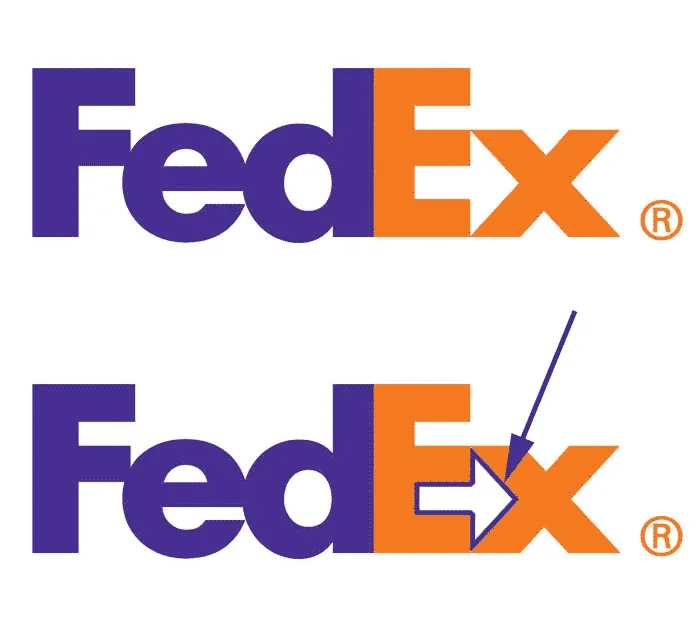
    Take FedEx’s logo, for example. You would consider the logo to be a wordmark when you look at it for the first time. But a more in-depth look will make you see a hidden arrow in the white space between E and X, which is intended to be a subliminal symbol for speed and precision.

    fedex logo

    Examples of brands using a logotype logo are FedEx, DHL, Vans, etc.

    When To Use Logotype?

    Logotypes have a similar application to a wordmark. Use it when –

    • Your brand name is short and can be remembered easily.
    • Your brand message is set for the long term.

    Lettermark or Monogram

    lettermark logo

    Lettermarks or monograms are logos that consist of only letters or brand initials. Usually, companies use the initials of their big brand names to design the logo and make it easier for their target market to recognize their brand.

    Take IBM (International Business Machines), for example. If the brand used wordmark for its logo, it would have been hard for it to build the brand image it has right now.

    Now, if you choose a lettermark as your logo, make sure you or your designer have a good knowledge of typography and fonts. Also, ensure your logo is legible when published online or offline.

    IBM, CNN, HBO, EA, etc. are all examples of monogram logos.

    When To Use Monogram?

    Lettergrams are suggested when the brand name is long and difficult to remember – more than three syllables and/or more than a word long.

    Pictorial Mark or Brand Mark or Logo Symbols

    Pictorial mark logo

    A pictorial mark is an icon, symbol, or graphic based logo used to represent a brand. It’s usually the image that comes to your mind when you talk about the brand. Examples include the blue-bird for twitter, bitten apple for Apple, and mermaid for Starbucks, etc.

    A significant advantage of choosing a pictorial mark as your logo is that it can be highly imaginative ⁠— it can be derived from your brand name (Target), your brand promise (Adidas), what your offering is known for (Snapchat), or what emotion do you want to evoke in your target audience (WWF).

    When To Use Logo Symbols?

    Using logo symbols are totally up to your discretion and there’s no strict rule when to use them. You can opt for a pictorial mark if –

    • You do business globally
    • You operate in more than niche
    • You want to create a completely unique image for your brand

    However, we suggest you write your brand name below your logo if you’re new to the industry or market, and not everyone recognizes it.

    Abstract Marks

    Abstract mark logo

    An abstract mark logo falls under the pictorial logo symbols. But unlike recognizable images like an apple or a bird, it includes the use of geometric or totally abstract design or a symbol to represent the brand.

    An excellent example of an abstract mark is the logo of the Visit Finland website. The logo is a mix of abstract shapes that gives an all-new yet unique identity to the brand.

    visit finland logo

    Pepsi, Adidas, and Chanel are known for their abstract logos.

    When To Use Abstract Marks?

    An abstract mark is usually preferred when you operate in more than one industry and want to create a totally unique identity for your brand.

    Mascots

    Mascots logo

    Mascots are pictorial logos having an illustrated character. Such logos often use their spokesperson or any other illustrated character to represent the company.

    These mascots not only act as a logo but are often regarded as the ambassadors of the brand, as well. Take KFC, for example, the company illustrated its founder, Colonel Sanders, into a mascot and then converted it into their logo.

    kfc logo

    Other examples include Kool-Aid Man of Kool-Aid, Wendy’s mascot which represents a mom, and Reddit’s Snoo.

    When To Use A Mascot?

    Mascots are a good option when you want to cater and appeal to families and children. Mascots offer an image that can be relied on and is an easy way to go on with holistic marketing strategies.

    Combination Mark

    Combination mark logo

    A combination mark is the fusion of a pictorial mark and a wordmark.

    In simple terms, it includes both symbols and designed text. Take Burger King’s logo, for example. It contains a pictorial symbol along with the brand name which completes the logo and makes it look like a burger.

    burger king logo

    Other known examples of brands using combination mark as their logo are Doritos, Lacoste, Mastercard, etc.

    When To Use A Combination Mark?

    It’s your choice if you want to use a combination mark or just a pictorial mark for your logo. However, we suggest you use this type of logo when –

    • Your company is new.
    • You’re using an abstract mark logo
    • Your pictorial mark logo can be mistaken for another brand.

    Emblems

    Emblem logo

    Emblems, often used by universities and schools, are among the oldest logos known. These include adding a brand name (and sometimes a slogan) inside a symbol or an icon.

    What makes emblems stand apart is their traditional outlook.

    A classic example of an emblem would be Harvard’s logo with ‘Harvard’ and ‘Veritas’ written on a classic shield.

    When To Use An Emblem?

    An emblem is a good option if you want to set your brand identity as a classic or a traditional brand with a stronghold on the niche it is in.

    Some industries which see the use of emblems as logos are universities, schools, beers, coffee, etc.

    Contoured Words

    Contoured logo

    Contoured words are brand names within geometric shapes. These logos make use of the psychology of shapes to set a brand identity for themselves.

    Examples of brands using contoured words as their logos are Samsung, Denny’s, Ikea, IMDB, and BBC, etc.

    When To Use Contoured Words?

    Contoured words are a good alternative to wordmarks or logotypes as they bring in the benefits of shapes as well. Circles represent completeness, love, eternity, etc. while four-sided structures depict trust, stability, and uniformity.

    Use this type of logo to assert your brand promise.

    mit logo

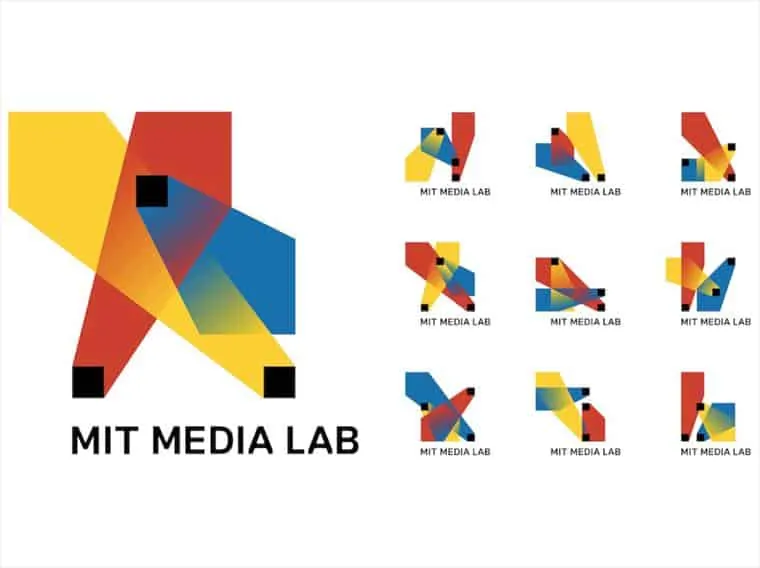
    A dynamic logo is among the new types of logos, which changes according to the context it is placed in.

    Mit Media Labs logo(s) falls under this category. The company has over 40,000 variations of its logo, which are used separately according to the context they are placed in.

    You can use a dynamic logo if you want to play on the unicity and are financially capable to trademark all your variations.

    Go On, Tell Us What You Think!

    Did we miss something? Come on! Tell us what you think about our article on types of logos in the comments section.

  • Veblen Goods – Definition, Demand Curve & Examples

    Veblen Goods – Definition, Demand Curve & Examples

    Imagine a product that sells more as its price increases. Makes anyone hearing this want to get into manufacturing such products, right? These goods sound like the perfect product for you as a manufacturer to make it big – the higher the price, the more the profit.

    Welcome to the world of Veblen goods.

    What Are Veblen Goods?

    A Veblen Good is a product or commodity whose demand increases with an increase in its price.

    Coined after American economist Thorstein Veblen, these goods are usually considered to be status symbols – a symbol of wealth, affluence and success.

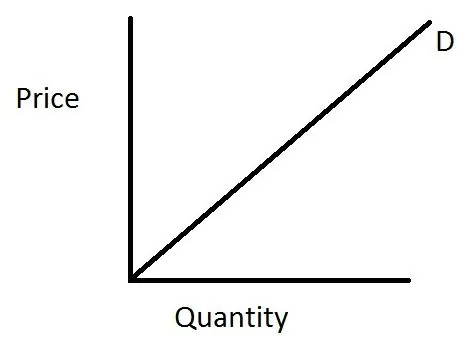
    It does not exactly abide by the law of supply and demand. According to the Law of Supply and Demand – an increase in price causes demand to decrease for a product. But Veblen goods follow the law only till a certain price, after which their demand increases as their prices increase. The effect of increased demand even after increased prices is known as the Veblen Effect. In case the same product is sold for a much lower price, it will not have the same demand.

    So, what kind of products become Veblen goods?

    Products that are –

    • Exclusive
    • Expensive
    • Rare
    • Premium

    …usually tend to be categorized as Veblen goods.

    TL;DR: They are goods that people buy when they want to show their wealth, status, class or as an indulgence.

    Veblen Goods vs. Giffen Goods

    Veblen goods are not to be confused with Giffen goods. Though both Veblen and Giffen goods increases in demand with an increase in price, Veblen goods are high-quality products as opposed to Giffen goods, which are inferior products (staple products) that just have no substitutes.

    Demand Curve Of Veblen Goods

    veblen demand curve
    Source: WallStreetMojo

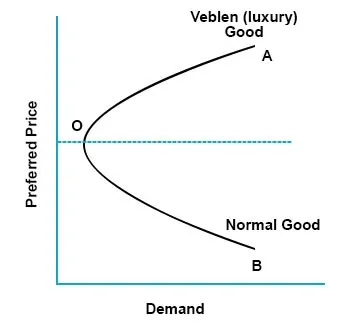
    The chart depicts the demand-to-preferred price curve for both “Veblen” (OA) and “normal” (OB) goods.

    price quantity
    Source: Central Economics Wiki – Fandom

    This chart sums up the Veblen Effect nicely. Instead of demand and price being inversely proportional, as it is for “normal goods”, the demand for Veblen goods increases with the increase in its price.

    The Case Of Conspicuous Consumption

    In the 19th Century, Thorstein Veblen coined the term “Conspicuous Consumption” on the behavior of the richer members of the society to spend on goods and products that tended to increase the prestige, social power and status.

    It referred to the mindset of purchasing a good just for its perceived wealth rather than by taking into account the intrinsic, practical utility, services and features it offered. This was found to be also exhibited by those not well-off as it helps hide their actual wealth and make others perceive them as wealthy, helping them psychologically combat the impression of poverty.

    In today’s terms, it can be referred to as “consumerism” or “brand consciousness”. It is all about image and perception.

    Examples of Veblen Goods

    Veblen goods play into the “conspicuous consumption” behaviors of the populace – generally the wealthy or ones with disposable incomes.

    Luxury Cars

    Take the example of luxury cars – a Rolls Royce is attractive to a consumer for many reasons but mainly because of its value as a status symbol. The same Rolls Royce would not be as prestigious if it were the same price as a Prius.

    Only a few people can afford it due to its astronomically high price. But this makes it enticing for some wealthy individuals creating more demand as its actual price and exclusivity increases.

    Diamonds

    Another example of a commodity turned into luxury are diamonds. Diamonds for one don’t fall under the regular law of demand and supply. But they were not so at first and instead converted into Veblen goods thanks to brilliant marketing by De Beers, world’s leading diamond company.

    Supreme (Brand)

    The American clothing and skateboarding brand Supreme is one great example of a Veblen brand. It has had unprecedented fame and demand for their “Supreme” branded products. Supreme reached this status by limiting their supply. Instead of ramping up production to meet the demand, it cleverly made sure there was a limited amount of merchandise available at any time – creating exclusivity and driving up the price as well as demand.

    They even sold a brick, emblazoned with its logo for $30. The “Supreme” brick now resells for $100 – $999.

    Go On, Tell Us What You Think!

    Did we miss something? Come on! Tell us what you think about our article on Veblen goods in the comments section.

  • How Much Is Google Worth?

    How Much Is Google Worth?

    Google’s parent holding company Alphabet became the most “cash-rich” company in the world (for the second time) recently in terms of market capitalization with over $117 billion in cash – outperforming its tech-rival Apple.

    Google has over a billion users on at least seven of its existing products in its business model – YouTube, Chrome, Gmail, Search, Google Play and Chrome. Google serves over 75,000 queries per second, which translates to over 2 trillion searches per year.

    All this has led to increasing speculations on how much is Google worth –let’s find it out.

    Market Capitalization & Net Worth Of Google

    Google’s Market Capitalization

    $1.434 Trillion [as of Feb 2021]

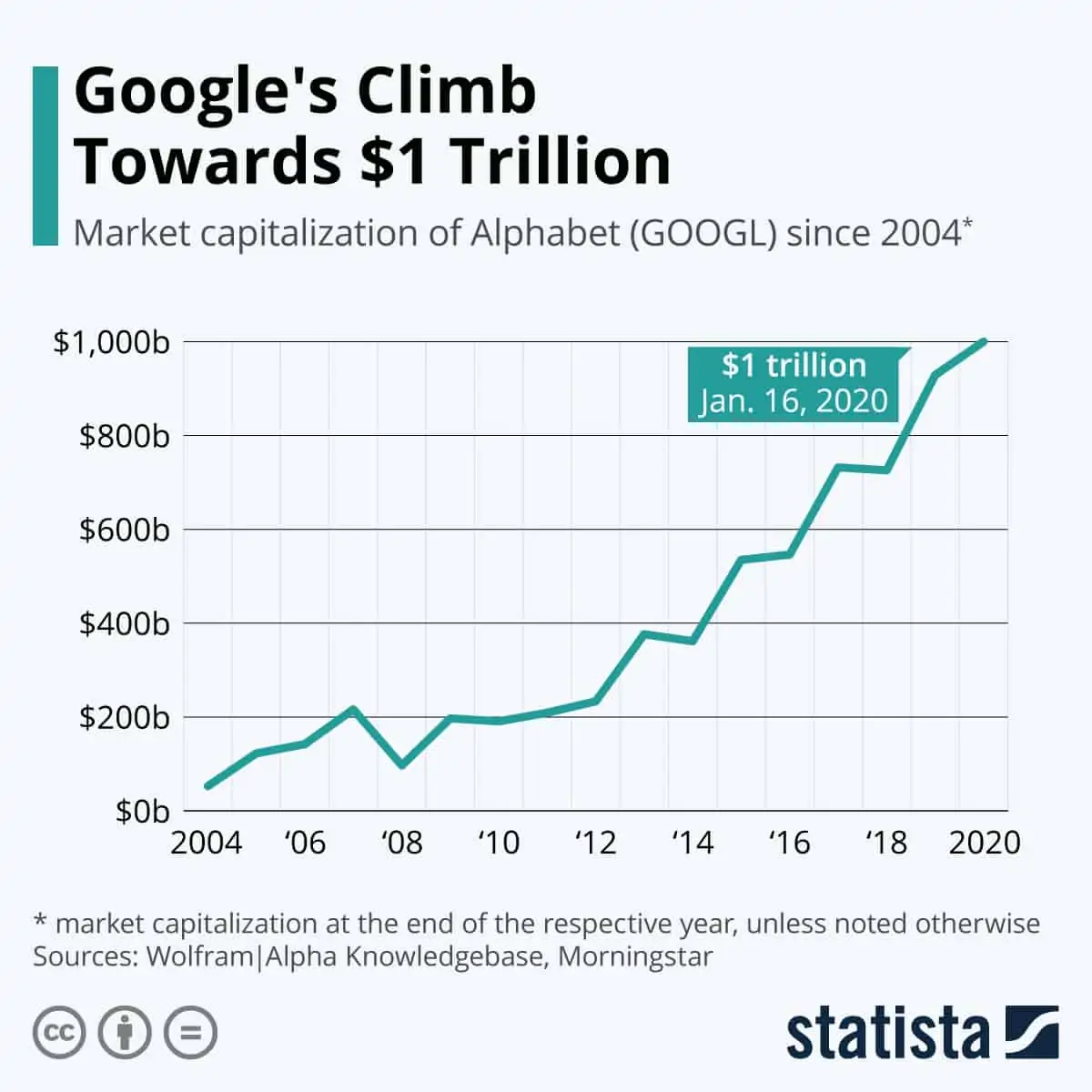
    Google’s market capitalization currently stands around 1.5 trillion dollars as of February 2021– $1.434 trillion to be exact according to Yahoo! Finance. Google has steadily grown since its IPO in 2004 to this point and might even hit the $2 trillion mark soon enough.

    Update: In January 2020, Google’s parent company Alphabet became the fourth company in the world to reach a trillion dollar market capitalisation.

    google market cap
    Source: Statista

    Market capitalization is important as it helps show the size of a company and provides the overall risks and investor sentiments towards a company. For Google to become the most valuable company in terms of market cap, even for a short while, it will help show the rise in value and earnings.

    Google was founded in 1998 by Sergey Brin and Larry Page as a search-based tech company. They had an incredible start – being able to narrowly avoid the dot-com bubble and have great reception to their Initial Public Offering in 2004.

    Google Net Worth

    $222.544 billion

    Market caps change hourly and indicate the market sentiment towards the company. It does not include measurable figures such as current assets, debts and revenue. According to MacroTrends, Google as a company is worth just under $223 billion. This was obtained by taking the total assets and liabilities of the company from the last year into account.

    Do note that there are different methods of business valuation and these valuations can vary as they depend on various external factors.

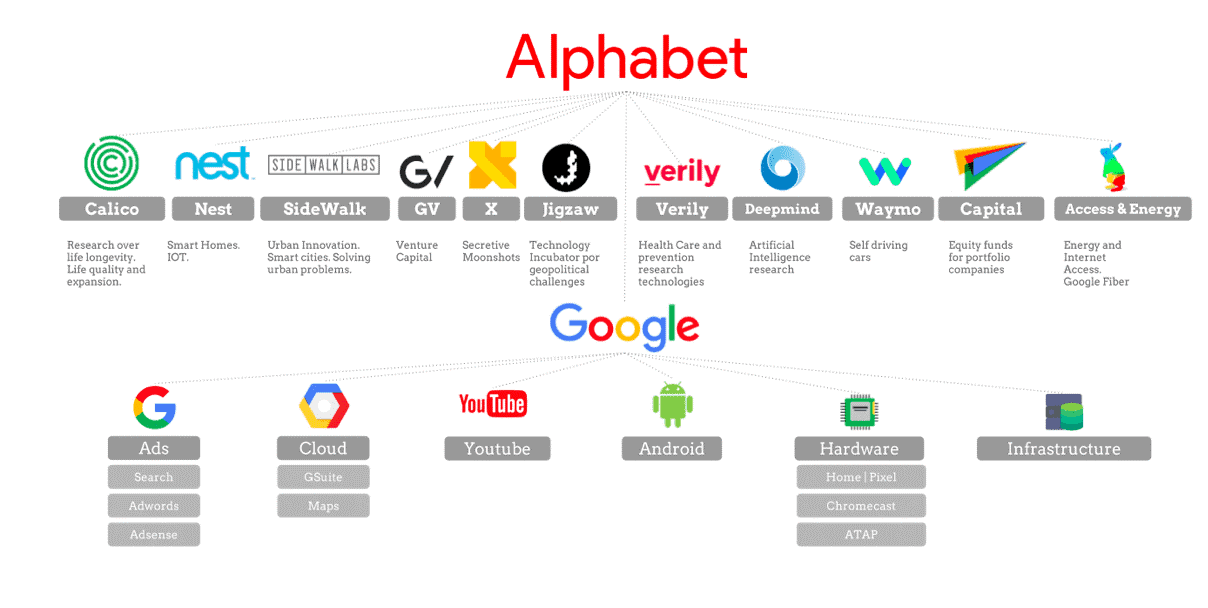
    Google is not just a search engine – it had branched out to encompass a huge range of products such as Google Fiber, DeepMind, GV, Calico, CapitalG, X, Jigsaw, Makani, Sidewalk Labs, Verily, Waymo, Loon, and Wing, Android, YouTube, Gmail, Google Business Suite, Google Maps, Google Docs, Google Drive and so on. This was one reason why Google was renamed into Alphabet.

    Google & Alphabet

    Google has been steadily expanding into AI, shopping, venture capital, smart homes, self-driving cars and other things that don’t fit well under the search-engine tech brand.

    In order to accommodate this and separate other ventures from the search engine side, the founders of Google restructured itself as Alphabet – a holding company that owns several other companies, including Google.

    alphabet subsidiaries
    Source: Investopedia

    This has allowed Google to more easily and logically expand into domains outside of internet search/advertising and become a technology conglomerate. Acting as the umbrella company, Alphabet also helped shield Google from the failures of its different ventures tarnishing its image.

    There was also the reason for the founders wanting to have more control over the company as possible, which is why you see two ticker symbols on NASDAQ stock exchange for Alphabet Inc.

    Two Ticker Symbols: GOOG vs GOOGL

    There are two ticker symbols for Alphabet Inc. on the NASDAQ stock exchange: GOOG and GOOGL. This is due to the stock split, an attempt by the co-founders of Google, Sergey Brin, Larry Page, and Eric Schmidt, to retain as much control of the company as possible.

    They represent two different share classes: A (GOOGL) and C (GOOG). There are also the B shares that are still in the possession of Sergey Brin, Larry Page, Eric Schmidt and a few other directors and are not traded publicly.

    Google’s Founders, CEO & Recent Changes

    Recently, there has been a shuffle in the internal organization of Alphabet and Google. On 3rd of December 2019, Larry Page and Sergey Brin stepped down from their roles as CEO and President of Alphabet respectively. Instead, Google’s CEO, Sundar Pichai was appointed as the CEO of Alphabet, along with Google.

    google team
    From left: Larry Page, Sergey Brin, Sundar Pichai | Source: Quora

    At the time of leaving, Larry Page and Sergey Brin were said to be among the world’s richest tech billionaires in 2019, with a net worth of $62.7 billion and $58.9 billion respectively.

    Sundar Pichai, who joined Google 15 years ago, now has a net worth of about $600 million. This is just before he was appointed as the CEO of both Alphabet and Google.

    Go On, Tell Us What You Think!

    Did we miss something? Come on! Tell us what you think about our article on How Much Is Google Worth in the comments section.

  • What Is Brand Value & How Is It Different From Brand Equity?

    What Is Brand Value & How Is It Different From Brand Equity?

    The rising competition has made it tough for many companies to stay in the market and find a unique position. Thankfully the concept of branding makes it easy to stand out even when the company deals with generic products.

    Adding a brand name to a generic product not only makes it stand out, sometimes, it also makes the customer pay more just because of that association. This extra value is regarded as brand value.

    What Is Brand Value?

    Brand value is how much extra the customers are willing to pay for the brand’s product over and above the actual value of that generic product.

    In simple terms, brand value is the financial worth of the brand.

    Suppose a usual toothpaste costs $5 in the market. Now, if the same toothpaste is launched by a well-perceived brand for $7 and people don’t mind paying extra $2 for it, this premium price is the brand value. 

    Customers consider several factors like expectations, emotions, memories, stories, brand experience, and brand image before buying a product. These factors help them perceive the utility they will get from a particular brand’s product, which eventually helps them come up with the perceived value of their experience with the brand. This perceived value is the price of the generic commodity ($5 in the above example) plus brand value ($2 in the above example).

    Importance Of Brand Value

    Knowing that the customers are willing to pay more for a generic product just because it belongs to a brand reassures the company that customers look up to its branding efforts. Besides this, having a high brand value is important as it –

    • Builds Reputation: Having a high brand value builds the company’s reputation in the eyes of the customers, employees, and competitors.
    • Helps In Setting A Relevant Brand Positioning Strategy: Carefully evaluating the brand value helps in determining the right positioning strategy of the brand.
    • Attracts More Customers: An increased brand value usually increases the appeal of the product, which often increases its demand.

    Brand Value vs. Brand Equity

    Many marketers consider brand value and brand equity to be synonyms, but there’s a clear difference between the two terms.

    Brand equity is the aggregate of assets and liabilities attached to the brand name and symbol, which results in the relationship customers have with the brand. It includes three aspects: the customer-based perspective (how the customers look at the brand), the financial perspective (how much less/extra would they pay for the brand’s products), and the combined perspective.

    Brand value, on the other hand, only refers to the financial worth of the brand concerning the products it offers.

    Brand Value Examples

    A perfect example of a brand having a high brand value is Apple. According to TechInsights, the average cost of making an iPhone XS Max was just 35% of the price at which it was launched in the market. Moreover, Forbes found an average Android phone’s price in 2015 to be $254 while an iPhone costed a whopping $687. Even though much of the profit went into marketing and brand building strategies, Apple was and still is one of the most profitable companies in the world just because of its high brand value.

    Other examples of brands with high brand value are –

    • Tesla – The pioneer of electric cars enjoys a high brand value because of its intelligent business strategies.
    • Disney Theme Parks – Customers happily buy premium-priced tickets just because many ‘valuable’ Disney characters are associated with these theme parks.

    What Gives Rise To Brand Value?

    A high brand value is what every company aims for. But not every company succeeds in achieving this feat, mostly because they focus more on themselves and less on the customers. While the company’s own expectations and goals are essential, it’s important to improve the brand image and how the customer perceives the brand.

    Here’s what usually gives rise to brand value –

    Uniqueness

    According to research by Millward Brown, customers are more likely to pay a premium price for a brand’s product if they are convinced that the brand is meaningful, different, and salient.

    A brand portrays its uniqueness in the form of out of the box marketing strategy, positioning strategy, or a unique offering.

    Relevance

    Being relevant results in more satisfied customers who pose no objection in paying a premium price if it’s this relevance keeps the brand stand out of the crowd.

    Google, for example, is an example of such a relevant brand that has been successful in maintaining its position for more than a decade.

    Brand Promise Fulfillment

    Customers feel delighted if a brand delivers what it promises. Toyota’s brand value, for instance, increased 12% just because it delivered what it promised to the customers.

    Volkswagen, on the other hand, saw its brand value to decrease by over $12 billion just because it lied to its customers about its emission levels. 

    Go On, Tell Us What You Think!

    Did we miss something? Come on! Tell us what you think about our article in the comments section.

  • Top 10 Ice Cream Brands in the World

    Top 10 Ice Cream Brands in the World

    Ice-creams are the most liked sweeten frozen foods across the world. No matter in which country you reside, you will always be a fan of ice-creams. Be it children, youths, or elders, everyone is a fan of ice-creams.

    One thing which makes ice-cream loved by people is its fantastic taste. There are numerous flavors to satisfy everyone’s needs, brought to the world by some amazing brands. But these brands had to earn their spot by supplying consistently good products to existing demand and developing a market for new ones.

    Here we have listed the top 10 such ice creams brands (not in chronological order) in the world:

    Ben & Jerry

    ben and jerry logo

    Ben & Jerry is one of the well-known flavored ice cream brands in the world. The company was started by two friends Ben Cohen and Jerry Greenfield in the year 1978 in Burlington, Vermont. After 22 years of their venture, they sold their company to Unilever Group.

    Currently, Ben & Jerry operates under the same parent brand and runs 577 scoop shops in 38 countries across the world. According to Owler, Ben & Jerry have estimated revenue of $280 Million each year.

    The company has a ‘Flavor Graveyard’ outside its Waterside factory with tombstones that represent each of the retired ice creams, a very new concept.

    Creative names like Cherry Garcia, Half Baked, Peace pops, and Chunky Monkey, combined with candy and brownie, have caught the consumers’ attention.

    Baskin-Robbins

    baskin robbins logo

    Baskin Robbins is the largest ice-cream company with 7500 stores located in around 50 countries across the world. This global company was founded in the year 1946 with the merger of two ice cream shops.

    Burt Baskin started this company along with his brother in law, Irv Robbins. It’s why the company was named “Baskin Robbins”.

    Both of them had their separate outlets where one was serving 21 flavors, and the other was 10. When these brands are merged, it became a total of 31 flavors together. The brand logo represents those 31 unique flavors. Currently, the company claims to have more than a thousand flavors to serve, making it stand apart from all the other brands in the world.

    The company generated approximately $47.42 million in revenue in the United States and 115.37 million in its international locations in 2018.

    Haagen-Dazs

    Häagen-Dazs

    Haagen-Dazs is a famous American ice cream brand launched in the year 1961. It is a subsidiary of the Nestle Group.

    The company started its operations as a retail store in Brooklyn and now has a strong presence in the United Kingdom, Japan, Australia, China, New Zealand, India, Brazil, and many more.

    Besides ice cream bars and cakes, Haagen-Dazs also deals in frozen yogurt, sorbet, and gelato (an Italian frozen dessert). The brand operates in more than 900 locations across 50 cities, which together accounts for revenue of $44.2 Million.

    As per the recent statistics, 2019, 5.85 million Americans consume four or more quarts of Haagen Dazs ice cream in a month.

    Walls

    Walls logo

    Walls is yet another well-known ice cream brand which is a subsidiary of Unilever Group. In its initial stages in 1922, the brand emerged as an independent food outlet in England. But it was later acquired by Unilever Group.

    Walls have created great space in the minds of every ice-cream lover across the world. Its different taste and quality are loved by a large number of people. This is the reason why it’s one of the leading ice cream brands in the world.

    Dairy Queen

    Dairy Queen logo

    Dairy Queen is also among the popular ice creams brand in the world. The brand not only deals in ice-creams, but it also is a chain of fast-food restaurants.

    It is the unique soft-serve ice cream brand that was introduced in 1938. The first Dairy Queen store was opened in Joliet, Illinois in 1940.

    This well-known is a subsidiary of Berkshire Hathaway. Currently, this brand has over 6,000 outlets located in the United States, Canada, and 18 other countries. According to Owler.com, the estimated annual revenue of Dairy Queen is $ 3.1 Billion including all its business. However, the total net income of Dairy Queen from ice-creams is yet not known.

    Nestle

    Nestle Logo

    Nestle is one of the leading groups of companies in the food and beverage sector.

    The Swiss-based brand is popularly known for its chocolates, frozen foods, ice-creams, dairy items, nutrition food items, coffee, and more.

    This leading brand was established in 1866 and currently holds five well-known ice cream brands across the world. This includes Nestle Ice-Cream, Nestle Extreme, Haagen Dazs, Moven Pick, and Dreyer’s. Nestlé’s total revenue from its milk and ice-cream division was CHF7 Billion (2018).

    Blue Bell Creameries

    Blue Bell Creameries

    Blue Bell Creameries was founded in the year 1907 in Texas, United States.

    It is among the most significant selling ice-creams across the United States and well-known brand in multiple countries.

    The company was earlier known as Brenham Creamery Company, but in 1930, the company was renamed as Blue Bell Creameries. The brand offers 66 different flavored ice-cream products under its domain. According to Zoom Info, Blue bell Creameries’ average quarterly revenue was $1 Billion in 2019.

    Breyers

    breyers logo

    Breyers is also among the top ice cream brands across the world. It was started in the year 1866 in Pennsylvania, United States.

    William A. Breyer, the founder of Breyers, started his business from home, and later sold via horse and wagon on the streets. The company was incorporated in 1900.

    In 1926, this brand was sold to National Dairy Product Corporation and to Unilever group in 1993. It is currently the subsidiary brand of Unilever Group and serving ice-creams and frozen desserts.

    Having added, “Partnering with American farmers – 100% Grade A Milk & Cream” to its packaged ice cream, people are more committed to lay down their trust in the brand. According to Statista, more than 89% of American consumers consume 1 quart or more of Breyers ice cream in 30 days.

    Cold Stone Creamery

    Cold Stone Creamery

    Cold Stone Creamery is an American Ice Cream brand launched in 1988. The company’s first outlet was opened in Arizona, which later expanded to different parts of the United States and then different countries.

    The brand has the leading presence in the UAE, Brazil, Indonesia, Egypt, Singapore, Kuwait, Saudi Arabia, Mexico, Denmark, China, Japan, Thailand, and 13 other countries.

    In 2006, the company was also titled the “11th Fastest-Growing Franchise” by Entrepreneur magazine. In May 2017, Cold Stone merged with Kahala Corporation and formed Kahala Cold Stone, and later it was renamed to Kahala Brand (the parent company).

    Carte D’Or

    Carte D’Or logo

    Carte D’Or is also among the top ice cream brands which are owned by Unilever Group. The company was first launched in the 1990s in the United Kingdom and Ireland. Since then, it has launched many new flavors for everyone.

    Carte D’Or cups and tubs ice-cream, majorly divine chocolate is heavily demanded product. This famous brand’s ice-creams are also found in Walls Stores.

    Bottom-Line?

    With a projected CAGR(compound annual growth rate) of 8.0% from 2019 to 2024 and the total global market expected to surpass an estimated $91.2 billion in 2024, the ice cream industry is expected to grow substantially.

    Keeping 2018 as the base year, the United States is considered to be the largest market for ice cream, while an increasing trend is observed for the developing countries.

    There will be a rise in demand for premium ice creams in the coming years and it is also expected that the major competitors will emerge from frozen yogurt brands.

    Besides all the major threats and intricacies, the ice cream industry will never fail to provide a great business opportunity to brands, if the right knowledge is applied.

    Go On, Tell Us What You Think!

    Did we miss something? Come on! Tell us what you think about our article on top ice cream brands in the comments section.

  • The 12 Biggest Competitors of Google

    The 12 Biggest Competitors of Google

    With “Search” having become synonymous with “Google”, it comes as no surprise that Google has a lot of competitors. Seven of its services – Google Maps, YouTube, Chrome, Gmail, Search, and Google Play – have over 1 billion users each, leading Google to view almost every player entering the internet services market as a competitor.

    Here are a few names that have within a short span or over the years, have risen to rub shoulders with the internet giant.

    Search Competitors of Google

    The big three: Google, Bing, and Yahoo together account for 96% of the entire search engine market share worldwide.

    big 3 search engines

    Bing

    bing logo

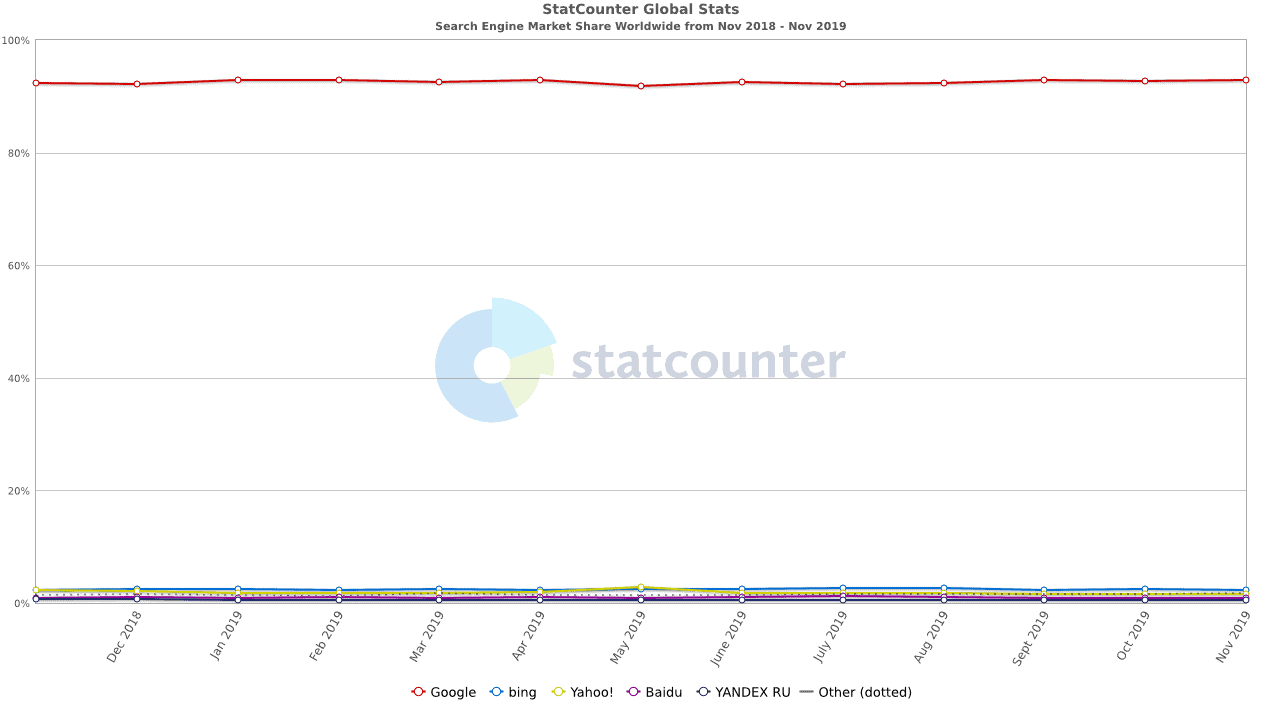
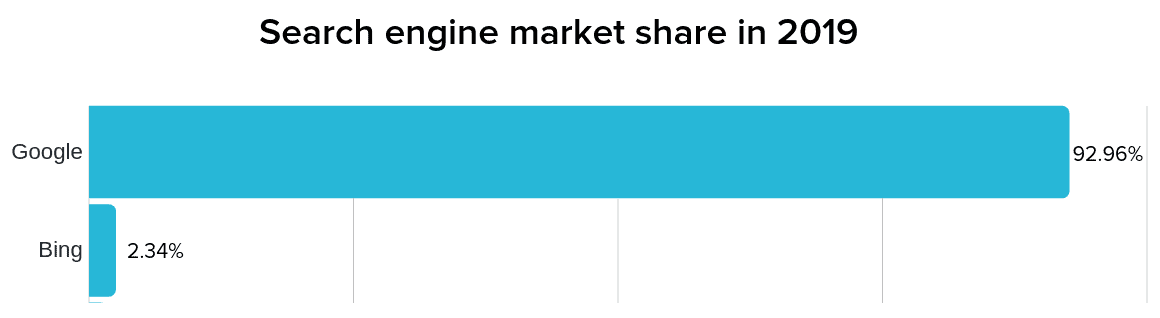
    Not many can compete with Google in the search engine space. With 92.96% of the global search engine market share, Google clearly dominates the playing field and it is not much of a duopoly but a monopoly when it comes to search engine market share. The closest that another company has come to competing with Google is Microsoft’s search provider – Bing.

    According to Statista, Bing accounts for 2.34% of the search engine market share worldwide.

    bing vs google

    The rankings include all regions and searches from all devices – PCs, desktops, and mobile.

    Google vs. Bing

    Launched in 2009, Bing is the refined version of Microsoft’s earlier search engine product – MSN. MSN was then renamed to Windows Live Search, after which the offerings were streamlined and rebranded as Bing.

    An existing user base (from MSN) and aggressive marketing helped Bing quickly rise in market share and user numbers compared to competing services. Bing also joined forces – of sorts – with Yahoo, helping power Yahoo’s searches as well.

    The primary takeaway is that Google’s algorithms tend to prefer regularly engaged and fresh content while Bing focuses on old and reputable pages. Though it is a monopoly in this space, any competition is better than no competition at all.

    Yahoo!

    yahoo logo

    After Bing, Yahoo! comes third on the list and makes up for 1.6% of the search engine market share worldwide.

    search engine market share 2019

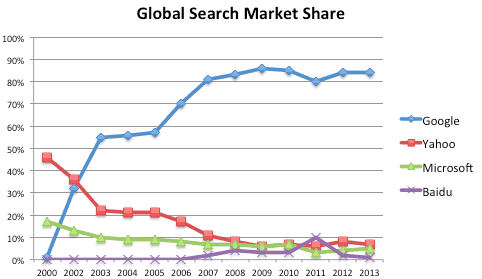
    Yahoo! clearly had the lead in the early 1990s and 2000s, but soon went downhill as Google gained serious traction after surviving the dot-com bubble with clever ways of operations and products.

    yahoo market share

    While Yahoo! and others fell to it, Google kept innovating and experimenting and succeeding in building a disruptive business model which rose to the dominant position today.

    But Yahoo! still remains as one of few remaining competitors to Google in the “Search” with offerings such as Yahoo Mail, Yahoo Finance and entertainment portal consisting of sports, music, movies, and games that people loyally use to date.

    Google vs. Yahoo!

    Yahoo! is considered to be one of the pioneers of the Internet in the early 1990s. Before Google, Yahoo! was the leading online search engine and had a web portal that allowed its users to access news and information from categories such as sports, finance, and entertainment.

    Yahoo! was the first search engine that didn’t the webpages as a searchable index, but organized the index in a hierarchy. But it was Google that first used backlinks to rank a webpage.

    DuckDuckGo

    DuckDuckGo logo

    Launched in 2008, a year before MSN was rebranded to Bing, DuckDuckGo prioritizes itself as the “anti-google” of search engines. This has led to them gaining quite the user base and search traction.

    Since its inception, the site has grown steadily from a few thousand searches per day to 38 million searches daily in 2018. This nets them a 0.3% of the global search engine market share in 2019. While that is nothing to boast about, it reached this record within a decade of launching it.

    Google vs DuckDuckGo

    While Google continues to lead the search market overwhelmingly, DuckDuckGo has maintained its relevance by taking an “anti-google” stance. DuckDuckGo describes itself as “the search engine that doesn’t track you” and thus differentiates itself from Google clearly.

    While Google’s business model is all about data collection for serving personalized ads and personalized search results, DuckDuckGo doesn’t track any of its users or their activities on their site.

    The growth comes in the wake of a series of privacy scandals, from various tech companies in the past few years including Google’s ever-tracking location history fiasco.

    Advertising Competitors of Google

    Facebook

    baidu-vs-google

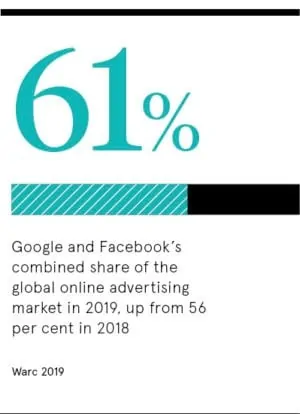
    Facebook is a major competitor to Google in both – advertisement and video-sharing sectors – but more so in the former. Together, the companies are known for their digital duopoly, dominating the advertising platform.

    facebook vs google

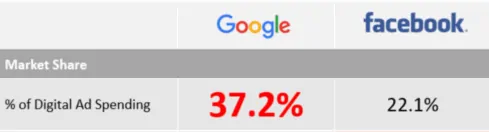
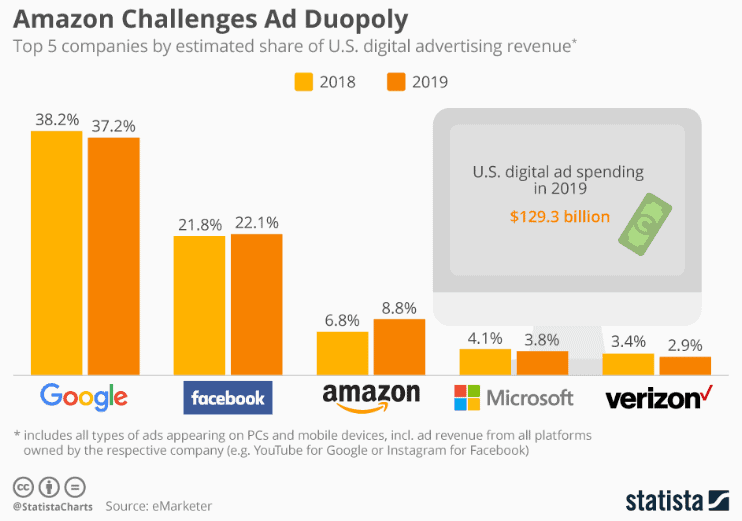
    Currently, Facebook captures 22.1% of all digital ad dollars spent in the US as of mid-2019. This places them 2nd in terms of the total digital ad market share, right below Google. Google leads the pack with a total digital ad market share of 37.2%.

    google vs facebook

    Google vs. Facebook

    Both Google and Facebook occupy the top spots when we talk about data monetization and targeted ads. The largest part of Google’s revenue comes from advertising.

    To counterbalance Google’s AdWords, Facebook started the social media boost packages for its pages. Facebook offers “paid social” – where ads are shown depending on what the customers have searched frequently online. Facebook is bringing the competition to Google fiercely, introducing newer services that focus on increase its advertisement portfolio. Facebook recently announced Facebook Showcase – a program to sell ad spots for its Facebook Watch video service.

    Amazon

    amazon logo

    Back in 2014, Google’s former CEO Eric Schmidt mentioned Amazon to be their biggest competitor. What was a duopoly in the advertising market, with Google and Facebook at the helm, has changed to match Eric’s statement in 2018.

    While Google still leads in terms of topic or informational search, Amazon has overtaken it in the product search category.

    Amazon has risen to hold 8.8% of the ads share and this number only seems to be increasing as time passes on as of 2019. On the other hand, Google and Facebook have 37.2% and 22.1% of the share of ads market respectively.

    amazon vs google

    Google’s numbers seem impressive at first but things are surely slowing down with competitors like Amazon catching up to it. This is reflected in the 1% decrease in its market share from 38.2% in 2018 to 37.2% in 2019.

    Google vs Amazon

    Amazon is very different from Google in terms of the operating model. While Google focuses on providing internet services, Amazon is mostly an e-commerce platform and cloud-service provider.

    On Amazon, products are advertised using Amazon Sponsored Products and users need to pay only when ads are clicked. Amazon also takes full responsibility for keeping the inventory and delivering the product for which they charge some fees.

    Advertising is where Google was able to innovate which helped them survive the dot-com crash back in 2000. It has also remained one of the major sources of revenue for the company. It is to be noted that product-based ads is where the real money lies – it is easier to convert product ads rather than informational ads into clicks and engagement.

    In order to combat this, Google has announced a few big changes coming this year, among which are changes to their product-based advertisement and improvements to their Google Shopping venture.

    Google’s Competitors In Video-Sharing Industry

    TikTok

    tik tok

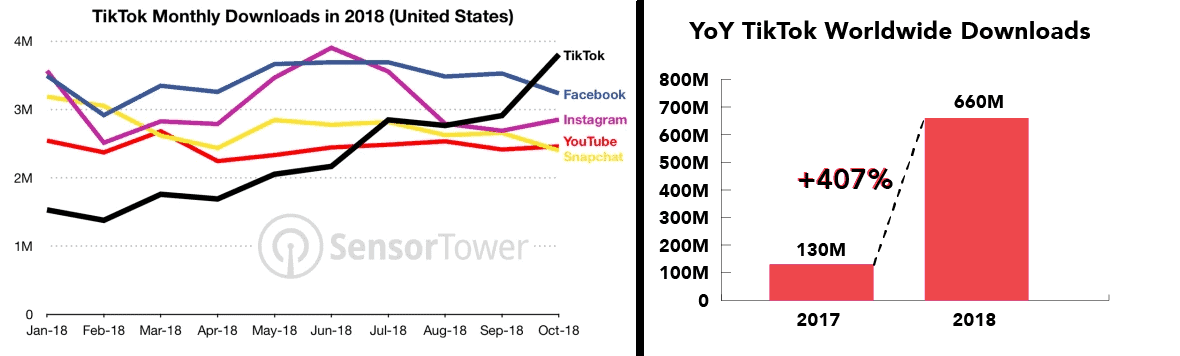
    Launched in 2017, TikTok has obtained more than 700 million users within a year, thanks to its heavy investment in influencer marketing and a novel product that appeals to the young and old alike – especially teenagers.

    Not only that, TikTok tends to embrace the competition head-on. A great example of this is its purchase of Musical.ly in 2017 which allowed for it to tap into the US teenage market and rise to the top of app downloads in iOS and Android within weeks.

    google vs tik tok

    TikTok became the most downloaded app on Apple’s App Store with 45.8 M downloads and over 660M downloads across iOS and Android combined by mid-2018. Though Google hasn’t openly declared TikTok as a major competitor to YouTube, the fast-increasing number of TikTok users and app downloads might be a cause of concern for YouTube in the near future.

    TikTok vs Google (YouTube)

    TikTok and YouTube’s method of operation is quite different. While YouTube is more focussed on long-form content, TikTok is all about short clips and snippets.

    TikTok has more similarities to the short-form video hosting service Vine, where users uploaded six-second clips to the platform where others can view it in a Facebook-Esque timeline of sorts. These snippets are usually of people lip-syncing to music or comedy sketches that are up to 15 seconds in length. People can collaborate with other’s snippets via “Duets” and also lip-sync to someone else’s original video.

    Instagram

    Facebook-owned photo and video-sharing site Instagram has had a great track record when it comes to the growth of its platform. Since its launch in 2010, it has grown to overtake Google’s video-sharing platform YouTube in terms of global social market share.

    instagram vs youtube

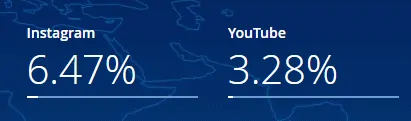
    Instagram makes up 6.47% of the global social media market share, while YouTube has just about half of that – at 3.28%, it sure has fallen in terms of outright market share against the decade-old photo-sharing site.

    Instagram vs Google (YouTube)

    instagram vs youtube

    YouTube and Instagram have different methods of operation and services on offer couldn’t have been more different. But both have been encroaching each other’s space by introducing services and features that were only available on either earlier.

    Launched in 2010, Instagram started out primarily as a photo and video sharing site. It grew rapidly and is mainly popular with the 18 to 29 age-group. But it then launched IGTV in June 2018 and since then IGTV has been on the radar for those willing to share videos for public viewing.

    The same year, YouTube added “YouTube Stories”, a feature very similar to “Instagram Stories” where users get to share short, mobile-only videos that expire after 7 days.

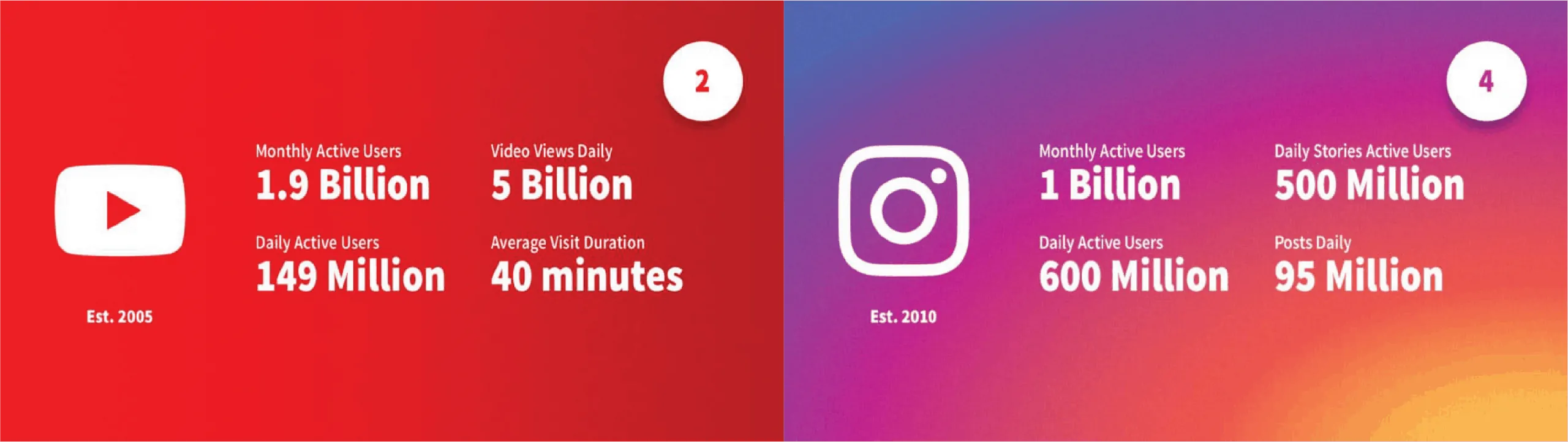
    Both also are closing the gap between monthly active users. While YouTube has about 1.9 billion monthly active users, Instagram is not far behind with approximately 1 billion monthly active users.

    Google’s Competitors In Smartphone Industry

    Apple

    apple logo

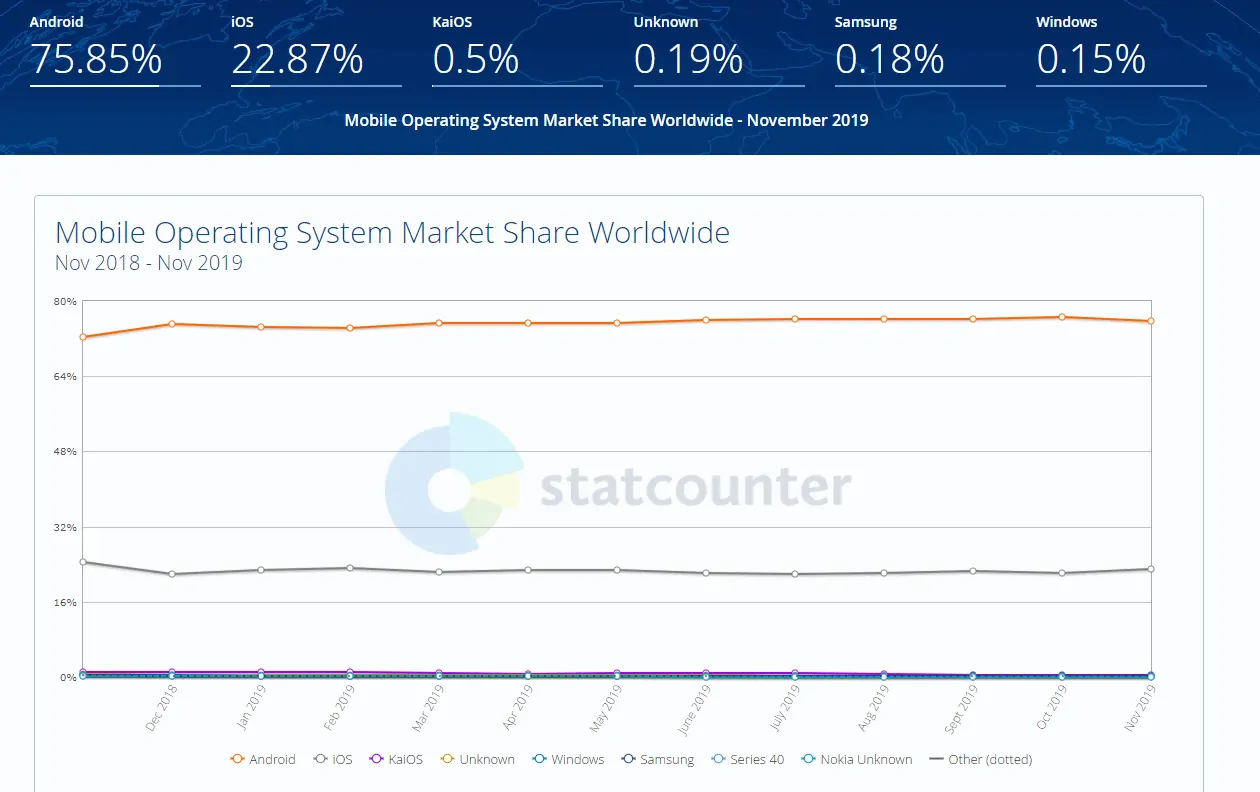
    According to StatCounter, Apple has a global smartphone market share of 22.87% as of writing.

    Apple has sold over 217 million iPhones in 2018 alone. Compared to that, the few million Google Pixel devices sold over its entire history paints a bleak picture for Google in the smartphone space.

    apple vs google

    This is not only worrying for Google’s hardware division but Android in general since Apple’s devices run on iOS developed by Apple. Apple poses a threat to both – Google’s hardware and software.

    Google vs Apple

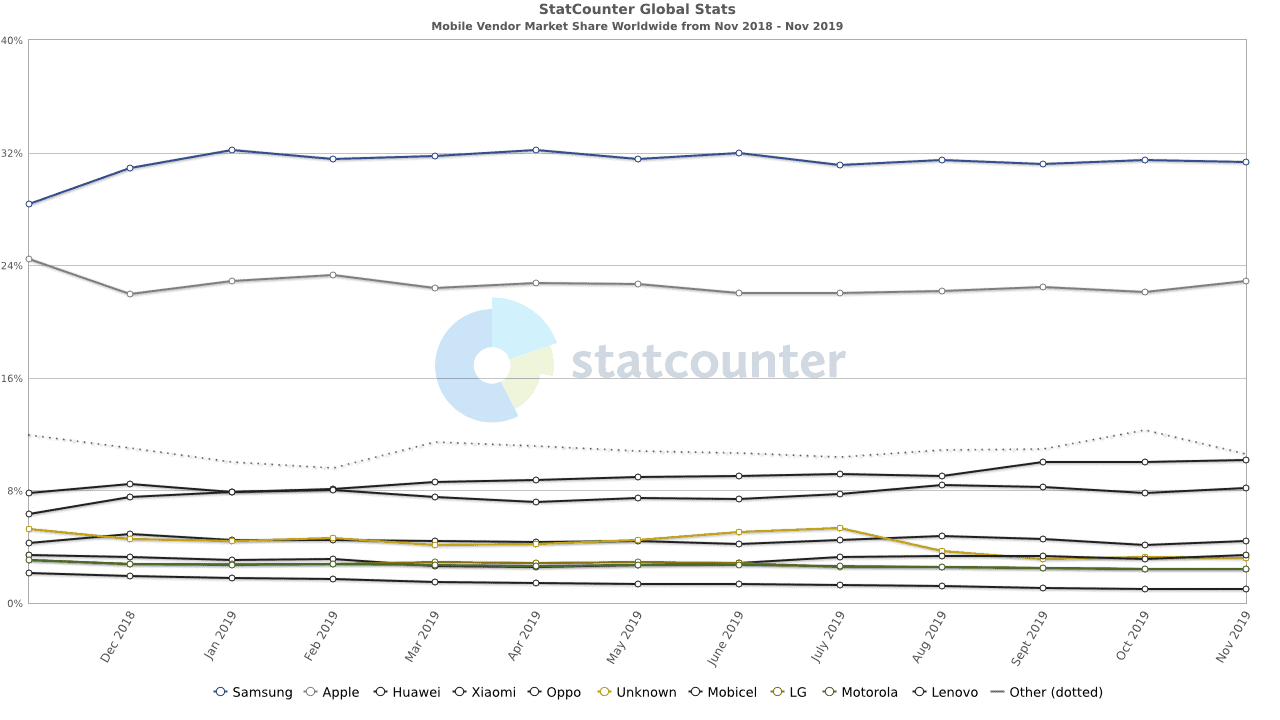
    When looking at the worldwide statistics for sales, Google’s Android has had a clear lead over iOS in terms of market share.

    android vs ios

    According to StatCounter, Android makes up a massive 74.45% of the sector, with iOS way back on 22.85% as of writing.

    Android OEMs

    android oems

    Though Google owns the mobile operating system Android, it has been focussed mostly on the software rather than the hardware. Google has had a lacklustre

    response to the smartphones it released, namely the Nexus (discontinued) and the current Pixel line of smartphones.

    Google might have sold a few million Pixel phones since its launch over the last few years, but that is negligible compared to the number of devices that other Original Equipment Manufacturers (OEM) who create hardware that runs on Android have sold. For example, Samsung has sold over 2 billion of its Galaxy-range smartphones in its history and OEMs have already launched 60+ Android smartphones at the end of Q1 2019.

    Ever since Google started making its own hardware under the Google branding, it now has to consider Android OEMs as competitors to its newly launched smartphone line.

    Google’s Competitors In Cloud

    Amazon Web Services

    aws

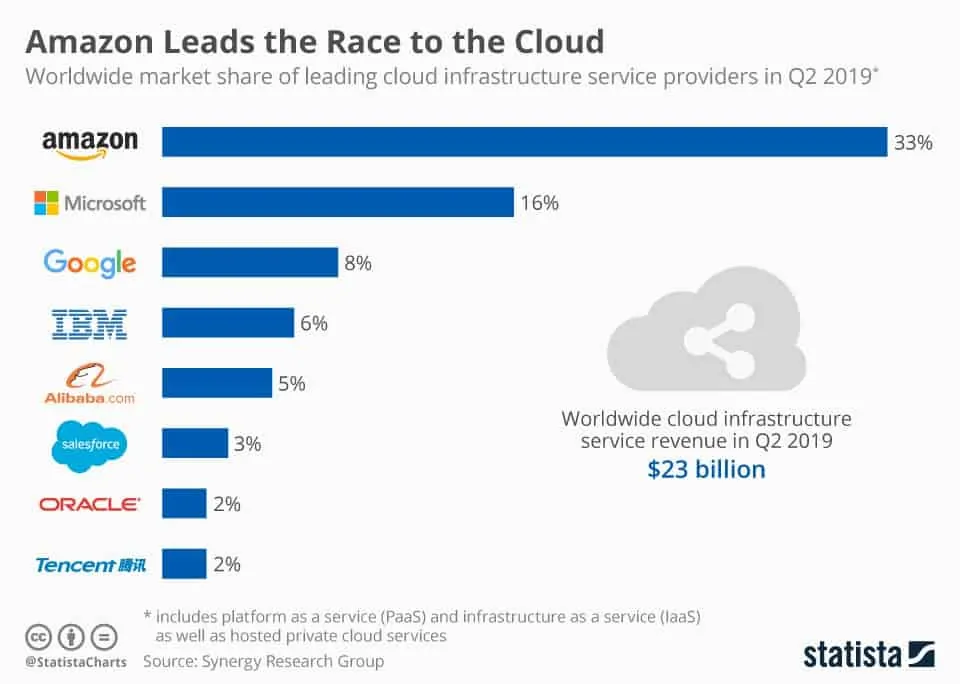
    Amazon’s cloud offering Amazon Web Services has had a stronghold in the cloud computing sector. Amazon emerges as the clear market leader with AWS making up 33% of the world’s public cloud infrastructure.

    amazon vs google

    Google comes in at third with 8% of the global cloud infrastructure market share. It is not just in Infrastructure as a Service (IaaS) space that Amazon is the leader but in almost every other cloud computing sector as well.

    Google Cloud Platform vs Amazon Web Services

    Amazon Web Services (AWS) is the more mature of the two with a powerful global network to provide for some of the world’s most complex IT environments. Its data centres are fibre linked and arranged all over the world and payments within the infrastructure are scheduled according to the services you use and computed within milliseconds.

    Google Cloud Platform (GCP) offers largely similar basic capabilities around flexible cloud computing. But GCP still lacks in the number of different services that it offers and is generally the lesser flexible of the two. Amazon offers over 140 different services across computing, IoT, mobile, networking, and enterprise applications to its users as of writing.

    In order to combat this, GCP has plans to invest more in partnering with various different companies and industries to get a firm foothold in such a highly competitive sector.

    Microsoft Azure

    Azure

    Microsoft’s cloud offering, Microsoft Azure holds second place in terms of global cloud infrastructure. Azure serves 16% of the entire cloud market and is the company that Google needs to overcome before facing off against Amazon.

    Google Cloud vs Microsoft Azure

    Microsoft Azure and Google Cloud Platform could hardly be more different from each other. Microsoft entered the cloud industry with its cloud platform benefitting from Microsoft’s “enterprise” focussed investments. Google, on the other hand, has always been an “online” focussed company and lacks the depth to provide competitive “enterprise solutions” to bring over customers from a mostly “enterprise” focussed Azure.

    Azure leads Google Cloud because Microsoft has leveraged its enterprise smarts and on-premise data centre legacy to migrate customers to Azure.

    azure vs google cloud

    Google remains invested in pushing its cloud platform forward aggressively and Google Cloud’s profound expertise in metrics, data analytics, artificial intelligence, and machine learning offers a crucial competitive advantage.

    Google’s Competitors In Different Countries

    Baidu

    baidu

    Baidu is to China as Google is to the rest of the world. That literally sums up the dominance Baidu has in the Chinese market. With 63.4% of the search engine market share in China, Baidu holds a monopoly over the Chinese search engine market.

    baidu-vs-google

    Globally that still places Baidu in the fourth place, just behind Bing and Yahoo, with a market share of 0.83%.

    This has led to Baidu becoming a major hurdle for Google’s expansion in the Chinese market. Aside from search, Baidu also has other venues covered with its in-house services that are similar to Google’s offerings.

    The similarities between Google and Baidu are quite striking. Both operate several web services that help complement the search engines. Both are listed on the NASDAQ and have multiple offerings across search, social, location-based, music products, software, and mobile products.

    Google vs Baidu

    The similarities end when we talk about accessibility. While Google is available globally, Baidu is focused on the Chinese market alone.

    Even still, Baidu is considered as a competitor since it prevents Google from serving the Chinese market – and missing out on the most populous country in the world isn’t helping Google much.

    Yandex

    Yandex

    It is a similar story in Russia with the Russian Internet services company Yandex posing as a tough competition to Google’s own search engine. According to StatCounter, Yandex holds 44.89% of the total search engine market share in the Russian Federation alone. Google only recently overtook Yandex in Russia in 2016 and currently has a search engine market share of 51.67% in the Russian Federation.

    google vs yandex

    Globally that still places Yandex quite comfortably in the top 5 in terms of search engine market share with 0.55%.

    Google vs Yandex

    Before Google was even founded, Yandex currently Russia’s largest web search engine. Both search engines have since evolved to be fairly similar in the way both determine rankings. While Google focused on calculating the ranking of websites based on the number of backlinks a page had, Yandex’s ranking algorithm took into account the distance between words and relevance of documents to a query.

    Yandex also offers online services similar to Google’s – free email, maps, and cloud storage. This essentially comes right up Google’s alley as it depends on its online services to distinguish itself and build an ecosystem around it for its users.

    Go On, Tell Us What You Think!

    Did we miss something? Come on! Tell us what you think about our article on Google’s competitors in the comments section.