Feedough Logo

Blog

  • The On Demand Economy | How On-Demand Companies Work?

    The On Demand Economy | How On-Demand Companies Work?

    Not so long ago, there was an idea to disrupt the taxi industry. The idea today is around 9 years old, worth $48 billion, present in 78 countries, and serve to around 1 million users every day.

    Uber.

    But this was just the beginning of the disruption by the on-demand economy.
    Today, there are hundreds of on-demand companies which provide on-demand online learning (Udemy), grocery shopping and delivery (Instacart), freelance (Upwork), hotels (Airbnb & Oyo), and courier services(Shyp), etc.

    The On Demand Revolution

    The on demand economy involves economic activities by companies which aggregate the niche service providers and create a platform to provide their services under their brand name. On demand companies don’t hold (most of) the assets and their principal focus is to aggregate the service providers, create an online platform with a user-friendly interface and market their brand to tap most of the market share.
    The rise of the importance of micro-moments in marketing has boosted the on-demand market. Customers now want everything at their fingertips. The four major characteristics which shaped the on demand economy as we know it are:

    Online-offline integration

    The disruptive idea of building an online platform to sell offline products and services on-demand is what differentiates the on-demand economy from other business economies.

    Partnership Contracts

    The service providers are freelancers and independent parties which sign a partnership contract with the company to provide services under its brand and offer a commission for every customer referred to them.

    Micro-moments capitalization

    The on-demand industry capitalizes on the increasing micro-moments demands. The increasing trend for “is there an app for that?” attitude has opened up a huge market potential for the on-demand services.

    Brand Strategy

    The principal focus of the on demand companies is to build a strong brand which attracts both the service providers and the service consumers to trade.

    On Demand Economy Market Overview

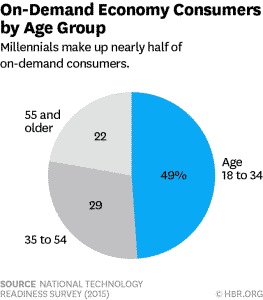
    You’re in an era where you can summon your own personal cab, chauffeur, chef, gardener, fashion consultant, or gym trainer with just a tap on an app. Biakelsey valued USA on demand economy to be $57 billion economy in 2017.

    on demand consumers

    On Demand Economy Business Model

    The on demand economy business model is usually referred to as “uber for x business model” or “aggregator business model” as the majority of the companies choose this business model type for their startup. An aggregator business model is a unique model where companies create an online platform to sell standardized services (usually offline services) under their own name. These services, though standardised, are actually provided by the business partners of the brand but the company acts as the guarantor of the quality.

    However, another business model which is prevalent among the on demand companies is the marketplace business model. A marketplace model differs from an aggregate business model as the brand only acts as a platform for buyers and sellers to trade. The company, however, makes sure of the legitimacy of the parties and offer services like buyer protection, etc.

    Contours of On-Demand Business Model

    The on-demand business model varies based on the problem that is to be tapped and the solution provided by the company. Multiple business models can be built revolving around this overarching concept. For example:

    On Demand Groceries
    On Demand Hotels
     The brand has partnered with the local groceries shops who deliver the groceries when ordered by the consumers
     The brand has listed all the hotels and the services provided by the partners and charges commissions from them whenever a customer is referred to them.
     The brand has set up its warehouses in different regions and deliver the groceries on fixed timings irrespective of when the order is placed.
     The brand books and maintains an inventory of rooms in the partner hotels and makes them available under its own brand name.
     The brand has partnered with a delivery agency which purchases and delivers the groceries as and when it is ordered by the customers.
     The brand offers vacant rooms in the partner hotels for lesser prices.

    These not so subtle differences in the business models eventually decide the future of the on-demand startups. There are various contours to choose from depending on your business vertical and the target audience. These contours are:

    Instant vs. Scheduled delivery model

    There are certain niches like taxis, meals, etc. where instant delivery can be the game changer for a company. Nevertheless, the instant delivery model requires a huge investment in technology and logistics and can result in lesser profits for the company. On demand niches like laundries, groceries, etc. can work on an aggregate scheduled delivery model without much effect on the demand or revenue of the company.

    The instant fulfilment model isn’t recommended for the businesses with an unstable or unpredictable demand as it puts a lot of pressure as the company’s reputation depends on it. Hence, the final call should be taken based on the consumer needs, wants, and expectations and the company’s ability to fulfil the same.

    Singular vs Multiple services

    The on demand economy witnesses both single and multi-niche companies. Even though single niche companies like Uber and Lyft have witnessed great funding and growth in the previous years, there has been a recent rise of several multi-niche on demand companies like urban clap which provides on demand local services like home cleaning, beauty, lessons and hobbies, etc.

    Even though a brand can be easily built by focusing on a single niche, multi-niche on demand model can result in more profits. Nevertheless, the choice of the niche(s) should be based on the present and future market demands and predictions and the availability of resources.

    Marketplace vs Aggregator

    This is one of the most important aspects of the on demand business model strategy. An aggregator is the one who provides the services under its own brand name, fixes the prices, and takes the guarantee of the quality provided.

    A marketplace is just a platform where the buyers meet sellers. There can be many sellers selling the same service for different prices on the marketplace and the buyer has to rely on his own discretion while selecting the seller.

    Both of the business models have their own pros and cons. While aggregator business model gives you control over your deliverables even though they are provided by the partners, the marketplace model involves less pressure of quality and price setting and you get your commission anyway.

    Revenue Model

    The on demand revenue models can be divided into two types:

    Commission based revenue model

    A commission based revenue model is the most prevalent revenue model as the revenue is earned simultaneously by the company and the partners. This model involves charging of commission whenever a customer is referred to the partners through the brand’s platform. A perfect example of this revenue model is Uber.

    Take-up rate based revenue model

    The take-up rate based revenue model involves pre-buying or pre-renting the product/service and selling it at a profitable rate to the end consumer. This strategy is followed by the Indian on-demand hotel rooms provider – OYO Rooms which books a hotel rooms inventory, maintains it, and provide it to the end consumers at a take-up rate.

    Go On, Tell Us What You Think!

    Did we miss something?  Come on! Tell us what you think about our article on on demand economy in the comments section.
  • Initial Coin Offering (ICO) vs. Initial Public Offering (IPO)

    Initial Coin Offering (ICO) vs. Initial Public Offering (IPO)

    Throughout the short history of cryptocurrency, we’ve been introduced to numerous new processes and terms like decentralization, coins, tokens, altcoins, etc. One such process brought to life by the cryptocurrency revolution is the Initial Coin offering or the ICO.

    An ICO is a crowdfunding strategy for startups dealing with decentralized products and services and operating on an indelible distributed ledger. It involves creation and sale of digital coins or tokens to fund the project development.

    Even though the name and the objective of the ICO sound similar to one of the well-known exit strategies, the Initial Public Offering or the IPO, there are many differences between the two.

    Initial Coin Offering (ICO) vs. Initial Public Offering(IPO)

    An initial public offering is a capital crowdsourcing strategy used by a privately owned company to expand and become publicly traded. The process includes several legalities and formalities to be fulfilled prior to and during the event.

    The ICO as a concept is currently in its nascent stage. Nevertheless, its core objective clearly distinguishes itself from the concept of the IPO.

    An ICO is an entry strategy while an IPO is an exit. That is, a startup tries to sell the project/product idea or a prototype and enter the market with the help of an ICO, while an IPO enables an established private company to expand by diluting its ownership to the public.

    The second principal difference lies within what is offered at the time of the sale.

    An IPO involves selling of shares or equity to the public. That is, the IPO dilutes the ownership of the founders and the people who buy the equity enjoys the ownership rights in the proportion of the shares held by them.

    Whereas, an ICO involves selling either of the three types of cryptoassets – cryptocurrencies or coins, tokens, or tokenised securities. These cryptoassets are digital coupons or tokens, issued on an indelible distributed ledger, which act as the backbone of the whole project. By buying the cryptoassets, investors usually prepay for the future product or service. For example, if the project is a video game, the tokens can represent the in-game decentralized currency. The investors usually tend to invest in these assets at the time of the ICO because their price is much less than it’ll be in future. Besides the investment, these investors also may help the team in marketing and promotion in hopes of more profits. However, these cryptoassets doesn’t dilute the ownership of the founders. (Investments in ICOs which offer profit sharing or voting agreements are classified as investment contracts)

    Moving on to a detailed difference between an ICO and an IPO.

    Initial Coin Offering (ICO) vs. Initial Public Offering (IPO)

    Strategy

    An ICO is an entry strategy and is used by startups to raise funds for their project and enter the market. Hence it is done during the introduction or the nascent stage of the company and the capital raised is the working capital which is used for project development.

    However, an IPO is an exit strategy and is typically staged at a later stage when the company is financially more stable but wants to expand and become publicly traded. The capital raised is the long-term capital which is used to fund company’s expansion projects.

    Listing Requirements

    In order to stage an IPO, a company should be listed on a stock exchange. This requirement doesn’t apply to companies holding an ICO. They usually list their cryptoassets on exchanges after successful ICOs.

    Company Requirements

    To list a company for an IPO, the applicants must fulfil numerous pre-requisites related to aggregate pre-tax earning, aggregate cash flow, paid-up capital, underwriters, prospectus, etc.

    All that you need for an ICO is a minimum viable product, an audited public code, and a whitepaper. An ICO can even be held without these as well.

    Investor Requirements

    In order to invest in an IPO, an investor has to fulfil his KYC requirements whereas in most ICOs an investor only needs a cryptoasset wallet address and an active internet connection to take part.

    Currency Accepted

    The securities in an IPO are traded in exchange for fiat currencies like Dollar, Rupee, etc. ICOs, in contrast, involves the cryptoassets being traded in exchange for other cryptocurrencies like Bitcoin, Ethereum, Neo, etc. However, some ICOs even accept fiat currencies in addition to other cryptocurrencies.

    Utility

    Stocks represent proportionate ownership of the company, voting rights, and eligibility to claim dividends. However, cryptoassets represent tokens which can be used to avail a service or to store value

    Regulation

    IPOs are regulated by several national and international bodies like SEC in the USA, SEBI in India, etc, but ICOs are self-regulated events.

    Duration

    Due to the heavy regulatory processes, IPOs can take up to 4-5 months to close. ICOs, on the other hand, are dependent only on reaching the maximum hard cap or fixed sale duration which usually lasts a month.

    Parties Involved

    An IPO witnesses many parties which benefit from it. These include the company, stock exchange, brokers, underwriters, and the investor. There are usually only two parties involved in an ICO.

    Price Decision

    The company spend a lot of time and involve few third parties to decide the price of the shares at the time of an IPO. Book building is used to set the price.

    The price of the cryptoasset is decided according to the capital requirements of the project and the number of cryptoassets which will be released for mining or distribution.

    Go On, Tell Us What You Think!

    Did we miss something?  Come on! Tell us what you think about our article on Initial Coin Offering (ICO) vs. Initial Public Offering(IPO) in the comments section.
  • What Is Social Marketing?

    What Is Social Marketing?

    Ever since the term was coined by Philip Kotler and Gerald Zaltman in 1971, there has been a steep rise in social marketing campaigns. Yes, the internet didn’t actually exist at that time, and no, social marketing is not even slightly related to the term social media marketing.

    What Is Social Marketing?

    Social marketing is a distinct marketing discipline which uses commercial marketing principles and techniques to advance a social cause and influence the target audience behaviors to improve their lives or the society in which they live.
    The characteristics which distinguish social marketing efforts from other marketing efforts are:

    Focusing On Benefitting Society

    Unlike other marketing efforts where the ultimate gainer is the marketer, social marketing efforts aim at benefitting the society at large. This is the most important characteristic of social marketing.

    Objective Is To Influence behaviors

    Social marketing is all about influencing behaviors of the target audience. The marketing efforts may be used to:

    • Give up an addictive behavior (e.g., stop smoking)
    • Avoid or reject a potentially undesirable behavior (e.g. don’t try drugs)
    • Prevent long-term consequences (e.g. wear sunscreen to prevent skin cancer)
    • Prevent the environment (e.g. recycle)
    • Learn a new skill (e.g. learn for free and get a job)
    • Risk retaliation (e.g., adhere to the speed limit)

    Use Of Commercial Marketing Techniques

    Social marketing uses all the commercial marketing techniques. The only difference is that the ultimate beneficiary is the target audience.

    Who does Social Marketing?

    we can do it social marketing

    In most cases, social marketing techniques are used by the national and international public welfare organizations and offices responsible for public welfare like WHO, centers for disease control and prevention, department of health, environmental protection departments, national highway departments etc.

    Not-for-profit organizations also involve themselves in social marketing activities of those causes which align with their organization’s missions. For example, Kaiser Family Foundation promotes getting tested for HIV disease by promoting their Know HIV/AIDS campaign.

    For-profit organizations sometimes indulge in social marketing activities rather than cause marketing activities to fulfill their corporate social responsibility and build their brand image through better community relations strategies.

    Social Marketing vs. Cause Related Marketing

    Cause related marketing is a form of marketing where a for-profit organization teams up with a not-for-profit or a charitable organization to raise awareness and/or tackle a social or environmental problem and create business value for the organization at the same time.

    Usually, a brand markets its product in affiliation with one of the societal causes and pledges to donate a portion of the proceeds from the sales to the cause. Other cause marketing strategies include:

    • Donation boxes at the point of sales.
    • Making employees volunteer for social good
    • Paying to use a nonprofit’s brand on company’s product, etc.

    However, social marketing doesn’t benefit the organization in monetary terms. In fact, it involves spending money for the betterment of the society and not the organization.

    Social Marketing
    Cause Marketing
    The main objective is to benefit the target audience and the society.
    The objective is to tackle a social cause and create business value at the same time.
    Example: WWF’s Endangered Species Conservation Campaign where the fund is raised from others just for the sake of endangered species conservation.
    Example: American Express’s restoration of Statue of Liberty campaign where the company donated a portion of each use of an American Express card for the restoration

    Social Marketing Examples

    Water – Use It Wisely

    Water – Use It Wisely was a water conservation campaign started in 1999 to promote water conservation ethics in Arizona. Today, the campaign is active in nearly 400 towns, cities, states, utilities, and public and private organization and is one of the largest conservation educational outreach programs in the world.

    Piano Stairs, Odenplan subway station, Stockholm

    The piano staircase was an initiative by Volkswagen which tried to change people’s behavior by transforming the staircase of the subway station into a piano keyboard. The initiative resulted in motivating 66% more people to use the stairs instead of the escalators.

    Border Roads Organisation, India

    The Border Roads Organisation (BRO) develops and maintains road networks in India’s border areas and friendly neighboring countries. The organization uses social marketing techniques to promote safe driving on the mountain roads.

    Go On, Tell Us What You Think!

    Did we miss something?  Come on! Tell us what you think about our article in the comments section.
  • MVP vs. Beta: What’s The Difference?

    MVP vs. Beta: What’s The Difference?

    Pre-releases of a product are important for varied reasons. However, each release has its own objective and is given a different name according to the motive and the release-lifecycle stage. You and most other entrepreneurs, journalists, and business enthusiasts must have clicked on this post title because of your common confusion between two of such pre-release stages: MVP and beta.

    Even though both of these versions are released to ensure that the product is perfect in every sense when it is finally released in the market, both of these releases have different objectives and timelines. But before moving on to discussing the difference between an MVP and the beta release, it’s important to know what do these two releases represent.

    What Is An MVP?

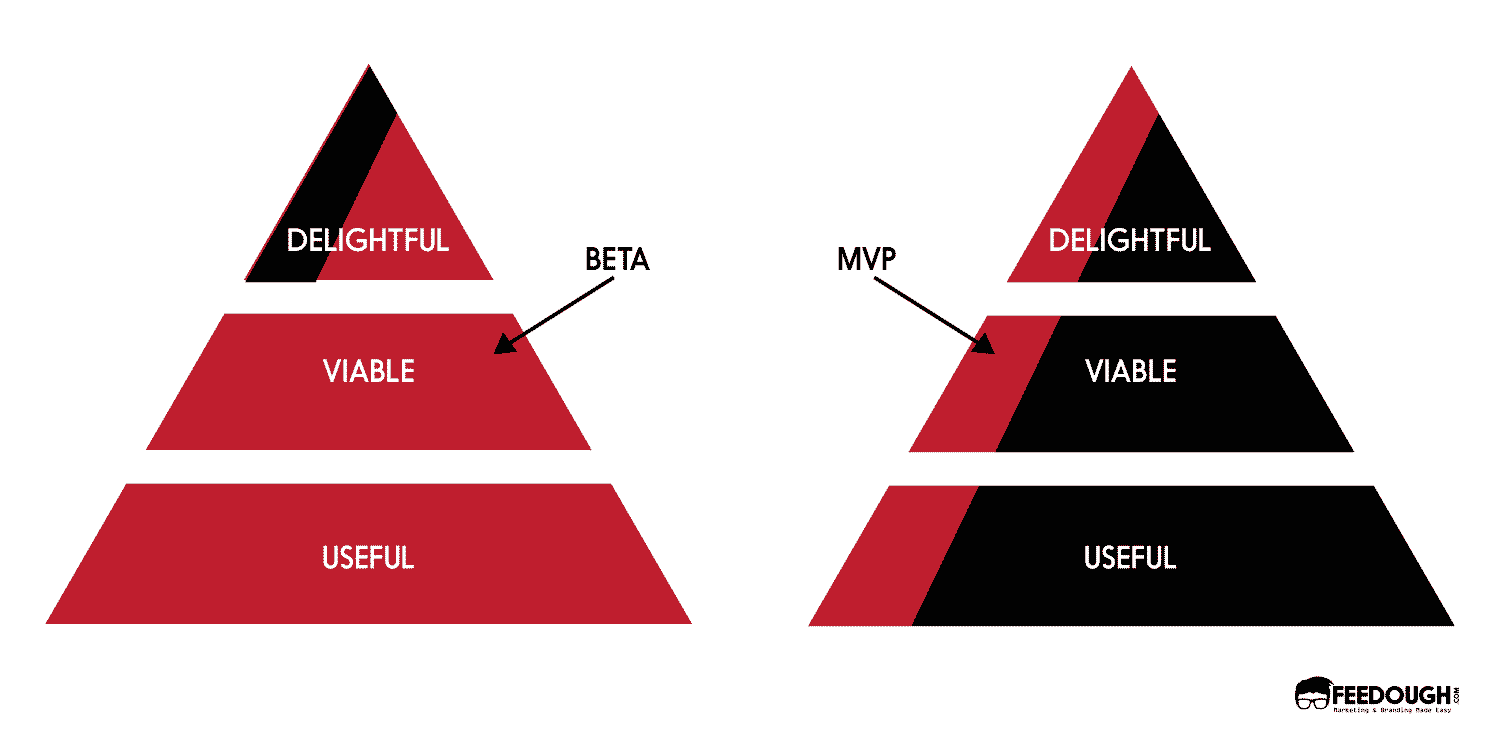
    A minimum viable product (MVP) is the first saleable version of your product designed with minimum yet sufficient features to satisfy early adopters and to validate the assumptions of usability and demand basis on which the final product is developed.

    MVP is usually referred to as the alpha release of the product.

    What Is A Beta Release?

    The beta version of the product is almost the final version which is given to a large (but usually selective) group of users to try under real conditions. The objective of the beta versions is to create a polished and ready to go product without any bugs or defects.

    MVP vs. Beta

    mvp vs beta

    An MVP is always released before the beta versions as the entrepreneurs and the product managers need to validate their product assumptions before moving on to the production of a fully functional product. The beta version follows once the MVP is validated.

    There are few other noticeable differences between an MVP and a beta version of the product. These include:

    Objective

    The main objective of launching an MVP is to validate your riskiest assumption and build a product which the consumer actually wants. The entrepreneur and the product manager releases an MVP to learn if their prospective product fits in the market.

    The beta version is launched after such assumption is validated. This release is given to a selective but large group of users to test, give feedback and report bugs to make sure that the final product is fully functional and is without any glitches. The beta version is released to polish the final product and make it saleable.

    Minimalism

    An MVP is characterized by minimalism. It is created with the minimum features which can make the product saleable.

    The beta version, however, is almost the final product with all the features and characteristics of the final product.

    Target Group

    The MVP is never focused to fulfill the needs of the mass market or even multiple groups of early adopters. The target audience of an MVP is the internal audience and a few early adopters which validate the product and demand assumptions.

    However, the beta version is created to cover the needs of the mass market. It is the almost mature final product.

    Go On, Tell Us What You Think!

    Did we miss something?  Come on! Tell us what you think about our article on MVP vs. Beta in the comments section.
  • Blockchain for Dummies

    Blockchain for Dummies

    Bitcoin, Ethereum, Litecoin, Ripple are words all of us have been bombarded with in the past year or so. So much has and is being written on cryptocurrency, more so since almost all forms of it are skyrocketing in value that it is impossible to avoid discussions on the same.

    Cryptocurrency transactions take place between users directly without the need of an intermediary. But have you ever wondered how that is made possible?

    These transactions are powered by something called the Blockchain.

    What Is Blockchain?

    Blockchain is a public distributed ledger where digital transactions are recorded. Blockchain represents a new way of how information is shared in this world, with the potential of becoming the cornerstone in information sharing in the years to come. Since it is a secure, public electronic ledger, it can be shared between various users with all transactions recorded with a time-stamp and linked to the previous ones. While it was initially developed as the accounting principle for Bitcoin, its usability has surpassed that to move to various other real-life applications.

    How Does Blockchain Work?

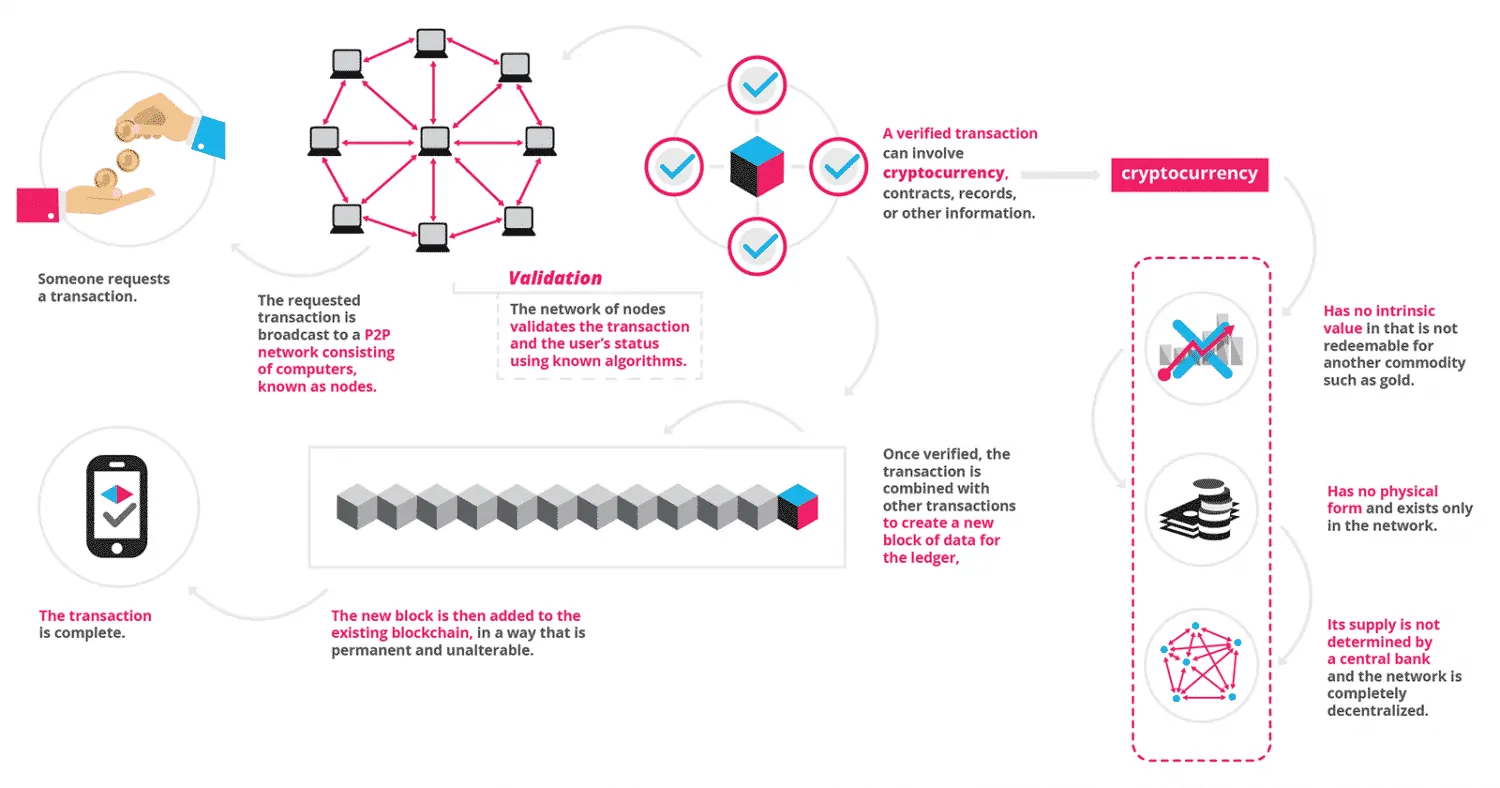
    Blockchain consists of blocks, each of which records some recent transactions. These blocks go into the Blockchain permanently. New blocks are generated as soon as old blocks are completed. All such blocks are connected to each other in a linear and chronological manner, with each block containing a hash of the earlier block. The Blockchain has all the information, right from the first ever block to the most recent one.

    The Blockchain was designed such that the transactions contained in the blocks are permanent. They can never be deleted or copied, though they can be distributed. Moreover, since every block requires complex cryptography to be added, they remain almost fool-proof. That being said, Blockchain shall continue to grow in size because of its design, thus leading to serious storage issues in the future.

    Blockchain databases are managed autonomously for information sharing between two different parties. Because it is a peer-to-peer network with a distributed time-stamping server, it does not need an administrator.

    The users are the administrator.

    You are the administrator!

    The need for third-party is eliminated in Blockchain because it is the users who validate every time one person pays another for something. The transaction details are recorded into blocks publicly after which it is verified by other users. All the participating computers, also called nodes, share the Blockchain database. Every node receives a copy of the Blockchain, thus getting public records of every transaction ever executed.

    blockchain

    Advantages Of Blockchain

    As Blockchain is adopted more and more by various institutions, as it is already happening, it will lead to major cost savings.

    As an electronic ledger, it is easier to maintain and more automated than traditional accounting systems. Less human intervention means fewer errors.

    Processing delays will be minimized and risks of pending transactions mitigated. Brokerage charges will be a thing of the past.

    The overall scenario will become far more transparent. Auditing will become much easier, leading to better compliance.

    The processing of payments in cross-border trades will become much more efficient and smoother. For example, Blockchain systems can have payments triggered when particular conditions are fulfilled, and thus partial payments can be made as soon as the shipment reaches a certain geographical location.

    Applications Of Blockchain

    Blockchain is revolutionary and powerful. With it comes the power to change the face of various industries.

    So, what can Blockchain do?

    Sharing Economy

    Blockchain eliminates third parties. Why does one need any intermediary when Blockchain can power peer-to-peer payment between two parties?

    Just imagine ride-sharing without an intermediary like Uber or finding hosts in new countries without Airbnb. The true potential of a sharing economy can be unlocked only with Blockchain.

    Crowdfunding

    Blockchain can take the concept of crowdfunding to the next level. Case in point being the Ethereum-based DAO (Decentralized Autonomous Organization) which raised $200 million in just two months. While the project eventually failed after a hacker attacked it, it did give us a glimpse of what the future of crowdfunding could be like if proper due diligence is followed.

    Governance

    A public distributed ledger like Blockchain can make governance fully transparent and efficient, be it corporate or national. The common man will have a greater say in various affairs.

    File Storage

    Distributing files across the network can avoid data loss and prevent hacking of confidential data. A distributed ledger like Blockchain shows us the manner in which it can be implemented.

    IP Protection

    Copyright holders do not have real control over their intellectual property. There is tons of pirated content available for free on the internet and as a result, the creators lose a lot of money. Blockchain can help automate the sale of content online and eliminate illegal redistribution.

    Internet of Things (IoT)

    IoT will require automation of remote systems management and Blockchain makes it possible. The huge amount of data that IoT shall produce can be very efficiently stored in the Blockchain. Even transactions between various nodes in IoT can take place through Blockchain. The biggest players in technology like IBM, HP, Samsung etc. have identified the significance of IoT and are vying for dominance there.

    Identity Management

    A distributed ledger like Blockchain can offer better methods for proving your identity than the currently-in-use ones. The most important highlight of Blockchain is its ability to establish digital trust without the need of a third party. Blockchain can be the first solution that can move past the technical challenges of such an initiative to create a universal online identity solution.

    Property Registration

    The frauds and high costs associated with property registration can become a thing of the past with Blockchain. Any sort of record-keeping will become efficient with a public, distributed ledger and property registration is no exception.

    Stock Trading

    Trade confirmations can take as long as three days currently. With Blockchain, since it is peer-to-peer, these can become almost instantaneous and eliminate many bottlenecks. The middle parties are removed from the entire process. Many stock and commodities exchanges have started trying out Blockchain application prototypes for many of their services.

    The Future of Blockchain

    We have just mentioned few applications where Blockchain could play a useful role.  The fact that Blockchain can be used to authenticate and authorize everything without any third party has many implications in almost all spheres of life and that is something everyone as of now is trying to figure out to the best of their ability.

    Blockchain provides opportunities in every field to create something secure as well as flexible. The demand for such services is rising on one hand and the technology is improving rapidly on the other. There is no limit to what can be achieved with its help and where it can be used. Blockchain will only become more mainstream with time.

    Go On, Tell Us What You Think!

    Did we miss something?  Come on! Tell us what you think about our article on blockchain for dummies in the comments section.
  • How to Start a Vending Machine Business

    How to Start a Vending Machine Business

    Can anyone make money by setting up self-dispensing automated retail machines?

    Definitely!

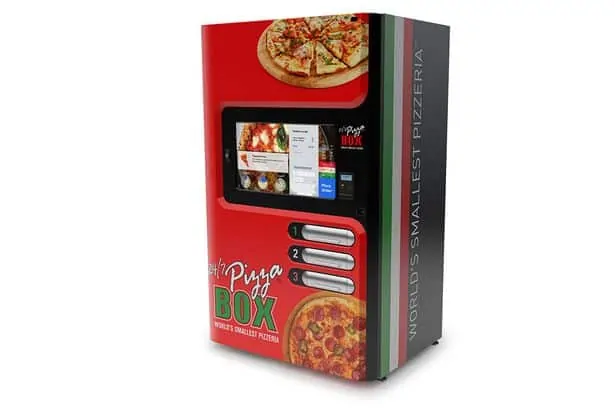
    From chocolate bars to soda cans to discount coupons to even gourmet delights like pizzas, caviar, and escargot, vending machines sell products you can’t even think of. It’s a $42 billion industry and a very profitable venture for entrepreneurs who’re looking for a simple yet profitable startup idea.

    For those who don’t have a clear idea of what exactly a vending machine is: It is an automated retail machine which dispenses products when a certain amount of money is inserted into it. These machines are found almost everywhere from offices to railway stations to manufacturing units. There are around 4.6 million vending machines in the United States right now which makes about $300 in profit every month for the company running it.

    History Of Vending Machines

    The first vending machines were set up in 215 BC in Greece which accepted coins in exchange for holy water. However, the first modern day vending machine for public use was set up in 1880 in London which sold postcards. The idea was brought to New York in 1888 by the Thomas Adams Gum Company which used them to sell gums at subway platforms. There was no turning back since then.

    Why Should You Start A Vending Machine Business?

    The National Automatic Merchandising Association (NAMA) reports that 18 percent of vending-machine operators make between $1 million and $5 million a year. But there also are many other reasons to start a vending machine business. These include:

    Less Investment

    The investment involved in setting up a vending machine business is relatively low as compared to setting up a full-fledged startup. This business doesn’t require you to rent or lease office space, hire many employees, or buy other machinery. You only need a vending machine, few licenses and contracts, a small warehouse/garage and a vehicle to run the business.

    Less Involvement

    The vending machine business is one of the businesses which requires the least involvement from your side. You just set up the machine and visit it once in two-to-three days to refill it or to service it.

    Scalable

    Less involvement and investment makes this business more scalable. You can start with few machines and expand it if you see profits. You can also create your own brand to scale it and make profits.

    Cash-Based Transactions

    This business sees the least amount of bills receivables and bad debts as three out of every four vending machine transactions are based on cash.

    Types of Vending Machine Businesses

    The vending machine business model can be categorized into three types depending upon the sourcing of the machinery.

    Franchise

    A  franchise is a licence granted by a party which owns the brand to an individual or a corporation to have access to their business proprietary knowledge, process, trademarks, and to sell products or provide services under their name within a territory or a region.

    Buying a franchise has its own perks. You get to work with a brand with established demand. However, buying a franchise adds up to the investment and expenses as the franchisor charges license and royalty fees and you may be restricted to source products from the channels predetermined by the franchisor.

    Purchasing An Existing Business

    Purchasing an existing business is a great option if you’re looking for a business with an existing demand. Even though purchasing an existing vending machine business have benefits like instant cash inflow, one should always make sure why the other party is willing to sell the vending machine business.

    Starting From Scratch

    Starting a vending machine business from scratch is a good option for entrepreneurs looking to build their own brand. It involves the flexibility to make your own decisions, choose the most suitable vending machine, and sign the contracts which benefit you the most.

    How To Start A Vending Machine Business?

    Starting a vending machine business requires as much of the entrepreneurial skills and motivation as other businesses. It requires a proper research and a business model to succeed in the long run. Here are the steps you need to follow to start a vending machine business.

    Find The Right Products

    Vending machines can sell anything from gumballs to gold. Research, evaluate, and validate your product choice before moving ahead to the next steps. Use the consumer data to validate your assumptions of the consumer buying patterns in the area you want to tap into.

    Choose From The Three Business Types

    Once the product is decided, you can choose from the three vending machine business types:

    • Franchise
    • New Business From Scratch
    • Existing Business

    Make your decision based on

    • the demand you’re expecting,
    • how do you want to source your products,
    • others’ interference in your business,
    • profit sharing, etc.

    Get A Machine

    You can either buy, rent, or lease a new or a used vending machine to conduct your business operations. It all depends on the type of vending machine business you choose.

    Vending machines come in different sizes and types. These include:

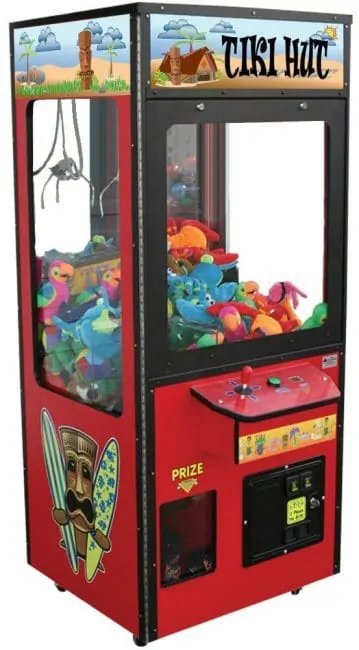
    Amusement Games Vending Machines

    game vending machine

    These vending machines are common in shopping malls, gaming arenas, and restaurants. These include:

    • Arcade Novelties,
    • Jukebox,
    • Pinball, etc.
    Food Vending Machines

    food vending machine

    These are specifically designed to sell specific food items. These include:

    • Hot/Frozen/Refrigerated food items
    • Hot/Cold Beverages, etc.
    Bulk Vending Machines

    bulk vending machine

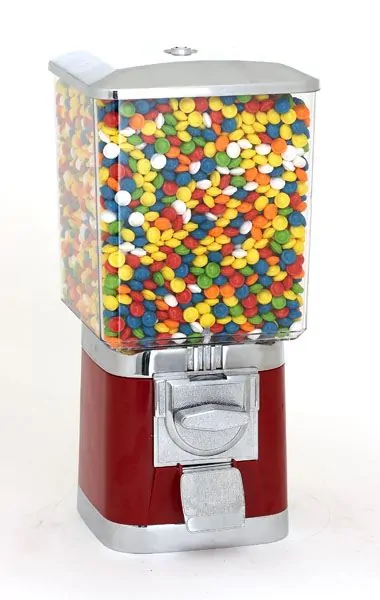
    These are small machines which dispense small quantities of bulk products like gumballs, M&M’s, etc.

    Mechanical Machines

    mechanical vending machine

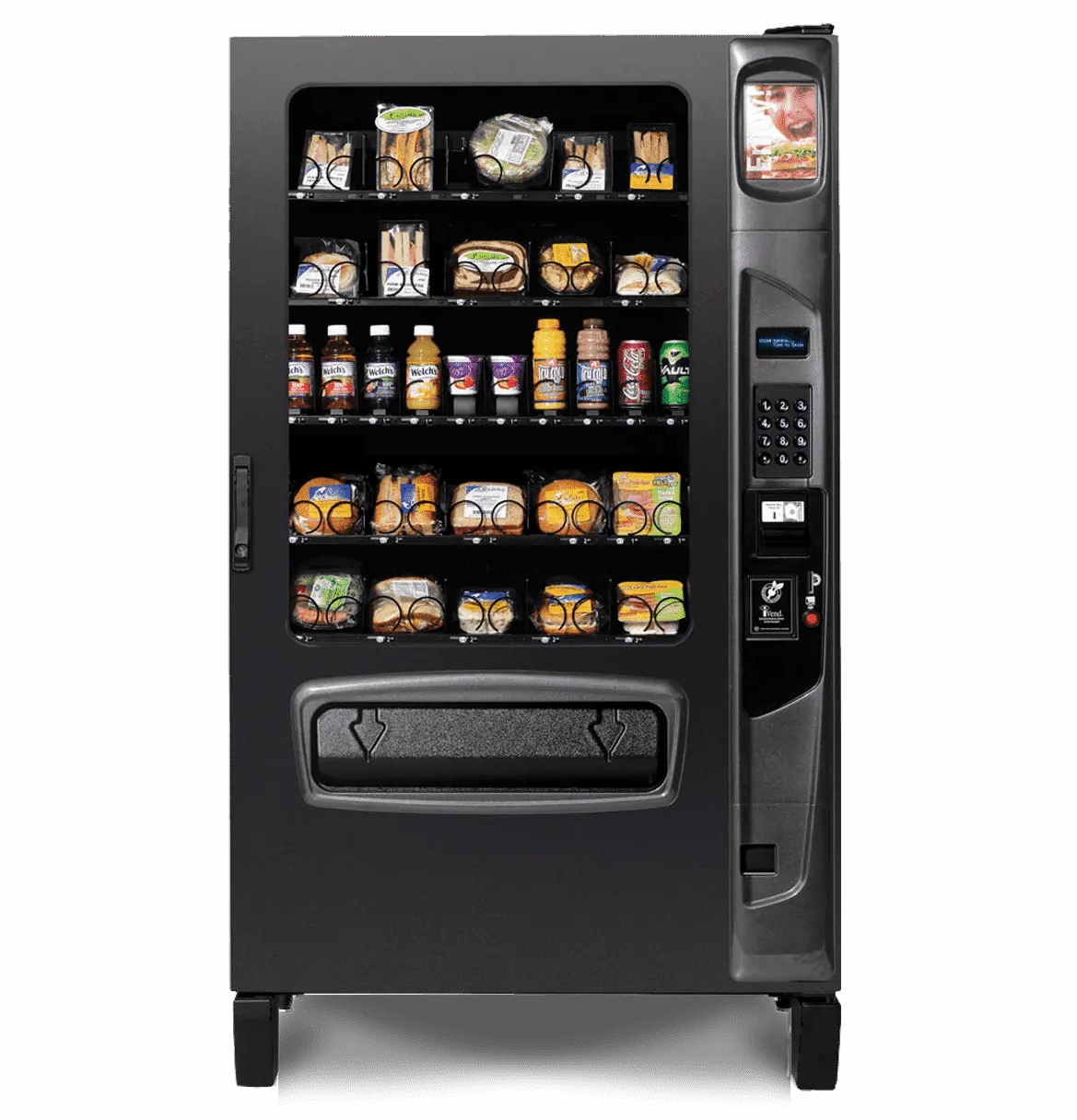
    These are bigger machines which dispense multiple products. Mechanical vending machines are an inexpensive alternative to an electronic full service vending machines.

    Electronic Machines

    electronic vending machine

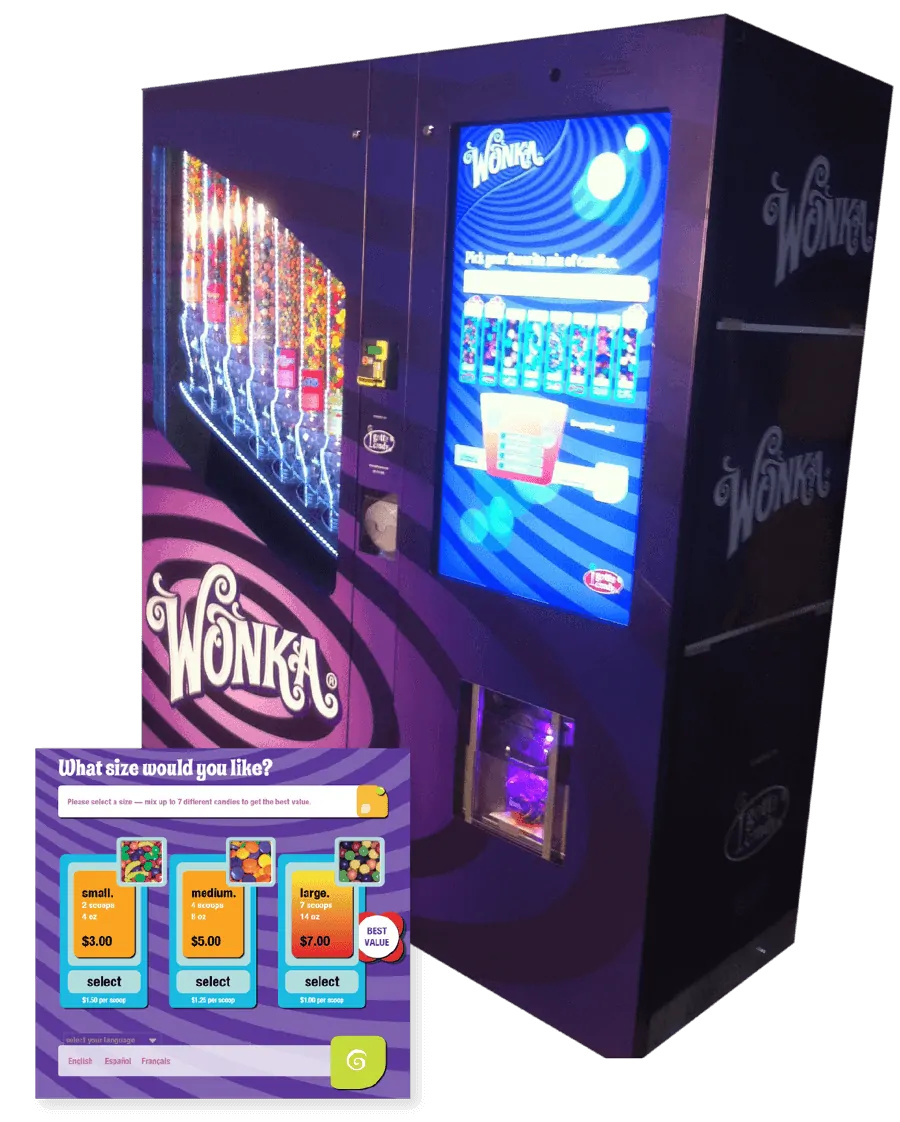
    These are modern machines which use the latest technology like modern touch screens to dispense multiple (even customized) products and can even accept debit and credit cards as payments.

    Find The Right location(s)

    Location is the key to better profits in a vending machine business. Select the location which you think has the most footfall of your target audience.

    While some products don’t depend on locations, many are location dependent. For example:

    • Snacks and beverage vending machines do well in most of the locations
    • Hot beverage vending machines work well in locations like offices, universities, schools, etc.
    • Candy and toy vending machines are suitable for areas which see frequent family visits.
    • Hot food vending machines suits best to business environments, schools, and universities.

    Vending machines are self-operated machines and are most affected by theft and vandalism. Make sure to look for well-patrolled locations with security cameras installed while scouting for locations.

    Sign A Contract

    You need to get into a contract with the authorities or the location owners for placing your vending machine on their premises and using their electricity. The contract involves the charges and time period for placing the vending machine. The charges are usually in the form of a percentage of your gross sales which is usually between 10 to 20 percent. Other terms and conditions of the contract include exclusivity, termination clauses, etc.

    This contract starts your vending machine business journey.

    Go On, Tell Us What You Think!

    Did we miss something?  Come on! Tell us what you think about our article on How to Start a Vending Machine Business in the comments section.
  • 5 Tips To Come Up With A Great Business Name

    5 Tips To Come Up With A Great Business Name

    Selecting a name for your business is an uphill struggle. It’s not only overwhelming but also a confusing task for most of the entrepreneurs. By naming a company, you decide its identity, personality, and eventually its future.
    This decision of coming up with a name for your business should be taken with extreme care and clarity as every aspect of your business depends on it.

    5 Suggestions To Come Up With Great Business Name

    “No, I haven’t heard of it.” & “No, I don’t like this name.” are common phrases among customers who are asked to buy a product of a new brand. A brand name is among your first communication devices. Here are few tips to help you come up with a good brand name.

    Short & Easy To Remember

    People tend to forget names which are unrelated, difficult to remember, and/or are long. Although your brain’s capacity to store information is unlimited, it still faces challenges in retaining information such as names because of many reasons. These include:

    • Unrelatedness
    • Not in their own language
    • Difficult to understand, etc.

    Even though most of you must have read about the full form of BMW, very less would actually remember it; just because it’s too hard to remember.
    Brevity is beautiful. Keep your business name short and easy to remember. Trying to include too much information in the name hinders memorability, the fluidity of speech, and catchiness.

    Suggest Brand Identity

    Your business name should be able to suggest your brand identity. This doesn’t mean that the name has to be related to the industry. It can represent your business’ vision (Nike is the Greek Goddess of victory) or can be completely neutral which can be assigned an identity to it (like Apple).
    But make sure that the suggested message is clear and not layered.

    Easy To Spell

    Make sure your business name is easy to spell. Opting for a misspelt word for your business isn’t a good idea is it often leads to confusion. Words with difficult spelling also lead to confusion and are hard to remember.

    Focus On Present And Not The Future

    Your future is dependent on your present and not the vice versa. Don’t select your business name solely on a presumption of how you see your business in another 15 years. Focus on the present and select your business name based on your current brand identity and positioning strategies.

    Ask Yourself The 5 Big Questions

    It is always advisable to select 5-10 names before finalizing the name for your business. Once selected, use the negation technique to select the best name for your business. Ask yourself these 5 questions:

    Is it original?

    Being original is one of the most crucial (and difficult) tasks. You don’t want to be named as a copycat or want some other businesses to influence your brand image through their actions. Make a thorough research online and offline just to be sure of the originality.

    Is it future-proof?

    A name which looks good today may become outdated tomorrow. Choose a name which doesn’t depend on the current business environment, the current trend, and the exact products you’re dealing in. Suppose you deal in men’s t-shirts at the moment, but can try to dive into the women’s t-shirts market in future. Choosing the name like beardo for your brand wouldn’t be helpful in this case.

    Does your team love it?

    Do you love it?

    Does your team love it?

    You can only build a story out of it if you have full conviction in it.

    Is it available?

    Your online presence is as important as your offline presence. Make sure that the name you select has an available .com or your country specific domain name.

    Is it economical?

    Names are expensive. Domain names make them expensive. Insurance.com was sold at $35.6 million in 2010. Make sure the name you choose is in your budget.

    No matter what you choose, remember one thing: You can make mistakes and can rebrand any time. But rebranding costs companies a lot. Make sure you do your research before selecting the best business name for your company.

    Go On, Tell Us What You Think!

    Did we miss something?  Come on! Tell us what you think about our article on How to come up with a business name in the comments section.
  • Retailtainment: Your Complete Guide

    Retailtainment: Your Complete Guide

    Retailers have been in the market since the beginning. Over the years, they have just transformed from rudimentary shops to big shopping malls and have tried everything possible to increase their sales. They’re now focused more on the brand, the price and quality, the competition, the marketing and their positioning to influence the decision-making process of their customers.

    The retailers have also come up with many new strategies to invite prospective customers to their stores, make them try things, and to make them stay in the store for long. One such retail marketing strategy is retailtainment.

    What Is Retailtainment?

    The term Retailtainment was first coined in 1999 by an American sociologist George Ritzer in his book Enchanting a Disenchanted World, Revolutionising The Means of Consumption. He defined it as

    “the use of sound, ambience, emotion and activity to get customers interested in the merchandise and in the mood to buy”

    He also argued that ‘it was all about allure; the dilemma of attracting more customers while remaining highly rationalised’.

    Retailtainment, also called entertailing or inspirational retailing, is the notion of connecting retailing with entertainment. Retailtainment as a retail marketing strategy shot up during the economic downturns when retailers, marketers and everyone alike started researching new methods to attract customers. Retail Technology Strategist Deborah Weinswig says:

    “To draw connected consumers, the future of retail is about having fun with live fashion shows and virtual reality headsets”

    Retailtainment aims at changing the whole shopping experience and taking it to another level. By increasing the number of people visiting and making purchases, the marketing strategy of any business would increase.  It makes use of mood and activity to get customers in the frame of mind to buy products and allows customers to experience firsthand the benefits of purchasing particular goods or services. Paul Fulberg in the 2003 issue of the Journal of Consumer Behavior wrote an article entitled “Using sonic branding in the retail environment” an article entitled “Using sonic branding in the retail environment” in which he described retailtainment as,

    ‘a way for retailers to entertain the consumer with a dramatization of their values.’

    How Can You Benefit From Retailtainment?

    Retailtainment is the next big thing for retail shopping. However, to benefit from it, you need to get a deeper understanding of your customers. This could be done through personal surveys, creating social networking pages etc. Once enough information has been gathered, use it to involve the business with their areas of interest. For example, if you deal in sports accessories, you can arrange an interaction with the famous sports personalities for the customers who frequent the stores. Brands such as PUMA explored this method and it was seen that their sales percentage increased when compared to previous years. Once enough awareness and relevance has been instituted, the customers have to be engaged with the products. They would be drawn to the businesses or stores organically. It is, however, necessary to make sure that the in-store experience is coherently linked to the customer involvement and engagement enterprises are in place to stiffen the complete experience.

    In order to benefit from retailtainment, the link between the product and the customers should be connected properly.

    Some Examples Of Retailtainment

    Target Wonderland

    Target, the second largest discount-retail store, started a 16,000-square-foot holiday pop-up store called Target Wonderland in December 2015. Target Wonderland took retailtainment to another level by implementing this strategy. While the retailtainment is targeted at families, each person is given a custom lanyard and digital RFID key to carrying around while they browsed. The speciality of those keys is that if the keys are used to scan anything the customer likes, that item gets automatically added to their personalized digital shopping list.

    MetroCentre’s Yellow Mall

    Also known as MetroCentre Qube, MetroCentre’s Yellow Mall is located in Gateshead, U.K.This mall took the retailtainment of UK to another level with its 38,000-square-foot bowling-based entertainment centre, Namco Funscape. This bowling zone has 18 10-pin bowling lanes, a dodgem car track which is reportedly the fastest in Europe, pool tables, coffee shop, children’s soft play area and arcade games. This bowling zone is Namco’s 11th entertainment facility in the U.K.

    Armani in Frankfurt and Stockholm Airport

    The retailtainment experience in Stockholm and Frankfurt airports by Armani for their Acqua di Gioia and Acqua di Gio product ranges were reported to be a success by Giorgio Armani.

    Armani offers airport travellers a ‘disconnection’ retailtainment experience in Stockholm airport. Here, earphones and an iPad offering calming sounds of the sea, designed to evoke the mythical Sicilian island of Pantelleria, which is said to be Giorgio Armani’s source of inspiration for his Acqua fragrance collection, was delivered to the travellers.

    Armani executed a technology called SCENTYS at Frankfurt Airport where the perfumed dry air was released into the air. While this happens, concurrently they broadcast product-related content on built-in screens. Travellers from all around the world were requested to choose a fragrance before being engrossed in a real-time visual and sensory advertisement experience.

    According to a study by the University of Arizona, retailtainment has been the boon of the century. It results in an increase in sales and revenue of the organization with an improved shopping experience for customers.

    Go On, Tell Us What You Think!

    Did we miss something?  Come on! Tell us what you think about our article on Retailtainment in the comments section.
  • Product Manager vs Program Manager vs Project Manager

    Product Manager vs Program Manager vs Project Manager

    In spite of being very different roles, it is astonishing how people everywhere seem to confuse between a Product Manager, Project Manager and Program Manager. These are familiar roles to people yet few seem to know what sets them apart from each other, even in the industry.

    Yes, I get it that they sound similar. But so do flower and flour or genes and jeans.

    Let us first understand the terms that these roles have to manage.

    Project: A project is a temporary task or a group of tasks that are performed to create a unique product or service.

    Product: A product is anything that satisfies an existing demand in the market. It has a life-cycle – it is ideated, developed, introduced, marketed and even retired. There can be multiple projects within the life-cycle of a product.

    Program: A program is a group of projects that are aligned with a company goal.

    Most organizations have separate positions for each. Understanding the distinctions between these roles can help you decide what you want to be. While these terms are mostly found in the world of technology, you can find them in diverse fields such as marketing and manufacturing as well.

    Let’s find out what the differences between them are.

    Product Manager

    Product Managers define strategic business objectives which lead to different projects. They are responsible for the entire product, from its design to its development to its production. Product Managers have to evaluate the customer needs and develop a solution that addresses these needs, with the help of various teams in the organization.

    Product Managers are responsible for the product life-cycle, right from gathering and prioritising the requirements and defining the product vision to the final sales of the product. They own the product strategy, its ideation, its features, its releases and even its profit-and-loss. The Product Manager has to ensure that his product delivers more value than the competition and is able to build a sustainable competitive advantage. He has to also ensure that the marketing efforts are in sync with the company’s vision and goals.

    Project Manager

    A Project Manager is responsible for a project and creates the project plan, allocates assignments, keeps track of the progress and challenges faced and reports them to the concerned stakeholders. He has to coordinate time, budget and resources effectively to complete the project on time. The Project Manager has to focus more on the operational elements of the project he is handling. Generally, Project Managers are people who have moved to a managerial role over time after gaining significant expertise as an individual contributor in the field.

    Project Management consists of risk management, resource management and scope management. Project Managers have to manage all the risks in the project and mitigate them. They also have to ensure that the team has everything it needs when it needs it, be it the resources or infrastructure. The toughest part is to manage the scope of the project. Project Management is all about time, cost and quality and the constant trade-offs that have to be decided to keep the project going.

    Project managers own the budget, delivery, resources, capacity and collaboration in a project.

    Program Manager

    The position of a Program Manager differs from company to company and from industry to industry. Generally, a program consists of many interrelated projects and hence Project Managers report to Program Managers. So while the role is less tactical or administrative than that of a Project Manager, the stakes are higher as the success of the program as a whole lies on the shoulders of the Program Manager.

    A Program Manager needs to be a visionary and should know how the various initiatives will impact the business. They define the various projects that need to be completed to reach the final goal. Their focus is on the strategy and implementation of the entire program and thus the responsibilities go far beyond the completion of individual projects, so as to focus on the long-term implications of the program.

    The role of a Program Manager is slightly different in technology companies. Such companies view this role as a Technical Product Manager and thus expect familiarity with the underlying technologies used.

    Having the same person perform all the roles does justice to neither role, as the focus of Project Management is internal and tactical and the focus of Product Management is customer centricity. Every business needs all three i.e. Product, Project and Program Manager for its long-term business. But that also depends a lot on the size of the business. In startups, Product Managers are expected to handle Project Management as well sometimes.

    To summarise,

    Product Managers focus on What and Why of a product.

    Project Managers focus on When of a product.

    Program Managers focus on How of a product.

    Go On, Tell Us What You Think!

    Did we miss something?  Come on! Tell us what you think of this article on Product Manager vs Program Manager vs Project Manager in the comments section.

  • Ecommerce Business & Revenue Models Explained

    Ecommerce Business & Revenue Models Explained

    In less than 25 years, the internet has brought the whole offline shopping experience right at your fingertips. Even the offline players are trying to fit into the online sphere just because online sales are projected to account for 17.0% of all retail sales within the next five years.

    If you’re reading this in or after 2017 and are still alien to the concept of ecommerce, you’ve got do to a lot of work before launching your business in the online ecosystem.

    What is Ecommerce?

    Ecommerce (short for electronic commerce) is when commerce meets the internet. It refers to the process of conducting trade over the internet.

    Technological development has revolutionalised the way people conduct business. Businesses have gone global and serve customers in countries they didn’t even dream of before. There are many types of ecommerce businesses:

    B2B Ecommerce

    B2B ecommerce model focuses on providing goods and services to other businesses. Examples include online marketplaces, SAAS companies and catalogue websites like – Alibaba, Ahrefs, ExxonMobil, Boeing etc.

    B2C Ecommerce

    This is the most prevalent eCommerce model where businesses sell their goods directly to the end consumer. These businesses run on the traditional retail model but sell their goods over the internet. Examples include standard retail eCommerce stores, social shopping websites, etc., like Amazon, Groupon, GAP etc.

    C2C Ecommerce

    C2C eCommerce websites provide a platform for consumers to sell their products to other consumers. The differentiating characteristic of this platform is that the seller is also the consumer of other products. These websites usually make money by charging commissions or through advertisements. Examples include c2c marketplaces and crowdfunding websites like OLX, Letgo, Kickstarter etc.

    C2B Ecommerce

    There are times when businesses buy products and services from consumers. These products and services can be bought on C2B eCommerce stores and marketplaces. C2B ecommerce usually includes freelance services and specialised products. Examples include recommerce websites like Cashify and freelance websites like Upwork, etc.

    Ecommerce businesses are classified into many other types other than these four, all of them which are derived from these.

    Ecommerce Business Model

    The ecommerce business model is the conceptual structure of your b2b, b2c, c2c, or c2b business strategy. It includes the purpose and goals of your company and how it intends to achieve them.

    According to the inventory management and sourcing of the products, the eCommerce business models are classified into:

    1. Drop Shipping
    2. Wholesaling and Warehousing
    3. White-labeling and Manufacturing

    Drop Shipping Business Model

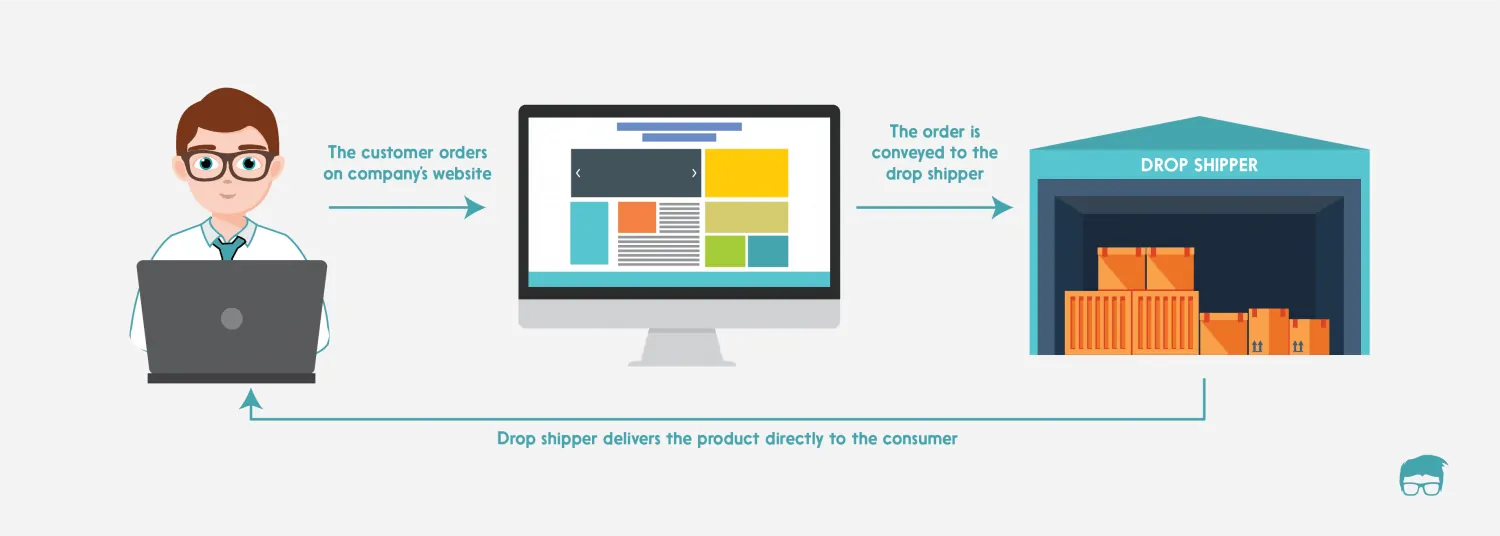
    ecommerce business model dropshipping

    Dropshipping business model is a retail model where you don’t have to care about the fulfilment costs. The model involves a partnership with a wholesale supplier who stocks your inventory deliver the goods on your behalf directly to the customers.

    All you have to do is create a platform listing the products for sale and handle the business’s marketing. The inventory, delivery, and handling are taken care of by the drop shipper. There is an extra charge for this, but this is better than piling up an inventory of products with no guaranteed demand.

    This type of eCommerce business model is suited for businesses-

    • Who don’t have much investment to buy and store inventory
    • Who prefer mobility over fixed business locations
    • Who prefer to focus more on the marketing of the business

    However, there are certain limitations to the dropshipping business model. These include

    • A lot of competition
    • Low profit margins since many businesses sell the same product
    • Heavy dependency on the drop-shipper
    How Drop Shipping Works?

    Dropshipping works on the principles of the aggregator business model, where you focus on building a brand for your organisation while the actual product or service is delivered by someone else under your brand.

    The orders are given to the drop shipper as and when they arrive. This is done either through automated or manual emails, calls, or spreadsheet files, which is decided in the contract between you two.

    How To Start Drop Shipping Business?

    There are many dedicated dropshipping business websites. These include Shopify, Aliexpress, etc.

    Wholesaling and Warehousing Business Model

    ecommerce business model

    Operating a wholesaling and warehousing eCommerce business model is comparatively simpler when compared to dropshipping. This business model runs on the principles of offline wholesaling. That is, you buy products directly from the manufacturer or the middleman at discounted rates, store them in your warehouse, and sell them at profitable prices. This business model suits businesses with guaranteed demand.

    Setting up and maintaining a wholesaling and warehousing eCommerce business model requires a lot of investment and supervision. This type of eCommerce business model is suited for businesses which-

    • want every aspect of their business in their control
    • deal in exclusive products
    • have guaranteed demand for their products
    • want to sell products in volume
    • want to cater to other businesses (b2b)

    However, there are certain limitations to the wholesaling and warehousing business model. These include

    • A lot of upfront investment
    • Business may make losses if there isn’t much demand
    • Dependence on sale volumes to generate profits.
    Examples Of Wholesaling And Warehousing Business Model

    DollarDays, with a product catalogue of 26,000 products, is an excellent example of wholesaling and warehousing business model.

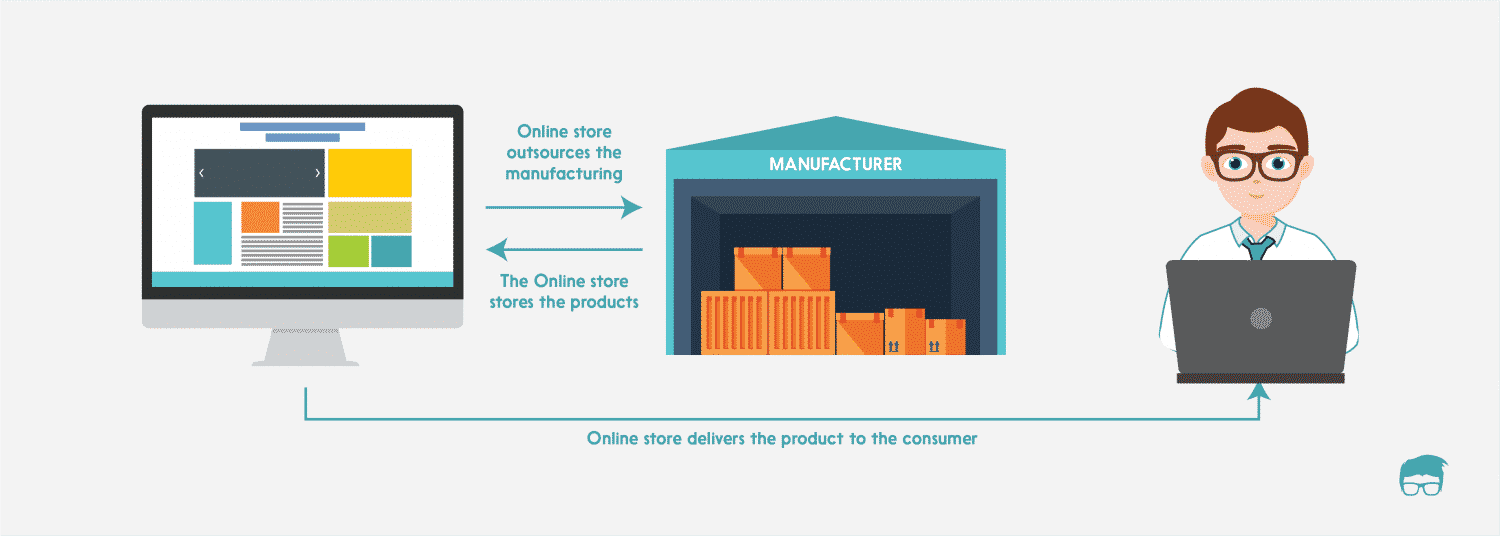
    White-labelling And Manufacturing Business Model

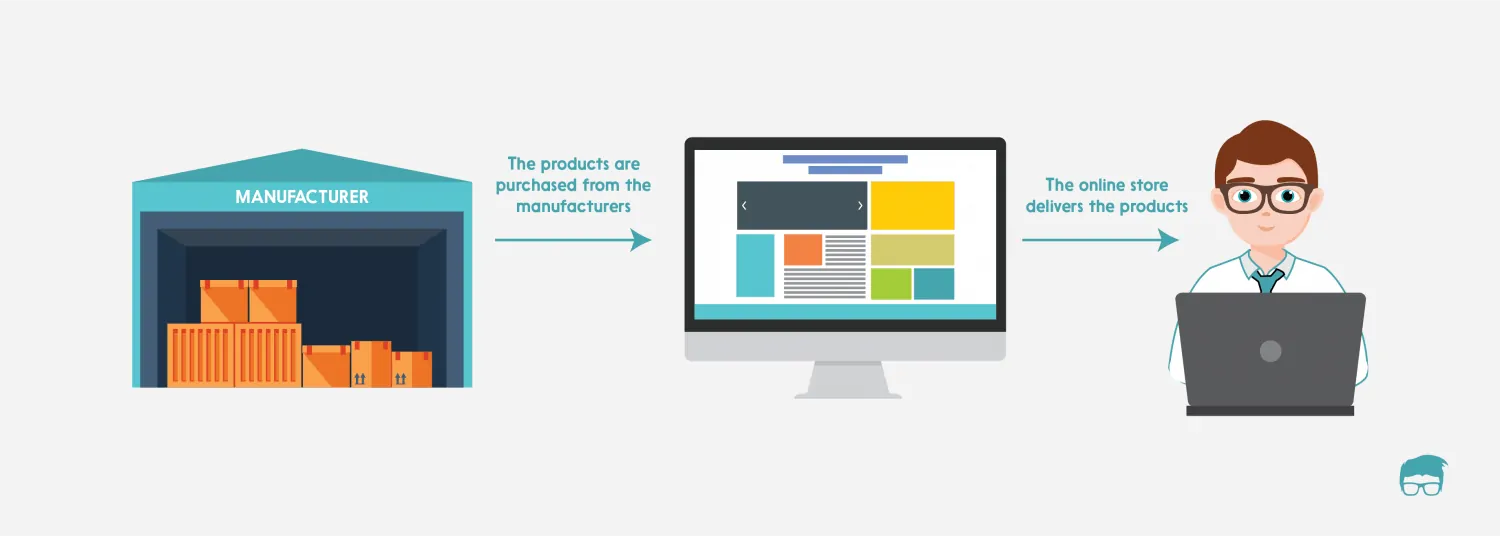
    ecommerce business model

    This business model is perfect for organisations that don’t have enough investment in manufacturing their own products. This business model allows you to outsource the manufacturing but at the same time put your name as a manufacturer on the label of the product.

    This eCommerce business model turns out to be profitable as you make use of the infrastructure already set up by the outsourcing company. This business model suits businesses which:

    • want every aspect of the product in their control
    • deal in products which are similar to other competitors

    However, there are certain limitations to the wholesaling and warehousing business model. These include

    • This isn’t for commitment-phobic businesses as goods once manufactured belong to the business
    • Businesses have to develop a process to monitor and maintain quality control
    How To Start white-labelling Business?

    Sourcify connects many businesses to factories to encourage this business model.

    Ecommerce Revenue Model

    The front end of the business is as important as the back end. Ecommerce businesses plan their revenue model in many different ways. These include:

    Direct Sales Model

    The direct sales model is the most commonly used revenue earning model adopted by ecommerce companies. It involves setting up a store in an online marketplace or a self-owned website and shipping the goods as and when the customer pays the money.

    Freemium Model

    Freemium model is prevalent among SAAS providers who let you test some features of their software for free but charges money for advanced features.

    Subscription Model

    Subscription is one of the best strategies to retain users and have reliable income streams. Companies that rely on subscription revenue models deliver the customers products and services and charge them a fee for the same at regular, scheduled intervals.

    Dollar shave club is a perfect example of the company relying on the subscription-based revenue model.

    Credit Model

    The ‘buy now, pay later’ model allows the customers to purchase the goods and services on credit and pay for them later. The income is generated in the form of profits + interest rate. This revenue model is widespread in mainland Europe but has recently found its way to other parts of the world.

    British clothing company Next has seen a great response after adopting this revenue model.

    Go On, Tell Us What You Think!

    Did we miss something?  Come on! Tell us what you think about this article on the ecommerce business model & eCommerce revenue model in the comments section.