Feedough Logo

Blog

  • Visual Merchandising: The Ultimate How-To Guide

    Visual Merchandising: The Ultimate How-To Guide

    You can see it right from the corner of the block. That storefront. The sign in clean yet warmly inviting colours, the lovely summer dresses in the window.

    You walk in.

    There are wooden accents throughout, from the shelves to the ceiling décor, and the backdrop is white with green plants dotted about. There’s the scent of lavender in the air.

    You feel calm and content, and stroll around.

    The summer collection is just in; you see at least five dresses you like on the hangers.

    Near the changing room is a stand with handbags on display.

    That brown tote will look wonderful in the afternoon. You emerge with the dresses that fit and grab the tote.

    Turn the corner and you see a wooden park bench with shoes displayed on it.

    Those platform heels are so pretty! Luckily they have them in your size.

    You pay at the cash counter, pausing to pick up a pair of earrings displayed by the cash register.

    On your way out, you catch a whiff of something strong and invigorating.

    What’s that counter offering? Free coffee tastings? You’re up! That roasted Brazilian brew is out of this world. You should probably grab a packet for those early mornings.

    You step out of the store, laden with shopping bags, and walk home with a spring in your step.

    Congratulations. You’ve just become a successful catch of visual merchandising.

    What Is Visual Merchandising?

    Visual merchandising is the process by which retailers make their store spaces more attractive to customers so as to prompt them to make a purchase.

    Also referred to as visual retailing, visual merchandising is about presenting an appealing display and store space to customers that will attract their interest and encourage them to stay longer and buy more in the store, even if they had not originally planned to buy anything. By providing different kinds of visual cues, a retailer can evoke the desired emotions in a customer to translate into a sale – be it urgency, impulsive temptation, contentment or seasonal vibes, depending on what the store is selling and the experience it wants to create.

    Visual merchandising, in fact, goes far beyond the visual impact and creates a multi-sensory experience that incorporates physiological as well as psychological triggers to stimulate purchase. Colours, lights, smells and even sounds can have a profound impact on the buyer’s state of mind and can prompt the buyer towards a decision, whether a yes or a no. Done correctly, visual merchandising can stimulate awareness, create customer loyalty, elevate brand image – and, of course, boost sales.

    Essential Elements Of Visual Merchandising

    Retailers who are new to visual merchandising may feel overwhelmed by what it implies.

    “Does it mean I need to throw out everything and build a new store that looks nicer? And what do you mean by nicer, anyway?”

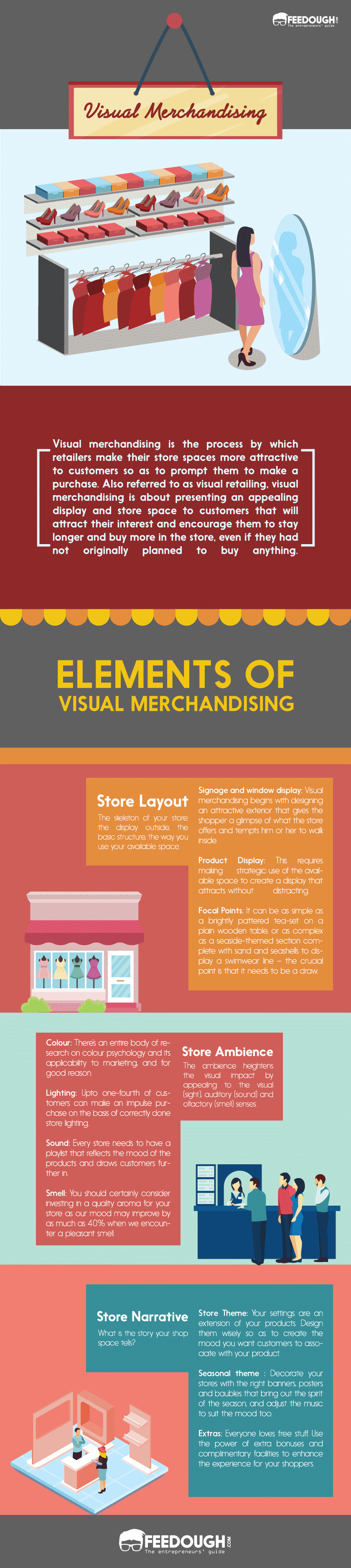
    There is, of course, no need to build a new store – in fact, visual merchandising is all about using the existing space in a more creative way. With regard to the elements of good visual merchandising, we can classify them under three main heads – store layout, store ambience and store narrative.

    Store layout

    This is the skeleton of your store: the display outside, the basic structure, the way you use your available space. This forms a backdrop to the themes and special features you add later and gives customers a reason to browse your store in the first place. There are four main elements of store layout.

    Signage & Window Display

    If a customer doesn’t like the outside of your store, chances are they won’t step in. Visual merchandising begins with designing an attractive exterior that gives the shopper a glimpse of what the store offers and tempts him or her to walk inside. Whatever your product is, use the window display to highlight it with the help of good lighting and complimentary decorations. With outdoor gear, for example, you can place a hat on a display surrounded by artificial leaves and have a forest-themed backdrop to it. Kate Spade took their display up an extra notch by converting it into a shoppable window where browsers could order products by scanning them with their phones. In addition, ensure your store sign is clearly visible, readable from a distance and designed in the colours and patterns you want customers to associate with your product. Almost 8 in 10 shoppers say they would enter a store based on its sign, so make yours stand out.

    Product Display

    This requires making strategic use of the available space to create a display that attracts without distracting. For clothing and other retail stores, this revolves largely around how you arrange your products. A circular layout tends to expose customers to more merchandise as compared to traditional aisles. If you use aisles, set up display areas that highlight your signature products so that shoppers pause to look. Cash counters are great for displaying impulse buys like jewellery, chocolates or fridge magnets. You can also consider redesigning your store space so as to make it more open or to draw customers to some central point. Goose Island brewery in Chicago, for instance, redesigned its store concept to make use of open spaces, open up brick walls to integrate seating areas and allow customers a direct view into the brewing process.

    Focal points

    You need a display that’s pleasant overall, but you also want to draw the customer’s attention to certain things. Do that by creating a focal point. It can be as simple as a brightly pattered tea-set on a plain wooden table, or as complex as a seaside-themed section complete with sand and seashells to display a swimwear line – the crucial point is that it needs to be a draw. It’s commonly said in marketing that where the eyes go, the feet follow – and well-designed focal points can boost your sales by as much as 229%.

    Empty spaces

    It is for good reason that the saying goes “less is more”. Use empty spaces to add wall murals or lifestyle graphics that provide information about your products or simply feature evocative images. In a luxury chinaware shop, for instance, the picture of a well-dressed woman in an opulent setting conveys the image of luxury that the store wants to associate with its chinaware. You can also feature quotes, blocks of text or abstract art on your walls.

    Store Ambience

    This is what creates the sensory experience for the customer. While the store layout creates the immediate visual impact, the ambience heightens that by appealing to the visual (sight), auditory (sound) and olfactory (smell) senses to capture the customer’s attention.

    Colour

    There’s an entire body of research on colour psychology and its applicability to marketing, and for good reason. Ever wondered why so many fast-food brands, from McDonald’s to KFC to Chili’s, use red so generously in their branding? Red evokes hunger and is an instant draw. (So the next time you binge on fried chicken, you can blame psychology.) Green calls to mind the serenity of nature and speaks of a natural, wholesome, soothing experience, and is used very effectively by Whole Foods. Black, on the other hand, denotes sophistication and class – which is why it is a favourite with high-end designer brands like Chanel and Dolce & Gabbana.

    Lighting

    Up to one-fourth of customers can make an impulse purchase on the basis of correctly done store lighting. And we don’t just mean regular illumination – stores can up their visual game immensely by using dynamic lighting, which involves the intensity, colour, direction and movement of light that stimulates a shopper to make a purchase. To draw attention to a product, shine an incandescent light on it and keep the surrounding areas relatively dim. Colours again play an important role in influencing a shopper’s mood, with blue shades creating a relaxed feel and reds sparking excitement. When shedding coloured light on a product, ensure that it matches the shade of the product to avoid clashing – a sea-green light on a turquoise green product, for instance.

    Sound

    Ever walked into a store and felt that the music was too distracting? Every store needs to have a playlist that reflects the mood of the products and draws customers further in. An organic food store, for example, could play soothing lounge music or oceanic sounds. A teen clothing store, on the other hand, can play the latest pop songs.

    Smell

    we’re not talking about basic freshness here: every five-year-old knows that if a place smells like unwashed feet, it’ll empty out pretty soon. We’re talking about the positive stimulation of the olfactory nerve to tempt your customer into a long, lingering store visit that culminates in a purchase. Given that our mood may improve by as much as 40% when we encounter a pleasant smell, you should certainly consider investing in a quality aroma for your store. A shop that sells natural body care products, for instance, can entice shoppers with the smell of essential oils. A men’s clothing store can have a subtle musky fragrance, while a kitchenware store could smell of freshly baked bread. And a café, of course, should smell invitingly of freshly roasted coffee.

    Store narrative

    What is the story your shop space tells? Your layout and ambience may be technically on point, but if your store space doesn’t come together in a cohesive narrative, it won’t be able to retain and bring back customers that well. Use store themes to complement your product – think of the theme as a 3D moodboard that shows how you want shoppers to see the product.

    Store Theme

    Your settings are an extension of your products. Design them wisely so as to create the mood you want customers to associate with your product. The straight lines, sharp edges, neutral colours and empty spaces of minimalism create a refreshingly simple environment and allow shoppers to focus on the product. Again, other stores might choose to go big and bold. Hershey’s Chocolate World in New York, for instance, brings to life the New York experience with a Hershey’s twist – from a recreation of a Thanksgiving Day parade to a Central Park-themed corner with a camper truck dispensing s’mores, the store immerses customers in the Hershey’s way of life from the moment they step in.

    Seasonal Theme

    Whether it’s spring break or Thanksgiving, shopping sprees will surge and you want to capitalise on that. Decorate your stores with the right banners, posters and baubles that bring out the spirit of the season, and adjust the music to suit the mood too. Christmas, for instance, can be celebrated by putting up a Christmas tree, adding red-and-white decorations, spraying the air with cinnamon and playing classic Christmas hits.

    Extras

    Everyone loves free stuff. Use the power of extra bonuses and complementary facilities to enhance the experience for your shoppers. For example, you could serve free coffee or juices to customers trying on clothing. You can also have counters where you feature different vendors and their free samples/tastings each week. Interactive sections are a huge draw as well – MAC Cosmetics, for instance, recently launched a Virtual Try-On Mirror that allowed customers to see what different make-up products would look like on their skin.
    visual-merchandising

    Visual Merchandising Examples

    Visual merchandising has long been recognised as an important strategy to distinguish oneself from the rest of the market. Fashion and lifestyle brands frequently use attractive displays and appealing store themes to create the right setting for their products, while restaurants devote much of their planning efforts towards designing their ambience. However, visual merchandising isn’t just for fashion and dining any more. Businesses of all kinds are recognising the value in an attractive store space, and are renovating themselves to create a new experience for customers as these brands are.

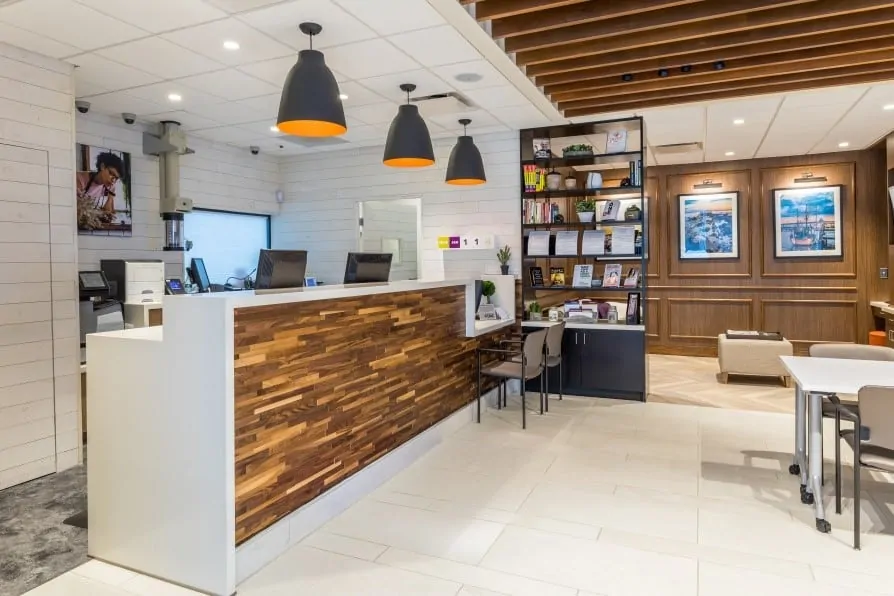
    • Chelsea Groton Bank, Groton, USA – when you think of a bank, you normally think of a dull, austere space with long grey counters and uncomfortable chairs. Connecticut’s Chelsea Groton Bank, however, redesigned their space to become a bank where people would come to learn and understand banking along with availing of regular bank services. With a large lobby, attractive wooden details, comfortable private seating areas and a more open space to facilitate side-by-side interactions, Chelsea Groton created a flexible, welcoming space that is, in the words of design principal James Farnell, all about “un-banking the bank”.
    • Coffee For Sasquatch, Los Angeles, USA – this LA coffee shop does the seemingly impossible by blending minimalism with the warm and quirky. Customers step into the café to enter a world of natural light, clean colours, abstract art and the floor-to-ceiling Sasquatch depiction. The use of various materials and surfaces created a minimal space where all the elements are cohesive, and there is still the warmth of greenery and wooden touches. The coffee shop won the award for Retail Renovation of the Year 2018 by VMSD, and makes a statement that passers-by can’t help but be attracted to.
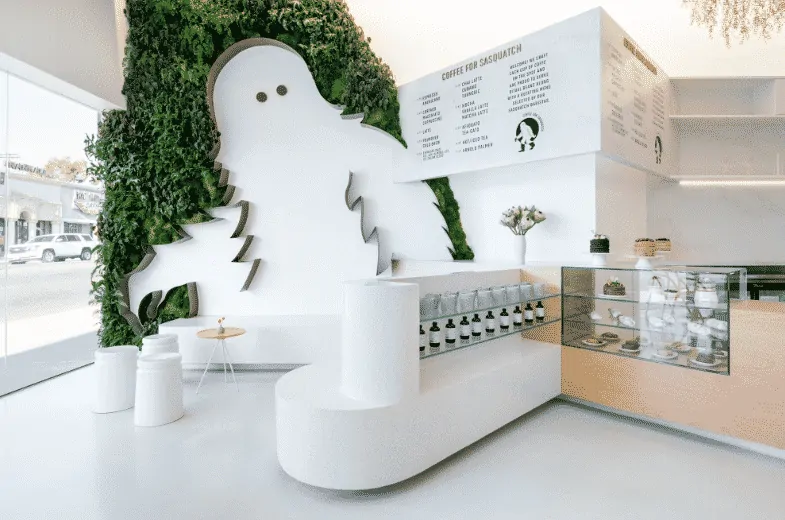
    Coffee For Sasquatch
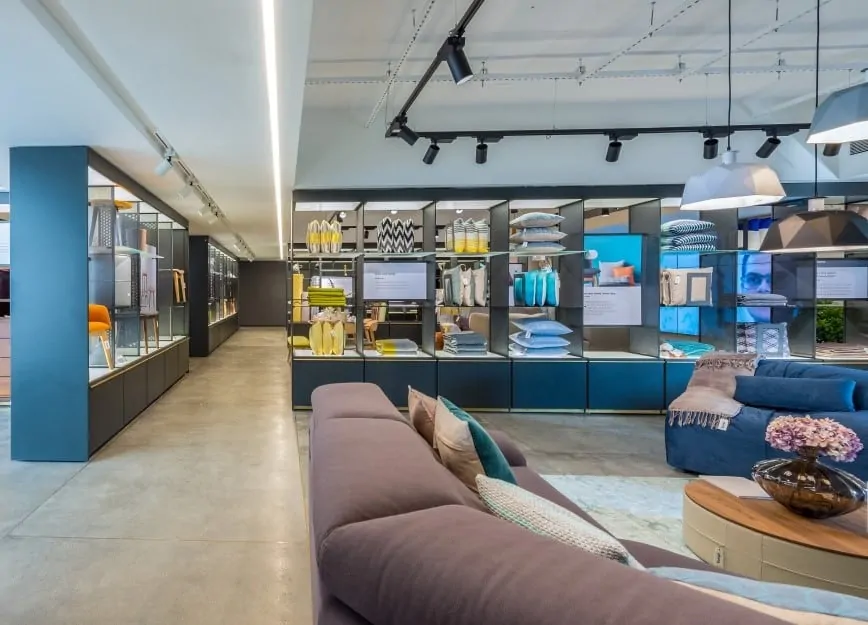
    • Script, Bengaluru, India – this stunning home furnishings store by Godrej & Boyce Mfg. Co. Ltd was designed with the aim of appealing to the growing Indian millennial classes with largely Westernised tastes and a modern outlook. The store was thus designed along the lines of an art gallery, with an open-floor layout that let the furnishings speak for themselves and spaces that paid homage to the product designers. Brass details were incorporated throughout the store as a tribute to the company’s legacy as a lock manufacturer, and the storefront was designed to adapt to natural light and also have a backlit display at night.
    Visual Merchandising For Online Businesses

    It is easy to assume that visual merchandising is exclusively the domain of brick-and-mortar retailers who have an actual physical space in which to wow the senses. However, think about the last online store you browsed. What did the page layout look like? What were the colour schemes? Was the site easy to navigate? Was the content crisp and catchy? Were the products displayed in high resolution and with enough information? Was the checkout process easy and smooth? All these are as much exercises in visual merchandising as are mood lights and free coffee. While tactile, auditory and “smell” experiences aren’t currently possible with online selling, retailers can use visual elements to impress customers the moment they walk in, as these successful sellers are doing:

    • Hyphen Sleep – This mattress brand uses a homepage with a clean design and bright pops of colour to tell its story. The homepage contains all the necessary details to convince a prospective buyer – product features, testimonials, price competitiveness and useful tips – without cluttering the page. It uses a neutral palette with splashes of orange and blue to attract the viewers, and the images of happy sleepers are evocative.

    hyphen sleep
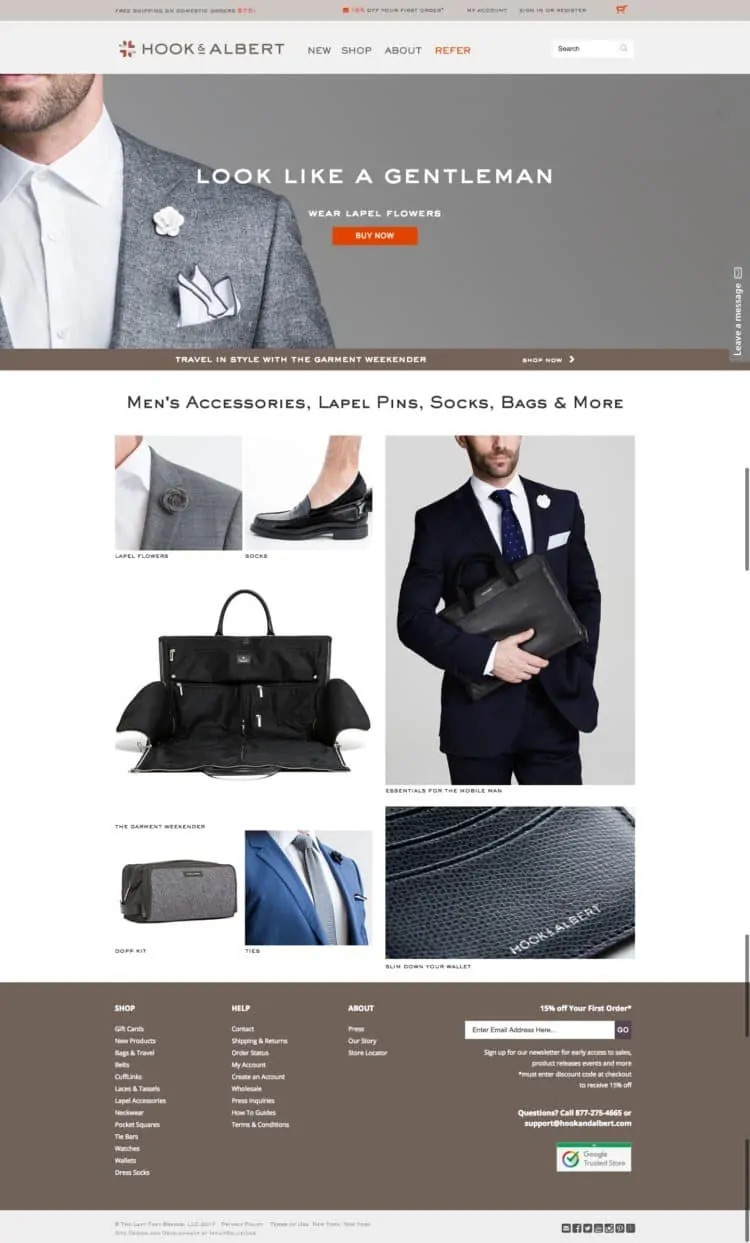
    • Hook & Albert – this accessories and leather goods brand from New York makes use of a collection format to showcase its goods. This format is inspired by the collection boards on Pinterest and is popular for highlighting clothing, accessories and other lifestyle goods. A simple grid layout makes for a clean look, and high-quality images with bold captions grab the attention of the viewer. A minimalistic backdrop ties in with the theme.
    hook & albert
    • Rad Soap Co. – this soap brand makes use of collections as well as a feature-based format that highlights certain “hero” products while also allowing customers to explore the collections they are interested in. An entire section is devoted to social proof, where social media posts with the #radsoap tag are featured.
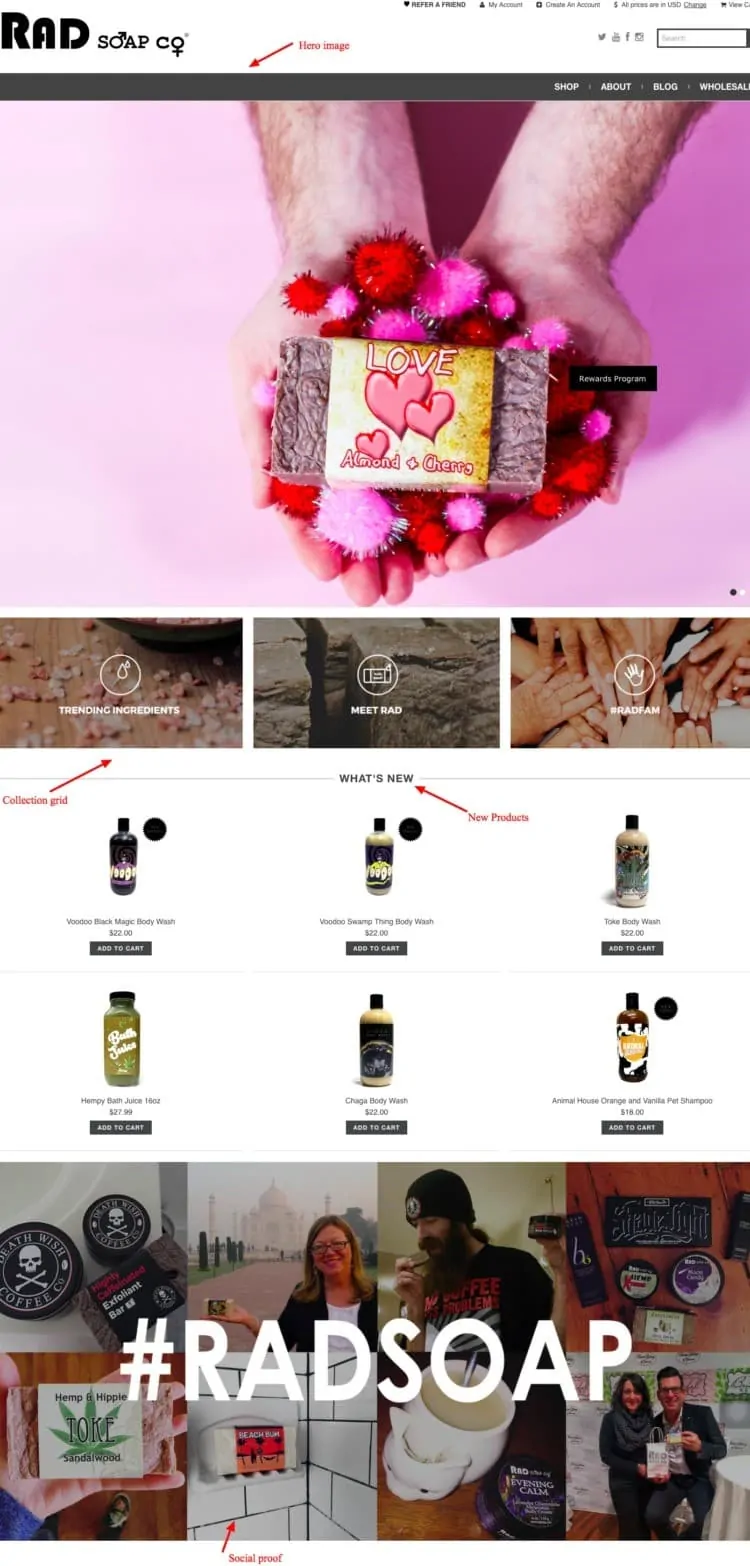
    rad visual merchandising

    Starting With Visual Merchandising

    Whether you’re a seasoned retailer or just starting out, effective visual merchandising can go a long way in making your store more memorable. Giving your store a makeover, however, can be an expensive and complicated task. It’s important to be well-prepared before starting out so that you and your team have a clear idea of what you want your store to look and feel like to customers. You can start off by following three simple steps.

    • Design a planogram – a planogram is a diagram of your store layout that depicts what elements you want to put in and where. Prepare a planogram for your store as it is first, and then see how you can improve it. Can you relocate items to make them appear less cluttered? Can you realign furniture to create more open spaces? Where can you add lighting, decorations, wall murals, shelves, display stands etc. to enhance the layout? What colour schemes will you go for and how will they be distributed? If you have an online store, come up with similar plans for each of your webpages. Narrow down to a final set of ideas, as well as one or two backup plans in case the original one doesn’t work out.
    • Allocate a budget – redecorating a store can be expensive, especially for a new business. With your planogram as a reference, determine how you can implement the desired changes at the most reasonable rates. Wherever possible, see how you can reuse what you already have or give existing furniture a facelift so that it fits in with your new theme. For online stores, allocate an amount for a seasoned web designer who can give your website the upgrade you desire.
    • Keep the team in sync – It is essential that your team, particularly your shop-floor staff, are aware of the new theme of the store. This way, floor staff can guide customers to focal points and take them through the narrative of the store space – it also reduces the risk of staff members rearranging exhibits or shifting the displays on their own. You should also have a system in place by which your team can share and discuss new ideas for visual merchandising. For an online store as well, it is important that the team in charge of site content, graphics and maintenance is aware of the store theme so that it can make updates and share new content accordingly.

    Bottom line?

    Humans are visual creatures. We gravitate naturally towards the aesthetic. Our tendency to be loyal to a brand depends on how well we can relate to the brand starting from the first impression – there is thus a clear case to be made for investing maximum effort in good visual merchandising. However, too elaborate a display could end up confusing the customer and putting them off further browsing. As a retailer, therefore, you need to use your store space strategically so as to expose customers to the maximum amount of merchandise while providing enough empty space to browse and reflect, and use a multisensory experience that ties in with your theme and convinces your customer to stay. While this could take a little time to perfect, the payoff in terms of customer loyalty and sales per square foot will be more than worth it.

    After all, you can never go wrong with a good makeover.

    Go On, Tell Us What You Think!

    Did we miss something?  Come on! Tell us what you think about our article on visual merchandising in the comments section.

  • How Telegram Works & Makes Money?

    How Telegram Works & Makes Money?

    Whenever one thinks of an internet messenger there seems to be a unanimous preference of a particular messenger known as Whatsapp. No doubt that speed, end to end encryption, file sharing, and group chats are what makes Whatsapp great, but there is one application that has implemented those features from the very beginning and does it better even now.

    Communications need to be secure and private, and security and privacy have proven to be pivotal since the World War 2 and Telegram has the most secure channel for your daily communications. It’s an internet messenger just like Whatsapp or Facebook Messenger but has a totally different USP – more power to the users.

    Intrigued? Read ahead to know everything about how Telegram works and makes money.

    How is Telegram Different From Others?

    Storage

    Telegram works on the principle of Cloud Storage. Cloud storage is dynamic which means that once your data is saved, it could be accessed by you from any number of devices at any point in time, without the need to back up.

    You can keep track of your sessions and download your files at any given point of time, so cloud storage makes data accessible for the user.

    Quality Compromise

    Telegram gives the option to a user to send their data in uncompressed form.

    Images which are often compressed by other messaging apps lose their details when compressed but due to this feature in Telegram you could send over your data without lossy transmission.

    File Size and Type

    In telegram the maximum size of data you could transfer is 1.5 Gigabytes. Transferring files which are memory heavy makes it possible to share critical short clips recorded in 4k format or even that casual outing video you made possible.

    Also due to Cloud Storage receiver could stream the videos with downloading taking place in the background which makes video previewing easy.

    Telegram does not restrict users to send over only certain types of files which make this platform the go-to messaging app to send over those rare file formats you had to struggle with, and it made you scramble the internet to find a way to send it.

    Bots, Groups, & Channels

    Bots are simply Telegram accounts that are operated by software rather than actual people and these bots generally have AI features that can be used to teach, play, search, broadcast, conduct polls, reminders, etc.

    Telegram groups are places where you add people from your contact list or make them join via a link. These types of groups can have at most 200,000 members and bots.

    Channels are essentially groups where only the admin can post. These channels can be used for broadcasting videos, images, and texts and can have any number of followers.

    Privacy & Currency Exchange

    The location of servers of Telegram is super secret and the founder of Telegram has devised a custom data protocol which secures the data of the users. A combination of AES and RSA encryption along with Diffie Hellman makes chats secure.
    This has enabled users to use bots to carry business and the security of Telegram has gained popularity to such an extent that people tend to prefer Telegram over other services when it comes to money transfers.

    Business Model Of Telegram

    Telegram as of March 2014 had 35 million downloads with 15 million users exchanging over 8 billion messages per month.

    Fast forward to 2021 Telegram has now over 500 million users.

    This cloud-based application has attracted users mostly because of its security and privacy.

    The issue of privacy has a huge impact on the popularity of Telegram is evident from the fact that following the controversy caused by a greater control on chats carried on Kakao Talk by South Korea President Park Geun-Hye many citizens swapped to Telegram for greater privacy.

    Even in the aftermath of the ban of Whatsapp in Brazil in 2015 Telegram registered about 1.5 million downloads.

    With the recent news of Cambridge Analytica Breach where Facebook, owner of Whatsapp was involved, users are giving preference to privacy and security.

    The venture founded by Russian duo of brothers Pavel Durov and Nikolai Durov is valued in the range of $3-5 Billion and according to the founders will never be up for sale.

    These facts are astonishing since Telegram spent even 0 cents on promotion and user base is growing organically based on the product.

    How Does Telegram Make Money?

    Telegram is a free app that currently runs on donations. According to a blog on the telegram:

    We believe in fast and secure messaging that is also 100% free.

    Pavel Durov, who shares our vision, supplied Telegram with a generous donation, so we have quite enough money for the time being. If Telegram runs out, we will introduce non-essential paid options to support the infrastructure and finance developer salaries. But making profits will never be an end-goal for Telegram.

    But on December 2020, Durov also pointed on to the possible future revenue-generating strategies of Telegram.

    All the features that are currently free will stay free. We will add some new features for business teams or power users. Some of these features will require more resources and will be paid for by these premium users. Regular users will be able to keep enjoying Telegram – for free, forever.

    All parts of Telegram devoted to messaging will remain ad-free. We think that displaying ads in private 1-to-1 chats or group chats is a bad idea. Communication between people should be free of advertising of any sort.

    In addition to its messaging component, Telegram has a social networking dimension. Our massive public one-to-many channels can have millions of subscribers each and are more like Twitter feeds. In many markets the owners of such channels display ads to earn money, sometimes using third-party ad platforms. The ads they post look like regular messages, and are often intrusive. We will fix this by introducing our own Ad Platform for public one-to-many channels – one that is user-friendly, respects privacy and allows us to cover the costs of servers and traffic.

    If Telegram starts earning money, the community should also benefit. For example, If we monetize large public one-to-many channels via the Ad Platform, the owners of these channels will receive free traffic in proportion to their size. Or, if Telegram introduces premium stickers with additional expressive features, the artists who make stickers of this new type will also get a part of the profit. We want millions of Telegram-based creators and small businesses to thrive, enriching the experience of all our users.

    Possible Future Strategies Of Telegram

    According to Pavel Durov, Telegram has two revenue making strategies planned ahead:

    Advertisements

    So, yes, Telegram has plans to money through advertisements. But unlike Facebook and WhatsApp, these advertisements will not be microtargeted and will not use sensitive data of the users.

    These ads will only be available on one-to-many groups through Telegram’s own ad platform. And the channel admin will get a share of the revenue as well.

    Freemium Benefits

    The platform also plans to launch premium stickers that users can purchase and use in chats.

    Concerns Over Future

    Telegram’s selling point is security and privacy. These two ideas are so firmly rooted in the organisational setup that Telegram Team has to relocate from their original base in St Petersburg to various location and finally settling in Dubai.

    There have been frequent run-ins with the government due to their privacy policy which saw ISIS conduct secret chats and control channels. Though this has been brought under control it depends mainly on the users as controlling private chats would be a violation of their privacy rules.

    Bottom Line?

    Due to its free and dynamic nature and host of useful features Telegram might soon become the fastest growing messenger app and increase its user base. Since it does not spend on marketing, users are assured of the product quality, and any statistics that come out of Telegram is purely organic.

    Go On, Tell Us What You Think!

    Did we miss something?  Come on! Tell us what you think about our article on How Telegram Works & Makes Money in the comments section.
  • What Is A Tagline? – Types, Examples, & How-To Guide

    What Is A Tagline? – Types, Examples, & How-To Guide

    You must have heard or read many, praised some and even mocked some too. But what exactly is a tagline? Is it important for a brand to have one? If yes, what makes a good tagline?

    Here’s a guide answering all questions concerning taglines, their importance, types, and how you can develop one.

    But first, here’s a definition of a tagline for those who are new to this concept.

    What Is A Tagline?

    A tagline is a short, memorable description that succinctly and clearly communicates the brand message.

    This short description acts as the brand’s catchphrase and builds brand personality, which, in turn, helps set the brand’s positioning in the market.

    Why Is Tagline Important?

    There’s no denying that taglines are a very important part of a brand; such important that some brands are even recognised by their taglines and their positioning in the market is influenced by their tagline.

    The tagline is a powerful communication message which becomes a public earworm and gets stuck in their brain. It is crafted to have a long-lasting effect in just one encounter. It communicates the brand personality to the consumer in easy words and, if crafted correctly, communicates the overall benefit of what is offered to them.

    Mcdonald’s brand positioning would have been totally different if its tagline were ‘It’s Tasty AF’ rather than ‘I’m Lovin’ it’.

    Characteristics Of A Good Tagline

    A good tagline is:

    • Simple: It can be understood in one reading and is not open to interpretation. For example, Nike’s ‘Just Do It’ is a great tagline because it is short, sweet, and to the point.
    • Memorable: It is easy to remember and recall. This is important because you want your tagline to be the first thing that comes to mind when someone thinks of your brand. KFC’s tagline ‘Finger Lickin’ Good’ is a great example of a memorable tagline.
    • Precise: It communicates a single, clear message. A complex or confusing message will not resonate with your audience. For example, L’Oreal’s ‘Because You’re Worth It’ is a great tagline which is straightforward, easy to understand and resonates with their target audience.
    • Creative: It is original and stands out from the competition. For example, Apple’s ‘Think Different’ is a great tagline that is unique and challenges the status quo.
    • Informative: It tells the consumer what the brand offers. That is, it is a promise of what the consumer can expect from the product or service. Levi’s ‘Quality Never Goes Out Of Style’ is a great informative tagline that tells the consumer that they can expect quality products from the brand.
    • Customer-oriented: It is focused on the customer, not the company. Redbull’s ‘Gives You Wings’ is a great customer-oriented tagline that is all about how the product makes the consumer feel, not what the product actually is.
    • Emotional: It evokes an emotional response from the consumer. Toyota’s ‘Let’s go places’ is a great emotional tagline that speaks to the consumer’s sense of adventure and desire to explore.
    • Consistent: It is used consistently across all marketing materials. This helps to create a strong and recognizable brand identity. Consistency is also what separates a tagline from a slogan.

    Tagline vs Slogan

    A tagline is different from a slogan. Unlike slogans, taglines don’t usually change. For example, Disneyland’s tagline is – The happiest place on Earth. But the company has used different slogans for its marketing campaigns:

    “Where dreams come true”

    “Where the magic began”

    “Happiest Homecoming on Earth”

    “I’m going to Disneyland.”

    Types Of Taglines

    Different companies have different marketing objectives and want to position themselves differently. Some want to communicate an emotional message, while others want to capitalise on facts. Some want to be direct, while some want to remain mysterious. All their needs require them to create different taglines. These taglines, however, can be divided into 7 types. These are:

    Imperative Taglines

    Imperative taglines usually begin with a verb and command the customers to perform a particular action relevant to the brand vision, mission, or personality. These taglines are usually used by brands which want to sound more bold, edgy, and impactful, and hence are usually used by brands which want to be a part of the target audience’s schedule.

    Examples of Imperative taglines are:

    • Nike – Just Do It.
    • Youtube – Broadcast Yourself.
    • Coca-Cola – Open Happiness.

    Descriptive Taglines

    As the name suggests, descriptive taglines are the most straightforward taglines which describe the brand offering, the benefits, and/or brand promise in simple words.

    A perfect example of a descriptive tagline is Walmart’s tagline – Save money. Live better. Another good example of a descriptive tagline is KFC’S It’s finger-lickin’ good.

    Provocative Taglines

    Provocative Taglines are thought-provoking and stimulating. They are crafted to stir up emotions and make you stop and think.

    Examples of provocative taglines are:

    • Adidas – Impossible is nothing.
    • Under Armour – I will.
    • Dove – You are more beautiful than you think.

    Superlative Taglines

    Superlatives are the highest degree of comparison. ‘The best in class’, ‘Excellence is our blood’, etc. are some examples of taglines which use superlatives to position itself as the best in industry.

    Examples of superlative taglines are:

    • Budweiser – The king of beers
    • BMW – The ultimate driving machine.

    Interrogative Taglines

    Some brands use questions to direct you to perform an action, think in a specific manner, or communicate any other message.

    The California Milk Processor Board’s Got Milk? is a good example of an interrogative tagline.

    Specific Taglines

    These taglines use words cleverly to reveal the brand’s product or business category and make it memorable.

    Volkswagen’s Drivers wanted. explains this category of taglines fully. Another example of specific taglines is Olay’s Love the skin you’re in.

    Visionary Taglines

    Visionary taglines communicate the brand vision to the target audience.

    Examples of visionary taglines are:

    • GE – Imagination at work.
    • Avis – We try harder.

    Does Your Small Business or Startup Need A Tagline?

    No matter how good you feel the concept of taglines is, there must a time when you’ve asked yourself – Do I really need a tagline for my business?

    The answer is – It depends.

    It depends on your brand name and the industry you’re dealing in.

    You might need a tagline if your brand name doesn’t tell the target audience what you do. For instance, Feedough could be anything from a cooking blog to a consultancy company, but we wanted to be known as a website which caters to entrepreneurs and startup enthusiasts; hence the tagline – The Entrepreneurs’ guide.

    You might also need a tagline when there are too many players in the industry you are operating in and you need to separate yourself from others.

    How To Write A Tagline?

    You don’t need to be the best copywriter to write the tagline of your business. ‘Save Money. Live better.’ doesn’t have fancy words, but it still does the job of explaining what Walmart is known for.

    Just follow these simple steps and you’re good to go.

    1. Write down in one or two sentences what you do and what benefit do your customers get when they use your product/service.
    2. Trim the sentence to form meaningful 3-5 word phrases/sentences.
    3. Choose the sentence/phrase you deem fit.

    Use these strategies to help you with the process

    KISS

    Taglines are useless if your target audience fails to understand what you wanted to communicate. Hence, we suggest you follow the ‘Keep It Simple, Silly’ approach.

    Don’t overcomplicate the process. Don’t go for complex words as they are less memorable. Try to communicate the benefit using less words and simple words.

    Showcase The Benefits

    Don’t tell them what you have to offer. Tell them what they’ll receive.

    Showcasing the benefits attracts the target audience more than a self-bragging tagline.

    For example:

    ‘The best coffee in town’ vs ‘Wake up to a refreshing cup of coffee’

    The first one looks like a claim while the second one looks like a benefit.

    Use Emotional Words

    Adding some emotional words will help you connect with the audience on a personal level.

    Think about what kind of feeling you want to evoke in your target audience.

    For example, instead of using “we invest your funds better” you can say “we grow your wealth better”. This small change will make a big difference.

    Use First Person Pronouns

    Using “you” and “your” throughout the tagline makes it sound more personal. It tells the reader that you’re talking directly to them.

    You can also use first-person pronouns such as “I”, “me”, and “we”.

    Make It Short And Sweet

    A good tagline should be short, sweet, and to the point.

    You want to make sure that your message is clear and concise. The last thing you want is for your tagline to be confusing or too long-winded.

    Use Active Voice

    When writing your tagline, make sure to use an active voice. This means that the subject of the sentence is doing the verb.

    For example, “your wealth is grown better by us” doesn’t evoke the same response as “we grow your wealth better”.

    The former sounds like it’s all about the company, while the latter sounds like it’s about the customer.

    Go On, Tell Us What You Think!

    Did we miss something?  Come on! Tell us what you think about our article in the comments section.
  • The 5 Richest Female Entrepreneurs In The World

    The 5 Richest Female Entrepreneurs In The World

    In the past, the term ‘entrepreneur’ has often been associated with men on a very widespread basis. But with the times changing fast, the number of female entrepreneurs worldwide has been increasing at a rapid rate.

    These are women who made it to the top despite the obstacles, and their success stories are truly inspiring and notable.

    It can be said that this is a great time to be an entrepreneur for females. There are many wonderful trailblazers who have made their mark across varieties of industries, and sometimes, more than just one.

    Now, isn’t that interesting?

    Ranked here, are the top 5 female entrepreneurs according to their net worth:

    Gina Rinehart

    Gina Rinehart
    Source: fortune.com

    Net worth: $17.4 billion, as of 2018

    Georgina Hope Rinehart, known as Gina Rinehart is a mining magnate from Australia. She is currently the Chairwoman of Hancock Prospecting, a privately owned mineral exploration and extraction company that was started by her father, Long Hancock. She inherited 76.6% of Hancock Prospecting when she succeeded her father.

    Gina Rinehart has been one of the most well-known, as well as one of the wealthiest female entrepreneurs in the world. Outside of the mining sector, she has shares in Ten Network Holdings, and also expanded to agriculture. She was also named Australia’s wealthiest woman according to both Forbes, and Financial Review Rich List in the years 2011 to 2015.

    Rinehart’s fortune peaked in the year 2012, as she overtook Christy Walton as the world’s wealthiest woman, and was included in Forbes’ list of The World’s 100 Most Powerful Women. Although her net worth has dropped over the past few years, she continues to remain one of the wealthiest and influential female entrepreneurs in the world.

    Oprah Winfrey

    Oprah Winfrey
    Source: Medium.com

    Net worth: $3 billion, as of 2018.

    Who doesn’t love Oprah?

    Orpah Gail Winfrey, better known as Oprah Winfrey, is an American media executive, actress, talk-show host, television producer, author and philanthropist. She is also one of the most well-liked female entrepreneurs of all time.

    That’s a lot for one person, right? It gets better.

    She has been dubbed with the title of “Queen of All Media”, and was the wealthiest African-American of the 20th century, and was North America’s first black multi-billionaire. She’s also ranked among the greatest black philanthropist in the history of America, and is often ranked as one of the most influential people in the world.

    “The Oprah Winfrey Show” was the highest rated show during the years 1986 to 2011. The show focused on self-help, literature, confession culture, and spirituality, and received a lot of backlashes, but none of it decreased its popularity quotient.

    Apart from being the host on her show, she is also the Chairwoman and CEO of Harpo Productions, as well as the Oprah Winfrey Network. She was also awarded the Presidential Medal of Freedom by former President Barack Obama, and honorary doctorate degrees from Harvard and Duke.

    Cher Wang

    Cher Wang
    Source: androidpit

    Net worth: $1.6 billion (estimated).

    Cher Wang is the Co-Founder and Chairwoman of the mobile technology company HTC Corporation, and the integrated chipset makers VIA Technologies. She is also a philanthropist and has set up the Guizhou Forerunner College, a charitable college in South-West China set up by VIA Technologies’ non-profit Faith-Hope-Love Foundation, that aims to provide low-cost education to students from low-income families.

    Cher Wang is considered to be one of the most powerful and successful female entrepreneurs in the field of technology. She is also known to have created a fairly early model of the smart-phone, back in the year 1997!

    Talk about brains!

    She has been featured on Forbes multiple times. Wang was featured on the Forbes’ Billionaire List in the years 2010, 2011 and 2012. She was also ranked #56 on Forbes’ list of The World’s 100 Most Powerful Women in the year 2012, and #54 in the year 2014.

    Wang Laichun

    Wang Laichun
    source: asia.nikkei.com

    Net worth: $1.9 billion, as of 2018.

    Wang Laichun is the Chairwoman of a Chinese electronics manufacturer known as Luxshare Precision Industry. This company sells Apple most of the parts required for its products. Not only is she the Chairwoman, but she also owns one-third of the company

    Laichun has a lot to her name. At the age of 46 in the year 2014, she was named as one of the world’s youngest self-made billionaires by The Daily Telegraph!

    Before becoming the Chairwoman at Luxshare, Laichun worked for ten years at the Hon Hai Precision Industry owned by Taiwan billionaire Terry Gou.

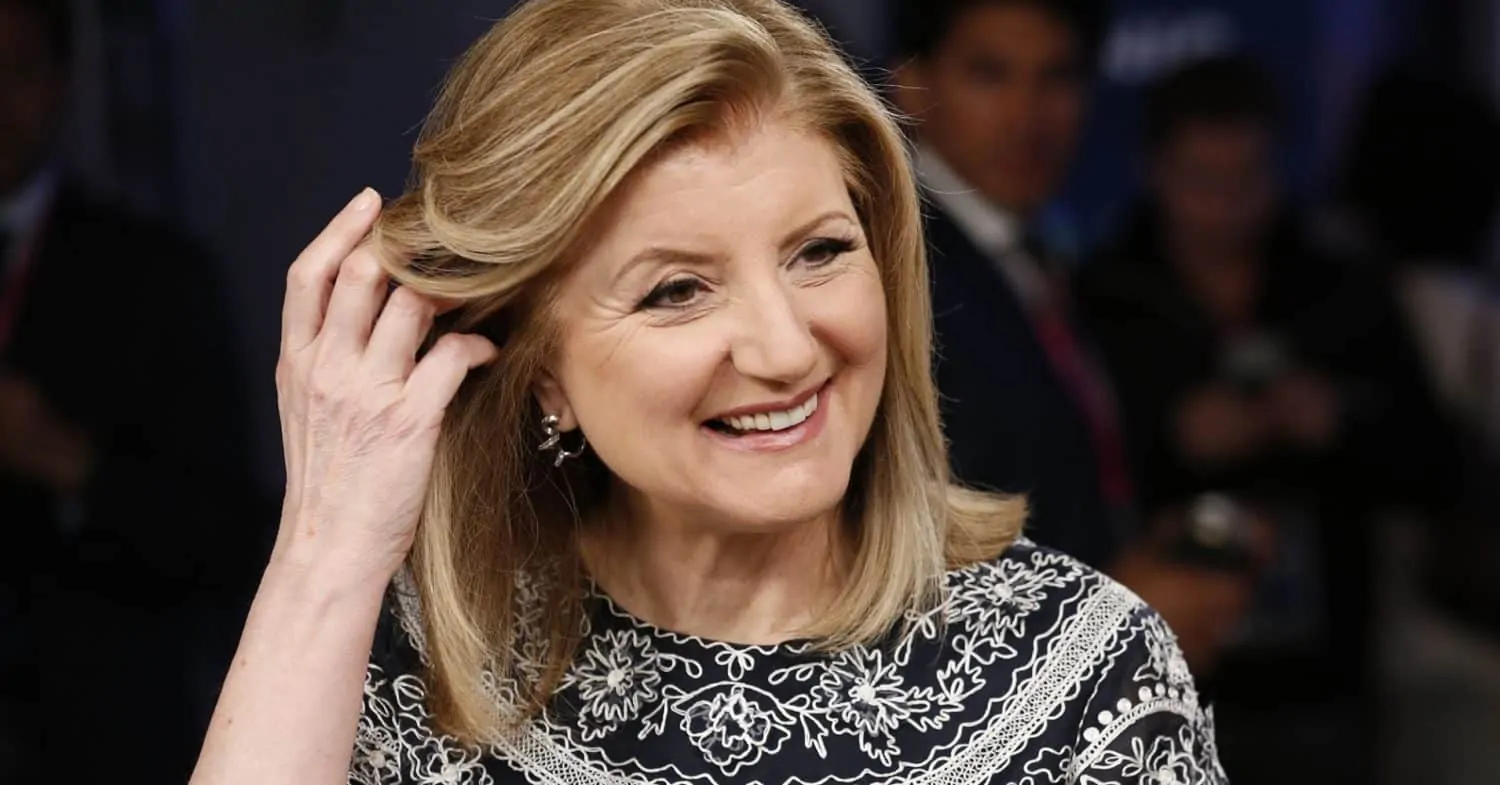
    Arianna Huffington

    Arianna Huffington

    Net worth: $50 million, as of 2018.

    Arianna Huffington was the Founder and the Editor-in-Chief of The Huffington Post. She is an author, a syndicated columnist, and a businesswoman. She was also a conservative commentator, and offered her liberal points of view, while also being engaged in business.

    Although The Huffington Post was acquired by AOL in the year 2011, Huffington remained the President and the Editor-in-Chief of the Huffington Post Media Group which consists of AOL Music, Engadget, StyleList and Patch Media. In 2016, she stepped down from her position to devote her time to her new start-up, Thrive Global that focused on health and wellness information.

    Huffington was ranked #12 in Forbes’s first ever list of the Most Influential Women in Media, in the year 2009. She was also ranked #42 in The Guardian’s Top 100 Media List. In 2014, she was once again featured in Forbes as the 52nd most powerful woman in the world.

    Go On, Tell Us What You Think!

    Did we miss something?  Come on! Tell us what you think about our article in the comments section.

  • Identifying The Best App Revenue Model

    Identifying The Best App Revenue Model

    Getting up, getting ready and leaving for work. Maybe you tried to spice up a bit, and you got an app prepared to improve a specific problem you found around you.

    Now then comes a question:

    “Should I try to earn money from this?”

    If you answer NO to, then we praise your efforts and wish you luck for your future endeavours, but if you want something green out of your app, then you must read on.

    In-app Advertising

    There are many types of options for advertisement, but there are a few questions you need to ask as a developer:

    • How intrusive are your advertisement?
    • What is the frequency of those advertisements?
    • Is the advertisement an advertisement for other 3rd party apps or your app?

    It is essential to address these issues as these are make or break point for applications.

    User experience plays an important in retention and these issues if not addressed could frustrate the users and make them uninstall your apps.

    Now we have got that cleared let’s see what kind of advertisement exist.

    Interstitials

    Interstitials in app advertising
    What Is An Interstitial Advertisement?

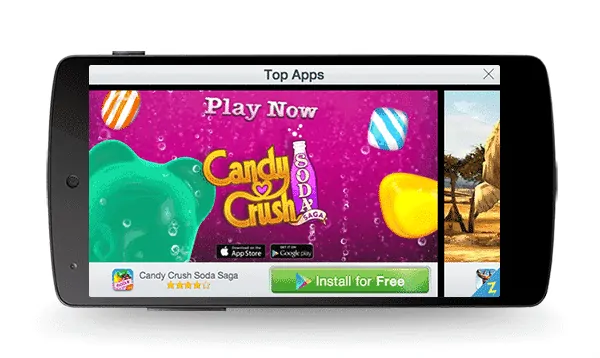
    Interstitials advertisements are merely the advertisements that you see in the intermediate processes of an app.
    For example, you open up the game Candy Crush, while it gets connected to load your user info, there is an advertisement that covers your phone screen with a promo code or a suggestion to another similar game, and this advertisement has an option of closing it down.

    What Would Make You Use Interstitial Advertisement?

    Since these advertisements play out for a certain period, in between transition, they gain the attention of the user. They are more likely to be clicked and hence generate revenue.

    Why Would You Choose To Not Use Interstitial Advertisement?

    Frequent interruptions hinder the users to get the task done. These interruptions may frustrate the end user, and he/she may end up uninstalling your app.

    Now there is an essential technical aspect that you should read about :

    How does Google view your advertising strategies?

    Google has started penalising mobile sites with interstitial advertisements. If you plan to make a website for your app, then refrain from doing as all your SEO efforts could go down the drain with low page ranking of Google Search Engine.

    Banner Advertisements

    BANNER ADS

    What Is A Banner Advertisement?

    Banner ads are the small textual/visual ads you see near the top or bottom of an app. These are apps have a fixed area and often show up on the home screen of the application.

    There may be a slideshow of banner ads depicting various brands.

    What Would Make You Use A Banner Advertisement?

    These ads are non-intrusive, and they do not make users mad.

    They are easy to create and integrate since they are localised at a particular position. Also, banner advertisements are easy on the pocket too.

    Why Would You Choose To Not Use Banner Advertisement?

    This kind of ads rarely get clicked, and hence they do not generate enough revenue

    Native Advertisements

    instagram native ads

    What Are Native Advertisements?

    Native, as it suggests, are advertisements that disguise themselves and are presented as a part of the original. You could usually see them with taglines such as sponsored or recommended for you.

    For example, in your Facebook feed, you see content that guides you to another page but is not intrusive nor placed at a particular location.

    Another example could be advertisements that you find near the scroll bar or at the footer of the page while reading an article and there is sponsored or recommended content.

    What Would Make You Use Native Advertisements?

    Native advertisements are less intrusive when compared to banner advertisements. They integrate well with the application and hence enhance user experience.

    Why Would You Choose To Not Use Native Advertisements?

    Apps which uses native advertisements need personal information for analysing browsing activities to make those ads feel more personal and this why they also take longer to download than those apps which do not make use of native advertisement.

    Now this may lead to people downloading your app less as time and patience of a user is limited and hence user tends to abort the download process in between.

    Also, these type of apps needs frequent upgrades which is why you could see why your Facebook, Instagram apps are asking for updates after just a few weeks.

    Video Reward Advertisements

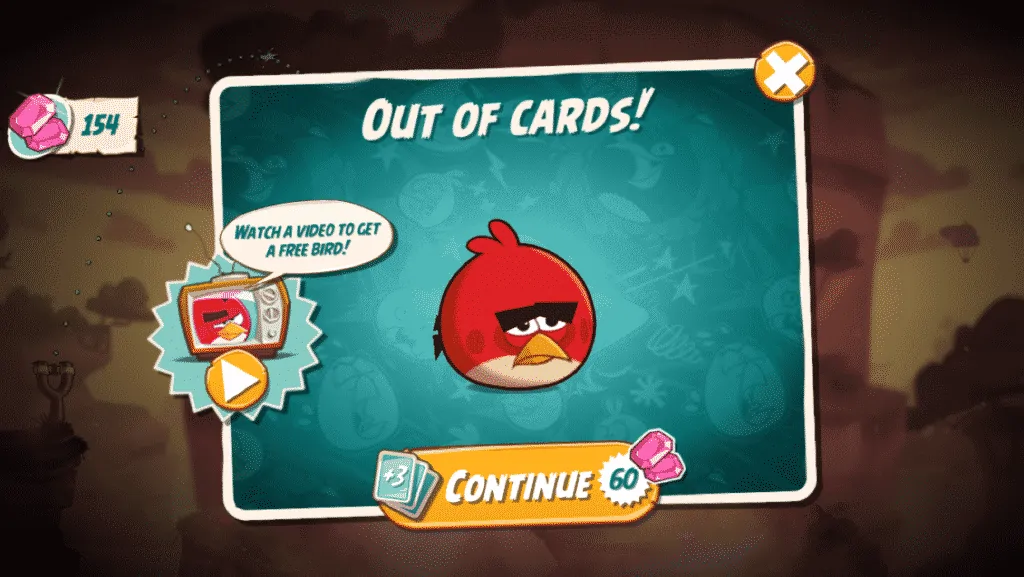
    ANGRY BIRDS VIDEO AD

    What is Video Reward  Advertisement?

    These type of advertisement are usually seen in-game applications where to gain specific feature in their gameplay user opt to see a video ad at the end of which they gain a certain amount of in-app currency and buy what they want.

    These type of adverts are also seen where to unlock some content let’s say an article you see; there is an option to see that hidden content by viewing a video.

    What Would Make You Use Video Reward Advertisements?

    Video reward advertisements engage the customers. They provide a way for exploring the app more free of cost. They offer incentives which is a big positive for any application out there.

    Why Would You Choose To Not Use Video Reward Advertisement?

    Video advertisement could be seen as an easy way out for users not wanting to spend. Users who use in-app purchases to enhance their experience feels cheated this way.

    Read on more to find in-app purchases.

    App Purchases

    If you’ve read our article on Game Business Models, you’d know that games can be sold in two ways. Mobile applications follow the same monetization methods. App Purchases revenue model constitutes the freemium model, , trial game model, as well as the premium model.

    Freemium

    Freemium apps are the apps which do not charge you anything for the core features, but the add-ons and extra features are available at a predetermined cost.

    This mode of monetisation popularises the app among different genres because of the flexibility provided by providing useful features free of cost and premium features at a price.

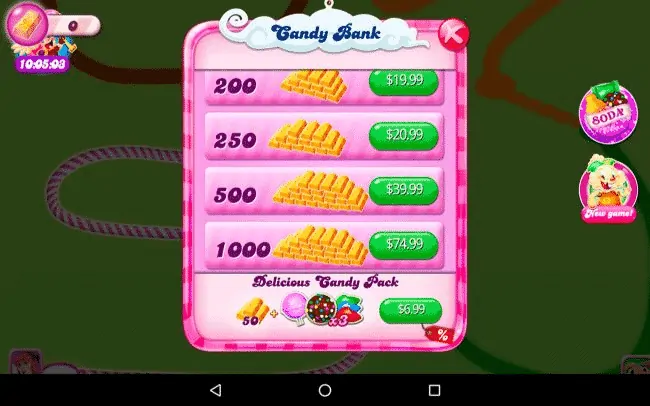
    candy crush in app purchases

    Users are given options to buy the virtual currency of the game via watching videos, or they do buy the virtual currency using real currency.

    For example in games, gamers use in-app purchases to customise their outfits or buy new weapons(in case of shooting games).

    Another example could be photo editor apps which provide a specific set of overlays for editing your photo and individual frames, and layers are tagged premium features. This way users are not forced to spend their money.

    From their first session with the app, we’re trying to develop trust with users. And we do that by demonstrating value without asking anything from them first. -JP Chookaszian, Director of Revenue at VSCO.

    Premium Applications

    premium app

    Premium app business model is the among the oldest business models where the developers charge an upfront price before letting the users download or use the application.

    This revenue model works well when the users are professionals who demand everything without any interruptions.

    Trial Versions

    There is another way to test the strength of your app. Trial versions are similar to freemium versions but they limit the access to core features too. As the name suggests, trial versions let the users try the application before buying it.

    An app with trial version makes the user comfortable with the way things work and therefore gives a high probability of users buying the full text of the app by paying.

    Open Source API

    Ever wondered how Google Maps make money?

    Uber, Lyft, Ola, and every company which uses the Google Maps API for commercial purpose, pay Google for the same.

    API (Application Programming Interface) is a software intermediary that allows two applications to communicate and share data with each other. Compare it to a set of Lego pieces connected to build a castle; you connect a bunch of different micro-services interconnected by APIs to build a full-fledged service.

    By making your app API available via open source you could earn money as developers could use a specific section of your code and thus you could generate revenue.

    Data Monetization

    The following advice should be kept in mind before proceeding further in this section:

    For me, privacy and security are really important. We think about it in terms of both: You can’t have privacy without security.- Larry Page

    Data of your users could be given to 3rd party apps for their research for money, but it is essential to provide users with the control of what content they want to share.

    The most recent controversy which forced every big multinational company to restructure their privacy policies is the Cambridge Analytica breach of Facebook user data.

    Choosing the right strategy for your app

    App Development

    Your app should be bug-free. To ensure this, you must invest in your developer team. Everything is secondary as no one can sell a lousy product forever.

    User Interface and User experience(UI/UX) are the areas you must focus on as the look and feel of the app is now more critical.

    Going out in the field, conducting FGD (Focussed Group Discussion) about possible UI/UX for the app could give you some useful insights about how to structure your app.

    If you are in a startup phase, then you should definitely read the Ultimate Startup Hiring Guide

    Identify Your Audience

    The strata of the society you are targeting also become important because this is an important aspect as far as the usage of the app is concerned. Photo editor apps are seen to be more popular among users of Instagram which include people of age 25-35 while apps like Facebook seem to garner more popularity among the older generation.

    Generational gaps and habits play a vital role, and you could read more about generational difference between Gen Z and Millennials; two of the most prominent generation of the 21st Century here.

    Identify Who Are You Competing Against

    You must know the market you are entering. It is essential to know whether the market is hypo or hyper.

    Hypo market is a market where the domain of your app is never explored. In such a market, your app may prove to be revolutionary, but it may also be super-flop as people could have no idea about what it is actually.

    In a hypermarket, there is already a lot of choices, and therefore it may become difficult for you to establish a name for your application. There might be logistic issues also if you try to promote your apps and careless evaluation might also drive your venture towards bankruptcy.

    Engaging Users

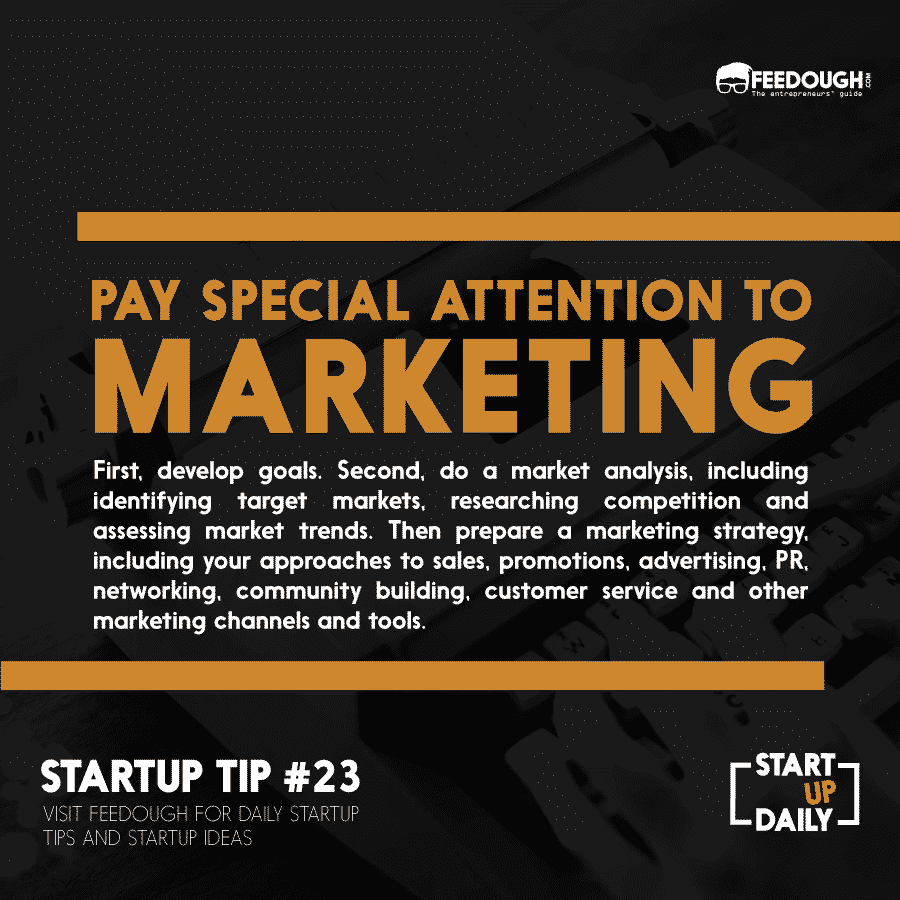
    startup tip #23

    Print and Social Media

    With the advent of platforms like Instagram and Facebook, it has become affordable to advertise your company.

    Social Media campaigns have gone viral for such thing and will go viral even in the future. The target audience of teenagers and youth tend to adopt a norm that is famous, and a viral app is one of them.

    For example, Mirakee or DubSmash was used by a celebrity, and this concept was rapidly adopted by their followers.

    Print Media is another way to advertise your advertisement. Print advertisement requires significant resources for producing an impactful image.

    This way there is a high probability to engage new users and this way you could generate more revenue.

    Email and SMS Marketing

    Users are generally asked to link their mobile numbers or email for various purposes. These could be used to send users customised messages enticing them to perform a particular action on the app.

    For example, you might have received quite a few emails regarding offers that are soon going to get expired especially in the case of video games.

    The Root

    App making and monetising is a difficult task. It may take you several months to get the app up and running and even more time to earn revenue from it. Market research, careful application of advertising will help you place a firm footing in this market and pave the way for your future endeavours.

    Go On, Tell Us What You Think!

    Did we miss something?  Come on! Tell us what you think about our article on app revenue model in the comments section.

  • What Are Hyper-Casual Games & How Do They Work?

    What Are Hyper-Casual Games & How Do They Work?

    Personally, to kill time, I have installed one of those no-brainer games available for free on the App Store. They don’t require a lot of effort and they’re easy to play on the go. And while I am doing this, millions of people are doing the same. You can see it around you, people in public transport tapping their phones or swiping occasionally while concentrating on their screen.

    flappy bird hyper casual game

    So how exactly do these games work? And can you catch the wave? Can you make money out of it?

    The answer is as simple as these games: YES!

    Why are these games an instant hit in the market right now? We have a few pointers; maybe if you plan on making some easy money, these should matter to you:

    The Science Of Easy

    Hyper casual games are very simple no-brainer games that don’t even come with instructions (generally). They are so easy that you can play them while working on your desk job (not recommended).

    But the question is why are hyper-casual games addictive and contagious?

    color switch

    Hyper casual games are designed such that no user gets frustrated over its interface or gameplay (barring the likes of Flappy bird). These games are designed so that the simple layout and gameplay doesn’t take a lot of time to master. This is why these games easily catch on as it hardly takes any skill to master such games.

    Interface

    tap mobile game hyper casual

    These games usually have a tap or swipe to interact environment and not a lot of complex factors to weigh in. Current market trends show portrait mode hyper-casual games are winning the race (Temple Run, colour switch) but once in a while landscape runners (jetpack joyride) take over the party.

    Visuals

    Most hyper casual games incorporate simple geometric graphics and solid colours. Isometric, Minimal flat designs and neon are some of the basic categories of graphics used in these games. Basically, nothing that will make you squint.

    Gameplay

    Most hyper casual games involve a single world where you progress and build your score while the difficulty keeps stepping up. These “worlds” aren’t fixed and a random sequence of obstacles is found every time you replay the game. The game starts with easy and proceeds to get difficult over time. Thus not keeping it too easy to get boring and not keeping it too hard to get frustrating yet pushing you to get a higher score every time you play the game (remember hitting a score of 100 in flappy bird?).

    We have spoken about the basics. If you really are lazy like me and haven’t read what I have written above. Here it is in short, TL; DR: The three base idea for a working hyper casual game is :

    • They should be easy and self-explanatory,
    • They should have a minimal basic gameplay that you can play on the go (preferably while holding your smartphone in one hand) and
    • They should have simple graphics that are not too hard on the eye.

    Probably the immediate question that hits your mind after reading this is:

    Is the market really that big for such games? Well, see for yourself!

    Subway surfer has crossed over a billion downloads on the Google Play Store itself, Temple Run 1 and 2 each have grabbed 500M+ downloads.

    Still think Mobile gaming isn’t that big anymore?

    Hyper casual games publisher Ketchapp is minting money by the day. We’d recommend you check out Ketchapp if you want to know some textbook examples of Hyper-casual games. It’s no secret that people have made over 100000$ in a matter of few months through these hyper-casual games.

    Why Would You Want To Try It?

    A hundred thousand dollars in a couple of months? Sounds tempting right? That’s not even the best part. The best part is that hyper casual games are so simple; they don’t require a lot of coding to have a finished product? You could know absolutely nothing about coding and still get through making a successful hyper casual game. How you ask? Keep reading:

    So far if the idea of developing a game is tempting you, we should move on to how you should do it.

    Picking what to develop?

    Most game developers end up developing a game that is out of place or that has a gameplay that has been overused or rather “abused” and this is the step one for their game’s downfall. Imagine launching a game similar to Doodle Jump now, what would you expect of it? It will probably never get off the ground. So what’s the trick here?

    Before launching any new product, a thorough market research is a must. Similar to every product launch, games should have a proper market research too. Lucky for you, this comes easy. All you gotta do is: Check the top charts for games on App store or Play store to find out what games are trending. Pretty easy if you ask me. What to look for when you are researching? The growth chart:

    We know how business life cycle works. Each business goes through Introduction, growth, maturity and then decline. The best way to earn profit is to catch the bus when a particular genre is in the growth phase. And how do you do that? By reading the charts:

    When you go to the top charts you will see a pattern in the current top grossing games, they might be runners, simple tap or swipe-based games but more or less they will be governed by a similar principle. Find out what that is, what’s hot in the market and check what you can remodel and improve, how you can have a better game than already existing games. And hit the pedal. Now, this is the general idea to find what’s “hot” in the market but make sure you ride the wave only during growth i.e. if you see a lot of clones of the games you are targeting, you might want to reconsider your decision and decide on a more profitable idea.

    How To Go Ahead Once You Decide On A Particular Game?

    Hey, don’t get us wrong. We are not asking you guys to pick popular games and clone them. We are asking you to refer games, innovate and improve on the existing titles. Take multiple references, decide how things should work in your game, mix and match, let your creativity run free.

    Most failed games usually have one thing in common. They do not have a point of reference. They shoot a blind arrow and it usually misses. What’s the fun part here? You get to play a lot of games. Play a lot of games, pick a game as your reference for gameplay another for graphics, music add your idea, maybe mix a few references and you get your new game. There’s nothing wrong getting inspiration from a few games to create your own masterpiece.

    Why do we ask you to choose on references? That’s the secret recipe to success. Unsure if a level is too difficult? Refer what your selected game did. Not sure how the environment works with your story? Ask your reference game for help. Find the secret formula. Replicate it.

    Developing A Hyper Casual Game

    Of course, this would be the biggest doubt most readers have. Of course, we are going to address it. The thing about hyper casual games is: You can develop games without coding.

    How?

    Well, there are multiple toolboxes available on the internet to help you create your own game. Naturally you have to put in some efforts to develop the game but it generally would be drag and drop (which is a way better option as compared to standard coding from the ground up).

    Which brings us to the second option: Coding from the bottom – each aspect of the game and, of course, creating graphics (or hiring people who would do that for you), soundtrack and everything else.

    Naturally, the third option would be hiring freelancers who would code for you, design for you and make the whole package. For a pre-decided fee which might take quite a lot but if you want complete control over your game, you can go for this.

    What we suggest for non-coders is to go for the toolboxes available in the market. Our personal favourite is Buildbox. Run wild, make your game, trash it or publish it. It is all on you.

    Game Business Model

    Decide on the game business model. Do you want the game to be completely free? Keep it Premium? Make it Freemium or run advertisements? Make an informed decision before diving in. The general trend is Free games that run advertisements but no one is stopping you from deciding your business model. It is your own game. Make your own decisions and make sure you stick by them.

    Publishing The Game

    The publishing part is easy these days, you can publish on your own by registering on the respective platform and uploading your game. Cracking a big publisher is another thing. There are multiple hyper-casual game publishers  (like Voodoo) that, if they find your game profitable enough, would take your game under their wing, and market it. Naturally under their banner, but you are definitely going to make big money out of it.

    The other way round is pretty cool too: Hold your ground, market your game on your own and fight your way to the top. This might be tedious but if you want your organization that fights the big league boys you gotta make this decision.

    Have fun! Happy development!

    Go On, Tell Us What You Think!

    Did we miss something?  Come on! Tell us what you think about our article on Hyper-Casual Games in the comments section.

  • How Does Grubhub Work? | Grubhub Business Model

    How Does Grubhub Work? | Grubhub Business Model

    Wondering what’s going to be your today’s grub? Where are you going to get your food ordered from? If this is what you’re thinking then you haven’t tried GrubHub yet: a skyrocketing startup that caters to online food order and delivery needs of the customers in the most interesting way possible.

    GrubHub brings you hot and sizzling food in two ways :

    • Order: order different dishes of different cuisines from numerous eateries in your locality by typing in your address. GrubHub has partnered with a dedicated fleet which will deliver it to you.
    • Pick up: order different dishes of different cuisines from eateries which will prepare it and pack it for you to get there and pick it up.

    GrubHub makes sure that the diners get the best of what they want thus it provides 24×7 assistance to its customers and amazing deals and coupons which other competitors in the line don’t realize the need of.

    As an on-demand food delivery platform, GrubHub has partnered with more than 85,000 restaurants in more than 1,600 locations across the USA and processes over 200,000 orders on a daily basis.

    GrubHub Business Model

    GrubHub has been successfully growing since 2004 and achieved a milestone of becoming an IPO in 2014. Its upward graphs are a result of its effectively creative business model and a promising revenue generation strategy.

    GrubHub works on a 4 step dynamic model which goes in the following way:

    • Search: customers can search through a list of restaurants and select their favourite food from their favourite cuisines. They can avail special deals and offers by skimming through the restaurant community on the platform. The search results can be refined by selecting the location for placing the order.
    • Place an order: Once the customers have decided their order they have the option of completing the transaction by making an online payment (or opting for cash on delivery)
    • Process: After receiving the order GrubHub redirects it to the particular restaurant. The restaurant, in turn, prepares and packs the order for delivery.
    • Delivery: GrubHub delivery personnel completes the final step by picking up the order from the respective restaurant and delivering it to the customer.

    GrubHub’s success is highly praiseworthy because of their effective tactics of marketing them as a restaurants menu aggregator and their determination of offering their customers amazing experience and making them return to their partner restaurants. GrubHub’s unique options for its customers have helped it take a giant lead in this sector. Some of its salient features are as follows :

    • It has partnered with almost all the restaurants of the cities thus offering it’s customers a wide variety of food items.
    • It provides special discounts to its users for different restaurants depending on their partnership.
    • GrubHub has developed a rating system which places restaurants in order on the basis of their reviews. The users rate the restaurants on the basis of the quality of the food and their experience.
    • Its technology helps you enhance your experience by telling you the distance of the restaurant from the location, average food price, delivery fee (if any), estimated wait time for the order in addition to the presence of a 24×7 customer care team.
    • It presents a Pickup option on its platform which has helped customers buy their favourite food from great restaurants without any hassle.

    2 Tiered Customer Strategy Of GrubHub

    Since Grubhub combines the aggregator business model and the on-demand hyperlocal delivery business model, the company has to woo two customer segments-

    Users

    • People who do not wish to cook for dinner and want to enjoy with their family at a great restaurant find GrubHub a helpful platform.
    • People who are diehard food lovers but do not have the time to go out and like getting their food delivered at their doorstep.
    • For working professionals who find it difficult carrying a lunch box to their cabin often rely on buying food from outside for lunch.

    Restaurants

    • Restaurants looking to expand their business by increasing their reach and customers, doing online branding, find GrubHub a trustworthy partner for their establishments.
    • Food joints which wish to deliver their food to the doorstep for their customers without involving much investment.
    • Restaurants which have a shortage of delivery personnel to fulfil orders at home trust GrubHub for their deliveries.

    How Does GrubHub Generate Revenue?

    GrubHub being an on-demand food delivery platform works on a simple yet effective less-ownership model and generates revenue by the following methods:

    Commission On Orders

    GrubHub charges a commission percentage from the restaurant for each and every order delivered.

    The amount of commission being charged ranges from 5% to 15% of the value of the order depending upon the partnership with the restaurant. On average, it charges a commission of about 12-13%.

    Marketing Plans for Restaurants (Sponsored Listings)

    GrubHub is a great platform for restaurants to enhance their market presence and expand their consumer base. The company has well-defined marketing and advertising plans for the restaurants which feature them on the top of the results for a limited time and results in bringing more traffic.

    The company charges a higher commission rate for such listings (~20%).

    GrubHub’s Market Presence

    GrubHub is one great example of an upwards shooting business model. One aspect of the success of a business model is its customers and their satisfaction. It is important for a business to not only retain its customers but to increase its reaches as well. The main goal for any business is to not just sell their products but to strengthen its relations with its customers. GrubHub has come out as a giant player in this industry because of it’s sheer determination and hard work.

    Go On, Tell Us What You Think!

    Did we miss something?  Come on! Tell us what you think about our article on How Does Grubhub Work? in the comments section.

  • The Secret To An Effective Advertising Campaign

    The Secret To An Effective Advertising Campaign

    What makes a good advertisement campaign?

    Is it the catchy tagline, the sales pitch or is it how well you have structured your communication message?

    Well, all of these are crucial in making an advertisement campaign a ‘good one’. But not all good ad campaigns are effective.

    So what makes an advertisement campaign effective? What makes it a memorable advertising campaign that engages the masses, create an impact and also boost sales positively?

    To answer this question, let’s look back at some of the best ad campaigns of all time:

    Dove ‘Real Beauty’ Campaign

    In the year 2004, a research by Unilever revealed that only 4% of the women considered themselves to be attractive. But, what caused this mass- insecurity among women? The root cause for this was found to be digitally distorting photos to create the illusion of perfection. Basically, Dove called out the Photoshopped lie that most brands try to sell their customers.

    While most ad campaigns feed on the insecurities of people, claiming to guarantee the ‘perfect look’ by using their products, Dove took the polar opposite approach by opting for a more ‘natural, everyday look’ in their advertisements, rather than highly glamorizing the commercial, thus sparking a string of discussions about how unrealistic beauty standards affected women adversely, among a number of other feminist debates.

    Why Did It Appeal To The Audience?

    The ‘Real Beauty’ campaign resonated with a large number of people, and instilled a sense of self-esteem in them with the assurance that ‘everyone is beautiful’. The campaign was all about building confidence in men and women, alike. Women who resonated with this campaign were also keener on buying products by Dove.

    The campaign wasn’t about ‘I’m really glad they put this in the shampoo.’ It was about ‘I really appreciate what the brand is doing in the world. I want to put my dollars against what they’re doing.’ ˗ Nancy Vonk, Producer at Ogilvy & Mather, Toronto (for the ‘Real Beauty’ campaign).

    Coca-Cola ‘Share A Coke’ Campaign


    What do big companies do to appeal to an already large audience?

    They appeal to the individuals.

    That is what Coca-Cola did in the year 2011, with the ‘Share a Coke’ campaign. The ‘Share a Coke’ advertisement campaign started in Australia, after Coca-Cola personalized Coke bottles and cans with 150 of the most popular names in the country, with the U.S quickly following their footsteps. Coca-Cola also gave people the option to personalize bottles on their website with names and logos.

    The very idea behind this was to encourage the customers to ‘Share a Coke’ with the person whose name was on the bottle, if it did not have their own name.  This sense of familiarity was new and exciting to the customers.

    Why Did It Appeal To The Audience?

    Coke fans are regular buyers of the product. So Coca-Cola implemented full individual ownership for their bottles. Not only did the individuality in personalized bottles show customers that the company cares, it also encouraged them to ‘break the ice’ and share a Coke to make friends. This made the product even more lovable and the ‘Share a Coke’ campaign, one of the most memorable ad campaigns of all time.

    Nike’s Just Do It

    Fitness has always been a craze among people. One such fitness-frenzy in the 1980s led to Nike coming up with the ‘Just Do It’ advertising campaign, to compete with its counterpart, Reebok. Reebok was more successful than Nike at the time, whereas Nike exclusively catered to marathoners. This was their chance to expand by reaching out to the common folk as well.

    Short and sweet, the ‘Just Do It’ campaign resonated with millions of people. The message was simple, ‘Just Do It’̶ no matter how hard it is. The campaign for Nike’s shoes blew up and the sales went from just $800 million in the year 1988, to a whopping $9.2 billion in the year 1998.

    Why Did It Appeal To The Audience?

    The campaign put the journey to physical fitness in just three words, and urged people to push themselves beyond their own limits. The very fact that the advertisement pushed people to be more determined, encouraged them to relate to the message ‘Just Do It’ being sent across by Nike.

    This personal level of encouragement is what made the ‘Just Do It’ advertisement campaign a huge success, thus also making the product a household name.

    Always #LikeAGirl

    https://www.youtube.com/watch?v=XjJQBjWYDTs&feature=youtu.be

    Two sets of people were asked to perform a set of tasks ‘like a girl’. The campaign focused on the fact that girls’ self esteem is lowered around puberty and they are still as capable as just about anyone else, driving home the fact that the phrase ‘like a girl’ was not to be used as an insult.

    The #LikeAGirl campaign started out as just a commercial by Always at the 2015 Super Bowl, but blew up to be a social message that hundreds of millions of people worldwide could relate to. The campaign was not a success merely because it went viral, but because it also inspired the masses about something important- self esteem.

    Why Did It Appeal To The Audience?

    The main reason why the #LikeAGirl campaign became a success was because it reflected the problems faced by women in our time and culture. Apart from just addressing the issue, Always also took a stand for something that a huge fraction of the masses could resonate with.

    Acknowledgment of the challenges faced by their customers and bringing it to everyone’s attention made the #LikeAGirl campaign a world-wide success and a popular hashtag used on social media widely, even today.

    Volkswagen’s ‘Think Small’ Campaign

    In a time when everyone was obsessed with pompous, big German cars that showed off status in an exaggerated manner, smaller German cars were left largely unnoticed by people. To tackle this, Volkswagen and the advertising group at Doyle Dane & Bernbach came up with the legendary idea to incorporate the minimal features of the car into an equally minimalist advertisement.

    Though a print ad, the ‘Think Small’ advertising campaign went on to be classified as one of the best advertisements of all time. Why? Because, the campaign never tried to sell a lie to the masses. The ‘Think Small’ campaign was brutally honest, to the point and mocked people’s obsessions with big cars that did not live up to the standards.

    Why Did It Appeal To The Audience?

    Transparency and minimalism. It’s as simple as that!

    With the ‘Think Small’ advertisement campaign, Volkswagen did what we can only describe as ‘cut to the chase’, and sold their small, but efficient cars to the masses, while also garnering a huge amount of praise for their advertisement campaign.

    What Makes An Effective Advertising Campaign?

    Ad campaigns are hard to come up with, especially if you are a household name. The same product can be advertised in a hundred different ways, and when it comes down to just one, what is that extra element in your advertisement that is going to be the selling factor?

    What did these ad campaigns have in common? What made them so memorable? What was it about these advertisements that impacted the growth of the brand?

    The answer to these questions has nothing to do with how the advertisement has been structured. While the structure is something that influences the impact of your advertisement campaign, there are other factors that give your campaign the push it needs.

    • Remind your customers that you care. Address issues that are rampant, but often overlooked. Make sure that you create a personal connect with your audience while doing so.
    • Add a dash of humour to the advertisement, if possible. People pay more attention to advertisements that either strike a chord with them, or the ones that can make them laugh.
    • Add a catchy phrase or tune to your advertisement. If you can’t get it out of your head, chances are that others can’t, either.
    • Keep it simple; don’t overdo it. Much like the ‘Just Do It’ and ‘Think Small’ campaigns, minimalism is very important when you’re trying to establish a connection with the audience. There is only so much you can put into the limited time and space allotted for the advertisement, so it is always better to get to the point.
    • Be honest with your customers. Don’t try to sell your product as something it is not. Transparency and honesty are very important when you sell your product. It also helps people trust you.
    • Be creative in a way that your campaign is memorable to your customers, even if the concept is simple. If the subject is boring, then use your creativity to get the message across in a lighter manner.
    • Don’t push your products on to your customers. Instead, make them look at the pros and cons of your product in a manner that they would find more relatable.
    • If your advertisement has gained momentum among your customers, keep them engaged with a sequel to your already famous campaign. That being said, don’t be repetitive with the same concept.
    • Emotional and nostalgic marketing are powerful tactics that influence your buyers. If there is a bigger, more universal story behind your campaign, make sure it’s articulated well.

    So, there you go.

    Apart from knowing just how to structure your advertisements, you now also know the X-factor that it needs to make your campaign a success. Advertisements are predominantly about establishing a connection with your customers and capturing their attention. They are about creating an image for your brand that is both honest and simple. While the kind of ad campaigns today may have changed after all these years, the principles of a good campaign still remain the same.

    Go On, Tell Us What You Think!

    Did we miss something?  Come on! Tell us what you think about our article on What makes an effective advertising campaign? in the comments section.

  • What Is Brand Message? How To Craft A Brand Message?

    What Is Brand Message? How To Craft A Brand Message?

    In this big world of biased demand, not every brand makes its way through.  Some of the brands fail at providing the promised product/service, while some fail at conveying their value proposition and expressing how they’re different or better than the others. Brand message is something which can help you in both of the above situations. It ties together your product and your communication message, and aligns everything to your value proposition.

    But what exactly is a brand message and is it that important to craft one?

    Well, if you can match these slogans with their companies, you’ve got your answer.

    • Just do it.
    • Eat Fresh.
    • Save Money. Live Better.

    What Is Brand Message?

    Brand message is the value proposition of your brand which you convey to the target audience through your brand personality to set your brand positioning.

    In simple terms: Your brand message is the message communicated to your target audience through your products and your verbal and non-verbal communication messages that describe what you do and how you’re different from others.

    (To understand the true meaning of a brand message, we suggest you read more about brand personality and brand positioning before moving ahead.)

    Brand Message Isn’t Limited To Taglines

    Taglines are usually crafted to give voice to the brand message but the brand message isn’t limited to taglines.

    Your tagline holds no value if your products aren’t delivering the promise. It’s just a 4-5 word sentence which people use to recognize you.

    A brand message is what resonates with the needs, wants, or luxuries of your target audience. It is the reason people choose your brand.

    People prefer diamond rings because ‘A Diamond Is Forever’

    They choose Walmart because it helps them to ‘Save Money. Live Better’

    Subway is known for delivering ‘Fresh food’.

    Coca-Cola is known for being a part of good experiences. Hence, ‘Open Happiness’.

    A brand message is the verbal communication of the brand promise. It is drafted considering the internal perspective, the customer’s perspective and the competitors’ promise, and positions the brand in a spot different from all others.

    How To Create A Brand Message That resonates?

    A brand message is a concise easy-to-understand communication message which tells a story. It is directed towards a pre-determined market segment and considers what the customers want to hear, what the brand can provide, and what the competitors are already providing.

    Before moving on to discuss how to create an effective brand message, here are a few examples of great brand messages.

    Nike:

    ‘Just do it.’ isn’t just the tagline or slogan of Nike; it’s what Nike is all about. Nike released ‘Just do it.’ as a full-fledged marketing campaign where it communicated its values and motivated all athletes nationwide, across all sports, and all levels of play.

    The campaign was backed by various ad films, motivational posts, and even endorsements by celeb athletes.

    Coca-Cola:

    Coca-Cola has always been a part of happiness and good experiences. Right from the ‘I’d like to buy the world a coke’, to the 2009’s global ‘Open Happiness’ campaign, to 2016’s global ‘Taste the Feeling’ campaign, the message has remained the same – Coca-Cola is your partner in good experiences.

    Did you see how broad yet connected the brand message is? How companies give voice to their brand message? And how it results in the positioning of the brand?

    Now let’s dive into how to craft an effective brand message.

    Focus On The Desired Brand Positioning

    Do not craft your tagline to sound cool, craft it to sound relevant to the customer.

    It’s evident that the brand message gives rise to brand positioning. Hence, it is always advisable to focus on the desired positioning while crafting your brand message. Decide this positioning by analysing three angles:

    • The Customer: What matters the most to the customers?
    • The Company: What’s your company’s vision?
    • The Competition: What’s your competitors’ stance? How do you want your positioning to be different from them?

    Be Relevant To Your Audience

    Your brand message should resonate with the needs, wants, and desires of the target market. It should be the reason they buy your products.

    Research and look for what your customers are looking for in a brand and tell them you provide that with a well-drafted brand message.

    Don’t Overpromise

    Overpromising leads to bad ends. Your brand message should convey only what you can provide to the customers.

    Don’t promise on providing them with the full cake when all you can offer is a cherry.

    Align The Tonality With Personality

    The message tonality matters a lot. It gives rise to the brand personality. Along with positioning, decide what personality your brand or offering will have. The target audience has a huge role in deciding this as well.

    If your target audience constitutes kids and parents, you might want to sound playful and caring. If it constitutes C-level executives, you might want to sound professional and perfect.

    Incorporate The Brand Message Everywhere

    Brand message, once decided, should be incorporated in every product offering and communication message. Incorporate it into your website design, product packaging, and even in your marketing campaigns.

    Go On, Tell Us What You Think!

    Did we miss something?  Come on! Tell us what you think about our article on Brand Message in the comments section.
  • What Is Showrooming? [Detailed Guide]

    What Is Showrooming? [Detailed Guide]

    It’s been nearly an hour and the salesman has just called for the fifty-sixth pair of shoes to be fetched. All around the floor are strewn open boxes displaying footwear deemed variously as nos, maybes and almost-sures.

    Amidst the sea of espadrilles and ankle boots, the customer frowns as she scans a shopping app for the availability of the shoes she likes. Her lips purse and she rises from her seat with an air of finality the salesman has come to know all too well.

    “Nah…I think I’ll just get them online,” she says.

    Accepting the inevitable, the salesman bows her out of the shop before proceeding to repack the pairs in tissue and cardboard, to be replaced on the shelves in waiting for the next such not-customer who comes along.

    Whether you’re a store owner or a customer, you’ve almost certainly nodded along to the scenario above with a wry, been-there-done-that smile. And now there’s a business term for it too – showrooming.

    What Is Showrooming?

    Showrooming is the practice of examining products in a brick-and-mortar store, shopping booth or other offline settings, and then buying it online, usually at a lower price.

    Showrooming is a tactic of the ultimate “deal seeker”, who wants maximum convenience at minimum cost. They appreciate the personal touch of going to a store, being educated on the product by the salesperson, trying different variants, enjoying the plush ambience…and then heading out of the store and towards a shopping app like a homing pigeon and buying the product at the cheapest rate available.

    The retail outlet has a distinct value in the showroomer’s buying process – it allows her to try out what she plans to buy and determine whether it’s the right product for her. People try on clothes to see what’s the ideal size or style for them, and test electronics to see how they work. When it comes to actually buying, however, customers tend to walk out and buy online. They get better deals when they shop online, and the products get delivered to their homes without them having to carry bulky shopping bags – plus, thanks to their try-out sessions at the store, they no longer run the risk of having to return or exchange suboptimal products. It’s a win-win for the buyer – and a head-scratching situation for the store.

    SHOWROOMING

    How Worried Should A Store Be About Showrooming?

    Showrooming, for better or for worse, is here to stay. Customers will continue to prefer online purchases as long as the products are priced lower than in the physical store – which, given the negligible inventory costs of online sellers, is almost always true.

    This certainly doesn’t mean, however, that retailers should write their stores off as obsolete. Stores, in fact, hold far greater potential than an online marketplace for engaging with customers and getting them to form a relationship with a brand. And with the right strategy in place – based on tactics like the following ones – stores can capitalise on that potential and win customers over to the point of an on-spot purchase.

    Go Online With Active Social Media Accounts & Review Pages

    Sounds counterintuitive when a retailer is trying to boost offline sales? It’s actually not. Today, your largest chunk of consumers is likely millennials, who spend a significant amount of time online. And when they’re online, they expect the people, places and brands they interact with to be online as well. In fact, 82%of buyers say that they consult their phones about a purchase they plan to make at a store, 50% of shoppers say that they visit a store the same day they make the search query, and 90% of them say that their buying decisions depend significantly on online reviews for the store. Clearly, there’s a strong case for a retailer to focus on what turns up when people search for the brand.

    Start The Experience Before Customers Even Enter The Store

    Social media and product reviews not enough of a draw? Set your brand apart from the others by adding, quite literally, another dimension to your strategy. Alibaba, Samsung and Lowe’s have turned to virtual reality to give customers an exclusive preview of what awaits them at the store, while Converse has launched an augmented reality app to help shoppers try on virtual shoes. More recently, Nordstrom’s Manhattan menswear store has integrated a feature into their app that allows customers to decide which clothes they want to try well before they reach the store, so that a dressing room can be ready with the items they have selected by the time they arrive. It’s a simple way to show customers that their needs are given priority – and an excellent way to attract more people into the store.

    Make Stores Cool Places

    The typical retail outlet with shelves of products and a check-out counter is passé. Brands know this, and are re­­­sponding.

    In 2015, for instance, clothing designer Rebecca Minkoff tied up with software company Oak Labs to make fitting rooms – the point of highest in-store conversion as well as highest dissatisfaction – into an experience of its own. Three Rebecca Minkoff stores were equipped with “magic mirrors” that allowed customers to choose merchandise in different colours and sizes, adjust lighting, check styling recommendations for each outfit and purchase online with one touch. Results were highly encouraging, with a tripling of in-store clothing sales within a year. Other brands have embraced in-store augmented reality as well. Sephora, the beauty retailer, has equipped its stores with mirrors that allow customers to try on different makeup products to see what best suits their skin. Lego has installed AR kiosks in select stores to allow shoppers to scan a box and see what the finished creation looks like. And most recently, in summer 2018, Nike launched “Nike Live” in LA, a concept store that lets NikePlus members send products to in-store lockers, scan barcodes to learn about colour and size availability and more – this comes as a follow-up to their acquisition of Invertex, whose AI technology allows them to analyse shoppers’ feet in-store and suggest which shoes would suit them best.

    A brand doesn’t need AR, however, to make its stores cooler. Home Depot, for example, conducts classes for adults and kids that teach all kinds of DIY skills, from making toy trucks to installing ceiling fans.

    Equip Salespeople

    It’s not for nothing that people say your most valuable asset is your employee base. 54% of customers said that a knowledgeable and helpful sales assistant was the main reason they would be prompted to buy in-store.

    Having well-trained staff capable of answering questions and finding products tailored to a customer’s needs is a major draw for in-store sales, especially when it comes to technical products like electronics and cars, or highly personal products like makeup and skincare. For instance, Best Buy offers in-home advisory services, through which its shoppers get free consultations on how to connect all the electronic products in their homes, such as TVs, computers and security systems. Beauty brands like Clinique guide customers step-by-step through skincare routines and makeup tips, and also offer free facial treatments and makeovers to its customers – a solid reason for beauty lovers to keep coming back.

    Allow People To Check Out Anywhere

    One reason millennials like shopping in-store is that they don’t have to wait for delivery. Now, technology makes it possible to eliminate check-out time as well. Walmart, for instance, allows customers to view its entire range of toys at Walmart.com at in-store kiosks in its Texas outlets, so that they can order on the spot and pick up at a convenient time without being restricted to what’s available on the shelves.

    Another option is equipping sales assistants to help customers check out right from the aisles. Lowe’s has armed its New York store employees with devices that help them scan product codes and check a customer out wherever she happens to be standing. Nordstrom Rack stores feature roving cashiers who can help customers check out on the spot – they have also acquired BevyUpand MessageYes, start-ups whose technology offerings allow store assistants to communicate directly with one another and check out a customer simply by texting “yes” to confirm an order. Innovations like these in the check-out process reduce the chances of an in-store customer doing a “research-and-run”.

    Give Them Offers They Can’t Refuse

    Cool stores and helpful assistants notwithstanding, price remains a major factor in the buying decision. Retailers can face this by offering customers special offers just for them if they buy in-store. For example, opt-in apps make use of Bluetooth or beacon technology to push unique offers to shoppers as they come near certain products.

    The same apps can also offer special purchase rewards for loyalty programmes that customers are enrolled in. Store assistants can also be given the authority to extend special offers to customers if they check out on the spot.

    Study Why They Behave As They Do

    Retailers will almost never be able to beat the prices offered by Amazon – a fact that customers are well aware of. Yet, they do often buy at stores. Clearly, price motivation isn’t the only factor that prompts a purchase – which is why it becomes crucial for retailers to understand why customers enter the store to begin with. This involves tracking store behaviour, online interaction with the brand and purchase data. Understanding what prompted a purchase – a product demo, a free sample, a compelling discount, product variety, similar purchases made previously or ease of check-out – as well as what made the customer walk out after looking around can help retailers zero in on the most effective sales tactic or purchase channel to encourage a sale the next time the customer visits.

    What If Showrooms Become The New Way To Shop?

    Sellers tend to dislike showrooming because it means that customers try products at the store but end up buying them online. New trends, however, suggest the retailers may actually end up embracing the showroom and turning it into a profitable way to sell more.

    According to analysts at strategy and management consulting firm A.T. Kearney, showrooms may be the next phase in the evolution of retailing, largely because customers already view retail stores as showrooms where they can try out a product and get to know it better before buying it online.  Most stores today have large stockrooms where they store several pieces of each product and hire staff to manage all the stock. By becoming showrooms, stores can do away with the need for a large inventory and simply keep a few pieces of every item for customers to try on in-store, with the final purchase being made online at a later time. This would allow stores to reduce their square footage, thus saving on rent, utilities and extra staff, and invest more in creating an immersive experience for customers to interact with the brand and buy from it.

    Does it really work?

    The showroom isn’t just a fancy concept. In 2012, online menswear brand Bonobos launched a series of brick-and-mortar “guideshops” across the United States, in partnership with Nordstrom. These were designed keeping in mind the needs of their primary target audience – male millennials who enjoy dressing well but find in-store selection and check-out tedious. At these guideshops, visitors are asked to make appointments in advance of up to an hour in length. Guides take them through the shop, which contains one piece of every colour, cut, fabric and size so that customers can find the right item for themselves. Fitting and tailoring sessions are carried out to ensure the shopper gets exactly what he needs. Finally, the guides check the customers out on a phone or laptop and schedule delivery of the final products. This is the perfect example of a hybrid shopping experience where online and offline are seamlessly merged to meet customer requirements in an interactive, convenient manner. And given that Walmart acquired the brand in 2017 for over $300 million, it’s clearly a winning formula in terms of profitability.

    So why isn’t everyone doing it?

    Before locking up the inventory room and setting up a showroom, however, it is important to evaluate whether the switch will really bring in more benefits.

    • While inventory costs and store area will go down, showrooming will call for an efficient supply chain that can deliver products quickly and efficiently to customers’ doorsteps, and the increased cost of setting that up has to be less than the costs reduced from less inventory space
    • There is also the extra cost of training store assistants in the showroom style of selling to take into account
    • In addition, brands that are already heavily discounted (like TJ Maxx) or that follow a fast-fashion model (like Zara) will see little extra benefit in a showroom, as they’re making sales from their stores in any case

    Bottom line?

    In-store spending is projected to go up by $36 billion by 2022, and e-commerce by $50 billion, according to a study by Deloitte. Clearly, brick-and-mortar is not going anywhere. What is happening, however, is a slow yet steady change in the way retailers use their brick-and-mortar space. Shoppers of today, especially millennials, are ready for a shopping experience where stores are designed for product selection rather than purchase. By 2025, according to IBM, it will become the norm for buyers to enter stores, try out products, place orders and get their chosen products shipped to their homes. And while the transition may not be as rapid as predicted, the coming years will undoubtedly see brands across industries experimenting with showrooms, figuring out the optimal size and location and streamlining their supply chain to cater to both store and showroom clientele.

    Above all, the focus will be on responding swiftly and efficiently to changing customer needs, with showrooms or without. “As they work toward success in the retail renaissance, brands must think beyond product as a differentiator and become more granular in how they identify and satisfy customer wants and needs,” reminds the Deloitte study. In other words, retailers that want to succeed will invest time and resources into knowing the shopper, which simply means figuring out how to solve her problems, both in the showroom and outside of it.

    That, ultimately, is what good selling comes down to.

    Go On, Tell Us What You Think!

    Did we miss something?  Come on! Tell us what you think about our article on A Retailers Guide To Showrooming in the comments section.