Feedough Logo

Blog

  • What Is Pay As You Go Model?

    What Is Pay As You Go Model?

    Imagine spending a large, upfront cost for a service or product you only used a few times. Wouldn’t that be frustrating? Well, that’s where the pay-as-you-go business model comes in.

    The pay-as-you-go model allows customers to pay only for the products or services they use, as they use them, without any long-term commitments or advance payments. This model has proven successful in industries such as utilities and telecommunications, but now businesses of all kinds are exploring the possibilities of adopting pay-as-you-go pricing.

    In this article, we’ll dive deeper into the pay-as-you-go business model, exploring how it works, its benefits and drawbacks and why businesses should consider implementing it.

    What is Pay-As-You-Go Business Model?

    The Pay-As-You-Go (PAYG) business lets users pay only for how much they use a product or service. Like how when you visit a grocery store, you only purchase and pay for the items you need for the week.

    With the PAYG model, users do not need to subscribe to a regular payment method or enter a long-term contract. Like Uber, where customers are only charged for the distance they travel, without any financial commitment in advance.

    The PAYG model typically relies on a pre-agreed set rate or tariff. This model usually appeals to budget-conscious consumers who are infrequent or temporary users of a particular offering.

    Customer Pain Points Addressed by PAYG Model

    As businesses seek to serve their customers better, they adopt innovative business models such as PAYG to ensure greater flexibility and convenience. In doing so, they can address some of the most common pain points that customers experience, which are:

    1. High upfront costs: Traditional payment methods often require customers to pay a high fee in advance or sign a long-term contract. This creates a barrier to entry for users who may not have the financial means or willingness to commit to a long-term payment plan. However, with PAYG, customers are only required to pay for what they use, making it easier to get started.
    2. Lack of flexibility: Fixed payment models can be inflexible, as customers could feel they are stuck with a set payment plan, even if their needs change over time. For example, a customer on a fixed monthly phone plan may end up paying for more data or minutes than they actually need. However, PAYG plans let customers pay only for the services they need and when they need them. This can be a more flexible option for customers whose needs may change over time.
    3. Overpaying for services: Fixed payment models often require customers to pay for services they don’t need or use. For instance, a customer who pays a fixed monthly gym membership may not use additional facilities or classes, yet he or she also ends up paying for it. With PAYG, customers are only required to pay for what they use, which can help them save money.
    4. Complex pricing structures: Traditional payment methods can have complex pricing structures that are often difficult to understand, with hidden fees, different tiers, add-on fees and so on. Essentially, things that are not made clear to the customer immediately. With PAYG, this isn’t the case. The pricing is simple, straightforward and transparent, which empowers the customer to make informed decisions.                                                                                                                    

    Value Provided by the Pay-As-You-Go Model

    The PAYG model offers a lot of value to both customers and businesses, and here’s how:

    Benefits for Customers

    1. Flexibility: Customers are only needed to pay for services they require and can use them as or when they want without committing to a prescribed plan that gets charged every month.
    2. Control: PAYG models give customers greater control over their spending. They can easily monitor their usage and adjust their spending accordingly.
    3. Affordability: PAYG models can be a more budget-friendly option for those who cannot afford a large sum of upfront payment, are hesitant to commit to long-term contracts or use a service infrequently.
    4. Transparency: PAYG models offer a simple, transparent pricing structure without any hidden fees or charges. This makes it easier for customers to make informed decisions based on how much they need and can spend.

    Benefits for Businesses

    1. Lower barriers to entry: The pay-as-you-go model can lower the barrier to entry for customers who might be intimidated by committing to a long-term plan.
    2. Improved cash flow: PAYG models can help businesses to improve their cash flow, as they receive payment for services as they are used. This can help to improve financial stability and reduce the risk of bad debt.
    3. Learn more about customers: The PAYG model can help businesses understand their customers’ usage patterns to adjust future offerings accordingly.
    4. Simplified billing: PAYG models offer simpler billing processes for businesses, as they don’t need to manage complex monthly billing cycles or handle disputes over hidden fees or charges.

    Revenue Streams

    The Pay as You Go (PAYG) model makes money by charging customers for the resources or services they use rather than charging a fixed fee upfront. Two common ways businesses can charge customers under the PAYG model are Prepaid and Postpaid.

    • Prepaid: In a prepaid system, customers pay for a set of predetermined services or resources upfront before utilising them. For instance, if you have a prepaid mobile phone plan, you would purchase a predetermined amount of talk time, SMS, and data, and once you exhaust them, you need to make additional purchases to continue using the phone.
    • Postpaid: Customers are billed after they use the service or resource. For example, if you have a postpaid mobile phone plan, you’ll get a bill at the end of the month that shows how much talk time, SMS pack, and data you used. You’ll then need to pay the bill for the amount of service you used that month.

    Key Considerations

    Before adopting a Pay as You Go (PAYG) model, there are several key considerations to keep in mind to ensure a successful implementation. Here are some best practices for implementing and managing a PAYG model:

    1. Define the pricing strategy: Businesses need to determines the right pricing strategy based on their goals, customer needs, and competition. Consider both usage-based and credit-based pricing models and assess the impact of transaction fees on the business.
    2. Develop a pricing structure: Create a pricing structure that is not only easy to understand for customers and but also aligns with the business model. Consider offering different tiers of service or features at different price points to attract a wide range of customers.
    3. Set up payment systems: Choose a payment provider that can handle PAYG payments and integrate with the business’s systems. Ensure the payment system is secure, reliable, and easy to navigate for customers.
    4. Monitor usage and billing: Track customer usage to ensure accurate billing and identify trends as they help in determining future pricing decisions. Make sure to implement effective billing processes so customers are charged accurately and on time.
    5. Communicate pricing and changes: Communicate the pricing structure and any changes to customers clearly and in advance. Leave no room for doubt or distrust. Provide transparency in billing and pricing to build trust and customer loyalty.
    6. Provide customer support: Be swift in offering customer support in every possible way. Help customers understand their bills and usage and promptly address any issues or concerns they may have.
    7. Iterate and improve: Continuously assess the effectiveness of the PAYG model and make improvements as needed. Make sure to gather customer feedback to inform future pricing decisions and also for improving customer experience.

    PAYG Business Model Examples

    As the PAYG model is becoming increasingly popular amongst customers, more and more businesses and brands are being encouraged to adopt the same. Here are a few examples:

    Dropbox

    Dropbox is a cloud storage and file-sharing platform that uses a PAYG model. Customers can sign up for a free account that includes a limited amount of storage and pay for additional storage as needed. Dropbox also offers subscription plans for businesses and individuals requiring larger storage or advanced features.

    AWS

    AWS is a cloud computing platform offering 200+ cloud services that uses a PAYG model. Customers can choose from a wide range of services, including storage, computing power, and data analytics, and they pay based on their usage of each service. Additionally, AWS offers a wide range of services and integrations, which makes it a popular choice for businesses of all sizes and industries.

    Homie
    Homie

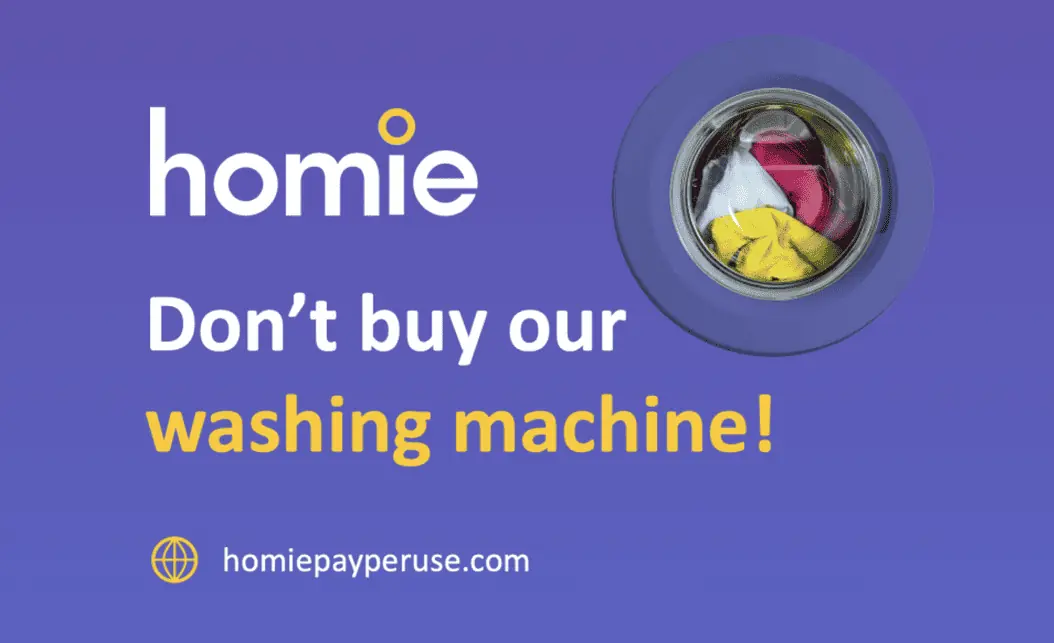
    Homie is an affordable pay-per-use solution for washing machines and dryers. Basically, you can order the appliance you need online, and they’ll install it for free. And you only pay for the actual usage of the appliance.

    They’ve got two different contract options, “light” and “heavy”, so you can choose the one that suits your washing needs best. And you can switch between them twice a year if you need to. They also have a low monthly minimum fee covering additional costs like maintenance and repair.

    Challenges Of Pay As You Go Model

    While the PAYG business model can be attractive for both businesses and customers, it requires careful planning and execution to overcome certain challenges, which are:

    Difficult To Retain Customers

    Since there is no long-term obligation, customers may find themselves less committed to using a particular service or product over time. This can make it harder for businesses to build and retain a loyal customer base.

    Revenue Is Unpredictable

    For businesses, PAYG can result in unpredictable revenue streams, as they may be unable to anticipate how many customers will use their service or product each month. This can make it difficult to plan and budget for the future.

    Technology And Infrastructure

    Implementing the PAYG business model may require significant investments in technology and infrastructure, such as developing mobile payment systems or building distribution networks to reach remote or underserved areas.

    System Complexity

    Implementing a PAYG business model requires businesses to develop and maintain complex systems to manage customer accounts, track usage, and collect payments. This can be a significant challenge, especially for smaller businesses or startups that may not have the resources or expertise to develop and maintain these systems.

    Key Takeaways

    • The PAYG business model allows customers to make a one-time purchase of an offering without having to subscribe to a long-term plan or regular billing.
    • The PAYG model is often used in various industries such as telecommunications, software-as-a-service, advertising, cloud infrastructure and utilities.
    • The PAYG model lowers the barrier to entry for customers and enables the business to focus on products that deliver better return on investments. However, the model is not ideal for customer retention and predicting revenue is difficult.

  • Snapchat Statistics: Usage, Revenue, & Key Facts

    Snapchat Statistics: Usage, Revenue, & Key Facts

    What started as a simple photo-sharing platform has turned into a social media giant that’s changing how we communicate, consume content, and do business online.

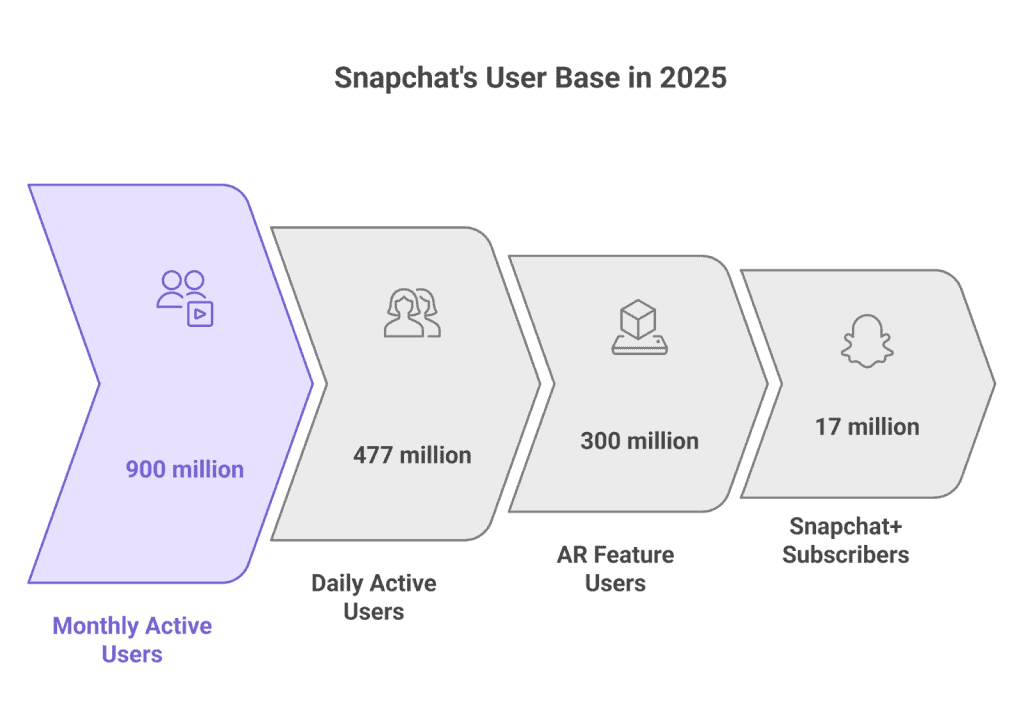
    477 million people use Snapchat every single day, creating 4.75 billion snaps. That’s not just impressive, it’s a goldmine of insights for anyone trying to understand modern digital behaviour. 

    Whether you’re a marketer planning your next campaign, a business owner exploring new platforms, or a researcher tracking social media trends, these numbers tell a story you need to hear.

    Key Statistics

    • 477 million daily active users – Snapchat’s daily user base continues growing steadily 
    • 900 million monthly active users – The platform’s total monthly reach shows its massive global presence
    • $1.51 billion quarterly revenue – Snapchat’s Q3 2025 earnings hit another record high
    • $1.32 billion from advertising – Ad revenue makes up the lion’s share of income 
    • 17 million Snapchat+ subscribers – The premium service shows strong adoption 
    • 300 million daily AR users – Augmented reality engagement demonstrates the platform’s tech leadership
    • 4.75 billion Snaps daily – Users generate massive amounts of content daily
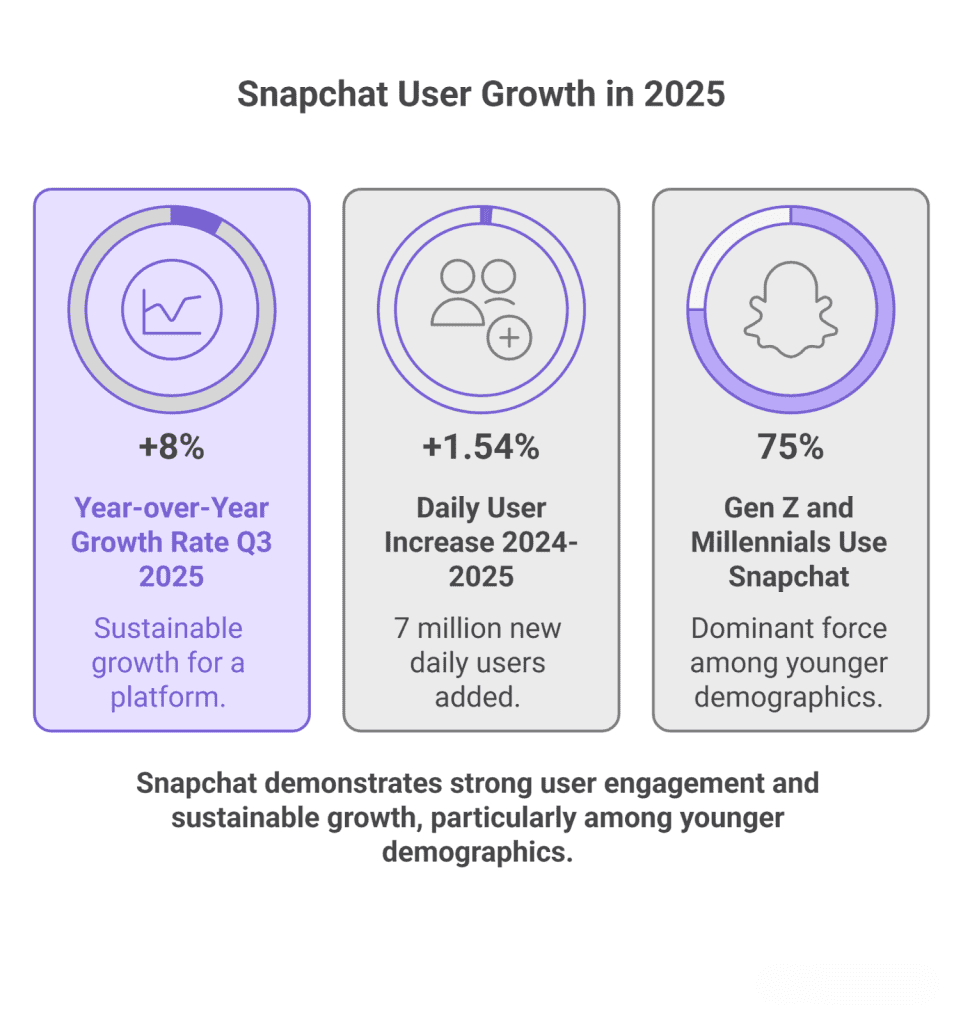
    • 75% of Gen Z and Millennials – Regular users from younger demographics

    Snapchat is clearly thriving, balancing massive scale with intimate, personal communication that keeps users coming back.

    User Base and Growth Statistics

    Snapchat’s user growth in 2025 shows steady momentum rather than explosive expansion. The platform has managed to maintain consistent growth patterns that show its staying power in a competitive social media landscape.

    Current User Metrics:

    • Daily Active Users: 477 million (Q3 2025, up from 469 million in Q2)
    • Monthly Active Users: 900 million users globally
    • Year-over-Year Growth: 8% increase in Q3 2025
    • Daily Growth Rate: Approximately 7 million new users throughout 2025
    • Growth from 2024: 1.54% increase (from 453 million to 460 million)

    Snapchat shows steady, sustainable growth. The platform isn’t experiencing explosive user acquisition like a brand-new app, but it’s maintaining momentum that suggests strong user retention and consistent appeal to new audiences.

    Financial Performance and Revenue Statistics

    You can have millions of users, but if you can’t turn that audience into sustainable revenue, you’re just running an expensive social experiment. Snapchat? They’ve figured out the money game.

    According to Snap’s Q3 2025 earnings, the platform pulled in $1.51 billion in total revenue. That’s a solid 10% jump from the same quarter last year. But let’s break this down because the details reveal something fascinating about how modern social platforms actually make money.

    Revenue Breakdown: Where the Money Comes From

    Snapchat’s revenue story has two main characters, and they’re performing very differently:

    • Advertising Revenue: $1.32 billion (5% year-over-year growth)
    • Other Revenue: $190 million (54% year-over-year increase)

    That “other revenue” category? It’s mostly Snapchat+, their premium subscription service. And here’s what caught our attention. While advertising growth is steady at 5%, that subscription revenue is absolutely exploding at 54% growth.

    What this means for you: Snapchat isn’t putting all their eggs in the advertising basket anymore. They’re building multiple revenue streams, which makes the platform way more stable when economic conditions get rocky.

    The Subscription Success Story

    Let’s talk about those 17 million Snapchat+ subscribers, up 35% from last year. That might not sound huge compared to their 443 million total users, but here’s the thing: those subscribers represent incredibly valuable, predictable revenue.

    Think about it this way. If you’re paying for Snapchat+, you’re deeply engaged with the platform. You’re not just scrolling through; you’re invested enough to actually pay for extra features. These users typically spend more time on the app, engage more with content, and are way less likely to jump ship to competitors.

    Content Creation and AR Engagement Statistics

    Here’s what makes Snapchat different from every other social platform: people don’t just scroll and like. They create.

    Content and AR Metrics:

    • Daily Snaps Created: 4.75 billion (roughly 55,000 snaps per second)
    • Daily AR Users: 300 million people interact with AR lenses and filters
    • AR User Percentage: Two-thirds of Snapchat’s daily active users
    • Camera-First Design: The camera opens first, not the feed

    Snapchat’s audience behaviour is distinct from other platforms: they’re not passive consumers. They’re active creators who want to interact, experiment, and share.

    When someone opens Snapchat, they’re not thinking, “Let me see what’s happening.” They’re thinking, “Let me make something.” That mindset shift changes everything for brands trying to reach these users.

    Plus, those AR interactions aren’t just fun and games. Users who engage with AR lenses show significantly higher purchase intent and brand recall. You’re reaching people when they’re most engaged and creative, not when they’re mindlessly scrolling.

    User Demographics and Behaviour Patterns

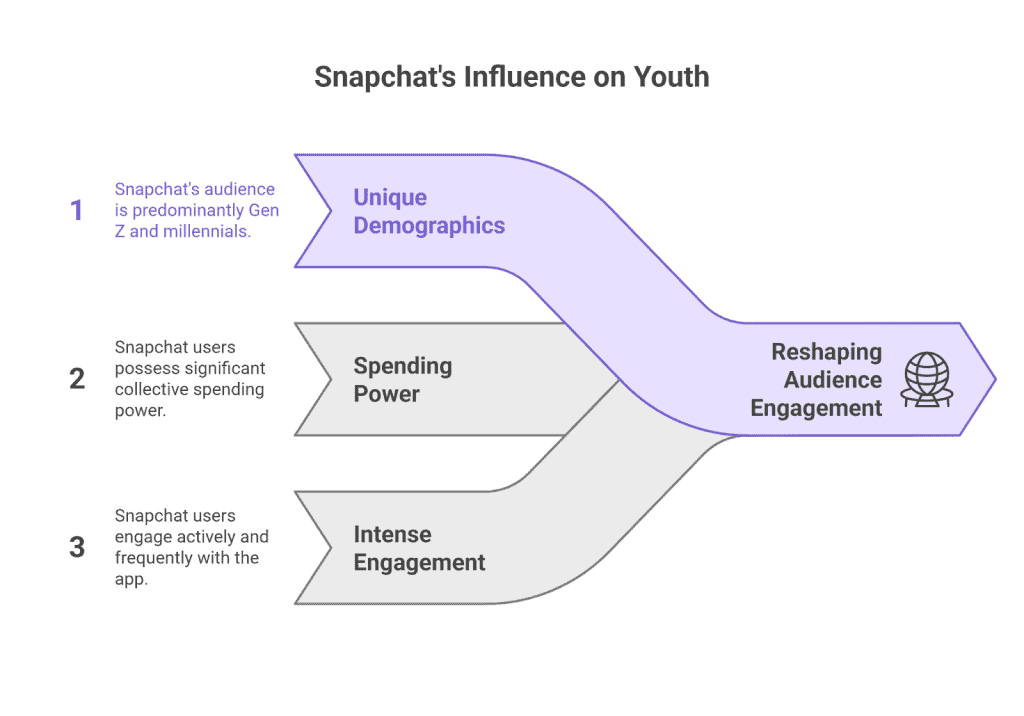
    Snapchat has carved out a unique position as the digital playground for Gen Z and millennials, creating behaviour patterns that could completely reshape how you think about reaching younger audiences.

    Key Demographics:

    • Primary Age Range: Over half of users are aged 13-24
    • Combined Spending Power: $5 trillion (Gen Z and Millennials together)
    • Daily Opens: Users open Snapchat 30+ times per day
    • Time Spent: Average of 32 minutes daily
    • Feature Engagement: 92% of users regularly use both Chat and Stories
    • Addressable Ad Audience: 709 million users

    What really sets Snapchat apart is how intensely users engage with the platform. The average Snapchatter isn’t just casually checking in once or twice a day—they’re actively engaged throughout the day.

    For businesses trying to reach this demographic, the patterns are clear. You’re not dealing with distracted users who might glance at your content between other activities. Snapchat users are present, engaged, and checking the app throughout their day.

    The frequency of use also suggests something about user intent. When someone opens an app 30+ times daily, they’re not just killing time. They’re checking in with friends, staying updated on trends, and looking for entertainment.

    Geographic Distribution and Regional Markets

    When you first think about Snapchat’s global reach, you might picture it as predominantly American-centric. The reality tells a different story entirely.

    Regional Breakdown:

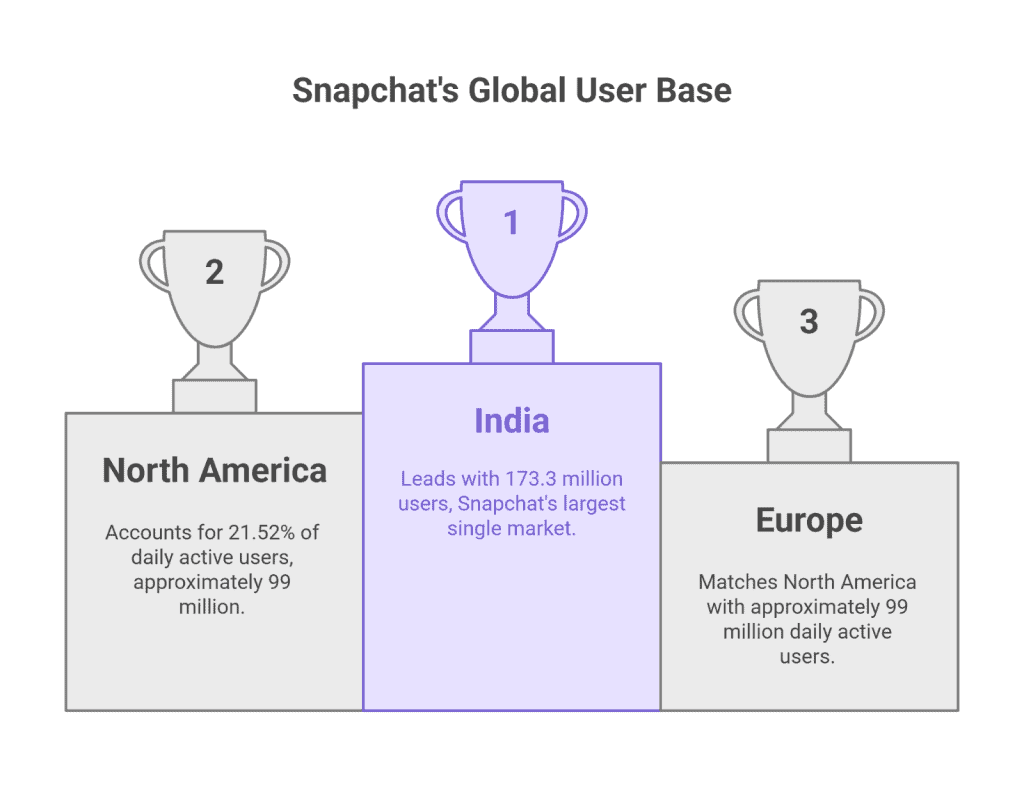
    • India: 173.3 million users (largest single market)
    • North America: 99 million daily active users (21.52%)
    • Europe: 99 million daily active users
    • Rest of World: 262 million users

    India actually leads the pack with 173.3 million users, making it Snapchat’s largest single market by volume. The platform that started as a California college experiment now finds its biggest audience halfway around the world.

    The geographic split is revealing. North America might represent Snapchat’s most mature market, higher engagement rates, premium advertising pounds, and established user behaviours. But the platform’s future clearly lies in international expansion, especially across Asia-Pacific and emerging markets.

    For businesses, this geographic distribution creates some fascinating opportunities. If you’re targeting Gen Z globally, you can’t ignore markets like India, where Snapchat usage continues climbing. But if you’re after premium spending power, North American and European users likely offer higher conversion rates.

    Advertising Effectiveness and Business Impact

    While Snapchat’s massive user base looks impressive on paper, the real question for marketers is simple: does it actually drive sales?

    Advertising Performance:

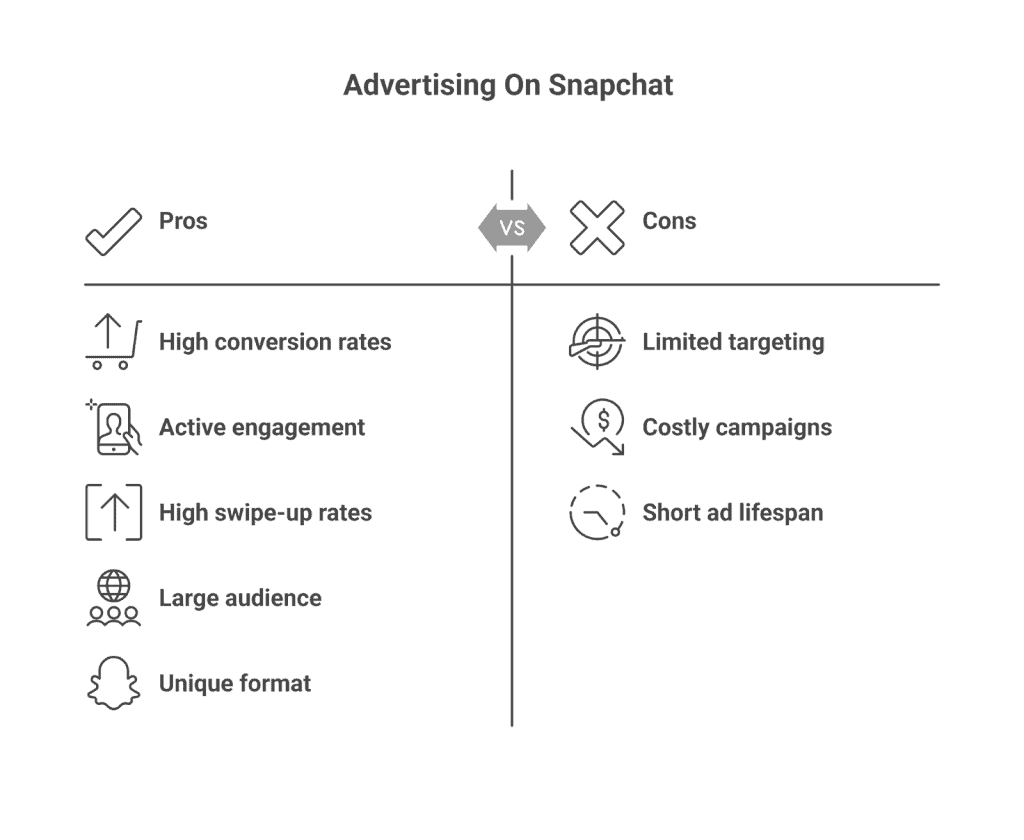
    • Purchase Rate: 63% of users have made a purchase after seeing something on Snapchat
    • Swipe-Up Rates: 5x higher than other social platforms
    • Addressable Ad Audience: 709 million people
    • Daily AR Users: 300 million (for AR try-on experiences)

    The answer might surprise you. According to AWISEE research, 63% of users have made a purchase after seeing something on Snapchat. That’s not just engagement; that’s actual buying behavior.

    Here’s what makes Snapchat advertising different from other platforms. The app’s design forces users to actively engage with content. You can’t passively scroll like on Facebook or Instagram. This active participation translates into higher conversion rates across the board.

    Those 300 million daily AR users aren’t just playing with filters; they’re experiencing products before buying them. AR try-on experiences let customers test makeup, glasses, or home decor without leaving their couch. This creates a shopping experience other platforms simply can’t match.

    The platform’s ephemeral nature also creates urgency that traditional advertising lacks. When users know content disappears, they’re more likely to act immediately rather than bookmark it for later.

    Final Thoughts

    With 477 million daily active users generating 4.75 billion snaps per day and opening the app over 30 times daily, the platform has achieved something many competitors struggle with: genuine user engagement that translates into business results. 

    The $1.51 billion in revenue, driven by advertising rates that outperform industry standards by 5x, proves that brands see real value in Snapchat’s young, purchase-ready audience.

    What makes these statistics particularly compelling is the consistency across different metrics. From the 63% of Gen Z users who make purchases based on 

    Snapchat has built a platform where users don’t just scroll, they participate, create, and buy. As the platform continues its steady 8% year-over-year growth and expands its global footprint, particularly in emerging markets like India, Snapchat appears well-positioned to maintain its role as the go-to platform for brands targeting younger demographics who actually convert.

  • Discord Statistics: Usage, Revenue, & Key Facts

    Discord Statistics: Usage, Revenue, & Key Facts

    Discord has quietly become one of the most powerful social platforms on the internet, and the numbers are honestly pretty mind-blowing.

    What started as a simple tool for gaming communities has transformed into a digital hub where millions of people build everything from business networks to study groups to creative collectives. 

    We’re talking about a platform that now boasts 259.2 million monthly active users with 13.83% growth, numbers that put it in serious competition with social media giants you’d expect to dominate those charts.

    Throughout this article, you’ll discover the key statistics that reveal Discord’s true market position, user behaviour patterns that might surprise you, and growth trends that could reshape how we think about digital communities.

    Let’s dig into what the data actually shows.

    Key Statistics

    Here are the numbers that tell Discord’s growth story:

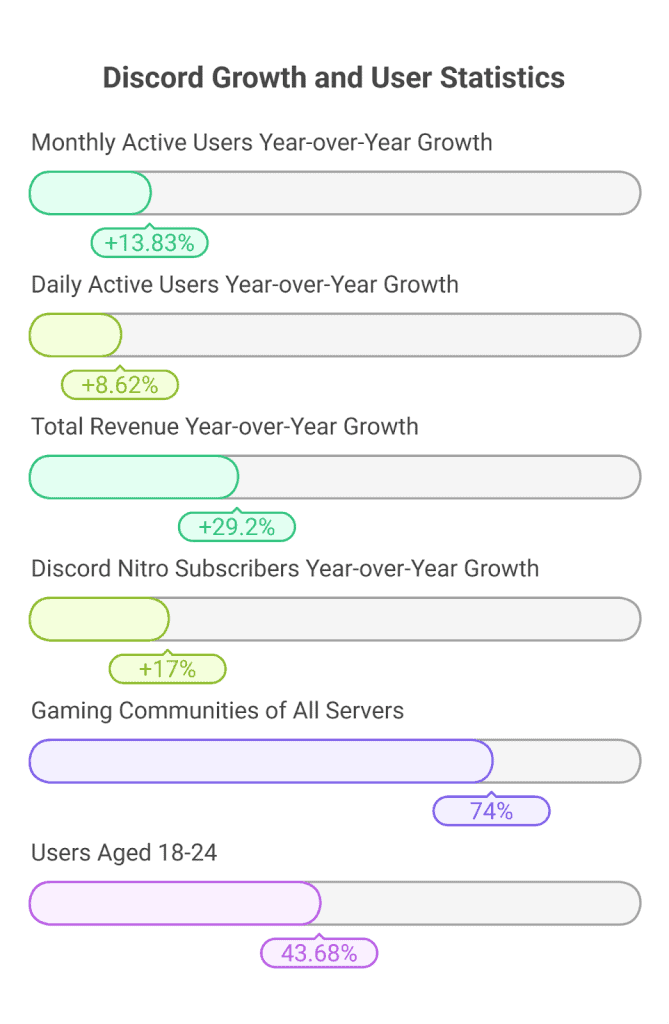
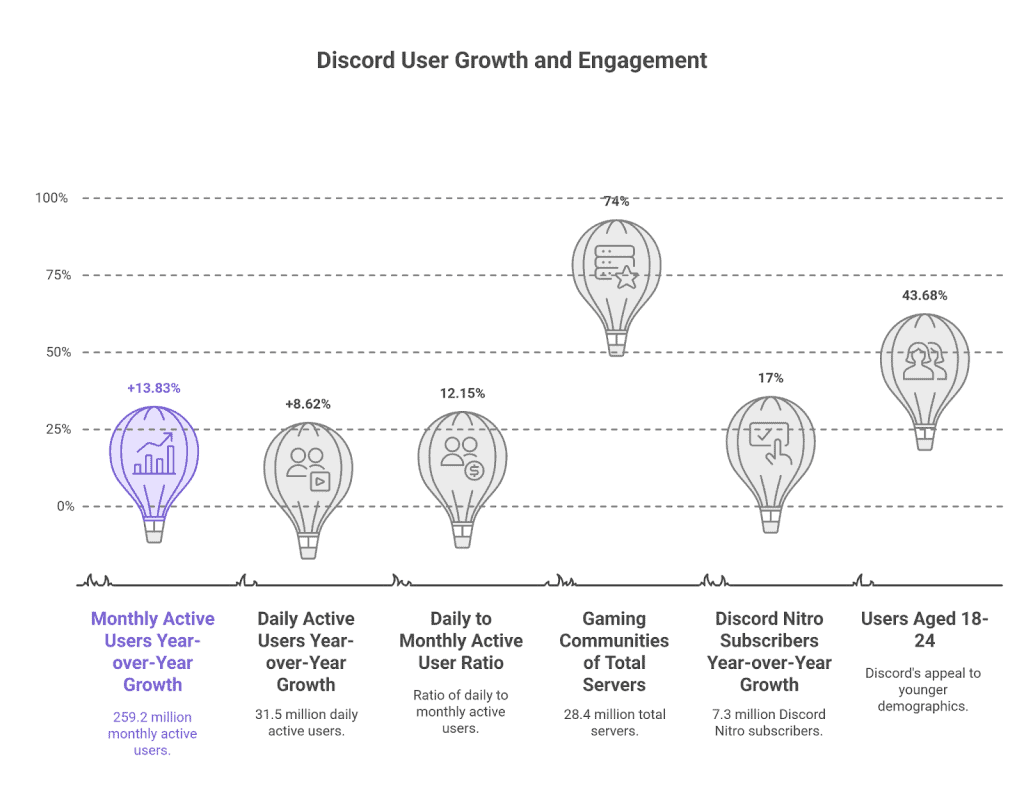
    • 259.2 million monthly active users with 13.83% year-over-year growth
    • 31.5 million daily active users, up 8.62% from 29 million the previous year
    • 689 million total registered users expected by the end of 2025
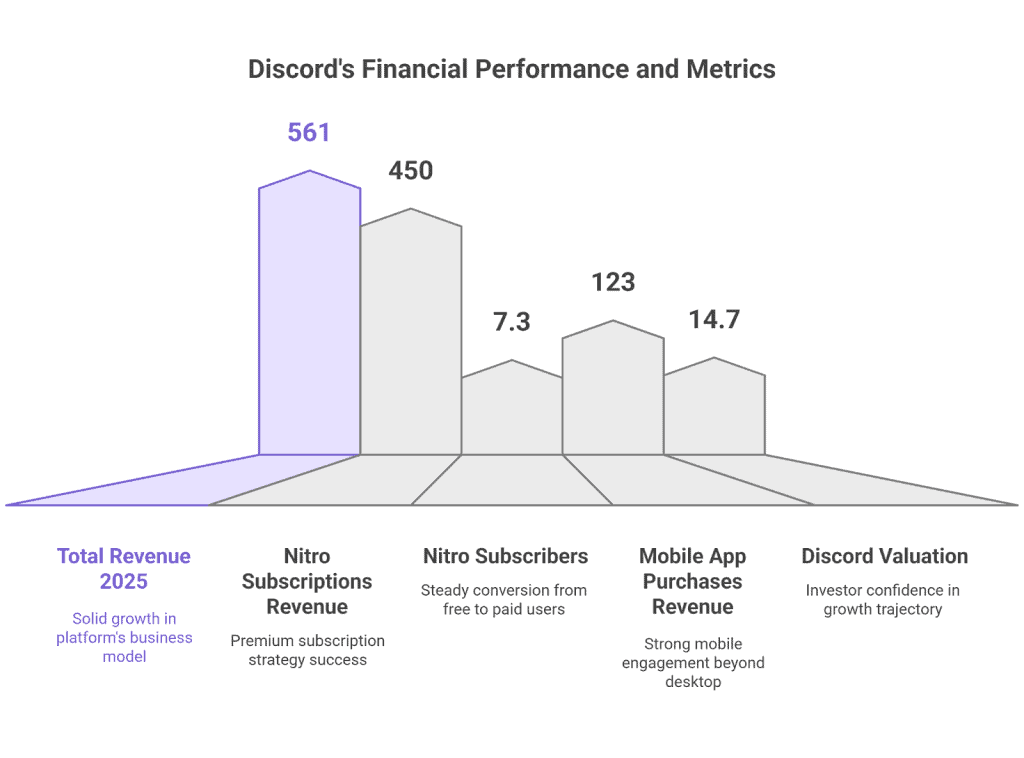
    • $561 million in total revenue with impressive 29.2% year-over-year growth
    • 7.3 million Discord Nitro subscribers, representing 17% growth year-over-year
    • 28.4 million total servers, with gaming communities making up 74% of all servers
    • 12 million active bots helping automate and enhance server functionality
    • 94 minutes average daily usage among gaming users specifically
    • 43.68% of users aged 18-24, showing Discord’s appeal to younger demographics

    These numbers paint a picture of a platform that’s not just surviving but thriving. The consistent double-digit growth across users, revenue, and engagement shows Discord has cracked the code on building sticky communities. What’s particularly telling is that the daily engagement rate of about 12%, meaning roughly one in eight monthly users shows up every single day.

    User Growth and Platform Statistics

    The numbers tell a story of sustained momentum that even surprised Discord’s own team. Here’s what the platform’s growth trajectory looks like:

    • 259.2 million monthly active users in 2025, up from 227.7 million in 2024
    • 31.5 million daily active users (8.62% increase from 29 million previous year)
    • 689 million total registered users expected by end of 2025
    • Daily to monthly active user ratio of approximately 12.15%
    • The platform gained 25 million registered users within first year of launch
    • Consistent double-digit growth rates maintained for past three years
    • Strong user retention rates with majority of new users continuing regular engagement

    What’s interesting here is that daily-to-monthly ratio of 12.15%. You might think that sounds low, but it actually shows something healthy about Discord’s ecosystem. Unlike social media platforms where users scroll mindlessly throughout the day, Discord users tend to show up with purpose. Whether that’s for scheduled gaming sessions, community events, or focused conversations.

    The retention story is where things get really compelling. Most platforms struggle to keep new users engaged past the first week, but Discord’s community-first approach creates natural stickiness. When someone joins a server that matches their interests, they’re not just using an app; they’re joining a group. That’s why the platform can maintain steady growth without the aggressive user acquisition tactics you see elsewhere.

    This trajectory suggests Discord has found something sustainable. The growth isn’t explosive like a viral social app, but it’s consistent and built on genuine user value rather than algorithmic manipulation.

    Demographics and User Behaviour

    Discord’s user base reveals a fascinating story about digital community evolution. Here’s what the numbers tell us about who’s actually using the platform:

    • 43.68% of Discord users are aged 18-24, making this the platform’s dominant demographic
    • 35.49% of Discord’s web traffic comes from this same 18-24 age group
    • 32.23% of users fall into the 25-34 bracket, showing strong millennial adoption
    • 58% of Discord’s Gen Z audience in the U.S. uses the platform for non-gaming discussions weekly
    • 93% of Discord users actively play games while using the platform
    • Users engage in over 4 billion minutes of daily conversations across the platform
    • Gaming users spend an average of 94 minutes daily on Discord

    What’s really interesting here is the behavioural shift happening beneath these numbers. While gaming still dominates, 93% of users are actively gaming, and that 58% non-gaming usage among Gen Z shows Discord transcending its gaming roots. You’re seeing people use it for study groups, hobby communities, and even professional networking.

    The age concentration tells another story. Nearly three-quarters of users fall between 18 and 34, which explains both the platform’s gaming focus and its rapid expansion into other areas. This demographic grew up gaming but also values authentic community spaces over traditional social media.

    That 94-minute daily usage among gamers? It’s not just about playing games. People are building genuine relationships, discussing everything from career advice to creative projects. The platform’s evolution from gaming chat to digital community hub becomes clearer when you see how users actually spend their time there.

    Revenue and Financial Performance

    Here’s what Discord’s financial numbers tell us about their monetisation approach:

    • $561 million total revenue in 2025 – representing a solid 29.2% year-over-year growth that shows the platform’s business model is gaining traction
    • Discord Nitro subscriptions contributed approximately $450 million – making up roughly 80% of total revenue, proving their premium subscription strategy works
    • 7.3 million Discord Nitro subscribers – up 17% year-over-year, showing steady conversion from free to paid users
    • Mobile app purchases generated an estimated $123 million in 2024 – demonstrating strong mobile engagement beyond desktop usage
    • Discord valued at $14.7 billion in their last major funding round (September 2021), reflecting investor confidence in their growth trajectory
    • Nitro subscription pricing remains at $9.99/month or $99.99 annually – competitive pricing that hasn’t needed adjustment despite inflation
    • Server boosting revenue contributes significantly – showing how community features drive additional monetisation

    What’s fascinating here is how Discord cracked the code on subscription revenue where others failed. While most social platforms rely heavily on advertising, Discord built a business around what their users actually wanted – better features, not fewer ads. That young demographic we talked about earlier? They’re willing to pay for enhanced experiences rather than being sold to.

    The fact that Nitro subscriptions make up 80% of their revenue shows this wasn’t just a lucky guess. Discord understood their community values privacy and ad-free experiences enough to open their wallets. Plus, with 7.3 million subscribers out of 259.2 million monthly users, there’s still massive room for conversion growth.

    Server Activity and Engagement

    The sheer scope of Discord’s server ecosystem reveals just how deeply the platform has embedded itself into digital community culture. These numbers paint a picture of a thriving social infrastructure:

    • 28.4 million total servers operate on Discord as of 2025
    • 74% of all servers (21 million) are dedicated to gaming communities
    • 12 million active bots enhance functionality across public and private servers
    • Midjourney leads all servers with 20.44 million members
    • Marvel Rivals is top gaming server with 4.17 million members
    • Genshin Impact Official ranks second among gaming servers with 2.10 million members
    • 19 million servers are active weekly, showing consistent engagement patterns

    What’s fascinating here is how Discord has evolved beyond its gaming roots while still honouring them. Gaming servers make up three-quarters of the platform, but that leaves 7.4 million servers dedicated to everything from art communities like Midjourney to educational groups and hobby clubs.

    The bot ecosystem tells another story entirely. 12 million active bots means communities aren’t just chatting; they’re building sophisticated automated experiences that handle everything from moderation to custom games.

    The scale of top servers like Midjourney’s 20+ million members creates network effects that smaller platforms can’t match. When Marvel Rivals launches and immediately builds a 4+ million member community, you’re seeing the power of Discord’s infrastructure to support massive, real-time conversations. These aren’t passive followers; they’re active participants in communities that stay engaged week after week.

    Gaming Community Dominance

    Discord’s gaming foundation remains unshakeable despite platform diversification efforts. The numbers tell a clear story of gaming’s continued grip on the platform:

    • Gaming servers account for 74% of Discord’s total server ecosystem.
    • 21 million active gaming communities operate on the platform.
    • Gaming users spend 94 minutes daily on Discord on average.
    • 93% of Discord users actively play games while using the platform.
    • Marvel Rivals commands the largest gaming server with 4.17 million members.
    • Gaming-related discussions generate the majority of Discord’s daily conversation volume.
    • Esports communities represent significant portion of most active servers

    Gaming’s dominance isn’t just about numbers; it’s about ecosystem lock-in. When you dive into these communities, you see why Discord became gaming infrastructure rather than just another chat app. Marvel Rivals’ 4.17 million-member server isn’t just a fan club; it’s where game strategies spread, tournaments are organised, and player feedback reaches developers.

    The 94 minutes gamers spend daily on Discord creates sticky engagement that translates to Nitro subscriptions and server boosts. Plus, these gaming communities drive Discord’s revenue model. Dedicated gamers willingly pay for enhanced server features, better audio quality, and larger file uploads.

    That’s exactly why Discord prioritises gaming features like noise suppression and low-latency voice chat, even as they expand into other markets.

    Regional Distribution and Future Outlook

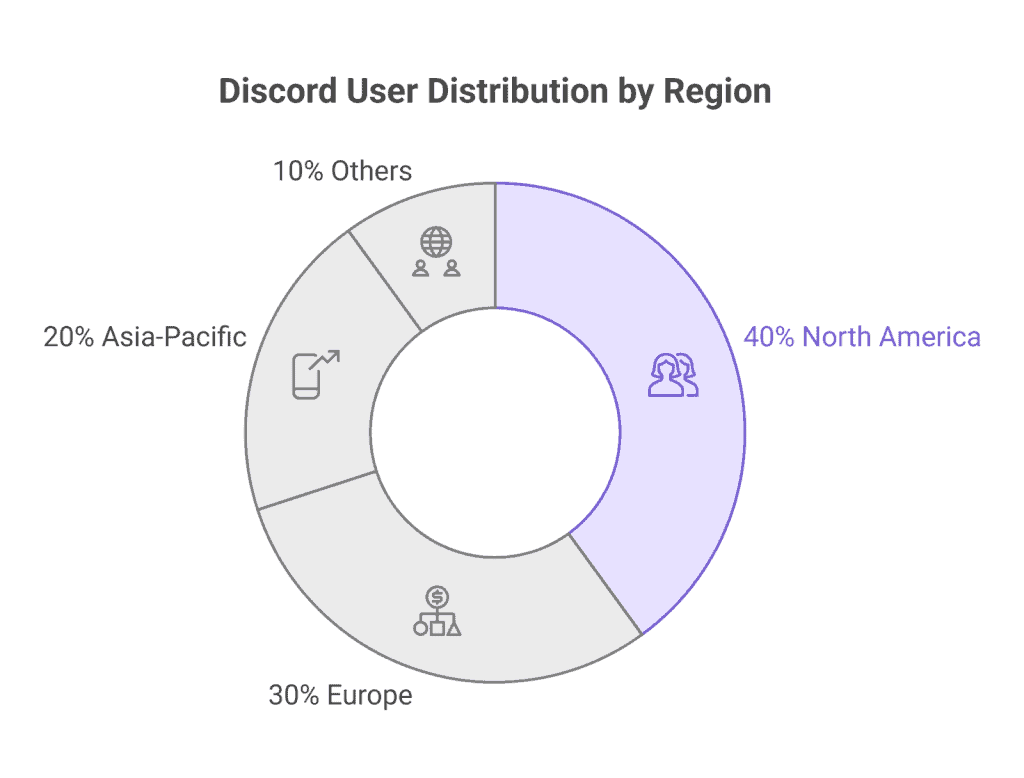
    Discord’s global footprint reveals distinct patterns that signal where the platform’s next growth phase will unfold. Here’s how users are distributed across key regions:

    • North American dominance: The United States anchors Discord’s user base with the highest concentration of active users.
    • European stronghold: Europe and North America together account for the majority of Discord Nitro subscriptions, indicating strong monetisation in these markets.
    • Asia-Pacific surge: This region shows the fastest growth in both user acquisition and new server creation.
    • Gaming universality: Gaming communities lead usage across all major geographic markets.
    • Language diversity: Non-English servers represent an expanding segment, with communities forming in dozens of languages.

    The data points toward a platform positioned for significant international expansion. With 689 million total registered users projected by the end of 2025, Discord’s growth trajectory suggests the current 259.2 million monthly active users could nearly triple within two years. That 29.2% year-over-year revenue growth isn’t just a number; it reflects sustainable expansion patterns that typically accompany successful global scaling.

    What’s particularly interesting is how Asia-Pacific’s rapid growth coincides with Discord’s evolution beyond pure gaming. While 74% of servers remain gaming-focused globally, the fastest-growing international markets are also driving non-gaming adoption.

    This creates a dual opportunity: deeper penetration in established Western markets through feature diversification and geographic expansion into underserved regions where Discord’s community-first approach could fill gaps left by more restrictive platforms.

  • The 20 Types Of Advertising Explained

    The 20 Types Of Advertising Explained

    Advertising is an essential component of modern marketing aiming to promote an offering to a target audience. But advertising does not merely involve rolling out the ads, reaching the customer, and persuading them to take action. Instead, a variety of strategies and tactics are involved in advertising to make a brand reach the right customer.

    In fact, a brand uses several types of advertising to get its message out, tapping each touchpoint in the consumer journey.

    So, what are the different types if advertisements a brand uses to reach the right customer?

    Types Of Advertising

    Generally, advertising is divided into two types –

    Traditional Advertising and Digital Advertising.

    • Traditional Advertising – Also known as offline advertising, it is the oldest form of advertising that uses traditional mediums such as television, radio, print (newspapers and magazines), billboards, direct mail, etc., to promote a brand’s offering. It enables brands to build awareness on a large scale quickly.
    • Digital Advertising – Also referred to as online advertising, it involves using digital channels such as search engines (Google, Yahoo), social media (Facebook, Instagram, YouTube), email marketing, etc., to showcase a brand’s offering. It offers the advantage of targeting potential customers more precisely and effectively.

    Types Of Digital Advertising 

    Modern advertising or digital advertising is the most popular form of advertising among marketers today. It involves a range of tactics that are used to target potential customers online. Here are some of the major types –

    Paid Search Advertising

    Paid search advertising or pay-per-click advertising (PPC) involves placing ads on webpages or search engine results and showing ads only to users who are searching for a specific keyword or product. This type of advertising allows brands to reach out to customers at the exact moment they are looking for a product or service.

    Moreover, the brand only pays for the ad when someone clicks on it (CPC), views it (CPM), or performs an action (CPA).

    Social Media Advertising

    Advertisers also use social media networks such as Facebook, Instagram, Twitter, etc., to reach out to users and promote their offerings. Just like PPC ads, social media advertisements are targeted ads but are based on people’s interests, demographic data and other user behaviour.

    Influencer Marketing

    Influencer marketing is an offset of social media marketing which uses endorsements and product mentions from influencers. Influencers are individuals who have a dedicated social following and are viewed as experts within their niche.

    They are more likely to influence their followers’ decisions when it comes to buying a product or service. So advertisers use influencers to reach their target audience and promote their offerings in a more authentic way, using sponsored posts, product reviews, or other types of content. 

    Product Placement

    Product placement refers to the practice of placing a brand’s product in movies, shows, or other content. It is an effective way to reach a large audience and create long-lasting impressions about the offering.

    Also known as “embedded marketing” or “embedded advertising”, it enables brands to promote their product in an organic and subtle way. For example, the movie ‘The Italian Job’ featured Mini Coopers, who was one of the movie’s sponsors.

    IM Advertising

    IM advertising (Instant Message Advertising) is another form of digital advertising which involves using instant messaging channels such as SMS and WhatsApp to reach out to potential customers.

    IM advertising involves sending text messages with promotional offers or product information to customers who have opted-in for promotional messages.

    This type of advertising has the advantage of being quick, cost-effective and personalised, making it suitable for small businesses that want to reach out to their target audience more precisely

    Display Advertising

    Display advertising is a type of digital advertising which involves placing banners and display ads on websites, apps or social media channels.

    It enables brands to attract potential customers with eye-catching visuals and creative messages. This type of advertising is best suited for building brand awareness in the short term.

    Native Advertising

    It is a form of online advertising that matches the structure and function of the platform on which it appears. It is designed to blend seamlessly with the content around it, which makes it appear less like a traditional ad and more like a part of the user experience.

    For example, sponsored content that appears as part of an article or editorial section is a type of native advertising.

    Email Advertising

    Email advertising is a direct marketing channel that uses emails to promote a product or service. It is one of the oldest forms of digital advertising and involves sending promotional emails to an existing list of customers or prospects.

    Email marketing is an effective way to reach out to potential customers, build relationships and increase sales.

    Digital Signage Advertising

    Digital signage advertising is the type of advertising where advertisers utilise digital screens such as LCD or LED displays to communicate their message.

    This digital signage advertising is commonly used in public spaces, such as retail stores, shopping malls, airports, train stations, and sports arenas, to capture the attention of the audience crossing that signage. 

    Video Advertising

    Video advertising refers to advertisements placed in videos. It is one of the most popular forms of digital advertising and includes both pre-roll (before the video starts) and mid-roll ads (during the video), as well as overlay or banner ads.

    Such ads are used in social media platforms, streaming services, and websites to increase brand awareness and drive sales in a more engaging and entertaining way.

    Retargeting And Remarketing

    Retargeting, also known as remarketing, is a disruptive form of digital advertising that enables brands to reach out to people who have previously visited their website, app or online store with tailored ads.

    Such ads use browser cookies to keep track of consumer behaviour and then serve ads accordingly.

    It is an effective way to re-engage with engaged customers and bring them back to complete the desired action on your website, such as making a purchase.

    For example, if a user visits an online store but doesn’t make a purchase, the store can then retarget them with advertisements for the same product but this time with offers.

    Mobile Advertising

    When an advertisement is displayed on smartphones, tablets or other mobile devices, it is known as mobile advertising. It is one of the most popular forms of digital advertising and includes text-based, display, and video ads.

    Types Of Offline Advertising

    Offline advertising or traditional advertising uses traditional media channels to promote products or services instead of using the internet. The most common types of offline advertising include:

    Print Advertising

    Print advertising is a type of offline advertising which involves placing ads in magazines, newspapers, and other printed materials.

    It is one of the oldest forms of advertising and is still used by many brands to reach out to their target market. Print ads are typically used for raising brand awareness in the local area but can also be used to target a specific demographic.

    Television Advertising

    Television advertising is the type of advertising that uses TV commercials to promote a product or service. It is one of the most expensive types of advertising and is used by big companies with large budgets.

    TV ads are typically used to reach a large audience at once, raise brand awareness and fulfil marketing objectives using an appropriate combination of visuals, audio, and text.

    Radio Advertising

    Radio advertising is the type of traditional advertising that uses radio commercials to promote a product or service.

    It is usually a cheaper broadcast advertising medium than television, and it is typically used to target a specific demographic, such as listeners of particular genres of music or people living in a certain geographic area.

    Direct Mail Advertising

    Direct mail advertising is the type of offline advertising that involves sending printed ads directly to potential customers through the post.

    Brands usually deliver marketing materials such as brochures, postcards, catalogues, sales letters, and newsletters to prospects’ house mailboxes using this direct marketing method.

    It is considered one of the most effective and result-driven ways to reach out to new and existing customers.

    Outdoor Advertising

    Outdoor advertising, also known as out-of-home (OOH) advertising, refers to any type of advertising that is done outside of people’s homes or businesses.

    It includes billboards, street banners, signage on public transportation, and other outdoor advertising formats used to promote your product, service, or brand.

    Trade Shows

    It is an advertising method in which a company set up a booth at a trade show to showcase its products or services and demonstrate how they work

    Trade shows usually attract industry experts, potential customers and investors interested in learning more about the products or services being offered. So, it acts as a great platform for businesses to network, promote their products or services, and generate leads.

    In-Store Advertising

    In-store advertising uses point-of-sale materials such as banners, posters, signs, displays and more to promote products within retail stores.

    It is an effective way to reach customers who are already in the store and potentially interested in making a purchase. It can also be used to create a certain atmosphere (like Gruen transfer) or encourage impulse purchases.

    Telemarketing

    Telemarketing refers to the use of telephones (cold calling) to reach out to potential customers and promote a product or service.

    Advertisers use channels such as automated calls, live operator calls, or text messages to reach out and connect with potential customers.

    It is a cost-effective way to promote products or services and generate leads.

    Bottom Line 

    Advertising is a crucial element in any business’s marketing mix, and it plays a vital role in brand promotion and customer engagement. Both online and offline advertising methods offer a range of options for businesses to reach their target audience effectively. 

    Online advertising options such as social media, email marketing, and paid advertising campaigns have become increasingly popular due to their cost-effectiveness and broad reach. While offline advertising methods such as billboards, print ads, and television commercials still hold significant value in reaching local audiences. 

    Each advertising medium mentioned above, whether online or offline, has unique strengths and weaknesses. Thus, to achieve your advertising goals, it is essential to understand your audience and pick the most appropriate advertising medium(s).

  • Understanding Starbucks’ Business Strategy

    Understanding Starbucks’ Business Strategy

    Founded in 1971 in Seattle, WA, Starbucks Corporation is a world-renowned company specialising in the roasting, marketing, and retailing speciality coffee. With a workforce of approximately 402,000 employees in 2023, Starbucks operates 35,711 stores in 76 countries.

    Their exceptional product mix comprises premium-quality coffees, teas, freshly-made food items, and a range of other beverages crafted and roasted by hand. The company also licenses its trademarks and offers a variety of coffee and tea products through other channels, such as grocery stores and national food service accounts.

    Starbucks markets its product mix under various brand names, including Tazo, Teavana, Seattle’s Best Coffee, Starbucks VIA, Starbucks Refreshers, Evolution Fresh, La Boulange, and Verismo. And as of the 2023 report, Starbucks has generated a total revenue of $26.51 billion in 2022.

    In addition, Starbucks’ business strategy has played a significant role in establishing its reputation as a premier coffee tradition worldwide. Though the business strategy of Starbucks is simple, it is grounded in principles, which has contributed to its success.

    The Starbucks’ Business

    Starbucks, a premier roaster, marketer, and retailer of speciality coffee we know today, was founded in 1971 in Seattle’s Pike Place Market.

    Howard Schultz, who joined Starbucks as a Director of retail operations and marketing in 1982, began providing coffee to fine restaurants and espresso bars. Once, when Schultz travelled to Italy, he was inspired by the popularity of espresso bars in Milan and recognised the potential to develop a similar coffeehouse culture in Seattle. He convinced the founders of Starbucks to test the coffeehouse concept in downtown Seattle, where the first Starbucks Caffè Latte was served in 1984.

    The amazingly successful experiment led to the founding of Il Giornale in 1985, where they started offering brewed coffee and espresso beverages made from Starbucks coffee beans.

    In 1987, Il Giornale acquired Starbucks assets and changed its name to Starbucks Corporation. The company opened its first store outside the United States in Vancouver, Canada, and other places, making it to total stores numbered 17.

    In 1988, Starbucks became one of the first companies to offer full health benefits to eligible full- and part-time employees, including coverage for domestic partnerships. It was the company’s first step towards its principles and standards. And later, in 1990, they unveiled the mission of Starbucks, which was for employees and customers alike,

    To establish Starbucks as the premier purveyor of the finest coffee in the world while maintaining our uncompromising principles as we grow.

    What Changes Did Starbucks Bring In Its Initial Days In The Industry?

    Following its grounded principles and serving quality, Starbucks completely redefined the tradition of coffee culture in many countries.

    To put it short, Starbucks –

    • Introduced high-quality, speciality coffee beans that were roasted in small batches and sourced from around the world.
    • Created a unique retail experience where customers were allowed to watch the roasting process and purchase coffee beans to take home.
    • Offered a diverse range of coffee and tea beverages, like espresso and frappuccino-based drinks, which were not commonly found in American coffee shops then.
    • Created a welcoming and comfortable atmosphere for customers to enjoy their coffee, with soft lighting, cosy seating, and background music.
    • Fostered a sense of community and connection among customers and employees, with a focus on personalised service and customer relationships.
    • Encouraged environmental sustainability through initiatives such as recycling and reusable cups.
    • Provided employee benefits, such as health insurance and stock options, which were uncommon in the service industry then.

    The Starbucks’ Business Strategies

    There’s no one business strategy that made Starbucks what it is today. Instead, the company used a mix of numerous strategies to build, grow, and expand its business.

    Premium Customer Experience With Third-Place Experience

    The Starbucks business model is centred around providing a premium customer experience emphasising high-quality products and a welcoming atmosphere of third-place, a place away from home and work. Here are some key points to explain this:

    • Premium Customer Experience: Starbucks is known for providing a high-end experience to its customers, where the customer gets the most personalised service, as the company focuses on attention to detail and providing an upscale and comfortable atmosphere.
    • High-Quality Products: Starbucks prides itself on sourcing and roasting its own coffee beans, which are carefully selected for their flavour and quality. The company also offers a range of other high-quality products, including tea, pastries, and sandwiches, which is the most valuable attraction for the customers.
    • Third-Place Experience: Starbucks has created a unique atmosphere in its stores that encourages customers to spend time there, whether they are working, socialising, or simply enjoying a cup of coffee. This experience of being in the “third place” away from home and work, where people can do just what they want to do, has contributed to the company’s success by building customer loyalty and encouraging customers to stay longer, buy more, and pay repeat visits.
    • Personalised Service: Starbucks baristas are known for their knowledge and passion for coffee and are trained to provide personalised service to each customer. They offer recommendations to customers based on individual tastes and preferences and take the time to engage with customers in a friendly and welcoming way.
    • Technology: Starbucks very smartly invested in technology to enhance its stores’ customer experience and convenience. They introduced mobile ordering, digital payment options, in-store Wi-Fi, charging plugs under each table, and more, making it easy and convenient for customers to order and enjoy their coffee, chill time, or even work.
    • Employee Training and Development: Starbucks strongly emphasises employee training and development, with programs designed to help baristas develop their skills and advance their careers within the company. This investment in employees has helped to build a strong and dedicated workforce, which is essential to maintaining the high level of customer service that Starbucks is known for.
    starbucks store

    Strong Customer Relationships

    Strong customer relationships are a critical part of Starbucks’ business strategy. The company aims to build a lasting relationship and connection with its customers through several means, such as its loyalty programs, Starbucks rewards, coupon cards for extensive and regular purchases, and more. The program offers various benefits, including free drinks and food on birthdays, personalised offers based on customer purchases, free refills, and more. These programs and benefits incentivise customers to return back, make purchases regularly, and strengthen relationships with the brand.

    Moreover, the company collects, analyses, and uses the data to improve its products and services continually. The data they collect includes preferred drinks, ordering frequency, and payment methods. They use this data to personalise customers’ experiences by providing customised offers, product recommendations, and more.

    Additionally, Starbucks has implemented several social responsibility initiatives, such as ethical sourcing and community involvement. These efforts help build trust and loyalty with customers prioritising ethical and socially responsible businesses. Starbucks fosters a strong sense of community and loyalty among its customers by creating a positive impact on the world.

    Overall, Starbucks’ focus on building strong customer relationships has been a significant factor in its success as a business to date.

    Strategic Global Expansion

    starbucks japan store

    Global expansion is one of the key elements of Starbucks’ business strategy. As it started with just one outlet in 1971, the company had 17 outlets in 1987 and has 35,711 outlets in 2023 and a presence in 76 countries. This means, on average, this coffee house chain has opened 2-3 new outlets every day since 1987.

    But to have these outlets in thousands and a presence in various countries, Starbucks’ business strategy heavily relies on its licensing and franchising programs. These stores can either operate as licensed or franchised.

    Licensed stores are operated within existing establishments. Companies such as Ahold Delhaize, Target Corporation, Barnes & Noble, Publix Super Markets, and Albertson Companies are a few examples of those licensed to operate Starbucks kiosks.

    In most of the Europe, Middle East, and African markets, Starbucks’ franchising program is the primary market penetration strategy. Franchise owners operate new and freestanding stores independently. For instance, Anil Patil founded 23.5 Degrees Limited, Starbucks’ first UK franchised business partner, which opened the first franchise in Hampshire in 2013. It now operates 60 franchise stores across the United Kingdom.

    By utilising licensing and franchising programs, Starbucks maximised market entry and global reach, appealing to different vendors with different interests in franchise and licensing programs.

    Moreover, this strategy involves careful planning and analysis of each market, including the local culture, economy, and competition. Starbucks works to tailor its menu and store design to each location while maintaining its core brand identity and standards, be it the franchise or licensed store.

    Starbucks’ Failure In Australia And Europe

    Even though the company tried to get into the Australian and European markets with its strategic Starbucks business strategy, adopting its culture at its best, it failed in these places.

    Starbucks’ failure in Australia and Europe can be attributed to several factors, including:

    • Cultural differences
    • Fierce competition
    • A lack of understanding of local markets
    Australia

    Starbucks failed to resonate with consumers in Australia due to the country’s strong coffee culture. Australians have a preference for strong, bold coffee and are known for their love of espresso-based drinks like flat whites and lattes. On the other hand, Starbucks offered a range of sweet and syrupy drinks that were not aligned with Australian tastes. In addition, Starbucks’ prices were considered high compared to local coffee shops, further hindering their success.

    Europe

    Starbucks faced stiff competition in Europe from established local coffee shops and chains. Countries like Italy, France, and Spain have a long history and tradition of coffee culture, and Starbucks was seen as an unwelcome outsider. The company struggled to adapt to local tastes and preferences, with many Europeans preferring traditional espresso-based drinks over Starbucks’ more sugary offerings. Additionally, Starbucks faced criticism for its business practices and for contributing to the homogenisation of local cultures.

    In both continents, after facing a huge loss and an unwelcoming atmosphere from the locals, the company had to shut down its outlets in non-prime locations. It planned to shut 61 stores out of 85 in 2008, and even today, Australia has only 58 stores while other countries like the US has 15,873, China has 6091, and Canada has 2101 stores.

    Starbucks’ Product Differentiation

    The product differentiation strategy is crucial to the entire Starbucks business strategy. Starbucks has been able to differentiate itself by creating a unique coffee culture that sets it apart from other coffee chains.

    In addition to its unique culture, Starbucks has expanded its product offerings beyond coffee by including food and other beverages. This diversification has helped the company attract more customers and increase its revenue streams.

    Starbucks is committed to the sustainability and ethical sourcing of coffee beans to differentiate itself from other coffee brands further. Starbucks purchases 800 million pounds of coffee every year, or about 5 per cent of the world’s coffee, from fresh farms. This commitment helps keep consistent, improve, and evolve the coffee’s taste while supporting environmentally friendly practices and fair wages for coffee farmers.

    Starbucks uses superautomatic, push-button espresso machines that reduce human error to ensure consistency and quality. This helps keep all drinks across all the stores tasting as similar as possible.

    Additionally, Starbucks classifies its market based on demographic, geographic, behavioural, and psychographic factors, using a product differentiation approach to cater to the needs and preferences of each segment. As mentioned above, Starbucks integrates and moulds its products and offerings according to the place, culture, and taste requirements.

    Overall, Starbucks’ product differentiation strategy, which includes creating a unique coffee culture, expanding its product offerings, commitment to sustainability, use of technology, and targeted marketing, has been successful in helping the company stay ahead of its competitors. Starbucks continues to innovate and differentiate itself to maintain its position as one of the world’s most recognised and successful coffee chains.

    Starbucks’ Consistent Branding Experience

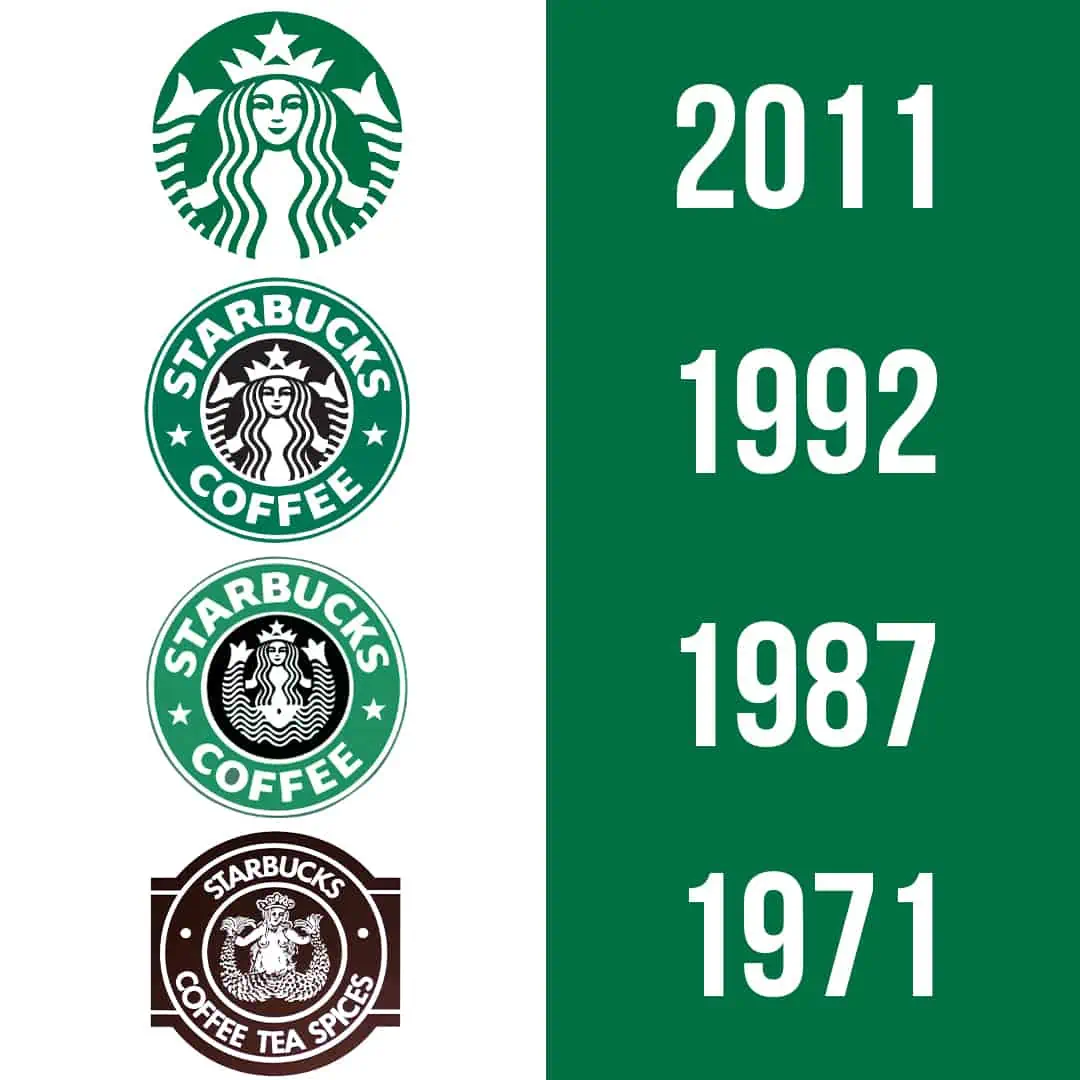
    starbucks logo design

    Consistent branding means presenting a unified brand image across all customer touchpoints, including in-store experience, product packaging, and marketing communications. Starbucks’ business strategy focuses on the same and consistently delivers a high-quality experience that customers expect from the brand.

    The consistent branding experience has helped Starbucks build customer loyalty by creating an emotional connection with its customers. Starbucks has positioned itself as a premium brand, and customers are willing to pay a premium price for the experience they receive. The consistency in branding is something in this entire strategy which has helped reinforce the emotional connection with customers, and they keep returning for the same experience.

    Starbucks has also used social media to engage with customers and build brand awareness. The company has a strong social media presence and actively engages with customers across different platforms. The company uses social media to showcase new products, promote events, and share customer stories. This engagement helps build brand loyalty and increases the likelihood of customers returning to Starbucks.

    Overall, Starbucks’ consistent branding experience, emotional connection with customers, and use of social media for branding have all contributed to the company’s success in building customer loyalty.

    Starbucks’ Ethical Brand Reputation

    Starbucks’ ethical brand reputation refers to the company’s commitment to ethical and sustainable business practices that benefit not only its customers, employees, and shareholders but also the communities and environments in which it operates.

    For Farmers

    One of the ways Starbucks has established its ethical brand reputation is through its implementation of ethical sourcing practices for its coffee. The company sources its coffee beans through ethical and sustainable means, working directly with farmers and their communities to ensure that they receive fair wages and support for sustainable farming practices. This ensures the quality and consistency of the coffee and supports the economic and social well-being of the farmers and their families.

    For Environment

    Additionally, Starbucks has implemented environmental stewardship practices to reduce its carbon footprint and minimise its impact on the environment (and focus on green marketing). The company has set ambitious goals to reduce its greenhouse gas emissions, increase the use of renewable energy, and minimise waste. For example, Starbucks has implemented a recycling program in its stores, and it uses eco-friendly materials for its cups and packaging.

    For Employees

    In addition to benefiting its customers and the environment, Starbucks’ ethical brand reputation also benefits its employees. The company offers a comprehensive benefits package, including health insurance, retirement plans, and stock options, to all eligible employees, including part-time workers. Starbucks also offers educational opportunities through its College Achievement Plan, which covers the full tuition cost for eligible employees to earn a bachelor’s degree online from Arizona State University.

    Moreover, Starbucks’ ethical and sustainable practices create a positive work environment that encourages employee engagement and job satisfaction. For instance, the company has implemented fair labour practices, such as providing equal pay, advancement opportunities and fostering a culture of diversity and inclusion. These practices have helped the company attract and retain talented employees who are committed to Starbucks’ mission and values. Starbucks has built a loyal and dedicated workforce that contributes to its success by investing in its employees’ well-being and providing a positive work environment.

    Starbucks’ ethical brand reputation is a critical part of its business strategy, helping the company to establish itself as a leader in ethical and sustainable business practices. This has helped to build brand loyalty among consumers who prioritise these values.

    FAQs

    How does Starbucks build strong customer relationships?

    Starbucks builds strong customer relationships by understanding the needs and desires of customers and thus providing personalised service, implementing a rewards program, and engaging with customers through social media to create an overall better experience.

    What is Starbucks’ business strategy?

    Starbucks’ business strategy includes creating a premium customer experience with a third-place experience (a place away from home and work), building strong customer relationships, expanding globally, implementing product differentiation, maintaining consistent branding, and promoting an ethical brand reputation.

    How does Starbucks differentiate its products from competitors?

    Starbucks differentiates its products from competitors by creating a unique coffee culture, offering a wide range of food and drink options, and prioritising sustainability and ethical sourcing of coffee beans.

    How is Starbucks different from its competitors?

    Starbucks differentiates itself from its competitors by creating a unique coffee culture and providing a premium customer experience focusing on creating a third-place experience. Additionally, Starbucks has expanded its product offerings beyond coffee to include food and other beverages and is strongly committed to ethical sourcing and sustainability. These factors, combined with consistent branding and customer engagement, have helped Starbucks establish itself as a leader in the coffee industry.

    What is Starbucks’ approach to sustainability?

    Starbucks’ approach to sustainability depends completely on ethical sourcing practices, reducing its carbon footprint, promoting social responsibility and environmental consciousness, and providing benefits to its employees.

    Why did Starbucks fail in Australia?

    Starbucks failed in Australia due to the saturation of the Australian coffee market, high competition from local coffee chains, and the high cost of real estate. Additionally, the company’s American-style coffee and business practices did not resonate well with Australian consumers, who preferred local coffee shops and cafes. As a result, Starbucks was forced to close down many of its stores in Australia, and its operations in the country have ultimately been deemed a failure.

    Starbucks Statistics

    Starbucks’ business strategy has been a significant factor in its success, leading to the company’s impressive growth and global reach. Today, Starbucks has become one of the most recognisable and successful coffee chains worldwide, with an extensive global presence and millions of loyal customers. Here are some statistics that showcase the scale of Starbucks’ success.

    • Starbucks has a presence in over 76 countries.
    • Starbucks employees over 4,02,000 employees
    • There are 35,711 thousand Starbucks stores worldwide as of 2022
    • Starbucks serves an average of 100 million customers per week worldwide.
    • Starbucks is the largest coffeehouse chain in the world, with revenues of over $26.51 billion in 2022, says Statista 2023 report.
    • On average, Starbucks sells 8 million cups of coffee daily, which means 500 cups per store.
    • Starbucks serves an average of 100 million customers per week worldwide.

    Final Thoughts

    In conclusion, Starbucks has successfully implemented a range of business strategies that have contributed to its growth and popularity over the years. The company’s focus on providing a premium customer experience and building strong relationships with its customers has helped it establish a loyal customer base.

    Additionally, its strategic global expansion has allowed it to reach new markets and increase its revenue streams. While the company has faced some setbacks in markets such as Australia and Europe, it has adapted its strategies to continue its growth trajectory around the other parts of the world.

    Starbucks’ product differentiation, consistent branding experience, and ethical brand reputation have all contributed to its success and helped the company stand out from its competitors. Overall, Starbucks’ innovative and customer-centric business strategies have made it one of the world’s most recognisable and successful coffee chains.

  • How To Write An Article? [Detailed Guide]

    How To Write An Article? [Detailed Guide]

    As a writer, there’s nothing quite like the feeling of crafting a piece that truly resonates with your audience. But let’s be real; the process of getting there can sometimes feel like an uphill battle. You might be staring at a blank screen, struggling to get your thoughts onto paper. Or, you might feel overwhelmed by the sheer amount of information available on your topic.

    In this how-to guide, we’ll walk you through the process of writing an article with plenty of tips and tricks to help you along the way. So, whether you’re a seasoned writer looking to refine your skills or a beginner just starting out, this guide will help you craft a compelling and engaging article that will capture your readers’ attention and keep them hooked from start to finish.

    Platform
    Use it for
    Jasper
    An AI text generator tool trained by the world’s best SEO and marketing experts to beat writer’s block and generate high-quality content up to 10x faster.
    Rytr
    An AI-powered writing assistant that auto-generates catchy, original, and high-converting copies, from blogs to emails to ad copies, in popular tones & languages in just a few seconds.
    SEMrush
    An all-on-one SEO toolkit that does keyword research, competitor analysis, runs an SEO audit blog content, looks for backlinking opportunities, and more.
    Grammarly
    An AI-powered writing assistant tool that provides suggestions and corrections for grammar, spelling, punctuation, style, and tone in real time.
    Answer The Public
    A search listening tool that uses autocomplete data from search engines like Google to find popular phrases and questions people ask around a topic or a keyword.

    What Is An Article?

    An article is a piece of written content published in a print or electronic medium. Articles are usually written with specific readers in mind and aim to educate on a particular subject, offer an analysis or perspective, or articulate a viewpoint. They can vary in length and complexity, from short news stories to in-depth feature articles or investigative reports.

    Article vs Blog Post

    An article and a blog post are similar in that they are both written pieces of content, but have some key differences. And here’s how:

    • Word Count: A blog post is typically shorter, typically ranging from 300 to 1500 words (although some blogs may publish longer posts) than an article that ranges from 500 to 5000 words or more, depending on the complexity of the topic and the publication’s guidelines.
    • Writing Styles: Blog posts follow a more casual and conversational style, while articles are more formal and structured.
    • Intent: A blog post conveys an opinion and focuses on engaging with the reader and encouraging discussion, while an article expresses factual information typically intended to inform, persuade, or educate the reader.
    • Authors of Each Type of Content: Blog posts are often written by individuals or small groups. In contrast, articles are usually written by professional writers or journalists and published in reputable publications.

    Different Kinds Of Writing Styles

    When it comes to writing articles, there is no one-size-fits-all approach. In fact, there are several different writing styles that you can use depending on your goals, audience, and content. But a good content idea is the key factor to writing excellent articles, which can be brainstormed using the content idea generator. However, writers typically follow four common writing styles:

    • Expository: This is a subject-oriented writing style in which the author focuses on explaining a concept and sharing a piece of information with a larger audience. These types of articles are written to present factual evidence, statistics, figures or results but do not include personal opinions. Examples: How-to articles; textbooks; news stories (not editorials or Op-Eds); business, technical, or scientific writing.
    • Persuasive: An author uses this writing style to persuade the reader to adopt a certain point of view or take a certain action. Unlike expository articles, these kinds of articles often include evidence, statistics, and logical arguments to support the validity of the writer’s opinions. Examples: Letters of recommendation, cover letters, Op-Eds and Editorial newspaper articles; argumentative essays for academic papers.
    • Narrative Writing: This type of writing tells a story, be it fiction or non-fiction, usually in chronological order with a beginning, middle, and end. It may incorporate descriptive language, dialogue, and character development to engage the reader. Examples: Short stories, novels, poetry, historical accounts, etc.
    • Descriptive Writing: This type of writing uses sensory details to paint a picture or describe a scene, person, object, or experience. It aims to create a vivid and engaging image in the reader’s mind through descriptive language and sensory imagery. Examples: Poems, song lyrics, memoirs, descriptions of a product or a travel destination.

    Step-by-Step Guide On Writing An Article

    While different writers may have different ways of approaching their writing, there are some basic steps that can help guide you through the article writing process.

    Step 1: Understand Your Target Audience

    Understanding your target audience is crucial for writing a successful article that resonates with your readers. Without knowing who your audience is, your article risks falling flat, failing to engage your readers, and missing the mark entirely.

    Think of it this way: A heavy metal artist wouldn’t perform at a classical music concert, right? In the same way, as a writer, you don’t want to write an article on a topic that doesn’t appeal to your target audience.

    Understanding your target audience lets you:

    1. Establish an emotional connection with your readers
    2. Target the pain points of your readers and provide practical solutions
    3. Choose the tonality of your article

    Getting these elements right is what determines the quality of your article.

    What Do You Need to Understand About Your Readers?

    Here are a few questions to ask yourself to help you get a deeper insight into your reader’s needs and interests:

    • Who is my target audience? Consider demographic factors such as age, gender, location, education level, and income.
    • What challenges or pain points do they face? Think of the problems your target audience is trying to solve, their challenges, and the questions they need answers to.
    • What type of content do they prefer? Do they prefer long-form articles or shorter, snackable content? Do they prefer visuals like infographics or videos?
    • What are their goals and aspirations? Consider what your target audience hopes to achieve and how you can help them get there with your content.

    Take note of the language your readers use, including phrases, metaphors, and jargon. Doing so allows you to communicate with your readers using a language they easily understand and relate to.

    What Can You Do To Understand Your Readers Better?

    • You should check out the platforms they hang out on and participate in the conversations happening there. This could mean searching for popular hashtags, joining subreddits and paid communities, or registering on online forums.
    • Consume the content your readers are consuming. This could mean reading the same blogs and articles, listening to the same podcasts, or watching the same YouTube videos.
    • Interact with your readers through social media, comments sections, and email to gain insight into their opinions, questions, and feedback.

    Won’t all this take too much time?

    Well, yes. Researching your target audience can be an extremely time-consuming process. However, if you want to cut short that time, you can take the help of an AI platform called Answer The Public. You can use this tool to uncover popular phrases and questions people are asking related to a particular topic, helping you understand your reader’s pain points and interests.

    Step 2: Choose Your Topic

    Now that you understand what your target audience wants, it’s time to choose a topic. Write a list of engaging topics and evaluate their relevance to your target audience. While choosing a topic that resonates with your audience is essential, choosing a topic you can cover in-depth is equally important. Try to avoid broad topics that are difficult to cover comprehensively.

    Step 3: Research, Research, Research 

    Once you’ve fully understood your target audience and chosen your topic, it’s time to dive into research. Conducting research is a crucial step when you are writing an article. If you don’t have reliable sources and evidence to back up your arguments and statements, readers are less likely to trust and respect your work.

    To conduct research, start by Googling the topic you’ve chosen to write about and read the articles that rank on the first page (essentially that of your competitors). Take note of what information these articles cover besides the main topic. This is standard practice for conducting competitive analysis. That being said, you can also take the help of an AI tool called SEMrush, to be more comprehensive in your competitor research. You can use it to identify your competitors’ top organic search keywords, their most popular content, and their backlinks. This can help you understand what topics and subtopics your competitors cover and what strategies they use to rank higher in search results.

    In addition to this, gather as much information surrounding your topic as possible. This could mean searching for relevant statistics, case studies, quotes from experts or sources related to the topic, definitions regarding the topic, references to pop culture or media, and local or national events.

    When selecting sources, check their authenticity and make sure the data you include isn’t outdated. By gathering reliable and current information, you can create a well-researched and informative article that establishes you as an expert in your field and increases the impact and success of your writing.

    Step 4: Come Up With An Outline

    Your outline should be a roadmap that guides you through the writing process. It will help you to determine the main points you want to make in your article and the supporting details and evidence necessary to develop those points. This can help you avoid writing aimlessly and getting off-topic, as you will have a clear sense of your article’s overall structure and direction.

    Here’s what your outline should cover:

    Title

    Introductory paragraph

    The main body

    • Subheadings
    • A list of key points under each section
    • Examples, statistics, quotes, etc. to support those arguments

    Conclusion

    If you are struggling to create an outline for your article, or if you are not satisfied with the outline you have created, there is a solution. You can always use Rytrs outline generator, which can assist in creating an effective and structured outline.

    Step 5: Write Your First Draft

    Now comes the easy part. If you have done everything mentioned until now, it’s a cakewalk from here. Follow your outline and write down all the information and ideas you’ve gathered so far.

    If you struggle with writer’s block mid-way while writing your article and cannot continue, you can use Jasper.ai‘s paragraph generator template. Simply put in the talking points you wish to include, and the AI will instantly create a paragraph.

    Remember, your first draft isn’t supposed to be perfect. Even if it turns out to be not-so-good, you can always whip it into shape during the editing process.

    Step 6: Edit Your Article

    Now it’s time to edit your article. Begin by formatting the text. You need to consider how people read articles online—they usually skim through the content instead of reading it entirely.

    That’s why it’s so crucial to format your article properly. And here’s how you can do it:

    • Use H2 text for subheadlines.
    • Use H3 text for sub-sub-headlines.
    • Break up long sentences. Use a short and simple sentence structure.
    • Break up lengthy paragraphs. Aim for 2-3 lines per paragraph.
    • Use bullet points and numbered lists whenever possible.

    All this aims to make your article as skimmable as possible.

    Once you’ve formatted the text, proofread your article. The best way to proofread is to read your text aloud, as catching errors is much easier this way. Still, as a fail-safe measure, once you proofread the article manually, you can run it through Grammarly. Simply copy-paste your text into the app’s editor, and you’ll instantly get suggestions on grammar, spelling, punctuation, and sentence structure. There’s also a Chrome extension that integrates with Google Docs. Grammarly is super helpful as it allows you to catch errors in real-time.

    Common Mistakes to Avoid While Writing

    1. Lack of focus or clarity: Your writing should have a clear purpose. Focus on presenting your ideas in a logical and organised manner.
    2. Using overly complex language or jargon: Your writing should be accessible to a wide audience, so avoid using language or technical terms that might be confusing or off-putting.
    3. Repetition or redundancy: Avoid repeating the same ideas or phrases multiple times, as this can make your writing feel boring or unoriginal.
    4. Lack of evidence or support: Make sure you back up your claims and arguments with evidence and examples so readers can trust your ideas and conclusions.
    5. Being too wordy: Your writing should be concise and to the point, so avoid using unnecessarily long or complex sentences or paragraphs.
    6. Plagiarism or lack of attribution: Always credit any sources you use to avoid plagiarism and maintain your credibility as a writer.

    Tips to Keep in Mind While Writing

    1. Craft a compelling headline: Your headline is the first thing a reader sees, so try to make it exciting and attention-grabbing. Use powerful words and ensure it accurately reflects your article’s content.
    2. Start with a strong hook: The first few sentences of your article should hook your readers and make them want to keep reading. Use a powerful quote, a surprising statistic, or a captivating anecdote to draw them in.
    3. Be concise and to the point: Your article should be well-structured and easy to read. Avoid rambling or going off tangents, and quickly get to the point.
    4. Use active voice: Using active voice makes your writing more engaging and helps to keep your readers interested.
    5. Use transitional phrases: To help your readers move smoothly from one idea to the next.
    6. Include visuals: Use images, charts, or other visuals to illustrate your points and break up long blocks of text.
  • How To Hire A Web Designer: Detailed Guide

    How To Hire A Web Designer: Detailed Guide

    The customer journey online isn’t the same as it was a few years ago. Every website needs to provide an engaging and positive experience for its customers.

    I know you understand it well, or why would you search for guides on how to hire a web designer.

    So, I’ll keep things straight, talking about where to find a web designer, how to know if they’re good, what qualifications to look for, how much to pay a web designer and more.

    But for starters, I want to clarify a significant difference.

    Web Designer vs Web Developer

    Most people mistake these two roles.

    A web developer is someone who codes websites. They build the website’s functionality with HTML, CSS, JavaScript, and other programming languages.

    On the other hand, a web designer designs the look and feel of a website. They are often responsible for creating the graphics, layout, colours and fonts that go into making a site visually appealing.

    In simple terms, a web designer’s job is to make the website look good, while a web developer’s job is to make the website work well.

    How To Hire A Web Designer?

    Now that this web developer and web designer distinction is out of the way, it’s time to focus on the practical steps you need to take to hire a web designer.

    Understand Your Requirements

    Before you even write that job description, take a step back and reflect on what it is you need. Write down everything about your project and what you’re looking for in a designer. Make a list of:

    • Your design objectives
    • Your target audience
    • What your ideal website will look like
    • The user flow you want to create
    • The functionality and features you need
    • Your budget
    • Timeline and deadline
    • Any requirements that need to be met, such as accessibility standards.

    This process of introspection can help you identify what kind of qualities and skills you are looking for in a web designer.

    Also know that the web designer will not only design how the webapp or application will look, but also its structure and how users will interact with it. So it’s best to have a clear idea of what functionality and features you need and how the design should look and feel.

    Once you have a list of your requirements, it’s time to first create a job description and then research potential web designers.

    Create Your Job Description

    Your job description is the foundation of your search and should provide potential design candidates with a clear picture of what you need. It should include the following information:

    • Job title
    • Job responsibilities
    • A description of the project
    • Desired skills
    • Qualifications required, such as educational background or years of experience
    • Ideal location (onsite or remote)
    • Compensation (salary, project fee, etc.)

    It is vital not only for potential web designers to know the scope of your project but also for you to understand what you’re exactly looking for – a freelancer, an agency, an employee or just a virtual assistant.

    Where To Find A Web Designer

    When it comes to finding a web designer, you’ve three options – freelance platforms, industry-specific job boards, and portfolio websites.

    Platform
    Category
    Description
    Toptal
    Freelance Platform
    An exclusive network of top freelancers where web designers are rigorously vetted to ensure quality and expertise.
    Upwork
    Freelance Platform
    A popular platform connecting businesses with freelancers, including web designers with various skill levels and rates.
    99designs
    Design Marketplace
    A platform focused on design services, allowing clients to run contests or work directly with designers.
    Fiverr
    Freelance Marketplace
    A platform for freelancers offering various services, including web design, at different price points and skill levels.
    LinkedIn Jobs
    Job Board
    A professional networking site with a job board, connecting job seekers with opportunities, including web design roles.
    Indeed
    Job Board
    A leading job search engine, featuring listings for web designers from entry-level to experienced positions.
    Behance
    Portfolio Website
    A platform for creatives to showcase their portfolios, allowing clients to discover and hire web designers.
    Dribbble
    Portfolio Website
    A platform for designers to share their work and connect with clients, focused on web and graphic design projects.
    • Freelance Platforms: It’s best to begin your search for a web designer on popular freelancing platforms such as Upwork, Freelancer and Fiverr. Here you will find hundreds of experienced professionals with varying skills and expertise. Be sure to read through potential candidates’ profiles and portfolios carefully to ensure they have the experience and knowledge required for your project.
    • Industry-Specific Job Boards: If you are looking for an experienced web designer, industry-specific job boards may be a good option. Some examples include websites such as Indeed and Linkedin. Here you will find a wide range of candidates who specialise in different areas related to web design and development.
    • Hunt Down Online Portfolios: If you’re looking for a more creative approach to hiring a web designer, consider exploring online portfolios. Numerous websites are dedicated to showcasing the work of talented designers and developers. Visit portfolio sites such as Behance and Dribbble and browse the available projects to find potential candidates who meet your requirements.

    Know that there’s no dearth of talented web designers out there who can help you create an amazing website. You’ll get hundreds if not thousands of applications when you post your job on these web designer platforms. What’s most important isn’t the number of applications you get but the quality that comes with them.

    Assess The Applications

    As soon as you post your gig or job, you’ll receive applications from interested web designers. While this part seems exciting, it could soon turn overwhelming.

    You need to take the time to assess each application carefully and narrow down your list of potential candidates.

    Have benchmarks and criteria to evaluate the applications. This could be anything from experience to portfolio to communication style.

    Here are some things I usually look for when assessing applications:

    • A portfolio of past work: Their portfolio says a lot about their skill level, whether they can pull off the project you are looking for, and how well they communicate visually with design.
    • Technical skill level: This includes both the development and design aspects of web design. Are they well-versed with the stack you need for the project?
    • Communication Skills: Very important in any collaboration. Communication is key because you want to ensure you stay on the same page regarding deadlines and updates.
    • Team skills: Designers work with developers, content creators, and other creatives. If they can’t collaborate and work in a team environment, you may end up with a less-than-perfect product.
    • Time Management: This is critical for any project. A great designer should be able to manage their time effectively to meet deadlines.
    • Cost to company: The cost (both monetary and non-monetary) of hiring a web designer forms one of the critical factors in the selection process. Think long-term when looking for a web designer – sometimes, the most expensive option isn’t always the best one. Usually, a full-time web designer costs between $30,000-$50,000 per annum, depending on their experience and the project’s complexity. A good freelancer, however, could charge anywhere between $25-$50 an hour for their services.

    When assessing job aspirants, you can also contact their references and previous employers to get an idea of their soft skills and hard skills. Ask about their ability to collaborate, their communication style, and how well they manage projects.

    For freelancers, you can read the reviews they have received from other clients to gauge the quality of their work.

    The Interview

    Application screening will probably help you remove quite a few candidates from the list. However, it’s not enough to make an informed decision on whom to hire. This is why you should conduct interviews with all remaining contenders.

    It can be a virtual or in-person interview, depending on the situation. But in any case, you must ask some relevant interview questions.

    For instance, inquire about their experience with the latest web technologies and approaches (e.g., responsive design). Question them about their design process and how they collaborate with web developers.

    An interview is a great way to identify if the web designer can handle your project. You’ll be able to see how they think, their level of expertise, and overall compatibility with your team.

    The Negotiation

    This is the bottom of the funnel. After you have identified the perfect web designer for your project, it’s time to make an offer. Take into account the scope of work and timeline when negotiating a rate; they may need to adjust their fee depending on those factors.

    Even if money is tight, be sure to negotiate fairly with your web designer—they should be compensated adequately for their work.

    Finally, don’t forget to sign a contract that outlines the details of your working relationship. For freelancers, it’ll be:

    • Freelance agreement: It’s the contract between the freelance web designer and you, which outlines the payment details for their services.
    • Non-disclosure agreement: It’s a contract that prohibits the web designer from sharing sensitive company information with anyone else.
    • Work-for-hire agreement: This is when your company assumes ownership of all work the web designer creates.

    For a full-time employee:

    • Employment contract: This contract should include job descriptions, salaries and benefits.

    Besides these, you can have them sign NDA(non-disclosure agreement), NCA(non-compete agreement) and other agreements to protect your Intellectual Property (IP) rights.

    The Do’s & Don’ts Of Hiring A Web Designer

    While hiring a web designer, it is essential to follow some important do’s and don’ts:

    Do’s

    • Know your goals: Before hiring a web designer, knowing what you want for your website is important.
    • Spend time vetting: Ensure that you go through the portfolio and experience of the web designer before hiring them. Do they have expertise in the area you need? Do their past experience include clean website design? Do they have positive reviews?
    • Communicate your expectations: Make sure that you communicate to the web designer what you require and what your expectations are.
    • Think long term: Both in the design of the website and the relationship with the web designer, think long term. Ask questions to ensure that they are a good fit for your needs over time.

    Don’ts

    • Hire without Doing Your Research: Ensure that you research potential web designers before hiring them. Check out their portfolio and reviews to ensure that they are the right fit for your website design needs.
    • Neglect Communication: Ensure communication is maintained throughout the entire process so both parties are clear on expectations and timelines.
    • Go Cheap: When it comes to web design, going with the cheapest option isn’t usually a good idea. Consider your budget, but also consider quality and experience when making your decision.
    • Be Unclear: Make sure you clearly define the scope of work needed so there is no confusion or misunderstanding.
  • What Is Love Money? Definition, Importance, & Sources

    What Is Love Money? Definition, Importance, & Sources

    Starting a startup isn’t all about the perfect idea. It also involves having the right financial backing and capital to get it off the ground. Unfortunately, investors and banks don’t always approve funding a pre-revenue startup. They want to see consistent, proven revenue before they will provide the necessary funding. Many entrepreneurs turn to love money to bridge this gap and make it easier for their businesses to access funds.

    But what is love money, how does it work, and where can entrepreneurs find it?

    What Is Love Money?

    Love money refers to the seed capital or pre-seed capital invested in startups by friends, family, and acquaintances.

    In simple terms, love money is when friends, family, and other people who believe in the founder and team provide small amounts of capital in the very early stages of a startup’s existence (before it is eligible for traditional financing options). It is usually a very small amount of money that serves as the initial funding for an upcoming venture to get off the ground and start the business or infuse capital into an existing business.

    This money is not expected to be returned with interest or converted into equity, but this may depend on the arrangement between the entrepreneur and investor. For example, a family member may or may not expect a return on the investment, but a friend may require an arrangement that allows them to be compensated for their contribution.

    Sources Of Love Money

    Love money is often referred to as money from FFF, as only three parties agree to such an investment – friends, family, and fools.

    Friends and family often provide love money due to their personal connection with the entrepreneur, understanding of the goals and motivations driving them, or a belief in their abilities and success.

    Fools are people who may not have as close of a connection to the entrepreneur but are still willing to invest in their vision. They could be acquaintances, colleagues, or even strangers.

    However, many experts argue that money from fools can’t be classified as love money since it’s not given out of emotion. Nevertheless, it is still a valuable source of capital.

    Importance of Love Money

    When a founder plans to convert their idea into a reality, they may need capital investment for tasks like:

    While these tasks can be easily done for some industries without any outside investment, for most, it’s impossible to move forward without additional capital. Love money is an important source of funding that can help founders take their first steps as entrepreneurs.

    Besides being required funds for starting a business, love money also provides emotional support and security to the founder. Knowing that their family or friends believe in their project and are willing to invest money into it can provide a huge boost of motivation.

    Moreover, the only options entrepreneurs have for raising funds in the early stages of their business besides love money are personal savings or personal loans. They can’t even opt for small business loans as most lenders require a few months of business history to grant them.

    The Economics Of Love Money

    While love money is often considered a free ride, it comes at a certain cost. For one thing, the receiver of love money is not obligated to repay it back, as would be the case with other traditional loans and investments. This could leave the lender in a difficult position if they need that money or are counting on its return.

    It has no fixed repayment terms, but there are times when founders offer equity in their company as “love money repayment” to investors. This means the investor could get a return on their investment if the company succeeds, but there is no guarantee that this will happen. Nevertheless, proper contracts and founders’ agreement that outlines the terms and conditions of the “love money” are often implemented to minimise potential risks.

    Sometimes, not-so-close friends or family members offer love money as debt or convertible debt, meaning repayment is expected with interest. However, given the nature of the startup ecosystem, the lender may never get their money back.

    In addition to being hard to collect, love money can also be difficult to track and calculate taxes for due to its informal nature. But when tracked correctly, the IRS may consider love money as taxable income.

    However, if a family member extends love money as a loan, they can use it to reduce their taxable income by mentioning it as a crown loan. A crown loan is a loan issued to family members and, as such, has tax advantages for the lender.

    Is Angel Investment Love Money?

    Several experts even consider angel investments to be a type of love money. Angel investors are individuals or groups who provide capital for startups and small businesses, often in exchange for equity or convertible debt.

    However, since such investments are made because of the investor’s love or respect for the entrepreneur or business, they are not love money but simple seed investments.

    Love Money Alternatives

    While family and friends are one of the only sources that fund businesses not because of their financial returns but because of the love and respect for the recipient, other sources of capital can be sought as alternatives to love money. These include:

    • Crowdfunding: Platforms like Kickstarter and Indiegogo enable entrepreneurs to raise capital from strangers in exchange for rewards.
    • Angel Investors: These are wealthy individuals who provide very early-stage funding for a business in exchange for equity or convertible debt.
    • Incubators: Incubators provide mentorship, support, and sometimes capital to entrepreneurs in exchange for a portion of the business.
    • Bank Loans: While most banks stay away from startups, a few banks have specialised departments catering to small businesses and entrepreneurs.
  • Social Media Copywriting: How To Guide

    Social Media Copywriting: How To Guide

    Writing copy for social media is like being a chef in the kitchen. Like a chef carefully selects the right ingredients to create a delicious dish, a good copywriter chooses words carefully to create an engaging and memorable message. And just like a chef can’t rely on a single ingredient to make a great meal, a copywriter can’t rely on a single approach to create great content.

    In this how-to guide on social media copywriting, we’ll explore the dos and don’ts of crafting effective content, share tips and tricks for creating engaging copy, and provide plenty of real-world examples to inspire your creativity.

    Platform
    What’s It Used For?
    Frase.io
    An SEO-powered AI writer to create customised social media copies tailored to your brand voice.
    Rytr
    A content writing assistant that can help you write catchy CTAs for your social media posts.
     visit
    Scalenut
    A content intelligence SaaS platform that provides templates for generating headlines specific to various social media platforms.
     visit
    Copy.ai
    An AI-powered copywriter that’ll help you brainstorm ideas and create targeted social media copies in a fraction of the time.
     visit
    Simplified
    A complete social media toolkit to streamline all your social media creation and management tasks.
     visit
    Canva
    Perfect for writing highly-personalised social media copies from scratch.
     visit

    How Is Social Media Copywriting Different?

    Writing copy for social media is a whole different ball game. Sure, the basics are the same – you want to communicate your message effectively and persuade your audience to take action. But social media has unique rules and challenges, requiring a different copywriting approach. So, in this section, we will explore how social media copywriting differs from other forms of copywriting.

    Website Copywriting Vs Social Media Copywriting

    Aspect
    Website Copywriting
    Social Media Copywriting
    Character Limit
    Generally unlimited, allowing for a more detailed and comprehensive approach.
    Limited character count, requires conveying the message quickly and succinctly.
    Intent
    Often geared towards conversion optimisation, focusing on driving sales and leads.
    May focus more on building brand awareness and engagement, with a goal of increasing followers and engagement.
    Tonality
    Can be more formal and informational, focusing on providing in-depth information to potential customers.
    Should be more conversational and engaging, focusing on catching the viewer’s attention and encouraging interaction.
    Content Type
    May include long-form content, such as blog posts and whitepapers, as well as detailed product descriptions and features.
    Should be visually appealing, focusing on eye-catching images and videos that can be quickly consumed.
    SEO
    Keywords and search engine optimisation are crucial to ensure that the website ranks well in search engine results.
    While SEO is still important, social media algorithms prioritise engagement and relevance over keywords.
    CTA
    Often includes clear calls-to-action, such as “Buy Now” or “Sign Up Today” buttons, to encourage conversions.
    Calls-to-action may be less direct, focusing on encouraging interaction and engagement, such as “Like this post” or “Share with a friend”.

    Social Media Copywriting Vs Email Copywriting

    Aspect
    Email Copywriting
    Social Media Copywriting
    Intent
    Delivering information or promoting a specific call to action
    Target Audience
    Specific audience segment
    Wider range of people
    Personalisation
    Highly personalised
    Less personalised
    Tonality
    Professional and formal
    Casual and conversational
    Length
    Longer, more detailed
    Shorter, succinct
    Interactivity
    Limited interactivity
    Highly interactive
    Call To Action
    Specific and clear
    May not always have a clear call to action
    Conversion Optimisation
    Highly focused on conversion optimisation
    May not always be focused on conversion optimisation
    Frequency
    Less frequent
    More frequent
    Timing
    Typically sent during business hours
    Can be posted at any time
    Content Types
    Newsletters, promotions, event invitations, and updates
    Posts, stories, videos, and live streams

    Social Media Copywriting vs Advertising Copywriting

    Aspect
    Advertising Copywriting
    Social Media Copywriting
    Intent
    Drive conversions and sales
    Build brand awareness and engagement
    Purpose
    Persuasive and direct
    Informative and conversational
    Call to Action
    Often included
    Optional
    Visuals
    Attention-grabbing
    Visually appealing and shareable
    Length
    Often shorter
    Can be longer depending on the platform and audience
    Audience
    Targeted to specific demographics
    Wider range of audience demographics
    Tonality
    May be more sales-oriented
    Maybe more relaxed and conversational
    Platform-specific
    Tailored to specific advertising platforms
    Tailored to specific social media platforms and their unique features
    Engagement
    Focuses on driving action
    Focuses on encouraging conversation and interaction
    Brand Identity
    Reinforces brand identity and messaging
    Builds and strengthens brand identity and messaging

    Social Media Copywriting Vs. Technical Writing

    Aspect
    Technical Writing
    Social Media Copywriting
    Intent
    Convey complex information
    Create attention-grabbing content that resonates with the target audience
    Tone
    Formal, objective
    Conversational, informal
    Structure
    Organised, logical
    Creative, flexible
    Length
    Longer, more detailed
    Shorter, succinct
    Audience
    Specialised, technical
    General, diverse
    Call to Action
    May be present but not always
    Often included to encourage engagement
    SEO Optimisation
    Important to include relevant keywords and hashtags
    Visual and Images
    Not always included or necessary
    Often rely heavily on images and videos to grab attention

    Understanding the Purpose of Each Social Network

    Social media networks are not created equal – each has its own unique audience, purpose, and expectations. Rather than using a one-size-fits-all approach, it’s crucial to understand the distinct characteristics of each network and tailor your content and message accordingly.

    Understanding the Purpose of Each Social Network

    Facebook

    • Drives more website referral traffic than any other platform.
    • Best for news and entertainment
    • Pushes for video content
    • Promote products or services through organic and paid posts
    • Build brand awareness and loyalty
    • Reach a wide audience through targeted advertising

    Instagram

    • Highly visual social media platform
    • Sharing photos and videos
    • Showcase products or services visually
    • Collaborate with influencers and partners to reach a wider audience
    • Drive traffic to a website or landing page through links in bio or swipe-up feature (for verified accounts)

    Twitter

    • Connect with customers and followers in real-time
    • Participate in conversations and trending topics
    • Great for publishing short, easy-to-digest, time-sensitive content.
    • Great place to start a conversation with an audience.
    • Good for promoting blog posts or website content
    • Engage with a simple retweet

    Pinterest

    • Visual discovery and bookmarking platform
    • A space to organise and save visual content
    • Showcasing products and services in a visually appealing way
    • A tool for businesses to showcase their products and services
    • A source of traffic for bloggers and website owners through pins

    LinkedIn

    • Networking with other professionals and industry leaders.
    • Best for sharing professional, data-driven content.
    • Building brand awareness and authority within the industry.
    • Showcase products or services in a professional context
    • Promote thought leadership and expertise through posts and articles
    • Discover job candidates and recruitment opportunities
    • Drive traffic to a website or landing page through company updates or sponsored content

    YouTube

    • Best for entertaining, educating, and inspiring audiences
    • Building and engaging with a subscriber base
    • A space for creators to build their audience and share their content
    • A tool for businesses to promote their products and services
    • A source of revenue for creators through advertising and sponsorships
    • Great for building brand awareness and authority through video content

    Understanding the Mechanics

    Writing a social media post is much more than just typing out a message and hitting the “Post” button. Before diving into the actual writing process, let’s look at some basic technical considerations for writing posts on different social platforms.

    Character Limit

    Every social network has its own character limit. Some platforms give you a bit more wiggle room, while others require you to be short and sweet with your message. The key is to make every character count and get your message across effectively within the limit.

    Social Media Platform
    Character Limit
    Facebook
    63,205
    Instagram
    2,200
    Twitter
    280
    YouTube
    5,000
    Pinterest
    500
    LinkedIn
    1,300

    Image and Video Requirements

    Keep in mind that each platform has its own specific size and format requirements for images and videos. For instance, Instagram generally favours square or vertical images that display well on mobile devices, while YouTube has specific requirements for video resolution and file size to ensure smooth playback. Other platforms like Facebook and Twitter have unique media content specifications. Ignoring these requirements may result in a distorted or pixelated image or video, negatively impacting your post’s engagement and user experience.

    Hashtags

    Each network follows different best practices for using hashtags.

    Social Media Platform
    Recommended Hashtag Usage
    Facebook
    Hashtags are not as popular or recommended.
    Twitter
    Not more than 3 hashtags per tweet.
    Instagram
    Use up to 11+ but should be relevant.
    LinkedIn
    Hashtags are not as popular or effective, but using 3-5 relevant hashtags per post is recommended.
    Pinterest
    2-3 relevant hashtags per pin.
    YouTube
    1-3 relevant hashtags per video title.

    Call to Action

    To encourage users to engage with your content, including a clear call-to-action (CTA) in every post, is essential. A CTA can be a link to your website, an invitation to like or share your post, or a comment request. However, it’s important to note that the placement and format of CTAs may differ depending on the platform. Therefore, it’s crucial to consider each platform’s specific requirements to ensure that your CTA effectively encourages user engagement.

    Best Time To Post

    Each platform has its peak times when users are most active, so scheduling your posts accordingly is important. Here’s a table listing the best times and days to post on various social media platforms:

    Social Media Platform
    Best Day to Post
    Best Time to Post
    Instagram
    Saturday
    6 and 9 PM, 12 PM – 3 PM.
    Facebook
    Friday and Saturday
    9 AM – 12 PM12 PM – 3 PM, 3 PM – 6 PM.  
    Twitter
    Friday and Wednesday
    9 AM – 12 PM12 PM – 3 PM3 PM – 6 PM.  
    LinkedIn
    Monday, Wednesday, or Tuesday, in that order.
    9 – 12 PM12 – 3 PM3 – 6 PM.
    Pinterest
    Friday
    3 PM and 6 PM.6 – 9 PM  
    YouTube
    Friday and Saturday
    6 PM – 9 PM, 12 PM – 3 PM3 PM – 6 PM.

    Creating and publishing content on multiple platforms regularly can be time-consuming and overwhelming. You may struggle to keep track of post schedules in a timely manner. With its user-friendly interface and powerful features, you can use Simplified to streamline all of your social media management tasks.

    How To Craft A Social Media Copy

    Now that you understand the mechanics, here’s how you can proceed with writing a compelling social media copy:

    Write An Attention-Grabbing Headline

    Your headline is the first thing a person sees, so it must be compelling enough to make them stop scrolling and read your post.

    Here are a few tips to help you write a strong headline:

    • Be concise: Your headline should be concise and to the point. Aim for 8-12 words maximum. Make sure your audience can read it quickly and easily. For example, “Struggling with Productivity? Discover the Secret to Getting More Done in Less Time.”
    • Use numbers: Including a number in your headline is a great way to grab your user’s attention. Numbers provide a clear and quantifiable benefit to your audience, making your post more enticing. For example, “5 Ways to Boost Your Productivity” or “10 Surprising Facts About Your Brain.”
    • Pose a question: Asking a question in your headline can pique your audience’s curiosity and encourage them to click. For example, “Are You Making These Common Mistakes in Your Marketing Strategy?”.
    • Use emotional language: Emotions drive clicks, which you can use to your benefit. If you saw a headline like “This Heartwarming Story Will Make You Believe in the Power of Kindness,” wouldn’t you want to know more? That kind of headline taps into our emotions, evoking feelings of warmth, positivity, and hope. And that’s exactly what you want your social media copy to do.
    • Create a sense of urgency: Adding a sense of urgency to your headline can create FOMO (fear of missing out) and encourage your audience to click. For example, “Limited Time Offer: Save 50% on Our Best-Selling Product Today!”.

    In case you’re running out of ideas and struggling to come up with a headline, Scalenut offers various headline generator templates specially created for social media copies that you can use.

    Keep It Short

    In today’s digitally-focused world, where an average person’s attention span barely lasts for 8.25 seconds, it’s almost impossible to get users to read a long post – and that’s if they read it at all. Users on social media only crave short, bite-sized content.

    That’s what makes this a highly competitive space – you have to fight tooth and nail just to get a couple of seconds of someone’s time. So, here you have to plan your content idea very strategically. For this, you can brainstorm creative ideas using a content idea generator.

    And that’s exactly why you need to keep your posts short and simple. Social media isn’t the place to post long-winded stories, tediously verbose ramblings, or detailed explanations anymore.

    Take a look at this post by Casper:

    instagram post by Casper

    The Instagram caption really lets the image be the hero of the post. The message is short and to the point, tying nicely with the image and the product.

    Remember, people on social media are usually just skimming through. So, make sure to put the most important information right up front and keep your message as brief as possible. That way, you can get your point across ASAP before they move on to the next thing.

    Add Visuals

    You know that feeling when you’re scrolling through your feed, and suddenly a post catches your eye and makes you stop in your tracks? Well, that’s what every social media platform is about these days. And visuals are key when it comes to stopping users on their scrolling spree. Let’s face it, pictures and videos are way more attention-grabbing than plain old text. So if you want to make an impact, it’s crucial to use great images and videos that will make people stop and take notice.

    But that doesn’t mean you can simply post a picture or a video, write anything in the caption and call it a day. You still need to put some effort into crafting a good caption or description to go with it. While visuals tend to steal the show, it’s important to realise that the copy can decide whether someone clicks on your post or not. It’s a collaborative effort of the copywriter and the designer, ensuring that the visuals and the text complement each other well while telling the same story.

    Check out this post from Flamingo:

    instagram  post from Flamingo

    The text is closely tied to the image and highlights the advertised product’s functionality.

    Make It Actionable

    Like any other marketing channel, you should have a goal for your brand on social media, and your copy needs to reflect that goal through a call-to-action (CTA). The CTA should be specific and aligned with your objective, as this can increase the chances of your users taking the desired action. Whether you want them to sign up for your newsletter, download an ebook, or make a purchase, using a clear and specific CTA can make all the difference.

    If you’re struggling to think of engaging CTAs for your social media posts, Rytr can help take the pressure off and provide some inspiration. All you have to do is choose your tone and type in your input. And just like that, Rytr will generate a catchy CTA for you.

    Use Emojis & Hashtags

    Using emojis in your social media copy is a great way to add some personality and fun to your posts. However, it’s important to use them sparingly and not overdo them. Including too many emojis in every post can come across as unprofessional or borderline annoying. Instead, try to limit yourself to one emoji per post and use it to emphasise a specific point or add some humour to your message.

    Another useful tool in your social media toolkit is hashtags. By using relevant hashtags, you can create larger conversations and trends surrounding your brand on social media. For instance, if you’re posting about a popular event or topic, using the official hashtag can help get your post in front of more eyes. You can also create your own branded hashtags for larger campaigns, allowing you to track engagement and connect with your audience in a more meaningful way.

    Copywriting Frameworks for Different Social Networks

    When it comes to social media marketing, having a framework to guide your messaging can be incredibly helpful. Here are some popular copywriting frameworks to use and how you can apply them on different platforms:

    Facebook

    • AIDA (Attention, Interest, Desire, Action) framework: The AIDA framework is all about capturing your audience’s attention, building their interest, creating a desire for your product or service, and then prompting them to take action. On Facebook, this could mean starting with an attention-grabbing headline or image, using engaging language to build interest in your offering, highlighting its unique benefits to create desire, and including a clear call-to-action (like “Shop now!” or “Sign up today!”).
    • PAS (Problem-Agitate-Solution) framework: This framework starts by identifying a problem that your target audience is experiencing, then agitating that problem to make it feel more urgent, and finally presenting your solution as the best way to solve it. On Facebook, this might mean addressing a common pain point in your industry, discussing its negative impact on your audience, and then positioning your product or service as the answer.

    If you’re struggling to create effective social media copies for your Facebook page that are both on-brand and utilise these frameworks, frase.io can help.

    Twitter

    • 4Cs (Clear, Concise, Compelling, Credible) framework: This framework emphasises the importance of crafting easy-to-understand, interesting-to-read, and trustworthy tweets. On Twitter, where brevity is key, it’s especially important to be clear and concise while still conveying a compelling message that will resonate with your audience. Including credible sources or testimonials can also help build trust.
    • AIDCA (Attention, Interest, Desire, Conviction, Action) framework: This is similar to the AIDA framework but includes an additional step focused on building conviction. On Twitter, where attention spans are short, it can be helpful to capture your audience’s attention with a bold statement quickly, then build their interest and desire for your offering before using social proof or other persuasive tactics to strengthen their conviction that your product or service is the best choice.

    Instagram

    • FAB (Features, Advantages, Benefits) framework: This framework focuses on breaking down the unique features of your product or service, highlighting their advantages over the competition, and then translating those advantages into tangible benefits for your audience. On Instagram, where visual content is king, this could mean using high-quality images or videos to showcase your product’s features and explain how they’ll improve your audience’s life.
    • PASTOR (Problem-Agitate-Solution-Takeaway-Offer-Response) framework: Similar to the PAS framework, but with the addition of two new steps: takeaway (where you explain what your audience will lose if they don’t take action) and offer (where you present a specific offer or incentive to encourage action). On Instagram, this could mean using a series of images or videos to tell a story that starts with a relatable problem, build urgency and desire, and offer a clear solution and incentive to your audience that influences them to take action.

    LinkedIn

    • Problem-Solution-Benefit framework: This framework is all about identifying the specific problem your target audience is facing, presenting your solution as the best way to solve it, and then highlighting the benefits of your solution. On LinkedIn, where many users are focused on professional development and career growth, this might mean positioning your product or service as a way to solve a common pain point in your industry and help your audience achieve their goals.
    • 4 Us (Useful, Urgent, Unique, Ultra-specific) framework: This framework is helpful for creating LinkedIn posts that aim to generate interest in a product or service. It suggests that your post should be useful (providing value to the viewer), urgent (creating a sense of urgency to take action), unique (standing out from other similar offerings), and ultra-specific (being very clear and specific about what you’re offering and why it’s valuable).

    Do’s & Don’ts Of Social Media Copywriting

    Here’s a little list of do’s and don’ts to keep in mind before crafting a social media copy:

    Do’s

    1. Be concise: Keep your copy short and sweet. Social media users have short attention spans, so make your message clear and easy to understand in just a few words.
    2. Know your audience: Understand your target audience and tailor your copy to their preferences and interests.
    3. Use visuals: Include eye-catching visuals such as images or videos to help your message stand out in a crowded social media feed. You can even use social media graphics tools like Canva to create objective oriented graphics for your posts.
    4. Include a call-to-action: Encourage your audience to take action by including a clear call-to-action in your copy, such as “Click here to learn more” or “Follow us for updates”.
    5. Be authentic: Speak in a voice consistent with your brand and authentic in your messaging.

    Don’ts

    1. Use too much jargon: Avoid using industry-specific jargon that your audience may not understand.
    2. Overuse hashtags: While hashtags can increase visibility, overusing them can make your copy appear spammy and hard to read.
    3. Be insensitive: Be mindful of current events and social issues and avoid posting anything that could be seen as insensitive or offensive.
    4. Ignore grammar and spelling: Sloppy copy can make your brand appear unprofessional, so be sure to proofread your copy carefully before posting. I prefer using Grammarly to avoid such silly mistakes.
    5. Overpromote: While promoting your brand is important, over-promoting can turn off your audience. Make sure to strike a balance between promotion and providing valuable content to your audience.
  • The History Of Social Media

    The History Of Social Media

    First came the computer, then the internet, and then the need to connect with everyone ‘online’. This need has brought forth the creation and evolution of social media. While many of us believe social media to be a millennial or a Gen Z thing, it dates back much further. From its earliest beginnings as online bulletin boards in the 1980s and 1990s, social media has come a long way to become today’s global phenomenon.

    But before we even move to discuss the history of social media, it’s important to understand what it is exactly and why it matters.

    What Is Social Media?

    Social media is a computer-based technology enabling you to be a part of a virtual community where you share information, media, and documents with people in your network or the public.

    In simple terms, consider it to be a big virtual neighbourhood where everyone owns a house (profile) and can visit each other’s houses (view and interact with each other’s profiles). In this neighbourhood, a person can share pictures and videos, post daily updates, share articles, or comment on what others are sharing. People can invite others to their own houses (accepting friends or following requests) and join clubs and groups (communities) based on their interests. Just like in real life, an individual gets to decide who they want to be friends with, what they want to share and how they choose to present themselves to the world.

    So, how did it all start?

    The Pre-Internet Era (1980s-1990s)

    The idea of letting people communicate and connect over the internet always interested engineers, developers, and entrepreneurs. Hence, they tried to include the basic features even before the internet launched.

    The earliest versions of social media were the Bulletin Board Systems (BBS), where people used dial-up modems and computers to access a variety of social media-like features like forums for discussion, file downloads, and even games.

    Bulletin Board Systems (BBS)

    In the late 1980s and early 1990s, BBSs became increasingly popular and provided the first glimpse into what social media could become. These BBSs were often run by hobbyists and enthusiasts who used their own personal computers to host the service.

    Other early online communities included CompuServe, Prodigy, and early chat rooms and forums, which offered similar services to BBSs and expanded the possibilities of connecting with others online.

     CompuServe

    Even though these communities operated locally and had very limited features (compared to the social media platforms today), they demonstrated that there was a huge appetite for connecting with others and exchanging information, opinions, and ideas.

    CompuServe, for example, was one of the first commercial online services, providing email, forums, and other features to its subscribers. Prodigy, on the other hand, was a subscription-based service that offered a more sophisticated experience, with features such as email, news, shopping, and games. Both these services hosted hundreds of thousands of users, and a majority even paid to use their services.

    The Early Days (1997-2003)

    By the mid-1990s, it became evident from how people were using the internet that they loved to network, share content, and stay up-to-date with the latest news about their friends and acquaintances. Thus the concept of “social networking” further took shape in the form of several websites that offered such “networking” features.

    SixDegrees

    The first of these sites was SixDegrees, launched in the year 1997. Regarded as the first true social media platform, Sixdegrees allowed users to create a personal profile, add friends, and send messages to people within their network, which extended up to three degrees of separation. This means that users could interact not only with their direct connections but also with the friends of their friends’ friends.

    Additionally, the site had a feature called the bulletin board, which allowed users to post messages to their entire network, similar to Facebook’s status update. Non-users could also confirm friendships, which helped to expand the site’s network even further.

    Sixdegrees was most popular among early adopters, such as tech enthusiasts and early internet users. Many of the site’s users were college students and professionals in industries like tech, media, and entertainment.

    SixDegrees.com’s success paved the way for the ethnic trinity – Asianavenue in 1997, BlackPlanet in 1999 and MiGente in 2000. These three websites were geared towards specific ethnic groups but were not exclusively limited to them, with membership extending to essentially all races.

    Younger kids often made accounts just to archive graphics and gifs on their page. Older teenagers took a more playful approach to these websites, often customising their profile picture with a personalised description, putting up a background wallpaper of some famous artists or athlete, or adding a pop-up window that said, “take off your shoes before you enter my page,” or something similar.

    And who could forget about Guestbooks? Before there were memes or ‘Like’ and ‘Retweet’ buttons, there were Guestbooks. Similar to posting on someone’s Facebook Timeline, a Guestbook let users who visit your page connect with you by posting comments.

    The Myspace Era (2003-2008)

    Launched in 2003, MySpace was the social network before Facebook; the one place people logged in each day to write to friends, show off photos and play music. Anyone who used Myspace in its heyday most likely recognises this man’s face:

    Tom Anderson

    Tom Anderson, Myspace’s starting president and the person who was everyone’s friend.

    MySpace had a very successful social networking run, particularly with the teenage crowd. The site appealed to teens through music and interactive media. Many MySpace users dedicated hours to choosing the perfect songs for their profile pages, boasting drop-down lists of their favourite bands, obsessing about their Top 8, or finding the next cool band before their friends. MySpace users were also notorious for high-angled, high-exposure profile pictures, incredibly detailed ‘About Me’ sections, status-like bulletin posts, and ‘shoutouts’ via pictures with messages on paper signs.

    From 2005 to early 2008, Myspace was the largest social networking site in the world and, in June 2006, overtook Google as the most visited website in the United States.

    However, MySpace’s popularity began to decline as other social media sites, such as Facebook, emerged in the social media scene.

    The Facebook Era (2004-2017)

    Facebook was launched in 2004 as a social networking site exclusively for Harvard University students. It quickly expanded to other Ivy League schools, then to colleges and universities across the United States, and eventually to the general public.

    Its simplicity and exclusivity marked the early days of Facebook. The platform allowed users to create profiles, share photos, and connect with friends. However, it lacked the customisation and multimedia options of MySpace, which was the social networking site that reigned supreme at the time.

    The Facebook Era (2004-2017)

    In 2004 and 2005, the Facebook profile defined the “true” social-networking experience, but Groups were also an equally important part of the early site. By this time, News Feed had not come into existence.

    The Facebook Era (2004-2017)

    Around 2007, Facebook entered its “Interacting with Friends” phase or the ‘year of the feed’. This was when the news feed and mini-feed were introduced, and users gained the ability to like, comment, and share each other’s posts.

    It was a significant and controversial addition to the then-existing profile-centric social network. The Mini-Feed section on each member’s profile showed the user their recent activity elsewhere on the network.

    The Facebook Era (2004-2017)

    This phase also saw the rise of Facebook games, which were super popular and allowed users to compete with their friends and share their scores.

    What started as a medium to connect and stay in touch with long-lost pals quickly became a community-building space, letting users fully dive into their shared interests with not just their social connections but also with people from all corners of the world.

    On March 16, 2009, Facebook entered its ‘discover phase’ and made another controversial decision to let people, for the first time, post their content beyond their circle of friends. A privacy option called “Everyone” was introduced, which meant that members could designate the type of content that was viewable to anyone on the social networking site.

    The Facebook Era (2004-2017)

    By 2012, Facebook had become the largest social networking site in the world, with over 1 billion monthly active users. The platform went public in one of the largest initial public offerings in history, with a valuation of over $100 billion.

    The Mobile Era (2008-Present)

    Back in 2008, the world changed forever with the introduction of the iPhone. It was the first phone to revolutionise how we interact with technology. Suddenly, we had the power of the internet in our pockets, and we could do anything, from checking our emails to ordering food or booking a ride.

    Of course, it wasn’t just Apple that jumped on the mobile bandwagon. Soon after, Google launched Android, its own mobile operating system. With Android, users had access to a wider variety of phones at different price points, and it quickly became a formidable competitor to Apple.

    As smartphones became more popular, something interesting happened. People started to use them in different ways, depending on their situation. This gave rise to the concept of Micro-Moments. These are those brief moments throughout the day when we turn to our phones to get something done, whether it’s to find a recipe for dinner, check the weather, or make a quick purchase.

    With micro-moments came a whole host of new apps designed to cater to our specific needs in those moments. Today, there seems to be an app for everything – from managing your finances to finding a date and everything in between.

    Bumble

    Take, for example, dating apps like Bumble and Tinder, which have completely transformed how people find love and companionship. While social media apps like Facebook and Snapchat offered us the ability to share our daily lives with our close-knit circle, connect with new people and find a community.

    Then there were the more niche apps, like Dubsmash for creating lip sync videos, Instagram for sharing photos, and Vine for short, looping videos. Quora became the go-to app for asking and answering questions, while Discord offered a platform for gamers to chat and connect. Tumblr allowed users to create their own blogs and share content, and TikTok (formerly known as Musical.ly) became a sensation for short, catchy videos.

    The Video Era (2015-present)

    The early 2020s witnessed a metamorphosis in the media landscape. If the 2010s were about photo-sharing, the 2020s became about short-form video.

    We entered a battleground for 15-second uploads, with three major players competing for young users’ attention  – TikTok, YouTube Shorts, and Instagram Reels.

    Tiktokers

    Launched in China in 2016, TikTok quickly gained popularity for its short-form video format and unique algorithm that curated content based on users’ interests and preferences. TikTok’s format of short-form videos (typically 15-60 seconds in length) has proven to be highly appealing to younger audiences, particularly Gen Z. By 2018, TikTok had become the most downloaded app, and by 2020, it had over 1 billion active users worldwide.

    Seeing this new kid (Tiktok) around the block gaining so much love, especially from the younger generation, made Instagram feel a little left out in the cold, with most of its user base consisting of parents and boomers.

    In an attempt to revive its “cool and hip” image and capture the hearts of young teens again, Instagram introduced its short-form video feature called Reels in 2020.

    When Instagram Reels was first released, it wasn’t loved by everyone. It was immediately dubbed as a “copycat” of Tiktok.

    Instagram Reels

    To make progress in the short-form video market, Google responded by launching the bite-sized video feature in 2022 called “Shorts” within its video-sharing platform, YouTube. Shorts was essentially Google’s answer to TikTok and Instagram Reels, allowing users to create and share short-form videos up to 60 seconds.

    The Post-Trust Era (2017-Present)

    With Web 1, things were quite simple. All anyone had to do was open a web browser, type in a website, and hit enter. It was a free and open protocol; anyone with an internet connection could access web pages to read, browse, and even buy stuff. However, Web 1 was a limited experience because it was mostly about consuming content created by programmers. 

    But then, a new era emerged called Web 2.0. With the rise of social media platforms like Facebook, Twitter, and YouTube, people could create content without coding skills. People could write posts, share videos, and connect with others, becoming both consumers and creators.

    However, this change came with its own set of problems. The internet became entirely controlled by a few big tech giants. User data was collected, sold, and shared without consent. Privacy and anonymity were at risk, and censorship became a significant issue, as Web 2.0 platforms could suspend accounts, delete posts, and ban users just because their opinions didn’t align with the platform’s politics.

    And then, in 2018, the Cambridge Analytica Scandal broke. It was revealed that the personal data of millions of Facebook users had been harvested without their consent and used to influence the 2016 US Presidential election. It was a wake-up call for the world. People realised that their data was not safe and that their privacy was being violated.

    As a result, a new movement emerged, advocating for a decentralised, open web. One that is controlled by its users and not just a few companies. A web where data privacy and anonymity are respected and where censorship is not an issue. And that answer is Web 3.

    The Future of Social Media

    Web 3 is the next phase of the internet, and it’s all about creating a more decentralised and user-centric ecosystem. Unlike the current web, where a handful of big companies control most of the content and data, web 3 aims to put more power in the hands of the people who use it.

    In Web 3, you won’t just be a “user” of social media platforms but an active participant who can earn rewards for your contributions. This means that if you create content or interact with others on a platform, you’ll be able to earn tokens or other forms of value in return. It’s a way of incentivising participation and making social media more fair and democratic.

    But that’s not all. Everything is also super secure in Web 3.0. We all know how important privacy and security are in today’s digital age, and Web 3.0 takes that to a whole new level. Since it’s decentralised, no central authority can control or manipulate your data. Your data is protected, and you have control over how it’s used.

    Now, here’s where things get really interesting – the premise of Web 3.0 is VR or virtual reality. It does sound like something out of a sci-fi movie. But it’s not as far-fetched as you might think.

    In the context of social media, the beauty of VR is that it breaks down the barriers of distance and time and makes social interaction more accessible for everyone.

    Think about it: with VR, you are able to interact with people from all over the world in a virtual space that feels just like the real thing. Or being able to attend concerts, conferences, or even go on vacations, all without leaving the comfort of your own home.

    That’s the future that Web 3.0 and VR are bringing us, and it’s pretty exciting!