Feedough Logo

Blog

  • A Deep Dive Into Tesla Business Strategy

    A Deep Dive Into Tesla Business Strategy

    Based in Palo Alto, California, Tesla Inc. is an American automaker, energy storage and solar manufacturer. The company is probably the dawn of the greatest revolution in the automotive industry that the world has witnessed since Karl Benz.

    Only a few years old, Tesla has gained much attention and significant success. Its market value is about $48 billion (surpassing Ford at $45 billion). Most people think that Elon Musk (the current CEO of Tesla) is the founder of the company. But this is far from the truth. In reality, it was founded by a group of Silicon Valley engineers who later collaborated with the billionaire.

    Since its inception Tesla’s growth and business strategies have been nothing short of inspirational. So let us take a look into that.

    The Business of Tesla

    Tesla was founded in 2003 by Martin Eberhard and Marc Tarpenning. Later on, Elon Musk, JB Straubel and Ian Wright were also considered founders of the company. The company deals in electric cars, lithium-ion battery energy storage and residential solar panels. The first great success of the company was the Roadster in 2008, an electric sports car.
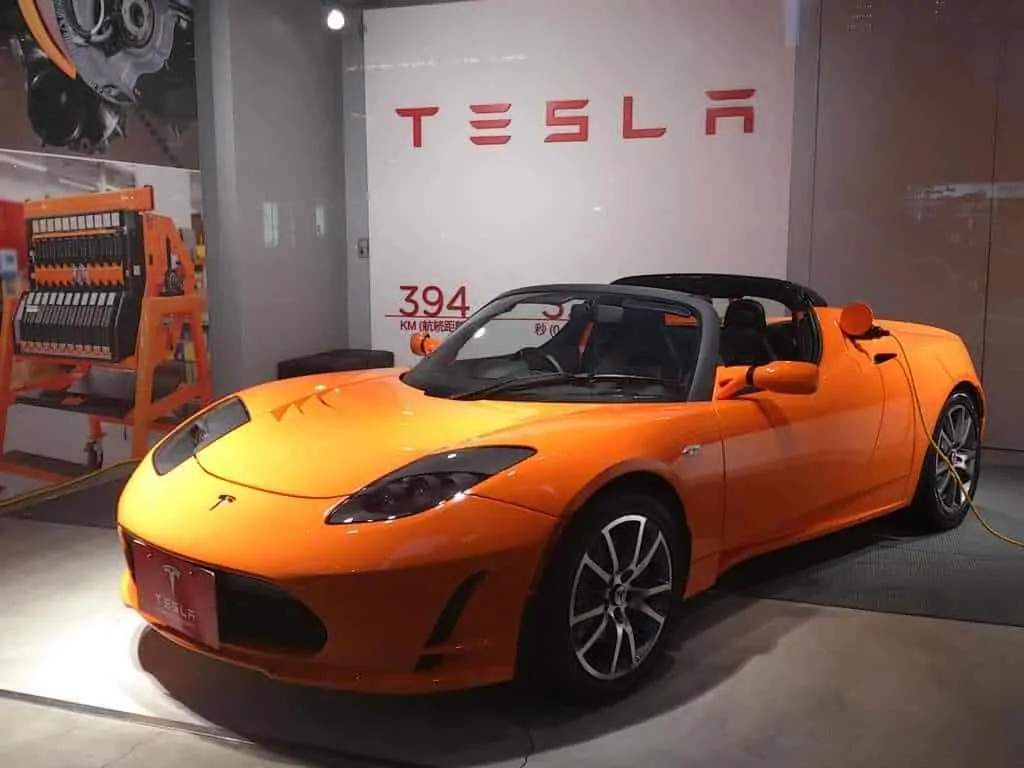
    tesla roadster

    Furthermore, in 2012, the Model S, an electric luxury sedan, was another milestone in its widely gained success. In 2015 and 2016, the Model S was the world’s best-selling plug-in electric car. Succeeding the Model S is the Model X, a crossover SUV. The Model 3 (at a mid-range price point), which is Tesla’s fourth vehicle, has been designed for the mass market and has been put into production since July 2017.

    Since the very first model: Roadster, Tesla has sold over 186,000 electric cars and went on to be the world’s second-best-selling manufacturer of plug-in electric cars in 2015 and 2016. Apart from this, Tesla has given its customers a network of high-powered Superchargers across North America, Asia and Europe for Tesla vehicles.

    Other than vehicles, Tesla also ventures into highly efficient solar roof systems.

    Tesla Business Strategy

    Tesla entered the market with expensive high-end cars targeted at the more financially privileged class of people. Once it is more established and widely known as a successful idea, it would venture into a more competitive market of lower-level priced models. So the first model was launched to get the company’s mission out in the marketplace.

    All Tesla needed was to make a name for their brand to get its concept widely accepted. After that, it reinforced its business model. Tesla’s business model is based on a three-pronged approach to selling, servicing, and charging its electric vehicles.

    Direct Sales

    Tesla doesn’t adopt the approach of franchise dealerships, unlike most manufacturers. They prefer selling their product directly to customers through self-owned showrooms across many of the major urban centres in the world. They believe that this method of selling can speed up product development. But more significant is the customer’s buying experience. Tesla has showrooms, Service Plus centres (a combination of retail and service centres), and service facilities. Tesla has also made use of Internet sales—consumers can customise and purchase a Tesla online.

    Servicing

    As mentioned above, Tesla has combined direct sales with service centres. They believe opening service centres have a positive effect on customer demand. Thus the “Service Plus” retail centres. Customers can service their cars or charge them at the service centres or the Service Plus locations. They also have mobile technicians who can come to your home, called Tesla Rangers. With the Model S, they can wirelessly upload data so technicians can view and fix certain problems online without even physically touching the car.

    Charger’s network

    Tesla has a wide network where its customers can charge their vehicles. Supercharger Stations: a place where customers can charge their vehicles in about 30 minutes for free. It is their belief that this will increase the rate of the customers’ product adoption.

    It doesn’t end here, apart from the three-pronged business model, Tesla also provides financial services like granting loans and leases. If the customer wants to resell a vehicle, some of the loan programs have a resale value guarantee provision, which provides some downside protection on a vehicle’s value.
    Tesla’s other products include a line of home batteries called the Powerwall, which serve as energy storage systems in homes or businesses, and solar roof systems as well.
    Another very important part of Tesla’s business strategy is that Tesla takes customer deposits upfront—a year, two years, or three years in advance of production and delivery, unlike other car companies. Tesla has sold $500 million in stock to the public.

    The Face of Tesla: Elon Musk

    Elon Musk is the co-founder, CEO and Product Architect at Tesla. He oversees all product development, engineering, and design of the company’s electric vehicles, battery products, and solar roofs.

    He joined Tesla in 2004 as the chairman of the board of directors. Initially, he wasn’t much involved in the day-to-day activities of the company (although he did oversee Roadster’s product design). Post-2008 crisis, Elon took on the task of leading the company as the CEO and product architect. Ever since he has been shaping the future of electric cars and the automotive industry radically through Tesla.

    Tesla’s homepage was changed to Tesla.com in February 2016 after Elon acquired it from Stu Grossman, who had owned it since 1992. In December 2016, Musk was ranked 21st on the Forbes list of The World’s Most Powerful People. Because all of the many accolades of Elon and his achievements in SpaceX, he’s gained a lot of attention and popularity. This has made him a famous personality and a credible one.

    Most car companies spend billions on advertising and publicity. However, Tesla just needs a tweet from Elon announcing a new model or an idea to get crazy ravenous publicity. The next thing you know, everyone’s talking about Elon tweet and Tesla, and it has become a big deal already. And the best part of it is all of it is free of charge. It would also be fitting to say that, on quite a level, people believe in Tesla because of Elon.

    Let me conclude by leading you with a question:

    What makes Tesla, Inc. different from other automotive companies or rather, companies in general?

    Tesla, Inc. doesn’t have its goals set in producing and manufacturing high-end electric cars for the affluent to make money and move up on the charts. The mission of the company is this: to accelerate the world’s transition to sustainable energy.

    They also put it like this:

    • Build a sports car
    • Use that money to build an affordable car
    • Use that money to build an even more affordable car
    • While doing the above, also provide zero-emission electric power generation options
    • Don’t tell anyone.

    Tesla’s goals are far beyond that of most automotive companies. They envision building a world with cars void of harmful emissions. Every day they work to draw this future closer to the present.

    The Superchargers were made to overcome one of the biggest challenges impeding the future of electric cars: for electric cars to really be able to take a road trip without much inconvenience.

    With its no-pressure sales approach, Tesla salesmen aim at furnishing the customer with the details of their cars instead of trying to force a sale. Unlike other electric car retail outlets, Tesla staff know more about their car than the customers that visit.

    The performance of Tesla cars is also superior.

    Whichever Tesla you buy, not any comparatively priced car from a competitor, whether gas or electric, in the same class is going to beat the Tesla to 100 km/h. What Tesla has done is it has not only manufactured electric cars successfully, but it has revolutionised the future of emission-free travel and has made long-distance travel through electric cars possible.

    What could be considered the greatest achievement of Tesla is that it made a successful business model to bring the electric car into the market rather than just manufacturing one.

    Go On, Tell Us What You Think!

    Did we miss something?  Come on! Tell us what you think of our article on the Tesla business strategy and business model in the comments section.
  • Amway Business Model | Is Amway a Scam?

    Amway Business Model | Is Amway a Scam?

    Amway, derived from ‘American Way’ is an American company which deals in health, beauty, and home care commodities. The company owes its foundation to Jay Van Andel and Richard DeVos in Ada, Michigan, and roots back to 1959.

    Formerly counted among the top companies by the Forbes Magazine, the dual principles of Amway Business Model – direct selling and multi-level marketing – have triggered flames of controversy in the past. Let’s discuss the business model of Amway before moving ahead to discuss whether Amway a scam or not.

    What does Multi-Level Marketing (MLM) mean?

    Multi-level marketing, popularly termed as Network or Referral Marketing, has always been in the news due to its seemingly contentious scheme of marketing. It involves selling of goods and services through partners and promoters. The earning from the sale is attributed not solely to the seller. The payment of the associates is through a multi-level system of commissions.amway business model network marketing

    These salespeople work lower down the hierarchy. They sell products straight out to as retail distributors through promotional marketing schemes.  They are also entrusted with the job of recruiting newer dispensers down the hierarchy to expand the network by the day. Either they themselves sell the concerned products or sponsor its sale by someone else.

    Amway Business Model

    The Amway Business Model adopts a similar fashion of network marketing wherein each trader on top of the ladder engages other traders down the line, resulting in a network, and everyone selling the products of the company too.

    How does Amway work?

    Amway business model isn’t too complicated to comprehend. You –

    • will be recruited by a distributor,
    • will act as a distributor ( IBOs, or “Independent Business Operator”), and
    • will sell the company’s products and get more people on board in order to earn profits.

    The profits are earned as commissions when you or any IBO appointed by you sell company’s products. The IBO you appointed will be your downline and when they sell anything, you’ll get a bonus commission.

    How is the Amway Business Model different from the rest?

    Every company, even the one you are employed in, has a certain chain of command for its employees, in terms of power, responsibility and income. The ones on the top of the ranking (the ones who were recruited earlier) earn more than the ones below them (the ones who are recruited later). With the Amway Business Model, there is no such situation, though. Tradesmen down the line, that is the ones who are recruited later, can earn more than the former ones.

    According to the Amway Business Model, the revenue of the distributors is directly proportional to their sale charts. Also, Amway provides real commodities to consumers. The distributors, according to the proposed model, are not paid for merely expanding the network by introducing new workers down the chain.

    The Amway Model is acutely infiltrated into the market and that is what makes it unlike the others and appears as a sham to many. This is because the networking needs to keep on increasing for better results – more and more people are to be made to join hands and more and more people are to be talked to. They put to use a stair-step trade form for their sales, and a compensation plan for their earnings.

    Consumers of Amway’s Networking Business Model

    The reality of Amway’s networking business model is that besides the retail end customer, the very salespersons recruited or sponsored by the ones higher up in the network also act as end-user retail customers for Amway as they are required to pay an entry fee to join the network. Furthermore, a major part of the proceeds is obtained from the sale to partakers itself. Only a tiny fraction of the total returns actually owes its roots to non-participant consumers. This fact has no proof from the company, because of obvious reasons. The company wouldn’t want to disclose the number of participants actually responsible for the company’s turnover! Or maybe, they do not even differentiate between the sources of revenue to keep records at all!

    If you still couldn’t decode the Amway Business Model, here’s a little cue for you. Imagine you are working at Amway. You need to buy a beauty lotion. Instead of buying it from a retail store, you buy it from yourself – that is you buy it as a participant of Amway. The company sells out one product, you spend money, yes, but you get the proceeds of income. Since this is not a very feasible form of earning, you would want to sell products to more non-participant consumers, or you would want to add further participants down the chain, whose sale proceeds (actually some part of it) would also come to you. The more you buy from Amway, the more you earn. The more you sell to others, the more you earn. The more participants you employ, the more you earn! They key is to find more and more down-levels so that you do less and earn more.

    Is Amway a Scam?

    No. It’s not.

    The Business Model of Amway is one that has been subject to several controversies and objections. Its Network Scheme has been a case of constant conjecture. Back in 1975, its functioning was questioned by the Federal Trade Commission. It went against the proposition of its Networking Business Model, which was confused for a Pyramid Model. A pyramid model is one where people earn simply by recruiting new participants. This gives them the unjust advantage of earning through the appointment of friends and relatives.

    It was held that the participants of Amway focused purely on recruiting newer ones down the hierarchy and not on selling products. Apparently, several fraudulent promises were made to lure people into the Amway network.

    Amway has pondered on altering its business model in according to implications of restriction in countries like China, in order to continue marketing in the Chinese domain. An Indian court had questioned Amway India’s Business Model, in defence of which Amway cited the lack of a novel legal structure in the country. Amway has pleaded to ensure that monetary transmission policies weren’t befuddled with those of direct selling. The claim had been fruitfully accredited by top legal connoisseurs who approved of its Business Model in India.

    Issues pertaining to the concept of Amway’s marketing model or those related to the class and cost of its commodities are justified enough to be raised and debated on. The blame of fraudulence on the company, however, seems a bit incredulous. FICCI, in India, had also supportively articulated for
    Amway, stating that there were no alleged illicit or falsified activities involved in the Amway Business Model and hence such views and comments should be discarded.

    Scamming is something that comes with human nature. Someone who catches hold of a novice in the profession would try to outdo him for his own good, through fraud and fake promises. The underlying fact is that the Amway Business Model is not a scam. Just that it is not really a pyramid model of business – all it relies on is a granted hierarchy of partakers who purchase, retail and further spread out this sequence to earn more proceed-fractions, which is more of a network than a pyramid.

    Go On, Tell Us What You Think!

    Did we miss something?  Come on! Tell us what you think of our article on Amway Business Model | Is Amway a scam? in the comments section.

  • Understanding The 4C’s Of Marketing Mix

    Understanding The 4C’s Of Marketing Mix

    Ever since the beginning, businesses focused on themselves more than the customers. But the rules of this game have been changed long ago. The customer runs the market and shapes the business’s marketing mix. The 4P’s of the marketing mix or the seller-oriented marketing theory was claimed to be dead in 1990 by Mr Bob Lauterborn, who asserted the use of 4C’s of Marketing over the retired 4P’s.

    This new approach of 4C’s of marketing shifts the focus from producer to consumer and provides a better blueprint to follow for the businesses that cater to a niche audience. In contradiction to Jerry McCarthy and Phil Kotler’s 4P approach, this model revolves around how to serve customers better.

    The shift from 4P’s to 4C’s isn’t just an exercise in semantics. It reflects a change in mindset over time.

    Quoting  Lauterborn –

    Forget product. Study Consumer wants and needs.

    Forget price. Understand the consumer’s cost to satisfy that want or need.

    Forget place. Think convenience to buy.

    Forget promotion. The word is communication.

    The model encourages marketers to view their processes and form strategies from the customer’s point of view.

    The 4C’s of Marketing Mix

    4C'S OF MARKETING MIX

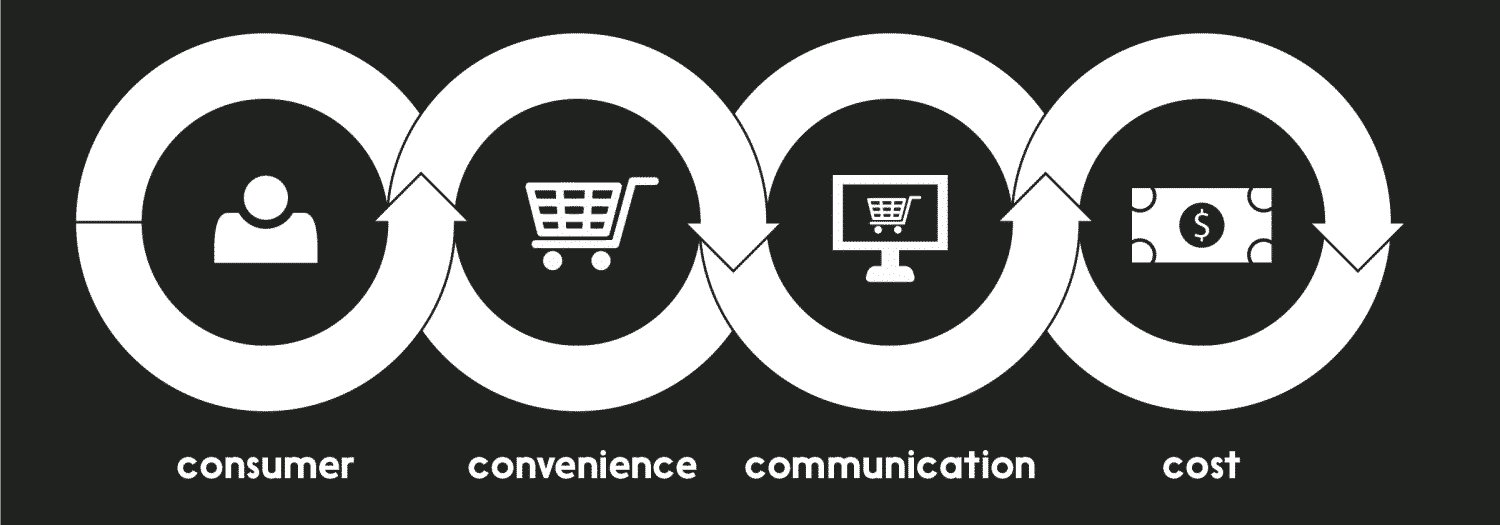
    To stay in the market for long and to find a position in customers’ minds, you have to think like customers and form strategies which benefit both parties. The 4C’s marketing concept focuses on niche marketing, unlike mass marketing which was propagated by the 4P’s. The more you know the consumer, the better are your targeting strategies and conversion rate. The 4C’s of Marketing Mix are:

    Consumer Wants And Needs

    Forget product. Study Consumer wants and needs.

    In this highly competitive environment, your product will not create its own demand if it isn’t desired by the consumer. You need to study the consumer wants and needs before developing the product, as it’s the needs and wants that trigger demand.

    This not only will help you in developing the desired product but also will help you

    • in developing a positioning strategy for your product, and
    • in marketing your product as per your customer’s needs.

    Cost

    Forget price. Understand the consumer’s cost to satisfy that want or need.

    Price is only a subset of the total cost incurred to satisfy the want or need. The consumer incurs much more expenditure in acquiring your good or service. The cost subset of marketing 4C’s includes monetary and non-monetary costs. Some of them are:

    • Price – The is the amount the customer pays to the seller to acquire the product.
    • Additional cost of acquiring – The cost incurred to drive to an outlet to purchase your product, or the cost incurred while researching about your product, etc.
    • Cost of conscience – Suppose you’re dealing in a non-vegetarian food product. Your consumer might incur a cost of conscience when he buys and eat your non-vegetarian product.
    • Opportunity cost – This refers to a benefit your consumer could have received, but gave up, to buy your product or service.

    The cost subset of Marketing 4C’s reflects the total cost of ownership, unlike the price subset of Marketing 4P’s, which only considers the cost aspect.

    Convenience

    Forget place. Think convenience to buy.

    Convenience is the key to more sales. Most of your customers choose a product based on the convenience of purchase. The focus should be on –

    • to research and find out all the channels of distribution your customers consider while making a purchase.
    • to walk on your customer’s path and sell your product on the channels he is searching on
    • to remove all the barriers your customers face while buying your product.

    The convenience aspect of marketing 4C’s is often neglected by businesses prioritising greater profit margins over customer convenience. However, convenience results in more benefits to the brand in the long run.

    Communication

    Forget promotion. The word is communication.

    While promotion is manipulative and is forced to the buyer, communication is cooperative and is approved by both the seller and the buyer.

    The consumer always wants to hear ‘what’s in it for me?’, while the seller always wants to say ‘this is the best product in the market’. Effective communication considers both sides and results in a win-win situation. The communication aspect of marketing 4C’s asserts a give and take relationship between the seller and the buyer, unlike the promotion aspect of marketing 4P’s, which doesn’t consider the consumer’s point of view at all.

    Go On, Tell Us What You Think!

    Did we miss something?  Come on! Tell us what you think of our article on 4C’s of Marketing Mix in the comments section.

  • How does Twitter Make Money? Twitter Business Model

    How does Twitter Make Money? Twitter Business Model

    Twitter needs no introduction. More than a decade ago, its founder Jack Dorsey had famously typed out “just setting up my twttr” on the micro-blogging site as its first tweet.

    Since then it has come a long way where it has the become the voice for many, including the current American President whose rants on the platform have landed him in many controversies (we are still trying to figure what #Covfefe is). Twitter’s impact on the world has been so strong that it has given birth to revolutions and brought down entire regimes (think: Arab Spring). Twitter won the Techcrunch’s Crunchie award for the Biggest Social Impact in 2012 as well as 2015. Many have called it the “Pulse of the Planet”, something so powerful and effective that even the biggest news agencies cannot match its pace and reach.

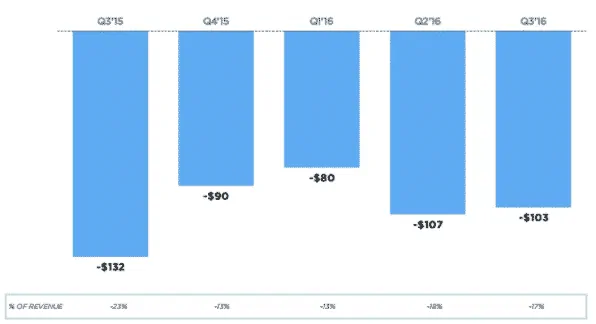
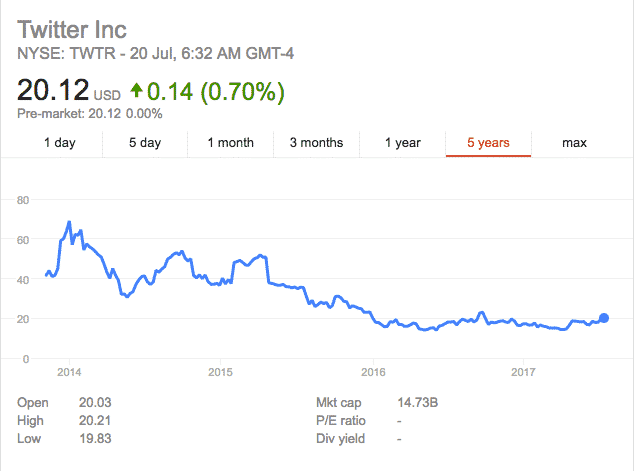
    Yet for all its glory, hype and impact, its valuation is decreasing with time, its stock performance is abysmal and many call its business model “broken”. Twitter revenue model has remained unchanged over the years while it is still hoping to turn profitable but it has not been able to yet. So what exactly is the Twitter business model? How does Twitter work and how does Twitter make money (or not)? We are here to answer all your questions. So let’s dive right in.

    What is Twitter?

    Twitter was created by Jack Dorsey, Biz Stone, Noah Glass and Evan Williams in 2006. The company is headquartered in San Francisco, California, United States. Twitter business model is a microblogging platform which quickly attained worldwide popularity after its launch. Currently, Twitter has more than 328 million monthly active users, making it the ninth-largest social network in the world. Twitter has proven to be the largest source of breaking news time and again. During the 2016 Presidential Elections in the US, 40 million election-related tweets had been sent by 10 p.m. that day.

    A social network’s valuation is dependent on the number of users and the engagement of users. Unfortunately, Twitter’s user engagement is decreasing and other social networks like WhatsApp and Instagram have left it far behind in terms of the number of total users. Though it was being touted as a serious competitor to Facebook in its early days, Facebook is currently the most popular social network in the world and is valued at a staggering US$ 485 billion with about 2 billion users while Twitter sits cosily at the 9th spot in terms of users and an ever-dwindling valuation. Twitter is currently valued at US$ 15 billion, less than its valuation of US$ 18 billion at the time of its IPO.

    Twitter Business Model

    Twitter business model is similar to the business model of other social networks. It requires users to create a profile and then those users can post short status updates or “tweets” under 280 characters. Registered users can post tweets, but those who are unregistered can only read them. Users can post using the website, app or even SMS. It is also called “SMS of the Internet”.

    The users can follow other user accounts and then they can view the tweets of the accounts they chose to follow. The users can share videos, images, and links through their tweets. The users can also directly message each other.

    Of late, Twitter has been shifting its focus to video content and content creators, as video has far higher engagement than text or banner advertisements. To incentivize video makers, Twitter shares revenue with them, where the creators get 70% of the cut and the rest is kept by Twitter. This is better than the 55% cut offered by YouTube to content creators. Twitter, with the help of Periscope, has been trying to bring live-streaming into the foray. It bought the digital rights of NFL in the US for US$ 10 million in 2016. It wants to get exclusive digital rights to big events like NFL games, political debates, award ceremonies etc to enhance its business model. While it has a lot of competition from YouTube and Facebook, it can also be a boost to its decreasing revenues if the costs are managed well.

    In terms of value proposition, Twitter offers its various stakeholders the following benefits:

    • User Benefits – Users share content with the world, get real-time and relevant content in return and also get to participate in conversations with people through tweets or messages.
    • Advertiser Benefits –  Viral global reach, unique ad formats, real-time connect with the audience.
    • Data Partner Benefits – Access, search and analyze data and generate insights to monetize.

    Twitter has always tried to strengthen its business model through acquisitions and partnerships instead of internal user or revenue growth. Some of its acquisitions and partnerships are listed in the next section.

    Twitter’s Acquisitions and Partnerships

    Before we move on to answer the question of how does twitter make money?  and discuss Twitter Revenue Model, it’s important to know more about Twitter’s acquisitions and partnerships. The company has made many acquisitions in the past to enhance its business model – 54 to be precise. Some of its most prominent acquisitions are:

    1. Crashlytics – Crashlytics is a crash-reporting and analysis mobile tool. It was acquired by Twitter in 2013 for US$ 100 million.
    2. Gnip – Twitter acquired Gnip, a social media application programming interface API in 2014 for $134 million.
    3. Magic Pony Technology – Twitter acquired Magic Pony in 2016 for US$ 150 million to enhance its machine-learning capabilities.
    4. MoPub Advertising Solutions – Twitter acquired MoPub for US$ 350 million in 2013. It hosts the world’s largest mobile advertising server with real-time bidding exchange.
    5. Periscope – Twitter acquired Periscope, the live-video streaming start-up in 2015 for US$ 100 million. It acquired Periscope to improve its video capabilities further, including the offering of real-time broadcasting services.
    6. TapCommerce – Twitter acquired Tapcommerce in 2014 for US$ 100 million. It helped Twitter improve its mobile installation and engagement advertisements.
    7. TellApart – This was Twitter’s biggest acquisition. The US$ 479 million acquisition digital advertisement platform increases Twitter’s advertising revenue which is generated by ads resembling tweets and urges users to perform a particular action.
    8. Vine – Twitter acquired Vine in 2013 for US$ 30 million to strengthen its video-sharing services.
    9. Zipdial – It was acquired by Twitter for US$ 30 million. It is an Indian company founded by Americans. It focuses on response collection technology and missed call marketing.

    Twitter has partnered with DoubleClick, Google’s ad serving platform which would bolster Twitter’s ad serving and revenue earning capabilities. But this also means that Twitter would have to share its revenues from advertisements with Google, which could further reduce its profits.

    How Does Twitter Make Money?

    The answer to how does Twitter make money? and What is Twitter’s revenue model? can be given primarily by explaining two of its strong suits: Advertising and Data Licensing.

    How does Twitter make money through advertising?

    Almost 85% of Twitter’s revenue comes from advertising sales. Twitter annual revenue from ads came out to be around US$ 400 million in 2015. An individual or company can advertise on Twitter by either

    • Promoting a tweet that will appear in people’s timelines
    • Promoting an entire account
    • Promoting a particular trend i.e. a hashtag-driven topic (e.g. #NotInMyName) that is popular at a particular time

    Photos and video previews are displayed in the posts alongside the text thus enabling the advertisers to present their content to the target audience better. Before 2013, users had to click on the links posted to view the content.

    Twitter charges the advertisers based on the amount of interaction that the tweets generate. While the budget is set at the beginning of the campaign itself, the advertisers pay on per-click or per-retweet basis. Advertisers can also participate in bidding to place their content in a particular space. More than 65% of Twitter’s advertising revenue comes from mobile devices.

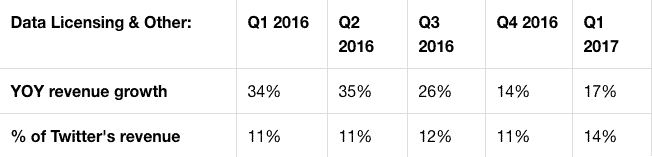
    How does Twitter make money through Data Licensing or “Firehose”?

    What is data licensing? Well, Twitter sells its public data that it calls Firehose and that amounts to around 500 million tweets each day to various companies. Companies can utilize this data to analyze consumer trends and generate insights about brands and companies. Since the tweets are public, consumers can also access this data. Because of the volume of the data, companies can learn about their users in a detailed manner, something that a normal user would not be able to. Of course, the data analysis tools have to be sophisticated enough.

    With sophisticated analysis, companies can learn detailed and specific information about their users that, because of the volume of data, an ordinary user or company would not be able to get. Though there is a slowdown in the advertising revenues, the high-margin data licensing business is growing. In 2015, Twitter generated US$ 32.2 million of revenues from data licensing.

    how does twitter make money

    Of all the companies that have been acquired by Twitter, there are some which have been absorbed, some which are open source and some which generate revenue for Twitter and add to its topline. Absorbed companies are those which have been discontinued for the general public but their expertise and capabilities in a particular technology are being leveraged by Twitter in its own product with the support teams from these companies. The companies which generate revenue for Twitter do so either through subscriptions or views. These make money through freemium models or through advertising. Open source companies do not make any money for Twitter and are accessible to anyone. Some examples of each group are as follows:

    • Absorbed – Magic Pony Technology, TapCommerce, Peer, Zero Push, TellApart, Crashlytics, Summify, Hotspots.io, Mesagraph, Cloudhopper
    • Generates Revenue – MoPub, Zipdial, Vine, Periscope, SnappyTV, TweetDeck
    • Open Source – Adrenaline Mobility, Clutch.io, Fluther

    Future of Twitter

    Some of the major issues that Twitter Business Model is facing currently are:

    • Smaller User Base vis-à-vis competitors
    • Low User Engagement
    • Negative Profits
    how does twitter make money - challenges
    • Crippling stock market performance with an overvalued stock
    how does twitter make money - challenges

    Is Twitter Business Model profitable? No. Rather, it has seen negative profits every year and even after its stock fell 60% in 2016, its share price is still considered overvalued. If the business model is not tweaked or changed, the losses will continue. It’s a hard truth that monetization has been a struggle for Twitter and speculations are rife that companies like Disney and Salesforce might acquire Twitter.

    One of the changes it can make to its model is the introduction of tiered pricing, where users are charged annual subscription fees and provided extra services according to the tier they are in. But that is possible only when it is positioned as a media company and not a social network, as the other social networks like Facebook will always remain free.

    There is no doubt that Twitter is a very effective means of communication but it does not have the stickiness for the average person. It is based on individual’s sharing information rather than individuals in a social network of friends and thus is not as personal as some of the other social networks. It is the best at what it does and thrives during live-events by making use of real-time internet the best. Only time will tell if minor tweaks to its business and revenue model are enough to bring it to the path of profitability or a complete overhaul is needed lest it be acquired by another player.

    Go On, Tell Us What You Think!

    Did we miss something?  Come on! Tell us what you think of our article on How does Twitter make money? Twitter business model in the comments section.

  • Uber Business Model | How does Uber Make Money?

    Uber Business Model | How does Uber Make Money?

    Gone are the days when getting a taxi to the office was a nightmare. We no longer need to wait on roadsides trying to spot a taxi and fervently waving at it, only to see it being hacked by another client. We don’t even remember having to be refused a ride in the dead of the night or on late evenings. All this – and much more, with the advent of online cab providers, through which a user can book a ride in a matter of a few minutes.

    Uber, an emerging business giant, is one such ridesharing company that disrupted the industry in 2009. If you’ve ever wondered how Uber works, and more importantly, how it earns money, without you tipping anything extra, or with the prices usually cheaper than taxis, read on to decode Uber Business Model – a taxi aggregator.

    What Is Uber?

    Uber is an on-demand cab aggregator that operates on a smartphone application and lets you book a cab to get from point A to point B, pre-calculating the fare, estimating the time of arrival, and offering an option to split the cost with co-riders, all with a few taps on the app.

    The company disrupted the entire cab industry in 2008 when the founders were not able to find a cab on a cold winter evening. It all started with a simple question – “What if you could request a ride from your phone?”

    Today, the company is estimated to have over 100 million monthly active users worldwide, is a unicorn valued at ~$60 billion, and provides ride options from affordable bikes and scooters to Uber Air.

    • UberX: The basic Uber ride.
    • Uber Pool: Shared rides.
    • Uber Comfort: New cars with extra legroom.
    • Uber Green: Electric vehicles.
    • Uber Black: Luxury cars.
    • Bikes: On-demand electric bikes.
    • Scooters: Electric scooters.
    • UberXL: Vehicles with carrying capacity of up to 6 people.
    • Uber Transit: Real-time public transport information.
    • Uber WAV: Wheelchair accessible vehicles.
    • Uber Lux: Luxury vehicles with top-rated drivers.
    • Uber Black SUV: Luxury SUVs with top-rated drivers.
    • Uber Taxi: Local taxicabs partnered with Uber.
    • Uber Flash: A specialised taxi system designed for HongKong.
    • Uber Auto: On-demand auto rickshaws.
    • Uber Air: Flying vehicles.

    Uber Business Model

    Uber brought the concept of the aggregator business model to the world. This is a unique business model that involves building partnerships and let the partners work under your brand rather than building and developing the offering on your own.

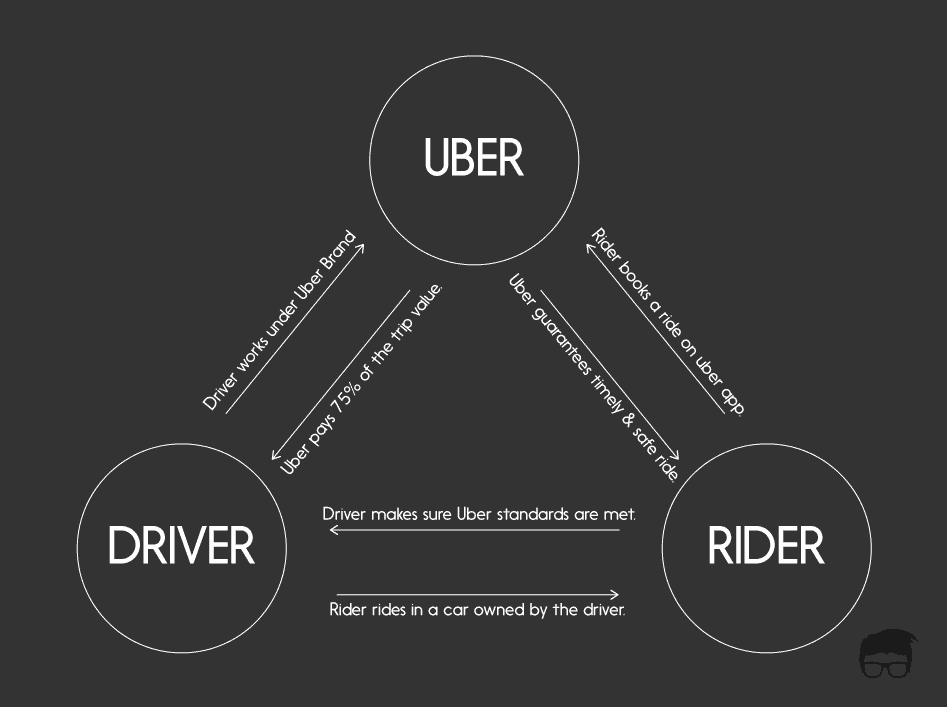
    In simple terms, Uber doesn’t own any cars. It aggregates or collects cab drivers, who drive their own cabs but work under the Uber brand name. While the actual service is provided by the partners, Uber makes sure that the service standards are met – the cabs reach on time, are clean, take the right route, and ensure the safety of the customer.

    And since it was the pioneer, this specific business model is also called Uber for X business model.

    How Does Uber Work?

    uber business model

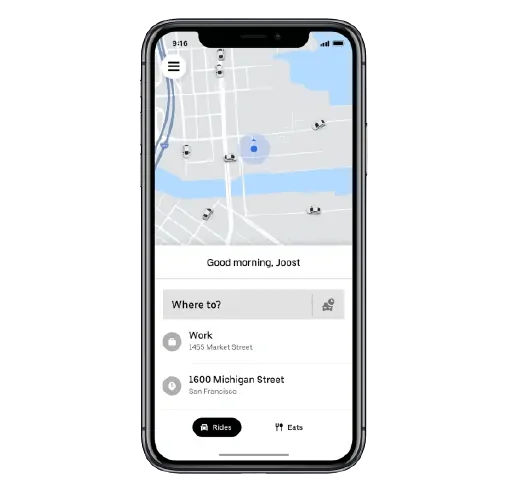
    Uber works on a two faceted operating model. One aspect focuses on getting as many cab partners on board to deliver a seamless experience to the end consumer, and other aspect focuses on marketing Uber as a great ride-hailing application to the customers, that can be used to book a cab with a few taps on the smartphone.

    Here’s how Uber works from the end consumer’s point of view –

    The Application

    uber application

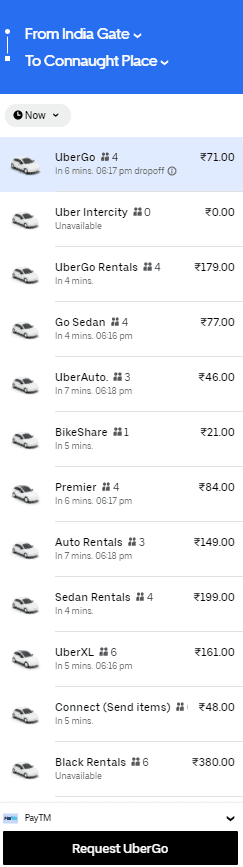
    Application is the first touchpoint where the customer enters the point A and point B details. They also review and choose ride options for vehicle size, price, and estimated drop-off time; chooses the option that suits their demand; and confirm the pickup.

    The Background Algorithm

    uber algorithm

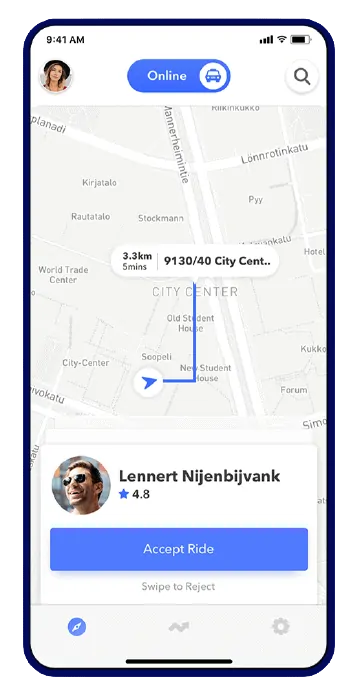
    This is the backbone of the offering. The application algorithm informs all the nearby available drivers about the request who can then accept or decline the same on their own will.

    However, to ensure no biasness, Uber does not show the information about the destination to the drivers before they accept the ride.

    Once accepted, the rider is notified about the driver and the time it’ll take for the driver to reach the departure point.

    The Cab Ride

    uber entertainment

    This is where the standardisation and security aspect of the brand comes into play. Even though the cab is owned and operated by the cab driver, Uber makes sure that it carries its brand identity.

    Once reached on the departure point, the rider and the driver verify each other’s names and the destination. This is often done using two-factor authentication (pin received by the rider).

    The driver makes sure to follow the instructions provided by the rider.

    Also, in luxurious rides, there are entertainment system and WiFi installed for the riders to use during the course of their ride. This helps in brand building.

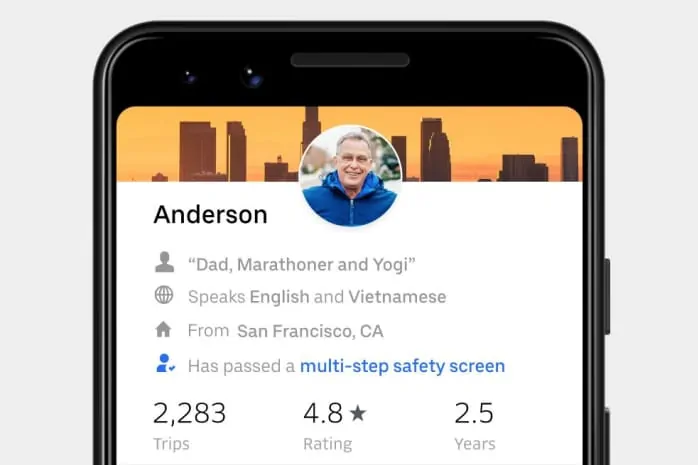
    Besides this, Uber makes sure that the rider is taking a safe ride. To do so, Uber does an in-depth background check of all the drivers that partner with the company.

    uber safety

    Even the riders have to verify their accounts using their phone number and/or social media accounts.

    And if there’s an emergency, Uber has emergency assistance for both the riders and drivers where they can call 911 (or other emergency numbers) directly from Uber app the app displays their live location and trip details that can easily be shared with the emergency dispatcher.

    uber emergency

    Other than this, there’s also an option to share the trip details and live location with other friends and family to ensure safety.

    Payment

    uber payments

    The payment policy on Uber differs for different geographies it operates in. Whatever the case may be, the payments are usually deducted after the ride is completed. It is provided in the form of cash, debit card linked to the app, credit cards, bank transfer, or wallets.

    The Social Validation

    uber social validation

    This is an operating model aspect added by Uber to make the offering more community-friendly.

    After every ride, both the rider and driver get to rate each other. This rating, when aggregated with other ratings they get from other riders and drivers, is shown to the other party whenever they book or accept the ride.

    Moreover, the social validation system helps the company keep a check on its drivers and make sure that they’re following the standards to keep the rider pleased. Also, a rider that doesn’t follow the terms of service is also banned, to fulfil the promise made to the drivers.

    How Does Uber Make Money?

    At a glance, Uber looks very similar to any other taxi company. In reality, however, it’s operating and revenue model differs from usual ride-hailing companies substantially. Since it doesn’t employ the drivers, it doesn’t own the money generated through rides.

    In fact, Uber’s revenue model is a commission-based model where it charges a 20-25% fee (that differ for different geographies and class of vehicles) on all fares for the use of its brand and services by the driver.

    In simple terms, Uber brings in customers to the drivers, provides their customers with payment options (like credit cards, wallets, etc.), a good application with maps, directions, ETA; and charges 20-25% of the ride fees plus other fees (like safe ride fees, booking fees, etc.) for the same.

    Moreover, it’s not drivers who get to decide how much they’ll charge for the ride. Uber follows standardised prices per kilometre/mile for different classes of rides/offerings. For example, in New Delhi, a 4.5 km journey can cost from ₹21 to ₹380 depending upon the type of Uber you choose.

    How Does Uber Make Money?

    This brings us to the next section – how is this fee decided and how does uber make money through other sources than commissions?

    Revenue As Commissions And other Fees

    The commission of 20-25% that goes in the pocket of Uber is decided on the price paid by the customer. But how is that price calculated and what all does it include?

    Well, every ride fare includes the following factors –

    • Base fare: The pick up and drop price.
    • Time: The amount of time spent during the ride.
    • Distance: The distance the vehicle travelled during the trip (excluding the distance travelled to pick the rider up)
    • Booking fee: A flat fee to help offset the administrative cost (background check, overhead, etc.). This fee goes directly into the pockets of Uber.
    • Surge variable: If there’s more demand than supply, a price multiplier kicks in that increases the price.
    • Tipping: A value input by the rider if he wants to tip the driver.
    Dynamic Pricing Explained

    During times of heavy demand (like during downpour, sporting events in the city or holidays, etc.), Uber applies dynamic pricing to its offering to ensure that riders can always receive a quick and convenient pickup.

    Dynamic pricing is a technique that focuses on setting the price of the product taking into account different factors such as demand & supply, inventory, competition, locality, and other market conditions but in a smaller time frame.

    It is a simple game of markup economics. With more demand, you get a lot of options to sell your limited offerings to, so you develop an algorithm that increases the price using a markup multiple that is positively correlated with the increase in demand.

    For example, if the demand is doubled, your markup multiple can be 2x. That is, a ride where the rider used to pay $10 will now cost $20.

    Since Uber has to fulfil the demand to maintain its brand image, dynamic pricing mechanics helps it to manage its inventory better by bringing in more drivers to the place of surge pricing in a lookout for more money per trip; all this while making more profits.

    Promotional Partnerships

    Uber, because of its huge user-base, is a huge attraction to bigger brands who are looking for partnerships as a part of their marketing strategies. Besides revenue as commissions from drivers, Uber business model also includes revenue generated through promotional partnerships. The company has been seen partnering with the following brands in the past – Pepsi, Hilton, BMW, Starwood, Spotify, etc. These collaborations result in a win-win situation for all the parties as-

    • Customers benefit from marketing campaigns run by other brands (Uber passengers in select cities were treated to free trips in the BMW 7 Series to promote the new car),
    • Uber gets the money.
    • Brands get the audience.

    Future Of Uber

    Even though the company has a truly disruptive business model, its revenue model hasn’t proved to be profitable yet. The 2019 gross bookings totalled $65 billion, up from $50 billion in 2018. This brings in the net revenue (~25% of gross bookings) in 2019 to be $16.25 billion.

    Still, Uber operates in a loss.

    But seeing the trends and increasing demand for on-demand services, it’s sure that the company will be profitable in future.

    Go On, Tell Us What You Think!

    Did we miss something? Come on! Tell us what you think of our article on Uber Business Model | How does Uber Make Money? in the comments section.

  • The Marketing Research Process

    The Marketing Research Process

    Marketing plays an important role in the success of a business in any industry. It is one of the reasons why a brand retains and even improves its positioning in the customer’s mind.

    For effective marketing, it is important to research about the customers and the market before any decision is taken. The more knowledge the marketer acquire about the customer, the more it helps him to view things from the consumer’s point of view. Hence, investing time in the marketing research process before forming and executing marketing strategies is a prerequisite for successful marketing campaigns.

    Marketing Research Process

    The marketing research process is the practice that involves identifying a problem in a business that is to be dealt with, finding a solution to that problem by getting consumer feedback, and using the feedback to decide what is to be done to solve the issue in the most effective way possible.

    Proper steps are needed to be followed for marketing research to be conducted effectively and without wastage of resources and time:

    Identifying The Problem

    The initial step of the marketing research process lays the foundation for the rest of the market research. If this step is done wrong all the other subsequent procedures are but futile. Hence, understanding what problem requires a solution is important because otherwise, marketers would be doing research over something that doesn’t concern the consumers at all and thus their feedback would also be pointless.

    Market research is of myriad importance when it comes to venturing into a new product or service. Marketers have to make sure that their research is thorough and reliable. This is because, if proper research is not done then an undesired product will go into production and it will result in a loss to the business.

    More often than not, marketers are conducting research on issues that consumers don’t have a problem with or they are asking consumers the wrong questions based on invalidated hypotheses.

    Selecting A Method Of Approach To The Research

    The second step of the marketing research process is to develop an appropriate approach to solve the issue at hand. This includes formulating ideas, questionnaires, hypotheses to be tested and identifying the base characteristic design of the research process. This should be done by referring to relevant data, sources of secondary data, consulting the decision-makers and managers, case studies of similar issues and by following a practical and objective methodology.

    To put it simply, step two is basically the way you’re going to go about the entire research—your marketing research plan.

    This includes, what is the method of research you are going to use, on whom is the research going to be performed, where are you going to conduct the research, the budget, and so on.

    Your method of research is dependent on the nature of data you intended to collect, so keep that in mind.

    Creating And Selecting A Sample For Research

    After you decide the research method and approach, you must then create a sample plan.

    This is divided into 3 samples:

    1. Sampling unit: Here you must decide the target population that is to be surveyed. Once the sampling unit is determined, you must develop a frame so that everyone in the target population has an equal chance of being sampled.
    2. Sample size: Here the question is, how many people are to be surveyed? Depending on the type of results required you must decide whether you need to survey a large group or a more precise one.
    3. Sample procedure: How the respondents must be chosen? This requires of you more thinking and research. This sample which will be chosen is based on hypotheses and assumptions. Again, based on the type of results required the particular procedure must be followed.

    Determining The Tools Of Research

    The next step of the marketing research process focuses more on the details of the method of research and data collection. Here you need to decide which exact method is going to be used to collect the relevant data. Whether it is A/B split testing, inquiry, or mass experimenting, it will determine which is the most appropriate method that is to be followed. This is where you actually start executing your plan.

    However, it is important that you even test your method of research, to see if it will give you the data you want, in the way you want it.

    Collecting Data.

    Finally, it is time to conduct the research. This step is collecting information from the experiments, interviews, tests, or surveys, based on the method of collection you have chosen for your research.

    This is the action in POA. You should make sure that the data is collected correctly and the tests are run without any bias.

    Analyzing Data.

    Now after the data has been successfully collected, you must structure it in a way that it is easy to analyze. Before that, it is important to verify the data collected and make sure that it is original and authentic. The data must be analyzed by running summaries, making tables and graphs, dividing the results into demographic groups, and looking for the major trends in the data.

    Preparing Reports And Presenting Data

    Once the data has been analyzed, you must represent it in the form of a report. It can be in the form of graphs, tables, charts, etc. The report must be comprehensive so that it is easy to make decisions.

    While representing the data the initial objectives of the research must be kept in mind so that it is represented in such a way that it gives clear answers to the questions initially asked.

    While preparing the report it is also useful to provide the information in the form of answers, recommendations and reviews. This helps to understand the data better.

    Any additional information that could prove to be pivotal to the strategy must also be addressed.

    Go On, Tell Us What You Think!

    Did we miss something?  Come on! Tell us what you think about our article on Marketing Research Process in the comments section.
  • Airbnb Business Model | How Does Airbnb Make Money?

    Airbnb Business Model | How Does Airbnb Make Money?

    What started as a simple platform to offer mattresses and home-made breakfast has today revolutionized the way people travel. Airbnb business model is unique, profitable, and has evolved to such a level that the brand is now the world’s most loved hospitality brand.

    What is Airbnb?

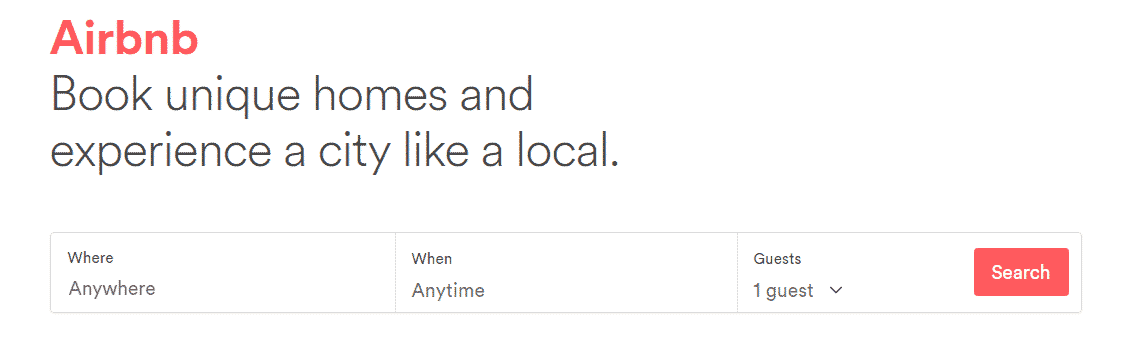
    airbnb business model

    Airbnb is a community based two-sided online marketplace that helps connect travelers with local hosts. What started as a problem for their founders when they could not pay rent, snowballed into this massive venture. They had built a simple website with a map offering mattresses and home-made breakfast. As more and more people started pouring in, they refined the website with money they earned from selling cereal boxes during the 2008 presidential campaign. The click rates improved too as the images of the rented space kept getting better.

    Today, Airbnb is present in 34,000+ cities across 190+ countries. The company has 1.5 million listings and has served more than 35 million guests till date. Airbnb sees 140000+ people staying at its home-stays every day. In 2012, it overtook Hilton Hotels in number of nights booked. The company was valued at $31 billion in March 2017 and the personal fortunes of its three founders, Nathan Blecharczyk, Joe Gebbia and Brian Chesky were an astounding $1 billion each. It is headquartered in San Francisco, California, USA.

    Airbnb Business Model

    Airbnb utilises a Aggregator Business Model, like Uber or the Indian company Oyo Rooms. It does not have a linear business model like the traditional hotel chains such as Marriott, Hilton etc. The traditional hotel businesses have to invest millions in building and maintaining their properties. Airbnb’s key resources are people and therefore does not have to do any of that. This enables it to grow incredibly fast at zero marginal cost.

    People can list their available space on the platform and earn extra money from what they get as rent for their properties. As a platform, it also enables travelers to connect with local hosts and book home-stays instead of expensive hotels, saving them money and letting them “live like a local”. Personal profiles and rating/reviewing systems help travelers make an informed decision about the hosts and what is on offer. Hosts too can choose who to rent out their space to. These help to build trust and reputation in the community.

    Besides the travelers and hosts, Airbnb business model also includes a huge network of freelance photographers in all major cities of the world. They visit a property and get high-definition photographs of the property. These high-definition photographs improve the click-rate and help in getting more responses. Airbnb pays these photographers directly.

    Airbnb vs. Uber vs. Oyo Rooms Business Model

    On the surface, Airbnb, Uber and Oyo Rooms all employ the Aggregator Business Model but the differences arise when dug deeper. Uber has simplified the ride-hailing process, reducing the uncertainty of when and what type of car would arrive.Uber’s business model is such that it acts as a middleman between the drivers and riders assuring an expected level of service. This is different from Airbnb business model which thrives on discoverability. The level of service is not standardised. The travelers are free to choose any listing of their choice after going through its reviews. While Uber too has ratings for both drivers and riders, neither are they as elaborate as those on Airbnb nor can a customer choose a particular driver of his/her choice. The most Uber can do is bar a driver or rider if his/her ratings are too low. Uber pays its driver partners through a fixed rate of commission for every ride.

    Oyo Rooms’ business model is based on standardization. Though both Oyo and Airbnb are in the business of providing affordable stays for travelers, Oyo itself does not strive to be the Airbnb of India. Its founder Ritesh Agarwal has time and again emphasised that he wants to build the Uber for hotels in India. Just like Uber, it guarantees a certain level of service to its customers. Customers book the rooms with the brand Oyo and not with the individual hotels. Unlike Airbnb business model, Oyo books a part of the hotel’s inventory beforehand and organises those rooms under its brand. Oyo Rooms has also started leasing of hotels where it has the full control over the day-to-day operations of these establishments. Airbnb has no such control over the quality of the homestay. Also, while Airbnb’s revenue model includes income mainly through commissions, Oyo earns through a take-up rate. Since they hire a part of the inventory of a hotel, they pay for it upfront and then offer these rooms to customers at different set prices. It also means suffering losses in case of unbooked inventory. Oyo focuses mainly on hotels and guest houses whereas Airbnb focuses mainly on homestays and allows people to rent out their house or part of their house to travelers, thus earning some extra income for themselves and enabling the travelers to experience the local culture of the place.

    How does Airbnb Make Money?

    The property owners are provided free listings by Airbnb and the travelers then browse the various properties in a particular location as per their requirements and budget. The booking and monetary transactions are carried out on the Airbnb platform. The company gets its share of revenue from these transactions through two sources:

    Commission from Hosts/Owners

    Airbnb deducts a flat 10% commission from hosts for every booking done through the platform. Hosts also have to pay a 3% fee for the processing of the payments of the guests.

    Transaction fee from Travelers/Guests

    6-12% of the booking amount is set as service fee by Airbnb for travelers for every confirmed booking. This fee is non-refundable.

    Airbnb reasons that people can save money on booking fees if they book in large numbers.

    Depending on the tax laws of the area, users are also charged a value-added tax (VAT). VAT is calculated on the final value of the goods and services. The tax laws vary from country to country and thus Airbnb does not charge VAT for every booking. Moreover, guests who pay in a different currency than the host has chosen are subject to varying exchange rates determined by Airbnb. Hosts are charged VAT based on the income earned from different bookings.

    Airbnbmag

    airbnbmag airbnb business model

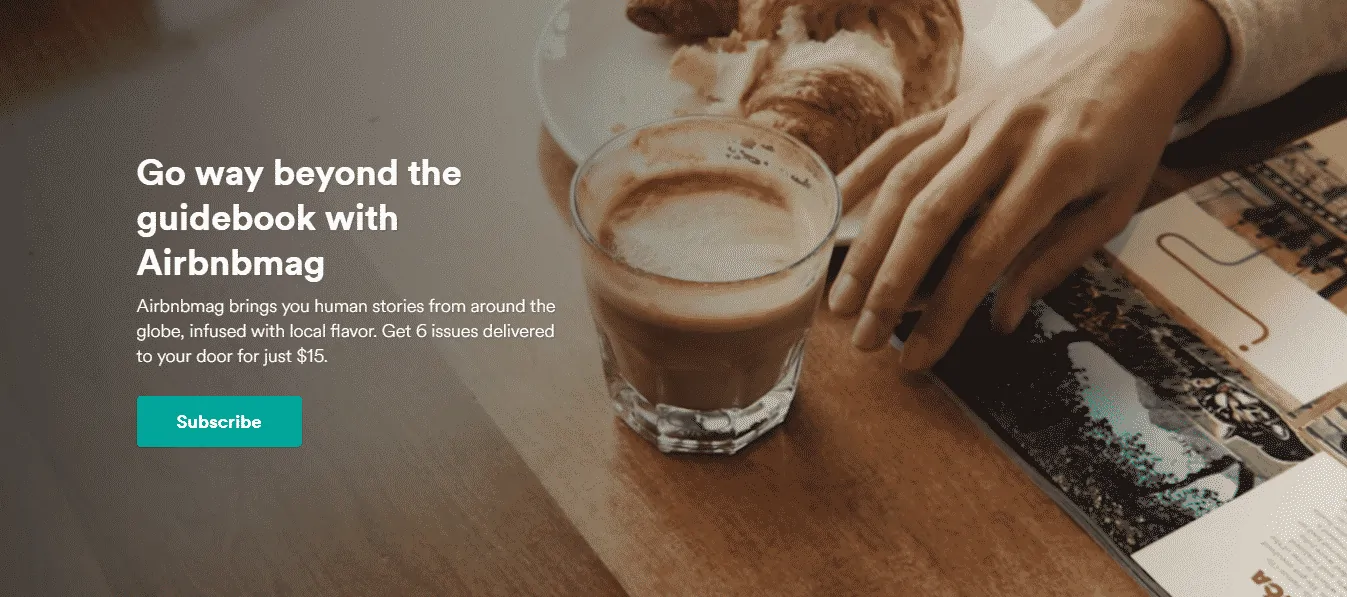
    Airbnb has a vision to make travelers feel that they belong to the place they visit. This vision has made them add a new product to their business model – Airbnbmag, which is more than just a normal guidebook. This $15 dollar magazine is a result of partnership between Airbnb and Hearst and is designed to bypass the tourist stomping grounds and help the traveler uncover the place through the eyes of a local.

    Business Travel

    Airbnb business model also includes business ready homes that fulfill certain requirements for home type, amenities, check-in, reviews, responsiveness, and host commitment. This feature is designed especially for travel managers of the companies to provide better transparency and more accurate reporting for their company.

    Challenges

    Trust

    In spite of providing insurance, trust remains the biggest challenge as the community keeps getting bigger with time.

    Regulations

    Many cities and countries have started bringing new regulations against renting of properties as they are being misused to avoid paying taxes.

    Imitators

    Local competition is a big threat and since local players understand the culture better, they have a slight advantage. They also have the first-mover advantage if they respond quickly to Airbnb’s expansion.

    The Future of Airbnb

    Airbnb is a huge company today with presence in almost all the countries. The unique business model of Airbnb has proved to be very strong as people prefer Airbnb over hotels for affordable and comfortable stay in new locations. People get to experience local culture while paying significantly less. Airbnb has used technological innovation to build a platform that connects individuals across the world. It is the largest chain of properties today, without earning a single property. Airbnb’s revenue continues to grow as the bookings keep increasing every day though it charges a minimal service fee.

    Go On, Tell Us What You Think!

    Did we miss something?  Come on! Tell us what you think about our article on Airbnb Business Model | How Does Airbnb Make Money?  in the comment section.

  • 10 Psychology Tips for Social Media Marketing

    10 Psychology Tips for Social Media Marketing

    Marketers are not psychologists, but a majority of successful marketers employ psychology in their strategies. Social media is technically a user’s platform and to tap the platform for marketing purpose, you need to understand the user. Here are 10 psychology tips for social media marketing for you to implement your strategies effectively and efficiently.

    The Art Of Sharing

    Sharing isn’t new. Before social network platforms, people used to share cool stuff over lunch. The only thing that has changed is that people now

    • Share more content
    • From more sources
    • With more people
    • More often
    • More quickly

    Learn why people share. What do they share, and when do they share most.

    Top 5 reasons for sharing on social media networks-

    • 68% share to define who they are
    • 49% share to inform others about things they care about
    • 73% share to connect with people who share their interests
    • 69% share to feel more involved in the world
    • 84% share to support a cause

    Hence, sharing is all about creating relationships. They try to build relationships with others by sharing your stuff. You create a relationship with them by posting it.

    art of sharing

    Images

    Shortened attention spans = the need for bolder, easy to digest messaging.

    It’s the era of microinteraction. Show them the stuff instead of telling them about it. A study from Microsoft reported that people tend to lose concentration after just eight seconds. You’ve got to devise a message stand out and to grab their attention. Images work.

    • Use Stock photos and charts & graphs to accompany your text.
    • Screeenshots are preferred over texts as they look more relatable.
    • Bloggers can use personal photos to interact with the audience.

    This new era has started a new demand for infographics and comics. I agree that comics were never out of fashion, but these are now being used by businesses as they have more repost value over social media. Infographics too have a repost value, plus your users make them travel through different channels (Pinterest, pocket, blogs, etc.) without you putting any efforts.

    Psychology in social media marketing

    Be everywhere

    Increased multitasking = increased need to engage in multi-channel marketing.

    People are everywhere on social sphere. So should you. Devise a social media strategy that spans across multiple platforms. People like to divide things. Instagram is for the images, Facebook for connecting with others, Linkedin for professional matters and Tumblr for creativity, etc. Tap the right platform for right type of post to get the right audience.

    Develop a community

    Develop a community. People like to be in a community. Be it a football community, gamer’s community, or any other. Make them feel they belong there. A sense of connectedness in your target group is good for your business. Make them feel they matter, and you will not require much effort to promote yourself.

    Emotions (especially happiness) are contagious

    Emotions, especially happiness, is as contagious on social platforms as it is in real life. Emotional triggers can be used to make them engage with you or your post. Knowingly or unknowingly you trigger an emotion with all of your posts, whether it be happiness, sadness or boredom. Try it to be something more engaging and go with the trend.

    Oreo Happiness

    Make them talk about themselves

    Just like you, your readers like to talk about themselves. According to a study, people spend 80% of their time talking about themselves. Devise a social media marketing strategy which includes engaging in conversations with them. Make them talk about them and they’ll use the rest 20% percent of their time to talk about how you let them talk about them, and they’ll talk about you of course.

    Cadbury india happy friendship day campaign

    Foot in the door theory

    When asked to make a small commitment first, we are likely to agree to a larger request later.

    The more frequently a user visit your page, like & comment to your posts and often respond to you on social media, the more likely he is to share your posts and invite his friends if being requested to do so. Hence, see to it that you have a nice reader-base.

    Reciprocity

    You get what you give. Give something of value to get something in return. Play the favor game.

    Partner with influencers

    Influencers rule the social sphere these days. Get them to trust you and you’ll win their follower’s trust automatically.

    Fear of missing out

    No one like missing out something important. Use the triggers. Make them feel they’re missing out something by not following you or by not buying your products. This trick always work. Or you can use the triggers like ‘be the first one to know’ or other emotional triggers to make them follow you.

    Mensxp

    Go On, Tell Us What You Think!

    Did we miss something?  Come on! Tell us what you think about Psychology Tips for Social Media Marketing in the comment section.

  • Netflix Business Model | How does Netflix make money?

    Netflix Business Model | How does Netflix make money?

    Founded in 1997 by Reed Hastings and Marc Rudolph to use the internet to rent movies on DVD, Netflix – the stream your movies and shows online company today outranks cable TV in the US. The company’s subscriber base is so huge that it accounts for more than a third of internet traffic during its peak hours. With these facts and figures about the company, the questions like ‘how does Netflix make money?‘ and ‘what is Netflix’s business model?‘ are sure to arise on your mind. But before moving on to these questions about the business and revenue model of Netflix, let us first discuss Netflix’s operating model.

    What is Netflix And How Does It Operate?

    Netflix is a streaming content provider that allows subscribers to watch TV shows, movies, documentaries and more on a wide range of Internet-connected devices. The company also provide DVD rental plans where it supplies the shows and movies on DVDs.

    This video streaming on demand company operates on a subscription-based model. The users pay for a monthly subscription plan and are given access to stream shows, movies, documentaries and other content available on Netflix in the quality (SD, HD, Ultra HD) they pay for.

    Netflix Business Model

    Let us look at Netflix’s business model for a clear picture before moving on to answer the question of how does Netflix make money.

    Target Audience Of Netflix

    Netflix is the world’s leading internet television network with over 100 million members in over 190 countries enjoying more than 125 million hours of TV shows and movies per day. The company’s target market includes males and females between the ages of 17-60 and households with income levels of $30,000 and up. With such huge disparity among the people belonging target group, it can easily be inferred that Netflix segments its users based on psychographics and not on demographics.

    In terms of psychographics, users are segmented in 3 basic groups –

    1. people who are too busy to go out and shop for movies,
    2. people who are frequent renters and movie buffs, and
    3. people who want to get the most value for their money.

    Value Proposition Of Netflix

    Netflix gives you a legal access to a huge movies and TV shows database and the best-personalized suggestion algorithm and a seamless service without the interruption of advertisements. The service is supported on a widest range of devices including PCs, TVs, mobiles, and gaming consoles. One of the differentiating factor of Netflix is that it releases new and exclusive series as full seasons and not one episode at a time which keeps its users hooked.

    How Does Netflix Make Money?

    The primary source of revenue for Netflix is subscriptions. That is, subscribers pay to access content on Netflix and to get DVDs delivered to them and that is how the company makes money.

    how does NETFLIX make money

    The Only Revenue Source Of Netflix – Subscription Fees

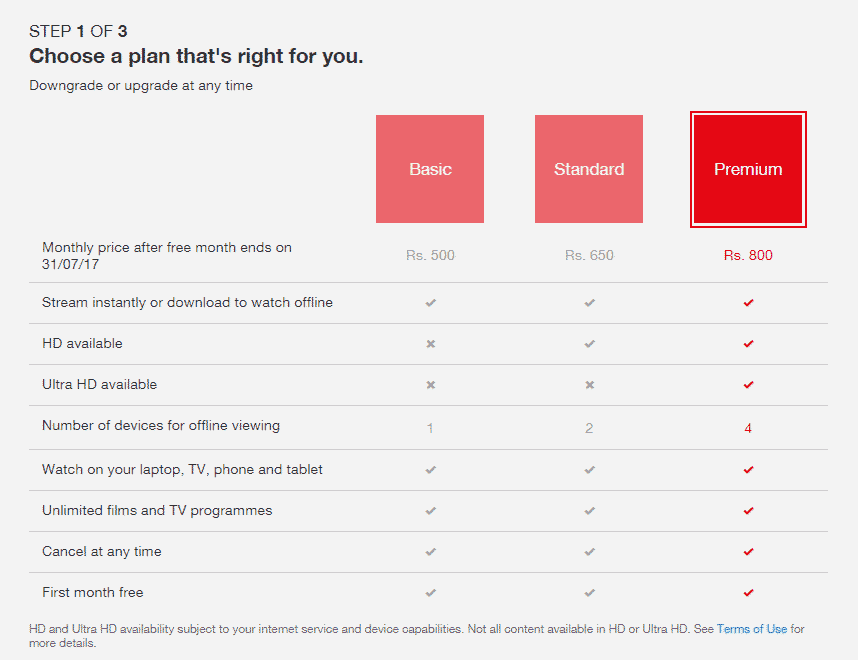
    The company offers 3 different plans for users based on the streaming quality of the content provided. The plans are –

    • Basic – content can be streamed in Standard Definition.
    • Standard – content can be streamed in High Definition.
    • Premium – content can be streamed in Ultra High Definition.

    The costs of these plans differ in different countries.

    how does netflix make money

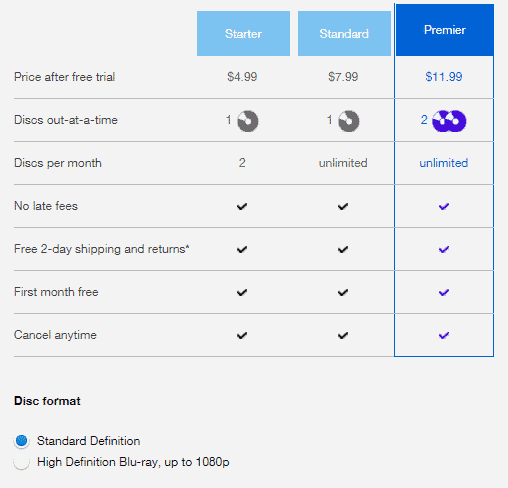
    Similar operating model is adopted for the DVD renting service where the monthly membership fees which depends on the number of Disc out-at-a time and Discs per month. The DVD rental and streaming membership plans are two different services and cannot be clubbed as one.

    how does netflix make money through dvds

    However, the question of how does Netflix make money cannot be answered without stating the cost of revenue. There are many expenses and expenditures which the company has to incur to get those profits.

    Cost Of Revenue

    Licencing Cost

    In order to stream your favourite shows and movies in a legal environment, Netflix has to bear a cost to licence and acquire content which differs for different content.

    Production Cost

    Netflix introduced Netflix Originals in 2013 in order to evade licencing costs and as a part of their marketing strategy to produce Netflix exclusive content. These original series involves huge production costs. This huge expenditure on the production of new exclusive content has made Netflix as one of the biggest spenders in media in the category.

    Marketing Cost

    Netflix isn’t the only content streaming website on the internet. It has to compete with many new and established players like – Amazon Prime, Hulu, Hotstar, etc. which involves a lot of marketing expenditure. Marketing costs primarily include advertising expenses, payments to affiliates and device partners, and the first month fees of every user which comes on board (the first month of every new subscriber is free).

    Research And Development Cost

    Netflix is a very keen investor in its research and development department. It’s because of this department that it has made it this far and is still leading the market with its subscription-based business model.

    Technology and development cost

    There are millions of users which stream content on Netflix at a time. To make their experience lag proof and seamless, Netflix has and will keep on partnering with hundreds of ISPs to localize substantial amounts of traffic with Open Connect Appliance embedded deployments. These partnerships involve huge costs.

    Technology and development costs also include streaming delivery technology costs, expenses involved in designing application for new devices, and other infrastructural costs.

    General and administrative cost

    These costs include payroll and other expenses on the human resource of the company, as well as professional and partnership fees related to the administration of the company.

    Miscellaneous cost

    There are many other miscellaneous costs that are incurred by the company. Some of them are –

    • payment processing fees,
    • DVD postage cost, and
    • amortization of the streaming content library, etc.

    Netflix Stats & Facts 2018

    • Netflix will spend up to $8 billion on content in 2018.
    • The company now has a market capitalisation of more than $100 billion.
    • It now has more than 118 million streaming subscribers globally.
    • Netflix has its customer base in 190 countries.

    Go On, Tell Us What You Think!

    Did we miss something?  Come on! Tell us what you think of our article on Netflix Business Model | How does Netflix Make Money? in the comments section.

  • Holistic Marketing – Meaning, Concepts, and Importance

    Holistic Marketing – Meaning, Concepts, and Importance

    “The whole is more than the sum of its parts.” — Aristotle

    A human will always be greater than the sum of eyes, nose, legs, hands, etc. Holistic marketing revolves around this philosophy of holism where the business and its parts are considered as one interconnected entity and where all its activities are directed towards one specified goal.

    What is Holistic Marketing?

    Holistic marketing is a business marketing philosophy which considers business and all its parts as one single entity and gives a shared purpose to every activity and person related to that business.

    A business is just like a human body: it has different parts, but it’s only able to function properly when all those parts work together towards the same objective. Holistic marketing concept enforces this interrelatedness and believes that a broad and integrated perspective is essential to attain best results.

    This philosophy has the following features:

    A Common Goal

    Holistic marketing concept believes that the business and all its parts should focus towards one single goal which is a great customer experience.

    Aligned Activities

    All of the services, processes, communication and other business activities should be directed towards that common goal.

    Integrated Activities

    All activities should be designed and integrated in such a way so as to create a unified, consistent and seamless customer experience.

    Components of Holistic Marketing

    Holistic marketing focuses on marketing strategies designed to market the brand to every person related to it, be it employees, existing customers or potential customers, and communicating it in a unified manner while keeping in mind the societal responsibility of the business.

    Relationship Marketing

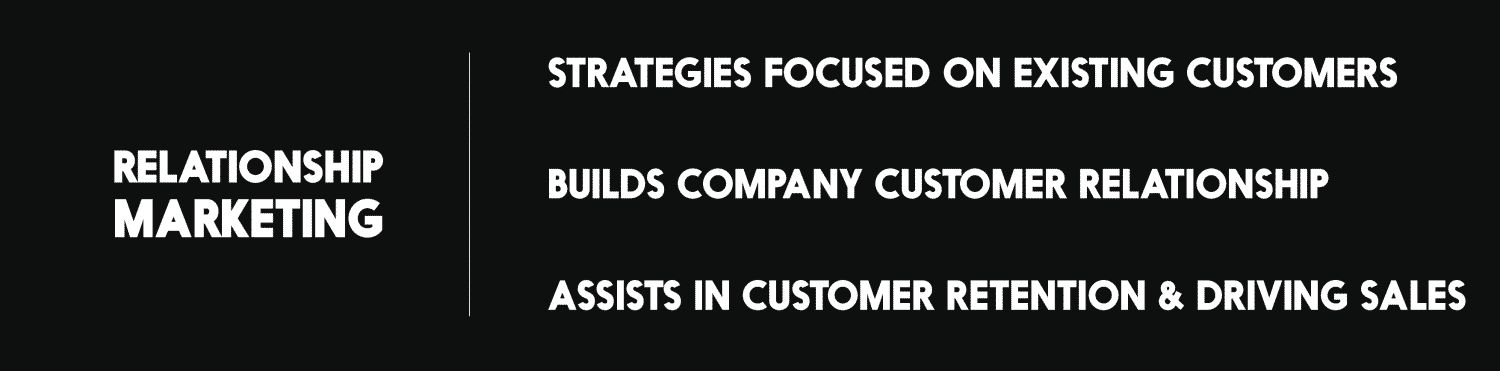
    The relationship marketing aspect of holistic marketing philosophy focuses on a long-term customer relationship and engagement rather than short-term goals like customer acquisition and individual sales. This strategy focuses on targeting marketing activities on existing customers to create a strong, emotional, and everlasting customer connections. These connections further help the business in getting repeated sales, free word of mouth marketing and more leads.

    relationship marketing holistic marketing

    Integrated Marketing

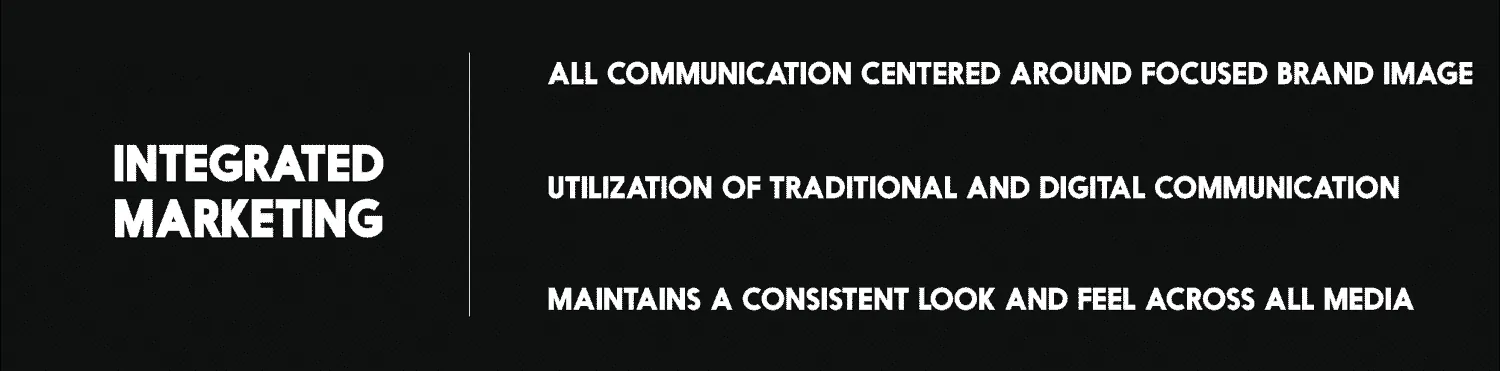
    Integrated marketing is an approach to create a unified and seamless experience for the consumer to interact with the brand by designing and directing all communication (advertising, sales promotion, direct marketing, public relations, and digital marketing) in such a way so that all work together as a unified force and centres around a strong and focused brand image.

    INTEGRATED MARKETING HOLISTIC MARKETING

    Internal Marketing

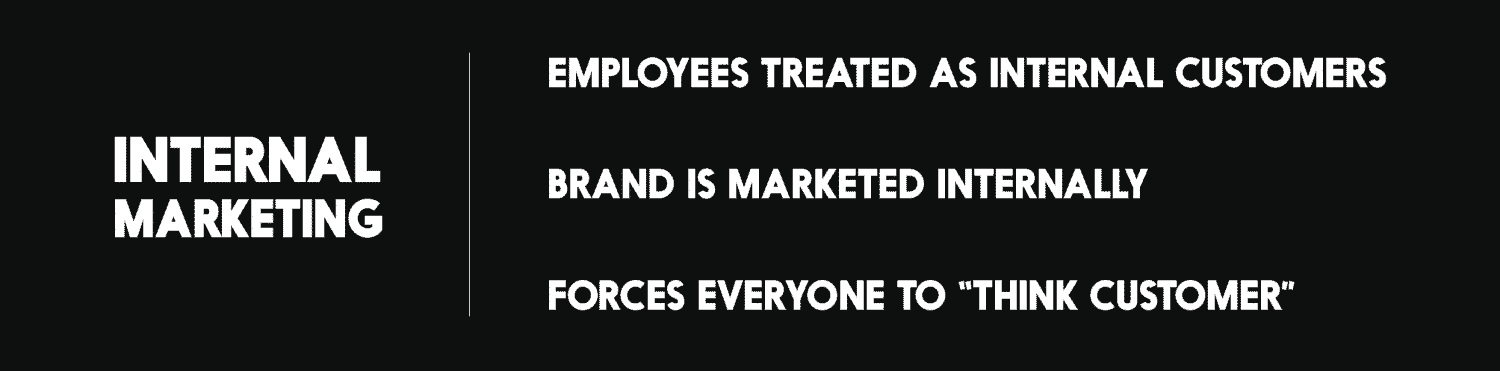
    There are two types of customers to every business: internal and external. While focusing on external customers should be a top priority for every business, internal customers should not be left unnoticed as these internal customers (employees) play a vital role in marketing the brand and products to the external customers of the business.

    Internal Marketing treats employees and staffs as internal customers who must be convinced of a company’s vision and worth just as aggressively as external customers. It also involves crafting processes which make them understand their role in the marketing process.

    INTERNAL MARKETING HOLISTIC MARKETING-01

    Socially responsible marketing

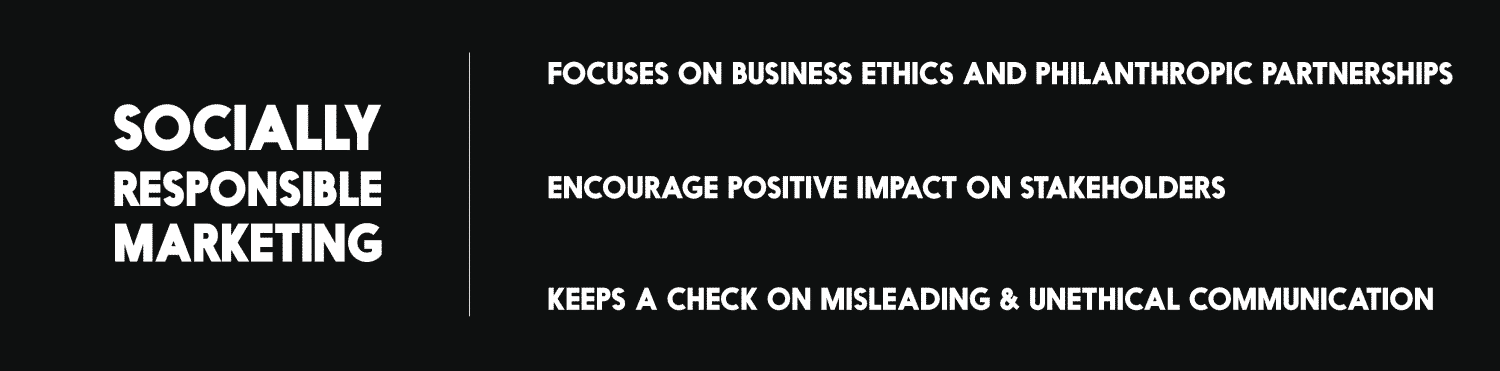
    The socially responsible marketing aspect of the holistic marketing concept involves a broader concern of the society at large. It requires the business to follow certain business ethics and focuses on partnerships with philanthropic and community organisations. A business is considered as a part of the society and is required to repay the same.

    Socially responsible marketing encourage a positive impact on company’s stakeholders.

    SOCIALLY RESPONSIBLE MARKETING HOLISTIC MARKETING

    Why is Holistic Marketing important?

    Brand Building

    According to a study, intangible assets made up 84% of the S&P 500 market value in 2015 as compared to 1975 where they made up only 17% of the S&P 500 market value.

    The customers’ mindset is changing. They believe in buying a brand and not the product alone. Holistic marketing empowers the company to build a brand among all its stakeholders.

    Consistency

    Consistency is important to stay in the market for long. Since holistic marketing concept involves marketing the brand to all the stakeholders and through unified communication strategies, consistency is maintained.

    Efficiency

    When every aspect of the business is taken care of, it becomes easier to reduce (and even eliminate) repetition, become more efficient, and save company’s time and money. The efficiency can also be seen in tapping opportunities and spotting potential threats.

    Effectiveness

    Holistic marketing philosophy, by focusing on the big picture, creates a synergy that effectively reinforces the brand message, brand image, and positions the brand uniquely in the minds of the customers.

    Go On, Tell Us What You Think!

    Did we miss something?  Come on! Tell us what you think of our article on Holistic Marketing in the comments section.