Feedough Logo

Blog

  • How does Craigslist Make Money | Craigslist Business Model

    How does Craigslist Make Money | Craigslist Business Model

    Where do Americans go to buy and sell online?

    You wouldn’t need much research as with around 50 billion page views per month, Craigslist leads the classifieds market with no competitor coming even close.

    Started in 1995, Craigslist’s business model was designed to be a not for profit model but was soon transformed into a for-profit model in 1999. The company though started as an email distribution list in 1995, made the most out of word of mouth marketing and has currently positioned itself as a synonym to online classified.

    But before we get on to answer how Craigslist makes money, let us first understand the business model of Craigslist and how does it work.

    What is Craigslist?

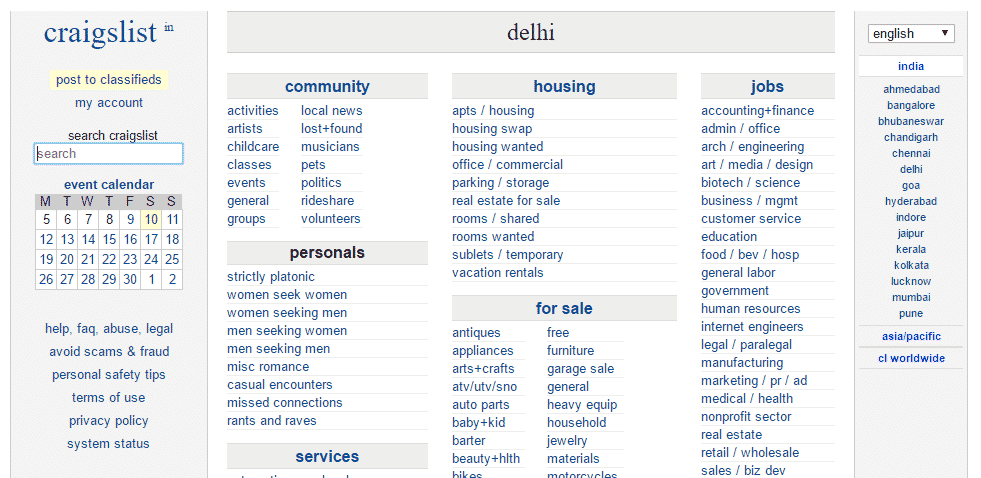
    Craigslist is a region-specific online classified website with sections devoted to jobs, housing, personals, services, community, gigs, resumes, discussion forums and more. Most of the advertisements on Craigslist are free to post however they do charge for some advertisements depending on the region and the type of the classified.

    How does Craigslist Work?

    Craigslist, just like other classifieds platforms, operates by listing advertisements in sections relevant to the users. Advertisements are listed based on region and category to avoid confusion and to be relevant for everyone.

    In recent years, classified adverts have evolved into a whole new domain. They are no more a newspaper specific advertisements. Advertisements on craigslist have a longer life, are location specific and searchable, and can be accessed by people all over the world in just a few clicks. The best advantage of advertising on Craigslist over native newspaper classifieds is that it’s (mostly)  free and can be easily targeted and modified.
    how does craigslist make money

    How Does Craigslist Make Money?

    How exactly does Craigslist make money when it lets you post classifieds for free?

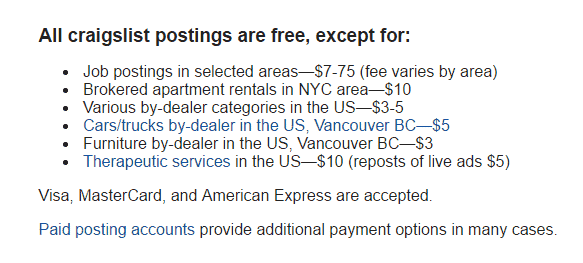
    Well, this company with the peace symbol as their logo has a perfect revenue model which was included in its business strategy accidentally. The company started charging money for certain listings of particularly competitive categories ($25  for job postings in San Francisco) in 1998 to avoid spam and to cover website costs. However, this strategy to earn money seemed fruitful to the owners and many listings were made chargeable to earn more profits.

    Eventually we realized we were making a lot of money and it was more than we needed to just cover costs. – A former Craigslist employee

    Here’s a list of the paid listing to answer your question of how does Craigslist make money.
    how does craigslist make money fees

    The repost cost in most of the listings is less than the posting cost.

    How Much is Craigslist Worth?

    Craigslist is a private company and has never raised a penny from investors. Therefore, its value can only be assumed. However, with almost $700 million of revenue and a profit margin of 80% in the year 2016, Craigslist can be valued at around $3 Billion.

    Craigslist is the most profitable classified website in the world. One of the reasons for its success is its ‘network first, profit later’ strategy. Many companies like Whatsapp, Facebook, and Quora also followed this strategy to reach the top.

    Future of Craigslist

    Craigslist –

    • Survived the Dot Com Bubble.
    • Decimated the newspaper classified Industry
    • Never changed its interface drastically
    • has around 55 million monthly visitors
    • has no plans to change its operating model.

    This company is as unpredictable as one can be. While other companies try to keep their profit low so as to gain customers, this company earns a whopping profit of 80%. Craigslist doesn’t market itself, doesn’t believe in changing the business model according to the business environment and is still leading the industry just because of its simple and selectively free interface and a huge network which it built in 2 decades. But this can also prove out to be a reason for its brand failure in future.

    Competitors like OfferUp and LetGo have all the plans and strategies to leave Craigslist behind. The chief competitor, OfferUp, has a valuation of 1.2 billion, offers a Pinterest-style photo feed, is also available as a mobile application, and is spending millions in the marketing of its brand. Similar is the case with other competitors like LetGo and Facebook Marketplace. Craigslist would not last long with its current business plans. It has to amend its business and operating model to remain at the position it is at today.

    Go On, Tell Us What You Think!

    Did we miss something?  Come on! Tell us what you think of this article on how does Craigslist make money? in the comment section.
  • How Does PayPal Make Money? Paypal Revenue Model

    How Does PayPal Make Money? Paypal Revenue Model

    There was a time when sending money overseas used to be a huge problem. But in 1998, PayPal brought a revolution in the money transferring habits of users globally. Today, with a reach in around 202 countries, this company helps 197 million users transfer money all over the world. But before answering how does PayPal make money, we have to understand PayPal’s business model and how does it operate first.

    PayPal, which started as an online payments solution, has now transformed itself into a powerful financial tool that allows you to –

    • Save and access your debit and credit cards through PayPal user ID and password – PayPal is a digital wallet which saves the details of your debit and credit cards and let you shop and transfer money online by just remembering your PayPal user id and password.
    • Checkout at websites with just one click – Paypal has launched its new technology ‘One Touch’ which saves your PayPal login details securely in your device and lets you check out on a website without even typing your PayPal username and password.
    • Transfer money to and from a bank account or Paypal account – You can transfer money to 202 countries and in around 100 currencies through PayPal. The same money can be deposited to bank accounts in 56 currencies or can be held as a balance in PayPal account in 25 currencies.
    • Receive payments through PayPal (Payment gateway) – You can sell products online and offline and receive money through Paypal. All you need is a PayPal business account. PayPal initially gained popularity when it was included as a payment gateway at eBay.
    • Get a PayPal debit card – PayPal’s debit card works just like any other bank’s debit card. You can use your PayPal debit card to shop online and offline, withdraw money, and earn rewards on your purchases. PayPal debit card is linked to your PayPal account.
    • Enjoy benefits of PayPal credit (no interest credit) – Originally named as Bill Me Later, Paypal credit is a feature which lets you get a no-interest credit of $99 or more if the amount is paid in full in 6 months.
    • Get PayPal business in a box business solutions – Set up your business online with PayPal business in a box tools.
    • Get a working capital loan – this is one of a kind daily payable loan helps you to fulfil daily business operation needs at a less fee.

    How does PayPal make money?

    PayPal is not just a fin-tech company, it’s a revolution in the digital money market. PayPal, though not a bank, provides features which are not less than any bank. Money transfer, Debit cards, credit cards, loans, payment gateways, and digital wallet are few of the many services provided by PayPal.

    eBay made the decision of its life when bought PayPal for $1.5 Billion in 2002 and included it as a checkout option in its interface. Though not an eBay subsidiary anymore, but PayPal has never looked back since then. The company has many revenue sources and one has to dig deep into the business model of PayPal to answer the question of ‘How does PayPal make money?’.

    PayPal Revenue Sources

    Transaction Fees

    There are two types of accounts on PayPal – Personal & Business.

    With a personal account, you can send and receive money online from family or friends and pay for goods you’ve bought online or offline through your debit card, credit card or through your PayPal balance. However, PayPal charges a fee (different for different countries) on the amount when you send a personal payment using a debit, credit card, or PayPal credit.

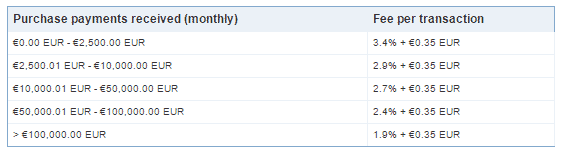
    Business accounts are for merchants who use PayPal services to sell their goods online. They pay a fee of 2.9% plus $0.30 USD of the amount they receive on the sale. However, this fee is reduced with an increased amount.

    how paypal makes money

    There’s no withdrawal fee. However in certain cases, if you want to withdraw money in the form of the check, you have to pay a fee of $1.50.

    International Payments

    PayPal charges fees when you receive payment from a different country. The charges include currency conversion cost (if a different currency is used) and the international payment fee. Fees vary for different currencies.

    Business Account Charges

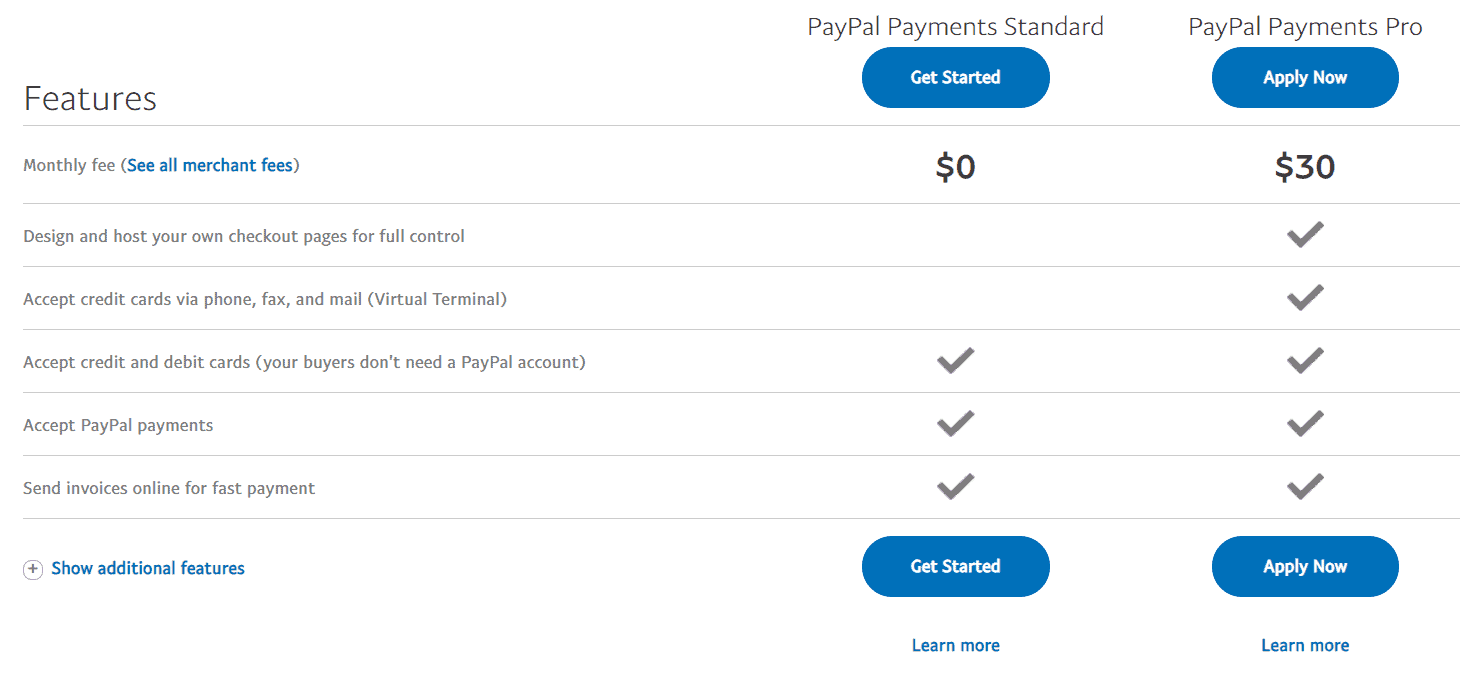
    Registering an individual or business account on PayPal is free. However, some special features and services like customized checkout page and same site payment are provided only to users who buy the Payments Pro business account of PayPal. The cost of payments pro account is $30 per month.

    paypal payments pro

    P2P payment withdrawal fees

    PayPal.me lets you receive money directly through a custom link. However, PayPal charges you when you withdraw the same. The charges in the USA are 2.9% plus $0.30 USD of the amount received.

    Interests from money deposited

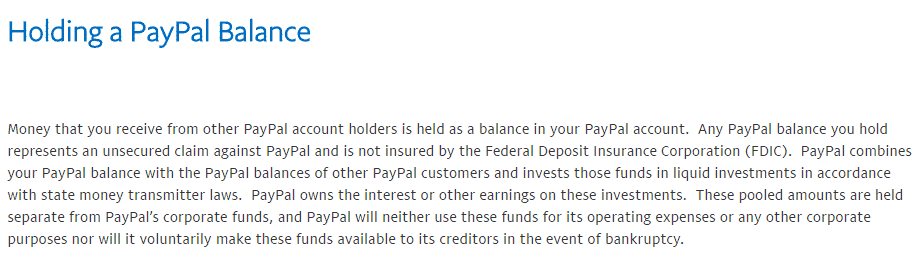
    The money kept as PayPal balance is deposited by the company in liquid investments which earn interest. The interest is a source of revenue for PayPal and is not shared with you.

    how does paypal make money interest

    Payflow

    Payflow is the payment gateway service provided by Paypal. Payflow can be integrated into a website by anyone using a merchant account.

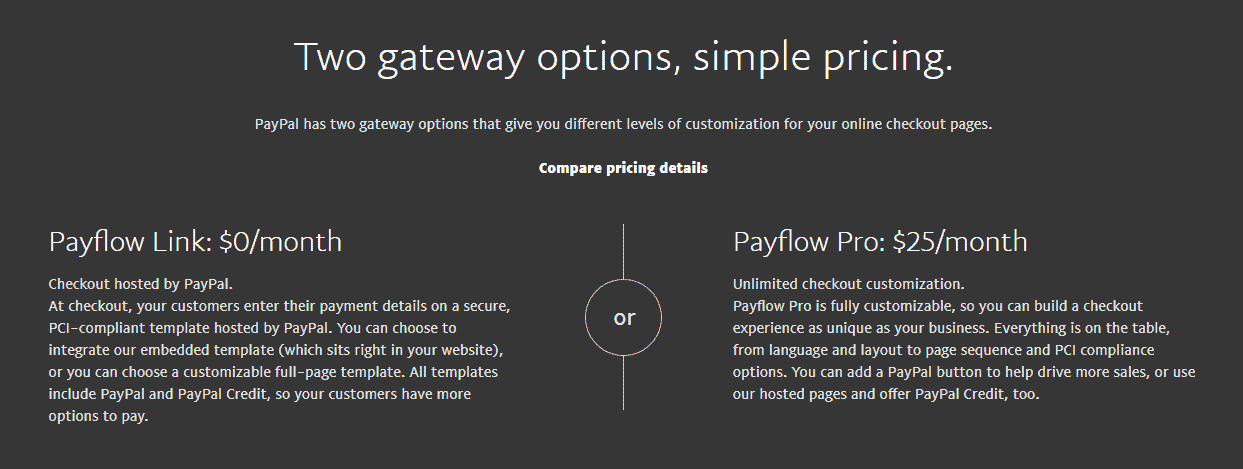
    There are two plans which give different levels of customization for the online checkout pages:

    • Payflow link: The free plan where the customer enters the payment details on a page hosted by Paypal.
    • Payflow Pro: The premium plan which gives the user the ability to design his own checkout page. It is priced at $25 per month.

    No matter what the plan is, Paypal charges a $0.10 gateway fee for credit card payments.

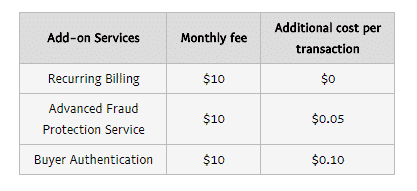
    Besides this, the company also provides three optional features. These are:

    • Fraud protection
    • Recurring billing
    • Buyer authentication

    PayPal Working Capital Fee

    As the name suggest PayPal working capital is a small loan for your working capital needs. You can borrow up to 15% of your last 12 months of PayPal sales, up to $85,000, with a fixed fee and no interest. PayPal working capital works a bit differently than a traditional loan. Instead of the monthly payment, payments are made on a daily basis as a percentage of your sales. The interest is replaced with a fixed fee. The amount of fixed fee is dependent on the percentage of daily sale alloted. The larger the percentage of the daily sale you choose to allocate towards repayment, the lower the fee.

    Business in a box

    PayPal provides all in one business solutions in association with Xero and Woo Commerce. With business in a box, you get huge benefits on Xero and Woo Commerce services. PayPal, however, earns an affiliate commission through this.

    Debit Card Withdrawal Fees

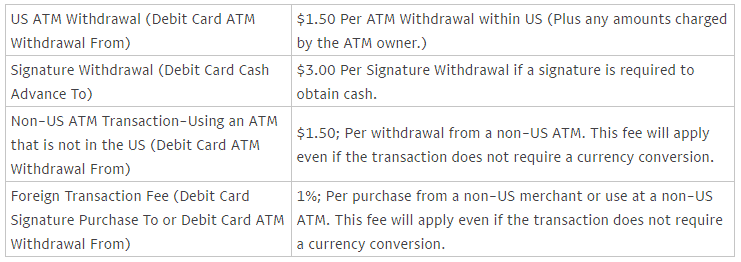
    PayPal users also get the benefit of anytime money but at a cost. The company charges a fee every time you withdraw money by using the debit card.

    how does paypal make money debit card fees

    PayPal Credit Interest

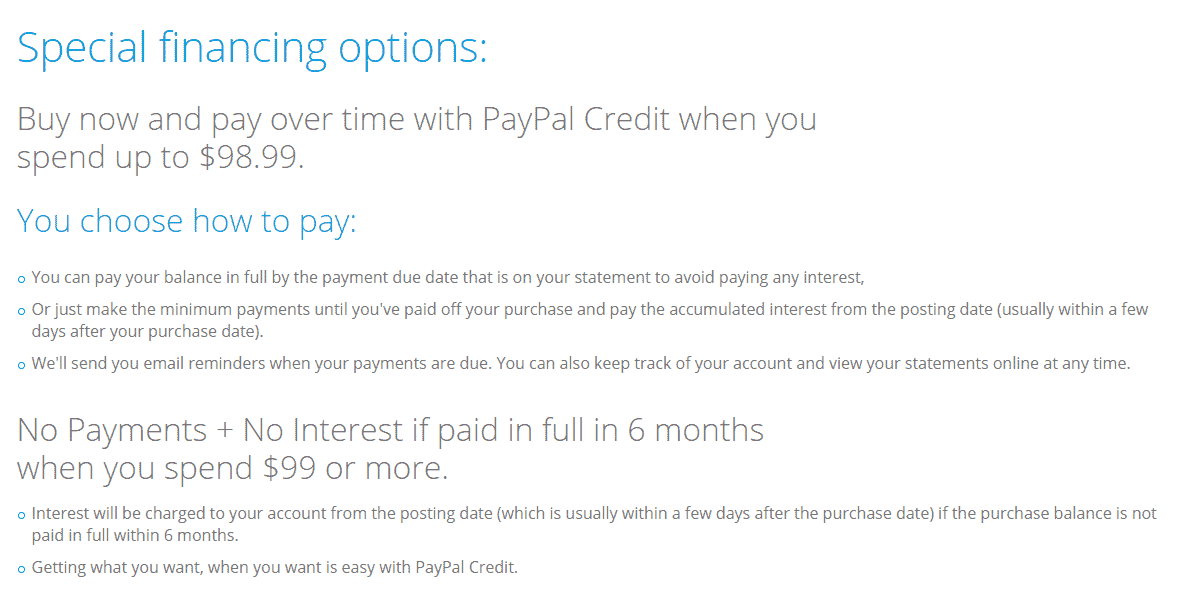
    You don’t have to pay for the credit as long as it is $99 or more and you pay it fully in 6 months. However, for all other conditions, PayPal charges an Annual Percentage Rate (APR) of 19.99% starting from the posting date (which is usually within a few days after the purchase date).
    paypal credit

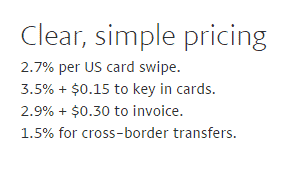
    PayPal Here Fee

    PayPal Here is an offline payment solution provided by the company. It’s a mobile application (and a card reader) which lets you accept payment from all types of cards with the ease of PayPal.

    HOW DOES PAYPAL MAKE MONEY here

    Other sources of Revenue

    Paypal owns many other companies like Braintree, Xoom, and Venmo etc. which add to the revenue sources of the company.

    Go On, Tell Us What You Think!

    Did we miss something?  Come on! Tell us what you think of our article on ‘How does PayPal make money?‘ in the comment section.

  • What Is Remarketing And How Does It Work?

    What Is Remarketing And How Does It Work?

    Has it ever happened to you that after you’ve left a showroom (preferably an automobile showroom) or a bank without making a purchase, you start receiving calls and texts about the exciting offers and/or limited period discounts? Well, that’s Remarketing for you.

    What is Remarketing?

    Remarketing is a process to turn window shoppers into actual customers of the products by using targeted marketing strategies. The main motive of remarketing is to convert those who didn’t convert into customers at the first visit. Marketing activities like direct marketing, email marketing, targeted advertisements, and telemarketing are used to carry out remarketing strategies.

    How is remarketing different from retargeting?

    Remarketing is the use of marketing tools to convert those who didn’t convert into customers at the first visit.

    Retargeting is a form of online advertising used to convert those who didn’t convert into customers at the first visit.

    Remarketing in digital marketing

    Remarketing and retargeting are often used as synonyms by digital marketers. This trend has been started by Google which referred its Adwords retargeting tools as Adwords Remarketing. They weren’t wrong by doing the same as most of the digital marketers rely only on retargeting strategies to convert digital window shoppers into customers. According to a study, only 2% of web traffic converts on the first visit and retargeting is the core tool that helps companies reach the rest 98% of the users. With the introduction of artificial intelligence in digital marketing, it’s now even more easy to target customized advertisements to previous website users.

    Remarketing on the digital world is carried through cookies. It is not easy to collect email and other contact details of the customers and all that can be collected easily are cookies. These cookies are used to target ads which bring those window shoppers back.

    Types of retargeting

    Ads can be targeted based on

    • specific products viewed on the website
    • actions taken (adding a product to the wishlist)
    • actions not taken (not abandoning a shopping cart)
    • how users arrived on the website (organic search, paid search, referral, emails etc.)

    Google remarketing

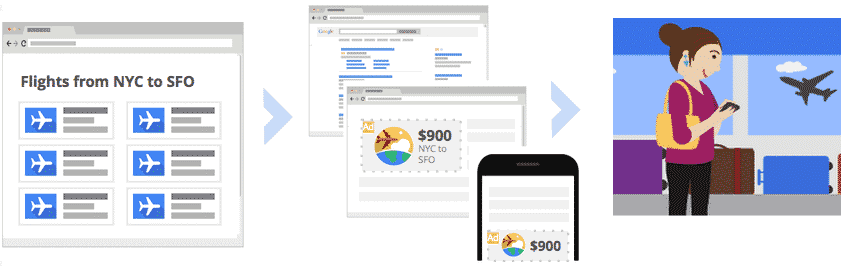
    Google remarketing is a feature provided by Google Adwords to target advertisements to the users who have visited your website but didn’t convert. Past visitors see your advertisements while they’re browsing the internet. Google has a network of over 2 million websites over the internet which can serve your advertisements to the users.

    GOOGLE REMARKETING

    How does Google remarketing work?

    Remarketing over the internet uses cookies. Cookies are generated whenever a user visits your website. They even help you target your marketing strategies to users of specific pages.

    These cookies help you to –

    • Reach customers who are actually interested in your business or the goods/services you offer
    • Create customized advertisements for better engagement
    • Create dynamic pricing strategies
    • Get better ROI
    • Fulfil your digital marketing goals

    [the_ad id=”660″]

    Remarketing on Facebook

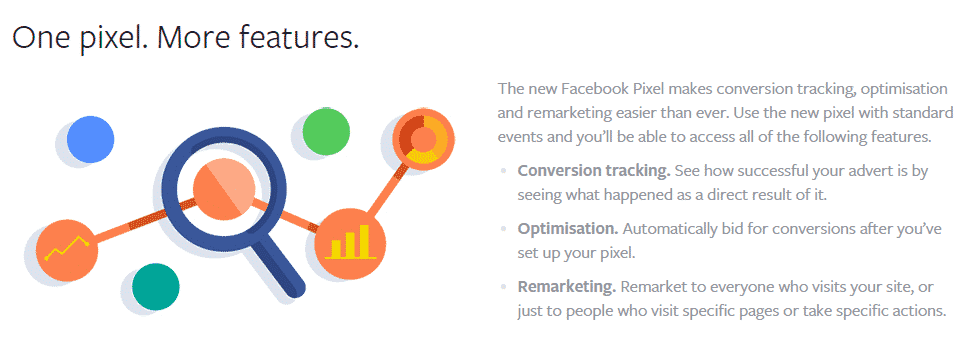
    Remarketing on Facebook is similar to that on Google. Facebook requires you to add the pixel code to your website in order to track the users and target advertisements to them on Facebook. You can set a custom audience on Facebook to carry out your remarketing strategies.

    facebook remarketing pixel

    Why you must focus on remarketing strategies more than keyword-targeted advertisements?

    Low cost per acquisition

    Targeting advertisements to users who already have similar interests or who have already visited the website while searching for it makes more sense and result in more conversions than targeting ads to someone alien to it. According to a study, online consumers are open to receiving retargeted advertisements. While the majority of consumers (60 per cent) remain neutral about retargeted ads, 25 are actually in favour of them as they remind them of what they were looking at previously.

    Marketing funnel can be bypassed through remarketing

    Remarketing strategies have the ability to teleport the targeted users directly to the products page or the checkout page and turn them into the captured lead while bypassing the other stages of the marketing funnel. According to a study, 28% of the consumers feel retargeted ads to be a convenient way to visit a website they already intended to visit.

    Remarketed ads are economical as compared to keyword targeted ads

    Some keyword-targeted ads could cost as high as $50 per click. But remarketing advertising strategy benefits you by saving that cost and targeting to users which will have better CTR. As a matter of fact, the cost of retargeted ads is 2x-100x less than many keyword-targeted ads.

    Go On, Tell Us What You Think!

    Did we miss something?  Come on! Tell us what you think of our article in the comment section.

  • What Is Franchising? Franchise Business Model

    What Is Franchising? Franchise Business Model

    If you’re reading this and are not from a remote island, I bet you must have heard the name McDonald’s. One of the biggest reasons McDonald’s has been able to conquer the fast-food market is because of its franchise-based business model.

    More than 80% of its restaurants worldwide are owned and operated by franchisees. That is, even though those restaurants operate by the name of McDonald’s, serve McDonald’s products, and adhere to its standards, they are not operated by McDonald’s.

    But what does franchise mean? How does it operate? What are its types?

    Let’s find out.

    What Is A Franchise?

    A franchise is a licence granted by a party (franchisor) who owns the brand to an individual or a corporate (franchisee) to access their business proprietary knowledge, process, trademarks, and to sell products or provide services under their name within a territory or a region.

    A franchisee gets a licence to access the following –

    • To operate under franchisor’s brand name
    • Usage of franchisor’s trademarks
    • Operation manual
    •  Marketing support from the franchisor
    • Software and other operational requirements
    • All other proprietary knowledge and materials.

    What Is A Franchise Business And How Does It Operate?

    A franchise agreement requires two parties. A franchisor and a franchisee.

    franchisor is the owner of the brand with decent goodwill who is looking for opportunities to expand which require less investment and his involvement.

    A franchisee is someone ready to invest and buy the rights to use the name, trademarks, and business processes, and sell the products of that existing business which has decent goodwill. A franchisee is not an entrepreneur who starts a business from scratch but a smart businessman who buys the right to sell products of a business which has well-developed goodwill and demand.

    The franchisee and franchisor can be a natural or artificial person. That is, they can be an individual, a partnership firm, an LLP, or a company.

    How Does A Franchise Business Operate?

    The operating model of a franchise business is simple. A franchisee buys the rights to use the franchisor’s business proprietary knowledge, process, trademarks, and to sell products or provide services under the franchisor’s name.

    The licence has a cost which is known as the licence fee (franchise fee). The licence fee amount depends on the scale and goodwill of the franchisor’s brand and demand for their products. Apart from the licence fee, the franchisee is also required to pay an ongoing royalty fee, which is paid as a percent of gross sales to the franchisor.

    A franchisee is required to run the business according to the operations manual and the franchise contract. Special training and operational guidelines are provided to the franchisee by the franchisor. The franchisee is required to maintain standards set by the franchisor for quality, visual merchandising (if applicable), products, prices, offers, etc.

    Role Of The Brand In Franchising

    The whole franchise business model revolves around a brand. A franchisor builds a brand which the customers buy. The franchisee buys the licence to use operate the same brand name in a particular region and sell the standardized products of that brand. The market is set, and it’s a win-win situation for both the franchisor and the franchisee. Franchisor gets to expand the reach of its brand and revenue earning sources without involving much monetary and non-monetary investment, whereas the franchisee gets the benefit of existing demand of the brand’s products. Franchisee also benefits from the marketing efforts led by the franchisor as it’s the brand which marketed and not one store.

    Types Of Franchising

    Product Distribution Franchise

    Under this model, the dealers are given the right to distribute the brand’s goods. This model is similar to the manufacturer-retailer model. However, the franchisee must pay a fee or buy a minimum amount of products to obtain the right to sell the trademarked goods. Typically, the franchisees sell only the franchisor’s products, but there are some agreements where they have the choice to sell only certain products of the brand which they feel will be profitable to them.

    The product distribution franchise model was started by Singer and Coca-Cola to sell their products in the 19th century. Coca-Cola, Ford, and Exxon still offer this type of model to their franchise partners.

    Manufacturing Franchise

    This franchise model involves the franchisor’s granting of manufacturing and selling rights to the franchisees. Franchisees, however, are required to sell the goods under the trademark and name of the franchisor’s brand. The manufacturing franchise model is common in the food and beverage, clothing, and automobile industries. Examples include Coca-Cola, Hyundai, Nestle, etc.

    Business-Format Franchise

    The business-format franchise model is an evolved version of the product distribution model. Here the relationship between the franchisee and franchisor is more complete than the product distribution model. The franchisees not only sell the franchisor’s products under the name of the franchisor’s brand, but also follow the standardized format and procedures of retail sale, which include visual merchandising, the appointment of staff, implementation of marketing activities, etc. In return, they get operational and marketing assistance from the franchisor.

    The business-format franchise model is the most common franchise model today. These partnerships are seen in every industry, be it fast food chains like Mcdonald’s, Burger King, etc. or other retail chains like Nike, Bose, etc.

    What Is A Master Franchise?

    In a master franchise agreement, the franchisor grants rights to the franchisee (master franchisee) to control the franchising activities of the brand (like appointing sub-franchisees) within a specified geographical area. The master franchisee usually has exclusive business rights to the specified territory. There isn’t any competition, interference or distraction from other players selling the same brand’s products, which eventually leads to easier and better ROI for them.

    Why Franchising Is A Safer Alternative To Starting A Business From Scratch?

    Buying a franchise is a safer investment than starting a business from scratch, as the franchisee gets the benefit of:

    Existing Market And Demand

    A franchisor has already invested much time and money in creating a market for their product. The brand has already positioned itself in the minds of the customers. A franchisee, by buying the franchise licence, gets the benefit of selling products which have existing demand in the region. It’s because of the existing demand of the brand that the franchisee is able to attain break even a lot earlier than he would have attained if he had started his own business from scratch.

    Set Operational Process

    The operating model of a brand is standardized and the franchisee has to adhere to the set standards. This prevents the franchisee from committing mistakes he could have committed if he had started his own business.

    Less Risk

    The risk involved in starting a franchise business is less than compared to starting a new business. The franchisee is already aware of the financial investment involved, competitors, opportunities and threats and only starts this business if he feels that he’ll benefit from it. He can take many precautionary steps like conducting research before starting the business in that area.

    Why Franchising Is A Better Option For Companies To Expand Their Business?

    Starting and operating a new branch to expand the business involves a lot of time and financial investment. The franchise business model helps the brand to expand without these limitations. The brand earns through licence fees and monthly/quarterly ongoing royalty fees from the franchisee. The franchise business model even lets the brand reach places which would have been difficult for them otherwise.

    Top 10 Global Franchises

    After getting an answer to your question of ‘what does franchise mean?’ you must be curious to know the top 10 global franchises or some of the best franchise examples. Here’s the list of the best global franchises.

    Rank
    Brand
    Headquarters
    Industry
    1
    McDonald’s
    Oak Brook, Illinois
    Fast Food
    2
    KFC
    Louisville, Kentuck
    Fast Food
    3
    Burger King
    Miami, Florida
    Fast Food
    4
    Subway
    Miami Springs, Florida
    Fast Food
    5
    7 Eleven
    Dallas, Texas
    Retail Convenience Store
    6
    Hertz
    Estero, Florida
    Rental & Leasing
    7
    Pizza Hut
    Plano, Texas
    Restaurants
    8
    Marriott International
    Bethesda, Maryland
    Hotels
    9
    Wyndham Hotels and Resorts
    Parsippany, New Jersey
    Hotels
    10
    Hilton Hotels & Resorts
    McLean, Virginia
    Hotels

    Go On, Tell Us What You Think!

    Did we miss something?  Come on! Tell us what you think of this article on ‘what does franchise mean? Franchise business model’ in the comments section.
  • 10 Brilliant Examples of AI in Marketing

    10 Brilliant Examples of AI in Marketing

    We live in an era where if a marketer isn’t using artificial intelligence in his marketing strategies, he’s already lagged behind. Artificial intelligence not only helps marketers in executing their marketing strategies but are also used to form one. Artificial intelligence, neural networks, deep learning, big data, automation etc. are not new terms to marketers. These terms and practices give rise to marketing as we know it today. You’ll agree with us after reading the following examples of AI in marketing.

    What if we tell you that the last customer executive you’ve had a chat with was a bot, or the unique newsfeed that you get on Facebook is because a bot is monitoring your every activity? Artificial intelligence is a very important tool for marketers as it removes the occurrence of human errors like delay, biased approach, and other petty errors. According to Facebook’s artificial research scientists, artificial intelligence systems are going to be an extension to our brains the same way cars are extensions to our legs.

    Generative AI

    From blog posts, sales copy, emails, to images, voice, and even videos, AI has now grown to be the best friend a marketer can have. Today –

    • ChatGPT can help you create a range of natural-sounding content and can even write code for you,
    • GPT-3 and GPT-4 powered tools can write complete web copy, marketing emails and even blogs,
    • Midjourney and Stable Diffusion can help you generate natural-looking images and videos,

    Many SAAS have even employed these technologies to help marketers create, target and track their content better.

    For example, Smartwriter now uses AI (GPT-powered) to help you send personalised emails to your customers. Surfer SEO uses AI in SEO to help you optimise your content for better ranking in search engines.

    Uber Duck even lets you make famous celebrities speak your words using text-to-speech technology.

    And the list goes on.

    Chatbots

    Don’t you just love how Siri/Google assistant/ Cortana/ Alexa answers all of your questions? Don’t you just love when you receive instant replies on some websites’ chat-boxes no matter what the time is? Marketers know you love them and this is the reason why they are there.

    A chatbot is a service, powered by rules and sometimes artificial intelligence, that you interact with via a chat interface – Chatbotsmagazine.com

    It’s one of the best examples of automation and artificial intelligence in marketing. Two main types of chatbots exist today –

    • Chatbots designed to serve one or more purposes to the customers. For example, a chatbot operating in a chat screen of a website, or a bot operating in any social networking website’s chatbox. National Geographic lets you chat with Albert Einstein on Facebook messenger to raise awareness of the launch of its new original series Genius that dissects the psyche of the physicist Albert Einstein.
    einstein chatbox examples of ai in marketing
    • Assistants like Apple’s Siri, Google Assistant, Amazon’s Alexa, and Microsoft’s Cortana. These AI-powered chatbots are made to converse with users and help them by providing a variety of information and fulfilling their other information wants. Amazon’s echo look even rates your look based on machine learning algorithms with advice from fashion specialists.
    amazon echo examples of ai in marketing

    Recommendations

    Recommendation is one of the best examples of AI in marketing. E-commerce websites, blogs, and many social networking and media websites use artificial intelligence to analyse your activities on the internet and recommend you products and content for better conversions and to make you spend more time at their websites.

    Marketers look for ways to engage with you. They want you to spend maximum time on their website/application and to fulfil the same they use AI to act as an intelligent salesman and give you recommendations based on your activities, interests, and opinions.

    Dynamic Pricing

    Has it ever happened to you that when you are looking for a product to buy on the internet, you seldom get discounts or less price for that product? It’s because the bots on these websites know when you actually need a product. Your cookies, searches, and other activities are monitored to provide you with personalized pricing in response to your customer profile which that e-commerce website is generating in real-time.

    Dynamic pricing (often referred to as personalized pricing) is a pricing strategy where the price is determined depending upon the demand, the availability and the profile of the customer. AI technologies are even used to decide and design personalized offers based on customer profiles.

    dynamic pricing examples of ai in marketing

    Ad Targeting

    Your activities, interests, and device are taken into consideration before serving you an advertisement. Marketers want to make the most out of advertisements by making them relevant for you. Advertisements relating to a product you recently searched about or from a website you recently visited are common on the internet.

    Computer Vision

    The computers now have a vision just like we do. Computer vision helps bots gaining high-level understanding from digital images or videos. It utilizes pattern recognition and machine learning technology to gain the accuracy of the human visual system. Visual recognition is used by Facebook, Google, Snapchat and other applications to provide a better experience to you. It’s possible to search all the cat photos on your phone by just typing cats in the search section of the Google photos application.

    Facebook and Google photos recognize a person face with the help of computer vision. Many new applications use this technology to create image filters and other engaging features.

    computer vision examples of ai in marketing

    Speech Recognition

    Bots now recognize your voice and understand everything you say. Siri, Google Assistant, Alexa and most of the other chatbots now comes with speech recognition technology. Speech recognition is also used in applications like Shazam, google search, GPS maps, and other hands-free systems.

    Including speech recognition in the operating model of your product/application is a great idea as users now look for hands-free features for more convenience.

    voice recognition examples of ai in marketing

    Data Analysis

    One of the most useful examples of AI in marketing is data analysis. These days you don’t have to guess what will work for what audience. There are thousands of data points attached to the target audience that can be accurately analysed by bots to understand which message is going to appeal to whom.

    AI closes the gap by moving far past human limitations to consume and analyze data on a scale no human can. The “intelligence” in artificial intelligence is the ability to think independently, to grow more knowledgeable from being exposed to more information and to adapt and adjust when things change.

    AI technologies can be used to analyze data at a speed and accuracy better than any human. There are systems to analyze and forecast market fluctuations. These can also be programmed to respond to changes on the spot depending upon the conditions.

    Ever wondered how Google knows everything you want to search? How can it convert your wrong spellings, grammar, and spoken words into correct queries and come out with exact results what you were looking for?

    Google uses Rankbrain, a machine learning technology, to analyze your search queries (both spoken and written) and to process them into search results that are most likely to be what you’re looking for.

    “If you’re searching for an ambiguous query, or you’re using colloquial terms or talking to Google like it was a person, traditionally, computers will break down, because they can’t understand your query or they haven’t seen that phrase before. RankBrain can generalize it: ‘That phrase seems like something I’ve seen in the past, so I’m going to assume that you meant this.’ It’s much like a person hearing you talking to them in a crowded bar – they can’t hear everything you’re saying, but they still can guess what you’re meaning and have a conversation with you.” – Greg Corrado

    Business Forecasting

    There are many factors and forces that influence the present and future of a business in the market. They are complex, highly correlated, and sometimes difficult to measure. One of the challenges marketers face is how to predict the exact future of the business or a product using a complex set of inputs under tight time constraints. Many machine learning processes have been designed to automatically learn patterns in the numerous data inputs and help marketers to predict the future of anything they want to.

    Go On, Tell Us What You Think!

    Did we miss something?  Come on! Tell us what you think of this article on examples of AI in marketing in the comments section.
  • Quora Business Model | How does Quora Make Money?

    Quora Business Model | How does Quora Make Money?

    A Q&A platform where your questions get answered by real humans; Quora’s business model is distinguished and is designed to stay in the market for very long.

    Founded in 2009 by two former Facebook employees, Adam D’Angelo and Charlie Cheever, Quora is a questions and answered powered social media network with an estimated valuation of over $2 billion.

    The startup still is growing at a 3 digit growth rate with the sole motive to generate the database of high-quality answers to questions asked by millions of its users.

    But if you’re still unaware of what this giant is and how it works, here’s a brief –

    What Is Quora?

    Quora is a question and answer social media networking portal powered by user generated content where questions are asked, answered, followed, and edited by Internet users.

    The company has positioned itself as an internet forum dealing in almost all the niches that exists.

    Quora Business Model

    Quora’s business model can be considered to be a mix of Facebook’s and Google’s business model.

    It’s similar to Facebook because all of the content that’s there on the platform is user-generated. Moreover, the users also have the option to like, dislike, and share the content.  

    It’s similar to Google in a way that the platform uses its own proprietary search and ranking algorithm that ranks the answers based on relevance that will increase the user experience.

    Who Are Quora’s Customers?

    Ever since the start, Quora operated on a two-sided user-generated questions and answers model. Hence, its target market is divided into two segments –

    • People who ask questions: They include curious internet users who are tech-friendly so as to use the website’s interface.
    • People who answer questions: They include subject experts and scholars from across the world.

    How Quora Works?

    Quora is an ordinary forum with an extraordinary relevance algorithm and an exceptional userbase. The company witnesses over 100 million monthly unique visitors where 82% of the users use a smartphone to visit the platform.

    The company work in a way similar to other social media channels. The content is generated by users and others are available to view and read. However, it requires the users to login to the platform to post or vote.

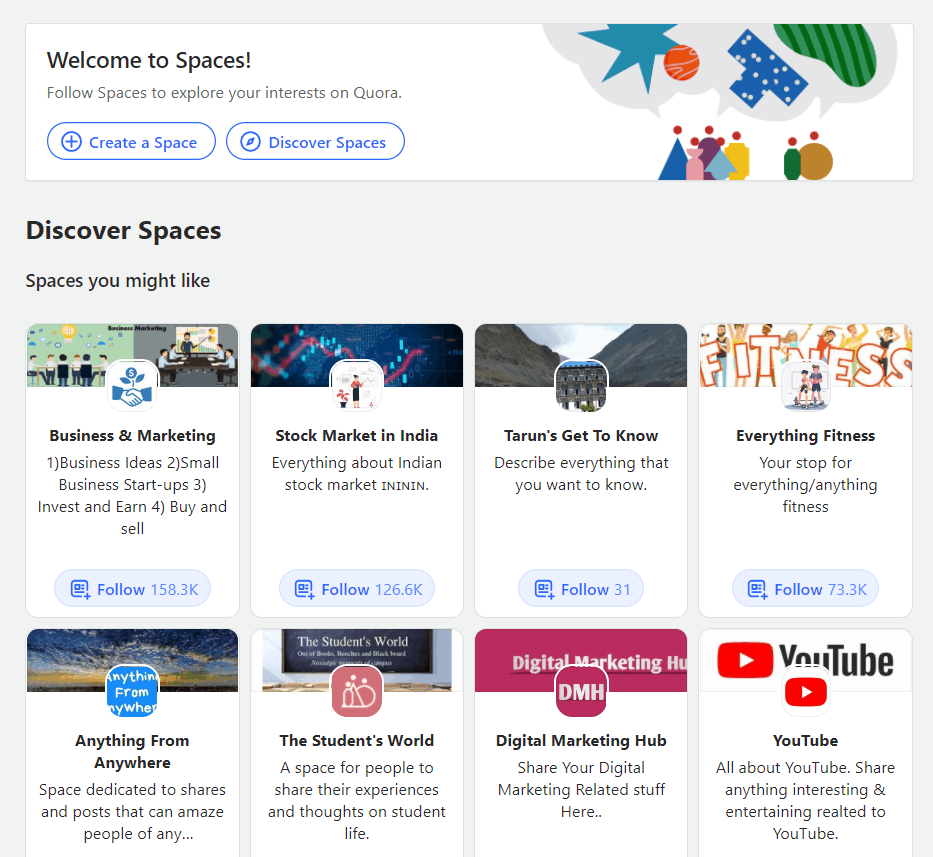
    The questions are automatically categorised under the appropriate topics called spaces that can be followed by the users. 

    Quora Discover Spaces

    Moreover, just like Facebook and other social media networks, Quora also provides a personalised homepage-feed based on the user’s interests and activities on the platform. 

    Quora’s Revenue Model

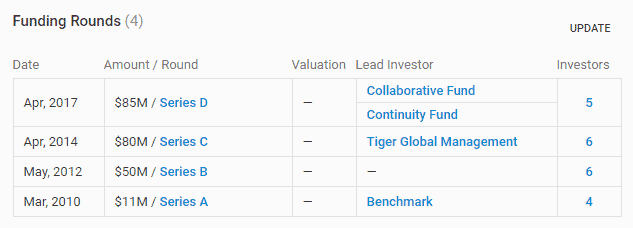
    Started in 2009, Quora initially had no revenue earning source and actually survived on the venture capital it raised in the 4 rounds of fundings. Nevertheless, its valuation kept on increasing and Quora was valued at around $1.8 billion after its series D funding of $85 million.

    quora funding

    How Does Quora Make Money?

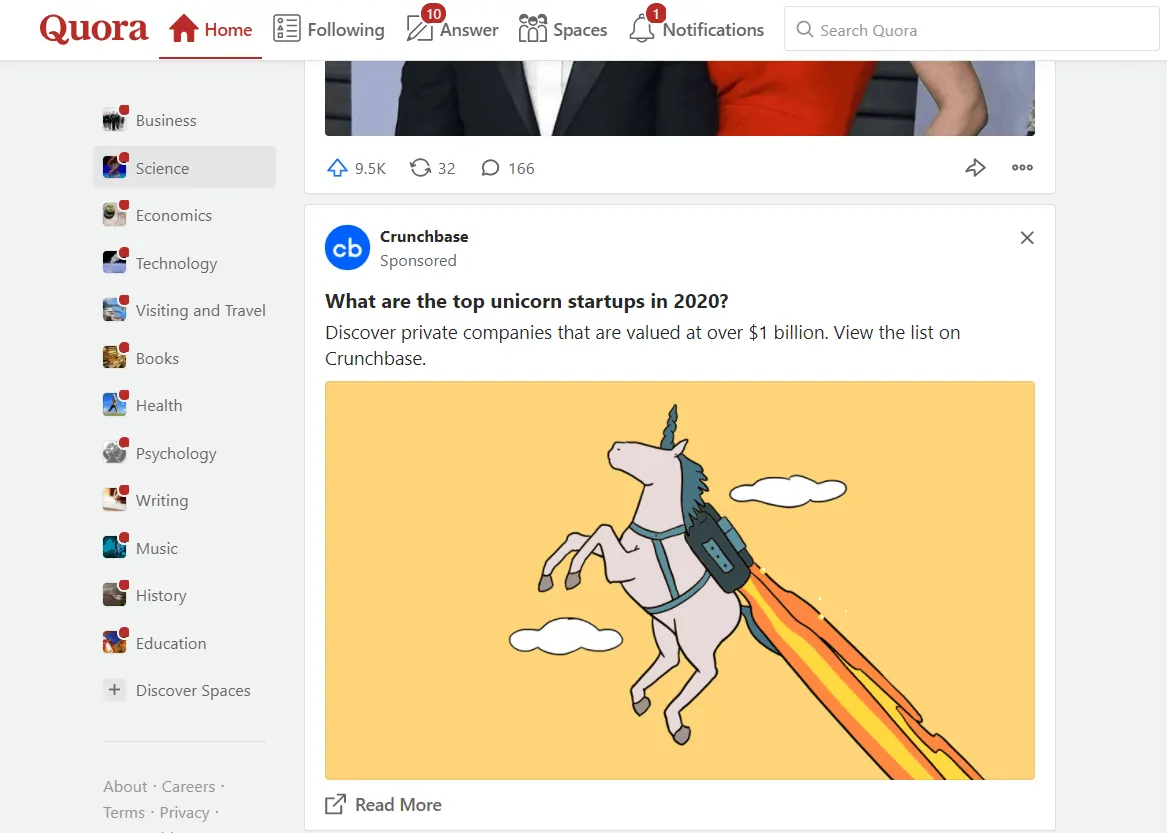
    Just like any portal with a huge database of users and their interests, Quora has started earning money through advertisements. Started as a beta test by showing advertisements from limited advertisers, advertisements are now a lot more common on Quora.

    quora business model promoted content

    Quora has tried to incorporate ads in its revenue model better than others as it focuses on relevant ads from relevant advertisers. Ads are incorporated within the Quora revenue model so well that they look like a part of it.

    You can find advertisements on the homepage as well as on the forum pages. The price that Quora charge for it is usually influenced by how many advertisers bid for the spot.

    quora ads

    Types Of Ads On Quora

    Just like other networks, Quora also provide a wide range of marketing and advertising solutions to businesses. These include –

    Text and Image Ads

    Text ads were originally the only ad format used by Quora. It is still among the most used ad format as it fits perfectly within the answers.

    Quora Text and Image Ads

    Image ads, however, gives the advertiser an opportunity to stand out and even showcase the company logo alongside the ad image and caption text.

    Quora Image ads
    Business Profiles & Promoted Answers

    Promoted answers are long-text form advertisements that lets the advertisers share detailed information about their offerings in a more engaging manner.

    This helps the advertisers to establish thought leadership, grow top of the funnel awareness, and even execute their inbound marketing strategies.

    Business Profiles & Promoted Answers

    Usually such promoted answers are written by brand accounts which are called business profiles by Quora. Such business profiles are, again, a paid feature offered by the company as it has a strict rule of using original full names for the accounts for the free users.

    But, there are also cases where the brands use famous faces (brand ambassadors, employees, etc.) to write promoted answers on behalf of the company.

     brands use famous faces to write promoted answers

    Advertising Solutions By Quora

    Quora is at par with other social media channels when it comes to advertising. The company provides solutions where an ad can be targeted based on –

    • Context: Ads on content that’s relevant to specific topics, keywords, or questions.
    • Audience: Ads targeted to audience that match web traffic, lookalikes, or contact lists.
    • Behaviour: Ads based on user interest.

    Moreover, the bidding on such ads is also as per the prevalent trends –

    • CPM: Cost per thousand impressions, to increase the impressions on the ads.
    • CPC: Cost per click, to get most visits on the landing pages.
    • CPA: Cost per action, to get most conversions.

    Go On, Tell Us What You Think!

    Did we miss something?  Come on! Tell us what you think of our article on Quora revenue model in the comments section.

  • Startup Funding Explained | From Idea to the Stock Market

    Startup Funding Explained | From Idea to the Stock Market

    All it takes is an idea which forms the concept and which eventually turns into the company. Managing a startup is just like playing an RPG. An entrepreneur acts as the main character who has to proceed through many levels before reaching the top – The IPO. Startup Funding isn’t as difficult as it seems. All you need to know is to whom to contact at what level of the startup process.

    Now that you know how to develop an ideal pitch deck, let’s move on to the funding phase of the startup process.

    Level 1: The Company

    The actual story starts after the company is formed. But there are several steps before you get to start your brand. Choosing a brand name and a logo isn’t enough. A company has to be registered to become and act as a legal entity and to perform certain functions like signing a contract, suing, etc.

    Costs at level 1 of Startup Funding

    Company Registration

    It takes registration to convert a concept into the actual company. It’s one of the easiest yet one of the most crucial steps in the life of an entrepreneur. Company registration forms a legal structure over which everything is placed in future.

    Company registration has different costs in different countries and may vary among states of the same country as well.

    • USA: the cost of incorporating a company varies from $25 to a few thousand dollars, including registration fees and legal fees.
    • India: the cost of incorporating a private limited company is just ₹7000 if you incorporate it with the minimum authorized capital of ₹ 1 lakh.
    • UK: the cost of incorporating a private limited company varies from £12 to £100 depending upon the mode of registration. (£12 for online registration. £40 for registration by post.£100 for same-day offline registration.)
    • Australia: incorporating a proprietary limited company will cost around $469.

    Other Expenditures

    An entrepreneur has to calculate the total amount of expenditure they will incur before contacting someone who can invest. A usual company doesn’t start to earn profits right from the start and it takes time to reach break even. The time taken to reach break-even is different in different industries.

    Expenditures other than registration while starting a company usually include

    • Research & Development costs: Your business hasn’t started yet. You must research about competitors, markets, etc. before getting yourself to the racetrack.
    • Server costs: if your company requires an application or a website to run. These fixed costs will come under server costs.
    • Operating costs: If your business requires daily/weekly/monthly transactions which will incur certain costs. These costs must be calculated and should be labelled as operating costs.
    • Company assets: This expense usually includes expenses incurred for purchasing/renting office space, furniture, equipment, machinery, etc.
    • Marketing costs: These costs vary from business to business.  Some businesses require a huge amount of marketing costs at level one while some don’t even consider them at this level of funding.

    Procurement Of Funds

    It’s not the right time to contact VCs and angel investors to fund your startup as your business hasn’t started to operate yet. Usually, the funds are procured from relatives, friends, family and other contacts.

    This type of investment is called seed investment. The investor actually plays a gamble by investing at your business and hence ask for a lot of shares.

    Shares And Valuation

    A startup usually issues 100,000 shares of the equal denomination at the time of seed funding. Valuation of the firm is decided based on the investment amount and the shares given to the seed investor.

    Suppose your friend invested a sum of $10,000 and asked for a 20% share in your company. The valuation of the company will come out to be $50,000 with you owning 80% of the shares worth $40,000.

    Level 2: Capital Raise

    You’ll need more money once your company is established. This level of startup funding requires money either for continuing the operations to reach break even or to expand the business after you’ve started earning profits (which is rare).

    Procurement Of Funds At Capital Raise Level

    This stage requires an entrepreneur to contact an angel investor or a venture capital firm as at this stage the business has already started operating and there are figures on which predictions and promises can be made.

    An angel investor is a high net worth individual who invests in the business in return of convertible debt or ownership equity.

    A venture capital firm is an organisation composed of many angel investors and other corporates who pool in their money to invest in businesses with huge growth potentials.

    The money invested in the business at this level of startup funding is called venture capital. The angel investor and VC firms invest a lot of capital in the firm in return of ownership equity and a say in decision making.

    Series A, B, C Funding

    Once the seed has been planted, the business firm needs increased nourishment at different levels of its operation. It all starts with seed A funding followed by B, C, D, and so on. Every round of funding will dilute your ownership and will add more VCs and angel investors on board who’ll have a say in the decision making of the company.

    Shares And Valuation

    The share percentage of every stakeholder after the capital raise level of startup funding depends on the valuation of the firm. There are two types of valuation [pre-money & post-money valuation] that must be considered while deciding the share percentage of the existing and new stakeholders of the company.

    • Pre-money valuation – is the company’s value before it receives outside financing. It’s the current value of your startup.
    • Post-money valuation – is the company’s valuation after it receives outside financing. If explained in simple terms, post-money valuation is pre-money valuation + the investment you’re looking to collect from VCs and angel investors.

    The pre-money valuation of the company gives the current share price and the post-money valuation decides the future share prices and the number of shares the investor will receive.

    Suppose, a VC agreed to invest $1 million in your company for a post-money valuation of $5 million which gives a pre-money valuation of $4 million.

    Now, it’s already assumed that you’ve issued 100,000 shares previously of worth –

    Pre-money valuation/ # shares outstanding → $4,000,000/100,000 → $40 per share

    The investor will require issuing of new shares for his $1 million dollars. The new shares issued will amount to –

    Investment/Pre-money price per share → $1,000,000/$40 → 25000 shares

    Another method of calculating investors share in your startup is –

    series investment/post-money valuation → investors share in your startup

    $1,000,000/$5,000,000 → 20% shares

    The existing stakeholders’ shares get diluted to 80%. To make it simple, you now own 64% shares of the company (which was previously 80%) and the seed investor owns 16%. This process is called share dilution.

    The entrepreneurs should maintain a high post-money valuation to make sure that the investors don’t dilute their ownership much.

    Level 3: Exit

    Once your company is all set and has started earning profits, it’s time to sell your investments, reduce your stake in the business and earn substantial profits.

    An exit strategy is a strategic plan of the stakeholders to sell their stake in the business to earn profits. You’ll have two options when it comes to planning an exit strategy.

    Selling Your Company To A Corporate Giant

    An exit strategy is planned right from the start. If an entrepreneur and the investors are in the business purely to earn profits and nothing else, this seems the most beneficial idea as they usually get the shares of the acquiring company (there is an option to get money too). The shares provided usually vest after a certain period of time but are a great offer for such an entrepreneur. The entrepreneur, meanwhile, works with the acquiring company where they handle the company they just sold to the corporate.

    Initial Public Offering

    Launching an initial public offering is a better alternative to selling your company to a corporate giant. An IPO is just another form of capital raise in the stock market where investors are the real public. Before an IPO, the company is considered private. This is why an IPO is also referred to as “going public.” There are certain rules and regulations that the company has to follow to go for an IPO. An IPO results in every share becoming a tradeable document whose price is decided based on the market factors like demand and supply. You will continue to have the number of shares you had before, but the decision-making of the company now shifts to the board of directors elected by a majority of the shareholders.

    The Startup Process

    We know how important your dream business is to you. Therefore, we’ve come up with an all-in-one guide: The Startup Process to help you turn your vision into reality.

  • How Does Instagram Make Money

    How Does Instagram Make Money

    Launched in 2010, Instagram brought a revolution into the online photography industry and normalised image and video sharing on social media as we know it today.

    The company was bought by Facebook for around $1 billion in cash and stock in April 2012. But unlike its other acquisitions, Facebook planned to build and grow Instagram independently as a separate platform targeting Gen Z.

    That being said, Instagram’s revenue model is still connected to that of Facebook’s and almost all of the money is generated through advertisements.

    But before we discuss how Instagram makes money, it’s important to understand Instagram’s business model, target audience, and its business strategy.

    What Is Instagram?

    Instagram is a photo and video sharing social networking platform owned by Facebook. The platform allows its users to capture, edit and upload photos and videos through its mobile application, follow other users, and interact with other users using like, comment and chat feature.

    The platform is used by both individuals and companies alike to connect with their audiences.

    For users, the company has played a central role in the 21st century pop culture, where popular users are dubbed as influencers.

    For businesses, the platform acts as an important marketing platform to build their brand awareness, interact with their customers, and even sell products.

    Instagram Stats

    • Monthly Users: 1 Billion
    • Daily Active Users: 500 Million
    • 34% of Instagram users aged between 25 to 34; 31% are aged between 18 to 24
    • 51.2% users are female and 48.8% are male
    • 75% of US 18-24-year olds are Instagram users

    Instagram Business Model

    Instagram’s business strategy is unique and evolving. Ever since its inception in 2010, the business model is quite the same – a free image sharing mobile application, but the way it uses its algorithm to monetize users’ attention has evolved over time.

    Just like Facebook, Instagram requires users to create a profile to connect with others. Once logged in, the user has access to features like photos and videos upload, photos and videos filters, followers, geotagging, self-disappearing stories, live stories, IGTV, etc.

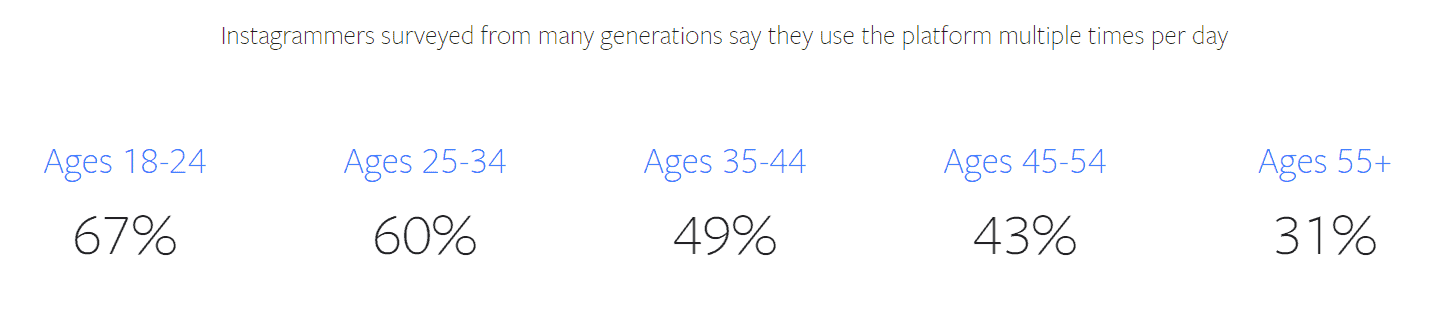
    According to eMarketer, users spend an average of 26-minutes per day on the Instagram app

    instagram usage stats

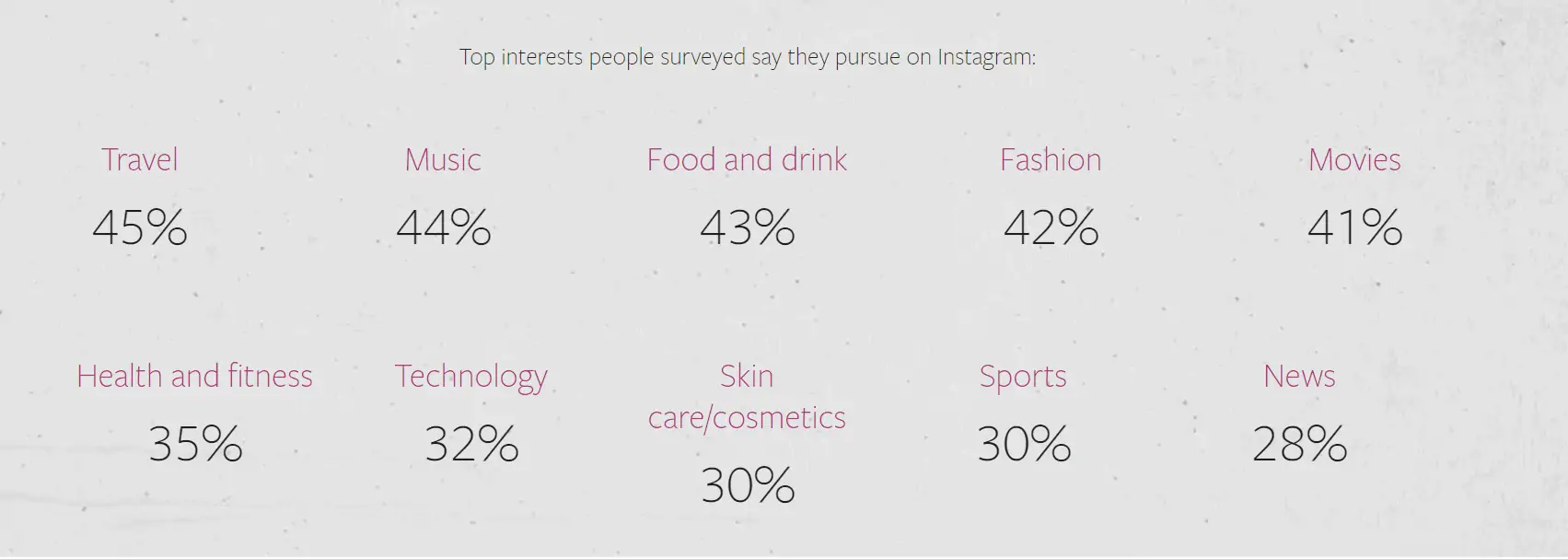
    And 91% of them use Instagram to follow at least one of their interests.

    Interests of Instagram users

    This makes the platform a perfect spot for brands to advertise and sell their products, and which is precisely how Instagram makes money.

    How Does Instagram Make Money

    Instagram is a mix of visual storytelling and influencing. Around 70% of shopping enthusiasts say they turn to Instagram for product discovery. Most even use the platform because of their FOMO. That’s why brands love it as much as the users.

    In fact, in a recent survey by Ipsos, 66% of people said they use Instagram because it enables them to interact with brands.

    The platform successfully uses this interaction to make money through –

    • Advertisements
    • Shopping

    Advertisements

    Advertisements brings in the most revenue for Instagram. In fact, it is predicted that Instagram will bring in around 40% of ad revenue to Facebook by 2021. According to Business of Apps –

    • Cost per click (CPC) for Instagram feed ads is around $0.60, and for Stories $0.50
    • Cost per mille (CPM) for Instagram feed ads is $1.65, and for Stories around $0.90

    According to a recent blog by Instagram itself, over 2 million advertisers advertise on Instagram every month.

    They decide to advertise in the following formats –

    Story Ads

    Stories on Instagram are ‘day moments’ of individuals and businesses presented in a slideshow format that self-destroys itself after 24 hours.

    Story Ads

    Instagram stories ads pop up in between two story slides and includes additional engagement features like visiting a website, answering a poll, giving feedback, etc.

    Photo Ads

    Photo Ads
    Source: Verge


    Photo Ads are just like usual photo posts on the platform but with a sponsored tag and a call to action button.

    Video Ads

    Video Ads

    Video ads are similar to photo ads but are in the form of up to 120 seconds long landscape or square format videos with a call to action button.

    Carousel Ads

    Carousel ads are an extension to traditional ads where the user can swipe to see additional photos or videos in a single ad.

    Collection Ads

    Collection Ads
    Source: Instapage

    Instagram’s collection ads include swipeable carousel display of product images below a cover image or video.

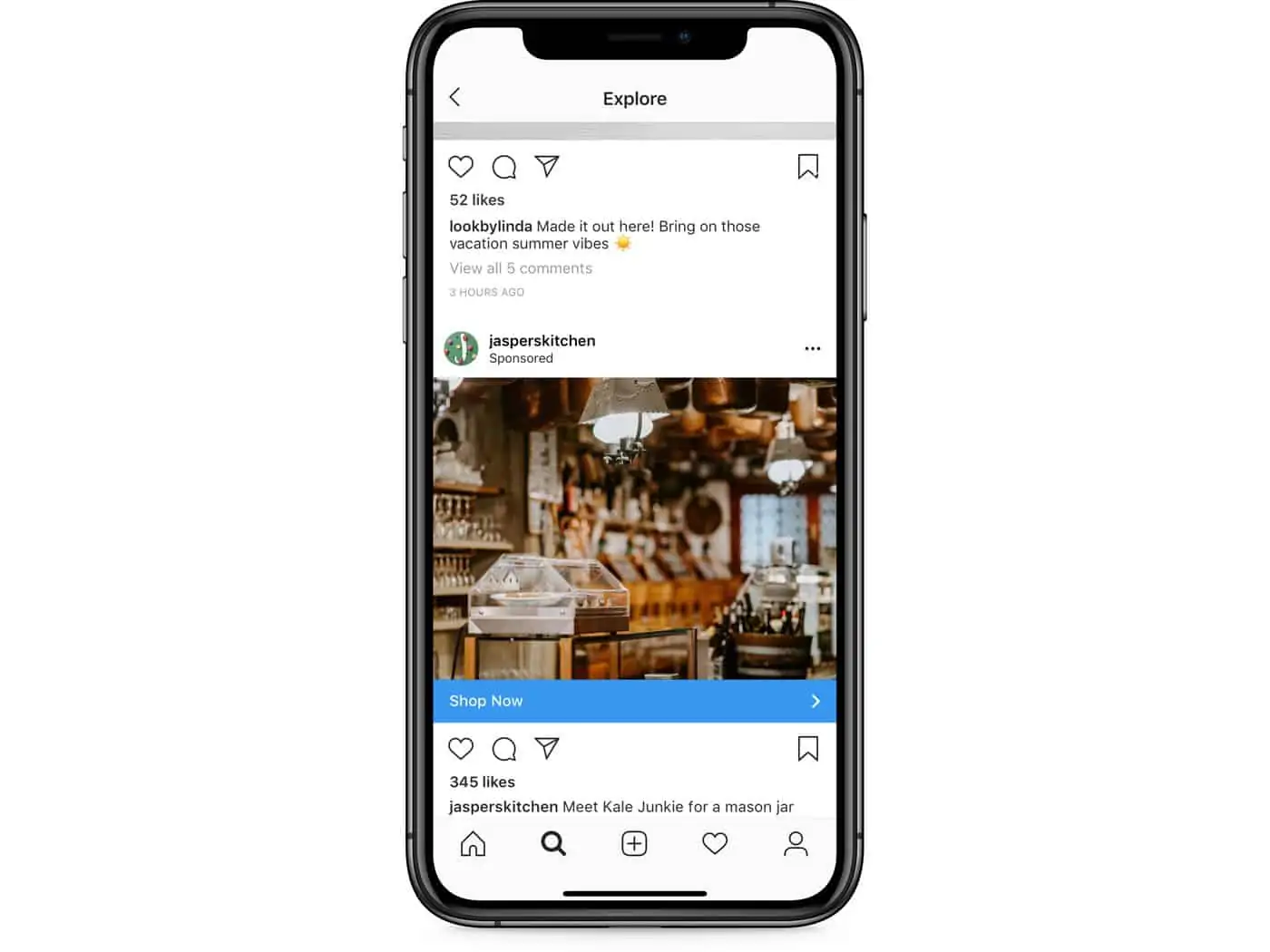
    Ads In Explore

    Instagram’s explore page is a source of real-time content curation that presents different posts for every user from accounts they don’t follow yet based on their likes and interests.

    Ads in explore are used by brands to target audience with discovery mindset and generate awareness.

    Ads In Explore

    IGTV Ads

    IGTV Ads
    Source: The Verge

    IGTV is a vertical long video platform that runs on user generated content. It is almost like YouTube or TikTok but has a different positioning than both.

    However, Instagram monetizes this platform just like YouTube – through ads; and sharing the revenue with the creators.

    Shopping

    Shopping
    Source: Medium

    Since Instagram has also positioned itself as a discovery platform just like Pinterest, it has also copied some of Pinterest’s revenue earning strategies as well – the shopping feature.

    Instagram Shopping is a set of features across Instagram that let people shop your products directly from Instagram.

    In simple terms, Instagram Shop lets you integrate your product catalog with your Instagram profile. With Instagram Shop, you can –

    • Add a Shop tab within your profile that allows visitors to see all your products without leaving the Instagram app.
    • Add and tag Shop products in your posts in the same way you would tag a friend.
    • Promote your product in Instagram Stories.
    • Run an Instagram Shopping ad.

    The company makes money with shopping in the following ways –

    • The Checkout Fees – Instagram lets customers to buy the product on the Instagram app itself. It, however, charges a fee from the sellers for the same. This is how checkout works –
      • Brand creates a shoppable post;
      • User clicks on its product tag;
      • This opens a product page inside the Instagram app;
      • The user can view images, read descriptions, and browse similar products;
      • The user clicks on “Shop Now”, “Add to Cart”, “Check out now” to buy the product right in the app.
    • Instagram Shopping ads – These are extension to the traditional ads with a tagged product that can be bought either on Instagram or on other channels.

    The Future Of Instagram

    Instagram is a prime example of the rise social shopping. Facebook understands the bleak future of traditional advertising and has smartly introduced new advertisement and shopping features within the Instagram application which has a great future because it is, in fact, paving the way for future discovery and shopping experience.

    The launch of IGTV and positioning it as web TV is a great strategy to get users engaged while the company make money with user generated content.

    Instagram has also given way to the influencer revolution which has developed a network effect competitive advantage for the platform which will be hard for any brand to break, be it Google or Snapchat.

    Go On, Tell Us What You Think!

    Did we miss something?  Come on! Tell us what you think of our article on ‘how does Instagram make money?’ in the comments section.
  • How Giphy Works and Makes Money? Everything you should know.

    How Giphy Works and Makes Money? Everything you should know.

    Even with over 150 million monthly users and a valuation of $600 million, Giphy’s business model is still in its growth stage and the company hasn’t started earning money yet. The operating model of Giphy is a lot different from that of its competitors which has opened up many new and different revenue generation opportunities for this search engine.

    How Giphy works?

    Content looks better when in motion. Text and images works great for telling stories but sometimes you need to make them in motion for users to experience them. Motion content have two categories – Videos and Gifs. Videos, due to its duration and other factors, require a sort of commitment from both the creater and the audience. Whereas GIF is an art. GIFs are an addictive and hilarious sequence of images, compiled together to create a short, looped animation.

    These short animations are on the rise ever since these were integrated in social networking websites like reddit, tumblr, etc. where they were used as reactions and replies.

    Giphy was launched in 2013 as a search engine dedicated only to GIFs. The founders, Alex Chung and Jace Cooke, collected around 15000 gifs when they started the website. Today, Giphy delivers over 1 billion GIFs daily to over 100 million users who spend over 2 million hours to watch those GIFs.

    2016 was a great year for GIFs and Giphy. Facebook, being the world’s biggest social network lent its audience to Giphy and other GIF hosting websites when it started the GIF integration by letting users share them through links.

    giphy facebook

    Memes also come in the form of GIFs and Giphy, being a GIF warehouse, has seen many new users visiting just for them.

    A google for shareable GIFs which lets you search for, share, and download GIFs. But this is not just how Giphy works. Giphy has now evolved into a suite of GIF- based products like – video to GIF converter, GIF keyboard, and enterprise tools which help media companies turn their content into GIFs.

    Operating model of Giphy is different from other search engines. Giphy doesn’t redirect its users to third party websites. Gifs are found and can be downloaded, shared and embedded from Giphy itself. However a link is provided to the website where the image is hosted.

    giphy search engine

    How Giphy makes money?

    The world’s biggest search engine of GIFs hasn’t monetized its services yet. Unlike its biggest competitor, Imgur, Giphy has no plans yet to earn money through promoted posts.

    imgur promoted posts

    Giphy’s operating model is a lot different from that of Imgur. Unlike Imgur, which is a image sharing and hosting service provider, Giphy is a search engine and according to Adam Leibsohn, the chief operating officer at Giphy, they do have plans to make money like other search engines.

    “So we have a search query and a search result. And we are the biggest search engine inside of messengers that anyone has ever built. And so we are a big search engine, you can look at other search engines about how money gets made.”

    As Giphy doesn’t own the right of the images, it cannot generate revenue from licencing or selling them. The only option left is to earn money by showing sponsored results to the search queries of the users just like what google does.

    Since Giphy has integrated its services with various chatboxes, keyboards, and social networking websites, it won’t be difficult for it to get clients.

    giphy integration with facebook and whatsapp

    Giphy has partnered with (and is open to partner with) many big brands and artists who showcase their content in the form of GIFs. The main motive behind these partnerships is to get more brands (and their fans) on board which will later pay for putting their content at the top of the search results.

    giphy partnerships

    Giphy doesn’t charge brands and artists to open up a brand channel though.

    giphy partners

    The company currently has less than 100 employees and is able to meet its expenses because of huge amount of funding it had received till now.

    giphy funding

    Go On, Tell Us What You Think!

    Did we miss something?  Come on! Tell us what you think of our article on How Giphy Works and Makes Money in the comments section.

  • Scarcity Principle in Marketing: Detailed Guide

    Scarcity Principle in Marketing: Detailed Guide

    The economy runs on the principles of demand and supply. This condition has placed itself permanently in the minds of the customers and sellers. But this situation can also be capitalized by the marketers where they use scarcity principle of marketing to increase the demand of the goods by decreasing their supply.

    The scarcity principle of the pricing theory states that the price of a scarce good should rise until an equilibrium is reached between supply and demand. However, it operates a bit differently in marketing theory where the supply of a good is strategically controlled to control its demand and the price.

    What Is Scarcity Principle In Marketing?

    Scarcity principle in marketing works more like scarcity in the area of social psychology than in the area of economics. According to this principle, humans consider a scarce object more valuable than the one which is in abundance. Scarcity creates a sense of urgency and evoke people to act immediately.

    This psychological outcome of scarcity is often capitalized by marketers to increase the demand of their products. They use terms like – flash sale, sale for limited users, till stock lasts, etc. to trigger demand among the customers.

    Breaking Down ‘Scarcity Principle’

    Scarcity principle make customers conduct their own cost-benefit analysis as the product is in limited quantities. But the actual exchange takes place only if the customer feels that the utility he’s getting at that moment is greater than that which he’ll get if he purchases the same product later.

    There are two social psychology principles which give rise to scarcity –

    Social Proof – Sometimes, people assume surrounding people to possess more knowledge about the situation than themselves. This is often seen in the cases where product runs out of stock very quickly. This makes a customer thinks that the product being sold is indeed a quality product.

    Commitment – If someone has already committed themselves to something and find out that they cannot have it, it makes the person want the item more.

    Scarcity Techniques

    Out of stock

    Out of stock technique is a perfect example of social proof psychology principle. If an article runs out of stock frequently, it makes customers think that the product is popular among others and must be of good quality.

    Flash Sales

    A flash sale is a sale of goods at greatly reduced prices, lasting for only a short period of time. The products may be available at the same price / negligible difference after the sale as well, but the term flash sale creates a state of urgency in the mind of the customers and triggers them to conduct an exchange. The tendency is often referred to as the fear of missing out which is a pervasive apprehension that others might be having rewarding experiences from which one is absent.

    coolpad flash sale scarcity principle

    Many marketers partner with e-commerce platforms to sell their products on special timings. This usually creates a state of urgency in the mind of customers and many buy it not because of their necessity but because of feeling of superiority over others who couldn’t buy it.

    flash sale scarcity principle

    A perfect example of Flash Sale is the Black Friday Sale, which sees an average american spending way more than he usually do.

    Number of products left

    Customers get triggered to conduct a purchase immediately when they see a limited number of products left in stock. This technique is often used in applications and websites which involves booking of hotels, movies, events, etc.

    limited number scarcity principle

    For limited users

    Sometimes marketers launch special offers for limited users. This create a sense of superiority among those who get and a sense of longing for those who don’t.

    Marketers also combine this type of offer with other products. Some special offers are provided to exclusive club members or buyers of specific products which turn out to be a win win situation for the marketers.

    netflix scarcity principle

    Use it or lose it.

    Some companies market their product in such a way that their mere non existence turns out to be a scarcity in people’s life. One of such example is that of an iPhone. Iphone 4 was marketed with a tagline – “If you don’t have an Iphone, well, you don’t have an iPhone. This is one of the best marketing campaigns by apple till now.

    Diamond marketing – A Perfect Example Of Scarcity Principle

    Diamonds are not (and never were) rare stones, they are just expensive. The sole responsibility of making them one of the best examples of scarcity principle used in marketing goes to De Beers. De beers was a cartel which used to control majority of the production and distribution of diamonds all over the world. They limited the supply of these stones, and through their marketing campaign – A diamond is forever, were able to increase it’s demand. This led to increase in the price of these semi precious stones which can be seen till now.