Advertising has become a mainstream part of marketing strategies and for marketers to promote any product, service, or brand.
However, crafting a compelling ad copy that captures the attention of your target audience and drives results can be a daunting task. To create effective ad copy, you need to understand the objectives, steps, tips & tricks, frameworks, and mediums that go into it.
This guide provides practical advice to help you write an advertisement that connects with your audience and achieves your marketing goals.
Platform
Description
Use It For
Visit
Jasper
An AI-powered platform that provides expertly led templates for businesses and marketers to create high-quality marketing campaign content.
Create the content on expert-made templates.
Copy.ai
A platform that provides customisable templates in addition to existing universal templates and multi-language support with the ability to train the AI to produce even more tailored content.
Create copies in a personalised expert tone by training the AI.
Copysmith
An AI copywriting platform built for eCommerce teams & agencies that helps to generate and launch SEO-optimised product description copies at scale that converts.
Create content at scale.
Frase.ai
An AI writer that helps to research, write, and optimise high-quality SEO content in minutes instead of hours.
SEO content writing
Facebook Ads Library
A searchable database that displays every active ad on Facebook and Instagram that includes information on who created the ad, when it was published, and what is its budget.
Research competitors’ ads and get the motivation to create an ad
SEMrush
A competitive intelligence tool that allows users to research and track their competitors’ online PPC Ad campaigns and SEO optimisation strategies.
Research competitors’ PPC ads, SEO strategies, and more.
Before writing an advertisement, it’s essential to consider the audience, different types of ads, and different advertising mediums available to you. It will allow you to choose the most effective method to reach your target audience and achieve your advertising goals. Depending on your objectives and the characteristics of your audience, you can choose to write an online or offline advertisement.
Know Your Audience
To write an effective ad, you need to know your target audience’s age, needs, behaviours, interests, pain points, and more. By identifying the pain points and motivations they need to use a product, you can create messaging that speaks directly to them and increase the likelihood of them taking action on your advertisement.
For instance, suppose you own a website that sells plus-size clothing, and your target audience is people of all ages searching for comfortable, fashionable clothing. Your ad highlights affordable prices and the versatility of clothing options for different occasions.
Once you have identified your audience, you can choose the most appropriate advertising medium to reach them.
Know Your Advertising Objectives
Knowing the ad’s objective before creating it is important because it helps you define what you want to achieve from the ad.
Moreover, setting the right objective will help you define your target audience, craft the right messages, deliver it at the right time, in the right way, and measure results rightly.
For instance, if you want to promote a new restaurant specialising in pizza, you may not create an ad about the restaurant’s entire menu and all dishes. Instead, you could advertise a limited-time offer, such as “Buy one pizza, get one free” or “50% off all pizza orders during lunchtime.
This would attract customers looking for a deal and entice them to try the restaurant’s pizza.
Increase brand awareness: This objective aims to introduce your brand to a wider audience and make them aware of your brand’s existence.
Generate leads: The objective here is to capture the attention of your potential customers and encourage them to provide your contact information to them.
Drive sales: The objective is to encourage customers to purchase your product or service by offering some discounts, special coupons or other offers.
Build brand loyalty: The goal is to encourage customers to develop a strong emotional connection with your brand and become repeat customers.
Increase website traffic: The objective is to drive more traffic to your company’s website. It can cater to brand awareness and top-of-mind awareness (TOMA).
Create a positive brand image: The objective is to shape customers’ perceptions of your brand and create a positive image in their minds.
Enhance customer engagement: The goal is to encourage the customers to interact with your brand and become more engaged with your products or services.
Educate customers: The objective is to inform customers about your products or services and their benefits and features.
By setting clear advertising objectives, you can ensure that your advertising campaigns are focused and effective in achieving the desired marketing outcomes.
Choose The Medium
When it comes to creating an advertisement, there are two primary mediums you can choose from: online and offline.
Online advertising effectively reaches a broader audience and targets specific groups based on their online behaviours. Whereas offline advertising effectively reaches local audiences or creates a more personal connection with your target customers.
Online advertising includes social media ads, search engine ads, email marketing, influencer marketing, and more. While offline advertising includes traditional methods such as print ads, television and radio commercials, billboards, direct mail, and more.
Types Of Advertising
You can use a variety of online and offline advertising mediums to roll out your advertisements. Here is a list of a few most popular advertising mediums that you can choose from.
Online
Online advertisements refer to any form of advertising that is hosted digitally on the internet. These include:
No matter if it’s an online or offline advertisement, here are some components you should always include while writing an advertisement:
Heading
The heading is essential to your advertisement as it is the first thing the reader sees and reads. It should be short, catchy, and attention-grabbing to make them want to keep reading.
For example, if you are selling a new brand of coffee, your heading can be “Wake Up to a Better Brew with XYZ Coffee.”
As a business owner, you might often struggle with creating compelling ads that can boost your site’s traffic and sales due to challenges such as ad type selection, budgeting, and more. The Facebook Ad Library and SEMrush are solutions to this challenge.
The Facebook ad library is a searchable online database that allows you to analyse the current ads being run by any page or advertiser on Facebook and Instagram. By utilising this resource, you can gain insight into ad creator information, publishing dates, ad spend limits, and more to inspire your own ad creation and analyse your competition.
SEMrush is a tool that provides competitive intelligence to you. It also lets you investigate and monitor your competitors’ online PPC advertising campaigns and SEO optimisation strategies. As a copywriter or marketer, you can use SEMrush to analyse your competitors’ content and identify their target keywords. Use this information to create more effective ad copy and optimised content for search engines.
Subheading
It is a secondary title that provides more information about your product or service to your audience. It should be a bit longer than the heading and give the reader a reason to keep reading. Make it provide more details about your product or service and highlight its unique features.
For example, if you are selling a new brand of coffee, your subhead can be “Our Organic Beans are Sourced from the Finest Farms Around the World.”
Often, markets and writers use keywords in the subheading, making them more search engine friendly to get more visibility.
Moreover, if you need help with SEO in your copywriting, you can always use Frase to optimise your ad content. You can use it to research keywords, topics, and more, write, and optimise high-quality SEO content quickly and easily. Besides, it can also help you paraphrase your existing copies and optimise them for SEO.
Hook
The hook is the opening sentence or phrase that captures the reader’s attention and makes them want to read more. It should be creative and engaging, designed to draw the reader in.
For example, if you are selling a new brand of coffee, your hook can be, “Are you tired of drinking bland, boring coffee every morning?”
In advertising, creating a good hook is essential to capture the reader’s attention and interest them in reading the rest of the ad. However, creating an attention-grabbing hook can be challenging for many writers and marketers. To cater to this need, you can use Copy.ai, a copywriting tool, to generate compelling hooks and other ad content. You can also train the tool with your own pre-written content to create copies that sound like you wrote it. By using copy.ai, you can streamline your ad copywriting process and create more effective advertisements.
Body
The body is the main part of your advertisement, where you provide more information about your product or service. It should be well-organised, easy to read, and should highlight the benefits of your product or service. Divide the body into short paragraphs, use bullet points, or numbered lists to make it easier to skim.
For example, if you are selling a new brand of coffee, your body could include information about the taste, aroma, and quality of your coffee.
Various frameworks are available for marketers, writers, and advertisers to craft ad content, such as BAB, AIDA, PAS, and more. In writing ads, these or other similar frameworks can provide a structure and formula to follow that can increase the effectiveness of the ad.
However, if studying each framework and writing ads seem overwhelming, you can use Jasper to help you with it. This framework-agnostic tool, Jasper, includes templates for different frameworks developed by experts, allowing the AI to generate optimal ad copies based on the chosen framework for you.
Besides, if you want to create sales copies, product descriptions, Facebook ads, email subject lines, and more at scale, you can use Copysmith for this use case. It has universal templates for different types of content based on their purpose. Those templates will help you create copies at scale. This tool is best for an ecommerce company that wants to create marketing copies at scale or large marketing teams working with several clients.
Call to Action (CTA)
The CTA is part of your advertisement where you have gained the power in your reader’s mind to tell them what to do next. It should be clear and concise and encouraging enough to make the reader take action.
For example, if you are selling a new brand of coffee, your CTA could be “Order Now and Get 10% Off Your First Purchase.”
Popular Copywriting Frameworks
The copywriting frameworks are designed to help you structure your copy in a way that’s easy to read, engage, and persuade. You can precisely use these frameworks to write funnel-oriented copies for your campaign. These funnel-based copywriting frameworks always make your copies attract, hook, and convert better.
Though there are many frameworks a copywriter or the marketer can use in copywriting (apart from what’s mentioned below), here are the seven most useful frameworks you can bring into use.
Attention-Interest-Desire-Action (AIDA)
AIDA is a four-step process designed to get readers to take action.
The AIDA framework goes like this:
Attention
Interest
Desire
Action
For example, an ad for a new car might use the AIDA framework like this:
Attention: Are you tired of driving an old car?
Interest: Our new car has all the latest features.
Desire: Imagine driving a car that turns heads.
Action: Visit our dealership today and take a test drive.
Before-After-Bridge (BAB)
The Before-After-Bridge (BAB) framework is a three-part structure commonly used in direct response copy.
The BAB framework goes like this:
Before
After
Bridge
For example, an ad for a weight loss product might use the BAB framework like this:
Before: Are you tired of feeling overweight and unhealthy?
After: Imagine feeling confident and healthy in your own skin again
Bridge: Our weight loss product can help you achieve your goals
Problem-Agitate-Solution (PAS)
The PAS framework is a three-step process designed to help you identify and solve your customer’s problems.
The PAS framework goes like this:
Problem
Agitate
Solution
For example, an ad for a headache medicine might use the PAS framework like this
Problem: Do you suffer from headaches?
Agitate: Headaches can be debilitating and ruin your day
Solution: Our headache medicine can provide fast relief.
Problem-Promise-Proof-Proposal (PPPP):
The PPPP framework is a four-step process designed to help you create a persuasive message.
The PPPP framework goes like this:
Problem
Promise
Proof
Proposal
For example, an ad for a new software product might use the PPPP framework like this:
Problem: Are you tired of using outdated software?
Promise: Our new software is faster and more efficient.
Proof: Our software has helped businesses increase productivity by 50%.
Proposal: Try our software today and see the difference for yourself.
Features-Advantages-Benefits (FAB)
The FAB framework is a three-step process designed to help you communicate the value of your product or service.
The FAB framework goes like this:
Features
Advantages
Benefits.
For example, an ad for a new smartphone might use the FAB framework like this:
Features: Our new smartphone has a 6.5-inch screen and 5G connectivity.
Advantages: You can watch your favourite movies and TV shows on the go.
Benefits: Stay connected with your friends and family no matter where you are.
Star-Story-Solution
The Star-Story-Solution framework is a three-step process designed to help you tell a compelling story.
The Star-Story-Solution framework goes like this:
Star
Story
Solution
For example, an ad for a new luxury watch might use the Star-Story-Solution framework like this:
Star: You deserve the best.
Story: Our luxury watch is made with the finest materials and craftsmanship
Solution: Treat yourself to the ultimate luxury with our new watch.
Awareness-Comprehension-Conviction-Action (ACCA)
This four-step framework is designed to help you create a persuasive message.
The ACCA framework goes like this:
Awareness
Comprehension
Conviction
Action
For example, an ad for a new online course might use the ACCA framework like this:
Awareness: Do you want to learn a new skill?
Comprehension: Our online course is designed to teach you everything you need to know.
Conviction: Our course has helped thousands of people achieve their goals.
Action: Sign up for our course today and start learning.
Tips To Write An Effective Advertisement
An effective advertisement can make all the difference in selling a product or service. That’s why understanding the key elements of a successful ad and how to craft them is crucial. So, to meet that challenge, let’s learn about the insider’s tips and tricks for writing an effective advertisement that will help you connect with your audience and drive conversions.
An Ad you create and roll out for your audience must show viewers how your product or service can solve their problem.
Merely plugging in keywords won’t be enough to attract their attention (even though it is the first thing viewers look for).
The powerful way to stand out is to add your visitor’s end goal and promise to help solve their problem in the headline.
For instance, if your user is looking for a home security system, your ad, which says ‘home security system that keeps you safe & gives you peace of mind’, could highlight how it can provide peace of mind by keeping their family and belongings safe.
By showing how you’ll solve their problem and address their pain points, you’ll attract their attention and entice them to take action.
Pen Benefits And Not Features: Show What’s There For Them
When you are writing the body of your ad, it is essential to focus on how your brand or product will improve your visitors’ lives. Because a solution and benefit from a product are what your reader wants.
Thus, instead of starting with how amazing your brand is, tell your visitors how your brand or product will benefit them. Your ad should be personal and demonstrate how your service will solve the user’s problem.
For example, suppose you get to see these two ads when you enter the keyword’ fitness app’
Ad 1 (Benefits-Focused)
Get in the best shape of your life with our fitness app!
With personalised workout plans that fit your busy routine and nutrition tracking, you’ll see real results in no time. Say goodbye to feeling sluggish and hello to a healthier, happier you with 10% savings on your plan.
Lesson: This ad focuses on the benefits that the app provides, such as getting in shape, a program that fits in the busy schedule, seeing results, feeling healthier and happier, and saving 10% on their plan. By highlighting these benefits, the ad is more likely to resonate with potential customers and inspire them to take action.
Ad 2 (Features-Focused)
Our Fitness App Helps You Get Fit
Our fitness app includes personalised workout plans, nutrition tracking, and real-time feedback. Access to a library of exercises and progress monitoring allows you to easily stay on top of your fitness goals.
Lesson: This ad simply lists the app’s features, such as personalised workout plans, nutrition tracking, and exercise libraries. While these features may be necessary to some potential customers, the ad does not explain how the app will benefit them. As a result, it may not be as effective at convincing customers to take action.
Implement FOMO
If you are looking for a way to increase conversions on your website, one simple solution is to implement FOMO the fear of missing out.
Adding FOMO is like giving loss aversion (a real psychological force) to people that motivates them to take action.
To give them the FOMO, you can add countdown timers on your site or tell them they’ll miss out if they miss this deal which is valid for only X hours. Using these types of advertising, you can tap into this force and drive more conversions.
For example, suppose you are a brand that sells mobile phones. So you can write an ad like this implementing FOMO:
50+ latest Apple iPhones and Smartphones on sale
Sales end in 3 hours. Get a 40% discount on all models on sale. Free shipping throughout India. Shop Now!
Creating a sense of scarcity will motivate more people to click through and make a purchase. This is just one of the six principles of persuasion outlined by Robert Cialdini, and it’s a powerful tool for driving conversions in a competitive online marketplace.
Add A Strong Emotional Trigger
As a copywriter, your job is to persuade your audience to take a specific action. One of the most effective ways to do this is to include emotional triggers in your copy.
Emotional triggers are words or phrases that tap into your audience’s emotions and help them connect with your brand or product on a deeper level.
For example, if you’re selling a weight loss supplement, you might use words like ‘transform,’ ‘confidence,’ and ‘healthy’ to trigger feelings of empowerment and self-improvement in the potential users.
Another way to use emotional triggers is to tap into your audience’s pain points. If you are selling a product that solves a specific problem, you can use language highlighting the negative emotions associated with that problem and solutions. For example, if you’re selling a headache medication, you might use words like throbbing,’ ‘debilitating,’ and ‘miserable’ to trigger empathy and urgency in your audience. And ‘feel better,’ ‘get better,’ and ‘get relaxed’ to highlight the solution.
Here is an example of an ad that includes emotional triggers:
Are you tired of feeling self-conscious about your smile?
Our teeth whitening kit can help you transform your smile and boost your confidence! With our easy-to-use kit, you can whiten your teeth at home and achieve a bright, healthy-looking smile in just a few weeks.
Provide A Risk-Free Offer To Take Away Their Fear
One effective copywriting tip to consider is providing a risk-free offer to remove your customers’ fears. People often worry about wasting their hard-earned money on low-quality products or services when there is no return or money-back policy. It makes them hesitant to make a purchase.
However, by offering a risk-free guarantee, you can remove these doubts and incentivise your potential customers to try your product or service.
When potential customers know they can get their money back if they are unsatisfied, they are more likely to give your product or service a chance. It also adds to your brand’s authority because it shows that your company is confident in the value of your offering and willing to stand behind it.
Bottom Line
In conclusion, writing an effective advertisement requires a strategic approach that takes into account many things, including the objectives, target audience, medium, and the right steps for writing the ad.
By following these guidelines and utilising the appropriate frameworks, tips, and tricks, you can create ads that resonate with your audience and drive results for your business.
It’s not long ago since the internet started. But there was a flaw in the system. Businesses required domain names for their websites, and they had to be unique. So, when the internet started gaining traction and more people had access to it, domain names became a hot commodity that could be bought and sold even in the secondary market.
For those who’re new, here’s how the domain market works. There are a few parties involved:
ICANN: The Internet Corporation for Assigned Names and Numbers is the governing body that oversees domain name registration. Consider it to be the SEBI of domain names.
Registrars: These are the companies that provide the technical and user interface for registering, buying and selling domain names. For example, Godaddy, Namecheap or BigRock.
Registrants: This is who you become when you register a domain name. You can be an individual or business entity with a valid address and contact information.
But three new parties have come into the equation:
Domain Brokers/ Flippers: These individuals buy domain names and then resell them through auctions, brokerages or private portfolios. They purchase domains initially registered by someone else to place them back on the market for a higher price.
Secondary Market: This is where domain brokers/ flippers resell their domains. They post them in auctions and brokerages or build a portfolio of domains to offer potential buyers. Dan, Flippa, Godaddy auctions, Sedo, and Afternic, are popular sites for reselling domains.
Escrow Companies: These companies act as intermediaries in a domain transaction. They hold the funds from both the buyer and seller until all conditions of the sale have been met, ensuring that both parties remain safe during the transaction process. This is especially important when buying or selling expensive domains.
So, how expensive a domain name can get? Let’s look at the top 10 most expensive domains ever sold.
Cars.com – $872 million (2014)
Confirmed to be the largest domain sale to date, Cars.com was sold by a media conglomerate, Classified Ventures, LLC, in 2014.
The story goes like this: the cars.com domain name and website were owned by Classified Ventures, LLC, a joint venture among several major media companies, including Gannett Co., which owned 27% of the business. In 2014, Gannett decided to buy out other partners in a $2.5 billion deal and acquired the cars.com domain name as part of this purchase.
The SEC filing noted that the total purchase price allocated to the domain name was $872 million, making it the most expensive domain name ever sold.
Business.com – $345 million (2007)
Business.com saw two major acquisitions in its history, the first being an acquisition by eCompanies Ventures, LLC back in 1999 for $7.5 million and then by a yellow pages company, R.H. Donnelley Corp. in 2007, for a whopping $345 million.
And R.H. Donnelley Corp. wasn’t the only one bidding for the domain name; Business.com was reported to have received multiple offers from Dow Jones, New York Times and even News Corp.
The sad part about this story was that R.H. Donnelley Corp. The third-largest print and online Yellow Pages publisher went bankrupt within just 2 years of buying the domain.
LasVegas.com – $90 million (2005-2040)
The famous casino destination got all the attention in 2005 when its domain name, LasVegas.com, was bought for a whopping $90 million by VEGAS.com, LLC.
The payment terms were unique and spread out over 35 years. According to the contract, an initial payment of $12,000,000 was to be made, along with monthly payments of approximately $83,000 for the first 36 months, $125,000 for the next 60 months, and then $208,000 till June 30, 2040.
Even though the domain hasn’t been fully transferred and the payment is still in process, it’s already one of the most expensive domain purchases ever made.
CarInsurance.com — $49.7 million (2010)
The insure.com and insurance.com owner, Quinstreet, bought CarInsurance.com in November 2010 for a whopping $49.7 million, saying it’ll expand its proprietary media and traffic in the insurance industry.
Today, the website offers comparison services for auto insurance quotes and coverage through its partner companies. According to Similar Web, its revenue could be between $5.0M – $10.0M for a year.
Insurance.com — $35.6 Million (2010)
While not an “only domain” sale, insurance comparison website, Insurance.com was sold for a reported $35.6 million in 2010 to Quinstreet.
Like other insurance-oriented domain acquisitions by Quinstreet, Insurance.com was purchased further to expand the company’s reach in the insurance market. With millions of visitors per month, Insurance.com is now one of Quinstreet’s one of main sources for leads generation and comparison services.
VacationRentals.com — $35 million (2007)
Considered one of the most expensive domain name sales in the 2000s, VacationRentals.com was bought by travel giant HomeAway for $35 million in 2007.
The funny part is that the company acquired this domain to prevent Expedia from buying it, even though the two companies eventually merged in 2015.
Nevertheless, HomeAway was still able to monetise VacationRentals.com by using it to drive organic leads and traffic towards their platform.
Today, VacationRentals.com redirects to VRBO.com, which was acquired by HomeAway in 2006.
PrivateJet.com — $30.18 million (2012)
Nations Luxury Transportation, LLC (Nations) bought PrivateJet.com from privately held Don’t Look Media.com, in 2012 for a hefty $30.18 million. The deal involved both cash and stock.
This domain was especially useful for Nations as the company provides luxury and private jet services. PrivateJet.com had a very high value due to its potential to attract organic search traffic and its brand recognition opportunities.
Voice.com — $30 million (2019)
One of the recent big-ticket domain sales was Voice.com, which sold for $30 million to Block.one, a blockchain software development firm based in the Cayman Islands.
The best part about this domain sale is that it is the most expensive publicly-disclosed domain sale in history. That is, even though numerous other domains have been sold for much higher amounts, they were not exactly publicised.
Today, Voice.com is being used by Block.one as an NFT platform where they aim to give voice to emerging artists from under-represented communities.
360.com — $17 million (2015)
Vodafone-owned 360.com was sold to Chinese gaming company Qihoo for an impressive $17 million in 2015. This was the highest publicly disclosed domain sale until this year when Voice.com broke its record by a landslide.
The buyer wanted to upgrade their brand from 360.cn to 360.com and used this domain name to promote their products and services related to search, gaming, security apps and mobile phones.
Other Notable Domain Name Sales
Domain investing is a lucrative business, and several other high-profile domain name sales have made the news. Here is a quick look at some of those expensive domains:
Insure.com ($16 million): The company that bought insurance.com and carinsurance.com also bought insure.com for a whopping $16 million in 2009.
Sex.com($14 million): Considered to be one of the most valuable web addresses in the world, sex.com was sold twice, first for $14 million in 2006 and again for $13 million in 2010, making it one of the most expensive domains in history.
Bottom-Line?
Whether you’re a brand owner, domainer, investor, or just someone curious about the domain industry, it’s clear that domains can be incredibly valuable.
Your hunt for a domain name starts with understanding the market and researching what prices have been paid in the past for domains like yours. If you’re looking for a domain to invest in, it’s important to research how many domains similar to yours can be sold for.
At the end of the day, these top 10 most expensive domains ever sold are just a few of the many domains that have been sold for large amounts of money over the years. The domain name market is growing and becoming more competitive, so it pays to do your homework before investing in a domain.
The internet revolution has made it easier than ever before for businesses to reach their target customers. Today, if a business isn’t online, it’s missing out on a lot of opportunities. This is why many businesses are now using the bricks and clicks business model.
The bricks and clicks model combines traditional brick-and-mortar stores with digital storefronts. By offering both physical locations for customers to purchase their goods as well as online web stores, companies aim to offer the best of both worlds, catering to the needs and preferences of a wider range of customers while building stronger relationships with existing ones.
This business model has gained popularity in recent years, allowing businesses to reach a wider audience by providing customers with multiple channels to interact with their brand.
But what is the bricks-and-clicks business model, how does it operate, and why should businesses consider implementing it?
Let’s find out.
What Is Bricks And Clicks Business Model?
A bricks-and-clicks business model is a hybrid approach to retailing and e-commerce, where a business offers both a physical store location and an online presence.
Also known as ‘click-and-mortar’ and ‘brick-and-click’, this model combines the convenience and immediacy of a traditional store location with the ease and accessibility of an online platform.
For instance, customers have the convenience of shopping from home when they use the company’s website, but can also visit the physical store to try on the products or speak to a salesperson.
The ultimate goal of a bricks-and-clicks business model is to provide customers with maximum convenience while ensuring the company’s sustainability and profits.
A real-life example of a bricks-and-clicks business model is the retail giant Walmart. The company’s hybrid business model offers customers the option of shopping online or at physical store locations.
Walmart also offers its customers the convenience of shopping from home and picking up their orders in-store, as well as ordering online and then returning items to a local store location. This kind of flexibility provides customers with options that suit their individual needs while allowing Walmart to maintain a presence both in the physical and virtual marketplace.
The History Of Bricks And Clicks Model
The bricks and clicks business model was developed to solve the difficulty of providing customers with a seamless and holistic shopping experience, both online and in-store.
It can be argued that a Pizza Hut pizza ordered over the internet in 1994 was one of the earliest recorded purchases made from a company that employed bricks and clicks business model.
Soon after that, in the early 1990s, companies such as Walmart and Sam’s Club began experimenting with the idea of combining an online presence with their physical stores. They offered customers the convenience of browsing products on a website before making a purchase. From these beginnings, the bricks-and-clicks business model was born.
Bricks-And-Clicks vs Brick-And-Mortar
The bricks-and-clicks model is the successor to the traditional brick-and-mortar model, which has been used for decades by retailers. The biggest difference between these two models lies in how customers shop. In a bricks-and-click business model, customers can shop online and at physical store locations simultaneously, whereas, in a brick-and-mortar model, customers are limited to shopping at physical store locations.
Feature
Bricks-and-Clicks
Brick-and-Mortar
Business Model
Combination of online and physical retail presence
Physical retail presence only
Sales Channels
Online store, mobile app, and physical retail locations
Physical retail locations only
Customer Reach
Local, regional, national, and international customers
Primarily local and regional customers
Convenience
Visit the physical store during business hours
Visit physical store during business hours
Inventory Management
Centralised inventory management for both channels
Inventory management for physical store only
Customer Experience
In-store and online experience, often with integration
Can scale quickly with online sales and physical stores
Expansion requires new physical locations
Operating Costs
Requires investment in both physical and digital assets
Focus on physical assets and expenses
Who Is The Customer Of Bricks And Clicks Business Model?
The bricks and clicks business model is designed to appeal to customers who are looking for a convenient and personalised shopping experience.
It can include customers who prefer the convenience of shopping online but also value the ability to see and touch products in person before making a purchase. While on the other side, it may also include customers who are looking for a more personalised shopping experience, with the ability to interact with knowledgeable staff and receive recommendations based on their individual needs and preferences in-store.
Ultimately, the Bricks-and-Clicks business model aims to cater to a wide range of customers, with its flexibility to meet customers’ needs and preferences through multiple retail channels.
The Value Proposition
As the value proposition is always linked to the needs of the customer, this model offers a unique value proposition that addresses the changing needs of modern consumers, i.e., Flexibility and Convenience.
With the rise of ecommerce and the increasing demand for personalised online and offline shopping experiences using this model, retailers are now enabled to cater to a wide range of customers and preferences.
By combining physical and digital channels, businesses leverage the strengths of each channel to create a more comprehensive and seamless shopping experience for their customers.
This not only enhances customers and satisfies the changing shopping needs but also provides businesses with a competitive advantage in the marketplace.
Bricks And Clicks Model’s Key Components
The bricks and clicks model aims to:
Provide convenience to the customers
Provide a seamless experience of shopping online and in-store to the customers
Gain the customers’ trust and loyalty, and thus generate higher revenue.
But to achieve these goals, the model is composed of three major components:
Online Channel: This channel allows customers to buy products and services safely, quickly and conveniently from the comfort of their home or office.
Physical Store/ Retail Outlet: This physical presence offers an opportunity to meet customers in person, build relationships, provide product demonstrations and get feedback on new product ideas.
Connectivity: This is the bridge between the online presence and the physical store, allowing customers to move seamlessly from one channel to another. It also ensures information gathered from both locations is integrated into a single view for better decision-making.
Revenue Streams Of Bricks And Clicks Model
The revenue strategies of bricks and clicks business are typically based on a combination of revenue streams from both the physical and online channels. Here are some common revenue streams for the bricks-and-clicks model:
Sales revenue: This is the most basic revenue stream for a bricks and clicks business. It involves generating revenue through in-store and online sales of products or services. This revenue can come from various sources, including direct sales, affiliate marketing, and online advertising.
Click-to-brick: Many bricks-and-clicks businesses integrate this model into their business model, offering customers to purchase products online and pick them up in-store. This generates revenue from both online purchases and in-store visits. As visiting the store may get the customer to buy more using the Gruen effect and make them purchase more stuff.
Delivery fees: If the business offers home delivery of products purchased online, they may charge delivery fees to customers that will contribute to generating additional revenue.
Subscription models: Bricks and clicks businesses may also offer subscription models to customers, such as loyalty programs, VIP memberships, or premium services that provide access to exclusive offers and discounts.
Service fees: Some bricks-and-clicks businesses offer additional services to customers, such as product installation or repair services, which generate revenue through those service fees.
Overall, the revenue streams for bricks and clicks businesses are designed to leverage the strengths of both the physical and online channels to generate revenue from multiple sources. By providing customers with a seamless and convenient shopping experience across both channels, bricks and clicks, businesses can maximise their revenue potential.
Advantages Of The Bricks and Clicks Model
Be it the business or the customer, the bricks and clicks model provides numerous advantages.
For The Businesses
The biggest advantage is the increase in sales and market reach. By having a physical presence, a business can engage with its customers on a more personal level, which may help to build loyalty. Additionally, having both channels allows businesses to cover wider geographical areas and tap new markets they may not have been able to access before.
Besides this, here are some other advantages of the bricks and clicks model for businesses:
Improved Flexibility Of Operations
Unlike brick-and-mortar businesses, where operations are limited by geographical boundaries, bricks and clicks businesses benefit from being able to offer their products and services to a much broader customer base.
For example, using the bricks-and-clicks model, a simple grocery store in a small town can expand its business online and target customers around that city mailing out products with a comprehensive website and delivery system.
Increased Brand And Business Growth
By implementing a combination of in-person and ecommerce strategies, businesses often see a significant increase in sales and orders, resulting in growth and increased visibility, engagement, sales, and, thus, revenue.
Reach A Wider Audience
The bricks-and-clicks model can reach a much broader audience. Businesses that exist both online and offline can extend their reach and tap into potential customers who may have otherwise been unable to access the products or services being offered.
Moreover, such a business caters to customers with different shopping preferences. While some may prefer the convenience of online ordering and delivery, others may want to experience a product in person before making their purchase.
Increase Customer Loyalty
When a business is present at a touchpoint the customer prefers, there’s a greater chance of fostering loyalty. Customers are more likely to be loyal to a business they can easily access over one they need to go out of their way to visit.
For example, when customers can visit a physical store to ask questions about the product they bought online, they are more likely to become loyal customers. Similarly, when customers can access the online portal to order parts for a product they bought in-store, they are more likely to come back and do business with the company.
Improved Data Utilisation
With the bricks-and-clicks business model, companies have access to a wealth of data. This data can be used to understand customer behaviour and preferences better.
When used properly, this data helps businesses identify areas for improvement across the different channels. It also enables them to tailor their offers so they are more appealing to customers. Additionally, companies can use the data to create targeted campaigns.
Improved Customer Experience
With the bricks and clicks business model, businesses are able to provide a more seamless, integrated customer experience. Customers can easily access products in-store as well as online, giving them greater flexibility when shopping. Additionally, customers have multiple options for ordering and receiving goods or services, such as in-store pickup, delivery, or shipping.
Better Inventory Management
In a bricks-and-clicks model, businesses have access to data that enables them to manage their inventory better. They can easily track sales across all channels in real time and adjust their stock levels accordingly. This helps ensure that customers are getting the products they want when they need them.
More Revenue Channels
When a business operates under a bricks-and-clicks model, it opens up multiple revenue channels. Customers can purchase products or services from the physical store, the website, and even through social media platforms. This gives businesses a better opportunity to reach a wider audience and increase sales.
For The Customer
In addition to benefiting businesses, there are several advantages that customers can also gain from a bricks and clicks business model, such as:
Convenience: Customers can enjoy the convenience of shopping both in-store and online. They’ll have the choice to choose the channel that suits their needs and preferences and can even switch between channels as needed to purchase a product.
Access to information: Customers get access to a wealth of information about products, prices, availability of inventory in stock, live sales, new product launch and more across both channels. This makes it easier for them to compare options and make informed purchasing decisions.
Flexibility: With the ability to shop either in-store or online, customers can take advantage of the different shopping experiences each channel offers. For example, some may prefer the tactile experience that comes with an in-store shopping trip while others may prefer the convenience and speed of online shopping.
Personalisation: Customers get personalised recommendations and offers based on their purchase history and browsing behaviour. This can make the shopping experience more enjoyable and increase the likelihood of repeat purchases.
Enhanced customer experience: Overall, the bricks and clicks business model can provide customers with an enhanced shopping experience. As they can enjoy the benefits of both physical and online shopping while also receiving the support and assistance they need to make informed purchasing decisions.
Overall, the bricks and clicks business model can provide customers with a more convenient, flexible, and personalised shopping experience that meets their evolving needs and preferences.
Disadvantages Of The Bricks And Clicks Model
No matter how innovative and beneficial the bricks-and-clicks business model can be, there are some potential drawbacks that companies and customers should consider.
Disadvantages For Businesses
Although the bricks and clicks business model offers several advantages, it also has a few disadvantages, which include:
High Initial Investment
One of the significant disadvantages of the bricks and clicks business model is the high initial investment costs it demands. To establish both physical and online stores at the time, businesses need to invest in two separate infrastructures, including rental or lease costs for the physical store, building an e-commerce website, and developing online marketing strategies.
Additionally, businesses also need to invest in technology, such as point of sale (POS) systems, inventory management software, security systems, and more tools and software for both sales channels. It all can make for a significant financial burden for small and medium-sized enterprises (SMEs), which may struggle to obtain the necessary funds to launch both channels.
Complex Logistics And Supply Chain Management
Another disadvantage of the bricks and clicks business model is the complexity of logistics and supply chain management.
The business must manage two separate inventories, one for the physical store and one for the online store, which can be time-consuming and costly.
Additionally, businesses must ensure that their logistics and delivery processes are streamlined to ensure efficient and timely delivery of products to customers, regardless of whether they purchase in-store or online. Ensuring adequate inventory management, supply chain, and logistics processes can be a significant challenge for businesses, especially those that are new to the online channel.
Difficulty In Maintaining Consistency
This business model also faces a challenge in maintaining consistency between the online and offline channels. Customers expect a consistent experience regardless of the channel they use to interact with a business. Businesses must ensure that the branding, messaging, pricing, and promotions are consistent across both channels. Inconsistencies between the two channels can lead to customer confusion and a loss of trust in the brand. This can be a significant challenge for businesses, especially those that have been operating solely in the physical channel and are new to e-commerce.
Disadvantage For Customers
Limited Product Availability Or Choice: Customers may find that some products or services are only available online or offline, which could limit their options or require them to use different channels to access different items.
Higher Prices Or Shipping Costs: Depending on the business’s pricing strategy and shipping policies, customers may end up paying more for products or services purchased online, particularly if they have to cover shipping fees or minimum order requirements.
Inconsistent Customer Experience Or Support: Customers who use both online and offline channels may experience different levels of service, quality, or convenience, depending on factors such as staffing, training, technology, or location. This could lead to frustration, confusion, or lack of trust in the brand.
Privacy Or Security Concerns: Customers who share personal or financial information online may face risks such as identity theft, fraud, or data breaches. Although many businesses take measures to protect customer data, the risk of cyber threats or human error can never be fully eliminated. Additionally, customers may feel uncomfortable sharing sensitive information in-store or over the phone, particularly if they perceive a lack of privacy or confidentiality.
Bricks And Clicks Examples
Even though it were the supermarkets that initially pioneered the bricks-and-clicks approach to retailing, this business model is now widely used by a broad range of companies. Notable examples include Amazon, Domino’s Pizza, and Walmart.
Amazon
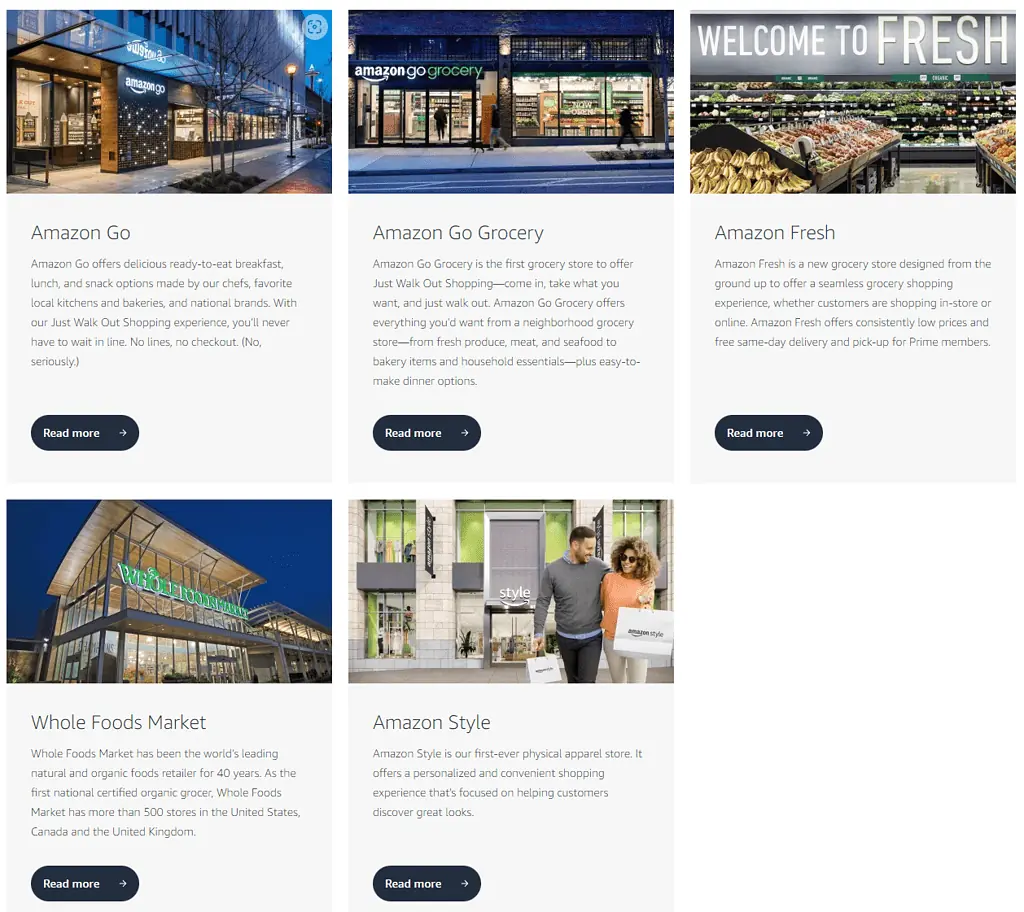
Amazon, the world’s largest online store, is the perfect example of a successful bricks-and-clicks business model. Besides having an extensive and rapidly growing catalogue of products available for purchase on its website, the company has also opened physical stores called Amazon Go Grocery, Amazon Fresh, and Amazon Style to enable customers to see and experience the products they are interested in buying.
Domino’s Pizza
Domino’s Pizza is one of the most successful global pizza delivery chains, and it has embraced the bricks-and-clicks model to great success. Customers can order their favourite pizzas online through the website or mobile app, or visit one of the chain’s many physical stores. The company’s strategic decision to enable customers to purchase in both ways has helped them reach a wider customer base, leading to higher sales and profits.
Final Thoughts
The bricks and clicks business model has become increasingly popular in recent years as it offers customers a blend of online and offline shopping experiences. This model provides businesses with multiple channels to interact with their customers, thereby increasing revenue streams and building customer loyalty.
While it offers several benefits such as convenience, flexibility, personalisation, and improved customer experience, it also has challenges such as high initial investment costs, complex logistics and supply chain management, and difficulty maintaining consistency between online and offline channels.
If you’re starting a new business or startup, you know that raising capital can be a complex and time-consuming process. However, you can make the process easier and more efficient with the right knowledge and tools. And the first thing you need to know is a Term Sheet.
A term sheet is an important document that provides the framework of a potential business agreement between two parties. It is most useful during a business transaction’s negotiation phase, such as a merger, acquisition, or investment.
It acts as a preliminary agreement between the parties. It lays down the basic terms and conditions of the agreement, such as the type of transaction, the purchase price, the payment terms, the closing date, and the conditions that must be met before the transaction can be completed.
This article will outline the key elements of a Term Sheet, give insights for negotiating and drafting an effective Term Sheet, and arm you with the knowledge of all the key clauses that should be included in a term sheet.
What Is A Term Sheet?
A term sheet is a non-binding document that outlines the key terms and conditions of a proposed investment or business deal.
This document is typically used in the early stages of negotiations between parties, such as investors and startups or between companies involved in mergers and acquisitions.
For startups, term sheets are critical as they lay the groundwork for future business deals with investors. It usually forms the basis for the Shareholders’ Agreement which every shareholder signs in the future.
Consider it a preliminary agreement that helps limit risks and establishes a foundation for future conversations. It is necessary to verify that both parties are on the same page before proceeding with a more formal and legally enforceable agreement.
It is essential to understand that a term sheet is not a legally enforceable agreement. Instead, it acts as a non-binding agreement outlining the principal elements of the transaction, such as the purchase price, payment terms, closing date, and criteria that must be satisfied before finalising the transaction.
Finally, a term sheet is a method for the business and investors to develop trust and build a solid partnership. It guarantees that both parties are committed to obtaining a mutually advantageous agreement by providing clear knowledge of the necessary conditions and expectations of the contract.
Why Is A Term Sheet Important?
The term sheet is an important document that outlines the significant terms and conditions without getting into the nitty-gritty details. While it is not a legally binding document, it serves as a preliminary agreement that allows parties to negotiate and agree on the key aspects of a deal. Here are some reasons why a term sheet is important:
Clarifies the parties’ intentions: A term sheet helps parties to have a clear understanding of each other’s intentions regarding the terms and conditions of the agreement. It outlines the deal’s key points and specifies what each party wants and expects from the other.
Builds trust: Even though a term sheet is not legally binding, it still provides both parties clarity and comfort. It helps them understand and agree on the terms negotiated and builds trust in the relationship.
Enables negotiations: A term sheet provides a framework for parties to state their terms and conditions and negotiate them to reach an agreement. It helps the parties to state their expectations and requirements and fosters productive negotiations.
Saves time: A term sheet only specifies the significant clauses of a deal and hence takes less time to complete than a detailed legal agreement.
Reduces the risk of future conflicts: A term sheet can reduce the chances of misunderstandings or misconceptions and minimise any unnecessary disputes that may arise during the deal’s execution.
Cost-effective: A term sheet can also help to avoid expensive legal charges when making a legally binding agreement. As the parties have already decided and agreed upon all the terms and conditions, it can save on legal fees.
The term sheet can help parties negotiate and agree on a deal’s practical terms and conditions. It can provide clarity, build trust, and help avoid future conflicts, making it an essential tool for businesses and investors.
What Are The Provisions Of The Term Sheet?
The term sheet is usually divided into two sections: economic terms and control terms.
The possible return investors and other shareholders may obtain during a liquidity event, such as a sale, wind-down, or IPO, is described in economic terms.
Control terms, on the other hand, describe the processes that provide investors and other shareholders influence over the corporation or allow them to veto specific choices made by the company. These two sections are the most important parts of a term sheet and are critical in making investment decisions.
Economic Terms
A term sheet’s economic terms are the financial provisions that dictate the conditions of an investment or purchase. These parameters can have a considerable influence on the deal’s success. Thus they must be carefully considered during the negotiating process.
Ultimately, the economic provisions of a term sheet are essential to a deal’s success. It is critical to thoroughly evaluate and negotiate each provision to ensure all parties are happy with the final agreement.
Let us take a look at all the important Economic terms a term sheet should have;
Price
The pricing term in a term sheet refers to the agreed-upon price at which investors will pay for their participation in the firm. This price may be determined by a number of criteria, including the company’s value, the amount of money necessary, and the percentage of stock sold to investors. The pricing term is an essential component of the term sheet because it defines how much cash the firm will get and what percentage of ownership the investors will have in the company.
Let’s say a startup company is looking to raise $5 million in funding from investors in exchange for 20% equity in the business. In this scenario, the price term of the term sheet would specify that the investors would pay $5 million for a 20% stake in the company, resulting in a pre-money valuation of $20 million ($5 million divided by 20%).
Further information, such as the mode of payment (e.g., cash or stock) and any relevant discounts or premiums, may be included in the price term. The agreed-upon pricing term will influence the amount of money the business receives and the ownership percentage held by the investors in the firm.
While the price per share represents the real cost ownership, investors may refer to it as “value.” Investors might look at two valuations: pre-money and post-money. Pre-money valuation refers to the projected value, whereas post-money valuation includes the pre-money valuation and the final investment amount. Understanding these distinctions allows for a better assessment of the firm’s true worth and makes educated judgements when negotiating investment terms.
Liquidation Preference
Liquidation preference is the procedure in which investors are paid out during a liquidation event, such as the company’s sale or winding down. This clause is crucial because it defines the payment hierarchy, which can substantially influence investors’ returns.
The liquidity preference is usually expressed as a multiple of the initial investment amount. A 1x liquidation preference, for example, indicates that investors must get at least the amount of their original investment before any subsequent distributions can be issued. Instead, the term sheet may include a 2x liquidation preference, which indicates that before any future distributions are given, investors must get twice the value of their initial investment.
Let’s assume a startup business gets $10 million in venture capital; the term sheet contains a 1.5x liquidation preference. If the firm is later sold for $15 million, the investors are entitled to $15 million minus ($10 million x 1.5), or $0, because the liquidation preference payout exceeds the sale price. If the firm is sold for $30 million, the investors will receive $15 million, which is equal to their initial investment plus the 1.5x liquidation preference. Any residual proceeds would then be divided among the remaining shareholders in proportion to their ownership percentage.
Pay-To-Play
Pay-to-play is a condition in a term sheet that compels investors to continue investing in the firm to retain their rights and privileges as investors. From the company’s standpoint, this clause can assist in maintaining continuous investor support and prevent the dilution of current shareholders’ ownership interests.
Often, the pay-to-play condition is structured as a requirement for investors to maintain a particular percentage of ownership in the firm by contributing further cash in succeeding rounds. A term sheet, for example, may include a condition requiring investors to put an extra 50% of their initial investment in the company’s next fundraising round to retain their ownership percentage.
Assume a startup firm gets $10 million in capital from investors, with one of the investors owning 10% of the company. If the term sheet has a pay-to-play condition requiring investors to preserve their ownership percentage by investing further cash, that investor would be forced to contribute $500,000 (10% of the following fundraising round, which is $5 million) to retain their ownership interest.
From the company’s perspective, the pay-to-play provision can assist in securing continuous support and investment from investors, which can be necessary for long-term success. But, the conditions of the pay-to-play option must be carefully considered to ensure that they are fair and equitable for all parties involved.
Vesting
Vesting is a term sheet clause specifying the timetable and conditions under which an investor’s or employee’s ownership share in the firm becomes fully “vested” or earned. From the firm’s standpoint, this clause can guarantee that investors and workers are dedicated to the company’s long-term success and are encouraged to stay with the company for a lengthy period.
The vesting provision is often stated in a schedule that specifies the timetable and conditions under which an investor’s or employee’s ownership share becomes completely vested. A term sheet, for example, may include a clause outlining a four-year vesting plan for employee stock options, with 25% vesting after one year and the remaining options vesting in equal monthly amounts over the next three years.
From the company’s standpoint, the vesting provision can assist in guaranteeing that workers and investors are dedicated to the company’s long-term success. The corporation can motivate investors and workers to stay with the company for a lengthy period of time and work towards its long-term goals by demanding a particular amount of time and/or performance before an ownership interest becomes completely vested.
However, it is critical to carefully evaluate the vesting provision’s wording to ensure they are fair and reasonable for all parties concerned. For example, if an employee is let go before their ownership share has fully vested, they may lose a sizable percentage of their prospective remuneration. As a result, it’s critical to strike a balance between the requirement for long-term commitment and the need for fair and equitable conditions for all parties involved.
Exercise Period
The exercise period is a clause in a term sheet that describes the timetable and conditions under which an investor or employee can exercise their options to buy shares in the firm. From the company’s standpoint, this clause guarantees that the company understands when and how the stock will be distributed and can prepare appropriately.
The exercise period provision is usually expressed as a timeline that specifies the time frame an investor or employee can exercise their options. A term sheet, for example, may include a condition granting an investor the opportunity to acquire ownership in the firm within a certain time frame, such as 90 days following the company’s first public offering (IPO).
The exercise period provision might assist the firm in guaranteeing that equity is granted in a timely and effective way. The firm may plan adequately and ensure sufficient cash to satisfy its business goals by establishing defined timetables for when stock can be bought.
However, the conditions of the exercise period provision must be carefully considered to ensure that they are fair and reasonable for all parties concerned. Investors or workers, for example, may need more time to decide whether or not to exercise their options if the exercise period is too short. As a result, it’s critical to strike a balance between the need for defined timetables and the need for fair and acceptable conditions for all parties concerned.
Employee Pool
The employee pool provision is an essential feature in a term sheet that sets aside a specified amount of stock for the company’s employees. According to the corporation, this option can help recruit and retain top talent by giving employees a share in the company’s success.
The employee pool provision is often specified as a percentage of the firm’s stock or a predetermined number of shares. A term sheet, for example, may include a clause reserving 10% of the company’s total stock for workers.
The employee pool provision, from the employer’s perspective, can assist in ensuring that the company has competent and engaged personnel. By giving employees a stake in the company’s success, the firm may connect their interests with the company’s and guarantee that they are motivated to work towards its goals.
However, the conditions of the employee pool provision must be carefully considered to ensure that they are fair and reasonable for all parties concerned. For example, if the company’s personnel pool is too limited, it may be able to recruit or retain top talent. As a result, it’s critical to strike a balance between the requirement for a competitive equity pool and the need to preserve the company’s interests.
Overall, the employee pool clause is a significant term sheet feature since it may assist in recruiting and retaining top personnel while aligning employees’ interests with the firm’s.
Antidilution
Antidilution is a term sheet provision that protects current investors from dilution of their ownership in the firm. Dilution happens when a corporation issues additional shares of stock, which can reduce current shareholders’ percentage ownership. Antidilution provisions try to prevent this from happening or safeguard current shareholders if it occurs.
Antidilution provisions are classified into two types: full ratchet and weighted average. Complete ratchet is the most aggressive option, as it adjusts the preferred share conversion price to the lowest price in the following round. This implies that if the firm issues new shares at a lower price than existing investors, their conversion price will be changed to reflect the lower price, safeguarding their ownership percentage.
A weighted average is a less harsh and more prevalent antidilution measure. It modifies the conversion price depending on the weighted average price of new shares issued in the next round, considering both the price and the number of new shares issued. This technique protects existing owners while allowing new investors to join in later rounds at cheaper valuations.
Antidilution provisions are often expressed as a clause in the section on the rights and preferences of preferred stock in a term sheet.
Here’s an example of how this clause can be written is:
“The preferred stock will have an antidilution clause that protects investors’ ownership percentage in the event of future equity issuances at a lower valuation. The antidilution provision will be calculated using a weighted average calculation considering the price and quantity of shares issued in future financing rounds.”
This clause assures that if the firm issues new shares at a lower price than the investors paid, the investors’ shares will be modified to reflect the lower price as well. This prevents investors from having their ownership stake in the firm diluted. Without an antidilution clause, the corporation might issue new shares at a lower price, lowering the value of existing shares, which would be unjust to investors.
Control Terms
Control terms in a term sheet refer to the set of provisions that allow the investors and the startup to exercise control over the terms and conditions of the agreement. The control terms provided in a term sheet must be considered carefully. While it may be essential to concede some control to the investor to acquire money, ensuring that the investor’s objectives correspond with the firm’s and that the company has sufficient control to carry out its strategic vision is critical.
Control terms should be defined clearly and concisely, outlining the exact areas over which the investor would have control and the limitations of that power. While creating control terms, it is critical to engage with legal counsel to ensure that they are enforceable and in accordance with existing laws and regulations.
Some of the important Control terms a term sheet should have are:
Board Of Directors
The board of directors is an essential provision that should be included in every term sheet. It describes the company’s board of directors’ composition, responsibilities, and powers. The board of directors is in charge of steering the company’s overarching strategy and overseeing the management team.
The board of directors clause in the term sheet describes the number of board seats, who will occupy them, and how they will be chosen. The clause should also specify the board members’ terms of service, such as the duration of their term and the method for re-election.
The board of directors clause may also include specifics on how the board will make decisions, such as the quorum necessary for meetings and board members’ voting rights. Furthermore, the clause may specify the board’s obligations, such as approving the company’s budget, important strategic objectives, and mergers or acquisitions.
A term sheet, for example, may include a clause stating that the board of directors would be composed of five members, two of whom will be nominated by the investors and three by the company’s founders. The rule may also say that decisions will be taken by majority vote and that a quorum must consist of at least four board members. Furthermore, the clause may provide that the board of directors meet quarterly to examine financial performance and strategic goals.
Overall, the board of directors provision is essential to any term sheet since it establishes the framework for the company’s governance structure framework and helps ensure all parties are united on major strategic choices.
Protective Provisions
Protection provisions are terms in a term sheet that provide investors with specific rights and safeguards to ensure the safety of their investment. These clauses provide investors veto power over certain choices or force the corporation to seek approval before taking certain actions.
Protective clauses are intended to safeguard the investor’s interests by prohibiting the corporation from doing acts that might jeopardise the investment. As a business, it is critical to understand these requirements and ensure that they are constructed fairly and appropriately.
This clause might be written in a term sheet in the following way:
“The firm agrees to get the investor’s agreement before issuing further shares or securing future finance. The investor will be entitled to obtain all financial accounts, business plans, and other important information needed to make educated investment decisions. Any action that considerably and negatively damages the investor’s investment shall be subject to veto.”
Drag-Along Agreement
A drag-along agreement is a term sheet feature that helps ensure a smooth and efficient firm sale or merger. This clause permits the majority shareholders to compel minority shareholders to sell their shares alongside the majority shareholders to a possible acquirer or merger partner.
The drag-along provision is often incorporated to avoid circumstances in which a minority shareholder attempts to obstruct a sale or merger that would benefit the firm as a whole. The firm can get a better valuation and terms by forcing all shareholders to participate in the deal.
The drag-along clause is typically written so that it can be triggered by the majority shareholders when a particular proportion of shares consent to the sale or merger. The clause, including a minimum sale price or a specific degree of board approval, may also protect minority shareholders.
Assume that Business A is considering selling itself to Company B. Shareholder X holds 60% of the shares in Company A, Shareholder Y owns 30%, and Shareholder Z owns 10%. If the term sheet includes the drag-along provision, Shareholder X can force Shareholders Y and Z to sell their shares to Company B, even if they don’t want to. This guarantees that the sale goes smoothly and that Company A receives the best possible price.
It is crucial to remember that drag-along agreements can have severe ramifications for minority owners. Thus these clauses must be properly negotiated with the help of legal and financial specialists. The agreement’s contents should be carefully studied to ensure that minority owners are treated properly and that their interests are safeguarded.
Conversion
Conversion is a term sheet clause that defines the terms and conditions under which the investor’s preferred shares can be converted into common shares. This clause is crucial for protecting the company’s interests while assuring the investor of n acceptable return on investment.
The conversion provision is often expressed as a formula that describes the conversion rate and the conditions under which the conversion can occur. The conversion rate is normally a predetermined ratio that defines the number of common shares converted from preferred shares.
For example, if the investor possesses $10 million in preferred shares and the conversion ratio is 1:1. If the firm decides to go public, the investor can change their preferred stock into common stock and become a shareholder.
The conversion clause is critical from the company’s standpoint since it can drastically change its ownership structure. The corporation can guarantee that the investor’s preferred shares do not dilute the holding of the common shareholders by determining the conversion ratio and terms of conversion.
Furthermore, by allowing investors the opportunity to convert their shares into common shares in the case of a change in management, the conversion clause helps shield the firm from potential hostile takeovers.
Overall, the conversion clause is a vital component of a term sheet that must be carefully crafted to safeguard both the investor’s and the company’s interests.
Other Terms Of The Term Sheet
It is essential to include a number of significant clauses in addition to the ones we have covered thus far when drafting a term sheet. These clauses can substantially influence the terms of a proposed investment, and both the firm and the investors should carefully analyse them.
Therefore, some of the other important provisions of a term sheet are:
Dividends
A dividend clause is a provision in a term sheet that describes the terms and circumstances for paying dividends to investors. Dividends are a method for businesses to disperse earnings to shareholders, and they are often paid out in cash or extra shares of stock. A dividend clause in a term sheet is essential because it establishes expectations for investors and clarifies how dividends will be paid out.
While drafting a dividend clause, it is essential to consider variables such as dividend payment schedule, frequency, dividend rate, and any special circumstances that may apply. A firm, for example, may opt to pay dividends annually, quarterly, or on an as-needed basis. The dividend rate might be set or dependent on a proportion of profits or earnings.
A dividend clause is a method for the company to motivate and reward investors for their investments. A dividend clause can help a firm acquire the capital it needs to develop and expand by making an investment opportunity more appealing to potential investors.
For example, “A Company will pay an annual dividend to preferred stockholders equivalent to [X]% of the preferred stock’s initial issue price. Dividends will be paid on [insert date] of each year starting with [enter year]. If the business does not have enough earnings to pay the whole dividend, the unpaid amount will be accumulated and paid later when profits become available.”
It is vital to remember that the particular parameters of a dividend clause will be determined by the company’s unique circumstances and the investment opportunity. As a result, while creating a dividend clause, it is critical to engage with legal and financial specialists to ensure that it appropriately reflects the interests and goals of the firm and its investors.
Redemption Rights
While drafting a term sheet, it is essential to consider redemption rights. They give investors the right to request that a corporation repurchase their shares after a certain time or event, such as an IPO or a change in the company’s ownership.
It is critical for the firm to carefully analyse the terms of any redemption rights clause to ensure that they correspond with the company’s strategic goals and financial status. A redemption right that permits investors to demand that their shares be repurchased at an unreasonably low price may severely impact the company’s finances.
When drafting a redemption rights clause, clarifying the conditions under which investors can demand the repurchase of their shares and the timetable and terms of such buyback is critical. It is also critical to analyse any potential conflicts with other provisions, such as antidilution or protective clauses, and to ensure that the redemption rights provision is compatible with the firm’s overall business plan.
A redemption rights provision, for example, can indicate that investors have the right to demand the repurchase of their shares at the original purchase price plus interest after five years or if the company’s control changes. The clause may also limit the number of shares that can be repurchased at one time, or it may require the firm to have adequate cash to repurchase the shares without negatively impacting its financial condition.
Ultimately, a well-drafted redemption rights provision can offer investors some security while promoting the company’s long-term aims.
Conditions Precedent To Financing
Conditions precedent to financing is essential criteria that must be accomplished before financing may be finalised. They are intended to safeguard the investment by requiring that certain conditions be met before the money is given.
It could be listed in a term sheet as things like receiving appropriate regulatory permissions, signing a definitive agreement, or securing particular licences. These terms may differ based on the sort of funding requested, but they are often included to safeguard the investor from any potential hazards.
It is essential to ensure that the precedent conditions are feasible and acceptable and that they should not burden the organisation unnecessarily. It is also critical to ensure the criteria are detailed and unambiguous so that all parties understand what is expected.
A term sheet could include the following conditions precedent to financing:
The purchase requires the firm to receive the necessary regulatory approvals.
The firm and the investor must execute a binding agreement stating the terms and circumstances of the financing.
The corporation must receive the relevant permits to conduct business.
The investor must be satisfied with the company’s due diligence outcomes.
The firm must provide any information the investor requires concerning the financing.
The funding will be terminated if these requirements are not satisfied.”
The firm and the investor need to include the precedent of financing conditions in a term sheet to guarantee that the financing runs smoothly and without unanticipated stumbling blocks.
Information Rights
A term sheet must include an information rights section that describes the investor’s right to access and receive financial and other pertinent information about the firm. These rights are critical for investors because they enable them to make educated investment decisions. There are two types of information rights: periodic reporting and on-demand reporting.
Periodic reporting is the regular release of financial and other information to investors, such as quarterly or yearly reports. On-demand reporting refers to the transmission of information requested by investors at the time they need it.
It is important to explicitly explain the sort of information that will be delivered, how frequently it will be provided, and to whom it will be provided when putting this provision in a term sheet. The clause may, for example, require the corporation to produce quarterly financial statements, annual audited financial accounts, and monthly cash flow statements. It may also specify that the information will be available to all existing investors and any possible new investors.
The company can create clear expectations for its investors and foster openness and confidence in the relationship by clearly outlining the type, frequency, and recipients of the information to be provided.
Registration Rights
Registration rights are important to include in a term sheet since they govern investors’ capacity to register and sell their shares in a firm. These rights are often offered to investors who acquire private corporation equity securities to trade on public markets.
It generally specifies the circumstances under which an investor may demand a corporation to register its securities with the Securities and Exchange Commission (SEC). This clause may specify the number of shares that can be registered, the date of the registration, and the company’s duties related to the registration procedure.
The Registration Rights clause, from a company’s perspective, can be crucial in recruiting and maintaining investors since it allows investors to sell their shares on a public market. Nonetheless, the firm must guarantee that the registration procedure does not negatively impact the company’s activities or other investors.
This clause describes the investor’s right to seek registration of their shares and the company’s obligation to comply with such demand, including the timing and cost of the registration procedure. To guarantee that the Registration Rights clause is fair and reasonable for all parties concerned, both parties must discuss and agree on its provisions.
Right of First Refusal
The Right of First Refusal (ROFR) is a term sheet provision that allows a company to buy shares from a shareholder before selling such assets to a third party. This provision gives the business the first chance to purchase any shares offered for sale, ensuring that the corporation retains some control over who owns its shares.
The ROFR provision specifies the circumstances under which the right may be exercised, the requisite notification time, and the method for exercising the right. The term sheet will also specify which securities are covered by the ROFR, such as ordinary stock, preferred stock, or options.
The ROFR clause may be a significant safeguard for a firm since it helps ensure that ownership of the firm stays in the hands of a few investors. It can also appeal to potential investors since it gives them a sense of security and control over their money.
Voting Rights
The power to vote in company governance, such as choosing board members or making crucial business decisions, is called voting rights. The voting rights provision in a term sheet specifies who has the right to vote on specific corporate topics and how those votes will be counted.
From the company’s standpoint, ensuring that voting rights are properly specified is critical to avoid confusion or disagreements later on. Voting rights are typically defined by the number of shares each investor holds
For example, if an investor owns 10% of the company’s outstanding shares, they will have 10% of the voting rights on all topics brought to a stockholder vote. If a vote is necessary to elect new board members, and the investor owns 10% of the existing shares, they will have 10% of the votes to choose new board members.
It’s worth noting that certain investors may bargain for extra voting rights, such as the authority to select a particular number of board members or veto certain management decisions. In such circumstances, the voting rights portion of the term sheet should explicitly define these specific requirements.
The voting rights provision is a critical component of any term sheet since it describes how decisions will be made inside the firm and ensures that each investor’s rights are clearly specified.
Restriction On Sales
A Restriction on Sales, commonly known as a lock-up agreement, is a key term sheet clause. This clause describes the restrictions on when and how investors can sell their firm shares.
A sales limitation, from the firm’s perspective, can assist in guaranteeing stability and avoiding significant, rapid changes in ownership that could negatively damage the company. It also provides the corporation with greater control over who becomes a shareholder.
The provision can be written in a variety of ways, but it usually has the following critical elements:
Duration: This specifies how long the lock-up period will be in force. Depending on the company’s unique needs and circumstances, it might span several months to many years.
Restrictions: This section describes the restrictions on when and how shares can be sold. It may, for example, limit sales during the lock-up period or mandate that shares be sold exclusively to specific parties.
Exceptions: This section details any exceptions to the limitations, such as permitting sales in specific circumstances, such as if the investor is in financial difficulty.
Penalties: This section defines any penalties or repercussions for breaking the limitation of the sales.
Proprietary Information and Invention Agreement
The Proprietary Knowledge and Invention Agreement is a critical item that should be included in any company’s term sheet. This agreement establishes the guidelines for sensitive information and intellectual property generated by the firm and its workers over the course of their work.
The Proprietary Information and Invention Agreement guards against workers, contractors, or partners sharing or stealing sensitive information and intellectual property. It protects the confidentiality of the company’s sensitive information, such as trade secrets, customer lists, and financial information, and that it is not divulged to unauthorised parties.
The agreement also specifies who owns and protects innovations, patents, and other intellectual property employees develop while employed by the corporation. This section often compels workers to reveal any discoveries or patents they create while working for the firm, giving ownership to the corporation.
Co-sale Agreement
A Co-Sale Agreement is a clause that permits investors to sell their shares in a corporation when other shareholders sell theirs. This clause is significant because it protects minority owners’ interests while ensuring all shareholders can participate in a sale.
The Co-Sale Agreement, usually included in a term sheet, specifies the terms and conditions under which minority shareholders can sell their shares. When a major shareholder decides to sell their shares, the agreement is frequently activated, and it allows minority owners the ability to sell their shares on the same conditions as the main shareholder.
This clause assures all shareholders the same chance to sell their shares at the same time and price. It also helps to avoid situations in which a majority shareholder sells their shares at a premium, leaving minority owners unable to participate in the transaction.
In addition to the above, the Co-Sale Agreement may include terms concerning the timing and structure of the sale, such as how the shares will be sold and who will be in charge of the sale.
Founder’s Activities
Founders are essential to every business, and their ongoing commitment and passion are critical to the company’s success. A term sheet’s Founder’s Activities clause is intended to safeguard the firm’s interests if a founder decides to quit the company or participate in specific activities that may damage the company.
The Founder’s Activities provision in a term sheet typically describes the activities the founders are not permitted to engage in during and after their stay at the firm. Non-compete, non-solicitation, and non-disparagement terms may be included in this provision.
This provision protects the firm’s intellectual property and guarantees that the founders do not use their inside knowledge to start a competitor company or poach staff or customers.
It is vital to highlight that the Founder’s Activities section should be carefully drafted to balance the firm’s interests with the founders’ rights and freedom to pursue their professional possibilities. The condition should be manageable because it precludes the founders from earning a living or unjustly limits their alternatives once they leave the firm.
Initial Public Offerings Shares Purchases
An Initial Public Offering (IPO) occurs when a private firm goes public for the first time by selling shares of its stock to the general public. It is essential for a business planning an IPO to discuss the terms of the IPO with potential investors in the term sheet.
The Initial Public Offering Shares Buy provision, which permits investors to acquire additional shares of the company’s stock at the IPO price, is linked to IPOs. This clause is typically included in a term sheet to encourage investors to participate in the firm by allowing them to acquire shares at a lower price than they would be able to after the IPO.
The following details are frequently written into the Initial Public Offering Shares Purchase provision:
Number of Shares: The number of shares the investor may acquire at the IPO price.
Purchase Price: The initial public offering (IPO) price of the shares.
The deadline for investors to exercise their option to buy shares at the IPO price.
Allocation: The percentage of the total shares available in the IPO that the investor can acquire.
The period following the IPO during which the investor is not permitted to sell their shares.
Adding the Initial Public Offering Shares Buying provision in your term sheet might assist in attracting potential investors and provide them with an extra incentive to engage in your company’s IPO. It is critical to thoroughly evaluate the provision’s wording and ensure they correspond with the company’s overall aims and objectives.
No Shop Agreement
A No Shop Agreement, also known as an Exclusivity Agreement, is a term sheet condition that prohibits a firm from engaging with other possible investors or acquirers for a set period of time while the existing investor does due diligence.
According to the company, a No Shop Agreement assures the present investor a fair opportunity to complete due diligence and potentially invest in the firm without fear of competition from other possible investors or acquirers.
The No Shop Agreement typically contains a time when the firm is not allowed to talk to other possible investors or acquirers, as well as exceptions to this rule. For example, if a proposal significantly more advantageous than the current offer is received, the firm may be permitted to participate in conversations with other parties.
It is crucial to highlight that a No Shop Agreement should be adequately designed to ensure the company’s flexibility to seek other prospective possibilities is reasonable. The time limit and exclusions should be discussed to allow the firm flexibility while giving the investor a reasonable opportunity to undertake due diligence and participate in the company.
Indemnification
Indemnification is a crucial term sheet provision that protects a firm and its investors against financial losses caused by legal battles or other obligations. In essence, it implies that one party (the indemnitor) undertakes to reimburse the other party (the indemnitee) for any damages, losses, or expenditures suffered due to specific events or acts.
Indemnification is often stated as a distinct section or provision in a term sheet. It can cover a variety of concerns, including breaches of representations and warranties, third-party claims, intellectual property infringement, and regulatory violations.
From the company’s perspective, here’s how indemnification may be worded in a term sheet:
Indemnification: The Company agrees to indemnify, defend, and hold harmless the investor, its officers, directors, agents, and affiliates from and against any and all claims, damages, liabilities, costs, and expenses (including reasonable attorneys’ fees) arising out of or in connection with (a) any breach of the company’s representations and warranties in this term sheet, (b) any third-party claims relating to the Company’s Business or operations, (c) any infringe of third-party intellectual property rights by the company, or (d) any violation of applicable laws or regulations by the company.
This clause guarantees that the corporation is held accountable for any legal or financial implications of its conduct and that the investor is protected from any losses incurred due to those consequences. In essence, it contributes to developing a sense of trust and accountability between the two parties, which is necessary for a successful investment partnership.
Assignment
The parties’ capacity to transfer their rights and duties to a third party is described as an assignment in a term sheet. This is a crucial provision since it might have serious consequences for the firm and its investors.
The assignment provision should be carefully worded from the company’s perspective to guarantee that the company’s interests are protected. Normally, the condition restricts the investor’s capacity to transmit their rights and liabilities to a third party without the firm’s approval. This is significant because it means that the firm controls those it works with and may avoid being burdened with an undesirable or inappropriate partner.
Furthermore, the assignment clause will typically compel any third party to undertake all of the assignor’s rights and duties under the term sheet. This is critical because it assures that the third party is entirely liable for all commitments outlined in the term sheet and that the firm is not exposed to any risks or liabilities.
An assignment provision in a term sheet may look like this:
“Assignment. Each party may assign any of its rights or duties under this term sheet with the other party’s prior written approval. Any effort to assign without such approval is null and invalid. If this term sheet is assigned, the assignee will take all of the assignor’s rights and duties under it.”
Overall, the assignment provision is a critical component of a term sheet that should be carefully researched and constructed to safeguard the company’s interests.
Tips on Drafting a Term Sheet
A term sheet is essential in establishing an agreement with investors or partners. Here are some pointers to remember while drafting a term sheet:
Be clear and concise: The objective of a term sheet is to offer a brief and clear explanation of the essential aspects of the agreement. It should be simple to grasp for all parties concerned. Avoid employing legal jargon that might confuse the opposing party, and keep the language simple.
Include just the important terms: A term sheet should only cover the important terms of the transaction. Little details or legal issues that can be handled later in a more complete agreement should not be included. This allows the people concerned to concentrate on the main issues rather than becoming bogged down in little minutiae.
Be reasonable and fair: A term sheet should be reasonable and equitable to both parties. Avoid employing phrases that are biased to one side or the other. Remember that the aim is to reach a mutually beneficial arrangement that benefits everyone.
Keep it non-binding: Term sheets are typically non-binding, which means they are not legally enforceable. This permits the parties to keep discussing and changing the conditions without the risk of violating a formal contract. Nonetheless, a declaration outlining which parts are obligatory and which are not is required.
Seek legal advice: It is usually advisable to obtain legal counsel when preparing a term sheet. An expert solicitor can assist in identifying possible concerns and ensuring that the terms and wording are acceptable and enforceable.
Be adaptable: A term sheet is intended to serve as a starting point for talks. Be open to recommendations and prepared to make concessions on certain issues. It’s critical to keep in mind that the aim is to establish a mutually beneficial agreement.
Drafting a term sheet can be challenging yet rewarding. A properly drafted term sheet can enable a firm to raise money from investors and achieve its business objectives. It can also assist in avoiding possible problems or misunderstandings that may develop while or after the transaction is completed. By following these tips, a business can write a term sheet that is transparent, fair, and effective in negotiating a successful contract with investors or partners.
A Sample Term-Sheet Template
Bottomline
A term sheet functions as the preliminary step for negotiations between the company and the investor, and it establishes the framework for the two sides’ future partnership. A properly-drafted term sheet should include all the significant elements relevant to the firm and the investor and be thorough and precise enough to clearly understand the proposed investment’s terms.
Finally, a term sheet is a vital instrument that may assist businesses in attracting the finance they require to expand and prosper. Companies may put themselves up for success and develop solid, mutually beneficial relationships with their investors by knowing the main clauses that should be included in a term sheet and working with skilled advisers to negotiate and finish the contract.
Go On, Tell Us What You Think!
Did we miss something? Come on! Tell us what you think about our article on term sheet in the comments section.
If you own shares in a firm, you have a vested interest in the success of the firm. But what happens if the shareholders disagree or key investors wish to sell their shares to your competitor? You may face other challenges as well. It is where a well-drafted shareholder agreement comes into play to safeguard your interests.
It provides security and helps you avoid costly mistakes by ensuring everyone is on the same page and protecting your rights and interests.
This guide will delve into the nitty-gritty of a shareholder agreement and its significance. It will deal with the essential clauses you should include ensuring that your company’s agreement meets your requirements.
By the end of it, you’ll have a solid understanding of what it takes to create a strong and effective shareholders’ agreement. So, let’s get started!
What Is A Shareholders’ Agreement?
A shareholders’ agreement (SHA) is a legally enforceable contract entered into by the shareholders of a company that outlines each shareholder’s rights, responsibilities, and obligations.
It describes the shareholder’s rights and duties and the rules for decision-making, transfer of shares, management, and other essential company matters.
An SHA is essential for any company with several shareholders because it can assist in preventing disputes, clarify decision-making procedures, and safeguard all interests.
However, you should know that the shareholders’ agreement differs from your company’s articles of incorporation and bylaws. These documents lay the groundwork for your company’s fundamental structure. But, the shareholders’ agreement focuses on your relationships with the other partners and the company.
For instance, you and your friends cofounded a company. You each own a share of the business. You may have different ideas about running it. You may wish to focus on developing the company, while others want to continue with current products. Disagreements and legal issues might result from these gaps.
It is where a shareholder agreement comes into play. It is a method of avoiding such disputes by providing clear criteria for the decision-making and administration of your company.
Why Is A Shareholders’ Agreement Necessary?
A shareholders’ agreement is essential to avoid potential difficulties when you’re forming a company with multiple shareholders. It is necessary because of the following reasons:
Prevents disputes: A shareholders’ agreement helps prevent disputes among the shareholders from increasing by defining guidelines for decision-making and management of the company.
Protects shareholders’ interests: The agreement can safeguard all the shareholders’ interests by specifying what happens if one of the shareholders wishes to sell their shares or if the company is sold to a third party.
Clarifying decision-making processes: The agreement might stipulate how significant decisions would be made and how much power each shareholder has over such decisions.
Provides flexibility: The agreement may be adjusted to the company’s and the shareholders’ requirements, allowing for greater decision-making freedom.
Avoids costly legal fights: By describing how conflicts should be settled, the agreement can help prevent expensive legal battles, which can drain the company’s resources and ruin relationships with the shareholders.
Provisions To Be Included In The Shareholders’ Agreement
When drafting a shareholders’ agreement, several provisions should be included. Here are some important conditions you need to keep in mind:
Shareholder Rights And Obligations
The company’s shareholders have certain perks. The shareholders can vote for essential decisions, such as who gets to join the company’s board of directors. They are entitled to receive dividends, a share of the company’s profits. Moreover, they also have the right to stay informed about the company’s activities.
Voting Rights
Voting rights are the shareholders’ fundamental rights that allow them to participate in the company’s decision-making and have a say in its operations. It will enable them to vote on issues such as electing the board of directors or approving significant company decisions.
In most cases, each shareholder has equal voting rights, commonly called “one share, one vote”.
But, in some situations, voting rights can be weighted based on the number of shares they hold. It is called “weighted voting”.
Let’s consider a company has three shareholders – A, B, and C. If the company follows a one-share, one-vote system, each shareholder would have an equal say in decision-making.
However, in a weighted voting system, the shareholders’ voting power would be determined by other factors. For example, the shareholders agree to give Shareholder A a weighted vote of two votes per share due to their significant contribution to the company’s growth. Shareholders B and C are given a weighted vote of one vote per share. Here, Shareholder A would substantially influence the company’s decisions. It is because their votes would hold more weight than the other shareholders.
Another method of distributing voting rights is implementing a tiered system where varying classes of shares possess different levels of the voting power.
For instance, some shares may be allotted ten votes per share, while others only receive one vote per share. This practice is commonly observed in firms with shareholders like founders, investors, or employees.
Thus, you should know how voting rights are distributed in your company since it can affect crucial company resolutions.
Information Rights
The shareholders have the right to receive specific information about the company, such as the financial statements or minutes of board meetings. Information rights are necessary as it enables them to stay informed about the company’s activities and financial performance.
Let’s say the company doesn’t perform well financially in a particular year. Shareholders can refer to the financial statements to evaluate the company’s performance and decide whether to keep or sell their shares. Moreover, suppose the board makes an important decision that could impact the company’s future. In that case, shareholders can review the board meeting minutes to comprehend the reasoning behind the decision. Then, they can determine if it was the best move for the company and its shareholders.
Rights To Dividends and Distributions
You also have the right to receive dividends and other distributions when your company makes a profit.
Thus, as a shareholder, you must know the difference between equity and preferential shares when dividends and other benefits are distributed.
Equity shareholders can possess certain privileges, such as the right to vote and receive a portion of the company’s profits through dividends. They are also known as “common” shareholders, as they have the company’s most basic form of ownership. When dividends are distributed, equity shareholders usually receive their shares after preferred shareholders have been paid.
However, preferential shareholders are prioritised when distributing dividends and other benefits. They enjoy benefits such as a fixed dividend rate and priority even when receiving distributions in case of liquidation of your company.
For example, the company has both preferred and equity shareholders. Preferred shareholders are entitled to a fixed dividend rate of $1 per share, but equity shareholders are not. Say the company makes a $10,000 profit. In that situation, it will first pay $1,000 to preferred shareholders at a fixed dividend rate of $1 per share (considering there are 1,000 preferred shares outstanding). The remaining profit of $9,000 will be distributed to equity shareholders as per the number of shares they own. For example, if there are 10,000 outstanding equity shares and a shareholder owns 1,000, the dividend payment will be $900 (i.e., $9,000 divided by 10,000 shares multiplied by 1,000 shares).
Pre-Emptive Rights
Pre-emptive rights give the existing shareholders the first right to buy any new company shares the company wants to sell before offering them to anyone else.
The pre-emptive rights are included in the shareholders’ agreement to safeguard the ownership of the present shareholders of the company. If such rights are absent, the new investors can purchase many company shares, potentially controlling and limiting the current shareholders’ say in the management.
For instance, let’s say the company issues new stocks. So, because of the pre-emptive rights, the existing shareholders are offered to buy the new shares first. They get the first preference to buy the new shares if willing. Then, the remaining shares are sold to others.
Vesting Rights
Vesting rights mean that the employees or the company shareholders must work or keep their investment for a certain period before fully owning their company shares. It helps ensure that everyone who owns a stake in the business is committed to its long-term success.
For example, a few employees are hired and are given 1,000 shares of the company. But instead of giving them all 1,000 shares up front, they are given the right to “vest” those shares over a period of time, such as four years. It means the employee only wholly owns the company’s shares only after working for the company for four years. Doing this ensures that the employee is committed to the company for the long term. If they leave before the four-year period ends, they will only have the right to keep a portion of the shares. The remaining shares will be returned to the company and distributed to someone else.
It helps protect the company’s interests by ensuring that only those committed to the business’s long-term success own a stake in it. It also incentivises the employees to stay with the company and work hard to make it successful.
Restrictions on Transfer of Shares
Some company shareholders may sometimes seek to sell their shares to someone else. But, it should be controlled who owns the company’s portion should be controlled and ensure that the new shareholder supports its values and business goals.
It is when restrictions on the transfer of shares come into play. These clauses can be added in the shareholders’ agreements to restrict the transfer of shares to specific people or companies or may need the consent of the other shareholders before a transfer can occur.
Let’s say that a company has four shareholders, A, B, C and D. The shareholders have a shareholder agreement that restricts the transfer of shares without the consent of the other shareholders. A potential buyer approaches shareholder A and shows interest in acquiring his shares. But, according to the restriction clause, A can only transfer his shares with the consent of B, C, and D.
Thus, before proceeding with the transaction, A must consult with his fellow shareholders and seek their approval. If they agree, A can sell his shares to the prospective buyer. If they disagree, A must maintain his shares or reach a different deal with the possible buyer.
Shareholder’s Obligations
The company’s shareholders must act in the company’s best interests and avoid conflicts of interest. In addition to their rights and obligations, the shareholders have fiduciary duties towards the company and each other.
These duties include:
Duty of Loyalty: Shareholders must act in the company’s best interests and not use their position to benefit themselves at the company’s expense. For example, suppose a shareholder can access confidential information about the company’s plans to acquire a new business. In that case, they cannot use that information to buy shares in the new business before the company can do so.
Duty of Care: They must exercise reasonable care and diligence as shareholders when making decisions related to the company. It means they must consider the potential impact of their decisions on the company and its other shareholders, including employees and customers. They should also stay informed about the company’s activities and financial performance.
Duty of Good Faith: Shareholders must also act honestly and in good faith in their dealings with the company and other shareholders. They should not engage in illegal or fraudulent activities that could harm the company or other shareholders. For example, shareholders should not misrepresent their shares’ value to deceive potential buyers.
If they fail, legal action can be taken against them.
Management and Decision-Making
A shareholders’ agreement not only specifies the rights and duties of shareholders but also sets the company’s governance and decision-making structure. It includes the board of directors’ composition, director appointment and removal, and decision-making processes.
Board of Directors
Directors are essential to a company’s success since they manage its operations. When grouped, they form the company’s ‘board’.
Each type of director on the board has a distinct function to perform and brings a wide range of perspectives to the company.
Executive Directors: An executive director of the company oversees the business and handles daily management tasks. For example, the company’s CEO is known for their comprehensive knowledge of the company, including its strategy and goals.
Non-Executive Directors: A non-executive director is not involved in the company’s day-to-day operations. They are usually chosen for their expertise in the industry or their past track record of successfully managing a similar business.
Representative Directors: When a shareholder wants to have their interests represented, they can appoint a representative director who will act on their behalf. It is a common practice for someone with a significant ownership stake in the company. They are also invested in the company’s success.
Appointment and Removal of Directors
It is crucial to decide who has the power to appoint and remove the company’s directors to avoid future conflicts. Since the directors determine most company decisions, understanding who can make their appointment is essential.
Hence, including this information in the shareholders’ agreement is essential, describing the rules and limitations for appointing and removing directors.
Appointment of Directors
The shareholders’ agreement stipulates who has the power to appoint directors. The following are standard methods for appointing the company’s directors:
Appointed by the Board: The shareholders’ agreement should clearly state how many votes are needed for the board to bring in more directors during a board meeting. The required votes could be a simple majority, i.e., 50% or more in favour. Suppose the company has a shareholder agreement that requires a two-thirds majority vote for significant company decisions, like hiring new directors. During a board meeting, the board suggests hiring two new directors to help in the company’s expansion plans. The shareholders vote on the proposal, receiving a 66% vote in favour of the decision. As the required threshold was two-thirds, the proposal passed successfully, and new directors were hired. However, if the vote in favour was just 60%, the proposal would have failed to meet the necessary threshold, and the company would have been unable to bring in the new directors.
Appointed by the Founders of the Business: The company’s founders can also serve as directors to maintain their control. The shareholders’ agreement gives them the right to appoint a director to secure their authority in the company. It means that even if their shareholding is diluted or they sell some shares, they will still have a say on the board. Moreover, the founder can appoint a director if they have a certain percentage of shares, say 10%. However, if their share percentage drops below this threshold, they must resign as directors.
Appointed by Shareholders: The shareholders have an entrenched right to appoint a director. It is crucial for shareholders with a significant stake in the company, as it allows them to influence its decisions. The shareholders’ agreement outlines that shareholders holding a specific amount of shares, for example, 20% or more, are eligible to appoint a director.
Removal of Directors
A shareholders’ agreement specifies when and how directors can be removed from their position. It can be as follows:
Voluntary Resignation: If a director wishes to step down, the shareholders’ agreement should state that they can do so by giving written notice to the company.
Board’s Decision: The shareholders’ agreement should specify if the board can remove directors by a majority vote or if higher approval is needed. It typically applies to directors appointed by the board.
Appointing Shareholder’s Decision: If a specific shareholder appointed a representative director, the shareholders’ agreement should state that only that particular shareholder can remove the director. It is known as an entrenched right to appoint a director.
Shareholders forcibly remove the Director: It’s essential to have a plan in place for when shareholders need to remove a director forcibly. The shareholders’ agreement should clearly outline the circumstances in which this can occur.
Voting Rights of Directors
The company’s board of directors is responsible for making significant business decisions. As a shareholder, you should ensure that the board operates effectively and that decisions are made in the company’s best interests.
The shareholders’ agreement includes provisions that outline the voting rights of directors and how the board makes decisions.
For example, the agreement may require a majority vote of the board to make certain decisions, such as approving a budget or hiring a new executive. It ensures that decisions are made with the support of the majority of the board rather than by a single director.
In addition, the shareholders’ agreement gives certain directors a veto over certain decisions.
For instance, the agreement may require unanimous approval from the board before making a significant investment or acquiring another company. It gives each director a voice in decision-making and ensures that important decisions are carefully considered.
Meetings and Quorum
Board meetings are essential for the company’s operations. The directors come together to discuss and decide the company’s future. The shareholders’ agreement outlines the requirements for these meetings. It specifies the frequency of board meetings, which could be monthly, quarterly, or bi-annually, among other options.
The shareholders’ agreement also specifies the notice required for board meetings. The notice period is the time frame within which the directors must be informed of the upcoming meeting. It states how far advance notice should be given, such as 14 days, 30 days, or any other duration deemed appropriate by the parties involved.
The agreement also outlines the quorum required for board meetings. A quorum refers to the minimum number of directors present at a meeting to be valid. The quorum is typically calculated as a percentage of the total number of directors on the board. For instance, a quorum of 50% would require at least half of the directors to be present at the meeting.
For example, the shareholders’ agreement requires that board meetings be held at least once every quarter, with at least two weeks’ notice provided to all directors. The quorum necessary for the meeting is set at a majority of the total number of directors.
If there are five directors in total, then the quorum for a board meeting would be three directors. It means that at least three directors must be present at the meeting to be valid and for any decisions made to be binding. Still, they should also meet other requirements in the shareholders’ agreement.
However, if only two or fewer directors were present, the meeting would not be valid, and decisions could not be made.
Decision-Making Processes
When the company has a board of directors, it’s essential to establish clear decision-making processes. The shareholders’ agreement stipulates the different types of resolutions the board can pass, such as ordinary, special, and unanimous resolutions.
An ordinary resolution is a decision that requires a simple majority vote of the directors who are present at a board meeting. This resolution form is used for routine matters, like approving prior meeting minutes.
A special resolution is a decision that demands greater support from the directors. It requires at least two-thirds of them to vote in favour of it during a board meeting. Special resolutions are reserved for significant matters like amending the company’s articles of incorporation or approving substantial capital expenditures.
A unanimous resolution is a decision that requires the support of all directors who are present at a board meeting. This type of resolution is used for critical decisions, such as authorising a merger or acquisition.
Suppose a company’s board of directors is considering a significant business decision, such as acquiring another company. The shareholders’ agreement may specify that such a decision may require a special resolution that demands higher votes than a regular resolution. The shareholders’ agreement may also state that the special resolution requires the consent of a specific proportion of the board, like two-thirds of the directors.
For instance, in a board of nine company directors, at least six directors should vote in favour of the acquisition for the special resolution to be approved. However, a regular resolution, like validating the annual budget, may only need a simple majority of the board. It means that it requires only more than half of the directors should vote to pass the resolution.
Deadlock Provisions
Deadlock clauses guarantee that the business continues to run successfully even when the shareholders cannot agree on an issue and are at a standstill. The company might become paralysed when discussions or negotiations cannot address shareholder disagreements. The company cannot make any decisions or take any necessary measures.
Thus, the deadlock provisions can be included in the shareholders’ agreement to address this issue. It outlines a process for resolving disputes when the shareholders cannot agree. It can involve appointing a third-party mediator to help the parties reach a mutually acceptable resolution.
By having a clear and agreed-upon process for resolving disputes, the shareholders can avoid costly legal battles and minimise disruptions to the company’s operations.
Suppose a company has two shareholders, each owning 50% of the shares. They disagree over a significant decision, such as selling the company. Both shareholders have different opinions and cannot agree, resulting in a deadlock.
The shareholders’ agreement that they had signed had specified that a third-party mediator be brought in to help facilitate a resolution to resolve the deadlock. Thus, the mediator may work with both shareholders to identify potential solutions and help them negotiate a mutually acceptable outcome.
But, if the mediator could not facilitate a resolution. In that case, the shareholders’ agreement should provide other dispute resolution mechanisms, like binding arbitration or litigation, to help resolve the issue and prevent the company from being paralysed by the deadlock.
Transfer of Shares
The shareholders’ agreement includes the transfer of shares, which refers to the process of buying and selling shares in the company. It also outlines types of transfers, right of first refusal, drag-along and tag-along rights, shotgun provisions and valuation of shares.
Types of Transfers
When it comes to transferring shares, several options can take place. They are as follows:
Sale to a Third Party: Sale to a third party occurs when a shareholder sells shares to someone outside the company. It can happen for various reasons, such as the shareholder needing to raise funds or wanting to cash out their investment.
Gifts to Family Members: A gift to a family member is when a shareholder gives some or all of their shares to a family member as a gift. It can be done for estate planning purposes or to pass on ownership of the shares to a family member interested in the business.
Transfers to Trusts or Estates: In transfers to trusts or estates, a shareholder may transfer their shares to a trust or estate for estate planning or tax purposes. It can help ensure the shares are managed and distributed following the shareholder’s wishes.
Inheritance: Inheritance is the type of transfer that occurs when a shareholder passes away, and their shares are passed on to their heirs or beneficiaries. In this case, the shares get transferred to the beneficiaries through probate or according to the shareholder’s estate plan.
Right of First Refusal
The right of first refusal clause in the shareholders’ agreement ensures that the current shareholders have priority in buying any shares that a shareholder wishes to sell before selling them to an outsider. It ensures that ownership of the company remains within the existing shareholder group, and a third party cannot become a shareholder without the consent of existing shareholders.
Thus, the clause is evoked when a shareholder decides to sell their shares. They must first offer them to other shareholders at a price agreed upon mutually or determined by an independent third-party valuation. If the current shareholders choose not to purchase the shares, the selling shareholder can sell them to a third party.
For instance, A and B own 50% of a company’s shares and have a shareholders’ agreement. It includes the provision of the right of first refusal.
A decides to sell her shares for $100,000 to a third party, but before doing so, she must offer them to B at the same price according to the agreement. If B declines, then A can sell them to a third party.
However, if B chooses to exercise her right of first refusal, she can buy A’s shares at the same price. The transaction would involve A transferring her shares to B and B paying $100,000 to own 100% of the company shares.
The right of first refusal clause in the shareholders’ agreement can benefit the existing shareholders in several ways. For example,
It ensures that the shares remain within the group of existing shareholders, which can help to maintain the balance of power within the company.
It can prevent unwanted third parties from acquiring shares and potentially disrupting the company’s operations.
It helps maintain the company’s culture and values by ensuring that new shareholders align with the existing shareholders’ vision.
Drag-Along and Tag-Along Rights
Drag-along and tag-along rights are essential provisions that protect the interests of majority and minority shareholders in the company.
Drag-along rights in the shareholders’ agreement ensure that the majority shareholder can sell their shares to a third party without being hindered by the minority shareholder, who may not want to sell their shares. Essentially, the majority shareholder has the right to “drag along” the minority shareholder in the company’s sale, compelling them to sell their shares. It can benefit both parties as it can help facilitate a sale and provide liquidity for the shareholders.
On the other hand, tag-along rights protect minority shareholders by allowing them to participate in a sale if the majority shareholder decides to sell their shares to a third party. It implies that if a majority shareholder is selling their shares, the minority shareholder has the right to “tag along” and sell them at the same price and on the same terms as the majority shareholder. It can benefit minority shareholders by ensuring they receive fair share value and are not excluded from the sale process.
Let’s say that Company A has three shareholders X, Y, and Z. X owns 60% of the company, while Y and Z each own 20%.
X receives an offer to sell their shares to Company B. However, Company B wants 100% ownership of Company A to proceed with the transaction. X could use his drag-along rights to force Y and Z to sell their shares so that Company B can acquire 100% ownership of Company A. However, if X did not have drag-along rights, Y and Shareholder Z could block the sale by refusing to sell their shares.
On the other hand, if Y and Z have tag-along rights and X decides to sell their shares to Company B, shareholders Y and Z could exercise their tag-along rights. They can then sell their shares alongside X, ensuring that they receive the same sale price per share.
With tag-along rights, Y and Z can sell their shares at a lower price if they can find a buyer willing to pay the same price as Company B.
Shotgun Provision
The basic idea behind a shotgun provision is that one shareholder offers to buy the other shareholder’s shares at a specific price. It is a type of dispute resolution mechanism included in the shareholders’ agreement to help resolve shareholder’s disputes. The other shareholder then has the option to either accept the offer or buy the first shareholder’s shares at the same price. This mechanism intends to treat both parties fairly. It encourages them to come to a mutually agreeable resolution, as neither party can be forced to buy or sell shares at a price they don’t agree with.
However, it is essential to note that shotgun provisions are complex and may only sometimes be appropriate for some situations. Thus, shareholders must consider all their options carefully before including a shotgun provision in their agreement.
For example, two shareholders, A and B, each own 50% of a company. They disagree about the company’s direction and cannot agree. Suppose their shareholders’ agreement includes a shotgun provision. In that case, A could offer to buy B’s shares at a specific price. B would then have the option to accept the offer and sell his shares to A or buy A’s shares at the same price. If B believes the company is undervalued and his shares are worth more than the offered price, he may buy A’s shares instead of selling his own. On the other hand, if B agrees with the provided price or believes that the company is overvalued, he may choose to sell his shares to A. This process can help both parties come to a resolution in a relatively quick and fair manner.
Valuation of Shares
When a shareholder wants to transfer their shares, it’s crucial to determine the fair market value of the shares to ensure that the transfer is equitable for all parties involved. Thus, the shareholders’ agreement clarifies how the valuation process is conducted. One option is to appoint an independent valuator to determine the fair market value of the shares. The agreement also specifies the qualifications and selection process for the independent valuator.
Additionally, the agreement outlines the method for determining the value of the shares. For this, several ways are used, such as the company’s book value, the price-earnings ratio of the company’s stock, or the discounted cash flow method. Hence, the agreement specifies the technique used and the value’s calculation.
A clear process for determining the value of shares can help avoid disputes and ensure that transfers are conducted fairly and smoothly. So, all parties must understand and agree to the valuation process outlined in the shareholders’ agreement to provide clarity and understanding.
Let’s say that a company has two shareholders, A & B . They have a shareholders’ agreement that includes a provision for valuing shares in the event of a transfer. The agreement states that an independent valuator will be appointed. He will determine the share’s fair market value based on factors like the company’s financial performance, industry trends, and comparable transactions.
Suppose A wants to sell his shares to a third party. In that case, he must first offer them to B at the fair market value determined by the independent valuator. If B declines to purchase the shares, A can sell them to a third party at that same fair market value.
This provision helps ensure that both shareholders are treated fairly during a share transfer and prevents one party from receiving an unfair advantage in the transaction.
Exit Strategies
When shareholders invest in a company, they must also consider how to exit their investment when required. The shareholders’ agreement outlines various exit strategies available to the shareholders. It includes buy-sell provisions, mandatory buyouts, initial public offerings, and the sale of the company.
Buy-Sell Provisions
In some situations, buy-sell provisions are essential to a shareholders’ agreement that governs share transfer. These provisions allow shareholders to purchase shares from other shareholders under specific conditions, such as the death or incapacity of a shareholder or the termination of employment.
Two types of buy-sell provisions can be included in the shareholders’ agreement: a cross-purchase agreement or a redemption agreement.
In a cross-purchase agreement, the remaining shareholders purchase the departing shareholder’s shares in proportion to their ownership interests.
Let’s say that a company has three shareholders, A, B, and C, each owning 33.33% of the company’s shares. The shareholders have a cross-purchase agreement in place, which states that in the event of the death or incapacity of one of the shareholders, the remaining shareholders can purchase that shareholder’s shares. So, if A were to pass away, B and C would each have the option to acquire 16.67% of A’s shares.
On the other hand, in a redemption agreement, the company purchases the departing shareholder’s shares. This type of agreement is used when there are only a few shareholders, or the company has the financial resources to buy back the shares. In this case, the company would pay the departing shareholder the agreed-upon value of their shares.
Let’s assume the scenario above, but the shareholders have a redemption agreement now. If A were to pass away, the company would purchase 33.33% of the shares at a predetermined price. The remaining shareholders, B and C, would split A’s portion of the company’s equity.
Thus, the buy-sell provisions help ensure that shares are transferred reasonably and orderly during certain triggering events. They provide clarity and certainty for the remaining shareholders and the company.
Mandatory Buyouts
Mandatory buyouts are provisions in the shareholders’ agreement that require a shareholder to sell their shares in certain circumstances, as specified in the agreement. It may include a change of control of the company, a breach of the contract by the shareholder, or if the shareholder becomes insolvent. In such cases, the remaining shareholders or the company may have the right or obligation to purchase the shares at a predetermined price or based on a specified valuation method.
This provision address situation where a shareholder’s continued ownership of the shares may harm the company or the other shareholders.
For instance, there is a change of control of the company. A new owner takes over and has different goals and strategies. A mandatory buyout provision can help ensure the departing shareholder is fairly compensated for their shares while protecting the remaining shareholders and the company’s interests.
Similarly, suppose a shareholder violates the agreement by breaching the duty of loyalty or care. In this case, a mandatory buyout provision can allow the other shareholders to remove the offending shareholder and protect the company’s interests. It is vital when the shareholder’s actions may harm the company’s reputation or financial stability.
Finally, if a shareholder becomes insolvent, a mandatory buyout provision can help ensure the company’s shares are not tied up in bankruptcy proceedings. It can be sold to new investors who can help the company grow and succeed.
Thus, to give you an idea, suppose a company has three shareholders, A, B, and C. Their shareholders’ agreement includes a mandatory buyout provision. It states that if a shareholder becomes insolvent, the other shareholders can purchase their shares at fair market value within 60 days. So, if A becomes insolvent, B and C can exercise their right to buy A’s shares. A’s shares can be sold to a third party if they do not exercise this right within the 60-day window. This provision helps protect the company from the financial risks associated with a shareholder’s insolvency.
Initial Public Offerings
An initial public offering (IPO) is the procedure through which a privately owned firm first sells its shares to the general public. The company and its existing shareholders, including the founders and early investors, may sell part of their shares to the public during an IPO.
Thus, when a company decides to go public and have an initial public offering (IPO), the shareholders’ agreement includes provisions outlining the process for selling shares in the IPO. These provisions can address various issues, like who among the shareholders will be selling their stakes in the IPO, how many shares each shareholder will sell, and the pricing and allocation of the shares etc.
The provisions stipulate how the share sale profits will be divided among the shareholders. It specifies that all shareholders sell a certain percentage of their stakes in the IPO. Then, the proceeds will be distributed proportionally based on each stakeholder’s ownership percentage. The agreement also outlines different distribution percentages depending on seniority or investment amount.
Further, the provision also addresses other issues related to the IPO, like lock-up periods for shareholders, which restrict the ability to sell shares for a certain period after the IPO. It also mentions the appointment of an underwriter or lead manager to facilitate the sale of shares in the IPO.
Sale of the Company
The shareholders’ agreement outlines the company’s selling process, including determining the sale price, the conditions under which the company can be sold, and how the proceeds will be distributed, such as based on each shareholder’s ownership percentage.
For example, the agreement may specify that a sale of the company can only occur if a certain percentage of shareholders agree to it or if a certain price threshold is met.
The agreement also provides for the appointment of a financial advisor or investment bank to assist with the sale process. It ensures that the interests of the shareholders are protected. Further, it also stipulates the roles and responsibilities of the parties involved in the sale.
Let’s say the shareholders’ agreement specifies that the company can only be sold if all shareholders agree to the sale. Suppose a potential buyer makes an offer to purchase the company. In that case, the shareholders must consider the proposal and decide whether to accept it. If all shareholders agree to the sale, the next step would be determining the sale price and how the proceeds will be distributed to shareholders. It may involve appointing an independent valuator to assess the company’s fair market value and then distributing the profits based on each shareholder’s ownership percentage. The agreement may also specify whether any shareholders have a right of first refusal to purchase the shares of other shareholders before they can be sold to a third party.
Dispute Resolution
Disputes between shareholders can arise for various reasons, such as disagreements over management decisions, breaching the shareholders’ agreement, or conflicting business strategies. If not resolved promptly, these disputes can lead to significant financial losses and damage the company’s reputation.
A well-drafted shareholders’ agreement includes provisions for dispute resolution like mediation and arbitration clauses, forum selection clauses, and governing law. It helps prevent disputes from escalating and provides a precise and efficient resolution process.
Mediation and Arbitration Clauses
The shareholders’ agreement includes Mediation and Arbitration clauses that are alternative dispute resolution mechanisms. These clauses require the parties to resolve disputes through mediation or arbitration rather than a traditional court process.
Mediation is a non-binding process where a neutral third party, the mediator, helps the parties to reach a mutually acceptable resolution without going to court.
However, arbitration is a binding process where a neutral third party, the arbitrator, hears evidence and arguments from both parties and makes a typically final and binding decision. Usually, the arbitration happens in a place mutually agreed upon by the parties, as mentioned in the arbitration clause of the shareholders’ agreement, for instance, through the American Arbitration Association in Boston.
Including mediation and arbitration clauses in a shareholders’ agreement can provide several benefits:
Faster and Cost-effective: It is a faster and more cost-effective way to resolve disputes than going to court, which can be time-consuming and expensive.
Privacy and Confidentiality: It provides more privacy and confidentiality, as the proceedings are typically confidential and not open to the public.
Tailored Approach to Resolving Disputes: It provides a more tailored approach to resolving disputes, as the parties can select a mediator or arbitrator with expertise in the dispute’s subject matter.
Let’s assume a company has three shareholders, A, B, and C. Suppose any dispute arises between A, B, and C regarding interpreting their shareholders’ agreement or any other matter relating to the company. In that case, the parties may agree to resolve the dispute through mediation. A mediator chosen by the parties will conduct mediation. However, if the parties cannot resolve the dispute through mediation, they may proceed to arbitration as the clause provides.
Forum Selection Clauses
Forum selection clauses in the shareholders’ agreement specify the jurisdiction and court where any disputes will be heard.
Incorporating these clauses in the shareholders’ agreement is beneficial for several reasons.
First, they can provide certainty and predictability for the parties involved in the agreement. By specifying the jurisdiction and court where disputes will be heard, the parties can avoid conflicts over which court has jurisdiction or where the case should be heard.
Additionally, forum selection clauses provide efficiency and cost savings. If the parties agree in advance on where disputes will be heard, they can avoid the time and expense of litigating that issue in court. It can also reduce litigation costs overall, as the parties can avoid the expense of litigating in multiple jurisdictions.
However, it’s important to note that forum selection clauses are not always enforceable. Courts may decline to enforce these provisions if they are deemed unfair or unreasonable or if enforcing them would violate public policy.
As such, it’s essential to ensure that any forum selection clause is drafted carefully and with the guidance of legal counsel.
Here’s an example of a forum selection clause for a fictional company called “TechCo”.
“Any dispute arising out of or related to this shareholders’ agreement, including but not limited to disputes regarding the interpretation, performance, or breach of this agreement, shall be resolved exclusively in the State of New York courts. The parties now submit to the jurisdiction of the State of New York courts. They agree that the venue for any such proceeding shall lie exclusively with the courts located in the State of New York.”
In this case, the clause states that any conflicts arising from the shareholders’ agreement will be tried solely in the State of New York courts. It gives the parties concerned clarity and assurance. It can assist in preventing disagreements about where possible legal procedures should occur.
Governing Law
The governing law provision in the shareholders’ agreement outlines the law used to interpret and enforce the agreement. This provision is essential because it provides clarity and consistency in legal disputes or issues between the shareholders.
For example, suppose the shareholders of a company are from different countries. In that case, it is necessary to choose a governing law that is neutral and widely accepted. The governing law provision includes a choice of law provision. It specifies that the governing law will be the law of a particular jurisdiction, regardless of where the shareholders or the company are located.
Having a clear and agreed-upon governing law provision in the shareholders’ agreement help prevent legal disputes and provide a framework for resolving conflicts. This provision also offers certainty and predictability for the shareholders, which can be crucial in maintaining a positive and productive working relationship.
Confidentiality and Non-Compete Clauses
The shareholders’ agreement can also include confidentiality, non-compete agreements, and intellectual property rights. These provisions can help protect the company’s trade secrets and intellectual property and prevent shareholders from competing with the company.
Confidentiality Provision
The confidentiality clauses in a shareholders’ agreement outline the specific types of information of the company that must be kept confidential by the shareholders and the consequences for breaching the contract.
It is essential to a shareholders’ agreement because it protects the company’s sensitive information. Shareholders may access confidential information such as financial data, business plans, customer lists, and other proprietary information that outsiders should not disclose. Thus, shareholders sign these agreements before becoming parties to the shareholders’ agreement.
Moreover, confidentiality agreements are tailored to the company’s specific needs.
For example, limiting the use of the information for a particular purpose, restricting the parties to whom the data can be disclosed, or requiring the return or destruction of confidential information upon the termination of the agreement.
Confidentiality agreements assure shareholders that their sensitive information will not be disclosed to competitors or other unauthorised parties. This way, the company protects its trade secrets and maintains a competitive advantage.
Let’s say that four shareholders, A, B, C and D, own a company. They have a shareholders’ agreement in place that includes a confidentiality provision. The provision requires each shareholder to keep confidential non-public information about the company, such as trade secrets, customer lists, and financial information.
The agreement also specifies how long the confidentiality obligation lasts, like during the shareholder’s ownership of the company and for a certain period after they sell their shares. It outlines the consequences of breaching the confidentiality provision, such as monetary damages or injunctions to prevent further disclosure.
Non-Compete Provision
Non-compete clauses in the shareholders’ agreement restrict shareholders from starting or working for a company in direct competition with the company in which they hold shares. These provisions are usually in effect for a specified time after the shareholder sells their shares or leaves the company.
The non-compete agreements prevent shareholders from taking the knowledge and experience they gained while working for the company and using it to start or work for a competing company. It is essential for industries with fierce competition, where losing trade secrets or intellectual property can devastate the company.
It also protects the value of the company’s shares by preventing shareholders from starting a competing business that could diminish the company’s share values. It is imperative when the shareholder holds a significant portion of the company’s shares, and their departure could significantly impact its financial performance.
Thus, having non-compete agreements can provide the company and its shareholders with peace of mind, knowing that the value of the company’s shares and intellectual property is protected. However, it is vital to ensure that these provisions are carefully drafted and keep the shareholder’s ability to work in their field of expertise open after they leave the company.
Here’s an example of a non-compete agreement in a shareholders’ agreement:
“Shareholders agree that for two years following the sale of their shares, they will not engage in any business activity that competes with the company’s products or services within a 50-mile radius of the company’s headquarters. Shareholders recognise that such restrictions are necessary to safeguard the company’s trade secrets and confidential information and to ensure that it can maintain its competitive advantage in the marketplace.”
In this instance, the shareholders consent to limit their future opportunities in return for the perks of being a startup shareholder. The non-compete clause safeguards the startup’s intellectual property, trade secrets, and marketplace by prohibiting former shareholders from using the company’s knowledge to benefit a rival company.
Intellectual Property Rights
Intellectual property rights are essential to a company’s value. The shareholders’ agreement clarifies how the company owns and protects these rights. The agreement outlines which party owns any patents, trademarks, copyrights, or other intellectual property created by the company or its shareholders. It also includes provisions for registering and maintaining these rights.
Further, it addresses how the company handles intellectual property disputes, such as infringement claims or challenges to the validity of its patents or trademarks. It stipulates the process for resolving these disputes and designates specific individuals or entities responsible for managing them.
Hence, explicit provisions for intellectual property rights in the shareholders’ agreement prevent disputes and protect the company’s valuable assets. It can also provide a framework for addressing potential issues that may arise in the future.
Let’s say that a software development company has three shareholders A, B and C. In their shareholder agreement, they include a provision regarding intellectual property rights. The provision states that any intellectual property created by any shareholders during their work for the company will be owned by the company, not by individual shareholders. The shareholders will sign any necessary agreements or assignments to transfer ownership to the company.
Furthermore, the agreement specifies that the company will take appropriate measures to protect its intellectual property, including filing patents, trademarks, and copyrights where applicable. It also states that the shareholders will not use the company’s intellectual property for personal gain. They will not disclose confidential information about the company’s intellectual property to third parties and have restricted unauthorised access.
Termination and Amendment Clauses
The shareholders’ agreement includes Termination and amendment provisions. These provisions clarify how the agreement will be terminated and how it can be amended when required.
Termination Provisions
Termination provisions are essential to the shareholders’ agreement because they establish the conditions under which the agreement can be terminated. These provisions include several scenarios, like the company sale, dissolution, or a unanimous decision by all shareholders to terminate the contract.
For instance, during a sale of the company, the shareholders’ agreement may end or be transferred to the new owner. The agreement can specify that the new owner should assume all of the rights and obligations of the current shareholders under the contract. Any remaining obligations or rights under the agreement will pass to the company’s new owner.
Alternatively, it may also provide for the automatic termination of the agreement upon the sale of the company, with any remaining obligations or rights passing to the new owner.
When the company is dissolved, the agreement specifies how the remaining assets and liabilities will be distributed among the shareholders. The agreement may also require the appointment of a liquidator or other third party to oversee the winding-up of the company.
Furthermore, the agreement may also include provisions for terminating it by the shareholder’s mutual consent. It may involve a formal vote or another mechanism for obtaining unanimous consent to end it. The agreement may also specify the process for distributing any remaining assets or liabilities of the company in the event of mutual termination.
So, clear and comprehensive termination provisions in a shareholders’ agreement help ensure that all parties understand their rights and obligations in the event of a termination and can prevent disputes or misunderstandings.
Amendment Provisions
Amendment provisions are essential to ensure the shareholders’ agreement remains relevant and up-to-date. These provisions set out the process for making changes to the agreement, including the minimum number or percentage of shareholders required to approve any amendments.
For example, the amendment provision may require that a certain percentage of shareholders approve any agreement changes, like two-thirds or three-quarters of all shareholders. It ensures that any changes to the contract are made with the support of a significant majority of shareholders.
The provision also specifies the process for proposing and voting on amendments, such as requiring written notice of proposed changes to be given to all shareholders and setting a deadline for voting. It ensures that all shareholders have a fair opportunity to review and consider any proposed changes before approval.
Additionally, the provision requires that any amendments to the agreement must be filed with the appropriate regulatory authorities. And that all shareholders should be notified of any changes to the agreement on time.
Overall, the amendment provision is a vital component of the shareholders’ agreement as it ascertains that the shareholder agreement remains relevant and reflects the current needs and objectives of the shareholders.
SHA Tips and Suggestions
When drafting a shareholders’ agreement, it is crucial to seek legal advice to ensure that the agreement is enforceable and meets legal requirements.
Here are some tips and suggestions to consider when creating the shareholders’ agreement:
Do your due diligence. Research and understand your jurisdiction’s legal requirements and regulations to create a shareholders’ agreement.
Identify the key provisions that must be included, such as decision-making, transfer of shares, dispute resolution, and termination provisions.
Keep in mind the company’s objectives and ensure the agreement reflects the company’s goals, objectives, and vision for the future.
Make the agreement easy to understand by using clear and straightforward language.
Include provisions for resolving shareholder disputes, such as mediation or arbitration clauses.
Safeguard shareholder rights by including voting rights, dividend entitlements, and share ownership clauses.
Address confidentiality and non-compete agreements to prevent shareholders from disclosing confidential information and competing with the company.
Include provisions that outline how the company will own and protect intellectual property rights.
Specify the governing law used to interpret and enforce the agreement and to ensure everything is clear.
Review and update the agreement periodically to keep it relevant and up-to-date with any changes in the company’s objectives, shareholders, or legal requirements.
By following these tips and suggestions, you can create a well-drafted shareholders’ agreement that protects the interests of all shareholders and provides a clear roadmap for the company’s future.
Bottom-Line?
A well-drafted shareholders’ agreement is crucial for any company with multiple shareholders. It serves as a foundation for the company’s operations and helps protect shareholder rights, prevent disputes, and provide a clear path forward. It is essential to take the time to consider and address all necessary provisions in the agreement thoroughly and to seek legal advice to ensure its enforceability. Companies can establish a robust framework for their success and growth by creating a comprehensive and enforceable shareholders’ agreement.
Go On, Tell Us What You Think!
Did we miss something? Come on! Tell us what you think about our article on Shareholders’ agreement (SHA) in the comments section.
Customer takes a journey from the moment they first become aware of the business to when they make a purchase or customer service call and beyond. This customer journey is made up of customer journey touchpoints – any point of contact between the business and the customer.
These touchpoints are essential not just for them but also for the business to stand out in the customer’s mind.
But for starters, what are customer journey touchpoints, and what do they include?
What Are Customer Journey Touchpoints?
Customer journey touchpoints are any points of customer contact with the brand, from the customer’s initial awareness of the business to their customer service experiences and beyond.
In simple terms, these touchpoints are wherever customers and the business interact throughout the customer journey.
For example, customer A could get to know a business through a social media post, leading them to search for more information on the website and eventually purchase something from the business. Similarly, customer B may go directly to the business’s website and purchase something just because their friend recommended it.
All of these customer interactions are customer journey touchpoints and are important for understanding customer behaviour and preferences.
Importance Of Customer Journey Touchpoints
Customer journey touchpoints decide the flow of customers’ journeys, which, in turn, influence their buying decision.
For example, a customer may end their journey at the website if the customer service experience is slow or unreliable. Similarly, a customer may even ditch a competitor’s product if the customer service experience is satisfactory.
Besides this, mapping and optimising customer journey touchpoints is also imperative to:
Make the most of customer relationships: By identifying pain points and areas of friction, a business can improve customer relationships and ensure customer loyalty.
Reduce customer acquisition costs: When the business knows the channels customers respond to most, it can accurately target customer acquisition channels and reduce customer acquisition costs.
Increase customer lifetime value: Positive customer experiences can increase customer lifetime value and customer satisfaction.
Increase revenue: Highly optimised and inter-connected touchpoints work together to create a holistic customer experience, which leads to customer loyalty and increased customer spending.
The Types Of Customer Journey Touchpoints
Generally, customer journey touchpoints are classified into three categories: pre-purchase, purchase, and post-purchase touchpoints.
Pre-Purchase Customer Journey Touchpoints
The funnel stages where the customer is introduced to the brand, researches and evaluates solutions and even considers customer reviews, are all examples of pre-purchase touchpoints.
Some examples of pre-purchase customer journey touchpoints include:
For example, a journey may start with an advertisement on Facebook, then a customer may research the product on their own or get more information through word-of-mouth marketing. Then they may return to the website and consider customer reviews before making a purchase decision.
Purchase Customer Journey Touchpoints
These touchpoints play out when customers interact with a brand during purchase. They include touchpoints that facilitate:
The purchase transaction: like the website, customer service chatbots, mobile application, CTAs, sales representatives, checkout options, etc.
Upselling & cross-selling: related product placement, bundling, customer service recommendations, etc.
Shipping and delivery: customer service tracking, delivery notifications, customer preference options, etc.
Support during purchase: customer service options, chatbots, live customer chats, etc.
Post-purchase Customer Journey Touchpoints
Post-purchase touchpoints come into play after the customer has purchased the offering. They aim to retain customers, build customer loyalty, and drive customer advocacy.
Content marketing and customer education materials
What Is Customer Journey Mapping?
Customer journey mapping refers to creating a customer journey map, which identifies customer touchpoints on their customer journey.
It helps to clearly understand customer behaviour, preferences, and needs. With customer journey mapping, businesses can analyse customer feedback and identify areas where customer experience could be improved across different customer touchpoints.
For example –
In the awareness stage, the company may find in its analytics that most of the customers come from search engines so it can focus on content marketing and customer education materials to increase customer acquisition using both informative and commercial intent keywords.
In the consideration stage, the customer feedback may suggest that customers are unsure about pricing or product features, so updating the pricing page with a video explanation and a better landing page can help improve conversions.
In the conversion stage, the company may see that there’s a churn due to the slow checkout process. So it can change opt for Paypal or Stripe for faster checkout.
At the post-purchase stage, a lack of customer support and customer service can be a major customer churn factor. So the company can go for email ticketing systems like Help Scout to track customer issues and prioritise customer support.
Optimising Customer Journey Touchpoints
A crucial aspect of managing customer journey touchpoints is analysing their performance and continuously optimising them for better customer experiences.
Companies usually do this by analysing KPIs like:
Bounce rate: A customer who bounces from a touchpoint indicates that it didn’t meet the customer’s expectations.
Net Promoter Score:It refers to a customer’s willingness to recommend the product or service to friends and family. The less customer satisfaction, the lower the NPS score.
Customer satisfaction (CSAT): It measures customer’s satisfaction with a product or service. A low CSAT score is usually an indication that customer journey touchpoints need improvement.
Customer Retention Rate (CRR): It measures customer loyalty and their willingness to stay with the company long-term. Poor customer experience at a key touchpoint might lead to customer churning.
Conversion rates: The metric measures a customer’s willingness to complete a business goal (e.g. buying a product or signing up for a subscription). An unoptimised customer journey can lead to low conversion rates.
Funnel progression: This is the customer’s activity through different customer journey stages.
Once the company knows how the customer is moving through customer journey touchpoints, they can start to optimise them using techniques like:
Personalisation: Tailoring touchpoints to each customer’s specific needs and preferences. This can include customised products, prices, customer service responses etc.
Seamless integration across channels: Developing a holistic customer experience that seamlessly integrates all customer touchpoints, including digital and physical channels.
Reducing friction and pain points: Removing customer experience barriers like long load times, customer service complexities and long checkout forms.
Go On, Tell Us What You Think!
Did we miss something? Come on! Tell us what you think of our article in the comments section.
In today’s digital age, having a mobile app is no longer a luxury but a necessity for businesses of all sizes. Mobile apps provide an excellent opportunity to connect with customers and offer them a seamless user experience. However, building a high-quality mobile app requires specialised skills and expertise.
Thus, outsourcing your app requirements to professionals can be a great way to save valuable time, resources, and money.
But outsourcing app development is a complex process that requires careful consideration. Finding the right team of experts who can deliver a high-quality app that meets your business needs is essential.
This outsourcing guide will explore everything you need to know about outsourcing app development and introduce you to some of the best places to find quality app developers for your business.
Platform
Description
Cost
Benefits
Upwork
Post a job and wait for experienced freelancers to respond or search for freelancers in Upwork’s database.
Free to post a job.
Approval of freelancers by Upwork’s team, access to a pool of quality performers.
Fiverr
Hire talented designers for a wide range of tasks for just $5.
Starts at $5 per task.
Access to a broad selection of digital services and top-notch graphic design services at an affordable price.
Freelancer
Contact designers directly, post job postings or start a contest to allow designers to demonstrate their skills.
Free to post a job, 3% processing fee for each payment to freelancer.
Access to talented freelance graphic designers, ability to check freelancers’ portfolios and assess their capabilities.
Toptal
A premium talent marketplace that specialises in connecting businesses with the top 3% of app development freelancers.
Membership starts at $8.95 per month.
Access to over 3 million professionals worldwide, ability to find freelancers for a wide range of projects.
Gigster
Post a gig and connect with the relevant developer within minutes.
Custom pricing based on project requirements.
Access to talented programmers to create software, apps, or any other tech product for your business, ability to discuss estimated cost and timeline of the project with the developer.
LinkedIn
Post a job advertisement and receive offers from talented individuals. Select the “Freelance” job type to ensure only experienced freelancers come forward.
Basic membership is free, premium membership starts at $29.99 per month.
Access to a large pool of professionals across the globe ability to find experienced freelancers for specific job types.
Facebook Groups
Come across job boards on Facebook groups devoted to app development.
Free.
Access to specific job boards and groups for app development jobs, ability to advertise vacancies for freelance app developers.
App Development Agencies
Work with an agency to find experienced app developers for your project.
Varies based on agency and project requirements.
Access to a team of professionals to help you with your app, ability to take care of the entire process, giving you more time to focus on other aspects of your business, and access to multiple options to examine portfolios, fees, and reviews.
Outsourcing App Development – What Does It Mean?
Outsourcing is all about entrusting a task or job to someone else who is not an employee of your organisation. This person is hired to do the work you require on a contractual basis and isn’t part of your payroll.
Thus, outsourcing app development means hiring a third-party vendor to create a customised app that meets your specific needs, requirements, and objectives.
It means that the specialised app developer or the developer team handles the entire app development process, including design, programming, testing, and deployment for you.
How To Outsource App Development?
Before outsourcing your app development, you must be sure you’re dealing with a professional who can create your app with a professional touch. You don’t just pass your app off to anybody.
Next, you should ensure your vision is communicated to the developer.
Above all, it’s essential to clearly understand your expectations of the end product before starting. Once you have a clear picture of your need, you outsource your app development needs only then.
Hence to help you outsource your app development needs, we’ve devised a list of measures that you should take to meet your requirements:
Define The Scope Of Work
One of the essential steps in any app development project is defining the scope of work. It involves identifying the project’s goals, target users, features, and functionality, as well as the timeline, budget, and any other constraints.
What kind of user experience should your app offer?
What would be the features of your app?
What is the timeline for your project?
What is your budget for your project?
You can craft a precise and thorough brief for your app developer by answering these questions. It will guarantee that all people engaged in the project have a shared understanding of the objectives and that the developer can give you an exact quote and timeline for the job.
Remember that the more precise you are about your necessities and specifications, the better the end product will be.
Additionally, keep in contact with your developer throughout the project to ensure everything moves along and meets your expectations.
Understand The Contracts
It’s not possible to take a one-size-fits-all approach to outsourcing. Every company has different needs, so the contract for your app development project should be customised to meet those needs. Before signing, it is essential to comprehend the agreement’s details to avoid unforeseen issues and ensure everyone knows what is expected of the project.
You can enter into a variety of contracts with your app developer. It can be the following:
Fixed-Price Contract: It is an agreement that establishes a set amount for a given project before work begins. It is beneficial to have a clear understanding of the scope of the job and how much time it is estimated to take to complete.
Hourly Contract: An hourly contract is one in which you pay the developer for the time they spend on your project. It is more adaptable than a fixed-price contract, especially if the project scope is expected to vary.
Retainer Contract: A retainer contract pays the developer a fixed monthly price to work on several projects. It is an excellent alternative if you require continuing app development work but want to avoid engaging a full-time developer.
Pain Share/Gain Share Contracts: An exciting and uncommon opportunity where the service provider and client join forces to reap the rewards or bear the risks of a project. It’s an excellent option if you’re working on a project with enormous potential but require additional funds to cover regular rates.
Task-Based Contracts: Task-based contracts might be a decent solution if your project has a defined aim. In this type of contract, you pay a specific sum for each accomplished work. It’s a great approach to guarantee you pay for tasks completed with no hidden fees or costs.
Above all, regardless of the contract used, it is necessary that the parties properly describe and agree on the terms of the agreement. It will aid in ensuring that everyone is on the same page and that the project works smoothly from beginning to end.
But picking the right app developer for your job is essential before committing to the deal!
Find Freelance App Developers
Finding the right person to work on your project might be difficult, but don’t worry. There are several outsourcing platforms where you can find excellent app developers.
Upwork
Upwork is the spot to go if you seek an expert freelancer. You can post a job and wait for experienced pros to respond or look through Upwork’s database to identify the right app developer for you. The platform’s team approves all freelancers featured on Upwork, so you can rest assured you’re getting quality performers.
Fiverr
Fiverr is an incredible platform offering the most extensive selection of digital services. What makes it so great is that you can hire talented designers to do a wide range of tasks for just $5! It’s the perfect resource for anyone looking for top-notch graphic design services without blowing their budget.
Freelancer
Freelancer is an established platform for talented freelance graphic designers. You can contact designers directly or post job postings. You could even start a contest to allow designers to demonstrate their skills. Further, you can check freelancers’ portfolios for more information and take tests to assess their capabilities.
Toptal
Toptal is a high end freelancer platform hosting only the top 3% freelancers who excel at the service they provide. Freelancers go through rigorous screening process just to get into the Toptal marketplace.
If you’ll go with Toptal, you’ll have to pay more than other freelancer platforms but the quality will definitely be higher than any other platform.
Gigster
Gigster is the perfect platform for you if you’re looking for a talented programmer to create software, an app, or any other tech product for your business. You can post a gig and connect with the relevant developer within minutes.
Further, you discuss the estimated cost and timeline of the project, and the developer will email you a comprehensive proposal.
LinkedIn
LinkedIn is a renowned platform for professionals across the globe. By posting a job advertisement, you will receive offers from talented individuals.
However, select the ‘Freelance’ job type to ensure only freelancers experienced freelancers come forward and submit their proposals.
Facebook Groups
These days, Facebook does more than post photos and connect with your friends. There are a plethora of Facebook groups devoted to almost any theme imaginable. You can come across job boards on these groups where you can advertise vacancies for freelance app developers.
To find the appropriate groups, type “app development jobs” or “freelance app development” in the search bar.
Find Agencies
Looking for an experienced app developer can take a lot of work. To make it easier, working with an agency can be a great solution. They have a team of professionals who will help you with your app and take care of the entire process, giving you more time to focus on other aspects of your business.
Do an online search using terms like “app development agencies” or “app development firms” to locate a suitable agency. You will come across multiple options, so spend time examining their portfolios, fees, and reviews to pick the one that best suits your requirements.
Assess Your Candidates
Once you’ve placed the job listing, you must assess applicants’ qualifications once they submit their applications. Take the time to carefully scrutinise their portfolio and pay close attention to the following key aspects:
Previous Work
When choosing an expert rather than a student for your work, you should see their portfolio of previous work.
If they cannot provide one, that’s a red flag you should be aware of.
Quality Of Work
When deciding whether to interview a candidate, assessing the quality of their work samples is essential. Reviewing work examples can provide valuable insight into a candidate’s abilities and potential fit for the role. If they don’t demonstrate a strong set of skills, it’s likely not worth investing your time in an interview.
Scope Of Their Work
When seeking an app developer, it’s wise to prioritise those with relevant experience in creating the type of app you need.
For example, finding a developer with a track record in gaming can be immensely beneficial if you’re looking to develop a gaming app.
However, if this is challenging, consider someone with a diverse background, as developers who have worked on various apps tend to bring a wealth of knowledge and creativity.
Communication Skills
While looking for a freelance app developer, your communication must be clear. You must be able to communicate your app concept to the designer, and they must understand it. If there is a mismatch, the application may turn out differently than you intended.
To ensure you’re on the same page, ask your developer about their approach and see if they can describe it to you in a way that makes sense. Otherwise, it would be best if you search elsewhere.
Pricing
It would help you to consider your developer’s price before deciding anything. Describe your desired agreement and see what they can accomplish for you.
Feel free to negotiate, but don’t undercharge them. It would be nice if you could agree on a reasonable pricing that works for both of you.
Punctuality
While working with a freelancer, punctuality is vital. It would help if you ensured that your developer could adhere to your timeframes; otherwise, you will be left in the lurch.
To test this, start with a small paid task that is more achievable to see whether they can complete your work on time.
Referrals And Testimonials
One of the perks of using online platforms to find freelancers is that you may read reviews and testimonials of freelancers before hiring them. It will help you understand their previous work and determine whether they meet your needs.
You may also ask for a recommendation from somebody you know who’s previously worked with an app developer.
Benefits of Outsourcing App Development
The ever-expanding gig economy has now opened opportunities for individuals to find top-notch app developers without spending a fortune.
Thus, outsourcing your app development needs has several benefits that include:
Cost-efficiency: It is cost-efficient since you don’t have to purchase expensive hardware or software.
Adaptability: Working with a freelancer allows you to scale your requirements according to your needs.
Access to worldwide talent: Posting your project on a freelancing platform enables you to access a global pool of talented designers.
Getting the job done quickly: Hiring a freelancer ensures speedy completion of your work since they are motivated to meet deadlines and receive positive reviews to secure future opportunities.
Challenges of Outsourcing App Developers
When delegating your app development needs, you should be mindful of possible challenges that may arise down the line. They are as follows:
Language Barriers: Language barriers may occur if the freelancer is in a different country. You can give clear and specific instructions and convey your expectations to your developer to minimise them.
Time Zone Differences: Time Zone differences can affect communication between you and the developer. However, setting communication expectations and giving detailed instructions can help overcome this challenge.
Work Quality: Quality assurance is also a risk when you entrust creative control to someone else. Reviewing the freelancer’s portfolio to ensure their work meets your standards is essential to minimise the risk of disappointment.
Data Security: Data security and breach are a concern when working with freelancers or remote teams outside your organisation. The developers you work with may also work with your competitors and share your business secrets or intellectual property. Thus, working exclusively with freelancers or teams you trust and who have signed a non-disclosure agreement (NDA) is advisable to mitigate this issue.
Bottom-Line?
Outsourcing your app development requirements to a freelancer is a smart decision that ensures experts create your app without exceeding your budget. However, doing your homework and thoroughly evaluating the freelancer before entrusting them with your project is essential.
Before beginning the project, it’s crucial to understand your requirements and budget clearly. It will enable effective communication and ensure that both parties are on the same page.
By taking the time to research and communicate your needs clearly, you can increase the chances of a successful collaboration with the freelancer and ultimately achieve the desired results for your app development project.
In today’s digital landscape, a website with good UI/UX is not just a nice-to-have but an absolute must-have for any business looking to thrive. Your website is your online storefront, your virtual receptionist, and your 24/7 sales rep, all rolled into one. A poorly designed website can turn potential customers away, damaging your brand’s reputation and impacting your bottom line.
But designing a website from scratch can be a time-consuming and expensive process. This is where outsourcing can be a great solution.
Through outsourcing, you can effectively access a global pool of talented designers who can bring your vision to life at a fraction of the cost. However, just like web development, outsourcing web design can be daunting if you need help knowing where to start.
In this guide, I’ll walk you through everything you need to know about outsourcing web design effectively.
Platform
Description
Starting Price
Toptal
High-end talent marketplace focusing on top 3% of freelancers, including web designers. Offers experienced and highly skilled professionals.
Varies
Upwork
Find experienced and qualified freelancers approved by Upwork team.
Varies
Fiverr
One of the most well-known freelance marketplaces offering web design starting from $5.
$5
99Designs
Hire a freelance web designer or hold a competition starting at $599. Offers creator vetting, source files, and full copyright ownership.
$599
DesignCrowd
Contest-based platform where you choose the submission that meets your web design requirements starting at $99.
$99
Freelancer.com
Job marketplace where you can list jobs or run contests to hire web designers starting at $3.00.
$3.00
Outsourcing Web Design – What Does It Mean?
Outsourcing means contracting someone outside the company or any third-party agency and paying them to do your work.
Outsourcing web design involves hiring a third-party agency or freelancer to handle your website design needs.
So, in the case of web designing, instead of having an in-house team, you’ll work with experts outside your company to create a professional and effective website the way you want.
How To Outsource Web Design?
Outsourcing web design is not that simple. You need a clear idea about your project and find people who can give you the desired results.
So here are a few things you need to keep in mind while outsourcing your web design;
Define The Scope Of Work
Designing a website is a creative process that requires a clear understanding of the project’s goals, target audience, design style, and functionality. Before embarking on a web design project, it’s essential to define the scope of work to ensure that everyone involved is on the same page and to make the design process more efficient.
Creating a comprehensive creative brief is essential to ensure that both the designer and the client are on the same page from the beginning. The brief should outline the project’s goals, objectives, timeline, and budget.
To define the scope of work for a web design project, ask yourself the following questions:
What are the essential features and functionalities required for the website?
What design style and brand guidelines should be used?
What is the estimated timeline and budget for the project?
By answering these questions, you can define the scope of work and set clear expectations for the project. This will help ensure that the web design project is successful, meets your needs, and is completed on time and within budget.
Understand The Contracts
Outsourcing is a business relationship and requires a binding contract to protect the interests of both parties. Every business and web designer has different requirements; hence each contract is unique.
Therefore it’s important to know the different contract models available and which is the best for you. These options vary in pricing structures and can help ensure that you and your chosen designer are on the same page.
Here are a few types of contracts that you can enter into with your freelance web designer;
Time and Materials Contract: This contract involves billing for the amount of time spent working on your project and any materials used. This is a good choice if you have a complex project requiring much collaboration and flexibility. For example, if you want to hire a web designer for 5 hours of work at $10/hour, your total cost would be $50 plus the charges for any materials used.
Fixed-Price Contract: This type of contract might be more suitable if you have a clear vision of what you want, and want to avoid any unexpected costs. With this model, you and the designer agree on a set price for the entire project before work begins. Here you only pay for the final product and any revisions you make to it.
Retainer Contract: This type of contract is good for ongoing work. Here you pay a set amount at regular intervals, such as weekly or monthly, in exchange for the designer’s ongoing services.
Pain Share/Gain Share Contract: It is an interesting contract for people who are struggling to afford traditional rates. In this type of contract, the designer agrees to share a certain percentage of the profits (or losses) made from the project.
Task-Based Contract: It is a straightforward contract where you only pay for work that is completed to your satisfaction. With this option, you agree to pay a set amount for each task that the designer completes.
Choose The Type Of Outsourcing
You can outsource your web designing needs to either a freelancer or an exclusive web designing agency based on your budget and requirements.
Freelancer: The internet is teeming with freelance web designers of all shapes and sizes, each with unique skill sets. If you’re on a budget, freelancers are often the most affordable option unless you’re vying for the attention of a highly sought-after designer. However, working with a freelancer can be both a blessing and a curse. A top-notch freelancer will be a great communicator, amenable to feedback, and adept at meeting deadlines.
Agencies: Web design agencies are a powerhouse of creative professionals working together in small to medium-sized teams to provide clients with extensive design services. While freelancers may be a cheaper option, agencies offer a distinct advantage in the form of pooled expertise. They’re renowned for their impeccable communication, extensive customisation options, and swift project delivery. Working with a design agency ensures you get a tailor-made solution that perfectly aligns with your unique needs and requirements.
Find Freelancer Website Designers
Finding the right freelancer to outsource your website design is easier said than done. However, there are various platforms where you can find talented web designers;
Upwork
Upwork is a great talent marketplace where you can find experienced and qualified freelancers approved by the Upwork team. You can post your web design requirements to find the right freelancer, or you browse the catalogues to find and purchase web design gigs that meet your needs.
Fiverr
Fiverr is one of the most well-known freelance marketplaces on the internet. Here you can find a web designer who meets your needs at the starting price of $5 (hence the name!). It is a great way to get good-quality web design works without denting your wallet.
99Designs
99Designs is your one-stop marketplace for all your design needs. Here you either hire a freelance web designer directly or hold a competition to find the best web designer. Hosting a web design contest starts at $599, and hiring a web designer starts at $629. Although it is costlier than other outsourcing platforms, it provides benefits like creator vetting, source files, and full copyright ownership, which may be worthwhile for some businesses.
DesignCrowd
DesignCrowd is a contest-based platform where you host a contest and accept submissions. You choose the submission that meets your requirements. Hosting web design contests start from $99; you have to pay more if you want more submissions. However, it does not allow you to hire individual web designers.
Freelancer.com
Freelancer.com is a job marketplace where you can either list jobs or run contests. You have to review the bid or submissions received and choose a web designer according to your needs. You can also hire web designers directly, but the options are very limited.
Toptal
Toptal is a high-end talent marketplace that focuses on connecting businesses with the top 3% of freelancers, which include web designers.
To become a part of the Toptal network, freelancers must pass a rigorous screening process.
Though Toptal’s pricing is higher compared to other platforms, it ensures that you will be working with top-notch professionals.
Find Agencies
Looking for a web designer who can bring your vision to life can be daunting. With so many designers out there, it takes time to figure out where to start. But working with a web design agency can take the weight off your shoulders and streamline the process from start to finish.
Agencies have a team of skilled web designers who are equipped to handle everything from designing your website to managing the technical aspects of development. They work together to create a website that looks great and functions seamlessly.
To find the perfect agency for your needs, start by searching online using keywords like “web design agencies” or “design firms.” You’ll be met with a plethora of options, so take your time and choose the one that meets all your requirements.
How To Select The Best Freelance Web Designer For The Job
Now that you know how to outsource your web design needs, you must know how to select the best freelancer for the job. Hundreds of freelancers provide various services, so it can get confusing to whom to choose.
Here are a few things to consider when selecting a freelancer;
Analyse Their Portfolio
The first thing you need to check when hiring a freelance web designer is to check their portfolio.
A web designer’s past projects can give you a sense of their level of experience in designing websites for businesses like yours. If they have relevant experience, examining their portfolio will provide examples of their work for similar companies.
It also helps you understand their design style and whether it resonates with what you want.
Read Testimonials And References.
If you are unsure about selecting a freelancer, the best way to check their reliability and work is to read their previous client’s testimonials or references. This will help you understand what kind of service they provide and whether the people in your industry are happy with their services.
Inquire About Their Design Process And Services Offered
After you have selected a freelancer, you must have a thorough interview or conversation with them. Ask them about their working process and design principles to ensure they align with your project.
Also, ask them if they provide any additional services and what it includes. Clear any doubts regarding their work.
Inquire About Their Pricing
The most important thing to know before hiring a freelancer is their pricing plans. Different designers charge different rates depending on their skills and experience. A more skilled or experienced designer will charge more, but their quality of work would be good.
Choose a freelancer according to your budget and the requirements of your website.
Give Them A Paid Task To Test Their Work.
If you want to check if a freelancer understands your requirements or not, the best way is to give them a small paid sample task. This will help you to see if the designer understands your design philosophy and requirements.
It also helps to check how the designer works and your compatibility with them.
Finalise The Contract
After considering the above points and selecting a freelance web designer, you must finalise the contract. Make sure you clearly set the terms of the contract and mention every relevant detail, like the name of the project, its duration, pricing options, and other terms and conditions.
Benefits of Outsourcing Website Design
In today’s gig economy, you can easily find a professional and skilled website designer to take your website to the next level without putting a dent in your wallet.
The benefits of outsourcing your web design needs are manifold:
Cost-effectiveness: By outsourcing your video editing requirements, you can avoid investing in expensive software or hardware. Moreover, it saves you from wasting time and resources.
Flexibility and adaptability: Freelancers give you more freedom and adaptability. Working with a freelancer also means you can easily scale up or down based on your needs.
Access to a global talent pool: When you post your project on a freelancing platform, video editors from around the world can submit proposals, giving you a diverse range of talent to choose from.
Quick and personalised work: Freelancers are highly motivated to complete your project quickly and efficiently. They know that delivering high-quality work on time will result in positive reviews and lead to more opportunities in the future.
Challenges of Outsourcing Website Design
Before you outsource your website design needs, it’s important to consider a few potential challenges:
Language Barriers: Language barriers could be an issue if you work with a different language designer. However, you can overcome this by clearly communicating your expectations and using specific instructions.
Time zone differences: Time zone differences could make communicating difficult in real-time, depending on your designer’s location. Nevertheless, setting expectations and being open to flexible communication can help bridge the gap.
Quality: Quality is always a concern when outsourcing website design since you’re entrusting the creative process to someone else. Even though most freelancers are experts, the final product may only sometimes match your expectations. Evaluating the designer’s portfolio is essential to minimise the risk of disappointment.
Data and security risks: When you outsource website design, you’re also sharing sensitive company data like customer information, brand assets, etc. Ensure you only work with trusted freelancers who have signed an NDA to safeguard your data.
Bottom-Line?
Outsourcing your website design needs can be a great way to save money and time. Hiring a professional freelancer to design your website is easier and more affordable.
However, it’s important that you establish clear communication channels and outline your requirements and budget upfront. Doing so will help you avoid any unnecessary misunderstandings and pave the way for a successful project.
In today’s fast-paced technological era, having a strong online presence has become more crucial. For businesses, this means having a robust website that can attract and engage potential customers. However, building a website from scratch can be challenging and time-consuming, requiring extensive coding and programming knowledge.
This is where outsourcing comes into play. Outsourcing web development can help you find talented and experienced web developers who can cost-effectively build your dream website. Now, how and where do you outsource your web development needs?
With so many outsourcing options available, it can be overwhelming to know where to start. In this guide, we’ll walk you through everything you need to know to effectively outsource your web development needs.
Platform
Description
Price
Toptal
A curated platform with only the top 3% of freelance talent, offering elite web developers with top-notch skills and expertise.
Varies
Upwork
A freelance marketplace with personally vetted and approved web developers.
Varies
Fiverr
A popular freelance marketplace with affordable starting prices for web development work.
Starting at $5
PeoplePerHour
A UK-based freelance marketplace with options to post a job or search the database for developers.
Varies
LinkedIn
A professional networking site with search functions and industry-specific groups for finding the right web developer.
Free
Outsourcing Web Development – What Does It Mean?
Outsourcing means contracting a third party outside the organisation or business to work on a project and paying them a fixed rate.
So, outsourcing web development means delegating your website development project to a third-party agency or individual without hiring an in-house team or investing in expensive software and equipment.
It involves collaborating with third-party professionals who have the necessary skills and expertise to create a website that meets your unique needs and requirements.
How to Outsource Web development?
Outsourcing can be daunting; however, choosing the right outsourcing partner and clearly communicating your expectations allows you to enjoy the benefits of a professionally designed website without the hassle of building it yourself.
So, here are a few things to remember when you outsource your web development;
Define The Scope Of The Work
Developing a website is a complex and creative process that involves several critical components, including coding, design, functionality, and user experience. Defining the scope of work is crucial to ensure a successful outcome before starting any web development project.
A comprehensive creative brief is essential to establish a shared understanding of the project’s goals, objectives, timeline, and budget. By doing so, both the client and the development team can ensure that everyone is on the same page and that the project is executed efficiently.
When defining the scope of work for a web development project, consider the following questions:
What is the primary purpose of the website? Is it an e-commerce platform, a blog, or an informational site?
Who is the target audience, and what are their needs? Understanding the users’ preferences and requirements will help create a user-friendly website that meets their expectations.
What are the essential features and functionalities required for the website? This includes everything from the design and layout to the backend functionality and third-party integrations.
What design style and branding guidelines should be used? Establishing a consistent visual identity that reflects the company’s brand and values is important.
What is the estimated timeline and budget for the project? Defining a realistic timeline and budget will help ensure that the project is completed on time and within budget.
By answering these questions, you can establish a clear scope of work that outlines the project’s requirements and expectations. This will help ensure that the web development project succeeds and that the resulting website meets your business’s needs and goals.
Understand The Types Of Contracts
A well-written contract can establish a strong working relationship between you and your web developer and ensure a successful outcome for your project.
This will help ensure both parties understand the project scope, deliverables, timelines, and pricing structures clearly. Additionally, it’s important to clearly outline the terms and conditions of the contract to avoid any misunderstandings or disagreements down the road.
It is essential to consider each contract model carefully and discuss with your web developer which option best suits your project and business needs. Some of the common types of contracts are;
Time and Materials Contract: A Time and Materials contract might be the way to go if your project is complex and requires frequent collaboration and flexibility. This contract model allows you to be billed for the time spent on the project and any necessary materials.
Fixed-Price contract: if you clearly know what you want and want to avoid unexpected costs, a Fixed-Price Contract could be a better option. This allows you to agree on a set price for the entire project before any work begins. With this contract, you only pay for the final product and any revisions that you request.
Retainer Contract: A Retainer Contract might be the perfect solution if ongoing support and maintenance are needed. This model requires you to pay a set amount at regular intervals for the designer’s services.
Pain Share/Gain Share Contract: If traditional rates are too steep for you, consider a Pain Share/Gain Share Contract. With this model, the designer agrees to share a certain percentage of the profits or losses made from the project.
Task-Based contract: a Task-Based Contract is a straightforward option that requires you to agree on a set price for each task that the designer completes, ensuring you only pay for what you need.
Find Freelance Website Developers.
Many freelance web developers are online; however, finding the right one for your needs can take time and effort. Here are some platforms that can make it easy for you:
Toptal
Toptal is a premier freelance platform that hires only the top 3% of freelance talent. They offer a curated pool of elite developers who have passed rigorous testing and screening processes to ensure their skills and expertise are top-notch. Here you can be assured of finding the best and most talented web developers to suit your needs.
Upwork
Upwork is a freelance marketplace where you can find a community of talented and experienced web developers offering their services. All Upwork freelancers are personally vetted and approved by the Upwork team. So you can directly hire web developers from the Upwork catalogues or browse pre-packaged gigs.
Fiverr
Fiverr is a popular freelance marketplace where you can hire web developers at a starting price of $5. With a wide range of professionals to choose from, it’s an excellent resource for those seeking affordable yet high-quality web development work.
PeoplePerHour
PeoplePerHour is a UK-based freelance marketplace that functions similarly to Upwork. It allows you to post a job and receive proposals from talented freelancers, or to search the database for developers that meet your specific criteria. It is a convenient and effective way to connect with the right professional for your project.
LinkedIn
LinkedIn is a professional networking site that provides an excellent platform for finding the right web developer for your needs. You can use the search function to find web developers with the right skills and experience. You can also join relevant LinkedIn groups to connect with developers in your industry and get recommendations from your network.
Find Web Development Agencies
Finding the right web development agency to help bring your website or web application to life can be daunting. With so many agencies out there, it can be hard to know where to start. However, with a little research and the right approach, you can find the perfect agency for your needs.
The best way is to search online for web development agencies using keywords like “web development agency” or “web development firm”. You can also use online platforms such as Clutch or GoodFirms to browse the profiles of development agencies and find the perfect match for your project.
How To Select The Best Freelance Web Developer?
Selecting the right web developer comes down to researching, asking the right questions, and finding a good fit for your project and your team.
You can find a skilled and experienced freelancer who can bring your web project to life with a little effort. Here are a few points to consider when choosing a freelancer:
Look At Their Portfolio
The first thing you need to do before selecting a freelancer is to check their past works in the industry. Ask the candidates for their portfolios. This will give you a glimpse of their previous work and experience in the industry. Take the time to examine their portfolio and ensure their work aligns with your requirements and expectations.
Read Testimonials And References
If you want to learn more about a freelancer’s work, tap into your network and ask for recommendations from colleagues, friends, or other professionals in your industry. This can provide valuable insights into the freelancer’s work and whether they provide a good service. They can share personal experiences or anecdotes that can help you make an informed decision.
Inquire About Their Pricing
Pricing is the most important factor when choosing a freelance web developer. While it may be tempting to choose the cheapest option, keep in mind that skilled and experienced web developers may charge more but offer top-notch work.
So, when discussing pricing options, ask about the services included and set a budget that aligns with your web development requirements. Try to strike a balance between cost and quality.
Test Their Skills
If you want to ensure further that the freelance web developer you want to hire meets your requirements or is skilled enough, you can give them a small paid task. This task will help you gauge their skill level and quality of work as well as see if they fit well with the rest of the team.
Finalise the contract.
After you are ready to collaborate with your chosen freelance web developer, setting clear expectations and ensuring everything is documented in a contract is important. Make sure to include key details such as the project name, estimated timeline, pricing options, and any relevant terms and conditions. This will ensure that both parties are on the same page and can work together smoothly and efficiently.
Benefits Of Outsourcing Web Development
Outsourcing your video editing requirements can be a cost-effective solution. By working with a freelancer, you can develop a website at a fraction of the cost. Here are some other benefits of outsourcing web development:
Cost-effectiveness: Outsourcing is comparatively cheaper than running and maintaining an in-house development team. It is especially useful for small businesses that don’t need full-time website development and maintenance. It is a great way to save time, money, and resources while still achieving high-quality results.
Flexibility and adaptability: Another advantage of outsourcing is flexibility and adaptability. You can easily scale up or down depending on your requirements without worrying about employee turnover or hiring additional staff.
Access to a global talent pool: With a global talent pool available on various freelancing platforms, you can access talented and experienced video editors worldwide. You can get a wide range of proposals and choose the one that best fits your needs.
Quick and personalised work: Working with freelancers helps complete your project quickly. Freelancers are highly motivated to deliver quality work on time to maintain good ratings and get more projects in the future.
Challenges Of Outsourcing Web Development
Outsourcing your video editing needs has its benefits but also comes with some potential challenges, such as;
Language Barriers: Communicating with a freelancer from a different country can be difficult. However, you can overcome this problem by clearly stating your expectations and providing specific instructions.
Time zone differences: It can be difficult to work in real-time if your freelancer is in a different time zone. To avoid this issue, make sure to set clear expectations for communication and be willing to work around each other’s schedules.
Quality: Quality is a major concern when working with freelance web developers. While there’s always a chance that the final product might not meet your expectations, you mitigate this risk by carefully reviewing the freelancer’s portfolio before hiring them.
Data and security risks: Data security is a valid concern when outsourcing. Ensure that you add an appropriate NDA clause with any freelancers you hire. This ensures that your sensitive company data and business secrets remain secure.
Bottom-Line?
Outsourcing web development work to a freelancer can be a cost-effective and efficient solution as it can save you time, money, and resources in the long run.
But, to make the most of your outsourcing experience, establish clear communication channels with your freelancer. Clearly discuss your website development requirements, expectations, and budget upfront. This can help you avoid any misunderstandings or surprises later on in the project.
With outsourcing, you can create a website that is tailored to your unique business needs.
Go On, Tell Us What You Think!
Did we miss something? Come on! Tell us what you think about our article on outsourcing web development in the comments section.
Being a business owner or just getting a startup off the ground, you understand how essential it is to have a decent design to distinguish your business from its competitors. From designing a logo to developing promotional materials, graphic design is vital for your company’s success.
However, only some have the expertise or time to create professional-grade designs. Hiring a full-time graphic designer can be expensive and sometimes impractical for small businesses.
Thus, outsourcing your graphic design needs is an excellent option to save you time and money while providing high-quality designs. But finding the right designer and outsourcing your project can be daunting, especially if you’re new to the process.
This outsourcing guide will walk you through the steps to successfully outsource your graphic design needs and introduce you to some of the best places to find quality designers for your business.
Platform
Description
Benefits
99 Designs
A platform for holding design contests to find the best designer for your project.
Access to a large group of professional designers, customer reviews, and design contest results.
Upwork
A platform for finding experienced freelancers or posting jobs for qualified professionals to apply.
Quality talent approved by the Upwork team.
Fiverr
The world’s largest marketplace for digital services, where you can find designers for various tasks at affordable rates.
High-quality freelance graphic design work without breaking the bank.
Freelancer.com
A hub for talented freelance graphic designers where you can contact individual designers or post job notifications.
Ability to launch contests, view designers’ portfolios, and verify their capabilities through tests.
Toptal
A platform for finding the best graphic designers, where only the top 3% of designers available online are listed.
Strict skill evaluations and tests and assistance from Toptal to find the best graphic designer for your needs.
LinkedIn
The world’s largest professional network, where you can find freelance graphic designers by posting job openings.
Easy to use and filter for freelance job types.
Facebook Groups
A resource for finding freelance graphic designers by posting job openings on job boards in relevant Facebook groups.
Wide variety of groups with different focuses and job boards.
Design Agencies
Companies with teams of skilled designers who can bring your vision to life and manage the design process from start to finish.
Time-efficient and professional design services.
Outsourcing Graphic Design – What Does It Mean?
Outsourcing is delegating a project or task to an individual or company outside your business.
In graphic design, outsourcing means hiring an expert designer or a design agency to create graphic designs for your company.
This means you won’t have an in-house designer on your payroll; instead, you will contract with someone to handle your design needs. The designer will work remotely, and you will communicate with them to ensure the designs meet your requirements and specifications.
How To Outsource Graphic Design?
When outsourcing graphic design, locating the right designer who can accurately translate your ideas into reality is crucial.
So, before you can begin your search, ensure you have a clear view of the results you hope to achieve.
Once you have a clear idea of your need, you can start outsourcing your graphic design needs.
Hence, to assist you in outsourcing graphic designing, we’ve come up with a set of steps that you should take to fulfil your needs:
Define The Scope Of Work
Before beginning a graphic design project, defining the scope of your work is essential. It involves identifying the project’s specific goals, your target audience, the design elements and style you want to use, and other requirements or constraints.
What are the key messages or ideas that you need to convey?
What are the specific deliverables that are required? For example, logos, brochures, posters, flex etc.
What are the dimensions and file types needed for the deliverables?
What is the timeline for your project?
What is your budget for your project?
You’ll create a clear and detailed brief for your graphic designer by answering these questions. This will help ensure everyone involved in the project is on the same page and working towards the same goals. It will also help the designer to provide you with a more accurate quote and timeline for the project.
Remember, the more specific you can be about your needs and requirements, the better the result will be. Moreover, communicate clearly and openly with your designer throughout the project to ensure everything stays on track and meets your expectations.
Understand The Contracts
Outsourcing is more than a one-size-fits-all situation. Every business has unique requirements, so the contract for your graphic design project should be tailored to your specific needs. Before signing on the dotted line, it’s crucial to understand the terms of the agreement to avoid any unpleasant surprises later on, and everyone involved will be sure of what the project requires.
There are several types of contracts you can enter into with your freelance graphic designer. Let’s take a closer look.
Fixed-Price Contract: This type of contract involves agreeing on a fixed fee for the project upfront. Having a clear idea of what you need and how long it will take to complete can be beneficial.
Hourly Contract: An hourly contract is where you pay the designer based on the number of hours they work on your project. This can be more flexible than a fixed-price contract, especially if the project’s scope is likely to change.
Retainer Contract: A retainer contract pays the designer a set fee each month to work on a specific number of projects. It is a good option if you need ongoing design work but don’t want to hire a full-time designer.
Pain Share/Gain Share Contracts: They’re an exciting and rare option where the service provider agrees to share a portion of the project’s profits or losses. This could be a good choice if you’re working on a project with great potential but need more funds to pay standard rates.
Task-Based Contracts: These contracts can be an excellent choice if your project has a specific goal. With this contract, you pay a set amount for each completed task, making it simple. It’s a great way to ensure you only pay for the achieved work without surprise fees or charges.
Above all, ensuring that both parties clearly define and agree upon the terms is essential no matter which type of contract you choose. It will help ensure that everyone is on the same page and the project runs smoothly from start to finish.
However, finding the perfect graphic designer for your task is vital before signing the agreement!
Find Freelance Graphic Designers
Searching for the right person to work on your project can be challenging, but don’t worry. There are numerous outsourcing platforms where you can find stellar graphic designers.
99 Designs
99 Designs is an excellent platform for people who need help expressing their design desires. Through this platform, you can hold a competition where a large group of professional designers show you what they got. You can either pick from many applications or work with one designer. Also, you can access their profile with customer reviews and find out how many design contests they have won to make informed decisions.
Upwork
Upwork is the place to be if you’re looking for an experienced freelancer. You can post a job and wait for qualified professionals to apply, or go through the Upwork database to find the graphic designer who fits your needs. The Upwork team approves all the freelancers listed on their platform, so you can be sure you’re getting quality talent.
Fiverr
Fiverr is the world’s largest marketplace for digital services. The exciting part about using Fiverr is that you can find designers to perform various tasks for as low as $5! It’s the ideal platform for anyone looking for high-quality freelance graphic design work without breaking the bank.
Freelancer
Freelancer is one of the oldest sites that is a hub for talented freelance graphic designers.
You can contact individual designers or post job notifications for open applications. You can also launch contests, allowing freelancers to showcase their ideas. You can also look into the designers’ portfolios to get more data and use tests to verify their capabilities.
Toptal
Toptal is one of the finest places to look for you to find the best graphic designers. Their strict skill evaluations and tests limit the prospects to the best 3% of designers available online.
Furthermore, it works with each of its customers to find the best graphic designer or a team of designers to meet their specific demands.
LinkedIn
LinkedIn is the world’s largest professional network. It is an excellent resource for finding freelance graphic designers. Merely posting for a position on LinkedIn will result in proposals from qualified people.
But, ensure to pick the ‘Freelance’ job type, so only freelancing graphic designers apply.
Facebook Groups
Nowadays, Facebook serves a much wider purpose than just sharing pictures and communicating with friends. There are a lot of Facebook groups that focus on almost every topic you can think of. The groups also have job boards where you can post openings for freelance graphic designers.
You can easily find pertinent groups by typing “graphic designing jobs” or “freelance graphic designing” into the search bar.
Find Agencies
Sometimes, finding a suitable graphic designer takes a lot of work. So, working with an agency can efficiently get your job done. Agencies have a team of skilled designers who can help bring your vision to life and manage the process from start to finish, leaving you with more time to focus on other areas of your business.
To find a graphic design agency, search online using keywords like “graphic design agencies” or “design firms.” You’ll likely find a range of options, so take some time to research and compare their portfolios, rates, and reviews to find one that best suits your needs.
Assess Your Candidates
After you’ve posted the job listing, you’ll start to receive applications from potential candidates. It’s then your responsibility to evaluate the applicants to determine if they meet your criteria for the role. When examining their portfolio, make sure to review the following carefully:
Previous Work
When bringing on a professional rather than a student, you should ask to view their portfolio of past work.
If they don’t present one, that’s a warning sign you should be careful of.
Quality Of Work
Consider the quality of the candidate’s work when making your decision. If they don’t have a good set of examples to show, it’s probably not worth your while to have an interview with them.
Scope Of Their Work
It’s best to hire a graphic designer with prior experience with the designs you need them to create.
For instance, if you need to get a logo made, it would be great to find someone who has already done something similar.
If this isn’t possible, look for someone who has a broad range of experience, since the more kinds of designs they have made, the better.
Communication Skills
When searching for a freelance graphic designer, ensuring your communication is on point is essential. You need to be able to express your vision for your design to the designer, and they have to get it. If there’s a disconnect, the design might turn out differently than you’d like.
To ensure you’re on the same page, ask them about their process and see if they can explain how you understand it. If not, you should look elsewhere.
Pricing
Before making your choice, you must consider the designer’s price. Explain the kind of agreement you want and see what they can do for you.
Don’t be afraid to negotiate, but also don’t try to undercharge them. It would be best if you came to a reasonable rate that works for both of you.
Punctuality
When you’re dealing with a freelancer, promptness is essential. You should ensure they can stick to your timelines; otherwise, you’ll be left helpless at the last moment.
To check that, you can begin with a small paid task that’s more manageable to verify if they can give you the work on time.
Referrals and Testimonials
One of the advantages of using online platforms is that you can read the reviews and testimonials of freelancers before engaging in their services. It will allow you to gain insight into their past work and see if they can fulfil your requirements.
You can also request a referral from someone you know who has already worked with a graphic designer.
Benefits of Outsourcing Graphic Design
The ever-growing gig economy has enabled people to find a highly-qualified graphic designer without breaking their budget.
Here are a few advantages of outsourcing your graphic design requirements:
Cost-efficiency: When you outsource your graphic design requirements, you don’t have to invest in expensive software or hardware.
Adaptability: When you employ a freelancer, you can easily adjust your needs up or down according to the situation.
Access to worldwide talent: When you post your graphic design project on a freelancing platform, you can receive bids from designers worldwide.
Getting the job done quickly: Freelancers are highly driven to meet deadlines to gain positive reviews and acquire more future tasks.
Challenges of Outsourcing Graphic Design
Before you delegate your graphic designing needs, you should also be aware of possible issues. They are as follows:
Language Barriers: Language issues can arise if your designer is in a different country. However, this can be minimised by clearly communicating your expectations and providing detailed instructions.
Time Zone Differences: The freelancer’s time zone can affect communication, so it’s essential to establish communication expectations and give specific instructions.
Work Quality: Quality is a risk when entrusting creative control to someone else, so look at the freelancer’s portfolio to minimise the chance of disappointment.
Data Security: Data leakage is possible when working with a freelancer or a remote team that is not part of your firm. The designers you employ may work with your rivals and share your intellectual data. So, work exclusively with freelancers or teams you trust and who have signed a non-disclosure agreement (NDA).
Bottom-Line?
Outsourcing your graphic design requirements is an intelligent approach to ensure that experts design your work without breaking your budget. But, before handing over your assignment, do your homework and assess the freelancer.
Additionally, before starting with the freelancer, you should be clear about your requirements and budget; this will ensure clarity and understanding.
Go On, Tell Us What You Think!
Did we miss something? Come on! Tell us what you think about our article on outsource graphic design in the comments section.
Hey, I'm Aashish
Each week I share research backed AI oriented content in my newsletter.
There are AI ideas, AI trends, tutorials, and guides.
24k entrepreneurs read it. I'd love you to join.