Feedough Logo

Blog

  • What Is A Prototype? – Examples, Types, & Qualities

    What Is A Prototype? – Examples, Types, & Qualities

    Prototyping is an essential step in the development of a product, be it digital or physical. The process converts the idea into a concept that has a physical structure. This concept can be presented to stakeholders or audience to test its viability and validate assumptions.

    In simple terms, a prototype isn’t just a part of the product design, it is one of the most integral parts to –

    • Know if the ideated product is viable for mass production,
    • Give an essence of the product to the stakeholders and investors before the actual product is developed.

    Prototyping is a vital course of action without which which future steps of the startup process are nothing but useless.

    What Is A Prototype?

    A prototype is a rudimentary working sample, model, mock-up or just a simulation of the actual product based on which the other forms (MVP, final product, and variations) are developed.

    The main motive behind prototyping is to validate the design of the actual product. Sometimes, creating a prototype is called materialization as it is the first step of transforming the virtual or conceptualized design into the real physical form.

    Importance Of A Prototype

    Prototype is the preliminary version of the actual product developed to:

    • Validate the design of the product,
    • Present to investors or licensees,
    • Protect the Intellectual property,
    • Remove kinks in manufacturing,
    • Test and refine the final product.

    Qualities Of A Good Prototype

    Generally, a prototype is considered to be a complete prototype only if it possesses these following characteristics:

    • Representation: A prototype is a rudimentary representation of the actual product. It represents how the product will look and/or work like.
    • Precision: More precise the prototype, better the response and feedback.
    • Functional: A good prototype performs the basic functions of the actual product (if possible).
    • Improvision: A good prototype is one which can be improvised on with minimum effort. This one of the most important aspect of prototyping as a prototype is subject to many improvisations.

    Types of Prototypes

    Different project requirements require different types of prototypes. Such prototypes can differ on the basis of what they represent or how they are used.

    Based On What They Represent

    While a prototype can be in the form of paper, digital, miniature or a partial product, all of these can be categorized into three categories on the basis of what they represent.

    Functional Prototypes

    Functional prototypes are designed to imitate the functions of the actual product as closely as possible no matter how different they look from the actual product.These types of prototypes are produced for the products which are dependent on the function rather than the display.

    For example: creating a backend prototype without working on the frontend of the website.

    Display Prototypes

    Display prototypes are designed with more focus on the look and feel of the product rather than the functions. These prototypes may or may not function but represent the look of the actual product very well.

    Display prototypes are usually used in the fashion industry and in other industries where looks are more important.

    Miniatures

    Miniatures are smaller versions or the basic versions of the product focused on both the functional aspect as well as the display aspect. Nevertheless, these aren’t the actual products and lack many qualities of the actual product like not working at full capacity, etc.

    Miniatures are usually developed by the 3D printing of the product.

    Based On How They Are Used

    From a usability perspective, the prototypes can be categorized into:

    Throwaway prototype

    Throwaway prototype refers to the models which are eventually discarded or thrown away rather than becoming a part of the actual product. These products are only used to represent what an actual product can do. Throwaway prototypes are also called close ended prototypes

    Evolutionary Prototype

    Evolutionary prototyping uses a different approach than throwaway prototyping and involves building a basic but robust prototype in a manner which can further be improved and built upon to form an actual saleable product. This avoids wastage of resources.

    Prototype Examples

    Prototypes come in many types and shapes. It all depends on the reason for what a prototype is created. While some prototypes are developed just to represent or mimic the functioning or the look of the product (paper prototypes, HTML prototypes, etc.) to investors, some include showing a miniature version (3D print, single version of the lot, etc.) of the product with full or partial functionality.

    Here are a few examples of prototypes:

    Paper Prototype

    A paper prototype is an example of a throwaway prototype created in the form of rough or hand-sketched drawings of the product’s interface, front-end design, and sometimes the back end work.
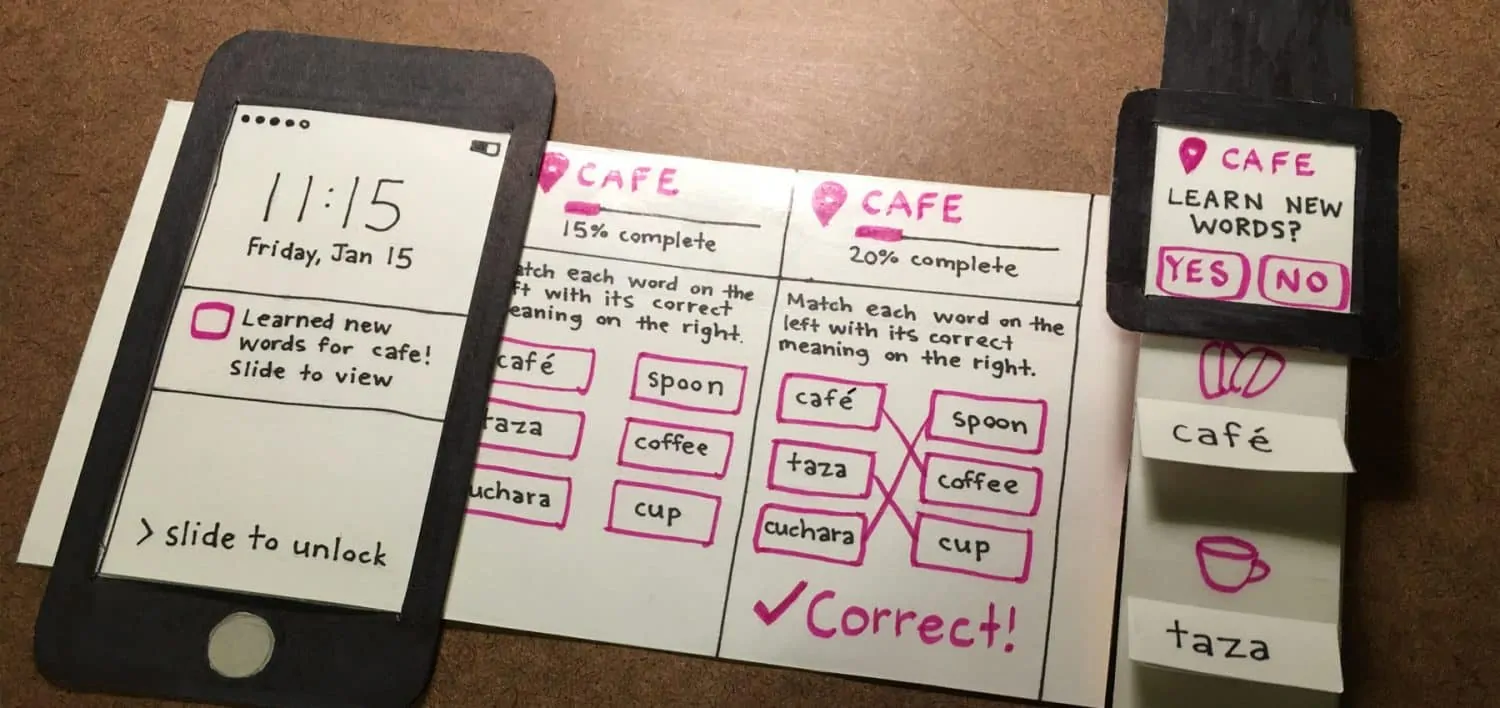
    paper prototype
    Source: amymaeroberts

    3D print

    The latest technology has made it possible to print a 3d version of your product which can actually work. But this technique is not feasible for mass production.

    3d printing
    Source: Gizmodo

    Digital Prototype

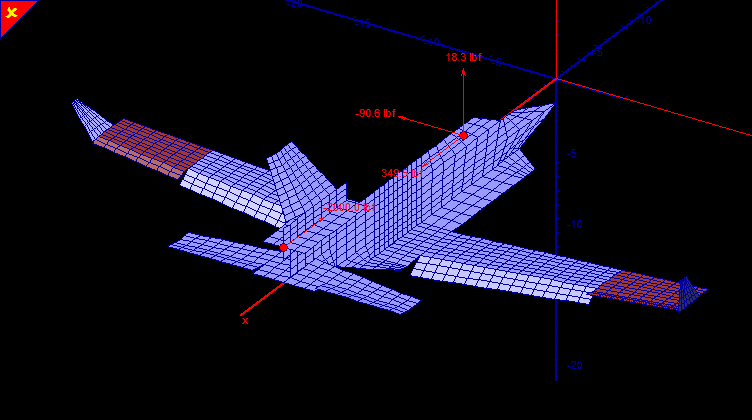
    A digital prototype allows product developers to create a virtual model of the product which enables them to see how the individual components will work together and how the product will look once it’s completed.

    That is, it lets the developers virtually explore the complete product before it’s actually built.
    Scale Model

    The scale model is a smaller and a non-functional model commonly used for prototyping large products like buildings, automobiles, etc.

    scale model
    Source: ecplaza

    Go On, Tell Us What You Think!

    Did we miss something?  Come on! Tell us what you think of this article on what is a prototype? in the comments section.
  • What is reCAPTCHA? reCAPTCHA Business Model

    What is reCAPTCHA? reCAPTCHA Business Model

    While using websites like Twitter, Facebook, Craigslist or even TicketMaster, users have come across instances where they are asked to enter a CAPTCHA (Completely Automated Public Turing test to tell Computers and Humans Apart) of text which is not easily distinguishable. This CAPTCHA is a way of proving if the user is a human or a bot. CAPTCHAs have kept malicious programs from sending spams at bay by preventing it completely.

    What is reCAPTCHA?

    reCAPTCHA was designed by Luis von Ahn, Manuel Blum, Colin McMillen, Ben Maurer and  David Abraham at Carnegie Mellon University’s main Pittsburgh campus. Created to establish if the user is a human or not, it took the internet by storm by aiding in the digitalization of books. Google acquired reCAPTCHA in September 2009 and have been using it as an important feature of its Google Books project where rare, ancient and out-of-print books are digitalized and offered to the public.

    With the use of reCAPTCHA, humans have digitalized over 13 million archived articles of The New York Times from the past 20 years or so in just a few months. Through mass collaboration, books that are impossible to be scanned by computers are digitalized as well as translated into different languages. The CAPTCHA words are distorted further by reCAPTCHA in order to suppress the chances of another cyber-attack program solving the CAPTCHAs.

     “this project is 99.1% comparable to the best human professional transcription services”, claims the Cylab institute of Carnegie Mellon University.

    How Does reCAPTCHA Work?

    With the unselfish applications of reCAPTCHA’s technology and data, it has a very interesting business model. ReCAPTCHA charges the companies for using their verification. Each and every word is shown in reCAPTCHA is a scanned word from one of the millions of texts from this world. After the books are scanned, the text would be analyzed by two different optical character recognition (OCR) programs. A standard string-matching algorithm is used to compare the results from both the programs as well as with a dictionary. If there are any words not readable by the OCR programs or if they are deciphered differently, those words are converted into a CAPTCHA so that any human can solve it. Every suspicious word is paired with a word already deciphered called the control word and they would be shown on the screen. If human types the control word correctly, the response to the suspicious word is tagged as probably valid. When 3 distinct humans type the same control word correctly, the suspicious word is proven to be deciphered completely.

    This validation of words is done using a point scale where 0.5 points are given when the word is identified by each OCR program and 1.0 points are given when it is identified by a human. When a word gets 2.5 points, it is considered to be a valid word. The words that are consistently validated by humans are used as control words. If a word is getting wrong 6 times, then it is designated as unreadable. The two words are shown separately in the original reCAPTCHA as out-of-context words, rather than from the same original document in order to avoid confusion among the words. There are instances when the control word appears to mislead the second word like for example if the two words given are ‘metal’ and ‘wand’, people would usually type ‘metal band’ as the word band is used more often with the word metal.

    reCAPTCHA offers a plug-in for applications like Ruby, PHP and ASP.NET etc to ease the implementation of their services. A JavaScript API having a callback server to reCAPTCHA is used to supply the words for the CAPTCHAs. reCAPTCHA provides libraries for various programming languages and applications to make this process easier. Though the CAPTCHA images are obtained by different websites free of cost in exchange for their help in deciphering the texts, reCAPTCHA is not open-source software.

    Photographs of house numbers taken from Google’s Street View project in 2012 were utilized by reCAPTCHA to digitalize it in addition to digitalized texts. reCAPTCHA implemented behavioural analysis in 2013 by presenting more difficult CAPTCHAs. But, by 2014 this was removed from the Google services and another system where people are made to select a few images from a set of nine images was introduced.  In 2017, reCAPTCHA enhanced its mechanism to need no user interaction called ‘invisible reCAPTCHA’.

    “Invisible reCAPTCHA creates a new sort of challenge that very advanced bots can still get around, but introduces a lot less friction to the legitimate human.”, says former Google click fraud czar Shuman Ghosemajumder.

    reCAPTCHA has demonstrated the importance and wonders of hidden crowdsourcing by using people to get the work done without them even realizing the impact they are creating on the internet. Since it doesn’t need any additional effort on the part of the people, the effectiveness of this project is to the maximum.

    Go On, Tell Us What You Think!

    Did we miss something?  Come on! Tell us what you think about our article on reCAPTCHA Business Model | What is reCAPTCHA? in the comments section.
  • What Is Product Management?

    What Is Product Management?

    Have you ever wondered how a simple idea gets transformed into a full-fledged product that is sold in the markets?

    Does the idea of being at the intersection of all business functions excite you?

    Have you been surprised to see how the most successful companies in the world always seem to know what their customers want?

    Do simple, user-friendly, intuitive interfaces amaze you?

    Does entrepreneurship excite you? Have you wanted to feel like an entrepreneur but without the risks that come with it?

    If the answer to any of these questions is a ‘Yes’, you should know what Product Management is. It might just be what you are looking for.

    What Is Product Management?

    Product Management can be tricky to define. That is because it differs from company to company and the actual scope can be very broad. That is also because it does not fit any traditional role or field that most people are familiar with. But in general, Product Management, as the name makes it so obvious, is all about managing a product or product line. The management of the entire product lifecycle, from the idea to the development to its marketing and sales, is Product Management. It is a very crucial discipline that has gained significant importance over the last few years in startups and enterprises alike.

    Product Management is an interdisciplinary role that cuts across various teams in the company to get the best product possible to the market. It evolved from the need of having people who could take charge of various products and their lifecycle, as companies grew in size. It was increasingly being felt that the engineering team was not enough to truly understand the customer’s needs and pain points. Other teams too failed to see the larger picture. What was needed was a CEO for each product and that is how Product Management evolved. It soon became clear that making and shipping great products requires great product leadership and that comes with the right business acumen and deep understanding of technology and user experience.

    Elements of Product Management

    Let’s dissect and understand what Product Management is in its core essence. Please mind the fact that these elements are not in any particular order.

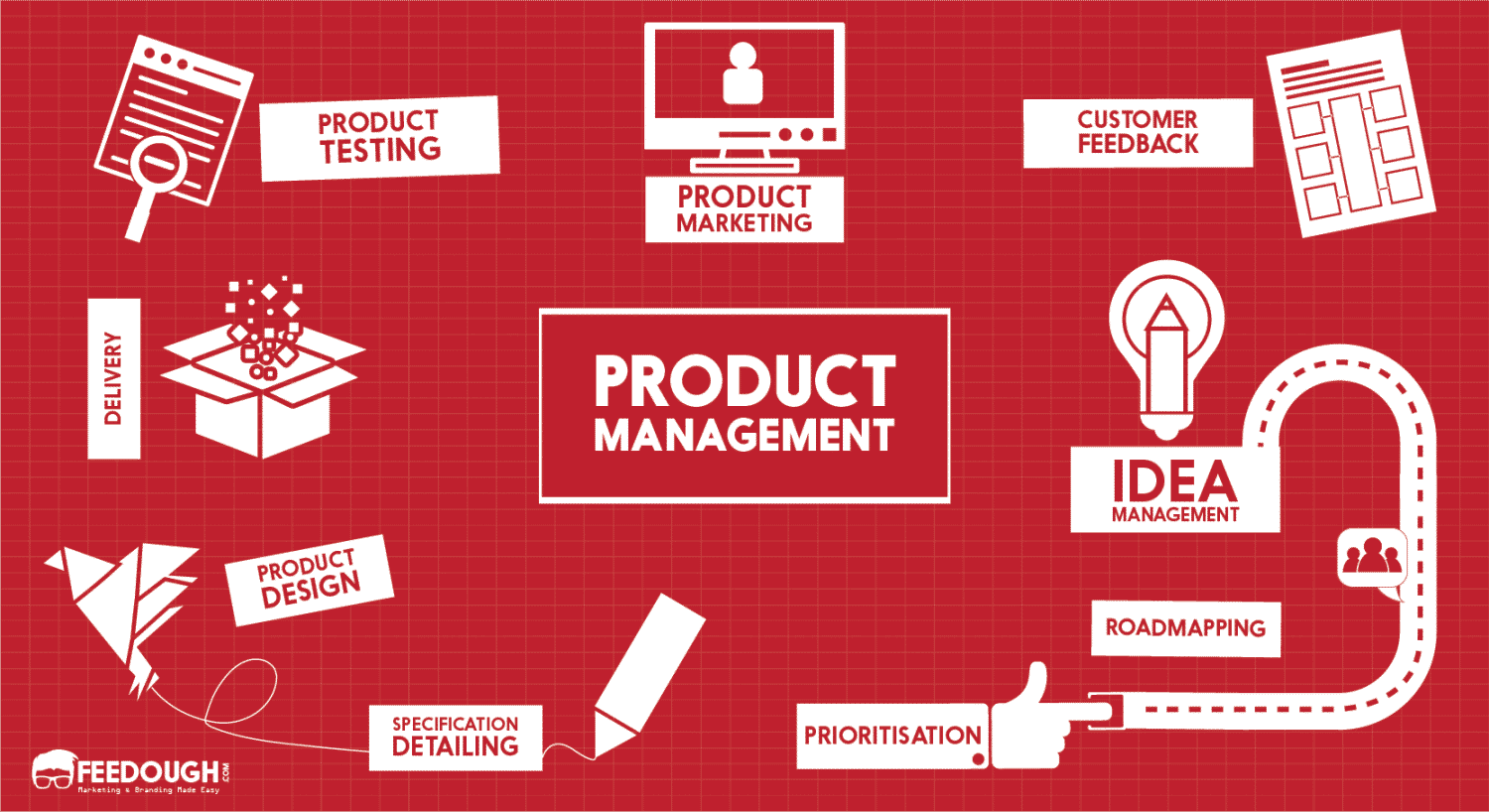
    product management

    Idea Management

    This is the phase when the ideas for new products or product features are brainstormed, researched and evaluated. These ideas can come from both inside and outside the company. The ideas are incorporated into the product backlog for further development.

    Roadmapping

    Roadmap is a tool that tells what is lined up for the product in the future. It is the path that the product has to take to meet the objectives that were set for it. The long-term strategy and vision for the product are taken into account. The roadmap gives an idea of where the product is, where it has to go and what needs to be done to reach that point.

    Prioritisation

    Managing a product comes with its limitations. There is a fixed timeline and the features to be incorporated seem to be never-ending. That is why prioritization is an essential part of Product Management. What needs to be built and when it needs to be built so as to derive maximum business value should be clear.

    Specification Detailing

    When the product idea is transformed into a document that fleshes out all the customer requirements in detail, the product becomes ready to be actually built. The impact and effort needed for each feature are defined only through the specification document. The success KPIs of each feature should also be mentioned.

    Product Design

    The customer pain-points are addressed with certain solutions. Those solutions need to look and behave a certain way. Product Design takes care of this with detailed mockups and sketches. The various user personas who would be using these solutions and how they would be affected are also taken into consideration. The technical issues that can occur during the development and delivery of the product are carefully thought out and corresponding measures are planned accordingly.

    Delivery

    Successful product leadership means seamless delivery to the customer with the help of engineering, design, marketing, sales and other teams. The quality has to be top-notch in accordance with the specifications developed earlier. Even the after-sales support and its effectiveness can come under the purview of Product Management.

    Product Testing

    Experiments like A/B testing are performed to test if what has been provided to the users is of value to them. This is a continuous process and helps make the product better. The analytics and metrics help in understanding how the users interact with the product and if there are any areas that can be improved upon.

    Product Marketing

    There is a separate team for product marketing in most companies but many a time the overview of how the marketing should be approached, especially go-to-market planning and product packaging, comes under the purview of Product Management. Product Marketing is more customer and market-facing than Product Management which is more product-facing but since Product Management is so broad, some Product Managers have to do both.

    Customer Feedback

    Product Management relies heavily on customer feedback at almost every stage. A Minimal Viable Product or MVP allows one to get substantial customer feedback for the product. Customer feedback helps in improving and validating proposed product features. It helps in understanding if the approach being taken is indeed right for the customer and if maximum business value will be derived out of the limited resources that one has. Feedback also helps in discovering new pain-points that might not have been found earlier.


    Product Management is an integral part of a company’s customer success story. A company can be truly great only if it makes great products that cater to the market needs. Great products need great product leadership. Product Management can be very ambiguous. If you are comfortable with uncertainty and can define your own role to bring the best possible product into shape, Product Management might just be your calling.

    Go On, Tell Us What You Think!

    Did we miss something?  Come on! Tell us what you think about our article on product management in the comments section.
  • How Does Venmo Make Money? | Venmo Business Model

    How Does Venmo Make Money? | Venmo Business Model

    You wouldn’t disagree with me if I say smartphones are the new wallets of the millennials. Cash has been long gone. According to a study conducted on millennials, twenty percent of the respondents didn’t make a cash purchase of over $5 within the given month. This comes as a good news to many new and existing mobile payments services like Venmo.

    Just Venmo Me” isn’t just a common phrase among American millennials but also a part of the revolution that this company has brought to the sharing economy. This mobile payments service is one of the most widely used applications in the USA. According to a research conducted by Lend Edu, Venmo dominates the market with around 44% of the share. The reason for this success is the mixture of Venmo business model and the first mover’s advantage.

    What is Venmo?

    Venmo is a mobile payments social media application which simplifies the money transfer between person-to-person and person-to-business with the added twist of social networking.

    Venmo is the combination of social networking (like Facebook) and a prepaid wallet (like Paytm) which is quite popular among the US millennials. The application lets you use your mobile to:

    • Send money to another person
    • Split bills
    • Request Money from another person
    • Pay to over 2 million merchants online and offline
    • Post and see what you and other people are spending money on.

    The company was started by two friends, Andrew Kortina and Iqram Magdon-Ismail, as an alternative to sending money through bank transfer or checks and increase the role of mobiles in sending payments. The original prototype included sending money through text messages, which was later transformed into a mobile application when the actual product was launched.

    The company was acquired by Braintree in 2012 for $26.2 million which was ultimately acquired by Paypal along with Venmo in 2013 for $800 million.

    Venmo Business Model

    The mobile application has one of the most clever business models created and dedicated to millennials. Besides helping its users solve their one of the most awkward tasks – splitting of bills, the user interface of the application also includes a social newsfeed which lets them share and view the transactional history of their friends in a fun way.

    One of the major reasons for Venmo’s success is because Venmo business model was the first to cater the issue of splitting bills. Before the application, users had to deal with delayed payments as it was conducted through cash which wasn’t available all the time and checks which took many days to transfer money. The added awkwardness of reminding to pay was also taken care of in the operating model of the application.

    How Does Venmo Work?

    With Venmo you can send and receive money from your friends and family right from your phone. You can use it to:

    • Split lunch bill,
    • Send your roommate half of the rent,
    • Pay your friend your share of the cab fare,
    • Buy from millions of merchants online and offline.

    All you need to do is to sign in or create an account on the application by linking it to your phone number and email ID (and Facebook, if you want to). Once registered, you can use the application to pay anyone using any of these sources:

    • Venmo Balance (Venmo’s eWallet)
    • U.S. Bank Account
    • Debit Card
    • Credit Card

    The application not only helps you send money with few taps but also makes you a part of a social network where you can see, like, and comment on other people’s feeds as well.

    How Does Venmo Make money?

    Is Venmo Free?

    Well, mostly free to you. But it has other revenue sources as well.

    Ever since its acquisition by PayPal, Venmo has been able to tap many more revenue sources. Nevertheless, unlike Paypal, Venmo hasn’t yet started making money in the form of interest on the money kept as Venmo balance.

    The revenue model of Venmo can be divided into two parts.

    Credit Card Fees

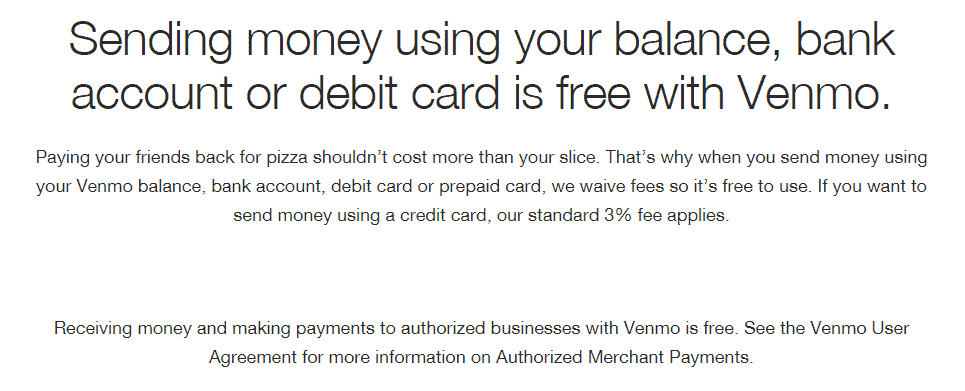
    Venmo doesn’t charge you if you transact using Venmo balance or through debit card or bank account. However, it charges a fee of 3% of the total value of the transaction if you pay using a credit card.

    venmo credit card fees

    Merchant Fees

    The acquisition by PayPal has really helped the company in tapping this revenue source. All the merchants which accept payment through PayPal now accept Venmo as a payment option as well. The merchants pay the same percentage of the fee (2.9% + fixed charges) which they would have paid to PayPal.

    This integration has resulted in benefits to both the users and the businesses. Users get to use their preferred mobile wallet and businesses get a free entry to the social media network which brings more customers to them.

    Is Venmo Safe?

    The application uses bank-level security and data encryption to secure the transactions and guard you against unauthorized transactions. It, however, doesn’t endorse payments to unknown people and can’t help much to recover money if accidentally paid to the wrong person.

    To provide additional security it also provides an option to set up a pin and touch id to access the application.

    Go On, Tell Us What You Think!

    Did we miss something?  Come on! Tell us what you think about our article on Venmo Business Model | How does Venmo make money? in the comments section.

  • What Is A Product Manager?

    What Is A Product Manager?

    Product management is a relatively new field and many people do not know what or who a Product Manager is. While Product Managers have existed in the realm of marketing for a long time handling product portfolio and their P&L, in the world of technology, a Product Manager is responsible for shipping great products to the customers with the help of various teams in the company. Some of the biggest companies in the world like Facebook, Google, Amazon etc. have brilliant Product Managers – rockstars in their own right.

    Product Managers are called Program Managers in some organizations. They sometimes double up as Project Managers as well. At the end of the day, a Product Manager owns a product and everything that comes with it.

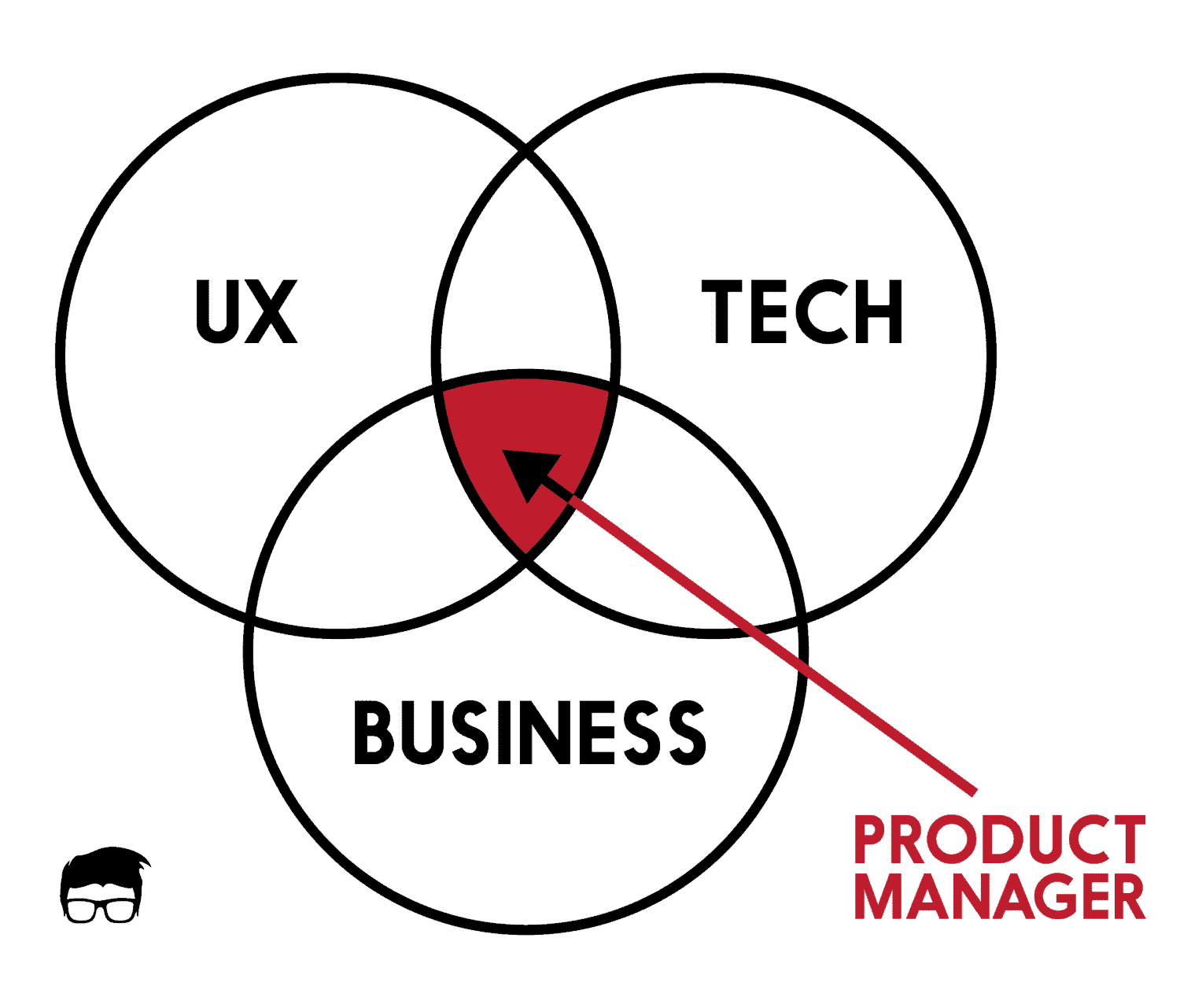
    Product Management is a very appealing career option. Not just because it is one of the most highly paid jobs in the world but also because you get to sit at the intersection of business, technology, and user experience. You get to learn the different aspects of your business with one role.

    PRODUCT MANAGER

    Product Managers are obsessed with maximising business value and return on investment. As a Product Manager, you may or may not code but understanding the underlying technology is crucial for you, as you would spend more time with the engineering team than others in the company. A Product Manager is an advocate for the customer. You shall understand what the customer needs and then translate them into features in your product that interact with each other as smoothly as possible. So constantly talking to customers and getting their feedback is what forms an indispensable part of the life of a Product Manager. You are as much responsible for the larger picture as you are for all the nitty-gritties of the product. You are responsible for the long-term vision of your product and also the color of the dialog button on the welcome screen.

    Yet, all that responsibility comes with no authority. As a Product Manager, you have to make sure that all teams work together for a common objective without having authority over any of them. That is perhaps the hardest part of being a Product Manager. Your vision and interpersonal skills have to get the work done. Your main challenge will always be to get people to collaborate, even when their goals seem to be in contradiction. You shall be the binding force that brings together different teams such as engineering, design, quality, analytics, marketing, and sales to turn an abstract idea into reality.

    If you are an entrepreneur just starting up, you will probably double up as the Product Manager for your company. As your company grows bigger and the number of products and their features start to drastically increase, you would need entrepreneurs like yourself to handle them. The best Product Managers are intrapreneurs. They cannot survive and thrive if they do not have an entrepreneurial mindset. No wonder they are called mini-CEOs.

    A company can very well function without a Product Manager. It is comparatively a newer position in most companies. All departments can go on with their work and no one would notice much of a difference. But a great Product Manager is the one who is responsible for making a good product great. The role is very broad and you would need tons of skills to do well.

    Being a Product Manager is a tough job but it is perhaps one of the most fun jobs on the planet. It is unpredictable yet utterly satisfying. Every day is different. The role in itself varies from company to company. No wonder so many entrepreneurs move to a Product Management profile after exiting from their startups. It is the closest thing to being an entrepreneur in a big-corporate setting.

    Go On, Tell Us What You Think!

    Did we miss something?  Come on! Tell us what you think of this article on who is a product manager in the comments section.
  • Validating Your Product Hypothesis Using An MVP

    Validating Your Product Hypothesis Using An MVP

    Tons of people build businesses around ideas that never appeal to the customers and thus those ideas never sell. All the time and money go down the drain. You might think that you already know what the customer wants. Initial market research might make you believe that customers would love your product. But when the product actually arrives on the shelves, nobody cares about it. A market survey can sometimes be pretty useless since it’s still a hypothetical product. That is when idea validation or to be precise, product validation becomes so important. Validation of ideas can be done very quickly if you follow the right approach.

    Validating A Product Hypothesis Using An MVP

    The right approach, more often than not, when it comes to product validation is to build a Minimum Viable Product or MVP. They say an MVP is all about “Minimum Effort, Maximum Learning”. MVP reinforces the Build-Learn-Repeat Model. An MVP lets you test your ideas in the real market as it is a rough but working version of your final product which has been created to check real user-behavior with a real product. There are various types of MVPs like Piecemeal, Concierge, Wizard of Oz etc. Let us see how these MVPs can be translated into some real ideas:

    Classic Prototype MVP

    This method involves building a rough, working prototype of your final product, often buggy and with minimal UI, in a span of a few days and then letting prospects use it. The user interaction is observed, recorded and analyzed. Users are not asked any questions or feedback. The problem with this method is that a half-baked MVP in most cases does not work. Also while an MVP is supposed to be quick to build and test, sometimes it takes a few months to build one.

    Landing Pages

    You can set up a one-page landing page which has the value proposition of your product. The landing page should also collect emails of prospects. It might also include pricing details or plans. The traffic to the site will be an indication of how many people are actually interested in your product.

    Sell Before You Build

    Sell your product even before it has been built. It’s like asking your prospects if they would be willing to pay for your product if it had certain features. List your would-be product with all its features on Kickstarter and see how the demand is. You are basically promising your funders the product even before building one. It is a great way to check if your product has any real demand.

    How Much will People Pay

    This is similar to the earlier method but here you use A/B testing to check various price points that the customer might be willing to pay. It allows you to set the right price point for the final product to generate maximum demand.

    Video – Get a Glimpse of the Real Deal

    Even if you do not have the actual product, you can make a video of how the actual product is going to be like and then use that video to get people to subscribe to your service when it is finally launched. Dropbox had used the exact same method for validation.

    Set up a Test Store

    If you have a physical product, there are online services available that can help you set up a test store quickly with complete payment systems, to give you an estimate of how your product is selling. You can either accept pre-orders or sell actual products in limited qualities before moving on to full-fledged production. You could also initially sell your products on sites like Amazon or eBay to gauge the demand for your products. Once you realize there is sufficient demand, you can start selling your products through your own site or app.

    Go On, Tell Us What You Think!

    Did we miss something?  Come on! Tell us what you think of this article on Product validation using an MVP in the comments section.
  • What Is A Minimum Viable Product (MVP)?

    What Is A Minimum Viable Product (MVP)?

    A product hypothesis is based on innumerable assumptions of the target group’s demands and usage. However, launching a product just on the basis of assumptions isn’t the right thing to do. This is where the role of a minimum viable product (MVP) becomes prominent.

    But what is an MVP, why is it important, and how to build one?

    Let’s find out.

    What Is A Minimum Viable Product (MVP)?

    A minimum viable product (MVP) is the first saleable version of your product designed with minimum yet sufficient features to satisfy early adopters and to validate the assumptions of usability and demand basis on which the final product is developed.

    Let’s divide the definition into 3 parts to make it more clear:

    1. Viable: The term viable is of great importance while explaining the definition of MVP as it separates an MVP from a prototype. A product has to alive and capable of working before being launched as an MVP to validate the assumptions.
    2. Minimum Yet Sufficient Features: The MVP has to be made with minimum resources but should be saleable. That is, it should contain minimum yet sufficient features which would satisfy the customers and make them buy the product.
    3. Validate The Assumptions: All the entrepreneurs build their products on certain assumptions relating to the market, demand, and utility. An MVP is designed in such a way to validate or invalidate these assumptions based on which the final product is built.

    Why Do You Need An MVP?

    They say an MVP is all about “Minimum Effort, Maximum Learning”. MVP reinforces the Build-Learn-Repeat Model. An MVP lets you test your ideas in the real market as it is a rough but working version of your final product which has been created to check real user-behaviour with a real product.

    • Get Initial Customers: The goal of MVP is to help you get the initial traction and make these initial customers get a taste of what you have to offer.
    • Get Feedback: Another goal of MVP is to get initial feedback about whether there’s a need for your offering or not.
    • Validate Your Riskiest Assumption: Your riskiest assumption is usually your unique selling proposition which is validated with the help of a minimum viable product before investing everything in a business model which revolves around it.
    • Build A Validated Marketing Strategy: Testing your product strategy with an experimental but viable product helps you learn most of the characteristics, habits, wants, and needs of your target audience. This helps you build your final version of your product with a ‘not so likely to fail’ marketing strategy.
    • Avoid Overbuilding: Entrepreneurs include many undesirable features while developing a product hypothesis. The usability and demand for this product hypothesis are validated at the time of the MVP stage. Hence, the final product is built with the aptest features which are desirable in the market.

    How to build an MVP?

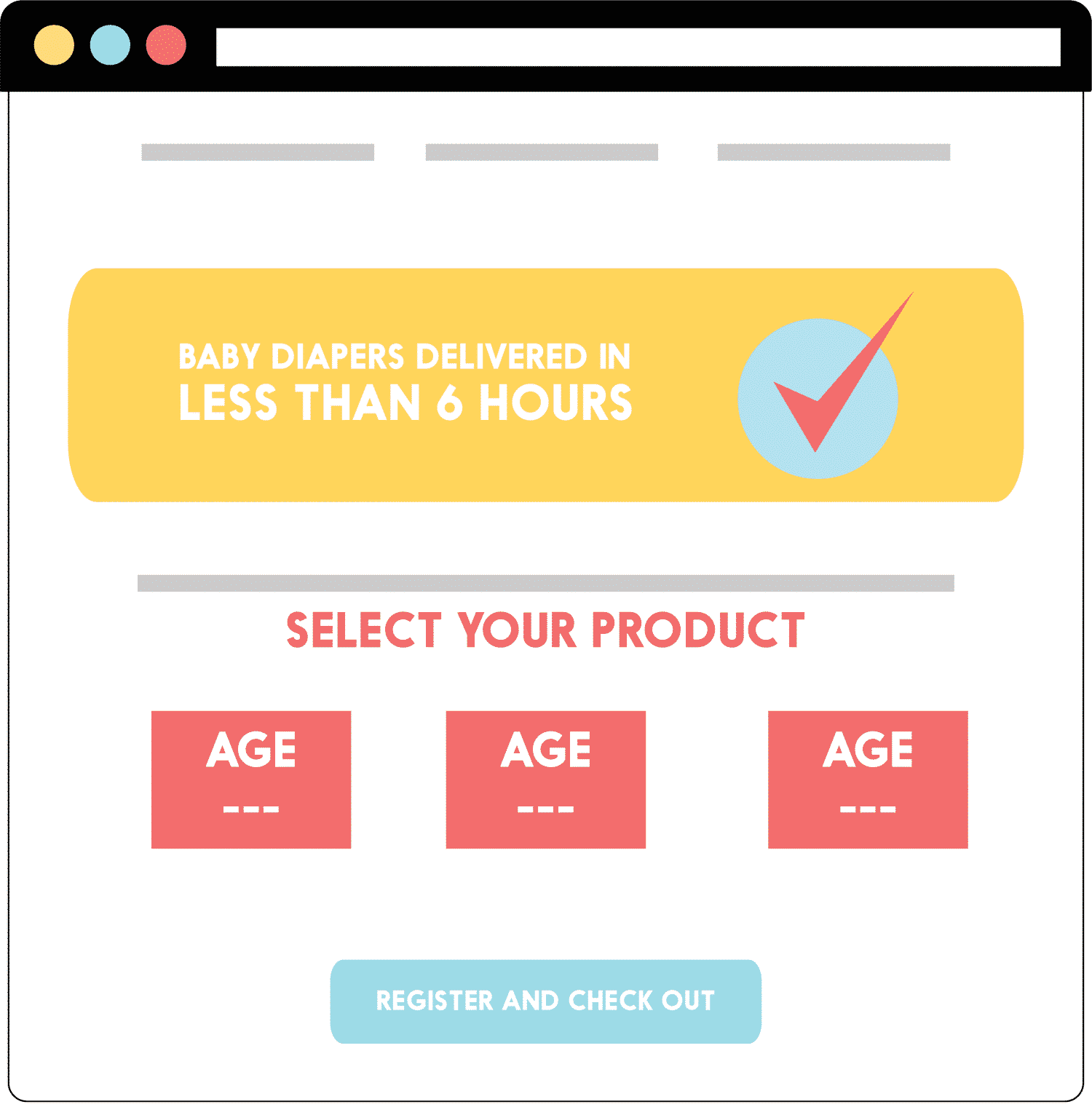
    Suppose you want to build an e-commerce website dealing with baby products and you have certain assumptions:

    • Target Audience: 25-40 years old mothers
    • Best selling product: Diapers
    • USP: You deliver products within 6 hours
    • Most opted shipping method: 6-hour delivery

    We know that your aim is to build a full-fledged baby products e-commerce store which will be differentiated from others because of your 6-hour delivery but you need to validate your assumption before going all in. You have to validate that if target group actually cares about this USP or not.

    But the question is: How can you do that easily without draining your pocket?

    how to build an mvp

    The answer is simple-

    Build a one-page website offering a 6 hour delivery of diapers and collect data of the visitors either when they shop or when they show interest to validate your assumptions. This one-page website is your minimum viable product for your bigger e-commerce store.

    MVP examples

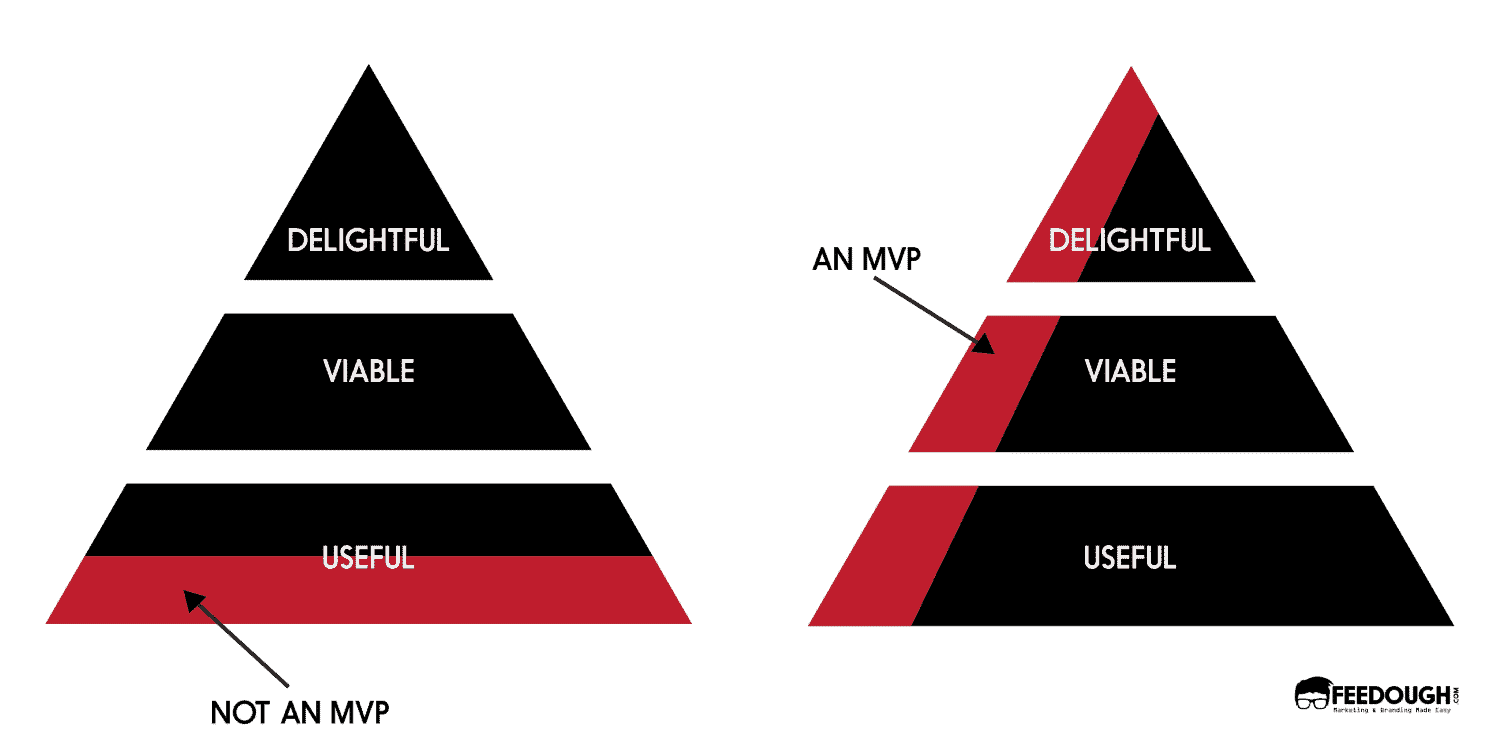
    Developing and testing just a tire when you want your final product to be a car isn’t considered a minimum viable product. MVP is the minimum but a viable version of the product which will help you collect the maximum amount of validated learning about customers.

    mvp minimum viable product

    There are various types of MVPs like Piecemeal, Concierge, Wizard of Oz etc. Let us see how some MVPs were translated into some real ideas:

    Zappos

    E-commerce wasn’t that prevalent in 1999 when Nick Swinmurn, frustrated with his inability to find a pair of shoes in the market, decided to launch Zappos. Zappos aimed at selling shoes online. But just like any other e-commerce store, it also required thousands of dollars for buying inventory for the products.

    Nick, to avoid losing all his money in a risky assumption that ‘people will buy shoes online’, launched his MVP first. He went to his local mall, photographed all the pair of shoes and posted them for sale on his MVP website to see the response of the customers.  When a customer placed an order, he would purchase the shoes from the mall and send it to the customer’s address. This MVP strategy worked perfectly for Zappos which was later bought by Amazon for $1.2 billion.

    Buffer

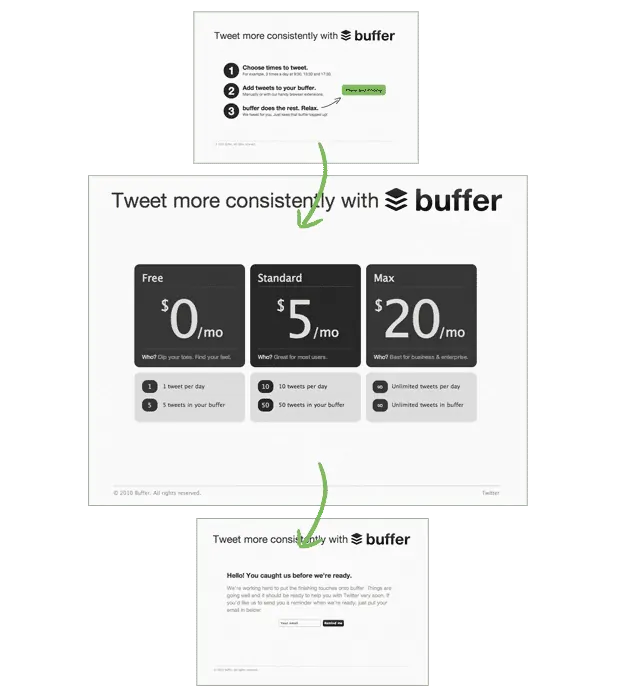
    Just to make sure that the target group will pay for an application which queues up many tweets simultaneously, Buffer founder, Joel Gascoigne, launched the MVP of the product in the form of a landing page designed to validate this assumption. Even though the MVP wasn’t a product, it gave them the analytics of how many people would pay for such an application and validated their riskiest assumption.

    buffer mvp

    MVP vs Prototype

    An MVP is not a prototype.

    A prototype works perfectly fine when taking the feedback from internal audiences but most of the times it isn’t even close to the final product. There are many limitations an entrepreneur or the product development team has to face while building a prototype. These include:

    Lack of investment: A prototype is usually built by the entrepreneurs to pitch to the investors. Since there is a lack of investment in the prototype phase, actual materials and programs are not included in the prototype which makes it a lot different from the actual intended product.

    Motive: The ultimate motive of building a prototype is to validate the design and most of the times include unnecessary features and steps which can be avoided while validating the assumptions at the time of MVP.

    Go On, Tell Us What You Think!

    Did we miss something?  Come on! Tell us what you think about our article on Minimum Viable Product in the comments section.

  • 5 Biggest Startup Mistakes And How To Avoid Them

    5 Biggest Startup Mistakes And How To Avoid Them

    90% of startups fail.

    Scary?

    But here’s a more terrifying fact:

    90% of the time, startups fail due to self-destruction and not due to the competition.

    Starting up could be the best decision of your life. However, succeeding with your startup requires many more good decisions. The market is full of other startups and big dominant players which will do anything to keep you away from their customers. You not only require a foolproof business plan but also need to avoid common mistakes every entrepreneur commits.

    5 Biggest Startup Mistakes And How To Avoid Them

    While innumerable startups fail every year, there aren’t innumerable mistakes which lead to their failure. Here’s a list of 5 startup mistakes you should avoid at any cost.

    Premature Scaling

    “We scaled up too fast. We should have actually cracked one market completely before venturing out into any other market. If I were to look at Housing again, I would rather crack the model locally and keep refining it before taking it anywhere else in the country. I would scale up for profitability than for burning.” – Rahul Yadav, ex CEO of housing.com who was sacked from his own company.

    Premature scaling is the biggest mistake any startup entrepreneur could make. Around 70% of the startups scale prematurely.

    But what exactly is premature scaling?

    In order to understand premature scaling, one must be clear with the term scaling itself. Scaling is when there is an increase in the dimensions [customers, products, team, business model, funding] of your business.

    Premature scaling is when a startup scales one dimension of the business and advance it out of sync with the other dimensions. For example:

    • Hiring too many employees too soon.
    • Investing too much in the product before conducting market fit analysis
    • Raising too much money too soon and overspending it.
    • Trying to tap many markets at once.
    • Focusing too much on profit maximization too early.

    According to the Startup Genome Report:

    • The team size of a prematurely scaled startup is 3 times bigger than a consistent startup at the same stage.
    • 93% of startups that scale prematurely never break the $100k revenue per month threshold.
    • Startups that scale properly grow about 20 times faster than startups that scale prematurely.

    Going Solo

    Maximum of the times, going solo becomes the root cause of all the startup mistakes an entrepreneur commits in his startup journey. One of the biggest reasons why entrepreneurs decide to go solo is his lack of confidence in other people.

    Most of the times, an entrepreneur isn’t capable of doing everything perfectly. Moreover, he doesn’t have enough time to do everything by himself.

    Even if you have the greatest idea of all and the capability of doing all the work by yourself, you need a colleague to brainstorm with, to prevent you from taking wrong decisions, and to be a moral support at bad times.

    One of the few most important aspects investors look for while investing in a startup is the team which leads the startup. This is the reason many investors turn down the offer to invest in the startups which have only one person leading it.

    No Proper Business Model

    Many entrepreneurs confuse the product with their business model. They forget about the customer-company relationship and ignores the fact that the actual journey starts after the initial purchase of the product by the customer.

    The business model is a conceptual structure that supports the viability of a product or company and includes the purpose and goals of the company and how it intends to achieve them.

    A great business model focuses on creating and delivering great value to the customers while simultaneously delivering great margins.

    You have to make sure that you have a well-defined revenue model revolving around your product. That is, you need your actual customer acquisition cost to be as low as possible when compared to the lifetime value generated from him. Moreover, you need to find potential revenue streams after the initial sale of the product. You have to be ready for the ‘next thing’ which will eventually take you closer to your goal.

    Skipping Research

    Optimism is only helpful when it is backed by data. Any step you take without proper research could pivot in a direction different from the one you wish to head to.

    A big mistake entrepreneurs make is believing that they have a unique idea and going out without in-depth competitor research. A partial or no competitor research is the reason why around 19% of the startups fail

    Make sure you conduct in-depth market research before launching your product. This not only will help you serve the thing that is actually required in the market but also will help you to correctly price and position the product based on the competition.

    Validate your idea before moving ahead. Know what your consumer wants and where his attention is. Back your decision with legitimate facts and stats to be fool-proof in this not so fool-proof industry.

    Working With The Wrong Team

    Esprit de corps is not the only thing that makes the startup move forward. You need to work with the right team with the right expertise to progress at the pace you want to.

    There’s a reason why top angel investors and VC’s put an emphasis on the team more than the idea or the vision. Ideas change, directions and markets pivot, but as long as you have the right team, success is almost inevitable.

    “A friendship built on business can be glorious, while a business built on friendship can be murder.” – John D. Rockefeller

    Many entrepreneurs start a business with their friends becoming their partners just because they are their friends. One thing you should always keep in mind is that you should know the working background of the person you’re going to work with. Your best friend could become your worst colleague and add up to your emotional and financial burden if not taken care of.

    According to a study by Noam Wasserman, a Harvard Business School professor, each friendship in a founding team increased the rate of founder turnover by 28.6%.  Social hangouts do not help you get to know a person professionally.

    Keep these questions in mind while selecting a co-founder for your startup:

    • Does he have prior experience in this niche?
    • Will he add value to the idea?
    • Will he be able to complement your strengths and mitigate your weakness and vice versa?
    • What are your comparative strengths and weaknesses?

    Go On, Tell Us What You Think!

    Did we miss something?  Come on! Tell us what you think about our article on 5 Startup Mistakes to Avoid At Any Cost in the comments section.
  • What Is Middleware & How Does It Work?

    What Is Middleware & How Does It Work?

    It is important that different software programs work together to get the final results when different businesses or startups use these programs to fulfil their needs. This is where middleware has its importance. It attained demand in the 1980s as an answer on how to link the latest applications to older systems.

    What is Middleware?

    In every device, there is an operating system as well as different applications. Middleware is software which is in the middle of an operating system and the applications working on it. It permits communication and data management for distributed applications by operating as a hidden translation layer. The term is considered vague since it is used to link two separate applications together.

    “Middleware is sometimes called plumbing because it connects two sides of an application and passes data between them.”

    Middleware delivers messaging services thereby enabling different applications to communicate by utilizing messaging frameworks like Web services, Simple Object Access Protocol (SOAP), JavaScript Object Notation (JSON) and Representational State Transfer (REST). Other than the above, at a primary level, middleware deliver facilities necessary to link applications together such as transaction management, concurrency, threading etc.

    Additional advanced execution of middleware concepts is incorporated into modern integration infrastructures such as API management software and enterprise service bus (ESB) to provide accountability, greater governance and risk management.

    How Middleware Works?

    The increased use of network applications by businesses and tech-startups have increased the importance of middleware. By integrating previously self-sustaining applications with new software updates using middleware, SAAS businesses and startups alike are creating enterprise-wide information systems.

    The systems consisting of information are composed of a group of different hardware devices connected to each other by a network. With involvement from other devices, each device performs functions that involve the transfer of real-time data. These interactions span over a wide range of performances.

    Middleware is thus used successfully to link various applications. For example, it can help a shipping company by messaging its customers, linking its payment and shipping systems with its customer-focused applications.

    Types and Examples of Middleware

    Understanding middleware could be difficult at times. It is possible to understand them by looking at particular types that weren’t created for the cloud, but by which many cloud services currently integrate. The types and examples include:

    Message Oriented Middleware

    Message Oriented Middleware (MOM) is a software/hardware infrastructure that supports the receiving and sending of messages over distributed applications. The spreading of applications over various platforms and the creation of software applications comprising many operating systems and network protocols are made less complicated. It is one of the most widely used types of middleware.

    Object Middleware

    In distributed computing, an Object middleware also called an object request broker controls the communication between objects. It can let program calls to be made from one computer to another via a computer network as well as send objects and requests via an object-oriented system.

    Remote Procedure Call (RPC) Middleware

    Remote Procedure Call (RPC) is a protocol, without having particulars of network details, used by a program to call a service from another program located on another computer. It is used to execute synchronous as well as asynchronous data transfers between applications or systems.

    Database Middleware

    Database middleware allows direct communications access with databases by having direct interaction with them. It is used as a mechanism to extract information from either local or remote databases by developers. Database middleware is the most widespread and commonly known type of middleware, one example being SQL database software.

    Transactional Middleware

    Transactional Middleware means the tech that reinforces the working of electronic transactions in a branched background. The best example is Transaction Processing Monitors (TPM), which have been in the market for more than 30 years.

    Robotic Middleware

    Robotics middleware is the middleware used in building extensive robot control software systems. It is described as ‘software glue’ because it makes it easier for builders to focus on the particular problem areas.

    Integration Middleware

    Integration application operations, execution, monitoring and runtime services for communications are offered by the software systems denoted by Integration Middleware. It also acts as a tool for data/process integration.

    Application Framework

    An application framework is a virtual library that imparts a basic structure to help the building of applications for a particular environment. It acts as a backbone in building application. The general issues faced while developing applications can be avoided using an application framework.

    Device Middleware

    Device middleware is a toolset used for creating applications for a specific hardware environment.

    Game Engines

    Game engines are tools accessed by designers to create a game easily by utilizing tools such as graphics rendering, physics simulations, and game scripting. The tools are used to aid in asset creation and placement.

    Portals

    Portal refers to enterprise portal servers which are considered as middleware because they make front-end integration smooth. Creating interactions between a user’s device and back-end systems or services is one of the main objectives of portals.

    Embedded Middleware

    Embedded middleware is used for integration and communication services with an interface of software/firmware. It usually acts as a contact between embedded applications and the real-time operating system.

    Content-Centric Middleware

    Content-Centric middleware lets developers extract particular content without having to know how it is obtained. It is usually executed through an easy provide/consume abstraction. This middleware is relatable to publish/subscribe middleware, a type of same software that is often utilized as a part of web-based applications.

    While core kernel functionality can only be issued by the operating system, some functionality which was previously dispensed by middleware is now integrated into operating systems. An example is the TCP/IP stack used for telecommunications. It is now included in every operating system. Thus it can be said that the boundary between applications and middleware have also changed.

    Go On, Tell Us What You Think!

    Did we miss something?  Come on! Tell us what you think about our article in the comments section.

  • The Attention Monetization

    The Attention Monetization

    What does it mean to ‘Pay Attention’?

    But before answering this question, answer these-

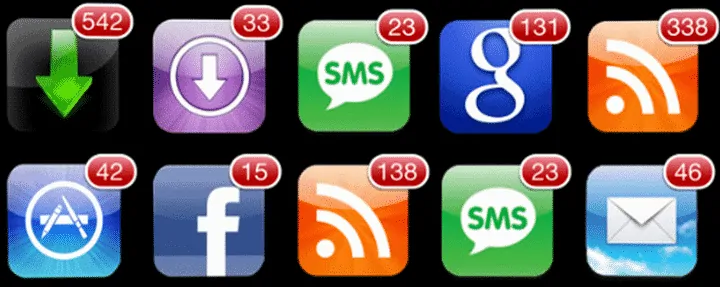
    How many times a day do you click on a notification like this?

    mentioned in comment

    Which of these icons matters to you?

    social media icons

    Do you check your phone when you listen to these?

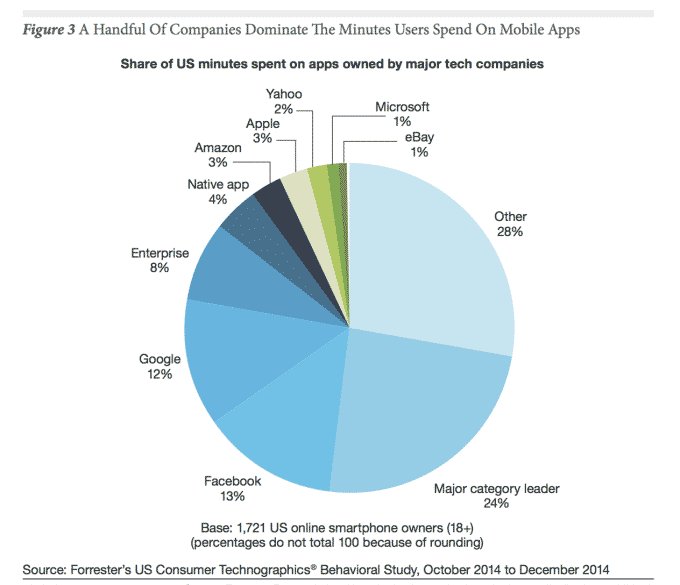
    According to a research, you check your phone 2617 times a day. But only a few apps find their way into your daily routine.

    consumer app usage

    Intrigued?

    With the availability of such huge amount of information all at once, attention has become one of the most scarce resources you have. No matter how good you are at multitasking you can’t focus on different things simultaneously with all your attention.

    This has led to a war among the developers, entrepreneurs, and marketers to win your attention by developing the right product.

    Welcome to the attention economy.

    What Is The Attention Economy?

    An economy is the careful management of the scarce resources and attention being one of the most scarce resources has led to the development of the concept of attention economy where we, the people, carefully allocate this scarce resource to the things we feel deserve it the most.

    We’ve turned a corner toward an economy where an increasing number of workers are no longer involved directly in the production, transportation, and distribution of material goods, but instead, earn their living managing or dealing with information in some form. Most call this an “information economy.” Yet, ours is not truly an information economy. By definition, economics is the study of how a society uses its scarce resources. And information is not scarce – especially on the Net, where it is not only abundant, but overflowing. – Michael Goldhaber

    But it’s not as simple as the definition makes it sound like. Attention is also one of the most vulnerable resources to be capitalized on for profits by the businesses.

    Do you remember the last advertisement you saw on your TV or over the Internet?

    No, right?

    You see around 5000 marketing messages every day from the advertisers who spend millions of dollars on them just to get your attention. Remember the Old Spice ads which had nothing to do with the product? They just wanted your attention by showing what’s relevant to you.

    Ever wondered why Netflix releases all of the episodes at once?

    Netflix vies with Snapchat, YouTube, and sleep for your attention. How many times have their autoplay function made you think “I’ll sleep after one more episode”.

    What Stimulates Attention?

    Attention is the cognitive process of selectively concentrating on one piece of perceivable information while ignoring others.

    There’s a reason you choose Facebook over others and there’s also a reason why you end up purchasing products kept at the billing counter in a supermarket.

    You prefer using Facebook over other social networks because you want to be a part of the network where your friends and family members are and because you’re not bored of Facebook yet. Once you spend a considerable time on Facebook, you move on to another app, say Reddit to see what’s new on the internet.

    Companies pay extra money to place their products near/at the billing counter as they act as a parasite which attracts your attention when you feel bored while waiting in the queue.

    This is how the attention flow works.

    You only have limited hours to devote your attention to things and you prioritize the habits and stimuli which direct your attention. That is, you usually prioritize your existing habits over new experiences until you’re hit by a stimulus to try them. For example, you would have spent your time reading the label of a product if you hadn’t seen the parasite product kept on the counter.

    But the point is:

    You get hit by stimuli a lot more than you think and the element that stimulates your attention is the trigger.

    A trigger is something that makes you do something. It can be external or internal.

    Internal Triggers

    Internal triggers include addictions, habits, emotions, etc. which may or may not be in our control.

    There are 2 major internal triggers. These include:

    Habits

    Habit is a repeated routine behavior which is usually acquired through repeated actions.

    Habits consume most of your attention, consciously and unconsciously. These include eating (or eating while watching TV), sleeping (or sleeping after watching Netflix), exercising (or listening to music while exercising), etc.

    Extreme habits give rise to addictions which is the best consumer state for any business.

    Emotions

    Emotions can be divided into positive and negative emotions both of which affects the attention of an individual.

    You visit Google when you’re curious.

    You use Tinder when you feel lonely.

    You use Facebook & Instagram because you are curious about what are your friends and family up to.

    You send snaps on Snapchat because you want to share your emotions and moments with everyone.

    Fear of missing out [FOMO] is one of the biggest attention grabbers. FOMO only lets you pay your attention to that one thing, making you incapable of concentrating on others. The stories feature in Snapchat, Facebook, Instagram, and Whatsapp was introduced to trigger FOMO among the users.

    Your aspirations and goals also affect your attention and may even make you pay your attention to something against your habit. For example, you start paying attention to other less costly brands when you want to save money.

    External Triggers

    External triggers include all those triggers induced by the external environment which gives rise to the internal triggers. For example:

    Call To Action

    A call to action is an induced external trigger which specifically asks a person to do something. Examples of the call to action trigger include:

    • Buy It Now.
    • Subscribe!
    • You’ve got to watch this movie!
    • See what’s behind
    • Sign up Free

    netflix attention monetization

    Network

    The network effect states that a good or service becomes more valuable when more people use it. Just like water, attention also has cohesive properties which make it attract other people’s attention and eventually create a network effect.

    facebook network attention monetization

    We choose WhatsApp over other IM applications is because a majority of our contacts use it as their default IM service than others.

    Scarcity

    The fear of loss is more than the hope of gain. Scarcity stimulates the negative emotions and directs your attention to the scarce resource. This is the reason the limited period sales attract you to shop more.

    scarcity attention

    The Attention Flow

    Imagine a scenario of a T-rex fighting with a giant panda near the Statue of Liberty.

    You actually imagined it because I’m controlling your attention in this article. Controlling and diverting the attention is easy once you get it. Everyone does it intentionally or unintentionally.

    A store gets your attention by displaying an ‘up to 50% off Sale poster” and the salesperson directs it to their most profitable product. I, just like any other blogger, want you to divert your attention to the advertisements on my website.

    Brands have started investing in brand integration projects rather than advertisements as it has more attention value.

    But what exactly is an attention value?

    Just like any other scarce resource in the world, attention also has a certain value. You pay your attention to the things you feel deserve the most.

    Even though the attention isn’t a physical resource, it can be measured quantitatively. The amount of time served on a particular resource, memorizing, and repetitive actions are few quantitative measures of attention.

    How Is Attention Monetized?

    You’ll scratch when there’s an itch.

    The attention value is often converted into a monetary value by the people who monetize on it.

    Brands spend a lot more to place their product at the eye level in the supermarket just to get your attention. This attention is converted into the direct sale.

    Social networking websites work on slot machine economics where they use your chunks of attention and monetize it with your advertisements impressions and clicks.

    Netflix releases all the episodes at once just to make you binge watch. They aim for creating a habit which makes you renew your membership every month.

    Google continues to use your data to create a better user experience and add more attention-grabbing ads.

    Politicians get your attention by speaking about your issues and try to convert it into votes.

    Big companies spend millions in attaching an attention value to their product which is termed as a brand.

    Companies spend a lot of money in understanding the consumer psychology and the key to their internal triggers. People scratch when there’s an itch. Attention is monetized when you become the cause and the remedy of the itch. It’s monetized when it is rewarded with something that helps heal the itch temporarily.

    The attention monetization process can be divided into 4 phases

    ATTENTION MONETIZATION PROCESS

    Trigger

    A trigger is the starting point of attention monetization process. A trigger makes the user aware of an itch. It can be external or internal.

    Action

    It’s how the user scratches the itch. It could be in the form of opening an application, picking up the product to see it, etc.

    Reward

    The step where the product is the hero. This is the step where the itch is healed temporarily.

    Direct

    This is the money making step of the attention monetization process. This is either performed simultaneously with the reward or just after the reward. It could be product recommendation, advertisements, etc.

    The attention monetization process is a never-ending process which starts again as soon as the user is rewarded.

    Example Of Attention Monetization

    Trigger: You want to express your feelings to some people.

    Action: You open the Facebook application.

    Reward: You share your feelings by posting a status.

    Direct: You start to scroll the other stories on the newsfeed after posting. Facebook capitalizes on this by including ads in the newsfeed.

    Now you want to see the follow-ups (reactions and comments) on your status which makes you open the application again.

    The attention not only have this adhesive property but also a cohesive property which borrows the attention of other people who read your status and eventually become a part of the attention monetization process.

    The Bottomline

    Attention is scarce and the market is saturated with the players trying to grab the user’s attention. All you need is the right product hypothesis which makes use of the consumer psychology and uses the right triggers to grab, direct, and monetize the attention.

    Go On, Tell Us What You Think!

    Did we miss something?  Come on! Tell us what you think about our article on The Attention Monetization in the comments section.