
Feedough Logo

Blog

  • How Does Grammarly Make Money? | Grammarly Business Model

    How Does Grammarly Make Money? | Grammarly Business Model

    Communication is of great essence for the sustenance of human life in this fast-moving world. It goes without saying what immense role effective and impressive language and grammar play in our daily life.

    Grammarly has quite amusingly grown as one of the most successful self-funded product on the web to cater to this need of effective grammar. Working on the freemium model, this online software company markets its services prominently as a grammar checker helping millions of users to draft documents, online write-ups and text messages mistake free, more clear and effective.

    What is Grammarly?

    Initially started as a Grammar checker, Grammarly is now a one-stop-writing-solution with a wide range of tools and techniques to make messages, documents, and posts clear, mistake-free, and enhance the way its users communicate while writing online.

    Founded in 2008 by Alex Shevchenko and Max Lytvyn, Grammarly has year-after-year doubled its users. The application now has around 15 million daily active users and has raised a massive $110M in growth equity funding. Currently operating from three locations; New York, San Francisco and Kyiv, Grammarly has managed to expand its reach throughout the world with its vision to create a comprehensive communication assistant.

    Grammarly Business Model

    Grammarly operates on a subscription-based freemium SAAS business model. It prominently functions as a freemium writing assistant and a plagiarism checking tool and is present across all major platforms:

    • Grammarly extension: Grammarly offers a free browser extension for Google Chrome, Apple Safari, Microsoft Edge, Mozilla Firefox. While writing emails or uploading content over Facebook, Linkedin, Twitter and other social media websites, Grammarly helps you draft error-free content.
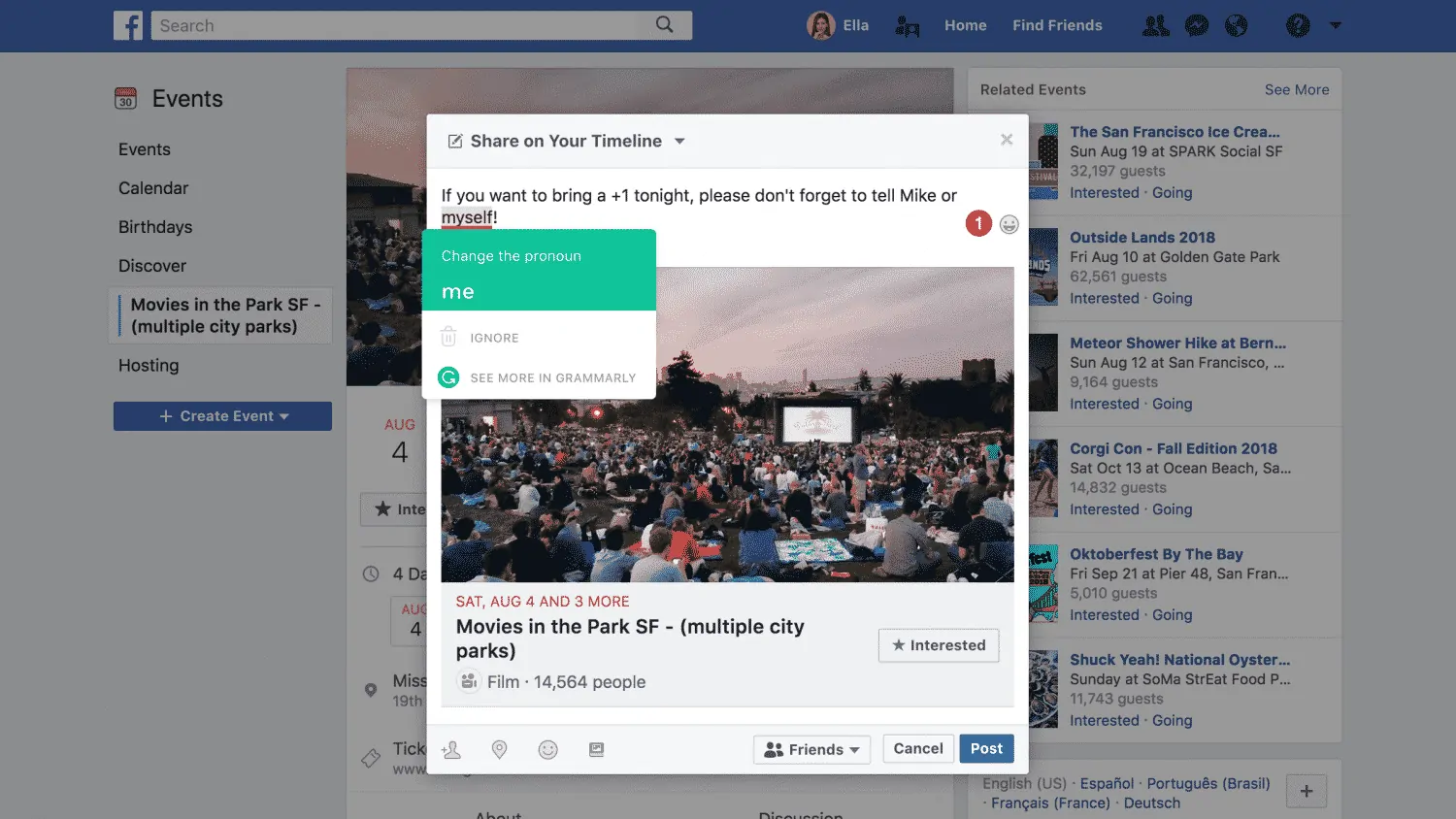
    grammarly extension

    • Grammarly for MS Office: Grammarly has also launched its add-in for MS Word and Outlook which significantly reduces critical grammar and punctuation errors by 10x as compared to Word’s Spell check.

    grammarly office

    • Grammarly Native App: Grammarly can also be downloaded as a simple application for Windows. It works as a drag and drop application and is quite effective as compared to various other applications like spellcheckplus, Reverso, Whitesmoke in this segment don’t provide.
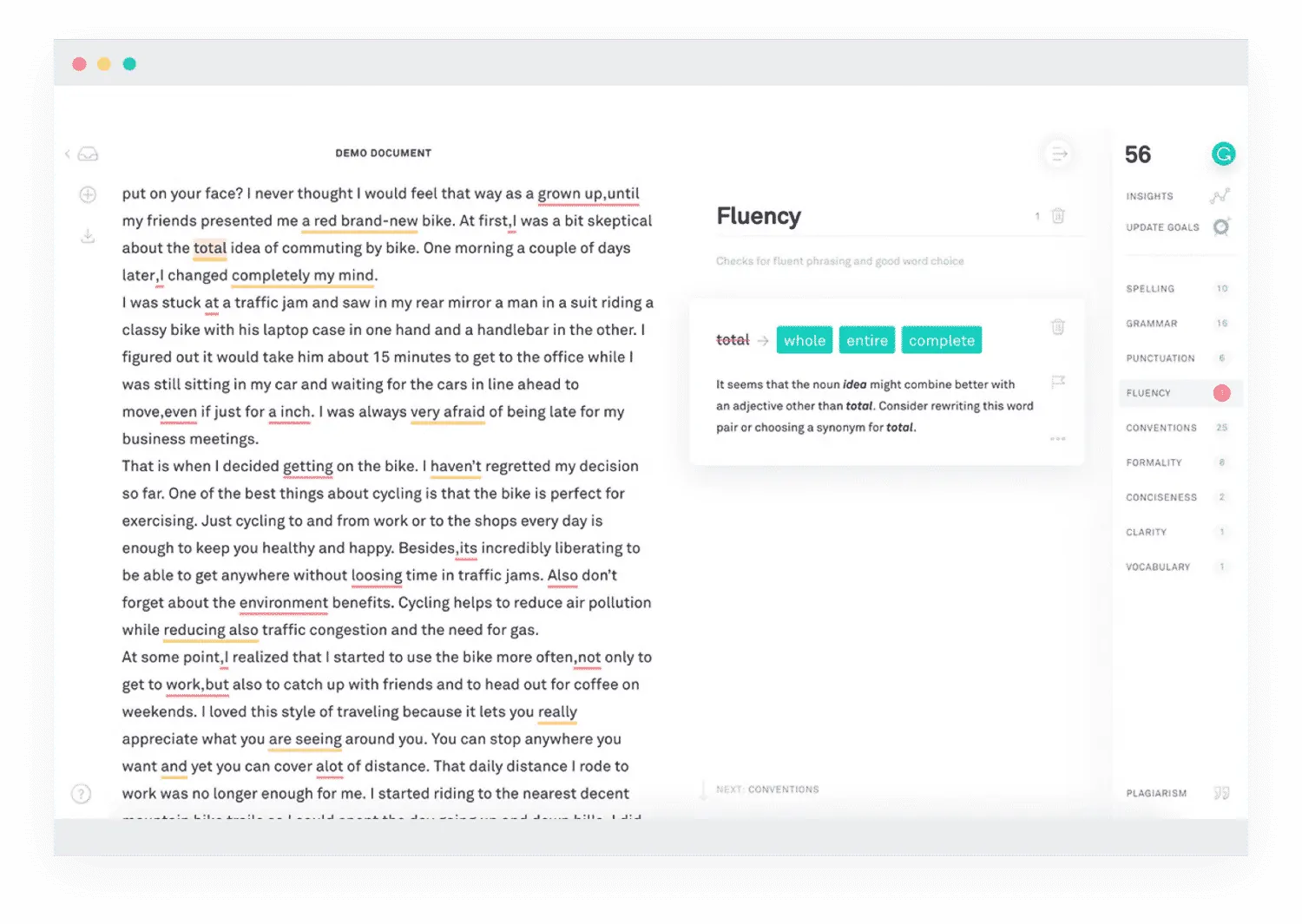
    grammarly native app

    • Grammarly Keyboard: Grammarly provides a free predictive and corrective keyboard for Android and iOs devices. This keyboard has features like grammar checker, spelling checker, punctuation correction, and vocabulary enhancements.

    grammarly keyboard

    Besides this, Grammarly also provides high-quality content to millions of online users through its Grammarly Handbook, Facebook and Twitter community & Grammarly Blog. They offer great tips regarding English grammar and writing style through fun activities and on the go discussions.

    How Does Grammarly Work?

    Grammarly is backed up with years of extensive research and super powerful algorithms, but it’s quite easy to use and highly efficient. As a SAAS company, Grammarly emphasised a lot towards easing the process of checking grammar while writing creatively and professionally in its initial stage.

    A decade back, many users used to refer to dictionaries, professors, or bosses to correct their mistakes in their articles and assignments. But with the advent of Artificial intelligence, Grammarly’s engineers capitalized on this need and developed a product that could tidy their work and simultaneously enhance their way of communicating and learning. With numerous upgrades in their product, Grammarly now boasts of being the simplest Grammar and plagiarism checker and guide in its platform.

    • While surfing the web, the free extension automatically detects any errors or issues with your writing or grammar on almost all websites the users are writing on.
    • Grammarly is a very lightweight easy-to-use application. You just have to copy and paste your English text into the editor, and it suggests you the correct grammar, spelling, writing style (different for work, personal, and academic), wordiness, punctuation and even let you know if the text is plagiarised from somewhere.
    • Grammarly not only corrects the users’ English but also provides accurate reasoning so that they can make an informed choice about why and how to correct the mistake.

    Grammarly’s Customer Segments

    A lot of people on the web use Grammarly to assist them in writing. With 15 million active users and 10 million Chrome extension downloads Grammarly’s team has to make sure that its users are having the first-class experience while using their product. In order to simplify Grammarly’s approach towards acquiring more customers, it branched its services for the following 3 broad groups of users:

    • Grammarly Edu: Students use this application for almost all of their educational writing needs – to proofread their essays and assignments, cite sources, and adjust their tonality according to the essay genre. According to the company, students who use Grammarly to write their projects, assignments, researches witness an increase in their writing grades apart from improved English and great communication skills. Grammarly has worked to improve its functioning with the help of the feedback that students provide and has also initiated student community programmes filled with activities to make them understand the importance of communication.

    grammarly edu

    • Grammarly personal: People around the world use Grammarly to write blogs and novels, proofread resumes, and develop content for their social media profiles. To ease out the process of proofreading and rechecking the write-up numerous times, Grammarly does it all in a single click. This AI tool also relies on users’ reviews to enhance the Grammar checker’s performance

    grammarly personal

    • Grammarly Business: Businesses and corporations have to be accurate and impressive not only with their numbers but their communication as well. Grammarly’s Business edition serves the purpose of the entire team in a single product. Its business model has helped well-known organisations like Dell, Cisco, Expedia & The Economist deliver effective communication. Grammarly provides priority email support apart from the highly functional admin console and tools in a centralised billing.

    grammarly business

    How Does Grammarly Make Money?

    Grammarly started its operation as a premium tool aimed at big enterprises like universities, corporate firms and organisations. The idea of turning the product into a freemium SAAS came to open up the product to more consumer segments and not because they were making losses (the product was making profits even when it was kept premium).

    When Grammarly switched to the freemium model it was already profitable with a huge customer base which helped the team fund its growth towards an efficient freemium model and drive in more acquisition. Within no time the company saw itself expanding their product in all dimensions so that the subscribers were actually using the product wherever possible. The company also recently raised $110M from General Catalyst to add more features and increase its customer base.

    Grammarly provides a watered-down version which is free of all costs across all platforms while the subscribers have to pay according to the subscription plans of Grammarly premium:

    • Monthly subscription – $29.95
    • Quarterly subscription – $19.98 which is paid as a one-time billing of $59.95.
    • Annual subscription – $11.66 paid fully as $139.95 USD.
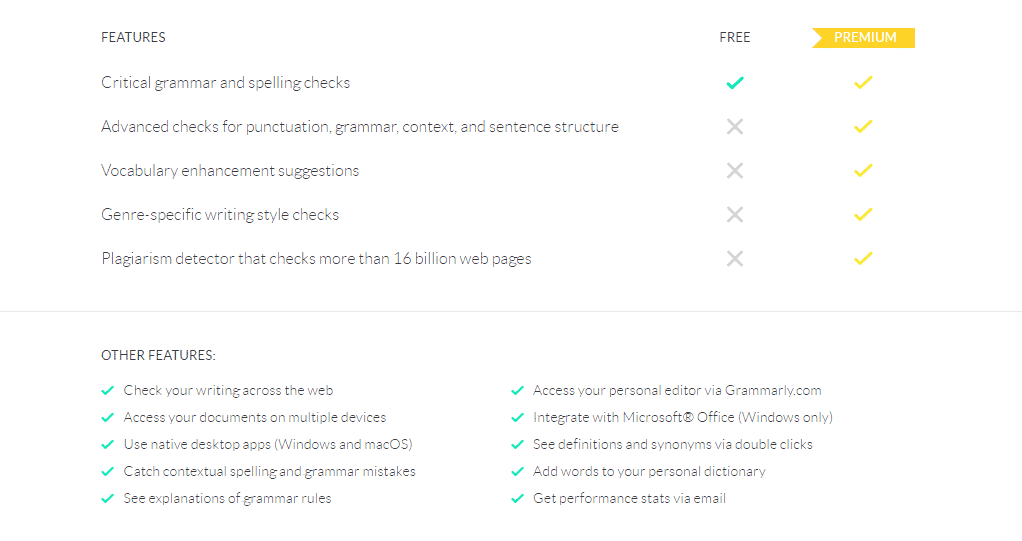
    grammarly features

    grammarly premium

    While opting for the Grammarly Business, the subscribers have to pay somewhere around $15 per member for a team of 100+ employees.

    Does Grammarly Sell Data For Money?

    Well, no.

    Grammarly specifically answers this question in its privacy policy –
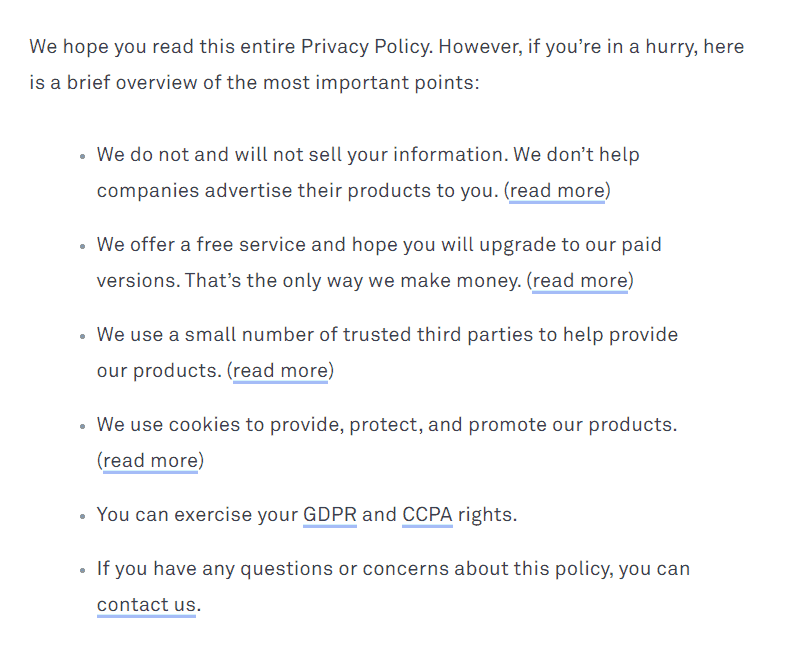
    Grammarly privacy

    What Makes Grammarly Successful?

    It’s said English is the elixir that the world can’t thank enough for.  English alone is spoken by one-quarter of the world’s population, more than 1 billion people study English as a professional subject, around 80% of the data across the Internet is stored in English, and more than half of the world’s publications are written in English. It’s true, and it has worked in favour of Grammarly. The plummeting metrics like users and revenue are one of the main aspects of Grammarly’s success more than any other competitor in this niche.

    Grammarly’s products have been tried and tested by more than 600 leading institutions and organisations. Grammarly has managed to become a licensed tool for official purposes by its enterprise users. Millions of students have improved their grades, English and communication skills with the help of Grammarly. A lot of professionals consider Grammarly to be their go-to tool for Grammatical assistance. The company also runs a Grammarly affiliates program wherein people can become Its promoters and receive cash rewards and various other bonuses. This way it has managed to rope in a lot of enthusiastic young minds who have benefitted from the likes of this product.

    The product has accomplished its mission to enhance the way people communicate and is constantly working towards revolutionising how people from different spheres of life and different identities communicate through their writing ability. Grammarly has motivated its hustling team which is always eager to achieve more, to create an exceptional experience for the users which has brought across the world’s best brains working behind a simple yet beneficial tool. Grammarly is an example of excellence and is going to illuminate even more writers and intelligent beings across the globe.

    Go On, Tell Us What You Think!

    Did we miss something?  Come on! Tell us what you think about our article on Grammarly Business Model | How does Grammarly Make Money in the comments section.
  • Product Hunt Business Model | How PH Makes Money?

    Product Hunt Business Model | How PH Makes Money?

    What if there were a community dedicated just to the developers and inventors? A platform where you get to meet new tech enthusiasts and developers, see what they are working on, share what you are working on, share insights, showcase your previous work, share a new product/app you found on the internet, and reach your goals while helping and taking help from thousands of developers all over the world?

    Well, that’s Product Hunt for you.

    What Is Product Hunt?

    Product Hunt is a Y Combinator backed startup which lets you share and discover new products, meet other product developers, entrepreneurs, and enthusiasts, and geek out about everything related to tech.

    The platform is a result of well-researched strategy which combines peer referrals with a forum-like community structure which lets you share your product or any other product you liked on the internet, ask questions, start a discussion, find similar products and makers of your niche, post jobs and events, chat and get inspired.

    How did Product Hunt become so popular, you ask?

    It’s all because of its founder – Ryan Hoover who actively cultivated the community in 2013, moderated the product listings, and curated the best products for the email newsletters.

    Besides this, the platform operates in a similar way to other community platforms like Reddit where the community decides what’s useful and what’s not with its votes. Other social and professional features like being able to follow other users, ask for advice and recommendation, job posting, and event and meetup posting makes it a one-stop tech resource for every tech enthusiast.

    Product Hunt Business Model

    Product Hunt runs on similar lines to that of any other social networking website business model where the company owns or adds no content but at the same time plays a crucial role in managing it.

    The main goal of the company is to keep the users engaged by maintaining the quality of the platform and adding more features which Product Hunt is doing very well.

    Here are the essential elements of Product Hunt’s business model.

    Products

    Almost everything on product hunt revolves around the products; be it yours or someone else’s. A product is brought to the community by hunting it which can be either done by the maker or anyone else from the community. Hunting is an easy process where you link to the product website, add images and descriptions, and state your views about the product.

    People get to upvote the product they like. Community members are also given an option to recommend the product to other members by stating its pros and cons.

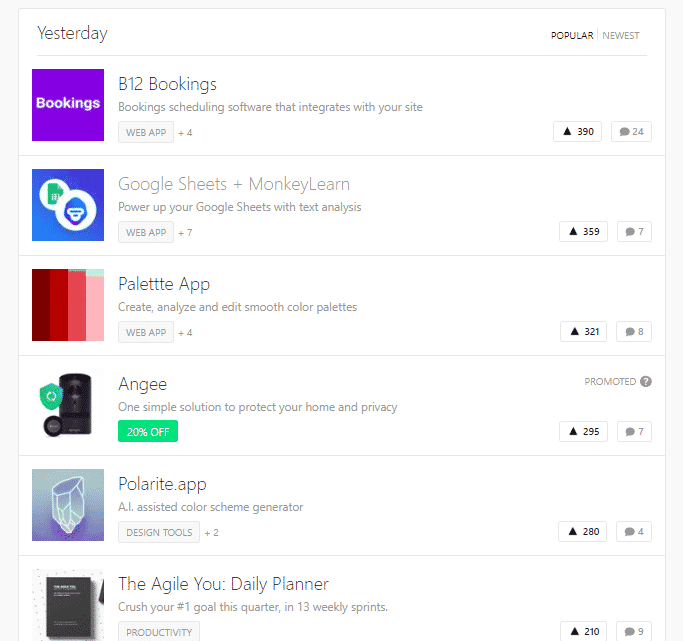
    Other than this, the platform also lists the best products of the day on its homepage to increase the engagement.

    Community Forum

    The whole platform operates like a community forum where people share new products, talk about them, and even ask for recommendation and advice on the ‘ask’ page.

    The company is also coming up with their new product – makers, which gives even more options to engage with other makers on product hunt.

    Ship

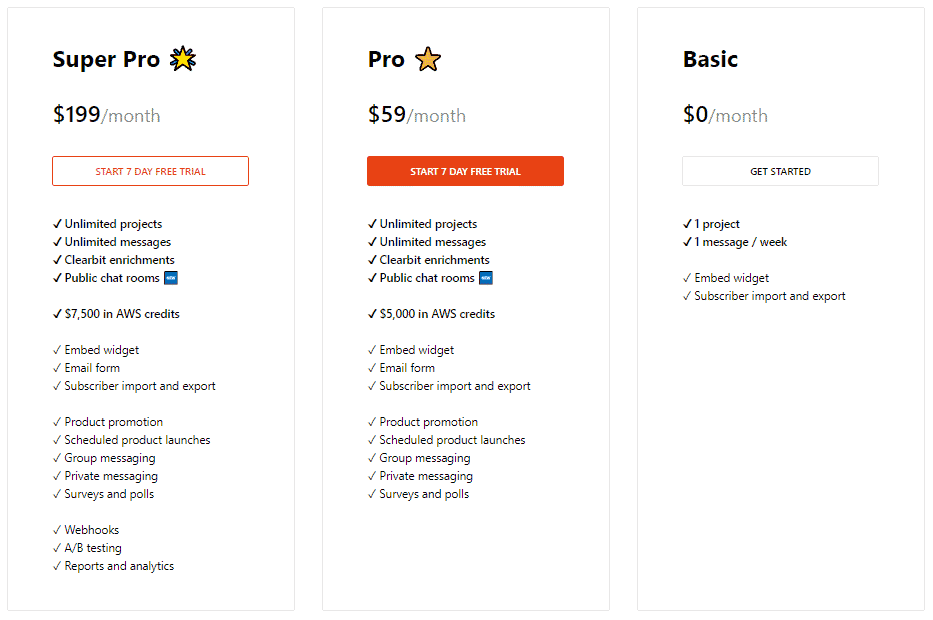
    Ship is a toolkit designed for the makers to test their MVPs, Beta, and final products, collect leads, gather extra information using surveys, create landing pages (with A/B testing), talk to the target audience, and integrate their product with hundreds of platforms like Zapier, Mailchimp, and Slack.

    Ship is designed keeping in mind every need of a product launch. Ship subscribers also get $7500 in AWS credits, access to Stripe Atlas, and subscriber insights from Clearbit.

    Jobs

    Besides the basic community features, Product Hunt also lets the users find the required partners, employees, and freelancers by posting jobs on the platform.

    Events

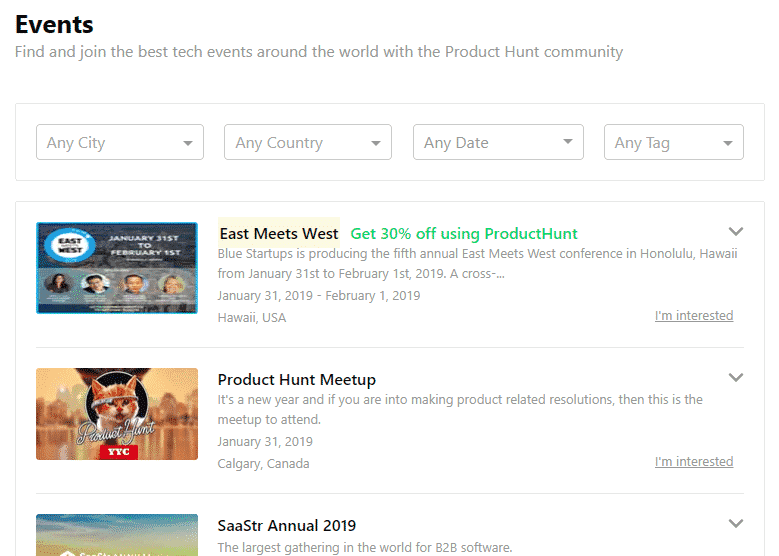
    Events section is another strategy to make the platform feel more like a community. Moreover, many tech event organisers feel Product Hunt is a better option to promote an event as –

    • It is free to host a PH meetup
    • Even if they promote an event, they get better ROI as compared to promoting on other social networking websites.
    • They get quality audience

    Newsletter

    Besides the daily product list on the website, Product Hunt also sends a daily newsletter with the featured list to hundreds of thousands of subscribers.

    Live

    Product Hunt Live is an AMA (ask me anything) for the entrepreneur community. It is a step ahead of usual listing where the founders come forward at the launch of their products to conduct a Q&A chat session with other members of the community.

    How Product Hunt Makes Money?

    Even though this startup was launched in 2013, Product Hunt didn’t earn a single penny until the end of 2017 as the platform was focused on building a community than making money out of it.

    However, things changed in 2018 and many premium features like Ship and promotions were added to the platform.

    Ship

    Ship operates on a freemium SAAS model where some services (1 project + limited services) are provided for free while other services (unlimited projects + AWS credits + other services) a provided if a maker subscribes to the paid version. Some of the services provided with ship are –

    • Landing pages – you can create beautiful and fully-customizable landing pages on PH itself.
    • Widgets – You can use embeddable widgets to create a buzz and collect leads using the email form, get answers using surveys widget, or chat with the visitors (individually and/or in group).
    • Targeting – Ship also lets you collect feedback from your users by sending targeted messages/emails based on their answers in the survey or feedback forms.

    ship product hunt

    Promoted Products

    Just like many other product listing websites, makers get a chance to promote their product on Product Hunt to execute their marketing and sales strategies and get more exposure.

    However, what differentiates Product Hunt from other product listing platforms is that –

    • Only one product is promoted per day
    • You have to reserve your dates to promote your product
    • Prices are not fixed but depend on the market demand for that day (usually ~$4,000)
    • Only the products that have launched on Product Hunt previously can be promoted
    • Promoted products have a fixed place (4th) in the daily products list.
    • Promoted products have a fixed spot in the daily newsletter.

    product hunt promoted product

    Promoted Jobs

    Promoted jobs is another revenue earning source for Product Hunt. Since the community is filled with talented tech developers, even big companies like Instacart, Invision, and Omni prefer to post jobs on the platform.

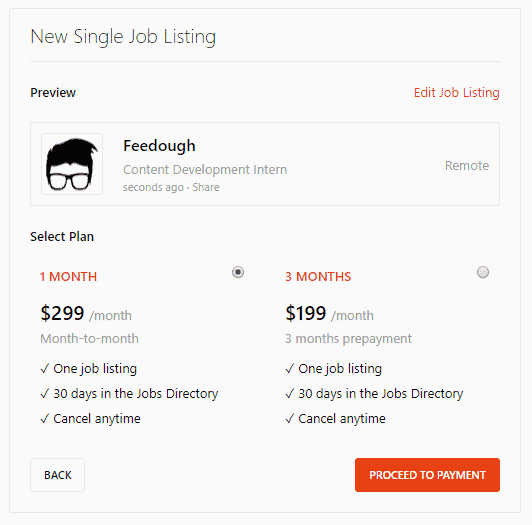
    Unlike products, posting jobs on Product Hunt isn’t free. You need to pay $299 for a job posting to be live on the platform for 30 days.

    There is also an option for premium listings open to limited (15) companies where they get dedicated spot on the Product Hunt homepage and jobs page.

    promoted job product hunt

    Promoted Events

    Even though promoted events is not as big revenue earning source for Product Hunt, it does add to the profits. The promoters/advertisers get to promote their products to millions of product hunt users, get PH merchandises to share with the attendees, and give special discount to people who registered for their events through PH.

    promoted events product hunt

    Future Of Product Hunt

    Product Hunt has been successful in positioning itself as a one-stop platform for all the tech needs. But that’s not all. According to Ryan, the company is planning to add many more features like –

    • A better mobile application
    • Sip – a mobile app that delivers infrequent, delightful tech news updates.
    • Maker Goals – an update where the makers will be able to showcase what they’re working on at the moment, get support, and help other makers.
    • Team Profiles – where makers get to showcase their team.

    The biggest advantage of Product Hunt is the community (which is one of the main reasons AngelList bought Product Hunt for $20 million). This community includes all tech enthusiasts from renowned brains of Instacart to not so famous developers who help each other without any profit motive. This model is very hard to copy and to compete with as the company has already capitalized on the network effect. The regular updates and add-on features makes it future even more bright.

    Go On, Tell Us What You Think!

    Did we miss something?  Come on! Tell us what you think about our article on Product Hunt business model in the comments section.
  • How To Write A Job Description: Guide For Beginners

    How To Write A Job Description: Guide For Beginners

    One of the most important functions of the Human Resources Division of any company today is Talent Management. Talent management plays an important role in the business strategy since it manages one of the company’s most important assets—its people.

    Talent management starts with understanding the jobs that need to be filled and the human traits and competencies needed for these jobs effectively. Job Analysis precisely determines the duties of the company’s positions and the characteristics of the people to hire them.

    An integral product of Job Analysis is the Job Description.

    What Is A Job Description?

    A job description is a written statement of what an employee actually does, how he or she does it, and the job’s working conditions. This information is then used to write a Job Specification—a part of the Job Description—that lists the knowledge, abilities, and skills required to perform the job satisfactorily.

    An entrepreneur can use a good job description not only as a valuable aid in the job-recruiting process but also as an outline for reporting relationships and working conditions. It can be used for:

    • Performance Management
    • Training and Employee Development
    • Compensation
    • Recognition and Rewards
    • Maintaining Discipline

    Elements Of Job Description

    What elements should a Job Description contain? What should the format of a Job Description be?

    Here is the answer:

    Job Identification

    It contains the job title, specifying the name of the job, such as inventory control clerk, management trainee, supervisor, etc. It might also contain the location in terms of its facility/division and department or the supervisor’s name and details. In cases where a category is used for defining the job, such a category is clearly stated.

    Job Summary

    A job summary contains the essence of the job and includes only its major functions and activities. For a supervisor, the job summary could be: ” The mailroom supervisor receives, sorts, and delivers all incoming mail property.”

    Responsibilities, Duties, And Authority Of The Incumbent

    This essentially forms the heart of the Job Description. It should present a list of the job’s significant responsibilities and duties. Example – For a sales role, the responsibilities would look like “achieve quantitative sales goal” and “determine sales priorities and fulfil targets”. This part might also specify the jobholder’s authority limits. This is essential because it specifies the limits within which the employee has to function and also gives him/her an idea of the kind of stakes involved. For example – a job holder might have the power to approve purchases up to Rs 10000, take leaves without informing up to 2 times a month, or hire a sales assistant after completion of specific targets, etc.

    When a Job Description is written for the disabled, care has to be taken to ensure that the person has the required skills and expertise to perform the job. Factors to consider are:

    • Whether the position exists to perform that function.
    • The number of other employees available to perform the function.
    • The degree of expertise or skill required to perform the function.

    Standards Of Performance And Working Conditions

    This section lists the standards the company expects the employee to achieve for each job description’s main duties and responsibilities. One way to set standards is to finish the statement, “I will be delighted with your work when….”. This sentence and the like should result in a usable set of performance standards that can be easily identified and measured. Example –

    Duty: Accurately posting Accounts Payable

    • Post all invoices within the same working day.
    • Allowed to commit no more than five posting errors each month.
    • Route all the invoices to the proper department managers for approval by the following day.

    The job description may also list the job’s working conditions, such as the noise level during work hours, any specific hazardous conditions, exposure to heat, etc.

    Job Specification

    Also known as employee specifications, this section states the human traits, qualifications, and experience required to perform the job. It shows what kind of person to recruit and on what qualities should the person be tested. Elements of job specifications are –

    • Qualification
    • Experience
    • Training
    • Skills
    • Responsibilities
    • Emotional Characteristics
    • Sensory Demands

    Company Profile

    Even though not visible at first glance, the company profile is still a very important element of a job description. It gives job applicants a glimpse of the company’s achievements, culture, and other important information. The profile also includes links to social media profiles, company mentions, and testimonials, which may help the job applicant learn more about the company.

    How To Write A Good Job Description?

    Writing a job description is easy. Thousands of people do that every minute. But how do you write a job description that stands out? How do you improve your job response and get more qualified applicants to apply for your job listing?

    Here’s the secret sauce –

    Write A Crisp Job Title

    According to a study, words like “ninja,”  “badass”,  “unicorn”, and “rockstar” are significant deterrents for women job seekers. Also, avoid using superlatives like brilliant, excellent, etc., as they give an impression of unrealistic goals and result in fewer job applications.

    Write a job title that explains –

    • The job responsibilities. For example, job titles that include a suffix or prefix like manager, chief, supervisor, etc.
    • What the person does on the job. For example, housekeeper, chef, social media manager, etc.
    • The job responsibilities and the job level. For example, chief accountant, head supervisor, electrical superintendent, etc.

    Keep your job title simple, crisp, and not misleading. For a Call Center Agent, write that you’re looking for a ‘Call Center Agent’, not a ‘Sales & Marketing Executive’. Such disingenuous job titles attract the wrong people, increase your workload, and you may even miss out on qualified candidates.

    Don’t Overexplain

    When writing a job description, be professional and relatable. Most candidates skim job descriptions, so try avoiding jargon and long paragraphs. Be to the point. You can always explain the intricacies in the later stages.

    Focus On The Structure

    Your job description should be visually appealing. Divide it into sections, write small paragraphs, and use bullet points and formatting tools to help skimmers find the details they are looking for.

    Write A Clear Job Specification

    You should know the difference between a job description and a job specification. While job specification is a part of a job description, it has a different role altogether.

    The job specification states what qualifications, experience, traits, etc., the company is looking for in an ideal job candidate.

    Writing a Job Specification for trained people is relatively simple, with the focus on previous job experience, quality of training, and other hard skills. The problem is more complex when you’re writing a job specification for untrained people. Here, the focus is on qualities such as physical traits, personality, interests, or sensory skills that show the person’s potential for performing the job efficiently.

    Using your own judgement to prepare a job specification would include the use of generic and universal traits that are desired from every employee. These would include soft skills like industriousness, ability to learn, taking initiative, displaying high integrity, etc.

    Basing job specifications on statistical analysis rather than only judgement is the more desired and difficult approach. The aim here is to statistically determine the relationship between some human traits and some criteria of job effectiveness, such as performance. This procedure has the following steps:

    • Analyse the job and decide how to measure performance.
    • Select personal traits that you believe should predict performance.
    • Test candidates for these traits.
    • Measure these candidate’s subsequent job performance.
    • Statistically analyse the relationship between human trait and job performance.

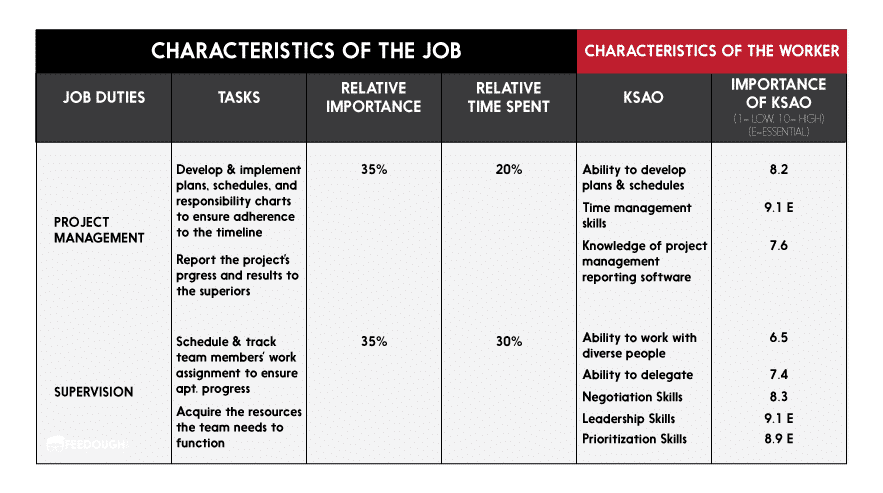
    Another method that can be used is The Job Requirements Matrix.

    A typical matrix uses five columns in the following manner:

    • Column 1: Each of the job’s four or five main duties.
    • Column 2: The task statements for the main tasks associated with each job duty.
    • Column 3: The relative importance of each job duty
    • Column 4: The time spent on each job duty
    • Column 5: The knowledge, skills, ability and other human characteristics (KSAO) related to the main job duty.
    • Column 6: Importance of KSAO
    The Job Requirements Matrix

    Focus On Other TouchPoints As Well

    Sell Your Company!

    Look out for touchpoints other than the job listing portal and ensure they are in synergy. These include company review websites like Glassdoor, Google My Business; your own website, your careers/work with us page, social media profiles, etc. A good practice is to mention the positive reviews and give these links in the job description.

    Sell Your Job

    Your job description should also contain triggers and compelling benefits that make candidates apply for your job instead of others in the listing. It should also include compelling reasons for candidates to leave their current jobs for good.

    Don’t Use These Strategies

    Job descriptions should be an offer to invite everyone who is capable to apply for the job. Make sure you stay away from these practices –

    Discrimination: Even an unconscious bias against any specific sex, gender, race, caste, etc., will cost you a lot of good candidates.

    Unrealistic Requirements: Identify what’s required and what can be learned during the job. Job specifications should only have minimum requirements. Based on the other stages, you can select the perfect candidate.

    Negativity: A job description aims to get as many job applications as possible. Try to be as positive as you can. Don’t sound rude or negative. Instead of framing the sentence like this – “don’t apply if you don’t have at least four years of experience”, frame your sentences in this manner – “This is a senior-level job. Preference will be given to candidates having more than four years of experience.”

  • Socializing At Work – The Do’s, Don’ts & How To’s

    Socializing At Work – The Do’s, Don’ts & How To’s

    Socializing at work has come a long way from being just making small-talk with your co-workers, to being a very necessary skill to ensure the improvement in the quality of workplace relationships.

    Those half-yearly or annual parties organized at your workplace are meant for more than just giving their employees a breather! They’re meant for letting employees socialize with each other outside the rather formal setting of a workplace.

    Although the norms of socializing at work have changed considerably in the more recent times, the fact remains that people often find ice-breakers and workplace socializing disadvantageous and sometimes even unnecessary. But the truth is that socializing at work can be quite advantageous.

    Why Is Socializing At Work Important?

    Socializing at work and friendly relationships between co-workers create a fertile ground for teamwork and prevent mistrust and unhealthy competition among them. A positive atmosphere is better for creativity and productivity as people are reportedly more innovative when they feel appreciated and supported at work— especially if the work culture itself is upbeat and enjoyable.

    The key is finding the happy medium where employees are friendly, polite and supportive, but not entangled in each others’ lives.”

    –Lynn Taylor, in ‘Tame Your Terrible Office Tyrant: How to Manage Childish Boss Behaviour and Thrive in Your Job.’

    • The most basic importance of socializing at work is to put the new members in your team at ease. Socializing with the new employee is a great way to acclimate them to their co-workers, duties, office environment, work-team and the various departments at work.
    • Socialization can also sometimes lead to co-workers sharing updates on projects that might otherwise be overlooked due to work pressure. Offering pointers during the break often put trainees at ease. Sharing opinions and knowledge with co-workers allows you to shed a light on individual opinions about making certain changes in policies or projects.
    • Socializing at work can also encourage team-work among employees. Constantly appreciating company winners, allowing them to show slightly informal gestures such as ‘high-fives’, or maybe just formal handshakes can bolster the morale and team-spirit of their co-workers.
    • Strong alliances can be formed through socializing at work. When there is a strong alliance between members of two different departments at work, it is easier to come up with conflict-resolution. Let’s assume there is a strong alliance between employees in production and customer service. In case of a product gone awry, the two employees can avert the crisis with their strong alliance.

    Know How To Socialize At Work

    Socializing With Seniors

    When it comes to socializing with someone who is your senior at work, certain things should be kept in mind. Sometimes, the difference in position at work can create a social obstacle. Appreciating your bosses and paying attention to what they say can go a long way in improving your workplace relationship with them.

    Socializing outside of work and work-related events is usually not a very good idea in this particular case. No matter how comfortable you are with seniors at work, it is important to always be respectful while talking to them. Use language that is appropriate for the workplace. Even when you’re not talking about work in general, it is important to leave a good impression.

    Socializing With Coworkers

    Socializing at work can help to strengthen the quality of workplace relationships, which enables the team to work together better. Co-workers who communicate about topics not related to work often collaborate better on team projects. Socializing can also help your co-workers put more of their opinions out there at work, which is always beneficial.

    Informal and relaxed conversations often strengthen bonds between co-workers. According to Kerry Patterson of New York Times Bestseller ‘Influencer’, much of what takes place in companies is done through the informal social network. Conversations at work can lead to trust and often provide opportunities to catch and solve problems before they get out of control.

    Socializing With Customers

    If your job requires socializing with your customers, it is very important to be able to converse about topics that are related to your work, their purchase, products and services they’re interested in, but also topics that lean towards your customers’ likes and dislikes. Build trust and bond with your customers by getting to know them.

    Much like socializing with seniors at work, avoid topics that could be too personal or inappropriate. Let your customer do most of the talking in the beginning. Be polite and get to know what your customers are interested in. This makes socializing a better experience for both you, and your customers.

    Points To Keep In Mind While Socializing At Work

    Although it is important to build workplace relationships, it is not always appropriate to do so during work. Socializing too frequently can prevent your co-workers from getting their work done, and may leave a bad impression as well. Passing someone in the halls, carpooling, during breaks and helping a customer are the perfect opportunities to socialize at work.

    • Be friendly and polite to the person you are socializing with, but do not get overly or inappropriately friendly either.
    • Listen to others, pay attention and respond to them appropriately.
    • Give sincere and honest compliments to your co-workers and customers. It shows that they matter and that their opinions are important.
    • Positive mannerisms such as saying hello, wishing them luck or a good day and smiling are also great ways to socialize at work.
    • Never take part in events you aren’t interested in just because it makes a good impression. Genuine interest is very important.
    • Respect and be tolerant of employees who have opinions that differ from yours.

    Bottom Line?

    Business leaders who foster a more humanistic, team-oriented and supportive workplace where all employees feel welcome and encouraged for putting their thoughts forward are known to be respected and appreciated more by their teams. After all, more work places are adapting themselves to being a tad more informal and flexible for their employees.

    Overall, socializing at work is a very advantageous skill. The world we live in is evolving rapidly, becoming a more social space for people with every passing day. We are hard-wired to work with each other for a common goal, and workplace socializing is one of the best ways to achieve that. Therefore, it is very important that socializing at work takes place, even if it happens well within its own boundaries.

    Go On, Tell Us What You Think!

    Did we miss something?  Come on! Tell us what you think about our article on socializing at work in the comments section.

  • Environmental Sustainability In Business

    Environmental Sustainability In Business

    In the last few decades, the world has decreased poverty, improved education and health sectors, fought unemployment and advanced excellently in technology. All these are a result of growth in the number of businesses in recent years.

    Now however, the world faces challenges such as climate change, overpopulation, water scarcity, etc. and the planet is on the brink of severe environmental crisis.

    A quote by American Astrophysicist Neil deGrasse Tyson says “The perennial cry to Save Earth is odd. Planet Earth survives massive asteroid strikes, it’ll survive anything we throw at it. But life on earth will not.” Thus, environmental sustainability is a topic that requires urgent attention as it is not the environment that we save, but ourselves.

    What Is Environmental Sustainability?

    Environmental sustainability is the process of maintaining development without compromising the future of our environment. Exploitation of resources, technological development, improving infrastructure, or any other development should be done in a way that does not exhaust the earth’s resources.

    On the contrary, exploitation of resources in the present has already brought our planet into a state of planetary emergency. Environmental problems keep piling up around the globe.

    With each passing day, life is made easier with innovative products and services made available to you by a lot of companies. These companies however in one way or another have their resources from nature but are mostly concerned about economic issues like profits, turnover, market value and shareholder values. Ecological concerns are left for the government to deal with.

    The government can arrange for awareness campaigns, establish laws, impose taxes (electricity & water), fines for littering etc. but all these are only effective to a small extent compared to the problem.

    A company selling its products and services to the people is more likely to get their attention as well as instigate a change. This is also due to the massive improvements businesses brought to the quality of life, hence, gaining general legitimacy. That is the reason this article will be mainly focussing on what businesses can do for environmental sustainability.

    Environmental Sustainability in Business

    For a long time, businesses have done little or nothing to help save the environment from the negative impacts. But some of these small and big organizations have significantly taken part in polluting the environment or engaging in unsustainable practices.

    However, as of today, the need for businesses to be eco-friendly and sustainable is increasing. This is because of the realization that going beyond environmental compliance makes good business sense and improves the chances of long-term success.

    Wondering what your business can do to save the environment?

    Here are 7 ways your business can help save the environment:

    1. Stop Wasting Paper

    With an abundance of electronic gadgets that can display all your e-mails and paper works, it is not a big step to stop printing e-mails or drafts. Enable sending documents across devices for quick and easy reviews. Also, a solution to the fax machine problem is that you can switch to a fax-to-email machine. This can make sharing of documents easier for everyone involved.

    This is highly important as it takes more energy to make 1kg of paper than it takes to make 1kg of steel.

    2. Telecommuting

    Young professionals of today undoubtedly prefer flexible work arrangements such as being allowed to work from home. This can reduce the carbon footprint of your business by saving money as well as energy used in office spaces every day.

    3. Switch To LED Lights

    If you are using incandescent bulbs, save 70 to 90 per cent by switching to LED bulbs. Both money and energy can be saved with this easy step.

    3. Making Filtered Water Available

    Most employees have the habit of carrying water or any other beverages with them to the office. You can find a lot of plastic bottles on the desks around your office. Even if recycling bins are provided, the first rule of protecting the environment is to reduce. Therefore, reduce first followed by reuse and recycle. Invest a water cooler or filter where employees can fill and refill their cups or bottles.

    Power Off Systems When Not In Use

    You are missing a great opportunity to save money and energy by not making it mandatory to switch off computers when not in use. In addition to computers, printers, copiers, and any other gadget using standby power have to be switched off.

    Reduce Travel

    Video conferencing is one way to save travel costs and to reduce carbon emissions. Arrange a webinar (a live interactive event that users join on their desktop or mobile device over the internet) which even your customers can join you. Video chatting can bring similar benefits as face-to-face conversation.

    Green Procurement

    Review your procurement policies and choose to source goods and services that have been produced sustainably and do not require a lot of packaging. You should also make sure supplies do not contain environmentally harmful substances.

    These are a few ways that may seem like small, baby steps, but they are sure to go a long way in helping save the environment as well as have an impression on the employees and customers. However, there are several companies who took big steps in being environmentally friendly and found success.

    Examples Of Businesses Taking Big Steps In Sustainability

    The Coca-Cola Company

    In April 2018, Coca-Cola was ranked 5th in a report by Influencemap, which ranks businesses according to their support of climate policies (aligned with the Paris Agreement of 2016). Coca-Cola has publicly supported initiatives such as the Clean Coasts Week in Ireland, which was an organized litter clean-up of beaches along Ireland’s coast. In addition, Coca-Cola has always been a key advocate of water efficiency.

    Unilever

    Unilever recently took a huge step towards environmental friendliness by switching to plastic-free, fully biodegradable tea bags for their PG tips tea-bags. Their recent commitments include projections to reduce the carbon footprint of the company to half by 2030.

    McDonald’s

    Source: US Green Technology

    In 2012, McDonald’s committed to removing deforestation completely from their beef supply chain by 2020. In addition, 85% of beef, coffee, palm oil and fish will be sourced from sustainable suppliers by 2020 as well. Moreover, they have announced that they will be reducing greenhouse gas emissions related to their operations by 36% by 2030. This is calculated to have the same impact as removing 32 million cars from the road.

    Tesla Motors

    Source: Behance

    Following Puerto-Rico’s disastrous hurricane Maria in September 2017, Elon Musk (the CEO, co-founder and product architect of Tesla) announced that Tesla would restore electricity to San Juan’s Children’s hospital with solar panels. Tesla also has strong support internationally for electric vehicle policy.

    These examples send a clear and strong message to consumers as well as businesses that governments are not the only ones responsible for making commitments to save the environment.

    Bottom Line?

    It is a common misconception that involving eco-friendliness into a business means extra costs. But the truth is, just like any investment that will give you profits in the long term, investing in saving the environment is sure to yield profitability and customer satisfaction in the long run.

    Go On, Tell Us What You Think!

    Did we miss something?  Come on! Tell us what you think about our article on Environmental Sustainability in Business in the comments section.
  • Deliveroo Business Model | How Does Deliveroo Make Money?

    Deliveroo Business Model | How Does Deliveroo Make Money?

    They say food makes its way to one’s heart directly, but have you ever thought how does that eye-pleasing and lip-smacking food makes its way to your homes, even before you grub on it? Well, if you’re in the United Kingdom, Deliveroo is doing this for you, every day.

    Their mission is very simple, to bring amazing local restaurants direct to everyone’s doorstep. It does not matter if you want milkshakes for breakfast, salad for lunch or Italian main course for dinner, Deliveroo brings every cuisine you can imagine to your home or office as soon as possible or as they claim, in less than 30 minutes.

    Making people feel the essence of eating piping hot food in a gourmet restaurant, Deliveroo has outshined everyone else in their niche. An outstanding food delivery platform, it is currently valued at around $2 billions and employs over 1000 people in their London office and has operations in several global locations.

    Deliveroo Business Model

    Founded in 2013 by William Shu and his childhood friend and partner Greg Orlowski, this food ordering and delivery platform is very similar to unicorn startups such as Grubhub in the United States of America and Swiggy in India.

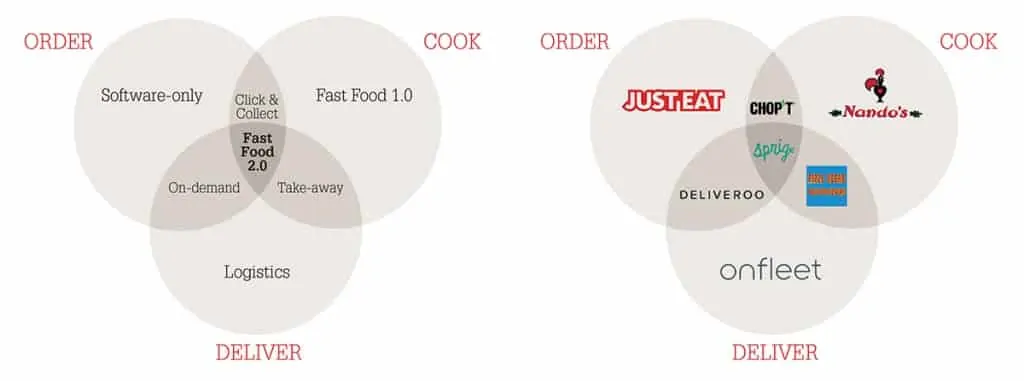
    Disrupting the traditional business models where ordering partners like Just Eat used to operate separately from delivery partners like Onfleet, Deliveroo combined the aggregator business model with the marketplace and logistics business model to create an all-new hyperlocal on-demand business model.

    Food delivery business models

    The company operates on a dual partnership model where it aims to solve the problem of bad restaurants and bad delivery. These partners are:

    Restaurant Partners

    deliveroo restaurants

    Restaurant partners are premium restaurants in the localities that may or may not offer a doorstep delivery service but are willing to expand their clientele by joining hands with Deliveroo. These Premium restaurants are some of the world’s best-known eateries and they have seen their businesses grow substantially since the time they’ve partnered with Deliveroo. According to Deliveroo, their revenues have increased at an average rate of around 30% every year. Some of the great opportunities that Deliveroo provides which various other food delivery businesses in the United Kingdom have failed to bring to these restaurants are:

    • Brand Promotion: These restaurants are constantly promoted through their channel and various growth programmes.
    • Support: Deliveroo provides its restaurants and gourmet kitchen partners continuous assistance in terms of Performance analytics to monitor the health of their businesses apart from the highly efficient 24×7 Customer support and dedicated account management.
    • Tech: Deliveroo has worked to provide these restaurants completely automated processes with easy to learn and simple to access technology which helps them take and dispatch orders in the simplest manner.
    • POS Integration: The company has also developed a Restaurant partner API which allows for an integration between Deliveroo and restaurants’ Point of Sale (POS) systems. This helps the restaurants to see all the Deliveroo orders in their POS system in real time.
    • Growth: Deliveroo also has an Editions program where it helps restaurants open new outlets in new localities based on their algorithm and technology-driven market research about the choices of food and eating patterns of people in that particular area. It usually takes around 8-12 weeks to set up a new outlet and guides the restaurants through all forms of logistical and managerial support. This way it not only increases its revenue but helps in multilateral growth of the restaurants as well, which other players on a similar platform do not.
    • Perks: Restaurants are also provided with several perks like free 4G internet, website & online presence, recruitment support, free employee benefits program, print & merchandising, free customer wifi, and discounted packaging materials, and several other discounted offers to help them grow.

    Delivery Partners

    deliveroo rider

    Deliveroo’s delivery channel consists of a fleet of over 30,000 riders, who pick up freshly prepared food from the restaurants and deliver it to the customers on their bicycles, motorbikes and scooters within a stipulated time of 30 minutes. These riders are one of the most iconic parts of this successful business model and Deliveroo gives a lot of credit to these hustling riders who are willing to go the extra mile to accomplish Will Shu’s mission of changing the food delivery platform scenario. These riders not only make sufficient amount of earnings but also receive great perks and assistance which have led them to prefer Deliveroo over other food delivery platforms. Some of these include:

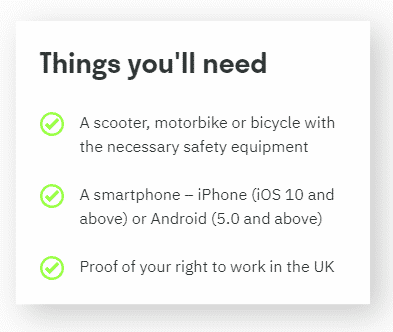
    • Flexible Work Hours: These riders are provided high flexibility in terms of work hours and can choose the time of the day they want to work for. Deliveroo rider app makes them plan their schedule accordingly where they simply have to log in and start riding anytime.
    • Tips & Referrals: Depending on the number of hours spent these riders earn around £7-8 per hour. They also get to keep all of the tips that the consumer gives at the time of placing the order on the app. This way an everyday rider usually earns £120 per week on an average. They also get £250 for referring riders to Deliveroo.
    • Insurance: Deliveroo makes sure that its riders are safe on the roads. Their vehicles are given pay on the go Insurance with the help of the Zego app which is integrated to this platform.
    • Other Perks: The riders are provided with high-quality safety gear, Deliveroo essentials, free international money transfers, coupons and discounts. They are also provided free online resources and they form social groups like Deliveroo riders’ community.

    Rider perks

    Deliveroo’s ultimate consumers are those individuals who want to buy food from premium restaurants and best eateries of the town but want to enjoy that facility in their homes and offices. Deliveroo has been highly successful in this segment because it has been able to cater to the needs of a large customer base in an efficient manner. Deliveroo not only pays attention to the food delivered by the restaurants but ensures that consumers get what they want. This is one of the main reason that Deliveroo has tried to provide customers with a great choice of meals to choose from, different cuisines for different meals. Deliveroo’s customers have been highly satisfied because of its simplicity and efficiency.

    How Does Deliveroo Work?

    Working towards its aim of revolutionising the experience of doorstep delivered food for its consumers, Deliveroo works all of this out in a simple but dynamic model. Deliveroo has done thorough market research and has performed extensive data analysis operations to develop a food delivery platform which is easy to access for the consumers, restaurants and delivery riders.

    Deliveroo’s main operational channel is through its app and website platform. These platforms have been curated by a technology-driven innovation and expansion process and the ordering of food takes place in the following way:

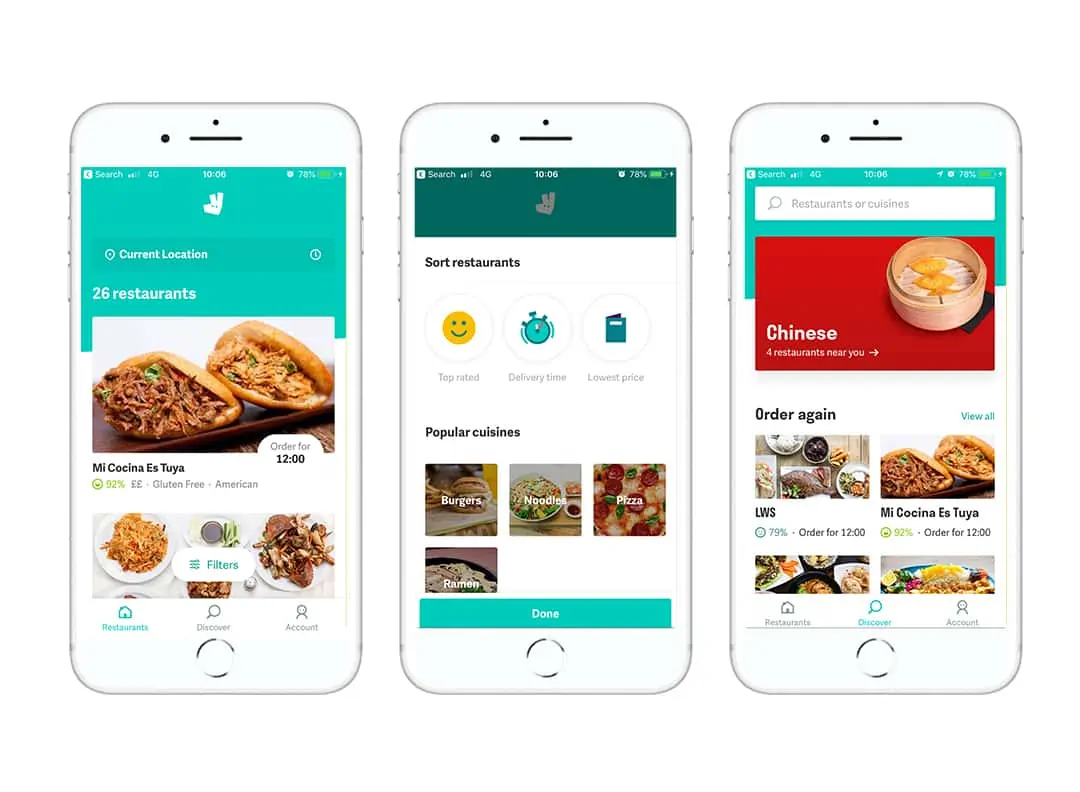
    • Consumers are provided with a wide choice of dishes from numerous cuisines which they look up on Deliveroo’s website or mobile phone application. They can select the locality they want to get food delivered to on the basis of the postal code and nearby restaurants are listed on the app.
    How deliveroo works
    Source: pixeloute.com
    • After having chosen their food from the partner restaurants, consumers can place their order and proceed to checkout by completing the payment through highly secure payment gateways such as Credit cards, PayPal, Apple pay and much more. The process of ordering takes hardly a minute to complete through the app.

    How deliveroo makes money


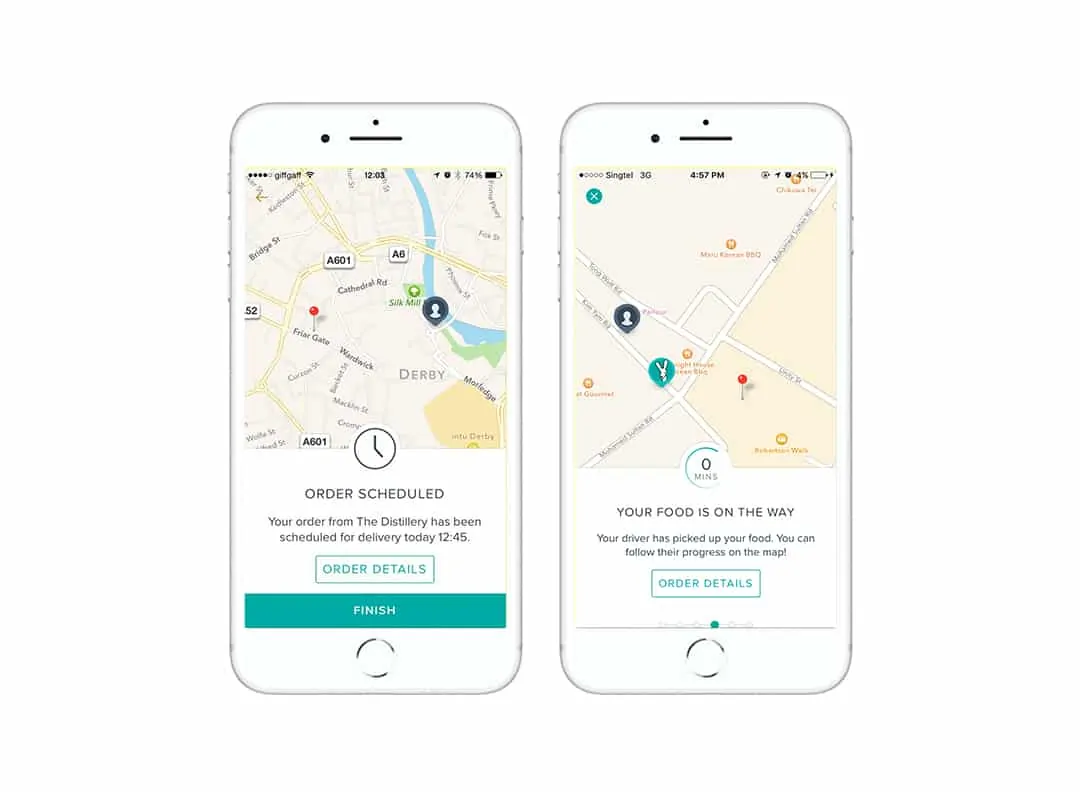
    • With the completion of the order, the restaurants are notified about the food to be prepared with additional information, if fed by the consumer. At the same time, the people who place the order can track their food on the Google maps API linked to Deliveroo’s application.

    How Deliveroo Operates

    • Since Deliveroo focuses a lot on the timely delivery of this delicious food, the riders are stationed within a 2.2 km radius of the eateries they sign up for so that the collection and the dispatch are quite convenient. As soon as the order is placed by the customer, these riders are notified on their respective app to reach the pickup location. These riders make sure that hot and sizzling food is delivered to the consumers in less than 30 minutes without the quality of the food being hampered.

    How Does Deliveroo Make Money?

    Sources of revenue:

    A big share of Deliveroo’s revenue comes from its direct customers. They charge a delivery fee of £2.50 per order and commission fees from their partner restaurants which usually falls under the bracket of 10%- 20% per order (restaurants are charged more if they have more than one on-demand delivery partner).

    Deliveroo also earns a fair share of the revenue from its promotions and partner perks which it provides to partner restaurants for a certain fee.

    Sources of Expenses

    Deliveroo pays its riders in the UK a wage of £6-7 per hour and additional £1 per delivery. Additional bonuses are paid to the drivers performing well during the peak hours. Riders with scooters and motorbikes are paid 25p more per hour and petrol costs of 0.09£ for every 1km. The company also runs some promotions where the riders are provided with the cycles and other equipment for free.

    Other expenses can be classified but are not limited to

    • Application and website development charges
    • Application and website maintenance charges
    • Salaries and provisions to full-time employees (Deliveroo has over 800 full-time employees all over the world)
    • Administrative costs
    • Advertising and marketing costs
    • Benefits provided to customers in the form of offers
    • Returns and refunds
    • Miscellaneous expenses

    What makes Deliveroo Successful?

    A key ingredient to Deliveroo’s success is its unique values which have been the strongest aspects of Shu’s brainchild. Deliveroo not only caters to the needs of the people but it also enhances their experiences with the help of their highly motivated team and its top-notch services. Deliveroo has laid emphasis on various principles which have helped it lead the on-demand platform. They are:

    • Accessibility & Convenience: Deliveroo has made food ordering as simple as it could have been. Starting from the choice of food to the doorstep delivery of amazing food, Deliveroo takes care that every part of this process is done in a quality manner. Its ratings in the global food scenario have been increasing at a great margin.
    • Technology: The company boasts its innovative strategies to serve the consumers. It has already been successful in reducing the delivery time by 20% with the help of its ‘Frank’ algorithm which is based on powerful predictive technology that evaluates the most efficient way of distributing orders based on the location of restaurants, riders and customers.
    • Affordability: Deliveroo has made sure that people can afford any type of meal at a normal price without losing the experience of dining in a restaurant at a meagre amount of money.
    • Brand Development: This startup has been able to create a brand of its own, all thanks to its indispensable services and plummeting numbers. Deliveroo has been expanding ever since, seeing revenue growth of around 650% every year. Deliveroo has grown an extraordinary amount of revenue for its high profile restaurant partners. Deliveroo’s seasonal programmes and advertisement campaigns have focussed on developing a strong customer base for the brand.

    Future of Deliveroo

    Deliveroo’s name takes its reference from Kangaroos, animals who are highly protective for their young ones. Similarly, Deliveroo has aimed to be the protectors of the dining experience. Their dynamic business model is profitable but has a lot of competition with respect to its services and the niche that it has targeted. The future of Deliveroo rests upon the significant changes in their revenue model to lower down the costs and maximise the profits for riders, restaurants and the company itself. The company is already operating in over 200 cities across 12 countries and is constantly innovating and expanding its operations to reach more consumers throughout the world.

    Go On, Tell Us What You Think!

    Did we miss something?  Come on! Tell us what you think about our article on Deliveroo business Model | How does Deliveroo work & make money? in the comments section.

  • The Decoy Effect Explained

    The Decoy Effect Explained

    What if Feedough changed its business model into a subscription-based business model where you’re offered 3 different plans to choose from –

    $5 per month – access to just business models articles on Feedough

    $9 per month – access to all articles on Feedough

    $10 per month – access to all articles plus team Feedough provides you with the consultancy service.

    Which one will you choose?

    If you chose the $10 plan then we’ve succeeded in employing the decoy effect to alter your decision-making process. Fret not, it’s not just us. This bias is employed in various fields such as finance, purchasing and even politics.

    But what exactly is the decoy effect and how can you implement decoy effect for your benefit?

    Read on to find out more.

    What is the Decoy Effect?

    Decoy effect is a phenomenon in which a given setup of two options, a third asymmetric choice is provided to tip the balance in favour of a specific entity.

    In simple terms, when given two choices, a person would make a particular decision based on his/her personal preference but when given a strategic decoy option, he is very likely to change his original decision.

    Let’s look at an experiment conducted by National Geographic to understand this better.

    Given a multiplex, people were segregated in two groups.

    The first group was given only two choices in popcorn; a small bucket of popcorn for $3 or a large one for $7.

    decoy effect popcorn

    The second group was given three choices; a small bucket for $3, a medium bucket (the decoy) for $6.5 and a large one for $7.

    decoy effect popcorn

    The experiment revealed that the first group rationally chose the small bucket of popcorn as the large bucket was considered a rip-off. However with the second group, due to the decoy, consumers opted for the large bucket of popcorn.

    Decoy Effect in Real Life

    Companies rampantly use decoy effect to boost their sales. Let’s look at the following three cases where the decoy effect has been employed.

    Decoy Effect In Pricing The Products

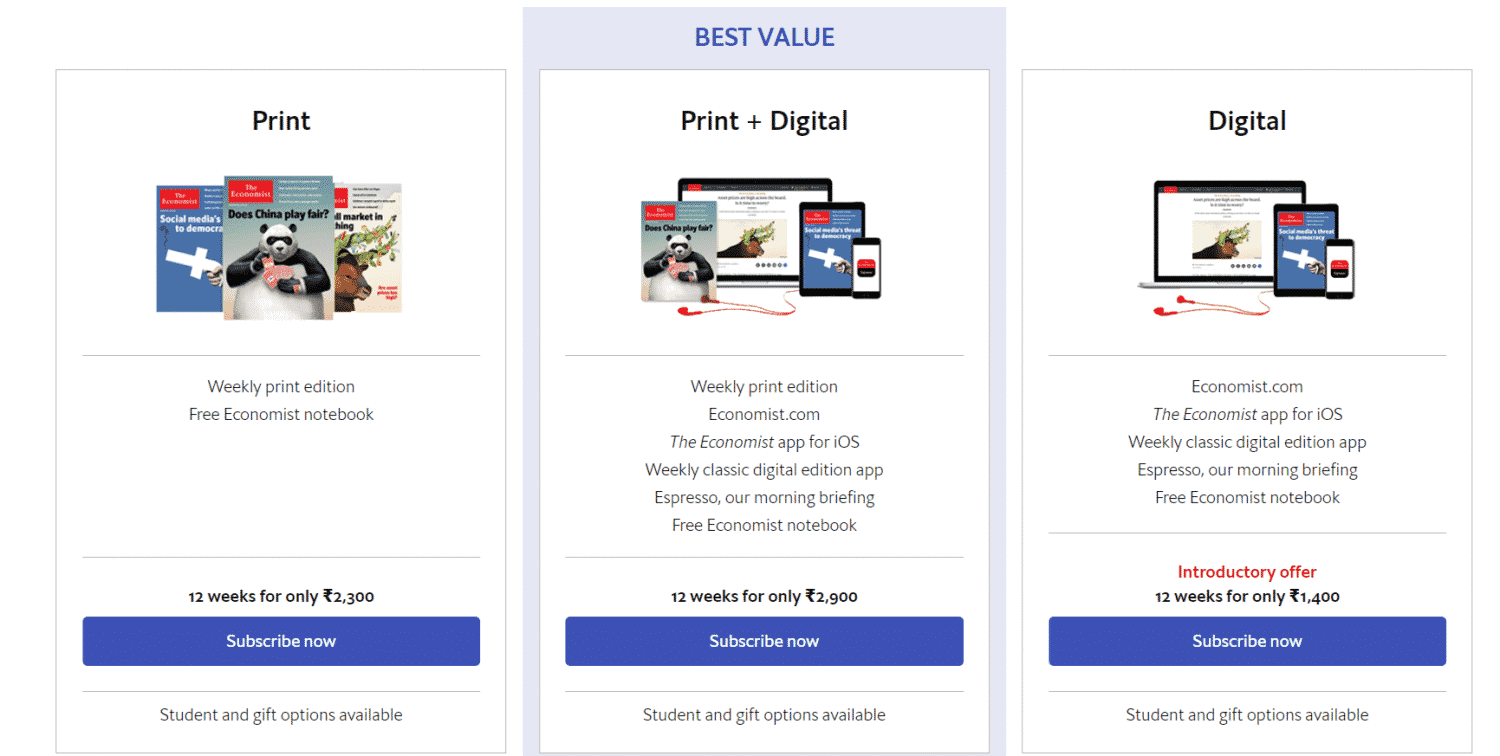
    economist pricing

    If you were to see only the two plans above you would make a reasonable choice according to your needs, and in this digital age people would likely prefer the digital option which is cheaper, but it does not boost the sales of the venture.

    So the next step is to introduce a strategic decoy which is priced higher than the digital version and slightly lower than the digital+print plan and, lo and behold, consumers who would have bought a print version are now more inclined to purchase the digital+print plan since it offers more flexibility.

    Decoy Effect In The Stock Market

    Decoy effect could also be used to influence the decision in financial markets. An extensive study based on gender, IQ and other parameters were carried out by Brittany Paris of the University of New Hampshire. In the study, the main focus was on how investors could be influenced to choose one aspect of a stock over another in different scenarios.

    The first group was only given two choices with

    Stock A: long-term growth of 30% and a dividend yield of 3%.

    Stock B: long-term growth of 20% and a dividend yield of 6%.

    The second group of investors were given three stock choices with the following features.

    Stock A: long-term growth of 30% and a dividend yield of 3%.

    Stock B: long-term growth of 20% and a dividend yield of 6%.

    Stock C: long-term growth of 25% and a dividend yield of 2%. (The decoy)

    The third group was given the following choices.

    Stock A: long-term growth of 30% and a dividend yield of 3%.

    Stock B: long-term growth of 20% and a dividend yield of 6%.

    Stock D: long-term growth of 18% and a dividend yield of 4.5% (The decoy).

    In the case of the first group, investors chose according to their personal preferences.

    With the second and third groups, a major shift in behaviour was seen. The second group investors chose a Stock A due to its dominance over Stock C and B while the third group of investors chose Stock B due to its dominance over Stock A and Stock D regarding yield.

    How Do You Use The Decoy Effect?

    1. Choose a plan or item you want to sell more of.
    2. Provide them with three options since if you offer two choices, the customer will choose according to their preference and if you give more than three, then you will make the customer face choice overload dilemma.
    3. Create an imbalance in the choice. The goal is to create a decoy. It should not happen that a decoy is preferred more in the new situation. For this reason, the decoy should look like a stupid option. You want there to be some imbalance.
    4. Price the decoy close to the option you want to sell more and marginally better than the low-priced option
    5. Be aware of the middle-choice tendency. People tend to choose the middle option when presented with three options because of our bias towards the central figure in a group of three. As you saw in the pricing of the economist pricing page, the plan that the company wants the user to buy the most is placed in the centre.

    Bottom Line?

    The decoy effect is subtle, yet present everywhere.

    It affects your consumption habits, and with careful observation, you could use decoy effect to grow your business as well be careful when making important financial decisions.

    Go On, Tell Us What You Think!

    Did we miss something?  Come on! Tell us what you think about our article on the decoy effect in the comments section.
  • The API Economy: A Comprehensive Guide

    The API Economy: A Comprehensive Guide

    While booking an Uber, you might have noticed the Google watermark at the bottom of Uber’s cab map. It is a no brainer that Uber uses Google Maps for integration of its primary function: Finding and connecting to nearby drivers. So how does this happen? Did Google help to develop Uber? Not really. Uber is just using the Google Maps API. This is similar to the Google Chrome extension you use on your browser. That brings us to the question:

    What Is An API?

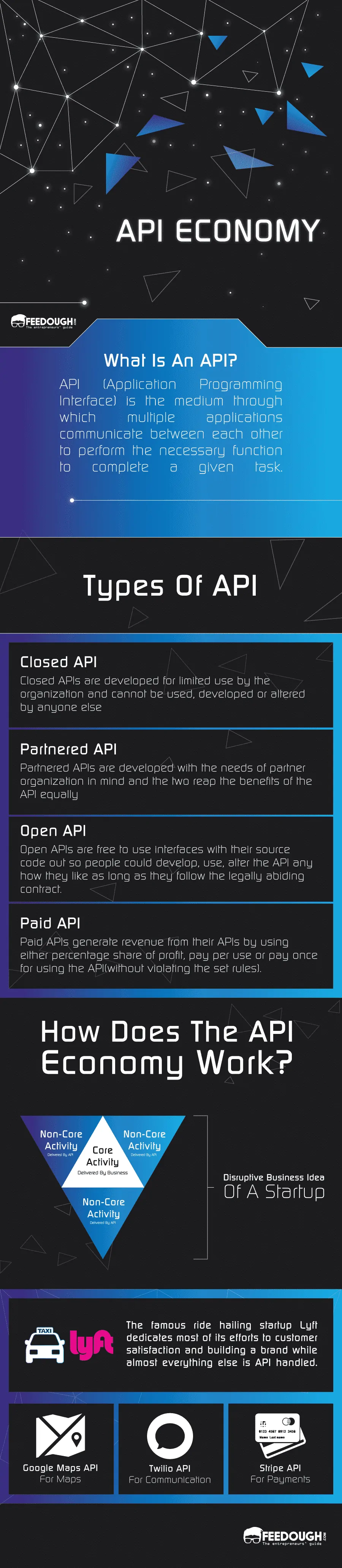
    API (Application Programming Interface) is the medium through which multiple applications communicate with each other to perform the necessary function to complete a given task. As the name suggests, it is the interface that handles the data and presents it to you in simpler terms that a user will comprehend.

    However, it is not limited to a single application, website or toolkit. APIs are capable of handling different products as long as their functionality remains the same.

    Why Is API So Popular Now?

    To explain this better, I will bring up an analogy. Imagine a car manufacturing industry:

    A car has a lot of parts: Engine, brakes, gearbox, shaft, wheels, etc. Now, let’s go to the very beginning, when cars were just invented, the manufacturer would have to make every part on their own from the ground and assemble it to get the final product: The car.

    However, now the scenario is different. There are multiple car manufacturers with multiple car models now. So do you think every car manufacturer makes each part and then assembles it to give you the car? It is hardly the case. It would obviously make sense if car manufacturers worked on their niche: Engine and Model design rather than other aspects of the car. This is because they now outsource the common parts from third-party manufacturers. For example, let’s say Ford and Honda both use a brake drum of the same specification. There is no need for both of them to manufacture it. They can outsource it from some XYZ company if it passes their quality standards. This third party company is capable of making the part and sustaining itself as an individual organization.

    So how is this relevant to API?

    APIs are functional blocks of code written upon a certain architecture for a particular program. Multiple such blocks come together to give you a functional product. Thus APIs are analogous to the third-party brake drum manufacturers. Applications can use third party APIs in their products without having to make the function block from the ground. Thus, most Applications work on their niche, their USP to make a successful product and the part that is not relevant to their niche functionality, they use an API to solve the issue. Thus, they have an error-free completely developed functional block that they don’t have to invest resources in.

    The API Value Chain

    When a business realises the need for a particular functionality or a missing link to improving the current flow of business, a nascent idea of the API is generated. The idea is further developed by the team to understand what it must absorb, engage and deliver to provide a seamless user experience. On satisfaction, the idea is executed in the form of developing an API.

    The API is an individually standing functionality block that is capable of interlinking multiple existing functions of a business. Thus this API can be consumed by other developers and partners to improve their business functionalities and help them create innovative products which serve their own customers.

    How Did The API Economy Bloom?

    API is not a foreign word that has landed on earth in recent years. Market forerunners have had API for as long as 15 years. But APIs didn’t hit the gold mines until fairly recently.

    The ProgrammableWeb directory eclipsed the 17,000 API mark in the first quarter of 2017. This means you are well capable of building a business from the ground up with the help of APIs. You got the tools, ingredients and all you need now is the “Secret recipe” to combine them all and sell them.

    API economy revolves around a more precise form of Software as a Service (SaaS), APIs as a Service(AaaS). Now Software as a service creates interaction between individuals but APIs as a service is provided for interaction between the software on the internet. Thus, giving you a wide array of options to choose from.  API is venturing into a new era of B2B service with fixable nuts and bolts that fit in right away.

    Why are we entering the era of the API economy? Simple answer: We used to be dependent on our software team to develop a particular function for our businesses, to maintain the system we had to employ a support team and so on. The basic job of adding a task was tedious, to begin with. But with the availability and convenience of APIs, all the aforementioned issues are a thing of the past.

    Let’s take the example of Lyft: Lyft started out by using Google Maps API for navigation, Twilio for communicating and sending updates and Stripe for payment. Pretty much everything was API handled except for customer satisfaction.

    Most businesses now realize the power and importance of APIs and thus the API economy is on a roll.

    How Do APIs Earn Money?

    Believe me or not, there are organizations that earn millions of dollars through APIs. Now APIs can generate revenue in multiple ways.

    API Economy Infographic

    Now the most standard way of generating traction and earning revenue is keeping your API free for a set period: Say, a free one month trial for potential buyers to realize the power and utility of your API and then chargeable beyond that month. Other systems include pay after a limited number of usage. Like the ones Maps API uses: You get the first 25,000 requests free and beyond that the API services are chargeable.

    Would Moving Towards An API Based Service Improve Your Work?

    The answer is highly subjective. If your work has some groundbreaking innovation, you might want to keep it to yourself for the sole purpose of traffic. But would that mean actual growth? Maybe not. Every internet giant has its API ready and rolling. You name it: Facebook, Maps, Twitter, Youtube and so on. You sure wouldn’t want to fall behind and lose market share to API providing competitors.

    Moving towards an API based product line would actually make more sense as your work gets out there helping more businesses and discouraging competitions, because if you keep your novel functional block to yourself, you may encourage some rip off programs to take your place in the sellable market. Forbes did claim 2017 to be the year of the API, so you sure wouldn’t want to miss the wave.

    API is a service you can use to provide service better. So if you are an API vendor or an API using partner, you are reaping benefits in both cases. API vendor generates revenue whereas API partner enjoys carefree service which is handled by the API developer at a nominal price. Thus, the API economy has gained traction in the M-business and the e-commerce world.

    Go On, Tell Us What You Think!

    Do you have a feasible API plan? Or are you thinking of incorporating one in your business? Let us know in the comments below.

  • Are Bloggers Entrepreneurs?

    Are Bloggers Entrepreneurs?

    The rise of social media and internet has also led to an increase in the number of bloggers worldwide. In fact, ‘blogs-to-riches’ has become the modern version of the traditional ‘rags-to-riches’ story.

    But the debate that has sprung up is whether bloggers can be considered entrepreneurs, given that blogs are more often than not, just websites with visual content on them.

    Society has begun to favour the more creative in the recent past, and that has enabled many artists to channel their work into a means of income. And while it may seem highly unlikely, starting a blog is, indeed, like starting a business in several ways.

    To understand if bloggers are entrepreneurs, we need to understand the roles and responsibilities of entrepreneurs and bloggers.

    Entrepreneurs vs. Bloggers

    An entrepreneur is someone who founds and runs a business, rather than working as an employee, assuming all the risks and rewards involved in the venture. The entrepreneur is the innovation, the source for the new ideas and fresh perspectives and plays a key role in any economy.

    On the other hand, bloggers are those who own and manage a blog, assuming all the risks and rewards involved in the venture. While there is a clear distinction between a blog and other startup ventures, the way a blog is run is no different. It is an independent source of information which is regularly updated. The blogger invests his resources into reading and researching the material that is relevant to update the blogs. And it is uncertain whether the blog will succeed or not.

    In both these cases, there is an input, a process and an output. The input for both bloggers and entrepreneurs is time and money. While the process might differ for bloggers and entrepreneurs, the principle remains the same- producing something that in return generates revenue. The output for both remains brand recognition, and money.

    Entrepreneurs, who are successful in taking on the risks and rewards of a startup, gain profits, brand-recognition and continued growth of opportunities. Most bloggers fit into this category. Hence the question –

    Can Bloggers Be Considered Entrepreneurs?

    Yes! Bloggers are entrepreneurs* (focus on the asterisk)

    For bloggers, their product is their content. They promote their content as any entrepreneur would promote their products or solution to a problem. But hobby bloggers – who blogs about anything and everything (even their daily journal) on free blogging platforms like Wordpress.com and Blogger and have no intention of taking it to a professional level by registering a custom domain name and forming strategies to maximise revenue cannot be considered as entrepreneurs.

    The other professional bloggers come under a special category of entrepreneurs – the infopreneurs. An infopreneur is an entrepreneur who makes money by collecting, organizing and selling information mainly in a niche market (online and offline). The term is a portmanteau of the words information and entrepreneur as the infopreneur makes money through information by recognizing knowledge inadequacy state.

    The rise of social media and self-publication tools has made it possible to get a quicker and cheaper foothold as infopreneurs. Sites like WordPress, Facebook, Blogspot and YouTube have made it easier for infopreneurs and anyone who wishes to share information distribute it within seconds for free, while also allowing them to monetize their sites.

    So, yes, bloggers who have taken up blogging professionally are entrepreneurs.

    Examples Of Bloggers Who Are Renowned Entrepreneurs

    1. PewDiePie

    PewDiePie
    Source: Medium

    Felix Kjellberg, more popularly known as PewDiePie by his viewers, is a Youtuber, a comedian and a video-game commentator. PewDiePie began by selling prints of his Photoshop art on the internet to fun his videos on YouTube in his early days as a content creator. As of 2019, he has over 80.3 million subscribers with over 19.9 billion views on his YouTube channel.

    PewDiePie’s initial videos comprised of Let’s Play styled gameplays and commentaries. His more recent work consists of formatted vlogs and his interaction with his audience. His coverage of indie games has resulted in the Oprah-effect, as in, boosting the sales for the titles he plays.


    PewDiePie currently holds the title of having the highest number of subscribers on YouTube and was briefly overtaken by T-Series in 2018. He has been named one of “The World’s 100 Most Influential People” by Time magazine. He was also among the Top Influencers-Gaming 2017, 30 Under 30- Hollywood & Entertainment 2016, and 30 Under 30- Europe- Gaming 2016, in Forbes.

    A large portion of PewDiePie’s revenue comes from his partnerships and YouTube ads alone. He also has his own line of merchandise named ‘Tsuki’, along with his games ‘PewDiePie: Legend of the Brofist’, ‘PewDiePie’s Tuber Simulator’ and ‘Animal Super Squad.’ He has also written a parody of self-help books titled ‘This Book Loves You.’

    2. Ree Drummond: ‘The Pioneer Woman’

    Ree Drummond
    Source: Food Network

    Ree Drummond started out with a traditional blog titled ‘The Pioneer Woman’. Her blog posts comprised mainly of her country life in rural Oklahoma, U.S.A, with her rancher husband, homeschooling her children, recipes, project updates, photos of her town, and stories about family and friends.

    Drummond has since appeared on the cover of People magazine, and her show on Food Network, also titled ‘Pioneer Woman’, which is currently on its 21st season. She also owns a house-wares brand, a restaurant, a magazine and a hotel.

    Ree continues to blog on The Pioneer Woman, in spite of all her other commitments, and often writes blog posts for Land O’Lakes as well.

    Ree’s blog is a reminder to bloggers to use a clear and genuine voice to reach out to their audience. Her blog remains just as folksy and friendly as it did when it first began. Her audience is captivated by her attempt at creating a window to her life. Even though Drummond is a skilled writer, she didn’t create a persona to serve a target audience, and this authenticity is what made The Pioneer Woman the success it is today.

    Neil Patel

    Neil Patel is the co-founder of online companies like Crazy Egg, Hello Bar and KISSmetrics. He helps companies like Amazon, HP, NBC, GM, and Viacom grow their revenue. He is a digital marketing entrepreneur and a New York Times best-selling author.

    Patel has been featured as the top influencer on the web by The Wall Street Journal, Top 25 Marketers by Forbes, Entrepreneur Magazine’s 100 Most Brilliant Companies, Top 100 Entrepreneurs Under 35 by the United Nations, and Top 100 Entrepreneurs under 30 by President Barack Obama.

    neil patel

    In more recent times, Neil Patel has garnered success with his personal consultancy blog where he shares his knowledge with his massive fan-base. His first blog, ProNet Advertising was started in the year 2006. ProNet was named the Best Social Media Blog by Search Engine Journal, and also featured in Technorati’s Top 100.

    Currently, he is focused on Crazy Egg, and his own personal blog and continues to inspire millions of readers globally.

    https://www.youtube.com/watch?v=gKIi8y7Nrh0

    Chiara Ferragni: ‘The Blonde Salad’


    Chiara Ferragni
    Source: Marie Claire Australia


    Chiara Ferragni is a household name among fashion-watchers. The Italian designer and blogger was initially a law student with a personal blog titled ‘The Blonde Salad’. Her diary-entry styled writing on her posts brought in a lot of questions about her wardrobe from the readers, which set her in the direction of a fashion influencer.

    Chiara currently has over 15 million followers on Instagram and has featured on several international magazines. She is the first fashion influencer to be featured under the Harvard Business Review case study. Mattel also had a special edition Barbie made in her likeness. Ferragni was also listed as Top Fashion Influencer in 2017 by Forbes.

    Chiara Ferragni used her influence on Instagram to reach out to her audience and expand her sphere of influence. The Blonde Salad today is a digital fashion magazine with its own online store.

    https://www.instagram.com/p/Bsi0l-iBNrP/

    Her blogs became so popular because she wrote about what she loves– fashion, friends, family and travel. She is a natural collaborator and has collaborated with fashion houses like Gucci and Chanel. Maintaining visibility on her social media platforms via creative promotion and collaboration with other content creators also helped with her rise to success.

    Casey Neistat: Beme/CNN

    https___blueprint-api-production.s3.amazonaws.com_uploads_card_image_700413_4bd58e35-186f-48eb-b3af-5c3324e98df4.jpg

    Casey Neistat’s YouTube video about NYC Bike-lane safety drew the attention of viewers worldwide, including the city officials. With no background in film-making, Casey Neistat started video-blogging (vlogging) as a way to tell his stories to the world through the means of art.

    Neistat is now a vlogger-entrepreneur who represents Samsung, and has built digital video tools for CNN after he sold his social media video app ‘Beme’. He is also a producer and vlogs about his global travels, while also sharing product reviews about his wife Candice Pool Neistat’s fashion company, Billy.

    The takeaway from Casey Neistat is to do what you want to and use the gear you have to make it happen. According to Neistat, all you need to vlog is a smart-phone, an internet connection and a good idea.

    Points To Be Noted For Newbie Bloggers

    • Share the love. Make sure that you write about what you love and don’t hesitate from adding a personal touch to your blog.
    • Interact with your audience.
    • Reach out to other content creators in your niche for creative collaborations to increase your reach on social media platforms.
    • Keep your blog as authentic as possible. Don’t create a persona that serves a specific target audience. Be yourself.
    • Keep the communication open. Allow your readers and potential collaborators to reach out to you over social media platforms.

    Bottom line?

    Blogging may seem like an unrealistic choice of career. But with the right mindset, dedication and consistency, your blog can become a sure-shot means for earning income. The success of a blog, however, requires hard work and adept marketing skills, which are essentially the same skills required by any good entrepreneur striving for success.

    Bloggers also have to take care of the management and administration of their blogs. They also have to source content and connections directly or indirectly. Eventually, the blogger is the one responsible for the success or failure of their blog, which is another trait they share with entrepreneurs.

    Bloggers, thus, have all the necessary traits that entrepreneurs have, and also have the potential to rise to entrepreneurship if they choose to do so. With the right contacts and collaborations, bloggers can convert their posts into a means of generating revenue.

    Go On, Tell Us What You Think!

    Did we miss something?  Come on! Tell us what you think about our article on affiliate marketing business model in the comments section.
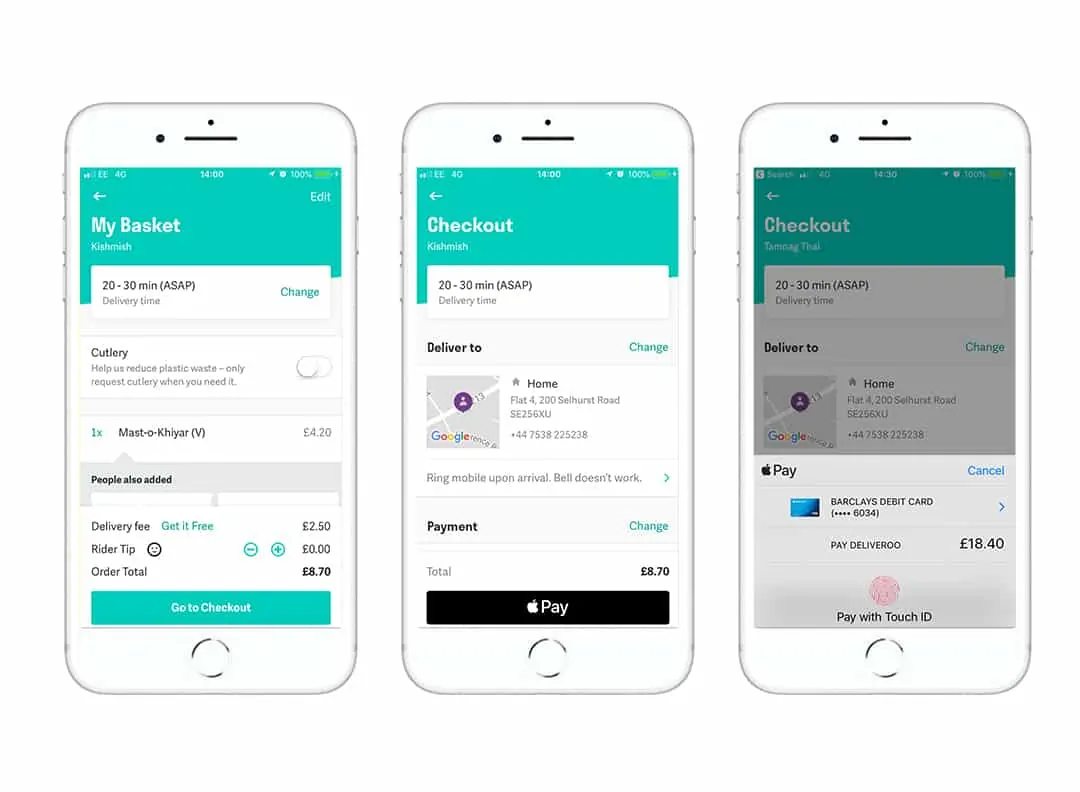
  • Affiliate Marketing Business Model Explained

    Affiliate Marketing Business Model Explained

    The commission-based business models have existed from long before the advent of the internet. Even though this model doesn’t involve developing a product to sell, they make use of their expertise of influencing buyers to buy a partner’s product while taking commissions for the same.

    With the advent of the internet, this business model has even gotten a new name – affiliate marketing, and the people who exercise affiliate marketing have come out to be known as affiliate marketers.

    If you’re new to affiliate marketing and want to know how affiliate marketing works and how you can make money out of it, you’re at the right place. Here’s a complete guide to the affiliate marketing business and revenue model.

    What is Affiliate Marketing?

    Affiliate marketing is a revenue earning strategy of promoting other company’s products and charging commissions for every sale that you make.

    Affiliate marketing used to be a sought after passive income source some years ago when affiliate marketers used channels like blogs, videos, and even social media profiles and pages to promote partners’ products. However, with an increasing number of people and companies opting for this revenue earning strategy, affiliate marketing has now become a full-fledged online business model where the entire business is developed to promote and earn money by making people buy other company’s products.

    Affiliate Marketing Business Model

    If you’ve ever searched for smartphones reviews before making a decision, you’ve come across an affiliate marketing business. These businesses attract the audience by posting reviews, tutorials, rankings, deals, suggestions, etc. and give the users a link to buy from the partner website. Whenever a user completes a purchase after he has clicked on that link, these businesses earn a commission.

    Mostly the affiliate business model involves the interaction of 3 or 4 parties depending upon the type of partnership between the affiliate and the company which owns the product. These parties are:

    Affiliate (Publisher): the party which dedicates its time and resources to promote a third party product to its target audience in return for commissions on every successful sale referred by it. Affiliate consists of bloggers, vloggers, social media influencers, etc.

    Merchant (Advertiser): the actual seller of the product. It partners with the affiliates to increase the sales of his products. A merchant can be an individual selling a small course to a big company like Amazon selling millions of products.

    Network: Most of the times, there’s a middleman which connects the merchant and the affiliate and also takes care of the payments and the product delivery of the merchant. In such cases, the affiliate is in the direct contact with the network and not the merchant.

    Customer: The customer is the actual person who ends up buying the product after being referred by the affiliate. He might or might not know about the partnership between the affiliate and the merchant.

    How Affiliate Marketing Works

    How affiliate marketing works

    As we’ve already discussed, the affiliate business model works on the principle of commission. Merchants advertise and sell their products through partner (affiliate) websites and other mediums but don’t usually pay anything for just the placements of the ads and links. They pay commissions for the actual sales or measurable success like leads collected.

    The way affiliate marketing works is very easy to understand. It is a pay-for-performance model. Affiliates are provided with a unique link which includes their unique identity code. Every click, lead, and sale coming from this link is tracked by the merchant or the network and the affiliates are paid according to the contract (per visitor referred, per lead collected, or per sale).

    This model is a win-win situation where the affiliates receive the benefit in a similar proportion to what they help merchants make.

    Some merchants even pay a commission every time the referred customer renews his subscription or buys the product again. This is known as rebill.

    How To Start An Affiliate Marketing Business

    Starting an affiliate marketing business is as easy as starting a website and as hard as selling your own product.

    It is a different venture altogether.

    You need to gain the trust of your audience as a neutral brand and form strategies to make them buy the products you refer to them. Here’s a detailed guide explaining the affiliate marketing process to help you get on the right course.

    Choose Your Niche

    The niche is the backbone of the affiliate business. While most people are inclined towards the tech or similar niches, affiliate marketing isn’t limited to technology products and services.

    Pick a niche that you’re passionate about. Affiliate marketing is a game of patience. One can easily get bored of the niche he’s not passionate about.

    There is an affiliate opportunity for almost any niche you can think of.

    Like home décor? Designer Living offers an affiliate program.

    Interested in Makeup? There are 50+ companies offering you commission to sell their products.

    Pick a niche which is profitable. There’ll be no one to stop you if you find a profitable niche that you are passionate about. Pick a niche where either the demand of the products is high or the products are sold at a price where you’ll get a good commission. You can check Amazon’s bestseller page, ClickBank, Google Trends, Pinterest, Etsy, Aliexpress, Reddit, etc. to find what’s working and what’s not.

    Choose a niche where there is room for another affiliate marketer. Niches like smartphones, laptops, etc. are so competitive that new affiliate marketers have a very less chance of succeeding.

    Research Affiliate Programs

    Once you select the niche your business will be based on, it’s time to select the offering. The offering can be in the form of physical products like makeup kits, smartphone, headphones; digital products like ebook; or service like SAAS, course, etc.

    Head over to ClickBank, Commission Junction, or Amazon Affiliates and look out for the affiliate marketing program and products that suits you best.

    It’s better to select an offering having niche demand and low affiliate competition. Select a product where you’ll get enough return; where commission you’ll get is enough (over $40) or where you expect high sales.
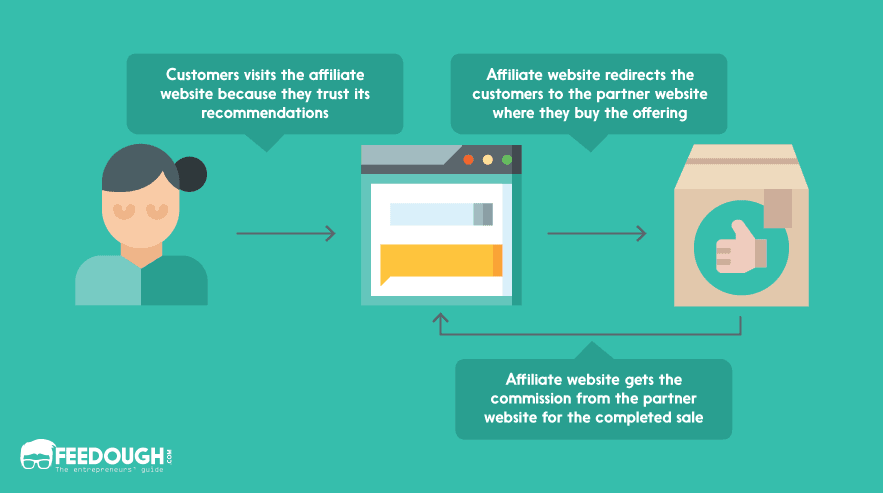

    Build & Market A Channel

    Once everything is ready. Start building your channel. It could be a website, a youtube channel, or a social media profile.

    Affiliate marketing websites either save the effort and time or the money of their users. That is, you can either develop a brand identity of an influencer or a niche expert and post reviews, tutorials, rankings, suggestions, etc. or create a deal website where you stand out as a channel which lets the users save money.

    Promote The Affiliate Product

    We suggest not starting with the product promotion right from the start. Build an authority first. Post quality content and build trust among your visitors by interacting with them and answering their questions. It makes more sense to take off with your revenue earning strategies once the trust is built.

    Repeat

    Keep on adding more products and better quality content on your channel to grow.

    Best Affiliate Marketing Websites Examples

    While there are innumerable affiliate marketing businesses out there, here are three notable examples of profitable affiliate marketing websites.

    LifeWire

    lifewire affiliate website

    LifeWire is among the best tech affiliate marketing websites. The website posts tech related content like how-to guides, buying guides, fixing guides, etc. to build the authority and trust and capitalizes on the same to sell affiliate products like best gaming phones, Bluetooth keyboards, etc.

    WireCutter

    wirecutter affiliate website

    WireCutter is a multi-niche affiliate marketing website which has built its authority by posting product reviews and suggestions. The team consists of niche-experts who try the products before posting anything about them. This guarantee has increased the trust among the buyers who tend to choose the products referred by WireCutter than any other website.

    ShoutMeLoud

    shoutmeloud affiliate website

    Harsh Agrawal is a blogging guru followed by thousands of bloggers. He capitalizes on this trust to suggest blogging tools (affiliate products) to his followers and other website visitors.

    Go On, Tell Us What You Think!

    Did we miss something?  Come on! Tell us what you think about our article on affiliate marketing business model in the comments section.