Feedough Logo

Blog

  • What Is Lifestyle Marketing? [Definitive Guide]

    What Is Lifestyle Marketing? [Definitive Guide]

    For ages, marketing has been the most premium channel in generating a brand value for a product. From the car you drive to the shampoo you use, you are looking at the brand value of the product you use. So what exactly helps you decide on a particular product? If the product matches your lifestyle ideals, you are likely to buy it over other products.

    What Is lifestyle marketing?

    According to Rona Ostrow and Sweetman R. Smith:

    Lifestyle is a distinctive mode of behaviour centred around activities, interests, opinions, attitudes and demographic characteristics distinguishing one segment of a population from another. A consumer’s lifestyle is seen as the sum of his interactions with his environment. Lifestyle studies are a component of the broader behavioural concept called psychographics

    Lifestyle marketing is a marketing technique where a product is branded and marketed such that it is perceived to possess aesthetics, ideals, and aspirations that the targeted audiences identify with and revolve around an ideology that gives meaning and purpose to why it exists.

    How To Create A Lifestyle Brand?

    Having a brand name, a logo and some basic marketing personas doesn’t make your product stand out anymore. The market today requires the brand that operates off a much more ‘human-driven’ methodology. One of the characteristics that separate lifestyle brands from non-lifestyle brands is that lifestyle brands succeed in activating and uniting communities. They market the product as a lifestyle or a part of the lifestyle.

    Before you select a marketing strategy for your product, you need to follow through these steps:

    1. Define your target market with demographics and psychographics
    2. Identify where your target market receives information from
    3. Identify how your brand will be positioned
    4. Define the marketing channel
    5. Moderate the information flow and monitor public response

    Why Lifestyle Marketing?

    Now that you know what exactly is lifestyle marketing, you must be thinking what could be its importance or why should you focus on lifestyle marketing strategies for your future products. The answer is pretty simple: Brand association.

    When you target individuals based on the lifestyle they live or the lifestyle they aspire to live, you are creating a more personalized information channel. Now, this may sound fancy, but this is how most consumers think. Most consumers would ask the question Why should I buy this, over What is this product? Thus the initial perception of a product should be such that the consumer is convinced that this product would do it for them.

    This is the hard-hitting point: Lifestyle marketing starts with ‘Why’

    Here is a very basic example. Instead of rolling out specs or infomercials, Apple released this advertisement to fight off “PC” sales:

    No wonder Mac saw a 42% boost in sales in a year with the help of this advertisement.

    What Mac did here was created a perception of Virus-free computers where on the other hand Windows was struggling with viruses. Without talking about numbers, Apple was able to win over the audience.

    Further when iPhones started killing the market. Apple cemented its position by the famous ‘If you don’t have an iPhone, well, you don’t have an iPhone’ advertisement

    This gave a clear sign out there. That iPhone is an elite phone and people who aspire to be elite should have iPhones in their pockets. Again no numbers or comparisons were made, the only thing that was at play here was brand perception.

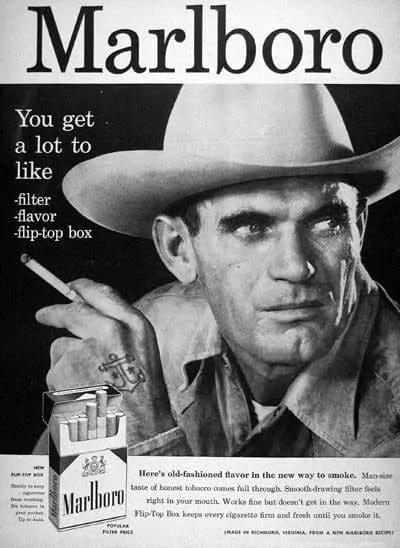
    Let’s take the case of Marlboro Man:

    Now Marlboro initially targeted woman with its ‘Mild as May’ campaign where it would have red cellulose around the filter to protect lips, concentrated heavily on how light it was and was safer because of its filter.

    marlboro lifestyle marketing

    In the late 1950s, Marlboro decides it needs to shift its target market to young American men. And thus the concept of Marlboro men was brought in. A cowboy who’d smoke Marlboro cigarettes and as opposed to the standard marketing, wouldn’t talk about filters or being safe at all.
    marlboro lifestyle marketing

    The campaign was an instant hit. Young Americans saw cowboys as a lone wolf, who’d do what he wants with masculinity. This influenced people. The shift in Marlboro’s sales was phenomenal from holding a 1% market share to having the top 4 position in the US market. Marlboro since then has been synonymous with the most popular cigarette.

    What changed all of this: Marlboro sold on the rough and masculine lifestyle a cowboy leads and how masculinity was associated with smoking Marlboro. They created a lifestyle perception young Americans were looking for.

    Since the Marlboro campaign, lifestyle marketing has never left the table.

    OldSpice brought in ‘The man your man could smell like

    OldSpice realized that woman more often than not choose grooming products for men. So, they targeted women with an advertisement that addresses their purchasing power and giving them the right to choose the smell they’d want their man to wear.

    Of course, it was slightly abused when it came to deodorants. The initial campaign of ‘Sex appeal through smell’ was an instant hit. But with time, deodorant giants realized that the campaign won’t be working anymore. The lifestyle they were trying to sell had been exploited a bit too much by the industry and it was time to move on. Well, it indeed is true. Aren’t we all bored of advertisements that portray a man spraying Axe deo on himself and becoming an instant chick magnet?

    Now even though, the market calls out an overused template there are clearly ways to improve your product branding through lifestyle marketing. OldSpice has been doing it. Axe never saw a plummet in its sales.

    Creating a brand revolving around lifestyle is definitely a great plan. However, you need to make sure you are aware of your target audience and their lifestyle before launching a marketing campaign.

    Go On, Tell Us What You Think!

    Did we miss something? Come on! Tell us what you think about our article on lifestyle marketing in the comments section.
  • Barriers To Entry – Definition, Types, & Examples

    Barriers To Entry – Definition, Types, & Examples

    No matter how hard you try, some markets have become impenetrable now. The barriers to entry to these markets may include technology challenges, government regulations or patents, huge costs, and/or licences which are really hard (or impossible) to get.

    No matter how advantages, disadvantageous, or frustrating it may seem, no one would deny that barriers to entry are the biggest competitive advantage for companies which are already in the market.

    But before moving ahead and diving into the mechanics of barriers of entry, here’s a quick barriers to entry definition:

    What Are The Barriers To Entry?

    Barriers to entry are obstacles or hindrances like high costs, government regulations, patents, or other challenges which prevent the potential entrant seller from entering the market and competing with the existing players.

    Barriers to entry pose a real danger to the competitive scene since the playing field is not level and it is hardly possible for new entrants to reach the level of the existing players.

    For example, an existing company serving to millions of customers might have an advantage of economies of scale and as a result, marks its product at a really low price. This competitive advantage might pose a real barrier to entry for a startup which can’t afford to sell at such a low price.

    Types of Barriers to Entry

    Three types of barriers to entry exist in the market today. These are natural barriers to entry, artificial barriers to entry, and government barriers to entry.

    Natural Barriers To Entry

    Also called structural barriers to entry, natural barriers to entry emerge naturally as the dynamics of an industry take shape and by the company’s inherent situation in the market. These include:

    Economies Of Scale

    Economies of scale is a proportionate saving in the costs of the goods because of an increased level of production. Many existing players who serve to the majority of the customers benefit from low production costs which results in them reducing the final price of the product as well. This acts as a big setback for the new entrants as they cannot sell the goods at the prices set by these players.

    Network Effect

    The network effect, also known as the network externality or demand-side economies of scale, states that a good or service becomes more valuable when more people use it.

    For example, Whatsapp is more valuable to its users when compared to other IM apps as most of their friends use Whatsapp. This will make them reluctant to move to a different IM application as Whatsapp does the job for him.

    The network effect is one of the main reasons why even Google is struggling to enter the social media networking market.

    High Costs

    Some industries require new entrants to incur huge costs during the research and development phase and/or during the setting up. These include distribution costs, marketing costs, production costs, etc.

    There are also cases when such high costs result in the break-even after a very long time (like in the case of Uber and other companies working on aggregator business model)

    Many new entrants aren’t prepared for such exorbitant costs and refrain themselves from entering the market.

    Access To Distribution Channels

    There are times when one or a few businesses control all of the distribution channels. This poses a barrier to entry to other businesses as no business would allow its competitor to surpass itself.

    Inelastic Demand

    Inelastic demand is the type of demand which is unaffected by the change in the price. It becomes really hard for new entrants to find a space in the market if that market witnesses such inelastic demand

    Ownership Or Access to Raw Materials

    There are times when the old players have control over or special access to the scarce resources. This acts as a strong barrier to entry for new businesses.

    Artificial Barriers To Entry

    Also called strategic barriers to entry, artificial barriers to entry are enforced explicitly by the existing players to stop potential entrants to enter the market. These include:

    Pricing Strategies

    There are around 10 types of prominent pricings strategies in the market and each one of them, if used properly, acts as a strong barrier to entry for others in the market.

    However, predatory pricing strategy (also called below the cost pricing) is often used by big players to eliminate the competition as well as close the gates for any new entrants in the market.

    Marketing Strategies

    Many firms spend huge amounts to market their product as the best (or the only good) alternative in the market. This results in the creation of a strong brand position in the market which acts as a strong barrier to overcome.

    The marketing strategies are so well executed that people start using many brand names as generic terms. For example, Jacuzzi isn’t a product, it’s a brand.

    Technological [dis]advantage

    There are times when the market leader and existing players have an advantage over the others in terms of technology used. They don’t open up much about their methods and where to find that technology.

    Brand & Brand Loyalty

    Strong marketing strategies give rise to brand loyalty among customers who become reluctant in trying new brands.

    Switching Costs For Customers

    Switching cost is the monetary and non-monetary cost that the consumers incur as a result of changing brands or suppliers of products. Although a majority part of the switching cost is monetary in nature, there are also psychological, effort and time-based switching costs which act as a barrier for consumers to accept new entrants.

    Patents & Other Legal Restrictions

    Some pioneer brands apply for patents for their concepts and technologies, which makes it impossible for other players to enter the market and sell similar goods. Crocs is one such brand which made use of patents to lead the market.

    Government Barriers To Entry

    Industries that are heavily regulated by the government are most difficult to penetrate. These industries include defence contractors, airlines, railways, etc. Moreover, the government may impose import or export barrier making it really difficult for foreign businesses to enter into or move out of the local market.

    It may also require businesses to obtain licences before starting the businesses or the government may declare the limitation to the access to raw materials. The government may also offer subsidiaries to certain companies making it really hard for others to cope up with them.

    Barriers To Entry Examples

    Google

    Google has acquired such dominant space on the internet that both the users and publishers consider it as the most trusted search engine.

    The only company which has ever been able to surpass Google (in a country) is Baidu which benefitted from the Government’s decision of banning Google in China.

    Facebook

    Facebook capitalized on the network effect. It created an easy-to-use platform to connect with friends all over the world.

    Now that every friend of a person is on Facebook, there’s no need for him to choose any other social media network.

    Uber

    Uber disrupted the taxi industry with the help of a great idea, huge funding, and predatory pricing. It initially benefitted both the consumers and the taxi drivers (partner) and gave rise to great brand loyalty among both.

    Now when that predatory pricing strategy is no more, people prefer to use uber because they have become loyal to the brand.

    Go On, Tell Us What You Think!

    Did we miss something? Come on! Tell us what you think about our article in the comments section.

  • What Is Consumer Behaviour? [Detailed Guide]

    What Is Consumer Behaviour? [Detailed Guide]

    Wouldn’t it be great if marketers know exactly what drives their target audience to choose a particular product over others? This knowledge, if analysed and brought into use correctly could result in selling anything to anyone.

    No matter how manipulative it seems, crafting marketing strategies based on the consumer behaviour is a common practice now. Marketers market their product keeping in mind the emotions and reasoning ability of the target audience, entrepreneurs present their pitch deck keeping in mind what the investor actually wants from them, and even products are built according to what the customer is willing to buy in the market.

    All thanks to consumer behaviour.

    But what exactly is consumer behaviour and how does it work? Let’s dive deeper into its mechanics.

    What Is Consumer Behaviour?

    Consumer behaviour is the study of individuals’, groups’ and organisations’ decisions with regard to the selection, purchase, use, and disposal of goods, services, ideas, or experiences to satisfy their needs and wants.

    In simple words:

    Consumer behaviour is the study of how consumers make decisions about what they need, want, and desire and how do they buy, use, and dispose of goods.

    Importance Of Consumer Behaviour

    Consumer behaviour is very important to understand what influences the buying decisions of the consumers and why does it so.

    By understanding how consumers decide on a product it is possible for marketers to fill in the product-market gap and identify which product is needed and which products are obsolete in the market. It also helps marketers decide how to present their products such that they have maximum impact on consumers.

    Marketers also need to understand the psychology behind every buying decision so as to be able to influence the same. For example, a consumer may purchase a product because it is fashionable even though it may not be the most utility providing product. In such a case, the marketer needs to understand why the consumer is making this choice and then present the product in such a way that the consumer is convinced that it is the best possible choice.

    Factors Influencing Consumer Behaviour

    There are a number of factors that influence consumer behaviour. These can be classified into four main categories:

    Psychological factors

    The perception of a particular problem is unique to every individual and so is the perception of different products. Psychological factors can be influenced by the present situation, perception of needs and problems, the ability to process information and their individual attitude. Thus, marketers have to focus how they portray their product and what psychological effect it has on consumers.

    Personal factors

    Personal factors are governed by an individual’s personal choices and preferences, interests, likes and dislikes. The sub-factor influencing personal factors can be age, gender and personal issues.

    Socio-Cultural factors

    Social influence is one of the major driving forces while making a decision. Social class, income, living society, company an individual keeps; workplace, etc. can have a major effect on consumer behaviour. Of course, influencers and other opinion leaders have a major role in an individual’s decision-making process too. Other factors include religion, race and nationalities.

    Motivation

    The theories that decide on how a consumer comes to decide what he needs are discussed below.

    Freudian theory

    Sigmund Freud’s theory states that behaviour is guided by subconscious needs. It is governed by three factors namely Id, superego and ego.

    • Id is the impulsive need of thirst, hunger and sex an individual has.
    • Superego is an individual’s expression of society’s morals. Thus it is what bounds Id from impulsive behaviour such that an individual fulfils his needs in a manner that is accepted by the society.
    • Ego is an individual’s conscious control over the impulses and restrictions created by Id and Superego.

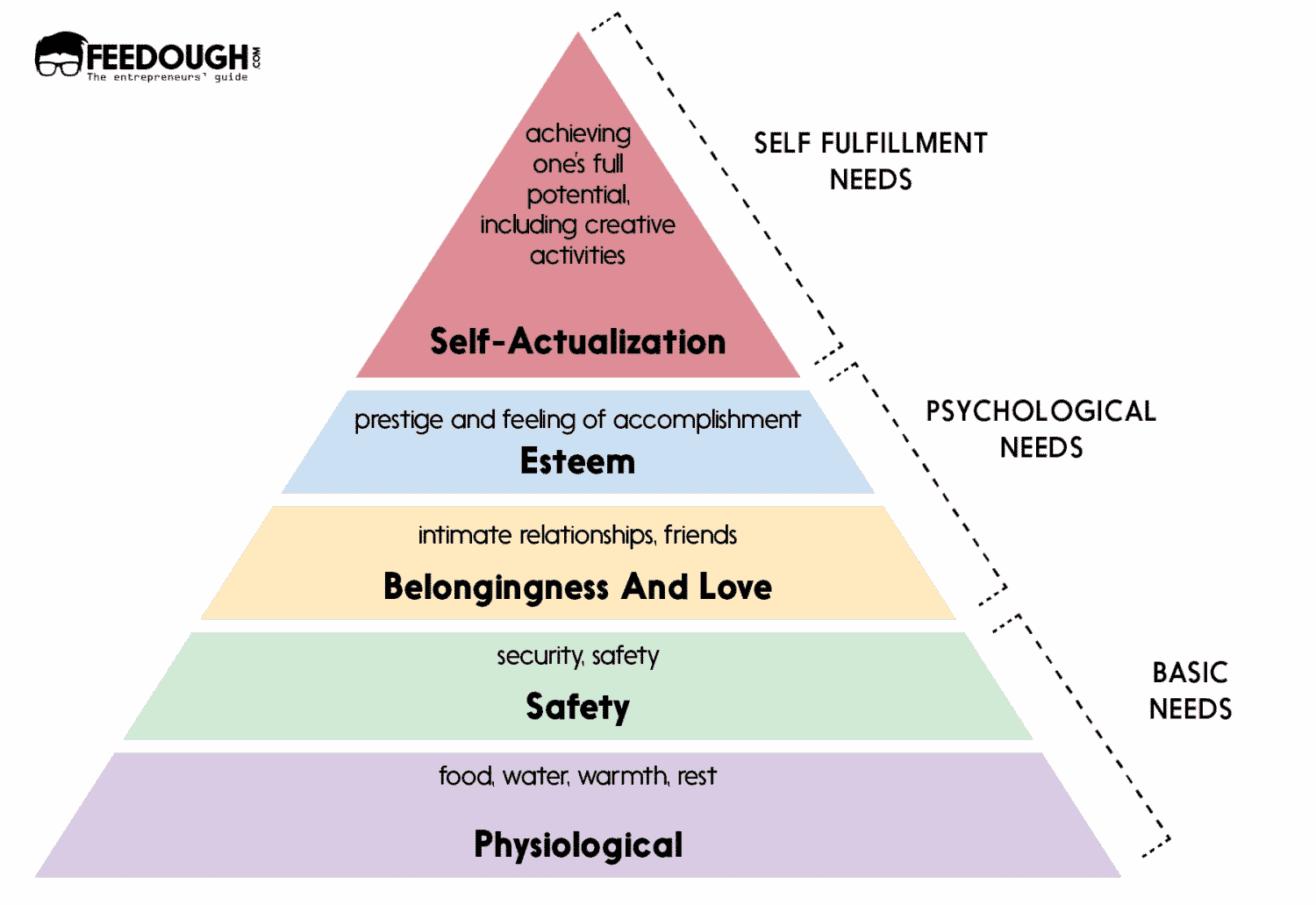
    Maslow’s Theory Of Hierarchy

    Behaviour runs from bottom to top and is dependent upon the lowest unmet needs. The hierarchy pyramid designed by Maslow is shown below:

    maslow's need demand

    Herzberg’s Two-Factor Theory

    Frederick Herzberg stated that behaviour is guided by two factors that go hand in hand. These are motivation and hygiene. Hygiene can be stated as dissatisfaction and motivation can be passed on as satisfaction. Consumer behaviour is in your favour when satisfaction is highest and dissatisfaction is minimal.

    The Types Of Consumer Behaviour

    There are four types of consumer behaviour categorised by their level of involvement in a purchase. These are:

    • Complex buying behaviour
    • Dissonance-reducing buying behaviour
    • Habitual buying behaviour
    • Variety-seeking buying behaviour

    Complex Buying Behaviour

    Complex buying behaviour happens when the consumer is highly involved in the purchase (of usually expensive products) and perceives significant differences between brands. They will conduct extensive research to find the best option before making a decision. For example, when buying a car, consumers will read reviews, compare prices and test drive multiple vehicles before settling on one.

    This behaviour is triggered by high cost, infrequent transactions, perceived risk and high levels of brand differences. Cars, houses and electronics are all examples of products that may trigger complex buying behaviour in consumers.

    Dissonance-Reducing Buying Behaviour

    Dissonance-reducing buying behaviour happens when the consumer is highly involved in the purchase and perceives little difference between brands. In order to reduce cognitive dissonance (the feeling of discomfort that comes from holding two conflicting beliefs), they will justify their purchase by finding reasons to support their decision.

    This type of consumer is likely to be an expert on the product and will have done extensive research before making a purchase. For example, they may read multiple reviews, compare prices and features, and talk to friends or family who have purchased the same product before making a decision.

    An example of this type of purchase would be a gaming chair. While several brands provide almost similar products, a discerning customer would still compare and contrast before making a decision. They would consider brand reputation, materials used, reviews, price and features before making their final choice.

    This type of customer is the most difficult to please because they know exactly what they want and are not willing to compromise. They are also the most likely to be satisfied with their purchase because they have put so much thought into it.

    Habitual Buying Behaviour

    Habitual buyers are those who purchase products out of habit or routine. They usually don’t put much thought into their decision and often purchase the same brand or type of product. For example, someone who always buys Coca Cola is a habitual buyer.

    Habitual buying behaviour is often influenced by convenience, price and availability. Habitual buyers are also the most loyal to a brand or product and are less likely to switch to a new one as they don’t to put much thought into their purchase.

    Variety-Seeking Buying Behaviour

    Variety-seeking buying behaviour is when consumers purchase different products or brands, depending on their mood or occasion. They are more likely to switch brands and experiment with new products. This usually happens when the cost of switching is low. This type of behaviour is often seen with convenience products such as toiletries and cleaning supplies.

    Customers who engage in variety-seeking buying behaviour are heavily influenced by friends, family and peer groups. They also tend to be influenced by marketing messages that focus on the benefits or features of the product.

    How Consumer Behavior Works?

    To understand how Consumer Behaviour works we need to understand how Perception works.

    What Is Perception?

    Perception is the process by which we select, interpret and organise data to create a logical sequence which is meaningful. Perception can be dependent on the stimuli we receive, how we respond to those stimuli and the conditions of our surroundings when we receive the stimuli.

    Now, every marketer works on maximising their gains through perception. This is an essential topic of consumer behaviour as the perception of a product is the make it or break it deal for the given product’s life cycle.

    The four cornerstones of perception are:

    Selective Attention

    Selective attention is when you select some particular inputs/stimuli and choose to ignore others in a group of stimuli. Basically, in simpler terms, not all information reaches and connects to you. You perceive the information you relate to.

    Selective Retention

    Selective retention is when you remember the parts of the stimuli that support your personal feelings and beliefs and forget the inputs that do not. In easier terms, you remember the information that connects to you at a psychological level.

    Selective Distortion

    Selective distortion is when you twist inconsistent information to abide by your personal beliefs and feelings. When an ambiguous input is provided, you at times may bend the information as per your will to fit in your existing set of values and beliefs. Thus there are chances that subtle marketing tactics may backfire and thus most marketing strategies are much directed.

    Subliminal Perception

    Subliminal perception is when sublime messages influence you without having a direct role in the information provided. The basic example being: how deodorants use lifestyle marketing to subconsciously associate the fragrance to leading a better life. Subliminal perception is basically how you subconsciously associate to a particular product because of a stimulus that is not directly provided.

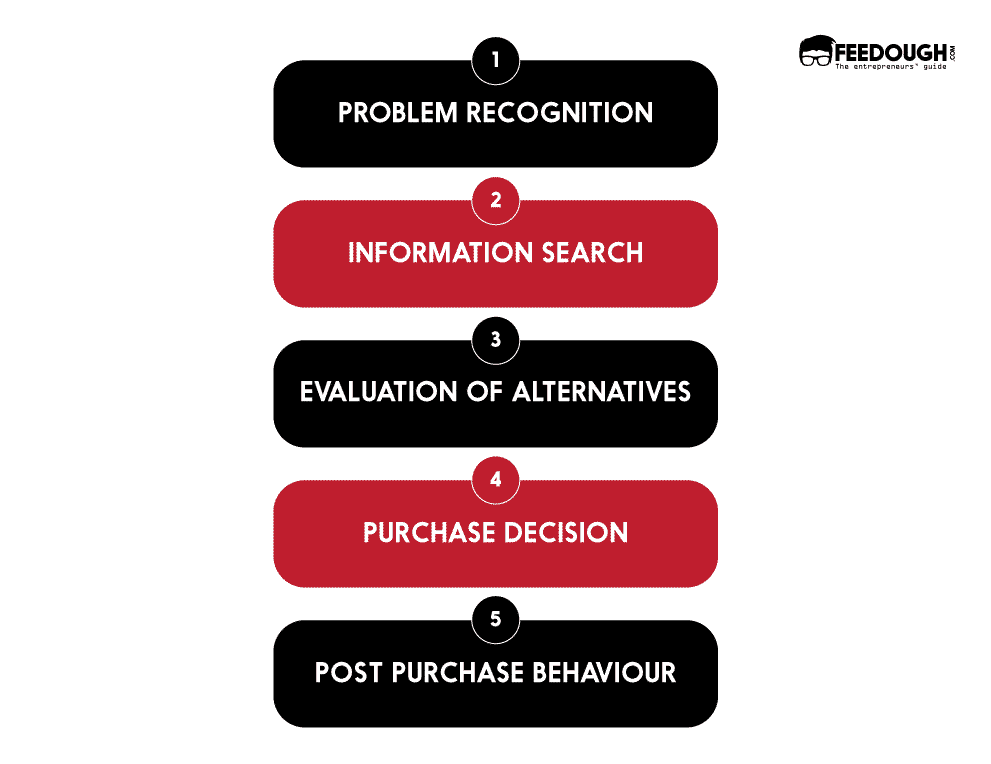
    Consumer Buying Process

    Now consumer behaviour eventually boils down to this step. How a consumer decides on which product he is going to buy. This is based on a set of steps each consumer follows:

    Consumer-buying-process

    Problem Recognition

    When a consumer realises that he has a problem with the existing products, needs replacement or has to buy a new product because his demands require a purchase. He sets the chain in motion.

    The consumer looks for prospective replacements or products that will fit his requirement perfectly. The sources of information are usually personal (based on personal research), public (based on public opinion), commercial (information pushed in by the vendor), experiential (a previously used product).

    Evaluation Of Alternatives

    Based on the consumer’s research, they decide which products are to be shortlisted. And which one of the competition is to be eliminated. The two basic models of choice are:

    • Conjunctive: Where the minimum threshold acceptable quality of all attributes is the deciding factor.
    • Lexicographic: When the most important attribute is preferred even if that means a slightly lesser quality in other aspects.

    For example: If you are buying a cell phone and you go for a model with a good overall processor, RAM, camera and display. It is a conjunctive choice.

    But if you require a really good camera and go for a model with an exceptional camera but sub-par processor, it is a Lexicographic choice.

    Purchase Decision

    As it suggests, after factoring in all the pros and cons of a product, the consumer makes the purchase decision at this step.

    Post-Purchase Behaviour

    Depending on the user experience, the consumer may recommend the product to people or slash the product if their experience isn’t good. The post-purchase behaviour of social influencers is very important to the initial market and this may be the most underrated point of influence that your product creates.

    Go On, Tell Us What You Think!

    Did we miss something?  Come on! Tell us what you think about our article on consumer behaviour in the comments section.

  • Instacart Business Model | How Instacart Works?

    Instacart Business Model | How Instacart Works?

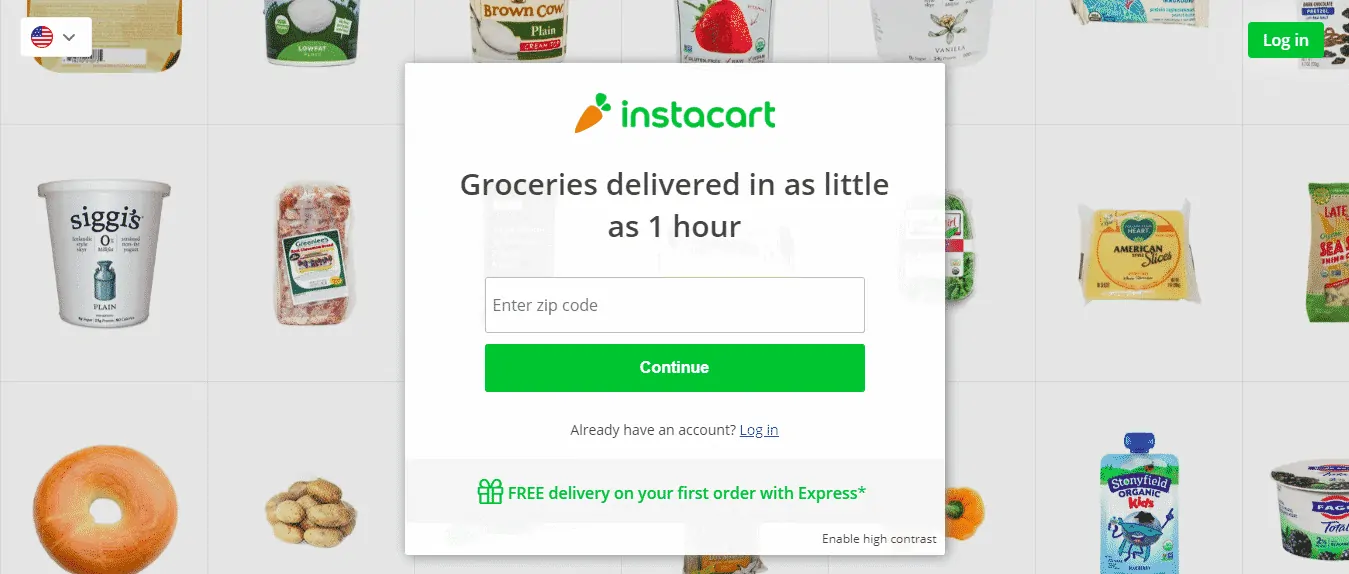
    Get 1,000s of products from the shops you already shop at, delivered to you on the same day (even within 1 hour) to save your precious time and money. This is how Instacart bills itself as.

    The company learnt from the failures of many similar businesses like Webvan which failed due to inefficient inventory management and created a totally different business model which doesn’t rely on inventory at all.

    Welcome on-demand groceries.

    Instacart has disrupted the grocery markets as we know it. The platform completely took inventory out of the equation and created a model where it only acts as the host and the actual products are stored and sold by the partners and the delivery is fulfilled by its contractors (the shoppers).

    This strategy created a highly scalable and appreciable business model where shoppers could serve others in their free time and make money while the customers could save their time by having groceries delivered to them as and when they want.

    instacart business model

    Before diving deep into how Instacart works and what is Instacart’s business model is, here are few facts and stats about Instacart you should know about:

    According to Forbes, the company has over 500,000 customers and approximately $2 billion in revenue.  An average customer uses Instacart twice a month and spends $95 per order. Instacart Express customers, who pay an annual subscription fee of $149 for free deliveries, order at least 4 times a month and end up spending around $5000 a year on Instacart.

    Instacart Business Model

    Instacart business model is the fusion of e-commerce, on-demand, sharing, subscription and aggregator business model where the operational flow goes in this way:

    1. the customers choose the store and order the groceries on the Instacart app and/or website,
    2. the company sends notifications to the shoppers about the order and delivery instructions,
    3. the shoppers then shop from the store specified by the customer and deliver them the groceries and earn money in the form of commissions (or per hour income) from the company and tips from the customer.

    The reason why Instacart succeeded while other startups failed is the removal of the dependence on inventory management. Instacart has a direct partnership with the existing brick and mortar grocery stores and only focuses on providing exceptional on-time delivery service. This partnership strategy also helps Instacart borrow goodwill from the partner stores in terms of the quality of products offered and work on its own goodwill by providing good delivery service.

    How Instacart Works?

    Instacart has combined the operating model of Uber and Airbnb and has created its own model where sharing exists along with partnerships and a brand image. Here’s a 3 tiered customer strategy of Instacart which will explain this fusion better.

    Instacart’s 3-tiered customer strategy

    Just like other companies exploiting the aggregator business model, Instacart also has more than one customer segment.

    Users

    Users are the end consumers of the groceries who order the products through Instacart’s application and/or website. They choose the store which they deem to be most suitable, order groceries, write delivery instructions (delivery time and day, etc.), pay for the groceries and even give tips to the shoppers during the checkout.

    Stores

    Stores are the major partners of Instacart. Unlike Uber, these partners are listed under their own names and the users have the choice to choose their preferred store.

    Instacart has entered into special contracts with these stores where it helps them increase their revenue through online sales via Instacart.

    Shoppers (Contractors)

    Shoppers are the partners who do the actual job of shopping and delivery. Shoppers are employed on a contractual basis and can even be part time workers.  They receive the orders on their smartphone application and do they work assigned to them by the company under the company’s brand.

    instacart shoppers

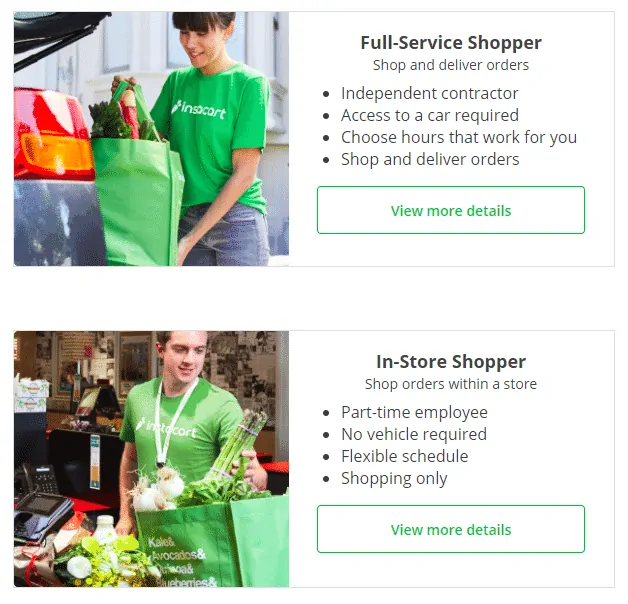
    Instacart entertains two kinds of shoppers:

    Full-Service Shoppers: These are independent contractors who shop and deliver the customers’ orders. These contractors are required to have a constant access to a vehicle and a smartphone.

    In-Store Shoppers: These shoppers are the part-time employee of Instacart and have a duty to hand select the customers’ orders in-store and bag for pick up. They are also required to have a constant access to a smartphone but doesn’t require a vehicle because they don’t deliver the stuff.

    instacart shoppers

    How Does Instacart Make Money?

    Instacart doesn’t charge the stores any commission on the online orders placed through their platform. However, the company has others means to earn revenue. These include:

    Mark up prices

    The prices of certain goods of certain stores have a mark-up of ~20%. The revenue earned from this mark-up goes directly in the Instacart’s pockets and not to the stores’.

    Delivery Fees

    Instacart delivers every order which has a value equal to or more than $10. However, it imposes a delivery fee of $7.99 for one hour delivery and 5.99 for two hours or any other delivery timing slot.

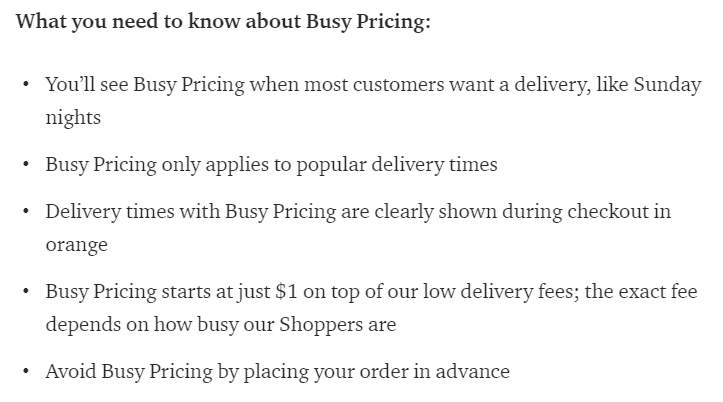
    Surge Pricing (Busy Pricing)

    Just like other on-demand startups, Instacart has added a dynamic pricing algorithm to its platform where the delivery charge increases as the demand for that delivery slot increases.

    instacart busy pricing

    Service Fees & Tips

    Previously, Instacart used to charge 10% service charge on every order and gave an option to the customer to tip the shopper (any amount).

    The company has recently changed its checkout process and reduced the service charge to 5% (mandatory) and made a 5% shopper tip mandatory as well.

    Membership Fee

    Instacart has introduced an annual subscription plan (Instacart Express) where the subscribers get unlimited free delivery on every order of $35 or above. They even get to save more by avoiding higher fees at busy hours.

    Instacart express comes with a 14-day trial period and the annual subscription is sold at a recurring price of $149.

    Revenue from Partners

    Costco, Kroger, and over 165 small and large scale businesses have partnered with Instacart to integrate its service within their platform/website. The revenue is generated in the forms of per-order-profits and commissions (if stated in the contract) per order fulfilled by Instacart for every partner platform.

    Sources of Expenses for Instacart

    The major sources of expenses of Instacart are:

    Technological Set-Up Running Costs

    The platform depends totally on its application and website. The technological set-up running costs are costs incurred to maintain and manage the application and website.

    Marketing & Branding Costs

    Instacart provides free delivery for the first order, it also provides in-app coupons and other discounts to attract more customers.

    Other marketing costs include advertisements and promotion costs.

    Salaries To Permanent & Part-Time Employees

    These costs include salaries paid to the permanent employees and also to the part-time shoppers.

    Commission Based Payments To Shoppers

    Full service shoppers are paid commissions for every order they deliver successfully.

    Future Of Instacart

    Instacart poses the biggest threat to Amazon and Google when it comes to online grocery shopping. The one hour delivery guarantee has made the company a powerful solution in the US and Canada market, and now with a funding of $1 Billion, there is no looking back for Instacart.

    The moulding of the aggregator business model and employing part-time shoppers has even resulted in more confidence from the side of shoppers (workers).

    The company has already been ranked at the number 1 spot of America’s most promising company. Let’s see what the future holds.

    Go On, Tell Us What You Think!

    Did we miss something?  Come on! Tell us what you think about our article on Instacart Business Model | How does instacart work & make money? in the comments section.

  • What Is Time Management: Ultimate Guide

    What Is Time Management: Ultimate Guide

    If you ever feel like there is never enough time for you to execute your every planned task, we’re here to assure you that you’re not alone.

    But we are also here to tell you that there a way to plan, manage, and execute your daily tasks to complete them before the deadlines and get more time to spend on yourself.

    The only thing that you’re missing out is effective time management.

    What Is Time Management?

    Time management is the process of planning, managing, and executing tasks by smart utilization of time to maximize the productivity.

    No matter how easy it sounds, only a few can master effective and efficient time management skills. The process involves auditing your tasks, prioritizing and blocking the time beforehand to perform tasks without any irrelevant distractions.

    Why is Time Management Important?

    Spoiler alert: Everyone in this world gets the same 24 hours.

    But why is that only a few are able to utilize those 24 hours to the fullest?

    The answer lies in efficient time management.

    High achievers know that attention is the most expensive currency today. They prioritize their tasks, avoid distractions and multitasking, and use time blocking to get the most out of their efforts.

    How To Manage Time?

    How can you manage your time better? Is it even possible when you can’t even afford to spare 5 minutes to audit and plan your day?

    Would you believe us if we tell you that smart time management skills can help you complete your tasks effectively and even help you save some time for yourself?

    All you need to do is to follow (or improvise) these time management tips.

    6 Time Management Strategies To Make Your Life Easier

    Time management involves focusing on results (goals) rather than activities as being busy isn’t the same as being effective and efficient.

    Here are some time management tips to help you increase your productivity.

    Create A Time Audit

    Planning is the most important task of time management. But it also requires you to research on where your time goes throughout the day.

    There are a lot of free and paid applications (like Toggl) which can help you track everything you do in a day. Download the reports, segregate the activities, and evaluate them.

    This activity will help you find out your most and least time-consuming activity which eventually will help you to prioritize wisely.

    Prioritize Wisely

    If you’ve read our article on ‘How To Prioritize When Everything Seems Important’, this step won’t take you long.

    Try to fit your daily tasks under these categories:

    • Vital & Urgent: Out of the 100 “I need to do this now” tasks, 98 are crucial to your business’s growth, but 2 might have significant consequences if these tasks are not completed in the specified time. These tasks should be labelled vital and urgent.
    • Vital & Not Urgent: These tasks are of critical importance and can have significant consequences, but these tasks aren’t that urgent and can be performed after other important tasks.
    • Important & Urgent: These tasks are also very important but do not harm you or your business as significantly as vital tasks if missed.
    • Important & Not Urgent: These tasks do not carry a significant harm and are also not urgent. Nevertheless, they do require your attention.
    • Optional: These are the ‘add-on tasks’ which, if performed, will provide some benefit, but they don’t have any consequence if not performed. Optional tasks can also include ‘Important & Not Urgent At All’ tasks.

    Rank and execute the tasks in this flow:

    1. Vital & Urgent
    2. Important & Urgent
    3. Vital & Not Urgent
    4. Important & Not Urgent
    5. Optional

    Remember to do the most difficult task first as it makes your experience more bearable and enjoyable as, according to psychology, we prefer experiences that improve over time.

    Set Up Micro Goals

    Micro goals are simply your end goal broken down into hourly or daily mini goals (mini milestones). Most of the people can’t follow their time schedule because they tend to start the task at the eleventh hour. Just because they didn’t put much effort on it before, they have no choice but to spend all their efforts and time on completing the concerned task.

    Setting up micro goals helps you to understand your tasks better right from the start, do work more efficiently, use the free time effectively, and take more breaks.

    Suppose you have to submit a presentation after 2 days. Instead of starting the presentation on the D-day, craft micro goals in such a way that you complete a part of it today and tomorrow in a way that it doesn’t seem to be a burden or a very daunting task after 2 days.

    Know Your Goals

    “I’ll complete few slides of the presentation today” will not help you in effective time management. “I’ll complete the first five slides today and it should not take me more than half an hour (+10 minutes buffer)” is the suggested practice here.

    You can’t complete your tasks effectively till the time you’re clear about what exactly is to be done. Most people start the task without knowing where to end. It’s very beneficial if you start the day and your tasks with definite goals.

    Use Time Blocking & Maintain A Time Management Worksheet

    Planning is important to avoid distractions and repetitions, and time blocking is an amazing planning strategy which increases your productivity by 150%

    It is a process/art of dedicating a certain time (a certain number of hours) to just one task and block your mind off from other tasks.

    Time blocking always helps when you have a myriad of activities to do and your mind could easily get distracted by other pending activities. It helps you to devote your 100% attention to a certain task for a specific time period. This improves your productivity to a great extent.

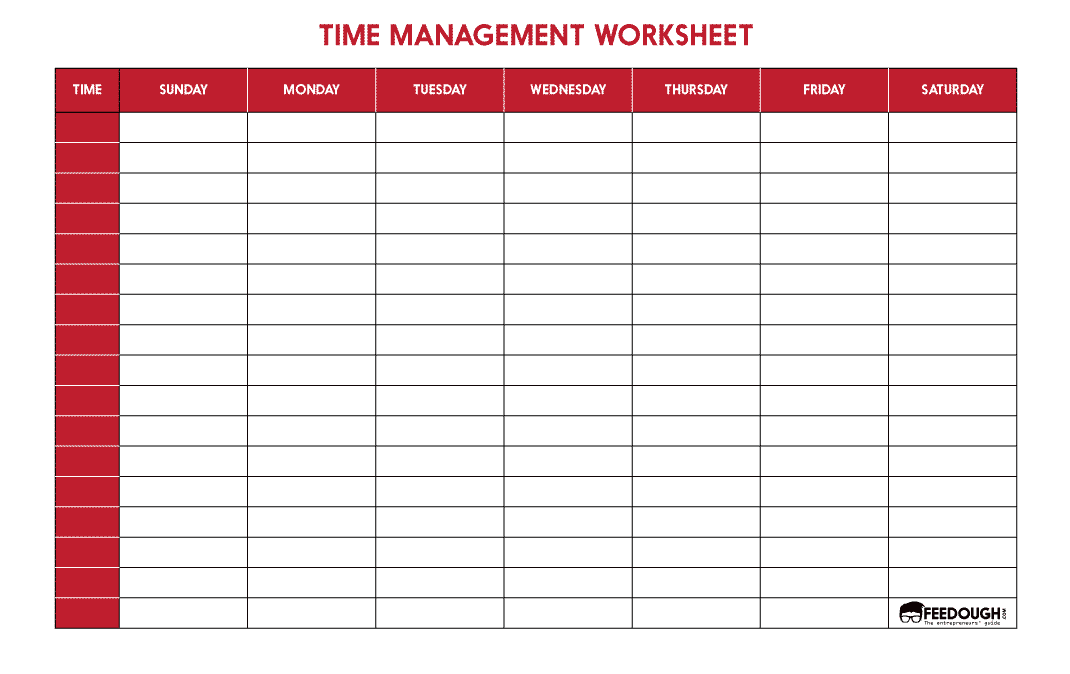
    Time blocking could be exercised by maintaining a simple time management worksheet or using any similar smartphone time management application. Here is an example of a simple time management worksheet:

    TIME-MANAGEMENT-WORKSHEET

    Block Distractions

    Emails, phone calls, chats, doubts from juniors, a sudden realization of other tasks, etc. pose the greatest threat to an efficient time management strategy. Keep a check on self-induced distractions like checking your emails and your smartphone after every 5 minutes, deviating to other tasks, etc.

    It’ll be a lot of pain in the initial days but keeping your phone away from you while you’re working will eventually end up in effective time management.

    Time Management Resources

    Efficient time management requires skills, effort, and good resources. Here is a list of some time management games, apps, books, and activities to help you manage your team and your time better.

    Time Management Activities

    Time management activities are very helpful if you desire to teach your team the importance of time. Here are two really good time management activities we stumbled upon on some LinkedIn discussions.

    The Priority Jar

    Divide the group into teams and give each team a large glass container. Now distribute rocks, stones, gravel, sand, water, and sugar and ask them to fill the glass container with as much material as possible.

    After them done trying, use the moment to teach them the importance of prioritizing by filling the container with rocks first (as they are the biggest) which form the most important projects followed by stones which are daily important tasks but not as important as rocks. Next comes the gravel, the sand, the water, and the sugar in the said order. This will result in the jar being filled with every material without compromising on anything.

    Use this activity to teach your team about prioritization and how effective prioritization can make their life easier.

     
    The $86,400

    Tell participants that they just won an $86,400 lottery and can spend it in any way they wish. But the only condition is that they can’t bank any money and will lose it if they don’t spend it in one day.

    Have a healthy discussion on how your team members chose to spend the amount and why they did the same.

    After the discussion, tell them that 86400 are the number of seconds they have each day and talk about why they should try to make most of each moment.


    Time Management Apps

    Even though the digital world acts as the biggest distraction to effective time management, it also provides us with the ways to cope up with them. Here’s a list of best time management applications to help you manage your time wisely:

    • Toggl: Really simple application for time tracking
    • Workflow: an effective application to build your workflows with a simple drag-and-drop interface
    • Clara: The AI email application which schedules and coordinates your meetings. Just CC Clara on your emails and leave the rest to it.
    • RescueTime: a great time-tracking app that records how and where you spend your time online.

    Time Management Books

    Here’s a list of 3 best time management books if you want to get into more depths of time management

    Go On, Tell Us What You Think!

    Did we miss something?  Come on! Tell us what you think about our article in the comments section.

  • The Evolution Of Payments

    The Evolution Of Payments

    Every now and then I think about who invented money? Who conceptualized transactions? Well, we might never know because according to historians it dates back to as early as 5000 B.C (before the wheels were invented). So how did we get from trading barley to bitcoins (and other cryptoassets)?

    To start with, the basic idea of payment is to trade something for something else that we have assigned a value to. Your $100 bill holds value only because the bank says it does, right? That’s where it began. We decided that a particular commodity is of value to overcome the pre-existing barter system.

    So the timeline for the evolution of payments would be:

    • From times unknown to 3000 B.C.: Payment system is in its nascent phase. The barter system is followed. People exchange goods for goods with the value of each good predecided.
    • 3000 B.C.: Barley is used as token money. Payment system now works with commodity money instead of simple barter.
    • Around 700 B.C.: Coins are minted. Payment is now distinct coins that hold value.
    • 17th Century: Heavy coins have started becoming a menace and we have upgraded to bank notes. (There still hangs the question of which came first? The note or the cheque) This is plain hard cash we still use. Funny how we are still using a 17th Century payment method right?
    • 1659: Cheques are introduced only they are called drawn notes. It was first used by Messrs Morris and Clayton, scriveners and bankers of the city of London.
    • 20th Century: Digital payment is here. You can pay money without cash or cheque. Value is now assigned to 1’s and 0’s on a system that recognizes you and knows how much cash you have. Life without cash/cheque is possible.
    • 21st Century: Digital payments have evolved at breakneck speeds. We now have one-click payments, e-wallets and cryptocurrencies. But we still are using cash, cheques, and cards, just to be safe.

    Why Exactly Is Understanding Payments A Good Tactic?

    Payments are the most underrated part of the trade process in any business.

    Even though payments are the most basic interaction that the business has with the customers, most of the businesses just overlook how the customer actually wants to pay.

    Non-availability of the preferred payment structure could break the customers’ trust and even make them choose your competitors over you.

    The most notable aspect in the evolution of payments is that it has always moved towards a more convenient option.  You know how payment systems have changed with time and thus it will only make sense to keep up with it.

    The Rise Of Digital Payments

    Why did we go digital?

    30 years ago, the model of cash and banking was a convenient system. The population wasn’t enormous and banks could handle their customers as well as maintain a dynamic one to one relationship with their account holders. Going to a bank was a part of daily chores and was hardly seen as an unnecessary effort. Banks provided security for your earnings and helped you make transactions smoothly. However, with time banks had to increase the number of branches to maintain smooth function. Population multiplied and operations started getting a little cluttered. Thanks to technology, this sector evolved.

    With IT developments and the introduction of the world of internet people, electronic payments became the new face of payments. People started using e-payments more and more and with its progress you could send money to someone on the other side of the world with a click, thus making outsourcing a common term. The evolution didn’t stop here, e-payments evolved into e-wallets where you could load money into your prepaid wallets where you can pay easily to anyone with a tap, with NFC or by just scanning their QR codes. Of course, more secure lines developed when cryptocurrencies joined the race. These were off the grid, a decentralized system that no one could track made the payment secure but it is not fully functional as a lot of countries doubt its use.

    This has, of course, derailed the usual course of what banks used to do. A bank would concentrate on customer relations, account openings, loans, withdrawal etc. but payment usually was a behind the scenes role. However, it was one of the most important parts of a customer’s life. With the upgrade in the payment system, the banking sector moved on to upgrade them too. Banks came up with the concept of a payments bank. This would enable a customer to operate digitally rather than coming down physically to a bank. Of course, mobile banking soon followed and a lot of your bank affairs could be managed by the device in your hand.

    The success of any model depends on customer satisfaction, and this is where e-wallets got the brownie points.

    We moved into smartphones era, where smartphones are essential. Everyone has a smartphone and it is much more convenient to operate a smartphone than to count and give cash from actual wallets.

    E-wallets are clean, easy to use and are much quicker than standard transactions.

    Splitting the bill, paying bills with a click and sending money to a remote relative is very easy now thanks to e-wallets.

    Better Security: It is harder to lose money or get scammed while using e-wallets.

    However, we still carry cash and debit/credit cards with us. This means that e-wallets aren’t completely developed yet. They are on their way to becoming the superior method of payment but they aren’t completely there yet.

    What Is The Future Of Payments?

    Trends speak for themselves, and we like to be in control of every aspect of payment and the physical act of actually paying is a pain now. Thus we now have invisible payments.

    What are the invisible payments?

    In simple words, you use a service and walk away without paying manually.

    Invisible payment isn’t a new concept. We have been using invisible payments for cab rides with Uber. All you need to do is book a ride, reach your destination and walk away without doing a thing. Uber deducts money from your wallet directly.

    Hassle-free isn’t it?

    Now, this has always been in the services sector as it would only make sense because billing a product is a part of normal routine. Or is it?

    On January 18, Amazon opened doors to Amazon Go for the general public. If you don’t know about Amazon Go, it is a cashier less store where customers just have to grab their groceries and Go. All you need to do is scan your Amazon pay account at the entrance/exit and Voila! Grab what you want and leave the rest on computer vision and deep learning. With time, invisible payments will spread its roots and we will see an era of revolutionary invisible payment.

    What Are The Present Metrics And What Do They Mean?

    A recent study by Mintel shows around 40% of US consumers have used at least one digital payment and more than 60% use it on a frequent basis. The TSYS US consumer payment study says 51% of respondents showed interest in using mobile wallet over credit or debit cards. This can be seen in the real life as facilities like PayPal and Venmo are common terms in the day to day transactions.

    The rise of digital payments in China is phenomenal as the country recorded mobile payment transactions of 81 trillion yuan (12.8 trillion USD). Alipay and WeChat pay are the clear winners in the mobile transaction industry. A normal Chinese citizen can get through his day to day life without carrying his wallet. YES! China has quickly adopted and adapted to the mobile payments and the model looks like a viable one if China’s market is to be followed.

    What do these metrics mean? These numbers are a clear indication that more and more people are getting comfortable in choosing mobile payments as a mode of transaction. This has led to a revolution in payment methods all over the world. E-commerce websites need to ensure that their payment gateway is capable of accepting all the popular mobile payments. Most retail stores are upgrading themselves and accepting mobile payments as an option. This is because the metrics clearly show us that the masses are ready to move ahead, and with time as a seller, you need to be ahead and accept the mode of transaction they are comfortable with.

    Go On, Tell Us What You Think!

    Did we miss something? Come on! Tell us what you think about our article on The Evolution Of Payments in the comments section.

  • How Does Baby TV Make Money? | Baby TV No-Ads Revenue Model

    How Does Baby TV Make Money? | Baby TV No-Ads Revenue Model

    In this age of Netflix, we hope you haven’t forgotten about television, have you?

    Remember, how we’ve hated advertisements on TV all our lives to a point where watching TV has now become a real test of patience? Well, to your relief, this may change soon, for the better!

    Ever heard of Baby TV?

    What is Baby TV?

    BabyTV is a TV channel for infants, toddlers, and parents, aired worldwide by Fox Networks Group. Launched in 2003, BabyTV is distributed in over 100 countries, broadcasting in more than 18 languages. It is currently catering to an extremely niche and specific market, which is babies and parents.

    What fascinated us is not the channel, but the money!

    Distributed worldwide and leading in its market in the eastern part of the globe, Baby TV was first developed in 2003 as a channel in Israel by Maya and Liran Talit and members of their family as a channel focussing on content requirements of babies, infants, toddlers and their parents.

    This is clearly a niche market offering and seems like a really bold move to come up with, considering that a TV channel depends heavily on its advertising and broadcasting revenues. How many people would watch this TV channel and give it viewership that is attractive enough for advertisers?

    You would say, not many.

    But who said Baby TV was looking for advertisers?

    It was looking for the dream.

    Opportunity harnessed by Baby TV

    Opportunity to set a foundation for an alternative business model for TV channels across the globe and become a better space to promise premium viewership. A viewership not haunted by ads was the dream for Baby TV.

    With the kind of business Baby TV is doing, we seem to have figured out certain key aspects of its business model, that can become absolute business development concepts on their own.

    It can be something like Affiliate Marketing, where you do not run the ads of the product/service/organisation, but you create content that is mutually relevant to both the channel as well as the product to ultimately promote both. With shows written on characters promoting baby care products, or stories revolving around babies buying toys for themselves, Baby TV seems to have used affiliate marketing for the good. Or we can see what Baby TV did with collaborations on the channel with product mascots like that of candies, cereal and toys.

    Baby TV Revenue Model

    Where is the money coming from?

    Fox International Channels’ Baby TV is now a healthy business that achieved breakeven even without advertising. The advertisement-free channel started making impressive profits after 2008-09 only, which is a mere five years duration after the launch of the channel as an independent space, as it is not a part of FIC’s channel portfolio yet.

    And Baby TV has attributed their magnificent success to 4 factors of innovative business development:

    1. Affiliate marketing revenues,
    2. Merchandising,
    3. TV Everywhere platform, and
    4. Sponsorships and commercial collaborations.

    Although the revenue from affiliate marketing forms the bulk of their earnings, this is expected to change as the spectrum of TV viewing moves to linear subscriptions psychology.

    Subscriptions – DTH and App

    On seeing the protocols, you’ll see the cost of subscriptions of Baby TV app to an end consumer is $4.99 for a month and this is independent to the subscription of the TV channel. Another strong tapping mechanism is the connection of the baby TV video app with the iTunes gift card, that enables the video app subscription to be gifted to friends and family. What was originally introduced as a festive promotion in Europe, became one of their most popular offerings that were widely used as a gift to couples who were expecting, or newborn babies and their mothers.

    Merchandising

    Not only streaming of content, but the merchandising process of Baby TV is performing extremely well too. Along with offering a wide range of kids’ products like books, music CDs, video story CDs, toys, games, bedtime products, etc, Baby TV is also partnering with almost every popular e-commerce player in this industry like Alibaba, FirstCry, Amazon, Etsy, etc. This is getting Baby TV the revenues as well as the presence.

    How costly is it to pull this off?

    It is going to sound foolish if we forget to account for the massive costs of Baby TV and not appreciate them for the profits despite the humungous costs they incur. Airing cost is certainly going to be the biggest chunk of the lot because it is a 24×7 channel which airs majority content and no advertising. We may think that since the purpose of ads has been fulfilled through their operational kind of content, it may save them some dollars.

    Surprisingly, no.

    Merchandising as a gimmick is costly, to ensure results. With a portfolio like Baby TV’s, it is going to be massive. The range of merchandise that Baby TV offers caters to anything and everything needed at birth, after feeding, toddlers, reading, writing, music, creating, healthcare, eating, grooming, medication, etc. Such a product profile takes up a big chunk of the revenues.

    Yet Baby TV’s performance is splendid!

    It Gets Better!

    Interestingly, the channel was rolled out as an offering for babies, infants and toddlers. But as the venture is garnering success, it has seen the influx of parenting audience, potential or existing, which opens the avenue of maternity content and healthcare to be tapped by Baby TV.

    With an extremely successful YouTube audience through their channel and an array of categorical merchandising that Baby TV does, they have been widely accepted and received well for their thematic content, fictional innovation and variety.

    All this has helped the enterprise develop loyalty in the niche consumer base that shall be equally receptive in case Baby TV plans to expand in any direction/horizon. Baby TV has also successfully explored TV Everywhere and launched an online player that is smartphone supported, facilitating ad-free VOD content by way of a monthly subscription fee. There are also song applications and games that users can pay on a pay-to-download basis.

    Although Baby TV’s YouTube channel does come with video advertising like pre-rolls and posters, users always have the alternative to skip the ads. Sponsorships have not been aired, these are initiatives that mark ground territory and no television presence. In markets like Hong Kong, Malaysia and Singapore, Baby TV has done commercial collaborations with brands like Johnson & Johnson and pharmaceuticals organisation Wyeth on live events indulging Baby TV’s characters and content.

    What comes out as a plausible conclusion from this study is, that a model so comprehensive and quality driven shall be a win-win situation in a market like the Middle East, specifically India.

    Why do We say so?

    Because now is the time to admit, our television industry is highly underwhelming because of focus on advertising and not offering content that meets global standards.

    We all have cribbed about the state of our television industry.

    In an attempt to set both the faults right, we can attempt content driven product promotions which become a more lucrative business opportunity for the TV channels as well as consumers of this content, who presently are running away from Indian television to global content platforms like Netflix, Amazon Prime Video, NBC, etc. Once we popularise this model where bulk comes from affiliation, markets are coming up with merchandising that is relevant and not obligatory, collaborations are more holistic than just crossovers and posters, there is a platform to consume content away from TV and advertising is a supporting act and not the forefront, that way we can truly develop a television offering for the mainstream market, as is Baby TV for its niche market.

    Go On, Tell Us What You Think!

    Have you ever wondered if a TV channel could earn money without ads?  Come on! Tell us what you think of our article on How Does Baby TV Make Money? in the comments section.

  • How Does Robinhood Make Money? | Robinhood Business Model

    How Does Robinhood Make Money? | Robinhood Business Model

    Robinhood is a mobile stock trading app that made its name by offering commission-free trades. Yes, you really can buy and sell stocks using their app and pay $0 in fees! Robinhood has been a top hit among millennial investors for that reason, especially since traditional brokerages charge up to $10 for each transaction and don’t make trading extremely user-friendly either.

    The company was founded by Vladimir Tenev and Baiju Bhatt in 2013 and have since grown to an impressive 4 million users. Robinhood is actually not the first company to try offering commission-free trades, but they do seem to be the first to do it successfully.

    Robinhood already has a very strong user base and recently surpassed E*trade in terms of actual users, with 4 million compared to E*Trade’s 3.7 million. They’ve also already processed $150 billion in transactions and saved $1 billion in transaction fees.

    How Robinhood Works?

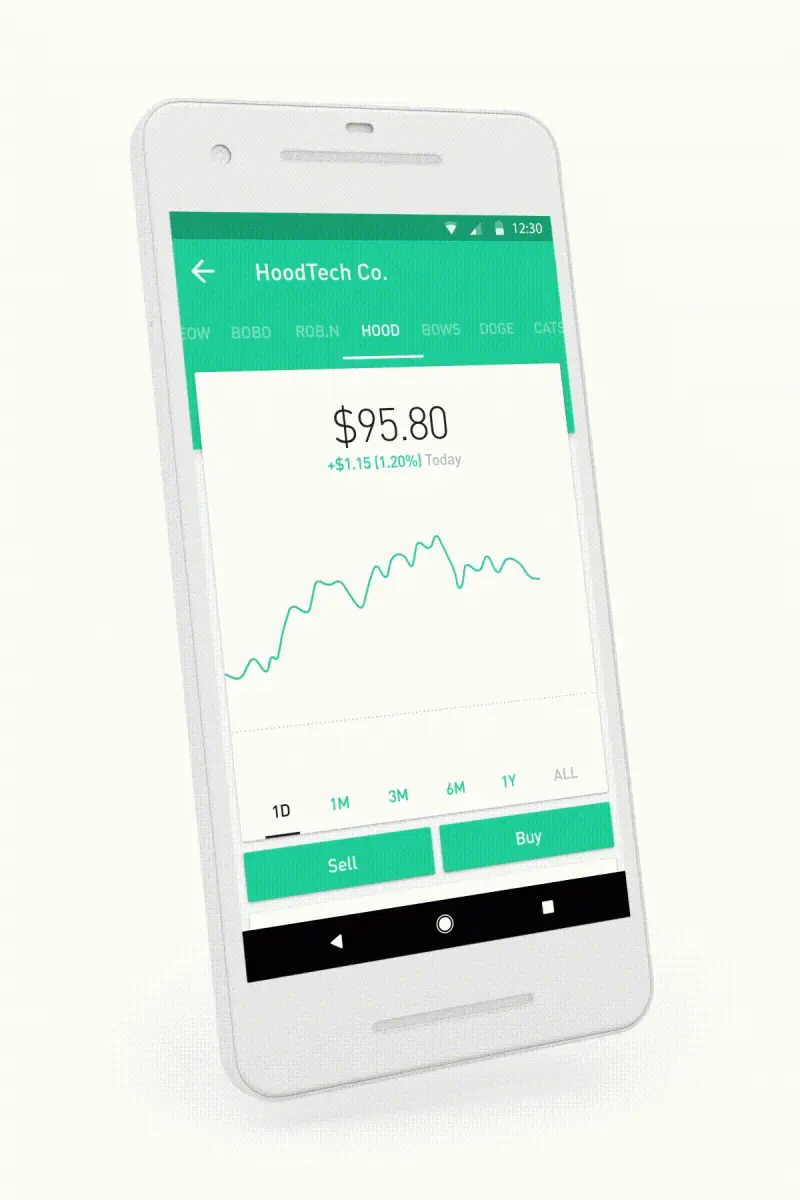
    Robinhood has made it super simple to buy stocks. You can do everything from the initial sign up to buying stocks straight from within the app. You have to provide some personal information the way you would with any other brokerage, but after that buying and selling become as easy as posting a photo to Instagram or sending a tweet.

    robinhood trading


    Can Robinhood Actually Be Profitable?

    You might be wondering, how can Robinhood make money if they are offering free trades? And you’d be right to wonder that, it’s always good to understand what business model companies are using to see if they are exploiting your data in any way.

    Thankfully, the way Robinhood makes money is completely ethical, logical, and is not by selling your data.

    Before we take a deeper dive into how Robinhood makes money, let’s look at their cost savings.

    They are able to control costs by having far less overhead than traditional brokerages. They have less than 200 employees compared to E*Trade’s 3,500. They do this by not spending as much on things like marketing, offices, account managers, and customer support. Additionally, modern technology in electronic trading has driven down the cost of stock transactions, making it possible for Robinhood to exist.

    How Does Robinhood Make Money?

    For the most part, Robinhood would fall under the freemium business model, with the addition of making money off interest on free accounts as well. Here’s an elaborate analysis of the business model of Robinhood explaining how the company makes money, even when you’re technically not paying.

    Revenue From Interests

    You might have heard, if it’s free, you’re the product. Well, this is somewhat true for Robinhood too. In the case of Twitter, the product to them is your data. In the case of Robinhood, the money-making product is the unused cash deposits in your account.

    Robinhood earns interest off the money sitting in your account.

    So let’s say you have $500 just sitting in your Robinhood account and interest rates are 2%. They would make $10 off having your money sitting in their account per year. That might not sound like much, but multiply that by the 4 million accounts they have and you can see how it can add up quickly, especially with interest rates now going up. Also, these are just example numbers, they might make more than 2% and the average account value might be much higher than $500.

    robinhood uninvested money


    They also charge 5% APR when you borrow over $50,000 on margin, but given that a large percentage of their user base are millennials, they probably don’t have too many people borrowing 50k.

    Revenue From Premium Subscriptions

    Robinhood offers a premium ‘Gold Subscription plan’ with the following benefits to the users:

    1. More buying power with margin trading.
    2. Extended trading hours. With Gold, you get to trade 30 minutes before the market opens and 2 hours after the market closes.
    3. You also get to skip the three-day waiting period for deposits and make trades instantly.

    But what is buying on margin?

    Buying stocks on margin lets you borrow money to increase the amount of potential earning you can make when a stock goes up. As you probably know, the more money you have invested the more potential you have to earn.

    10% of $1000 is double what 10% of $500 is. So what brokerages will do is let you borrow money to increase your earning potential.

    What’s the catch?

    If you make a bad bet and a stock goes down, you can lose more than the amount you invested because you still have to pay back the principle you borrowed, so it’s a riskier way of investing. Also, note that you must have $2,000 in your account to be able to buy on margin.

    How Much Does Gold Cost?

    Gold ranges from $10 to $15 a month and you can upgrade within the app.

    The company also thought of making money through the payment for order flows (just like other discount brokerages), which is basically where they earn a profit for directing stock orders to third parties. But they have scrapped that plan and now just make money from the two methods listed above.

    Additional Features of Robinhood Business Model

    Desktop

    Toward the end of 2017, they also started allowing their users to use Robinhood on a desktop instead of just their mobile app.

    Cryptocurrency

    Just this year, Robinhood announced it would start allowing their users to buy cryptoassets commission free, although they don’t plan to make money on that according to the CEO.

    Options Trading

    They also have options trading as part of the free plan.

    Bottom Line?

    Robinhood has been very attractive to young investors because of their ease of use and ability to buy and sell stocks for free. They have a sound business model and seem to be making enough money for big Venture Capital firms to want to invest large sums of money in them.

    But is Robinhood safe?

    When Robinhood first came out, some people were sceptical if you should trust a company that offers free trades. What if they go bankrupt? What happens to your money? Since they didn’t spend much on marketing, there wasn’t much content available to make people feel better about investing with them. I know, I myself was a little weary at first.

    But since their launch in 2013, they’ve grown rapidly to be featured in just about every major finance or tech publication such as TechCrunch, Bloomberg, Forbes, Fast Company as well as CNBC. They’ve also raised about $540 million at a $5.6 billion evaluation, so there’s a lot of support behind them.

    Robinhood is also a member of SIPC, which means securities in your account are protected up to $500,000. So I think it goes without saying, yes, Robinhood is likely safe to use.

    However, they have been criticized for making investments so easy people may make impulse investment decisions.

    Go On, Tell Us What You Think!

    Tell us what you think? Do you use Robinhood? Have you ever wondered how does Robinhood make money?

  • What Is A Reverse Auction & How Does It Work?

    What Is A Reverse Auction & How Does It Work?

    You might have seen the hammer going down “One” and then “Two” and “Sold!”; the usual way an auction takes place after the seller puts up the reserve price (the minimum bid amount) and the buyer who places the highest bid within the stipulated time wins the bid.

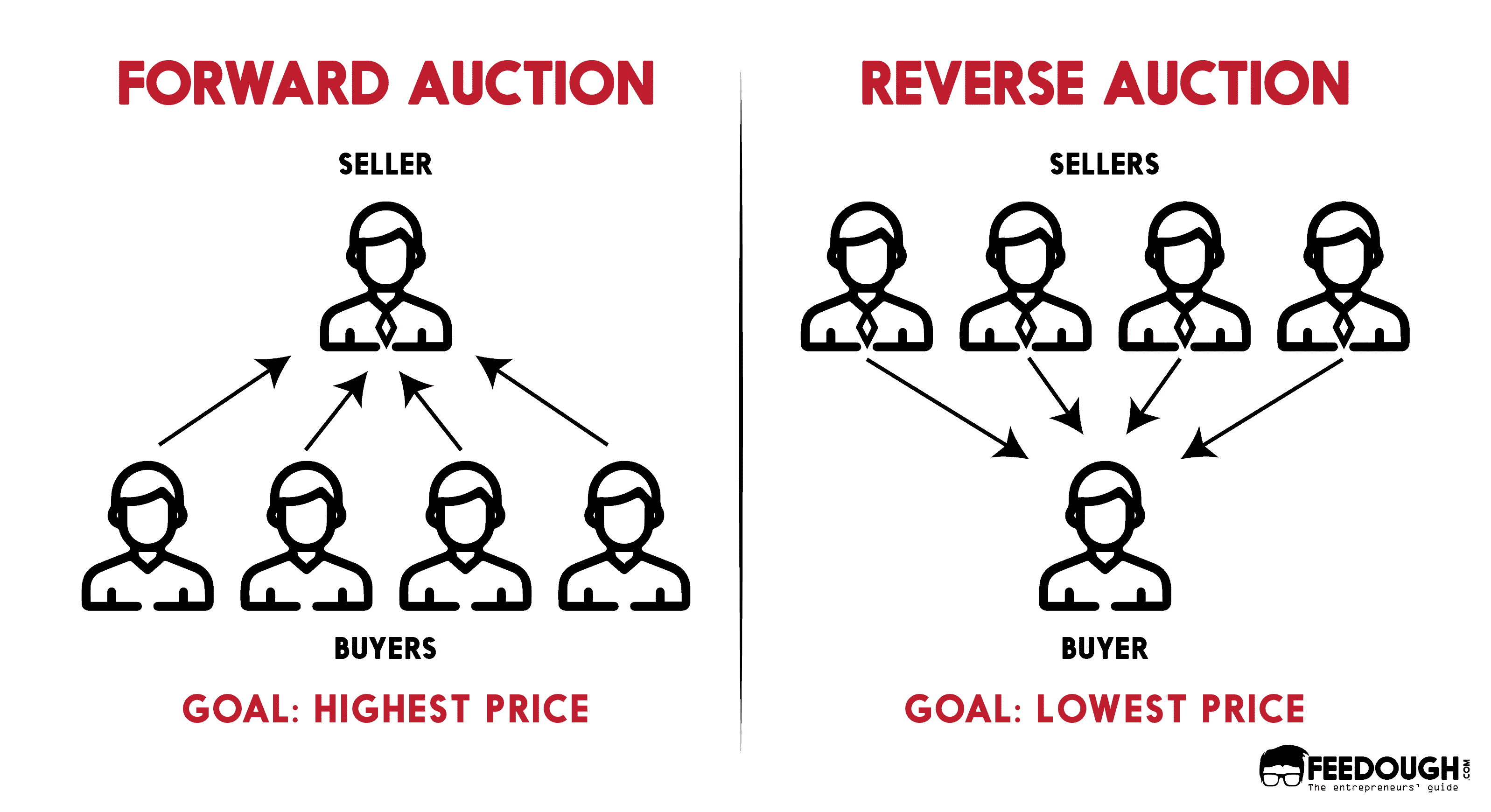
    But do you know that certain auctions do happen in an exactly opposite manner – the buyer places a reserve price (this time, the maximum bid amount) and the sellers compete among themselves to offer their product or service at the lowest price?

    Welcome Reverse Auction.

    What Is A Reverse Auction?

    A reverse auction is an auction where the roles of a buyer and seller are exchanged, i.e. sellers bid prices instead of buyers. But is this modern technique limited to interchanged roles? You bet not.

    Every type of auction is based on three principles:

    Price drive

    reverse auction

    In a standard auction, buyers constantly try to outbid their competitors by bidding a higher price. Thus, the price drive is upwards in a standard auction.

    In a reverse auction, sellers constantly try to outbid their competition by bidding a lower price for products/services offered. Thus, the price drive is downwards in a standard auction.

    Product information

    In a standard auction, buyers are well aware of the product as they do a thorough research before entering the bidding competition.

    In a reverse auction, sellers inform buyers about their products/services to make sure they choose their services over others.

    Direction of approach

    In a standard auction, buyers seek out sellers for the specific product they need.

    In a reverse auction, sellers seek out buyers to sell their products/services.

    Priceline played a key role in bringing the reverse auction system to the public eye. Priceline which claims to be the pioneers in the reverse auctioning model or the ‘name-your-own-price’ model. The company started out as a platform for cheap airline tickets and as its innovative pricing model took the market by the storm, it expanded to hotel rooms, rental cars and groceries.

    In recent times as the market grows more open and customer-centric, the reverse auction has been adopted by multiple startups and leading organizations. Some of the popular websites to follow reverse auction are Oltiby and Travelsurf.

    How Reverse Auction Works?

    Since online portals are able to connect buyers and sellers in real time, reverse auction typically occurs online where multiple sellers gather to sell their product/services to a buyer.

    A buyer usually puts up a request for a quote on a platform where multiple sellers can see. If the seller is selling products/services that match the criteria, they participate in the bidding. As this is an open market, each seller has a fair chance.

    Generally, the bidder that bids the lowest wins the race but it might not always be the case. There are certain features a product may be offering that the other product might not be offering. Thus, the actual winner is the lowest unique winner. This means that a product/service provider which gives services that fit your requirements as well as gives you the lowest price wins. If a seller gives you say, product X for the lowest price amongst competitors but it doesn’t have a particular feature you are looking for, the obvious option is to go for the seller that provides the product with the feature in the lowest price.

    Advantages Of Reverse Auction

    1. Reverse auctions are amazingly quick and you save time researching market
    2. The buyer puts forth his requirements thus avoiding wastage of time and resources from either side
    3. The buyer can easily compare products and decide on the perfect fit
    4. The buyer gets the best price for the product.

    Pitfalls of Reverse Bidding

    While everybody is looking for a bang for their buck, Reverse Bidding might not be the right method for all kinds of variants of services.

    As Forward Bidding requires a lot of potential buyers, Reverse Bidding needs even more number of sellers to maintain the integrity of the competitive process.

    In a motive to get hold of the lowest bid, the buyer might go for the cheapest in the house with less regard for the quality and compatibility of the product or service. In such cases, the buyer ends up buying a substandard offering which might not be having all the features as per his minimal requirements.

    Go On, Tell Us What You Think!

    Does Steemit business model seem sustainable? Come on! Tell us what you think about our article on reverse auction in the comments section.

  • Who are Opinion Leaders & Why Are They Important?

    Who are Opinion Leaders & Why Are They Important?

    With an insane number of varieties of products and services available in the market, we often look up to a certain people for choices these days. Personally, when I am stuck while choosing between two products I take the opinion of my preferred channel on YouTube, my techie friend, or the reviewers on Amazon.

    Is this relatable? Does the opinion of a particular individual/group of people change your opinion too?

    Who are Opinion Leaders?

    Opinion leaders are individuals or organizations that are able to influence people by their opinion. They are ones that the opinion receivers consider credible and hold high regard for in that particular area.

    Opinion leaders could be anyone ranging from your friends, family to famous actors, politicians, websites, CEOs or your favourite tech geeks.

    There is often one particular influencer in your family that is a go-to person in terms of a particular product or service. For e.g., if you are a foodie and your family trusts your taste, they will ask for your opinion before trying out new cuisine. This makes you the Opinion leader in terms of food. Similarly, when masses idolize well known public figures, they also become their opinion receivers. They keenly follow their opinion leaders.

    Characteristics Of Opinion Leaders

    Opinion leaders are the influencers of their respective niches. They influence the choices and beliefs of their followers towards or against a specific brand, product or service.

    1. They are knowledgeable in their field.
    2. They are respected and trusted by their followers.
    3. Their views carry weight and significance.
    4. They interpret the media messages and put them into context for the wider population.
    5. They have a giving spirit and often share their knowledge with the followers on social media.

    Opinion leaders who don’t have an affiliation with the product they’re promoting are even trusted more than the people who do. If the opinion leader is within your family or friend circle, you tend to believe him more than anyone else as you feel that they have your best interests in mind and want you to make the right choice.

    True opinion leaders have a strong impact on their audience’s choices and have a higher social status among their friends, family, and followers.

    Why Are Opinion Leaders Important?

    There was a time when brands only focused on marketing through advertisements and CEO’s and top-level executives didn’t even attend any press conference. However, the trend has changed. CEOs like Elon Musk and Steve Jobs have become opinion leaders in their own niche. Brands are focusing more on keeping the celebrities and other influencers happy as even one tweet or Facebook post can make the business lose billions.

    With an average person witnessing around 10,000 advertisements each day and not recalling even a fraction of those, opinion leaders have evidently become very important when it comes to the marketing of a product.

    Opinion leaders are deemed to be most credible in the niche by their followers. According to a study by Nielson, Eighty-three per cent of people agree that the recommendation from friends and people they trust is the most credible form of advertising.

    Opinion leadership has even become a profession in this era of the internet. These professional opinion leaders (also called influencers) put in efforts to constantly improve their judging skills by following a particular topic closely, getting hands-on experience with various products of their area of interest. During their journey to expertise, they garner enough audience and followers. They have their own personal brand and can build or shatter any brand just by their words.

    Customers prefer engagement, interaction and a sort of physical touch over distant advertisement messages. This is where opinion leaders make a world of difference. They talk to the target audience.

    Understanding The Influence Power Of Opinion leaders

    In 1944, sociologist Paul Lazarsfeld introduced “The two-step flow of communication model”. According to this model, mass media doesn’t directly influence the mass audience. Rather, the information flows from mass media to the opinion leaders who interpret the media messages and put them into context for the wider population. Thus people have a feeling of more trust towards opinion leaders as compared to the advertised mass media.

    Opinion leaders are considered to be expert in a particular area and their influence sphere is limited there. Their opinion over other areas holds little to no importance.

    Now there is a special case of opinion leaders, these are market mavens. Market mavens are intense opinion leaders and their area of expertise has a wide domain. They are sound about various sectors of the industry and their social status is generally higher than that of opinion leaders. E.g: Warren Buffet, John Mcafee, etc.

    How To Get Opinion Leaders On Your Side?

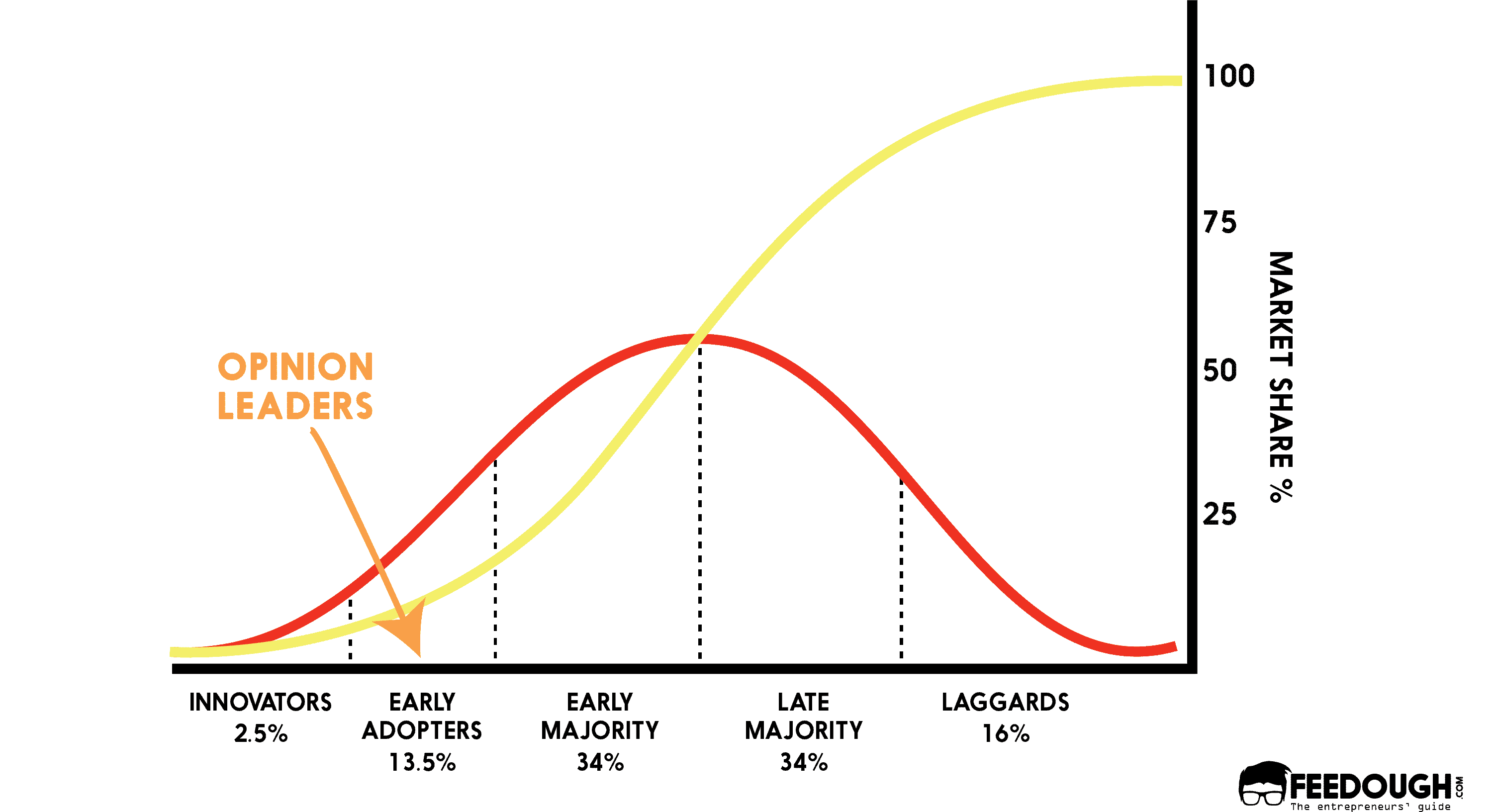
    Opinion leaders usually belong to the early adopters portion of the innovation adoption lifecycle. This means, they try and test the product before the 84% of the users and have a huge influence over the majority of the customers who are yet to try the product.

    This makes it extremely important for you as a marketer to keep them on your side and use them to influence others to buy your product.

    OPINION LEADERS

    Previews

    Having the opinion of an opinion leader during the introduction phase is a sound marketing strategy and is practised quite a lot.

    E.g. Movie critics are invited for the premiere.

    Samples

    A lot of consumer products send their samples to influencers (bloggers, doctors, etc) to spread the word about their products.

    Pre-release

    Electronic goods are known to do giveaways to tech geeks or influencers with a heavy social pull before the release date to artificially create a surge during the introduction phase.

    Endorsements

    A lot of products pay opinion leaders and influencers to endorse their product because a huge chunk of the population follows their lead. Mostly the masses see through such strategies yet endorsements are a tried and tested method of improving market stats.

    Go On, Tell Us What You Think!

    Did we miss something?  Come on! Tell us what you think of our article on Opinion Leaders in the comments section.