Feedough Logo

Blog

  • The History Of WhatsApp

    The History Of WhatsApp

    “No ads! No games! No gimmicks!” – A simple principle which helped a small messaging application win over giants like iMessage, WeChat, Facebook Messenger, Snapchat, LINE, Kik Messenger, Kakao-Talk, and many others – while operating with a staff of just 50 employees.
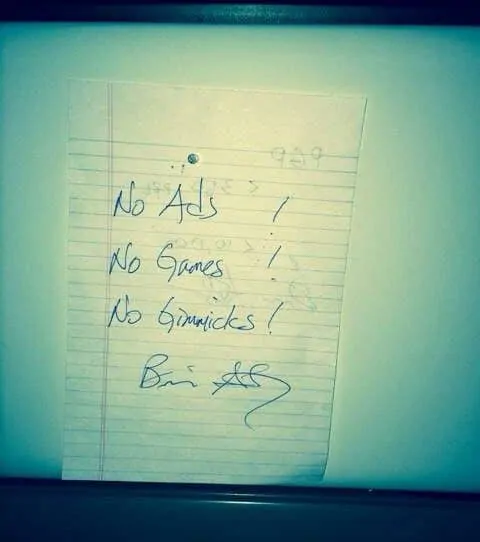
    No ads! No games! No gimmicks!

    Whatsapp’s history needs to be heard as it is not like any usual startup story where the founders had an idea that made them drop out from their colleges, build a team, and get pre-seed funding from a giant like Facebook or Google. WhatsApp was conceptualised not by college students but by people who were in their thirties and had a stable job with a renowned company.

    The internet messaging application was conceptualised because of an actual need (democratising phone-based communications), and it succeeded because it was able to capitalise on almost every emerging trend like push notifications and need like encryption.

    The best part?

    Even after ten years of existence, the company still boasts its no ads, no games, and no gimmicks principle while making millions in revenue.

    Here’s a brief history of WhatsApp explaining its conceptualisation, the initial WhatsApp business model, and the new WhatsApp business model after Facebook bought it.

    Who Founded WhatsApp?

    Brian Acton and Jan Koum
    Source: Inc

    Brian Acton and Jan Koum founded WhatsApp in 2009 after they left their job at Yahoo!.

    The startup story began when they left their job to travel around the world. But soon, their savings started to sink, and they had to apply for a job on Facebook, which didn’t work out as planned as well. They were quite disappointed, but this failure led them to start a new life journey – WhatsApp.

    WhatsApp 1.0 – Whatsapp Launches in 2009

    Jan Koum bought an iPhone in January 2009 and soon realised the app industry’s potential on few months old App Store. He wanted to build an app that shows statuses next to the individual names of the users. Koum discussed the idea with Acton, and both started visiting Alex Fishman for more insights. But executing this idea was impossible without the help of an iOS developer. So, Alex introduced them to a Russian developer, Igor Solomennikov, whom he found on RentACoder.com.

    The beginning of the journey was not a smooth one, but they paved their way through like many other successful entrepreneurs. Koum succeeded in developing the iOS application and incorporated the ‘WhatsApp inc.’ in California on 24th February 2009

    He named it ‘WhatsApp’ because it sounded more like what’s up, which aligned with the idea of statuses.

    He demoed WhatsApp to some friends, including Fisherman, but none of them liked it. Moreover, issues like battery draining, crashing of the app, etc. made Koum so disappointed that he lost all the hope and started to look for a new job. At that time, Acton encouraged by saying –

    “You’d be an idiot to quit now. Give it a few more months.”

    The Push Notifications Add-On

    In June 2009, Apple launched the push notifications update. The motive behind this update was to remind the users when they are not using an installed application. Jan capitalised on this update and did some alterations to Whatsapp, which sent push notifications to friends whenever a user changed his status on the application.

    Fishman’s Russian friends found it fun and started using it to update their own whereabouts and ping each of their friends with statuses like – “I woke late” or “Can’t talk, I’m at the gym”.

    In no time, this feature became a channel for instant messaging, and users started chatting with each other through statuses like someone would post “What’s up, Karen?” and Karen would reply by changing her status.

    Jan recognised this accidental opportunity at his town-house in Santa Clara and soon realised the need for upgrading the operating model of the status app to an internet-based instant messaging application. This is how version 2.0 came into existence.

    “Being able to reach somebody halfway across the world instantly, on a device that is always with you, was powerful,” – Jan Koum

    WhatsApp 2.0
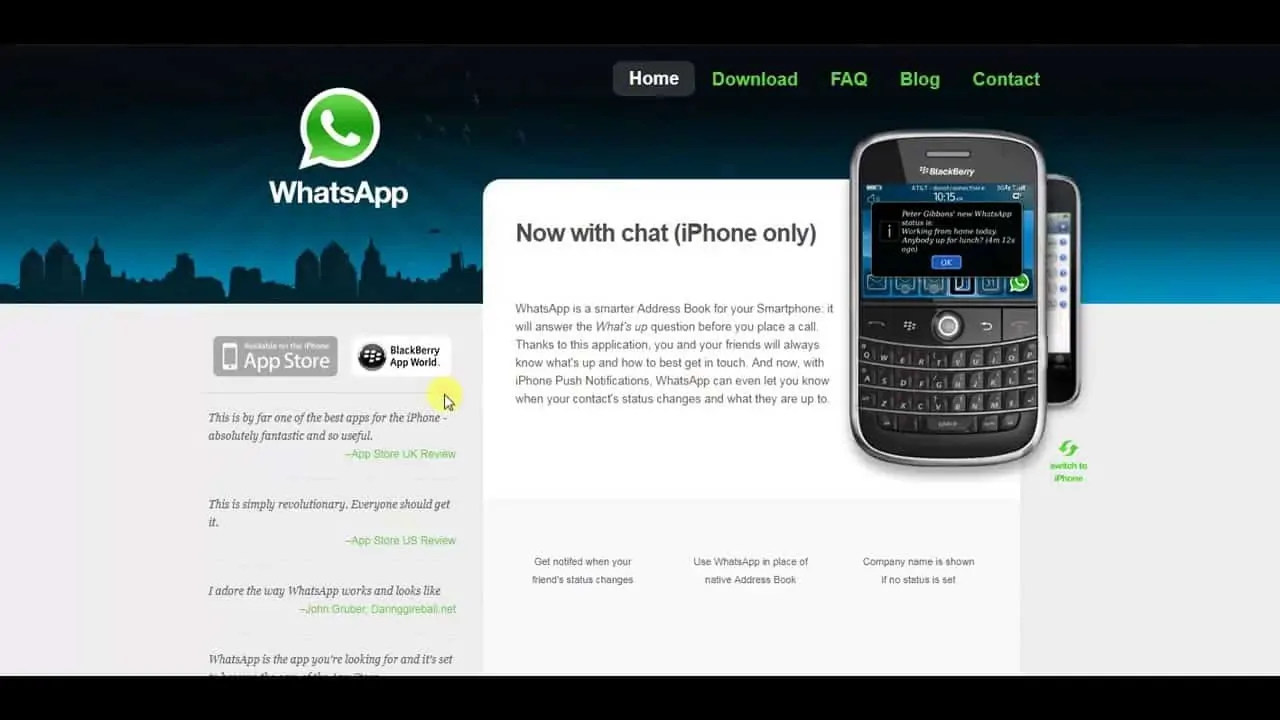
    WhatsApp 2.0
    Source: Youtube

    Soon after realising the demand for an instant messaging application, WhatsApp 2.0 was launched in its beta stage. People loved the idea of logging in with just a phone number and sending messages to contacts using the internet instead of operator SMS plans.

    The users highly preferred this incidental positioning and the double-check message received feature as the competitors like Blackberry’s BBM were exclusive to Blackberry, and Google’s G-Talk and Skype required you to share a unique ID to communicate with others. This made WhatsApp an app with high utility, and its users increased to a whopping 250,000 within just a few months.

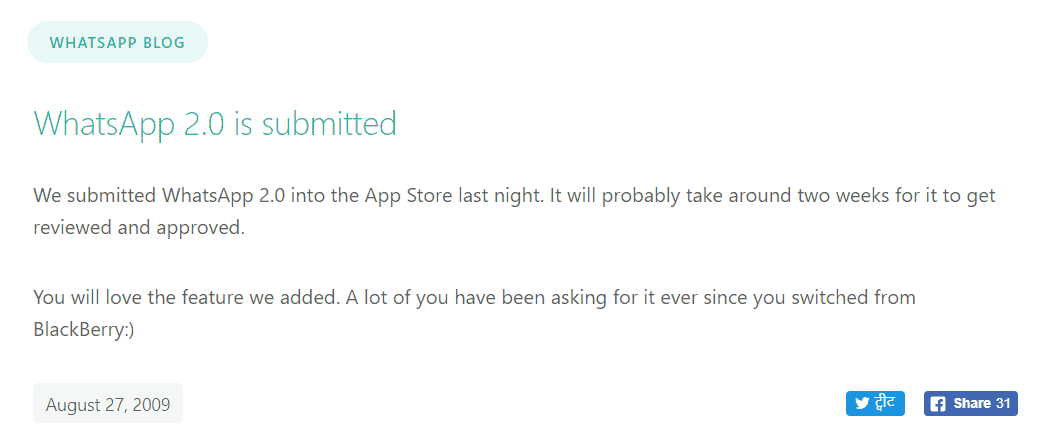
    The same version was submitted to the App Store on 27th August 2009. This version, however, was limited to just sending texts and not media files.
    when was whatsapp launched

    The Seed Funding

    Brian Acton was not an active member of the WhatsApp team until he convinced five ex-Yahoo! friends to invest $250,000 in seed funding. It was in October 2009.

    Before this, he was actively looking for some other startup idea to work with until Jan came to him with his WhatsApp 2.0 version, to which he replied –

    “You had the whole open-ended bounty of the Internet to work with,”

    This was a huge boost to WhatsApp as it not only got good funding but also a very experienced cofounder.

    “We didn’t set out to build a company. We just wanted to build a product that people used,” – Koum during an onstage panel discussion.

    Brian Acton officially joined WhatsApp on 1st November.

    The Value Proposition

    The beta stage ended, and the application was exclusively launched on the App Store for iPhone in November 2009. It stood out as a perfect alternative to sending SMS within the country and even internationally (for free).

    As soon as the application was launched, the founding pair was flooded with emails from iPhone users asking about the future prospects of the application and if it was being launched for Nokia and BlackBerry as well, as they were the market players at that time.

    Jan soon hired one of his friends, Chris Peiffer, to make the BlackBerry version of the application, which they launched two months later.

    But Chris, like many others living in the USA, had a doubt-

    “People have SMS, right?” he asked.

    Even during 2009, flat rates for SMS and free minutes were offered by almost every mobile operator, and there was almost no incentive for people in the USA to shift to WhatsApp. The USA, in fact, is the worst-performing market for Whatsapp till now.

    But Koum and Acton had plans to take this app to the world outside of the USA, like Europe and Asia, where people’s texts were actually metered.

    “It stinks. It’s a dead technology like a fax machine left over from the seventies, sitting there as a cash cow for carriers.” – Jan told him

    Even though Chris still had doubts, he joined the team by being fascinated by the eye-popping user growth. Later, support for Symbian OS, Android, and Windows OS was added within two years.
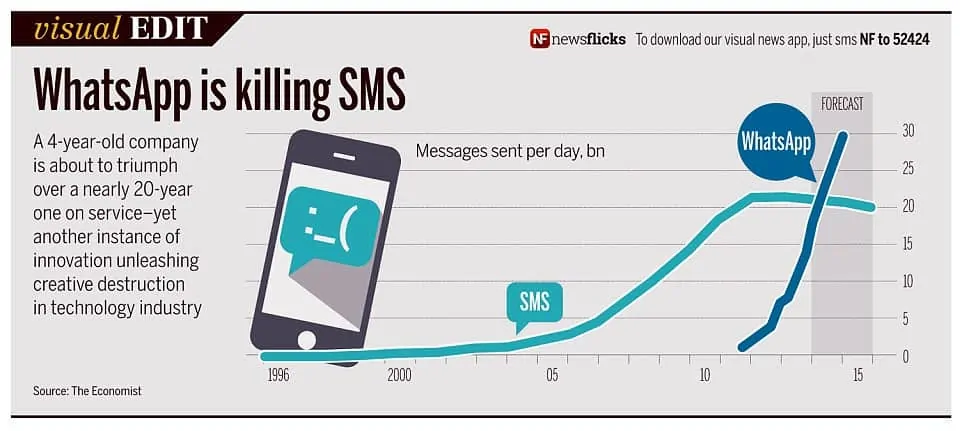
    whatsapp vs sms
    WhatsApp was eventually successful in replacing SMS

    The Paid Whatsapp Model

    The main work started in a converted warehouse on Evelyn Ave, where the founders subleased some cubicles. The staff worked off cheap Ikea tables and wore blankets for warmth. It saved a lot of costs.

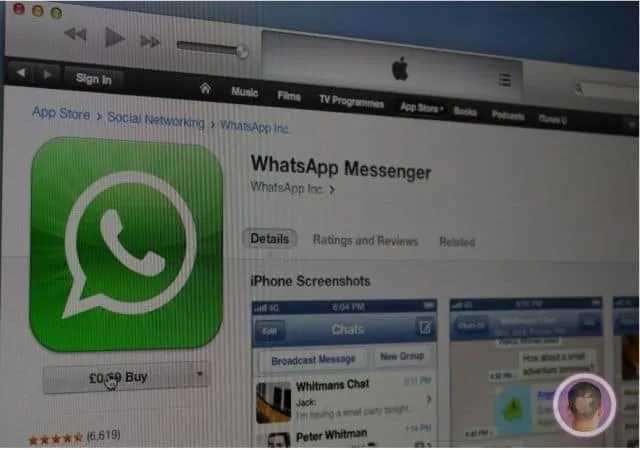
    Moreover, Koum and Acton also worked for free for the first few years, and the only high costs during the initial days were sending verification texts to users. To make up for this, the business model was changed to paid one (costing $0.99) as the application was spreading faster than the investments coming in.

    A new feature of sending photos was added to the application and the numbers of users sky-rocketed even when the application was paid. So the pair decided to keep it paid for some more time.
    whatsapp cost
    source: cultofmac

    The Sequoia Support

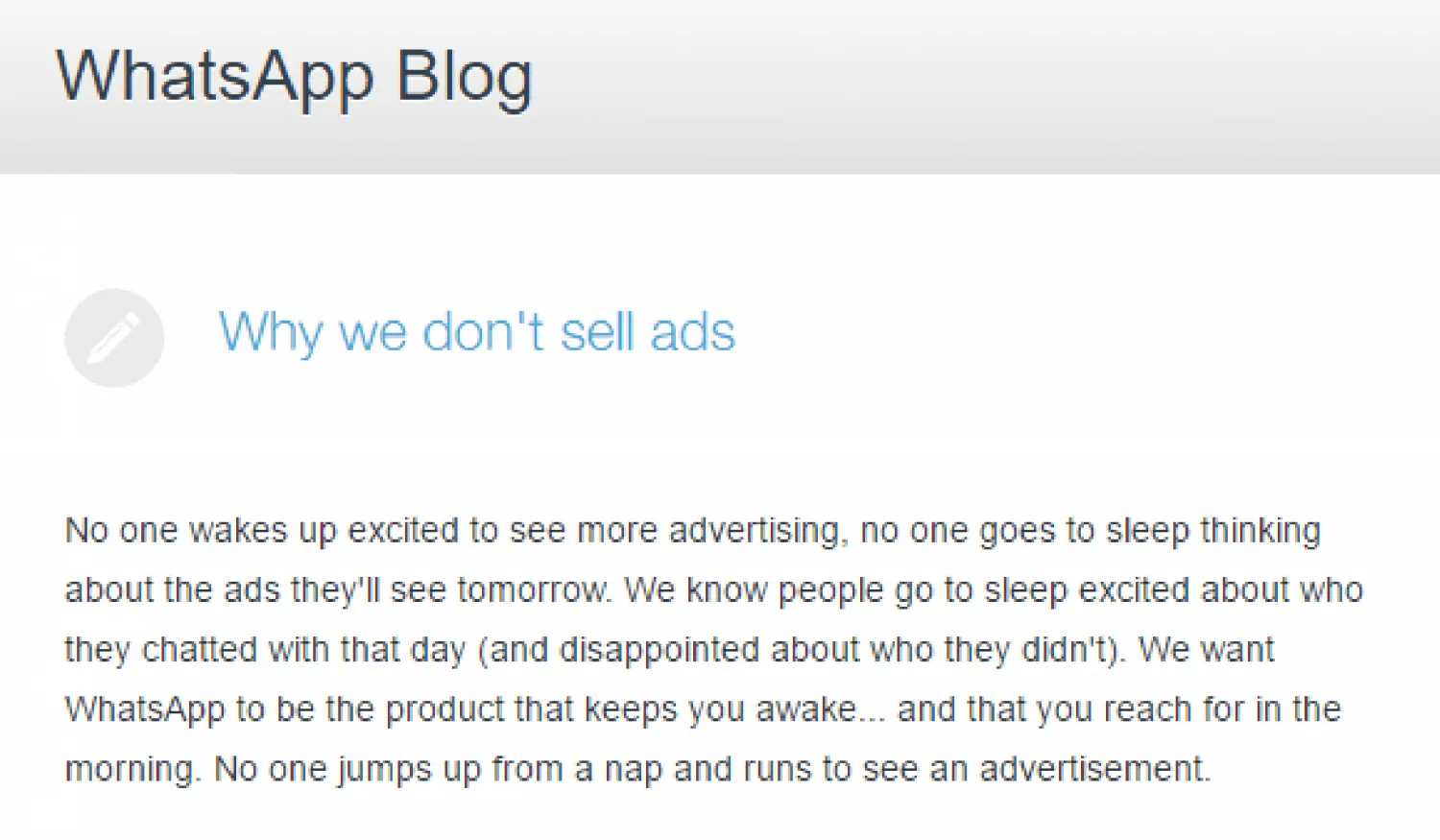
    Jan & Brian were not actually a fan of marketing and press. Their main focus was their product which seemed sustainable with its $1 paid model as WhatsApp was among the list of top 20 applications on App Store in 2011. In fact, when asked why isn’t Jan boasting about this success, he replied –

    “Marketing and press kicks up dust. It gets in your eye, and then you’re not focusing on the product.”

    Besides marketing, the founding pair was also dusting away all the meeting requests from VCs interested in investing. They believed it to be a bailout as most venture capitalists were inclined towards the advertising business model they hated.
    how whatsapp makes money

    However, Sequoia Capital’s partner Jim Goetz was persistent and spent 8 months wooing the pair just to have a talk. According to him, the fact that the startup was already paying corporate income taxes was what made it stand out.

    “The only time I’ve seen that in my venture career,” he said.

    He eventually succeeded in meeting them and proposed the deal of being a strategic advisor and investing around 8 million dollars for more than 15 percent of the firm. The team agreed as he promised not to push advertising models on them.

    Just two years later, in February 2013, the number of users rose to a surprising 200 million, and staff increased to 50. This overwhelmed the founders who invited Sequoia Capital for a second funding round, resulting in another $50 million, valuing the startup at $1.5 billion.

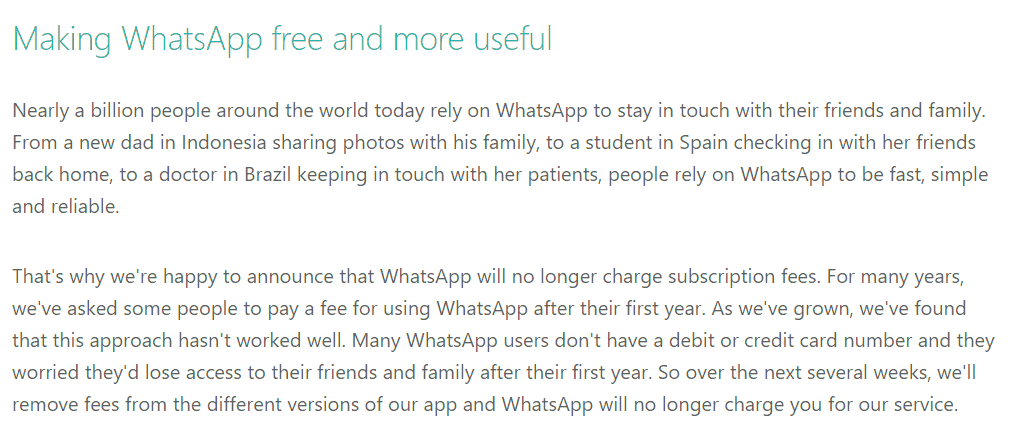
    The founders also changed the operating model to a subscription model where the application was offered for free for the first year, but the users were charged an annual subscription fee of $1 after the trial ended.
    whatsapp free

    Acquisition By Facebook And The Change In Business Model

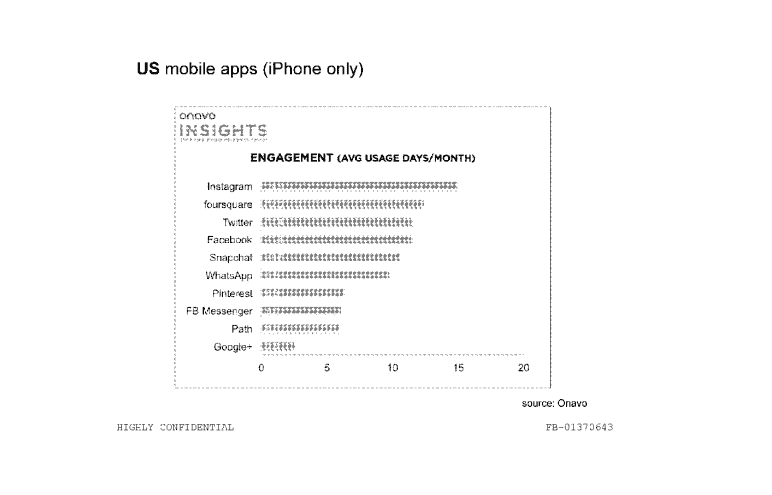
    In February 2014, Facebook acquired Whatsapp for a whopping $19 billion and left everyone wondering about such a valuation of Whatsapp. According to Buzzfeed News, Facebook thought Whatsapp to be its potential future competitor as it analysed it using its data analytics application – Onavo. At that time, Facebook was on a mission to become a mobile-first company and make messaging a core service. Whatsapp was the biggest competitor of Facebook Messenger, and it even surpassed Facebook’s subsidiary when it came to the engagement rate.
    whatsapp fb messenger

    Now, WhatsApp took a huge share from the limited pool of attention of Facebook’s target audience. This, along with the rise of other messaging applications like WeChat, Kik, Line, and Viber, made WhatsApp look both as a threat and an opportunity to capitalise on for Facebook.

    Moreover, for an advertisement-driven platform like Facebook, WhatsApp and its data was nothing less than a treasure chest waiting to be opened.

    Hence the acquisition.

    As expected, Facebook did interfere with the existing WhatsApp business model and added its Facebook touch to it. Initially, data like verified phone number, status and display picture, and frequency of using WhatsApp was shared with the parent company. Then features were eventually added to make it more business-friendly.

    The Launch Of WhatsApp for Business App

    In 2017, a year after WhatsApp became fully encrypted and was even launched for Windows and Mac PCs, a new feature was added to its business model designed especially for businesses. The WhatsApp for Business application let businesses create their business profile on WhatsApp for free. The application let businesses add important links to their profile like links to their website or Facebook page, set up autoresponders and even provided the possibility of linking landline numbers with WhatsApp.

    This free application proved out to be a great addon to enhance customer relationship management for small and medium enterprises, and millions came on board.

    The company also launched WhatsApp payments at the time where it partnered with multiple banks in India and made sending money through WhatsApp as easy as sending a text.

    Goodbye To The Founders

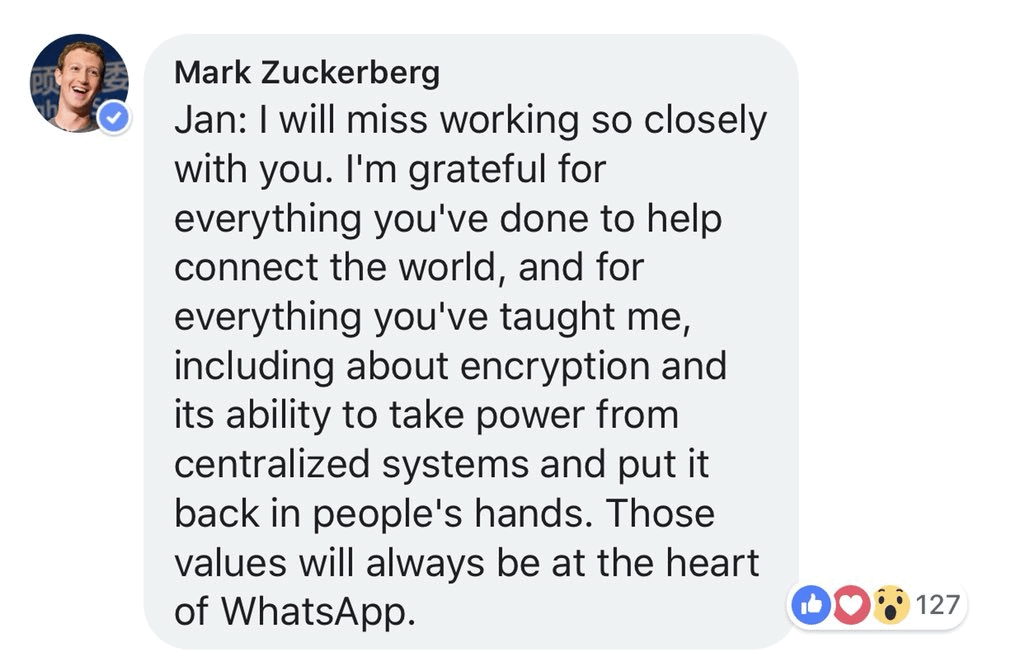
    As the company moved more towards fulfilling Facebook’s ambitions, Brian Acton left Facebook in September 2017 to work on his own nonprofit Signal Foundation, followed by Jan Koum who left the company amid arguments with Facebook over data privacy and WhatsApp’s business model.
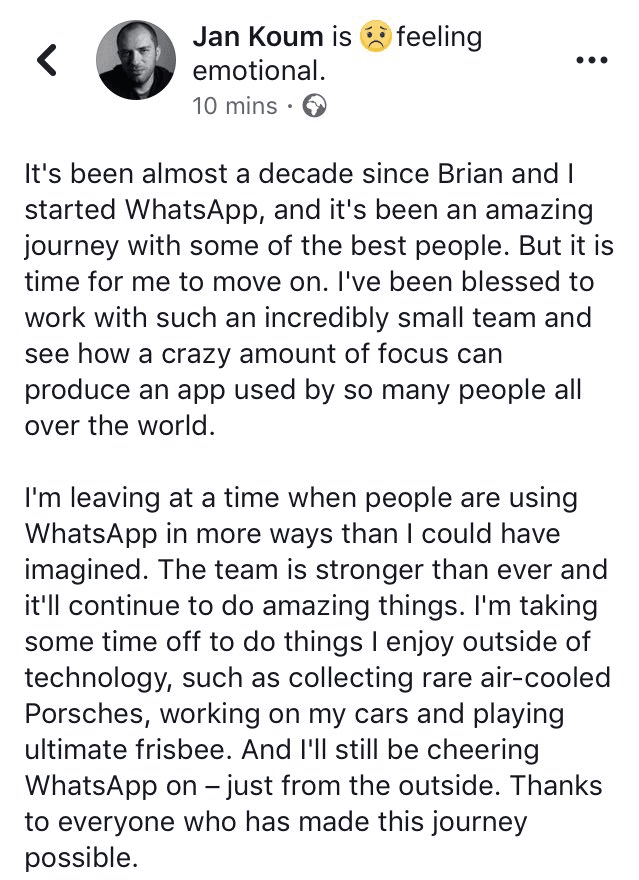
    jan koum leaving whatsapp
    Mark Zuckerberg's reply to Jan Koum

    The Release of the First Money Making Add-On
    whatsapp for business API

    WhatsApp for Business application’s launch was just a premise to well-planned money-making yet a non-intrusive feature of WhatsApp – WhatsApp for Business API.

    WhatsApp for Business API lets large businesses integrate the platform’s API with their own offering and provide a seamless experience to their customers by communicating important details on WhatsApp automatically. This API made it possible for banks to send communication messages, ticket booking applications to send confirmation messages, and other secure apps to even send OTPs through WhatsApp.

    Moreover, this paid feature by WhatsApp opened the doors to WhatsApp marketing and made it the marketing channel with the most engagement rates.
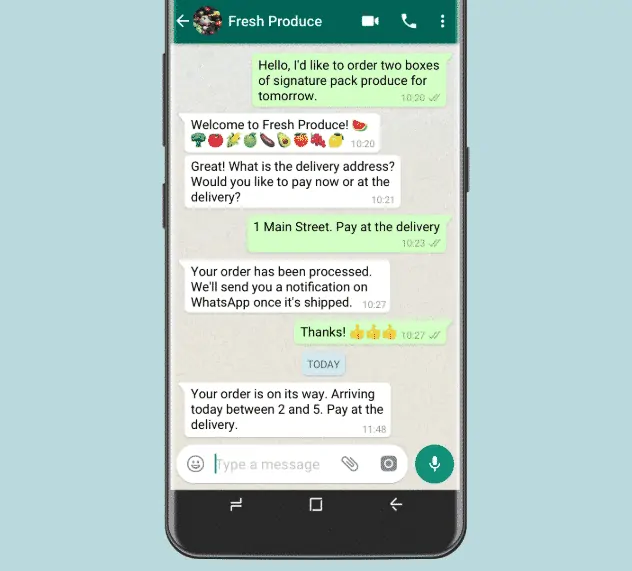
    whatsapp api

    Many companies joined the pilot program, which worked well, and now WhatsApp has even partnered with third-party companies to become partners in getting more companies on board to use its API.

    WhatsApp In 2020s

    In a world where the demand and popularity of an app are never stable, Brian Acton and Jan Koum were able to keep their offering at the top throughout the history of WhatsApp; thanks to their strategy of no-ads. Instead of running after the money by continuously interrupting chats with ads, they prioritised the user’s interest, which is what counts the most today.

    More than 1.5 billion people in 180 countries use WhatsApp today. The platform has already taken over SMS, MMS, and other obsolete features that its target market had earlier used to communicate with each other. And now, with Facebook’s vision of even getting businesses on board, these features by mobile operators might end up being completely useless.

    Zuckerberg is leaving no stone unturned to take WhatsApp to a new level in the business market. The company has even launched a desktop version of the application (WhatsApp Web) to make it easier to use on a PC or a Mac.
    Let’s see how that turns out.

    Go On, Tell Us What You Think!

    Did we miss something? Come on! Tell us what you think about our article on WhatsApp History in the comments section.

  • The Importance Of A Startup Business Plan

    The Importance Of A Startup Business Plan

    When starting your business venture a business plan is a vital tool to have on hand. It helps in maintaining focus throughout their journey and keeps the company’s short-term and long-term goals in hindsight.

    Some choose to believe that the act of writing down a business plan has been dead for years, but many business experts agree that having a strategic plan for your business is the safest way to start. Even well-thought-out ideas can turn out utterly useless without including proper execution and implementation steps.

    What Is a Business Plan and What Does It Consist Of?

    A business plan is a road map that describes your business goals and details how you will accomplish those goals for it to succeed.

    Business planning is essential for startups as it allows individuals to break down its elements into meaningful pieces that are easier for you to understand and comprehend. This would most likely include expense budget, milestones, tasks and responsibilities, and expected outcomes.

    A smart entrepreneur will pay close attention to how much money the business is bringing in and its expenditure. This comes in handy when you’re planning to recruit new employees or purchase new equipment. Outlining such needs in a solid financial plan helps you assess how much capital your business needs in order to grow and function efficiently.

    Business Plan Types

    There are three common types of business plans which are used as per the business objectives of a startup:

    The Lean Business Plan

    A lean plan deals with the formalities required when displaying a plan for a loan or investment. It focuses on your main business strategy, objectives, tools and equipment, budget estimation, and forecasts. They’re used as tools to promote strategic planning and growth within the business.

    The lean business plans include more financial data but skip units like company history and the team of management since the focus is mostly on projected sales, expenditure, and cash flow.

    One-page business plan

    A simple one-page format is outlining your business objective and goals within a single page. Everything you find important is listed in concise points that are easy to interpret and understand by anyone.

    This kind of business plan is great for startups that just wish to summarize their concept in the best possible way. Sticking to a single page allows you to re-visit the general model whenever you need it without having to rummage through different pages every time. Similarly, it’s a lot easier to tweak and refine as you come up with new ideas and schemes.

    In the same way, it can also be used to introduce the business to potential stakeholders who have limited time to read through a comprehensive business document. This is preferable during first meetings as it provides them with a general idea of your business model. A detailed plan can be prepared later in the future but a one-page plan is a better approach to get your business concept through.

    Formal or External Business Plan

    Formal business plan documents are normally intended for outsiders to provide comprehensive information about a business and its aim. They’re mostly used to convince investors to fund an enterprise or to support a loan application. This type of plan should be designed to look professional, and pay extra attention to detail in language and formatting.

    The formal business plan will explain where and how the funding would be used and what return is expected from their investment. Finally, a detailed list of your skilled team should be included to showcase that you’ve got a strong team to help your business grow.

    Why Is Startup Business Plan Important?

    A survey conducted by Palo Alto resulted that people who create business plans are twice as likely to succeed than people who don’t. To solidify the reason why business plans are still relevant, we’ve explained the importance of writing a business plan for startups below:

    Plotting a Course

    Business plans allow individuals the opportunity to think long-term. It outlines the directions to follow, the goals and aims of your business, the expected outcome and other futuristic objectives to help your business grow. Its purpose is to keep entrepreneurs focused through every phase in their business venture and not disrupt the flow.

    It also helps in briefing recruits, management teams, and employees as you can share your business objectives and motivate them to work towards those goals.

    Securing Funding

    It’s no secret that businesses can’t function without any operating capital to kick-start their production cycle. Entrepreneurs are often required to take loans from financial institutions to purchase property, get the equipment or hire manpower. But for this to work out the way you want, you need to present an up-to-date business plan to potential financiers. An accurately plotted business plan will highlight all the capital requirements and serve as written proof for the deed. The better the business plan, the higher the chances of securing reliable suppliers.

    Identifying Possible Weaknesses

    If this is your first startup rodeo then there is a high probability of you encountering several pitfalls in your business venture, which is completely normal. Highs and lows are a part of life and without them; we wouldn’t feel the need for improvement.

    A business plan allows you to cut down the chance of consequences so you can focus on other aspects of business operation. It eliminates the spot for unnecessary errors that are time-wasting and highlights areas that can be improved with modern tools and technology. Also, it allows you to recognize which regions are better handled by automated technology and which can be appointed to manpower.

    Execution Plan

    Describing how your business will function and perform in the market is important when dealing with sponsors and investors. A business plan will explain your products and services, your targeted customers, the required funds and what’s necessary for your startup to thrive. It guides you through the initial stages and rotates motivation and focus within the business.

    If you’re unable to remember important details, having a business plan on hand will assist you in employing staff and distributing the workload to operate smoothly. For instance, if your business specializes in web design and development services your target audience is individuals looking to launch or revamp websites for their blog or company. When you fail to present any aspect of your business, it can lead to confusion and cost you a financer before you’ve even started running.

    The Best Possible Chance to Succeed

    Taking time out to thoroughly analyze the elements included in writing the best business plan for your startup is guaranteed to bring you success. It allows you to work through important business details like financing and market planning, so you’re not going in blind.

    You will be entering the field knowing your target audience and implementing the best strategies to pique their interest. Having a business plan helps you to present your ideas and concepts to investors, sponsors and potential clients to convince them about your commitment to the enterprise and its success.

    Using your business plan as a constant management tool is the best way to obtain benefit from it. For this, your plan must be regularly revised and polished to include updates on current conditions and any new data that you’ve gathered while running your business. You’re constantly learning new things while managing a business like a customer’s response to your services, their likes and dislikes, effective marketing techniques, and affairs that require immediate attention. This keeps you on your toes and keeps you determined to succeed.

    It is important to understand that a business plan intended for internal management and strategic planning within the business walls differs in length, detail, and presentation. On the other end of the spectrum, a business plan document meant for outsiders like venture capitalists, will focus on high growth aspects of the business and have a much more sophisticated arrangement.

    In Summary

    Ultimately, constructing a startup business plan involves a lot of thought and research. You must focus on its core principles and identify what’s best for effective management and functioning. Providing adequate information about your startup is what attracts angel investors and venture capitalists, you just need to apply the right tone and format in your business plan. While it doesn’t guarantee success, it can help in reducing the likeliness of failures you may encounter in the future and raise capital.

    Go On, Tell Us What You Think!

    Did we miss something? Come on! Tell us what you think about our article on startup business plan in the comments section.
  • 7 Key Skills A Good iOS Developer Should Have

    7 Key Skills A Good iOS Developer Should Have

    The process of choosing the right career path for yourself can be a little tricky, especially in the tech domain. Currently, the mobile app industry is booming and looking at the current scenario it seems like the scope is likely to expand in the next few years. This means there are a number of learning opportunities for career growth.

    In this article, we will specifically focus on building your career as a top-notch iOS app developer and what are the major skills that are required to help you in starting your journey in one of the leading iOS app development companies in the industry.

    Key iOS App Development Skills For An iOS Developer

    Below is a list of iOS developer skills that you should definitely hold expertise in, which are as follows:

    Strong Command over Swift Programming Language

    Having a strong command of the Swift programming language is one of the primary skills that an iOS app developer should have. To be specific, you need to be familiar with Swift’s 3.0 programming language and all the functionalities that it offers.

    This is because Swift is a universal language owned by the tech giant Apple and all the iOS applications are built on it. Some of the functionalities offered by Swift language are Control Flow, Error Handling, Classes, Inheritance & Initialization.

    Spatial Reasoning

    When it comes to designing and developing an iOS mobile app, spatial reasoning plays an important role. In simple words, it is mainly about thinking from the user’s perspective i.e. the interaction with the mobile app, the overall experience of using the app, etc.

    Here, iOS app developers need to have that out-of-the-box thinking and find innovative as well as effective ways in which they can make the app more efficient while enhancing the user experience. By thinking from the user’s point of view, an app developer can design a user interface that is simple to navigate and includes features and other functionalities in a more accessible way.

    Knowledge of Grand Central Dispatch

    App users prefer those applications that are simultaneous in nature and can handle various tasks simultaneously such as displaying information, understanding the inputs added by a user, collection data from the internet and so much more.

    In iOS applications, all of this simultaneous task handling is possible because of the Grand Central Dispatch, also known as GCD. The main aim of using the Grand Central Dispatch is to provide the iOS app users with a smooth and seamless experience.

    Good Understanding of Apple’s Xcode IDE

    If you do not have a thorough understanding of Apple’s Xcode IDE, you cannot think of becoming a top-notch iOS app developer. The Xcode IDE is the actual reason that makes an iOS app work smoothly while offering an amazing user experience. Throughout the journey of conceptualizing an idea for the coding part of the app development process, app developers need to master the Xcode IDE.

    The Xcode IDE is highly integrated with frameworks like Cocoa and Cocoa Touch since it is also a primary environment for creating mobile applications for Apple devices like iPhone, iPad, Apple Watch and many more.

    Importance of Networking

    Networking is one of the iOS app development skills that many mobile app developers don’t pay attention to and treat it as an optional application development skill. Think of it like this, if your iOS app can’t interact with the web, what use would it be of and the majority of its features won’t work?

    Nowadays, almost every mobile application needs to interact with the web in one way or another and this is what marks the importance of networking. This is generally carried out with JSON which stands for JavaScript Object Notion. That’s why even app development companies pay high attention to the networking aspect of the application.

    Expertise in UI/UX Design

    As an app developer, you might be aware that both UI (User Interface) and UX (User Experience) are related to the design of a mobile or web application but when it comes to the functionalities, there are some differences in both terms. Basically, the User Interface (UI) is based on the looks of an app whereas the User Experience (UX) depends on how exactly the end-user is using the app.

    Here are some of the key things that you need to keep an eye on while following the design guidelines:

    • Delegate Pattern: The delegate pattern is a well-known method that is used for the purpose of passing information among objects in the Cocoa framework. This approach works great when only one recipient and one sender are involved in the process.
    • Model-View-Controller (MVC): The MVC is responsible for defining how information is being stored, how the data is being presented and how the stored information is being updated in response to the latest user interactions.

    Apart from the above-mentioned points, using notifications is another great way of passing information from one location to another location, for example, the app notifications allow app developers to send data to multiple app users at the same time.

    Apple Human Interface Guidelines

    Talking about rules and guidelines, Apple follows a very strict policy for them. As an iOS mobile app developer, you should be familiar with all the Apple Human Interface Guidelines as following these guidelines will assist you in creating a simple and smooth app experience for the end-users

    These Human Interface guidelines by Apple also help iOS app developers to include more creative practices that can result in maximum impact on the app user and deliver superior visuals without any issues.

    Last but not least, you can also add learning about core data to your skillset. This is because it can be quite disappointing for a user when minor issues like data loss, interface glitches, and other bugs are faced again and again. With core data, all of these issues can be easily eliminated.

    So, these are some of the top iOS app development skills that will help you in becoming the best mobile app developers in the industry. Also, in case you are not entirely confident about making a career as an iOS app developer then you can always try your hands in the field of Android app development. To become an Android app developer, you need to master a different skillset, for instance, learn programming languages that are specifically designed for the Android platform.

    Go On, Tell Us What You Think!

    Did we miss something? Come on! Tell us what you think about our article on iOS app developer skills in the comments section.
  • Value Proposition Canvas – How To Fill It? (With Template)

    Value Proposition Canvas – How To Fill It? (With Template)

    You had an idea for a startup which you really believed would disrupt the market. So, you gathered a team, succeeded in getting investors on board, and launched a full-fledged company just like any other entrepreneur would have.

    The start proved out to be slow but you expected the sales to rise with time.

    …which never did.

    Your product was truly innovative and had all the features which would have made the customers’ life easier. But it never really took off.

    Why, you ask?

    Because your product was never needed in the market and you never validated that assumption.

    7 out of 10 new products meet the same fate.

    No, the teams behind these products aren’t incapable, the products aren’t bad either. It’s just that the customers don’t need these products either because they don’t gain much by using them or these products don’t really relieve their pains in doing the jobs.

    Now, this failure would have been easily aborted if the makers went out to the market, surveyed, and used the answers to fill their value proposition canvas.

    What is Value Proposition Canvas?

    Value proposition canvas is a tool which helps to align the value proposition of the offering with what the customer values and needs, in order to make it a better fit for the market.

    Originally developed by Dr Alexander Osterwalder, this tool acts as a framework to ensure that the offering is actually desired by the market and is capable of satisfying the customers’ needs. This reduces the chances of the product failing in the market to a large extent.

    The value proposition canvas can be used both for refining an existing offering or launching an entirely new product in the market. Whatever the case be, it is an essential tool to visualize, design, and test how you create value for customers.

    Value Proposition Canvas Elements

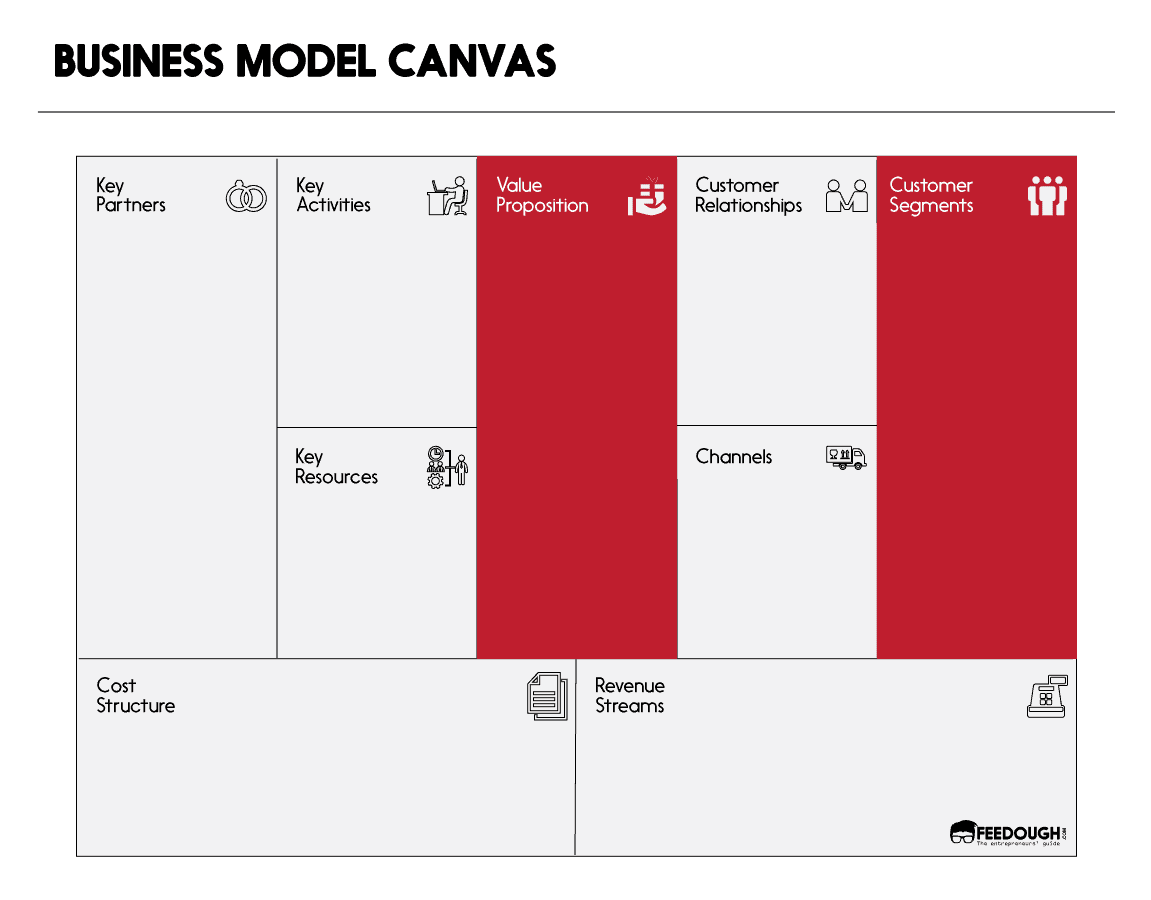
    business model canvas value proposition canvas

    The value proposition canvas is an extension of the business model canvas with a focus on customer profile and value map. It requires you to observe what the customer actually wants and then design a value proposition which will sell.

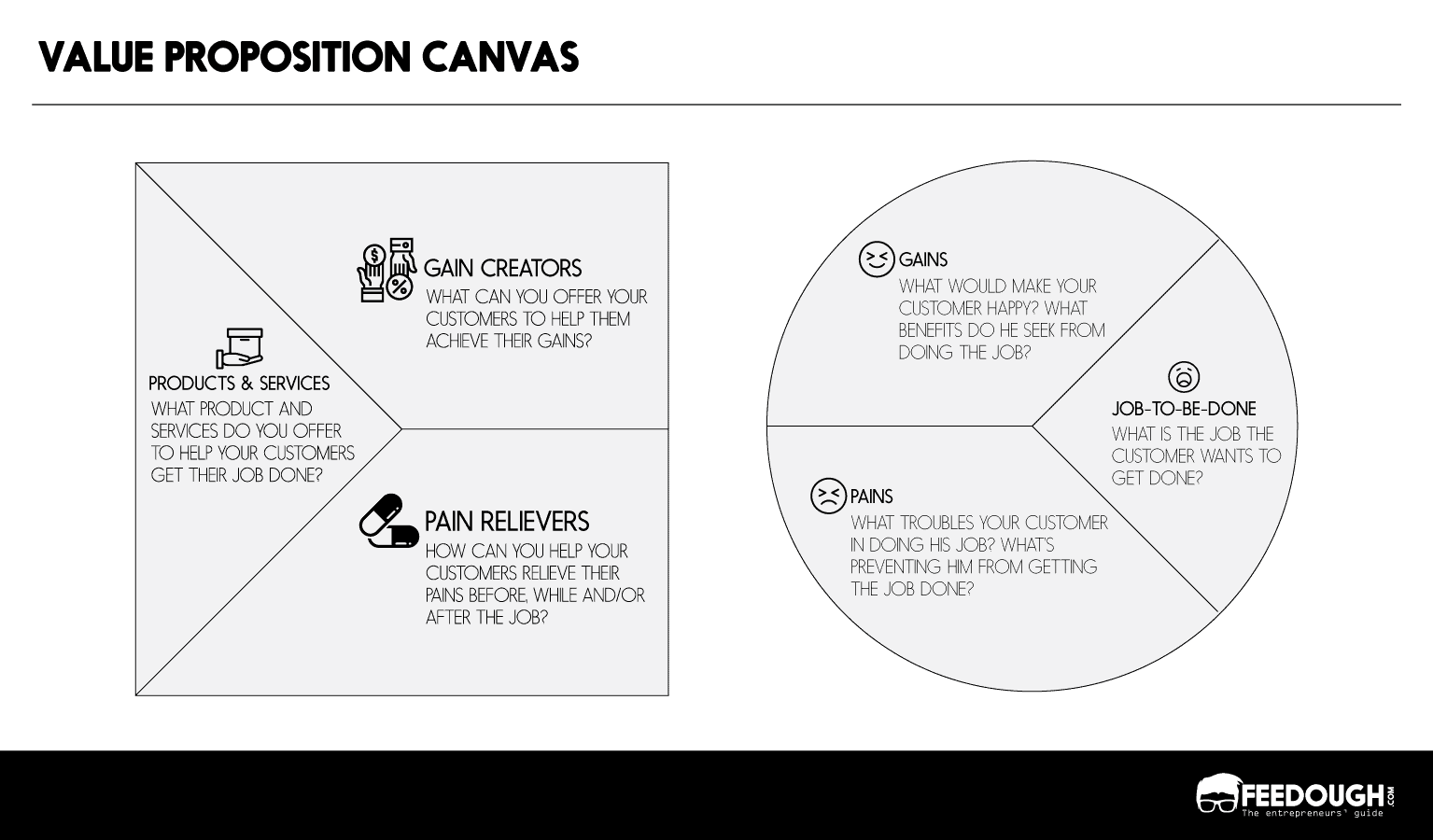
    It includes two elements – customer profile to observe the target market, and value map to design the value proposition of the offering.

    Customer Profile

    The customer profile section includes important details about the needs, wants, pains, and gains of the target market. It is further divided into three parts –

    • Customer Jobs: Jobs describes the important issues your customers are trying to solve in their lives. These could be usual tasks they are trying to complete, problems they are trying to solve, or needs they are trying to satisfy. These jobs are further classified as functional (practical jobs like getting from A to B), social (jobs that are driven by social duties like working with others), and emotional (that are related to feelings) jobs. An example, for instance, could be – a father drives a child to school daily before heading towards his office.
    • Pains: Pains are internal and external factors which pose difficulties in the path of customers getting the job done. Pains include barriers as well as negative outcomes which the customers hope to avoid like risks, obstacles or dissatisfaction from the outcome. An important factor that needs to be considered is whether the specified pain is severe or light. Pains in the above-mentioned example could be a traffic jam, an early meeting, undesired costs, or even the extra two miles the dad has to travel.
    • Gains: This section includes the benefits and gains in the form of positive outcomes and satisfaction that the customers require, expect, desire, or will be surprised by, and which will increase the likelihood of adopting a value proposition. An important aspect to be kept in mind is that some gains have more value and are more preferred by the customers over others. Gains for the dad in the above example could include building a good relationship with the daughter, safety, and affection.

    Value Map

    • Product and services: It includes the list of products and services you offer to the customers to help them get their functional, social, or emotional job done. It forms the base to addressing their pains and gains.
    • Pain relievers: Pain relievers answer the question of how your products and services will alleviate the customers pains before, during, and/or after the job is done. Pain relievers are specific to the pains mentioned in the customer profiles and usually, different pain relievers are assigned to address different pains. A pain reliever for the above-mentioned example could be a branded cab provider which takes the children to school and provides live footage of what’s happening within the cab to the parents. It could also have a video chat option to let the children talk to their parents during the ride.
    • Gain creators: These explicitly specify how your product or services create customer gains. They show which of the mentioned customer gains does your value proposition addresses. The children school cab addresses both the safety and affection aspects mentioned in the gains segment.

    How To Fill In A Value Proposition Canvas

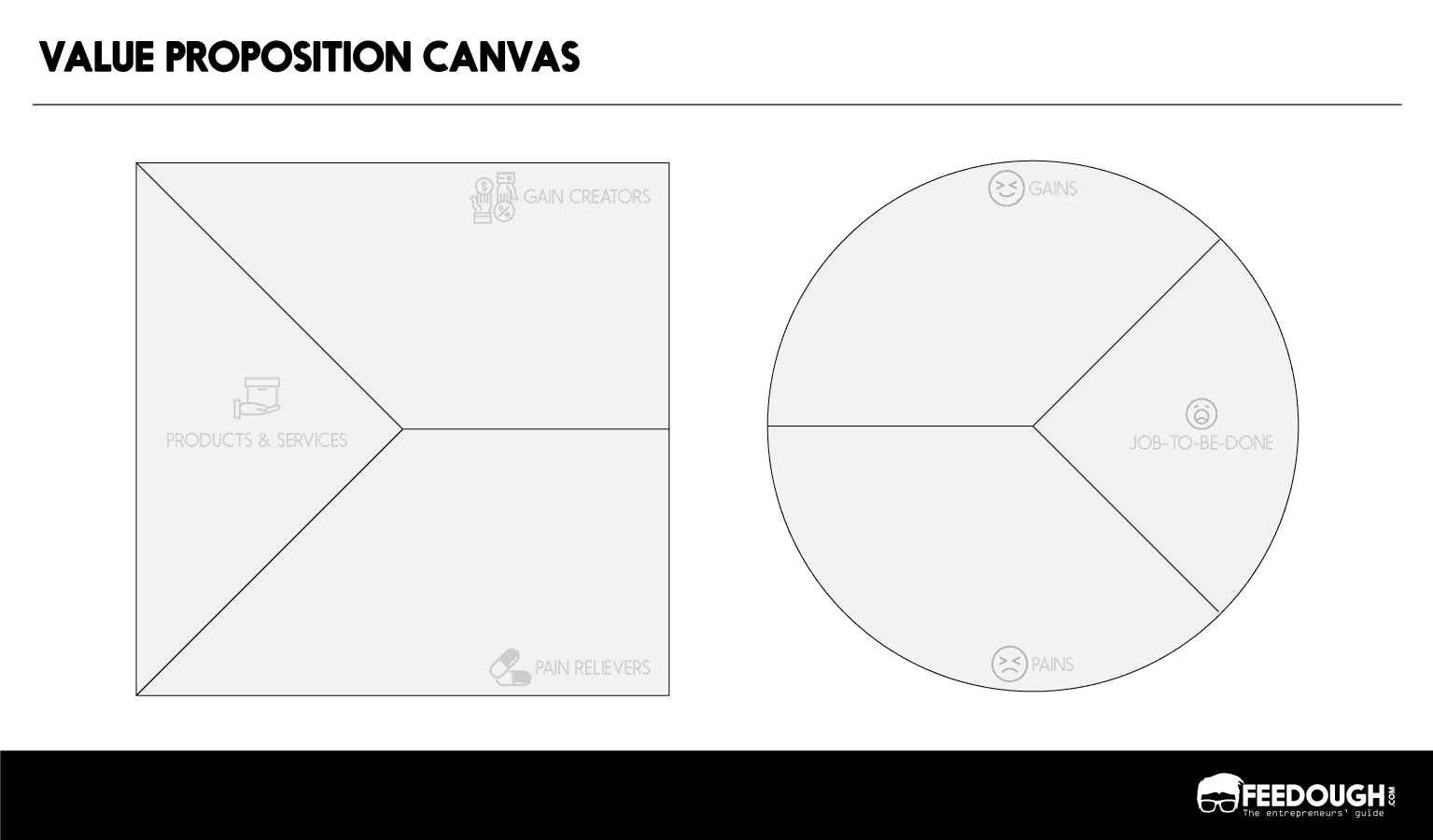
    how to fill value proposition canvas

    While understanding the value proposition canvas is easy, actually working on it requires much effort. If you don’t count yourself as your own customer, the process becomes even harder. You might need to step out of your comfort zone into the actual market and ask many questions from as many customers belonging to your target market as you can.

    Once you’re ready with your answers, follow this process –

    Download The Value Proposition Canvas Template

    value proposition canvas template

    You can either download this value proposition canvas template (right-click on the image and click on ‘save image as’ or download the PDF by clicking here) or draw it yourself on a big sheet of paper.

    Once done, be ready with markers and sticky notes and include all the team members who you think should be part of this process.

    Fill The Customer Canvas First

    You should never fill both sides of the canvas simultaneously.

    Divide the canvas into two halves and put aside the value map for the time being. This helps to focus on the actual problems you need to solve.

    Now, there could be a chance that you might have different customer segments that you serve. A rule of thumb here would be to use your research and build a customer persona of your perfect customer who has the characteristics of most of your segments.

    Start with the customer jobs and mention all the functional, emotional, and social jobs your customers do on a daily basis. Also include how they do that job, how they feel, and what social qualities come into play. And don’t forget to rate them according to their importance.

    Ask a lot of whys, whats, and hows. They’ll lead you to uncover all the pains and gains behind the job.

    Then Comes The Offering

    Once the right side of the canvas is completed, it’s time to move to the left side.

    The customer profile has already provided you with many problems to solve, now all you need to do is to rate the problems according to the severity and find exact solutions for all or most of them.

    Start with defining your product offered and go on to answer all the whats, whys, and hows, here.

    Focus On The Problem-Solution Fit

    A problem-solution fit is achieved when the value proposition map matches perfectly with the characteristics of the customer segment profile. Your value proposition canvas workshop is considered finished only when you reach the problem-solution fit. If you fail to reach this stage, maybe you need to do some work on your product.

    Aim For The Product-Market Fit

    Once you reach the problem-solution fit, you can release an MVP or beta version of your product to let the market validate it.

    When the market validates that the characteristics of the customer segment profile are perfectly addressed by the value proposition map, the offering is said to have achieved a product-market fit.

    Value Proposition Canvas Examples

    Here are two examples of how you can go forward filling your value proposition canvas.

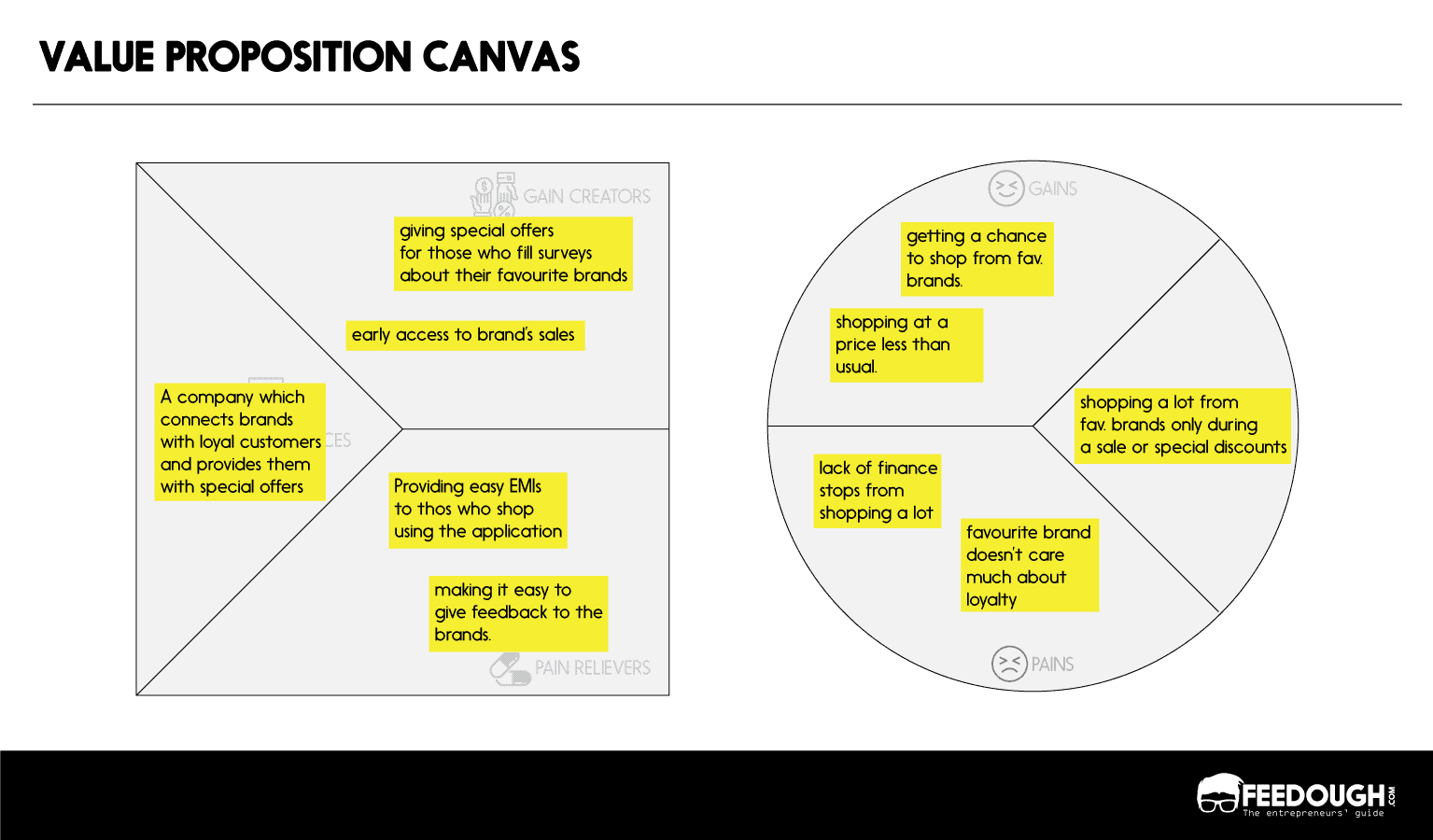
    Discount Dolly

    Dolly is a middle-aged work-from-home mother. She usually shops online and has an eye for quality. However, she only shops whenever she sees an attractive offer on the brands she is loyal for. She often buys a lot whenever she shops. However, she has to wait a lot and sometimes, she doesn’t have much money to buy all the stuff she wants during a sale.

    value proposition canvas example 1

    Now, people like Dolly form a perfect customer segment for a company connecting loyal customers with the brands. This company makes these customers fill out surveys and give them exclusive access to deals and sales. It can also provide certain benefits like easy EMIs considering the needs of these loyal customers.

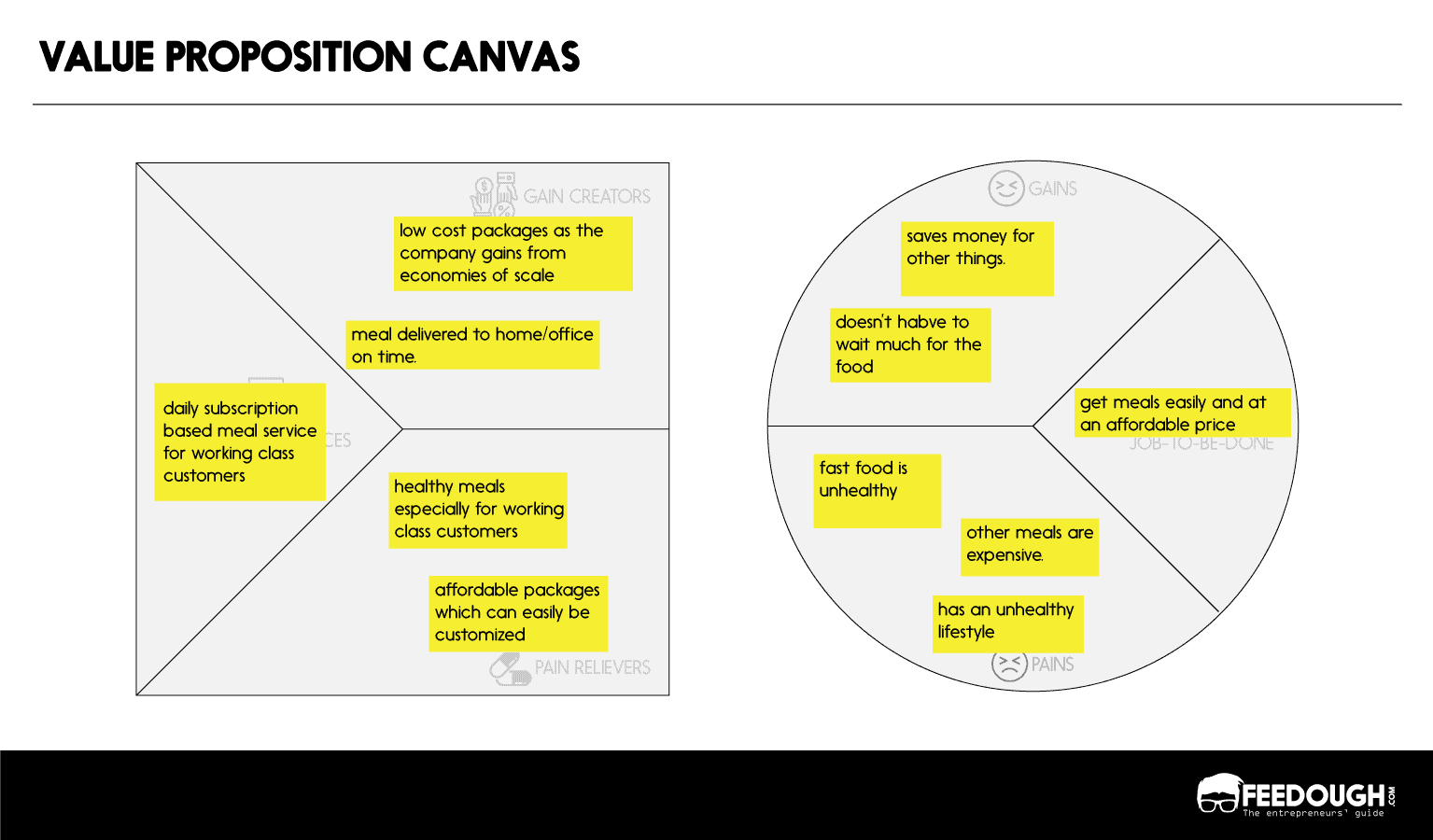
    Unhealthy Harvey

    Harvey is in his twenties and has recently got his job. He doesn’t earn much and can’t spend on a gym or other healthy habits. Since he has recently started living on his own, he doesn’t know how to cook and usually eats fast food as it’s cheap and doesn’t take a lot of time to get served.

    value proposition canvas example

    Now, a low-cost daily meal subscription service would do wonders for this segment. They can build their value proposition around these pains and gains and succeed in achieving a product-market fit in no time.

    Bottom-Line?

    Before you start converting your conceptional business model to actual business, make sure you fill your value proposition canvas just to be sure you have a problem-solution fit. This will make you sure that the product you’re going to launch is actually required in the market. Besides this, we suggest you release an MVP or beta version first just to get more validation from the market.

    Go On, Tell Us What You Think!

    Did we miss something? Come on! Tell us what you think about our article on value proposition canvas in the comments section.
  • 7 Reasons Why Orkut Failed

    7 Reasons Why Orkut Failed

    Orkut scraps and profile ratings are a thing of past now. But you might also be familiar with the time when all of it was as famous as what Facebook is now. Both Facebook and Orkut started nearly about the same time but ended up with different fates.

    What happened to Orkut?

    Why even a company like Google could not save it?

    What if Orkut had survived?

    Would Orkut have been what Facebook is now?

    Here are the answers to everything related to Orkut.

    What Is Orkut?

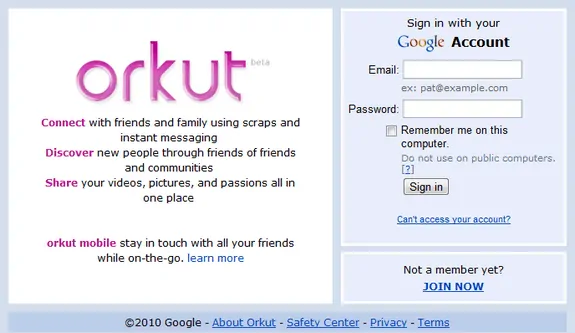
    what is orkut

    It all started with Google’s failed attempt to buy Friendster when Google finally decided to take its first step in the social networking market with Orkut. Orkut was just another social media networking website like Friendster, just with many more features.

    But,

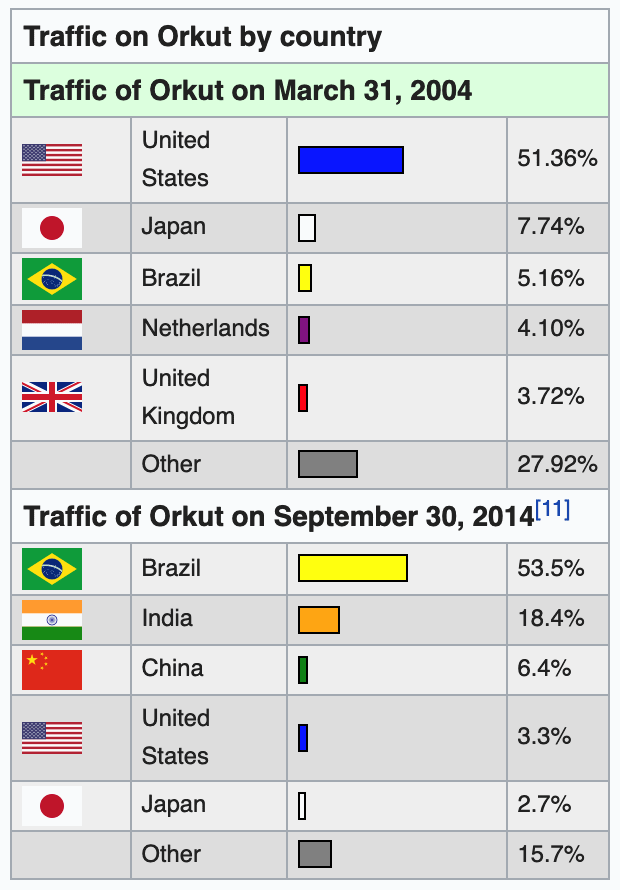
    In 2004 when Orkut was launched, it was not just Friendster but many others like Facebook, MySpace, Yahoo Messenger, and Skype, all in the same race. But in spite of the heavy competition, Orkut made it through with 3 times more users than Facebook in its initial days.

    Initially, the major population of Orkut users was from the United States with a share of 51.35% of its users, followed by Japan, Brazil and so on. However, in the later years, Brazil and India made most of Orkut’s traffic with 53.5% and 18.4% of users respectively.

    orkut traffic
    Source: Wikipedia

    How Did Orkut Work?

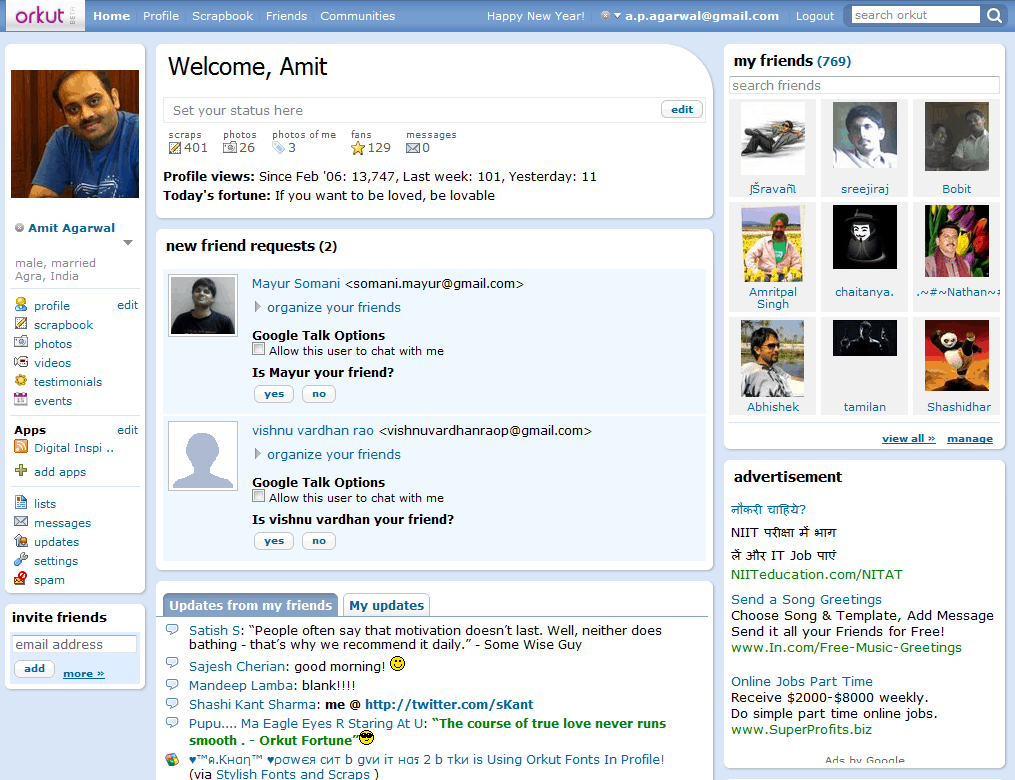
    Well, just like all the social networking sites Orkut had most of the features which its contemporary sites provided like adding friends, sending messages, maintaining a profile, etc. Of course, Orkut had its differences from its rivals but then, on the whole, it was majorly similar.

    Orkut profile
    Source: Flickr

    With an Orkut profile, you could maintain your scrapbook, rate your friends’ profile or even form groups of friends and family, conduct community polls, etc.

    Well, you might wonder what was different in Orkut which people still miss.

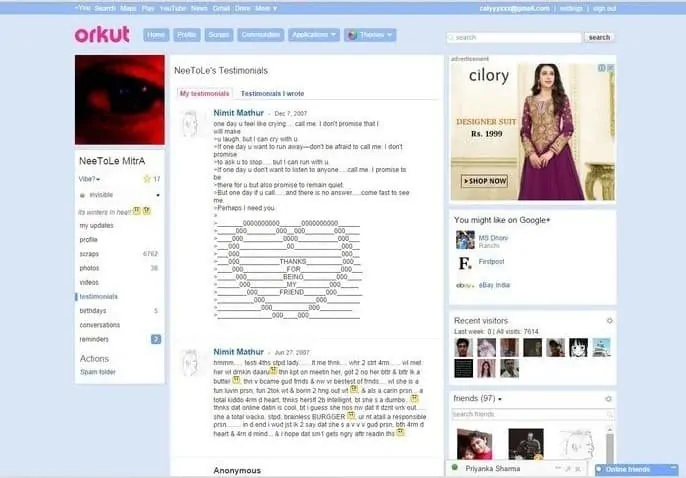
    Of course, Orkut had a few unique features we miss today, be it the then scandalous ‘crush list’ or even the testimonials we wrote to each other and how can we forget the themes we customized ourselves which was not the case with other sites.

    orkut testimonials
    Source: Indiatimes

    The website witnessed two major updates to design after its launch.

    The 1st redesign included an ‘update from friends’ box on the homepage, profile in different languages, a feature upgrade in the way to view the number of friends, etc.

    In the 2nd redesigned version, Orkut used Google Web Toolkit (GWT), thus making extensive use of AJAX in the user interface and also allowed users to sign in with their Gmail credentials.

    However, there was nothing much for which Orkut could stand out amongst its competitors. On the other hand, Facebook was in full swing with its update, capturing most of the user traffic then.

    With that came the very familiar ‘Facebook Revolution’ which changed the game upside down.

    But is it right to blame only Facebook for Orkut’s deterioration?

    Let us see the reasons why Orkut failed.

    Why Did Orkut Fail?

    The reasons why Orkut failed can be categorized under 3 major issues – structural, strategic and market shift.

    Structural Issues

    Slow Speed

    The initially easy to use website, after its several redesigns and increasing popularity became cumbersome for the users to access. It took a long time for the site to load due to the increased number of users in a relatively less period of time, which added much load to the existing servers. The complex upgrades and the relatively low average internet speed added to the slowness.

    Complex Features

    Though Orkut was redesigned many times after its launch, its new features were neither engaging nor were they in relevance to simplification of usage. This pushed away the users to try Facebook as the taskbar with the notification, messages and friends icons made it easy and fascinating for users due to its simple approach and constant update.

    Facebook simple

    It was easier for people to join and use Facebook. But for Orkut, you could need a crash course due to its complex redesigned features. Orkut, with time, became difficult and complex to use.

    Privacy Issues

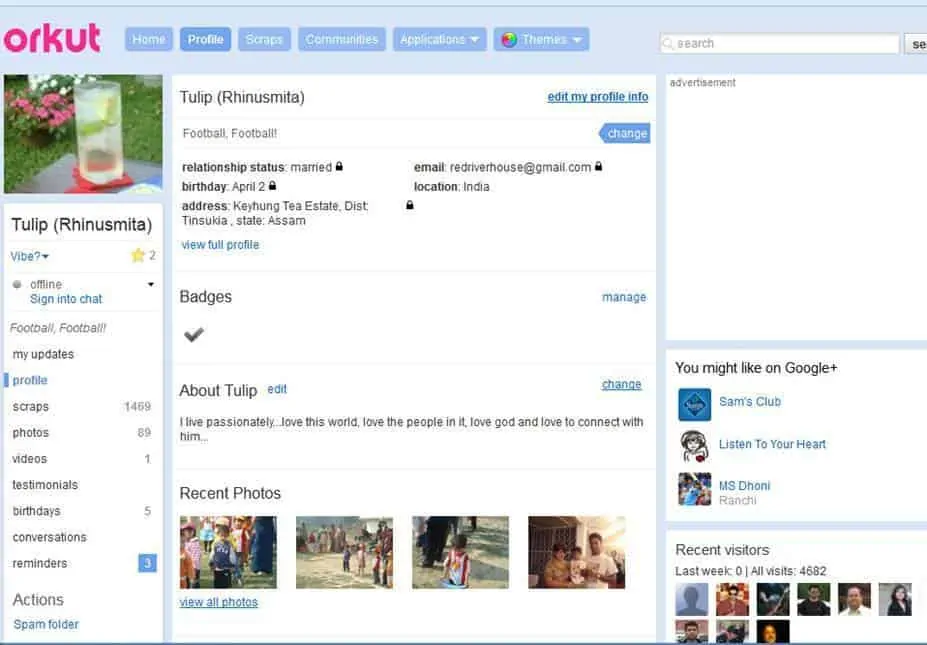
    In Orkut, the user privacy concerns were neglected and stagnant. The platform allowed anyone to view anyone’s profile and his contact information (if it was added by the user), unless the person was on a person’s ignore list.

    This made many people move to Facebook which appeared to be a safer platform for them.

    Orkut privacy
    Source: thethumbprintmag.com

    Strategic Issues

    Slow Upgrades

    Facebook’s features evolved constantly with time. It was a complete package with a better newsfeed, simple posts, and easy personal and group chats.

    Also, an interesting feature was the ‘Login with Facebook’ button on other platforms, which made it easier and faster for users to access other websites.

    Meanwhile, Orkut could not even satisfy the privacy concerns of its users, nor did it come up with new and interesting features to provide an engaging platform for the long run.

    Non-Business Friendly

    While Orkut was limited to personal interactions in the major part of its life span, Facebook emerged as a huge platform for online marketing and advertisements. Facebook generated its revenue by ads that worked in synergy with all of the parties involved. Also, Facebook’s growing network with time made it an easy platform for business expansion and advertisement.

    The online games on Facebook were a fascinating feature. It added to its complete package for the users which eventually led to people spending more time on Facebook other than just scrolling down news feeds or sending messages.

    Google’s Focus On New Projects

    Google’s focus on its budding projects like YouTube and Google+ resulted in the company’s ignorance of Orkut. Some analysts believe that it was better for Google to put more effort into Orkut instead of releasing Google Plus which never took off.

    The Market Shift

    Orkut had a strong base in Brazil, India, and a few other countries. When Facebook became mainstream, Orkut’s users abandoned it to try Facebook. Even though Orkut’s community feature was interesting to many people still Facebook had the advantage of a ready newsfeed where people didn’t have to hunt for content.

    When Facebook tried its best to stay ahead in the market, Orkut remained stagnant. There weren’t frequent upgrades and the company failed to understand its user demands in the market.

    orkut failure
    Source: News18

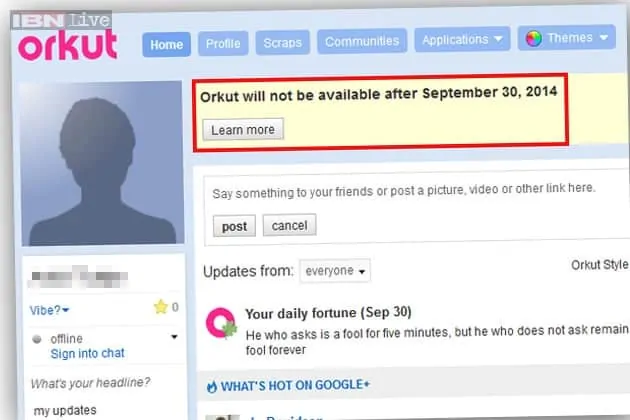
    The above series of events gradually resulted in Orkut’s shutdown in 2014. On September 30 of the year, it was finally decided that Orkut would be dissolved by Google, with a parting note in its last Orkut blog.

    “Over the past decade, YouTube, Blogger and Google+ have taken off, with communities springing up in every corner of the world. Because the growth of these communities has outpaced Orkut’s growth, we’ve decided to bid Orkut farewell.”

    With that ended the decade long story of Orkut with its ups and downs.

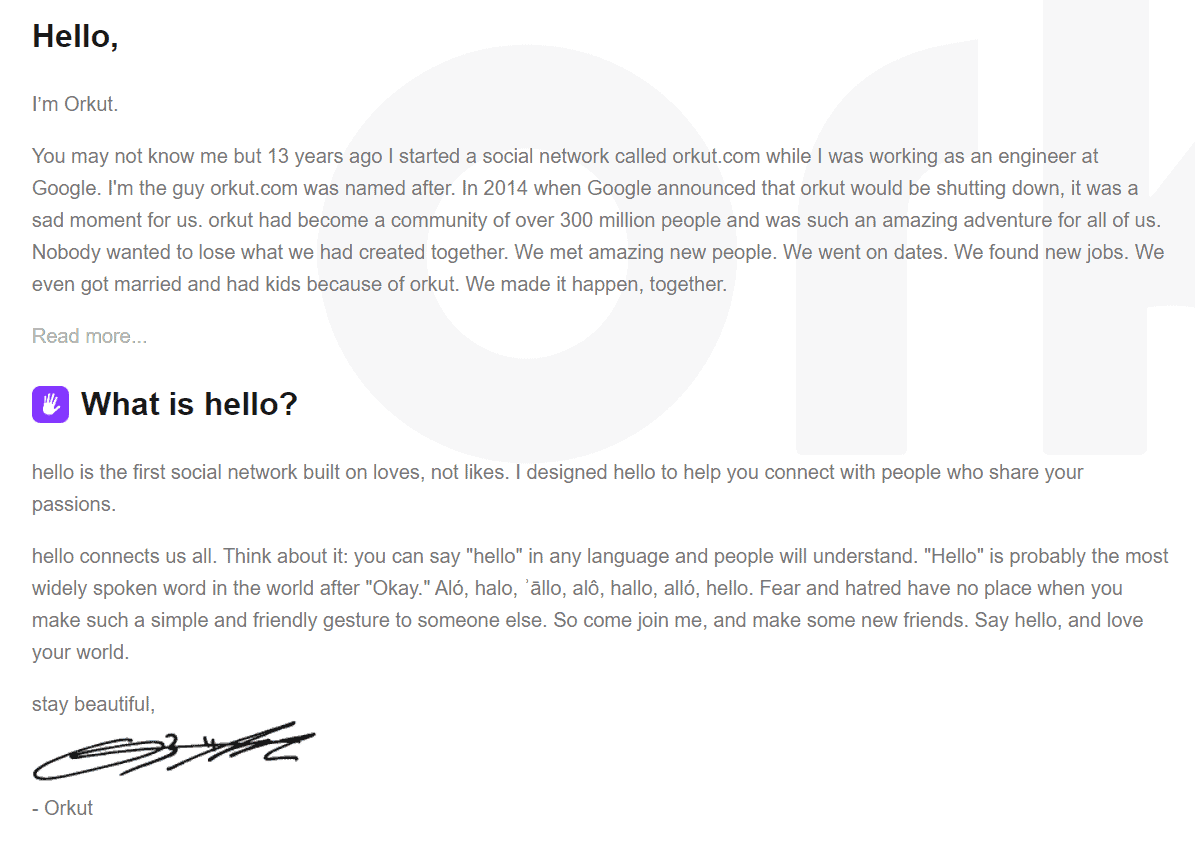
    However, Orkut made its comeback with Hello, the next generation of Orkut. As a new step in the social media market, Hello has a long way to go. Surely, it has a new set of features and a better understanding of today’s market but it still has to face heavy competition with the giants of the field.

    Google hello

    Go On, Tell Us What You Think!

    Did we miss something? Come on! Tell us what you think about our article on why Orkut failed? in the comments section.

  • 10 Motivating Phrases To Use Around Your Employees

    10 Motivating Phrases To Use Around Your Employees

    When you are at a position of leadership at work, your employees expect you to boost their morale and help maintain a healthy workplace culture that provides equal opportunities and helps everybody grow as individuals.

    Your employees are at their best in an environment where not only are they are free to use their creativity and judgement to solve any problems related to work, but also subjected to a positive amount of pressure that pushes them to perform better. As their leader, you have to also set an example for employees who are aspiring for and suited for leadership positions in the future.

    The use of certain motivating phrases around the workplace, in the presence of your employees, can help them grow and evolve. Although there are different methods for approaching motivation in the workplace, there are certain phrases that you can use around your employees to inspire, empower and propel them ahead.

    Your ability to effectively communicate with your employees is one of the most important things that show your ability as a leader. But when it comes to motivating and inspiring people with your words, here are a few motivating phrases that you should use more often around your employees:

    Feel free to ask me anything.

    As a leader, you aren’t just responsible for your employees. You should also be approachable and make your employees feel comfortable with asking you for help or clarification, should they need it. Letting your employees know time and again that they are free to ask you anything puts them at ease and gives them more confidence in themselves as well as in you.

    Using this phrase more often around your employees will ensure that you as a leader can keep the channels of communication open in the workplace. Being approachable with your employees improves their morale, attitude and cooperation in the workplace, which can positively impact performance.

    What would you do in my situation?

    One of the duties of a leader is to train your employees for leadership positions in the future. Asking them what they would do in your situation brings in a new perspective that shows you where your employees currently stand when it comes to progress.

    Using this phrase also creates a supportive and authentic environment in the workplace, where your employees can feel motivated to share their views and opinions regarding work and how to go about it. It shows your employees that they can be honest with you, and can help your employees connect and collaborate better.

    I have good news and bad news.

    Effective leaders are those who can openly communicate with their employees. Being honest with your employees, no matter how good or bad the situation is, can go a long way when it comes to winning their trust. Employees who can trust their leader are more cooperative and engaged in their work.

    Using this phrase around your employees will let them know and understand the context of the decisions that you make for the company. Openly being able to communicate both the good and bad to your employees will help you tackle any work-related problems early on and solve them on time.

    What does the team have to say?

    Often, your employees will ask you, the leader, for your approval regarding certain work-related matters. But your employees should unanimously make decisions as a team, and not blindly follow whatever you have to say. Asking them what the entire team has to say can help you understand the dynamic of the teams or departments that report to you.

    Reminding your employees to make decisions as a team will encourage team-work and collaboration among them in the workplace. Communication and unity are very important to maintain a positive and motivating environment in the workplace.

    I’m more interested in your approach.

    Very often, in the workplace, employees will start to rely on you for your approval and expect you to have the solution to all of their work-related problems. Using this phrase more around your employees will encourage them to come forward with their ways to tackle problems and spearhead a problem-solving discussion.

    To make your employees independent and confident about their work and perspectives, it helps when you urge them to come forward with their solutions. Using this phrase also prepares your employees for leadership positions that they will take over in the future.

    Tell me how you got there.

    As much as it is your job as the leader to allow your employees to grow and come forward with their ideas and solutions, it is also your job to cross-check their process to ensure that their approach to problem-solving is credible.

    Using this phrase doesn’t mean that you don’t trust your employees. Rather, it is a way to make your employees walk you through their problem-solving process so that you can assess their work. This phrase motivates your employees to do their research and ensure that they are thorough in their approach.

    You have my attention, tell me more.

    When your employees come forward with fresh perspectives and approach problem-solving innovatively, it is important to let them know that you are invested in what they have to say. Using this phrase more often around your employees will motivate them to be more confident and forthcoming when they have any good ideas.

    This phrase also allows you to gauge the efficiency of your employees by taking a look at what their vision for the company is. It is also a way to connect more with your employees instead of just being their leader and helps your employees build a rapport with you and vice versa.

    How can I help?

    As the leader, you’re not just the person that your employees report to. You’re an integral part of the workforce. Most leaders pride themselves on an open-door policy, but an effective leader knows that it’s not enough. Instead of simply letting your employees know that you’re available for queries, ask them how you can help them.

    Being more involved will motivate your employees to perform better and be more engaged in the workplace. Being a part of the team and giving your employees the push when they need it can set an example for those employees who are leaders in the making.

    Here’s what we learn from this.

    Ups and downs are a part of every business. While successes can boost your employees’ morale and make them feel motivated to put in more effort to achieve even better results, a set-back can cause their morale to go down. Using this phrase during such situations will help your employees learn from the set-back and inspire them to work harder to ensure that it doesn’t happen again.

    Mistakes happen and there are times when your employees are facing obstacles for the very first time. Using this phrase and helping your employees look at the positive side of things will build their confidence and help them take advantage of the set-back.

    I want to be completely transparent with you.

    As the leader, there are times when you have to break some news to your employees. This is not always an easy thing to do. Using this phrase often in the presence of your employees will help you establish trust and authenticity in the workplace.

    When you are transparent with your employees, you also expect the same from them. Since you’re the leader and your employees look up to you as an example, this will build character and confidence in your employees. When everyone in the workplace trusts each other, collaborating and cooperating is more effective and easier to do.

    Bottom line?

    Your employees, more often than not, look up to you for motivation, guidance and reassurance. In such a situation, it is easy to get overwhelmed. Communicating often with your employees will help you understand and gauge the situation in the workplace, which can, in turn, help you with decision making. As a leader, your employees will follow the example that you set for them. Not only do those workplace conversations and discussions go a long way in motivating your employees to be more confident when they communicate with you, but they also positively impact the overall performance at the workplace.

    Go On, Tell Us What You Think!

    Did we miss something? Come on! Tell us what you think about our article on 10 Motivating Phrases To Use Around Your Employees in the comments section.
  • What Is SWOT Analysis? – Template, Examples, & How-To guide

    What Is SWOT Analysis? – Template, Examples, & How-To guide

    ‘SWOT Analysis is the critical starting point of strategic thinking.’

    Earlier in 1960, when corporate planning had not met with much success, Albert Humphrey coined the term SWOT Analysis. The framework helped the companies build their business strategies; it still helps millions.

    SWOT analysis simply examines internal and external factors that affect a business’s growth. It is an effective framework for helping startups and existing companies find their place in the market.

    What Is SWOT Analysis?

    SWOT analysis

    SWOT stands for Strengths, Weaknesses, Opportunities and Threats.

    SWOT analysis is the study undertaken by an organisation to identify its internal strengths and weaknesses, as well as its external opportunities and threats. It is an incredibly simple yet powerful tool to build techniques, whether you are building a startup or guiding an existing company.

    Strengths and weaknesses are intrinsic factors. You have control over them and can make necessary changes from time to time. Opportunities and threats are extrinsic. They depend on the larger market, outside your company. You can take advantage of opportunities and protect against threat through proper SWOT analysis.

    Elements Of SWOT Analysis

    As stated by its name, SWOT Analysis has four elements:

    • Strengths– Internal attributes of a company which can bring successful outcomes.
    • Weaknesses– Internal attributes that pose obstacles to attaining successful outcomes.
    • Opportunities– External factors and trends the company can exploit and exploit.
    • Threats– External factors that pose challenges and can jeopardize the company’s success.

    How To Do SWOT Analysis

    Before you start, here’s a SWOT analysis template for your reference:

    SWOT analysis template
    SWOT Analysis Template

    Although everyone has different ways of conducting a SWOT analysis, the following steps can guide the ones doing it for the first time or missing a step or two:

    Decide On The Objective

    To get the most out of your SWOT analysis, you must have a clear objective from the start. The objective is based on your analysis of your company’s internal functioning and the external market.

    Define The Strengths

    Identifying and listing the strengths is the most important step. Strengths are the internal factors that are favourable to a company’s growth. They are the actions or tasks that a company can perform in a way that is better than its competitors. These strengths can include but are not limited to strengths related to employees, financial resources, business location, cost advantages, etc.

    To define strengths, you can review your company’s past achievements, identify factors that benefited it before, and work on enhancing those factors. Moreover, you can extract prospects for growth from areas that have potential but haven’t been exploited yet.

    Keep these questions in mind while defining your strengths in the SWOT analysis –

    • What makes your organisation stand out in the crowd?
    • Does your business have an unfair advantage? If yes, what?
    • What makes customers choose your offering over others?
    • What’s your unique selling proposition?
    • Are you disrupting the market? If yes, how?

    Define The Weaknesses

    Weaknesses are the internal factors that pose obstacles in the growth of a business. They could include a lack of new ideas, absence of new products, lack of intellectual property, or decline in market reach, etc.

    To know the weaknesses, you may look back at the past failures of your business and identify the flaws you had committed then. Other strategies include comparing your offering with the competition and finding your flaws or taking customer feedback.

    The goal is to eventually address these weaknesses and resolve them at the end of the SWOT analysis so that they do not harm your business in future. Critically evaluating the areas of faults and listing the mistakes committed earlier can give a clear idea of the corrective measures that need to be taken.

    Keep these questions in mind while defining your weakness in the SWOT analysis –

    • What are the areas of improvement in your business?
    • What all should be avoided in future?
    • What makes the customer lose interest in your offering?
    • What do your existing customers not like about the offering?

    Find The Potential Opportunities

    Opportunities are those circumstances that are exploitable and if invested in properly, can give out positive results. Opportunities may thus include new technology in the market, training programs to enhance the performance of the employees, a diverse marketplace, etc.

    A detailed market analysis can be a good way of discovering potential opportunities for your business. You should also listen to your potential clients and follow past leads. Having an insight into the ongoing trends can help you build effective strategies to exploit the opportunities better.

    SWOT analysis includes, but is not limited to, the following opportunities –

    • Favourable trends which affect your business.
    • Favourable government policies which affect your business.
    • Changes in lifestyle changes, social patterns, population profiles, etc positively affect your business.

    Define The Threats

    Threats or risks are external factors that pose challenges to a company’s growth. They are out of control, and a company cannot completely eliminate them. Yet, it can protect itself through backup plans and security measures.

    Threats could arise from the natural environment as well as human influence. They could include rising unemployment, increasing competition, market uncertainty, etc. Some threats are easy to handle, while some can completely shatter your organisation’s foundations. Thus, it is important to deal with threats depending on their impact on your business.

    SWOT analysis includes, but is not limited to, the following threats –

    • The current and past obstacles which affect the company
    • Noteworthy competitors and their strategies
    • Changing trends which act against the company’s growth
    • Changing government policies which act against the company’s growth
    • Problem with partners and/or employees
    • Company’s weaknesses which may pose as a threat in future

    Develop A Strategy

    After prioritizing the issues to be resolved, the next big question you need to ask is how strengths can be used to take advantage of opportunities and overcome threats and weaknesses. Depending on the SWOT analysis, business strategies could be built, taking into consideration the scope and position of the business in the market.

    Importance Of SWOT Analysis

    SWOT Analysis is like a self-assessment or a review of the strategies that you have been using to run your business, finding the flaws in them and then developing and designing better strategies in order to grow the same business. Following are some of the areas you can benefit in, from SWOT analysis:

    Helps In Using Resources Efficiently

    Every company has a limited supply of resources such as labour, production capacity, and capital. What is important is managing these resources, which can be done by evaluating strengths. This will help in better allocating these resources in a manner that will result in the highest possible growth and profitability.

    Improving Business Operations

    When you examine your company’s weaknesses, you should not assign blame for past shortfalls but critically examine the areas that need improvement for the business to compete more effectively. A realistic assessment of the weaknesses also helps prevent strategic blunders and provides a chance to continuously improve in all the company’s operating areas. The goal must be to turn all the current weaknesses into future strengths!

    Discovering New Opportunities

    Business growth requires seeking new opportunities. An intensive market analysis can help you determine your potential customer groups, product expansion strategies, and broader product distribution. A SWOT Analysis then helps you plan ahead for these factors and work on them accordingly.

    Dealing With The Risks

    Threat in SWOT is another term for risk. Companies can face threats beyond those posed by direct competitors. These can be threats from changing marketing or regulatory environments. These threats can have an adverse impact on the company’s performance. SWOT analysis thus helps you prepare your company for whatever challenges it might encounter.

    Building A Competitive Strategy

    Many companies do a SWOT analysis of their key competitors to get a picture of how the company should position itself against them. The company aims to attack the competitor’s weakness with its own strengths. SWOT Analysis shows the company that even its most powerful competitors have weaknesses that can be exploited.

    SWOT Analysis Examples

    The following are some examples of SWOT analyses done by some famous companies, which will inspire you and help you understand things better.

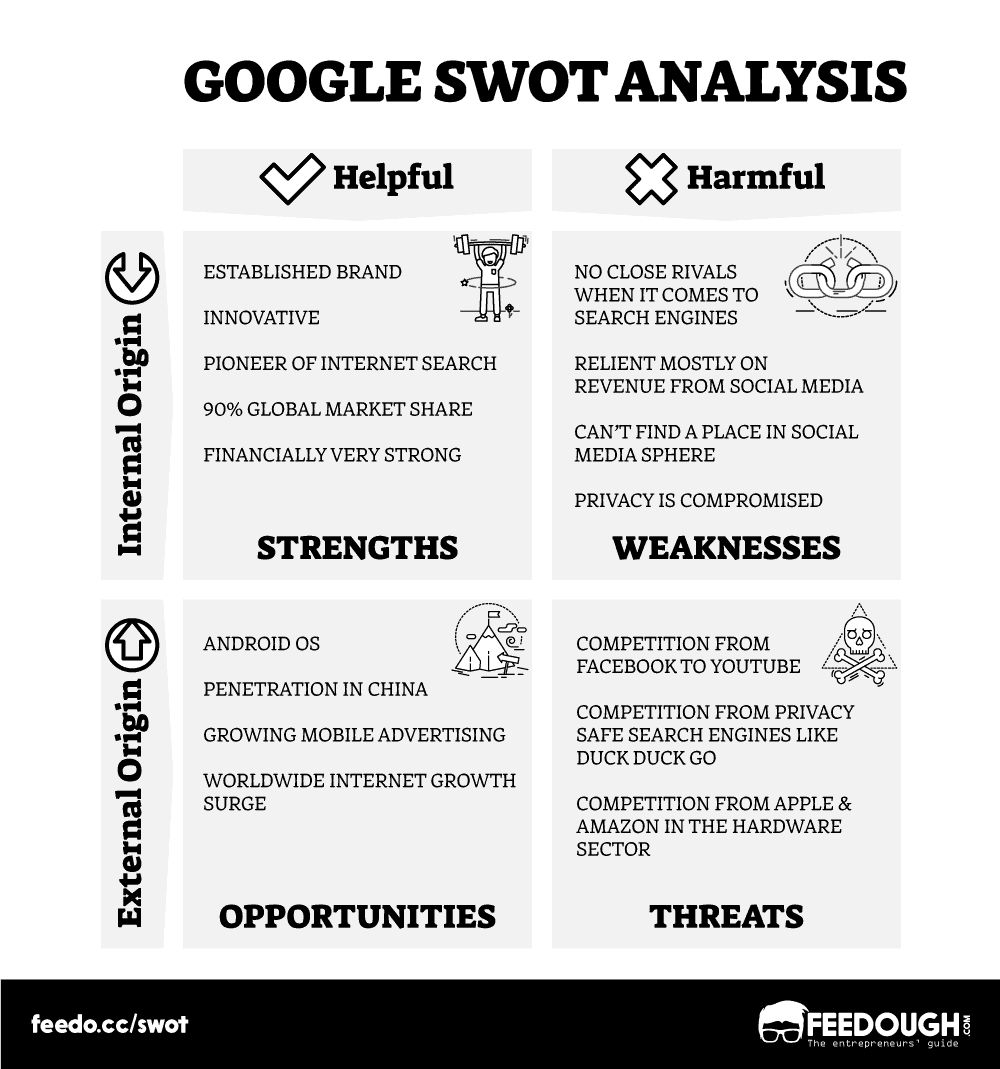
    Google SWOT Analysis

    The global search engine Google has revolutionized the digital world. It has made life easier by making every information available to us with just a click. It has transformed the global economy by developing game-changing operations. Corporations, customers, consumers and everyone can now easily access any kind of information anytime and anywhere.

    The following Google SWOT analysis shows that it knows its strengths and weaknesses and is well aware of the current threats it faces in the global market.

    GOOGLE SWOT ANALYSIS

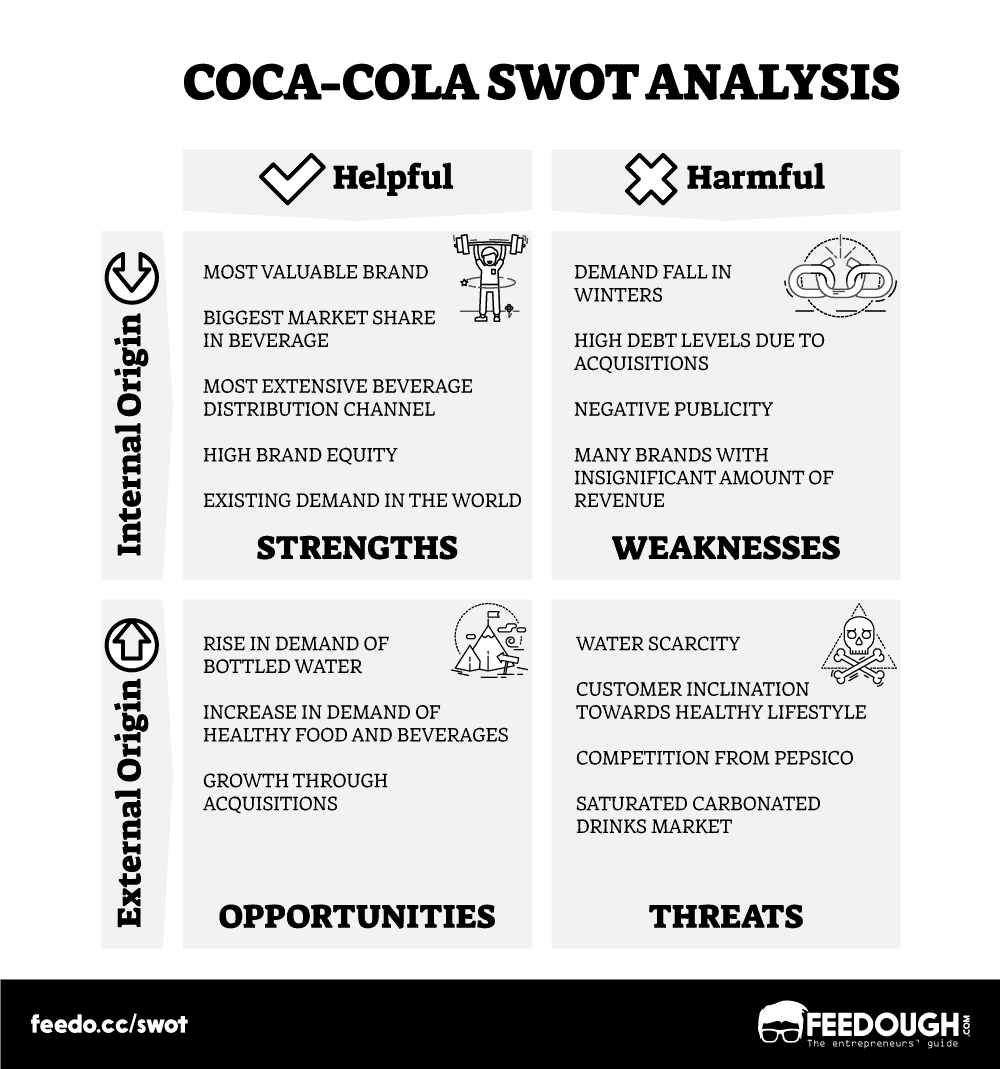
    Coca-Cola SWOT Analysis

    The world’s second-largest beverage manufacturer, Coca-Cola, shows how a brand can use its competitive advantage. It has become a brand which is now present in almost every household, shop, office, hotel, etc. and has many products in its arsenal.

    Looking at Coca-Cola’s SWOT analysis, we can infer how it has become the world’s number-one-selling company of carbonated drinks.

    coca-cola swot analysis

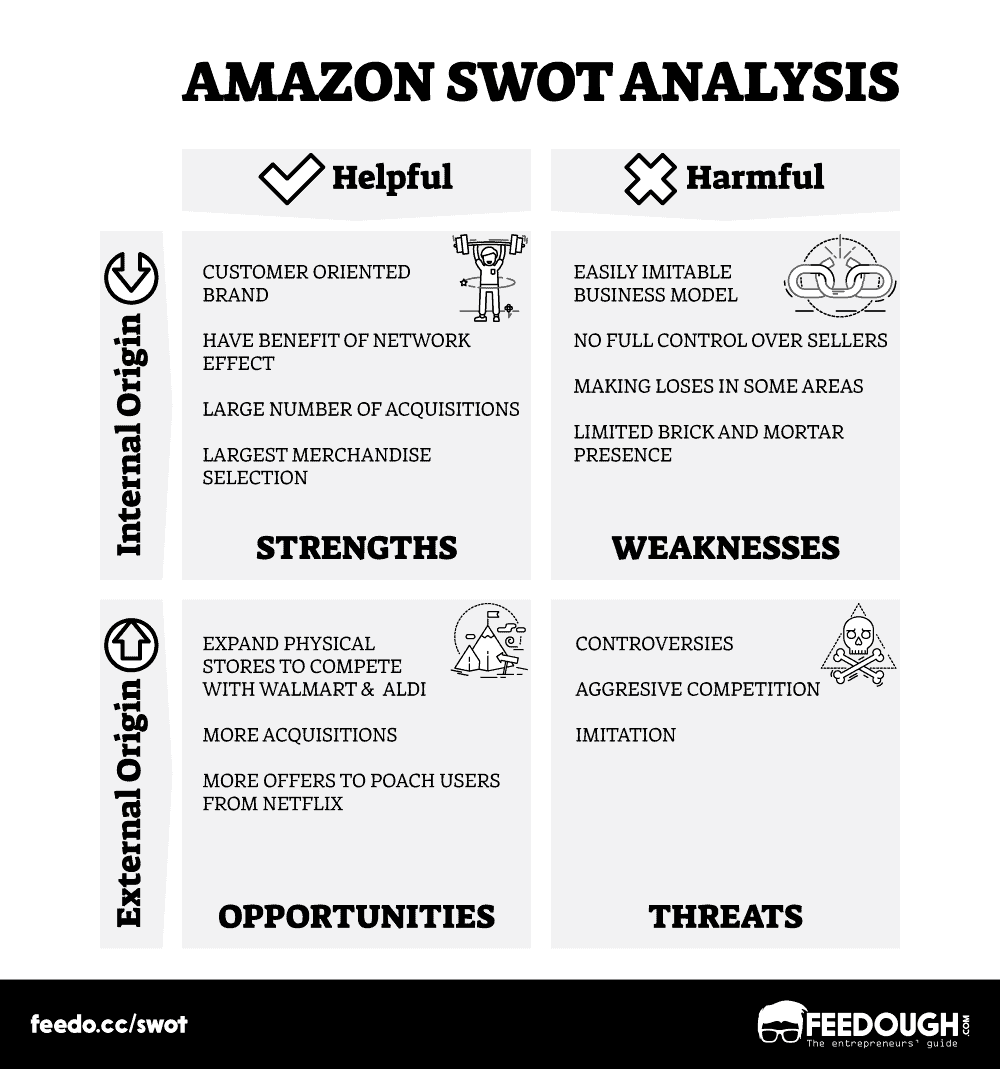
    Amazon SWOT Analysis

    When Jeff Bezos founded Amazon in 1994, he started the company originally as an online book store but soon converted it to a top online retailer, selling everything from A to Z. Amazon’s popularity is widespread around the globe, and it has over 310 million active users and 100 million subscribers. Since its inception, Amazon has achieved many achievements, made eye-popping profits, and launched successful products.

    Amazon’s SWOT analysis tells us a lot about the secret behind its success.

    amazon swot analysis

    Bottom-line?

    SWOT analysis is the key to a business’s growth. Until you don’t know what factors can affect your business, you can’t plan strategies for its development. It helps you assess your business internally and externally and critically examine its current position in the market. In addition, you also get to do a good amount of research on your potential customers and competitors. SWOT Analysis helps you find and eradicate your weaknesses by focusing on your strengths that can be advantageous in the near future. In a nutshell, conducting a SWOT Analysis in any kind of business is important to open new prospects while taking into consideration the flaws of the past and challenges that are to be faced in the present and the future.

  • WhatsApp Marketing – An Actionable Guide

    WhatsApp Marketing – An Actionable Guide

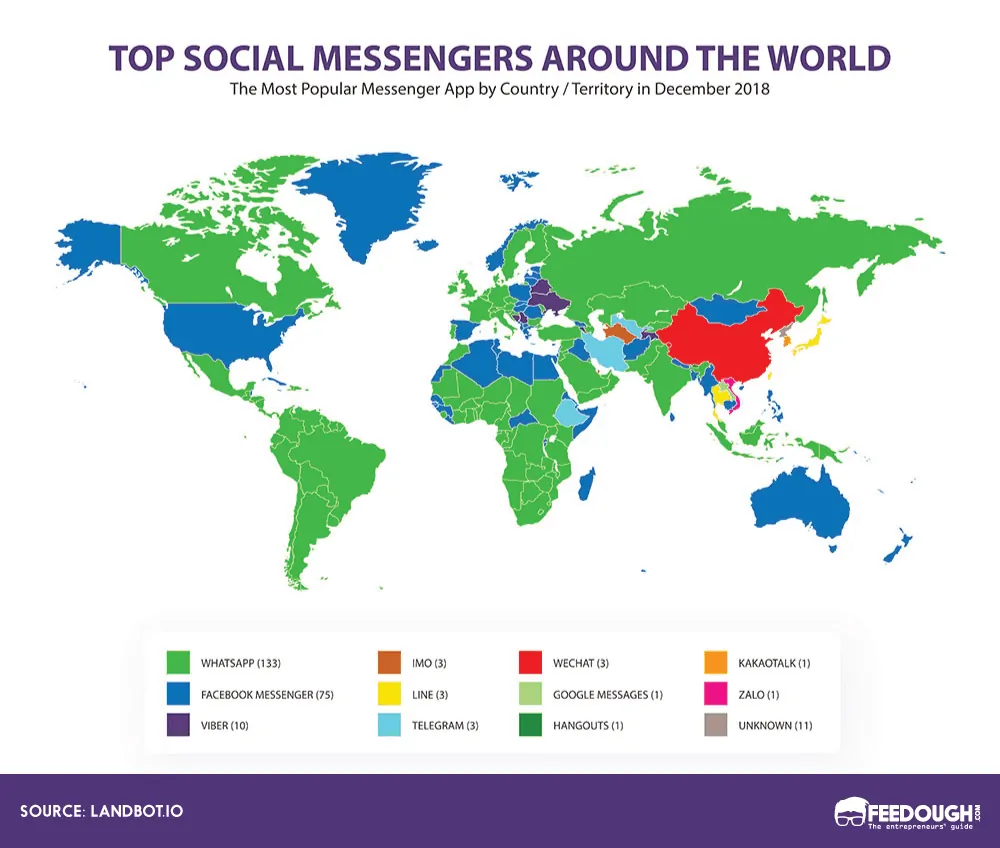
    WhatsApp may not be the first to come to your mind when you hear the phrase social media marketing, but it should definitely not be ignored, considering that it’s the most popular messaging application and the second most popular social media network in the world after Facebook.

    top social messengers

    More than 1.5 billion people in 180 countries use WhatsApp. Many of them are your existing customers, and many others can be if you just reach out to them.

    But,

    Unlike other social media marketing channels, WhatsApp isn’t for mass marketing. It is restricted to catering to limited people as you can’t broadcast messages to strangers.

    But the same platform can be used to market your offering to people who have you in their contact list and execute your relationship marketing strategies even on a large scale.

    How, you ask?

    Well, here’s an actionable guide explaining all the intricacies of WhatsApp marketing and how you can start with it.

    What Is WhatsApp & How Does It Work?

    WhatsApp is a Facebook-owned free yet secure instant messaging application which also offers internet calling feature and social networking feature like adding audio/visual statuses and textual bio.

    Often considered as the best alternative to smartphone’s native calling and texting service, WhatsApp turned out to be a boon for Asian and European residents ever since it was launched in 2009. It, however, isn’t that famous in the USA because unlike Europe, South America, and Asia, sending text messages over phone lines was essentially free for a long time in the USA, even before WhatsApp entered the market. Hence, there wasn’t much incentive for them to download and use the application.

    Who Uses WhatsApp?

    Whatsapp Stats

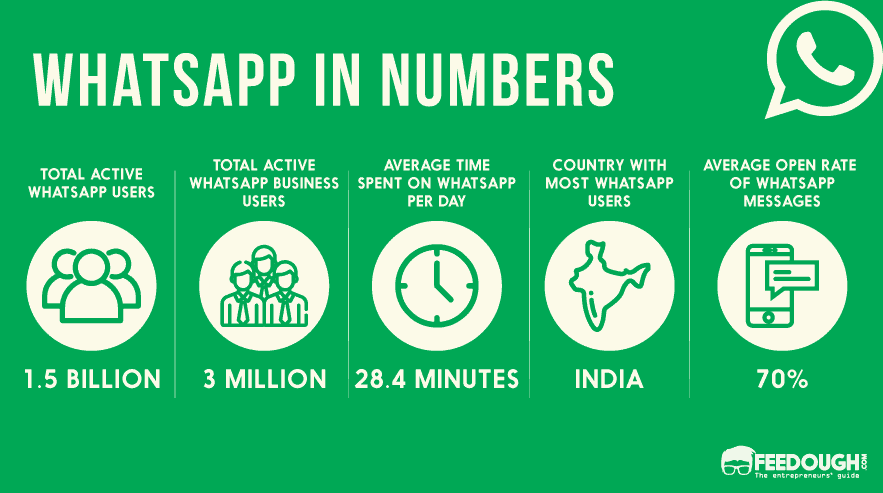
    Here are some WhatsApp stats to understand its users (and your target audience) better-

    • 5 billion active users in 180 countries
    • India is the biggest market for WhatsApp with over 400 million users. Brazil is the second biggest with over 120 million users.
    • 500 million users add WhatsApp status daily.
    • 3 million companies use WhatsApp Business.
    • WhatsApp messages have an open rate of over 70%.

    What Is WhatsApp Marketing And How Can You Use It?

    Just like Facebook, Twitter, LinkedIn, and even Youtube, brands use WhatsApp to market their offering to their customers. But unlike these social media channels or even SMS channels, WhatsApp doesn’t let anyone mass-market to unknown contacts.

    But this hasn’t stopped people from marketing their offerings on the platform. Small businesses market their offering to their special customers by making exclusive groups and broadcasts lists to develop good relationships with them. However, the work is done manually, and more than one broadcast lists and groups are created as WhatsApp only lets you add 256 contacts per group and broadcast list.

    Medium and large-scale businesses, on the other hand, use the new premium WhatsApp Business API to delight their customers by informing them about the status of their orders, taking customer feedback, and even sending them regular updates. There’s no limit to the number of users when it comes to WhatsApp API and most the messages are automated.

    Besides this, many also use WhatsApp to reach out to prospective clients as messages on this platform have the best open rate.

    Using WhatsApp Marketing To Your Advantage

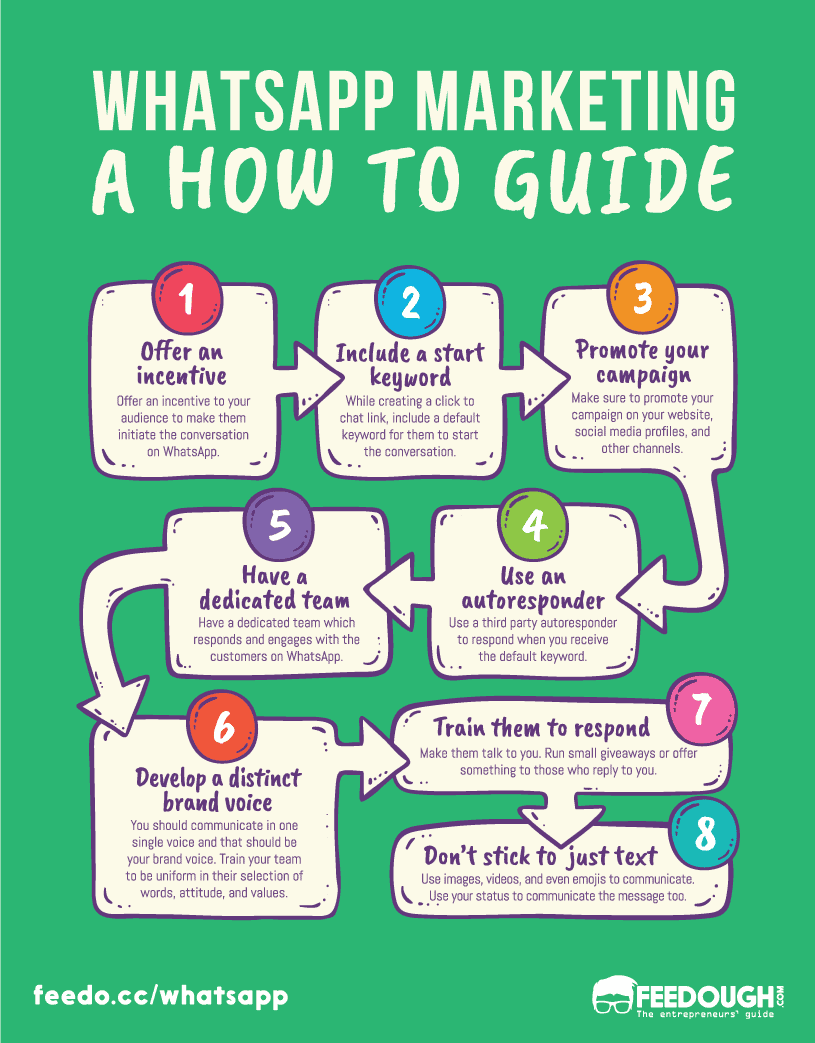
    Whatsapp marketing guide

    The task here is to capitalize on the most used social media network while not interrupting the usual messaging habits of the customers.

    The opportunity being, you might turn out to be a pioneer of WhatsApp marketing in your industry.

    Here’s how you move forward with it-

    Set Up WhatsApp Business Presence

    Whatever you do to market your offering, just don’t do it using your personal WhatsApp account.

    Ever since the company was bought by Facebook, WhatsApp opened its doors to businesses by launching two add-ons to its service –

    • WhatsApp Business Application – For small and medium business to create their own business profiles showcasing their website, open hours, and email, to integrate chatbots, and to automate welcome and away messages. WhatsApp Business Application is completely free to use. However, you might incur some charges if you use third-party services to integrate chatbots.
    • WhatsApp Business API – For large businesses and financial institutions who wish to send automatic updates and notifications to their customers. This requires them to join hands with one of the Facebook Business Partners and pay for messages they send. (Yes, this is how WhatsApp makes money.)

    Whether you choose WhatsApp Business Application or WhatsApp Business API totally depends on your needs and your size of the operation. Just note that if you can only get a verified tick beside your name if you use WhatsApp Business API.

    Make Them Text You First

    Unlike other marketing channels, WhatsApp marketing is a pull strategy where the first move is made by the user (by texting first) and the marketer only gives him an offer with an incentive to start a conversation on WhatsApp. Some examples of offers are –

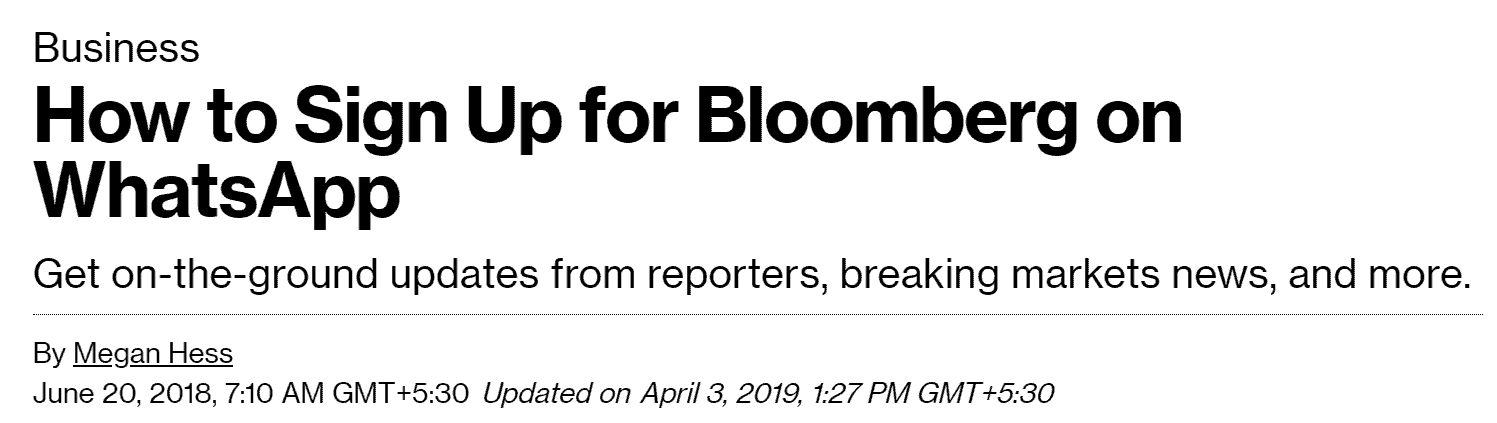
    • Getting website updates on WhatsApp
    bloomberg whatsapp updates
    • Getting job offers on WhatsApp
    job offer whatsapp
    • Getting special offers on WhatsApp
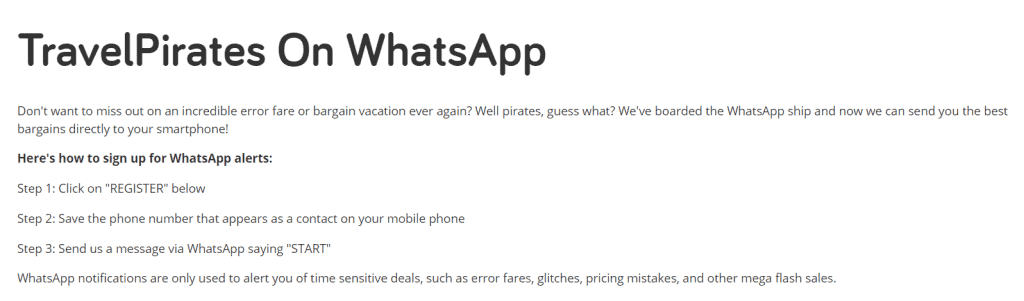
    travel pirates special offers on whatsapp
    • Getting a pass for an exclusive event on WhatsApp
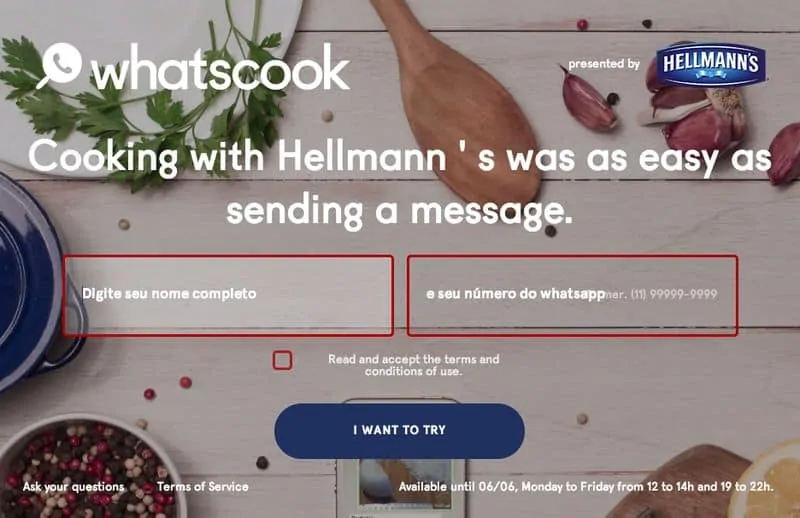
    • Getting recipes from chefs on WhatsApp
    hellman whatsapp campaign

    …and a lot more. You too can create a tailor-made incentive for your target audience and invite them to start the conversation with you. But keep these things in mind –

    Use Other Channels To Bring More To This Channel

    The engagement rate on WhatsApp is way more than any other channel. An average user spends 28.4 minutes a day on WhatsApp.

    But,

    Since WhatsApp marketing for small businesses requires customers to make the first move, your initial focus should be to promote the campaign on different channels like on websites, social media profiles, and even PR channels to get more people to start the conversation.

    Create a WhatsApp click to chat link using the short link feature on WhatsApp business application or online tools (like this by Postcron). Make sure you mention a default keyword in the link for them to start the chat.

    Focus On The Utility

    Remember that WhatsApp is a messaging application and people would like to connect only if you’re offering something exclusive or something that can’t be offered anywhere else; say personal connect, for example.

    Make Your Campaign Seem Exclusive

    If it is offered to everyone, it might lose its charm. Try to market your campaign as an exclusive offer to the target audience.

    Make Use Of WhatsApp’s Features And Add-Ons

    Build an autoresponder to respond to the default keyword. WhatsApp Business application doesn’t let you do this task but you can easily find third-party applications like this on the Play Store.

    This makes the brand look more professional.

    Other than this, make sure to add the users’ contacts in your broadcast list or WhatsApp group(s) where you plan to send your marketing messages to. Also, ask them to save your number in their contacts list as your broadcasts won’t be sent to people who don’t have your number in their lists.

    …and never forget to keep a keyword to stop the messages if you go for a broadcast list.

    Your Customers Subscribed To You On WhatsApp, Now What?

    Have A Dedicated Team For This Campaign

    When you give an option to your target audience to ask questions, be ready to answer hundreds or thousands of them at the same time.

    Hint: Have a team ready which controls the communication over WhatsApp.

    Develop A Distinct Brand Voice & Tonality

    Remember, it’s not an individual talking to the person, it’s the brand. Make sure you train your team to align with your company’s brand personality in every communication message they send.

    Choose The Right Time To Send Messages

    Find out the best time when your target audience is most likely to respond and engage with your message and send your messages only at that time.

    Train Your Audience To Respond

    WhatsApp is a two-way communication channel and you should focus on using it that way. Train your audience to reply to your messages. Make them feel that there is an incentive in replying to you.

    Host small giveaways where only the users who reply can take part. Provide insights into matter your target audience is interested in and offer to answer their questions.

    This makes them feel that there is more to the brand than product promotion and sales.

    Don’t Stick With Just Text

    Since your customers save your number to their contact lists to communicate with you, they will surely be able to see your WhatsApp status and bio. Make sure to update them from time to time and use them to execute your holistic marketing strategies.

    Besides this, make sure you just don’t stick to text while sending your marketing messages or while interacting with your audience. WhatsApp lets you send images, videos, GIFs, locations, and even files. Make use of them to draft more engaging messages.

    What Else You Can Use WhatsApp For?

    Even though WhatsApp doesn’t let you do much if you want to market your offering using the free WhatsApp Business application, there’s a lot that can be done using the paid WhatsApp API.

    If you don’t know what an API stands for and how it works, read this article on API economy before moving on.

    Here are some use cases of WhatsApp API to broaden your marketing horizons –

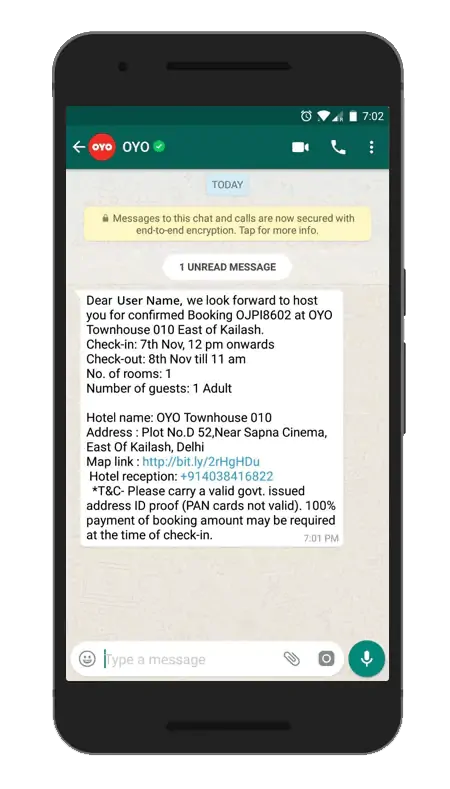
    • Alerts And Notifications: WhatsApp API can be used to send mission critical alerts like flight notifications, bank notifications, booking confirmations, and delivery alerts. Uber has started using this feature in select countries to send communications like customer support and account updates.
    • Customer Support: Many CRM solutions have an option to integrate with WhatsApp and let you handle the customer relationships on WhatsApp.
    • User Verification and 2FA: WhatsApp’s end-to-end encryption and API results into a perfect channel to securely protect customer accounts using verification and 2FA.
    • Recommendations: WhatsApp is also used to send recommendations and suggestions by ecommerce website according the user activity. Netflix has been spotted using WhatsApp in India to send account messages and suggestions on what to watch according to users’ activities on the platform.

    Many companies like Smooch by Zendesk, Twilio, Messagebird, etc. provide you with an option to use WhatsApp API to your advantage.

    Note: WhatsApp API allows you to respond to messages from WhatsApp users for free up to 24 hours, but charges for responses sent after that point on a per message basis.

    Successful WhatsApp Marketing Campaigns Examples

    While many are just pondering on the fact that marketing is possible on WhatsApp, many brands have successfully made use of WhatsApp even as early as in 2013.

    Café TC’s Liquor Ticker

    The campaign:

    Café TC’s Liquor Ticker WhatsApp marketing campaign is one of the most creative and engaging marketing campaigns we’ve come across so far. This popular Delhi restaurant partnered with a leading ad agency to create a custom API which resulted in a running ticker in place of a WhatsApp status and a GIF in place of a profile picture.

    This ticker displayed new offers, menus, and gigs to the customers who had saved the café’s number. These customers, on the other hand, were asked to take a screenshot of the offers and send it to them to avail the offers.

    The outcome:

    The campaign resulted in café’s enquiries go up by a whopping 117% and the sales increased by 28%. The creativity also resulted in good word of mouth marketing and the campaign was featured in many publications as well.

    Hellman’s WhatsCook

    Hellman is a mayonnaise brand operating in Brazil. In 2014, the company came up with an idea to use WhatsApp to increase brand exposure and engagement.

    The users were acquired through a special WhatsCook website set up by the company. It required users to give their details including name and phone number, and by doing so, they were personally contacted by a human chef on WhatsApp.

    The chef then prompted them to upload the ingredients they had and gave advice on what they can cook with those ingredients. He even sent instructions using images and videos to help them.

    The outcome:

    The campaign was a huge success as it witnessed over 4 million users on the WhatsCook website and over 13 thousand registrations. Users spent around 65 minutes on an average interacting with the chef which is a lot considering they actually interacted with a marketing campaign.

    Oyo

    oyo whatsapp
    Source: Oyo

    Oyo is a branded network of hotels operating in India. The company actively uses WhatsApp API to give confirmation and updates to its customers about the booking and directions, and even collect feedback on WhatsApp after their stays.

    Bottom-Line?

    Marketing your offering on WhatsApp is a challenging task. There are no pre-defined templates like those on Facebook and no ROI predictors like those for Google AdWords. But one thing that makes this channel stand out is the engagement. WhatsApp lets you hit to the right nerve. It is where your users are most active in.

    We suggest you try it once, especially if you operate in countries like India or Brazil where you can use it to engage with the masses.

    Go On, Tell Us What You Think!

    Did we miss something? Come on! Tell us what you think about our article on WhatsApp Marketing in the comments section.
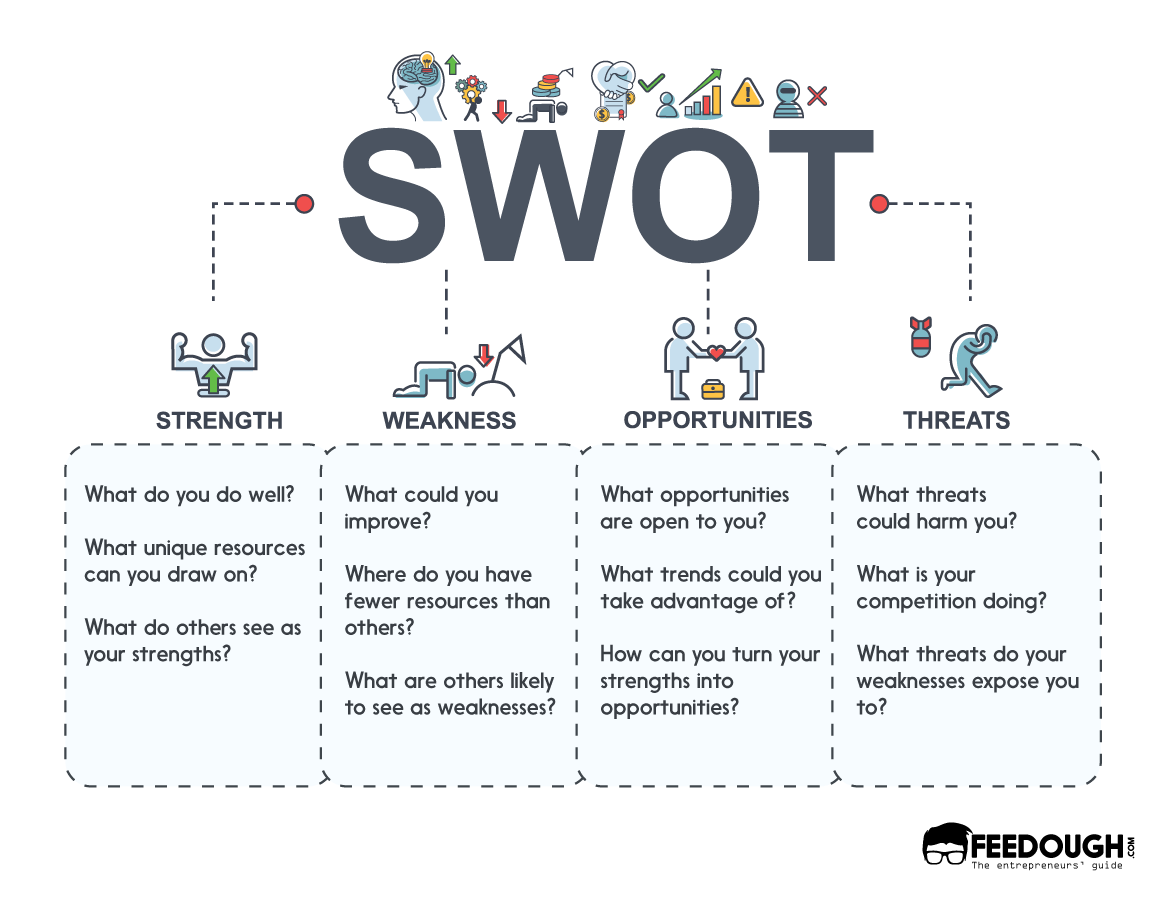
  • Brand Promotion – Meaning, Importance & Examples

    Brand Promotion – Meaning, Importance & Examples

    A brand is what sells when the customer has to decide among different products having the same features.

    A survey says that 91% of buyers prefer to buy from a well-known brand. The only reason is that they have come across this brand name many times and heard people have satisfied and recommended this brand.

    While branding makes a product recognizable, brand promotion helps to leave a deep positive impression about the brand in the buyer’s mind. Not only that, the promotion of a brand builds the trust of the customer and makes them believe that the quality of the product or service the brand provides is the best choice available in the market. So, when they make purchasing decision they tend to favor that brand.

    What Is Brand Promotion?

    Brand promotion involves informing, reminding, persuading convincingly and influencing the buyers to drive their purchasing decision in favor of a brand. It also focuses on building a loyal and long-term customer base.

    The process involves:

    • Marketing the brand name and logo rather than individual products
    • Popularising the mission statement and focusing on building brand equity
    • Gaining publicity through mass marketing strategies and enhancing brand perception
    • Sometimes, making use of the existing customer base to promote the brand

    Establishing a strong brand requires maintaining consistency in the products or services that are provided, in interaction with customers as well as in the message that is shared. The basic aim is to make the customers feel that the brand can provide exactly what they need.

    Why Is Brand Promotion Important?

    Brand promotion is not only beneficial to business houses but also consumers and society.

    Benefits To The Business

    • It helps the business to build a long term brand
    • Sometimes help in building the overall market share in the short term as well
    • It reminds the loyal customers how well the brand has served them over the years and persuades their purchasing decision towards their branded products.

    Benefits To Consumers

    • It educates the customers about the quality, quantity, price, use, and availability of their branded products.
    • It saves the time and effort of the customer in making a purchasing decision as they are well informed.
    • It gives them greater freedom of choice and prevents dishonest traders from exploiting them

    Benefits For Society

    • It provides employment
    • It activates the facility of mass production and hence lowers the cost
    • It leads to higher sales of the branded product which means higher tax revenue for the government and consequent growth of the economy

    How Brand Promotion Is Different From Product Promotion?

    Brand promotion is a broader and long-term strategy where the firm makes an effort to build and maintain a brand image along with the trust of the buyers which helps them make their foundation, as a brand, stronger.  While promoting the brand, firms try to connect themselves to the audience by conveying some positive messages about their brand.

    For example, Nestle uses the tagline “Good Food, Good Life” which not just only promotes a particular product but the entire Nestle brand.

    Some firms try to establish themselves as the leaders in innovation just like Philips does by using the tagline “Innovation and You”.

    On the other hand, product promotion is a short-term process that solely aims at promoting a particular product of the brand. It mainly focuses on providing information regarding the availability of features and uses of the product to the targeted customers. It is all about simulating the demand for a particular product by creating awareness and highlighting the importance of it.

    For example, KitKat is one of the products of the Nestle brand. When in an advertisement particularly Kitkat bar is promoted, it falls under product promotion.

    https://www.youtube.com/watch?v=0o2qeU4RSuA

    A brand with a strong reputation gets a better result when they market a product because of the already earned trust of the buyers.

    Methods Of Brand Promotion

    The following are the four popular methods used by marketers to promote their brands.

    • Advertising: Advertising is the method of spreading awareness about the brand through various traditional media (newspapers, television, etc.) or new media (social media, blogs, etc.). Although it is a convenient and economical process, it lacks a personal touch.
    • Publicity: It refers to the method of promoting the brand by publishing commercially significant headlines about it or its owner in a medium or airing favorable presentations for which the sponsor doesn’t directly pay. Mass media covers these events which enhances the public image of the brand and hence earns high credibility with mass appeal. However, marketers don’t have much control over publicity.
    • Packaging: When a product is sealed in a nicely designed wrapper, it not only gives a noticeable identity to the product but also builds the image of the brand. Nowadays, the firms are favoring innovatively designed wrappers to pack their products. Even the customers are willing to pay more for the convenience, dependability, and appearance of the packages.
    • 360° Campaign: A 360° campaign uses a combination of different marketing channels to promote a brand. Usually, a successful campaign can boost sales unbelievingly.

    Online Brand Promotion

    Online brand promotion is the method of promoting the brand on various social platforms by leveraging the power of the internet to reach a wider range of audience.

    Considering the statistics of internet users in today’s world, online brand promotion has become as important as the traditional one.

    Advantages Of Online Branding

    • It costs less than the traditional one
    • It promotes your brand to a wider audience
    • Targeted promotion is possible
    • The results are easier to measure using various free tools available online
    • It is more beneficial for smaller firms, having lower budgets to compete with larger firms.

    Bottom-Line?

    Brand promotion is all about building the trust of the consumers in a firm’s product. Moreover, the Internet has made it possible for a brand to reach a wider range of audiences through social media communication and globalization. As a result, the firms are investing heavily both online and offline to boost their brand image.

    Though branding can skyrocket the firm’s sale, it requires a lot of effort, money and time. But once the identity of the brand is established as a leader in the market, the result will be long-termed with little effort. So, firms like Nike, Philips, etc. are leaving no stones unturned while hiring endorsers or approaching ambassadors who can help them to build the desired image.

    Go On, Tell Us What You Think!

    Did we miss something?  Come on! Tell us what you think about our article on brand promotion in the comments section.
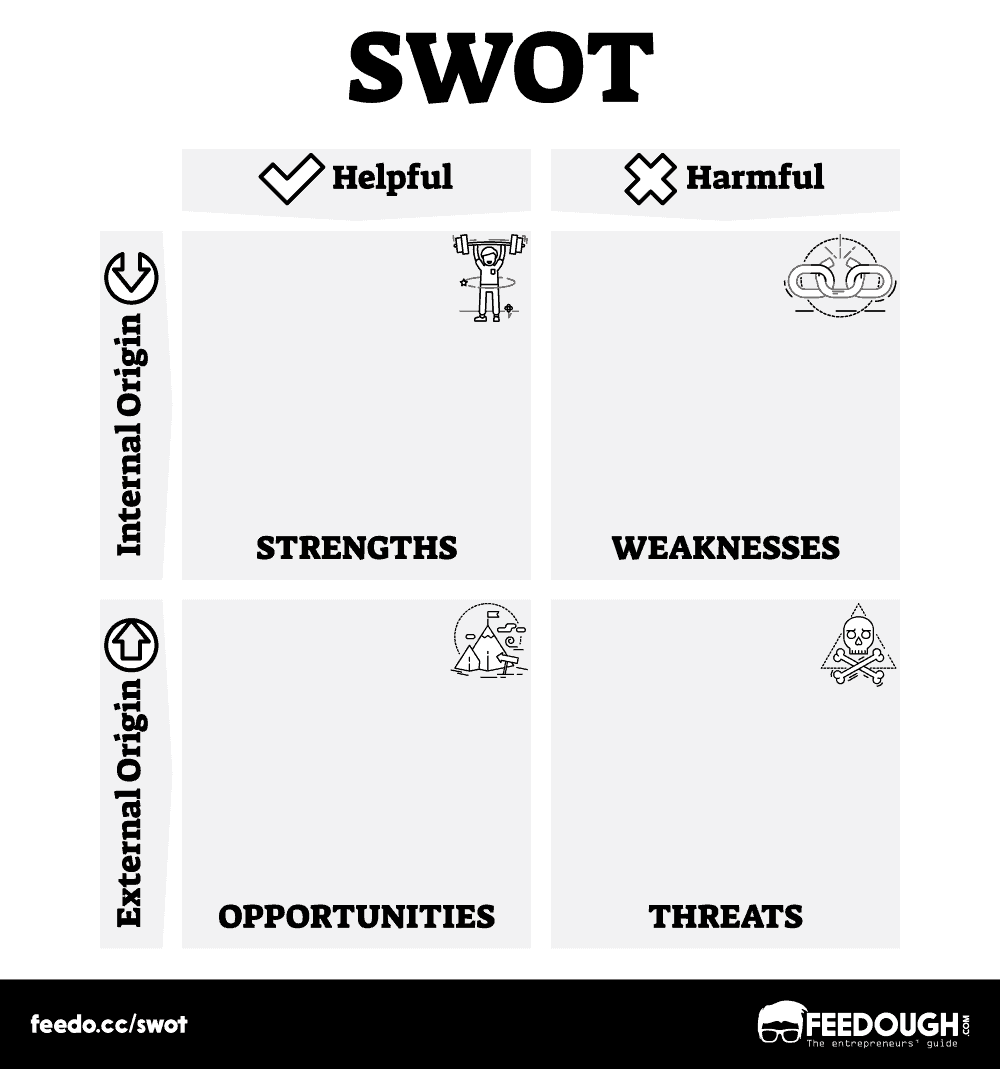
  • WeWork Business Model | How Does WeWork Work?

    WeWork Business Model | How Does WeWork Work?

    With Microsoft, Facebook, Salesforce, and even the U.S. Air Force having teams that call WeWork home, they sure have had incredible growth. WeWork is currently the world’s second most valuable startup of 2019.

    Their exponential growth has also prompted dozens of questions: What exactly is the WeWork business model? How does WeWork work and make money? Why is a real estate startup valued like a tech company?

    Let’s find out.

    What is WeWork?

    WeWork is a real estate company that offers co-working spaces for rent. Their M.O. is the most common of all real estate business models.

    They lease property from landowners, transform it to create a community feel, and sublease it by the day or month to startups, freelancers, companies and corporations in need of working space.

    Founded in 2010 by Adam Neumann (Co-Founder, CEO), Miguel McKelvey (Co-Founder), and Rebekah Neumann (Co-Founder) in New York City, WeWork is currently present in nearly 800 locations in over 34 countries worldwide and has more than 15,000 employees.

    wework locations

    Within less than a decade they have grown to become the most prominent and largest co-working chains in the world, having over 46.63 million sq. ft. in shared office space as of 2018 all over the world.

    How Does WeWork Work?

    • WeWork finds big, centrally-located buildings in young, densely populated areas and signs a long-term (5, 10 or even 15 years) lease with the owners.
    • The company updates everything inside, adding features like cafés, offices, and community spaces to fit its ethos.
    • It then subleases it to those in need of working space for significantly higher prices, on a daily or monthly basis.

    WeWork prefers renting over straight-up buying the property because renting requires fewer upfront costs which allow for faster expansion with very less raised capital.

    Even though they are starting to buy a few of its buildings, having bought one in Manhattan for use as their HQ, they don’t own many. In order to fix this, they’ve started setting aside funds to purchase the properties. For the most part, they stick to long term leases and spend a lot of upfront capital furnishing the space as they see fit, and then sublease the space at a premium.

    This brings us to –

    What stops the owner of a building from creating their own shared offices and co-working spaces?

    Well, nothing.

    Many owners actually do create co-working spaces and directly lease it out. But it’s not that simple or easy for a few reasons.

    Why Do Landowners Lease Out To WeWork?

    Instead of creating, maintaining and hoping that their venture takes off all on their own, by leasing out to WeWork, they can get consistent, arguably lower-risk paychecks and also make their buildings more valuable.

    For WeWork, each lease is under a different subsidiary, so even if they encounter a loss at one location they can rebalance costs from other locations and the company as a whole, stays somewhat protected. But mainly, they can easily pay for the lease one way or the other, which makes them more dependable.

    And, unlike a property owner, WeWork can set its prices low for attracting far more customers than an owner ever could even if they owned prime real estate.

    But how can WeWork sell a service for less than what it costs?

    Investors, Backers, And Current Valuation

    At the start of 2019, WeWork received a $2 billion investment from SoftBank who had already invested $4.4 billion in a previous funding round. So yes, Softbank, in a way, is paying for part of WeWork’s expenses in return for long-term gains.

    Along with SoftBank’s investments, the company has also attracted investment from Goldman Sachs and JP Morgan. This brought their total funding to more than $11 billion, giving them a valuation of around $20 billion at the time of writing (obtained from a regulatory filing for its public offering; down from their previous $47 billion valuation at the end of 2018).

    That is $20B in rental commitments that they will be responsible for paying throughout the next 5-10 years.

    Here’s how they pay for their contracts.

    How Does WeWork Make Money?

    WeWork earns money by renting out the leased spaces via various types of memberships.

    WeWork Memberships

    WeWork offers various types of membership options catering to almost every sector, be it entrepreneurs, startup companies, freelancers and even large companies.

    The company currently offers the following membership options:

    Desk Spaces

    This is their lowest-value offering that starts from around $190 a month and can reach upwards of $700. The working spaces are managed by WeWork, with amenities like cleaning, maintenance, IT, and utilities handled by WeWork staff.

    WeWork offers three desk spaces plans-

    • Hot Desks
    • Dedicated Desks
    • Labs Desk
    wework desk spaces
    Source: WeWork

    Private Offices

    Private Offices are where WeWork’s model gets into high gear and provides for enterprise clients such as Microsoft, Facebook, Adidas, and Salesforce. The standard private offices are intended for small teams, remote workers, and small companies, with prices starting from $410 a month for a single person to upwards of $1,200 based on your configuration.
    For enterprise clients, WeWork carries over the Standard Private Office features mentioned above along with the option to have WeWork design and build out a completely custom office and let them manage the operations in the same way as it would at typical WeWork locations.

    WeWork offers four private offices plans-

    • Standard Private Office Suites
    • Office Suites
    • Headquarters by WeWork
    • Custom Build-Out
    WeWork private offices
    Source: WeWork

    On-Demand Access

    Apart from making money from rent, WeWork also provides additional services for a fee, such as partnerships with local businesses, and car rentals.

    • Global Access: Allows businesses to buy memberships for their employees to access WeWorks around the world.
    • We Membership: Members receive credits for booking from any of their Desk Space offerings or Event Spaces.
    • Event Space: Provides venue for all kinds of events.
    On-Demand Access
    Source: WeWork

    But, how did this company reach a $20 billion valuation just by subletting to others? How did they attract so much funding following just this model alone?

    The reason why WeWork was able to do so and be so much more successful is that WeWork has mastered the art of telling a story.

    Why WeWork Works?

    While not forgetting the corporations and enterprises, WeWork understood the millennial crowd. They cashed in on the sudden rise of startup and freelancing culture back in 2010.

    Here’s what they have going for them:

    • Brand: A brand, WeWork community as users call it, where you could meet and network with like-minded people. This aspect makes them more attractive than their competitors and they have managed to differentiate themselves from typical office space providers.
    • Flexibility: Be it a small company, a group of individuals, digital nomads, freelancers, startups or a large multinational corporation, they have something on offer for everyone.
    • Data: They also obtain useful data on where people work, when they’re most productive, and so on, which they can use to redesign and optimize buildings. That data can help them decide, for example, how many conference rooms to build based on how much they’ll be used. That’s worth thousands of dollars a month because if they build extra rooms they’d be wasting space that could’ve been a desk.

    Recently, they’ve also started to diversify into other fields that compliment well with their “community” ethos.

    Diversification & IPO – The We Company

    WeWork re-branded themselves at the start of 2019 to The We Company as a part of their goal to push beyond just providing co-working spaces and into other ventures. This has also helped them reduce the risk of losing out on their cash-reserves in case of an economic downturn.

    Diversification & IPO - The We Company
    Source: The We Company

    Beyond the existing WeWork entity, the newly established company comprises of three other residential real estate ventures:

    • WeLive: It is their shared living space offering where people have their mini apartment, but they share all the other areas like kitchen and living room.
    • WeGrow: An experimental elementary school concept where WeWork members, along with outsiders, can send their kids to school in the same building as their offices.
    • Rise by We: It is their new fitness and wellness concept where they offer luxury gyms to the public.

    WeWork has also acquired 18 other companies in a series of acquisitions after raising the $4.4B from Softbank in 2017. Their acquisitions were based on helping develop their above mentioned real estate ventures.

    WeWork also filed its paperwork for an initial public offering (IPO) on August 14, 2019, to sell shares of its stock under the ticker symbol “We”.

    Is WeWork Sustainable?

    WeWork has much higher expenses than those typical commercial real estate companies because they do all the community building stuff and it’s unlikely that WeWork will be able to charge substantially higher prices just for this community aspect alone to cover their expenses.

    In addition to this, it’s also true that many of its customers would be in the weakest position in case of an economic downturn which is a big risk.

    They’d collapse in case of an economic downturn where startups and freelancers start to disappear. They would have to pay for the $20B that they’ve got in rental commitments from a finite and depleting cash reserve (est. to be $6.6 billion).

    This type of business model and their way of operating is still unproven, especially during downturns. Take the example of their competitor, IWG (formerly Regus), an office space rental company that was established in 1989 and follow a comparatively formal corporate business tone. Their clients consist of companies like Google, Toshiba, and GlaxoSmithKline. IWG was doing well till the dot-com crash, after which they filed for bankruptcy since the companies that used their working space themselves went out of business.

    is wework sustainable
    Source: AlphaStreet

    In order to combat this, WeWork has entered into some revenue-sharing leases in some of its locations, but not all. Though this adds some protection, it doesn’t mean the company is even close to bullet-proof, especially considering the eight-year-old company remains unprofitable to this day.Even though their revenue has been increasing year after year, so has their losses. Between 2017 and 2018, WeWork reported that its revenues jumped from $886 million to $1.8 billion. Yet, it also took almost $2 billion in losses during 2018.

    Economic downturns are inevitable and they would have to protect themselves by expanding their operations to newer spaces. WeWork has to start focusing on reducing their expenses or risk being seriously affected in case of a recession.
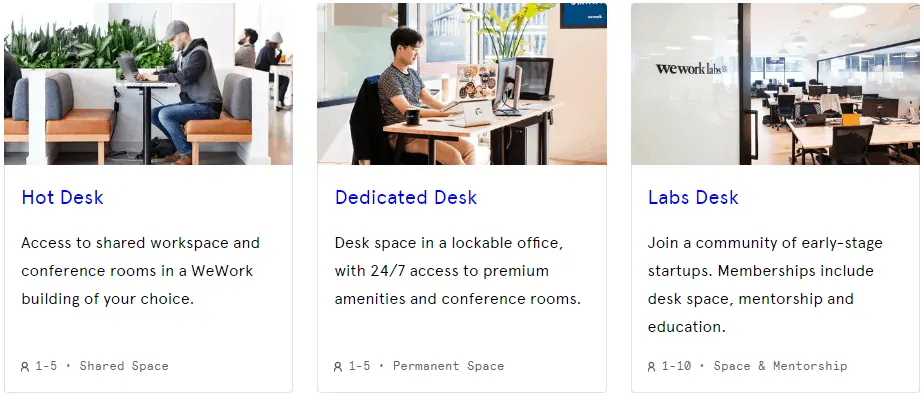
    Go On, Tell Us What You Think!

    Did we miss something?  Come on! Tell us what you think about our article on WeWork Business Model in the comments section.