Feedough Logo

Blog

  • Spotify Business Model | How Does Spotify Make Money?

    Spotify Business Model | How Does Spotify Make Money?

    When talking about online music streaming, one cannot ignore the contributions of Spotify to the music industry. It has attracted millions of subscribers to try and pay for the music they listen to, reducing piracy substantially.

    A huge library of tracks, a great experience across all connected devices, playlist creation tools, and befitting personalised recommendations make Spotify stand out and give it a monthly active user base of 381 million.

    With availability in more than 170 countries at the moment, the Spotify business model has the upper hand over many others because of the significant number of features provided and delivery of music with no delay.

    What Is Spotify?

    Spotify is a digital platform that provides online audio and video streaming service with content from record labels, media companies, and creators across the globe. It makes recommendations with music, podcast, and video content available to its users for free and add-ons through its premium subscriptions.

    The platform allows users to build their profiles, select their favourite artists, discover a huge catalogue of music and podcasts, create and share personalised playlists and even host their podcasts for free.

    Having connected music lovers and fans with the upbeat latest music, Spotify has commenced a journey of musical discovery on a scale like never before. Let us understand how Spotify works? What does it offer to its customers? And how does it make money?

    Spotify

    Spotify’s Target Audience

    Based on the purpose of usage, Spotify targets listeners, advertisers, and content creators.

    Users are the exclusive audience for Spotify; they are the listeners and viewers of the labelled and original content available on the platform.

    Advertisers may be free or premium users, agencies, educational institutions, brands or businesses that use the platform to reach audiences and fulfil their objectives.

    Content creators are the podcasters and artists that create original content and air it online through the platform.

    The Swedish on-demand audio streaming service caters majorly to students and young professionals.

    According to Statista, young professionals aged 25-34 contribute to the most significant user segment of Spotify, seconded by the student segment accounting for listeners aged 18-24. Therefore Spotify essentially finds the Gen Z and Millenials a lucrative segment for their offerings. The age demographics can be further explored through the following table:

    Age group (years)
    Share of Spotify usage
    18-24
    26%
    25-34
    29%
    35-44
    16%
    45-54
    11%
    55+
    19%

    As far as gender demographics are concerned, Spotify usage can be attributed to 56% male members and 44% female members.

    Geographically speaking, the superpowers dominate worldwide usage, with The United States of America and The United Kingdom heading the list.

    Spotify’s Value Proposition

    Spotify effectively addresses the pain points of its people and delivers worth to all three target segments, i.e. listeners, advertisers and content creators.

    Value Proposition To Listeners

    Spotify provides a memorable experience to its listeners and articulates it clearly by providing ‘Music for Everyone.’ It delivers top-notch quality content on the go on various devices. Spotify is the number one online music streaming platform because users can:

    High-Quality Music

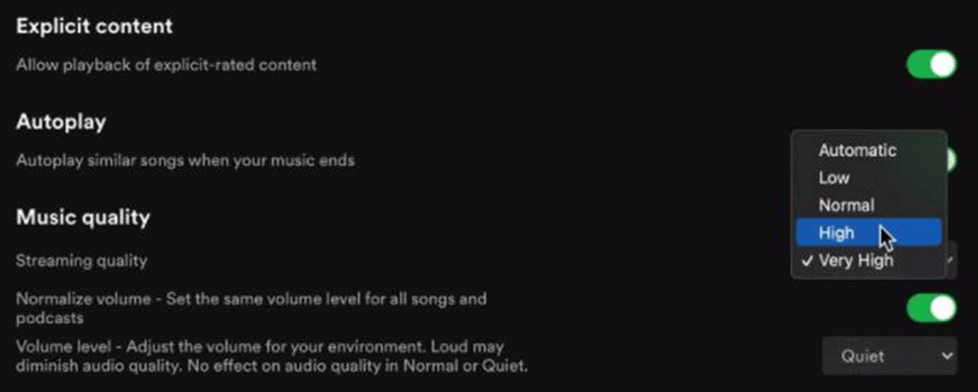
    Spotify tops out at 320kbps audio quality at very high resolution streaming compared to other music streaming counterparts. It provides five other audio streaming options and plans to launch ‘Spotify Hifi’ for lossless audio streaming.
    High-Quality Music spotify

    Personalisation

    Users can create a personalised profile by dropping their favourite singers, artists, songs, genres and podcasts on Spotify. The platform is designed in a way that it recommends songs suiting the users’ tastes and preferences. Moreover, users can create, share and collaborate with their friends through playlists, making the user experience more personal.
    Spotify personalisation

    Memorable Experience

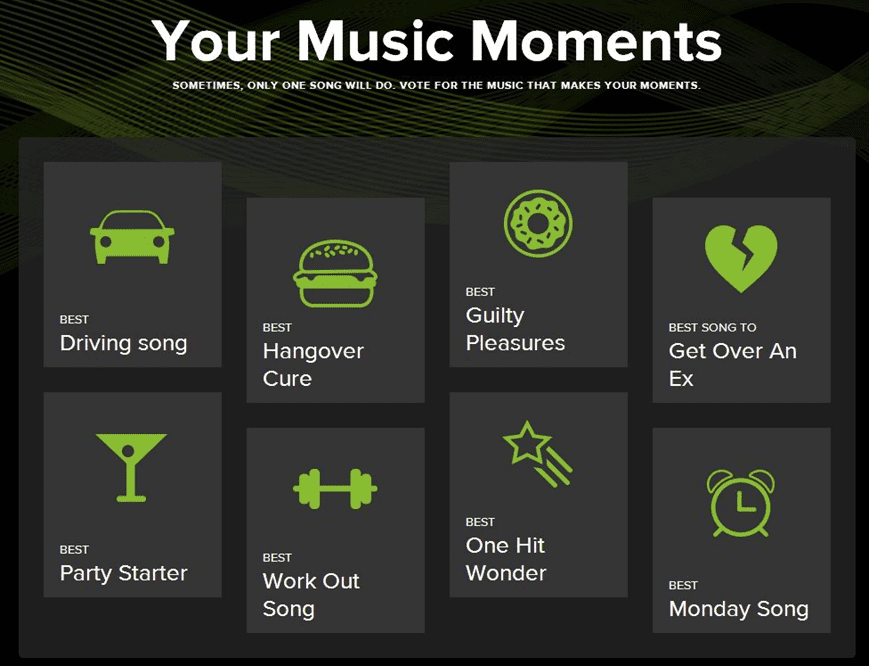
    Spotify mainly targets students and young professionals, and both these segments are well equipped with technology. Therefore the music platform comes in handy for them through portable devices while working, practising, working out, cooking etc. This is why Spotify becomes more like an overall experience instead of just being a source of entertainment.
    Spotify experience

    Convenient Music Exploration

    The user profiles can be managed and operated across various devices hassle-free. The audio-video streaming service can be accessed through smartphones, laptops, speakers, tv, tablets etc. Moreover, the platform allows users to choose from 70 million tracks and 3.2 million podcast titles categorised based on interests, trends, artists etc. Moreover, the platform also enhances the user experience by providing befitting content recommendations by analysing the listener’s activity on the platform.
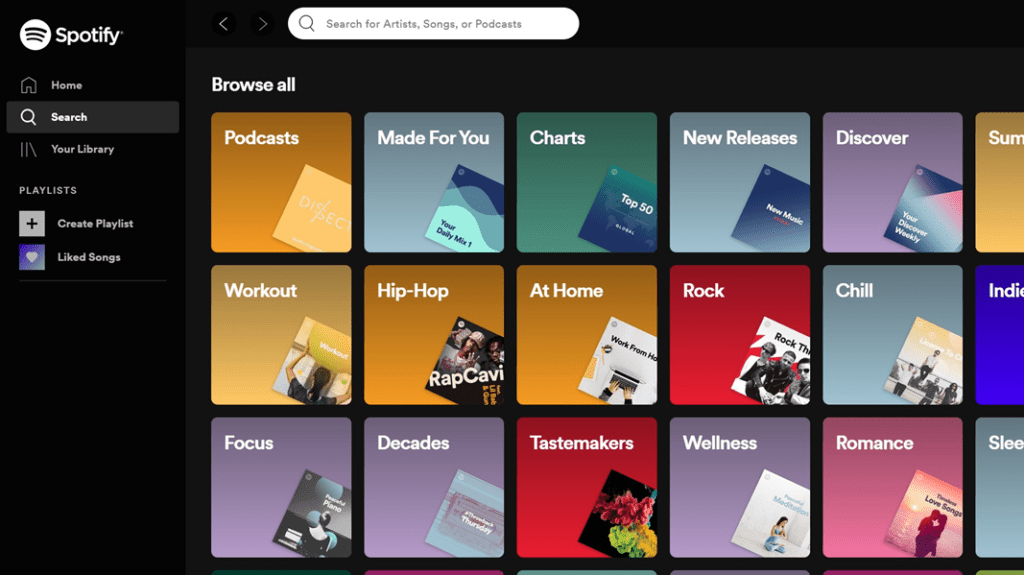
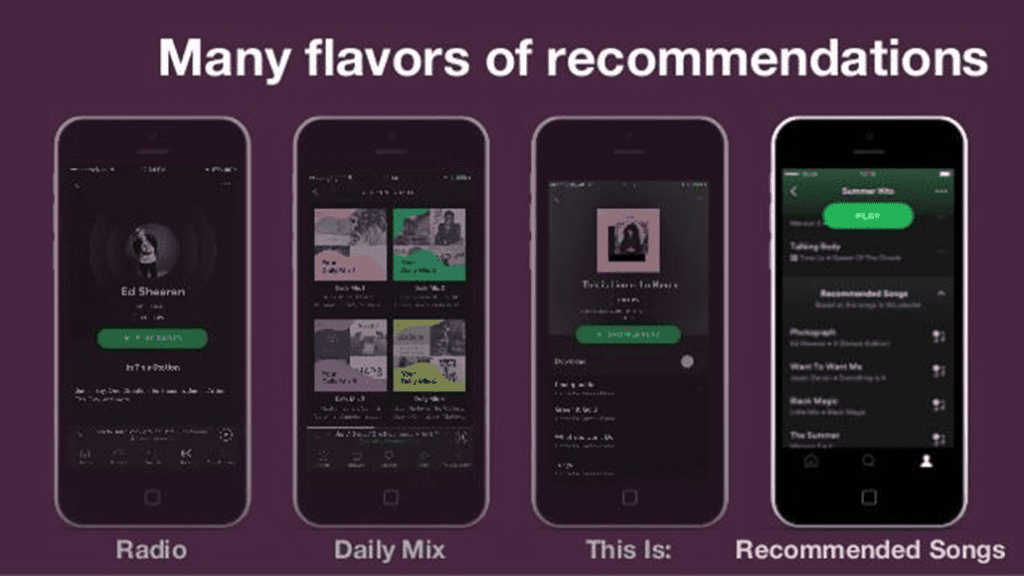
    spotify explore
    Spotify Recommendations

    Value Proposition To Advertisers

    Spotify hosts a multi-million and diverse user base, making it favourable for advertisers to target their ads and reach their audience. Advertisers rely on Spotify because they can:

    Target Ads Effectively

    Spotify makes sure that ‘Your audience is listening.’ The audience targeting options on the platform enables advertisers to understand their audience through demographics, device and connectivity, listening behaviours, predicted interests, off-platform behaviours and past interactions. Moreover, even if the campaign objective changes midway, changes to the ad content can be made conveniently.
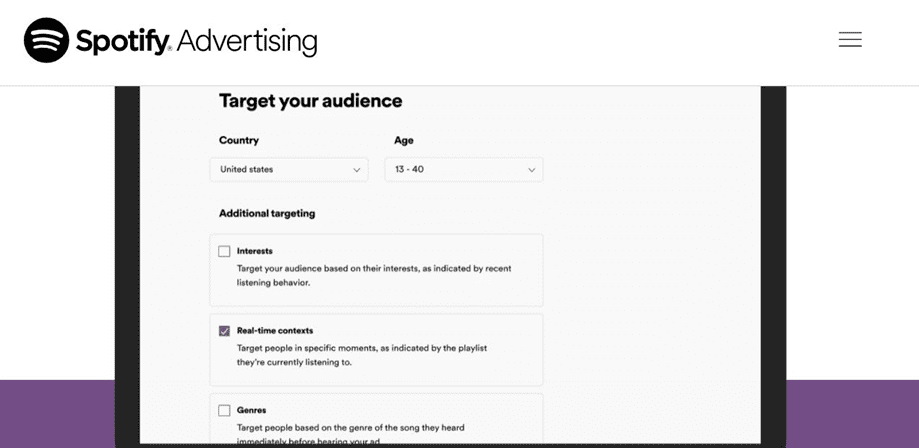
    Spotify Target Ads Effectively

    Be Creative

    Spotify enables advertisers to harness the power of audio through creative ad campaigns. The Spotify ad studio provides voiceover artists services, setting the ad’s tone and scripting the ad. The platform also employs best practices, tips and tricks to create great ads. In addition, the buzzing strategists, storytellers and makers of Spotify provide their expertise to push the boundaries and achieve goals.
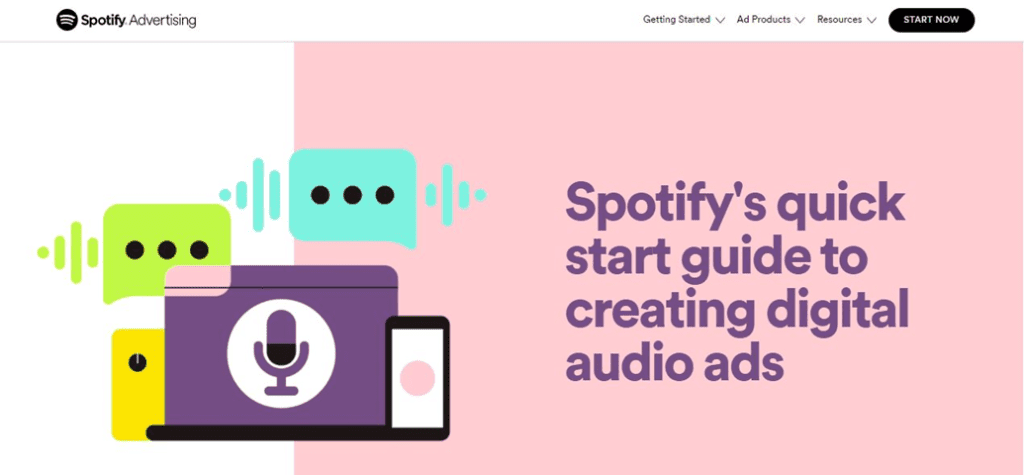
    SPOTIFY CREATIVE AD

    Avail Flexible Pricing

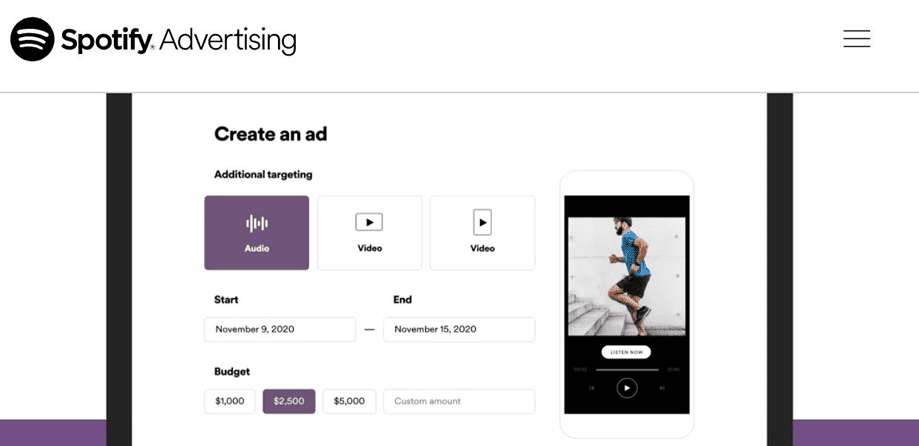
    The budget size for advertising on Spotify can be as low as $250 to run an ad campaign. The flexible advertising options, script writing tips, and free tools help create ads from scratch. The cost incurred on advertising can be customised based on the ad format, country and demographic targeted, campaign length, etc.
    spotify flexible ad pricing

    Track The Impact

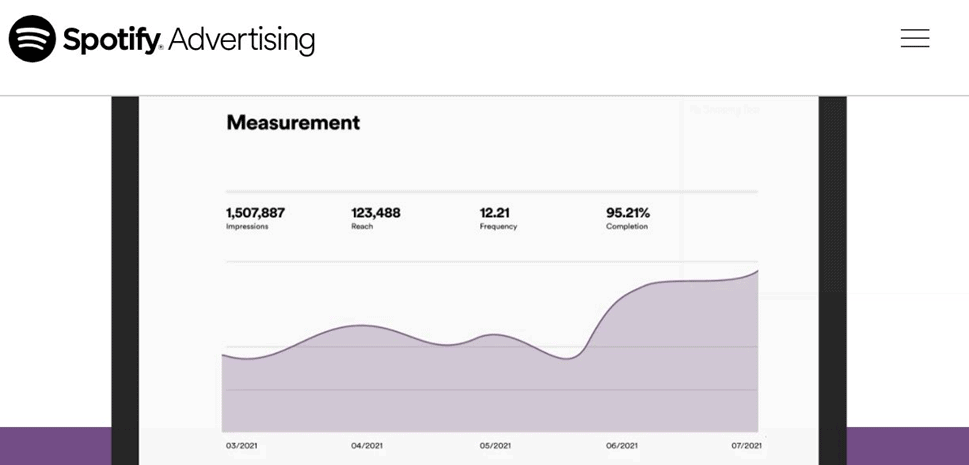
    Spotify evaluates the reach and impact of the ad by campaign reporting through the different audience, performance, ad delivery and conversion metrics. In addition, the platform has partnered with various partners to measure and gauge the reach, resonance and reaction to the ad campaign.
    spotify ad tracking

     Value Proposition To Content Creators

    Creators gain great exposure and branding benefits by using Spotify. Here’s the value they receive from Spotify.

    Reach A Vast Audience

    Podcasters can harness the 200% increase in podcast listeners from 2019 on year on year basis. Spotify is the second largest place to listen to podcasts and is growing fast; therefore, podcasting on Spotify can gain a maximum audience. Artists can also use the vast user base to develop a fan base and boost their following.

    Reach A Vast Audience

    Create An Identity

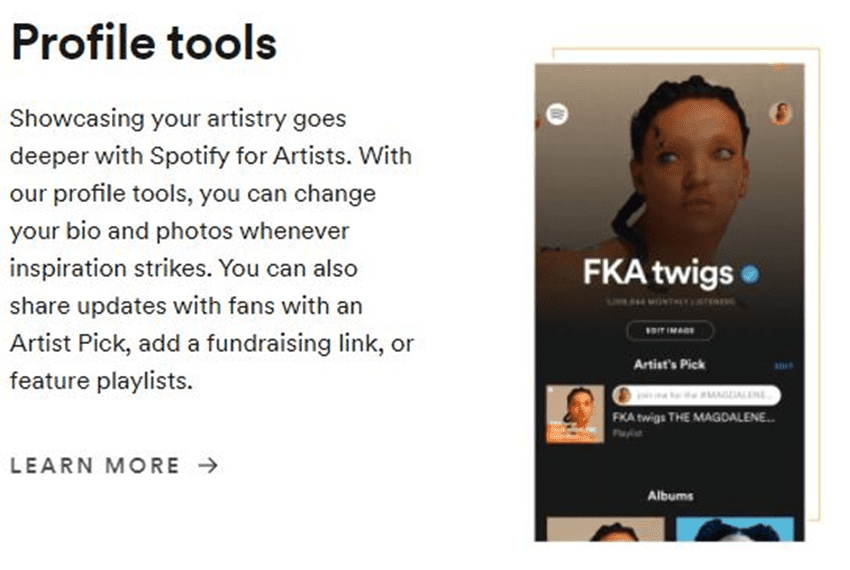
    Spotify aims to unlock the potential of human creativity and allows creative artists and podcasters to go live. Artists can use creative profile tools to add bio, photos, short on loop videos to engage the fans and inspire them. Podcasters are benefitted from editorial and personalised categorisation on the platform and help create their brand identity.
    Spotify profile tools

    Get Valuable Insights

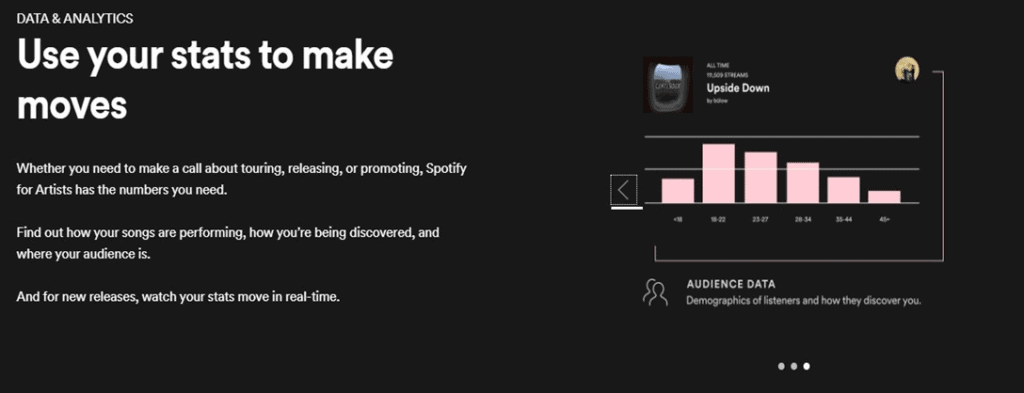
    Spotify reveals real-time stats to provide insights to promote content, discover audience, understand trends, deliver content etc. These insights also help in tracking listeners’ behaviour and discovering the potential audience.
    Spotify  Insights

    Spotify Business Model

    Spotify uses the freemium business model and generates revenue through paid subscriptions and advertisements. Users can choose from paid premium plans that suit the collective number of users and offer discounts. Spotify also provides flexible advertising plans for its advertisers, serving their scale of operations and purpose.

    The up-to-date music library, quality of playback, diverse catalogue, personalisation and sharing options create a memorable personal experience for its users. But how does Spotify make all this happen? Let’s dig in to explore the business model closely.

    How Does Spotify Operate?

    To understand how Spotify works, we need to break down various key factors: elements, activities, partners, channels for reaching out to customers etc.

    First, let us understand how the target audience interacts with the platform and performs the key activities.

    How Do Listeners Operate Spotify?

    Music lovers can enhance their listening experience by streaming on Spotify. They can set up a profile, stream high-quality audio and video content, organise music, share, follow their favourites, and make the platform personalised.

    Set-up A Profile

    Listeners can download the Spotify application on their devices or sign up online on the browser. The first thing is to set up the profile, and an account can be created using existing Google, Facebook or Apple accounts or using the phone number or a separate email ID. The users then choose their favourites from a range of artists and genres for building their home feed.
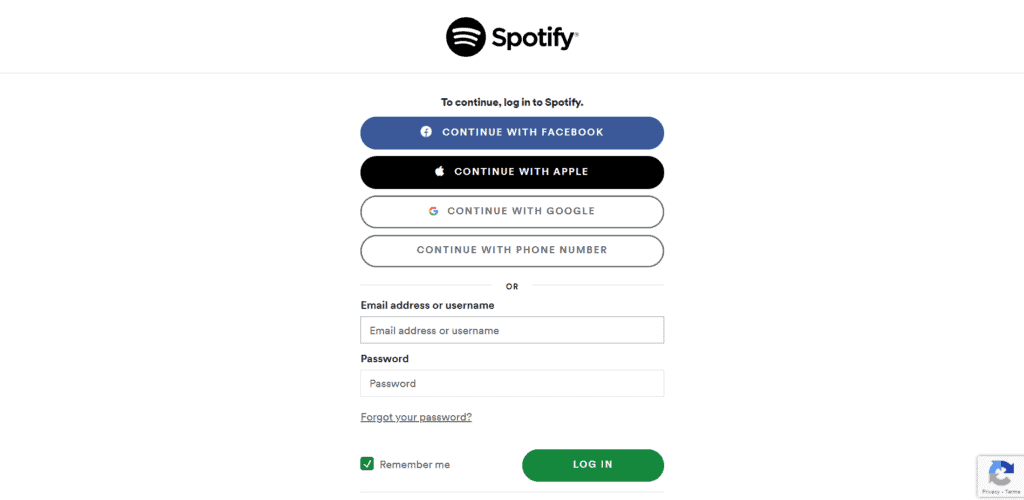
    Spotify Login

    Stream Audio And Video Content

    Users can then stream high-quality music and audio and video podcasts, with ads on the free version and ad-free on the premium version. Users have access to tracks from over 5000 genres and sub-genres ranging from indie rock and hip hop to contemporary and classical. The platform also offers a range of podcasts themed educational, thriller, stories, lifestyle and wellness, news and politics, sports etc.

    Organise Music

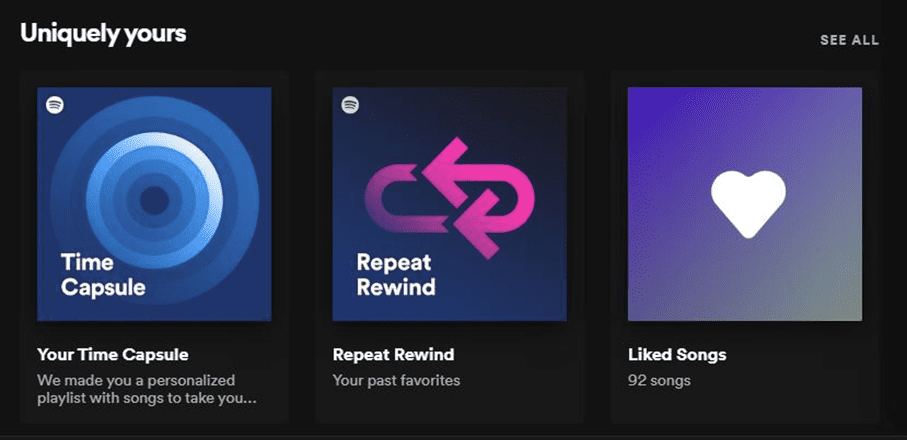
    Playlists are the best way to organise music on Spotify. The platform allows users to access self-curated as well as custom-made playlists. Self-made playlists enable users to add their favourite songs and categorise them according to genres in different playlists. In comparison, tailored playlists are those generated by the platform by tracking the user’s listening activity. Daily mix, weekly discovers, and the time capsule are some unique custom playlists curated by the platform for its users. Making collaborative playlists with friends is another exciting feature on Spotify.
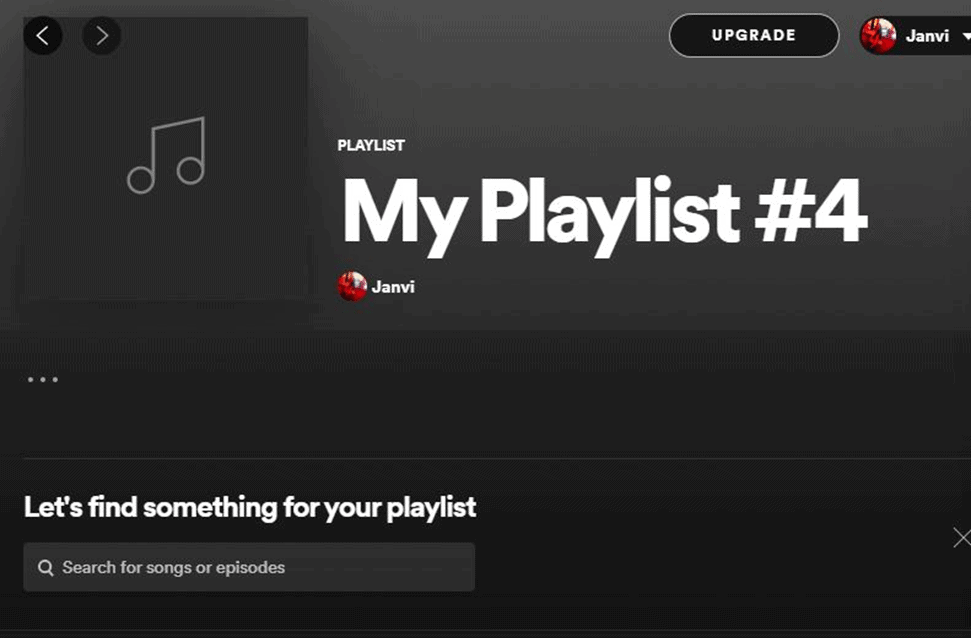
    Playlist

    Share

    Spotify codes is another way in which the platform redefines user experience. QR codes found on different billboards, posters, and flyers can be scanned through device cameras. The codes have embedded links that redirect to the album or track on the platform within seconds. These codes are also used for sharing songs, playlists and albums among friends and family.
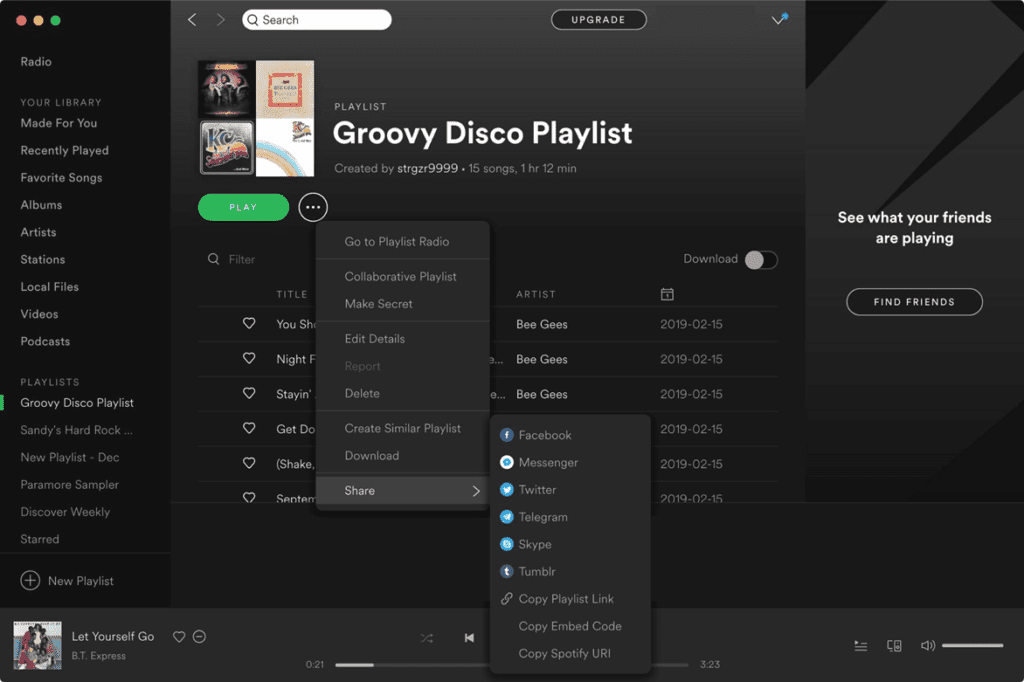
    Playlist Share

    Follow Favourites

    Users can also follow their favourite music bands, artists and podcasters and get exclusive notifications of new releases or trending content from this following list. Besides, the ‘Find Friends’ option helps users search and follow their friends’ profiles and expand their listening ambit.
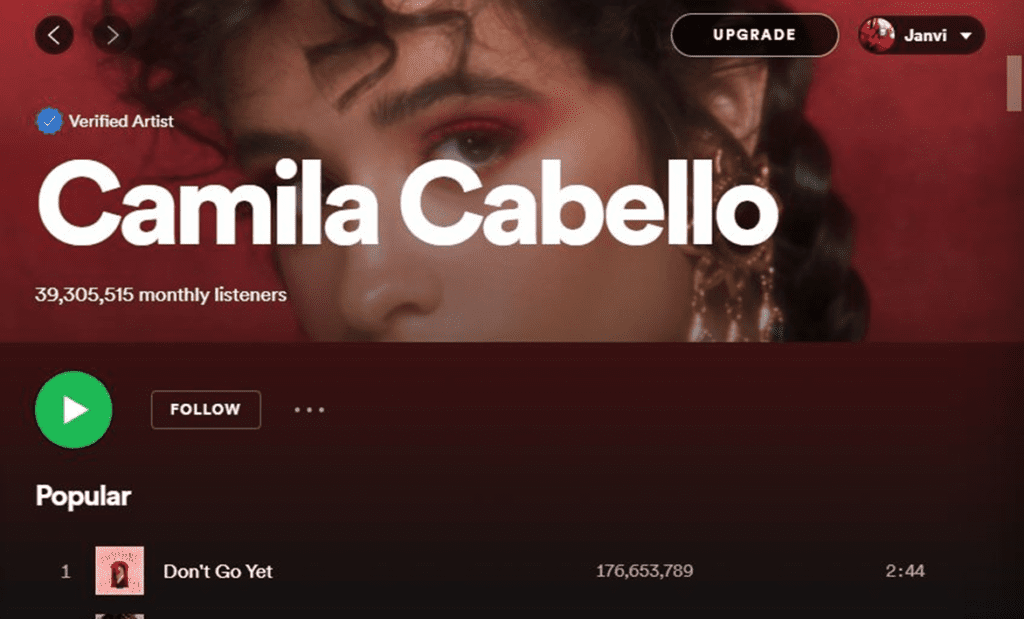

    Follow Favourites
    Maroon 5

    Make It Personal

    To make the experience personal to the user, the platform allows users to customise their home feed by exploring the radio option to explore similar songs and artists, listening on a private session, sorting the search bar etc.

    The platform enables users to connect and operate across different devices and enjoy their music their way.

    Spotify Library is another striking feature of Spotify. It is like a personalised app within the platform, and its users add everything to it. They can efficiently manage their playlists, liked songs, followed artists, podcasts and albums without spending much time scrolling the feed and searching for themes or songs.
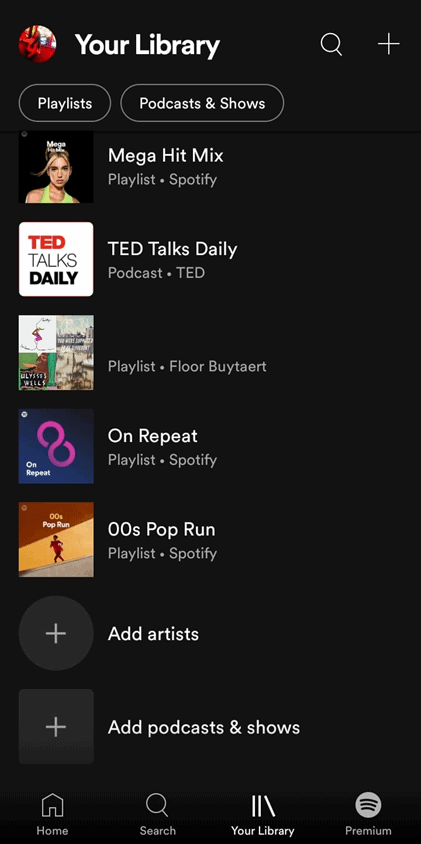
    Your Library

    How Do Advertisers Operate Spotify?

    Advertisers can harness Spotify’s creative advertising tools and practices to enhance their reach and gain exposure. They can set up an account on Spotify ad studio, find their target audience, create audio and video ads and measure their impact on the audience.

    Set-up An Account

    Businesses, brands, agencies, educational institutions etc., need to have a Spotify account to run ads on Spotify.

    Advertisers can sign up for a Spotify account for free using their business emails or existing accounts to sign up and log in to the Spotify ad studio. Spotify ad studio is a self-serve platform that helps advertisers reach their listeners on Spotify.

    Suppose the business is based in countries like the UK, Spain, Australia, New Zealand, or Mexico. In that case, Spotify also verifies the VAT or any other tax identification number of the said business to set up its account on ad studio.

    Find The Target Audience

    Spotify helps advertisers to reach and engage with their listeners across devices, moments and formats so that the message to be delivered:

    • Is tailored according to the listeners’ interest
    • Is a part of the listeners’ experience
    • Is relevant and targets the listener in real-time

    The platform offers various audience targeting options to the advertisers to filter and sort out the relevant listeners. The key options can be classified based on:

    • Demographics: It helps the advertiser reach the listener based on who they are or where they belong. Age, gender and location are the key parameters here.
    • Device and Connectivity: It helps the advertiser reach the listener across various devices to become a part of their day-to-day moments and experiences. Automotive, connected home, platform, mobile/device, Xbox etc., are some modes that define customer experiences and their reach.
    • Listening Behaviours: It helps the advertiser reach the listener based on their musical interests through advanced analysis. A study about the genres, sub-genres, playlist, and podcast categories gives a glimpse of a person’s interests and helps direct ads.
    • Predicted Interests: It helps the advertiser reach the listener based on Spotify’s intelligence of predicting close interests of the users. These predictions are made according to the user’s activity on the platform and the general behaviour of people with similar tastes on the platform.
    • Off-platform Targeting: It helps the advertiser reach the listeners based on how they behave off the Spotify platform. What a listener browses for and spends time on, custom audience match, third-party targeting, etc., enhances the reach.
    • Past Interactions: It helps the advertiser reach the listeners based on how they interacted with digital ads in the past on the platform. Brand exposure, sequential messaging, real-time retargeting etc., come to play.

    Create An Advertisement

    Spotify’s creative free services make it easy to create professional audio ads in a few minutes. Although, advertisers can also upload their pre-prepared files as well for airing on the platform.

    People listen to Spotify everywhere—in the car, gym, office, or even shower. Therefore the platform offers different ad formats to suit the listeners’ as well as advertisers.

    Audio ads air between songs and get the maximum attention of the listeners throughout the day.
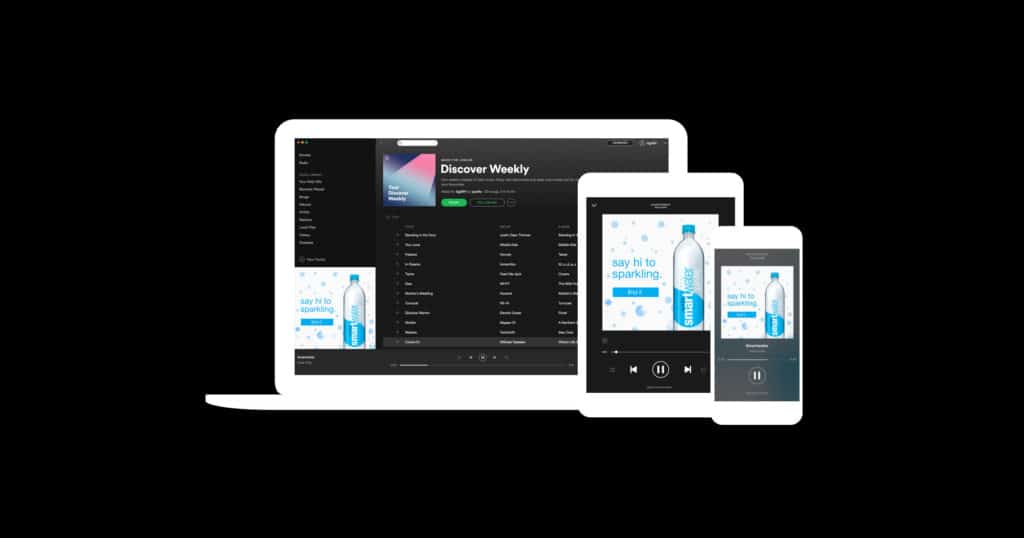
    Audio ads
    Audio ads

    Video ads air only when the listener actively browses the content catalogue on Spotify, guaranteeing the content will be seen and heard.
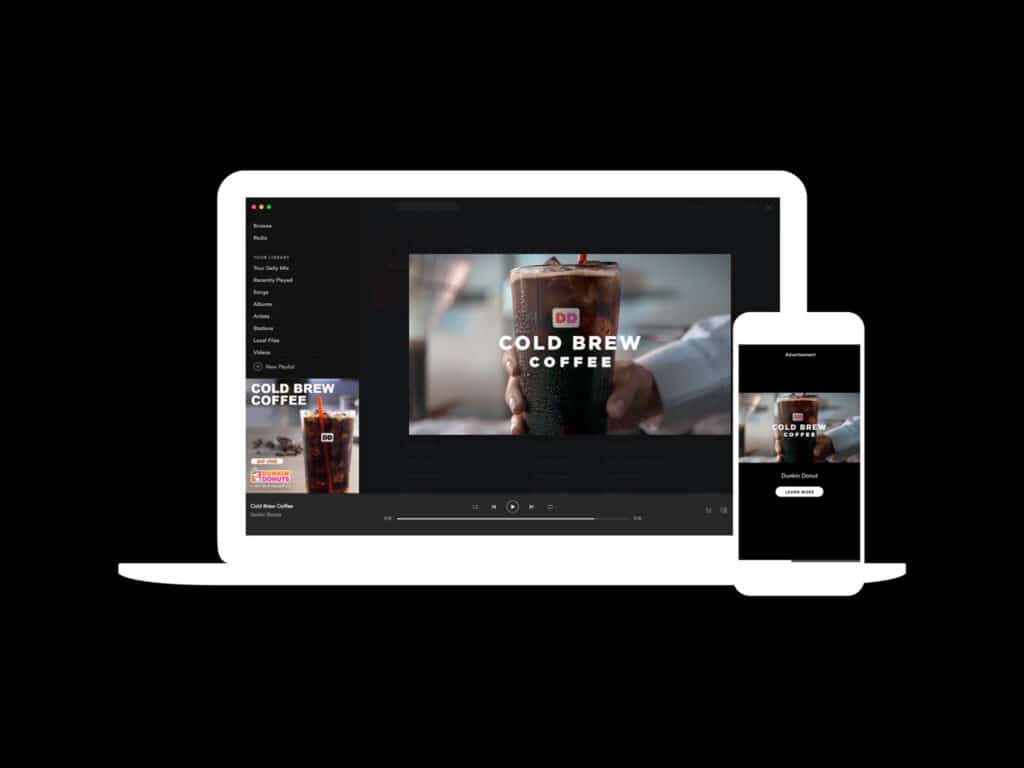
    Video ads
    Video ads

    Podcast ads air during the listening session and tell the brand’s story. They impact emotions and generate engagements from the listeners.
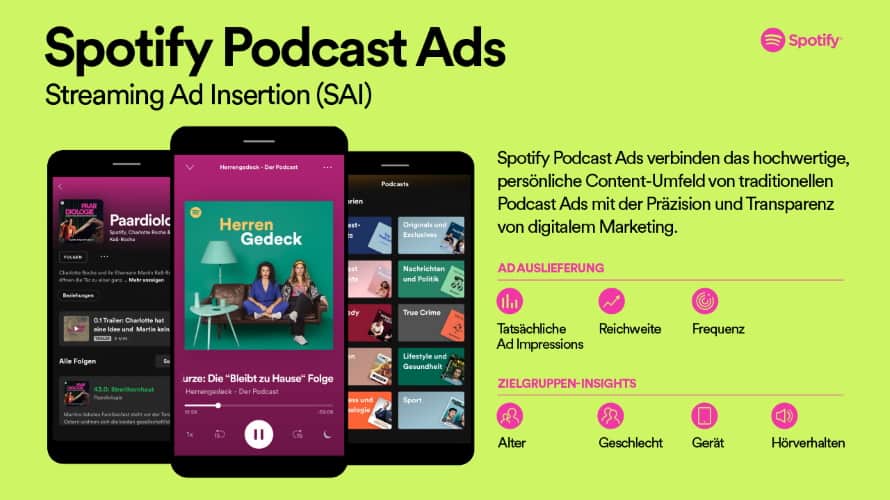
    Spotify podcast ads
    Spotify podcast ads

    Multi-Format ads are tailored according to the needs of the business and help gain reach through multiple ad formats.
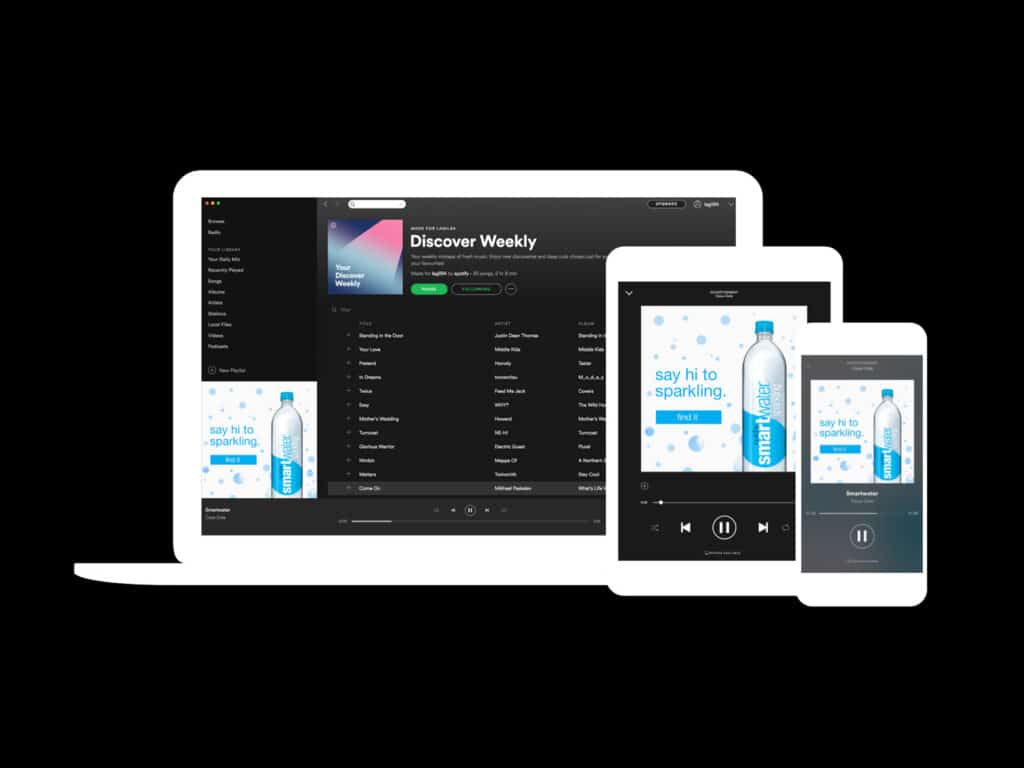
    Spotify ad experiences
    Spotify ad experiences

    Moreover, the platform offers free tools, tips, tricks and best practices, a step-by-step guide to building an ad from scratch.

    Measure Impact

    Advertising on Spotify has an added advantage because it can measure and represent the efficiency of an ad in numbers. These numbers are like metrics that indicate an ad’s impact on its audience.

    The metrics can be categorised as ad delivery, performance, audience, and streaming conversion metrics. These indicators are computed after analysing the ads served, reach, clicks, genres, age, average stream per listener etc.

    In addition, the Spotify reporting partners provide expertise to measure the reach, resonance and reaction to ads and further ease the critical aspect of advertising online.

    Who Are Spotify’s Key Partners?

    Spotify has built some strong relationships with people and businesses that make its business operations effective. These partners take care of the aspects that the company cannot take care of.

    Music Partners

    Spotify has partnered with the big music labels and media houses to acquire the streaming rights of their content on its platform. Spotify users can listen to trending new releases and classic tracks from those labels in a few clicks on the Spotify platform.  E.g., Universal Music group, Sony Music Entertainment Group and Warner Music Group are some of Spotify’s music partners.
    Music Partners

    Campaign Reporting Partners

    Spotify has partnered with some leading reporting partners to measure the impact of the ad campaigns aired by the advertisers on the platform. They essentially help in measuring the reach, resonance and response generated by a particular ad on Spotify. E.g., Nielsen, Comscore, Leanlab are some campaign reporting partners of Spotify.

    Campaign Reporting Partners

    Artist Distribution Partners

    Spotify has partnered with some artists distributor partners that help the artists to their music on the platform. They help to license and distribute their tracks on Spotify. These brand providers offer instant access to Spotify for Artists and thereby pay royalties to artists. E.g., Distrokid, CD Baby, Amuse are some artist distributor partners of Spotify.
    Artist Distribution Partners

    Label Distribution Partners

    Spotify has partnered with label distributors that allow artists to collaborate with a label and air their recordings on Spotify. These providers take care of the licensing and distribution and pay royalties due to the artists. E.g., The Orchard, Believe, FUGA are some label distributors of Spotify.
    Label Distribution Partners

    Delivery Partners

    Spotify has partnered with ceratin delivery platforms that address the distribution aspect of the recordings. These providers provide artists exclusively with data and insights to understand the audience and accordingly stream their content on relevant platforms. E.g., EMS, AudioSalad, ampsuite are some delivery partners of Spotify.

    Delivery Partners

    What Are Spotify’s Key Resources?

    Spotify delivers top-notch value to its customers because it uses its valuable assets. These assets are the company resources that are built and nurtured for the growth of the business.

    Spotify is an audio-video streaming platform that makes available its services through its application and website. The application and the website have an aesthetic display with orderly categorisation, multiple sharing options, and a diverse content catalogue.

    The employees are the human resource at the back of all Spotify operations handling technical, content, and other assets for delivering the value proposition. As of 2020, Spotify’s workforce consists of 6500+ employees across the globe with roles in marketing, research, engineering, finance and administration.   

    In addition, Spotify’s licensing agreements with the big music labels and rights holders make the business model possible. It has also built its reputation as the leading digital streaming music platform and created a brand name and logo for its identity.
    What Are Spotify’s Key Resources?

    How Does Spotify Reach Its Customers?

    Spotify uses specific communication channels to reach out to people, make a presence and provide its services. These key channels offer hassle-free access to the platform.

    Website and Application

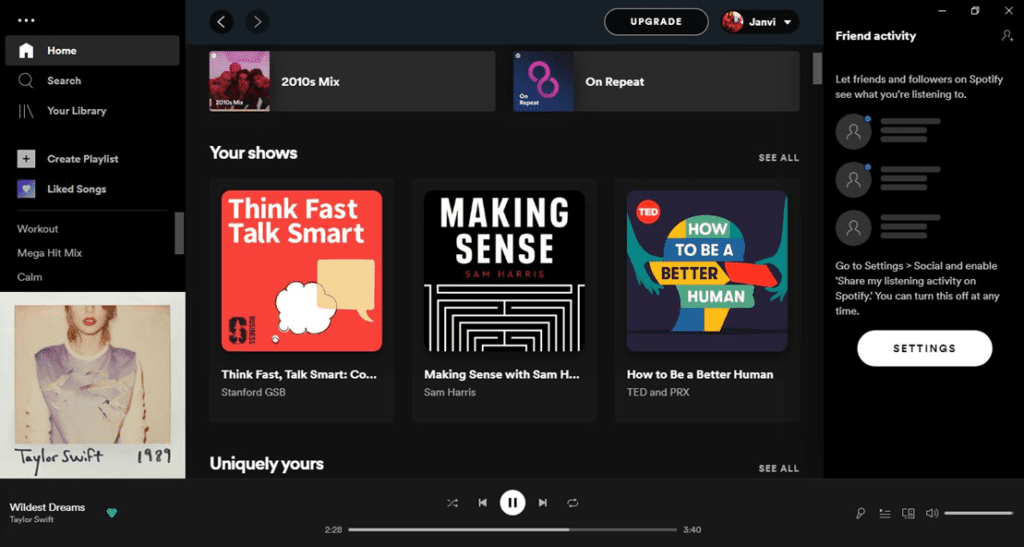
    Users can directly access the platform through a website or application available for both android and ios with connectivity through a range of other devices on the same wifi network. Spotify connect enables this connectivity across speakers, TVs, smartwatches, tablets, PlayStations etc.

    The website and app interface are quick and straightforward to learn for beginners as well. The well-organised website in mobile and desktop versions further makes online music streaming simpler.
    Spotify Website and Application

    Search Engines And Social Media Platforms

    Pinterest can also be accessed through indirect channels as well. Search engines like Google and social media platforms like Instagram are also Spotify’s indirect channels. E.g. Google uses images and hyperlinks sourced from Spotify on their search results, and Spotify allows sharing of tracks and playlists on Instagram stories, among other social platforms. This way, browsers are directly routed to the website. Twitter, Linkedin, Youtube etc., are some other sources that help Pinterest reach its potential users.

    Spotify ads

    Collaborations

    Spotify is also redefining the customer experience through various collaborations with brands. It collaborated with Uber, allowing users to connect to their Spotify accounts and stream their favourite tunes while riding an Uber cab to establish a personal connection. Spotify has made similar collaborations with Starbucks, Hyundai, Co-Cola, SoundHound etc.
    Spotify Collaborations

    How Does Spotify Make Money?

    Spotify reported 172 million premium subscribers worldwide, up from 144 million in the corresponding quarter of 2020. Moreover, according to Statista, its revenues jumped from 1,975 million euros in 2020 in the third quarter to 2,501 million euros in 2021 in the third quarter.

    Let’s look into the revenue model of Spotify and understand how it makes money?

    Revenue Streams

    The revenue model of Spotify can be divided into Revenue from Premium Subscriptions and Revenue from Advertisements.

    Revenue from Premium Subscriptions

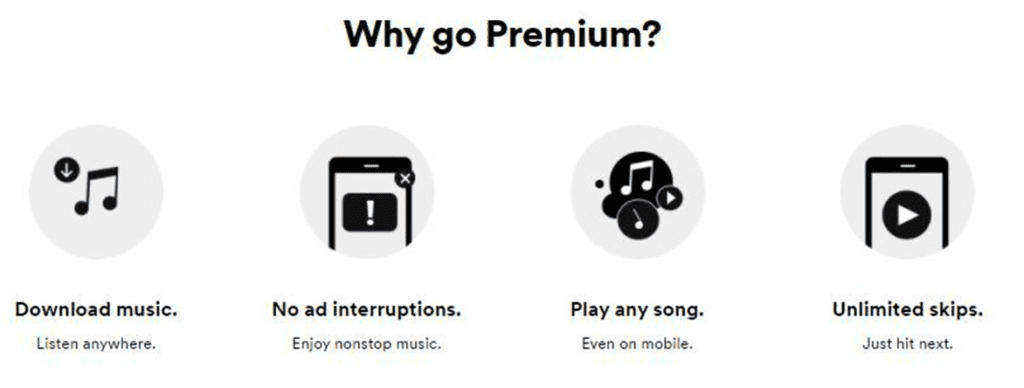
    Spotify’s premium version is ad-free, with users able to play any type of song on demand, discover new music, find and hear playlists, share music and playlists, listen to tunes picked by Spotify’s Radio feature, and create playlists.

    The distinguishing features of the Premium version include no ad interruptions, offline playback for saving music offline, play music anywhere across a range of devices and pay your way through flexible payment modes and unlimited skips.
    Spotify’s premium version

    Spotify Premium is available in four different plans to suit the listeners. The plans are for an individual, duo, family and student. The table below specifies the ideal facilities available under the different plans.
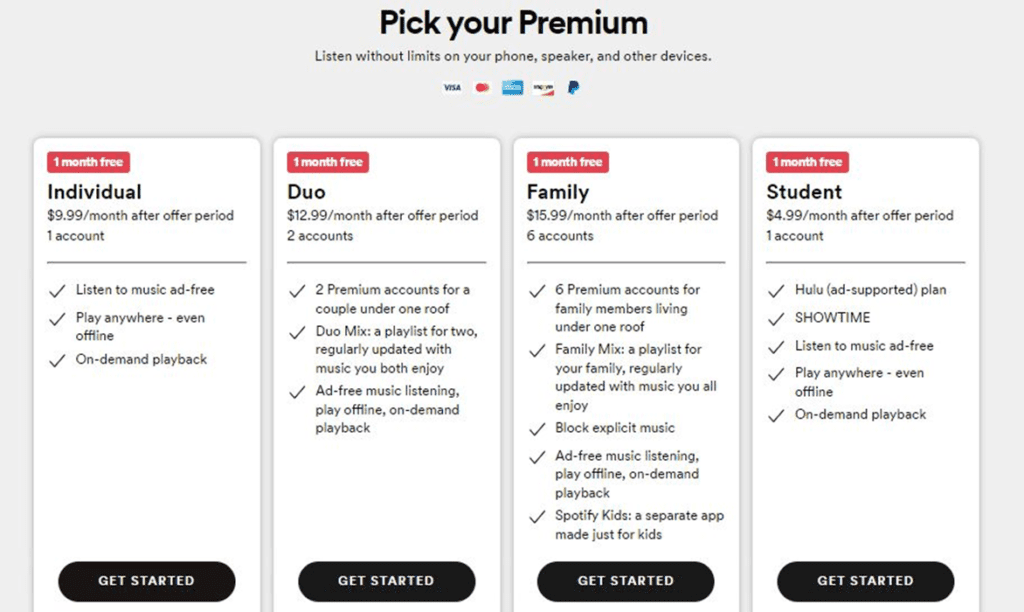
    Spotify’s premium plans

    Revenue From Advertisements

    Spotify earns revenues from native banner advertisements and uses cutting-edge technology to target its users with audio, video, podcast and multi-format ads.

    Spotify supports different kinds of advertisements that vary in type, size and user engagement, and all of these deliver differentiated customer experiences. They can be listed as follows:

    Sponsored Playlists are those whereby businesses can align the brand with Spotify and sponsor the most popular playlists on the platform for a week. It builds brand awareness and promotes the brand. They can run on laptops and mobiles.
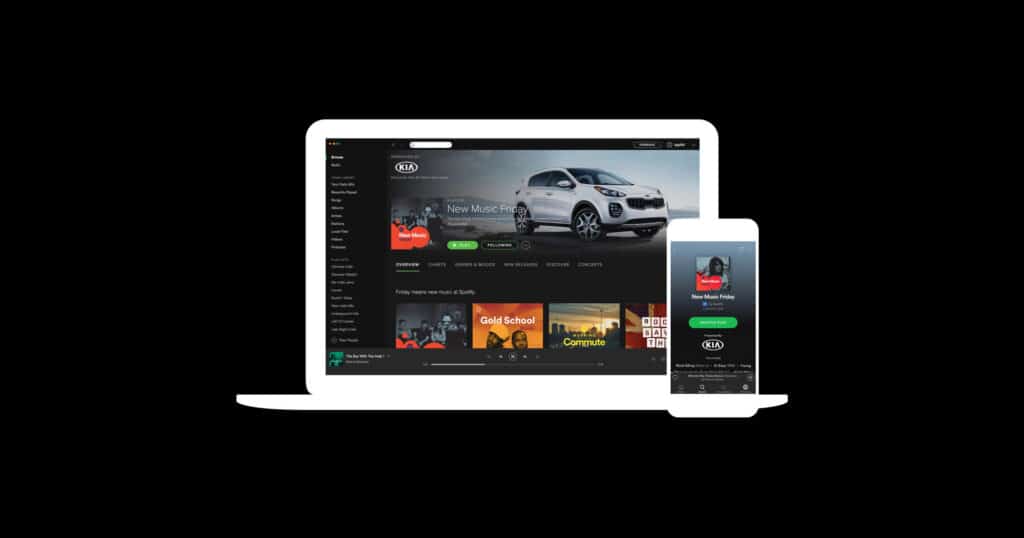
    Sponsored Playlists

    Branded Moments are the vertical video ads that run at the beginning of playlists and, when watched to completion, give listeners 30 minutes of commercial-free streaming. They can run on tablets, mobiles and laptops.
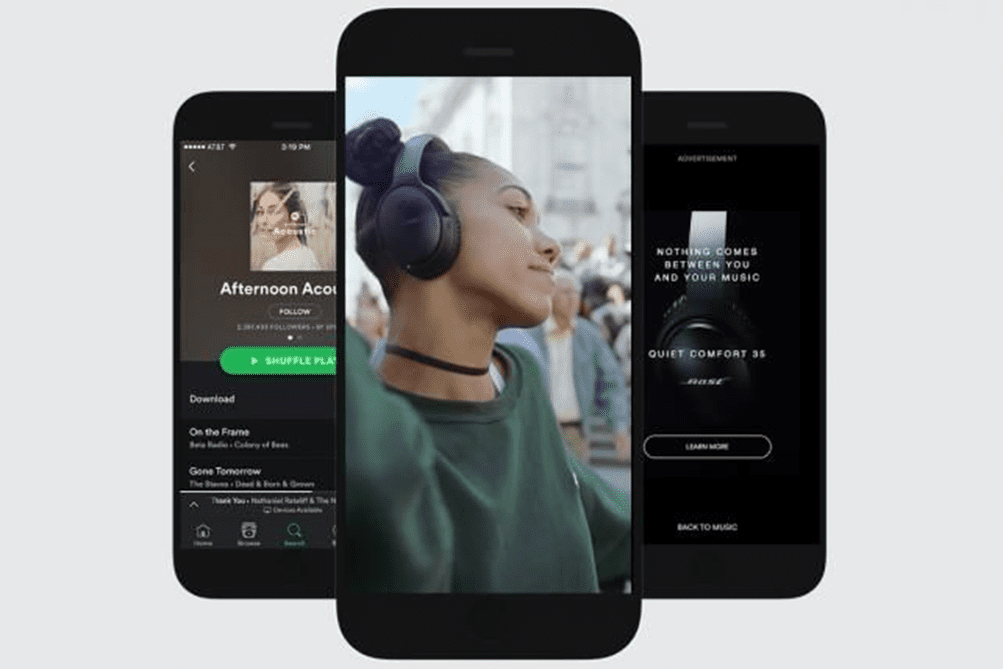
    Branded Moments

    Sponsored Sessions are similar to branded moments because they also precede an uninterrupted listening session for 30 minutes. However, these contain horizontal video format and a banner to display the ad. They can run on mobiles and tablets.
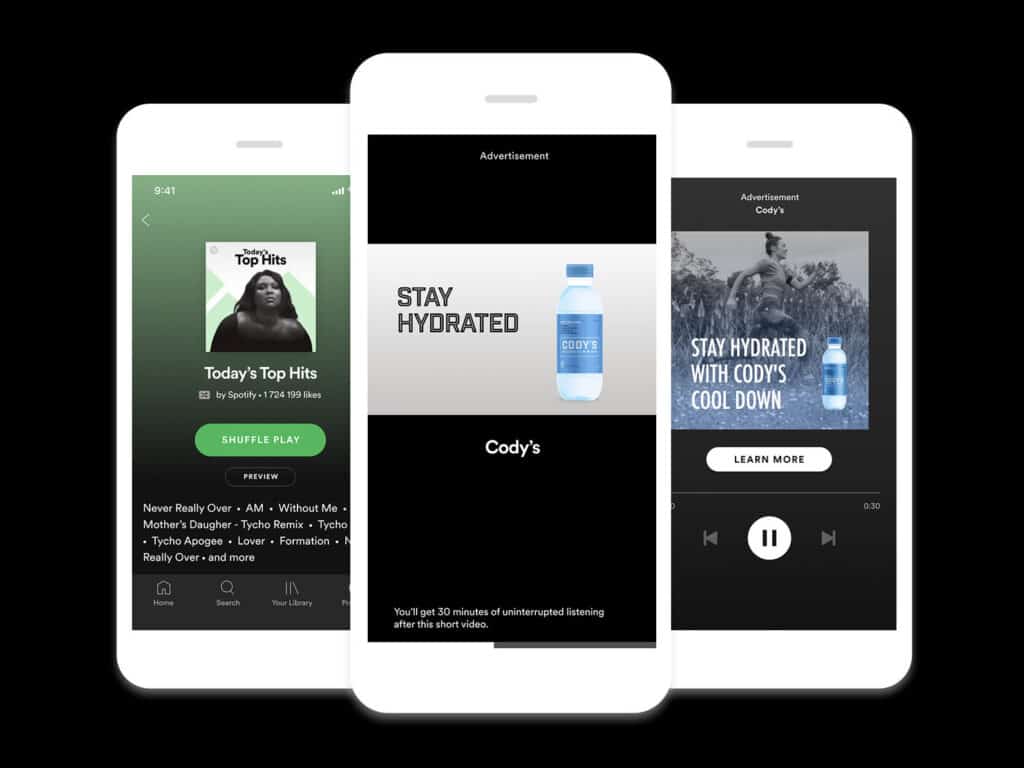
    Sponsored Sessions

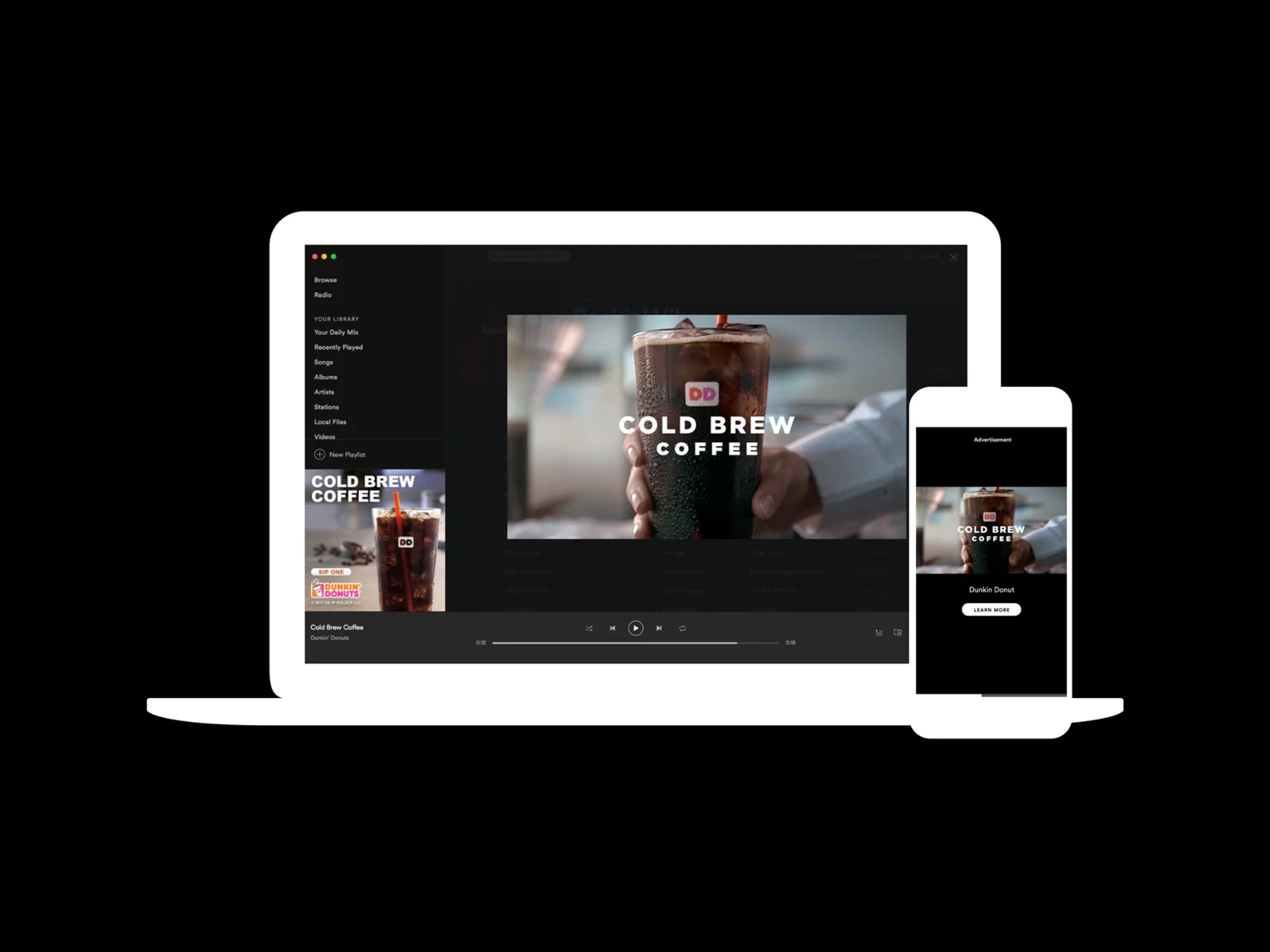
    Video Takeovers are delivered during a listening session between songs when users actively browse through the catalogue to enjoy and discover music and podcasts.They run only on laptops.
    Video Takeovers

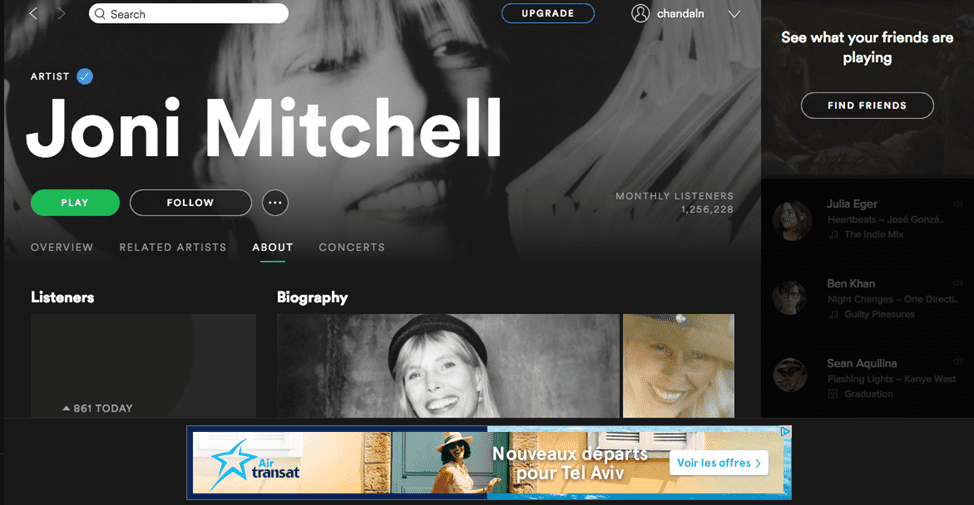
    Display ads are clickable banner ads displayed at the bottom for 30 seconds, visible throughout the timespan.
    Display ads

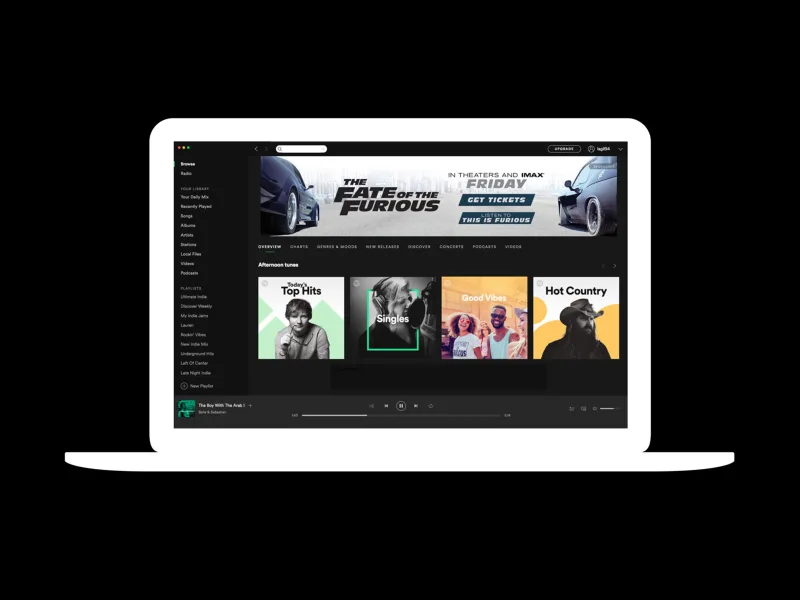
    Homepage Takeovers showcase the brand message on the front of Spotify’s Desktop Homepage for 24 hours. This ad format is supported only on laptops.
    Homepage Takeovers

    Overlay ad format is delivered when the user returns to the Spotify app for maximum brand impact. This ad acts as a welcome back screen on the platform and engages users.

    Overlay

    Branded Playlists contain a branded cover art image and a minimum of 20 tracks in the playlist with one song per artist.

    Branded Playlists

    Spotify Cost Structure

    Spotify’s costs can be attributed to royalties or licensing fees, and company operations.

    Royalties are the payments Spotify makes to own the right to stream specific content on its platform, and it forms one of the significant expenses for the streaming service. As of 2020, Spotify has paid over $23 billion in royalties to rights holders. It owns two types of licenses and thus produces two types of royalties:

    • Recording Royalty: Spotify has recording license agreements with big music labels like Sony Music Entertainment Group, Warner Music Group and Universal Music Group. Therefore recording royalty is the amount paid for the right Spotify holds to stream the actual recordings of these record labels on its platform. These record labels then direct payments to the individual artists or singers who perform and record the track.
    • Composition Royalty: Spotify has composition license agreements with the original songwriters and composers as well. Therefore composition royalty is the amount paid for the right to stream the song’s composition, and it is delivered to the composers who own the lyrics and melody of the tracks. 

    Therefore when a premium or ad-supported user plays a song on the platform, Spotify pays recording royalty to the music label and the artist and pays composition royalty to the owners and composers of that song.

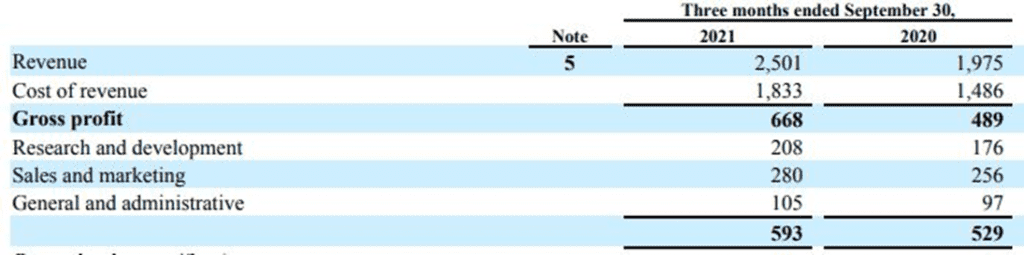
    In addition, Spotify’s annual reports give us an insight into the extensive costs incurred by the company. The operation costs can be categorised into:

    • Cost of Revenue: The cost of revenue of Spotify includes all the costs incurred to deliver the service and value to customers. For example- the cost of maintaining the website and app, salaries of employees, payment to partners, transaction fee, other overhead costs etc.
    • Research and development: The research and development expenses include all costs incurred on personnel and facilities associated with the research and development of the service — for example – salaries to engineers etc.
    • Sales and marketing: The sales and marketing expenses include all costs incurred on personnel and facilities related to sales, sales support, marketing, business development and customer service functions. For example- marketing employee expenses, professional hiring fees, advertising and promotional expenditures etc.
    • General and administrative expenses: General and administrative expenses include all costs incurred on personnel and allocated facilities for general functions, administration, legal and financial purposes. For example- salaries to accountants and managers, administration overhead costs etc.
    Spotify Cost Structure

    Mediachain Acquisition

    Through the years the company was in the spotlight for numerous controversies related to not streaming unlicensed music on its platform for which the company had to pay millions of dollars as penalties to the artists. Spotify didn’t pay the royalties because it didn’t have the necessary data to figure out the correct ownership of the tracks and even how to locate the owners.

    The company, to solve this problem, took the decentralised approach and introduced blockchain in its algorithm by acquiring Mediachain. The company created an open decentralised network that stores the data of every piece of music with the help of blockchain technology. The company has mentioned the whole process of how blockchain for music works and how the artists and the company will benefit from it.

    Why didn’t Spotify choose the centralized approach?

    A centralized “Global Repertoire Database” initiative, started in 2011 to aggregate ownership data in a central database, infamously failed in 2014 after millions of dollars of investment.

    mediachain spotify

    Spotify has helped millions of people connect with each other over their common love for music. It has helped different music reach different parts of the world. At this moment, Spotify has a smaller impact on the market compared to the others and its subscription fees are high. It needs to improve its business model and then it can be said that Spotify is the one enterprise which can make serious money from digital music.

    Bottom Line

    Spotify is the leading player in the online music streaming industry at present. However, the market share has reduced considerably with emerging players, with Apple Music posing the biggest threat.

    Nonetheless, Spotify also acquired Mediachain Labs to bridge the gaps in its royalty expenditures. The blockchain startup will solve the payment of royalties to artists using blockchain technology and enhance Spotify’s operations by cutting costs.

    In addition, Spotify has high streaming quality, trendy content, diverse catalogue, flexible connectivity and sharing options, diverse music and podcast catalogue and multiple ad formats. Therefore the platform has many avenues for growth in the upcoming years in the Music Streaming segment, where the number of users is expected to amount to 913.2million users by 2025.

    Go On, Tell Us What You Think!

    Did we miss something?  Come on! Tell us what you think about our article on Spotify business model in the comments section.

  • What Is Standard Operating Procedure? – How To Write An SOP?

    What Is Standard Operating Procedure? – How To Write An SOP?

    SOP is a written term that has been used for decades in the field of science to describe any procedure commonly followed by a group of people to achieve a goal. Nowadays, a standard operating procedure (SOP) is an important tool for managers who need to define their processes and those responsible for training others.

    A good SOP helps leaders save time and money so that they can focus on what’s important. 

    But what is a standard operating procedure, what is it used for, and how to write one?

    Here’s a guide.

    What is a Standard Operating Procedure?

    A standard operating procedure (SOP) is a written step-by-step description of a process or procedure intended to be followed repeatedly.

    The main purpose of writing an SOP is to standardise the way to do a routine activity so that everyone who follows it knows what to expect. It makes training easier and reduces the risk of errors.

    SOP outlines the policies, processes, and standards followed by people carrying out an activity in a given situation. It is usually written as a series of steps. Each step represents one action that needs to be performed to achieve a specific goal.

    Benefits And Importance Of Standard Operating Procedure

    SOPs save time and reduce errors. They can also help prevent conflicts between people who need to cooperate with each other.

    Moreover, having an SOP: 

    • Helps control product quality and consistency:  Having an SOP reduces the possibility of missed steps or other errors that could affect the quality of the product.
    • Saves time and money during training: When new employees are properly trained, they are less likely to make mistakes that can waste time and resources.
    • Facilitates better communication between team members: By having a common understanding of how things should be done, team members can communicate more effectively with each other.
    • Ensures safety: Following an SOP while performing a task can help minimise the risk of accidents or injuries.
    • Protects from knowledge loss: A properly written SOP can help maintain knowledge that might otherwise fade over time.
    • Simplifies performance management: By documenting the steps involved in a task, SOPs make it easier to track employee performance and identify areas for improvement.

    Types Of Standard Operating Procedures

    SOPs can be categorised into different types based on the activity they describe and the written format.

    Types of SOP Based On Activity

    SOPs are written in different formats according to the type of activity that they describe. Here are the main types of SOPs:

    • Instructional SOP: An Instructional SOP is written to train new employees or explain how to use a tool or a piece of equipment. It includes an introduction, an overview of the task to be performed, instructions on how to complete the task, and a list of tools or equipment to be used.
    • Operational SOP: Operational SOPs describe the steps involved in carrying out a business process, product manufacturing process or service. These SOPs are usually written in a step-by-step format and include steps for planning, performing, evaluating and reviewing.
    • Technical: These SOPs are used when a company tries to solve a problem with a new product or service. They usually outline how a certain piece of equipment or software should be assembled or configured.
    • Processes: These SOPs cover the general policies that define how a business operates. They include things like hiring procedures, compensation policies, and company culture.

    Types of SOP Based On Form

    SOPs can also be categorised based on their format. Here are some common types:

    • Checklists: A checklist or to-do list is a type of SOP that lists the steps to be followed to complete a task. It usually includes a list of items that need to be checked off as they are completed. Checklists are useful in situations where there is a lot of repetition or where a mistake could have serious consequences.
    • Flowcharts: A flowchart is a graphical representation of the steps involved in a process. It can show the sequence of tasks, decisions, and activities that need to be performed to achieve a goal. Flowcharts work best when there is a lot of branching or decision-making involved in the process.
    • Step-by-step lists: A step-by-step list is a type of SOP that lists the steps involved in completing a task, usually in the order needed to be performed. This type of SOP is useful when a task needs to be performed repeatedly and correctly the first time. It is also useful when there is a lot of information that needs to be included in the SOP.
    • Manuals: A manual SOP describes a routine task in detail. It usually includes a section on how to perform the task and a list of tools or equipment to be used. Manuals are usually written for new employees or employees who have been performing the task for a while but are not sure of every step involved in the process. 

    What Are SOPs Used For?

    SOPs are used in a variety of settings to improve performance and safety. Here are some of the most common uses:

    • Operations: Production line steps, equipment maintenance, inspection procedures, etc.
    • Training: Procedures for training employees, presentation outlines, etc.
    • Employee development: Performance management, schedule development, etc.
    • Quality control: Testing standards and quality control procedures.
    • Finance: accounts receivable and payable process, stock maintenance, etc.
    • Marketing: Advertising campaigns, social media marketing procedures, etc.
    • Customer relationship management: Customer service, customer satisfaction surveys.
    • Safety: Operations safety procedures, OSHA compliance standards, etc.

    Different businesses have different needs, so not all SOPs will be relevant to every company. However, most businesses benefit from having a core set of SOPs covering the essential tasks and processes.

    How To Write An SOP

    Writing an SOP can be a daunting task (as it will be used as a reference to make sure employees are completing tasks correctly), but it’s important to remember that there is no one-size-fits-all formula. The best way is to start with the outcome in mind and write the SOP around that outcome.

    Here’s how to do it:

    List Tasks, Documents, Information, etc.

    List the tasks involved in completing the process. List any decisions that need to be made along the way.

    List any related documents or information that must be included (i.e., safety and regulatory guidelines, quality control standards). Create a list of all the possible outcomes if one step is missed or performed incorrectly (serious health and safety risks, financial losses, etc.).

    This forms the basis of the SOP.

    Define The End-User

    SOP should be carefully written to cover the needs of the end-user.

    For example, if your SOP is being used by a new employee who has never performed this task before, it should include detailed instructions.

    If the SOP is being used by a veteran employee who can perform the task in their sleep, it may only require a quick summary of the steps involved.

    Identify The Perfect Format

    Next, identify the best format for the SOP. This will depend on the task and the level of detail required. Some examples are a checklist, flowchart, or step-by-step list.

    • Choose a checklist if there are many steps involved in the process that are to be completed in a specific order.
    • Choose a flowchart if there are multiple branches or decision points involved in the process.
    • Choose a step-by-step list if there is a need to provide detailed information about each step, especially for new employees or employees who have been performing the task for a while but are not sure of every step involved
    • Manuals are suitable for more complex tasks that require a high level of detail.

    Include The Necessary Details

    Once the format is chosen, it’s time to start writing the SOP. Start with an introduction that explains the SOP and why it’s important. Then break down the task into steps, including all of the necessary details. This may include diagrams and images when appropriate.

    An ideal SOP includes but is not limited to the following:

    • SOP Purpose: It is good practice to start with a general statement that describes the purpose of the SOP. For example, “This procedure provides guidelines for completing form TPS100.”
    • Roles and Responsibilities: Describe each role involved in the process and state their responsibilities.
    • Scope: Discuss what is included in the SOP (i.e., equipment, resources, etc.) and any work that must be performed offsite.
    • Inputs: Detail all of the information needed to complete the task, including where it can be found or who needs to provide it.
    • Tools and Equipment: List all of the equipment, tools, and materials needed to complete the task.
    • Procedure Steps: Detail every step involved in completing the process. Include any necessary decisions or actions along with their order of occurrence.
    • Checkpoints: Discuss what criteria must be met before moving on to the next step (i.e., approval from a supervisor, quality check).
    • Outputs: List the final products or results of the process.
    • Appendices: If there is additional information that needs to be referenced (i.e., safety guidelines, contact information), include it in appendices

    Check For Accuracy And Clarity

    It’s important to check that the SOP is easy to follow and accurate before it goes out for use. Get a team of employees (not those who previously performed the task) and ask them to read through each step carefully and make sure they understand it.

    • Has the purpose of each step been met?
    • Does it say everything that needs to be said?
    • Is it technically accurate?

    If there are any questions, rewrite or clarify as needed. Once everyone agrees on the changes, send them out for review and finalise when approved.

    Implement SOP But Revisit Regularly

    Once the SOP has been finalised, it’s ready for implementation. However, any time there are changes to the process or new employees need training on tasks, revisit the SOP and make updates as needed. Also, remember to include information about who is responsible for updating this information in case future supervisors forget.

    Standard operating procedure format

    An SOP has a specific format that should be followed to make it easy to read and follow. The following is a general guideline:

    Title Page

    The title page should include the company’s name, department, and SOP title. It’s also helpful to include the date the SOP was created or last updated.

    Table of Contents

    The table of contents should be placed at the very beginning of an SOP. It allows employees to quickly browse through it and find what they are looking for.

    Introduction

    This section introduces the purpose or need for having an SOP in the company by explaining what it is and why it’s important.

    Procedure Flowchart

    If a flowchart is included, it should be placed near the beginning of the SOP. It provides a high-level overview of the steps involved in completing the task and can be helpful for employees who are not familiar with the process.

    Detailed Procedure

    This section contains all of the steps involved in completing the task. The order of occurrence and any decisions or actions that must be taken should be included.

    Checkpoints

    This section discusses what criteria must be met before moving on to the next step (i.e., approval from a supervisor, quality check).

    Outputs

    This section lists the final products or results of the process.

    Appendices

    If additional information needs to be referenced (i.e., safety guidelines, contact information), this section will include it.

    Referenced Documents

    This section lists all of the documents or sources used as a reference for creating the SOP.

    Indication Of Revision History

    This section lists any changes made to previous document versions and is useful for tracking updates.

    Standard Operating Procedure Examples

    Here are two examples of the standard operating procedure format:

    SOP for baking a Strawberry Cupcake

    Title page:

    Bakery Standard Operating Procedure

    Strawberry Cupcake

    Created: 01/01/2017

    Table of Contents:

    1. Introduction
    2. Procedure Flowchart
    3. Detailed Procedure
    4. Checkpoints
    5. Outputs
    6. Appendices
    7. Referenced Documents
    8. Indication of revision history

    Introduction:

    The purpose of this document is to explain the steps involved in baking a Strawberry Cake at bakery XYZ.

    Procedure Flowchart:

    • Step 1: Preheat oven to 340 degrees Fahrenheit (170 degrees Celsius). Place cupcake tray on middle rack.
    • Step 2: Take cake mix and follow instructions on the back of the box.
    • Step 3: Fill each cupcake liner 3/4 full with batter.
    • Step 4: Bake for 15-20 minutes or until a toothpick inserted into the center comes out clean.
    • Step 5: Remove from oven and let cool for 5 minutes.
    • Step 6: Frost with strawberry frosting.

    Detailed Procedure:

    • Step 1: Preheat oven to 340 degrees Fahrenheit (170 degrees Celsius). Place cupcake tray on middle rack.
    • Step 2: Take cake mix and follow instructions on the back of the box. Pour cake mix into a bowl. Add eggs, oil, and water. Mix until combined.
    • Step 3: Once the oven is preheated, fill each cupcake liner 3/4 full with batter. Place pan in the centre of the oven rack.
    • Step 4: Bake for 15-20 minutes or until a toothpick inserted into the centre comes out clean. The time may vary depending on the oven.
    • Step 5: Remove from oven and let cool for 5 minutes. Take a butter knife and run it around the edge of each cupcake. Gently remove from tray and place on a wire rack to cool.
    • Step 6: Frost with strawberry frosting.

    Checkpoints:

    • Cupcakes are baked for 15-20 minutes
    • Cupcakes are frosted with strawberry frosting

    Outputs:

    12 Strawberry Cupcakes

    Appendices:

    1. Safety Guidelines
    2. Contact Information

    Referenced Documents:

    1. Cake Mix Instructions
      1. Frosting Instructions

    SOP for Sharing Sensitive Files Over The Internet

    Title page:

    Marketing Standard Operating Procedure

    Sensitive Data Dissemination

    Created: 01/01/2017

    Table of Contents:

    • Introduction
    • Procedure Flowchart
    • Detailed Procedure
    • Checkpoints
    • Outputs
    • Appendices
    • Referenced Documents
    • Indication of revision history

    Introduction:

    The purpose of this document is to explain the steps involved in sharing sensitive files over the internet.

    Procedure Flowchart:

    • Step 1: Locate and open the file that needs to be shared.
    • Step 2: Save the file to a office recognised USB drive only in office.
    • Step 3: Plug the USB drive into the computer only in office.
    • Step 4: Copy the file to the XYZ cloud storage account using admin privilege.
    • Step 5: Share the link to the file with the appropriate person over ABC IM client.
    • Step 6: Remove the USB drive from the computer.

    Detailed Procedure:

    • Step 1: Locate and open the file that needs to be shared.
    • Step 2: Save the file to a office recognised USB drive only in office. You can get this USB drive from the IT department.
    • Step 3: Plug the USB drive into the computer only in office. Only plug this USB drive into a computer that is known to be secure, i.e., not at home or shared with people outside of the company.
    • Step 4: Copy the file to the XYZ cloud storage account using admin privilege on your company email.
    • Step 5: Share the link to the file with the appropriate person over ABC IM client such. Follow the company’s IT guidelines for sharing sensitive information.
    • Step 6: Remove the USB drive from the computer and store it in a secure location in office only .

    Checkpoints:

    • The file is saved to the USB drive.
    • Admin privilege is used to copy files into XYZ cloud storage account.
    • The link to the file is shared with the appropriate person over ABC IM client.

    Outputs:

    A file-sharing link for sensitive company information. You can find this in your XYZ cloud storage account.

    Appendices:

    1. Security Guidelines for Sharing Sensitive Files
    2. IT Department Contact Information
    3. ABC IM Client Guidelines
    4. XYZ Cloud Storage Account Log-in Information
    5. Revision History Indicating when and who made changes to the document

    Referenced Documents:

    1. Company Security Guidelines
      1. ABC IM Client Instructions
      1. XYZ Cloud Storage Account User Manual

    Bottom-Line?

    Standard operating procedures are important for any business or organisation. Having a set of written instructions ensures that everyone is doing things the same way, every time. This helps to avoid mistakes and to ensure safety. When writing an SOP, make sure to include all the steps necessary and contact information and referenced documents. If changes are made to the procedure, update it accordingly.

    Go On, Tell Us What You Think!

    Did we miss something? Come on! Tell us what you think of this article on standard operating procedures (SOP) in the comment section.

  • How To Deal With Difficult Customers – 7 Psychological Hacks

    How To Deal With Difficult Customers – 7 Psychological Hacks

    If you’re in business, you know that it’s not always easy to deal with customers who are less than pleasant. You might find yourself on the receiving end of a disgruntled client or a customer that just won’t leave you alone. These are the people who are hard to please, always negative, and can be downright rude at times.

    No matter what, you want to deal with difficult customers professionally and effectively. And here are seven things you can do to help.

    Understand What Goes Inside the Mind of an Angry Customer

    Before you can try to fix a problem, you need to understand what caused it in the first place.

    The recalibration theory says that anger is a “bargaining emotion”. It arises when you experience a situation that you consider unfair. The word unfair does not have to be objectively so, but can just mean that you disagree with the way things are.

    It’s the elevated situation where your customer exhibits an angry face (lowered brow, thinned lips and flared nostrils) to warn or threaten you or the other party that they are not going to let this pass.

    According to research, less than 4% of angry customers will let you know about it, though. 96% of them don’t share their annoyance, and 91% might never come back. So, how do you deal with such an angry or difficult customer and find common grounds so that you can work together toward a mutually beneficial solution?

    Notice The Triggers

    Crossed arms, frequent sighs, rolling eyes – these are all signs that a customer is unhappy. And it’s important to be aware of them, so you can address the problem before it gets worse.

    Besides this, there are more obvious signs of displeasure, like yelling or refusing to cooperate, repeating the same sentences, etc.

    For example, consider a situation where a customer is asking for a refund. If they’re getting angry and raising their voice, it’s likely that they’re already frustrated and aren’t going to be reasonable. But if they calmly explain their situation and why they need the refund, you’re more likely to be able to change their decisions. Know the triggers, and you can keep things under control.

    Be Prepared

    Having a customer handling SOP (standard operating procedure) is always a good thing – at least, it’s better than not having them. And these procedures will keep you from getting into sticky situations.

    Teach your team the procedure to deal with difficult customers – this will help you. You’ll be able to quickly solve any problems that may arise in a timely manner, without getting involved.

    It may seem redundant, but a well-thought-out policy will be invaluable when something goes wrong.

    For example, if a customer is refusing to pay, having a procedure to handle the situation will allow you to address the problem and find an acceptable solution before it escalates.

    Consider the following scenario –  

    Customer: “I wouldn’t pay unless you gave me a discount.”

    Now, this would be a weird scenario if the customer has already used your product or service. Things can get worse if not handled carefully. 

    A written SOP for such a situation could prove to be valuable. And, most importantly, you’ll be able to keep yourself from getting caught in the middle of the argument. 

    “If the customer refuses to pay, we offer them a 10% discount. If they still refuse, take and validate their contact information (phone number, address proof, and id proof) and file a complaint with our collections department. They’ll contact the customer to set up a time to discuss payment options.”

    Focus On Their Needs

    In order to understand why someone is behaving the way they are, you have to focus on their needs. If you don’t know what your customer wants, how can you be sure you’re providing what they need?

    It becomes a lot easier to find common ground when you understand their needs. You can start by asking them what they want and then explaining how you can help them get there.

    For example, if your customer isn’t happy with your deliverables, ask them what they would like to see changed. Once you know what they’re looking for, you can start working on a plan to make the changes they want.

    Stay In Control

    Don’t let your customer make demands of you. Acknowledge that they’re frustrated and angry, but don’t engage with them in a way that will escalate the situation.

    It’s important to stay calm and in control. That way, you can think clearly and find a resolution that will benefit both of you.

    Consider this situation –

    Customer – “I will not pay until you fix this issue.”

    If your response is to get angry and stop their subscription, you’ll put yourself in an even worse position. But if you acknowledge the customer’s anger and take a firm stance on the problem without a knee-jerk reaction, you’ll gain respect and loyalty.

    A good response to such a situation could be to provide them a grace subscription period for the time the problem isn’t solved.

    Be A Reflective Listener

    Reflective listening is a two-step communications strategy – it involves listening and then repeating what you have heard in your own words.

    Good listening isn’t enough. You also have to reflect on what the customer is saying. Repeating their words back to them will show that you’re paying attention and that you understand their point of view.

    This will help build a connection with the customer and help resolve the situation.

    For example,

    Customer – “I want a refund because I wasn’t able to use your product.”

    It would be easy to refute the customer’s claims by pointing out how they should have read the instructions… But this will only make things worse. Instead, repeat what you heard them say. Repeat why they were not able to use your product. That way, you can bring them into confidence and start to look for a solution.

    “I understand that you were not able to use the product because you couldn’t find the instructions. I’m sorry for the inconvenience that caused. Would you like a refund or another chance at using the product?”

    Ask Questions

    The worst mistake you can make while dealing with a difficult customer is not understanding their point of view. If you don’t understand them, how can you help them?

    You have to ask questions about the customer’s problem and needs before you can provide a solution. To do that, ask simple questions that will give clues as to why they’re frustrated and what you can do to make it better.

    Take this scenario –

    Customer – “Your customer service is horrible and unresponsive. I’ve been waiting for a response for three weeks!”

    You can ask your customers questions like:

    “I’m sorry that happened. I can assure you we’ll fix this issue. Can you tell me what went wrong?

    Can you give me an example of when it happened so we can investigate the issue?”

    Use a mix of open-ended and closed questions to get the most information. Closed questions will help you gather information quickly, while open-ended questions will help you understand the customer’s problem in more detail.

    Don’t Be Afraid To Negotiate

    You know you can’t please everyone. But don’t let that stop you from finding common ground.

    Sometimes, the only way to resolve a situation is to negotiate. This might mean giving the customer a partial refund or modifying your product or service to better suit their needs.

    Remember, it’s important to stay in control and not let the customer walk all over you. But being willing to negotiate can show that you’re interested in resolving the situation, and that you care about your customer’s satisfaction.

    Bottom-Line?

    You can’t always avoid difficult customers, but you can be prepared for them.

    To deal with a difficult customer, you have to listen attentively and reflect on what they’re saying. Ask questions until you understand their point of view before trying to resolve the situation. And negotiate – only if necessary.

    Go On, Tell Us What You Think!

    Did we miss something? Come on! Tell us what you think of this article on how to deal with angry and difficult customers in the comment section.

  • TikTok Business Model | How Does TikTok Make Money?

    TikTok Business Model | How Does TikTok Make Money?

    Tiktok: The most downloaded app globally in 2020 with the highest social media engagement rate per post. Used in more than 150 countries, the app has over 1.1 billion users worldwide and is the fastest-growing app globally, surpassing all the influential names like Youtube, Instagram, and Facebook.

    There’s no doubt TikTok is making a big splash. Indeed, the platform has established a new realm of online sharing that has revolutionised the way people engage with each other and consume digital material. With its remarkable authenticity and expanding cultural influence, this video-based social media app has made Gen Z go gaga over the platform.

    Wondering what’s so unique about TikTok business model that has swept the internet off its feet? How does this application operate? How does it even make money when it’s completely free to use?

    Worry not; we’ve got you covered. Let’s elucidate the business model, operating model, and revenue model of TikTok to find answers to our questions.

    What Is Tiktok?

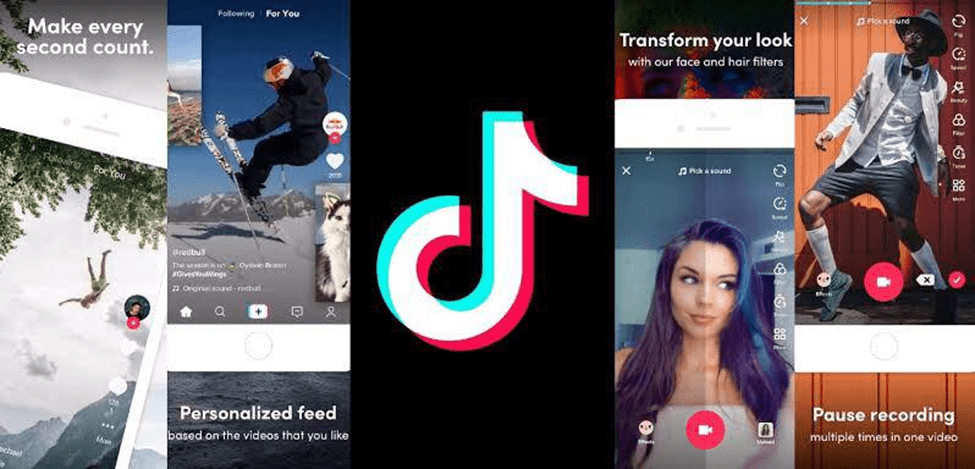
    TikTok is a popular video-focused social networking platform that allows users to record, watch, and share short-form video content (ranging from 15 seconds to three minutes) of various genres using their smartphones. 

    It is a user-friendly and creative application that generates compelling content (lip-syncing, dancing, pranking) by tapping into the imagination of its users through a variety of challenges. The app allows its users to add audio and visual effects, such as music and filters, and is known worldwide for its addictive appeal and high levels of engagement, all thanks to its unique AI system.

    TikTok

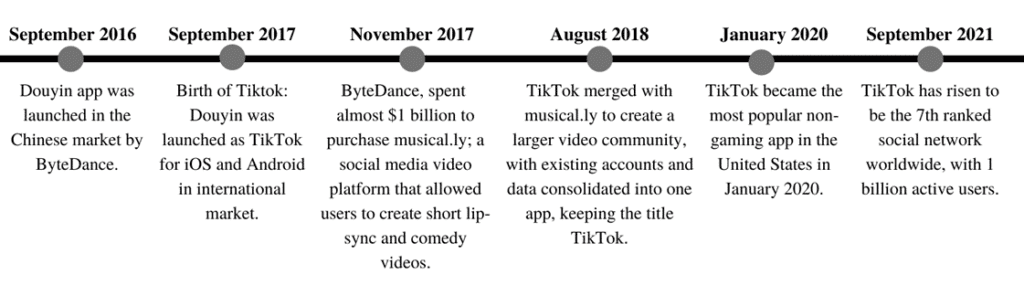
    It was founded in 2016 by the Chinese company, ByteDance with the mission to “create an endless entertainment platform where anyone can contribute.” However, the platform gained significant traction in late 2017, when the company acquired a competitor app, Musical.ly, which transferred its 200 million users to TikTok. And since then, there’s no stopping. In a short span of four years, TikTok has surpassed 3 billion downloads and reached one-third of all social media users on the planet.

    Here’s a brief timeline of Tiktok from its birth to when it joined the ranks of social media giants.

    timeline of Tiktok

    Idea Behind TikTok

    TikTok has had such massive success because its parent company Bytedance acknowledged that people, particularly Gen Z, are constantly keen to try new things. The platform created the culture of trending videos wherein famous artists frequently design original themed dances, which the users on TikTok subsequently attempt, and dances that become very popular often become dance trends in real life. Therefore, the app has completely changed how music hits are made and promoted.

    Additionally, the app catered to a large market of consumers searching for a few minutes of micro-entertainment and diversion during the day.

    However, developing a “video-based app” wasn’t altogether a new concept as both Vines and Musical.ly were established and successful video apps with a similar idea. Their success familiarised users with the concept of a video-based app, and their exit from the market served as the foundation for the success of TikTok.

    Further, the demand for teenagers to go off Facebook, Instagram, and Snapchat and have their own social space where their parents couldn’t see what they were up to fueled TikTok’s rise. Additionally, Facebook served the needs of primarily millennials and boomers who wanted to stay connected, and Instagram helped people to share their moments with their friends. But, Tiktok provided a unique proposition as it understood the repressed needs of Gen Z, who wanted to be a part of a community. In fact, in the first quarter of 2019, TikTok surpassed Facebook as the most downloaded social networking app worldwide. No wonder, regardless of being a relative newcomer to the social media scene, it is a formidable challenger in terms of user acquisition and engagement. This is because the platform has capitalised on netizens’ shrinking attention spans, particularly among teens, to gain an advantage in making viral.

    All in all, the idea behind launching TikTok was to provide an entertaining outlet for the younger generation where users could express themselves freely. 

    Who are Tiktok’s Customers?

    The platform is a social hub for Gen Z. In fact, 60% of TikTok users are Gen Zers. Thus, TikTok’s primary target audience is Gen Z, the “digital natives” who crave attention and social validation. Moreover, the users (the consumers and creators) of TikTok thrive on the platform as it allows them to exhibit their individuality and creativity.

    Besides its users, TikTok also serves the requirements of its other customer segment: the advertisers. This segment profusely uses the app as the platform provides far more effectiveness than other platforms in cultivating deep audience engagement and endorsement through user-generated content.

    What Value Does TikTok Provides To Its Users?

    TikTok stands apart from any other social media platform since it is primarily an entertainment platform rather than a lifestyle platform, where anybody can become a creator. It offers an intriguing value proposition to all its customer segments.

    For The Users

    The platform allows its users to be themselves and not pretend to be in a staged environment where individuals display an image of the life they wish they were experiencing. Therefore, TikTok is a place where users can have fun, be silly, and try new things.

    As far as the consumers are concerned, TikTok provides “Tailored entertainment content” to the consumers, where they’ll be shown the content they like. All this is done with the help of its powerful algorithms. Thus, a consumer of TikTok floats in its own content universe. Also, unlike youtube, which requires users to pick a video from a large number of options, users may view their favourite videos instantly after opening the app and scrolling down to another video, saving time and energy. The short-form nature of its videos considers how Gen Z has a shorter attention span.

    Likewise, for content creators, it provides anyone with a shot at being discovered and even famous, which couldn’t be affirmed much about youtube or Instagram, where the creator builds an audience for months or years. Also, the platform has a low barrier for entry and creativity wherein one needn’t post unique content to get famous. Simple videos which follow a given trend also have a chance to get viral. Additionally, the platform provides easy-to-use augmented reality, video editing, and music features. Its live streaming feature helps content creators to interact more directly with their audience; during these streams, the site also allows artists to auction off their products.

    Thereupon, consuming and generating content on TikTok has become a seamless activity for users due to the short time to watch and create content.

    For Advertisers

    In regard to the advertisers, running ads on TikTok can lead to a significant increase in brand engagement. Here, the advertisers may directly engage influencers that fit their target market demographic through the creator marketplace. The use of “challenges” is another TikTok feature that correlates with its high engagement. In contrast to other social media sites, where a third party manages influencer marketing agreements, this is a direct partnership.

    Providing the entertainment quotient to its consumers, social validation to the creators, and a whopping engagement rate to the advertisers, TikTok successfully fulfils its customer segment’s requirements.

    How Does Tiktok Operate?

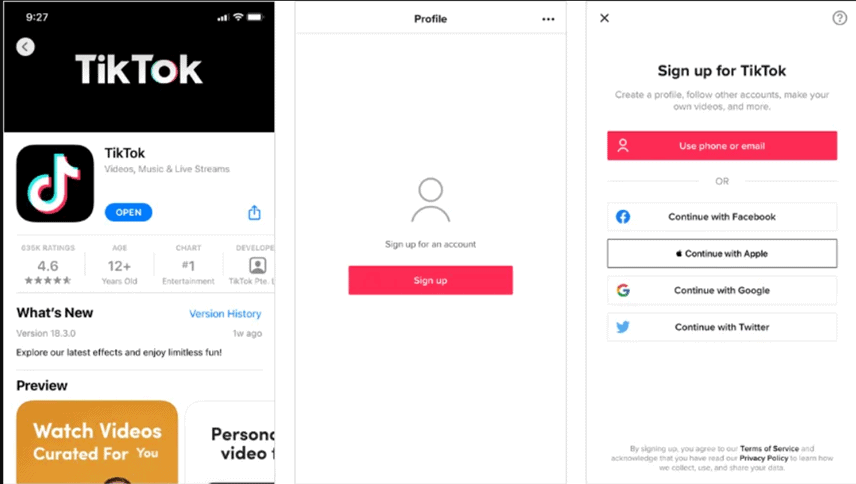
    After installing the app, a user can instantly begin exploring videos. However, to upload your own video, one must first create an account by registering with an email address, phone number, or a third-party platform such as Facebook, Instagram, or Twitter.

    How Does Tiktok Operate?

    After setting up the profile, a user can navigate through various sections of the app, which are:

    • Home: It displays two feeds that a user can switch between: Following and For you.
    • Discover: It shows a user’s videos that have been tagged with a trending hashtag.
    • Create video: This opens up the record screen, where a user can record a video.
    • Inbox: It displays all activity on a user’s videos in one place.
    • Profile: This is visible to both the user and other users.
    tiktok UI

    Here’s a rundown of the key activities that TikTok provides to its customers:

    Explore Videos

    The TikTok experience revolves around videos. Thus, a user can watch an infinite number of videos ranging from comedy, gaming, DIY, food, sports, memes, pets, and so on.

    For You section

    TikTok’s “For You” page, which functions as a homepage, is the first thing users see. Here, users can see a stream of videos tailored to their preferences, making it simple to discover new content and creators. This feed is driven by an AI recommendation system that curates a personalised feed for each user.

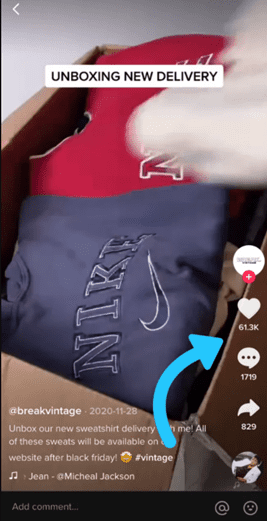
    Next to this page is the “following” page to see videos from people a user follows. Also, a series of icons can be found on the right side of every TikTok video. The first takes the user to the creator’s profile who originally uploaded it. Then, there’s a heart, which works similarly to Instagram’s hearts or likes, followed by the comments. Next in the column is a right-pointing arrow for sharing individual TikTok to other platforms. Also, under the share option of someone’s video, users can select “React,” wherein they may film their reaction while the video is playing and place their overlay video next to the original video. The last icon is the spinning record representing the song excerpt the user is playing in their TikTok.

    tiktok for you
    tiktok for you

    Discover Section (the magnifying glass icon next to the home button)

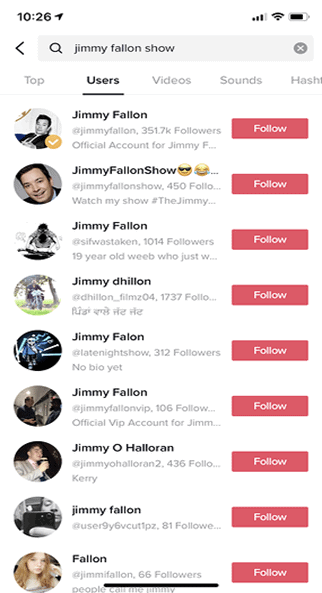
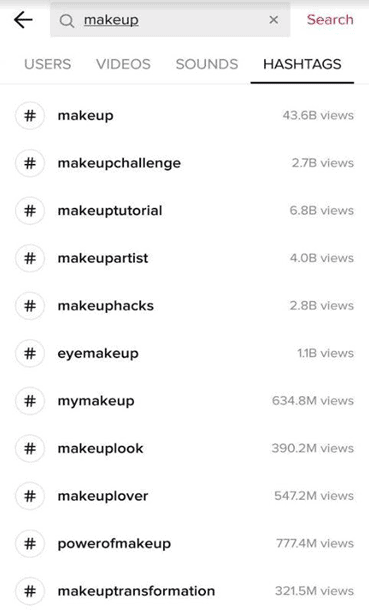
    This section allows users to search and explore the various content available in the TikTok community. This includes popular videos, sound, effects, hashtags, creators, and sponsored content.

    tiktok discover
    tiktok discover

    Create Videos

    Creators are the heart and soul of the platform. Thus, they are provided with an array of tools to customise their videos when they start recording using the plus sign at the bottom of the screen. On the screen, there are several icons such as:

    • Speed: helps to capture the video in slow motion or at fast speed.
    • Beauty: an AR filter that helps to smooth out their complexion and cover flaws.
    • Filters: this three-circled icon at the bottom of the screen allows users to change the camera’s colour filter.
    • Timer: helps to establish an auto-record countdown.
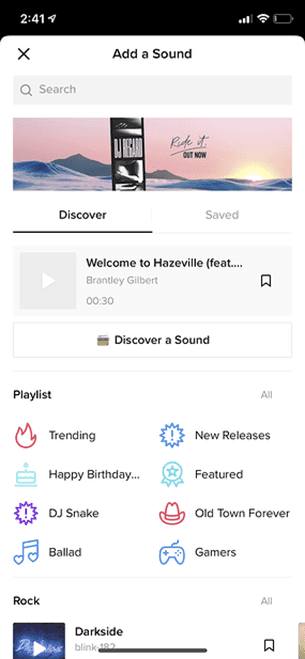
    • Sounds: available at the centre of the screen, this icon opens up the musical overlay or sound effect a user wants to use.
    tiktok videos
    tiktok videos
    tiktok videos

    Additionally, creators can also engage in –

    • Duets: This feature allows users to record a video alongside another video. It can range from genuine collabs, remixes, spoofs and so on. Usually, users use this feature to promote tracks and communicate with fans.
      tiktok duets
    • Challenges: Also known as TikTok Trends, it’s basically creating a video using a famous song or hashtag. Trending tunes and hashtags like #eyelipsface, #dontjudgemechallenge, #bottlecapchallenge , #ButHaveYouSeen and #fliptheswitch encourages users to try out new dancing techniques or come up with their own spin on a topic and thus increase their views or followers.
      tiktok challenges
    • Follow other users: In order to keep up with a wonderful creator, a user can “follow them” by clicking the icon with their profile image and a plus sign above the heart button on their video. One can also scan their TikCode to locate them, and Tikcode is beneficial for companies or individuals who wish to advertise their TikTok channel on other websites or in person. Every user has their tikcodes located on the profile page in the upper right with four squares.
      tiktok follow

    Who Are Tiktok’s Key Partners?

    TikTok has paid partnerships with a number of celebrities and popular influencers from various social media platforms. These celebrities and influencers generate viral content and talk about the platform to their respective audiences. For instance, when TikTok was first released in Japan, the platform partnered with celebrities such as Yukina Kinoshita, Kyary Pamyu Pamyu, and Naomi Watanabe to attract local audiences. Similarly, Jimmy Fallon’s interest in the app grew organically but later monetised it through a paid relationship. Jimmy Fallon began a “challenges” portion on his show in November 2018. He challenged his followers to take the #TumbleweedChallenge and share videos of themselves rolling around like a tumbleweed on TikTok. Within a week, the challenge had attracted over 8,000 entries and 10.4 million engagements.

    tiktok partners
    tiktok partners

    In addition to celebrity and influencer endorsements, TikTok has also partnered with marketers who are distinguished professionals who’d design, implement and track ad campaigns across specialities like campaign management, measurement, creative, effects, commerce and sound.

    • Campaign Management Partners: They assist advertisers in capitalising fully on the platforms ad offering with the help of cutting-edge technologies. adMixt, Borscht, Buzohero, and customer acquisition are some of the agencies under this partnership.
    • Measurement Partners: They guide brands in analysing and measuring the total impact of TikTok’s business solutions by providing premium services. Nielsen, Adjust, and AppsFlyer are some of the measurement partners.
    • Creative Partners: They have the audiovisual and technological skills to assist businesses in generating ads on a large scale. For instance, Canva, Cooler, and Airtarget are some of the prominent creative partners.
    • Effects Partners: They know everything about TikTok’s AR offering, tools and specialises in producing and developing augmented reality effects. Ignite XR, Genero and Byte are established effects partners of the platform.
    • Commerce Partners: They specialise in marketing techniques to facilitate merchants to establish and manage their businesses effectively. These include Shopify, Productsup, and Square.
    • Sound Partners: Their expertise enables brands to lean in and make an impact with sound. Some of the sound partners are The Elements Music and KARM.

    Technological Resource: A Unique AI Algorithm

    TikTok adopted Douyin’s sophisticated AI-based algorithm to develop and deliver its offering. The algorithm is designed such that it frees consumers from a plethora of video options and provides personalised recommendations that are based on a combination of factors like:

    • User Interactions such as videos users like or share, the accounts they follow, the comments they make, videos they’ve added to their favourites, videos they’ve marked as “Not Interested”, videos they’ve reported as inappropriate and the content they create.
    • Video Information which is based on the content a user searches on the Discover tab, such as Captions, Sounds, Hashtags, Effects, and Trending topics.
    • Device and Account Settings that include language preference, and device type.

    Moreover, the algorithm does not recommend duplicate content, videos a user has already seen, or videos flagged as spam and potentially disturbing content. Also, the algorithm is inclusive and does not make suggestions based on the number of followers. Thus, if a user creates outstanding content that speaks directly to the target audience, he has just as much chance as the biggest TikTok stars of landing on their For You page.

    TikTok’s Key Channels

    The Tiktok app, available for both ios and android operating systems, is the primary channel via which the company provides services to its customers. The company also has a website that enables the customers to explore the various instructions on how to go about the app as well as the various features incorporated in the app.

    How Does Tiktok Make Money?

    As per reports, TikTok generated an estimated  $1.9 billion in revenue in 2020, a 457% increase from $350 million in 2019. This was possible because of its two primary sources of revenue: advertisements and in-app purchases. So, let’s dig deeper into each of these revenue streams to understand the revenue model of TikTok.

    Tiktok Ads

    In June 2020, TikTok launched “TikTok for Business”, a new advertising option that allowed brands to promote their products on the platform through in-feed videos, brand takeovers, hashtag challenges, and branded effects.

    In-Feed Video Ads

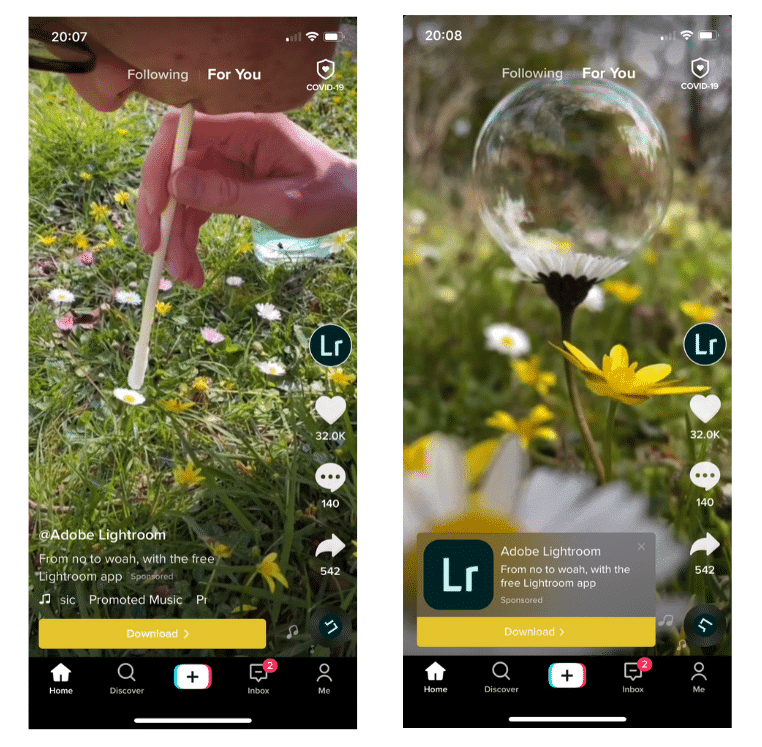
    These short-form videos get displayed between the user’s feeds as they browse through the “For You” page. The unique proposition is that these ads appear between videos and might take up the entire screen, similar to Instagram stories.

    In-Feed Video Ads

    Brand Takeover Ads

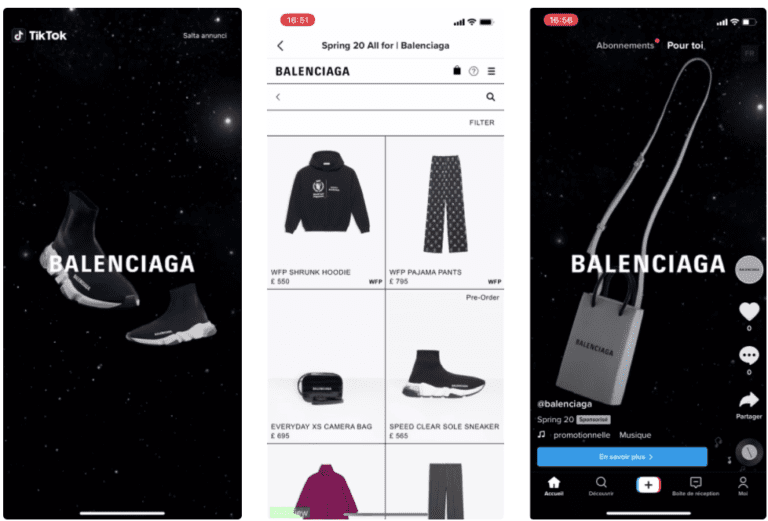
    These are the ads that get displayed right after you open your TikTok account and have the potential to bring in a lot of money for TikTok. The display of such ads can cost anything from $50,000 to $100,000. 

    Brand Takeover Ads

    Top-View Ads

    Unlike brand takeover ads, which gets displayed when a user first opens the app, top-view ads appear after the user has already started using it and can last up to 60 seconds.

    Top-View Ads

    Branded Hashtag Challenges

    The branded hashtag challenge is one of TikTok’s most lucrative revenue streams.

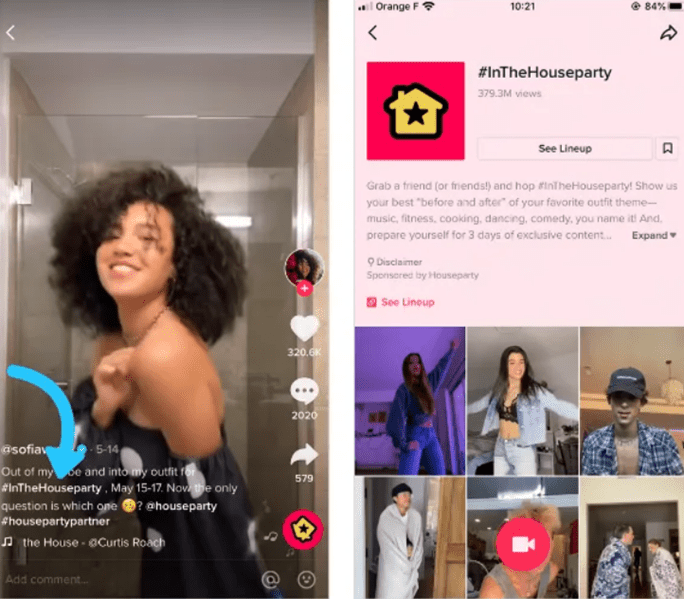
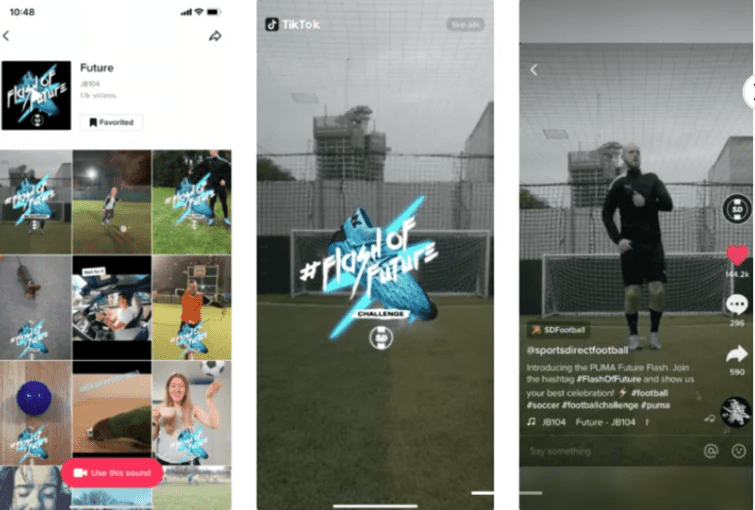
    In these ads, brands create their own hashtag challenge and pay TikTok to have their tag appear on people’s discovery pages. Now, these challenges direct the user to the challenge’s main page, where they can see the detailed instructions.

    TikTok charges a hefty amount for such an ad, which is $150,000 for the first six days of a hashtag challenge, plus an extra fee of about $100,000 – $200,000 to promote the challenge (UGC).

    Branded Hashtag Challenges

    Branded Effects

    TikTok also provides branded custom stickers, augmented-reality filters, and lenses for consumers to use in their videos. Each branded effect can last up to 10 days, giving users adequate time to connect with the brand. TikTok generates money when brands buy these ads to reach their worldwide audiences. With 2-D and 3-D Augmented reality branded lenses, Tiktok is making the platform more participatory and fun. In combination with the hashtag challenge, these lenses have the potential to make the campaign more engaging. Tiktok enables a company to create its own lenses. These can also assist the user in getting a better view of the goods before purchasing them.

    Branded Effects

    In-App Purchases

    Before Tiktok for Business was introduced, the mainstream of revenue was in-app purchases. Under this, the creators with at least 1,000 followers can earn virtual gifts from their fans by broadcasting a live video. If users like their material, they can tip them with virtual gifts; however, each gift is worth a set amount of virtual coins, which must be purchased with real money through the app. They can then send gifts to their favourite content creators with these coins. Mostly, the virtual coins range from 100 to 10,000, with prices ranging from 99 cents to $249.99.  The gifts that followers give turn into diamonds.  

    Commission From Content Creators

    When a user makes in-app purchases, a creator has the option to withdraw all tips handed to them in exchange for real money. The catch is that for every dollar withdrawn from the app, TikTok charges a 50% commission and then refunds the remaining to the TikToker’s account. Usually, users can withdraw money from their account once and when they achieve $100 with a maximum limit of $1,000 on daily withdrawal.

    Thus, TikTok makes money on the front end when users buy TikTok Coins, and on the back end when a content creator requests a withdrawal.

    Tiktok Market Valuation and Investors

    In 2018, SoftBank Group Corp. spearheaded a $3 billion fundraising round for TikTok in 2018, which included KKR & Co. and General Atlantic. During the fundraising round, ByteDance’s valuation increased to $75 billion.

    As per the latest reports, In March 2020, Tiger Global Management became the most recent venture capital company to invest in TikTok. According to the Financial Times, ByteDance now has an implied valuation of $90 billion to $100 billion after placing its shares for sale on the aftermarket.

    Future of Tiktok

    Since its launch, the growth of TikTok has been rapid. In fact, because of its quick popularity, Facebook introduced its own short-video service Lasso in the United States in November 2018. However, just 70,000 US users downloaded Lasso within four months of its launch, compared to nearly 40 million for TikTok.

    According to projections issued by Statista, in May 2021, the number of TikTok users in the UK will reach around 15 million by 2025. The app’s popularity is likely to continue to rise, with 16.8 million users projected by 2024. Also, In May 2021, Bloomberg reported that TikTok has begun working with merchants in areas, including the UK, on how they can sell products directly to millions of users within the app.

    Now, even though the future of TikTok seems bright, the platform has always been controversial, from political propaganda to conspiracy theories, lawsuits, to several bans. As a matter of fact, the platform lost millions of dollars during some lawsuits and was outlawed in others. Because most of its data centres are in China, worries have grown, and many countries like India have banned the app. TikTok’s CEO, Zhang Yiming, seeks to reassure governments that the app is secure and has tried everything to clean their name from such allegations. For instance, they opened a Transparency Centre for Moderation and Data Practices, wherein experts can examine their moderation policies.

    Despite the platform being under investigation and facing threats, various top firms are willing to acquire its US operations. One is a collaboration between Microsoft and Walmart, while the other is from Oracle and might include a group of investors. This is because, despite the various buzz, the platform plans to pursue a turnaround and diversification strategy to overcome its current weaknesses and explore more slowly while preserving its existing user base.

    Go On, Tell Us What You Think!

    Did we miss something? Come on! Tell us what you think of this article on the TikTok business model in the comment section.

  • Where & How To Find A Technical Cofounder – A Guide

    Where & How To Find A Technical Cofounder – A Guide

    So you’ve come up with a brilliant idea for a startup and decided to start working on it. One problem, though: you’re not from a technical background and don’t know how to code. How do you go about finding a technical cofounder to help you make your vision a reality? More importantly, where do you find such a person?

    Here’s a guide to help you.

    What Is a Technical Cofounder?

    A technical cofounder is a person who can take an idea that you have in mind and bring it to life with the technical skills you lack.

    They are an expert who understands the inner workings of your business and has the skills, experience and resources necessary to implement your vision. 

    A technical cofounder can be an experienced developer, designer or marketer depending upon the startup’s needs. Their technical expertise makes them great for the following roles:

    • They will guide you and teach you how to design, build and launch your idea into the market.
    • They will handle any of the coding or web development tasks you don’t have time to do.
    • They will work with you on product strategy.
    •  They will help you solve problems and develop solutions to problems you may face.

    Why Is It Hard To Find A Technical Cofounder?

    It’s important to find a technical cofounder who shares your entrepreneurial spirit and your passion for your idea, and your ability to see the product through to completion. A great technical cofounder can help you make your idea happen and be your business partner, mentor, coach or advisor.

    But it isn’t always easy to find one. It can be challenging to find a technical cofounder as they tend to be in demand. Not only do you need someone with the technical expertise, but you also need them to have an entrepreneurial mindset. 

    Remember, you’re not hiring a startup employee but a partner to work with. They should have the skills needed to build the startup from scratch and the know-how to identify and understand opportunities in new industries. 

    But most importantly, the person should be someone you can trust and work with for an extended period of time. And this trust should be mutual.

    But people are hesitant to entrust a startup idea formed by someone who’s not a developer himself. It’s risky for them to take on the role of technical cofounder. This is because many startups fail when a team is not properly put together, and there is no clear vision for how to move forward.

    So before you even go out to look for a technical cofounder, make sure you have a clear understanding of your business model, your product concept, as well as your plan for scaling up and how you will handle growth. If you can do this, then you’re ready to start your hunt for a technical cofounder. If not, stop and rethink.

    Where Can You Find A Technical Cofounder?

    There’s no one pool where you can choose your cofounder from. It’s different from hiring a CTO

    Hiring a CTO is hiring an employee who knows how to code. With a technical cofounder, you need to hire someone who can bring your idea to life. You should first identify your skills, what you do best and where you lack. Make a list of your skills and then use it as a guide to look for a technical cofounder.

    It’s a good idea to make this list before you start your search, as this will make the process a lot easier.

    Your Existing Network

    Start by looking within your network. Talk to friends, family and business partners to see if they know of anyone that fits the bill. They may have a great friend or business partner in mind.

    It’s also a good idea to create a job description of the type of person you are looking for. For example, consider it as a technical hiring gig. Write down what all do you need so you can have a clearer idea of what you are looking for. It will also help you gauge if they fit the role. 

    Online Networking

    Offline and online networking can be very powerful in finding the right cofounder. Get out there, talk to people, and make the most of your connections. If you don’t have a lot of business or social capital, it may be best to build your network before making any headway. It will take some time to get things rolling with online networking and will need to start slowly.

    Start by building a network of mentors and investors. These are people who you know and trust. If they trust you, then they’ll help you in your business journey. You can also join communities on Facebook, LinkedIn or Twitter. Start by following people who are doing something you want to do or have done already. Connecting with other entrepreneurs can really pay off. You can learn a lot from them. LinkedIn is the most popular platform for business networking. 

    There are several tools that may help you identify and find new contacts. These include CrowdTangle, Buzzsumo, and LinkedIn Premium. These can also help you connect with potential leads, including mentors and investors. 

    You can even automate this process by running a LinkedIn drip campaign or directly emailing your leads.

    Offline Networking

    Startup events, conferences and meetups are another great way to network. Startup events like StartUp Grind, Founder Meetups, TechCocktail, Startup Weekend, Demo Day, Pitch Nights, etc., are great opportunities to meet entrepreneurs.

    Startup events and conferences are a great way to build connections. Networking is important because it is how you get in touch with people who can potentially become your cofounder. It’s also a great way to learn what others do and what their goals and aspirations are. You can also learn a lot about what the startup community is all about by attending events.

    Look at the events and conferences in your industry. If ones in your area are a good fit, make it a point to go.

    You may also consider joining a local chapter of a startup networking group. Local groups can be a great place to meet people with similar interests.

    You can find such networking events on  Meetup.com and Facebook events.

    Online Platforms

    If you think you’d find a platform dedicated to founder matchmaking, you were probably right. 

    • Y Combinator’s Cofounder Matching is one such platform where you can create a free profile, write about yourself and your preferences, and search for technical cofounders.  
    • Another platform is CoFoundersLab. You can sign up for an account for free. The best part is narrowing your search using filters, skills, and location.

    Besides this, there are other good platforms like Starthawk, Github, and Angellist.

    How to Evaluate Your Tech Cofounders

    The truth is that the role of a technical cofounder is much broader than just coding. It’s about understanding the business and seeing where there are gaps in what you have on paper. It requires a person who knows how to work with others, has a passion for the idea, is willing to work hard and knows how to be creative.

    Here’s how you can evaluate and identify the perfect partner for your startup: 

    Identify The Right Type Of Person

    You should always clearly understand the kind of person you want to partner with as your technical cofounder. You may have already done a little research on some of the common characteristics of tech cofounders. If not, there are a few things to consider:

    • Technical ability – When it comes to technical skills, there is no doubt that you’ll need an engineer to come up with the product. Your technical cofounder should have deep knowledge of programming languages like Java, Ruby, Objective C and Swift, depending upon what’s required. Someone who has this skill can really help you create something that works.
    • Experience – While it’s true that an inexperienced person can learn the skills they need to build a product, an experienced person will usually know what needs to be done and how to get there. Look for at least some experience with the technologies that you’re using to build your product.
    • Creativity – A good tech cofounder will help you identify what problems you need to solve and how you can use different techniques to get there. They are good at identifying new ways to achieve goals and think out of the box.
    • Communication Skills – Communicating is a critical part of being a good tech cofounder. You’ll be able to work closely with them on everything from the design to the marketing. You’ll also need someone who can communicate their thoughts effectively.
    • Team skills – The two founders must have the same approach to teamwork. You need someone who can see the bigger picture and has a team mindset. You should also find someone who is willing to go to bat for the project, even if it means not getting the credit.
    • Leadership skills – While the role of a technical cofounder isn’t necessarily the startup leader, you should find someone willing to take charge and lead by example. They should be good at delegating, inspiring, and guiding others.

    The next step is to put all these characteristics into action and start looking for people you feel would make good partners.

    Evaluate The Potential Of The Person

    Once you’ve identified a person with the right qualities, it’s time to assess whether they’re worth the project.

    There are a few ways you can do this:

    Ask questions

    You need to learn more about what kind of person you’re talking to and how they can help you with your idea. Here are some questions to assess:

    Person personality:

    • Why do you want to build a startup?
    • What motivates you?
    • What are your personal and professional goals
    • Will you consider this project as your primary activity or a side project?
    • What is your expected time commitment?

    Personal Priorities: 

    • What are your cash needs in the short run?
    • Would you be able to work without getting paid?
    • Which location suits you best?
    • What is your ideal working environment?
    • Will you be willing to travel for the project? If yes, how often?
    • How much time would you like to spend working on the startup per day?
    • Have you ever failed at anything? If yes, how did you handle it?
    • Success to you is?

    Professional Experience:

    • How many years of experience do you have?
    • Have you built something similar? 
    • On a scale of 1-10, how skilled are you at …?
    • Can you show examples of projects you’ve worked on?

    Working Styles and Culture:

    • What values do you look for in employees?
    • How much equity do you think should we keep for our employees?
    • If you were to come up with 3-5 words to describe an ideal workplace culture, what would they be?
    • Do you believe the people who work for you are your friends?
    • Do you prefer to work in isolation or in a team environment?
    • How do you deal with a conflict? Suppose…

    There will be several other questions relating to the business and its needs. Meet often, discuss stuff and make sure to get answers to everything that’s needed. Ask everything needed but don’t make it sound like an interview because that will just give off the wrong impression.

    Start With A Smaller Or Different Project

    If the person seems like a good fit, take them out for a test run. Start working with them on a smaller project (which could complement the main project or could be a different project altogether) and find out how they work and interact. This should help you understand if you can depend on them.

    Evaluate Your Compatibility

    You can’t find out everything about the person before you decide to partner with them. What’s most important is that you find the positives and negatives of working with them. 

    For example: If they are bad at something, do you want to learn about it? What are they really good at? Would you trust them? Why? Do you like working with them?

    Find where you complement each other and what’s remaining that can be worked out. Be clear about the expectations When you first talk to the person, be clear about the expectations.

    But make sure you’re here for a technical cofounder. Don’t expect great business or marketing skills. It’s a different kind of role than someone who just likes building apps.

    Negotiate And Evaluate The Offer

    If everything seems to be going well and you both seem to understand one another well, it’s time to negotiate and evaluate the offer. Ask yourself questions like:

    • What value does the tech cofounder provide to the startup?
    • What should be their equity based on the value they provide?

    With these answers in mind, come up with an offer for your tech cofounder. Negotiate the terms (included salary, equity percentage, etc.). Offer them to come up with their terms as well. This way, you can both know what you agree to.

    Sign a contract (founder’s agreement) and send it over when you have everything agreed upon.

    Bottom Line?

    A startup is a lot of work, and it takes a good team to push it forward.

    The key is to hire people you trust and feel comfortable working with. People who share the same values, have the same goals and want to see the project succeed.

    Finding a good tech cofounder can be tough, but it’s worth it in the end. Go with the person that you know is trustworthy, hardworking and passionate about what they do.

    Always remember that it’s a two-way street. You’re not just hiring someone; you’re also going to be working with them for a long time. The last thing you want to do is hire someone and not be able to trust them and get on the same page.

    Go On, Tell Us What You Think!

    Did we miss something? Come on! Tell us what you think of this article on how and where to find a technical cofounder in the comment section.

  • What Is Human Resource Management (HRM)?

    What Is Human Resource Management (HRM)?

    Human resources management (HRM) is a field that many people have heard about, but many people don’t really understand what it entails. It is the practice of getting the right people to do the right things to accomplish a certain goal. When done correctly, HRM allows companies to grow their businesses and retain top talent. However, when done poorly, HRM can lead to decreased employee productivity and turnover.

    But what is human resource management exactly, and what does it entail? Here’s a guide.

    What Is Human Resource Management?

    Human resource management (HRM) is the managerial function concerned with effective and efficient workforce management to accomplish an organisation’s strategic objectives or achieve competitive advantages.

    It is a comprehensive and strategic approach concerned with managing an organisation’s most important asset – its people.

    In simple terms, HRM is the management of an organisation’s human capital. Human capital is the aggregate of the people that work for an organisation. These employees are considered one of the firm’s most valuable resources because the workforce is what makes the organisation run.

    The Importance Of Human Resource Management

    According to research, 73% of employers believe that a healthy corporate culture gives the firm a competitive edge.

    HRM is an essential management function for any organisation as it plays a pivotal role in ensuring that the organisation has a skilled, motivated, productive and loyal workforce. 

    • More productivity: With an effective HRM strategy, companies can significantly improve employee engagement and productivity and thereby help them achieve their strategic objectives. However, the lack of a clear and well-planned HRM strategy is often the cause of employee dissatisfaction and turnover. 
    • Better retention: Human resource management helps companies retain their current workforce by providing competitive compensation and benefits packages. A study found that employees who were satisfied with their jobs were less likely to resign. This shows the importance of HRM for businesses.
    • Reduce costs and expenses: An effective HRM system ensures that employees are well trained and supported to produce the maximum output with the minimum number of resources. This reduces the cost of training and employee turnover, which results in reduced company costs.
    • Improve performance: With a well-managed HRM system, an organisation is able to identify the skills and capabilities of its employees and offer training programs accordingly. This improves the overall performance of employees and helps to increase the quality of the organisation’s products and services.
    • Increase profitability: A well-designed HRM strategy helps the organisation keep track of and manage its human assets, resulting in higher productivity and a better work environment. This also improves employee morale and retention, which leads to higher customer satisfaction and ultimately increases company profits.

    In addition, it also improves the company’s reputation. HRM is the backbone of any organisation as it is essential for maintaining a productive workforce and a competitive business. Without a good HRM system, companies can struggle to retain their top talent and improve the workplace environment. 

    Nature Of Human Resource Management

    HRM is a managerial function relating to recruiting, selecting, training, and developing the organisation’s people. It is concerned with managing people in organisations and aims to maximise employees’ productivity.

    Its nature revolves around the following features:

    • HRM involves the application of management functions and principles: Since HRM is the management of people in organisations, it uses the same management functions of planning, organising, leading, controlling and decision making.
    • HRM is a pervasive function: HRM is a pervasive function as all levels of management practise it in an organisation.
    • It is an inherent part of management: Human resource management isn’t limited to the personnel department. All organisation managers perform this function.
    • It is people-centric: Human resource management is solely concerned with the organisation’s people and their development.
    • HRM is a strategic function: It is concerned with an organisation’s future to make sure that they are ready to meet environmental challenges.
    • Result-oriented: HRM is result-oriented to ensure that the employees work to their full potential and improve the organisation’s performance.
    • Continuous process: HRM is a continuous process, which means that it involves constant adjustments and improvements according to the changes in the environment, employee needs, and business conditions.

    The Purpose Of Human Resource Management

    Human resource management is a managerial function that tries to match an organisation’s needs to its employees’ skills and abilities while ensuring that all employees are motivated, satisfied, and productive. Its purpose is to achieve the organisation’s goals through efficient and effective management of human capital by establishing the organisation’s policies and procedures and ensuring that they are adhered to. 

    There are three main goals of HRM:

    1. To Attract Talented Employees: This is the most important purpose of HRM. It involves identifying and attracting talented employees, offering attractive employment packages, and motivating them to join the organisation. This is done by the recruitment process, which includes recruiting new employees through different channels.
    2. To Retain Talented Employees: This is another important purpose of HRM. It involves providing incentives for employees to work hard so that they stay with the organisation and remain productive. It also helps to retain top talent by providing them with training programs and benefits.
    3. To Develop Employees’ Skills and Abilities: This is the third important purpose of HRM. This includes performance appraisal, promotion and recognition of employees. It involves improving the knowledge, skills, and behaviours of employees. In addition to that, it also helps improve organisational effectiveness by increasing the quality and productivity of the organisation. 
    4. To Ensure the Proper Operation of the Firm’s Human Resource: It ensures that the company meets all its obligations as per its internal and external policies and procedures. It is concerned with the proper operation of the firm’s human resources.

    The Functions Of Human Resource Management

    The human resource management functions can be broadly classified into three types. These are: 

    • Managerial Functions,
    • Operative Functions, 
    • Advisory Functions.

    Managerial Functions

    Managerial functions refer to the functions performed by the managers of an organisation to control, monitor and manage all aspects of human resource management, including planning, organising, directing, and controlling. They are also responsible for implementing the company’s policies on personnel and organisational development. Managerial Functions involve the following activities:

    • Planning: It involves planning and determining the number and types of employees and workforce needed to meet the organisation’s needs. 
    • Organising: Allocating employees to the different job positions based on their skills and abilities. Also allocating resources to different departments of the organisation based on their needs. This includes making decisions about the location of new and existing facilities, as well as their size and the number of people needed to operate them. 
    • Directing: Properly giving directions to the employees and motivating them to contribute their best to the organisation.
    • Coordinating: This refers to coordinating and monitoring the employees’ work performance and activities.
    • Controlling: This involves checking and reviewing the work done by the employees to ensure that it is accurate, efficient and meets the company’s goals and objectives. 

    Operative Functions

    Operative functions are those human resource management functions directly linked to the actual tasks and responsibilities of the human resource department. They involve the following activities:

    • Recruitment: It involves identifying the skills and abilities needed for a particular job position and recruiting and hiring qualified and suitable candidates for the job positions.
    • Selection: This refers to selecting the most appropriate candidate based on their skills and abilities for a particular job position.
    • Job analysis and design: It involves determining the skills, abilities and knowledge required for a particular job by analysing the job’s functions and duties.
    • Performance appraisal: It refers to evaluating employees’ performance through their formal and informal reviews with their managers.
    • Salary administration: It determines the remuneration of employees based on factors such as qualifications, tenure, position, performance, etc.
    • Training and development: It develops employees’ skills and abilities in different training programs to ensure they are effective and productive in their job positions.
    • Compensation management: It involves planning the monetary benefits to be given to an employee for performing their job.
    • Welfare programs: This involves providing necessary facilities to employees to enhance their performance at work. Examples include medical benefits, child care services, etc

    Advisory Functions

    The advisory functions of human resource management are those functions that provide recommendations and guidance to the organisation on all aspects of human resources. They involve advisory functions in policy formulation and analysis. It also involves suggesting corrective measures when necessary concerning any problems in training, safety, health, morale, etc.

    Human Resource Management Challenges

    Human resource management isn’t an easy function. It is quite challenging with a lot of responsibilities and duties. The HR challenges faced include:

    • Talent acquisition: It involves recruiting, training and developing the people with needed skills to perform particular job positions. However, it can be quite challenging in today’s market, where there is high demand for skilled labour.
    • Change management: Organisations must be adaptable and responsive to changes in the business environment. This requires the ability to manage change effectively, which is a challenge for many organisations.
    • Employee relations: It is necessary to have good employee relations to maintain a positive work environment. However, it can be difficult to deal with various employee issues and conflicts, given the diverse nature of the workforce.
    • Legal and regulatory constraints: It is necessary to abide by the government’s rules and regulations. However, it can be difficult to keep up with changing legislation.
    • Talent retention: It can be difficult to retain talented employees in an organisation, especially when they are offered better job opportunities.
    • Leadership development: Managers must be effective leaders who are able to motivate their team members. However, this can be challenging as not all managers are good leaders.
    • International HRM: Organisations must understand human resource management practices and methods across different nations. However, it can be challenging given the diversity of cultures.
    • External environmental challenges: External environmental challenges such as economic recession, changing technology, etc., can significantly impact organisations and their human resources.

    With many industries undergoing significant changes in the coming years, the HR industry will have to evolve to keep up with the changing needs and expectations of their customers.

    HR tech the use of technology in human resources has been increasing in recent years, as organisations are looking for ways to automate their processes and make them more efficient. There is a growing trend towards the use of HR-tech tools such as Applicant Tracking Systems (ATS), payroll management, Human Resource Information Systems (HRIS), etc.

    Consumerisation of HR – as more and more employees are becoming educated about their benefits and entitlements, they demand more from companies and expect a say in decisions that concern them. The trend for the consumerisation of human resources is on the rise where employees will have to be kept happy and satisfied with open communication and transparency.

    Data-driven HR – data analytics is becoming an increasingly important tool in human resources, as organisations seek to gain insights into employee behaviour and trends. By using data analytics, HR professionals can make better decisions about hiring, training, and retention.

    Outsourcing – another trend in HR is the increasing use of outsourcing, which can help to reduce costs and improve efficiency. Many organisations are now outsourcing functions such as payroll, recruitment, training etc.

    Remote teams – with the use of modern technology, organisations are increasingly opting to establish virtual teams. This allows people in different locations to communicate with each other more effectively.

    These are just some trends that we will see becoming increasingly popular in the HR industry in the coming years.

    Go On, Tell Us What You Think!

    Did we miss something? Come on! Tell us what you think of this article on human resource management in the comments section.
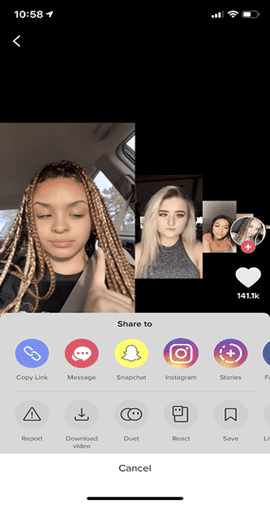
  • What Is Bitcoin? How Does It Work?

    What Is Bitcoin? How Does It Work?

    From 10 cents in 2010 to $66,000 in October 2021, Bitcoin has come a long way. It has seen such an exponential growth over the one-decade period that everyone has thought of investing in it at least once.

    The situation is such that the rich are putting millions into it and the world governments are trying to regulate it. However, most of us aren’t clear about what bitcoin really is.

    Is it a currency or an asset? How does it work? Who launched Bitcoin? How did it see such tremendous growth in only a decade? Is Bitcoin a scam?

    This article answers many of your questions about Bitcoin. Read on to learn. 

    What is Bitcoin?

    Bitcoin is a cryptographically secured decentralised digital currency that can be sent directly from user to user on its peer-to-peer (P2P) network. It is created, distributed, traded, and stored on the blockchain.  

    Launched in 2009 by a mysterious person or group named Satoshi Nakamoto, Bitcoin is not a physical coin. It is a digital currency whose existence is a public ledger of transactions. In other words, Bitcoin is a technology-powered token that functions as money.

    Since this concept is completely new, it is mandatory to understand a few terms associated with Bitcoin.

    • Decentralisation: Decentralisation refers to the process by which the power over the functioning of an entity is taken away from its authoritative group and delegated among a good majority of its stakeholders.
      When we say that Bitcoin is a decentralised currency, we mean that it is not controlled by the government or the network of central banks worldwide; it is a technology that runs on codes and algorithms that nobody can influence.
      Everyone can look into Bitcoin’s ledger of transactions to see how many coins are in circulation and which ID owns how much. Its records are public, unlike that of a bank. Moreover, every new entry is verified by a process called mining that allows hundreds of individuals to check its validity.
    • Bitcoin Public ledger: Bitcoin public ledger is a record of everything going on in its blockchain; that is, it records all the details of Bitcoin mining and transactions. The ledger keeps a pseudonymous account of its participants, the transactions executed among them, and their respective Bitcoin holdings. 
    • Peer-to-Peer (P2P): Bitcoin transactions do not have to go through a central authority like a network of banks (unlike the mainstream cashless transactions). They can directly be transferred from one person to another. Such a transaction is called a peer-to-peer one.
    • Digital coin: Bitcoin is not actually a physical coin but a virtual currency that exists as a set of computer codes. In other words, it is a piece of software that functions as money. So, when someone owns a Bitcoin, they don’t own a coin but the access to a specific address in Bitcoin’s ledger and the right to receive and send money through it.
    • Pseudonymity: Bitcoin ledger stores each participant’s identity as a long computer-generated code of letters and numbers. So, although anyone can look at the ledger, no one knows how many bitcoins belong to whom. Thus, the currency is said to be ‘pseudonymous’.
      Bitcoin uses cryptography to remain pseudonymous. That is, you might see how much money is transacted between what addresses, but you won’t know exactly who owns them.
    • Cryptographically-secured: Bitcoin blockchain uses cryptography to remain pseudonymous and hack-resistant.
      The long computer-generated code in the ledger (also known as the public key) is generated using cryptography. Cryptography also facilitates decentralisation; so, if someone wants to hack the blockchain, they need to hack a huge network of computers on a cryptographically secured number. This requires so much time, energy, and effort that this is almost impossible.

    Therefore, Bitcoin is a network with its own currency. When you buy bitcoin, you secure a place in the network. Now, you can make transactions worth even 0.01 bitcoin with anyone in the network. You can also provide them with a service and earn more bitcoins.

    However, the catch is that you can also exchange these bitcoins for real-world money any day!

    There are over 18 million bitcoins in circulation right now (out of a total of 21 million). They are being traded and transacted on a regular basis. Each time a new transaction wants to get into the ledger, Bitcoin miners verify it. The transaction, if approved, is recorded in the public ledger permanently; it can never be altered or removed. Also, the process of mining is further releasing more bitcoins into the network.

    This security, along with decentralisation and other unique features, is adding to the worth of Bitcoin. Thus, it is growing exponentially and is by far the largest cryptocurrency in the world.

    The Idea Behind Bitcoin

    Back in 2008, money was fully centralised. Central banks and governments produced currency notes and coins and regulated their flow. This currency didn’t have any intrinsic value; it functioned only because the government backed it with a promise to pay the bearer the amount printed on a given piece of note or coin.

    United States one-hundred-dollar bill

    Thus, people trusted the government, and, in return, the government oversaw everything and ensured people’s faith. This system was efficient, but it had its own flaws.

    • Control: In the fiat money framework, a small segment of people controls the flow of monetary value worldwide. As such, they had immense power over the others. Banks and governments could control the value of money and even declare it invalid overnight.
    • Corruption: When a small segment of the population possesses most of the power, corruption comes into play; it is easier to bribe a few really powerful people than everyone.This is why we heard stories of bank employees and high officials forging millions for years without anyone reporting it.
    • Mismanagement: Incompetent central authorities were another bane of the fiat money system. Inefficient governments and banks mismanaged the flow of value worldwide, causing several problems to the general public. For instance, incompetent banks might freeze your accounts or lead to transactional delays; also, their servers might just keep on crashing.

    As such, there was a pressing need for a system of currency that is safe, trustable, and not centralised. What better way to do this than to go digital?

    Since almost everyone is connected to the internet these days and the number is only rising, digital currency sounded the best way to give power to people.

    However, then arose the problem of double-spending.

    Double spending means using the same unit of money for two different transactions. For instance, you might buy a pair of trousers for $10, steal them when the shopkeeper is not looking, and then use the same $10 bill to purchase a shirt. 

    It is difficult to do this with physical money since getting caught while ‘stealing’ is high. However, a digital file can be easily counterfeited or hacked. This is why the idea of the digital coin has seen slow developments in the past many decades. 

    In such a situation, Bitcoin started as the world’s first decentralised virtual currency that solved all these problems through the method of cryptography and caused a massive revolution.

    • Bitcoin is decentralised. Anyone on the network can mine bitcoins (whereas only the government can print notes) or look into its ledger. So, the power is in the hands of the whole of its network, instead of a select few. Here, you aren’t trusting a group of people who might turn out to be inefficient or corrupt but a secure algorithm.
    • Bitcoin cannot be counterfeited or hacked because it is built on the new Blockchain technology.
    • Bitcoin helps avoid the problem of double-spending because it is difficult to tamper with its ledger. One needs a huge amount of time, effort, and energy to do this.

    How Does Bitcoin Work?

    Now that you understand the idea behind Bitcoin, you must know how this virtual currency decentralises the monetary system and remains safe at the same time.

    This is because it is built on a completely new technology, called the blockchain, that utilises cryptography to remain safe from hackers and malware.

    Blockchain

    Blockchain, as the name suggests, is a framework of blocks interconnected to form long chains. These blocks store information like contracts, transactions, bank loan statements, emails, partnership agreements, etc. Thus, a Blockchain is a publicly distributed ledger that stores details of deals between its participants.

    The Bitcoin blockchain stores information about currency transactions. It keeps a pseudonymous record of its participants’ identities, transactions among them, and their Bitcoin holdings. This database can’t be copied, altered, or deleted; it can only be distributed.

    Also, instead of being managed by a central administrator, the ledger is controlled by its users. Anyone on the internet can have a look at the ledger at any point in time. Every new information block is verified by other participants in the network by the process of mining.

    A miner invests time, money and efforts into validating a block and receives payment of their services. The verified transaction is then recorded in the Blockchain database, and every participant computer (called a node) receives a copy.

    This information is recorded permanently. It cannot be changed or deleted because blockchains are designed to retain the logs of all the transactions forever.

    Another main feature of blockchain is that all the blocks are linked chronologically such that a change in one block alters all the connected blocks. This is because every block has a reference number called a hash.

    hash

    Hash is a computer-generated code of letters and numbers that represents a block in the blockchain. If the information contained in a block is changed even slightly, the network generates a new hash and, hence, a new block. Also, each block carries two hashes: its own and that of the preceding block. So, when one block’s hash is altered, it changes the hashes of all the proceeding blocks, thus, generating a new chain.

    Since several thousand people have a copy of the original chain, the new one will be out of place. Thus, it will be discarded soon, restoring the blockchain back to normal.

    Therefore, any information stored on the blockchain cannot be altered. Thus, it’s secure and hack-proof despite being in the hands of millions of people.

    Mining

    Bitcoin mining involves verifying and validating the addition of a new block into its Blockchain network. This process involves the release of more bitcoins into circulation and, hence, is called mining.

    The people who indulge in mining are known as miners. They invest time, computer power, and lots of effort into verifying a new transaction and get paid in return.

    Their remuneration takes place in two forms:

    • Transaction fees: Each time a transaction is recorded in the Bitcoin system, a small portion of it goes to the miner.
    • New bitcoins: Each time a new block transaction is verified, a new block is added to the chain. This releases a few bitcoins from the reserves into circulation. These bitcoins go to the miners as their remuneration.

    After every 210,000 blocks are mined, the reward in each release is cut in half. This is called ‘halving’. In 2010, 25 bitcoins were released with each mined block. This number reduced to 6.25 in 2020 after the third halving. By 2140, all the 21 million bitcoins will be mined and into circulation. Then, the miners would have to rely on transactional fees only.

    With the value of bitcoins soaring high, mining seems to be a lucrative profession. However, it is limited only to experts because of two reasons.

    • It requires a lot of computer power and time: Bitcoin’s algorithm is designed to make the mining process artificially time-consuming. It runs a complex cryptographic program that demands time and proportionally high computing power. So, people are discouraged from spamming the network with spoofs and false transactions.
      This also discourages hacking. Even if the information is changed 20,000 blocks back, it will generate a chain reaction that will take so much time to execute that someone would point out the mishap by then. So, unless one owns at least 51% of a blockchain, they can’t hack it.
    • It requires proof of work: Miners have to solve complex mathematical problems before securing permission to mind. The Bitcoin network regulates the difficulty level in such a way that the network grows by only a 1MB transaction every ten minutes. In this way, the whole system has enough time to come to a consensus regarding the transaction.

    Bitcoin Transactions

    Only a small percentage of Bitcoin network mines; the rest buy and sell it through cryptocurrency exchanges or purchase it to buy cryptoassets.

    • Wallet: Wallets are software programs that use cryptography to access the Bitcoin blockchain. In other words, Bitcoin wallets let you buy bitcoins, access your holdings, and send them to other participants in the network. One can compare them to physical wallets that let you hold the regular fiat currency until you need it to make transactions.
    • Keys: A computer-generated code is mentioned on the blockchain database instead of a participant’s personal information to retain anonymity. This code functions as the participant’s username and is called the public key. It denotes a wallet’s address.
      Anyone over the internet can view this address. However, a wallet also has an associated private key that is only known to its user. This key functions like a password and lets the user access their wallet. Both these keys are generated by the computer using cryptography.

    There are different types of wallets depending on how they keep their private keys secure.

    • Hot wallet: Hot wallets are easy-to-use wallets that are connected to the internet. They store most of your details (including the passwords and PINs) online and therefore are not well-secured. However, since they eliminate the need to switch from offline to online or connect any third device, they are best for the ones who use bitcoins to buy things. Three types are hot wallets are:
      • Mobile wallets: They can be installed on Android or iOS devices and are best for retail transactions.
      • Desktop wallets: As the name suggests, these are installed on desktop devices.
      • Web wallets: Web wallet services are completely online in nature. They can be accessed from any device at any time (just like one’s email).
    • Cold wallet: Cold wallets are not connected to the internet. Here, all the user’s details are stored offline, either on a device or on a piece of paper. While cold wallets are much more secure than hot wallets, they aren’t convenient for transactions. Thus, they are mostly used to store large amounts of Bitcoin holdings. There are two types of cold wallets:
      • Paper wallet: This is the oldest kind of wallet. Here, a person writes their details (keys) on a piece of paper and keep it secured.
      • Hardware wallet: A hardware wallet is a USB-resembling device that stores the wallet details of a user. The device has to be plugged in to access the wallet.

    Why Does Bitcoin Have Value?

    Bitcoin was launched as the world’s first virtual currency. At the time of its launch, it had no value. One bitcoin sold for around 10 cents for the most part of 2010, that is, more than a year after its launch.

    Then, as people started to realise its significance as the world’s first digital currency, its demand grew.

    Why Does Bitcoin Have Value?
    Source: CoinMarketCap

    Several of its transactional use cases came into play, further increasing the currency’s value. It started to seem that Bitcoin may retain this value in the long run and act as a trustworthy store of value. Also, it’s safe and divisible. When we divide a bitcoin down to eight decimal places, we get a unit of the cryptocurrency called Satoshi.

    Thus, the demand for Bitcoin grew further up. Given its constant supply, its price started to rise so much that one bitcoin is worth more than $60,000 at the time of writing.

    However, the market holds speculative interest for most of the participants. Since the value of Bitcoin fluctuates every day in one of the most volatile markets, one can’t be sure of its sustainability.

    But this hasn’t caused people to lose interest in the coin. If anything, more are joining each day, thus, tipping the balance of demand and supply and increasing Bitcoin’s value.

    How Can You Make Money from Bitcoin?

    Bitcoin cannot be used for most retail transactions just yet, though many merchants do accept it as an alternative to fiat. However, since they have a monetary value, possessing them is equivalent to owning an asset, an income-generating asset whose value might appreciate with time.

    Here are the major ways by which you can make money from Bitcoin.

    Bitcoin Mining

    Bitcoin mining releases new coins into circulation. These coins are awarded to the miners as a remuneration for their services. However, most of the bitcoin owners don’t indulge in mining because of the immense technical, intellectual, and monetary investment associated with it.

    Bitcoin Trading

    Cryptocurrency is volatile. The value of Bitcoin fluctuates every day just like stocks and FOREX. So, bitcoin owners meet as buyers and/or sellers on a platform (known as an exchange) to trade bitcoins and earn profits.

    Bitcoin Trading

    There are two major problems associated with Bitcoin trading:

    • Unlike stocks, the market is unregulated. So, several exchanges violate their withdrawal policies and manipulate the general masses.
    • Bitcoin market is highly volatile. While this might imply to exponential profits, one wrong move can have you lose thousands of dollars.

    Bitcoin Investing

    Investing in Bitcoin involves buying and holding it for a few weeks, months, or years before selling it for a profit.

    Bitcoin investors allocate a portion of their portfolio to Bitcoin; they generally buy it when it’s going low and wait for it to grow in value. They call themselves “HODL’ers”.

    What Are The Advantages Of Bitcoin?

    Bitcoin was launched to replace the current monetary system. It has several advantages as an alternative form of currency.

    • Bitcoin is a decentralised currency. There is no central authority that controls its value or circulation.
    • Anyone can look into Bitcoin’s ledger but only the miners can add new blocks. These miners are accountable and have to provide ‘proof of work’ before securing this right.
    • Even though anyone can look into Bitcoin’s ledger, transactions are recorded in a pseudonymous fashion. That is, only the public keys are provided with no other detail of the participants.
    • Bitcoin is deflationary. The number of bitcoins released into circulation decreases every four years, thus keeping its value up.
    • More and more people are trading and investing in Bitcoin. Since the market is volatile, there is a huge potential for high returns.
    • Bitcoin facilitates easier and cheaper international transactions.

    What Are The Disadvantages Of Bitcoin?

    While the currency has several advantages, it also has its disadvantages.

    • The bitcoin market is volatile (even more than FOREX and stock markets). While one may earn 10x returns immediately, one might also lose millions.
    • Since Bitcoin is unregulated, its exchanges are also not controlled by the authorities. Therefore, there is a huge chance of frauds and scams on such platforms.
    • Although Bitcoin was launched as an alternative to fiat money, it cannot be used for general and retail transactions because of huge transaction time and processing charges.
    • Since the authorities do not monitor Bitcoin, it is used for illegal transactions in the black market and over the dark web.
    • Bitcoin is based on the new Blockchain technology. One may find irreparable bugs in it.
    • As new cryptocurrencies are being launched every month, people might shift from Bitcoin soon.
    • There have been instances of people losing their wallet passwords and getting locked out of it losing millions.

    What Is The Current Status Of Bitcoin?

    Currently, there are around 18 million bitcoins in circulation. After the third halving in 2020, miners get 6.25 BTC per valid block mined. The last bitcoin will be mined in 2140. After this, the miners would have to rely only on transaction fees as remuneration.

    Although the currency didn’t get enough credit at the time of its launch, it has grown since then. The first bitcoin transaction happened on May 22, 2010, when a Florida resident exchanged 10,000 bitcoins (worth over 600 million at the time of writing) for two Papa John’s pizzas.

    Since then, Bitcoin has found use in facilitating low-cost money transfers, especially anonymous ones. Various other cryptocurrencies (like Ethereum, Dogecoin, Cardano, etc., collectively known as altcoins) have also come up; all of them were inspired by Bitcoin.

    Also, Blockchain technology is being widely used and developed. Several startups have started dealing in the Blockchain and Crypto space. The field is seeing an unprecedented boom, with new innovations coming in every day. Now, one can use cryptocurrencies to purchase flight tickets, book hotels, buy artworks, or create a whole game world.

    However, owing to anonymity and decentralisation, Bitcoin is also being used to fund illegal activities. So, governments around the world are trying to regulate it. Many countries have already started taxing cryptocurrencies like other investment vehicles.

    Frequently Asked Questions

    The advent of blockchain and Bitcoin has everyone intrigued. Here’s a list of the top frequently asked questions and their answers relating to Bitcoin

    What Is The difference between Bitcoin and Altcoins?

    All other cryptocurrencies than Bitcoin are known as altcoins. Ethereum, Dogecoin, Cardano: all are examples of altcoins. They were built on Blockchain technology after the success of Bitcoin and utilise other specifics to reduce the time needed for the addition of blocks.

    How Do I Earn Money From Bitcoin?

    Besides mining new bitcoins, one can purchase them, hold them for some time, and sell through an exchange when their price has risen.

    When bitcoins are sold within a day, it’s called Bitcoin trading; when it’s held for a period of a few days, weeks, months, or years, it’s called investing in Bitcoin.

    Why Is Bitcoin Exploding In Value?

    As the world realised the importance of Bitcoin, people started considering it as ‘the next big thing’. Thus, its demand started to grow exponentially. Given that its supply is not increasing at the same rate, Bitcoin is exploding in value following the law of demand and supply.

    What Are The Risks Associated With Bitcoin Investing?

    The major risk associated with Bitcoin is high volatility. People have lost millions in cryptocurrency since the market is the most speculative (even more than FOREX and the stock market). Moreover, one cannot be sure of its future validity. The currency (or even the whole technology) might prove to be outdated in a few more years.

    Also, most people dealing in Bitcoin do not have much idea about it. This increases the chances of fraud. In fact, several fraud Bitcoin mining farms have scammed their investors.

    Even if the blockchain is hack-proof, wallets and exchanges aren’t. People have lost millions when unreliable exchanges have been hacked.

    Who Is Satoshi Nakamoto?

    Bitcoin’s whitepaper was released under the name of Satoshi Nakamoto, an anonymous person or group of persons credited with creating Bitcoin. No one knows who they really are, where they live, or how many bitcoins they own. While various individuals have claimed to be Satoshi Nakamoto, nothing has yet been validated.

    How Many Bitcoins Are There?

    As of now, there are over 18 million bitcoins in circulation. The amount will keep on increasing until the cap of 21 million is reached in 2140.

    Should I Invest In Bitcoin?

    While Bitcoin is one of the best-performing assets as of now, it is completely different from anything that the world has seen before. Not only is the market extremely volatile, one cannot be sure of its future. Therefore, it is recommended that you invest in Bitcoin (or any other crypto asset for that matter) only if you have a huge risk appetite. Also, be thorough with your research.

    Go On, Tell Us What You Think!

    Did we miss something? Come on! Tell us what you think of this article on what is bitcoin in the comment section.

  • What Is Visual Merchandising? – Importance, Elements, & Examples

    What Is Visual Merchandising? – Importance, Elements, & Examples

    Visual merchandising is what one sees when walking into a retail space. It is the presentation and organisation of products in both the store and on display to arouse customer interest and convince them to buy and return to the store.

    It is a well-defined strategy that aims to influence customer decisions inside a store; thus, it is crucial for retail marketing.

    But what exactly is visual merchanding, why is it important, and how it works? Here’s a guide explaining everything.

    What Is Visual Merchandising?

    Visual merchandising is a practice of optimising retail store presentation and displaying goods to highlight their features and benefits better and encourage customer interest.

    To make this visual merchandising definition simpler, divide it into three parts –

    • It’s a practice of optimising retail store presentation: Visual merchandising is an intentional practice to optimise the space and layout of the store to present the inventory in the best possible way. 
    • It focuses on highlighting product’s features and benefits: Marketers plan, design, and display products with an aim to highlight their features and benefits.
    • It aims to encourage customer interest: Visual merchandising aims to influence customers and encourage them to purchase goods and return to the store in the future.

    Visual merchandising is an important aspect of retail marketing. It does not only include displays for merchandise on display but also includes store layout, greeter design, floor plan, signage, fixtures, and lighting.

    It includes shaping customer experience inside a retail space through presentation and advertising. Therefore, it is an important tool that retail marketers use to influence consumer behaviour and thus fulfil their marketing goals – sales and repeat visits.

    Importance Of Visual Merchandising

    A good looking and well strategised retail space is essential to meeting a business’s sales and marketing goals. Visual merchandising helps retailers –

    • Improve customer experience: Customer experience is vital to running a successful business and visual merchandising is a very important part of it. It helps to organise the retail space and help customers find what they’re looking for easily – thus improving their experience while shopping in your store. Moreover, it helps to attract, engage, and inform customers better with carefully designed displays.
    • Sell targeted items: Some items bring in more profits than others, and sellers want to sell more of these. Visual merchandising helps highlight these targeted items and thus help sell them more.
    • Influence Buyer decisions: Visual merchandising also involves using neuromarketing techniques to influence buyers’ decisions by appealing to their unconscious minds. This involves strategic product placement (profitable items are kept at the eye level), store paint (to set the mood), fragrance (to make you want more), and music (to influence you subconsciously).
    • Meet sales goals: Visual merchandising is the salesperson that persuades the customer to purchase intended products subconsciously. Marketers do this by strategically placing profitable items, making them noticeable and tempting people to buy them.
    • Market retail stores: A memorable store is what stands out in the crowd of boring retail stores. Visual merchandising aims to make the store stand out and find a place in the customers’ minds. This is done by using visual cues, positioning, and aesthetics, making them stop and look and, sometimes, even take photos or spread the word organically.

    Objectives Of Visual Merchandising

    Customers enter a store by seeing two things – the brand and the store design. Visual merchandising aims to influence customers by directing their attention towards the store and then to certain areas inside the store, creating a positive first impression.

    Besides bringing in more customers, the process of visual merchandising aims to –

    • Creating a good customer experience,
    • Make the retail space visitor engage with space with all the senses (hearing, sight, touch, smell, and taste)
    • Increase sales
    • Develop store design to target the right audience
    • Use store resources to get the most out of marketing ROI
    • Give a reason to customers to come back
    • Make the most out of promotional space.

    Elements Of Visual Merchandising

    Visual merchandising involves six distinct elements that work in conjunction to help retailers create a unique experience for shoppers. They are –

    Store Layout

    It is the organised arrangement of retail space that helps customers find what they’re looking for quickly. It includes store greeter, entry point, focal point, shopping flow, signage, and display fixtures.

    1. Store design: It is the physical look of the store that can be seen by anybody walking into it. It includes vinyl graphics, store fixtures, paint colour themes, lighting sources, and display fixtures.
    2. Interior design: The interior layout of the retail store that customers cannot see from the outside – it involves showroom floor covers, countertops colours, merchandising fixtures.
    3. Merchandise presentation: Product categories that are displayed together (by size or type), linear vs non-linear displays (merchandise arranged in a way that they have a path). It also includes decisions about which type of merchandise is suitable for the location and how to use the space effectively.
    4. Focal Point: A display is incomplete without a focal point where the attention is directed. This can be displays like mannequins, art pieces, themed decorations (like Christmas), lighting fixtures, etc.
    5. Empty Space: There is always a certain amount of empty space in the store to improve the visual appearance, the flow of foot traffic, and breathing room. It is used as an additional display area for merchandise.
    6. Display fixtures: A store fixture is anything installed within the retail space to display items, such as rotating racks, shelves, or tables.
    7. Signage: Store signage helps customers navigate to the right area, locate a product, special offers, and wayfinding. It can be in-store signs at entrances and exits, backroom information boards, shelf edge panels, window decals/signage.
    8. Marketing collaterals/POP displays: Store brochures, price tags, product cards, table-top visuals, floor decals and aisle signs are used to spread the store’s message.
    9. Promotional space: It includes backdrops for events and samples, popcorn machines etc. They can be used to entice customers into the store or encourage them to try something new.
    10. Mannequins: Mannequins are full-scale, detailed figures that are used as life-sized models to display clothing. Besides clothing, they can also be used to display props like jewellery and scarves.
    11. Brand elements: It includes any unique aspect that customers identify with a brand. This can be packaging, logos, or mascot figure that promote the brand and its visual identity.

    Store Ambience

    Store ambience creates a sensory experience by using lighting, music, colours or scents, which are all designed to enhance the overall customer experience. The store ambience directly affects other items in visual merchandising – it can change the perception of merchandise based on how customers perceive it. It includes:

    • Colour: It is used to draw attention to certain items, create a mood or theme. Colour is also an important element in retail marketing because it will increase sales if marketers choose a colour that matches their target audience’s colour preferences.
    • Lighting: The right lighting setting changes the ambience of any space. It creates shadows with no visible distractions, gives the merchandise a spotlight, and makes all colours brighter.
    • Music: It can be used to create a positive atmosphere that increases sales because of the moods it arouses. Music also affects shoppers’ emotions – happy music will make shoppers cheerful, so they spend more freely. Sad music makes people feel less energetic, so they don’t spend as much.
    • Scent: It can be used to create a certain mood – it increases the perceived value of products and makes customers more comfortable, relaxed, and willing to make purchases.

    Store Narrative

    The narrative is the story that the retail space tells. It can be based on the brand’s history and personality, the brand’s theme, the products sold there, or any other popular story that communicates an interesting message. The narrative creates a memorable experience for customers based on how it is presented – every element of visual merchandising has to be reflected in it. It includes:

    • Store Theme: The store’s theme aims to create the mood marketers want their customers to associate with their products. The theme may be displayed through interior design, brand elements, or product selection. For example, a chocolate store may use warm colours, creamy pastel hues, and soft music to promote the ‘chocolate experience’. The store theme may be based on a certain season, event, holiday or trend. The theme will change with the seasons to match the latest fashion trends.
    • Store Atmosphere: It combines store ambience with visual merchandising elements that are used to convey a certain message about the brand or product. For example, lighting can be used to create a calm atmosphere for relaxation, while colours and music can help customers feel energised. Buyers will associate these feelings with the brand or product and come back for more in future purchases.
    • Storytelling: The retail space can be designed to tell a story about the brand’s history, products, theme, or any other idea that matches its business objectives. The narrative is displayed through all visual elements in the store – interior design, product selection, and merchandising methods have to complement it.

    Benefits Of A Good Visual Merchandising Strategy

    A good visual merchandising strategy may prove to be a game-changer for your business. Here are a few benefits you can get from implementing it –

    • Increases store traffic: Through strategic placement of products and displays, retail marketers attract potential buyers. Once the customer is inside the store, retailers make them wander around and lose themselves in a maze of merchandising displays, all intended to direct their attention towards certain areas. Ikea is a perfect example of a store that makes people travel around the space to find products, creating an exciting and memorable shopping experience.
    • Increases sales: Right placements with complementary visual elements draw buyers’ attention to a certain area. Retailers make sure that the attention is not only drawn to a single product, but also to related products or complementary items. The process of making people wander around in a store also encourages them to discover new things and be open for impulse buying – whether it is an extra item they had not planned on purchasing or bought because it was on sale. All this leads to more sales.
    • Leads to more repeat customers: A good store narrative is a great way to retain customers because the experience they get from it will be memorable and unique. They will associate that experience with your brand or product and become more likely to choose them again in future purchases.
    • Aids retail store marketing: Sometimes, good visual merchandising leads to word of mouth marketing – customers will recommend your store to their friends because of the shopping experience they had. The narrative you’ve created for them has become unforgettable, making it easier to market to past and future customers. The store can also get organic Instagram and Pinterest exposure for free, which is essential in the age of social media.

    Visual Merchandising Examples

    Visual merchandising can be seen at every retail store. The idea is to grab the attention of potential customers through strategic placement of products and visual elements, so they are drawn to certain areas in the store. Here are a few examples of visually merchandised stores –

    IKEA

    IKEA is a great example of a company that uses visual merchandising to create a memorable shopping experience. The products are displayed in a way that makes people wander around the store, discover new things and be open to buying an extra product or two – all this leads to more impulse purchases. Ikea also does storytelling through its interior design, choosing colours and furniture styles that reflect the brand’s theme or idea.

    IKEA visual merchandising
    Source: Kimberly Madeya

    The company also has a well-established online presence that attracts buyers with attractive merchandising displays. The icons in the main categories are presented in a neat grid.

    IKEA visual merchandising

    Zara

    Zara is a perfect example of a company that does storytelling with its visual merchandising. The clothing and accessories displayed in the store tell stories about certain themes or characters, like this one:

    Zara visual merchandising

    The brand also employs a full-time team of architects and visual-merchandising experts to make sure Zara stores not only have the perfect narrative, ambience, and layout but that they have almost identical scenes all over the world.

    The store plan is placed in the middle of the store. The products are displayed at the end of long aisles that make you walk around in them, increasing your chances to discover other items that might interest you.

    Zara store plan

    The brand uses a wall-mounted display rack in all its stores, showcasing a complete outfit. This interactive feature has become popular among shoppers, who share photos of themselves in Zara outfits on social media.

    Zara store display

    Zara also uses complementary colours and lighting effects to direct attention towards certain areas in the store.

    Bottom-Line?

    Visual merchandising is a key marketing tool that can make or break a retail store. It helps marketers connect with customers, create a memorable experience for them, market to past and future customers, and increase sales. It should be an integral part of every retail marketing plan.

    Go On, Tell Us What You Think!

    Did we miss something?  Come on! Tell us what you think about our article on visual merchandising in the comments section.
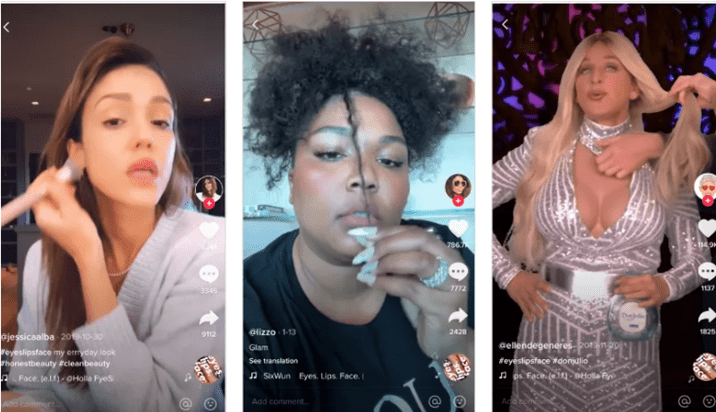
  • The 10 Biggest Netflix Competitors

    The 10 Biggest Netflix Competitors

    The world’s major internet television network makes a whopping annual revenue of $28.6 Billion. With a giant paid subscriber base of 213 million across 190 countries, Netflix is globally the most popular over-the-top media streaming and original media production company.

    Founded by Reed Hastings and Marc Randolph in 1997, the company started with DVD content and transitioned into online streaming in 2007.

    It has over 15,000 titles with a wide variety of award-winning TV shows, anime, movies and documentaries in different languages.

    Netflix provides a customer-friendly, innovative interface service tailored for every user, thus making the delivery customised and convenient. The top-notch, original content suiting tastes of customers, quality streaming services and interactive social media engagement contribute to its success.

    In 2021 alone, Netflix bagged seven Academy Awards for its original content, the most among streaming service competitors, nearly doubling its all-time Oscars tally in just one night and bringing its total Academy Awards wins to fifteen. It proposes and stands firm to providing quality entertainment to its users 24×7 through its online streaming and content creation services.

    That being said, it doesn’t mean that Netflix has it all. Despite its strong value proposition, it is competing against many global players. Let’s get some insights into the biggest Netflix competitors through a competitive analysis.

    The top competitors include:

    Competitor
    Revenue
    Users
    Countries
    Amazon Prime Video
    $ 25.21 Billion
    200 million
    22
    Youtube TV
    $ 19.8 Billion
    3 million
    65
    Disney+
    $ 17 Billion
    116 million
    53
    Paramount+
    $ 6.87 billion
    42 million
    54
    HBO Max
    $ 6.8 Billion
    69.4 million
    51
    Hulu
    $ 3.5 Billion
    42.8 million
    2
    Showtime
    $ 986 Million
    28.5 million
    The US
    Apple TV+
    $ 912 million
    40 million
    107
    Sling TV
    $ 178.1 million
    2.44 million
    The US
    Curiosity stream
    $ 71 million
    20 million
    176

    Amazon Prime Video

    Amazon Prime Video

    With a gross revenue of $25.21 billion, Amazon Prime Video is the biggest competitor of Netflix. The extensive scale of operations in 22 countries gives Amazon Prime Video an enormous subscriber base of 200 million.

    Jeff Bezos launched Amazon Prime in 2005, providing a stream of services like prime delivery of products, online music and video streaming etc. Amazon Prime Video is the online video streaming service offered by Amazon to its prime members. Headquartered in Seattle, Washington, the company provides many movies, series, originals, documentaries, comedy shows for its members.

    Netflix vs Amazon Prime Video

    Amazon Prime Video represents the quintessential value proposition of online convenience. It provides competitive customised content based on linguistic and regional preferences for middle and upper-class consumers (evenly split between genders) with home computers or intelligent devices aged 18-44. While Amazon mainly focuses on regional TV Shows, Netflix has an extensive catalogue of international and original movies. In addition, Amazon also requires you to pay for watching certain movies despite the prime membership. Netflix limits the number of offline downloads, but Amazon does not put such restrictions.

    Disney+

    Disney+

    Disney+ is another major Netflix competitor, with annual revenue stands at $17 Billion. It has effectively captured a gigantic market share of 116 million paid subscribers across 53 countries in less than two years of its launch, owing to the enormous fan base of Disney.

    Launched in 2019, Disney+ is the media and entertainment distribution division of the Walt Disney Company. It hosts dedicated content for Pixar, National Geographic, Star Wars, Marvel, etc., and other original films and series. Headquartered in Burbank, California, the company offers more than just cost-effective packages – the fun associated with different Disney characters and theme parks, making the customer experience more personal.

    Netflix vs Disney+

    Disney+ hits the emotional quotient of people and attaches them to the brand, irrespective of the umpteen alternatives available. Disney Plus is currently targeting children aged 3-17 and families with its content. Netflix wins hands down for more adult and edgier content, and Netflix has everything but the nostalgic recollection of famous tales and movies.

    Youtube TV

    Youtube TV

    YoutubeTV is another Netflix competitor giving a tough fight with annual revenues of $19.8 Billion. Its extensive operations in the US give it a paid subscriber base of 3 Million. Launched in 2017, the company offers live tv at rates cheaper than typical cable and satellite options. The television streaming service offers live TV, on-demand video and unlimited free cloud-based DVR (digital video recorder) from more than 85 television networks like Fox, FX, AMC, CNN, TBS, Discovery, and ESPN. Access to Youtube Originals with its subscription is an added benefit.

    Netflix vs YoutubeTV

    Youtube TV lets its users have access to more than a billion videos. It allows the user to watch the latest favourite shows when they air with an unlimited recording facility free of cost. It targets adults aged 18 to 49 and gives them access to diverse assorted tv channels, originals and on-demand movies. Netflix offers a massive amount of movies, including its exclusives but lacks the option to stream live and record live tv and mainly targets adults aged 18 to 34 years.

    Paramount+ (ViacomCBS)

    Paramount+ (ViacomCBS)

    Paramount+ comes up next in line with $6.87 billion yearly revenue. With a presence in 54 countries, it has captured a solid market base of 42 million subscribers. ViacomCBS is an entertainment conglomerate formed by the merger between Viacom and CBS Corporation in 2019, and it was rebranded as Paramount+ in 2021. Headquartered in Manhattan, New York, the company offers a selection of eye-catching originals and spinoffs of popular franchises, football matches, and awards show like the Grammys.

    Netflix vs Paramount+

    It competes fervently with Netflix’s content strategy by implementing a plan to debut a movie every week on Paramount+ from 2022. Netflix has 1500 original titles as compared to 36 by Paramount+. However, the latter aims to add 50 more original tags in 2 years. Subscribers across all age groups have access to the best of CBS and can enjoy TV shows and movies from ViacomCBS’ subsidiaries—including MTV, Nickelodeon, and Paramount. Netflix offers a 30 day trial for selective content, while Paramount+ provides free trials for its entire content library.

    HBO Max

    HBO Max

    With yearly earnings at $6.8 billion and a vast reach across 51 countries, HBO Max is another Netflix competitor in the picture with 69.4 million subscribers. HBO Max is an American subscription video-on-demand streaming service owned by Home Box Office, launched on May 27, 2020.

    HBO Max’s content library provides phenomenal new and classic stuff to its users with high-resolution picture quality and no plan-based limitations.

    Netflix vs HBO Max

    While Netflix offers an extensive content library with tailored niches for everyone, HBO Max has limited gold. It has fewer original titles, but it is unbeatable and doesn’t end up scrolling for long. HBO Max has a sweet spot for Older Gen X and Millennials between the ages of 25-44 years, while Netflix mainly targets adults aged 18 to 34 years. While Netflix offers basic, standard and premium plan, HBO Max offers only one subscription plan priced less than Netflix premium and higher than basic and standard plans.

    Hulu

    Hulu

    With annual revenues of $3.5 Billion, Hulu is another contender of Netflix. Although its operations are limited only to The US and Japan, it has captured a massive customer base of 42.8 million. Launched in 2007, the Walt Disney Company owns the streaming platform. In 2010, it was rebranded as Hulu+ for its subscription services and started providing over-the-top live tv in 2017.

    Netflix vs Hulu

    Hulu primarily targets adults and offers a unique service of releasing episodes quickly, often within a day of the original airing, and also features shows from networks including NBC, ABC, Fox, ION Television, USA Network, Bravo, Syfy, and Oxygen. While Netflix offers 4K content at a premium package, Hulu offers 4K without any extra charge. Unlike Netflix, Hulu contains ads even in the ad-free subscription plan. While Netflix allows downloads in any subscription plan, Hulu allows offline downloads only in the ad-free premium plan.

    Showtime

    Showtime

    Showtime is an emerging threat to Netflix, with annual revenues of $986 Million. It has made a visible presence in The US market with 28.5 million subscribers. Showtime is an American premium television network owned by ViacomCBS Domestic Media Networks.

    Netflix vs Showtime

    Showtime’s programming primarily presents theatrically released motion pictures and original television series, along with boxing, martial arts matches, stand-up comedy specials, and made-for-TV movies. It also offers a live stream of Showtime Cable channels. While the content library of Netflix allows you to choose from over 5,000 titles priced highly, Showtime only has 800 titles with exclusive originals on its palette at a low monthly price.

    Apple TV+

    Apple TV+

    With annual revenues of $912 Million, Apple TV+ is another primary competing streaming service by Apple Inc. Launched in 2019, the service has continuously invested in creating star-studded shows and signed in some famous Hollywood writers, directors and actors to develop TV shows like no other. Its close integration with the Apple brand has captured 40 million millennials and customers who are all in for the Apple Brand across 107 countries.

    Netflix vs Apple TV+

    Apple gives access to ad-free exclusive groundbreaking shows and best movies at a price cheaper than Netflix with a seven-day free trial. The Apple TV+ subscription also bundles together Showtime and Paramount+, while Netflix does not offer any such collaboration for some additional charges. Moreover, the Apple One Bundle gives unlimited access to Apple fitness, Apple Music, Apple News+ and Apple Arcade, along with Apple TV+, which makes it the ultimate choice for Apple users. While Netflix’s diverse content library mainly targets adults, Apple TV+ has shows for every age and demographic with its limited content library.

    Sling TV

    Sling TV

    Sling TV pitches as another rival of Netflix with annual revenues of $178.1 Million. Sling TV is a streaming television service operated by Sling TV LLC, a wholly-owned subsidiary of Dish Network with 2.44 million subscribers in the US only. It is one of the best streaming services in the market because each tier plan has solid options at a low price and customisation that make it easier to stream online.

    Netflix vs Sling TV

    Sling TV allows its users to view shows, news and sports from popular television networks and can be watched later. However, Netflix does not allow television streaming. While Netflix has around 1500 original titles, Sling TV does not produce its exclusive originals. Sling tv includes paid commercials according to subscription plans, while Netflix provides ad-free content.

    Curiosity Stream

    Curiosity Stream

    With annual revenues of $71 Million, Curiosity Stream is another rival to Netflix. Curiosity Stream is an American media company with a subscription video streaming service that offers documentary programming, including films, series, and TV shows, with 20 million subscribers in 176 countries.

    Netflix vs Curiosity Stream

    Curiosity Stream is a streaming service that gives users access to educational material and shows offered by popular cable channels like The Discovery Channel, The Learning Channel, and Animal Planet. In contrast, Netflix does have a lot of offerings as far as educational documentaries are concerned. Curiosity Stream doesn’t offer many personalisation options and contains ads, while Netflix provides personalised ad-free content.

    Go On, Tell Us What You Think!

    Did we miss something? Come on! Tell us what you think of this article on Netflix Competitors in the comments section.

  • How To Retain Employees In Your Startup? – 5 Proven Strategies

    How To Retain Employees In Your Startup? – 5 Proven Strategies

    It’s no secret that startups are challenging places to work. It’s not just about the long hours, it’s also about how much work is thrown at you in such a short period of time. As a result, the attrition rate in startups is as high as 25%. This is twice the overall industry attrition (13%). 

    There are many reasons why employees are likely to jump ship when joining a new startup. For starters, you might have limited resources to offer, and you might lack clear career paths or a culture of employee development. Or maybe your team members just don’t mesh well. No matter the reason, having a good employee retention rate is a huge indicator that your company is headed in the right direction. But how do you know if you’re doing enough to keep your employees? 

    The following is a comprehensive guide of strategies and tactics to help you retain employees in your startup. Understanding the techniques and ideas will put you in the correct frame of mind to implement them in your organisation.

    Why Does Employee Retention Matter To A Startup?

    Startups don’t have a lot of money, so they need to attract and keep quality people. If they don’t, the company will likely fail. The key to employee retention, then, is figuring out how to retain good employees while attracting great new hires.

    A high employee turnover harms your organisation, especially so for a startup. Employee turnover may lead to a negative impact on the work culture and lower morale, lower productivity, and high cost of employee turnover. The last one is of great concern for startups, who are cash crunching and many still finding investors. Besides this, here’s why having good employee retention is important for your startup – 

    Employee Retention Increases Productivity

    Persistent turnover can be a lot of hassle for startups, which may not have time and resources. But employee retention can save you from such hassles and productivity loss that you may incur during the process. High retention in a workplace leads to better-engaged workplace culture, which, in turn, leads to better work.

    But if the employee is new, they take more time to build solid communication relationships with other coworkers. This slows down the wheel of collaboration, and a lot of your startup’s time will get wasted in miscommunication, which may even lead to monetary loss for your business.

    High employee retention or lower employee turnover saves your startup lost productivity. Whether the productivity is related to your employees or your HR team involved in the transition process.

    Employee Retention Improves Customer Experience

    A workplace with high employee retention leads to better work culture, which translates into satisfied employees. A satisfied and engaged employee will pass on those same experiences to your customer. They will better their services, solve the problems in time, and may even go the extra mile to better the customer experience. A good customer experience will improve your startup’s reputation and will help in brand building.

    On the other hand, if your customers are dealing with new employees, they may encounter some problems which can harm your reputation. A new employee is at a larger risk of making a mistake, delays or they may not be acquainted well enough to solve your customer’s query. All this will contribute to a bad customer experience, and customers dissatisfied with your service may even leave your startup a bad review.

    Employees who have been longer are more likely to be able to solve unique problems and reduce work for other employees. An engaged employee is more likely to provide your customers with a better customer experience more quickly and confidently.

    Employee Retention is More Budget Friendly

    Losing an employee is an expensive deal. High turnover may turn out to be even more disastrous for startups as they may end up paying for employee hiring, onboarding, and training costs multiple times a year. Employees constantly moving in and out has a significant cost for you and your business.

    According to Josh Bersin, a global industry analyst, the cost of losing an employee may be as high as 1.5 to 2 times their salary. This is a large sum of money for any startup. These costs involve elements such as advertising, interviewing, screening, and hiring new employees. Also, the cost of onboarding involves training costs. Now let’s take the case of average costs to replace an employee as reported in Built In. The report states that in the case of hourly workers, the cost on average is $1500 per employee. The cost jumps to 100-150 % for technical employees’ salaries, and for C suite positions, it is up to 213% of their salary.

    The cost saved from such processes is a gain for your startups. You also gain from benefits associated with increased productivity and better customer experience, among others, all leading to higher revenue for your startup.

    Employee Retention Leads to Improved Workplace Culture

    An employee who is working for any organisation for a longer period is better aligned with the organisation’s goals and mission. An engaged employee will strengthen the cultural ethos and environment of your startup. On the other hand, high employee turnover may even lead others to question their decision to stay in your business and be loyal to your startup.

    An engaged employee will be more motivated towards work and create a better work culture. Employee retention and improved work culture will lead employees to care more about the work and the company’s reputation. They may even become your brand ambassadors and benefit your startup in more ways than one.
    Employee experience plays a crucial part in retention. By focusing on personalising what each employee needs and wants, you can help keep the best talent on board. Startups that can build a better employee experience lead to retention, which drives a better work environment.

    There can be many aspects that may lead to high employee turnover. The employee may be dissatisfied with their managers and leaders, or they are experiencing a plateau in their growth opportunities at your startup, feel neglected, or maybe feel there is a lack of recognition of their work. A startup needs to understand these factors to identify the cause of high turnover for their startup.

    5 Proven Strategies To Retain Employees in a Startup

    A startup is a new company with an uncertain future. And while many companies can survive and thrive for years, a startup is typically only as good as the team behind it. This is a delicate balance. When you’re a startup, the best thing you can do is retain the right people to make the best decisions. After all, if you don’t get the right people on board, you’ll never get any of your ideas to the finish line. But you can only hire the best people for your startup if you have a way to keep them. That’s where retention comes into play.

    Here are some proven tactics to help you do the same.

    Create a Culture of Recognition

    An employee dissatisfied with a lack of recognition for their work may harm your startup even before they leave the organisation. Low morale and productivity may damage their interaction with consumers and lead to a bad customer experience. A culture of appreciation will add morale to their work and help you retain them.

    If you want to help your employees feel more valued, start by acknowledging them—in public and in private. Give them recognition and rewards (monetary or non-monetary) for accomplishments, even small ones. They’ll be grateful for your encouragement. And if they’re truly feeling underappreciated, make it a point to connect with them, even if it’s just to share an off-the-cuff remark.

    The best way to show appreciation is by making sure that they feel important. The first thing to do is to acknowledge them in front of others. Make sure that they are recognised for their good work. They will be motivated and stay longer if they are acknowledged for what they do. This also helps them feel more appreciated.

    Don’t ignore your employees, even if they have done something wrong. Take time to talk to them and ask them about their performance and why they are doing what they do. You can make a big difference by being an active listener. Make sure that you communicate with them and give them feedback on a regular basis.

    Establish a Feedback Process

    Establishing a feedback process will give the window for employees to seek their redressal of queries or feedback – which, in the absence of such a process – they may seek elsewhere. This will also help you in early recognition of their concerns, and you will be in a better position to solve their concerns.

    Harnessing their feedback will give assurance that you are actively following their feedback. Neglecting their opinions will make them look for new job opportunities. By working on their review and feedback, your employee experience is bound to improve. This will encourage them in their work and make them your startup’s early advocates.

    Your employees will be happier if you make it a point to provide them with formal feedback and a grievance system. The first step in establishing such a system is to establish the process. The process should be flexible and comprehensive. It should include regular updates and a clear-cut method of handling complaints.

    You can start with a paper form or you can have an online portal that your employees can use. Just try to make it as simple as possible.

    You can even make use of modern technological resources to gain anonymous employee feedback giving the employee the reinsurance that they will not be targeted for putting their idea or concern at the forefront. This strategy will bring in higher transparency and can do wonders in terms of your employer’s reputation. 

    Offer Them A Stake

    People are more likely to perform well in a task when they feel some kind of personal connection to the end goal, such as their own self-interest. The same goes for employees. When you can connect your company’s goal to what matters to your employees, they’ll be more likely to perform better and stick around.

    Consider offering equity options to your employees. This can motivate them to work hard for your startup.  The major psychology principle here is commitment. What we want to do is make our employees feel like part of the family. They are, and it’s important that they feel like they can count on us and we can count on them.

    Moreover, equity options can provide both parties with value in a mutual way. This is because it creates a sense of responsibility in employees and it also creates a sense of commitment in you.

    Help Them Grow

    According to a report, top talent that is looking for new job opportunities are making the move to jobs that can provide them advancement opportunities. And this number stands at a staggering 72% of all job candidates. This further gives impetus to providing opportunities for employee development for retaining the right talent and engaging them with the organisation year after year.

    You can develop growth opportunities in your organisation by making opportunities such as mentorship programs, training sessions, and education support for your employees. You can give preference to your current employees in cases of internal hires and promotions. The leaders, managers, or mentors can make your employees’ long-term goals and their personal development as part of your performance feedback sessions.

    As a leader, you can even help your employees to grow by establishing an internal network of people they can learn from. 

    Conduct Exit Surveys

    Exit interviews or surveys are a great way to gauge the cause of your employees’ exit and a chance to gain insight into your employees’ perspectives. The employees who are leaving will be more candid and confident in giving their honest feedback regarding the workings of your startups.

    You can use the information collected to improve on your shortcomings and stop others who may exit the organisation for the same reason as your previous employees. This strategy will help you even if you have a high retention rate as it may help you in improving your touchpoints with your employee.

    This will improve your employee experience for your current and potential employees. Exit surveys provide you with a great opportunity to listen to your employees’ grievances and you stand to gain from your learnings from the surveys.

    Bottom Line

    Focusing on staff retention benefits your startup. A robust staff retention strategy is an essential component of holistic workforce planning. Developing an effective staff retention strategy requires substantial effort and focused investment, but it will pay dividends for your startup.

    Organisations that fail to focus on employee retention and turnover reduction can suffer significant losses not only in terms of hard costs associated with recruiting and training, but also in terms of low productivity and lost knowledge, negative repercussions on your customer and employee experiences in turn leading to lower morale, and diminished work culture.

    Go On, Tell Us What You Think!

    Did we miss something? Come on! Tell us what you think of this article on how to retain employees in your startup in the comments section.