Feedough Logo

Blog

  • What Exactly Is Viral Marketing?

    What Exactly Is Viral Marketing?

    Who wouldn’t want his song to be the next Gangnam Style? Who wouldn’t want his brand’s advertisement to be as viral as old spice’s? Who wouldn’t want to know why ‘pen pineapple apple pen’ became so viral?

    But what does it mean to become viral? More importantly, can you predict if something will go viral? Is viral marketing even a thing?

    If you’ve read our article on why things go viral, you’ve already got the answers to the first two questions. But is viral marketing even a thing?

    Well, have you heard of this before?

    make america great again

    This four-word viral slogan was drafted keeping in mind the basics of viral marketing and was a big reason behind Donald Trump’s electoral win.

    What Is Viral Marketing?

    Viral marketing refers to the strategies and activities that encourage the individuals (users and non-users) to spread the marketing message to other individuals and groups within their social network, creating an atmosphere of increased brand awareness and a buzz about the brand online and/or offline, leading to a multi-fold growth.

    To make it simple: Viral marketing is essentially a strategy to spread something (idea, message, song, etc.) organically among the target audience, preferably through word-of-mouth.

    Viral Marketing Examples

    A viral marketing campaign is designed to spread the marketing message among the target audience like a virus which doubles itself with every transfer of the message.

    Dove Real Beauty Sketches

    With over 68 million views, Dove’s real beauty sketches is the most viral ad video of all time. The short film used an FBI trained sketch artist to draw women based on their own description and then based on a description based on that of a stranger.

    The video aimed to boost the self-esteem of the viewers by stating that they are more beautiful than they think they are. It elicited a strong emotional response from the viewers and triggered them to share the video on their social media profiles and made them join the conversation.

    Deadpool

    One of the crucial reasons behind the success of Deadpool was a viral social media campaign crafted to create a buzz around a deformed foul-mouthed x-man. The first part of the movie was marketed using campaigns like “12 days of Deadpool” and posters of raising cancer awareness, collectables, witty Instagram posts, witty blog posts, and witty Youtube Videos.

    The second part of the film was marketed using similar strategies where the marketers tried various brand integration and cross-promotion strategies which even made David Beckham star in one of the trailers.

    Old Spice

    For several years, Old Spice has been setting examples for viral marketers to learn from. The company has harnessed the power of viral video marketing by using social media networks like Youtube and Facebook to spread the message of “the man your man could smell like” and the “two tickets to that thing you love”.

    Why do Old Spice’s commercials work?

    The marketers use basic principles of viral marketing like using the platform where their target audience is, producing entertaining videos which are appreciated by the target segment, and marketing everywhere at once.

    Principles Of Viral Marketing

    Viral marketing is a customer-centric approach. This marketing strategy depends on the customers to spread the marketing message rather than the paid mediums. Hence, it is important to know-

    • why people share content
    • what kind of content they’re most likely to share
    • how to create content they’re most likely to share

    We’ve put together some basic principles which give rise to a good viral marketing campaign:

    Utility

    People share content which they feel is useful to them and to others. The utility isn’t limited to just seeing the post but can also be experienced when the target audience shares the message and receive reactions and attention from people within their social network. This is one of the reason posts of pages posting daily facts, DIY hacks, and relatable memes are shared so much.

    Emotion

    Any message which arouses emotions among the target audience is shared by them. But it is important to create maximum emotional excitement quickly. A good viral marketing campaign hit the target segment hard and fast with strong emotions. The idea is to build an emotional roller coaster which reduces the chance of audience becoming bored, satiated or overwhelmed with too much of the same.

    Both negative and positive messages receive an equal amount of attention. Experts say emotions can be divided into arousal and non-arousal emotions irrespective of them being positive or negative.

    Positive emotions like admiration, curiosity, amazement, interest, astonishment, uncertainty activate the audience and increase the chances of content being shared. Even a message with negative emotions like anger and anxiety have more chances of being shared as it also acts as an arousal emotion. However sad emotion deactivates the audience and reduces the likeability of content being shared.
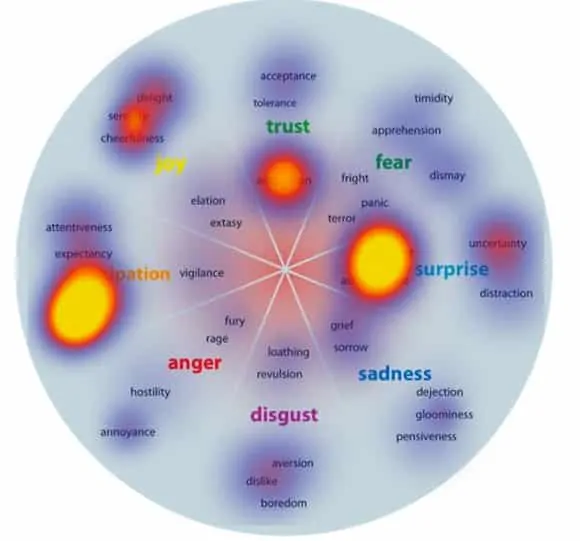
    emotion chart viral marketing

    Scalability

    Viral content spreads like a wildfire. Social media has made it easy for a content to be accessed by hundreds of people within the social network.

    It all starts within the target audience. But viral content isn’t limited to social media and the concerned market segment. It often takes the form of news and trends and becomes a part of the conversation of people not even belonging to the target segment.

    Viral content is often targeted to extroverts and egocentric audience and people who are more likely to share the content with others. The recent trend of data monetization has made it possible to craft such campaigns and share it with such audience.

    Shareability

    Oftentimes, people like the content but don’t feel the need to share it. There might be a lack of emotional trigger or an external trigger to share.

    A viral marketing campaign often focuses on including both the emotional trigger (arousal emotion) and the external trigger (asking explicitly to share the content) to make the content viral.

    Another unique characteristic of viral content is its easy accessibility and share options. The user doesn’t have to perform 10 tasks prior to view the content (unless it’s the part of the plan) and is provided with easy share options.

    Viral Marketing Advantages

    According to a research by HBR, successful viral campaigns regularly produce 1 million+ impressions, with standouts garnering 10x to 100x that number, often crossing over into the mainstream, and picking up free exposure on television and radio and in print media.

    Here are few more advantages of viral marketing:

    • Economical: Viral marketing is one of the most economical forms of marketing where ROI range from 10x to 100x.
    • Increased Brand Exposure: Viral marketing leads to increased brand exposure among the individuals and social groups belonging to the target audience and even among individuals not belonging to the target group.

    Viral Marketing Disadvantages

    There are some disadvantages of viral marketing as well. These include:

    • No control: The brand has no control over what is being spread among the target audience. A viral marketing campaign has a good probability of getting backfired.
    • Can be considered spam: If executed badly, viral marketing campaigns can be considered spam and can even result in negative publicity.

    Go On, Tell Us What You Think!

    Do you want to be a viral marketer? Come on! Tell us what you think about our article on viral marketing in the comments section.
  • Duolingo Business Model | How Does Duolingo Make Money?

    Duolingo Business Model | How Does Duolingo Make Money?

    ‘If you’re not paying for it, you are the product’, a statement everyone in the data-driven internet market agrees upon. But is it possible to get services absolutely free without losing your data to a cloud-based Advertisement AI in the 21st century?

    Well, the chances are slim but Duolingo has managed to get it done.

    What is Duolingo?

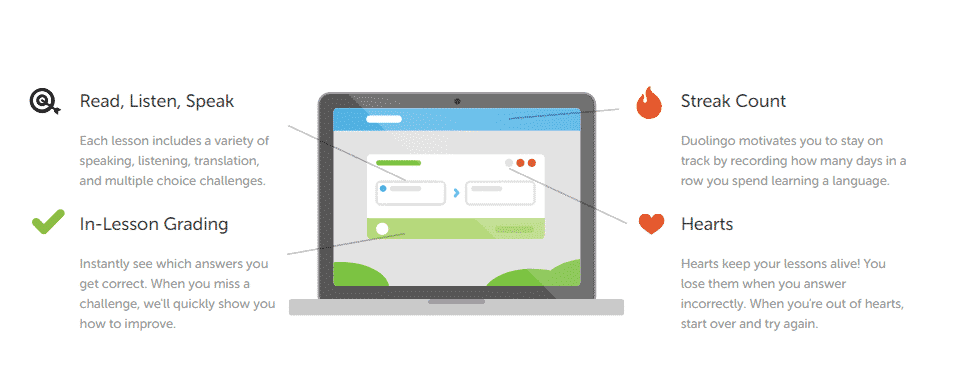
    Valued at $1.5 billion, Duolingo is a free language learning platform where they gamify the courses to keep users interested in learning a new language.  The platform is accessible from a browser and has an app on every major platform i.e IOS, Android, Windows.

    duolingo business model

    As of 2020, Duolingo offers 37 language courses, tinycards (a flashcard based learning system), Duolingo for school (a language learning platform for tutor and students) and Duolingo English proficiency test (it gives you a certification of English proficiency for a minimal fee).

    The language learning platform has a whopping 500 million registered user-base, with 42 million monthly active users who use the application to learn around 2000 words and 8000 sentences of various languages of their choice, for free.

    Duolingo is also known for adding fictional languages like High Valyrian and Klingon to its list which in turn has garnered a bunch of enthusiastic geeks.

    But what is the concept behind Duolingo?

    Duolingo was founded by Luis Von Ahn (known for his work in CAPTCHA and Re-CAPTCHA) and his student Severin Hacker. It was based on the base principle of Re-CAPTCHA. Re-CAPTCHA is a major crowdsourcing information program where the system takes information from users to verify if they are human and also convert to text scanned images that the machine is unable to comprehend.

    You might ask how is this related to Duolingo?

    Duolingo worked on a similar model to that of Re-CAPTCHA. While Re-CAPTCHA worked on crowdsourcing words that are unreadable to the machine, Duolingo took human help to translate a particular document from one language to another. Although Translate tools are progressing every year, they were not quite capable of precisely translating phrases from one language to another a few years back.

    To tackle this problem, the ingenious business model of Duolingo was introduced. With the gamification process, users are hooked on learning a new language and the whole application being free gives them an added incentive to use it. But what they don’t realize is the application actually is providing text to translate and as a part of the learning process, they are simultaneously translating the text which is going to be useful to some website. When a defined number of users give the same translation for a particular sentence, the website considers that as the legitimate translation and saves that as the translated text.

    How Does Duolingo Make Money?

    When Duolingo started out, it gave the premium experience of an ad-free application for free. So how was the company earning revenue?

    Duolingo had the client base of content heavy websites like CNN, BuzzFeed, etc. These websites wanted their content to be translated, and Duolingo with the help of crowdsourced translation would translate the text in an effective and much cheaper price than a professional translator. Thus, helping the users as well as developing revenue to sustain itself.

    However, Duolingo in its recent years has tabled the initial idea of giving a premium experience. Now, Duolingo has added tiny not so intrusive advertisements that help them generate revenue as the initial model was quite cumbersome and didn’t generate enough revenue. It has moved towards the freemium model now as it offers a paid version of the app that removes advertisements and you can pay to obtain gems, an in-game currency that helps you unlock content beforehand and also gives you extra chances.

    Duolingo is known to run A/B tests regularly to identify what ads work and the amount of intrusiveness on the ads and the resulting response of the user to each ad. It overall tries to keep the system as user friendly as possible, while identifying how it could maximize revenue.

    duolingo ad

    Duolingo also offers Duolingo English test, a certification test that gives you a validation certificate that proves your proficiency in English for $49.

    The company has even started with the offering Duolingo for schools, which provides two separate accounts: for educators and for students to track and train new languages in schools.

    Although Duolingo has tabled its initial idea of making it a premium experience and creating a win-win scenario, it is still one of the most ingenious business models and needs to be recognized. With the next generation of crowdsourcing information models coming in, Duolingo will always be considered a pioneer in this incredible model.

    Go On, Tell Us What You Think!

    Do you use Duolingo? Does Duolingo business model interest you? Let us know in the comments.

  • What Is A Startup Incubator?

    What Is A Startup Incubator?

    With startups booming in every fiscal year, startup incubator is just another term budding entrepreneurs are getting more familiar with.

    Three new startups launch every second. This is the perfect opportunity for business incubators to tap the developing market and make their business model grow.

    What Is A Startup Incubator?

    A startup incubator or a business incubator is a collaborative program designed to help startups develop during their initial stages until they are able to sustain themselves in the market.

    An incubator, as the name suggests, is a place where conditions are met to make life sustainable by providing a nurturing environment. Now when you apply the same concept to startups or businesses that are just starting out, you get the basic concept of a startup incubator:

    Startup incubators incubate new ideas and help new entrepreneurs convert their ideas into a business model and eventually into a working business.

    How Does A Startup Incubator Help?

    Incubators are home to various venture capitalists, angel investors as well as other mentors for entrepreneurs. By helping the startups set up office spaces or legal expertise, they allow the startup to focus more on the running of the core business.

    A business incubator provides you much needed support to develop your new startup. This support can be in the form of:

    • Infrastructure: Startup incubators provide office workspaces, workshops for startups to get the initial prototype phase up and running.
    • Networking: Incubators help multiple startups simultaneously. When these startups work under one roof, they get connected with entrepreneurs working in the same industry which helps them gain insights to improve their product. Many incubators even arrange startup networking meetings to help entrepreneurs increase their network.
    • Financial advisory/ Intellectual property teams/ Legal advisory: Business incubators lend their financial advisors, IP teams and legal advisors to the entrepreneurs so that they can make well-informed decisions.
    • Contacts for potential investors: Business incubators have been in the field of launching startups to become a legitimate business. Because of this, they have multiple contacts with previous and potential investors. They even help the entrepreneurs in developing a perfect pitch deck.
    • Manufacturing: Many startup incubators have tools and equipment to manufacture prototypes, 3D models and even final products.
    • Initial financial support: Some business incubators provide a minimal fund to set things into motion and begin with the initial phase of pitching the idea and developing the concept.
    • Training and guidance: Business incubators provide training from market experts on how to begin, develop and implement ideas. They follow your progress closely and guide you how to improve your reach and get to the target market.

    How Do Business Incubators Work?

    There are multiple incubators in the market ready to support you but the requirements and support they provide are different.

    There are

    • Academic incubators: universities and institutions incubator services,
    • Private incubators: privately funded incubators which charge for their services, and
    • Free starting incubators: which provide initial services for free.

    Every business incubator serves its purpose with its predefined terms and conditions.

    Some incubators are situated in actual physical space giving providing you support and guidance for the project and some incubators are set up virtually where they provide guidance, links to potential investors and fellow entrepreneurs in the same domain.

    Why Should You Take Support From A Startup Incubator?

    Although capital can buy most of the services business incubators provide, it is unable to provide the benefits of a network, expertise of business owners, and constant guidance of the experts who have guided hundreds of startups in their nascent phase.

    The ability to tap into a strong network of business partners is one advantage of business incubators. Being part of a group of companies that are already in the spotlight helps the other startups to grow big and successful. It also strengthens their ability to gain more opportunities to showcase their ideas and products.

    Since the mentors such as venture capitalists or angel investors are entrepreneurs themselves, startup founders are always given more challenges which lead to clearer vision, roadmap, and strategy. Taking the help of an incubator actually jump-starts the startup and gives them the ability to fly solo.

    If you are running low on capital, a lot of startup incubators provide workspaces, manufacturing labs, technical guidance, and startup networking meetings at a slashed down prices; helping the entrepreneurs on their way to creating their own brand.

    What Do Startup Incubators Get In Return?

    Academic institutions help their student entrepreneurs to nurture their ideas and successfully convert them into business models. This is done to entice potential students as increased support to startups is an elusive deal.

    Some existing companies incubate ideas to develop an eco-system around their existing product line thus making the market tilt towards their favour.

    Other private incubators help entrepreneurs by providing them support in exchange for equity.

    Examples of Famous Startup Incubators

    CodeLaunch

    CodeLaunch, produced by Frisco, TX,  is a competition conducted annually between people as well as groups on technology startup ideas. This competition has been the source of success for at least 7 startups that won it. This competition targets “embryonic” stage and “very early” stage startups through established startups that can also participate but won’t be the primary focus. The main goal of this event is to create a medium through which people and their ideas can connect with investors and also for the investors to find ideas which they wish to support. Key2Close was one of the finalists of the 2015 edition of the competition.

    T-Hub

    India’s largest incubator for startups is T-Hub also known as Telangana Hub. On 5 November 2015 the first phase of T-Hub was set in operation by E. S. L. Narasimhan, Governor of Telangana and Ratan Tata, Chairman Emeritus of Tata Sons, and Telangana IT & Panchayat Raj Minister K. T. Rama Rao. Housed in a 70,000 square foot building called CatalysT, it is entirely dedicated to entrepreneurship. It is a partnership between the private sector and the Government of Telangana along with three of India’s leading academic institutes (IIIT-H, ISB & NALSAR).

    Naiot Venture Accelerator

    Based in Yokneam, Isreal, Naiot Venture accelerator engages in early seed startup investments. Hence, it invests and develops value by providing financial resources as well as management and human resources required to nurture seeds concept into sustainable companies. Since its starting in 1997, it has launched over 60 companies. It is difficult to get investment from Naiot as evident from their vigorous screening process. From over 350 project applications, they select 4-6 projects every year. Investments of $500k-$1M per project are leveraged through an agreement with the Israeli Chief Scientist’s Office and the OCS Technology Incubation Programs. One of the most popular companies which graduated from Naiot is MentorWave (Quiksee) which was acquired by Google in September 2010.

    Centre for Digital Innovation in Hull

    The Centre for Digital Innovation in Hull, popularly known as C4DI is a digital incubator based in Kingston upon Hull, England. For providing assistance to startups, this company has created links with Amazon Web Services, PwC, Kingston Communications as well as other firms. The C4DI accelerator was launched in May 2014.

    There are networks of incubators weaved like a web to guide different startups through their beginning phase. These startups grew up to bring revenues of millions of dollars. Business incubation is a way of gaining equal profits, whether a person is an entrepreneur or an investor.

    How to decide on an incubator?

    The International Business Innovation Association has a large network of incubators that can be browsed and decided upon the user’s needs. It presently has a staggering number of 2,200 incubators in 62 countries.

    However, we suggest that you do not jump on the first incubator you see and do thorough research on what your organization would need to sustain itself in the future and which incubator provides support that best fits your needs.

    Take your time and make an informed decision.

    Go On, Tell Us What You Think!

    Are you an aspiring entrepreneur? What do you think of our article on Startup incubators Let us know in the comments below!

  • Twitch.tv Business Model | How Does Twitch Make Money?

    Twitch.tv Business Model | How Does Twitch Make Money?

    With gaming industry booming every financial quarter, you wouldn’t disagree with me if I say this industry is going to hit gold soon. Current numbers suggest that 2.3 billion gamers will spend around 137.9 billion on games in 2018. E-sports have also garnered some mean traffic and the attendance of E-sports league never seems to fade away. With ESL One Katowice 2018 reaching 2.2M peak viewers, the graph has always seen the roof with 80% rise in viewership.

    With such staggering statistics, it is obvious that streaming platforms have a major role in the gaming industry; the mammoth being Twitch.tv. This leading streaming platform that has left its competitors miles behind in the race for dominance on the market.

    What is Twitch?

    Owned by Amazon, Twitch is a platform that allows gamers to be broadcasters, viewers and participants of gaming communities that they love.

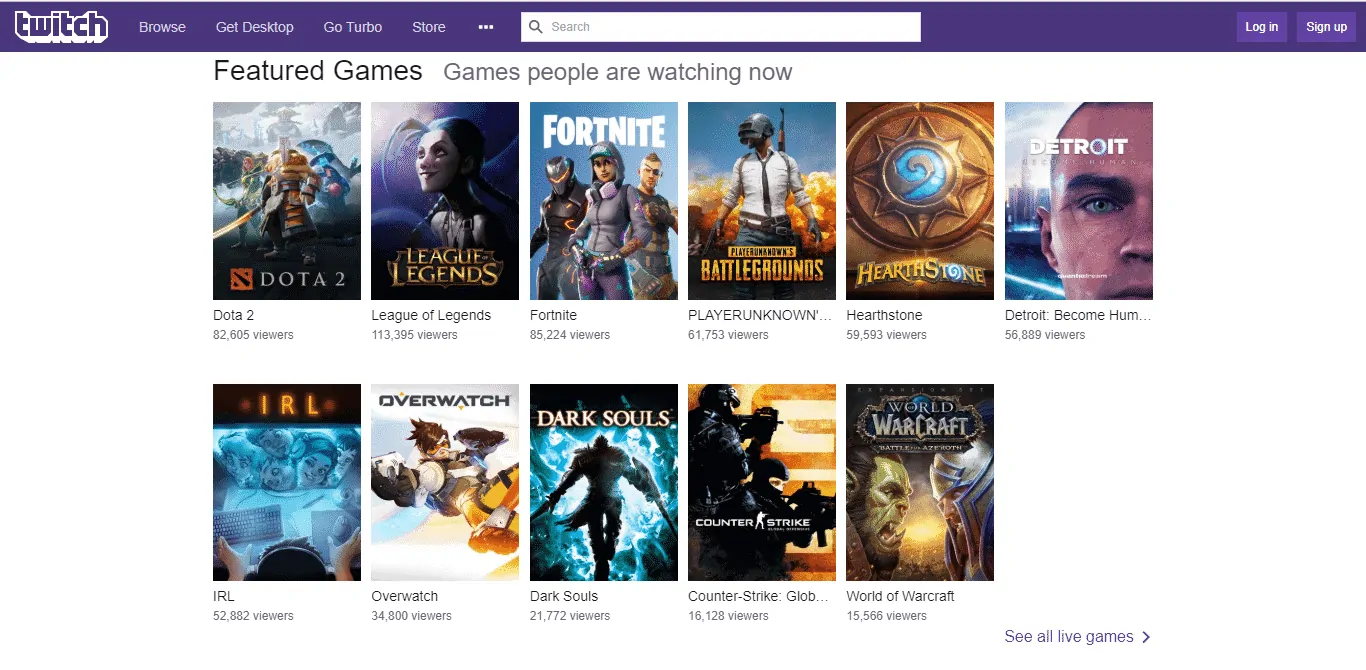
    Users can create channels, live stream their gameplay, upload recorded clips, watch other streams and comment in real time on other streams. It provides a platform for gamers to watch other skilled gamers or entertainers play. Unlike popular opinion, watching others play games has been a real hit and Twitch does that exactly.

    With a variety of games being streamed, Twitch’s popularity is on the rise and with the present market’s pace, the streaming platform has no plans to gear down its motion.

    twitch business model

    Twitch Business model

    Currently, Twitch boasts a staggering 15 million daily active users with 23 billion minutes watched per month. You can view broadcasts without registering, however, to broadcast and chat you are required to sign up with Twitch, which is free of cost.

    Twitch offers support on PC, Xbox and Play station consoles. It has browser support as well as dedicated application to record videos and interact with communities better.

    Twitch has the concept of creating a real-time spectating environment where viewers can watch broadcasts of their favourite streamers and comment their opinions in real time.  Twitch offers a Software Development Kit and Application Programming Interface that helps twitch integrate with services existing on the device you are gaming at.

    Ever since Amazon bought Twitch for $970 million, its valuation has constantly increased and is currently around $3.79 billion.

    How Does Twitch Make Money?

    The three base principles of making money for Twitch are Advertisements, Subscriptions and Partner Programs.

    Advertisements

    Now like every free video streaming platform, twitch runs its model on advertisements. It provides standard IAB display and video media as well as native opportunities. Twitch has a varying CPM and is usually between $2-$10.

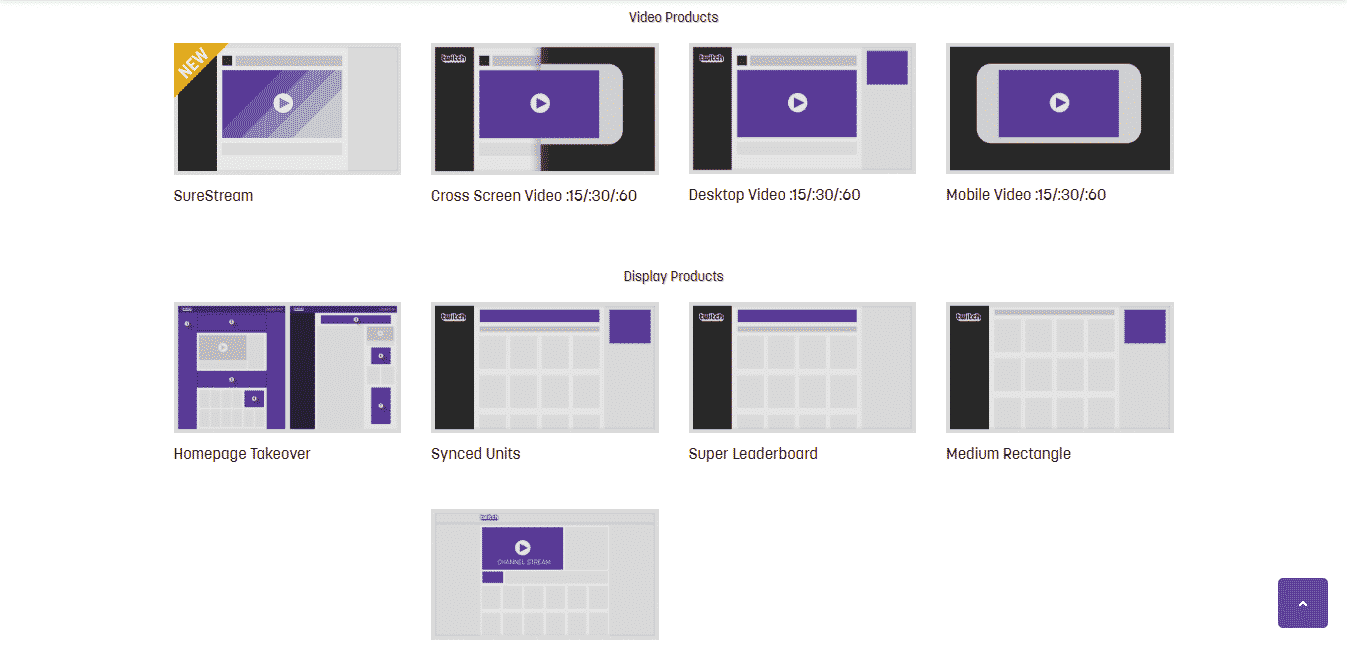
    twitch business model advertisements

    Subscriptions

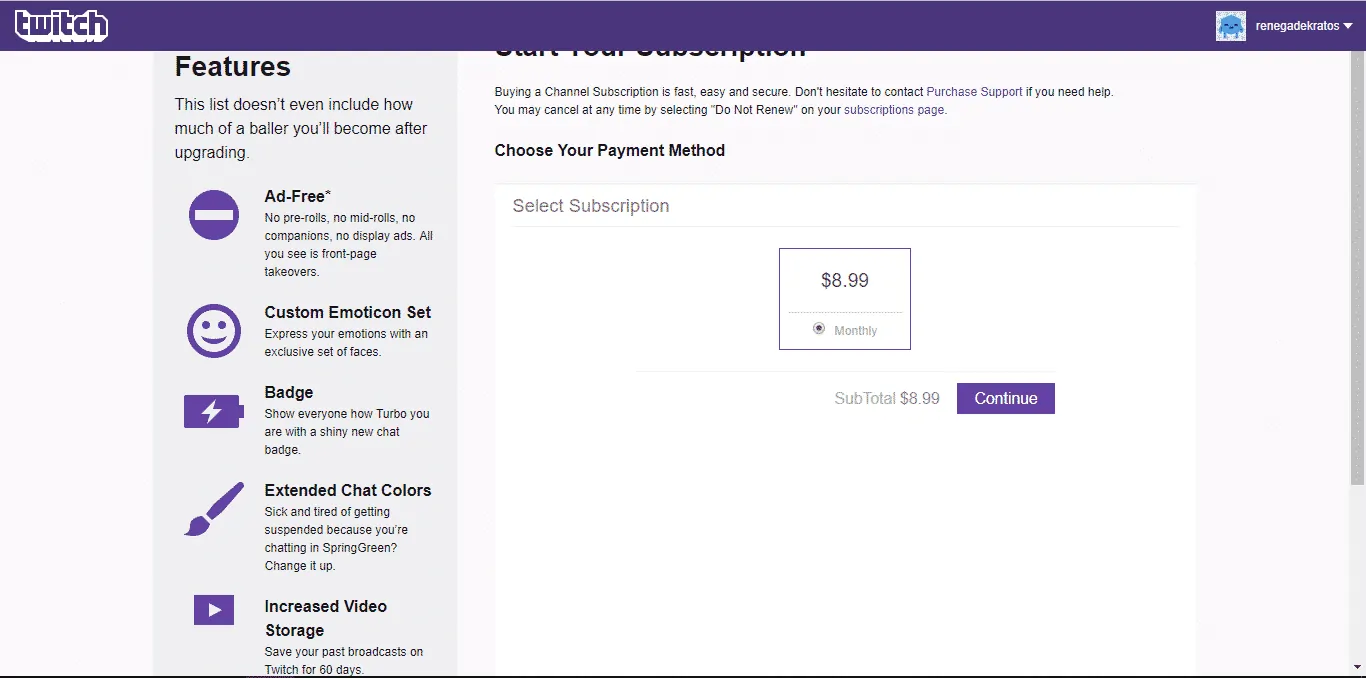
    Twitch offers a monthly subscription of Twitch Turbo for $8.99 which in return makes the game viewing experience smoother as advertisements are cut down, video storage is increased, and a few aesthetics upgrades are provided to Turbo users.

    Now since Twitch is owned by Amazon, it has also started rolling Twitch Prime which has similar perks and lootboxes for various games as the incentive for people to choose Twitch Prime.

    twitch subscription

    Partner Programs

    Partner programs are for broadcasters who are popular and are regular in their streams. Such streamers stand a chance to partner with Twitch.

    The base requirements to partner with twitch are quality content, average concurrent viewership and a stream frequency of at least three days per week.

    Twitch partners along with Twitch can monetize their viewership by the means of advertisements, merchandise and paid channel subscriptions.

    Partners get a cut from the CPM from the advertisements shown on the partners’ channel page. Partners can also integrate merchandise with twitch and they get a cut from every partner merchandise they sell. And finally, to show support, viewers can go for paid channel subscription which shows support to the streamer and usually gives a cut of 50% to the streamer you are subscribing to. Users in return get personal chat options and a few emojis.

    Partners can also be donated money by users through PayPal. Twitch doesn’t claim any percentage of these donations.

    twitch partner
    Source: corvidaeinc.com

    Cheer Bits

    Bits is Twitch’s in-stream currency which can be used by you to show appreciation to the streamers. These Cheer Bits (cheer is an in-stream chat message) act as a monetary cheer to the streamer and sending 1 bit equals sending 1 cent. The more bits you send, the more ‘actual money’ the streamer makes.

    But Twitch gets most of the share of these bits as the cost of the Cheer bit is, of course, more than 1 cent. However, you can also earn it by watching an ad on Twitch, which also adds to the company’s revenue.

    Go On, Tell Us What You Think!

    Are you a Twitch streamer? Did we miss something? Let us know about our article on Twitch.tv Business Model | How Does Twitch Make Money? in the comments below.

  • The Blockchain Business Model

    The Blockchain Business Model

    With all the industries that Blockchain is poised to disrupt, one of the side effects that will come of it is a change in internet business models. What I’m talking about here are the decentralized applications and organizations that will emerge from Ethereum, EOS, or any one of the other infrastructure building blockchain platforms. There are many different classifications of these decentralized applications, each with its own set of functions and use cases. I won’t get into the distinctions of each, as this article by Vitalik Buterin does a great job of explaining them in detail. Just know that what blockchain enables is a decentralized ecosystem by which goods and services can be exchanged in a way that’s vastly different than what we’re used to. These ecosystems are referred to as dApps or DAO’s (Decentralized Autonomous Organizations), but for this post, I’ll be referring to them as dApps.

    What is the Blockchain?

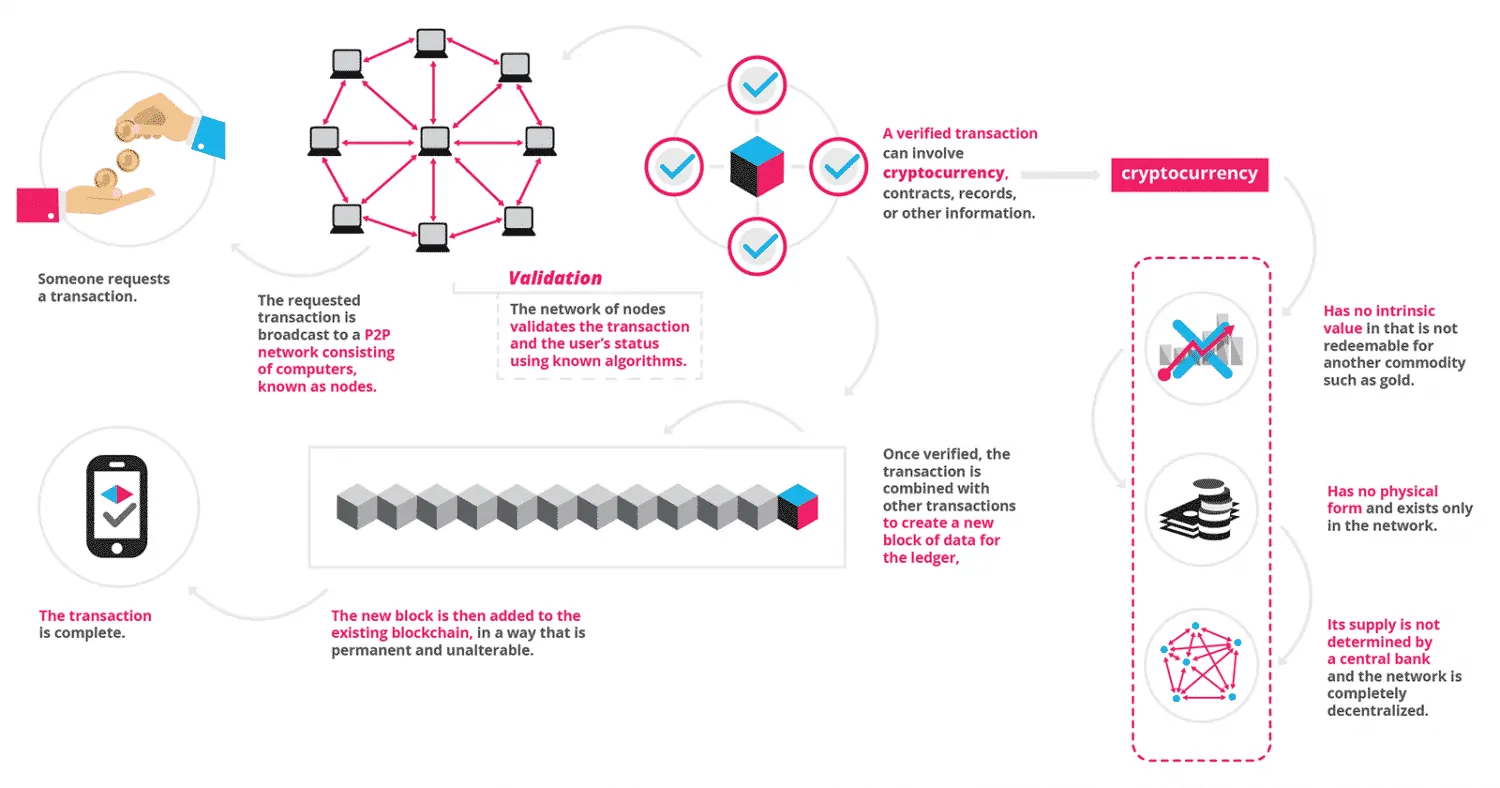
    blockchain

    The Blockchain is an immutable, decentralized, digital ledger. That’s a mouthful, but let’s break down what that means. Think of it as a digital database that no one owns but anyone can contribute to.

    I think one way to visualize the Blockchain is with the comparison that’s been made many times to Google Docs. Think of Microsoft word as a traditional database and the Blockchain is Google Docs. To collaborate with other people on Microsoft word, you would need to send them your document then wait for the other party to make changes and send back the updated copy. This is how traditional databases work. Two parties cannot make changes to the same database at once. With Google docs, you can share the file and allow multiple people to work on it at the same time. That’s how the Blockchain works, its a shared ledger.

    There are several key features that make the Blockchain such a significant advancement in technology. A few of the major ones include:

    • Increased Security because it’s decentralized. This means the data is stored on thousands of different servers and there’s no central point of failure.
    • Proof of work consensus that verifies each transaction across all the nodes using hashing algorithms to solve complex math problems to ensure each transaction is authentic and valid.
    • The ledger is Immutable, meaning no one can alter the data and create falsified information.
    • Having a digital ledger which will eliminate paperwork, making information easily accessible.
    • Each transaction or entry is time-stamped as its verified across the ledger, which allows for real-time data and elimination of fraud.
    • The ability for fractional ownership and tokenization of assets.

    The Traditional Business Models

    Pretty much all businesses operate in a similar manner. They produce a good or a service that consumer will buy, then after deducting for all expenses such as administrative cost and wages, they get to either keep the remainder as retained earnings or redistribute it to the shareholders.

    Of course, this process will look a bit different when we’re talking about a publicly traded company, a mom-and-pop shop, or a startup, but the basic principles apply to all. It’s a centralized model, which involves:

    • The Legal business entity, or the corporation,
    • The shareholder or owners,
    • The employees, and
    • The customers.

    According to Vitalik Buterin, the founder of Ethereum, traditional businesses include the following parties:

    The corporation has three classes of members: investors, employees and customers. The membership rule for investors is that of a fixed-size (or optionally quorum-adjustable size) slice of virtual property; you buy some virtual property to get in, and you become an investor until you sell your shares. Employees need to be hired by either investors or other employees specifically authorized by investors

    The Blockchain Business Model

    The business model that the dApps employs is different. It enables peer-to-peer interactions, potentially removing all intermediaries. It creates a trustless system, so there’s no need for a third party to validate data and apply that trust.

    There are no employees.

    There are no ‘shareholders’ or a board of directors.

    There are no owners and it isn’t a corporation.

    These parties still theoretically exist in the Blockchain model, but the way they interact changes dramatically.

    Think of it like Wikipedia, the largest online encyclopedia where anyone can contribute and make edits to the content. With each new user, the network grows stronger and the information becomes more reliable. Every reader can edit and revise pages so the system is designed self-regulate. The ‘employees’ are the people that contribute to the network by providing a service within the dApp.

    This is where the token comes in. Instead of rewarding contributors with a Barnstars like in the case of Wikipedia, individuals are rewarded with a token which they can use within the platform itself or exchange for another more transactable cryptoasset such as Bitcoin. It’s not necessarily intended to be profitable, rather it’s intended to build a community and serve as a medium for true Peer-to-Peer exchange.

    How Blockchain Businesses Make Money?

    The way Blockchain entrepreneurs and developers make money is pretty straightforward: they hold some portion of the tokens as ‘sweat equity’ hoping their project works out and the increase in the value of their asset combined with the liquidity of their token serves as their reward.

    How their dApp makes money or how they cover the costs isn’t a simple theory though. Many of the cryptoasset developers and entrepreneurs hold an ICO to crowdfund their project in the early stages where the investors get the cryptoassets at comparatively low prices (and can sell them at high prices later) and the developers get enough money to cover the costs in the early stages. The later stage revenue earning strategies can be any among these:

    1. They can charge a network fee for using the network. One example of this is the Ethereum, where the user needs to pay ‘gas’ to transfer Ether to other accounts.
    2. A utility token (a type of cryptoasset) could be released which can be used to access the network or can even be traded within the network. Take the digital currency of video game to be a utility token which can be used to access the game, purchase in-game materials, and can be traded within the game. Additionally, that token may go up in price as the value of the dApp increases with more users.
    3. Selling the technology to a bigger business. Mediachain was a blockchain startup dedicated to connecting artists and other rights holders with the streaming platforms. It was recently acquired by Spotify to add a transparent payment structure to its platform.

    mediachain spotify

    The Bottom Line

    There is a conflict of interests in the traditional operating model of the companies. The goal of a company is to return a profit to the shareholder while delivering the customer with the best product or service. This kind of puts them in somewhat of the crosshairs with two different parties.

    • The customers want the product at the best price.
    • The shareholders want a high ROI.

    Even Tesla has got hit by such conflict of interests.

    Blockchain enables a more holistic business model, one in which investors are aligned with the users and the developers. To create a dApp, you issue a token. To use the dApp, you first buy the token then use it in the network. To invest in the platform, you buy the token with the hopes the network becomes more valuable and the price goes up.

    There are definitely some potential problems that can arise from this, including the hack of the DAO where 3.6 million ether was stolen. However, I think it’s an interesting model that could certainly have some benefits.

    Go On, Tell Us What You Think!

    Did we miss something? Come on! Tell us what you think about our article on The Blockchain Business Model in the comments section.

  • What Is Concierge Service? – Meaning & Business Models

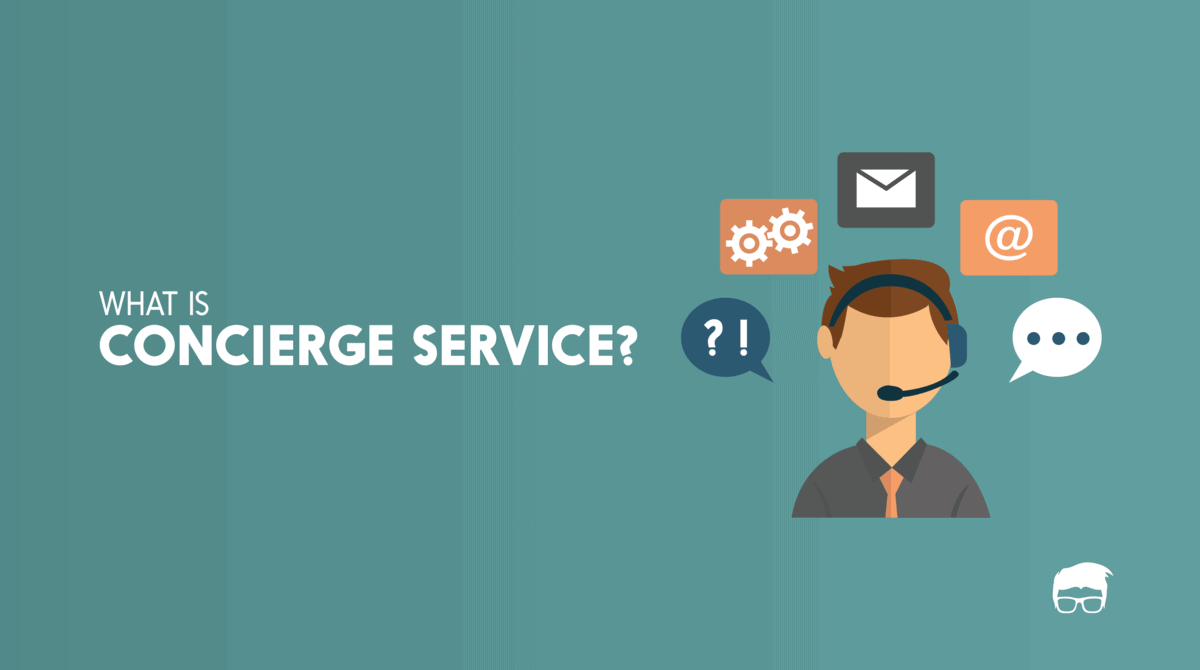
    What Is Concierge Service? – Meaning & Business Models

    Do you ever wake up and feel like there should be someone to do your errands while you sit back and relax? To plan your entire holiday or a date, instead of you sitting in front of the computer screen for hours? Do you want an expert to be your personal assistant or your lifestyle manager?

    Well, there are companies which provide such services. Their employees will do anything for you as long as it’s legal, moral and ethical.

    Welcome to the era where concierge services have become a big and really profitable business model.

    What Is A Concierge?

    Some say that the word ‘concierge’ is derived from the Latin word ‘conservus’, which translates to ‘fellow slave’, while some say that it has evolved from the French ‘comte des cierges’, which means ‘the keeper of the candles’, which was essentially the main duty of concierges during the Middle Ages. Nonetheless, concierges’ meaning and duties have changed over time. They now perform almost every task for top-level managers, VIP customers of banks and hotels, superstars, or anyone who has enough money to outsource their work to them.

    So, what is a concierge?

    A concierge is an individual or company specialising in personal assistance or any other assistance services like household management, lifestyle management, transportation, travel and vacation planning, etc., and provides personalised services to its clients (usually high-net-worth clients) at a variable price.

    The idea is to save the client’s time by performing their routine or specialised tasks.

    The Concierge Services Business Model

    Concierge services are a fairly recent addition to the luxury industry, all thanks to the constantly changing business environment, technological advancement, and the long working hours of the working professionals. Such limitations have resulted in a lack of time in the life of the people. They now wish for either more time or someone who can do the work for them while they free their time for the things that matter. The concierge services business model capitalises on this need.

    Earlier, concierges used to be restricted to hotels or luxury apartment buildings and assisted guests by making restaurant reservations, arranging spa services, recommending places to visit, booking transportation, etc. But now, these individuals and companies have moved ahead and specialised in many tasks ranging from lining up tickets for concerts or special events, planning a holiday trip, doing the shopping errands, restaurant recommendations and reservations, etc.

    The business models of different concierge service providers differ in the types of service provided and to whom it is provided. Some concierges help employers maintain good employer-employee relations, some deal in handling customer grievances, some concierges provide personal travel planning services, while some provide all these services by acting as personal assistants or lifestyle managers.

    Here are few concierge services business models that are prevalent today:

    Concierge Medicine

    Concierge medicine (also called boutique medicine, retainer-fee practice, direct care, and membership medicine) is a prevalent concept where the customer pays a flat/annual fee or a retainer in exchange of enhanced personalised care and better access to their doctors.

    The concept was started in 1996 when a doctor from Seattle decided to ask his patients to pay an annual fee or a retainer in exchange for highly attentive medicine. The practice became famous in a short while and was accepted by a lot of doctors from all over the world.

    The concierge medicine business model is a win-win model for both the doctors and the patients as the doctor doesn’t have to manage a huge number of patients to make their ends meet, and the patients get timely and personalised care and treatment from their doctor.

    The retainer fee of such service range from few hundred dollars to tens of thousands of dollars per year. This may or may not be in addition to other charges and may or may not be covered by health insurance policies.

    Lifestyle Management / Personal Concierge

    Lifestyle management is a specialised service where the client outsources his personal tasks like daily errands management, pet sitting, house sitting, reservations, special events management, shopping etc. to a commercial firm or a professional.

    These concierge brands use their expertise to save time and provide exceptionally personalised luxurious service to their high-net-worthed clients.

    Hotel Concierge

    The hotel concierge is one of the oldest and most prevalent concierge services provided to VIP and high-net-worth clients. These concierges provide services like making recommending and making restaurant reservations, arranging spa services, booking transportation, procuring tickets for special events, attending and assisting client’s guests etc.

    Travel Concierge

    The increasing popularity and affordability of travelling around the world have led to an addition of a new business model in the concierge industry: the travel concierge (or the trip concierge). The firms providing such services excel in travel planning and stand out by providing real-time information and 24×7 VIP support to their clients.

    These companies know everything about the legal, social and cultural aspects of travelling in other countries and reserve/book everything beforehand for a seamless travel experience.

    The Future Of Concierge Services

    Mobile devices and the internet have changed the way concierges work. Today, a person residing in New York can ask his personal assistant residing in India to plan his trip to Egypt. All this can be done seamlessly with just one text message.

    The industry is also not untapped and under-marketed anymore. The developed technology has included AI to concierges, which has led to this industry opening gates to medium-level income clients.

    Google Assistant has all the plans to become your personal concierge. Assist is a famous automated assistant for messaging and voice. Haptik is building conversational AI for the world. Even Amazon has capitalised on this new trend with the introduction of Alexa.

    With the new rise in the demand and supply of concierge services, the future of concierge services looks to be very good.

    Go On, Tell Us What You Think!

    Did we miss something?  Come on! Tell us what you think of our article on Concierge services business model in the comments section.

  • The Math, Science, & Technology Behind Dynamic Pricing

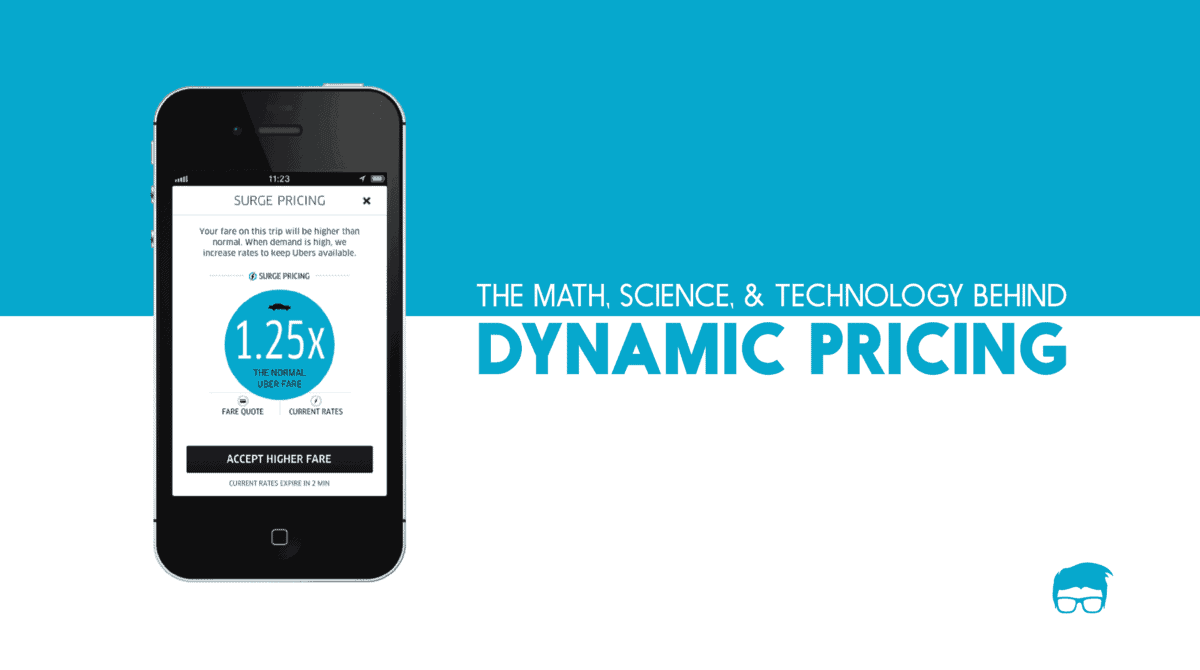
    The Math, Science, & Technology Behind Dynamic Pricing

    Imagine this scenario: you want to buy a product from an e-commerce website, but after researching for the best product that fits your needs, you just put it in your wishlist/cart and don’t check out. A couple of minutes later, you find advertisements on your social media of the exact same product; you click on it, but the product has a different price now. Sounds familiar? Well, this smart pricing strategy is dynamic pricing.

    What Is Dynamic Pricing?

    Dynamic pricing (also called real-time pricing, surge pricing, or time-based pricing) is a technique that focuses on setting the price of the product according to its demand and supply but in a smaller time frame. The other factors that are taken into consideration are competitor pricing, the perception of the customer, and the brand value.

    Speaking in terms of money, it basically is the price set by the vendor (typically online) that it perceives the client will be able to pay for the service provided.

    The Math Behind Dynamic Pricing

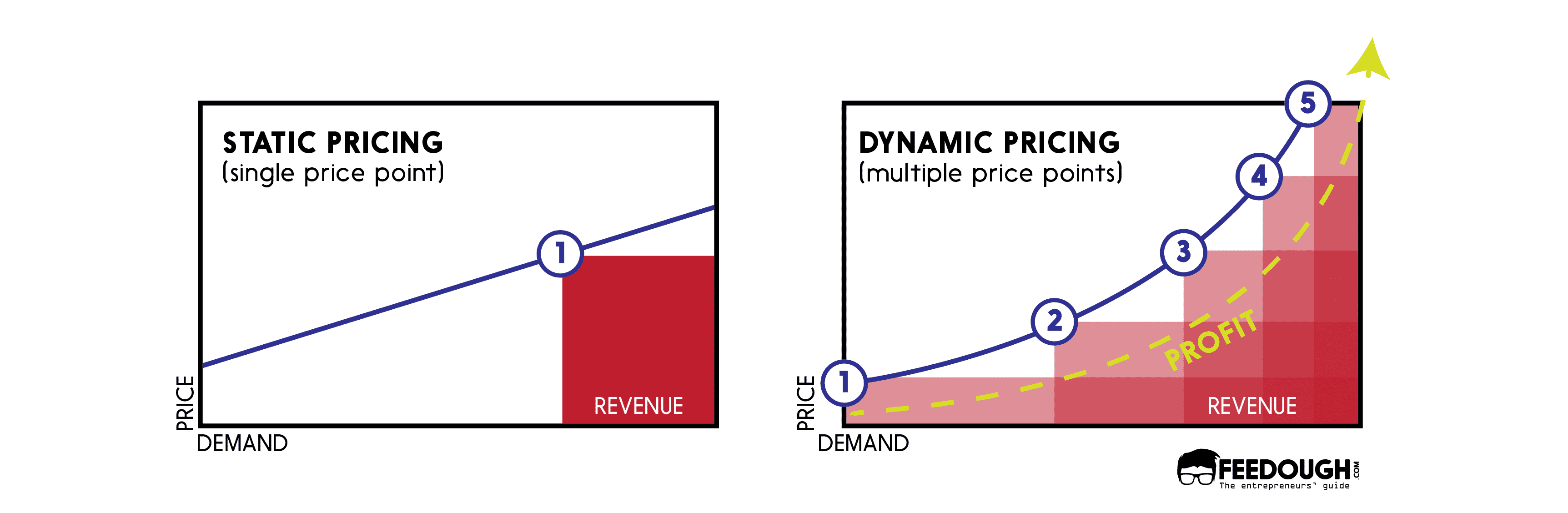
    The Math behind dynamic pricing is quite simple. It is a game of markup pricing (Basically, the profit margin from a single product that you sell). Depending upon the market, the markup percentage varies.

    dynamic pricing graph

    Now since there are multiple price points in dynamic pricing, the resolution of pricing is higher and a product can be priced accordingly to gain maximum profit.

    Further, to find out how much you can vary the markup of your products, you need to keep in mind the market you are competing in:

    For a monopolistic market (a market scenario where one single firm dominates sales), the markup percentage can be as high as 1000%. Since no competitor has a role on the pricing, pricing in monopolistic markets can be the most dynamic based solely upon the market demands.

    For an oligopolistic market (a market where a few firms dominate the sales), the markup percentage is high too however, the pricing depends upon the decisions taken by one of the firms. Thus, pricing of competitors plays a huge role in an oligopolistic market. Examples: Airlines.

    For a perfect competition (a market where a number of firms are competing for market share), the markup percentage is very less as these firms are fighting off competition to win market share and thus dynamic pricing hardly takes place in such markets. Example: Most FMCG (Fast moving consumer goods).

    Now we know why dynamic pricing exists in the first place. It is because markup percentage can be varied to get the maximum number of customers.

    Bottom line: You cannot fix a strict price and stick to it. A vendor calculates the fixed cost and variable cost and sells according to a suitable markup depending on the customer perception. That is the best strategy to gain maximum revenue.

    The question you probably are interested in is: How does a vendor decide whether to hike price or not?

    The Psychology Behind Dynamic Pricing

    You probably are thinking that dynamic pricing is a relatively new concept and came into power only after the e-commerce boom. Well, it is not entirely true. Although it came into public notice after the e-commerce boom, its roots were deep into retail since the very beginning.

    Offline retailers have long been practising dynamic pricing. They would decide on a total expense to total revenue ratio and stick between the two. (That is probably where bargaining was introduced too) This relatively old technique has adopted various techniques to get on a flexible price range but the cornerstone has always been the principle: To obtain maximum revenue.

    Now: Dynamic pricing is more prominent on online platforms than their offline counterparts. The reasons are simple: The online market is more agile and is able to access your information easily. But is demand fluctuation the only reason for price variation?

    You bet not.

    Online portals have access to your cookie data, your location and your device details. They weigh in these factors to see how much you can shell out for their services. For example, when you check multiple websites to book a flight ticket or a hotel room, the website checks your cookies to see if you really want to book their services or if you are just browsing them. When they are sure you are going to book their services, they craft a price for you based on how many seats are left, what location you are booking from, what device you are using. This helps them determine how much you are capable of shelling out.

    Now, this might seem close to personalized pricing, a technique used to handcraft prices for a loyal customer or a big client. However, it is not. Dynamic pricing techniques are based on your behaviour and demand fluctuations but it hardly hits the point of personalizing based on the client. That department is handled by personalized pricing.

    Dynamic pricing takes a lot of your data into factor and determines the price that will help the vendor gain maximum profits.

    The psychology boils down to simple points: If your browser history shows some expensive purchase or you are ordering from an expensive device or from an expensive locality there is a high probability that you might be paying more than the average Joe.

    The Technology Behind Dynamic pricing

    Now, Dynamic pricing incorporates a lot of technology to get a dynamic range of prices. Let us begin with the basics.

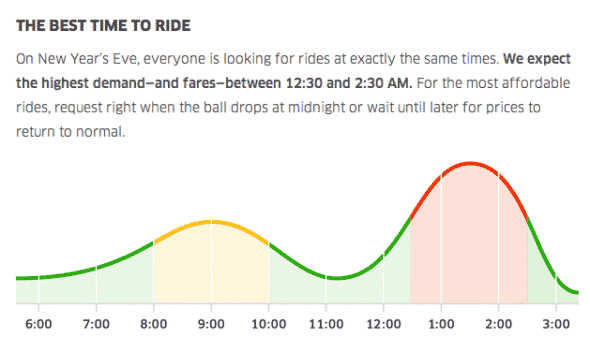
    We all know the infamous dynamic surge pricing used by Uber. Now, even though the algorithm isn’t made public it is known to be fair and works on the principle of demand surge. The higher the demand: the more price you are likely going to pay. Here, is a sample plot of how surge pricing works during the New Year’s Eve:

    When e-commerce websites target a prospective customer and realize that the individual has a need for a particular product but hasn’t been converted into a customer, they remarket their products. This is possible by offering decent cuts into the previous prices to convert the window shopper into a customer. How exactly do they convert customers? They use remarketing.

    Here, to remarket a potential customer, the individual’s cookie data is analyzed and along with tools like Google Adwords and Facebook Pixel, a discounted price is generated that will likely entice the individual. Dynamic pricing works here, determining whether an individual would buy the product upon the change in price or not.

    Many auction ecommerce stores like eBay and dealdash also use dynamic pricing to get the most out of their customers. Their special algorithms increase the price of the product with each bid made and sell it to the customer with the most unique bid.

    Why Should You Go Dynamic?

    In simple terms, it is the way to move forward. A rigid marketing strategy allows less to none degree of freedom and thus is unable to capture a large prospective customer base. Since the online retail market is immensely flexible and the competition is ever rising, dynamic pricing is the edge you would require to outpace your competitors.

    Go On, Tell Us What You Think!

    What do you think about dynamic pricing? Would you implement it in your business model or would you let it pass? Let us know in the comments.

  • What Is Price Anchoring & How It Works?

    What Is Price Anchoring & How It Works?

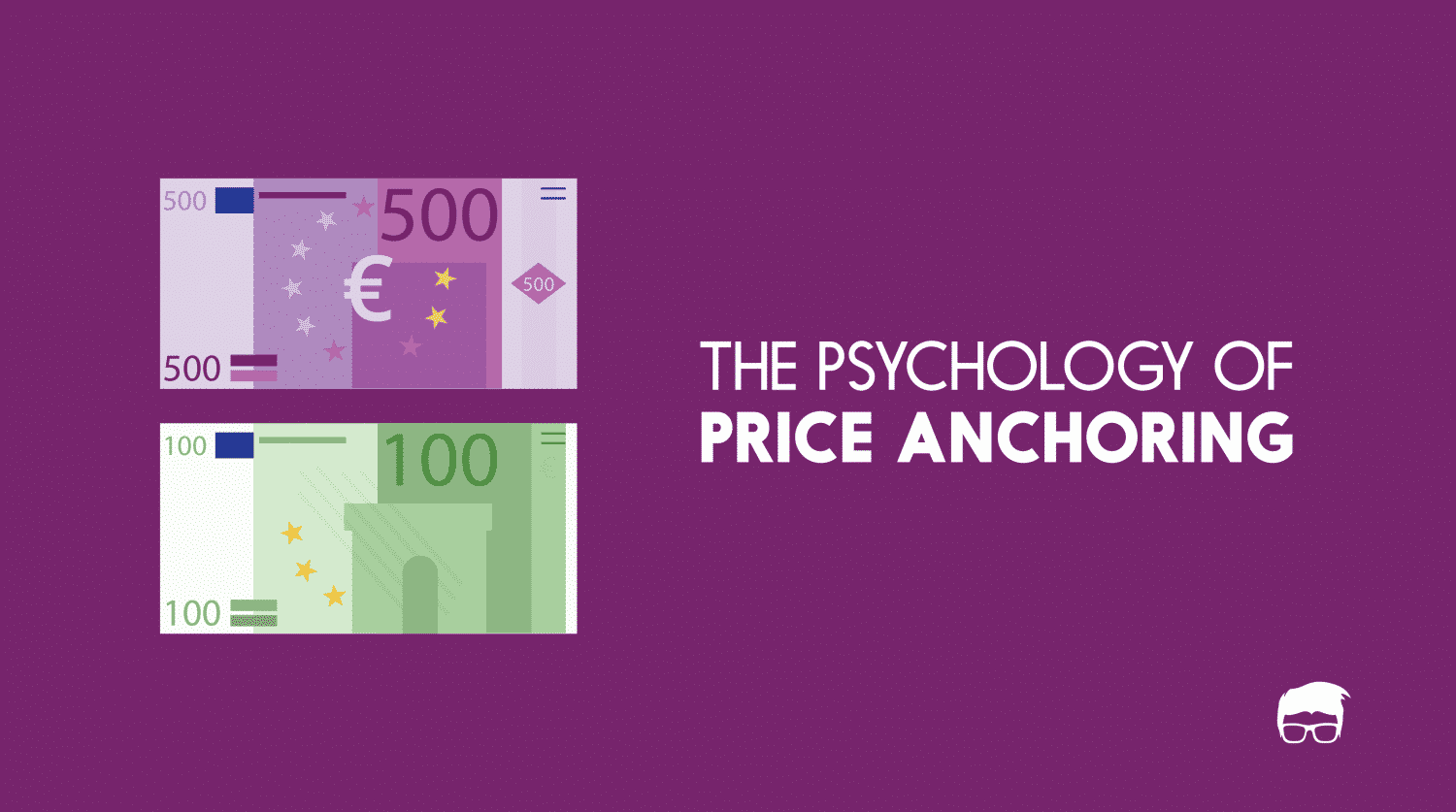
    Apple aficionados will remember with a mixture of fondness and awe the day Steve Jobs introduced the iPad. After touting the revolutionary features at length, he came to the price. According to the pundits, he said, Apple should price the iPad at $999 – and a giant $999 appeared on the screen behind him. Moments later, the $999 was flattened by the actual price that came crashing down – $499. The customers were delighted – as was Apple! They had just pulled off one of the oldest, yet most successful pricing strategies – price anchoring.

    What Is The Anchoring Bias?

    The anchoring bias is a cognitive bias well-known in pricing, negotiation and other contexts. It describes the tendency to rely heavily on the first piece of information offered in an interaction. This initial information, or anchor, establishes a frame of reference and decision makers base their decisions around that anchor.

    The anchoring effect is widely recognised – so you might expect experts to be immune to it.

    Surprisingly, they’re not.

    In an often-cited study, researchers Greg Northcraft and Margaret Neale asked real estate agents to inspect a house and estimate its appraisal value and purchase price. Northcraft and Neale manipulated the house’s list price, providing high and low anchors. All of the agents ended up presenting estimates influenced by the list price – even though they denied factoring the list price into their decision.

    A similar study was conducted by Thomas Mussweiler with German mechanics who were asked to estimate the value of a used car. Their answers were significantly lower when given a low anchor, and higher when given a high anchor.

    The reason for this lies in the fact that every item has both positive and negative qualities – high anchor prices direct our attention towards the item’s positive attributes, while low anchor prices direct our attention towards the item’s flaws.

    How Does Price Anchoring Work?

    A common saying in the world of pricing goes “How do you sell a $2000 watch? Put it next to a $10000 watch.”

    The essential idea behind this is that customers perceive pricing relatively. An item is perceived as cheap or expensive in comparison to the initial price point or to another item whose price they knew about first.

    In the case of the iPad, the initial price flashed was $999, which registered itself in the minds of the customers. Then, when the price was revealed to be $499, customers felt like they had saved $500. In fact, none of the customers knew how much the iPad was actually worth – it was the initially high price anchor that made them feel like the iPad was a steal. Had the initial price flashed been, say, $399, customers would have felt like they were losing out, even though the final price offered, either way, would have been $499. This is why companies often present their products with two prices – a recommended retail price that has been crossed out, and a lower sale price next to it. Customers feel like they have scored a bargain.

    For companies that have multiple product offerings, price anchoring can work in two ways.

    • High price anchor – An electronics company could price a 50-inch flatscreen TV at $1000, and a 48-inch flatscreen TV at $600. Customers will tend to buy more of the 48-inch TVs, since they can save $400 by buying a TV that’s only 2 inches smaller. The idea is to price a slightly more premium product considerably higher than the product you actually want your customers to buy, so as to drive traffic towards the latter product.
    • Low price anchor – A data subscription service could price the 500MB/day package at $14.99 a month, and the unlimited data package at $29.99 a month. Today’s data users need far more than 500MB per day – the unlimited data package thus seems like a steal, at only $15 more than the 500MB package. The idea is to price your product slightly above a much more basic product, so that customers feel like they are gaining much more by paying only slightly more.

    What’s The Catch?

    At times, the anchor may not be in your control to set. This is particularly true in the case of virtual offerings such as newsletters, ebooks, software and video/audio. Given that most of these can be downloaded for free, the anchor price is set at zero, which means that most customers may not be willing to pay for your offerings. In other cases, customers may be aware that your products are available more cheaply on Amazon or other online retailers, and hence hesitate to buy from you.

    However, this doesn’t mean that you’re out of the game! A couple of tips can help you tilt customer preference in your favour:

    • Freebies – For some virtual products, you just can’t expect customers to pay. Offer them as welcome gifts for subscribing, or as free gifts for making another, more valuable purchase. Another option is to offer unlimited access during a 30-day free trial.
    • Bundle products – This works for both virtual and physical products. Bundle free ebooks/software with premium virtual offerings to create an “irresistible” deal, and throw in auxiliary products/accessories for free with the premium products you’re selling.
    • One-time-only strategy – Customers love discount coupons, and limited period offers increase the sense of urgency and thus the likelihood that a purchase will be made. Provide them with a discount coupon valid for, say, the next 24 hours – and redeemable on a range of products you want them to buy.

    Bottom Line?

    Price anchoring is a powerful weapon in the marketer’s arsenal and like all powerful weapons, it needs to be deployed with skill and thought. By carefully selecting the price anchor to incite customers towards the product and price point you want, you’ll have in place a great strategy to generate revenue, time and again.

    Go On, Tell Us What You Think!

    Did we miss something?  Come on! Tell us what you think of this article on price anchoring in the comments section.

  • Payment Gateway Business Model | How Payment Gateways Work?

    Payment Gateway Business Model | How Payment Gateways Work?

    By the end of 2018, the total e-commerce sales worldwide are expected to touch USD 2.8 trillion. This number is projected to go up to USD 4.8 trillion by 2021. Given this rapid proliferation in digital shopping across the world, it becomes imperative for both new and existing e-commerce businesses to provide efficient and secure payment facilities to their customers. Payment gateways stand out as a fast and easy way for transaction information to pass from a payment portal to the acquiring bank. Before delving into the payment gateway business model, it would be useful to understand what exactly a payment gateway is.

    What Is A Payment Gateway?

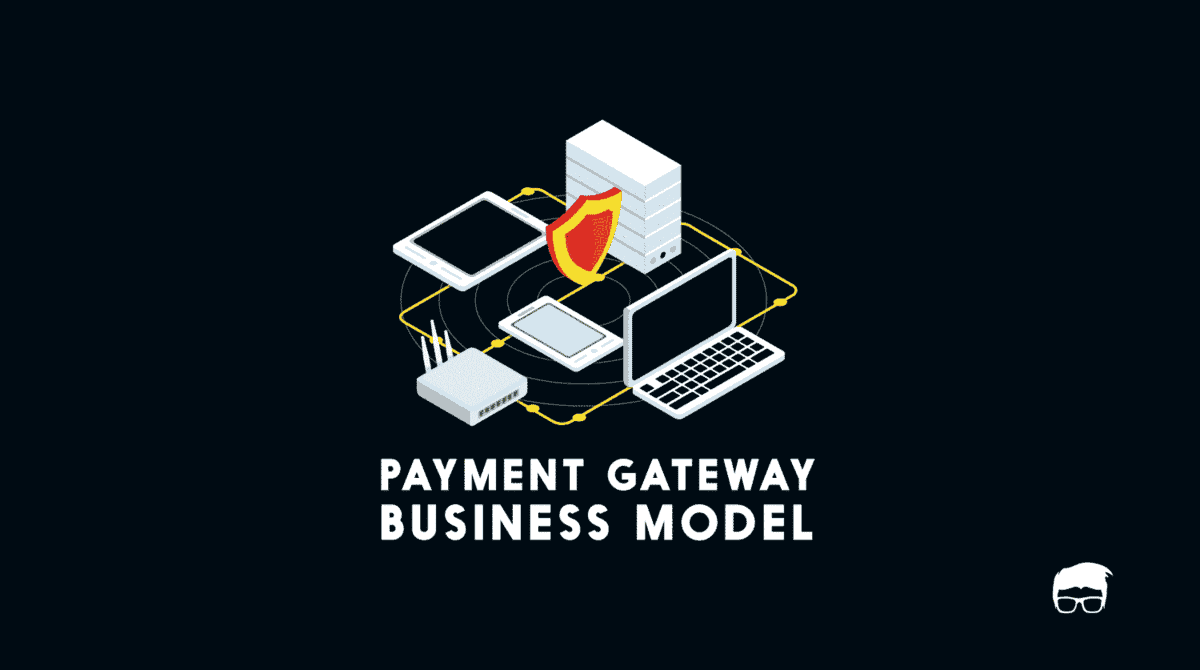
    A payment gateway is an e-commerce service that authorizes credit card or direct payments processing for online businesses, bricks and clicks, or traditional brick and mortar sellers. It is essentially the virtual equivalent of the point-of-sale terminals at physical stores.

    In simple terms: A payment gateway is a service that sends credit card or direct payments information from a front-end portal (website, mobile application, etc.) to the banks’ payment networks for processing and authorization, and returns the transaction details and responses from the payment networks back to the front end.

    The payment gateway may be provided by a bank to its customers, or by a specialized financial service provider as a separate service, such as a payment service provider (popular ones include PayPal, CCAvenue, Amazon Payments, Paytm, and PayU). It ensures that money is transferred seamlessly and securely from the customer’s account to the merchant’s.

    How Does A Payment Gateway Work?

    PAYMENT GATEWAY BUSINESS MODEL HOW PAYMENT GATEWAY WORKS

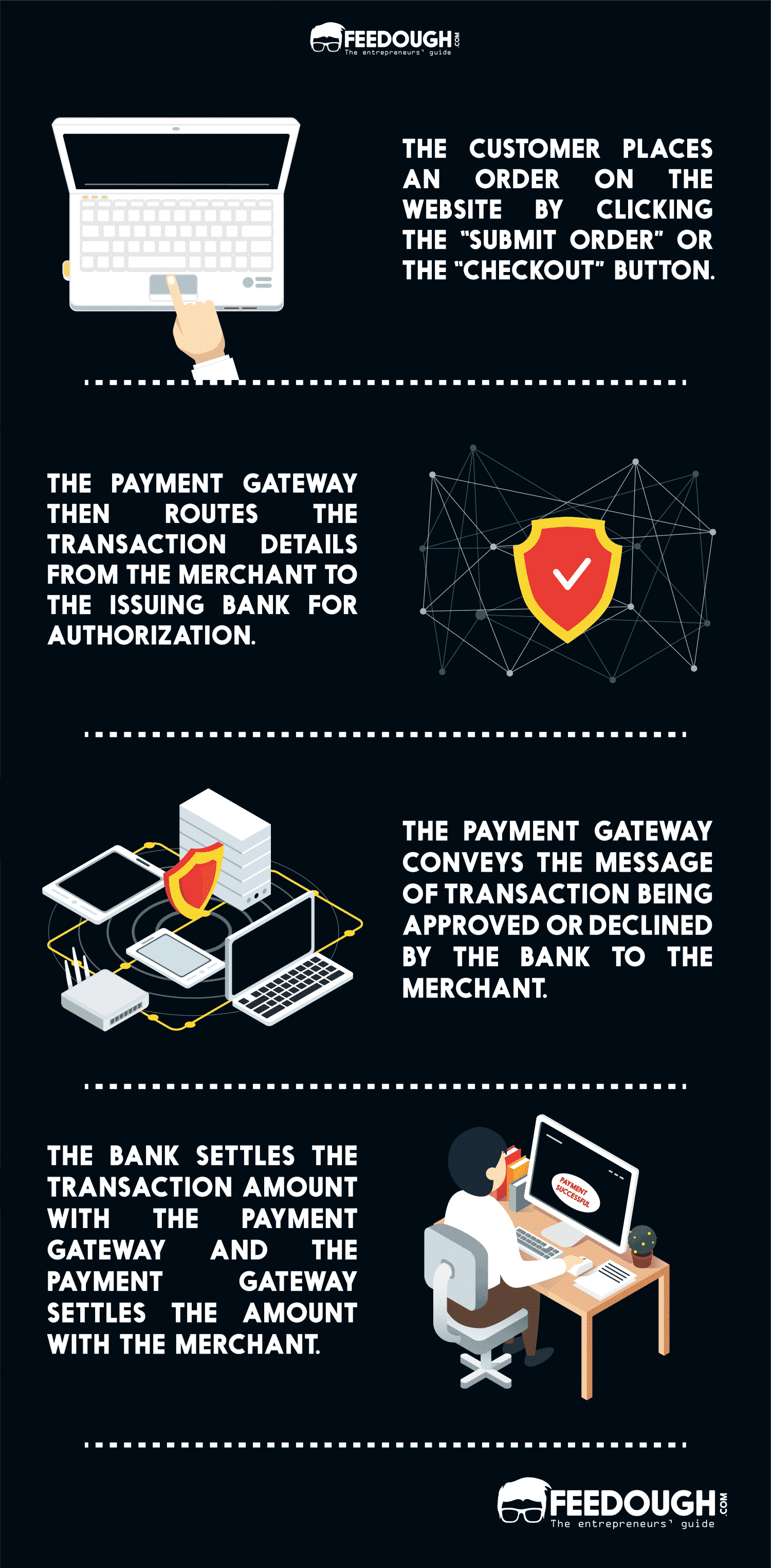
    The basic method by which a payment gateway works can be outlined as follows:

    1. The process begins when a customer places an order on the website by clicking the “Submit Order” or “Checkout” button.
    2. The merchant securely sends the details of that customer’s transaction to the payment gateway. This is commonly done via SSL (Secure Socket Layer) encryption. The payment gateway then routes the transaction to the issuing bank for authorization.
    3. Once the transaction has been authenticated, it is approved or declined (based on the funds available in the customer’s account) by the issuing bank. The payment gateway then conveys this message to the merchant.
    4. The bank settles the transaction amount with the payment gateway and the payment gateway settles the amount with the merchant.

    How Does A Payment Gateway Make Money?

    Equipped with this understanding of how payment gateways function, we can now examine their sources of revenue.

    1. Transaction Discounting Rate (TDR) – Every transaction that is successfully routed through the payment gateway infrastructure is charged with a transaction processing fee known as the Transaction Discounting Rate, or TDR, expressed as a percentage of the transaction value. The TDR differs based on the mode of payment selected by the customer, such as credit/debit card, Internet banking, digital wallets like Paypal, or prepaid wallets like Paytm and Amazon Pay. Some payment gateways offer a model where a fixed monthly fee is charged apart from the TDR – however, the TDR is lower in this case. This model is suitable for businesses with higher volumes of transactions. Other payment gateway models involve no fixed rates but a high TDR.
    2. Charges on international transactions – Many payment gateways charge a higher TDR for transactions involving multiple currencies.
    3. Maintenance and support costs – Businesses that open accounts with payment gateways are charged annual maintenance costs as well as fees for technical support.
    4. Setup fees – Setting up a payment gateway account often involves a setup fee that varies from gateway to gateway.
    5. Insta Pay – Some payment gateways such as Instamojo and PayU offer offline retailers the option of collecting payment via credit/debit card or other online payment options by generating a link that the buyers receive over email or SMS and clicks to pay. A TDR is also charged for such transactions.

    Go On, Tell Us What You Think!

    Did we miss something? Come on! Tell us what you think about our article on Payment Gateway Business Model in the comments section.
  • Did QR Codes Really Fail?

    Did QR Codes Really Fail?

    Do you wake up, watch the news and feel that you do not belong to this era? Is the society too primitive for you? Well, you are going to get a very relatable feeling from QR code’s story then.

    QR codes have been a hot topic for debate in the marketing world since their introduction to the market. With many experts claiming that QR codes were one of the biggest failures in marketing strategies, QR has seen some tough time in the market.

    So the question goes here: Was QR an absolute disaster?

    A Brief About QR Codes

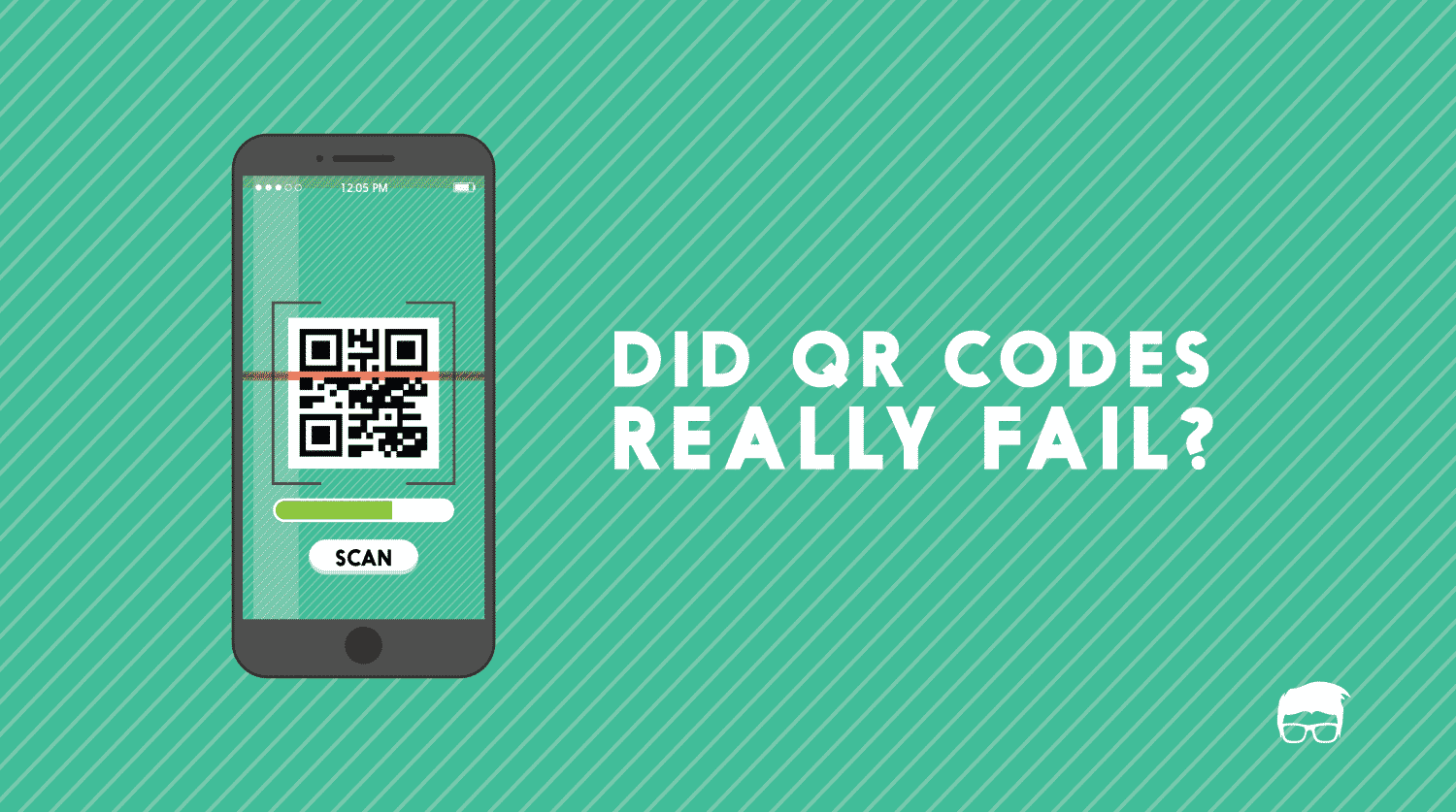
    Introduced in Japan in 1994 by ‘DENSO WAVE’, QR codes were introduced to tag automobiles during manufacturing (Oh and QR code stands for Quick Response code). The base principle of QR codes works on a similar logic to that of a barcode. The black and white pixels represent 1s and 0s of digital logic and upon sequential arrangement make a valid data entry for the system.

    You’d ask why would it be popular if it was just a modern bar code. Well, here is the thing: QR is a 2-dimensional upgrade to the standard barcode system. A barcode can handle up to 10 characters but since QR stores the data in rows and columns, the data stored can be increased manifolds. Pretty neat if you ask me.

    Introduction Of QR To The Marketing Industry

    Soon after QR was introduced, it was sought after as the next big thing in marketing during the smartphone boom. QR codes were used to generate digital advertisement although through printed media. QR codes were encoded with links to videos/ interactive advertisements which were more engaging than the standard motionless content available on posters and banners.

    This was seen as the next big thing and marketers flocked to the idea of trying their hand on QR marketing strategies. This was the boom moment; people already thought QR would take away their orthodox marketing strategies away. Marketers were perplexed, people were excited. I remember when they were introduced I was pretty pumped up, were you?

    Flaws In The System

    Initially, the target audience was set for the experimental masses and because of the curiosity among the common public, QR marketing strategy seemed like a success. However, most marketers didn’t weigh in the market response that was to follow. The two driving questions from people who were subjected to QR marketing were:

    1. How should I see this?
    2. Why should I do this?

    Look: When QR codes were introduced, not a lot of cellphones came in loaded with QR Scanners thus most QR advertisements never even reached the target audience. When phones did start rolling out with QR Scanners, QR codes were deemed obsolete and were already shown the exit. Thus, a vast majority of the target audience was lost due to this reason. You probably faced the same issue, didn’t you?

    The second major reason was that most people exposed to QR were very unenthusiastic about it. Watching a QR advertisement essentially meant getting your cellphone out, opening the QR Scanner application, scanning the code properly and waiting for the internet to respond (How tedious is that).

    Now:  To a regular passerby who hardly had time, the essential priming that images do wasn’t possible here. To watch an advertisement, each individual had to put in an effort as contrary to the standard procedure of putting in efforts to avoid advertisements. Also if an individual was really interested in knowing about a poster or advertisement he saw, he could just Google the keywords and Google’s algorithms would take him show him the exact link without the effort of scanning the QR code.

    QR Code Beyond Marketing

    What if I told you that Java had met a similar fate when it started out? (Yes, you read correctly. The big and mighty Java we now know) It was intended for smart television monitors but the monitors during Java’s incubation period were way too primitive to implement Java (Talk about existing ahead of time). Java was thrown out but it came back up stronger than ever. Was QR really having an untimely death?

    Bottom line: QR codes were rejected by creative marketing heads but were widely accepted by instant messaging applications. Applications like BBM, Snapchat, and Messenger took them up and introduced them as a way to quick connect. ‘Snapcodes’ and ‘BBM me’ became a common lingo. This gave users the advantage of connecting with people without giving away their personal information.

    Peer to peer data transferring applications used QR codes as a method to connect devices to share information. You probably would’ve used QR codes to connect while using Xender or ShareIt.

    Now: after the boom of e-wallets, quick payment was introduced which ran on QR codes. Buyers could easily pay money by scanning the QR code of the vendor. This resulted in an increased sense of comfort to use QR codes. With this, QR is now synonymous as quick connection tool without manual input of data. It may come as a surprise to you but China, an obvious giant in the mobile payments sector has majority of its transactions with the help of QR connect and the numbers are staggering. It is projected that the transaction volume would reach RMB 295.99 trillion ($47 trillion) in 2019. Mobile wallets like PayTM in India are showing great promise and vendor to seller transaction usually takes place through QR codes. Recently, Venmo has introduced QR codes to share and split bills and this would take transaction ease to the next level in the US.

    QR codes have even found an important place in the cryptoassets industry where businesses and users use QR codes to securely transfer cryptoassets among wallets.

    Thus, though QR faced defeat in the marketing sector and didn’t work out the way it was expected to be, it still is one of the most important tools used today and it cannot be counted as an utter failure. It is a huge upgrade to the previous technology and thus should not be counted as a failure.

    Go On, Tell Us What You Think!

    What do you think about QR codes? Is it a useless piece of tech you could do well without? Or is it something that is really needed? Let us know in the comments below.