Consumer products satisfy the needs, wants, and desires of the ultimate users. These products are further classified into four types based on the efforts involved in purchasing: convenience products, shopping products, speciality products, and unsought products.
While habits influence the purchase decisions of some products, some products require special attention before the customer buys the same. For example, before buying a pair of shoes, a customer tries out different brands or a variety of shoes. It is a similar case with mobile phones where a customer compares different ranges and available brands. In both cases, customers put in their efforts, probe various alternatives, and select the best possible for them.
Let’s find what shopping products are, their characteristics and types, and how they are different from other types of consumer products.
What Are Shopping Products?
Shopping products are the infrequently purchased consumer goods that demand time, planning, effort, and resources from customers at the time of purchase.
Unlike readily available convenience products, the dispersal of shopping products is through selected channels or limited outlets.
For example, while purchasing clothes or fashion apparel, customers try different styles and compare their quality, material, and price before deciding. It’s a similar case with furniture and electronic gadgets where the customer weighs attributes of a variety of similar products before purchasing the product.
These products witness non-regular purchases and usually have high prices per unit. Hence, the customers compare products’ attributes such as quality, price, and style with their alternatives and spend some time before making the final purchase decision.
Moreover, shopping products are not consumer necessities, so these products are selectively distributed and marketed to a targeted audience.
Characteristics Of Shopping Products
Shopping products have some common characteristics that differentiate them from other types of consumer products. These characteristics are as follows:
Infrequent purchases: Shopping products don’t usually find a place in daily use of the customer, or they’re durable or semi-durable, so the customer doesn’t buy them often. These are usually purchased when there is a need to replace the old one, and the customer has enough resources and time to make efforts and buy the product.
Short but selective distribution channel: The shopping products are not extensively available. The manufacturers generally supply them only at limited outlets, implying that the customer needs to put extra effort into acquiring the products.
Advance purchase plans: The customer’s regular purchases do not include the shopping products. Moreover, since these products generally involve high costs, the customers usually plan their spending capacities, product expectations, and requirements before surveying the available options.
Relatively elastic demand: Shopping products do not constitute the customers’ basic necessities, so even a slight increase in their prices affects their demand significantly. Also, if the substitutes are available at comparatively lesser prices, it may shift the customers to purchase the competitor’s product.
Slow buying process: The customer invests a lot of time and effort in selecting the best feasible alternative as he compares the product based on price, features, design, service, and most importantly, value for money.
Good sales support: The sellers are aware that the customers do not usually have sufficient knowledge vital for purchase decisions, so they deploy their human resources to assist customers in the selection process.
Usually not standardized: Each product brand offers unique features, so they usually do not follow a set of level, quality or standard. For example, mobile phones offered by company ‘X’ would vary from those offered by company ‘Y’, although the basic functions of every mobile phone are similar.
Types Of Shopping Products
Based on their uniformity with other same segment products, shopping products are classified into two types; heterogeneous shopping products and homogeneous shopping products.
Heterogeneous Shopping Products
Unique shopping products that have dissimilar characteristics are heterogeneous shopping products.
A customer can differentiate between two heterogeneous shopping products based on specific attributes like size, color, processor, display, etc. For example, it’s easier to distinguish between two variants of jeans based on colours, size, fitting, etc. Moreover, the customer is more likely to buy the jeans that he requires more. That is, they’ll buy black jeans if they were already looking for such colour.
Hence, attributes and needs affect the customers’ buying decisions more than any other factor.
Homogeneous Shopping Products
Homogenous products are shopping products with similar quality. Such products seem alike and fall under the same category. However, they might differ based on brand image, brand positioning, style, suitability, price, etc.
Homogeneous products are often close substitutes for each other, so it is often hard for the customer to differentiate them based on attributes alone.
For example, laptops with similar attributes are hard to differentiate. However, customers often bring in external emotional and psychological attributes like brand image, brand experience, social validation, etc., to distinguish them and make a purchase decision.
Moreover, some customers even weigh the value they get with the price they pay for such products to assess their true worth. For example, a customer may choose a lesser-priced product when two brands offer similar features for different prices.
Shopping Products Vs Speciality Products
Speciality products are extravagant consumer products that witness a status-driven purchase. Unlike other types of consumer products, these products reflect the consumer’s lifestyle, prestige, and stature. Hence brands selling speciality products target the upper-class section of society. These products are distinctive based on features and functionality and therefore have a remarkable brand image in the market and customers’ eyes.
Examples of speciality products include luxury cars, equipment, designer clothes, luxury accessories, etc. A status-oriented customer will purchase these products without any second thought or comparison because of habit, previous experience, and brand loyalty.
Shopping products, on the other hand, are infrequently purchased consumer goods. Brands selling these products usually target the middle-class section of society because such customers weigh their needs and wants with the price of the products before the purchase.
For example, a customer often weighs the price and features of different washing machine brands before selecting the one.
Go On, Tell Us What You Think!
Did we miss something? Come on! Tell us what you think about our article on shopping products in the comments section.
As a startup founder, you must understand that entrepreneurship is not a bed of roses. It is 50-hours workweeks, endless sacrifices, and years of little or no income from a business that demands numerous resources. Because of this, startup founder salary is a highly debatable topic.
Is it wise to pay yourself when your startup demands this many resources?
The idealistic view says that startup founders must take risks and should not be rewarded unless their company starts making money. It believes in uncertainty being a key factor in entrepreneurship and that constant pay may damage the whole idea. Also, when founders’ salaries are scooped out of the treasury, the startup is left with fewer resources to function on. Therefore, paying founders doesn’t seem sensible.
This is somewhat true as well. Startup founders are not entitled to a salary; however, CEOs are.
In other words, although founders do not deserve salaries, whoever is on your startup’s payroll should be paid. So, if a founder or cofounder works as their startup’s CEO, COO, CTO, CMO, or in any other role, they deserve remuneration for their services.
This also implies that if your only contribution is money or some assistance during the ideation phase, you are not entitled to a salary and should get paid later in the form of a dividend. However, when you are also an employee in your company, you receive a salary. Besides ensuring accountability in the future, this makes sure that you don’t get inclined to drop midway because of not being able to make both ends meet or because your ‘paying’ job makes it difficult to manage the startup. Remember that a startup takes years to become profitable; you cannot starve till then.
So, if you had any doubts about taking a salary, shed them now and start thinking about how much you want to pay yourself.
How Much Should You Pay Yourself As A Startup Founder?
Now that you know how important it is to draw a salary, you have to figure out the amount as well. The process is usually difficult for first-time founders, especially because of the complexity of the deciding factors.
The State of Cash Flows
The amount of cash that flows into a business determines how much flows out of it. So, your salary as a founder depends on the state of your startup’s cash flows and not on its profitability. Also, while deciding your pay, you need to account for the source of investment, that is, where the money is coming from – your personal account, investors’ pockets, or the revenue generated by the company.
Founders of bootstrapped startups don’t need to pay themselves. As great as it feels to receive money out of your own business, it is usually impractical and will just lead to a portion being lost in taxes.
Suppose you put $50K in a business and decide to carve $5K as salary, you effectively put $45K into the business, right? Wrong! A portion of that money goes to the government. So, it’s better to invest $45K and let the additional $5K stay in your bank account. You may start taking a salary when your business raises enough capital.
Founders of funded startups may start to pay themselves provided that they are on the payroll. However, you cannot expect it to be at par with the market standards. Remember that every dollar you receive could have been used for your company’s growth. So, ask only for the amount that you need.
Talk to your board upfront about the salary. Make sure that you don’t ask for too much or little. While a very small salary may lead you to starve and hamper your productivity, a huge sum will give the impression that you are more interested in filling your own pockets than working for the company.
Your salary also depends on the amount you have raised. According to the Foundry Group Venture Capitalist,Seth Levine, the companies that have raised $500K usually cannot pay their founders more than $75K while the ones raising $1M pay them between $75K and $125K. The businesses that are funded between $1M to $2.5M pay their founders above $125K. It seems that companies pay 8-12% of their funding to their founders.
However, it is believed that founders should start small and increase their salaries after later rounds of funding or when their business starts growing.
As your startup starts growing and generating revenue, you may start increasing your salary or decide on bonuses and perquisites for yourself. The best way is to tie your remuneration to achievable growth milestones and work accordingly. Keep in mind that these rewards are essential to incentivise you and keep you focused.
Profit-generating startups are a rare sight. Even giants like Google and Amazon took years before becoming profitable and even then, their founding workers take salaries. Just like it is mandatory to pay regular employees, it is mandatory to pay founding employees as well. Law enforces it in a few countries. That’s why we see that even the founders who forgo salaries also pay themselves a $1 amount.
The Stage and State of the Business
Have you just started developing your MVP, or is your business already in place? Are you still an early-stage venture, or have you matured? Have you reached the break-even point? Are you big enough to start on the expansion journey?
You need to assess the current state of your venture properly before determining your salary. Owners of mature companies can pay themselves more than growth-stage startup founders even when both generate good revenue.
It is typically seen and suggested that founders start small and raise their salaries after their business hits a few specified milestones or after each round of funding. Therefore, the assessment of your company’s present state is somewhat important when determining your salary.
The Industry Standards
One of the best ways to set a reasonable remuneration amount for yourself is to go by industry standards.
Look at your competitors and determine what they are paying an employee in a similar role. This benchmarking will help you figure out your opportunity cost, that is, the amount of salary money you have forgone to start your own company.
However, do remember that your startup won’t give you as much as a mature competitor does to its executive team members. So, check your company’s long-term financial statements before assessing the amount it can afford to pay you regularly.
Other Factors Determining Salary of Entrepreneurs
As you would have figured out by now, entrepreneurs don’t always earn big bucks. Even Amazon’s founder, Jeff Bezos earned around $81,840 as a salary in 2020. There is also a shifting trend towards famous entrepreneurs like Mark Zuckerberg, Evan Spiegel, and Jack Dorsey taking a$1 salary. On the other hand, Mukesh Ambani paid himself INR 4.36 crores in the financial year 2019-2020, that is, around$596,000.
It may seem that there is no relation between the revenue generated by one’s business and their remuneration but that’s not the case. There is a strong positive correlation between the two. However, there are also various other factors into play.
Your Current Financial Condition
The reason why a few big corporate founders and CEOs don’t take a huge salary is that it isn’t their only source of income. They earn through their investments and other personal revenue-generating activities.
Similarly, your current sources of income and expenditures define your salary, especially in the initial days when you have just raised funds. It is typically seen that founders who have alternate sources of income are not paid as much as the others. Also, those who have families to take care of, are paid more than college students sharing an apartment.
So, you need to make a fair assessment of your current financial situation before talking to investors about salary. List down all your sources of income and expenditure; don’t forget to consider loans and taxes. Also, see if you can cut down on unnecessary expenditures. No need to stifle reasonable human aspirations but also don’t expect a lavish lifestyle when you own a growing company. Know that your early-stage startup will pay you less than the MNC you used to work for.
Anyway, even when the business starts growing, it won’t pay you much in the form of salary. Capital gains is what you should strive for and this will happen only if you invest enough time and resources in the company.
The Work You Do
Founders are paid only when they work as employees. Non-working founders do deserve equity and dividends, but it does not entitle them to a fixed remuneration each month or week. So, if your only contribution is money and/or some assistance during the ideation phase, you don’t get a salary. You need to be on the business’s payroll for that.
This makes it important to account for the duration that you work when calculating your salary. Track the average number of hours you work and then compute your salary. You can also fix an hourly wage rate if you want to.
Your Preferred Employee Compensation Rate
As already mentioned, founders are paid only when they work as employees, not because they started the company. So, a high founder salary sets a high baseline for others as well.
Suppose you have just raised capital and are using it for the development of business. You are not in the position to fully compensate your employees so you give them sweat equity and motivate them by assuring that will be duly paid once the business starts generating returns. Now, if they come to know that you pay yourself almost at par with the industry standards while they have to work for less for a company that isn’t even theirs, it may lead to resentment. They might lose faith in you and your company.
Therefore, you need to set a lower salary baseline. Also, you may have to pay more when hiring more experienced people.
Understand that being a founder doesn’t entitle you to a higher salary than everyone; growing your business by being a better employee does.
The Tax Factor
Tax is one of the most crucial factors to consider when drawing founder salary, especially in mature companies. The salary amount, frequency, and the way you withdraw that money affect your tax amount. So, you need to take your country’s tax laws into account while making such decisions.
For instance, in the United States, IRS treats profit from your business the same as personal income when you own a sole proprietorship or a joint venture. However, it doesn’t want you to take a modest salary and extract the leftover amount as dividends as the latter are taxed lower. Sometimes, too much profit on the balance sheet stirs gossip so it becomes mandatory for founders to take a decent remuneration even when they have enough money to live without it.
Some Startup Founders and their Salaries
The following table represents the salaries of a few of the most notable tech companies’ CEOs during their IPOs.
Company
CEO/Major Founder
Salary Compensation
Bonus/Other Compensation
Options Compensation
Total Compensation
Amazon
Jeff Bezos
$64,333
$0
$0
$64,333
Snapchat
Evan Spiegel
$503,205
$1,000,000
$901,635
$2,404,840
Netflix
Reed Hastings
$12,698
$0
$1,550,000
$1,562,698
WebMD
Jeffrey Arnold
$214,302
$6,000
$1,000,000
$1,220,302
Fitbit
James Park
$222,179
$80,000
$7,542,446
$7,844,625
Facebook
Mark Zuckerberg
$483,333
$220,500
$783,529
$1,487,362
LinkedIn
Reid Hoffman
$250,000
$211,055
$1,242
$462,297
Go through the table and assess the relation between a founding executive team member’s salary and their company’s cash flows. Although a huge inflow of cash means that the founding employees can take more money home, other discussed factors also come into play. Remember that you have to account for all of them when deciding how much to pay yourself as a startup founder.
How to Calculate Your Startup Founder Salary?
The following steps will give you a broad idea of how to go about it.
Assess the state of your startup and its finances. See if you are eligible for a salary or not.
Calculate your budget by accounting for all your sources of income and expenditure. Do account for tax.
Compute the amount you need each month, week or probably every two weeks to get by and that will be your salary.
Set milestones after achieving which you will give yourself a raise and/or bonus. This is a crucial incentive; so, outline realistic checkpoints and track them.
If you are the founder of a mature company, remember that your remuneration should be a healthy mix of salary, work-based bonus, equity, and additional options. Do account for salary baseline and tax here. You may hire an accountant for assistance.
Also, make sure that you consider all the factors mentioned above before deciding on your salary. This will help you avoid future hassles.
Go On, Tell Us What You Think!
Did we miss something? Come on! Tell us what you think about our article on startup founder salary in the comments section.
While dealing with today’s knowledgeable customers, brands can no longer expect to grab attention with simple advertisements or billboards. They need something unique and out of the box to stand out from the crowd. This is where brand activation enters the picture. Brand activation helps the consumer relate to the brand in a better way and as a result the brand becomes a part of their lives.
It’s the two-sided interaction between the brand and the customer where the brand develops experiences to stand out in the customer’s eyes.
Traditionally brand activation was perceived as a marketing gimmick. However, it has become necessary for the companies who want to connect with their customers and elevate their brand in today’s times. In this tussle for attention, brands bend over backwards to engage and interact with their potential customers.
Recently, Oreo built an asteroid-proof vault in Norway to protect the cookies from a potential asteroid attack, while Carlsberg launched a billboard dispensing free beer for the consumers. With companies going to such lengths to uplift their brands, one might be curious about what brand activation is and why it is so important.
What Is Brand Activation?
Brand activation is an active and emotive type of marketing carried out in the form of a campaign, event, interaction, or experience with an aim to induce customer action and build a bi-directional relationship between the brand and the customer.
The term can be better understood by studying the following keywords:
Active and emotive type of marketing: active marketing entails conscious participation by a company to promote its brand. It is when companies proactively reach out to consumers to connect with them and shape their brand image.
Carried out in the form of a campaign, or event: brand activation is carried out through a specific event or campaign.
To induce customer action: the purpose of brand activation is to essentially influence the consumer to act. ‘Action’ here means the company’s interaction with the consumer. Customers’ engagement and participation in brand activation events result in two-way communication.
And build a bi-directional relationship between the brand and the customer: companies aim to build strong personal relationships with the target audience by engaging with them. Brand activation helps the consumer to understand the brand in a better way, and as a result, it builds trust and loyalty between the consumer and the brand.
In other words, brand activation is an event or a campaign that makes it possible for a company to communicate directly with consumers and uplift its brand. It can be seen as an attempt to make the brand known among its target market or to drive consumer action by giving them a glimpse of what the brand is all about.
But, the term is often confused with brand marketing and other branding strategies. The difference between the two is that brand activation refers to a particular campaign or event. It can be seen as a specific activity to upgrade or elevate the brand of a company. Whereas brand marketing refers to the ongoing process of promoting or managing the company’s brand.
Objectives Of Brand Activation
Whether a brand has just launched or has some presence, a brand activation campaign can ensure that the company and the brand stay relevant and in demand. It can effectively help a brand increase its user base, change its image for good, garner attention from the audience, and bring the brand to life. Some of the objectives of brand activation are:
To increase visibility: Even if a brand is well established or has some presence, the company can organise brand activation campaigns to increase visibility and attract more customers. For example, the SC Johnson owned brand, Glade came up with a creative and fun sampling campaign to increase its visibility and attract customers. The company partnered with Walmart and transferred packing pillows into its product samples. The brand saw an 83% increase in sales on Walmart.com in the first week itself.
To enhance awareness: Most consumers do not recognise new brands and their products. Such companies can reach out to their target audience and increase awareness through brand activation. For example, Laive, a local dairy brand from Peru, generated 63,800 shares, 22,100 comments and 800,000 likes on social media. The company hired Italian drivers and placed them at some of the best-known restaurants. These drivers followed the delivery man of the said restaurants and gave their customers a complimentary parmesan cheese to enjoy with their meals. Through this activation, the brand generated awareness and garnered a huge amount of attention.
To build trust and relationship with the consumer: Another objective of brand activation is to build consumer’s trust in the brand and its offerings. Trust in a brand often leads to consumer loyalty, which leads to repeated purchases. The companies can even use this loyalty to increase sales by developing word-of-mouth and referral marketing campaigns.
To reinforce proposition: Brand activation enhances and reinforces the brand’s value proposition. Through brand activation, companies remind the consumers of their mission and vision. For instance, Nike, the American multinational corporation, organised a brand activation campaign wherein the company designed and distributed a doll-ball (a doll shaped like a ball) to inspire its audience, especially girls, to pursue sports. Through this campaign, the company interacted with its audience and reinforced its mission statement, that is, ‘Just Do It’.
To drive consumer engagement: Brand activation helps in creating a link or a bridge between the customer and brand, resulting in consumer engagement. Customer engagement refers to a customer’s willingness to actively participate and communicate with the brand. Consumer engagement and interaction is one of the most important objectives of a brand activation campaign. This kind of engagement can be distinctively seen when companies carry out activation through experiential marketing.
Types Of Brand Activation
The process of brand activation entails designing a specific event or campaign to achieve the desired result based on a predetermined goal. The campaign usually involves various touchpoints with the consumer. This means that, in comparison to other marketing strategies, the company will probably have to invest more time in research, planning, and execution.
Yet, like other marketing strategies, there are a lot of options at the company’s disposal.
Some of the most effective brand activation strategies are:
Experiential Marketing
Experiential marketing, also known as engagement marketing, is a crucial part of brand activation strategies. As the name suggests, this method entails creating an immersive environment where the consumers can experience the brand’s products (or services) first-hand.
For instance, to promote a cosmetic brand, the concerned company could organise a campaign wherein the consumers could get makeovers from stylists hired by the company. This campaign would help the consumers physically interact and engage with the brand while simultaneously providing a fun experience to the target audience.
Experiential marketing builds trust as the consumers get to personally connect with the brand. It also helps to bring the brand to life for the target audience.
This can be understood with the help of an example:
T-Mobile
A few years ago, T-mobile, a telecommunication company, hosted a very creative and interactive experiential marketing campaign. The company designed a set-up, allowing the general public to play a real-life version of Angry Birds using their smartphones.
https://youtu.be/jzIBZQkj6SY
In-store Brand Activation
Another method of activating and uplifting a brand is through in-store brand activation. This strategy is more widespread among retailers and B2C brands than B2B brands. The firms host live events, provide refreshments, or use experiential technology to enhance customers’ experience rather than simply demonstrating the products.
In-store brand activation can help the customers connect with the brand and sometimes experience a newfound appreciation for the said brand. There are many popular examples where brands have come up with innovative strategies to interact with the customers in-store:
Jameson
This Irish whiskey brand offered a great in-store experience to the customers with the help of technology. Instead of using old-school marketing strategies and flooding consumers with advertisements on banners and posters, the brand grabbed consumers’ attention by offering a unique experience.
John Lewis
The British brand implemented in-store brand activation in 42 stores across the country. The strategy included designing ‘Monty’s den’ along with stuffed toys, clothing and an app version of the storybook. The live experience truly brought the brand to life for in-store shoppers.
Sampling Campaigns
Sampling campaigns are one of the most tried and tested strategies of brand activation. Such campaigns are simple yet effective and fun. The idea here is to lure the consumers by letting them try some products or services for free so that they can enjoy and connect with the brand.
For example, the company could organise a contest wherein the winners would receive the company’s products or services for free or simply organise a ‘giveaway’ campaign to give the consumers a chance to try the products for free.
The challenging part of such campaigns is to choose the correct environment and properly execute the event. Without proper implementation, the customers might feel uncomfortable or unpleasant. Here are some interesting examples of sampling campaigns:
IKEA sleepover
After more than 100,000 people joined a Facebook group called ‘I wanna have a sleepover in Ikea’, the company allowed 100 of them to spend the night in one of its warehouses. The winners were given refreshments, manicures, massages, they were shown films, and even had a story read to them by a celebrity.
GoGo Squeez
This brand designed a unique ‘Goodness machine’, which was essentially a bigger version of their squeezable applesauce pouches. It was specially designed keeping their target audience in mind (the children). On the push of a button, applesauce pouches were produced from the top of the machine. The campaign was pleasant, playful and helped the brand connect with its target audience.
Digital Campaigns
The importance of social media and digital campaigns cannot be overstated in the 20th century. With the advent of the internet, most people are active on social media platforms, which could be an opportunity for the company to engage with its target audience. Generally, the marketing team keeps running digital campaigns for the ongoing brand marketing process. However, with the brand activation process, the campaigns are more specific, larger and focused on the target audience.
The digital campaigns are more budget-friendly and easy to execute when compared with other brand activation campaigns. But, more creativity, innovation, and research are required to grab consumers’ attention and effectively uplift the brand.
Some examples are:
Apple
The tech titan launched a campaign called ‘One night on iPhone 7’. Under this campaign, the company invited photographers from all around the globe to click pictures using their new iPhone 7 so as to highlight the device’s new low-light camera. These pictures were then shared on social media for the world to see and appreciate the iPhone and its features. Although social media complemented the larger brand activation campaign, it played a big role in spreading awareness about the brand and its products.
How Do Brands Develop Brand Activation Campaigns?
Organising and executing a brand activation event can be tedious and overwhelming for companies. The research and creativity required here are much more than what is necessary for other marketing strategies. And that is why brands need to plan each touchpoint with the consumer carefully. Following are the five steps that most companies go through while organising a brand activation campaign:
Research And Analysis
The first step entails analysing and reviewing the company’s current position. The executives should be aware of the company’s strengths, weaknesses, what the company stands for, current engagement rate, etc. This can be done through an extensive SWOT analysis of the company. Furthermore, the company should develop a customer persona. That is, the company should recognise key characteristics such as interests, demographics, and traits of its target audience. For example, the target audience for a whiskey brand would be adults, but the consumers for a toy brand would be toddlers.
Detailed research and analysis help the company in developing an ideal brand activation campaign to meet its goals and requirements.
Developing A strategy
The second phase of organising a brand activation campaign encompasses building a strategy to spread the organisation’s message to its target audience. This step includes choosing the type of campaign the company wants to execute and also deciding where and how the campaign will be executed. The type of campaign depends on the company’s goal, target audience, and activation budget. For example, a company with a low budget could execute digital campaigns, while the one with a comparatively higher budget could go for experiential marketing or sampling campaigns.
Implementation
The next step for the companies is to execute and implement the strategy. The event should attract the target audience and involve them in the campaign in some way. For instance, to promote its gangster epic, Netflix transformed New York’s Little Italy into a city of 1975. The consumers were provided with free food, free haircuts, beard trims, and newspapers with news from 1975. The campaign effectively engaged users and tried to create a bi-directional relationship between the user and the brand.
Marketing And Promotion
After developing a strategy and executing the event, the next step for the brands is to promote and market the event so as to target the consumers who couldn’t attend or participate in the campaign. The company could implement various marketing strategies to enhance the brand image further and engage a larger audience. The marketing strategies could encourage consumers to create user-generated content or involve employees as a marketing channel.
The example of the American company called North Face can be studied to understand the importance of marketing. The company hosted a brand activation campaign to promote its new jackets by constructing a pop-up store in South Korea and allowing the customers to play a real-life arcade game. But the company didn’t stop there. It further made a video of the event to engage with the customers who didn’t get a chance to participate in the campaign. The video got over 3 million views in a very short span of time.
Evaluation
The last step in implementing a brand activation campaign or event is to evaluate the effectiveness of the respective brand activation program. The campaigns result in both qualitative and quantitative outcomes. Certain principles brands consider while evaluating brand stimulation events are return on investment (long-term and short-term returns), uniqueness of brand’s value proposition, customer reach, and customer engagement. Some other questions which the companies need to answer while evaluating are:
Whether the strategy was relevant to the brand’s overall mission?
Is it easy to modify the strategy as and when required?
Is the strategy integrated with the marketing channels of the company?
The evaluation helps the company ascertain whether the brand reached its predetermined goal or not. It also helps the company improve its future activation events and interact with its audience better. But, the challenge with evaluation is that there is no effective means of accurately measuring the impact of brand activation events. That is why brands tend to measure the impact with the help of the number of sales units or the number of likes in the case of an online event.
Go On, Tell Us What You Think!
Did we miss something? Come on! Tell us what you think about our article on brand activation in the comments section.
Whether you have just started a new enterprise or are the owner of a well-settled business, it is not easy to find freelancers. Although the recent rise of the gig economy has left no shortage of independent workers, you still need to put a lot of effort into finding and selecting the right people.
Good freelancers are assets for an organisation. Besides being economical in terms of wages, they help you avoid overhead charges like paid leave or relocation costs and assure a better quality of work. Freelancers are the experts who thrive on their regular clientele and referrals, so they are more inclined to produce satisfactory work. They also tend to make themselves useful by offering constructive feedback, suggestions, and guidance. Their exposure to the industry ensures that they are better than regular employees on this front. Therefore, it is not surprising to see small, medium, and large enterprises hiring freelancers for even their core tasks, along with the non-core ones.
Core jobs like product development, inventory management, and tax accounting haven’t been outsourced for a long time because any disruption would hamper the whole business. However, the situation has changed now. Upwork’s Future Workforce Report released in 2020 revealed that 57% of the hiring managers engaged freelancers for ongoing strategic partnerships across multiple channels.
As of March 2019, even a corporate giant like Google’s workforce comprised 54% freelancers and contract workers. Research shows that 45% of freelancers provide programming, marketing, and other consulting services, while web designing, SEO specialisation, and sales representation are the top three in-demand jobs in 2021.
When the situation is this broad, competitive, and diverse, it’s challenging to find a freelancer. Here, we have curated a guide to assist you with this tricky piece of work.
Where do I Find Freelancers?
The most challenging part about hiring a freelancer is looking for them. Most of the founders fail in this first step because of the many online portals and social media channels that have only made their jobs more challenging. Although you get many options, you don’t have one decent choice.
So, the question is, “Where should one start searching for freelancers?” Simple! Among your known ones!
Approach your entrepreneur friends and tell them about the job you want to get done. They might be able to guide you to the right person. Remember that freelancing thrives on referrals, and this is the most trusted way to hire.
You can also approach freelance communities like Facebook groups and Reddit circles. Talk to people there about your business and the kind of work you want to get done. Be clear, and they might be able to get you in touch with the right freelancers.
Another effective way to find gig workers is through online platforms like virtual freelance portals and social media channels.
Fiverr
One of the most widely used freelance websites, Fiverr lets you access high-quality services at every price point. Here, freelancers from different niches post about their skills and wait for hirers like you to approach them, thus making Fiverr the ‘Amazon’ for freelancing services.
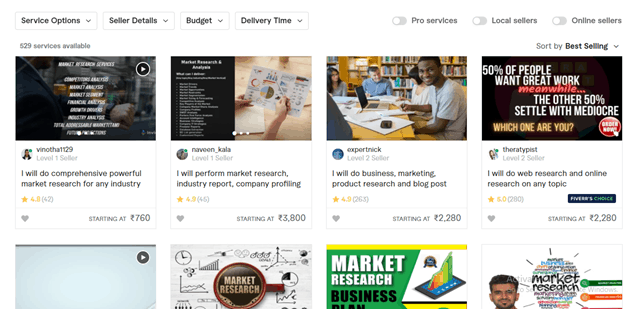
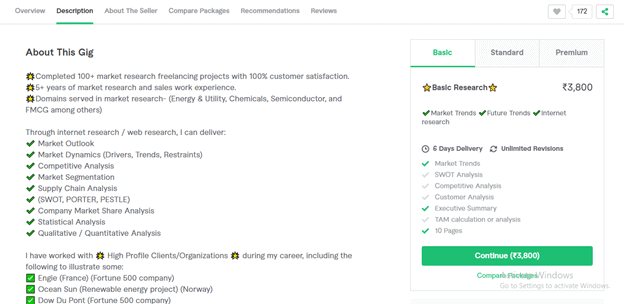
To use Fiverr, start by creating a hirer’s profile and then search for the job you are hiring for. You will be guided to a page that lists the freelancers’ posts or ‘gigs’. These gigs contain details about their past works, experiences, charges and other things you might want to know.
Filter these search results based on the experiences, ratings, charges, delivery time and other criteria. Remember that, besides experience and work profile, ethnicity also defines a freelancer’s charges; for instance, people from developing countries usually sell their services cheaper. So, you might want to hire someone from India rather than from the US.
Gigs contain almost all the relevant details about the person and their offering.
After you have gone through enough profiles and shortlisted a few names, get in touch with these freelancers. Have conversations, conduct interviews, ask for more details and only then make the hire.
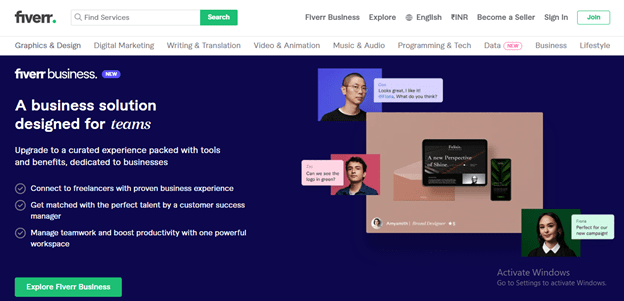
Since Fiverr is a place for people having varying degrees of experience, it is difficult to meet certified experts. You can upgrade to Fiverr Pro for this. This platform has one more premium mode: Fiverr Business. It helps you manage projects and collaborate with your freelancers effectively.
Upwork
Upwork is the “world’s work market space”. Here, hirers post their offerings and freelancers approach them, opposite to what happens on Fiverr.
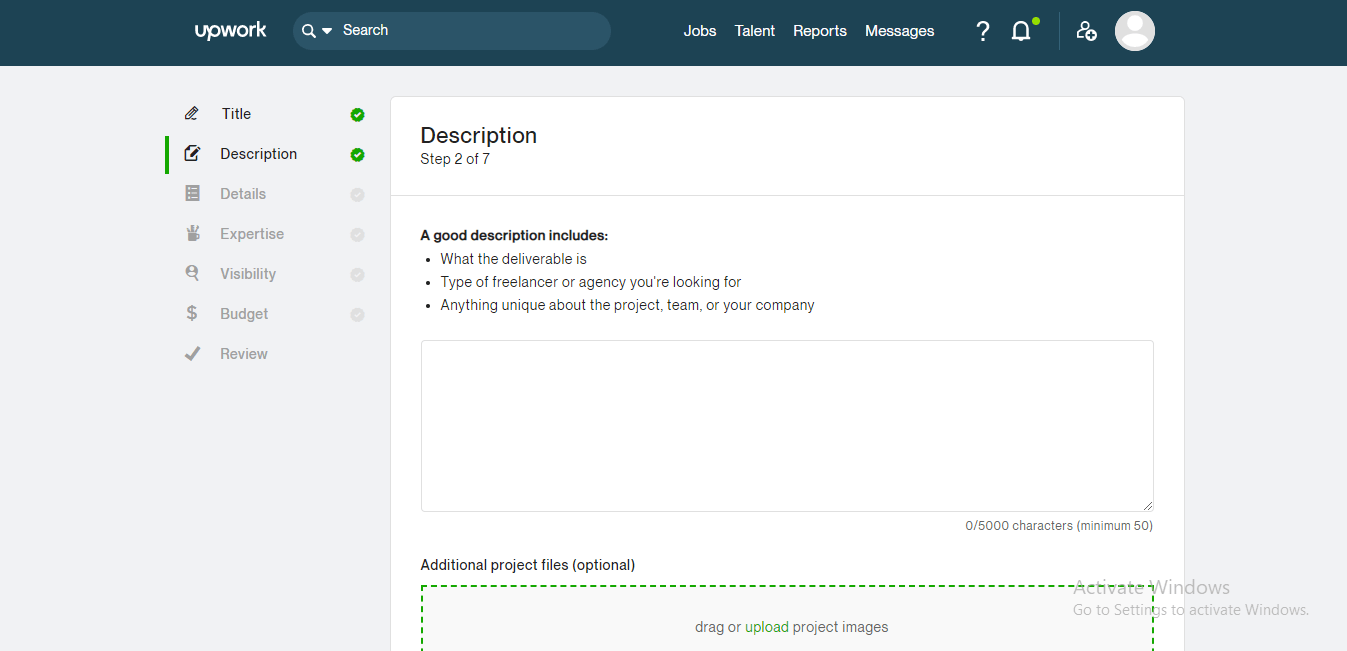
You post: Create a profile, and after that, watch guide videos to learn how to list your offering. Fill in all the required sections and be as detailed as possible. Once done, Upwork will show you a list of freelancers especially curated for your needs. In some time, you will start receiving proposals. Go through them carefully, compare the freelancers against each other, interview them, and select the best for yourself.
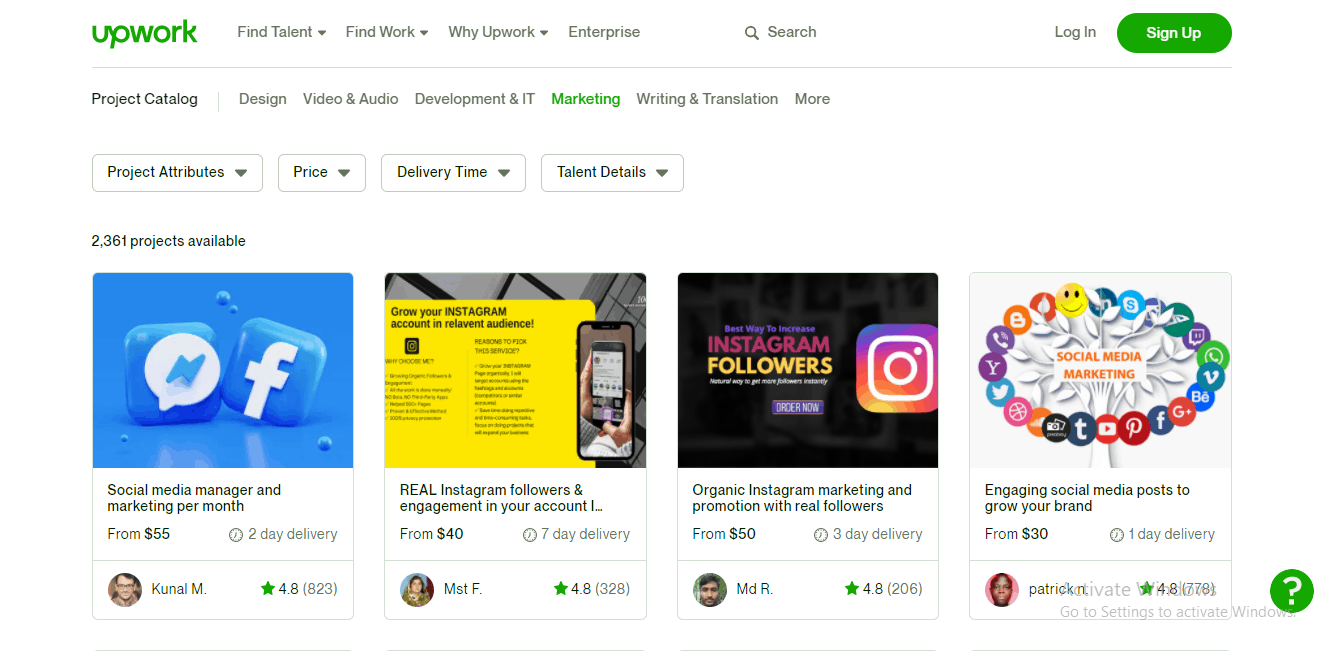
You browse: Upwork has a project catalogue in place for your most pressing needs. In the search bar, type the job you want to get done, and it will show you a list of predefined projects relevant to your needs. You can filter these based on project attributes, delivery time, price, and other relevant categories. Go through them properly before buying the most appropriate one.
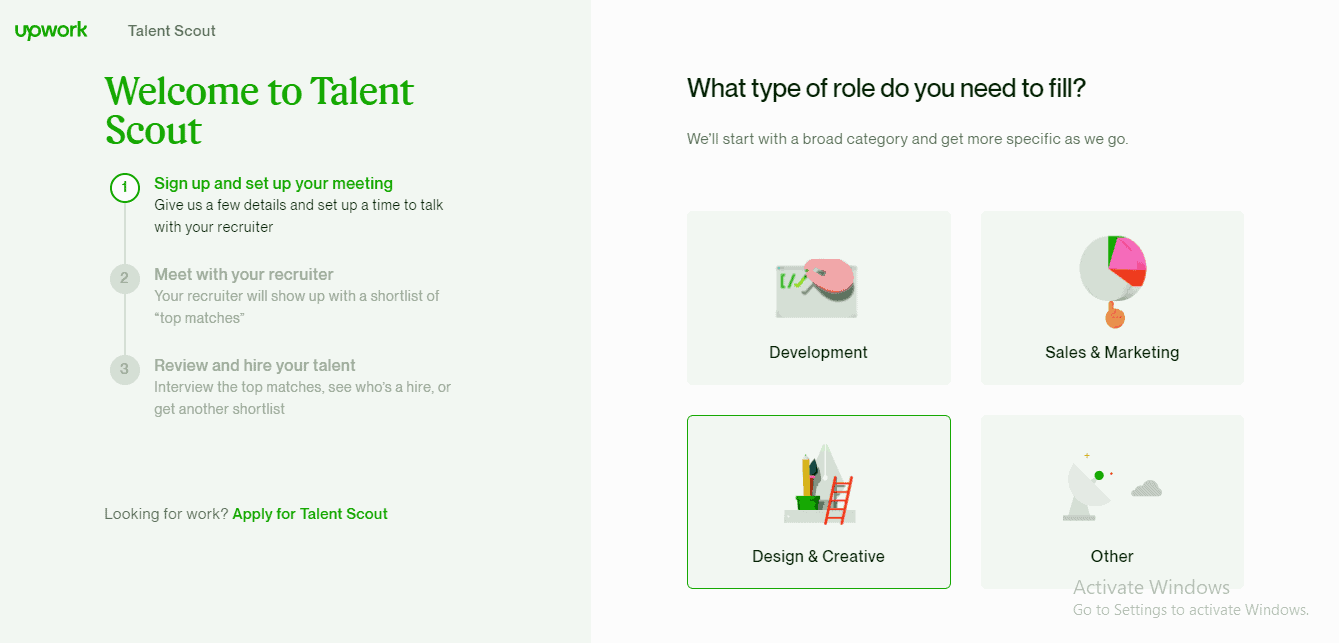
You Talent Scout: Upwork has a Talent Scout feature wherein you tell them about the skills and expertise of the person you want to hire, and they connect you to the right people. Just give all the details to Upwork recruiters and wait for them to shortlist the apt freelancers for you. Once done, you can go through their profiles, interview them using the platform’s video conferencing feature, and make the right choice.
If you want additional benefits like assistance during the hiring process, collaborative tools, more filtering options, and a badge of credibility, you may as well switch to Upwork Plus.
Freeup
Freeup gives you access to its handpicked selection of freelancers from all across the world and connects you with entry-level, mid-level, and expert-level professionals depending on your requirements.
A distinguishing feature of Freeup is that it evaluates the freelancers’ skills before selecting only the top1% of the applications so that you get to work with the best from the start.
Here, you work in three steps:
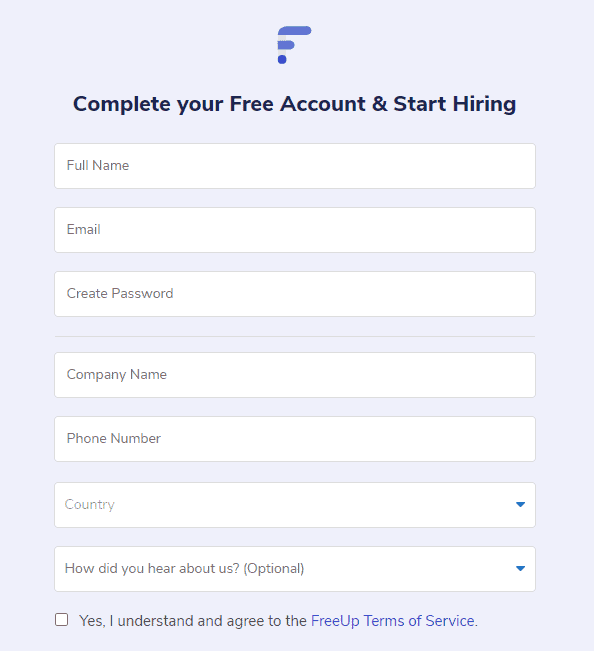
Create an account. Make sure that it looks credible.
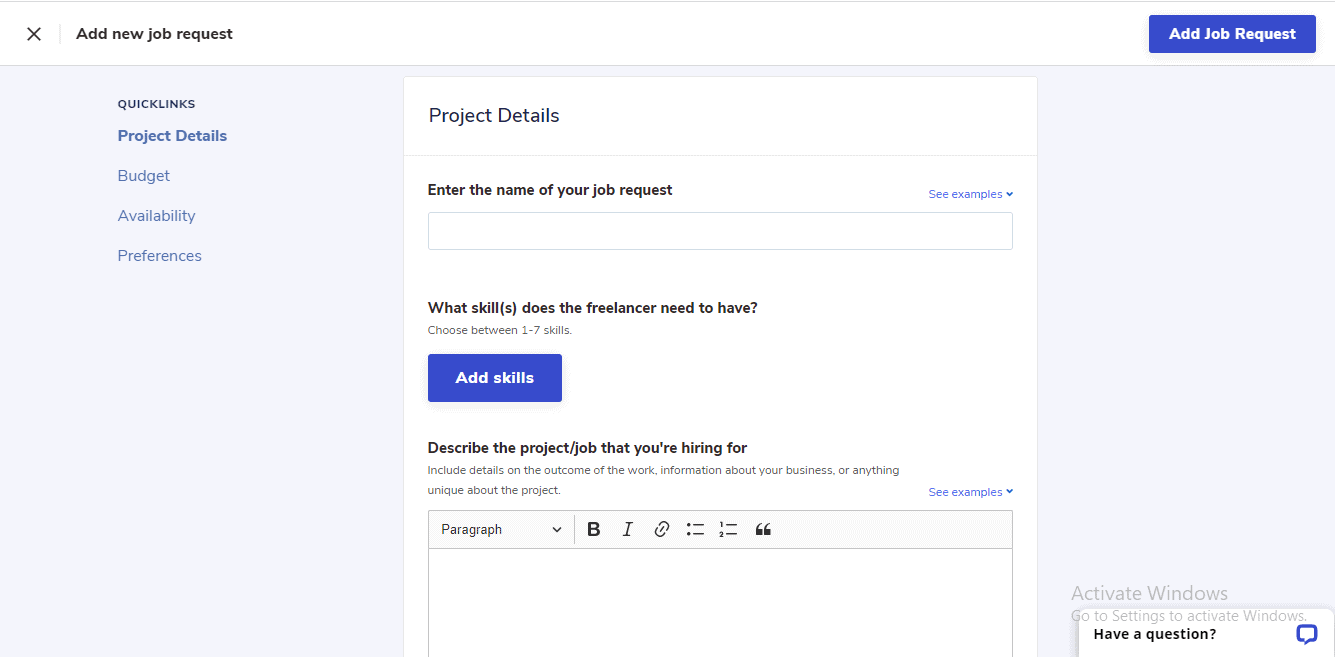
Fill in the project details to let the platform know what you are looking for.
Wait while Freeup matches you with 1 to 3 freelancers. You can connect with them, talk, and decide whom to hire.
One more thing to know here is that Freeup bills you on an hourly basis. It has tools to track the number of hours worked by freelancers. Moreover, its support team is ready to help you with the hiring process and anytime during your work.
Speedlancer
Speedlancer is another website that recruits freelancers only after interviews and evaluations. It partners with the top500 freelancers worldwide, many of whom have worked with companies like Foundr, Bloomberg, and Facebook.
Here, you start by creating a free account but have to pay to post your offering.
This job offer is then circulated among the freelancers on the platform.
Now, either of the two situations arises here:
No one accepts it in the next 8 hours, and all your money is credited back to your account.
OR
A freelancer accepts the job, and you have your task delivered within the next four hours.
However, staying active the whole time would be best because the person working on your project might need some clarification or extra input. After you get the finished work, go through it and ask for revisions if needed. You can talk to Speedlancer’s support team in case of a query or issue.
Toptal
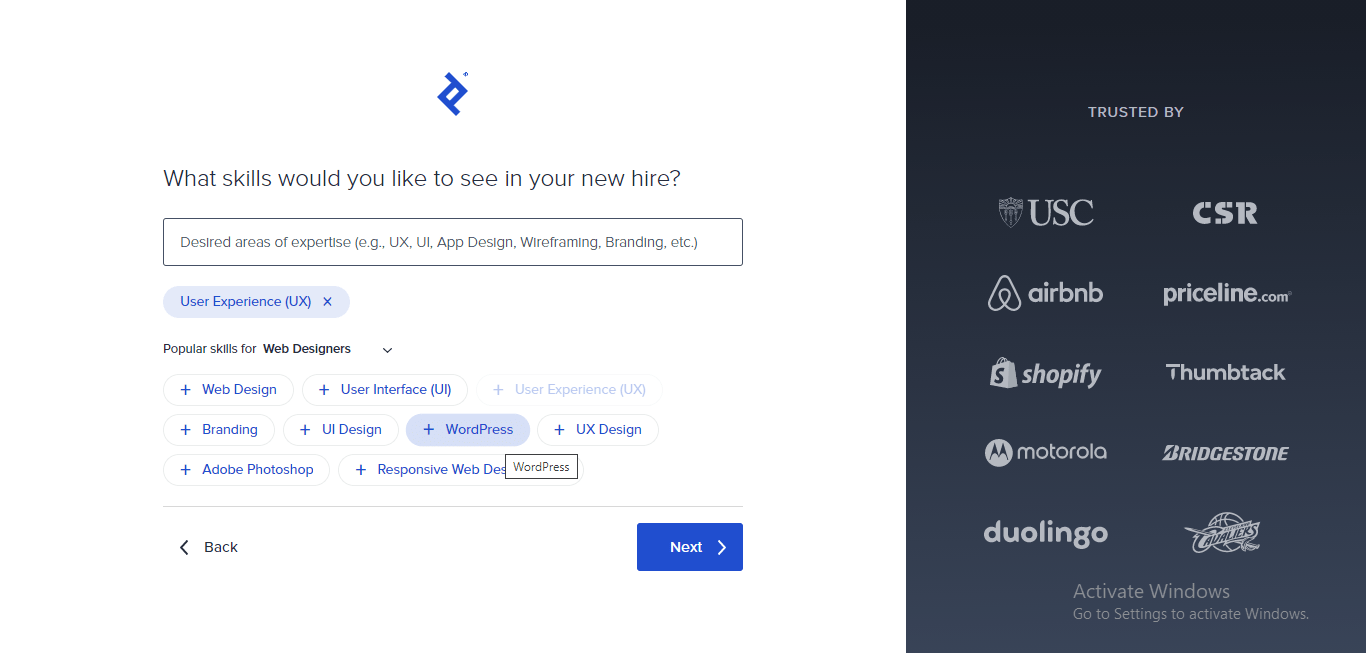
Toptal is a freelance platform specifically designed to help startups hire top freelance talent. It is trusted by rising brands like Duolingo, Shopify, etc., for their business, technology, and design needs.
You follow four steps to work on this platform:
Create an account.
Submit your job description. Toptal asks you a few basic questions; answer them as accurately as possible.
Wait for Toptal’s team of experts to review your application and match you with the right people. They may get in touch with you if needed.
Once you get your match (typically within 24 hours), connect with them and see if you are compatible.
Toptal allows you a no-risk trial period when you can work with a freelancer and decide if they suit your requirements. If things don’t go well, the platform covers you up with absolutely no replacement costs.
99 Designs
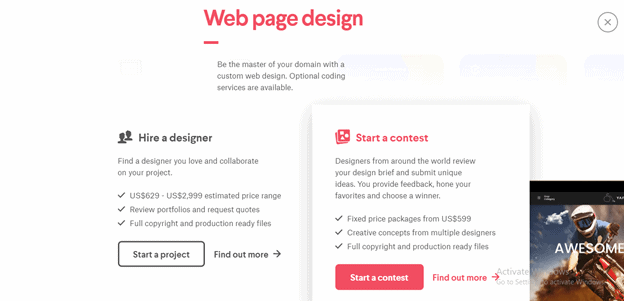
99 Designs is a creative platform specifically tailored to your design needs. The professionals here design everything from logos and websites to advertising campaigns and books.
You can work in either of the two ways here:
Go through freelancers’ profiles just like on Fiverr and decide whom to approach.
Organise design contests wherein you post a description of what you need and freelancers submit their ideas for it; you can then select the best among them and pay for that design.
99 Designs also has a few other features to assist you in designing for your brand.
99 Designs Studio offers design insights from experts around the world
You can also use 99 Designs Select, which handpicks a small team of a few of the best designers to support your brand.
Scripted
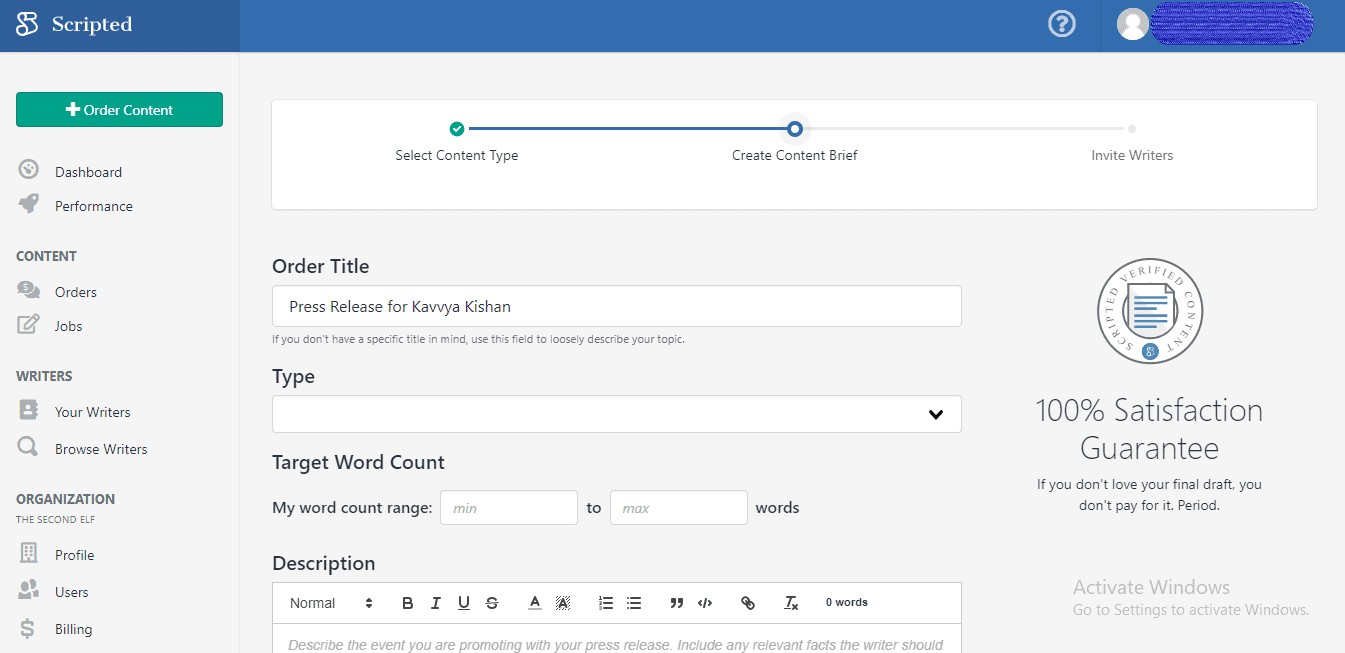
Scripted is the freelance portal distinctively tailored to your writing needs. Whether you want to create SEO-friendly content to boost your website’s organic reach or curate email newsletters for your marketing needs, Scripted is the one-stop solution.
After you have created your account here, you need to work in three phases:
Scrutinising phase: After creating an account, post your project on Scripted. Freelancers will propose their ideas for it. You can select the one or two that you like and go forward with them.
Waiting phase: You will receive the first draft of your work within a week. Be patient till then.
Editing phase: Now that you have your draft ready, go through it and request edits if needed. Scripted’s efficient review-and-approve system eases the revision phase.
Later, when you are comfortable with the platform, you can post invite-only projects; that is, only the freelancers you invite can bid for it.
LinkedIn
Not exactly a job portal, but LinkedIn is the most widely used professional networking service globally, with a user base of about 740 million. It is a Facebook-type platform where students and working professionals maintain profiles, share posts, and interact with each other’s content. However, instead of making friends, you build professional connections on LinkedIn.
It is relatively simpler to look for freelancers here. You create a LinkedIn profile with all the relevant details about yourself and your organisation.
Then, search for the hashtags, circles, and pages related to the profile you want to hire for, and LinkedIn will guide you to the right people.
After finding a few relevant profiles, go through them, check these people’s activities and experiences, and directly connect with them. LinkedIn also has a call feature to facilitate interviews.
Moreover, the platform allows you to post about vacancies in its job section.
Freelancers who skim through this section can apply directly to you. Then, you can review them and pick the right person.
How do Freelance Portals Charge You?
Freelance portals work on escrow accounts; that is, they collect payments from you before starting the project and disburse payments to freelancers after each milestone is achieved. You may also enter into a contract where the freelancer is paid at the end of the project.
However, you must remember that these portals do not pay the freelancers unless you have approved of the project. They also allow you to ask for revisions and edits.
How to Hire the Right Freelancer?
The above-mentioned online platforms house the best talent. However, they are cluttered with freelancers from various fields and niches and seem tiresome, especially when you are new in the game. So, it is essential to understand how to find the most appropriate person for your job.
Communicate: Communication is the key to gauging a person’s capabilities. So, strike a meaningful conversation with a prospective freelancer and make sure that you’re compatible. Also, while you are at it, don’t forget to look for red flags.
Ask their charges: One of the first things you should ask a freelancer is their charges. Remember that it does not depend only on their experience but also ethnicity. Make sure that their services are within your budget. Also, be careful while deciding on the budget. You need to consider the hard work required for the job, the extent to which it will benefit your business and the industry trends.
Do your research: While a freelancer may have a great profile and excellent conversational skills, you also need to be sure of their work’s quality. Do a background check on them, especially when hiring through platforms like Reddit circles or LinkedIn. Go through their posts and activities, and try to know more about their past experiences. Although portals like Fiverr let you access the freelancers’ profile, be sure to still ask about their previous work history. Don’t hesitate to ask them for portfolios and referrals.
Don’t ask for free samples: While extremely obvious, there is a need to mention this point. If you are not satisfied with a prospective worker’s portfolio and want them to create something specific to your needs, pay them for it. Asking for free samples is undignified and may bring a bad name to you and your organisation.
Let them understand your company: One needs to know a business before working for it. So, communicate freely with the people who may hire. Let them understand your company, its culture, and ethics so that they make an informed decision.
Draw a contract: Now that you have chosen the right freelancer, don’t forget to sign a contract. A freelance contract outlines the terms of work between you and the freelancer. It describes the scope of work, deadlines, payments, and expectations of both parties. Usually, these documents are either independent contractor agreements, that is, the ones signed by people who will work for your business or consulting services agreements, that is, the ones signed by people who are supposed to provide you with consulting services. You may also need to ask the freelancers to sign non-disclosure agreements (NDAs), especially when you let them in on sensitive information.
Tips to Manage Freelancers
Although freelancers work on a contract basis, they tend to look for long-term and regular relations with their clients. More often than not, they are assets for your organisation. Therefore, it is mandatory to deal with them wisely.
Treat freelancers as you would treat a regular employee
Set clear expectations, time frames, and deadlines
The startup ecosystem is not as easy-going as it looks from the outside. It is marked with 12-hour long workdays, endless brainstorming sessions, and numerous sleepless nights.
This is because startups aim to disrupt the market, which requires a tremendous and constant input of monetary and non-monetary resources. It is difficult to understand this ecosystem that startup founders take years to gauge the market, devise adequate strategies, and work accordingly. That’s where startup accelerators come into play.
If managing a startup is like riding a bicycle, startup accelerators function as electric motors. With their resources and connections, they tend to ‘accelerate’ the growth process of startups that would have otherwise taken years to accomplish.
What Is A Startup Accelerator?
Startup accelerators are for-profit organisations that provide young startups with short-term cohort-based programmes specifically tailored to promote years of growth within a few months. Through education and mentorship in the areas of tech, finance, management, legal, etc., accelerators prepare startups to get funded by investors on the final day of the programme or the demo day.
Run by established companies and investment firms, accelerators organise three to four months long programmes wherein their network of serial entrepreneurs, investors, and industry experts mentor young startups.
The accelerators receive several applications out of which only a few are selected. They form a cohort or group that is collectively provided with education and mentorship in different areas related to entrepreneurship and startups until these programmes culminate in the demonstration or ‘demo’ day when each company pitches itself to investors and tries to bag capital.
What Does A Startup Accelerator Do?
Startup accelerators aim at accelerating the growth of startups. With their network of investors, industry professionals, and corporate giants, they provide you with adequate guidance and resources to jumpstart your startup’s growth. They provide:
Community: Accelerators partner with companies, government organisations, and industry professionals to facilitate meaningful relationships with startups. Also, they admit young startups in cohorts or groups in which they learn collectively, like in a school classroom. Many of these accelerators’ graduates have emerged as big names in their respective industries. Accelerators expose you to all this. They build a community of like-minded people and allow you to build connections that turn out to be valuable during the programme and years down the line.
Mentorship: Accelerators organise numerous mentorship sessions and seminars to bring hands-on real-world experience to you. Their network of entrepreneurs, investors, and industry experts turn out to be good mentors who guide you with everything from management to marketing.
Funds: Besides equipping you with relevant knowledge and skills, accelerators also prepare you to pitch for funds. Many of the accelerators themselves offer pre-seed and seed funds. Moreover, their network of investors, venture capitalists, and angels eagerly wait for the demo day when the finest startups woo them for capital.
Coworking environment: Cohort system of accelerators allows you to work and learn together in an interactive group of like-minded individuals and benefit from the collective wisdom of the whole cohort. It facilitates discussions, deliberations, and debates that inspire better learning. Also, working alongside future multi-million dollar companies lets you gauge your comparative performance, broadens your outlook, and motivates you to work better.
Legal guidance: Law is full of technicalities, and startup founders are often unaware enough to use it to their advantage. This ignorance might land some of them into trouble. Therefore, accelerators also provide much-needed legal guidance.
Prestige: Accelerators are associated with skill, zeal, and hard work. The prestige of getting into a reputed accelerator speaks volumes about you and establishes your company’s credibility in front of prospective partners, investors, and customers.
How Do Startup Accelerators Make Money?
Accelerators provide years worth of experience within a short period through structured training programmes. They help you understand more about entrepreneurial management, finance, marketing, etc. They also teach you how to raise capital and allow you to pitch to their network of investors on the demo day.
In exchange for all this, they demand equity. Y Combinator typically invests $125k in exchange for7% equity.
Sometimes, accelerators are set up by the organisations, who themselves like to invest in the companies. For example, 500 Startups is a venture capital firm that runs accelerator programmes.
A few accelerators may charge you fees for their programme or probably for certain services like technology development consulting, office spaces, design consulting, etc. Sometimes, corporate sponsorships and government grants may also make it easier for them to cover the cost.
Examples of Startup Accelerators
There are thousands of accelerators operating throughout the world and accepting startups across borders. Some of the famous startup accelerators are:
Y Combinator
One of the first and best startup accelerators, Y Combinator was launched in 2005 in America. As of 2021, it has worked with notable companies like Airbnb, Dropbox, Stripe, etc. and has a combined valuation is$ 300B+.
Tech Stars
Another world-renowned startup accelerator, Tech Stars works with a founder-first approach and aims at connecting founders with the right network of companies, investors, and experts. It has helped launch a few remarkable startups like Uber, Twilio, and Sketchfab.
500 Startups
500 Startups is an early-stage venture capital firm and seed accelerator. Currently working in75+ countries, it aims at providing resources to the best startups ‘regardless of race, gender and geography’.
Some notable companies associated with 500 Startups are Udemy, EatApp, and Visual.ly.
What Is The Difference Between Startup Accelerator And Incubator?
Unlike accelerators, startup incubators come into play during the earlier stages of a startup’s development, that is, when the idea hasn’t turned into a business. They are non-profit government or academic institutions that organise collaborative programmes and aim at converting entrepreneurs’ ideas into business models and then into working businesses. In other words, incubators incubate ideas and young companies to gradually build a sustainable business out of them.
Therefore, they enter into long-term contracts with startups that continue till these young can sustain themselves in the market. Since they are not-for-profit organisations, incubators don’t demand equity in return for their services.
Some examples of startup incubators include CodeLaunch, Naiot Venture Accelerator, Centre of Digital Innovation in Hull, and T-Hub.
Startup Accelerators
Startup Incubators
Purpose
They aim to induce rapid growth of startups.
They help convert ideas into working business models.
Provisions
They provide startups with mentorship, coworking space, networking opportunities, and capital.
They provide startups with infrastructure facilities, mentorship, and other resources.
Working time-frame
Most accelerator programmes last for three to four months.
Incubators work with startups for a longer period, some even on an open-ended basis.
Run by
Usually, for-profit organisations like established businesses and investment firms operate accelerators.
Usually, not-for-profit organisations like academic and government institutions operate incubators.
Raising funds
Accelerators demand equity in startups in exchange for funding.
Incubators don’t generally invest in startups.
Ease of joining
Accelerators are selective and take only a handful of startups in.
Incubators are easy to get in; all you need is a valid idea.
What is the Difference between Startup Accelerator and Startup Studio?
A startup studio is an organisation that develops several disruptive ideas and builds companies out of them simultaneously.
Usually, these organisations come up with the ideas themselves and establish founding teams to build businesses out of them. They work on several ideas simultaneously, a style of business building called ‘parallel entrepreneurship’.
However, many startup studios bring in young startups from outside and assist them with expertise and capital to build their businesses. In this arrangement, startup studios behave like investing co-founders and assist the founding team with everything they can do. They provide human capital, network, technology, and other resources in exchange for huge equity.
Some examples of startup studios are Betaworks, Builders, and Colab.
Startup Accelerator
Startup Studio
Provisions
Startup accelerators provide mentorship, coworking space, networking opportunities, and capital to startups.
Startup studios provide startups with human capital, network, technology, and other resources.
Working time-frame
Accelerator programmes last for three to four months.
Startup studios guide companies from the very start to the time they exit.
Accelerators help startups by providing structured training programmes to boost their growth within a short period. They impart years worth of knowledge and experience in three to four months. They also allow you to network with like-minded entrepreneurs, investors, and industry experts and raise capital for your startup.
However, they have their flaws as well.
They require you to devote a lot of time: Startup accelerators demand you to carve out three to four months completely for them. The never-ending line of training sessions, seminars, meetings, and brainstorming sessions leaves little time for anything else.
They induce very rapid growth in a short span: Startup accelerators induce rapid growth, which may prove to be disastrous for the ideas that are supposed to mature with time.
They require too much commitment and focus: Accelerators require sheer commitment and drive. The packed schedule will leave little time for anything else, including your main job or even friends and family. So, unless you are completely devoted to your startup, it’s not easy to get through an accelerator programme.
They ask you to give up equity: Accelerators provide funding in exchange for equity. They may not be a good choice for company founders who do not want to give up ownership so soon.
They are full of distractions: Quite a lot of meetings and workshops organised by accelerators won’t be useful to your purpose. These distractions may be frustrating during these intense months.
Enrolling in an accelerator has both advantages and disadvantages. It’s the founder’s job to balance the pros against cons and decide whether to apply for an accelerator programme or not.
If you have a job, health issues, or other commitments, you should probably not go for an accelerator just yet. Also, you may want to see if your loved ones are able and willing to understand your complete absence for the specified duration.
Consider the health of your company too. If your idea should mature over time, these programmes may prove to be disastrous.
Moreover, accelerators prefer startups with great ideas, capable teams and traction for their products. So, you are expected to have launched at least an MVP. Although there are exceptions to this rule, having proof of traction for your MVP is always beneficial.
Therefore, you need to think this through. Describe the state of your business and your ideas, goals, and vision for it; then, list down all your priorities. Discuss the situation with your co-founders, acquaintances, friends, and other people. Only then make the call of applying to an accelerator
How to Get into a Startup Accelerator?
After you have made the call to enroll in an accelerator, you need to shortlist the ones that suit your needs. Keep in mind that it’s just like university admissions; you cannot afford to put all your eggs in one basket. So, prepare a list of accelerators you can apply to.
Remember that there are thousands of them and different accelerators cater to different demands. For instance, Highway 1 Accelerator focuses only on startups providing hardware services. So, you need to consider their specifications before making your choice?
Who are the accelerator’s graduates? How well did it work for them? How long does the programme last? Do they want you to relocate?
Research well before shortlisting the apt accelerators; try to reach out to their graduates for feedback.
Once you have your list ready, start filling up the application forms. Startup accelerators are selective; they take only a handful of companies in. Top ones like Y Combinator and TechStars typically accept only1-3% of the total applications. In fact, some organisations have established pre-accelerators to prepare startups for accelerators.
Therefore, take your time with the application form; read and re-read it continuously. You may also ask the same acccelerators’ graduates and mentors to review your application.
Once you are almost done with the application form, contact the leaders of these accelerators. Tell them about your interactions with their graduates and mentors and ask them for tips and suggestions. You will be surprised by how helpful they are. A few accelerators like Y Combinator have put such suggestions on their blogs as well; go through them before applying.
After numerous rounds of revision and reviews, be confident and send your applications in. The accelerators will go through them and might shortlist you for future rounds. Then, you may have to appear for interviews. Just be thorough with the things you mentioned in the application and you might get selected.
Go On, Tell Us What You Think!
Are you an aspiring entrepreneur? What do you think of our article on Startup Accelerator Let us know in the comments below!
No one is unfamiliar with the 3-dimensional red ‘O’ logo of the software company, Opera. Started as a browser-building firm in 1995, Opera has come a long way and has established itself as a diverse web solution provider.
Still, a confusing development is that almost everyone has seen Opera browser downloaded in their mobile phones or laptops but very few remember visiting its website or typing ‘Opera’ in their app store’s search bar. Who installed Opera on these devices?
The truth is that Opera installs itself. Since its launch in 1995, the company has walked on an utterly unconventional path. Opera’s business model is particularly unique and different from other business models.
So how does Opera work and make money? Let’s find out.
What is Opera?
Opera is a Norwegian software company that specialises in building browsers, providing fintech services, and developing other small offerings.
Founded as a browser-building software company in 1995 by Jon Stephenson von Tetzchner and Geir Ivarsøy, Opera diversified its business to other web and mobile solutions like fintech, advertising, news, etc.
In 2016, Golden Brick Silk Road Fund, a Chinese investing consortium, bought Opera’s web browser, performance and privacy apps, consumer business, and brand. The remaining, that is, games, advertising, and television units, formed Otello Corporation ASA.
While Otello has been providing Adtech solutions ever since, Opera has established itself as a steadily growing profitable business that builds more than just browsers. It launched a news app for African users in 2018. Opera ads also came into the market in 2019 to provide advertising solutions to small and big businesses.
Who Are Opera’s Customers?
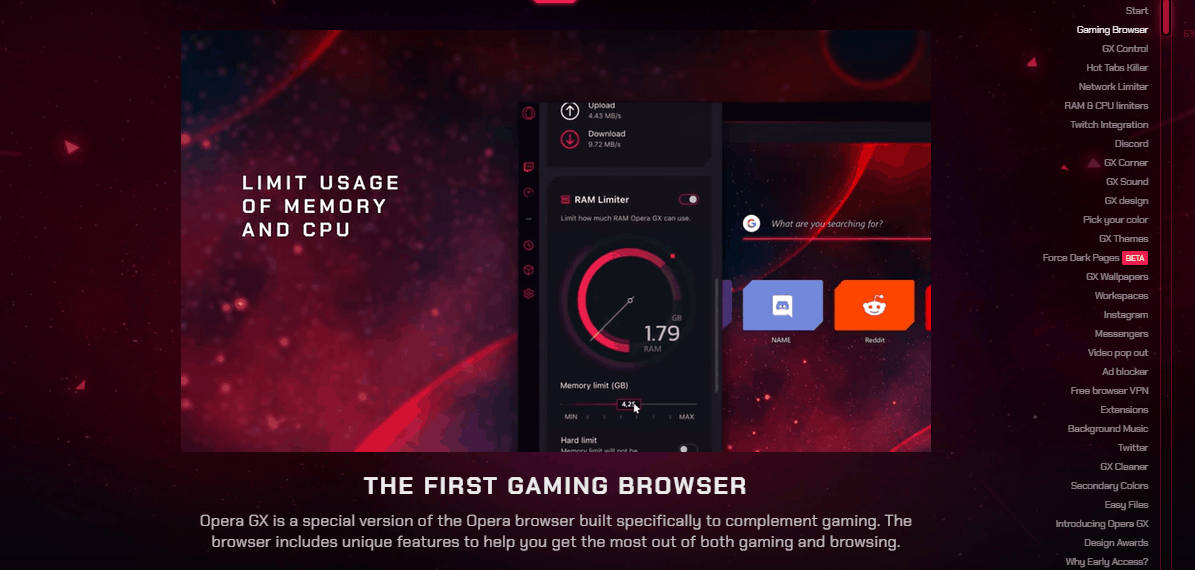
Opera browsers are popular among people who own devices with less storage space, limited data availability, or slow network connection. Thus, Opera is gaining momentum in emerging economies where people cannot afford high-priced mobile phones or high-speed internet. Also, the Opera browser comes with a built-in VPN and is used by general people to access content that is blocked in their region. The company launched its gaming browser, Opera GX, in 2019, which appeals to gamers because of its utility and amazing features.
Opera also provides fintech and news services in developing countries, especially those in South Asia and Africa.
Besides end-users, Opera appeals to marketers as well. Both small businesses and big brands can use Opera to build content-rich ads and target them to the right users.
What Value Does Opera Provide?
As a compact browser, Opera offers fast browsing, acquires less space, and consumes limited data. It also has a turbo mode that boosts its speed and capability to save data. Besides this, Opera offers the benefits of safe browsing. It checks a website against the list of blacklisted phishing and malware websites to warn against suspicious behaviour and fraud.
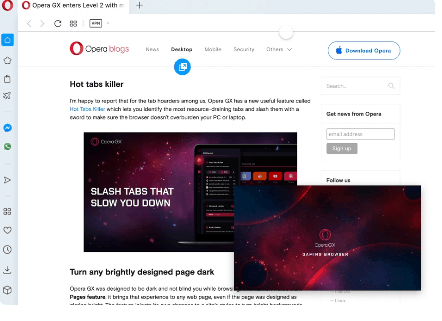
Opera was a pioneer in the field of tabbed browsing. It is also one of the first to introduce a sidebar with integrated messengers. The browser comes with a built-in VPN which offers its users the utility of secure and private browsing.
Opera Mini aims at becoming a compact browsing, messaging, and sharing platform. It lets users share files with nearby devices even when offline. Moreover, the company has recently entered the gaming industry with its compact and fast browser, Opera GX, which offers good sound quality, faster controls, and amazing aesthetics.
Opera also aims at providing fintech services and internet facilities in developing countries like Nigeria, Kenya, etc. Besides presenting important news from around the world, Opera News offers people in underdeveloped countries the opportunity to publish their articles and make money out of them.
Brands and marketers also form a part of Opera’s customer base. It allows them to present ads that are high on content to 380 million+ Opera users.
How Does Opera Operate?
One can download the Opera browser by going to its official website. However, most Opera users find it pre-installed on their devices. This is because the company partners with Original Equipment Manufacturers, operating system companies, and User Interface owners to have its browser installed in devices even before their purchase. A noteworthy point is that Opera is usually installed on low-priced devices. Sometimes, Opera comes bundled with other freeware programmes and installs itself with them.
Opera’s mobile and desktop browsers direct their traffic to other search engines and offer several benefits to the users. It comes with privacy, data management tools, and adblockers to provide its end-users with a seamless browsing experience.
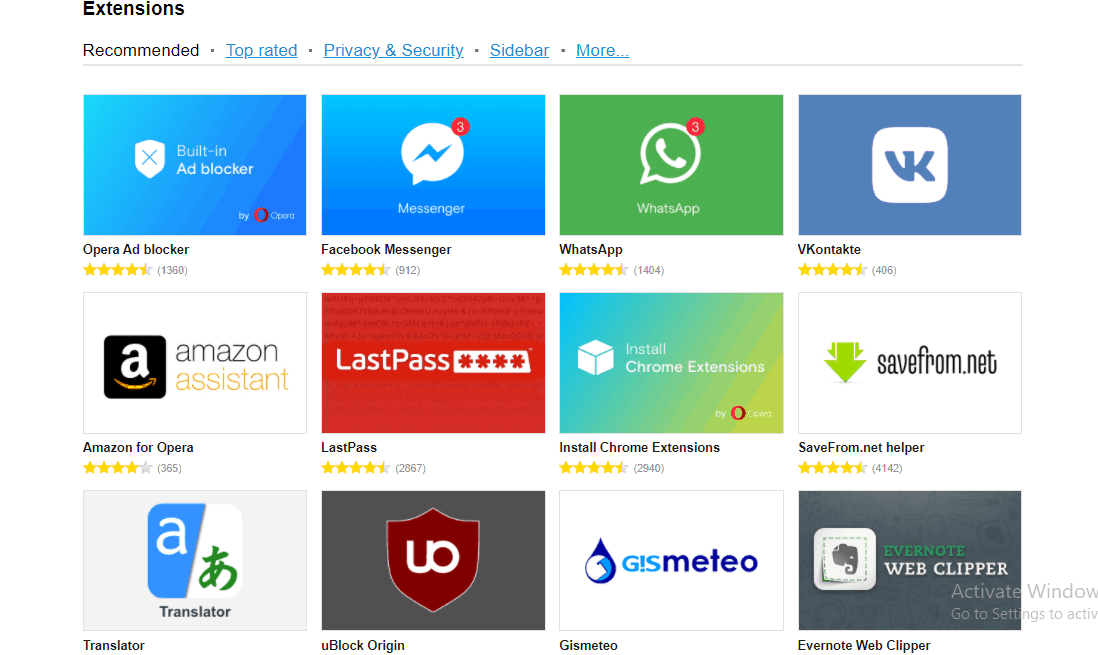
Browser Extensions: Browser extensions customise web browsers and alter the ways users see a web page. Opera is compatible with a long list of browser extensions or add ons. It includes ad blockers, YouTube enhancers, image search tools, readability enhancers, etc.
VPN: VPN, or Virtual Private Network, encrypts the internet traffic and routes it through a remote server so that websites see the server’s address instead of users’ own. Opera comes with a free inbuilt VPN that allows its users the luxury of secure browsing. Users can choose their preferred location and access the VPN even in a private browsing window.
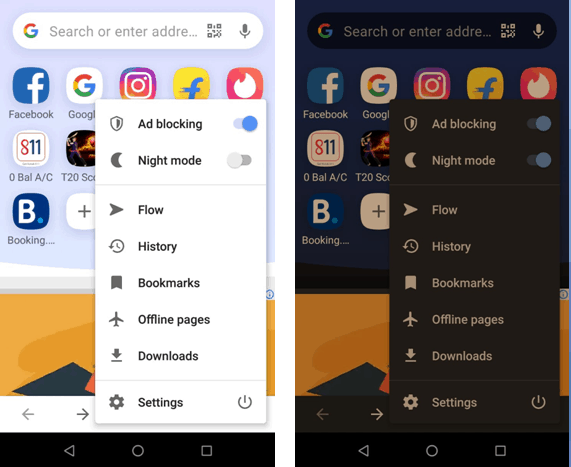
Adblocker: Opera has an inbuilt adblocker that lets its users extract the benefits of faster, cleaner, and less hindered browsing. They can also install ad-blocking extensions to improve the experience.
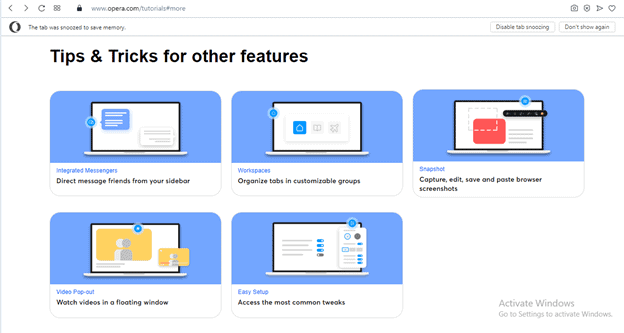
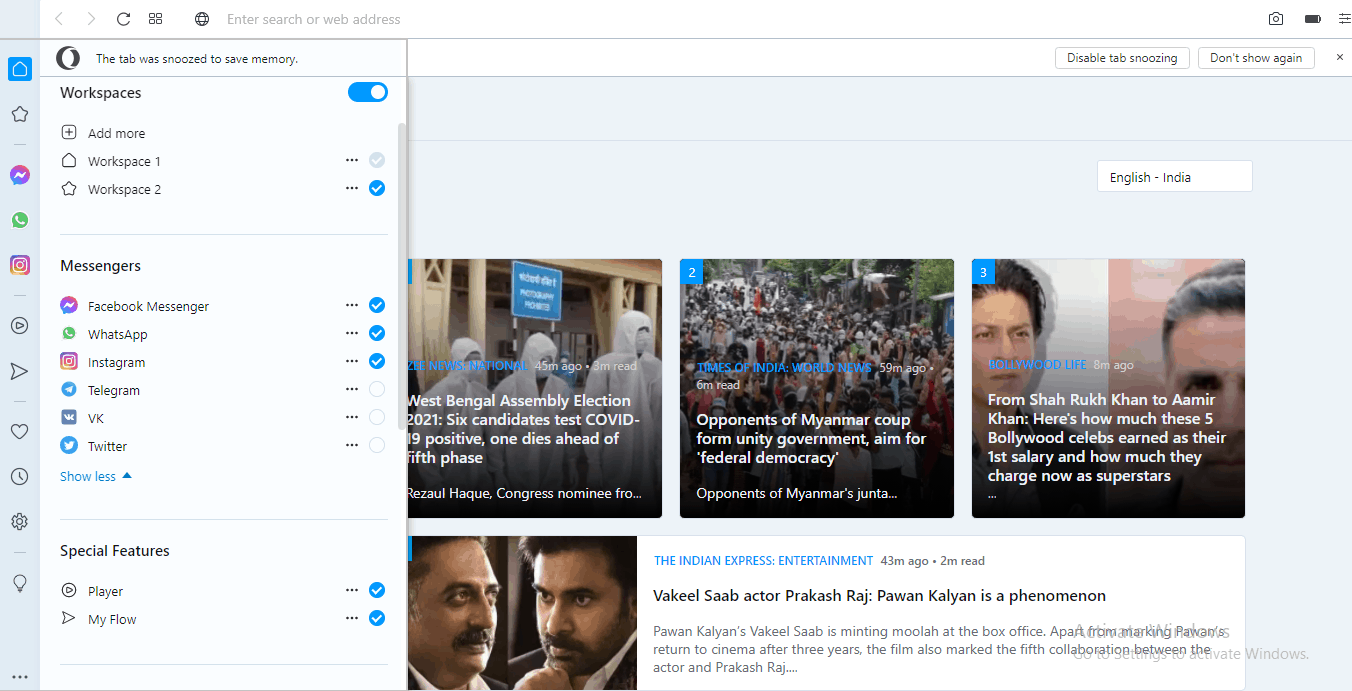
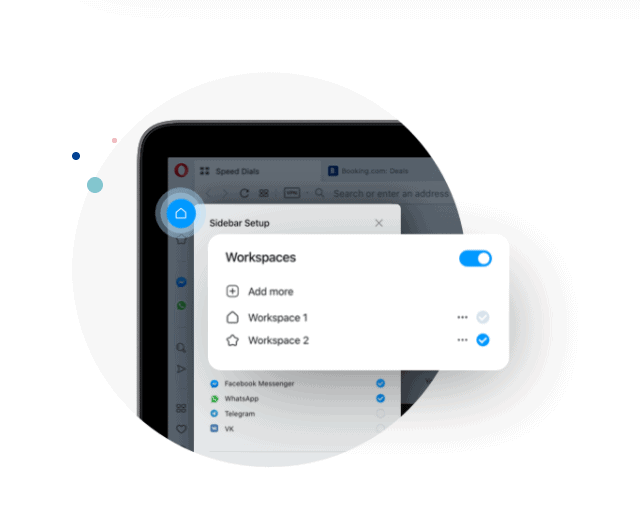
Sidebar: One of Opera’s distinguishable features is its sidebar with built-in messengers like Facebook, WhatsApp, Instagram, and Twitter. Some of its tools allow users to play music and transfer files between their mobiles and laptops. Users can customise the sidebar as per their preference.
Workspace: Opera allows its users to classify tabs in different groups or workspaces to access them with ease.
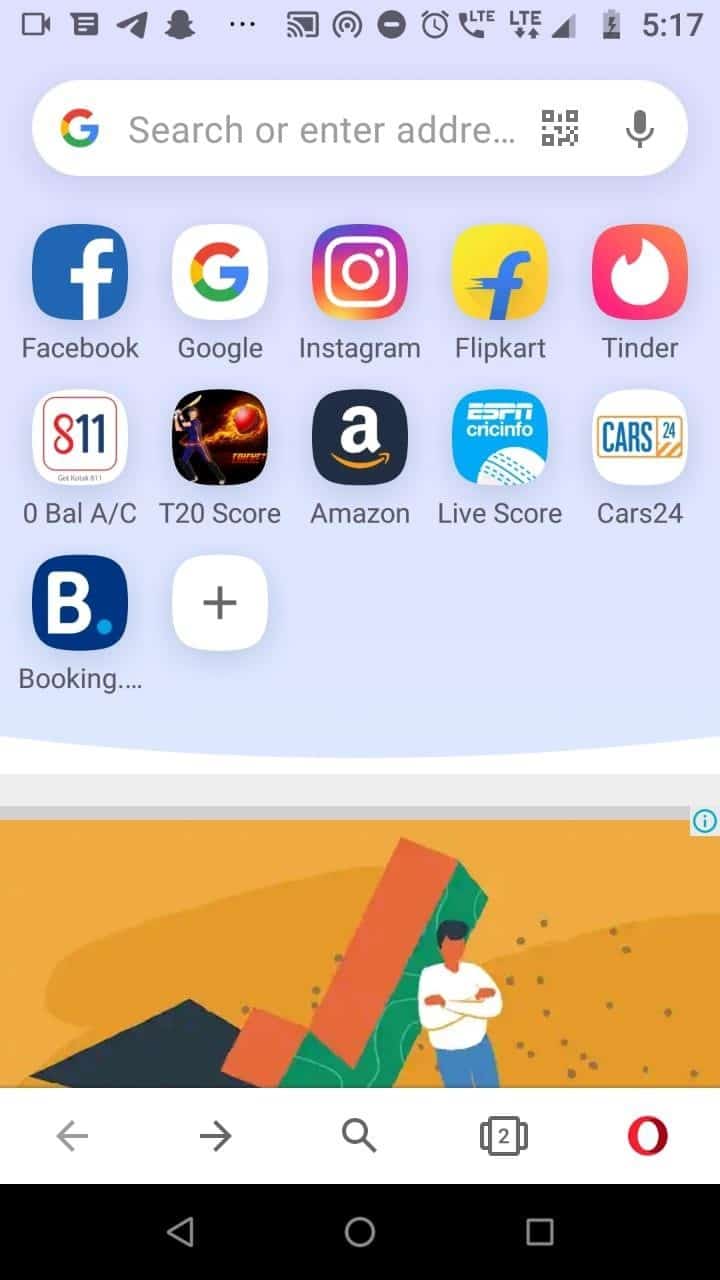
Speed Dial: A user’s most visited websites appear as thumbnails on Opera’s speed dial. One can organise the speed dial as per their preference.
Video Pop-out: This lets users stream videos in a pop-out window or picture-in-picture form.
Snapshot: Opera’s desktop browser has a Snapshot tool present at the top of the screen. Users can click on it or press Ctrl+Shift+5 to capture their screens instantly. They can frame, crop, and save the snapshot as an image or in PDF format on their devices.
Bar code scanner: Opera mobile comes with an inbuilt bar code scanner that helps users search products on the internet when only their barcodes are known.
Visual Modes: Both mobile and desktop browsers allow users to choose between dark and light modes. Users can also set their preferred colour temperature and adjust the brightness level.
Crypto Wallet: Opera is one of the first browsers to include a crypto wallet that allows users to hold and transfer their crypto tokens and collectables.
Opera Forum and User Support: Opera maintains an active customer support division to assist its users in case of any query. They can also post their questions and interact with other users on the company’s forum.
Although Opera started with manufacturing browsers, it has changed over time to include more services for its users and partners. The company has collaborated with various service providers and built a network of partners to serve its customers effectively.
Opera for Business: Opera has partnered with Google My Business to bring the benefits of digital marketing and online advertising to small businesses, big brands, and startups. It helps them reach a precisely targeted audience on Opera, Google, and Facebook. Opera’s Analytics lets them track their progress and improve according to their customers’ preferences.
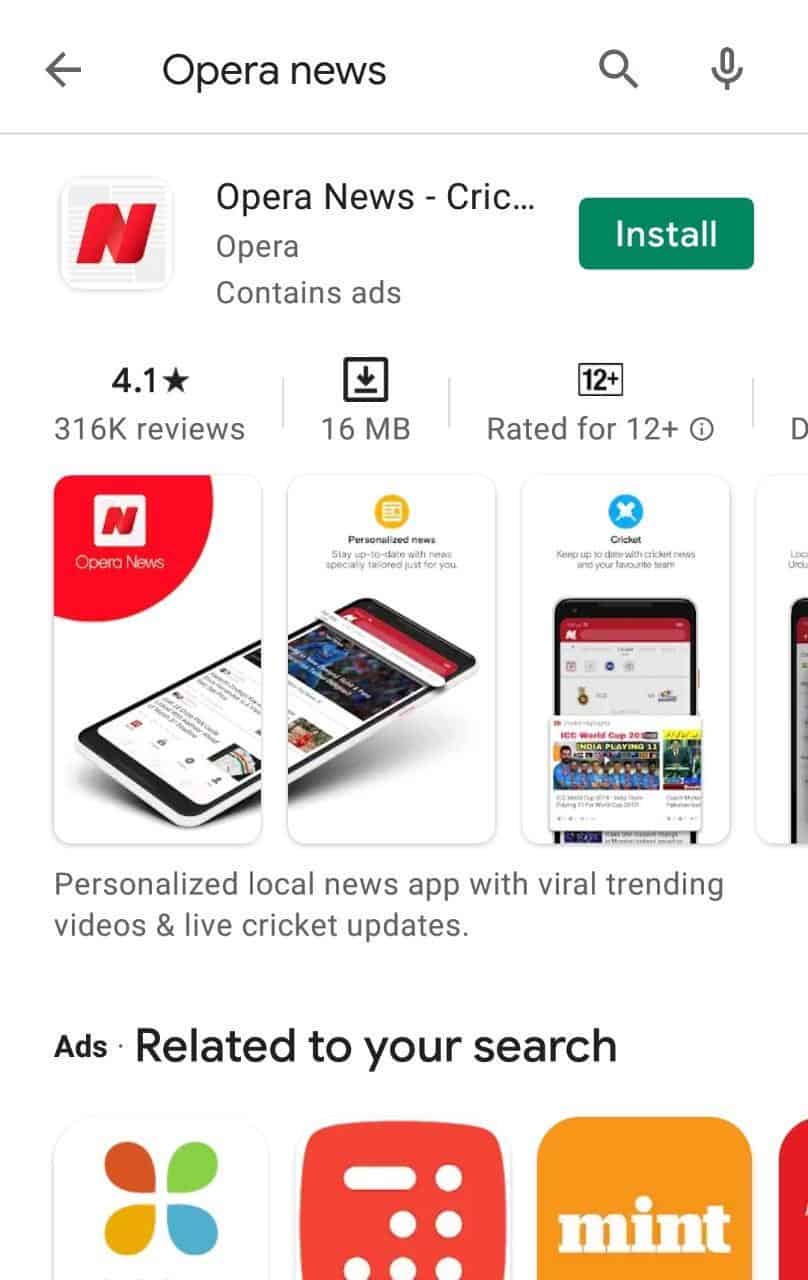
Opera News: Opera News app was rolled out in 2019 to provide its users with a short, engaging presentation of important national and international news. Concerned about the development of underdeveloped African nations, the company launched Opera News Lite. The writers and content creators who publish articles here are paid for their services.
Opera’s Gaming Division: With the launch of Opera GX, the company has shown an interest to step into the gaming sector. In January 2021, Opera launched its gaming division by acquiring YoYo Games, the company which developed GameMaker Studio 2. Opera seems to be making heavy virtual gaming applications faster and more compact.
Opera Fintech: Opera has been growing its micro-lending business in South Asian and African countries with apps like OPesa, OKash, and CashBean. It formed Nanobank by combining its microlending business with Mobimagic in 2020. With the merger and acquisition of fintech enterprises, Pocosys, and Fjord Bank, the company stepped into the European fintech industry. It has joined the EU’s Emerging Payments Association and announced the launch of its first fintech startup, Dify.
Hype: Hype is a chat service built into Opera Mini’s Interface. To offer a seamless experience to users in underdeveloped African countries, the company aims to make Opera Mini a compact all-in-one app. For this, Hype is integrated into it.
How Does Opera Make Money?
Opera is a profitable business that has been growing its customer base and revenue consistently. In the fourth quarter of 2020, Opera’s net income reached $25.4 million as opposed to $22 million in the fourth quarter of 2019. Despite the tremendous increase in its operating budget, the company continues to grow.
How Does Opera Earn?
Opera generates a major part of its revenue by selling its software products and developing advertising solutions for brands and businesses. It has partnered with various organisations to provide its services to users.
Opera Browsers: Opera launched itself as a browser-making company and monetised the business. Although its desktop and mobile browsers are available free of charge, Opera partners with other tech companies to deliver services and earns from those partnerships.
Search partners: Opera directs its traffic to search engines like Google, Yandex, and DuckDuckGo. Although its default search engine is Google, users can change it as per their preference. Also, Opera browser has integrated search and shopping bars to serve the needs of its partners like Facebook, Flipkart, and Amazon.
Partnerships with OEMs, OS manufacturers, and UI owners: Opera signs service contracts and licenses its applications to Original Equipment Manufacturers (OEMs), Operating System manufacturers, and User Interface owners. The company also charges for customer service, upgradation of rights, and new releases.
Advertising Partners: A considerable percentage of Opera’s revenue comes from the advertisements it displays on browsers and the news app. Opera for business allows small businesses and brands to reach Opera, Google, and Facebook users and helps the company earn in the process.
Fintech: The share of Opera’s revenue from fintech has been increasing in the past years. Its online microlending business earned it $71.9 million in the fourth quarter of 2019. In the last quarter of 2020, Nanobank announced revenue of $46 million.
Gaming: Opera is trying to consolidate its position in the gaming industry through Opera GX browser and YoYo Games. While Opera GX doesn’t charge its users, the acquisition of YoYo Games is bound to be profitable for Opera.
How Does Opera Spend?
Opera is growing its business to sectors other than browsing and, at the same time, enhancing its utility. For this, it undertakes huge expenditure on an annual basis.
General and Administrative Costs: Opera incurs costs like rent, insurance, legal fees, utilities, and salaries in the everyday operation of its business. They are included under this category.
Growth and Maintenance of Opera Browsers: The company aims at making Opera browsers more utilitarian and compact. It also maintains a strong customer support division to attend to its users’ queries.
Expansion and Consolidation: Opera has been expanding its business to other internet services than browsers like news, adtech, fintech, etc. For this, it is launching its startups and acquiring others’ businesses, a development that has largely contributed to Opera’s growing expenditure.
Gaming: Opera’s gaming division is currently in its infancy and requires huge capital. Thus, the company allocates its resources in favor of this development.
Fintech: Opera’s expansion into the European lending sector is marked by its acquisition of Pocosys and Fjord Bank. These deals cost a lot, but the company wants to integrate its browser and fintech businesses for which such investments are necessary.
Opera News: Although it’s been some time since the launch of Opera News, the company hasn’t consolidated itself in the infotainment industry.
Payment for Opera News Articles: Opera pays content writers in developing African countries like Nigeria and Kenya to publish articles on Opera News, a programme initiated to build its user base and herald development in these nations.
Opera has been targeting emerging markets since its start in 1995. It has attempted to tailor its services to suit them and has succeeded in doing so. Opera browser, news, and even fintech cater to the developing world.
Opera browsers are great for first-world countries as well. However, since better substitutes are available and Opera browser isn’t integrated with an Operating System (for instance, Microsoft Edge is embedded in Windows), people don’t prefer it. Also, the company has earned a bad reputation for installing itself without users’ consent.
Lately, Opera has been trying to build itself as a brand that offers diverse internet services. Moreover, the company is trying to consolidate its position in the developing African and Asian markets by providing technological solutions like news and fintech tailored to their needs.
In the beginning of 2020, Hindenburg’s Research questioned Opera’s micro-lending business in Africa and South Asia and accused it of engaging in predatory lending (high-interest short-term loans typically granted to abuse the receiver). Opera denied the allegations, but the controversy was a blow to its rising share price at the time. Nevertheless, the company persists in the market and continues to grow.
Go On, Tell Us What You Think!
Did we miss something? Come on! Tell us what you think about our article on Opera business model in the comments section.
Sometimes, profits are not enough for a business to meet their expansion and growth goals. And to cover for that, they have to take external funds that comes with a hefty price – either they have to dilute their equity (equity financing) or they end up taking loans that needs to be repaid along with interest (debt financing). Usually, it is a tough choice for business owners to choose between these two types of startup funding. This is when a third option comes into picture with the name of mezzanine financing.
Mezzanine financing is an investment vehicle that allows the company to create a mixture of both debt and equity when they are unable to arrange long term debt financing. It is gaining popularity over the years especially among established startups and promising companies.
Financial institutions offering debts generally charge very high interest rates or terms that don’t not every company can comply with. With mezzanine financing, companies can easily fund their future projects even when they have only limited resources.
What Is Mezzanine Financing?
Mezzanine financing is a hybrid form of debt and equity financing which gives the lender a warrant to convert the securities into equity in case of any default. Usually, this right can be exercised after venture capitalists and other senior debts have been paid.
Due to the absence of collateral requirements, mezzanine funding is comparatively easy to arrange. It can be termed as either cheaper equity or expensive debt. But, the absence of collateral involves a high risk on part of the borrower. They will have to give up a part of ownership in case of default.
Suppose Jack owns a grocery store. He wishes to expand his business and through mezzanine financing, he manages to avail of a loan of $10,000 while giving warrants to the lenders. Due to some circumstances, Jack fails to repay the loan in the fixed tenure. Subsequently, the lenders take up the agreed-upon ownership share in his shop and sell it off to recover the money.
How Does Mezzanine Financing Work?
Mezzanine financing is often referred to as the highest risk form of debt. But this high risk on the part of the borrowers offers the highest rewards to the lenders. The founders look for an investor willing to provide funds in the form of subordinated debts with a fixed rate of interest. These debts have pre-notioned warrants that allow the investor to convert the debt into equity in the future. Usually, the value of loans ranges between $500,00 to $5 million over a tenure of 5-7 years.
These lenders look for rates of returns ranging from 12-20%, sometimes even 30%. It does not involve a very high dilution of control in terms of equity stake as compared to raising capital through additional equity.
Quite appropriately, any mezzanine lender will be reluctant to grant funds unless the company has a high potential for growth in the future, a reputation in the industry, continuous cash flow, and stability in earnings. Hence, mezzanine funding cannot be used for new startup funding. Sources of mezzanine financing mainly include private investors, insurance companies, mutual funds, pension funds, and banks.
Sources Of Mezzanine Financing
Funds can be arranged from different sources. These are –
Private Investors: These investors generally involve friends, family, and other knowns who trust the entrepreneur and are assured of the firm’s credibility.
Insurance Companies: Mezzanine is preferred among insurance companies globally investing in private debt. Some examples are Prudential Financial, AXA Winterthur, and Fubon Life.
Mutual Funds: It involves forming a pool of money gathered from numerous investors to invest in other securities like stocks, bonds, debt, financing, etc.
Banks And Financial Institutions: banks provide both short-term and long-term to businesses. But mezzanine loans are unsecured and demand a much higher reward.
Uses Of Mezzanine Financing
Some major transactions leveraged by mezzanine financing are:
Recapitalisations
When a company wishes to bring changes to its debt-equity structure, it has to raise new capital. Mezzanine financing helps them in keeping control of equity while at the same time giving them partial liquidity.
Growth Capital
Companies having future goals of expansion and growth in the industry have to incur severe capital expenditure. They have to launch new products and services, and fresh capital is required to ensure sufficient liquidity.
Acquisitions
Companies often purchase or acquire other existing businesses in their industry to expand their customer base and grow quickly. The fund requirement materialises according to the purchase value of the business being acquired.
Refinancings
Using mezzanine financing adds flexibility to the company’s debt-equity structure and helps pay off or replace existing debt on better terms and interest rates.
Shareholders Buyouts
Mezzanine financing is also availed by family businesses who want to repurchase their shares initially given up, to increase ownership stake.
Advantages Of Mezzanine Financing
Flexibility: More flexibility than traditional sources of debts like bank loans and easy to procure.
Cheap And Less Dilutive: Much cheaper than equity raising for a company and does not cause dilution in equity holdings of existing shareholders. It is tax-deductible at source hence increasingly preferred by borrowers.
Higher Rate Of Return: The mezzanine lender is entitled to consistent returns on investments that are higher than typical debt.
Long Term: The lenders are in for long-term investments instead of those looking for quick returns on their money. This offers a sense of stability and security to borrowers in terms of funds.
Strategic Advice: The lenders granting funds are well versed with market conditions and bring valuable inputs to the table in the form of advice to the companies (borrowers).
Disadvantages of mezzanine financing
High-Interest Rates: It is more expensive for the borrowers as very high-interest payments are required to pay compared to senior debts.
Restrictions On Borrowers: Often, restrictive agreements are formed towards borrowers, preventing them from further borrowing or fundraising until paid off.
Prepayment Penalties: Mezzanine term loans also come with some penalties, according to which if the borrower fails to pay the amount before it’s due, they will have to pay the whole interest due to the lender.
Risk Of Loss Of Control: If a business fails to pay back in time due to any circumstance, it will be considered a defaulter. They may lose up equity control in their company as the lenders would now have the right to convert debt into equity stakes.
Mezzanine Vs Debt Vs Equity Financing
Even though the most famous fundraising method, equity financing comes with a big con that the founder has to dilute their equity. Debt financing, on the other hand, requires them to pay hefty interests. Mezzanine financing, however, is a safe option for entreprenurs who want the benefits of both such financing options.
Basis
Mezzanine Financing
Debt Financing
Equity Financing
Method
Hybrid of debt and equity. Combination of risk and reward
Borrowings with a liability of repayment with interest
Involves dilution of control and ownership
Treatment
It is treated as an asset in the balance sheet
It is a liability
It isn’t a liability
Duration
After a set time frame, the loan converts into equity. It exists till the whole recovery is made
The loans have a fixed time frame
Long term strategy often till the winding up of the business
Collateral
In a way, shares of the business are used as collateral for the loan
Some securities or assets are pledged as collateral against the loan
No collateral is required.
Bottom line?
Corporate debt has been gaining increasing popularity in recent times. It is the preferred option among debt and equity to avoid the premium of equity which is very high. Mezzanine finance is at a comparatively low risk when compared to debt. Several companies are employing this structure by way of structured deals between companies and investors.
Go On, Tell Us What You Think!
Did we miss something? Come on! Tell us what you think about our article on mezzanine financing in the comments section.
Jeff Bezos once said, “Your brand is what people say about you when you’re not in the room”.
Scary, right?
How do you control what people say behind your back? How do you ensure that the walls whisper what you want them to? The answer is branding. Or, in our case, employer branding.
In today’s competitive job market, it’s the candidate who gets to pick the company and not the other way around. Faced with this reality, employers need to build a close-knit strategy to influence their employer brand positively.
Building an employer branding strategy that perfectly suits your company’s needs can be overwhelming. And without proper guidance, you will probably cost your company its time, money, resources and employees.
But worry not! We have got you covered.
Dive in to clear all your doubts about employer branding and build a strategy of your own.
What Is Employer Branding?
Employer branding is process of developing a brand identity of a company as an employer that helps it to be recognised and differentiated in the job market.
The employer brand of a company is how the market perceives an organisation as an employer. In other words, it is a company’s brand image or reputation as a workplace. Every company has a particular image as an employer, and therefore, every company has an employer brand.
If you want to attract quality candidates for your company, it is crucial to have a positive employer brand. Thus, an employer brand needs nurturing regularly, and that is where employer branding enters the picture. Employer branding is the process of shaping a company’s employer brand. It is the process of building and cultivating your reputation as a workplace or an employer. It entails everything you do to make your company a desirable place to work and attract talented job seekers.
Why Is Employer Branding Important?
According to 59% of employers, employer branding is one of the most critical components of a company’s HR strategy. But why is it so? Why is it essential for your company to invest its valuable time and resources into employer branding? Why is it crucial to manage and influence employees’ and candidates’ opinions about your company?
It is because today’s job market is majorly candidate-driven rather than employer-driven. In such a competitive market, a company cannot expect to attract desired candidates without having a proper working environment and a positive reputation. 95% of candidates consider a company’s reputation before applying. Therefore, if you want to hire and retain talented employees, building a strong employer brand is highly recommended. Moreover, your employer brand reflects your company’s work culture, core values, and the message you want to put out in the world. So, without a positive employer brand, your company could lose a lot more than job applications.
But first, let’s take a look at the benefits of having a strong employer brand:
Talent Acquisition: The most significant perk of having a positive employer brand is talent attraction. As it is, recruiters are having a hard time finding the right candidates for their companies. But with a positive employer brand, your company could receive up to twice as many job applications, dramatically improving the recruiting process. On the contrary, if a company has an unfavourable reputation, it can be ten times harder to find talented candidates. 69% of candidates wouldn’t work for such a company even if they are unemployed!
Return of Investment (ROI): Many recruiters and employers feel that employer branding demands a considerable investment in terms of time, money, and other resources. But the return of investment of employer branding is much more significant as compared to the money spent. According to research, recruiting costs drop by 43% when a company enjoys a good reputation as a workplace. At the same time, companies that do not invest in their employer brand are forced to spend an average of $5000 per employee. So, the choice is yours, whether you want to invest in your employer brand or drain exorbitant amounts while trying to recruit perfect candidates.
Employee satisfaction and retention: Employer branding not only helps attract better candidates but also helps in retaining current employees. It is because as you build your employer brand, you also improve your company’s work culture. When you listen and understand your employees, you make them happy, which improves your company’s overall performance. Companies with a strong employer brand have reported increased performance as they saw a 20% increase in revenues and 12% growth in the workforce.
How To Develop An Employer Branding Strategy?
An ideal employer branding strategy can be divided into six simple steps. Here’s how you can develop an ideal employer branding strategy for your organisation.
Step 1: Audit Your Employer Brand
To improve or manage your employer brand, you first need to know your current position. So, the first step in your employer branding strategy should be to research and analyse your company as a workplace thoroughly. This analysis is a two-step process in itself:
Internal analysis: This step encompasses analysing what your current employees think about your company.
Analyse the internal communications, performance reviews, employee reviews, retention rate, employee satisfaction, employee engagement, the perks your company offers, KPIs (Key Performance Indicators), etc.
Conduct surveys or interviews. While conducting interviews or surveys, it is important to ask relevant questions to collect meaningful information that would help determine how employees feel about the company. Some questions could be:
How would you describe the company to someone not familiar with us?
How do you think the company could improve as a workplace?
Do you relate to the mission of our organisation?
Would you recommend the company to one of your acquaintances?
If given a chance, would you apply for a job at the company again?
2. External analysis: Next, it is time to analyse your company’s reputation with prospective employees or candidates. This analysis could include examining your social media profiles, career page, job description, the time you take to respond to applications, how you conduct selection interviews, acceptance/rejection letters, etc. Moreover, you can review the application rate, source of hire, and your company’s overall social media presence. You need to carefully review and analyse each and every touchpoint a prospective candidate has with your company.
The audit will help you identify what is going well at your company and what needs to be improved. The audit will also help you see the difference between your identity (how a company demonstrates itself) and your image (how your company is perceived) as an employer. Once you know what your candidates and employees think of you as an employer, you can easily improve and build a robust employer brand.
Step 2: Define Your Goals
The next step is to define the company’s goals clearly. It is important to keep your goals in mind from the beginning itself to build a strategy suitable to your company’s needs. It is advisable to keep the goals precise, time-bound, and realistic to avoid any confusion. Some sample goals could be:
Increase the number of job applications by 30% within six months
Increase employee retention rate by 50% by the end of the year
Increase the number of people who visit the career page
To attract the desired candidates, you first need to define the kind of candidates you desire. It is crucial to define a candidate persona for each role because you need to understand your audience to tailor your efforts according to their interests.
Some points to keep in mind while developing a persona could be:
Average age group
What would motivate such a candidate?
What would be the best platforms to connect with the candidate?
What is the candidate looking to achieve at your company?
What are the common personality traits of this candidate persona?
What perks, benefits or team culture attract this persona?
What are their skills, geographical location, and online presence?
Step 4: Define Your Employee Value Proposition
After completing all the research and acknowledging your company’s current position, goals, and target candidates, the subsequent step is to draft the company’s employee value proposition.
An employee value proposition is a statement that answers questions such as:
Why should a candidate work for your company?
What benefits will an employee receive in return for the skills and experience he brings to the company?
What growth opportunities can you offer your employees as an employer?
An EVP describes the unique benefits that a company offers to its employees. It encompasses what a candidate will receive from the organisation in return for his skills and commitment to the company.
Think of your EVP as the soul of your organisation. An EVP describes what a company stands for and what are its core values. But the EVP should not be limited to the perks and benefits that the company offers. Instead, it should motivate people to work for your company, something that your employees can relate to.
The next question you might ask is how you can create an effective employee value proposition?
As you have already completed your brand audit and research, you already know and understand your audience. You know what your employees expect of you, what inspires them the most, what they like about the workplace, and what they don’t. The next step is to analyse and utilise this information to draft an EVP.
Here are some sample EVPs to get you started:
PwC
PwC’s EVP clearly defines what the employee can expect to achieve at the company and what they expect in return. Also, the EVP is unique and customised according to the company’s goal and mission
Bain & Company
Bain & Company’s career page: “Picture yourself at one of the world’s best places to work, surrounded by teams and people who challenge you, support you, and inspire you to be extraordinary.”
The company’s EVP highlights the great work culture, supportive environment, and other perks their employees enjoy while stating what the company expects in return.
Step 5: Develop Your Employer Branding Strategy
The first four steps lay the groundwork for your employer branding strategy. After the foundation is set, you should be ready to develop a strategy that suits your company’s needs and goals. The candidate personas will help you target the right audience, and your EVP, mission statement, and core values will help you develop the content strategy.
Start by enhancing your company’s work culture, perks, and benefits. Your employer brand is essentially the mirror image of your work culture. Therefore, you cannot develop a positive employer brand without a strong company culture. Although employer branding is not limited to salary and benefits, they play a huge role in attracting top candidates. So it is recommended to analyse and review the perks and benefits you offer to your employees and candidates. According to Glassdoor, candidates find it frustrating when companies do not share information about the perks and benefits that come with the job. So it is recommended to communicate such information to the candidates clearly.
Implement your recruitment marketing strategy. Recruitment marketing is a component of employer branding where a company attracts candidates using marketing strategies. In today’s candidate-driven job market, candidates find employers in about the same way customers find products. Because of these similarities between candidate and consumer behaviour, recruitment marketing and brand marketing have many commonalities. Thus you can collaborate with your marketing team to develop and implement an effective recruitment marketing strategy. Here is an example of a very interesting recruitment marketing campaign by a German company, jobsintown.de: The company creatively designed stickers with the slogan “life is too short for the wrong job”. These stickers depicted people working hard doing meaningless tasks in cramped spaces.
Develop a content strategy. The company’s first interaction with a prospective candidate will be through the content displayed on your career page, job description, social media profiles, etc. So it is advised to develop a content strategy and a content calendar to regularly review, test, and update your content.
Step 6: Implement Your Employer Branding Strategy
The last and the most important step in the employer branding process is to take your message to the masses. There are numerous channels through which you may advertise your employer brand:
Social Media:62% of the candidates evaluate a company through its social media presence, and 80% of candidates look for jobs on social media. Therefore, it is highly recommended to have a splendid social media presence so that you can attract top candidates and increase your application rate. You can look at Unilever’s #AskaVPatUnilever campaign, where they engaged their executives in their employer branding strategy, allowing them to give advice and answer questions for candidates.
Job Descriptions: Job descriptions are often the first point of contact candidates will have with your company. It is important to have a clear and concise job description that reflects your employer brand accurately. While crafting a job description, we highly recommend that you clearly mention the job title, a brief mission statement, role summary, job function, skills required, compensation, location, and working conditions. Besides that, the application process should be simple and easy to follow.
Career Page: The next and the most important touchpoint with potential candidates is the company’s career page. The career page can significantly enhance the company’s image in the minds of potential candidates. Hence it should creatively reflect all that your company stands for. The design, the content, the videos, and everything else on your career page should be carefully crafted, keeping your goals and candidates in mind. For example, the WP Engine‘s career page is well designed and highlights all the aspects of the organisation while keeping it simple.
Employee Advocacy: Employees are the biggest strength of a company in the employer branding process. For the prospective candidates, employees are like a window into the actual culture of an organisation. Therefore it is highly recommended to get your employees engaged into the employer branding process. This can be done by encouraging your workers to maintain their online profiles, or by asking them to write blogs about the company’s work culture or make interactive videos on features like ‘a day in life’ or ‘why I applied at this company’. You can take a look at Microsoft’s job blogs or Google’s employer branding videos for your reference. Besides this, the company should focus on rewarding the employees for their efforts and keeping them satisfied. It’s also advisable to be genuine, since this will help to develop and empower your employer brand.
Go On, Tell Us What You Think!
Did we miss something? Come on! Tell us what you think about our article on employer branding in the comments section.
As our lives have become increasingly interactive, maintaining personal privacy has become more complicated.
After WhatsApp’s updated privacy policy sparked outrage on the Internet, Signal has emerged as one of its top alternatives.
Many popular personalities are vetting it. Jack Dorsey, CEO of Twitter and Square, refers to Signal as a new way of thinking about essential services.
According to the BBC, Signal was downloaded 246,000 times in the week before WhatsApp’s announcement and 8.8 million times the following week.
Let’s compare these two messaging apps to see how they vary and talk about their business model in this Whatsapp vs Signal comparison.
What Is Signal?
Signal is a cross-platform encrypted, privacy-oriented messaging app that enables one-to-one texts, groups, stickers, images, file transfers, voice calls, and even video calls free of charge.
Considered a top alternative to WhatsApp, Signal was developed by The Signal Foundation and Signal Messenger LLC.
The IM platform is available as a mobile app on devices running Android and iOS. Other devices such as an iPad or a computer running macOS, Windows, or Linux can also be linked.
What Is WhatsApp?
WhatsApp is a free, multiplatform encrypted messaging app that allows users to make video and voice calls, send text messages, and more using the internet.
Used by over 2 billion people worldwide, the IM platform was founded by Brian Acton and Jan Koum in 2009 and acquired by Facebook in 2014 for $19 billion.
It works on devices running Android, iOS, KaiOS and can work on any browser in the presence of a linked mobile app.
WhatsApp Vs Signal
Though similar in features, WhatsApp and Signal occupy different positioning and even cater to different target audiences based on their operating modes, revenue models, and objectives.
WhatsApp earned its customer using the first-mover advantage. Today, its customer base includes people in the age group of 18-44 who want to connect to their family, peers, and businesses. Unlike other IM applications, WhatsApp also considers businesses to be its important target market and has developed offerings like WhatsApp Business and WhatsApp Business API to serve small-and-medium businesses and large corporations.
Signal has become a popular alternative to WhatsApp targeted towards young users, and other users who demand data ownership. Moreover, since its a latecomer, it markets its offering extensively to Generation Z who is more privacy-centric and faces less resistance in switching to a new IM application. Similarly, other people who can make a digital transition and are open to new technology platforms use Signal. Signal is the latest gold standard for protesters, dissidents, and journalists because it holds very little details about its users.
Value To The Customers
The value proposition gives a reason to the customer to choose one product over the other. It is the benefit they receive from consuming or experiencing the offering.
WhatsApp’s customers switched to Signal as it is a more secure messaging service. Signal’s end-to-end encryption ensures data security. It neither collects customer data (not even phone numbers or names) nor shares it with any third party. Being a non-profit and open-source platform, the organisation assures its customers that they don’t sell their personal information.
Some of its most distinctive features are:
Signal allows its users to set timers for messages. The messages will be removed from both the sender’s and receiver’s devices after a given time.
The app can be secured using the phone’s pin, passcode, or biometric authentication. This PIN feature protects users’ data as it doesn’t permit another device from being attached to the account and stealing data without the user’s permission.
Recently, the organisation added payments (via MobileCoin) to its platform, enabling users to transfer funds between each other.
On the other hand, WhatsApp provides value in the form of the network effect to the users. If everyone in your social circle is on WhatsApp, no amount of bells and whistles can make Signal more appealing.
The brand’s other key value proposition includes its appealing features, user-friendly UI, convenience, and brand value.
It’s a multi-purpose, real-time messaging app that allows users to create groups, send audio and share geographical locations.
It is completely free with little to no bug reports. Multimedia and file-sharing options are some of the factors leading to a gigantic consumer base.
It also provides end-to-end encryption. WhatsApp’s “store and forward” mechanism along with its money transfer feature makes it undefeatable in the market.
WhatsApp is fully integrated with the Facebook suite of apps like Instagram and Facebook Messenger.
Unlike any other IM application, WhatsApp lets users contact businesses in real time.
Operating Model
An operating model explains how a business works in order to provide value to its customers. It depicts the measures a company takes to build and provide value to its customers.
Signal puts privacy in the spotlight. It ensures complete protection of data. Its key activities are almost similar yet different from WhatsApp.
Some of its distinctive key activities include:
Group invitation privacy: Unlike WhatsApp, where anyone with access to a user’s phone number can add them to a group without their permission, invitees in Signal are first asked if they want to be added to the group.
View-once only media: It allows users to share their videos and photos that can only be viewed once by the recipient.
Screen Security: The app allows users to prevent anyone from taking screenshots of a conversation. Screen Security is a feature that prevents taking screenshots of chats. By going to the Settings section > Privacy > Screen Security, users can allow it.
WhatsApp mainly focuses on building a holistic platform that connects its users with their contacts as well as brands they do business with.
Some of its key activities include:
Instant Messaging: Following registration, Whatsapp allows users to initiate a conversation with people in their contact list who also use WhatsApp.
Voice and Video Call: WhatsApp provides effective voice (using VoIP or voice over Internet protocol) and video communication ( using the internet via cellular data or WiFi) through its network effect.
Live Location Sharing: Users can share their real-time location with their contacts
Backup facility: WhatsApp lets its users upload their conversations on the cloud, which prevents conversations from getting lost when users change their mobile phones.
Key Channels
Signal’s main channel is its mobile app. Besides this, the application is also available on the desktop, but it doesn’t act as a native application. Moreover, Signal can’t be accessed using a web browser.
Whatsapp’s main channel is its mobile app. However, the users can also access it using the desktop application and web browser that acts as an extension to the main mobile application.
Revenue Model
The revenue model explains the company’s revenue-generating strategy. It involves value propositions, revenue-generating methods, revenue sources, and the target market for the product being offered.
How Does Whatsapp Make Money?
In recent years, the brand has implemented a few revenue strategies. WhatsApp makes money through WhatsApp for Business API. This was specially incorporated for businesses to communicate with their clients or consumers via notifications.
Facebook created this feature for large businesses such as eCommerce stores, airlines, and banks, that need to send frequent updates to a large client base.
How Does Signal Make Money?
Unlike WhatsApp, the owners of Signal aren’t trying to make a profit. The company operates on the same donation-based revenue model as Wikipedia. They rely solely on contributions from their founders and donations from other individuals to pay for their servers. Even in their app, they request donations under the heading “Donation to Signal.” The donors can donate either in dollars or cryptocurrency. It does not reveal the identity of its donors; hence most of its contributions are unknown to the public.
Future Plans
Signal will attract more privacy-conscious users in the future as a result of its progressive privacy-preserving goal. The organisation is currently developing a beta version with a few additional features to make it more user-friendly. They are working on a feature that will allow users to create accounts without even registering their phone numbers. Their long-term business plan is to scale up and sustain themselves.
WhatsApp has been seen developing several new features. WhatsApp is experimenting with Instagram Reels integration on the website. It is working on a multi-device support feature that allows users to log in to multiple devices simultaneously. This feature is still in progress. However, the main future goal of WhatsApp is to bring businesses closer to the users and help them personify their brand by communicating better with their customers.
Go On, Tell Us What You Think!
Did we miss something? Come on! Tell us what you think about our article on WhatsApp vs Signal in the comments section.
When people talk about business financing, they tend to limit themselves to debt financing and equity financing. Even though a new form, crowdfunding serves as an alternative to such traditional methods. It is the platform for small businesses or early-stage startups to materialise their business idea through easy finance from a large number of people.
Crowdfunding democratises the fundraising process. Through this process, a business owner raises small amounts of money from a large number of people. Moreover, this revenue model isn’t limited to just one fundraising model. Business owners can raise money by combining crowdfunding and traditional methods. In fact, there exist four different types of crowdfunding models that exist today – donation crowdfunding, debt crowdfunding, equity crowdfunding, and rewards crowdfunding.
Rewards-based crowdfunding is the most popular method for crowdfunding among all. Where practising other methods lead to dilution of control by giving up equity or carrying liability to pay back, this approach relieves entrepreneurs from that burden.
What Is Rewards-Based Crowdfunding?
Rewards-based crowdfunding is a business and project financing method where business owners solicit funds from a large number of people in return for a non-financial reward.
This fundraising method results in a win-win proposition for both the donors and fundraisers. The fundraisers get the funds they require to build their projects or businesses. On the other hand, the donors receive goods or services based on their amount of investment in the project or business.
Usually, rewards-based crowdfunding is the practice of securing orders for a business or project before launching a new offering and building the customer base while the business raises funds.
Not only funds, but crowdfunding also brings a good cause to the donors. They tend to support a developing project or business and give it the needed initial push it requires to set its base.
For a reward, the business can offer anything ranging from the product or service they wish to offer in future or unique experiences like exclusive access to events, parties, conferences, webinars, etc. It can even include simple rewards like recognition on the website or artist offering, etc.
Moreover, as the pledged amount increases, the value of the reward offered also increases.
Who Can Use Rewards-Based Crowdfunding?
Usually, artists, small businesses, and startups use rewards-based crowdfunding to raise money. What sets this fundraising method apart is that it helps validate the offering’s or business’s demand even before it is launched in the market.
Moreover, rewards-based crowdfunding is an attractive fundraising option because of its no-money-payback advantage
It leads to a win-win situation where a large audience experiences something new and at the same time provides quality feedback to the business. The practice of social media sharing is an added benefit to help the newcomers in gaining validation for their products. The entrepreneurs, in this way, can estimate the success of their venture and decide upon the future plans of their company.
Who Can Grant Funds?
Anyone can contribute and back up the organisation by funding it. Usually, entrepreneurs launch projects on specialised crowdfunding platforms where potential customers are targeted with attractive rewards.
Moreover, strategies like scarcity principle, FOMO, etc., are used to make the fundraiser attractive to the potential funder.
How Does Reward-Based Crowdfunding Work?
To raise capital, entrepreneurs usually display their objectives, business ideas, and projects on online crowdfunding platforms like Republic, Kickstarter and Indiegogo. The fundraising process involves four steps:
The entrepreneur lists a project or business to be funded on a crowdfunding platform. They mention the rewards, timeline, and the deadline for the fundraiser.
The entrepreneur markets the fundraiser on social media and other marketing channels. They usually target potential customers who could be triggered by FOMO and the scarcity principle to fund the business and try out the offering.
Interested funders contribute to the project, and the amount is added to the fund after charging the platform’s fees.
The contributors are rewarded based on their contribution amount. The rewards are mainly divided into four categories:
Pre-orders: Pre-orders refer to ordering and paying for the offering before it is launched in the market.
Actual Offering: It can be an actual offering offered in tiers according to the contributed amount.
Services: It includes the entrepreneurs providing special services in exchange for support. Such services could range from one-to-one consultations to offering to write code for the supporters.
Recognition: Contributors receive certain acknowledgements for their grants. The company can display their name on their website, mentioning them as contributors or send them a T-shirt for the particular campaign.
Rewards-Based Crowdfunding Platforms
Technically, rewards-based crowdfunding found its way in the fundraising scenario only after the advent of the internet and certain crowdfunding platforms like the following:
Kickstarter: It is a fundraising platform for creative and artistic projects. Individuals ranging from different fields, including music, art, technology, dance, games, utilise this platform for backing their projects. If the fundraising goal is successfully achieved, 3-5% of the total amount raised will be charged to a fee. However, if the campaign is unsuccessful, there will be no fee, and the organisation would have to surrender any amount raised.
Indiegogo: Indigogo is also one of the first crowdfunding platforms to emerge in the USA. It mainly allows individuals to solicit funds for startups, charity or any business venture. Unlike most, this site allows one to keep the funds generated whether the initial summoned amount has been achieved or not. It charges 5% of the amounts raised instead of the goal decided.
Republic: Republic enables people to invest in vetted private startups in return for equity and specific rewards. While not entirely a rewards-based crowdfunding platform, there are tiers where all investors get is a reward to invest in a startup. The platform collects 6% of the total amount raised and 2% of securities offered in successful financing.
Benefits Of Rewards-Based Crowdfunding
Allows pre-seed and seed funding: It helps in generating the funds needed to execute the business idea in mind. It is not the easiest but the cheapest way for fundraising.
Helps to establish a customer base: Rewards-based crowdfunding an easy way to build brand awareness in the audience. It is an opportunity to build a strong network of supporters who would come up in the future.
Helps validate an idea: Since rewards-based crowdfunding targets potential customers to invest in the project or business, it helps validate if the offering actually has demand in the market or not.
Prevents equity dilution: This fundraising method doesn’t involve equity dilution – the business ownership remains in the hands of existing shareholders.
It is simple: Unlike equity and debt financing, the reward-based financing process is simple and does not require professional aid.
Challenges to rewards-based crowdfunding
Unsuitable for early-stage companies: Fundraising through this method is essentially suitable to small startups and businesses at their initial stages
Unsuitable for large funding: As businesses rely on individual donations, rewards-based crowdfunding might not be the best option for those seeking large funding rounds.
All or nothing policy limitation: the platforms sourcing the funding generally operate with an all or nothing policy. The company will have access to the funds only if the whole amount summoned is generated, otherwise, it would have to forfeit the whole amount.
Go On, Tell Us What You Think!
Did we miss something? Come on! Tell us what you think about our article on rewards-based crowdfunding in the comments section.
Hey, I'm Aashish
Each week I share research backed AI oriented content in my newsletter.
There are AI ideas, AI trends, tutorials, and guides.
24k entrepreneurs read it. I'd love you to join.