Feedough Logo

Blog

  • Referral Marketing [An Actionable Guide]

    Referral Marketing [An Actionable Guide]

    “Check these cool headphones out, the bass is crazy!”

    “Oh, the food there is so delicious! I’m gonna tweet about this restaurant!”

    Humans naturally tend to share their experiences with their close ones. Whether it’s about how a brand made them feel or it’s about how a product made their life easier, we all like to share the joy with those who can relate to our feelings.

    How many times did you actually get convinced to try or purchase a product just because your best friend or family member recommended or bragged about it to you? If you can recall, it must have happened quite a lot of times.

    According to a Nielsen study, 92% of consumers believe in suggestions from friends and family above all other forms of advertising. Hence, a brand is no longer what we tell the customer it is. It is what customers tell each other it is.

    Let’s dive further into the world of referrals and understand how it can help your business grow.

    What Is Referral Marketing?

    Referral marketing, often associated with the term word-of-mouth marketing, is a form of promotion where an organisation encourages its existing customers to refer its offerings to their friends, family and other acquaintances.

    Contrary to mass advertising, the goal of referral marketing is to be more personal and create a bond with the customers so as to turn them into a volunteer marketing army.

    It’s a simple concept- a person (referrer) trusts a product and refers it to you not just because he wants you to try it but because he’ll be getting some additional benefits from the company, and you (referee) purchases or considers purchasing the product because it was vouched for by someone you trust.

    Plainly put, referral marketing is consciously encouraging your customers to tell their friends about you. If people like your product/service, they will listen to you. But if they trust you, they will talk about you. The purpose of referral marketing, thus, is to create a customer who creates more customers.

    Why Use Referral Marketing?

    In today’s technologically driven world, referral marketing has created for itself a great scope for reaching out to prospects, as opposed to traditional forms of advertising.

    People have become smart. As a company, they won’t take your word for buying your product because they think you’re only trying to sell and make business. They trust “real people’s” opinions more. They want to be cautious not to get “conned”.

    But that’s not in your hand. What is in your control is getting those “real people” to endorse your product and convince your prospects on your behalf.

    One satisfied customer not only gets profit to your business but they also bring friends with them, leading to more conversions right there! That could be more than $10,000 worth of advertising.

    It comes with the best part- opportunity to convert these potential buyers into loyal customers increasing lifetime value and retention rate of the referred leads.

    Referral marketing is making your customer a walking advertisement, thus growing your business substantially. Within the buyer’s journey, referrals are one of the most effective types of lead generation. They are your most important source of demand.

    Referral Marketing vs. Influencer Marketing vs. Affiliate Marketing

    People often mistake referral marketing to be a part of or equivalent to influencer marketing or affiliate marketing, but in reality, all three of them are totally different marketing strategies.

    Referral marketing is when you offer your existing customers a benefit to encourage them to refer your product to their friends, family, and other acquaintances.

    Influencer Marketing is a practice where you partner with influencers who have a considerable number of followers to promote your brand or a product. They may or may not be your existing customers.

    Affiliate marketing is when you partner with businesses and individuals to promote your product and offer commission for every sale or lead brought by them.

    Referral Marketing Strategies- Best Practices

    Referral marketing today has picked up great heights in terms of associations, experience and engagement. Big brands are no longer just using a few customers to convince other prospects to buy their products, but they are going out of their way to get people talking about them worldwide.

    They’re not just creating buzz, they are gaining eyeballs which make people go, “Wow! That’s brilliant! Even I get something in return?”. This wow factor is exactly what makes them talk about your brand and share their experience with others.

    Here are some examples of referral programs that companies use as part of their referral marketing strategies:

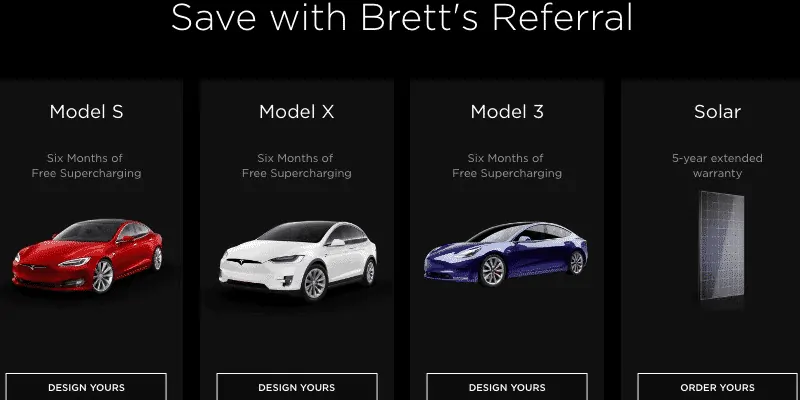
    Special/Premium Rewards For Referrals – Tesla

    Tesla, the electric car company, has been innovating its referral programs throughout the years to reflect its growing customer base.

    Originally, they offered $1000 to refer a friend, but have since changed their strategies by giving Tesla owners who refer to multiple people a chance to redeem even better prizes, such as exclusive vehicle parts (performance wheels, power batteries, signature wall connectors, etc.).

    The company also offers free supercharging, free Model S or Model X, a chance to win a Founders Series Model Y, and a Founders Roadster signed by Elon Musk and Franz von Holzhausen. Other rewards include invitations to exclusive parties and the opportunity to purchase other special edition products.
    Tesla referral strategy

    Dual-Incentive referral programs – Wish

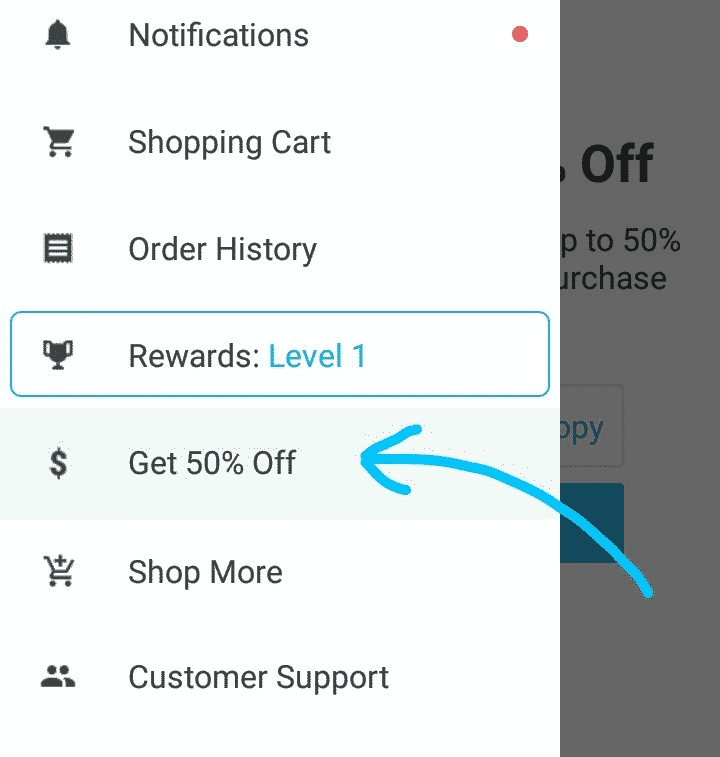
    The concept of two-sided incentives has grown as more and more companies have started implementing in-app referral programs to not just boost app downloads and increase reach, but also to create a win-win situation for both the advocate and the referee.

    Wish is an e-commerce company where small businesses and manufacturers can sell goods directly to the consumers. The brand has recently integrated ‘refer a friend’ feature in their android version where it has used the “Give and Get up to 50% off” dual-incentive strategy.

    The company already has more than 300 million users and this strategy has only benefitted it to attract more.
    Wish referral program

    Referral Bonus – Ebates

    Giving cash or cash equivalent credits is an ultimate referral marketing strategy.

    Ebates is one of the most popular cashback portals using the cashback shopping strategy where it offers $25 to you and $10 to your friend after he makes a $25+ purchase through the portal.

    ebates refer a friend

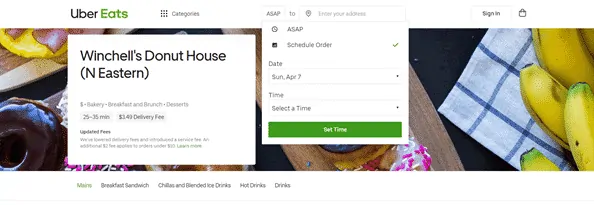
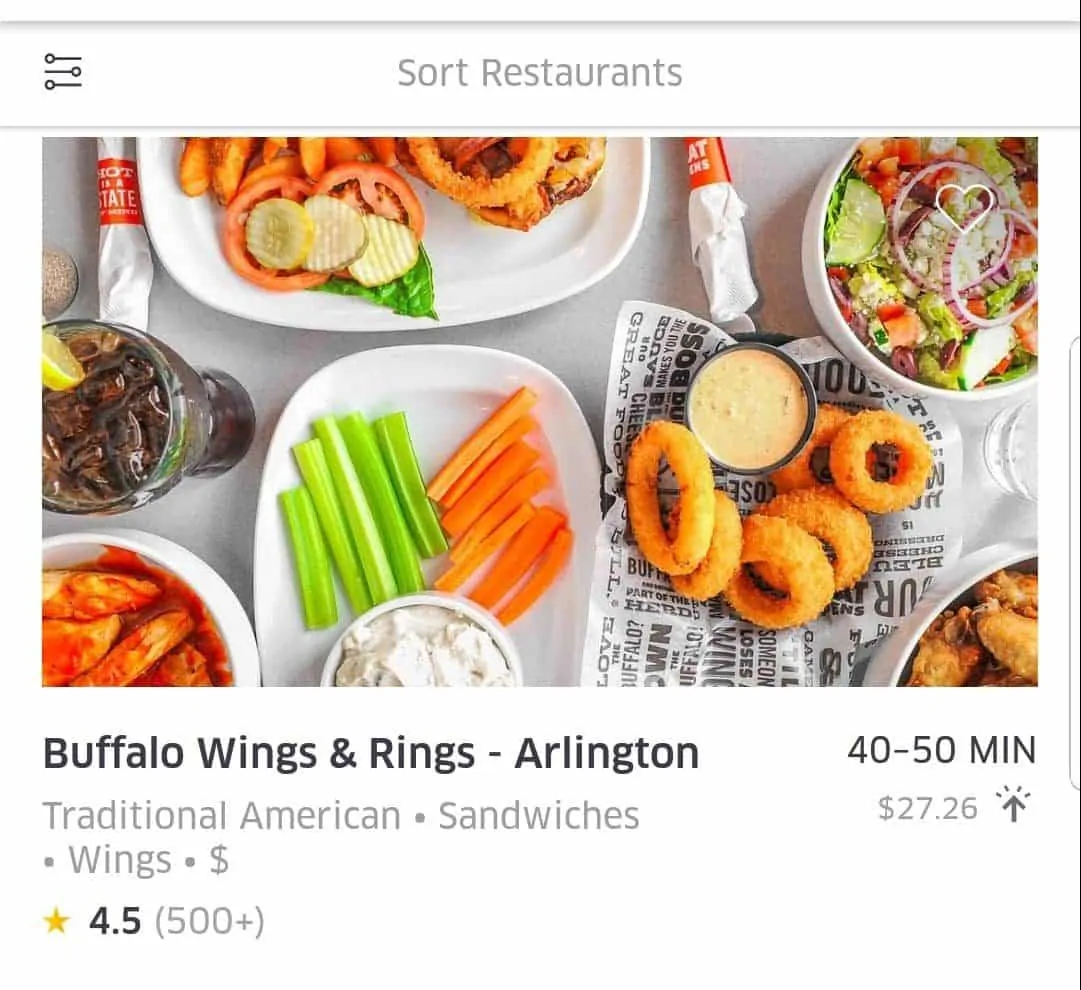
    Free gifts/ Incentives -Uber

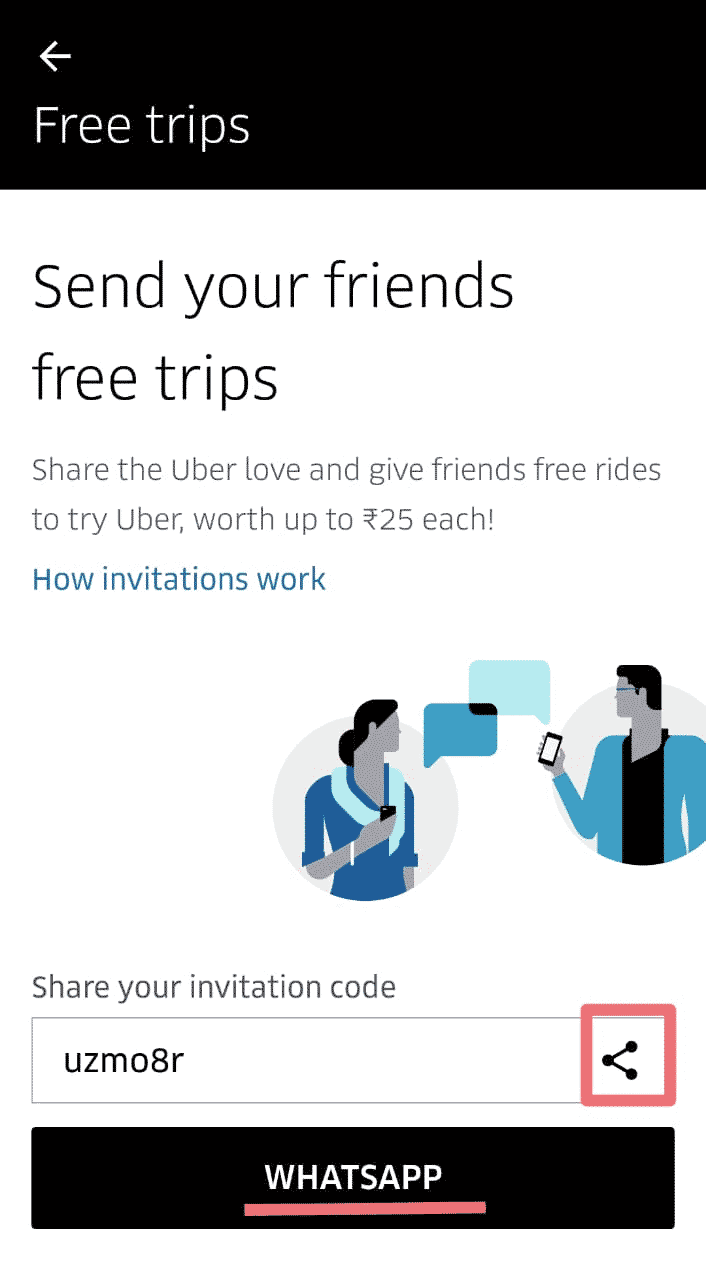
    Uber has used referrals consistently since the beginning and their referral program is one of the most powerful engines that continues to drive growth for the company.

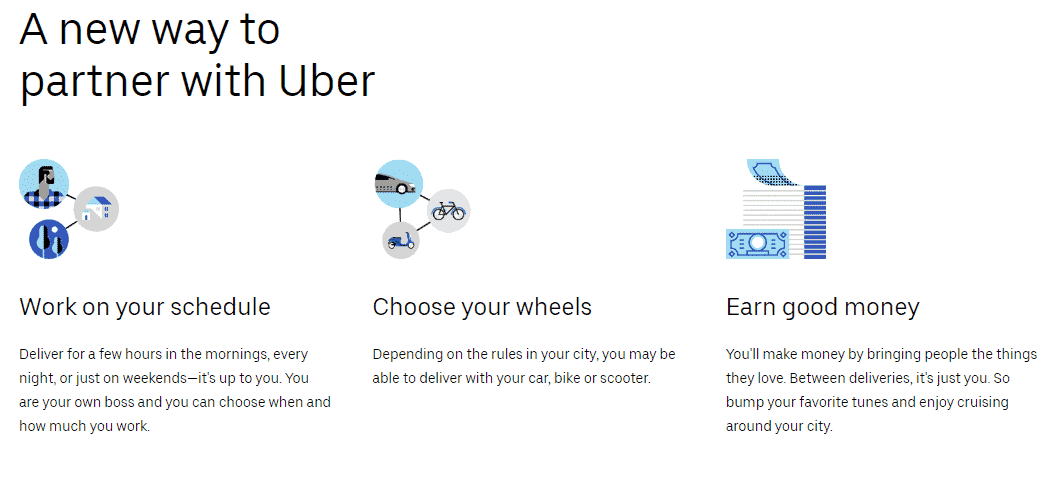
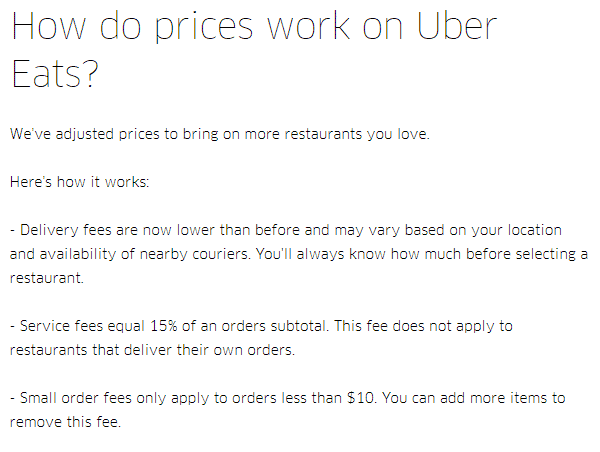
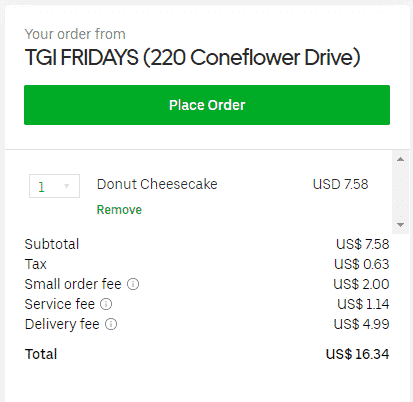
    The brand uses two referral strategies — one for the drivers and one for the customers; offering free rides to riders who refer Uber to other riders and cash benefits and rebates up to $2,250 to drivers who refer other drivers.
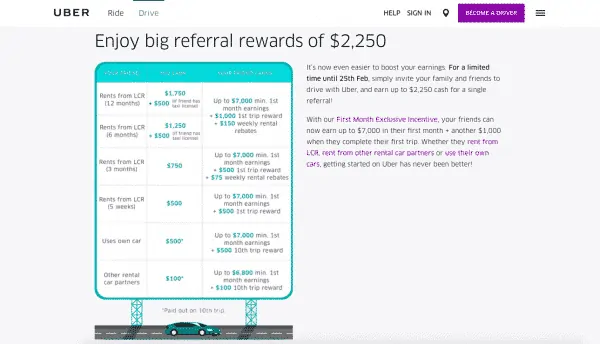
    uber driver referral
    Source: Referralcandy

    Free Upgrades – Prezi

    Prezi lets you share your unique Prezi Classic Referral Link with your friends. When three people click on your link and sign up for Prezi Classic, you will get a 3-month upgrade for free. There is no limit to the number of times you can go through this process.
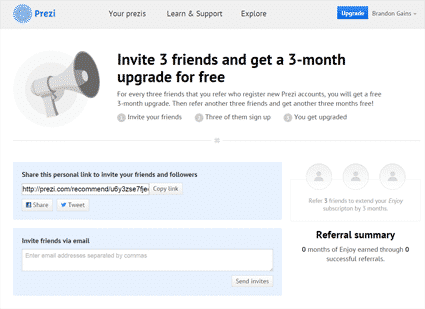
    Prezi referral

    Game Upgrades – WOW

    Referral programs have proved to be a perfect fit in almost every type of mobile game; be it ad-supported, freemium or premium.

    Devoted players will go out of their way to achieve and unlock new features, get rid of the advertisements, or unlock the premium features even if it were for a few days. They prefer inviting friends, rather than making a purchase.

    Blizzard, the team behind World Of Warcraft, executed a splendid customer referral program which allows you to bring in new players to the game and getting a number of in-game benefits in return. Apart from that, when you refer a friend, you’re given special permission to go on quests with other online players at different levels than you.

    World of Warcraft referral

    Discounts – Leesa

    Discounts are a typical part of referral programs. It is crucial for brands to make discount referrals more interesting and shareable.

    Leesa is a mattress company whose referral program gives the referred friends $75 off a mattress and the advocates $50 in cash. They also have a “giving back” program where they donate 1 mattress for every ten sold.
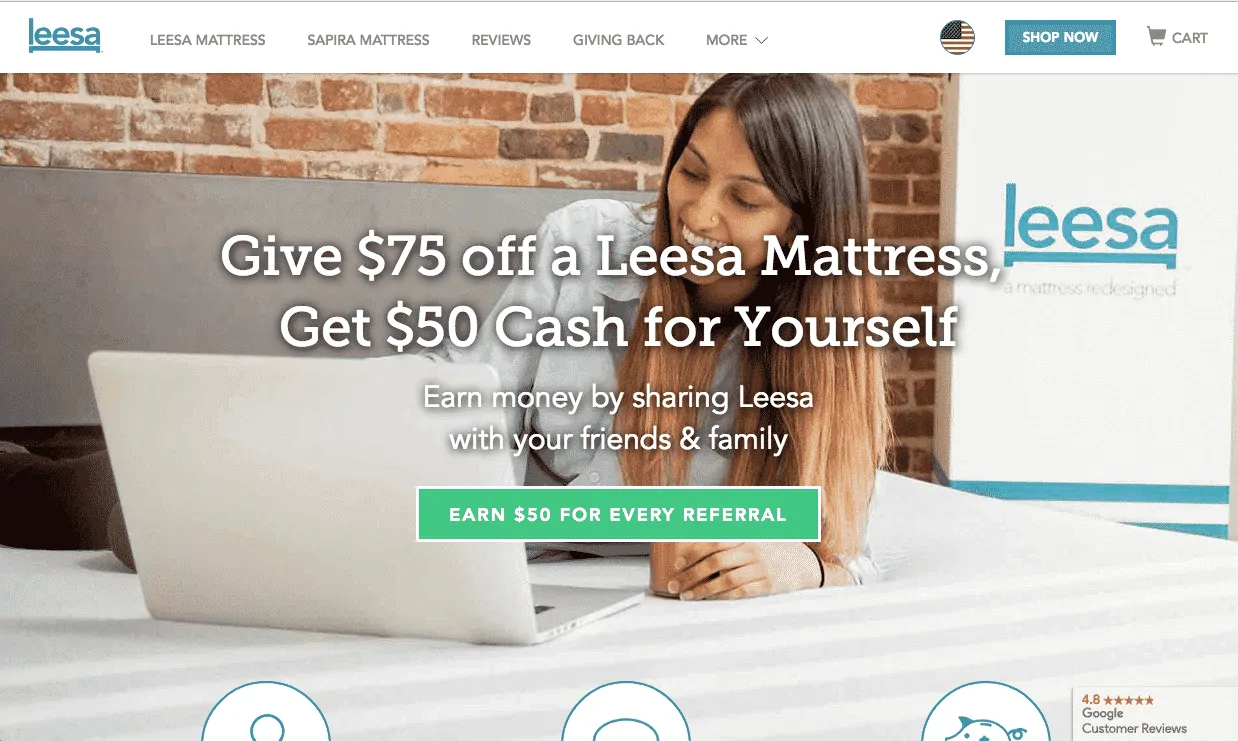
    Leesa referral

    How To Utilise And Execute Referral Marketing Strategies?

    Improve the product?

    Yes. But also focus on how you can improve the experience.

    If you build a great experience, customers tell each other about that. One person has the potential to reach out to hundreds if not thousands of people with just one post online.

    • Implement an enticing and easy-to-understand referral program: Provide valuable incentives and exceptional services by your team. Make the process of referring and getting referred simple and easy for your customers to use.
    • Educate your users: Providing an overview of how the referral program works and educating your users can help the user make a referral easily and also help their friends through the signing up process.
    • Focus on shareability: Your product/service or even your promotional content or the experience you give your customers should make them want to share it with others.
    • Influencers: If you have money to invest, get an influencer on board whose audience matches with your target group and make them endorse your referral program.
    • Online reviews: Positive reviews from satisfied customers work well too. Buyers trust these reviews because they’re coming from someone who has used and experienced the product personally.

    Think out of the box. There is no limit to creativity and innovation. Whatever you do, make sure it is heard and talked about positively. Word-of-mouth is very powerful. In order to keep up with the evolving times, it is crucial for companies to at least consider developing referral marketing strategies. It’s a vital tool to not just increase your audience and customer base, but also leverage brand loyalty.

    Go On, Tell Us What You Think!

    Did we miss something?  Come on! Tell us what you think about our article on referral marketing in the comments section.
  • Direct Marketing – Definition, Types, Strategies & Examples

    Direct Marketing – Definition, Types, Strategies & Examples

    How can you target a specific audience or age group to present information about your services to potential consumers, or promote or sell your products without the need for advertising media? How can you ensure that potential consumers will be interested in what your business has to offer?

    This can be achieved via direct marketing.

    What Is Direct Marketing?

    Direct marketing is a marketing strategy where target customers are contacted directly by the brand instead of having an indirect medium between them.

    It is called ‘direct marketing’ because it generally eliminates the need for a middleman such as a retailer. The results of a direct marketing campaign are immediately measurable because your business can track how many customers have positively responded to you.

    Direct marketing largely relies on the individual distribution of a sales pitch to their consumers and potential customers, personally. Door-to-door salesmen, promotional telephone calls, SMS, emails, kiosks, hand-out brochures and coupons are among the more popular methods used in direct marketing.

    Types of Direct Marketing

    There is a range of types of direct marketing techniques that you can implement in order to reach your target audience. Here are some types of direct marketing listed:

    1. Face-to-Face Marketing – This is one of the oldest forms of direct marketing. Authorised sales representatives are employed to meet prospects directly. The goal of each representative is to reach out to these prospects, convert them into profitable consumers and thus promote the business of your organization.
    2. Door-to-Door Marketing – Door-to-Door sales (D2D) are another form of face-to-face marketing. It simply means that your sales representative is participating in door-to-door prospective, which indicates a system of direct contact with your targeted audience. Rather than relying on any other kind of marketing, a D2D salesman goes from one place to another, engaging prospects in a conversation about the products and services you offer implementing various compliance techniques with the intention of doing business with them.
    3. Kiosk Marketing – Public places that get a lot of crowds are always full of opportunities to gain people’s attention towards your business. Representatives stationed at kiosks in these places such as shopping malls can directly talk to potential customers by catching their eyes with your products and services.
    4. Leaflet Handouts – This type of direct marketing involves handing out leaflets to the targeted audience that contain printed information about the products and services you offer, giving your potential customers the option to contact you, should they decide to make a purchase. Leaflets are sometimes also handed out at kiosks, to encourage a more positive engagement from your prospects. These leaflets may also sometimes contain offers and coupon codes that are redeemable for only a limited amount of time, thereby enticing your prospects further into making a purchase from you.
    5. Telemarketing – The process of contacting your prospects individually and trying to get them interested in purchasing what your business has to offer has rapidly grown in the past few years. Representatives at call-centres contact a list of people who would be interested in your product and inform them the perks and advantages of making the purchase. This technique is often used by AT&T and Vodafone to inform both existing and potential consumers about the services they offer.
    6. Email Marketing – With the widespread usage of the internet, businesses have inclined towards sending emails to contact their prospects directly. This technique is called cold emailing and if used with a proper strategy has a really good conversion rate.
    7. Targeted Advertisements – Internet has opened the gates to yet another form of direct marketing – Targeted Advertisements. Almost every activity a user perform over the internet is recorded in the form of a cookie or other data. This data along with the user’s demographics is used by advertisers to target personalised ads to him directly. An example of targeted advertisements is remarketing where user witnesses the advertisements of the products he abandoned while visiting an eCommerce website.

    Advantages Of Direct Marketing

    A good direct marketing campaign focuses on promoting and selling to your prospective customers by:

    • Helping you build a better relationship with both returning and new customers by contacting them directly.
    • Testing the appeal of your products and services and getting direct feedback from your target audience, which can also be used to improve the products and services you offer.
    • Helping you understand which marketing technique could be a better way to reach out to your target audience directly in order to do business with them.
    • Providing your customers with any compelling content that they could share with other potential customers.
    • Providing a positive boost in sales by gaining loyal customers for your business.

    Direct Marketing Strategies

    A well-planned direct marketing campaign can help you reach your ideal customers. Strategizing your direct marketing techniques can help you amass wider and more loyal support from your prospects.

    • 360-Degree Approach- Just like any other marketing strategy, including a 360-degree approach to your direct marketing strategy and using all the available marketing mediums to convey the marketing message makes the communication more effective.
    • Segmenting The Target Market- Using lists of targeted prospects so that promotional messages can be sent only to those who would most likely be interested in the services you offer is an effective direct marketing strategy. This can be done by collecting information via surveys, or sometimes also monitoring your regular customers’ behaviours.
    • Personalized Messages – Although the number of sales pitches delivered can be massive, inserting the recipient’s name or location at a prominent place in the message adds a nice personal touch which can attract your potential customers.
    • Increasing Customer Loyalty- Since direct marketing allows you to directly contact your customers, it also allows you to build a good relationship with your existing and potential customers. Combine direct marketing techniques with customer loyalty strategies to build better customer relationships.
    • Testing Products and Sales Performance- Direct marketing allows you to directly test products and customers’ feedbacks to them. Each time you run a direct marketing campaign for your business, it is important to monitor the reviews and ratings from your customers in order to improve any future direct marketing campaigns.
    • Harnessing The Power Of The Internet- Direct marketing isn’t limited to the offline world anymore. Your target market is already on the internet. Using emails, retargeting, Facebook ads and Google ads to reach to the target audience directly gets more results.
    • Call To Action Marketing- The call-to-action (CTA) is one of the most common features across all forms of direct marketing today. The audience you target can easily know more about the services you offer by calling you on a toll-free number or clicking the link in an email promotion you sent them.

    Direct Marketing Example: AT&T

    AT&T invested vast direct marketing resources in order to be able to communicate the messages to their consumers and prospects in a relevant manner. One of the ways they sought to tackle this was via their direct marketing program called the AT&T Opportunity Calling® Program, which was launched in the year 1984 in an effort to provide information regarding their offering.

    The program focused on contacting people and providing them value to them by recognizing their different needs and responding accordingly. One of the main reasons why Opportunity Calling was so successful was because AT&T rewarded their new customers for their patronage with exciting personalized offers and discounts.

    Bottom-Line?

    Direct marketing is based on the opportunity to communicate with your prospects and customers directly, which also allows you to build a close relationship with them. And while the goal of direct marketing is to increase awareness and educate the markets about the products and services you offer, the major focus is on persuading your prospects to make a purchase directly, without the involvement of a third party.

    Go On, Tell Us What You Think!

    Did we miss something?  Come on! Tell us what you think about our article on direct marketing in the comments section.
  • The Ultimate Guide To Cold Emailing

    The Ultimate Guide To Cold Emailing

    “Guess what, my day just got made – I received this fabulous cold email!”

    …said no person ever.

    Whether you’re a new SaaS startup looking for corporate clients to sign on or a content writer pitching your skills to magazines, cold emailing is a crucial part of getting your business up and running. It can be the most disheartening thing in the world to keep sending out emails and getting no response, but you keep on doing it.

    Because you have to.

    Let’s get the harsh truth out of the way — Your prospective clients aren’t interested in your emails.

    Your clients are likely busy people with jobs and responsibilities, and getting yet another cold email in an already-full inbox is not their idea of a mood-booster.

    Here’s the thing, though. It is possible to use cold emails to get people’s attention.

    It is possible to score meetings, close deals and land contracts with cold emails.

    And no matter how fancy you get with social media, cold emailing done right remains the best way to get real leads that convert into real sales.

    Interested in nailing the art of the cold email? We’ve put together the perfect guide for you.

    What Is Cold Emailing?

    A cold email is simply an email sent to a potential customer with whom you currently don’t have any connection.

    It’s less intrusive than a cold call, in that you’re allowing your client to read your email at a time of his or her choosing.

    But in every other way, it’s like a one-on-one conversation.

    A cold email is typically sent from one business to another with the purpose of starting a conversation. While the underlying objective is usually to make a sale or some other form of conversion, it could also be a request for assistance – to ask for an introduction to someone else, for instance, or to pitch an article for publication in the recipient’s blog/magazine.

    Is Cold Emailing The Same As Spam?

    cold email vs spam

    The biggest question people ask in the context of cold emailing is – “Is it spam?”

    It might surprise you to know that cold email is actually the opposite of spam.

    Here’s how.

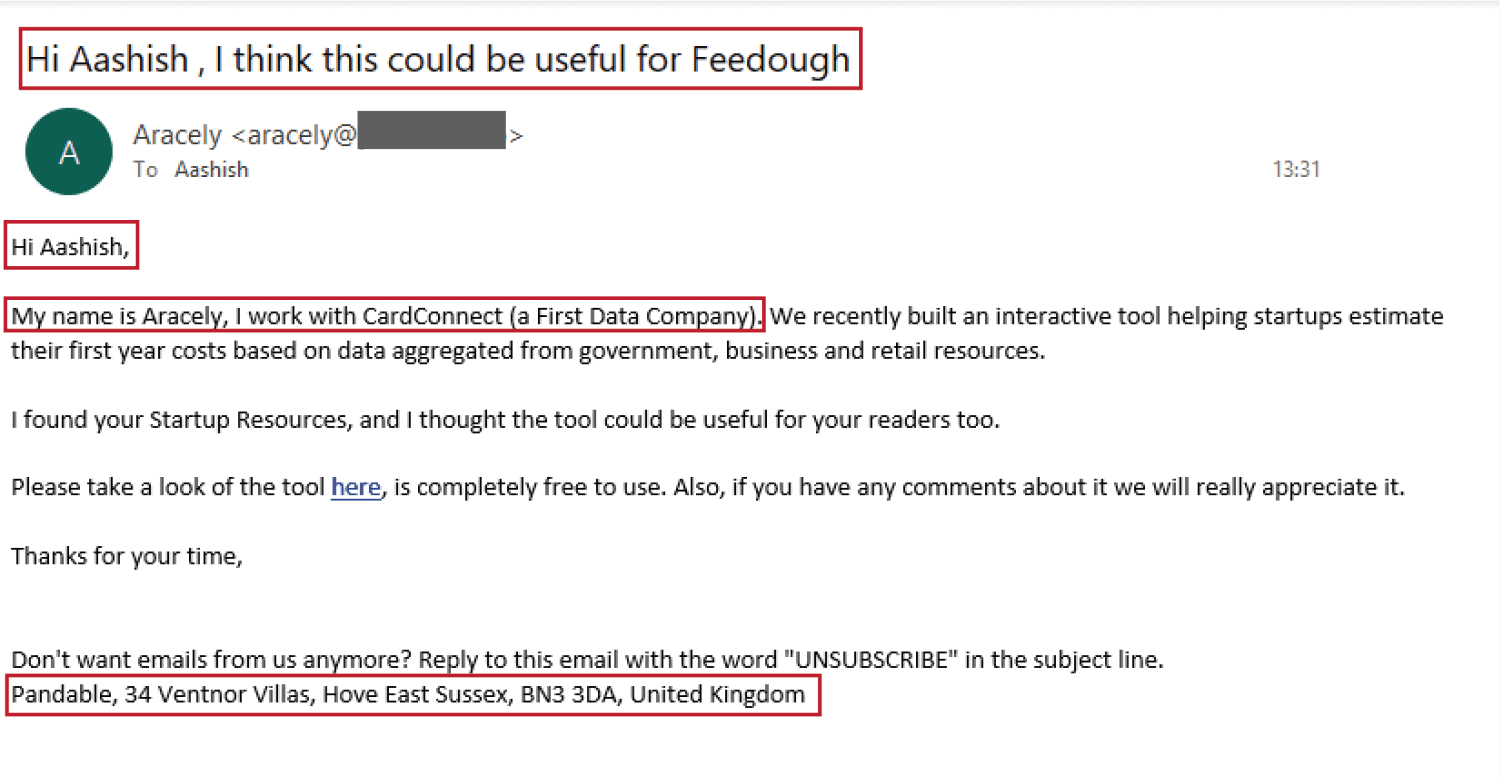
    Spam, that bane of mailboxes, has some common features.

    • It has a generic sales message.
    • It uses a fake name.
    • It has a misleading subject line.
    • It doesn’t include the sender’s contact information.
    • It always has a commercial motive.

    These stand in direct contrast to the features of a cold email.

    • It has a specific message tailored to the recipient.
    • It uses a real name.
    • The subject line is accurate.
    • It always includes the sender’s contact information.
    • It may not necessarily have a commercial motive.

    A spam mail is basically a mass email sent without taking the recipient into account. A cold email, on the other hand, is designed specifically with the recipient in mind.

    How To Craft The Perfect Cold Email

    You could have the best writing skills in the world, but it won’t get you anywhere unless you have a solid list of leads to send your emails to. Sales representatives call this prospecting – which is essentially the act of seeking out new customers for your business.

    Prospecting can be tough given that businesses often start with no existing leads or contacts – 40% of sales representatives say, in fact, that it’s the hardest part of their job.

    We’ve got you covered, though! Read on to know about targeting and segmenting (the two elements of prospecting), as well as some solid tips on crafting the perfect cold email.

    Targeting

    linkedin sales navigator
    Source: LinkedIn


    This is the first part of prospecting, in which you build up a lead list of potential clients with whom you are likelier to close deals. Rather than trawling through your team’s LinkedIn profiles for possible names, however, use these tried-and-tested tips to build your list.

    • Use tools to help you find relevant contacts and companies. Tools like LinkedIn Sales Navigator help you build lists based on specified criteria, and also get you the email addresses of the leads.
    • Find the prospects your competitors are targeting. These prospects already have an interest in the type of product you offer, and they’re also interacting with your competitors. Tools like Smart Lead List can help you reach out to these prospects and make your own pitch to them.
    • Search for companies that use a specific technology. For instance, if you’re targeting companies that use Hootsuite, use tools like SimilarTech or WhatRuns to find companies using Hootsuite.

    Segmenting

    SEGMENTING COLD EMAIL

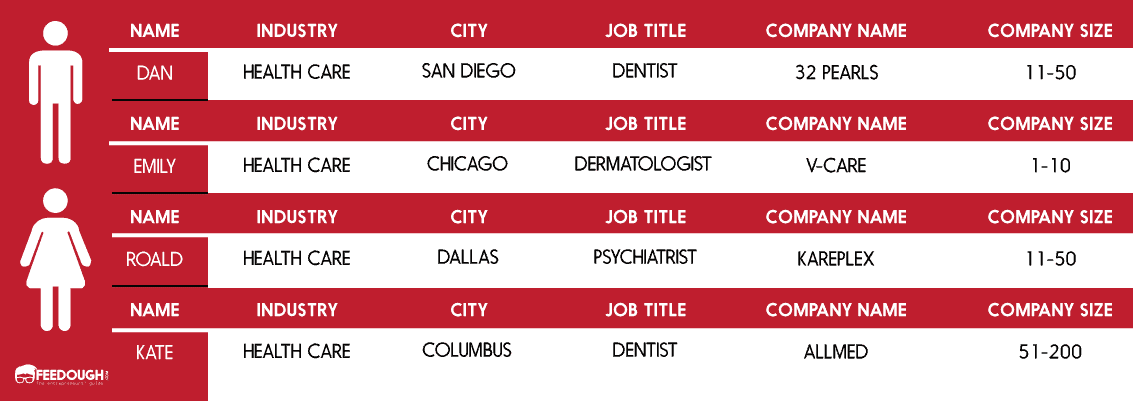
    This is the part where you divide your overall lead list into segments based on industry, geography, job title, mutual contacts etc. Segmented email campaigns have a whopping 100.95% click-through rate (CTR) than non-segmented campaigns, so there’s a clear reason for you to give this step due attention.

    Creating

    Now that you have your leads segmented and in place, it’s time to start writing your emails!

    Like any good piece of writing, cold emails should go through at least a couple of drafts before you send them out. Take your time with composing something that is brief, outlines a clear value for the customer and lets them know how to reach you. Keep the following best practices in mind when you are composing your emails.

    • Use a crisp, accurate subject line47% of emails are opened or ignored based on their subject line – so make sure you pick a good one. The best email subject lines are short, crisp and eye-catching – for instance, “2x your inbound leads like XYZ Company”. Generic subject lines such as “Can you chat?” get ignored 98 out of 100 times, so avoid them. Above all, don’t use misleading subject lines of the sort that go ‘YOU’VE JUST WON A FREE IPAD!!!!’ They’re a one-way ticket to your recipient’s block list.
    • Personalise as much as you can –While this might be a little tough if you’re emailing a mass list, you should at the very least address the client by their first name. Personalised emails have a 29% higher open rate and a 41% higher click-through rate, so take the time and compose a mail as though you’re talking directly to John, Sarah or whoever your client is.
    • Keep your personal information for the signature – Nothing ticks off a potential client as much as receiving yet another email that goes ‘Hi, I’m John from XYZ Company’. That’s clearly a sales pitch opening, and your email will end up in the junk folder faster than you can say ‘hold on’. Instead, create a smart, professional-looking email signature with your name, company, designation, phone number and a photo. That way you can free up the body of the email for your message – and you can show the recipient that you’re a real person and not a spam bot!
    • Keep it short – Please, now is not the time to show off how beautifully you can craft sentences. Get to the point and say what you need to say if you want any chance at converting this lead. If you really must give your recipient a virtual tour of your business, include it as an attached brochure or video clip that he or she can open at their leisure.
    • Include a specific request – Do you want the client to share his or her phone number for a talk? Ask for it and suggest a date and time for a call. Are you looking for their response in a survey? Say so and include the link to the survey. Do you need the contact details of other leads from them? Ask for it. All too often cold emails get so caught up in formalities and explanations that the client ends up missing the point. Include your request in a clear, direct and polite manner, and cut the fluff out.

    When To Send Your Cold Email

    You’ve targeted and segmented like a pro and crafted a cold email that’s a work of art…and it never gets opened.

    It could, of course, have been deleted or ignored – however, one major reason cold emails don’t get opened is that they were sent at the wrong time. While people do tend to check their email off and on throughout the day, there are certain times at which you’re likelier to get a response. Based on an analysis by LeadCandy, here are the best times to send out your emails.

    In North America:

    Weekdays – 6:00AM-6: 30 AM PST

    Weekends – 5:00PM-7: 00 PM PST

    In Asia:

    On all days – 10:30 AM-11:30 AM, 2:30 PM-3:30 PM, 8:00 PM-9:00 PM IST

    Schedule your emails to be sent out within this window and see whether there’s a noticeable uptick in open rates. You should, of course, experiment around these time frames and see what’s working best for you.

    Following Up On A Cold Email

    This can be as nerve-wracking (or even more so) than the process of sending the original email. Questions commonly asked include – how far apart should I send follow-ups? What do I write in a follow-up email? Should I even follow up in the first place?

    We’ll answer the first question right away – yes, of course, you should follow up! Around 80% of cold emails need 5 follow-ups after the initial email, so there’s no question of giving up after just one try. It’s quite likely that the recipient overlooked your email the first time or simply forgot about it. A follow-up also acts as a gentle nudge that shows the recipient that you’re interested in hearing from them.

    There are a few things you should keep in mind when planning a follow-up email.

    • Include an opt-out option – First off, give your recipient the option to not hear back from you. Instead of using the ‘unsubscribe’ button, which comes off as a little cold, add a line towards the end of your email that goes something like “Please let me know if you are not the right person to contact for this.” That way, you don’t bother someone with emails they don’t want, and you can devote more time to searching for the right leads.
    • Keep the tone conversationalDon’t add accusatory sentences like ‘You didn’t respond to my last mail’. Keep it friendly and casual. For instance, you could say ‘Just thought I’d check in again to see whether you had a chance to go through the offering I shared with you last week’. Follow-up emails shouldn’t be information-heavy at all – they’re designed to act as a nudge, not to be a new sales pitch.
    • Send follow-ups a week apart – Daily follow-ups are annoying, intrusive and highly likely to get you blocked. Allow a reasonable amount of time to elapse before you send a second email. A week is usually good enough to allow for your recipient to get back to you. In case the first follow-up doesn’t elicit an answer, you can send a second one a week later.
    • Consider sending a final ‘thank you’ email – If a fifth or even a sixth follow-up doesn’t get you a response, it’s likely your recipient isn’t interested in what you have to offer. A good way to sign off is by sending an email that thanks them for their time and informs them that they won’t be receiving any further emails from your end. Always include your contact information in such a mail, so that the recipient can reach you if he or she has a change of heart.

    Testing, Testing

    There’s a reason cold emailing is so tough to get right. You can’t just pick a strategy and assume it will work! It’s critical to test each and every email campaign you plan so as to maximise your chances of making it work. Keep the following tips in mind when you’re testing your next campaign.

    • Preview and proof your content – Your email may look a certain way when you’re drafting it and a different way in the recipient’s inbox. Make sure you preview each email to check that the alignments, picture sizes, spacing and other elements are exactly right.
    • Test on multiple email accounts – Send your email to test accounts on Gmail, Hotmail, Yahoo and other mail servers to see whether it appears optimally on each of them.
    • Make sure your content is mobile-optimised – Most people check their mail on their phones while on the go, so make sure all your content loads easily on a mobile screen.
    • A/B test each aspect of your email – Sometimes little things like your font size or call-to-action can make all the difference, so remember to A/B test for everything! Have a sample size of at least 200 for each version so that your results are statistically significant. Some of the things you can test for include font, link formatting, colours, button sizes, date/time of delivery etc.

    Our Favourite Tools

    Cold emailing doesn’t have to be a game of darts! There are plenty of tools available to help you out with different stages of your email campaign – pick the ones that make the most sense to your needs.

    • Lemlist – This is your go-to if you’re less than confident about crafting your own emails. With conversational templates that suit different business requirements, Lemlist can help you set up personalised campaigns in minutes.
    • LeadCandy – This tool helps you obtain contact details for your prospects. Once you’ve uploaded your contact list as a .csv file, LeadCandy will extract details such as their work and personal emails, designations, job titles etc.
    • Grammarly – Your word processor’s spellcheck may identify spelling and basic grammar mistakes, but there are several complex errors that creep into our sentences without us noticing. Grammarly does the trick with its advanced grammar analysis.
    • Mailshake – This tool helps you automate your emailing process based on the time window during which your emails are likeliest to be read.
    • NeverBounce – This handy tool helps you weed out any inaccurate email addresses on your lead list so that your bounce rate stays low. A bounce rate above 8% could get you flagged as a spammer, so this is a useful tool to have on hand.
    • CrystalKnows – This is a nifty app that assesses a contact’s communication styles and lets you personalise your email content even further.
    • GMass – A great tool to send cold emails right from Gmail. It also provides other features like automatic follow-up emails, easy connection to Google sheets, etc.

    Some Cold Emailing Best Practices

    We’ve curated handy tips and tricks from some of the best cold emailing practitioners out there, and, here’s what they have to say.

    • Don’t use your primary domain – Despite your best efforts, your recipients could mark your cold emails as spam. Too many of these cases and your domain could get flagged as spam, which would cause even non-cold emails to bounce. Instead, purchase a handful of domains related to your primary domain and use them for your cold emailing campaigns. In addition, avoid using .com domains as they are the likeliest to be marked as spam.
    • Don’t use too many images – Most spammers send out emails heavy in images because they can sneak links into the pictures. Such emails, therefore, are likely to be sent straight to spam. MailChimp recommends that you aim for an 80:20 text to images ratio.
    • G-Suite is your best bet for cold emailing – G Suite allows you to create email addresses based on the domains you purchased and send them out to cold emailing prospects. They’re also pretty strict about you sending out emails ‘like a human’, so stick to the daily limit of 200 emails per day if you want to avoid getting blocked as spam.
    • Pace out the emails you send – Don’t get over-excited and send out emails in a blast – the more emails you send out at one go, the greater the risk of getting flagged as spam. Revise your email platform’s settings to pace out your sending rate to about one email every 20-30 seconds. You can also use tools like Yesware that do the job for you.

    Cold Email Examples To Learn From

    Ultimate guides notwithstanding, the best way to learn is from real-life examples. While there are millions of mediocre or cringe-worthy cold emails sent out every day, some individuals have honed their cold emailing craft to master-level. Have a look at some cold emails that generated major business from their recipients by checking all the right boxes.

    The one that nailed a contract worth $3000

    Too often, businesses underestimate the power of giving value to their clients for free. And sure, it requires extra effort and may not always yield results. On the other hand, it’s also likely to earn you major deals with high-profile clients, like this email did:

    cold emailing example 1

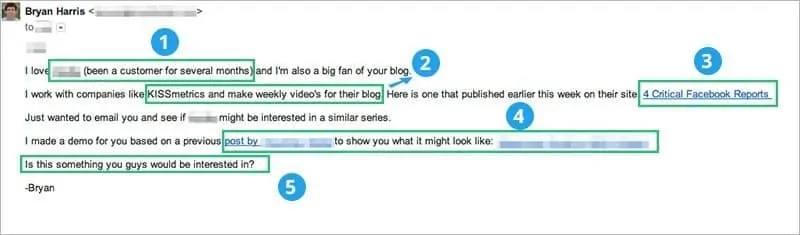
    This short but powerful email does all the right things:

    • It establishes that the sender is an existing customer of the client.
    • It mentions a major competing brand.
    • It provides social proof of the sender’s work.
    • It includes a distinct offer value for the client in the form of a demo.
    • It closes with a direct question, heightening his chance of getting a response.

    The next time you’re emailing a big-league prospect, try devoting some extra time to create something especially for them. It’s bound to earn you at least a call-back.

    The one that scored 1.5x more meetings than personal introductions

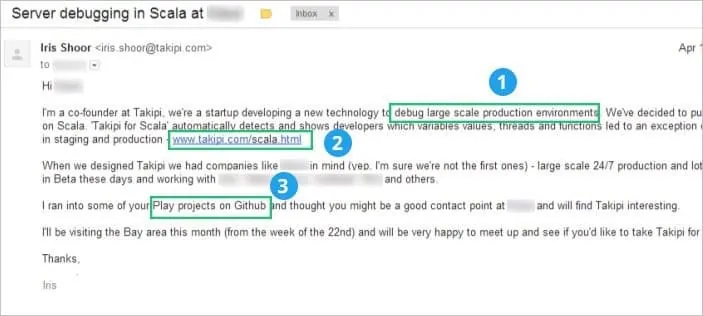
    When you’re selling a product that requires installation to be demonstrated, it can be tough to nail meetings. But craft an email that’s personalised to solve one recipient’s problem and you’re well on your way to success. Take this email, for instance, about a debugging technology:

    This message sets itself apart in several ways:

    • It gets to the point right away with a short introduction about what the brand does.
    • It links the recipient to the Scala-focused webpage as the recipient is a user of Scala.
    • It mentions the recipient’s existing projects, demonstrating awareness about what the recipient does.

    cold emailing example 2

    Lesson to be learnt – write an email that shows how you can provide a solution specifically for your recipient. That way, they have a concrete reason to call you back.

    The one where the picture does the talking

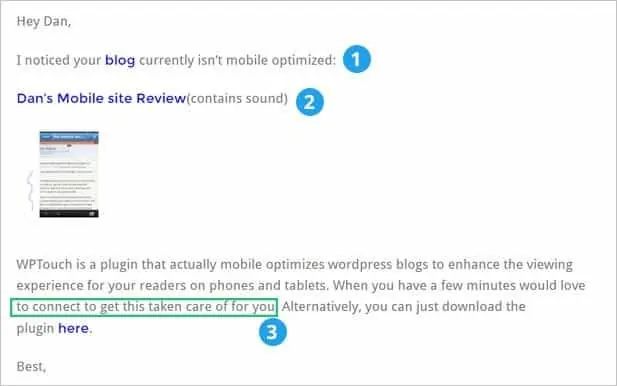
    When can you skip the intro in a cold email? When you want to grab your recipient’s attention right away. In this email, the sender jumps straight into showing where he can add value for the recipient.

    cold emailing example 3

    So why does this email work?

    • It ditches the intro in favour of calling attention to a clear problem the recipient is facing – in this case, a blog not being optimised for mobile.
    • It demonstrates exactly where the problem lies through a visual presentation.
    • It points out that the sender can solve this problem for the recipient if they connect.

    The golden rule – show, don’t tell!

    The one that keeps it simple

    Sometimes, you can skip the catchy lines and fancy add-ons and still score a $15000 project – like this gem here:

    cold emailing example 4

    At first glance, this looks fairly ordinary. But a closer glance reveals the genius behind it.

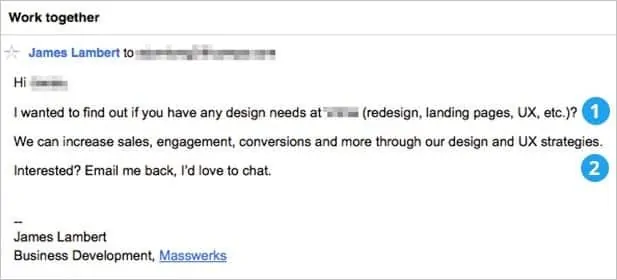
    • The sender, Messwerks, is targeting businesses that have already taken off and are now looking for ways to optimise their websites. So the services being pitched – UX and redesigning – are highly relevant ones.
    • It emphasises what Messwerks can do for the recipient – every business wants more conversions!
    • It ends with a crisp invitation to chat. No fluff, only business – a clear indicator of how committed the sender is.

    The bottom line – do your homework on the client you’re emailing and offer them exactly what they’re looking for. And you don’t even need fancy one-liners!

    Go On, Tell Us What You Think!

    Did we miss something?  Come on! Tell us what you think about our article on cold emailing in the comments section.
  • How Does Sweatcoin Work & Make Money?

    How Does Sweatcoin Work & Make Money?

    You might be a fitness buff or just the average joe who looks for new motivations to go out for a walk every morning.

    Well, now there’s a new app that could help you get paid for going about your daily exercise or chores. It rewards you for moving your body and prove to be a great way to motivate yourself.

    Sweatcoin brings the idea of earning for walking a reality and provides a better incentive for you to work out every day.

    Let’s look at how they manage to pay you for just walking about.

    What Is Sweatcoin?

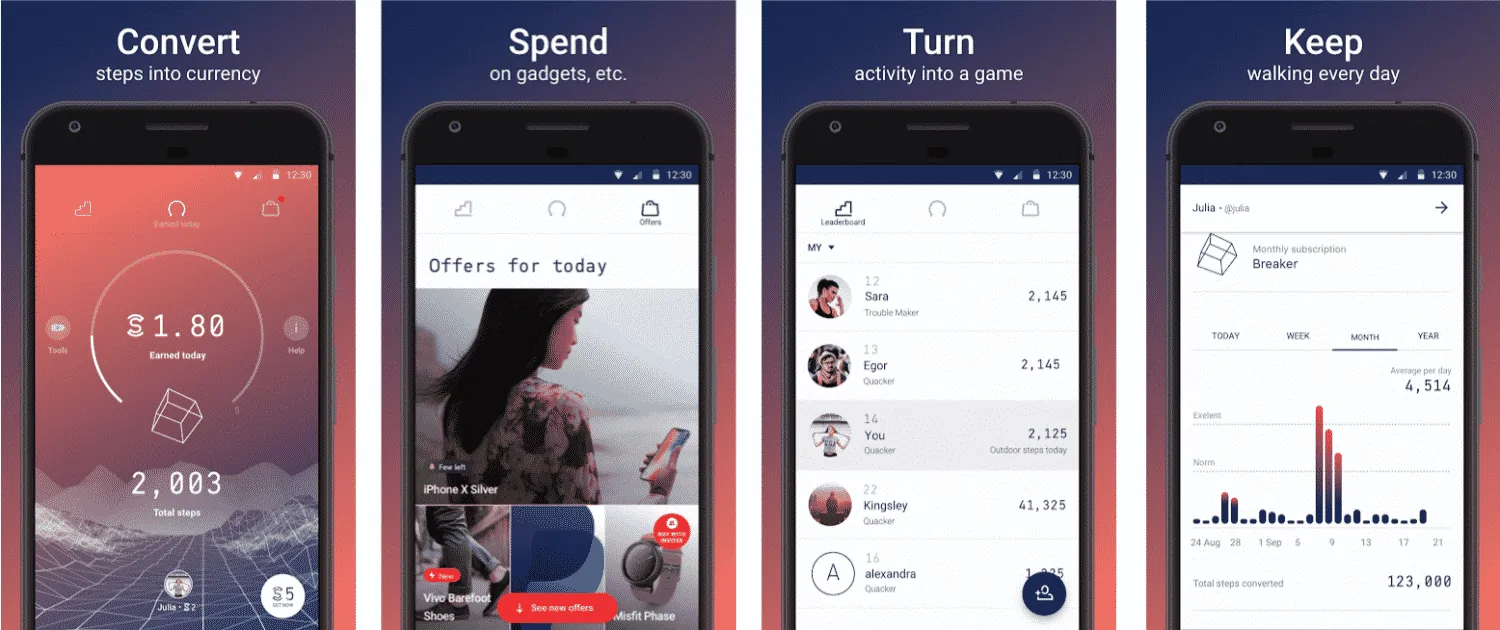
    Sweatcoin is an app that tracks and pays you for your movement.

    The movement here refers to steps that you take every day and you get paid a corresponding amount in “Sweatcoins” for the number of steps that you’ve taken.

    Sweatcoins are an in-app digital currency that works very similarly to the cash that you’ve got in your digital wallets and e-payment apps. As in, they can be used in various different methods and transactions which we’ll look in detail later on.

    sweatcoin features

    Be it walking in a park, a quick jog to catch your transport, strolling around with friends, all those steps are counted as movement (the app doesn’t count indoor movements).

    In the end, one gets to make a few bucks out of just going about our daily lives.

    Sweatcoin app is available for iOS and Android, as well as for the Apple Watch.

    Here’s how the app works:

    How Does Sweatcoin Work?

    Once you’ve downloaded the app on your smartphone or wearable and finish the registration process, you can start walking and rack up steps.

    Sweatcoin works on a special algorithm which uses GPS, phone data, and movement sensors (accelerometer and gyroscope) to determine how much you’ve walked.

    The digital currency works in the same way as any other blockchain-based cryptoasset where new assets are mined by performing a certain task. For every 1,000 steps you take, you’ll earn a single Sweatcoin and receive 95% of it (Sweatcoin takes 5% commission fee on all generated Sweatcoins).

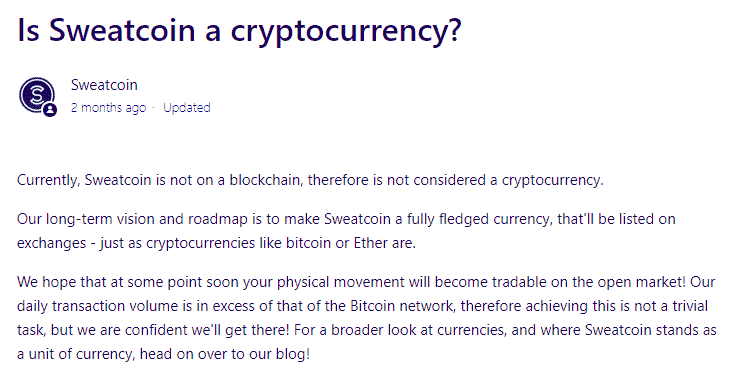
    However, Sweatcoin isn’t currently a cryptoasset. It is neither based on blockchain nor is it traded on any crypto-exchange.

    sweatcoin crypto

    Sweatcoin’s business model is a one-of-a-kind business model which also incorporates competition psychology, network effect, along with discounts and referral benefits to keep the users engaged. It allows for:

    • Users to compete with others. This helps it spread among your circle, proving to be as a motivator to perform better as well as a method to promote their app.
    • 5 Sweatcoins for every successful referral.
    • Spend the Sweatcoins to buy gadgets etc.

    sweatcoin commission


    Using The Sweatcoins

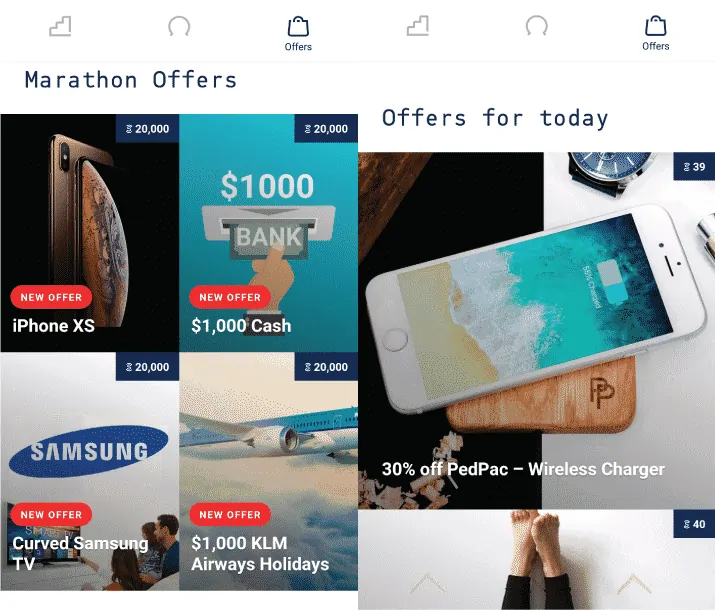
    Once you have enough Sweatcoin to shop, you can go to the Sweatcoin marketplace in the app to see what you can buy. Their options include a wide range of offers and products. From audiobooks, clothes, an iPhone 8, a curved Samsung television, paid apps, Gift cards, and so on can be bought from its marketplace.

    There are also various options to convert them into fiat. The list just grows as time goes on.

    sweatcoin offers

    Actual currency value depends on what you’re buying and the price affixed to it. In fact, some of the pricing seems arbitrary and not tied to an exact exchange rate.

    Let’s look at how Sweatcoin supports itself and earns its revenue.

    How Does Sweatcoin Make Money?

    You see, the Sweatcoin app is free to download and use. But they need revenue to sustain themselves. Till now, the company has been successful in raising $5.7 million in a seed round led by Goodwater Capital with participation from Greylock Partners, Rubylight, Seedcamp, and SmartHub.

    Other than this, Sweatcoin is also working on honing its peculiar revenue model which capitalises on partnerships, engagement and network effect.

    Sweatcoin Plans

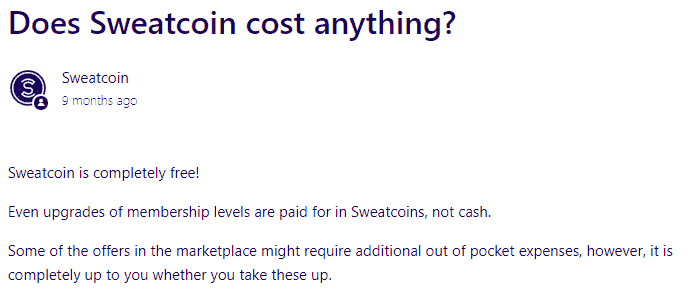
    You see, Sweatcoin limits the number of coins that you can earn via the app per day and they charge you if you want to upgrade the number of coins you can earn. This is a well-defined business strategy which limits the number of people who become eligible for the marathon offers which we’ll discuss in the next section.

    Sweatcoin offers the following plans:

    • Mover:  Lets the user earn up to 5 Sweatcoins per day [Free]
    • Shaker: Lets the user earn up to 10 Sweatcoins per day [Costs 4.75 Sweatcoins per month]
    • Quaker: Lets the user earn up to 15 Sweatcoins per day [Costs 20 Sweatcoins per month]
    • Breaker: Lets the user earn up to 20 Sweatcoins per day [Costs 30 Sewatcoins per month]
    • Trouble Maker: Yet to be announced at the time of writing this article.

    sweatcoin plans

    The best thing about these plans is that they cannot be bought using fiat. You need to walk to earn more Sweatcoins which, in turn, will be used to upgrade to higher subscription pack.

    sweatcoin cost

    The actual way company actually makes money is how you use these Sweatcoins.

    Revenue From Partnerships

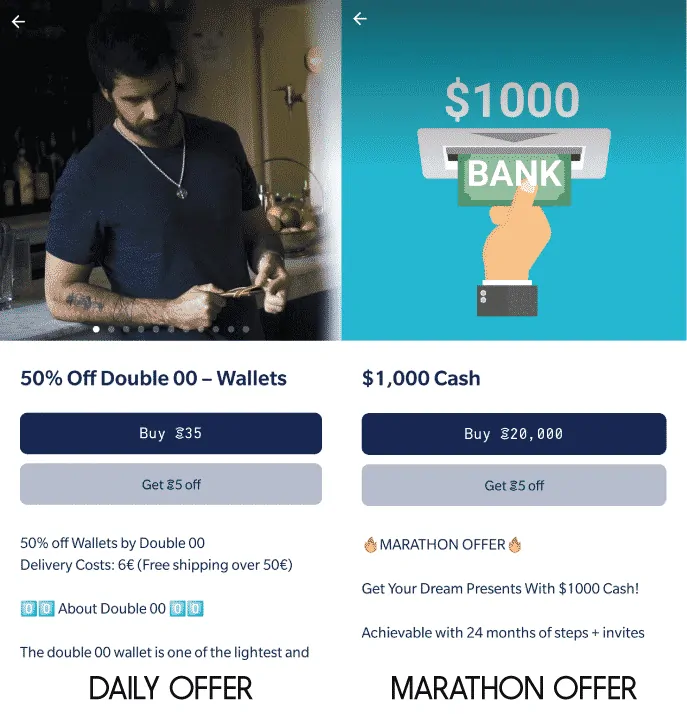
    Offers on Sweatcoin can be categorized into two types: Daily (partner) offers and Marathon Offers.

    SWEATCOIN OFFERS


    That is, a user with sufficient (~10-50) Sweatcoins can either use them to buy daily offers, discounts, or trials from one of the partner company or can keep on collecting (~20k) Sweatcoins to buy actual products (marathon offers) like iPhone X, Samsung TV, etc. or convert it into fiat.

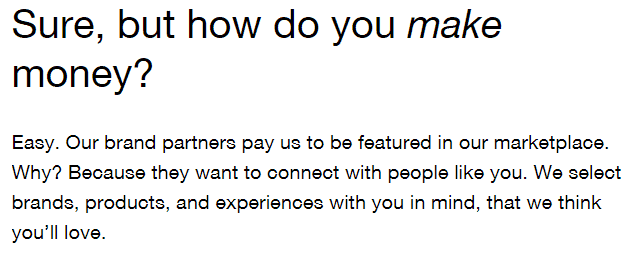
    The partner-offer strategy model is similar to Groupon’s business model where the company partners with other brands to provide offers and discounts to its customers. These brands pay Sweatcoin to get featured on its app. The partnership contracts, just like Groupon, differ for different brands though.

    how does sweatcoin make money

    Given the limitations of Sweatcoin plans and referral strategy, the marathon offers are usually completed in 24 months, which is a great strategy to keep a user hooked to the application for long.

    Revenue From Advertisements

    Besides the commission and fees from featuring partner brands, Sweatcoin also makes money through in-app advertisements. Just like many other applications, Sweatcoin has incorporated Google ads in its revenue model as a secondary revenue source.

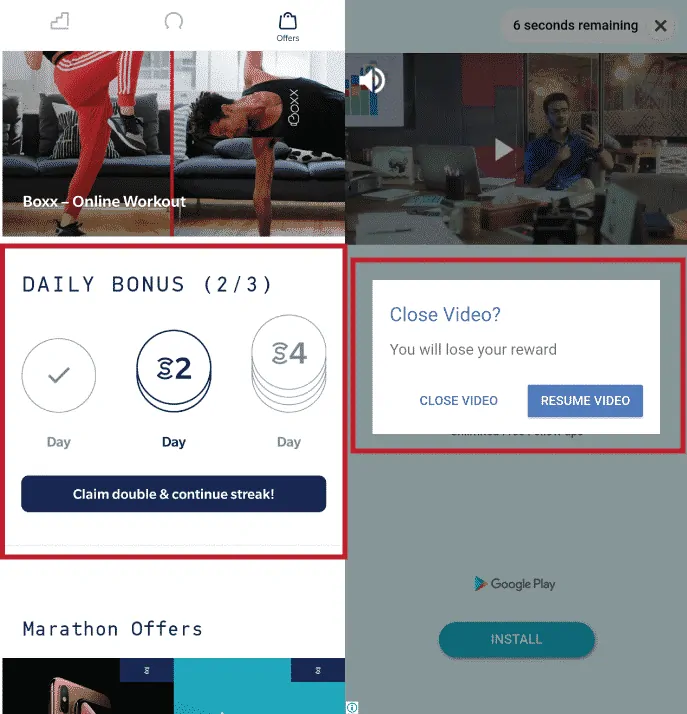
    The company offers an easy way to earn Sweatcoins to the users in the form of daily bonus. All they have to do is to watch an advertisement and they get compounded bonus every day.

    SWEATCOIN DAILY BONUS

    Clever Approach Makes It Work

    We have no intention to predict whether Sweatcoin, as a company, will succeed or not. Nope, this is to look at the methods it uses it cleverly position itself and why it has garnered so much attention.

    The very prospect of earning while just walking makes it great introductory content. It’s catchy and is bound to attract attention.

    Just the novelty of the idea helps them gain quite the traction since this has the potential to be spread via word-of-mouth. The plans that they have set forth on the future of Sweatcoin, if implemented properly, could mean even more adoption.

    That is not to say that there are no discrepancies of any sort.

    Firstly, the app tends to be a battery hog. Since you can imagine the impact it can have on your battery life if an app were to track you continuously throughout the day via GPS.

    Then there’s the privacy part. We don’t have a clear idea of what Sweatcoin plans on doing with the location data that it collects.

    But this is software and data that we’re talking about and it can be improved upon and implemented later on too. After all, we’re talking about minor discrepancies, while the rest of the app works as advertised.

    This goes to show one can make money out of most of the offerings you’ve got. One just has to dig deeper for methods that are not conventionally used such as, them making back few of coins sent into circulation. They’ve turned a novel idea into a working concept and monetized it accordingly.

    Go On, Tell Us What You Think!

    Did we miss something?  Come on! Tell us what you think about our article on How does Sweatcoin Work & make Money in the comments section.

  • Conversion Rate Optimization [A Beginner’s Guide]

    Conversion Rate Optimization [A Beginner’s Guide]

    Website traffic isn’t worth much if your content and site elements can’t get visitors to do what you want them to do.

    You want visitors to take specific actions before they leave your site. These actions could be free trial signup, email subscription, webinar registration, a video view, or a download. All this is usually done to convert more of your site visitors into leads or customers.

    Now, for many reasons – that typically differ from site to site – people do not always do what you want them to do when they land on your website.

    Sometimes website visitors don’t even stay long enough to take any action. The quest to make this right is the subject of conversion rate optimization, which this article will discuss.

    First, let’s define conversion rate optimization:

    What Is Conversion Rate Optimization (CRO)?

    Conversion rate optimization, or CRO in short, is the process of designing and modifying your web pages to help visitors take decisions you require of them.

    Let’s simplify it a bit more:

    To attract customers to your business, or to educate those prospects who may not even know they have a need for your product, you develop a website. In most cases, the same website will serve as your primary sales channel. This is the marketing playbook for most businesses.

    But between discovering and buying your product, there often surface friction points that cause hesitations and stops your prospects from taking decisions you want them to take.

    If you are being judicious with your analytics data, those friction points should serve as markers for conversion optimization. The same is likely to be the points where your leads are leaking.

    From that understanding, we can see how conversion optimization goals will differ with every campaign. Here are a possible few:

    • To earn more leads,
    • To improve the quality of your leads,
    • To reduce your bounce rates,
    • To convert more of your blog readers into subscribers,
    • To convert more of your blog readers into customers,
    • To reduce your cart abandonment rates,

    Still, though, the overarching goal is always to optimize your website for business growth.

    Why Do You Need To Optimize Conversion Rate?

    In an ideal world, the progress from when a prospect first lands on your homepage to when they finally fill their cart and checkout will be quick and smooth.

    But consumers are a complex beast. It is not as easy to figure out how to get them to buy as we marketers would like.

    Thus, despite our best efforts, not enough of the prospects we funnel into our leads baskets end up converting. To put a figure on it, 78% per cent of companies aren’t satisfied with their conversion rates.

    For a sales geared site, low conversion rates translate to low sales. To stem the challenge of low sales, you could look to acquire more customers by driving more traffic to your site. But that will mean bigger PPC and SEO budgets.

    Or, you could try a strategy that really moves the needle, which is modifying your site to get more out of your current traffic.

    When Should You Start Optimizing Your Website for Conversions?

    As soon as you start getting significant traffic to your site, you should look to make sure you are getting the most out of those visitors.

    So, the first thing you should optimize for is organic traffic.

    Specifically, this is traffic you get by successfully matching your target keywords with queries your ideal customers type into Google.

    SEO is, of course, more involved than that. But the basic idea is to first create quality, helpful content that can attract people to your site and accurately match their needs to your product’s attributes.

    How to Calculate Your Conversion Rates?

    conversion rate

    To calculate your conversion rate, you divide the number of conversions (people who took your desired action) by the number of people who visited that particular webpage.

    It is important to note here that not all conversions are worth optimizing for.

    Ideally, you will want to optimize only those conversions that help you meet your marketing objectives as determined by your KPIs or business model. For example, your overall goal could be lead acquisition or revenue growth.

    After determining which conversions you want to optimize for, it will be time to set your CRO goal.

    Now, this goal shouldn’t simply be more conversions. Rather you will want to qualify the goal by targeting X number of conversions per every Y amount of people visiting a page.

    With all this said, without a clear conversion rate optimization strategy, you could still be shooting in the dark:

    A Solid CRO Strategy Will Plug Most Conversion Leakages

    Conversion rates as low as 0.5% that 40% of businesses report mean far too many leads are falling through cracks in the marketing funnel. And a funnel that leaks like a sieve betrays the lack of a clear CRO strategy, which will eventually bring a business to its knees.

    To understand these depressing figures in their proper context, consider that for every $92 spent on customer acquisition a paltry $1 is spent converting them.

    But how does a deliberate CRO strategy plug holes in the marketing funnel?

    Setting Conversion Markers Higher Up Prevents Conversion Leakages Further Down The Funnel

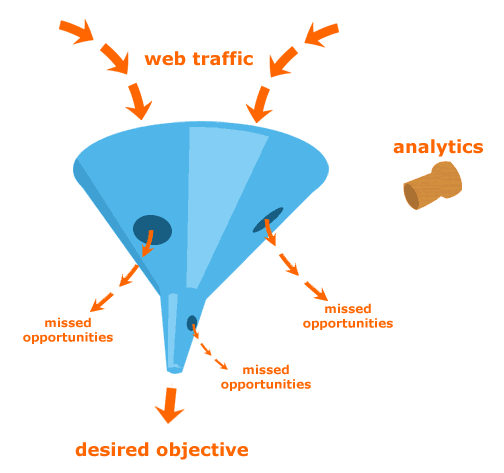
    conversion funnel

    By breaking your funnel down to its individual components it becomes easier to identify the sources of your conversion leakages. It also means leads that are not a fit for your business, and which aren’t likely to ever convert, are filtered out a lot earlier.

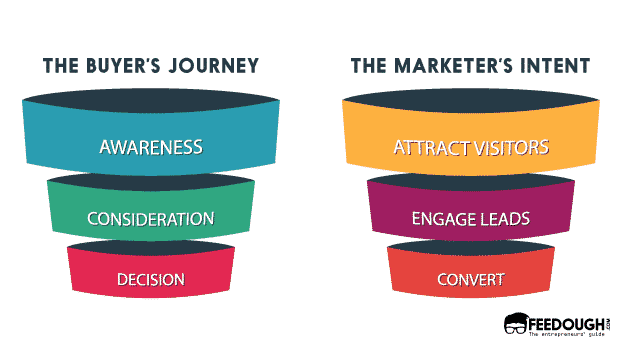
    Yes, we typically consider the lower third of the funnel as the conversion stage. But in all honesty, there are other important conversions further up the funnel that you should optimize for.

    For example, the decision to qualify a lead as a prospect and move them down into the ‘consideration’ basket must have a conversion that triggers it. Let’s say, when one subscribes to your email list.

    But is a subscribe enough to move a lead from the top to the middle of the funnel? Or a webinar registration enough to deem a prospect warm enough to move them from the consideration to the conversion stages of the funnel?

    If you can’t verify:

    • that subscribers’ emails are real,
    • that your leads are who they say they are at the companies they say they work for,
    • that your prospects can afford your product…

    … perhaps they are ‘suspects’ and shouldn’t yet be considered ‘prospects’.

    ‘Suspects’ will join your email list when all they are after is the lead magnet you are dangling in their faces.

    To ensure you don’t waste time pushing marketing messages at fake leads (a common cause for low conversions), a solid CRO strategy will use double opt-ins to weed out prank emails people use when ‘joining’ your email list.

    Yes, pre-qualifying prospects by designing webinar registration forms with extra fields for a person’s job title and name of the company they work for is good practice. But a good CRO strategy will not stop there. You should go to the said company’s website and check if the company exists and if the person indeed is the ‘CMO’ there.

    If you have too many suspects than prospects, your CRO strategy should also recommend that you improve your messaging right at the top of the funnel to ensure you have the right leads entering your funnel.

    Your CRO strategy must also fix conversion problems at the ‘conversion’ stage of your funnel:

    Don’t Rush Prospects To ‘Convert’ Before They Are Ready

    conversion funnel buyers journey

    Rushing a prospect by handing them over to sales when marketing hasn’t warmed them enough will only lead to low conversions.

    Drive the right content at the prospect, showing them how your product’s features solve their problem before pushing case studies and free trials at them.

    A good CRO strategy must also call for periodic examination of the website itself to ensure the low conversions aren’t down to poor site structure and misplaced page elements.

    If it is established that site improvements are necessary, you must still proceed with caution.

    Test Your Hypotheses Before Making Site Changes

    A good CRO strategy must call for agile responses to conversion leakages. But before you make any changes to your site, make sure your assumptions are supported by data.

    Importantly, verify your proposed changes with split tests before you implement them. Research has also shown that using correct testing methods will improve your conversion rates by up to 300 per cent.

    According to Harvey from Consumersbase.com, the big advantage for modern marketers is, between your Google Analytics, heatmaps, mouse trackers, CTAs, customer surveys, and other data mining tools, you have mounds of data from which to draw insights that guide your split tests. You don’t have to assume anything.

    Wrapping up…

    As we have learned, if you are struggling to meet your sales targets, your efforts are best invested in getting more from your current leads instead of trying to attract more in the hopes of growing sales.

    Go On, Tell Us What You Think!

    Did we miss something? Come on! Tell us what you think about our article on conversion rate optimization (CRO) in the comments section.

  • What Is Crowdfunding? – Definition, Websites, Types & Benefits

    What Is Crowdfunding? – Definition, Websites, Types & Benefits

    You have just finished brainstorming ideas, planning, researching and everything that will be required to build your dream project. Now comes the most challenging part — finding investors for your project.

    We all know, how difficult it is to find investors for your dream project through the traditional ways. Especially finding an investor who will believe in what you are building.

    It’s one of those reasons why more and more people are drawn towards crowdfunding instead of traditional ways of raising funds; so much that it has become a global phenomenon now.

    What Is Crowdfunding?

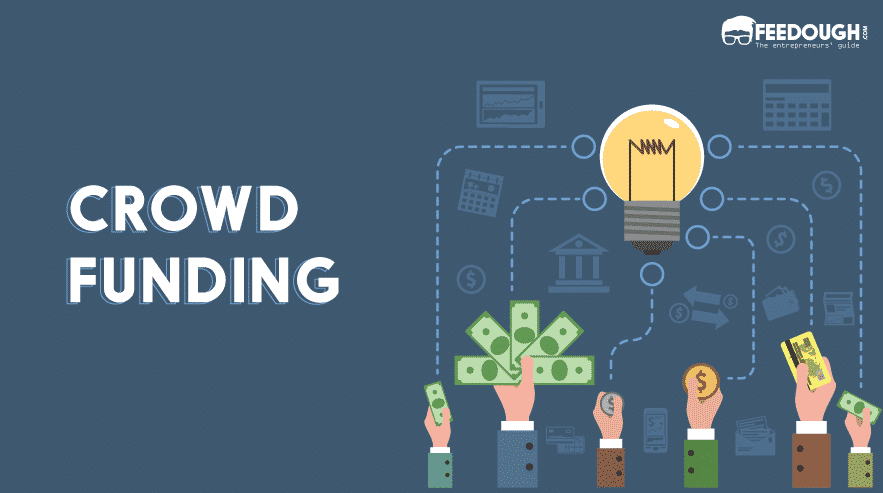
    Crowdfunding refers to raising a small amount of money from a large number of people to finance a project, cause or business, generally via the internet.

    It provides a platform for people to raise enough funds on just the potential of a business idea or the purpose of their project. It has been such a successful phenomenon that in 2017, a project raised $35 million in 30 seconds through crowdfunding. Not to forget the rise of ICOs because of the same phenomenon.

    We don’t realise, but lots of our favourite movies, books and even video games were not possible without the crowdfunding platforms.

    Remember the television show  “Veronica Mars”, which was continued as a film 7 years after its cancellation in 2007, it was possible because of a Kickstarter campaign set up by its director Rob Thomas in 2014. Its crowdfunding campaign was so successful that it raised $5.7 million backed by 91,585 people in just one month.

    The director got the funding as well as the free PR for the movie as the cherry on top.

    Crowdfunding brings creative ideas and good cause to potential investors and donors who are willing to invest their money. Investors put their money on a specific project only when they believe in the project/cause and see the potential of it being a success in the forthcoming future. It provides a single platform for you to build, share and to showcase your talent as well as raising awareness for many things.

    Crowd-funding is an easy process, but you still need to learn a few things before putting your idea out there.

    How Does Crowdfunding Work?

    Crowdfunding uses websites and social networking sites to attract investors with profiles of people who are looking for investors to raise funds. From entrepreneurs to artists, anyone can create a campaign to raise money for their respective projects.

    It works by presenting a pitch on the platform to people and allowing them to invest or to donate by promising rewards and profits in return.

    Nevertheless, this phenomenon works in different ways for different people and also rewards them differently. Some investors/donors do it for just the warm feeling in their hearts, and some do it for monetary gains.

    How Crowdfunding Works For Entrepreneurs

    For entrepreneurs, crowdfunding is the easiest way to raise money for their startups. If you are an entrepreneur and you believe that your idea can become the next big thing and you are unable to find investors through the traditional ways. Then you can present your idea on a crowdfunding platform.

    You can use crowdfunding platforms not just to raise money but you can also make your business more visible and can gain public recognition as well.

    You need to prepare a pitch which should be clear, precise and interesting after all the investors will judge your idea by the pitch you have prepared. You can offer your investors rewards or companies securities in exchange for funds.

    How Crowdfunding Works For Investors

    If you want to make a small investment or want to donate to a good cause, crowdfunding could be the best idea for you.

    Crowdfunding websites have a wide range of projects and social causes which doesn’t obligate you to invest a huge sum of money. You can earn some pretty good profits, interests. In addition, it provides many other benefits as well such as loyalty rewards, tax rebate and goodies and many other things. You can get these benefits just from the comfort of your home. Although you should carefully research the project/social cause you want to invest in, as no investment is risk-free.

    How Crowdfunding Works For Social Causes

    Crowdfunding is not just a medium for raising funds for business ideas. Many people use it to raise donations for social causes as well.

    Many charity organisations put their projects on crowdfunding platforms to raise money as well to promote their cause so that more and more people can participate in it. You can also provide donors with some benefits for donating to your cause, benefits such as tax benefits, public validation or maybe some free goodies.

    How Crowdfunding Works For An Individual

    Apart from startups, charity fundraiser and investors, an individual can also use crowdfunding platforms to raise money for himself.

    People crowdfund their college fees or even pay outstanding hospital bills with the help of the people of the internet. Others raise money through the process for admissions, travel trips and even to pay off their debts.

    Types Of Crowdfunding

    There are multiple platforms to help you crowdfund your project. Every platform is different and each platform is specialised in a different type of crowdfunding. Here is a list of different types of crowdfunding that currently exists over the internet and the crowdfunding websites that specializes in the same.

    Donation Crowdfunding

    As the name Implies, donation-based crowdfunding is for those people who want to raise money for a charitable purpose or personal reasons.

    In this, investors donate money for social purpose or some specific charitable project without expecting any benefit in return. One of the most popular donation-based crowdfunding websites is GoFundMe. It connects people who are in need with people who are willing to help them without expecting any financial benefit in return.

    Reward Crowdfunding

    In reward-based crowdfunding (also known as non-equity based crowdfunding), investors receive rewards such as concert tickets, t-shirts, mugs, pens and coupons etc. in return for their investments.

    This type of crowdfunding is usually used by early-stage startups looking for validation for their offerings.

    Kickstarter is a reward-based crowdfunding website which primarily focuses on small scale disruptive startups and creative projects such as photography, motion pictures, music, art, theatre and books.

    Debt Crowdfunding

    Also known as peer-to-peer lending or P2P, debt crowdfunding is where individuals lend money to startups or individuals and expect to be repaid with interest. It is just like borrowing money from a bank in which the investor gets repaid with interest at a certain point of time. It is the most common way for startups to raise money to set up their business.

    LendingClub is one the popular debt crowdfunding website operates its online credit marketplace at a lower cost.

    Equity Crowdfunding

    In Equity crowdfunding, entrepreneurs raise money for their startups by trading stocks to investors and get capital in return.

    Startups raise money through the sale of their securities such as shares, convertible note, debt and revenue shares.

    For example, AngelList is one of the most popular and established platforms for equity-based crowdfunding since 2010 which helps startup raising funds and providing people jobs in startups.

    Benefits Of Crowdfunding

    Crowdfunding emerged as a new phenomenon for people to raise funds for their dream projects as well as for any other reason. Many people (including me) use crowdfunding platforms to shape their ideas into a full-fledged business or to raise donation to help underprivileged communities.

    This phenomenon provides you with many benefits such as:

    1. An easy way to raise funds: taking the help of the crowd is one of the easiest ways to raise funds for your project/cause. It is easier to convince a lot of people to spend a bit than a few people to spend a lot.
    2. Marketing tool: it works as a great marketing tool. You can reach thousands of people at the same and promote the cause while raising money for it.
    3. Lower risk: launching a new business venture is a very risky task and putting your savings or hard earned money into a social cause is a lot riskier. Crowd funding divides the risk as the funding comes from many individuals.
    4. Gaining loyal customers: launching a crowdfunding campaign can also help you reach many potential customers and participants by sharing your purpose and getting people to believe in the success of a project/cause in the forthcoming future.

    Go On, Tell Us What You Think!

    Did we miss something? Come on! Tell us what you think about our article in the comments section.

  • What Is A Sales Plan? How To Create One? [+ Free Template]

    What Is A Sales Plan? How To Create One? [+ Free Template]

    No matter how hard you think sales is, it’s the backbone which keeps your business alive. It’s something you can’t run away from. The only choice you have is to embrace it and form strategies to execute it in a smoother way. A sales plan helps you to do just that.

    It is a document which describes your objectives and processes of converting the sales lead into a paying customer. It establishes the revenue growth plan and other measurements for success.

    What Is A Sales Plan?

    A sales plan is a document outlining the periodic sales objectives, target customer persona, sales strategies, tactics and tools, and key metrics to measure sales success after a certain period of time.

    In simple terms, a sales plan is a document which specifies the sales objectives and also lays down the strategies to achieve them.

    Importance Of Sales Planning

    Sales planning is an important aspect of the sales management process which involves sales forecasting, demand management, setting sales and profit targets, and listing action plans and execution steps to conduct categorised sales.

    • Sales Forecasting: Accurate sales forecasting is important to make informed business decisions and predict short term and long term performance.
    • Demand management: Preparing a sales plan with set sales goals help the organisation to effectively and efficiently balance the customer requirements with the capabilities of the supply chain.
    • Setting Sales and Profit Targets: Setting sales and profit targets boosts performance by motivating the employees to prioritise, increase their effort and induce focus in their daily tasks.
    • Standardisation of Sales Process: Many industries deal with a similar types of clients. Having a sales plan with execution steps and standardised processes works best for them.

    Sales Plan Template

    Before we move on to explaining how to create a sales plan, download the sales plan template from here and keep it open while reading the next sections.

    How To Create A Sales Plan?

    While having a sales plan template always works, you also should know what exactly you need to write in the fields of sales plan templates.

    A comprehensive sales plan has six sections

    • Mission and Objectives: Company’s mission, sales goals, and periodic sales objectives.
    • Customer Focus: Customer profiles and customer persona.
    • Strategies & Tactics: The short term and long term strategies and tactics to be used by the sales employees to acquire new business opportunities as well as grow business with existing customers.
    • Tools, Software, and Resources: The approved tools that are used to manage, execute and record sales activities.
    • Key Metrics: Metrics that are to be used to track the progress or success rate.
    • Sales Budget: Itemising expected costs and the expected ROI.

    Step 1: State Your Mission And Objectives

    Begin your sales plan by stating your company’s big vision and other long term objectives. These help you to make sure your sales objectives are aligned to the big vision of the company.

    Outline Your Company’s Mission Statement

    Your mission or vision statement is a summary of the company’s aims and values. It is what your company stands for and what it aims to become.

    A good sales plan always starts with the company’s mission statement, which can be generated using a mission statement generator. Here’s an example of a mission statement –

    Our mission at XYZ Digital is to provide cutting-edge digital marketing solutions to startups operating in the healthcare niche.

    State Your Sales Objective

    Sales objectives are periodic goals supporting the company’s growth in the present and future. These goals are set after conducting in-depth research on the present and future performance-related factors and become the targets for the team to achieve in the future.

    Make sure you use the SMART approach to set your sales objectives. A SMART goal is a well-formulated goal which is specific (S), measurable (M), achievable (A), relevant (R), and time-bound (T). The SMART approach helps you define a crystal clear goal that is specific, measurable, attainable, and realistic.

    Categorise your goals into short-term and long-term goals. Define goals for 1 year, 3 years, and 5 years in advance.

    Step 2: Define Your Target Market

    Once the sales goals are set, you need to specify who’ll be your target audience. Define your sales model; is it B2B, B2C or any other? Once the model is defined, dive deep into defining the customer profiles and buyer persona.

    A buyer persona is a fictionalised character representing your ideal customer, created based on market research of prospective customers and existing customers, and real data on the existing customers. We’ve written an in-depth guide on buyer persona (with a template) to help you create one for your business.

    • Provide special attributes of your customer in the B2C model — what he likes, what brands he follows, who influences his purchase decisions, how much he earns, what are his educational qualifications, etc.
    • Similarly, provide special attributes of your business (B2B) client — what’s its positioning, who are its customers, what’s the pricing model, company size by annual revenue, company size by employees, etc.

    Step 3: List Your Strategies And Tactics

    The next step of filling up a sales plan template is to list your long-term and short-term strategies that you’ll use to acquire new business and grow the existing ones. These strategies are designed to align profit objectives with the long-term sales objectives and the company’s vision.

    These include –

    • Positioning: Almost all your sales strategies complement your positioning. It’s important to state your current and future positioning strategies, how you’re different from your competitors, and what the difference is in pricing and products offered. Also, discuss the market trends related to your niche. Also state your competitors’ positioning strategies.
    • Marketing Strategy: Use this section to explain your pricing and promotional strategy which you’re planning on running for the specified time period. Make sure you’ve run that on a test audience before and have stats to support their impact on sales. An example version could be — Product X – Decreasing price from $300 to $275 on Mar. 3 (13% increase in monthly sales), Upselling product Z -Product Z & Product X package increased sales by 5%.
    • Prospecting Strategy: This section outlines the criteria a prospect has to fulfil before being reached out by the sales team. It also includes strategies and methods to be used by the sales team to convert these prospects into qualified leads.
    • Existing Business Growth Strategies: This section of the sales plan is something that should never be skipped as existing businesses can not only give you more business if proper upselling strategies are used, but they can also bring more customers if you give them good referral benefits. Include the strategies that you’ll use on getting the most from existing customers.
    • Action Plan: The above sections talk about where you want to go but this section is all about how you’re going to reach there, who are going to be riding for you, and when is the deadline. Use this section to divide the work among the teams and set milestones, control metrics, and appropriate rewards for the teams and individuals who perform well.

    Step 4: State Your Tools, Software, And Resources

    This space summarises the software, tools, and other resources that the sales team will be using to support the successful implementation of your sales plan.

    The tools and software include CRM and SEM SAAS along with other industry-specific tools.

    Step 5: Assign Metrics For Better Control

    Once every strategy is formed, every task is assigned, and every milestone is set, it becomes important to set key metrics that are to be used to measure the progress and the success rate from time to time. Here’s how you can do it –

    Give a name to each step in your sales process

    It’s always preferred to break your sales process into different steps and assigning a name to each step. It gives a common language which helps you to communicate the progress the difficulties related to every step.

    Specify success tollgates and potential threats for each stage

    Besides giving a name to each step, we also suggest you give a name to every event or trigger that must occur in order to qualify the lead to move from one state to another. An example of such a trigger could be a reply to the cold email.

    Also mention the reasons which can lead to losing the opportunity at each step. Prospect refusing additional information could be one such lost opportunity trigger.

    Establish metrics for success at every stage

    The next step will include specifying a success metric that would measure the progress of every stage. It could be anything depending upon your niche of operation.

    Set expectations for the process flow

    You also have to establish the time period for which the lead stays in each stage of your sales process. It is important to measure ROI in terms of time spent on every lead and also prevent the sales team to not to continue the process if a certain lead has crossed the limit.

    Step 6: Setting A Sales Budget

    A sales plan revolves around what you have and what you need to achieve in the near future. It really will not make any sense if the costs exceed the benefit you’re aiming for.

    A sales budget helps you measure the anticipated return on your investment. Including it in your sales plan will let you assign cost caps and predict the returns.

    It is advisable to break your budget into fixed and variable costs and revisiting it from time to time for more accuracy.

    Types Of Sales Plan

    While the rule of thumb is to create a strategic sales plan for the whole organisation with everything we’ve mentioned above. Companies, however, use many different types of sales plans to make their operations easier. These are-

    Strategic Sales Plan

    It’s a strategic periodic sales plan which consists of the company’s sales objectives, target market, sales strategies, sales tools, and sales budget. It strategically outlines what needs to be done to increase the sales, when it needs to be done, who needs to do it, and what to do to measure it.

    Territory Sales Plan

    A territory sales plan is a variation-cum-subset of a strategic sales plan which is created to be used within a specific territory or market segment.

    Tactical Sales Plan

    A tactical sales plan is a subset of the strategic sales plan developed by the teams within the organisation to smoothen their operations. It includes more detailed team-specific strategies and tactics which align with the overall corporate sales strategies and objectives.

    Contingency Sales Plan

    A contingency sales plan states how the organisation will perform sales-related activities at times of unforeseen events like a sudden loss of key personnel, change in governmental policies, game-changing offers by the new competitor(s), etc.

    Go On, Tell Us What You Think!

    Did we miss something? Come on! Tell us what you think about our article in the comments section.

  • Lean Manufacturing – Definition, Principles, Wastes, & Examples

    Lean Manufacturing – Definition, Principles, Wastes, & Examples

    If you are a manufacturer or an entrepreneur in the manufacturing business, you’d agree that the process of manufacturing involves a lot of waste and there are times you can’t just go away with some wastes.

    You’d agree with me when I say wastes are an inseparable part of the manufacturing process.

    …unless if you are someone who employs lean manufacturing.

    What Is Lean Manufacturing?

    Lean Manufacturing is a process where a systematic and organized method is applied to the production and manufacturing activities which lead to minimal wastage of resources and reduces costs without harming the productivity.

    The Method aims to enhance productivity by simplifying the operational structure to the level where it is easy to understand, perform and manage the work territory.

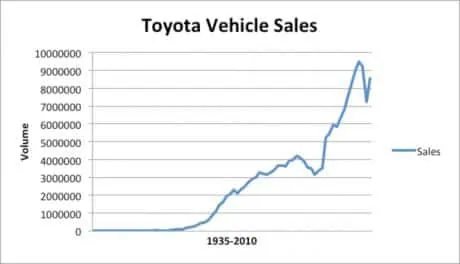
    This system of lean manufacturing was originally developed by Toyota Motors and was called the Toyota Production System. The effectiveness and the success which it brought attracted many other companies and the system is now used by thousands of manufacturing companies operating worldwide.

    Toyota Production System

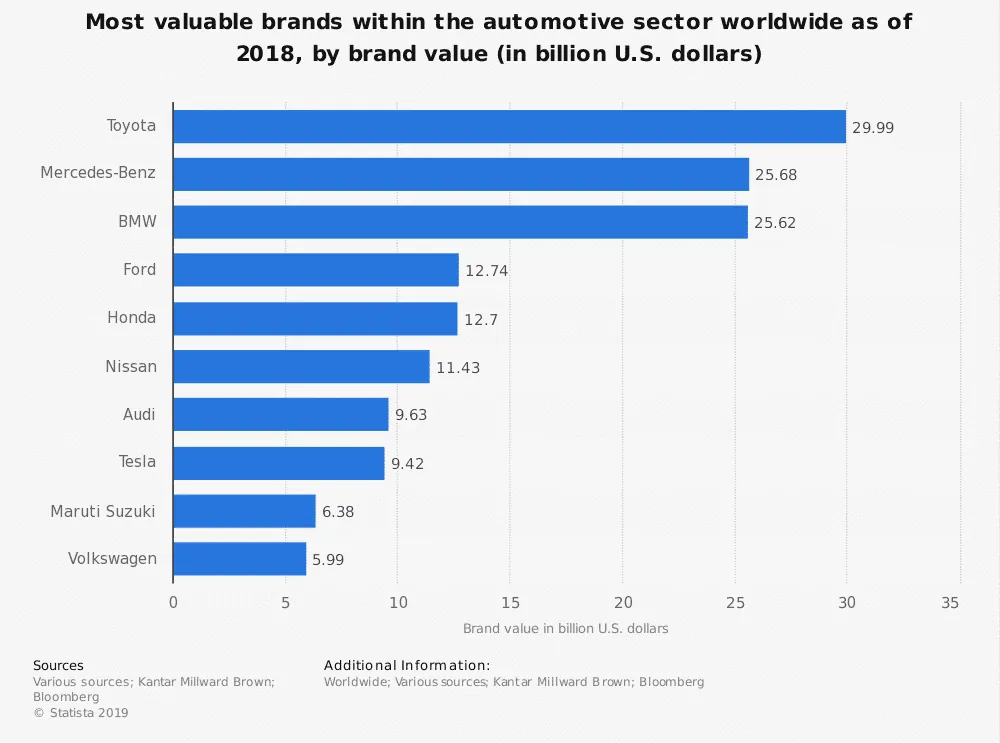
    Toyota, founded in 1937 by Koichiro Toyoda, is the richest automobile company whose market capitalization is around $200 billion which is higher than any other automobile company.

    The company achieved this feat by employing a completely new model and philosophy of manufacturing practice known as “Toyota Production System” – often called “lean” or Just in Time system of manufacturing.

    This method mainly focuses on to eliminate the wastes and achieve the best possible efficiency there is, Toyota only manufacturers cars if there is an order.

    TPS is loosely based on two primarily developed concepts which are jidoka and just-in-time.

    • Jidoka: Jidoka is a Japanese word which means automation with a human touch focuses on methods where faults are quickly identified and corrected before it can create a problem to the production line.
    • Just in Time: This process refers to the refinement and coordination of each production process so that the previous step only produces the item which is required by the successive step.

    Toyota Vehicle Sales 1935-2010

    7 Wastes of Lean Manufacturing

    Toyota has not only been able to increase its manufacturing efficiency but by removing the wastes in the manufacturing process, the company has been delivering the best products that are actually promised by them. This has made the company to top the charts of the most valuable automotive brand in the world.

    most valuable automotive bands worldwide
    Most valuable automotive bands worldwide. Source: Statista

    But what exactly is a waste, you ask?

    The simplest definition of waste is something that adds no value to the manufacturing process. It is a process, task, or an error that just adds more costs and increases the selling price of the product.

    Here are the 7 wastes (mudas) lean manufacturing helps you to eliminate-

    Transport

    Transport is the movement of products (raw materials, work-in-process, or finished goods) from one place to another.

    Usually, it is considered to be a necessary activity which neither can be replaced nor can it be ignored. But, according to the lean methodology, the process also includes unnecessary movement of products which amount to a lot of waste.

    The causes of the increase in transportation waste are due to some given reasons:-

    • Poor layouts
    • Large distance between operations
    • Lengthy, or complex material handling systems
    • Large batch sizes
    • Working to a faster rate than customer demand (overproduction)
    • Multiple storage locations

    Wastage coming from transport can be reduced if you –

    • Design a linear and sequential flow from raw materials to finished goods
    • Make sure work in progress doesn’t have to be kept in inventories or be transported to far of places

    Inventory

    Any product quantity in the form of raw materials, work-in-process, or finished goods that go beyond supporting the immediate need is a waste.

    Excess inventory increases storage expenses which can be caused by –

    • Lack of balance in workflow
    • Large batch sizes
    • Stagnant materials
    • Incapable processes

    Inventory wastage can be reduced if you –

    • Produce, procure, or bring raw materials only when they are needed
    • Reduce or eliminate buffers between the steps in the production

    Motion

    Motion waste refers to unnecessary movements of men and machines which do not add any value to the product.

    Some of the reasons for wasteful motions are

    •         Poor workstation layout – excessive walking
    •         Poor method design
    •         transferring parts from one hand to another
    •         Poor workplace organisation
    •         Reorientation of materials

    Motion waste can be reduced if you –

    • Organise the work areas logically
    • Place the equipment in a way which reduce unnecessary motion

    Waiting

    The stagnation or unnecessary waiting period for the next process to start or for the unsold products is considered to be a waste.

    Wasteful stagnation is often caused by

    • improper communication system
    • unorganised processes
    • non-standardised work instructions

    The same can be reduced by –

    • Designing processes to ensure a continuous flow and minimum buffer between steps in the production
    • Use standardised work instructions to ensure that work is being carried out consistently at each step of the production

    Overproduction

    Producing something before it is actually needed is overproduction. It leads to increased inventory and eventually forms the root of other wastes as everyone has to accommodate this core waste.

    Overproduction is a result of –

    The same can be reduced by –

    • Using a pull system to control the flow of goods within the factory as well as outside.
    • Reducing setup time and upgrading technology to manufacture smaller packages economically.
    • Aligning the pace of production with consumer demand.

    Overprocessing

    Adding more value to a product than the customer actually needs or demands is another waste that needs to be taken care of. It’s harder to detect overprocessing than to eliminate it.

    The causes of this waste include –

    • No proper market research
    • Complex and non-standardised marketing processes

    Overprocessing can be detected and eliminated if you –

    • Focus more on what the customer actually buys your product for
    • Look for ways to simplify the manufacturing process

    Defects

    When the products deviate from the specification, it leads to them categorized as defects. It is the most recognisable form of lean manufacturing wastes and can negatively affect the company financially and non-financially if they go undetected or get detected at the final stage.

    Defects are caused because of-

    • Non-standardized processes
    • Fault in quality control
    • No proper working instructions

    The waste can be minimized by –

    • Designing processes to minimize the occurrence of most frequent defects
    • Designing processes to identify the defects as soon as they occur
    • Looking for single most frequent defect and its cause
    • Creating working instructions to work with caution during certain processes

    Lean Manufacturing Principles

    Lean manufacturing principles were originally published in 1996 based on the study of Toyota’s fabled Toyota Production System (TPS). According to a U.S. Bureau of Census survey, the more lean tools and principles a manufacturing facility adopted, the more it grew.

    These principles focus on identifying what does and doesn’t add value to the customer and using the information to streamline the manufacturing processes and create improvements in productivity. Here are the 5 lean manufacturing principles which you need to follow to make your manufacturing process more effective and efficient.

    • Identify Value: Think from the customer standpoint and specify the value which he is actually looking for. Conduct surveys, validate your assumptions and build what product and what features are actually required by the market.
    • Map The Value Stream: After the product’s value has been identified, choose the system and process to deliver its value through the specific product. This principle of lean manufacturing focuses on eliminating all the steps, features, and other elements that do not add value to the process or create value for the customers.
    • Create Flow: Once the wastes are removed, make sure that the product manufacturing processes flow (the movement of the value stream) is smooth enough and isn’t affected any interruptions, delays, or bottlenecks before reaching the customer.
    • Establish Pull: After the flow is established, the focus should be on the “inventory” part of the production system as it can create a whole mess for the production line if not treated properly. In the lean manufacturing system, a product is only produced when it is needed and in just the quantities it is needed, in this way unwanted inventory and waste is terminated and the product produced satisfies customers’ needs.
    • Seek perfection: Perfection can only be achieved if there is consistency in efforts.  Lean is not a static system and it needs constant efforts and surveillance for perfection. Each and every element of the organization should be working in an order to implement perfection in its work.

    Lean Manufacturing Examples

    Toyota isn’t the only company benefiting by implementing lean manufacturing tools and principles, there are several other companies which have used the lean techniques to dominate their markets. Two such companies are Intel and Nike.

    Intel

    Today, the average chip in a laptop contains over 40 million transistors. Intel, the world’s best computer processor manufacturer, adopted lean manufacturing methodology to manufacture and bring a microchip to the factory from more than three months to less than 10 days.

    Nike

    Nike has adopted a very disciplined and methodical approach to manufacture its cutting-edge footwear. The company has two overarching goals or pillars:

    • Make Today Better (Lean)
    • Design the Future (Innovate)

    Make Today Better is Nike’s lean manufacturing philosophy which is viewed as both a business system and a continuous improvement opportunity aimed at producing the highest quality product by eliminating all possible wastes. Employees are trained for enforcing teamwork and the problems are usually solved by employee closest to that problem.

    Design the future philosophy is essential for the company to remain at the top of the market by enforcing sustainable innovation capabilities across the business to drive a disruptive innovation agenda.

    Go On, Tell Us What You Think!

    Did we miss something? Come on! Tell us what you think about our article on lean manufacturing in the comments section.
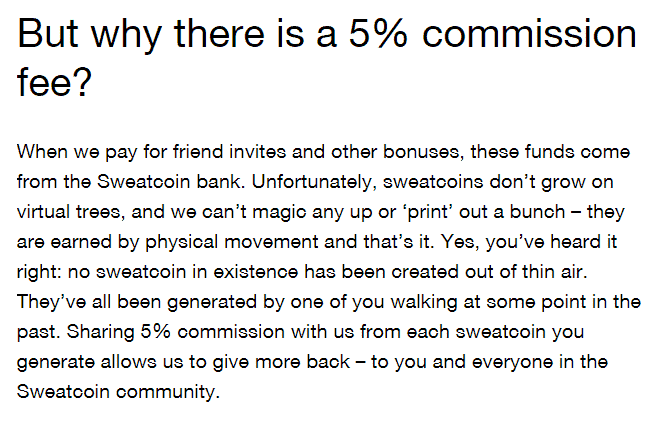
  • Market Validation – 6 Steps To Validate Your Business Idea

    Market Validation – 6 Steps To Validate Your Business Idea

    A lot of startups begin but fail in the initial years of its inception. About 90% of startups fail in the first 5 years of establishment, and that’s a lot. No one asks the actual reason for the failure. Some talk about less funding while some speak of the various other issues that dwell amongst the entrepreneurs building their startups.

    But very few talk about the actual reason – market validation.

    What is Market Validation?

    Market validation is the process of validating the viability of the business idea in the target market.

    In simple terms, it refers to a process of determining whether your business idea is of any interest to your target audiences.

    Market validation gets done in the initial days of the ideation phase and before having any significant amount of investment in it. It involves a series of interviews with people from your target market and in-depth research to validate the concept product-market fit hypothesis.

    It gives you a better understanding of the target market and what it precisely requires and if your product falls into the same category or not.

    Validating A Business Idea – Market Validation Process

    Depending on the product and the target market, it takes a month or more than that to completely process and get the result of whether your startup idea will flourish or demands specific changes.

    From the positioning of the product to its value statements, you need to figure out the objective of your market validation. Once rightly done, you can move forward and start working on your idea with a clear vision.

    Here are 6 steps to help you test waters for your startup idea.

    Step 1- Write The Startup Concept

    The idea and the concept are two different things. While an idea is just a mental impression of what needs to be done or achieved, a concept is a structure of how it is to be done and achieved. No, a concept is not exactly a business plan but just an essential structure to support the idea.

    Developing an offering concept is the first step to looking deep inside the minds of the target market to see if they really need the offering, and if they do, how would they want to position it and buy it.

    There are a few questions that you can create and answer them to have a full picture of what precisely you are planning to build and pitch to the prospective customers. Some examples of such questions are –

    • Who are your customers?
    • What exactly are you going to offer to the customers?
    • What problem will it solve?
    • How are you going to provide the same?

    Once you write it down on paper, the path of market validation becomes easier.

    Step 2- Find Your Test Market

    It sounds easier than done! One of the critical principles of testing your idea is to put it in front of people and see how many rotten tomatoes you get from them. If you are likely to get claps and nods from people saying, “we like the approach and yes it is something that is going to help”, then be sure that you are ahead in the game.

    So, how do you find your market for your product idea? Well, you must have had a problem that you saw and gathered your idea of solving it with your product, right? The market lies in the issue. Find as many people as you can facing the same problem. That is the market you are looking for your product.

    Step-3 List Down The Questions

    Questions are the most significant part of your market validation. Your startup success depends on the questions you are going to ask your customers to get a better understanding of the problems and how your product will solve them. The queries need to be open-ended.

    The questions should make your customers answer about how and why the problem persists and what will it take for them to buy your product. Asking the right questions will help you in the long run, to create a questionnaire based on your product, problem and solution, what customers want, etc.

    Keeping basic questions at the start and then constructing questions that do product positioning in your target market helps. Apart from basics, you can add queries such as “if there is this product that could solve your problems, will you buy it?”

    List down as many questions as you can to figure the necessary results in a simplified structure with adequate responses from your target market. But keeping a limit to the inquiries is essential. You might have a check on the time limit of each interview.

    Step-4 Have Your Questions Tested

    It is crucial to know your questions are bringing the results you crave. Running some sample test interviews and reviewing the questionnaire does the work. Keep a checklist of the following and make sure that your questionnaire is abiding by it.

    Are you asking open-ended queries to initiate conversation?

    Are you looking into the right target market?

    What is the length of each interview?

    Is there any unnecessary question in the questionnaire?

    Are you getting into the details or not?

    You can add more checklist to it, but this does most of the work and makes it inevitable for your questionnaire to miss out on any topics.

    Step-5 Have As Many Interviews As You Can

    Try to conduct as many as possible interviews to get the most out of your questionnaire. More the results from your target market, more is the ability to construct a better final product.

    It might become difficult to conduct so many interviews, and for that, you might as well hire a product marketing manager and allow him to do interviews on your behalf.

    Interviewing people and asking them the pain points of their problems will get you a mass idea of how can you solve the problem they face with your product.

    Step-6 Analyse The Outcome

    The result that you obtain out of the interviews can be accumulated and will help you conclude your market validation. You need to find out all the key points and how you can utilise them.

    You can also get a clear understanding if your startup idea would be a success and if it has a market or not. This step is crucial as you learn all the essentials answers from your target market. It gives you an objective approach to figure if your product is going to solve problems or will be another brick in the wall.

    if you have any suggestions for the topic, please post it in the comments, and we can put it up on our future posts.

    Go On, Tell Us What You Think!

    Did we miss something? Come on! Tell us what you think about our article on market validation in the comments section.
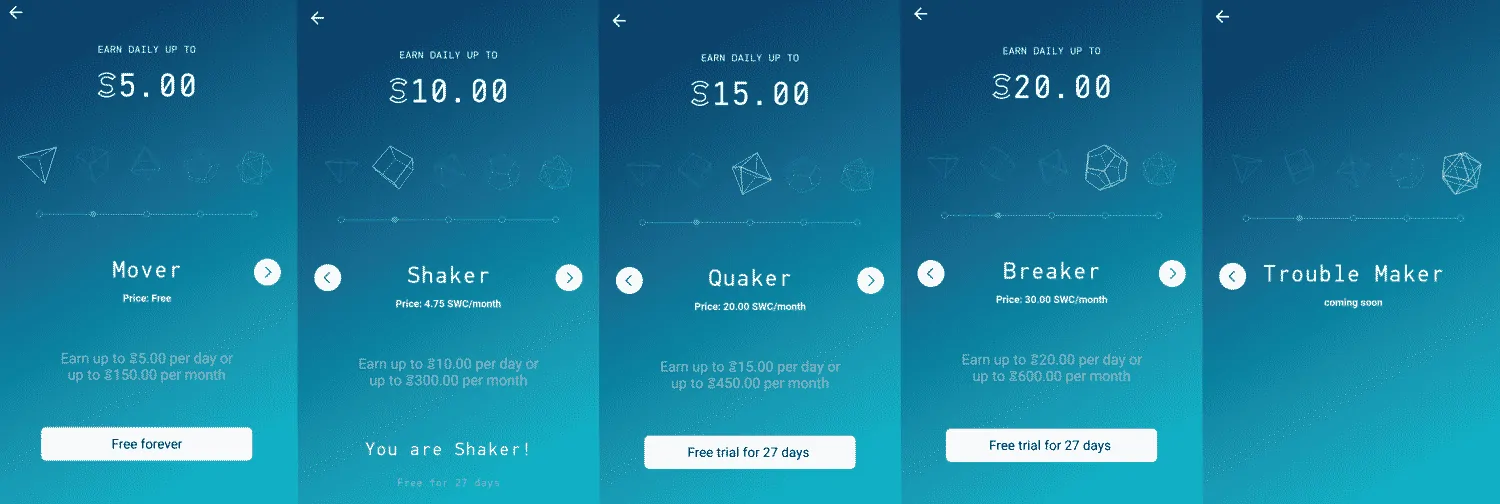
  • How Does Uber Eats Make Money? | Uber Eats Business Model

    How Does Uber Eats Make Money? | Uber Eats Business Model

    From shawarma to kebabs and from pizzas to doughnuts, everything that can have you drooling is now available at your doorstep, in less than an hour.

    All thanks to technology and food delivery services these days. Food delivery startups have, hands down, made life a lot more convenient for us.

    But the question is-

    How do these food delivery services work? How do they earn money for themselves from the little margins that they have? How do they satisfy their customers as well as their partners, along with maintaining a stable situation?

    Here’s how.

    A hyperlocal on-demand business model is what enables them to perform all these tasks with the utmost amount of profit and the least amount of hassle and mess.

    Let’s study the business model of a major name in food delivery companies- Uber Eats, the fourth most successful food delivery app in the world.

    It is an American online food ordering and delivery platform launched by the well-known taxi brand, Uber, in August 2014, based in San Francisco, California.

    Both Uber and Uber Eats have similar strategies for functioning. With just a few taps, you can have a fair amount of cab drivers willing to drop you to the desired destination, via the Uber app.

    Same works with Uber Eats. With just a few taps, you can locate a lot of restaurants as well as Uber Eats drivers near you, so you can order your favourite food and track it while it reaches your doorstep in less than 30 minutes.

    How Does Uber Eats Work?

    Uber Eats is basically a perfectly designed food triangle between-

    1. End customers
    2. Delivery partners
    3. Restaurant partners

    The process is quick and easy for everyone involved: restaurants list their brand and menu on the platform; customers in that area can find them and order from their menu using their phone or computer; and then one of Uber Eats partner-drivers will pick it up from the restaurant and drop it off at the customer’s door.

    Here’s how Uber Eats brings this 3 tiered association into action:-

    End Customers

    uber eats schedule time

    Customers get to order food from a large variety of restaurants near them and can order food via 2 methods:

    • Real Time Ordering: Customers who wish to receive their food immediately after ordering can select the ASAP option while placing the order. The food is delivered to them within 30 minutes.
    • Scheduled Ordering: Customers may pre-schedule an order for the future. They can customize their orders with respect to the delivery date, time and destination address.

    Delivery Partners

    ubereats drivers

    Uber Eats delivery partners (also called Uber Eats Drivers) are independent individuals who pick up food from the restaurant associates and transport it to the customers. They get delivery tasks based on their location and proximity to the restaurant as well as the customer.

    Uber Eats drivers receive one pick up fee every time they go to a new restaurant, one drop-off fee for each separate order they deliver, and a fixed amount for every kilometre/mile they travel to deliver. The approximate minimum payment before Uber’s service fee which they receive for each delivery is ~$4.

    A service fee ranging from 15-30% is charged from every driver’s final payment by the company depending upon the are of operation.

    Restaurant Partners

    Restaurants that partner with Uber Eats get a virtual presence on the platform. Uber Eats gets 30% commission from the restaurant partners on the cost of each item delivered. The restaurants decide upon the price of each item they display on Uber Eats’ menu (which OFTEN differs from the rates at the physical restaurant).

    In return, the restaurants receive publicity, technological improvements and 24*7 connectivity with their customers.

    Uber Eats Business Model

    Uber Eats functions on a 4 step operating model which includes the following steps:

    1. Searching of the right restaurants by the customer
    2. Placing the order by the customer
    3. Picking up the order from the restaurant by Uber Eats drivers
    4. Delivery of orders and receiving the payment

    Uber Eats combines the Aggregator business model and the Hyper-Local On Demand business model.

    It has 3 major transactional segments. These are the 3 avenues through which Uber Eats earns/invests money.

    It operates on a 3 tiered transactional strategy: one, Business to Business (B2B); two, Business to Partner (B2P); and three, Business to Customer (B2C).

    • Restaurant partners with Uber Eats fall under the business to business (B2B) aspect of the strategy. They are already existing businesses, which benefits from another business (Uber Eats in this case), in return for money.
    • The Uber Eats drivers are not the employees but the partners of the brand. They come under the business to partners aspect of the strategy. They are the independent partners who benefit from the business and earn revenue via it.
    • The third aspect is the customers, who receive food for cash, and are often entitled to exciting discounts and offers.

    How Does Uber Eats Make Money?

    Commission On Orders

    Uber Eats receives 30% commission from the restaurant partners on the cost of each item that is ordered by the customers.

    Promotions

    Many restaurants and food chains like McDonald’s sign special contracts with the company to run exclusive promotions on the application and to get more traction and sales. These brands which get into special contracts pay special commissions according to those contracts. The partnership includes special discount codes, features, or even advertisements by Uber Eats.

    ubereats promotions

    Delivery Charges

    Uber Eats charges its customers for the food delivered via its services. The delivery charges are divided into three categories –

    • A variable delivery fee which depends on the customer’s location and the availability of the couriers.
    • A service fee which amounts to 15% of an orders subtotal.
    • A small order fee of $2 which is charged when the order amounts to less than $10

    ubereats fees

    The calculations involved in the process of revenue generation by Uber Eats are-

    If a customer orders a dish worth $7.58 from a restaurant in Dallas via Uber Eats driver,

    uber eats delivery fee

    • Total paid by customer : $7.58 + $4.99(delivery fee) + $2 (small order fee) + $1.14 (service fee)= $15.71 + tax ($0.63)
    • Total received by restaurant : 0.7 * $7.58 = $5.306 (70% share of restaurant per dish)
    • Total earned by Uber Eats driver (considering the delivery was just a kilometer away): $5.50 (per visit to the restaurant, irrespective of the number of dishes picked up) + $3.50 per drop off (irrespective of no. of dishes) + $2.20 per km = $11.20
    • Uber’s cut from the driver’s fee (17% of the amount earned by the driver) = $1.9
    • Total received by the driver: $11.20 – $1.9 + Tip = $9.3 + X
    • Total retained by Uber : $15.71 – $5.3 – $9.3 = $1.11

    Surge Pricing

    Just like the parent company, Uber Eats also employ a dynamic pricing algorithm for surge hours. This surge fee (called the Busy Fee) is calculated according to the number of orders in the area and the availability of the delivery partners. It can be as less as 1.13x or as huge as 3x of the delivery fee depending upon the demand and rider availability.

    uber eats surge

    Delivering in the surge zones (or boost zones, as the company likes to call it) benefits the riders as well. More drivers are notified about the boost promotion amount available in a certain area which eventually benefits in terms of more delivery fee them but brings down the surge pricing by increasing the supply.

    Future Of Uber Eats

    Almost no delivery service is growing as fast or is as popular with customers as Uber Eats in the USA.  It has seen a huge rise in the past years and aims for an even brighter future.

    Eats is an exploding business in a good way. It’s now at a $6 billion bookings run rate, growing over 200 per cent. – CEO Dara Khosrowshahi at Code Conference at Rancho Palos Verdes, Calif.

    Uber Eats has already proven itself to be a scaleup company and within three years, the Uber Eats restaurant food delivery service has grown from an experiment to serving much of the U.S. and major cities worldwide.

    Uber Eats has a bright future secured for itself if it is able to either maintain or uplift the standards it currently possesses. Keeping the customers as well as the delivery and food partners satisfied is the major aspect to focus on.

    Go On, Tell Us What You Think!

    Did we miss something?  Come on! Tell us what you think about our article on How Does UberEats Make Money in the comments section.