Feedough Logo

Blog

  • Transformational Leadership – A Detailed Guide

    Transformational Leadership – A Detailed Guide

    Jade is held in high regard by her teammates. Her team members say that she constantly reinforces the end goal of their work, they’re loyal to her and prefer her over other leaders in the company.

    Jade is a transformational leader.

    No wonder:

    A leader has the ability to make or break the team. It’s no secret that today, the workplace has evolved, traditional leadership methods bear minimum fruits. Now is the time where all employees focus on growth and development and it takes a true leader to identify a person’s potential and help them realise it.

    Amongst the many leadership types, Transformational Leadership is probably one of the most coveted. This article will take a close look at what transformational leadership means, its model, pros and cons, and contrast it with Transactional Leadership.

    What is Transformational Leadership?

    Transformational leadership is a leadership type where leaders encourage, inspire, and motivate their employees to transcend their own self-interest and to innovate and create a change to achieve the best for the organisation.

    Transformational leaders often inspire change driven by a strong purpose and ultimately create an environment characterised by trust and innovation.

    In its ideal form, the objective of transformational leadership is to lead the followers into becoming good leaders in future. This type of leadership is known to enhance the motivation, morale and performance of employees through a variety of mechanisms.

    4 Is of Transformational Leadership

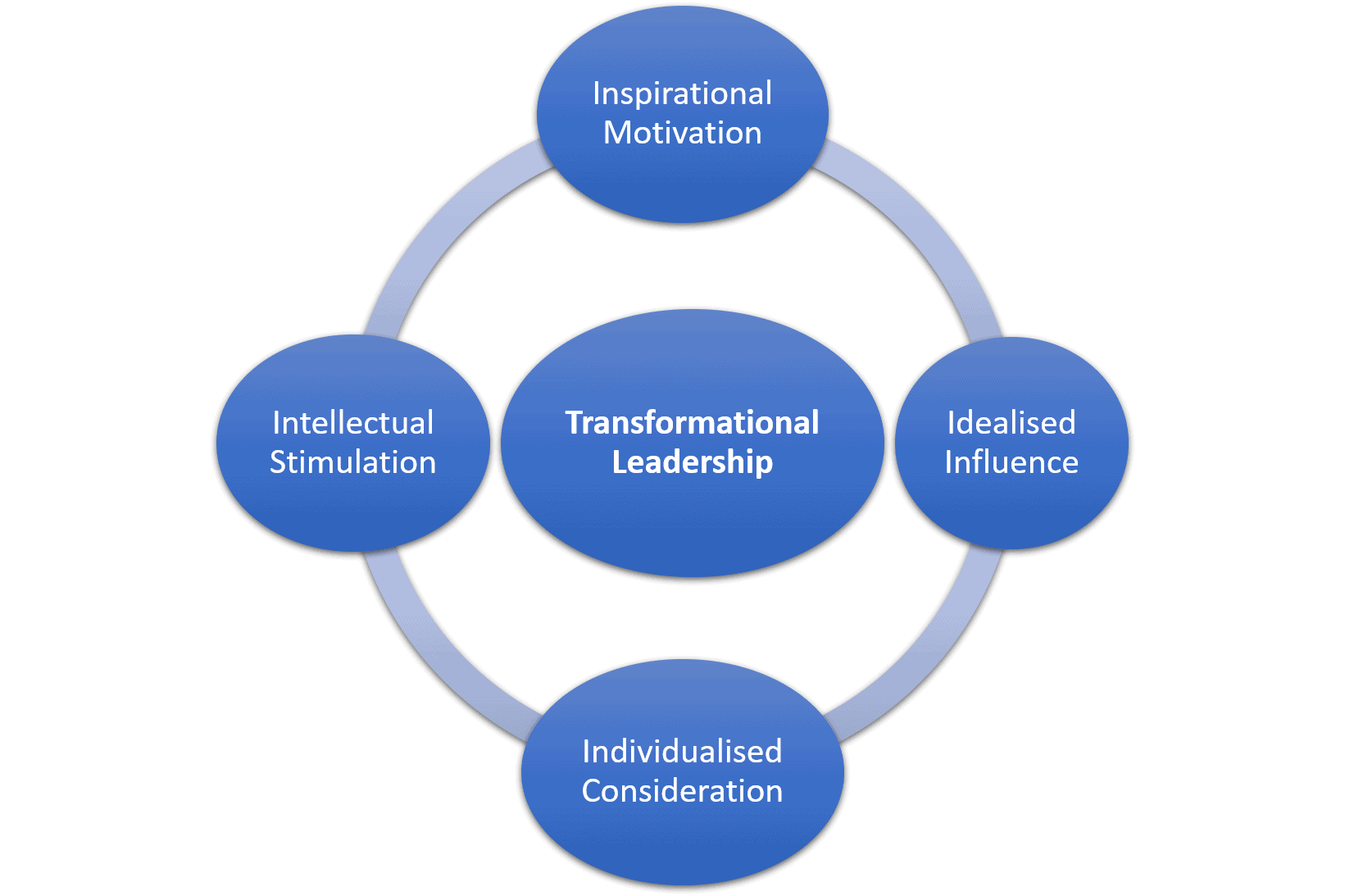
    In the year 1985, Bernard A. Bass based the modern idea of transformational leadership around the following four elements:

    Transformational Leadership
    1. Inspirational Motivation: Transformational leaders inspire each person at a singular level to help them align their goals with that of the organisation. They keep their employees motivated and communicate their expectations to individual followers.
    2. Intellectual Stimulation: These leaders encourage an environment of innovative thinking. They create a space where people tap into their full potential and also challenge others to do the same.
    3. Idealised Influence: Transformational leaders are role models for their employees, they exert influence on the group and are deeply respected by the team for their vision and high standards of performance.
    4. Individualised Consideration: These leaders display care and consideration for their team members, and value their inputs. They strive to create an environment of trust and develop in their followers’ leadership skills.

    Transformational Leadership Characteristics

    Leadership is a fluid practice, it is constantly changing and reinventing itself. Good leaders understand their role and work to maximise worker efficiency and achieve organisational goals. Transformational leaders pay attention to the developmental needs of their followers and strive to increase followers’ awareness by encouraging them to look at old problems in new and innovative ways.

    Now:

    The following points explain the individual traits of Transformational Leaders

    • Visionary: They are committed to the organisation’s development and guide their followers through change and motivation.
    • Positive Role Model: The followers emulate their leaders’ actions because they look up to him/her. Transformational leaders use empowering language to elevate efficiency and ensure high team morale.
    • Risk Tolerance: Transformational leaders realise that there is no safe route to change. Who doesn’t take risks? However, transformational leaders take calculated risks and rely on research and inputs from their team while doing so.
    • Communicative: Transformational leaders ensure that the company’s vision is effectively communicated to each member of the team. They possess good interpersonal skills and are considerate towards each team members’ ideas.

    Transformational Leadership vs. Transactional Leadership

    Often known to follow the “carrot and stick” approach to leadership, transactional leaders use rewards and punishments to induce good behaviour. They focus on supervision and group performance. Further, they aim to maintain the status quo of the organisation and tend to be more passive than transformational leaders.

    On the other hand,

    Transformational leaders set clear goals and high standards of performance while actively interacting with the employees themselves. They aim to improve the status quo and focus on individual performance as well.

    The following table summarises the differences between the two –

    Transformational Leadership
    Transactional Leadership
    Enhance the status quo of the organisation
    Maintain the status quo of the organisation
    Proactive Leadership
    Responsive Leadership
    Goals achieved through high moral values, innovation, and creativity
    Goals achieved through a policy of Reward and Punishment
    Followers transcend self-interest
    Appeals to followers’ self-interest

    However,

    The real question is –

    Which Leadership Style Is Better?

    While transformational leaders try to sell their vision to their followers, transactional leaders divide roles and responsibilities and tell each member what to do. Outwardly, it might seem like transformational leadership is better, but that’s not true. There isn’t a definitive answer to this question as both transformational and transactional leadership are well suited for different situations.

    Consider a crisis situation. These situations require linear progress and set rules and regulations are more effective under such circumstances. Here, transactional leadership is better suited.

    Many big corporations such as Hewlett-Packard, NFL coaches, and high-level military members use the transactional leadership model. Even for minimum wage employees, transactional leadership is better suited.

    Pros And Cons Of Transformational Leadership

    Transformational leadership may seem like the ideal form of leadership, however, there are also some drawbacks to it. Following lists the advantages and disadvantages of transformational leadership in an organisation:

    Pros

    • Empirical evidence suggests that transformational leadership is positively correlated with job satisfaction. Increased involvement of subordinates and a more contented workforce leads to a more balanced workplace
    • Effective transformational leadership improves the status quo of the organisation as employees are motivated and identify with the organisation’s goals. This ensures a higher level of efficiency and output
    • Employees feel empowered and trusted by the manager, thereby feeling confident and loyal towards the organisation
    • Easy resolution of conflicts through collaboration and a good understanding of relationships
    • Transformational leadership results in long term relationship building as employees feel valued and respected with the knowledge that their leader has invested in them and trusted them
    • The focus of transformational leadership is to create an environment of trust and cooperation. Thus, employees enjoy the freedom of failure and have the opportunity to learn from their mistakes. This freedom to fail turns the company into a hub of innovative thinking

    Cons

    • Transformational leaders can struggle with detail as they focus too much on the bigger picture. They need to maintain connections with detail-oriented executives to help them overcome their lack of transactional focus
    • Often, transformational leaders can set unrealistic expectations for their employees which can cause employee burnout. There can be increased pressure to maintain high productivity at all times worsened by unreasonable deadlines and exhaustion
    • Transformational leadership can have negative consequences. Influential leaders leave a great impression on humanity… virtuous or wicked. Consider Adolf Hitler. Hitler personified transformational leadership and is the most extreme example of a negative transformational leader. He had a vision that appealed to his followers that drove them away from humanity and moral sense.

    Barriers To Transformational Leadership

    No leadership comes without challenges. Following lists the barriers, or what hinders the implementation of transformational leadership –

    Resistance To Leadership

    It is unrealistic to expect each employee to be on the same boat. There might be some who are content with the status quo of the organisation and low job performance standards. Such employees don’t desire to seek new opportunities or develop new ways to perform tasks.

    Such individuals might perform better under transactional leaders, with defined roles and responsibilities.

    Unclear Objective

    If the focus is solely on new ideas and creativity, employees might lose sight of the end objective. This would result in the same task taking a lot longer to complete. Individual development is good, but not so much that it hinders the growth of the organisation.  

    Transformational Leadership Examples

    Transformational leaders are catalysts of positive change. Founder of Standard Oil, John D. Rockefeller, founder of Virgin Group, Richard Branson, are two of the most prominent transformational leaders.

    Richard Branson

    Branson is known for his fun and friendly business establishment. He considers himself a “rule-breaker” and prefers to maintain healthy leader-member relations. Further, he believes in giving freedom in decision making and carefully selects his employees.

    He has successfully built 400 companies under the name of “Virgin”, thanks to his participative and goal-oriented approach. His leadership style is far different from transactional leadership. He doesn’t consider money to be a measure of success. For him, and his followers, the excitement is the challenge. This is the main reason why Virgin staff, even though paid a little less than market rates, yet are happy to work for Virgin because they enjoy being in the team.

    John D. Rockefeller

    Believed to be the wealthiest American in history, John D. Rockefeller, is known as one of the greatest leaders of all time. He was known for his perseverance and benevolence towards others. He routinely praised his employees and selected them with care. He possessed several noteworthy traits that made him stand out and many leaders today learn from his success and apply his principles in their organisation.

    Go On, Tell Us What You Think!

    Did we miss something? Come on! Tell us what you think about our article on the transformational leadership in the comments section.

  • The Top 10 Zoom Alternatives

    The Top 10 Zoom Alternatives

    Zoom has skyrocketed in terms of popularity for offering what is premium features to its users for free in a clean and easy to use interface. This has led to people preferring Zoom over other video conferencing services and apps.

    But Zoom has recently been under the spotlight for several security issues and vulnerabilities found within its software. This has led to several countries banning Zoom. Hence, let’s look at a few alternatives to Zoom that are currently available.

    What is Zoom?

    Zoom is a video conferencing SAAS platform that allows users to virtually interact with others over video. Zoom launched in 2013 to the public and was built with enterprises and large businesses in mind.

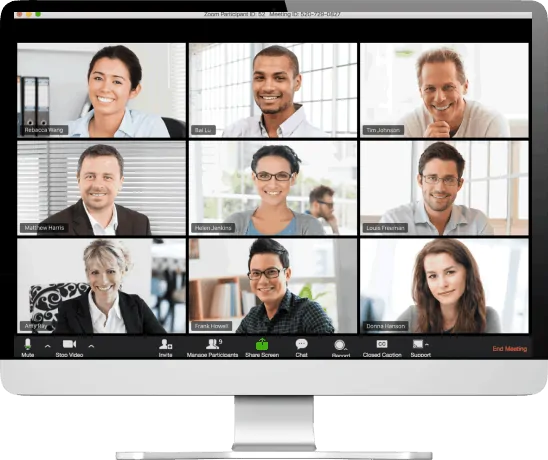
    zoom meeting
    Source: Zoom

    Hence, Zoom offered features that helped boost productivity, with its users being able to –

    • Share content of their screens
    • Whiteboards
    • Schedule meetings
    • Group chat
    • Breakout-rooms

    When it comes to software that is primarily built for enterprises in mind, it is common for it to be less user friendly. But, Zoom’s UI is quite neat and intuitive while offering features that rival the most other established services.

    That is not to say Zoom is perfect – incidents like Zoombombing, presence of malware and exploits within the Zoom software has caused governments, institutions and organisations around the world to ban the use of Zoom.

    Which brings us to –

    Top 10 Zoom Alternatives

    Google Meet

    Google Meet (aka Google Hangouts Meet) is the enterprise version of Google Hangouts and is available as a part of Google’s GSuite – a collection of productivity tools offered by Google as a subscription service.

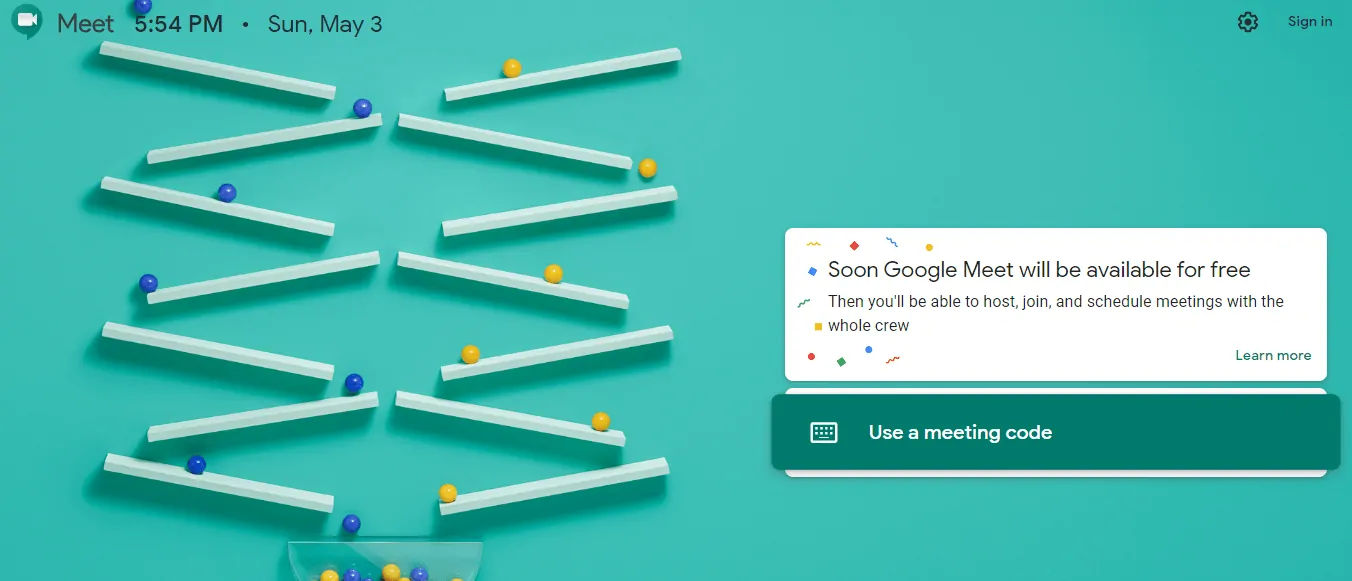
    google meet
    Source: Google Meet

    Google Meet rivals Zoom in terms of features that is offers –

    • Up to 250 participants per group video call
    • Live streaming
    • Webinars with up to 10,000 participants
    • Recording
    • Integration with Google’s other apps and services for easy access right from within the call
    • Screen sharing

    google meet video
    Source: Financial Times

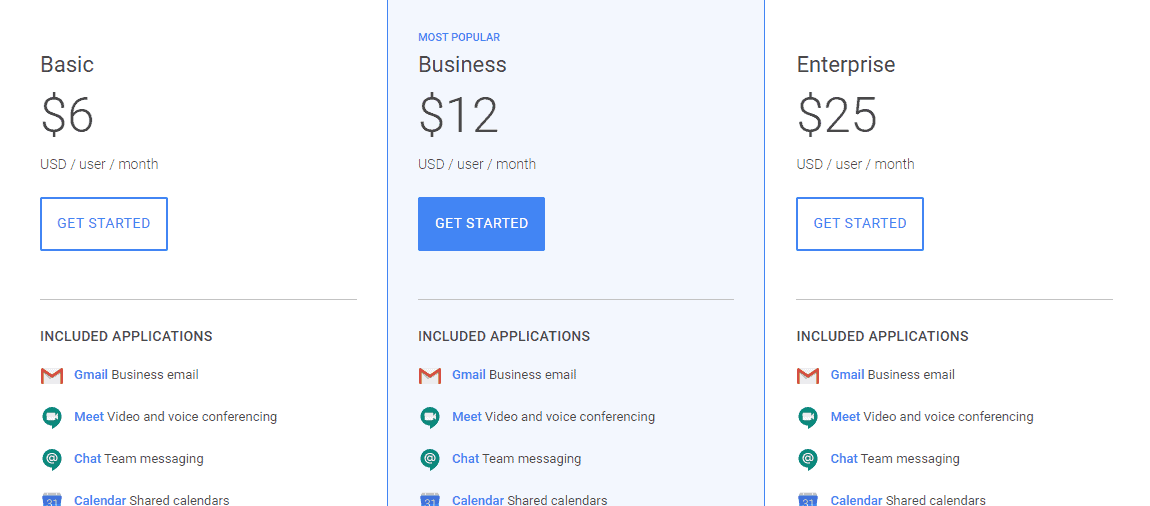
    When it comes to pricing, Google Meet comes as a part of the GSuite subscription –

    gsuite pricing
    Source: Google

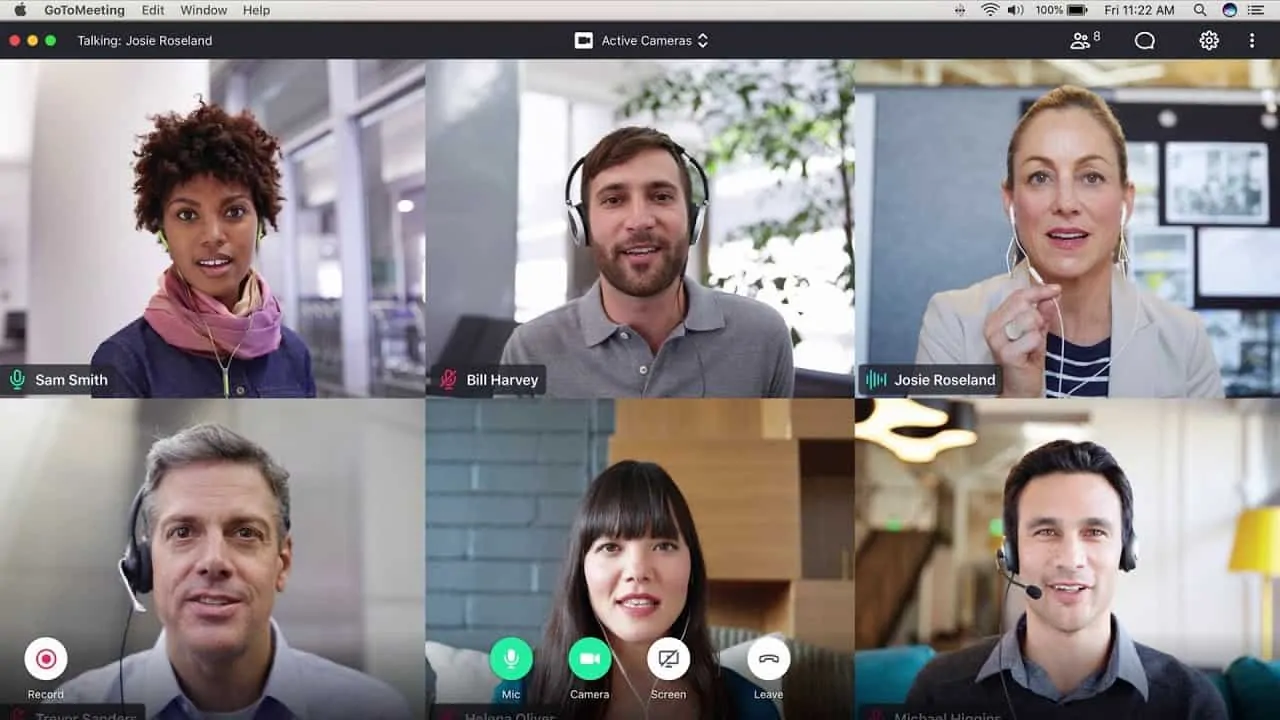
    GoToMeeting

    GoToMeeting is a great alternative to Zoom since it is primarily built for online meetings for enterprises and individuals alike. It is a web-hosted service and allows users to hold online meetings – video conferences or webinars – with others easily.

    gotomeeting
    Source: GoToMeeting

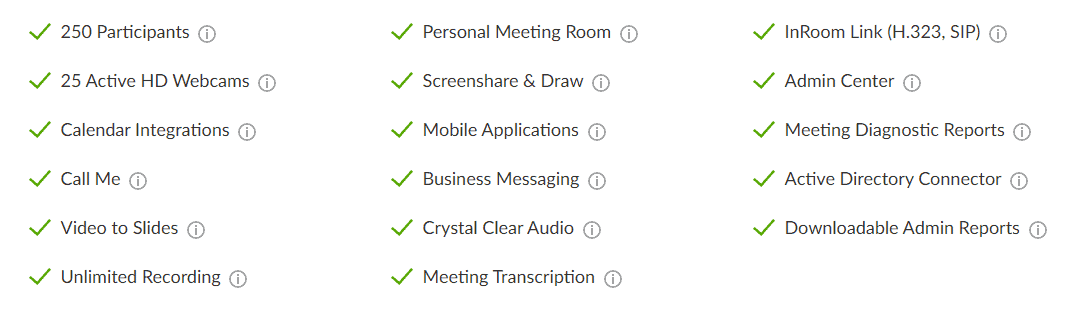
    GoToMeeting is similar to Zoom in terms of the features it offers –

    gotomeeting features
    Source: GoToMeeting

    • Up to 250 participants per group video call
    • Screen sharing
    • Meeting Recording & Transcription
    • Messaging
    • Calendar Integrations

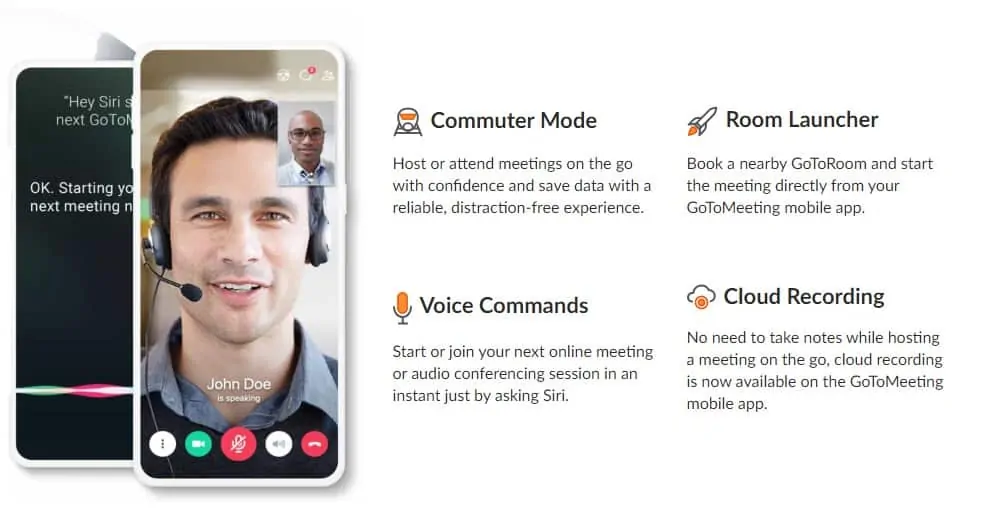
    Apart from this, GoToMeeting also offers unique additions like –

    gotomeeting video call
    Source: GoToMeeting

    • Commuter mode
    • Voice commands

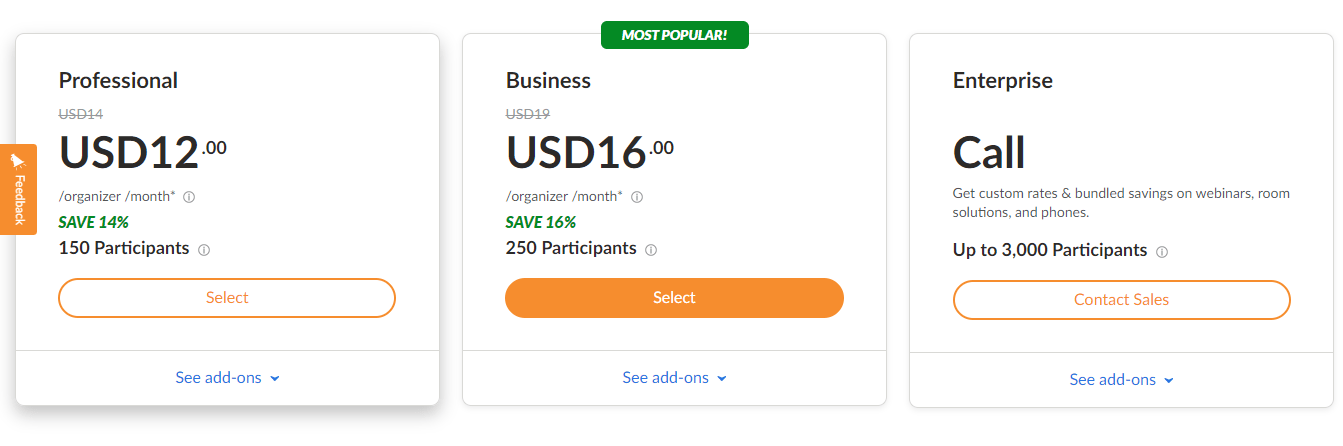
    GoToMeeting has no free plans and is a subscription-based paid service with plans starting from $12 per month –

    gotomeeting pricing
    Source: GoToMeeting

    Cisco Webex Meetings

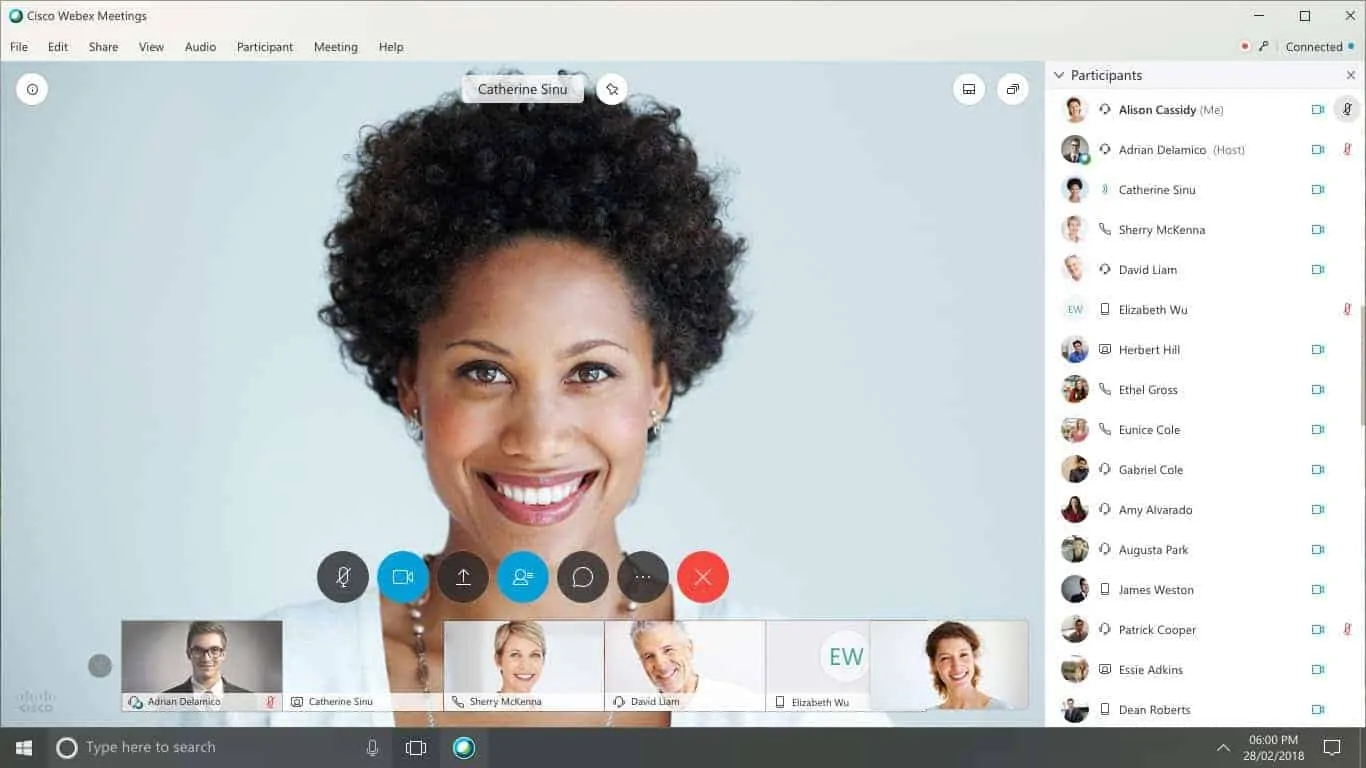
    Cisco Webex Meeting is a cloud-based video conferencing software that is geared towards enterprises and large businesses.

    cisco webex meetings
    Source: Cisco Webex Meetings

    Cisco Webex Meeting’s features are very much similar to ones offered by Zoom, wherein it allows –

    • Up to 200 participants per video meeting
    • Cisco Webex Meetings free plan offers unlimited group video call length and up to 100 participants per video call
    • Screen sharing
    • Application sharing
    • Whiteboards
    • Polling
    • Virtual hand raising
    • Ability to take attendance

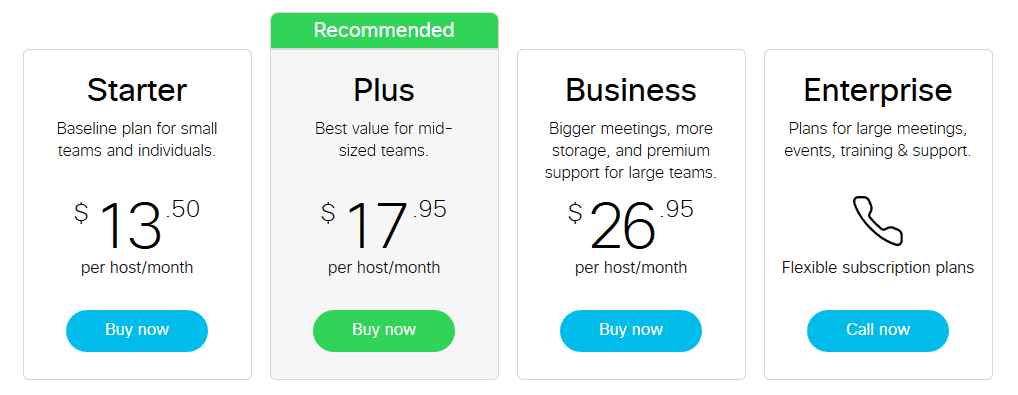
    Apart from this, Webex Meetings also offers full integrations with Cisco’s other services which help facilitate team messaging, file sharing, cloud calling, and webinars. Cisco Webex Meetings has a free tier as well as 4 paid plans –

    webex meetings pricing
    Source: Cisco Webex Meetings

    Each paid tier offers better features than the other in terms of increased cloud storage, ability to make transcripts, recordings, and schedule meetings.

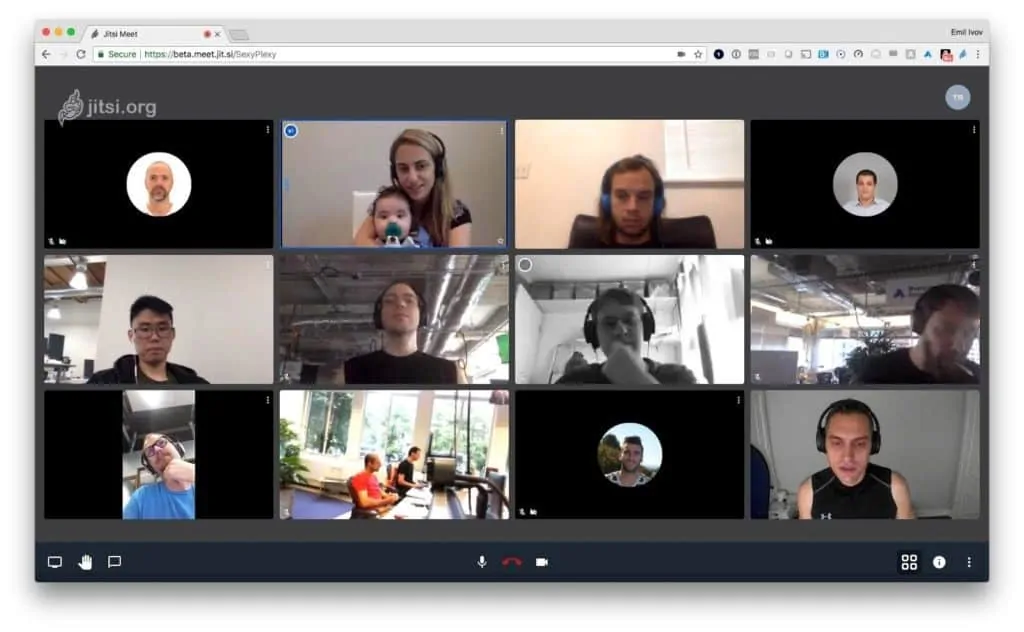
    Jitsi Meet

    Jitsi Meet is an open-source free video conferencing aimed towards creating a fully-fledged video conferencing platform.

    jitsi meet
    Source: Jitsi

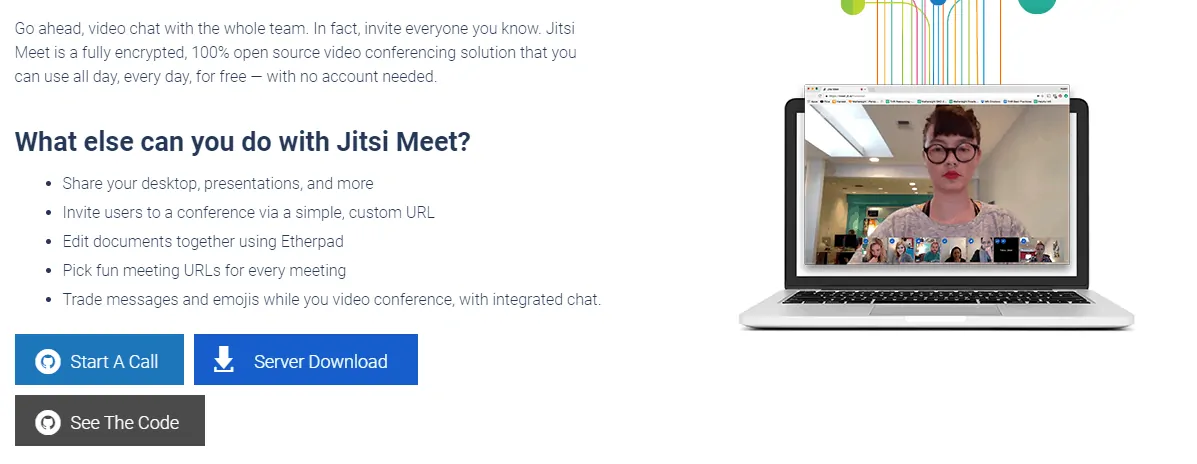
    With a few clicks on Jitsi’s website, Jisti Meet allows users to start a video call which can be attended by anyone with the link using just their web-browsers – no accounts required.

    jitsi meet features
    Source: Jitsi

    Jitsi Meet offers the following features to its users for free –

    • Up to 75 participants
    • Unlimited video call duration
    • Public or private chat
    • Blur background
    • Screen sharing
    • Recording calls (via Dropbox)
    • Lock the group video call & kick out its current participants
    • Live stream

    Apart from this, Jitsi Meet integrates with Slack, Microsoft Calendar, Google services, and Office 365. Jitsi Meet is available for various platforms such as Windows, Linux, macOS, Linux, iOS, Android and as a web-based service. Jitsi also allows those savvy enough to set up and deploy it on their servers for finer customisation and privacy.

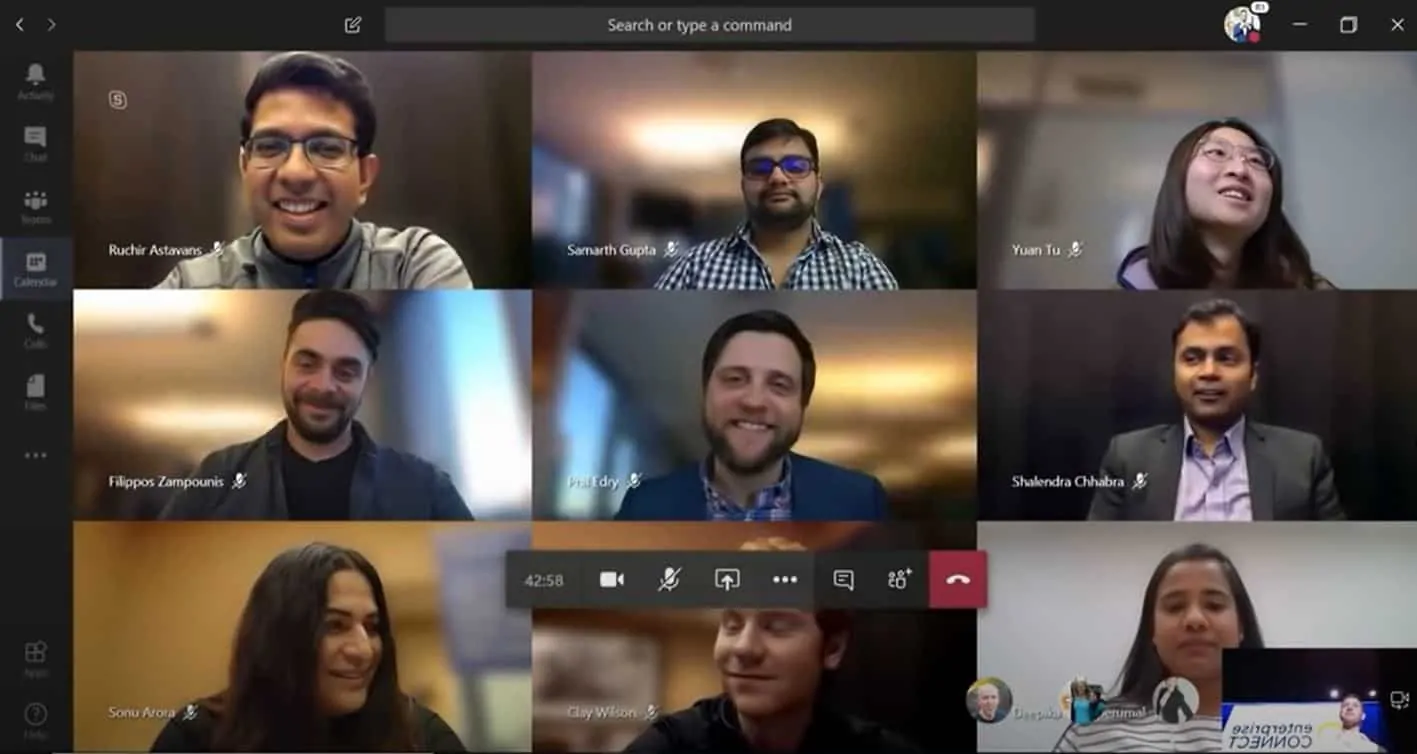
    Microsoft Teams

    Microsoft Teams (former: Skype for Business) is the enterprise version of Skype which is built with large teams and enterprises in mind.

    microsoft teams
    Source:MSPoweruser

    Microsoft Teams, just like Zoom and Google Meet, includes all the essential features for a full-fledged video conferencing experience –

    • Up to 250 participants per group video conference
    • Up to 10,000 participants for webinars
    • Screen sharing
    • Surveys & Polls
    • Whiteboards
    • Blur background
    • Live captions
    • Bots
    • Meeting notes

    Apart from that, Microsoft Teams also offers instant chats, audio calls, and external services integrations with Microsoft’s products as well as 180 custom apps. Microsoft Teams is available on Windows, macOS, iOS, Android and as a web-based service.

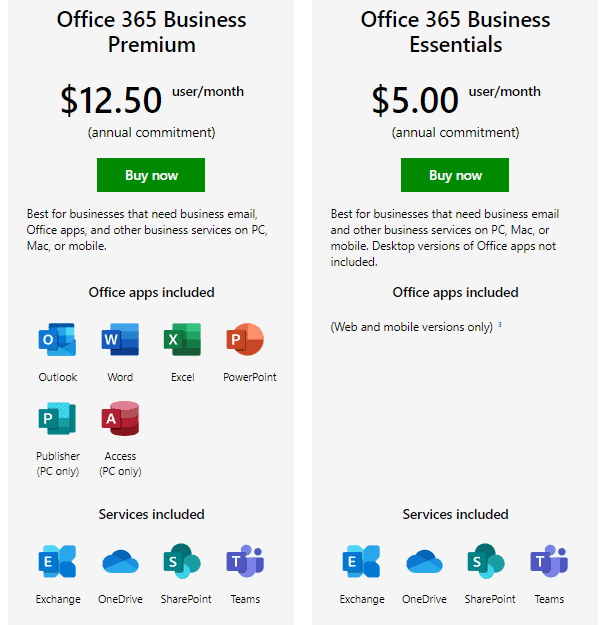
    Though Microsoft Teams offers a free plan with limited features, the advanced features mentioned above are only available as a part of the Microsoft Office 365 bundles – Business Essentials ($5/month) or Business Premium ($12.50/month).

    microsoft teams pricing
    Source: Microsoft

    Google Hangouts

    Google Hangouts is Google’s take on building a single communication software for consumers to be able to easily video/voice call others.

    google hangouts
    Source: Google

    Google Hangouts is free-to-use and allows its users to –

    • Video Calls – Up to 10 participants
    • Chat with their contacts
    • Voice Calls – to other Hangouts users for free & to any phone number for a small fee

    Being a Google product, anyone with a Gmail account can start using Hangouts from the following platforms – Windows, macOS, iPhone, Android and web-based. Google Hangouts integrates well with Google’s services – it even provides you with a Hangouts link whenever you make a new Google Calendar appointment to easily jump to a call.

    Skype

    Skype is the consumer-based telecommunications software service owned by Microsoft. Skype was launched in 2003 and has a very clean and easy to use interface.

    skype
    Source: MSPoweruser

    The main advantage of Skype ever Zoom is that many are aware of Skype compared to Zoom. Skype is free to use and offers the following features –

    • Up to 50 participants per group video call
    • Video call duration – 4 hours per call, with a maximum limit of 10 hours per day in total
    • Screen sharing
    • Record calls
    • Live captions
    • Meet Now

      skype meet now
      Source: Skype

    Skype recently introduced the ‘Meet Now’ feature – similar to Zoom’s Meeting ID feature – wherein, it allows the creation of Skype video meetings and for Skype and non-Skype users to participate in the video conference without logging in or downloading the Skype software. Instead, participants can just open the link using their browsers to join the video call.

    Houseparty

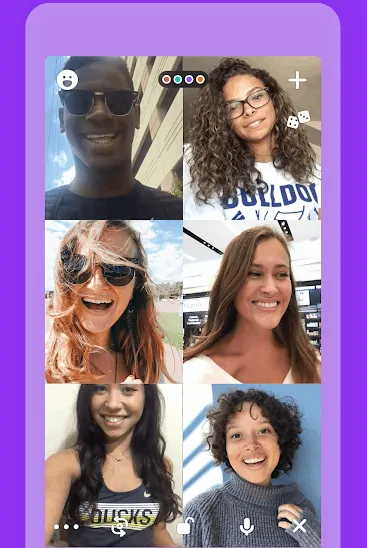
    Houseparty is a social networking service similar to WhatsApp & Discord, wherein it allows users to chat and group video call one another easily.

    houseparty
    Source: Houseparty

    Houseparty is a free app – among the easiest to use from our list – and allows group video calls with up to 8 participants at once. As of writing, Houseparty has official apps for macOS, iOS, Android and a web-based service.

    WhatsApp

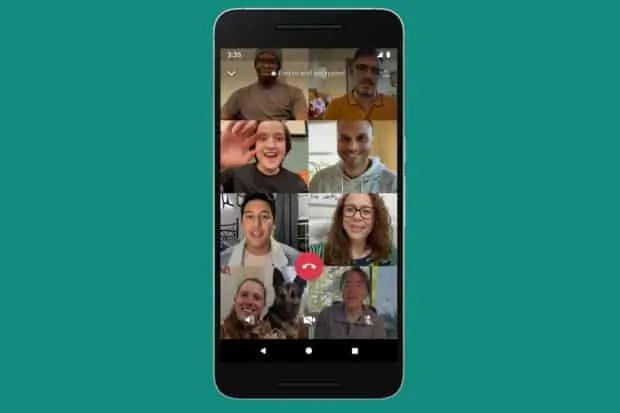
    The Facebook-owned chat app WhatsApp recently introduced 8-person video calls right from within the app, making it quite similar to Houseparty in terms of participant limit.whatsapp group video

    Previously it was limited to you and three other people. WhatsApp is free to use and is primarily built for smartphones – Android & iOS. However, WhatsApp is also available as a web-based interface that can be accessed via your web browser.

    Though not as feature-rich as Zoom, WhatsApp is still largely more popular than Zoom. This means that you are more likely to find your contacts already using WhatsApp, making it easier for you to connect with them rather than forcing them to sign-up to a video conferencing service just to have a group video call.

    Discord

    Discord is a voice and instant messaging software that was primarily built with gamers in mind. It has got an intuitive and easy to use user interface.

    discord
    Source: Discord

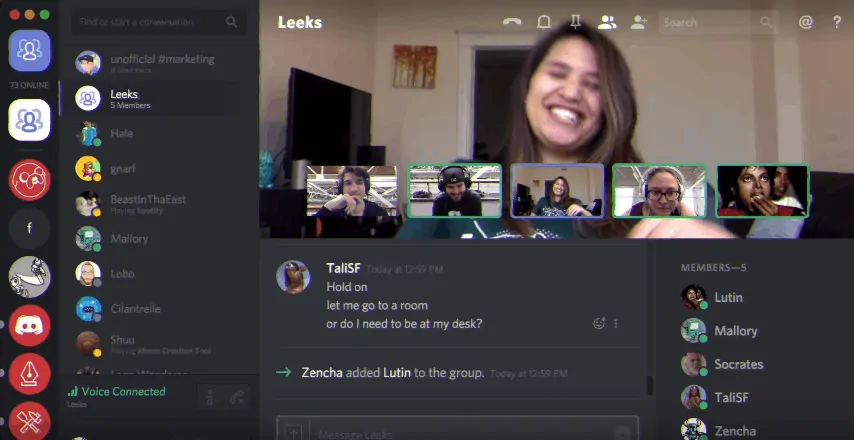
    Though Discord was primarily built for handling text and voice chats, it also does video calls very well, offering the following features all while remaining free of charge –

    • Up to 9 participants in a group video call
    • Screen sharing

      discord video call
      Source: Discord

    Discord is quite robust and best suited for personal calls in case all you need is a free and simple video calling software. It is available on Windows, macOS, Android, iOS, Linux, and as a standalone web-based service that runs on your web browser.

    Go On, Tell Us What You Think!

    Did we miss something? Come on! Tell us what you think about our article on Zoom Alternatives in the comments section.
  • Informal Communication at Workplace: A Guide

    Informal Communication at Workplace: A Guide

    Have you ever been a part of gossiping or a random chit-chat in your office’s canteen? Do you feel it’s intrinsically rewarding but extrinsically a major dereliction of duty? Have you received any rebukes from your superiors for the same?

    If the answer to any of these questions is a yes, then you are already aware of the concept of informal communication. But guess what, all of us are.

    From making jokes about superiors in canteens to digital pages dedicated to memes, the times might have changed but the trend seems to be not going anywhere.

    However, what really has changed over the years is the way in which informal communication has an altogether different meaning attached to it now. What’s this meaning and how can any organization use it for its own good? Let’s find out.

    What Is Informal Communication?

    Informal communication refers to a type of casual and spontaneous communication that takes place without following the formal chain of the network in an organization.

    This type of communication springs out of an employee’s personal need to identify with others in order to achieve intrinsic satisfaction by socializing. However, this might be one of the objectives of this type of communication, but definitely not the only one.

    Think of informal communication like a truck that’s headed to a particular destination but helps several passengers to reach their own destination in the midway.

    Such communication form had much more haters than any other, just a few years back. This is because of zero control or curbs that can be levied on it. However, repeated interventions only make employees hysterical about their own rights, thereby forcing them to leave such a dogmatic organization.

    Companies today are much more equipped to use such a form of communication for their own benefit. But before we move further, let us first look at the various features of informal communication.

    Features Of Informal Communication

    Informal communication is mostly spontaneous, hence, it does not follow any fixed chain of authority or accountability in the organization. It does not take into account the formal structure of the organization rather the informal needs of the employees. Some of the features include the following.

    Multidirectional

    Employees are free to talk to their immediate supervisor or a remote worker or even the CEO for that matter. Similarly, the top management is free to talk to the immediate authority under them or someone as low in the organizational hierarchy as a daily wage worker.

    Born out of social relations

    The need for informal communication arises because of the personal and social needs of employees to interact with each other.

    Zero location hindrance

    No, the canteen is not the only zone of chatting with fellows. In fact, this type of communication can happen right after a board meeting outside the conference hall to discuss the effectiveness of the entire event.

    Zero time hindrance

    Similarly, lunch hours aren’t the solely dedicated hours of the daily talkers. Informal communication is not time-bound and can take place anytime.

    Unverifiable

    Since there is no official responsibility assigned to any one employee for the communication, such conversations can never be verified.

    You must be thinking if such communication can be of any good to an organization? Well, yes. Let us look at why organizations need to allow such communication to breed without any censorship.

    Advantages Of Informal Communication

    Even though the source of the information passed in such communication is hard to find, the benefits definitely supersede this setback. Let us look at some.

    Facilitates Team Spirit

    Once employees know that their supervisor has a similar music taste and isn’t that tough a person to deal with, the chances of a good project presentation increase manyfold times.

    Saves A Lot Of Time

    Consider information being passed through a fixed chain and communication being spread through the word of mouth spontaneously. Well, we clearly have the winner in terms of speed.

    Improves Employee Morale

    In the formal network, people in top authority often tend to underestimate the lowermost strata in the organization. Informal communication makes them realize their own potential by talking to others who recognize it on a daily basis.

    True Feedback

    Since this form of communication is free of organizational bias and fear of authority, employees tend to give their honest opinion, thereby providing a chance for a real change.

    But, how are organizations exactly using such forms of communication? Is there a way they can be used without leading to rumours or fake news?

    How To Use Informal Communication For The Greater Good Of The Business?

    Even though informal communication might be a norm in today’s culture, yet organizations find it difficult to mould it in their own manner for the greater good.

    As a result, they end up using headphones or games as a distraction for workers to keep them away from communicating with each other. Sure enough, social distancing, huh!

    But a good leader always views every business calamity as an opportunity, and this for sure isn’t calamity in the absolute sense.

    This section will help you understand how you can incorporate informal communication from the business point of view.

    Make It A Part And Not Leave It Apart

    Informal communication does not always involve gossiping or rumours, in fact, sometimes they lead to actual criticism of the company’s policies and programs.

    Once leaders try to cut off employees from heading to such conversations, they start looking for a new spot and a new time to discuss it. Reason? Human behaviour. They do what they aren’t told to do.

    It will be best to actually let such conversations happen in the vicinity, just so one could hear the honest opinions of the employees. Constructive criticism cannot be just avoided because it is coming from your own subordinates.

    Be Transparent

    The biggest crime levied against informal communication is the cropping up of gossip or rumours without appropriate source confirmation.

    But apart from pondering over how to curb them, have you tried to find out the reason behind such gossips? Gossips often become a part of employee conversation because organizations lack transparency to hold open-ended discussions.

    Involve various interest groups or their representatives while taking important decisions. You can even discuss crucial issues with them. This will help with building confidence and cooperation between all the members of the organization.

    Threat And Negative Promotions Are Not Good

    Sometimes, members in the top organization tend to threaten workers to stop gossiping or else pay for it. The payment comes in the form of a delayed promotion or a pay cut, or over time with less pay.

    However, this often shows the incapacity of the business to deal with its in-house critics. There are plenty of other steps, but such negative criticism degrades the overall image of the organization.

    Identify The Overall Motive Of The Talk

    Informal communication mostly is of 2 types. One that is light in nature and fosters team spirit and cooperation and the other being the one that leads to conflicts and misunderstandings.

    Ensure that the light ones are allowed to take place while creating enough room for discussion for the latter.

    Entertain Get-Togethers

    Timely get-togethers can play a major role in facilitating good informal communication. What’s better than organizing one and being the head there? You can use your communication skills to share the company’s ideals without making it sound like an instruction.

    You can even mould the conversation as you want because of being the organizer. These events can help you open a heart-to-heart with your colleagues while ensuring you can communicate your own ideas as well.

    Final word

    Informal communication might be a discomfort for a company loyalist. However, informal communication must be allowed in order to facilitate team spirit and honest opinions. Also, what a particular employee says is inherently his own belief and hence, a matter of subjectivity prevails.

    Go On, Tell Us What You Think!

    Did we miss something? Come on! Tell us what you think about our article on informal communication in the comments section.
  • Dos and Don’ts of Remote Working

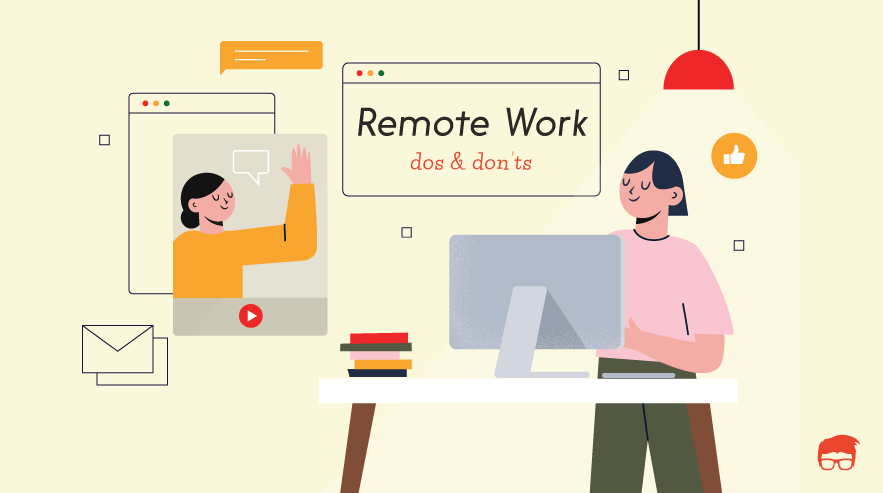
    Dos and Don’ts of Remote Working

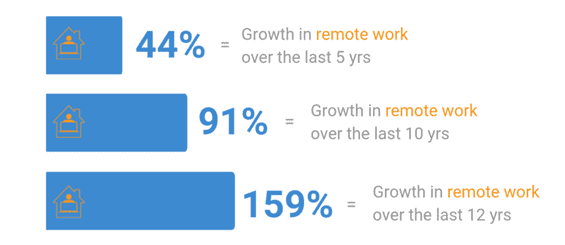
    Remote Working has become quite common in the past decade

    remote working increased
    Remote Working Trends for 2020 | FlexJobs

    But it is not always going to be sunshine, beaches and whiling away on the hammock when it comes to remote working. While you are given the freedom of choosing the way you go about your work, not setting limits and following certain etiquette will snowball into other problems & challenges –

    • Poor communication,
    • Poor performance,
    • Overworking,
    • Not able to meet deadlines, and
    • Unnecessary stress.

    So it helps to keep in mind that working remotely is still work nonetheless. Moreover, these challenges can be avoided by following certain dos and don’ts while remote working to make it more manageable.

    Let’s start with the Dos of working remotely.

    Dos

    Set a Fixed Location

    You should set a fixed work location – a standard workbench in a relatively quiet corner with plenty of natural light will work wonders. This not only provides you with a fixed workspace with all your equipment in one place but when set properly, can also help you maintain proper body posture while working. This is often overlooked when it comes to remote working and goes a long way in providing comfortable work experience.

    Remote working lets you work from any place you wish as long as you get your work done on time. But for the most, lying on your sofa or sitting in the public and going about your office work is not advisable since not all have the concentration of a saint.

    Follow a Routine

    Follow your normal office hours – in case you had worked at a firm before – or try setting particular hours of the day when you feel the most productive as your work hours. Work hours usually get thrown out the window when it comes to remote working. While this might work for a few, it soon becomes harder to be productive with your irregular work hours.

    Learn to manage your time when working remotely or when working from home. The beauty of remote working is that it allows you to experiment with your work hours, location and it is up to you to find a comfortable combination that works the best.

    Set Boundaries

    For those working remotely or working from home or a co-working space, make sure you politely inform your family, friends and colleagues about your work hours and not to disturb you unless it’s for something of importance. If you’re separated by a door, it is advisable to put up a “Working. Please Do Not Disturb” sign or doorknob tag on it.

    do not disturb
    There are a lot of printable designs online; If not, create & print one of your own and put it up

    This would be the first thing that you should do, even before you set up shop if possible. The reason for the emphasis on setting boundaries is to have a distraction-free work environment. In case you’ve got kids around, they will generally be curious and instead of shutting them out, you can explain to them about what you do and even show your work routine when free and tell them not to distract you while you’re working.

    Follow Up on your Progress

    You must make it a habit to keep in touch with your team, company and colleagues while working remotely. This gets overlooked easily since there is no observing figure for you to instantly report to, leading to irregular communication between you, your team and company.

    Instead, set aside a small portion – may be at the end – of your work hours to relay your progress to your team and maintain regular communication in general. This doesn’t have to be daily, but make sure it does not, in any way, hinder work progress. If possible, it would be even better if the whole team or company can follow the same timings for catching up on everybody’s progress. See what fits for the situation you’re in and set one accordingly.

    Take Breaks

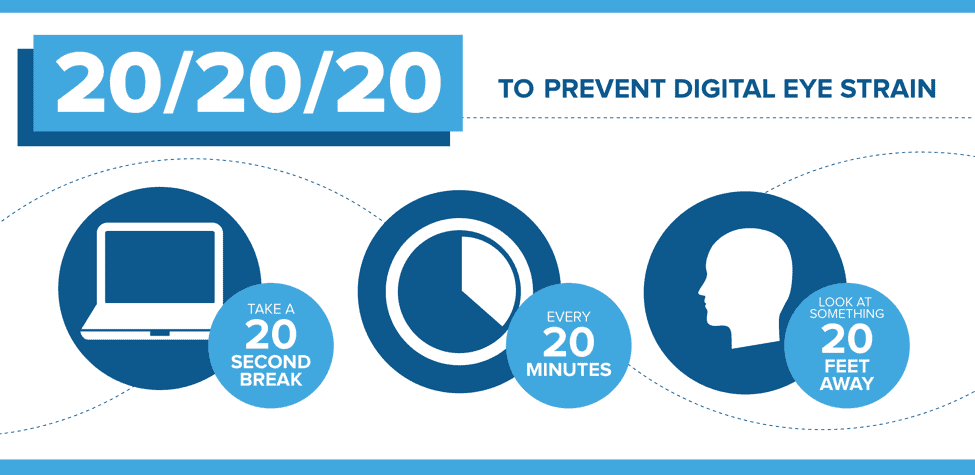
    Always manage to take breaks when working remotely. You can follow the 20-20-20 rule – take a break every 20-minutes and look at any object at least 20 feet away from you for 20 seconds.

    20 20 20 rule
    The 20-20-20 Rule | Source: Optometry Times

    The beauty of remote working is that it allows you to intersperse your routine with as many breaks as you wish – whenever you want – as long as it doesn’t disrupt your work-flow. But make sure to take regular breaks, and this applies everywhere – when working remotely or while at your office.

    Working remotely and working from home generally means that you have no set schedules and you have to make additions to your routine to include breaks at proper intervals. This helps, in the long run, to make work that much more manageable.

    Have a Backup Plan

    Always have a backup plan for everything that you require or utilize for work. Make sure you have a backup in case your broadband gets disconnected – having mobile data for temporarily using mobile hotspot will come to help you at times when you least expect it to.

    Got guests at your place? Make sure you have access to a place like the public library or another workspace that is more secluded to continue working even when the situation around you doesn’t pan to your advantage.

    Maintain Personal Hygiene, Grooming & Neat Workspace

    Make sure you maintain your hygiene and be presentable. When remotely working, you’re mostly going to connect and communicate with your team, company or clients over a video call. So, make sure you keep yourself presentable – you don’t have to wear your work uniform – wearing something understated, clean and neat is more than enough. Also, make sure your workspace is clean and neat. Make sure it is free of litter and looks clean.

    Following these helps in a long way to drastically improving your remote working experience.

    Let’s look at the don’ts of remote working.

    Don’ts

    Don’t multi-task between Personal Chores and Work

    When working remotely, keep your chores aside from your work as much as possible. This will help on multiple levels – not only will doing so help you focus on the work at hand, but also helping in reduce your stress and pressure that comes with juggling between different tasks.

    Don’t Use Social Media during Work Hours

    Make sure you keep your social media presence to the minimum while working and especially during remote working hours. This is a no-brainer since your family, colleagues and higher-ups will notice it.

    Don’t Have Your Workplace in the Public

    Avoid having your workplace in a common area or the public unless you are sure you can handle the constant interruptions or distractions. There’s no stopping you from going about your work while sitting on a park bench or dining room – it boils down to what you’re comfortable with – but be ready to handle the interruptions to your workflow.

    Don’t Think of Remote Working as a Day Off

    Working remotely can lead you to while your time away from doing things that don’t exactly fall under “work”. So make sure you don’t fix it in your mind that working remotely is the same as receiving paid holidays. While you do get a lot of extra time on your hands, but make sure you work when you have to.

    One way for easing this mentality would be by asking for reduced work hours with flexible breaks interspersed in between so that you acclimate to the new environment better.

    Go On, Tell Us What You Think!

    Did we miss something?  Come on! Tell us what you think about our article on Do’s and Don’ts of Remote Working in the comments section.
  • What Are Curators? – A Comprehensive Guide

    What Are Curators? – A Comprehensive Guide

    Have you ever felt like you’re virtually in the middle of nowhere while you tried to find information on the internet?

    How many times have you googled “Top 10 movies to watch on Netflix” or “Best Pop Songs of all time”?

    As much as you love the power of choice, the internet gives you too much of it and it’s only natural to get overwhelmed or “feel lost”.

    But don’t worry,

    Curators are your saviours in disguise.

    Curators cut through the noise on the internet to present information for their loyal audience seeking knowledge on a particular topic.

    Still confused?

    Don’t worry, this article will answer all your queries about their job, their sources of revenue, and analyse some examples of curators.

    What Is A Curator?

    A curator is a person or an agency who gathers and presents interesting information in one place and provides fresh insights to create something which might appear new but is based on existing data.

    How Do Curators Work?

    Imagine you’re in a library with books distributed randomly across the shelves, no sections, no divisions. That is a representation of the internet for you. Now what the curators do is arrange these books according to categories such as genres, authors, age groups, etc. keeping the most relevant ones on the top so it’s easier for you to find.

    Simply put, they streamline the information.

    Following are the reasons why curators are so important, especially today –

    • They do ample research on a topic and provide you with information/services which are best of the best
    • They find a niche and stick to it
    • Their goal is not to diversify but to delve deep into their area of interest

    For example:

    MrSuicideSheep is a music curator which shares electronic music (and sometimes non-electronic music) on platforms such as YouTube and SoundCloud. The channel is independently run by Josh Carr-Hilton from Vancouver, British Columbia. Josh shares copyright-free music and began his channel with the intent to share music that he enjoys.

    How Do Curators Make Money

    Curators make money through partnerships, donations (through platforms such as Patreon), subscriptions, and affiliate marketing. Let us look at it in more detail along with some real-life examples.

    Subscription Model

    As the name suggests, in a Subscription Model the customer pays a recurring fee – monthly, quarterly, or yearly – for access to the service or premium content.

    How does this help the curators?

    The revenue model leads to strong customer relations and higher revenue as it builds brand loyalty.

    Mubi

    mubi curator

    Often considered Anti-Netflix, Mubi is an online streaming platform where, on any given day, there is a collection of 30 curated movies that you can watch. The movies range from cult classics to award-winning masterpieces, from forgotten gems to festival fresh cinema.

    Mubi earns through subscriptions and a Mubi membership costs only $10.99/month, with a free 30-day trial.

    Mubi filters through choices for you and brings to you cult, classic and independent films.

    What’s more? You can access these movies offline as well.

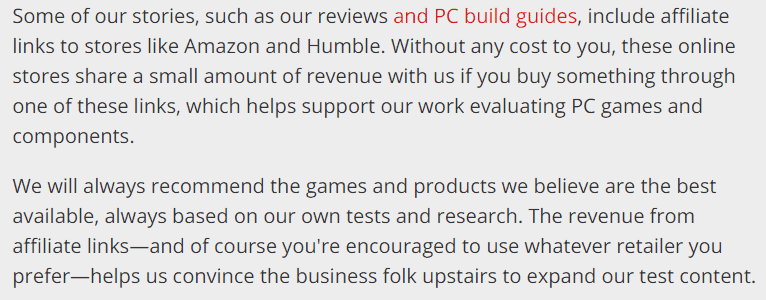
    Affiliate Marketing

    The basic idea behind affiliate marketing is to promote other people’s products and charge commissions for each sale made. Other products can be marketed by posting reviews, tutorials, suggestions, etc.

    Let us look at the example of the curator “PC Gamer” to understand this better.

    PC Gamer

    PC Gamer is a game curator (stand-alone curator and a Steam curator) that evaluates and shares game reviews and suggestions. The curator also has a Twitch channel wherein it broadcast its team members playing games in real-time.

    pc gamer curator affiliate

    Affiliation with game partners and Partnership with Twitch helps PC Gamer in the following ways –

    • Earning commission whenever a reader buys a game from the link on the website.
    • Donation of money on Twitch through PayPal where Twitch doesn’t claim any percentage of the donations.
    • “Bits” on Twitch where views send Cheer Bits and each bit equals 1 cent. Twitch has a percentage of claim over each Bit.

    Partnerships

    Many curators thrive on partnerships. These partnerships work in the same was as influencer partnerships where a company reaches out to a curator to review it or add its offering in its list in return for some benefit which could be a share of sales, a fixed retainer, free products, or commissions.

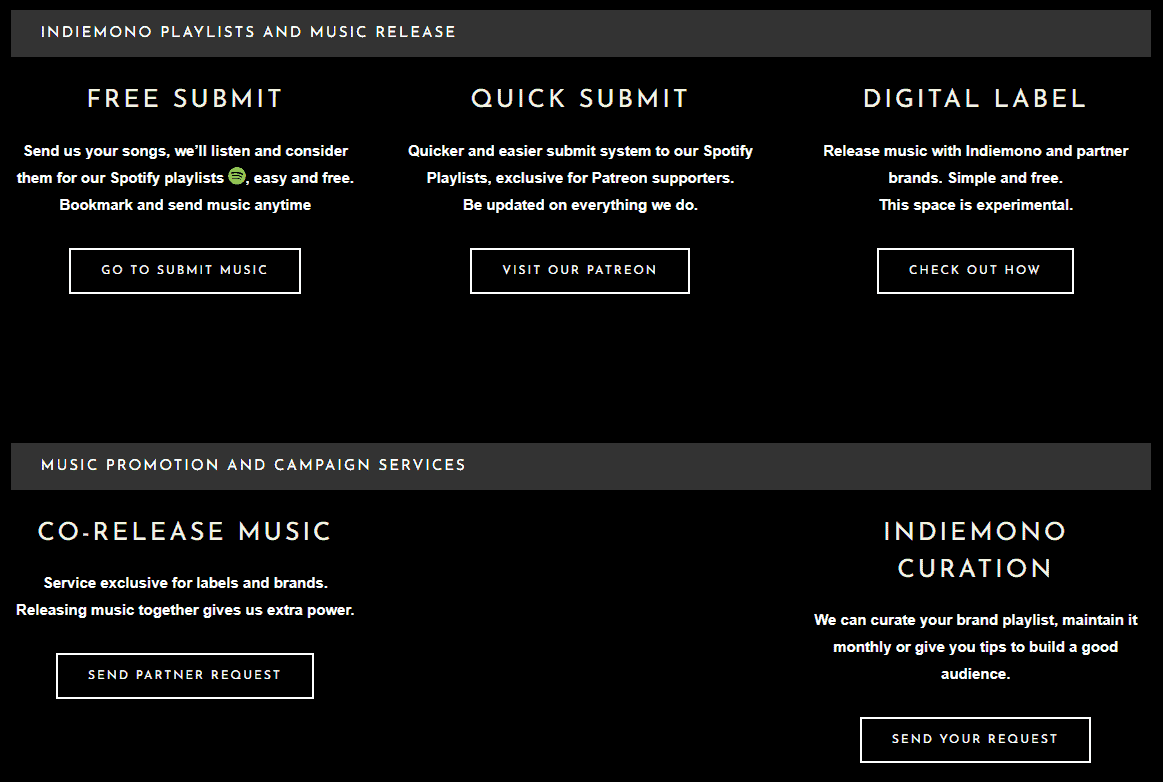
    Indiemono

    Indiemono

    Indiemono is a legit Spotify playlist curator-cum-music-label which lets music producers and artists submit their piece for review for free. However, the company also provides paid partnership options where the artist and labels can co-release their music with the Indiemono digital label and cater to a bigger audience.

    Besides this, the company also provide a premium Indiemono curation service to brands where it curates the brand playlist, maintain it monthly and/or give the brand tips to build a good audience.

    Advertisements

    The advertisement model is the oldest revenue model used by curators. It’s a simple revenue model and is often used along with other models to develop a sustainable revenue stream. It works like this –

    • Develop lists and add review articles to get traffic on the website.
    • Monetize the traffic by placing advertisements within the content.
    pc gamer advertisements

    Donations

    Many curators also rely on the donations provided by their readers, viewers, and subscribers. They make use of platforms like Patreon or Paypal for the same.

    patreon curators

    Bottom Line?

    Curators possess quality followers in their niche, they understand and contextualize information for them. They give unbiased recommendations solely because they like it – not because a company-sponsored them to.

    Content Curation, of any kind, is a fast-emerging field. It is an opportunity for curious minds to gather interesting and related content at one place instead of creating new content themselves.

    Go On, Tell Us What You Think!

    Did we miss something? Come on! Tell us what you think about our article on curators in the comments section.
  • The History Of Amazon

    The History Of Amazon

    Amazon is huge – it helps run Netflix, supports the functioning of governmental organizations such as the US Department of State and NASA and owns 41 subsidiaries and brands. Amazon boasts a diverse portfolio of operations –

    • E-commerce
    • Consumer electronics
    • Cloud computing
    • Artificial intelligence
    • Digital distribution
    • Grocery

    But how did Amazon get to where it is now? How did an online bookstore become the second fastest company in the world to have reached the trillion-dollar valuation?

    Let’s dive deep into the history of Amazon.

    Small Beginnings

    The creation and growth of Amazon can be linked to one man – Jeff Bezos. Before founding Amazon, Bezos worked as a Wall Street hedge fund executive and the idea for creating Amazon started from of his “regret minimization framework” – he feared missing out on not taking the opportunity to start a business when he could.

    jeff bezos
    Source: Fortune

    The spark for starting an online business came in 1994 after Bezos had read a statistic about the future of the internet and the exponential growth of its users that could change the way businesses were conducted. With that as inspiration, Jeff left the company D.E. Shaw & Co. where he was serving as the vice president and moved to Seattle, Washington. With lots of time at his hands, Bezos set out to find the best product to start selling online.

    After compiling a list of products to sell – which included compact discs, computer hardware, and computer software – Bezos finally settled on books to be the first product that he would sell online. His reason being – literature always had demanded, if not for novels, for academic books and books meant easier inventory management.

    Fun Fact: Amazon was not the first company to start selling online. A company named Computer Literacy (a Silicon Valley bookstore) began selling the store products online, right from when the Internet was opened to the public in 1991. Amazon became the “first” since it made e-commerce mainstream.

    On July 5, 1994, Jeff Bezos incorporated his business under the name Cadabra, Inc which was later changed to Amazon when his lawyer, and many others, mistook the name for ‘Cadaver’. But, before changing the name to Amazon, Jeff almost considered naming the company Relentless and even bought the domain name relentless.com.

    Fun Fact: Bezos still owns the domain name relentless.com and visiting it will redirect you to Amazon.

    amazon garage

    Once it was settled that they were going to start selling books online, in July 1995, Amazon was officially founded by Bezos and his then-wife, MacKenzie Tuttle in the garage of Bezos’ rented home in Seattle with his parents investing almost $250,000 as seed money.

    The Online Bookstore

    Books were Amazon’s first products and Amazon’s defining feature was its doorstep delivery service. Amazon helped bring what is taken for granted to the mainstream and at the time, doorstep delivery was seen to be innovative. Before that, one had no other option than to physically visit local stores for supplies.

    Fun Fact: The first book to be sold on Amazon.com was Douglas Hofstadter’s Fluid Concepts and Creative Analogies: Computer Models of the Fundamental Mechanisms of Thought.

    Amazon grew quickly and it can be partially attributed to Jeff’s motto – grow fast, quick. To become successful, the brand had to grow fast and grow fast it did – within 2 weeks after launch, Amazon’s sales were up to $20,000/week.

    In October 1995, just three months after launch, Amazon filed for its initial public offering. By December 1996, Amazon had over 180,000 sign-ups. On May 15, 1997, Amazon went public, offering its stock at $18 per share and traded under the exchange symbol AMZN on NASDAQ.

    amazon ipo

    Soon after going public, Amazon had over 1,000,000 customers sign-up for its platform. Going public also bought Amazon the exposure it needed and its revenue shot up from $15.7 million in 1996 to $148 million in 1997. It was also around the same time that Amazon shipped its one-millionth product.

    Fun Fact: Bezos personally delivered the one-millionth order to a customer in Japan.

    Bezos saw the success in his model and Amazon was ready to move onto offering other products on their online store.

    Diversification

    In 1998, Amazon slowly started expanding the list of products it offered – starting with computer software and music. In the same year, Amazon’s revenue also grew to $610 million. Soon enough, Amazon was selling a variety of products that spanned under consumer electronics and even had newer product categories such as toys, tools and equipment included into its roster.

    It was also around this time when it started expanding its operation internationally – it purchased bookstores Bookpages, Telebook in UK and Germany respectively. These two purchases are considered to be Amazon’s first-ever acquisition since being formed. By the end of 1999 Amazon had its presence in over 150 countries and had shipped over 20 million products worldwide.

    Amazon Associates Program – Making Affiliate Marketing Mainstream

    In 2000, Amazon started allowing third-party manufacturers and sellers to list and sell their products on its site. In turn, Amazon took a commission from the price of every product sold, while the third-party sellers can benefit from Amazon’s tremendous reach and influence. This was a huge success and bought an affiliate marketing model to the mainstream.

    amazon associates
    Source: Lifewire

    Fun Fact: Amazon was not the first company to start “allowing third-party manufactures to list their wares on its site. There were a handful of others who did it before Amazon, while only Amazon helped make it popular.

    It was around the same year when Amazon created its iconic A to Z logo with an arrow-shaped like a smile going under from a to z, hinting that the company offered a lot of products.

    amazon logo
    Source: 1000 Logos

    New Digs

    In 2001, Amazon moved its headquarters across the lake to Belltown, Seattle. This place would later come to be known as HQ1. Right after the shift to a new headquarters, Amazon reported its first-ever profit – 1 cent per share for revenue of $1 billion.

    Yes, Amazon had never shown to be profitable and it was only in 2001 that it broke even. What this did was calm down the sceptics that this unconventional business model was after all sustainable. Bezos, with his goal of growing quickly, tended to reinvest all the money earned right back into the company to help it expand and grow.

    The Rest of 2000s

    The 2000s was a big year for Amazon. It was during this decade that Amazon launched its cloud platform Amazon Web Services, the Amazon Prime subscription and its product brands.

    Amazon Web Services

    aws
    Source: PCMag

    The Amazon Web Services platform was launched in July 2002 and initially, had only small tools and services on offer using cloud technologies. It was only in 2006 when Amazon finally re-launched AWS and consolidated all of its cloud offerings to date under the same umbrella.

    Currently, AWS is the world’s largest cloud service provider and AWS is among Amazon’s biggest revenue sources.

    Amazon Prime

    amazon prime
    Source: Amazon

    Amazon began its Prime subscription program in June 2005 with the premise that an upfront payment of $79, customers could get two-delivery on their orders for the entire year. At the time of launching the Prime subscription, Amazon separately offered the option for two-day delivery on customer’s orders for $10.

    This proved to be a no-brainer for many who were using Amazon primarily to do most of their shopping since the subscription fee pays for itself if the customers just placed eight orders within a year. Many believe this is what led to the immense growth of Amazon since it motivated customers to order more, which eventually meant that better revenue for Amazon. And since Amazon has always looked to grow instead of chasing straight profit figures, it proved sustainable for them though they were losing quite a large sum of money employing this model.

    Amazon Brands

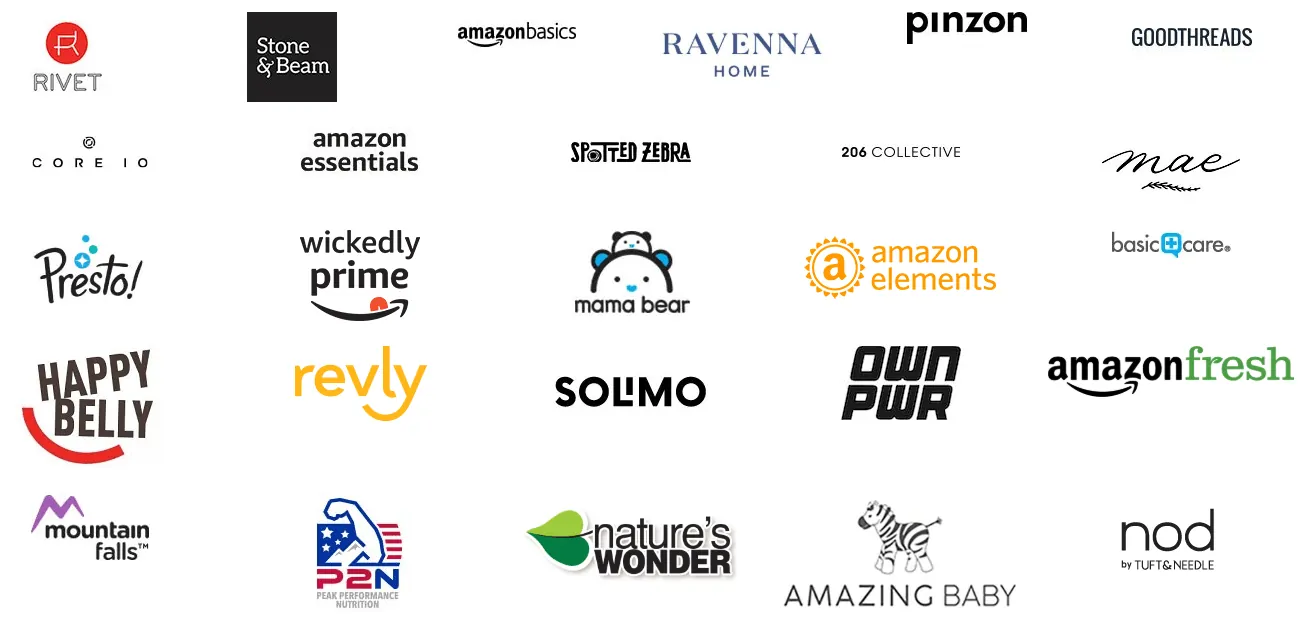
    It was also around the same time as Prime was launched, Amazon also began selling products – textiles, kitchen utensils and such at first – under their private label, Pinzon. In 2007, Amazon launched its AmazonBasics brand which covered consumer electronics. These two are considered to be Amazon first private label brands and they were sold in the Amazon website right alongside the third-party products.

    amazon brands

    Amazon currently has the following private label brands operating under them –

    • Pinzon
    • AmazonBasics
    • Solimo
    • Amazon Elements
    • Wag
    • Mama Bear
    • Presto!
    • Food and beverages
    • Wickedly Prime
    • 365
    • AmazonFresh
    • Happy Belly
    • Apparel
    • Mae
    • Goodthreads
    • 206 Collective
    • Amazon Essentials

    These are Amazon’s private labels that operate under “Own Brands” name and are separate from exclusive brands on Amazon. Exclusive brand items are third party offerings and products sold exclusively through Amazon.

    HQ1 Renovations & HQ2

    amazon spheres
    (Left) Amazon HQ1 Day1 Building | (Right) Amazon Spheres

    In 2016, Amazon’s main Belltown HQ was renovated and newer offices were built. Among them were the Day 1 building – a part of the three-tower complex that serves as Amazon’s headquarters – and the Amazon Spheres – three spherical conservatories which are covered in pentagonal hexecontahedron panels – which serve as an employee lounge and workspace. With over 40,000 plants grown within the facility, it also doubles up as a greenhouse.

    Amazon also spent over $5 billion in constructing a second headquarters in Crystal City, Arlington, Virginia. This came to be known as HQ2.

    Going Offline

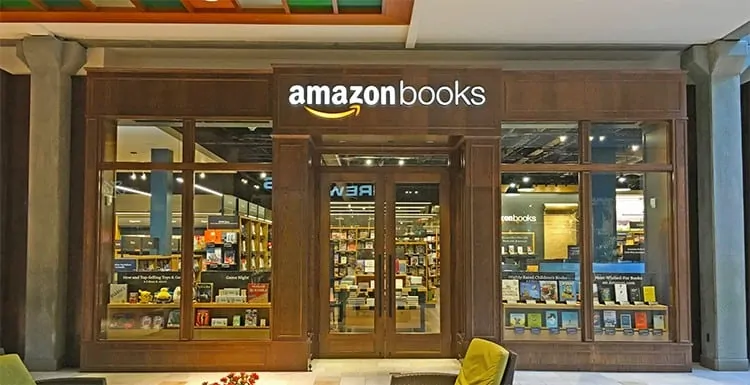
    21 years after being founded, Amazon opened its first physical store in 2015. Amazon opened a retail bookstore – Amazon Books – in a shopping centre in Seattle and sold books that were price-matched to its website and even provided customer reviews right on its shelves.

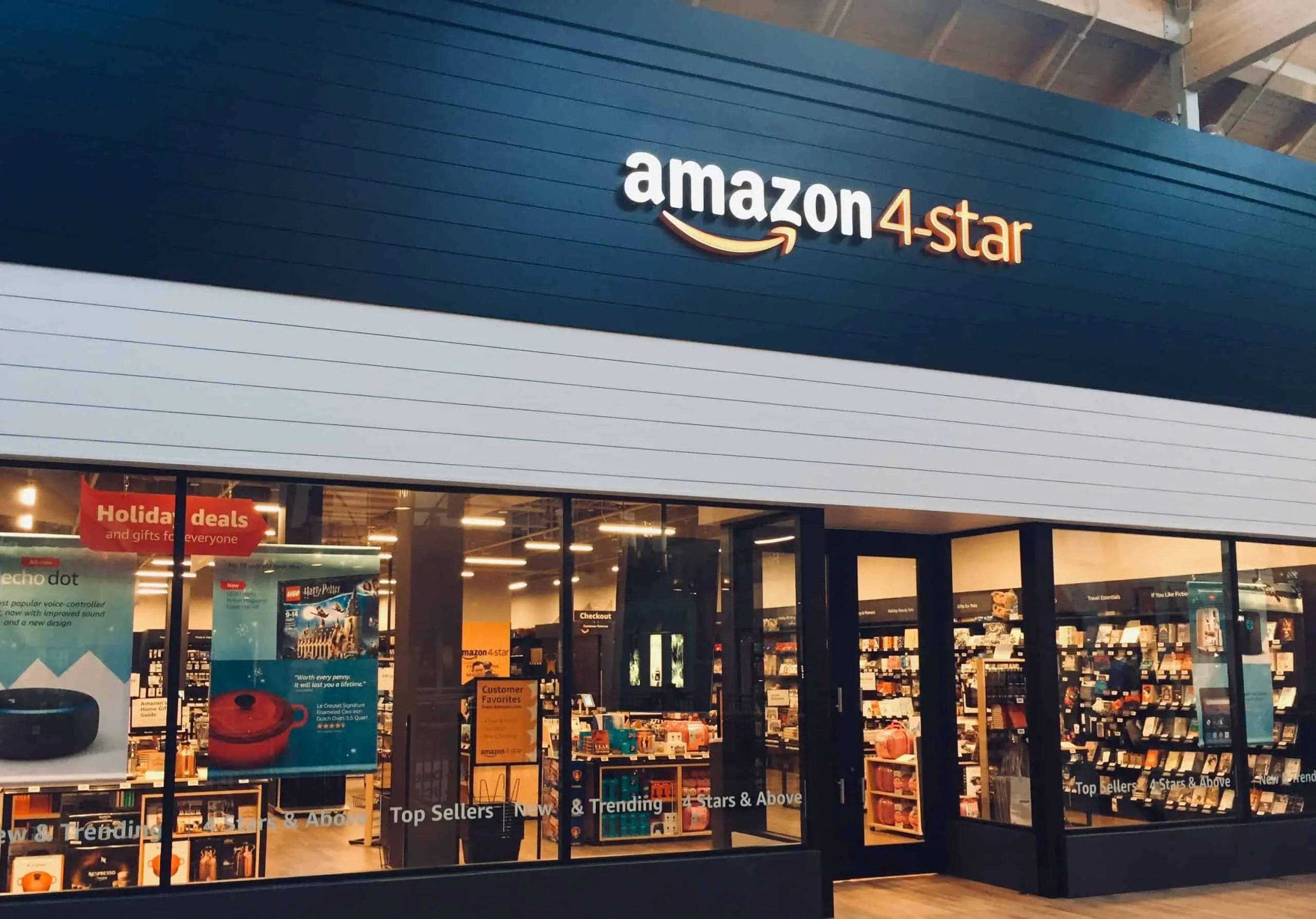
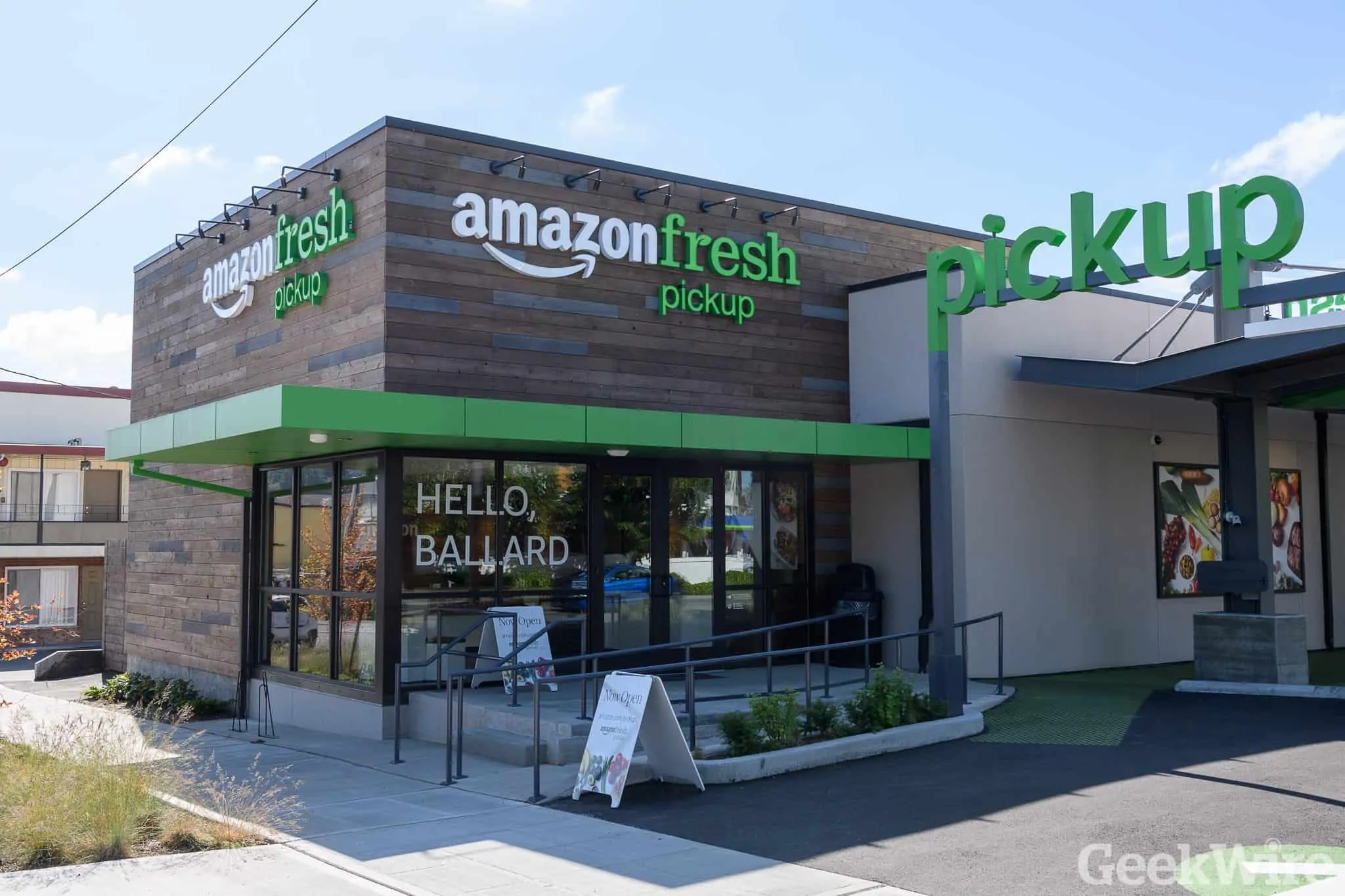
    Soon after, Amazon opened brick-and-mortar stores under the names – Amazon Go (Grocery & Convenience), Amazon Fresh (Grocery pickup locations), and Amazon 4-star (General merchandising). Apart from this Amazon had also acquired Whole Foods in 2017, which brought with it 400 of its own existing physical retail stores.

    Here’s a list of Amazon’s physical stores as of early-2020 –

    • Amazon Go Grocery – grocery store (1 store)
    amazon go grocery
    Source: Forbes
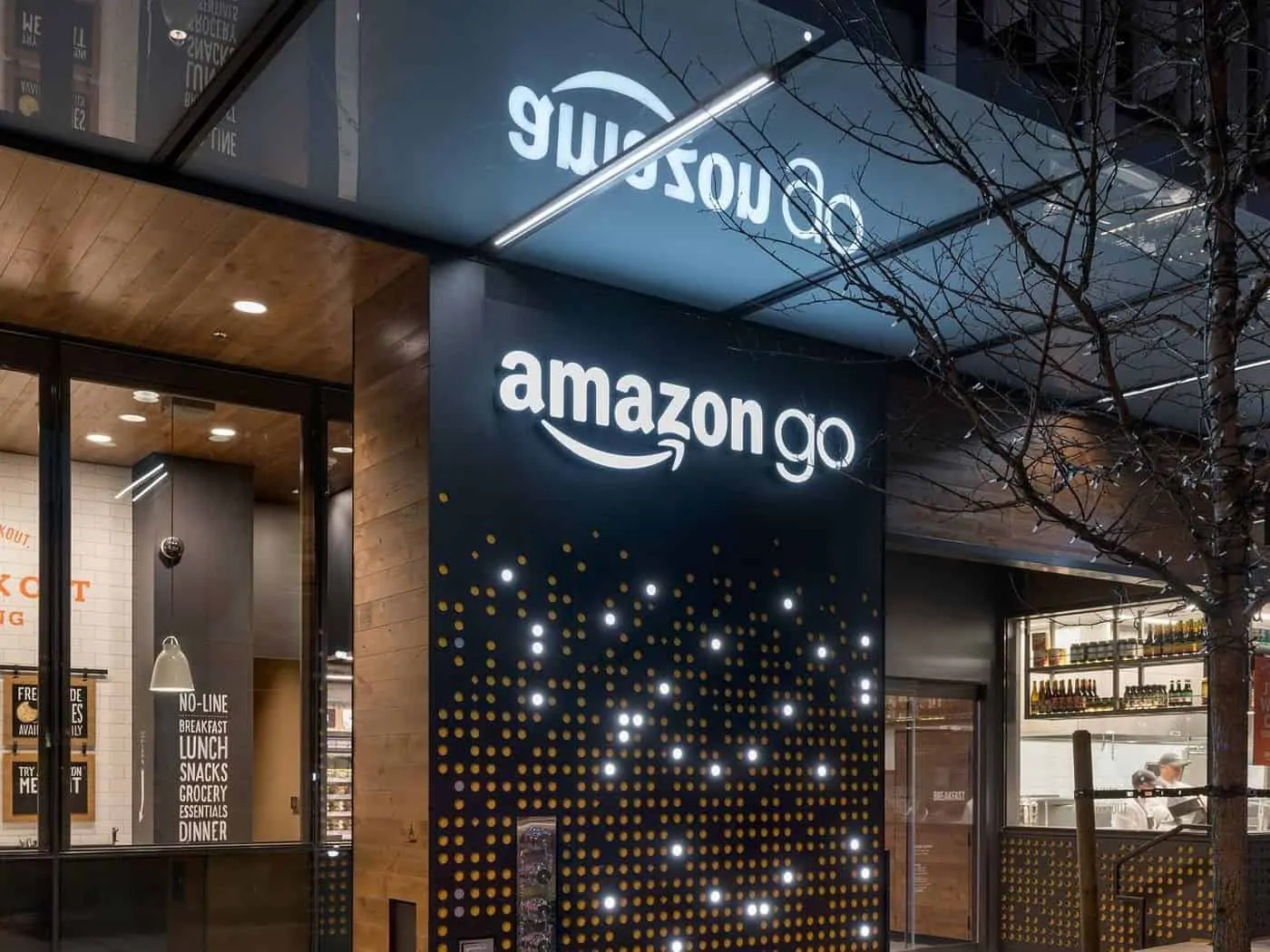
  • Amazon Go – cashier-less, sensor-based convenience stores (25 stores)
  • amazon go
    Source: The Verge
  • Amazon Books – bookstores (21 stores)
  • amazon books
    Source: Amazon
  • Amazon 4-star – merchandise stores (11 stores)
  • amazon 4 star
    Source: Poline Associates
  • Amazon Fresh Pickup – Amazon’s grocery pickup locations (2 stores)
  • amazon fresh pickup
    Source: GeekWire
  • Whole Foods (500 stores)
  • whole foods
    Source: CNet

    This brings us to Amazon’s acquisitions since it began in 1994.

    Amazon Acquisitions & Companies

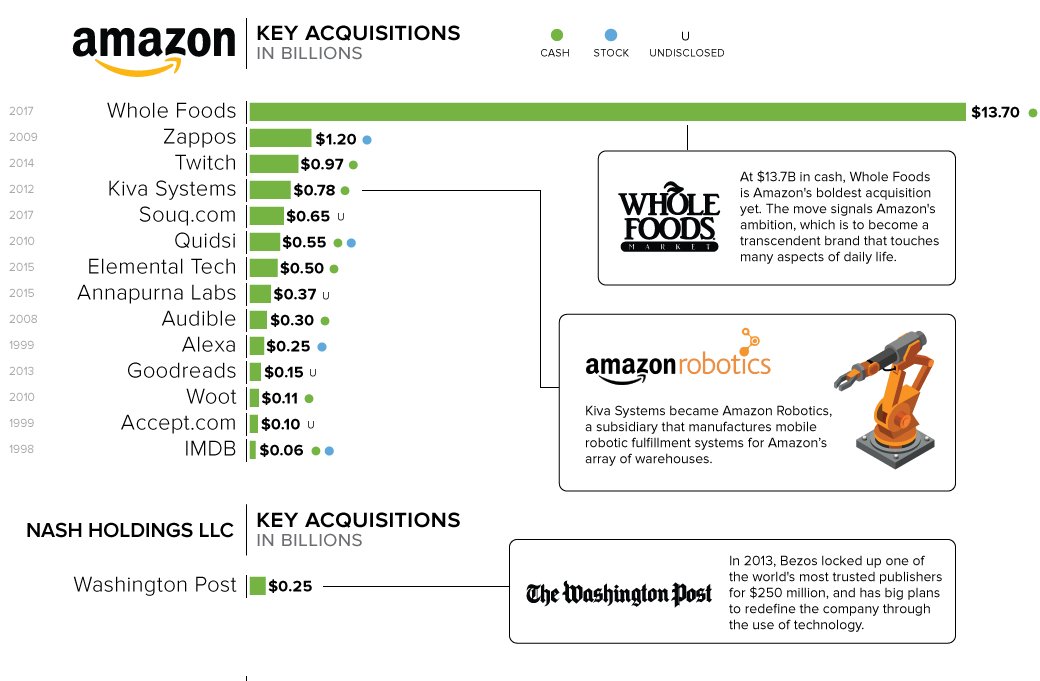
    Amazon has acquired a countless number of companies and incorporated most of them as its subsidiaries and into its services and its business model. Here’s a list of major acquisitions that Amazon made since it was founded –

    amazon acquisitions
    Source: MarketWatch

    Apart from the acquisitions, Amazon bought the daily newspaper publisher Washington Post in October 2013. Amazon also founded Blue Origin way back in 2000. Blue Origin is focused on space exploration similar to SpaceX and is privately funded by Jeff Bezos.

    blue origin
    Source: Quartz & Wired

    Go On, Tell Us What You Think!

    Did we miss something?  Come on! Tell us what you think about our article on History of Amazon in the comments section.
  • Place marketing: Strategies & Real-World Examples

    Place marketing: Strategies & Real-World Examples

    Outings are all about experiences. Treks, road trips, fests or a day spent laying on the beach, all are experiences. That’s what place marketing is about.

    Selling experiences.

    But how to sell something that spans across a city or country? Here is our guide on place marketing that will get you going with the strategies and how-to.

    What Is Place Marketing?

    Place marketing is the set of tactics used to market a geographical location to improve its business.

    • Place: A geographical location like a city, state, or even an amusement park.
    • Marketing: Set of tactics a business uses to promote and sell its products in the market.

    In simple terms, place marketing is the process of marketing a place. Destination marketing is used to promote a place for potential visitors to increase the odds of them visiting the marketed place. City marketing, region marketing, country marketing all fall under place marketing.

    But why to market a place? Why is place marketing even important?

    Well, place marketing can have various benefits like:

    • Improving local businesses.
    • Attracting foreign businesses.
    • Boosting tourism.
    • Overall area development.
    • Cultural uplift.

    Except for these direct benefits, there are various other indirect perks that each of these brings. For example, newer business establishments bring job opportunities for locals.

    Marketing in any field is a tricky process. Place marketing or destination marketing makes it all the more complicated for obvious reasons. Various factors such as scale, people involved, no central ownership, geography etc. tangle the marketing process very quickly.

    The basic idea of destination marketing is to understand the current image and assets of the place and market them to a relevant audience via relevant mediums. This can also involve improving the existing assets or even developing new ones to suit the marketing strategy.

    Place Marketing Strategies – How To Make Your Own Place Marketing Strategy?

    Are you planning to market a place, region, or a city? Is the region popular for its beaches or are its historical monuments the main attraction?

    It is difficult to generalise place marketing. It isn’t something like ‘marketing mobile phones’ or ‘marketing furniture’. While of course, all specific subjects have their differences, the spectrum of place marketing is too broad. One marketing project can be the polar opposite of others. This is the reason there are no go-to steps to follow.

    But there are many concepts which when applied to your destination marketing campaign are bound to make it a success.

    Know Your Target Audience

    Would you market a hilly town known for its adventure activities to people in their 70s? Never! Who would want to visit the place? More appropriate target audience would be teens and their parents.

    You have to have an answer to questions like,

    • Who would visit your place?
    • What would be their average expenditure?
    • How would they travel? What kind of accommodation would they prefer?
    • Would they travel alone or with someone?

    Answering such questions will help you clarify the audience you want to target.

    Not just that, it will be helpful in understanding what areas need to be developed or adjusted. For example, when marketing areas for trekking, more camping stops will be preferred than hotels.

    Have one or few personas illuminate the process ahead. Numerous questions are much clearer with personas in hand. When is the target audience most likely to travel? Are they domestic or from other countries? What interests them? What other places attracting a similar audience, are doing well? Answering all this is much easier with a proper visitor persona(s).

    Involve All Stakeholders And Make Associates

    Involving stakeholders like place officials, councils and having their opinions and knowledge helps. Whenever possible, grassroot research can also help. For instance, when creating a marketing strategy for a city filled with historical monuments, talking to ancestors of people involved can provide vital marketable information.

    Not just these, local tour agencies, hotels, popular markets etc. can be involved in the process to understand the available resources. You can even persuade many of these to align with your marketing strategy.

    Utilise Data For Analytics

    Any marketing campaign launched without analysing data is doomed. Data analytics should be used on every step necessary. Making persona, analysing crowd, analysing performance are a few instances where data analysis can be useful.

    Audit And Iterate

    Many make the mistake of thinking analysis as a one-time process. It is not! Analysis is an iterative process. You need to monitor your actions and their results and then compare them with expected results.

    If the results are not satisfactory, more analysis follows. Analyse weak-points and tune your strategies to fill the gaps. This is all about steady optimisation of marketing strategies.

    Know Your USPs

    The place to be marketed has to have some unique points. Again, analytics helps in figuring these out. These can be man-made structures like Disneyland or the Empire State Building or historic museums, or these can be natural attractions like mountains and lakes.

    Many attractions can be targetted to a very narrow audience as well. Spending a day at the stadium of their favourite club might be enough a reason for a Football fan to visit a country. An otaku might have Japan in their priority list.

    Not just physical structures, attractions like cuisines, tribes, old practices etc. are also very appealing to many. Research and analytics and involving as many stakeholders as possible can effectively help you figure the unique selling points out.

    Create A Memorable Brand

    Marketing should be aimed to have your destination engraved into your audience’s mind as soon as they see an advertisement. Building a good image is an extremely rewarding process.

    All the advertisement modes like website, brochures, slogan, hoardings, promotional images, social media handles and even the colour schemes involved should reflect this image and be compelling to the audience.

    Rajasthan (India) tourism’s taglines like, “Padharo Mahare Desh” (meaning welcome to my country) and “explore the land of Maharajas” are brilliant examples of this. Not only are they catchy, but they also capture the welcoming mysticism of the state very well.

    Segmentation

    You want to market an island for its beaches. You do your research and find that groups of friends in their 20s are a great audience. But so are newly-weds. Who will you target your campaign towards? Possibly both! But marketing may vary between the two.

    Customer segmentation plays its part here. Target customers have to be segmented on various aspects like age, interests, financial capacity, mode of travel, preferable accommodation and many such factors. Once segmented, tactics are formulated in accordance with the preferred choices of each category.

    Segmentation prevails in all mediums. For example, many tourism operators have separate social media handles to cater to the needs of audiences from different regions. Businesses are also incorporating customer service in a variety of languages based on their audiences.

    Since marketing is aimed at potential tourists, a lot of it will be done over the internet. A coherent marketing campaign spread over various channels is a must in most cases. Here are some tried and tested tactics that should help your win your online audience:

    An Enticing Website

    A website is the first thing one searches for when trying to find information. Having a website that captures the flavours of your campaign is a huge plus. A mix of necessary as well as amazing information is a good idea for a website’s content.

    Promotional pictures, videos, places to visit, booking portals and everything the place has to offer should be displayed on the website. It should be like a beautifully executed pitch to the tourists. Some printable brochures, infographics or guides are also valuable to many.

    Destination Videos

    A picture is worth a thousand words and a video is made of thousands of pictures. A good video can have a magical effect in a marketing campaign. Kerala tourism has been producing inspirational examples from many years.. Check out one of their advertisements (a friendly warning, develops a strong urge to visit Kerala)

    Social Media Influencers

    Influencer marketing is a billion-dollar industry now. People with a wide following and a very high engagement rate are a very effective medium to transmit your message. Many followers take their advice without even thinking of a second opinion.

    Travel vloggers, YouTubers, bloggers are some kind of influencers who can play a role here. Such adverts usually are very beneficial because of the established trust of the audience on the influencer.

    In fact, it’s a common tactic to invite an influencer, say a vlogger, to a resort and have them post a review vlog in exchange. It comes out as a win for both sides.

    Use Consumer-Created Content

    Why is it a common tendency to look for a product’s reviews even though the description tells everything about it? The reason is that people can relate to reviews from other users than they can relate with advertisers. And this works in place marketing too.

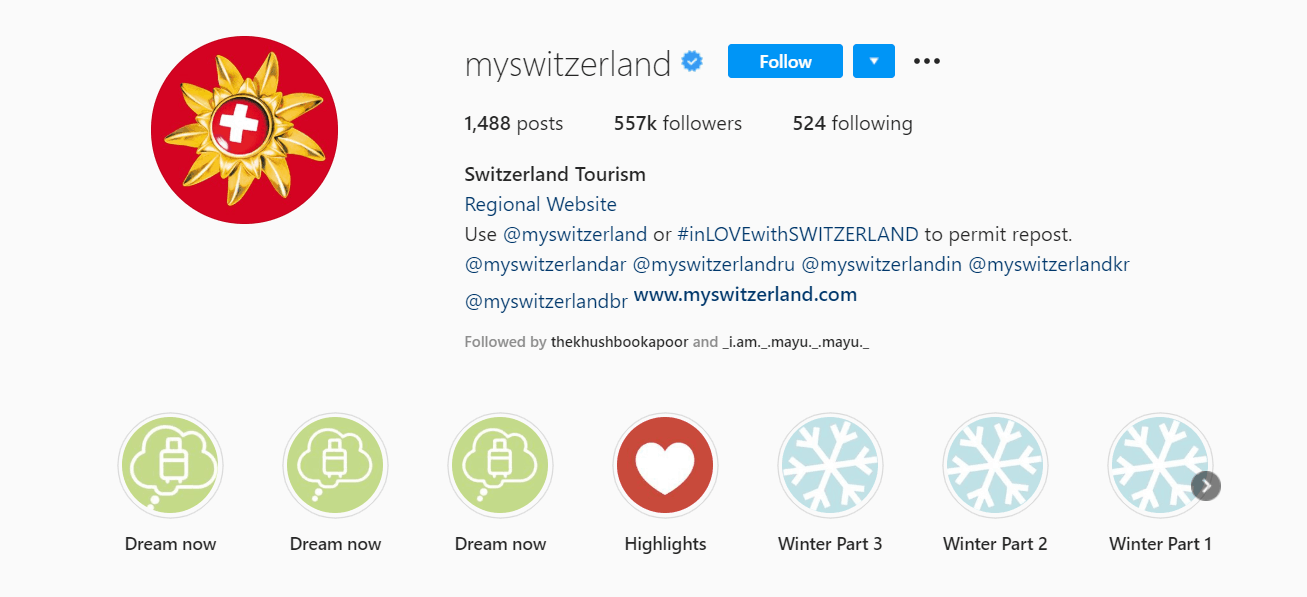
    Sharing content created by past/existing consumers is a strategy being used in many industries now. Take the example of Switzerland.

    Switzerland tourism asks users to post with the hashtag “inLOVEwithSWITZERLAND” and shares the posts they find worth on their page. This brings us to the next point.

    Employ hashtags

    Yes! Employ meaningful hashtags at all social media platforms whether Instagram or Twitter or Facebook or any other. Hashtags have been a way to find relevant content among the mess for a long time now. So much so that some platforms allow users to follow hashtags.

    Consistent and proper use of hashtags drives an authentic audience to your source. For example, using #travellers will bring more and more people interested in travelling to your page while #monuments will organically bring people interested in them towards you. These can be so effective that there are various guides available online to help one choose the right hashtags.

    Discussion Platforms

    Having a platform where past, current and potential customers can virtually meet and talk is a tried strategy. Maybe a subreddit, or a Facebook group or even developing healthy engagement on Twitter can be beneficial.

    Mouth to mouth advertisement is just like reviews, trustworthy. A family who wants to travel with their pet might get some accommodation recommendations from someone who has already done before. Or maybe some hidden food gems. Having well managed healthy discussion forums are a great way to bind potential customers.

    Apart from all these tactics, offline promotion should not be written off either. Hoardings still are a great advertising medium for many places. And television advertisements remain the primary ad. consumption sources. Everything comes down to gathering the right data, researching and then deciding the most suitable channel.

    Final Word

    We will finish with the same note we started with. Place marketing is about selling an experience. It’s not about getting hotels stuffed or about selling tickets or selling food, it is about selling the overall escapade from the thought of a trip to the return journey. Even small items like merchandise and mementoes are part of the experience and can leave an unforgettable memory. The 360-degree content by government tourism departments is a fine representation of this.

    Go On, Tell Us What You Think!

    Did we miss something?  Come on! Tell us what you think about our article on place marketing in the comments section.
  • What Is Proof Of Concept? [A Detailed Guide]

    What Is Proof Of Concept? [A Detailed Guide]

    Let’s be practical about love – it’s blind.

    And entrepreneurs love their ideas even more than they love their life partners.

    So, yes, you guessed it right – they keep on loving these ideas, developing hypotheses, and not caring whether the ideas are feasible or whether the market actually needs them or not.

    This is why converting an idea into a concept is an important step you must take if you’re an entrepreneur who’s in love with his idea.

    Now, if you’re reading this, I’d assume you already know the difference between an idea and a concept.

    For those who don’t –

    An idea is just a mental construct of a business opportunity that you come up with. A concept, on the other hand, is an idea that has gone through the process of fine-tuning and has been tested for its credibility.

    Since a concept is a well-defined idea that has been tested for its credibility, it requires evidence to support this assumption.

    And this evidence is the proof of concept.

    What Is Proof Of Concept?

    Proof of Concept (POC), also called Proof of Principle, is an exercise done to determine the feasibility of the idea and to verify whether it has a practical potential in the market or not.

    In simple terms, a proof of concept is an exercise done to prove whether the idea is feasible enough to be turned into a reality. That is, whether –

    • The problem the idea focuses on exists or not?
    • It is feasible to develop the offering the idea proposes?
    • The solution the idea proposes have a real-world application or not?
    • The solution the idea proposes is feasible or not?

    Why Is POC Developed?

    A proof of concept should not be mistaken for MVP or beta. These are early product releases which include a saleable product presented to the market to test the market demand, and production process, and to determine the most efficient pricing and marketing strategies.

    Proof of concept, on the other hand, is not an early product release. Oftentimes, it just includes a founder developing a prototype or going out and doing a survey to validate his hypothesis.

    POC is developed just to test whether the idea is viable or not – whether it has the potential to be built into an actual product or not.

    POC Benefits

    Besides the core benefit that you get to forecast the future of the startup idea before even starting to work on it, a proof-of-concept has the following benefits –

    • Saves time and money: If the proof of concept fails, there’s no use in spending time and money on the idea as it won’t succeed in the market.
    • Helps to get timely and valuable feedback from the important stakeholders: A POC is designed for internal validation, and hence, every input received from the prospective customer and the internal audience is used for the betterment of the planned offering.
    • Acts as a stepping stone towards developing early releases: Developing a POC helps you focus only on the product-market fit while developing the early product versions like MVP and Beta as the problem-solution fit has already been found.

    Proof Of Concept vs MVP vs Beta

    POC
    MVP
    Beta
    Why is it required?
    To test the problem-solution fit.
    To test the product-market fit.
    To test the acceptability of the product by the market.
    Which stage is it launched?
    Before the actual product is produced.
    In the early stages of product development.
    When the final product is produced.

    How To Build A Proof Of Concept?

    The main objective of developing a proof of concept is to get answers to these two questions –

    • Is it feasible to develop the offering?
    • Does the market need what I have to offer?

    And finding the answers to these questions doesn’t require you to develop the actual product. It just requires you to follow four proof of concept steps.

    • Assume that there’s a problem,
    • Develop a concept based on that assumption,
    • Ideate a solution,
    • Validate both the problem and the solution.

    This is how it’s done –

    Assume That There’s A Problem & Develop Hypotheses

    A hypothesis is a specific, testable prediction; a prediction that a problem exists, and customers would like to have a solution.

    Let’s say you were looking to develop a SAAS and found an opportunity in the remote work industry. You found out that there isn’t a one-stop solution for managers to handle and manage their remote workers.

    Develop A Concept Based On Those Hypotheses

    Now the problem discussed above is your first hypothesis.

    Develop it more.

    Find out what all problems they face while handling their remote employees. Some of them might be –

    • Using different applications to fulfil different tasks – Zoom for video conferencing, Trello for project management, and Hubspot for meetings and CRM.
    • Not being able to check the hours worked.
    • No good platform to manage remote employees’ payroll according to hours worked.

    Develop A Hypothesis For Your Perfect Solution

    Once assumptions relating to problems are conceptualised, solution(s) hypothesis is formed which involves the intended solution, aka the offering.

    This step converts the idea into a concept as you start thinking of a product which actually solves the intended problem. The concept includes –

    • What problems will the solution solve?
    • What gains will the customer get after solving the problem?

    For the problem of remote employees management, you can conceptualise a SAAS offering which has the following features –

    • Video conferencing tool
    • Project management tool
    • Payroll management

    …aka a complete remote employee management solution.

    Do The Feasibility Tests

    The steps above only made you develop a concept. This is the step which actually helps you find the proof of that concept.

    It involves you asking questions, taking feedback, and looking for convincing evidence that –

    • The problem you thought of actually exists: The customer actually faces the problem and would like to solve it, either manually or with some outside help.
    • Your solution can be built: It is feasible to develop the offering you plan to solve the problem with.
    • Your solution is either needed or will be appreciated by the customer: The customer believes that the solution you have to offer will solve his problem.

    The evidence is found using these strategies –

    Prototypes

    Often, to prove the product-oriented hypotheses, prototypes are used. They vary from technical designs to 3d prints to normal algorithms without a user interface.

    Surveys

    • Face-to-Face Surveys: This involves setting up meetings with the potential customers, asking them questions, taking suggestions, offering your solution and taking feedback.
    • Online Surveys: Online surveys involve using survey tools like Google Forms, Typeform, Product Hunt Ship, etc. to take a survey about the assumed problem and feedback about the offered solution.
    • Tele-surveys: Tele-surveys are just like face-to-face surveys, but the questions and cross-questions are asked over telephone calls.

    Landing Pages

    Landing pages involve developing a landing page for the offering and taking early invites, asking questions, and/or analysing user behaviour on the landing page.

    Demo

    A demo is a low budget implementation of your artistic work, technical design, or service. It involves offering a demo to your target audience, followed by questions to understand if this offering solves the market’s problem.

    For the example of the remote employees’ management tool, you might want to conduct surveys and develop a landing page with a demo video.

    Proof Of Concept Examples

    Here are some real-life examples of validating hypotheses using proof of concepts.

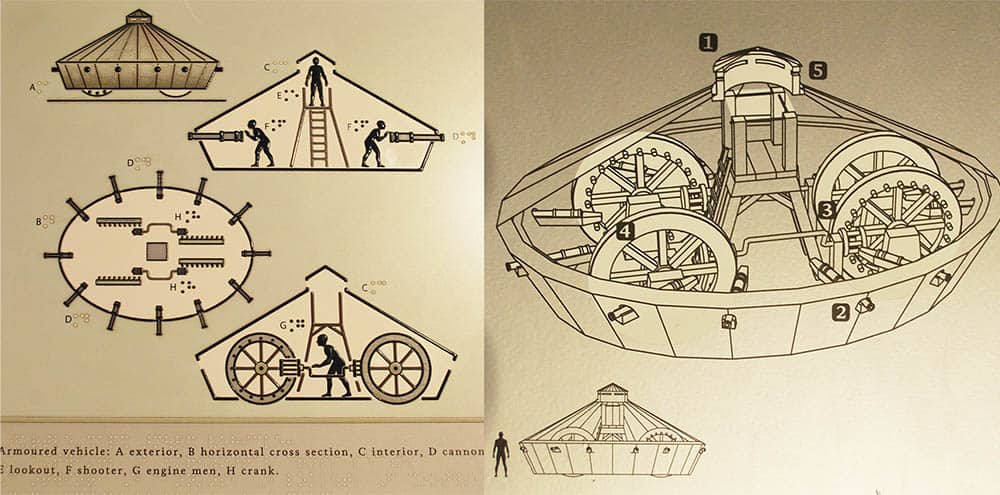
    Da Vinci’s Armoured Car

    Da Vinci’s Armoured Car proof of concept

    The oldest and the best example of a proof of concept is Leonardo da Vinci’s armoured car which formed the basis for the armoured car used today in modern warfare. He proved his product hypothesis by designing a prototype of an armoured car which was capable of moving in any direction and was equipped with a large number of weapons.

    Disney Pixar’s Piper

    Alan Barillaro is a director working with Pixar since 1997. He has put his effort into almost all of the major Pixar creations like A Bug’s Life, Toy Story 2, Monsters, Inc., Finding Nemo, The Incredibles, WALL-E, and Brave.

    After “Brave”, Barillaro started working with Pixar’s software development team to help develop an animation tool to help provide additional creative flexibility to the studio’s filmmaking process.

    As a proof of concept, the director developed a short animation clip about a small sandpiper bird on the beach. This animation soon grew into a full-fledged short film, “Piper”, which was theatrically released with “Finding Dory” in 2016 and won the Academy Award for Best Animated Short Film at the 89th Academy Awards.

    Bitcoin Whitepaper

    In 2008, Satoshi Nakamoto published the Bitcoin Whitepaper as the proof of concept of the problem of financial transactions that existed in the market then and how bitcoin was a perfect solution to solve that problem.

    The whitepaper also explained in detail how the cryptocurrency would work and benefit society.

    Final Word

    Developing a proof of concept should not be considered an optional exercise as it is what helps you get insight into the feasibility and desirability of your startup idea.

    Go On, Tell Us What You Think!

    Did we miss something? Come on! Tell us what you think about our article in the comments section.
  • What Is The Buyer’s Journey?

    What Is The Buyer’s Journey?

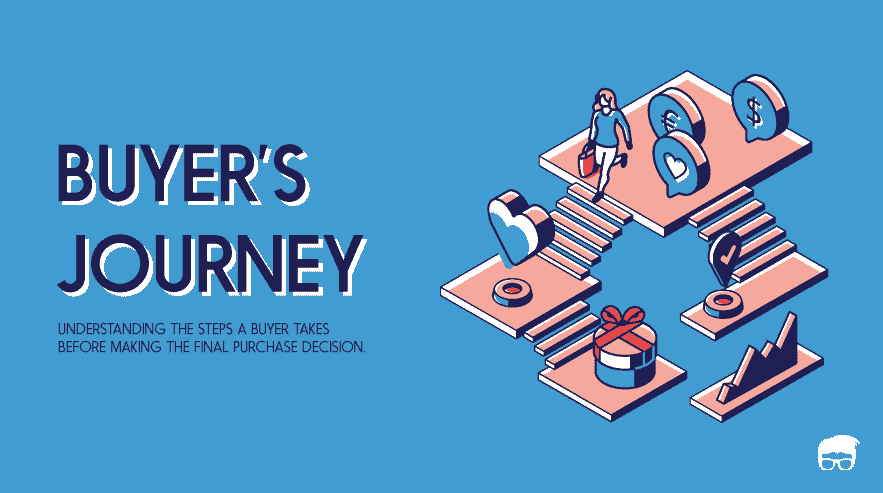
    A buyer always goes through specific steps before making their final purchase decision. Most often, a buyer goes through these steps instinctively. Here’s an interesting statistic – 70% of the buyer’s journey is complete before a buyer even reaches out to sales.

    Understanding the steps a buyer takes is important for businesses since it helps them formulate better marketing and sales strategies to funnel users in half-way through their journey.

    So –

    What exactly is the buyer’s journey?

    What is Buyer’s Journey?

    A buyer’s journey can be defined as the steps that a buyer goes through before purchasing a product. These steps include becoming aware of, considering & finally deciding on the problems and their solutions, respectively.

    A buyer’s journey is split into 3 different stages – A, C, & D.

    A – Awareness

    C – Consideration

    D – Decision

    Let’s look at these 3 stages and the steps that buyers take before making a justified decision in detail.

    Awareness

    This is the first stage of a buyer’s journey towards making a buying decision.

    At this stage, the potential buyer is in a state of disarray or just realising that they have a problem to solve or want to bring an idea or realising an opportunity. The buyer realises that they have a problem and starts looking around to define the said problem. This causes buyers to start researching on defining their problem.

    A buyer’s search usually begins in either of the following ways –

    1. Online – Buyers typically start their search for defining their problem online, where they can easily find and sort out lots of potential solutions. Search engines such as Google or Bing make it easier.
    2. Recommendation – A buyer may be working in a niche industry or looking for a niche product and might ask a fellow buyer for identifying the problem and also maybe a solution for it.

    As for the online searches, the buyer obtains a clear understanding of the problem they are facing – the buyer goes from being unaware to becoming very much aware of their problems and defining them exactly as such.

    The potential buyer is searching for resources when looking to define their problem. This means that the inclusion of the following in the company’s website will help buyers identify their problems easily –

    • Blog posts
    • Infographics
    • Guides
    • Whitepapers
    • Reports
    • Videos
    • EBooks

    Moreover, doing so helps the company rank higher in the mind of the buyers when they start looking for solutions to the problem that the company helped identify.

    Do note that buyers generally go into the details only during the later stages and this is the proper time for a vendor or company to build trust instead of going into the nitty-gritty on how they operate and deliver their solutions.

    Awareness Example

    “I have started a business, and I require a website, but I don’t have any coding experience. How can I build my website?”

    buyer's journey awareness

    Consideration

    Now that the buyer has identified their problems, they now start looking for all the available methods and/or possible ways to solve it. This makes the buyers return to researching to educate themselves on tackling and solving their problems/opportunities.

    So this is a good time for companies to bring up –

    • Detailed and specific articles
    • Videos on your products, services, and solutions
    • Comparison of charts and tables

    Consideration Example

    “I can build my website by either using an online website building service or hiring a freelancer.”

    buyer's journey consideration

    Decision

    Once the buyers are aware of the problem and the solutions for it, they start looking for companies, services and/or products that offer the said solutions.

    Upon research, buyers usually end up with a list of companies and start to eliminate the ones that do not offer the exact solution that they need until they end up with one that suits their needs the closest.

    At this stage, companies should offer –

    • Free trials
    • Forms
    • Contact details
    • Documents detailing the company’s solutions & approach
    • Featured listings
    • Testimonials
    • Reviews
    • About
    • Plans & Pricing

    This will not only provide the buyer with the necessary details and information but also help the company stand out from the crowd and easily convert buyers into customers.

    Decision Example

    “I can go with XYZ online web building service since it offers the cleanest interface along with all the necessary infrastructure to host the website while being the cheapest and easiest option of them all.”

    buyer's journey decision

    Final Thoughts

    Not all buyer’s journey is the same. The things considered under each of the 3 stages may vary from person to person and industry to industry. But the 3 stages – A C D, remain the same.

    Knowing the different stages of a buyer’s journey helps companies get into the minds of customers and learn – what they are trying to accomplish, their behaviours during each step of their decision-making process and how it can nudge the buyers forward in recognising their problems and in reinforcing their decisions.

    Go On, Tell Us What You Think!

    Did we miss something? Come on! Tell us what you think about our article on buyer’s journey in the comments section.
  • The Top 12 Startup Business Grants Around The World

    The Top 12 Startup Business Grants Around The World

    If you are reading this, you probably own a startup.

    According to fortune, 60% of the startups fail, and the uncertainty in a lot of these cases comes from a lack of money.

    There are a lot of ways startups can get money apart from the revenue. Loans, crowdfundingventure capitals are all sources you must have heard a hundred times by now.

    But all of these require something in return. Maybe interest rates are too high for you. Or you don’t want to spread ownership. Well then, a grant is your dark knight.

    A grant is a fixed sum of money an organisation provides to an existing startup to help them operate further. What makes a grant unique? The ‘help’! It is a one-way transaction! That is the reason it is commonly termed as ‘free money’.

    But with a lot of good competition, this ‘free money’ is very hard to get. A lot of effort is required for winning a grant. You might even have to make changes in your startup to fit the criteria of a grant.

    Furthermore, a lot of grants are hard to find. To buy you a little more time to concentrate on your company, we did the research. Here are some of the best grants from 6 different countries:

    Startup Business Grants In India

    Biotechnology Ignition Grant Scheme (BIG)

    About

    BIG is the prime grant scheme by the Biotechnology Industry Research Assistance Council (BIRAC). It acknowledges startups working with unique and innovative ideas in the field of biotechnology. Its aim is to propagate research discoveries to the stage of commercialisation; thus it provides funding in a very early stage. It, ‘supports ideation to proof of concept.’

    Who can apply?

    Biotechnology Ignition Grant (BIG) which is available for scientist entrepreneurs from research institutes, academia and startups. The applicant must either be incubated or have a registered company with a functional R&D laboratory.

    The project can be from any of the following categories:

    • Devices & Diagnostics
    • Drugs including drug delivery
    • Industrial Biotechnology including Secondary Agriculture
    • Agriculture
    • Biosimilars & Stem Cells
    • Vaccines
    • Bioinformatics & facilities

    Innovations in any of these categories via modern sciences like artificial intelligence, automation, robotics, cloud computing etc. are encouraged.

    BIRAC makes it mandatory that the incorporation date of the startup, should be registered under the Indian Companies Act, 1956/2013, shouldn’t be more than 5 years old from the time of closing of a particular BIG call. A qualified and competent project leader who is also a shareholder of the company should be nominated.

    What will the applicant get?

    The awarded company receives a grant-in-aid which is rolled out in 4 instalments during 18 months and may go up to Rs. 50 Lakhs. BIG ‘partners’ also provide guidance in various fields.

    How to apply?

    BIRAC calls for applications twice a year via advertising in multiple sources such as magazines, newspapers, website and journals. 1st January and 1st July are the dates application processes start and stay open for 1-1.5 months.

    This is followed by a 3-tier selection process involving the online review, face to face presentation and selection by the expert selection committee. The selected applications are then forwarded to the concerned BIG partners with whom requirements’ finalisations are made, and a report is created. This report is examined by BIRAC, following which the grant is awarded.

    To know more about BIG, refer the circular here.

    Multiplies Grants Scheme (MGS)

    About

    MSG is a grant by Dept. of Electronics and Information Technology (DeitY) aimed at promoting the collaboration of companies with R&D institutions. It looks to close the gap between R&D and commercialisation of products.

    Following this aim, MGS accepts proposals only from the academic institution(s) /R&D bodies jointly with the industry/industry consortium.

    Who can apply?

    The proposals for getting financial support under the scheme are to be submitted jointly by the industry and institutions. Also, the proposal should be for innovation in modules/ products/ packages/ services in the area of E&IT.

    One more need is the collaborating institute should be at least 5 years old and should have a good academic record. The institute is judged on the basis of prior research and projects, level of professional courses it undertakes, papers published by them and their prior/ongoing collaboration with the industry.

    The proposals outcome should be backed with market research should practicality of the commercial product.

    What will the applicant get?

    The government commits a grant of N*R where,

    N is the multiplication factor and

    R is the resources the industry commits.

    The multiplication factor is decided by a committee of subject experts and while there are exceptions, ‘N’ goes up to 2. The amount goes up to Rs. 2 Crores which is disbursed to the institutions in stages preferably in less than 2 years. For consortiums, the amount is up to Rs. 4 crores in the time period of up to 4 years. In must be noted that the grant is provided to the academic institution with which the startup is collaborating and comes fixed terms such as manpower, equipment, consumables etc. and grant-in-aid from DeitY will be given to academic/R&D institution(s) only. The Government grants would cover specific items of expenditure under the

    How to apply?

    The concerned ministry calls for proposals for up to 3 times in a year. A working group with domain experts evaluates the proposals and directs suitable departments to allot funds. Once the grant is won, a Project Review & Steering Group (PRSG) guides the industry/institution and decides suitable funds release amount/time.

    To know more about MGS, refer the circular here.

    Startup Business Grants In The USA

    Small Business Innovation Research (SBIR)

    About

    SBIR is a competitive program by the Small Business Administration (SBA) that encourages domestic small businesses to engage in Federal Research/Research and Development (R/R&D) that has the potential for commercialisation.
    Who can apply?

    As mentioned on the website, there are 4 main goals of SBIR:

    1. Stimulate technological innovation.
    2. Meet Federal research and development needs.
    3. Foster and encourage participation in innovation and entrepreneurship by women and socially or economically disadvantaged persons.
    4. Increase private-sector commercialisation of innovations derived from Federal research and development funding.

    If your operations align with the goals of SBIR, you can plan on applying. In simple words, the startup should be focused on priority fields for the US such as telecom, renewable energy, exceptional technological innovation, healthcare innovation etc.

    The eligibility criteria for this goes very deep. You can get the complete criteria here.

    What will the applicant get?

    SBIR provides a 3-phase grant.

    • Phase 1 is when SBIR examines the commercial feasibility of the proposed R/R&D and determines the quality of performance of the organisation. Phase 1 grant is provided during 6 months and doesn’t usually exceed $150,000.
    • Phase 2’s funding depends upon results during phase 1 and technical merit and commercial potential of the project proposed in Phase 2. The grant is provided in 2 years and doesn’t usually exceed $1,000,000.
    • Phase 3 isn’t funded by the SBIR program. It is funded by some federal agency and is done to execute commercialisation objectives after research from previous phases.

    How to apply?

    After matching all eligibility check-boxes, you must prepare a proposal that meets the needs. This is followed by choosing a solicitation and then choosing a research topic accordingly. With a solicitation chosen, you now have to apply and submit a proposal for the phases you are applying for.

    Amber Grant

    About

    The Amber Grant is a grant awarded every month by WomensNet. It runs for for-profit businesses run by women. Running since 1998, it was started in the memory of Amber Wigdahl, who passed away at the age of 19.
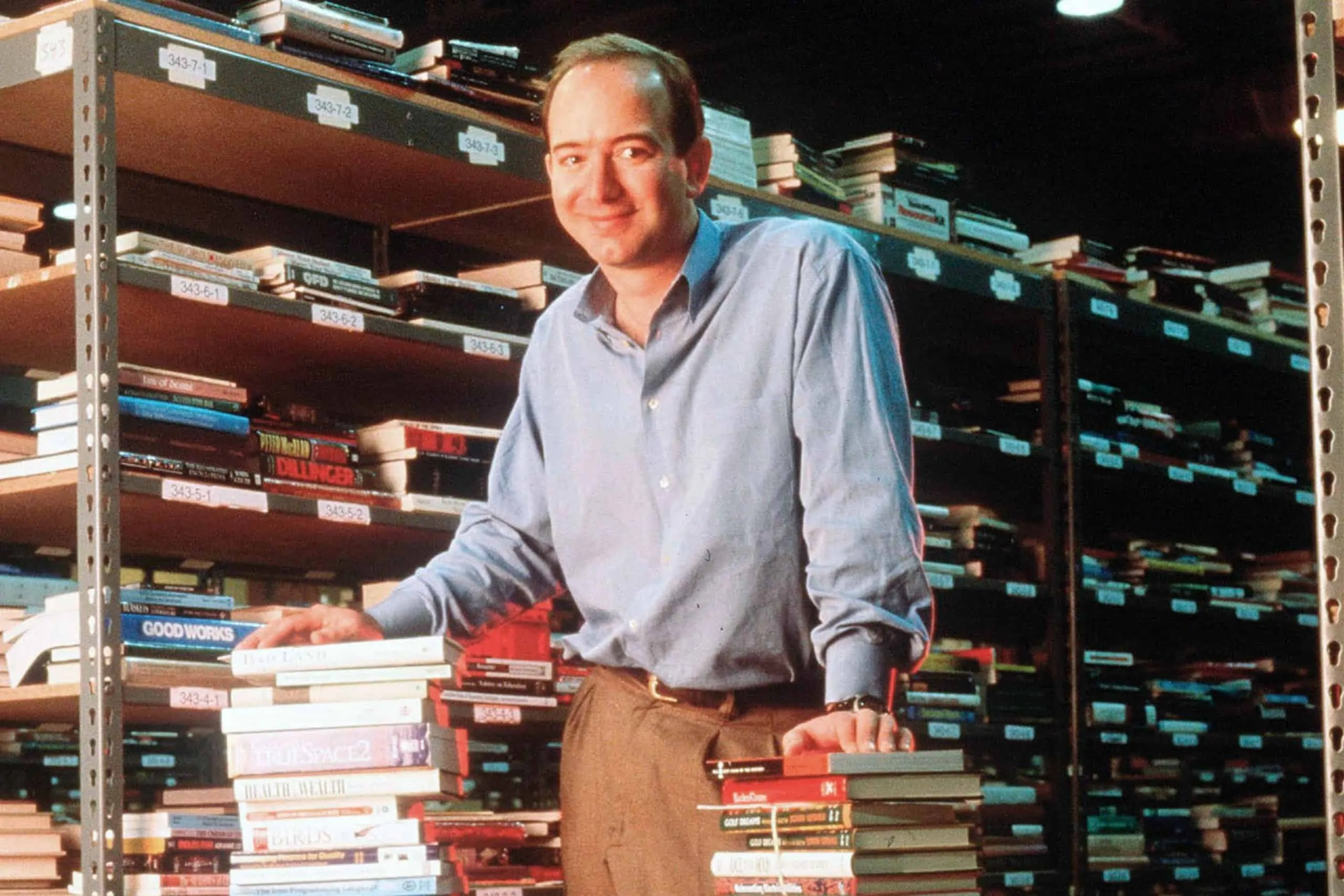

    Who can apply?

    All USA based women entrepreneurs/startups are eligible for receiving the grant. The conditions aren’t very specific at all. The business should be for-profit and run by a woman/women. That’s all.

    Quoting from the website, “Don’t try to “sound corporate.” Past grant winners are women who have simply shared from the heart.” That’s what you need to follow too.

    What will the applicant get?

    The grant is presented to the winning applicant every month. The amount has been increasing with time, and from $2,000, it was raised to $4,000 in 2020. In addition to the $4,000 every month, one amongst all the winners of year also receives $25,000 grant money at the end of the year based on public voting.

    How to apply?

    The application process is fairly simple and straightforward and is done by filling the form here. The form requires very minimal details about you, your business and your plans with the grant. To finish applying, you will need to pay a $15 application fee.

    Startup Business Grants In Singapore

    Startup SG Founder

    About

    Startup SG Founder is one of the most popular startup support programs in Singapore. It looks for innovative business ideas by first-time entrepreneurs. Startup SG Founder works with 40+ companies which are referred to as Accredited Mentor Partners or AMPs. These are companies that look to provide benefits to startups whose focus area aligns with their own.

    An AMP judge’s applications on the basis of the uniqueness of business concept, feasibility of the business model, strength of management team and potential market value.

    Who can apply?

    The grant’s primary focus is on the uniqueness or novelty of the company’s flagship focus. Your startup must be working on something much different from what’s on the market.

    While all first-time entrepreneurs who are Singapore’s citizens or permanent residents can apply, some criterion must be satisfied. Applicant(s) must hold or propose to hold at least 30% equity in the underlying company which itself, shouldn’t be incorporated for more than 6 months at the time of applying.

    The company must have at least 51% of the local shareholding and not be incorporated for more than six (6) months at the point of application. The applicants must not have registered or incorporated any business entity, and this should be their first government funding for the proposed business idea.

    What will the applicant get?

    A capital grant of $30,000 is provided by Enterprise Singapore (ESG). AMP with a consultation with the applicants, decides the milestones for the next 12 months on which the grant will be released. This is then examined approved by the ESG.

    In addition to the grant, the AMP will provide continuous mentoring and other benefits such as legal support, machining, publicity, incubation space etc. These benefits vary on the partner to partner basis.

    How to apply?

    The application to grant award is broadly a 5-step process:

    1. The applicants choose one or more AMPs from the list mentioned here and apply with their idea.
    2. AMP(s) evaluate if the eligibility and evaluation criteria are met and recommend the applicants to ESG.
    3. The concerned AMP and ESG will together evaluate and decide the applications to proceed with and reply within 5 days.
    4. ESG provides Letter of Offer to the selected applicants. AMP provides support during the 12-month process.
    5. The grant money is disbursed by the ESG as and when the pre-decided milestones are met.

    For all the details, click here.

    Experience Step-Up Fund (ESF)

    About

    ESF is one of the 9 grants provided by the Singapore Tourism Board (STB) and of course, all of these focus on businesses working on enhancing tourism in Singapore in one or the other way. ESF in particular looks for businesses working to improve the satisfaction of the tourists, thus making Singapore (and the destination in focus) more alluring for outsiders.

    Who can apply?

    The ESF is applicable for all companies or associations registered in Singapore. It is also open for government bodies. Since the grant is tourism-focused, the startup’s proposal for the new project should be under one of the following categories:

    • Development of new products and experiences
    • Content enhancements at existing attractions and precincts
    • Technology enablers
    • Amenities enhancements within retail malls and attractions
    • Infrastructure enhancements

    What will the applicant get?

    Instead of receiving a fixed grant amount, ESF reimburses the money spent in different areas. These may include third-party costs such as hardware/software costs, material costs, manpower costs and cost of professional services. It can also cover some of production and marketing costs. All the reimbursements are issued after STB’s evaluations on the basis of realisation of agreed milestones and deliverables. In most cases, the companies have to submit externally audited documents on the qualifying reimbursement costs.

    How to apply?

    The applicants need to create their proposal based on this template. In addition to the applicant’s details, it requires information on how the project aims to accomplish the mentioned areas of opportunities, tentative cost and timeline, sales and marketing plans and capabilities to achieve the target.

    The proposal should be sent to the STB at [email protected]. An STB officer will contact the applicant and guide them further. It is a necessity that the project shouldn’t have begun before the grant is offered.

    Startup Business Grants In Australia

    CSIRO Kick-Start

    About

    Kick-Start is a grant administered by the Commonwealth Scientific and Industrial Research Organisation (CSIRO), Australia’s national science research agency. The aim of the grant aligns with that of CSIRO who tackle problems relating to national growth priorities with innovation in science and technology.

    Kick-Start is for Australia based startups and SMEs, and together with funding, it provides research expertise and support to help your startup advance.

    Who can apply?

    An Australia registered and based for-profit startup with an Australian Company Number (ACN), non-tax exempt and registered for GST can apply for the grant. Also, your company needs to either be registered for less than 3 years or have had the annual turnover and operating costs below 1.5 million AUD in running as well as previous two FYs.

    Since the proposed project should be research-based, it should either propose research into a new idea with commercial feasibility for the future or propose testing of a home-developed novel product, to inform R&D activities. Development/improvement plans for a product or process can also be proposed.

    The proposal should be in one of the 12 (currently) business facilities under CSIRO like energy, manufacturing etc. and should be less than 1 year.

    What will the applicant get?

    After details such as budget, payment schedule etc. are finalised between CSIRO business unit and the startup, CSIRO provides Kick-Start voucher funds. The grant amount can range from $10k to $50k (AUD). CSIRO provides as much money (within the range) as much as the startup itself contributes (dollar-matched funding).

    The startup is not only facilitated with research and development resources but also provided guidance for the same. A second Kick-Start voucher can also be granted if conditions are met.

    How to apply?

    To apply, you need to fill the ‘Expressions of Interest’ form here. The form collects details about the applicant and the proposed project. Based on this, a suitable researcher under CSIRO is assigned to the project together with whom the company needs to develop a complete application form, including all the documentation required. This is then reviewed and approved if the deemed suitable.

    Accelerating Commercialisation (AC)

    About

    Accelerating commercialisation is one of 4 elements of The Entrepreneurs Programs by the government of Australia. It is meant to give assistance to startups, entrepreneurs, SMEs and researchers by facilitating them with expert advice and funding, usually to launch a product, process or service commercially.

    The primary focus of the grant is the provision of commercial advisors assigned to the awarded companies which provide expert guidance as well as connections. Companies also receive excellent portfolio services. The financial help remains a part of the overall support.

    Who can apply?

    You need to fall in one of the following categories to be eligible:

    • Non-tax-exempt eligible corporations registered for GST.
    • Group of Individuals, researchers or partnerships who agree to form an eligible corporation (as defined in the guide below).
    • Eligible Partner Entity (EPE) looking to commercialise the result of the research.

    In most cases, AC doesn’t fund R&D projects so the company will have to have a working prototype.

    What will the applicant get?

    The primary reward of AC is high-quality commercial guidance. Professional commercial advisors are assigned who guide the startup on how to convert their IP into a successful commercial product/service. These advisers also help you develop a relevant professional network.

    In addition to the guidance, you can apply for a financial grant with which portfolio services are included or can apply for the latter alone. The startup can apply for dollar-matched financial grant amount with an upper limit of 1 million AUD.

    If applied and chosen for, you also get to be in AC’s portfolio for the project period or even more. Portfolio members get to have reach and visibility to investors, supply chains etc. ACs’ portfolio is a credible source that investors trust.

    How to apply?

    The application process is open throughout the year. You will need to submit an Expression of Interest (EOI) form here. If found worthy, you will be provided with an advisor who reviews the proposal and advises accordingly. The application for the commercial grant as well portfolio services is made only after the startup has received proper commercial guidance.

    For complete details about the grant, visit here.

    Startup Business Grants In South Africa

    Isivande Women’s Fund (IWF)

    About

    This is a woman only fund that focuses on empowering primarily women-run companies. It helps the startup expand, rehabilitate and bridge its finances. It is managed by the Industrial Development Corporation (IDC) for the Department of Trade and Industry (DTI), South Africa.

    Who can apply?

    IWF is for South Africa based startups, with 50%+1 shares owned and managed by women of the company. The startup should also be at least 6 months in operations and showing signs of commercial growth and sustainability. One important factor that greatly improves the chances of getting you the grant is the impact the startup is creating socially, especially in job creation. Early-stage starts are preferred over the more developed ones.

    What will the applicant get?

    The amount of funding can vary from R30,000 up to R20,00,000 (South African Rand).

    How to apply?

    The application process is relatively simple. The application process can be carried out by calling +27(11)7727910 or by fetching the application form from here.

    Strategic Partnership Programme (SPP)

    About

    The Strategic Partnership Programme was created as the successor of Incubation Support Programme (ISP). Originally supposed to end in 2019, it was further extended to an indefinite period of time. It is another offering of the DTI, South Africa and looks to support companies creating improvements in manufacturing and services supply capacities. It is also intended to support Broad-Based Black Economic Empowerment (BBBEE).

    It is fulfilled with a joint effort of large private sector businesses (strategic partners) and the government of the country to nurture startups and SMEs. The cost is also shared between the government and the private partners.

    Who can apply?

    The startup should be a South African registered legal entity working in manufacturing (or related services), agro-processing or mineral beneficiation. As a support measure for BBBEE, minimum 51% ownership should be by Black South African Citizens, and in most cases, black owners should command ownership and membership. The grant is provided for work in many areas such as machinery or equipment, Information and Communication Technology, Product development etc.

    What will the applicant get?

    Grant money is disbursed on a quarterly/bi-monthly basis, usually in a reimbursement format. The amount is capped at R15 Million and is provided in split by the government (DTI) and the respective strategic partner (private) in either 50:50 or 70:30 ratio depending upon the situation.

    How to apply?

    To apply, you need to submit this application form on DTI’s website. The form requires the current and future plans in extensive details. You will also need to specify funding requirements. Further steps are taken if the application is approved, and a strategic partner is involved.

    For a more in-depth knowledge of SPP, visit here.

    Startup Business Grants In Canada

    Industrial Research Assistance Program (IRAP)

    About

    IRAP or NRC IRAP is run by National Research Council (NRC) of Canada and funds startups and SMEs to help boost their innovation capacity and to help them convert take their idea to product/service. The businesses are also given expert advices and connections. The mandate of IRAP is to “stimulate wealth creation for Canada through innovation.”

    Who can apply?

    If you are a for-profit startup/SME incorporated in Canada with 500 or less full-time employees, you are qualified to apply. Applying businesses should have their focus on profiting by developing cutting-edge new/improved products, services or processes.

    What will the applicant get?

    The awardees are connected to relevant Industrial Technology Advisors (ITAs) who provide technical advice, business advice, links to resources, referrals, patent searches and much more to the company. A network of associates from various zones like marketing, legal, technology etc. can provide access to tailored support and connections.

    The funds are dependent on the type of project and also availability. The amount is not fixed but can go up to a maximum of $10 million.

    How to apply?

    The first step is to call NRC IRAP on 1-877-994-4727. If found suitable, you are referred to an ITA. The ITA will gain knowledge about your business and your plans, and if found feasible, the ITA will require you to make a proposal for a financial grant. This proposal will be analysed by the NRC on factors such as technical aspects, commercialisation potential, business capacity etc. as mentioned here.

    If successful, the terms will be drawn, and the startup will be allowed to claim the amounts my submitting monthly reimbursement claims.

    Space Technology Development Program (STDP)

    About

    Canadian Space Agency’s STDP works on bringing innovation in the Canadian space industry and on reducing technological unknowns. It awards grants to businesses developing innovative products with commercial potential. It also gives contracts to organisations for the development of technologies for the future.

    STDP operates to increase industrial preparedness of Canadian space companies.

    Who can apply?

    All Canadian (established and operating) organisations, whether for-profit or non-profit are eligible to be issued contracts, but only for-profit organisations are eligible to be awarded any grant. The proposal of your company should, of course, be for some space-related technology and innovation.

    What will the applicant get?

    The available funding amount at a time is not fixed and depends upon the Request For Proposal (RFP) or Announcement of Opportunity (AO). The amount is variable and varies on different factors like the type of project, technological readiness etc. It can go from being under $100,000 to over a million CAD. The funds are usually dispersed in a period ranging from one to four years.

    How to apply?

    You can visit this page to apply for the grant.

    Go On, Tell Us What You Think!

    Did we miss something? Come on! Tell us what you think about our article on startup business grants in the comments section.