An opportunity is a chance to take advantage of a situation. It can relate to several situations in career, sports, business, etc. It is what makes the difference between real leaders, winners, and quitters.
A business opportunity is the chance to take advantage of an occurrence in the market for business gain. It is what makes some businesses succeed while others fail.
What Is A Business Opportunity?
A business opportunity, also called bizopp, is the chance to take advantage of an occurrence in the market to begin a business.
It involves some kind of favourable condition which exists in the market.
A business opportunity is what makes some businesses succeed while others fail. Leaders are successful because they see opportunities before other people spot them, make plans then build business models to capitalise on that opportunities.
A good example of a business opportunity in the market today is e-books. Amazon was one of the first companies in the online bookselling business who initiated an e-book reader that made it possible to read books by means of a digital device that looks more or less like a tablet pc.
Importance Of A Business Opportunity
In business, an opportunity is a key to success. Without it, a business cannot begin, expand, or succeed.
The main purpose of an opportunity is to serve as the basis for any action that results in profit and business growth.
Opportunities allow businesses to create and implement ideas and innovations and improve their performance.
Only those who spot opportunities early can take the best advantage of them and capitalise on them.
Here are some reasons why a business opportunity is important:
The chance to build a business: A business opportunity can be an existing unsolved problem in the market or a new problem arising from current trends, which is the chance to build a business.
The chance to avoid failure: A business is likely to fail without opportunities. This is because they are essential for implementing ideas and innovations that can make a business successful. They allow businesses to take the right decision at the right time.
The chance to grow: Opportunities allow businesses to create and implement ideas and innovations. It is also a chance to improve performance by solving existing problems better, providing a more refined value proposition to the target market, and building a more efficient business model.
The chance to maximise profits: A business opportunity involves favourable conditions that can be used to increase profits. These conditions include but are not limited to the availability of resources, the existence of market demand, and the presence of favourable competition. The goal is to find solutions that can potentially maximise profits while solving problems.
Characteristics Of A Good Business Opportunity
Business opportunities are the core of every successful business. They help in identifying problems and in creating solutions that can potentially help businesses grow.
Here are some characteristics of a good opportunity:
Clarity: Good opportunities are clear, well defined, and straightforward. They allow businesses to accurately and completely identify problems and create solutions that can maximise their potential.
Relevance: Good opportunities are relevant to the scenario in which they exist. They provide added value to customers, markets, and industries. This means they do not only represent potential but also relevance for solving existing problems or creating added value for others.
Feasibility: Good opportunities are realistic and feasible. They help businesses achieve their goals while making them more efficient, productive, and profitable.
Profitable: A good opportunity is capable of providing returns on investment. It is able to achieve its objectives while capitalising on the available resources, strategies, and assets more efficiently.
Scalable: A good opportunity is scalable. This means it can be expanded to a big or a wide scale. It can extend to various markets and industries while maximising the results of investments in terms of time, human resources, and money.
Types Of Business Opportunities
There are different types of business opportunities, each one serves as the basis for important decisions that help businesses succeed. Here are some examples:
New market opportunity: A new market opportunity involves an untapped market, which gives businesses the chance to create and implement ideas and innovations without facing much competition.
Untapped resource opportunity: An untapped resource opportunity is a type of business opportunity that involves underutilised or unexploited resources that can be used to create added value.
Technology opportunity: A technology opportunity is a type of business opportunity that allows businesses to introduce new technologies that can be used in existing markets.
Competitive opportunity: A competitive opportunity allows businesses to introduce new products or services that can provide more value than their competitors while solving the problems of the target market better.
Strategic partnership opportunity: A strategic partnership opportunity involves the chance to collaborate with businesses from complementary industries, allowing them to access new resources, strengthen their product offerings, and increase their competitive advantage.
How To Identify A Business Opportunity?
Opportunity identification is an important part of business development and growth. It allows companies to make the right decisions that will help them achieve their goals.
Here’s the business opportunity identification process:
The Customer Research Stage
The first step is to research customers and their problems by asking questions related to the customer’s needs, goals, and expectations.
This involves collecting, organising, and analysing information about customers’ behaviour as well as their needs.
The past and present trends of the target market must also be identified to help businesses better understand customer preferences.
The objective is to identify potential business opportunities that can help the business create value for its customers.
Problem Hypothesis Stage
In this stage, businesses search for problems by identifying issues and concerns from customer feedback and other sources of market research. The first step is to define the problem.
Once that has been done, businesses need to search for the root cause of the problem and explore possible solutions. The goal is to formulate a well-focused hypothesis that can be tested with market research.
Product Hypothesis Stage
Businesses should determine what kind of product or service will solve customers’ problems or address their needs. The product or service should target specific customers based on the information gathered during the customer research stage.
Market Hypothesis Stage
The market hypothesis stage involves testing certain key assumptions about the business opportunity with customers to determine the demand for a particular product or service in the real world, and how it solves problems in the specified market.
It also involves doing in-depth research to identify existing players in the targeted market, and determining customer expectations for the product or service.
Product Development Stage
Once a business opportunity is confirmed, the next step is to develop a product or service that will solve the problem.
The product or service should be designed and tested using various methods to ensure its viability and effectiveness.
Businesses need to consider their target market, competitive threats, and business models as they develop the product or service.
Business Opportunity Examples
Business opportunities are everywhere, and it is important for businesses to identify and tap into them. For example, Uber found a business opportunity in the unorganised transportation industry by introducing an on-demand cab system.
There are also many other examples of great business opportunities:
Airbnb: Airbnb introduced the concept of sharing economy by allowing people to rent out their homes as an alternative to hotels or motels. This is a perfect example of a new market opportunity because hotels were the only service providers for this kind of accommodation before Airbnb came along.
GoPro: GoPro is a new camera brand that saw an opportunity to introduce a unique product in the market where smartphone cameras and existing digital cameras were already popular. It catered to a repressed demand of capturing high-definition videos of sports activities, something traditional cameras were not capable of doing.
TikTok: TikTok saw an opportunity in the music and video streaming market by introducing a unique take that allows users to create 15-second videos set to music. It found a repressed demand of getting recognised and untapped technology of user-generated video content.
Crate and Barrel: Crate and Barrel saw an opportunity to introduce a unique concept in the furniture industry by selling ready-to-assemble furniture. This is different from other players in the market who only sold expensive, high-quality pieces of furniture.
Business Opportunity Vs Business Idea
A business opportunity is different from a business idea; the latter is based on the former.
Business opportunities are identified when companies find issues or problems in existing markets, untapped needs, untapped technologies, customer feedback, market research and other sources of information.
Business ideas are typically created through creative thinking by entrepreneurs who try to capitalise on business opportunities by exploring ways to solve certain problems.
Go On, Tell Us What You Think!
Did we miss something? Come on! Tell us what you think about our article in the comments section.
We’ve all been there – went to the supermarket to buy some groceries and found ourselves buying a whole bunch of stuff we did not actually need. This is something that happens to us all the time, but how come it’s so hard to resist?
Many factors influence our shopping behaviour – one of them being the psychological tricks businesses use to make customers buy more.
Though not much talked about, even you can use some of these tricks to sell your offerings. Here is a list of 15 psychological tricks businesses use to make you buy more.
Price Anchoring
“MRP: $25, Get it for $5“
“Competitor company: $300, Us: $50”
Price anchoring is when you base your decisions on the anchor price – a price you saw earlier. This allows marketers to ‘bribe’ you into buying a more expensive product by telling you that their offering is cheaper.
It is a cognitive bias used most often in sales, where one compares or references another related or unrelated number to establish value for money. It happens subconsciously – the idea is that people will pay more if they see a bigger number first.
For example, a sale for a digital camera might be advertised as “$99” instead of “$150.” This technique is used to make you buy more by suggesting that $99 is a big discount from the retail price – $150.
Scarcity Principle
“Act now! Supplies are running out!”
“89/100 already sold.”
The scarcity principle states that an offering becomes more desirable when it is in limited supply. This is achieved by limiting the number of items available at a specific price.
Businesses use this trick to make you buy more because your FOMO (fear of missing out) on a great deal makes you want to purchase the product ASAP (as soon as possible).
For example, when you’re shopping online and see that only a few of your favourite products are left, you’re more likely to add the product to your cart and check out.
FOMO [Fear Of Missing Out]
“7 of your friends bought this recently”
“You only have 1 hour to take advantage of this deal!”
Fear of missing out is the idea that you believe you might miss an opportunity in the future, so it’s better to take advantage of it now.
When businesses use FOMO in marketing messages, people are more likely to buy because they don’t want to miss out on a great deal or an interesting product.
For instance, when you see that your friends all purchased one product, you might get a similar one to avoid being excluded from conversations. Perhaps even if the product isn’t something you would use or need – you’ll still buy it because your friends bought it and that means there must be something about it!
Social Validation
“47 out of 50 doctors recommend this.”
“Alex: I loved how comfortable these shoes are.”
“Linda: I love using this toothpaste. It really whitened my teeth!”
Social validation or social proof is when businesses use the power of social influence to increase sales. It is used all over the place – from online reviews, “people also viewed” lists for items on e-commerce websites to listings of top-selling products.
When businesses use this trick to make you buy more, they’re showing how popular their product is with other people just like you! This lets you know that you’ll be in good company if you buy the product.
For example, when you’re looking to buy a new laptop and see dozens of positive reviews for it, your confidence in buying will increase. You’ll also be more likely to make the purchase because other people like you all bought the product before!
Loss Aversion
“Pay $300 today or $500 after your birthday.”
“Headache daily could be a sign of serious illness. You wouldn’t want to get a late diagnosis.”
Loss aversion is the idea that people feel the pain of loss more intensely than they feel pleasure from gain. It’s because we have a tendency to protect ourselves from losses rather than achieve gains.
When businesses use loss aversion in their marketing messages – for example, using a message like “Pay $300 today or $500 after your birthday” – it directs your mind towards the negative “loss” of spending $200 more in future rather than the positive “gain” of saving $200 today.
This makes you buy more because the fear of a potential future loss is stronger than the excitement for a future gain.
Loss aversion works all over the place – from selling insurance to encouraging increased consumption with “low deposit” schemes and “free trials.”
For example, when you need to buy insurance, the company will try to make you think about what could happen if your house was damaged – how much it would cost and how much regret you’d feel for not purchasing the insurance.
Micropayments
“Game is free, but you need to pay $0.5 for every extra life.”
Micropayments are an online business model that involves selling extremely small-value items, typically digital goods.
This strategy is often used in freemium business models where a basic product is provided for free, but a fee is charged for advanced features – like buying extra lives in a game.
When businesses use this trick, you might not even notice the additional purchases, especially when it’s simply adding up to a few dollars or less per transaction.
In fact, your attention isn’t drawn to the money being charged as the product is being described in a way that benefits you. For instance, in the case of playing games – getting extra lives or points to progress further means you get more enjoyment out of the game.
The end result? You might not even notice that you’re spending money on this “micropayment” until much later when it’s added up.
Businesses often earn more revenue using micropayments than they would have if you paid upfront for the product or service because it’s much easier to part people from their money when they don’t even notice it.
Bundling
“Buy the new iPhone ($899) along with Beats headphones($299) for just $999!”
“3 games for $12 or each game separately at $5.”
Bundling is when businesses offer multiple products or services together at a lower price than the total individual cost. Companies like phone networks often use this to get you to pay more money for things you might not actually need if they were sold separately.
In simple terms, when businesses sell you bundles, they just want you to pay more than you would have if you just bought the products or services you actually want in the first place.
An example is when a sports clothing company bundles shoes (worth $72.5) and socks (worth $5) together. It makes you buy both items ($75) even if you only wanted to buy the shoes. That is, you didn’t actually save $2.5; you paid $2.5 more than you would have if you bought just the shoes.
Decoy Effect
Small: $3 (300ml)
Medium: $7 (750ml)
Large: $8 (1 litre)
“Which one would you choose? Medium or large?”
A sane choice would probably be to choose the large option as it is just $1 expensive but the quantity is a lot more.
Here the medium option is introduced to be a decoy to make the large option more favourable and to pull you away from even thinking of buying small.
If there were just small ($3) and large ($8), a large chunk of people would have gone for small as there were no other options. But with the introduction of the medium, people are now being “tricked” to buy large instead as they ignore the (cheaper) small option.
The decoy effect is this phenomenon in which a given setup of two options, a third asymmetric choice is provided to let the customer go in favour of the more profitable option.
Usually used as a negotiation strategy, businesses will create a third option that doesn’t reflect the first choice but lets them sell you a more expensive product or service.
Decoy effects are commonly used in restaurants, entertainment, and SAAS services. They are also often used to sell you an upgraded version of something when in fact the standard version is more than enough.
Shrinkflation
“The same old candy at the same old price”
…but 30% smaller.
Shrinkflation is when a company changes every feature of the product but not the price to mislead customers into thinking they are still getting the same thing for the same price.
This trick is often used in groceries where companies might reduce the product’s weight by the same percentage as the price reduction. They may end up shrinking the packaging or even introduce a jumbo package with less product quantity to make it look like you’re buying more at a discounted price.
In other words, shrinkflation lets you get less for the same money and still think you’re paying the “same” amount.
The Gruen Transfer
“I’m here to buy toilet paper but that t-shirt looks great too. Wait, did I end up buying all this stuff?”
The Gruen Transfer is a marketing strategy used to make you buy more products by making the shopping experience confusing and busy.
This technique is often used in malls around Christmas time when they want to distract you from what you actually came for. The strategy involves using overwhelming design elements to make you buy unnecessary products.
The term was coined after Australian architect and urban planner, Victor Gruen, designed the layout of a new shopping mall Southdale Center, in Edina, Minnesota. The complex’s design was meant to generate as much revenue as possible and serve as a model for future malls worldwide.
Ikea is best known for using this technique to design its stores. They want their customers to stay as long as possible so they have more chances of selling them something.
Periodic Equivalent Pricing
“Get this for as less as $0.5 a day.”
“$10 per month”
Periodic equivalent pricing is a marketing strategy where the price of an item is divided into smaller instalments so it appears to be cheaper than it actually is.
This trick makes customers think that large, expensive items are more affordable and thus more desirable.
For example, marketing the price of a SAAS as $0.4 a day instead of $140 a year would make it seem way less pricey than it actually is, even if you’re paying $140 anyway.
Parasite Placements
“I bought these candies kept near the billing counter.”
Parasite placement refers to placing small value items at places like billing counters, POS, etc., where you are more likely to buy them while waiting for something.
This trick works on impulse buying and the idea of the availability heuristic, which states that we tend to overestimate the prevalence of desirable or likeable items in our environment when such items are more available (visible) than undesirable ones.
For example, you’re waiting for your bill at a supermarket and a basket of candies is placed next to the POS. You might not have intended buying them, but since they’re right there, you might as well get them for a dollar.
Simple Pricing Strategy
“$1499 instead of $1,499.00”
The way companies use commas and periods in their price tags also affect customers’ perception of how much they really cost.
For example, the number $1,499.00 appears more expensive than $1499 even though they both cost the same amount of money.
High Manufacture Cost Portrayal
“It is 100% organic. It must be expensive to manufacture.”
High manufacture cost portrayal makes you think that the product is pure and of high quality.
This trick often involves marketing products as being made in limited quantities or including pictures of factories, etc., to make customers feel like the product will soon become obsolete.
For example, portraying a product as 100% organic and telling a story of how difficult it is to manufacture would make you believe that its high price is justified since it’s so expensive to produce.
Frequency Illusion / Baader-Meinhof Phenomenon
“That brand is everywhere.”
Frequency illusion or Baader-Meinhof phenomenon (also known as recency illusion and availability cascade) is a cognitive bias that describes the tendency of people to think that things they have recently encountered will come up frequently.
This cognitive bias explains why you believe that a certain brand is everywhere when in fact, it’s not.
Because you see it so often, you start believing that other people are using it too and thus buying the product.
Go On, Tell Us What You Think!
Did we miss something? Come on! Tell us what you think about our article on psychological tricks businesses use to sell more in the comments section.
The drone industry is expected to be valued at about $47 billion by 2025. This is no surprise because UAV technology has come a long way in the past few years. Today, drones are even integrated with the AI technology making most of their operations autonomous. These developments have opened up many opportunities in the industry to make a living. Drones are no longer utilised just for fun. They have become a viable business opportunity.
However, just like any other business, you will face many difficulties while starting a business using your drone. There are a lot of questions to answer, a lot of fields to explore, and many factors to consider before you jump in.
So, we have prepared an extensive guide for you, explaining all you need to know, along with ten different ways you can earn a living using a drone.
Prerequisites Of Making Money From Drones
Starting a business using your drone can be challenging, especially if you are a beginner. There are a lot of paths to explore and choices to make. Moreover, it also requires some amount of investment from your side, including your time, money and hard work. To make the journey easier for you, we have prepared a list of all the prerequisites before starting a business using your drone.
Equipment
In order to make money with a drone, you first need a drone! There are many different drones available in the market and it can be a little overwhelming to choose among all the choices. The two most important factors you need to consider are your use case and budget. For example, if you want to click beautiful pictures and videos, you could go for the Mavic 2 Pro, but if you’re going to get into surveying and mapping, you should buy the DJI Phantom 4 RTK.
Furthermore, drones are also available in five different categories including,
Nano drones that weigh less than or equal to 250 gm,
Microdrones which weigh greater than 250 grams and less than or equal to 2 kg,
Small drones which weigh greater than 2 kg and less than or equal to 25 kg,
Medium drones weigh greater than 25 kg and less than or equal to 150 kg, and
Large drones which weigh greater than 150 kg.
Training
After getting a drone, the next step is to learn how to operate it. Flying a drone is not as easy as it looks. Different industries require different skills, and there is a learning curve for these skills. So before stepping into any business, you need to make sure that you are ready and know all that there is to know about flying drones. You could take up an online course, enrol in a community college course or learn from a mentor and practise side by side to hone your skills.
License
To commercially fly a drone, you must get an authorised license. The procedure to obtain a drone license depends on where you live.
For example, in the US, the license must be authorised by the FAA (Federal Aviation Administration). The license is formally known as Part 107. To get a license, you will be required to give a test consisting of some questions about drone flight, safety and procedures and then get your drone registered with the FAA. However, there is no skill test to be given. So, you can simply take an online course or search the internet to prepare for your exam and get yourself a drone license.
In the UK, you need to get yourself registered with the UK Civil Aviation Authority. It doesn’t matter whether you want to use your drone commercially or not; if it weighs between 250 grams and 20 kilograms, you need to register as an operator and get a flyer ID. To get your flyer ID, you must give a simple online test that will test your knowledge of the safety rules. It consists of 20 simple MCQs of which you must answer 16 correctly. Furthermore, the Flyer ID remains valid for three years.
In India, you do not need a license for operating nano and micro drones for non-commercial purposes. However, for drones bigger than that and for any commercial use whatsoever, you will need a license issued by the Directorate General of Civil Aviation (DGCA). The license is given based on a skill test report from an authorised training organisation. Most drone training programs can be completed in five to seven days. Furthermore, a remote pilot license, once issued, is valid for ten years and can be easily renewed after that.
Drone Insurance
Flying a drone can be risky at times, especially if you are a beginner. So, getting insurance at the beginning itself is a good idea. It will help you to protect yourself in case of any accidents.
How Can You Earn Money Using A Drone?
Now that you are all caught up on the prerequisites, here are some of the most popular ways to make money using your drone.
Aerial Photography And Footage
One of the most common and simple ways to earn money using your drone is to sell aerial pictures and videos. You can capture beautiful landscapes and naturally beautiful places and sell them online through e-commerce marketplaces like Etsy and eBay or build your own website. Also, you can click custom pictures and videos and sell them to your clients. Another way to earn some money through images and videos is to launch your own Youtube channel and showcase your skills to a large audience. You can also advertise these pictures and get commissioned projects.
Suitable Drones
You will need a drone with a powerful aerial photography and videography camera. One of the most suitable drones in this category is the Mavic 2 Pro. Although it is a bit expensive, it is the perfect UAV and will cover all your requirements as a photographer.
Earning Opportunities
There are plenty of earning opportunities in this arena. It all depends on your skills and how creative you can get. On average, a drone photographer makes around $50,000 a year.
Event Photography And Videography
Another great way to make money by combining your photography skills with your love for drones is to become an event photographer. Events, especially weddings, provide a hot market with considerable opportunities to make good money. Event photography and videography are becoming more popular as drones help capture beautiful pictures and videos from an angle not possible from land.
However, to become successful in this field, you will need some video skills and creative editing. This is necessary because events and weddings demand more videos than traditional photography.
You can start building your portfolio by taking on some low budget projects and then market your way up into the industry.
A special shot for a special day 🚁 How many of you incorporate drones into your wedding shoots? Let us know! 👇
You can use standard drones to capture pictures like the Mavic 2 Pro.
Earning Opportunities
On average, an event photographer makes between $23,000 to $41,000 a year. However, you can easily earn more than this by showcasing your skills as a drone photographer.
Advertise Commercial And Private Real Estate
Drone photographers are in high demand in the real estate industry. Attractive pictures and videos captured by drones from a certain angle are really effective in advertising real estate and may even raise their prices. Drones are also used to shoot footage and pictures of commercial real estate like hotels or resorts. Drones provide a great angle to capture the whole property and advertise everything the place offers.
Even though it is a competitive industry, you can build up your reputation and your portfolio by practising on beautiful properties present around you. After that, you can reach out to various real estate agencies, or you can directly meet with the owners of some luxurious properties and show them what you have to offer.
Suitable Drones
To make it big in the real estate industry, you need a durable drone with good camera quality. Some of the best drones perfect for this are DJI Phantom 4, DJI Phantom 3 Advanced and WALKERA QR X350 PRO. All of these drones are light, easy to use and comparatively cheaper.
Earning Opportunities
About 30% of the drones are sold to real estate agents and private house sellers. Thus, the job of a real estate photographer is very much in demand right now, which opens up many earning opportunities for drone owners. On average, a real estate photographer makes around $42,000 per year.
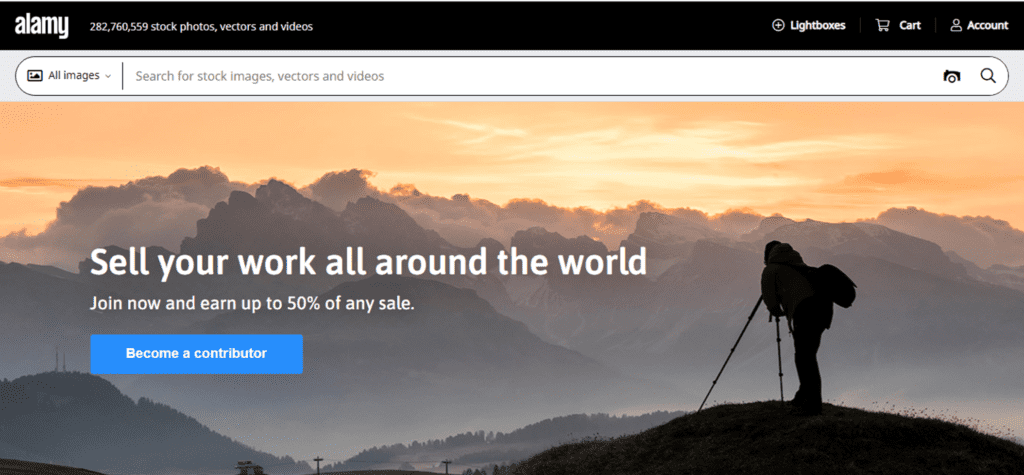
You can create a passive income by signing up for stock photography accounts. Some websites like Adobe Stock, Alamy, Shutterstock or Getty offer a royalty program for photographers. They pay you every time someone downloads a picture uploaded by you. But you will have to prove your talent to get an account with these top websites.
If you are already working as an aerial photographer, you can easily submit stock images and videos by keeping aside some work from other projects. However, these websites will only provide you with a nominal earning. You can use this as a passive source of income, but it is difficult to make a living out of it.
Aerial Surveying And Mapping
Drones are an excellent tool for surveying and mapping remote areas. This job entails flying your drone over a specified land area and collecting pictures of different portions of the land, which are then combined using various mapping software like QGIS 3, SimActive or Pix4D. This is an up-and-coming field to start your business and earn money using drones. Recently, drones have replaced helicopters in this field as they can be remotely controlled and have the perfect flying capabilities to capture all the intricacies of a specified land.
Aerial surveys are used in digital mapping, feature recognition, topography, archaeology, etc. Furthermore, the aerial images you capture while surveying can also be used to put together 3D models and reconstructions.
However, aerial surveying is a complex and time-taking job. So, you require knowledge, expertise and a certificate before you step into the field.
Suitable Drones
The most suitable drone for aerial surveying is the DJI Phantom 4 RTK. It is a high-quality drone that provides accurate and reliable images. Also, it requires fewer ground control points. So, it is perfect for aerial surveying. Moreover, if you have a larger budget, you could also go for the matrice 200 series. It is a more accurate device and includes a base station. That said, it is also more expensive.
Earning Opportunities
According to Glassdoor, the average salary for an Aerial Surveyor is $74,000 annually. Moreover, if you start your own business, the earning opportunities can vastly expand. You can take on as many clients as you want and boost your earnings accordingly.
Drone Deliveries
Another way to make money with a drone is to use it for deliveries. Drone deliveries are becoming really popular these days because they reduce time and costs as compared to standard deliveries. For example, recently, Amazon introduced its Prime Air service, which is designed to deliver packages within 30 minutes using UAV drones.
These drones can be operated either using AI technologies or remotely, with distribution centres overseeing the flight. Additionally, drone deliveries are also very helpful during disaster relief operations when it is difficult to reach the affected location manually.
Suitable Drones
You need to be careful while selecting drones for delivery. The device must follow high precision standards regarding style, destination, flight time and package safety. IdeaForge and Airborne Drones provide UAVs with all these capabilities.
Inspection Jobs
The inspection industry has opened up many opportunities for drone pilots. This is because manual inspection is very expensive and dangerous for the people involved. Therefore, drones have extensively revolutionised this industry, providing a great opportunity for you to earn good money.
Some of the companies you could reach out to for inspection jobs include construction companies, utility or service companies, insurance companies, phone companies, power companies, etc. Besides that, you can also use drones for power line inspections, cell tower inspections, bridge inspection jobs, gas pipeline and oil inspections, roof inspections, etc.
Suitable Drones
To break it in this industry, you will need a specialised drone equipped with thermal sensors. Some industry-recommended drones include the DJI Inspire, the Matrice Enterprise drones, Aeryon Skyranger and Intel/AscTec Falcon 8. Apart from that, you will also need to get the required training and expertise to perform an inspection job properly.
Earning Opportunities
Establishing a business in the inspection industry will require some investment from your end. For example, the required drones are expensive, and some training is necessary. However, the payback period is relatively small because most inspection jobs are well paying. Once you have established yourself in the industry, you could charge anywhere from $50 per hour to $250 per hour.
Precision Agriculture
Agriculture is another industry that can significantly benefit from drones and their surveillance capabilities. Drones can be easily used for mapping, spraying pesticides, monitoring crop growth, monitoring irrigation systems, evaluating soil health, delivering spot treatments etc. These operations can immensely benefit farmers as they could easily increase yield with each crop cycle and simultaneously reduce their costs.
Suitable Drones
The drones required would vary depending upon the requirements of the job you want to undertake. For example, regular surveying and mapping could be done with a standard drone. However, if you want to evaluate the health of the crops, you would require drones with specialised cameras that can capture specific wavelengths through infrared video. Also, you will need to learn how to use these sensors and untangle the data provided to you.
Earning Opportunities
The average salary for a drone pilot is around $85000 per year. However, with the increasing demand for drone pilots in the agricultural industry and the steep learning curve of the job, you could easily earn $800-$1200 in a single project.
Disaster Relief
An excellent way to earn some money and help people using a drone is to participate in search and rescue operations in disaster relief. Drones have successfully disrupted this arena as they can easily detect missing people or whatever one is looking for. They are also suitable for remote or destroyed areas that are difficult to reach by land. UAVs are also used for mapping, delivering emergency supplies, extinguishing fires, fire scene monitoring, crowd surveillance, etc.
Suitable Drones
For disaster relief operations, the most suitable drones include DJI Phantom 4 Pro 2.0, Freefly Systems Alta UAV, and DJI Matrice 600 pro. These drones have features that allow you to perform various operations during disaster relief.
Source: Cisco
Offer A Course
The drone industry is growing exponentially. With new technologies like AI and the advent of the internet, more and more people are interested in getting a drone. Be it just for the thrill of flying a drone or making a living. So, if you know how to operate a drone and are interested in teaching, you have a huge audience ready to buy a course. You could either record videos and launch an online course or take up small batches of students and teach them privately. There are many online tools available that can help you record a course. Start by developing a curriculum and dividing it into different sections so that it is fun and easy to follow. Once you are ready, you could sell it to websites like Udemy or create your own platform and market it on various social media channels.
An online course could be a good source of income because you have to record the videos once. After that, it all depends on your marketing skills.
Go On, Tell Us What You Think!
Did we miss something? Come on! Tell us what you think of this article on how to make money with a drone in the comment section.
It’s a fact that law firms are one of the world’s largest and most valuable organisations. According to Statista, it is estimated that the legal services market will be more than $900 Billion in 2025.
This means it’s not surprising that the law industry has become an important target for disruption, with many technology-powered companies trying to capitalise on this opportunity.
Enter legal tech.
What Is Legal Tech?
Legal tech, also called legal technology or legaltech, refers to the use of technologies such as artificial intelligence, machine learning, big data, blockchain, and other emerging technologies in order to make legal services more efficient, effective, and affordable for clients and lawyers.
In simple terms, legal tech is the use of technology to automate, assist, or enhance the work of a lawyer, law firms, their clients, and even the government.
It is the use of technology to overcome all the challenges the legal industry faces right now.
Legal Industry Challenges
Currently, the legal industry faces several challenges:
Stress levels are on the rise, with almost 66% of solicitors experiencing high stress levels.
28% suffer from some level of depression, and 19% struggle with anxiety symptoms.
The average cost of a legal service is $250-350 per hour.
Besides these, here are some major legal industry challenges –
Legislative Changes: The legal industry must keep up with legislative changes. These are introduced every day, and often the changes directly impact how legal services are offered. Legal firms need to be aware of the changing environment and respond appropriately.
Inadequacy of Legal Research Tools: Legal research tools are still based on outdated, traditional methods. Searching for a case law via a regular Google-like search engine will typically yield an overwhelming amount of results, most of which are irrelevant for the matter at hand.
Data Protection: The data collected from the client’s system has to be protected, including customer data, intellectual property, and sensitive information. The way these data are being shared, used and stored needs to be carefully analysed to reduce the risk of theft, loss, or misuse.
Client Service: The number and domains of clients a legal service provider handles vary widely. This makes it difficult for them to serve all clients efficiently.
High Costs: The average cost of a legal service is $250-$350 per hour. This creates a huge barrier for low-income clients who can’t afford the high fees.
Case management: Processing all the information, documents, and data in a case can be extremely complex. This can make it challenging to handle cases in an efficient manner.
Globalisation: Many companies are now transacting business across borders, which creates additional challenges to ensure compliance with local and international laws.
Client Pressure: Client pressure is rising as clients now want to play a more active role in the whole legal process and demand greater transparency.
Increased competition: With the emergence of new entrants, the legal market has become more competitive than ever.
Administrative tasks: The current legal industry is burdened with onerous administrative tasks, which take up a lot of their time and money.
Offline work: A lot of work done by legal service providers is still offline. This includes signing documents, processing files, and other paper-based activities.
Legal tech is all about using technology to overcome these challenges and increase efficiency for clients and lawyers alike.
Legal Tech Use Cases
Legal tech has made a lot of inroads in different areas. Some of the legal tech use cases are:
e-Discovery & e-Records: E-discovery and e-records help keep track of documents in an organised manner. It is also used for litigation and to help identify the root cause of a certain problem.
Legal Research: Legal research tools are constantly evolving thanks to the rise of technology. Today, there are many online databases where one can find relevant cases and statutes that will help you support your argument in a case.
Virtual Consultation: Virtual consultation enables a lawyer to interact with a client in real-time, even if the client is on the other side of the world.
Automation Of Legal Tasks: Automation allows lawyers to streamline repetitive and routine tasks, which consume a lot of time and resources. Automation can be used for everything from case management, document review, case tracking, document retrieval, data storage, etc.
Case Predictions: With the use of technologies like AI and ML, lawyers can save time and money by having a system that can predict the outcome of a lawsuit before it even starts.
Case Management Systems: A case management system allows lawyers to manage different cases efficiently. These systems help track documents, gather information, and monitor the progress of cases.
e-Filing: The use of e-filing software helps simplify the process of submitting documents to government agencies and courts, and it also helps reduce paper trails which can be very helpful for businesses.
Document Automation: Document automation software helps simplify the process of creating documents. It saves time and money while also making the process more efficient.
Legal Service Marketplace: The rise of online legal service providers is creating a lot of competition in the market and helping clients get better rates for their legal needs. Automation and data collection help improve the efficiency of these services.
Firm Management: Software is increasingly being used by law firms to manage the entire firm. They help in handling tasks like billing, tracking cases and generating reports, among others.
Legal CRM: CRM for law firms helps them keep track of their clients and their work. CRM enables better client handling and allows lawyers to focus on what matters the most: providing legal services.
eDiscovery & Digital Evidence: Commonly associated with electronic crime, or e-crime, e-discovery involves the discovery of relevant information in electronic form. This can be used in civil or criminal cases, and help lawyers determine who is responsible for what, how it happened, etc. Digital evidence is a subset of e-discovery and includes all the digital information which can be used to prove or disprove a case.
Machine Learning-Based Document Review: Machine learning uses algorithms that can accurately scan thousands of documents and determine their relevancy automatically instead of having them reviewed by a person one by one.
AI-Based Legal Research: AI-based legal research tools are quickly becoming popular among lawyers and law firms. They help save time that would otherwise be spent on researching case laws, statutes, etc., saving money for clients in the process.
Electronic Signatures: Legal documents are often signed in the form of PDFs. Electronic signatures help reduce paperwork, improve efficiency and save time by making it easier for clients to sign documents.
Legal Chatbots: Legal chatbots, or AI-powered virtual assistants for legal services, are slowly beginning to see wider adoption by law firms. With their help, clients can get quick answers without having to wait in a queue for hours on end so the lawyer can address their questions.
Legaltech Startups & Companies
Today, there are many legaltech startups emerging with new technology to help lawyers and law firms automate their tasks, gather data, improve efficiencies, etc. Some of the most popular ones include Luminance, Rocket Lawyer, Clio, eBrevia, etc.
Luminance
Luminance is an AI-powered contract review software for lawyers. It can automatically scan through a contract and determine if there are any discrepancies, loopholes, etc.
Rocket Lawyer
Rocket Lawyer is one of the best known legal tech startups in the space. Providing online tools, software and data for lawyers, Rocket Lawyer helps them improve their efficiency.
The platform provides tools to create legal documents using pre-made templates, sign documents electronically, find legal resources to start and run a business, and even connect with a lawyer online to get help with legal issues.
Clio
Clio is an all-in-one law practice management system that helps legal professionals manage tasks like billing, invoicing, time tracking, reporting and much more.
It offers a complete suite of legal tools, including:
Case management
Document management
Calendaring
Contact management
Task management
Billing and accounting
Online payments
Time and expense tracking
Client relationship management
And seamless integrations with several other apps
eBrevia
eBrevia is an AI-powered legal research platform that helps lawyers save time by automating document review tasks. The software uses machine learning to scan through hundreds of documents and determine their relevance.
eBrevia, thus, allows law firms to provide better service to clients by using technology instead of hiring more humans.
The Future Of Legal Tech
The legal industry has been booming with a lot of innovations in recent years. Legal tech startups have been helping lawyers work more efficiently, deliver better services, and save money and time. As the legal industry matures, new players will come up with innovative products that will help lawyers provide better services to their clients. These products and services will benefit both law firms and their clients.
In fact, the legal tech industry has already reached the $1 billion mark. In 2019, the industry saw $1.23 billion in investments.
Not only law firms but customers today also prefer the use of tech in legal matters. According to a recent study, 70% of legal services consumers prefer the use of an automated online system or lawbot to handle their legal affairs instead of a human.
Over the next several years, legal tech will become an essential part of law firms, making them much more efficient, and providing better services to their clients.
Go On, Tell Us What You Think!
Did we miss something? Come on! Tell us what you think about our article on legal technology in the comments section.
The Internet has made networking a lot easier than before, and emerging technologies have made the virtual world a reality. Moreover, interaction with a person miles away is just a matter of a few clicks today.
Consequently, these advancements are also reshaping the corporate world giving rise to remote teams in the workplace. Businesses are increasingly adopting virtual work set up to harness the best practices worldwide. After all, they can achieve higher productivity levels and save costs simultaneously.
Essentially, a remote team’s purpose, people, technology, and process of a remote team are the key elements that guide its performance. Therefore it is crucial to build and manage a virtual team efficiently.
To understand better, let’s look into the building and managing the critical factors in a virtual team.
How To Build A Virtual Team?
Building a virtual team is no rocket science. The key to building an efficient virtual team is acknowledging the company’s goals and roping in resources according to these goals.
Therefore to lay the foundation of a virtual team, it is essential to:
The exemplary remote workers need to be hired for consistent performance and sustainability. Therefore while hiring remote workers, they must have:
Technological Aptitude: The work processes in a virtual team are carried out using technology. Right from planning to delivering results, different technology platforms are used to work together without being present in the same physical space. Therefore people wired with the basic technical know-how are preferred for a virtual team. It makes virtual working seamless and efficient.
Experience of Self Management: They should have practised self-management in their capacity. That is, they should have done freelancing, remote work, or entrepreneurial projects or invested in hobbies. This is important because a remote team has minimum supervision, and the individual member owns a task from beginning to end. The member is expected to deliver the results at pace with other team members to fulfil objectives.
Good Communication Skills: The downside of a virtual work setup is the lack of in-person interactions. Therefore, it is of prime importance to hire those people who can express themselves concisely and clearly through virtual modes of communication. Good writing skills, for instance, is the core ability of a remote worker as most of their day is spent sending emails and reciprocating them.
Healthy Social Support System: Virtual working can get monotonous due to a lack of interpersonal connections and social meet-ups. Therefore, back at home or the place where the remote worker works, the presence of a healthy social support system is essential. A candidate with good social bonds, hobbies, and interests will exhibit greater productivity and deliver good results.
Build The Team Around An Objective
In the absence of a physical workspace, identifying and communicating the company’s needs is the key to building a virtual team. After the people are hired, they should be onboarded for a common objective.
Emphasis on the overall objective provides clarity to the workers and ensures automatic supervision. With virtual teams, the pursued goal may be a short-term or a long-term plan. The company may change its goals with the project’s changing needs, client requirements, etc.
Set Clear Expectations
Setting objectives is not enough. It is vital to project the results and set out certain expectations as well.
Moreover, it becomes essential in a virtual setup lacking the necessary supervision mechanisms. Setting clear expectations leads to timely completion of the job and ensures accuracy, keeping workers on the right track.
These expectations are a guiding light for the employees and set standards for their performance. For example, defining deadlines, data sources, tools to be used, components of the report, etc., maybe some expectations drawn for the employees. These expectations may be based on performance efficiency, work processes, or final results.
Document Everything Online
The roots of a business come from its processes. And detailed documentation of every process makes the company more efficient.
As far as a virtual team is concerned, online documentation is necessary. Virtual storage serves the same purpose for a remote unit that hardcover documents and reports do for a physical team.
Moreover, online documentation with a unified database helps fill workforce gaps. Because when a series of jobs are defined and documented, it becomes easier for the new person to take over.
No matter how complex it may appear, documentation is the way to the business’s organised working and success. Documentation at every step guides future actions and sets performance standards and expectations. This could also be the gospel for the trainees or freshers in the team.
Get Suitable Digital Tools
To set up a virtual workspace, identifying the company’s work requirements is the key. Once the job profile to be carried out is clear, it becomes easier to select the technological tools to be employed.
Moreover, the virtual implements should be accessible and easy to use- the more adaptable the technology, the smoother the operations.
A virtual team may employ the following digital implements:
Instant Messaging Tools: Virtual team members need to be in constant touch with one another, and instant-messaging tools make it possible. They come in handy for getting updates, discussing issues, and fixing them through brief interactions for which a video call may be excessive. These tools also provide flexible options for one-on-one interaction with members rather than the entire team. Google Hangouts, Slack, Rocket chat are a few examples of popular instant-messaging tools.
Video Conferencing Tools: Face-to-face interactions in a virtual team are made possible through video conferencing tools. They come in handy for detailed discussions, brainstorming, reviewing processes, and informal sessions in a virtual setup. These tools make collective interaction in a virtual team seamless through various chat and collaboration options. Moreover, they primarily enable collaboration with different work tools, which makes working together easier. Ushare, Microsoft Teams, Zoom, etc., are a few examples of video conferencing tools that give more of a human connection in a virtual setup.
Project Management Tools: Work activities undertaken for different projects are collaborated using project management tools. They come in handy for allocating tasks and responsibilities, tracking the progress, contribution and review by peers, and real-time work updates. These tools work like the dashboards for the remote teams and organise their work processes. Proofhub, ClickUp, Basecamp are a few examples of the same.
Digital HR Tools: The employees of a remote team are managed through digital human resource tools. They come in handy throughout the recruiting process, maintaining an online database of employees, training, and compensating them digitally. Recruitee, SAP Global, Jazz HR are examples of digital HR tools.
Scheduling Tools: Finding the standard time and collaborating schedules is the key to getting work done in a remote team. Therefore, work time schedules are managed through scheduling tools. These tools make available the work time slots of each member, which makes connecting easier to get the work done. Google Calendar, Calendly, Doodle are some tools that help manage the work schedules of remote employees.
Storage Tools: A remote team’s documents, records, and work files are kept in place using virtual storage tools. They help save the work on past projects, share work files with the entire team, update content, and save necessary credentials for the team. DropBox, Google Drive, and SharePoint are storage tools worth considering for hassle-free working in a remote setup.
Virtual Whiteboard Tools: A remote team can perform a job only when all its members are on the same page. And virtual whiteboard tools translate these individual thoughts into collective action. These tools provide a common canvas to the team to brainstorm and plan together to achieve their goal. Moreover, options like comments, sharing, and syncing further ease the collaborative process. Stormboard, MURAL, Explain Everything are some noteworthy examples of virtual whiteboard tools.
How To Manage A Virtual Team?
Once the foundational setup of a remote team is done, the work policies and processes come into the picture. A remote team’s work and success ultimately depend upon how well a team is managed in a virtual setup.
Training is an essential aspect of a virtual team.
Entire business takes place in a virtual setup in a remote team. Therefore skill-based technical training is essential to improve job performance continuously. Advancements in technology require frequent updates of know-how and training as well.
Moreover, companies also strive to build the soft skills of their remote workers for their overall development. Sessions and workshops on leadership, communication, productivity stress management, etc., may be undertaken to serve the purpose.
Build Trust And Connections
People are social beings and want emotional connections even in a work environment. Moreover, virtual team members belong to different regions, ethnicities, linguistic groups, etc. therefore, trust is the binding force that builds harmony in a virtual team.
Therefore, informal team-building activities are essential for developing meaningful relationships in a virtual team; everyday team-building activities are crucial. Once trust is established, the delegation of responsibilities becomes more manageable, and members can easily harness the synergies of working together as a team.
Delegate Responsibilities
The working of a remote team is built around the central objective. And this primary objective is then divided into smaller goals. These smaller objectives guide the individual team member’s performance.
Responsibilities are allocated according to the expertise different members bring to the team. Tasks are divided, and duties are assigned to fulfil every team member’s particular micro objective. Completing these micro objectives translates to the fulfilment of the larger aim of the business.
Collaborate Online Work Schedules
Team members of a remote team are usually dispersed geographically. The team members never meet up physically to carry out business, so work schedule collaboration is vital.
Understanding the workers’ work patterns and efficiency levels is essential to arrive at a standard work schedule for all the team members. Moreover, workers should be trained so that they are flexible to changes in their work routine to adjust to changing needs of the business.
All these factors contribute to a healthy work-life balance and high productivity level of remote workers through work schedule collaboration. It is important to note that acknowledging the personal needs of each team member plays a crucial role in achieving this collaboration.
Check-In Regularly
The virtual work setup minimises the physical supervision and intervention by mentors. Yet regular check-ins are a great way to streamline business and keep working on what matters.
Keeping track of the employee activities helps ascertain their performance and indicates the project’s progress.
Moreover, brief work updates also resolve the problems quickly and more efficiently.
These regular check-ins, in addition, make the workers comfortable along the work hierarchy and develops connections with peers. Moreover, companies could develop specific personalised indicators to communicate the importance and urgency of the action and explain the same to the team for matched energy and collaboration.
Secure And Update The Digital Tools
A remote work setup requires virtual database and business records. Since every business operation is routed virtually, the workspace is prone to online threats and malpractices.
Therefore, it becomes vital to protect the digital links and secure the online workspace.
Installing anti-virus, exploring the security options of digital tools, using two-way authentication, using VPN, separating personal and professional login windows, clearing the cache, etc., are some ways to secure the digital work setup.
A remote team is built on technology; therefore, continuous updates and revamp of these digital implements are essential for the overall efficiency of operations.
Maintenance of technology via regular updates, re-licensing, etc., is crucial to reduce inefficiencies. Besides, constant digital up-gradation optimises the work and makes it more accessible, an added advantage.
Ensure Smooth Communication
Communication is the basis of functioning in a virtual team. A good communication network should be planned and executed for formal operations.
Smooth communication translates to fewer errors, better productivity, and better results.
Selection of appropriate communication tools, developing the suitable communication style and training in the same format, specifying communication deadlines, selecting formal email templates for work, etc., are essential communication protocols to be decided upon.
Measure Real-Time Progress
Measuring the progress of the team’s work is as important as the work itself.
Therefore the business should work standards for measuring every members’ contribution to the team individually and collectively. It helps in setting deadlines, exemplars for best practices, and benchmarking with competitors’ performance as well.
These progress indicators can also project the remote team’s strengths and weaknesses, which can be addressed promptly.
Bottom Line
Ultimately the people, process, and technology define the capability of a remote team. And it becomes essential to strengthen each component for collaborated functioning.
Moreover, according to Statista, remote teams are more productive, inclusive, and employee-friendly. These benefits, coupled with rapid digital transformation, definitely project that virtual teams are the way ahead. Therefore understanding the essentials of virtual team-building will make businesses stand in good stead in the future.
Go On, Tell Us What You Think!
Did we miss something? Come on! Tell us what you think about our article on building virtual teams in the comments section.
Getting products delivered within an hour of ordering was a far fetched dream a few years ago. But this concept is now becoming part of our reality with companies like Getir from Istanbul, Gorillas from Berlin, Blinkit from India introducing their own quick delivery services.
This quick delivery has disrupted the existing market and created a new industry domain for itself – q-commerce.
But what is q-commerce, and how is it different from e-commerce?
What Is Q-Commerce?
Q-Commerce or quick commerce is an ecommerce business model driven by quick on-demand delivery; that is, the business tends to deliver the ordered items within an hour of placing the order.
The quick commerce business model combines the benefits of e-commerce (conducting trade using the internet) and the traditional shopping experience (completing trade within minutes) to create a new business model that satisfies the increasing demands for speed while buying online.
Features Of Q-Commerce Business Model
The q-commerce business model differentiates itself from other business models by providing the following features:
Faster Delivery Time: The primary focus of q-commerce is to provide faster delivery, making buying through this platform a convenient and time-saving process.
Convenience: Convenience is the most important feature in q-commerce, which allows customers to shop anytime, anywhere by just tapping their smartphones.
Anytime delivery: Q-commerce gives customers the option of delivering their order at any time suitable to them. It does not limit customers to fixed business hours.
Reliability: Since these are reputable brands, customers can be assured of the delivery and quality.
Lower Pricing: The q-commerce brands often buy inventory in bulk, which reduces the average cost of each product and enables them to offer lucrative discounts.
Order tracking: Order tracking is another feature of q-commerce which allows customers to track their orders.
‘One stop shop’: The quick commerce companies develop their own apps through which the users can order multiple products from one platform.
How Does Q-Commerce Work?
The way a quick commerce startup operates is different from traditional e-commerce businesses.
Focus On High Demand Items Only
Instead of keeping an inventory of all kinds of products, q-commerce startups only list the most demanded items on their apps. These include important grocery items and other products that customers order more frequently, if not daily.
This strategy reduces warehouse and storage costs and enables the company to rent more compact spaces within towns instead of much bigger warehouses outside the cities.
For example, Indian q-commerce startup Blinkit focuses on only 2,000 high-demand items in its inventory.
Increased Efficiency Using Micro-warehouses
Q-commerce startups follow the ‘micro-warehouse strategy’ where they select popular neighbourhoods in cities with high online presence and rent, lease, or buy micro-warehouses which they call ‘cloud stores’ or ‘dark stores.’
These cloud stores are fulfilment centres with highly strategised SKU management strategies, located right in the heart of the city so that the delivery partners or employees can pick up items easily and deliver them within minutes.
This strategy enables q-commerce companies to save on the time and money spent in travelling to and from warehouses at the outskirts of cities where they would need to spend more time completing deliveries.
Strategised Deliveries
The q-commerce companies hire or partner with delivery people on the basis of specific routes, for example, ‘Morning’ or ‘Evening.’
They even separate zones within a city into different categories by the number of deliveries to be made in them.
For example, a startup may differentiate its delivery zones as Type 1 and Type 2. Type 1 zone will have to handle 50 deliveries every day, while Type 2 zone will have to handle 100 deliveries, making the latter more difficult and time-consuming.
This ensures that enough last-mile delivery partners are allocated to each zone according to the number of deliveries.
These delivery partners are monitored through GPS systems and are also given incentives for efficient deliveries.
Moreover, such companies even assign more than one delivery order to the delivery partner based on orders’ location and distance.
This prevents the to-and-fro movement of the delivery person and reduces the time it takes to complete deliveries.
Delivery Pricing Model
Q-commerce business model includes high costs compared to traditional e-commerce companies because the last-mile delivery system comes as an additional cost that the q-commerce companies need to cover.
Hence, most such startups charge a nominal delivery fee to their customers, which usually varies according to order value and distance from the cloud store.
Q-Commerce Advantages
The q-commerce model comes with its advantages over traditional e-commerce. These include:
Top-Notch Customer Experience
Q-commerce focuses on delivery speeds, customer experience, and delivery efficiency.
The speed and efficiency with which such companies deliver products to customers ensure that they save time and money by doing away with the hassles of visiting the market themselves.
This enhances customer experience as the customers are able to get everything delivered right to their doorstep within minutes.
Competitive Unique Selling Proposition
Qcommerce created a new market by introducing the last mile delivery system at a low cost.
This has enabled companies to compete not even with ecommerce stores but also with local markets by offering their customers more convenience than they do while charging lower prices.
This quick delivery system has enabled such brands to establish themselves as unique and competitive brand in the market.
Opportunity For Delivery Partners
The q-commerce companies offer employment opportunities to large numbers of last-mile delivery people.
Even when operating on an aggregator business model, it employs several delivery partners who can work on their time schedules and earn extra income.
This has opened up employment opportunities for a large number of people who were earlier unemployed and without any stable source of income.
Greater Potential For Growth
Q-commerce offers an opportunity for market expansion by opening up cloud stores in different cities or countries.
Moreover, with time, such startups can expand their business model beyond the delivery of limited items and extend it to providing multiple other services.
This kind of growth could be achieved much faster than traditional e-commerce companies because such startups can outsource delivery operations and simultaneously expand their own business.
Q-Commerce Disadvantages
No matter how efficient a delivery system is, it always comes with some disadvantages as well.
The following include:
High Startup Operational Costs
Q-commerce delivery operations come with a high initial cost because these companies have to provide the infrastructure and facilities required for last-mile delivery.
This includes setting up a warehousing unit where they store their products, hiring and training delivery partners, and equipping such partners with the necessary tools to deliver goods.
High costs associated with such deliveries make it difficult for q-commerce startups to compete in low margin markets.
Risks To Existing Local Economy
The q-commerce delivery model allows companies to eliminate or reduce the need for local markets.
This could hurt existing local businesses because people may find it more convenient to purchase their daily needs online than travelling down to the local market.
Moreover, a reduction in footfall at these local markets can also impact the locality’s entire economy.
The Future Of Q-Commerce
Q-commerce is a relatively new and rapidly growing business model.
Such startups have faced several problems since their establishment, but this hasn’t stopped them from expanding.
Their success can be attributed to the advantages that come with such commerce models and the potential they hold for future growth.
This has opened up new competitive frontiers in the market for companies to explore.
With time, such delivery systems can be further optimised for better efficiency and cost-effectiveness while increasing the reach of these startups to more clients globally.
The potential that lies in this model also makes it one of the most lucrative business models in the market today.
Go On, Tell Us What You Think!
Did we miss something? Come on! Tell us what you think about our article on q-commerce in the comments section.
Being an entrepreneur, you put in a lot of hard work and are used to working alone. You have been a jack of all trades, but now you think it might be time to hire employees to lay off some workload and manage tasks easily. It is important that you start hiring at the correct time before it’s too late and work starts piling up. Whereas hiring too soon may cause you to run out of cash.
Hiring your startup’s first employee is always tricky as you don’t want to make the wrong choice. Not only this but it also entails some legal requirements and costs like insurance and training.
So here’s a guide to guide you through the process of hiring your startup’s first employee.
Why And When Should You Hire Your Startup’s First Employee?
As much as you want to continue shaping your startup all on your own, you can’t do it for long. Sooner or later, you start noticing that certain small tasks like bookkeeping and other paperwork take up too much of your time when you can easily hire someone else to do them for you.
Here are some signs that indicate it’s time to hire your startup’s first employee.
You Are Cutting Down On Work
Failing to manage all your commitments and cutting down on work is not a good sign for your business.
For instance, a new customer comes to you with a bulk order but you turn them down because you are not able to manage your existing orders, let alone a new one. That same customer then strikes a deal with your competitor. Later it becomes difficult for you to acquire new customers.
Giving away customers to your competitors is like feeding your own enemy!
Customers Are Unhappy
Offering superb customer service can do wonders for your business. Very few customers bother to complain, and if they have to wait long before their problem is addressed, you will end up losing your existing customers.
If you sit down to assess and resolve each problem, it will never end. Having someone who entirely focuses on building and maintaining a healthy customer relationship will come in handy. Besides, the cost of retaining customers is much easier than the acquiring cost of new customers.
You Can’t Focus On Business’ Growth Because Of Too Much Work
Engaging in daily mundane tasks can distract you from focusing on the company’s growth strategy. If not acted upon quickly, you won’t be able to meet the forecasts and goals set earlier, thus leading to stagnant growth, which is not advisable, especially at an earlier stage of the business.
Hiring new employees will help you in performing tasks accurately down to the nearest detail and lets you focus on market research and development ideas.
You Require A Helping Hand
Being a lone worker leaves you with limited sources to dwell on your potential goals.
Let’s say you found a new source of income in the form of a product launch, business expansion, or any new service. But you can’t execute it immediately because you need someone to help you out.
When you hire someone new, you fuel the possibility of a new revenue stream to materialise. Many tasks are delegated, and you can focus on other important jobs like research and implementation.
You Want A Specific Skill Set In The Team
Let’s say you have a new product idea in your mind and have formulated the whole plan to develop and market it. But you need someone to engineer the design and make it ready for the market.
This is where you decide to hire someone who is well-versed in the area you are trying to venture into. For instance, if you are looking for a new e-commerce website, it would be best advised to hire an expert developer or webmaster.
The experts you hire work on those areas you don’t relatively excel at and up your scale in terms of business capacity to take up new clients and orders.
Who Should You Hire First?
Initially, you need to focus on people who –
Fit your team,
You can trust,
Know the business ropes.
If you hire someone with the right attitude and aptitude, they will grow along with your startup, thus putting you in a better position of handling any growth challenges that come your way.
Hire someone with the skills your business needs
When it comes to hiring your startup’s first employee, you must hire someone with the required skills needed for the success of your business.
For instance, you want to market your product online, but you don’t know how to work with SEO.
Start by segregating all the work that can be delegated and start hiring according to the specific needs of your business.
Regardless of how well you function, you have some weak spots that restrict the business to excel.
Say you have been managing your finances all by yourself, but you tend to miss out on things that can be easily countered if you hire an expert – someone who is uniquely good at it.
Start from the top and hire people according to your needs. Here are a few roles that you are most likely to hire for immediately:
Product designers and engineers: You constantly need innovations for your product to sell easily in the market, especially if your product is software. Hiring a group of engineers or product designers who are buzzing with ideas and have an eye for design will lead to faster product development.
Technology expert: These are experts in the technology you use to build your offering. For instance, if you own a company that provides IT solutions and products, your technology expert is the one who knows the customisation of the technology based on the needs of your customer.
Operations Manager: Operations managers are the driving force behind an organisation’s structure and organisational goals. They help in building strategy, managing schedules and budgets effectively and ensuring smooth operations of day-to-day tasks without any confusion or issues involved.
Marketing manager: A business needs to have a good relationship with its customers. Hiring a marketing expert who will focus on customer reviews and feedback is a better fit. They will interact better and incorporate product development.
Sales manager: Unsure about how to generate new customer leads? Hiring a sales manager is the best alternative who has expert knowledge on how to acquire new buyers and bring more money into the business.
Finance managers: It is recommended to hire accountants or finance experts from outside and, if capable, then a certified financial analyst. It is crucial that you have someone who is specifically focusing on the money aspect and keeping an eye on all the details.
Business development executive: You need to assess the market constantly to ensure that your business grows on the same lines. It’s best to hire an industry specialist who focuses completely on business development and can help you make better decisions.
Where To Find Your Startup’s First Employees?
With the advent of the modern world, you can hire anyone remotely without having to meet them in person. Technology has made the hiring process entirely easier if you know where to go.
Although referrals from your business connections and trustworthy people are still the best source for new hires, you can also try other free job search portals and social media to find the right hire.
Here are a few places where you can look for new hires online:
Job Boards
These are platforms that cater to the audience who are currently seeking jobs. These job websites allow job searchers to simply create profiles and add resumes which makes it easier for you to filter through results.
Many job boards like Monster.com, Ziprecruiter, Career Builder job board, Dice, Glassdoor etc., exist online, which help you find the people you actually want to hire.
LinkedIn
You must be no stranger to the level of reach you get through LinkedIn connections and posts.
It’s a social media for professional networking where people create profiles, build connections and post about themselves. Company profiles are for connecting employees and posting about job openings.
You can easily skim through results and identify people with the required skill sets.
You can simply filter through search results to look for people with the desired skill sets.
Listing job openings on these websites help you find candidates with fresh talent who are buzzing with ideas and thirst to learn.
Freelancers And Gig Work Sites
If you can’t find a permanent employee at the time, you can start with freelancers or independent contractors who work for multiple organisations at a time.
You mostly find people who have some time to spare and wish to monetise it by practising their skills. They are easy to appoint and are willing to work.
How To Look For The Best Hire?
Once you decide that you want to start hiring, you need to attract high quality and rich talent. You can look for freshers too, but the quality of work that an expert would deliver would be incomparable.
The problem is that the best talent is already consumed in existing organisations, and even if you manage to find someone willing to join you, they would probably want much higher pay.
Advertise – It’s important that you advertise the position well to attract more applicants and give them something to strive for. People find it easier to work with someone they follow or respect or the organisation with a greater brand value.
Be transparent – You need to be transparent with your employees and feed them on the bigger picture as a whole. When the founder shares the company’s vision and long term goals with its employees, it helps them to connect better and attract better talent.
Offer equity – When you offer equity to your early employees, it encourages your employees to stay with you longer. It reduces turnover as employees usually don’t tend to stick around with startups for long, and offering equity acts as an incentive.
Show growth potential – Letting potential employees know that they will be a part of the bigger picture and has a lot to contribute to their growth would attract talent. Explicitly stating it in your job description helps them decide whether they want to work with you or not.
What To Look For In Your Startup’s First Hire?
While selecting your new hires, you need to look for some qualities before making your decision.
Ability to produce results: Training new employees is an expensive affair and requires you to commit to a long term investment; hence you need to look for someone with the ability to produce results.
Long term potential: You need to ensure that you get the best out of your candidate and get someone who is loyal and will not leave in a short span of time.
Passionate about their work: Look for candidates who are passionate about what they do and show full enthusiasm for the sake of doing what they love, not just because of the money.
Required skillset: Hire candidates who fit the job description perfectly have what it takes to put their skills into action. When a candidate is self-motivated and is eager to put effort into their work, they automatically become a good fit for the organisation.
Ability to work in a team: You need to ensure that they are able to work in a team with other employees since, in most cases, all your employees have to work together for achieving your goals.
Adapt and adjust: Candidates should be able to adapt and adjust to their work environment so its easier for managers; otherwise, a lot of their time will be used up in helping them fit in
Team player and leadership skills: Employees often have to be in teams to work on projects together. Look for the requirements of the role and conduct interviews accordingly.
Experience: It isn’t always necessary that a fresher won’t be able to perform their job perfectly whereas an expert can. You need to look for potential and a spark to work while hiring and you are good to go.
What Is The Process Of Hiring New Employees?
Hiring your startup’s first employee is a big milestone for you, and you need to make sure that everything is in order.
Analysis: You start by doing a work analysis which involves examining whether there is enough work to hire a full time or a part-time employee for you. Figure out what kind of work needs to be done and where you lack skills for which you need external support.
Listing of tasks: Start by making a list of all the tasks that you can delegate to your new hires. Segregate them into specific job roles, so it becomes easier to assign tasks to the respective people later on. Write a job description mentioning the required skillset and experience required so you can find the perfect fit for the position.
Finance planning: Next, you have to plan the finance requirements of your business. Analyse how much you have been spending on your business and figure out if you can afford to hire an employee or not. You need to do a cost-benefit analysis of hiring someone. Ensure that the financials meet the criteria for hiring a candidate before moving further. On the basis of that, decide how much you will be willing to pay them.
Conduct job searches: Once the tasks are ascertained and pay scales are determined, start conducting job searches by posting job openings online on dedicated platforms. Look for referrals and any potential candidate from your professional network, be it past colleagues or any mutual contact.
Shortlisting and interviews: When you have a handful of applications, you begin shortlisting candidates who match the job description. Conduct rigorous interviews to develop a deep understanding of their goals, experience and problem-solving skills. Select a candidate who suits the job role and the organisation best.
Perform background check: Once you choose the candidate and make an offer, run background checks to confirm all information. After performing background checks and other business-oriented requirements, you finally chose a candidate who you think will be the right fit for your organisation.
Legal Requirements
There are a few important things to consider when you start hiring new employees. Most of this list contains legal requirements that you need to fulfil.
Make sure that all paperwork for keeping tax records is well done and submitted
After hiring, you need to report the state labour agency and fulfil the requirements of a workmen compensation insurance
Bottom-Line?
The process of hiring doesn’t end after choosing the candidates, you have to invest in their training and development. Work towards aligning their personal objectives with organisational goals and offer them something they want.
When you hire someone, you expect them to give their jobs and complete the tasks assigned to them efficiently. But it often becomes challenging for them to maintain that degree of work which is why they like to switch jobs often. Thus, you also need to focus on retaining your employees in the business.
Go On, Tell Us What You Think!
Did we miss something? Come on! Tell us what you think about our article on startup‘s first employee in the comments section.
What if I tell you that you don’t always need to be efficient in the service you provide? Or you don’t even need to provide the services you sell. Other experienced providers will do it for you under your brand name.
It’s true, and it’s happening around us.
It all started with dropshipping, where people set up their ecommerce brands by partnering with third-party manufacturers or sellers who fulfil each order that this brand gets.
That is, the brand focuses on getting more orders while the partners focus on order fulfilment. There are no promises. Orders are fulfilled as they come in. The brand doesn’t even pay for the items until they are ordered.
A similar model, when applied to services instead of products, is called drop servicing.
What Is Drop Servicing?
Drop servicing is an online business model based on an order fulfilment strategy where a merchant sells a service to a customer and then hires someone else to fulfil the order.
These service fulfilment partners are not employees of this brand. Rather, they are independent contractors who set their own prices and terms of services.
Precisely, the merchant, even though representing the service sold, is a mere middleman or an agent who acts as a facilitator between the customer and the service provider.
This model is often referred to as service arbitrage or white labelling, where other sellers do work for you without wanting credits for the same.
An example of the drop servicing model is a web design and development firm that sells its services to the client and then hires a freelancer to do the work.
How Drop Servicing Works?
The drop servicing business model can be summed up in 4 easy steps.
The merchant or brand sells a service to the customer.
The customer interacts and places an order with the merchant.
The merchant hires a third-party service provider who fulfils this order and delivers it to the customer.
The merchant invoices the brand for work completed and collects payment from them.
To get a better gist, divide the business model into two segments –
The front-end: how things look to the customer. They see your brand as any other service provider. They give you the brief, pay you and expect a quality service.
The back-end: how things look from your perspective. You sell a service, hire a service provider, pay them their price (less than what you charged for), and fulfil the order under your brand name.
As a drop servicer, you make money as the difference between the price you sell the service for and the price you pay to a third-party provider.
Say you own a web development company. You sold a package for $3,000 to a client who wants it done. Instead of doing it yourself, you hire a freelance designer for who you pay $2,000 for the service.
You make $1,000 in this deal, and your client is happy with what they get (a high-quality service).
Benefits Of Drop Servicing
A drop servicing brand looks exactly like any other brand that sells services to the market. However, such brands don’t have to bear periodic costs like salaries and equipment.
They pay as per order and results, which means no risks for them.
Besides this, there are other benefits of the drop servicing business model.
Drop Servicing Business Is Easy To Start, Manage, & Grow
It is easier to build a brand using the drop servicing business model than through the traditional model. Since the brand only deals with selling and marketing, everything else is taken care of by third-party providers.
There are no limitations on how many services you provide or service providers you hire. Moreover, no geographical constraints limit how far you can expand. There are also no restrictions on how many active service providers you have at a time.
It Is Not Heavy On Pocket
In the traditional service business model, a brand has to shell out many equipment and tools necessary for providing services. This cost is almost zero in the drop servicing model since your brand doesn’t buy any of these items.
Periodic salaries and other employee-related expenses are also lower in the drop servicing model.
Drop Servicing Is Flexible
Since drop servicing brands hire independent contractors, they can easily burn or add fuel to their business.
For example, when they get more orders, the brand simply hires more providers and vice versa. There are no limitations on how many providers they can have at a time. Similarly, there are no restrictions on the number of services that these service providers provide.
It Is Easily Scalable
The model is scalable by nature. A brand can simply increase the number of service providers it owns or increase the number of services each provider provides.
This ultimate flexibility and scalability are what make this business model brilliant and unique.
It Is Less Risky
A drop servicing business involves only two parts of the traditional business model – marketing and selling. The brand does not have to handle other risks and responsibilities that come with being a service provider.
Challenges And Limitations Of Drop Servicing
Drop servicing has vulnerabilities that come with its benefits.
For example, it is easy to scale up but difficult to control the quality of services provided by each service provider. The brand cannot simply stand behind the third-party providers if they fail to deliver satisfactory results. It’s important for brands to ensure the trustworthiness and reliability of their service providers in this case.
It is Risky For A Big Brand
Drop servicing is the most beneficial business model for small brands. If a big brand opts to use this model, they will have to offer uniform pricing, quality of service, and experience across their providers.
This is not easy for big brands since it is hard to control the quality of services provided by independent contractors scattered all over the country or even worldwide.
Drop Servicing Is Not A Long-Term Business Model
It doesn’t fit into medium to long-term business models. Brands involved in drop servicing are only interested in finding new projects that they can carry out quickly.
It Makes You Dependent On Third-Parties
The drop servicing model is advantageous but, at the same time, it makes brands dependent on third parties.
Brands cannot control everything in this business model since they are not involved in any of the stages of providing services. This dependency can be risky for businesses if their service providers decide to quit or stop working abruptly.
How To Start A Drop Servicing Business?
Starting a drop servicing business is not rocket science.
It is not capital-intensive and does not require much of an investment. You can easily start your own drop servicing business by taking the help of freelancers or virtual assistants to handle operations on the ground level while you focus on marketing and selling.
But first, you need to choose your niche.
Choose Your Niche
Choosing your niche is probably the most important step in starting a drop servicing business.
It is also the most challenging part of this business model since you need to research and find target clients who are willing to buy your services.
Use keyword research tools like Google Trends and Google Keyword Planner to find out what services people search for most often. Once you have your list, visit forums like Reddit and Quora to see if there is a demand in these niches.
What Services Can You Drop Service?
Any service that doesn’t require you to be physically present can be included in your drop servicing business model.
You can provide services like design, programming, SEO, web development and app development among many others.
Drop Servicing Business Ideas
Here are some drop servicing niche ideas to help you get started –
Once you are sure about the services you can offer, visit Fiverr or Upwork to make sure the average cost of these services on these platforms is less than what agencies in the market are providing.
You need to do thorough market research to see if there is a gap in the market and if your model can fit into it.
Here’s what to look out for –
Look for niches you have some knowledge and expertise in. After all, you would be the brand representative.
Look for services people hire agencies for.
Include services that agencies charge a lot but freelancers don’t. Some of them are content writing, logo making, web designing, etc.
Look for tasks that are simple yet require some experience.
Include tasks with a clear scope of work and where you don’t have to think much about pricing or deliverables.
You can even look for activities in which people don’t care about the standardised quality of services. These could be short-term, small projects like photoshopping a headshot to making a storyboard.
Once done, you need to find loyal key partners and develop your brand.
Find Third-Party Service Providers
Once you have your niche list, it’s time to find third-party service providers who are skilled enough to work as key partners for your drop servicing business. They should be trustworthy and reliable. Here are some outsourcing websites you can get your partners from –
You need to do thorough research before hiring anyone. Here are the things you need to consider –
Experience – It is important to choose service providers with a good track record. Check if they have been active in the last six months and their reviews are positive.
Flexibility – The key to success in this business model is flexibility. You need to hire people who can adapt quickly to changing requirements and offer customised solutions for your clients.
Skill sets – Make sure your service providers are skilled enough to handle the kind of services you offer.
Communication preferences – Look for people who are fluent in the language you speak. Moreover, make sure the time difference between you both doesn’t pose any communication problems.
Once you have found people who meet all your criteria, start building a long-term relationship with them by offering nurturing projects that allow for learning.
You can start with small projects to assess their skills and later come up with bigger projects requiring more of their expertise.
After you have established the rapport, it is time to start building your brand by launching your website or landing page.
Build Your Brand
A website is the first thing potential customers notice when engaging with your brand. That’s why you need to make it really impressive to blow their mind away. Here are some tips –
Make sure to have a relatable brand personality that offers a good first impression.
Build a website that is visually appealing, interactive, and uses copy to engage visitors. Don’t forget your logo, apart from your website.
Make sure the navigation is smooth and there are easy-to-find contact details on your landing page.
Include an about page that has details about your company culture and team.
Develop a lean funnel where the visitor gets what he wants without having to wander around. For example, you can give him a quote in just two steps and also offer different plans based on his preferences.
Opt for an easy-to-understand interface where the content is well arranged for a better user experience.
Include social proof to give visitors a sense of security about your brand. Don’t forget to include testimonials from happy customers and numbers of repeat buyers.
Also, make sure you put up clear instructions about the services you offer or anything someone might want to know about before signing up.
Market Your Offerings
This is where your job starts.
You need to start promoting your drop service business in the market so that potential clients start reaching out to you. But before you promote your business, you need to have a clear strategy in place.
Here are some steps –
Audit your website by formulating buyer personas and mapping their journey from discovery to conversion.
Come up with a promotional plan based on your buyer personas and map it from discovery to conversion.
Promote yourself in the market by blogging about industry trends, case studies, news related to the niche you serve, add press releases or add guest posts. You can also add your brand’s link in forums that are specific to the niche you serve.
Create an email list for potential clients and market your offerings through email marketing.
Make use of social media marketing – both organic and paid. Social media channels are a great way to get connected with your target market.
Also, you can use Google AdWords or any other ad campaigns so that you reach out to people who have the same interests as your clients.
You can even make use of referral marketing by incentivising your clients for bringing in new customers.
Once you have promoted your business, start tracking campaigns to see what works and optimise results.
Focus On Sales
The crux of your drop servicing business lies in generating sales. So, you need to make sure you are always selling in order to not to lose out on potential partners and existing clients.
Here are some tips to help you increase sales –
Keep your service offer simple and transparent so that customers don’t get confused about anything.
Mention your price at the beginning of the conversation instead of waiting for them to ask for it. That way, they won’t need any further convincing because the deal is straightforward.
Make use of sales scripts to convince clients and close deals. This will make the sales process more effective, especially for those who are new at it.
Offer discounts or freebies from time to time but never offer anything that goes against your brand’s goal because you want them to come back for more business later on with referrals.
Ensure a customer success team that helps get new customers on board and provides assistance during the entire sales cycle.
Always be ready to answer what customers want and ask questions that help understand their needs.
Also, pay close attention to customer feedback and use it to improve the offering. The best thing about drop servicing is that you can change your service providers.
Moreover, don’t limit yourself to a particular niche when it comes to drop servicing because you can start this business by targeting multiple niches at once. In fact, the money is in diversity!
Drop Servicing FAQs
Here are some questions asked by people new to drop servicing that might clear your doubts.
Where Should I Sell My Drop Servicing Offerings?
The best place to sell your drop servicing business is on your own website where you have all the control. You can even choose a platform or marketplace that allows multiple sellers to list their services under one roof.
Is Drop Servicing Legal?
Yes, drop servicing is legal. There are no laws restricting you from selling your business in this way. However, you need to be careful when it comes to copyright infringement because that’s something you do not want to happen. This is something you need to negotiate with your service providers. For example, if you own the rights to sell their offerings like a logo developed by them or any other design, then you can come to an agreement where they give you permission for selling the business under certain conditions.
Is Drop Servicing The Same As Reselling?
No, drop servicing is not reselling. It is arbitrage where you buy something at a lower rate and sell it for more money. So, the price is set by your service-providing partner.
Is Dropservicing easy?
Yes, drop servicing is simple and can be done by anyone with a computer and internet connection. However, you have to have the right knowledge about the market and how it works before starting this business. Don’t expect overnight results because it takes time to build a successful drop servicing business that generates good returns on investment.
Go On, Tell Us What You Think!
Did we miss something? Come on! Tell us what you think of our article on drop servicing in the comments section.
The word virtual means ‘not physically existing,’ and team means ‘a group of people with common goals.’ Therefore a virtual team is the one that works for a common objective without any physical contact.
The remote working trend might make one think of the virtual team as a contemporary concept. However, the origin and use of virtual teams can be dated back to the sale of PCs in the 1960s, when a team’s working didn’t require the physical presence of the members at one place. Later the popularity of cellular phones, voicemails, and eventually the internet and World Wide Web made way for a virtual working setup.
To understand better, let’s look into Virtual Teams: definition, characteristics, types, working, advantages, disadvantages, and examples.
What Is A Virtual Team?
A virtual team is a group of people that collaborate operate digitally to achieve a common objective without being present in the same physical space.
In simple words, a virtual team:
Is a group of people: A team comes into existence through its people. These people bring various abilities, talents, and efficiency levels to the team. Individual creativity and perspectives of different people contribute to the entire group’s working as a united team.
That collaborate without being present in the same physical space: A virtual team is not physically present at a specific place. It constitutes people separated geographically hence called ‘dispersed or remote teams.’
And operate digitally: Members of a virtual team are located in different places. Therefore they coordinate and work together using digital technology. The entire business takes place in the virtual mode using online communication platforms, team management software, and project management tools.
To achieve a common objective: Althoughthe people working in a virtual team are located in different areas, they connect virtually to work together towards a common goal. They may carry out different functions, but they all relate to a common objective.
What Are The Types Of A Virtual Team?
Let’s get a closer look into the different formats of a virtual team by understanding their respective objectives:
Networked Teams- These teams usually consist of people inside and outside the organisation. The members bring expertise in various fields to achieve their clients’ goals. The group adds and removes members when the roles and responsibilities are fulfilled. Companies usually form these teams to rope in the expertise of fields that it lacks.
Parallel Teams- These teams consist of people within the organisation. These teams benefit from the diverse experiences and work skills of their employees. Different departments within an organisation collaborate and give recommendations to address each other’s inefficiencies to succeed.
Product Development Teams- These teams are comprised of cross-functional workers of the organisation and experts from outside the organisation. They are primarily devoted to the research and development wing of the organisation and continuously improve their offerings.
Production Teams- These teams comprise employees who work continuously for the business’s day-to-day projects. They are employed indefinitely and are allocated new tasks after completing older tasks fulfilling their overall objective. Marketing firms, designing brands, etc., are examples of production teams.
Freelance Teams- These teams are hired when necessary and comprise creative workers like editors, designers, writers, developers, etc. These teams are hired temporarily to add aesthetic and visual value to the company’s offerings and thus maximise profits.
Service Teams- These teams comprise people located in different time zones and ensure the service is active for 24hours. Customer care and support teams of most organisations are examples of service teams. They are active throughout the day to address customers’ grievances and resolve their complaints.
Action Teams- These teams are formed to resolve an urgent issue with the help of experts. They are immediately dissolved after the resolution of the problem. These experts give recommendations and execute them to ensure smooth business.
Management Teams- These teams comprise general administrative and managerial heads of different branches of an organisation. They are permanent and ensure teamwork and success globally, aligning all the wings in the right direction.
Information System Development Teams- These teams complement the central organisation by completing the smaller tasks. They are permanent and closely complement the business of the parent firm.
Hybrid Teams- These teams may be temporary or permanent and combine on-site and virtual team members sharing individual roles and responsibilities.
How Do Virtual Teams Work?
A virtual team undertakes the business remotely from different locations. To get insights into the dynamics of a virtual team, we first need to understand the components of a virtual team.
Purpose: The purpose serves as fuel for a virtual team. This final objective inspires different team members to perform their tasks to their best. Every team member is held responsible for a specific job, and fulfilling these independent jobs fulfils the ultimate purpose. Therefore a clear-cut goal provides clarity to the team and guides the members’ day-to-day activities.
People: Although technology is a significant feature of a virtual team, its people are still the most important. The members work on two levels, individual and group levels. Individual-level relates to their independent working using their unique creativity and talents. In comparison, group-level relates to their working with other team members. It is vital to reduce gaps at both levels to maximise productivity and harmony among the members.
Technology Links: Technological links addressa virtual team’s lack of physical presence. These links are the essence of a virtual team and ensure continuous hassle-free interactions among the team members. Moreover, these digital tools are the only trusted sources for team building, work planning, and decision-making in a virtual team. Emails, videoconferencing, project management software, etc., are some examples of technology links used by remote teams.
Work Schedule: Team members of a virtual team are geographically dispersed. Therefore, balancing all team members’ time zones and work schedules is essential. Coordination is necessary for a virtual team to ensure smooth working and maximum productivity.
Advantages Of A Virtual Team
Let’s look into some merits of virtual teams in a business. It comes helpful in:
Saves Costs: A virtual team works remotely. Therefore the expenses relating to rent, utilities, travel, and other overheads of the office spaces are a direct saving for the business. A report by Cisco suggests that the company annually saves $277 million by adopting a virtual working model. Moreover, a virtual team also maximises profit due to lower production costs in employee-related expenses and fixed costs.
Attracts Wider Talent: Virtual teams work beyond physical boundaries, enabling businesses to hire people from across the globe. It ensures a wider pool of talented and competent people making valuable contributions to the company. Organisations can also benefit from the expertise and perspectives of the people beyond physical reach.
Creates New Opportunities: The virtual work setup creates umpteen work opportunities for people facing physical or social challenges. No work process or task in a virtual team requires physical presence; therefore, opening gates for many deserving candidates who otherwise won’t be able to work on-site.
Increases Productivity Levels: By adopting the virtual work setup, a business cuts down the time for commuting to the workplace. This elimination of travel time gives workers more time to focus on their job. Moreover, research by Standford Business shows that productivity increases by 13% as employees can work throughout their shift and concentrate better from their homes.
Improves Work-Life Balance: A research shows that virtual employees are 29% happier than their on-site colleagues. Working from home enables people to complete the given tasks on time or even before the scheduled time. The workers end up saving time for their personal lives, which is why they are happier and satisfied in their job.
Disadvantages Of A Virtual Team
Now let’s look into some demerits of a virtual team. Businesses might not prefer them as they:
Involve Technology Costs: Effective work operations in a virtual team require the support of multiple technology platforms. Multi-media platforms are necessary for videoconferencing, messaging, planning, designing, collaborating, etc. All these platforms involve high costs of installation, training, and maintenance. Moreover, the frequent updates and evolution in technology add to these costs of the business.
Lead To Conflicts: Cultural differences in a virtual team often lead to conflicting interests. The differences in social settings lead to different perceptions of the same thing, leading to miscommunication and conflicts. This misinterpretation leads to disputes and obstructs operations.
Involve Security Risks: Digitalisation brings with it a crucial security risk. Companies employing virtual teams exchange and store their work resources in the virtual ecosystem, prone to viral threats and other malpractices. These potential threats may prove costly as they can block the very lifeline of the business.
Socially Isolate The People: Humans are social beings, and the lack of physical interactions may reduce efficiency. Interactions in a virtual team are mostly job-oriented, without any informal communication. It leads to monotony and severely affects employees’ morale as they do not get an interpersonal connection with their peers.
Case Examples Of Successful Virtual Teams
The speed of technological advancements at present is unmatchable. Digitalisation has seeped in to make its way into the business ecosystem at a rapid pace. Adopting online ecosystems and virtual teams enables firms to reach greater heights.
Let’s get insights into some companies evolving with virtual work setups.
Adobe
Adobe has combined creativity with technology for their employees in the digital workspace. Moreover, it has embraced the hybrid and remote work setup in many ways by adopting.
Crucial Digital Transformation- The company has heavily invested and developed its technological abilities. It improves the employee experience right from induction to collaboration and career growth. Moreover, the enhanced digital links will build a stronger community for a more productive workforce.
Flexibility- The company has given greater flexibility to its employees in choosing the mode of working as may be the best for the individual, the team, and the business.
Expansion Of Remote Working- The company believes in in-person interactions but still acknowledges the need for remote working. It has kept feasibility, the urgency of business, and the impact of work in mind to curate the criteria for remote working and effectively rolled out the policy with time.
Spotify
Spotify has welcomed the modern working norms and given up the office work culture altogether. The following core beliefs drove them towards this transformation.
Only Work Matters- The company believes that the work one does matters and not the place of work.
Better Work-Life Balance- The company believes remote setup would support the better life balance and not only retain the existing employees but rope in better talents.
Effectiveness- The company empowers its employees by giving them the freedom to work from wherever they want. This freedom provides a sense of belonging and boosts the employees’ energy and productivity.
Better Opportunities- The company believes that a dispersed workforce results in better networking and growth opportunities benefiting from global talents and resources.
Bottom-Line?
The global pandemic crisis and adoption of digital technology in day-to-day lives have undoubtedly made way for online learning and work setup.
Needless to say, virtual teams have stood the test of time and delivered efficient outcomes, therefore making remote working a norm today.
Moreover, the US Bureau of Labor Statistics report suggests that 22% of US workers work remotely, with 505 of the total workforce working virtually in some capacity.
It would not be wrong to say that virtual teams are a new reality, but planning and building them remains a hurdle for many organisations. Therefore the inadequacies should be acknowledged to reap the umpteen benefits of a virtual setup.
TikTok, an app that erupted in popularity among younger demographics, has steadily matured into a global phenomenon. It’s already the eighth-largest social network, and as the newest social media player, its golden era is only getting started. It has completely disrupted the digital marketing sector over which Facebook, Instagram, and Youtube had a clear monopoly.
With a plethora of new features to increase brand engagement, TikTok has quickly become marketers’ new darling. The platform’s uncontrollable growth has piqued the interest of many companies, resulting in TikTok marketing. Also, the launch of “TikTok for Business” in 2020 has levelled the playing field for enterprises.
Wondering, how can you ride this organic wave and use it to market your brand? Why is it so important for marketing? Most importantly, how can you use it to reach out to your target audience?
Worry not. This article will address all of your pertinent questions related to TikTok Marketing.
What Is TikTok?
TikTok is a social networking app for short-form videos that allows anybody with a smartphone to create, share and comment on videos, and follow friends and influencers. It bills itself as the “top destination for short-form mobile video,” allowing users to create videos ranging from 15 seconds to 3 minutes, add audio from various artists, and apply augmented reality visual effects.
The app was internationally launched in 2018 after Douyin (Version of TikTok in China) and Musical.ly (a music-focused app) merged into one app. And now, it is accessible in 75 languages and is available in more than 150 countries.
Undoubtedly, TikTok has quickly established itself as a force to be reckoned with. Its success can be attributed to its AI algorithm that recommends videos to users based on their likes, comments, shares, and searches, thus providing tailored entertainment videos.
Initially, it was seen as an app all about lip-synching and dancing. However, now there is plenty of content in various genres like standup routines, video commentaries, educational videos, fashion showcases, lifehacks, pranks, makeup tutorials, recipes, and more available on the app.
The app serves an audience searching for a fresh and exciting way to communicate and has thus, hit the right notes with Gen Z. In fact, 60% of TikTok users are Gen Zers who seek social validation and want to be in touch with reality. Ask any of its users, and they’ll describe the platform as:
A place that’s home to a new generation of storytellers. (These aren’t necessarily celebrities.)
A positive, joyful, and engaging platform where people come to ‘lift their spirits’
A place where realness is applauded.
A place where connection, co-creation, and amusement takes place.
How Does TikTok Work?
When you initially sign up for TikTok, you’re prompted to choose a few topics of interest from which you’d want to receive personalised video recommendations. These include ‘Comedy,’ ‘Entertainment,’ and ‘Daily Life’ etc. The suggestions get more precise as you watch and engage with more content.
Now, you’ll see a navigation bar at the bottom of the screen, which contains the following five pages:
Home: It shows the two feeds you can switch between Following and For you. The “For you page” is the default page, an algorithmically generated never-ending videos stream. It continually updates and alters the videos recommended to users depending on their preferences, the kind of content they engage with the most in the form of views, likes, comments, or shares. If you swipe left, you can access the following page, which shows you uploads from creators you’ve chosen to follow.
Discover: It shows you videos that have been tagged with a popular hashtag and allows you to search for specific users, keywords, phrases, or hashtags.
Create a video: When you click on the plus sign, the record screen appears, where you can record a video.
Inbox: It shows all reactions to your videos in one place. Also, here you can access your DMs.
Profile: This shows your profile.
These five pages constitute a multitude of activities that a user can perform using the app.
Create Videos
You can create videos by recording them straight in the app. Else, you can also post a video shot in another app. These videos can be one single video or a culmination of various short videos with different transitions.
Users can find fresh material by going to a track’s URL and searching for clips that feature the music. Apple Music’s connection with TikTok allows you to add songs, remix them, and apply effects to your videos.
Apply Effects And Filters
The option to modify your videos with various filters and effects is one of the app’s most popular features. You can include stickers, emojis, text, transitions, GIFs, and temporal effects to enhance the visual appeal of your films.
On TikTok, you can look at other competitors’ accounts and follow them to see what sort of content they are posting. Also, you can keep an eye on industry giants and their marketing activities by following them.
Buy Virtual Coins
This comes under in-app purchases of the app. TikTok allows users to purchase virtual coins with actual cash, which they can use to send virtual gifts to their favourite creators.
Create Duets
Duet is a feature on TikTok that serves to foster community involvement. It allows you to create a video with another user on a split-screen.
TikTok also has a function that allows you to live stream video broadcasts. This option, however, is only available to those who have more than 1,000 followers.
Engage With Other Users
One can engage with other users by “liking” (heart icon), commenting, and sharing (right-pointing arrow ) on their videos.
What Is TikTok Marketing and Why Should You Use It?
In 2020, TikTok surpassed Facebook as the most downloaded app with over 1 billion users. Thus, TikTok’s role as a fast-moving trend incubator has prompted many businesses to use TikTok to advertise their company, product, or service. This is known as TikTok marketing.
Now, given the large number of individuals that use TikTok, it’s evident that it’s a suitable marketing medium. But, other than the fact that everyone else is doing it, why invest time and money in developing a TikTok marketing strategy?
Let’s find out.
Provides Superior Engagement Rate
TikTok gives marketers a fair playing field regarding reach and engagement. The trick is simple: Engagement will follow as long as the content appeals to the target audience. So, TikTok accounts with zero followers can acquire millions of views on a new video due to the viral nature of its algorithm.
Secondly, the short-form nature of videos catering typically to the small attention span of younger generations keeps them interested for lengthy periods. Thus, an average TikTok user spends 89 minutes per day on the app, which is a significant amount of time that businesses can take advantage of.
Perfect Place For User-Generated Content
TikTok is the most popular platform for user-generated content and gives UGC campaigns utmost importance. It keeps the users entertained and helps them communicate in short looping videos (with special effects and music overlays), a testimonial, or a review. Tiktok fosters user-generated content through its challenges and generates content organically as part of its algorithm.
UGC benefits both the brands and users mutually. It relieves marketers of the responsibility of creating new videos regularly in order to interact and engage with their audience. It also helps to gain your TikTok followers’ trust and make them feel at ease with you. On the other hand, TikTokers — creators of amusing and engaging videos – get more followers due to brand exposure.
Less Competition
Starting early, brands who jumped on the TikTok bandwagon have earned massive brand exposure benefits, sometimes with little cost.
For instance, publishers such as The Washington Post accumulated over 400K+ followers in less than a year and now have 1.1 million followers on the platform. They’ve established themselves as a creative powerhouse and perhaps expanding their reach to a new, more global, and younger population.
However, although more and more businesses are joining TikTok, the competition is still very low. Thus, creating an early TikTok presence can provide a significant marketing edge for your company. It may even allow you to leapfrog much larger companies who have so far disregarded the platform.
Cheap And Easy To Learn
TikTok does not need large budgets for content creation, as a spontaneous video shot in everyday locations has just as much of a chance of succeeding. Also, in times of distress, TikTok assists businesses. Their mission is to help small enterprises that have been damaged financially by the COVID-19 situation in resuming operations. For instance, TikTok launched the “Back to Business” initiative, which provides $100 million in ad credits to advertisers globally, and is helping small businesses promote on their platform. Companies who meet the criteria can receive a $300 ad credit that must be used before the end of 2020. Additionally, self-serving advertising capabilities such as creative tools, flexible budgets, performance targeting, and business accounts are available to advertisers that use this program.
Users See TikTok Ads More Favorably
According to a new study, TikTok advertising results in higher brand retention and positive attitude across a range of view durations; brands on the platform are more remembered and favourably evaluated than those on other platforms. TikTok proposes that organisations focus on creative brand storytelling to garner more attention and interaction.
TikTok also has an in-app Business Creative Hub where you can check which branded content is working well in a particular country and a guide to campaign optimisation that may help businesses meet their performance targets. Because it allows for regular content rhythm, immediate relevance, and constant discovery, creating video advertising based on daily trends boosts their relevancy and probability of showing up in someone’s feed.
On a side note, social media giants like Instagram, Facebook, and Snapchat have now reached a saturation stage, making it incredibly difficult to get your brand’s message across to your target audience amid all the noise. Some brands even spend a few bucks to increase the number of likes and followers on their page. As a result, identifying whether a page has a genuine following becomes challenging.
However, as TikTok is a relatively new platform, it is more concerned with attracting new users than aggressively monetizing the site. Thus, marketers can simply take advantage of this platform by focusing solely on content creation and leveraging the maximum out of the platform. How? Let’s talk about it.
How to Use TikTok for Marketing?
TikTok is ideally used as a promotional tool for brands to engage with their target audience. A successful TikTok marketing campaign can reinforce brand value through short-form, authentic content that users love and share.
Here’s how you can run a successful TikTok marketing campaign:
Set up your TikTok Business Account
First, if you want to make good use of the platform, you need to set up your business account. So, install TikTok on your iOS or Android device. Sign up for the app using your email address, phone number, or a third-party platform like your existing Instagram, Facebook, or Twitter account. TikTok will create a profile for you along with a username.
However, a regular TikTok account is of no use to a business. Thus, you need to switch to a business account. A business account is designed for marketers and includes various features to help you get the most out of your TikTok marketing efforts.
Here’s how to turn your TikTok account into a business account.
Step 1: Go to the bottom of the screen, choose the ‘Me’ option, and click the three dots in the top right.
Step 2: Go to ‘Manage Account,’ then ‘Switch to Business Account’ from the Account Control menu.
Step 3: Pick ‘Business’ from the drop-down option that displays.
Step 4: Finally, select the category in which your product or service falls and click ‘Next.’ This will provide you with unique content, events, and solutions specialised to your niche.
You may then complete your profile by adding your bio, company website, and email address, and any other video marketing accounts you may have on Instagram, YouTube, or Twitter.
Create A Winning Tiktok Strategy
Even if you’re an Instagram or Facebook marketing pro, remember that TikTok is its own fascinating, chaotic platform requiring a unique strategy.
Understand The Tiktok Algorithm
TikTok considers four major aims to keep users engaged: user value, long-term user value, creator value, and platform value. One way it accomplishes it is by using its algorithm that prefers to show the users a variety of content instead of bombarding them with content they may enjoy. Thus, the algorithm tailors content choices, automatically skips videos that aren’t relevant or age-appropriate, and eliminates violations of their Community Guidelines.
The AI algorithm curates the For You page based on each users’ preferences and activity history. Due to a wide range of factors and variables, no two For You feeds will be identical.
The following are the three main factors that determine your TikTok recommendations:
User Interactions such as videos users like or share, the accounts they follow, the comments they make, videos they’ve added to their favourites, videos they’ve marked as “Not Interested,” videos they’ve reported as inappropriate, and the content they create.
The algorithm also considers how far a user proceeded through the video and whether or not they watched it in its entirety. Watching a video from beginning to end carries more weight in the TikTok algorithm than some of the other contributing factors, as it’s a sign of interest.
Video Information is based on the content a user searches on the Discover tab, such as Captions, Sounds, Hashtags, Effects, Stickers, and Trending topics.
Hashtags, in particular, play an essential role in determining which videos are recommended. Any user who sees or creates a video with a specific hashtag is more likely to see future videos with that hashtag.
Device and Account Settings include language preference, country setting, and device type. These factors are primarily tracked to optimise the app performance. However, these factors aren’t as crucial as stronger, preference-indicative measures like likes and video plays.
Additionally, the number of followers does not influence the chances of appearing in the For You feed. Even though those with more followers will have better overall visibility, the algorithm doesn’t treat their videos differently because of their popularity. Thus, placement is unaffected by a brands’ track record of high-performing vs. low-performing videos.
Identify Your Target Audience
You need to have an answer to who do you want to engage with on TikTok. You need to learn about the TikTok demographics and specify individuals who could be interested in your brand.
After that, you can create a persona or your ideal customer or user. For instance, if you are a beauty company, your persona could be women between 18 and 34 who live in the United Kingdom and are interested in cosmetics. This will help you figure out who you should aim to attract on TikTok by developing the correct sort of organic and sponsored content.
Identifying your target audience and having clarity about it will guarantee that your campaign reaches the right audience and that your money is well spent.
Define Your Objectives
Once you know your target audience, you need to define your objectives. Without an objective, you won’t know if your campaign was a success or not, and you won’t be able to make any necessary changes. You have to specify whether you’re trying to reach a new audience, boost brand image, raise product awareness, or develop customer relationships through interaction. This can be done using the advertisement manager dashboard in TikTok. It is vital for organic and paid purposes, especially for the latter.
Perform A Competitive Audit
Are your rivals using TikTok? You could be missing out on the action if they are. And you know, TikTok can be a means to get a competitive advantage if they aren’t already.
Use the SWOT framework to identify the strengths, weaknesses, opportunities, and dangers of each competition if it helps. Thus, find at least three to five similar businesses or organisations and check what they’re up to on the app and their game plan. Make an effort to learn from what has worked and what hasn’t for them.
Optimise Your TikTok profile
You need to make an excellent first impression. Thus, keep your bio short and catchy. Also, pick your URL carefully. You need to determine if it should redirect to your e-commerce website, a specific landing page, additional social media profiles, or a recent blog post based on your strategic objectives.
Create Entertaining Content
Now that you’ve set up your business account and entered into the majestic world of TikTok, take a look at how you can create engaging and entertaining content and, thus, effectively market on the platform.
Collaborating With Influencers
Influencer Marketing is a terrific marketing approach, especially when it comes to TikTok. 63% of buyers believe influencers’ product recommendations “far more” than what businesses say about themselves. This is because influencers can turn a formal brand message into an engaging and creative video as they have a strong grasp of the platform and know how to use its tools, features, and trends.
Additionally, TikTok also has a TikTok Creator Marketplace, which is an “official platform for brand and creator collaborations.” Brands can locate content creator partners using this based on their real-time performance statistics like their audience demographics, engagement metrics, and more.
TikTok Marketing Success Story
Calvin Klein, a well-known fashion brand, debuted on TikTok in 2019 and used typical influencer marketing techniques. They generated over 66.5K views by collaborating with Kendall Jenner and utilizing the hashtag #MyCalvins. This marketing strategy aimed to bring the company closer to a younger, more hip audience, and it worked for the better.
TikTok members thoroughly enjoy participating in challenges and creating and posting videos in response. Hashtag challenges have proven to be quite successful for many companies and organisations. You develop a branded hashtag, which you then use to promote a challenge in which others create videos using your hashtag. This type of user-generated content boosts your brand’s credibility and aids in attracting new customers.
Finding The Right Hashtags
Your hashtag should be product-focused. This will assist the TikTok algorithm in determining the nature of your content and who might be interested in it. Don’t add random hashtags else; you’ll wind up with a video with a low amount of views. Also, take a close look at your rival’s hashtags. See which hashtag won them a popular status and which didn’t.
The ideal amount of hashtags to use is around five, where 1- 2 can be trending hashtags and 2-3 hashtags in your niche. In addition, one should use second-tier hashtags instead of the top hashtags in your field to obtain the best results. Second-tier hashtags are smaller and hence simpler to become a top video on.
TikTok Marketing Success Story
Mucinex, a cold and flu pharmaceutical brand, used the hashtag #BeatTheZombieFunk targeting Gen Z. The hashtag was a success that resulted in a 60.4% increase in ad recall for the company.
TikTok paid ads are the solution to target your audience more precisely. They may range from $10 per impression to five digits or more if you’re a large brand. TikTok also provides the Video Creation Kit that includes a variety of video and picture templates that you can use to edit current photos. It also has over 300 free background music alternatives.
To set up a TikTok ad campaign, firstly you have to create a TikTok Ads Manager account.
Step 1: Go to the signup page and fill in the boxes with your email address or phone number. Create a password. Fill up the verification code. And, agree to the terms and conditions. Click “Sign Up” to create your login.
Step 2: To open your account, fill up the boxes with basic information about your business, like the country/region, your time zone, and your preferred currency for billing. Also, enter your business’s name, which must be the same as your company’s legal name.
To open your account, click on “Register.”
Step 3: Next up, enter your business and billing information. Fill in the information about your company, including the street address, state/province, and postal code where your business is registered.
Enter the URL of your company’s website. To pass the account review, your website must function properly, have all needed contact information, clearly advertise a product or service, and be relevant to the product or service you wish to promote.
Step 4: Choose your payment method. You can choose between manual or automatic payments. Choose it carefully as you won’t be able to change it afterwards.
Step 5: After you’ve filled in all your information and cross-checked it for accuracy, click “Submit” at the bottom of the page. TikTok will review your information and let you know within 24 hours whether your account has been approved.
You can start designing personalised campaigns and engaging with a world of new customers once your TikTok Ads Manager account has been approved.
Next up, Go to the TikTok Ads Home page and click the Create an Ad option. After that, create a TikTok advertising campaign and set your campaign goal. Following that, you’ll be asked to choose between the Daily Budget and the Total Budget for your budget. In both cases, the total amount can not be less than $500.
Then establish an ad group and choose your targeting and placement. Using this, your ads will appear on TikTok and other connected applications such as Vigo Video (India), BuzzVideo, News Republic, and others.
After you’ve decided on your chosen locations, you’ll need to add any relevant URLs, display names, photos, and categories. You can also specify your target demographic. Aside from that, you have the option of determining how long your ads will run. Most importantly, you’ll have to set an optimisation goal for your ad, which means the key metric you’re looking to achieve with your ad campaign. This includes conversion, click, and impression.
Next up, you can pick from a category of standard ads that include top view, In-feed, and branded takeover ads. The second category comprises the content ads with branded hashtag challenges and branded effects.
Top View Ads
TopView is a full-screen ad unit that catches viewers’ attention in a premium and brand-safe placement. It is perfect for advertising products requiring longer attention durations, such as movie trailers. It auto-plays when the app is opened and can last up to 60 seconds.
In-Feed Ads
These ads are displayed in the For You feed, which can run up to 60 seconds. These ads have a rate of $10 CPM, relatively inexpensive compared to brand takeover campaigns. Also, they have a clear “Sponsored” label and a new clickable pop-up call-to-action, such as “download now,” “learn more,” or “buy now.”
Branded Takeover Ads
When a user opens the app, the Brand Takeover ad shows right in the middle of their screen. This ad can be linked to another TikTok video or another website or app via an internal or external link. However, one advertiser can only use this type of ad per category per day.
Branded Hashtag Challenge
This ad enables sponsors to collaborate with TikTok’s marketing team to create a sponsored hashtag challenge that encourages users to share content on their behalf with a particular hashtag. These are generally limited-time campaigns, lasting around one week on average.
These allow advertisers to add pictures of their products to their TikTok videos using 2D, 3D, or AR effects. Brands can develop stickers for their product or custom filters for TikTokers to use in their videos.
It’s vital to know how things are going after using TikTok for a while. This is where analytics come in handy. Analytics removes the uncertainty from content strategy by demonstrating what works and what doesn’t. The in-platform analytics tool on TikTok provides information about your overall audience and the performance of your uploaded content.
To do so, you’ll need to switch to a Pro account.
Go to your account
Click “Manage my account.”
Click “Switch to Pro account”
There are three tabs in your new profile analytics: Overview, Content, and Followers.
On the overview page, you’ll find your video views, followers count, and profile views over the last 7 or 28 days. By monitoring your performance trends over 7- 28 days, you’ll be able to identify areas of growth and decline.
Using the content tab, you can view how many videos you’ve posted in the previous seven days and which of your videos have trended the most.Pay special attention to the videos that are currently trending. You’ve probably found your brand’s sweet spot if all of your best-performing videos have a common theme, format, or hashtag.
The Follower is an excellent place to start if you want to learn more about your TikTok audience. It displays the number of followers you have, your 7-day growth rate, gender breakdown, top territories, follower activity, and the videos your followers have viewed the most in the last seven days. This page also shows you information about your followers’ TikTok activities.
Examples Of Brands Acing The Marketing On Tiktok
Since TikTok is quirky by nature, businesses must be inventive to capture the attention of their target demographic. A basic ad or paid influencer endorsement might not be enough on this fast-paced platform.
Let’s look at these three businesses that have nailed TikTok marketing with attention-seeking and innovative content.
Chipotle
Chipotle was the first fast-food chain to have an official TikTok account. They continuously share content, and their influencer campaign has several layers of success. Even their profile gets off with a good start with a catchy bio: “Less Tok, More Guac.” And, it only gets better from there.
Initially, Chipotle gained popularity by encouraging users to participate in the #ChipotleLidFlip Challenge, which a Chipotle employee reportedly started. They began the challenge in early May 2019 to advertise their Cinco de Mayo free delivery promotion. It had 104 million views and 110,000 user-generated video entries in the first six days of the contest.
Immediately after that, the brand proved that they weren’t a one-hit-wonder. On National Avocado Day, they launched the ‘#GuacDance‘ challenge to advertise free guacamole online and through its app. Users were encouraged to show off their avocado-themed dancing moves while listening to Dr. Jeans’ ‘Guacamole song,’ and it evoked nostalgia for a happy pop-culture experience for the customer.
The ‘#GuacDance’ challenge garnered 250,000 video entries and 430 million views in only six days. They also claimed over 800,000 guacamole sales on National Guacamole Day.
Chipotle followed up with the #Boorito campaign on Halloween 2019, providing a $4 burrito to anybody who came to Chipotle dressed up on October 31st, leveraging influencers @zachking and @dreaknowsbest (among others). Thus, collaborating with well-known TikTok influencers helped them broaden the campaign’s reach, increasing total engagement.
Indeed, Chipotle has set the bar for how companies may build their brand presence while engaging the TikTok community in a fun and authentic way since joining TikTok in 2018.
Dunkin
Dunkin’ is, without a doubt, one of the top food brands on TikTok. They have about 3 million followers and 21 million likes, and their channel has a lot of funny user-generated content.
Dunkin attracted Gen Z by partnering with Charli D’Amelio, the most followed TikTok megastar. They named her favourite drink – a Dunkin’ Cold Brew with whole milk and three pumps of caramel swirl, “The Charli” on the Dunkin’ menu nationwide. And, almost immediately this launch made national headlines in the entertainment, lifestyle, news, and business media.
It played in their favour when it turned out that Charli had been a longtime Dunkin’ fan even before she even joined TikTok. Dunkin’ beverages have appeared in over 120 of her TikToks, with most of them as unsponsored product placements.
Thus, their strategic move to use influencer marketing and the influencer being no other than the heart of TikTok users, Charli was so well-thought that the first day of The Charli’ launch witnessed a 20% increase in Cold Brew units while the second day saw a 45% increase. Also, Dunkin”s app downloads soared, with a +57% boost on launch day compared to the previous 90-day average, and it hit a new daily record for daily active app users.
Moreover, the brand leveraged the partnership by allowing their fans to dance their hearts out with Charli-approved moves on TikTok to the beat of an original song inspired by “The Charli” and special AR Instagram filter stickers, and more to celebrate making the partnership official.
All in all, Dunkin’ is an excellent example of how to capitalise on trends and select social media influencers that can help your company develop genuinely.
Gymshark
Gymshark is a British sportswear brand that reached approximately 2 million followers thanks to its strategy of relying on influencer marketing and hashtag challenges. It stands out from other accounts because it uploads valuable content to its users, such as exercise videos, challenges, and inspiring fitness tips that make going to the gym less frightening.
One of the brand’s most well-known TikTok campaigns is The 66 Days: Change Your Life challenge, which promotes the idea that it takes 66 days to form a habit. This challenge was launched on January 1, 2019, and coincided with consumers’ new year’s resolutions to stay fit.
Thus, TikTok users uploaded many exercise videos in the hopes of winning a Gymshark membership. The hashtag #gymshark66 generated 45.5 million views and an overall average engagement rate of 11.1%, making the campaign a huge success.
The brand also partnered with six influencer accounts in the health, fitness, leisure, and dance areas. Wilking Sisters, Rybka Twins, Twin Melody, Lesotwins, Laurie Elle, and Antonie Lokhorst. Among the themes of the Gymshark influencer postings were dance, acrobatics, lip-syncing, and pairing Gymsharks athletic wear.
While there are numerous examples of businesses effectively leveraging the platform for marketing, there are countless cases of marketers doing it horribly wrong.
So, if you do not do your study, you might make a lot of blunders with TikTok marketing.
Here are some major blunders that you should avoid.
Promoting To The Wrong Target Audience
You must determine whether the platform targets your niche audience or not. Otherwise, your effort and money will be wasted if your product caters to the platform’s smallest demography demands. There’s a strong probability it’ll work for you if your target demographic is Generation Z and younger Millennials. However, if your product is intended for senior citizens, then you must advertise on a different platform where they congregate.
Being Too Salesy
Nobody enjoys being sold to. Nobody likes to watch a sales pitch that is too pushy. This notion is true across all social media platforms, not just TikTok. Thus, in your videos, you must avoid employing forceful sales pitches. Users on TikTok will not be impressed and will unfollow your account if it is overly sales-oriented.
Hence, follow the three Es to market your company on TikTok: engage, entertain, and inspire others to produce content. For instance, make an entertaining video with your product and then launch a hashtag challenge encouraging TikTok users to create similar content.
Creating Boring Videos
TikTok is all about having a good time. Nobody will be seeking presentation-style videos on the platform, and you only have 15 or 60 seconds to convey your message. Most TikTok users will want to interact on the platform rather than merely watch videos passively. Thus, examine the most popular videos on the platform to see why many people enjoy them. Do they make you laugh? Do they encourage others to participate? Is there a distinction?
Also, don’t avoid the use of special effects and music. You won’t post the same material on Instagram and LinkedIn, for example, because the purpose and aesthetic of these sites are fundamentally different. You must develop relevant, catchy, valuable content that and retain the user’s attention to encourage more people to check out your account and watch your videos.
Lastly, the major blunder you can make is not using influencer marketing, user-generated content, or hashtags. You must know how curating a UGC and employing hashtags and influencer marketing can change your game. It can skyrocket your likes, following, and engagement rate. We know how that ship sails if you don’t make good use of it.
Bottom Line
By now, you must have realised that your TikTok marketing strategy needs to be unique, entertaining, and relatable to pique the users’ interest. Thus, craft your message accordingly and collaborate with influencers who understand TikTok’s fast-paced nature and connect you with your target customers through relatable and honest content. So, understand all the nitty-gritty of TikTok Marketing, create your TikTok business account, put on your thinking cap, and start creating viral content!
Go On, Tell Us What You Think!
Did we miss something? Come on! Tell us what you think of this article on TikTok Marketing in the comment section.
Hey, I'm Aashish
Each week I share research backed AI oriented content in my newsletter.
There are AI ideas, AI trends, tutorials, and guides.
24k entrepreneurs read it. I'd love you to join.