Feedough Logo

Blog

  • The 6 Proven Video Marketing Strategies

    The 6 Proven Video Marketing Strategies

    If I ask you when was the last time you watched a video, you would most likely answer “a few hours ago” or “this morning”. This is because we are now living in what is called the video age, where video has become the primary form of content that people consume on the internet.

    As a business, this means that video should be a key part of your content marketing strategy. But what are the different types of video marketing? And how can you use them to get the most out of your video content?

    In this guide, we will explore the six different video marketing strategies that businesses use to get the most out of their video content.

    But for those who are new to video marketing, let’s start with a quick overview of what it is and why it’s so important for businesses.

    What Is Video Marketing?

    Video marketing is the process of creating and distributing videos that promote a brand, product, or service. It can be used to raise awareness, generate leads, or drive sales.

    It is one of the most effective ways to connect with customers and build relationships. It’s also one of the most efficient ways to deliver your message, as video is highly shareable and can be consumed in a matter of minutes.

    Video Content Statistics

    Video content is more popular than ever before. Here are a few video content statistics to keep in mind:

    • Online videos have a reach of 92% among internet users worldwide
    • Around 30% of marketers already believe video marketing to be more important than developing their websites.
    • 83% of markers claim that they generated leads with the help of video marketing.
    • People watch an average amount of 16 hours of online video content every week.
    • One-third of all online activity is spent on watching videos.
    • 84% of sales happen after customer watch an explainer video.

    In simple words, video marketing is one of the most powerful tools in a marketer’s toolkit.

    The Types Of Video Marketing Strategies

    As a marketer, you need to understand that there is no “one size fits all” video marketing strategy. The strategy that you choose should be based on your business goals, target audience, and the overall tone of your marketing campaign.

    Here are the six types of video marketing strategies that you can use to promote your business:

    Explainer Videos

    Best for: Introducing your brand, product, or service to your target audience

    Explainer videos are short, animated videos that explain what your product or service is and how it can help your target customers. These videos are usually between 1-2 minutes long and are designed to be both informative and engaging.

    Explainer videos aim to educate your target audience about your product or service in a way that is easy to understand and digest.

    Which Stage Of Marketing Funnel Is It For?

    Explainer videos are typically used in the awareness stage of the marketing funnel, as they are designed to educate your target audience about your offering. For example, a company that sells design software may create an explainer video to educate its target audience on what the software does and how it can be used.

    Here’s how Canva does it –

    However, explainer videos can also be used in the consideration stage to remind your audience about your offering and how it can help them.

    How To Develop Explainer Videos That Convert

    You can create an explainer video by either recording yourself and editing it in professional software or using an online video editor that will allow you to put together a video using pre-recorded (or stock) footage, animation images, and text.

    To create an effective explainer video, you need to focus on a few key elements:

    • Keep it simple: Explainer videos should be easy to understand and digest. This means using simple language and avoiding industry jargon.
    • Focus on the problem: Your explainer video should focus on the problem that your product or service solves and not on the features of your product or service.
    • Tell a story: The best explainer videos are those that tell a story and illustrate how your product or service can help solve a problem.
    • Make it engaging: Engaging video content will keep viewers watching until the end. Use humour, emotion, and interesting visuals to keep people engaged.
    • Call to action: Include a call to action at the end of your video so that viewers know what they should do next.

    Tutorial Videos

    Best for: Showing viewers how to use your product or service

    Unlike explainer videos, tutorial videos are more detailed and focus on showing viewers how to use your product or service. For example, if you run a web development company, you could make video tutorials on how to use different aspects of your platform.

    Here’s an example of how Wix uses tutorial videos as part of their video marketing strategy:

    Tip: Be sure to keep your tutorial videos short and to the point, as viewers are likely not to want to watch a long video on how to use a product.

    Which Stage Of Marketing Funnel Is It For?

    Tutorial videos can be used at any stage of the marketing funnel, as they serve to educate viewers about your product or service. Hoewever, they are most commonly used once a viewer is already interested in your product, as they provide valuable information on how to use it.

    How To Develop Good Tutorial Videos?

    Tutorial videos aren’t as easy to produce as one might think. In order to make sure yours is effective, be sure to keep the following in mind:

    • Keep it short and sweet: Only talk about what you’ve promised in the title, and make sure to do it in an engaging way.
    • Use visuals: People are more likely to retain information if it’s presented in a visual way. Utilise graphics, screenshots, and video footage to break up your text and keep viewers engaged.
    • Make it actionable: Be sure to provide viewers with clear instructions on what they should do next. If you’re teaching them what they should do, make sure to provide a resources section so they can easily follow your advice.

    Testimonial Videos

    Customers love social validation, which is why testimonial videos are so effective. In a testimonial video, a satisfied customer talks about their experience using your product or service. This type of video is the perfect way to build trust with potential customers.

    Companies will often use video testimonials as part of their sales process. For example, a software company might include a video testimonial from a satisfied customer on their pricing page. This increases the chance that a visitor will become a paying customer.

    Which Stage Of Marketing Funnel Is It For?

    The testimonial video is most effective in the middle-to-bottom of the marketing funnel. At this stage, potential customers are aware of your product or service and are considering making a purchase.

    How To Create Testimonial Videos

    The best way to have a good testimonial video is to incentivise your most satisfied customers. You can do this by offering them a discount on their next purchase, or by giving them an exclusive product that they can use and show off to their friends.

    Also make sure to record the testimonial video yourself, or hire a professional video company to do it for you. This will ensure that the video quality is high and that the customer comes across as genuine.

    While shooting, ensure:

    • It’s a quiet location: Testimonials work best when the viewer can hear what the customer is saying clearly, without any background noise.
    • The lighting is good: You want the customer to look their best, so make sure the video is well-lit.
    • There are no distractions: Keep the video focused on the customer by making sure there are no objects or people in the background that could take away from what they’re saying.
    • It’s not too long: The video should be between 30 seconds and 2 minutes. Any longer and the viewer is likely to lose interest.
    • Keep the camera at eye level: This will make the customer feel more comfortable and ensure that their facial expressions are visible.

    Product Videos

    Product videos are a step ahead of static image ads, as they provide potential customers with a moving image of the product in action. Seeing the product in use can help potential customers to understand how it would fit into their lives and whether it is right for them.

    The rising popularity of videos on social media platforms such as Facebook, Instagram and Snapchat has made product videos more popular than ever.

    Companies use product videos to run ads on social media, as well as using them on their own website and in email marketing campaigns.

    For example, this product video of a Samsung refrigerator may have been used for PPC ads, as well as being embedded on the company’s website and included in email marketing content.

    https://www.youtube.com/watch?v=k7FonERxR9c

    Which Stage Of Marketing Funnel Is It For?

    Product videos help marketers at all stages of the marketing funnel, from awareness to conversion.

    They can be used to raise awareness of a product, build interest in it, and encourage people to buy it.

    Product videos are also useful for post-purchase support, helping customers get the most out of their purchases and keeping them happy with their decision.

    Developing A Great Product Video

    Creating an effective product video requires a bit of planning and creativity. You need to get into the mindset of your target customer and understand what they want to see.

    Talk in terms of benefits rather than features. What will this product do for the customer?

    Moreover, what does the customer want to achieve?

    Your video should answer these questions and more.

    Company Story Videos

    Customers love stories. In fact, they’re more likely to remember a story than any other type of information.

    A company story video is a perfect way to connect with your audience on an emotional level by sharing the origin of your company and what it stands for.

    This video has the potential to build trust and credibility, humanise your brand, and inspire customers to do business with you.

    And it is not just targets customers, it is also useful for employees. Storytelling videos can help new recruits understand your company’s culture and values, and get them excited about being a part of your team.

    For example, here’s a great company story video from General Motors:

    https://www.youtube.com/watch?v=gdLrlDMNgcY&list=PLE45D6E9B243DA601

    Which Stage Of Marketing Funnel Is It For?

    Company story videos are used to reassure customers that they’re making the right decision by doing business with you. They can be used at any stage of the marketing funnel, but they’re most effective during the consideration and decision stages.

    Developing A Company Story Video That Works

    A company story video requires a delicate balance of showing off your company culture without coming across as arrogant. After all, you want viewers to like your company, not resent it.

    To pull this off, start by focusing on what makes your company unique. Do you have a mission statement or set of core values that guide everything you do? Is there a story about how your company got started that makes it special? These are the kinds of things you want to highlight in your video.

    Once you have a good sense of what makes your company culture special, start thinking about how you can show it off in a video. Are there any fun traditions or activities that take place at your office? Do you have any unique company policies that you can share? These are the sorts of things that will make your video stand out from the rest.

    Educational Videos

    Different from both explainer and tutorial videos, educational videos are all about teaching your audience something related to your niche. For example, an SEO company may release a video series on the different types of SEO and how each one works. These videos are a great way to show off your company’s knowledge and expertise, and they can also be repurposed into other content marketing materials like blog posts or infographics.

    The best thing about educational videos is that they form the base for your inbound marketing and content marketing strategy – you can use them to attract new leads and customers, and then nurture them further down the sales funnel with other video content.

    Which Stage Of Marketing Funnel Is It For?

    Educational videos primarily support the top of the marketing funnel – they’re designed to attract new leads and customers into your business.

    For example, a person just getting into skateboarding might watch a video on the basics of skateboarding tricks, or someone planning a trip to Japan might watch a video about the best places to visit in Tokyo.

    And once they are ready to make a purchase decision, your brand stands out as the expert in your industry that helped them get there.

    Developing A Educational Video That Works

    Educational videos only gain traction if they are truly helpful and informative.

    To make sure your video is successful:

    • Do your research: Research on the niche not only to come up with video topics, but also to ensure that you are creating content that fills a need.
    • Solve a problem: The most successful educational videos solve a specific problem for the viewer. For example, a video on how to change a tire is much more likely to be successful than a video on how brand X tire is the best on the market.
    • Keep it short and sweet: Long videos are more likely to be abandoned than shorter ones, so make sure your video is under five minutes.

    Bottom-Line?

    Videos are a great way to improve your content marketing strategy, but only if they are done right. Keep your audience in mind when creating video content, and make sure you are providing value. With these tips, you can create video content that will help you reach your business goals.

    Also know that not every video marketing strategy will work for every business. The key is to find the right strategy for your business and goals.

    Go On, Tell Us What You Think!

    Did we miss something?  Come on! Tell us what you think about our article on video marketing strategies in the comments section.

  • What Is Marketing Collateral? – Types & Examples

    What Is Marketing Collateral? – Types & Examples

    Marketing isn’t just writing copy or designing ads. It’s also using that perfect media mix to get your message in front of the right people at the right time. Marketing collateral is one piece of that puzzle, and it’s an important one.

    Marketing always requires a means to reach customers with its message. In the early days, that meant marketing collateral like posters, flyers, and brochures. Then marketing evolved to include print ads, television ads, and eventually the internet.

    But what exactly is marketing collateral? How is it different from marketing materials? And what are the types of marketing collateral used by businesses today?

    Let’s take a closer look at the same.

    What Is Marketing Collateral?

    Marketing collateral is the collection of marketing media or material (both physical and digital) that a business uses to support the sales of its offerings.

    This collateral can take many different forms – from product brochures and data sheets to website landing pages and social media posts – but they all serve the same purpose:

    • Attract the customers’ attention
    • Educate them about the product
    • Persuade them to buy
    • Build trust and credibility

    Businesses use different marketing collateral depending on their target audience, marketing objectives, and the stage of the buyer’s journey.

    For example, a SAAS company selling to small businesses might use an online case study as collateral and market its software, while a B2C company selling fans might use a product brochure.

    Why Is Marketing Collateral Important?

    Marketing collateral is what speaks to the customer when there’s no one around to do it.

    It’s the initial interaction between a potential customer and the product, and it’s what will ultimately persuade them to buy (or not).

    Customers consider marketing collateral to be essential guides in their decision-making process, and they often return to it even after purchasing.

    For marketers, collateral is an important touchpoint of a marketing campaign that can be used to support other marketing activities. For example, a 50% off sale campaign may be backed well by collateral like sales banners, danglers, or standees placed at strategic locations in the store.

    Functions Of Marketing Collateral

    Marketing collateral forms the bedrock of a marketing strategy.

    It’s what drives leads through the sales funnel and eventually converts them into customers.

    The main function of marketing collateral is persuading potential customers to buy a product or service.

    However, these collateral can also be used for other purposes, such as:

    • Support and enhance the sales process
    • Create brand awareness
    • Educate customers
    • Increase brand recall
    • Nurture relationships with customers

    What Are the Different Types of Marketing Collateral?

    Collaterals can be broadly classified into two categories:

    • Offline marketing collateral,
    • Online marketing collateral.

    Offline Marketing Collateral

    Offline marketing collateral helps businesses cater to customers who are not online or are not reached through digital marketing channels.

    Some common examples of offline marketing collateral include:

    • Brochures: These are informative paper-based documents that provide in-depth details about products and services. They also include company information and contact details.
    • Business cards: Business cards are exchanged during formal and informal meetings as a way of introduction. They usually have the company logo, name, designation, and employee contact information.
    • Educational material: This type of marketing collateral is used by B2B companies to educate their target audience about their products and services. It includes guides, whitepapers, case studies, research reports, etc.
    • Product data sheets: Product data sheets provide detailed information about a product, including its features, benefits, applications, etc.
    • Product sheets and flyers: Product sheets and flyers provide detailed information about products and services. They are often used in marketing campaigns and as handouts.
    • Catalogues: Catalogs contain a list of products or services a company offers.
    • Danglers and in-store signage: Danglers and in-store signage help promote products and services in retail environments.
    • Warranty sheets: Warranty sheets offer customers peace of mind by guaranteeing a product or service for a certain period of time. They also include details about what is covered and what is not.

    Online Marketing Collateral

    Online marketing collateral refers to marketing materials that exist online and are used to promote products or services. Some examples of online marketing collateral include:

    • Landing Pages: A landing page is a standalone web page where the visitor “lands” when they click on an online ad. It is designed to promote a product or service and encourage the visitor to take a specific action, such as making a purchase.
    • Email Newsletters: Email newsletters are sent to subscribers on a regular basis and typically include promotional content for products or services.
    • Banners and Display Ads: Banners and display ads are spaces on websites that can be purchased by businesses to showcase their products or services.
    • Product Pages: A product page is a web page that provides information about a particular product, such as its features and benefits, price, and how to purchase it.
    • Blog Posts: Blog posts are articles that are published on a blog. They can be about any topic, but often include information regarding a business’s offering niche.
    • Social Media Posts: Social media posts are updates that are published on social media platforms, such as Facebook, Twitter, and Instagram.
    • Instructional videos: Instructional videos are videos that teach viewers how to do something. They can be about any topic, but often relate to the use of a product or service.
    • Ebooks: An ebook is a digital book that can be downloaded and read on an electronic device, such as a computer, tablet, or smartphone.
    • Email signatures: An email signature is the text and/or image that appears at the end of an email message. It can include information about the sender, such as their name, job title, and contact information.

    Marketing Collateral Examples

    Here are a few examples of marketing collateral from successful brands:

    Nike Shoes Catalogue

    Here’s a traditional printed catalogue from Nike. It includes beautiful product photos, descriptions and pricing.

    Nike Shoes Catalogue

    University Of Cambridge Brochure

    This collateral from the University of Cambridge is an excellent example of how colleges use brochures to promote their services.

    University Of Cambridge Brochure

    Canva Informational Video

    Canva is a SAAS company that provides an online design platform. This collateral is an explainer video that does a great job of promoting their product.

    Go On, Tell Us What You Think!

    Did we miss something? Come on! Tell us what you think about our article in the comments section.

  • What Is Visual Identity? [Detailed Guide]

    What Is Visual Identity? [Detailed Guide]

    Customers believe what they see. In fact, studies show that over 92.6% of customers put the most importance on visual factors while purchasing a product. This is because humans are innately wired to process visuals 60,000 times faster than text.

    And this visual processing power of our brain is what marketers exploit to create a connection with their target audience. This connection is built through a carefully designed process, which we call visual identity.

    But before we get into the details of visual identity, let’s first understand what it is and what it entails.

    What Is Visual Identity?

    Visual identity is the set of unique visible elements and characteristics that visually define and communicate a company’s brand message.

    Also commonly known as visual branding, visual identity is an umbrella term that includes all the elements contributing to how a company is perceived visually. This consists of the logo, colour palette, typography, imagery, packaging design, label etc.

    In simple words, visual identity is what makes a brand recognisable with just a glance.

    For example, when a person sees a yellow ‘M’ on a red background, they instantly think of Mcdonald’s. That’s Mcdonald’s visual branding.

    The Importance Of Visual Identity

    Visuals are essential for customers to recognise and differentiate a brand effectively. In fact, over 90% of the information transmitted to the brain is visual.

    Hence, a strong visual identity is essential for a brand to:

    • Personify the brand: A visual identity gives a human-like personality to a brand and makes it more relatable to customers.
    • Build an emotional connection with the customer: Visuals leave a lasting impression on customers and help them connect with the brand on an emotional level.
    • Create brand recall: A strong visual identity helps customers better remember a brand and its products/services.
    • Build trust and credibility: Customers are more likely to trust a company whose identity matches their perceptions and beliefs.

    Visual Identity Elements

    Anything and everything that can be seen, touched, and felt makes up a brand’s visual identity.

    Some common visual identity elements are:

    • Logo – The logo is the most basic and essential visual identity element. It is a graphical mark or emblem representing a company or product. The logo can be in the form of a wordmark, symbol, or combination mark.
    • Fonts – The fonts used by a company in its branding also play an important role in establishing its visual branding. The font choice depends on the brand personality and the message the company wants to communicate. Some companies use serif fonts to look more traditional and established, while others use sans serif fonts to look more modern and sleek.
    • Colour palette – Brand colours significantly affect how customers perceive a brand. Different colours create different emotions and feelings. For example, blue creates a sense of trustworthiness and reliability, while yellow is associated with happiness and positivity.
    • Imagery – The imagery used by a brand also creates certain emotions and feelings. For example, if a company uses images of elite athletes in its marketing, it is trying to create a feeling of aspiration and success.
    • Visual merchandising  Developing a store layout and design that is consistent with the brand’s identity also reinforces the message the company is trying to communicate.
    • Packaging and labelling – Packaging and labelling affect how customers interact with the product. The design, colours, and materials used all contribute to the overall experience.
    • Marketing collaterals – Marketing materials such as business cards, flyers, and brochures form part of the visual identity. They convey the company’s values and what it is trying to achieve.
    • Online Profiles – Not just offline, but online presence also acts as a crucial part of visual branding. Websites, social media pages, and even email signatures work together to give customers a complete picture of the company.

    Visual Identity vs Brand Identity

    Even though often confused to be the same, visual identity and brand identity are not the same.

    In fact, visual identity is the subset of brand identity. While brand identity is the overall image of the brand created by the company, visual identity is just the visual aspect of it.

    Consider brand identity as a person’s personality and visual identity as that person’s appearance. One understands a person’s personality by the way they talk, their behaviour, their hobbies, their looks, etc. While the person’s appearance is just the way they look.

    In the same way, brand identity is the overall personality of the brand created by the mix of various elements like brand voice, brand story, mission statement, visual identity etc. In contrast, visual identity is just the brand’s looks and is generally represented by the logo, colour scheme, typography, iconography, etc.

    How To Develop Visual Identity?

    Visual identity design is about developing a look for the brand that can be carried across various touchpoints like product packaging, website design, social media posts, marketing collaterals, etc.

    While there are many elements to consider while developing a visual identity, here is the process that is generally followed:

    Understand The Target Audience

    The brand should match the aesthetic preferences of the target audience. The visuals should be funky and trendy if the target audience is teenagers. However, the visuals should be more formal and professional if the target audience is corporate clients.

    Conduct Competitor Analysis

    Competitor analysis helps in understanding what kind of visual identity designs are already present in the market. This research is essential to ensure that the visuals developed for the brand are unique and stand out from the rest.

    Define The Brand Personality

    Brand personality drives brand identity, which in turn, shapes the brand’s visual identity. Therefore, it is crucial to define how the brand wants to be perceived by its target audience. This will help create visuals that are in sync with the brand’s overall personality.

    Creating A Moodboard

    After the above steps have been completed, it’s time to start creating a moodboard. This board will act as a source of inspiration while developing the brand’s visual identity. It should include images, colours, and fonts that reflect the brand’s desired personality.

    Developing Visual Identity

    Moodboard converts into a visual suite which contains all the necessary elements to be used in the branding of a business. Often, the company has in-house designers who convert this moodboard into a reality. However, if a company does not have an in-house design team, they can always approach branding and design agencies to get the job done.

    For example, the company can hire a designer from a freelance marketplace like Fiverr or Upwork, or use a logo maker online to develop its visual identity.

    Creating The Visual Standards Manual

    A brand’s visual standards manual is a document that contains guidelines on how to use the visual elements of the brand identity. It includes specifications for all branding materials such as business cards, websites, social media, etc.

    Often, brands combine their visual identity guidelines with their overall brand guidelines to create one document that covers both topics.

    Here are a few examples of what one might find in a visual standards manual:

    • Logo usage (e.g. approved logo lockups, clear space requirements, approved colour variations)
    • Typography (e.g. primary and secondary typefaces, approved sizes and treatments)
    • Colour palette (e.g. CMYK, RGB, and Pantone values)
    • Imagery (e.g. approved photography styles, treatment of people vs objects)
    • Iconography (e.g. usage rules for custom icons)
    • Layout (e.g. approved grid systems, templates, and treatments for common design elements)
    • Implementation (e.g. print specifications, digital file requirements, social media profile photos)

    Creating a visual identity standards manual is no small feat. It requires significant time and effort to research, develop, and test the various design elements that will become part of the final system. But the benefits of having a well-constructed visual identity system in place are numerous.

    Characteristics Of A Good Visual Identity

    A few key characteristics distinguish a good visual identity from a not-so-good one. A good visual identity will be:

    • Distinct: It’s unique and differentiates itself from others in the same category. For example, Nike’s swoosh is one of the world’s most recognisable and distinct logos.
    • Recognisable: People can identify and recognise it even when it’s seen out of context. This is often due to strong branding that’s been built up over time. The McDonald’s Golden Arches are a good example of this.
    • Memorable: People can remember it when they see it again. A good visual identity is often simple and easy to remember. Apple’s visual identity is a good example of this.
    • Timeless: It doesn’t date too quickly and can be used for many years without looking outdated. The Coca-Cola logo is an example of a timeless visual identity.
    • Flexible: It can be used in a variety of contexts and on a variety of assets. A good visual identity should work well on both digital and print assets.
    • Cohesive: Every visual identity element should work together to create a cohesive whole. For example, Google’s mix of Material You design and a sans-serif font creates a cohesive visual identity.

    Visual Identity Examples

    Now that we’ve covered the basics of visual identity, let’s take a look at some examples of strong visual identities.

    Google

    Even though the company has hundreds of sub-brands, Google’s core visual identity is strong and recognisable. Using a sans-serif font, four primary colours, and the Material You design create a cohesive look that can be applied to various assets.

    Take any of the Google apps – Gmail, YouTube, Maps – and one will see the same visual elements used throughout. This consistent use of branding helps users quickly identify Google products and services.

    Google visual identity

    Apple

    Like Google, Apple also has a strong visual identity applied across all its product lines. The company’s simple colour palette – black, white, and silver – and its use of San Francisco (SF) and New York (NY) as its primary typeface help create a clean and modern look.

    History of apple logo

    When it comes to product design, Apple is known for its minimalism. The company’s products are sleek and polished, with a focus on functionality over form. This approach extends to Apple’s packaging, which is often clean and simple with just a hint of colour.

    Woodland

    When it comes to visual identity, Woodland is all about nature. The company’s logo is a simple yet recognisable mark that features a tree in green and brown.

    Woodland visual identity

    The products give a rugged appeal, and the company’s website is filled with images of its product on people enjoying the great outdoors. The brand even has a lookbook that features lifestyle photos of people wearing Woodland gear.

    Go On, Tell Us What You Think!

    Did we miss something? Come on! Tell us what you think about our article on visual branding in the comments section.

  • Business Startup Costs: Detailed Guide

    Business Startup Costs: Detailed Guide

    How much does it cost to start a business? This is one of the most frequently asked questions by entrepreneurs. The answer, unfortunately, is not a simple one. And honestly, it is way more than what they show on TV shows like Shark Tank.

    Business startup costs depend on various factors such as the type of business, its location, industry, size, etc.

    It can be as low as a couple of hundred dollars or even a few thousand. But it can also be enough to make you bankrupt if you’re not careful.

    In fact, according to CBInsights, running out of cash is the top most common reason startups cite for failure.

    This is why it is crucial to understand all the costs incurred while starting a business, from research and development to marketing and advertising. Only then can you create a realistic budget and avoid financial roadblocks down the line.

    To help you out, we’ve put together this comprehensive guide on business startup costs. This guide will cover everything you need to know about the different costs involved in starting a business, how to calculate them, and, most importantly, how to reduce them.

    What Are Business Startup Costs?

    Startup costs are the funds necessary to begin operating your business. These usually come in the form of one-time expenses like purchasing inventory or equipment, and ongoing costs like rent or salaries.

    Some startup costs are obvious—you’re not going to open a brick-and-mortar store without first paying for the space. But others can be more difficult to anticipate.

    Generally, startup costs can be classified into one-time and ongoing expenses.

    One-Time Expenses

    One-time startup costs are exactly what they sound like—expenses you will only incur once during the life of your business. These could include costs like:

    1. Investigatory costs ($100 – $10,000+): These involve costs related to your initial research, such as market analysis or feasibility studies. These research expenses can be as less as a few hundred dollars if you’re able to do it yourself, or they could be in the tens of thousands if you hire a consultancy firm.
    2. Registering your business ($145 – $400): The cost of registering your business will vary depending on the type of business you are starting and the state in which you are registering. Usually, it will cost a few hundred dollars ($145) to register your business yourself. However, the process can be a bit tiresome, so people tend to use online services (around $299 + state filing fees) that will do it for them.
    3. Licenses and permits ($0 – $3,000): Depending on the nature of your business, you may need to obtain certain licenses or permits to operate legally. These could include things like a business license, a food handler’s permit, or a liquor license. The cost of these licenses and permits will vary depending on the type of business you are starting and the state in which you are operating. Moreover, you may even have to pay professionals to help you identify and research which licenses and permits you need to obtain.
    4. Domain name and website ($0 – $2,000): You will need to purchase a domain name and build a website to have an online presence. The cost of a domain name is usually around $10 per year, while the cost of web hosting and website design can vary from a few hundred to a few thousand dollars, depending on your needs. If you decide to build your own website, you could save on costs using WordPress or other user-friendly CMS.
    5. Professional fees ($0 – $5,000): You may also need to hire professionals such as an accountant, lawyers, or consultants. Make sure to research the going rates for these services in your area to budget accordingly.
    6. Equipment and supplies ($10,000 – $100,000): If you’re starting a physical business, you’ll need to purchase equipment and supplies. The costs for the same can range from a few thousand dollars for small pieces like a printer to hundreds of thousands of dollars for larger pieces like machinery.

    Ongoing Expenses

    Ongoing expenses are those costs that you will continue to incur regularly after your business is up and running. These costs include fixed costs which stay the same each month, and variable costs which fluctuate based on usage.

    Fixed costs

    Fixed costs are those expenses that stay the same each month and don’t fluctuate with usage. These costs include:

    1. Office space ($300 – $1,000 per month per employee): Office space can be one of your biggest fixed costs. The rent or lease depends on the location, team size, and amenities you need. If you’re just starting out, you may be able to get by with a coworking space or working from home. As your business grows, you’ll need more space and will eventually have to pay for your own office.
    2. Utilities ($100 – $500 per month): Utilities are the costs of running your office, like electricity, water, and trash. These costs will be higher if you have a large office space or if your business uses a lot of power (like if you have a manufacturing facility).
    3. Payroll (15% – 30% of budget): Employees will be one of your biggest ongoing expenses. In addition to their salaries, you’ll also need to factor in payroll taxes, benefits, and other associated costs like workers’ compensation insurance.
    4. Insurance ($500 – $2,000 per year): Insurance is essential for any business. You’ll need to decide what kind of insurance you need based on the risks associated with your business. For example, you’ll need property insurance if you have a lot of inventory. If you have employees, you’ll need liability insurance.
    1. Professional Services ($500 – $5,000 per year): You may also hire consultants or other professionals to help you with specific aspects of your business. For example, you may hire an accountant to help you with your taxes or a lawyer to help you with contracts. Even though their payments aren’t counted as payroll, these professional services still need to be factored into your fixed startup costs.
    2. Technological Expenses ($500- $10,000): If you plan on selling products or services online, you’ll need to factor in the costs of maintaining a website. This can include hosting fees, domain registration, site design, and content creation. Besides the website, you may also need to invest in a good CRM (customer relationship management) platform and office productivity tools like Google Suite or Microsoft Office. You may also need an email marketing service like MailChimp to stay in touch with your customers.
    3. Loan repayments (0 – $1000): If you’re taking out a loan to finance your startup, you’ll need to make repayments on that loan. The amount you’ll need to repay will depend on the terms of your loan, but you should factor in at least a few hundred dollars per month for repayment.

    Variable Costs

    Variable costs are those that fluctuate with your sales. They will increase as your business grows and you sell more products or services. They can also decrease if you sell less than you anticipated.

    1. Product And Inventory Cost (20%-60% of total pro): Product cost (or cost of goods sold) is the direct cost associated with producing the products you sell. This includes materials, packaging, labour, warehousing, and shipping costs. You’ll also need to factor in the inventory cost if you’re selling physical products. For services, your COGS will be the cost of any materials used to deliver the service. For SAAS offerings, you’ll need to account for the cost of developing and maintaining your software.
    2. Marketing And Advertising (5% – 30% of budget): Getting the word out about your business is essential to its success, but it can also be one of the most expensive startup costs. You’ll need to factor in the cost of things like market research, branding, website development, and advertising.
    3. Customer Service (5% – 10% of budget): Customer service is important for any business, but it’s especially important for startups. You’ll need to factor in the cost of providing customer support, whether that’s through phone, email or live chat.
    4. Returns (2% – 4% of budget): Most businesses will have some returns, whether because of damaged goods or because customers change their minds. You’ll need to factor in the cost of returning merchandise as well as the cost of shipping it back to you.
    5. General And Administrative Costs (2% – 5% of budget): A lot of administrative costs go into starting a business, from paper and ink to office supplies and furniture. These small expenses can add up, so it’s important to factor them into your budget.
    6. Outsourcing Costs (0 – $5,000): Many businesses outsource tasks like bookkeeping or customer service. These costs can be low if you hire freelancers from marketplaces like Fiverr or Upwork or more expensive if you hire a full-time virtual assistant.
    7. Taxes: Depending on the type of business you start, you may be responsible for paying different taxes. For example, if you’re starting a brick-and-mortar business, you may have to pay property taxes on the space you lease or own. Besides specific taxes, there are also sales taxes and self-employment taxes to consider.

    How To Calculate Total Business Startup Costs?

    Just knowing what all costs are usually incurred while starting a business is not enough. As an entrepreneur, you should also know how to calculate your total business startup cost. This will give you a clear idea of how much money you need to get your business off the ground and how much money to ask in that investment round.

    To calculate your business startup cost, you can use the following formula:

    Total Business Startup Costs = Business formation costs + initial inventory costs + marketing costs + operating expenses.

    But these costs will be different for different businesses. To know what all costs apply to your business, follow this process:

    Asses Business Formation Costs

    The first step is to assess the costs associated with the business formation. This can include the cost of incorporating your business, obtaining any licenses or permits, and hiring a lawyer or accountant to help get your business off the ground.

    They can also help you determine what type of business entity is right for you and how to set up your business to minimize taxes.

    Calculate Inventory Costs

    The cost of goods is the cost of manufacturing your product or service. This includes the cost of raw materials, labour, and shipping.

    To calculate the cost of goods, you can use the following formula:

    Cost of Goods = (Raw Materials + Direct Labour + Overhead) / Number of Units Produced

    Overhead includes other product-related costs like packaging, shipping, and storage.

    Calculate The Operating Costs

    Operating costs are the costs associated with running your business on a day-to-day basis. This includes costs like rent, utilities, payroll, taxes, insurance, and office supplies.

    To calculate your operating costs, you can use the following formula:

    Operating Cost = Monthly Rent + Utilities + Payroll + Taxes + Insurance + Office Supplies

    Rent and utilities should be easy to estimate. To calculate payroll, multiply the number of employees by the average salary. For taxes, use the tax rate for your business. And for insurance, use the average cost of business insurance in your area.

    To calculate your office supplies, consider how much you spend on supplies each month. This can include things like paper, ink, toner, and other office necessities.

    Calculate The Marketing Costs

    Marketing costs involve costs associated with promoting your business and getting customers through advertising, public relations, and other marketing initiatives.

    You’ll need a detailed marketing plan outlining your marketing strategy and associated costs to calculate your marketing costs. Once you have that, calculate monthly advertising costs, the cost of any promotional materials, and your monthly public relations fees.

    Total Your Estimated Business Startup Costs

    Now that you’ve calculated all of the individual components of your business startup costs, you can add them all together for a grand total. This is your estimated total cost to get your business up and running.

    Optional: Asses Your Working Captial Requirements

    Working capital is a financial metric that measures a company’s ability to pay its short-term obligations. In other words, it is the money that a business has available to fund its day-to-day operations.

    There are a couple of different ways to calculate working capital. The most common method is subtracting a company’s current liabilities from its current assets. This will give you the total amount of money that the business has available to pay its short-term obligations.

    You might want to add a cushion while calculating your startup costs to make sure you have enough money to cover unexpected expenses that might come up.

    Optional: Calculate Your Runway

    Startup runway is the amount of time you have to get your business up and running before you run out of money. This is an important metric for startups because it can help you determine how much money you need to raise and when you need to start generating revenue.

    How Can You Reduce Your Business Startup Costs?

    Now that you have a good understanding of the typical costs associated with starting a business, you might be wondering how you can reduce your own startup costs. Here are a few tips:

    1. Do your research and plan ahead. This will help you avoid making costly mistakes.
    2. Consider outsourcing or using freelancers instead of hiring full-time employees. This will save you on salary and benefits costs.
    3. Look for ways to save on office space, such as working from home or coworking space.
    4. Take advantage of free or low-cost marketing channels, such as social media and PR.
    5. Try replacing human labour with technology where possible. For example, use an AI writer like Jasper instead of hiring a content writer for your business.
    6. Always look for more than one vendor when making big purchases. This will allow you to compare prices and get the best deal.
    7. Apply for an accelerator program. It can provide you with funding, mentorship, and access to resources like office space for free.
    8. Find an experienced business mentor who can offer advice and guidance.

    Frequently Asked Questions

    Here are some common questions entrepreneurs have about startup costs:

    How much does it cost to start a business?

    The cost of starting a business varies greatly depending on the type of business you want to launch. A small home-based business may cost just a few hundred dollars, while a more complex business could cost tens of thousands.

    What are the most common startup costs?

    The most common startup costs include operating costs like rent, utilities, and insurance; business formation costs like filing fees and legal expenses; and initial inventory or product development costs.

    How can I reduce my startup costs?

    There are several ways to reduce your startup costs. You can look for free or low-cost business formation services, negotiate with vendors for better rates, or find creative ways to reduce your inventory costs.

    Bottom-Line?

    No matter what type of business you want to start, it’s important to calculate your startup costs carefully. By understanding all of the costs associated with starting your business, you can develop a realistic budget and create a plan for reducing those costs.

    Go On, Tell Us What You Think!

    Did we miss something? Come on! Tell us what you think about our article on business startup costs in the comments section.

  • How To Outsource: A Complete Guide For Entrepreneurs

    How To Outsource: A Complete Guide For Entrepreneurs

    Being an entrepreneur, you need to wear numerous hats. And as your business grows, the list of hats gets longer. Suddenly you realise that there aren’t enough hours in the day to get everything done.

    This leads to stress. In fact, a poll by the Gallup Wellbeing Index showed that around 45% of entrepreneurs experience high-stress levels.

    If you’re close to this level, it’s time to look for help – either in the form of hiring someone or outsourcing.

    While hiring someone to work in-house has its benefits, it is not always viable, especially if you run a small business with a limited budget. This is where outsourcing comes in.

    Outsourcing is the process of hiring an external company or an individual to do a particular task or job for you.

    The other party can be a freelancer, agency, firm, or even a virtual assistant. The job they help you with can be anything from customer service to data entry or even something as specific as social media marketing or app development.

    But as an entrepreneur, handing over your business tasks to someone else can be daunting. How can you ensure they will understand your vision and deliver quality work?

    Here is a complete guide to outsourcing, aiming to help you work more efficiently and avoid any outsourcing mistakes.

    Why Should You Outsource?

    Let’s face it. It’s not possible to do everything on your own, especially when you’re running a business. Moreover, hiring and managing talented in-house employees is a great challenge, and once you find them, you need to provide training which takes time and money.

    Outsourcing can be an excellent solution for businesses as it allows you to get the work done without worrying about any of these things. You can hire somebody for a specific task, and they will deliver the work according to your specifications.

    Besides this, here are a few more reasons why outsourcing can be beneficial for your business:

    Experts do Work

    Outsourcing companies, freelancers, virtual assistants, etc., are experts in their field and know exactly what they’re doing. They have the required skills and experience to finish the job quickly and efficiently.

    You Can Focus On Your Core Business Activities

    Outsourcing non-core business activities will give you more time to focus on the things that matter most to your business. This is because you won’t have to spend time and resources on tasks that can be easily handled by someone else.

    You Can Save A Lot Of Money

    Freelancers, in general, are more affordable than in-house employees. When you outsource, you only have to pay for the work done and not for any other benefits like health insurance or paid leave, which can add up to a lot of money.

    It Increases Efficiency

    When you outsource, you are tapping into a talent pool you would otherwise not have access to. This means that you can get the job done faster and more efficiently.

    What Can You Outsource?

    Technically speaking, you can outsource anything that you want. However, some tasks are more commonly outsourced than others.

    Some of the most popular outsourcing services include:

    However, to find what you “should” outsource, follow these steps:

    Outsource Tasks That Follow A Certain Process

    Recurring tasks like customer service or data entry often involve following a set process. This process can be easily documented and given to someone else to follow.

    All you have to do is develop an SOP (standard operating procedure) for the task and then find someone to carry it out. Virtual assistants are often a great option for outsourcing processes like this.

    Outsource Tasks That Are Time-Consuming

    Install a time-tracking application like TimeDoctor and use it to see how long various tasks are taking you. If there are any tasks that are consistently eating up a lot of your time, then outsourcing them to experts can be a great way to get them done more quickly and efficiently.

    Some examples of time-consuming tasks that can be outsourced include:

    Outsourcing such tasks can help you in two ways:

    • You can focus on more critical jobs that cannot be outsourced
    • You can get the work done more quickly as experts can do it better and faster than you

    Outsource One-Off Tasks

    One-off tasks like logo design, data entry, or even website design can be easily outsourced to experts on platforms like Fiverr and Upwork.

    You simply need to post your requirements on these platforms, and freelancers worldwide will send you proposals.

    Outsource Tasks That Require Particular Skills or Expertise

    Tasks that require particular skills or expertise, like SEO, social media marketing, or copywriting, often produce better results when outsourced to experts.

    This is because these professionals have the required skills and experience to do the job efficiently.

    What Not To Outsource?

    No matter how big or small your business is, there are certain tasks that you should never outsource.

    Know that whatever you can outsource can be outsourced by your competitors as well. So you need to have that special sauce in your own hands.

    Never outsource your core competency.

    This is your competitive advantage and what makes you unique. It’s the one thing that sets your business apart from the competition.

    For example, a phone manufacturer can outsource the manufacturing and assembling of its phones to a third-party company. But it would never outsource the design or development of its phones.

    Your core competency is what makes you unique and gives you an edge over your competitors. So never give that away.

    Where Can You Outsource?

    When it comes to outsourcing, you can go for three alternatives –

    • Freelancer marketplaces
    • Outsourcing agencies
    • Virtual assistants

    Freelancer Marketplaces

    fiverr

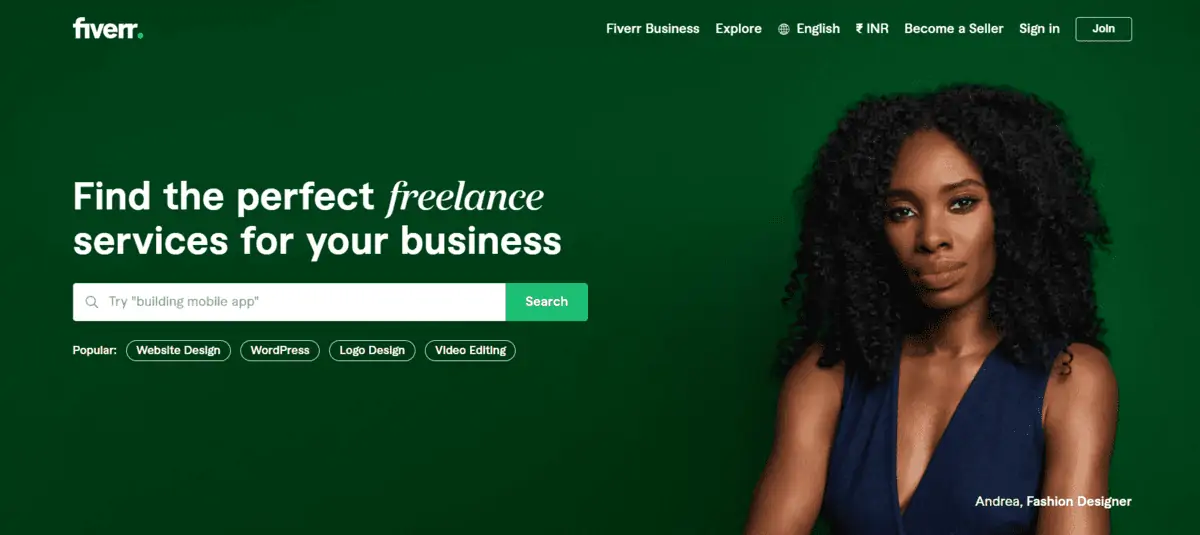
    Think Amazon for outsourcing. These are platforms that bring together businesses and freelancers from around the world. The best part? You can get started with outsourcing at a fraction of the cost.

    Use these marketplaces to outsource skill-based services such as social media, content marketing, graphic design, web development, and product research. However, services like manufacturing that require physical labour can’t be outsourced through these platforms.

    Here are some popular freelancer marketplaces:

    • Fiverr: Fiverr is one of the most popular outsourcing marketplaces, with over 3 million gigs posted. From a trivial task like creating a social media post to complicated web development projects, you can find almost anything on Fiverr starting at just $5.
    • Upwork: Upwork is perfect if you’re looking to outsource projects that require more expertise and experience. The platform boasts proof of quality, where you can check an outsourcing provider’s ratings and reviews before deciding to work with them.
    • 99designs: If you need help with branding or design work, then 99designs is your outsourcing platform. The platform connects businesses with a global network of creative professionals who can help with everything from logo design to website development.

    You can even outsource recurring tasks to people you find on these platforms, which can free up even more of your time to work on other aspects of your business.

    Outsourcing Agencies

    wipro

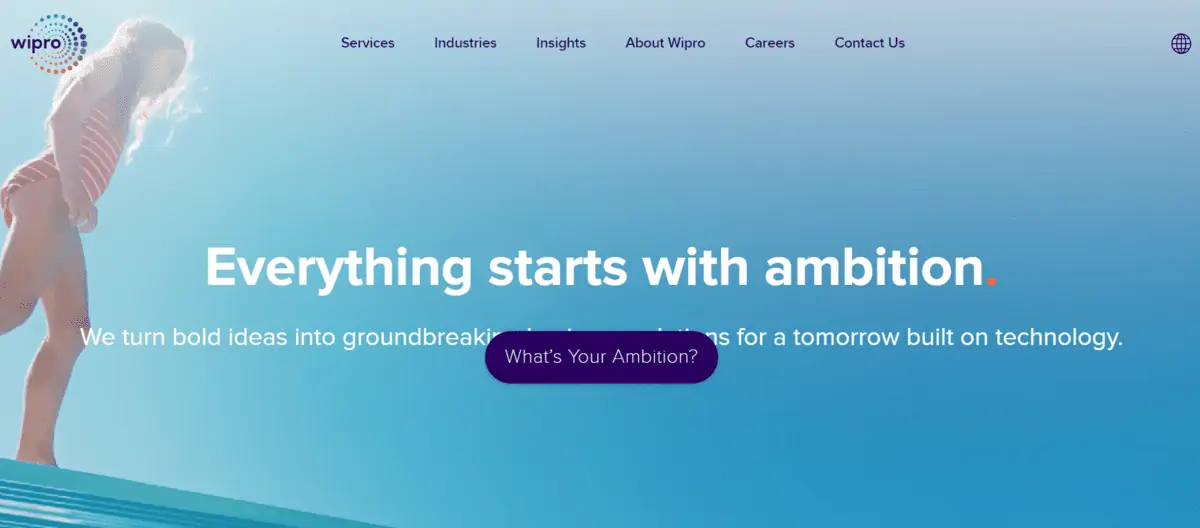
    Outsourcing agencies are a great option if you need to outsource more complex tasks or entire processes (like customer service, manufacturing, assembling, etc.). These agencies have a team of experts who can take on your project and get the job done quickly and efficiently.

    When working with an outsourcing agency, you’ll usually have a project manager who will be your main point of contact. This person will ensure that your project is on track and that you’re happy with the work.

    Here are the top outsourcing agencies that you can consider working with:

    • Wipro
    • Accenture
    • Deloitte
    • IBM
    • Infosys
    • Cognizant
    • HCL Technologies
    • Tata Consultancy Services (TCS)

    These are just a few of the many outsourcing agencies that you can consider working with. Do your research and find one that you feel confident will be able to handle your project and meet your outsourcing needs.

    Moreover, know that working with an outsourcing agency can be more expensive than working with freelancers, but it’s often worth the investment because you’ll get a team of experts working on your project.

    Virtual Assistants

    Virtual assistant

    A virtual assistant or VA is an independent contractor you can hire to help with various business tasks, including but not limited to customer service, social media marketing, bookkeeping, data entry, and more.

    Your virtual assistant is neither your employee nor a freelancer but rather someone you’ve hired to complete specific tasks or projects on a contract basis.

    For example, you can hire a virtual assistant to:

    • Manage your social media accounts
    • Respond to customer inquiries
    • Send out email newsletters
    • Do data entry
    • Provide customer service
    • And much more!

    Hiring a VA can be an excellent outsourcing solution for entrepreneurs who need help with administrative tasks but don’t have the budget to hire a full-time employee. After all, hiring an employee costs more than just a salary – you also have to factor in benefits, overhead, and other associated costs.

    There are some dedicated virtual assistant hiring platforms where you can find quality virtual assistants, such as:

    Or you can simply post a gig on outsourcing marketplaces like Fiverr and Upwork.

    Outsourcing Vs Automation

    zapier

    Numerous tasks that human employees once performed can now be automated using technology. This has led some business owners to shift their outsourcing focus from human employees to technology solutions.

    Here are some examples –

    • Apps like Social Bee, Radaar, Later, and Hootsuite help you schedule and automate your social media posts.
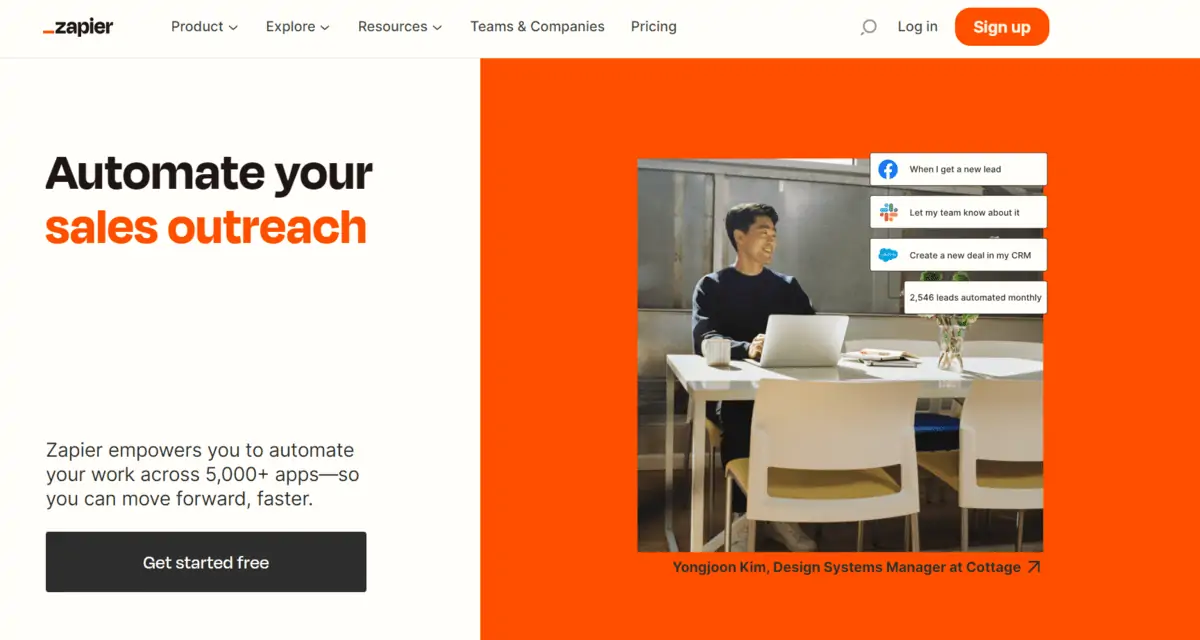
    • You can use tools like IFTTT, Zapier, and Pabbly Connect to automate various business tasks, from sending out automated emails to creating invoices. For example, you could set up a Zap that automatically generates and sends an invoice to your client every time you complete a task in your project management software.
    • Chatbots like Drift, HubSpot Sales, and Intercom can be used to automate customer service tasks like answering FAQs, scheduling appointments, and sending out price quotes.
    • GPT-3 powered AI writers like Jasper, ClosersCopy, and Frase can be used to create high-quality, SEO-optimized content for your blog or website in just a few clicks.
    • Email marketing campaigns can be automated using services like Moosend, Mailchimp, and ActiveCampaign.

    But no matter how good automation technology gets, some outsourcing tasks just can’t be replaced by a machine.

    For example, if you run an ecommerce store, automating the chatbot without human intervention can lead to a decline in customer satisfaction.

    How To Outsource Effectively?

    Outsourcing is an art, and like any art, it takes time to master.

    There are a few key things you need to keep in mind if you want to outsource effectively:

    Divide And Conquer

    The first step to outsourcing effectively is to divide your work into core and non-core tasks.

    Core tasks are the ones that are essential to your business, such as product development, marketing communication, etc.

    Non-core tasks, on the other hand, are the ones that you can delegate to experts, such as customer support, accounting, and IT.

    An effective outsourcing strategy would require you to delegate all the non-core tasks while still maintaining control over the core tasks.

    Understand The Task Yourself First

    You can’t expect to delegate a task effectively if you don’t understand it yourself first.

    Take the time to learn about the task, its objectives, and the expected results.

    Write down every KPI, milestone, and deliverable you expect from the outsourcing partner. You can even create an SOP (standard operating procedure) if the task is complex enough.

    By doing this, you can be sure that you’re outsourcing the right tasks to the right people.

    Choose The Right Hiring Platform

    While you can find almost any type of outsourcing partner on platforms like Fiverr and Upwork, not every platform is created equal.

    Some outsourcing tasks are more sensitive in nature and require a higher level of trust between you and the outsourcing partner.

    For example, Gigster could be a better platform if you plan to outsource your entire development department compared to Fiverr, which focuses more on one-time tasks and shorter-term projects.

    Detail Out Your Requirements

    Outsourcing platforms either ask you to post a gig or job with a detailed description or pair you with outsourcing partners based on your needs.

    In either case, it’s important that you provide as much detail as possible about the task or project you need to be completed.

    This includes everything from the specific skills required to complete the task to the deliverables you expect at the end of the project.

    The more detail you can provide upfront, the easier it will be to find the right outsourcing partner and avoid any miscommunication down the road.

    Check Their Credentials

    Just like you wouldn’t hire an employee without first checking their references, you shouldn’t work with an outsourcing partner without first verifying their credentials.

    When vetting outsourcing platforms, pay close attention to reviews and testimonials from other users.

    You should also take a look at the outsourcing partners’ portfolios to get a sense of their previous work and whether or not their style is a good fit for your project.

    Have A Well-Drafted Contract

    Once you’ve found an outsourcing partner with whom you want to work, it’s time to draw up a contract.

    This step is important because it will help protect both you and the outsourcing party in case anything goes wrong during the project.

    Your contract should include a detailed scope of work outlining exactly what tasks will be completed and by when.

    It should also include provisions for intellectual property ownership and confidentiality.

    Be Involved In The Project

    Just because you’re outsourcing doesn’t mean that you can completely step away from the project.

    You should still be involved in overseeing the work to make sure that it’s being done correctly and according to your specifications.

    The best way to do this is to set up regular check-ins with the outsourcing party so that you can provide feedback and answer any questions they may have.

    Bottom-Line?

    Outsourcing can be a great way to save time and money, but it’s important to understand whether it is the right solution for your business. If yes, what all needs to be considered before outsourcing, what can be outsourced, and so on

    Take the time to research and work with a reputable outsourcing company to ensure your project is completed successfully.

    Go On, Tell Us What You Think!

    Did we miss something? Come on! Tell us what you think about our article on outsourcing guide in the comments section.

  • Razor And Blades Business Model Explained

    Razor And Blades Business Model Explained

    Imagine a scenario where you have to buy a new razor every time you need to shave. Not only is this incredibly inconvenient, but it also means that you’ll be spending a lot of money on razors over time. Now imagine a different scenario where you can buy a razor once for a small price and then buy blades separately to use with that razor. Not only is this much more convenient, but you believe it would save you money in the long run.

    But contrary to what you think, this second scenario actually costs you more money over time. This is because companies that use the razor and blades business model are designed to make more money off of you in the long run. In this article, we’ll be taking a closer look at the razor and blades business model, how it works, and how companies use it to make more money from you.

    What Is Razor And Blades Model?

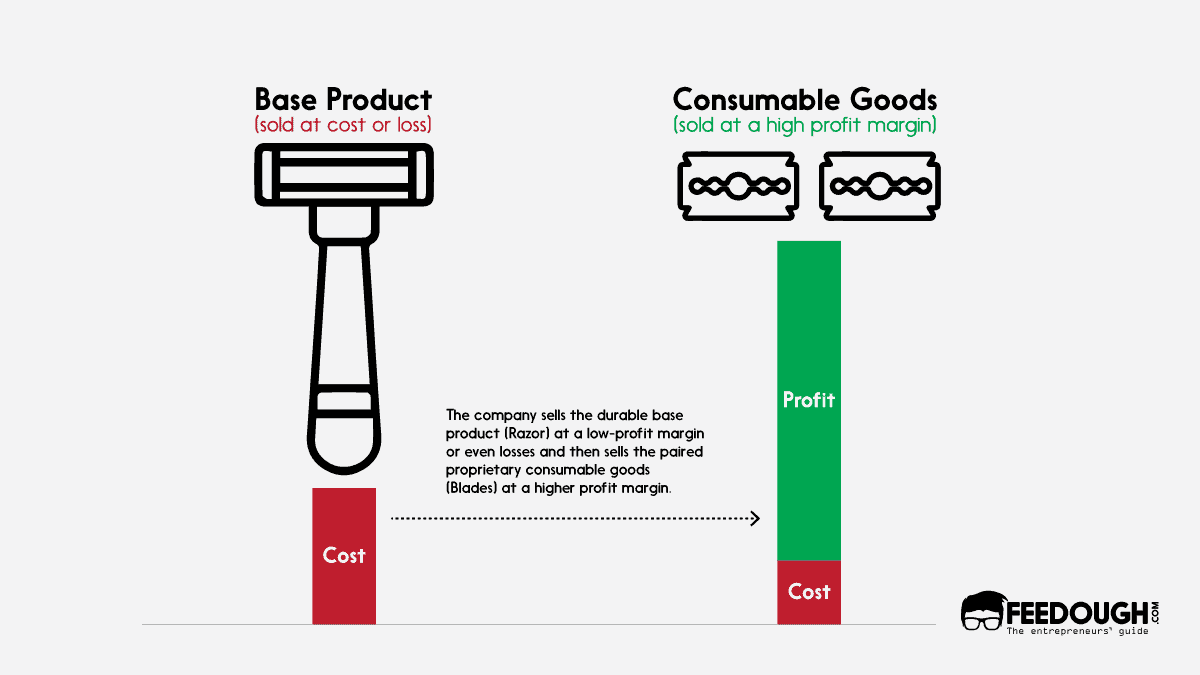
    Razor and blades is a business model where a company sells the durable base product (Razor) at a low-profit margin or even losses and then sells the paired proprietary consumable goods (Blades) at a higher profit margin.

    This pricing strategy is used to get customers to buy the initial product and then keep buying the consumables from the same company to keep using the initial product.

    The idea is that once a customer has bought into the system, they’re more likely to keep buying from the same company rather than switching to a competitor, as it will involve them repurchasing the base product.

    Moreover, it is essential to note that the paired consumable goods (blades) are proprietary to the company and cannot be substituted with a generic good. This is important as it stops customers from switching to a cheaper alternative and keeps them locked into the company’s ecosystem.

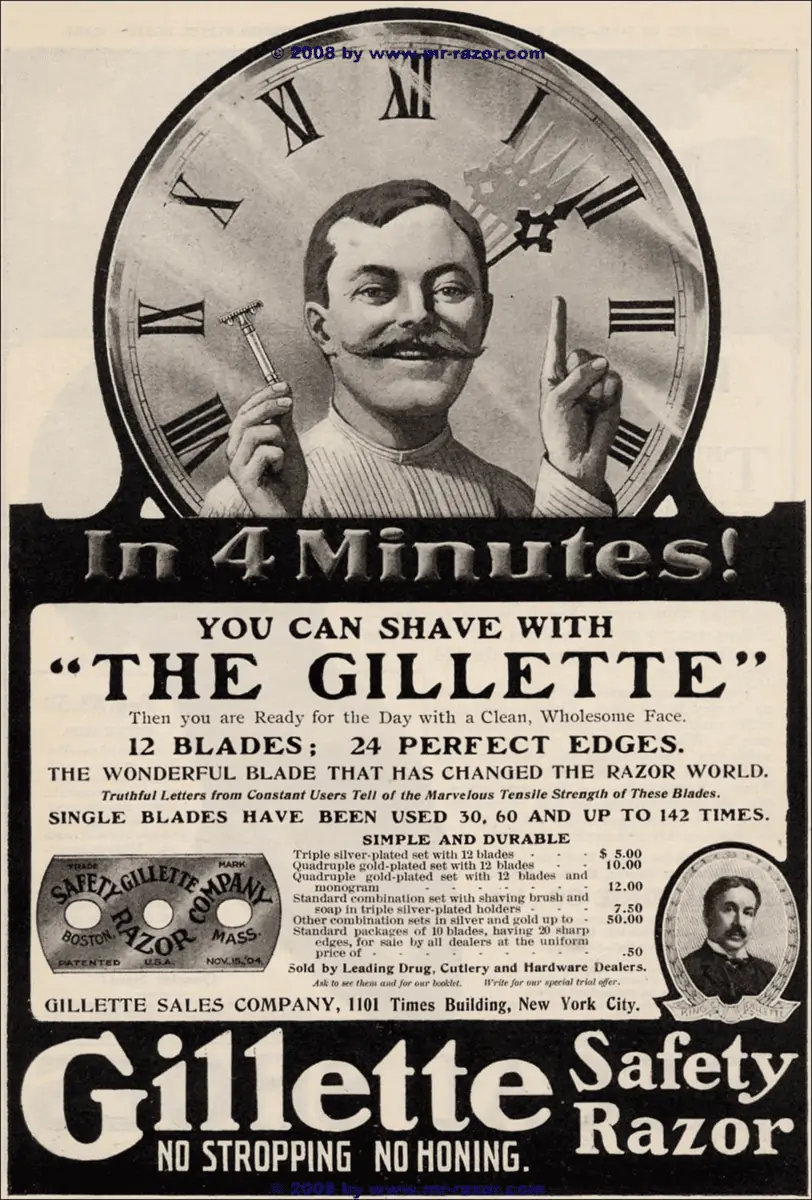
    Gillette ad

    Several large companies use this pricing strategy, including companies dealing in:

    • Razor and blades like Gillette
    • Playstation and video games by Sony
    • Printers and Ink cartridges like HP
    • Coffee machines like Nespresso

    The History Of The Razor And Blades Model

    A century ago, around 1895, King C. Gillette was turning to a frustrated inventor. After years of tinkering, he had failed to find a way to make a decent name for himself.

    But one day, while shaving, he realised that the Star razor he was using was so worn it could no longer be sharpened. This gave him an idea. What if he could separate the blade from the handle and sell them as two separate items?

    After a few years of development and with the inputs from William Emery Nickerson (who was the genius behind the idea of adding a protective strip to the blade), King C. Gillette finally launched his razor in 1901.

    But the company didn’t see success immediately. In the first year, Gillette sold only 51 razors and 168 blades.

    Gillette tried different marketing strategies like selling razors to the army at a discount, hoping soldiers’ habits will lead to razors becoming common household items. He also offered razors in bulk to banks, which they provided for free to their customers for every new deposit (“shave and save” campaign). These efforts proved helpful; by 1903, sales reached 91,000 razors, and the company sold more than 12 million blades.

    Gillette Razor and blade model

    The initial sales were heavily profitable as the razor was sold for $5 per piece and a dozen blades for $1. This was all because of the patent Gillette held. But once the patent expired, Gillette shifted to the razorblade business model we know today – selling razors at a lower price and making up for it with blade sales.

    How Does Razor And Blades Model Work For Other Niches

    It isn’t just Gillette that has succeeded with the razor and blades business model – many other companies have applied it in various ways and found great results. Here are a few examples of companies that have used the razorblade model successfully:

    Playstation

    Sony not only develops the Playstation consoles but also creates many of the games that are played on them. This gives them a unique opportunity to apply the razor and blades business model in a way that other companies can’t.

    While the Playstation console is sold at a loss, Sony makes up for it by selling games and charging for online services. In fact, the company has been so successful with this model that they’re now the world’s largest video game console manufacturer.

    HP Printers

    HP is one of the leading printer manufacturers and they use the razor and blades model to sell their products.

    The company sells printers at a loss and then makes up for it by selling ink cartridges. In fact, HP’s ink business is so profitable that it accounts for a large portion of the company’s overall revenue.

    Nespresso

    Nespresso is amongst the most popular coffee machines in the world and it uses the razor and blades model to sell its products.

    The company sells coffee machines at cost and then makes up for it by selling coffee pods at recurring premiums. The fact that Nespresso machines warn users if they’re using non-Nespresso pods is a testament to how important it is for the company to lock in customers with its business model.

    Razor And Blades vs Freemium Model

    The offline “razor and blade model” can be considered the predecessor of the freemium business model, which is now commonly used by startups operating in the online space.

    Developing on the razor and blade model, the freemium model offers a basic product or service for free in order to hook users and get them locked in. Once users are invested in the product or service, the company upsells them on premium features or plans offering more value.

    The key difference between the two models is that with the razor and blade model, users need to keep buying the blades (or refills) in order to keep using the base product. However, with the freemium model, users can continue using the product for free, even if they don’t upgrade to the paid version.

    The main benefit of the freemium model is that it allows companies to acquire a large number of users quickly. And because the users are already invested in the product, they’re more likely to convert to paid customers when presented with the opportunity.

    The Reverse Razor Blade Model

    Unlike the traditional razor and blade model, the reverse razor blade model is when a company sells the base product (the razor) at a high margin and the consumable product (the blades) at a low margin.

    Apple is a prime example of a company that uses the reverse razor blade model. iPhone buyers are willing to pay a high upfront cost for the phone because they know they’ll be able to find exclusive applications like iTunes, the App Store, and Apple Music for their devices. They’re also locked into using Apple’s ecosystem, which means they’ll continue to spend money on Apple products and services in the future.

    How To Use Razer And Blades Model In Your Business?

    Razor and blade model

    If you’re considering using the razor and blades model in your business, there are a few things to keep in mind.

    First, understand that it’s not just a pricing strategy. Razor and blade is an entire ecosystem that you’re creating. This means that you need to have a strong understanding of your target audience and what they’re looking for.

    Second, find your base product and dependent product. The model (usual or reverse razor and blade) you’ll use will depend on which product is more essential to your customers.

    Use the usual razor and blade business model if your base product is useless without the dependent product. It’s similar to a printer and ink or PlayStation and games.

    However, if the dependent product is useless without the base product, use the reverse razor and blade model. An example would be iTunes without iPhone.

    Third, you need marketing. The razor and blade model requires an extensive marketing campaign to attract customers and get them to buy your products. You need to give them a reason to buy your product over others.

    The Benefits Of Razor And Blades Model

    There are several benefits to using the razor and blade business model. Some are

    • Recurring profit: Once the customer buys the base product, they need to keep buying the consumable goods, which means recurring profit for the company.
    • Loyalty: Customers who use the razor and blade system tend to be more loyal to the company since they’re locked into the system.
    • Higher margins: The base product is usually sold at a loss, while the consumables have higher margins. And since customers need to buy the consumables regularly, companies can generate higher profits.
    • High customer retention: The razor and blades model also has a high customer retention rate since customers are locked into the system.
    • Good upselling and cross-selling opportunities: Since customers are locked into the system, companies have good upselling and cross-selling opportunities. For example, a company selling razors can sell a premium range of blades or other products like shaving cream, aftershave, etc.

    The Drawbacks Of Razer And Blades Model

    Even though the razor and blades model is a great way to generate recurring revenue, it has some disadvantages, which are as follows:

    • The initial investment is high: Companies need to make a high initial investment to implement the razor and blades business model. This is because they must develop the products and set up the distribution channels.
    • The system might turn buggy: If the razor and blades business model is not implemented properly, it might turn out to be buggy. For example, if the razor is not of good quality, people will not buy the blades.
    • There is a need for constant innovation: To keep the customers engaged, companies must constantly innovate and bring out new products. Otherwise, the customers will get bored and switch to other brands.

    Bottom-Line?

    Even though centuries old, the razor and blades business model is still relevant today. Companies across various industries use this model to increase their revenues and profits. Forming the base of the new freemium model, this business model has constantly been evolving. And with the ever-changing customer needs, it is sure to keep on evolving in the future as well.

    Go On, Tell Us What You Think!

    Did we miss something? Come on! Tell us what you think about our article on the razor and blade business model in the comments section.

  • How To Outsource Customer Service? [Detailed Guide]

    How To Outsource Customer Service? [Detailed Guide]

    Customers can make or break a business. And to woo them, you need not only a great offering but also excellent customer support. In fact, 40-50% of businesses stop doing business every year due to poor customer service. This is an insanely huge number, which is why outsourcing customer service has become a norm for several companies.

    Outsourcing customer service can help businesses save on time, money, and resources while ensuring that customers are always happy.

    But how do you outsource customer support to a third party? Shouldn’t they know everything about your business? How will they be able to deliver the same quality of service as your in-house team?

    Don’t worry. It’s not as complicated as it seems. Here’s a complete guide on outsourcing customer service for your small business or startup.

    What Does Customer Service Outsourcing Mean?

    Outsourced customer service is when a company or business contracts another company, freelancer, or virtual assistant to handle its customer service or support needs.

    This can include anything from answering customer queries and questions, to managing complaints and returns.

    These third-party service providers understand your business and can provide the same quality (if not better) customer service as your in-house team.

    Many outsourcing companies specialise in different areas of customer service. Some may focus on social media customer service, while others might provide more traditional phone and email support.

    Moreover, these service providers operate from different locations around the world. This allows you to outsource customer service to a provider in a country with lower labour costs, such as the Philippines or India.

    There are also freelance marketplaces, such as Fiverr or Upwork, which allow you to find customer service outsourcing providers on a per-project basis.

    And don’t worry, even big companies like Google, Target, Hootsuite, and Airbnb outsource customer service.

    What Customer Services Can Be Outsourced?

    Almost any type of customer service can be outsourced. Here are some of the most common outsourcing services:

    • Social media customer service
    • Phone support
    • Email support
    • Live chat support
    • Technical support
    • Back-office support

    While some companies specialise in one or two of such services, many offer omnichannel or multichannel support services taking over the entire customer service outsourcing for businesses.

    How To Outsource Customer Service Operations?

    Outsourcing customer service is not as difficult as it may seem. Here’s a quick guide on how you can go about outsourcing your customer service requirements:

    Define Your Customer Service Goals

    The first step is understanding what you want to achieve with outsourcing customer service. For instance, do you want to reduce operational costs?

    Or are you looking to improve customer satisfaction, net promoter score (NPS), or first contact resolution (FCR) rates?

    You need to clearly understand your goals before looking for customer service outsourcing partner.

    Evaluate Your Customer Service Requirements

    Once you know what you want to achieve, the next step is evaluating your customer service requirements. This will help you zero in on the right outsourcing partner.

    Here are a few things you need to take into account:

    • The type of customer service you need (e.g., email, phone, chat, social media)
    • The channels your customers use to reach out (e.g., phone, email, live chat, or social media)
    • The volume of customer service inquiries
    • The geographical location of your target market
    • Your company’s size and business model
    • Your budget

    Also, segregate the recurring support queries from technical or one-time issues that may require intervention from in-house teams. Doing so will help you better understand the kind of customer service outsourcing partner you need.

    For example, if you run a small ecommerce business, chances are that most of your customer queries will be related to product information, order tracking, and shipping. In such a case, you can outsource customer service to a team that specialises in handling these kinds of requests in the language and time zone of your choice.

    Find The Right Customer Service Outsourcing Partner

    The outsourcing vendor you choose will play a significant role in how successful your outsourcing efforts are. Here are a few factors to consider when choosing a customer service outsourcing provider:

    • Industry expertise: Does the outsourcing company have experience serving businesses in your industry? Do they understand your products or services and your target market?
    • Language capabilities: Can the outsourcing provider communicate effectively in your customers’ language(s)? Do they have native speakers on staff?
    • Time zone support: Will the outsourcing company be available during the hours when your customers are most likely to need assistance?
    • Technology requirements: Does the outsourcing company have the necessary technology to support your customer service needs? For example, do they have a robust CRM system? Or can they work with the CRM system you already have in place?
    • Price: Obviously, you’ll need to consider the cost of outsourcing customer service. But be sure to compare apples to apples. In other words, don’t just look at the hourly rate. Consider the total cost of outsourcing, including hidden costs like training and onboarding.

    Once you’ve answered these questions, you’ll better understand whether outsourcing customer service is right for your business. You can find the best ones on –

    • Fiverr: Fiverr is one of the most popular outsourcing marketplaces and for a good reason. You can find customer support freelancers for as less as $5 per job.
    • Upwork: If you’re looking for a more established outsourcing website, Upwork is a great option. On Upwork, you can find freelancers with years of experience in customer service.
    • Zirtual: Zirtual is perfect if you’re looking for a virtual assistant to help with customer service tasks. With Zirtual, you can be matched with a highly-skilled virtual assistant who can care for all your customer service needs.

    Besides this, if you have a good budget, you can hire a customer service handling agency that will provide you with a team of customer service executives. Some of the best ones include:

    • Chatdesk
    • Helpware
    • Simply Contact

    How Does Outsourcing Customer Service Benefit Businesses?

    There are several reasons why outsourcing customer service can be beneficial for businesses:

    • Cost savings: One of the main benefits of outsourcing customer service is that it can save you money. By outsourcing to a company in a country with lower labour costs, you can reduce your overall operating costs.
    • Increased flexibility: Outsourcing customer service can also give you increased flexibility. You can scale up or down your customer service operations as needed without having to hire or fire employees.
    • Access to expertise: When you outsource customer service, you have access to a team of experts. This can be helpful if you don’t have the internal resources to train your own team.
    • More Time to Focus on Other Things: Outsourcing customer service can also free up your time to focus on other aspects of your business including sales, marketing, and product development.

    Drawbacks Of Outsourcing Customer Service

    Outsourcing customer service requires you to have clarity of goals, objectives, and deliverables. If these things are not well-defined, it can lead to problems down the road.

    Here are some other potential drawbacks of outsourcing customer service:

    • You may not have as much control over the quality of service being delivered
    • There can be language barriers if you outsource to a team that is based in a different country
    • Rarely, it can lead to miscommunication and a lack of transparency

    That being said, outsourcing customer service can greatly improve your company’s bottom line. It can lead to happier customers and improved satisfaction rates when done correctly.

    Customer Service Outsourcing FAQs

    Outsourcing is a big decision for any company. Here are a few commonly asked questions about outsourcing customer service:

    Does outsourcing customer service make sense for your business?

    If you’re not sure, consider the following.
    How much does it cost to train and manage a customer service team internally?
    Do you have the internal resources to do this effectively?
    Would outsourcing customer service give you more time to focus on other aspects of your business?
    The answers to these questions will help you determine if outsourcing customer service is the right decision for your business.

    Is it cheaper to outsource customer service?

    Monetarily, it often is cheaper to outsource customer service
    When you outsource customer service, you’re working with a team that’s already trained and has the infrastructure in place to provide quality service
    This means you don’t have to invest in training or set up your own customer service infrastructure
    You also won’t have to pay for employee benefits, since most customer service outsourcing firms are based in countries where labour is relatively inexpensive
    The end result is that you can save a considerable amount of money by outsourcing customer service

    How much does it cost to outsource customer service?

    It all depends on the outsourcing firm you choose and the services you need.
    It can cost as low as $5-6 per hour if a company operating in India handles your trivial customer service tasks, or as high as $100 per hour if you need high-level executive support in the US.

    Go On, Tell Us What You Think!

    Did we miss something? Come on! Tell us what you think about our article on outsourcing customer service in the comments section.

  • Meesho Business Model | How Does Meesho Make Money?

    Meesho Business Model | How Does Meesho Make Money?


    What if charging sellers hefty commissions isn’t the only way to build a billion-dollar e-commerce empire? While Amazon and Flipkart rake in profits from commission fees, one Indian startup decided to flip the script entirely.

    Meet Meesho – the platform that’s rewriting e-commerce rules by doing something most competitors thought was impossible: letting sellers keep 100% of their earnings.

    Meesho now follows a zero-commission model for sellers across all product categories, aiming to democratize e-commerce and support small businesses.

    But here’s what’ll make you scratch your head: if Meesho isn’t charging commissions, how exactly are they making money? And more importantly, how did this approach help them capture millions of sellers and buyers in India’s competitive e-commerce landscape?

    That’s exactly what we’re diving into. You’ll discover the mechanics behind Meesho’s unconventional revenue model and why its strategy might just be the future of social commerce.

    What Is Meesho?

    Meesho is India’s leading social commerce platform that’s completely changed how people buy and sell online. Think of it as the bridge between social media and e-commerce – where your WhatsApp groups, Facebook posts, and Instagram stories become your virtual storefront.

    Founded in 2015 by Vidit Aatrey and Sanjeev Barnwal, Meesho started with a simple but powerful idea: let anyone become an entrepreneur without needing inventory, investment, or technical skills. The name itself is a clever blend of “meri” (my) and “shop” – literally meaning “my shop.”

    Here’s how it works. Sellers list their products on Meesho’s platform. Then, resellers (mostly women looking to earn extra income) browse these products, add their markup, and share them across their social networks. When someone from their network buys, the reseller earns a commission without handling inventory or logistics.

    What makes Meesho different from traditional e-commerce? It’s built around relationships and trust. Instead of browsing through endless product pages on a website, customers discover items through people they know and trust. Your friend recommends a beautiful saree, your neighbor shares a great deal on kitchen appliances, or your colleague posts about trendy accessories.

    The platform has tapped into something uniquely Indian – the power of personal recommendations and social networks. According to Business of Apps, Meesho has over 150 million transacting users, making it one of India’s most successful social commerce experiments.

    But Meesho isn’t just about social selling anymore. The company has evolved into a full-fledged e-commerce marketplace while keeping its social commerce roots. You can now shop directly on their app and website, just like any other online retailer, but with the added benefit of competitive prices and a focus on value-conscious shoppers.

    Meesho’s Zero-Commission Business Model

    While Amazon charges sellers 5-20% commission and Flipkart takes 2-20% depending on product categories, Meesho operates on a fundamentally different principle: zero commission on sales. This means when a seller lists a product for ₹100, they keep the entire ₹100 from the sale, minus any agreed-upon shipping costs.

    The strategic reasoning behind this approach becomes clear when you consider India’s marketplace dynamics. Traditional e-commerce platforms essentially act as middlemen who extract value from each transaction. Meesho flipped this model by positioning itself as an enabler rather than an extractor.

    For small businesses and micro-entrepreneurs, this difference is transformative. A local handicrafts seller who might lose ₹15-20 on every ₹100 sale on traditional platforms can maintain full control over their pricing and margins on Meesho. This pricing power is especially crucial for sellers operating on thin margins.

    According to The Hindu Business Line, this zero-commission strategy has been central to Meesho’s ability to attract price-sensitive consumers and small-scale sellers who form the backbone of India’s informal economy.

    The model works particularly well in India because it aligns with the country’s cost-conscious market behaviour. Small sellers can offer competitive prices without worrying about platform fees eating into their already modest profits.

    How Does Meesho’s Operating Model Work?

    The Three-Sided Marketplace Structure

    Meesho operates as a three-sided marketplace where suppliers, resellers, and end customers form interconnected loops of commerce. Here’s how each side functions within this ecosystem.

    Suppliers are manufacturers and wholesalers who list their products on Meesho’s platform. Think of a textile manufacturer in Tirupur or a handicrafts producer in Rajasthan uploading their inventory with wholesale pricing.

    Resellers are individuals who browse these products, add their markup, and sell to their personal networks through WhatsApp, Facebook, or Instagram. A homemaker in Pune might discover trending kurtas on Meesho and share them in her neighborhood WhatsApp groups.

    End customers purchase from these resellers, often without knowing about Meesho’s involvement. They simply see products shared by someone they trust in their social circle.

    This structure creates a network effect where more suppliers attract more resellers, who then reach more customers. Each successful transaction strengthens all three connections, making the platform more valuable for every participant.

    Social Commerce Integration

    Here’s where Meesho’s model gets really clever. Instead of spending millions on Facebook ads or Google campaigns, they turned every reseller into a mini-influencer with built-in audiences.

    The mechanics are surprisingly simple. When a reseller finds a product they want to sell, Meesho generates shareable links and product images optimised for WhatsApp, Instagram stories, and Facebook posts. A reseller might share a trendy kurti in their neighbourhood WhatsApp group or post ethnic wear collections on their Instagram.

    But here’s the thing – people trust recommendations from friends and family way more than random ads. When your neighbour shares a beautiful saree she’s selling, you’re already 80% convinced because you’ve seen her taste in person.

    The conversion rates tell the story. While typical e-commerce ads convert at 1-2%, social recommendations through personal networks often hit 15-20%. That’s because the “salesperson” isn’t a stranger – they’re someone who knows exactly what appeals to their circle and has genuine relationships with potential buyers.

    Order Fulfilment and Logistics Process

    When a customer places an order through a reseller’s WhatsApp or social media post, Meesho’s backend systems immediately spring into action. The order gets routed to the supplier, who then packages the product and hands it over to the logistics network.

    Here’s where things get interesting. Meesho doesn’t rely entirely on third-party delivery services like most e-commerce platforms. They’ve built their own logistics arm called Valmo, which now handles 50% of Meesho’s orders.

    This hybrid approach means faster delivery times and better cost control. When Valmo handles an order, they can optimise routes specifically for Meesho’s customer base, which is heavily concentrated in smaller cities and towns. For the remaining orders, they partner with established logistics providers.

    The entire process from order placement to delivery typically takes 3-7 days, depending on the location. What makes this different from traditional e-commerce is that the initial touchpoint happens through personal social networks rather than anonymous marketplace browsing.

    Meesho’s Revenue Streams

    Logistics Revenue Through Valmo

    Here’s where Meesho’s business model gets interesting. While the platform doesn’t charge seller commissions, it found a different path to profitability through its logistics arm, Valmo.

    Think of Valmo as Meesho’s internal delivery service that charges for shipping and fulfilment. Every time a seller ships a product through this network, Meesho collects logistics fees. The company essentially monetises the delivery process rather than the marketplace transaction itself.

    The growth trajectory tells the story. Valmo started handling just 5% of Meesho’s shipments in its early days. According to Economic Times, this figure jumped from 30% to 70% of all shipments as the platform scaled. You might see different numbers elsewhere – some reports mention 50% – but that’s likely from different reporting periods as Valmo’s share keeps growing.

    What makes this model smart is scale. As Meesho processes more orders, Valmo becomes more efficient. Route optimisation, bulk shipping discounts, and network density all reduce per-unit costs. Plus, keeping logistics in-house means Meesho controls the customer experience from purchase to doorstep.

    This approach transforms a cost centre into a profit centre. Instead of paying third-party logistics companies, Meesho captures that margin while potentially offering competitive rates to sellers.

    Meesho’s Revenue Generation: Beyond Zero Commission

    While Meesho’s zero-commission model grabs headlines, the company has built a sophisticated revenue engine. The platform monetises primarily through advertising revenue from sellers who pay for promoted listings and enhanced visibility. Think of it like Google Ads for e-commerce – sellers bid for prime placement in search results and category pages.

    Plus, Meesho generates revenue through brand partnerships and sponsored content. Established brands pay premium fees to feature their products prominently, targeting Meesho’s unique customer base of price-conscious shoppers in tier-2 and tier-3 cities.

    Meesho’s Financial Performance

    The zero-commission gamble is paying off. Meesho reached a GMV of $6.2 billion and grew its revenue from $403 million to $689 million, showing that alternative monetisation models can work in India’s price-sensitive market.

    What’s impressive here isn’t just the growth – it’s the trajectory. While competitors burn cash on discounts and commissions, Meesho has found a way to scale sustainably by focusing on volume and advertising revenue.

    Meesho’s Target Customers

    Meesho’s customer strategy revolves around three core segments. First, women entrepreneurs who want to start small businesses without an inventory investment. These resellers use WhatsApp and Instagram to sell Meesho products to their networks, earning commissions without upfront costs.

    Second, rural and semi-urban customers who prioritise value over speed. Unlike urban shoppers who want same-day delivery, Meesho’s customers are willing to wait 5-7 days for significantly lower prices.

    Third, small manufacturers and suppliers who can’t afford Amazon’s or Flipkart’s commission structure. The zero-commission model democratizes e-commerce access for businesses operating on razor-thin margins.

    Meesho’s Competitive Edge

    Meesho’s competitive advantage lies in serving markets that Amazon and Flipkart largely ignore. While these giants focus on branded products and premium customers, Meesho thrives in unbranded, value-focused segments.

    The zero-commission model creates a powerful differentiator. When Amazon charges 5-20% commission and Flipkart charges 2-20%, Meesho’s 0% commission gives sellers immediate cost advantages they can pass to price-sensitive customers.

    This approach has allowed Meesho to achieve profitability while its larger competitors still burn cash trying to win market share through discounting.

    The Sustainability Question

    But here’s the challenge that keeps investors awake at night: can the zero-commission model sustain long-term growth? Critics argue that without commission revenue, Meesho’s advertising income alone may not support the infrastructure costs of serving millions of small-ticket transactions.

    The company faces pressure to eventually introduce some commission structure, especially as it scales. The question isn’t whether Meesho can grow – it’s whether it can maintain profitability while preserving the zero-commission promise that defines its brand.

    That tension between growth and sustainability will ultimately determine whether Meesho’s business model can truly disrupt India’s e-commerce landscape or if it’s simply a stepping stone to a more traditional revenue structure.

  • Networking For Entrepreneurs: Complete Guide

    Networking For Entrepreneurs: Complete Guide

    Entrepreneurship is not a solo journey. To be successful, you need to be in the right room, talking to the right people and making the right impression at the right time. Whether you seek a business partner, an investment, or simply want to get your business idea off the ground, networking is key.

    And while many claim that networking is all about making connections, it is not always that simple. The most important part of networking for entrepreneurs is to ensure that you are connecting with the right people who can help you achieve your business goals.

    So, how do you go about networking as an entrepreneur? Here’s a guide elaborating on all the available options for you to network in their own circle and outside.

    But first, let’s start with the basics.

    Why Network?

    The main reason to network as an entrepreneur is simple: it allows you to meet prospective partners, investors, stakeholders, and others who can help your startup succeed. It helps you:

    • Uncover new opportunities: You never know when or where you’ll meet your next potential business partner, customer, or employee. By networking with other entrepreneurs, you’re opening yourself up to a world of new opportunities.
    • Get feedback and validation: It allows you to tap into the collective wisdom of experienced entrepreneurs who can help validate your ideas and offer constructive criticism.
    • Find mentors and investors: A good mentor can be invaluable to a startup founder. They can provide guidance, introductions, and advice when you need it most. And if you’re lucky, you might even find an investor or two through your networking efforts.
    • Get support: Being an entrepreneur can be a lonely journey. By networking with other entrepreneurs, you can find the support and camaraderie you need to keep going.
    • Be at the forefront of new trends: As an entrepreneur, it’s important to be on the cutting edge of new trends. Frequent networking can help you stay ahead of the curve.
    • Make important connections: You may never know who you’ll meet through your networking efforts. But if you play your cards right, you just might make the connection that takes your business to the next level.

    8 Networking Strategies For Entrepreneurs

    Networking opportunities are everywhere, but finding the time and energy to put yourself out there can be tough. Here are seven strategies for making the most of your networking efforts:

    Find Relevant Connections On Social Media

    One of the best things about social media is that it helps you connect with like-minded people worldwide. If you’re looking to network with other entrepreneurs, start with online startup communities:

    Facebook

    Find niche-relevant groups, join them, and participate in the conversation. It’ll help you understand what others in your industry are talking about and identify potential collaborators.

    Also, join groups run by your target audience. For example, if you run a business that sells eco-friendly products, look for groups related to sustainability or green living. It’ll help you learn more about your target market and discover new marketing channels.

    Facebook also boasts numerous entrepreneurship-specific groups, such as Badass Marketers & Founders (BAMF) and Millennial Entrepreneur Community, that can help you connect with like-minded individuals.

    While Facebook groups are a great way to connect with potential partners and customers, you hardly find investors or high-profile individuals there.

    For that, you need to look elsewhere.

    LinkedIn

    LinkedIn is a powerful platform hosting millions of entrepreneurs, startup owners, investors, and other business professionals.

    The platform offers a multitude of features and options to help you expand your network.

    You can start by connecting with:

    • Individuals in your extended network, such as 2nd or 3rd-degree connections
    • Individuals belonging to the niche you’re interested in
    • People from your Alma Mater or other groups you’re a part of
    • Prospects you’ve been trying to connect with for a while

    You can also join relevant groups and engage in discussions to get noticed by potential partners and investors.

    Tools like Waalaxy can automate almost every networking task for you and make it much easier. All you need to do is export your search results or a list of people you want to connect with, and Waalaxy will take care of the rest (from liking their posts to sending message and requests).

    Twitter

    Twitter is a great conversation platform and can be very useful for entrepreneurs who want to connect with like-minded people or those who are interested in their businesses.

    Numerous people of your interest are already talking about the things you’re passionate about. Find them, participate in the conversation, and develop relationships.

    Use Twitter lists to find relevant people to follow and engage with. This feature allows you to group together people with similar interests so you can easily find and connect with them.

    You can also use Twitter Advanced Search to find relevant tweets and people to follow. This search function allows you to narrow down your results by keyword, location, account type, and more.

    Join An Online Community

    Besides basic social media networking, you can join online communities full of entrepreneurs. These are great places to find advice, collaboration opportunities, and moral support.

    There are many online communities for entrepreneurs, but here are a few popular ones:

    • Indie Hackers: A community of over 100,000+ entrepreneurs who are building profitable online businesses.
    • Product Hunt: A community of tech enthusiasts who love to share and discover new products.
    • Hacker News: A social news website popular with startups and tech enthusiasts.
    • GrowthHackers: A community of marketers and growth professionals who share tips and tactics.

    In addition to these communities, there are several communities on platforms like Slack and Discord:

    • Furlough Community: A community of entrepreneurs designed to help each other professionally, including networking
    • Triba Business Community: A place where you can connect with potential clients, business partners, and like-minded professionals
    • Growmance: A highly interactive community of growth-oriented entrepreneuers and product managers.
    • #launch: A startup-oriented community focused on go-to-market strategies and early startup challenges.

    Join National Communities & Alliance

    Numerous industry-specific, business-specific, scale-specific, and interest-specific communities already exist. Find one (or more) that fit what you’re looking for and get involved. These are a few of our favourites:

    • The National Association for the Self-Employed (NASE): The largest nonprofit membership and advocacy organisation for self-employed and micro-businesses. You’ll have access to health insurance, business coaching, and other resources.
    • Social Enterprise Alliance: SEA is the largest membership organisation in the U.S. for social enterprises. They have a number of membership benefits, including access to funding, business support, and educational resources.
    • Young Entrepreneur Council (YEC): YEC is a global organisation made up of the world’s most successful young entrepreneurs. If you’re under 45 and are looking for advice, mentorship, or connections, this is the place to be.
    • Women’s Business Enterprise National Council (WBENC): WBENC is the leading third-party certification provider for women-owned businesses in the U.S. If you’re a woman entrepreneur, becoming certified can help you access government contracts, corporate supplier diversity programs, and other opportunities.

    Besides these national organisations, plenty of state and local groups can help you connect with other entrepreneurs. The Small Business Administration (SBA) has a searchable database of small business events, programs, and resources. And the U.S. Chamber of Commerce (USCC) maintains a list of chamber events by state.

    Attend Industry Events

    Another great way to network as an entrepreneur is to attend industry events. There, you’ll be able to meet other entrepreneurs, investors, and businesspeople in your industry. These events can be in-person or online.

    Some popular industry events for entrepreneurs are:

    • The Web Summit
    • South by Southwest (SXSW)
    • TED Conferences
    • The Business of Software Conference (BoSCon)

    There are also many smaller, more industry-specific events that you can attend. These events can be a great way to network because they’re usually more intimate, and you’ll have a better chance of meeting people who are relevant to your business.

    To find industry events near you, try searching online or checking out websites like:

    • Eventbrite
    • Meetup

    Attend Startup Networking Events

    Besides industry events, there are also startup networking events. These events are usually hosted by startups, accelerators, or coworking spaces, and they’re geared towards entrepreneurs.

    Some popular startup networking events are:

    • Startup Weekends
    • Founders Live
    • Global Entrepreneurship Week
    • Startup Grind

    The best part about startup networking events is that they usually have a diverse group of people doing all sorts of different businesses. This means that you’ll have a good chance of meeting someone who can help you, even if they’re not in your industry.

    Join An Accelerator

    Startup accelerators can be a great way to connect if you’re just starting out. An accelerator is a program that helps startups grow by providing them with mentorship, funding, and resources.

    Some of the most popular accelerators are:

    • Y Combinator
    • TechStars
    • 500 Startups

    Being part of an accelerator gives you access to a network of successful entrepreneurs, investors, and mentors. And not just that, it’s a cohort-based program, which means you’ll be able to develop strong relationships with the other founders in the program.

    You can apply to accelerators by filling out an application form on their website. The application process is usually competitive, so make sure you put your best foot forward.

    Work From A Coworking Space

    While it’s not as formal as an accelerator, working from a coworking space can benefit your networking efforts. For one, it allows you to surround yourself with like-minded individuals who are all working on their own startups. This is a great environment for collaboration and idea-sharing.

    Additionally, most coworking spaces host regular events, which are great opportunities to network with other entrepreneurs. These events usually revolve around a particular theme or topic, and they’re a great way to meet people who are passionate about the same things as you are.

    Participate In Startup Competitions

    Another great way to network as an entrepreneur is to participate in startup competitions. These competitions are often organised by incubators, accelerators, and other organisations supporting startups.

    Competitions usually involve pitching your startup idea to a panel of judges, who will then provide feedback and select a winner. This is a great opportunity to get your startup idea in front of potential investors and customers, and it’s also a great way to network with other entrepreneurs.

    Some famous startup competitions include the Startup Weekend, the TechCrunch Disrupt Battlefield, and the SXSW Accelerator Pitch Event. Some of these require you to have a minimum viable product (MVP) before participating, so check the requirements before applying.

    Attend A Startup Conference

    Startup conferences are formal startup-related discussions that are usually a day or two long and are a great way to network with other entrepreneurs. These conferences provide an opportunity to listen to startup thought leaders speak about their experiences and offer networking opportunities with other entrepreneurs.

    Some notable startup conferences include the Web Summit, the Collision Conference, and the TED Conference. Besides these, there are also:

    • Slush – A student-driven, nonprofit movement originally founded to change attitudes towards entrepreneurship
    • Startup Grind – A global startup community designed to educate, inspire, and connect entrepreneurs
    • SXSW – One of the largest creative festivals in the world that celebrates the convergence of digital creatives and business.

    Do’s & Don’ts of Entrepreneurial Networking

    No matter how big or small your network is, there are a few key things to keep in mind when you’re connecting with other entrepreneurs.

    Do’s

    • Do your homework: Before you attend any networking event, do your research. Look up the attendees and see if there are any common connections you can leverage. This will help break the ice and give you something to talk about.
    • Be genuine: It’s important to be yourself when networking. People can spot a fake from a mile away, so don’t try to be someone you’re not.
    • Be a good listener: In order to build strong relationships, you need to be a good listener. Pay attention to what the other person is saying and ask follow-up questions.
    • Be ready with your elevator pitch: When networking, you never know when you’ll meet someone who could be a potential customer, partner, or investor. Having your elevator pitch ready will help you make the most of these opportunities.
    • Follow-up: After meeting someone, be sure to follow up with them. Send them an email or connect with them on social media (preferably Linkedin) and invite them to coffee.

    Don’ts

    • Don’t be too salesy: It’s okay to talk about your business, but don’t make it all about you. Be interested in hearing about the other person and their business as well.
    • Don’t forget your manners: Be polite and professional at all times. This includes things like not talking too much, not interrupting, and using please and thank you.
    • Don’t make it all about you: Yes, networking is about making connections and finding opportunities for yourself. But if you only talk about yourself, people will tune you out quickly. Instead, focus on making connections and building relationships.
    • Don’t forget to follow up: After meeting someone, send them a quick note (email or LinkedIn message) thanking them for their time. And then keep in touch! Send them articles you think they might be interested in, invite them to coffee or lunch, etc.
    • Don’t miss an opportunity to introduce your business: If you have a business card, make sure to have it with you at all times. You never know when you might meet someone interested in what you do!

    Bottom-Line?

    Networking is key for any entrepreneur. No matter how introverted or shy you might be, pushing yourself out of your comfort zone and connecting with others is important. There are many different ways to network, so find the ones that work best for you and get started.

    But do make sure to stay genuine, be yourself, and most importantly, have fun! Networking should be enjoyable, not a chore.

    Go On, Tell Us What You Think!

    Did we miss something? Come on! Tell us what you think about our article on networking for entrepreneurs in the comments section.

  • 30 Best Online Startup Communities for Entrepreneurs

    30 Best Online Startup Communities for Entrepreneurs

    Social media sites have become the primary place where startups and entrepreneurs go to get feedback from their peers, collaborate with other startups and connect with other entrepreneurs. 

    It also helps them to reach out to new audiences, build brand awareness, and create a new community around their startups. 

    There are thousands of startup communities on Facebook, LinkedIn, Instagram, Reddit, and other social networks that startups should take advantage of.

    These startup communities can provide invaluable insights into your target audience’s problems and can also serve as a great way to generate leads.

    Here’s a list of the best startup communities you should join.

    Rundown

    Here’s a quick rundown of the communities we’ll be covering:

    Discord

    1. For collaborative entrepreneurship and digital marketing: Furlough Community– A community designed to assist entrepreneurs, professionals and businesses in collaborating and supporting each other’s growth.
    2. To generate business value: Triba Business Community – A place to connect with clients, investors, and consultants.
    3. For startup advice and building connection: Tech Startup Community– A community with members from different fields and backgrounds sharing a common goal of building successful companies.
    4. For young entrepreneurs: Startic Field– A community made for young and creative entrepreneurs who want to meet other like-minded people.
    5. For services and collaborations: MakersHQ- A community for business owners, entrepreneurs, designers, BD professionals, and programmers who want to meet new people, bounce ideas, give/receive services, collaborate, and talk about the startup industry.

    Slack

    1. For growth hackers: Growmance– A community for marketers to discuss strategies and get help from the community.
    2. For startup networking: Indie Worldwide- A community for startup founders to meet co-founders, find new clients, and get advice online.
    3. To discuss and get feedback: #Launch–  A community to discuss new products, get feedback or advice, and even find a co-founder.
    4. The ultimate Slack channel for startups: Startup Chat– A community by founders for founders where anyone interested in startups and entrepreneurship can join.
    5. For growth hack and marketing: Founderopedia– A community to discuss and share ideas on various areas of startups as well as for fundraising and attracting investors. 

    Facebook

    1. For customer acquisition and growth: Badass Marketers & Founders (BAMF)– An invite-only group for business advice from fellow entrepreneurs on customer acquisition and growth marketing. 
    2. To motivate entrepreneurs: Intrepid Entrepreneurs Community– A community of entrepreneurs that fosters discussion on various business-related topics and accomplishments.
    3. For Motivated business owners: The Front Row– A community to learn about tactics and strategies for different business problems.
    4. For free-spirited entrepreneurs: The Cosmos with Kimra Luna– A community of like-minded entrepreneurs to help and support each other, look for answers, build connections, and share their ideas.
    5. For Millennial business builders: Millennial Entrepreneur Community– A place for entrepreneurs to contribute and share posts, pictures, videos, tips, and anything else related to businesses.

    LinkedIn

    1. For aspiring entrepreneurs: Entrepreneur’s Network– A community that aims to connect aspiring and successful entrepreneurs and founders.
    2. A nonprofit organisation of, by and for entrepreneurs: Band of Entrepreneurs– A non-profit community that provides support and help to startups and entrepreneurs.
    3. For startup lore, advice, and opinions: Startup Specialists Group– A group that helps to connect startups, mentors, founders and investors.
    4. For business executives: Executive Suite– A community for business professionals to share advice on leadership, decision-making and more.
    5. For small businesses: Bright Ideas & Entrepreneurs–  A networking community for all kinds of entrepreneurs, small business owners and startups to join and share ideas.

    Quora

    1. For everything relating to startups: Startup Founder– A community to help and support everything related to startups.
    2. To see opportunities and value creation: Entrepreneurial Mindset– A group that helps to think like an entrepreneur and shares proven business hacks.
    3. To learn about marketing and growth: Startup marketing + growth– A community for sharing marketing strategies, tactics, learnings and more for startups.
    4. For business ideas and tips: Business and Marketing- A community to talk about business ideas, small business startups, investments and earnings of different startups.
    5. For mentorship: Money Business– A community that gives advice on the fields of money, business, finance, investing, entrepreneurship, startups, technology, etc. 

    Reddit

    1. For entrepreneurs to share their thoughts: r/Entrepreneurs– A community for entrepreneurs to share their thoughts on startup businesses and ask for feedback.
    2. For igniting growth and excitement in businesses: r/GrowMyBusiness– A creative community that encourages members to share their business ideas and concepts and ask for feedback and advice.
    3. For sharing and supporting startups: r/Startups– A community that provides a ton of information on various business topics and keeps the entrepreneurial spirit alive.
    4. For small and independent businesses: r/IndieBiz– A community of like-minded business owners to share services, products, resources, and offer insight.
    5. For networking and growth: r/EntrepreneurRideAlong– A community to solve startup issues, network, business growth, challenges and collab on projects. 

    Discord

    Even though Discord has built a reputation for being a gamer-centric platform, it still has a variety of servers dedicated to business and startups and boasts a robust community of entrepreneurs who use its services.

    Some of the major startup communities on Discord are:

    Furlough Community

    Furlough Community

    Furlough community is a Discord server built for marketers, entrepreneurs, business owners, professionals and more, with almost 8k members. It is a community made to assist entrepreneurs, professionals and businesses in collaborating and supporting each other as well as bring brands, businesses and startups together in one ecosystem.

    Triba Business Community

    Triba Business Community

    A community of around 1.5k members, it aims to create a network of clients, investors, and consultants.  It offers a friendly environment to engage with businesses, meet new friends, and grow personal and professional connections.

    It is a place for experts and entrepreneurs to connect and build business relationships.

    Tech Startup Community

    Tech Startup Community

    An amazing community for startup entrepreneurs to meet and discuss about the startup industry. It has around 1.9k members from different fields and backgrounds, starting from software development to marketing, who collaborate to build successful companies.

    It is a great community for people who want to get advice from other entrepreneurs, like-minded individuals, co-founders or developers, build a network and get feedback on business ideas.

    Startic Field

    Startic Field

    A community for budding and innovative founders who want to connect with like-minded people from all over the world and get an idea on how to build a startup or simply clarify their ideas.

    It has more than 1k members who help these aspiring entrepreneurs change their ideas to sustainable companies with business mentors.

    MakersHQ

    MakersHQ

    A community for all entrepreneurs and business owners to find new people, share their startup ideas, build teams, find co-founders, collaborate, and chat about all things business.

    It has more than 500 members on the server with varied interests and from various fields, all keen on the startup industry.

    Slack

    Slack is a professional space for professionals to communicate with their teams in an organised and safer manner.

    Slack also provides for the creation of dedicated spaces called channels that bring order and clarity to work.

    Some of the most prominent Slack channels are:

    Growmance

    Growmance

    A community with more than 13k members is a free digital marketing, growth hacking, and lead generation community available to anyone who wants to increase the growth of their businesses.

    It helps growth hackers to discuss strategies and get help from other marketers and entrepreneurs.

    Indie Worldwide

    Indie Worldwide

    Indie Worldwide is a social club and virtual incubator for startup founders with more than 2k members. 

    It is a community made to meet and network with other entrepreneurs,  find new clients, and get advice online.

    #Launch

    #Launch

    One of the largest Slack communities with over 8k members, it is a place to collaborate with other startup partners, discuss new products, ask for feedback on different fields of a startup, and find a co-founder.

    Startup Chat

    Startup Chat

    The ultimate startup community with over 6,5k members, built and run by the Startup Foundation, an independent non-profit organisation by founders for founders. It features engaging discussions among members on the topics of startups and entrepreneurship.

    Founderopedia

    Founderopedia

    A Slack community of founders to discuss and share best practices for building a product, scaling your company, growth hacks and marketing, team management, fundraising and attracting investors. It is also a place to look for co-founders and users. It has over 3.8k members. 

    Facebook

    The biggest social media site in the world with more than a billion users. It is no surprise that Facebook hosts some of the most active startup communities on its platform. 

    The most popular among these are:

    Badass Marketers & Founders (BAMF)

    Badass Marketers & Founders (BAMF)

    Badass Marketers and Founders (BAMF) is an invite-only community of 2k members centred around marketing, customer acquisition, and growth marketing. 

    It provides an environment where founders, entrepreneurs, and business owners can interact and gain broader knowledge by getting marketing advice and expert feedback on customer acquisition and growth.

    Intrepid Entrepreneurs Community 

    Intrepid Entrepreneurs Community 

    A community with 16k members for entrepreneurial discussions with different themes or topics for discussion each day of the week. It encourages its members to have positive interactions, share their accomplishments, and provide feedback and information on various business-related topics. 

    The Front Row

    The Front Row

    A Facebook community with almost 6k members, it shares business tactics and strategies with its members. It also helps to solve business problems of any kind and provides expert help in digital marketing and social media marketing.

    The Cosmos With Kimra Luna

    The Cosmos with Kimra Luna

    A community for free-spirited entrepreneurs who want to share their ideas and motivate other aspiring entrepreneurs and business owners. It has more than 63k members who share ideas on startups, collaborate on projects, grow their network and support each other for mutual growth.

    Millennial Entrepreneur Community

    Millennial Entrepreneur Community

    A community with 78k members that connect, collaborate, and share strategies with other entrepreneurs and founders. It is a place comprised of business builders from all over the world. 

    Members can share posts, pictures, videos, tips, and ideas that might bring value to the group and network and collaborate with each other.

    LinkedIn

    A platform exclusively made for professionals to connect and network with each other across various fields. Likewise, it’s a great place for startup founders and entrepreneurs to find and connect with others in the same field.

    Some of the best LinkedIn communities for startups are: 

    Entrepreneur’s Network

    Entrepreneur’s Network

    A community with over 20k entrepreneurs and founders, it is a place where aspiring business owners can ask questions, find answers to their problems, and increase their network.

    It also has entrepreneur meetups, articles, content, mentorship, peer advisory groups, lead referral groups, a membership directory, webinars, and more. 

    Band Of Entrepreneurs

    Band of Entrepreneurs

    It is primarily a non-profit organisation of, by and for entrepreneurs with more than 30k members. Its primary goal is to facilitate and accelerate the development of the entrepreneurial /startup ecosystem.

    It also provides support and resources necessary to boost startups like legal help, HR, Public Relations, Technology, Finance, Marketing and discount on products and services.

    A Startup Specialists Group

    A Startup Specialists Group

    One of the largest LinkedIn groups with over 900,00 members, it provides a community for a wide range of startup professionals like investors, venture capitalists, mentors, small business owners, women founders, etc.

    It also provides guidance and mentorship to aspiring entrepreneurs in various startup fields to help them scale up their businesses.

    Executive Suite

    Executive Suite

    A community that connects different company executives to share their views on leadership, decision-making, practical advice and more. It has more than 375k members who give advice on career, work, and well-being.

    Bright Ideas & Entrepreneurs

    Bright Ideas & Entrepreneurs

    A community with 21k members that facilitates discussion among entrepreneurs all over the world. It offers a platform for all types of entrepreneurs, small business owners, startups, angel investors, VCs and other like-minded professionals to share their ideas and connect.

    Quora

    Quora is basically a question-answer platform that has a vast community of experts from almost every field who share their thoughts and views on various subjects.

    It has communities called spaces where people can ask niche-specific questions to get more relevant answers from people within the industry. 

    It also provides several startup-related spaces where entrepreneurs and business owners can join to solve their problems. Some of the biggest ones are:

    Startup Founder

    Startup Founder

    A community with more than 330k followers, it provides helpful content and a forum for discussion on everything related to startups. 

    It encourages established entrepreneurs to share their advice, experiences, and questions for aspiring business owners to improve their startups.

    Entrepreneurial Mindset

    Entrepreneurial Mindset

    With 2.1M followers, it is one of the biggest startup communities on Quora. It is a platform where entrepreneurs can share proven business hacks and help other aspiring entrepreneurs. 

    It helps to create an entrepreneurial mindset that enables business owners to solve problems and create value.

    Startup Marketing + Growth

    Startup Marketing + Growth

    A community with almost 540k members, it is a place to share strategies, tactics, learnings and more about startup topics like marketing, SEO, social media, PPC, growth hacking, business analytics and more. It is a community to learn everything about marketing and growth.

    Business & Marketing

    Business & Marketing

    A community of 233k members focused on sharing business ideas and tactics, as well as giving advice to small business ideas on investments and earning. It is a community dedicated to answering startup-related doubts and questions.

    Money Business

    Money Business

    A community with 625k members, it brings together successful entrepreneurs who have expertise in money, business, finance, investing, entrepreneurship, personal finance, technology and startups to mentor, motivate and give feedback to aspiring startup founders.

    Reddit

    Reddit is a unique social media platform with a community for everything worldwide. These communities are called ‘subreddits’.

     So naturally, it has several communities based on startups and entrepreneurship that offer a forum where current and aspiring business owners to discuss startup-related topics.

    Some of the most well-known subreddits are:

    r/Entrepreneur

    r/Entrepreneur

    This subreddit is a place for entrepreneurs to solve problems, network professionally, collaborate on projects, and offer their thoughts on starting a business. 

    It is also a platform where members can ask for help and feedback on their business strategies and learn from others.

    It’s a great place for startup discussions and networking.

    r/GrowMyBusiness

    r/GrowMyBusiness

    A subreddit which focuses on giving creative advice to entrepreneurs to grow their businesses. It has around 37k members in the community who share their ideas for increasing and fostering business growth. 

    It also provides feedback on marketing and business concepts, discusses ways to fund Kickstarter campaigns, and helps with other startup-related things.

    r/Startups

    r/Startups

    A community made to discuss startup problems and solutions. It has more than 1.0M members who share a ton of information about startups and businesses and what it takes to start and run one. 

    It also hosts frequent interviews and AMA sessions with famous entrepreneurs to help aspiring entrepreneurs and keep the entrepreneurial spirit alive.

    r/IndieBiz

    r/IndieBiz

    A community of 11k members who share services, products, resources, and insight to help small and independent businesses and startups to grow, network, share their ideas, ask for feedback and support each other.

    r/EntrepreneurRideAlong

    r/EntrepreneurRideAlong

    A community of 211k members who solve startup issues, network and grow their connections, discuss growth strategies for businesses and startups, discuss business challenges and high points as well as collab on projects together. 

    Go On, Tell Us What You Think!

    Did we miss something? Come on! Tell us what you think about our article on startup communities in the comments section.