Feedough Logo

Blog

  • What Is Video Marketing? [A Detailed Guide For Beginners]

    What Is Video Marketing? [A Detailed Guide For Beginners]

    87% of online marketers use video content in their digital marketing strategies.

    If you’re among the remaining 13%, this article is definitely for you. But even if you’re among the 87%, read on as we break down the basics as well as the advanced aspects of video marketing and how to excel in it.

    What Is Video Marketing?

    Video marketing refers to the use of video to market or promote your brand or offering on digital channels.

    In simple terms, when you use video to market your brand, product or service, engage on social media channels, educate your prospective and current customers, and interact with them, you’re said to be using video marketing.

    Why Is Video Marketing Gaining Importance?

    According to a survey by Wyzowl

    • 76% of the businesses which use video marketing believe that it results in a good ROI.
    • 93% of businesses believe that it increases user understanding of their product or service.
    • And 72% of businesses believe that it has improved the conversion rate of their website.

    It’s not just the businesses who are inclined towards using video as a marketing device, customers are more willing to receive marketing messages in the form of videos too. According to a report from Hubspot Research, over 50% of customers prefer video over other types of content from a brand.

    Videos have revolutionized how brands connect with customers. They have changed the way a brand sells, the way customers shop, the way consumers consume, and the way service teams maintain relations with the customers.

    Businesses use videos on their landing pages (to explain how offering works and its benefits), social media posts (to engage with the audience), blogs (to retain more readers), and even in the emails (to support their marketing campaigns). Out of them, 83% believe their home page explainer video to be effective, 78% believe video on social media to be a great tactic, and 80% believe videos in emails bring in the required ROI.

    Developing A Video Marketing Strategy

    A video marketing strategy isn’t just about adding a video to market your offering. It involves careful selection, development, and placement of videos as separate assets or within existing marketing campaigns to get the most out of it.

    But before we go on discussing how to develop a video marketing strategy, you should know the types of video content you use for the same.

    Types Of Video Content

    Video content used in video marketing strategies include but isn’t limited to –

    1. Product Demo: In-depth videos which explain the USP, features, and benefits of the products. It is designed in a way to showcase the utility customers will get after buying the offering.
    2. Interviews: Interview includes asking questions to a thought leader on a particular topic and posting its video online.
    3. Testimonials: Testimonials are videos of happy and/or renowned customers of the company expressing their appreciation and good experience with the company. This helps in increasing the confidence of prospective buyers.
    4. Event Videos: These videos cover the highlights of an event and usually forms a part of the event marketing strategy.
    5. Explainer Videos: Explainer videos are usually used to answer the FAQs related to the offering.
    6. How-To Videos: How to videos explain the how-to aspect of the offering and teach the new or existing customers on how to use the offering or any of its features.
    7. Vlog: Vlogs or video blogs are video versions of traditional blogs. Through vlogs, a business executes its marketing strategies using videos.
    8. Webinars: Webinars or web-based-seminars are live, web-based video conferences where the host uses an internet connection to connect with the audience of viewers and listeners worldwide and talk about a specific topic.
    9. Presentations & Talks: These include posting recorded videos of presentations and talks someone related to the business has organised, delivered, attended, or was a part of. Such talks (like Tedx) are much sought after video content on the internet.
    10. Tutorials: Tutorials are in-depth videos to teach the customers the intricacies of the offering or other offering business is affiliated with.
    11. Reviews: These are the reviews of the product or services posted by influencers and thought leaders, which result in altering the decisions of the viewers.
    12. Behind The Scenes: Many businesses often release behind the scenes videos which help them establish a closer relationship with the customers who get to experience what they usually don’t see in advertisements or TV.
    13. Live Videos: Live videos are videos related to the brand or offering that are streamed live either to showcase something important or to interact with the customers directly.

    How To Do Video Marketing

    There’s a lot that goes into video marketing. You need to plan what you have to make, for whom you have to make, how to make it, and how to reach the audience once it is developed.

    Determine Your Goals

    This is an essential step before anything actually begins.

    Define what you want to achieve using videos. Is it more sales that you’re seeking? Or is it more social media followers? Viral marketing? Word of mouth marketing? More retained customers?

    You need to be explicit when it comes to goals as different goals are supported with different video marketing strategies and produce different results. To increase sales, you might need to create a demo or explainer video which you can publish on your landing page. For viral marketing, however, you might need to develop a witty advertisement or a social media campaign with dedicated hashtags and a series of videos.

    Most of the time, video marketing isn’t used as a stand-alone marketing strategy. But even if you do, make sure how you’re going to measure the ROI.

    Plan Your Video(s)

    Once the goal is set, you need to plan your video(s) next. Determine and define your –

    • Target audience: The target audience constitutes the people whom the video is developed for. They can either be your existing customers, prospective customers, or other people who influence the decisions of your customers or prospective customers. Knowing your target market is important as it helps you to develop the video message.
    • Video Message: What will the video be about? Video message makes it clear for the internal audience what the brand wants to showcase or communicate to the target audience.
    • Video platform: Different video platforms have different value propositions. While some (like Vimeo) let you seamlessly embed your videos on different platforms, some are great for SEO (YouTube), and some (Facebook) helps you target the people on social media. You can either choose a single platform or a mix of other platforms to host and share your videos.
    • Budget: Budget is an important factor that guides other decisions related to video development and marketing.
    • Script: The script becomes the base of the video and is a big reason behind the success or failure of the video marketing strategy.
    • Video Type: Defining the type of video is vital as it decides how the video is developed, posted, and marketed. Live videos usually involve shooting and posting at the same time, while explainer videos may use animations along with other shots and can take a lot of edits. Deciding upon the video type earlier makes it easy to determine the creative requirements, timeline, and other video requirements.
    • Creative Requirements: These depend on the type of video. It may include costumes, location permissions, digital assets, etc.
    • Plan of action: It states what is to be done at what time. It simplifies the strategizing and execution.
    • Other requirements: Other video-specific requirements that are needed to be planned in advance.

    Develop Your Video(s)

    This stage involves shooting the video, adding fx, background score, voice-over, and everything that’s required to convert the written script into moving frames.

    This stage often involves taking the help of a third party either to shoot the video or develop the animations for you. But if you want to do it yourself, here are some tools to help you with the same –

    • Invideo: A fast-growing video editing SAAS with thousands of templates for every type of video possible.
    • Wave.video: A really simple drag-and-drop online video editor for you to develop videos for your social media channels, Youtube channels, and other channels.
    • Animoto: A cloud-based video editing SAAS that you can use to create videos online using thousands of templates and features.
    • Placeit: Placeit is a very easy-to-use drag-and-drop video development platform with templates for almost every type of video, from Instagram stories to promo videos to Facebook ads.
    • Envato: Envato elements is a subscription service for video creators, that provides you with hundreds of thousands of digital assets.

    Market Your Video(s)

    Even though videos are considered to be a great asset when it comes to marketing, you need to market them too.

    If you upload it on YouTube or your website, focus on the SEO. If you chose Instagram or Twitter as your preferred platform, use relevant hashtags. You can even share it on other social media platforms like Reddit or Tumblr or run an ad for the same (video ads perform better than image ads) which can help you get more traction to fulfil your goals.

    Examples Of Video Marketing

    In this era where videos are already dominating the digital world, you’ll see an example of video marketing every time you access your social media profile, open a SAAS website you use for work, or just search YouTube. Here are some known examples for your reference –

    Landing Page

    Vimeo stands tall when we talk about videos on a landing page. The platform has cleverly integrated videos to give a demo of Vimeo player and why it is a good choice for B2B businesses.
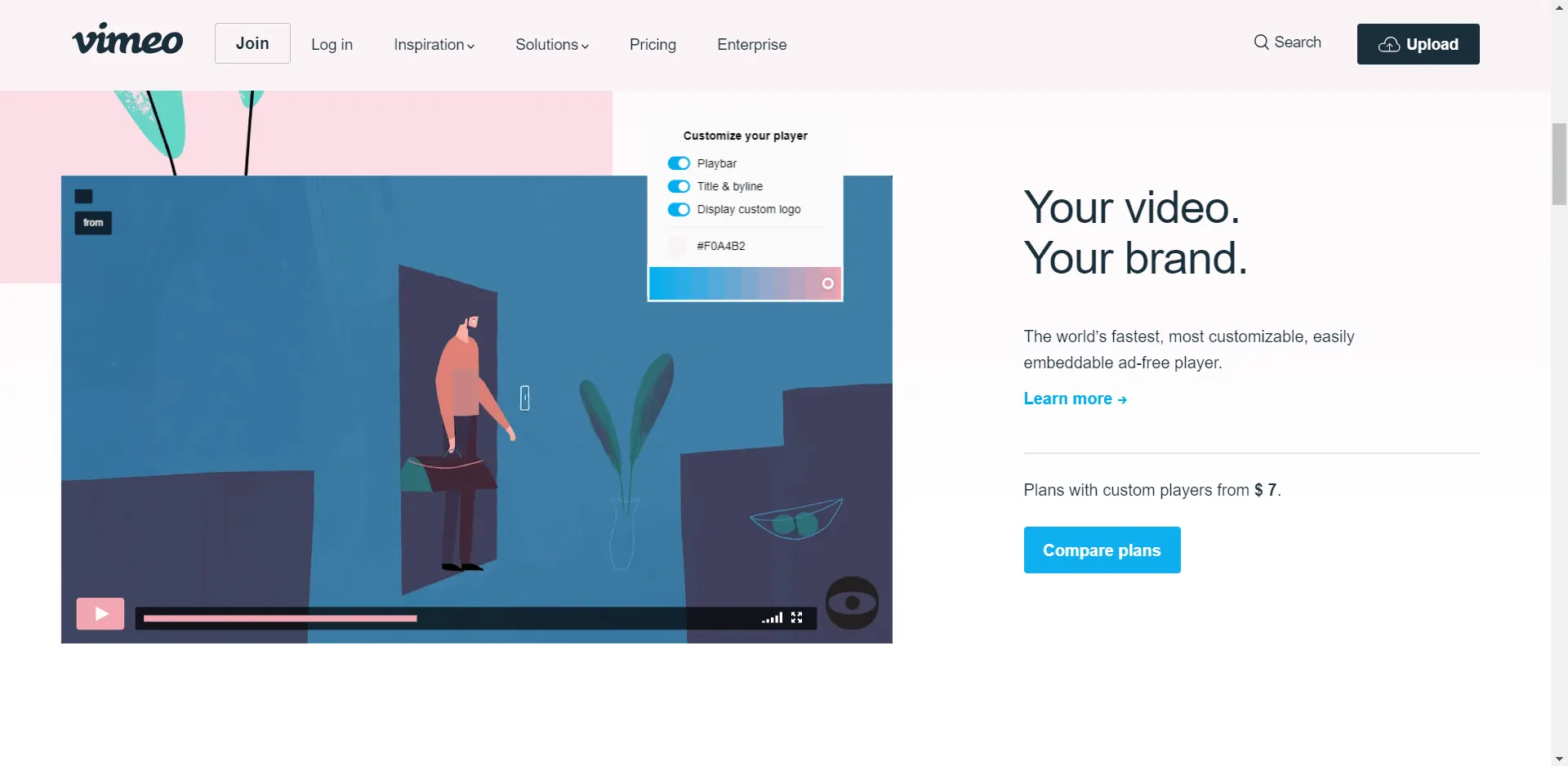
    vimeo landing page

    Explainer Video

    If you use WhatsApp on your desktop browser often, you would have noticed the explainer video on their web.whatsapp.com page which explains how to scan the QR code with your phone and use WhatsApp on your desktop.
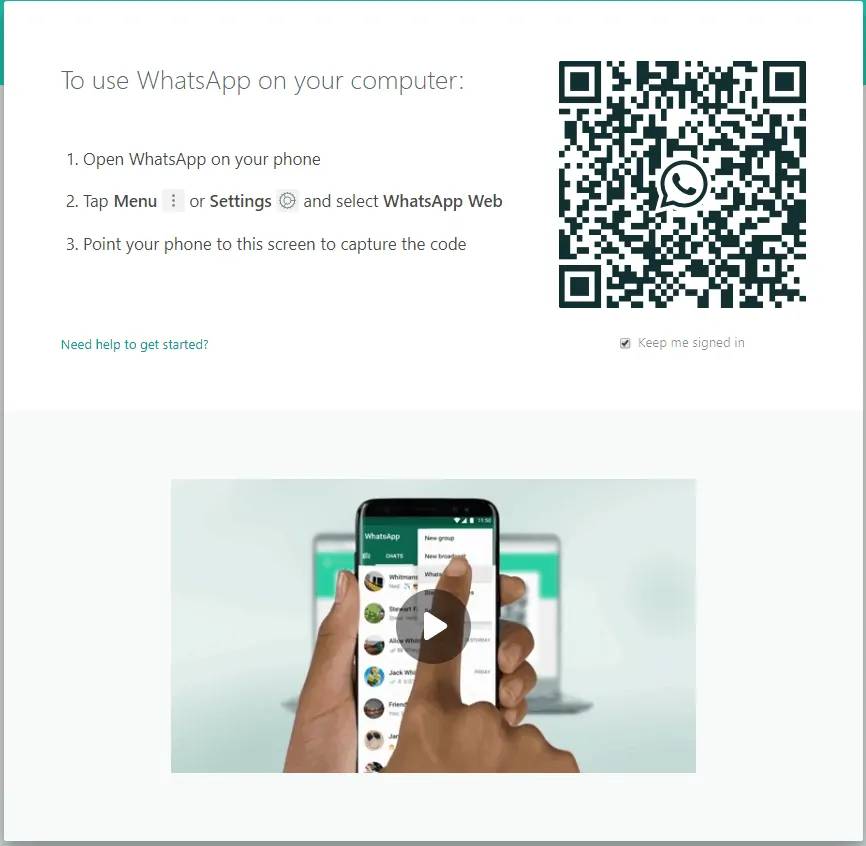
    whatsapp web

    Social Media Campaign

    A few years back, Always won over the internet with their #LikeAGirl campaign. They chose a controversial topic and developed a video with a compelling message which capitalized on viral marketing.

    Vlog

    Hubspot runs a vlog called Hubspot Academy where it teaches the intricacies of inbound marketing. This is a great content marketing strategy that makes the use of video marketing to increase brand exposure.

    Live Video

    Facebook went live with its F8 conference where Mark Zuckerberg revealed many of the new features and plans of Facebook. The video was further boosted as an ad and resulted in over a million viewers.

    https://www.facebook.com/FacebookforDevelopers/videos/422572928569998/

    Bottom-Line?

    As you can see, you can’t undermine the growing importance of videos in marketing and video marketing as a whole. If you are in the game using videos, make sure you do it better than your competitors, and if you’re new to the game, make sure to learn and research before you play your shots.

    Go On, Tell Us What You Think!

    Did we miss something?  Come on! Tell us what you think about our article on video marketing in the comments section.
  • What Is Market Research? – Types, Methods, & How To Do It

    What Is Market Research? – Types, Methods, & How To Do It

    Just having a strong gut feeling isn’t a very good reason to launch a product in the market without validating its demand, develop a marketing strategy without knowing the target audience, or just start a business when you don’t even know who your competitors are.

    Accurate and thorough information is a prerequisite to a successful business venture because it helps the entrepreneur to determine the feasibility of his business before committing much to it.

    Market research is what provides him with the relevant data to help him solve the challenges he’ll face during his business tenure.

    What Is Market Research?

    Market research is a systematic process of gathering, analyzing and interpreting data about the market to better understand the target group and to make more informed decisions about the company and its customers.

    The result of market research is used to validate or invalidate hypotheses about the potential customers, their characteristics and habits, location and needs of the market, the competition, and the industry as a whole.

    The Purpose Of Market Research

    Market research forms the base to the business plan and the 4 Ps of marketing. Its primary purpose is to validate business hypotheses upon which successful strategies can be developed.

    Why Is Market Research Important

    In this era of cut-throat competition, having data to rely on is essential. Market research helps the business get the data to –

    • Gain more insights about the customers and competitors – Market research helps the businesses to discover customer’s buying trends, habits, decision-making process, etc. It also provides them with the data of how the existing players are performing in the market.
    • Reduce the risk of business/strategy failure – Accurate and up-to-date information about what drives the market helps the business to make more informed decisions and reduces the risk of failure.
    • Forecast future trends – Market research is an important tool not only to know about the current trends but also to get data on what to expect in the future.

    Market research is essential to get answers to questions like –

    • Who the customer actually is?
    • What factors affect his buying decisions?
    • How well are the company’s products selling?
    • What are the competitors doing in the market?
    • What changes are currently happening in the market-place and what all can be expected?

    The Types Of Market Research

    Even though the definition of market research remains the same always, it can be classified into different types based on the goals, types of information required, and the way the information is collected.

    Types Of Market Research Based On The Research Goals

    • Exploratory: Exploratory research explores the nature of a problem. It is not intended to provide a final and conclusive solution to a problem but just to explore research questions. It usually includes open-ended questions and is used for exploring growth options, company’s present and prospective issues, etc.
    • Descriptive: Descriptive research is used to describe the situations and is conclusive in nature. It is also called statistical research and is used to quantify data in situations like the market potential for a product, demographics of the target market, etc.
    • Casual: Casual research is also structured and conclusive research used to explain the cause and effect relationship between variables. An example of casual research would be research to find out if the new package design increases the sales of a toy or not.

    Types Of Market Research Based On The Type Of Information Required

    • Qualitative: It is intended for exploratory research. That is, to explore and gain an in-depth understanding of how things work or how to solve a problem. The data collected in qualitative research is usually unstructured or semi-structured which is further used to set the hypotheses for further quantitative research.
    • Quantitative: It’s statistical research which quantifies the data into variables which can be compared and evaluated. This quantified data helps in making definite decisions.

    Types Of Market Research Based On The Way Information Is Collected

    • Primary: Primary research is when the business collects the information itself or hires a third-party to do the same. It is designed to meet the unique and specific needs of the business concerned. It usually includes focus groups, questionnaires, surveys, interviews, and observations.
    • Secondary: Any data taken from research or study that has already been done, analysed, and published by others comes under secondary research. This type of research involves obtaining data from studies done by government organisations, research companies, and other businesses of your industry.

    Market Research Methods

    Different types of research employ different methods of data collection. These market research methods can further be classified under two types –

    Primary Research Methods

    • Interview: One-on-one discussions to get qualitative and quantitative data over telephone, video conference, or face-to-face.
    • Survey: Gathering information from a large number of people either face-to-face or through other methods using a standardized questionnaire. It can be used to collect both qualitative and quantitative data.
    • Focus groups: It includes getting a bunch of people in a room and making them a part of a discussion which is pre-planned by the researcher and guided by a facilitator.

    Secondary Research Methods

    • Data available on the internet: Many internet companies and websites either conduct their own research or specialize in consolidating research data which is often available freely over the internet. Internet data from reliable sources is one of the most popular methods of secondary research.
    • Data published by government and non-government agencies: Government agencies and non-government agencies conduct their own large-scale periodic research and make it publically available to be used by other organisations.
    • Public libraries: Public libraries are full of information regarding the research conducted earlier which prove to be useful in comparing and evaluating current and past data.
    • Commercial information sources: This includes sourcing data from commercial sources like newspapers, journals, magazines, radio and TV stations.

    How To Do Market Research

    Market research, especially primary research, is a long process, but it isn’t an uphill struggle. If planned well, it can result in productive data which gives good direction to the company’s business strategies. Here’s how you can conduct market research –

    Define The Reason For The Research

    You should always set a goal for market research.

    What answers do you seek from the people? Is it just to explore the trends, buying habits, needs, wants, etc. or do you want concrete quantitative answers which describe a cause-effect relationship among some variables?

    Identify the problem and develop a hypothesis to be validated by market research.

    Identify The Sample Group

    Once the problem has been identified, look for the sample group who is most likely to be affected by it and who is most likely to give the answers you need to validate your hypothesis.

    Identifying the right sample group is a crucial step of the market research process as a wrong sample set will make the research and its data useless.

    Identify The Most Suitable Research Type And Method

    The selection of market research type and methods depend on many factors like –

    • Is there any similar research conducted prior to this whose data is available for use?
    • Is this research brand/company specific?
    • What’s the nature of the research?

    Prepare The Research Questions

    If a primary research method is selected, the next step is to prepare a questionnaire. Having a standardized questionnaire makes it easy to collect data that can be analysed and compared.

    Here’s a guide on how to make a questionnaire to help you with the same.

    Conduct Research

    This is probably the most time-consuming step in the primary market research process. It involves collecting data by conducting face-to-face surveys, telephonic interviews, online surveys, or other methods which were defined in the previous steps.

    Summarize And Analyse The Findings

    Once the data is collected, the next step includes summarizing it and analysing it to validate or invalidate the hypotheses made before the research was started.

    Often, such data is also arranged in a presentable manner to prepare reports to be used by other people.

    Go On, Tell Us What You Think!

    Did we miss something? Come on! Tell us what you think about our article on market research in the comments section.

  • Questionnaire: Definition, Types, Examples & How To Design

    Questionnaire: Definition, Types, Examples & How To Design

    Be it government, a for-profit organisation, or even a not-for-profit organisation, data collection is of paramount importance for all to get insights on the target market and the current and future prospects of an organisation.

    You need to ask questions to get answers, and a questionnaire helps you just with the same.

    What is A Questionnaire?

    A questionnaire is a research instrument consisting of a set of standardized questions to gather statistically useful information on some subject from one or more respondents.

    To make it simple, consider questionnaire to be written interview consisting standardized questions which can be answered face-to-face, over the telephone, through the post, or even online.

    Purpose Of Questionnaire

    The main purpose of a questionnaire is to extract data from the respondents.

    It’s a relatively inexpensive, quick, and efficient way of collecting large amount data even when the researcher isn’t present to collect those responses first hand.

    But an important factor to note is that a questionnaire isn’t the process of analyzing the responses. The process is surveying.

    Survey vs Questionnaire

    A questionnaire just a set of questions used to gather statistically useful information from the respondents. It’s often considered as an important tool used in the survey process.

    A survey, on the other hand, is a process which includes using a questionnaire to ask the questions, collect responses, and analyse them to get to a result. Analyzing and appraising are important aspects of a survey which makes it different from a questionnaire.

    Questionnaire types

    A questionnaire is a very useful tool to gather first-hand information from a large audience. It can be categorized into two types –

    Descriptive Questionnaire

    A descriptive questionnaire is developed to capture or document the extent of a particular topic or issue within a population of interest, that is, what exists at the moment. Questions in this questionnaire are usually focused on how many people participate in a certain behavior or hold a particular opinion.

    An example of a descriptive questionnaire would be a questionnaire to calculate the percentage of people who vote and people who don’t.

    Analytical Questionnaire

    An analytical questionnaire is developed to explore and explain relationships between particular concepts, that is, why certain situations exist. Analytical questionnaires usually examine two or more variables and are used in theory building and hypothesis testing.

    An example of an analytical questionnaire would be a questionnaire to examine the interrelationship of lifestyle with TV viewing habit.

    Types Of Questions In A Questionnaire

    Now, both descriptive and analytical questionnaires include a set of questions that also be categorized into two types. These are –

    Open-Ended Questions (Unstructured)

    These include qualitative questions which are more open and allow the target audience to voice their feelings and notions openly. Such questions record more data as they don’t have a predetermined set of responses and the respondents express their opinions in a free-flowing manner.

    Not having options to choose from results in avoiding bias and getting actual answers from the respondents.

    Qualitative questions, however, prove to be hard from the researcher’s side as different respondents usually have different opinions and it becomes hard to process the qualitative data.

    Open-ended questions are usually used –

    • At the time of the interview
    • To collect data about the personal lives of the respondents like beliefs, family relations, motivations, etc.
    • To ask questions to get opinions or views about an aspect.

    Examples of such open-ended questions are –

    • Suggest your opinion to reduce plastic pollution in urban cities.
    • How can we reduce the men-women pay gap?

    Close-ended questions (structured)

    Structured questions have multiple options as answers and ask the respondents to choose either one or more than one option as an answer. Close-ended questions are used to conduct quantitative research.

    Such questions are definite and are usually prepared well in advance so as to get as many responses and information from the respondents.

    Open-ended questions are usually used –

    • To get feedback on a product, service, policy, etc.
    • To collect data that can easily be structured into options.

    Examples of such close-ended questions are –

    • How do you rate the services of your library?
    • How much satisfaction do you get from your job?

    Importance of Questionnaire

    Questions are considered to be of vital importance for research, feedback, and control. A survey without a questionnaire is as incomplete as a dish without ingredients.

    A questionnaire is an effective tool to measure the attitudes, beliefs, behavior, preference, opinion, and intentions of a relatively large number of people with respect to one or more than one specific subjects.

    Questionnaire Advantages And Disadvantages

    Designing and using a questionnaire has its own perks and cons. The advantages of questionnaires include –

    • Inexpensive way of collecting data.
    • Generates a large amount of data.
    • Usually has an easy-to-understand and easy-to-respond design which makes it easy to understand and respond to.
    • The responses can be easily quantified. It can also be used to compare and contrast other research.
    • It’s easy to analyse the results of a questionnaire.
    • The qualitative and quantitative data collected from a questionnaire helps the surveyor to create new strategies and learn about the trends in the audience.
    • Questionnaires often let its respondents maintain their anonymity.
    • It’s not always necessary to have a personal touch while getting the responses from the respondents.

    However, questionnaires have many disadvantages too, like –

    • Respondents are sometimes dishonest while answering the questions.
    • When it comes to open-end questions, it becomes difficult to understand and interpret the responses.
    • A questionnaire isn’t a perfect tool to know about the feelings and emotions of the respondents.
    • Lack of personalization demotivate the respondents and many don’t even respond to it.

    How To Make A Questionnaire?

    Making a questionnaire isn’t an uphill struggle if you are clear about your questionnaire agenda and your target respondents. Here are the four steps you need to follow to design a good questionnaire –

    Identify Your Research Aims And Questionnaire Goals

    Identify the purpose of your questionnaire and develop a hypothesis you need to test by asking questions. This forms the base of your questionnaire.

    Define Your Target Market

    The next task is to define who you’ll be asking those questions. Questionnaires only give results when the questions are asked to the right people – those who relate to the questions in some way or the other.

    Decide The Medium To Collect Responses

    It’s an important task of questionnaire designing. Try to ask questions from your target audience where they actually are.

    Remember that they won’t get out of their comfort zone to fill your questionnaire.

    Build Your Set Of Questions

    Once the questionnaire objective, target respondents, and delivery medium are defined, it becomes easy to list down the questions.

    Choose from a mix of open-ended and close-ended questionnaire questions and only include questions that are absolutely necessary. Questionnaires often become boring if unnecessary questions are added to it.

    Try not to use technical terms or jargon as much as possible. Also, make sure to optimize each question separately yet build a logical sequence to your questionnaire to make the transition from one question to another as smooth as possible.

    Questionnaire Examples

    Here are a few questionnaire examples to help you develop your own questionnaire without much hassle.

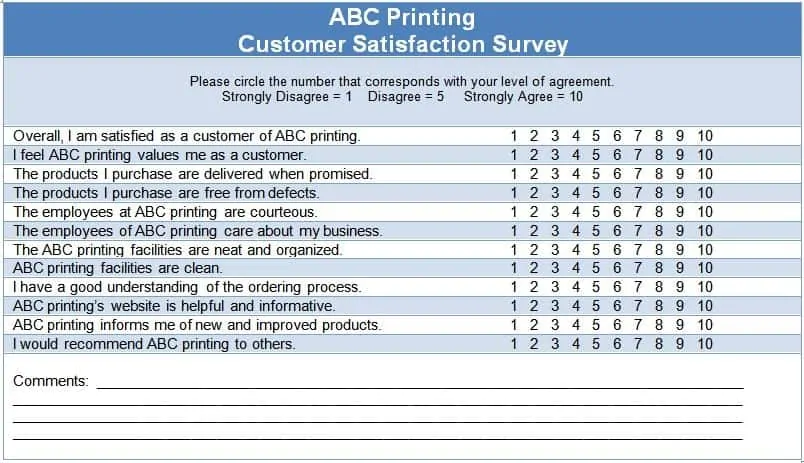
    Customer Satisfaction Questionnaire

    Customer Satisfaction Questions

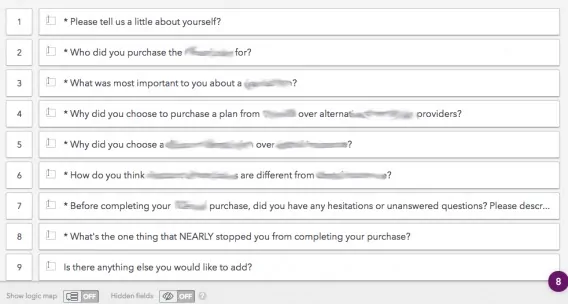
    Psychographics Questionnaire

    psychographics questionnaire
    Source: Conversionxl

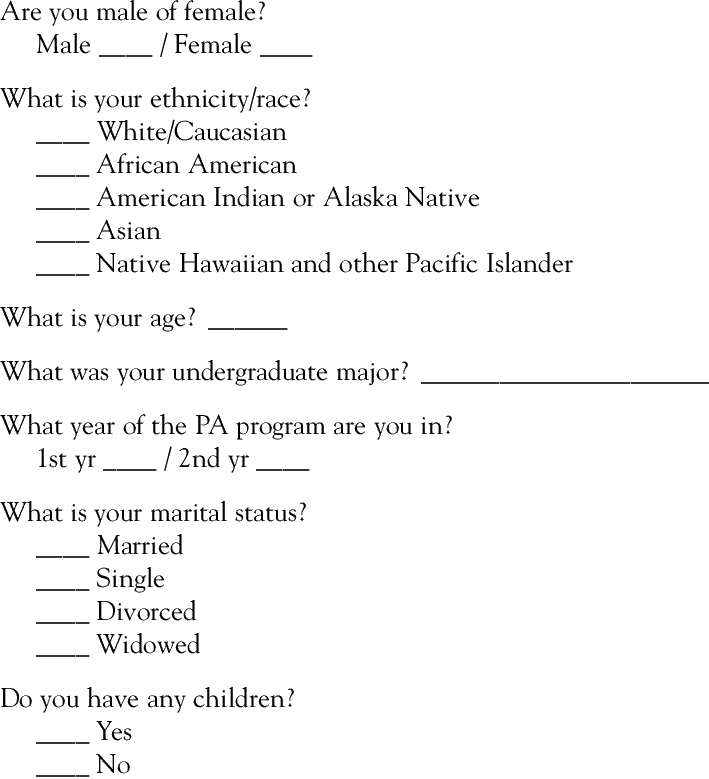
    Demographic Questionnaire

    demographic questionnaire
    Source: Research Gate

    Go On, Tell Us What You Think!

    Did we miss something? Come on! Tell us what you think about our article in the comments section.

  • Netflix vs. Hulu: A Comprehensive Comparison

    Netflix vs. Hulu: A Comprehensive Comparison

    There was a time when the only things we subscribed to was the local newspaper and a cable TV package. This, however, has changed. We now have more subscriptions than we can keep track of.

    Netflix and Hulu are the few things that come to mind every time you hear “movie streaming” or “subscriptions”. But deciding between them can be a bit of a hassle with either offering something you like, but not everything in the same package.

    Listed below are important categories for you to compare and consider between the two. Let’s go!

    Netflix vs. Hulu – Basic Overview

    Netflix is mostly about providing original shows and movies. Bojack Horseman, Daredevil, House of Cards, Luke Cage, Narcos, Orange is the New Black, Peaky Blinders and Stranger Things are few shows from Netflix’s ever-expanding Originals library. Paired up with a larger movie library, helps satisfy your on-demand entertainment needs.

    Meanwhile, Hulu shines in the TV department with affordably priced live TV option, along with its own library of movies and Originals. If you want to catch the next-day airing of the shows, then Hulu is your best and only bet between the two. This does not mean that Hulu lacks its share of Originals. Shows like The Handmaid’s Tale, Castle Rock, Casual, The Act, Veronica Mars, Catch 22, Runaways, Future Man and The Path are examples of great Hulu Originals that draw users to Hulu.

    Plans

    Netflix
    Hulu
    $9 (1 device, SD streaming)
    $6 (ad-supported)
    $13 (2 devices, HD streaming)
    $12 (ad-free)
    $16 (4 devices, 4K streaming)
    $45 (Hulu with Live TV)
    $51 (Hulu no-ads with Live TV)

    (Note: Monthly Plans; Both offer lengthy free-trials)

    Netflix

    Netflix’s plans are on the higher side, even when compared to the rest of the competition. The $9 per month plan allows streaming Standard Definition (SD-480p) content on 1 device. But with most of the devices we own currently supporting HD videos, it makes sense to get the $13 plan that allows for HD streaming on 2 devices simultaneously. There’s also the Premium plan costing $16 which basically takes everything to the next level – 4K streaming on 4 devices simultaneously.

    Hulu

    Hulu is a great choice for those looking for an economical yet fully-fledged streaming service. With its $6 per month ad-supported plan, users can get access to the entire Hulu library, but with ads thrown into the mix. Users who don’t want to see the ads can upgrade to the $12 per month plan.

    The real USP of Hulu lies in the fact that it offers a monthly $45 plan which bundles the regular Hulu subscription along with Live TV thrown in. This allows users to customise and view live TV channels anywhere in the world on their device running Hulu. The $51 plan is just the ad-free version of the $45 plan. Hulu allows for 2 devices to stream simultaneously using the same account by default.

    Content

    Netflix
    Hulu
    4K HDR & Dolby Atmos Content
    Live TV
    Ad-free
    Cloud DVR
    Option to watch offline (all plans)
    Ad-supported & Ad-free
    Option to watch offline (only on Ad-free plans)

    Netflix

    Netflix has a clear focus on original shows and movies. It frequently updates its library, making it perfect for viewers who like on-demand entertainment and movies in general. But unlike Hulu, it has no live TV. Netflix also frequently changes its popular shows available for streaming – not all content is available every time.

    Netflix has a clear lead in terms of video and audio on offer. It supports streaming of certain content in 4K (in HDR if available), with many having Dolby Atmos-certified audio. Netflix is the go-to if you’ve got hardware capable of playing them for a great watching experience. Netflix has always had the option for users to be able to download its content in advance to watch offline. Though Netflix has been recently testing out ads on its platform, it generally is an ad-free experience and Netflix claims it’ll remain so for the foreseeable future.

    Hulu

    Hulu has a clear focus on TV shows and live TV. Hulu has become quite synonymous with the live TV it offers. Subscribers of the $45 and $51 plan can watch from 50+ live TV channels that they subscribe to, along with the rest of the Hulu library, right from Hulu app. This means that they can watch live TV from anywhere via their Hulu app.

    Another feature on offer here is the Cloud DVR that allows customers to record shows that air at the same time but on the Hulu’s cloud datacenters and watch them anytime later. Live TV subscribers ($45 and $51 plans) get 50 hours of cloud DVR storage, which can be increased to 200 hours for an extra $10 per month.

    Hulu does not have the lead in terms of 4K content. It had launched 4K content in 2016, pulled it back just to bring it back in July this year. The 4K content is limited to select list of programming and most of Hulu’s Originals. But it has a lot of exclusive originals, similar to Netflix’s, on offer. Hulu only recently launched offline downloads to be available for users on the Ad-free ($12 and $51) plans.

    Simultaneous Streams

    Netflix
    Hulu
    Maximum 4 simultaneous streams
    2 simultaneous streams on all plans (“unlimited” with an add-on)

    Netflix

    Netflix offers a varying number of simultaneous users on its plans – Basic plan allows 1 device to stream in SD resolution, Standard plan allows for simultaneous streaming on 2 devices at HD resolution and the Premium plan allows for 4 devices at 4K resolution.

    Hulu

    Hulu allows for 2 simultaneous streams on all of its accounts by default. In case you want to add more devices, you have to be on the $45 or $51 and pay $10 per month. This allows the sharing of your Hulu account on “unlimited” number of devices – but have to be connected to the same Wi-Fi network. This $10 per month add-on also allows you to access Hulu on three devices on any network, but they’d have to be connected to the Wi-Fi network once every 30 days to keep functioning.

    Availability

    Netflix
    Hulu
    Available in over 190 countries.
    Available only US & Japan.

    Netflix

    Netflix has Hulu beat in the regions available. Netflix is available in over 190 countries around the world, but with content varying according to region and time. But this doesn’t take away from the fact that Netflix is present in almost every country in the world.

    Hulu

    Hulu is available only for the United States (& US territories) and Japan as of writing. Hulu is not available internationally and doesn’t seem to have any plans expanding to other countries in the near future.

    Recommended Internet Speed

    Netflix
    Hulu
    Standard Definition (SD): 3 Mbps per user
    Standard Definition: 1.5Mbps per user
    High Definition (HD): 5 Mbps per user
    HD: 3Mbps to 6Mbps per user
    4K (UHD): 25 Mbps per user
    Hulu + Live TV: 8Mbps per user
    4K: 16Mbps per user

    The Bottom Line

    You can definitely see the trend each offering takes on their services. Both cater to the streaming audience quite well – but in different venues.

    Netflix is more focussed on providing original shows and movies and has no live TV. When compared to Hulu, Netflix lacks in terms of the latest TV shows and TV programming in its library.

    Hulu shines in the TV department with affordably priced live TV option, along with its own library of movies and Originals.

    You can get both if possible as they complement each other quite well. But, you can’t go wrong with either.

    Go On, Tell Us What You Think!

    Did we miss something? Come on! Tell us what you think about our article on Netflix vs. Hulu in the comments section.

  • 13 Types Of Investors For Startups

    13 Types Of Investors For Startups

    So, you’re an entrepreneur with an extraordinary idea for a startup which is surely going to disrupt the existing market; and now all you need is some funding to convert this idea into an ideal business.

    But the big question is –

    Who will fund your idea and why?

    Generally, entrepreneurs get help from different startup funders at different growth levels of a startup. During the initial stages, when the idea needs to be validated and the business is yet to be started, the founders either use their personal savings or get funds from their friends and family.

    As the startup grows, different investors come into play, starting with seed investors (angel investors) who invest in the idea and the team, and moving towards venture capitalists who judge the past records and the future strategies to fund the startup in return of some equity.

    However, many startups take different routes altogether. Some go for crowdfunding, some take loans, and some even bootstrap. But even though bootstrapping work for some time, you’d eventually require money to make more money when the business grows, when the demand increases, or when you need to scale.

    If you’re one such entrepreneur looking for funding for your startup, here’s a list of the types of investors who’ll help you during your entrepreneurship journey.

    Friends & Family

    Friends and family members are usually the first investors of your startup. They may or may not ask for equity while investing and invest in your idea solely because they believe in you and your vision.

    This investment may not be much monetarily (it may range from $1,000 to $200,000) but it can be a huge morale booster for you and your team. Moreover, this investment can prove out to be very useful to validate your idea by releasing an MVP or a prototype before taking your idea to big investors.

    Banks & Financial Institutions

    Many entrepreneurs prefer debt over investor funding, mainly because it doesn’t dilute their decision-making power.

    Many banks and financial institutions provide startup business loans and small business loans at competitive interest rates. Even though the money lent isn’t as much as provided by angel investors, it can be a good start for those entrepreneurs who –

    Government

    Disrupting the existing industry isn’t easy and the top officials understand that. Therefore, the government of many countries provide special grants to startups involved in certain sectors which will eventually benefit the economy or growth of the nation.

    Other than this, many government departments (like SBA in the USA and Startup India in India) also provide grants for research and development, exports, and other uses.

    A simple Google search can help you find a suitable government grant you can apply for.

    Angel Investors

    Angel investors (or seed funders) are high net-worth individuals who invest in startups in their early stages in return of some equity in the company. The main motive of their investment is to generate good profits when the startup grows and its value rises.

    Besides providing monetary help to the early-stage startups, these angel investors also provide much wisdom and networking opportunities to the entrepreneurs.

    Angel investors can be approached directly either online through emails, Linkedin messages, etc. or offline during networking events, or with the help of mutual connections.

    Angel Groups

    Angel groups are groups of angel investors who usually work together as a group to evaluate and invest in startups.

    Usually, such groups focus and invest in startups belonging to a concentrated geographic region, industry sector, and/or a combination of both depending on the group members’ expertise.

    Since angel groups invest a pool of investment pitched in by the members, they are able to provide in larger investments as compared to an individual angel investor. According to the The Angel Capital Association, the median investment per round per angel group is usually $277,000.

    However, unlike angel investors, angel groups require approvals and evaluations by the members which result in time-intensive evaluation periods, insufficient actual investments, and investment terms that may not be correlated with market terms.

    Incubators & Accelerators

    Both accelerators and incubators offer you much needed support for your startup. Startup incubators are not-for-profit organisations which incubate your startup idea and prepare you to effectively lead your company in the long run by providing help in kind, which includes infrastructure, networking, advisory, manufacturing aid, training and guidance. Even though this doesn’t count as an investment, it surely saves a lot of your money especially if you’re running a very early stage startup.

    Startup accelerators, however, are for-profit organisations which provide fixed-term, cohort-based, and mentorship-driven programs which include seed investment, networking, and learning. In return, accelerators take percentage equity of the startup.

    Many entrepreneurs prefer seed accelerators over angel investors as these accelerators provide way more than just seed investment to their venture.

    Fellowships

    Many startup fellowships like Thiel, Baltimore, Kauffman, etc. provide grants and awards to the entrepreneurs who they deem fit for the same.

    Even though selection to such fellowships is harder than approaching an angel investor, you should give them a try as most of such grants (ranging as high as $100,000) don’t come with any strings attached and your decision-making power doesn’t dilute.

    Here’s a list of 8 best entrepreneurship fellowships to help you with the same.

    Venture Capitalists

    Venture capitalists are very high net-worth individuals or firms which fund early-stage startups in exchange for an equity stake. Venture capital comes after seed investment and these firms usually invest in startups which have validated their business ideas and have proven their reason for existence.

    Besides monetary investment, VCs also provide guidance and direction to the companies they invest in and take an active part in the decision-making process too.

    However, not every startup succeed in getting funds from VCs. The process is very long as it involves a lot of examinations from the investors’ side.

    Less than 1% of companies succeed in securing venture capital.

    But –

    Venture capital is a required investment as after a certain stage, startups require a large sum of money which banks are not willing to lend because of the failure rate of startups (9 out of 10 startups fail). And if they do give the loan, they charge very high interests which many startups can’t afford.

    Crowdfunding

    Crowdfunding is a slightly new investment option for entrepreneurs to finance their startups. Thanks to startups like Kickstarter, Indigogo, etc., you can now go away with the traditional ways of raising funds and raise small amounts of money from a large number of people to finance your startup.

    The best part?

    You don’t have to dilute your equity.

    This type of investors invests in your startup because they get something in return, which is usually your product or service delivered to them before the actual launch. You can even decide the minimum investment for your startup and the perks the investors will get.

    If you’re new to the concept of crowdfunding, here’s a detailed guide to launching a successful Kickstarter campaign for your startup.

    Crowdlending

    Peer-to-peer lending, also called crowdlending or P2P lending, is a practice where entrepreneurs get loans directly from the individuals by using an online platform which matches borrowers with lenders.

    These online platforms have low overhead costs than financial institutions and banks which makes it possible for them to provide high interest to the lenders and low interest to the borrowers. Most of the loans offered on these p2p lending platforms range from $1,000 to $40,000 and have repayment periods of approximately 36 months.

    Such platforms are a good alternative for those entrepreneurs who are looking for funding as a debt but can’t take loans from the banks.

    Corporate Venture Capital

    Large companies like Intel, Microsoft, and Qualcomm, etc. have dedicated departments that focus on investing the capital funds into startups that may prove beneficial to the company in future.

    This process is known as corporate venturing.

    Often, it’s not just equity that is traded in such investments. Usually, corporate investors also use the disruptive idea, innovative technology, or the out of the box talent of the startup to diversify, fend off industry changes, and increase their revenues.

    While many entrepreneurs consider this as raiding of their brain-child, many welcome corporate investors as allies who help them take their business to the next level. Many even plan corporate investment to be their exit strategy.

    Family Offices

    Family offices invests funds on behalf of high-net-worth individuals or extended family of high-net-worth individuals.

    These work in a manner similar to angel investor and angel groups but are often less specialised when it comes to startups.

    Registered Investment Advisor

    A registered investment advisor is a financial professional hired to manage investments funds and financial decisions on behalf of high-net-worth individuals.

    These advisors also sometimes invest in startups if they or their client see any benefit in investing in such startups.

    Bottom-Line?

    Funding isn’t limited to equity and debt anymore. There are numerous ways to get your startup funded including the out-of-the-box options like crowdfunding and crowd-lending. However, some of these options unlock only once you’re ready with your product.

    That being said, make sure you’re clear with what and how much your startup needs (and deserves) as it’ll make your startup investment decision easier.

    Go On, Tell Us What You Think!

    Did we miss something?  Come on! Tell us what you think of our article on types of investors in the comment section.

  • Startup Bootstrapping: A Detailed Guide

    Startup Bootstrapping: A Detailed Guide

    Being an entrepreneur, you have four usual funding options. These include –

    Now, when we talk about bootstrapping a startup, we refer to how you can skip the first three options of the list above and launch your startup using your own funds. Even though the funds might be limited for most entrepreneurs, bootstrap financing has many perks.

    Here’s a complete guide to help you bootstrap your startup without diluting your equity and get into debt.

    What Is Startup Bootstrapping?

    Bootstrapping is a self-funding, self-starting mechanism where the startup founders launch their startup company without external funding assistance.

    A bootstrapped company differs from a financed company substantially. It has the following characteristics –

    • The company is started by either using the personal finances of the founders or the operating revenues of the new company.
    • The founders focus on minimising the expenses by relying on sweat equity, lean methodology, quick inventory turnover, and a long cash runway (amount of time you can survive before running out of money).

    The Advantages And Risks Of Bootstrapping

    Bootstrapping is a very effective form of starting a business. It has the following perks –

    • It doesn’t involve many costs –Debt raising involves the monetary cost of interest on investment. Fundraising involves the emotional cost of sharing decision-making power. But bootstrapping is a cheap alternative which doesn’t involve such monetary and emotional costs.
    • More say in the decision-making process – Since no external monetary aid is involved in bootstrapping, the equity isn’t diluted much, and founders have more say in the decision-making process of their business.
    • More creativity in the organisation – Bootstrapping involves the use of limited resources to fulfil a large number of tasks. This inculcates a culture of more creativity where everyone looks for ways to minimise the use of resources in everything they do.
    • Full concentration on the core business – When there no stress of raising external financial aid, founders and employees focus more on growing their core business.
    • Makes the company highly attractive for future funding opportunities – The fact that business was able to start on its own makes it very attractive to future investors.

    No matter how good starting the business with own funding seems, bootstrapping your business has many disadvantages too. These include –

    • Limited capital – No matter how much a founder invests, it is usually less than what comes from venture capitalists. This can make the business to lack some important resources.
    • Largely distributed equity – Bootstrapping often results in entrepreneurs relying on sweat equity which eventually results in equity being largely distributed among employees. This makes it hard for them to make decisions themselves as now others have capital interest in the business too.
    • Less cash flow – Many problems can arise if the operating profits of the business aren’t enough to cover for the operating and capital expenses of the business.
    • Personal financial debt – Usually, the funding is provided by one or two founders who feel more financially stressed than others involved in the business.
    • Competitive disadvantage – Money can often develop into a great competitive advantage for your competitors which can pose a big barrier to entry for your business.

    Bootstrapping vs. Fundraising

    Bootstrapping is basically you using your own resources to build your business. Fundraising, on the other hand, can be considered as selling your idea to an investor who then offers you money to build your business in return for some equity.

    Fundraising, even though brings in a lot of money, dilutes your ownership of your idea. The investors join the board and play a significant role in decision making. You can, however, focus on the growth of the idea and need not worry about limited resources which would have been the case if you had bootstrapped.

    However, many experts believe that you learn a lot more when you bootstrap as you –

    • Focus more on the profitability – as your business requires operating profit to run.
    • Develop more skills – you develop most skills yourself to save money by hiring or outsourcing work.
    • Become more creative – creativity is an essential skill when you have to allocate limited funds fulfil numerous objectives. Bootstrapping helps you to be creative and spend the least while producing and marketing the offering.
    • Understand the value of small goals – you view success as a ladder where every small goal fulfilled takes you to a higher place. Fundraising, on the other hand, requires you to show results in the form of big numbers.

    Stages Of Bootstrapping

    A usual bootstrapped company grows through the following stages –

    • Personal fund: Involves launching the startup either using personal savings or borrowing money from family and friends, or by earning money through a side business.
    • Customer fund: At this stage, the company is earning enough profits to cover the expenses and fund its growth strategies.
    • External Fund: The stage where operating profit isn’t enough and the entrepreneurs must look for external funding aid either to scale or to execute any other strategy. The external fund can be raised from venture capitalists (equity) or financial institutions (debt), or by going public (IPO).

    However, there are many cases when the company never actually moved from the second stage to the third stage.

    Should You Bootstrap Your Startup?

    So how do you decide if you require external funding or bootstrapping may work for you? Well, ask yourself these two questions –

    • Do you have enough money to fulfil the growing needs of your company for at least 3 years?
    • Can the company generate enough profits to cover its operating and capital expenses for at least 3 years?

    If the answer to any of these questions is yes, go for startup bootstrapping. Here are some tips to help you with the same.

    How To Bootstrap a Startup?

    Pick Team Members Who Complement Your Skills

    Having a founding team with complementary skills often results in a lot of money being saved. If you’re a tech person, partnering with someone good at marketing will save a lot of costs while promoting the business.

    Start Small

    It’s easier to target micro-niche during the initial stages of the business. Having less but more loyal customers bring in cash consistently and help you grow eventually.

    Become the big fish of the small pond before heading to the big pond.

    Don’t Focus On Personal Profits Initially

    Try to take as less as possible from your business. Many successful bootstrappers didn’t even take a penny from the business when it was still growing.

    Remember, your remuneration is still a cost for your startup.

    Learn As Many Skills As Possible

    The more skills you learn, the more money you save. Be a multitasker.

    Be Creative

    Be creative when it comes to resource allocation. Always look for ways how you can assign fewer resources to fulfil the tasks.

    Develop A Good Revenue Model

    Funds from bootstrapping finishes sooner than expected. Work on your revenue model so you can generate profits as soon as you can.

    Examples Of Bootstrapped Startup

    Majority of the successful companies (like Microsoft, GitHub, Dell, HP, etc.) we see today were once bootstrapped startups. Some of the examples of such companies are –

    Apple

    Started in a garage in the 1970s. Steve Jobs and Steve Wozniak bootstrapped Apple by selling their car and calculator. They even smartly promoted their product initially by creating a buzz in a local meetup at the Homebrew Computer Club. Jobs negotiated with the suppliers by calling everyone and telling them about his vision. He eventually received net 30 terms without any proven credit to their name and fulfilled the order.

    Kayako

    A perfect example of a bootstrapped startup where the founder learnt the skills himself to keep the company going. Started in 2001 by Varun Shoor in Jalandhar, India, Kayako is a help desk software and customer service software company having over 131,000 customers today. Varun learnt to program at the age of 13 and started working on the company when he was just 17. The company remains one of the biggest bootstrapped SAAS companies.

    Go On, Tell Us What You Think!

    Did we miss something?  Come on! Tell us what you think of our article on startup bootstrapping in the comment section.

  • Brand Building: How To Build A Brand For Your Business

    Brand Building: How To Build A Brand For Your Business

    Your brand is what other people say about you when you are not in the room. – Jeff Bezos

    Well, no one would agree to this more than Pepsi. Launched in 1965, the company was almost never able to win the customers away from Coca-Cola for nearly 10 years even though it believed to have a better taste. People always preferred Coke over just because they had their emotions attached to it.

    They were brand loyal.

    But this didn’t make Pepsi lose hope. The brand ran independent tests where it made the target customers taste the two cola brands while blindfolded.

    The result?

    Over 50% of the people chose Pepsi over Coca-Cola when they tasted without knowing which product was of which brand, proving they were more influenced by the Coca-Cola brand than the product itself.

    A brand is what influences the customer’s decision when the offerings in the market don’t differ much. It’s what consumers’ form a perception of while consuming the products. And it’s what enables them to choose the product again after having a good experience with it.

    But it’s not easy to build a brand. It may take you years to build a successful one that has its own space in the market.

    But fret not. Here’s a brand-building guide to help you start with building your own brand.

    What Is A Brand & Why Is It Important?

    A brand is the combination of properties within and outside a product that gives an identity to the generic product.

    It is what the customer recognise and use to differentiate when they are offered several products that perform a similar function.

    Consider a brand as a person.

    Now, properties that make a usual person unique are name, attributes, associations, personality, voice, and experience. Similarly, if such properties are added to a product, the process is termed as branding.

    • Name: What the product is called?
    • Association: Intangible features like logo, colours, voice, etc.
    • Attributes: The characteristics like credibility, sustainability, appeal, etc.
    • Personality: Personal traits which make the brand behave the way it does.
    • Voice: The way it speaks to others. It is what differentiates its communication from those of others.
    • Experience: It includes sensations, feelings, responses evoked by a brand whenever the consumer interacts with it.

    The branding process has gained vital importance today as the market is full of companies selling similar products which not only makes it hard for them to sell these products but it also makes it difficult for the customers to choose which of these will fulfil their needs.

    Branding makes the products find their own position in the market by targeting the Maslow’s need hierarchy. Some find their place in the bottom of the pyramid while others make their way all over to the top and fulfil the self-actualization needs of the customers using a similar yet more preferable product.

    But before talking about such positionings, it’s important to understand the basics of brand building.

    What Is Brand Building?

    Brand building is a process of converting a generic product into an artificial person which has its own unique identity and can be differentiated from others in the market.

    It’s a long-term process involving a series of strategies that builds an image of the product which is –

    • Consistent across all the channels,
    • Appreciated by the target market, and
    • Has its own value over and above the value of the product.

    Building A Brand For Your Business

    The brand-building process can be divided into 5 broad steps. These are –

    Understand Your Target Audience

    customer persona

    A brand is built in the eyes of the customers, not in the eyes of the company. It’s the customer who validates the branding efforts of the company and assigns a value to the brand that he would like to pay over and above the generic product’s value.

    Therefore, the process starts with researching and understanding who the customers actually are and what are their aspirations, needs, wants, and desires.

    Developing brand strategies become a lot easier when you know who exactly are you trying to reach.

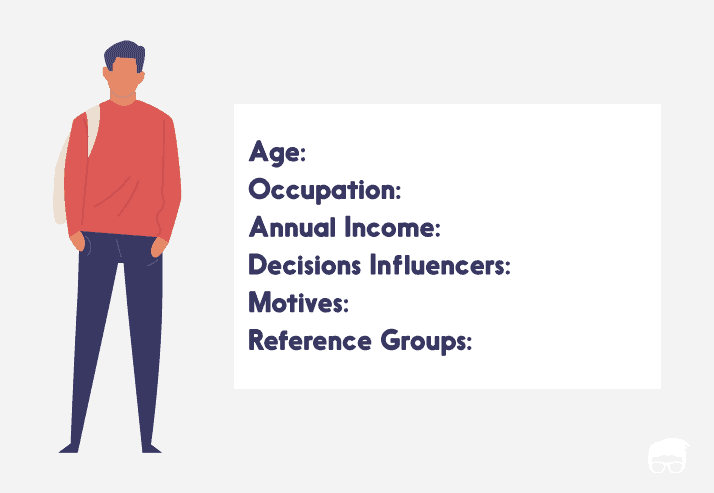
    Build buyer personas to get more specific. It helps you solidify a picture of your target audience even more. Elaborate how your target customer looks, how old is he, where does he live, what does he do for a living, and what’s his daily routine.

    Also, include the factors affecting his decision-making process, find out what his goal in life is, and find out what motivates him to choose a brand over others.

    It’s easier to create an identity for your product when you narrow your target audience. You understand what they look for in a brand and eventually create something that they would love to pay for.

    Do A Competitor Analysis

    Once you know who the customer is, it’s time to move on to research the existing players in the market.

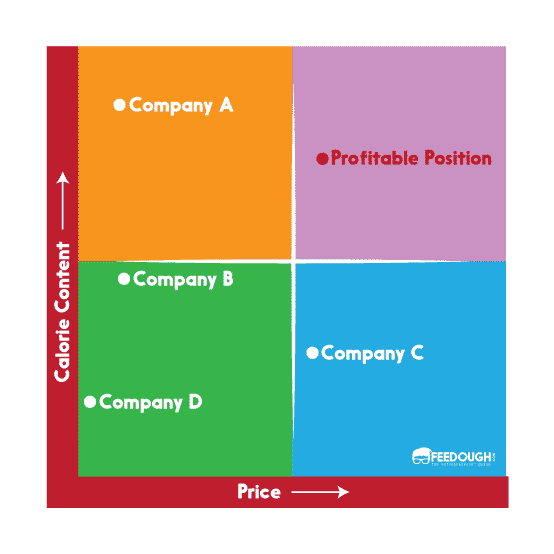
    The goal here is to find the untapped yet profitable space that you can occupy for a long run. We suggest you use perceptual maps to find such a position. It helps you understand how the customers understand the positioning of competing products in the market.

    BRAND POSITIONING MAP

    Once you get the insights on the positioning of the existing brands, move on to creating a competitor research spreadsheet where you delve deep into how they market their brand and product. Use this spreadsheet to know more about –

    • their brand personality (about the brands),
    • their brand message (what their value propositions are),
    • the marketing strategies they use to promote the brand (how they sell the brand),
    • the marketing channels they use to promote the brand, (to whom they sell the brand)

    Develop A Mission Statement

    A mission statement is a brief description of your business’s fundamental purpose. It’s the reason why your brand exists (or will exist).

    It’s a very important part of the brand building process as it specifies your company’s business, objectives, and your approach to reach those objectives; which eventually paves the way for other branding strategies.

    Your mission statement specifies what image do you want your customers to have when they hear or talk about you.

    Take Tesla, for example. Its mission statement is –

    “To accelerate the world’s transition to sustainable energy.”

    …and technically speaking, it is everything Tesla is – developing products to create a dynamic change in the world’s automobile industry with technologically integrated products that rely on renewable (sustainable) energy, while tactfully addressing concerns for environmental conservation.

    Your mission statement forms the base which holds all your business strategies together in place. Make sure to develop a unique mission statement which separates your brand from the ones you researched before.

    Create A Unique Brand Identity

    The next step includes outlining your brand’s attributes, qualities, and benefits, and building an identity for your brand.

    But –

    Building an identity isn’t the ultimate goal of brand building. It’s the brand image that matters.

    Brand identity is the image of the brand from the company’s point of view while brand image is the actual image of the brand in the customers’ mind.

    So, build your brand identity wisely.

    Use this checklist to ensure you plan your brand better –

    • Outline your brand message – the value proposition you want to convey to your customers to set your brand positioning.
    • Give your brand a name
    • Outline associations which help in positioning it the way you want. These associations include – logo, tagline, colours, fonts, website, social media profiles, packaging, etc.
    • Develop short-term and long-term brand strategies. Assign a brand voice and specify how the brand will communicate with the customers. The same communication guideline will be used to communicate with the customers through all the customer touchpoints.
    • Specify the brand architecture – the organized structure of your company’s portfolio of brands, sub-brands, and other offerings.

    Earn Consumers’ Trust

    Customers need to trust your brand before they actually buy products from you. And this trust is what actually results in developing the brand in the minds of the customers.

    The problem here is that it may take years to establish such trust and build the brand you planned initially. But here are some tips –

    • Communicate the same mission statement always: Don’t deviate from your mission statement if you want to position your brand the way you want.
    • Be visible: The rule of thumb here is to be visible where your target audience is. Make them get the essence of ‘what’ your brand actually is by being more visible. If your target market includes baby boomers, head to the brick and mortar stores. If it includes millennials, head to Facebook and target them with personalized ads. And if it includes Gen Z, partner with influencers.
    • Make your brand more personal: It’s easier to trust a brand that seems more human than a brand that seems robotic. Try to be more personal whenever your brand interacts with the target audience directly.
    • Under-promise and over-deliver: The biggest factor which breaks the trust of customers is when brands break their promises. Under-promising and over-delivering is a complete opposite of that. This strategy often creates an element of surprise and results not only in getting more loyal customers but it also helps in the word of mouth marketing.
    • Focus on customer service: If your customers are attended to and their issues are resolved promptly and effectively, they automatically start trusting your brand more.
    • Be available: Never just sell the products and disappear. Make yourself available whenever the customer wants you to be with him.

    Brand Building Example (Starbucks)

    Starbucks isn’t like any other coffee brand. This brand outgrew millions of other coffee brands who sold coffee as just another commodity.

    Starbucks sold coffee as an emotion.

    In the words of Stanley Hainsworth, the former VP creative director of Starbucks –

    A brand is an entity that engenders an emotional connection with a consumer… I think the best brands are those that create something for consumers that they don’t even know they need yet. A coffee brand like Starbucks created something people didn’t know they needed.

    The company focused on creating a coffee brand which sold something more than coffee. It sold coffee as an experience, something which no other brand was selling back there in 1971.

    Howard was very wise in knowing that Starbucks was not the only company in the world to make great coffee. On the contrary, there are hundreds of other companies that can make great coffee. So what’s the great differentiator? The answer is the distinction that most great brands create. There are other companies that make great running shoes or great toys or great detergent or soap, but what is the real differentiator that people keep coming back for? For Starbucks, it was creating a community, a “third place.” It was a very conscious attribute of the brand all along and impacted every decision about the experience: who the furniture was chosen for, what artwork would be on the walls, what music was going to be played, and how it would be played.

    This vision and mission made the company choose a different path altogether and built something everyone wanted to try at least once, even though it cost almost twice what they were paying usually.

    Go On, Tell Us What You Think!

    Did we miss something? Come on! Tell us what you think about our article on brand building in the comments section.
  • What is Payroll? – Components & Payroll Process

    What is Payroll? – Components & Payroll Process

    Payroll processing is one of the most tedious jobs of the month for the HR department of any company. While the hard work pays off eventually, the employees get to have an insight into their performance. So, what exactly does payroll mean and why are organisations today much more concerned about this operation?

    Let’s find out.

    What is Payroll?

    The payroll is an instrument that aims to ensure a transparent channel of wage payment to the employees of a company.

    Technically, a payroll consists of a list of all the employees of a company who are eligible for remuneration and other additional benefits. Certain business houses manage their payroll by outsourcing them and others prefer to do it themselves.

    Components Of Payroll

    Payroll takes into consideration a variety of factors for each employee.

    These include the following:

    • Gross wages: Gross wage is the total amount earned by an employee over a period of time. This includes all the part-time payments, bonus amount, paid leave, etc.
    • Benefits: While a part of these benefits is deducted from the employee’s wages, a significant part is also paid by the company. All these adjustments are made in the payroll to determine the gross wage. Some of these benefits include:
      • Travel allowance
      • Children education allowance
      • Medical benefits
      • Perquisites
    • Insurance: The payroll also determines the medical allowances granted to the employee and the final gross wage after deducting the amount for the purpose.
    • Tax: A payroll also makes considerations for state or federal tax from the gross wage of an employee.

    Apart from all the above factors, the time devoted by the employee is also calculated before directing the final income.

    Maintaining a payroll might sound aggravating to some people. However, payrolls are as important to a company as Anna Wintour is for Met Gala. Don’t believe us? Let us talk some reason into this statement.

    Importance Of Payroll

    Employees are the foundations of a successful business. This sole reason makes it enough to maintain payroll. However, let us talk about the other reasons.

    For The Business

    • Attracts fresh talent: No fresher wants to become a part of an organisation that does not makes the payment on time. On the other hand, prompt payment along with other benefits can improve the quality of staff as well as the dedication of the existing staff.
    • Legal responsibility: Illegal actions of a company prove to be a blot on its goodwill. Hence, it is important to manage payroll to avoid any legal repercussions.
    • Reduces tax: If a company manages to make all the adjustments right while calculating the payroll, it can help in reducing the state tax.

    For The Top-Level Management

    • Helps in comparing the performance: Payrolls are important for top-level management as they help in a detailed comparison of the human resource. This comparison helps in improving the overall performance gradually.
    • Easy follow up of plans and policies: If the top-level management fails to take into consideration the financial health of its employees; there is no chance for a proper follow up of any other plan formulated by them.

    For The Employees

    • Morale boost: Payroll help in boosting an employee’s morale by constantly helping him to compare and assess his performance in quantitative terms. This comparison can help in the steady growth and development of an employee’s potential.
    • Less competition, more coordination: Chaos in an organisation is the result of unhealthy competition and jealousy among employees. In the presence of a uniform code of measuring gross wage, there is an increased likeliness of proper coordination.

    For The Society

    • Judicious use of resources: Payroll practice ensures that resources are not being wasted or idly kept. Employees are paid judiciously for their work after making all the necessary adjustments.
    • Promotes the employment cycle: A payroll ensures that only people worthy of working towards a company’s goals are being employed. It helps in easy identification of impactful people while providing loads of opportunities to society.

    Initially, the havoc associated with managing a payroll seems to supersede these benefits. But, is the payroll process time-consuming or it is time-saving?

    Payroll Process

    All the activities concerned with payroll can be divided into eight steps. These activities are performed concerning a certain stage.

    Based on different stages, some are supposed to be completed in advance, others during the actual payroll and the rest after the payroll process.

    Before Payroll Processing

    1. Identifying policies concerned with payroll: A company reserves various policies that dictate the total amount paid to an employee. These need to be identified in advance to avoid financial issues crippling within the organisation.
    2. Acquiring information: All the information regarding employees needs to be collected from their concerned department.
    3. Last-minute checks: It is important to assess the data of the acquired information. Only reliable sources must be considered.

    During Payroll

    1. Calculation of Net amount: The final amount should be directed only after making adjustments for all the necessary factors.

    After Payroll

    1. Legal regulations: Once the amount has been assigned, all the respective documents must be submitted to the government bodies to ensure legal compliance.
    2. Maintaining the record: All the figures should be mentioned in detail to keep a record of all the transactions.
    3. Bank bothering: Now, the bank must be provided with all the details to initiate the final payment procedure.
    4. Assessing the employee’s value: Once done with all the above steps, a payroll officer needs to ascertain the value of every employee to arrive at their productivity.

    Once the payroll process begins, it saves a lot of time which can be otherwise consumed in feuds and legal repercussions.

    Now, one must be concerned with the compromise in major functions that are done to focus on payroll activities. Well, all the above steps can be simplified by making use of certain methods.

    But, a small business house might not be in a position to get these activities outsourced. So, are they supposed to be consumed with payroll while allowing their competitors to take over the market?

    Well, the answer is NO.

    Payroll Management System

    The answer to the above mention problem is a payroll management system. It calculates all the allowances, makes an adjustment for benefits and also generates pay slips for each payment. It can be easily implemented in any business, irrespective of the size or investment.

    Benefits Of Using A Payroll Management System

    • Saves time: Let’s bring it straight. Time is one of the most crucial aspects of running a successful business. While the payroll management system still requires you to put all the inputs, the number of steps gets reduced.
    • Manages all the information: These payroll management systems are often customisable and provide great flexibility to business houses. The statutory rules are being complied with regularly and information can be saved to avoid repeating inputs.
    • Economical: Payroll management systems in most cases call for an initial subscription and updates are provided regularly. This helps in saving a lot of money which could have otherwise been wasted for incurring these services every month.
    • Maintains confidentiality: The rules, regulations, plans, policies, and employee data can be kept confidential by using a payroll management system. Accountability and productivity are also enhanced as employees can always keep a check on their performance.
    • Optimum utilisation of resources: Resources available to any company are limited and must be used accordingly. Human and other resources used every month for determining payroll can be sheer waste of their skills and abilities. Switching to the payroll management system helps in avoiding such wastage.

    Bottom-Line?

    We all measure the satisfaction acquired from a task before opting for it. The satisfaction can be financial, psychological or social. The satisfaction works as an incentive to do the job.

    Payrolls provide similar satisfaction to an employee not only in monetary terms but also to compare their performance. Human resource is important for the survival of a business, why take any chances?

    Go On, Tell Us What You Think!

    Did we miss something? Come on! Tell us what you think about our article in the comments section.

  • What Is Brand Strategy & How To Develop One? [Ultimate Guide]

    What Is Brand Strategy & How To Develop One? [Ultimate Guide]

    A brand is what the customer talks about when he uses the product. It’s what gives the identity to the product, makes it recognizable, and helps build an emotional connection between the company and the consumer.

    But a brand isn’t just the namelogo, and tagline. It’s the experience a customer has while buying the product, a consumer has while consuming the product; and a perception the target market has of the company, product, or service.

    A brand strategy is a long-term strategy that helps in developing just this.

    What Is Brand Strategy?

    A brand strategy (or a branding strategy) is a long-term plan used by a business to establish its brand identity and find a unique position in the minds of the target audience.

    It includes specific and long-term goals, achieving which results in establishing a successful brand with high equity and credibility, which occupies a competitive position in the market.

    Importance Of Brand Strategy

    With a plethora of companies offering similar products with no or very few differences, today’s market runs on perception and emotions. In fact, according to a study by HBR, over 64% of the customers pursue relationships with the companies based on their shared values. Having a brand strategy helps you build such relations. Besides this, a brand strategy is also essential to –

    • Create an identity for the company and the company’s offerings.
    • Differentiate the brand from the competition in the market.
    • Position the brand in a desirable manner to create a favorable perception and drive more sales.
    • Communicate more effectively, as it creates an identifiable product, defines a unique brand message, and helps develop the communication strategy.
    • Develop a marketing strategy as it is a lot harder for the company to market the product without a brand.
    • Develop a favorable image of the company in the minds of the customers.
    • Develop brand equity – the value, over and above the usual product price, which the customer is willing to pay just because the product is associated with a particular brand.
    • Establish the mission and vision of the company as a brand.
    • Cultivate happier and strong relationships with the employees as they feel more motivated to work with an established brand.

    Components Of Brand Strategy

    A brand strategy is always developed with a holistic perspective of how the target audience perceives the brand and how the brand wants them to perceive it. A successful brand strategy always takes into consideration the following eight components –

    1. Target Audiencethe target audience is the market segment which directly interacts with the brand and is usually the customer of the brand’s offerings.
    2. Brand Promise: it’s the promise made by the brand to the customers stating what they can expect from the brand and its offerings. It’s the promise of trust which creates an unsaid emotional relationship between the brand and the customer.
    3. Brand Mission & Visionit includes what the brand aspires to be in the long run, both monetarily and non-monetarily. It also consists of the means to achieve such goals.
    4. Brand Architecture: it’s an organized structure of the company’s portfolio of brands, sub-brands, and other offerings. It’s just like the family tree of the brand and its sub-brands. Developing a brand architecture makes it easier to form communication strategies of the master brand as well as the subbrands.
    5. Brand Positioning: It’s the unique space a brand occupies in the brains of the customers. Positioning helps customers associate emotions, traits, feelings, and sentiments with the brand and its offerings.
    6. Brand Message: it is the message communicated to the target audience through the brand’s offerings and verbal and non-verbal communication messages that describe what it does and how is it different from others.
    7. Brand Associations: These are the recognizable aspects like images and symbols that are associated with a brand or a brand benefit
    8. Competitive Awareness: Competitive awareness refers to the knowledge of the competitor’s brands’ strategy and making efforts to create a higher value compared to them.

    How To Develop A Brand Strategy?

    Unlike the last decade, people are now more focused on building a brand than ever.

    If you go out and ask the established businesses about the importance of developing a brand strategy today, you will be surprised knowing how much they invest in it. And it’s even growing at a massive rate. According to the 2019 State of Branding Report, 66% of marketing decision-makers plan to invest more in creating branded visual content than they did in 2018.

    Building a brand and developing a brand strategy isn’t an easy process. It requires months (or even years) of research and analysis to finally figure out how the customers intend to view the brand. And it’s even harder for the new-comers.

    But fret not, here’s a complete guide simplifying the brand strategy process for you –

    Determine Purpose And Objectives

    Just like a marketing strategy, the development of a branding strategy is fuelled by the purpose or the objectives. It can be a new company looking to create a name in the market, an existing company looking for a product line extension, or an established company looking for a strategy to either extend its existing brand or to add more sub-brands under its name.

    To find the objective, answer these two questions –

    • What do you want your brand to do for your company?
    • How do you want to portray your offering or company to your target market?

    When it comes to brand strategy, no one strategy that fits all needs. Hence, it’s essential to know what you’re building a strategy for before moving ahead.

    Introspection

    Once the objective is identified, it is essential to introspect the company and the offering which needs to be branded. Focus on the why (vision), what (mission), and how (values) of the company and try aligning the branding objectives with the company’s overall objectives.

    If the branding strategy is being developed for an offering, focus on its features and find the unique selling proposition and value proposition you can capitalize on. Usually, the brand positioning strategy is rooted in these two factors.

    Research The Target Market And The Competitors

    The next step involves you to focus on who’ll be buying your offering. Create a buyer persona and zero your target audience by answering these questions –

    • How old is your ideal customer?
    • How much does he earn?
    • What does he do for a living?
    • Is your product a need, want, or luxury for him?
    • Why would he choose your product over competitors’?

    To answer the last question, you need to do a competition analysis as well. Zero your competition by answering these questions –

    • Who serves your target audience currently?
    • What are their products’ USPs? What makes customers choose them over others?
    • How do they market their brand? Do they have a one-brand strategy or a multi-brand strategy?

    Discover Brand Barriers

    During the internal and external environment analysis, you must have already come across many barriers when it comes to the target audience and the competition. Combine them with other barriers related to market conditions, government policies, and other factors that can hinder the success of your proposed brand positioning and look for ways to remove them.

    Develop A Holistic Strategy Defining Your Brand

    A holistic brand strategy focuses on giving an identity to everything your business produces and represents. It involves –

    Find The Perfect Positioning Strategy

    An effective brand strategy has its roots in how you plan to position your brand in the market. Positioning results from finding the perfect space a brand can occupy in the brains of the target customer concerning its features and competitors’ positioning strategy.

    Promotion

    A brand is always created in the eyes of the customer. Once the company succeeds in developing the strategy of how it wants to be viewed by the customers, the next step involves it promoting the same. Brand promotion is an essential part of the brand strategy as it informs, reminds, persuades convincingly, and influences the buyers to drive their purchasing decisions in favor of the brand.

    Go On, Tell Us What You Think!

    Did we miss something? Come on! Tell us what you think about our article on brand strategy in the comments section.

  • WhatsApp vs. Telegram [Comprehensive Comparison]

    WhatsApp vs. Telegram [Comprehensive Comparison]

    For many around the world, WhatsApp was their first-ever free and easy instant messaging service.

    This is not to say that WhatsApp is unrivalled.

    There have been many attempts – successful ones – at replicating instant messaging with various features and services. The closest one has ever got is Telegram.

    What Is WhatsApp?

    WhatsApp needs no introduction, but did you know, WhatsApp started out as an idea during movie night? Fresh out of Yahoo!, WhatsApp’s founders Jan Koum and Brian Acton, were looking at ways to send notifications to their friends. This soon evolved into an instant messaging app that ran entirely over the internet instead of using service providers – as was previously the norm.

    Whatsapp Stats

    Launched as an app on Android and iOS in 2009, WhatsApp grew immensely by the end of the year and the rest is history. It was eventually bought by Facebook in February 2014 for $19 billion. But both, Koum and Acton left soon after the acquisition. The founders didn’t like Facebook’s idea of changing the business model of WhatsApp.

    Currently, WhatsApp has over 1.4 billion monthly active users on an average and has become the de-facto instant messaging app for the masses.

    What Is Telegram?

    Telegram is an instant messaging service that was founded in 2013, 4 years after WhatsApp was released. Launched by brothers Nikolai and Pavel Durov, on glance, the resemblance between Telegram and WhatsApp is quite striking.

    telegram stats

    But where it lacks in originality, Telegram makes up for it by providing more features – features that are becoming more relevant as the days pass. Moreover, Telegram’s business model is much different from WhatsApp’s when we talk about the revenue-making aspect.

    WhatsApp vs. Telegram

    Platforms

    WhatsApp

    Telegram
    Mobile – Android, iOS, KaiOS
    Mobile – Android, iOS, Windows Phone
    Web app clients that work only in the presence of a connected mobile app client
    PC – Windows NT, macOS and Linux

    WhatsApp

    WhatsApp is primarily available as a mobile app on devices running Android, iOS and KaiOS. It also supports logging into WhatsApp through any browser as long as you authenticate it via WhatsApp’s mobile app.

    Telegram

    Telegram is available on a variety of platforms, with client apps for – Android, iOS, Windows Phone, Windows NT, macOS, and Linux. This is possible because Telegram stores all the data on the cloud. This allows for easier cross-platform usage since there is no migration of data when logging on another device.

    Bots

    WhatsApp
    Telegram
    WhatsApp has announced the support for bots in their app with the introduction of Business API.
    Telegram has had support for chat-bots since 2015 and also allows for third-party developers to develop their own bots.

    WhatsApp

    WhatsApp has always held a negative stance towards bots. But WhatsApp only in 2018 launched its Business API for businesses to create and use chatbots to interact and engage their customers. Do note that this feature is not open for all to develop or deploy but for only those with business profiles.

    Telegram

    As Telegram itself put it,

    “Bots are software that has AI features and can do anything.”

    Well, they are not far off. Telegram bots were launched in 2015 and are similar to any other chat-bots that are present in various other messaging services. With bots, you get to do things like:

    • Get customized notifications and news on topics you like.
    • Integrate with other services such as IFTTT and such.
    • Accept payments from Telegram
    • Play single and multiplayer games.
    • Conduct polls.
    • Search for anything

    All this and more right from inside the Telegram App itself.

    File Sharing

    WhatsApp
    Telegram
    WhatsApp allows users to share any file format up to 100 MB in size.
    Telegram allows users to share any file format up to 1.5 GB in size.

    WhatsApp

    WhatsApp previously supported sharing of documents, photos, and videos of common file formats alone, with the maximum size for them being 16 MB.  This is quite an issue when trying to share videos.

    WhatsApp finally updated its app in 2017, allowing users to share any file-format up to 100 MB in size.

    Telegram

    Telegram allows sharing of files up to 1.5 GB in size. Since the shared file is saved to the cloud, you can transfer files from one contact to another without having to re-upload again.

    This also means that you can use it as a makeshift personal cloud storage location – though we do not recommend doing.

    Telegram has no restrictions on the type of file format that you can share. It also gives the option to send data in uncompressed form. This is great, especially when it comes to sharing images. Uncompressed images can be shared without loss of details that occur due to compression.

    Groups & Channels

    WhatsApp
    Telegram
    Normal Groups: 256 members
    Normal Groups: 200 members
    Broadcasts: Send messages to several contacts (up to 256) at once.
    Supergroups: 100,000 members
    Stand-alone Business Profile
    Channels: Similar to WhatsApp’s Broadcast feature – allows sending messages to several contacts at once.

    WhatsApp

    WhatsApp supports the creation of two types of groups and a stand-alone business profile:

    • Normal Groups: Groups where you can add people from your contacts list and can have at most 256 members.
    • Broadcasts: Broadcasts can be used for sending videos, images, and texts and can have any number of followers. This allows for the creation of a one-way communication channel – between the creator of the broadcast and recipients. The recipients can view, interact and share the messages but cannot reply to them. Broadcasts on WhatsApp also have a limit of 256 members.
    • Business Profile: WhatsApp allows businesses to create a stand-alone business profile through which they can interact with customers easily. Business profiles are provided with tools that allow for automating and quickly responding to customer messages. This helps businesses provide customer support and deliver important notifications to their customers. WhatsApp’s business profiles can also be leveraged in various other ways to market your business and increase sales and customer satisfaction.

    Telegram

    Telegram allows for three different types of groups:

    • Normal Groups: Groups where you add people from your contact list and can have at most 200 members and bots.
    • Supergroups: Your normal group gets upgraded into a supergroup as soon as it gets full. Supergroup allows for 100,000 members to join a single group. This is quite impressive compared to the 200 and 256 members per group on WhatsApp and Telegram’s normal groups respectively. Supergroups also have certain quality-of-life improvements: allowing new members to see the entire chat history, removal of deleted messages for all members, and them being muted by default with fewer joined/left notifications.
    • Channels: Channels are essentially groups where only the admin can post. This is similar to WhatsApp’s broadcast feature but it exists as a standalone feature in Telegram. These channels can be used for broadcasting videos, images, and texts and can have any number of followers, making it immensely useful for businesses and enterprises looking for new ways to connect and inform their followers.

    Anonymity

    WhatsApp
    Telegram
    Uses End-to-End encryption for everything – chats, audio & video calls, and shared files.
    Allows creation of anonymous accounts.
    Requires your contact list for it to function.
    Uses End-to-End encryption for its “Secret chat”.
    Stores the data in secure cloud storage owned by Telegram.

    WhatsApp

    WhatsApp employs the standard end-to-end encryption – for everything. Be it chats, audio or video calls, documents, photos, voice messages – is entirely end-to-end encrypted. This makes it quite difficult for outsiders to directly view the details of the transmission upon interception and helps prevent mass surveillance.

    Telegram

    Telegram allows the creation of anonymous accounts with any number that you own. This means that you need to have a valid number for just the verification of your account – could be any number, after which you can dispose it to remain truly anonymous.

    Telegram also offers a custom data protocol to secure their “Secret chat”. Secret chat is just regular chat with few extra perks such as – uses end-to-end encryption, stores data locally on the recipient’s devices, allows for self-destructing messages. Secret chat uses a combination of AES and RSA end-to-end chat encryption and stores the chat/data on the devices instead of the cloud.

    But the company is so confident in Telegram’s security that it’s offering a $200,000 bounty to anyone who can crack it. Recently, Telegram also declined to give its encryption keys to the Russian government when it wanted to perform surveillance on individual users.

    This is not the case with WhatsApp. WhatsApp requires you to upload your entire contact list onto WhatsApp’s servers and this can be used to easily identify you.

    Popularity

    WhatsApp
    Telegram
    The go-to instant messaging app with over 1.4 billion monthly users on an average.
    Not as popular, with around 200 million monthly users using them.
    Intuitive
    Responsive – even on slower networks

    WhatsApp

    WhatsApp remains as the most popular instant messaging app to date. With over 1.5 billion monthly active users and 60 billion messages sent a day on average, you’ll be able to find most of your contacts already using it, making things easier – avoiding the hassle of inviting them to a new platform.

    WhatsApp also excels in allowing its users to be able to easily backup their data to various locations – be it to the cloud, locally or even export it as a text file.

    WhatsApp has a really easy and simple user-interface. Simple enough for newbies to easily get around and start texting. Though Telegram was never behind in this category, WhatsApp is generally considered to quite intuitive.

    WhatsApp also allows its users to be able to easily toggle their delivery and read notifications. This sort of customisability is what you’d expect from Telegram. But is available only on WhatsApp for now.

    But, being popular is not without its downside. The immense popularity leads to WhatsApp being targeted by malicious entities quite often.

    Telegram

    Telegram is quite responsive and is able to handle a large volume of messages from supergroups without much issue. This could be due to the fact that Telegram caters to a smaller audience than WhatsApp does – WhatsApp has well over 1.4 billion monthly active users on an average as of 2018, Telegram’s 200 million is about 7 times smaller than WhatsApp’s user base.

    But Telegram is generally considered to be quite fast and responsive even when on slower networks.

    Calls

    WhatsApp
    Telegram
    The go-to instant messaging app with Allows audio and video calls – with group calling and “low data” mode options.
    Allows only audio calls as of now.

    WhatsApp

    WhatsApp allows its users to make audio and video calls (even group calls) to their contacts on WhatsApp. It also offers a “low data” mode that further reduces the amount of data used in your calls by compressing them.

    Telegram

    Voice call was added to Telegram only recently. Telegram does not have video calling and “low data” options as of writing. These are features which may be added in later updates but Telegram has not announced as to when they might get implemented.

    Payments

    WhatsApp
    Telegram
    WhatsApp Pay allows for payments via the app – available only in India for now.
    Telegram allows for its “Bots” to initiate payments.

    WhatsApp

    WhatsApp launched its payment system back in 2018 in India for select users. It allows users to transfer money to their contacts via the UPI-based payment system for near-instant transfers. WhatsApp is using this as a test-bed to further improve their payment services before they launch it globally.

    Telegram

    In 2017, Telegram released an update that facilitated the creation of bots to generate show native payment dialogue and invoice messages to users of the bot. Though it is currently only supported by Telegram’s mobile-client, this might soon trickle to other platforms as well, allowing for payments to be initiated right from Telegram itself.

    Which Is Better For You – WhatsApp or Telegram

    With their headlining features listed out, it becomes quite easy to decide between the two instant messaging platforms.

    This is how we’d put it:

    Telegram is your best bet if you need features like – bots, supergroups and full-fledged file-sharing along with regular instant messaging services. Telegram’s anonymity also helps in keeping your identity quite secure – which is great when you connect with new people on a frequent basis; which you surely will with Telegram acting as the de-facto instant messaging app for anything crypto-related.

    Otherwise, WhatsApp is great for general day-to-day use. It has a not-so-steep learning-curve and acts as a no-frills instant messaging for the masses.

    Telegram seems to have a clear focus on features and anonymity. It also seems to be the one with a strict stance towards the privacy of its users. To further attest, it doesn’t help that WhatsApp is owned by Facebook (has had an abysmal track-record at maintaining/securing their user data).

    But WhatsApp doesn’t lag in many fields per se. WhatsApp had also recently announced the support of chat-bots similar to the ones on Telegram to be included in the future.

    It boils down to trying both to find out whether you can benefit from the features on offer – after all these are tools to help connect with others easily and help improve your workflow.

    Go On, Tell Us What You Think!

    Did we miss something? Come on! Tell us what you think about our article on WhatsApp vs. Telegram in the comments section.