Feedough Logo

Blog

  • 50 Home-Based Business Ideas You Can Start

    50 Home-Based Business Ideas You Can Start

    Over the last few years, with the rise in the usage of high-speed internet and technology that allows you to work from anywhere in the world, working from home has stood out as one of the most notable employment trends. As of 2019, over 3.7 million employees are working from home at least half of the time in the U.S. alone, and nearly 70% of the global population prefers working from home at least once a week!

    Also, according to a survey by FreshBooks in 2018, “Climbing the corporate ladder is no longer the American dream” and the workforce now prefers flexibility over stability. Around 27 million people are expected to leave their traditional jobs for self-employment by 2020, by nearly tripling the current number of full-time self-employed professionals, bringing the total to a whopping 47 million workers.

    So it doesn’t come as a surprise that in 2019, working from home and home-based business are both viable and effective options. If you’re somebody who is looking to start a side-business, or simply want to be your own boss, within the comfort of your home, we’ve got you covered.

    Here are some home-based business ideas that can work for you:

    Freelance Writing
    freelance writer

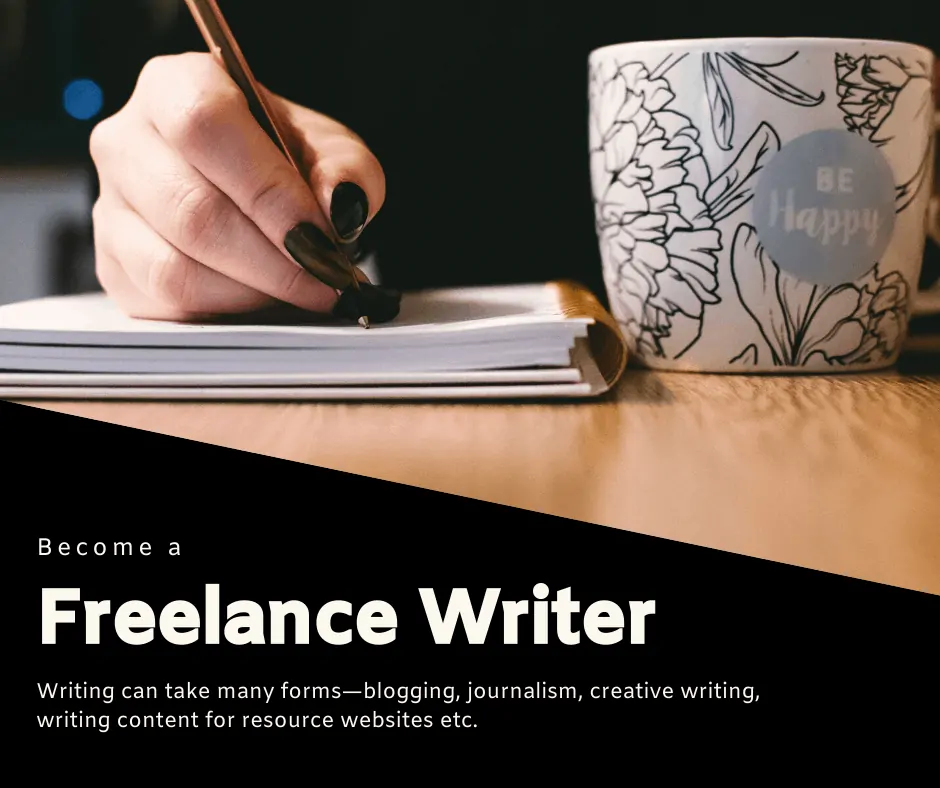
    This is perhaps one of the cheapest home-based businesses to start. Writing can take many forms—blogging, journalism, creative writing, writing content for resource websites etc. All you need are a passion for writing, great vocabulary and grammatical skills.

    Freelance Editing
    freelance editor

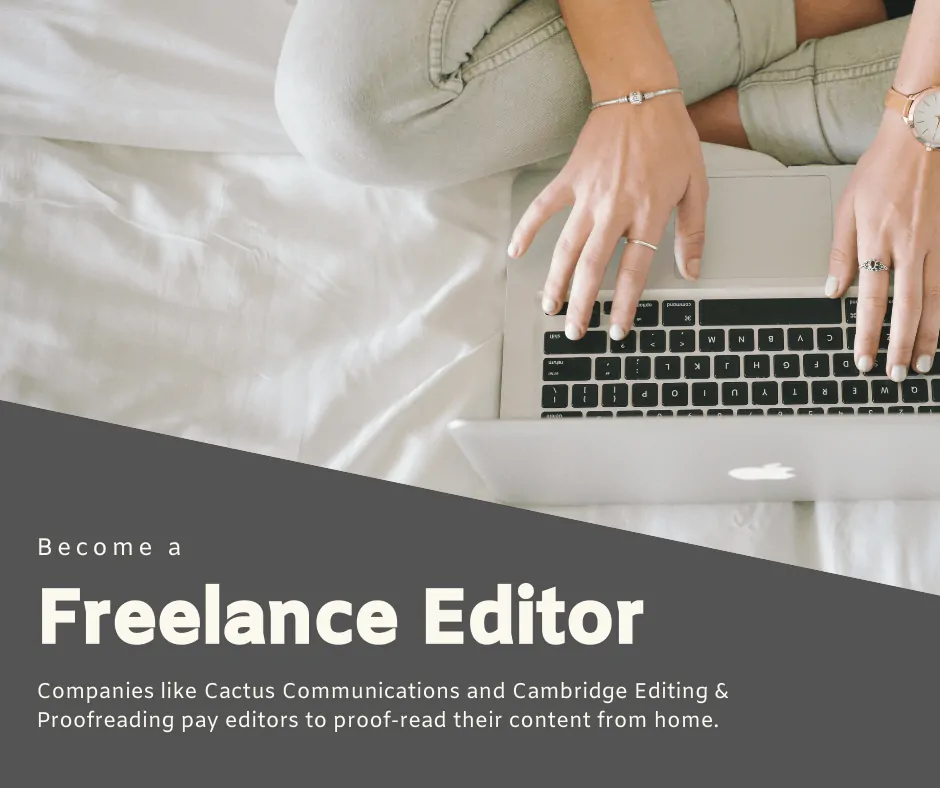
    If your grammar and punctuation are great, but you don’t have a passion for writing, you could be a freelance editor or proof-reader. Companies like Cactus Communications and Cambridge Editing & Proofreading pay editors to proof-read their content from home.

    Personalized Gifting
    personalized gifting

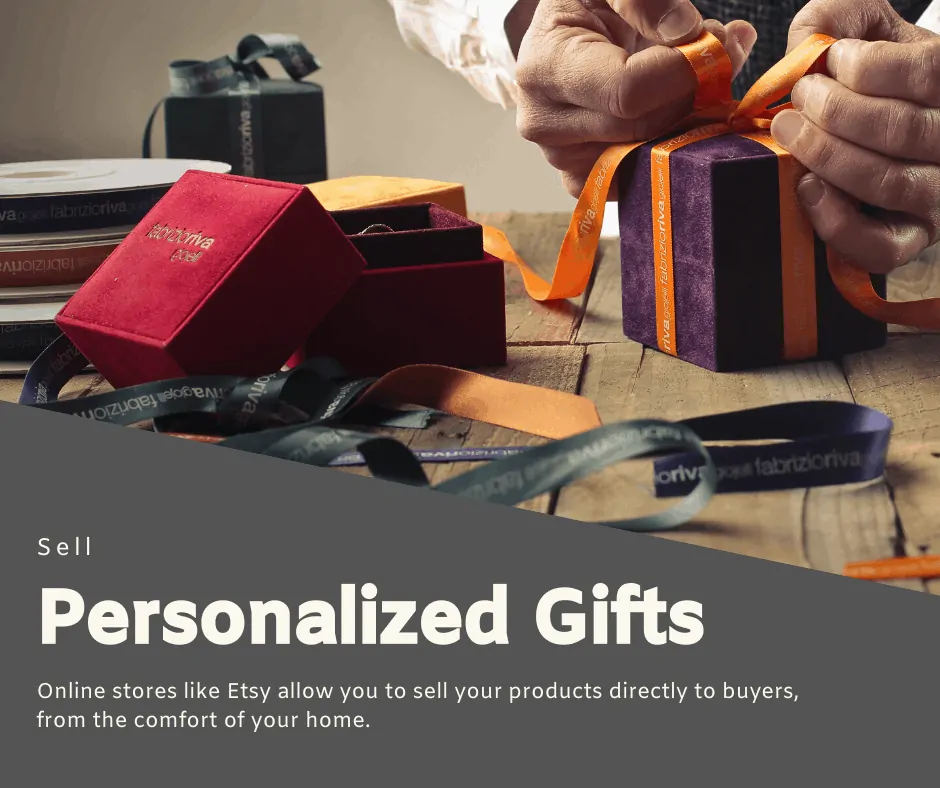
    With the sudden spike in personalized gifting, selling your hand-made and personalized goods directly to buyers either online or offline is a great idea for a home-based business. Online stores like Etsy allow you to sell your products directly to buyers, from the comfort of your home.

    Airbnb Hosting
    airbnb hosting

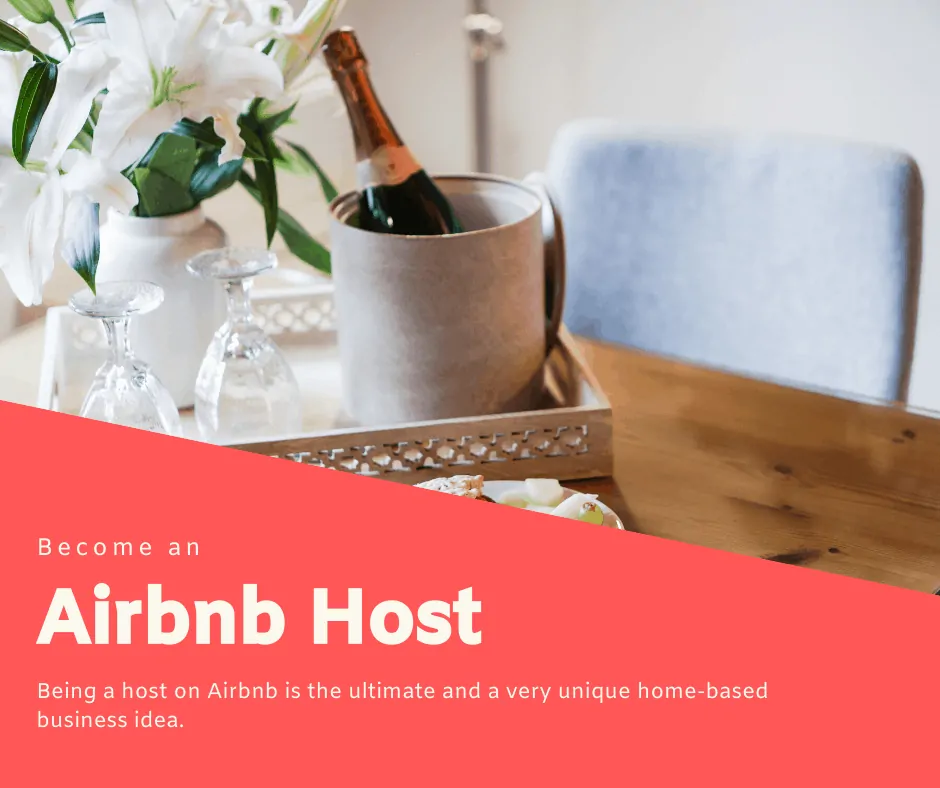
    Being a host on Airbnb is the ultimate and a very unique home-based business idea. If you have room to spare, all you need to do is sell your property as an experience to guests who might be interested, combined with reasonable pricing, and you’re all set.

    Art Cataloguing
    art cataloging

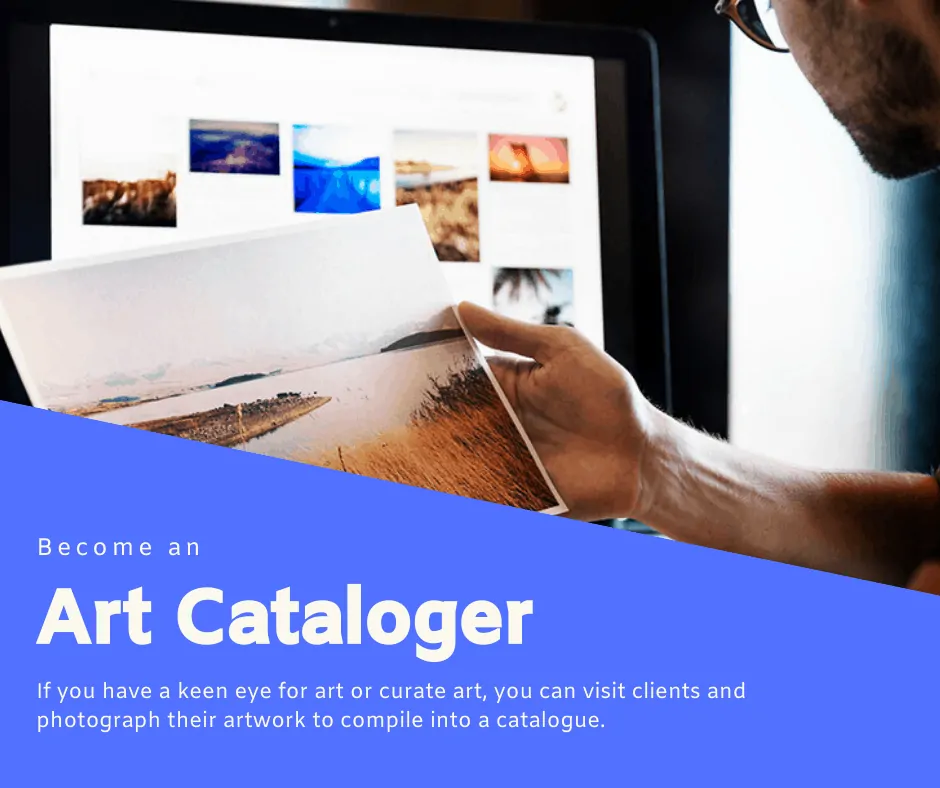
    If you have a keen eye for art or curate art, you can visit clients and photograph their artwork to compile into a catalogue. Art cataloguing can be done in the form of a book, social media handle or a website, including a description and a brief history of every artwork catalogued by you.

    Social Media Managing
    social media manager

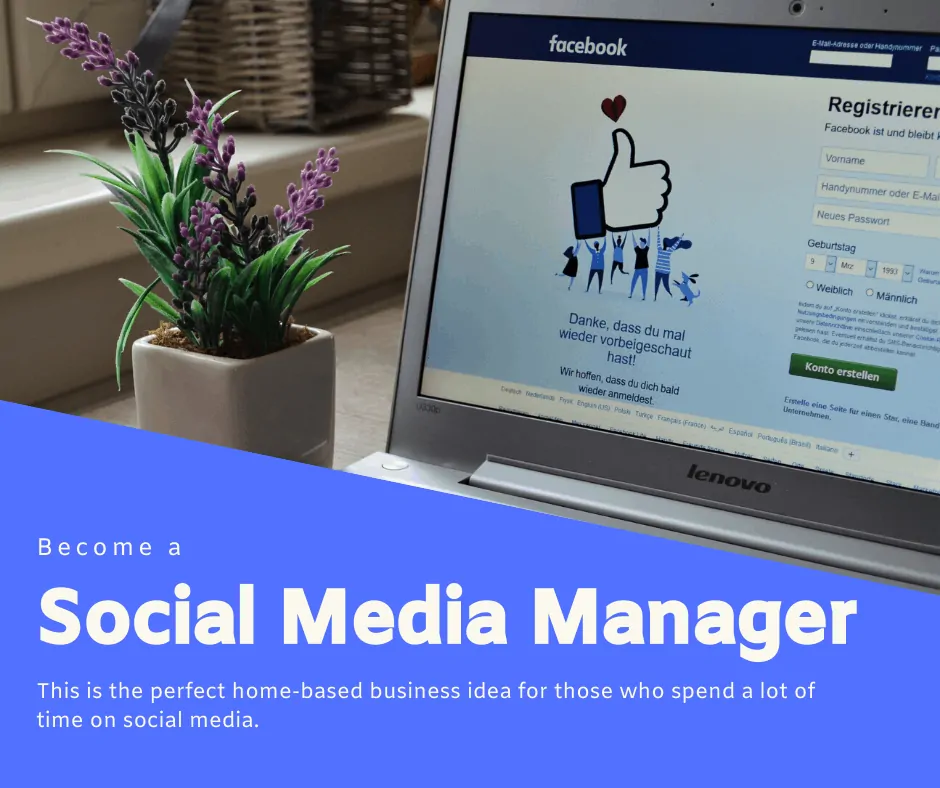
    This is the perfect home-based business idea for those who spend a lot of time on social media. If you can get followers to engage with the content on your social media, then sites like Career Builder and Flexjobs offer jobs that pay you for managing and growing the social media presence of your clients.

    House-Sitting
    House sitter

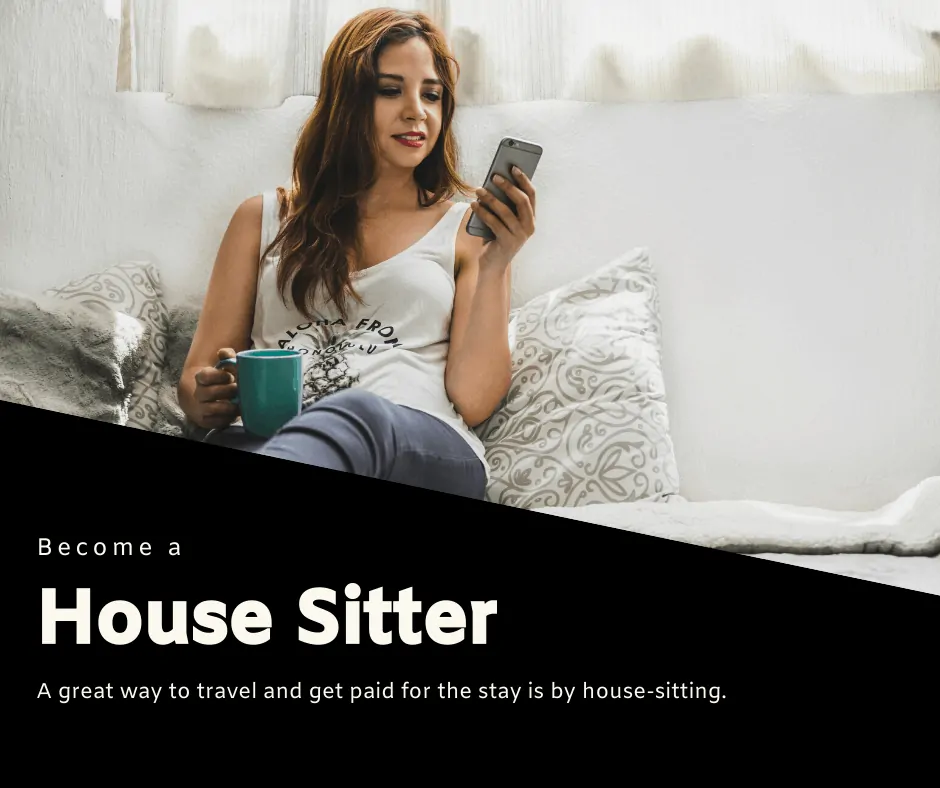
    A great way to travel and get paid for the stay is by house-sitting. Think of it as the exact opposite of being an Air BnB host. Homeowners today are looking for responsible people to keep their house (and pets) in order while they’re away. Sites like Nomador and MindMyHouse offer house-sitting jobs.

    Stock Photography
    stock photographer

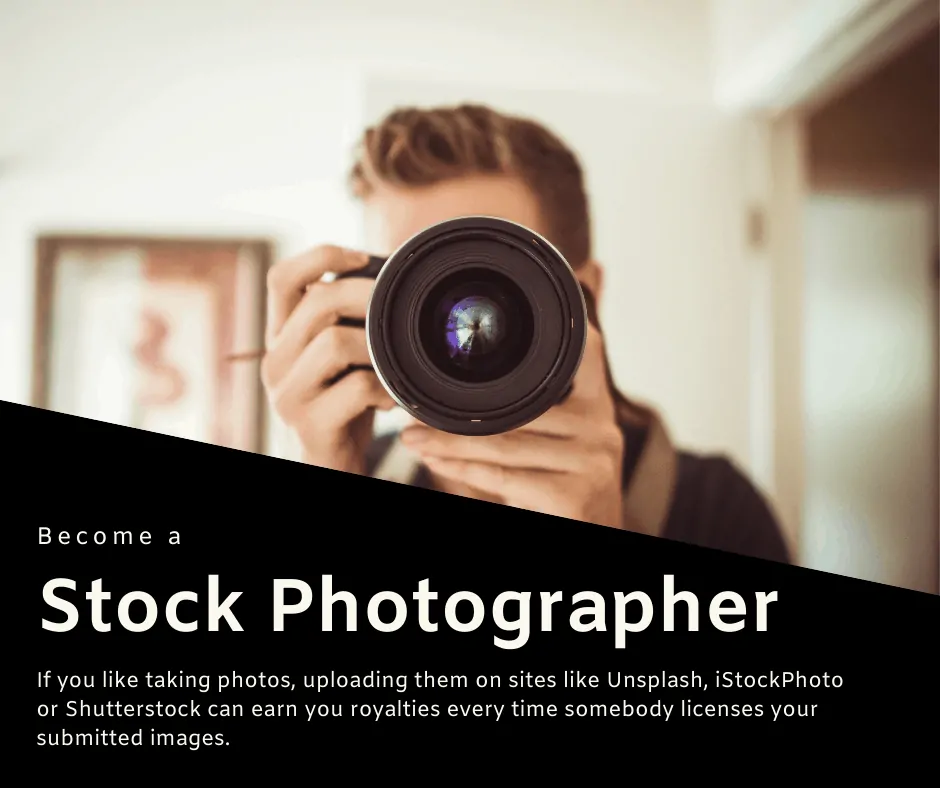
    Stock photography is one of the most up and coming home-based business ideas in 2019. If you like taking photos, uploading them on sites like Unsplash, iStockPhoto or Shutterstock can earn you royalties every time somebody licenses your submitted images. Having a website or Instagram page as a portfolio also helps here.

    Resume Writing
    Resume Writing

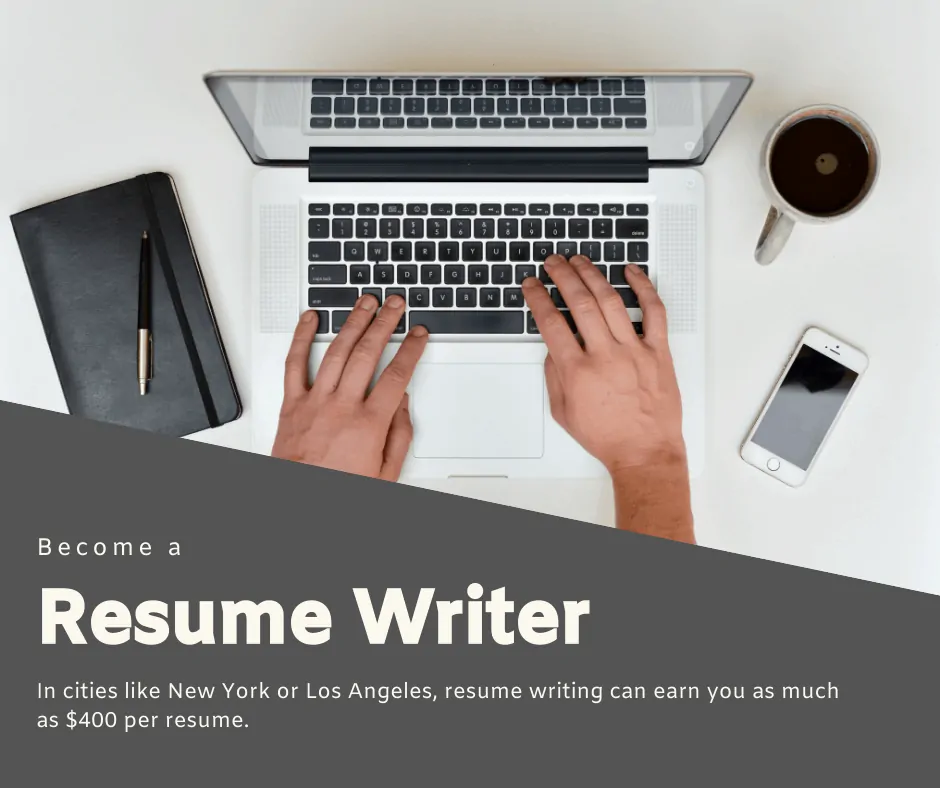
    In cities like New York or Los Angeles, resume writing can earn you as much as $400 per resume. You will be required to write professional resumes, cover letters, follow up and referrals letters and post them on multiple websites for your clients. Resume writing is a great idea for a home-based business for moms who would prefer to work online or anybody who wants to restart their careers.

    Graphic Designing
    Graphic Designing

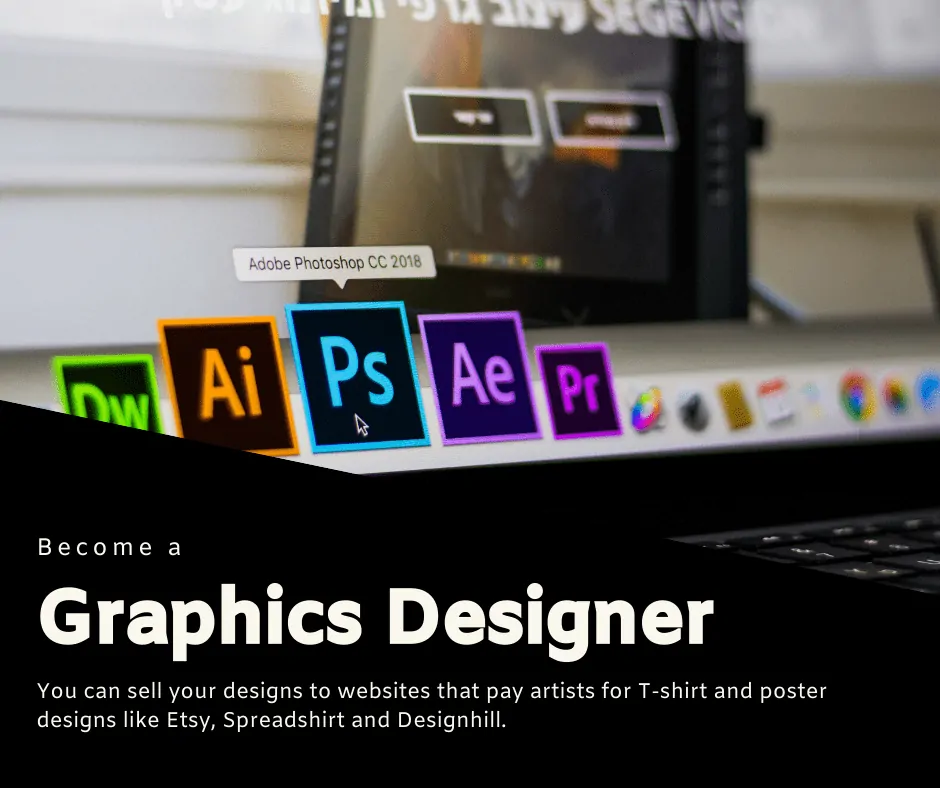
    While having a formal education in graphic design is desirable, it is not necessary. If you know about designing that you acquired on your own, a little bit of creativity and motivation can go a long way. You can sell your designs to websites that pay artists for T-shirt and poster designs like Etsy, Spreadshirt and Designhill.

    You can even become a freelance graphics designer and take gigs from websites like Fiverr, Upwork, Freelancer, etc.

    Writing Greeting Cards

    Writing Greeting Cards

    Another great idea for a home-based business is writing content for greeting cards. If you have a passion for poetry and writing content for greeting cards, websites like Blue Mountain Arts will pay you around $50-$300 per piece of poetry. Having your content published on greeting cards worldwide is also a great way to work from home and get your work a fair amount of exposure. Writing content for greeting cards is a great home-based business idea for moms who are looking to restart their careers or work from home, or for those passionate about writing in general.

    Ghostwriting
    Ghostwriting

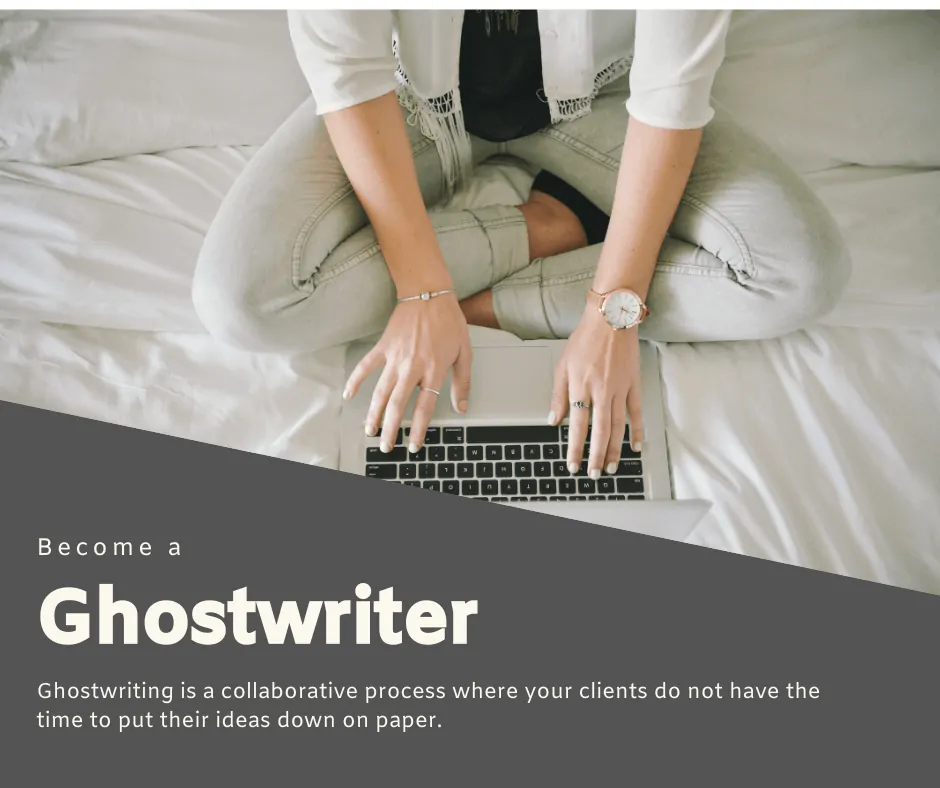
    Ghostwriting is a collaborative process where your clients do not have the time to put their ideas down on paper. Your job is to research, develop and write content with your clients’ ideas in mind. Beginners earn as much as $5000 per client, but ghostwriting can pay up to $50,000 per client if you have enough experience with ghostwriting. This is a great idea for a home-based business for those who can materialize others’ ideas and compile them into a finished work.

    Home Bakery
    home baker

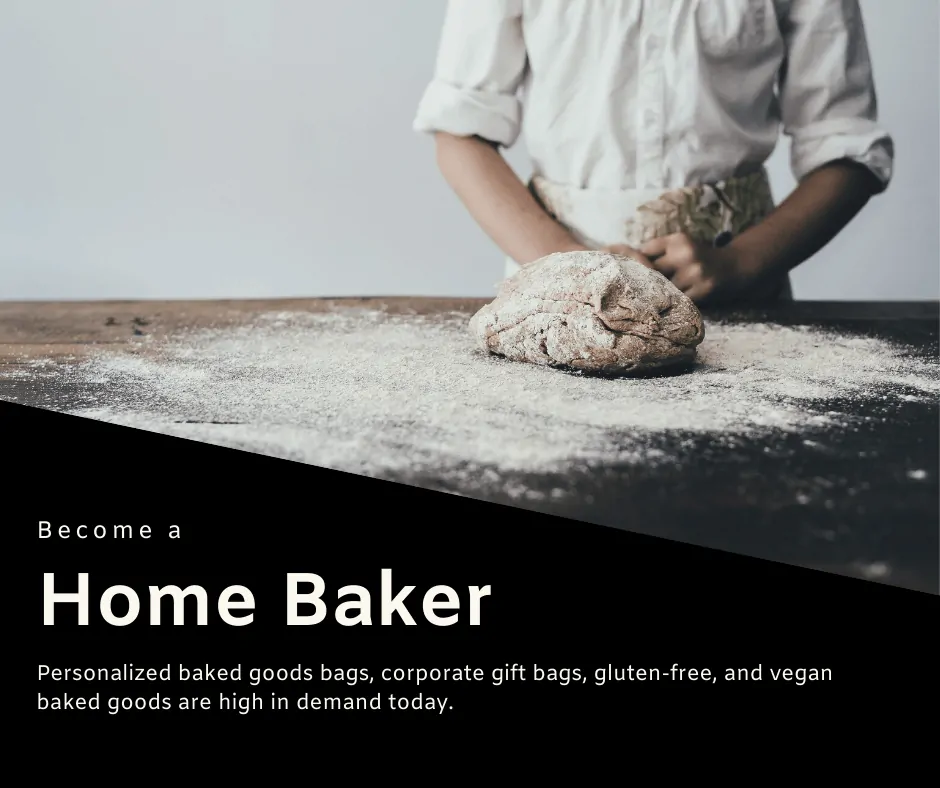
    Personalized baked goods bags, corporate gift bags, gluten-free, and vegan baked goods are high in demand today. If you have all the equipment and expertise you need to bake quality products, all you need to convert your business into a home bakery is a website and excellent word of mouth. Home bakeries are great home-based business ideas for moms as they have the option of working right from the comfort of their homes.

    Home Tutoring

    home tutor

    The competition to get accepted into top universities has increased to a point where parents are willing to pay for a private tutor who can help students prepare for their SATs. If you know how to market yourself locally and generate good word of mouth, you can make money by tutoring students right from home. Basic requirements would include being good at a subject you want to tutor.

    Gift-Basket Designing

    gift basket designer

    If you are good at making floral, food or gift arrangements, all you need is the initial costs for supplies like the baskets, ribbons, bows, pins etc. Additional requirements might include having a good Instagram page or a website updated with artistic photos of your creations. Gift baskets are a great idea for a home-based business for everyone who likes to curate and decorate personalized gift baskets for all occasions.

    Floral Arrangement

    Floral Arrangement

    Very much like gift baskets, floral arrangement is a great home-based business idea for those with a creative mind. Flower arrangement, unlike being a florist, requires you to only make your floral arrangements at the time of delivery or on-site, without having to grow or source the flowers. Having a strong online presence and word of mouth is important for a home-based business such as floral arrangement.

    Web Designing
    Web Designing

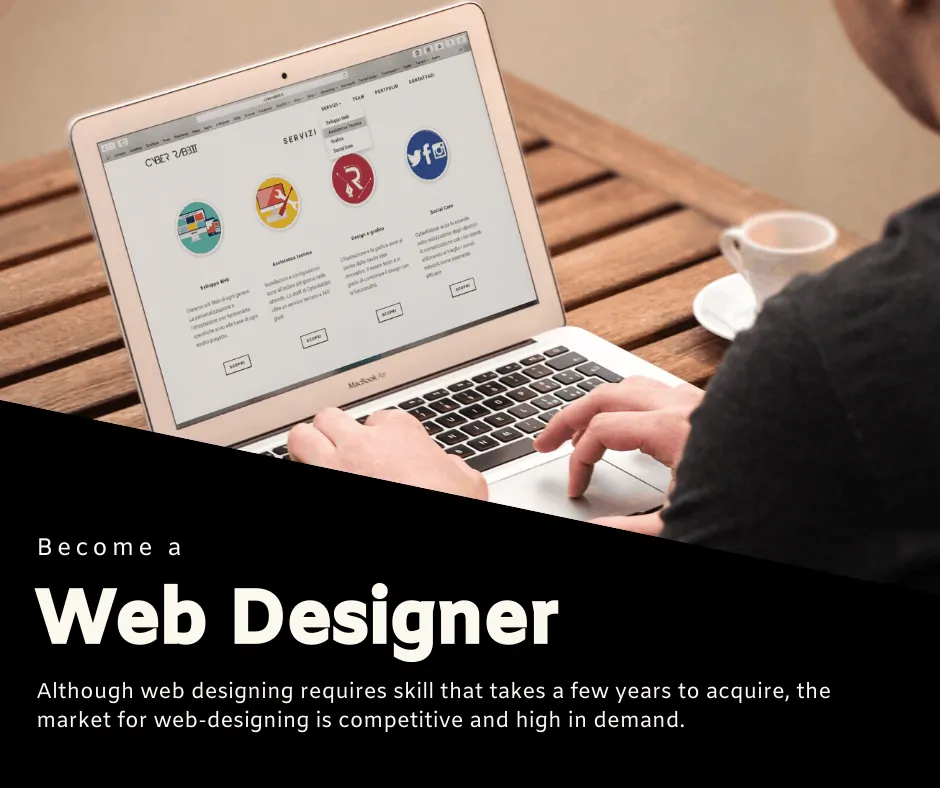
    Although web designing requires skill that takes a few years to acquire, the market for web-designing is competitive and high in demand. Like graphic designing, offering a service that nobody else offers will make your business stand out from your competition. The key to succeeding as a home-based web designer is to carefully define your target market, along with having great skills.

    Online English Training
    Online English Training

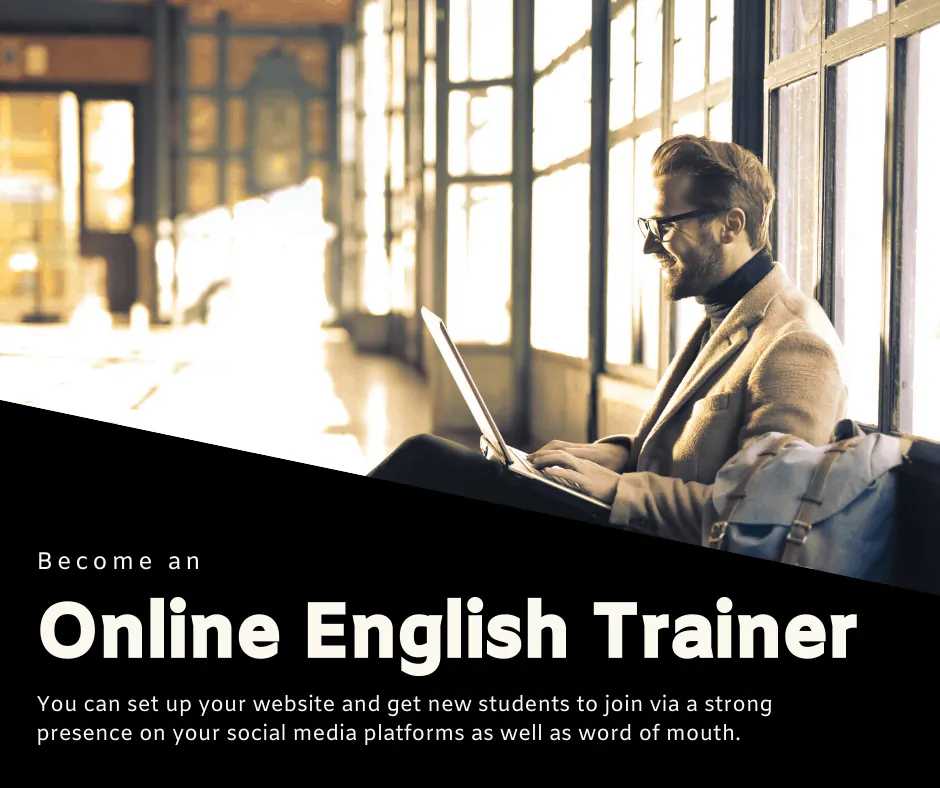
    Teaching English online can be one of the most effective home-based businesses because there is no shortage in the number of people who are willing to pay to learn the language. You can set up your website and get new students to join via a strong presence on your social media platforms as well as word of mouth. Sessions can take place either interactively over Skype or pre-filmed videos or audio on your website. You can get paid around $40-$50 per session and train a batch of up to 20 people at a time.

    Vlogging
    Vlogging

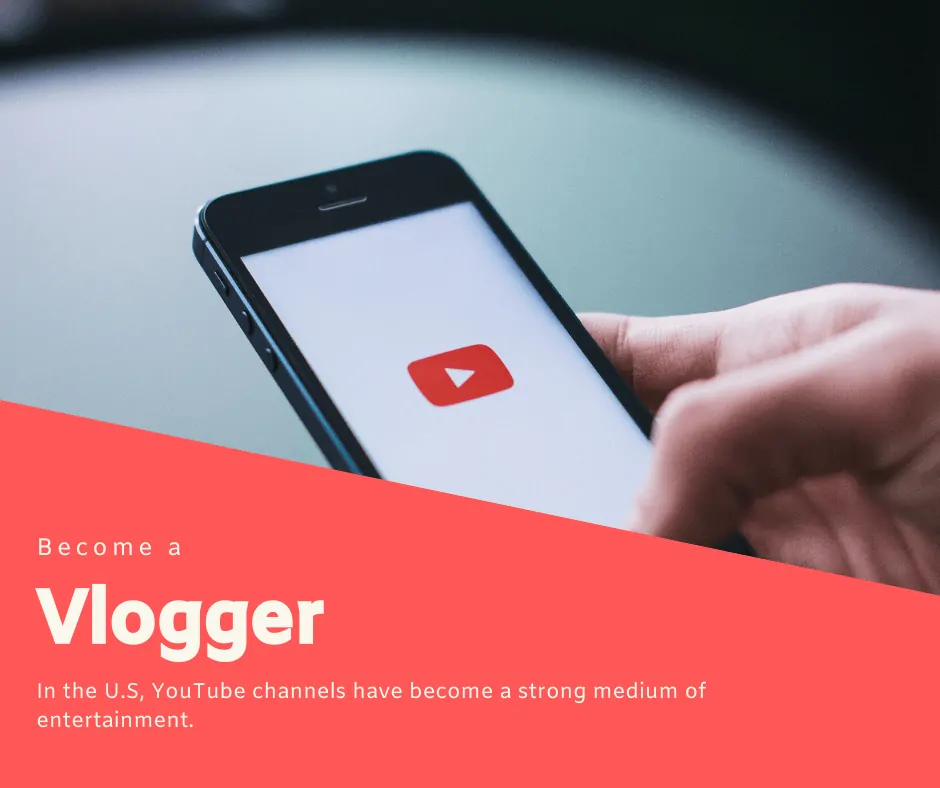
    In the U.S, YouTube channels have become a strong medium of entertainment. The initial set-up cost is low as all you need is a recording device, a Google account and a story to tell. This is a great home-based business idea for just about anybody because all kinds of entertaining content are welcome on the platform. You will get paid for every 1,000 views on your channel and if your content goes viral, you can also promote merchandise and earn commissions.

    Calligraphy

    Calligraphy

    The market for skilled calligraphers is very competitive, so if you’re confident about your skills in calligraphy, you can make a home-based business out of it. Hand-written letters, save-the-dates and wedding invitations, bookmarks, certificates, posters etc. are high in demand and if you are good at calligraphy, you can charge premium rates for your services. You will need calligraphy pens, ink, special paper and if required, a strong social media presence and a website to get started.

    Mystery Shopping
    Mystery Shopping

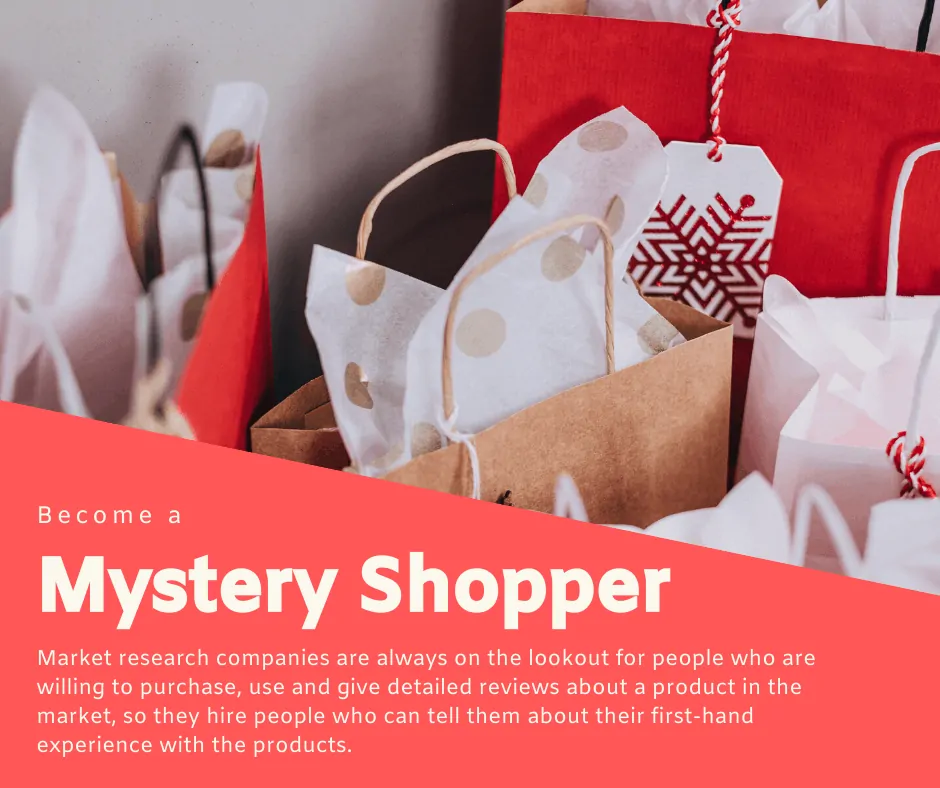
    In the U.S.A., the mystery shopping industry is valued over $2Bn per year, according to MSPA. A mystery shopper gets paid to give feedbacks and write reviews for products from the company they work for. Market research companies are always on the lookout for people who are willing to purchase, use and give detailed reviews about a product in the market, so they hire people who can tell them about their first-hand experience with the products.

    Online Journalism
    Online Journalism

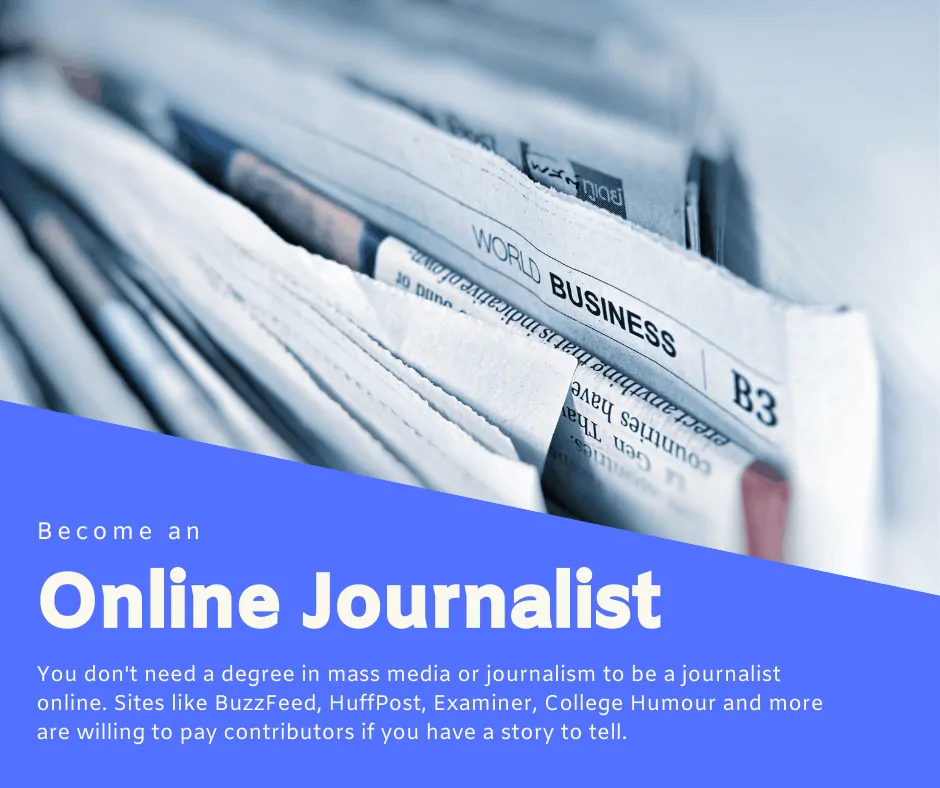
    You don’t need a degree in mass media or journalism to be a journalist online. Sites like BuzzFeed, HuffPost, Examiner, College Humour and more are willing to pay contributors if you have a story to tell. You will be paid based on the advertisement revenue on your posts. You can also contribute to different websites weekly from the comfort of your home and earn up to $8,000 per month initially.

    Freelance Bookkeeping
    Freelance Bookkeeping

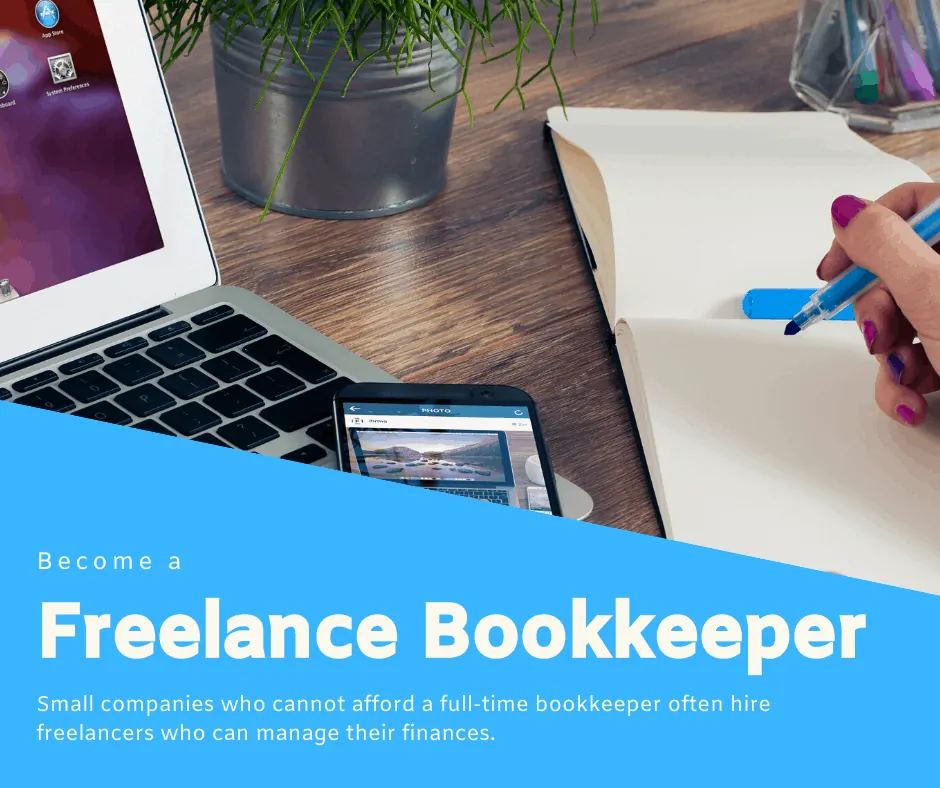
    Small companies who cannot afford a full-time bookkeeper often hire freelancers who can manage their finances. It is a great idea for a home-based business for those who are good with numbers but would like to work from their homes instead. Although it is not necessary to have a degree in accountancy, having one is preferred. You can earn as much as $34,000 by working as a freelance bookkeeper.

    Grant Writing

    Grant Writing

    Non-profit organizations, universities, hospitals and community organizations all require the grant money to supplement the budget provided to them. If you are willing to learn how to or have experience writing grants, then you can make a home-based business out of it. According to Career Trend, grant writers can earn up to $67,000 by working for organizations that pay people to do so.

    Writing E-Books
    Writing E-Books

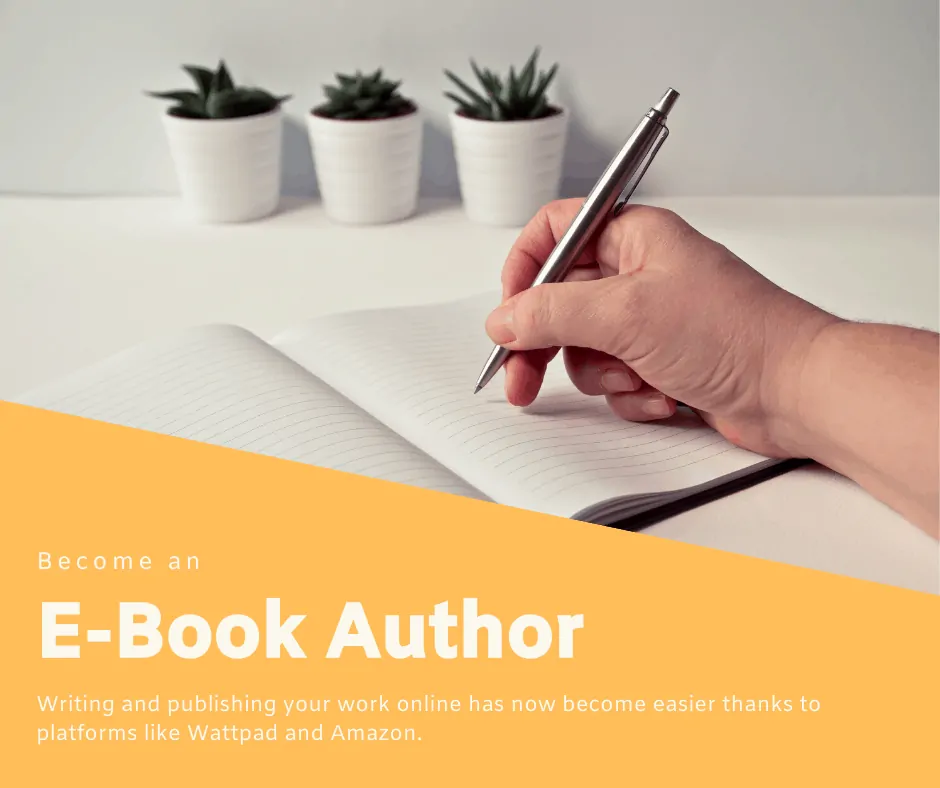
    Writing and publishing your work online has now become easier thanks to platforms like Wattpad and Amazon. Whether you prefer writing fiction, non-fiction or guides, you can compile your work into an e-book and get published on sites where readers will pay to read new content. Writing an e-book is an excellent home-based business idea for those who want to publish their work.

    Photographer

    photographer

    You can start various kinds of home-based businesses if you are good at photography and have the right kind of equipment and knowledge of post-processing. Stock photos, wedding photography, event photography, portrait photography, product photography, the list is endless. If you have a website and strong social media presence, you can also charge premium rates for your services. Alternatively, you can also give lessons on photography for those trying to learn on your website.

    Editing College Admission Essays

    Editing College Admission Essays

    If editing and advising students on how to write 500-1000 words essays seem like something you can do, a lot of parents are willing to have students’ essays professionally edited and proof-read for them to get into the best universities. You do not need to write the essay, but you are allowed to advise your clients on how they can enhance their essays for a better chance at admission into their preferred colleges.

    Renting Your Car

    Renting Your Car

    Renting your car is a great way to earn money from your home. Visitors who are only in town for a few days tend to rent a car instead of hailing cabs because it offers them more flexibility. If you own a car that you barely use, you can rent your car on sites like Turo where your customers are pre-screened and you get a $1Mn insurance policy on your vehicle.

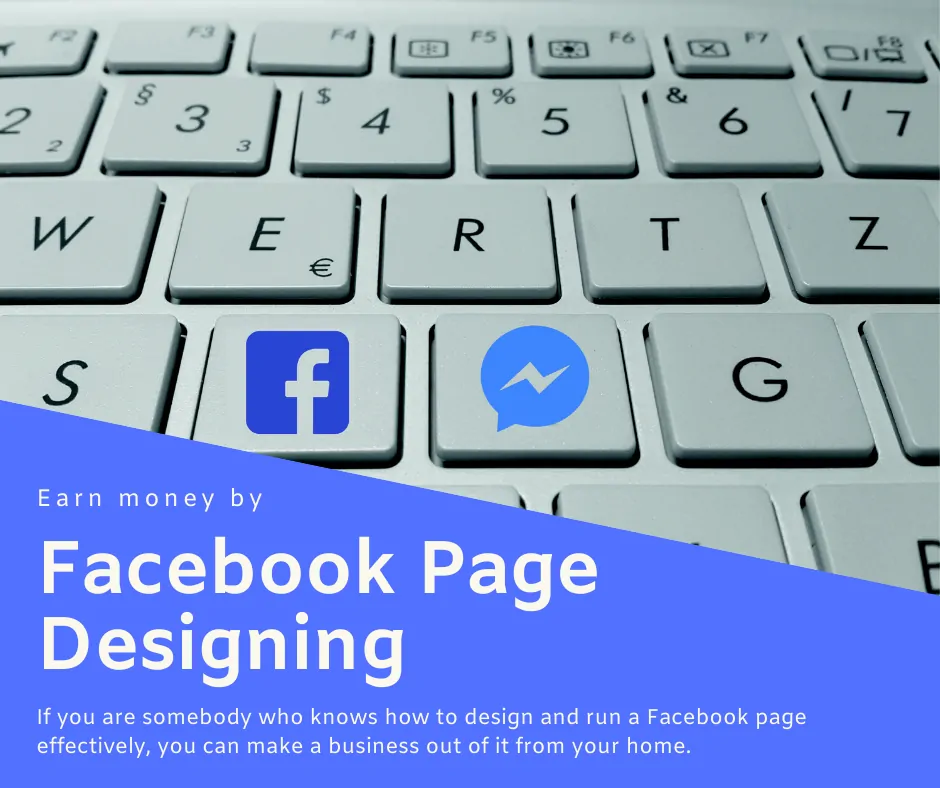
    Facebook Page Designing
    Facebook Page Designing

    Almost every business in 2019 requires a Facebook page to maintain a strong social media presence, but not everybody knows how to design or run a Facebook page that can run catchy and effective ad campaigns to invite more people to join the community created by a business. If you are somebody who knows how to design and run a Facebook page effectively, you can make a business out of it from your home.

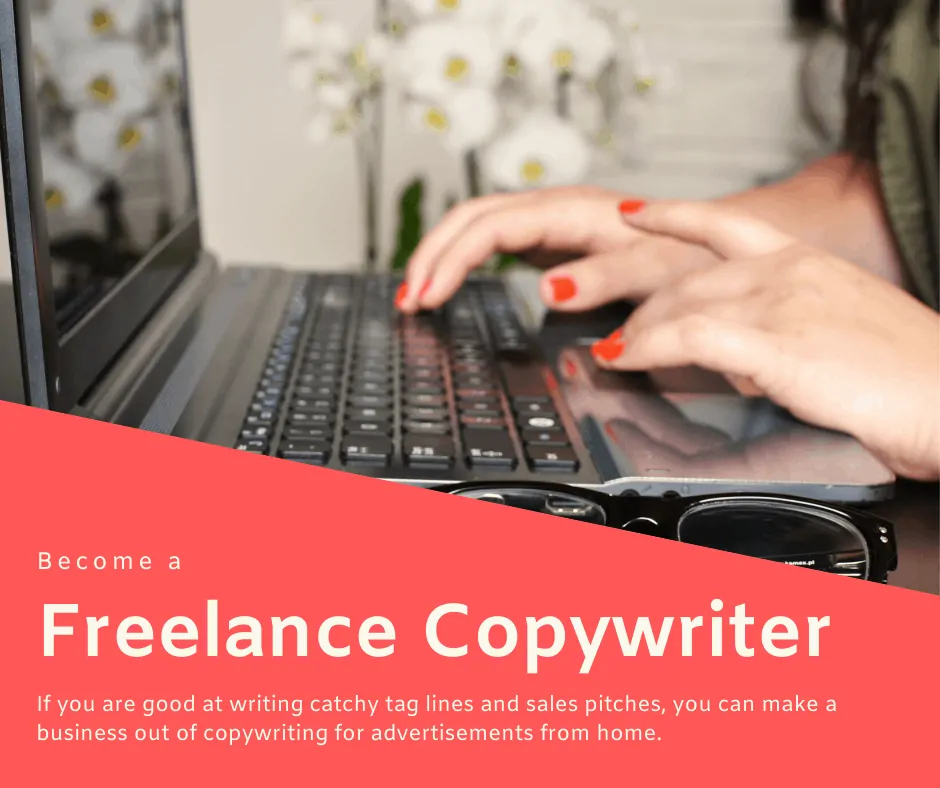
    Freelance Copywriting
    Freelance Copywriting

    Advertising and marketing companies are always looking for creative and relevant content from freelancers. If you are good at writing catchy tag lines and sales pitches, you can make a business out of copywriting for advertisements from home.

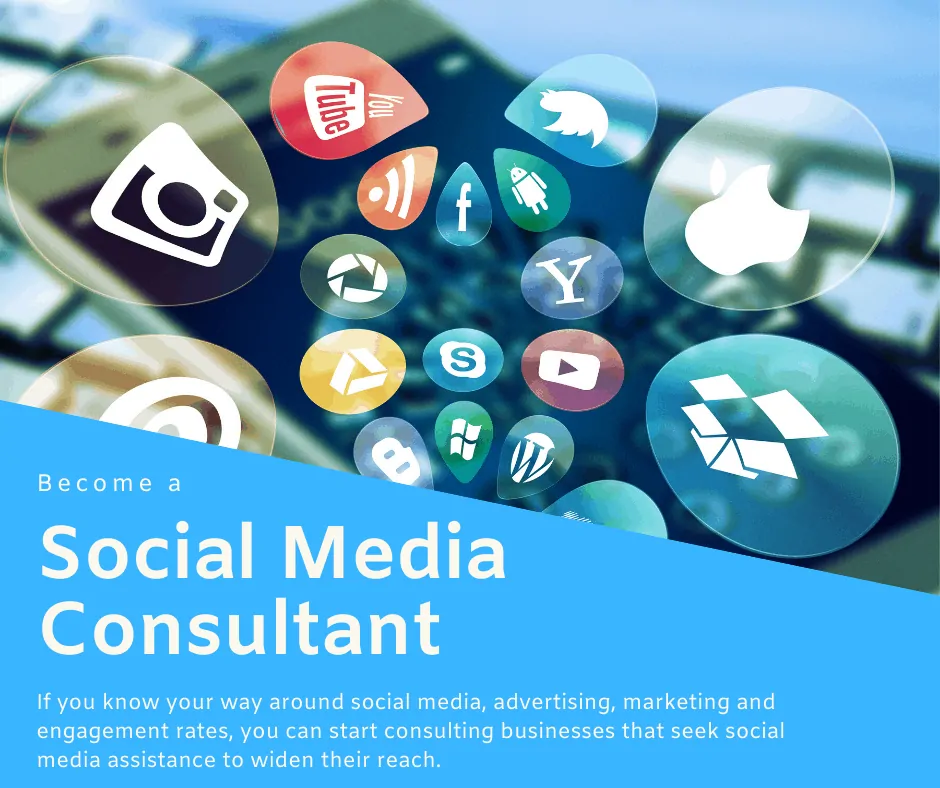
    Social Media Consulting
    Social Media Consulting

    Having a strong social media presence is important for both businesses and their potential customers. If you know your way around social media, advertising, marketing and engagement rates, you can start consulting businesses that seek social media assistance to widen their reach.

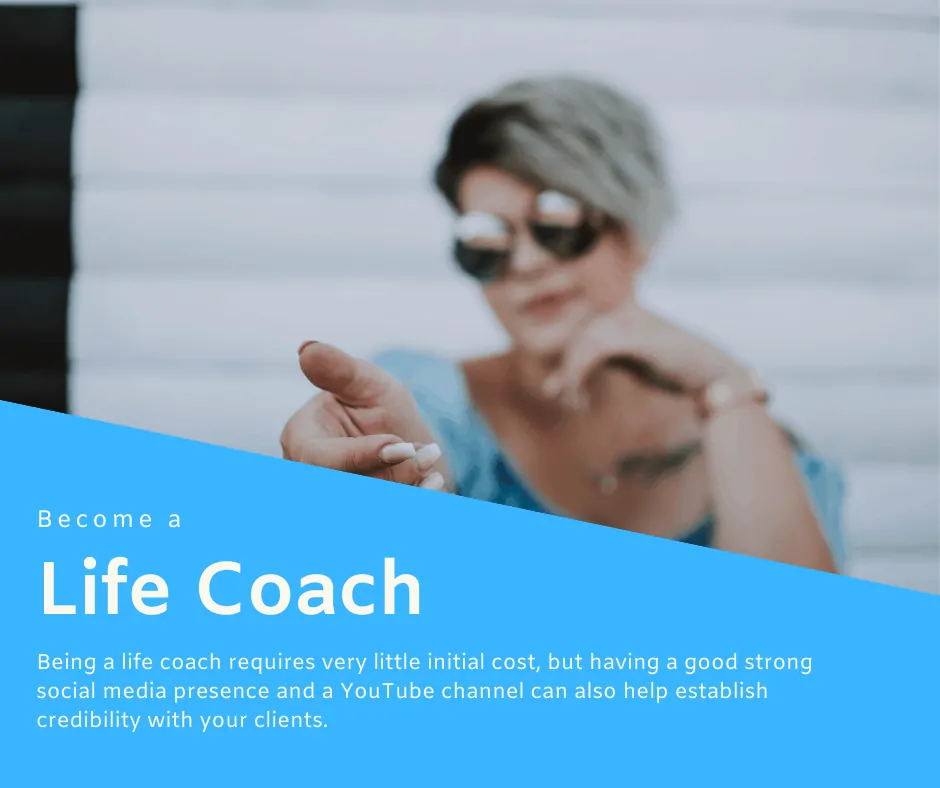
    Life Coach
    life coach

    With high stakes come stress and pressures that people would gladly pay to get rid of. If you are great at listening and offering advice to people, you can be a life coach and assist people with their day-to-day aspects like careers, relationships, family or simply just individual growth. Being a life coach requires very little initial cost, but having a good strong social media presence and a YouTube channel can also help establish credibility with your clients.

    Virtual Assistant
    Virtual Assistant

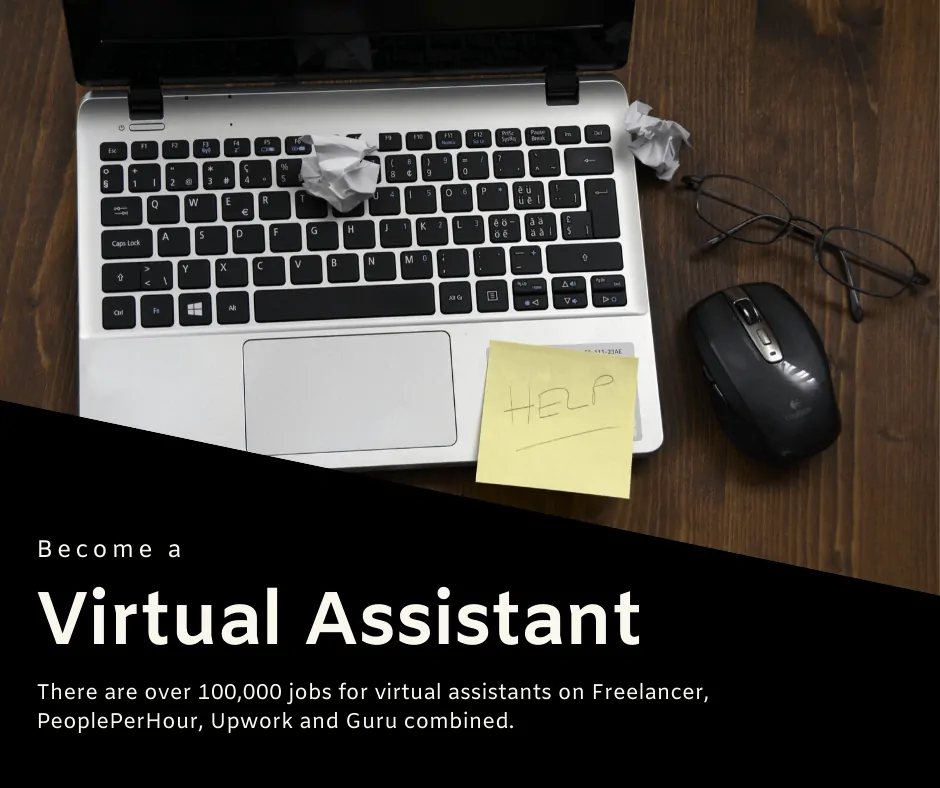
    There are over 100,000 jobs for virtual assistants on Freelancer, PeoplePerHour, Upwork and Guru combined. This is a great idea for a home-based business if you can create and manage schedules and meetings for your clients remotely. Skills like data entry, designing, copywriting etc are preferred for this job. You can coordinate with your clients over calls and video calls as well.

    Career Counselling

    Career Counselling

    Counselling is a booming business in the U.S.A. Students, their parents, and professionals constantly seek career guidance for a career that suits their skills and aptitude. Career counselling requires a very little initial cost and is an extremely rewarding business. You can charge anywhere between $50-$300 per hour, while still working from home.

    Soap and Candle Making
    Soap and Candle Making

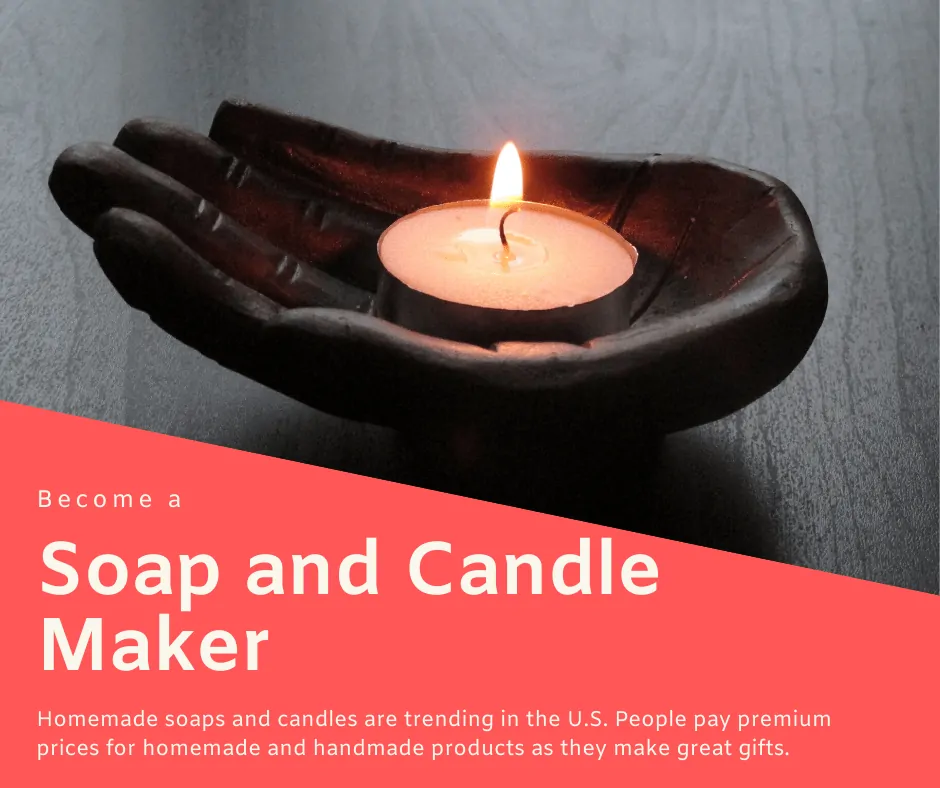
    Thanks to Instagram and YouTube, homemade soaps and candles are trending in the U.S. People pay premium prices for homemade and handmade products as they make great gifts. You might need to invest in various perfumes, essential oils, fragrances etc for making your products. Additional requirements like a strong social media presence and word of mouth can help your business.

    Baking and Cooking Classes

    Baking and Cooking Classes

    If you are a homemaker and have a passion for cooking and teaching, this is a great home-based business idea for you. Having a home-based business in cooking has endless opportunities. You can also start a YouTube channel for tutorials and share your recipes on your website blog to gather a wider reach for your business. You can also conduct classes and workshops occasionally.

    Affiliate Marketing
    affiliate marketing

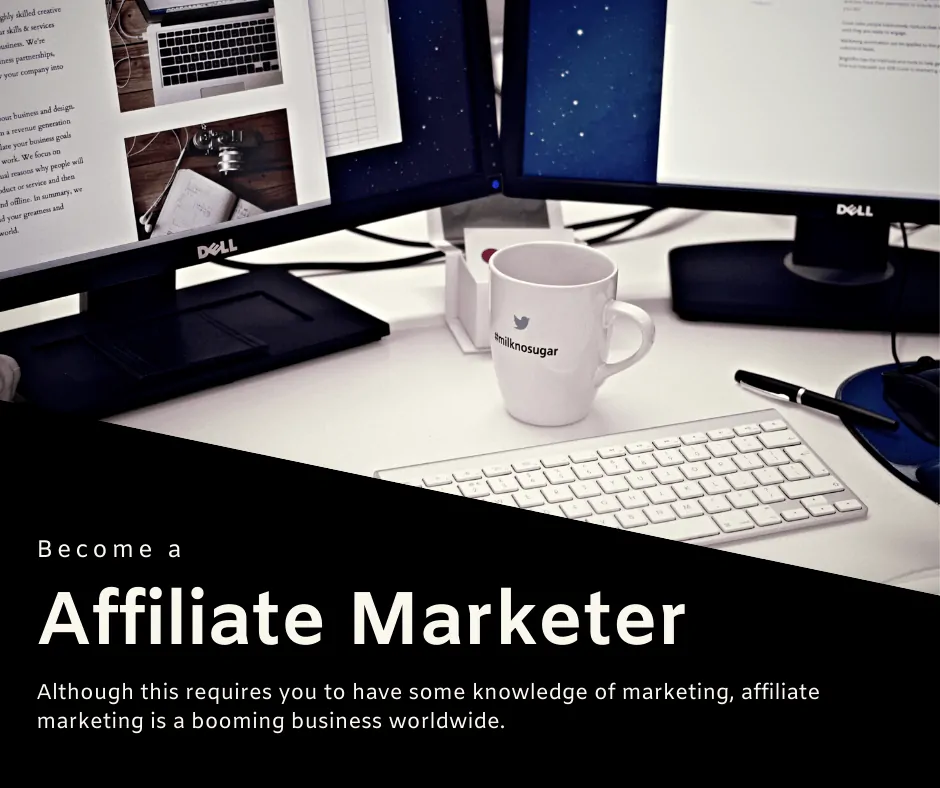
    Although this requires you to have some knowledge of marketing, affiliate marketing is a booming business worldwide. If you have a strong social media presence and you know how to keep your audience engaged, you can promote products and services from other companies on your website or social media and earn a profit on every product sold based on your referral.

    Making Chatbots
    chatbot developer

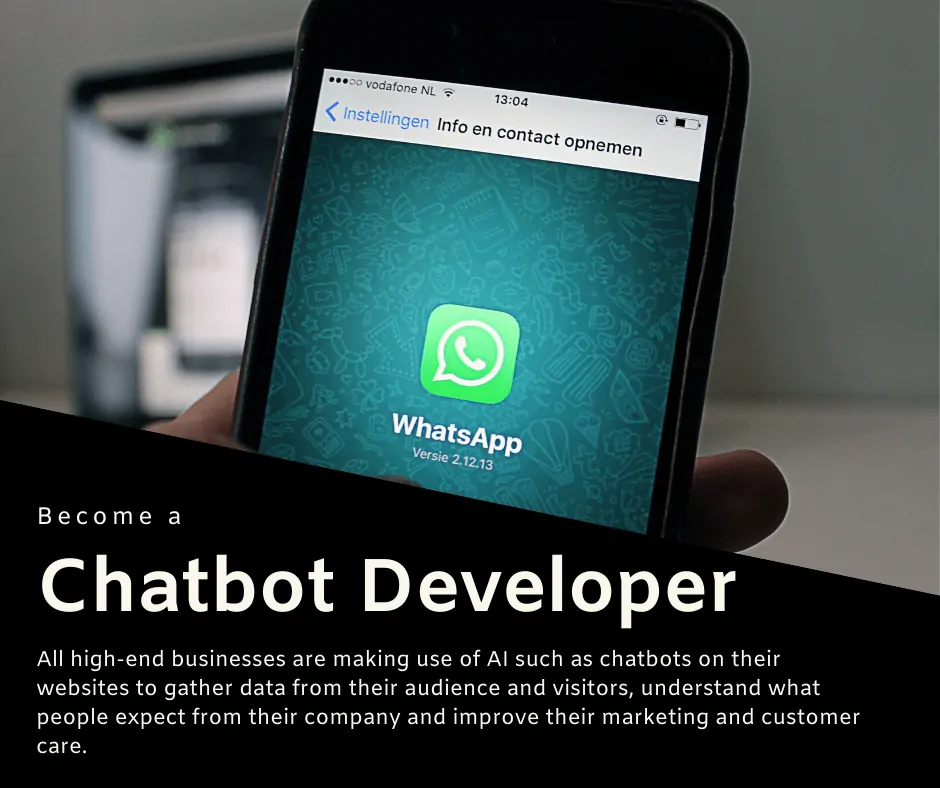
    All high-end businesses are making use of AI such as chatbots on their websites to gather data from their audience and visitors, understand what people expect from their company and improve their marketing and customer care. You don’t necessarily need to know to code because tools such as Chattypeople, Mobile Monkey, etc. allow you to set up a chatbot for your business page by simply connecting to Facebook. You can make a home-based business out of making chatbots for businesses that need them.

    Testing and Reviewing
    testing and reviewing

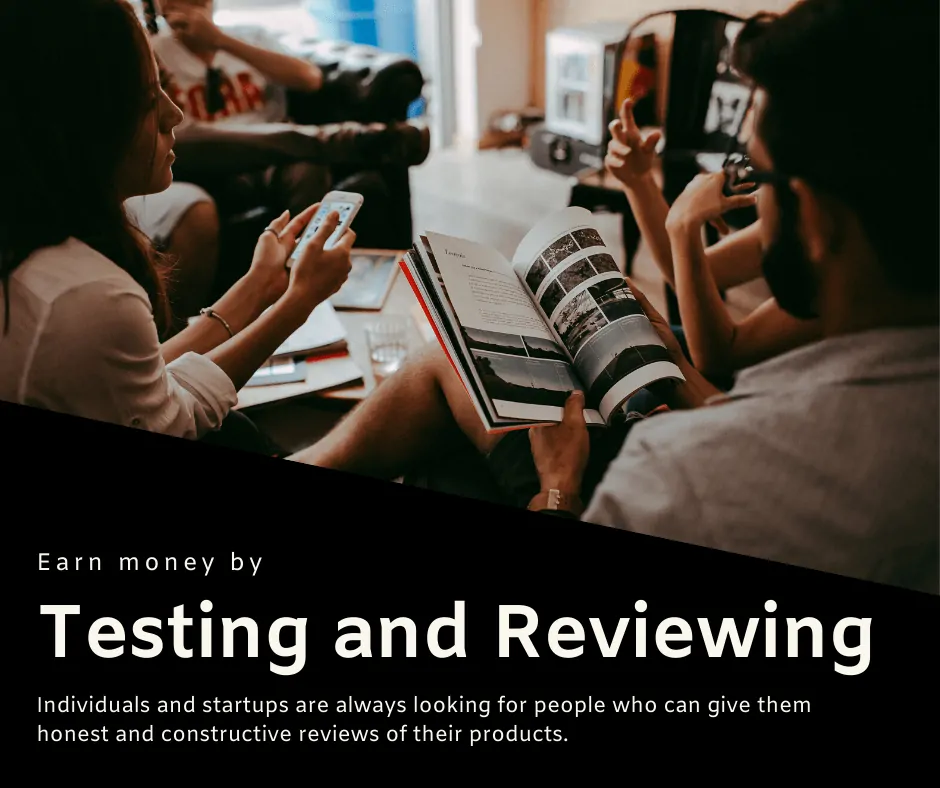
    Individuals and startups are always looking for people who can give them honest and constructive reviews of their products. Sites like Freelancer can offer you jobs that allow you to sign up to review a product from home in exchange for money. You might also consider starting a blog or a YouTube channel to build your portfolio and establish your credibility as a reviewer.

    Translator
    translator

    If you are fluent in more than 2 languages, you can be a freelance translator for businesses that require your services. It is one of the most profitable home-based businesses because it does not require any kind of capital, but you can still earn up to $40,000 or more based on your contract or agreement with your clients.

    Podcasting
    podcaster

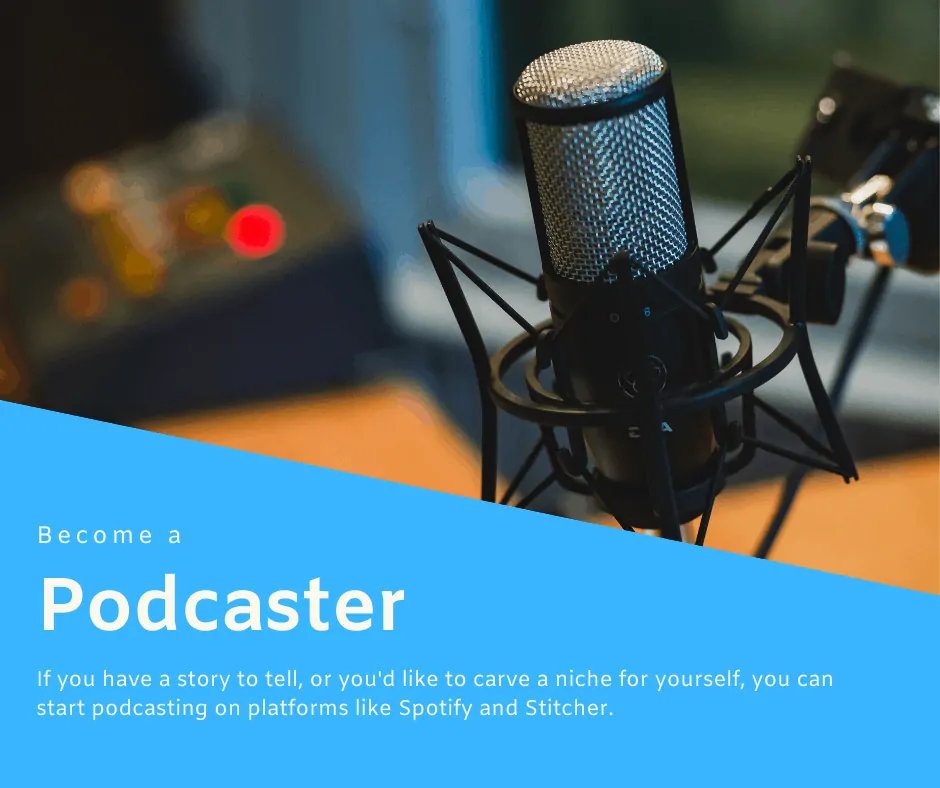
    Podcasts are the new up and coming idea for a home-based business. If you have a story to tell, or you’d like to carve a niche for yourself, you can start podcasting on platforms like Spotify and Stitcher. With a good presence on social media and strong engagement rates from your audience, you can also get your podcast sponsored by businesses who would like to widen their reach with advertisements.

    Handmade Gifting

    handmade gifting

    In the day and age of mass-production, people are now looking for gifts that can hold sentimental value and that are one of a kind. Handmade gifts fit the bill, and clients are willing to pay premium prices for products that are unique and artisan. You can sell your products directly from your home or to the buyer via sites like Etsy and eBay. Having a website or social media page with photos of your products and strong engagement rates also helps in reaching more customers.

    Personal Shopping
    Personal Shopping

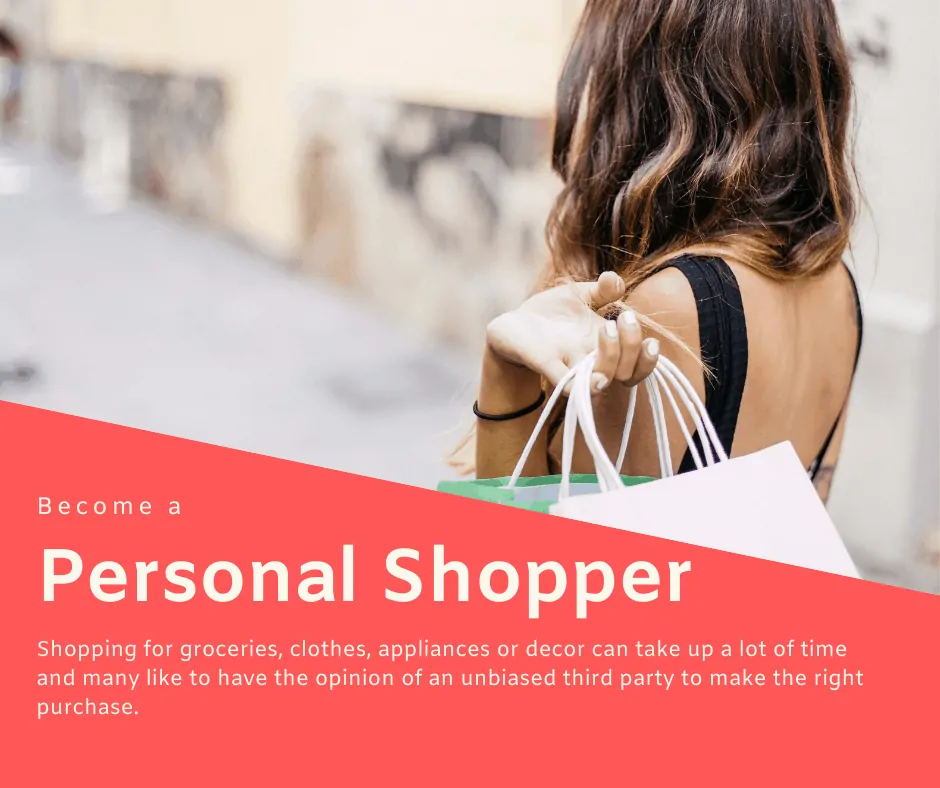
    Shopping for groceries, clothes, appliances or decor can take up a lot of time and many like to have the opinion of an unbiased third party to make the right purchase. If you have a fair amount of knowledge in any of these, you can start your home-based business as a personal shopper where you can assist clients by shopping for them either directly or by discussing their purchase over phone or video call.

    Fitness Instructor

    Fitness Instructor

    The demand for fitness instructors is always high, and even more so in 2019. Being a fitness instructor as a home-based business is very profitable because clients are now willing to pay high prices to stay healthy. You can either start fitness training at your home or studio space or upload video tutorials on your social media channels and website. You can also conduct fitness workshops and prepare personal routines for your clients for a fee.

    Application Developer
    Application Developer

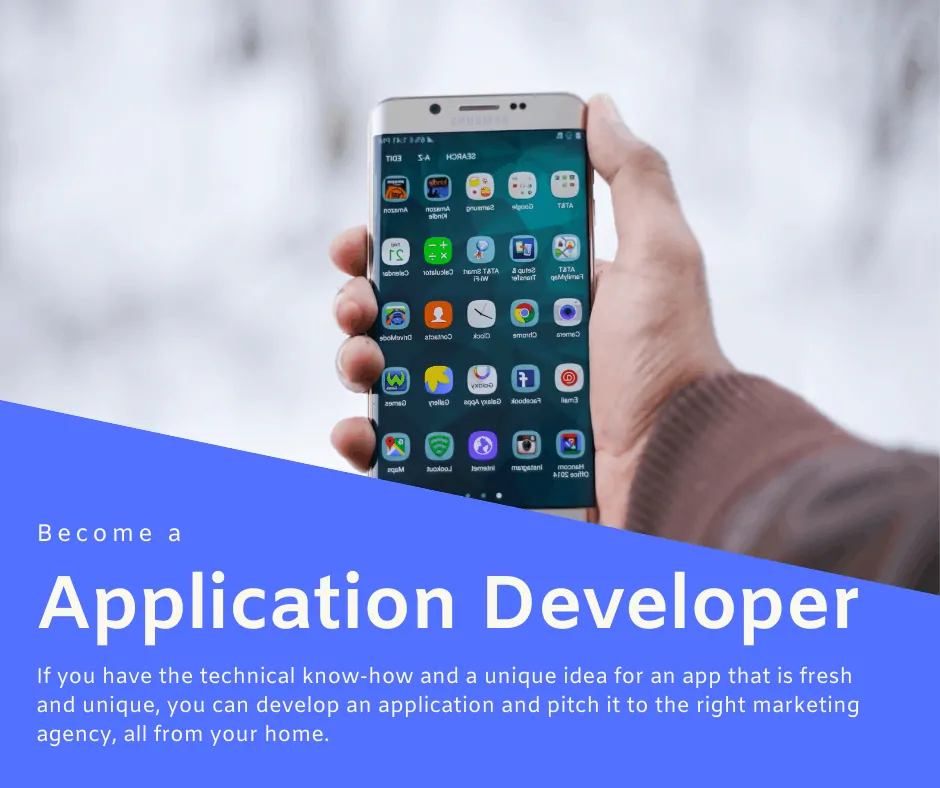
    If you have the technical know-how and a unique idea for an app that is fresh and unique, you can develop an application and pitch it to the right marketing agency, all from your home. Developing applications is one of the home-based businesses that don’t require a lot of capital or investment, but can still be very rewarding if your app is widely accepted. You can work remotely and worldwide at the same time!

    Website Flipping
    Website Flipping

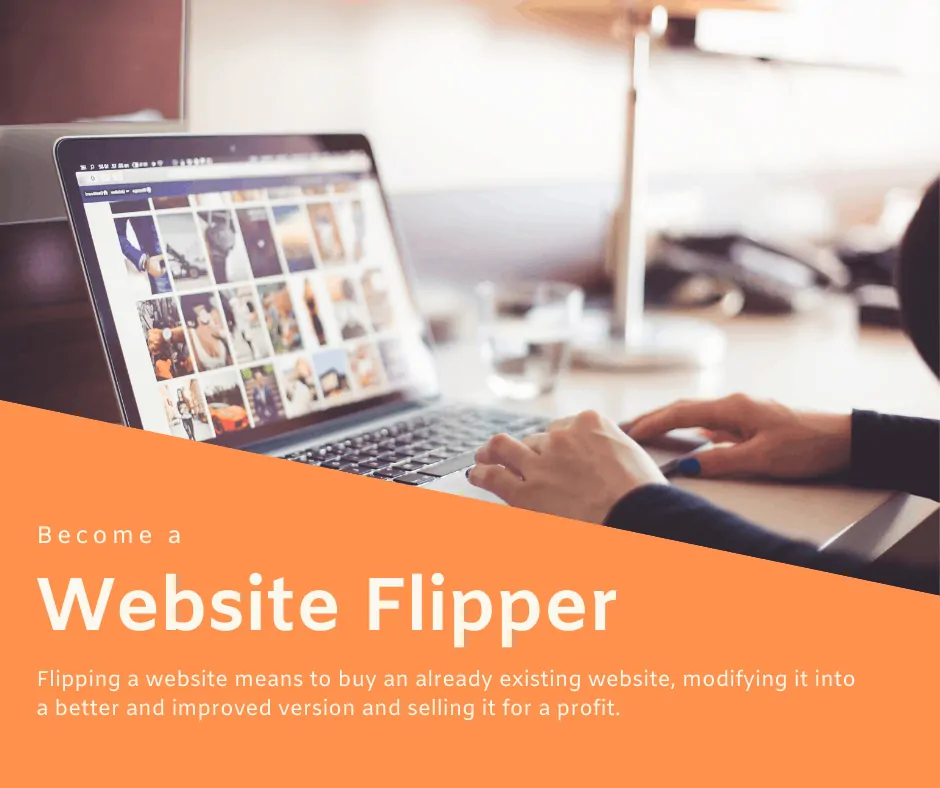
    Flipping a website means to buy an already existing website, modifying it into a better and improved version and selling it for a profit. Website flipping requires a certain amount of expertise in website designing and coding. But it is a great idea for a small-cost home-based business that can be very rewarding in terms of money and convenience.

    Buying Domain Names
    Buying Domain Names

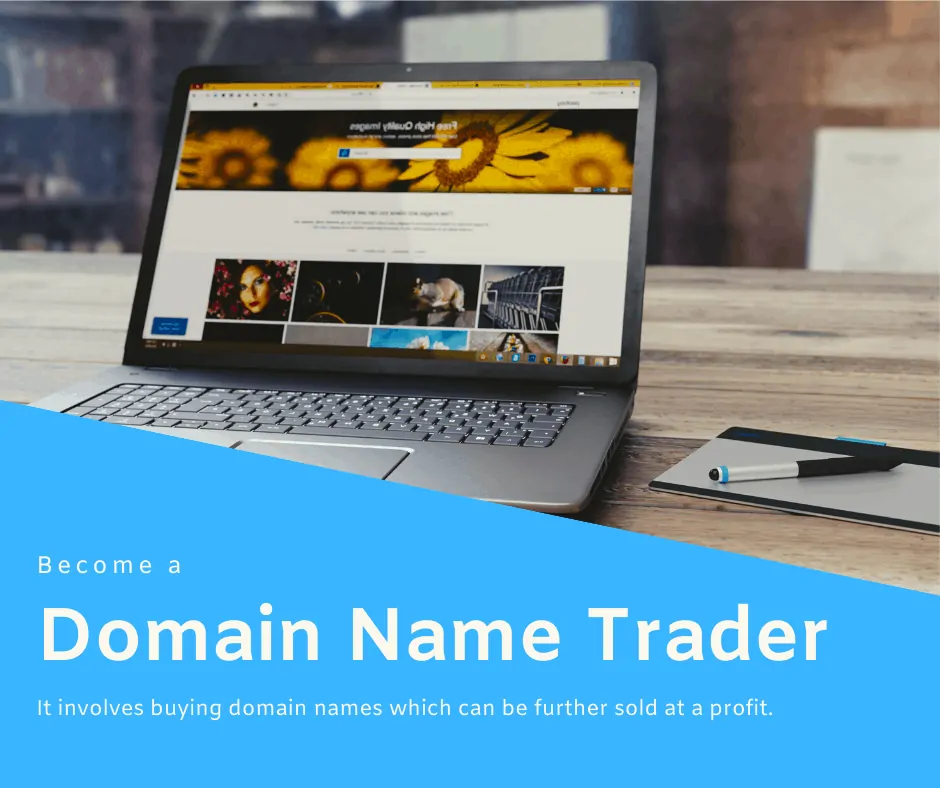
    Much like website flipping, buying domain names requires a certain amount of skill. For instance, to buy a domain, it is important to understand the domain names that people would prefer and buy them. These domains can then be sold for a profit to those who want to purchase the said domain name.

    Video Production
    Video Production

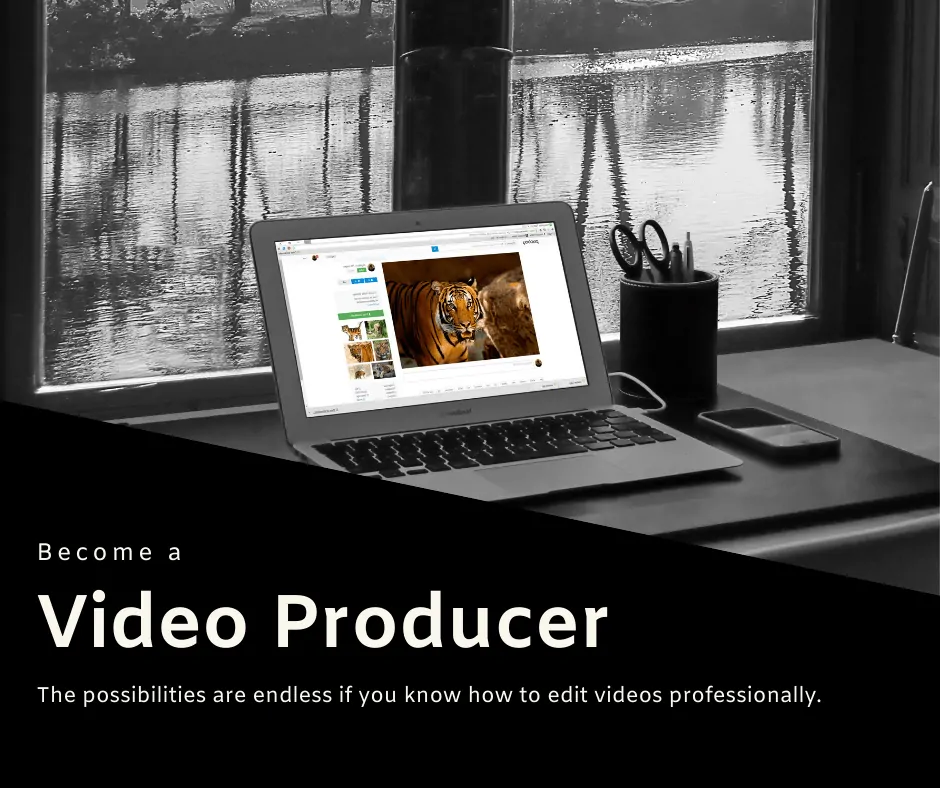
    The possibilities are endless if you know how to edit videos professionally. This is a home-based business that requires some amount of expertise in video production, but they are easy to learn. You can edit vlogs, video stories, add voiceovers and transitions among others for your clients as per their request. Having a YouTube channel for tutorials and conducting workshops or masterclasses can also help.

    Travel Planning

    Travel Planning

    It has become relatively easy today to book flights and reserve hotels to stay, but planning an itinerary can get very tiresome. If you have good organizational skills and you know a thing or two about travelling and must-see landmarks, you can start by planning your friends’ travels for free and get them to refer you to potential clients. You can help your clients plan their travels along with their budget and itinerary.

    Influencer Marketing
    INFLUENCER

    2019 is no stranger to influencers or influencer marketing. Thanks to social media and being able to promote and market new products from partner businesses to your audience. Having a strong social media presence is very important to work as an influencer. Having a website or blog is optional, but the more connected you are to your audience, the better your reach will be.

    Bottom Line?

    Home-based businesses don’t necessarily have to be easy or cheap to set up. Any new venture requires a lot of research and overcoming a few barriers. Although your business may take some time to set up, the profit earned from a home-based business is always higher than your input. But with the right amount of motivation, it is possible to earn a substantial income and grow your business successfully right from home.

    Go On, Tell Us What You Think!

    Did we miss something? Come on! Tell us what you think about our article on Home-Based Business Ideas in the comments section.
  • What Is Brand Architecture? – Components, Types, & Examples

    What Is Brand Architecture? – Components, Types, & Examples

    Expansions, acquisitions, mergers and other such strategies, although good for the company in the long run, create a lot of clutter and confusion in the minds of the customers as to what belongs to the company and what not.

    This confusion of whether the product belongs to the brand they follow or not reduces the target audience’s willingness to buy and often lead to many sub-brands being unnoticed by the target segment.

    However, marketers and other employees of the companies are not able to sense this confusion from the inside as they are accustomed to how things are within the company.

    The only way to sense and resolve the confusion is to get a clear view of outside the walls and organise brand outlook which specify the different subsections of the brand and connect it with the main brand and other sister brands. This is the brand architecture.

    What Is Brand Architecture?

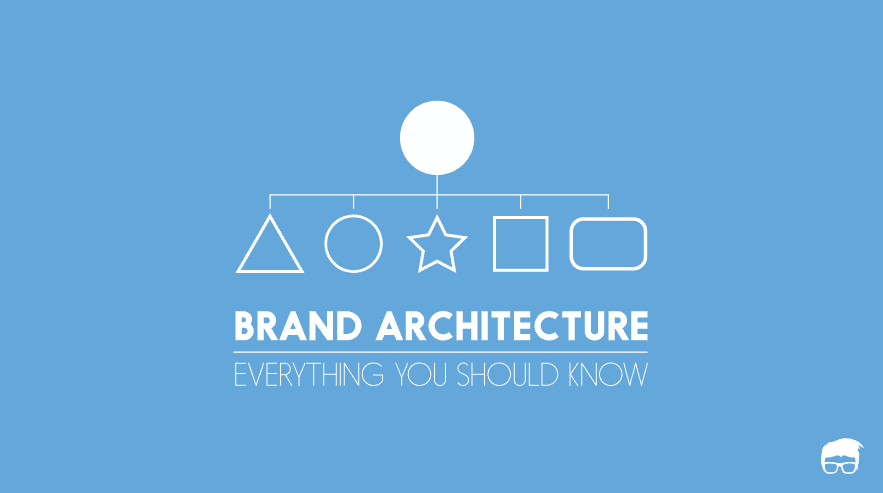
    Brand architecture is an organized structure of the company’s portfolio of brands, sub-brands, and other offerings.

    In simple terms – It shows how the brands, sub-brands and other offerings of the company are organized and how they relate to each other.

    BRAND ARCHITECTURE

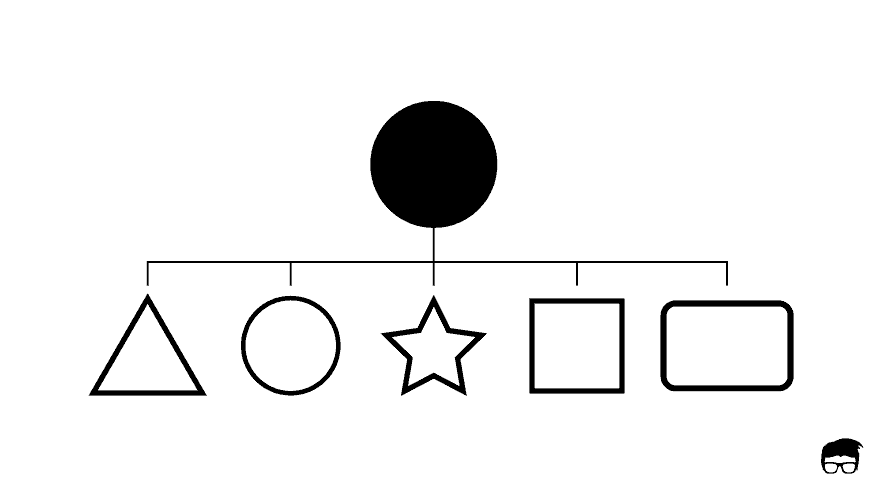
    Brand architecture is just like the family tree you used to create for your school projects. You specify the master brand (the grandparent) and move downwards by drawing its relations with other brands and their interpersonal relations as well. Everyone on that tree is related, but everyone is still unique.
    Components of Brand Architecture

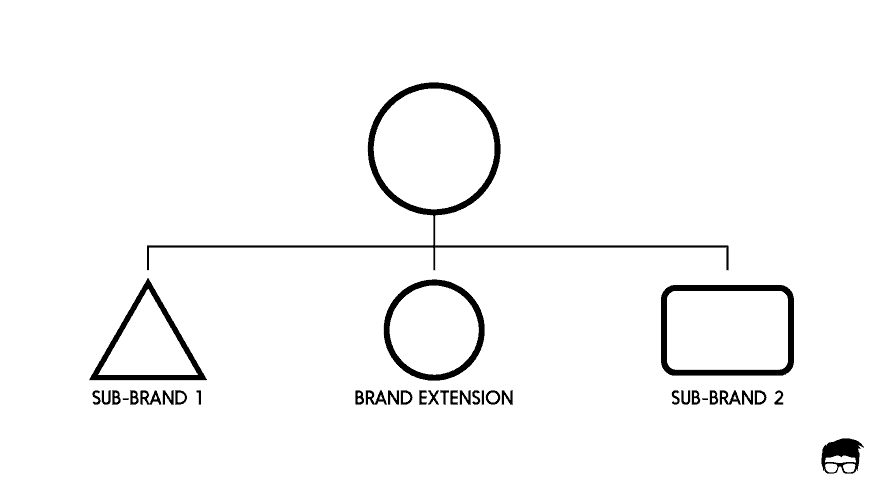
    Brand architecture includes a master brand, brand extensions and sub-brands (and even sub-sub-brands). Here’s a brief explanation of what these brand architecture components are:

    • Master Brand – it’s the top-level corporate brand, also called the parent brand, which encapsulates all the offerings of the company. Usually, the parent company’s brand name forms the master brand.
    • Sub-brand – a sub-brand is a product or service brand which is affiliated with the parent brand but has its own brand name and identity.
    • Brand extension – brand extension refers to the process of using an established brand name on new products to increase sales.

    BRAND ARCHITECTURE

    Importance of Brand Architecture

    Brand architecture is how the brands within an organisation are related and how they interact with each other. It is created by keeping the target market’s perspective in mind.

    Brands need to create a brand architecture as it helps them to –

    • Stay organised internally – looking at the brand with the eyes of the customers helps to find out the loopholes in organisation structure and the communication strategies and helps the brand to stay organized internally.
    • Manage perception – Developing brand architecture makes it easier to manage the outside perception about the brand, its offerings, and their relations with each other.
    • Create Synergy – Having an organised brand architecture creates a synergy among the child brands and the parent brand and help the organisation deliver against a larger brand promise.

    Brand Architecture Types

    Architecture is an important brand strategy tool which studies and defines the relationship of the parent brand and its child brands. Here are the different types of brand architecture which exists in the market today.

    Branded House

    google branded house

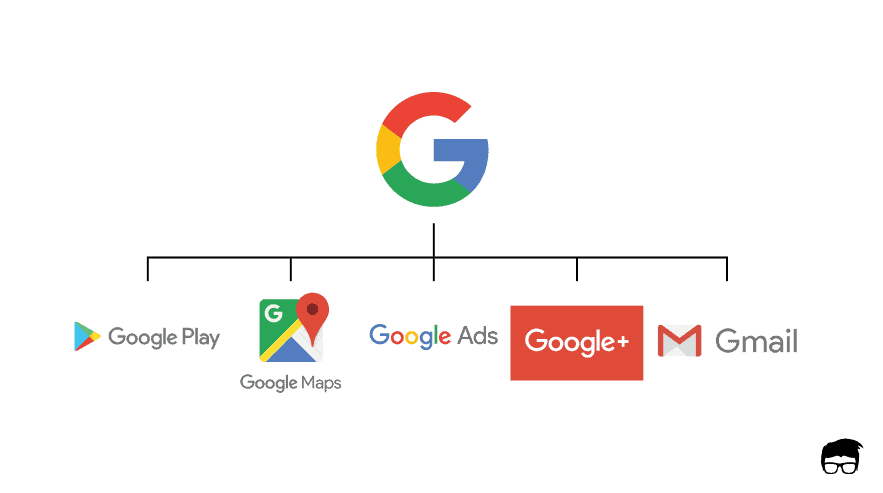
    Branded house, also known as monolithic brand architecture, is the most common type of brand extension where the master brand is always present and its name is linked to and leveraged by the extensions.

    In simple terms, the company itself is a brand and all the products and services are its extensions or subsets.

    An example of a branded house is Google and its extensions. Usually, Google follows the branded house brand architecture strategy for its new offerings and prefixes G or Google before such extensions; examples being Gmail, Google Drive, Google Maps, Google +, etc.

    House Of Brands

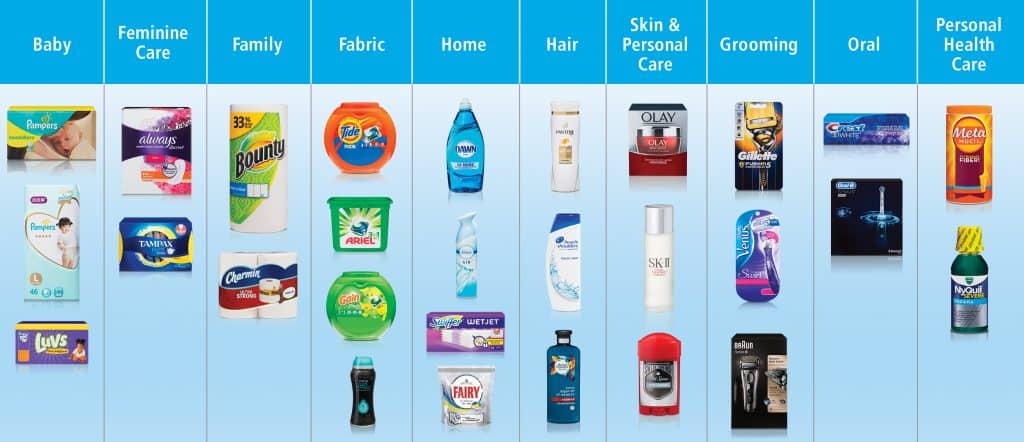
    p&g house of brands

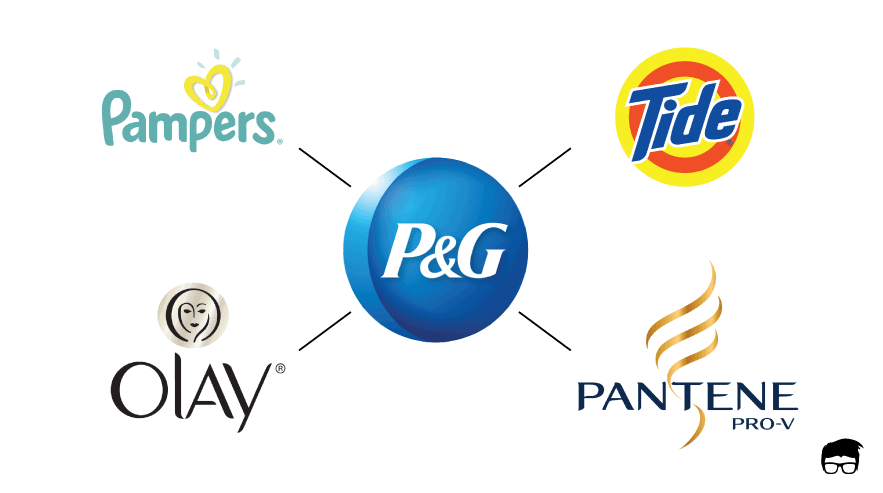
    The house of brands strategy, also called pluralistic brand architecture strategy, uses a different approach than the branded house. In this brand architecture strategy, the parent brand owns and manages many sub-brands who in-turn have their own unique brand identity.

    In simple terms, the company markets a range of separate brand names which have their own separate identities in the market.

    These sub-brands may or may not operate in the same industry, but they do have an identity and positioning which is substantially different from other sub-brands and/or maybe the parent brand.

    An example of the house of brands strategy is P&G which is the parent brand behind Tide, Duracell, Pampers, Pringles, etc.

    p&g house of brands

    Endorsed Architecture

    Marriott endorsement

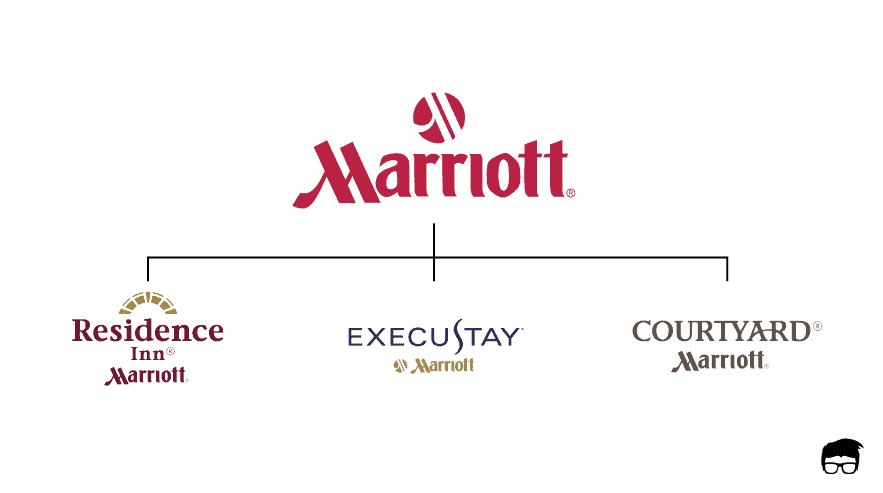
    An endorsed architecture includes individual and distinct brands which are linked together by an endorsing parent brand.

    In simple terms, the offerings have their own brand identity and market presence but the emphasis is given on the parent corporate brand which lends its positioning to the sub-brand. You’ll often find the suffix ‘brought to you by’ or just ‘by’ in an endorsed architecture strategy. Many times, the brand’s are prefixed by the corporate brand as well.

    Such a strategy, however, makes it hard for the sub-brands to pave their own unique position in the market. A good example of an endorsed brand architecture strategy is the Marvel Universe. Movies like Iron Man, Spider-Man, and Ant-Man, etc. even though have their own identity and market presence in the market, they got more traction just because they were associated with the Marvel Universe.

    avengers marvel

    Another example of such a strategy is Marriot. The sub-brands like Fairfield, TownePlace and Moxy enjoys a good image in the market just because they are endorsed by Marriot.

    Hybrid Architecture

    microsoft hybrid architecture

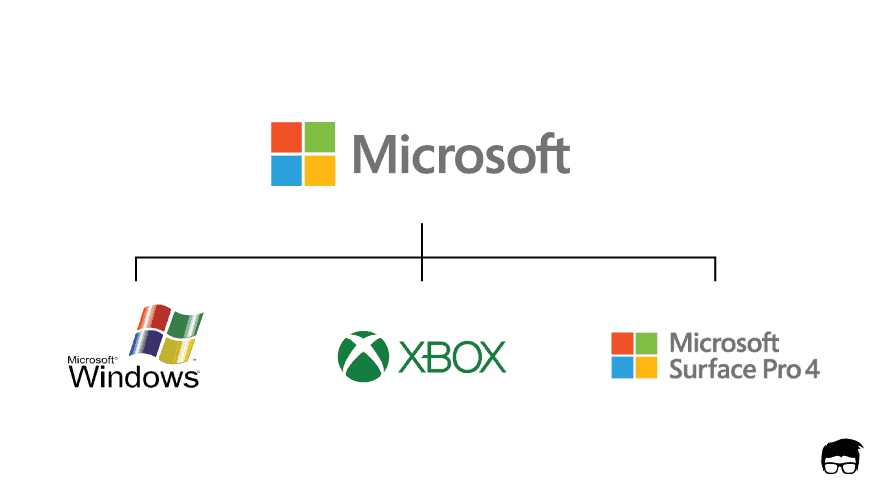
    Hybrid brand architecture is a mixture of two or more types of brand architectures.

    A perfect example of a corporate brand using a hybrid architecture is Microsoft. The company uses a branded house strategy for its Windows and Office offerings and has a totally different house of brand – Xbox when it comes to gaming and gaming consoles.

    The Benefits of a Strong Brand Architecture

    As a general rule, if a brand has more than one offerings which have their own identity, developing a brand architecture will have numerous benefits. Following is the list of such benefits of brand architecture –

    • Clarity in the marketplace – Having a well-structured brand architecture increases the clarity of brands offered and their relation with each other. This not only clears many doubts of the internal audience but it also helps in making better decisions to inform the marketplace about what the company’s communication strategy originally lacked.
    • Synergy among brands – Brand architecture lists the relationship between different sub-brands and the master brands which eventually creates a synergy among the offerings and help the company communicate about combined solutions and how these brands complement each other (cross-selling).
    • Target specific customer segments – Brand architecture effectively segment the target market and makes it clear what offering serves which segment. This often helps the company in making effective marketing strategies for brands which seem similar.
    • Clarity in positioning and communication – It’s easier to develop positioning and communication strategies for each sub-brand and brand extension if the company has a well-structured brand architecture.
    • Enhance consumer awareness – Brand architecture requires the company to look with the eyes of the customers. During the brand architecture process, the problems in the present marketing and communication strategies can be pointed out and customers can be made aware of the offerings they didn’t know were offered by their favourable brand.
    • Build & enhance brand equity – Brand architecture also helps the company make strategies to build and enhance the brand equity of its sub-brands. It also lets the organisation lend its corporate brand equity to its offerings.

    Go On, Tell Us What You Think!

    Did we miss something? Come on! Tell us what you think about our article in the comments section.

  • Go-To-Market Strategy [The Ultimate Guide]

    Go-To-Market Strategy [The Ultimate Guide]

    If you are an experienced entrepreneur, you’d probably know that having a brilliant team, building a disruptive business model, and designing an impressive business plan isn’t enough to woo investors to fund your startup. They also want detailed answers to whom you are going to target and why will they buy your product, why is this the right time to launch your product, and how you’re planning to create a demand for your product.

    Well, if you were unaware of this, here’s a complete guide explaining what is go-to-market strategy and how you bring a product to market to make it stay for long.

    What Is Go-To-Market Strategy

    A go-to-market strategy is an action plan that specifies how a business will utilise its internal and external resources to penetrate the market and take its value proposition to the end consumer to achieve a competitive advantage.

    A few keywords that should be focused on in this definition are –

    • Action Plan – Go-to-market plan is a detailed plan outlining all the actions required to accomplish the desired goal. It includes all the answers to ‘what to sell?’, ‘where to sell?’, and ‘how to sell?’.
    • Market Penetration – A go-to-market plan is usually associated with the brand or product launches where either the company plans to create a demand for its product by disrupting the industry or catering to the existing demand in a different manner by highlighting its value proposition.
    • Competitive Advantage GTM strategy is all about establishing a competitive advantage in the market to create a sustainable demand for the brand in the long run.

    Why Do You Need A Go To Market Strategy?

    If you’re planning to bring a new product to the market, the last thing you would want to do is go out unprepared.

    Remember this – There’s always a right time and a right way of doing things. And, there’s always a strategically decided market where the product is initially launched.

    A GTM strategy is a carefully thought out step-by-step plan which guides the company on bringing its product into the market to reach market penetration, revenue and profitability expectations.

    It reduces the risk of the product failing in its initial stages and also opens the doors to improve the product according to the response and feedback from the initial launch.

    What Does A Go-To-Market Plan Include?

    A go-to-market strategy is the what, why, when, where, and how of the product launch. An optimum go-to-market plan includes but is not limited to the following –

    What?

    • What is the problem your target market faces right now?
    • What’s your solution?
    • What is the actual product?
    • What’s your vision?
    • What is the value proposition?
    • What is the alternative to this product today?
    • What’s the pricing strategy?
    • What are the channels you’ll use to distribute the product?
    • What are the roles of different teams during the product launch?

    Why?

    • Why is this the right time to launch the product?
    • Why will they choose you?
    • Why is this the right market for the product launch?

    Where?

    • Where is the product launch scheduled to happen?
    • Where did customers find their solutions until now?

    When?

    • When is the product launch scheduled to happen?
    • When are the next steps scheduled to happen? What’s the timeline?

    How?

    • How are you planning to market the product initially and after the launch?
    • How do you plan to expand?
    • How do you plan to collect feedback and improve the product?
    • How the product will solve users’ problems?
    • How will the product stand out?

    The Process Of Building A GTM Strategy

    Without a doubt, there’s no one-size-fits-all go-to-market strategy. Each product and market are different, therefore each GTM strategy differs from others on the basis of –

    • Nature of the product,
    • Nature of the market,
    • The target market,
    • Existing competition,
    • Existing demand,
    • Company’s vision and mission, and
    • Future projections.

    But at the same time, building a GTM strategy is as important as developing your product. You’ll never know if it’s the right time to launch or if the market is even ready for your product until you plan your GTM strategy.

    Identify The Perfect Target Segment

    Identifying and defining the right market segment for the product is very important before the actual GTM strategy is even drafted. In the case of a new product, the company has to decide whether there are existing customers that might be sales prospects or whether it has to seek an entirely new set of target customers.

    Understand Who Influences Buyer’s Decisions

    Once the target market is identified, the company needs to identify the buying centre next. Not everyone in the target market is a buyer. The set includes –

    • Initiator – The one who starts the buying process. He shows initial interest.
    • User – The actual consumer of the product.
    • Influencer – The one who convinces others that the product is important and is needed.
    • Decider– Who gives the final decision for the purchase.
    • Buyer – Who buys the product from the company.
    • Approver – The authoritative person who authorizes the actions of deciders and buyers.
    • Gatekeeper – The person who controls the flow of information. He’s the one the marketer has to pass through before he reaches the decision-maker.

    These together are known as the buying centre. Identifying them and creating their personas help the company form a detailed hypothesis on who to target, who to market, and who to sell.

    Understand The Buyer’s Journey

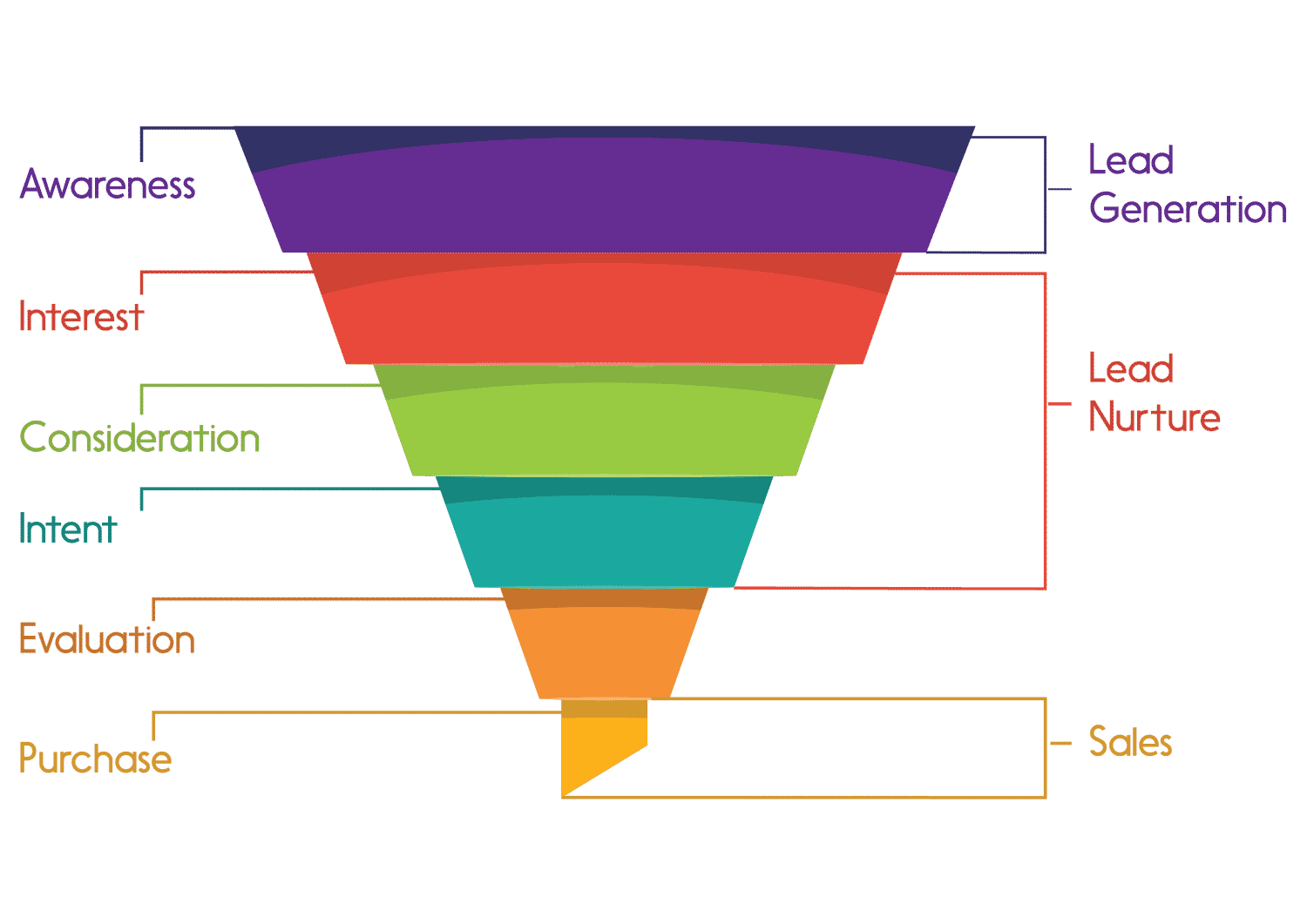
    A usual buyer goes through six stages before making an actual purchase

    • Awareness
    • Interest
    • Consideration
    • Intent
    • Evaluation
    • Purchase

    His mindset and activities during each stage need to be considered by the company to find the barriers which stop him from buying the product.

    However, from a marketer’s perspective, these stages can be divided into just three parts –

    • Top of the funnel (Lead Generation) – where the customer is made aware of the product.
    • Middle of the funnel (Lead Nurture) – where interest is aroused in customer to buy the product
    • Bottom of the funnel (Sale) – the result of the marketer’s efforts and the customer’s journey.
    Marketing funnel

    Define The Value Proposition

    Once the target market hypotheses are formed. The next step is to map value for every member of the buying center and for every stage of the buying process. A value proposition is the promise of tangible benefits which a customer will receive from consuming or experiencing the offering.

    Defining value propositions for every member of buying center and for every stage of the buying process makes it easy to create a communication message for everyone and every stage and eventually makes it easier to sell the product.

    Find The Product-Market Fit

    Next, the company must work on validating these hypotheses either by conducting first-hand surveys or releasing an MVP to analyse audience response and take feedback.

    Product-market fit involves validating that the product is desired by the market and can satisfy its need.

    Finding the product-market fit is a very important strategy as it decides whether the efforts of the team are in the right direction or not. It helps in saving a lot of effort and resources, which could have been wasted if the company had launched the product for the wrong audience or the focus had been on the wrong value proposition.

    Choosing The Apt Marketing, Sales, & Promotion Strategies

    This stage involves looking closely at the external and internal environment of the business to find out –

    • The right time to release the product
    • The most efficient channel of distribution
    • The most profitable pricing strategy
    • Effective sales strategies
    • The scalability model
    • Effective communication messages, channels, and strategies

    The next step involves looking again at the buyer’s journey and forming strategies to create demand within every marketing funnel stage.

    And then comes the product launch.

    Bottom-Line?

    In this era where three new startups launch every second, there is a huge need for planning things out to find a position in this overcrowded world. The go-to-market plan is just that. It helps you plan what, when, where, why, and how you will penetrate the market with your offering and why the market will love it.

    Go On, Tell Us What You Think!

    Did we miss something? Come on! Tell us what you think about our article on go-to-market strategy in the comments section.

  • How To Launch A Successful Kickstarter Campaign

    How To Launch A Successful Kickstarter Campaign

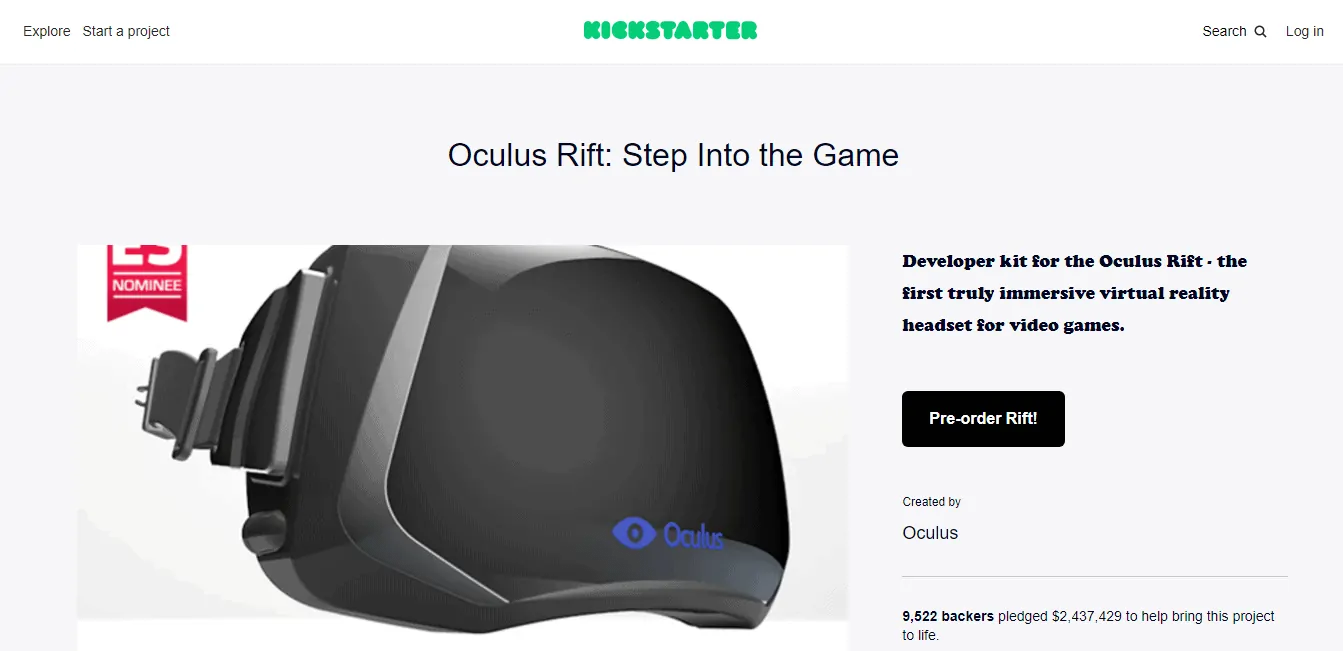
    Did you know, Oculus VR, the company that makes VR headsets started as a Kickstarter campaign? In 2014, Oculus VR was bought by Facebook for around $2 billion.

    Not bad for a company that had to crowdfund its first product.

    Creating a Kickstarter campaign is easy – a few clicks and you are all set up. In order to truly get noticed and funded, you need a viable product and follow a few – extra but simple – steps to stand apart from the rest of the crowd.

    what is kickstarter

    Let’s look at how you too can launch a successful Kickstarter campaign to fund your new project.

    For those who are new to the whole “crowdsourcing” concept, here are our guides to help you learn more about Crowdsourcing and Kickstarter.

    Decide If Kickstarter Fits Your Goals

    Though Kickstarter can be used to fund a variety of products, there are a few – physical products to be precise – that usually tend to do well on Kickstarter. This is due to the given nature of crowdfunding.

    Physical products tend to do well because of a single main reason – people tend to trust more in the fact that they will be receiving an actual, physical product even if they back a previously anonymous company.

    oculus_kickstarter_campaign

    It helps if you are able to categorise your project into one of the following categories that Kickstarter supports:

    • Art
    • Comics
    • Crafts
    • Dance
    • Design
    • Fashion
    • Film & Video
    • Food
    • Games
    • Journalism
    • Music
    • Photography
    • Publishing
    • Technology
    • Theatre

    Finally, always make sure your idea meets Kickstarter’s project requirements and does not violate any rules mentioned in them.

    Planning A Kickstarter Campaign

    There’s no rocket-science involved here. You just need to go through three simple steps:

    Decide the duration of your Kickstarter campaign

    A campaign on Kickstarter can last anywhere from 1 to 60 days. Kickstarter recommends you to set it for 30 days or less. Kickstarter found that shorter projects generally had higher success rates. Having a shorter campaign length also helped create a sense of urgency around the projects.

    Fix your Funding Goal

    The goal is to never set it too low or really high. Both have repercussions – making you look petty or too excited. If you are doubtful then set an amount that is enough to implement your project. Seems like a no-brainer at first but people usually miss out on this while figuring out the amount and go for very large funding goal. Focus on not setting it too high since it’s always better to exceed your goal and end with ample supply of funds.

    Fix your Product Cost

    Similar to the funding amount, you also need to consider how much your product will cost and the compensation your backers will receive. Kickstarter also lets you give discounts for first buyers. You have to strike a balance – between manufacturing costs, profit margins and buyers’ expectations for your product, all the while making sure your first backers are incentivised for being the first to support your project1.

    Doing this earlier makes it easier – rather deciding only when on the Kickstarter’s “Edit your Project” page. The next step though is essential to the success of your campaign.

    Create A Company/Product Website

    Before you jump to fill the Kickstarter campaign form, having a website for your product is quite helpful. It helps lend credibility to you and your project.

    Having a website helps backers connect with you and the project much more easily. Imagine you happen to glance upon a project on Kickstarter that has no website or social media account. It reduces the chance of you backing what is otherwise a great campaign.

    Your website will also help act as your online store. You can use to keep selling your product once your Kickstarter campaign ends. The website can also help in engaging and communicating with your backers – be it new additions to the product to the launch of a new lineup after you end your Kickstarter campaign.

    The website could also help you serve people who come from places other than Kickstarter.

    Create a great website is easy, even if you’re new to the digital world or have no programming language. Here’s a guide for you – non-coding entrepreneurs – to create a website for your startup.

    Create Your Kickstarter Campaign

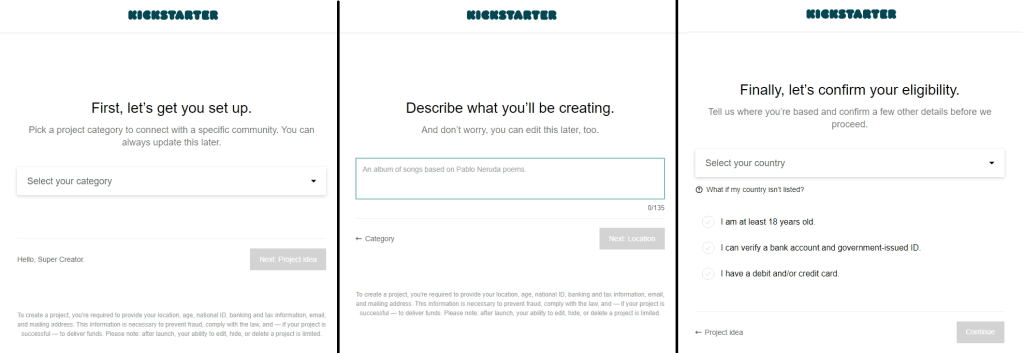
    It is time to create your Kickstarter project campaign.

    Step 1: Sign-Up on Kickstarter

    Step 2: Navigate to Start a Project

    Step 3: Select the general category of your project, project idea and location.

    kickstarter_start_project_step3

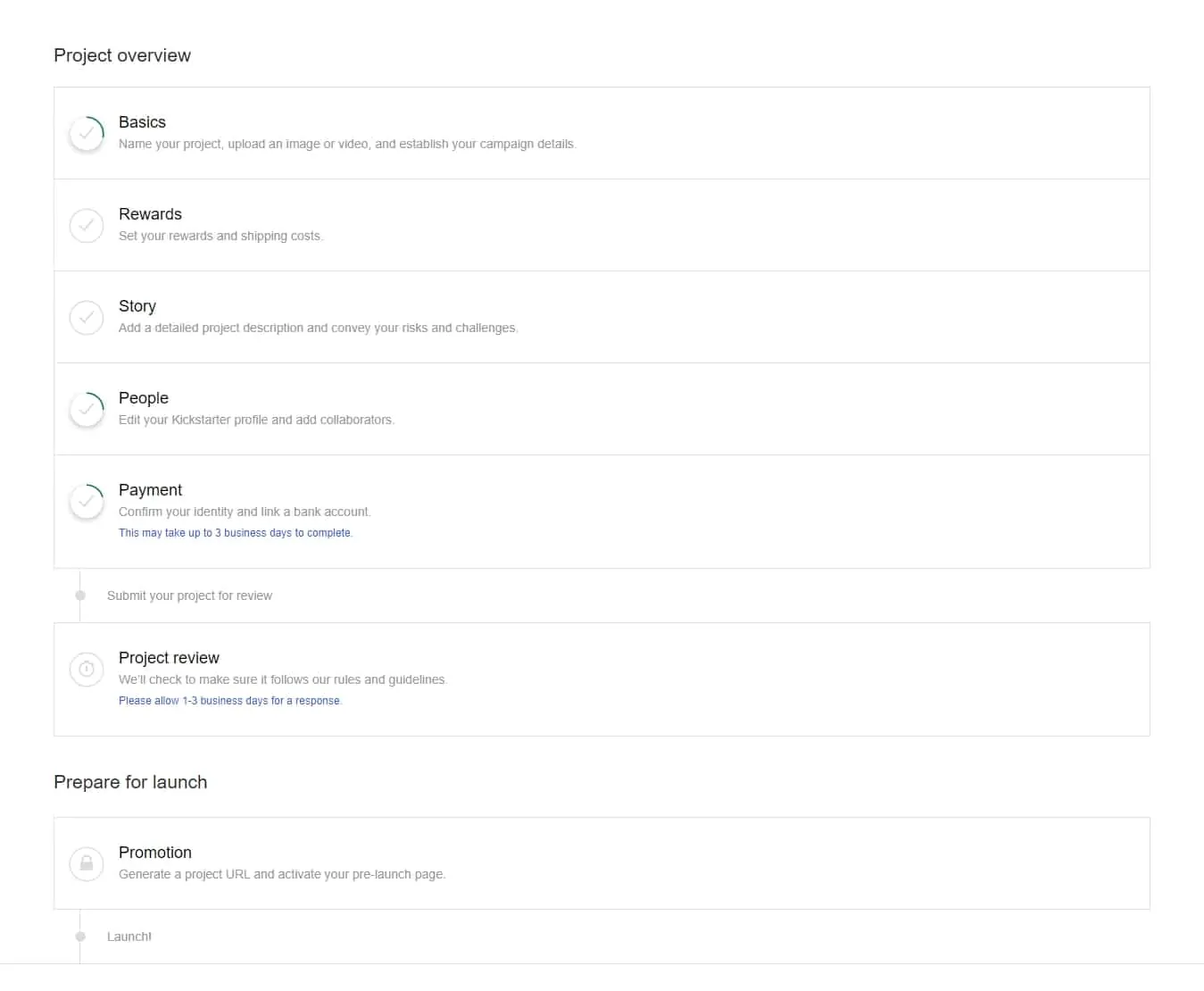
    Step 4: Fill in all the details starting from “Basics” till “Promotion” on the “Project Overview” page.

    Project Overview

    Make sure you write some really good texts about your project – give an account of all the details, timing, and risks involved. It is also recommended that you create a video about your product – describing and emphasizing on the functionality of your product.

    If you are not comfortable or if the budget allows, you can always hire professionals to do the writing and video part for you.

    Step 5: That’s all! Do cross-verify all the details that you’ve entered and you are all set to launch your very own project to the world.

    launch your project

    Go On, Tell Us What You Think!

    Did we miss something? Come on! Tell us what you think about our article on how to launch a successful Kickstarter campaign in the comments section.

  • Workaholic & Workaholism: Signs, Effects, & How To Cope With It

    Workaholic & Workaholism: Signs, Effects, & How To Cope With It

    You might be an entrepreneur, an office worker or even a college student, working your level best to keep going, getting your work done, chasing those deadlines, pushing your limits to get to what you’ve always wanted for yourself and others. And what of course would be wrong with that?

    Well, superficially, you might be someone who everybody aspires to become. From appreciating your work ethic to getting inspired to work hard, almost everyone would pat your back for what you do. But is this worthy at the cost of your social, physical and mental well being?

    Who Is Workaholic?

    A workaholic is someone who is addicted to work; who has an uncontrollable need to work continuously.

    Studies show that in a population, an estimate of 30% of the people suffers from workaholism. Yes, you guessed it right, workaholism is a problem. You may try to boast yourself of being a workaholic, but at the end of the day, it’s a disease. Anything that causes discomfort is a disease, and you might be suffering from it and never get to know.

    Workaholism is a term you may confuse with what we call passion or work engagement, but that is not the case. Being a workaholic is altogether a different scenario.

    What Is Workaholism?

    Workaholism is a condition where an individual is addicted to work. It is characterized by a compulsive desire to work.

    In general, it may be characterized by working excessive hours, but the essential factor that differentiates workaholics from others is that they work beyond the workplace; they always think about work and lack work enjoyment, which is not even demanded by the workplace.

    Being a workaholic or work addict may seem to be a good thing in terms of getting our goals achieved or succeeding in life, but it’s not the case.

    There is a difference between being passionate about your work and being a work addict. The primary signs of workaholism may involve continually thinking about work or a constant desire to work even if it’s not required. Being engaged in work and workaholism are two different constructs, though it may be confused with each other very often.

    Work engagement can be due to the fact that you like doing your work and disengage from it anytime you want but in workaholism disconnecting from work can be a difficult task. Also, work addiction can lead to extremely involved in work even when it is beyond the financial needs or the actual amount of energy the work needs.

    Work addiction can have severe implications for health and social relations. It can lead to depression, anxiety and high-stress levels; it also can ruin personal relations among family and friends.

    A common misinterpretation of the term work addict is someone who works long hours, which is not the case. Working long hours can be due to multiple reasons other than workaholism like financial requirements or the nature of the job or the companies people work for. So just long hours at work does not necessarily mean being a work addict. 

    We categorically see that it can be difficult for individuals and their companions sometimes to figure out whether or not he/she is a workaholic. As time may pass, it could be possible that the minor signs and symptoms result in a huge degradation in a person’s social, physical, and most importantly, mental well being.

    Here are signs for you to classify whether or not you could be suffering from workaholism.

    Signs Of Workaholism

    Norwegian researchers from the Department of Psychosocial Science at the University of Bergen identified specific symptoms of workaholism. They created a work addiction scale with seven criteria to assess if a person is addicted to work or not. Here are those 7 signs of being a workaholic:

    1. Thinking of how you can free up more time to work.
    2. Spending much more time working than you intended to.
    3. Working to reduce negative feelings like those of guilt, anxiety, helplessness, and depression.
    4. Hardly paying attention to others who tell you to cut down on work.
    5. Stressing if you are prohibited from working
    6. Deprioritizing hobbies, leisure activities, and exercise because work is the topmost priority for you.
    7. Loving work so much that it negatively influence your health.

    If you see the following signs relatable to yourself or anybody around you, there is a strong possibility of you or them being a workaholic. It is a bad mental state, and the person suffering from it might need help even if it does not appear to be a serious problem for the time being.

    Workaholism is a severe problem in the developed and developing countries in this age of competition and the fast-paced lives of the 21st century. You need to realize that the repercussions of specifically this type of addiction, may seem not so troublesome, but can have a substantial negative impact in the long run.

    Negative Effects Of Workaholism

    Addiction of any type is dangerous, even if it may seem reasonable from certain aspects. There is a sense of euphoria in any kind of addiction, but ultimately it can have serious implications which are very true in the case of workaholism.

    The adverse effects of workaholism are:

    1. Recurring health problems
    2. Insomnia due to excessive work stress
    3. Can lead to depression and anxiety
    4. It can affect social and family relations
    5. Can decrease job performance
    6. Also, it can lead to isolation and vulnerability to other addictions

    You might feel that it is the very nature of you to be a work addict, and it is not possible for you to change your lifestyle, but, there is always a way out.

    How To Cope With Workaholism?

    If you think being a workaholic is good quality, then you might want to check if it is doing good to you or people associated with you. It is not necessary to torture yourself to bring the best out of you. There are other ways, too, which can help you achieve your goals in a much better way.

    Things to try for coping with workaholism:

    1. Take breaks to relax, enjoy and then return to work with greater enthusiasm.
    2. Be strict with work-time limits.
    3. Do not go constantly working beyond stress limits.
    4. Engage in your hobbies and things you like, other than work.
    5. Focus on physical and mental fitness

    Bottom-line?

    If you are or wanted to become a workaholic, just stay and think twice before you conclude that being extremely engaged in work for all of your time at the cost of your peace of mind, relationships and health is good or not.

    Workaholism is an addiction the same as others and has somewhat similar repercussions to it. Just because you are working doesn’t make workaholism a quality to admire.

    There needs to a correct work-life balance to maintain a holistically happier, better and progressive lifestyle.

    Go On, Tell Us What You Think!

    Did we miss something? Come on! Tell us what you think about our article on workaholic & workaholism in the comments section.

  • The 10 Biggest Competitors Of Facebook

    The 10 Biggest Competitors Of Facebook

    Whenever we think to spend some time on social media, one name that surely comes to our mind is Facebook.

    Ranked as #1 social media platform with more than 2 billion active users, Facebook is now almost synonymous to social media. It offers features like instant messaging, photo sharing, newsfeed, groups, marketplace, video sharing, etc and owns almost most of the top 5 social media networking companies including Instagram and WhatsApp.

    Ever since its inception, it is known for its unique revenue model where most of its revenue comes from targeted advertisements. As per the 2017 data, the company made a revenue of 40 billion.

    With increasing popularity, it also gained strong competitors. Here are some names that can give the giant a tough competition in terms of revenue and popularity.

    Advertising Competitors Of Facebook

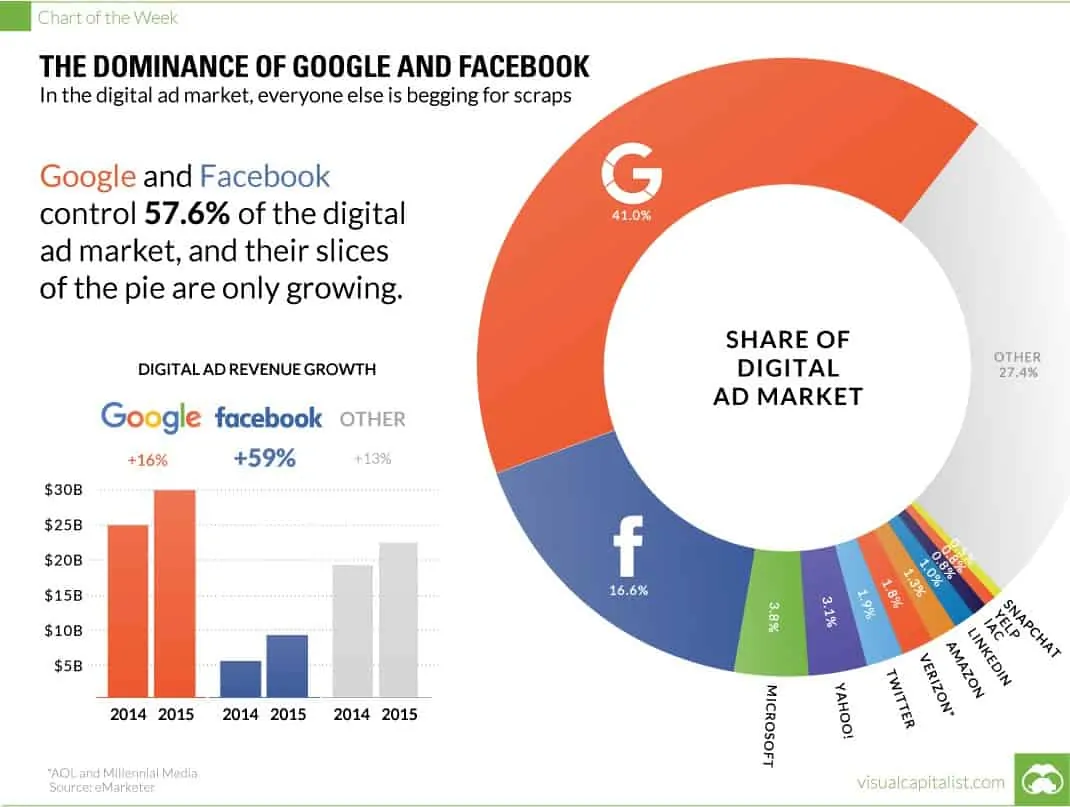
    According to eMarketer, the three giants – Amazon, Google, and Facebook together occupies 70% of all digital ad dollars spent.

    Google

    Google Facebook competitor

    Google is the biggest competitor of Facebook when it comes to advertising. Together, the companies are known as the digital duopoly for dominating the advertising platform.

    According to a report of 2018, Google occupies 40% while Facebook occupies 22.7% of the UK’s ad revenue share.

    google facebook ads
    Source: medium.com

    The largest part of Google’s revenue comes from advertising. To counterbalance Google’s AdWords, Facebook started the social media boost packages for its pages. Yet most E-commerce spending takes place on Google because of its popularity.

    Besides ads, Google also introduced Orkut, Google+, Hangouts, Allo, Hello etc. to compete with Facebook and its subsidiaries when it comes to social media platforms. Even though most of them failed, Google is still one of the biggest competitors of Facebook.

    Google vs Facebook

    Both Google and Facebook occupy the top spots when we talk about data monetisation or targeted ads.

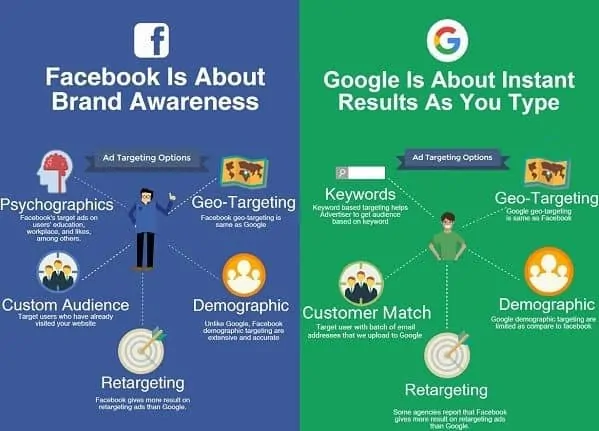
    Mainly the two giants compete in the advertising platform. Google operates AdWords which is an auction-based ad platform that lets advertisers advertise on Google search results and its partner ads. Facebook, on the other hand, operates Facebook Ads which is a programmatic ad platform that lets advertisers buy space on Facebook and its partner websites.

    Google vs Facebook
    Source: Twitter

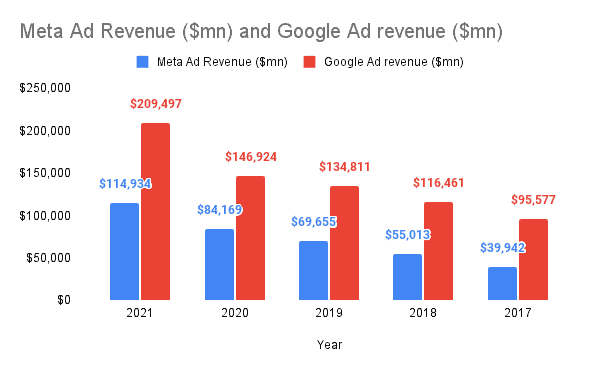
    When we talk about revenues, Google surpasses Facebook by a large margin. According to Statistic.com, Google made a revenue of $209 billion in 2021 while Facebook made $114 billion.

    Meta Ad Revenue and Google Ad revenue

    Amazon

    amazon logo

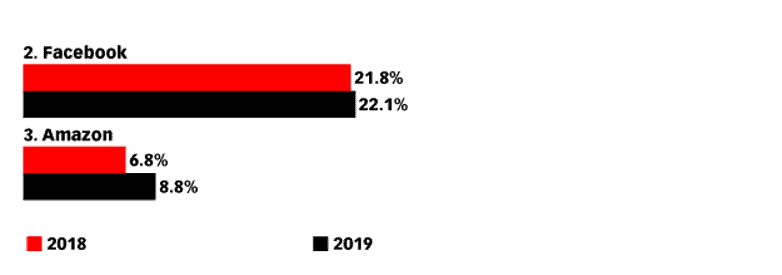
    After Google, Amazon can be considered as another tough competitor of Facebook in the advertising world. Though Amazon presently occupies 8.8% of the ads share, the percentage is predicted to increase by 10% next year.

    facebook vs amazon
    Facebook & Amazon ad share

    Facebook’s market grew by 0.3% while Amazon pulled an increase of 2% within one year. Due to this shocking growth, Facebook listed Amazon in the rival list for advertisement.

    Facebook vs Amazon

    Amazon is very much different from Facebook when we talk about the operating model. While Facebook is a social networking platform amazon is mainly an ecommerce site.

    To make a strong foothold in the ecommerce platform which can prove beneficial for increasing ad share, Facebook introduced – Facebook Marketplace. But there are a few differences between the two e-commerce sites. In Amazon, products are advertised using Amazon Sponsored Products and need to pay only when ads are clicked. Moreover, Amazon takes full responsibility for delivering the product for which they charge some delivery fees.

    But on Facebook, the seller has to run ads, promote it and measure ROI. Moreover, the seller on Facebook has to take care of the shipping and delivery of their own thus not adding any additional delivery cost.

    However, if we talk about the revenue model, there are many similarities. Facebook Watch competes with Amazon Prime. Also, Facebook competes with Amazon when it comes to wooing retailers and ecommerce sellers to advertise on the platform.

    Facebook’s Competitors According To User-Base

    Facebook isn’t the only website when it comes to social media networking. It shares its user-base with the following competitors.

    TikTok

    tik tok

    TikTok was launched in 2017, but just in one year, its user base rose by 700 million, thanks to its heavy investment in influencer marketing. Not only that, TikTok is embracing a unique strategy to enter the competition head-on. It bought Musical.ly in 2017. Since 2018, it started poaching the ex-Facebook employees with a 20% higher salary than Facebook.

    Today, TikTok is one of the biggest competitors of Facebook. In fact, it has more than 1.2 billion monthly active users, and its user base is growing by the day.

    Facebook, to tackle the same, launched Reels on Instagram and its own platform. But the company is still losing ground to TikTok in terms of the user base.

    Facebook vs TikTok

    If we talk about stats, If we talk about stats, TikTok is surely dominating Facebook when it comes to Generation Z as the target audience (41% of TikTok users are aged between 16 and 24). It surely understood the habits and preferences of this age group better than Facebook.

    As a result?

    TikTok has outperformed Facebook when it comes to getting more attention per user. An average user spends just 43 minutes on Facebook and 52 minutes a day on TikTok.

    Moreover-

    TikTok gained huge popularity in video making due to its powerful camera tools- Pride, Face Filters 3D Mask, AR. Compared to these, Facebook’s features are limited and the users often have to resort to other editing apps to get the best of Reels. However, with the introduction of Reels templates, the platform has added ease of use to it.

    Moreover, Gen Z prefers TikTok’s algorithm to Facebook’s. They don’t like Facebook’s algorithm which shows their friends’ posts in chronological order. On the other hand, TikTok’s algorithm is much more personalised.

    To be fair, Facebook is trying to improve its algorithms. But, it still needs to catch up with TikTok.

    Twitter

    twitter facebook competitor

    Twitter too competes with Facebook when it comes to users and their engagement.

    As estimated in July 2019, Facebook is still leading the game with 2.38B monthly active users, while Twitter was ranked 12th with 330 million users.

    Even though user difference is huge, but Facebook faces tough competition because Twitter is gaining popularity for transmitting messages in live events among the millennials.

    Facebook vs Twitter

    If compared by features and goals, Twitter is very different from Facebook.

    Facebook connects people where one can write a post of unlimited characters. Users can make “friends”, like and share the post of their choice which remains evergreen. Even they can message instantly and play games on Facebook.

    While Twitter connects ideas and interest. Users can “follow” others, can find the latest trending news. They can tweet and retweet their response but it is limited to 280 characters only. But due to constant real-time interaction, the contents have a short lifespan.

    But Facebook’s revenue model is a lot similar to Twitter’s and both compete for getting as much user attention and as many ads as they can.

    Pinterest

    pinterest logo

    It is considered the fastest-growing platform in history which reached 10 million new visitors in a month. In August 2019, Pinterest reached 291M monthly active users and there’s no looking back considering that no one is able to tackle it with its disruptive business model.

    Moreover, Pinterest drives a huge amount of referral traffic to business websites. So, it is preferred by global marketers for different marketing purposes making it one of the competitors of Facebook.

    Pinterest vs Facebook

    Facebook and Pinterest are different in terms of their operating model. While Facebook’s focus is to become a one-stop social networking platform where people connect and chat, Pinterest focuses on making it easy to discover, save, and share information using photos, videos, and links.

    Facebook users can create small groups of friends with a common interest, can chat and share information with them. But Pinterest does not allow groups. Only a user can follow other users and see their pins in own News Feed.

    Snapchat

    snapchat logo

    Snapchat is a big competitor to Facebook and its subsidiaries like Messenger and Instagram when it comes to instant messaging and photo and video sharing. It is considered as one of the fastest-growing social platforms with over 203 million daily active users (2019). This application, just like Tik Tok,  is more popular among Generation Z (current teenagers).

    The estimated number of videos viewed and shared daily on the platform is 10 billion.

    Snapchat vs Facebook

    The Snapchat vs Facebook debate has been going on ever since Snapchat said no to being acquired by FB. Facebook, since then, has successfully been able to copy most of the features from the original application and added the feature of stories, instant photo messages, etc, to Instagram, Messenger, and WhatsApp, making their business models similar to Snapchat’s business model.

    LinkedIn

    linkedin logo

    LinkedIn has a huge user base of more than 645M users from all over the world making it one of the most popular platforms for hiring employers or finding jobs. It competes with Facebook’s in terms of popularity among the professional crowd.

    LinkedIn vs Facebook

    LinkedIn and Facebook are very much different from each other. The former is a business platform that offers profiles and networks to create engagement among professionals, while the latter helps to connect with “friends”. But both compete with each other when it comes to getting the most attention of the users and getting most ads from advertisers.

    Moreover, with the launch of Jobs on Facebook, Facebook has made LinkedIn its direct competitor.

    Facebook’s Competitors In Video-Sharing Industry

    Facebook isn’t limited to the usual social networking websites. The company, with its offering – Facebook Watch, is a known contender when it comes to video hosting and video sharing and is actively competing with giants like YouTube, Prime, etc.

    YouTube

    youtube logo

    YouTube competes with Facebook for video-sharing. It is considered as the second largest search engine after Google and the present number of active users is 2 billion making the app one of the toughest competitors of Facebook.

    To compete with YouTube, Facebook launched Facebook Watch in 2017 which presently witnesses 720M users per month.

    Facebook vs YouTube

    Though both platforms allow video sharing, yet they are very different from each other in terms of functioning.

    YouTube offers a longer shelf-life to the videos than Watch. Google’s platform uses Google-like ranking features which involves uploaders to employ search engine optimisation of their videos. Moreover, videos on Youtube range from varied categories.

    Facebook, however, uses its own social-media like algorithm to present videos to its users and hence the shelf-life of such videos aren’t much compared to that on Youtube. The platform also focuses on community-focused ‘shows’ rather than one or two videos from independent publishers

    Moreover, the way the company defines “view” is also different. To count as “view”, the YouTube videos need to get actual click on them (auto-played videos don’t get views). Even for the YouTube ads, they need to be played for 30 secs to get a “view”. While Facebook considers a video to get “view” even if the video is auto-played and being played for 3 seconds.

    Facebook’s Competitors In Different Countries

    Even though Facebook dominates the world when it comes to social networking, there are still many countries that it couldn’t conquer. Following are some of the competitors of Facebook when it comes to regions.

    WeChat

    wechat logo

    WeChat is a social media ecosystem of China. By ecosystem we mean, it is just like Facebook with added features. You can order food, send and receive money, shop, pay utility bills and check-in for flights using just one application.

    It is something Facebook aspires to be in the long run. Hence, it is considered to be a big competition for Facebook as WeChat already has over 1 Billion active users all over the world.

    WeChat vs Facebook

    WeChat is the only platform which has more features than Facebook. It offers social media features like “Moments” (like Facebook’s Wall) and “People Nearby”. But besides that, it also provides its users with news and entertainment articles, acts as an eCommerce platform and even has the ability to host mini-programs (apps within the apps, like games) which Facebook app lacks.

    VKontakte

    wechat logo

    VKontakte (VK) shares very similar features and have the same goals as Facebook. It can be considered as Facebook of Russia because of its similarities and its dominance over the Russian market.

    VK is ranked as the second most popular social platform in Russia with more than 300M registered users and 85M active users. In comparison, Facebook has around 8M active users.

    VK vs Facebook

    Though VK features are much similar to Facebook, Facebook still holds more popularity all over the world.

    When it comes to account security, VK fails to meet the criteria. As a result around 100 million VK accounts were hacked and personal information is published in the Dark Web. While Facebook’s accounts are nearly impossible to hack.

    Facebook allows users to add profiles and details about his life as much as they feel necessary. While in VK, more detailed information is needed which can be easily viewed by the people from the same school or with the same interest, birthplace, etc.

    Another difference is the feature of listening and sharing music. VK allows the user to listen and save the music offline from around the world, which is not possible on Facebook.

    Let’s wrap up

    Facebook, though gained world-wide popularity, still strives to make itself better by regularly updating with new features. At every step, it proves itself to be a tough competitor who keeps the ability to dominate the market.

    Go On, Tell Us What You Think!

    Did we miss something? Come on! Tell us what you think about our article on Facebook’s competitors in the comments section

  • Brand Management – Definition, Functions, & Process

    Brand Management – Definition, Functions, & Process

    A usual day in the office life of a brand manager would be to plan and execute strategies to resonate the brand with the needs, wants, and desires of his target customers. His usual job is to make them think of the brand as something to look up to when they go shopping next.

    But it doesn’t end here.

    Brand management is just like raising a kid. It’s just that the decisions for the kid are made by the parents even when the kid grows up.

    Intrigued a bit?

    Well, fret not. Here’s a complete guide explaining what brand management is, it’s importance, elements, strategies, and process.

    What Is Brand Management?

    Brand management is a function of marketing that makes use of strategies and techniques to analyse and plan how the brand is perceived in the market. It aims to increase the overall perceived value of the brand in the long run and build a loyal customer base through positive brand associations.

    Importance Of Brand Management

    The main aim of brand management is to build, measure, and control brand equity – making a brand to have its own value which, when associated with the product, increases its overall value both monetarily and non-monetarily.

    In this era of extensive competition where different companies sell almost similar products, a brand is what makes a difference. It helps in positioning the offering in a unique way that provides the company with marketplace advantage and boosts the value of a product.

    Creating a brand out of the product not only personifies it, but it also creates an experience which stays in the mind of the customers. They recall the experience whenever provided with certain triggers related to the product niche or product usage. Creating such an experience around the product not only helps in increasing its sales but it also helps in extending the product line in future.

    The Intangibles Of Brand Management

    While the tangible elements of the brand management include the product and its price, packaging, shape, colour, etc., the intangible elements that also plays a major part in selling it and building a long term experience are –

    • Brand Equity: It’s the value of the brand as a separate asset.
    • Brand Image: It is an aggregate of beliefs, ideas, and impressions that a customer holds regarding the brand.
    • Brand Positioning: Positioning is the unique space a brand occupies in the brains of the customers.
    • Brand Associations: The images and symbols associated with a brand or a brand benefit.
    • Other Brand Elements: Elements like brand personality, communication elements, etc.

    Functions Of Brand Management

    Brand management forms a subset of marketing management. It deals with the overall brand development right from the birth of the brand until the time it ceases to exist. The functions of brand management include but are not limited to the following –

    • Identifying the ideal target market, understanding what motivates them to choose one product over others and positioning the brand in the same domain.
    • Developing an ideal brand message which resonates both with the needs of the target market and with the value proposition of the offering.
    • Communicating the brand promise to the customers by making use of almost every possible touchpoint.
    • Making efforts to build brand equity and measure it from time to time.
    • Managing the brand architecture and making sure sub-brands structure and communication align with the master brand structure and communication policies.
    • Building the brand identity and making sure that it aligns with the brand image in the market.
    • Handling brand communication in the market
    • Anticipating and accommodating new brand identity needs

    Strategic Brand Management Process

    Brand management aims at building brand equity and making it grow over time. The strategic brand management process revolves around this aim. This process involves planning, executing, and controlling marketing and branding strategies and activities to build, measure, and control brand equity.

    The strategic brand management process involves the following steps –

    Identifying And Establishing Brand Positioning And Values

    The first step of the brand management process involves the brand manager to identify an untapped yet beneficial position in the market which can be tapped to counter the existing competition and build a good brand image for the long run. This is usually done using mental maps and positioning maps.

    Once identified, the brand management team then works on building a core brand identity, brand associations, and brand essence.

    Planning And Implementing Brand Marketing Programs

    Once the positioning strategy is set, the next step involves the brand manager to actually plan and implement strategies to position the brand as planned. It further involves three steps –

    • Choosing the brand elements brand name, logo, symbols, characters, packing, and tagline. These are usually the first things customers will come across before actually trying the product.
    • Choosing the marketing activities and supporting marketing programs and the way the brand is integrated into them
    • Leveraging secondary associations like the country of origin, the channel of distribution, etc. These are usually other entities that have their own associations. They result in lending their own associations to add to the planned positioning.

    Measuring and Interpreting Brand Performance

    The next step involves designing and implementing a brand equity measurement system which helps the brand managers measure and manage brand profitability. A brand equity measurement system is a set of research procedure designed to provide timely, accurate and actionable information about the concerned brand to the brand managers so they can make best possible tactical and strategical decisions to benefit the brand in the short as well as the long run.

    Implementing this system requires marketers to complete these three steps –

    • Conducting Brand Audits: A brand audit is a comprehensive examination of the brand’s current position in the market with respect to its competitors. It involves assessing the strengths and weaknesses of the brands and providing suggestions on how to strengthen it.
    • Designing Brand Tracking: Brand tracking involves the collection of brand-related information directly from the consumers on a routine basis over time, to measure the present health of a brand, both in terms of consumers’ usage of it and what they think about it.
    • Establishing A Brand Equity Management System: It is a set of organizational processes designed to improve how the brand equity concept is understood within the company. This framework identifies sources and outcomes of brand equity and permits tactical guidelines as to how to build, measure, and manage brand equity.

    Growing And Sustaining Brand Equity

    Once the brand equity is built, the next step involves maintaining and expanding it to make sure that the brand continues to grow. This is usually a never-ending process and involves –

    • Defining brand architecture: It includes defining general guidelines about the branding strategy and answers the what, why, where, who, and how about the brand structure and brand elements. It is made up of a brand portfolio – listing all the brands a company has to offer, and a brand hierarchy – listing the number and nature of common and distinctive brand elements across the company’s products.
    • Managing brand equity over time: It involves taking marketing decisions with a long-term perspective of how such decisions will affect brand equity in the long run. It also involves managing the brand within the context of other brands as well as multiple categories, over time, and across multiple market segments
    • Brand reinforcement and revitalisation: It is all about making tactical decisions which make sure that the customers have the desired knowledge structures so that the brands continue having its necessary sources of brand equity.

    Go On, Tell Us What You Think!

    Did we miss something? Come on! Tell us what you think about our article on brand management in the comments section.

  • What Is Cofounder? – Founder vs. Cofounder

    What Is Cofounder? – Founder vs. Cofounder

    Starting up isn’t a piece of cake. Even if a startup founder succeeds in getting an idea that could disrupt the market, there are some required skills needed to realise that idea, that they might just can’t master themself.

    This is where the cofounders step in. A cofounder can be considered as Luigi to Mario, Wasp to the Ant-Man, or anyone who fits perfectly with the main protagonist to complete the required skillset and fulfil the vision of a proposed company.

    Now, many of us are often confused regarding the distinction between a founder and a cofounder or the responsibilities associated with these positions. Many of us even use these two designations interchangeably. But that should not happen. A cofounder has his own identity which is different from the founder.

    Here’s a complete guide to help you understand who is a cofounder, how a cofounder is different from a founder, and what are their roles and responsibilities.

    What Is A Cofounder?

    A cofounder is any individual who starts a company or any other business venture with the help of other people.

    This definition might be puzzling as it makes no conspicuous distinction between a founder and a cofounder. In fact, a layman often commits the mistake of considering both these positions as alternatives for each other. So, what is the basic difference between a founder and a cofounder? The answer lies below.

    Cofounder vs. Founder

    A founder is usually the person who has a defined idea of a business. But they may or may not have adequate finance or human resource or even lack some required skills to realise it.

    A cofounder, on the other hand, is the person who accompanies the founder (the person with the idea) in establishing the business and takes the responsibility to convert it into a successful one.

    To make this definition even more clear, let us look at the example of Facebook.

    Facebook was born out of Zuckerberg’s head during his university days and the access to Facebook was initially limited to the students of Harvard University.

    However, Zuckerberg wanted to expand the Facebook business model and hence, called his fellow mates to help him for the same. The fellow students included Eduardo Saverin, Dustin Moskovitz, Andrew McCollum, Chris Hughes. These four took major responsibilities and were recognized as the cofounders of the social media platform.

    Now that we are clear about what a cofounder exactly is, let’s discuss the various responsibilities that are discharged by him.

    Responsibilities Of A CoFounder

    Being a cofounder is no easy job. A cofounder is not only entrusted with the initiation of a business, but they have to monitor the progress as well.

    Given below are some of the responsibilities which are to be fulfilled by a cofounder. Keep in mind that these responsibilities keep changing with respect to a particular niche, initial investment, the scale of production etc.

    Identifying Market Opportunities

    While the founder often is the brain behind the product, cofounder is the person responsible for the go-to-market plans and scaling. They research the opportunity areas where the offering can be positioned to get the most traction and takes a big-picture view of the market segment they plan to target.

    Developing The Final Product

    Cofounders usually join the board before the actual product is launched and hence, work in sync with the founder to make the product better by taking feedback during the MVP and beta stage.

    Guiding The Board Of Directors

    Since cofounder is among the biggest shareholders of the company, they are often levied with the responsibility of deciding the type of board, the panel on the board and the entire process through which the board goes. It is important to balance this board while also ensuring a smooth communication flow.

    Projecting A Vision

    The founder and the cofounders work closely in defining a business model, mission, and vision of the company.

    Recruiting The Best Employees

    Human resource adds to the overall value of the organization and helps in continues development. Hence, cofounders are required to acquire as much talent in the organization as possible.

    A team led by the growing spirit, hard work and consistency always help in giving the best kick-start to a new business.

    Staying Focused On KPI’s

    Successful cofounders make sure that the key performance indicators are closely monitored to assess the productivity and performance of the company.

    Business Planning

    A cofounder needs to develop a business plan with all the short term and long term goals of the business. This business plan is required to consider all the sudden triggers and also provides a last-minute plan for dealing with them.

    Taking Financial Decisions

    All the decisions regarding finances must be scrutinized closely before taking the final decision. Under-utilization of resources is a nightmare for growing companies.

    How To Find A Cofounder For A Company?

    How to find a cofounder? What makes a person an ideal choice for this position? How can a cofounder contribute to your startup idea?

    All these questions must be lingering in your head now. We understand how crucial this decision can be for a person who is planning for a startup or just a small business. Even a small glitch in the duties discharged by a cofounder can cause immense loss to a newly found business.

    The most important aspect to keep in mind is the balancing of skills. Every individual can not be perfect in every other function. Hence, if you are looking for a cofounder, it is important to make a list of the skills you have mastered and skills that are required to run your business. Now, look for individuals who carry a set of required skills that are different from the ones you already have. This will help in ensuring proper functioning and balancing of power in the business.

    Skill analysis also helps you decide if you require one or more cofounders.

    Apart from the crucial functions of a particular business, there are certain generic characteristics a person must have in order to become a cofounder. If you are looking for one, make sure they stand firm on the following aspects.

    Responsibilities

    A cofounder should be open to the responsibilities of all forms. Even though the idea belongs to the founder, a cofounder is required to give their optimum best in every job they undertake.

    These responsibilities are different for every business. Proper disposal of these duties helps in the quick growth of the business.

    Cofounder Skills

    A cofounder needs to adopt a variety of skills for the better implementation of the plans and policies. These skills include:

    These are the most important skills which complement the founder’s in running a successful business. It could be marketing, sales, or even technological, depending upon the business needs.

    Communication Skills

    A cofounder needs to know the basics of effective communication. Effective communication skills help in easy and quick dispersal of instructions, smooth negotiation, and negotiation process.

    He is the face of the company both on external and internal grounds. A skillset with good communication skills is always required within the representative.

    Leadership Skills

    It is important to invest in people who transform every hour into a productive day. Cofounders need to encourage their subordinates to put their best foot forward, irrespective of circumstances.

    Problem-Solving Skills

    Every decision should be based on the objective of the continuous growth and development of the business.

    Sometimes, cofounder will also be required to make hard choices, which might lead to a conflict of interest between different parties. However, proper dispersal of communication and instructions will help in avoiding conflicts.

    The job of a cofounder might seem like havoc but successful startups are a combined result of the hard work and passion put in by both the founder and a cofounder. A dedicated cofounder leaves no space for negative remarks or a poor result rather focuses on achieving higher standards of growth.

    Go On, Tell Us What You Think!

    Did we miss something? Come on! Tell us what you think about our article on what is a cofounder in the comments section.

  • The History Of Google

    The History Of Google

    Here’s an icebreaker for your next watercooler talk:

    Did you know, Google was initially called “Backrub”? It was named based on its algorithm that analyzed the web’s “backlinks”.

    Imagine if they’d kept the original name? “Let me BackRub that real quick.”

    With it being more than 21 years since the company was launched, it’s a good time to look at the history of Google and how they went from being called “BackRub” to becoming the Internet that we usually refer to.

    Who Founded Google?

    larry page sergey brin
    Source: Flickr

    Google started as a research project by PhD students Larry Page and Sergey Brin while attending California’s Stanford University in January 1996. Both Larry Page and Sergey Brin were from academic backgrounds and knew the importance of citations on research papers.

    They created PageRank based on the same notion, where one can estimate the importance of a website based on its incoming links. They created a search engine with PageRank as the backbone.

    The original idea of creating a search engine, however, was a brainchild of Page, who then worked with Scott Hassan (the incidental third founder of Google) to write code for it. Events passed and Hassan left to pursue a career in robotics followed by Brin joining the team and producing the final product.

    The Name – Google

    original google logo
    First Google Logo

    Initially nicknamed Backrub (both sure loved their wordplay), the Google.com domain name was registered on September 15th, 1997 and the company was incorporated on September 4th, 1998.

    The name surely had some very positive effects on the history of Google.

    Google Stanford
    Google during the days at Stanford

    They settled on the name “Google”, from the word ‘googol’, a mathematical term for the number represented by the numeral 1 followed by 100 zeros. They chose it over “Backrub” since it sounded better and reflected their mission to organize a seemingly infinite amount of information on the web.

    Failed Acquisition by Yahoo!

    Failed Acquisition by Yahoo!

    Both Page and Brin were academics at heart and in the early years tried to sell Google to pursue other interests. During all this, Google was almost sold to Yahoo!, a major player in the Internet sector back then. They tried selling their PageRank system for $1 million in 1998 to Yahoo!, but Yahoo! turned them down, stating their asking price to be quite high for such a product.

    Work-From-Garage

    google garage

    Their offering was unlike anything that was provided by other products at the time. Soon, their site that was being hosted by Stanford’s servers got swamped from the increase in traffic and Stanford’s IT department kicked them out.

    google garage larry sergey

    Page and Brin relocated to the garage of future Google employee and YouTube head Susan Wojcicki in 1998.

    This location served as their temporary base of operations for a year. 

    Initial Funding

    Shifting of the workplace was around the same time when they got their seed investment of $100,000 for Google Inc. from Sun Microsystems founder Andy Bechtolsheim. It was twice the amount the pair asked for. But what’s more suprising was that Google was not even incorporated at the time of receiving the cheque.

    Andy had come over to listen to their pitch and liked the idea as well as the answer he got for his question: how will they make money from providing search results.

    Page and Larry suggested the placement of search ads: ads that were placed in the search results that were relevant and related to whatever the user searched and they would charge for the placement of the said ads.

    With the funding in hand, Google officially incorporated in their garage headquarters with Larry Page acting as the CEO on September 4, 1998, to become Google Inc.

    New Digs

    new digs

    In February 1999, Google moved from its humble garage to its new base of operations at 165 University Avenue, Palo Alto with the help of the recently acquired funding. This was also the same office building that housed companies like PayPal and Logitech. Google also hired its first employee Craig Silverstein who stayed with them for more than ten years before leaving to work for Khan Academy.

    The company was growing at breakneck speeds – both technologically and financially. It started hiring more employees and started investing in more hardware to spider, index and catalog the web pages and serve its users.

    Google was committed to running their servers on Linux. Redhat caught their attention and the company signed them up to conduct all Internet computing functions.

    It was also around this time when Google adopted its famous, but unofficial, corporate philosophy: “Don’t be evil.”

    don't be evil google motto
    Source: Fossbytes

    Not long after moving to Palo Alto, Google raised its first round of venture capital funding in June 1999 in the form of a $25 million investment from Sequoia Capital and Kleiner Perkins Caufield & Byers.

    Launch Of The Advertising Service

    In 2000, Google unveiled AdWords. It came out of a roughly month-long beta with about 350 advertisers in October 2000. AdWords was Google’s second advertising program, the first being Premium Sponsorships. Premium Sponsorships was launched months before, in August 2000 where a direct sales team sold the premium sponsorship ads to advertisers.

    Google had also been developing “contextual” advertisements for a while. But they were not without competition. Applied Semantics, which had a contextual ad product called AdSense was the major player at the time.

    In 2001, Google appointed Eric Schmidt as the CEO upon Sequoia Capital insisting they do so due to the rapid growth of the company. Eric Schmidt had joined Google in May as chairman of the board of directors and had previously served as chairman and CEO of Novell and CTO of Sun Microsystems.

    This allowed both Larry and Sergey to pour their attention back into the technology aspect of things instead of trying to manage the company.

    They also opened their first international office in Tokyo, just 3 years after being founded. In April 2003, Google bought Applied Semantics gaining the technology to strengthen its pre-existing contextual ads program.

    In a turn of events, Yahoo! made Page and Brin an offer of $3 billion in 2003, but by then Page and Brin were more aware of the product that they had at hand and refused the deal.

    In 2004, they moved to a newly leased headquarters with over 800 employees. This headquarters is Googleplex as we know of it today.

    On April 1st, 2004, they introduced Gmail, their e-mail service. Because it was on April Fool’s Day, the users all thought it was a prank at first (Google was quite elaborate with its previous pranks; MentalPlex is a great one).

    Googleplex
    Googleplex in Mountain View, California; By 2006, they were able to buy GooglePlex outright

    On August 19th, 2004, Google had its initial public offering on the stock market, priced at $85 per share. Today, a share in Google parent company Alphabet costs over $1,000.

    The Google we know of today is the culmination of all the products and services that Google had either built or acquired over the years. The firm’s best and smartest acquisitions have always been the ones in areas where it had no special expertise but were still close fits with the company’s core search business.

    Google follows a certain trend: If you can’t build it, buy it.

    google acquisitions
    Source: Wired

    Let’s look at a few major products and service that came out of well-timed acquisitions made by Google.

    Google’s Mobile Arsenal – Android

    Google Android

    On July 11, 2005, Google quietly acquired Android Inc. for $50 million. Andy Rubin, Rich Miner, Nick Sears, and Chris White created Android in 2003, aimed to develop an OS for smart mobile devices and cameras.

    Rubin and his start-ups were able to offer a new type of mobile operating system: a simple and functional open-source platform (based on the Linux kernel), equipped with tools designed to make life easier for developers. They ultimately intended it being a system free for anyone who wanted to use it. This aspect was enough to convince Larry Page and Sergey Brin to jump on this new project.

    Video-Sharing & Streaming – YouTube

    Google bought YouTube, the video-sharing service in 2006 for $1.65 Billion but was considered a huge risk since YouTube was full of copyrighted content that users uploaded without permission and faced potential lawsuits.

    Google had made a half-hearted attempt to get into the video-sharing space with its Google Videos, but there were a few players already present. YouTube was one of them. Videos on YouTube videos were already being viewed by as many as 100 million people a day. So Google did quite a risky move of acquiring it.

    The risk here was that YouTube before acquisition had users uploading copyrighted content which made it a potential lawsuit magnet. Google skillfully turned this around by negotiating contracts with content owners and introduced a reasonable takedown policy. As a result, YouTube thrived and now it earns in billions every year (Google never officially announces YouTube’s revenue).

    Google’s Cloud Services – G Suite & Google Apps

    gapps-timeline

    Gmail was Google’s first foray outside of search and this would eventually lead to the development of all the services and products under Google Apps and G Suite we know of today.

    On July 9, 2007, Google acquired Postini, a communications security and compliance company for $625 million. Google had already been using Postini technology with Gmail and felt that it could prove to be a valuable addition to Google business model as it could help them branch out to providing other internet-based services.

    By November 2010, Google consolidated its cloud offerings under new branding. Google Apps Premier Edition became Google Apps for Business, while Standard Edition became the new Google Apps.

    Google Maps

    google maps

    Originally started as a C++ program by two Danish brothers, Where 2 Technologies. was another disruptive company acquired by Google in 2004. Google also acquired another similar company, Keyhole, in the same month, which later on was used to create Google Earth and add features to Google Maps.

    Google Maps was launched in 2005. It used satellite images which helped a lot in the aftermath of Hurricane Katrina.

    The application with GPS was actually launched in 2007 as a beta version and was officially launched along with (and as a part of) Android in 2008.

    The Launch Of Google Chrome

    google chrome

    A major amount of Google costs was because of royalties it had to pay to different browsers to keep it as a default search engine. To combat this, they the founding pair hired several Mozilla Firefox developers to build a browser owned by Google. Eric Schmidt opposed the idea at first but was amazed after seeing the demonstrative product.

    Google Chrome was officially launched as a beta version on September 2, 2008 for Windows XP. It was a minimalistic browser which, just like Google, disrupted the existing market and paved its way through easily.

    Failure Is The Key

    While Google has released over 250+ products to date, they never fail to experiment. They value failure and attribute them to Google’s success.

    For every letter in the English alphabet, Google has put an end to at least one product starting with that alphabet from their lineup. As of 2019, Google has killed – 16 apps, 151 services, and 13 hardware projects in total so far.

    Google prides itself on its approach towards failure, which is: to embrace and use them. They don’t just let all the money and effort invested go down the drain. They have created a process for documenting and learning from mistakes. This documenting method helps them:

    • Identify the most important problems in their offering.
    • Create a record on what went well and what went wrong.
    • It helps reduce blame over a product or service not doing well and promotes productivity and growth.

    Google’s New Parent Company – Alphabet

    In 2011, Larry Page took over as the CEO of Google once more from Eric Schmidt. But both, Larry and Sergey were not content with a single company, “Google”, running all of the acquired companies and products.

    So they decided to rename Google to Alphabet, creating a holding company that includes the search company Google, along with a bunch of other companies – Google Fiber, DeepMind, GV, Calico, CapitalG, X, Jigsaw, Makani, Sidewalk Labs, Verily, Waymo, Loon, and Wing.

    Larry Page and Sergey Brin became the CEO and the President of Alphabet respectively. They appointed Senior Vice President Sundar Pichai as the CEO of Google.

    This allowed them to pursue the development and innovation of newer technologies and services as they used to before without being burdened with running a company.

    Google In 2020s

    Google has almost become synonymous with “the internet”.

    The term “Google” is officially recognized by the Oxford Dictionary as a verb. Almost everyone on the Internet has used either, Google’s services or products in some way or another.

    These statements are no exaggeration, considering Google has over a billion people using each of its products and services.

    Here are a few stats that show us just how big of a company Google is:

    • Google has over 92.03% of the search engine market share worldwide as of August, 2021. (Source: StatCounter)
    • Google is worth around $280 billion as of writing. (Source: Fool)
    • In January 2020, Google’s parent company Alphabet became the fourth company in the world to reach a trillion dollar market capitalisation.
    • Google owns about 200 companies. (Source: Investopedia)
    • Chrome has a 62.41% browser market share globally as of February 2019. (Source: StatCounter)
    • Google receives over 63,000 searches per second or over 3 million searches per minute on any given day. (Source: SearchEngineLand)

    It also doesn’t look like they’ll stop growing anytime soon.

    Go On, Tell Us What You Think!

    Did we miss something? Come on! Tell us what you think about our article on the history of Google in the comments section.

  • Top 20 Gun Brands In The World

    Top 20 Gun Brands In The World

    The world weapon market is worth billions of dollars. To be precise, the market had a worth of $566.3billion in 2017 worldwide, with North America’s being the biggest consumer occupying a 50.9% market share.

    The gun industry includes the manufacturing of assault rifles, automatic rifles, carbines, machine guns, shotguns, rifles, long-guns, and handguns.

    The gun production has been on a rise for different sectors including military, police, sports and personal usage. Out of which the global sports market made a share of $1.91billlion in 2017.

    With the advancement in gun technologies for easy use, handling, capacity, accuracy, durability, and design there also has been an emergence of heavy competition in this sector. There are different companies in the race some big some small with either special products or general production of their range.

    The Top 20 Gun Brands In the World

    Here is a list of top 20 gun brands in the world and what you need to know about them:

    Smith & Wesson

    Smith & Wesson logo

    Founded in 1852 by Horace Smith and Daniel B, Smith & Wesson is an American manufacturer of firearms ammunition and restraints. Its corporate headquarters are in Springfield, Massachusetts and it is now a unit of American Outdoor Brands Corporation.

    This gun brand has been a leader in the firearm industry for the longest time and has made a special position in the market with its quality products and services offered.

    The company produces varied firearms like Cartridges Revolvers, Semi-automatic pistols, Rifles and carbines, Submachine guns and Shotguns, out of which the famous ones include the Smith & Wesson Model 1940 Light Rifle, Smith & Wesson Bodyguard 380 Semiautomatic Pistol, Smith & Wesson Governor Revolver, Smith & Wesson X-Frame Centerfire Revolvers, and Smith & Wesson Performance Centre Revolvers.

    Smith & Wesson is also a manufacturer of restraints like handcuffs, leg irons, belly chains, prisoner transport chains.

    Remington Outdoor

    Remington Outdoor logo

    Founded in the year 2007, Remington Outdoor Company is an American origin gun brand that acts as a subsidiary of its parent company Cerberus Capital Management.

    The company offers products for military markets, law enforcement agencies, shooting sports, hunting and for self-defence personal usage.

    Its products Model 700 and Model 870 are among the best-selling firearms of all time. Today, the Versa Max is quickly becoming the go-to firearm brand for hardcore waterfowlers and the most demanding 3-gun competitors. And Remington handguns like the Model 1911 R1 and the R51 are also among the ones which the company is famous for.

    Glock Ges.m.b.H

    Glock Ges.m.b.H logo

    Glock Ges.m.b.H. (Trademarked as GLOCK) is a weapons manufacturer headquartered in Deutsch-Wagram, Austria, named after its founder, Gaston Glock. While the company is best known for its line of polymer-framed pistols, it also produces field knives, entrenching tools, and apparel.  The popularity of Glock pistols inspired other manufacturers to begin production of similar polymer-framed firearms

    Glock handguns are used by armed forces and law enforcement organizations worldwide, including a majority of law enforcement agencies in the United States. In some countries, Glock handguns are popular with citizens for personal protection and practical shooting.

    The company manufactures at least 25+ handgun models in three sizes, three calibres and seven cartridge variants. Its popular models are Glock 17, Glock 26, Glock 19, Glock 20, Glock 31, and Glock 21.

    Heckler and Koch

    Heckler and Koch logo

    Heckler and Koch is a German defence manufacturing company that manufactures handguns, rifles, submachine guns, and grenade launchers. The company is located in Oberndorf in the state of Baden-Württemberg and also has subsidiaries in the United Kingdom, France, and the United States.

    HK provides firearms for many military and paramilitary units, including the SAS, KMar, the US Navy SEALs, Delta Force, HRT, Canada’s Joint Task Force 2, the German KSK and GSG 9 and many other counter-terrorist and hostage rescue teams.

    HK has a history of innovation in firearms, such as the use of polymers in weapon designs and the use of an integral rail for flashlights on handguns. This history makes it stand out of the other gun brands.

    Their popular products include the MP5, UMP submachine guns, the G3, HK417 battle rifles, the HK33, G36, HK416 assault rifles, the MG5, HK21 General-purpose machine guns, the MP7 personal defence weapon, the USP series of handguns, and the high-precision PSG1 sniper rifle.

    Mossberg

    Mossberg logo

    Founded by Oscar Frederick Mossberg, Mossberg was founded in March 1919, about 100 years ago. It is an American firearms manufacturer, specializing in shotguns, rifles, scopes, pistols and firearm accessories.

    Since 1919, Mossberg has been the leader in introducing important design breakthroughs to the firearm industry. Many product features pioneered by Mossberg® are now the standards by which all modern firearms are judged. The popular products include shotguns, Mossberg 500, Mossberg 590. Following the success of the Brownie .22 pistol, Mossberg developed a line of inexpensive .22 calibre rifles, shotguns, and rifle scopes.

    Sturm, Ruger & Co.

    Sturm, Ruger & Co. logo

    Founded in 1949 by Alexander McCormick Sturm and William B. Ruger, Sturm, Ruger & Co. Inc., better known by the shortened name Ruger, is an America based firearm manufacturing company based in Southport, Connecticut.

    The company produces bolt-action, semi-automatic, and single-shot rifles, shotguns, semi-automatic pistols, and single- and double-action revolvers.  Some of its variants include Hawkeye M77, SR-762, Ruger Security-9, Ruger American Pistol, Bearcat, Blackhawk and Single-Six.

    According to the ATF statistics for 2015, Ruger is currently America’s largest firearm manufacturer, as well as the second-largest pistol and revolver manufacturer (behind Smith & Wesson) and rifle manufacturer (behind Remington) in the United States.

    SIG Sauer

    SIG Sauer logo

    SIG Sauer is a gun brand name used by two sister companies involved in the design and manufacture of firearms. The original company, SIG Sauer GmbH, is a German company, formed in 1976 as a partnership between Schweizerische Industries Gesellschaft (SIG) of Switzerland and J.P. Sauer & Sohn of Germany. The company was renamed SIG Sauer Inc. in 2007 and since 2000 has been organizationally separate from SIG Sauer GmbH.

    The products include Semi-automatic pistols, Rifles, Electro-optics, Gear & accessories. The famous models of the brand include P220, P229, P938, 1911, P226, LEGION, SIG716, SIG MPX, TANGO6, WHISKEY5, SIG516, MCX VIRTUS, TREAD, P365, ARMED PRO, and SIGM400.

    Colt Defense

    Colt Defense logo

    Colt Defense, together with its subsidiaries, is an American designer, developer and manufacturer of small arms weapons systems for individual soldiers and law enforcement personnel. It is headquartered in West Hartford, Connecticut, United States.

    It deals in marketing, manufacturing, developing and researching aspects of weapons like handguns like revolvers and pistols, long guns, carbines, submachine guns, infantry automatic rifles, and grenade launchers.

    The most famous Colt products include the Colt Walker, the Colt Python, and the Colt M1911 pistol, which is currently the longest-standing military and law enforcement service handgun in the world and is still used today. Though they did not develop it, for a long time Colt was also primarily responsible for all AR-15 and M16 rifle production, as well as many derivatives of those firearms. The most successful and famous of these are numerous M16 carbines, including the Colt Commando family, and the M4 carbine.

    Benelli

    Benelli logo

    Benelli Armi SpA is an Italian firearm brand founded in 1967, located in Urbino, Italy, best known for shotguns used by military, law enforcement and civilians. It produces the Benelli M3 12 gauge, used by American SWAT teams. Benelli Armi was founded in 1967 as an offshoot of the Benelli motorcycle factory that sold motorcycles through Montgomery Ward.

    The company produces a wide range of arms including shotguns, rifles, target pistols, pistols, air pistols, submachine guns. Benelli introduced the Benelli M4 Super 90, a gas-operated semi-automatic shotgun intended for military and law enforcement use.

    The Benelli Super Black Eagle, used by waterfowlers, was one of the first semi-automatic shotguns capable of firing the 2.75, 3, and 3.5-inch shotgun shells.

    Beretta

    Beretta logo

    Beretta is an Italian origin gun brand that was founded in the year 1526. It acts as a subsidiary brand of its parent company Beretta Holding. It is a privately held Italian firearms manufacturing company operating in several countries. Its firearms are used worldwide for a variety of civilian, law enforcement, and military purposes as well as sports. Founded in the 16th century, Beretta is the oldest active manufacturer of firearm components in the world.

    The product lines of the company include Beretta M1915, Beretta 70 Series, Beretta Mx4 Storm, Beretta M12 Series, Beretta Cheetah, Beretta Laramie, Beretta Silver Pigeon, Beretta ARX 160, Beretta Model 1918, Beretta 93R and Beretta M951R.

    Springfield Armory, Inc.

    Springfield Armory, Inc. logo

    Springfield Armory is an American firearms manufacturer renamed in 1974 by Bob Reese to capitalize on the famous name of the original “Springfield Armory” which had closed in 1968. The original Springfield Armory and the contemporary Springfield Armory, Inc., have no affiliation. The company is a four-time recipient of the National Rifle Association (NRA) American Rifleman’s Golden Bullseye award. The company handles its operations from headquarters based at Geneseo in the United States.

    The company’s main products are M1911 pistols and the M1A rifle series. It has been importing the Croatian HS2000 pistol as the XD (“X-Treme-Duty”) series since 2002. Previously the company offered clones of the M1 Garand, Beretta BM59, FN FAL, HK 91, and M6 Scout. They have also imported Tanfoglio and Astra semi-automatic pistols under the Springfield name.

    The product line also includes Springfield Armory P9, Springfield Armory M6 Scout, Springfield Armory EMP, and Springfield Armory 911, etc.

    Savage Arms

    Savage Arms logo

    Savage Arms was founded in 1894 by Arthur Savage in Utica, New York. Within 20 years they were producing rifles, handguns, and ammunition. The company is based in Westfield, Massachusetts, with operations in Canada. Savage makes a variety of rimfire and centerfire rifles, as well as Stevens single-shot rifles and shotguns.

    The firearm company is best known for the Model 99 lever-action rifle, no longer in production, and the .300 Savage. Savage is a subsidiary of Vista Outdoor.

    The manufactured products include AXIS II XP, 110 Hog Hunter, 110 Lightweight Storm, Rascal FV-SR, B17 F Left Hand, B22 F Compact, B17 Left Hand, 320 Security Ghost Ring, and Stevens 320 Pump.

    Barrett Firearms

    Barrett Firearms logo

    Barrett Firearms Manufacturing is an American manufacturer of firearms and ammunition located in the town of Christiana, Tennessee. It was founded in 1982 by Ronnie G. Barrett for the single purpose of building semi-automatic rifles chambered for the powerful but ended as a huge brand in the market for different purposes.

    The product kit of Barrett Firearms includes .338 Lapua Magnum, Barrett Optical Ranging Systems, Barrett M240LW, Barrett M468, Barrett M82/M107, Barrett REC7, .50 BMG M33 Ball, Barrett XM109, Barrett M95, and 416 Barrett.

    FN Herstal

    FN Herstal logo

    The National Factory Herstal, self-identified as FN Herstal and often referred to as simply FN, is a leading firearms manufacturer located in Herstal, Belgium, owned by the holding company Herstal Group which is in turn owned by the regional government of Wallonia. It is currently the largest exporter of military small arms in Europe.

    Herstal Group also owns U.S. Repeating Arms Company (Winchester) and Browning Arms Company

    The Products of FN Herstal includes FN TPS, FN SLP, FN MAG, and MK 48 machine gun, FN BRG-15, FN Tactical Sport Rifle, FN Special Police Rifle, and Barracuda: Double Action multi-caliber revolver, FN Ballista, PS90, M16, FN P90, Uzi, FN FNP, FN Model 1910, and FN FNS.

    Browning Arms Company

    Browning Arms Company logo

    Browning Arms Company is an American marketer of firearms and fishing gear. The company was founded in Ogden, Utah, in 1878 by brothers John Moses Browning and Matthew Sandefur Browning. The company offers a wide variety of firearms including shotguns, rifles, and pistols.

    Browning Arms Company is best known for the A-Bolt and X-Bolt bolt-action rifles, the BAR semi-automatic rifle, the BPR pump-action rifle, the BPS pump-action shotgun, the Auto-5 semi-automatic shotgun, and the Hi-Power pistols. They also manufacture a set of trap shotguns such as the 725 Pro Trap, Citori CX series, and the Cynergy series.

    Winchester Repeating Arms

    Winchester Repeating Arms logo

    The Winchester Repeating Arms Company was a prominent American maker of repeating firearms, located in New Haven, Connecticut. The Winchester brand is today owned by the Olin Corporation and the name is used under license by two subsidiaries of the Herstal Group: FN of Belgium and the Browning Arms Company of Ogden, Utah, USA

    Products manufactured by them includes Model 1873 Lever Action Rifles, Model 70 Bolt Action Rifles, Model 1866 Lever Action Rifles, Model 94 Lever Action Rifles, XPR Bolt Action Rifles, Model 101 Over And Under Shotguns, Model 1886 Lever Action Rifles, Super X Pump – Pump Action Shotguns and Super X3 Autoloading Shotguns.

    Taurus

    Taurus logo

    Taurus is a Brazilian manufacturing conglomerate based in São Leopoldo, the Rio Grande do Sul. Founded in 1939 as a tool and die forging plant, the company now consists of Taurus Armas, its firearm division, as well as other divisions focusing on metals manufacturing, plastics, body armours, helmets, and civil construction.

    The products of the firearm division of Taurus International includes models like Taurus CT G2 carbine, Taurus Model 689 6-shot .357 Magnum, Taurus Model 82 .38 Special, Taurus Model 617 .357 Magnum 7 shot revolver, Taurus Model 85 .38 Special, Taurus PT 915, and Taurus Millennium Series.

    Walther’s Arms

    Walther's Arms logo

    Carl Walther GmbH or simply Walther is a German weapon manufacturer and a subsidiary of the PW Group. Founded by Carl Walther in 1886, the company has manufactured firearms and air guns at its facility in Germany for more than 100 years. Walther Arms, Inc. in the United States Walther business unit and is based in Fort Smith, Arkansas.

    The products include a wide range of firearms with Handguns like Walther pk, Rifles including the Air Rifles like Walther LGR, Walther LG300, Walther LG400 and Firearm Rifles like Gewehr 41, Gewehr 43, Walther G22 and Walther WA 2000 also Submachine guns like Walther MPK/MPL, Walther p4, Walther p38k.

    Kimber

    Kimber logo

    Kimber Manufacturing is an American company that designs, manufactures, and distributes small arms such as M1911 pistols, Solo pistols, and rifles. The USA Shooting Team, Marines assigned to Special Operations Command and the LAPD SWAT team use Kimber pistols specially designed for the purpose.

    The range of products manufactured by the company includes Kimber Ultra Crimson Carry II, Kimber Pro Crimson Carry II, Kimber Custom Crimson Carry II, and Kimber Ultra RCP II subcompact 1911.

    Henry Repeating Arms

    Henry Repeating Arms logo

    Henry Repeating Arms is a firearms manufacturing company. In 2013, Henry Repeating Arms ranked in the top 5 of all long gun manufacturers, and 7th overall in total firearms production, manufacturing over 300,000 firearms annually. This gun brand is also the leading lever action manufacturer.

    Henry Repeating Arms manufactures rifles and shotguns. The company produces a broad range of lever-action rifles in both rimfire and centerfire calibres, in a variety of finishes, including alloy, steel, hardened brass, hardened silver, and All-Weather, etc. The company’s signature model is the Henry Golden Boy, a rimfire lever action. The company has also sold over one million of its model H001 Lever Action .22 rifle, which has become a staple of the firearms industry.

    Go On, Tell Us What You Think!

    Did we miss something? Come on! Tell us what you think about our article on the top gun brands in the comments section.