Feedough Logo

Blog

  • How To Start Video Game Streaming? [Detailed Guide]

    How To Start Video Game Streaming? [Detailed Guide]

    People love video games, be it playing them or watching others play. With the boom of online streaming sites like YouTube, Twitch, and Facebook (Meta) and popular video game content creators like PewDiePie and Markiplier, streaming has become the next big thing in the video game industry.

    So if you love gaming and enjoy interacting with and entertaining people on the internet, video game streaming might just be the right thing for you.

    However, entering this field can take a lot of time, especially if you don’t know where to start. You may have questions like, how can I start streaming, what do I stream, where do I stream, what do I need to start streaming, and how do I monetise it?

    This guide will answer all these questions and guide you on how to start earning by streaming video games.

    How Can You Start Streaming?

    The first question that comes to mind when you think of streaming is how do you do it? What is the process behind it? Is any preparation required, or do we just do whatever we want?

    Even though you can stream anything you want, if you are serious about monetising your streams, there are specific steps you have to follow.

    1. Decide your content niche: Before starting a stream, the first thing you need to answer is; what will the topic of your live stream be? It could be E-sports games, RPGs, speedrunning, funny challenges, let’s plays, and more. Narrow your content to appeal to cater to a specific audience. This way, you will start gaining more viewers quickly.
    2. Know your audience: It might be challenging for you if you don’t know what to stream for your audience. After deciding the content area, determine what the audience expects from a stream.
    3. Plan your content: Live streaming does not mean you can just start streaming without any set plan or strategy for your content. You’d be shocked to know many streams are planned and not improvised. It is essential to plan your content ahead and know what you are doing.
    4. Set a schedule: Set a live streaming schedule and stick to it. Being a consistent streamer is essential to gathering more audience. One suggestion for beginning streamers is to go live at regular intervals to maintain stream frequency. 
    5. Promote: Promote your streams via different social media. You can even pay other streamers to showcase your channel to get more viewers. 

    So, whether you want to make live streaming a regular pleasure or a revenue-generating endeavour, you must adequately prepare your content.

    Which Software To Use For Streaming?

    Beginners should use software encoders while streaming on Twitch or YouTube from a desktop PC, according to the agreement.

    Software encoders are an essential part of any live stream and have their own set of benefits and drawbacks. Here are a few of the most well-known solutions:

    • OBS Studio: A free, open-source streaming software with cross-platform interoperability that is popular among new Live streamers. However, you might have to adjust to the learning curve if you’ve never utilised live streaming software before.

      obs studio
    • Streamlabs OBS: The Streamlabs variant of OBS contains several useful features that might help you monetise your channel. It is, however, only available for Windows.
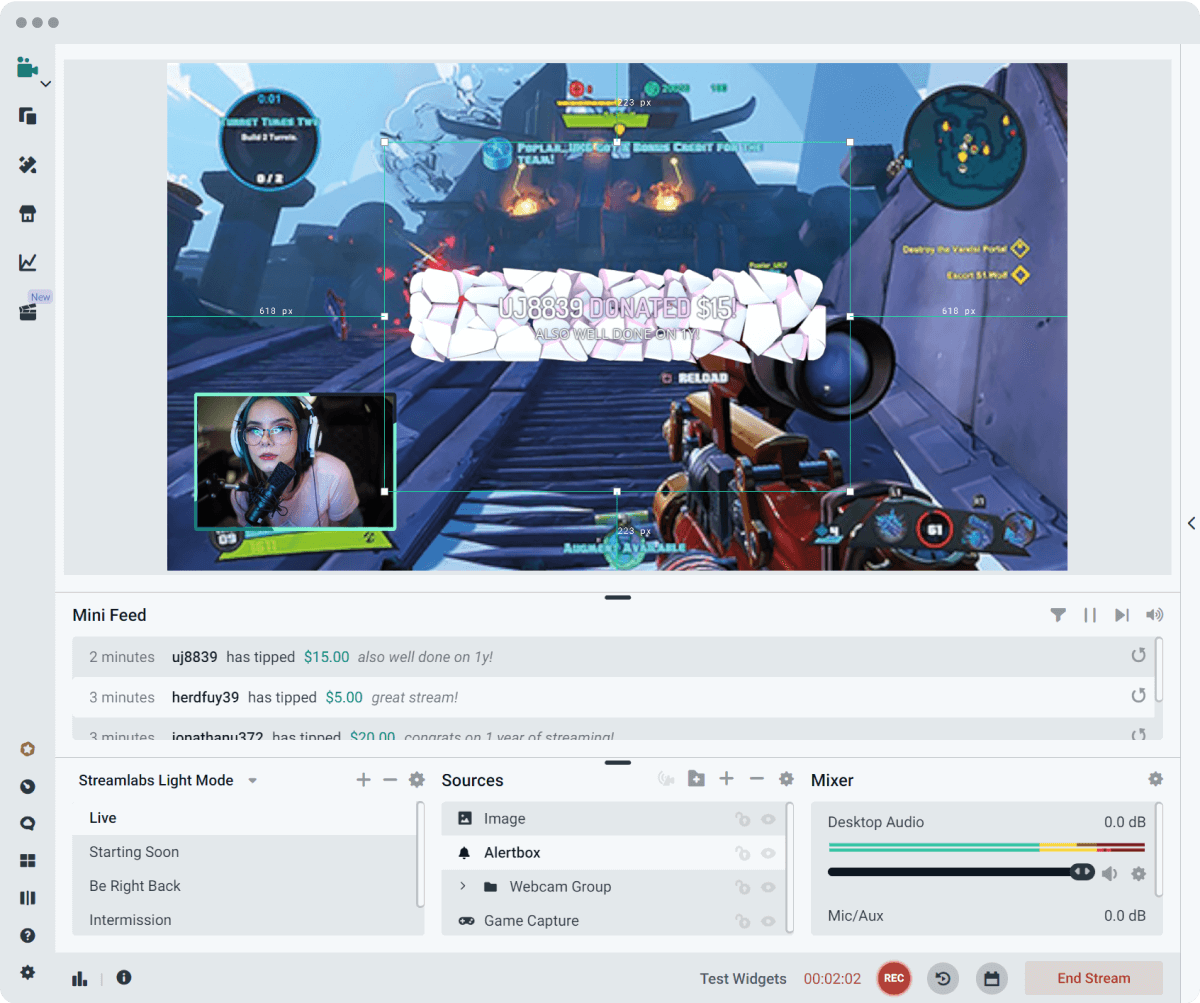
      Streamlabs OBS
    • XSplit: A standard solution for broadcasters looking to experiment with premium software, it shines only if you’re ready to spend on the paid version.
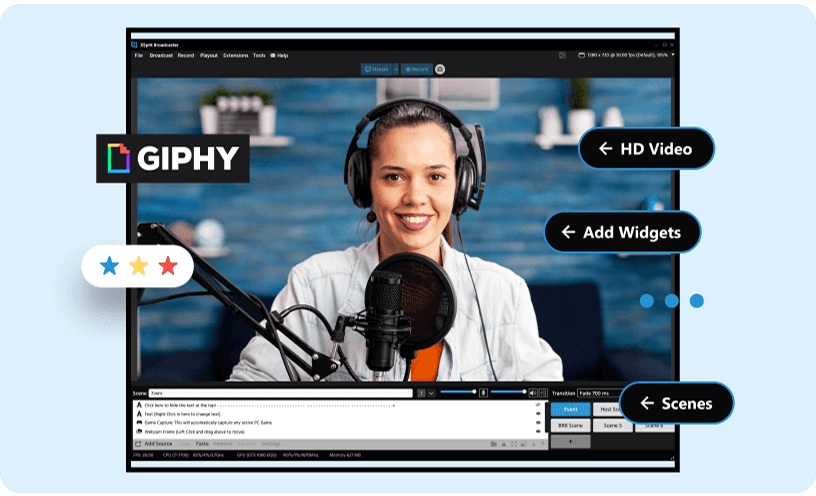
      XSplit

    You can even use online video editors like Invideo, Wave.video, Wevideo, etc., to convert your streams into biteable videos that you can post as Instagram Reels, TikTok videos and YouTube Shorts.

    What Is The Hardware Required For Streaming?

    The basic setup for a live stream is a  decent camera, a microphone, streaming software, and a stable internet connection. You may also add accessories to make your streams easier and better.

    Camera

    You can use any camera that you have, even a base webcam can work when you are starting out. However, if you have the budget, you can use a professional camera setup. The Logitech C922 Pro is a recommended webcam that provides good quality videos for a good budget.

    Microphone

    Now that we have fixed your video, you’ll need high-quality audio. For that, you will need a good microphone. The Audio-Technica AT2020 is the most excellent bargain, while the Shure SM7B provides high-quality audio.

    Stable Internet Connection

    You’ll need high bandwidth and a stable internet connection if you want to stream video and audio in real-time. Look at the upload and download speeds necessary to check if your connection is fast enough for streaming.

    Accessories

    Accessories such as studio lights, green screens, gaming chairs, stream deck, etc., can significantly boost the quality of your stream and make your work easier and more comfortable.

    What Are The Different Platforms To Stream On?

    Twitch

    You’ve planned your stream and set up your gear. Now can you go live? Sure! You just need to choose a platform first.

    Because gaming and e-sports are the most popular genres in live streaming, multiple sites specialise in gaming.

    • Twitch: By far, the most popular gaming platform is Twitch. For a newbie, its size might be frightening.
    • YouTube Gaming: While not as well-known as Twitch, YouTube Gaming has a sizable gaming community with devoted followers.
    • As a player, your third choice is Facebook Gaming, which allows you to connect to the network you’ve already formed on Facebook.

    How Can You Monetise Your Streaming Channel?

    Once you start streaming, you have to become an affiliate to your chosen streaming platform to start earning. Different platforms have different eligibility criteria. Let’s take a look at them:

    Twitch Affiliate Program
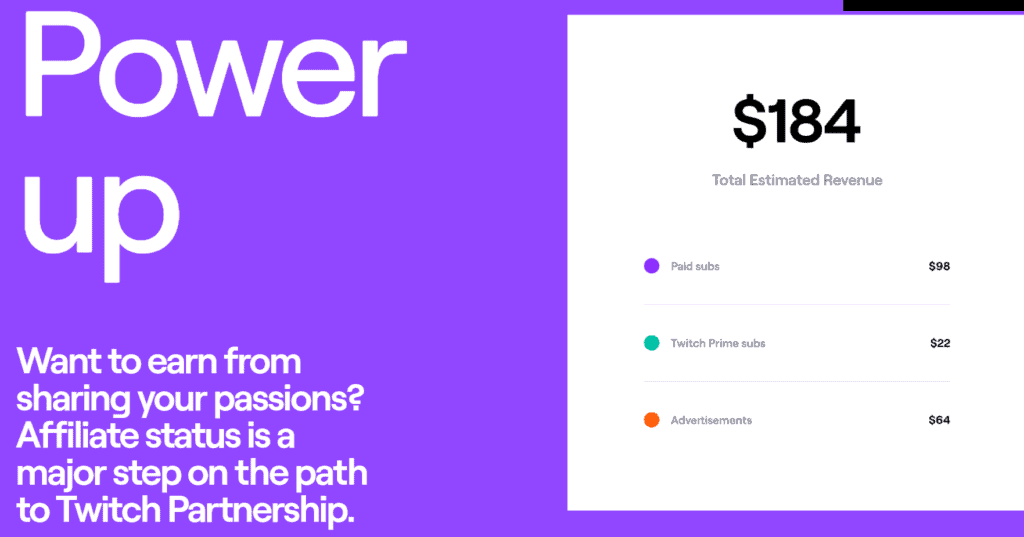
    Make Money on Twitch

    The Twitch affiliate program provides a way for you to make money from your channel by enabling viewers to purchase “bits. Bits are Twitch’s currency, and they’re worth $0.01 each. When a viewer buys bits, they can then use them in your chat to show their support.

    To become a Twitch affiliate, you must have:

    • 500 total minutes broadcast in the last 30 days
    • 7 unique broadcast days in the previous 30 days
    • An average of 3 concurrent viewers or more over the last 30 days
    • Minimum of 50 Followers

    Youtube Partner Program
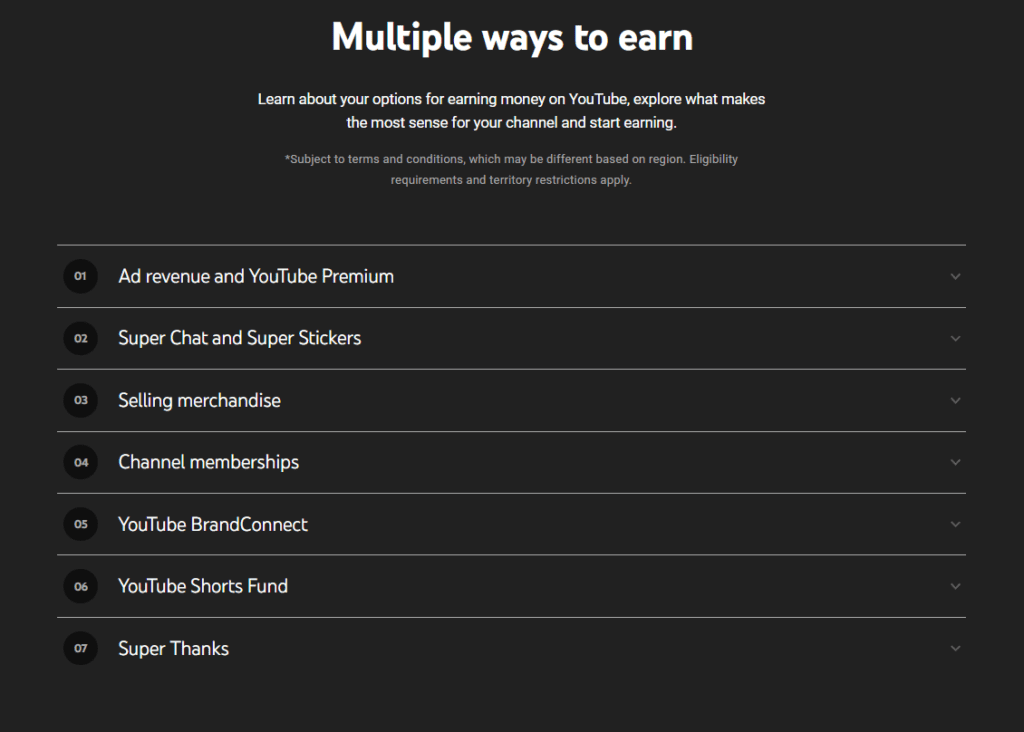
    make money streaming on YouTube

    The YouTube Partner Program (YPP) allows creators to monetize their content on YouTube. Once you become a YouTube partner, you can connect your channel to an AdSense account to earn money from ads that run on your videos.

    To be eligible for the YouTube Partner Program, you must have:

    • A minimum of 1,000 subscribers.
    • 4,000 valid public watch hours in the last 12 months.
    • YouTube Partner Program should be available in your country of residence.
    • AdSense account should be linked to your YouTube channel.
    • No active Community Guidelines strike against your channel.
    • Follow all the YouTube channel monetisation policies.
    • Your Youtube channel should have a 2-Step Verification for an extra layer of security.

    Facebook Gaming Creator Level Up Program

    The Level Up Program is Facebook’s initiative to support and grow the gaming community on its platform. The program provides resources, best practices, and access to exclusive events for eligible members.

    Moreover, you get access to monetisation features such as Stars and in-stream ads once you are a part of the program.

    To be a part of this program, you need to:

    • Have a “Gaming Video Creator” page.
    • Have broadcast for more than 4 hours in the last 14 days.
    • Broadcast a minimum of 2 days in the previous 14 days.
    • Have a minimum of 100 followers on your page.

    How To Make Money By Video Game Streaming?

    Unlike what most people think, you can make money playing video games and streaming the same. The most common are donations, subscriptions, and advertisements.

    Donations

    Donations are probably the most common form of income for video game streamers. Viewers can donate money to their favourite streamers through platforms such as PayPal, Streamlabs, or even pay directly using cryptocurrencies.

    The best part? The streaming platforms have no claim over the donations and you get to keep 100% of what is donated to you.

    Advertisements

    As you start gaining more regular viewers, you have the option to run advertisements for different brands in your streams, usually during stream breaks. These ads can be in the form of text, images, or even videos and pay either using the CPC model or CPM model.

    You will usually get paid per view for running these ads, and the amount can vary greatly depending on the brand, your viewer count, and other factors.

    Almost all the streaming platforms have some form of advertisement system in place, so if you’re interested in this option, be sure to check out the requirements and guidelines of your chosen platform.

    However, be aware that this can be a double-edged sword as you can earn a good amount of money, but many viewers may dislike seeing ads and leave the stream. 

    Subscriptions

    Platforms like Twitch and YouTube Gaming allow your viewers to subscribe to your channel for a monthly fee, and in return, your subscribers usually get some exclusive content or perks, such as ad-free viewing, exclusive videos, and custom emotes.

    Even if the streaming platform doesn’t have an official subscription system, you can still set up something similar using Patreon.

    This is a great way to guarantee yourself a more steady income, but it can be hard to convince people to subscribe when there are so many free options out there.

    Sponsorships

    With enough viewers, you can start to attract sponsors, which is another great way to monetise your channel.

    Sponsorships can take many forms, but usually, a sponsor will pay you a certain amount of money for every 1000 views you get on your sponsored videos.

    They may also pay you a lump sum to put their logo on your channel, use their products in your stream, or mention them during your stream.

    This is a great way to monetise your channel if you have a large audience, but it can be hard to find sponsors if you don’t.

    Some companies that may be interested in sponsoring you are game companies, energy drink companies, or gaming peripheral companies.

    Merchandise

    If you succeed in building up a large enough audience, you may be able to sell merchandise to them.

    This could be things like t-shirts, mousepads, or even your own designed line of energy drinks.

    It can be a great way to make some extra money, and it also helps to promote your brand.

    Affiliate Marketing

    Affiliate marketing is a strategy where you promote other people’s products and receive a commission on every sale that you generate.

    Influencers and other people with large audiences often participate in affiliate marketing programs.

    If you have a large enough audience, you may be able to participate in programs relating to video games, streaming equipment, or gaming peripherals on websites like –

    Impact.com, Share A Sale, Amazon, or other similar platforms.

    It works like this –

    1. You apply for a program and are given a special link to share.
    2. When people click on your link, a cookie is placed on their computer which tracks any purchases they make.
    3. If they purchase an item within a certain timeframe, you earn a commission on the sale.

    The great thing about this is that your viewers already consider you an expert on video games, so they’re more likely to take your recommendations seriously.

    Making a Game Store

    You can also set up third-party platforms to promote games and earn a charge for purchases made using those links. Nexus.GG is a fantastic service that allows players to create their own page with suggested games and earn commissions when someone buys from it. 

    Subscription-Based Services

    Like other subscription services, streamers can also use other platforms such as Patreon to tempt viewers with bonus content and other features. It’s an excellent strategy to augment your income.

    Bottom-Line?

    Video game streaming can be an exciting and rewarding way to make money playing video games. It’s a fantastic way to interact with others who share your passion for gaming, and it can also be a great source of income.

    Just remember that it takes hard work, dedication, and a bit of luck to make it big in the world of video game streaming. So if you’re up for the challenge, go for it! Who knows, you could be the next big thing.

    Go On, Tell Us What You Think!

    Did we miss something?  Come on! Tell us what you think about our article on video game streaming in the comments section.
  • What Is Ansoff Matrix? – Strategies & Examples

    What Is Ansoff Matrix? – Strategies & Examples

    As the world shrinks with each passing day, the business opportunities multiply at an ever-increasing rate leading to intense competition. Due to this pressure of survival and growth, organisations must devise and implement a competitive growth strategy to strengthen their economic position.

    The Ansoff Matrix is one such framework that aids in formulating an effective growth strategy. In this article, we will discuss what is Ansoff Matrix, its importance, the four strategies associated with it and some examples to understand it better.

    What Is Ansoff Matrix?

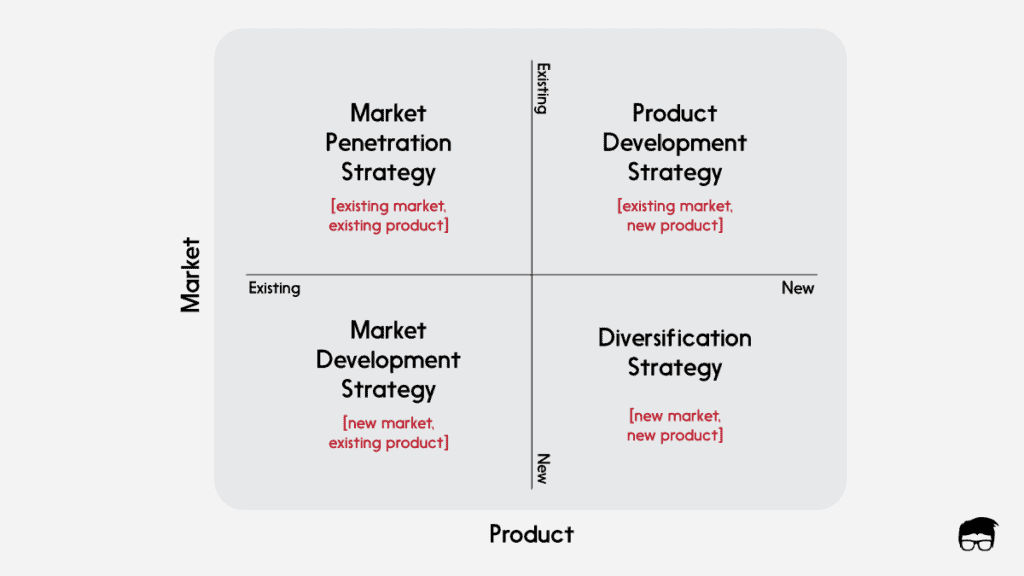
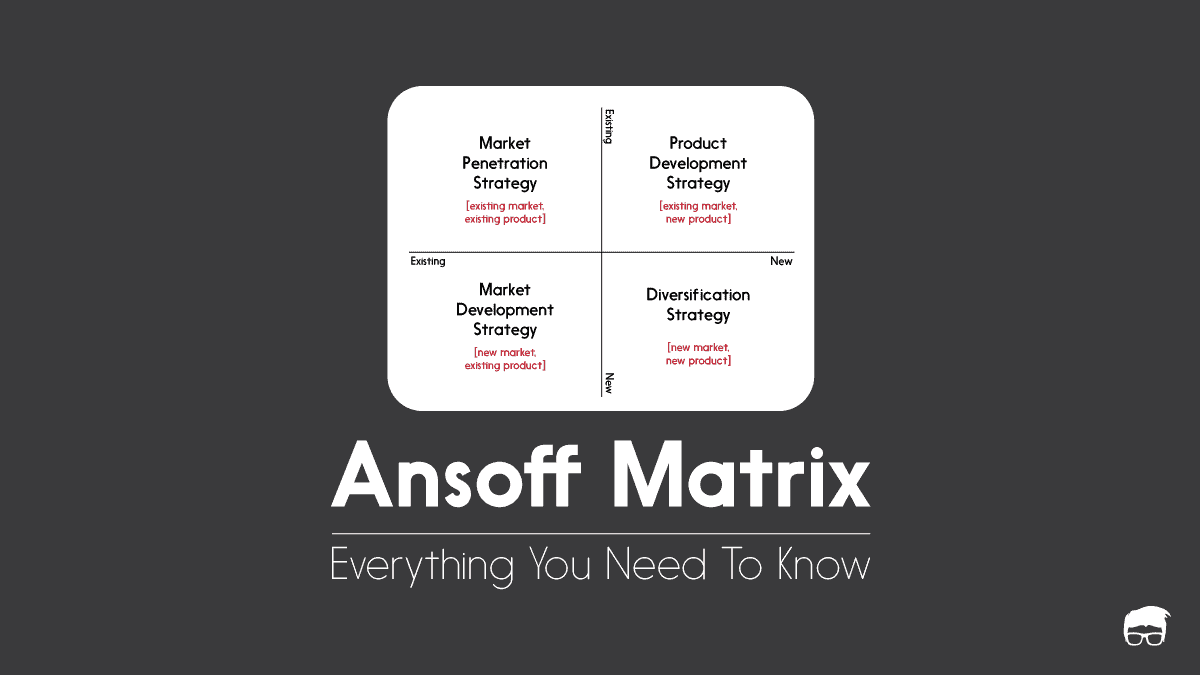
    The Ansoff Matrix, also known as the product/market expansion grid, is a future-oriented portfolio analysis tool marketers use to devise future growth strategies while factoring in the inherent risks associated.

    Developed by Igor Ansoff in 1957, the Ansoff model is based on the fundamental question of ‘where should a company direct its growth efforts?’ and provides four distinct growth strategies that a company can adopt, depending on whether it wants to target new markets or new products.

    The matrix suggests 4 different growth strategies that can be implemented in the business namely –

    • Market penetration [existing product, existing market]: The company tries to grow its existing products’ sales in the existing market. The aim is to increase the market share of the company. For example, Coca-Cola focusing on selling more bottles of Diet Coke in the US market.
    • Product development [new product, existing market]: The company tries to develop new products for its existing markets. The aim is to satisfy the changing needs of the customers in the existing market. For example, Samsung launching the new Galaxy phone focused just on the needs of Gen Z.
    • Market development [existing product, new market]: The company tries to enter new markets with its existing products. The aim is to increase sales by selling the same product in a new market. For example, Google focusing on the Chinese market.
    • Diversification [new product, new market]: The company enters a new market with a new product. The aim is to reduce the risk by spreading the business into new areas. For example, Apple launching a home theatre system for Indian customers.

    The 4 Strategies Of The Ansoff Matrix

    Product and market are the most important factors driving business growth. The Ansoff Matrix factors in both aspects to create a 2-dimensional matrix that gives rise to 4 growth strategies.

    Market Penetration

    Market penetration is a measure of how much an offering is bought by customers as compared to the total estimated market.

    This is the most commonly used strategy wherein the company focuses on selling more of its current products to its current markets. This can be achieved by either improving marketing efforts or providing customers with additional benefits that encourage them to buy more. For example, a mobile phone company may offer more minutes or data at a lower price to attract new customers and encourage existing customers to buy more.

    What Is The Goal Of A Market Penetration Strategy?

    The goal of a market penetration strategy is to increase sales of a company’s products or services in the existing market without changing the product. This is usually done by increasing marketing efforts and improving customer service.

    For example, a company may offer discounts or special deals to customers in order to increase sales. Additionally, the company may invest more in advertising and promotion to increase brand awareness and reach more potential customers.

    When Is A Market Penetration Strategy Used?

    The market penetration strategy is used by firms when they don’t have any new product or service to launch or any new market to explore but still wish to expand their revenue and market share. Companies usually adopt this strategy in the early stages of their product life cycle when they are still trying to gain a foothold in the market.

    How To Use A Market Penetration Strategy?

    There are various ways in which a company can go about adopting a market penetration strategy. Some of the most common methods are as follows:

    1. Price Reduction: By reducing prices, companies make their products and services more affordable and thus attract more customers. This strategy is particularly effective in markets where the price is a major deciding factor for customers.
    2. Advertising and Promotion: Advertising and promotion can help create awareness about a company’s products and services and make them more attractive to potential customers.
    3. Improved Distribution: By incorporating new distribution channels or improving existing ones, companies can make their products and services more accessible to customers.
    4. Mergers and acquisitions: Mergers and acquisitions involve combining two or more companies to create a new entity. This strategy can help companies expand their reach and increase penetration in the current market.

    Risks Associated With Market Penetration Strategy

    The main risk associated with market penetration strategy is that of becoming complacent. Companies that have successfully penetrated their markets may become overconfident and stop innovating. This can lead to them losing their competitive edge and eventually being replaced by newer, more agile firms.

    Product Development

    The product development strategy is where a firm introduces a new and improved product line in its existing market.

    The main aim of this strategy is to maintain market share and generate new revenue streams by offering customers something new that they value.

    In order to successfully implement a product development strategy, companies need to deeply understand their target market and what they are looking for.

    An excellent example of a company that has successfully used a product development strategy is Apple. Starting as a computer company, it has expanded its product range to include iPods, iPhones, iPads, and a host of other electronic devices.

    What Is The Goal Of A Product Development Strategy?

    The main goal of a product development strategy is to create new products or services that appeal to customers and generate new revenue streams for the company in the existing market.

    Product development can also help companies to stay ahead of the competition by constantly innovating and offering new products or services that the competition does not have.

    When Is A Product Development Strategy Implemented?

    The product development strategy is implemented when the company has an established large customer base and the market for its existing products is on the brink of saturation.

    This involves high inherent risk as it demands a huge investment from research and development to build a new product.

    However, it’s easier to market a new product to an existing customer base as they are already aware of the company and its products.

    How To Use A Product Development Strategy?

    The organisation focuses on building a differentiated product to improve its product portfolio and operate on the customer’s brand loyalty. The courses of action include:

    • Investing in research and development to provide better and cost-efficient solutions.
    • Merging resources with competitors to save time and effort in research.
    • Forming strategic partnerships to acquire rights to sell a product developed by another company.

    Risks Associated With Product Development Strategy

    The risks associated with product development strategy are:

    • Developing a new product takes a lot of time, effort, and resources.
    • The success of the new product is uncertain as it needs to be accepted by the customers.
    • The new product can cannibalise the sales of the existing products.

    Market Development

    The market development strategy is adopted to target new markets with the existing products.

    For example, a company selling tennis shoes in the domestic market may decide to target foreign markets.

    Another example would be a company selling healthy snacks to working professionals, targeting the same to students in college canteens. Here, the company would not be introducing any new product but targeting a new market segment.

    What Is The Goal Of A Market Development Strategy?

    Businesses aim to reach a wider audience and expand their user base by selling their offerings in previously unexplored markets. This makes way for acquiring new customers and acts as a driving force for growth and increased revenue.

    When Is A Market Development Strategy Implemented?

    A business generally uses a market development strategy when its existing market has reached a saturation point, and they are not ready to launch a new product.

    The focus is on existing products, so it does not require a huge investment in product research and development, resulting in low business risk. So this strategy best works for a business that is not willing to take risks at the moment.

    How Is A Market Development Strategy Implemented?

    The strategy concentrates on taking the existing product to a new market. Here’s how they implement it:

    • Entertaining a different customer segment in the same geographic area
    • Expanding markets geographically i.e. domestically and internationally

    Risks Associated With Market Development Strategy

    The main risk involved in this strategy is that the company may not understand the needs of a new market and thus, the product may not be accepted. Also, it is difficult to forecast demand in a new market.

    Another risk is that the company may incur a lot of costs to enter a new market. This is because they would need to research, develop new marketing strategies and create awareness about their product.

    Diversification

    A diversification strategy is a market strategy where the business focuses on selling a new product to a new market and involves entirely different skills, technology and knowledge.

    The risks are much higher as the company is starting from scratch. This strategy is generally adopted by companies that have spare cash and want to enter a new business.

    An example of a company that has used this strategy is Google. It started with the search engine and then moved into selling mobile phones (Pixel), home appliances (Nest) and even forays into self-driving cars.

    What Is The Goal Of A Diversification Strategy?

    Businesses generally implement diversification strategies to reduce their reliance on a single line of products while gaining a synergetic advantage to sell more of their existing product by adding a new product.

    When Is A Diversification Strategy Implemented?

    Diversification acts as a means to utilise the spare capacity of the business more efficiently and effectively by developing a new line of products.

    It is the riskiest strategy in the matrix as it demands both product and market development on the part of the business and focuses on an entirely new revenue stream. But with the increased risk it also offers the opportunity for huge returns.

    How Is A Diversification Strategy Implemented?

    The management has mainly two different approaches when it comes to implementing diversification strategies.

    • Related diversification: The marketing strategy where the business enters into a new industry by exploiting brand name, sales and distribution capacity and marketing skills as the new product has some similarities with the existing products. For example, Apple, a technology company, introduced AirPods when it was already established in the smartphone industry.
    • Unrelated diversification: The marketing strategy where a business invests in a new product portfolio and employs different technologies where it’s unlikely to have any similarities between the new and existing products. For example when Coca Cola a soft drink company, acquired Columbia Pictures, a movie studio, in 1982.

    Companies use related diversification to mitigate their risk and use unrelated diversification to reduce risk by operating in multiple industries.

    Risks Associated With Diversification Strategy

    The main risks associated with diversifying into new products or services are:

    • Difficulty in managing multiple products and businesses: If a company has a wide range of products and businesses, it can be difficult for managers to keep track of everything and make sure that each business is profitable.
    • Lack of focus: A company that is diversified into too many different areas may lack focus and could end up spread too thin.
    • Increased complexity: A diversified company is likely to be more complex than a single-business company, making it more difficult to manage and understand.

    The Importance Of The Ansoff Matrix

    Companies with multiple offerings large enough to be categorised into SBUs (Strategic Business Units) face the problem of correct resource allocation. Ansoff Matrix provides a framework for resource allocation and developing marketing plans. It forces the company to consider the risks inherent in its growth strategy.

    Moreover, designing a strategy involves a careful analysis of the strengths and weaknesses of the company to fit the external opportunities and threats present in the market. Once an organisation has derived its results from the SWOT analysis, it needs to channel them into individual strategies and choose a business model. Ansoff Matrix helps the business to choose one such model.

    The Ansoff Matrix is simple to understand and gives an overview of all possible alternatives. It is best suited for organisations operating in multiple industries. The business can choose the best strategy based on its requirements and risk-taking capacity.

    Bottom Line?

    Each company has its own method of analysing its business position and choosing a business strategy for growth and development in the market. Several tools are available that aid the process of identifying, analysing and choosing from alternatives much easier.

    Risk cannot be totally eliminated from a business. The solution is to choose the right strategy at the right time, and using a portfolio analysis model like the Ansoff Matrix, it becomes much easier to make decisions. 

    Go On, Tell Us What You Think!

    Did we miss something? Come on! Tell us what you think about our article on Ansoff Matrix in the comments section.

  • Bootstrapping Vs Funding: What’s Better For Your Startup?

    Bootstrapping Vs Funding: What’s Better For Your Startup?

    Just getting an idea for a business is hard enough – but once you’ve got that eureka moment, you’ve then got to worry about how to get it off the ground.

    Now, this is where entrepreneurs make one of their first and biggest mistakes: they don’t assess whether they should bootstrap or seek out funding for their startup. The answer to this question is never black and white – it depends on a whole host of factors specific to your business, your team, and the market you’re entering.

    Let’s take a closer look at bootstrapping vs funding and help you decide which is the right path for your business.

    What Is A Bootstrapped Startup?

    A bootstrapped startup is a company that is funded by its founder’s personal finances rather than through outside investment. This means that the founders have complete control over their business and don’t have to answer to any investors.

    In simple terms,

    Bootstrapping = You pay business expenses from your personal wealth.

    Personal wealth can be your savings, money given to you by friends and family members, or even credit card or personal loan debt.

    There are a number of advantages to bootstrapping your business:

    • You retain full control over your company: When you’re the only one shelling out the cash, you get to call all the shots. You don’t have to answer to anyone but yourself, and you can decide how your business is run.
    • You’re less likely to overspend: It’s easy to get caught up in the excitement of a new venture and start spending money left and right. When you’re the one footing the bill, you’re likely to be more mindful of where your money is going and less likely to make impulse purchases.
    • Bootstrapping gives you freedom: When you’re not reliant on outside funding, you have much more flexibility in running your business. You can take more risks and be more experimental with your products and services without having to worry about what investors might think.
    • Bootstrapping can be cheaper in the long run: If you do manage to get your business off the ground without funding, you’ll likely end up spending less in the long run. This is because you won’t have any investors to pay back, and you won’t have given up equity in your company.

    There are a few potential downsides to bootstrapping your business, though:

    • You may need to take on personal debt to finance your business: One of the most common ways to finance a bootstrapped business is through personal debt, such as credit cards or a personal loan. This can be risky, as you’ll be putting your personal finances on the line to finance your business. If your business fails, you’ll be left with a debt that you’ll need to repay.
    • You may not be able to provide enough capital: If you’re bootstrapping your business, it may be difficult to raise enough money to finance your business. This can limit your ability to grow your business or take advantage of opportunities that come up.
    • You may need to work longer hours: When you’re bootstrapping your business, you may need to work longer hours than if you had investors. This can be difficult if you have family or other commitments.
    • You may need to make sacrifices: When you’re bootstrapping your business, you may need to make sacrifices in order to save money. For example, you may need to live in a cheaper apartment or give up your car.
    • You may need to be patient: It can take longer to grow a business when you’re bootstrapping it. This is because you’re limited by the amount of money you have on hand.

    Successful Bootstrapped Companies

    Several multi-national companies that we know and love today started as bootstrapped businesses, including:

    Zappos

    The famous online shoe retailer was started by Tony Hsieh in 1999. Zappos was a bootstrapped company where Tony advertised his shoes in tie-ups with store owners.

    The process was simple – the company used to purchase shoes as soon as an order was placed and then ship them to the customer’s doorstep.

    In 2009, Zappos was acquired by Amazon for $1.2 billion in stock.

    Dollar Shave Club

    The Dollar Shave Club is a subscription-based business that delivers razors and other personal grooming products to your door every month. The company was started by Michael Dubin in 2011.

    Michael bootstrapped the MVP by himself where he operated the Dollar Shave Club website from his apartment to validate the idea. He then raised $1 million in seed funding from Andreessen Horowitz, Felicis Ventures and other investors.

    What Is A Funded Startup?

    A funded startup is a business that has received money from investors – angel investors, venture capitalists, or other sources.

    In simple terms, a startup is “funded” when it has received money from an outside source. The purpose of this funding is to help the startup grow and scale its business.

    There are many different types of outside financing, but the most common are:

    • Equity financing: This is when a startup sells shares of its company to investors in exchange for money. The investors become part-owners of the company and expect to make a return on their investment if the company is successful.
    • Debt financing: This is when a startup borrows money from investors and pays it back over time, with interest.
    • Convertible debt: This type of debt financing gives investors the option to convert their debt into equity at a later date.

    Startup funding comes with a lot of pros, such as:

    You get more capital to grow your business: This is the most obvious benefit of startup funding. You can hire more employees, buy more inventory, and invest in marketing and other growth initiatives when you have more money.

    You have access to expert advice and mentorship: Many investors are experienced entrepreneurs themselves, so they can offer valuable advice and mentorship to help your business grow.

    You get a built-in network of contacts: Investors typically have a wide network of contacts that they can introduce you to, which can help your business in many ways.

    There are, of course, some downsides to startup funding as well, such as:

    • You have to give up equity in your company: In exchange for their investment, investors will own a portion of your company.
    • You have to answer to someone else: Investors will want to have a say in how your company is run, which can be difficult for entrepreneurs who are used to having complete control.
    • You might not get the full amount you want: It can be difficult to raise the full amount of money you need from investors, especially if you’re not asking for a lot.
    • There could be hidden terms and conditions: Startup investments come with a lot of paperwork. And this paperwork can often contain terms and conditions that the entrepreneur is not aware of.
    • The process can be lengthy: It can take months or even years to raise investors’ money. And during this time, your business might not be able to grow as quickly as it could if you were using your own money.

    Successful Funded Companies

    Some of the most successful startups in the world have been funded by investors. Examples include:

    Facebook

    Facebook was founded in 2004 and received its first investment of $500,000 from Peter Thiel in 2004. The company went on to raise over $2.3 billion from investors and is today valued at around $500 billion.

    Google

    Google was founded in 1998 and received its first investment of $100,000 from Andy Bechtolsheim in 1998. The company went on to raise over $36.1M in funding over 4 rounds and is today valued at over $1 trillion.

    Bootstrapping Or Funding – What’s Better For Your Startup?

    There isn’t a “one size fits all” answer to this question. The best decision for your startup will depend on a number of factors, including the amount of money you need, the stage your business is at, and the type of business you’re running.

    Choose Bootstrapping

    Bootstrap your startup if:

    • You don’t need a lot of money to get started: If you’re starting a business that doesn’t require much capital, such as a consulting firm or an online store, then you may not need to raise money from investors.
    • Your product isn’t unique: If your product or service isn’t unique, then it may be difficult to attract investors. In this case, bootstrapping may be the best way to get your business off the ground.
    • Your focus is on sustenance rather than growth: If your goal is to build a sustainable business rather than a high-growth startup, bootstrapping may be the better option. This is because you’ll have more control over your company and won’t have to give up equity to investors.
    • You want to maintain control of your company: When you take money from investors, they will likely want a say in how you run your business. If you want to keep full control of your company, it’s better to bootstrap.
    • You’re not ready for the scrutiny of investors: If you’re not comfortable with the idea of sharing your business plans and financials with investors, then it’s better to bootstrap your startup.
    • You want to test your business idea before you commit to it: If you’re not sure whether your business will be successful, it’s better to start small and bootstrap your way to growth. This way, you can test your business idea without incurring a lot of debt or giving up equity in your company.
    • You’re not comfortable with debt: If you’re risk-averse and don’t want to take on debt to fund your startup, then bootstrapping is the way to go.
    • You have a low burn rate: If your startup doesn’t require a lot of money to get off the ground, then you may be able to bootstrap it. This is especially true if you can generate revenue from day one.
    • You believe your revenue can fund your growth: If you’re confident that your startup’s revenue will be enough to fund its growth, then bootstrapping may be the right choice.

    Choose Funding

    Look for investors if:

    • Your product is unique: If your product is unique and you have a competitive advantage, then investors may be more likely to fund your startup. Moreover, unique products require huge funds to develop a market around it.
    • You need to scale quickly: If you need to scale quickly, then you’ll likely need investors. This is because bootstrapping takes time, and you may not be able to generate enough revenue to fund your growth.
    • Your startup requires a lot of money: Certain businesses and business models require a lot of money to get started. If this is the case for your startup, then you’ll need to seek out investors.
    • You don’t mind giving up some control: When you take on investors, you’re also giving up some control of your company. If you’re okay with that, then funding may be the right choice for you.
    • You want someone else to share the risk: If you don’t want to shoulder all the risk yourself, you’ll need to find investors who are willing to share the risk with you.
    • You believe you can repay the debt quickly: If you’re confident in your ability to repay any debt you take on, then funding may be the right choice for you.
    • You want external experience on your team: If you feel like you need more experience, bringing in investors may be the right choice for you as they can provide valuable insights and connections.

    Bottom-Line

    There is no right or wrong answer when it comes to choosing between bootstrapping and funding for your startup. It depends on your specific situation and what you feel is best for your business.

    But you should know that even investors are running their businesses and only invest in startups that have a high potential for success. So even if you choose to go the funding route, ensure you have a solid plan and business idea that will make investors want to invest in your startup.

    Do your research and weigh your options carefully before making a decision. And don’t forget, there will always be ups and downs no matter which path you choose, so stay positive and focused on your goals.

    Go On, Tell Us What You Think!

    Did we miss something? Come on! Tell us what you think about our article on bootstrapping vs funding in the comments section.
  • Cloud Kitchen Business Model | How Do Cloud Kitchens Make Money?

    Cloud Kitchen Business Model | How Do Cloud Kitchens Make Money?

    The on-demand economy has disrupted traditional businesses across industries, and the food business is no different. With customers wanting their food faster and more conveniently, restaurants have had to scramble to keep up. Some have turned to technology, others to delivery services, and still, others have gotten creative with their menu offerings.

    But there’s one solution that’s become increasingly popular in recent years, particularly in urban areas: the cloud kitchen – a restaurant that exists only for delivery, with no dine-in option.

    Thanks to the Covid pandemic, the food and beverage industry have been forced to re-evaluate the way it does business. And one of the most popular trends to emerge has been the cloud kitchen.

    So, what exactly are they? How do they work? And perhaps most importantly – how do they make money?

    What is a Cloud Kitchen?

    A cloud kitchen, also referred to as a ghost kitchen or virtual kitchen, is a fully or partially equipped commercial kitchen space in a strategic location, used by multiple food businesses to prepare their food for delivery. These kitchens are often smaller and do not have seating arrangements or dine-in facilities. Instead, it is a delivery-only restaurant where the online ordering and delivery are done via food aggregators or the restaurant’s app. 

    This way, the restaurant can do away with the expensive overhead costs associated with running a dine-in establishment, such as rent, waitstaff, decorations, etc. And since they save on these costs, they can pass on the savings to the consumer in the form of lower prices and high quality.

    Cloud Kitchens are becoming popular in the food sector because of their ease of establishment and operation, minimal investment, capacity to manage various brands under a single roof, and less space consumption. In fact, according to statistics, the global cloud kitchen market, valued at USD 51.96 billion in 2020, is expected to rise by 12.4 % CAGR from 2021 to 2028 and can create  a $1 trillion global opportunity by 2030.

    The Idea Behind Cloud Kitchen Business Model 

    The idea of delivery-only restaurant facilities isn’t new. In fact, Grubhub and Seamless were already operating 10% of their New York business from cloud kitchens as early as 2015.

    However, with the COVID-19 pandemic and the resulting lockdown, people’s dining habits have changed drastically. More and more people are now opting to order in food rather than dine out.

    While the dine-in business took a hit due to the pandemic, the on-demand delivery business model saw a surge in demand.

    The on-demand startups like Zomato, Swiggy, and Uber Eats saw a boom in their business and accelerated their growth plans by including cloud kitchens in their portfolio.

    All this accelerated the growth of dark kitchens by five years within three months in 2020.

    Today, a single company may run five different cloud kitchen brands dealing in different cuisines out of a single location.

    Who Are The Customers Of Cloud Kitchen?

    Cloud Kitchens targets to garner a significant share of working professionals and youth mass willing to spend on high-quality food delivered to their doorsteps. The independent cloud kitchen’s primary customers are those who prefer a single cuisine without going out of their houses and rely heavily on third-party applications for food delivery.

    What Value Do Cloud Kitchens Provide To Their Customers?

    Millennials and Gen Z are heavily conditioned to technology-enabled convenience. They demand more variety of quality food but are unwilling to spend time cooking it themselves or going out to eat. They also prefer not to pay the high service charges that come with dine-in restaurants.

    This is where Cloud Kitchens comes in. Combined with the on-demand economy, they provide a solution that is tailored to the needs of this target audience.

    • Customers get food with just a few taps.
    • It’s less pricey than the dine-in alternative.
    • They get a variety of cuisines to choose from.
    • The process is simple and easy to follow.
    • Several cloud kitchens operate 24×7.
    • Customers also get hassle-free payment options such as UPI, Credit or Debit Cards, Internet banking etc.

    How Do Cloud Kitchens Operate?

    Cloud kitchens operate on a delivery-only basis. To deliver meals for off-premises eating, these restaurants rely on orders from their website or delivery apps like UberEats, Grubhub, Deliveroo, Zomato, Swiggy, etc.

    This business strategy enables restaurants to diversify and extend their customer base while reducing the highest operating costs—rent and labour. With cheap overhead and just kitchen staff, restaurants save expenses while increasing orders.

    Moreover, since customer acquisition is handled through digital channels, cloud kitchens substantially invest in technology that leverages the entire business operation. Besides technology, other significant expenditures include well-equipped kitchen equipment and labour, such as chefs and delivery personnel.

    Some cloud restaurants use their delivery application to customise their service, while others partner with delivery aggregators.

    There are several ways to run a cloud kitchen. It can range from adding a delivery-only brand to an existing restaurant kitchen to running a purpose-built commissary kitchen housing multiple brands. However, the primary reason for the success of the cloud kitchen business is its ability to generate revenue through various business models.

    The cloud kitchens operate on the following business models:

    •  Independent cloud kitchen: This is the classic cloud kitchen model. It is a restaurant with no physical presence. As the demand for online food grew, so did this concept. It consists of a single brand that prepares food in a kitchen based on online orders. Typically, such kitchens focus on a single cuisine. It is a self-sufficient business model for receiving orders and delivering packed meals.
    •  Multi-brand cloud kitchen: Rebel Foods developed this business model in 2011. This cloud kitchen business model is slightly more complex and employs data intelligence to develop business strategies. It is based on an in-depth assessment of food consumption trends in a specific location. The most popular or ordered cuisines in a particular area or demographic are identified and catered to using this cloud kitchen model. Food is prepared in a shared commercial kitchen where various brands prepare and package the meals. It is a strategic and efficient model that generates profits while reducing operational costs.
    • Hybrid cloud kitchen: This model is a combination of a takeaway restaurant and a cloud kitchen. It functions similarly to a cloud kitchen but has a storefront where customers can come and get their food. Here, the food delivery process can be done independently or by an aggregator food delivery app like Zomato or Swiggy. The hybrid model employs a single brand in a single kitchen. However, it also has multiple walk-in outlets that provide takeaway and delivery services for food orders.
    •  Co-working cloud kitchen: In this cloud kitchen model, entrepreneurs make a living by renting out space to other cloud kitchen businesses. The kitchen space is rented out to multiple third-party brands, which acts as a co-working space and an incubator for other cloud kitchens. The entrepreneur here acts as a landlord rather than a business owner. Furthermore, the business owner is expected to provide utility services and supplies that make operating a cloud kitchen easier in a shared kitchen.
    • Delivery app-owned cloud kitchen: In this business model, a delivery app company leases or buys a kitchen space and allocates it to various emerging food brands. These food delivery apps manage the orders and the delivery fleet. The delivery app company and the food brand have a symbiotic relationship in this model. Food brands use the app’s reach to gain more customers, and the app uses the food brand to provide more options to its users. For instance, this cloud kitchen model is used by food aggregator apps such as Zomato and Swiggy.
    • Fully outsourced cloud kitchen: As a novel concept, this cloud kitchen model was introduced by the food delivery aggregator Kitopi. First, most food preparation is outsourced and delivered to the kitchen. Then, the chef only adds the finishing touches. And finally, the delivery of the order is handled by Kitopi.

    Key Activities Of Cloud Kitchen

    The key activities of Cloud Kitchen include:

    • Developing relationships with restaurants and retail stores.
    • Recruiting delivery companies and suppliers. They can work full-time, part-time, or as freelancers.
    • Acquiring customers and managing their orders.
    • Managing the Payment and Delivery Process.
    • Managing technical operations.
    • Developing and updating the IT infrastructure required to run the business.
    • Resolving customers’ and partners’ queries and concerns.

    Key Channels

    Cloud kitchens can reach the customers either directly – through their own application or website – or indirectly, through marketplaces such as Zomato, Swiggy, and Foodpanda. They can also partner with delivery companies such as Dunzo, Shadowfax, and Rapido to get orders from customers who use their platforms.

    Key Partners Of Cloud Kitchen

    The operating model of Cloud Kitchen focuses on two key partners —

    • Enabling Partners: It includes entrepreneurs who provide commercial kitchen spaces to allow cloud kitchens to function and prepare delivery optimised menu items. The kitchen spaces may be either partially or fully equipped.
    • Fulfilment Partners: Cloud kitchens collaborate to complete their business framework with the fulfilment partners. It includes Delivery partners, Packaging Partners, and Payment Processors.
      • Delivery Partners: These individuals work as partners for the cloud kitchens and help them deliver the food to their customers on time—for example, Foodpanda, Zomato, Swiggy etc.
      •  Packaging Partners: Packaging partners help cloud kitchen businesses optimise their orders’ packaging.
      •  Payment Processors: The Cloud Kitchens must have a payment gateway or processor. Payment gateways aid in the tracking of all consumer payments and the flawless execution of orders. Payment gateways such as UPI, Paypal, and others provide similar services to Cloud Kitchens.

    Key Resources Of Cloud Kitchen

    Cloud Kitchens build their operations on the following key resources:

    • Human Capital: Human capital is an intangible asset of any business. It boosts productivity and, thus, increases the profits of the company. Hence, cloud kitchens investing in their employees are more likely to be productive and successful.
    • Technical inputs: Technology is essential for the seamless operation of a cloud kitchen business, promoting operational efficiency. A comprehensive technology platform will seamlessly integrate the Point of Sale (POS) system, Integrated Kitchen Display System (KDS), and inventory management. As a result, it will assure operational efficiency and the smooth running of your cloud kitchen business.
    • Financial resources: As the demand for online food delivery is growing, cloud kitchens are becoming popular for starting a new restaurant business. Besides, they require less financial assistance than a traditional restaurant. Hence, the investors in cloud kitchen can meet the financial needs of the cloud kitchen businesses through funding. 

    How Do Cloud Kitchens Make Money?

    Cloud kitchen revenue model isn’t too different from that of a restaurant. The main difference is that the former doesn’t entertain dine-in customers.

    The revenue streams and costs of a cloud kitchen are often similar to a usual restaurant.

    Revenue Streams of Cloud Kitchens

    A cloud kitchen generates revenue much the way a traditional kitchen does. They earn from the sale of their food per order basis.

    The kitchen can also earn money on a subscription basis. For instance, customers who subscribe to meals from the cloud kitchen can pay for their food at regular intervals, like weekly or monthly.

    Besides this, cloud kitchens that operate independently may also charge customers certain delivery fees.

    Costs Incurred by Cloud Kitchens

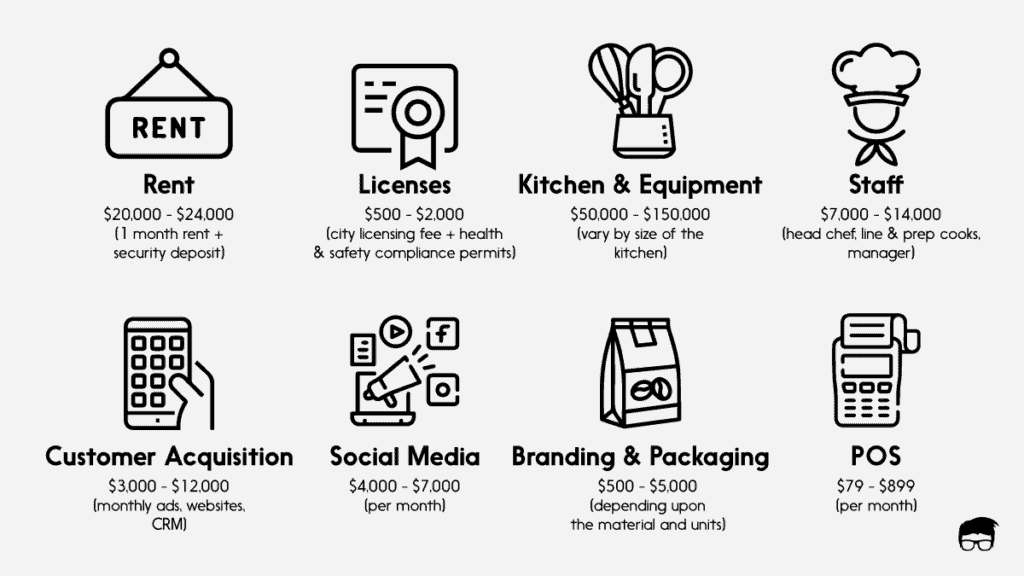
    The typical costs for a cloud kitchen include the following:

    • Rental space for setting up the kitchen: The cloud kitchen model has a cost advantage over other restaurants. The kitchen space can be cheaper and does not need to be in a prime location commanding premium rentals.
    • Cost of equipment and packaging
    • Ingredient costs.
    • Staff costs include salaries of chefs, delivery personnel, and support staff.
    • Marketing: Brand promotion and marketing costs to ensure customer brand recall.
    • Technology that streamlines operations and automates business processes.
    • POS and Inventory management that focuses on reducing waste and handles lost orders.

    For example, let’s see the cost breakdown for setting up a cloud kitchen in the US.

    cost breakdown for setting up a cloud kitchen in the US

    Bottom-Line?

    Cloud kitchens are disrupting the food industry as food lovers are increasingly shifting towards ordering their food online and getting it delivered to their doorsteps. While restaurants will always have a stronghold due to their dine-in experience, cloud kitchens are still emerging as strong competitors due to their convenience and variety.

    Moreover, cloud kitchens are here to stay, with social distancing becoming the new normal after the COVID-19 pandemic. They have already started capturing the market and piqued investors’ interest.

    Go On, Tell Us What You Think!

    Did we miss something? Come on! Tell us what you think about our article on cloud kitchen business model in the comments section.
  • How Do Digital Payments & Cryptoassets Benefit Small Businesses?

    How Do Digital Payments & Cryptoassets Benefit Small Businesses?

    Small businesses are the backbone of any economy. They are the risk-takers, the job-creators, and the engine of innovation and growth.

    But running a small business is not easy. There are a million things to worry about, from keeping the lights on and paying the rent, to finding and keeping customers.

    However, one thing that should not be a worry about is how you get paid. But for too many small businesses, that is a very real concern.

    According to Forbes, over 60% of small businesses in the United States have had trouble getting paid on time by their customers. This problem is even worse for startups and early-stage businesses, which often have even less cash on hand and are more dependent on timely payments to keep the lights on.

    Much of this can be credited to problems with traditional finance and accounting methods. Outdated invoicing methods, for example, can lead to payments getting lost in the shuffle or taking weeks or even months to process. Paper cheques can get lost in the mail, and bank transfers can be delayed by bank holidays or weekends.

    Digital payments, on the other hand, are much more efficient. They not only have the ability to speed up the payment process, but can also play a pivotal role in the business growth today.

    The Problems With The Traditional Finance Practices

    Traditional finance and accounting practices can often be quite inefficient, especially for small businesses and startups. They:

    • Are prone to human error: With so many different aspects to keep track of, it’s easy for things to fall through the cracks. This can lead to missed payments, miscalculations, and other issues down the road.
    • Are time-consuming: Small businesses often don’t have the luxury of extra time to dedicate to their finances. From invoicing to bookkeeping, many time-consuming tasks are involved in traditional finance.
    • Are expensive: In addition to the time commitment, traditional finance can also be quite costly. Hiring an accountant or bookkeeper can add up, and there are often other associated costs as well (e.g., software, bank fees, etc.).
    • Hinder growth opportunities: Traditional finance and accounting practices may not work overseas or in other countries with different regulations. This can limit a small business’s ability to expand into new markets.
    • Give a competitive disadvantage: Not adopting new technologies can put a small business at a competitive disadvantage. For example, if all of the business’s competitors are using digital payments and it is still relying on cash or check, it may lose out on business.

    The Benefits Of Digital Payment Adoption

    Digital payments refer to the use of digital means to make or receive payments. This can include the use of credit or debit cards, mobile devices, and cryptocurrency. There are many benefits of digital payments for small businesses, which include:

    • Reduced costs: Digital payments can help reduce the costs associated with traditional methods such as cash and check. For example, no fees are associated with credit or debit card transactions, and mobile payments typically have lower transaction fees than traditional methods.
    • Increased efficiency: Digital payments can help increase the efficiency of transactions. For example, mobile payments can be made quickly and easily, and they can be made remotely without needing to physically visit a business.
    • Improved security: Digital payments can help improve the security of transactions. For example, they can be made using encryption, which can help protect against fraud.
    • Greater convenience: Digital payments can provide greater convenience for both businesses and customers. For example, customers can make payments using their mobile phones, and businesses can accept payments without the need to handle cash.
    • Better Taxation: The self-employed and small businesses can make use of digital currencies for better taxation. All the transactions will be recorded in an immutable ledger, thus providing better clarity for tax purposes.
    • Access to new markets: Startups and small businesses can use digital payments to access new markets. For example, they can sell their products and services online, or to customers in other countries.

    Digital payments and cryptoassets offer numerous benefits for small businesses and startups. They can help increase efficiency, improve security, and provide greater convenience. These advantages can help small businesses compete in the marketplace and better serve their customers.

    Types Of Digital Payments

    There are many different types of digital payments, but they all have one thing in common: they use electronic means to complete a transaction. Here are some of the most common types of digital payments:

    • Credit cards: Credit cards are financial instruments issued by banks and other financial institutions, that allow customers to borrow money from the issuer to make purchases. Credit cards are typically used for online shopping and can be used to make payments at physical stores as well.
    • Debit cards: Debit cards are financial instruments that let the cardholder spend money by drawing on funds they have already deposited in a financial institution. Debit cards are typically used for online shopping and can be used to make payments at physical stores as well.
    • Prepaid cards: Prepaid cards are financial instruments that let the cardholder spend money by loading funds onto the card in advance. Prepaid cards can be used for online shopping and can be used to make payments at physical stores as well.
    • Virtual Payments cards: Virtual payments cards are financial instruments that let the cardholder spend money by creating a unique card number for each transaction. Besides random card numbers, easily deciding the currency and spending limits are some of the benefits of virtual payment cards.
    • UPI: Unified Payments Interface (UPI) is an instant real-time payment system developed by the National Payments Corporation of India to facilitate inter-bank transactions. It’s just like an email address for money.
    • Cryptocurrencies: Cryptocurrencies are digital or virtual tokens that use cryptography to secure their transactions and to control the creation of new units. Cryptocurrencies are decentralised, meaning they are not subject to government or financial institution control. Bitcoin, the first and most well-known cryptocurrency, was created in 2009. Today, there are thousands of different cryptocurrencies with different use cases including payments, smart contracts, and more.

    Why Should Small Businesses & Startups Switch To Digital Payments?

    A few decades ago, imagining a world where one could send and receive payments instantly, without having to go through a bank or other financial institution was nothing but a figment of someone’s imagination. Today, that world is a reality, and digital payments are becoming more and more popular, especially among small businesses and startups.

    Not even that, there is a steep rise of decentralised finance protocols built on Ethereum that offers an expansive ecosystem of products and services, which are mostly trustless, permissionless and borderless.

    In simple terms, digital payments and decentralisation of finance give small businesses and startups the power to take control of their finances without having to rely on intermediaries. This not only saves them time and money but also allows them to be more agile and adaptable.

    Today, small businesses can:

    • Take payments without a bank account
    • Receive payments in any currency
    • Make global payments at low costs
    • Access crypto-based or P2P financing products

    With all of these benefits, it’s no wonder that more and more small businesses and startups are turning to digital payments and cryptoassets.

    Go On, Tell Us What You Think!

    Did we miss something?  Come on! Tell us what you think about our article on how digital payments and cryptoassets benefit small businesses in the comments section.
  • What Is Market Penetration Strategy? – 8 Proven Tactics

    What Is Market Penetration Strategy? – 8 Proven Tactics

    Every entrepreneur wants to be seen as an industry leader in the market. This is quite natural as effective growth is known to be synonymous with brand loyalty, a large customer base and skyrocketing revenues as most powerful companies like Apple and Google implicate.

    But what do these companies do to ensure a continuous growth strategy?

    At any time, you might not have the capacity to take risks in launching a new product or entering a new market. Today, surviving in the market is not easy. Your competitors might outrun you and cause you to lose momentum in the market.

    A market penetration strategy is the ideal plan of action when it comes to achieving growth with minimum risk. It helps you to expand sales and reach maximum customers with your existing products in the existing market.
    Here’s a guide to walk you through it.

    What Is Marketing Penetration Strategy?

    Marketing penetration strategies are tactics used by companies to establish a large customer base and magnify their presence in the market as dominant.

    They are also known as “in-market strategies” because they focus on stimulating growth within the existing market rather than targeting new ones.

    The goal of market penetration is to achieve a larger sales volume compared to the sales volume of the overall market.

    Hence, it is important to understand the market and what needs to be done to stay ahead of the competition.

    Why Is Market Penetration Important?

    As an entrepreneur, you not just want to maximise your revenue, but you want people to know your brand and trust it. All the powerful global brands are known to be successful because the customers in the market know their names and desire to own their products.

    A market penetration strategy aims to achieve that by reaching maximum customers in the market till it becomes saturated. Some companies use a low pricing strategy to attract buyers, while some may adjust marketing campaigns.

    It not only results in a large customer base but also helps in increasing the market share.

    Even if a firm accounts for 60% of the total revenue in an industry but only manages to reach 15 out of a total of 100 customers, it only suggests a small radius. Market penetration aims to reach 40 out of 100 customers to attain a good penetration rate.

    What Is A Good Market Penetration Rate?

    Keeping in mind the growing number of startups and new entrants in every market, it is widely estimated that a market rate penetration rate of 2-6% is to be considered normal or above average for any company.

    If a company has a penetration rate of 8%, it is already a step ahead of most of its competitors.

    On the other hand, in a B2B business, a good penetration rate can be considered to go as high as 40%, which is excellent in any market.

    How To Increase Market Penetration?

    Market penetration stipulates you use the best strategy to strengthen your position and enhance your growth in the market.

    Companies use the Ansoff matrix to decide which strategy best suits their organisation. Market penetration is the least risky of them all and hence is very popular among companies, especially SaaS organisations.

    You already know the market for your product exists and how it responds. You focus on expanding your sales by adding more value to your product.

    Besides, a little extra promotion of your brand would never hurt.

    Use Competitive Pricing

    Price plays an important role in creating a market penetration strategy as it is one of the first factors that any consumer considers before purchasing a product. With the growing popularity of ecommerce, comparing prices across platforms has become very easy.

    Now your product being in an existing market already has substitutes and competitors, making price a driving force for your sales. Often companies use competitive pricing in this situation.

    Setting low prices This is a common strategy used by retailers to attract customers by setting low prices and getting ahead in the game. However, you need to consider the risk of facing huge losses if you are unable to recover your production costs.

    However, this strategy won’t work in the case of luxury products. You need to ensure that you don’t end up offering substantially low prices for your products as customers might conclude them to be less valuable or cheap quality.

    Setting high prices If you choose to offer a high price for your products as compared to your competitors, then you need to justify the increase in the price by adding new features or modifications to your product. The customer tends to analyse the value of a high-priced product before buying it.

    Setting prices at par Companies set equivalent prices in the market to avoid price wars and shift the focus to the product itself. Now if you can offer better features for the same price without adding much to the cost, your competitors will automatically lag behind.

    Engaging in a price war works well in markets where customers are price sensitive but it’s important that you keep in mind the average income of the target market.

    Take vegan makeup products, for instance, which are priced higher than other makeup products. A market penetration strategy involving price drops would stimulate customers to switch to your brand, but at the same time, you need to ensure that your product is not regarded as cheap.

    Introduce More Distribution Channels:

    A distribution channel is a path through which any product or service goes through before reaching the end consumer. It includes anyone that is a part of the process of sale – wholesaler, retailer, distributor and sometimes even the Internet as in the case of ecommerce.

    Having a good and efficient distribution channel is an integral part of marketing as it ensures the delivery of products and services to the customers at the right time. So, depending on just one distribution channel is not advisable when you are striving for quick growth.

    Add more distribution channels to increase the number of ways in which a product or service may reach the customer. Set the distribution process in a way to reduce the number of stops that a product or service has to pass through and make it more efficient.

    With the onset of the digital era, ecommerce and online marketing channels have made it a lot easier for retailers to reach their customers quickly. It will be unwise to not tap the opportunity.

    Coca-Cola would never have become the brand it is today had it just depended on individual retail outlets. It sells its products to canning and bottling companies, wholesalers, retailers and distributors who further sell to convenience stores, supermarkets, gas stations etc. With this advantage of such a strong and wide distribution system, coke was made available in every store, and to date, any startup cannot easily replicate their network.

    Modify Your Product

    You need to listen to your customers to make them listen to you. If you want your customers to buy your product you need to give them exactly what they need.

    Analyse customer reviews and feedback for your product and any other similar products in the market. This helps to identify any features that might be missing in the product. Now use this to adjust and modify the product according to the customer’s needs.

    Sometimes, product appeal can be established just by communicating the product’s value. By making minor product and packaging adjustments, you can appeal to the customers more powerfully and increase your sales overall.

    Apple has the highest market penetration in the smartphone industry worldwide even though iPhones are costlier. The reason behind this is the customer appeal that an iPhone generates among its consumers. When they experience their device’s unmatched quality and exclusive features, it satisfies the value to the money.

    Acquiring Businesses

    Acquisition is a standard approach which fosters the idea to buy out your competition instead of challenging them. Existing companies already have an established sales and market share in the industry. Buying the whole company allows you to access their customer base, hold on to their current sales and at the same time scale your own operations.

    As a startup, you might not have the required resources to buy a whole company but you can look for strategic alliances with companies to widen your reach and explore new audiences. The most common form of strategic alliances is forming joint ventures where each company has a definite equity shareholding. This makes it easier for small ventures to enter new markets in the future.

    Facebook (now Meta) buying Instagram and WhatsApp is the perfect example of where a company acquires another business in the same industry to resolve its competition. Both WhatsApp and Instagram were growing steadily to capture the market share substituting other popular mobile apps, especially Facebook. So, seeing this as a threat, Facebook converted it into an opportunity by buying out its competitors. Today, these apps have a combined user base of 3.6 billion.

    Adjust Marketing Campaigns

    Customers get to know about your product through your advertising campaigns. You need to connect with your customers through these campaigns so they see the value in the product and feel the urge to buy it. Aggressive marketing campaigns help you reach larger audiences and increase brand awareness.

    Increasing the budget for marketing and promotional campaigns helps in generating brand awareness and a bigger market share in the industry. Companies analyse their marketing expenses to identify the areas with the highest customer conversion rates.

    For instance, if you run an online store and market your products on your website, social media platforms like Instagram and Facebook, e-commerce platforms like Amazon or any other ads, you should be tracking the origin of your sales. Once you point out what generates the highest revenue streams, you start spending more in that area.

    Another way to win customer trust is by getting your product tested and verified by a certified organisation. It gives them a sense of belief and urges them to be loyal to your brand.

    Dunkin Donuts has been driving the millennials crazy with their bright-coloured posters and vibrant campaigns, making their social media pages a treat to the eyes. Using a bright-coloured logo makes the brand memorable and leaves a lasting impression on the consumers. It uses almost every form of advertising from print media to television and online ads which has earned the company a huge market share in the industry.

    Dunkin Donuts

    Simplify The Purchase Process

    With the growing popularity of e-commerce platforms, most people want to shop online from the comforts of their homes. Thus, it becomes necessary that the process of making a purchase is simple and hassle-free.

    You need to give your customers the best online shopping experience, so they wish to come back again later. When someone goes on your website, it should be easily accessible, and the person should not face any difficulty in navigating through the site to find what they are looking for.

    If placing an order involves long formalities, it becomes a big put-off for the customers. Ensure that the checkout process doesn’t require a lot of details to be filled in and has customer-friendly options like Cash on Delivery (COD) or an easy return policy.

    You don’t need to do it right in your first attempt, so you can take assistance from businesses who have already mastered this concept and help you in the process.

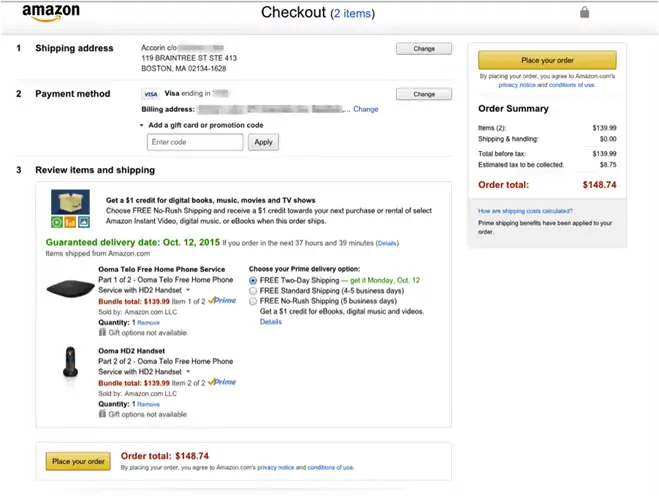
    Amazon is the largest e-commerce company in the world. They have managed to list almost every kind of product available in the market, and every retailer eyes a customer base that big. One of the main reasons behind this is their extremely user-friendly interface and hassle-free checkout process.

    Amazon Checkout

    Increase Geographic Reach

    Another approach is to consider expanding to new locations. The scaling process becomes much easier when you get access to new markets with the opportunity to tap multiple resources and reach new potential customers. At the same time, you reduce your operational risk by broadening your presence in the market.

    But it is not exactly a foolproof market penetration strategy and comes with a substantial financial risk. An increase in sales is not guaranteed until your product has a considerable value proposition in the market. You need to promise the benefits to your customers they will get after buying your product and show them how it is useful for them.

    A careful study of the economic, social, cultural and political environment paired with a detailed analysis of the market helps to identify customer needs in any geographical location and helps you market your products accordingly.

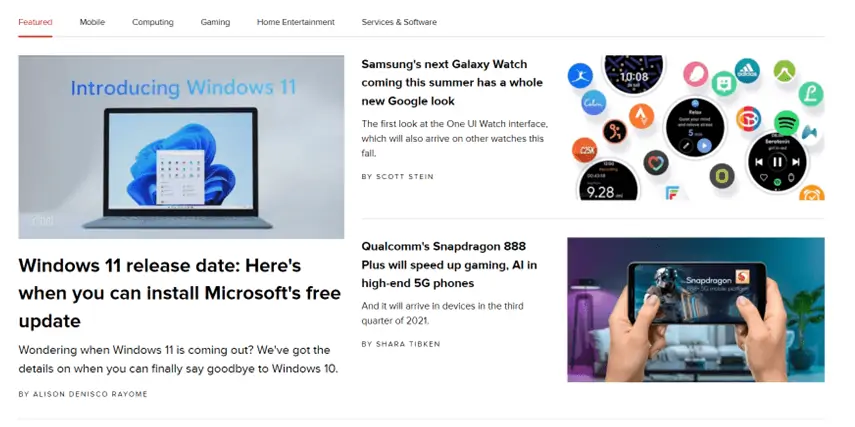
    CNET targeted the Latin world and entered the market by introducing a Spanish version of the tech news site while partnering with renowned actress Sofia Vergara.

    CNET

    Educate The Market

    If you are looking to launch a new product with no established customer base yet, you first need to draw attention to your brand, so customers become aware of your existence.

    You need your customers to understand how you are solving their problems so they see that you feel their pain. Help them get to know you by using marketing tools like pay-per-click advertising and promotion gigs on well-doing websites.

    Customer education helps inspire the customer to build brand loyalty and trust and they don’t feel uneasy when you ask them to choose your product over others they were using previously.

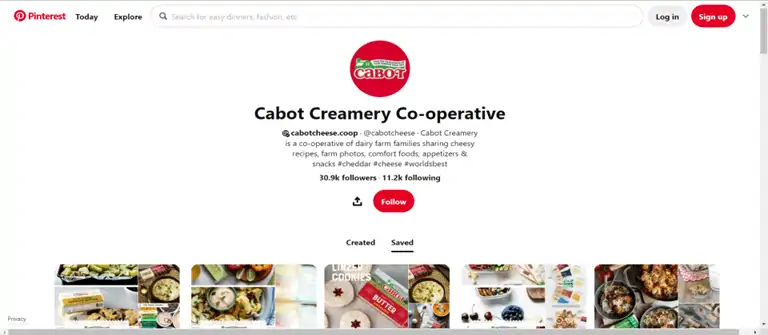
    Cabot, a cheese manufacturing brand, brought social media into play to educate customers about their product. They used Pinterest ads to flood popular cheese recipes on the market through digital communities and social media pages. People loved interacting in communities and actively participated in it, generating brand awareness.

    Pintrest

    Examples Of Market Penetration Strategies

    • Apple Inc. accounts for more than 50% of the revenue in the smartphone industry. With the constant introduction of new and improved models frequently, the company manages to keep the customers hooked to its products. Not only this, it still has the capacity to increase its customer base by attacking the competitor.
    • McDonald’s uses market penetration as its primary strategy for growth. It’s the biggest fast-food chain in the world and grows by reaching customers where it’s already present. For example, it opens new outlets in North America and Europe through franchising and corporate ownerships only to grow globally by adding new locations.
    • Netflix doesn’t practice penetration pricing. Instead, it charges higher than other streaming platforms but still manages to beat them all. The reason here is the content quality and the experience it offers so the customers don’t mind paying a little more.

    Bottom line?

    In the race to dominate the market, retailers are willing to test strategies to scale up their growth process. But only the company which analyses the competitive space and its position well will be able to choose and implement the best strategy.

    With a combination of strategic pricing, improvement in products and promotional efforts, it is highly likely that you will be able to dominate the market.

    Go On, Tell Us What You Think!

    Did we miss something? Come on! Tell us what you think about our article on market penetration strategies in the comments section.
  • 12 Actionable Ways To Improve Customer Satisfaction

    12 Actionable Ways To Improve Customer Satisfaction

    Just a good product isn’t enough anymore – customers today expect a great experience too. They’ll complain online, leave poor reviews and take their business elsewhere if they’re not happy.

    That’s why customer satisfaction is so important for businesses. It’s a key metric for measuring success and it has a direct impact on your bottom line.

    But what does it mean to deliver excellent customer satisfaction? How can you improve customer satisfaction and ensure that the client that contacts your firm has a positive experience?

    Let’s uncover ways to elevate your customer service satisfaction to the best in your business.

    Understanding Customer Satisfaction

    Customer satisfaction is a measurement of how well a company meets the needs and expectations of its customers.

    It’s often used as a key metric to track the success of a business and its ability to retain customers.

    A satisfied customer is more likely to do business with you again and recommend your products or services to others. They’re also less likely to shop around for alternatives or take their business elsewhere.

    Importance Of Customer Satisfaction

    Customer satisfaction and customer retention are intricately related. 

    Satisfied customers are more likely to stay with you and do business with you again. They’re also more likely to refer others to you.

    In fact, according to research, acquiring new customers is quite expensive. But, on the other hand, retaining old customers is 5 to 25 times more valuable than acquiring new ones.

    According to Bain & Co, a “5% increase in customer retention produces more than a 25% increase in profit.” And, you can’t have loyal customers for your business if they aren’t satisfied or happy with your services.

    You should also know those unsatisfied and unhappy clients will not hesitate to go to your competitors for better customer service. It takes 12 good experiences to compensate for a bad one. Unsatisfied customers will not stay that long as they choose convenience over anything else. Avoiding friction is essential to going above and making amends to satisfy your customers.

    Providing exceptional customer service and pleasing your customers sets you apart from the competition. As per PwC, “73 % of all people refer to customer experience as a significant component in their purchase decisions.”

    Moreover, a loyal customer base does more than just add to a high Customer Lifetime Value. They act as your company’s best promoters, bringing in new clients through recommendations. According to a study by Nielsen, 92% of customers trust recommendations from friends and family more than any marketing activity, and 70% trust the opinions they read on the internet.

    Factors determining Customer Satisfaction

    Customer experience and customer satisfaction are highly related in a way that one cannot exist without the other. Creating a great customer experience is essential to driving customer satisfaction.

    A series of customer experiences can impact your customer satisfaction. Each touchpoint is an opportunity to make a lasting impression that will determine whether or not customers remain satisfied with your product or service.

    There are many factors that play into customer satisfaction, but the main ones are:

    Product Quality

    When considering customer satisfaction, the first thing that should spring to your mind is the product itself. After all, how can you expect your customers to be satisfied if you don’t deliver a good product?

    Hence, quality should be the cornerstone of your business – without it, you’ll struggle to keep customers satisfied (and coming back for more).

    Price

    Every customer tends to compare the value they’re getting to the price they’re paying. So, if your product is priced too high, customers will feel like they’re not getting their money’s worth – regardless of how good the product actually is.

    On the other hand, if you price your product too low, customers may think that it must be low quality. In either case, you’re likely to see customer satisfaction suffer.

    To find the right price point, you’ll need to strike a balance between what your product is worth and what your customers are willing to pay. You can use market research to learn more about what your target audience is willing to spend.

    Convenience

    Customers seldom go out of their way to do business with you. However, if you make it challenging for them to deal with you, they may seek solutions from other companies.

    Convenient payment options, flexible return policies, and easy-to-use websites are all important factors in customer satisfaction.

    Review your customer journey and identify any areas where you can make the experience more convenient for your customers.

    Customer service

    When customers feel like they’re a priority, they’re more likely to remain loyal to your brand.

    Great customer service is the key to keeping customers satisfied. Train your team members to be friendly and helpful, and make sure they have the authority to resolve customer issues.

    Accessibility

    You must ensure that your customers can locate and access your products and services via their preferred channel quickly and easily, with no hurdles or friction.

    Also, ensure that your customers can contact your company and receive quality service if they have a query or want assistance deciding on your product or services.

    Communication

    Effective communication is essential to maintaining customer satisfaction. Use language that your customers will understand and make sure to keep them updated on any changes that might affect them.

    Moreover, just focusing on one-way communication from your company to your customers is not enough. You must also make sure to listen to feedback and take it on board to improve the customer experience.

    Empathy

    Customers want to feel like they are being heard and that their concerns matter to your company. Showing empathy is a great way to build trust and rapport with customers.

    Be available to listen to feedback and take action where necessary. Thank customers for their input, even if it is negative, as this shows that you are willing to improve based on their suggestions.

    How To Improve Customer Satisfaction?

    Improving customer satisfaction can be a challenge, but it’s worth it to invest time and resources into making your customers happy. Here are 11 actionable ways to improve customer satisfaction:

    Get Into Your Customer’s Shoes

    You need to understand customer psychology to be able to deliver what they want. What are their needs and wants? What are their fears and concerns? How can you address them? By understanding your customer, you will be able to give them what they need and want.

    Knowing your customer’s tastes and interests allows you to interact with a personal touch, strengthening your connection with them.

    Moreover, loyal customers anticipate exceptional care from you. This way, they feel cared for, respected, and heard.

    Reduce Customer Friction

    Customer friction is anything that gets in the way of a customer’s happiness. It is the little annoyances and inconveniences that add up to create a bad experience.

    To reduce customer friction, you need to identify and remove the pain points in your customer’s journey. This could be anything from a long and complicated checkout process to unhelpful customer service.

    Offer Self-Help Options

    Companies often underestimate the power of the cheapest service platform, self-help in manuals, tutorials, Q&As, videos, etc. Usually, customers expect a company to have a self-service customer care site. So, keep it lean and up-to-date when you get one for your business. 

    A simple FAQs page on your site can go a long way in reducing customer effort. If a customer has to struggle to find answers to their questions, they are likely to get frustrated and give up.

    Remember that customer satisfaction is not just about getting things right, but also about making things easy for your customer. So, offer self-help options and make it easy for them to find answers to their questions.

    Have A Feedback Mechanism

    You need to listen to your consumers to grasp their demands better. To do that, you need to have a feedback mechanism in place.

    A feedback mechanism allows you to collect customer feedback and use it to improve your products, services, and processes. It also helps you to identify customer pain points and address them accordingly.

    There are various ways to collect feedback from your customers. You can use surveys, polls, customer interviews, focus groups, etc.

    But whatever you choose, make sure it is easy for your customers to participate and that you act on the feedback you receive.

    Moreover, you can use a mix of methods to get a better understanding of your customers’ needs. For example, a mix of analytics and survey data can help you identify problems that your customers are facing.

    Use the Right Tools

    The right tools can make a big difference when it comes to improving customer satisfaction. They help you to automate tasks, manage your customer relationships better, and collect valuable insights.

    Here are some of the best customer satisfaction tools:

    • SurveyMonkey: Helps you create surveys and collect responses.
    • Monday.com: A project management tool that helps you track customer satisfaction levels.
    • Todoist: To help you manage tasks and follow up with customers.
    • HubSpot: A complete CRM platform that helps you track and improve all aspects of the customer journey.
    • Zendesk: A customer service tool that helps you manage customer queries and complaints.

    Follow Up With Customers

    A survey conducted by McKinsey reveals that 70% of buying experiences are dependent on how the buyer believes they are treated.

    And nothing is more frustrating for a customer than feeling like they are being ignored.

    If you have a problem with customer satisfaction, it might be because you’re not following up with your customers enough.  

    Make sure you have systems in place to follow up with customers after they make a purchase, after they leave a review, and after any interaction they have with your brand. This will show them that you care about their experience and that you’re invested in making things right if something goes wrong.

    Use The Right Metrics

    It isn’t hard to measure customer satisfaction. Several metrics like Customer Satisfaction Score (CSAT), Net Promoter Score (NPS), and Customer Effort Score (CES) can give you a good idea of how your customers feel.

    The Customer Satisfaction Score sees if the customers are happy with your products or services. You measure this by asking customers to rate their satisfaction on a scale from 0-10.

    The Net Promoter Score is a bit different. It measures customer loyalty and how likely they are to recommend your product or service to others. You can measure this by asking customers to rate how likely they are to recommend your product or service on a scale from 0-10.

    The Customer Effort Score measures how easy or difficult it is for customers to use your product or service. You can measure this by asking customers to rate their level of effort on a scale from 0-10.

    Once you have these scores, you can start to improve customer satisfaction depending on where your customers fall on the scale.

    Build Communities

    Customers who feel like they are part of a community are more likely to be satisfied with a product or service.

    In fact, according to Marketing Insider Group, having an online community around your product:

    • Reduces support costs by 10-25% as customers help each other
    • Gets more enhanced product feedback
    • Increases engagement and customer retention
    • Increases the credibility of the business overall

    Creating a space devoted to consumers not only saves your business money, but also allows customers to build relationships with each other, and feel like they are part of something larger. They can use the community to ask questions, offer recommendations, provide feedback, and even give suggestions for new features or products.

    Communities are also a great way to increase customer engagement and loyalty, both of which are essential for any business. By providing a space for customers to connect with each other, you make it more likely that they’ll continue using your product or service, and recommend it to others.

    Provide Multichannel Support

    Often, just emails or just phone calls aren’t enough. Customers want to be able to reach out to you in the way that’s most convenient for them, whether that’s through social media, chatbots, or even in-person events.

    It’s important to meet customers where they are and provide support on the channels they prefer.

    Encourage Two-Way Communication

    Customer satisfaction doesn’t just mean conveying updates and information timely to the customers — it also means being open to feedback and engaging in two-way communication.

    Involve the customer in your decision-making process as much as possible. For example, if you’re planning to launch a new product, reach out to some of your most active customers and get their opinion on it first.

    You can also create surveys or post questions on social media to get feedback from a larger group of customers.

    Personalise

    Personalisation isn’t just about using the customer’s name in your communications. It’s about understanding the customer’s needs and preferences and then creating content and experiences that are tailored to them.

    In today’s age of big data, you have access to a wealth of information about your customers. Use this data to segment your customers and create targeted communications.

    For example, if you know that a customer has purchased a product from you in the past, you can send them information about similar products that they might be interested in.

    In fact, according to Accenture, 91% of consumers say they’re more likely to shop with brands that provide relevant offers and recommendations.

    Just having personalised tips and tricks within the dashboard of your product can make customers feel appreciated – and more likely to use (and recommend) your product.

    Focus On Employee Satisfaction Too

    Dissatisfied employees will never lead to satisfied customers. It’s as simple as that.

    It works like this: employees who feel valued by their company will, in turn, treat customers with respect and go the extra mile to ensure they’re satisfied. So, if you want to improve customer satisfaction at your company, start by making sure your employees are happy first.

    Bottom- Line?

    Customer experience is an integral part of every successful business. Therefore, all companies should strive to improve customer satisfaction consistently.

    There is, however, no “one-size-fits-all” method for increasing customer happiness. So, if you’re searching for a crucial takeaway, here it is:

    Focus on addressing your customer’s wants for convenience and emotion before attempting to surprise them with heroic customer service. Furthermore, do not limit yourself. Above all, you must never give up if you want to attain true success and become the excellent brand you aspire to be.

    Go On, Tell Us What You Think!

    Did we miss something?  Come on! Tell us what you think about our article on improving customer satisfaction in the comments section.
  • How To Make Money Watching Advertisements? – A Guide

    How To Make Money Watching Advertisements? – A Guide

    Advertisements are annoying, and we all tend to skip them whenever we can. But what if I told you that there are ways you can make money by watching ads?

    Surveys have shown that the average person sees around 5,000 ads every day. That’s a lot of potential revenue!

    Several platforms allow you to get paid to watch ads. In fact, their whole business model revolves around it.

    Even though this sounds like a scam, it’s actually a legitimate way to make some extra cash.

    So, how do you make money watching advertisements, and why do companies pay you for watching ads?

    Why Do Companies Pay You For Watching Ads?

    The advertisement revenue model is simple.

    In a usual scenario, businesses pay platforms like Google Adwords to host and display their ads on search results and partner websites (like Feedough). The platforms display the ads to their users and keep all the money with themselves. The problem with this model is that people despise advertisements. Plus, their data is used to target ads to them and they get nothing in return.

    As a result, people have developed ad blockers that prevent these ads from being displayed on their screens.

    Now, companies developed a new business model where they give a part of their advertisement revenue to the users who watch the ads.

    This way, the platforms can guarantee more engagement with the ads, and the users are able to make some extra money.

    10 Platforms That Pay You To Watch Ads

    Not every platform that boasts of this model is legitimate. Here are 10 platforms that you can use to make money by watching ads:

    Swagbucks

    Swagbucks is a popular rewards and cash-back website that offers a variety of ways to make money. You can earn points (called SB) by watching video ads, taking surveys, shopping online, and more.

    The fun part?

    These surveys, polls, games, and videos are actually interesting, so you don’t have to feel like you’re wasting your time.

    These points can be redeemed for gift cards or PayPal cash.

    Swagbucks

    Payouts vary depending on the task and can range from $0.40 to $3 per task. Moreover, you get to see how much money you’ll make by doing a task so you can decide whether or not it’s worth your time.

    While Swagbucks is available worldwide, the amount of video content and offers may differ by country.

    To make money watching ads on Swagbucks –

    1. Sign up for a free Swagbucks account.

    2. Watch videos, take surveys, shop online, and more to earn points (called SB).

    3. Redeem your SB for gift cards or PayPal cash.

    Swagbucks gift cards

    InboxDollars

    InboxDollars is a get-paid-to website that pays you to watch videos, take surveys, and perform other tasks. It’s very similar to Swagbucks in terms of how it works and what you can do to make money.

    Since its start in the year 2000, InboxDollars has paid out over $8 million as a reward to its customers, making it another credible and widely-used website for earning money while watching advertisements & doing certain listed activities.

    The platform is available only for users from the US and has partnerships with brands like Netflix and Walmart, to name a few.

    Inbox Dollars pay you to:

    • Take online surveys
    • Read emails and find deals
    • Shop online
    • Play games
    • Watch videos
    How InboxDollars works

    The amount of money you can earn from InboxDollars will depend on the task or activity you choose. According to the website, with constant use, an average person can make $20 to $55 per month, and a task takes 3 to 25 minutes to complete.

    To start earning with InboxDollars, you need to sign up and provide your basic information like name, age, gender, etc. Once you’re done with thesignup process, you can start completing tasks and earning money.

    You even get a signup bonus of $5 to get you started.

    Payments are made through checks or gift cards once you reach a minimum balance of $15. So, to get your first payout, you need to earn at least $10 from the platform apart from the $5 bonus.

    Earnably

    With rewards from brands like Amazon, Xbox Live, Airbnb, and Domino’s up for grabs, Earnably is quickly becoming a popular pay-to-watch ads platform.

    You can make money on Earnably by committing your time to various tasks like watching videos, taking surveys, completing offers, and more.

    Earnably

    Payments are made either through PayPal or Bitcoin once you’ve reached the minimum balance of $10.

    Currently available in 36 countries in the US and Europe, Earnably is definitely a platform worth checking out if you’re looking for ways to make money by watching ads.

    While the amount of money you can make by watching ads will vary depending on the platform, most people earn a few dollars per day.

    However, some high-paying offers can earn you up to $50 in a single day.

    Other than the country restrictions, there are no limits on who can join and start earning. All you need is a computer or smartphone and an internet connection.

    Adwallet

    Ad wallet is one of the most simple & easy to use websites to make money by watching ads.

    With a pay rate of $60 per hour, it’s the most lucrative get-paid-to platform. The number of videos you can watch is limited & is determined based on your demographics.

    Once you reach $10 in your Ad wallet account, you get the option of withdrawing your funds directly to your bank account.  

    How Adwallet works

    Even though a comparatively new platform, it has been growing in popularity and has already paid over $1 million to its users in the form of:

    • Mastercard Prepaid Cards
    • eGift Cards
    • Donation

    The platform is only available to people in the US and requires you to be at least 13 years old to sign up.

    iRazoo

    With a user-friendly interface, iRazoo is one of the most popular sites that let you make money by watching ads (videos). And it’s just not about videos. You also get paid to:

    • Search the Web
    • Download apps
    • Complete Surveys
    • Play Games
    • Refer Friends
    iRazoo

    The best part is that iRazoo also offers a signup bonus of 100 points! Once you reach 3,000 points, you can start redeeming them for PayPal cash or gift cards. The platform majorly operates in North America and Canada but also caters to other countries too, like Brazil, the UK, Australia, etc.

    To sign up on iRazoo, all you need is an email address.

    The company has already paid over $150,000000 in rewards to its members and continues to do so.

    Quick Rewards

    Operating since 2002, Quick Rewards is a platform where you can make money doing what you already do on the Internet – watching videos, taking surveys, playing games, and more. You can also redeem your points for gift cards from over 30 different stores, including Amazon, Walmart, Disney, Target, etc.

    How Quick Rewards works

    To date, the company has already paid out over $7 million in rewards to its members.

    The best part?

    You only need 1¢ (100qp) to redeem your points for a gift card!

    Currently operating in the US and Canada, the platform is amongst the oldest and most trusted in the industry.

    You-Cubez

    A platform that pays you in cryptocurrency (BTC, LTC, ETH, and more) for watching videos, completing tasks, and more.

    You-Cubez also has a referral program that pays you 15% of what your referrals make. However, unlike other platforms, it requires you to be at least 16 years old to join.

    With over 900,000 members, the platform has been a trusted one for over a decade.

    The only downside is the withdrawal limit, which is set from 2 to 8 dollars, categorised based on your membership status. 

    Brave Browser

    One of the pioneers of the Web 3.0 revolution, the Brave Browser, is also a great way to make money by watching ads.

    The browser pays you in its own cryptocurrency, BAT, for viewing privacy-respecting ads. You can then withdraw your earnings to a wallet that supports ERC20 tokens or exchange them for other cryptocurrencies.

    Brave Browser rewards

    The minimum withdrawal limit is set at 25 BAT, for now, to connect with a wallet. But once connected, your earnings are transferred automatically to your wallet every month.

    The browser is based on the Chromium engine and offers all the features of the Google Chrome browser. It also has a built-in ad blocker and tracker blocker to give you a clean and safe browsing experience.

    The best part is you simply use the browser as you usually would and get paid for it.

    FAQs About Making Money Watching Ads

    Is it legal to earn money by watching ads?

    Yes, it’s safe and legal to make money by watching ads until you use legit platforms and not pirated ones.

    How do I get paid by watching ads?

    It’s simple. These platforms have built their business models as sharing models where they share their ad revenue with you users just to ensure adverts get more engagement and you get paid for your attention as well.

    How much money can you earn by watching ads?

    You can make anywhere between $0.50 to $5 per day depending on where you live, your chosen platform, and the task.

    Go On, Tell Us What You Think!

    Did we miss something? Come on! Tell us what you think about our article on make money watching advertisements in the comments section.
  • A Detailed Guide To Using Twitter For Business

    A Detailed Guide To Using Twitter For Business

    Twitter isn’t your usual social network. It’s not like Facebook, where you can just post pictures of yourself and your friends. It’s a microblogging platform where you have 280 characters to get your message across. And if you’re lucky enough to be on the right side of the 280-character limit, you’ll get more attention from potential customers than your traditional marketing channels.

    That’s why, as a business, you need to be on Twitter. But how do you make the most of this platform?

    Here’s a complete guide to using Twitter for business to help you get started.

    Using Twitter To Market Your Business

    Twitter isn’t just a social media marketing channel. In fact, it can be one of the most powerful tools in your marketing arsenal. With over 436 million active users, Twitter can help you in all the stages of your marketing funnel, from creating awareness to driving conversions.

    But before you start using Twitter for business, you need to understand how it works and how different it can be for users and businesses.

    How Twitter Works?

    Twitter is a free social networking platform that allows users to share short messages called tweets. Tweets can be up to 280 characters long and can include photos, videos, and links.

    Users can follow other users, and tweets from the people they follow will appear in their timeline. They can also like, retweet, and reply to tweets.

    One of the value propositions that separates Twitter from other platforms is the trends feature. Trends are popular topics that people are tweeting about at a particular time.

    You can see trends for your location or for the world. Twitter uses algorithms to surface trends based on what’s happening worldwide and what people are talking about.

    As a user, you can interact with the world using:

    • Tweets: Microblogs of up to 280 characters, images, videos, or GIFs.
    • Hashtags: Twitter uses hashtags to surface content around specific topics. You can use hashtags to join conversations or start your own
    • Mentions: You can mention other users in your tweets by using the “@” symbol followed by their username
    • Likes: You can like a tweet by clicking on the heart icon underneath it. This is a way to show your appreciation for a tweet or to let the author know you found it useful
    • Retweets: You can retweet someone else’s tweet to share it with your followers. Twitter also has a feature called quote tweeting, which lets you add your own commentary to a retweet
    • Direct messages: You can send private messages to other Twitter users by using the direct message feature. These messages are only visible to the sender and recipient
    • Twitter lists: Twitter lists are a way to organise the people you follow into groups. This can be useful if you want to create a list of customers, or a list of people in your industry
    • Spaces: Twitter Spaces is a new feature that lets you join or create audio conversations. This is similar to a podcast or radio show and can be helpful for hosting interviews or discussions
    • Moments: Moments are curated stories that Twitter creates based on trending topics or events.

    For businesses, Twitter can be a great way to connect with customers and create a two-way conversation. After all, it’s one of the earliest two-sided marketplaces. It’s also a way to share news and information about your business.

    twitter for business

    You can even use Twitter as a sales funnel channel by promoting your products or services and driving traffic to your website or blog.

    Setting Up A Business Twitter Account

    The first step is to create a Twitter profile for your business. Focus on four areas here:

    • Username: It’s the slug that appears after twitter.com/ in your profile URL. Keep it short, simple, and easy to remember. We suggest using your business name to be the username. If it isn’t available (someone else has already registered it), look for keyword combinations like ‘YourBusiness.com’, ‘getYourSAAS’, etc.
    • Bio: This is a brief description of your business that appears under your username. Use keywords related to your industry and target audience here, so people can easily find you when they search Twitter. And don’t forget to include a link to your website!
    • Profile Image: Your profile image should be your business logo. If you don’t have a logo, consider using a high-quality headshot of yourself or your team.
    • Header Image: The header image is the large, banner-like image at the top of your profile page. You can use this space to showcase your products, services, or brand. Be creative!

    Once you’ve built a profile that stands out, it’s time to start developing your Twitter marketing campaign. But how to develop a Twitter marketing campaign and what all it should include?

    Developing A Twitter Marketing Campaign

    Most people think a marketing campaign is just a paid advertisement. But that’s not true! There are various types of marketing campaigns, and each has a different purpose.

    Some of the most common twitter marketing campaign types are:

    • Awareness: The goal of an awareness campaign is to introduce your brand or product to a new audience.
    • Engagement: Engagement campaigns are all about getting your audience to interact with your brand.
    • Conversion: A conversion campaign is designed to get your audience to take a specific action, such as signing up for a newsletter or making a purchase.

    These goals can be accomplished using Twitter as a platform in a number of ways:

    Using Twitter Ads

    Like any other social media platform, Twitter’s business model offers targeted paid advertising options. You can use these ads to target new audiences based on their attributes like location, gender, interests, and more.

    twitter ads

    You can also create targeted ad campaigns based on specific tweets. For example, if you tweet about a new product launch, you can target that tweet to people who don’t follow you but are interested in the product category.

    You can use any of the five types of Twitter ads:

    • Textual Ads: Traditional, text-based ads that can include links and hashtags.
    • Image Ads: These allow you to showcase your offering with a single photo along with some text.
    • Video Ads: These let you use engaging videos to reach out to your target audience.
    • Carousel Ads: Slideshow-like ads that let you showcase up to six horizontally swipeable images or videos, each with its own link.
    • Moment Ads: You can even pay Twitter to feature your Moment — a collection of tweets on a particular topic — in the Moments tab, which is prominently displayed on users’ Twitter feeds.

    Twitter Ads are a great way to reach out to new audiences and promote your product or service. However, it’s important to note that Twitter Ads are not cheap. To get the most out of your Twitter Ads campaigns, you need to have a well-thought-out strategy in place.

    Organic Twitter Marketing

    You can even leverage Twitter for your business without spending a dime on ads. Here’s how you can do that.

    • Provide value in your Tweets: You can get a niche audience to engage with your brand just by providing valuable content in your tweets and being a part of the conversation. Remember, Twitter isn’t a post-and-forget platform. You must be active on the platform, engaging with your audience and providing them value if you want results.
    • Develop a content calendar: A content calendar will help you plan and organise your tweets in advance. This way, you can ensure that all your tweets align with your business goals and objectives.
    • Build relationships: One of the best ways to get more followers and increase your reach on Twitter is to build relationships with other users. Find and follow people relevant to your industry or niche and interact with their content. By interaction, we don’t mean spamming their mentions with links to your own content. Instead, add value to the conversation by offering your insights and perspective.
    • Use relevant hashtags: The Twitter ecosystem is driven by hashtags. Hashtags help you join conversations that are already taking place on Twitter and get your content in front of a larger audience. If you want your tweets to be seen by people who are not following you, then you need to use relevant hashtags.
    • Capitalise on trends: Twitter is all about being in the now. If you want your content to be seen, you need to be tweeting about what’s trending. This doesn’t mean you should abandon your core message. Instead, find creative ways to tie current trends into your brand messaging.
    • Monitor Keywords: Twitter’s search function lets you see real-time results for any keyword or phrase. This is a valuable tool for monitoring what people say about your brand, industry, or product. You can use this information to adjust your marketing strategy on the fly.
    • Use new features: The platform is constantly evolving, which means there are always new features to take advantage of. For example, Twitter Spaces is a new audio-only feature that allows users to host live conversations. This could be a great way to connect with your audience in real-time. The best part? New features witness high engagement levels, so you’re more likely to reach your target audience.

    Twitter Automation & Tools

    Several tools exist to help you automate and enhance your Twitter activity. This can be a valuable time-saver, but it’s important to use these tools wisely. Too much automation can make your brand appear impersonal and robotic.

    • Scheduling Tweets: It’s important to be active on Twitter, but you don’t need to be glued to your screen 24/7. Automation tools like Social Bee, Later, and Missinglettr let you schedule tweets in advance. This is a great way to make sure you’re regularly sharing content, even when you’re busy.
    • Hashtag Tracking: Twitter is all about hashtags. Use a tool like Hashtagify to find the most popular hashtags in your industry. This will help you get your tweets seen by more people.
    • Mentions & Direct Messages: It’s important to quickly respond to mentions and direct messages. A tool like Social Mention can help you track these, so you never miss a chance to interact with a potential customer.
    • Competitor research: Use a tool like BuzzSumo to see what content is performing well for your competitors. This will give you ideas about what kind of content to share on your account.
    • Twitter Analysis: Tools like Followerwonk can help you analyse your Twitter followers to better understand who they are and what they’re interested in. This information can be used to create more targeted content.
    • Creating shareable content: Several GPT-3 powered content creation tools can help you create shareable content for your Twitter account, including Jasper, ClosersCopy, etc.

    Or, if you have developers in your team, you can build your own tools like Twitter sentiment analysis, Twitter account analysis, follower growth analysis, etc., using the official Twitter API or one of the many unofficial Twitter APIs.

    Influencer Marketing On Twitter

    One tweet is all it takes to get in front of a large audience. That’s why influencer marketing is such a powerful tool on Twitter.

    Even though you’d require a good chunk of money to get big influencers on board, many micro-influencers with good engagement rates are willing to work for a much lower fee and can have a good ROI.

    Several tools and guides can help you find the right influencers for your business and even develop an effective influencer marketing strategy. Some tools include Followerwonk, BuzzSumo, and Klear.

    When influencer marketing is done right, it can help you reach a larger audience, drive traffic to your website, and generate leads.

    Bottom-Line?

    Twitter can be a great platform for your business if you know how to use it effectively. Experiment with different content types, strategies, and tactics to see what works best for your business. Also, don’t forget to track your results so that you can analyse and improve your performance over time.

    Do you have any tips on using Twitter for business? Share them in the comments below!

    Go On, Tell Us What You Think!

    Did we miss something? Come on! Tell us what you think about our article on using Twitter for business in the comments section.
  • How To Make Money Playing Games? – A Guide

    How To Make Money Playing Games? – A Guide

    So you are a gamer looking to monetise your skills and knowledge of video games. Maybe you are a seasoned professional who wants to take your gaming career to the next level, or maybe you are just starting out and looking for ways to make some extra cash. Whatever your motivations, there are many ways that you can make money playing games.

    In fact, in the last decade, the gaming industry has grown more profitable than any other entertainment industry, valued at almost 195.65 billion USD in 2021 alone.

    The industry is only expected to continue growing in the coming years, which means gamers have more opportunities than ever to make money playing video games.

    The best part?

    You don’t have to be a hardcore gamer or professional to make money gaming.

    There are plenty of opportunities for you to get in on the action and start earning.

    So, if you’re ready to start making money from your gaming habit, read on to learn about some of the best ways to do it.

    Become A Professional Gamer

    If your gaming skills are better than most average players and you love the thrill of high-stakes competitive gaming, then you would probably do well as a professional gamer.

    Professional gamers earn a living by playing video games competitively. They participate in gaming tournaments and events worldwide and can even make a comfortable living from it.

    Pro gamers play games requiring a high level of skill and dedication. These games are referred to as esports and include some of the most popular multiplayer games like Counter-Strike, Valorant, DOTA 2, League of Legends, and FIFA.

    Dota 2

    Of course, becoming a professional gamer is not easy. It takes years of practice and dedication to become good enough to compete at the top levels.

    But if you are serious about it and willing to put in the hard work, then it could be a great way to make money playing games.

    How Much Does A Professional Gamer Earn?

    A pro gamer can earn between $1,000 and $5,000 per month or between $12,000 and $60,000 per year.

    They earn money from prize pools, teams’ salaries, sponsors, bonuses, and streaming and coaching.

    Their earnings can depend on several factors, such as

    • The popularity of the game they play
    • Their level of skill and expertise
    • Tournament participation and wins
    • Brand deals and sponsorships
    • Streaming and other fan interactions

    Here is a list of top successful professional gamers:

    Gamer Tag
      Player Name
    Total Earnings
    1. N0tail (DOTA 2)
    Johan Sundstein
    $6,964,322.80
    2. Tenz (Valorant)
    Tyson Ngo
    $130,196.08
    3. S1mple (CS:GO)
    Alexander Kostylev
    $1,576,721.98
    4. Shroud ( CS:GO)
    Michael Grzesiek
    $$293,375.73
    5. Bengi (LOL)
    Bae, Seong Ung
    $810,683.00

    How To Become A Pro Gamer?

    There is no fixed path to becoming an esports professional. You just have to pick a popular competitive game in which you are good and climb the leader boards in hopes of attracting any esports teams or sponsors or becoming popular enough for the gaming community to notice you.

    If you are good at competitive games and have the required skills for it, then you can enrol yourself for different tournaments or apply for already existing esports teams like the Faze, Cloud 9, Astralis, Vitality, Fnatic, etc. 

    However, it’s not that easy to be a pro gamer. You have to be extremely skilled at your chosen game with thousands of hours to even be considered for tournaments, and it requires lots of practice and dedication to become an esports professional.

    How To Make Money As A Pro Gamer?

    Let us look at some ways you can make money playing games as a professional gamer:

    Competing In Tournaments

    Various games conduct tournaments and championships with prize money and sponsors. Some of the most competitive games even have international tournaments that have huge prize pools, sponsors, and publicity.

    You can start by participating and winning in local tournaments and contact sponsors or esports teams to play at major esports events.

    Competing In Tournaments
    How Much Money Can You Earn From Tournaments?

    Tournament prize pools vary according to the game, popularity, and number of teams participating. The International, a Dota 2 tournament has the largest prize pool in esports history with prize money of over $40 million in 2021.

    Similarly, all solo players who reached the finals of the Fortnite World Cup in 2019  received a minimum of US$50,000 and shared a prize pool of $30 million.

    While these are for top performers, even smaller tournaments offer prize money that can make playing games a viable career option.

    You can find many online and offline tournaments for a variety of games with prize pools ranging from $100 to $10,000. All you need to do is Google “game + tournament” to find one that matches your skills.

    Sponsorship And Brand Deals

    Sponsors are the most significant revenue source of the gaming industry and account for almost 40% of its total revenue.

    Big brands such as Coca-Cola, Red Bull, Razer, etc often sponsor pro gamers and pay them to promote their products. These deals can earn professional gamers millions of dollars, and even amateurs can make a few hundred dollars from such deals.

    All you need to do is have a large enough social media following and reach out to brands that you think would be interested in sponsoring you.

    It works like this: You use their products and promote them on your social media channels; in return, they pay you a certain amount.

    How Much Can You Earn From Sponsorships?

    Pro gamers can earn millions of dollars from sponsorships. For example, Faker, a professional League of Legends player, is reported to have signed a deal for his team with Nike, which is said to be worth millions.

    Not just this, Faker has also signed an exclusive partnership with Razer becoming the face of the Razer gaming mouse. The brand plans to release a limited edition of the Faker line of products, including mouse and mouse peripherals.

    As a pro gamer, you can also start by reaching out to companies and brands that you think would be a good fit for you. All you need is an excellent social media following, and some sponsors will start reaching out to you.

    A pro gamer with a good following can earn anything between $5,000- $20,000 per month from sponsorship alone. 

    There are several platforms like this where you can find gaming sponsorship opportunities.

    Become A Video Game Coach

    If you are really good at a particular game, you can start charging people for coaching services. You can start by teaching beginners the basics of the game and help them understand different concepts. Once you have established yourself as a reliable coach, you can start charging more for your services. There are people who are willing to pay good money to get better at their favourite games.

    You can find coaching opportunities on different platforms like Fiverr, Upwork, and Freelancer.

    Video game coaches can earn anywhere between $30,000 to $50,000 a year. Coaches and trainers of popular esports teams can earn even more.

    Becoming A Gaming Content Creator

    The video game industry is worth billions of dollars, and there’s a good reason for that. Games are entertaining, and people are always looking for new ways to be entertained. If you can tap into that market, you can make a lot of money playing games.

    PewDiePie, Jackseptic Eye, and Markiplier are some of the most popular game streamers on YouTube. They play games and provide commentary for their viewers. In return, they make millions.

    And it’s not just streaming. You can also make money by creating Let’s Play videos, walkthroughs, and other types of gaming content on YouTube, Twitch or your blog.

    To succeed, you need to find a niche that you’re passionate about and build an audience around it. Once you have an audience, you can start monetising your content with ads, sponsorships, and affiliate links.

    Here are some ways you can make money playing games and using them to create content:

    Streaming

    Streaming platforms like Twitch and YouTube Gaming allow you to live-stream your gameplay while providing commentary for your viewers. If you’re good at what you do, you can build a following of people who enjoy watching you play games. The great thing about streaming is that it doesn’t require any investment other than a good internet connection and a webcam.

    The best part about streaming is that you don’t necessarily have to be a pro gamer to make it big. You can just be really good at playing a certain game, or you can be really entertaining.

    As your following grows, you can start to monetise your channel by running ads, offering paid subscriptions or partnering with brands.

    How Much Do Streamers Earn?

    The top streamers on Twitch and YouTube Gaming can make millions of dollars per year just from their streaming income.

    A professional streamer can earn between $3,000 and $5,000 per month by playing around 5 hours per day.

    If you’re an average streamer, you can still earn $250 in ad revenue for 100 subscribers or $3.50 for every 1000 views.

    How To Become A Streamer?

    You can start streaming on Twitch or YouTube Gaming with just a webcam and an internet connection.

    You’d require the help of some tools like Streamlabs, OBS, or XSplit to help you set up your stream and a bit of creativity to make your channel stand out.

    To be a successful streamer, you need to have a strong personality and be able to entertain your audience for hours at a time. You also need to be able to play the game at a high level and offer insights that your viewers can’t get anywhere else.

    What Games To Stream For More Viewers?

    You can stream any game that you’re good at and enjoy playing. Some of the most popular games on Twitch are Fortnite, Counter-Strike: Global Offensive, PUBG, League of Legends, and Dota 2. You can also make money by streaming other games that are not as popular but have a dedicated following. Sites like TwitchTracker can help you see which games are being streamed the most.

    Gaming-related content is also a really lucrative money-making niche for gamers. You can create videos, write articles or even start a podcast about gaming. This type of content is really popular on YouTube and other platforms. You can make money from ads, sponsorships, and even by selling products related to gaming.

    The content can be anything from game reviews to gameplays, walkthroughs, tips and tricks videos, or even funny gaming montages. You can also create informative content about the industry. However, to make money from this type of content, you will need to build up a large following and get enough views to make it worth your while.

    How Much Do Gaming Content Creators Earn?

    Gaming content creators can be YouTubers, bloggers, or even podcasters. Their earning potential is directly related to the number of views or downloads they get. The more popular game content creators can earn thousands of dollars per video or blog post. However, most game content creators earn a more modest income.

    According to Business of Apps, the gaming industry see an average CPC of  $3.41 and CPM of $40.09. This means that if you’re a content creator with 1 million views, you can expect to earn $3,410 from ads. But you can also earn money from sponsored posts, product placement, and other forms of marketing.

    How To Become A Gaming Content Creator?

    People not only enjoy streams, but they also watch game previews, reviews, walkthroughs, etc. If you can entertainingly provide that content, you can make money.

    All you need to do is target intent while being entertaining.

    Know that when someone is searching for how to do something in a game, they are looking for a specific solution. That’s what you need to provide. Your content needs to be well-researched, informative, and helpful. It should solve the viewer’s problem. You can make videos on YouTube or Twitch or write articles on a gaming blog.

    You need to keep a few things in mind when creating this type of content. The first is that you need to be an expert on the game. You need to know everything about it, from the mechanics to the lore. If you’re not, your viewers will quickly figure it out and they’ll stop watching. The second is that you need to be entertaining. No one wants to watch a boring video or read a dry article. You need to find a way to make your content fun and engaging.

    Few types of content that you can develop around this theme:

    • Walkthroughs: A walkthrough is a video or article that takes the viewer or reader through a game, step by step. This type of content is great for new gamers who are just starting out and need some help getting through the game.
    • Gameplays: A gameplay video is a recording of someone playing a game. Gameplay videos can be either live or recorded. They target a wide audience, from new gamers who want to see what the game is like before they play it, to experienced gamers who want to watch someone else play and learn new strategies.
    • Top 10 lists: The top 10 lists satiate our curiosity for the best of everything. You can do a top 10 list for almost anything related to games. Some examples include: top 10 ways to plant a garden in Stardew Valley, top 10 builds in Minecraft, or top 10 tips for getting through Dark Souls.
    • How-to guides: These types of guides show the reader how to do something related to gaming. For example, you could show them how to beat a certain boss in a game or build a fire in survival games.
    • Reviews: As a gamer, you’re in the perfect position to review the latest games. You can do a review for a recently released game, or an older game that you think is still relevant. Your readers will be looking to you to give your honest opinion on whether a game is worth their time and money.
    • Previews: Game previews are where you give your readers a sneak peek of an upcoming game. This could be in the form of a hands-on preview if you could play the game early, or it could be based on the information you’ve gathered from various sources.
    • News: In the world of gaming, there is always something new happening. Whether it’s a new game being announced, or an update to an existing game, your readers will want to know about it.
    • Interviews: You can interview developers or other well-known figures in the gaming industry. This is a great way to give your readers some insight into the minds behind their favourite games.
    • Features: Features are similar to previews and news but tend to be longer and go more in-depth. They can be about anything related to gaming, such as the history of a particular game, or an in-depth look at a new game.

    Provide Freelance Gaming Services

    Gaming is no longer a simple task of completing objectives. Some games require lots of planning and time investment to play them properly.

    So, you can offer your gaming skills to people who don’t have the time or skills to play games regularly but want certain items or achievements in them.

    Provide Freelance Gaming Services

    Some freelance sites like Fiverr and Upwork offer freelance gamers to set various types of gigs for hourly rates.

    Let us take a look at some of the freelance gaming services you can offer.

    Levelling Gaming Accounts To Sell

    Many games feature a levelling-up system that locks things like certain game modes, achievements, and items behind those levels. Not everyone has the time to level up their accounts.

    Therefore you can level up accounts and sell them to people who want high-level accounts. You can also offer to increase the account level by either playing with them or playing for them.

    High-level steam accounts for popular games sell for a good amount of money on sites like playerauctions.com.

    Grinding For In-Game Items

    If you play online multiplayer games or any large-scale online role-playing games then chances are you know what grinding or farming means and how much effort and time it takes to get certain in-game items and resources.

    Many people simply don’t have the time or the inclination to farm for hours. They just want to enjoy the main game.

    You can offer to farm in-game resources for them on sites like Fiverr and Upwork and charge them for it based on it.

    You can set up these gigs and the rates you charge for them according to your wish on freelance sites like Fiverr and Upwork.

    Freelance gaming services are a relatively easy way to earn money as all you have to do is play games normally, and it doesn’t require a high level of skill or building an audience.

    Trade In-Game Items

    Several games have a robust in-game economy with their own virtual currencies and items. Many games even allow players to interact with the game economy and buy and sell different items for real-world or in-game currency.

    If you play games like Warframe or Counter Strike Global Offensive, you know certain items are hard to obtain but can easily be bought from other players.

    So if you have items like these, you can sell them on the dedicated Steam market or even approach third-party services to sell your in-game items.

    Make Use Of Play To Earn Apps and Sites

    Several apps and websites pay you to play and test mobile games. Several others capitalise on web 3.0 and pay you just to be a part.

    It is pretty straightforward; you just have to play the game as you usually do and earn points that can later be converted into cash payouts, gift cards, and even cryptocurrencies.

    Even though the payout is significantly less, it is still a great way to earn when playing games, especially on your phone. It’s especially great for people who play games on smartphones and want a little side money.

    Some of the best apps that pay you for playing are;

    1. MistPlay
    2. Swagbucks
    3. Skillzgame
    4. Inbox Dollars
    5. SweatCoins

    Some of the best websites that pay you for gaming are:

    1. Axie Infinity
    2. Decentraland
    3. The Sandbox
    4. My Cryptoheroes

    Go On, Tell Us What You Think!

    Did we miss something? Come on! Tell us what you think of this article on how to make money playing games in the comment section.